Women, Professional Ambition, and ‘Grey’s Anatomy’

It is the overwhelming drive for excellence that makes the women on the show so real. It sometimes feels that this kind of ambition is not allowed to exist on TV. Sure, women can have high-powered careers and be very successful. But this is different. This is a show that not just portrays ambitious women, but is actively about professionally ambitious women and how they relate to each other and society.

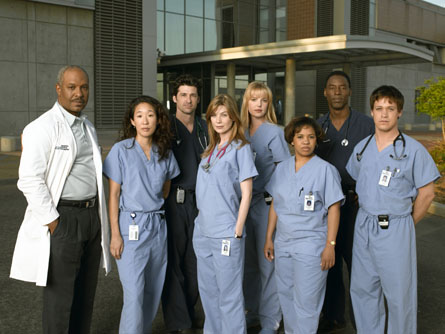
"Grey's Anatomy" Poster
Grey’s Anatomy poster


This guest post by Erin K. O’Neill appears as part of our theme week on Women and Work/Labor Issues.

Let’s talk about women and professional ambition.

But first, let’s talk about our first impression of Meredith Grey.

Grey’s Anatomy opens with a montage of surgery with a voice over talking about how it’s all called “The Game.” And then, it smashes into Meredith Grey, wrapped in a blanket, sneaking away from a man she very clearly had sex with the night before. And what does she tell him?

“Look, I’m gonna go upstairs and take a shower, OK? And when I get back down here, you won’t be here.”

She’s late for her first day of work and has the small problem of having to kick a man out of her house.

And herein lies the fascinating and symbiotic relationship between the soapy plotlines and genuine examination of female professional ambition in Grey’s Anatomy. There’s lots of sex, lots of absolutely crazy medical cases and an unlikely amount of death, and a bunch of personal relationships that get so improbable that they could break the laws of physics. And yet the show somehow manages to stay grounded in one thing: Meredith, Cristina, Izzie, Bailey, Ellis, Callie, Addison, Lexie, Teddy, April, Erica, Arizona, Jo and just about every other female character on the show are all hell-bent on being great surgeons.

And not just great surgeons. The greatest surgeons.

Cristina and the "heart box"
Cristina and the “heart box”


It is the overwhelming drive for excellence that makes the women on the show so real. It sometimes feels that this kind of ambition is not allowed to exist on TV. Sure, women can have high-powered careers and be very successful. But this is different. This is a show that not just portrays ambitious women, but is actively about professionally ambitious women and how they relate to each other and society.

“It’s like candy! But with blood! Which is so much better.”

There is a constant emphasis on winning. Winning the chance to do the best surgery, to get to treat the most interesting or dangerous injury. Everything from diagnosing rare diseases to eating a pile of hotdogs is an intense competition. Being the best, of anything and everything, is built into the fabric of the show’s narrative.

Cristina Yang is the obvious exemplar of this. She eats the giant pile of hot dogs the fastest. She hip checks Izzie on the way to a surgery so she gets there first. She graduated first in her class from Stanford’s medical school. She’s aggressive, abrasive, hostile, and she packs tequila in her bug-out bag. She is obsessive. She is driven.

And no one calls her less of a woman for that.

Cristina Yang
Cristina Yang


There are few shows that would let a female character, much less a married woman, have an abortion because her life plan is not to be a mother, but to be the best cardiothoracic surgeon in the world. Cristina knows she has no desire to have children, and while this eventually breaks up her marriage, she is conscious of doing the right thing by her own desires as well as her partner’s.

“You will be the surgeon of your generation,” Dr. Thomas (the former Mr. Feeney!) tells Cristina. “I knew it as soon as I met you. People will try to diminish you as they did me, but they will fail.”

“You are my person.”

Meredith Grey and Cristina Yang are best friends: the “Twisted Sisters.” They prioritize their friendship and each other over all other relationships — which is certainly saying something, considering that much of the non-career-related shenanigans that drive the emotional component to the show. Meredith was the first person Cristina told when she was pregnant, both times, and Meredith told Cristina about her post-it wedding to McDreamy before anyone else. Cristina needed Meredith to literally come back to life after drowning so she could tell her about her engagement. They ditch their romantic partners to motivate and support each other.

Their relationship is the most important relationship in the show because both women define themselves as surgeons first. The romantic entanglements, as distracting as they may seem, are secondary to their respective identities. For all the “pick me, choose me, love me” going on, the prominence and importance of Meredith and Cristina’s indicates that their professional ambitions are valid, and worthy life choices that deserve validation and realization.

“Happy Thanksgiving.”

There’s a great episode in season two, “Thanks for the Memories,” wherein Dr. Miranda Bailey — the no-nonsense, hard-core, and most-skilled resident on staff — runs circles around a visiting attending surgeon who believes the hot-shot resident with a stellar rep and called The Nazi is a man. Skillfully playing this assumption against him, Bailey scores herself all the fun, juicy trauma surgeries for herself while relegating the sexist attending to sutures in the ER.

Miranda Bailey
Miranda Bailey


This episode deliberately acknowledges and then knocks down the stereotypes that can keep women from succeeding and excelling in the workplace.

“Pretty good is not enough. I want to be great.”

Meredith’s mother, Dr. Ellis Grey, was one of the greatest general surgeons of all time until she gets Alzheimer’s. Dr. Addison Montgomery Shepherd is a world-class neonatal surgeon, who in her first appearance describes herself as one of few surgeons who can separate fetal blood vessels. Dr. Callie Torres gets tapped to give a TED talk. Dr. Miranda Bailey almost single-handedly rallies support and opens a free clinic at the hospital.

Here’s the really cool thing about Grey’s Anatomy: these are women who succeed. They’re smart, and driven, and willing to suture bananas until they get the sutures right. And they grow and succeed. They pass their exams. They study and learn complicated procedures. They fail, a lot. It’s 10 seasons later, and the women who entered as interns are now attendings and fellows who do cutting-edge research and achieving the excellence that they have striven for.

They mentor and teach each other — the show made a point in the early seasons of having Bailey, Callie and Addison, among others, in positions of power and mentorship. And, as seasons go on, the students become teachers themselves and start the cycle over again. Later in the series, when Meredith and Derek adopt Zola, Callie tells Meredith not to feel guilty for going to work and being away from her child, since it’s good for Zola to see her mother work and be successful. And Bailey, who was Meredith’s supervising resident when Meredith, Cristina and the gang were interns, gives Meredith a list of her babysitters. This is how women support each other in the workplace.

Meredith & Cristina coo over Zola
Meredith and Cristina coo over Zola


“We screw boys like whores on tequila.”

Grey’s Anatomy has its detractors. And sure, it’s soapy and not all that realistic about how a hospital actually works. But it takes ambition seriously, making the professional ambition of its female characters the driving narrative force and is massively successful and at one point even the center of the zeitgeist. Even though the show is more well-known for its love triangles and melodramatic disasters and tragedies, it is deserving of consideration for its advancement of the idea that women can choose to be devoted and defined by their professional success.


Erin K. O’Neill is an award-winning writer, photographer, visual editor, and web editor currently located in Schenectady, New York. A devotee of literature, photography, existentialism, and all things Australian, Erin also watches too much television on DVD and Netflix. Follow her on Twitter, @ekoneill.

The Devil in ‘The Devil Wears Prada’

Our contempt for Miranda Priestly is due, in large part, to the way the film contextualizes her decisions, not just her personality. In making her into a shrill caricature of a woman executive whose single-minded focus on her career ruins her personal life, the film, like so many others, shortchanges the potential of a character like Miranda.

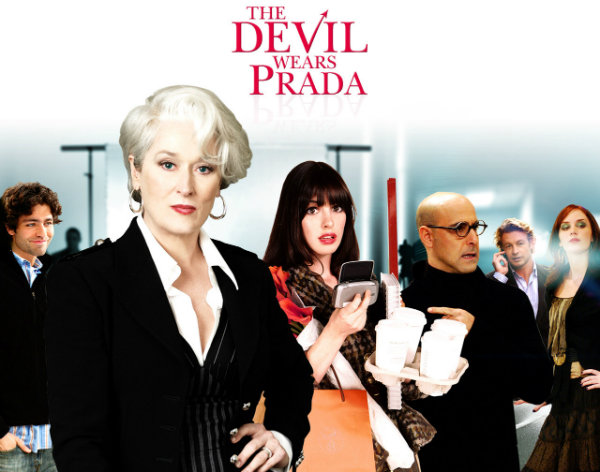
"The Devil Wears Prada" poster
The Devil Wears Prada poster


This guest post by Amanda Civitello appears as part of our theme week on Women and Work/Labor Issues.

One of my favorite childhood books was Earrings, a picture book written by Judith Viorst that tells the story of Charlie, a little girl who wants one thing in life: a pair of earrings. She doesn’t just want them: “she needs them, she loves them, she’s got to have them.” I am certain that this book is meant to teach children the difference between wants and needs, and the value of waiting for what we want (I waited four long years for my pierced ears). Instead, my takeaway was this: earrings are, as the book puts it, “beautiful and gorgeous,” and not only did I want them, I wanted lots of other things like them. As a teenager, I discovered fashion magazines, once again coming face-to-face with a plethora of beautiful things I wanted, needed, and simply had to have (namely, a black Chanel quilted handbag). Like many girls my age, the closest I’ve come to stepping out decked in designer clothes and accessories culled from the pages of Vogue is The Devil Wears Prada, the 2006 hit film starring Meryl Streep, Anne Hathaway, Stanley Tucci, and Emily Blunt.

Directed by David Frankel and based on Lauren Weisberger’s roman-à-clef, the film follows wannabe journalist Andrea “Andy” Sachs as she tries to make a writing career in New York City. Andy’s big break, so she tells herself, arrives in the form of a job offer from Runway magazine, as the second of two personal assistants to the magazine’s editor-in-chief, the inimitable Miranda Priestly. One has the impression that Miranda’s reputation must precede her in editorial circles, but stunningly, Andy has never heard of her (or her magazine, for that matter), and so she takes the job. At the start, she has little interest in Runway or the fashion world at which it is the incontestable center. She holds out hope that she’ll be able to make it through the requisite year – “work here for a year,” her new colleague tells her, “and you can work anywhere in publishing” – relatively unscathed, but it soon becomes apparent that this will not be the case. The reason for this, of course, is her boss: a taskmaster and capricious perfectionist, Miranda is more than a little drunk on her admittedly well-earned power.

Meryl Streep as Miranda Priestly, the editor-in-chief of the fictional Runway magazine.


It should come as no surprise that it’s Miranda Priestly who comes in for the harshest judgment, even when Andy acts in a similar way. Rather than simply leave Miranda as the deliciously draconian executive she is (at one point, she sends Andy out on a mission to secure the unpublished manuscript of the final Harry Potter book), the film makes an attempt to humanize her. “Humanizing” powerful or complex women characters by making them more sympathetic – typically by casting them as mothers, as Amanda Rodriguez and Megan Kearns observed in regard to Alfonso Cuaron’s Gravity  – is an all too common trope. But Miranda’s role as mother to her twin daughters does little to humanize her; rather, the film uses the breakdown of her marriage (and later, Andy’s long-term relationship) to humanize her. This decision forces Miranda to make a groveling apology to her husband for being caught in a meeting and unable to contact him when they were meant to have met. Indeed, it’s hard not to feel for Miranda in that moment, of course.

Miranda in one of the two "humanizing" scenes, musing over the implosion of her current marriage.
Miranda in one of the two “humanizing” scenes, musing over the implosion of her current marriage.


But the plot provides ample opportunity to make Miranda a more sympathetic character: a workplace narrative that is given only the vaguest of mentions. In the film’s final 15 minutes, we learn that Miranda’s boss, Irv Ravitz, the CEO of Runway’s publisher, has been planning to replace her. Of course, Miranda knows, and she manages to circumvent Irv’s plan by saving her job at the expense of giving her longtime employee Nigel a significant promotion. But all of this happens behind the scenes, because this storyline is meant to convince Andy to see the light and leave Runway, which she does. Having humanized her with a tearful scene in which she announces the end of her marriage, we’re immediately reminded of how cruel and calculating Miranda actually is, such that our final estimation of her is negative. We’re meant to kick ourselves for sympathizing with such a cold-hearted woman in the first place.

Miranda (Meryl Streep), Andy (Anne Hathaway), and Nigel (Stanley Tucci)


A more robust look at Miranda’s psyche and motivation might have made her too sympathetic, in the end: a woman who has to fight to keep the job at which she excels? Perish the thought. How sad that it is preferable to emphasize that a woman with prominence and power is ruthless, conniving, and frigid, rather than a dedicated, disciplined individual who goes to great – and ultimately, selfish, being at the expense of others – lengths to protect her own position. If Miranda were a man, we still wouldn’t be cheering as she gives the promised job to her rival instead of her loyal employee, but we’d likely have a bit more respect for her for conspiring to keep her job with as little collateral damage as possible. As the saying goes, “you do what you have to do” – except, it seems, when one is a woman.

The Devil Wears Prada hinges on one crucial supposition: that the world of fashion and the “real world” are mutually exclusive. In the end, we’re meant to cheer for Andy, who has managed to break free from the artificiality of Runway to become a cub reporter, and pity Miranda, who has sacrificed the same kind of happiness Andy now enjoys for her career. We’re supposed to laugh at the “clackers,” the well-heeled denizens of Runway, and at the intensity with which Miranda considers turquoise belts to pair with a dress which no one would actually wear on the street. It’s easy to dismiss Miranda’s considerable achievements as editor-in-chief of Runway, since her industry is perceived as frivolous. Would we have the same perspective on Miranda if, for example, she was actually helming a publication like Granta, The New Yorker, or The Economist? I think not.

The infamous turquoise belts


It’s easy to dismiss magazines like the fictional Runway – or its real-life counterparts like Vogue, Harper’s Bazaar, and W. – as the silly, self-indulgent, entirely out-of-touch by-products of a narcissistic industry. And to a large extent, they are self-indulgent, self-congratulatory, and incredibly out-of-touch. But they do represent, as Miranda so eloquently argues, the lookbooks of an extraordinarily profitable and important industry, one that extends far beyond the glossy pages of a magazine and into the homes of people who don’t give a second thought to what is written in its pages. Miranda Priestly as executive – and her thinly veiled inspiration, current Vogue editor-in-chief Anna Wintour – shouldn’t be perceived as lesser because she’s in a “frivolous” industry, and I wish that the film hadn’t hammered the ridiculousness of the fashion industry as much as it did. It’s a business, like anything else. Early in the film, Miranda takes Andy to task for calling the clothes at the run-through “stuff” – and she’s correct. It isn’t just “stuff” at all, and it’s a shame that the film makes the point so well and then spends the rest of its running time trying to dismantle it.

Andy in her "lumpy, blue sweater"
Andy in her “lumpy, blue sweater”


Are there better things in life to save for than a Chanel bag? Yes, which is why my teenage Chanel fund has long since been absorbed into my bank account. The Devil Wears Prada captures quite well the degree of luxury and inherent frivolity in the fashion industry. Our contempt for Miranda Priestly is due, in large part, to the way the film contextualizes her decisions, not just her personality. In making her into a shrill caricature of a woman executive whose single-minded focus on her career ruins her personal life, the film, like so many others, shortchanges the potential of a character like Miranda. After all, a complex, strong woman doesn’t have to be “nice” in order to be either of those things; Miranda could have been a compelling villain. Instead, the narrative plays to our sympathies and turns her into a conniving shrew.

With that said – I’m still waiting on that Chanel, you know.


Amanda Civitello is a Chicago-based freelance writer with an interest in arts and literary criticism. She is the editor of Iris: A Magazine of New Writing for LGBTQ+ Young Adults, a not-for-profit literary magazine publishing fiction and poetry with LGBTQ+ themes. She has contributed reviews of Rebecca, Sleepy Hollow, and Downton Abbey to Bitch Flicks. You can find her online at amandacivitello.com.

The Corporate Catfight in ‘Working Girl’

Because Katharine steals Tess’s idea, we automatically pull for Tess, the lower-class underdog; consequently, we are forced to view Katharine, the upper-class princess, as the demonized, selfish boss, determined to achieve success no matter what. Hurt, yet motivated to take control of her career, Tess is now forced to lie in order to have her voice heard. This causes her to be pitted against a boss who has clearly abused her power. Even though ‘Working Girl’ seems like a harmless, romantic drama, its female representation is firmly rooted in classism and sexism.

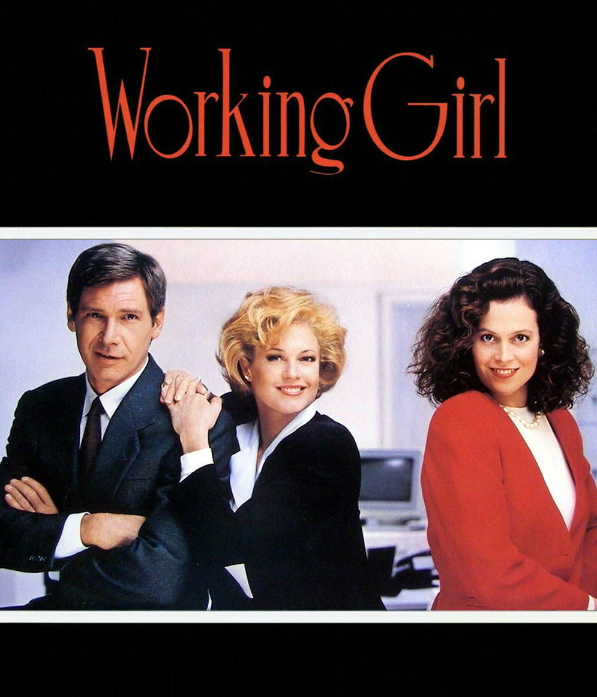
"Working Girl" poster

This guest post by Chantell Monique appears as part of our theme week on Women and Work/Labor Issues.


Mike Nichols’ Working Girl (1988) is centered on Tess McGill, played by Melanie Griffith, who is a Staten Island girl looking to make her way up the Manhattan corporate ladder. Although she has big hair, flashy make-up and gaudy jewelry, she’s soft-spoken, ambitious and smart. She may take the ferry into the city but she has dreams of being more than what people give her credit for. She’s a secretary who earned her night school degree with honors and feels she can “do a job” beyond fetching people coffee. More than anything, Tess is looking for her big break.

Enter her new boss, Katharine Parker, played by Sigourney Weaver. Katharine is everything Tess wants to be — she’s well-spoken, classy and successful. She looks like money and speaks with confidence and assurance. Although slightly intimidated by Katharine, Tess ultimately sees this pairing as her opportunity to finally get her career on track. Her hopes are strengthened more when Katharine tells her that their relationship is a “two way street” and empowers Tess to take control of her career.

Tess & Cyn take the Staten Island Ferry to the city

Motivated by her good fortune, Tess shares one of her ideas with Katharine; the idea is fresh, and intuitive. Katharine tells her that she’ll look over her notes to see if the idea has potential. This is the opportunity Tess has been waiting for. She gushes to her boyfriend, played by Alec Baldwin, that Katharine takes her seriously and that she doesn’t have to endure the skirt chasing that comes with having a male boss. Working Girl gives us hope that Tess will finally get a chance to prove herself in the cutthroat corporate world. In addition, her boss is a woman—this means, she is educated, ambitious and from what we can tell, willing to help a fellow woman find success in a man’s world. This is a start to positive representation of women in the workplace—while from two different worlds, both are educated and determined to work hard to get what they want.


Working_Girl_8

A freak skiing accident leaves Katharine in the hospital and unable to come into work. She asks Tess to take care her personal business, sending her to her home to handle a number of responsibilities. While perusing Katharine’s fancy living situation, Tess discovers a recorded memo from Katharine that explicitly states she seeks to pursue Tess’s idea without her, ultimately passing it off as her own. Heartbroken at her betrayal, Tess goes home early only to find her boyfriend in bed with another woman. With nowhere to go, Tess flees to Katharine’s home and after some soul searching, decides to exact her revenge.

This is where the movie shifts its direction in terms of female representation; what could be an opportunity to illustrate a harmonious relationship between two women in the workplace, instead does the opposite. Because Katharine steals Tess’s idea, we automatically pull for Tess, the lower-class underdog; consequently, we are forced to view Katharine, the upper-class princess, as the demonized, selfish boss, determined to achieve success no matter what. Hurt, yet motivated to take control of her career, Tess is now forced to lie in order to have her voice heard. This causes her to be pitted against a boss who has clearly abused her power. Even though Working Girl seems like a harmless, romantic drama, its female representation is firmly rooted in classism and sexism.

Tess: before & after

Tess finds herself in a difficult situation — she wants to move up the corporate ladder but no one takes her seriously because she’s a secretary. After discovering Katharine’s plan to hijack her idea, Tess sets up an appointment with Jack Trainer, played by Harrison Ford; she needs Jack’s help with making her idea a reality. With Katharine out of town, Tess has an opportunity to make a name for herself but before this can happen, she must refine her image. Insert the Hollywood makeover; Tess and her best friend Cyn, played by Joan Cusack, sit in Katharine’s bathroom—Tess with a beauty magazine and Cyn with a pair of scissors. “You sure you wanna do this?” Cyn asks, holding a piece of Tess’ hair. “You wanna be taken seriously, you need serious hair,” she replies.

Audiences are used to seeing makeover scenes where the ugly duckling emerges as a swan but this particular scene holds more meaning. Tess is the lower-class underdog; she has a heavy accent and her hair is teased to the ceiling. Instead of embracing her roots, she’s forced to leave her identity behind for corporate acceptance. It makes sense that she does this; unfortunately, by wearing Katharine’s clothes, cutting her hair and altering her dialect, the film manages to comment on which class has more power. If she needs serious hair to be taken seriously, then what kind of hair does she have before the makeover? As her evolution progresses it’s clear she’s trying to emulate Katharine who represents the upper-class princess, and ultimate model of success. In a classist society, this is an example of the upper-class being taken more seriously, having more power, and garnering the most respect.

Am-bitch-ous Katharine researches Tess' idea

Tess’s plan to thwart Katharine demonstrates the notion that women don’t belong in management. Women in power are seen as ruthless, am-bitch-ous and emotional. It’s this characterization that affects most women in power, pigeonholing them and undermining their success. This stereotype is evident in Working Girl; Katharine is a woman who in the beginning of the film is portrayed as focused, strong and willing to assist a female co-worker with her career. Unfortunately, as her character develops, it’s discovered that she’s not as honest as she seems. Because Katharine steals her subordinate’s idea, we now have to question her career veracity. Has she stolen other co-workers’ ideas in order to further her career? Tess went to Katharine because she was her boss; she respected her opinion and ultimately her position of power. By stealing Tess’s idea, Katharine abuses this power; her actions reinforce the stereotype that women are unable to handle management positions.

While the film relies on sexist tropes in order to create an antagonist for Tess, one has to wonder, what if Katharine was a man? Would a man have even respected Tess enough to listen to her? This creates a difficult position for Working Girl; one can argue that a man would not have listened to Tess; therefore, there wouldn’t be a storyline worth pursuing. They had to make Katharine a woman but by doing so, they portrayed her as conniving, devious and incapable, thus harming the female image.

Tess & Jack in the boardroom, trying to solidify the deal

Tess’s plan is under way; no one suspects she’s a secretary posing as management. Jack’s on board and everything is going well, including the fact that there is a connection between the two. But like most movies, all good things must come to an end. With the deal almost solidified and Jack and Tess clearly in love, she’s one step away from proving her worth. Not to be foiled, Katharine shows up at the meeting and blows Tess’s cover. In a corporate “cat fight” Katharine belittles Tess, makes her out to be crazy and steals her place at the meeting table. All is not lost for Tess, however. Days after the meeting, she runs into Jack, Katharine, and the group of men involved in the deal she put together. With Jack’s help, she’s able to prove to the CEO that it was her idea all along, telling him, “You can bend the rules plenty once you get to the top, but not while you’re trying to get there. And if you’re someone like me, you can’t get there without bending the rules.” Katharine makes one last desperate attempt to prove the idea was hers but everything crumbles around her.

The lower-class underdog manages to beat the woman who has everything. What’s interesting to note is that both women had to lie/cheat in order to achieve their goals. Katharine tried to cheat by stealing Tess’s idea and Tess had to “bend the rules” in order to have her voice heard. While this seems innocent, the film argues that women aren’t capable enough to get ahead on their own—that ultimately they must rely on lying or cheating in order to climb the corporate ladder and find success.

A professional & composed Tess, ready to "make it happen"

Working Girl is one of my favorite romantic dramas; unfortunately, it took a couple viewings in order to question its female representation in the workplace. Even though these images seem harmless, upon further investigation, they aren’t. Being able to recognize and question these images encourages viewers to challenge their line of thinking and perhaps even write alternative perspectives that can empower and strengthen the female image.


Chantell Monique is a Creative Writing instructor and screenwriter, living in Los Angeles. She holds a MA in English from Indiana University, South Bend. She’s a Black Girl Nerd who’s addicted to Harry Potter, Netflix and anything pertaining to social justice, and female representation in film and television. Twitter: @31pottergirl

Insubordination and Feminism in ‘Norma Rae’

A primary question about social fiction is whether the story remains relevant, or if the sociopolitical situation remains mired in the past. ‘Norma Rae’ does retain relevance, though she’d likely be working in Walmart today instead of a textile mill (as I watched, I wondered how many textile mills still operate in the U.S.). While the movie seems to be a window on a past time in working America, it’s still relevant—and progressive—on many levels.

This repost by Amber Leab appears as part of our theme week on Women and Work/Labor Issues.
Sally Field’s career, honestly, hasn’t meant much to me. Aside from recent Boniva commercials, Forrest Gump, and Steel Magnolias, I haven’t seen much of her work. She’s always struck me as a respectable actress, but not someone I seek out from a personal interest. Not being familiar with her early career, her so-called serious turn in Norma Rae was lost on me. What wasn’t lost, however, was an honest portrayal of a working woman, and a social issue that continues to dog women and men (though women, I suspect, suffer more from lack of unions) everywhere.
A primary question about social fiction is whether the story remains relevant, or if the sociopolitical situation remains mired in the past. Norma Rae does retain relevance, though she’d likely be working in Walmart today instead of a textile mill (as I watched, I wondered how many textile mills still operate in the U.S.). While the movie seems to be a window on a past time in working America, it’s still relevant—and progressive—on many levels.
The plot of Norma Rae is inspired by the real life experience of Crystal Lee (Jordan) Sutton, a woman who worked in a North Carolina mill to unionize its employees, spurred on by an out-of-town organizer, until being fired on a bogus charge of “insubordination.” Norma Rae (played by Field, who won the Best Actress Oscar for the role) lives with her parents in the beginning of the movie, and reunites with an old friend who she marries after a brief courtship. As Norma Rae becomes more involved with union activities, she experiences the usual relationship (romantic, familial, and work) strains, but doesn’t quit until the mill bosses force her out. It’s at this time she makes her famous stand; she refuses to leave, scrawls “UNION” on a piece of cardboard, stands on a table in the middle of a busy factory floor, and stoically remains–in an exhilarating climax to the film–until all her fellow employees shut down their machines and stand with her. She’s arrested and fired in the end, but finishes what she started and believed in.
It’s true that Field gives a standout performance, and the union-organizer Rueben (played by Ron Liebman) isn’t bad either. But what stands out for me in the film–and what makes this, in my opinion, a good piece of feminist muckraking–is the character’s relationship with men. We don’t learn too much about her relationship with other women, but what’s striking about her relationship with men is the lack of romanticism involved. Norma Rae has a couple of kids from a couple of different men–neither of whom are present in their lives–and when she marries Sonny, it’s for entirely pragmatic reasons. He proposes while on a date with both their children present, and makes his case to her that he’s a good man and that their lives might be easier if they lived them together. There’s no grand romance, and it’s refreshing to see marriage represented as the economic institution that it essentially is–particularly in the face of contemporary Hollywood, which just can’t seem to make a movie without a romantic sub-plot geared toward female viewers.
The other–and more prominent–relationship in the movie is between Norma Rae and Rueben. I admit that while watching the movie I waited for romance to blossom between these two characters, but felt great relief when it never happened. We see their relationship go from cautious skepticism to a fully fledged friendship, as Norma Rae becomes dedicated to the union cause. There are few representations of purely intellectual relationships (not to mention asexual friendships) between men and women that come to mind in movies, and though one could certainly argue that there is sexual antagonism underlying their interaction, it’s an emotion that stays below the surface, never consummated–all the way to their farewell handshake at the end of the movie.
Norma Rae isn’t a super mother, nor does she fit the description of a woman we’re typically supposed to look up to. She’s made mistakes in her life and she’ll probably make a few more. She’s not looking to move away from her roots and improve her life based on others’ terms; she doesn’t act out of selfish desire. In other words, she’s a rarity in film: a real woman.

The Power of Work/Life Balance in ‘Charmed’

Phoebe and Paige’s evolution through their working lives is particularly poignant to the millennial ‘Charmed’ audience; many people I know grew up watching the three (or is it four?) sisters flitting from job to job in their quest to find purpose and fulfillment. And we don’t even have daily demon attacks to contend with!

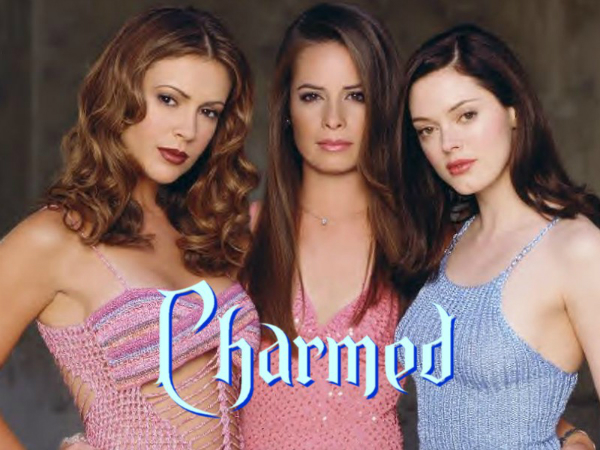
"Charmed" Poster
Charmed poster


This guest post by Scarlett Harris appears as part of our theme week on Women and Work/Labor Issues.

Despite all the midriff tops and high heels worn while fighting supernatural beings, and despite the damaged household items, buildings and cars which seem to miraculously be fixed by the next episode, if not before, Charmed is a lesson in work/life balance.

Throughout the eight seasons, which culminated in 2006, the Halliwell sisters struggle to balance demon fighting with romance, employment, study, and family.

The Charmed Ones spellcasting


Oldest sister Prue (Shannen Doherty) was killed off at the end of season three but not before she ditched her demon-dwelling auction house job at Buckland’s for freelance photography and bowed out of the dating game to focus on magic. As the head of a household whose mother died young, Prue was a maternal figure to her sisters, always concerned with putting family first, at the detriment to her love life and, ultimately, her actual life.

In “Which Prue Is It, Anyway?” from season one, Prue casts a spell to produce two carbon copies of herself, which carry out tasks such as dealing with her ex-boyfriend and cop on her case, Andy, while another one works on a spell with Piper and Phoebe, and yet another goes to Buckland’s to finish up some work. Talk about being a Superwoman!

Prue, Prue, Prue
Prue, Prue, and more Prue


Piper (played by Holly Marie Combs), who turns out to be the most level-headed and conventionally “normal” of the three sisters, gets fed up with being walked over in her season one job as manager of Quake restaurant and quits to open her own club, P3. She then gets seriously involved with whitelighter Leo, whom she marries in season three, and has two children with him, Wyatt and Chris. They then separate, Piper dates other people, they get back together again… Apart from the anguish of knowing their firstborn, Wyatt, grows up to be evil, Piper’s depiction as a frazzled “working mum” with a supernatural side really is the most realistic of the four Halliwell/Matthews sisters.

Piper becomes a mother


Which brings us to Phoebe (Alyssa Milano), the youngest of the original Charmed Ones until Paige comes along in season four. She enters the show as a free-spirit with a flawed perception of the future, or so we are led to believe by Prue, who’s had her issues with Phoebe in the past. In the first season alone she works as a hotel psychic, Prue’s assistant at Buckland’s and a real estate agent. After she casts a smart spell in “The Painted World” early on in season two, Phoebe decides to expand her knowledge for good and goes back to college. After graduating in season three (I wish I graduated college that quickly!), she goes on to write a successful advice column for The Bay Mirror newspaper, which fellow independent woman Elise edits.

We can’t forget Phoebe’s tumultuous personal life–her intense connection with Cole/Balthazar turn her into the queen of the underworld and the prospective mother of his demon spawn, she moves to China with millionaire boss Jason, becoming an aunty to Wyatt and Chris and, later, a mother to her own kids and taking a sabbatical from the newspaper because she’s feeling disconnected from her work. After Prue’s death, Phoebe takes on her longing for a less magical life which becomes somewhat of a reality for her in passing on the Charmed Ones’ knowledge to rookie witch Billie (a post-8 Simple Rules but pre-Big Bang Theory Kaley Cuoco) and the next generation of Halliwell witches.

Phoebe's column becomes famous
Phoebe’s column becomes famous


Half-sister Paige Matthews, played by Rose McGowan, enters Piper and Phoebe’s life as a social worker at the beginning of season four. She is unreceptive to being magical at first, and spends most of the first season trying to maintain a “normal life,” with a job, a boyfriend, and a new family who happens to be supernatural. (She, like Prue, later leaves the paid workforce to focus on witch duties full-time.) Throughout her televised tenure as a Charmed One, Paige dabbles in temp work with a magical twist, becomes a whitelighter and the principal of magic school, then marries and has kids.


Paige joins the family


Phoebe and Paige’s evolution through their working lives is particularly poignant to the millennial Charmed audience; many people I know grew up watching the three (or is it four?) sisters flitting from job to job in their quest to find purpose and fulfillment. And we don’t even have daily demon attacks to contend with! The support of their family is key in allowing the Halliwell’s to shun traditional careers in favor of part-time- and self-employment and working from home, much like Gen Y is able to save for house deposits and overseas gap years while living with their long-suffering parents.

Paige joins the family
The family that brews together, stays together


After all, that is what Charmed is all about: family—sisters who just happen to be witches, and everything that goes along with both of those roles. While the manifestation of three fully groomed and immaculately dressed sister witches each morning in the Halliwell manor, who spend their days flitting about town vanquishing demons, protecting the innocent, working their day jobs, caring for their family, going on dates, maintaining a home, studying, managing their own businesses, etc., is extremely unrealistic, the sheer magnitude of what the Charmed Ones have to go through each day is somewhat of a metaphor for what working women—especially those with an extended family who all happen to live under the one roof—go through on a day-to-day basis. And sometimes, they manage to take it in stride, just as the Charmed Ones do.


Scarlett Harris is a Melbourne, Australia-based freelance writer and blogger at The Early Bird Catches the Worm (soon to be undergoing a revamp; stay tuned!).

A Plea For More Roseannes and Norma Raes: Addressing The Lack of Working-Class Female Characters on American Screens

Working-class female protagonists remain rare, however. More often than not, working-class women play supporting roles as mothers, wives or lovers. Their characters are invariably underwritten or stereotypical.

Grey’s Anatomy


This repost by Rachael Johnson appears as part of our theme week on Women and Work/Labor Issues. 

Noam Chomsky recently observed that America is engaged in “a long and continuing class war against working people and the poor.” I would add that American popular culture does not, for the most part, represent poor or working-class American citizens. US television shows and movies about less privileged people are exceptionally rare. This lack of representation is becoming increasingly indefensible in the face of acute–and expanding–economic inequality. It is also a vital feminist issue as women are still poorer than men in the United States. The US government itself released a report in March 2011–the “Women In America” report–showing that a wage and income gender gap between men and women still exists in the 21st century. Poverty rates for less advantaged women are higher because they are in low-paying occupations and because they are often the sole breadwinner in their family. There are stories behind the figures, of course, but they are seldom told on the screen. Clearly, it is time for filmmakers of all backgrounds to address this unjust and frankly absurd lack of representation. The issue should also, of course, be of interest and concern to both critics and consumers of American popular culture.

Monster
Monster


Of course, it goes without saying that there are not nearly enough American movies with female protagonists and characters in general. Even less common, however, are features with less advantaged women. An arbitrary list of films with female protagonists and important characters covering the last decade might include Lost in Translation (2003), The Kids are Alright (2010), Black Swan (2010), Under The Tuscan Sun (2003), Up in The Air (2010), Julie and Julia (2009), Secretariat (2010), Eat Pray Love (2009), Bridesmaids (2011), Sex and The City 1 (2008) and 2 (2010), The Devil Wears Prada (2006), The Holiday (2006), Vicky Cristina Barcelona (2008) Fair Game (2010), Young Adult (2011), Zero Dark Thirty (2012), Stoker (2013), Side Effects (2013) and Gravity (2013). Clearly, all these movies are about professional and/or privileged women.

The heroines of contemporary American television are, also, for the most part, professional, upper-middle or upper-class women. Over the past decade, there have been a fair number of US TV shows revolving around the lives and careers of doctors, surgeons, medical examiners and lawyers. Damages, Gray’s Anatomy, The Mindy Project, Body of Proof, Bones, Private Practice and The Good Wife are among them. Currently, there are also shows depicting the lives of women who work for, or have a history with the US government, such as VeepParks and RecreationHomeland and Scandal. The heroines of 30 Rock and Nashville work in the entertainment industry. It was a similar scene, of course, in the late 90s and early part of the Millenium when shows like Sex and the City and Desperate Housewives enjoyed mass popularity.

My point is not to knock the shows and movies cited. Some are interesting, stylish and entertaining, and a number have compelling female protagonists. It is, also, of course, essential that we see female characters make their own way in professions traditionally monopolized by men. They reflect social change as well as inspire. It is equally essential that women of power are portrayed on the big and small screen with greater frequency as well as with a greater degree of complexity. American films and television programs should not, however, block out the lives of working-class and poor women. So many stories, struggles, journeys and adventures, remain unacknowledged and untold. It is a strange and troubling thought that contemporary American audiences are simply unaccustomed to seeing interesting, strong and resourceful working-class women. Whether ordinary or extraordinary, working-class women of all races and backgrounds, need greater representation.


Silkwood, 1983
Silkwood


I am, of course, aware that the term “working class” is rarely used in American public discourse. The term “middle class” is, in fact, used to refer to average Americans. The definition of “middle class” is, in fact, quite a fuzzy one but that does not stop US politicians from using it. For many non-Americans, this is a curious thing. Although the US definition of “middle class” is bound up with the meritocratic ideals of the American Dream, it ultimately represents a denial that class itself exists. To quote Chomsky again, it is a deeply political tactic used to mask social division and economic inequality: “We don’t use the term ‘working class’ here because it’s a taboo term. You’re supposed to say ‘middle class,’ because it helps diminish the understanding that there’s a class war going on.” This article specifically refers to the lack of representation of working-class and poor women on the screen. I am talking about the lives of waitresses, factory workers, maids, cleaners, cashiers, childcare workers, married home-makers and single mothers as well as those on the margins of society.

I am also fully aware of the eternally repeated claim that American audiences do not like TV shows or movies about poverty and working-class life because they find them just too damn depressing. Let’s take a look at that claim. Firstly, we have to ask ourselves who’s making it.  To be blunt, it smacks of privilege and complacency. Who’s the American audience in question anyway? Advantaged viewers? And what about working-class audiences? Do they not want to see their lives represented on the screen? Surely American popular culture should not merely provide narcissistic identification for the comfortable and well-heeled. Behind the contention lies the implication, of course, that working-class life is invariably depressing. This is patronizing and, frankly, offensive. Although poverty should never be romanticized, both American television and cinema should recognize that humor, love, and culture are all part of life for less privileged people. The fact that I have to even make this ridiculously obvious point is an indication of the way millions of people been obscured from the national narrative of the United States. The powers that be–and their pundits–should also, in any case, not make assumptions about what movie or show will be a great critical or commercial success. Nor should they patronize contemporary American audiences about what they can or cannot handle. Many of the best-loved shows of the Golden Age of TV have featured unsanitized, hard-hitting scenes showing human life in all its ugliness and glory. Can’t poverty be processed by TV audiences? Will class always be unmentionable?

The Good Wife
The Good Wife


We also have to ask if there is strong historical evidence to back up the claim. A quick study of American films and television shows over the last 40 years or so shows that working-class female characters have, from time to time, actually been celebrated in popular culture. Roseanne is, of course, the most famous small screen example. Featuring a fully realised working-class female protagonist, the hugely popular, award-winning sitcom ran from 1988 to 1997. Roseanne was, in fact, exceptional in that it gave the world a ground-breaking TV heroine as well as a funny and compassionate portrait of an ordinary, loving blue-collar American family. Memorably played by Roseanne Barr, the matriarch of the show had warmth and wit as well as great strength and character. She was that most uncommon of creatures on US television: a working-class feminist. I’m sure I’m not alone in saying that America and the world needs the wise-cracking words of characters like Roseanne more than ever. A cultural heroine is currently badly needed today to deflate the criminal excesses of corporate masculinity.

2 Broke Girls
2 Broke Girls


In the 70s and 80s, there were even films about heroic female labor activists. Take Norma Rae (1979) and Silkwood (1983). Drawing on the real life experiences of advocate Crystal Lee Sutton, Norma Rae (1979) tells the tale of a North Carolina woman’s struggle to improve working conditions in her textile factory and unionize her co-workers. Silkwood (1983) chronicles worker and advocate Karen Silkwood’s quest to expose hazardous conditions at a nuclear plant in Oklahoma. Both films feature well-drawn, dynamic, complex female protagonists, vital, persuasive performances and compelling story lines. Meryl Streep is customarily exceptional as Karen Silkwood while Sally Field won a Best Actress Oscar for Norma Rae. The latter’s “UNION” sign is, in fact, the stuff of cinema history. Although these narratives center around the individual–in a classically American fashion–they are, nevertheless, about women who are fighting for others. There have been other female labor organizers in American history, of course. Why are filmmakers not interested in their extraordinary careers? Why can’t there be biopics about women like Dolores Huerta? And tell me this: Why is no one interested in the pioneering life of Lucy Parsons?

Wendy and Lucy
Wendy and Lucy


A few mainstream films have endeavored to expose brutal maltreatment of working-class women in American society. Based on a true story, The Accused (1988) is about the gang rape of Sarah Tobias (superbly played by Jodie Foster), a waitress who lives in a trailer home with her drug dealer boyfriend. Jonathan Kaplan’s drama is actually quite unusual for an American film in that it acknowledges the factor of class in the victimization of its female protagonist. For the “college boy” rapist in particular, Sarah is nothing more than “white trash.”

Have there been more historically recent exceptions to the bourgeois rule? Over the last decade or so, there have been a small number of films that have featured disadvantaged female protagonists. Patty Jenkins’ Monster (2003) is a striking example. Monster is based on the real-life story of Aileen Wuornos, a street prostitute and killer of seven men in Florida in the late 80s and early 90s. Unusually, sexuality, gender, and class intersect in the film. A sex worker in a relationship with a young lesbian woman, Wuornos defied the gender and sexual norms of her time and place. Money–the lack of it–is also seen to play a pivotal part in her fate. Jenkins paints Wuornos as an unstable, brutalized woman wounded by past abuses. Monster is a controversial film. Some argued that provided a too sympathetic interpretation of the convicted killer. Was Wuornos an unbalanced, victimized woman or simply a cold-blooded psychopath? What is clear is that Monster tries to contextualize violence. Not many American filmmakers dare to seriously address the social and psychological effects of poverty and abuse in their portraits of murderers. Channeling the fractured psyche of this most marginalized of women, Charlize Theron’s Oscar-winning incarnation as Wuornos is, simply, a tour de force. Why Monster was not nominated for Best Film or Best Director tells us a great deal about misogyny and classism inside the Academy.


Norma Rae


Clint Eastwood’s Million Dollar Baby (2004) is another well-known film also about a less-advantaged woman. It is the story of Maggie Fitzgerald (played by Hillary Swank in another Oscar-winning role), a waitress who wants to be a boxer. While its portrait of the movingly dogged and committed Maggie is greatly sympathetic, that of her family–including her mother–is deeply offensive. They are characterized as “white trash” welfare parasites. Maggie is depicted as a very different, noble creature who must cut loose from her nasty roots and class. In Million Dollar Baby, we have, in fact, a well-drawn, sympathetic female character of modest origins as well as an ideologically loaded, hateful take on working-class men and women. Maggie is a working-class girl who has been emptied of all class-consciousness. Audiences and critics alike always need, therefore, to ask themselves how less-privileged women are being portrayed on the screen and how class is being represented. They should call out discriminatory portraits.

More recently, there have been movies about less-advantaged women but they remain uncommon. Debra Granik’s Winter’s Bone (2010) is a critically successful case in point.  Set in a crime-scarred community in the rural Ozarks, Winter’s Bone is the story of Ree Dolly (Jennifer Lawrence), a 17-year-old girl struggling to save her family home. Ree’s missing father, a local meth cooker, has put the family property up for his bail bond and she must find him or risk losing everything. Granik provides the viewer with a sympathetic portrait of a determined yet disadvantaged young woman at risk. Winter’s Bone never, however, drowns in sentiment. The scene where Ree surrenders her horse–she can no longer afford to keep it–is portrayed in poignant yet understated fashion. Winter’s Bone contains intimate scenes of quiet power. We watch Ree teach her younger siblings to prepare deer stew and to shoot and skin a squirrel. This is a world you rarely see in Hollywood movies. Winter’s Bone has its flaws, all the same. The skies are perpetually grey and there is an improbable lack of humor in the community portrayed. More importantly, while it depicts hardship and shines a light on rural social problems, Winter’s Bone cannot really be said to critique class or structural inequities. Its narrative is typically or mythically American. Granik’s heroine is engaged in a personal rather than collective struggle. In the end, Winter’s Bone is a tale of a tough, sympathetic individual fighting for her family’s financial security.

Roseanne
Roseanne


There are other filmmakers who are interested in the lives of struggling and dispossessed women. Kelly Reichardt’s Wendy and Lucy (2008) is a deeply humane story about a young woman’s search for work in the American North West. It is a simple tale that provides the viewer with a little understanding of what life is like for a girl (Michelle Williams) who sleeps in a car, with only her beloved dog for company. Its sensitive observations and empathetic insights, in fact, make Wendy and Lucy quite invaluable. Released the same year, Courtney Hunt’s excellent crime drama Frozen River is about a store clerk who becomes a people smuggler. Its central character (terrifically played by Melissa Leo) is a strong woman who has chosen to take a criminal path to support her sons and save her home.

Working-class female protagonists remain rare, however.  More often than not, working-class women play supporting roles as mothers, wives or lovers. Their characters are invariably underwritten or stereotypical. A case in point is the character of Romina (Eva Mendes), a diner waitress and lover of the male protagonist in Derek Cianfrance’s tragic though self-indulgent sins-of-the-fathers epic, The Place Beyond the Pines (2013). The purpose of Romina, it seems, is to wear a pained expression and bear witness to reactionary patriarchal sentiment. Again, we need to respond to representations of working-class women critically.

While sexual abuse and domestic violence is a fact of life for women and girls across the socio-economic spectrum, it is, arguably, more common for working-class female characters to be portrayed as victims on the screen. I am not, of course, saying that filmmakers should not shine a light on the suffering of poorer victims of abuse. What I am suggesting is that the imbalance locks less privileged women and girls into the victim or martyr role in cultural representations. As powerful a depiction of abuse Precious (2009) is, it arguably perpetuates deeply offensive classist and racist stereotypes.

Winter's Bone, 2005
Winter’s Bone


Less privileged women are perhaps even more poorly represented on the small screen. Some may suggest that the question of money, or the lack of it, is being addressed in shows such as Girls and 2 Broke Girls. The former, of course, revolves around the personal struggles and adventures of a 20-something woman finding her way in New York. The comedy-drama, however, does not explore what it’s really like to be without money in a big city and its characters are not, of course, working-class girls with few options and no cushion. The comedy 2 Broke Girls does have a working-class protagonist. Yet while it is about women who have two jobs, and while its humor is, in part, directed at privilege, it cannot be accused of being a great satirical comedy about economic inequities. It is, in fact, both classist and racist in its humor. Are there, in fact, any contemporary US comedies that truly target economic inequality? Are there any US dramas that express anger at class divisions? What is, unfortunately, apparent is that the current Golden Age of American television does not have authentic working-class heroines.

Clearly, there needs to be a much greater representation of working-class and poor women in US popular culture. How can the lives of millions of American citizens be reflected so rarely on the screen? There should also be socially aware portraits of such women. Filmmakers should respond to the outrage of millions and confront economic inequality. They should, also, not be frightened of being political. Economic inequalities should not remain unanalyzed and unchallenged. Hardship should not be hidden but movies and TV shows that represent working-class life should capture both its joys and struggles. Working-class women need not be portrayed as angels or martyrs. Vivid, complex characters are needed. Filmmakers need to remind themselves that there have been great working-class heroines in American film and television. More stories are needed about less privileged women who work to change the lives of themselves and others. Writers and directors should portray the lives of politically active working-class women as well as the careers of great social activists. They are the stuff of great drama. The huge popularity of Roseanne illustrates that Americans have been more than willing to embrace shows about working-class life. Roseanne also showed that the lives of working-class women can be depicted with both heart and humor. Imagine, if you will, a satirical sitcom set in a Walmart-like store. If braver choices were made, and if braver filmmakers were given greater attention, a working-class feminist consciousness would be given a voice in American popular culture.


Bitch Flicks’ Weekly Picks

Check out what we’ve been reading this week–and let us know what you’ve been reading/writing in the comments!

recommended-red-714x300-1


The Women’s Media Center: The Status of Women in the U.S. Media 2014 at Women’s Media Center

Charts: Hollywood’s White Dude Problem by Nina Liss-Schultz at Mother Jones

TV: Lisa Edelstein, Janeane Garofalo to Star in Marti Noxon’s New Bravo Series by Inkoo Kang at Women and Hollywood

Meet Saudi Arabia’s first female editor-in-chief of a national newspaper by Maya at Feministing


What have you been reading/writing this week? Tell us in the comments!


Seed & Spark: The Effect of Being ‘Taken’: The Commodification of the Female Body

But this to me is the part we should pay attention to. When we don’t get to be headstrong, sexy scientists with daddy issues, we’re locked away. Because evidently we’re worth a lot, which while flattering, also insinuates that we are prizes that can be traded, bought, or stolen. In any film of the above mentioned genres, it’s safe to assume that at some point, the concerned wife, sexy girlfriend, or charming daughter will be kidnapped. When the body is used as a bargaining chip, the images that flood our minds are women tied to chairs, kidnappers holding phones to our crying faces, and makeshifts rag gags in our mouths.

This is a guest post by Mara Gasbarro Tasker.

As much as I would love to have Liam Neeson running around after me all day, I’d rather it not be because I had been abducted and stuck tied to a chair. But this seems to be one of the only ways that we get to see women on screen in today’s high stakes thrillers. In my last post, I talked about the use of rape in storytelling and its commonplace usage as a catalyst in stories. Today, I wanted to shed some light on the use of kidnapping the female body for the purpose of narrative drive.

Women have limited opportunities on screen; we all know this to be true and there are a number of reasons that this is the case. But looking beyond that fact, I think it’s important to examine the effects of these images. I don’t deny that I love fast-cutting action films. But when thinking back to a significant number of action, thriller, and psychological films, it’s challenging to think of some that don’t include the taking of a female body.

Take Blake Lively in Savages, or Penelope Cruz in The Counselor, or Maggie Gyllenhaal in The Dark Knight, or Kristen Rudrud in Fargo, or Maggie Grace in Taken.

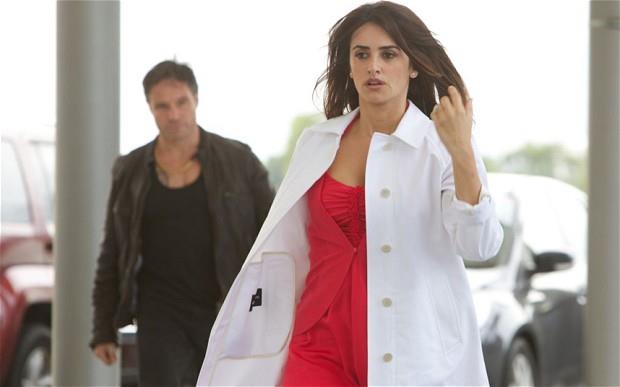
Penelope Cruz being stalked in "The Counselor"
Penelope Cruz being stalked in The Counselor


Each of these films and many, many more, use the kidnapping of a female character, of the female body, to raise the stakes. It appears we’re worth something valuable to the story. But as pieces, not players.

Blake Lively Savages
Blake Lively in Savages


What’s concerning with these roles is that they perpetuate the quiet and commonplace commodification of a woman’s body, and it’s become the main function of our characters on the screen. This technique of taking someone hostage has been employed in well done ways before. Looking back to The Searchers, Natalie Woods’ abduction by the Comanches still plays on classic weaker female characters, while actually bringing about the space in the film for in depth character reveals and an odyssey that exposes many people over the course of 120 minutes. In films like The Dark Knight, it feels excusable to play on classic comic book themes of revenge, taking a female character hostage, and having some heroic and uniquely strong man come to save her. It’s a model Disney employs in many of its cartoons as well.

But this to me is the part we should pay attention to. When we don’t get to be headstrong, sexy scientists with daddy issues, we’re locked away. Because evidently we’re worth a lot, which while flattering, also insinuates that we are prizes that can be traded, bought, or stolen. In any film of the above mentioned genres, it’s safe to assume that at some point, the concerned wife, sexy girlfriend, or charming daughter will be kidnapped. When the body is used as a bargaining chip, the images that flood our minds are women tied to chairs, kidnappers holding phones to our crying faces, and makeshifts rag gags in our mouths. It seems strange that Jason Bourne and Ethan Hunt can work their way out of any god-given scenario but women, even the smart ones we encounter in films, can’t seem to stay out of trouble.

The problem is that this storytelling device has been overdone and like violence, is now often used as a lazy attempt to raise the stakes and create tension. Everyone who loves anyone knows that losing that person would drive them mad. But does it always have to be the woman?

David Foster Wallace, in his heartbreaking series of shorts in Oblivion, describes all human beings as being comprised of an infinite number of eternities. It’s one of my favorite ways to understand people now. And so I ask, if that’s the case, if we’re all made up of an infinite matrix of capable emotions and therefore reactions, why has film, an art that encompasses so many senses, boiled itself down to simplistic storytelling where the best way to ignite anger or the want of revenge in someone is to “take” his woman?

Kim (Maggie Grace) hiding from her abductors in "Taken"
Kim (Maggie Grace) hiding from her abductors in Taken


Let’s take a look at a few more contemporary films to illustrate this point, starting with Taken, and of course its sequels. Round one of Taken dishes up a nice storyline of a young American woman who travels abroad with her best friend, makes one ill-advised move and spends the rest of the film being sold into sex slavery. Meanwhile, her father, who thank god is Liam Neeson and has a very special set of skills (that he’s allowed to have, as male protagonists are), comes to save her. In Taken 2, shock me, shock me, Liam’s wife gets kidnapped.  In both films, it’s the stolen woman’s body that gets things moving and that allows this stretch of space on screen for our hero.

Bryan Mills (Liam Neeson) and his special skills in "Taken"
Bryan Mills (Liam Neeson) and his special skills in Taken

In Prisoners, a powerful film with incredible performances, who is it that goes missing? Who is made voiceless? Who is rendered a token of something? While in a film like this it is integral to the reveal of character and mystery, again we should ask – why at the cost of a young woman? Hugh Jackman’s character Keller Dover embarks on a manhunt when his daughter is kidnapped with her friend. Because why not? How many models have we seen where it’s not a female?  Man on Fire uses the same technique- a young woman, a young child, taken for sinister reasons because by simply holding on to her, our usual antagonists can cash out and manipulate their adversary, who we’re in turn cheering on to “recapture” the victim.

There are, of course, comedic twists like Fargo, which also happens to be a film I absolutely love. But again here, we have a female role whose purpose, while hilariously treated at times, is to be stolen, missing, and the tool in the story that the plot revolves around.

Enjoying the day's work (Steve Buscemi, Peter Stormare, & Kristen Rudrud) in "Fargo"
Enjoying the day’s work (Steve Buscemi, Peter Stormare, and Kristen Rudrud) in Fargo


My purpose in highlighting these tropes is that we must pay attention to the trade of the female body. If any characters in the film have a qualm, it is often settled by “taking” the other person’s loved one, and this is more often than not, a woman in their life. Our roles, as reflected back at us on screen, have limited dialogue because there is usually a rag in our faces keeping us from speaking.
We’re fed images of a woman who is made to disappear at some point in the film, left without a voice and made entirely helpless until the male protagonist comes along. This is plot device that is designed to distract from the fact that not enough story has actually been developed.

Remove the woman from this equation. You have character A wanting to get something from character B. There could be any number of mysterious ways to do this. Manipulation, lies, fights, theft, threats, coaxing. There are a thousand ways around the central and overused plot device of the female body. Personally, I think we’ve stop noticing. We’ve stopped paying attention to the fact that we are treated a commodities on screen. Not a far cry from the use of rape as a narrative catalyst, what does constantly kidnapping a woman say about what we are? We have become the stakes.

We have complacently accepted that a crime against a woman is rarely a crime against her. Rather, it’s an indirect attack against her husband, boyfriend, or father. It is a violation of the male character when the female is traded in some illicit way. Even intelligent, scientific, and clearly downplayed but sexy scientist characters somehow still find their way into these traps.  We identify these crimes against women as crimes against someone else. This removes us from the responsibility of a committing a heinous crime against a female figure and makes her simply a piece in the malefaction rather than the recipient of the aggression–which she is.

This rids us of human qualities. It rids women of screen time, of dialogue, of control. It once again quietly pushes us from roles as real people in film and in life, to props for narrative mobility. In using women in this way, we visually inform ourselves over and over and over again that our only option is to wait for someone stronger to come. . We’re the thing that they need to get back.

Liam Neeson, come running for me. Anytime you want. But I’d rather it be for love than because I didn’t have enough pepper spray on me to avoid a really shitty day.

*Side note worth mentioning – in trying to find images for this article, it was surprisingly hard to find pictures of the women in their hostage situation. It’s almost like it never happened. Or you find porn.

Mara Gasbarro Tasker

Mara Gasbarro Tasker is a filmmaker based in Los Angeles.  She’s currently working as an Associate Producer at Vice Media and has co-created the Chattanooga Film Festival, launching later this spring.  She holds a BFA in Film Production from the University of Colorado at Boulder.  She is directing a grindhouse short in April and is still mourning the end of Breaking Bad.

“I’ll Have the Car Drive Faster Over the Cliff” and Other Lessons from the 2014 Athena Film Festival

My entry point to this area is my interest in creating media that highlights women of color, queer people, its intersection, and other types of characters not often seen on screen. People who aren’t lawyers or in advertising. People who wear the same sweater more than once. People who don’t fit into prefab boxes. My conviction about the need for more diverse content won’t ever falter, but hearing truths from women working in the field is, unfortunately, a downer. While representation of women remains a glaring issue, it’s in the creation of stories and characters where we continue to see problems.

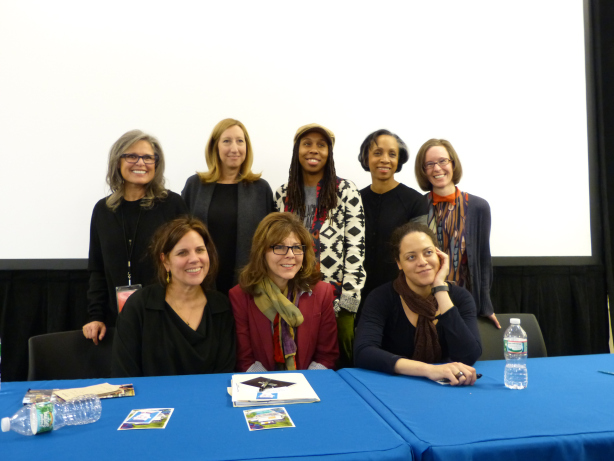
The Panel
The Panel


This is a guest post by Emily U. Hashimoto.

To reveal how films are created is to lose faith in a medium many of us love so much; perhaps like laws and sausage, it’s best not to see how it’s made. Yet for those of us interested in being a part of that process, the fascination lingers, and to this end I made my way to the Athena Film Festival last weekend, a three day celebration of women and leadership. The three day event featured films – including Frozen, Farah Goes Bang, In A World, and Maidentrip – as well as panels and workshops with seasoned professionals that are creating and helping to create strong portrayals of women.

My entry point to this area is my interest in creating media that highlights women of color, queer people, its intersection, and other types of characters not often seen on screen. People who aren’t lawyers or in advertising. People who wear the same sweater more than once. People who don’t fit into prefab boxes. My conviction about the need for more diverse content won’t ever falter, but hearing truths from women working in the field is, unfortunately, a downer. While representation of women remains a glaring issue, it’s in the creation of stories and characters where we continue to see problems. For example, during a panel with producers, an entertainment lawyer, and others, one woman who works in production said that when a film is in its initial stages and agents have the opportunity to suggest writers and directors, they won’t mention any women because they know the studio won’t go for it. When studio executives get asked why women’s names aren’t put forward, they say that agents won’t support those choices. What we have here is a classic catch-22 clusterfuck that’s hard to escape, without a suitable conclusion that puts more women to work.

Nina Shaw
Nina Shaw


This inclusion issue exists at all levels. Executives that are women or people of color aren’t willing to step forward to support a script about women or people of color, lest they be seen as ‘pushing an agenda.’ So even when there is more representation of studio executives, a balm you’d think is a panacea, the willingness to stick to the predetermined rules is more of a draw for the people who select this kind of work.

It kind of continues to be bad news.

The statistics don’t support a woman’s endeavor into film. San Diego State University’s Center for the Study of Women in Television and Film’s research tells us that in 2013, only 16% of all directors, executive producers, producers, writers, cinematographers, and editors involved in top grossing films were women. In television and independent film, women are better represented, with these figures being closer to 30%, but we’re still a long way from parity.

Callie Khouri
Callie Khouri


If one does make it through to the exclusive group of filmmakers, it doesn’t guarantee work. Nina Shaw, a leading entertainment lawyer, said during the panel that when studios are working on a project, they’ll have “The List” of possible directors and writers, a list that is often devoid of even one woman’s name. When she brings up women creators, the response is often, “Well, we talked about her…” She said, “it’s almost always a guy talking to a guy,” though as mentioned above, even having more women executives isn’t a boon to more women creators. The problem is bankability; women are not seen as people who can make a large-scale film because of the way we are perceived – never mind the fact that films with a woman lead are less expensive to make and end up making more money.

But the perception persists that women are not leaders enough to take the helm of a huge project. Directors (read: men) are supposed to be powerful, tough, and wise, and the way women are perceived clashes with that. When a woman director does sneak in the door and she displays the traits that a director should, there can be a terrible clash. Shaw described an anonymous situation of a woman director who had an adversarial relationship with her male producer on a film. She behaved as any director would, but that behavior made the producer bad mouth her all over town. She didn’t work steadily for years until she fell in with a successful female TV creator and showrunner.

Anna Holmes
Anna Holmes


Whether you work within the lines or not, as a woman creator you must be overwhelmingly prepared and talented. Lena Waithe, a queer woman of color that writes and produces, says that for women of color especially, there’s no room for mediocrity because you’re already seen as a risky entity. You have to work the hardest you’ve ever worked, while a male peer can, as Shaw described, get into a fight and be put in jail the night before a film starts shooting, halting production until he’s bailed out – and not get fired. If a female director pulled a stunt like that, she’d end up in “director jail,” a term for not being able to get work that Shaw said was very real.

Perception of women feeds into the writing process, too. Callie Khouri, writer of Thelma and Louise and creator of Nashville, said during her master class that before Thelma and Louise was made, the first question she’d get in a meeting was: “How are you going to change the ending?” Not “are you?” but “how?” – because what kind of movie ends with the female leads doing something as traditionally masculine as thinking the only way out is down? Khouri’s answer in these meetings was, “I’ll have the car drive faster over the cliff,” and her non-compromise formed what’s become a deeply iconic symbol of female friendship and rebellion. But it doesn’t change the fact that she was asked to make changes, a change that’s hard to envision someone asking of a male writer.

So. You’ve made your film, and Roger Ebert hates it and writes a really sexist review, which is the place Khouri found herself in after co-writing and directing The Divine Secrets of the Ya-Ya Sisterhood. Reviews from Ebert and others tanked the film at the box office, which wasn’t so surprising to Khouri because “women’s films are denigrated” by critics, many of whom are men. Khouri went further, insinuating that the criticism came from a less than objective place, because the film “wasn’t made for him.” This kind of frustration seems to be part and parcel of the job, but after years in Hollywood, Khouri is able to distinguish who does what. It’s someone’s job to be critical. “Our part of the gig,” she said, “is to say, well, fuck you. It got made.”

It certainly got made. Which feels like the perfect time to segue over to good advice and bright spots that came from panels and workshops at the festival:

Khouri said try – to write, to direct – then finish. It’s simple advice, but many people are nervous to try their hand at something they’ve never done. Waithe attested to this, too: she offered to produce a friend’s film without even knowing what a producer does. This kind of go-with-it attitude sparks against the more gender-enforced norm of wanting to master something before starting up, as founder of Jezebel.com Anna Holmes said is a trait she can’t easily discard. Even more specific than try and finish, Waithe said start with a question that your viewers will engage with; it’ll make your work much more interactive and innovative.

Where you’re working and who you know are integral to making moves in film. Khouri said you have to go to the ballpark to play ball, whether it’s Los Angeles or New York or wherever your particular form of creativity is taking place. Once there, spend time with people who know more than you. Learn from the wisdom that others can offer, and then be willing to play that role once you’ve been around the block. Once you’re in the space, you may have to start as an assistant, then work your way up; that seems to be the route for most of the women who spoke during the festival. There’s something refreshing about such meritocracy, even as it feels like a challenging path with no guarantee.

Lena Waithe
Lena Waithe


Having said that, you can always buck the system entirely. During the panel with women experts, there was a lot of discussion about Kickstarter, Indiegogo, and how independent filmmaking are the way to truly run the show. Putting your work and intentions out into the world ahead of an actual film being produced can be a great way to find your audience, involving them ahead of time, but it needs to be done well to stand out. Working with a producer who can help with marketing was one suggestion on how to make this work.

Once your content is in motion, deciding how it’s presented is another important step. The panel discussed Orange is the New Black and how Jenji Kohan created the show with its white female lead as the “trojan horse” to hook mass audiences, then tell stories of a diversity of women characters – older women, queer women, women who are well off, women living on the streets, trans women. Likewise, Shonda Rhimes created Grey’s Anatomy and Meredith Grey with a similar set up, both shows displaying the success in employing these kinds of tactics. This method clearly works, but Waithe said that she prefers to be more straightforward – that her characters are people of color, that they’re queer, and there’s nothing to hide. Creators need to make these decisions, to decide how they want to represent their work.

So much of the representation of women in film feels inorganic to our lived experiences. Waithe attributed that to the phenomenon of men writing female characters, which leads to men “telling stories that are foreign to them.” Indeed, it’s undeniable that a woman directed and/or written film can often be truer than, for example, the way Woody Allen writes women, but more than anything, the statistics tell us that we simply need more women writing and directing more stories. As Holmes put it, it’s “important to mainstream women’s voices,” which will serve the women pushing to get their work produced and seen, and the audiences of women and men who will benefit from more inclusion, onscreen and off.

For more on the Athena Film Festival, read this terrific interview with co-founders Kathryn Kolbert and Melissa Silverstein.


Emily U. Hashimoto is a writer interested in pop culture, feminism, sexuality, and its intersections. She’s currently working on a memoir about her women’s studies study abroad trip and a screenplay that she hopes will cement her as the queer Nora Ephron. You can find her at books-feminism-everythingelse or @emilyhash.


Bitch Flicks’ Weekly Picks

Check out what we’ve been reading this week–and let us know what you’ve been reading/writing in the comments!

recommended-red-714x300-1

Why Ellen Page Coming Out Matters In Hollywood by Dorothy Pomerantz at Forbes

Review: PBS’ ‘Alice Walker: Beauty in Truth’ honors a singular life by Mary McNamara at the Los Angeles Times

Five Reasons You Should Be Watching Comedy Central’s “Broad City” by Andi Zeisler at Bitch Media

BBC chief: no more comedy shows with all-male panels by Vanessa Thorpe at The Guardian

Real Talk on the Women of True Detective by Alyssa Rosenberg at Women and Hollywood

Talking ‘Women in Horror Month’ With Nobody Can Cool’s DPYX at Daily Grindhouse

‘About Last Night’ Writer on Reimagining Movie for a Black Cast (Guest Column) by Leslye Headland at The Hollywood Reporter

Beyond the Bechdel Test: Why It’s Not Enough by Tomris Laffly at Indiewire

UCLA Releases Scathing Report on Diversity in Film and TV by Melissa Silverstein at Women and Hollywood

Will Ferrell Launches Female-Focused Film and TV Production Company by Tatiana Siegel at The Hollywood Reporter

It Should Be Called ‘The Real Homophobes of Atlanta’ by Clay Cane at The Root

Greta Gerwig Starring on a CBS Sitcom is Great News by Margaret Lyons at Vulture

Here Are All the Different Genders You Can Be on Facebook by Will Oremus at Slate

Rewrite the Story by The Representation Project on YouTube


What have you been reading/writing this week? Tell us in the comments!

Bitch Flicks’ Weekly Picks

Check out what we’ve been reading this week–and let us know what you’ve been reading/writing in the comments!

recommended-red-714x300-1

The Best Super Bowl Tweets from the Real Feminist Bookstore by Melissa Locker at IFC

The Most Terrible Super Bowl Commercials by Rachel Lindsay at Bitch Media

Finally, A Super Bowl Ad Feminists Can Be Proud Of by Elizabeth Plank at PolicyMic

Review: ‘The New Black’ Offers Complex Portrait of Black Same-Sex Marriage Debate by Nijla Mumin at Shadow and Act

Is “The Wolf of Wall Street” Punk Rock? Hardly. by Karina Eileraas and Pye Ian at Ms. blog

Six International Films to Have On Your Radar (Or See this Weekend at PIFF) by Kjerstin Johnson at Bitch Media

The Big O: What’s at Stake for Cate in the Woody Debate? by Susan Wloszczyna at Women and Hollywood

Watching Gonzo Netflix: A Selection of Films I’d Really Like To See by Ella Risbridger at The Toast

Hollywood Needs To Redefine What Makes A Movie “Mainstream” by ReBecca Theodore-Vachon at Film Fatale NYC

Playwright Rebecca Gilman on Feminism, Class and Flawed Heroes by Paula Kamen at Ms. blog


What have you been reading/writing this week? Tell us in the comments!


Seed & Spark: Go Big or Go Home

What I like about this film is that not only did we come up with a full female driven story, but every woman in this film is a bad ass. No meek characters here. Every single one of them has a strong point of view and sense of self. Those are two things I think we need to focus on in this male dominated industry. As characters, and as women on sets, we can’t be afraid to take charge, voice our opinions and be ourselves.

Elena directing The Catch


This is a guest post by Elena Weinberg.

Being a female filmmaker isn’t hard, but it is definitely interesting. Maybe that statement isn’t true for everyone; maybe I just surround myself with good people. Either way, making films has been great for me as a person, but especially as a woman.

In December of 2012, my partner, Duncan Coe, entered into a screen writing contest. He has been a playwright for years and thought “Why the hell not? I’ll try my hand at the screen too.” The catch was that if he made the top 20, they wanted to see films he had written, produced or directed. So, it looked like we needed to make a film, just in case. But in Texas we have this phrase: “Go Big, or Go Home.” So, instead of just making one little short film in case he got in, we decided to go on a 12 month long journey. See, I got my degree in acting, and he got his in acting and writing. Neither of us knew anything about the behind the camera stuff. But hey, we live in the digital age, we could learn, right? So, we did. We decided to make one short film a month for the year of 2013. Each month we would focus on something different that we hadn’t learned yet.  The first month, we did a music video for a friend’s band so that we didn’t have to worry about sound. The next month, we focused on specific shot techniques. March and April focused on voiceovers and live sound. By August, we were getting creative and even tried our hand at stop-motion. He didn’t make the top 20 of the contest, be we had grown into something much bigger than that. We had formed a production company, TurtleDove Films, out of sheer will and determination. We finished the twelve months and not only came out alive, but even have 2 film festivals under our belts and one award.  What an accomplishment, right?

Still of actress Kimberly Gates, who plays Jamie in The Catch


That’s all great on paper, but let’s dig a little deeper. What was this experience like for me, as a woman? It was pretty crazy good.  Duncan and I fell into our roles early on: he wrote and did cinematography and I directed and business managed. As the female in our duo, I got to be in charge.  Now, that has nothing to do with the fact that I AM a woman (I’m just naturally better at taking charge and more organized than he is) but it definitely feels good to be a female in that position.  I found myself looking for ways to empower myself and other women on my sets. In November, I decided to challenge Duncan on the writing end. I pointed out that we hadn’t had a full female cast yet, and that most of our female characters hadn’t been particularly strong.  He’s a “write what you know” kind of guy, so he blamed that on being a dude and not really understanding women.  I called bullshit and told him he just needed practice.  So, “The Catch” was born. (Watch it free to play, here: https://vimeo.com/80720328).

What I like about this film is that not only did we come up with a full female driven story, but every woman in this film is a bad ass.  No meek characters here. Every single one of them has a strong point of view and sense of self.  Those are two things I think we need to focus on in this male dominated industry. As characters, and as women on sets, we can’t be afraid to take charge, voice our opinions and be ourselves. Maybe I’m just lucky, but when I’m directing on set, it feels really really good. People listen to me and value my opinions. Since TurtleDove’s inception, I’ve grown exponentially as a director: after just one three hour directing class in college, I had no idea if I was going to be able to do it. Spoiler alert: I did it. And I now identify as a director. But guess what else that has done for me? It’s made me a better actress. On top of that, it’s made me a stronger person. It’s even made me a better audience member.

I’ve discovered that I’m capable of anything I set my mind to. TurtleDove is now a licensed LLC and we are crowdfunding through Seed & Spark to raise start-up funds for our in-home studio. Before last year, I never dreamed of being a business owner. But, I stood up, owned my woman-hood and said “yes, I can.” So, whether you’re a female director, producer, actress or film buff, I encourage you to keep your strength in mind. Being a female in film is anything but boring. But if it was boring, what would be the point?


Elena Weinberg
Elena Weinberg


Elena Weinberg is an actress, director and producer. She graduated from Saint Edward’s University in Austin, Texas with a BA in Theatre Arts. She co-owns TurtleDove Films, LLC in Austin, Texas. TurtleDove Films is currently running a 60 day campaign on Seed&Spark to fund start-up costs for the production company (www.seedandspark.com/studio/turtledove-films) In addition to filmmaking, she is active in the local theatre community, a yogi, a cat lady and an avid San Antonio Spurs fan. The way to her heart is with wine, cheese and pickles.