On Loving ‘Her’ … and Why It’s Not Easy

But, as a woman in the audience, my relationship to these types of characters, who are reliably, predictably, boringly male, is fraught. I relate to them, but only insofar as I must continually reinvest in the myth that men are the only people who are truly capable, truly deep enough, of having wrenching crises of the soul. Even though I know this to be false in reality—women experience alienation and existentialist ennui, too (I can’t believe I even just typed that)—I am deeply troubled that the experience of this sort of angst seems to be the exclusive province of men in our cultural imagination.

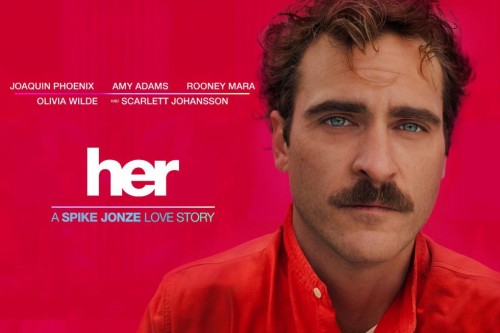
Her movie poster
Her movie poster


This guest post by Lisa C. Knisely previously appeared at Medium.

Her is an achingly beautiful film that adroitly explores postmodern alienation and the alterity at the heart of our relationships, both with other humans and our increasingly intelligent machines. I found the lonely, withdrawn main character, Theodore (played by Joaquin Phoenix), to be an immensely relatable and sympathetic protagonist.

But, that’s the problem.

Much like Joseph Gordon-Levitt’s character at the beginning of 500 Days of Summer, we know Theodore is a sensitive and depressed dude from the moment we see him listening to “melancholy songs” in the elevator as he leaves work at a large and impersonal office building in the city. And, like Jim Carrey’s character in Eternal Sunshine of the Spotless Mind, we soon come to find out that Theodore was once deeply in love with an emotionally complex and intelligent woman who has left him heartbroken. Films like Her bank on the audience’s ability to relate to the experiences of lost love and existentialist ennui of their main character.  And we do. As, I think, we should.

Joaquin Phoenix and Amy Adams in Her


But, as a woman in the audience, my relationship to these types of characters, who are reliably, predictably, boringly male, is fraught. I relate to them, but only insofar as I must continually reinvest in the myth that men are the only people who are truly capable, truly deep enough, of having wrenching crises of the soul. Even though I know this to be false in reality—women experience alienation and existentialist ennui, too (I can’t believe I even just typed that)—I am deeply troubled that the experience of this sort of angst seems to be the exclusive province of men in our cultural imagination.

Why are these stories we tell, stories about something I would venture to call essentially human, also largely stories about being men? As Noah Berlatsky points out in a piece for Salon.com, “In Her, difference is simply subsumed into a single narrative of midlife crisis and romance — everybody’s the same at heart, which means everybody is accepted as long as their stories can be all about that white male middle-age middle-class guy we’re always hearing stories about.”

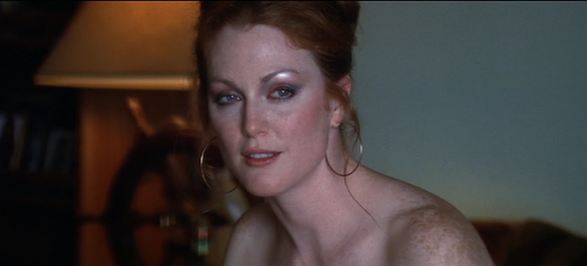
Amy Adams in Her
Amy Adams in Her


And women? Well, we’re mostly relegated to the role of foils for man’s (meaning men’s) quest for meaning, transformation, and lasting human connection.  As Anna Shechtmen writes in a piece for Slate.com, “Her commits the most hackneyed error of the big screen: It fails to present us with a single convincing female character—one whose subjectivity and sexuality exist independent of the film’s male protagonist or its male viewers.”

While I agree with Shechtmen’s assessment, I’d also wager that there is nothing particularly unusual about this state of affairs in a great many Hollywood films. That the main female character in Her is a disembodied operating system through which (whom?) Theodore’s subjectivity is revealed and transformed didn’t strike me as unusual. Zooey Deschanel’s character in 500 Days of Summer might as well have been a disembodied computer voice as far as I’m concerned.  Ditto Natalie Portman in Garden State. Ditto Scarlett Johansson in Lost in Translation.  Ditto Helena Bonham Carter in Fight Club.  Ditto the real doll in Lars and the Real Girl. Ditto any film where the role of the main female character is to be a beautiful and sexually available aid to the male protagonist’s gradual transformation as he gains a deeper level of self-understanding as he learns to connect with others.

Joaquin Phoenix in Her


Maybe Samantha, the operating system voiced by Scarlett Johansson with whom Theodore falls in love in Her, is just the ultimate Manic Pixie Dream Girl. Or maybe Spike Jonze is critiquing contemporary heterosexuality in which men project their desires onto objectified women. As Shechtmen notes, “One could argue that Jonze knows just what he’s doing…he is foregrounding Samantha’s role as the dark screen upon which we can project our erotic and romantic fantasies.” Daniel D’Addario at Salon.com maintains that the critique of possessive masculine desire is exactly Jonze’s point in Her, writing, “[the] evocation of female sexuality as easily controlled isn’t what the film is telling us is inherently good; calling to mind the control Theodore seeks to have over women doesn’t mean Jonze is seeking the same control. If anything, making Samantha invisible totally forecloses the option of the ‘male gaze’….”

While there is an implicit feminist critique of masculine heterosexual romantic desire in Her, D’Addario is oversimplifying the concept of the male gaze. The male gaze, as it was developed by feminist film critics like Laura Mulvey, isn’t just about women being sexually objectified and gazed at on screen; it is more deeply about the way a film structures its viewpoint so that we, the audience, are made to see through the eyes of the (usually male) protagonist and thus identify with him. In Her, there is only one brief moment during the film where the camera switches and we see Theodore from Samantha’s viewpoint. Any other glimpse of her subjectivity we get solely through Theodore’s relationship to her.

Theodore (Joaquin Phoenix) goes on a date in Her


One can argue that all people, of any gender, project a certain amount of fantasy onto others in our intimate relationships with them. This too, seems to be something definitive of human experience. And Her examines that experience thoughtfully, with complexity, pushing our conceptual understanding of what it is to be “human” at a moment in history when we are more and more becoming cyborgs.

Still, I have trouble coming up with a Hollywood film where a woman’s subjectivity, her struggle for meaning, self-transformation and connection with others, has truly taken center stage in such a way that men in the audience are expected to identify with her story as one that is universal. Even more unimaginable, and currently unrepresentable in our current cinematic landscape, is a film in which a man or men operates as a reflective vehicle for a woman’s existential journey.

Go see Her. Ache with Theodore. Enjoy the beautiful aesthetic of the film. But, take a minute to imagine, too, if Joaquin Phoenix had played Sam to Scarlett Johansson’s Thea instead. That’s a film I’m still waiting for someone in Hollywood to write, direct, and especially, to produce.


Recommended reading: “Meet Samantha, the Manic Pixie Operating System in Her: A Review in Conversation”


Dr. Lisa C. Knisely is a freelance writer and an Assistant Professor of the Liberal Arts in Portland, Ore. 

Seed & Spark: Dandie and Me

When the screenplay for ‘Black Hat’ finally arrived at my desk to read, I knew immediately that I wanted to produce it. Not because of its very unique backdrop of anime, manga (Japanese comics), and cosplay, which certainly adds a fresh slant to this “road trip” movie, or because of its subject matter—teen bullying—which is so prevalent today in schools (especially in the LGBT community). I certainly find myself wanting to talk to each and every one of these kids, who have feelings of isolation, loneliness, and despair everyday. I want to hug them and tell them, “This is not the end; it is barely the beginning.”

-1

This is a guest post by Christie Botelho.

When the screenplay for Black Hat finally arrived at my desk to read, I knew immediately that I wanted to produce it. Not because of its very unique backdrop of anime, manga (Japanese comics), and cosplay, which certainly adds a fresh slant to this “road trip” movie, or because of its subject matter—teen bullying—which is so prevalent today in schools (especially in the LGBT community). I certainly find myself wanting to talk to each and every one of these kids who have feelings of isolation, loneliness, and despair everyday. I want to hug them and tell them, “This is not the end; it is barely the beginning.”

But, no, that’s not what had me hooked by this amazing project, although what a fantastic bonus and privilege it will be to tackle. News that the family of a beautiful, disabled, young woman named Cassie England—to whom we were introduced before she passed away from a rare skin disease—requested that we name a main character after her so that Cassie could be “immortalized” as someone she loved and dreamed to be. That’s not the reason that this film tugs at my heart…although it helps.

No, what did it for me was the main character, Dandi, an alternative 16-year-old girl who loves everything anime, manga, cosplay, and the musical group Slipknot. As I read about this young lady who marches to the beat of her own drum, I couldn’t help but laugh remembering the day I came home to my family in the straight-laced, middle-class, tiny town of Wales, MA back in the late 1980s sporting a shaved scalp on the right side of my head. My mother and father were very supportive parents, no doubt, but I couldn’t help but notice a bit of blood coming out of the side of my dad’s mouth where he’d been biting his lip—figuratively and literally—and my mother reaching for another cup of coffee, even though she had already hit her two-cup limit.

Then again, they knew their daughter had long sealed her reputation of marching to the beat of HER own drum ever since the day I showed up at school wearing my dad’s pajamas, a fedora, and (of course, the only acceptable footwear to round out my fabulous ensemble) a pair of perfectly shined combat boots.

This is not to say that I was an irresponsible adolescent. I wasn’t, and neither is Dandi in the film. She goes to school and works two jobs, one at her family’s cleaners and another at a New Age store, just so she has the cash to create her own magical cosplay (costumes emulating anime characters that cosplayers wear at conventions, to express themselves in ways they can’t at home or at school) and to pay for travel, hotels, and entrance fees to the conventions.

Much like Dandi’s parents, my family could afford to get me certain things, but it was made clear at an early age, that if I wanted the coolest new outfit or to attend a class trip, I was going to have to pay for it on my own. I starting working at 13, babysitting for several families, including one single father of three who worked the graveyard shift and would wake me up when he got home so I could wash up in time to go to school. I worked summers at the billing department at the hospital where my parents both worked, waited tables all through college, and worked at the local dance studio where I took classes until I graduated from Emerson College, where I received a degree in theatre and dance. From there I moved to NYC to pursue a career in the arts.

Today, I am old enough to be Dandi’s mother, and it is fun for me to sit back and think of where this kindred spirit of a girl will be when she gets to be my age. You never can tell where life will take you. The girl who once shaved the side of her head and wore her dad’s PJs to school got a temp job at a computer IT company almost 20 years ago and pounded the pavement looking for acting gigs. From temp, I was promoted to office manager, then marketing manager, then director of operations, and now I am the COO of that same multimillion-dollar company. Not a day goes by that I don’t smirk a bit at the ascent in an almost totally all-male environment. But more so, think about what all my dance teachers would say if they could see me now!

I am thrilled that I can still keep my roots in being a creative (and now business) force at Good To Be Seen Films to help bring this touching story to life—because of the teen bullying topic we are tackling, because of being able to ease, if ever so slightly, the pain of Cassie England’s family as we remember her through a character in the film.

Mostly, though, because I can tell the story of this free-spirited soul who marches to the beat of a very special drum…who wants to be who she is, without taking anything away from you or me. Just let her be her. And smile warmly thinking back to another odd drumbeater from a small town who did pretty okay taking the her own path.

Follow our project at http://www.seedandspark.com/studio/black-hat and support teaching tolerance through storytelling by contributing to our crowdfunding campaign.


Christie Botelho, producer - executive producer
Christie Botelho, producer – executive producer

Christie Botelho attended Emerson College where she received her BFA in Performance. Upon graduation she formed Mass Motion Dance Company with co-founder Terri Gordon, formerly of the Boston Ballet. 

She moved to NYC in 1995 where she began to pursue a career in acting and dance, honing her craft at the Michael Howard Studios and studying with dance aficionados, Linda Kent and Donald Byrd, while continuing to work in both television and film mediums.

In 1998 with her partner Robbie Bryan, she formed Good To Be Seen Films, and Executive Produced the company’s first independent feature, The Stand-In. GTBS Films has two projects on tap for 2014, including the family-friendly The Mighty Misfit Kids, from Robbie Bryan’s World Fest Houston Silver Remi-Winning screenplay, and the anime/manga-themed “Black Hat”, starring Jodelle Ferland (Twilight, Silent Hill), which while mostly narrative, will include ten minutes of anime from world-renowned Japanese Producer Masao Maruyama and music from the band SLIPKNOT.

In addition, Ms. Botelho continues to serve as Chief Operating Officer for a high-level technology consulting company in NYC.

Women’s Bodies in the Oscar-Nominated Films

What is telling is the presence of so many films that either elide or sexualize female bodies in the category that presumably represents the best of the best. The Academy clearly has a critical preference for movies about men, with women present primarily as wives and sex objects.

video-undefined-19A6CE7F00000578-696_636x358
The Wolf of Wall Street

This guest post by Holly Derr previously appeared at Ms. Magazine and is cross-posted with permission.

Jake Flanagin at Pacific Standard and Victoria Dawson Hoff at Elle recently floated an interesting idea: The Oscars should be entirely segregated by gender. Their proposal would create categories such as Best Female Director and Best Female Writer in addition to the already segregated acting awards.

Though this would lead to recognition of more women working in the field, it wouldn’t solve one of the Oscars’ main gender problems: the Academy Award for Best Picture. Most films are produced by teams of both men and women, making segregation in that category impossible. And yet, the Best Picture category is where we can see the clearest evidence of the Academy’s preference for male-driven films. Only three of the nine films nominated this year even have women in leading roles: American Hustle, Gravity and Philomena.

Perhaps as significant as the lack of women characters is the treatment in these films of women’s bodies. The main female character in Her is not even human, allowing the film and its central relationship to avoid dealing with the messy reality of  women with bodies. In Dallas Buyers Club, one of the two female-gender-identified characters is played by a cisgender man, effectively replacing a body that would raise interesting questions about the difference between sex and gender with one that is much easier to understand. One cannot help but wonder, if a trans actor had played the role, in which category would she be eligible for a nomination?

Where women’s bodies are present in these films, they are almost always objectified through an emphasis on their sexuality. In The Wolf of Wall Street, one woman has sex on top of a pile of  money (the actor says her back was covered with paper cuts after filming) and another woman literally wears money. One could argue that these moments are designed to reveal the callousness of the male characters, but in imagining and glamorizing a world without any female characters who aren’t objectified, the film ultimately endorses its characters’ worldview. The main female character in 12 Years a Slave is literally a possession, and she is repeatedly raped. Unlike with The Wolf of Wall Street, which encourages the audience to identify with criminals, 12 Years a Slave invites us to sympathize with the victim rather than the perpetrator. In this way, the film does at least provide a critique of turning women into objects, rather than an endorsement.

o-12-YEARS-A-SLAVE-PRESS-IMAGE
12 Years a Slave

American Hustle provides the clearest example of Hollywood’s inability to deal with women’s bodies without sexualizing them.Though most of the fashions in which the male characters adorn themselves–from the polyester to the conspicuous chest hair to the hairstyles–are quite unsexy, the women are dressed in ways that reveal their every curve. Though plunging necklines were popular for evening wear in the era portrayed in the movie, women also wore formal dresses that, by today’s standards, look like your grandmother’s nightgowns. During the day, women wore button-up shirts with large collars; the most popular woman’s outfit of the decade was the pantsuit, and hair was more commonly worn natural than elaborately styled.

amy_adams_wardrobe_malfunction_a_p
American Hustle

It makes sense for Amy Adams’ character to wear a dress cut down to her belly button, but when her character impersonates a British aristocrat, it would have been more logical to have her button up. She would still have been sexy and her talent would have shone just as brightly without an outfit that invites the viewer to spend most of the scene staring at her boobs. Similarly, the notion that a troubled housewife would wear her hair in an updo all the time is incongruent both with Jennifer Lawrence’s character and with the style of the time.

The contrast between the body of Christian Bale’s character and those of his lovers is especially striking. Whereas Bale’s character has an outside that matches his inside–his corrupt, conniving character is manifest in his weight, physical health and  unnatural hairpiece–Adams’ and Lawrence’s characters are gorgeous despite their twisted insides. I would love to see a version of this film in which the women’s bodies, the clothes they wear and the hairstyles they sport are as reflective of their unsavory inner selves as the men’s are.

Only two of the nine films nominated for Best Picture are genuinely about women, and the difference in how women’s bodies are treated in those films versus the other seven is telling. Sandra Bullock spends much of Gravity in shorts and a tank top, yet at no point is she sexualized. One might note that she looks strong and healthy, but one’s eyes are not deliberately focused on her breasts either by her costume or the camera. The unnecessary addition of [SPOILER ALERT!] a lost child to Gravity betrays Hollywood’s inability to portray women without reference to their biology, but even the final shot in which the camera slowly pans from Bullock’s feet to her head is much more about showing her strength than it is about showing her girl parts.

gravity-sandra-bullock-10
Gravity

Philomena is a film centered around a woman’s reproductive past, yet it trounces the competition in its fully human representation of a woman character. Unlike  Jennifer Lawrence in American Hustle, Judi Dench is old enough to conceivably be the woman she portrays. Close-ups of her face make no attempt to hide signs of age, revealing a beautiful woman whose wrinkles only make her intense emotional experience all the more gripping. Though the film is about the woman’s search for her lost child, the woman herself is far more than a mother on a mission. She loves her children, but she also loves sex. She’s a woman of faith, she’s openly accepting of gay people, she loves to read and she makes friends everywhere she goes. This is not to say that every female lead in every movie needs to be a saint;  most real women are not. But is there any other female character in this year’s nominees for Best Picture about whom the audience learns so much and in whom they become so deeply invested because of whom she is instead of what?

You might question whether the absence/objectification of women’s bodies in this year’s Best Picture nominees reflects on Hollywood or the culture as a whole. None of these films would necessarily be problematic on its own—12 Years a Slave in particular performs the important function of detailing the violence under which female slaves really lived and showing slave owners to be as oppressive as they really were. What is telling is the presence of so many films that either elide or sexualize female bodies in the category that presumably represents the best of the best.  The Academy clearly has a critical preference for movies about men, with women present primarily as wives and sex objects.

Though segregating awards by gender would up the profile of women working in Hollywood, it would also perpetuate the notion that there is something fundamentally different about work created by women and work created by men. And it would not solve the fundamental problem at the heart of Hollywood: Movies about men are more highly valued than those about women.


Related Reading: 7 Ways Stars Can Change Hollywood This Award Season

For more Bitch Flicks commentary on the 2014 Academy Award nominees: 2014 Academy Award NominationsThe Academy: Kind to White Men, Just Like History

________________________

Holly L. Derr is a feminist media critic who writes about theater, film, television, video games and comics. Follow her @hld6oddblend and on her tumblr, Feminist Fandom

Call for Writers: Women and Work/Labor Issues

On screen, we often see the demonization of women with professional power and/or ambition. These women are usually portrayed as callous, frigid (or conversely hyper-sexual), masculine, and even unnatural. These women tend to be fiercely competitive with other women in their field. All this tells viewers that women don’t belong in high-power positions.

Call-for-Writers

Our February Theme Week for 2014 will be Women and Work/Labor Issues.

Women in the workplace has continued to be an incendiary topic in the U.S since WWII. Before that, Marxist thinker Frederich Engels formed the basis of Marxist Feminism when he wrote about gender oppression in 1884, insisting that class is the basis for the oppression of women. Wikipedia describes Engels theories from his book The Origin of the Family, Private Property and the State:

Women’s subordination is a function of class oppression, maintained (like racism) because it serves the interests of capital and the ruling class; it divides men against women, privileges working class men relatively within the capitalist system in order to secure their support; and legitimates the capitalist class’s refusal to pay for the domestic labor assigned, unpaid, to women (childrearing, cleaning, etc.). Working class men are encouraged by a sexist capitalist media to exploit the dominant social position afforded to them by existing conditions to reinforce that position and to maintain the conditions underlying it.

We see this even now, 130 years later, with the limited opportunities that women have within the work force, the lack of value placed on the labor of women as evinced by the continuation of the unpaid child-rearing system, and the fact that women consistently earn less than men for performance of the same job (and that positions typically held by women tend to be compensated at a lesser wage).

On screen, we often see the demonization of women with professional power and/or ambition. These women are usually portrayed as callous, frigid (or conversely hyper-sexual), masculine, and even unnatural. These women tend to be fiercely competitive with other women in their field. All this tells viewers that women don’t belong in high-power positions.

Conversely, there are a lot of stories about working class women who are filled with gumption and fortitude (if not a lot of education), which lionize the women who scrape to get by, keep their family fed, and struggle to improve their working conditions.

This month, we’d like to explore representations of women in the work force. Some questions you may want to think about are: How does being a woman affect the character(s)’ relationship with work? How does class intersect with gender oppression (or other kinds of oppression)? What does her job (skilled or unskilled labor) say about her? How does she relate to other women in her field? How does her job affect her interactions with men?

We’d like to avoid as much overlap as possible for this theme, so get your proposals in early if you know who or what you would like to write about. We accept both original pieces and cross-posts, and we respond to queries within a week.

Most of our pieces are between 1,000 and 2,000 words, and include links and images. Please send your piece as a Microsoft Word document to btchflcks[at]gmail[dot]com, including links to all images, and include a 2- to 3-sentence bio.

If you have written for us before, please indicate that in your proposal, and if not, send a writing sample if possible.

Please be familiar with our publication and look over recent and popular posts to get an idea of Bitch Flicks’ style and purpose. We encourage writers to use our search function to see if your topic has been written about before, and link when appropriate (hyperlinks to sources are welcome, as well).

The final due date for these submissions is Friday, Feb. 21 by midnight.


A sampling of films/shows that highlight women & work/labor issues:

Working Girl

Nine to Five

Gilmore Girls

Tootsie

Erin Brockovich

Norma Rae

Damages

Commander in Chief

Gravity

Roseanne

Grey’s Anatomy

I Love Lucy

Laverne & Shirley

The Mary Tyler Moore Show

Murphy Brown

Who’s the Boss

Mr. Mom

Parenthood

Miss Representation

Baby Boom

An Officer & a Gentleman

Waitress

The Passion/Crime d’amour (Love Crime)

The Devil Wears Prada

Scandal

Judging Amy

The Good Girl

Battlestar Galactica

Ally McBeal


Bitch Flicks’ Weekly Picks

Check out what we’ve been reading this week–and let us know what you’ve been reading/writing in the comments!

recommended-red-714x300-1


Take the Tarrant Test for 2014 Super Bowl Ads! at Ms. blog

Alice Walker: Beauty in Truth premieres nationally Friday, February 7 at 9 p.m. on PBS

Telling women’s stories will change the world, Sundance filmmakers say by Ellen Fagg Weist at The Salt Lake City Tribune

Watching Downton Abbey With an Historian: Birth Control by Mo Moulton at The Toast 

Study: Female Movie Stars’ Paychecks Decrease Rapidly After Age 34 by Inkoo Kang at Women and Hollywood

Don’t Be a Dick: A Comic About the History of Lady-Centric Comics by Ladydrawers at Bitch Media

Harvey Weinstein: Quentin Tarantino producer vows to stop making excessively violet films by Tomas Jivanda at The Independent

Reel Girl’s List of Top 10 Movies Starring Heroic Girls to Show Your Kids at Reel Girl

Five Theories For What ‘American Horror Story: Coven’ Was Actually About by Alison Willmore at Indiewire

Watch This Anita Hill Documentary Trailer and Remain Calm, I Dare You by Hillary Crosley at Jezebel

7 Ways Stars Can Change Hollywood This Awards Season by Holly L. Derr at Role/Reboot

Shonda Rhimes on her DGA Diversity Award: ‘We’re a tiny bit p-ssed off that there has to be an award’ by Lindsey Bahr at Entertainment Weekly

4 Films about LGBT Muslims Everyone Needs to Watch at QWOC Media

Margaret Cho cast in Tina Fey-produced comedy by Sandra Gonzalez at Entertainment Weekly

Sexed up Powerpuff Girls point to Cartoon Network’s girl problem at Reel Girl


What have you been reading/writing this week? Tell us in the comments!

Representations of Sex Workers: The Roundup

Check out all of the posts for Representations of Sex Workers Theme Week here.

For a Good Time, Call …: A Modern Rom Com About Friendship by Scarlett Harris

But For a Good Time, Call… doesn’t think of itself as better than other films with sex workers as their protagonists, with Lauren using Katie’s virginity against her as a metaphor for her insecurity when they have their first major fight, a prevalent attitude that buys into virgins being lesser versions of sex-having humans. As Vivian in Pretty Woman resents Edward for making her “feel cheap,” Lauren’s treatment of her housemate brings up feelings of worthlessness for Katie. “You make me feel like I’ll never be good enough for you,” she cries. It seems we can’t win either way: women are slut- and prude-shamed no matter our real or perceived bedroom habits.


Beyond the Mainstream: How Indie Films See Sex Workers by Nicole Elwell

Welcome to the Rileys and Starlet are not flawless examples of how to depict sex workers in film, but they are a step in the right direction. With Hollywood’s repetitive use of sex workers as one-dimensional cardboard cut-outs with a single purpose, the indie genre often gives sex workers, both supporting characters and protagonists, expressed thoughts and feelings, making them fleshed out and human.

Porno Moms and the Sexual Healing of Family in Boogie Nights by Rebecca Willoughby

The vision of Eddie/Dirk’s home life at the beginning of the film shows us that no family is without its failures, and that true family and community bolsters individuals while forgiving and healing these flaws. The film is progressive in its inclusivity (of male, female, and queer characters), and specifically in its treatment of Amber as she constructs her own version of motherhood and family, for better or worse.


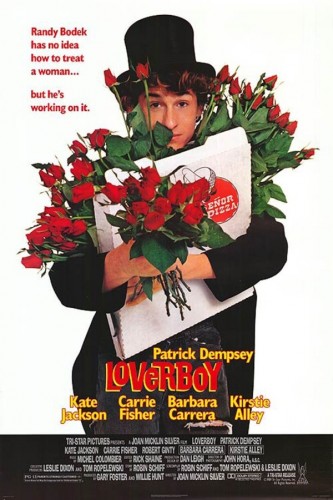
Randy defines the male sex worker in ways that are diametrically opposed to more traditional depictions of female sex workers. He is not oppressed by his clients, controlled by a pimp, or violently threatened until the very end. Even then, such “threats” are delivered as a comedy of errors after a group of husbands discover their wives have been ordering a lot of pizza with “extra anchovies,” the code for Randy’s clandestine services. Thus, he enjoys a much more privileged kind of work as a casual summer gigolo than as a professional prostitute who is often trapped in such work for extended periods of time and trapped by dominating patriarchal forces.

Some clues for her motives are in the scenes between Abby and her spouse. They are affectionate and loving with each other, even when they’re alone, but the sex has gone out of their marriage. After a disastrous first encounter with an escort, we feel Abby’s ache of longing when a second “better” escort begins to touch her. Later we see Eleanor’s first client, a 23-year-old virgin, react to Eleanor’s touch in much the same way.


Pretty Woman depicts a world where everyone is either a card-carrying member of the corporate caste or an obliging subordinate whose primary purpose in life is to serve, drive or blow members of that caste. It is obsessed with things and encourages the audience to share its obsession with things. These include Lotus cars, jets and jewelry. It also sells the City of Angels, of course. Rodeo Drive is one of the stars of the show. In fact, the whole movie is pretty much an extended Visit California commercial.

Season Two Episode One of Sherlock, “A Scandal in Belgravia,” is adapted from the Sir Arthur Conan Doyle Holmes story “A Scandal in Bohemia.” The storyline focuses on Irene Adler, portrayed brilliantly by the arresting Lara Pulver, who has incriminating photographs of a member of nobility that Sherlock must retrieve.


Sex Workers Are Disposable on Game of Thrones by Gaayathri Nair

When we are introduced to Ros, she is working in Winterfell but as war approaches she decides to try her luck in King’s Landing expressing the view that if all the men leave for war there is not going to be much for her in Winterfell. Once there she goes from being “just a sex worker” to getting involved in the politics of the realm by becoming the right hand woman of Little Finger and subsequently double crossing him by becoming an agent for Varys. However despite her many interesting qualities and potential for interesting storylines, Ros basically exists for one reason to provide exposition regarding male characters on the show while naked. She is sexposition personified.


An Authentic Portrayal of a Transgender Sex Worker in Wild Side by Andé Morgan

Like much of Lifshitz’ previous work, Wild Side explores sexuality and emotional intimacy. Thankfully, Stéphanie’s gender identity or Mikhail and Djamel’s bisexuality are not the sole focus, but rather appropriately important facets of their characters.


Inara Serra and the Future of Sex Work by Deborah Pless

Inara shows all the benefits to the cultural changes of the last 500 years. She’s a Companion, a highly trained and respected sex worker who ministers mostly to dignitaries, businessmen, and other elites. She’s taken a ride on Serenity, the ship around which most of the show’s action centers, because she wants to see the universe. Because she is a Companion, she can write her own ticket – there will always be clients, so long as they stick to planets with some level of economic stability, and she can just rent a shuttle for as long as she wants. Plus, Inara herself is fun, witty, and classy as all get out. She’s the woman we all want to be, and she’s a sex worker. That’s progressive, right?
The problem here comes not from what the show is saying about sex work. It’s saying very complimentary things. The issue is that this show, this wonderful lovely show, is showing us something entirely different. Namely, that sex work is bad and nasty and wrong.

Mark says he wants a girlfriend and that although he understands Rachel is a sex worker, he likes that Rachel makes him feel as though he has a girlfriend. That’s an important distinction that the trailer conveniently cut out. People with disabilities are not children who form childish emotional attachments from fantasies. We understand reality, but that doesn’t mean we don’t want to escape it from time to time like everyone else.


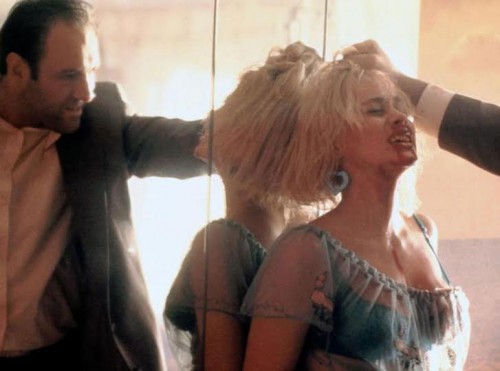
On its surface, True Romance comes off as yet another story about a guy who saves a girl from a horrible existence as a sex worker and he protects her forever and they live happily together forever and ever, the end. But, if you’ve ever seen it, you know that this is not the case. Alabama Whitman is a hero in her own right. She’s never apologetic about her sex life or her choices; they are what they are and she’s OK with it.


Sex Workers Telling Our Stories: From DIY Web Shorts to Feature Documentaries by Audacia Ray

Whether we make online videos that directly respond to terrible portrayals of us in the media, videos with the purpose of educating and doing advocacy, or produce feature films, sex workers who make media are constantly pressed up against all of our stereotypes. Over the last decade, I have dealt with documentary media about sex work as an audience member, a subject, and a producer. Whether we’re portrayed as villains or victims, pretty women or desperate girls, sex workers are a popular focus of documentary projects. But the only way to reach beyond simplistic narratives is for sex workers to be involved in the production of these projects.


When I reflect on the recent twitter conversation #notyourrescue project, I think of The Client List as a seriously flawed baby step forward in the portrayal of sex workers in the media: the sex worker is the main character, she is portrayed as making a decision to do sex work in a situation of economic constraint, not abject victimhood. But I can only call it a baby step forward from a perspective of harm reduction.

Navigating male prostitution has always been tricky, but ‘Deuce Bigalow: Male Gigolo’ (Mike Mitchell, 1999) unburdens audiences from tackling any heavily philosophical explications through its potty humor, shallow characters, and offensive depictions of ailments such as Tourette Syndrome, Gigantism, Narcolepsy, and obesity. This same brand of mindless humor is found in ‘Deuce Bigalow: European Gigolo’ (Mike Mitchell, 2005). However, despite what the movie lacks (and it’s certainly aware of itself as a raunchy, unconventional rom-com), its central themes are love and kindness, and what is perhaps less apparent is the seemingly rare ability to pause and see someone for who they truly are, as opposed to how they may be of service in terms of sex or money. This goofy film featuring Rob Schneider begs a feminist critique not only because the film lacks many multi-dimensional characters, but because it is a prostitution narrative encoded as a story depicting the pursuit of romantic love, rather than a cautionary tale about the dangers of the world’s oldest profession.


‘The Client List’: Baby Steps Toward Empathy for Sex Workers but Ultimately a Tale of the Fallen Woman

When I reflect on the recent twitter conversation #notyourrescue project, I think of ‘The Client List’ as a seriously flawed baby step forward in the portrayal of sex workers in the media: the sex worker is the main character, she is portrayed as making a decision to do sex work in a situation of economic constraint, not abject victimhood. But I can only call it a baby step forward from a perspective of harm reduction.

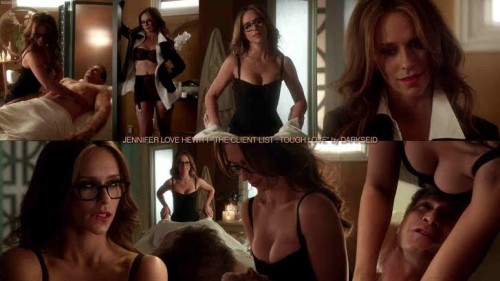
Jennifer Love Hewitt in The Client List


This guest post by Aya de Leon appears as part of our theme week on Representations of Sex Workers.

When I first sent literary agents my novel about a former prostitute who starts an escort service and robs rich and unscrupulous men to support a clinic for sex workers, I was told frequently that my character was not relatable or likeable.  What?  She’s robbing rich guys to pay for street-based sex workers to have health care.  What’s not to like?  But in the process, I learned how deeply women have been conditioned not to identify with sex workers, unless they have done sex work or have close relationships with sex workers.  I have friends and family members who are current and former sex workers, so I underestimated the amount of effort that would be needed to make my character “likeable” and “relatable” to mainstream audiences.  While I saw her as a badass, many may have seen her as a wrongdoer.  While I created a story in which she was rewarded for her daring rule-breaking, others might expect her to be punished.

The conventional expectations of female sexual transgression and punishment are often played out on the screen, and the Lifetime movie The Client List is no exception. Samantha Horton (Jennifer Love Hewitt) is a Texas mom on the verge of financial ruin who turns to sex work to save her house and support her family.  For Samantha, sex work becomes a desperate but predictable conclusion from her upbringing as a beauty pageant winner: “This is America.  If a girl is pretty, she’s not supposed to be poor.”

Sam says this in a moment of financial crisis.  She’s standing in a filling station with a gas-guzzling American truck on empty.  Her credit card is declined, and she digs through the wallet of her drunk, self-pitying husband who had to be carried to the car.  She can only find a single dollar for gas to get home to a house that’s weeks from foreclosure.  Sam is a massage therapist, and had applied for what she thought was a non-sex work massage job.  She left abruptly when she found out that the place offered erotic massage and full sexual services.

But in the moment at the gas station, she sits on the verge of financial ruin.  Sam finds the massage parlor’s business card, and tries to talk to her husband about the decision to begin doing sex work.  She prepares to open her heart to him, but he’s passed out.  Sam steps out of her drunk husband’s earshot, and calls to accept the job.

In my novel, the protagonist has a similar revelation.  In her case, she had been a sex worker, but she stopped servicing clients and started a clinic for sex workers.  Then she’s become a madam of an escort service to keep the clinic open in tough times.  However, a billionaire client wants to bring her out of retirement.  Like Sam in The Client List, she initially said no, but then changed her mind when the circumstances got more dire; her clinic building will also face foreclosure if she doesn’t take immediate action:

The decision had slid into place like a deadbolt, with a sharp click, locking her in.  Just like when she was seventeen and standing in a grimy hallway with a red eviction notice in her hand.  I don’t care who I have to fuck, I’m not gonna end up out on the street.

Back then it had been her sister Cristina that she’d been determined to protect.  Now it was all the girls who came to the clinic, even the girls on her team.  In particular, she thought of Dulce:  wide eyes, bruises and silver platform boots.  Marisol would make sure that the clinic would always be there for girls like Dulce.  She didn’t care if she had to fuck an arrogant billionaire.

I hadn’t seen The Client List  when I started my novel back in 2008, but I identify with both of these female protagonists’ willingness to do whatever is necessary to protect those they love.

There’s also a similarity between the two stories in the communities of sex workers they depict.  Both reflect a range of other interests that they support via sex work.  The women of The Client List include an aspiring novelist, a dancer in musical theater, a tattoo artist, and a teenager with a strict Pentecostal family who ran away to try out for American Idol.  In my novel, the secondary protagonist is getting her degree from Columbia University in Public Health.  She’s prepared to take over the running of the clinic when she graduates and is working her way through school as an escort.

Similarly, both stories provide a range of attitudes toward sex work.  On one end are those who do it only out of economic desperation and feel a sense of disgust, and on the other end are those who feel like one sex worker in The Client List says:  “I love sex. I’m gettin paid to do somethin I love.”  In The Client List, what they all agree on is that sex work “beats the hell out of waitressing.”

There’s a similar moment in my novel, when the secondary protagonist gets a phone call:

“It’s the public health department,” Tyesha said laughing.  “I put a resume on file with them when I was job hunting last year.”

“Oh hell no,” Kim said.

“Dear public health department,” Tyesha fake typed on her phone.  “Please kiss my black ass.  I am now gainfully employed as an escort fucking one well-behaved client a week, and making more money than you offer at any of the sorry-ass jobs I applied for.”

Kim laughed.  “You should sign it ‘Miss Tyesha, one of the smartest bitches on the block.’”

Kim and Tyesha high fived.

“Ladies—” Marisol began.  “Remember, you are not bitches,” she admonished Kim.  “You are hoes.”

The four women laughed.

I added this part, this celebratory attitude toward sex work at the suggestion of a sex worker activist who has been consulting with me on the book.  She explained that contemporary sex worker culture includes the self-congratulation of having figured out how to have a level of economic freedom in today’s society.

So, up until this point, The Client List, like my novel, has painted an empathic portrait of a woman who does sex work.  However, after this, the perspectives of the stories begin to diverge.  In my novel, the protagonist and her team pursue a daring heist to save the clinic.  While I won’t spoil the ending, I will say this:  there are some consequences to her choices of robbery and sex work, but they have more to do with the organization of society and attitudes toward sex workers.  These are obstacles that will not hinder my protagonist from triumph.  In The Client List, however, the story’s plot moves into cliché and the perspective moves into a moralistic tone of judgment and punishment.

Sam Horton gets addicted to the fast money, starts to do cocaine, and gets caught in a police sting.  Later, Sam says that she also got hooked on the lavish gifts of jewelry from her clients, and the constant male attention.  At the character level, however, these motives ring hollow, as do her reasons for doing cocaine, which don’t even make logical sense.  She gets arrested and divulges client information in exchange for minimal jail time.  She does 30 days.  In the process, her husband leaves her and takes the kids.

The lesson for the fallen woman is driven home by the best friend who had warned her to stop: “I knew it would end like this…at first you did it to save your family; I get that.  But then it was for you.  You threw your whole life away for what’s on your ears and around your neck.”

The Client List is “…a dramatization inspired by a true story…characters and events [have been] fictionalized.”  I would be very curious to see what the real story had been.  By making Sam into a gold-digger, they paint the husband as humiliated victim, and the sex worker as penitent sinner.  But I should have known that the film’s underlying conservative Christian values would prevail when Sam kept talking to the angel on her dashboard on the way to and from work.

There are, however, a few touching moments that feel true to the realities of sex work.  When Sam is with her first client, her daughter calls, and Sam takes the call.  The client gets upset because seeing Sam as a mother, a human being beyond her role with him, sort of kills “the feeling” he was trying to get.  Later, Sam says she’s running behind because “the last guy was in real estate, and he wouldn’t stop crying.”  Finally, after Sam is caught, she experiences another occupational hazard of sexwork, TMI: “ever since this happened [being outed as a sex worker], people think they can tell me anything. Checkout girl at the Save-A-Lot says she doesn’t like to do it doggie style.”  These moments reflect a feminist perspective on sex work, key aspects of sex industry work where women who provide sexual services for men are expected to be exclusively sexualized, to play key emotional roles, and are expected to be sexually available to everyone in every way at all times.

These moments, however, are fleeting.  And because it is a Lifetime movie, the latter part of the film moves into what I will call “faux feminist” revelations.  The first is when the angry townswomen caravan from church on Sunday morning to show up at her door like an angry mob.  They hear her tearful confession. Sam says:

My whole life I just always depended on my looks, and I thought this was just gonna be another one of those times. I really thought I was doing the best thing for my family. But in the end the very thing I was trying to save I lost…and I’m just real sorry…for the pain that I caused you.

But instead of vengeance or penitence, it turns out they want information:

“Why do they come to you?” the women ask. “What do you do that we don’t?” and “How can we get them to think about us the way they think about you?”  Sam answers, “You all want tips?”

They agree, and she brings out a banana and two apples to give them sex techniques.

This provides the girl power moment where the women cooperate, but it is also steeped in misinformation.  The allure of sex workers for married men is not all about skills and techniques, it’s also about power, compartmentalization, and fantasy.  The sex worker is playing the role that a man pays her to play.  She can keep it up throughout the entirety of their interaction, because it is limited and is a transaction.  Whatever happens in the bedroom, a man knows that his wife has a full picture of his weaknesses, his failures, his funky smell in the bathroom.  Nowadays, his wife also has a right to expect their sex life to include satisfaction of her needs and desires.  There’s nothing Sam could teach many wives with that banana that would address those reasons that men pursue commercial sexual services.

The Client List poster


The second faux feminist moment happens when her mother gives her an apology for encouraging her too much to focus on her looks and not sufficiently praising her intellect and character qualities.

This is faux feminism, because it blames individual women for buying into sexism, as opposed to blaming the institutions of sexism.  It implies that sexism is something passed down from mothers to daughters, as opposed to understanding women as passing on the internalized sexism they’ve learned from the society, including the best strategies for survival and advantages, which often involve collusion with the institutions of sexism.  In The Client List, there’s never any accountability placed either on institutions, or on individual men.  In particular, her husband is never held accountable for choosing to get drunk at the toughest point in the family’s biggest financial crisis.  He chose to get blasted after having spent the day standing around trying to get hired as a day laborer.  He felt humiliated by his drop in status from football star.  Although he apologizes later, his actions are never factored in to her decision.  At the time, they were very clear:  her family was facing ruin.  This was the only job available.  Her husband had put himself out of commission, and she made an executive decision.  She stepped in as breadwinner and took care of her family.

In my novel, the protagonist also faces the challenge of losing a relationship because her partner can’t accept her history of sex work.  Of course, they are not the same–my character was not married and doing sex work in secret–but the core dynamics are the same.  My character justifies her actions, and turns the tables on the love interest for questioning her choices:

“I didn’t even hear it from you. [my character’s love interest complains] Why didn’t you tell me?”

“I would have told you eventually,” she said.  “I just wanted to get to know you a little better before I sprang my fucking prostitution past on you.  I thought you would run, and you did….I did what I had to do, then and now…you left me hanging for weeks trying to decide if you could fucking handle the fact that I was a hooker ten years ago,” she said.  “And it’s not like it was my first goddamn choice of a job.”

In The Client List, however, at no point does Samantha tell her husband off.  Instead, she’s tearful, fallen, and apologetic throughout the latter part of the film.

By conveniently (and unrealistically) making Sam money grubbing and a cliche cocaine addict who’s cold and mean to her family, the film creates a justification for her blame and downfall.  The Client List sidesteps the much more complex and realistic question:  what happens when a woman makes a justifiable decision to take charge of her family’s financial future?  How would a husband react if he knew he dropped the ball and his wife turned to sex work as the only option to save them from homelessness?  Let’s say Samantha did the more realistic thing based on her character, and got out of sex work as soon as the family was on their feet. I would have found the story much more satisfying (and believable) if she had stopped sex work after the family got their finances together, but was prosecuted in the sting because there was evidence that she had worked there in the past.  But the story would lose the vital moralistic tone if the best friend had to say, “You did it to save your family; I get that.  But you’ve moved on and are working at a sports clinic now.  Why are these assholes ruining your life?”   Similarly, when the husband got mad, she could really tell him off:  “We had one dollar left, and two weeks to get our house out of foreclosure.  I had a woman promising me money if I just gave a few hand jobs, and when I went to discuss it with you, you were passed out drunk.  So yes, you missed a crucial moment of decisionmaking.  And as the only adult left standing, I made a choice.  I did what I had to do, and I used what I had at my disposal.”  Turning Sam into a cliche is a cop out.

Finally, the film has a predictable Lifetime movie ending.  After Sam suffers her punishment—shame, losing her family, and jail—she straightens up.  She starts going to night school.  She and the sex worker who “loves sex” both become waitresses, settling for $5 tips where they used to get $1,000 tips.  But Sam clearly implies that it’s worth it, now that she has her dignity back, thus, undoing the “beats the hell out of waitressing” moment of camaraderie.  Now that her bond with the sex workers is broken, she is sufficiently humbled that her man can finally “look at her” again.  The film ends at her kid’s birthday party with the beginning of a reconciliation with her husband and children.

When I reflect on the recent twitter conversation #notyourrescueproject, I think of The Client List as a seriously flawed baby step forward in the portrayal of sex workers in the media:  the sex worker is the main character, she is portrayed as making a decision to do sex work in a situation of economic constraint, not abject victimhood.  But I can only call it a baby step forward from a perspective of harm reduction.  This type of portrayal is less harmful than portrayals that show sex workers as less than human, without agency, or deserving targets of violence.  If you’re looking for a film that presents a feminist perspective on sex work, you might have to “just say no” to The Client List.


Aya de Leon is a Black/Latina writer/performer whose work has received acclaim in the Village Voice, Washington Post, American Theatre Magazine, and has been featured on Def Poetry and in Essence Magazine.  Aya has been a Cave Canem poetry fellow, and a slam poetry champion.  She is currently working on a sex worker heist novel.  She is the Director of June Jordan’s Poetry for the People program, teaching poetry, spoken word, and hip hop at UC Berkeley.  She’s on Twitter @AyadeLeon and blogs at AyadeLeon.wordpress.com.

Sex Workers Telling Our Stories: From DIY Web Shorts to Feature Documentaries

Whether we make online videos that directly respond to terrible portrayals of us in the media, videos with the purpose of educating and doing advocacy, or produce feature films, sex workers who make media are constantly pressed up against all of our stereotypes. Over the last decade, I have dealt with documentary media about sex work as an audience member, a subject, and a producer. Whether we’re portrayed as villains or victims, pretty women or desperate girls, sex workers are a popular focus of documentary projects. But the only way to reach beyond simplistic narratives is for sex workers to be involved in the production of these projects.

Anna Saini from The Red Umbrella Diaries


This guest post by Audacia Ray appears as part of our theme week on Representations of Sex Workers.

“I took you into my house and allowed you to shoot and you have laughed at us,” Anita’s subtitle reads as she looks directly into the camera in a 2010 Youtube video  produced by Veshya Anyay Mukti Parishad (VAMP, the Prostitutes’ Collective Against Injustice). VAMP’s video garnered a little shy of 19,000 views against the nearly two million views of Prostitutes of God, a VICE documentary that inaccurately depicted sex workers in Sangli, India and reported one sex worker as being HIV positive when she was not. VAMP’s video response to the VICE documentary was swift, fierce, and supported by sex worker and human rights activists. VICE edited out the clip falsely identifying a woman as HIV positive, but otherwise did not respond.

Whether we make online videos that directly respond to terrible portrayals of us in the media, videos with the purpose of educating and doing advocacy, or produce feature films, sex workers who make media are constantly pressed up against all of our stereotypes. Over the last decade, I have dealt with documentary media about sex work as an audience member, a subject, and a producer. Whether we’re portrayed as villains or victims, pretty women or desperate girls, sex workers are a popular focus of documentary projects. But the only way to reach beyond simplistic narratives is for sex workers to be involved in the production of these projects.

In 2009, I led my first media spokesperson training for sex workers in New York. At that training, I shot a one-minute PSA video (and I added more footage in 2011) called “I Am A Sex Worker.” In the video, the participating sex workers say one mundane fact about themselves, followed with “and I’m a sex worker.” The purpose of the video was to speak to a general audience and humanize sex workers as people who are multifaceted. I have to admit that it is not a technically “good” video. It’s all people talking directly to the camera in front of an uninspiring background, and the lighting and sound leave a lot to be desired. This lack of technical filmmaking finesse is not uncommon in sex worker-made media. Figuring out how to make the videos ourselves is resourceful; it is preferable to make a video with content completely controlled by sex workers ourselves, instead of handing the power over to a filmmaker we might not trust. Furthermore, there’s something compelling and awesome about sex workers telling even a sliver of their own stories while making eye contact with the camera.

Some sex-worker-created advocacy-driven online videos have a much narrower audience than mine though. The subtitle of the 2010 video conceived, developed, and produced by Lusty Day and Beef Jerky, “Every Ho I Know Says So”  spells it out: “advice for partners, lovers, dates, and sweethearts of sex workers.” In this nine-minute video, shot mostly on handheld iPhone video and combining clips shot by many different people, 21 sex workers address the viewer as “you” and give advice about how best to treat a sex worker in a dating situation. The video is offered up as a resource for sex workers to show to their romantic partners and potential partners and for partners to find on their own.

Both of these videos feature the identifiable faces of sex workers, with a couple of exceptions where people’s identifying characteristics are concealed. But exposure can be risky for many sex workers. Whether a sex worker is doing legal or illegal work, exposure can mean loss of income (especially if the sex worker has another job or tries to transition into work outside the industry), loss of child custody or housing, or threats to their well-being from the local community. Showing people’s faces, of course, is an important part of establishing humanity and depth of character in any film project. But some sex workers have been successful in creating videos that don’t reveal their identities while revealing intimate details about their work and motivations.

Live Nude Girls Unite! poster


The Amsterdam-based organization Voices of Women Media (VOW) works with marginalized women to develop media skills so that they can tell their own stories. In a video documentary collaboration with two women who are sex workers in Amsterdam, VOW supported a woman named Chantal as well as an anonymous woman to script, produce, and shoot documentary shorts based on their lives. The resulting pair of 2010 videos, “Drowning” and “Los Caminos,” are portraits of women that are intimate, showing the interior of their work spaces behind the famed Amsterdam red light district windows, but also protect the identities of the women. As more stylistic elements are introduced, like b roll, staging, music, and with them, more complex editing, more skills are needed to create films like these. Collaborations like the Voices of Women Media project can work well if the stories and skill development of sex workers are centered, and if creative control remains with the sex workers and isn’t handed over to someone who will reshape the story for what they perceive as a better narrative. Authenticity is important, though it certainly takes longer to do a project this way. Authenticity, by the way, is not what happens when two young filmmakers decide to “pose as strippers” for two weeks (aka briefly become strippers while also looking down on actual women who strip for a living) and make videos about it, as an upcoming series on VICE touts.

It’s a big leap from DIY web videos to feature documentaries in terms of skill and of course fundraising; there have not been too many feature films about sex workers told from our perspective. The first one I saw was Live Nude Girls Unite, a documentary released in 2000 about the unionization process of the Lusty Lady strip club in San Francisco. There is a lot of hand-held camera work in the film as Julia Query, the producer, co-director, and a character in the film, takes the viewer through the club. In the film, we meet the dancers, attend their meetings, and even get to sit in on Julia’s coming-out to her mother. The dancers create a union, and a historical moment in sex worker labor organizing is documented.

More recently the 2013 feature film American Courtesans, produced by Kristen DiAngelo, an escort who also serves as the interviewer in the film, has played the festival circuit and won critical acclaim. The film features 11 cisgender women from around the United States who Kristen found through her personal networks. There isn’t a narrative structure; instead the film is a series of spotlight shoots of the women, who do sit-down interviews with Kristen and tell their life stories. The film strives to create empathy for the experiences of escorts as both workers and people. Though it doesn’t gloss over the challenges the women have faced in their lives–there are tears on camera more than once in the film–ultimately the filmmakers’ intent is to portray escorting as a legitimate and positive career choice for the women in the film.

After many years of working to produce media with sex workers and create spaces for sex workers to individual stories about our experiences, in the past year I’ve set out to produce my own feature-length documentary, The Red Umbrella Diaries. The film will tell the story of seven LGBTQ sex workers (myself included) as we prepare to tell our stories on stage at Joe’s Pub at the Public Theater in NYC. I’ve learned that my previous experience shooting web shorts as well as directing and producing a feature-length porn film, The Bi Apple (which won a Feminist Porn Award in 2007), has not really prepared me for this process. I’m grateful that I have been able to step aside and not be the filmmaker–instead I’m leaving that to the professionals, an Emmy-award winning crew–but I’d be lying if I said that its been easy. I have said no to many filmmakers who approached me over the years because I don’t trust just anyone to tell my story, and now I’m not signing away my right to review the final product – I’m doing the opposite actually. As an adult model and in other media situations, I have signed those releases, and I know how it feels to see myself represented in a way I dislike and not being able to do much about it.

Now I’m working with a crew I trust, guys who attended the storytelling events I produce for almost two years before showing up with a camera. We are currently working on our rough cut of the film. I’ve learned that having creative control over the final product still means that I need to trust the filmmakers I’m collaborating with. For me, there is definitely such a thing as being too close to the subject matter. I forget that there are elements of the lingo around my former profession that need to be defined, and that if this film is going to be accessible to a general audience, we do have to take the time to spell out things that I think are basic. But I know, and the filmmakers agree, that sex workers are experts on our own experiences, so there won’t be any professors or other experts explaining things on camera. Just us. I feel certain that we’re contributing something positive to documentary film, and I’m excited to prove that a collaboration where the “subjects” of a film have the final say over the content can be a rich and interesting project with complex storytelling.


Audacia Ray is a former sex worker who is the founder and executive director of the Red Umbrella Project, a small organization based in Brooklyn. She is the editor of the literary journal Prose & Lore: Memoir Stories About Sex Work and the executive producer of The Red Umbrella Diaries, a feature documentary with a targeted premiere of spring 2015. http://redumbrellaproject.org, @audaciaray on Twitter/Tumblr/Instagram.

‘True Romance’ or How Alabama Whitman Started the Fall of Damsels in Distress

On its surface, ‘True Romance’ comes off as yet another story about a guy who saves a girl from a horrible existence as a sex worker and he protects her forever and they live happily together forever and ever, the end. But, if you’ve ever seen it, you know that this is not the case. Alabama Whitman is a hero in her own right. She’s never apologetic about her sex life or her choices; they are what they are and she’s OK with it.

Proving that love is a strength, not a weakness


This guest post by Shay Revolver appears as part of our theme week on Representations of Sex Workers.

The year was 1993. For the most part the 90s were starting out to be a good year for non-traditional female characters in film. Having sat through Pretty Woman on video at a sleepover once, I found myself not impressed. I got that Julia Roberts’s character was a sex worker, but I didn’t get the whole appeal of a character whose sole purpose was to be a damsel in distress. I was always more of a fan of stories where a woman could handle herself and it was cool if a guy came along to help but, for the most part, she had it covered. True Romance was one of those films and the first time I saw it, I loved it so much that I watched it in the theater three times that day, only breaking for meals and bathroom breaks.

On its surface, True Romance comes off as yet another story about a guy who saves a girl from a horrible existence as a sex worker and he protects her forever and they live happily together forever and ever, the end. But, if you’ve ever seen it, you know that this is not the case. Alabama Whitman is a hero in her own right. She’s never apologetic about her sex life or her choices; they are what they are and she’s OK with it. In fact, had she not met and fallen in love with Clarence, her short career as a sex worker might have continued. After their met, via set-up, and fall in love, it was Clarence’s idea to save her. Alabama was content to just stay with him, or run away, and continue living her life as she wished. Clarence, on the other hand, feeling emasculated by the idea that her pimp Drexl still existed and had somehow sullied his wife’s virtue, goes on the offensive and decides to show how manly he is by being a valiant knight, retrieving her belongings and saving her from her past. He reads her logical concern for his safety as yet another challenge of his manhood and sets off to right the wrong.

Alabama the survivor

While Clarence goes off to play night in shining armor, which in this film is code for getting his tail kicked by Drexl and his body guard, Alabama sits at their apartment watching TV. She doesn’t actually think that Clarence would be stupid enough to actually go and confront Drexl. But he does, and after a stroke of luck with a misfired gun, Clarence returns to present his lady love with news of her former pimp’s demise and her things. Alabama finds this all super romantic because he fought for her. But not in the Pretty Woman, or traditional damsel in distress film, way where she falls into his arms and thanks him for taking her away to a better life because she never could have done it in her own kind of way. She thanks him because it was a sweet gesture and she really didn’t expect him to do it, or survive if he had, and she was happy that he cared enough to try. Alabama, being the smart, capable, woman that she was, would have been totally OK with leaving all of her stuff at Drexl’s and continuing her life with Clarence, never looking back. It wasn’t the “rescue” that made it romantic for her, it was the caring. Granted, Clarence’s motives were equal parts love and a male sense of ownership, but there was still something endearing about it.

There was also something endearing about the fact that you knew that this movie was about to go all kinds of crazy and with Alabama being the only female in a film full of men, you knew in that moment that she was going to be OK and would totally be able to handle herself. From the very beginning nothing about Alabama’s character said damsel in distress. Even when she was crying about being in love on the roof, that came off as genuine emotion and guilt for starting out on a lie. She was a real person and she was about to go through some real things and you felt for her. You rooted for her and above all else you wanted her to win.

Alabama and Clarence meet

The rest of the film follows Clarence and Alabama on a cross country trek to LA to unload the drugs that they discovered in Alabama’s suitcase. Clarence has no idea what he’s doing and there is something wonderful about watching Alabama stand by her man while slowly guiding him into making decisions that are better than the ones that he comes up with on his own. He listens to her suggestions and leans on her, just as much as she leans on him. They act like pure equals. Despite Alabama’s past he never treats her like anything other than a human being. He also doesn’t allow anyone else to. There is something nice about the way the film doesn’t paint broad stroke generalizations of women who choose to be in the sex industry. Her job choice wasn’t a scarlet letter that followed her. Outside of Clarence’s initial must-save-my-woman reaction at the beginning that spawned his initial jump to action, the fact that she used to be a sex worker wasn’t really brought up. She didn’t get the usual movie treatment of women who didn’t color in the lines, or who enjoyed sex, or who needed redemption. She existed and she was OK. She wasn’t forced to feel ashamed or bad about her choices. There wasn’t the typical punishment for her “actions” of being a sexual being, or getting paid for it. She was allowed as a character to grow outside of that mold.

Alabama defiant and strong in the face of fear

Throughout the film, Alabama proves herself stronger, and often smarter, than most of the males on screen. This strength and her smarts, combined with her survival instincts, drive the film. Watching her fight her way out of her hotel room, taking down James Gandolfini’s Virgil in pure gladiator style, was beautiful. She showed no fear, no hesitation, just power. And not the brute force, masculine power that Virgil displayed as he tossed her about but mental power. She realized that physically she was outmatched and used her brain. She was able to overpower him and eventually defeat him using her mental advantage. She didn’t wait it out for Clarence or another man to show up, which I’m sure most of the audience was expecting to happen after the brutal beating she received; she defeated him on her own. To this day, that scene is one of my favorite fight scenes in a film. Half of the audience expecting Clarence to barge in at the last moment, the other half hoping she would finish him off on her own and no one being disappointed with the outcome. That scene cemented Alabama Whitman as a hero, not just another pretty face in an iconic film, or a damsel in distress. After delivering that death blow she proved what anyone watching the film had known all along: she was a force to be reckoned with.

Alabama and Clarence get married

When Clarence finally does return to whisk her away to the drug deal so that they can put this gruesome past behind them and start like anew together in Mexico; she’s battered and bruised, but still OK. She sits there during the doomed drug deal, wearing her bruises like a badge of honor and still managing to show just enough feminine charm to keep things moving along while simultaneous giving off a “don’t mess with me” vibe. It was brilliant and beautiful. She retained her wits and strength throughout the downfall of the deal when everything crumbled around her and Clarence emerges from his chat with Elvis and gets shot in the eye amidst a massive shoot out. Alabama then saves the day again as she not only grabs the money but manages to drag an equally bloody and bruised Clarence out of the hotel room, through the lobby and on to safety.

In the on-screen version, Alabama and Clarence escape together and are seen frolicking on a beach in Mexico with their son. Clarence is missing an eye from the shoot out and you can see a happily ever after in their future. You’re very happy that they made it as a couple, but you’re even happier that Alabama got the life she wanted and you can’t help but cheer. Owning the special edition version of the DVD, I have seen the ending that Quentin Tarantino wrote. Tony Scott famously shot it and didn’t use it because he didn’t want to split up the couple; he wanted them to both win. In the Tarantino ending, Alabama drives off on her own with the money and heads on to her new life. Clarence is dead and she’s upset by his stupidity in not listening to her in the first place. It was a cold ending, but you are still happy knowing that she made it, she’s OK, and she will continue to be OK because she’s proven herself nothing close to a damsel in distress. She’s strong, smart, and capable. Most people who have seen both endings have their favorite. I will go on record and say that either way is fine with me because Alabama is a character that not only resonated with me but has also stuck with me since I first saw the film. She showed that even in a “guy” film, filled with testosterone, violence, and blood that the only woman on screen doesn’t have to be scenery, a distraction, a hindrance or some”thing” that needs protecting. She can hold her own with the guys and be a true equal in the story and on screen. We no longer had to be seen as victims or damsels in distress; we could be heroes too.


Shay Revolver is a vegan, feminist, cinephile, insomniac, recovering NYU student and former roller derby player currently working as a New York-based microcinema filmmaker, web series creator and writer. She’s obsessed with most books, especially the Pop Culture and Philosophy series and loves movies and TV shows from low brow to high class. As long as the image is moving she’s all in and believes that everything is worth a watch. She still believes that movies make the best bedtime stories because books are a daytime activity to rev up your engine and once you flip that first page, you have to keep going until you finish it and that is beautiful in its own right. She enjoys talking about the feminist perspective in comic book and gaming culture and the lack of gender equality in mainstream cinema and television productions. Twitter: @socialslumber13.

Inara Serra and the Future of Sex Work

Inara shows all the benefits to the cultural changes of the last 500 years. She’s a Companion, a highly trained and respected sex worker who ministers mostly to dignitaries, businessmen, and other elites. She’s taken a ride on Serenity, the ship around which most of the show’s action centers, because she wants to see the universe. Because she is a Companion, she can write her own ticket – there will always be clients, so long as they stick to planets with some level of economic stability, and she can just rent a shuttle for as long as she wants. Plus, Inara herself is fun, witty, and classy as all get out. She’s the woman we all want to be, and she’s a sex worker. That’s progressive, right?
The problem here comes not from what the show is saying about sex work. It’s saying very complimentary things. The issue is that this show, this wonderful lovely show, is showing us something entirely different. Namely, that sex work is bad and nasty and wrong.

afdada
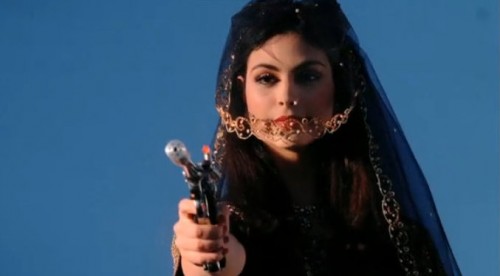
Inara (Morena Baccarin)


This guest post by Deborah Pless appears as part of our theme week on Representations of Sex Workers.

The first time you watch Firefly, Joss Whedon’s sprawling but criminally short-lived space western, it’s easy to think that it gives you a rather progressive view of our future. While some things haven’t changed, like the need of governments to meddle in the affairs of their people, and the way that humans will always find a way to piss each other off, the universe it portrays is one pretty far advanced from our own. Most cultural conflicts have been whittled down by years of inter-marriage, the universe even speaks a pidgin of American English and Mandarin Chinese, and prostitution is not only legal, but respected.

All in all, a pretty good outlook, right? Especially for sex workers. Because in this world, they have rights, they have solid healthcare, they have independence, and they even have a pretty high level of social recognition. We know all of this because one of the main characters on the show, Inara (Morena Baccarin) is a Companion, the best of the best.

Inara shows all the benefits to the cultural changes of the last 500 years. She’s a Companion, a highly trained and respected sex worker who ministers mostly to dignitaries, businessmen, and other elites. She’s taken a ride on Serenity, the ship around which most of the show’s action centers, because she wants to see the universe. Because she is a Companion, she can write her own ticket – there will always be clients, so long as they stick to planets with some level of economic stability, and she can just rent a shuttle for as long as she wants. Plus, Inara herself is fun, witty, and classy as all get out. She’s the woman we all want to be, and she’s a sex worker. That’s progressive, right?

The Companion training room


The problem here comes not from what the show is saying about sex work. It’s saying very complimentary things. The issue is that this show, this wonderful lovely show, is showing us something entirely different. Namely, that sex work is bad and nasty and wrong.

How? Well, let me tell you a thing.

The first thing you might pick up on in the show is that while Inara is not ashamed of her career, and she meets with no real prejudice about it from most of the characters, she does get a lot of blowback from one place in particular: Captain Mal Reynolds (Nathan Fillion). Mal hates that Inara is, as he puts it so gently, a “whore,” and he makes his feelings known on the matter a lot. And then some. And then a little more.

In and of itself, this would be a perfectly reasonably addition to the story. Granted, it would give lie to the idea that sex work is now perfectly respected in this universe, but one out of countless characters to decry what she does isn’t so terrible. There’s always someone who disagrees, right?

Well, Mal isn’t just the captain of the ship or the plucky hero, he’s also the audience avatar. His is the emotional arc in which we invest. And Mal is the one who has the biggest objection to Inara’s work. This implies that we too should have an objection to what Inara does.

Inara Serra, played by Morena Baccarin


It goes even further. In episode six, “Shindig,” Mal and Kaylee (Jewel Staite) must attend a party where Inara will also be with a client. Kaylee is happy to just go and admire the finery, have some strawberries, and maybe dance a little, but Mal takes it upon himself to find Inara while she is working and get into a fight with her. A fight that then escalates because Inara’s client, Atherton Wing (Edward Atterton), turns out to be kind of a jerk and calls her a whore on the dance floor. After he offers to buy her. Yeech.

Mal is enraged that someone else dared to call Inara what he calls her on a daily basis, and steps in, punching Atherton and accidentally challenging him to a duel for Inara’s honor. And then we spend the rest of the episode with Inara trying to save Mal from inevitably getting murdered, and Mal refusing to be rescued because a lady’s honor is at stake.

The problem, again, comes from the context. It wouldn’t be so bad if Mal were genuinely defending Inara, though it would undermine the idea that as a Companion Inara is a strong independent woman who can handle herself. That she needs to be rescued at all and can’t handle it or won’t handle it until Mal steps in is problematic in and of itself. No, the real issue here is how Mal steps in. He steps in by using violence to assert that while he can denigrate Inara’s work, no one else can. And that’s just kind of creepy.

Again, though, because this narrative is really Mal’s story, it supports his actions. He is shown as totally good and right and understandable to act like this, and Inara forgives him for being an ass. They share a nice drink and laugh over it all. Also, Inara reveals that she had the power to get back at Atherton the whole time, but didn’t want to use it, I guess.

Inara Serra, played by Morena Baccarin


And it doesn’t stop there. While Inara continues to be our “good” whore, the one who can get the crew out of any tight spot with her power of sex and sexiness (this happens at least two different episodes, and since there are only 13 total, that’s a lot), all other sex workers are considered inferior and, well, whores.

You have Saffron/Yolanda/Bridget (Christina Hendricks), a con artist with Companion training who marries men when they’re drunk and then robs them blind, or just pulls long cons on them in order to get their money. You have the whores that Jayne (Adam Baldwin) beds, who are denigrated by their proximity to Jayne – he’s a man-beast after all, so any woman who would sleep with him, especially for money, must be doubly unclean, right? And we have the Heart of Gold, from the episode of the same name, a little whorehouse in the middle of a desert planet run by a former Companion named Nandi (Melinda Clarke).

In the episode, “Heart of Gold,” the crew heads out to this brothel in the middle of nowhere at Inara’s behest. It seems that Nandi has been having some trouble with one of the local men, who is insistent that not only is one of the girls pregnant with his baby, that he is within his rights to take it from her. The crew comes in to save the day, keep the baby with its mother, and make sure that this man doesn’t get to ruin the Heart of Gold.

Chari from “Heart of Gold,” played by Kimberly McCullough


In the process, though, we learn a lot more about sex work in this universe, and it’s not pretty. While the show makes it very clear that these sex workers are the good guys, and the mean man trying to steal a baby is a bad guy (very subtle), it doesn’t do much to support this thesis. For starters, Nandi is shown to be “slumming it.” She stopped being a Companion in order to become an unlicensed whore because she wanted her freedom, but look where it’s gotten her. Stuck in the middle of nowhere with no resources, a hostile environment, and the law breathing down her neck.

Her girls (and boys), while nice, are completely undeveloped as characters. We know nothing about the plight of the everyday sex worker in this universe. But we do know that we as an audience are supposed to be mildly disapproving. What Inara does is safe and respected, you see, whereas these people are doing it wrong. We know this because of the implicit messages the show sends: only Jayne takes Nandi up on the offer to use the brothel’s services, and while several other characters could, were they so inclined, they don’t. This is most notable with Kaylee, who is shown to be a character comfortable with her sexuality, happy to indulge, and at this point, deeply sexually frustrated. But she wouldn’t stoop to paying for it, I guess.

The only other character who does have sex in this episode is Mal himself, who beds Nandi, but only after they make it clear that this is about feelings and fun and definitely not about money. Because, again, only a monster like Jayne would stoop to paying for it.

The double standard here is both annoying and also indicative of the show’s real attitude. Because if the show really does want to claim to be permissive toward sex work, then it has to be permissive on both sides. Not only is it okay to be a sex worker, it’s okay to be a client of a sex worker.

Or neither. I’m not saying which way the show should go here, I’m saying that by stigmatizing the clients of sex workers, the show is stigmatizing the workers themselves.

Inara Serra, played by Morena Baccarin


Oh, and there’s the thing where all the “good” prostitutes have to die. As penance.

Now, off the top of my head, the only actual sex worker who dies during the show is Nandi, who is very tragically killed during the siege on her brothel. Of course she is revenged and it has a happy-ish ending where the girl gets to keep her baby and everything is right in the world. Only Nandi is still dead. And one can only surmise what the reason for that is. On the one hand, this is Joss Whedon and he does bathe in the tears of his viewers. But on the other, Nandi’s death is largely unnecessary as far as the plot goes, and it only serves to put a wedge between Mal and Inara, as well as to figuratively punish her for the choices she made in life.

As usual, this wouldn’t be noteworthy or even that offensive if it were a singular event. It isn’t. We (the fans) recently learned a little bit of trivia about the show that would have come out had the show gone on longer than half of a season. Namely, that Inara was terminally ill.

[youtube_sc url=”https://www.youtube.com/watch?v=YTxGOi9coWQ”]

So, now this means that of the sympathetic sex worker characters on the show, both of them were killed off or going to be killed off in suitably tragic and noble ways, but also in ways the figuratively punish them for their sins.

Like I said, the show has very mixed feelings about sex work.

Inara Serra, played by Morena Baccarin, and Captain Mal Reynolds, played by Nathan Fillion


I think what happened is this: while Firefly really does want to show us a world where sex work is accepted, or more accepted, and a lot of cultural barriers have broken down, the show is much more concerned with portraying a world of incredibly harsh class divisions. For example, our heroes are all working class or fallen upper class, and the main struggle in the series is that of our plucky underdogs fighting against the rich and powerful who seek to dominate them.

This isn’t a bad thing. It’s a huge part of what makes the show watchable. But it comes at a cost. You see, by making the narrative more about class, it creates a need to work a class narrative into all of its stories. A story about a brothel in the wilderness can’t just be a story about sex work, it has to be a story about class and sex work. By doing this, by setting up Inara as the high class sex worker and everyone else as lower class and therefore bad, the show stigmatizes sex work as a whole. After all, if the only difference between the good whore and the bad one is her paycheck, then there’s no difference at all.

Look. Whether you’re okay with it or not, Firefly is kind of lying here. It says it’s progressive and open-minded, but it really isn’t. Shows, and people, are defined by what they do much more than what they say. So while Firefly and Inara say they’re liberated, independent, and free-thinking, their actions say differently.

And I do not hold to that.


Deborah Pless runs Kiss My Wonder Woman and works as a youth advocate in Western Washington. You can follow her on twitter and tumblr just as long as you like feminist rants and an obsession with superheroes.

There’s More to Love in ‘Loverboy’ Than “Extra Anchovies”

Randy defines the male sex worker in ways that are diametrically opposed to more traditional depictions of female sex workers. He is not oppressed by his clients, controlled by a pimp, or violently threatened until the very end. Even then, such “threats” are delivered as a comedy of errors after a group of husbands discover their wives have been ordering a lot of pizza with “extra anchovies,” the code for Randy’s clandestine services. Thus, he enjoys a much more privileged kind of work as a casual summer gigolo than as a professional prostitute who is often trapped in such work for extended periods of time and trapped by dominating patriarchal forces.

Movie poster for Loverboy


This guest post by Kristina Fennelly appears as part of our theme week on Representations of Sex Workers.

At first glance, the 1989 comedy Loverboy, directed by Joan Micklin Silver and starring Patrick Dempsey, may not seem a likely choice for inclusion in films specifically focused on sex workers.  After all, how could a seemingly trivial movie about a failing college student, a pizza parlor, and a group of rich yet unhappy California wives possibly inform and challenge dominant definitions of sex workers, traditional gender roles, and even heteronormativity?

Yet this film, largely derided in the late 1980s as “hopelessly tacky,” and “a pitiful waste,” speaks to these issues as it chronicles the maturation of college sophomore Randy Bodek (played by Dempsey).  The film makes the claim that the education Randy gains through his summer employment, both as a pizza delivery boy and as a gigolo, prepares him to return to college in the fall as a man: a man more serious about his academic goals, his professional future, and his long-sought-after girlfriend, Jenny.  Just as Randy gains a great deal of knowledge about himself, so, too, can viewers today gain a great deal of insight when analyzing this film through a feminist lens.

In the March 2008 issue of the journal Gender Issues, scholar Jeffrey Dennis gives voice to the often ignored and silent male sex workers in his article “Women are Victims, Men Make Choices: The Invisibility of Men and Boys in the Global Sex Trade.”  Dennis argues that the accounts of men and boys as sex workers have largely gone unnoticed, which seems ironic given Dennis’s observation that, “Male sex workers are easy to spot anywhere in the world…Yet they are almost completely ignored by social service agencies, administrative bodies, the mass media, and scholarship” (11-12).  Critically examining Randy’s profession as a sex worker in this film seeks to do the kind of intellectual and gender-conscious work that Dennis calls for: “a re-evaluation of scholarly preconceptions about male and female bodies, about objectification, about the inevitability of heterosexual identity and about the impossibility of same-sex desire.”

At the onset of the film, Randy concludes his sophomore year of college where he has failed, yet again, to make the grade.  In addition to failing at school, Randy has also failed in his relationship with his live-in girlfriend, Jenny.  When Randy returns home for the summer, he is admonished by his father, Joe, for his lack of any visible work ethic.  Thus Randy must pursue a job as a pizza delivery boy in order to earn $9,000 to pay for his own tuition.  While working for $4.80 an hour—a rate that Randy and his co-worker crassly describe as less than wages earned by “people who swim here from Mexico”—he realizes that his life of privilege as a young, white, middle-class male is not automatically guaranteed.  Gone is the financial protection from his parents, Joe and Diane.  Now he must venture forth on his own to earn the money.  His goals, at this point, are not based whatsoever in academic or professional ideals; rather, he wants to earn the money simply so he can return to college, recapture his girlfriend, and continue on with his “party hard” lifestyle.

Randy, having returned home from college, explains to his parents that he is failing at school


One day, a chance encounter leads him to meet Alex Barnett (played by Barbara Carrera), a wealthy Italian businesswoman (presumably in her 40s) who owns a chain of high-end clothing stores.  Soon, Alex lavishes Randy with expensive clothes, allows him to drive her racy red sports car, and seduces him.  Randy is not a morally bankrupt character, however.  He quickly tells Alex that he is in love with Jenny, to which she replies: “I think I can handle it.”  She understands the arrangement before Randy does because she has established the parameters of such an arrangement.  At this point, the viewer cannot help but pity Randy’s naiveté and obvious lack of experience with an accomplished and mature adult; after all, his social circle in college has consisted primarily of party-driven peers with a similar penchant for goofing off.

Alex, however, shows him the kind of privileged lifestyle he is missing out on at making only $4.80 an hour. When she awakens him the following morning by dropping $100 bills on his pillow, he tries to refuse the payment by telling her, “Alex, I can’t.  It makes me feel…”  Though Randy does not explicitly give voice to his feelings in this scene, the audience can infer that he feels bought and paid for, much like a traditionally-defined prostitute.  He even acknowledges the quickness of the exchange when he says, “I’m never going to see you again, am I?”  Their brief and fleeting affair is framed in more financially pragmatic terms by Alex who explains that if their roles were reversed and she needed the money, she knows he would give it to her.  “So what’s the difference?” she asks as she gets up to leave.  It is at this point in which the film seems to ask this exact question of its audience: What’s the difference between a male sex worker and a female sex worker?  What’s at stake for a “gigolo” versus a “prostitute,” even from a purely rhetorical analysis of those classifications?  Does sex work involve the same kind of possession, objectification, and violence for men as it does for women?

Randy, a pizza delivery boy, meets Alex, the owner of high-end clothing stores


These questions do not go unexplored or entirely unanswered in the film.  Randy defines the male sex worker in ways that are diametrically opposed to more traditional depictions of female sex workers.  He is not oppressed by his clients, controlled by a pimp, or violently threatened until the very end.  Even then, such “threats” are delivered as a comedy of errors after a group of husbands discover their wives have been ordering a lot of pizza with “extra anchovies,” the code for Randy’s clandestine services.  Thus, he enjoys a much more privileged kind of work as a casual summer gigolo than as a professional prostitute who is often trapped in such work for extended periods of time and trapped by dominating patriarchal forces.

Randy, by contrast, appears to benefit greatly from his work as he grows attuned to romance and intimacy, cultured in ballroom dancing and photography, and refined in his ability to genuinely listen to women and their needs.  For example, he fulfills the fantasy of his Asian client, Kyoko Bruckner (played by Kim Miyori), whose husband has stereotypically assumed she, like “all” Asian women, will submit, remain silent, and above all, satisfy his every whim.  Randy also provides much-needed validation to Monica Delancy (played by Carrie Fisher), a photographer whose husband personally trains women with “Barbie doll”-type bodies.  Finally, he reminds the cynical doctor Joyce Palmer (played by Kirstie Alley) that romance still exists when he engages in an act perhaps even more intimate than sex: ballroom dancing.

Dr. Joyce Palmer (left) teaches Randy how to dance


As he seeks to explain his time with Alex to his horny co-worker, “That isn’t all we did.  We talked…,” he again tries to resist traditional definitions of sex workers as objects of pleasure.  Unlike heteronormative prostitution, which tends to rely on an exchange of sex for money and positions women as the object of men’s desire, the kind of “work” Randy finds himself doing requires him to be more of a companion than a lover, more of a listener than a performer, more of an adored “loverboy” than a mere sex object.

It is no accident that Randy’s first delivery of “extra anchovies” is to Alex (short for Alexandra), a woman with a name typically considered for boys.  She, in fact, assumes a traditionally masculine role as she—a powerful, successful, and rich businesswoman—pursues a partner for her own sexual satisfaction.  It should not surprise the discerning viewer that just as Alex showers Randy with expensive clothes, so does Edward Lewis (played by Richard Gere) provide prostitute Vivian Ward (played by Julia Roberts) with a new wardrobe in Pretty Woman, a popular film which proved a box-office hit the following year in 1990.  The inclusion of Randy’s improved clothes, combined with Alex’s more masculine name and behavior, are not incidental matters in this film.

In an effort to further the comedic effect of the movie, Randy’s first gift from Alex—a $500 sports coat—is delivered by his co-worker, Tony, who drops it off at Randy’s house after it arrives at the pizza shop.  Randy’s father, Joe, who has already told his wife, “Our son is a fruit,” reads the attached note from Alex and believes the coat is actually a gift from Tony, the presumed gay lover.  It is not a stretch to qualify his father’s comments as homophobic when he tells his wife Diane, “A guy shows up at our door wearing enough cologne to make me puke.”  After bemoaning the fact that Randy never talks about any girls, he tells himself, “You always think it happens to the other guy”—as if the reality of a gay son has now become an affliction, an “it” that one “always think[s]” (read as “always hopes”) will happen to, or pain, someone else.  Thus, not only is Randy atypical in his role as a male sex worker, but he is also cast as aberrant (especially in 1989 at the height of the AIDS crisis) in his presumed homosexuality.

Randy, unsurprisingly, is clueless about his father’s fears.  Instead, his primary concern is to improve his own identity, to transform himself from a part-time gigolo, defunct college student, and inconsiderate boyfriend into a mature student, respectable son, and loving boyfriend.  Inevitably, he must answer to Jenny, who shows up on the day of his parents’ twentieth wedding anniversary.  Ironically, it is on this same day that his mother places a pizza order for “extra anchovies” as revenge against her husband, whom she believes has cheated on her.  As Randy’s parents try to sort out their mistakes, Randy tries to explain to Jenny that he engaged in such work for the money so that he could return to college and ultimately return to her.  His actions prove unforgivable, at least initially.  Soon, though, Jenny comes to see Randy as a matured man willing to go to great lengths for love: not only for her love, but also to preserve the love between his two parents.  She is heartened and warmed by him and his parents who welcome her with open arms.  How could they not since they are so happy and grateful to have a heterosexual son?  All is forgiven when Randy promises to return the money, and Randy’s father even promises to pay for his tuition.

Randy's girlfriend, Jenny (right), is not forgiving of his work as a gigolo at first
Randy’s girlfriend, Jenny (right), is not forgiving of his work as a gigolo at first


If this film succeeds in doing the kind of work Dennis calls for, to acknowledge male sex workers largely ignored by “mass media,” does it fail in its treatment of homosexuality?  Does it insist on “the inevitability of heterosexual identity”?  Not entirely.  Before Jenny is identified as Randy’s girlfriend, Randy’s father embraces him and tells him: “You’re my son.  I love you.”  Certainly, this father-son relationship appears progressive for 1989, especially from where we sit 25 years later when gay marriage is one of the most contentious political and social issues of our time.  What’s most potent is the way in which the film anticipates Pretty Woman by framing sex work as a means to a financially and emotionally secure future…when we know it rarely fulfills such dreams.  Yet before we toss this movie aside as irrelevant, as “instantly forgettable…the kind of movie that’s perfect for a lazy summer afternoon,” it behooves us to acknowledge how this film can and should encourage conversations about male sex workers that have heretofore been silenced.


Kristina Fennelly is a Visiting Assistant Professor at Kutztown University in Kutztown, Pennsylvania.  Her research and teaching interests focus on composition and rhetoric, gender studies, and digital texts. 

Porno Moms and the Sexual Healing of Family in ‘Boogie Nights’

The vision of Eddie/Dirk’s home life at the beginning of the film shows us that no family is without its failures, and that true family and community bolsters individuals while forgiving and healing these flaws. The film is progressive in its inclusivity (of male, female, and queer characters), and specifically in its treatment of Amber as she constructs her own version of motherhood and family, for better or worse.

This guest post by Rebecca Willoughby appears as part of our theme week on Representations of Sex Workers.

In Brian McNair’s recent book, Porno? Chic!: How Pornography Changed the World and Made it a Better Place (Routledge), he notes that navigating what he calls the “pornosphere” of contemporary culture is made more difficult by the fact that porn is still, in spite of all kinds of liberating cultural changes, a bit of a taboo.  One of McNair’s laments is that we can’t all just admit that porn exists, that we might have even seen or used it in our own lives/sex lives, and why we can’t talk openly about it as we would any other cultural issue.  Boogie Nights (1997)  pushes at the boundaries of this taboo by exposing the lives of sex workers—they refer to themselves as actors—within the porno-film industry in the late 1970s and early 80s.  It does so, at least on the surface, without making many judgments about the characters, lending the narrative a layer of realism that helps to dispel any ideas of glamour we might have about being “porn-stars,” and attempting to depict the “real life” of these sex workers in their natural habitat.

While the main body of the narrative is primarily concerned with the story of Eddie Adams, a.k.a. Dirk Diggler (come up with your own porno name here), there’s another story being told here: that of motherhood and family functioning within the context of the porn industry.  Our perception of sex workers is typically fraught with concerns about the circumstances that bring about sex work: is this work voluntary?  Is it fair? Safe? But add to those concerns the idea of mothers, parents, and children in sex work, and a whole different set of concerns surface.  Parent-child relationships in Boogie Nights are varied, but none of them initially seem to be entirely positive or negative.  Just what is this film attempting to say about family, and, about families that work in sex?

Our first encounter with the sex-worker family is a Goodfellas  or Fight Club-esque shot that follows porno film director Jack Horner (Burt Reynolds) and his… co-worker? live-in? girlfriend? Amber Waves (Julianne Moore) as they navigate through a nightclub. It might be worth noting that these other films also depict non-traditional, somewhat subversive, somewhat familial groups: the mob, and an underground boxing ring, respectively.  It might also be worth noting that both of these groups are almost entirely comprised of men, while the underground or subversive element in Boogie Nights contains men and women, and some variety in sexual orientation as well.  The nature of Jack and Amber’s relationship is foggy: she lives in his sprawling house, he calls her “honey tits,” and she is the star of most of his films, but we never see much more intimacy between them than a peck on the cheek.  We get a much clearer view of Amber and Jack’s archetypal roles once Eddie (Mark Wahlberg) enters the “scene.”

Eddie is an economically disadvantaged sort, not too bright, and suffering in a home life that features a submissive father and an alcoholic mother.  In one of the film’s most painful scenes, Eddie’s mom (Joanna Gleason) tells him he’s stupid, that his girlfriend is a slut, and that he’ll never amount to anything—all in a hyper-aggressive, booze-filled rage when he comes home late one night.  Clearly this is not stellar parenting, but it’s also Eddie’s mother viewers are encouraged to dislike, whereas Dad gets our sympathy.  Eddie’s is very clearly a broken family.  His mom ignores and even vehemently derides his vague ambition to be “a bright, shining star,” effectively driving him from his home and into Jack’s palatial porn-estate, where he is valued—albeit at least partially for the material gain he will bring to Jack’s films. Whether Eddie’s mom’s anger at her son is fueled by her drinking, or by his seemingly casual disregard for advancing himself in some traditional way (such as education rather than low-wage employment in his two jobs) is unclear.

What Eddie’s mother doesn’t know, however, is that his sex work is far more lucrative than his traditional work, even at the early stages of the film: he’s likely earning more each night in various sexual postures (“if you want to see me jack off, it’s ten [dollars], but if you just want to look at it, it’s five,” he tells Jack on their first meeting) than he is from his dishwasher or car-wash gig.  He’s ostensibly taken a job far from his home in order to make this extra money in a more metropolitan place where he is not as well-known, rather than in his hometown.  This means Eddie is already participating in the obfuscation of his sex work, acting as if it is something to be ashamed of.  He’s already been conditioned by cultural mores, in spite of his assertion to his girlfriend that “everyone is given one special thing,” and he knows his “special thing” to be his large penis and his skill at sex.  Jack tells Eddie that there is “gold” in Eddie’s jeans, and this jives with Eddie’s view of himself, a dynamic which casts Jack as the supportive and strong father that has been missing from Eddie’s life thus far.

To further facilitate Eddie’s transition into the world of adult film, the mother who will accept Eddie/Dirk as a whole person appears in Amber Waves.  Even early on, the camera singles out Amber as she gazes on Dirk, a replacement (we later learn) for her own lost son, whom viewers never see.  This original son is lost seemingly because of Amber’s “choice” to work in pornographic films, though viewers are never privy to her reasons for choosing this profession (or whether it was a choice at all).  Her husband’s refusal to allow her to see her son because of the “environment” he might be exposed to is emblematic of the broad cultural attitudes toward Amber’s work.  Amber’s strong maternal drive is therefore shifted from her own child, taken from her, to the younger actors in her company: Dirk and Rollergirl (Heather Graham).  Later in the film, Rollergirl begs Amber in a cocaine-induced frenzy: “say you’ll be my mom.”  She, too, is a lost child.  Amber is portrayed as a sort of lost mother, and she willingly pledges to act as Rollergirl’s surrogate parent.  But oh yeah… all these parents and children and subsequent by-proxy siblings have sex with each other while “father-figure” Jack runs the cameras.  Not your typical family, for sure.

Amber, gazing on her "lonely boy"
Amber, gazing on her “lonely boy”


Language in consumer reviews of the film graphically illustrate the mainstream response to Amber’s work and lifestyle, calling her (among other things) a “coked-up porn queen.” Such labels fail to take into account that drug use is perhaps not expressly part of the work but rather an occupational hazard linked to the porno subculture depicted in the film.  These epithets also function to support the normative view of sex work as either forced labor or poor decision-making, perhaps the result of impaired judgment.  What is erased in these generalizations is that Amber’s career is just that: a career.  She makes money, as does Dirk and pretty much everyone depicted living and working in the porno world.  Sex is their job, and if viewers are to draw any conclusions from what they see, they are successful.  They may not make the best decisions about what to do with that success (a lot of it goes up their noses), but the film also shows us that characters who DO try to make good decisions are stymied by a culture that vilifies their work.  Buck, another actor in Jack’s pornographic films, is denied a loan he clearly qualifies for, intended to help him to open his own business and leave the porno life to build a more traditional life with his more traditional family.  The reason for this denial is identified as Buck’s status (according to the bank officials) as a “pornographer.” So while Amber, Dirk, and other characters move freely within the world of adult film, Boogie Nights makes it clear that mainstream society has passed judgment.

Perhaps to their credit, Jack and Dirk never attempt to be anything other than a porno director and a porno actor.  Both men are good at their jobs, so why try to change? The film shows Dirk traversing the difficult landscape of addiction and emerging on the other side to return to sex work; the work he’s found success in.  Jack supports not only actors by continuing his business, but also a cache of film crew folks.  It’s not immediately evident how many families his work provides for. More significantly, the end of the film finds Amber continuing to act as mother to Dirk and Rollergirl, thereby embodying BOTH the sex worker role that brings her material success, as well as satisfying her maternal instincts. In spite of how mainstream culture may view sex work, Amber is treated fairly, and her physical AND emotional needs are being met.  Her family—this group of people not directly related to her, but who care about her and support her goals—has sustained her.

Dirk, Amber, and family


The grace of Boogie Nights is that it allows viewers to be aware of the tribulations of sex work as WORK—these workers navigate particular pitfalls of their employment and industry, just as other workers do.  The film illustrates the hazards of working in porn, just as another narrative might illustrate the hazards of working in management or finance or data entry (see, perhaps, Office Space (1999)? Doing a job well does not always guarantee happiness.  Life does not always treat workers fairly.  Even with success, people want things that they can’t have.  But in Boogie Nights, sex workers are shown to have their own community, as flawed as that family structure might be.  The vision of Eddie/Dirk’s home life at the beginning of the film shows us that no family is without its failures, and that true family and community bolsters individuals while forgiving and healing these flaws.  The film is progressive in its inclusivity (of male, female, and queer characters), and specifically in its treatment of Amber as she constructs her own version of motherhood and family, for better or worse.  Boogie Nights ends with another tracking shot to bookend the first, this time following Jack through his house as he interacts with his “family”: bantering with Maurice, a club owner, who is cooking in the kitchen; telling Rollergirl to clean her room; visiting with former porn actor Jessie and her baby, who are poolside.  It’s difficult to ignore the domesticity in this sequence.  This family has supported each other through some very tough times over the course of the film.  Whether viewers accept or reject working in pornography as a career in Boogie Nights seems beside the point—these characters are on a journey, and they are surrounded by the ones they love.


Rebecca Willoughby holds a Ph.D. in English and Film Studies from Lehigh University.  She writes most frequently on horror films and melodrama, and is currently a lecturer in Film/Media Studies at Bucknell University in Lewisburg, Pennsylvania.