Rape revenge fantasies form a niche that has the ability to empower rape survivors by giving the story a twist that is rarely enacted in the real world. In these films, those who are made helpless, their humanity called into question, take control, fight back, and make their abusers pay for their crimes.
Our April Theme Week for 2014 will be Rape Revenge Fantasies.
Rape revenge fantasies form a niche that has the ability to empower rape survivors by giving the story a twist that is rarely enacted in the real world. In these films, those who are made helpless, their humanity called into question, take control, fight back, and make their abusers pay for their crimes. For survivors, these kinds of fantasies can be an invaluable tool in overcoming post-traumatic stress disorder to rewrite a bleak story and imbue it with meaning that gives strength and autonomy.
However, there are infamous reports of theater audience members cheering during the heroine’s gang rape in 1978’s classic rape revenge horror film I Spit on Your Grave. Decades later, audience members were caught laughing as (seemingly) unconscious heroine, The Bride, is prostituted out by one of her caregivers in an allusion to countless rapes perpetrated against her comatose form in 2003’s Kill Bill. Has the rape and degradation of human beings become a form of entertainment, a plot device, a technique to put women back in their place?
Who does the rape revenge fantasy serve? Does it threaten rape culture with its promise of punishment for perpetrators? Or is it part of rape culture itself, by creating harmless catharsis that doesn’t enact or enable real change? If the rape revenge fantasy is, indeed, a subversive tactic designed to give power back to “victims,” is it really enough? Is anything really enough to avenge or ameliorate that kind of wrong?
The main source of conflict about these and other films like them is whether or not they actually do the job that many cinephiles and film scholars claim they’re meant to. That is, to highlight the ugliness of sexual violence and give women an outlet to vent their rage at a sexist society via the revenge doled out by the films’ protagonists. But is this actually the intent or just a positive spin on yet another way that cinema exploits women and their sexuality?
Think about that for a while, and send us an analysis of a specific film in the rape revenge genre–you can find a list of possibilities below.
We’d like to avoid as much overlap as possible for this theme, so get your proposals in early if you know which film you’d like to write about. We accept both original pieces and cross-posts, and we respond to queries within a week.
Most of our pieces are between 1,000 and 2,000 words, and include links and images. Please send your piece as a Microsoft Word document to btchflcks[at]gmail[dot]com, including links to all images, and include a 2- to 3-sentence bio.
If you have written for us before, please indicate that in your proposal, and if not, send a writing sample if possible.
Please be familiar with our publication and look over recent and popular posts to get an idea of Bitch Flicks’ style and purpose. We encourage writers to use our search function to see if your topic has been written about before, and link when appropriate (hyperlinks to sources are welcome, as well).
The final due date for these submissions is Friday, April 18 by midnight.
Brooks and her characters were powerful women, fighting for control of their lives. In Roger Ebert’s review of Pandora’s Box, he states, “Life cannot permit such freedom, and so Brooks, in her best films, is ground down—punished for her joy.” Her real life mirrored her characters, often being punished for her freedom and feminist power.
Page explained that she has a sense of responsibility that compels her to be honest and ethical as a person and a public figure. This same integrity will help her to continue her dedication to playing strong, interesting, dimensional characters that speak to young women. She sets her standards high with her roles and looks for stories with uniqueness, depth, and a message.
Grier’s legacy has lasted over four decades, but there’s something about her career that leaves me feeling unsettled, as if her filmography is indicative of larger (backward) social trends. She started out headlining action films–an amazing feat for a woman, much less a black woman in the early 1970s. A glance at a few of these films show incredibly feminist themes that are incredibly rare 40 years later. Her early films were groundbreaking, but nothing much was built after that ground was broken.
Writer-director Pedro Almodóvar was able to ride the wave of art house popularity starting in the 80s when theaters were more likely to program subtitled films. He came to prominence in no small part because of his star, Carmen Maura who first gained the attention of U.S. audiences in ‘Law of Desire,’ Almodóvar’s 1987 film, as Tina, the transsexual actress who is the sister of the main character, the gay director Pablo (Eusebio Poncela).
From the feminist angle, Streep’s mold-breaking of the representation of women and her mark on scripts probably adds to her greatness in a way we can never completely measure because we can’t track it. One particular example worth mentioning is that the script for ‘Kramer vs. Kramer’ did not originally explain why Joanna Kramer wants to leave Ted (Dustin Hoffman) and she fought the director Robert Benton on the script until the character is allowed to say why herself.
To say that Harris is a revelation in this film may be an understatement. It not only prepared her to tackle the complex layers of Winnie Madikizela a few years later, but it also proved yet again that she is able to take on a variety of different roles–from heroic to villainous. She solidified a sci-fi fan base with her totally badass performance in 28 Days Later, showed that she can steal scenes from 007 himself, and continues to surprise audiences in roles across all genres.
Her return to Hollywood in the film version of William Inge’s play Bus Stop was again a chance to shun the glamorous armour of her gold-digger characters, to explore the role of a downtrodden saloon singer with ambitions above her abilities. Not only did her performance stun the film’s director, Joshua Logan, who called her the greatest actress he ever worked with, but it also left critics in no doubt as to her ability.
We agonize over the lack of female anti-heroes in film and television as if women have never been afforded the opportunity to be good and bad on screen. It clearly wasn’t always this way. And in a time when the regurgitated remake rules Hollywood, perhaps it’s time for producers to dust off some old scripts from the 1920s and 1930s so we can get some fresh, progressive stories about women on screen.
Most of the nine films Kate and Spence did together feature battle-of-the-sex plots which, at certain points, blurred or even reversed the roles women and men typically played in marital or committed relationships. These plots suited Kate’s life-long image of herself as inhabiting both female and male traits, particularly in the wake of her older brother’s tragic death.
Possessing mass and cult appeal, the bilingual, Yale-educated Jodie Foster has, moreover, been popular with both mainstream and indie audiences. Although the adult Foster fulfills conventional ideals of female beauty, she has never been a traditional Hollywood sex symbol. She has been both a figure of identification and desire. In many of her roles, she personifies female independence, heroism and resistance. As an actress, she brings a naturalism, intensity and integrity to her performances. She engages audiences both intellectually and emotionally.
Stop me if you’ve heard this one. A young woman–poised, talented, above all enthusiastic–performs a scene in acting class and is praised by the teacher. The teacher can’t say enough good things about the student, but the main thing she keeps going back to is, “I think you’d be a wonderful character actress!” Now, the student can’t help but beam about this, seeing a brilliant career flashing before her, her name up in lights. She steps back into the group and the woman sitting beside her whispers in her ear, “That’s what they call an actress who isn’t pretty.”
Most of the nine films Kate and Spence did together feature battle-of-the-sex plots which, at certain points, blurred or even reversed the roles women and men typically played in marital or committed relationships. These plots suited Kate’s life-long image of herself as inhabiting both female and male traits, particularly in the wake of her older brother’s tragic death.
This guest post by Natalia Lauren Fiore appears as part of our theme week on The Great Actresses.
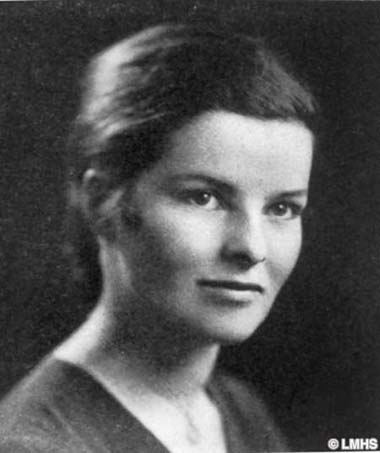
When my twin sister, Jenna, and I entered Bryn Mawr College, we–like most of the 1,300 undergraduate women–were immediately drawn into the bold legacy of its most famous graduate: Katharine Hepburn, ’28. While adjusting to campus life, my sister and I would often picture the well-documented scene of Ms. Hepburn’s–Kate’s–mortifying encounter with an older girl who pointed her out as a “self-conscious beauty” the first time she walked into the college dining hall, an incident that prevented her from eating in public ever again. The isolation she experienced in her early days as a collegian wasn’t entirely self-imposed, but largely stemmed from the singular trauma of discovering her older brother, Tom, hanging from the rafters in the attic of their godmother’s house where they had been vacationing, his neck broken by a noose made of sheets which he had apparently been using as props during a play rehearsal. The event changed Kate irrevocably and, as she later recounted, split her into “two people instead of one, a boy and a girl” (Life: Remembering Katharine Hepburn 10 Years Later, p. 32, 37).
Kate: self-conscious beauty
During history classes in Thomas Great Hall,Jenna and I would imagine Kate, on cold winter nights when she was tired of studying, in the outdoor Cloisters of the then-library, stripped of her clothing, skinny-dipping in the fountain–an adventurous tradition which, by her own account, seemed to take root in her father’s odd insistence that each of his children take baths in ice-filled tubs every morning before school (Jane Fonda: My Life So Far, p. 418). Kate fully embraced her father’s practice as a “character and constitution-building ritual” she continued beyond the confines of the college cloisters. It was in those cloisters that Kate’s emerging confidence as a collegian would be propelled by an insatiable determination to inhabit the stage, which she did to sensational effect on May Day 1927 when she appeared as a strange, fierce girl/boy in The Truth about Bladys, a play by A.A. Milne.
Kate’s stage debut
Kate’s stage debut in Bladys the year before she graduated inspired the college to select May Day for the annual ceremonial screening of The Philadelphia Story (1940), a box office hit written for Kate which would, by her own orchestration, transform her image from “box office poison” to bankable screen star. When Jenna and I gathered with the other girls in Thomas Great Hall, or outdoors on Merion Green to enjoy the ritual screenings, we would marvel at the impossibly elegant and graceful imageof Kate as Tracy Lord, “the goddess lit from within,”who could only be described using John Wayne’s exclamation on the 1975 set of Rooster Coburn, “DAMN! THERE’S A WOMAN!”
While this ritual screening was initially intended to instruct the Bryn Mawr women on the virtues of marriage–something Kate herself fleetingly tried with Main Line heir Ogden Ludlow on the heels of her graduation from the college–the real lesson lies in the demonstration of Kate’s fearless initiative behind the camera. She secured the film rights and nurtured the project herself, rewriting the script with playwright Philip Barry, committing to performing it onstage, and firmly negotiating her own terms which stipulated that she play the lead onscreen as well–a miraculous feat for a woman navigating the strictly patriarchal movie-making industry at the dawn of its Golden era (Life: Remembering Katharine Hepburn 10 Years Later, p. 42, 64).
Goddess lit from within
But the prevailing image of Kate that engaged us while at the college and has remained with us since is a far less overtly glamorous or legendary one that came not from her own life story, nor her onscreen presence, but through someone else’s. On freezing winter nights when we exited the dining halls with our teeth chattering from irresistible yogurt topped with Oreos, too cold to even entertain the notion of plunging nude into the cloister fountain, Jenna and I would instead snuggle against the heated bay windows of our dorm, reading memoirs and biographies together. Of course, there was Kate’s memoir, Me, and A. Scott Berg’s commemorative biography, Kate Remembered, released 12 days after her death. Yet, this prevailing image appeared in Jane Fonda’s intimate, inspirational, and moving memoir, My Life So Far, which proved revelatory for us as “self-conscious” young girls on the cusp of womanhood. In chapter 8, Fonda recalls the filming of On Golden Pond(1981) with the then 73-year-old Kate, and her father, Henry Fonda, whose health was rapidly declining during the shoot.
On Golden PondFilming On Golden Pond
Fonda documents how initially Kate “disliked” her, but after filming a scene which demanded that she, in Kate’s words, “face her fears” and resist the danger of “becoming soggy,” the elder actress took on the role of Fonda’s surrogate mother despite the fact that she had never had any children of her own . During the “mothering” she received from Kate, Fonda explains how her elder co-star firmly encouraged her to be more self-conscious–not in the negative sense, but in the sense that she should develop “a consciousness of self,” an awareness of “the impact our presence has on other people”–an awareness Kate herself possessed since those early days at Bryn Mawr, and had already mastered in her portrayal of Tracy Lord opposite Cary Grant, who affirmed her power to stir people:
“…She had this thing – this air you might call it – the most totally magnetic woman I’d ever seen and have ever seen since. You HAD to look at her. You HAD to listen to her. There was no escaping her.” (Life: Remembering Katharine Hepburn 10 Years Later, p. 42)
Kate was also aware of the power Henry Fonda’s presence had on his daughter during the filming of On Golden Pond–a strained dynamic that often left Fonda feeling dismissed, discouraged, and–at its climax–depleted of the emotion she needed to perform the major scene of the film. Mortified that she had become “dry” and panicked that her father would find out, Fonda confided in Kate, who came to set even though she wasn’t expected to be there that day. As the director gave the cues to begin filming, Fonda tried to buy time, telling him that her back would be to the camera until she was ready for him to roll. Then, at “the time of reckoning,” she describes the image before her and its impact:
“I turned away to prepare, though I had no idea what to do, and as I was staring at the shore, trying to relax and bring myself into the scene, there was [Kate] Hepburn, crouching in the bushes just within my line of vision. Nobody could see her but me. She fixed me intensely with her eyes, and slowly she raised her clenched fists and shook them as if to say, “Do it! Go ahead. You can do this!” She was willing me into the scene: Katharine Hepburn to Jane Fonda; mother to daughter; older actress, who’d been there and knew about drying up, to younger actress. It was all those layers of things and more. Do it! Do it! You can! I know it. With her energy, she literally gave me the scene, gave it to me with her fists, her eyes, and her generosity, and I will never, ever forget it.”(Jane Fonda: My Life So Far, p. 436-437)
In essence, Kate took the role of Fonda’s off-camera scene partner, aware of how her presence and maternal connection to the younger actress could draw out a great performance. With her fists, she motivated Fonda to face her fears and to confront the difficult, painful emotions that had both plagued and eluded her on and off the screen.
Mother and daughter
As Fonda points out, Kate had been there, often forced to elicit emotion with no one present to draw her into the scene. For Guess Who’s Coming to Dinner (1967) 14 years earlier, she played many of her scenes to an empty wall since Spencer Tracy, only weeks from death, no longer had the stamina to sustain a full-day’s shoot (Life: Remembering Katharine Hepburn 10 Years Later, p. 35). She had famously met “Spence” on the set of Woman of the Year (1942), their first exchange characterized by Kate’s observation, “You’re not as tall as I expected,” which revealed the self-conscious awareness of height as integral to her image and presence. Despite the producer’s prediction that Spence would “cut her down to size,” Kate is a force to be reckoned with as Tess Harding, the smart, successful foreign correspondent whose talent and ambition are tested once she marries. In the film’s penultimate scene, which my sister and I would watch on repeat at Bryn Mawr, Tess breaks into her estranged husband’s apartment with the intent to win back his affections by cooking him breakfast. Kate carries much of the scene herself without dialogue at her disposal until Spence’s character, Sam, enters the kitchen where Tess is making a mess of the meal. With impeccable comedic timing, Kate captures Tess’s misguided determination to demonstrate her domesticity.
Kate in the kitchen
Especially in the silent moments, she commands the viewer’s attention–as she did Fonda’s, who “never tired of looking at her”–with her massively expressive eyes that, according to Cary Grant, “could see right through the nonsense in life” (Life: Remembering Katharine Hepburn 10 Years Later, p. 62),and her perfectly sculpted cheek-bones that held the intensity of her expression and that grew even more defined and magnificent with age (Jane Fonda: My Life So Far, p. 427). Defying the producer’s prediction, she instead extenuates her height through the agility of her movements and through the pant suits she insisted on wearing before they had become the acceptable fashion for well-bred women.
The legacy of Kate’s “pant suit look” for modern professional women was recently depicted in an episode of CBS’s critically-acclaimed drama series, The Good Wife when a judge asks Alicia Florrick (Juliana Margulies) what she is wearing. Alicia replies, “A pant suit, your Honor.” The judge admonishes her, “In my courtroom, Mrs. Florrick, men wear suits and women wear skirts.” One can imagine what Kate’s reaction would have been had the judge said that to her character, Amanda Bonner, in the romantic-comedy Adam’s Rib (1949)–perhaps a forerunner of The Good Wife–that again pits her against Spence, this time as married lawyers arguing opposing sides of an attempted murder case.
Kate’s iconic look
Most of the nine films Kate and Spence did together feature battle-of-the-sex plots which, at certain points, blurred or even reversed the roles women and men typically played in marital or committed relationships. These plots suited Kate’s life-long image of herself as inhabiting both female and male traits, particularly in the wake of her older brother’s tragic death. Six years before her pairing with Spence, she unabashedly emphasized her androgynous traits, shaving her head to play a boy for Sylvia Scarlett, just as 19-year-old actress Bex Taylor-Klaus recently did for her role as the lesbian tomboy, Bullet, in the third season of AMC’s crime drama, The Killing. The legacy of Kate’s powerful presence is recognized in Bex’s “self-conscious” performance, which takes root in her eyes and manifests itself in the nuances of her expression, movement, and stature. It is also recognized in the onscreen power of other contemporary actresses, notably Cate Blanchett, who won a Best Supporting Actress Academy Award for her portrayal of Kate in Martin Scorsese’s film The Aviator (2004), chronicling the life of Howard Hughes.
Kate plays a boy
And there’s Jane Fonda herself, who seems to have permanently absorbed the physical and emotional energy Kate gave her that day when she was “dry.” This past year, Fonda appeared as ruthless reporter Leona Lansing in HBO’s The Newsroom. Her performance is magnificent, particularly in the final scene of Season 2, Episode 7 when Leona refuses to accept her staff’s resignation after a scandal. Like Kate, she commands our attention, utilizing every ounce of her presence and engaging our emotions with her vivacity and humor. Fittingly, her role is that of motivator–the encourager behind the scenes willing her dishonored staff to “Get it back!”
When she was working with Kate for On Golden Pond, Fonda details her elder co-star’s stubborn conviction–despite her liberalism and feminist persona as the daughter of a suffragette who was also a Bryn Mawr alum (Class of 1899)–that a woman could not balance an acting career with motherhood if she wanted to be “great.” As director Frank Capra attested:
“There are women – and then there is Kate. There are actresses – then there is Hepburn. She is wedded to her vocation as a nun is to hers and as competitive in acting as Sonja Henie was in skating.”(Life: Remembering Katharine Hepburn 10 Years Later, p. 69)
Kate’s unwavering dedication to this “vocation” produced an unprecedented career that lasted decades and won her a record four Academy Awards, the last one for On Golden Pond. Fonda recalls that the morning after her win, Kate telephoned to gloat, “You’ll never catch me now!” (Jane Fonda: My Life So Far, p. 439). Indeed, Kate’s record remains intact, although the indefatigable Meryl Streep is close, having won three and mostly likely poised to win another in the near future. But perhaps one could interpret Kate’s boastful exclamation as more of a motivating challenge–a “raising of the fists,” across the ages–willing younger generations of actresses to face their fears and to be conscious of their presence.
In 2006, three years after Kate’s death at age 96, Bryn Mawr established the Katharine Houghton Hepburn Center, which hosts the Hepburn Medal ceremony, a lifetime achievement award given to women artists and activists who have transformed their worlds. Recalling Jane Fonda’s memoir, my sister and I imagine that if Kate were alive, she’d pointedly challenge the younger actress in her maternal “God-is-a-New-Englander” voice, “Well, if you can’t catch me in the Oscar count, you can win a Hepburn Medal instead!”
Anassa Kate, Kate!
Natalia Lauren Fiore received a B.A. in Honors English and Creative Writing from Bryn Mawr College and an M.F.A in Creative and Professional Writing from Western Connecticut State University, where she wrote a feature-length screenplay entitled Sonata under the direction of novelist and screenwriter, Don J. Snyder, and playwright, Jack Dennis. Currently, she holds a full-time tenure track teaching post at Hillsborough Community College in Tampa, Florida, where she teaches English and Writing. Her writing interests include film criticism, screenwriting, literary journalism, fiction, the novel, and memoir. Her literature interests include the English novel, American Literature, and Drama – particularly Shakespeare. She blogs at Outside Windows and tweets@NataliaLaurenFi.
Her return to Hollywood in the film version of William Inge’s play ‘Bus Stop’ was again a chance to shun the glamorous armour of her gold-digger characters, to explore the role of a downtrodden saloon singer with ambitions above her abilities. Not only did her performance stun the film’s director, Joshua Logan, who called her the greatest actress he ever worked with, but it also left critics in no doubt as to her ability.
Marilyn Monroe
This guest post by Gabriella Apicella appears as part of our theme week on The Great Actresses.
“I seem to be a whole superstructure with no foundation. But I’m working on the foundation.” So said Marilyn Monroe to a reporter just weeks before she died at the age of 36 in 1962.
For the superstructure of Marilyn Monroe to have remained standing over 50 years after her death, the foundations have turned out to be stronger than anyone realised or appreciated during her lifetime. Many reappraisals of her extraordinary talent and appeal have been undertaken since then, and none so vital as the book Fragments, and the documentary Love, Marilyn, in which the woman speaks for herself.
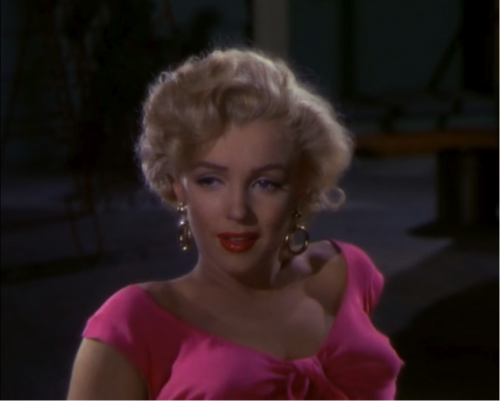
As a fan from the moment I first saw her sheathed in magenta on a 17-inch TV screen when I was just 8 years old, it is difficult to deliver an unbiased account of her appeal, so I won’t try. Nor can I offer the in-depth analysis of Carl Rollyson’s excellent book Marilyn Monroe: A Life of the Actress.
However, as a simple introduction to those yet to understand the fanaticism and devotion Marilyn Monroe continues to provoke from her fans, below are some examples of her less well-known appearances. These prove the woman should be remembered as much for being the fine screen actor she was, just as much as the icon she has become.
Unfortunately, Marilyn Monroe was seldom cast in a truly excellent role.* There was no Casablanca, Vertigo, Anna Christie, or Breakfast at Tiffany’s, though she performed scenes from Anna Christie to great acclaim on stage at the Actors’ Studio, and Truman Capote wrote Breakfast at Tiffany’s for her. Rather it is her presence that lifts otherwise mediocre fare into essential viewing. Her leading men were frequently unable to match her charisma onscreen, so the dynamism of pairings such as Eva Marie St and Marlon Brando, Audrey Hepburn with Gregory Peck, or Cary Grant and Ingrid Bergman was also unrealised.
Despite this, even from her earliest roles in The Asphalt Jungle and All About Eve, she delivers nuanced and sensitive performances of rather bland parts, making a forgettable supporting role into a highlight of both iconic films. Most interesting at this point of her career however, are two lesser known B-movies that showcase a very different Marilyn Monroe, and demonstrate how versatile she was. In a small role as a fish-cannery worker in Clash By Night, brawling with her fiancé, drinking beer and talking back, she is the antithesis of what we expect to see from the ultimate Queen of Hollywood. She is also entirely believable with a feisty strength that is downright thrilling to watch her embody, free from glamorous evening gowns and makeup. Holding her own alongside Barbara Stanwyck is no easy feat, yet she accomplishes this with apparent ease, and displayed the potential to one day match her co-star’s critical acclaim.
Months later she appeared as a psychologically disturbed young woman in low-budget thriller Don’t Bother to Knock. Her fragility and desperation throughout is unbearably moving, culminating in a virtually silent yet astonishingly affecting final sequence. Free again from the glamour of her usual roles, her acting and not her physical beauty has the greater importance. Despite the film’s predictability, and the rather clunky pacing, this leading role gives Monroe the opportunity to move from demure to threatening to suicidal via seductive and psychotic. It got favourable reviews, but was not a great hit with the public; it was the studio’s balance sheet that would prevent her tackling such a complex role again.
In the days of the studio system, stars did not pick and choose their parts, and with audiences going in droves to see Marilyn in frothy inconsequential comedies as a dumb blonde, she quickly became typecast. It would be several years before she would take control of her career by walking out on her contract and forming her own production company in an attempt to gain some creative satisfaction. Prompted by the studio’s attempts to cast her in a film called The Girl in the Pink Tights there’s little reason to wonder why she had become so intolerant of the image she had now become constrained by.
Her return to Hollywood in the film version of William Inge’s play Bus Stop was again a chance to shun the glamorous armour of her gold-digger characters, to explore the role of a downtrodden saloon singer with ambitions above her abilities. Not only did her performance stun the film’s director, Joshua Logan, who called her the greatest actress he ever worked with, but it also left critics in no doubt as to her ability. While there is much in the film that dates it terribly, I would urge anyone with doubts about Marilyn Monroe’s extraordinary talent to watch this performance for one of the finest given by any actor. In this role, the potential she had to shape acting history in the same way her contemporary Marlon Brando did for male actors is captured and preserved and sadly serves as a glimmer of what could have been achieved had she remained alive a while longer. As in several of her other roles, it is often when she is not even delivering a line that her performance is most powerful, accessing deep emotions and allowing her facial expressions to convey the character’s innermost feelings, presenting an entirely truthful and believable rendition.
Perhaps because they show a lesser-known side to Marilyn Monroe, these performances are among my favourites, yet there are two more that cannot be missed.
Wearing her sexiness with a sort of naïve unawareness became something of a trademark in her film roles – her characters never seemed to notice how unbelievably gorgeous she was, so at the point when she uses it as a weapon, the result is sensational. As a murderous wife in Niagara, she does just that to stunning effect. Again, it is frustratingly unsatisfying as a film, but contains a thrilling and jaw-droppingly hypnotic performance from Monroe as she sashays, manipulates, seduces, and schemes. This “dangerous” Marilyn shows the stuff of Hitchcock fantasy. While he is to have remarked she was “too obvious” a choice to cast in one of his films, and given his methodical directing methods would likely have made it a horrendous experience for both of them, I have rarely watched Vertigo or Psycho without wishing the blonde was THE Blonde!
Which of course brings us to the most important and successful of all her roles, and the one she will always be remembered for: even today, and undoubtedly for years to come, analysis continues of what aspects of the performance were “real,” and what were not. This was not Lorelei Lee, Sugar Kane, or The Girl, but Marilyn Monroe herself, played by one of the greatest screen actors of all time, named Norma Jeane.
*Some Like it Hot being an obvious exception of a great classic film, the part of Sugar Kane didn’t give her opportunity to show the range of her ability, and she was depressed to be playing a “dumb blonde” once again.
Gabriella Apicella is a feminist writer and tutor living in London, England. She has a degree in Film and Media from Birkbeck College, University of London, is on the board of Script Development organisation Euroscript, and in 2010 co-founded the UnderWire Festival that aims to recognise the raw filmmaking talent of women. Her writing features women in the central roles, and she has been commissioned to write short films, experimental theatre and prose for independent directors and artists.
To say that Harris is a revelation in this film may be an understatement. It not only prepared her to tackle the complex layers of Winnie Madikizela a few years later, but it also proved yet again that she is able to take on a variety of different roles–from heroic to villainous. She solidified a sci-fi fan base with her totally badass performance in “28 Days Later” showed that she can steal scenes from 007 himself, and continues to surprise audiences in roles across all genres.
Naomie Harris
This guest post by Candice Frederick previously appeared at her blog Reel Talk and appears as part of our theme week on The Great Actresses.
I’ve said it before and I’ll say it again: Naomie Harris is an international treasure. But why do I feel like I’m the only one who knows this? Though she’s been acting for nearly two decades, delivering one great performance after another, she continues to fly under the radar. Even after her riveting portrayal of Winnie Madikizela in last year’s otherwise derivative Mandela: Long Walk to Freedom, she’s still seriously slept on as one of our finest talents. I mean, the fact that she was shut out of every major award (not even as much as a nomination) for Mandela is a tragedy in and of itself.
Her IMDb page is shockingly bare in regard to future projects. Other than an as yet “rumored” role as Moneypenny in the 2015 Skyfall follow-up Bond 24, there’s nothing listed. Let’s hope this changes soon because Harris is the type of actress who deserves her own franchise. She is a talented force to be reckoned with and she she deserves far more attention than she gets.
I thought of this the other day while I was watching The First Grader (2010). In Harris’s previous performance under the direction of Justin Chadwick (Mandela), she plays Jane Obinchu, a Kenyan schoolteacher whose professional and personal lives come under conflict once she admits an 84-year-old first-time student and ex Mau Mau freedom fighter (Oliver Litondo) after the Kenyan government announced universal and free elementary education in 2003. To say that Harris is a revelation in this film may be an understatement. It not only prepared her to tackle the complex layers of Winnie Madikizela a few years later, but it also proved yet again that she is able to take on a variety of different roles–from heroic to villainous. She solidified a sci-fi fan base with her totally badass performance in 28 Days Later, showed that she can steal scenes from 007 himself, and continues to surprise audiences in roles across all genres. And on top of all that, she manages to somehow also be a red carpet fashion titan. Here’s some of her best looks:
Need I say more?
Candice Frederick is an NABJ award-winning print journalist, film critic, and blogger for Reel Talk.
From the feminist angle, Streep’s mold-breaking of the representation of women and her mark on scripts probably adds to her greatness in a way we can never completely measure because we can’t track it. One particular example worth mentioning is that the script for ‘Kramer vs. Kramer’ did not originally explain why Joanna Kramer wants to leave Ted (Dustin Hoffman) and she fought the director Robert Benton on the script until the character is allowed to say why herself.
This guest post by Cynthia Arrieu-King appears as part of our theme week on The Great Actresses.
If you Google “greatest living actor,” the first hit is not only Meryl Streep, but also lists with headings like “besides Meryl Streep” and “after Meryl Streep.” There are video montages, plural, of people freaking out about how much they love her or respect her work. Her work in the mid-70s to early 80s came across the cultural wires as something freakish: the mercurially reproduced accents, the ethereality and seamlessness and virtuosity.
There’s not really any way around the boring facts of talent and hard work here. She has always known her lines. She has always been the one who bikes home from the set in the rain instead of taking a cab. She works with the coach until she’s not just speaking Polish, but Polish with a German accent (Sophie’s Choice). She hides in the closet to practice her singing for Mamma Mia! while her family yells, “We can still hear you.” She presents a moonskinned serenity and hearty laughter in her interviews that belies the hours and hours of monomaniacal obsession that is artistry that has no reason to prove it deserves to be here. It just is here. It is incontrovertible. That probably comes from a good family, a very good education, insane work ethic, shockingly keen intuition, intelligence, and a good ear.
So many actresses show in their performances why it’s hard to be a woman, and the worth of that feels political and rooted in everyday life. Streep knew she could get away with more without putting forth a persona like Jane Fonda. In Streep’s work she never seems to be like any particular person, but convinces the viewer of how human that character is. It is easier to see, especially in her earlier work, the places where people exist in themselves purely and react purely rather than emphasizing gestures. They seem like the essence of a person rather than a person, which sounds like a problem in a way. But this subtle light show makes some sense given what she once told James Lipton. She explained on Inside the Actor’s Studio that she once thought acting was a stupid way to make a living; it doesn’t do anything in the world but now she sees “its worth is in listening to people who maybe don’t even exist or who are voices in your past…come through you through your work and you give them to other people. Giving character to characters who have no other voice, that’s the great work of what we do…I mean so much of this is vanity (being a celebrity)…But the real thing that makes me feel so good is when I know I’ve said something for a soul…I’ve presented a soul.”
Streep has an ability to embody in an otherworldly fashion so often in historical context. Shirley MacClaine in an American Film Institute tribute to Streep once said, “The mystery of your talent is so otherworldly, it makes me understand that there is more to all of us than meets the eye.” So what is she doing? What is she imagining in Sophie’s Choice when she tries to tell the truth of her past after “all the lies” she has told? The containment of her pain and love, the softness of her face recalling, weakness, puniness, rage, the effortless clarity of a traumatic recollection: these all move together in her face such that all seem to present themselves, all the layers are visible somehow. A different actor might show determination, grit, resolve, terror. Streep knows memory doesn’t quite settle into its original feelings at all. So even while recounting her character’s efforts in the Holocaust, you see something that feels from another time, paradoxically immensely present. Here’s the clip:
There’s another movie in her oeuvre, Plenty, that shows Streep transcending the class and propriety by being able to do almost literary interior monologue as monologue. It doesn’t even come across as something Shakespearean or professed the way Elizabeth Taylor might have done it, or balky the way Hepburn might have, it’s just spilling out. It’s not entertaining in any popcorn movie sense or even particularly sanguine. This movie trots out in Streep’s Susan Trahane the most subtle selfishness, ambivalence, detachment. The narrative elides plot to a large degree, so that you feel you’re missing something on first viewing. People slavishly watch this movie over and over. Susan is contaminated with something so guarded behind rage you do have to see it a few times to understand what her character means, and it’s the kind of vice that makes you feel bad for her. You actually feel bad for her having this rage. This performance reminds the viewer of the difficulty of true self-awareness, deceit, or self-deceit. The closest thing I’ve understood to this in art are the characters in Alice Munro’s short stories who often seem fairly normal and well-adjusted until you start seeing what price they are paying for some subtle flaw escaping their own attention. This is the small heroism for all of us: to know ourselves, to know what we cannot bear and to say something about it.
From the feminist angle, Streep’s mold-breaking of the representation of women and her mark on scripts probably adds to her greatness in a way we can never completely measure because we can’t track it. One particular example worth mentioning is that the script for Kramer vs. Kramerdid not originally explain why Joanna Kramer wants to leave Ted (Dustin Hoffman) and she fought the director Robert Benton on the script until the character is allowed to say why herself. The effect turned Joanna from a villain of misunderstood women’s liberation–as the script was written–into a person I think it would be hard for any woman living in/having lived in a male-bread-winning-female-stay-at-home family not to witness without blazing recognition. This is a fierce resolution about the representation of women that has spanned her career and for which Streep has more recently got into some hot water over with the Disney people. Many of her lines in Kramer vs. Kramer were written by her, particularly the courtroom scene, and the final scene where she changes her mind about custody of her son. It’s not uncommon to hear in interviews how she spoke her mind about some scene change or tried to hold back from speaking her mind “for a change.”
One can look back on this era of Streep’s work and see that she did not pick the Jane Fonda roles, or the roles of abrasive people on the outside of establishment. She seemed to pick roles or be given roles of a woman always struggling against the constraints of her place, but within something: a marriage, a company, an historical moment. She said on being cast in The Deer Hunter: “They needed a girlfriend, so that was me.” And so she took roles, got acclaim, was always thought to be overpaid when the male actors were getting far more than she. Then something happened when she turned 40. She did not get the same kind of roles. She noticed. She wanted to be in something funny, so eventually she was cast in several comedies, sometimes as a witch, always sending up the Hollywood machine as in Death Becomes Her. She didn’t care if she was not the pretty one. She didn’t think that was what she had been getting cast for anyway, in the pre-40 days.
Having said that, what has happened since that turning point that makes Streep the go-to actress everyone wants for any role for a woman over 60? As Tina Fey quipped at the 2014 Golden Globes, “Streep proves there are still roles for Meryl Streeps over 60.” Tracey Ullman said it so we understand the score even more: “You’re (Meryl’s) the only one working: The rest of us have to show our tits.” She’s taking all the roles: Margaret Thatcher, Julia Child, a composite of Anna Wintour. This is after a career that started with her domination at Yale, her acceptance then moving into funnier parts. She decided, at some point, “(I)t’s easier to project yourself into what you were, not what you are. Movies are a young person’s playground.” And a little more tellingly: “As there begins to be less time ahead of you, you want to be exactly who you are, without making it easier for everyone else.” Ergo, dominating her field. Ergo, not questioning where her territory begins and ends. As Goldie Hawn says, “Meryl is a freak. She has no limitations. Well, she’s a martian.” That must be her unsaid lesson to us on greatness. You can’t really learn it, and you never let opportunity get past you.
Part of me wonders what would happen if she did some little off-the-map film or what it would mean for her to have a late breaking McConnaissance (with less crazy self-regard). Maybe more of a ReConnaissance, a re-knowing? Would that amount to “making it easier for everyone else”? She has nothing to prove, and part of her potency as an artist comes from the fact that she never gave off one vibration of having to prove herself, actor-wise. But something might replenish what have become somewhat recognizable mannerisms in her impersonation-like roles these last years: The head wag of delight. More importantly what are we losing in our depictions of people getting older by having, seemingly, the mythos that only she and three other people play these parts? Something about class probably, race, and ethnicity definitely.
Having gotten momentum in the last few years to gravitate toward fun (Mamma Mia!) and over the top (August: Osage County), she’s thinking nevertheless about history, history as made by women (The Iron Lady). She’s literally supporting the museum of women’s history. Her artistic wishes seem to revolve around wanting women’s history to prevail. For the roles to become more numerous. For film to show the lives of women in proportion to their importance in the real world, as she’s always worked for. Bit by bit, how can it happen? And today, do actresses need to thank her for her breaking the glass ceiling in acting as much as they did in the last decades? Probably not. Maybe we’ll get to a moment when actresses will have the luxury of not having to recall that ceiling. Hopefully long before we forget about Streep.
Streep’s daughter once said of her role as Miranda Priestly in The Devil Wears Prada: “Now they know the real you.” But whatever monomaniacal and feminist politics she’s wielding, Streep’s still conveying the soul. At a tribute to her acting she said, “I wish I were her, I really do,” and this remark on her celebrity doubles as a remark on the people she’s portrayed. She’s given us this love through 35 years of work to date, and she’s going to keep pushing for the unheard to be heard. In this scene from Silkwood, she gives a look. Friendship, pity, love, helplessness, resolve, seeing the mortal body, a whole idea supported by the shot of the wig and the glasses. It’s a good microcosm of what Streep does–the listening to a spirit, and making sure to truly witness and to speak up for that person’s essence.
Cynthia Arrieu-King is an associate professor of creative writing at Stockton College in New Jersey where she teaches about literature and plagiarism, so beware lazy magazine sites. Her previous Bitch Flicks articles include one on True Grit and one with Stephanie Cawley on Twin Peaks.
Page explained that she has a sense of responsibility that compels her to be honest and ethical as a person and a public figure. This same integrity will help her to continue her dedication to playing strong, interesting, dimensional characters that speak to young women. She sets her standards high with her roles and looks for stories with uniqueness, depth, and a message.
This guest post by Angelina Rodriguez appears as part of our theme week on The Great Actresses.
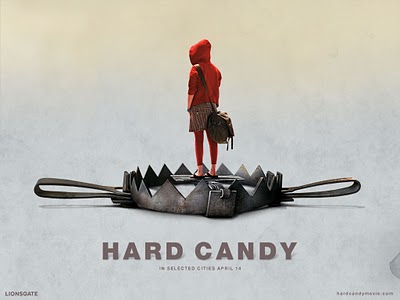
Ellen Page already had an acting career in Canada when she came to the states to make her debut in Hard Candy. The young, bright actress kicked off her career in America with a controversial role that many found to be extremely unsettling. Teenage honor student Hayley decides to take justice into her own hands when a local girl goes missing. She uses her wit to overpower the voyeuristic pedophile character played by Patrick Wilson. Page sports a red hoody as if to conjure images of Little Red Riding Hood but, she is somewhat of a wolf in Red’s clothing. She is not to be underestimated.
Hard Candy movie poster
Hayley is intelligent, confident, and sure of herself in a way that I had never seen before in a character her age. It was extremely empowering to watch the film as a 12-year-old girl with my nose in a book and 90s girl punk blasting in my ears.
Page delivers a layered performance as she commands vulnerability and even turns it into a strength. Her acting skill is obvious as she carries the film with her co-star Wilson. The majority of the scenes are dialogue-rich and only contain the two actors and a single house as the set. Both characters are complex, relatable, and completely human. This movie is unique, in that it does not do the work for you; it really makes you think. Hard Candy drove audiences to play out their own scenarios and call their own ideas about morality and nature vs. nurture into question. It was a daring role selection for the young Page.
Page’s character Hayley declares with tears and determination in her eyes, “I am every little girl you ever watched, touched, hurt, screwed, killed.” This role was for survivors, for women, for those that have simply had enough. Although violent justice isn’t something that all survivors necessarily wish for, the film brought attention to the subject of rape culture during a time when its existence was completely ignored. The dialogue confronts victim-blaming and addresses that law enforcement, along with society as whole, don’t do their part to stop terrible things from happening or seeking justice when they do.
The film is multifaceted, but it is definitely a comforting story for every girl in need of a good revenge fantasy.
Ellen Page had a smaller part as Kitty Pryde in X-Men: The Last Stand. Although her part is small, Kitty Pryde uses her ability to phase through walls to assist the team of mutants. She is a badass when she faces off against The Juggernaut, a much larger enemy, and manages to be a hero. Hopefully we will be able to see more development in the Kitty Pryde character in X-Men: Days of Future Past, set to be released in summer 2014.
Her biggest role and somewhat of a fame catalyst was Juno MacGuff in Juno. This heartfelt comedy follows a quick-witted high schooler through an unplanned pregnancy. This adult issue is handled well by Juno as she tries to continue to be a teen. She takes the disapproval of her classmates in stride with clever, sarcastic humor. Her parents are accepting and nurturing and help her through the process. Although character Juno makesthe choice to go through with the pregnancy and give the child up for adoption, some people were upset about the message in the film, claiming that it was pro-life. Page responded publicly to these concerns when she told The Guardian, “I am a feminist and I am totally pro-choice, but what’s funny is when you say that people assume that you are pro-abortion. I don’t love abortion but I want women to be able to choose and I don’t want white dudes in an office being able to make laws on things like this. I mean what are we going to do – go back to clothes hangers?” Page’s skills in Juno earned her a Best Actress Academy Award nomination. Her performance runs the gamut of emotions from side-stitch humorous to deeply moving.
The next underrated film Page starred in was Whip It; she plays Bliss Cavendar. Whip It is a story about a girl from a small town trying to find her niche and navigating the murky, adolescent waters of self discovery, early romance, friendship, and parental approval. Her mother wants her to devote her time to beauty pageants, and Bliss wants to find herself and hang out with rough, tough roller derby girls.
This film shows women being aggressive, competitive, and joining together over the love of the game and in the spirit of sisterhood.
Roller derby is a sport that allows women an outlet to express their athleticism, excludes men, and takes all kinds. Women of all shapes can find a home in the pack. Not only can any body type find a place, but any body type can be an asset. I’m glad the film was made and that it brought derby into the public eye, but it’s unfortunate that there was little diversity shown in the cast. Whip It is definitely a fun, inspirational girl power flick.
Later, Page played the role of Ariadne in Inception alongside star Leonardo DiCaprio. Page plays the intellectually driven, adventurous architect who is necessary to complete the team that illegally searches the sleeping consciousness in order to obtain information.
She made me proud of my generation and very sure that she is one of the great actresses of my time. Page said in her speech, “I’m here today because I am gay and because maybe I can make a difference. To help others have an easier and more hopeful time. Regardless, for me, I feel a personal obligation and a social responsibility.”
Page explained that she has a sense of responsibility that compels her to be honest and ethical as a person and a public figure. This same integrity will help her to continue her dedication to playing strong, interesting, dimensional characters that speak to young women. She sets her standards high with her roles and looks for stories with uniqueness, depth, and a message. Ellen Page earned her spot as a Great Actress by demonstrating a commitment to progressive roles and speaking well about the issues within her films and the issues that women face. She is an excellent role model and icon as well as a self-declared feminist.
Angelina Rodriguez studies Sociology at Fairmont State University. In her free time she thinks about things and pets puppies.
Brooks and her characters were powerful women, fighting for control of their lives. In Roger Ebert’s review of ‘Pandora’s Box,’ he states, “Life cannot permit such freedom, and so Brooks, in her best films, is ground down—punished for her joy.” Her real life mirrored her characters; often being punished for her freedom and feminist power.
Louise Brooks
This guest post by Victoria Negri appears as part of our theme week on The Great Actresses.
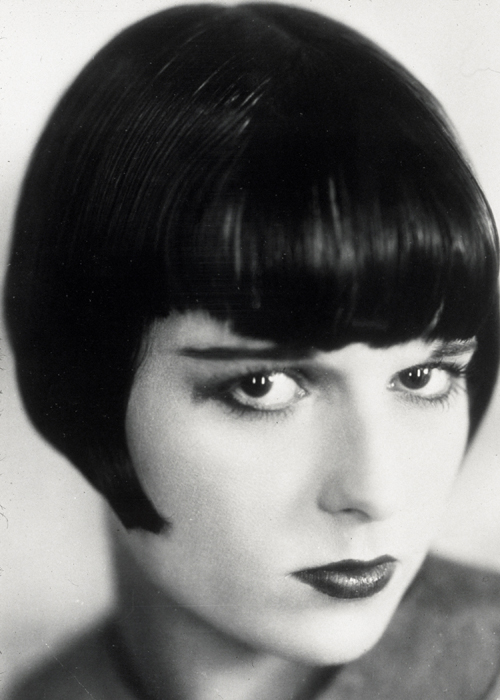
When you think of a flapper, what do you see? The iconic image is a woman with a long dress, often accompanied by long beads and that famous hair cut – a short, slicked bob curled against the face along the cheek bones.
The flapper image was cultivated by the silent film star Louise Brooks through her most famous character, Lulu. Forgotten for years, more attention has been paid to Brooks recently, after her films were rediscovered and re-popularized. This star, whose career ended far too abruptly, deserves much more credit than she’s been given as a trailblazer for feminism and the portrayal of female sexuality onscreen. At the same time, she was a pioneer of naturalistic acting, predating Marlon Brando and James Dean by decades.
Understanding a traumatic event from Brooks’ early life gives shape and context to her career as a performer. As a child growing up in Kansas, Brooks was sexually assaulted by a neighbor. Later, her mother blamed the incident on her. This may be the first instance of Brooks being demonized for speaking out. Needing protection from her mother, she instead received blame. Her most famous characters, especially in Pandora’s Box (1929) and Diary of a Lost Girl(1929), were young women who were punished for behaving in a way that was counter to societal expectations.
In Diary of a Lost Girl, flowers in her hair
She showed her defiance throughout her Hollywood career. At the beginning, she was offered two contracts, one from MGM and one from Paramount. Torn between the two, she turned to her friend Walter Wanger for advice. In Lulu in Hollywood, her autobiography, Brooks explains that Wanger told her to take the MGM contract because if she went with Paramount, people would think it was because of their relationship. She responded, “‘You just say that because you don’t want me at Paramount.”… “And you think I’m a bad actress.’” She signed with Paramount.
When Paramount refused to treat her fairly by offering her a promised raise some years later, Brooks didn’t capitulate. She left the studio, refusing to return to Los Angeles to add voice work to the film The Canary Murder Case and taking G.W. Pabst’s offer to film Pandora’s Box in Germany instead. Paramount bosses announced that Margaret Livingston would finish the dubbing work, because Brooks didn’t have a suitable voice for talkies. Thus began a long period of Paramount and Hollywood unofficially blacklisting Brooks.
It also marked the start of what would become her most famous collaboration.
In Diary of a Lost Girl, Brooks’ Thymian is thrown into a reformatory after she refuses to marry the father of her child because she doesn’t love him. Her morals, true to her core, don’t fit with the times, and she is punished for them. At the start of the film, we see her wearing all white. She is innocent and childlike, surrounded by people in darker colors, and blissfully unaware of her effect on others. After rejecting the aforementioned marriage, she is forced into a reformatory against her will. Eventually, she escapes with a friend. With no other options, she becomes a prostitute. By chance, she runs into her father as she is being “auctioned off” on her birthday and he is embarrassed and devastated to see how she’s turned out. Shortly thereafter, he dies and Thymian blames herself. Once again, Brooks’ character is so accustomed to living in a society where the blame for tragedy is directly linked to a woman’s sexuality. She is overpowered by guilt.
In Diary of a Lost Girl, seeing her father as she’s being “auctioned” off
In Pandora’s Box, Brooks’ character Lulu is caught backstage in an intimate situation with Schon, her lover, who is engaged to another woman. This backstage scenes is so powerful in large part because of the look on Brooks’ face: indignant, challenging, and powerful. It’s the same face that stands up to Paramount and goes to Germany to film two brilliant, timeless movies. Above all, her performance registers a real note of defiance, challenging the male gaze. Following her wedding to Schon, he walks in and misinterprets Lulu’s actions with two characters: Schigloch, who she claims is her father, and a fellow performed named Quast. Schon, sure Lulu has been unfaithful, tries to convince his wife to kill herself. But in a struggle, the gun goes off and she accidentally murders him.
In Pandora’s Box, Lulu’s seduction is portrayed as manipulative, without feeling. With nowhere to turn, Lulu resorts to prostitution to survive. We are challenged by the end of the film, when she is murdered by Jack the Ripper. Is it retribution for her actions or is it a tragic circumstance? The most famous image from the film is Brooks in a black veil and dress, attending her own trial as if it were a funeral.
However, in Diary of a Lost Girl, Thymian’s innocence is overpowering. She faints multiple times during the movie after traumatic, stressful events, and even wears a crown of flowers following her confirmation at the beginning of the film. While Lulu dares us to make a judgment call, Thymian is a tragic victim of society. Ironically, both are driven to prostitution in desperation, as Louise Brooks claims to also have in real life.
Brooks and her characters were powerful women, fighting for control of their lives. In Roger Ebert’s review of Pandora’s Box, he states, “Life cannot permit such freedom, and so Brooks, in her best films, is ground down—punished for her joy.” Her real life mirrored her characters; often being punished for her freedom and feminist power.
She played one of the screen’s first bisexual characters in Pandora’s Box. She had multiple romances with directors and co-stars, Charlie Chaplin and supposedly Greta Garbo included. She was volatile, confident, both open and closed off. She was so powerful in silent film and never given the chance to show her voice in the sound era.
Classic haircut
Louise Brooks should have had a much fuller film career. After returning to Hollywood from Germany, she spent the ’30s making a few unsuccessful films and retired from Hollywood. The following decades were spent struggling to get by, battling alcoholism, relying on the loyalty of friends and even becoming a call girl in New York. However, unlike the tragic heroes in her films, she resurfaced when she met James Card, the curator at the Eastman House in Rochester, New York. He encouraged her to move to Rochester, where she started to come to terms with her past.
It was in Rochester that Louise Brooks found her voice and wrote one of the most brilliant, brutally honest memoirs, Lulu in Hollywood, in 1974. As years passed, her tragic ending morphed into being rediscovered and appreciated. Film historians, critics and movie fans praise her bold work, her erotic glances, and her unparalleled ability to evoke the truth onscreen. The world will never forget her.
Victoria Negri is a New York City-based filmmaker/actress currently in preproduction on her first feature, Gold Star, loosely based on her relationship with her late World War II veteran father. When she’s not watching, making, or writing about movies, she’s probably running a race somewhere.
I try to be a decent person and a thoughtful film artist. I frequently write films with complex female protagonists, attempt to defy expectations and stereotypes, and cultivate a team of collaborators that both is diverse and thinks diversely. A huge reason I choose to work with Seed & Spark for crowdfunding my first feature, ‘If There’s a Hell Below,’ is because of the awesome team of women running the show there.
This is a guest post by Nathan Williams.
I’m a white, straight, cisgender male. There is no more over-represented perspective than mine. So what are my words doing here?
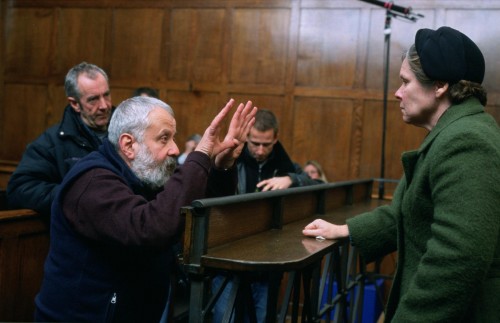
not me, Mike Leigh
I’m writing today to ask you not to let me off the hook.
I try to be a decent person and a thoughtful film artist. I frequently write films with complex female protagonists, attempt to defy expectations and stereotypes, and cultivate a team of collaborators that both is diverse and thinks diversely. A huge reason I choose to work with Seed & Spark for crowdfunding my first feature, If There’s a Hell Below, is because of the awesome team of women running the show there.
I am immensely proud to be working in the Pacific Northwest, a filmmaking community where our biggest success stories right now are women (Lynn Shelton, Megan Griffiths, Dayna Hanson, Tracy Rector, Mel Eslyn, Lacey Leavitt–not to mention the dozens of super-talented women who are on their way). I consider myself a feminist, and strongly support women’s legal, social, and economic rights. And I passionately believe all of us–especially us straight white males–benefit when our community of film artists is comprised of a richer, stronger, broader spectrum of voices.
Tracy Rector – Northwest documentary filmmaker
But I’m asking you not to take my word for it. Too often people in positions of privilege are given a pass because they seem to have the best intentions. And I don’t just seem to, I really do have the best intentions!
But the fact remains that I have worked exclusively with white male cinematographers since leaving film school and will do so again for my first feature. The cast of my new movie is 60 percent male and (so far) entirely white. My producers are both men, as is my co-writer (my brother).
Director Nathan Williams with DP Chris Messina
Now, I can offer all sorts of justifications–my relationship with my present cinematographer, for instance, is a long and fruitful one. But that’s the thing about internal biases–you can find plenty of perfectly rational explanations for your biased actions.
I don’t forsake responsibility for doing the right thing–it’s my obligation, of course, not yours–but I’m asking you to help hold my feet to the fire. Please, ask me: did you seriously consider other DPs for the job? (No.) Did you audition actors of color? (Yes.) Why didn’t you cast them? (Good question.) Did you consider the impact to your story if you changed male characters into women, and vice versa? (Yes.) Does your movie pass the Bechdel Test? (By the skin of its teeth). How about the way you treat the threat of violence towards women in the film–are you sure you aren’t indulging in objectification? (I hope not.)
I am acknowledging these flaws and my struggle to improve not to earn your validation (until my actions merit it, I don’t deserve it), but because I want to be your partner in making this medium better for all of us. I am not asking you to make me better, I am reaching out to tell you I want to be a part of making what we all do better.
Because I look forward to the day when I don’t see the the ranks of “Great Directors” filled with old versions of my face, when Netflix carries as many films from Nigeria as from France, when entire departments on film sets aren’t completely homogeneous, when great lead roles for people outside of my demographic don’t draw amazement, when the voice of my own films isn’t one of power and privilege but instead is just another diverse voice in a vibrant crowd. Because I think then our great democratic art form will start fulfilling its promise.
Nathan Williams is a filmmaker based in Portland, Oregon. He’s currently raising funds to make his first feature film, If There’s a Hell Below.
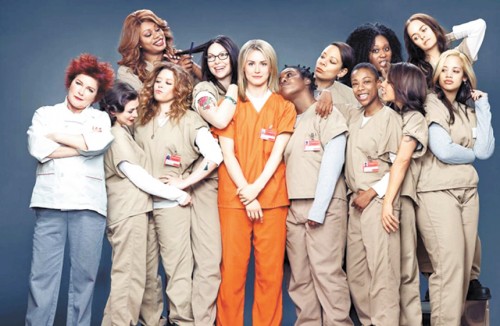
As a writer, comedian, and feminist who works in television development, I am continuously frustrated by not only the lack of female characters in entertainment but also the types of female characters in entertainment. Don’t get me wrong, they’re not all bad, some are fantastic (like the ones in the above photo), but others don’t have nearly as much depth, power, or memorability as the men do, and I ask you, dear readers, why? Why? WHY?!?! I don’t have the answer but I do have a list of tips for how we can write, not good, but superb female characters. Now, I am no expert, but I am a passionate person filled with rage, and those are always the best people to bestow advice upon others. Fingers crossed I change the world with this.
The cast of Orange Is the New Black
This guest post by Jess Beaulieu previously appeared at She Does the City and is cross-posted with permission.
As a writer, comedian, and feminist who works in television development, I am continuously frustrated by not only the lack of female characters in entertainment but also the types of female characters in entertainment. Don’t get me wrong, they’re not all bad, some are fantastic (like the ones in the above photo), but others don’t have nearly as much depth, power, or memorability as the men do, and I ask you, dear readers, why? Why? WHY?!?! I don’t have the answer but I do have a list of tips for how we can write, not good, but superb female characters. Now, I am no expert, but I am a passionate person filled with rage, and those are always the best people to bestow advice upon others. Fingers crossed I change the world with this.
#1: Give her a name for god’s sake. Unless she’s literally just a background extra in one scene for five milliseconds, show her some damn respect and name her. Please note that names like “Wife #2,” “Favourite Prostitute,” and “Generic Vagina” do not count.
#2: Have her make words with her mouth. Sure, you have a female in your film, but is her role just to stand beside the penises in silence, smiling and nodding along with whatever they say, but never uttering a word herself? If so, you fail the Bechdel test. Congrats. You kind of suck. If you want to not suck, write her some brilliant dialogue.
#3: Do not make her appearance her main attribute. She’s not a doll made of plastic. She has working internal organs, one of them being a brain. Focus on that organ instead. The way we look does influence our life stories, and can impact those stories in a positive way, but our appearance does not define who we are and neither should hers.
#4: Lavish her with tons and tons and tons of gross flaws. Writers often think that a female character can’t have any negative qualities out of fear that she won’t be likable. So they write the sweetest, smartest, most perfect leading lady in town who’s never made a single mistake in her entire life and to that I say SNOOOZZEEEEEE FESTTTTT. These are fine traits, but with no flaws, she’s boring as hell. What makes her likable ARE her flaws. If she’s kind and smart, yet also a paranoid, pugnacious pyromaniac who poops her pants on the regular, well that just sounds delightful.
#5: Take it easy with the flaws, though, buddy. We also don’t want to promote the idea that women are all vile hell beasts (although I do love a good hell beast, myself). Give her redeeming qualities as well, even if she’s an antagonist. She might be evil, but maybe she’s also loyal to her minions and pays them a respectable salary with health benefits and four weeks vacation? Give her a mix of good AND bad. Make her complex, you know, like humans are. Sidenote: Women are humans, if you weren’t sure.
#6: Important one: SHE’S NOT JUST AN ACCESSORY FOR MEN. She should drive her own stories. She should be active. She should impact the plot, and distracting the enemy by walking through a scene completely naked and then never returning does not count. This is especially important if she’s THE PROTAGONIST. It breaks my feminist heart when I see female leads trailing behind a bunch of dudes like a lost little puppy dog. TRUST THAT SHE CAN LEAD because she can. Ask yourself, “Why does she, specifically, NEED to be in this story?” If your answer is “She needs to be in this story because my producer told me to put at least one chick in it so I did but I’m not happy about it,” please retire immediately and go away forever.
#7: Don’t make her the buzzkill. There is a trend happening nowadays that has female characters disciplining men for their poor choices. They say “No, bad boy! That’s wrong! Stop doing that! Stop advancing the plot!” and then they get castigated on the internet by fanboys demanding these women be killed off because they halt the action and prevent the men from “being entertaining.” Quit making females the “mean mom” who shut everything down. Of course she has a right to judge the decisions of her fellow characters and comment on their actions, but if that’s her ONLY purpose the audience is going to turn against her.
#8: Give her likes, dislikes, a job, hobbies, skills, fetishes, phobias, cheese preferences, etc. So you got a female character with a bunch of awesome traits, yet she’s still extremely dull and you don’t know why. It’s probably because she has zero interests. Add in some and suddenly she’ll be jumpin’ off the page. Maybe she likes online poker, dislikes the idea of umbrellas, has a phobia of NOT smelling pot, and just became a professional dolphin whisperer? I always ask writers, “If she were in a room, alone, what would she be doing?” and if the answer is “Thinking about balls, like not bouncy balls, testicle balls” then no. Just… no.
#9: Don’t make her hate other women. A common trope. She likes hanging out with the bros but despises club clitoris. “I don’t get along with other girls. It’s because they’re jealous of me,” is her catchphrase and she stinks. Unless there’s a reason for why she loathes two x chromosomes (like she’s a misogynist and your show is about her being a misogynist) consider having her dislike people, not sexes.
#10: If it’s a comedy, make her… um…. FUNNY. I find while watching sitcoms that the men get the best lines. The men act out the ridiculous gags. The men fall into the embarrassing situations. And the women? Well, they get to WATCH. They can’t tell jokes because they’re just NORMAL, MUNDANE WOMEN in a world filled with HYSTERICAL, ODDBALL GUYS. However, this breaks a key rule in comedy. The rule being: Everyone needs to be funny. So lets spread the comedy love around, shall we patriarchy?
#11: Write more than one woman for god’s sake. The best tip for writing a good female character is to write a lot of them and to have them talk to each other (and talk to the men, I’m not advocating segregation). A single woman in a cast of twenty guys does not progress make. That is the norm and the norm is the problem.
#12: Having a cast of women who are diverse in race, age, sexuality, body shape, gender identity, and class will result in a better show. There is obviously a glaring problem with a lack of diversity in entertainment in general, however females seem to be particularly discriminated against when it comes to this issue. Marginalized women should be more represented in the media. Their stories need to be heard as well and writers have the power to tell these stories.
#13: Still confused about how to write good female characters? Let me simplify it for you. Take your male characters and turn them into women. You’ll be surprised by how little has to change.
Jess Beaulieu is a stand-up comedian, writer, feminist, professional complainer, and you. She is you. Jess co-hosts and co-produces an all-female variety comedy night called CHICKA BOOM (chickaboomshow.com) and co-hosts a weekly podcast called THE CRIMSON WAVE, which is all about periods (find us on iTunes!). Jess has performed at the Boston Women in Comedy Festival, the Chicago Women’s Funny Festival, where she was featured in the Chicago Sun-Times, and was selected to perform in the 2012 Fresh Meat Showcase at Second City. She also works in television as a bitter assistant, hoping to one day become a bitter writer. In her mother’s wise words, “Jess does entertainment type things! Isn’t that… interesting?”