“Smurfette Syndrome”: The Incredible True Story of How Women Created Modern Comedy Without Being Funny

Far more than a common trend in cartoons and superhero teams, the Smurfette Principle is an ingrained interpretative framework that limits female achievement to a model for male imitation, rather than an argument for female inclusion. In comedy, “Smurfette Syndrome” is a bias that asks whether individual women are “as funny as men,” rather than assessing women’s collective contribution as creators of comedy genres.

unnamed

This is a guest post by Brigit McCone.

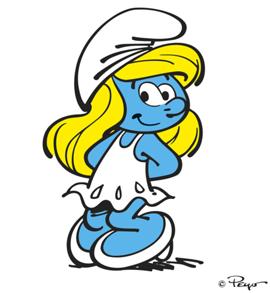
Professional female comedians are still asked in interview after interview whether women are funny. The usual response is a defensive list of funny women. But proof of funny women is no proof that women are funny, thanks to the dreaded Smurfette Principle. The “Smurfette Principle” dictates that women who succeed in male fields must be interpreted as a) unique and isolated, and b) a variation on a male original. Far more than a common trend in cartoons and superhero teams, the Smurfette Principle is an ingrained interpretative framework that limits female achievement to a model for male imitation, rather than an argument for female inclusion. In comedy, “Smurfette Syndrome” is a bias that asks whether individual women are “as funny as men,” rather than assessing women’s collective contribution as creators of comedy genres. Such as…


[youtube_sc url=”https://www.youtube.com/watch?v=uGj5CnPJ3QA”]

Alice Guy’s irresistible piano syncs uncannily with Ray Charles


The Comic Novel

Murasaki Shikibu not only wrote the world’s first novel in the 11th century with The Tale of Genji, she included hefty doses of humor amidst all the karmic heartbreak. Whether revealing the bulbous nose of the mysterious Safflower Princess behind the silk screen, or working out the interpersonal dramas of a womanizer’s harem, Lady Murasaki wielded realism to puncture cliché. Murasaki Shikibu, along with Sei Shonagon (“the most natural wit in the history of Japanese literature”) and fiery, erotic poetess Ono no Komachi, became literary pioneers by accident: they were adopted as models for Japanese literature because their male contemporaries wrote in stilted Chinese to show intellectual superiority. As men switched to Japanese, women writers were squeezed out, leaving only their early classics.

On film and TV: Kozaburo Yoshimura’s 1951 adaptation of The Tale of Genji is a recognized classic. Peter Greenaway’s film inspired by Shonagon’s The Pillow Book reinvents it as a modern tale of a Japanese woman and an older Japanese man sexually servicing Ewan McGregor. A memorable riff on Shikibu’s “Princess Safflower” gag is featured in Who Framed Roger Rabbit?

Christian Comedy

Drama was strongly condemned by the Fathers of the early Christian church as immoral, in works like Tertullian’s De Spectaculis. It was a 10th century nun, Hrotsvit of Gandersheim, who revived the tradition of playwriting by arguing that it could have a moral function. Hrotsvit became the first recognized playwright of medieval Europe, adapting the popular sex comedies of the ancient Roman Terence into an entirely new genre: virgin martyr sex comedy. Chuckle as Dulcitius attempts to ravish the virgins, but ends up humping a sooty pot instead! Giggle as soldiers attempt to strip the virgins, but discover their robes are stuck on! Then feel sorta bad when the virgins get burned alive and shot with arrows anyway. Martyrdom replaced marriage as the culmination of a female empowerment fantasy that began with immunity to rape. The subtle relationship between hermit and prostitute in Hrotsvit’s Paphnutius inspired novelist Anatole France and Oscar Wilde, while Hrotsvit’s Callimachus is identified as one of the sources for Shakespeare’s Romeo and Juliet. Hrotsvit, however, gained acceptance by self-Smurfette: presenting her wit as an exceptional, divine gift contrasted with usual female witlessness.

On film and TV: Thais, a sexed-up rewrite of Paphnutius by Anatole France, was adapted into a faithful American silent film, and loosely inspired the only surviving Italian futurist film. Jane the Virgin is arguably a modern virgin martyr sex comedy.

Cabaret

In the 17th century, blacksmith’s daughter and shrine maiden Izumo no Okuni created kabuki as a mixture of cross-dressing sketches, sexual innuendo, musical performance, and titillating sensuality. It moved into the teahouses of the red-light district, allowing patrons to sit and drink while watching the show; that is, kabuki originally met the definition of cabaret. For empowering sex workers with social visibility and subversive self-expression, the Japanese authorities banned women from the stage to be replaced by all-male kabuki. Japan’s all-female Takarazuka revue, and witty writer-performers like Mae West and Gypsy Rose Lee in the Western cabaret/vaudeville tradition, carry on the legacy. Straight male comics often struggle to cross over into the diva humor of cabaret, yet it is female comic capability that is judged according to the masculine norms of stand-up.

On film and TV: Mae West defied ageism to become a Hollywood sex symbol in her late 30s, reportedly rescuing Paramount Studios from bankruptcy with She Done Him Wrong. The decadent culture of Weimar cabaret is depicted in the contemporary The Blue Angel, which introduced Marlene Dietrich, and the later musical Cabaret.


[youtube_sc url=”https://www.youtube.com/watch?v=FJS670okmZc”]

Mae West’s anarchic comedy of sex


Romantic Comedy

I seem to regularly rant on Bitch Flicks about Jane Austen’s role in defining romcom, so I’ll be brief: the meet-cute, the bickering couple who mirror each other, the misunderstandings, public humiliation and sacrificed ego – this is the template of Pride and Prejudice. Though her achievement is trivialized by treating “romcom” as a gendered slur, Austen’s formula is actually fundamental to the male romance of films like Fight Club, as well as classic comedies like Some Like It Hot.

On film and TV: There have been numerous screen adaptations of Pride and Prejudice, as well as updates such as Bridget Jones’ Diary, Bride and Prejudice and The Lizzie Bennet Diaries.

Parody Film

“If the future development of motion pictures had been foreseen at this time, I should never have obtained his consent. My youth, my inexperience, my sex, all conspired against me” is how Alice Guy Blaché described being given her start in directing by Gaumont because no one else saw the potential of film: Alice Guy invented the close-up, she hand-painted color film in 1897, experimented with synchronized sound in 1906 and made over 1,000 films, owning her own studio (Solax). She made action films with swashbuckling female leads and boat explosions, but makes this list for creating the first parody films. Although the first comedy film is the Lumiere brothers’ The Sprinkler Sprinkled, about a sprinkler… who gets sprinkled (it predates the “don’t name it after the punchline” technique), it was Alice Guy who parodied the special effects films of George Melies with 1898 cross-dressing farce At the Hypnotist’s and the earnest scientific documentaries of her male peers with 1900 botched-surgery farce Surgery at the Turn of the Century. She brought in slapstick domestic strife with 1902’s An Untimely Intrusion and explored sexual harassment through comic role reversal in The Consequences of Feminism. Mabel Normand was an early slapstick star who directed her own films. Studio boss Mack Sennett (Keystone) is on record saying that Charlie Chaplin “learned [to direct] from Mabel Normand.” Neither Normand nor Alice Guy is regularly celebrated among cinema’s comic pioneers.

On film and TV: Though many of Guy’s films are now lost, many more can be viewed free online.

Stand-up Comedy

It’s difficult to say when the comic monologues of vaudeville transitioned into recognizably modern stand-up, but probably while Moms Mabley was headlining at the Apollo. To understand her contribution, witness the comics who acknowledge her influence: Flip Wilson, Richard Pryor, Joan Rivers, Eddie Murphy, Whoopi Goldberg, Chris Rock. Mabley exploited the freedom of old ladies to speak their mind, to confront taboos like alcoholism, poverty, racism, infidelity and sexual double standards, defining the comedian’s role as “truth teller” with a persona modeled on her grandmother, a former slave. Growing up Black and gay in 19th century North Carolina, Moms was bulletproof to hecklers before she ever hit a stage. Stand-up and fringe theater offer creative freedom to the minority perspective of queer comediennes of color, from the wild parodies of the Native American Spiderwoman Theater to figures like Wanda Sykes and Margaret Cho today. Mabley is sometimes called the “first female stand-up,” but still isn’t widely acknowledged for pioneering the modern art of stand-up itself, despite Bill Cosby admitting that “she opened that door for a different kind of solo” (Cosby should know; he was quite the groundbreaking comic before moving on to beloved sitcoms and sex crime allegations).

On film and TV: A young Moms has a brief cameo opposite Paul Robeson in The Emperor Jones, rocking a tuxedo in 1933, before starring in 1948’s Boarding House Blues and 1974’s Amazing Grace. Whoopi Goldberg made a documentary about Mabley. You can find Mabley’s later comedy routines, for the Smother Brothers Comedy Hour and the Ed Sullivan Show, on YouTube.


[youtube_sc url=”https://www.youtube.com/watch?v=vLg1QzdAdLo”]

When Moms jokes about being forced into marriage, it’s because she was


Improv Sketch Comedy

The comic improv created in the post-war University of Chicago shifted the culture of comedy from stand-ups telling jokes to actors performing satirical sketches. This new style was introduced to the world by comedy duo “Nichols & May,” where Elaine May’s role in creating the skits was equal to Mike Nichols’. The sharpness of their satire and the danger from their live improvs brought improv skits mainstream, like a new art of comedy jazz. You might say that without Elaine May and Mike Nichols, there would be no Steve Martin, no Lily Tomlin, no Martin Short, no Saturday Night Live. In fact, Vanity Fair did say that.

On film and TV: Many classic “Nichols & May” sketches are available on YouTube. Elaine May brought geeky charm and Jewish humor to the romcom by writing, directing and starring in 1971’s A New Leaf, six years before Woody Allen’s Annie Hall. She was Oscar-nominated for writing Heaven Can Wait and Primary Colors, wrote The Birdcage and was an uncredited writer on Tootsie, but never got another chance to direct after Ishtar flopped (despite the film’s bad reputation being exaggerated).

Sitcoms

The first sitcom on network television, 1947’s Mary Kay and Johnny depicted Johnny and Mary Kay Stearns’ marriage, of which Variety said “much of the show’s charm is traceable directly to the femme half of the team.” The couple that defined the sitcom’s template was Lucille Ball and Desi Arnaz. Ball and Arnaz created “more tropes than anything on television before or since”--they filmed the episodes in front of a live audience using multiple cameras, a unique format at the time, making the first reruns possible and keeping I Love Lucy in syndication worldwide. Ball and Arnaz’s Desilu studios also produced Star Trek. After breaking up with Arnaz, Lucille proved she could do it solo with The Lucy Show. Jennifer Saunders’ Absolutely Fabulous, Roseanne Barr’s Roseanne (which launched Joss Whedon and Judd Apatow) and Tina Fey’s 30 Rock followed in Lucille Ball’s sitcomical footsteps.

On film and TV: I Love Lucy has many episodes and classic scenes available on YouTube.


[youtube_sc url=”https://www.youtube.com/watch?v=kukhLITAD_w”]

Lucille Ball defining the tropes of TV humor


Supernatural Action Romantic Comedy (SARCom)

A supernaturally strong girl hangs out with her sarcastic, quipping gang – including bitchy golddigger and sweet, motherly one – while carrying on a feud/flirtation with her supernaturally strong, shapeshifting love interest, being pined over by a more impulsive, supernaturally strong shapeshifter, and fighting off demons-of-the-week and sexual harassers. If you guessed Joss Whedon’s Buffy the Vampire Slayer you’d be right, but if you guessed Rumiko Takahashi’s Ranma 1/2 you’d be a decade earlier. Today’s explosion of sarcastic, bickering romcoms with supernatural martial arts was fresh when Takahashi developed it with 1987’s Ranma 1/2, and her later Inuyasha. Takahashi’s immense success at blending male and female genres, creating entertainment that offers integrated empowerment to both sexes, has been Smurfetted in Japan, segregating female mangakas into a female genre (shoujo).

On film and TV: both Ranma 1/2 and Inuyasha have been adapted into anime.

So that is the incredible true story of how women created the culture of modern comedy without being funny. “The Smurfette Principle” is still used to isolate female achievement, from cartoons to comedy clubs. We can only laugh.


Brigit McCone is grateful to the anarchic Rose Lawless and Emma Pearson’s Crash Test Cabaret for assisting at the comical birth of her cabaret alter-ego Voluptua von Temptitillatrix. Her hobbies include doodling and she will be linking to this article if anyone ever asks that bloody question about funny women again.
New Comedy Web-Series ‘Black Feminist Blogger’

When you only share narratives from a small percentage of the population, chances are the stories might start to overlap. Only allowing a certain group of people access to representation is merely a way of securing total domination, and normalizing white supremacy. This trend is especially common in the comedy space.

This is a guest post by Aph Ko.

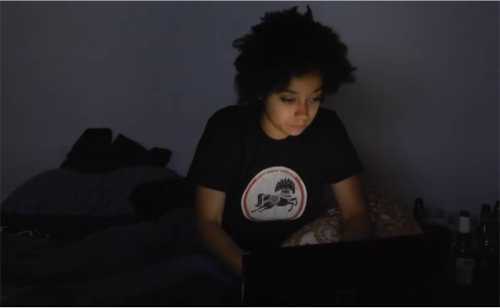
I am the actress, writer, and producer for the new independent web-series called Black Feminist Blogger. The show centers on the protagonist Latoya as she attempts to navigate the competitive terrain of the online feminist blogging marketplace.

1

She is a full-time blogger for the online feminist magazine Sapphire Mouth Magazine, which is run by a white woman named Marie. The show comically highlights some current issues within blogging culture such as the exploitation of writers, the overwhelming amount of under-paid writing positions, as well as the overt privileging of white women’s voices over minoritized women.

As the show unfolds, we see all aspects of Latoya’s life impacted by the massive amount of time she spends online catering to Marie’s requests for more sanitized, mainstream, “page-clicky,” commercial material. From not receiving regular paychecks, to having relationships fall apart, Latoya’s world spins upside down as she attempts to find a way to balance her love for feminism and writing, with the exploitative market inherent in many blogging spaces.

The struggles that Latoya faces are not all that different from many other bloggers online. Blogging is still largely seen as a hobby rather than a business, therefore, exploitation runs wild. Additionally, because so much of the labor is invisible to the mainstream, there are rarely any entertainment products that cater to bloggers. The blogosphere functions much like any other workspace, except much of the communication is done online. There are so many funny narratives lurking “behind the scenes” of blogging and I decided that I would start with some of my own stories.

1

I think it’s important that young women of color pick up cameras and film their own narratives, regardless if you don’t have a budget or camera experience. Hollywood shouldn’t have a monopoly on creativity and expression. I’m so tired of going to movie theaters or turning on Netflix and seeing that white people (predominantly men) dominate all stories. It’s not right, and frankly, it’s boring as hell.

When you only share narratives from a small percentage of the population, chances are the stories might start to overlap. Only allowing a certain group of people access to representation is merely a way of securing total domination, and normalizing white supremacy. This trend is especially common in the comedy space.

A lot of comedy today is politically, critically, and intellectually bankrupt.

Even when the media product is supposedly “progressive,” it still centers whiteness. Think about the Colbert Report or The Daily Show, where they say some of the most progressive commentary on television, yet they are the first to carry the torch of whiteness and continue on the tradition of white men dominating media. In fact, when I watch these shows, sometimes I feel like they’re explicitly talking to white people, so I laugh, but again, I laugh from the margins.

1


The privileging of whiteness is the underlying foundation for mainstream comedy today.

Rocio Isabel Prado from Black Girl Dangerous states:

“Mainstream comedians like Louis C.K. are well known for acknowledging their white privilege, but they continue to use racism in their routines. Because people of color are not the intended audience, we are the targets for jokes.

White comedians’ refusal to acknowledge audiences of color has been painfully consistent. I’m tired of waiting for the Mexican joke to be over so that I can go back to listening to the rest of the show. Instead of hoping for white comedians to validate my experience, I have since begun to actively seek out comedians of color.”

It’s time we disrupt this trend and take over. If you really think #blacklivesmatter, then you should support the hell out of Black independent artists. Waiting for white people to “get it” doesn’t have to be the activism. Actively seeking out Black comedians, artists, musicians, intellectual thinkers, and filmmakers is the activism.

Being able to relax, being able to be entertained (without the drudgery of a thousand side-thoughts about how white-centric or sexist a program is), and being represented is revolutionary.

We must continue to cultivate, foster, and support Black independent media.

As I said on For Harriet:

“Imagination is a powerful tool that white supremacy keeps trying to hijack. When imagination becomes institutionalized, corporatized, or white-washed, it can become a tool of violence that can shape reality. Black independent media is a revolutionary reclamation of imagination.”

Check out the facebook page for Black Feminist Blogger and subscribe to my YouTube channel.

Here’s ep. 1, 2, and 3. New episodes are out every Monday.


Aph Ko is a contributing writer for Everyday Feminism and For Harriet. She loves merging digital media with social justice. She is also the creator of Tales from the Kraka Tower, a web-series that satirizes diversity in academia.


The Female Archetypes Through the Lens of Roberto Rossellini

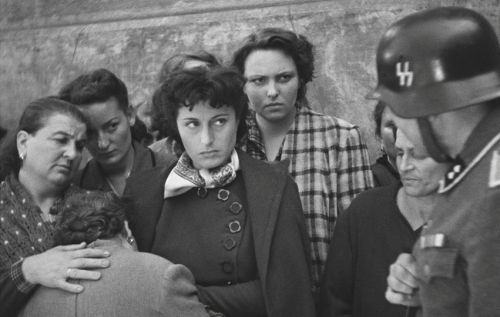
The character development of Pina and Marina used by Rossellini shows the influence of the war on Italian life and femininity. The suffering women are the epitome of the country at war.

The devout Pina (Anna Magnani)


This is a guest post by Giselle Defares

Italian neorealism. Who would have thought that a genre that existed for a short period of time–1944 to 1952 to be precise–could have such a significant influence in the world’s cinematic history? The quintessential works of the Italian neorealist directors such as Vittorio De Sica (Ladri di biciclette), Luchino Visconti (La Terra Trema, Ossessione) and Roberto Rossellini (Roma, città aperta) are now anchored in our cultural lexicon. The genre has influenced the work of  famed directors such as Truffaut, Antonioni and Godard. After all, didn’t Jean-Luc Godard state “All roads lead to Rome, Open City”?

Roma, città aperta, the first part of Rossellini’s neorealistic trilogy, is often cited as the prime example of the neorealist genre. In ravaged Rome of 1945, recovering from Nazism and fascist oppression, Rossellini formed a team with Federico Fellini and Sergio Amidei to create two documentaries. Amidei and Fellini encouraged Rossellini to combine the scripts to create realistic fiction. The film was shot on location in Rome on a shoestring budget (mustered with many loans). Rossellini used parts of a 35 millimeter film and the scenes were silently shot–Renzo Rossellini would later post-synchronize the sound. Voilá, Roma, città aperta was born.

The neorealist movement arose as a reaction against the glamorous melodramas that had previously dominated the Italian film industry under the dictatorship of Benito Mussolini. The fascist Mussolini used cinema as a place where the Italian citizen could dream of the lush–unattainable–images and temporarily forget their own harsh reality a.k.a cinema of distraction.

The neorealist directors sought out to present a degree of unfettered realism that wasn’t presented on the Italian silver screen. The films addressed social problems such as the ravages of war, crime, unemployment, and poverty. The sense of immediacy throughout the film–scenes shot in locations where eight months before the city was occupied by the Nazis–had no correlation with any other Italian film produced in the 40s. Upon its release, Roma, città aperta, was received with mixed reactions in Italy. Luckily the rest of the world was transfixed by this form of new realism. The film won the Grand Prize at the Cannes Film Festival in 1946. Fellini, Rossellini, and Amidei were nominated for an Oscar for Best Adapted Screenplay.

“Franchesco”
“Franchesco”


Roma, città aperta centers around the plight of the core members of the Italian resistance against the occupational Nazi government. We follow Giorgio Manfredi also known as Luigi Ferraris (Marcello Pagliero), a communist and leader in the resistance who’s wanted by the Nazis. His friend and underground Communist newspaper printer Francesco (Francesco Grandjacquet); his fiancée, the widow Pina (Anna Magnani); and the priest Don Pietro Pellegrini (Aldo Fabrizi). The trio will help Manfredi get a new identity. Pina’s son, the young Marcello, has been active in the resistance against the Nazis. In the tumultuous events that follow, Francesco is arrested but later manages to escape. While Manfredi gets betrayed by his lover, femme fatale pur sang, Marina (Maria Michi).

Most research on the film–see for example the work of David Forgacs, Peter Brunette, Tag Gallagher–is focused on the politics of filming, the catholic church, or other neo-realist features. Not much is written on the archetypical roles of the women in this film (bar the work of Marcia Landy. The character development of Pina and Marina used by Rossellini shows the influence of the war on Italian life and femininity. The suffering women are the epitome of the country at war.

Fascism encouraged the rise of the so called New Italian Women (Nuova Italiana). During Mussolini’s reign, Italian women struggled with the dilemma of the lure of modernity versus the rut of tradition. Though their freedom was curbed: no voting rights for women, no female participation in the labor market, and a ban on abortion. The role of the women herein was in essence purely to bring forth children. These contradictions were emphasized by the gap that existed between the traditional Italian society of the First World War and the division of modernity that fascism entailed. In 1933, Mussolini’s stated, “ Woman must obey… My idea of her role in the State is in opposition to all feminism. Naturally she shouldn’t be a slave, but if I conceded her to vote, I’d be laughed at. In our State, she must not count.” Right.

Marina (Maria Michi)


In Roma, città aperta we are introduced to two archetypes. First, the headstrong Pina, the rock who supports her husband, yet is allowed to be vulnerable. Then there’s Marina, the “weak” and venal woman who will succumb to all her desires. This dichotomy between Pina and Marina is the classic example of the Madonna-whore complex. Marina is presented as the complete opposite of Pina. Pina can be seen as the new Italian woman. Her whole look and attitude throughout the film is that of an ordinary, disheveled woman. She almost seems stripped of her “femininity.” This is a stark contrast with Marina, who works as a showgirl and enjoys her silk stockings, fur coats, and cigarettes – all the finer things in life. Marina seems like the new embodiment of the earlier femme fatales that reigned in the Fascist cinema–women who lived by no discernible laws and destroyed men who crossed their paths. Although, Rossellini’s version of the femme fatale is portrayed as a frail woman. Marina doesn’t fully embody the vivacious and sexual role the previous Italian femme fatales had. She’s doesn’t sashay her way through life, instead she’s considered weak and unable to deny herself any desires. This is also illustrated by Rossellini’s portrayal of her “liaison” with the Nazi Ingrid (and to underline the “moral depravity” during the war). It’s important to note that while Marina is depicted as the sexual deviant, it is Pina’s motherly and devout character who ultimately comes across as impulsive and irrational.

In arguably one of the most famous scenes, Pina runs after a prison truck while shouting “Franchesco!” as her husband is taken by the Nazis. It’s a quick montage of short takes and one very dramatic tracking shot that underlines the abruptness and finality of death – the scene is inspired on a real life event in 1943 where Maria Teresa Gullace participated in a protest and was shot in front of her husband and son.

Roma, città aperta is one the most conventional films of Rossellini, well, at least in terms of narrative and dramatic structure. Through cinematic codes like shot / reverse shot, mise-en-scene, framing, and continuity montage, directors can reveal gender relations. Critic Laura Mulvey refers to it as the male gaze and states that cinema ideally is meant for the male audience. She divides the term in two: active male and the passive female. The problem lies in the fact that the woman is just a lust object on the screen, but that the male viewer meanwhile still has an irrational fear of the woman.

In Roma, città aperta the gaze shifted in the sense that the role of Pina and Marina is dialectical. The strong, motherly and modest woman knows her weak moments. Throughout the film the gaze lingers on the tired face of Pina. Marina realizes what she did, who she betrays and struggles to looks at herself in the mirror. Through this narcissistic gaze, the viewer is also hit with this realization. Pina is portrayed as the caring mother, and Francesco had found the perfect woman to start a family with. Marina is the epitome of the whore; she’s only there for men (or women) to have sex with, but cannot be tied down or feel true love. This is shown in her relationship with Manfredi. Manfredi’s looks and glances at Marina are nothing more than lustful. His gaze holds contempt for the fact that Marina is so weak, she’s willing to sell herself in order to establish a luxury life. Marina is clearly a passive female, but Pina has a more active stance. Nevertheless, her activity was not accepted and she comes to her untimely end.

Throughout the film, Rossellini leaves room for your own interpretation and strengthens the feeling of uneasiness that the story evokes – see the ambiguous “open” ending. The strength of Roma, città aperta lies ultimately in the images of Rome, the “amateur” actors (see the wonderful Magnani and Fabrizi), and the film’s aesthetic. It all lifts the film to the next level. Rossellini’s film depicts the reality of war and the displacement of women out their stereotypical roles during moments of distress.

Roma, città aperta has brought us some of the most indelible images in world cinema.


Giselle enjoys googling random things, late night conversations, and can’t stray far from the impulse to write it all down. She writes on fashion, film, and pop culture here.


Call For Writers: Black Families

Some questions to consider: What constitutes a Black family in film or on television? Are representations of these families realistic or true to life? What are audiences who consume this media intended to understand about Blackness or the Black experience? What kinds of stories are allowed to be told and which are still suppressed?

Call-for-Writers-e1385943740501

Our theme week for January 2015 will be Black Families.

Though not as prolific as white families, Black families are a popular subject for television and filmmaking. Black family comedy makes up a large portion of that representation, from classic sitcoms like The Cosby Show and The Fresh Prince of Bel-Air to  slapstick films like Are We There Yet? and Dr. Dolittle. Many films like Dr. Dolittle are remakes of older films that originally featured white people but now star a predominantly Black cast (Annie, The Nutty Professor, etc.). There’s even an entire sub-genre of Black comedy that involves men cross-dressing as a matron or the family matriarch (Big Momma’s House, Madea’s Family Reunion, etc.).

On the other hand, there’s a host of critically acclaimed dramas that involves Black families with at least an element of the tragedy (The Pursuit of Happyness, Roots, 12 Years a Slave, The Color Purple, etc.). Many of these celebrated stories deal with serious issues like slavery, dysfunction, poverty, gang violence, and/or abuse.

Some questions to consider: What constitutes a Black family in film or on television? Are representations of these families realistic or true to life? What are audiences who consume this media intended to understand about Blackness or the Black experience? What kinds of narratives are allowed to be told and which are still suppressed?

Feel free to use the examples below to inspire your writing on this subject, or choose your own source material.

We’d like to avoid as much overlap as possible for this theme, so get your proposals in early if you know which film you’d like to write about. We accept both original pieces and cross-posts, and we respond to queries within a week.

Most of our pieces are between 1,000 and 2,000 words, and include links and images. Please send your piece as a Microsoft Word document to btchflcks[at]gmail[dot]com, including links to all images, and include a 2- to 3-sentence bio.

If you have written for us before, please indicate that in your proposal, and if not, send a writing sample if possible.

Please be familiar with our publication and look over recent and popular posts to get an idea of Bitch Flicks’ style and purpose. We encourage writers to use our search function to see if your topic has been written about before, and link when appropriate (hyperlinks to sources are welcome, as well).

The final due date for these submissions is Friday, Jan. 23 by midnight.

Roots

The Pursuit of Happyness

Boyz in the Hood

The Cosbys

12 Years a Slave

Annie

Baby Boy

Beloved

Grey’s Anatomy

Barbershop

The Nutty Professor

The Fresh Prince of Bel-Air

Black-ish

Madea’s Family Reunion

Love & Basketball

Sister, Sister

Big Momma’s House

The Color Purple

Family Matters

Akeelah and the Bee

This Christmas

Moesha

Sparkle

Diff’rent Strokes

Dr. Dolittle

The Secret Life of Bees

American Gangster

Sanford and Son

In the Hive

Eve’s Bayou

Bebe’s Kids

Everybody Hates Chris

Soul Food

Seventeen Again

Are We There Yet?

The Boondocks

Red Hook Summer

Fat Albert and the Cosby Kids

Crooklyn

The Perfect Holiday


Bitch Flicks’ Weekly Picks

Check out what we’ve been reading this week–and let us know what you’ve been reading/writing in the comments!

A List of All of Women and Hollywood’s End-Of-Year Coverage by Melissa Silverstein and Inkoo Kang at Women and Hollywood

Margaret Keane’s Eyes Are Wide Open by Carl Swanson at Vulture

In Hollywood, It’s a Men’s, Men’s, Men’s World by Manohla Dargis at The New York Times

The Women of Hollywood’s Men’s Men’s Men’s World by Melissa Silverstein at Women and Hollywood

The Best of Black Television in 2014 by Curtis Caesar John at Shadow and Act

9 Ways The Media Failed Women In 2014 by Alexandrea Boguhn, Olivia Kittel, Olivia Marshall, and Lis Power at Media Matters for America

10 Reasons It Was Actually a Great Year for Women in Movies by Katey Rich at Vanity Fair

How Pop Culture Can Change The Way We Talk About Abortion by Lauren Duca at The Huffington Post

The 10 Most Feminist Ads of 2014 by Brianna Kovan at Ms. blog


What have you been reading/writing this week? Tell us in the comments!


Amy Adams Talks About Her Role as Painter Margaret Keane in ‘Big Eyes’

The actress added, “Being an artist and being a mom sometimes keeps you at odds and not to say you can’t do it, but an artist can feel very isolated, very narcissistic, and being a parent needs to be something completely different and so I understood that sort of thing and trying to make the right decisions and then getting caught in a lie with your child. That was something I found really fascinating and I was really interested by that dynamic.”

sq_big_eyes-1
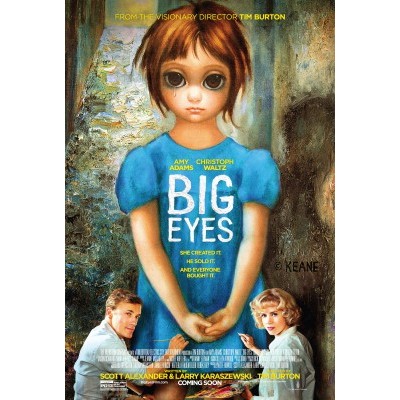
Big Eyes

This is a guest post by Paula Schwartz.

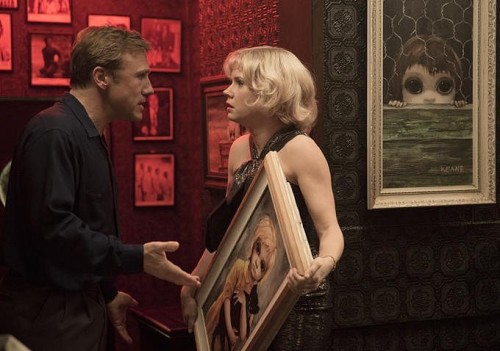
“The 50s were a good time if you were a man,” an unseen narrator says at the beginning of director Tim Burton’s latest bizarre tale, Big Eyes. The movie is based on the stranger-than-fiction story of artist Margaret Keane and her husband Walter Keane, who signed his name on her paintings of saucer-eyed, forlorn-looking waifs that were everywhere in the 60s.

Amy Adams, always terrific, and Christoph Waltz, in his usual effective turn as a weirdo, both landed Golden Globe nominations in the comedy lead acting categories. Screenwriters Scott Alexander and Larry Karaszewski, who worked with Tim Burton on Ed Wood, also received an Independent Spirit Award nomination. And the Women’s Film Critics Circle, of which I am a member, gave the film the dubious distinction of citing it this year’s worst male images in a movie.

The colorful tale begins after Margaret flees her abusive husband in the late 50s for San Francisco, where she seeks a better life for her and her daughter. She meets the sweet-talking Walter at a street fair where he admires her paintings of children with sad-looking, enormous peepers. His Parisian street scene painting he claimed were inspired by his life and study in Paris. She falls for him. Soon she realizes she’s never actually seen him paint.

After they married, Walter talked Margaret into letting him put his signature on her paintings. Nobody buys “lady art,” he told her. In the beginning she was a willing but reluctant accomplice, but soon she felt the enormous cost of giving up her name and ownership of her greatest passion, her art. Walter was a genius at marketing. He bypassed the snooty gallery owners who detested the paintings and made a fortune when he mass-produced them as prints, posters and other tchotchkes.

By the time the fraud was uncovered in the 1970, Margaret’s paintings, which in their time were either adored or reviled, were no longer in style, and her story forgotten or never much known. Big Eyes, a Weinstein Company release, is as much about Margaret’s personal and professional awakening as it is about the perpetration of an art fraud. But it’s also about how Margaret’s paintings of urchins with enormously dilated pupils captured the zeitgeist of those trippy times.

Margaret, who at 87 is very much alive and still painting, attended the New York premiere last week and had a ball promoting the film, according to Adams, who participated in a press conference for Big Eyes last week at the Park Hyatt Hotel in Manhattan. Burton and screenwriters Alexander and Karaszewski also attended along with cast members Christoph Waltz, Danny Huston, Krysten Ritter, and Jason Schwartzman.


DSCN6326
Amy Adams, at a Big Eyes press conference


Burton, who generally works with the same cast over and over, notably Johnny Depp, who has been in eight of his films, and Helena Bonham Carter, from whom he just separated, was asked about his casting choices for the leads. Burton replied, “Obviously they’re great actors. He’s Walter. She’s Margaret. And it was just fresh energy for me to work with new people ’cause everybody’s been getting sick of the people I was working with,” he laughed.

As portrayed in the film, Margaret is a timid woman and a single mother with few options in an era of rampant sexism. She found her voice after she left Walter and landed in Hawaii where she became a Jehovah’s Witnesses after a few of them happened to come to her door. She credits them with her resolve and determination to tell the truth. It is great fun to watch Adams portray her character’s transformation into a steely and determined woman resolved to take back her ownership of her paintings, no matter what you think of the portraits. (I hated them back in the 60s and hate them even more now that the children smile instead of frown.)

Director Tim Burton
Director Tim Burton

My favorite scene in the movie is the court showdown between Margaret and Walter. She sued him for slander after he insisted he was the painter of the signature works. The judge staged a paint-off and ordered Walter and Margaret to recreate a painting in front of him and the jury. Margaret produced a painting in under an hour. The unhinged Walter, who acted as his own lawyer, complained of shoulder pains and never painted a stroke. (Until his death in 2000, Walter insisted the paintings were his.)

At the press conference, Adams was asked if the appeal of playing a subtle character like Margaret was that it came after her role as the brassy femme fatale in David O. Russell’s American Hustle.

“I didn’t really think of her as a subtle person. I just thought of her as Margaret and that’s Margaret, so it wasn’t as though I was aiming to portray a thing. I was portraying a person and she’s a very understated human being although she gave us some zingers the other night,” Adams laughed. Margaret, who is conservative and dresses primly, attended a dizzying round of receptions, screenings and premieres to promote the film last week.

Adams noted she met Margaret only a couple of weeks before they began to shoot the film and the two sat down and talked. (Margaret has a cameo where she’s sitting on a park bench.) Adams said, “The thing that I liked about Margaret, and what I thought kept her from being a victim, because I didn’t want her to seem like a victim, is when you talk to her she still takes responsibility.”

Margaret has some compassion for Walter. She told Adams, “‘Maybe if I didn’t lie he would not have turned out like he did,’ she told me.”  She added, “Margaret also gives Walter credit for her career, saying ‘I wouldn’t be known if it wasn’t for him and he was a genius at what he did and I would never have the following I have today.’”

Christoph Waltz
Christoph Waltz

In response to a question about how she related to the film and her character and how being a parent informed her performance, Adams said she read the script before she became a mother: “I saw Margaret one way and then after I had my daughter and had been a mom for about four years, I saw her completely in a totally different way.”

The actress added, “Being an artist and being a mom sometimes keeps you at odds and not to say you can’t do it, but an artist can feel very isolated, very narcissistic, and being a parent needs to be something completely different and so I understood that sort of thing and trying to make the right decisions and then getting caught in a lie with your child. That was something I found really fascinating and I was really interested by that dynamic.”

Adams also related to Margaret’s discomfort in front of a crowd, like the press conference in which most question were directed at her and Burton. “Like, gosh, I have to talk in front of people,” she laughed. “But yeah, it played a great deal in how I related to the role, and Margaret said something great the other day. She was asked what she wanted people to walk away from the movie. She said, “’Stand up for yourself. Be true to yourself. Read your Bible and don’t lie.’”

The movie makes meaningful comments on the overwhelming sexism of the time, and Adams was asked if by the 70s Margaret identified with the feminist movement. Margaret wasn’t part of any movement, Adams replied: “As she puts it, ‘I was in a closet making paintings,’ so I like the way that Larry and Scott brought that into the movie because I do think whether intentional or not she did do something that was very much of the moment in standing up for herself and I do like that that sort of coincided with such a great portion of the feminist movement.”

After the press conference, Adams told me, “It was nice to get to play a woman, who even if it was unbeknownst to her, really spoke for a lot of women.”

On another note, the Weinstein Company sent out a press release supporting Amy Adams, who went on the Today show the other day but whose appearance was pulled when she expressed reservations about talking about the Sony hacking scandal.

The TWC release read:  “We firmly stand behind Amy Adams. We’ve been lucky enough to have had her talents grace several of our films. We are certain her fellow actors and directors would all agree, she is nothing but the consummate professional both on and off set. Amy decided to speak up for herself and express her disappointment that Today would feel the need to ask her a question she did not feel comfortable, and rather than respect her opinion or continue the discussion, the reaction was to pull her appearance from the show.”

Amy Adams took the message of Big Eyes to heart. Can anyone imagine the Today show canceling Bradley Cooper or any other A-list male actor for the same reason they pulled Amy Adams’ appearance?

_________________________________

Paula Schwartz is a veteran journalist who worked at the New York Times for three decades. For five years she was the Baguette for the New York Times movie awards blog Carpetbaggers. Before that she worked on the New York Times night life column, Boldface, where she covered the celebrity beat. She endured a poke in the ribs by Elijah Wood’s publicist, was ejected from a party by Michael Douglas’s flak after he didn’t appreciate what she wrote, and endured numerous other indignities to get a story. More happily she interviewed major actors and directors–all of whom were good company and extremely kind–including Brad Pitt, Angelina Jolie, Morgan Freeman, Clint Eastwood, Christopher Plummer, Dustin Hoffman and the hammy pooch “Uggie” from The Artist. Her idea of heaven is watching at least three movies in a row with an appreciative audience that’s not texting. Her work has appeared in Moviemaker, more.com, showbiz411 and reelifewithjane.com.

Reality TV: The Roundup

Check out all of the posts for our The Reality TV Theme Week here.

What Would You Do to be Famous?: Looking at Black Mirror and Starry Eyes by Elizabeth Kiy

I’ll just say it, reality TV scares me. It has so much potential to affect the way we live and look at ourselves by showing us how other people live. It can chip away at our idea of strong womanhood by highlighting the successes only of the beautiful, compliant and willing to backstab.


Keeping up with the Kardashians: Looking at Kim Kardashian’s Naked Body by Sarah Smyth

Kardashian quite literally embodies the complex construction of the female body as something to be looked at. And with her body being so readily, excessively, and continually put on show, can we help but do anything but look?


MasterChef and Internalized Misogyny by Robin Hitchcock

Examining my sexist reaction to this season of MasterChef made me realize the pervasive role of gender expectations in the series. MasterChef distinguishes itself from other cooking reality competition shows by focusing on “home cooks” without any formal training.


Reality TV’s Antecedents: PBS, POV, and Barbara Kopple by Ren Jender

A channel that has been delivering a less tempered version of “reality” TV for many decades is PBS, most consistently and interestingly for over 25 years on POV, which showcases independent documentaries with limited theatrical runs (and many of those films are available online to watch as well). In its history POV has put its spotlight on trans* and queer people, people of color, and people with disabilities often in work directed by people who are from those communities (which is not usually the case in other “reality” programming).


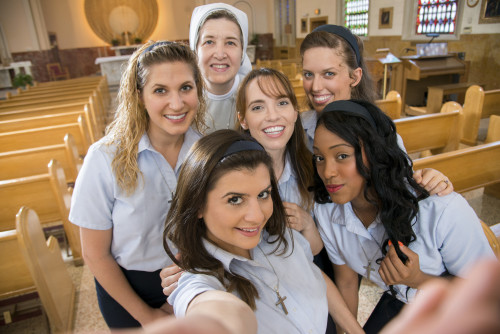
Finding Faith and Feminism in The Sisterhood: Becoming Nuns by Max Thornton

Nuns are often unsung activists, and convents are underexamined as feminist spaces. In medieval Christendom, entering a convent might be the only way for a woman to have control over her body, her choices, and her reproduction; and, as reproductive rights come under increasingly virulent attack in the US, it could be interesting to consider how a convent might still be that space today.


Playing with Fire: “Compulsory Heterosexuality” in The Hunger Games by Colleen Clemons

While my conversations with my friends’ 12-year-old daughters about the trilogy always began with “Team Peeta!” or “Team Gale!” our conversations in the classroom focused on the scholarship of female collectives and violent resistance; we didn’t need Gale and Peeta as fodder for conversation. But on the last day of class, I introduced Adrienne Rich’s idea of compulsory heterosexuality to complicate the larger conversation in which readers—and viewers—find themselves forced to choose a camp, just as Katniss is forced to do.

‘MasterChef’ and Internalized Misogyny

Examining my sexist reaction to this season of ‘MasterChef’ made me realize the pervasive role of gender expectations in the series. ‘MasterChef’ distinguishes itself from other cooking reality competition shows by focusing on “home cooks” without any formal training.

This repost by Robin Hitchcock appears as part of our theme week on Reality TV. 

Being a feminist can be hard, like when it interferes with my god-given right to irrationally hate reality TV contestants. The “love-to-hate” feeling is basically the entire point of watching reality television. There is no room for guilty consciences. And yet, this past season of MasterChef USA forced me and my partner to wrestle with why we were hating on our least favorite contestants, because the obvious answer was that we’re sexist jerks.

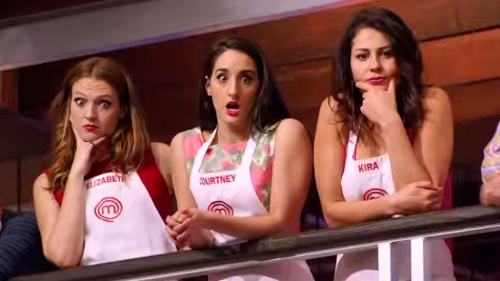
Contestants from Season 5 of 'MasterChef USA' make shocked faces.
Contestants from Season 5 of MasterChef USA make shocked faces.


Examining my sexist reaction to this season of MasterChef made me realize the pervasive role of gender expectations in the series. MasterChef distinguishes itself from other cooking reality competition shows by focusing on “home cooks” without any formal training. Between traditional gendered work divisions regarding who cooks at home (somehow persisting even in the era of the “foodie”), and the rampant sexism of the professional culinary industry, the line between “home cooks” and “chefs” is undeniably gendered.

But the MasterChef producers have done their best to obscure this dynamic: there are a roughly equal number of male and female contestants at the start of each series; and over five seasons, the collective male/female breakdown between the top ten, top five, and top three contestants stays close to 50-50 (26-24 women-to-men in the top ten, 12-13 in the top five, and 8-7 in the top three). This steady equality might be the result of some producer meddling, but MasterChef contestants are never explicitly separated into gender ranks (whereas on the long-running Hell’s Kitchen, also hosted by Gordon Ramsay, has a “boys team” and “girls team” for the bulk of each season, but not necessarily a steady rate of loss from each side as one team is generally made safe from elimination in each episode).

'MasterChef' season 5's top three (from left): Courtney, Leslie, and Elizabeth
MasterChef season 5’s top three (from left): Courtney, Leslie, and Elizabeth


This hasn’t stopped the MasterChef contestants from breaking into gendered ranks. A recurring theme is for male contestants to look down on creating desserts and baking as lesser talents, and to dismiss their female competitors’ successes in those challenges. The quintessential example is the first-season elimination of would-be front-runner Sharone, a cocksure Finance Dude, by Whitney, the Personification of Sugar and Spice and Everything Nice, in a challenge to bake a chocolate souffle. Sharone’s attempts to “elevate the dish” (the second most liver-damaging item on the MasterChef drinking game, after Gordon Ramsay using “most amazing” to describe an ingredient) with sea salt backfired, and Whitney’s straightforward but perfectly executed souffle carried her forward to become the first US MasterChef winner. In his exit interview, Sharone expressed lament that “the pastry princess” had the chance to knock him from the competition in a baking challenge.

Season 1's "Pastry Princess" Whitney
Season 1’s “Pastry Princess” Whitney


The High Cuisine Pretenders of MasterChef, who scoff at “rustic” challenges to make comfort food and awkwardly attempt molecular gastronomy, have been nearly exclusively male contestants. They are not there to be crowned “the best home cook in America,” they are there to be discovered as culinary geniuses. These guys usually flame out before the top 10. But notably, even the more grounded male competitors usually say they will use their winnings to open a restaurant, while the women in the competition often focus on the opportunity of the winner’s published cookbook, and see the $250,000 prize as a financial break rather than a seed investment.

The “this will change my life” reality TV cliche applies neatly to the MasterChef Season 5 HitchDied Hateoff. My most-hated contestant, season-winner Courtney, leaned on this trope with all her weight. My husband’s most-hated contestant, Leslie (second-runner up), was notably privileged and “didn’t need” the winnings.

Man-who-looks-naked-without-a-yacht-under-him Leslie
Leslie, no doubt dreaming of his yacht


But this is not just a matter of haves and have-nots, because of what Courtney and Leslie each do for a living. Leslie is a stay-at-home father with a very successful wife. Or, as fellow contestant Cutter put it, “an ex-beautician house bitch.”

Courtney, per her talking head caption, is an aerial dancer. But in her own words, she frames her work as the desperate choice of a woman struggling to make ends meet: “I’ve done things I’m not proud of. No being able to pay my rent, I made the difficult, embarrassing decision to work in a gentleman’s club.”

Courtney shown with her job title, "aerial dancer"
Courtney shown with her job title, aerial dancer


And so the HitchDied Hate-off for MasterChef Season 5 became mired in dueling accusations of antifeminism. Collin would insist it is not that Leslie is a metrosexual stay-at-home dad that makes him unlikable, but that he’s haughty phony. I would insist that I don’t judge Courtney for her job, just her attitude about it. (Neither of us could get away with saying we hate them for being untalented chefs or cruel competitors, they both clearly deserved their success on the show.)

Runner-up Elizabeth says "if Courtney wins this... I will stab kittens"
Runner-up Elizabeth says, “If Courtney wins this… I’m going to stab kittens”


But I also made fun of Courtney for her aggressively performed femininity (her kitchen uniform is poufy dresses and towering heels) and breathy baby voice, and I can’t deny the sexism in finding these “girly” traits annoying. Especially because I’m a big fan of poufy dresses myself, and might wear towering heels if I weren’t so clumsy. (I thought maybe the heels were to “keep in shape for work,” but aerial dancers perform barefoot, right?) MasterChef‘s narrative didn’t let me feel alone in my hate: other female contestants (including runner-up Elizabeth) complained in their talking heads that Courtney benefited from favoritism from the judges, something we never heard when former Miss Delaware Jennifer came out on top of season 2. So why is Courtney so specially hate-able? Do we hate her because she’s beautiful? Do we hate her because she does sex work? Do we hate her because she’s a girly girl? Is there some other answer here that doesn’t make me a bad feminist for hating Courtney?

Gif of camera zooming in on Courtney's glittering high heels
Gif of camera zooming in on Courtney’s glittering high heels


And is my internalized misogyny to blame, or the MasterChef producers for exploiting it? I couldn’t tell you what any of the other contestants in four seasons of MasterChef wore on their feet, because they didn’t cut ShoeCam every time they walked their dish to the judges. Judge Joe Bastianich bizarrely wears running shoes with his super fancy suits, and I think that took me three seasons to notice. But we saw more of Courtney’s shoes than we saw of some contestant’s faces. It seemed like a sneaky way for the producers to remind us “Courtney is a stripper!” in between her self-shaming confessions, because reality TV producers would see a woman being “saved” from sex work the greatest possible form of the “this will change my life” narrative.

So it goes. Courtney gets her trophy and cookbook, the producers get their “provocative” storyline, Leslie probably has enough money to do whatever he wants anyway, and the HitchDieds will continue irrationally hating reality show contestants despite our feminist misgivings.

Have you ever hated-to-hate a reality TV contestant? Have you caught yourself hating people on TV for sexist reasons?


Robin Hitchcock is an American writer living in Cape Town and slightly-better-than-mediocre home cook.


Playing with Fire: “Compulsory Heterosexuality” in ‘The Hunger Games’

While my conversations with my friends’ 12-year-old daughters about the trilogy always began with “Team Peeta!” or “Team Gale!” our conversations in the classroom focused on the scholarship of female collectives and violent resistance; we didn’t need Gale and Peeta as fodder for conversation. But on the last day of class, I introduced Adrienne Rich’s idea of compulsory heterosexuality to complicate the larger conversation in which readers—and viewers—find themselves forced to choose a camp, just as Katniss is forced to do.

This guest post by Colleen Clemens appears as part of our theme week on Reality TV.

I taught Suzanne Collins’s novel The Hunger Games as the culminating text for my Women and Violence in Literature course this semester.  Almost all of us had read the book already, but to look at Katniss through the lens of the female protagonists that had come before her in the semester—The Bride, Firdaus, Aileen Wuornos, Legs, Lisbeth Salander, Malli, Phoolan, Sihem—meant we could consider the work Katniss is doing in popular culture.  So while we had read the book before, we hadn’t read it the way that we read it together.

Much conversation focused on subverting gender norms, yet we talked little about the focus of the love interests until our final discussion.  While my conversations with my friends’ 12-year-old daughters about the trilogy always began with “Team Peeta!” or “Team Gale!” our conversations in the classroom focused on the scholarship of female collectives and violent resistance; we didn’t need Gale and Peeta as fodder for conversation.  But on the last day of class, I introduced Adrienne Rich’s idea of compulsory heterosexuality to complicate the larger conversation in which readers—and viewers—find themselves forced to choose a camp, just as Katniss is forced to do.

unnamed

Of course, the filmic versions of the novels rely on the love triangle between Katniss, Peeta, and Gale as a way to include the most viewers, including the 16 or so people who saw the films without having read the trilogy.  In a perhaps unintended meta-moment, Caeser smiles to the adoring crowd and calls a surviving Peeta and Katniss “the star-crossed lovers from District 12” from a set that looks uncannily like one from American Idol or The Voice.

Within the context of the Hunger Games and the arena, The Capitol, just like Hollywood, gives the audience what it wants:  a forced—or let’s borrow Rich’s term “compulsory”—heterosexual relationship that Katniss barely tolerates in the novels.  However, Katniss co-opts the Capitol’s compulsion, her only opportunity to ensure the survival of both herself and Peeta, and uses it to resist the Capitol and disrupt their narrative of what the Hunger Games should accomplish—passivity—and instead incites the fire of revolution.

unnamed

After Katniss becomes District 12’s first volunteer in an attempt to spare her sister Prim, whose odds were clearly not in her favor, the former is whisked to the Capitol where she must become what the audience wants:  the picture of femininity as a clean, waxed, young lady, a female object that must win the affection of the wealthy sponsors who hold her life in their hands.  In the clinical setting of the Remake Center, her team—after a required second round of cleaning–transforms her body from that of a ragged, hard coal-mining daughter to that of a smooth, soft Capitol woman where femininity means manipulation of one’s body, often to the point of disfigurement (as happens to Tigris in Mockingjay).  Haymitch reminds Katniss that she needs to be “nicer” to win the attention of the viewers.

unnamed

Once the tributes are in the arena—the Capitol’s entrancement with the Hunger Games relying on bloodlust, the Districts’ on fear—Katniss and Peeta separate.  After many, many deaths of children in a PG-13 film, the Gamemaker announces a change of rule after his menacing conversation with President Snow: two winners can emerge from the same District.  As Gale watches the Games, his jealous sidelong glance casting toward the television, the rest of the Capitol can now root for love in the reality death match.

The Capitol viewers—and the Hollywood viewers—are then treated to the scene they have been waiting for.  All of us feel relieved there is a chance for the heterosexual love to live; the edict seems to good to be true!  We get the love scene that confirms their relationship, and Katniss’s performance makes it easy for all of us to forget that this relationship is forced, that Katniss and Peeta have both come to realize that their best chance of surviving is by feigning heterosexual desire.  They press together in the cave.  Haymitch sends medicine with a note reminding Katniss what she must do:  “You call that a kiss?”

unnamed

In talking about Kathleen Barry’s work, Rich reminds readers in her 1980 essay  “Compulsory Heterosexuality and Lesbian Existence” that “[t]he ideology of heterosexual romance, beamed at her from childhood out of fairy tales, television, films, advertising, popular songs, wedding pageantry, is a tool ready to the procurer’s hand and one which he does not hesitate to use.”  The viewer requires a fairy tale—Katniss and Peeta’s lives depend on this fairy tale.  In an infection-induced fog, Peeta dreamily recounts watching Katniss go home, “Every day.  Every day.”  We are led to believe she has been the object of his love without her awareness.  We can hear the viewers in the Capitol swooning—and lining up to help.  And we see Gale leering at the screen as his love goes to another man.

This feigned relationship is in fact their only option for survival, one that they will play up later in this film as they dress like Prince Charming and Cinderella…

unnamed

unnamed

and (spoiler alert) in Catching Fire with their acceptance of the sad fact that the Capitol’s desire for their heterosexual relationship to carry on means that they must marry in order to survive…

unnamed

and (super spoiler alert) by Katniss’s resignation in the epilogue of Mockingjay in which she succumbs to Peeta’s desire to have children with him.

In the final scene of the Games, Katniss is mocked by another girl for trying to save her “lover boy.”  We see the Capitol watching the love story.  The command center grows quiet while the men and a few women controlling the couple’s environment watch during a rare moment of stillness; even they are captivated by the story they have created.  Katniss and Peeta are the finale. The audience must know:  Will their (heterosexual) love survive?

Panem holds its breath.  The desire for compulsory heterosexuality is the pair’s shield—though it puts them at risk, it is the only way for the two of them to survive.   They are in a bind of expectations others put on them in order to endure in this system of oppression called Panem and its games.  And instead of choosing herself–“We both go down and you win”—she sends Cato to the dogs, saving her life and Peeta’s (and in a moment of gender essentialism, fires a mercy shot to spare Cato an even more horrible death).

unnamed

They hug.  Everyone relaxes.  A crescendo of anxiety is released for a moment when we think they will both live:  Heterosexual normativity can persist.

unnamed

And then the previous provision is revoked.  Peeta and Katniss stand at the cornucopia, the ultimate symbol of hearth and home reflecting the audience’s desires for heterosexual normativity, and recognize that their attempt at playing into the Capitol’s desires for a heterosexual relationship to flourish even in the face of terrible odds did not work.  One of them must kill the other.

Katniss takes control of the situation.  We see the districts watch them hold the poisoned berries to each other.  The thought of losing both lovers becomes unbearable, and the games are called to an end.  They are the “winners,” a moniker few of the surviving tributes accept. Katniss and Peeta hug again.

Rich argues that “[h]eterosexuality has been both forcibly and subliminally imposed on women, yet everywhere women have resisted it, often at the cost of physical torture, imprisonment, psychosurgery, social ostracism, and extreme poverty.”  The Capitol has done just this:  imposed the narrative of heterosexuality onto the lovers, and then used it to attempt to kill them.  However, when Katniss takes the Capitol’s desire and pushes it to its limit—to the star crossed lover, the Romeo and Juliet, the Pyramus and Thisbe, the dangerous hyper-heterosexual narrative of “if my partner is dead, I can no longer bear to live” story—and thereby breaks the games.  By encouraging co-suicide, she makes the story so much more than the viewers can bear (whilst they have no problem bearing the awfulness of watching children die) that she takes the Capitol’s desire and exploits it to save their own lives—though it relegates her to a life of living a lie to maintain the ruse that saves her life.

In their final interview, the fairy tale couple, “the star crossed lovers from District 12,” sits onstage as the audience swoons.  Caesar feeds them the story they are to parrot: “You were so in love with this boy that the thought of not being with him was unthinkable.”

Katniss plays into the audience’s desire, though we know she is not in love with Peeta:  “I felt like the happiest person in the the world. I couldn’t imagine life without him.”

And finally, “We saved each other.”  The audience practically faints with joy.

Katniss-Peeta-We-saved-each-other-the-hunger-games-30731285-500-248

But forcing herself into the ruse of heterosexuality puts her at more risk, not less. Katniss is trapped:  she cannot “win.” Playing into the deception draws the attention of the Capitol’s leaders, while not playing into the narrative means she may have been dead in the arena.

The last shot of the film focuses on Snow watching the “lovers” hold hands overhead.  Menacing music plays as he walks off.  The image of their heterosexual coupling is not enough for him.  Katniss will be at risk for the rest of the trilogy because of her subversion.  Rich ends her essay with a call to the reader to consider the damage that occurs to women within the framework of compulsory heterosexuality:

“Within the institution exist, of course, qualitative differences of experience; but the absence of choice remains the great unacknowledged reality, and in the absence of choice, women will remain dependent upon the chance or luck of particular relationships and will have no collective power to determine the meaning and place of sexuality in their lives. As we address the institution itself, moreover, we begin to perceive a history of female resistance which has never fully understood itself because it has been so fragmented, miscalled, erased. It will require a courageous grasp of the politics and economics, as well as the cultural propaganda, of heterosexuality to carry us beyond individual cases or diversified group situations into the complex kind of overview needed to undo the power men everywhere wield over women, power which has become a model for every other form of exploitation and illegitimate control.”

Katniss spends the rest of the trilogy grappling with the material consequences of her decision to co-opt heterosexuality to save her life in the arena.   Her experience echoes in Rich’s words:  “absence of choice,” “cultural propaganda,” “the power men everywhere wield over women.”  Catching Fire and Mockingjay find their roots in her struggle to come to terms with her need to feign a heterosexual relationship with Peeta.  We will have to wait to see how the filmmakers decide to construct the rest of their “love story.”  Because Katniss and Peeta never really have a choice.

unnamed


Colleen Lutz Clemens is assistant professor of non-Western literatures at Kutztown University. She blogs about gender issues and postcolonial theory and literature at http://kupoco.wordpress.com/. When she isn’t reading, writing, or grading, she is wrangling her two-year old daughter, two dogs, and on occasion her partner.


‘Big Eyes’ for a Big Year

Until the release, ‘Big Eyes’ looks like a promising movie to end off the empowering year of the woman. Flexing in the face of men, Margaret Keane’s story translates to roadblocks women surpass on the daily at the workplace and at home. Depending on how Burton captures Margaret’s story, Amy Adams has the opportunity to do women justice and end off the year of feminism with a bang–a big-eyed bang.

Big-Eyes-Movie-Pictures

This is a guest post by Samah Ali.

It’s been a big year for feminism. Tight throats have softened as women and men voice their opinions on equality as the fire of third wave feminism ignites in the next generation. Iconic moments like “Feminist” echoing across nations during Beyoncé’s Vanguard Performance and Emma Watson’s HeForShe Campaign uniting the sexes for a greater tomorrow clearly shows that not only was this the year of the woman, but this was the year of feminism.

As the Oscar circuit releases movies about struggling, white men on power trips, there is solace in Tim Burton’s Big Eyes to reflect on the powerful year for women and feminism. With a talented female lead and enough buzz to get nominations, Big Eyes has the means to add to the number of women who showed off this year.

[youtube_sc url=” https://www.youtube.com/watch?v=2xD9uTlh5hI”]

Amy Adams takes on the role as Margaret Keane, a painter whose portraits of big-eyed children are falsely sold as her husband’s, Walter Keane (Christoph Waltz). Growing sick and tired of her lie and unaccredited work, Margaret takes Walter to court in hopes to gain rightful ownership and acknowledgement for her paintings. This is a timeless story applicable today as women continuously break the glass window in their lines of work.

Bullied by the fact that “people don’t buy lady art,” Margaret’s true story translates to women overcoming stereotypes and validating their creative expression today. As Shonda Rhimes casually dominates Thursday primetime, some are still threatened that an “Angry Black Woman” is capable of writing and running the year’s most successful television dramas. And as Lena Dunham’s Not That Kind of Girl book tour came to a slow halt due to right-winged, sexual assault accusations, evidently women are  still receiving bigoted doubts in a male-dominated field. Fighting the power in true Public Enemy style, Shonda still ran Thursday primetime, Lena’s book tour still continued, and Margaret still fought for her paintings. Resilience and women–it’s like coffee and cream.

Since Big Eyes highlights the power relation between Margaret and Walter, the movie shows another angle to abusive relationships after countless awareness projects, essays, and declarations over the past few months. The opportunity for another angle on abuse captures how tired one grows after being caught in a web of lies surrounding rape, violence, or mental persuasion. Convinced that no one would believe her talents, Margaret allowed her husband to take credit for her work until she had the courage to stand against him in the public eye. As more victims of abuse come out as an act of solidarity, Big Eyes can be a platform to encourage similar acts and show the true victor in victims.

Nevertheless, there are some questions to be answered as the movie plays out.

Considering the story is about a female defying sexist opinions toward her art, why was Tim Burton given the directorial role as opposed to an acclaimed female director? Maybe Lisa Cholodenko (The Kids are All Right, 2010)? Maybe anyone? Even though Burton is a fabulous, wonky director, he is still a man with male experiences in a man’s world. Not quite the angle needed since the movie is about a woman with female experiences in a man’s world. Hmph.

This carries over to the point of view: expectations assume that Margaret’s story will be told how she saw it, a violation of her creative expression and plagiarism of her work. But if told from the perspective of her husband, Margaret may appear as a backstabbing housewife who overstepped her bounds. Hopefully Burton will get it right because another male-driven movie is unwanted here.

However the most disappointing result would be if Big Eyes does not pass the Bechdel Test. Let’s pray the script allows Margaret’s conversations to go deeper than the actions of her husband and more into her identity as a woman breaking boundaries. After all, if this female-driven movie can’t even pass the Bechdel Test then what other Oscar bid is there?

Until the release, Big Eyes looks like a promising movie to end off the empowering year of the woman. Flexing in the face of men, Margaret Keane’s story translates to roadblocks women surpass on the daily at the workplace and at home. Depending on how Burton captures Margaret’s story, Amy Adams has the opportunity to do women justice and end off the year of feminism with a bang–a big-eyed bang.

_______________________________________

Samah is a dedicated film buff seeking films that enhance the movie watching experience by provoking thought, emotions, and relation between the audience and the screen. With a passion for storytelling and ample free time, she looks for the next feature to preach about to the masses.  @samahaliii

Bitch Flicks’ Weekly Picks

Check out what we’ve been reading this week–and let us know what you’ve been reading/writing in the comments!

recommended-red-714x300-1


The year in TV: How the shows of 2014 remade “masculinity” on television by Sonia Saraiya at Salon

Why Aren’t We Talking About the Sexual Assault in ‘Beyond the Lights’? by Shannon M. Houston at Shadow and Act

An Updated ‘Annie’ And The Tradition Of Nontraditional Casting by Bob Mondello at NPR

Why a Black Annie Is So Significant by Imran Siddiquee at The Atlantic

First Look: Queen Latifah To Star As Blues Icon Bessie Smith In 2015 HBO Film by Stacy-Ann Ellis at Vibe

The Final Hobbit Film: One Kick-Ass Chick Among the Sausagefest by Natalie Wilson at Ms. blog

The Queer Women of Color Video Streaming Service That’s Cheaper Than Netflix by Jamilah King at Colorlines

The Most Important Feminist Film Moments of 2014 by Melissa Silverstein at Women and Hollywood

Ava DuVernay Has Multi-Episode TV Series on “Black Experience in America” in the Works by Sergio at Shadow and Act

As an Urban Feminist, I Was Surprised to Fall in Love With “Nashville.” by Aya de Leon at Bitch Media


What have you been reading/writing this week? Tell us in the comments!


The Enemy: Race and Gender In Andrea Arnold’s ‘Wuthering Heights’

Heathcliff illustrates the brutalization of the non-white male; his every attempt to integrate is rejected, so he grows embittered and alienated, forced to exploit others to achieve his goals. If Harriet Beecher Stowe’s Uncle Tom is often criticized for being implausibly forgiving and accommodating to racist slave-owners, then surely Heathcliff is the anti-Tom, an openly angry and defiant agent of revenge against the racist patriarchy that has killed his love.

This is a guest post by Brigit McCone.

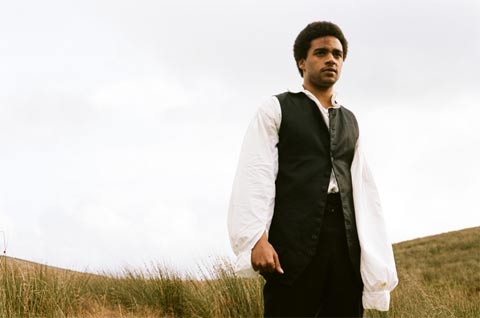
Heathcliff is not white. Though his exact race is never defined, racial stigma is used to mark him as a threatening, “dark-skinned” outsider throughout Wuthering Heights. It is significant that this interracial aspect of the novel’s passionate romance wasn’t addressed on screen until Andrea Arnold’s 2011 adaptation, over 160 years after the book’s publication. Arnold foregrounds the issue of Heathcliff’s race by casting Black actors in the role, rather than the conventional “white-Anglo-Saxon-gypsy” dodge. The swearing, which was considered shocking by Brontë’s contemporaries, has been updated by Arnold to retain its impact for modern audiences, as has the racist language. Essentially, her film is a partial retelling of the novel, exclusively from Heathcliff’s perspective. Where Catherine makes a stray remark in the book about Heathcliff’s dull silence compared to Linton, Arnold’s film embodies that silence in wordless scenes on the Yorkshire moors. When Heathcliff is cast out of doors, Arnold’s camera forces us to share his exile and peer through windows at events within. When Heathcliff is beaten, we experience his pain in flinching close-up. When Heathcliff leaves in the middle of a dramatic speech, we are likewise denied its conclusion.

The result is fragmentary and sometimes frustrating, perhaps not satisfying as a standalone film. But it achieves what no previous adaptation has: to be a real enhancement to the book, rather than a pale reflection of it. Where Brontë’s novel filters our impression of Heathcliff through the narration of Lockwood’s smug, educated gentleman and Nelly’s commonsensical servant, each sometimes presenting him as incomprehensible, barbarous or threatening, Arnold flips this narrative to show us the incomprehensible barbarity and threatening cruelty of the dominant society itself, as seen through the outsider’s eyes. From this alienated perspective, Heathcliff’s descent into cruelty appears an inevitable and almost overdue reaction to the constant, painful brutality he suffers. Arnold’s interpretation might be compared to Steve McQueen’s approach to 12 Years A Slave, stripping away the rationalizing aimed at 19th century readers, to lay bare oppression in the most raw and physical way possible. In a world where an unarmed Black youth can be interpreted as more threatening than an armed representative of “mainstream” society, film’s potential to challenge our identification and flip our perspective is as timely as it is rarely used. By the time Mumford & Sons’ “The Enemy” plays over the film’s final moments, the song’s sentimental regret feels earned.
unnamed

I Am Not the Enemy; It Isn’t Me, the Enemy

The question is, does Arnold’s sympathetic portrait of Heathcliff reflect Brontë’s own view of the character, or does it re-imagine the original author’s racist view, as reflected in Wuthering Heights’ narration? Firstly, it must be said that the story Arnold unearths is taken straight from the original book, although there it is diluted by the perspectives and interpretations of others. Perhaps the book’s most crucial speech is Catherine Earnshaw’s “whatever our souls are made of, his and mine are the same… Nelly, I am Heathcliff,” placing Brontë’s white heroine in absolute solidarity with the non-white hero, which Arnold highlights by letting Cathy’s “I am Heathcliff” echo after her film’s end credits. This is more than a declaration of love; it is a radical declaration of interchangeability. The fundamental similarity of Heathcliff and Catherine allows the book to present their divergent outcomes as a product of divergent treatment, linking the actions of their adult selves to the experiences of their childhoods. Catherine is Heathcliff, therefore their pairing allows Brontë to explore how differently the same behavior is interpreted, rewarded or punished, when acted by different bodies.

Heathcliff illustrates the brutalization of the non-white male; his every attempt to integrate is rejected, so he grows embittered and alienated, forced to exploit others to achieve his goals. If Harriet Beecher Stowe’s Uncle Tom is often criticized for being implausibly forgiving and accommodating to racist slave-owners, then surely Heathcliff is the anti-Tom, an openly angry and defiant agent of revenge against the racist patriarchy that has killed his love. His interchangeability with Catherine undermines easy dismissal of that anger as “natural” barbarity, while Arnold’s focus on Heathcliff’s rejection presents his anger as justified response.

Catherine, by contrast, illustrates the psychological pressures of the pedestalization of white womanhood. She is harshly punished for rebelling, roaming the moors or obeying her instincts, being explicitly told by her beloved father that his love is conditional on her being a “good lass,” while that father hypocritically rewards adopted son Heathcliff for the behavior he rejects in Catherine. Catherine is, however, extravagantly rewarded with social approval for acting traditionally feminine. Her fear of suffering the same degradation as Heathcliff forces her to attempt to assimilate as Linton’s wife, where she suffocates and dies from the frustrations of that role. Through its image of an oak tree struggling to thrive in a flower pot, the book attributes Catherine’s suffering to her entrapment, in contrast to her natural strength and potency. The novel’s portrait of Catherine’s existential struggles is glimpsed in Arnold’s adaptation but cannot be explored; we are not permitted to understand her reasons for marrying Linton because Heathcliff does not understand them. But the roots of Heathcliff’s alienation, as the direct result of his treatment, are exposed by Arnold with more clarity than ever before.

unnamed

So Why Did You Choose to Lean on a Man You Knew Was Falling?

Wuthering Heights is a book intimately concerned with learned cycles of intergenerational abuse, a theme Arnold’s film captures by ending with the striking image of young Hareton hanging a dog in the same way Heathcliff did earlier in the film. The novel’s dainty and feminine Isabella and Catherine Linton become embittered and abusive in the dysfunctional environment of Wuthering Heights, just as Hindley, Hareton and Heathcliff do – Brontë rejects any limitation of abusive behavior to a single race or gender, attributing it rather to a toxic environment. The Isabella subplot in Wuthering Heights also offers a radical affirmation of a wife’s right to flee an abusive husband with her child, a century before the establishment of the first women’s shelters. This theme would be expanded in Anne Brontë’s The Tenant of Wildfell Hall, where it caused a storm of controversy (it was possibly overlooked in Wuthering Heights because readers were distracted by the interracial necrophilia. Ellis Brontë: epic punk). To claim that Brontë’s portrait of Heathcliff romanticizes abusive behavior is to ignore the Isabella subplot’s explicit denial of a loving woman’s power to rescue an abusive man, which urges the reader to heed warning signs of cruelty (Heathcliff hanging Isabella’s dog) rather than satisfying their ego by struggling to redeem a lost soul. Heathcliff and Catherine share a profound love and affinity, but they are both too damaged to save each other; the novel demands the reader’s understanding of the roots of abusive behavior, and recognition of the human potential for love and unselfishness, but never demands approval of abuse itself.

The fundamental interchangeability of Heathcliff and Catherine Earnshaw also lends the novel to transmasculine readings, where Heathcliff’s racial stigma might symbolize Catherine’s stigmatized masculinity, without which she cannot thrive and which she must sacrifice to conform to a traditional, wifely role. Ellis is recorded by Charlotte as the only Brontë sibling to oppose being publicly assigned a female name; Ellis’ masculinity is also suggested in Charlotte’s biographical sketches and her fictionalized portrait of her sibling as Shirley. Wuthering Heights’ potential as lesbian closeting drama may also be demonstrated by comparison with Virginia Woolf’s Orlando, dedicated to Woolf’s lover, Vita Sackville-West. Orlando asserts the interchangeability of the womanizing male Orlando and his female alter-ego (whose male lover Shelmerdine is distinctly feminized, and encountered while Orlando pledges herself to 19th century moors in an apparent nod to Wuthering Heights), allowing Orlando to maintain superficial heterosexuality while being both woman and lover of women. Wuthering Heights is preoccupied with Catherine Earnshaw’s interchangeability with both Heathcliff and Hareton Earnshaw, while her feminized lover Edgar Linton is variously incarnated as Heathcliff’s lover Isabella and Hareton’s lover Catherine Linton. The novel’s final reconciliation is only achieved by divorcing Catherine Earnshaw and Heathcliff from society, through death and ghostly dematerialization, and by whitewashing and re-gendering them as happy couple Hareton Earnshaw and Catherine Linton; this “happy ending” upholds its heroes’ ultimate incompatibility with a racist, sexist and heterosexist society, ending by contemplating their “unquiet slumbers.” As a heterosexual tomboy, however, I also found Wuthering Heights fully expressed my own teenaged frustrations and craving for passionate equality with a male lover (Heathcliff represents the primary love object in most heterosexual interpretations, but alter-ego in lesbian and transmasculine readings); Ellis’ recorded wish for an ungendered name might equally reflect perceived prejudice against female writing, rather than transmasculine identity. This multiplicity of meaning is one of the book’s enduring fascinations, indicating how deeply Brontë cuts to the universal, metaphysical bone of the struggle to love ourselves through the mirror of another. Arnold’s film must sacrifice some of this multiplicity; Heathcliff’s racial stigma might represent the stigma of female masculinity or lesbian sexuality, but the visceral impact of a Black body brutalized onscreen can represent only itself.

unnamed

Give Me Hope in Silence; It’s Easier, It’s Kinder

Wuthering Heights is one of the greatest novels in the English language: enigmatic, passionately sincere, spare, and magnificently disregarding of social convention. It is also cunning in its use of the educated Lockwood to voice dominant ideology and disarm rationalizing criticism, and plainspoken Nelly to disarm common-sense objections. In resisting the judgments of these narrators, readers reach out towards Catherine and Heathcliff’s perspectives rather than defending against them. The fact that this is a first novel, by a writer not yet thirty, is mind-blowing. The book’s confrontation of racist and sexist ideologies feels incredibly modern; its unflinching portrait of the psychology of abuse retains its impact. Andrea Arnold’s brutal, stripped-down take on Wuthering Heights does justice to these elements, rather than fossilizing the book into a cozy classic or tamed romance.

Just as we must mentally resist the book’s judging narrators, so Wuthering Heights resists depicting Heathcliff and Catherine on the moors, allowing that image to haunt through suggestion alone. Arnold cannot avoid directly depicting the moors; rather, she complements the book by boldly visualizing the submerged spaces of Brontë’s novel. Arnold’s moors are an expressionist landscape, filled with the tumult of wind and rain like a storm of passions, and the harsh poetry of sex and death in animal life; the oppressively amplified sound resembles a cross between The Piano and Das Boot. In any other 19th century novel, the reader would demand whether Catherine and Heathcliff had sex during their unchaperoned time on the moors; it is one of Brontë’s achievements that Wuthering Heights makes this question simply irrelevant. It is a drama of love and being, not of sex and marriage. Arnold’s film follows the same oblique model; suggestive shots leave Catherine and Heathcliff’s physical relationship open-ended. The leap between child and adult actors is jarring (especially as it represents a gap of only three years), but it satisfyingly reflects the novel’s conceptual leap: Heathcliff and Catherine are victims of circumstance before Heathcliff’s departure; when he returns, they are adults who must wrestle with their childhoods’ legacy and suffer the consequences of their choices.

Nineteenth century writers used their romantic plots to explore diverse philosophical and political concerns. Just as Wuthering Heights confronts sexism, racism, and intergenerational abuse through a central love story, so Elizabeth Gaskell’s North and South uses its love plot to propose a progressive model of industrial revolution, combining libertarian profit incentive with social welfare investment, with women as equal business partners and strikes averted through bilateral negotiation between masters and union leaders, while pioneering African-American writer Frances Harper’s Iola Leroy flips the trope of the “tragic mulatto” by using a love plot to affirm Iola’s positive choice of Black identity.

Andrea Arnold’s 2011 adaptation of Wuthering Heights points the way for more challenging and political exploration of the female canon’s classic authors, revitalizing them by blowing the cobwebs from safe romantic cliché. Bravo.

[youtube_sc url=”https://www.youtube.com/watch?v=30XKzxnTYK8″]


Brigit McCone refuses to be embarrassed by the emo associations of Wuthering Heights fandom, writes and directs short films, radio dramas, and The Erotic Adventures of Vivica (as cabaret pseudonym Voluptua von Temptitillatrix). Her hobbies include doodling and eating sushi.