‘Cinderella II’: The Gender Identity Romcom of ‘Some Like It Hot’

Jerry never leads with Joe or Sugar. This suggestion, that the character might be made more assertive and empowered by a female role, effectively challenges the patriarchal concept of femininity as necessarily submissive and disempowering; femininity in ‘Some Like It Hot’ is portrayed as empowering and liberating when it better expresses the individual’s natural impulses and identity.

This is a guest post by Brigit McCone.

Some Like It Hot topped the AFI poll as funniest film of all time, almost always ranking high in similar surveys. It is, beyond doubt, the most popular choice for the greatest cross-dressing farce of all time. While we regularly debate whether political correctness is killing comedy, it is worth remembering that the greatest cross-dressing farce is also the most humanizing (and, rather depressingly, unequaled since 1959). Where most cross-dressing comedies (except possibly those by Alice Guy) rely on the humor of insecure masculinity in a one-joke premise (“it’s funny because they think we’re gay/women, but we’re actually not gay/women, which is embarrassing because being gay/women is inferior”), Some Like It Hot expertly raises these anxieties, but has the courage to interrogate them by exploring the possible attractions of a female role. The film is still among the only cross-dressing comedies to feature a genuine gender identity crisis by a sympathetic protagonist; the human depths that this adds to the flimsy set-up are the key to its comedy. Jack Lemmon’s Daphne/Jerry is not the butt of the joke; Daphne/Jerry is an acid-tongued wit in hir own right and the film casually assumes our maturity to follow hir on hir gender journey, laughing along with its contradictions and pressures.

According to Wilder, he was unsure himself whether the legendary “nobody’s perfect” was strong enough to be the final line of the film. This suggests that Wilder was unaware of the extent to which he had crafted perfect romantic comedy between Daphne/Jerry and Osgood, along the lines of Jane Austen’s genre-defining Pride and Prejudice, which uses romance as a catalyst for confronting the self. Where Tony Curtis’ Joe and Marilyn Monroe’s Sugar Kane have a relatively flimsy romance, begun in lies and concluded with inertia as each reverts to their established type, the romance between Osgood and Daphne/Jerry is the catalyst for a psychosexual crisis as profoundly subversive as it is hilariously expressed. Although Daphne’s relationship with Osgood has been interpreted as a “low comedy flip” of the primary relationship between Curtis’s Joe and Monroe’s Sugar, I suggest that the brilliance of I. A. L. Diamond’s final line is how satisfyingly it flips that interpretation, revealing Daphne’s relationship with Osgood as the major love plot. I have explored how Austen’s template structures the psychological struggles of Fight Club; I’d now like to explore the way that it deepens and illuminates the gender identity struggle at the heart of Some Like It Hot.

Cinderella the Second: The Meet-Cute


The classic Pride and Prejudice meet-cute occurs when the judgmental Elizabeth Bennet is herself judgmentally dismissed by Darcy as “not handsome enough to tempt me” – its cuteness lies in the irony of the similarity at the root of the mutual hostility. The meet-cute of Some Like it Hot occurs when Osgood chivalrously leaps to restore Daphne’s lost stiletto, provoking her to comment  that she is “Cinderella the Second.” The irony is double: Jerry feels the ironic absurdity of being treated as a princess when he is really a man, yet the character’s story will genuinely serve as a comic twist on the Cinderella archetype. Jerry is the downtrodden servant, constantly bullied by Tony Curtis’ alpha Joe, the wicked stepbro of macho peer pressure; Daphne is the mysterious stranger who captivates the prince. Jerry loses the coat off his back because Joe demands it; Daphne is showered with diamonds. Jerry must watch Joe get all the girls (it is significant that hir attraction to Sugar never makes Daphne/Jerry consider attempting to woo her in male form, as Joe instantly does); Daphne is a sexually irresistible “firecracker.” Daphne is swept off her feet for a night of glamorous dancing, then bullied into becoming Joe’s “Jerry” again in the morning.

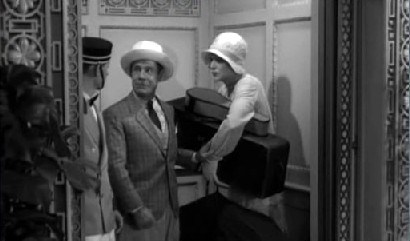
The stiletto heels play a significant symbolic role in this transition. When we first see Jerry in drag, he is complaining that he doesn’t understand how women can “walk in these things.” Despite his theoretical attraction to cross-dressing (Jerry suggests cross-dressing for cash even before the pair are forced to flee the mafia, and appears titillated by the idea), he is the one who panics and feels threatened by taking on a female identity – “it’s a whole different sex!” – which for Joe is only a meaningless disguise. Where Daphne wants to choose her own name, Joe apathetically takes the feminine form of his male name. The Cinderella meet-cute with Osgood turns Daphne’s clumsy inability to walk in heels into the beginning of her fairy-tale romance, rather than a betrayal of masculinity. It is therefore a stroke of genius that the mafia recognize Daphne, at the end of the movie, because she’s still wearing her heels even when fleeing in a male disguise. Jerry is not betrayed as “really a man” while attempting to be Daphne; rather, Daphne’s true nature is revealed by her heels as she attempts unsuccessfully to pass as male. Jerry’s transition into accepting Daphne’s heels as second-nature suggests Daphne may likewise accept Osgood’s love, a conclusion as taboo in the 1950s as it was satisfying to leave to the viewer’s imagination. If the shoe fits…

I'm a Boy. I Wish I Were Dead: Protagonist Rejects Love Interest
I’m a Boy. I Wish I Were Dead: Protagonist Rejects Love Interest


In Pride and Prejudice, Elizabeth’s initial aversion to Darcy’s arrogance is compounded by a series of misunderstandings that peak in her explosive rejection of him in the famous proposal scene. In Some Like It Hot, Daphne’s loudly stated aversion to the “dirty, old man” Osgood is, from the very beginning, comically insufficient to prevent her from repeatedly flirting with him. The climax of their relationship is also a proposal scene: the sweeping of Daphne off her feet in the film’s delirious tango sequence. Daphne can’t stop leading during the dance; that might be seen as a joke reflecting her actual maleness, but it is equally a sign of her growing confidence, spark and fire. Jerry never leads with Joe or Sugar. This suggestion, that the character might be made more assertive and empowered by a female role, effectively challenges the patriarchal concept of femininity as necessarily submissive and disempowering; femininity in Some Like It Hot is portrayed as empowering and liberating when it better expresses the individual’s natural impulses and identity.

After a night of zinging banter, heady admiration and dance, Daphne is seduced and agrees to marry Osgood. In the morning, Joe forces the male role back onto her: “You’re a guy! Why would a guy want to marry a guy?” and Daphne agrees to renounce her plan. It is true that Daphne’s claim to be marrying Osgood for “security!” ironically reflects Joe and Sugar’s relationship, where Sugar believes she is chasing money and Joe believes he is chasing sex. However, rather than simply parodying their shallowness, Daphne’s shining eyes and glee after the tango scene reveal that her own attraction to Osgood is more than mercenary, just as Osgood will later reveal that his attraction to Daphne goes far deeper than a comically blind urge to chase anything in a skirt. The key to Daphne’s decision to reject Osgood’s proposal is the unquestioned assumption that Osgood would reject Jerry if he discovered his true nature; this is the underlying misunderstanding that keeps the lovers apart, forcing Daphne to define her seduction as an impractical dream. Like Cinderella’s ball, it is magical but incompatible with her real self. Where she formerly chanted “I’m a girl! I’m a girl!” to resist her sexual attraction to women, now she must chant “I’m a boy! Boy, oh boy, am I a boy!” before sighing “I wish I were dead” as she renounces her fantasy self. The use of gender identity as romantic obstacle complicates the usual dynamic of love interests rejecting each other. It is more accurate to say that Daphne rejects herself on Osgood’s behalf.

The Omelet's About To Hit the Fan: Fate Intervenes
The Omelet’s About To Hit the Fan: Fate Intervenes


The psychological dynamics of acceptance and rejection in Pride and Prejudice are interrupted in the book’s final third by the dramatic elopement of Lydia, which brings relationships to crisis-point and a more dramatic conclusion; at first appearing to separate the lovers, it ultimately unites them. It is at roughly this same point in the plot of Some Like It Hot that the mafia re-enter. The mafia function throughout the film as a device to express transphobic anxieties without confronting them. By providing an urgent motivation for the characters’ cross-dressing, they allow the audience to avoid confronting the issue of any internal motivation. The intense, scrutinizing pressure and threat of violence which the openly transfeminine are subjected to, even today, is expressed through the extreme anxiety of the need to “pass” under mafia scrutiny, but it is not confronted: the characters of Some Like It Hot are never threatened with transphobic violence, only with murder as witnesses to the St. Valentine’s Day Massacre (although it could be regarded as symbolic that the mafia become murderous after flirting with the girls, then stripping Daphne’s curvaceous double bass to reveal her true identity – “there’s your valentine!”). Although the mafia threat appears to be a force that will drive Daphne away from Osgood, her fear of the sinister and shaming “ladies’ morgue” is ultimately the only catalyst strong enough to make her defy society’s conventions and to push her into his arms. Both the mafia and the ladies’ morgue represent exposure anxiety; they also represent an inevitable mortality before which a person’s greatest regrets are usually the things they have left undone.

Nobody's Perfect: Sacrificing The Ego
Nobody’s Perfect: Sacrificing The Ego


The final reconciliation of Pride and Prejudice is made possible when Elizabeth Bennet sacrifices her ego to make a humiliating admission of her feelings for Darcy to Lady Catherine de Bourgh. In an even more major sacrifice, Daphne risks murder by mafia as well as humiliation by confessing her true identity to Osgood. After a series of comically escalating confessions, she finally tears away her wig and announces “I’m a man.” Osgood replies, shrugging, “nobody’s perfect.” This might be an easy laugh at Jerry’s awkward entrapment, but we have already seen his glowing eyes after their night of tango. Rather, the line “nobody’s perfect” flips our assumption that we are watching a farcical romantic parody on its head, to become supremely romantic. In a trademark Wilderism, Some Like It Hot reveals cynicism to be a facade for romance rather than the reverse: Joe and Sugar’s “real” goals of sex and money give way to their “pretended” love; Daphne and Osgood’s “real” identities as fraud and womanizer give way to their human connection. A night of chemistry at Cinderella’s ball is as real as the enforced roles of our daytime reality. The oddball coupling of a cross-dresser and a wrinkled millionaire can seem more lovable than the photogenic pairing of Monroe and Curtis. It is the genius of Lemmon’s performance that he is able to make Daphne’s personality more vivid, enticing and three-dimensional than Jerry’s, so that Daphne seems seductively like the true self that Osgood appreciated all along. Finally, a character defined for the entire film by comically escalating discomfort with their own identity meets absolute and unconditional acceptance. Our image of what happens next is a Rorschach test of each viewer’s own assumptions, of their varying levels of ageism, transphobia and romantic cynicism. But in my own interpretation, Cinderella the Second has a ball.


Brigit McCone is a shameless Wilder groupie, writes and directs short films, radio dramas and The Erotic Adventures of Vivica (as Voluptua von Temptitillatrix). Her hobbies include doodling and making weird Pride and Prejudice analogies.


Bitch Flicks’ Weekly Picks

Check out what we’ve been reading this week–and let us know what you’ve been reading/writing in the comments!

recommended-red-714x300-1


Ava DuVernay Earns Her Way Into the History Books – First Black Woman Director to Be Nominated for a Golden Globe Award by Tambay A. Obenson at Shadow and Act

Shonda Rhimes: “I haven’t broken through any glass ceilings.” by Maya Dusenberry at Feministing

2015 Golden Globe Nominations at The Hollywood Foreign Press Association

Golden Globes Justifies Its Existence With Nods for ‘Transparent,’ ‘Jane the Virgin,’ Julianne Moore in ‘Maps to the Stars’ by Inkoo Kang at Women and Hollywood

The best new Strong Female Characters are the weak ones by Tasha Robinson at The Dissolve

Netflix Set to Debut Nina Simone Documentary Next Year by Yesha Callahan at The Root

The 39 Most Iconic Feminist Moments of 2014 by Elizabeth Plank at Mic

Top Ten Pre-Code Films by Brandy Dean at Pretty Clever Films

Gender Equal Genre: Women Filmmakers Spotlighted at Etheria Film Night by Kristofer Jenson at dig Boston

Four Lessons From The Media’s Conflicted Coverage of Race by Eric Deggens at NPR

A Timeline of the Abuse Charges Against Bill Cosby [Updated] by Matt Giles and Nate Jones at Vulture


What have you been reading/writing this week? Tell us in the comments!


Angelina Jolie Wins Over Manhattan Press to Promote ‘Unbroken’

Angelina Jolie: “I thought often in making this film about my children, my sons, who are of the age appropriate to see it – the older sons – and it’s a movie for everybody but I think it’s one you think about this great generation and the values they had and how they were as men and I think it’s one that we want to raise our children and remind this generation of their sense of family and community and honor and pay respect to them.”

Angelina Jolie
Angelina Jolie


This is a guest post by Paula Schwartz

Angelina Jolie swept into Manhattan last week for some serious Oscar politicking for Unbroken, her second time at the helm as a feature film director. She attended a dizzying round of luncheons, receptions, press conferences, and Q&As to promote the film and for some needed sizzle to propel it in the awards race. Treated like royalty – a week before those other Royals arrived – and even with more anticipation, the Maleficient star dazzled even the most jaded entertainment reporters.

Based on the best-selling book about Louis Zamperini by Laura Hillenbrand, the movie chronicles his life as Olympian runner, World War II bombardier, ocean castaway on a raft surrounded by sharks, and enslaved prisoner brutalized by sadistic guards. After the war, Zamperini struggled with alcohol addiction and PTSD but finally found redemption through faith and forgiveness. Jolie’s main concern is that the film honor Zamperini’s life and struggle and that it inspire audiences.

Oscar prognosticators hint Unbroken could bring Jolie a Best Director Oscar nomination and Universal has pulled out all stops to make that possible. With Ava DuVernay a shoo-in for her brilliant film Selma, an epic about another great man, Dr. Martin Luther King Jr., this could be the first year two women are nominated in this category. (Even more historic would be Ms. DuVernay’s nomination because shamefully no African-American woman director has ever received this honor.)

unnamed-1


Unbroken received an awards boast earlier in the week when the American Film Institute picked it as one of the outstanding 11 films of the year. (Selma is also on the list.) But two days later the Screen Actors Guild and the Hollywood Foreign Press left Unbroken off their list. This is especially surprising since the Hollywood Foreign Press loves glittery movie stars at their Golden Globe celebration.

In 2011 Jolie, who wrote and directed In the Land of Blood and Honey, a controversial film about a love affair between Bosnian woman and a Serbian solder, received a Golden Globe nomination for best foreign film. I spoke to her by telephone to get her reaction for the New York Times. She told me she knew the subject matter was a hard sell but it was a story she had to tell. “I didn’t want to be a director,” she told me, “I’ll just only do it if there’s something that I feel so compelling it must be told.” She also told me she never reads press about her or Brad Pitt. “It’s better not to know,” she said.

Both director and cast members, Jack O’Connell (Zamperini), Takamasa Ishihara (sadistic prison guard, Watanable), Garrett Hedlund and Finn Wittrock participated in a press conference last Friday at the Mandarin Oriental Hotel. Jolie choked up several times when she spoke about the subject of her film, with whom she became very close. Six hours later she teared up again at a Bafta screening when she discussed how she visited Zamperini in the hospital to show him the film and seek his approval. He died several weeks later in July of this year at age 97.

Jolie materialized at the press conference surrounded by her supporting and admiring cast, but she was the star attraction. Slender and fine boned, with her high cheekbones and saucer eyes, she is as spectacular in person as her pictures lead you to expect.

She was in New York a week before the leaked Sony e-mails in which producer Scott Rudin insulted her and the film.  She has chosen so far not to comment.

The cast of Unbroken


Here are selected quotes from the press conference last week featuring Angelina Jolie.


Why it was so important to you to make the film:

I thought often in making this film about my children, my sons, who are of the age appropriate to see it – the older sons – and it’s a movie for everybody but I think it’s one you think about this great generation and the values they had and how they were as men and I think it’s one that we want to raise our children and remind this generation of their sense of family and community and honor and pay respect to them. And I want my children to know about men like Louis so when they feel bad about themselves and they think all is lost, they know they’ve got something inside of them because that’s what this story speaks to. It’s what’s inside all of us. You don’t have to be a perfect person or a saint or a hero. Louis was very flawed, very human, but made great choices and in the end a great man.

I came into this because I felt it was an important story. I was drawn to the message of the story. If you’d asked me a few years ago what kind of a film do you want to make? I never would have assumed to make a film that included shark attacks and plane crashes. I would never have thought of myself handling that kind of cinematic filmmaking. I wouldn’t think I could do that or should do that (laughs).


What was it specifically about this book that made you so passionate about bringing it to the screen? Was there one specific thing abut this story that said to you, this is it, this is my next movie?

I think what it was, like everybody, we wake up, we read the news, we see the events that go on around the world and we live in our community and we’re disheartened by so much. We feel overwhelmed and we don’t what’s possible and we don’t know where… We want something to hold onto and something to give us strength. And I was halfway through this book and I found myself inspired and on fire and feeling better and being reminded of the strength of the human spirit and the strength of having a brother like Pete and what that is and to remind us to be that for each other and how important that is to have that in your life… I realized if this was having this effect on me and I knew it had this effect on so many people, isn’t this what we needed to put forward into the world at this time? And I believe it is and I’m very happy also it’s coming out during the holidays. I think it’s an important time. It’s the right time.


unnamed


Transforming the book into the film:

The Coen brothers (the screenplay writers) said something to me that helped me completely. They said when you put the book down you have a certain feeling and a certain understanding. That’s what they need to feel when they walk out of the theater. That’s your job. To literally put this book on film you won’t make a good movie and you’ll do no service to anyone. So know the themes and to us these themes, so then we would go back to the film and so for example, faith, faith is so important to him, instead of it being a specific chapter and how to put it all in, and all the experiences of his life, faith was represented from the beginning, from the little boy and represented all through the film in other characters but also in the sunrise and the darkness and the light and the struggle between them and him coming into the light. But it wasn’t literally, technically as it was in the book, but the things are the same, so that’s what we tried to do. But I think a lot of our favorite stories aren’t in the film.

It was tough. I’d be carrying the book, before we were doing the film, and a lot of people would say that’s my favorite book. You know what my favorite scene is?  And I started to say don’t tell me.


Your next movie is with Brad Pitt, By the Sea. Is that sort of an antidote to this epic?

By the Sea was emotionally difficult acting in it but it was logistically a walk in the park in comparison to Unbroken. It was a nice break.


On Zamperini  watching Unbroken in his hospital room:

Louis was 97 (when he died). He began skateboarding in his 80s. He was still living alone taking care of himself. He was very full of joy and love of life and very sharp. And he was doing speaking engagements for about two weeks prior to the day I got the call and he went into the hospital. So I put the film on my laptop – it was missing some of the special effects and music – (but it was) pretty much wrapped, and I went over to the hospital and I sat beside his bed and I held it over him and he watched the film and I watched him watch the film. I thought I would get some review, he would say good shot… and in reality I found myself in this extraordinary moment where I was watching this man at the end of his life reliving the moments of his life, remembering his mother, remembering his brother and all the friends he’d lost. He was the last alive, and preparing himself, as a man of faith… watching him cross the finish line while he was in this hospital bed and smiling…When it (the film) was over, he just looked at me and smiled. And then he told me a really inappropriate joke.


Paula Schwartz is a veteran journalist who worked at the New York Times for three decades. For five years she was the Baguette for the New York Times movie awards blog Carpetbaggers. Before that she worked on the New York Times night life column, Boldface, where she covered the celebrity beat. She endured a poke in the ribs by Elijah Wood’s publicist, was ejected from a party by Michael Douglas’s flak after he didn’t appreciate what she wrote, and endured numerous other indignities to get a story. More happily she interviewed major actors and directors–all of whom were good company and extremely kind–including Brad Pitt, Angelina Jolie, Morgan Freeman, Clint Eastwood, Christopher Plummer, Dustin Hoffman and the hammy pooch “Uggie” from The Artist. Her idea of heaven is watching at least three movies in a row with an appreciative audience that’s not texting. Her work has appeared in Moviemaker, more.com, showbiz411 and reelifewithjane.com.


Moving Us Forward: ‘Carmilla’ the Series

No, but seriously–at a time when the most popular gay ships on Tumblr are queer-baiting extravaganzas and TV lesbians have a tendency to be either invisible or dead, seeing not one, but at least three queer girls whose sexuality is present and normalized matters.

unnamed

This is a guest post by Kathryn Diaz

The YouTube web series Carmilla might just be the internet’s next best-kept secret. Often compared to Buffy, Carmilla is about a girl, her vampire, and her friends taking on life’s challenges with a dash of apocalypse-stopping on the side. But Carmilla is not a derivative of the 90s classic or anything else you’ve re-watched this year. Carmilla is the next step we have all secretly been waiting for. It is a treatise on the power of teamwork and love. In the words of one of its many heroines, it’s about girl-ing the hell up. And lesbians. We cannot forget the lesbians.

Laura and Carmilla
Laura and Carmilla

No, but seriously–at a time when the most popular gay ships on Tumblr are queer-baiting extravaganzas and TV lesbians have a tendency to be either invisible or dead, seeing not one, but at least three queer girls whose sexuality is present and normalized matters. Laura Hollis is a journalism student who has seen every episode of Veronica Mars. Danny Lawrence is an active member of the Summer Society, and a TA. Carmilla is a femme fatale in combat boots and heavy eyeliner who studies philosophy when she isn’t feeling Coleridge-y about her life. These young women have been written as women, not stereotypes or labels with legs. While ample time is given to their love lives and personal desires, it is neither the sole nor central part of their personalities and character arcs. We have seen this kind of character before, from Willow on Buffy to Cosima on Orphan Black. But these women, and many others on TV, inhabit a peripheral space as supporting characters. On Carmilla, they take center stage. As someone still working out their sexuality, I cannot emphasize enough how refreshing and heartening this is to see.

Besides its open queerness, the other big thing to consider when thinking about Carmilla is just how much of a reinvention of familiar stories and genres it is. Most obviously, this series is technically an adaptation of J. Sheridan Le Fanu’s 1872 gothic novella of the same name. For this reason, it is sometimes lined up with other YouTube modern retellings of classics such as The Lizzie Bennett Diaries. However, Carmilla shares more in common with the emergence of radical re-imaginings in media like Wicked and Maleficent. Further still, the new setting and plot that Carmilla adapts in its transformation nestles it in the same company as Buffy the Vampire Slayer.
Laura Hollis, being adorable


Like Maleficent, Carmilla consciously retools its plot and characters to chip away at oppressive elements in their source material and introduce feminist ideologies in the reinvented narrative. However, Carmilla takes things a step further by doing more than just turning the plot around and changing original antagonist into an anti-hero. The series transforms all the prominent characters into new, compelling versions of themselves. Where Le Fanu’s pure hearted heroine Laura timidly speculated about the horrors around her, web-series Laura starts her story as the only person at her university willing to investigate the mysterious disappearance of her roommate. The caretakers from Le Fanu’s story, Mme. Perrodon and Mlle. De Lafontaine, become neurotic maternal floor don, Perry, and genderqueer science whiz who isn’t afraid to face actual monsters in the library head on, LaFontaine. Carmilla gets what the production team of Maleficent did not:  creating an anti-heroine of awesome need not come at the expense of the rest of Team Hero (I’m looking at you, Knotgrass, Thistletwit, and Flittle) and when it doesn’t, the story can benefit greatly.

Perry and LaFontaine, also adorable


Because of its subject matter, “rag-tag group of heroes” makeup, and “stop the Big Bad” plot, Carmilla also shares many elements with Buffy, as earlier mentioned. Whether intentional or not, to look at the show without this comparison might be missing an important part of the picture. There is a snark-tastic sense of humor between both shows that keeps the story from falling into pure melodrama. Carmilla’s dialogue includes such genre references as “honest to Lestat” and a bout of black comedy involving sock puppets. Beyond this and the presence of a brooding vamp with a hidden heart of gold, we also have light haired spunky heroines, love triangles, brain-sucking baddies, even a Big Bad fake-out before the reveal of the true villain at the season’s halfway point. And yet here, too, Carmilla can be seen as an endeavor to go beyond what was done before. Here there be no burying of our gays or turning them into revenge monsters.

Also worthy of notice: there be no singling out of our heroine either. No one is a Chosen One and no one has to go into a big showdown alone. Laura is the central protagonist, but she is not inherently the Alpha girl of the team she assembles. On a more episode-by-episode scale, the dynamics between Laura and Friends rejects any hierarchal structure. In fact, it is precisely when some of the friends start to play “I Know Best” that tensions emerge. The essence of what commentary comes out of these debacles seems to be this: that when something is big enough, personal agendas come second to the greater good and that love should not come between individuals and their autonomy. Carmilla rejects the possessive or selfish facets of love as attractive. However, this does not mean that it makes flawless do-gooders out of its heroines. Without getting even more spoiler-y (because you need to watch this series and watch it now), many a member of Team Hero has their negative moment and, though the good fight and teamwork must continue, transgressions are not always forgiven easily. By the season’s finale, not every relationship has a happy closure. Understandably, it’s the differences in the Carmilla-verse that make it feel like its own place. More specifically, a place that is simultaneously more realistic and more optimistic than the Sunnydale Hellmouth.

This is not to diminish the good in either Maleficent or Buffy. Personally, I’m a shameless fan of both, flaws and all. They are both strong, impactful works that have influenced many. But we are settling for less than what we deserve if we believe that they are as good as it gets. Even Carmilla isn’t as good as it gets. What Carmilla is is the next step–one that is worth taking and seriously well worth watching.

unnamed


Kathryn Diaz is a writer living in Houston, Texas. She is currently pursuing a B.A in English at the University of Houston. You can follow her at The Telescope for more of her work.


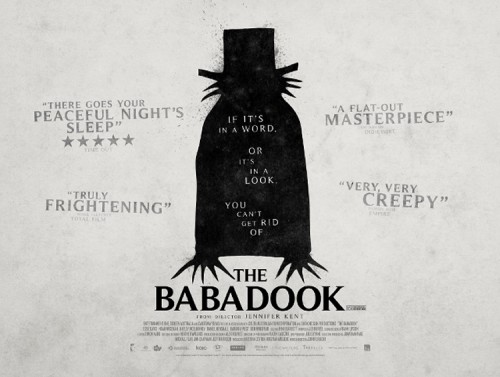
‘The Babadook’: Jennifer Kent on Her Savage Domestic Fairy Tale

Jennifer Kent: “I didn’t start with motherhood being the primary focus, but it is a very important part of the film, and I’m very adamant not to make this woman the evil mother. That’s why I placed the film very much inside her experience.”

the-babadook-uk-quad

This is a guest post by Josh Ralske

Australian writer-director Jennifer Kent’s feature debut The Babadook is the surprise hit horror film of the year. (Read Sarah Smyth’s review here.) With no stars and a limited budget, Kent cannily tells the story of Amelia (Essie Davis), a widow still wracked with grief over the death of her husband six years earlier, and Amelia’s troubled young son Samuel (Noah Wiseman), whose obsessive fear of monsters verges on the manic. One night, Samuel pulls an unfamiliar book from the shelf for his mother to read to him, Mr. Babadook. Amelia reads the book, unleashing the titular monster into their home. The mother and son, and the movie, increasingly retreat into their own horrific private world, terrorized by a fairy tale-like creature that seems intent on driving Amelia into madness.

The narrative is simple, and pointedly familiar, but The Babadook is notable for the complexity of its two main characters, and the remarkable performances that bring them to such vivid life.

We spoke with Kent on the phone about the film’s creation and its success.

the_babadook

Bitch Flicks: Congratulations on all the acclaim that the film is getting.

Jennifer Kent: Thank you. It’s been a real trip. It’s been a long and fantastic journey for this film. It’s been amazing.

BF: How did you get the idea for the film? Are you a parent yourself?

JK: No. No, I’m not. Obviously the mother/child relationship is really important in the film, but what i was really focused on was her, on this woman and her suppression of something she found impossible to face. That was the starting point for me. I feel if you suppress things in life, you don’t just affect yourself; you affect everyone around you. So then the choice to have that little boy in the picture, and to make him a kind of mirror to her was how it worked out. But it wasn’t, for me, entirely a story about motherhood, although that is a really important factor in the film.

BF: I understand what you’re saying about it being a very personal story, and starting with Amelia’s character, and what’s refreshing about it is how complex her character is. She isn’t just one thing. She’s not the type of female protagonist that you see in a typical horror film.

JK: I didn’t start with motherhood being the primary focus, but it is a very important part of the film, and I’m very adamant not to make this woman the evil mother. That’s why I placed the film very much inside her experience. Even when the shit hits the fan later in the film, we’re still experiencing it largely from her perspective, and I wanted her to be complex. She’s trying so hard. She’s a loving person. She’s drowning. She’s a drowning woman in this situation, but she wants to do the right thing, and I was interested in exploring that. I’m the type of person, when I read or hear about these parents killing or harming their kids… Of course it’s a tragedy, and the act of those parents is abominable, but they’re not monsters. They’re human beings. And my empathy and my sensitivity around these things made me curious. How does one get to that place where they become this monstrous mother? How does that happen? And so that’s why, I guess, I feel proud of that character, of Amelia. No one’s saying that she’s a one note character.

maxresdefault

BF: Your empathy for the character really comes through. Could you talk a little bit about casting Samuel, and your conception of that character, because again, it’s not a child character that I’ve seen in any other film. He’s a very unique movie kid.

JK: Yeah. If you met [Noah], you’d be shocked, because he’s the opposite of Sam. He’s very quiet and sweet. That’s all acting. And he is an empathetic kid. He really loved Sam. He really felt sorry for Sam, because his mom wouldn’t listen to him. And he was right. And I think the quality that I was looking for in the little boy who would play Sam was that empathy. And of course, Sam’s a strange kid, and very annoying at times, but ultimately, he loves his mom and he wants to protect her. So I needed a child who could embody all those qualities. And someone who could be directed. A lot of kids that come into these auditions, they’re like machines. But they can’t necessarily change and give you a subtle performance. But Noah could, and the key to that for me was improvisation. So we played games and we imagined things with the boys who got down to the final short list. And Noah was a standout in that way: vivid imagination, very emotionally intelligent. And robust. You know, I didn’t want a kid that was going to collapse on the second day of shooting, saying “I wanna go home.” He was there for the six weeks of shooting, day in and day out, and when I think about what he did, it’s an extraordinary thing for a 6-year-old to achieve.

BF: Yeah, that’s amazing. I didn’t know if you’d found a kid who was just sort of like that, or if you’d found someone capable of bringing that character to life without necessarily being that way. That’s interesting.

JK: Yeah, he was really fun and sweet. And in fact, one interesting thing about that process is that kids don’t want to be disobedient, so it was really hard to get him to be that way in rehearsals. I had to give him permission to be naughty, because yeah, kids are socialized — unless they’re brought up badly — to be well-behaved. So yeah, it was a real process for him.

mister-babadook-the-babadook-30-07-2014-7-g

BF: Did you set out to make a horror film? Is that a genre that you’re interested in generally? I noticed the clips from Black Sabbath and House of Exorcism and of course, all those great George Méliès clips that Amelia sees on TV. Is that the type of work that drew you to this type of story?

JK: Yeah. I mean, I love horror. I love it! I even will see most of the modern stuff, and I always hope it’s gonna be good. But I definitely have watched a lot of Italian horror, lot of everything. So it’s in me. It’s in my DNA, but it isn’t the thing that rules me. And I have to say… I can’t speak for other filmmakers, but I imagine it wasn’t something that ruled them either. They start with an idea and a story and that’s what happens. I think there’s a danger in becoming subservient to a genre, going “Oh, I’m going to make a movie that’s going to scare everyone.” I needed to look deeper than that, and that’s why… It’s such an interesting thing, how bad horror can be, and I think when it’s really bad, it’s just made by people who don’t get it. Who don’t understand how powerful it is. You can really discuss deep issues with horror, in a way you can’t through drama. It’s one of the most cinematic genres as well, because it’s very closely linked with dreams. So yeah, I’m a fan.

BF: I agree with you that you can touch on these deep human issue through the genre. It doesn’t just have to be about saying “boo.” Amelia’s grief in the film is such a powerful thing that seems to be the genesis…

JK: Yeah. How would you discover that in drama? It would be very hard to not make it melodramatic. To put it in this realm actually makes people feel what Amelia’s feeling, on some level, and have empathy with her. I’ve noticed that the film doesn’t work with people who have low empathy [laughs] as human beings. It’s not a film for them. The people who it scares have more of that going on in their systems.

mister-babadook-53a4404decc07

BF: Well, I liked it. I thought it was scary. So, I guess I check out on the empathy scale.

JK: So you’re a decent human being. [laughs]

BF: Yeah, I guess. If that’s your barometer for that. It’s really interesting to me. It has these very classical elements to it with the sense of isolation and the darkness and the way the Babadook himself is portrayed. There’s an old-fashioned quality to it. Could you talk about how you decided to visualize this monster?

JK: It was something that just felt right, this kind of childlike world. I’m really drawn to myths, and I guess I wanted to create a new myth in a domestic setting. Old children’s books, old fairy tales — you know, the brutal ones, the real ones — they touch on something very primal. They look childlike and innocuous, but deep down, there’s something really savage and sinister there. So that was my starting point for the world of the film. The book is obviously a very important part of it, so I wanted the Babadook to spring from the book, in terms of its style as well. And there’s something about the old horror that is very childlike, because it’s done in what we would consider now a very simple way, all in-camera techniques, but there’s something still very powerful about that, I think. Sometimes even more powerful than CGI and a lot of complicated post-production work. When something happens in camera, and you’re seeing it with the naked eye, you feel — I feel, anyway — differently. It feels like it’s happening there and it’s more real to me.

BF: I think it’s very effective, and it is an extension of the book in a way that works really well. Could you talk about the book itself? It was great. Very memorable, very vivid work that Alex Juhasz did.

JK: We looked for ages for an artist. We looked at lots of Australian illustrators, and we even worked with a couple in developing the Babadook look, but Alex was unique in that he’s actually an American artist. I saw his work and it was beautiful but really strange. I was drawn to him and his work. He has this thing of being able to keep his work original, but also took direction. So we were able to develop the look of the creature according to how I needed it to operate. So it wasn’t just finding an illustrator to make these beautiful pictures. He really understood the need for it to support the story. He was a good storyteller. And he also had a lot of work in stop motion animation. He designed the opening credits for United States of Tara, and he’d worked a lot with Jamie Caliri, the stop motion animator who did Lemony Snicket‘s end credits. He had a lot of experience that proved invaluable when it came to animating the book. He’s a bit of a genius, Alex.

123206318

BF: The illustrations themselves really set the tone for what’s to come.

JK: They come to life, so they needed to be energetic and have an ambitiousness to them.

BF: For women filmmakers, in the states at least, it can be particularly challenging to get a first film made and shown. Is that something you want to address?

JK: I’m not so much aware. I don’t think of myself — I know I’m a woman, of course, but I don’t feel ruled by it. I think a film is hard to make, full stop. I think a person’s first feature is a real trial by fire, no matter if you’re male, female, or otherwise, and it’s not something that I feel really informed me. It certainly didn’t hinder me. Not in Australia, anyway. And I must say, I’ve had a lot of meetings with various people in America since Babadook premiered in Sundance, and admittedly, I haven’t done any work there yet, but I’ve never felt encumbered or restrained by my gender in that context. I’m not saying sexism doesn’t exist, but I don’t give it much time. I’ve got too much to do.

BF: Do you think, though, that — I don’t know, that scene where Amelia is using the vibrator… I’m not sure there are many male filmmakers that would’ve thought to include a scene like that, but it’s an important scene in terms of understanding who Amelia is and what she’s dealing with.

JK: My gaze and my way of looking at the world is inherently feminine, from a feminine perspective, and there are things in that film that probably wouldn’t be written by a male writer. But I don’t know. Isn’t that the way with all films? They come from the person who makes them. I understand what you’re saying, Josh, I’m just trying to… it’s a complex issue. Yes, there’s sexism in the world and there’s an incredible imbalance of males to females represented in all films. Most films are about male stories. So yeah, maybe I just put a female story out there, and the fact that it’s unique says that we still have a long way to go in terms of making more female stories come to life. I hope I can put a few more out there. Female stories with women at their core.

pan

BF: Me, too. Congratulations on this film. It’s very effective and well done. Do you know what your next project is going to be yet?

JK: I’ve got two films I’m working on, and I’ve come back from America with about 25 scripts to read, so I’ll be plowing through them. And it looks like I’m going to jump onto a TV series, to write and direct in America. A miniseries, but that hasn’t been announced, so I’m hesitant to talk about it. A lot of opportunities have come up. I’m in a very fortunate position at the moment, and hopefully we’ll be making something sooner rather than later.

BF: I’m looking forward to seeing what you do next. Thanks a lot for taking the time to speak with me.


Josh Ralske is a freelance film writer based in New York. He has written for MovieMaker Magazine and All Movie Guide.

Lena Dunham, Slenderman, and the Terror of ‘Girls’

In order to keep producing these girls that terrify the status quo, more adults need to take that position and not freak out when they catch their children—and particularly their girls—doing things they apparently shouldn’t. It’s only once we start adding adult meaning to children’s actions that they couldn’t possibly fathom that they start to take a sinister shape.

Girls
Girls


This is a guest post by Scarlett Harris

An episode of Law & Order: SVU from earlier this month fictionalized yet another “ripped from the headlines” story–this time the Slenderman murders in which two pre-teen girls stabbed their friend in an attempt to summon the mythic Slenderman.

For those not familiar with Slenderman, he is a tall, thin character in a black suit with a featureless face spawned from a “creepypasta” (online, easily shareable fiction) meme from 2009, making him one of the first urban legends of the modern age. In the May 2014 attempted murder, the perpetrators gave the reason for their attack as wanting to become “proxies” or “acolytes” for Slenderman.

Many a think piece (this one by Rebecca Traister is perhaps the most tempered) and news story were spawned in the wake of the crime, puzzled by young women being so obsessively violent toward one another. You’ll notice that similar arguments are rarely made when boys behave badly toward other boys.

Law & Order
Law & Order


Also in the news of late are the allegations that Lena Dunham molested her younger sister Grace after writing in her recently released memoir Not That Kind of Girl that she would bribe her sister for her affections—“anything a sexual predator might do to woo a suburban girl”—masturbate in the bed she shared with her, and inspected her infant vagina (it later turned out Grace had stuffed pebbles up there) because that was “within the spectrum of things I did.”

I don’t really have a strong opinion about these allegations; I think it’s clear that Lena didn’t molest her sister, who doesn’t identify as a victim. I also think, as Roxane Gay, amongst others, wrote, that Dunham has boundary issues and isn’t always the best at acknowledging her white privilege and where she may have fucked up.

But I think what scared people the most about Dunham’s unabashed confessions is that it prescribes a curiosity and sexuality to children that adults would like to forget. Radhika Sanghani, writing in Daily Life, interviewed child psychologist Dr. Rachel Andrews, about the wider reaction to possible sexual experimentation by young girls. Andrews says, “It’s ‘just one of those things that boys do.’ But you might see a lot of girls who might have their hands down their pants and that be more questioned as to whether it’s normal. In fact it’s quite common. You might notice girls in a high chair rhythmically rubbing against the front of it.”

Law & Order
Law & Order


I remember as a 5-year-old I would mash the smooth plastic between my Barbies and Kens’ legs together and incessantly sing the song “Let’s Talk About Sex” (OK, the chorus; I wasn’t as adept as remembering rap lyrics as I am now!) with my male bestie during quiet time at school. And as many a female writer, tweeter and Tumblr(er?) has pointed out in the wake of all this, exploring our own and others’ bodies is a natural part of childhood. Doctors and nurses or mommies and daddies, anyone?

As we grow older, we start to understand social codes that tell us we should nip this curiosity in the bud and instead be ashamed of our bodies and hide them away. Even in the presence of a monogamous significant other (because sharing it with more than one person is also frowned upon), our bodies should be shrouded by bras, strategically placed sheets and minimal lighting, as Hollywood teaches us. Even in the scarily progressive (for the time) Sex & the City, which showed women frankly talking to each other about sex, Carrie and Charlotte shielded their bodies much of the time with underwear and bedding. In Dunham’s Girls, some of the characters show frightening sides of their sexualities whilst the actresses who chose to remain clothed mirror this by showing equally frightening sides of their personalities. Whilst, like Not That Kind of Girl, the show has some privilege problems to work through, Girls has been revolutionary because it’s not afraid to portray young women as many of them are: people that can sometimes be scary in their cluelessness, narcissism and humanity.

Not That Kind of Girl


By contrast, we all know there’s nothing more terrifying than women who’ve got their shit together, especially those who don’t fit the conventional mold like the Dunhams. For example, Dunham’s mother’s reaction to Lena finding pebbles in Grace’s vagina was a rational one. She didn’t freak out or get angry or shame her daughters, which no doubt contributed to Dunham’s unabashed comfort in sharing her body and her thoughts with the world. As Dr. Andrews continues, “To have a big reaction about [children exploring their bodies], certainly a child could then go on to think there’s something wrong with them and what they’re doing… It can have an adverse effect.”

Slenderman
Slenderman


In order to keep producing these girls that terrify the status quo, more adults need to take that position and not freak out when they catch their children—and particularly their girls—doing things they apparently shouldn’t. It’s only once we start adding adult meaning to children’s actions that they couldn’t possibly fathom that they start to take a sinister shape. It’s more likely that Dunham’s childhood actions were ones of curiosity than predation. And in today’s internet age, satisfying that curiosity has never been easier, as seen with the Slenderman attempted murder. In addition to understanding that children will start to search for things online that’d make your grandma blush, we also need to discuss them rationally, without shame and guide them to make informed decisions. Otherwise we keep producing literally terrifying girls to match our literally terrifying boys.


Scarlett Harris is a Melbourne, Australia-based freelance writer and blogger at The Scarlett Woman, where she muses about feminism, social issues, and pop culture. You can follow her on Twitter.


Bitch Flicks’ Weekly Picks

Check out what we’ve been reading this week–and let us know what you’ve been reading/writing in the comments!

recommended-red-714x300-1

A Woman Directed the Scariest Horror Movie of the Year, Maybe of the Decade by Laura Parker at The Cut

Amy Berg Partnering With Nate Parker for Doc About the “Black Male Crisis” by Inkoo Kang at Women and Hollywood

Chris Rock Pens Blistering Essay on Hollywood’s Race Problem: “It’s a White Industry” at The Hollywood Reporter

5 Shows That Wouldn’t Be The Same If They Showed The Reality Of Pregnancy Discrimination by NARAL Pro-Choice America at BuzzFeed

Chicago’s Black Cinema House Hosts Rare Screening of Shirley Clarke’s Neo-Realist Film ‘The Cool World’ by Sergio at Shadow and Act

Shonda Rhimes to Be Inducted into National Association of Broadcasters Broadcasting Hall of Fame by Tambay A. Obenson at Shadow and Act

36% of 2015 Sundance Competition Films Directed by Women by Inkoo Kang at Women and Hollywood


What have you been reading/writing this week? Tell us in the comments!


Seed & Spark: “Stop Whining; Woman Up”

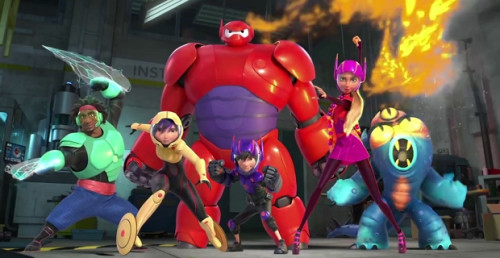
If all of those intelligent people who believe that would give these animated films a chance, they would see how incredibly powerful some of these films are for adults as well. However it is actually a fantastic thing that ‘Big Hero 6’ appeals to kids, and I think this might be one of the most important movies for kids to grow up watching. ‘Big Hero 6’ is the start of creating a reality where gender inequality doesn’t exist.

unnamed

This is a guest post by Shantal Freedman.

I recently saw a movie that blew me away: Big Hero 6 (spoilers ahead). I tend to come across people who don’t think it’s possible to deeply enjoy a “cartoon” or think cartoons are only for kids. If all of those intelligent people who believe that would give these animated films a chance, they would see how incredibly powerful some of these films are for adults as well. However it is actually a fantastic thing that Big Hero 6 appeals to kids, and I think this might be one of the most important movies for kids to grow up watching. Big Hero 6 is the start of creating a reality where gender inequality doesn’t exist.

First, it was really nice to see that Hero’s group of friends was equally split between male and female: two girls, two guys. Disney’s flagpole films have been switching off between a male lead and a female lead yearly. This one was a male lead, yet the female characters were very prevalent and strong. There wasn’t a single female who wasn’t a completely awesome character. Any girl can watch this movie and feel as connected as any guy.

unnamed


One of my favorite characters in the movie is Gogo. She’s one of Hero’s friends and she is a badass scientist, both in the lab and out. She kills it in all of the fight scenes. Actually, all of his friends equally kill it – not one person was stronger or weaker, they were all equally strong in their own way with their own powers. You’ll see many times in movies that the “badass girl” is either butch and stiff (also in her personality) or a sex object. Gogo is neither, she is the badass girl who is also a human.

Hero has a breakdown partway through the film. He is a teenager trying to cope with his brother’s death and he finally loses it. He even left all of his friends on an island, taking their only means of transportation out of there. They make it back and meet Hero in his garage. One of the crucial things a person can do to help a friend who is depressed, is to be a friend. Gogo understands this, walks up to Hero without saying a thing, and hugs him. She can be tough but also feminine and nurturing. This teaches boys and girls that they can be whatever they want. This teaches the next generation that they don’t need to fit in a box or be ridiculed for being who they are. That’s true for every character in this film.


unnamed


And my favorite line in the film? Gogo: “Stop whining; woman up.” It was casual and said in a non-obvious way. It didn’t phase any of the characters. It was a line that appeared to be “normal.” I really appreciate something like this in a film. It’s not trying to beat people over the head with their message that “woman up” is the same as “man up.” She says “woman up” a second time around the climax of the film during the last fight out with Professor Callaghan. She was literally speeding up a pillar of microbots. Gogo’s looks are also an interesting thing to note.

In fact, the looks for all of the female characters are extremely important to mention. Clearly, each significant female character looks quite good. They are all attractive. Part of me thought, “well, maybe they could have switched up their body-types a bit.” Then the other part of me thought, “I’m so glad they made all of the female characters really attractive!” Why? Because not a single one of them was defined in any way by their looks. There was no comment about how hot someone was, there was no romantic relationships going on in the group which is something we’ve come to expect, and there was no one hitting on Hero’s hot aunt, which Fred’s character would have totally been doing if this was another movie.

unnamed-1


One of the most important elements of the entire movie is the world that they created. The world in Big Hero 6 is a world where all women are treated with respect. Gender inequality wasn’t even an issue. Not to get all dark, but we talk so much about rape culture these days and hopefully everyone knows by now that teaching women to dress more modestly is not how to fix this but rather teaching our sons to respect women. This is what Big Hero 6 does. A kid watches Big Hero 6 and gets invested in a world where the women are respected. All of them. It’s so common for writers and directors to characterize a “bad guy” by him disrespecting a woman in some way, whether it be physical abuse, demeaning insults or just having an entourage of women at the tips of his fingers. Imagine if that wasn’t even an option. Imagine what the next generation will be like if they grew up on films like Big Hero 6? I tear up just thinking about the beauty and impact Big Hero 6 can and hopefully will have on our society.

As a director myself, this film really moves me. One of the things I care very deeply about is the portrayal of women in films. I just finished shooting my latest film, Ticketed, where I, too, created a world where gender inequality just doesn’t exist. I truly believe that if we positively promote these morals, instead of beating people over the head and shaming them for their bad habits, change will happen. I think there needs to be more films out there like Big Hero 6, which is why it’s so important for me to get Ticketed out there.

We need to raise the funds to finish the film and complete our post production. We’ve launched a funding campaign on Seed&Spark so anyone who wants to support a non-preachy action-packed comedy with a female lead and mission behind it can do so. You can learn more here: http://www.seedandspark.com/studio/ticketedwww.facebook.com/Ticketed, @TicketedMovie. Email ticketedthemovie@gmail.com.


See also at Bitch FlicksBig Hero 6: Woman Up


unnamed-1

Shantal Freedman is a fema-nazi man-hater who became a director to make a point. Although, she’s not really sure what that point is anymore. Despite all that she is a domestic and international award winning filmmaker whose films have incurred compliments such as “meh” and “the popcorn was good.”


Tropes vs. Princes: Sexism-in-Drag in Modern Disney Princess Films

While #Gamergate has not yet officially rebranded itself as #EpicStreisandEffect, the one heartwarming thing about a mob trying to silence their critics is how bad they are at it. The inflammatory atmosphere created by #Gamergate makes it difficult for balanced discussion of Sarkeesian’s critiques, but one interesting aspect that recently occurred to me is how neatly six of her tropes fit the portrayal of men in recent Disney Princess films (from 1989’s ‘The Little Mermaid’ onwards).

This is a guest post by Brigit McCone.

While #Gamergate has not yet officially rebranded itself as #EpicStreisandEffect, the one heartwarming thing about a mob trying to silence their critics is how bad they are at it. The inflammatory atmosphere created by #Gamergate makes it difficult for balanced discussion of Anita Sarkeesian’s critiques, but one interesting aspect that recently occurred to me is how neatly six of her tropes fit the portrayal of men in recent Disney Princess films (from 1989’s The Little Mermaid onwards).

Since the Disney Princess film is almost as male-dominated as video games (Frozen‘s Jennifer Lee was the first female director of a Disney feature), this appears less a genuine reversal than a clumsy “sexism-in-drag” aimed at empowering young girls. But it offers a golden opportunity for female viewers to interrogate our response: do these tropes empower us when reversed? Do we recognize them as sexist? Would they still be dehumanizing if applied equally to male and female characters?

THE DUDEZEL IN DISTRESS

Screen Shot 2014-12-03 at 10.17.13 AM

“TROPES VS. WOMEN” SOURCE: The Damsel in Distress

The “dudezel in distress” is a plot device in which a male character is placed in a perilous situation, from which he cannot escape on his own, and must be rescued by a female character. Traditionally, the “dudezel in distress” is a family member or a love interest.

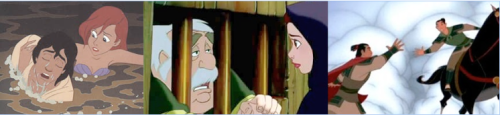
DISNEY DUDEZELS: Among family members, Maurice in Beauty and The Beast (which had a female screenwriter, incidentally) is a classic example of “Dudezel Dad.” His kidnapping forces Belle to risk her life to rescue him, while his pitiful attempt to rescue her is actively counterproductive – his near-death drives Belle to risk her safety again. Both the Beast and Gaston hold Belle hostage by the threat of locking up Maurice, who is consistently punished for attempts to assert agency or independence. Other female characters whose plot arcs are motivated by rescuing their fathers include Ariel of The Little Mermaid (father petrified as worm-creature) and Mulan (father’s peril motivates daughter to take up arms).

The “love interest” as “dudezel in distress” is yet more troubling: girls are taught through this trope that love is the inevitable result of gratitude, rather than the dudezel’s own choice. Take The Little Mermaid: not only does Ariel rescue Eric from drowning, Eric’s inability to love her is depicted as the direct result of his failure to recognize the girl who rescued him. Similarly, Pocahontas must save her love interest, John Smith; Mulan must repeatedly rescue her love interest Shang; Tiana must rescue gold-digging Naveen from his entrapment as a frog. Disney offers no examples of women rescuing men who choose not to become romantically involved with them; being rescued is shown to obligate the dudezel in every case. As such, this trope cannot be seen as empowerment, but as a harmful lesson for girls that also alienates male audiences.


MEN IN REFRIGERATORS

Screen Shot 2014-12-03 at 10.18.49 AM

“TROPES VS. WOMEN” SOURCE: Women in Refrigerators

“Men in Refrigerators” refers to the trope of men suffering a loss of powers, brutal violation or an untimely, gruesome death, most often as a plot point for the female hero to seek revenge or further her heroic journey.

DISNEY FRIDGE-DUDES: The best example of violation in the Disney universe is that of Eric by the witch Ursula in The Little Mermaid. His mind and control over his emotions are utterly violated to motivate Ariel’s final confrontation with Ursula and completion of her heroic journey. The traumatic effects on Eric are never shown; Ariel’s response is centered. This rewrites the original story, where the prince chose the mermaid’s rival freely and she learned to accept his choice: surely a better model. Male characters suffering loss of powers to motivate female heroines include Ariel’s father, Triton, and Jasmine’s father, the Sultan, reduced to worm-creature and jester respectively. Male characters killed to facilitate the heroine’s journey include Tiana’s father, whose death motivates her desire for a restaurant, and thus the whole plot of The Princess and the Frog, and the Beast in Beauty and the Beast, whose traumatic murder allows Belle to realize her feelings for him. Once again, its use of ‘men in refrigerators’ reinforces a utilitarian attitude to male characters in Disney Princess films.


MANIC PIXIE DREAM DUDE

Screen Shot 2014-12-03 at 10.19.58 AM

“TROPES VS. WOMEN” SOURCE: Manic Pixie Dream Girl

The Manic Pixie Dream Dude is a bubbly, shallow male character written in order to help the female character learn to loosen up and enjoy life. Typically, the Manic Pixie Dream Dude has no job or defined interests of his own.

DISNEY PIXIE DREAM-DUDES: Disney’s most obvious Manic Pixie Dream Dude is Prince Naveen of The Princess and the Frog. The heroine, Tiana, has clear career ambitions, loyalty and responsibilities which cause her life to lack joy. Manic Pixie Naveen, despite being a prince, has no independent career or goals and adjusts seamlessly to working in Tiana’s restaurant: he exists to facilitate her goals, while exuding fun, madcap spontaneity and irresponsible wildness to help the heroine embrace joy. Similarly, Rapunzel in Tangled has a clear sense of responsibility, moral values, a conflicted relationship with mother-figure Gothel and the goal of reuniting with her parents. Flynn is the perfect foil: he exists to be a fun and wild antidote to Gothel’s influence, but assimilates to Rapunzel’s lifestyle in the end by abandoning his personal goals (or rather, by being revealed as an orphan who lacks all ties and purpose, and who is explicitly told that his dream of wealth and empowerment “sucks”). He also exhibits a tendency to petty crime that TV Tropes identifies as typical of Manic Pixie Dream Girls. In both cases, the empowerment of the female character is portrayed as a wish fulfillment only realizable through disempowerment of the males.


STRAW CHAUVINIST

Screen Shot 2014-12-03 at 10.22.07 AM

“TROPES VS. WOMEN” SOURCE: The Straw Feminist

The Straw Chauvinist is an exaggerated caricature of a chauvinist, filled with misrepresentations, oversimplifications and stereotypes.

DISNEY STRAW CHAUVINIST: Gaston, from Beauty and the Beast, is the clearest example of a Straw Chauvinist in Disney film. Acting as the sole representative of masculine sexual assertiveness and self-confidence within the film (unless you count the comedy-relief candlestick), Gaston implicitly associates these features with self-satisfied ignorance, kidnap, blackmail and the persecution of the mentally ill: “No-one plots like Gaston, takes cheap shots like Gaston, likes to persecute harmless crackpots like Gaston.” Everything from the masculine desire for physical enhancement through body-building and protein-ingestion (“I eat five dozen eggs, so I’m roughly the size of a barge”) to the stereotypical male habit of spitting (“I’m especially good at expectorating”) is, through Gaston, made to appear ridiculous, over-the-top and unnecessary. The purpose is to separate the male lead, Beast, from any association with chauvinism that might be provoked by the character’s being huge, hairy and creepily controlling towards women. This clearly parallels the Veronica Mars example that Sarkeesian cites as “straw feminism,” where the independent, intelligent Veronica is separated from any association with “those kind of feminists” through the use of exaggerated, straw feminist caricatures. Is this, then, one of “the most disgusting tropes ever forged in Mt. Doom” or a reasonable way to use the very ridiculousness of feminist caricatures to separate them from actual feminism? Certainly, the worrying aspect of Disney’s “straw chauvinist” trope is not that it “discredits” chauvinism, but that it normalizes the abusive behavior of Beast through his contrast with Gaston; the “straw chauvinist” shifts the emphasis to ridicule of a stereotyped image rather than identification of harmful behaviors.

VAMPERMAN

Screen Shot 2014-12-03 at 10.23.05 AM

“TROPES VS. WOMEN” SOURCE: The Evil Demon Seductress TV Trope: The Vamp

The Vamperman, or “evil demon seducer,” is a sexualized man who lures women into his evil web, using his sexuality as a weapon.

DISNEY VAMPERMEN: Strangely for family fare, modern Disney films are full of this trope: Jafar, Scar, Hades, Claude Frollo. Portrayed as manipulative, conniving and controlling men, in each case they exert power over the female leads in a sexualized manner: Princess Jasmine must kiss Jafar to save Aladdin; Scar’s rape threat to Nala was cut from The Lion King film but retained in the stage show; Claude Frollo has an entire Hellfire” aria about his sexual urges for Esmeralda; Hades literally owns the soul of Megara and uses this to stroke and cuddle her to her visible disgust. Not only do the characters use sex as weapon, they are inappropriately sexualized themselves: tall, aquiline, sardonic and acted by velvet-voiced charisma bombs like Jeremy Irons or James Woods.  Dracula’s (the novel’s) description of its female vamps’ “deliberate voluptuousness that was both thrilling and repulsive” seems apt for Disney’s charismatic Vampermen. A streak of theatrical camp is often used to supposedly disarm the predator’s sexual threat, creating the Camper Vamperman variant. Vampermen allow female viewers to objectify the character’s “thrillingly repulsive voluptuousness,” while confirming what Sarkeesian might term “sexist, preconceived notions” that men are manipulative, deceitful, and sexually threatening.


MR. FANSERVICE

Screen Shot 2014-12-03 at 10.24.07 AM

“TROPES VS. WOMEN” SOURCE: Women As Background Decoration TV Trope: Ms. Fanservice

Mr. Fanservice, or “men-as-background-decoration” is the practice of presenting hypersexualized men as ornamental decoration.

DECORATIVE DISNEY DUDES: While Ursula, the voluptuous and brazenly confident villain of The Little Mermaid has become a gay icon to the plus-sized lesbian community, who could claim that Triton’s torso is a realistic standard to offer aging males? The men of Disney are repeatedly presented as bizarrely pumped, fit and sexualized, wearing far less clothing than their female counterparts, all while the actual act of bodily self-improvement is ruthlessly mocked through figures like Gaston. How did these other dudes get their rock-hard abs? By unrealistic body image alone, apparently. Perhaps the most glaring example of “men as background decoration” is the character of “The Entire Chinese Army” in Mulan. Not only is “The Army” a background decoration in the sense of being utterly useless at repelling Hun invasions when compared with a single adolescent girl, but said girl’s invasive ogling of their nudity under false pretenses is trivialized as a subject of humor.

Then shut your eyes
Then shut your eyes


“The Entire Chinese Army” is only allowed to serve a purpose when dressed as women, intensifying the emasculation of male viewers.

However, the presentation of these male soldiers-in-drag as laughable highlights the overall problem with “sexism-in-drag”: it reinforces the inferiority of female gender roles while empowering women through their fictional reversal, and it affirms to male viewers that female empowerment can only be achieved by male emasculation. Male-dominated Disney Princess Film encourages a model of “Little Miss Chauvinism” that adds up to little more than a Ms. Male Character trope. Compare Jennifer Lee’s Frozen – not only does it prioritize unselfish love between women, ending the isolation of the Strong Woman, it affirms “everywoman” heroine Anna’s own empowerment as key to her abandonment of rescuer prince fantasies in favor of her unselfish, “everyman” counterpart. In other words, Frozen presents female empowerment as essential to enhanced appreciation of the male, rather than opposed to it.

However, the enduring popularity of other Disney Princess films does demonstrate that young girls are as susceptible to ideologies of empowerment-through-inequality, and to utilitarian attitudes toward men, as boys are toward women. Nor should the responsibility of female screenwriters be ignored in assessing “Little Miss Chauvinism” archetypes. Does Frozen, then, point the way toward a new paradigm, the integrated empowerment of both male and female? Must female empowerment otherwise be confined to a world of fictional escapism by its assumed incompatibility with male empowerment? Is it possible to merge the “pink” and “blue” aisles into a single, empowering cinema for children? As always, keep in mind that it’s entirely possible to be critical of some aspects of media, while finding other aspects valuable or enjoyable.


Brigit McCone adored The Little Mermaid growing up (but weirdly overidentified with Sebastian the reggae crab), writes and directs short films and radio dramas and is the author of The Erotic Adventures of Vivica under her cabaret pseudonym Voluptua von Temptitillatrix. Her hobbies include doodling and satirically endorsing dating sites.


Call For Writers: Reality TV

However, the truth and realness of reality TV is, and always has been, a myth. A basic concept of psychology is that the act of observing a thing changes that thing. How could a camera crew with all their equipment following people around not affect what those people do and say? How could knowing that millions will be watching and listening not affect their actions?

Call-for-Writers-e1385943740501

Our theme week for December 2014 will be Reality TV.

Though films like The Running Man explored the concept of reality television before the genre actually took off, most US audiences identify the 1992 MTV show The Real World as the defining reality show that popularized the genre. Audiences were hungry for representations of real people, unscripted, unproduced, and raw. The idea of watching these real people go about their real lives, experiencing real emotions in real situations was, and continues to be, fascinating to audiences.

However, the truth and realness of reality TV is, and always has been, a myth. A basic concept of psychology is that the act of observing a thing changes that thing. How could a camera crew with all their equipment following people around not affect what those people do and say? How could knowing that millions will be watching and listening not affect their actions? Not only that, but most reality shows often create a non-real (often absurd) premise, such as making strangers live together or having them compete for love or money in increasingly elaborate ways. As time goes by, audiences expect less and less of the realism supposedly inherent in reality TV, much the same as professional wrestling fans accept the performance component of their sport. All the while, many reality series continue for over a decade, a constant, reliable source of income for show producers.

There are many films that question or parody the notion of reality TV. Both The Running Man and The Hunger Games series critique the bloodthirsty, drama-hungry gladiatorial reality TV physical challenge sub-genre that we see in shows like Survivor or Naked and Afraid. The show Burning Love satirizes the absurdity of shows like The Bachelor and The Bachelorette, which require group competition for a single mate. The Truman Show calls into question reality itself, exploring the idea that unbeknownst to the subject, their life could be a scripted, carefully executed reality show.

Some questions to consider for your submission: Is there value to reality TV? What kind of gender roles are advocated? What kind of notions on race, sexuality, and class are advanced? Who is represented as the subject? Who lacks adequate representation as a subject? What does the progression of the genre look like, i.e. will we be televising executions in the future or will everyone have a camera to film and share their own reality? Why has reality TV sustained such a long history of success and audience engagement? Is it possible for reality TV to be more realistic?

Feel free to use the examples below to inspire your writing on this subject, or choose your own source material.

We’d like to avoid as much overlap as possible for this theme, so get your proposals in early if you know which film you’d like to write about. We accept both original pieces and cross-posts, and we respond to queries within a week.

Most of our pieces are between 1,000 and 2,000 words, and include links and images. Please send your piece as a Microsoft Word document to btchflcks[at]gmail[dot]com, including links to all images, and include a 2- to 3-sentence bio.

If you have written for us before, please indicate that in your proposal, and if not, send a writing sample if possible.

Please be familiar with our publication and look over recent and popular posts to get an idea of Bitch Flicks’ style and purpose. We encourage writers to use our search function to see if your topic has been written about before, and link when appropriate (hyperlinks to sources are welcome, as well).

The final due date for these submissions is Friday, Dec. 19 by midnight.

The Real World

The Bachelor

American Ninja

The Bachelorette

Millionaire Matchmaker

The Osbournes

Top Chef

Rock of Love

Jersey Shore

Flavor of Love

Intervention

Drunk Histories

Survivor

Naked and Afraid

Wife Swap

The Apprentice

The Truman Show

Running Man

Ru Paul’s Drag Race

The Nanny

Gamer

Keeping Up with the Kardashians

The Hunger Games

Here Comes Honey Boo Boo

The Hunger Games: Catching Fire

Duck Dynasty

The Hunger Games: Mockingjay Part I

Burning Love


Bitch Flicks’ Weekly Picks

Check out what we’ve been reading this week–and let us know what you’ve been reading/writing in the comments!

recommended-red-714x300-1


Spike Lee Demands That ‘We Stop This Madness’ at Passionate ‘Do the Right Thing’ Reading by Greg Cwik at Indiewire

It’s Official: Michelle MacLaren Will Direct Wonder Woman by Melissa Silverstein at Women and Hollywood

Vampires, Skateboards and Autonomy: A Girl Walks Home Alone at Night by Abeni Moreno at Ms. blog

Sapna Samant & ‘Kimbap’ at Wellywood Woman

The Terror of Little Girls: The Roundup

Check out all of the posts for our The Terror of Little Girls Theme Week here.

Fucking with Fate: Sexuality, Loss, and Irreversibility in The Returned by Tina Giannoulis

The first episode opens on a 15-year-old girl, the eponymous “Camille” (Yara Pilartz), as she finds herself alone at dusk in the mountains above her town. She starts her journey back home, disoriented and a little confused but otherwise intact, despite having died in a school bus trip four years prior.


Little Girls in Horror Films: Setting the Stage for Female Double Standards by BJ Colangelo

Little girls are often what we associate with innocence.  Girls are said to be born out of “sugar, spice, and everything nice,” which attaches a stigma to women from birth that is unrealistic.  Society is conditioned to believe this ridiculous myth, which changes the way we value little girls over little boys.


The Terror of Little Girls: Social Anxiety About Women in Horrifying Girlhood by Leigh Kolb

Horror films hold a mirror up to these ideals, distorting the images and terrifying viewers in the process. The terror that society feels while looking at these little girls echoes the terror it feels when confronted with changing gender norms and female power.


Alarming Innocence: The Terror of Little Girls in The Crucible by Laura Shamas

Miller’s examination of the Salem Witch Trials, held in the Province of Massachusetts Bay from 1692-3, depicts the internal, secretive drive of a New England witch hunt, and how paranoia quickly escalates to devastate a marriage, a family, neighbors, and eventually, to cripple an entire community. The actions of little girls set it all in motion.


The Beth Thomas Story: How a TV Film and Documentary Captured a Child Enraged by Kim Hoffman

Tim and Julie didn’t know about the sexual abuse Beth had been subjected to as early as 19 months old by her father. They didn’t know she was suffering from Reactive Attachment Disorder, a condition that surfaces from past trauma and neglect into oceans of disturbing, detached, unresponsive, and apathetic behavior. They couldn’t possibly know that a young girl could be filled with so much—that much rage.


“The Demon” in Oranges Are Not the Only Fruit by Ren Jender

Oranges Are Not The Only Fruit, a BBC production from 25 years ago, adapted by author Jeanette Winterson and based on her own autobiographical novel, is one of the few films in theaters or on TV which contains both a coming-out story and another parallel, equally compelling story. Seven-year-old, red-haired “Jess” (played as a young child by Emily Aston and as a teen by Charlotte Coleman) grows up in a small town in Lancashire, in the north of England, with her strict Pentecostal adoptive parents; her father, always in the background, is silent and her mother (Geraldine McEwan), front and center, quotes the Bible and denouncing the “heathens” all around her.


Self-Made Orphan: Why We Cringe When Karen Cooper Snacks on Her Dad by Julia Patt

The crumbling cement in this relationship is the injured little girl lying on the table downstairs. Her parents are united only on the question of her safety. Unsurprisingly, Karen has no voice or agency of her own. The adults perceive her as entirely helpless— “Maybe it’s shock,” her mother says of her condition. “She can’t possibly take all the racket…”


Vampire Girls: Claudia and Eli by Kathryn Diaz

In the great monster mash team of terrifying children, the vampire girl is varsity captain. On the one hand, they are dolls forever: trapped in their prepubescent bodies for hundreds to thousands of years without a single curl losing its bounce. On the other hand, with hundreds of years of life come hundreds of years of experience, knowledge, even maturity.


Satan in a Frilly Dress by Gloria Endres de Oliveira

However, this form of social shaming does not seem to prevent some of his young disciples from subverting their supposed childlike innocence: when the town is suddenly riddled by mysterious and violent crimes, it is suggested that the children have something to do with it, their leader being Klara, a 13-year-old angel-faced blonde and the pastor’s eldest daughter.


The Volatility of Motherhood in David Cronenberg’s The Brood by Eli Levy

For Cronenberg, Candy represents the symbolic order and influence of the father, precisely what Nola wishes to eradicate. Candy is supposed to come “home to mommy” and have no fatherly influence. The characters in the film are defined by rigid gender constructs, or alternatively, through their attempts at living up to them.


“But I Do!”:  Releasing Repressed Rage in The Ring by Rebecca Willoughby

These abstract symbols not only frighten, but link events in the real world to Samara’s cursed tape: this particular creature recalls the “spiders, snails, and puppy-dog tails” that little girls are decidedly not supposed to be made of. When Rachel engages this videotape, notably created by the patriarchal forces that might be seen to repress Samara, she sees Samara in a sparse hospital room in fast motion, staring at the clock as its hands whirl around and around.


Wednesday Addams, Smasher of the Patriarchy by Deborah Pless

She’s not nice, she’s not fragile, she’s not kind or sweet or even vaguely pleasant. She’s mean and angry and cynical and disaffected and sarcastic and snide and everything I wanted to be as a child. She’s also an intersectional feminist. And a little girl. She’s the best.


Femme Fatale in a Training Bra: Orphan‘s Esther and The Questionable Motives of Lolita Haze by Elizabeth Kiy

Movies where young girls are victimized are generally our idea of real world horrors, movies that are too sickening to sit through, but as much as they unsettle us, we expect them. We see these stories in the news every day. What is made truly terrifying and shocking in our culture is the advanced young girl already aware of her powers, and what she can get with them–a girl who knows how to move, how to dress, and how to manipulate.