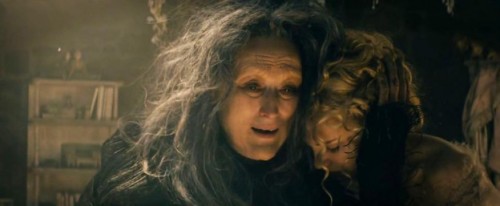
Sexism in Disney’s ‘Into The Woods’

It seems Disney is saying that The Baker’s Wife is a “fallen woman,” and that it is making a firm decision on how it wants the audience to interpret the affair that occurred. This is made more problematic by how the affair was shot and choreographed. In the film, Cinderella’s Prince pins The Baker’s Wife against a tree and kisses her. There is nowhere for her to escape, even if she wanted to.

woods-624x257

This cross-post by Jackson Adler previously appeared at his blog The Windowsill.


CONTAINS SPOILERS for the stage musical and subsequent film adaptation of Into The Woods.


Previously, I have written on the racism in Disney’s Into The Woods, a film adaptation of the Stephen Sondheim and James Lapine musical that interweaves various European fairy tales into one tragicomedy. Sadly, while the movie certainly has its merits (and some great performances), it has a few more faults I would like to point out – particularly in regard to its subtle sexism towards women.

Much of The Baker’s Wife’s story is still the same as in the stage musical, with one major change – that of her death. Disney’s interpretation of her death has everything to do with the scene beforehand. Cinderella’s Prince uses his power as a nobleman, and the charm he has been taught to use, to seduce The Baker’s Wife. The Baker’s Wife is star-struck by The Prince, having even told Cinderella earlier that “[she] wouldn’t run if a prince was chasing [her].” However, when Cinderella’s Prince starts attempting to seduce The Baker’s Wife, she at first protests and even says “no.” He follows her protestations with “right and wrong don’t matter in the woods,” and continues to kiss her. While certainly attracted to him and star-struck, the question must be asked – What if she had continued to protest instead giving in and allowing herself to enjoy something that seemed inevitable? Would he have forcibly raped her? Would he have had her arrested on a trumped up charge? Did her consent matter at all? Certainly, he is more culpable in their affair, since he is an authority figure.

Cinderella’s Prince (Chris Pine) comes on to The Baker’s Wife (Emily Blunt)


After the brief affair, The Baker’s Wife sings “Moments in the Woods,” as a way of coming to terms with what has happened and to bring herself to return to the beauty of everyday life with her husband and child. In the stage version, as the Giantess walks by and her large feet make the ground tremble, a tree falls on The Baker’s Wife and kills her. The stage musical leaves the meaning of these events open to interpretation. I personally never interpreted The Baker’s Wife’s death as some sort of punishment. It seemed fitting to me that The Giant, who is avenging the murder of her husband and asserting her role as a wife, should accidentally damage/condemn the life of a woman who slept with a man other than her husband. However, while the stage musical leaves interpretations up to the audience, the film makes a firm judgment call. In the film, as the ground shakes, The Baker’s Wife falls off a cliff and dies.

It seems Disney is saying that The Baker’s Wife is a “fallen woman,” and that it is making a firm decision on how it wants the audience to interpret the affair that occurred. This is made more problematic by how the affair was shot and choreographed. In the film, Cinderella’s Prince pins The Baker’s Wife against a tree and kisses her. There is nowhere for her to escape, even if she wanted to. After some kissing, the affair seems over and the prince leaves (which is very different from most stage adaptations, where a lot more than kissing is implied). So The Baker’s Wife is condemned by Disney and made into a literally “fallen woman,” just because a prince kissed her? And even after she decides to return to her husband and child, content not to have another affair ever again?

Mackenzie Mauzy as Rapunzel


While only one major change is made to The Baker’s Wife’s story, half of Rapunzel’s story arc is cut, which in turn takes away from the character development of The Witch. Unlike in the stage musical, Rapunzel does not have a mental breakdown, and she does not get squashed and killed by the giantess (who was annoyed by her raving and screaming) in front of her mother and husband. In Disney’s film, the only consequence of Rapunzel having lived a sheltered childhood is that she runs away from her mother with the first guy she has ever met. The film even cut the fact that she becomes a mother to twins, something that would change anyone’s outlook on life, and certainly take a lot of responsibility – a responsibility for which Rapunzel is not ready. These cuts in the story take away entire conversations that are important for us to have as a culture. The Witch was trying to protect her daughter by sheltering her, but it is the fact that Rapunzel was so heavily sheltered that leads to her undoing, and ultimately leads to her death. Not only that, but Rapunzel develops a mental illness, something that still (and wrongfully) induces a terrible stigma in our society.

In addition, Rapunzel’s and The Witch’s story in the stage musical shows how our most well-intended actions can negatively affect those we care for most. Rapunzel was damaged by her upbringing in a way that made it impossible for her to be a functional human being in society. Not even her prince can help her. The Witch’s song “Witch’s Lament,” in which she sings about how “children won’t listen,” comes after Rapunzel’s death in the stage musical, but in the film it comes after Rapunzel and her prince gallop off into the sunset.

The song is still emotional, as her daughter has rejected her and left her forever. However, the pain within the song is incredibly undermined by the change in circumstances. The Witch then does not have as much justification for her breakdown in “The Last Midnight.” In the song, The Witch rages against all the “nice” people who have brought ruin upon her, her daughter, and the kingdom itself. She is fed up with the world, others’ treatment of her, and possibly of herself. The Witch then vaguely kills herself by goading the spirit(?) of her own mother, challenging her to curse her. Without the death of the person whom she loved most in the world, The Witch is denied what is arguably the most essential part of her character arc, and the story of Into The Woods is deprived of some of its most important themes.

The Witch (Meryl Streep) watches as Rapunzel (Mackenzie Mauzy) rides into the distance with Rapunzel’s Prince (Billy Magnussen).


To make matters worse, the way the special effects were designed during The Witch’s death reminds one of images of Hell, as if to imply that The Witch was sucked down into Hell by the spirit of her mother. This most definitely goes against the messages of the story, and in fact even some of the lyrics in “The Last Midnight.” The Witch is not “good or bad,” but she is “right” about many things (though not about how she raised her daughter). It is the fact that she is “right,” and yet an older and powerful woman (a “witch”) that has drawn condemnation from the other characters, many of whom don’t even know about (most of) the drama between her and Rapunzel. The Witch not only has had a large part of her character arc taken away from her, but she is then metaphorically sent to Hell. For what? For being a complicated human being? By the same line of thinking, what about The Wolf whose only crime was doing what wolves do? What about the adulterous princes who were raised “to be charming, not sincere,” and therefore abuse their power and influence? No, none of them are sent to Hell. The older woman is. Not only is there sexism in this, but there is also ageism. After her death in the film, The Witch’s body is swallowed up by a bubbling tar pit. Women are already overly punished in this film, and it’s no small matter that one of the greatest examples of it is for an older and powerful woman. The stage adaptation took a character that is the villain in fairy tales, and focused on her as a human being, making her into one of the main characters and a complicated human being to be played by a leading actress. The audience is invited to sympathize with her and her intentions, despite the fact that some of them backfire on her and her daughter. To take away so much of her arc undermines what makes the story powerful, and it is a disservice to the role, to the actress (Meryl Streep), and to the audience.

Into The Woods is a complicated story about complicated people, ending with the understanding that no one is completely good or evil, and we all must love and support each other as best we can. It saddens me that the female characters’ stories were altered in the way they were. I can only hope that this newer generation of film-goers is inspired by the film to seek out the many adaptations of the stage version and appreciate the story for what it is – one of community and caring, and not judgment and debasement.


Jackson Adler is a transguy with a BA in Theatre, and is a writer, activist, director, teacher, dramaturge, cartoon lover, and vegan boba drinker. You can follow him on twitter @JacksonAdler, and see more of his writing on the blog The Windowsill at http://windowsillblog.com.

Bitch Flicks’ Weekly Picks: Awards Edition

Check out what we’ve been reading this week–and let us know what you’ve been reading/writing in the comments!

recommended-red-714x300-1

Golden Globes

Strong Female Lead: A Feminist Golden Globes Show by Megan Garber at The Atlantic

Breaking Through Hollywood’s Celluloid Ceiling by Jenevieve Ting at Ms. blog

Watch Gina Rodriguez’s Tearful Golden Globe Speech by Jamilah King at Colorlines

Who Won the Golden Globes? Women. by Jill Filipovic at Cosmopolitan

The Biggest Lesson From This Year’s Golden Globes: Women’s Stories Matter by Sophie Kleeman at Mic

Margaret Cho Has No Regrets About That Golden Globes Running Gag by Alison Willmore at BuzzFeed

Oscars

Some Thoughts on the 2015 Oscar Nominees by Roxane Gay at The Toast

The “Selma” Best Director Oscar Snub: What It Means To a Black Female Filmmaker by Nijla Mumin at Shadow and Act

It’s No Surprise That the Oscars Snubbed “Selma” by Evette Dione at Bitch Media

White, Male by Michele Kort at Ms. blog

People Are Tweeting Their Thoughts About The Fact That #OscarsSoWhite by Emily Orley at BuzzFeed

Why female filmmakers need powerful allies by Monika Bartyzel at The Week

Why Ava DuVernay’s ‘Selma’ Oscar Snub Matters by Scott Mendelson at Forbes

2015 Oscar Nominations: A Dark Day for Women in Hollywood by Melissa Silverstein at Women and Hollywood

What have you been reading/writing this week? Tell us in the comments!

Why ‘Pretty Woman’ Should Be Considered a Feminist Classic

Whether we believe Vivian’s “white knight” fantasy is cheesy is beside the point; a film in which a woman explicitly negotiates the terms she wants for her relationship, and displays willingness to pursue her goals independently if those terms aren’t met, cannot be considered patriarchal.

large

This is a guest post by Brigit McCone.

Pretty Woman has already been reviewed negatively by Bitch Flicks as “one of the most misogynist, patriarchal, classist, consumerist, and lookist movies ever to come out of Hollywood” and by sex workers for portraying prostitution unrealistically and romanticizing the patronizing “Captain Save-a-Ho” client’s rescuer fantasy. There is justice to these criticisms, but I would like to examine the film more positively from another angle. Pretty Woman consistently shows greater respect for the bodily autonomy of its heroine, Vivian (Julia Roberts), than most traditional portrayals of romance and most feminist portrayals of prostitution. The debate whether Pretty Woman should be considered a feminist classic cuts to the heart of feminism itself: is it a liberation movement that prioritizes the freedom and agency of women above all, or a dogma that dictates gender roles to women? To explore this question more fully, I’d like to address the most common criticisms leveled at Pretty Woman:


Pretty Woman Glamorizes Prostitution!

It says something about our common perception of sex work that the film most often accused of glamorizing prostitution should open with a “dead hooker in a dumpster,” before our heroine is punched in the face and sexually assaulted by a creep who screams, “She’s a whore, man!” when challenged. Would a film be accused of glamorizing accountancy if it opened with a bankrupted accountant leaping to his death from the upper window of an office block? If anything, Pretty Woman may be accused of glamorizing the exit from prostitution, by making a future of monogamy with a patronizing rescuer-john into an unrealistically attractive option. The glossy, Hollywood production values of the film may glamorize prostitution, but only in the sense that Apocalypse Now glamorizes warfare, or Wall Street glamorizes capitalism. I suspect that those who claim to be disturbed by Pretty Woman‘s “glamorizing” of prostitution are actually more disturbed by these key assertions: that a prostitute is an individual, that prostitution is work comparable to other forms of labor and that abuse of a prostitute is the sole responsibility of the abuser.

pretty_woman


Vivian’s individuality is shown in Pretty Woman as she proves stereotypical assumptions wrong. She does not do drugs; her backstory involves some bad relationships but no explicit sexual trauma; her intelligence repeatedly surprises listeners. Arguably, this marks Vivian as the exceptional “tart with a heart” cliché, who deserves to be loved and rescued because she is “special” and “not like the others.” I would argue that the treatment of Kit de Luca complicates this reading. Through Vivian, we are encouraged to sympathize and feel solidarity with Kit, a streetwise prostitute and drug addict. Vivian gives Kit a large sum of money at the end of the film, respecting her right to choose whether to spend it on her drug habit. Vivian never dictates life choices to Kit, only supports her self-esteem and encourages her to regard herself as having potential to define her own dreams. Through Vivian’s attitude to Kit, the viewer is encouraged to extend their respect for Vivian’s agency to the agency and individual potential of all sex workers.

Sex worker advocacy groups have long claimed (and it’s now being discussed by Amnesty International and the World Health Organization) that the most effective way to combat trafficking, abuse, and other hazards of prostitution is by decriminalizing it and recognizing it as work, entitled to the same health and safety protections as any other labour. By repeatedly comparing Vivian’s work as a prostitute with Edward’s (Richard Gere’s) corporate work, Pretty Woman reinforces this message, albeit in cutesy Hollywood style. Vivian’s backstory also notably emphasizes that her reason for becoming a sex worker was her desire for financial autonomy and her struggle to pay rent.

6a00d8341c630a53ef01287764a861970c-800wi


Finally, virtually all cinematic depictions of sexual assaults on sex workers fall into one of two categories: those that pay no attention to the abuser’s character and treat him (almost always “him”) as a faceless “symptom of prostitution,” reinforcing the victim-blaming narrative that the heroine attracted inevitable assault by her choice of profession, or those that center the abuser as an “anti-hero” while treating the sex worker as disposable. Pretty Woman does neither. When Stuckey assaults Vivian at the climax of the film, we are already well-acquainted with both characters and understand the assault as a direct expression of Stuckey’s insecure manhood, repulsive entitlement and poisonous resentments, while the assault’s impact on Vivian is sympathetically centered. By allowing us to know both would-be rapist and intended victim, Pretty Woman succeeds in resisting victim-blaming and suggests that the assault of sex workers is an unjust and inexcusable act that reflects the character of the abuser. For that alone, Pretty Woman should be considered a feminist classic.


Pretty Woman Is Materialist!

As a film in which the monetary value of sex and companionship is negotiated, Pretty Woman is inevitably about materialism. But this does not necessarily mean that it is uncritically materialist. The film makes a point of highlighting how impersonal wealth is: “Stores are never nice to people, they’re nice to credit cards.” Vivian’s famous, triumphant confrontation with the shop assistants – “You work on commission, right? Big mistake!” – might be read as glorifying her newfound superiority as rich woman, but it satisfies because it allows Vivian to confirm that the shop assistants were judging her credit card all along. The scene shows Vivian that her personal worth is irrelevant to society’s hostile treatment of her, building her self-esteem. Since Vivian empowers herself in other scenes by implausibly rejecting cash payment to assert personal worth, this anti-materialist interpretation of her shopping triumph feels correct. Pretty Woman repeatedly highlights ironic contradictions between the performance of wealth and the personal self. Edward performs wealth by purchasing the penthouse as status symbol, but he cannot enjoy it as he’s personally afraid of heights. His elite peers can purchase opera tickets as status symbols, but Vivian can appreciate opera as personal taste – by choosing “La Traviata,” an opera about a sex worker, the film also highlights the ironic contrast between society’s mindless appreciation of sex worker pathos in elite entertainment and their mindless hostility to sex workers in life.

560.pretty.woman.lc.121310


Elements in Pretty Woman satirizing materialism, and exploring the hazards of prostitution, are hangovers from the original script, $3000, in which Vivian was a drug addict and discovered Kit overdosed at the film’s end. That version might seem “edgier,” but is it truly edgy to echo and reinforce society’s dominant narrative of prostitution? By adapting $3000 into a commercial romcom, Disney accidentally spawned something far more challenging: a film in which prostitutes aren’t necessarily doomed, and men are individually responsible for their treatment of them. Wealth, likewise, is not presented as automatically good or bad in the film. It is his over-investment in wealth and status that drives Stuckey to become a vengeful would-be rapist. Money can destroy lives, or build “great, big boats.” Kit’s final choice, whether to spend her “scholarship fund” on her dream or her drug habit, shows that money has empowering potential but is no guarantee of happiness. If Pretty Woman‘s beautiful clothes and jewels distract from this message, that is a reflection of the viewer’s attitude to luxury, not the film’s.


Pretty Woman Is Patriarchal!

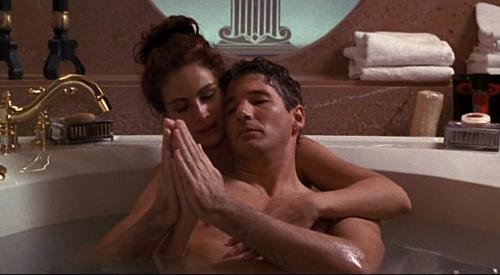
There can be few images more patriarchal than a white knight riding up to rescue his (usually comatose) princess, claiming her love as his inevitable reward. This is not, however, the ending of Pretty Woman. Pretty Woman ends with Edward role-playing Vivian’s explicitly requested fantasy, and thereby indicating willingness to comply with the conditions she laid down for their relationship. In fully accepting Vivian as his romantic partner, rather than conditionally accepting her as a mistress or object of pity, Gere echoes the “I like you the way you are, so what do I care how you got that way?” philosophy of Marilyn Monroe’s Bus Stop, another underrated affirmation of the bodily autonomy, emotional complexity, and romantic viability of promiscuous women. Whether we believe Vivian’s “white knight” fantasy is cheesy is besides the point; a film in which a woman explicitly negotiates the terms she wants for her relationship, and displays willingness to pursue her goals independently if those terms aren’t met, cannot be considered patriarchal. Whether we believe Edward is a slime-ball who looks like a peeled prawn in the bathtub is equally irrelevant; female emancipation must include the right to have questionable taste in men, or it is no true freedom. Gere serves here as a metaphor for sex work itself: whether one personally finds him icky should not distract from crucial issues of consent and agency.

Edward-Vivian-in-Pretty-Woman-movie-couples-21270794-1280-720


Vivian displays her willingness to leave Edward and set boundaries on multiple occasions: when he embarrasses her by outing her sex worker status at a social gathering, she dictates the way she wishes to be treated; when he offers her the status of a mistress, she dictates the status of a full equal. Let us never forget that, when the prince rescues her, she rescues him right back. Pretty Woman should also be celebrated as one of the only romances to include explicit negotiation of condom use, initiated by the female sexual partner. By ultimately suggesting that a sex worker’s ethos of “we say who, we say when, we say how much” is the key to success in romantic relationships, Pretty Woman is deliciously subversive. A romantic “happy ending” only serves patriarchal goals if it is a reward, conditional on female compliance and chastity. If it becomes just an individual dream, that any hooker can define and negotiate for herself, then its coercive power collapses. That is the real reason why conservatives howl about the “glamorizing of prostitution” in Pretty Woman. That is why millions of women love and laugh with Pretty Woman worldwide. That is why Pretty Woman deserves to be considered a feminist classic.


Pretty Woman Is Heterosexist, White Supremacist, and Lookist!

Pretty Woman is about straight, white, conventionally pretty people, but it is not derogatory to other groups. While the film’s villain, Stuckey, is indeed short and balding, and this may fuel his competitive resentment toward Edward, Hector Elizondo’s hotel manager, Barney, is also somewhat balding, yet serves as the moral core of the story. Though nominally a supporting character, Elizondo delivers a master class in creating fully realized humanity with a few brushstrokes – subtly suppressed frustrations and resentments that co-exist with, and complicate, his character’s warmth and dignity, leading to a well-deserved Golden Globe nomination for the role. At the film’s end, an unnamed African-American demands the audience’s recognition for his humanity and dreams, while challenging them to define their own. Pretty Woman certainly marginalizes its minority characters, but it does not dehumanize them. For Hollywood, sadly, that remains a minuscule achievement.

tumblr_mm7364eeQd1r65wfio1_500


Pretty Woman is not a realistic portrayal of prostitution; it is a Hollywood fairy tale and never claims to be otherwise. At the same time, the values that it embodies as fairy tale are both progressive and feminist: recognition of the agency and bodily autonomy of sex workers; categoric rejection of victim-blaming in assaults on sex workers; positive endorsement of a woman’s negotiating boundaries within romantic relationships; positive endorsement of the romantic potential of promiscuous women as life partners; positive endorsement of personal worth as founded on ethics, independent of wealth, education or sexual history. Pretty Woman is a beautiful freak; an accidental anarchy spawned from commercial compromise. To describe Pretty Woman as “anti-feminist,” or to fail to celebrate its feminism, is to prioritize the sexist surfaces of “whores” and “white knights” over real issues of agency, desire and consent. Big mistake. Big. Huge.


Brigit McCone always thought Vivian should have chosen Barney the hotel manager, but recognizes he’s probably married. She writes and directs short films, radio dramas and “The Erotic Adventures of Vivica” (as Voluptua von Temptitillatrix). Her hobbies include doodling and taking romcoms ridiculously seriously.


Seed & Spark: Taking the Lead

Why, then, are most mainstream movies and TV shows out there representing a world that does not seem to match the real world in which we live? And most importantly, why do we accept that as normal? Why do we buy it? Specially knowing that what we see in movies and on TV, whether we want it or not, shapes our minds and the way we behave and perceive reality. It shapes society as a whole.

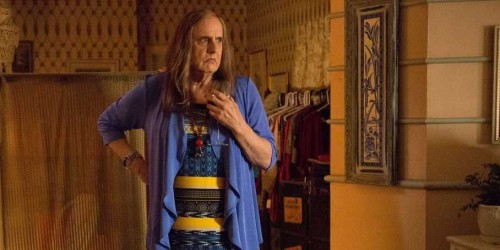
This comedy-drama gives us an insight into the life of a father who reveals himself as trans later in life


This is a guest post by Rosa Rodriguez.

I am sure you have heard the terms “lead” and “character” actor/actress. The lead actor/actress is the one who plays the role of the protagonist of a film or show. The character actor/actress plays the sidekick, the friend, the co-worker, the villain, and the minor roles.

Lead actors are usually “attractive” by general, narrow standards: thin, slim, muscular; clear skin and flawless hair and makeup; generally tall and able bodied. They are normally white or, if they have “the right look,” sometimes of other ethnicities. They are young, or youthful. They are normally cisgender and straight. They are the big names that most of us remember.


[youtube_sc url=”https://www.youtube.com/watch?v=FSwhRZwFjfY”]

A funny parody to Lorde’s “Royals” that definitely strikes a chord.


The character actors are more “unconventional-looking”: short, very tall, bald or balding, stocky, heavy set. They have the crooked noses or teeth, the big ears. They are the people of ethnicities other than white and oftentimes perform with an accent or a speech impediment. They are the middle aged and older guys and gals. They are the gay, transgender, gender fluid, etc. They are usually better known as “Whatshername” or “That guy from that thing” (check out a post on this blog called “Whatshername as a Great Actress: A Celebration of Character Actresses” for a beautiful explanation of what a character actress is and some interesting comparisons to the male counterpart).

These standards are widely spread on mainstream TV and movies, and generally accepted both by audiences and by actors and actresses, who want to be able to work and make a living. We are used to seeing the “attractive” people as the center of the stories. The belief is that the lead actors/actresses have the physical beauty and magnetism “needed” to play love interests and heroes, with whom the general population is meant to identify. The character actors fill the world around these main characters. Some of these supporting roles are quite strong and interesting, but they exist in relation to the leads. They are secondary characters.

The mini series Olive Kitteridge is a beautiful example of a production where we get to follow the story of an older woman who is generally unlikeable, but who wins our heart anyway
The miniseries Olive Kitteridge is a beautiful example of a production where we get to follow the story of an older woman who is generally unlikeable, but who wins our heart anyway


A lot of character actors and actresses have managed to have long, successful careers playing supporting roles, and sometimes an offbeat lead here and there. It can be quite fulfilling to play a character with real, human flaws (other than the muted ones usually allowed to the leads, such as clumsiness, shyness, or naïveté). Even when said characters are underwritten, or do not appear in the film or show long enough, it can be very satisfying for the performer and the audience when these brief appearances show interesting, real human beings.

The problem I see with the accepted standards is that in real life every single person is the lead character of his or her particular story. We all have lives, passions, dreams, pursue careers and occupations, fall in love, have our hearts broken. All of us, the thin, the medium sized, the large, the blond, the brunette, the red-head, the bald, the balding, the young, the old, the loud, the quiet, the Hispanic, the Asian, the Middle Eastern, and so on, have goals and aspirations, battles, successes, loses. We all teach and learn lessons in life.


[youtube_sc url=”https://www.youtube.com/watch?v=QTCHzcsxrdg”]

A message to Hollywood from a few well-known character actors. Funny and true.


Why, then, are most mainstream movies and TV shows out there representing a world that does not seem to match the real world in which we live? And most importantly, why do we accept that as normal? Why do we buy it? Specially knowing that what we see in movies and on TV, whether we want it or not, shapes our minds and the way we behave and perceive reality. It shapes society as a whole.

I find myself wanting more than what I am seeing. I want to see more movies and TV shows display a society where people of all looks, sounds, backgrounds, get to lead their own stories. I want to see a story about a Latina with an accent who is a college professor or a scientist. I want to see a story about a short guy with a receding hairline finding the love of his life. I want to see a love story between two senior citizens that is not meant to be a joke. I want to see main characters with some acne, or an apple shaped body, or frizzy hair. I want the full-fledged characters who look like everyday people to be the leads of stories, just like they are in real life. I believe if the audiences demanded more of that, it would be made.

Six Feet Under was so ahead of its time in many ways, including having one of its main characters, David Fisher, be a complex, realistic gay man with a compelling storyline


I am a founding member of a production company called Room 1209 Productions, together with Ravin Patterson, John Wiggins, and Patrick Avella. We define as our mission to generate opportunity for ourselves and our fellow actors, writers, directors, and other artists, through the creation of challenging, imaginative, quality content that represents the diversity found in real life.

Our first project is called Space Available, a character-driven web-series about a film student shooting a documentary in his seedy stepfather’s rehearsal studio, in an effort to expose the underground world he suspects exists behind the artistic façade. This is a project about people, about duality and gray areas.

So far we have been able to finish and release a prologue and two episodes, and are in the midst of a crowdfunding campaign, through Seed & Spark, to fund four more episodes that will complete season one. We have a myriad of characters of all colors, sizes, shapes, and backgrounds in the works, and are proudly committed to creating a space for character actors to take the lead in interesting stories. Should we have the opportunity to finish the first season of this project and move on to others, there will be a rich and diverse lineup of writers, directors, and other artists, that will get to work and tell their stories (to learn more about Space Available, and to view the prologue and first two episodes, visit our website at www.SpaceAvailableSeries.com, and our Seed & Spark campaign page at: http://www.seedandspark.com/studio/space-available-web-series)


Rosa Rodriguez
Rosa Rodriguez


Rosa Rodriguez is an actress, singer, writer and producer living in LIC, New York. She was born and raised in the Dominican Republic and is proud of her roots and her accent. She has numerous stage performances, short films, commercials, and industrials to her credit. She also holds a degree in Civil Engineering, and earned her Master’s in Construction Management from NYU. For more about Rosa visit her website: RosaRodriguezNYC.com.

[youtube_sc url=”https://www.youtube.com/watch?v=WACRJdl9qVg”]

The Choice to Be a Total Diva

So while Nikki is a successful wrestler (she’s the current Divas Champion in real time), actress (she’s been in outwardly scripted productions as well as “scripted reality” TV), real estate agent and businesswoman in general, she apparently can’t be trusted to make choices that are best for her personal life at the age of 31.

unnamed

This is a guest post by Scarlett Harris

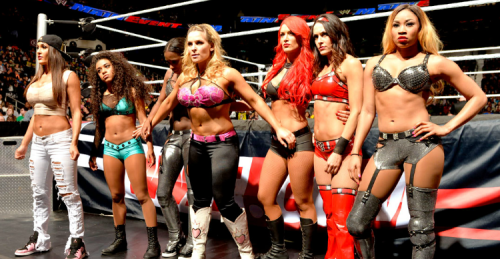
For those unfamiliar with the E! reality show Total Divas, it follows the lives of eight female professional wrestlers—or Divas as they are better known—under the employ of World Wrestling Entertainment as they navigate through their personal lives, work, travel and health.

The first season delved into the machinations of the daily lives of twins Nikki and Brie Bella, veteran and wrestling family royalty Nattie, tag team partners Trinity and Ariane, and rookies Eva Marie and JoJo. By season end JoJo had decided to leave the show (but still ring announces on the WWE Network’s developmental program, NXT) for reasons that are unclear, but her absence was felt long before.

Bad girl Summer Rae replaced her in season two, also taking the title of the show’s villainess from Eva Marie who became perceived by the other Divas as one of them. And by season three, Rosa Mendes had joined the ranks, fresh from a bad breakup, cosmetic surgery and a stay in rehab for alcoholism.

Last Sunday marked the mid-season return of Total Divas and with it the departure of Summer Rae and Trinity, who was barely getting airtime before it was announced last year that newbie Diva Paige and Alicia Fox would be coming on board. Again, just because these Divas aren’t on Total Divas doesn’t mean they’re not continuing on with the WWE: Trinity (known in WWE as Naomi) is in a storyline with her husband, Jimmy Uso, while Summer Rae is now hosting the Total Divas aftershow on WWE.com.

unnamed


Plenty of Divas make their mark on WWE programming without being involved in the reality show. For example, Paige won the Divas Championship on her very first day on the “main roster,” which was long before she signed on to the show, and the Slammy award (kind of like a Grammy but for wrestling) for Diva of the Year 2014 went to AJ Lee, the longest reigning Divas champion who, to the best of my knowledge, has never appeared in even a backstage shot on Total Divas.

It’s great that Total Divas is promoting women as athletes in a male dominated sport (or sports entertainment, rather), a portrayal that is rarely seen on reality television, but the women on the show are hardly the be all and end all of women in wrestling.

A.J. Lee has said that she “could” be on Total Divas, “but I wouldn’t do it. I’m just happy being who I am on TV two days a week and on live events and then going into my private life, and into my little hole in the middle of nowhere and having no one talk to me about my private life.”

The choice to be a Total Diva is vastly different from being a regular Diva.


unnamed


The mid-season return of Total Divas saw the fallout between Nikki Bella and her partner, WWE Superstar John Cena, and their trial separation, the wheels of which were put in motion by her sister Brie and the rest of her family at the October finale.

Here’s the gist of the drama: before meeting John, Nikki was sure she was going to be a wife and mother. John’s been married before and doesn’t want to go down that road again. He also doesn’t want children. Nikki sacrificed her dreams to be with the man of them and she seemed happy (as happy as can be gleaned from a reality show, anyway) which her family can’t understand. Brie and the rest of Nikki’s family butted in and sat John down with an ultimatum: if he’s not going to give their sister what they believe she wants, let her go.

And so he did.

The thing that bugged me about this storyline—sorry, development in Nikki’s life—is that Nikki is a grown woman: if she decides to be with a man who won’t give her marriage and children, then that’s her choice. No one else is in the position to decide what makes her happy now, and what she’ll regret later. I get the same crap when I tell people I don’t want kids: but what if you regret it later? So what? That’s my regret to have.

Nikki pretty much echoed these sentiments when she found out that John “letting her go” was actually the doing of her family.

“You told my boyfriend what I want without me being there? You had no right to tell anyone how I feel. Who the hell do you think you are to make my decisions for me?”

unnamed


So while Nikki is a successful wrestler (she’s the current Divas Champion in real time), actress (she’s been in outwardly scripted productions as well as “scripted reality” TV), real estate agent and businesswoman in general, she apparently can’t be trusted to make choices that are best for her personal life at the age of 31.

Speaking of marriage and kids, fellow Total Diva Eva Marie is facing the repercussions of having lied to her husband about wanting children. Eva has been plagued by reproductive health issues which saw her coming to terms with the possibility of not being able to conceive. In the second episode of the mid-season return, Eva is told that a medical procedure could cure her infertility but she’s scared of pregnancy and is okay with it just being her and her husband Jonathan for the rest of their lives. Jonathan has always been clear about his intention to have a lot of children, so he’s pissed that Eva hid this potentially life-changing choice from him. As the episode draws to a close the couples’ dilemma is tied up in a nice little bow as reality show storylines are wont to do: Jonathan tells Eva that when she eventually decides to have children she’ll make the best mother, and they agree not to discuss children again for the time being while they focus on their careers. Because all women want to be mothers eventually: they just don’t know it yet. And all women who are apprehensive about motherhood will love their children and make great moms once they inevitably make that choice.

Despite his insistence that Eva will one day want children, Jonathan brings up a good point: in not telling him that she didn’t want kids before they got married, Eva took away his choice not to marry her because of this. He says would have married her regardless because he’s madly in love with her, but he would have liked to have had that choice. Presumably Eva would also like the choice whether or not to have kids.

So whether it’s having the independence from your family and your partner to make the choices that are best for you or being confident enough in your athletic abilities to opt out of a reality show many of your peers are involved in a the potential detriment to your career, being a Total Diva—and, indeed, a regular Diva—is all about choice. Isn’t that why women, be they wrestlers or no, are called divas in the first place?


unnamed

Scarlett Harris is a Melbourne, Australia-based freelance writer and blogger at The Scarlett Woman, where she writes about femin- and other -isms. You can follow her on Twitter.


2015 Academy Award Nominations Roundup

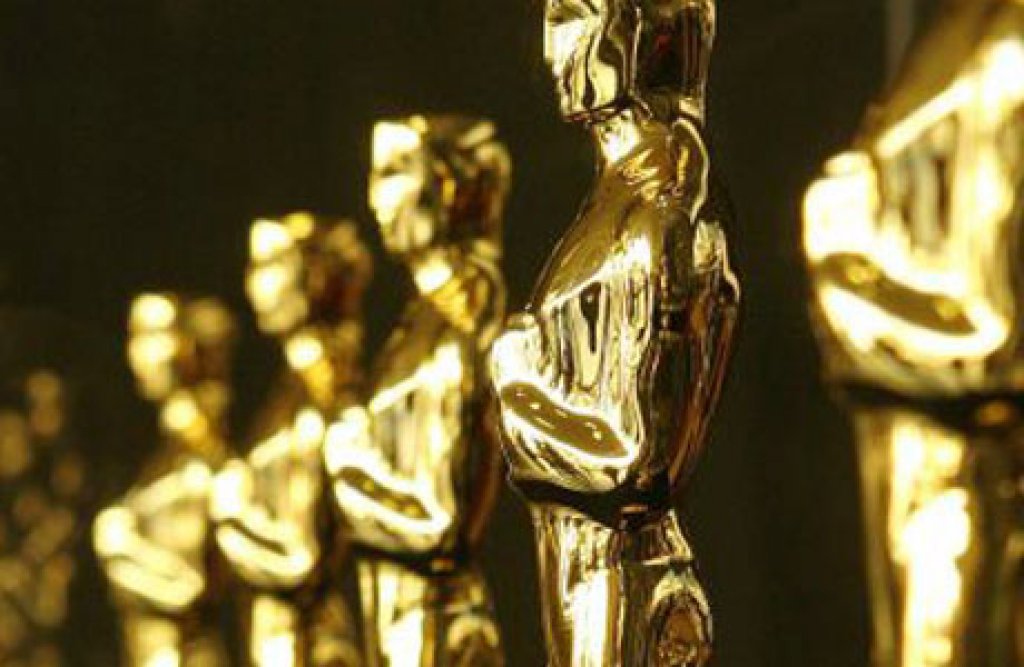
Check out the 2015 Oscar Nominees with links to our reviews and articles providing feminist commentary!

Oscar statues

Check out the 2015 Oscar Nominees with links to our reviews and articles providing feminist commentary!


Best Picture

American Sniper

Birdman or (The Unexpected Virtue of Ignorance)

Boyhood

The Grand Budapest Hotel

The Imitation Game

Selma

The Theory of Everything

Whiplash


Best Actress

Marion Cotillard, Two Days, One Night

Felicity Jones, The Theory of Everything

Julianne Moore, Still Alice

Rosamund Pike, Gone Girl

Reese Witherspoon, Wild


Best Actor

Steve Carell, Foxcatcher

Bradley Cooper, American Sniper

Benedict Cumberbatch, The Imitation Game

Michael Keaton, Birdman or (The Unexpected Virtue of Ignorance)

Eddie Redmayne, The Theory of Everything


Best Supporting Actress

Patricia Arquette, Boyhood

Laura Dern, Wild

Keira Knightley, The Imitation Game

Emma Stone, Birdman or (The Unexpected Virtue of Ignorance)

Meryl Streep, Into the Woods


Best Supporting Actor

Robert Duvall, The Judge

Ethan Hawke, Boyhood

Edward Norton, Birdman or (The Unexpected Virtue of Ignorance)

Mark Ruffalo, Foxcatcher

J.K. Simmons, Whiplash


Best Animated Feature Film

Big Hero 6

The Boxtrolls

How to Train Your Dragon 2

Song of the Sea

The Tale of the Princess Kaguya


Best Director

Alejandro G. Iñárritu, Birdman or (The Unexpected Virtue of Ignorance)

Richard Linklater, Boyhood

Bennett Miller, Foxcatcher

Wes Anderson, The Grand Budapest Hotel

Morten Tyldum, The Imitation Game


Best Documentary

CitizenFour

Finding Vivian Maier

Last Days in Vietnam

The Salt of the Earth

Virunga


Best Foreign Language Film

Ida

Leviathan

Tangerines

Timbuktu

Wild Tales


Best Adapted Screenplay

American Sniper

The Imitation Game

Inherent Vice

The Theory of Everything

Whiplash


Best Original Screenplay

Birdman or (The Unexpected Virtue of Ignorance)

Boyhood

Foxcatcher

The Grand Budapest Hotel

Nightcrawler


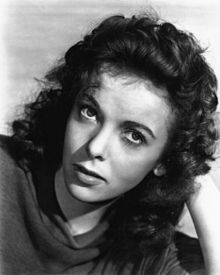
Male Mask, Female Voice: The Noir of Ida Lupino

Lupino then struck out from the studio system to direct three noirs of her own: ‘Outrage,’ ‘The Hitch-Hiker,’ and ‘The Bigamist,’ the only classic noirs made by a female auteur. Each uses a different strategy to challenge the empathy gap between spectators and female characters, and to subvert the femme-fatale trope.

Ida Lupino


This is a guest post by Brigit McCone.

The IMDb page of Woody Allen’s Match Point (2005) offers the following summary: “at a turning point in his life, a former tennis pro falls for a femme-fatale type.” The plot of Match Point: Jonathan Rhys Meyers’ former tennis pro aggressively pursues Scarlett Johansson’s sexually confident actress, begins an affair that only she expresses guilt over (though she is single, breaking up with her fiancé after her first hook-up with Meyers, while he remains engaged), then he plans and executes the cold-blooded murder of Johansson to cover his adultery. In other words, Meyers plays a classic, manipulative “psycho killer bitch” in all but gender.

The fact that Johansson’s character is nevertheless judged as a “femme-fatale type” and Meyers’ character excused as being “at a turning point in his life,” points to the real underpinnings of the femme-fatale: the assumption that female sex appeal is responsible for male violence. Her manipulative behavior may confirm the femme-fatale’s evil, but her responsibility for male violence is the core of her role, rooted in a victim-blaming lack of empathy for women. If that remains true even in 2005, it was certainly true of the ’40s and ’50s heyday of film noir.

Few people understood the logic of the femme-fatale better than Ida Lupino. Her looks, confidence and intelligence saw her typecast as a seductive “vamp” from the age of 14. Lupino became one of the iconic femme-fatales of the 1940s, breaking out as crazed villainess of They Drive By Night, followed by genre classics High Sierra, The Hard Way, and Road House. Lupino then struck out from the studio system to direct three noirs of her own: Outrage, The Hitch-Hiker, and The Bigamist, the only classic noirs made by a female auteur. Each uses a different strategy to challenge the empathy gap between spectators and female characters, and to subvert the femme-fatale trope.


Rape Culture As Ultimate Noir: Outrage

The first cinematic examination of what feminists now call “‘rape culture,” 1950’s Outrage introduces Ann Walton (Mala Powers), a character whose wholesomeness is emphasized from the film’s start. She is liked by co-workers and says of her fiancé, “I found the right one,” showcasing her mental monogamy. In a tense, expressionist sequence of shadowy yards and deserted streets, Ann is stalked by a sexual predator and caught when she swoons; it is her traditional femininity that makes her vulnerable, not transgression. Ann is constantly watched: chatting to her fiancé, she is smirked at by an old lady; when talking with a co-worker, the clenching hands of her future attacker are visible in the foreground, making the audience uncomfortably aware that we share his gaze. We, too, will be asked to watch and judge Ann throughout the film.

This surveillance of chivalry offers Ann no protection. As her future attacker insistently flirts with her, to her visible discomfort, bystanders are blank-faced and avoid eye contact. As a vulnerable woman alone at night, taxis refuse to stop for her. As her attacker closes in to rape her, the camera pulls back to a neighbor firmly shutting his window. After the rape, we are shown the averted eyes of former friends and the everyday intrusions of men, who casually grab her flinching shoulder or invade her space, an entitlement to the female body that is weaponized by Ann’s trauma. When Ann is finally triggered into striking a blow, she does not get revenge against her rapist, but attacks a random stranger who is stroking her hair and pestering her for a kiss. This sends a clear message that such pushy violations of a woman’s boundaries collectively create a triggering environment that normalizes rape. The conventions of noir, which condition the audience to accept that society is hostile and unjustly disbelieving the protagonist, are used by Lupino to shape the audience’s interpretation of rape culture.

Ann finally finds redemption through the friendship and support of Rev. Bruce Ferguson. It is visiting him alone at his house at night, and driving with him into the countryside unchaperoned, that allows him to counsel her. The fact that she is healed by ignoring society’s proprieties, and victimized when swooning in conventional feminine panic, demonstrates the irrelevance of woman’s transgressions to man’s actions. Rev. Bruce’s authority as man and as cleric is invoked to justify Ann. In the film’s climactic trial of Ann for attacking the harassing flirt, the authority of the legal system is used to hold male sexual aggression responsible for female violence, neatly reversing the “femme-fatale” formula. Rev. Bruce’s mansplaining authority presents his blistering condemnation of chivalry’s failures as an act of chivalry itself: his courtroom speech establishes rape as an epidemic social problem, “a shameful blot on our towns and cities,” excuses Ann’s actions (Rhys Meyers’ tennis coach might have been “at a turning point in his life” when he gunned down Johansson’s “femme-fatale type,” but Ann had “been suffering in her mind a long time” when she clobbered a flirt with a wrench), and indicts society for the assault – “it’s our fault, all of us” – appealing to the judge “as a man.” Of course, Rev. Bruce is not speaking “as a man” at all, but “as Ida Lupino.” Society’s dismissing of woman’s testimony as “hysterical” required Lupino to dress female perspective in a male mask for it to be heard.

Outrage is fascinating as a direct appeal from the suppressed female voice. It exposes the hypocritical underbelly of traditional chivalry, and its human cost, but it is not a fully satisfying drama. The very victim-blaming that Lupino condemns, forces her heroine into one-note wholesomeness to dodge femme-fatality. Ann often irritates viewers with her “damsel-in-distress” manner, but this only highlights how inhuman a woman had to be, to be chivalry’s “justified” victim. At the same time, the need for Rev. Bruce to project authority makes his character smug to the point of creepiness. In her next film, The Hitch-Hiker, Lupino would banish women from the screen entirely and reveal herself capable of sharp psychological subtlety.

[youtube_sc url=”https://www.youtube.com/watch?v=FCRemHI0usY”]


Why Didn’t They Just Leave Him? The Hitch-Hiker

1953’s The Hitch-Hiker opens with a bold declaration: “what you will see in the next seventy minutes could have happened to you.” We hear a woman’s scream and gunshots. A lady’s purse falls to the floor at the attacker’s feet. This opening scene establishes the villain as a killer of women, but his victim is not shown. To give her any character would be to expose that character to scrutiny. Why was she traveling alone? Why would she pick up a hitch-hiker? Why didn’t she just leave him? To convince the audience that it “could have happened to them,” the faceless woman must be replaced by all-American Roy and Gilbert, on their manly hunting trip. A man can be everyman; a woman represents only herself. Roy and Gilbert, then, must walk in the shoes of the female victim; we will experience her terror through their male masks. The film is a master class in suspense and claustrophobia, making maximal use of both cramped car and empty Mexican desert. The hitch-hiker has one eye permanently opened, so the captives can’t tell whether he is asleep or watching, piling on the paranoia as the pair squirm under his peering panopticon, until they internalize his surveillance. Roy and Gilbert are as minutely scrutinized by the hitch-hiker as Outrage‘s Ann is by society.

One of the film’s harsher comments on IMDb complains that “the two captive men are presented with innumerable opportunities to outsmart or overpower their captor, but fail to do so out of apparent cowardice or stupidity,” which actually points to the film’s central strength. Under crushing pressure, the group evolves the psychological dynamic of an abusive family. The captives’ loyalty to each other becomes an exploitable weakness that prevents them from fleeing. Roy and Gilbert gradually grow complicit in the hitch-hiker’s schemes, as they adapt to his demands and learn to anticipate and appease his rages. They miss opportunities to appeal for outside help, as they are blackmailed into silence. The Hitch-Hiker is one of the rare films that realistically captures the psychology of intimidation, letting the audience witness the group’s toxic dynamic develop over time. The intimate violence of emotional abuse emerges as an ideal subject for noir. George Cukor’s Gaslight is a strong example, but Lupino’s choice of protagonists, all-American hunting buddies, explores the dynamics of abuse as universal human psychology rather than female vulnerability. In her next film, The Bigamist, she would exploit the audience’s higher tolerance for flawed and complex male protagonists, to promote empathy for complex women.

[youtube_sc url=”https://www.youtube.com/watch?v=XIeFKTbg3Aw”]


Woman Humanizes Man Humanizes Woman: The Bigamist

On the surface, 1953’s The Bigamist presents a classic narrative of infidelity: Harry is driven, by the neglect of his careerist wife Eve, into an affair with a brassy, smart-mouthed broad, Phyllis. But Lupino’s film humanizes the stereotypes into sympathetic individuals. In the process, she demonstrates that the ideology of male unfaithfulness depends on the dehumanizing of women to make them disposable; it must be justified either by condemning the wife as cold, castrating harpy, or by dismissing the mistress as calculating femme-fatale. The climactic trial of the bigamist becomes a trial of society, just like that of Lupino’s Outrage. In the authoritative voice of the male judge, the film spells out the irony that it is no crime to commit adultery, but a crime to recognize and protect both women by marriage.

Like its hero, the film refuses to demonize either woman or to imply that they deserve to be abandoned. Joan Fontaine’s Eve is a workaholic, but she is also loving and supportive. Ida Lupino’s Phyllis reveals layers of loneliness and fragility under her brash, defensive surface. She is not trying to trap Harry, giving him the opportunity to leave even after she falls pregnant. Refreshingly, the women do not turn on each other when the bigamy is revealed, but turn their looks of hurt onto Harry at his trial. The script was written by Collier Young, Lupino’s ex-husband and professional collaborator, who was married to Fontaine at the time of shooting. Lupino’s collaboration with Fontaine, and her sympathetic portrayal of Fontaine’s Eve, is thus an act of solidarity that puts its money where its mouth is, radically rejecting cat-fight logic between women who have shared a man.

Ida Lupino exploits the audience’s willingness to identify with a male protagonist, to encourage them to see both women from the hero’s sympathetic viewpoint. Lupino herself takes the role of a woman pregnant from unmarried sex, then uses the hero’s voiceover to empathize with her character and avoid moral judgment; yet another male mask for the defense of female worth. Defying double standards, Harry takes full responsibility for his choice to sleep with Phyllis, marrying her to support their child. He is flawed, against the standard of a fully committed husband, but noble when compared with the casual exploitation of women tolerated by Lupino’s society. The result is a morally complex and ambiguous portrait of polyamory, which affirms that no human is disposable and that no “femme-fatale” is without her humanity.

[youtube_sc url=”https://www.youtube.com/watch?v=1eUmFS7ww5s”]


Ida Lupino’s career as director is an intriguing example of an actress seizing power to rebut the misogynist traditions of her own genre. In the process, she reveals noir’s natural potential to explore female psychology and experience. When her company, “The Filmmakers,” folded, she went on to be a prolific director in television, then directed 1966’s The Trouble With Angels, a sympathetic portrait of a Catholic convent school. As the only female director working in ’50s Hollywood, and as a striking artist in her own right, Ida Lupino deserves a fresh look.


Brigit McCone over-identifies with Norma Desmond in Sunset Boulevard. She writes short films, radio dramas and “The Erotic Adventures of Vivica” (as Voluptua von Temptitillatrix). Her hobbies include doodling and making bad puns out of the corner of her mouth.

‘How to Get Away With Murder’ Is Everything “That” ‘New York Times’ Review Said It Is

Fortunately for everyone, the show deliberately plays with archetype. She’s introduced as a singular image we all know, and over the course of the episode is shown to be sexy, amoral, vulnerable (Or is she? This is that kind of show; who knows!?), and an effective, if unorthodox, mentor. She’s a three-dimensional character that happens to fit the description.

This cross-post by Solomon Wong previously appeared at Be Young & Shut Up.

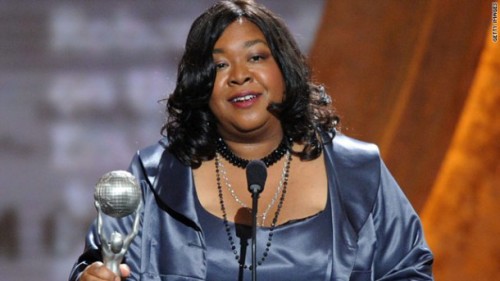
Like everyone else on the Internet, I heard about the New York Times review of the first episode of How to Get Away With Murder, wherein the author used the phrase “Angry Black woman” to describe Viola Davis’ character in the show. Shonda Rhimes, show-runner of Grey’s Anatomy and Scandal, probably didn’t need anyone’s help getting her new project tons of viewers, but the furor certainly got me to check it out. Here’s the short version: I love it. It’s a really fun program, and there’s a good stable of characters that, despite their archetypal presentations, break out and distinguish themselves. Which brings me back to the Times review. While the actual phrasing leaves a lot to be desired, it’s kind of just that—bad phrasing.

“Oh wow, she wrote Crossroads!” – Me, researching Shonda Rhimes


Viola Davis’ attorney/professor character Annalise Keating introduces herself to her new class as pretty much the professor from hell. She’s Professor Snape, if you’re one of the students that isn’t a little snot like Harry Potter. There’s a chance to learn a lot, but you’re going to work really, really hard and she isn’t going to coddle you or be nice (at all) when you screw up.

“I don’t know what terrible things you’ve done in your life up to this point, but clearly your karma’s out of balance to get assigned to my class….”

Speaking of Harry Potter, the protagonist of the show is played by the former actor of Dean Thomas!

If this show were badly written, if all Keating did was be incredibly stern and severe to her students, it would have gotten tons of criticism from the same people criticizing the Times writer, saying that the character is an “Angry Black woman” and nothing more. That’s just the impression you get when she walks in and gives her first-day-of-class spiel. Fortunately for everyone, the show deliberately plays with archetype. She’s introduced as a singular image we all know, and over the course of the episode is shown to be sexy, amoral, vulnerable (Or is she? This is that kind of show; who knows!?), and an effective, if unorthodox, mentor. She’s a three-dimensional character that happens to fit the description.

Which is what the Times review was attempting to say. Black women are in a restricted cultural space, and representations of them are rather pigeonholed. Showing anger, period, is a risk, because it opens up the very real possibility of people labeling and dismissing the character as one of three types they’ve already assigned to black women. So to see the show’s writers rise to the occasion and go with a cold, borderline evil Black female lead is really quite heartening.

This doesn’t change the review’s incredibly bad opening line:

“When Shonda Rhimes writes her autobiography, it should be called “How to Get Away With Being an Angry Black Woman.””

Wow. Much inadvisable. Phrased in a less eye-jabbing way, it encapsulates what makes How to Get Away With Murder special. This show’s headlining character freely admits to defending guilty clients, and as her students see as they assist with her case, has no qualms about illegal or immoral methods of securing the not-guilty verdict. She sets murderers free because that’s how she’s chosen to make money.

**SPOILER ALERT** This guy gives a network-friendly rimjob to secure case-winning information


There’s a pretty rich tradition of this kind of character; it’s basically all we’ve gotten in the past decade or so of award-winning cable dramas. But like Broad CityHow to Get Away With Murder is an entry into an established genre by a group (or two) generally shut out. By circumstance, by the genre’s conventions, or by the fear of falling into a stereotype, Black women don’t play the anti-hero role. Now we’ve got one, and she’s attached to a rip-roarin’-fun show.

I still haven’t gotten to the rest of the characters I like, but how much more do I need to say? Trashy legal drama with sexy law students behaving badly! At the end of the day, I just want everyone to watch this show so we can geek out about it.  As for 11-year TV crit veteran Alessandra Stanley, go back…to…writing…school?

[youtube_sc url=”https://www.youtube.com/watch?v=dbSl-SPyHtg”]


Solomon Wong is a writer and a graduate of UC Santa Cruz. He is the co-editor of Be Young and Shut Up, author of the cyberpunk serial novel Stargazer. He likes cooking, fishkeeping, and biking around Oakland.

Bitch Flicks’ Weekly Picks

Check out what we’ve been reading this week–and let us know what you’ve been reading/writing in the comments!

recommended-red-714x300-1

The Many Truths of “Selma” by Zillah Eisenstein at Ms. blog

The Melissa Harris-Perry Syllabus 1.11.15 at msnbc

The ‘Selma’ “Controversy” Isn’t About History; It’s About Oscars by Jason Bailey at Flavorwire

The real American Sniper was a hate-filled killer. Why are simplistic patriots treating him as a hero? by Lindy West at The Guardian

Geena Davis Is Launching A Film Festival That Celebrates Women And Diversity by Ada Guzman at BUST

To get nominated for an Oscar, it’s still best to be a mediocre movie about a white guy by Todd VanDerWerff at Vox

Of Femmes, Films and Fatales by Regan Reid at Paste Magazine

Let 2015 Be the Year the Female Fuckup Goes Mainstream by Sarah Seltzer at Flavorwire

Being a “Difficult” Woman on TV and the Refreshing Brilliance of ‘The Comeback’ by Harry Waksberg at Splitsider

Allison Williams Says Tracy Flick Was the Inspiration for Marnie on Girls by Nate Jones at Vulture

Gender in Comedy by Boring Old Raphael on Tumblr

The 2015 Athena Film Festival Trailer Is Here! by Inkoo Kang at Women and Hollywood


What have you been reading/writing this week? Tell us in the comments!

‘Selma’ Is Now

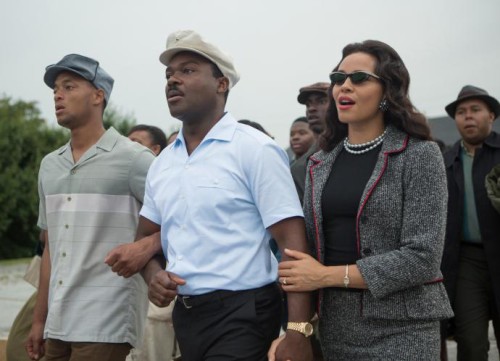
In so many ways, this film reflects the current moment, while also highlighting how things have and have not changed since the King family and their allies risked their lives to secure rights for all. Scenes in the film will jolt you into the present: watching Jimmie Lee Jackson’s mother grieve in 1965 for the son she will never see again made me immediately think of the family of Tamir Rice, the young black boy who was murdered by police officers this year for toting a toy gun in Ohio. ‘Selma’ is now.

selma-2

This guest post by Nijla Mu’min previously appeared at Bitch Media and is cross-posted with permission.

Historical dramas often stick to a tried-and-true formula: Important figures face struggles, then they triumph, becoming the great people we know today. We can usually count on a scene from their conflicted childhood, scenes showing their romantic troubles, any issues with drugs or alcohol, and how they persevered through it all to deliver whatever divine message or artistic gift they possessed.

Ava DuVernay’s new Martin Luther King Jr. biopic, Selma, avoids this formula—much to its benefit. It is one of the most effective, well-crafted historical biopics that I’ve ever seen because it goes off the traditional narrative about the Civil Rights Movement, giving us a moment in history that feels immediately familiar to the moment we are currently living in.

Selma captures the tireless efforts of Martin Luther King Jr. and a group of black activists attempting to secure equal voting rights for black people. These efforts led to the passage of the 1965 Voting Rights Act, signed into law by President Lyndon B. Johnson. The film takes its name from the series of marches that King and his followers embarked on at the Edmund Pettus Bridge in Selma, Alabama. One of those marches was infamously known as “Bloody Sunday,” after police and deputized locals descended on the protesters with nightsticks and tear gas.  DuVernay and Director of Photography Bradford Young capture that march in all its terror in a scene where young and elderly marchers are clubbed and chased by angry police on horses. Selma certainly doesn’t cast the history of the Civil Rights Movement in feel-good soft focus.

selma_movie_2


In a recent interview I conducted with DuVernay, she discussed the way she approached the humanity of Dr. Martin Luther King Jr., including his suspected infidelity. She was most interested in how this information affected his wife, Coretta Scott King, and how Martin Luther King would respond in the moment when questioned by Coretta. This emphasis on the intimacy in their relationship, rather than the scandal that the FBI sought to publicize, is something that informs the core of the film.

DuVernay is not interested in showing us montages of the unfaithful hero, his mistress, and the scorned wife, as was done in Mandela: Long Walk to Freedom. She is interested in the complex spaces of love and pain between two people. Coretta Scott King, played with an uncanny resemblance by Carmen Ejogo, takes on a central role in this film, not only as a wife and mother, but as a key player in the movement as she faces daily death threats made against her and her family. The attention and specificity paid to her character and her relationship to King is another gift that DuVernay brings to this film.
Further, there are so many ways this film could’ve become an extension of the Hallmark image that we see of Martin Luther King Jr., one that replays the same “I Have a Dream Speech” and tells us that nonviolence is the only way. While those elements are important, they are often overemphasized at the expense of the other work he did.

That is where Selma fills in the blanks. In this film, we get to know a methodical, intelligent, human Martin Luther King Jr; a man who just wanted to sit down at the end of the day and smoke a cigarette, or call Mahalia Jackson in the middle of the night to hear her sing a soothing gospel song. In the film, he invokes nonviolence but also cleverly provokes outward hatred in his opponents, helping people around the world witness this physical racism in the media. His tactics were risky, his negotiations with the likes of LBJ were grueling, and he was often put in positions of extreme discomfort, along with the many people he worked with.

03


This is not a film about a man and his followers, but about how a man’s work is informed by the respect he has for the people he works with—and even those he doesn’t. It reflects the movement by emphasizing distinct traits in each of the civil rights leaders it documents, from the youthful resistance of Jimmie Lee Jackson (played powerfully by Keith Stanfield), to the gentle persistence of Malcolm X (Nigel Thatch), who appeals to Coretta Scott King in a beautifully rendered scene. That scene and others completely reverse the rhetoric we’ve been fed about who these people were. The warring ideals between Malcolm and Martin aren’t the focus of this narrative, but rather how Malcolm X may have actually intentionally pushed many black people to follow Martin Luther King Jr., helping to strengthen the movement after all. Again, DuVernay utilized Coretta Scott King in a way that shows her role in the movement beyond being a supportive wife. She serves as a sort of peacemaker here.

In so many ways, this film reflects the current moment, while also highlighting how things have and have not changed since the King family and their allies risked their lives to secure rights for all. Scenes in the film will jolt you into the present: watching Jimmie Lee Jackson’s mother grieve in 1965 for the son she will never see again made me immediately think of the family of Tamir Rice, the young black boy who was murdered by police officers this year for toting a toy gun in Ohio. Selma is now. It lets us into the interior spaces of pain, progress, and movement that no formulaic historical drama could ever capture.


Selma opened Christmas Day in Los Angeles, New York City, Washington, DC, and Atlanta. It opens nationwide Jan. 9.

Related Reading: “The Butler, My Grandmother, and the Politics of Subversion. 


Nijla Mu’min is a writer and filmmaker. She writes and direct movies about black mermaids, black lesbians, black girls in-between worlds, and boys too.


‘Selma’ Backlash: Is It a Gender Issue?

So what can women do about these smear campaigns directed at films by women? Go see films directed by women, support these filmmakers any way you can, whether it’s by filling theaters or participating in social media campaigns. We may not be able to change Academy voters’ minds, but we can continue drawing attention to gender disparities and focus on the positive changes.

This guest post by Lauren Byrd previously appeared at her blog and is cross-posted with permission.

Oscar nominations haven’t been announced yet, but there’s already a campaign to dethrone an Oscar hopeful. Selma, directed by Ava DuVernay, is a solid choice for film critics (100 percent on Rotten Tomatoes), but in the weeks following its release, the film has come up against criticism for its portrayal of President Lyndon B. Johnson.

During a time when the holiday season detracts from awards season, historians and former members of the Johnson administration voiced their concerns with the film.

Three days before the film’s release, Mark K. Updegrove, the director of the Lyndon B. Johnson Library and Museum in Austin, Texas, wrote a piece in Politico, titled, “What Selma Gets Wrong”:

In the film, President Johnson resists King’s pressure to sign a voting rights bill, which—according to the movie’s take—is getting in the way of dozens of other Great Society legislative priorities. Indeed, Selma’s obstructionist LBJ is devoid of any palpable conviction on voting rights. Vainglorious and power hungry, he unleashes his zealous pit bull, FBI chief J. Edgar Hoover, on King, who is determined to march in protest from Selma to Montgomery despite LBJ’s warning that it will be “open season” on the protesters. This characterization of the 36th president flies in the face of history. In truth, the partnership between LBJ and MLK on civil rights is one of the most productive and consequential in American history.

Updegrove makes his argument about what is and isn’t right about this portrayal, but what the articles about the “Selma controversy” in The New York TimesThe Wrap, and other media sites haven’t mentioned is that Updegrove also states that much of the film is correct and an accurate portrayal of the events of that time.
A former aide to Johnson Joseph A. Califano, Jr., wrote a similar piece in The Washington Post and on New Year’s Eve, The New York Times highlighted the charges of inaccuracy against the film in a piece by Jennifer Schuessler, which quoted several LBJ focused authors and historians.
Ava DuVernay on set of Selma
DuVernay isn’t standing silently in the face of the recent criticism. In a recent interview with Rolling Stone, she said, “I wasn’t interested in making a white-savior movie; I was interested in making a movie centered on the people of Selma.”
It’s hard not to compare the sudden firestorm of controversy surrounding a potential Oscar hopeful to the controversy in the 2013 Oscar season that befell Kathryn Bigelow’s Zero Dark Thirty.The debate about that particular film was based on its portrayal of torture and whether the film showed enhanced interrogation techniques producing intelligence that led to Osama bin Laden. Many journalists who had covered the wars in Iraq and Afghanistan, as well as national security, thought the film glorified torture, while film critics classified the film as an accurate depiction of the dark decisions made by the U.S. government during the murkiness of the post-9/11 decade.
It’s even more difficult not to note that both these films are directed by women. While questions about accuracy were also brought up about Lincoln during the 2013 awards season, which was directed by a man Steven Spielberg, the backlash against Zero Dark Thirty drowned out any questions around Spielberg’s film. As a result, Bigelow did not receive a Best Director nomination while Spielberg did. The inaccuracies in Argo, of which there were many, were not as widely discussed, and both Ben Affleck and the film went on to win Oscars.
Selma
Selma
This year, another film directed by a man, Bennett Miller’s Foxcatcher, has recently undergone criticism from Mark Schultz, one of the brothers whom the film is based on. But FlavorWire has already written a piece defending the film against Schultz’s remarks.
Compared to Foxcatcher, which has been in theaters since November, the controversy around Selma has received more media play and it’s possible the charges of inaccuracies from historians will affect how future audiences view the film. (It opens nationwide on Friday.)

These smear campaigns against films helmed by women are yet another sign of the disparity of the treatment of men and women in the film industry. So are these smear campaigns a gender issue or simply a coincidence?

As someone who knows enough about the industry to know that the Academy Awards are certainly not based on merit or artistry, but rather on money and publicity, it was still hard to believe smear campaigns were a reality until the 2013 Oscar race when Zero Dark Thirty‘s awards season chances quickly diminish.

Kathryn Bigelow moderating a Q&A with Ava DuVernay after a screening of Selma


So what can women do about these smear campaigns directed at films by women? Go see films directed by women, support these filmmakers any way you can, whether it’s by filling theaters or participating in social media campaigns. We may not be able to change Academy voters’ minds, but we can continue drawing attention to gender disparities and focus on the positive changes. Michelle MacLaren directing Wonder Woman, for instance.

While it’s unclear what effect the controversy will have on Selma and DuVernay’s Oscar chances, let’s hope that in the future, audiences and Academy voters learn how to think for themselves rather than be carried away by the most recent awards season smear campaign. Man or woman.


Lauren Byrd has a master’s degree from Syracuse University’s Newhouse School. She’s worked in television and recently worked as part of the education team at Brave New Films. 


Seed & Spark: Writing Women

So, where does that leave us? There are the dismal numbers, all laid out, Hollywood’s claims that it can’t take risks, that women are a financial liability (though they buy the majority of movie tickets), or that the few female execs that climb to the top can’t or won’t pull other women up with them. But on the micro-level, this is about individual decisions each woman makes when she allows a story she wrote to be usurped as it transfers to the screen, or takes a part, no matter how fantastic, that is written and directed by a man.

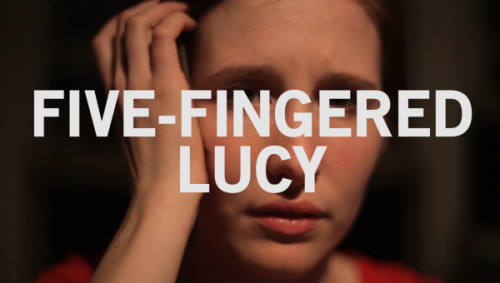
Five-Fingered Lucy, from seedandspark.com, © Jack Lawrence Mayer


This is a guest post by Martine Moore. 

This month, I’ll shoot a short film called Five-Fingered Lucy, in which I play the lead. It’s a dark, girl-meets-patriarchy story about a young shoplifter, written and directed by Jack Lawrence Mayer. The script tackles sexuality, abuse, and solitude. Jack is a long time friend and collaborator, and yet, my decision to be in his film is a conscience call. He is telling a story about male culture from a female point of view. Should I let Jack tell my story for me, or broadly speaking, should women let men tell our stories for us?

This is a question that can be asked at every level of the industry. Let’s take a look at the big awards circuit films this year, as presented by the Golden Globes list of nominees for 2015. Of the Best Picture nominees, only one centers on a woman’s experience, and that’s The Theory of Everything, which, arguably, is a story popularized by the famous male figure it depicts. The film is based on Jane Hawking’s memoir of her marriage to Stephen Hawking. The screenplay is written by a man, Anthony McCarten, and directed by a man, James Marsh.

The Best Actress category is a better place to search for films with female driven content, and here the pattern holds: Cake, Still Alice (an adaptation of Lisa Genova’s novel), Wild (an adaptation of Cheryl Strayed’s memoir) and Big Eyes are all written or adapted and directed by men. Annie has a single woman on the writing staff, Aline Brosh McKenna, but is otherwise written and directed by men. The notable exception is Gone Girl, directed by David Fincher but adapted by Gillian Flynn from her own best-selling novel.*

Cheryl Strayed, from her website, cherylstrayed.com, photo by Jobi Kabana


Much has been made of Gone Girl’s feminist or anti-feminist content and its psychopathic anti-heroine, Amy Dunne. I’m not sure this movie qualifies as female-driven content, as half of the narrative is a male POV, but I saw the movie and will say this: I don’t think it’s up to Flynn, simply by virtue of being a female writer, to create characters that advance the feminist cause, though her reliance on stereotypes that seem to re-reinforce misogynistic views—namely that women lie about rape—is unfortunate. Still, these stereotypes have more to do with Flynn’s capacities as a writer and her chosen genre than they do with her stance on feminism. I side with Zoë Heller, who wrote in the New York Review of Books that both the novel and film are too plainly pieces of pop entertainment to be taken as serious examinations of gender.

Yet, Flynn carried her story into this second, male-dominated medium on her own, which is no small feat. How come the female authors of best-selling books like Genova and Strayed didn’t adapt their own work for the screen?

Strayed, in an interview with Indiewire, is asked the question, and responds, “Well I wasn’t offered the job! And I think I agree why. Reese and Bruna both felt that with a memoir the writer isn’t the best person to make that adaptation because he or she is too close to the material and to that life.” Apparently the best person for the job is Nick Hornby, a popular male British writer who has written numerous novels and screenplays. He received Strayed’s blessing before adapting Wild.

Can men tell authentic stories from the female perspective? For any artist, the world should be his or her fictional oyster. Men can write women, and women can write men; imagination and empathy do not have a gender. Male filmmakers who are captivated by women’s stories and want to tell them can be allies. Actresses are still lucky to get a role in which they are fully developed (and fully clothed), with nuance and an inner life, and many words to speak. Still, the overwhelming likelihood is that those words will be written by a man, and spoken under the direction of another, despite the source material.

Women’s media center logo, from their website, womensmediacenter.com
Women’s Media Center logo, from their website, womensmediacenter.com


It’s not enough to simply say to women, “Make your own work.” They are attempting to do so. Look at enrollment numbers in film schools, as one indication. Women make up 46 percent of USC’s School of Cinematic Studies, according to their admissions site. On the indie film circuit, women’s participation is greater as well, making up 26.4 percent of writers at Sundance in 2013, and 50 percent of its narrative directors. But when women hit the larger market and the culture at large, these numbers slide drastically. Women either can’t get hired or secure funding. The Center for the Study of Women in Television & Film at San Diego State has found that women’s participation behind the camera is at 16 percent for the top 250 domestically made films in 2013, down one point from 1998. The Center’s Director, Dr. Martha Lauzen, is quoted as saying “there is no evidence to suggest that women’s employment has improved in key behind-the-scenes roles over the last 16 years,” debunking anyone’s notion of gradual but linear progress.

So, where does that leave us? There are the dismal numbers, all laid out, Hollywood’s claims that it can’t take risks, that women are a financial liability (though they buy the majority of movie tickets), or that the few female execs that climb to the top can’t or won’t pull other women up with them. But on the micro-level, this is about individual decisions each woman makes when she allows a story she wrote to be usurped as it transfers to the screen, or takes a part, no matter how fantastic, that is written and directed by a man. It’s a decision that comes with internal conflict. We’ve come a ways in acknowledging that women’s stories on screen hold universal, non-gendered appeal. We need to take the next step in giving women more opportunity to tell them themselves.

*While this is a separate though related discussion, I would be remiss not to point out that all these stories, with the exception of a re-imagined Annie, are about white women.


unnamed

Martine Moore is an actress and writer living in Los Angeles. She is a co-creator of the web series Ingenue and will appear in the upcoming shorts Dry and Five-Fingered Lucy and the feature, Americana. martineaverymoore.com