The Joyful Feminist Killjoy

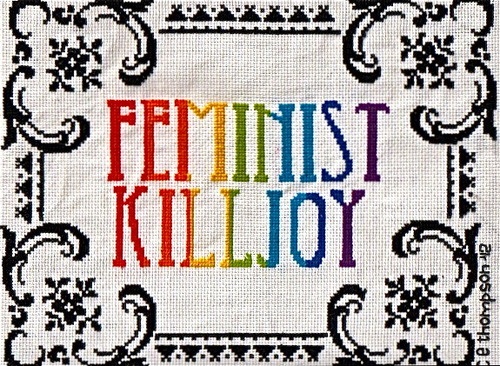
I get tired of constantly pointing out that something is Problematic From a Feminist Perspective™; I want to enjoy, not eviscerate. I want to laugh.

Feminist Killjoy to Joy

Written by Leigh Kolb.

Being an angry feminist is hard sometimes.

I mean, I had some breakthrough spotting on Monday, and I think it’s because my uterus was protesting the SCOTUS Hobby Lobby decision.

The life of a Feminist Killjoy is an intense one.

One of the most difficult arenas to navigate while feminist is comedy. Misogynist, male-centric comedies are a dime a dozen. I think back to the comedies of my youth–Dumb and Dumber, American Pie, anything with Adam Sandler or Jim Carrey–and while some of those films may have seemed funny at the time, revisiting them through a feminist lens is pretty horrifying.

I hadn’t seen There’s Something About Mary for well over a decade, and I stumbled across it last weekend. Holy shit. When Woogie–who stalked Mary in college so severely that she had to change her name and move–spits out at her at the end, “Shut up, cocktease,” it was all I could do to keep my head from spinning and short-circuiting while screaming “RAPE CULTURE,” “MISOGYNY,” “PATRIARCHY,” “MALE GAZE,” “LAURA MULVEY SAVE ME.”

Watching while feminist is exhausting. The Onion points this out in their satirical “Woman Takes Short Half-Hour Break From Being Feminist To Enjoy TV Show,” and I’m sure most of us can relate.

I get tired of constantly pointing out that something is Problematic From a Feminist Perspective™; I want to enjoy, not eviscerate. I want to laugh.

So I’ve been writhing around in feminist television and film lately, and damn, does it feel good. These are popular and critically acclaimed comedies and they are feminist as fuck. I love it. I can’t get enough of it. As we watch, I frequently look at my significant other with a shit-eating grin on my face as if to say, “Can you even believe that this exists?”
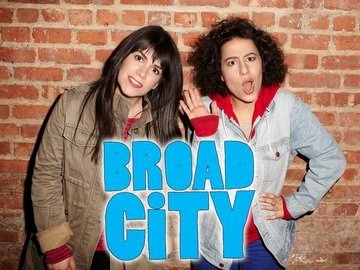
 

Broad City


Broad City–starring Abbi Jacobson and Ilana Glazer–debuted on Comedy Central in January and was quickly picked up for a second season. The pair started Broad City as a web series, and Amy Poehler took them under her (feminist superstar) wing and produced the TV show.

asdf


As many feminist commentators have already pointed out, this show is great. The writing, the acting, the story lines… I simply can’t get enough (really–I’ve seen all of the episodes multiple times). Abbi and Illana love sex, weed, and more than anything, one another. They also love themselves. It’s incredibly refreshing to see young women on screen who are so comfortable, even in their most uncomfortable moments.

Abbi and Ilana identify as feminists, and care deeply about diversity in media (which the show reflects in an organic way). In her Bitch article about Broad City, Andi Zeisler says,

“…Broad City‘s feminism isn’t so much sneak-attack as baked-in, with an emphasis on the ‘baked’: Ilana and Abbi are as aimless, goofy, boring, and entitled as any guy of their generation. And they’re striking a blow for equality just by subverting the image of the striving young woman who, well, sees her every move as a blow for equality. “

It’s hilarious, it’s relatable, and it’s inspirational–I’m inspired to be more confident by watching them, and I was inspired by their interior design to finally buy that Urban Outfitters quilt that I’d been lusting after (I understand this is a Problematic From a Feminist Perspective™ company, but I really wanted that quilt).


images


Sometimes watching young 20-somethings in the city (when I’m a 30-something in the country) can make me feel wistful, or bitter, or jealous, or judgmental, or any other cocktail of quarter-life psychoses. Broad City doesn’t evoke any emotion but joy. And maybe it’s because I can relate to a few of the story lines, but more likely it’s because it’s a universally great show.


I love you,


Broad City–somewhat shockingly–isn’t the lone feminist wolf on Comedy Central (a station not known for progressive, feminist comedy).


Inside Amy Schumer


We don’t have network or cable TV, so I sometimes have no idea what’s going on on stations I don’t frequent. Algorithms on Netflix and Amazon Prime probably have me pegged as a clear Feminist Killjoy, and avoid recommending comedies to me (“Feminist Killjoy logging in. Suggest ‘Obscure Dark Foreign Female-Centric Dramas'”).

After falling in love with Broad City, I thought we should try that Amy Schumer show I’d vaguely heard about, Inside Amy Schumer. It didn’t look like something I’d like, and if I’ve learned anything in my almost 32 years, it’s to always judge a book by its cover.

However, what I got was an onslaught of hilarious, biting feminist commentary.

When I was waxing poetic about it to a friend, she admitted that she was a fan but didn’t think that I would like it at all, seeing signs of it being, perhaps, Problematic From a Feminist Perspective™. I explained that I loved it, and what makes satire work for me is self-awareness. I can understand why it might be confusing that I hate on-screen gender essentialism, but cannot stop watching and quoting the parody commercial for SandraGel.

As Willa Paskin writes at Slate,

“In its second season, Inside Amy Schumer has become the most consistently feminist show on television, a sketch comedy series in which nearly every bit is devoted in some capacity to gender politics. But Schumer channels her perspective through an onscreen persona that is insecure, self-proclaimedly slutty, crass, selfish, glossy—onscreen, Amy Schumer thinks feminism is the ultimate F word… This pairing is extremely canny. Schumer hides her intellect in artifice and lip gloss—that’s how she performs femininity. By wrapping her ideas in a ditzy, sexy, slutty, self-hating shtick, her message goes down easy—and only then, like the alien, sticks its opinionated teeth in you.”


We shouldn't have to not joke about our realities to make a feminist point.


In “I’m So Bad” and “Compliments,” Schumer parodies stereotypical female behavior (connecting morality to food and being self-deprecating, respectively). The message, however, isn’t “Aren’t these bitches crazy?” Schumer’s comedy sketches show the insidious social construction of these ultimately ridiculous and self-destructive behaviors.

Certainly one could watch these sketches through a different lens, and think instead about the possible audience perception. If a Tosh.0 fan tunes in to Inside Amy Schumer, I’m not confident that he/she will understand the commentary in the comedy.

But I do. And I love it. Being able to laugh at ourselves and the ridiculous behaviors and norms that we are socialized to embody is powerful.
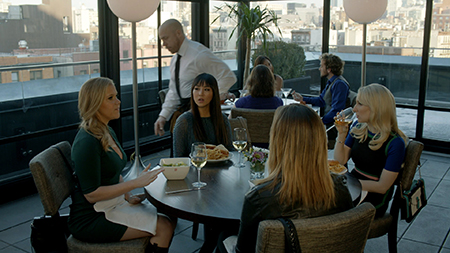
"I'm So Bad"


And in the Upper Northwest, Carrie Brownstein and Fred Armisen parody feminism in their “Feminist Bookstore” sketches on PortlandiaPortlandia turns a hilarious mirror on a certain segment of American society in front of the backdrop and personality of Portland, Oregon.  In the bookstore sketches, Toni (Brownstein) and Candace (Armisen) run Women and Women First (which is based off Portland’s In Other Words, a feminist community center).


Portlandia


They are absolute caricatures of radical feminists, and it’s glorious. They are not mean-spirited in their depictions (in fact, they have a working relationship with In Other Words, which manned–I mean womanned–Portlandia‘s Twitter feed to live-tweet the Oscars and the Super Bowl).


I need this T-shirt.


Watching Portlandia gives me ample opportunity to laugh at myself. When we were contemplating putting an NPR sticker on our new used Subaru, I realized that my life is pretty much filled with Portlandia sketches that would be too boring to air. I recognize many of Toni and Candace’s scenes as extreme versions of my own thoughts and conversations. The blurring of lines between fiction and reality was clear when Toni and Candace met with gender studies professors to “debate” feminism; they brought irreverence and comedy to an otherwise serious, analytical conversation.


Contemplating blatantly satirizing women and feminism is enough to make most of us prickle a bit, and be validly concerned about further marginalization of issues that affect our lives. Laughing about the effects of estrogen on our emotions might feel dangerous when we have Supreme Court justices who don’t understand how contraception works. Hearing women repeatedly align feminism with man-hating might make chuckling at Toni and Candace feel depressing.

However, it feels empowering to laugh in the face of adversity, and put ourselves–as women and as feminists–on the line for good comedy. There’s a clear difference between comedy aimed at feminists and comedy created by feminists, and I’m so thankful that I can bask in the latter. These shows are aimed at wide audiences full of men and women, and they lift women up and laugh at them without tearing them down.

Pure joy.


I’ve been rolling around in a lot of other TV and film that’s getting me all stunk up with feminism: Obvious Child shows how incredibly moving and entertaining women’s lives are; Orange is the New Black overwhelms me with so many women’s stories, such diversity, such power; House of Cards shows that feminist media isn’t always what we think it is; and Parks and Recreation is a consistent delight.

It’s easy to get caught up in all of the terrible, misogynist bullshit that infiltrates our screens and sound waves. Seeing just the trailer for Seth McFarlane’s A Million Ways to Die in the West almost unwound the hours and hours of feminist film and television that I’d stocked up as a defense. The Feminist Killjoy rises again and again–and she’s an important voice–but damn if sometimes it doesn’t feel good to just revel in the excellence of feminist comedy.


asdf


___________________________

Leigh Kolb is a composition, literature, and journalism instructor at a community college in rural Missouri.
‘Spamalot’: A Feminist Review

Though ‘Spamalot’ doesn’t greatly improve on the number of significant roles for women, it does add a host of female background performers who appear frequently as well as the show-stealing Lady of the Lake (often dubbed the Diva of the Lake). Though she is primarily a love interest, the Lady of the Lake is also essential as she’s the equivalent of a dues ex machina who solves dilemmas the cast faces, puts them on the right path for their quest and generally inspires enthusiasm in the pursuit of the grail.

Spamalot poster
Spamalot poster

Written by Amanda Rodriguez.
Spoiler Alert

I recently went to see a local production of the infamous musical comedy Monty Python’s Spamalot (a Broadway adaptation from the 1975 hilarious Arthurian quest film Monty Python and the Holy Grail) at Asheville Community Theatre. Though running a little long at two and a half hours, I loved it. As a fan, it was wonderful to get to see a theatre company bring to life all the gags, costume changes, ridiculous accents, jokes and songs that make Monty Python so special. As a feminist, I’d like to examine how the theatre production measures up to scrutiny through a feminist lens.

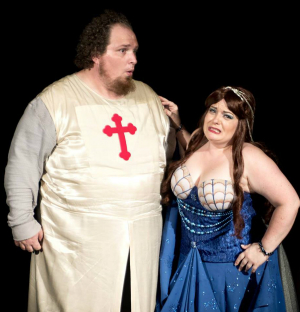
First off, despite my love of it, there’s no denying that the original source material, Monty Python and the Holy Grail, is a sausage-fest. Most of the women are played by men, and the most noteworthy scene featuring women is a bunch of cloistered nun-types at Castle Anthrax who all desperately want to have sex with Sir Galahad (they thankfully omitted this scene in the play). Though Spamalot doesn’t greatly improve on the number of significant roles for women, it does add a host of female background performers who appear frequently as well as the show-stealing Lady of the Lake (often dubbed the Diva of the Lake). Though she is primarily a love interest, the Lady of the Lake is also essential as she’s the equivalent of a dues ex machina who solves dilemmas the cast faces, puts them on the right path for their quest and generally inspires enthusiasm in the pursuit of the grail.

The Lady of the Lake has a lot of tongue-in-cheek meta-songs, and the best one, “Whatever Happened to My Part (The Diva’s Lament),” actually acknowledges how little stage time she’s gotten in comparison to her male compatriots. Though this number concedes that her representation is at best uneven, it doesn’t do much to truly integrate the lone female character into the plot itself.

[youtube_sc url=”https://www.youtube.com/watch?v=ZJqAYUAJbTk”]

In the above clip, we have Sara Ramirez of Grey’s Anatomy fame performing the role of the Lady of the Lake in the original Broadway production. She even won the Tony for Best Performance by a Featured Actress in 2005. I love that a full-figured woman of color was cast in this role, and the world recognized how brightly she shined.

Asheville Community Theatre's Nana Hosmer as the Lady of the Lake
ACT’s Nana Hosmer as the Lady of the Lake


In the Asheville Community Theatre Spamalot production, I was so pleased to see the astoundingly talented Nana Hosmer fill Ramirez’s shoes as the Lady of the Lake. The full-figured diva has a dynamite voice that playfully emulated different musical genres but also shook the rafters with its vibrato. I feel fortunate that I (and all the other theatre-goers) got to see this woman’s powerhouse performance.

The talented Nana Hosmer in Spamalot


All in all, though I lamented the lack of female characters and found the number “You Need a Jew” mildly offensive, I was delighted that, though the play felt the need to end with a wedding, it was a gay wedding between Lancelot and the song-loving, fabulous Prince Herbert. I was worried they wouldn’t have the guts for it, but then I remembered, hey, this is Monty Python we’re talking about here. I was, however, the most moved by Nana Hosmer’s Broadway caliber performance. She, along with Sara Ramirez, reminded me how challenging it is for women of color and women with bodies that don’t match Hollywood’s (very thin) standards to find quality roles in films and on TV. I hope this means that theatre is a more welcoming arena that is appreciative of talent and beauty that comes in different shapes, sizes and colors.


Bitch Flicks writer and editor Amanda Rodriguez is an environmental activist living in Asheville, North Carolina. She holds a BA from Antioch College in Yellow Springs, Ohio and an MFA in fiction writing from Queens University in Charlotte, NC. She writes all about food and drinking games on her blog Booze and Baking. Fun fact: while living in Kyoto, Japan, her house was attacked by monkeys.

Women Who Steal: ‘The Life and Crimes of Doris Payne’ and ‘Lift’

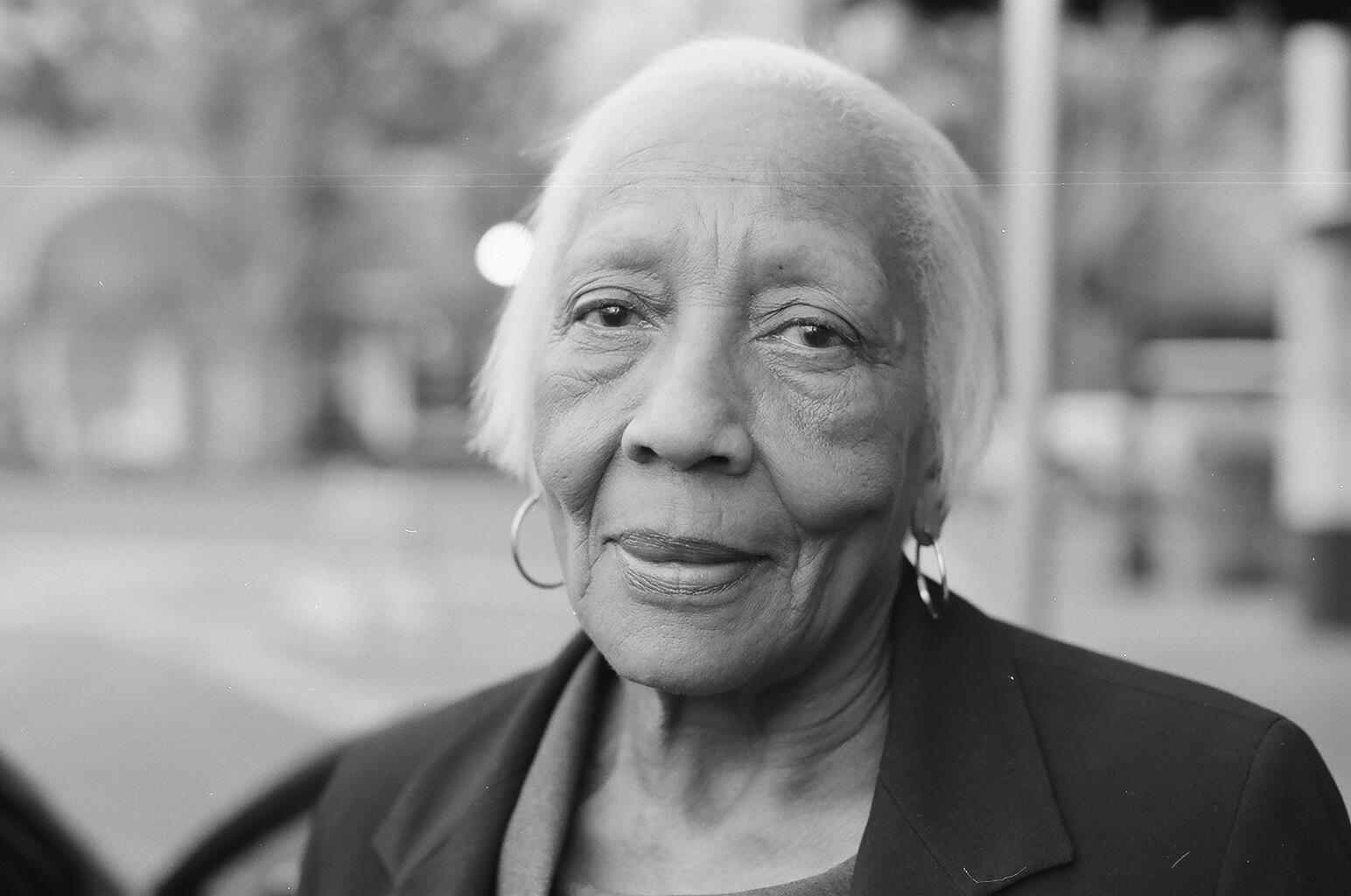
The eponymous center of Kirk Marcolina and Matthew Pond’s documentary ‘The Life and Crimes of Doris Payne’ (the opening night selection of the Roxbury International Film Festival) is an anomaly, a woman who steals and is not only unrepentant, but takes great pride in her skill. Doris is a slim, elegant, 80-something African American who has spent much of her life stealing jewelry, from a watch in the Jim Crow southern town where she grew up, to top-price diamonds she accrued while staying in luxury hotels throughout Europe.

lifeandcrimesofdorispaynemugshot

In films and TV male characers are usually the ones who get to have all the fun, especially when their characters commit crimes. Women characters aren’t allowed the relish many male characters take in stealing–and getting away with it. Though some exceptions to the rule exist–Bridget/Wendy in The Last Seduction and Melina Mercouri’s character in Topkapi–more often women play party-pooper roles like Jennifer Lopez in Out of Sight  as the U.S. Marshall trying to capture George Clooney’s escaped, bon vivant bank robber.

The eponymous center of Kirk Marcolina and Matthew Pond’s documentary The Life and Crimes of Doris Payne (the opening night selection of the Roxbury International Film Festival) is an anomaly, a woman who steals and is not only unrepentant, but takes great pride in her skill. Doris is a slim, elegant, 80-something African American who has spent much of her life stealing jewelry, from a watch in the Jim Crow southern town where she grew up to top-price diamonds she accrued while staying in luxury hotels throughout Europe.

dorispaynetoday

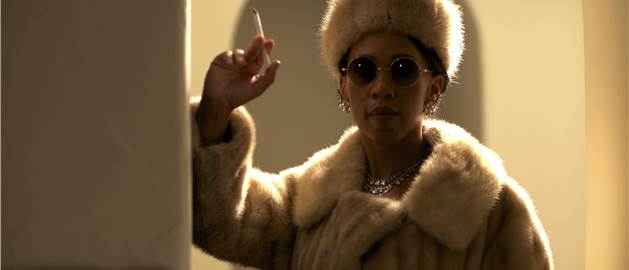
Part of Doris’s ability to steal undetected was, she explains, her creation of a persona, whether she played the “nurse” to a white accomplice or, while wearing impeccable clothes, she casually mentioned to the jewelry store staff the name of her famous (though not well known enough for anyone to know better) “husband.” We spend a lot of time hearing Doris’s stories and even see, when Doris meets with a jewelry store proprietor (who shares Doris’s obsession with gems: they seem to get along well), a security officer approach her to tell her that she can’t be in the store because of outstanding charges against her. She tells him that she didn’t know the restrictions applied to the whole mall and not just Macy’s and she leaves without an argument, explaining politely and meekly to him that she knows he’s just doing his job. Later she tells us, in a very different tone and stance, that she knew the best way to play the situation was to show the guard more respect than he deserved.  As we hear from an academic, “Doris Payne for me is someone who manipulates people. I mean, that’s her job.”

Doris’s stories become more far-fetched: in Switzerland she sews a diamond into her girdle, dropping the setting into the sea, and later escapes “through cornfields” after she is taken to a hospital, eventually catching a cab to the airport where she boards a plane out of the country. So we begin to wonder whether she is playing us the same way she played the guard (though one of the directors confirmed in the Q and A afterward that records show Doris was indeed arrested in Switzerland–and did escape). The screenwriter who adapted Doris’s life story into a script (optioned by Halle Berry but progress on production seems to have stalled) says, “Doris is the protagonist and the antagonist in the screenplay Doris Payne writes herself every day.”

DorisPaynemugshot2
Another vintage mugshot of Doris

We also wonder about the current charges against her. Doris has an excellent lawyer (whom the co-director explained in the Q and A, ended up working pro bono for Doris, which wasn’t the lawyer’s original intention) who exploits every angle to make the jury doubt Doris’s guilt. Doris herself interjects “facts” about the main witness/clerk’s testimony which make us think her identification of Doris is erroneous. With people of color more likely to be accused of stealing and white people (like the witness) more likely than people of color to mistake one Black woman for another, we go back and forth on ascertaining Doris’s guilt even as we see (or don’t see) her steal a ring in front of the camera, while she talks to an outdoor jewelry vendor with her friend from childhood, Jean.

DorisPayneMink

Is Doris, like some older shoplifters, addicted to the thrill of stealing? We see, that, in spite of her expensive-looking clothes she shares a room–and a small closet–with another woman in a halfway house. So does she steal because she has no other means of support? The co-director mentioned during the Q and A that because Doris has spent her life as a jewel thief, she doesn’t have Social Security–and the estimated 2 million dollars worth of jewels she has stolen isn’t much when divided over her career of 60 years. Doris also takes obvious pleasure in recounting her adventures, so excitement and money are probably both factors in her continuing to steal.

The prosecutor at her trial says, “She has made a lifelong career out of stealing and taking advantage of people.” As the judge at the end wonders what to do with her, so do we. Prison seems even more of a waste of resources for Doris than it does for other nonviolent criminals: it doesn’t deter her (she has been imprisoned before, including the time when her white ex-boyfriend/accomplice turned her in as part of a plea deal) and because of her advanced age, even a truncated sentence could mean that she would die behind bars. The filmmakers, with their clumsy reenactments, don’t seem quite up to dissecting the complexities that Doris’s life presents, but we still think about them, even after the movie is over.

[youtube_sc url=”http://www.youtube.com/watch?v=WQ5Cwax-aik”]

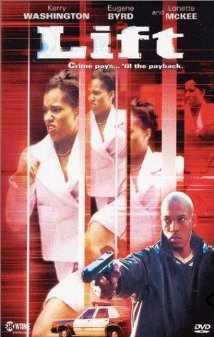
Lift, the closing selection from the festival, is a film which the festival originally premiered in 2001, when the star, Kerry Washington, was largely unknown. The movie, filmed on location in Boston and Roxbury offers a fictional counterpoint to Doris Payne. The protagonist, Niecy (Washington) is a chic window-dresser, who uses wire cutters, a big, bulky sweater and fake credit cards and identities to shoplift expensive designer clothing, which she either sells to people she knows in her neighborhood or keeps for herself or her family.

Washington isn’t quite the actress here that she was in the excellent Our Song (released shortly before Lift started filming), and the script by co-directors DeMane Davis and Khari Streeter has a muddled and clichéd it’s-all-Mom’s-fault subplot about Niecy’s relationship with her mother (Lonette McKee), but the scenes of Niecy trying to navigate between her criminal, personal, and family lives present questions that don’t have easy answers. Her extended family know (like everyone else in the neighborhood) that she steals, but are (except for her mother) glad for her gifts–since, except for her mother, they don’t have much money themselves. They also enjoy her company: we rarely see in films criminals who are “good” or even “normal” people when they aren’t breaking the law.

Lift

But unlike in Doris Payne, we see that Niecy’s “victimless” crimes do have consequences. Greed, revenge, and a distaste for leaving witnesses behind means people get hurt, and although Niecy isn’t directly responsible, she’s not blameless either. In spite of a “silver lining” ending that seems tacked on, when Niecy finally decides to stop stealing, she does so too late–for herself and for her loved ones.

___________________________________________________

Ren Jender is a queer writer-performer/producer putting a film together. Her writing besides appearing every week on Bitch Flicks has appeared in The Toast, xoJane and the Feminist Wire. You can follow her on Twitter @renjender.

Call For Writers: Movie Soundtracks

Music is a powerful tool for the expression of emotions like anger, heartbreak, and lust, but it can also be used to bolster a movement, capture the feeling of a cultural milieu, expose injustices or give marginalized groups an earthshaking voice. Combining quality films with compelling soundtracks is a recipe for the creation of important works of art that speak to more than just our aesthetic.

Call-for-Writers

Our theme week for July 2014 will be Movie Soundtracks.

Music is a powerful tool for the expression of emotions like anger, heartbreak and lust, but it can also be used to bolster a movement, capture the feeling of a cultural milieu, expose injustices or give marginalized groups an earthshaking voice. Combining quality films with compelling soundtracks is a recipe for the creation of important works of art that speak to more than just our aesthetic.

For example, 80s teen films were often concerned with disenfranchised youth. David Bowie’s “Changes” is famously used and quoted in the classic John Hughes film, The Breakfast Club:

And these children that you spit on
As they try to change their worlds
Are immune to your consultations
They’re quite aware of what they’re going through.

The Breakfast Club is so memorable because, through both its scenes and its songs, it examines social hierarchy, gender roles, adult abuse of authority and dysfunctional homes. The Legend of Billie Jean is another 80s teen film that exposes the systemic lack of agency that youth is afforded while electing a moral-minded, charismatic young woman as the spokesperson for a movement (“fair is fair”). With Pat Benatar’s rock anthem “Invincible,” young people, especially young women, rallied around the idea of carving out spaces of power for themselves.

Waiting to Exhale uses its soundtrack with hits like “Count on Me” to emphasize the importance of female friendship, while it relies on tracks like “Exhale (Shoop, Shoop)” to express the wisdom and rich sexuality of the middle-aged women the film depicts. On the other hand, The Runaways employs “Cherry Bomb” to reveal the explosiveness of budding female sexuality.

Use of The Doors’ “The End” in Apocalypse Now encapsulates the madness of war, while The Matrix‘s use of Rage Against the Machine’s “Wake Up” is a battle cry against the invisible system that either keeps us complacent or destroys us. The Jamaican film The Harder They Come was not only famous for the way in which “Black people seeing themselves on the screen for the first time created an unbelievable audience reaction,” but for its diffusion of reggae to the world outside the Caribbean. With Jimmy Cliff’s “The Harder They Come,” the film was able to show how the oppressive forces in Jamaica could be combated with fierce individualism and tenacity.

We’d like you to write about the movie soundtracks that changed you or changed the world. Feel free to use the examples below to inspire your writing on this subject, or choose your own source material.

We’d like to avoid as much overlap as possible for this theme, so get your proposals in early if you know which film you’d like to write about. We accept both original pieces and cross-posts, and we respond to queries within a week.

Most of our pieces are between 1,000 and 2,000 words, and include links and images. Please send your piece as a Microsoft Word document to btchflcks[at]gmail[dot]com, including links to all images, and include a 2- to 3-sentence bio.

If you have written for us before, please indicate that in your proposal, and if not, send a writing sample if possible.

Please be familiar with our publication and look over recent and popular posts to get an idea of Bitch Flicks’ style and purpose. We encourage writers to use our search function to see if your topic has been written about before, and link when appropriate (hyperlinks to sources are welcome, as well).

The final due date for these submissions is Friday, July 18 by midnight.

South Park: Bigger, Longer and Uncut

Reality Bites

Apocalypse Now

Garden State

Pump Up the Volume

South Pacific

The Runaways

The Legend of Billie Jean

Superfly

The Harder They Come

Mary Poppins

Pulp Fiction

The Sound of Music

Rocky Horror Picture Show

The Breakfast Club

Waiting to Exhale

Hedwig and the Angry Inch

The Matrix

Fantasia

O Brother, Where Art Thou?


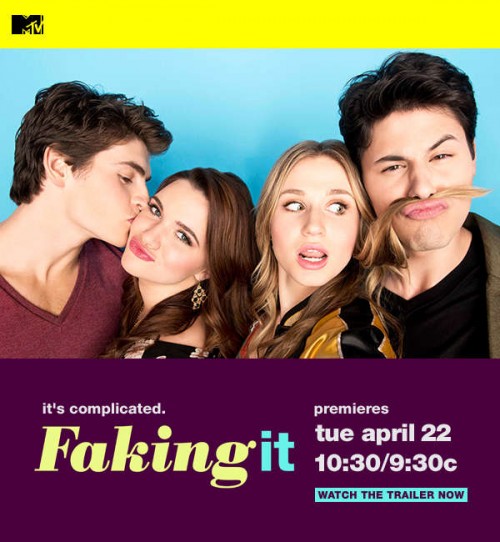
‘Faking It’: Better Than You Thought

Rather than being the exploitative show about straight girls playing gay that everyone expected, ‘Faking It’ has turned out to be an exploration of the blurry lines between friendship and romance.

Written by Max Thornton.

When I heard the premise of Faking It, I eyerolled so hard it hurt. I Kissed a Girl: The TV Show? Wow, that’s definitely what pop culture needs in 2014. But there’s almost nothing else on TV at the moment, so I watched it anyway, and…I kind of love it.

Make no mistake, this is not a good show: it is cheesy and melodramatic and cliche-ridden, and I honestly don’t know if it’s even self-aware in moments like the one where Teen Andrew Rannells calls Bargain-Basement Regina George “so two-dimensional, she’s practically a character on Glee.” And yet it’s eminently watchable, and it’s perhaps doing something a little interesting with the well-worn trope of the lesbian who’s in love with her straight friend.

I swear it's not as terrible as it looks.
I swear it’s not as terrible as it looks.

The premise is actually a little more nuanced than the way it’s been sold: two girls who attend a super-progressive high school are taken for lesbians and decide to roll with it to increase their popularity (apparently such schools do exist). The way it’s been promoted has suggested that the two girls take a much more active role in the deception than they actually do – it’s more that they are publicly and dramatically outed by Teen Andrew Rannells, and no one will believe their demurrals.

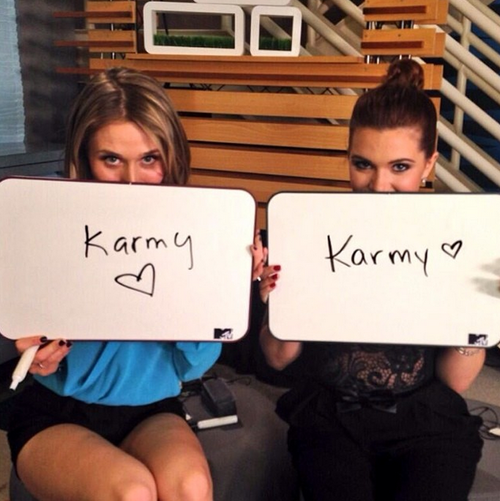
Karma (Katie Stevens), whose parents are ridiculous hippies, is definitely faking it. Amy (Rita Volk), who has conservative Christian parents, is probably not faking it. Their portmanteau name is Karmy.

Tumblr takes Karmy very seriously.

Someone on the show referred to “the lipstick one,” but they are both so femmey I honestly didn’t know which one he meant until Karma pulled out fake eyelashes and Amy said, “I guess that makes me the butch one.” Thanks for the clarification, show.

The butch one??? [image credit: MTV]

Bargain-Basement Regina George is about to become Amy’s stepsister, which is a potentially intriguing twist that has been squandered. It’s used not to deepen the Regina George character at all but just to make life even more difficult for poor Amy.

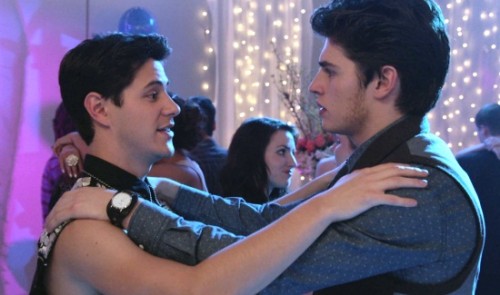
Meanwhile Teen Andrew Rannells (Michael Willett) and Bargain-Basement Edward Cullen (Gregg Sulkin) are BFFs. Teen Andrew Rannells is super enthusiastic about having lesbian friends, while Bargain-Basement Edward Cullen and Karma have a gross secret affair that 0 percent of all viewers are emotionally invested in. It’s gross and terrible and Karma needs to get hit upside the head with the cluebat. But it is neat that the gay boy’s straight best friend is a dude, rather than a woman as in 99 percent of pop culture. As repellent as Bargain-Basement Edward Cullen is, it’s refreshing to see a close onscreen friendship between a gay teen boy and a straight teen boy that isn’t full of “no homo.”

Sure, their characters have names, but they'll always be Teen Andrew Rannells and Bargain-Basement Edward Cullen to me.
Sure, their characters have names, but they’ll always be Teen Andrew Rannells and Bargain-Basement Edward Cullen to me.

Hijinks and soul-searching ensue, as Karma is terrible and Amy tries to figure out her sexuality. (“I don’t want to meet another girl.” “Boy?” “I don’t want to meet another boy.” “That limits your options.” Oh honey, not as severely as you think.) The very end of the season took an unfortunate turn into a well-trod territory that needed to happen on TV never again. It might be narratively justifiable, but it seems like every single fictional lesbian ever has slept with a man, and that really needs to stop.

As Autostraddle recapper Riese pointed out, “best friendship in high school is often nearly indistinguishable from girlfriendship.” Rather than being the exploitative show about straight girls playing gay that everyone expected, Faking It has turned out to be an exploration of the blurry lines between friendship and romance.

In some ways, the show it most reminds me of is the British series Sugar Rush (which debuted almost a decade ago, oh god I feel old). Sugar Rush was another show about a high-school lesbian in love with her straight best friend, and it was also somewhat prone to cheese and melodrama, but – you know what? That is honest to the teen experience. Teenagers are prone to cheese and melodrama, especially teenagers who are struggling to figure out their sexuality (and/or hopelessly in love with their best friend).

Ugh I love this awful show so much.

For all its faults, Sugar Rush was formative for me as a budding queer, and for that reason it will always have a special place in my heart. American teens in 2014 have more lesbionic televisual role models than British teens in 2005; even so, if Faking It can be for even one kid what Sugar Rush was for me, its existence will be justified.

_________________________________________________

Max Thornton blogs at Gay Christian Geek, tumbles as trans substantial, and is slowly learning to twitter at @RainicornMax. He’s sorry if you now have ‘I Kissed A Girl’ stuck in your head. If it’s any consolation, he does too.

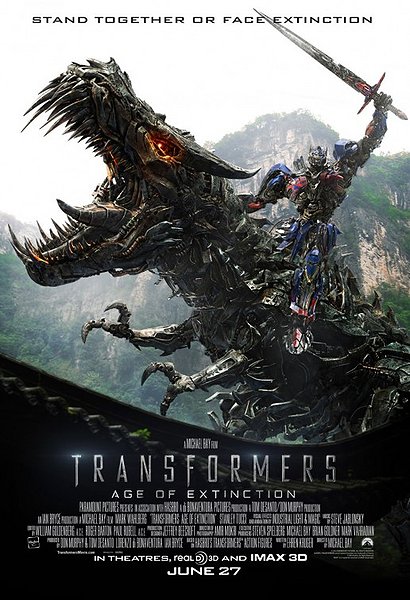
‘Transformers: Age of Extinction’: A Three-Hour Explosion of Contempt for You and Your Family

You don’t have to be an intellectual elitist to hate ‘Transformers: Age of Extinction.’ It is a terrible movie for reasons that have nothing to do with a lack of originality and everything to do with an abundance of vulgarity, violence, misogyny, and racism.

Written by Andé Morgan.

Here is all you need to know about Transformers: Age of Extinction: You Don’t Have To See It.

I'm pretty sure that's not in the Bible.
I’m pretty sure that’s not in the Bible.

The fourth installment of the Transformers movie franchise, Transformers: Age of Extinction (2014), dropped this Friday, June 27. It has done well at the box office, becoming the first film this year to break $100 million in its opening weekend, and dwarfing the returns of competitors like 22 Jump Street (2014) and How to Train Your Dragon 2 (2014). Directed by Michael Bay (again) and written (such as it is) by Ehren Kruger, it features Mark Wahlberg as Cade Yeager, the heroically hunky everyman hero. Shia LeBeouf was unavailable, as lately he has been fully occupied with losing his shit.

Yeah, the critics don’t seem to like the movie very much – it’s currently coming in at 17 percent at Rotten Tomatoes, the lowest rating yet for a Transformers film. I didn’t like it, either. In fact, I hatedhatedhated it, for all the reasons that every other critic mentions. Very original, I know. Actually, my original angle for this review, originally, was to gripe about the film’s lack of originality. You see, it’s very important to me that as many people as possible know that I listen to NPR while driving my Subaru to the farmer’s market, and I was going to tie in my theme with the subject of the latest TED Radio Hour episode, What is Original. However, maybe I’m maturing as a critic, because I’ve concluded that it’s just not fair to expect a film like Transformers (2014) to be original. I mean, it was loud, senseless, clunky, and almost THREE HOURS LONG. But, as Stephanie Palmer wrote recently, summer blockbusters aren’t usually intended to be original. Rather, they’re designed to minimize risk and maximize profit. Fair enough.
I also thought about making the best out of it, as Charlie Jane Anders does in her review of Transformers: Revenge of the Fallen (2011). After all, when life gives you poop, make poopjuice, right? No. Nope, in fact. It doesn’t matter that this is an action figure movie designed to appeal to adolescent males, I just can’t muster the good will to hold my nose, wink, and keep my tongue in cheek.
You don’t have to be an intellectual elitist to hate Transformers: AOE. It’s a terrible movie for reasons that have nothing to do with a lack of originality and everything to do with an abundance of vulgarity, violence, misogyny, and racism.
By vulgarity, I don’t mean expletives, I mean excessive tastelessness. Shiny, five gallon buckets of Dom Pérignon tastelessness. Bay is a master of landscape cinematography, and it shows since almost every shot in the movie is a landscape onto which a CGI robot will be projected. For example, after the prologue (dinosaurs), we’re introduced to Yeager. He’s just a regular guy – he drives a rusty blue pickup, he’s dirty, he wears tight T-shirts (yeah, his biceps are dreamy), and he cares about his teenage daughter, Tessa (Nicola Peltz). He’s also a single dad and a small businessman, struggling to make ends meet with his barn-based cassette tape and film projector repair shop/ROBOTICS ENGINEERING LAB. While establishing Yeager’s down home bonifides and cat-saving prowess, Bay treats us to endless shots of cornfields, soybean fields, and field fields. I haven’t seen so much lingering on a cornfield since Field of Dreams (1989) mated with Children of the Corn (1984).
Similarily, the viewer endures an excess of shallow, inarticulate references to the concerns of the day. Posters and billboards in the background allude to our national discussion of immigration policy, while mean Kelsey Grammer and his très chic CIA deathsquad reflect our trepidations about government surveillance.
Violence certainly has a place in storytelling but, like its predecessors, Tranformers (2014) has an excess of violence. Mr. Bay, where is the blood? We see countless buildings ravaged by rockets and errant robots, but where are the human bodies falling from the 55th story, blown out or jumping to escape the flames? Likewise, those same rockets strike countless vehicles, robots slice cars in half, space magnets lift tour buses half a mile into the air only to drop onto elevated trains full of commuters. I’m guessing Paramount couldn’t afford to break off some of that $210 million budget to cast a few hundred thousand dead bystanders. To be fair, I could ask that same question of Godzilla (2014) or Pacific Rim (2013) (and I do).
Was that one of those driverless Google cars?
It’s not like this so-called family film shirked from depicting violence and death entirely. In one disturbing scene, a government agent holds a gun to Tessa’s head while she pleads for her life as Cade looks on, helpless; later, we see Cade’s affable best friend Lucas (T. J. Miller) burned to death, leaving an obscene smoldering effigy that Cade and Tessa…absolutely do not react to. Maybe they’re just like the film’s young audience as the exit the theatre – numb to death.
Bay doesn’t just excel at bloodless mass murder or at getting actors to stare skyward at imaginary robots, he’s also good at casual racist caricature. Early on, our white male protagonist has to defend his home from a real estate agent who is not a black woman who is also large, she’s a Fat Sassy Black Woman. Later we’re reacquainted with Brains, a small robot with a cybernetic afro and dialogue co-opted from a minstrel show. We also see Orientalist cliches, including Every Asian Knows Martial Arts and a Wise (Robot) Samurai.
While the film passes the letter of the Bechel Test, women don’t fare well, either. Bay’s camera often lingers on the female character’s bodies. Lucas’ introductory scene begins with his verbal sexual harassment of two women crossing the street separating him from Yeager. This harassment goes unrebuffed by Wahlberg’s character. Boys will be boys, I guess.
Yep.
Yep, that looks about right.
Sophia Myles plays a geologist, Darcy Tirrel; while she’s the first main character to be introduced, she spends the remainder of the film playing The Watson for Stanley Tucci’s Steve Jobs character, Joshua Joyce, to explain Transformer tech to. During the climatic battle (I think it was the climatic battle, it’s kinda hard to tell), she marks Joyce’s development (now he’s a friendly capitalist!), saying “I’m proud of you.”
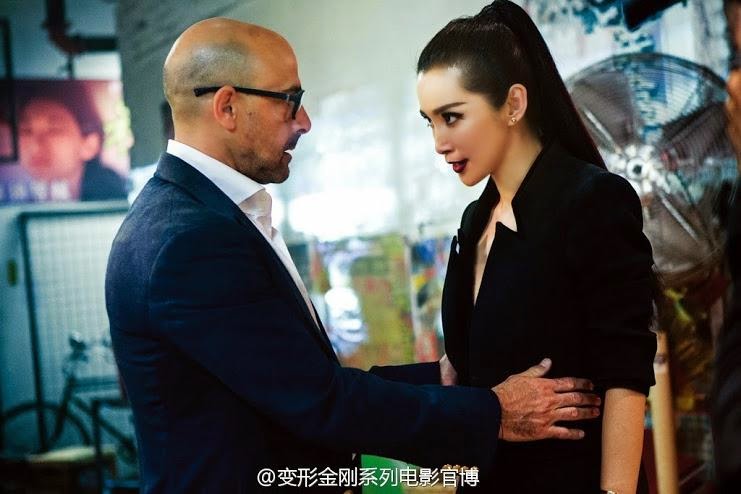
Bingbing Li plays Su Yueming, Joyce’s Chinese attaché. She wears tight pantsuits, knows Kung-Fu, and can drive a motorcycle. While initially she rebuffs his creepy-boss advances, she relents in the end and they sunset into the credits.

Li BingBing as Su Meuyung.

Tessa exists a perpetual protectorate for Yeager. For example, an hour and a half, i.e., midway, through the film, Yeager boards an alien prison ship to rescue her. While Tessa is hiding from her captors, a masculine green alien prisoner wraps a slimy green tongue around her bare leg. As the tongue gets longer and longer, it starts to reach for her genitals. I was reminded of the infamous tree rape scene in Evil Dead (1981).

Buy a Chevy.
Buy a Chevy.
As Rebecca Phale at The Mary Sue notes, the most disturbingly misogynistic scene is also the most subtle. On the aforementioned prison ship, Hound, a horribly erratic and violent Autobot voiced by John Goodman, murders an alien – essentially, a walking vagina dentata with an unfortunate sniffle – because it is “too ugly to live.” He punctuates the act by calling the corpse a “bitch.”

Buy a Chevy!
Buy a Chevy!
And so on. I intended to discuss the plot, but there wasn’t one. I was going to use phrasing like “soul crushing,” but I will decline in the interest of originality. How about “a long, loud, and dreary exercise in post-postmodern nihilism,” has that been taken? I will say that you, reader, are free to not see this movie. By all means, see a summer blockbuster, but hold out for one that shows more respect for women, minorities, and your ears.
Buy a Chevy, goddammit!
OK Mr. Bay, I’m done, I’m broken, just leave me alone and I’ll buy a fucking million pack of Bud Light.

Andé Morgan lives in Tucson, Arizona, where they write about culture, race, politics, and LGBTQ issues. Follow them @andemorgan.

Bitch Flicks’ Weekly Picks

Check out what we’ve been reading this week–and let us know what you’ve been reading/writing in the comments!

recommended-red-714x300-1


Lynda Obst: Why is Hollywood Ignoring Women? (Hint: Ka-ching!) by Margaret Wappler at DAME

The Women Behind ‘Obvious Child’ Talk Farts, Abortion And Stage Fright at NPR

Children’s Television: The Roundup

Check out all of the posts for our Children’s Television Theme Week here.

The Feminism of Sailor Moon by Myrna Waldron

This has been a post I’ve been meaning to write for a long time. I’m an absolutely die-hard fan of Sailor Moon, and part of that is because it served as my childhood introduction to feminism. That might be a little bit hard to believe, considering the superheroines of the show are known for outfits not much more revealing than Wonder Woman’s. Silly outfits aside (you get used to them), this show was absolutely groundbreaking. Its protagonists are 10 realistically flawed, individual and talented teenage girls (and women) who, oh, you know. Save the world.


Why Jessie is the Worst Show on Disney Channel by Katherine Filaseta

For those who don’t know, this is a Disney Channel series about a girl from Texas who moves to New York City and becomes nanny for a Brangelina couple with four adopted children from around the world. If done well, it could allow for very educational programming for children about diversity and identity. Spoiler alert: it hasn’t been done well. It’s been done terribly.


Was Jem and the Holograms a Good Show for Little Girls? by Amanda Rodriguez

Though the show’s focus on romantic love, fashion, and female rivalry are of dubious value, there are definitely a lot of good things going on with Jem & the Holograms: the notion that fame and fortune should be used for philanthropic means, that female friendships can be strong and form an important network of support, and that a sense of community is crucial.


She-Ra: Kinda, Sorta Accidentally Feministy by Amanda Rodriguez

She-Ra: Princess of Power represents a network of powerful women who not only like each other, but they support each other, organize a rebellion against an oppressive patriarchal regime, and get shit done. The example this powerful group of women set for impressionable girls like myself is tremendous.


Why I Love Adventure Time by Myrna Waldron

Adventure Time is a Cartoon Network animated series that combines surrealistic comedy, fantasy and science-fiction. Based on a 2008 short by Pendleton Ward that went viral, it parodies the tropes, archetypes and cliches of fairy tales, video games and childhood action figure battles. The basic premise is about Finn, the last remaining human, and his best friend/adoptive brother Jake (a shape-shifting dog), going on your typical slay-the-monster-save-the-princess adventures. Now in its fourth season, it’s an enormous hit with all genders and age groups and shows no signs of slowing down. And let me tell you, as a feminist, why I am absolutely celebrating this show.


Anne of Green Gables: 20th Century Girl by Ren Jender

What makes good television programming “for children” is elusive. No demographic is unanimous in its tastes, but children differ from one another more than other groups: what fascinates a 4-year-old can bore an 11-year-old and vice versa. Add to this problem that most critics and programming creators are not children themselves, and we can see why most children’s programming is so terrible: because it, even more than other types of art, is based on, to quote Jane Wagner “a collective hunch.” Still, like a Supreme Court justice famously said about pornography, most of us, even those of us who don’t have children, can recognize excellent children’s programming when we see it, like the 80s made-for-television Anne of Green Gables, based on the book by Lucy Maud Montgomery.


Hey Arnold! A Bold Children’s Show by Nia McRae

Hey Arnold! taught life lessons without the viewer realizing it. An episode called “Stoop Kid” taught kids about the benefits of getting out of their comfort zone. The episode “Chocolate Boy” humorously analogized drug addiction. Arnold’s closeness with Gerald alongside Helga’s rapport with Phoebe highlighted the importance of friendship. The wrongness of first impressions was a reoccurring lesson; a dumb character would have moments of wisdom or a snobby character would have moments of vulnerability or a seemingly lucky rich kid would be shown as unhappy and/or overstressed. My favorite example of this message is in the episode “Ms. Perfect”, which introduced the character of Lila. Her popularity caused female students to envy her at first. But once they learned about Lila’s troubled life, the girls apologized and accepted her.


Gravity Falls: Manliness, Silliness, and a Whole Lot of Awesome by Max Thornton

Figuring out who you are in the face of societal pressures that buffet you every which way is the trial of growing up, and helping people to do that is one of feminism’s goals. It’s also at the heart of Gravity Falls, which helps cement this for me as an exciting show.


Celebrating Sesame Street by Leigh Kolb

So what does idealistic, feminist children’s television look like? It looks like Sesame Street, which over the course of its 45-year run has won more than 120 Emmy Awards. Sesame Street‘s frank and honest treatment of race, women’s rights, adoption, breastfeeding, death, childbirth, incarceration, divorce, HIV, health, bilingualism, and poverty throughout the years has added a dimension of social understanding to a show that also deals with teaching children their ABC’s and 123’s.


Adventure Time – Why Lumpy Space Princess is Important by Gaayathri Nair

LSP’s character design can barely be called feminine in the ways that we as a society code things feminine. This is especially true if you compare her to other female characters on Adventure Time such as Flame Princess and Princess Bubblegum. Her gender markers are the fact that her name is Lumpy Space Princess, the fact that she is pink, and that her speech takes on the patterns and vernacular of a valley girl although her actual voice is low and not immediately parse-able as feminine. The other main gender marker of LSP is the fact that she is into traditionally feminine things such as shopping and make up.


Steven Universe: A Superhero Team We Can Believe In by Megan Wright

Steven Universe embraces non-traditional families. Steven is a perfectly happy kid, who is raised by three women who love him. The Gems are wonderful guardians for Steven, acting as mothers, sisters, and leaders to him. Even though the Gems and Steven don’t always see eye to eye, they always try to step beyond their comfort zones for one another. The Gems may not understand the concept of video games, but if Steven wants to go to an arcade, then they’ll go. If Steven wants to throw them several birthdays for the thousands of ones they haven’t celebrated, they’ll let him dress like a clown and play party games with them, because even though they don’t understand it, it clearly means a lot to Steven.


Friendship Is More Than Magic: Feminism and Relationships in Puella Magi Madoka Magica by Kathryn Diaz

Imagine a world where young girls are trapped in a system that sees them as commodities. Imagine that any girl could be tricked into giving herself up to a life that is by all appearances filled with magic, beauty, excitement, and good, but exists to feed off the energy of their spirit. The girls are purposely pushed to their limits. When they have become too cynical or burdened, the system condemns them and sends in younger counterparts to pick them off. Imagine that these girls are pitted against each other, that once they have been lured in with heroic, fairy tale trappings, they are encouraged to turn around and use the power that they should be grateful for to use and destroy each other. At the top of this system sits a small white creature. He just can’t understand why girls get so upset when they learn the facts of life they signed up for.

…..That wasn’t very hard to imagine after all, was it?


The Magic Garden: Female Leaders In Children’s Television by Hayley Krischer

With their soft voices and pigtails Paula and Carole had a purpose: they created a serene little oasis while sitting on swings and singing, calling kids to “come and see our garden grow.” In The Magic Garden, there was a garden of make-believe where the “magic tree grows lollypop sticks.” Paula picked on her guitar and Carole encouraged you to stamp your feet or clap your hands on the “pop” during “Pop Goes the Weasel” without sounding like a droning fire alarm. Watching an episode of The Magic Garden was like going to a music class—the women pushed kids to sing faster and faster with the speed of the music, harmonizing and smiling, their easy melody a break of sorts to all of the outside noise.


Better Than Two: Female Power Trios in Children’s TV by Emanuela Betti

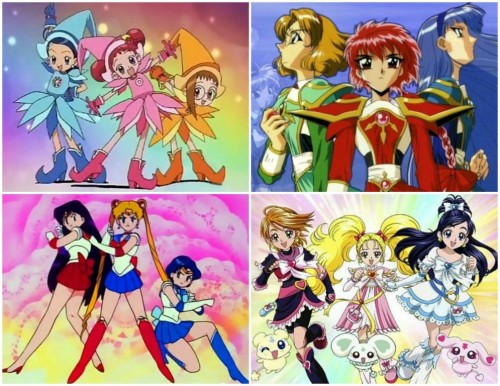
Power Trios in children’s TV, like duos, are still composed of oversimplified types and characters, yet they also suggest that femininity is not so black and white. Three character ensembles introduce characters types than are on a greyer scale than the polar-extremes of the Light/Dark Feminine trope. In the case of female Power Trios, the formula consists of three characters that respectively represent beauty, brains, and strength. Characters representing beauty are usually ditzy and childish, but they are also sensitive and the mediators (so if they happen to be “dumb” they’re at least depicted with a good heart); characters representing brains are sometimes the group leaders, but also rational without being distant or cold; finally, characters representing strength are usually impulsive and hot-headed, but their rash tendencies are balanced out with a loyal nature.


The Imaginary World of Mona the Vampire by Elizabeth Kiy

The series chronicled the adventures of Mona Parker, a young girl who enjoys dressing up like a vampire and sees saving her town from monsters as her mission in life. The stories are Buffy-lite: a giant bug substitute teacher, a robot babysitter, doppelgängers, a computer virus with mind-control powers, and new cafeteria cooks who aim to poison the school with salmonella. Though the show often pulls out from Mona’s fantasies to reveal the reality of the situation, Mona’s fights against the forces of darkness, usually end up somehow solving the crime or prank, exposing a conspiracy or locating the lost item anyway.


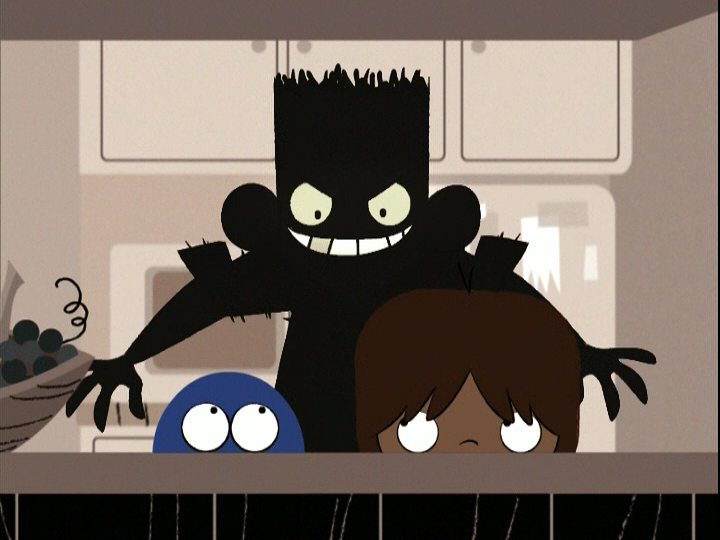
Exploring Imagination and Feminine Effacement in Cartoon Network’s Foster’s Home for Imaginary Friends by Jenny Lapekas

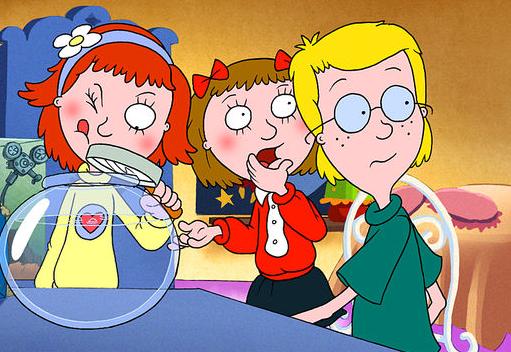
Why examine this offbeat show through a feminist or ethical lens?  Because Foster’s Home for Imaginary Friends (Craig McCracken, 2004-2009) is wildly inventive and subversive.  Its plot, which explains that children’s imaginary friends must eventually go live at Madame Foster’s zany orphanage after he or she has outgrown their friend, insists that a child’s imagination has the power to make something real, whether adults believe it or not.  At this home, young children are welcome to come and “adopt” one of the friends who is housed there.  In this way, the friends are concepts that are “recycled” in order to accommodate children as they grow up.


Adventure Time vs Regular Show by Amanda Lyons

There is one thing that, for me, gives Adventure Time a bit of an edge over Regular Show, and it’s been compounded after sitting through a two-hour back-to-back marathon of both shows over the weekend. It boils down to this: while both cartoons are awesome, Regular Show is pretty much a bro-zone while Adventure Time has a bit more room for the ladies.


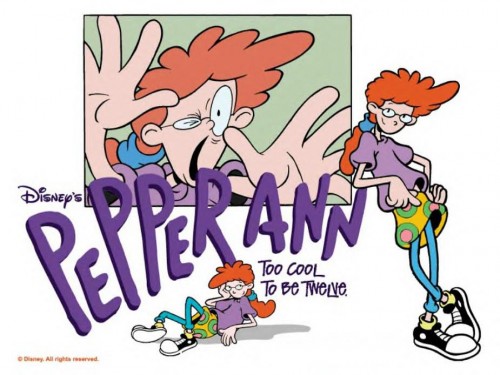
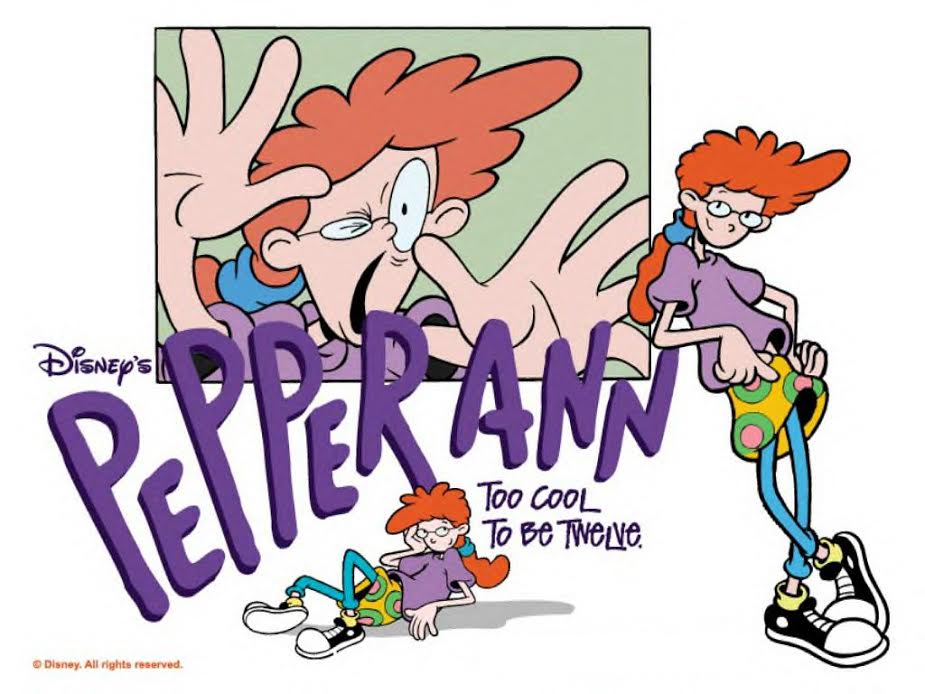
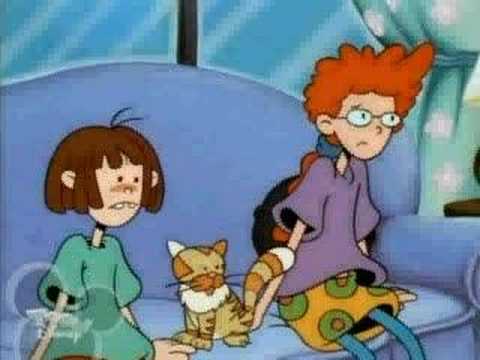
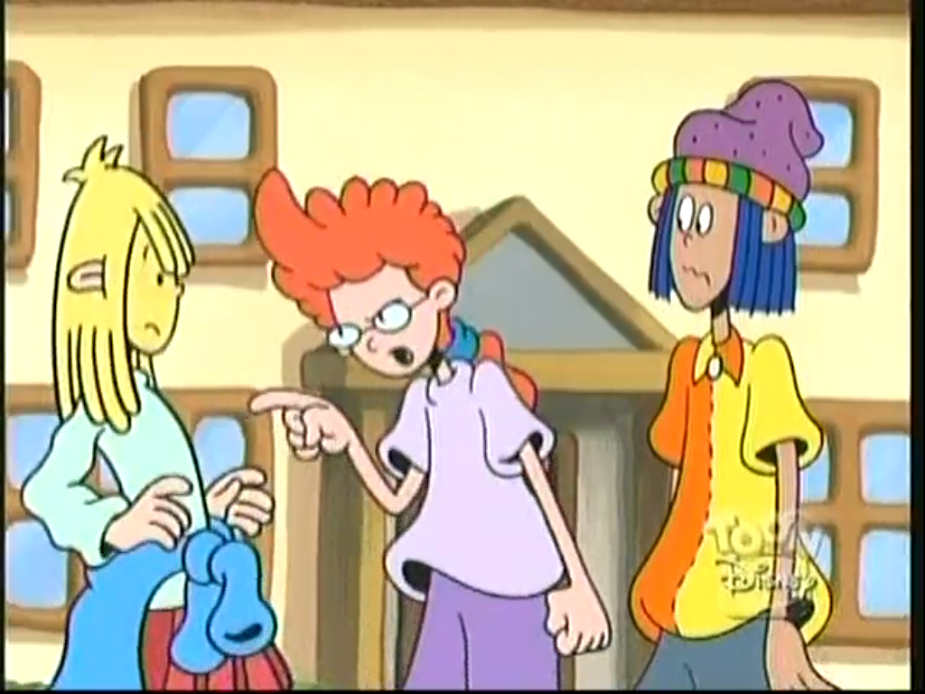
Pepper Ann: Pepper Ann Much Too Cool Not To Be On DVD: A Letter to Disney by Janyce Denise Glasper

Behind black rounded glasses is Pepper Ann–a puffy red haired chick wearing eccentric style complete with black and white sneakers. An overall normal girl living in a normal world. In the town of Hazelnut, this humorous hip nerd lit up our shared television screen over vast bowls of high sugared cereal bowls. Like my sister, tomboy Pepper Ann played video games, adored roller blades, and sports while Pepper Ann’s precocious best friend Nicky loved books and had an indie spirit vibe like me. Wide range of diverse characters included Pepper Ann and Nicky’s other bff Hawaiian Milo, a rotund Swiss boy, typical popular blond chicks, and African American twins. There seemed to be a treat for everyone.


Pokemon: Escapist Fantasy for the Budding Feminist Child by Nia McRae

Should a writer depict a world that mirrors reality and show the problems within it or should s/he depict the ideal world we want to live in? Pokemon leans more to the latter. Pokemon, just like Star Trek, depicts a world that’s egalitarian or at the very least, very close to it. It’s a world where gender, race, and sexual orientation appear to be irrelevant. As a kid, I couldn’t articulate very well why I loved Pokemon so much but now I can. My joy was due to many things in the show; the adventures which encouraged my love of travel, the fun and catchy songs and most notably, the strong presence of dynamic, ambitious, and fun female characters.

Exploring Imagination and Feminine Effacement in Cartoon Network’s ‘Foster’s Home for Imaginary Friends’

Why examine this offbeat show through a feminist or ethical lens? Because ‘Foster’s Home for Imaginary Friends’ (Craig McCracken, 2004-2009) is wildly inventive and subversive. Its plot, which explains that children’s imaginary friends must eventually go live at Madame Foster’s zany orphanage after he or she has outgrown their friend, insists that a child’s imagination has the power to make something real, whether adults believe it or not. At this home, young children are welcome to come and “adopt” one of the friends who is housed there. In this way, the friends are concepts that are “recycled” in order to accommodate children as they grow up.

Written by Jenny Lapekas as part of our theme week on Children’s Television.

Why examine this offbeat show through a feminist or ethical lens?  Because Foster’s Home for Imaginary Friends (Craig McCracken, 2004-2009) is wildly inventive and subversive.  Its plot, which explains that children’s imaginary friends must eventually go live at Madame Foster’s zany orphanage after he or she has outgrown their friend, insists that a child’s imagination has the power to make something real, whether adults believe it or not.  At this home, young children are welcome to come and “adopt” one of the friends who is housed there.  In this way, the friends are concepts that are “recycled” in order to accommodate children as they grow up.

It’s interesting that Wilt is created with physical defects (his eye and his arm), pointing up the fact that these are not considered flaws by his young creator, but rather just part of who he is, like a hairstyle or shoe size.


There’s a certain level of manic energy present in some of today’s children’s cartoons (see SpongeBob SquarePants), and Foster’s is no exception.  It seems as if so much is taking place all at once–most of which is pure nonsense–that we must comb through a cartoon’s goofy dialogue and fast-paced antics to discover central themes of kindness, friendship, and teamwork.  I grew up watching David the Gnome, Eureeka’s Castle, Will Quack Quack, Noozles, and Faerie Tale Theatre, all shows that were modest and plodding, patient in their moral messages for kids watching at home.  Although Foster’s can be grouped with other kids’ shows that consistently feature a great deal of commotion, this Cartoon Network show boasts some of the most creative characters and engaging plots, even for adults who are fans of clever cartoons with positive messages for everyone.  I never had an imaginary friend growing up, and this show is a reminder of that for me.

The commercial for Foster’s states that it’s a place “where good ideas aren’t forgotten.”


We have an eclectic mix of primary characters who we follow throughout the series.  The atmosphere at Foster’s rests somewhere between a low level psych ward and a daycare full of rambunctious trouble-makers.  Although female-gendered “friends” are largely underrepresented on the show, the lessons Foster’s has to offer to child viewers are healthy and powerful, as they promote building friendships, using your imagination to have fun, and exploring the world around you.

After a fight with his brother, Terrence, which leaves the apartment in disarray, Mac’s mother tells him that at eight years old, he should have outgrown his imaginary friend, Bloo, by now.  The fact that after Mac is forced to surrender his kind imaginary friend, yet continues to visit him every day, is evidence that Mac is not quite ready to grow up yet, and perhaps that’s not such a bad thing.  We’re never too old to dream, imagine, and tell stories.  This pressure to “grow up” translates to a sort of censorship, which inhibits our creative impulses as adults.  We can’t be afraid to embrace nonsense; it can always be the root of something spectacular.

We can assume that Mac creates Bloo to cope with the bullying he receives from his obnoxious older brother on a daily basis.


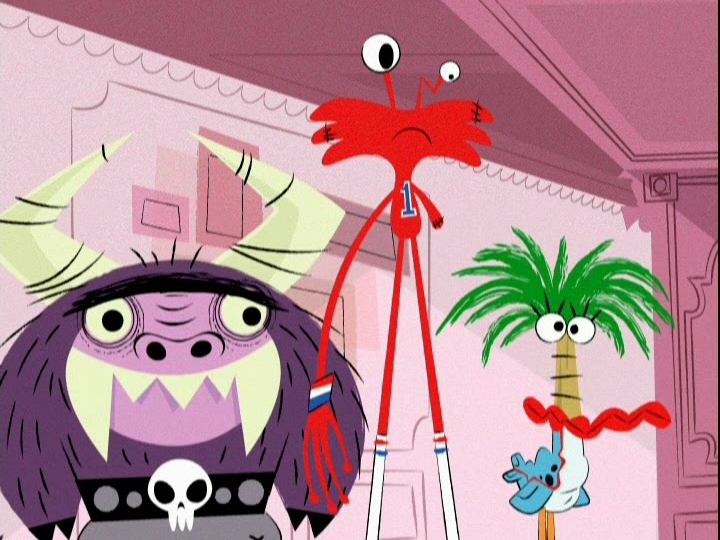
Since the inhabitants of Foster’s are the products of children’s imaginations, it may make more sense to focus on these characters, rather than the humans who help to run the institution.  If we simply take a look at the appearance of many imaginary friends, we may surmise that this show is the ultimate lesson in diversity for children viewers.  Wilt is very tall with some bodily “deformities,” Eduardo is a Latino creature resembling a bull, and Coco is a bird-like friend whose vocabulary stops at her own name.  By observing many of the friends, we get a sense of the psychology behind each creature’s origin.  Coco, for example, was dreamed up by a little girl who survives a plane crash and becomes stranded on a desert island; if we look closely, the bird’s head and hair mimic a palm tree, and her body looks like a crashed airplane.  In this way, Foster’s can be seen as literally fostering childhood stressors, including the confusion many of us can remember from our early years; the home we find in this cartoon works to make sense of that uncertainty.

Coco’s image is a direct reflection of her little girl’s trauma after a near-death experience.


Because Coco is the only female character within our primary group of imaginary friends, I think it makes sense to focus on her presence in the home.  Foster’s houses dozens of more friends, a few of them female, and many of them become entangled in the lives of the main characters.  One secondary female character we meet right away is the insufferable Duchess, who believes that she is the best idea anyone’s ever come up with.  This leaves Coco as the only primary character who is an imaginary friend in Foster’s (excluding, of course, the humans who help to run the home).  What luck that Coco, in spite of her limited vocabulary (or perhaps because of), is simply delightful.

Because Coco is only able to say her own name, she must alter her tone to let her friends know if she’s happy or upset, or if she’s asking a question or giving a direction, etc.  This communication has its own set of rules in relation to the other characters (see Stewie from Family Guy).  When Bloo first meets her, he repeatedly says “Yes” because he thinks she’s asking if he’d like some cocoa.  However, Wilt understands her and explains that she was offering Bloo some juice.

In the first episode of the series, Coco repeatedly squawks “Coco!” at Eduardo as he rescues Mac from a vicious monster created by a “jerky teenage boy,” and Eduardo eventually says in Spanish, “Yes, thanks, Coco, you have a way with words,” clearly an ironic joke that Coco is adept at resolving tense situations, despite the fact that we can’t understand her on some level.  It’s also made clear that when we make friends, we eventually begin to speak the same language, even if outsiders are unable to translate it.  The show’s inclusion of a Latino character also exposes children to the Spanish language, which can only be a good thing.  This scene also solidifies Eduardo as a character we cannot and should not judge based on appearances alone.  Despite his large stature and booming voice (not to mention that he’s a bull!), he’s the gentlest friend at Foster’s and is often terrified of children, another example of comical irony in the cartoon.

In season three, Mac responds to Coco’s “gibberish” with an ominous, “Coco, I think if we did that, we’d go to jail,” alerting us to a darker side of Foster’s and its whimsical friends.  Like everything else on the show, her thought is left to our own imaginations.  What’s convenient and exciting about having Coco around is that she can lay eggs that contain fun prizes.  She’s so excited when Bloo arrives at Foster’s that she lays an egg filled with a Ming vase, in addition to a bundle of other mysterious items that Mac carries off when he leaves.  Coco also proves her kindness on Bloo’s first night at Foster’s when she gives him an egg with Mac’s photo inside.

Mac is delighted to gather the plastic eggs Coco has laid.


Coco is important not only because she’s one of the only female characters in the house, but because her presence is a mark of understanding:  that childhood is its own language, and that play and learning are interconnected and necessary for growth.  What children can take away from Foster’s is the understanding that imagination is not synonymous with foolishness, and that it is a muscle to be flexed as often as possible.  If this key lesson is instilled in children at a young age, we can expect them to become more creative and tolerant adults who in turn raise their own children to view the world as being full of possibilities, as opposed to the frightening monsters we carry with us from childhood.  We may find that those monsters hiding in our closets when we’re kids become the unrealized ideas we hide from as adults.  Foster’s materializes this concept beautifully and offers adult viewers the opportunity to live vicariously through each imaginary friend we meet.

Foster’s appeals to kids as it depicts authority figures in a patronizing light, such as the uptight Mr. Herriman, who happens to be a huge rabbit (and also reminds me of the androgynous and high-strung Rabbit of Winnie the Pooh).  And yes, most of the friends we follow on the show are males.  However, these are forgivable offenses considering the lightheartedness the show promotes, not to mention its celebration of childhood and the endless possibilities of the imagination.  Madame Foster’s home offers childhood friends a second chance, proving that imaginary friends don’t die or disappear but are lovingly passed on to the next child who is in need of a wacky companion.  Child viewers who actually entertain imaginary friends can easily find some validation in this show’s exploration of that thin line that separates reality from make-believe.  Foster’s is a fantastic wonderland for young viewers and a gentle push to adults to pay attention to their child’s imaginary friend, who is always very real for the child.

Note:  Season one of Foster’s is currently available on Netflix.

______________________________________

Jenny holds a Master of Arts degree in English, and she is a part-time instructor at Alvernia University.  Her areas of scholarship include women’s literature, menstrual literacy, and rape-revenge cinema.  You can find her on WordPress and Pinterest.

The Imaginary World of ‘Mona The Vampire’

The series chronicled the adventures of Mona Parker, a young girl who enjoys dressing up like a vampire and sees saving her town from monsters as her mission in life. The stories are Buffy-lite: a giant bug substitute teacher, a robot babysitter, doppelgängers, a computer virus with mind-control powers, and new cafeteria cooks who aim to poison the school with salmonella. Though the show often pulls out from Mona’s fantasies to reveal the reality of the situation, Mona’s fights against the forces of darkness, usually end up somehow solving the crime or prank, exposing a conspiracy or locating the lost item anyway.

Written by  Elizabeth Kiy as part of our theme week on Children’s Television.

As a kid, I had a boundless imagination.

I put on plays in my backyard (notably a bowdlerized Romeo and Juliet) and my friends and I spent our recesses pretending we were princesses, fairies, cowgirls, mermaids and Hogwarts students. I convinced my little sister we were always traveling the world- any clock tower was Big Ben, a local bridge was the Golden Gate and power line towers were always the Eiffel Tower.

In short, I was a lot like Mona the Vampire. Or at least, I see a lot of myself in her.


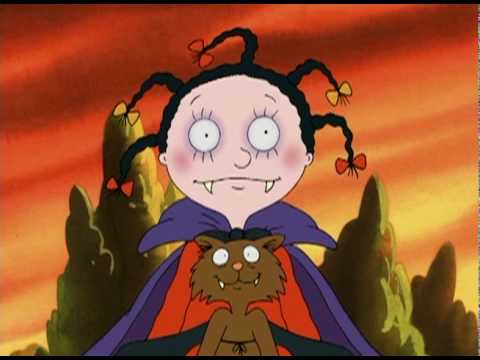
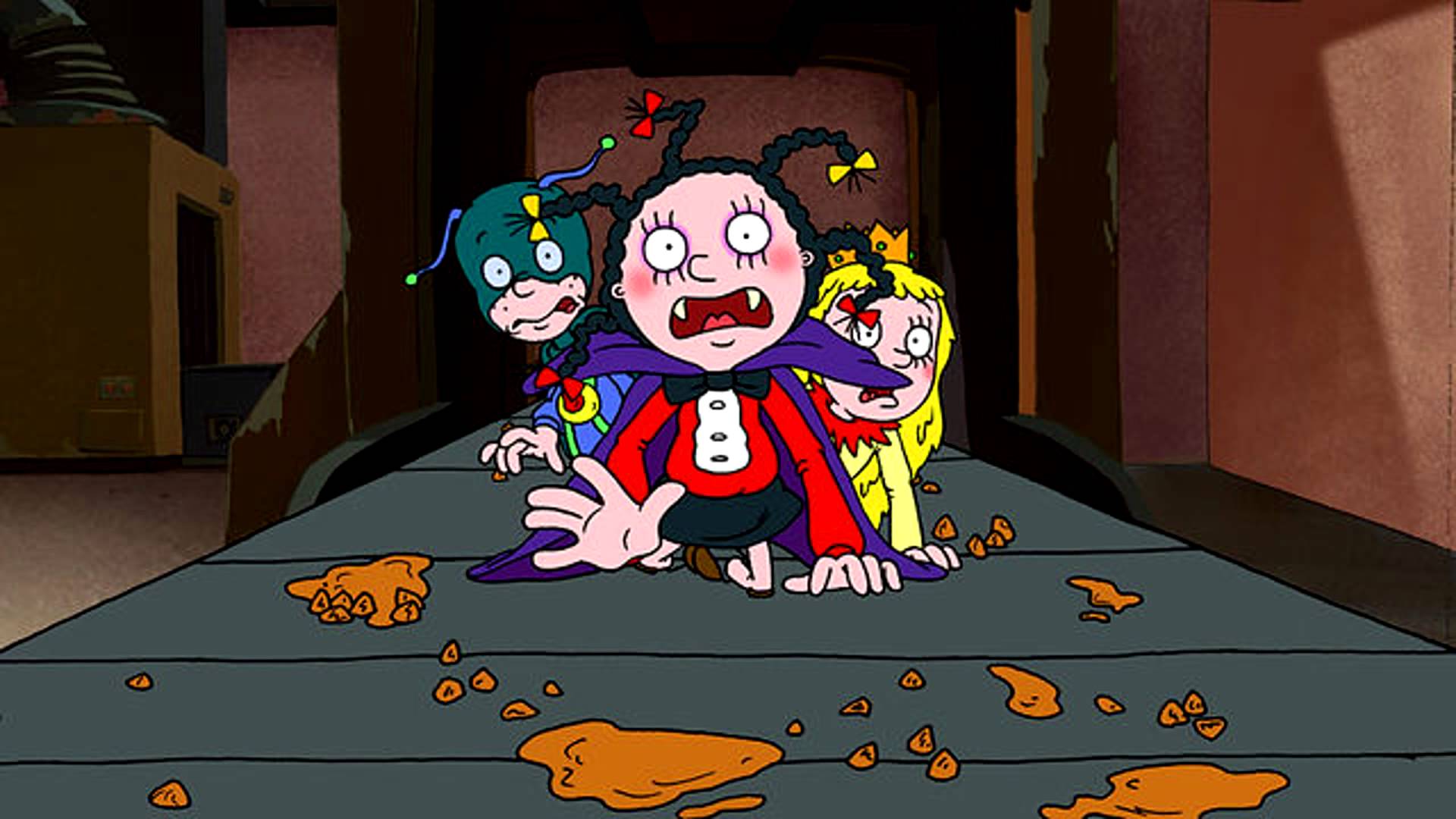
Mona is a young girl who feels most comfortable dressed as a vampire


I’m unsure if the show is at all familiar outside Canada. Here, it ran for four seasons (1999-2003) on YTV (basically our equivalent to Nickelodeon) and I binge-watched it on weekends and as treat whenever I stayed home from school sick.

The series chronicled the adventures of Mona Parker, a young girl who enjoys dressing up like a vampire and sees saving her town from monsters as her mission in life. The stories are Buffy-lite: a giant bug substitute teacher, a robot babysitter, doppelgängers, a computer virus with mind-control powers, and new cafeteria cooks who aim to poison the school with salmonella.

Though the show often pulls out of Mona’s fantasies to reveal the reality of the situation, Mona’s fights against the forces of darkness, usually end up somehow solving the crime or prank, exposing a conspiracy or locating the lost item anyway.

And Mona is never deterred by rationality, in her mind, everything out of the ordinary has a supernatural explanation and nothing can convince her otherwise.

A typical day in Mona’s world may involve fighting space invaders.


As a lead character on a children’s show, Mona is refreshingly atypical. When deciding on alter ego, she eschews the traditional superhero or princess dress and chooses to be a vampire. As a female character, Mona is also unique in her love of scary stories and late night horror movies, comic books and gruesome creepy crawlies. With her usual costume, which she chose herself and slips on at every opportunity, she tries to make herself as frightening as possible with a wig of wild, gravity-defying braids, plastic fangs and exaggerated purple circles drawn under her eyes.

However, the general effect is more adorable than intimidating and with her high pitched voice, it’s clear she’s still a child, unsure of her place in the world, underneath it all.

In fact, like Batman, she considers her true self to be her caped crusaded identity. Mona Parker, not Mona the Vampire, is the disguise. Though Mona sees herself as a vampire, she never troubled with questions of morality, in her view, she’s a good vampire and that’s that. She doesn’t need to bite people or drink blood, but instead has vampire senses that tell her when trouble is near.


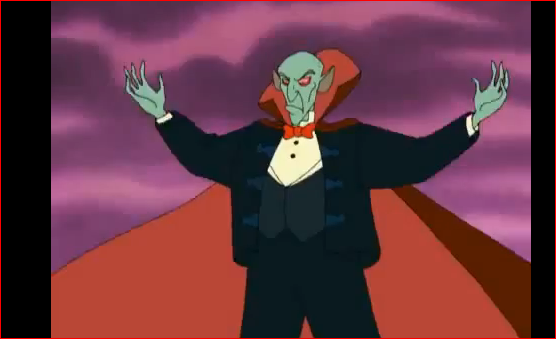
While Mona is a good vampire, Von Kreepsula is a evil one, who must be contained within the pages of a comic book


Unlike the brooding vamps we’re used to, Mona also has a child’s sense of morality. She believes that she and her friends are good while the monsters they fight are all bad. For example, Von Kreepsula is Mona’s nemesis, an evil vampire to match her good.

But like the children watching the program, Mona learns that morality is not so black and white

In several episodes, Mona learns the monster she’s been fighting is merely misunderstood, lost it’s home or separated from it’s family. Even her sense of self is challenged when Mona meets a vampire hunter and has to convince her of her essential goodness.

Though Mona is neither binary extreme of masculinity or femininity, the two options usually available to children’s heroes and heroines, her friends and sidekicks Charley (AKA Zappman) and Lily (AKA Princess Giant) certainly are.


 Princess Giant, Zappman and Mona the Vampire
Princess Giant, Zappman, and Mona the Vampire


Like Mona, Charley and Lily are imaginative kids who love to play her games, though it’s a little unclear to what extent they believe in actually believe in the monsters and vampires infesting their town. While both are timid and scared on their own, Mona’s bravery and self-confidence buoys them are draws them into her world.

What I found so refreshing was Mona’s personality as a leader, the Really Rosie type, the Queen of the neighborhood. As a leader, Mona also helps her less confident friends discover their skills and strengths by making them vital parts of her fantasy narrative. She can only defeat the monsters with the help for Charley’s Zapp-A-Rama Gun, his aptitude for science and Lily’s ability to grow.

She introduces them to the highly covetable idea of developing a superpower that makes your weaknesses into strength. Sure Charley is easily scared and often bullied, but with Mona’s encouragement to be the superhero she sees in him and encourages him to see for himself, he’s just like his hero, the Man with Nine Lives. Likewise, without Mona, shy Lily hides behind her hair and lets others push her around and feel her small. When they meet, Mona tells Lily she can have any type of alter ego she wants and chose her own powers. Lily chose to become the braver version of herself that she hopes to grow into, and takes on the power to make herself as big as she wants, so no one can intimidate her and make her feel unimportant.


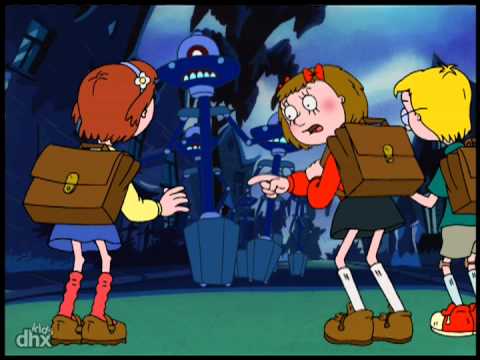
In their daily lives, Mona and her friends are ordinary elementary school students


Closing out the pack is Mona’s trusty cat and confidant Fang is always there as back-up and a (silent) voice of reason anyway. Fang may have more sense than either kids or adults and his expressions often silently suggests the problems in Mona’s logic that no one else can see.

Mona’s parents are supportive but weary. They believe they are raising a highly intelligent, imaginative child, one who gets in her fair share of trouble but is loyal to her friends and always able to find a way out of a jam. They’re the kind of parents every wildly imaginative kid should have, people who always know there are many reasons to be proud of their daughter and nurture her creativity.

Moreover, Mona’s friends are also posed as underdogs throughout the series. Mona’s nemesis is Angela, the cruel and vain daughter of lottery winners who believes she can win friends by showing off her enormous wealth. George, often Angela’s henchmen, is a crude bully who mainly picks on Charley, but is the Principal’s nephew, so he rarely gets in trouble. In comparison, each episode, Mona shows she can save the day with just her wits and imagination, teaching young viewers their value above all.

As with many children’s shows, the kids on Mona the Vampire are smart and resourceful, solving crimes even the police can’t  and speaking and working with adults like colleagues, the ultimate fantasy for most real-life kids.  In many episodes, Mona deals with the local chief of police, Officer Halcroft who offers rational explanations to each incident. Each time, she dismisses them as ridiculous and unbelievable.

I also love how improvised the character’s costumes seem, like real things the kids could have gathered from around the house. Mona’s floral cape is an old curtain, while Princess Giant’s long blonde hair is a mop. This small aspect of the series adds realism to their imaginings and suggests that the show’s creators consider or remember the actual mechanics of children’s fantasy games.


The typical effect used to transition between “fantasy” and “reality”

In addition, the show refuses to underestimate children as an audience, the stories are never definitively attributed to natural or supernatural causes and the show never overtly indulges or refutes her world. The transition effect between “reality” and Mona’s fantasy gives viewers room to judge how much of the fantasy is real. Many episodes even end on an uncertain note, with even the adults unable to explain every detail rationally, suggesting there may be some truth to Mona’s imagination.

Mostly I liked the show because it clearly respected and celebrated the dreamworld so essential to childhood and creative, curious children. With imagination like Mona’s, even the ordinary world can be magical.


Elizabeth Kiy is a Canadian writer and freelance journalist living in Toronto, Ontario.

‘Pokemon’: Escapist Fantasy for the Budding Feminist Child

So, should a writer depict a world that mirrors reality and show the problems within it or should s/he depict the ideal world we want to live in? ‘Pokemon’ leans more to the latter. ‘Pokemon,’ just like ‘Star Trek,’ depicts a world that’s egalitarian or at the very least, very close to it. It’s a world where gender, race, and sexual orientation appear to be irrelevant. As a kid, I couldn’t articulate very well why I loved ‘Pokemon’ so much but now I can. My joy was due to many things in the show; the adventures which encouraged my love of travel, the fun and catchy songs and most notably, the strong presence of dynamic, ambitious, and fun female characters.

1

This guest post by Nia McRae appears as part of our theme week on Children’s Television.

Everyone from Bill Cosby to the creators of South Park seemed baffled and amused by the Pokemon craze of the 90s. It still holds a place in the hearts of many millennials because although its obvious aim was to sell products, it didn’t change that the show had a lot of wit and heart. It’s easy to tell a lot of effort went into the episode ideas, world-building, character building, and dialogue. However, most of the people who were adults when the television show first appeared were, and still are, mystified by its appeal. So, I’ll try to explain the show to people who aren’t enthusiasts. Pokemon is an Anime-otherwise known as a Japanese cartoon-that was translated into English by the production company, 4Kids Entertainment. The word Pokemon is short for Pocket Monsters.

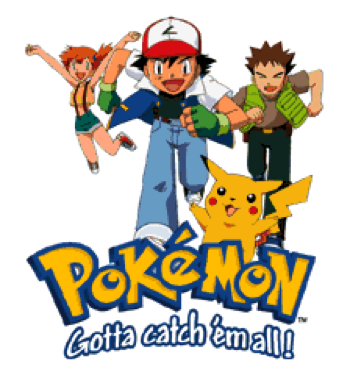
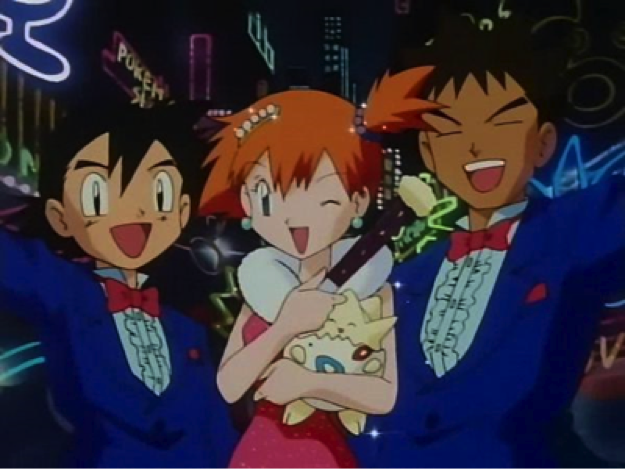
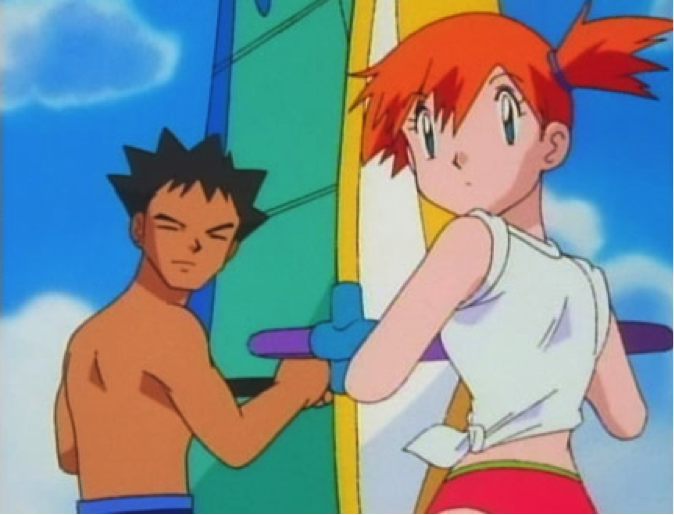
Pokemon is still an ongoing series but my focus will be on the first season. The protagonist is Ash Ketchum, a 10-year old whose traveling companions are Brock and Misty. He wants to be a Pokemon Master, a goal which involves using the pokemon you catch to defeat numerous Gym Leaders and collect badges.

Ash, Misty, and Brock


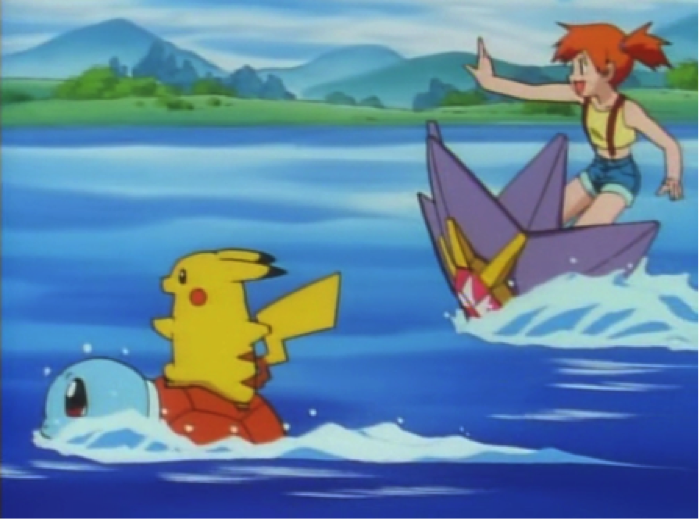
The show itself featured a world where people catch and train super-powered animal-like beings called pokemon. Humans used Pokeballs to catch pokemon. There are many pokemon-related options that exist such as becoming a Pokemon Breeder or a Pokemon Master.

One of many pokemon-related activities


So, should a writer depict a world that mirrors reality and show the problems within it or should s/he depict the ideal world we want to live in? Pokemon leans more to the latter. Pokemon, just like Star Trek, depicts a world that’s egalitarian or at the very least, very close to it. It’s a world where gender, race, and sexual orientation appear to be irrelevant. As a kid, I couldn’t articulate very well why I loved Pokemon so much but now I can. My joy was due to many things in the show; the adventures which encouraged my love of travel, the fun and catchy songs and most notably, the strong presence of dynamic, ambitious, and fun female characters.

Whenever I watched Pokemon as a kid, I remember finding it refreshing that whenever a female character appeared as a challenger, there was never any shock or amusement on a male character’s face. Female characters being in positions of power were simply an unexceptional fact of life in the pokemon universe. Another thing that wasn’t a big deal in the pokemon world (but of course would be in real life) is the fact that 10-year kids were allowed to roam the earth without parental supervision. But Pokemon wasn’t meant to reflect real life in terms of the dangers and limitations of reality. It was an escapist fantasy which encouraged kids to learn new things and meet new people. It certainly made me look forward to being an adult and having the freedom of Ash and friends.

It had really funny moments and witty lines that still make me laugh when I revisit an episode or two. All of the characters-whether male or female, minor or major, pokemon or human-had distinct personalities and styles.

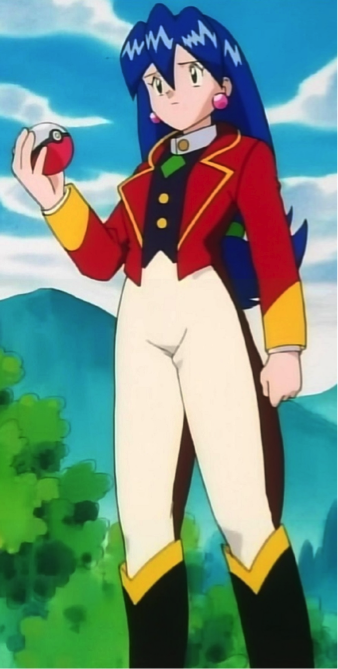
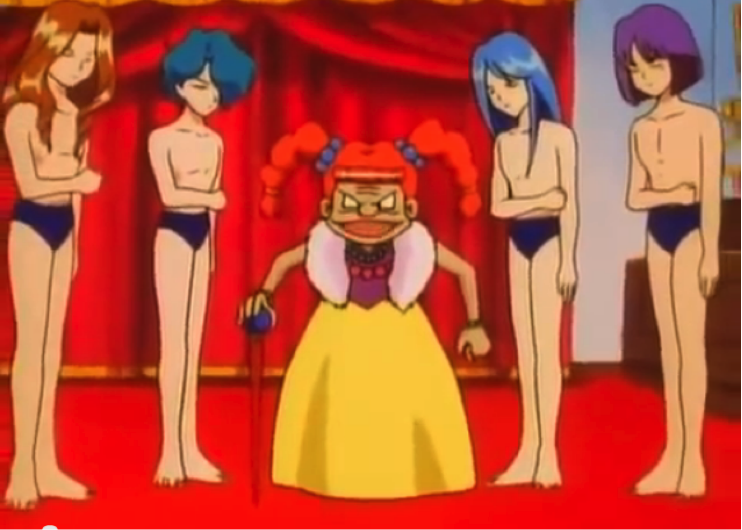
An example of one of many diverse female characters: Stella, Ringmaster of a Pokemon Circus


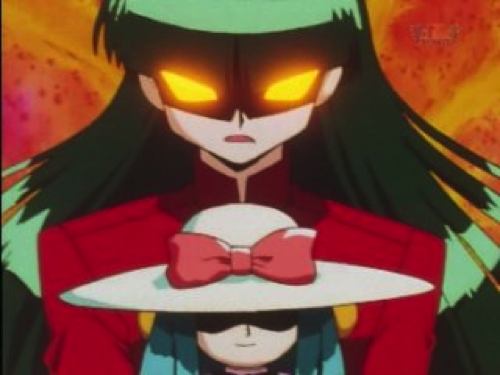
Boys were shown as Gym Leaders and so were girls in many instances. In fact, one of Ash’s most formidable opponents was a psychic Gym Leader named Sabrina. She was creepy because she had telekinetic powers and she had psychological issues. Luckily, her mental problems weren’t caused by man troubles. Ash’s struggle to defeat her took a whole three episodes.

Sabrina using psychic powers


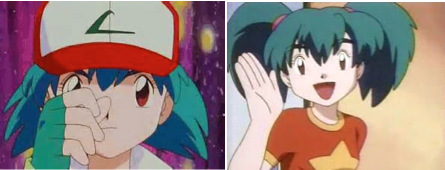
One of my favorite characters was Duplica (yes, that was her actual name) who was working to be an Impressionist along with her shape-shifting pokemon, Ditto. She was a fun and feisty tomboy who could dress up and imitate anyone whether boy or girl. And just like Sabrina, she challenged Ash to see his weaknesses and become a better pokemon trainer.

Duplica dressed as Ash and Duplica dressed as herself


In addition to being Gym Leaders, female characters are found in other occupations: nurse, scientist, professor, rancher, police officer, etc. The show helped to normalize women in any position of power, whether it was common in real life or not. Similar to kid shows like The Magic School Bus or Captain Planet, its goal was to capture a kid’s imagination. Because the pokemon world is so egalitarian, there isn’t a need for any didactic speeches. Girls, just like boys, go out and do whatever they want to do without interference-and there’s a lot of power in normalizing that image.

There two most prominent female characters are Misty and Jessie. Misty is a water pokemon trainer. Her three sisters run the Cerulean Gym where trainers can win a Cascade badge. Her passion for water pokemon is showcased in an episode called “Tentecool and Tentacruel.” That same episode involves this scene:

Boss-lady and man-servants. Yes, Pokemon is a weird show
Boss-lady and man-servants. Yes, Pokemon is a weird show.


Jessie is part of the main trio of villains including James and a talking cat pokemon named Meowth. Jessie and James cross-dress a lot. Whenever they’re in disguise, sometimes they’re both wearing girl’s clothing or they’re both wearing guy clothes. Many times, Jessie wears the typical guy attire and James is enthusiastically in a girl’s outfit. There’s a lot of gay coding for James. His voice and mannerisms are foppish. This is part of an ongoing issue of coded gay characters being villains in movies and TV. The only silver lining is that James and Jessie aren’t depicted as people who should be feared or despised. At best, they’re just annoying. Many times, they serve as comic relief and there are even some moments where they’ve helped the heroes of the story.

But Pokemon was progressive in many other ways. It had people of ambiguous ethnic background. Ash, for example, had an olive skin tone and Brock was even tanner. Fans still wonder if Brock is Latino, Black or Southeast Asian. Another subversion of gender roles is that the male supporting character, Brock enjoyed making meals for his friends. He wore aprons and he carried cookware wherever he went. No one questioned his masculinity because of his domestic enjoyments. Ash seemed to come from a working class home and he was raised by a single mom. It was good for kids to see a positive depiction of a single mother. Seeing that the hero of the story came from a happy home with a single mother also helped kids from single-headed households to unconsciously know there’s no shame in it.

But even if there are progressive inclinations here and there, some gender stereotypes still appear. There’s an ongoing gag of Misty’s fear of bugs, propensity for romantic daydreams, and love of cute things. In the episode, “The Water Flowers of Cerulean City,” we meet Misty’s valley girl-sounding sisters. In that same episode, Ash battles Misty and she calls forth a jewel-like water pokemon which prompts Ash to mumble, “Leave it to a girl to show off her jewelry.” But Misty isn’t solely a girly-girl (though there would be nothing wrong if she were). There are many sides to her; she has traits associated with males such as being adventurous, rowdy, and temperamental. Her temper is shown to be her main flaw just as occasional dimwittedness is Ash’s central imperfection. She isn’t just one thing but a combination of traits-which is pretty complex for a kid’s show.

In later seasons, there were controversies around a female character named May because she was viewed as having stereotypical girlie aspirations such as competing in Pokemon Contests. It was seen as a step down because instead of vying for badges, the challenger battled for ribbons. Critics viewed it as an inferior dream because Pokemon Contests placed more emphasis on shallow things like beauty. But I never minded it because 1. It was treated as a legit and respected thing and 2. Boys were shown participating in it too. The beautiful thing about Pokemon is I never noticed any gender segregation. There was no pink ghetto.

However, there was a questionable episode called “Princess vs. Princess,” which involved a holiday (possibly satirizing Valentine’s Day?) that celebrated women. The holiday required guys to serve girls as they shop, participate in beauty contests and do many other girlie things (I can hear the accusations of “Feminazi” already). When the women are fighting over clothing, James comments, “I don’t think I’m tough enough to be a woman.” Again, I don’t mind the show featuring female characters doing stereotypical “girl” things because Pokemon was always good at showing the full range of girls. Not every girl in Pokemon embodied the girly-girl stereotype and even the ones that did had complexities to them (as much complexity as you get in a Pokemon cartoon, of course)

Sadly, as is true for many beloved side characters, Misty was rarely in the spotlight and the same was true for Brock. Ash’s personal journey is what garnered the most attention. But fans loved Brock and Misty-some people liked them even more than Ash. That’s why when Misty’s character was replaced by May, there was a huge outcry, particularly from preteens who wanted to see Ash and Misty as a couple. But the powers that be didn’t want romance to be a distraction. After all, it was still a kid’s show. Even if the executives wanted to squash any chance of romance, it still could be argued that getting rid of Misty was unnecessary. But in the long run, it helped to keep the show fresh. And she wasn’t gone for good; she returned for later episodes.

For those who still want more Misty, there’s a spin-off series called Pokemon Chronicles which include episodes that follow characters in the pokemon world other than Ash. Brock gets an episode and Misty features in several episodes. It was a pleasant surprise to see Misty being a main character in her own life which is beneficial for girls to see. In addition to her jewel-type and cute pokemon, she also gets to have a scary, badass pokemon; the serpentine dragon-like type called Gyarados. Pokemon Chronicles reveals a more mature side of Misty as she handles all the responsibilities of being a Gym Leader while her sisters are away. Though she is the youngest sister, she is shown to be the smartest and best-fit as leader. Just like any good leader, she is assertive when the time calls for it and nurturing when the time calls for it.

Brock and Misty
Brock and Misty


Of course, we can’t forget the merchandising. Even today, you can’t talk about any children’s show without discussing the main motivation of selling products. Because the stars of the show were obviously the pokemon more so than the human characters, it was easy to sell pokemon. But the human characters were still necessary in order to be relatable. Pokemon was the King of Advertising. The show’s tag line was “Gotta Catch ’Em All,” which was repeated ad nauseam to hypnotize kids into buying as many trading cards, toys, and games as possible. And it worked, especially in its heyday in the late 1990s. I recall a lot of girls buying the merchandise too. That’s why I think Pokemon serves as a lesson to executives that not only is it socially good but it’s a smart business idea to market to both boys AND girls. Pokemon still resonates with a lot of young people because it created a world that made everyone feel welcomed.


Nia McRae graduated summa cum laude from Medgar Evers College where she earned a Bachelor of Arts degree in Liberal Studies with a concentration in history. She has a strong passion for critiquing racial and gender politics in the media and putting it in historical context. 


‘Pepper Ann’: Pepper Ann Much Too Cool Not To Be On DVD: A Letter to Disney

Behind black rounded glasses is Pepper Ann–a puffy red haired chick wearing eccentric style complete with black and white sneakers. An overall normal girl living in a normal world. In the town of Hazelnut, this humorous hip nerd lit up our shared television screen over vast bowls of high sugared cereal bowls. Like my sister, tomboy Pepper Ann played video games, adored roller blades, and sports while Pepper Ann’s precocious best friend Nicky loved books and had an indie spirit vibe like me. Wide range of diverse characters included Pepper Ann and Nicky’s other bff Hawaiian Milo, a rotund Swiss boy, typical popular blond chicks, and African American twins. There seemed to be a treat for everyone.

Pepper Ann
Pepper Ann


This guest post by Janyce Denise Glasper appears as part of our theme week on Children’s Television.

Dear Disney,

Sue Rose saved my life.

Seriously.

Instead of taking another princess film out of the precious vault, consider bringing out something more genuine and heartfelt. Release every single Pepper Ann episode on DVD. Now.

Why?

Well, it began long ago. I just started freshman year of high school and still adored the Fox Kids lineup of X-Men, Spiderman, and Teenage Mutant Ninja Turtles. I had Storm, Rogue, Jubilee, Mary Jane, and April O’Neil for breakfast.

Then on an opposing channel, Rose came about.

This female animator penciled in a unique, oddball heroine to ABC’s Disney-dominated One Saturday Morning.

And that character’s name was Pepper Ann Pearson- much too cool for seventh grade.

She didn’t wear a cape or have superhuman abilities, but happened to have one of the best theme songs ever!

Moose, Steve the cat, and Pepper Ann


Behind black rounded glasses is Pepper Ann–a puffy red haired chick wearing eccentric style complete with black and white sneakers. An overall normal girl living in a normal world. In the town of Hazelnut, this humorous hip nerd lit up our shared television screen over vast bowls of high sugared cereal bowls. Like my sister, tomboy Pepper Ann played video games, adored roller blades, and sports while Pepper Ann’s precocious best friend Nicky loved books and had an indie spirit vibe like me. Wide range of diverse characters included Pepper Ann and Nicky’s other bff Hawaiian Milo, a rotund Swiss boy, typical popular blond chicks, and African American twins. There seemed to be a treat for everyone.

The series revolved around teenage problems like zits, first kisses, awkwardness, fitting in, and questioning identity. Pepper Ann doesn’t want to be considered a freak, but it’s freakiness, it’s weirdness that gives her charm, gives her strength. She’s someone that definitely needs to be around today. This female character could give girls that one shining example that it doesn’t matter how others see them– it’s how they see themselves. When Pepper Ann hung out with eighth grade girls and then confessed that she wasn’t one of them, they still saw her as “cool.” It’s wonderful validation that she didn’t need.

Pepper Ann also showed that boys and girls could be the best of friends- a solid dynamic worthy of applause. It sets a positive example that there’s nothing wrong with adolescent male and female companionship. Pepper Ann, Nicky, and Milo are a unit. They’re inseparable. Although at times, this closeness appeared to be a problem especially with that of Milo questioning his “manliness” and Pepper Ann wanting to focus on her crush- Craig the eighth grader. Of course, they have other fights, but they come together like glue in the end.

Pepper Ann lives with her single mom and skateboard loving younger sister, Moose.

I love that Pepper Ann’s moral conscious talks to her almost every episode. The essence is Pepper Ann, but it’s far more than mirrored image. Crossword puzzle squares and even a plate of cafeteria beans and wieners warps into Pepper Ann’s visage! It’s creative storytelling genius! The wiser mental part of Pepper Ann always reveals right moral ground.

In watching it now, one cannot help noticing feminist hints weaved into whimsical, offbeat animation. There were episodes focused on equal rights for men and women and even ageism.

For example, in “Single, Unemployed,” Pepper Ann’s mom quits her job at a mall fashion boutique. Her boss needed her. Female customers had formed a bond that couldn’t be forged with the male shop owner. She struggled to find another. It illustrated real life situation of being under qualified or overqualified, but being also being a persistent mother who wouldn’t give up. Her boss gave her the job back, allowed her to sell sarongs, and made her partner!

Nicky, Pepper Ann, and Milo


In “Dances With Ignorance,” Pepper Ann is exited to learn about her Native background. Instead of being respectful and considerate, she acts out in complete stereotypes including making inappropriate sounds, wearing her hair like “Pocahontas” (tossing deliberate shade at an offensive depiction) offending the visiting family. She ultimately apologizes for ignorant behavior. It provided an effective way of teaching kids that messages seen in popular media aren’t necessarily true and can be hurtful to a culture. We as a society must hold differing histories in high regard and realize that this issue is still such a sensitive issue.

The vocal stars are a dream, too. Clea Lewis, Jenna Oy, Bebe Neuwirth, King of the Hill alums Pamela Adlon, Kathy Najimi, and the late Brittany Murphy, Inspector Gadget‘s late Don Adams and Cree Summer and the late James Avery.

So please consider finally releasing Pepper Ann on DVD. It’s like quirky, awesome, “one in a million” television. A cartoon, yes, but Pepper Ann’s crazy antics never gets old! It would be a dream come true to see a new generation being influenced by this special, humorous girl.

Or at least stop blocking people from putting up episodes on Youtube.

Thanks,

Janyce


Janyce Denise Glasper is a nerdy afrocentric vegan artist, writer, and film/TV buff from Dayton, Ohio. Currently residing in Philly, she holds a BFA in drawing from the Art Academy of Cincinnati and Post Baccalaureate certificate from the Pennsylvania Academy of the Fine Arts. She will continue MFA studies at PAFA whilst running http://afroveganchick.blogspot.com/ and http://femfilmrogues.blogspot.com/, eating cherry chocolate bars, drinking Starbucks, attending film festivals, and slaying vampires Buffy style!