On screen male friendships are portrayed completely differently than their female counterparts. Boys have rebellious adventures together for adventures sake (e.g. ‘Kings of Summer’). Boys pull off heists together (e.g. ‘Oceans 11′). Boys are “bros” and seem to get along for the most part.
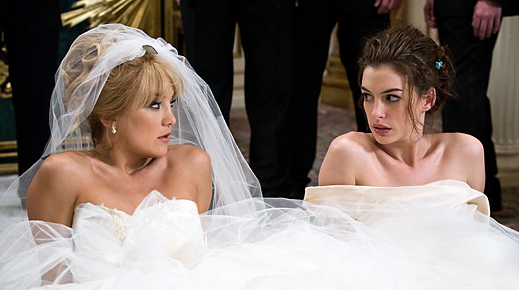
But girls are a different story. Girls fight over boys (e.g. ’27 Dresses,’ ‘Something Borrowed’). Girls are catty (e.g. ‘Bride Wars’). Girls are overly dramatic (e.g. ‘I Hate Valentines Day’).
This is a guest post by Molly McGaughey.
When I was 10 years old, there was one thing I knew I needed more than anything else—even more than a drum set (and I was pretty sure I had to have one of those). There was one thing that trumped most other prized possessions.
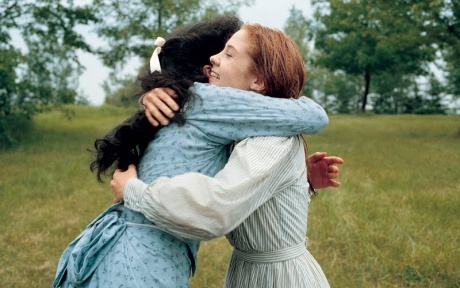
I always knew that I needed to have a bosom friend. Why? Anne of Green Gables told me so. A few hours each week were spent playing the movie over and over and watching the overly imaginative redhead get into mischief with her kindred spirit, Dianna.
I related so much to Anne: the way she let her imagination get the best of her, the way she went on adventures with Dianna and the way that, though they didn’t quite turn out as planned, those adventures were poetic just the same. Because anything can be marvelous when you have imagination and a bosom friend, of course.
For my 11th birthday, I finally got that drum set that I wanted. Sure it was patched up with duct tape and from a yard sale, but it was mine and it was wonderful.
I was thrilled. That is, until I told a neighbor about it. He promptly informed me: “Drums aren’t for girls.”
Though new to me at the time, the process of deciding what is and isn’t for girls or boys started centuries ago. Strangely, it often applies to more than objects, extending even beyond hobbies and careers to relationships. Certain kinds of relationships have been deemed “normal” for each gender.
And, as a film-lover, I can’t help but wonder if the stories told on screen affect why we have certain expectations of same gender friendships.
On screen male friendships are portrayed completely differently than their female counterparts. Boys have rebellious adventures together for adventures sake (e.g. Kings of Summer). Boys pull off heists together (e.g. Oceans 11). Boys are “bros” and seem to get along for the most part.
But girls are a different story. Girls fight over boys (e.g. 27 Dresses, Something Borrowed). Girls are catty (e.g. Bride Wars). Girls are overly dramatic (e.g. I Hate Valentine’s Day).
As I grew older and watched less of Anne and Dianna and more of modern day “chick flicks,” I felt my expectations about female friendships shift. But let’s get one thing clear: I think it is unlikely that female friendships are drama-filled because that’s how our gender is programmed to behave. It is time to consider that this is a reflection of what we’ve seen portrayed on screen.
We’ve all hopefully heard about the Bechdel test at this point. We know that strong female protagonists are few and far between in the world of motion pictures. But a vital facet that often gets overlooked is that even when women are portrayed, strong female friendships are not.
Time and time again, when two guy friends are in a movie, it’s an adventurous buddy comedy romp, but the minute that girls are paired together it’s because they are competing for a guy. Or, when that is not the case, one exists just to listen to the other’s problems (and, thus, speed up the storytelling). A third option is that the friends backstab, gossip, and their friendship breaks up. These female friendships are not often a semblance of a healthy relationship.
Have you ever noticed how much girls fight on screen? Whether it be friends or sisters or an evil stepmother, it seems to be a much more common trope for female characters. Can you imagine the latest buddy comedy featuring two guys that try to sabotage each other to get the girl while an evil stepfather looms in the background? Why is that not a thing?
Think about it next time you pop in a “mindless chick flick” starring a group of girlfriends who tend to be dramatic or the next time you stop by the theatre to see the latest action adventure featuring two guys that pull off insane heists together, without an argument. Think about it the next time you see an evil stepmother paired with a father that is totally chill. Are we allowing what’s on screen to dictate what kind of interpersonal friendships each gender should or probably will have?
Movies show us what’s normal. They show us how to be, giving us something to aspire to. When we see dream chasers, friendships, and true love on screen, we want it. So it’s important to have a better representation of what friendship, sisterhood, and girlhood really means.
As an independent filmmaker, I want to tell stories that better represent female friendships and the adventures to be had through kindred spirits on screen.
The latest short film I’m directing, Live a Little, while totally unique from Anne of Green Gables, just happens to be about a spunky, imaginative, talkative redhead and her best buddy. They must conquer an overly ambitious bucket list by the end of the day. Chick flicks don’t have to be about romance or cattiness. It can also be a genre about kindred spirits doing what kindred spirits do best—having adventures.
Molly McGaughey is a director, writer, performer based out of Manhattan. She is crowdfunding for her latest film “Live a Little” on Seed & Spark. She can be found on the internet at mollyvivian.com and also founded The Not So Starving Artist, an online resource for Performers, Filmmakers and Writers. Her comedic directing work has been featured on comedytvisdead, funnynotslutty, playbill, backstage and more. Molly is also a character actress with an affinity for improv and standup. You can find her on Twitter at @Molls_MCG.
Nothing has made me more appreciative of my upbringing than the Verizon spot that’s gone viral in the past few weeks, about all the little micro-aggressions that bully women into a societally accepted mold, away from the common interests that all kids share like building and dinosaurs. The spot made me wonder about other ways this belittling behavior has affected women, especially in the way it affects the kind of films women want to watch—and make.
This is a guest post by Elle Schneider.
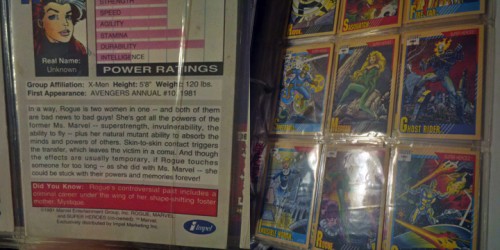
Blade Runner has been my favorite film since a sleepover in sixth grade, and I have 200 Star Wars figures and thousands of Marvel cards stashed away in in my childhood closet (in protective cases, obviously, what kind of barbarian do you take me for?).
Source: my closet
It was Wes Craven’s Nightmare on Elm Street that made me realize I could make a film by splattering blood on some friends, and James Bond became my directing aspiration. And as far as I knew, this made me just like any other girl growing up in the 80s and 90s.
Nothing has made me more appreciative of my upbringing than the Verizon spot that’s gone viral in the past few weeks, about all the little micro-aggressions that bully women into a societally accepted mold, away from the common interests that all kids share like building and dinosaurs. The spot made me wonder about other ways this belittling behavior has affected women, especially in the way it affects the kind of films women want to watch—and make.
What if you grew up hearing, “Isn’t this movie a little too scary for girls?”
We worry rightly about girls having heroes to look up to and there is an undeniable need for gender parity in onscreen protagonists. But why must we designate girl heroes for girls, and boy heroes for boys? What’s wrong with a character like Indiana Jones being a hero for both boys and girls? Because it teaches girls to be adventurous? And why, as an industry, are we so massively afraid of letting a woman make a film like Raiders of the Lost Ark?
We tell boys that they should tell any story they want—whether it’s their own struggle or Indiana Jones’ struggle. We laud men who adapt Austen, or make a great biopic about a female heroine like Hawaiian Princess Ka’iulani, as my friend Marc Forby fought for nearly ten years to do. At Cannes 2012, when no women appeared in Competition, filmmakers like Michael Haneke and Jacques Audiard were praised for making great films about “powerful” female characters. The question was raised: does it really matter how many women are represented as directors so long as stories about women are being told?
Sharon Waxman of The Wrap held court at a panel at the American Pavilion that year to discuss the issue of gender at Cannes, and I raised my own question: how can we help the women who want to work in genre films? Her response was one I’ve often heard from women disinterested in genre: “Women shouldn’t feel like they have to make the movies that men make.”
But what if that’s what I want to make? And why is that a bad thing? What if I want to make the same kind of film that excited me as a child, just like Gareth Edwards, Ryan Coogler, Rian Johnson, or any other male filmmaker has had the opportunity to do?
My first film, made in summer 2001. It was a ripoff of EVIL DEAD about kids getting mixed up with the supernatural after finding a tarot card deck in a shack in the woods, and starred Margaret Thomas, Josh Fairchild, Jaya Saxena, Lily Harden, and a young Matt McGorry, who has gotten a better agent in the last 13 years.
When women filmmakers get that rare chance to make a film, we’re usually encouraged to use the opportunity to focus on a “woman’s story” with a “strong female protagonist,” as if a female filmmaker’s first duty is to social issues rather than storytelling or forging a career. But what the hell is a woman’s story, anyway?
Try as society might, women are not one homogenous group; women are not a hive-minded audience solely interested in stories that reflect a single shared experience. Ticket sales show that women make up 50 percent of the theatrical box office, despite the low number of female protagonists on screen, and that’s because women are not myopic viewers. On the contrary, women see men and women as people; men see men as people and women as women. Unlike male viewers, a woman’s story really could be anybody’s story, if only we were encouraged to tell anybody’s story.
I recently had a conversation with a group of women filmmakers who were insistent that men and women are just different kinds of storytellers—women are just naturally more “grounded” and “realistic” in their characters and settings, and that’s why women can’t get work in the testosterone-driven studio system. Studio films are male-power fantasies anyway; one participant mentioned that average white guys are constantly writing action movies, imaging themselves as Ethan Hunt, when they look nothing like Ethan Hunt. Women don’t project fantasies like that; we write what’s real.
Except that’s not true. As the National Science Foundation study cited in the Verizon spot, 66 percent of fourth grade girls express an interest in science. Many young girls I knew growing up were writing amateur versions of Lord of the Rings, as George Lucas and James Cameron did on their path to making Star Wars and Avatar. These were personal fantasies, stories where we played out our day-to-day dramas, angst, and adolescent ideas about the world through the avatars of fictional characters and settings. As a 12-year-old, this was natural. But as a 28-eight year-old? Why bother writing what you know you can’t afford?
As Lexi Alexander succinctly put it: “What do we say to a 12-year-old girl who watches Star Trek for the first time and says: ‘I want to make movies like that.’ Do we say: ‘Yeah, try to reduce your vision to something that’s crowdfundable, you’re a girl after all’?”
The reality is we do say that, as a society, if not in so many words. Women’s stories do tend to be “small” and “personal” because we’re taught to pare down from the get go, to trim our own wings before we can fly. Women are taught to expect limited resources, to envision the world through the scope of our often purposely sheltered life experience. Women are not taught to ask for more, and worse, are not taught that asking is even an option. Women’s stories are the stories of those without a voice.
It’s a myth that women are inherently unable to envision or execute large scope or genre-driven projects, a myth that too many women buy into themselves. That myth is what keeps women from being studio contenders, as Indiewire blog The Playlist recently illustrated in their article “10 Indie Directors Who Might Be The Next Generation Of Blockbuster Filmmakers.” The article features 10 eligible white, male heirs to the throne of Hollywood—because the (male) writers at Playlist can’t envision even someone as accomplished as Debra Granik—whose Winter’s Bone launched the career of blockbuster and Reddit darling Jennifer Lawrence, and whose Vietnam vet doc Stray Dog just won the LA Film Festival—successfully helming a big-budget feature.
The Playlist’s top pics for the future of Hollywood. Such white. Many scruff. Wow.
Granik has more than proved her chops as a storyteller, and she’s done it by with compelling, award-winning portraits about strong men and women. Brit Marling, Lexi Alexander, and countless others have done the same. When do we get to see their takes on Star Wars, whose best installment was written by a woman, Leigh Bracket, back in in 1979? That’s the kind of woman’s story I want to see.
Elle Schneider is a writer and director of the genre persuasion. Award-winning graduate of USC’s School of Cinematic Arts, she was the cinematographer of SXSW Film Festival selections I AM DIVINE and THAT GUY DICK MILLER, and is a co-developer of the Digital Bolex cinema camera. She is raising production funds for her action comedy HEADSHOTS this month on Seed&Spark. You can find her on the twitters @elleschneider, and she is deeply sorry to have exceeded 1,000 words.
‘Softcore Porn Roulette with Vampires’ is entering its final season and, while it’s never been good, it embraced being bad with such glee that I’m a little bit sorry to see it go. With that in mind, let’s take a moment to reflect on the awkward, sometimes hilarious, sometimes unintentionally hilarious, sometimes kind of offensive journey we’ve taken with the show that was nothing but humping and gore.
Softcore Porn Roulette with Vampires is entering its final season and, while it’s never been good, it embraced being bad with such glee that I’m a little bit sorry to see it go. With that in mind, let’s take a moment to reflect on the awkward, sometimes hilarious, sometimes unintentionally hilarious, sometimes kind of offensive journey we’ve taken with the show that was nothing but humping and gore.
Trigger Warning: Discussion of rape/assault.
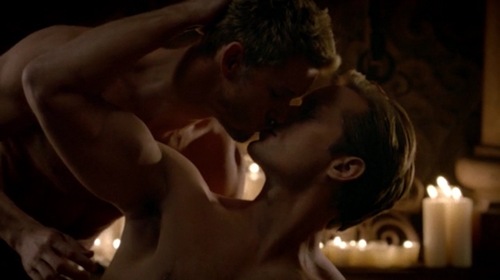
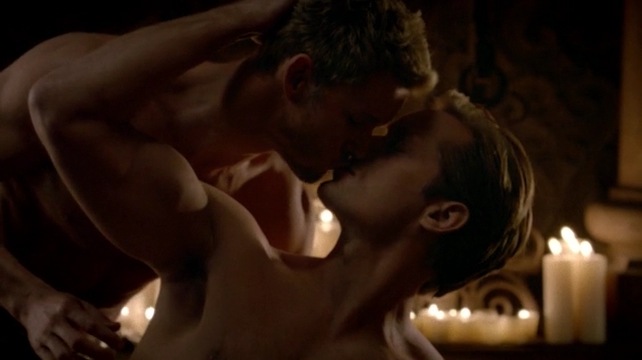
Jason and Eric Get it On Because True Blood is About Who You Want to Have Sex With
The Gay Stuff True Blood’s original show-runner, Alan Ball, is an openly gay man who has done very good things for the representation of LGBT people in popular culture. His previous HBO series – and maybe his greatest work – Six Feet Under, still stands tall as being one of the only shows – and one of the earliest shows – to depict a nuanced, complicated relationship between two gay men, who were multifaceted characters, on par with their heterosexual counterparts. On the whole, the gay and bisexual characters on True Blood, be they ever so shallow and underdeveloped, are on the same playing field as the shallow, underdeveloped heterosexual characters (though there’s sometimes some weirdness about physical intimacy). For the most part, nobody on the show really notices or minds if anyone else is lesbian, gay, or bisexual, which, in itself, can be seen as a positive thing. The range of male sexuality is better represented than the range of female sexuality, but, compared to its contemporaries, the show is still unusually open to the idea of depicting something other than heterosexuality on screen.
Where things get weird is when vampirism is used as an awkward metaphor for homosexuality. Vampires “come out of the coffin” by announcing themselves to humanity. They’re persecuted by religious zealots holding signs that say “God hates fangs.” Two of the series most memorable (and intentionally hilarious) villains are/were leaders of a Christian hate group called The Fellowship of the Sun that targets vampires just a real-life hate groups have sometimes targeted homosexuals – one of the villains later decides to be true to his own identity and proudly comes out as “gay vampire-American.”
Going into the final season, the vampire population is dying from a disease called Hep-V, which, despite its name, has been presented in ways that are much more analogous to HIV and to the AIDS crisis in North America (where gay and bisexual men are disproportionately likely to contract the virus). The speech that Pam gives Eric in episode three, about how there are treatments that can help him lead a normal life, and how people are working to find a cure, could be ripped from any drama about HIV.
In this context, the hatred and prejudice that some of the characters exhibit toward vampires comes across as analogous to the bigotry that’s sometimes directed at the LGBT community… except that vampires, unlike homosexuals, want kill your whole family and feast on your blood. So maybe there’s a good reason to be wary of them.
The fact that vampirism doesn’t map very neatly onto the LGBT rights movement has already been discussed in great depth, and Ball, himself, has described the vampire/LGBT analogy as “window-dressing that makes [the story] contemporary.” For the most part, vampires and other Sups on True Blood seem to be a general representation of the Other, with the (awkwardly delivered) message being that we should judge people as individuals, based on the decisions they make, personally, rather than what group we think they belong to. We’re all just people in the end, etcetera.
In principle, though, it’s really True Blood’’s shallowness, rather than any concerted attempt to argue for tolerance, that’s brought so much lesbian and gay content to the fore. The show employs a less ambitious version of Torchwood’s “everybody’s bi” philosophy where, if there’s a possibility that two actors will look hot together, nothing else – including gender – is even a concern.
Which leads me nicely to the Tara stuff.
Tara (right) Becomes a Lesbian Cage Fighter Because True Blood is About Who You Want to Have Sex With
The Tara Stuff
If there’s one character the writers don’t find hot enough, it’s Tara. I mean, yeah, she was funny in the first season, and she seemed smart, and she had all this complicated stuff going on with her alcoholic mother, but that’s not enough to earn a real plotline on this show. Ever since season two, Tara’s been shoved into one troubling situation after another, with the final insult being her off-screen death in the first five minutes of season seven.
In season two, Tara and one of the only other Black characters on the show, Eggs, are held captive and forced to serve a magical white woman while they wait for another magical white woman to free them. All season long, they’re under a spell that makes them subservient and, in one scene, they punch each other in the face for their captor’s entertainment. They never manage to turn the tables or get their own back. Once they’re free – once they are freed by someone else – a deputy wrongfully shoots and kills Eggs, and the crime is covered up by the Sheriff. Nothing ever comes of that except that the deputy feels kind of bad.
In season three, Tara’s taken prisoner by a rapist vampire in a storyline that’s alternately played as serious and comedic (WTF). At one point, she’s held captive in an old plantation house, and it appears that she kills her kidnapper and escapes. We later discover that the kidnapper survived, and ultimately has to be dispatched by the same deputy who shot Eggs. Which, I guess, is supposed to make up for shooting Eggs? Somehow?
Other awful things happen, too – one of the worst is Tara taking a bullet for her awful, often absent bestie, Sookie, and dying on the kitchen floor during the last few moments of season four – but what’s even more telling are the two attempts the writers make to reboot the character and make her more interesting.
In the first reboot, Tara (who, up until this point has been exclusively heterosexual), becomes a lesbian cage fighter with super straight hair and more fashionable clothes. We see her girlfriend (maybe) twice, cage fighting never becomes important to the story, and all she does all season (before dying) is stand around awkwardly as the hostage of another magical white woman while waiting for magical white Sookie to come save her again.
In the second reboot, the recently dispatched Tara is turned into a vampire by fan favourite Pam. She uses her new abilities to become a pole dancer, wears corsets and belly-baring tops, and starts a lesbian relationship with Pam. Then she goes back to wearing her normal clothes and meets the true death in season seven.
Both attempts to reboot the character, and make her more relevant to the show, are pretty transparent in their intentions of making Tara seem sexy. It’s also clear that being sexy is your key to having something to do on True Blood. I mean, the werewolf plotlines are probably the most unnecessary ones in the series, but they persisted for a long time, because werewolf Alcide looked good with his shirt off. It really seems like production didn’t like Tara with any of the guys they paired her with, so they started pairing her with other women. Then, they didn’t like her as a human, so they tried making her a vampire. When all of that failed, she died.
I would actually be a little bit happy for Tara at this point, if it seemed like she was going to rest in peace, but the first three episodes have suggested that she’s in some kind of tortured, ghostly state, calling for help, waiting for someone to save her, powerless to save herself – that seems more like True Blood. I wouldn’t be surprised if, in the last five minutes of the series, they find a way to send her from purgatory to hell.
Eric and Sookie Defile Narnia Because True Blood is About Who You Want to Have Sex With
The “Let’s Just Give Up On Plot All Together, Now” Stuff
Every storyline on True Blood is treated as an opportunity for sex to happen. A witch comes to town and starts an orgy. Fairies show up because they want to mate with us. Scientists prepare for genocide by watching vampires get it on through one-way mirrors. Eric has amnesia so he and Sookie have sex in Narnia.
Ball – who half-jokingly names “the terrors of intimacy” as the theme of True Blood – is correct in reminding us that vampirism has often been tied up with sex. Most vampire stories involve some element of hunger, desire, and/or seduction that’s reminiscent of sex, and the act of biting someone and ingesting their blood can easily be seen as a sexual one. That doesn’t entirely explain why so many of the plotlines on True Blood sound like they could be awkward summaries for x-rated fanfic. Like:
Sookie learns that a magic, unbreakable contract promises her to the evil fairy, Warlow, for marriage. When Warlow comes to town, looking for his bride, Sookie is surprised by her attraction to him, and no one can believe what happens next.
(They experiment with bondage while they have sex in a graveyard).
Let’s be real, you guys. True Blood is not telling us something deep and meaningful about the nature of desire. It’s not exploring human sexuality in a way that teaches us something about ourselves – this is straight-up entertainment where every situation is a sexual situation, and every problem is a problem involving sex, and every plot point becomes an opportunity for the characters to have sex in a place, or a configuration, or a way that we haven’t seen yet.
Sometimes it’s uncomfortably voyeuristic – as when we have to watch real-life couple Anna Paquin and Stephen Moyer go at it. Sometimes it’s WTF – as when vampire Bill has sex with vampire Lorena and twists her head 180 degrees. Sometimes it’s actually a little bit sexy, and sometimes it’s just like, “So what?”
The only time it’s really a problem – if we accept for the moment that having gratuitous sex on your show is not necessarily a problem, sex being neither dirty nor bad – the only time it’s really a problem is when the show does something like mistaking rape for sex, mistaking rape for comedy, and mistaking rape as an acceptable way to shock us as viewers before brushing it off completely. I think it’s totally fine for True Blood to fill up its time with sexual situations that mean nothing and go nowhere – the show will not go down in history as a brilliant work of art, but not everything has to. Unfortunately, I also think that throwing sexual violence in, either as an accident, or a joke, or a cheap surprise, has been more of a problem.
One of the most offensive storylines on the show takes place in season four, where Jason Stackhouse, a human character, is kidnapped by a group of hillbilly werepanthers (they’re like werewolves but they stupidly change into panthers) and then tied to a bed and raped by several of the werepanther women. It isn’t clear whether the show understands that this is a problem, and Ball and the director made some unfortunate comments at the time, to the effect that it was funny or ironic for Jason, a fairly promiscuous character, to be placed in a situation where he didn’t like having sex.
As already mentioned, there’s a lengthy plot about Tara being kidnapped by a rapist that’s alternately played for laughs and drama. Sometimes this is a traumatic experience, sometimes they’re the odd couple on vacation. The actors don’t seem to agree about which level they’re playing it on, but the tone seems muddled over all, with the writers turning the rapist into a comedy villain. After he’s dead, the show briefly acknowledges that something significant happened, by sending Tara to a support group meeting, but then the story gets shoved down the memory hole with everything else.
As a final example, in season two, there’s this horrible moment right at the end of “Release Me” where one of the Fellowship of the Sun guys tries to rape Sookie to punish her for sleeping with vampires. There is an absolutely sickening shot of her screaming into the camera while he pulls her backward, and then a new character, vampire Godric, shows up to save her. Obviously, somebody at HBO (correctly) decided that it would be too disturbing to end the episode without reassuring us that Sookie escapes, but there are better ways to convince us that Godric’s a good guy than setting up a gratuitous rape scene.
In all of these examples, the show isn’t trying to say anything about sexual violence any more than it’s trying to say something the rest of the time. However, unlike with consensual sex, or vampires turning into puddles of goo, I’m not sure it’s appropriate to treat rape as something frivolous, or as an easy way to shock the audience, leading into a cliff-hanger. That’s the flipside of telling such a shallow story – the show isn’t equipped to broach topics requiring more serious treatment, and it ruins the fun when one of those topics crops up.
I find myself in the strange position of wishing that True Blood had been less realistic, less engaged with contemporary social issues, and more of the pure escapism it was intended to be. I’m down with a show about who we want to have sex with, and True Blood is best when it doesn’t aspire to (or accidentally stumble upon) anything deeper than that.
Katherine Murray is a Toronto-based writer who yells about movies and TV on her blog.
Even after the finale of its fourth season, the HBO series ‘Game of Thrones’ continues its reputation for unpredictability and for subverting our genre expectations. However, a glaring pattern of predictability is emerging: all sex workers with significant roles will die horribly. Think about it.
Even after the finale of its fourth season, the HBO series Game of Thrones continues its reputation for unpredictability and for subverting our genre expectations. However, a glaring pattern of predictability is emerging: all sex workers with significant roles will die horribly. Think about it.
Doreah (played by Roxanne McKee), Daenerys Targaryen’s handmaiden and a prostitute: DEAD.
Doreah is instructed to teach Dany the art of sex
Ros (played by Esmé Bianco), a Northerner who moves South to King’s Landing, working as a prostitute and trusted assistant to Littlefinger: DEAD.
Ros: tough, upwardly mobile, intelligent, and independent
Finally, we have Shae (played by Sibel Kekilli): a prostitute and the lover of Tyrion Lannister who poses as a handmaiden to Sansa Stark: DEAD.
Shae soothes Tyrion’s fears before the Battle of Blackwater Bay
What do all these women have in common? Their profession as sex workers, and they are all disloyal.
After being raped by Viserys and ordered to sexually train/service Daenerys, Doreah betrays her Khaleesi in Qarth, helping Xaro Xhoan Daxos (the man Dany instructed Doreah to sleep with) to steal Dany’s dragons. (A deleted scene even shows Doreah coldly murdering fellow handmaiden Irri.)
Doreah is caught in bed with Daxos
Ros rightfully fears her employer and seeks to help Sansa Stark by revealing to Varys Littlefinger’s plans to spirit the girl away.
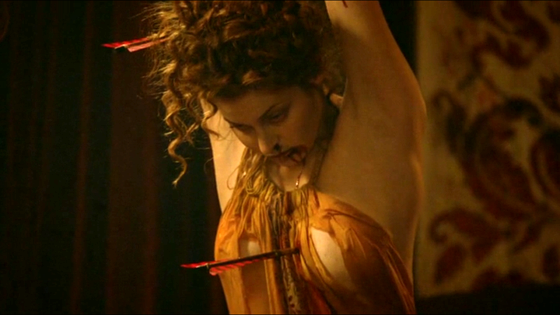
Littlefinger punishes Ros by letting Joffrey put a series of crossbow bolts in her
In one of the most significant acts of betrayal the series has ever depicted, Shae testifies against Tyrion in court, condemning him for the crime of regicide. We also find that she was sleeping with his father, Tywin Lannister, which the show asserts is an even greater form of betrayal than her false testimony.
Shae gives her damning, full of lies testimony
Shae’s acts of betrayal are over-the-top and out of character (remember, we’re talking about the show here, not the books). Season 4 has her being sullen and adopting a completely unrealistic attitude about the danger she and Tyrion face. She is irrationally jealous of his forced marriage to Sansa while still maintaining her affection for the young Stark girl. Overall, though, we must remember that Shae truly does love Tyrion. She has refused gold, safety, and a fine home with servants all for love of Tyrion.
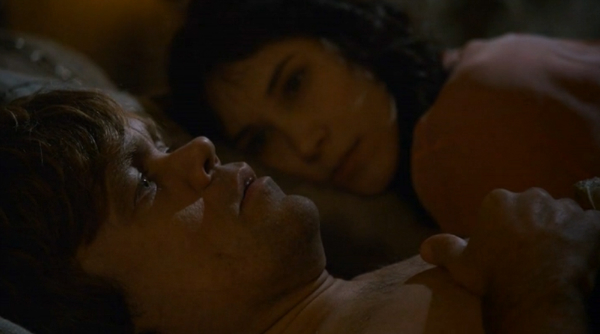
Shae and Tyrion lovingly kiss
We are to believe that because Tyrion white fanged Shae, she would condemn him to die by telling lies during his trial, condemn Sansa whom she loved and protected by telling lies about her, fuck Tywin, get so cozy with him that she’d call him “my Lion” and try to kill Tyrion the next time she saw him? I ain’t buying it.
Shae and Sansa watch ships arrive in King’s Landing
Is Shae really a woman so scorned that she’d destroy everyone she ever cared about to get revenge? Is she really so daft that she couldn’t see that Tyrion was trying to protect her all along? Is she really so malleable that Tywin could so easily manipulate her into such complete betrayal?
Her utter betrayal is character-defining for Tyrion. That he is “forced” to kill her changes him, so her unrealistic actions and extreme betrayal merely serve to further Tyrion’s character arc, while contradicting her own characterization over the last four years.
Tyrion finds a gussied up Shae in his father’s bed
More importantly, Shae’s betrayal when considered alongside the double-crosses of her fellow prostitutes and their collective fates reveal a disturbing attitude toward sex workers that Game of Thrones is advancing. It claims that sex workers are disposable and that they cannot be trusted.
“That’s in a way, the most horrible thing he could see because she wasn’t a whore…they had become committed to each other. She’s no longer a whore. When he calls her a whore, it’s not that he believes this is what she is; it’s what he desperately needs to tell her to save her life in his mind, and, ironically, he’s ended up turning her into that very thing that she was running from.”
Weiss’ repeated use of the offensive term “whore” here encapsulates so much more than Shae’s profession as a sex worker. Weiss’ and the show’s obsession and discomfort with these women’s occupation is very masculine and very patriarchal, asserting that if you must pay a woman for sex, her morals and motivations are never to be trusted about anything ever. This stems from an ego-driven masculine notion that if a woman retains enough agency to demand payment for sex, it is impossible to know if she really enjoyed said sex, and if she might be faking that, she could be faking any and all other emotions or professed loyalties.
Game of Thrones punishes another sex worker by having her die on her back in a bed
I’m pretty tired of seeing sex workers raped and murdered on TV. I’m sick of seeing sex workers depicted within a stereotypical trope as liars and betrayers who get what’s coming to them. It’s no secret that Game of Thrones doesn’t have a great track record when it comes to the exploitation of its female characters, liberally employing death, rapes, gratuitous nudity and crappy decision-making that runs counter to characterization in order to move the plot along, make a nonessential point or punish an “unlikeable” woman. This so disappoints me because, in other ways, Game of Thrones delights with its intricate plot, attention to detail, breathtaking visuals, character depth and endless surprises. Season 5 is being filmed right now. It’s time for the bar to be raised with this amazing series’ treatment of women and, in particular, its treatment of sex workers. I challenge the creators to stop exploiting their female and sex worker characters. I challenge them to start working as hard to give these marginalized women as much real depth and humanity as they do for their male counterparts.
Bitch Flicks writer and editor Amanda Rodriguez is an environmental activist living in Asheville, North Carolina. She holds a BA from Antioch College in Yellow Springs, Ohio and an MFA in fiction writing from Queens University in Charlotte, NC. She writes all about food and drinking games on her blog Booze and Baking. Fun fact: while living in Kyoto, Japan, her house was attacked by monkeys.
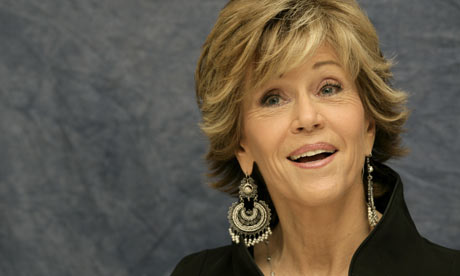
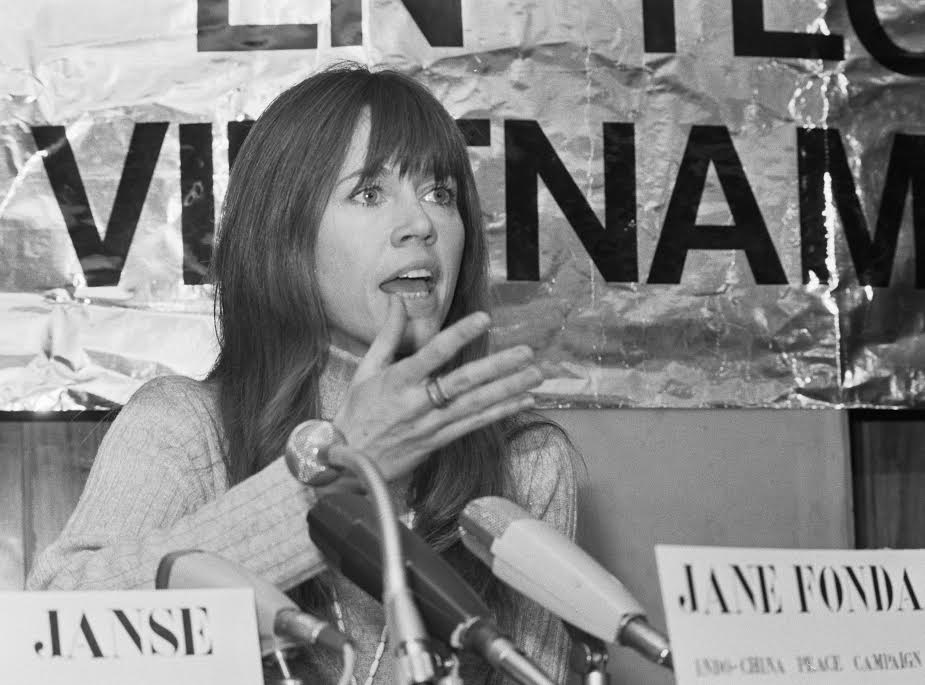
On June 5, Jane Fonda received the American Film Institute’s Life Achievement award. She fully deserves the honor, of course. The two-time Oscar winner is, simply, one of the greatest American film actors of the last 50 years. There is a certain sincerity and intensity to Fonda’s acting and, as with all the finest stars, the camera never finds her boring. Her greatest performances, in They Shoot Horses, Don’t They? (1969), Klute (1971) and Coming Home (1978), are nothing less than master classes in the art of acting. Fonda has also led an interesting, eventful life. She has been an activist for decades, and her political interests have not infrequently been reflected in her choice of roles. An inspirational interpreter of American femininity on the screen, she has, moreover, championed feminist causes in both the United States and around the world.
Many of the films Fonda has appeared in address social and political issues while many of her roles have been culturally significant. The very early ones are, generally speaking, less interesting but in movies such as Barefoot in the Park (1967), Fonda’s vivacious protagonists are clearly intended to represent youthful 60s womanhood. Directed by her then husband, the late French filmmaker Roger Vadim, the wacky, erotic sci-fi Barbarella (1968) made her into one of the cinematic sex symbols of that decade. Her next role could not have been more different: in the dark, Depression-set drama, They Shoot Horses, Don’t They?, she plays a participant in a hellish dance competition. There is great depth and complexity to her character and Fonda won her first Oscar nomination for the part. The roles she began to play during this period revealed a growing socio-political awareness.
They Shoot Horses, Don’t They?
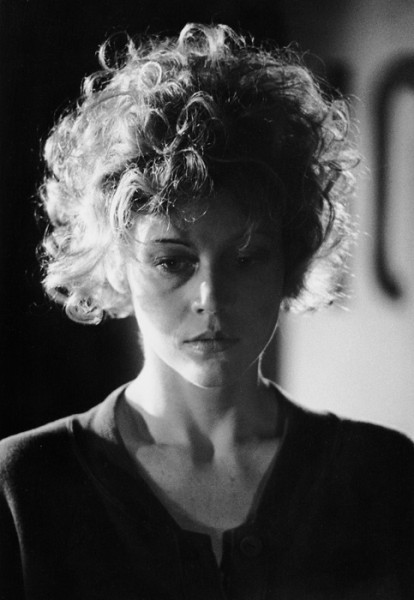
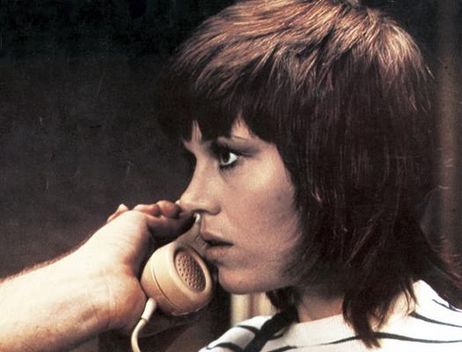
Fonda’s greatest, Academy Award-winning performance–to date–is in Klute (1971). As I noted in my article, “Female Identity and Performance,” Klute should not only be celebrated as a suspenseful psychological thriller about a sex worker and a detective but also as “an allegory of the female condition in patriarchy.” Alan Pakula’s film powerfully explores female sexuality and independence as well as violence against women and misogyny. Reflecting social change, Fonda portrayed independent professional women during the 70s and 80s. She played TV reporters in The China Syndrome (1979) and The Electric Horseman (1979) and a psychiatrist in Agnes of God (1985). Fonda also, of course, starred in 9 to 5 (1980), a lively, subversive revenge comedy that directly addressed sexism in the American workplace. Incarnations of real-life, historical figures have been rare but in Julia (1977), she played Lillian Hellman, one of the key American playwrights of the 20th century. In The Butler (2013), she portrayed former first lady, Nancy Reagan. As the former President’s politics contrast sharply with Fonda’s, the decision to play his partner is a somewhat amusing one.
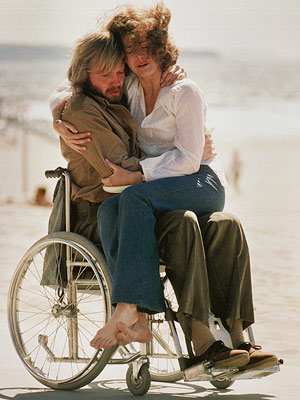
Coming Home
Fonda has not only portrayed American femininity for decades; her off-screen feminist activism has also been widely acknowledged and appreciated. A supporter of the V-Day movement, the actor has actively championed anti-VAW initiatives around the world. She has also demonstrated an interest in women’s health. She founded the Georgia Campaign for Adolescent Pregnancy Prevention in 1995 and the Jane Fonda Center for Adolescent Reproductive Health at the Emory School of Medicine in 2002. A co-founder of the Women’s Media Center, the actor has, furthermore, shown a commitment to improving the status of women in the US media.
Fonda championed progressive political causes as a younger woman. In the late 60s and early 70s, she supported Native and Black American rights and campaigned against The Vietnam War. Fonda’s visit to Hanoi during the Vietnam War in 1972 was the subject of controversy and one incident in particular caused anger in the United States. A photo was taken of a gleeful-looking Fonda as she sat on a North Vietnamese antiaircraft gun site. In her autobiography, My Life So Far (2005), Fonda explains, for her part, that the act was spontaneous and not intentionally staged; she was singing a song with her hosts and sat down unwittingly at the site. There are, in fact, Vietnam vets today who have not forgiven Fonda for her Hanoi visit, particularly for the gun incident, and the actor remains a target for virulent right-wing abuse online. In fact, a certain right-wing US news source–you can guess which–reported anger by some veterans at Fonda receiving the AFI award. In her memoir, Fonda apologizes for the photo. She also states that the gun incident constituted a betrayal of her own involvement with the GI movement, explaining that it was the veterans themselves who exposed her to the horrors of the Vietnam War.
Klute
Right-wing obsession with the image, of course, not only indicated frankly racist indifference to the mass deaths of Vietnamese civilians but it also served to obscure the political and moral motivations for the trip as well as the infinitely greater transgression of the war itself. Fonda does not apologize for the trip in her memoir. She went to raise awareness in the United States of Nixon and Kissinger’s underhanded, escalated bombing of the country, particularly its dikes. Any reading of the historic response to her visit, particularly the gun incident, as well as lingering resentment, should also take into account the following truths: politically engaged women have traditionally endured greater scrutiny and judgment than their male counterparts while women who have been perceived as traitors have always been subject to more intense vilification. Fonda herself expresses an awareness of this in her memoir: “I realize that it is not just a US citizen laughing and clapping…I am Henry Fonda’s privileged daughter who appears to be thumbing my nose at the country that has provided me these privileges. More than that, I am a woman, which makes me sitting there even more of a betrayal. And I am a woman who is seen as Barbarella…an embodiment of men’s fantasies.”
Antiwar activist
Again, many of the movie projects she was involved in during the era addressed her political concerns. One, in fact, tackled the war in Vietnam. Conceived and developed by Fonda herself, Coming Home is the story of a wife of a Marine Corps captain who has an affair with a paraplegic vet when her husband is in Vietnam. An intimate, political take on the conflict, the drama addresses its life-changing consequences. It not only examines war-related disabilities and PTSD but also looks at its impact on women with partners in the military.
The China Syndrome (1979), a thriller about a cover-up in a nuclear plant, reflected Fonda’s concern with the dangers of nuclear energy. The credibility and urgency of the movie’s message was amplified by a real-life incident at the time of its release in 1979: astonishingly, the Three Mile Island accident in Pennsylvania, effectively a limited nuclear meltdown, occurred less than a fortnight after the opening of the film. Other films Fonda appeared in during this period critiqued materialism. The romance The Electric Horseman (1979) espouses an anti-corporate ethos while Fun With Dick and Jane (1977) takes aim at the American Dream. Although set in a much earlier era, the anti-Fascist Julia examines the nature of courage and political engagement.
The China Syndrome
Fonda has played a great many parts in her own life. She has, of course, been a fitness and health guru–as aspect of her life that, I must admit, interests me the least–as well as a memoir writer. Fonda’s private life has been equally been eventful. She has been married to three charismatic men–the politician Tom Hayden, media mogul Ted Turner, as well as Roger Vadim–has three children, and is currently in a relationship with music producer, Richard Perry. It is difficult to think of another American movie star who has had such an accomplished, interesting and influential life but Fonda’s deeply confessional autobiography is a candid account of female insecurity and self-abuse. My Life So Far chronicles the experiences of a privileged though objectified woman in a patriarchal society and details the psychological damage that sexist attitudes inflict upon women. It is shocking to read director Joshua Logan’s suggestion that Fonda procure a more defined look by having her jaw broken and reset. Another troubling aspect of her memoir is her account of her relationship with her father. Jane adored Henry though he was a cold and distant parent. On Golden Pond (1981), a drama about a troubled father-daughter relationship, was a gift to Henry from his daughter–Jane produced and starred in the film with him and he won a Best Actor Oscar for it–but you wonder whether he deserved her love. It is, to be frank, a love that comes across as emotionally slavish father worship. Fonda also, it seems, had troubles with the men in her life in the past, including sexual betrayal. My Life So Far may be read as an act of female strength in that it opposes traditional patriarchal attitudes towards weakness but it is also a quite a perplexing and dispiriting affair. As a feminist icon, should Fonda not be highlighting her work more? Tough yet vulnerable, independent yet emotionally dependent, the younger Fonda arguably embodied the contradictions of middle 20th century womanhood.
Fitness guru
Fonda retired from acting in the early 90s but returned in 2005. The films have not been remarkable but it’s great to see her grace both the big and small screen. Her role as CEO Leona Lansing in the TV series, The Newsroom, is strikingly played but we are left wanting more. The good news is that she will star with Lilly Tomlin in a Netflix comedy. It would also be a wonderful thing to see another great central cinematic performance from Fonda but even if it does not happen–through preference for smaller parts or opportunity–the great roles of her prime will continue to stand the test of time.
Few figures in American popular culture have played such a dynamic public role as Fonda. Whatever your opinion of her politics or fitness/health projects, it is difficult to disregard her passion and commitment. Fonda was at the very epicenter of social and political change in America for many years. The 76-year-old has shown creativity and daring in both her career and activism and she should be celebrated not only for her great performances but also for her personal courage and resilience. Jane Fonda is an American icon and survivor.
We have to turn to documentaries to find transfeminine characters in film who are fully formed (and also actually played by transfeminine people) whether they are the stars of ‘Paris Is Burning,’ the lesser known (but still excellent) solo portrait ‘Split’ or are part of the protagonist’s life as seen in ‘Southern Comfort.’ Trans director Sam Feder’s ‘Kate Bornstein is a Queer and Pleasant Danger’ (although it is named after Bornstein’s memoir the film is not an adaptation of the book) is the long overdue documentary on trans performer, writer and thinker Kate Bornstein (and will play as part of Outfest in Los Angeles on July 12).
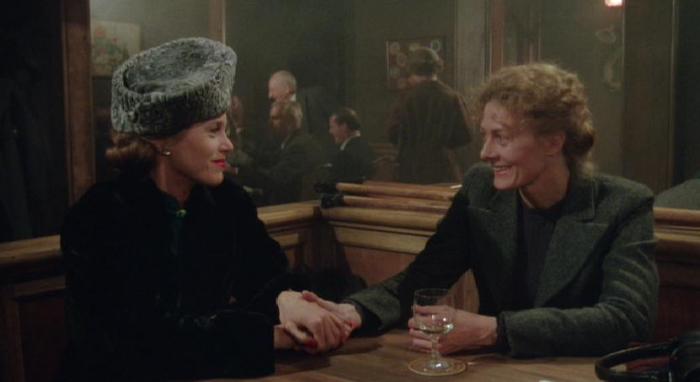
When I was a kid, one of the first trans* characters (the asterisk denotes the spectrum of gender identity) I saw onscreen was at a drive-in: she used martial arts to kick the shit out of some cisgender straight guy and held a gun to the head of another. If you haven’t actually seen Freebie and the Bean (and you shouldn’t), you might think those scenes sound pretty cool, but that character (and I’m using the word loosely) is one in a long line of dangerous, deceptive, twisted trans* women. The revelation that a “man” is wearing a wig and a dress while killing or assaulting victims–as in Psycho or later in Dressed To Kill and Silence of the Lambs–is a “shocking” twist, meant to further repulse the audience.
Recent efforts haven’t fared much better: films have just traded one trope for another. Instead of the evil trans* woman we now have the suffering trans* woman whose main function is to endure whatever cruelty and degradation the filmmakers wish to throw at her in Transamericaor the recent Dallas Buyers Club, a film I haven’t seen out of principle (I was on the fringes of AIDS activism in the 90s: straight men weren’t the protagonists of that story), but which seems predicated on a trans woman suffering and acting as a human sacrifice so the formerly transphobic “straight” guy star can show the audience how compassionate and accepting he’s become.
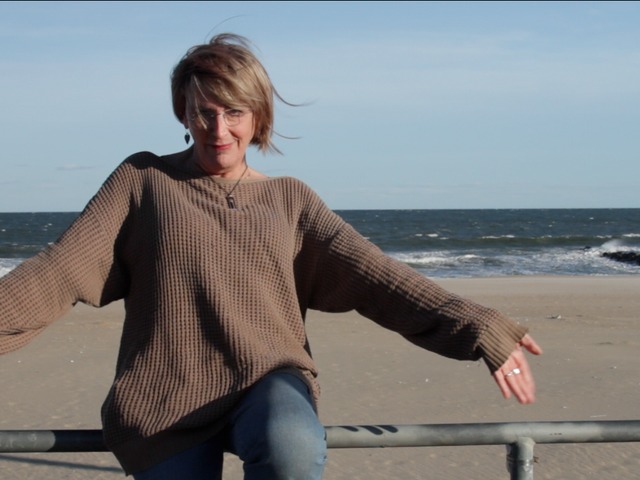
Kate and her pugs
We have to turn to documentaries to find transfeminine characters in film who are fully formed (and also actually played by transfeminine people) whether they are the stars of Paris Is Burning, the lesser known (but still excellent) solo portrait Split or are part of the protagonist’s life as seen in Southern Comfort. Trans director Sam Feder’sKate Bornstein is a Queer and Pleasant Danger (although it is named after Bornstein’s memoir the film is not an adaptation of the book) is the long overdue documentary on trans performer, writer and thinker Kate Bornstein (and will play as part of Outfest in Los Angeles on July 12).
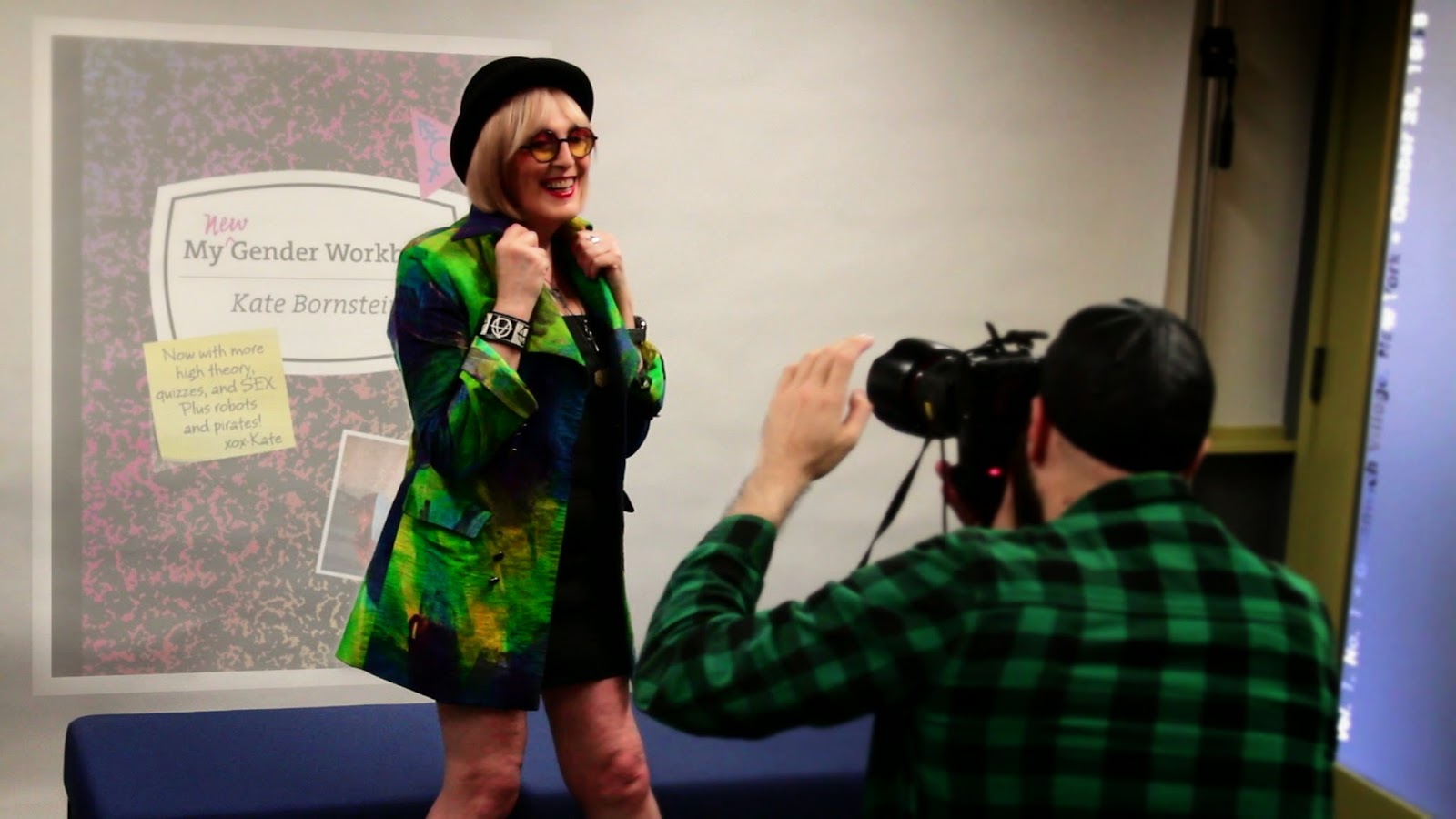
Bornstein–with her trademark Anna Wintour bob, facial piercings, tattoos, and multicolored glasses–is someone whose work is as distinctive as her appearance. I’ve seen and heard her many times through the years, mostly in performances, readings and interviews, but I’ve read just a small fraction of her impressive output. So in a lot of ways, I felt like I either knew not enough or too much to be part of the intended audience for this film. Occasionally the film would tell me something I didn’t already know, as when we find out Bornstein’s first person account and resource about staying alive in spite of suicidal thoughts: Hello Cruel World was dedicated to a friend’s son who had killed himself. But more often as the film acts as a kind of “Kate Bornstein 101” we see performances and listen in on readings that are familiar to many of us. I would’ve liked more of Kate (or someone) reading the work she usually doesn’t include in her performances and readings.
The sequence in which Bornstein talks about her estranged daughter, Jessica, with the woman who is the daughter’s biological mother just left me with more questions. Both parents were Scientologists at the time and because the daughter is still active in Scientology she is forbidden from seeing Bornstein, but what of her other mother? We don’t find out, the same way we don’t find out why a pre-transition Bornstein was a single parent for part of Jessica’s very early life.
We feel the ache Bornstein has for the absence of her daughter (and grandchildren, whom she has never met) 40 years after she last spent time with Jessica. Perhaps partly because of this loss, Bornstein takes on the role of actively encouraging and nurturing younger transfolk. She says she looks forward to the world these 22-year-olds will preside over, and it’s them she’s talking about when she asserts she would like to be remembered as “someone who looked after her kids.” But in spite of the mutual love she and the younger generation of trans people have for one another, like a lot of loving parents, Bornstein seems, at times, to have trouble listening to her children. Bornstein, along with other prominent transfolk of her generation, Mx Justin Vivian Bond and Jack Halberstam defends the label “tr*nny”–but in the film she seems to confuse the word with trans identity itself, which is puzzling since Bornstein was one of the first public figures to identify primarily as “trans” instead of as a man or woman– a decision she explains during a performance/lecture captured in the film.
Kate during a photo session
Like the other well-known trans people who wish to celebrate the word “tr*nny,” she doesn’t distinguish between being able to claim the label for herself and using it for other trans people–especially trans women–who consider the word a slur. Some who advocate for its use have likened “tr*nny” to “queer” which was also once a controversial, reappropriated label (one that still makes many straight people uncomfortable), but the difference is that “trans” can pretty much always be used instead of “tr*nny”, but “queer” isn’t always interchangeable with the more respectable “LGBT”: a lot of us who identify as “queer women” would object to being called “lesbian,” “bisexual,” or the completely clueless “gay.” A better analogous word to “tr*nny” might be “f*ggot” which some gay men call themselves but don’t wish those outside their community to call them–ever.
Bornstein has had a lot of influence, not just on younger trans people, which we see, but also on other trans writers and performers, none of whom are interviewed in the film. Instead we see repeat scenes of Bornstein in her brownstone apartment, interacting with her animals. I spend a lot of my time petting my cat and telling her how wonderful she is too, but in a fairly short film about someone with as many ideas as Bornstein has (and as many different types of lives she’s led), including more than one of these scenes seems like wasted time.
We also don’t see the sea change that has happened in the past few years: instead of white people (most of them, except for Bornstein and a few others, transmasculine) at the forefront of trans visibility and advocacy, as they were in the 1990s and 2000s, now women of color like Janet Mock and Laverne Cox are the face of the trans community. And because those women have a larger platform than writers and performers like Bornstein ever had (Mock is a former editor at People.com and Cox is featured in the wildly popular Netflix show Orange Is The New Black), more people know them, following them on Twitter and their appearancesin the media. And as Bornstein has made trans suicide an issue she tries to draw attention to, Cox and Mock have both used their fame to publicize issues the mainstream media might not otherwise cover–and which white trans activists have also been slow to rally around, like the unjust imprisonment of trans women of color Cece McDonald and Jane Doe. So seeing Bornstein portrayed in a vacuum in the film is frustrating. We see her with friends, with her partner Barbara Carrellas, adoring college-age audiences and in one blink-and-you-miss-it scene the men behind Original Plumbingwho acknowledge their debt to her, saying, “You came before us and carved out space.” But we don’t really see or hear prominent trans activists and public figures talk in any depth about her influence on their own work and lives–even those who have written and talked about that influence elsewhere. This omission seems especially glaring since Bornstein herself has publicly expressed admiration, on Twitter and elsewhere, for those who have come after her.
Though Bornstein has had a litany of serious health problems in recent years, we still see her with a vaporizer pen for much of the film (she quit smoking and vaping in 2012 after a cancer diagnosis). At the end Kate faces a health crisis and comes to an epiphany. She states, “For the first time in my life I realize I want to stay…I’m doing everything I can to make that happen.” As a coda we find out her current prognosis is good. She might just live long enough to see those college kids in charge after all.
Editor’s note: corrections have been made from the original review, which made it sound as if Bornstein continued to smoke after a cancer diagnosis; she quit the day she found out.
Ren Jender is a queer writer-performer/producer putting a film together. Her writing besides appearing every week on Bitch Flicks has appeared in The Toast,xoJane and the Feminist Wire. You can follow her on Twitter @renjender.
On April 18, 2014, 16 Sherpas, the great guides of the Nepali mountain range, were killed in an avalanche from the Khumbu icefall, making Friday, April 18, the deadliest day in Everest history. The tragedy brought light to a controversy of Everest summiting that had been brewing for the past few years. Suddenly, there was a spotlight on the high-adventure tourist industry running out of Everest: the overcrowded and littered Everest summit, the fights between Sherpas and trekkers, and the fact that Sherpas do the hardest, most dangerous work of summiting without awards or recognition.
In light of the 2014 tragedy on Mount Everest when 16 Sherpas were killed in an avalanche, the release of Dave Ohlsen’s 2009 K2 documentary, K2: Siren of the Himalayas, feels especially timely. On April 18, 2014, 16 Sherpas, the great guides of the Nepali mountain range, were killed in an avalanche from the Khumbu icefall, making Friday, April 18, the deadliest day in Everest history. The tragedy brought light to a controversy of Everest summiting that had been brewing for the past few years. Suddenly, there was a spotlight on the high-adventure tourist industry running out of Everest: the overcrowded and littered Everest summit, the fights between Sherpas and trekkers, and the fact that Sherpas do the hardest, most dangerous work of summiting without awards or recognition.
K2, however, is a slightly different animal than her more popular sister; while summiting the highest mountain in the world, at 8,848 meters, is no mean feat, and by 2010, 3, 142 individuals have climbed Mt. Everest.
As of 2010, 302 have climbed K2.
K2: Siren of the Himalayas
At 8,611 meters, K2 is not only the second-highest mountain on earth, it is also widely considered the most dangerous; its faces are steep and technical, and there is no safe path to the top. Over one-fourth of those who attempt K2 will die.
K2: Siren of the Himalayas follows four world-renowned climbers, Fabrizio Zangrilli (USA), Gerlinde Kaltenbrunner (Austria), Jake Meyer (England), and Chris Szymiec (Canada) as they attempt to summit K2 on the 100 year anniversary of the Duke of Abruzzi’s surveying expedition in 1909.
For these four Alpinists, summiting K2 marks the peak in their careers; Gerlinde Kaltenbrunner especially since she had already climbed 13 of the world’s 8,000 meter peaks and K2 would make her 14th (only 32 people have ever completed all 14). And the Zangrilli/Kaltenbrunner expedition stands in stark contrast to those on Everest: Zangrilli and Kaltenbrunner explicitly climb without the use of oxygen or high-altitude porters.
For what at first glance feels like stock tribute to a group of male climbers dominating a mountain, is actually a contemplative, slow-moving exploration of the dangers of high-altitude mountain climbing. And while there are stunning vistas of sunrises, sunsets, and glaciated mountain ranges, the majority of the film centers on the close-knit climbing community and their measured patience and startlingly humility in the face of their accomplishments. Especially since so much of the film shows their unwearied acceptance of their failures over the mountain.
Rather than a puff piece on “Look what I did!” K2: Siren of the Himalayas is instead, “Look what I could not do, but continue to respect and admire.”
The film evolves as well as Kaltenbrunner comes into focus with her calm wisdom, joy of the mountains, and humility at her failures and successes. Kaltenbrunner would actually be the only one from the expedition to attain the peak and become the second woman to climb the fourteen eight-thousanders, and the first to do it without oxygen and high-altitude porters. Basically, she’s amazing.
Gerlinde Kaltenbrunner after reaching the K2 summit in 2011.
As much of the climbing world contemplates the unsteady future of Everest expeditions (the 2014 season was canceled after the avalanche), K2: Siren of the Himalayas stands as a moderated, joyful glimpse of why so many climbers do what they do, as well as highlighting the great dangers of our beautiful, and volatile home, and the adventurers who explore her.
K2: Siren of the Himalayas will be released in the USA on Aug. 22, 2014: visit their website here for information about screeners and locations.
______________________________________
Rachel is a traveler and teacher who spent the last few years living in Asia. Now back in her native California, she focuses on writing about media, culture, and feminism. While a big fan of campy 80s movies and eccentric sci-fi, she’s become a cable acolyte, spending most of her time watching HBO, AMC, and Showtime. For good stories about lions and bungee jumping, as well as rants about sexism and slow drivers, follow her on Twitter at @RachelRedfern2
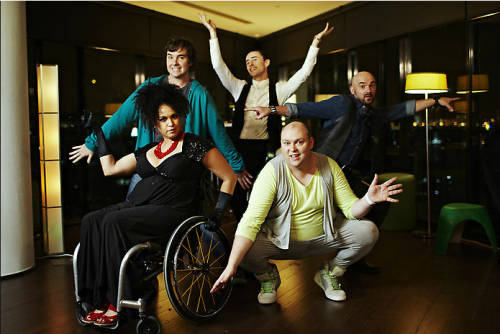
‘Outland’ is a little-known but hilarious Australian miniseries about five gay nerds in Melbourne. It has been called “a gay answer to ‘The Big Bang Theory,’” but I don’t think this description does it justice.
Outlandis a little-known but hilarious Australian miniseries about five gay nerds in Melbourne. The six half-hour episodes aired on the Australian Broadcasting Corporation in 2012. Each of the first five focuses on a different member of the group, as each takes his or her turn hosting their sci-fi movie-watching club and nothing goes according to plan.
L-R: Toby, Fab, Rae, Andy, Max
First there’s Max. Max is the closest thing this show has to the everyman character, the Ted Mosby or Jim Halpert – but this is a show about queer nerds, so he’s a gay science fiction enthusiast with an anxiety disorder. As far as I’m concerned, this makes him far more relatable than the Mosbys and Halperts of the televisual landscape.
The excellent second episode focuses on Rae, who is coping with the aftermath of her breakup from her girlfriend, Simone. Max voices his sympathy for Rae’s situation as a lesbian of color in a wheelchair: “Black, gay, and disabled – it’s like a discrimination trifecta.” She responds by quoting James Baldwin and then agreeing to have a nude photo of her displayed in an art exhibit. Rae is the literal best.
Then there’s Andy, the openly kinky one. As his friends try to get him down from his ceiling harness (this is a sitcom), Andy expounds upon the connection between his two favorite hobbies: “Science fiction and sex: they’re two sides of the same coin. Exploration, adventure, discovery…” In the DVD special features, writers John Richards and Adam Richard make it clear that this isn’t wholly a joke. There’s a thematic throughline undergirding the whole series which draws parallels between geekdom and queerness, from Max loudly “coming out of two closets” to the whole gang narrowly avoiding a queerbashing as they cosplay on their way to Pride. Being queer and being a nerd are two ways of being outside of the mainstream, and forming countercultural communities are a (perhaps the) major way for outsiders to survive.
Even communities with really really low effects budgets!
Fab is probably the most stereotypically gay character. He’s a flaming queen, he’s delightfully bitchy, he has tragically flamboyant fashion sense, and he lives with his nan. This is a great way for the writers to sneak in a bit of social commentary – when the others are creeped out by being around an old person, Andy points out, “You’re only saying that because we’ve been conditioned to believe that aging is the worst thing that can happen to a gay man.”
The last member of the gang is Toby. Poor Toby, whom nobody likes. Toby is an uptight rich kid who’s sure nobody outside of the group knows about his obvious queerness. His episode has songs and dancing and is totally amazing.
All-singing, all-dancing!
In the final episode, the splintered gang tries to overcome their assorted squabbles and neuroses to reunite for Pride. As a frustrated Max says, “All I wanted was a group where I could fancy the guy from Farscapewithout anyone making a big deal out of it!” Ultimately it’s the external threat that brings them back together, as the nerds realize that, as dysfunctional as their little group is, it’s a community that serves their needs in a hostile world.
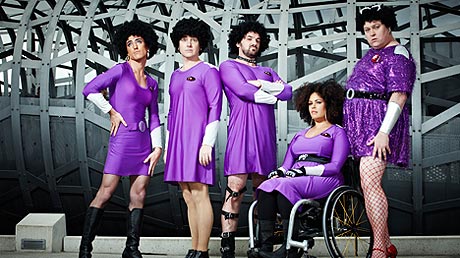
Outland has been called “a gay answer to The Big Bang Theory,” but I don’t think this description does it justice. The Big Bang Theoryhas (or had, when I last watched it, which was admittedly several years ago now) a palpable contempt for its characters, and concomitantly for the nerd culture it purports to portray. Outland, on the other hand, comes from a genuine place of affection for its characters and their geeky pastimes. This is evident in a wonderful subtlety of Outland, which is that its nerds have overlapping but distinct nerdy interests. Toby is the one who collects figurines; Max is the one who owns a Dalek suit; Rae is the one who’s into gender politics and Ursula LeGuin (obviously). This entirely reflects my experience with sci-fi club: we all loved science fiction and fantasy, we were all conversant in the obvious stuff, but everyone had their niche – Tim was our Middle-Earth expert, Michael knew everything there was to know about comic books, Heda was a Star Wars extended universe obsessive. (I was the go-to guy for zombies and B-movies.) Over the nearly 100 episodes of Big Bang I saw, I don’t recall ever seeing the specific interests of Howard, Leonard, Raj, and Sheldon being so well delineated as the Outland crew’s in six. This is nowhere better illustrated than in the group’s cosplay effort, where the interests and personality of each character shine in each specific iteration of the same costume.
Dressed as Lulara from show-within-a-show Space Station Beta.
Outland is broader and less nuanced than Spaced(oh, Spaced, will anything ever match your brilliance?), but it’s perhaps the closest thing we have to a queer Spaced. It’s unfortunately lacking in female characters; episode 2 is the only one that passes the Bechdel test, and you almost wonder if there’s self-awareness in making Rae do triple duty as the proverbial black disabled lesbian – oh, hell, can we just see a spinoff that follows Simone’s splinter group, the Lesbian Separatist Feminist Fantasy League?
Until the day we see a specifically lesbian and/or trans nerd sitcom, though, Outland is a delightful and very funny show (even if it can, alas, only be imported at great expense in the wrong DVD region).
___________________________________
Max Thornton blogs at Gay Christian Geek, tumbles as trans substantial, and is slowly learning to twitter at @RainicornMax. He’d like to thank his friend Gary for hooking him up with the Outland DVD.
Something about summer always makes me nostalgic. I think it’s that when you’re a kid, when you’re a teenager, it all seems so significant. You tend to measure time in summers, those long unstructured months that melt together in your own dream world where your parents have no authority. How many coming of age stories begin with something akin to “It was the summer I turned 16”? In honor of the summer months, I thought I’d take a look at some underrated coming of age films and what I learned from them.
Something about summer always makes me nostalgic.
Remember riding your bike around town? Remember waiting at the ice cream truck, or trying on new looks in front of the mirror, driving aimlessly around with a new license, or just listening to music in your room alone and having multiple epiphanies? ‘Tis the season to come of age. To be forever changed.
I think it’s that when you’re a kid, when you’re a teenager, it all seems so significant. You tend to measure time in summers, those long unstructured months that melt together in your own dream world where your parents have no authority. How many coming of age stories begin with something akin to “It was the summer I turned 16”?
In honor of the summer months, I thought I’d take a look at some underrated coming of age films and what I learned from them.
Vivian feels her large breasts make her “practically deformed” and is very uncomfortable with them.
Like many coming of age classics, Slums of Beverly Hills is both semi-autobiographical (for writer-director Tamara Jenkins) and set in the recent past. 90s indie darling Natasha Lyonne plays Vivian Abromowitz, a girl struggling with her dysfunctional family, burgeoning sexuality and uncomfortably large breasts (an unusual teenage girl problem in a genre full of girls praying for big boobs), all while constantly moving between seedy apartments in Beverly Hills as part of her father’s plan to allow her and her brothers to attend prestigious schools. Through the course of the film, Vivian not only has her period and loses her virginity, clear markers of ascent into womanhood, but also realizes sex can be pleasurable and she has a right to demand that it is. She also comes to appreciate her eccentric father (Alan Arkin) for the sacrifices he makes to give his children the best futures possible.
Lesson: Learn to be amused, not afflicted. Practice saying, one day this will all go in my memoir.
Welcome Home, Roxy Carmichael, like Heathers, Beetlejuice, and Mermaids, stars Winona Ryder back when she was the patron saint of “weird girls” who liked to wear black and didn’t talk much in class. Her unfortunately named character, Dinky, is a social outcast who prefers animals to her peers, who constantly taunt and torture her and disappoints her adoptive mother by rejecting feminine clothing. Though sometimes its hard to figure out whether Dinky is ostracized for being antisocial or has learned to be antisocial after years of being ostracized. Stuck in a quirky indie film style town where the childhood home of minor celebrity, Roxy Carmichael, is preserved as a museum, Dinky sets out to validate her existence by proving she is Roxy’s long lost daughter.
Lesson: You can’t develop in a vacuum. Spending time alone is valuable, but you really learn who you are from living in the world you have and getting to know the people around you, not from escaping into the world you wish you had.
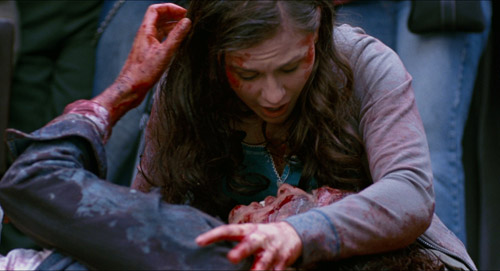
Lisa’s whole understanding of the world is changed when she watches a woman die in her arms and knows she is partially responsible.
Despite hitting some familiar beats (loss of virginity, teacher-student relationship, first encounter with death), Margaret is a very different type of coming of age story, and to my mind, a truer one, than I’ve seen before. As it begins, Lisa Cohen (Anna Paquin), a privileged Manhattan teenager, is just coming into her own. She has new and serious opinions about war and politics and passionately argues them in class and charges around the city casually flirting and testing out her new power. When she distracts a bus driver, contributing to a fatal accident, her grief and guilt lead her to seek the driver’s dismissal, which she feels is the only fair consequence. Here, Lisa shows how young she still is, as she doggedly seeks fairness, blind to the interests of the other parties involved and to any other option. She still sees the world as one where the guilty are always punished and the innocent rewarded, and in the moment where she learns things will not work the ways she imagined, she breaks down into a child-like tantrum.
Lesson: Life isn’t fair, it’s really not fair and sometimes there is nothing you can do to make things right.
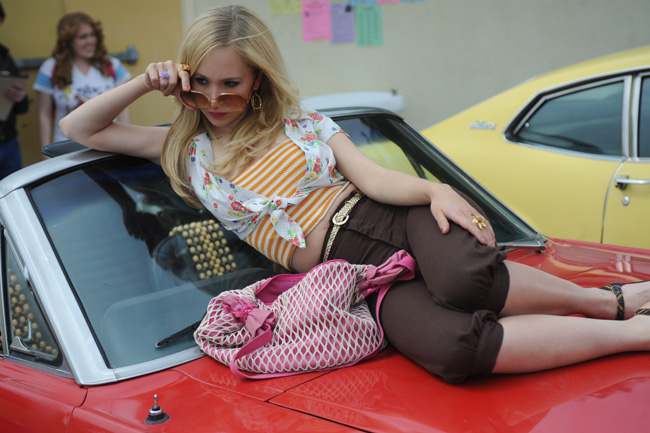
Danielle Edmundson (Juno Temple) thinks God made her purely for sex. Known as the “Dirty Girl” at school for her promiscuity, Danielle looks down on the girls in her class who fuss over their appearance and wish for their Prince Charmings, and uses the boys to prove to herself she has a talent. In Clark (Jeremy Dozier), a shy, gay boy who also sticks out like a sore thumb in their 1980s Oklahoma town, she finds a kindred spirit and the two hit the road, ostensibly to find Danielle’s father, but really to find themselves. Neither Clark nor Danielle have it all figured out. At first she’s the cooler-than-thou mentor who ups his confidence, but in the last moments he’s the one who helps her figure out who she wants to be. Refreshingly, the narrative doesn’t suggest Danielle’s sexual experience is wrong or that she needs to be celibate, but that it’s not the only thing she has or only way people should define her.
Lesson: The people you want in your life are the people who like you for who you are–the people that encourage you to be yourself, but only the best version of yourself.
Danielle appraises her peers and dislikes what she sees.
Most teenagers feel bored and trapped at some point, in their small towns or in their families. Haunter twists teenage alienation into a ghost story centered around Lisa Johnson (Abigail Breslin), another 80s teen, the only person in her family who realizes they’re dead. I chose to read Haunter as coming of age story, despite the fact that the central character will never get any older because it’s all about what Lisa learns. She becomes responsible for her family as the only one that knows the truth and her world becomes a nightmare none of them are aware of, as she is tormented by an murderous spirit. Unlike most alienated teenage girls she also finds herself through taking on the mission of trying to save the family currently living in the house from being the murderer’s next victims. And Lisa also grows in the expected ways for a coming of age heroine, as she goes from blaming her parents for their weaknesses and feeling superior, to allowing herself to understand, and walk in their shoes.
Lesson: Some of your angsty feelings are legitimate, some are self-indulgent. It’s a great skill to know the difference.
Lisa’s clarinet practice fills her time as she remains stuck in her house, the same day repeating endlessly.
It becomes apparent that the characters are facing not just a disagreement over who gets to use the sauna, but also the prospect of being the last remaining humans on a dead planet, on a train, with nowhere to go and nothing to do.
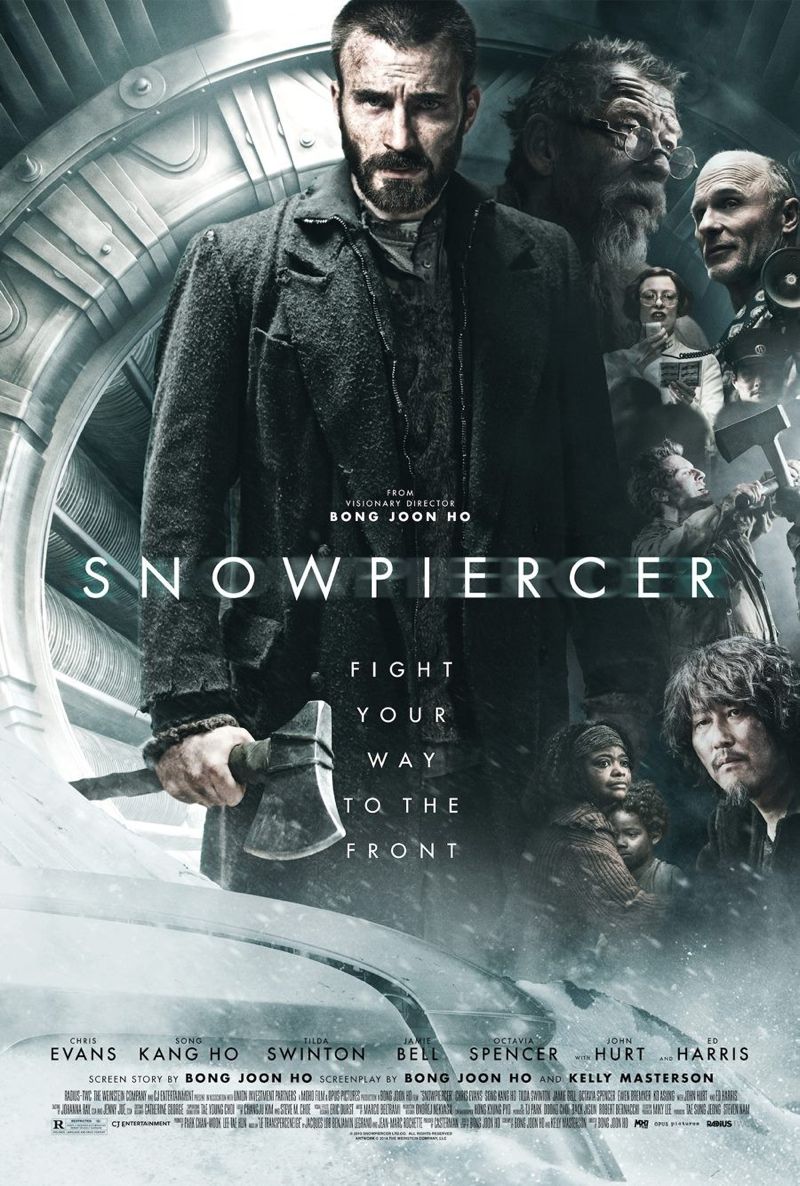
Snowpiercer (2013) is timely, and in more ways than one. I live in southwestern Arizona, and it’s exploding-eyeballs hot. So I was all like, “Snowball Earth? We should be so lucky.” But, the premise…the film opens by tuning us into 66.6 FM The Exposition, which informs us that scientists have decided to fight gas with gas by releasing a chemical, the innocuously-named CWX-7, into the atmosphere to combat our global warming non-problem. Chemtrails, man…
Somebody must’ve misplaced a decimal point in a metric conversion factor, because too much of the chemical is released, and the Earth quickly becomes very Hoth-like. Just about everything and everybody dies. A train magnate, Wilford (played with creepy awesomeness by Ed Harris), quickly converts one of his luxury lines into a perpetual-motion Ark that circles the globe endlessly, completing a full circuit once a year.
Seems reasonable.
Wilford packs it full of rich people, support staff, and (because he’s a nice capitalist) a bunch of riffraff who were complaining about their juicy babies freezing solid or something.
The thing about trains is that they have two ends. The front cars feature hot tubs, mahogany, and club kids. The rear has roach-flavored jello and bed-head. And that’s the movie – a bloody, single-column metaphor for the ongoing clash between the haves and have-nots, wrapped in sheet metal and a plausibly implausible apocalypse.
Chris Evans as Curtis.
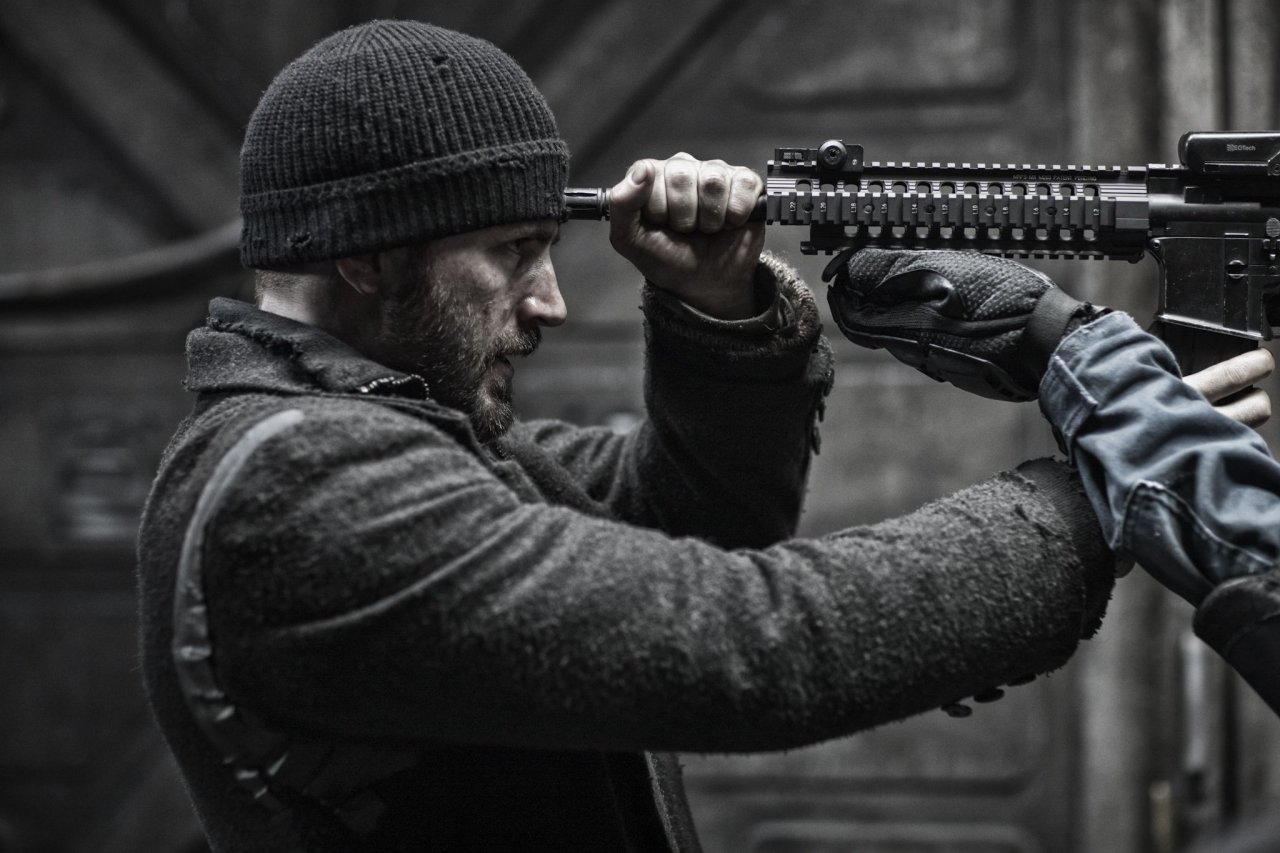
Chris Evans plays Curtis, the White Male Lead, and early on he works his grungy antihero shtick to good effect. He’s first mate to John Hurt’s character, Gilliam, King of the Poors. In the first act, we learn that the train has been running continuously for 17 (almost 18) years since the big freeze. During that time, the rear passengers have attempted several uprisings, only to be viciously put down each time by Wilford’s security force. But Curtis and Gilliam have new plan, and this time It Just Might Work.
Director Bong Joon-ho (The Host, 2006) does an excellent job, particularly in the early scenes, of making the viewer feel claustrophobic in a large auditorium. The angles he chooses, the play of light and shadow, and the constant, subtle rocking make the audience feel as if they were on the train, too. As Curtis and crew move towards the front, each car is visually distinct, like the rooms in Willy Wonka’s factory. My favorite was the school car – bright, yellow, and eerily cheery.
Less subtle is the film’s exploration of its class struggle theme. The rear units are more like cattle cars than coach cars, and the haves take perverse pleasure is abusing the have-nots. Bong spares no expressions of pain, misery, and grief as Wilford’s goons rip children from their mother’s arms or engage in freestyle amputation. Much of this malice is directed by women, including Wilford’s moll, Claude (played by Emma Levie).
Tilda Swinton as Minister Mason.
But Tilda Swinton steals the show as Minister Mason. I mean, she aced it. While her actions are deplorable, fascistic, and cruel, we never quite can tell if she’s inherently evil or if she’s merely been pushed to a place we all could go if we knew we were going to live out our days on the Polar Express. She presides over the bloodiest scene in the film, as Curtis leads his army of unwashed against a larger force of Wilford’s thugs, who are armed with wicked axes, sickles, and pikes.
The scene is blood-drenched with stylized hackery, and it’s actually quite good. We feel each blow of the axe and it takes, as it would, many blows to bring down an enraged prole. The scene also features Curtis performing some slow-motion, ballet-quality jugular slicing that actually feels fresh and not at all like a weak replication of the slow motion fight scene effects in the Matrix films.
But there’s comedy, too. The film develops a rhythm–an illustration of crushing inequality, some tension, and then some bloody ultraviolence punctuated on both ends by jarringly quirky humor or esoteric symbolism. For example, other critics have noted the scene where, while in the middle of the aforementioned battle, the train crosses a specific bridge that marks the new year. Each side stops fighting and stands in place during the crossing, both so as to not knock the train from the track and to observe the event. Wilford’s death squad, imposing and faceless in their black masks, turns en masse to the bloodied resistance fighters, counts down from ten as if they were in Times Square, and deliver an obscenely cheery and sincere “Happy New Year!” Then the carnage resumes.
However, my favorite discordant instance was the propaganda video played for the kids in the schoolhouse car. In black and white, with campy mid-century aesthetics, it details Wilford’s early obsession with trains. Young Wilford looks at the camera and says, “I want to live on a train, forever!” As the story progresses, it becomes apparent that the characters are facing more than just a disagreement over who gets to use the sauna, but the prospect of being the last remaining humans on a dead planet, on a train, with nowhere to go and nothing to do.
Octavia Spencer as Tanya.
There are several other interesting female characters in Snowpiercer. Octavia Spencer puts in a strong performance as Tanya, one of the rear car passengers whose child is stolen by Wilford. She is extremely believable, and the viewer clearly registers the grief and resignation in her eyes. Ah-sung Ko plays Yona, the daughter of one of the train’s designers, Namgoong Minsoo (played by Kang-ho Song). While her performance didn’t move me, her character is written well, and proves vitally important to the plot. But really, the film is too busy focusing its dark symbolism on human extinction to really comment very pointedly on the plight on women in the world, or on the train. In fact, aside from Mason, the female characters with speaking parts are fairly one-dimensional; either they’re victims of horrible injustice, or psychotic perpetrators of horrible injustice.
Bechdel? Nope.
Two scenes did give me pause: at one point, Curtis has the upper hand on Mason. She pleads, removes her partial dentures and, as I interpreted it, offers to fellate Curtis in exchange for her life. It seemed out of character, as if the directer really wanted to punctuate, in a spiteful way, Mason’s reduction in power at the hands of a man. In a later scene, one of the rebels kills a pregnant woman. Granted, she had just shot his friend in the head. When considered against the nihilistic, slightly insane tone of the movie, and some of the stories Curtis tells, maybe the act contributes meaningfully to the story. I’m not so sure, and I’ll level with you: I’m not a big fan of violence in film for its own sake, and violence against pregnant women just jerks me out of a movie and puts me in an uncomfortable place. Speaking of, if you haven’t seen Shoot ‘Em Up (2007) or Aliens vs. Predator: Requiem (2007), don’t.
I want a gun basket.
I have to admit that I was a little disappointed overall. The film didn’t quite live up to the hype for me, and I can’t really give it as glowing a recommendation as Rebecca Phale did at The Mary Sue. The dialogue was clunky at times, the theme delivery was sledgehammer-heavy upfront yet muddled at the end, and the third act suffered from ponderous pacing.
Still, Snowpiercer is a good film, and you should see it. The dystopia is very tangible, and you will appreciate the carefully crafted visuals and the tantric tension throughout. Swinton’s performance is worth the price of admission, if nothing else.
Note: Snowpiercer is based, loosely, on a French graphic novel.