We are living in an age where there is an explosion of films #DirectedbyWomen. That’s cause for celebration, but an enormous number of women filmmakers are working below the radar or on the fringes of awareness in the global film community. The result? Many film lovers are being left in the dark. They’re missing out on a rich vein of film treasures. Let’s draw films #DirectedbyWomen up into the light, so we can explore and appreciate them. Let’s help the world fall madly in love with and wildly celebrate women filmmakers and their films.
This is a guest post by Barbara Ann O’Leary.
We are living in an age where there is an explosion of films #DirectedbyWomen. That’s cause for celebration, but an enormous number of women filmmakers are working below the radar or on the fringes of awareness in the global film community. The result? Many film lovers are being left in the dark. They’re missing out on a rich vein of film treasures. Let’s draw films #DirectedbyWomen up into the light, so we can explore and appreciate them. Let’s help the world fall madly in love with and wildly celebrate women filmmakers and their films.
Go ahead… fall in love! No need to wait. Any moment is a perfect moment to relish films #DirectedbyWomen, but we want to concentrate that love by bringing the global film community together for a powerful 15-day worldwide film viewing party next year: September 1-15, 2015. During this intense and exuberant celebration, film lovers will gather together in their communities around the world for film screenings, guest filmmaker visits and other celebrations, focusing attention on and offering appreciation for women filmmakers and their work.
We want to be sure to give everyone plenty of time to plan, so we’re launching this initiative with over a year to prepare. Film lovers/makers – women and men – everywhere are invited to create #DirectedbyWomen film viewing parties in every corner of the world.
There’s so much beautiful work unfolding and so much more ready and eager to burst forth. Let’s embrace films #DirectedbyWomen with open arms. Let’s stand ready to receive them. Let’s say YES to the films women are creating. Let’s say “I WANT TO SEE FILMS #DIRECTEDBYWOMEN!” Let’s bring the films into our lives… into our communities… proactively. Let’s watch the films with attention and appreciation. Let’s share our responses to these films with the makers and with each other passionately. Let’s say “THANK YOU!” to the makers. Let’s say, “MORE please!” Let’s open greater opportunities for women filmmakers to create and share their work through the power of celebration and appreciation. Let’s step up to repeat this process.
I think it’s time for a worldwide film viewing party. I’m sending out this invitation to you and to every film lover on the planet. Everyone’s invited to co-create a global celebration next year. The only thing required in order for us each to gather with friends next year in September to watch films #DirectedbyWomen is our intention to do so, BUT if we want to be able to create a celebration that raises awareness about women filmmakers and their work on a global scale, we need resources to reach as many people as possible, extend invitations, brainstorm event celebration ideas, share information about films #DirectedbyWomen and how to arrange screening rights, coordinate event and venue information, create podcasts, generate Wayfinder Tributes to honor the individuals and groups who pour their energy into supporting women filmmakers, and other actions that will help the celebration flourish everywhere.
We’re thrilled to be offering our crowdfunding campaign on Seed & Spark. Their invitation to include this project on their Independent Film Championing platform signals that major perceptual shifts within the film community are happening now and will continue to unfold rapidly as more filmmakers and film lovers stop up to embrace films #DirectedbyWomen. Seed & Spark’s innovative approach to crowdfunding, which includes opportunities for supporters to back financially or to provide in kind contributions, makes it a tremendous place to build community and come together to bring this global celebration into being.
It’s exciting to be part of this adventure into deep appreciation and wild celebration of films #DirectedbyWomen. Let’s celebrate!
Barbara Ann O’Leary, Indiana University Cinema’s Outreach Specialist, loves to help people engage authentically. Recent projects include: #DirectedbyWomen, a worldwide film viewing part; Every Everything: The Music, Life & Times of Grant Hart (Executive Producer); Indy Film Festival (World Cinema Jury [2014] & Screening Committee [2013]); Indiana Filmmakers Network Made in Bloomington Film Series (Programmer); Bloomington Screenwriting Community (Founder/Facilitator). She’s available to work one to one with people who would like support in making the perceptual shifts that will align them more deeply with their authentic creative core.
Ugly singing; ugly make-up. ‘Les Misérables’ is deservedly known as the film that tried too hard to bum us out, and Anne Hathaway is known as the actress who tries too hard to be liked. But, isn’t it nice, sometimes, when somebody makes an effort?
Ugly singing; ugly make-up. Les Misérables is deservedly known as the film that tried too hard to bum us out, and Anne Hathaway is known as the actress who tries too hard to be liked. But isn’t it nice, sometimes, when somebody makes an effort?
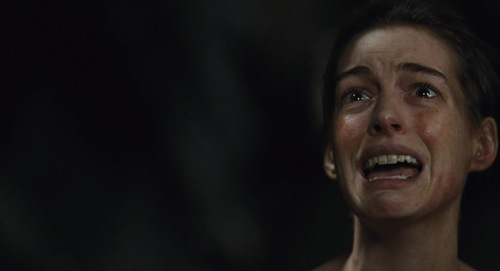
Anne Hathaway screams a dream in Les Mis
Tom Hooper’s 2012 film adaptation of Les Misérables is either an exercise in profoundly committed, sincere expressions of raw emotion, or a hammy, emotionally manipulative attempt to win Oscars. In fact, it’s probably both of those things at different times, but it stands out due to Hooper’s unusual choice to record the actors singing live.
Pitchy, breathy, raspy, screamy – all the notes are there as A-list Hollywood actors hurl themselves at the camera, relishing the chance to look and sound as ugly as their quasi-operatic characters feel. The soundtrack is probably not going to go on your iPod.
That said, there’s something amazing about the pitchiness / raspiness / screaminess / ugliness that serves to draw us in. When the cast list was announced, it seemed strange, because many of the actors were not really known as great singers, but the movie isn’t about singing an ear-pleasing song. It’s about letting the actors emote in the moment, having their voices sync up with the other acting choices they make in the scene – the result is something that seems so authentic and raw that it starts to go the other way and seem manipulative again.
The standout number in the film, and the one you would cite, were you trying to convince someone it’s awesome, is, of course, Anne Hathaway sobbing her way through “I Dreamed a Dream.” She won an armful of awards for it, including an Oscar, and deservedly so. There’s something beautiful and unselfconscious about the way she just lets herself go in that scene – a kind of emotional nakedness, where we believe the despair that she’s feeling. We can see that she’s let herself disappear inside the character, and invited us to see her in this dark, vulnerable moment, without any fear that she’s going to look stupid. That’s rare, and it displays a type of courage and skill as a performer that should be rewarded.
It’s also reminiscent of Jennifer Hudson’s standout performance of “And I am Telling You I’m Not Going” in Dreamgirls. That performance similarly made the whole movie, and led to an Oscar win for the woman screaming her pain to the camera.
Jennifer Hudson brings down the house in Dreamgirls
Hudson doesn’t go to the ugly place in Dreamgirls. The studio-recorded track sounds beautiful, and the makeup department isn’t trying to make her look diseased. What makes the scene stand out, though, is still the amount of raw emotion she pours into it. A more gifted vocalist than Hathaway, she uses her voice to convey a torrent of rage, despair, and desperation, which she then telegraphs through her body language and facial expressions on screen.
We’re drawn into her performance, and it conveys the most important emotional truth of the scene – that, even though her character’s words sound powerful, they’re being shouted from a place of total loss. She says, “I am telling you,” but there’s no one to tell. She’s lost her partner and her friends — she stands alone on a darkened stage without even the audience she hungered for. And, into the darkness, she orders, “You’re gonna love me, yes you are!”
It’s a powerful moment, and Hathaway’s performance in Les Misérables is like that, with the additional layer that Les Mis is so proud of her suffering.
Whereas Dreamgirls is a pretty standard and standardly-shot movie musical – enlivened by outstanding vocals from Hudson and co-star Beyoncé — Les Misérables is really reaching for the brass ring. It has a take-no-prisoner’s approach to engaging with the story’s pathos, and an awkward kind of delight in making everyone seem plague-ridden and miserable.
Her bed is a coffin — get it?
Don’t get me wrong – I love Les Misérables. I had low expectations, but I was less than ten minutes in before I felt that special shiver of delight that tells you you’re watching a kick-ass movie. I would much rather watch a film where everyone really goes for it, even if their reach sometimes exceeds their grasp.
At the same time, I completely understand why some people found it annoying.
The annoyance comes in part because you’re watching people who do not live in poverty pat themselves on the back for how poor they’re willing to make themselves look, and how deeply they’re willing to crawl inside the suffering of others. The ugly singing and the ugly makeup can be read as self-congratulatory – “Look how much I’m willing to debase myself for art! I don’t care if I look pretty; I just care if I’m authentic.” After a certain point, it comes across as trying too hard – of actually being inauthentic, since the attempt at authenticity feels so calculated.
It’s the same criticism that’s followed Anne Hathaway, herself. Whereas Jennifer Hudson came across to us as a spirited American Idol reject, who made good on her big dreams of stardom by signing her heart out in Dreamgirls, Anne Hathaway has been criticized for coming across as fake during public appearances. In fact, the backlash against Hathaway reached a fever pitch just as she was accepting her slew of awards for Les Mis.
No doubt, there’s a sharp contrast between the vulnerability she shows in “I Dreamed a Dream,” and the polished, eager-to-please persona she throws on in public. (Though I hasten to add that a lot of celebrities seem self-conscious in managing their public personas; for people who want to be liked, there’s nothing better or worse than having millions of people stare at you).
The general reaction to Les Misérables seems to fall along similar lines. The raw, ugly, emotionally intense performance is either touching because it seems authentic, or it’s disgusting because it seems crass and manipulative. We all agree that the emotions, like the vocals, weren’t cooked and seasoned before they were served, but we don’t agree about whether that’s fresh and exciting, or lazy and self-involved.
Like Anne Hathaway, the movie is trying hard. Like Jennifer Hudson, it’s screaming, “You’re gonna love me,” into the darkness. One cannot dare to be loved without risking rejection, and Les Misérables invites both love and rejection from its audience – but, isn’t it beautiful to see – and to hear – someone try?
Katherine Murray is a Toronto-based writer who yells about movies and TV on her blog.
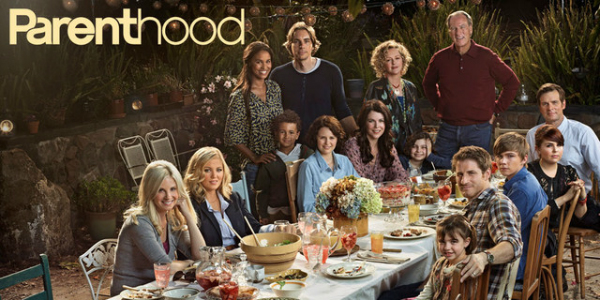
‘Parenthood’ is about showing us rounded human beings, triumphantly showing us their strengths and compassionately portraying their weaknesses. The interconnectedness and communication of this family is inspiring, and the series is always true to its characters’ unique psychology.
Despite my largely cynical personality, I found myself really enjoying the NBC TV series Parenthood. The show follows the intergenerational lives of the Braverman family living in Berkeley, California. The family is very close-knit, helping each other raise children, weather difficult times, and answer tough questions. Sometimes bordering on goody-goody or saccharine sweetness, the show mostly impresses me with the breadth of important issues addressed and the true-to-life character depth and psychology.
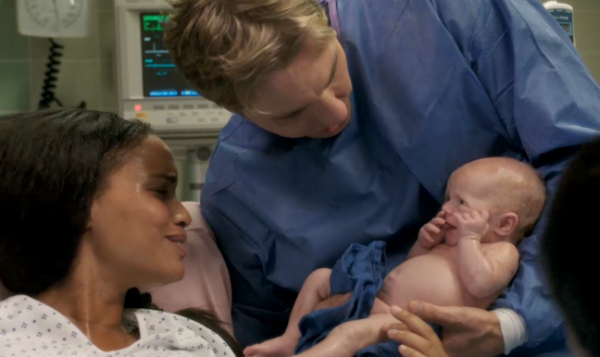
First, let’s address the ways in which Parenthood falls short. The cast is predominantly white. Crosby (Dax Shepard) marries a Black woman, Jasmine (Joy Bryant), and they have two children together, who constitute most of the non-white main characters on the show.
Aida is born to Jasmine and Crosby
With a cast that big, mainly casting periphery characters of color is a missed opportunity to dig into the intersection of race, culture, class, and family. Though in a limited, somewhat unsatisfactory way, the show does, however, capitalize on Crosby and Jasmine’s life together to delve into issues of interracial family. In a plotline about interracial dating, Adam (Peter Krause) and Christina’s daughter, Haddie, dates a young, Black man, which they forbid under the guise of his age and experience, when it’s clearly more about their discomfort with his class and race. It’s unclear whether or not the show truly acknowledges the racism of Haddie’s parents.
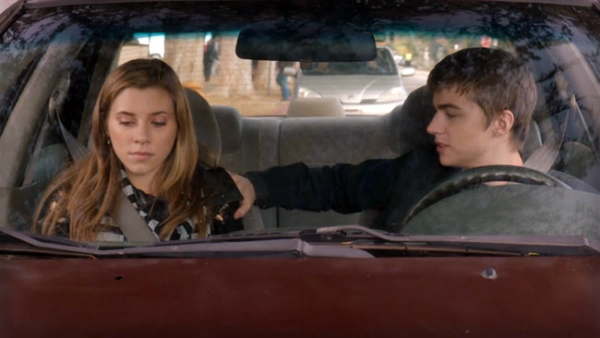
Haddie and Alex: young love
Parenthood also intersects race, class, and adoption themes when Julia and Joel adopt Victor (Xolo Maridueña), an abandoned 10-year-old Latino. Though the way the Braverman clan embraces Julia and Joel’s new son wholeheartedly is full of warmth and humanity, Victor’s representation brings into high relief the lack of class diversity depicted on the show. Though the character Sarah Braverman (Lauren Graham) struggles with money, she has the wealth and home of her parents to fall back on.
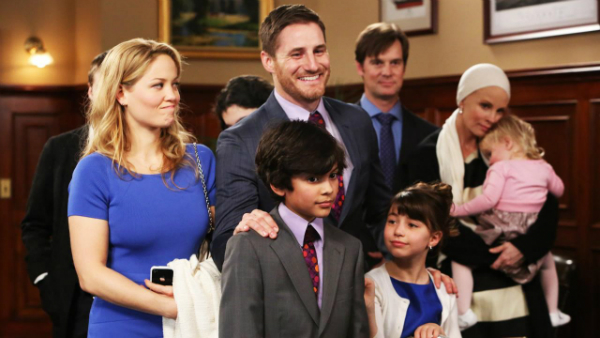
The entire Braverman clan comes out for Victor’s adoption day
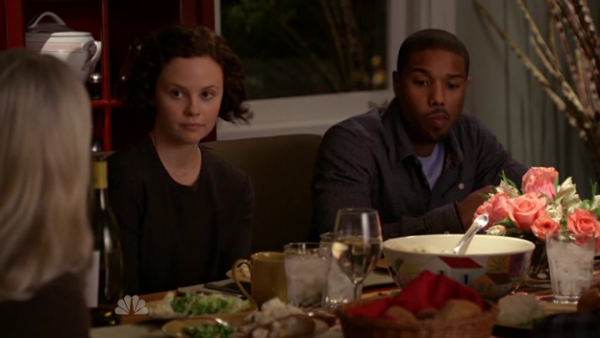
I waited five whole seasons for them to introduce a queer character. We all thought it would be young Drew, the quiet, sensitive younger brother of Amber and son of Sarah. Nope! In the very last episode of the most recent season (Season 5), Parenthood showed a long absent Haddie (Sarah Ramos), home from college, in love with a woman.
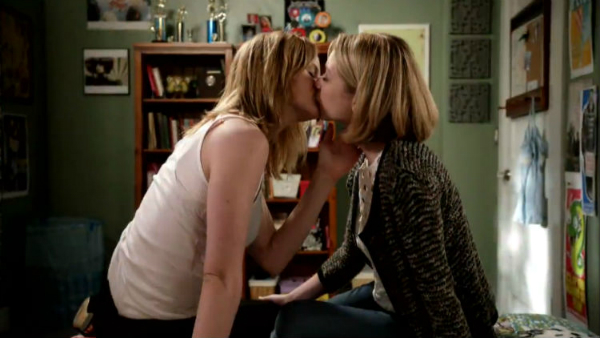
Haddie kissed a girl…and she liked it
Talk about a token LGBTQ character. She’s not even on the show anymore! It felt like Parenthood wanted to show us it was down with the gays without having to deal with any of the issues, hardships, or questions that come with being a young, queer woman in the US. Haddie also dated Alex, a Black man, so the implication is that she’s boundary-pushing and possibly a LUG. Not cool, Parenthood. Not cool.
Props for NBC’s on-screen lesbian kiss
Its shortcomings with regard to race, class, and sexuality mean that Parenthood disappointingly represents a narrow, unrealistic demographic of people. Though that seems like a massive fail, now we get to talk about the ways in which Parenthood succeeds. As I already referenced, the show deals with adoption and infertility with its Victor storyline. Not only that, but tackling the “C word,” the gentle-natured Christina (Monica Potter) is diagnosed with breast cancer. While Christina eventually goes into remission, she struggles with sickness, lack of energy, a desire to see her children through their challenges, loss of self-esteem, the death of close friends who also have cancer, and, most importantly, her own agency, her own ability to choose how she will live, how she will face cancer, and how she will prepare herself and her family for her potential death.
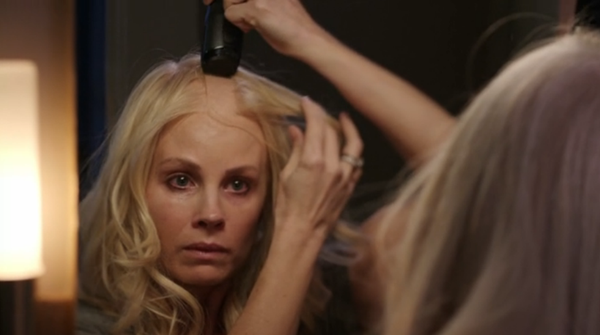
Christina shaves her head while undergoing chemotherapy
Fear, insecurity, trust, and love are repeatedly called into question when Parenthood deals with infidelity. We see Camille and Zeek secretly separated before they slowly repair their marriage due to an affair Zeek (Craig T. Nelson) had, showing how time, history, and forgiveness are crucial to any long-term relationship. We see Crosby destroy and slowly rebuild his family when he sleeps with Gaby (Minka Kelly), Max’s aide, which highlights how Crosby needed to grow up, accept responsibility for his actions and choices, and become more steadfast in his relationships. We see Adam and Christina weather a kiss Adam’s assistant, Rachel (Alexandra Daddario), plants on him during a rainstorm, showcasing the need for honesty and compassion within a marriage. The series primarily features male partners transgressing against their female partners, but in the most painful and drawn out indiscretion of all, we see Julia kiss another man and lie about it for a time, which leads to a separation and a difficult custody situation.
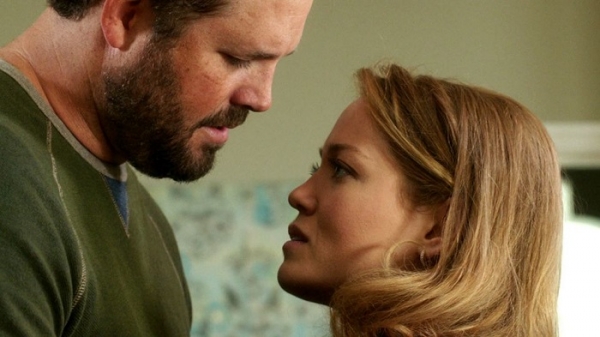
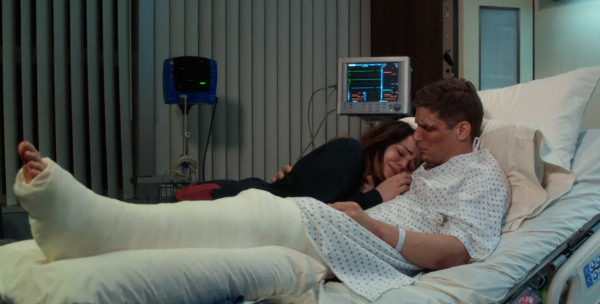
Julia and Ed acknowledge their shared attraction
Both characters are sympathetic: Julia (Erika Christensen) is desperate, lonely, and feels invisible, while Joel (Sam Jaeger) feels betrayed and unsupported by his wife in the pursuit of his career. We can also see both of their faults in the situation: Julia is selfish and can’t handle being a stay-at-home mom even though she rashly quit her job, and Joel is rigidly unforgiving and untrusting, refusing to communicate or work on their underlying marital troubles. It’s rare to see an honest, balanced, yet sympathetic portrayal of a drowning relationship due to infidelity.
Parenthood features a teen abortion without judgement. Drew’s (Miles Heizer) girlfriend, Amy (Skyler Day), becomes pregnant. Amy decides to get an abortion, and Drew, in his awkward, teenage way, tries to support her choice and be there for her. Despite his attempts to be a good boyfriend, their youthful relationship disintegrates as a result of the very adult situation they find themselves in. My major complaint is that much of this happens from the perspective of Drew, and we only get glimpses of how Amy feels and how, over a year later when Amy and Drew reconnect, Amy is still troubled by the secret she keeps from her family.
Drew and Amy’s relationship falls apart after her abortion
One of Parenthood‘s pet issues is Asperger syndrome and more broadly autism spectrum. In Season 1, Adam and Christina’s son, Max (Max Burkholder) is diagnosed with Asperger’s. Together, the family rally, compassionately supporting Max to give him structure, safety, and a quality education that doesn’t discriminate against him. Later on, the show introduces Hank (Ray Romano), a love interest of Sarah and a mentor for Max, who is pained to discover that he, like Max, is autism spectrum.
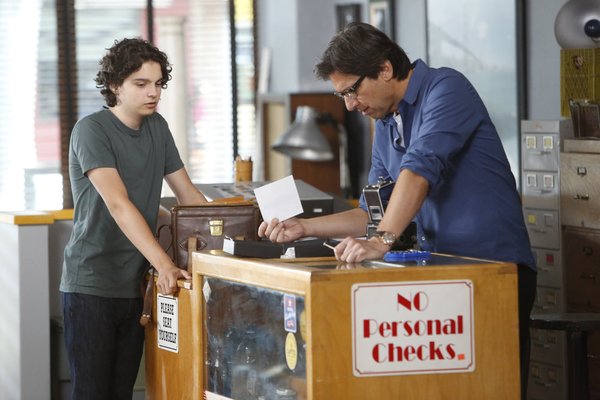
Max and Hank share their love of photography
The series strives to show that despite the very real challenges they face, neither Max nor Hank are incapable of normal lives or of being loved. There aren’t a whole lot of representations of autism spectrum individuals that don’t tokenize them as a “character with a disability”–certainly very few make them primary characters on TV, and even fewer cast them as love interests.
I was impressed with the very real, honest depictions of addiction, in particular the plight of the loved ones of addicts. Sarah’s ex-husband, Seth (John Corbett), is an addict and an absentee father. He flits in and out of his children’s lives, promising to change and disappointing them each time. Amber (brilliantly, viscerally performed by Mae Whitman) is so sensitive that when we meet her, she is acting out, a lost teen with little self-worth who’s hardened her heart to her deadbeat dad, while her younger brother, Drew, yearns for his father, constantly forgiving him and eternally holding out hope that he’ll have a real relationship with his father this time. Sarah, herself, never gives up on Seth, and (while I think it’s unrealistic that Seth does, in fact, go to rehab and eventually maintains his recovery since it happens more often than not that people don’t ever recover) the Holt family exemplifies dysfunction and the behavioral patterns of living with an addict.
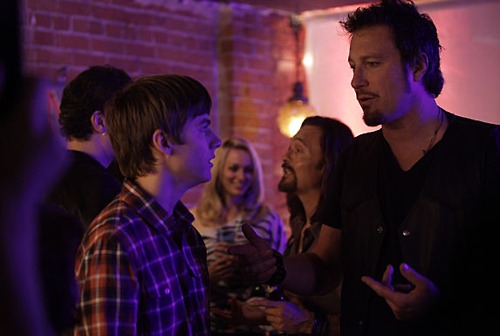
Drew finds his wasted father playing a show
For example, Sarah can’t ever choose the potential partner who has his shit together. She’s always drawn to the one who needs her most. Amber also grows up to embody this same trait when she falls in love with deeply troubled war veteran, Ryan (Matt Lauria). Ryan’s storyline allows Parenthood to delve into PTSD as well as the way in which veterans come home haunted. While I’m disappointed that the show has yet to explore PTSD as a result of sexual violence and/or trauma (especially considering how real that storyline is for so, so many people, especially women), Ryan’s arc and the way in which it intersects with Amber’s is crucial for revealing to us how much she’s internalized that responsibility of caring for someone who isn’t healthy.
Ryan nearly dies as a result of his PTSD-motivated reckless behavior
One storyline that I’ve been incredibly pleased to see is that of Camille (Bonnie Bedelia), the matriarch of the Braverman family. Her family takes her for granted and neglects her needs, invalidating her as a human being. They’ve so cast her in the role of “wife” and “mother” that they don’t see her as anything but an extension of themselves. This is clear in the resistance she meets from the entire clan when she wants to explore her love of painting on an extended, solo trip to Italy followed by her family’s baffled disbelief that she wants to sell the house in order to travel more and not be weighed down by that behemoth of a home. I’ve not often seen a story like this that calls out husbands and children for forgetting that their wives and mothers are human beings with separate hopes and desires.
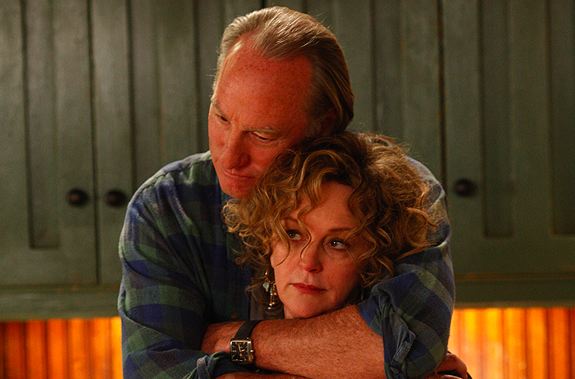
Zeek realizes his love for Camille is the most important thing in his life
Bottom line, Parenthood is about showing us rounded human beings, triumphantly showing us their strengths and compassionately portraying their weaknesses. The interconnectedness and communication of this family is inspiring, and the series is always true to its characters’ unique psychology, revealing to us that every choice each of them makes is connected in a subtle way. If Season 6 would show us more race, class, and LGBTQ diversity, Parenthood would go from being a really good series to a really great one.
Bitch Flicks writer and editor Amanda Rodriguez is an environmental activist living in Asheville, North Carolina. She holds a BA from Antioch College in Yellow Springs, Ohio and an MFA in fiction writing from Queens University in Charlotte, NC. She writes all about food and drinking games on her blog Booze and Baking. Fun fact: while living in Kyoto, Japan, her house was attacked by monkeys.
First person documentary filmmakers Ed Pincus and Lucia Small are no strangers to letting an audience in on their family “secrets”: Small in ‘My Father, The Genius,’ a film about her own father and their ambivalent relationship, and Pincus in ‘Diaries,’ in which he filmed both his girlfriend and wife in 1970s Cambridge, the latter–in one scene that seems to sum up the post-hippie atmosphere of the time and place–nude and playing a flute.
Artists who use their own lives as the subject matter for their art always have to make a decision about how much revelation is too much. David Rakoff, whom many know from his work on This American Life, wrote frankly and transcendentally about his declining health (including an inability in his last years to use one of his arms) after he was diagnosed with the cancer that would eventually kill him. But Rakoff didn’t have to worry that his revelations would hurt those closest to him: he lived alone, without a partner or children.
When they reveal “everything,” those artists who are in relationships aren’t just exposing their own lives to the public–they can’t help also exposing intimate details about their loved ones. Author Ayelet Waldman has received criticism for revelations about both about her husband (author Michael Chabon) and her kids in her work. Sex writer and essayist Susie Bright swore off using her personal life as fodder for her work years ago and though she seems to be in a successful decades-long relationship (and sometimes collaborates with her now adult daughter), her writing doesn’t have the same spark as it did earlier in her career.
First person documentary filmmakers Ed Pincus and Lucia Small are no strangers to letting an audience in on their family “secrets”: Small in My Father, The Genius, a film about her own father and their ambivalent relationship, and Pincus in Diaries, in which he filmed both his girlfriend and wife in 1970s Cambridge, the latter–in one scene that seems to sum up the post-hippie atmosphere of the time and place–nude and playing a flute.
Near the beginning of their excellent documentaryOne Cut, One Life(which will be shown as part of the Woods Hole Film Festival July 28), Small and Pincus, each seeming to take a turn behind the camera, discuss plans to collaborate on their final film together (they had previously worked on the post-Katrina documentary The Axe In The Attic). Ed has been diagnosed with a fatal disease which would eventually turn into leukemia. Lucia is working through her grief over the deaths of two of her close friends, one from a hit-and-run driver, the other murdered by an ex-boyfriend.
Ed and Lucia
Ed, who is over 70, has other health issues (he was diagnosed with Parkinson’s some years before and speaks slowly and carefully), but they agree that they can probably work around them. The problem is Ed’s wife, Jane, who is adamant that she doesn’t want them to film what might be the last months of his life. We’re so used to wives being a drag on “great” men in film (Pauline Kael referred to this role as the “‘please don’t go up to break the sound barrier tonight, dear’ type”) that we’re ready to think of Jane as the villain until she tells us, “I have enough to deal with in my life right now. My husband has received a death sentence, and I don’t see why I have to give him over to anybody else.”
Jane, who was filmed over five years in Diaries, is familiar with the intrusion a camera is in one’s day-to-day life and has no desire to relive it. She’s also insecure about Ed’s feelings for Lucia.
Ed documented his and Jane’s open marriage in the 70s, but after Diaries was completed they moved to Vermont to run a flower farm. When they made an appearance at a screening of Diaries in the 90s, with matching glasses and grey hair, their arms around each other, they seemed to have become a more conventional couple.
In the 2000s, Ed’s introduction to Lucia reignited his interest in filmmaking (though he still kept the farm). Lucia tells us that she became close to both Ed and Jane (who was a member of the feminist health collective that wrote the original Our Bodies Ourselves) during the making of Axe, but then they, by mutual agreement, distanced themselves when the film was finished. Lucia tells us that aside from a few “flings” she hasn’t been in a relationship in years and that working together for as many hours as a film takes, mixes up her feelings of love and intimacy, though she clarifies that her relationship with Ed is platonic.
Ed Pincus
Ed seems less intent on keeping boundaries clear. He tells Lucia he loves her and at one point Jane catches them alone in a situation that sets off alarm bells for her–and like photographers in a war zone, Ed and Lucia immediately pick up their cameras and start shooting the conflict. Whenever we see Lucia talking to the camera, she looks drained; the elements in her life that might distract her from her grief instead serve as reminders. Her big, black dog originally belonged to the woman who was murdered. Her cute New York apartment was the one she shared with the woman who was killed in the hit-and-run. But when Jane looks at Lucia she sees a blonde 25 years younger than she is, whom her husband seems to adore.
Mixed up in all of this drama is Ed’s worsening health. Receiving bad news on camera he simply says, ” Well, that’s sobering.” In stunning cinematography we see the seasons at the farm: fall, winter, spring, summer and then spring again, when a newly cue-ball-bald Ed tells the camera that the doctor had said he probably wouldn’t live past March, so he’s grateful. Ed lived two seasons longer and died this past November. When I saw the film in April as part of the Independent Film Festival of Boston, Small did a poignant Q & A after the screening. One of the first things she told us was Jane had chosen not to attend.
Ren Jender is a queer writer-performer/producer putting a film together. Her writing besides appearing every week on Bitch Flicks has appeared in The Toast, xoJane and the Feminist Wire. You can follow her on Twitter @renjender.
Dreamlike images of a body immersed in bathwater intermingle with images of fire and shadowy figures running. The camera settles clearly on the deeply scarred back of the young man in the tub as the opening sequence to ‘The Lesser Blessed’ comes to a close and the camera travels across a remote landscape split by a single road.
Dreamlike images of a body immersed in bathwater intermingle with images of fire and shadowy figures running. The camera settles clearly on the deeply scarred back of the young man in the tub as the opening sequence to The Lesser Blessed comes to a close and the camera travels across a remote landscape split by a single road. The narrator, also the protagonist, tells us we are in Fort Simmer, Northwest Territories where “there’s not much to do if you’re not into booze or sports.” Hero and protagonist Larry Sole (Joel Evans), a kid from the Dagrib (Tlicho) First Nation in Canada, “has to face down the devil right in the eyeball before he can set free his romantic heart,” according to director Anita Doran.
Based on Richard Van Camp’s (Tlicho) novel of the same name, the dramatic film tells the story of a kid who runs when threatened by a bully, who dreams of a girl who doesn’t love him back, and who quietly lives with his past and his stories until Johnny Beck (Kiowa Gordon) comes to town and suddenly Larry’s past explodes into his present. When Larry tells Jed the story of his tapeworm with complete deadpan delivery, Jed chuckles and says, “Larry Sole, the most interesting thing in this shit town.”
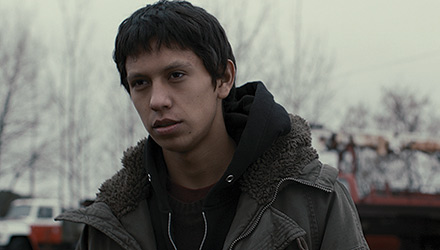
Joel Evans is Larry Sole in The Lesser Blessed
Soon after, Larry’s dream girl, Juliet (Chloe Rose) pays $200 for Jed at a charity slave auction that is raising money for the school dance. Larry closes his eyes and thinks, “I bet she would have paid more.”
Chloe Rose plays Juliet Hope in The Lesser Blessed
The devil that Larry must face is the story of why he burned his dad. After Larry punches his tormenter, Darcy McManus (Adam Butcher), at a party, Darcy tells everyone at school that Larry set his father on fire. The entire school shuns him and Larry must face his past, his truth, his story. No matter how painful, Larry must confront his truth. When his mother’s boyfriend, Jed (Benjamin Bratt) finds him in the wilderness, Larry says, “We both burned to death that night. Except I’m still alive.”
Benjamin Bratt plays Jed in The Lesser Blessed
This story is as much about compassion for self as it is for reconciling the past. Larry’s journey is moving and relatable for anyone who has suffered a traumatic experience, especially sexual abuse, and found a way to survive it. On the surface, the friendship and love triangle of three teenagers is as serious and angst-filled as any teen movie, but The Lesser Blessed offers something more. It offers the viewer a glimpse at redemption on a very human level.
The Canadian Film Review spotlighted this film in 2013, interviewing the cast and Richard Van Camp, and providing some insights about the making of the picture:
Winner of the Best Picture and Best Lead Actor at the Red Nation Film Festival, winner of the Best Supporting Actor at the American Indian Film Festival, and an Official Selection for the Native Cinema Showcase at the National Museum of the American Indian, The Lesser Blessed would be an excellent addition to any classroom discussing film, contemporary Native peoples, sexual abuse, or teenage experiences. The film handles its serious subject matter with honesty and lyricism; it is poignant and a joy to watch.
The Lesser Blessed is available to stream on Netflix, Amazon, iTunes, and Vudu.
_____________________________________
Dr. Amanda Morris is an Assistant Professor of Multiethnic Rhetorics at Kutztown University of Pennsylvania with a specialty in Indigenous Rhetorics.
The staggering majority of wedding movies take on the inherent drama of an impending lifelong commitment by tearing apart the engaged couple for a more “meant to be” love, generally with either a close friend or someone working on the wedding. This trope became incredibly frustrating for me when I was engaged, because I wasn’t inclined to root for weddings falling apart at the altar. I became so jaded about the genre, hating that so many movies with central female characters are wrapped up in the wedding world. But this week I’ve been rethinking wedding movies a bit.
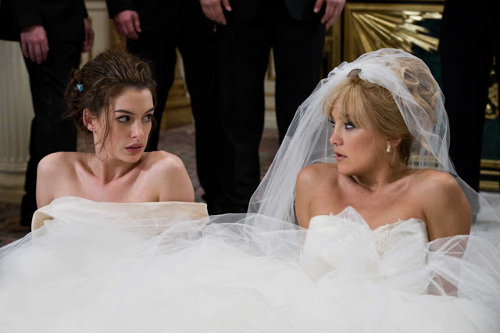
Bride Wars, the quintessential obnoxious wedding movie
The reason I’ve been delinquent with my Bitch Flicks posts the last couple of weeks is I have been neck-deep in the choppy waters of Wedding Sea. My best friend from college is getting married, and I am Chief Mermaid (our vastly superior way of saying “Matron of Honor,” which, barf.) I’ve traveled nearly 10,000 miles to be here. I have engaged in crafting I never imagined I would (for example, I now know how to rivet). I have enabled my friend’s quest toward giving zero fucks as endless wedding “problems” present themselves (all things considered, she’s doing great).
And it is my third wedding anniversary is this week, so I’ve also been thinking back to the immersive planning experience I went through for my own wedding, which I blogged along the way. This is where I actually got my start writing about movies, as I dove head-first into the extensive genre of wedding movies. My takeaway on the genre when it was a Bitch Flicks theme week last year was as such:
Weddings are such popular centerpieces for movies because they’re sort of a free pass on logical character behavior. Even in real life, weddings exaggerate emotions and make people do strange things (like spend thousands of dollars on chair rental). So in the movies, weddings are basically an anything-goes wonderland of high drahms. None of the characters have to act realistically or believably and the stakes are always extremely high (“’til death do us part”!!!).
The staggering majority of wedding movies take on the inherent drama of an impending lifelong commitment by tearing apart the engaged couple for a more “meant to be” love, generally with either a close friend or someone working on the wedding. This trope became incredibly frustrating for me when I was engaged, because I wasn’t inclined to root for weddings falling apart at the altar. I became so jaded about the genre, hating that so many movies with central female characters are wrapped up in the wedding world.
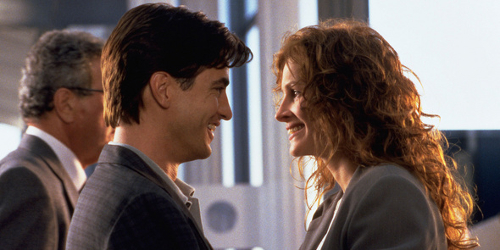
My Best Friend’s Wedding is one of many love triangle wedding movies.
But this week I’ve been rethinking wedding movies a bit.
Weddings are dramatic all on their own, even without the ubiquitous love triangle-engendered cold feet. I wish more wedding movies explored the more mundane, but no less histrionic, issues that come with this cultural juggernaut. Women, in particular, are forced to confront a crap-ton of societal expectations when they wed. Families are drawn together and meant to be happy and celebratory regardless of the actual state of their relationships (the best representation I’ve seen of this issue thus far is Rachel Getting Married). People are pushed to their breaking point by hot glue guns and last-minute cancellations and unexpected lighting technician fees. There’s a lot of drama (and tragedy + time = comedy) inherit to weddings that doesn’t involve jiltings, which I hope are relatively rare.
Rachel Getting Married: a wedding movie about family relationships
So I wish there were more movies that explored these facets of weddings. I want more movies that use a wedding as a catalyst for relationship reckonings that aren’t between the doomed would-be bride and groom. But I also want wedding movies about the rest of the bizarre whirlwind surrounding weddings: I want a movie that takes on the “Wedding Industrial Complex” as an evil empire that a superpowered bride takes down. I want a race-against-time action comedy about recovering misplaced wedding rings. I want more gay wedding movies, wedding movies about people of color, wedding movies about people with disabilities.
Basically, I think weddings are interesting, and I want to see weddings in film as something other than the backdrop for a pro-forma romantic comedy. (Even Bridesmaids and Bachelorette, two female-relationship-centric wedding flicks, heavily feature romcom subplots.)
Even Bridesmaids has romcom elements
I still stand by what I wrote before, that “it’s a shame that they take up so much of a share of the movies Hollywood makes about women.” Obviously we can all agree that Hollywood needs to be making more movies about women, and that our culture over-emphasizes the importance of weddings in women’s lives, so maybe I shouldn’t be asking for more wedding movies. I suppose I don’t want MORE wedding movies, I just want different and superior ones.
So I don’t think wedding movies are just a particular weakness of mine anymore. I think weddings are a valid and rich subject for a movie. Just not the same movie 500,000 times.
Robin Hitchcock is an American writer with 24 dresses to go before she ties Katherine Heigl.
In Hollywood, business as usual means that the top ten highest-grossing films of 2014, so far, were all directed by men. In fact, between 2009 and 2013 only 4.7 percent of feature films were directed by women. Courtney Martinez is helping to close this gender gap. Martinez is the creator of Girls Film Project, a program designed to educate young women about film production and media literacy.
Courtney Martinez started Girls Film Project, a non-profit program that teaches young women and girls about film production, media literacy, leadership, and teamwork.
Courtney Martinez
The top ten highest-grossing films of 2014 have had exactly zero female directors.
This is the movie business as usual. In fact, as this infographic from Indiewire’s Women and Hollywood column illustrates, between 2009 and 2013 only 4.7 percent of feature films were directed by women.
How can we close this gender gap? Well, personal and social change go hand in hand. Or, in bumper sticker form, we can be the change. For example, if you follow our weekly tweet chat (#BitchFlicks, Tuesdays at 2 p.m. ET), then last week you caught our conversation with film critic Miriam Bale. Bale started the #HireTheseWomen hashtag to compile a list of the many talented women directors that Hollywood should hire. Social media is a powerful tool, and #HireTheseWomen has been effective at raising awareness. In the interim, since there are still few well-known female director possibility models, it is important that young women and girls know that theycan make movies.
Courtney Martinez is helping to do that. Martinez is the creator of Girls Film Project (GFP), a program designed to educate young women about film production and media literacy. It’s based in Tucson, Arizona, and has been operating since 2013. Sessions are free to participants, are one week long, and cover six courses:
Media Literacy: The student examines how gender, race, and culture are represented in the media. This course is intended to encourage students to engage in positive discourse, and to think critically about media and their impacts on society.
Writing and Script Analysis: The students learn how to write a script, create storyboards, and deconstruct scenes to examine subtext and develop writing skills.
Pre-production/distribution: This course describes the issues that often come up prior to filming, e.g., how to get started, budgeting, and the importance of a good story. The students also explore the requirements for film festivals, develop a pitch proposal and address promotional issues such as poster development, social media, websites and local screenings.
Production: A hands-on course where students handle equipment and get training on how to operate cameras, tripods, microphones and other film equipment.
Editing and Sound: The students learn the basics of editing with Final Cut Pro software. Students edit a short clip with pre-recorded footage.
Final Project: Students put their skills to use and work as a team to make a short film, from start to finish, using submitted proposals from the course. The films may be distributed to local film festivals.
Martinez: I came to Tucson in August of 2010 to attend graduate school at the University of Arizona. I received my master’s degree in Mexican American Studies, and worked as a teaching assistant and summer class instructor. My undergraduate degree is in film and media, and I am interested in documentary work, so I developed an interdisciplinary education focusing on cultural and gender identity in film and media.
I came to Arizona just as SB1070 was passed into law and I began thinking about how people form opinions on certain topics, my research focused on how influential media are…I wanted to harness that energy and turn it into something positive.
Girls Film Project students.
Bitch Flicks: How did you get interested in film?
Martinez: I worked in human services for several years (treatment centers and homeless shelters for women). I worked second and third shifts so I got to visit with the women more and listen to their stories of struggle and empowerment. I would hear comments on the streets or from local agencies about how “they got what they deserved,” or “it’s their own fault,” and I was shocked. I thought if these women could share their stories with a wider audience, society may change its negative perspective about addiction, homelessness and domestic violence. That was when I decided to use film as a means of communication.
Bitch Flicks:Do you have a philosophy of film production that you teach your students?
Martinez: My philosophy on filmmaking is to enjoy what you do and don’t limit yourself. I think it is really easy for people to get caught up in the process of filmmaking, thinking they can’t afford the right camera, or a light kit or whatever. I try to encourage students to use what they have around them to tell their stories. It does not have to be “Hollywood” to be a successful film, it just has to be authentic because that is what’s missing in mainstream media today.
Bitch Flicks: What is your teaching style?
Martinez: I enjoy the sharing of ideas and inspiration. I try to avoid lectures and use a more conversational teaching method. I am so impressed by the students’ ideas and their outlook on the world. They approach things fearlessly, which inspires me to be fearless! Mutual learning is key!
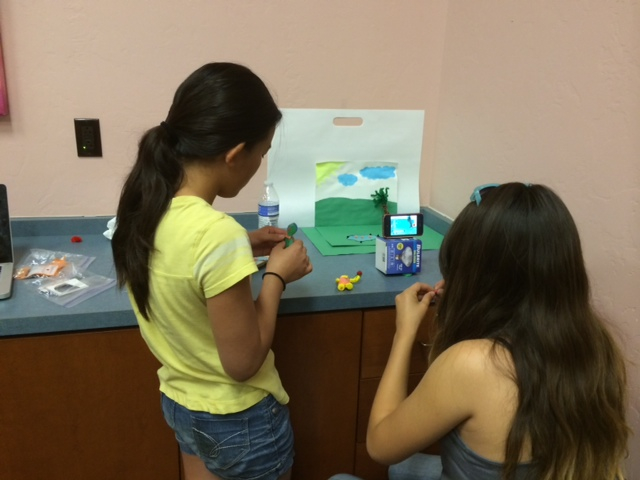
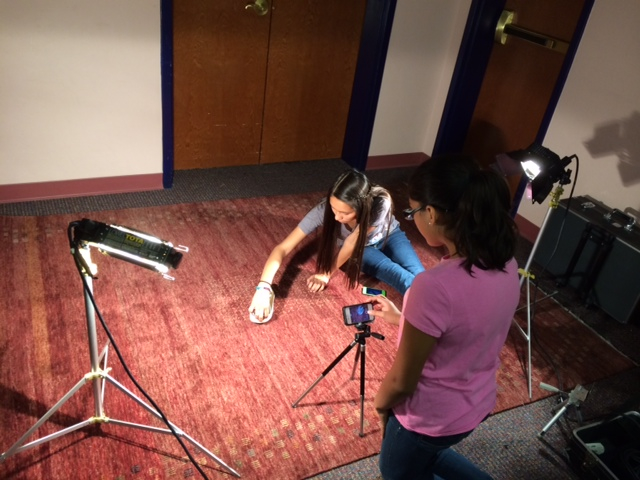
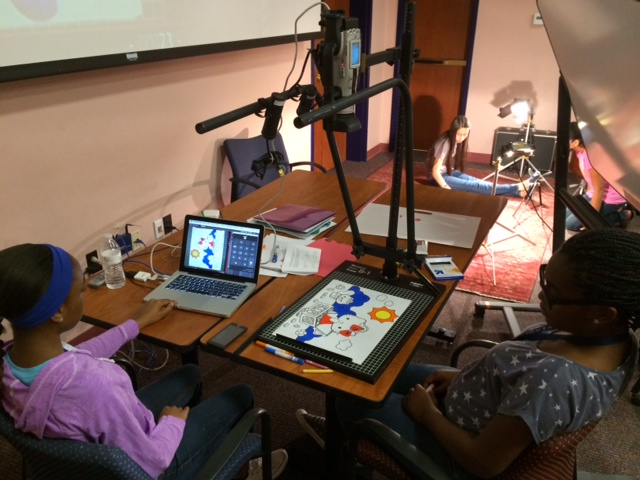
We just had a week long workshop and none of the participants had ever done animation before, but by the end of the week they all created these amazing little animations with free apps they downloaded to their phones. It is truly amazing what you can do these days with technology!
Students use technology and teamwork to produce films.
Bitch Flicks: What do your students take from GFP?
Martinez: The goal is to teach them to look at media through a critical eye, the first course covers media literacy and we do fun projects looking at gender stereotypes, hypersexuality, and commercial advertising. One participant in our last session actually found an ad about how to be sexy with the flu!
We want them to have a sense of self confidence, familiarity with technology, and inspiration to keep creating once they leave. We encourage them to find ways to get their voices and messages out there whether through writing, film, music, dance… just to get them to take an active role with media and deconstruct mainstream media messages.
Bitch Flicks:Who are your students?
Martinez: We have been fortunate to have students with a variety of backgrounds. They come from all over Tucson and range from ages 12-17. There is economic diversity as well; some students bring in iPhones, others don’t have a computer at home. Because of generous grantors, the programming is free. I hope to keep things that way so that all women and girls (i.e., anyone who self-identifies as female) have the opportunity to participate.
Bitch Flicks: How long has GFP been around, and how many student have you taught?
Martinez: Not quite a year yet, we started last fall. We had the opportunity to work with a local charter school here in Tucson and have reached out to collaborate with many great non-profits. To date we have had approximately 35 participants, and we have an almost full class at the end of July (around 15 students).
Bitch Flicks:Where do you see GFP in five years?
Martinez: I would like it to be its own fully functioning non-profit providing after school programming and weekly workshops for young women and girls. There is so much potential and I hope it continues to grow. Pan Left Productions has been instrumental to Girls Film Project getting off the ground. We also received a grant from the Women’s Foundation of Southern Arizona Unidas Program, which provided economic support for the students productions and materials. We have also been discussing crowdsourcing as a means of fundraising.
Bitch Flicks:What are you influences?
Martinez: I was raised by a single mom who worked two jobs. We struggled but she did a great job raising two kids on her own. She was a powerful role model in my life.
As a young woman, I didn’t fit society’s vision of pretty. I was a total tomboy. I thought I was weird until I found other punk rock girls who weren’t afraid to get dirty and make some noise. For me, Kathleen Hanna was a HUGE influence. I was a teenager right around the time Bikini Kill was formed and seeing such powerful women, singing about serious topics and addressing issues of sexual abuse, rape and bullying made a profound impact on my life.
In high school, being in a band helped me to find confidence and gave me the opportunity to be heard as a woman. I was fortunate enough to meet some really great guys and we started a band called Fashion Sense. We were terrible but we had a lot of fun and it was a self-defining moment for me as punk rock allowed me to explore different notions of femininity than I had learned growing up.
My film influences vary greatly from Hitchcock to Tim Burton, but I will say PBS has always inspired me to think about topics I had previously thought were boring. I blame PBS for my love of new information!
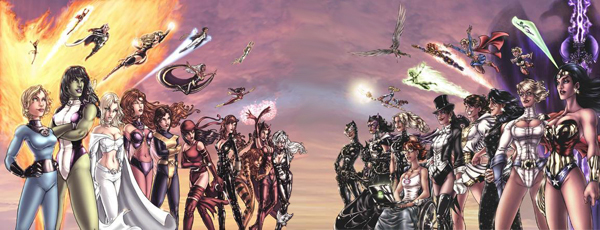
We all know that male superheroes get reboots for their (often shitty) movies over and over and over again. There are an ever-increasing number of Batman, Superman, and Hulk movies, not to mention a growing franchise of Iron Man, Captain America, and Thor flicks. With this mentality of quantity over quality, there’s no excuse for denying reboots to some of my favorite female superheroines and their considerably fewer films. Some of the movies that made my top 10 list admittedly sucked, and their heroines deserve a second chance to shine on the big screen. Some of the movies, however, were, are and ever shall be totally awesome, and I just want a do-over to enhance the awesome.
We all know that male superheroes get reboots for their (often shitty) movies over and over and over again. There are an ever-increasing number of Batman, Superman, and Hulk movies, not to mention a growing franchise of Iron Man, Captain America and Thor flicks. With this mentality of quantity over quality, there’s no excuse for denying reboots to some of my favorite female superheroines and their considerably fewer films. Some of the movies that made my top 10 list admittedly sucked, and their heroines deserve a second chance to shine on the big screen. Some of the movies, however, were, are and ever shall be totally awesome, and I just want a do-over to enhance the awesome.
1. Buffy the Vampire Slayer
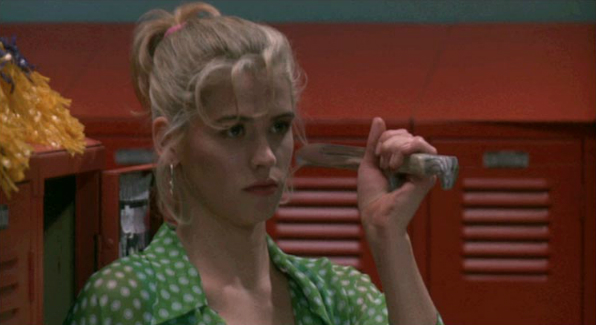
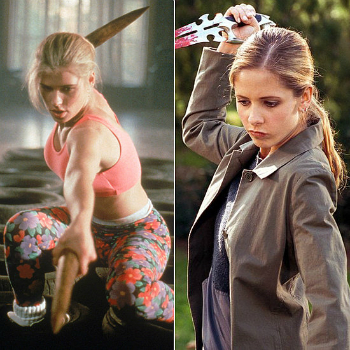
Buffy catches a knife before cheerleading practice
When the film Buffy the Vampire Slayer came out in 1992, I loved it. At the tender age of 10, I was already a huge movie nerd, so I was delighted to see all those celebrity cameos (Kristy Swanson, Donald Sutherland, Pee-Wee Herman/Paul Reubens, Rutger Hauer, Luke Perry, David Arquette, and I still associate the Academy Award-winning Hilary Swank with her bit part in this flick as an annoying, backstabbing valley girl). I loved the cheesiness and the unexpected badassness of its cheerleading heroine, Buffy. The movie, though, doesn’t hold a candle to the quality, thematic breadth, character depth, epic scope and feminism of the subsequent TV show Buffy the Vampire Slayer that aired 1997-2003.
Buffy vs. Buffy
Buffy has become one of the most iconic superheroines in our pop culture history. She has prophetic dreams and preternatural strength, agility, speed and healing along with the mantle of a dark destiny as “the chosen one” who must give her life in service to protecting the world from unseen demonic threats. A reboot could draw more from the material of the TV show, focusing on friendship, community and sisterhood while keeping all the action and humor that draw in crowds. Combine that with a die-hard cult fanbase, and a BtVS reboot can’t lose.
2. Supergirl
Supergirl must save the Omegahedron…whatever that is
The 1984 movie Supergirl, starring a young, fresh-faced Helen Slater, was another childhood favorite of mine. Even now 30 years after its release, my nostalgia-tinted view doesn’t allow me to see Supergirl as anything other than a formative superheroine movie about a woman who chooses her duty, her family, and her planet over romantic love. Though Supergirl (aka Kara) has the exact same powers as her cousin Superman (superhuman strength, flight, x-ray and heat vision, freezing breath, invulnerability and an aversion to kryptonite), Kara was so much more exciting than the Man of Steel from whom her comic incarnation was spawned.
One of the many Supergirl comic incarnations
Supergirl, like Superman, is an uncomplicated role model for young girls and boys. She is always brave, good, and righteous, and her moral code guides her and always triumphs in the end. I say if Superman got a series reboot, then fair is fair and Supergirl should get one, too.
3. Red Sonja
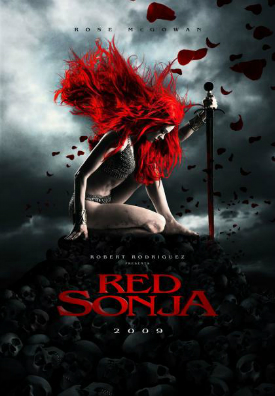
Despite Arnold’s size in this poster, Red Sonja is the true badass here
My love of Red Sonja is downright legendary. She’s a barbarian babe and the greatest sword-wielder who ever lived. The film is full of grand, beautifully choreographed fight sequences, dramatic accents and lines that I’ll probably utter on my deathbed (“You can’t kill it; it’s a machine!“). Sonja faces off against Queen Gedren, a lesbian super villainess played by the mistress of the sword and sandal genre: Sandahl Bergman (more on her later). As a young child, I adored watching these strong, independent women face off in single combat–women who would decide the fate of the world.
Red Sonja reboot rumors titillate but don’t deliver
Both based on comics, Red Sonja is part of the Conan universe. If Conan got his very own craptastic reboot of Conan the Barbarian (starring Jason Momoa of Khal Drogo fame), then it’s high time Red Sonja got hers, too. Hell, they should even make Sonja a lesbian since she’s none to fond of the gentlemen folk and just look at that Kentucky waterfall action she’s rocking. Wow, the idea of an epic lesbian swordswoman is really blowing my mind. That. We need that S.T.A.T.
4. Aeon Flux
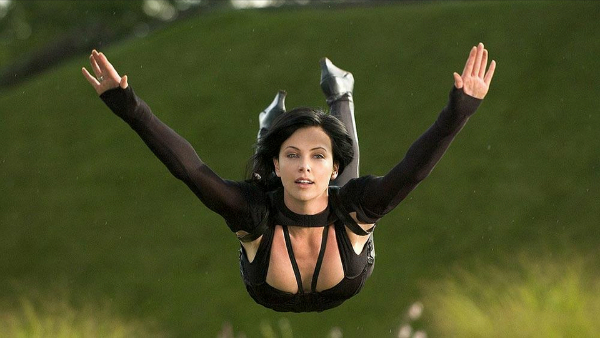
Aeon Flux fail
The 2005 film Aeon Flux was generally considered a flop. Based on the animated series Aeon Flux that appeared on MTV’s Liquid Television in the 90s, the film was so loosely based on its source material that it disappointed fans and failed to engage newcomers. Animated series creator, Peter Chung, called the film version “a travesty” that made him feel “helpless, humiliated, and sad…Ms. Flux does not actually appear in the movie.”
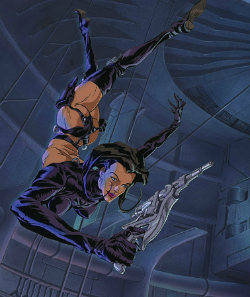
The animated Aeon contorting
Frankly, the movie just wasn’t weird enough. The cartoon is populated by bizarre bodies that bordered on the grotesque, trippy visuals, nonlinear narratives and complex political and philosophical musings. The animated Aeon Flux was really cool, iconic, unexpected and unpredictable. Hollywood could use an injection of surreal, nonconformist cinema. Aeon should get a second shot, one that stays truer to its eccentric cartoon.
5. Lara Croft: Tomb Raider
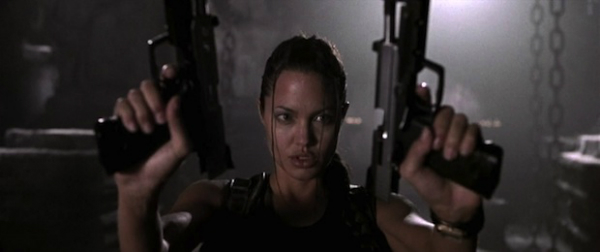
Lara Croft wielding her two handguns
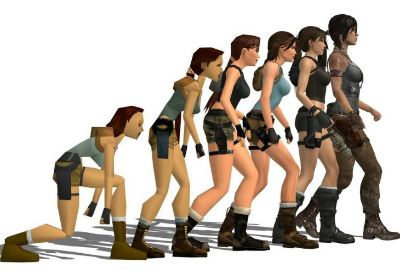
Lara Croft: Tomb Raider and its sequel Lara Croft Tomb Raider: Cradle of Life are based on the wildly popular video game series Tomb Raider. A female Indiana Jones-type adventuring archeologist, Lara Croft is an ideal heroine: brilliant, capable, inventive and athletic. Croft is proof that female-centric video games that don’t sexually exploit their heroines can be extremely successful and lucrative.
Video game Lara Croft over the years
The movie, however, had a long, convoluted, boring storyline. With a Bond-style episodic approach, the film left me feeling like I hadn’t gotten to know any of the characters in a meaningful way, and even the much anticipated action sequences dragged on and on and on. I don’t want to say good-bye, though, to such a magnetic female character who draws both male and female fans. With a quality script and a judicious editor, a Lara Croft reboot could be amazing, encouraging little girls to want to be Lara Croft (not Indiana Jones) when they grow up.
6. She
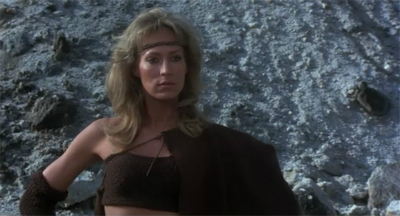
She is a matriarch revered as a goddess
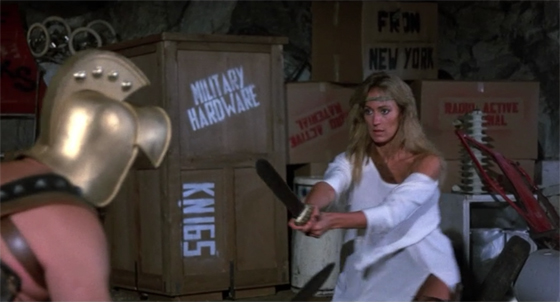
1982’s She is a cult classic full of the most random-ass shit you can imagine. I was obsessed with it as a kid. Starring the arresting Sandahl Bergman, of Red Sonja and Conan the Barbarian fame, the film is probably very loosely based on the H. Rider Haggard novel She. The movie takes place in a bizarre post-apocalyptic world wherein She is a ruler of a matriarchal society. Worshiped as a goddess, She protects her people and accepts male (sexual) sacrifices. She is a warrior who goes on a journey to rescue a young woman, encountering werewolves, exploding mimes, a giant in a tutu and some green dudes who seem like they have some kind of leprosy.
The mighty and sexay She
Keeping the darkness and the zaniness of the original film, a reboot about a powerful, complicated, not always righteous female ruler set in a dystopian, magical world would be an exciting challenge. If I had my way, Bergman would reprise her role as She or at least have a cameo in the reboot.
7. Elektra
Elektra waaay outshone Daredevil
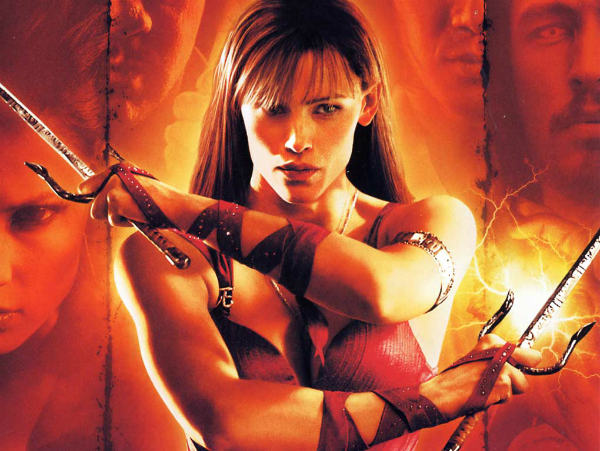
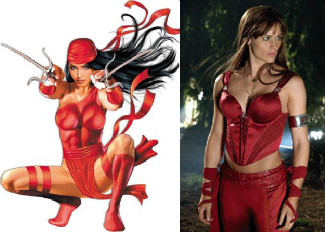
Though the character Elektra has a long comic book history, she first appeared as a love interest in 2003’s Daredevil. Though she died in the end of that massive pile of festering turds, she was later resurrected for her own spin-off film, Elektra, which was a box office flop. Truly, I was impressed with actress Jennifer Garner who performed the role of Elektra, mainly due to how excellent she was with the physicality of the role. She trained hard for the part and looked graceful, strong and natural in her martial arts performance and sai use, which is a hell of a lot more than I can say for fat-headed Ben Affleck’s awkward, cringe-worthy fighting “skills.”
Comic Elektra and live action Jennifer Gardner
The plotline of the Elektra film was silly with a throwaway story, but I appreciate that our heroine strives to protect a young girl much like herself and presumably goes on to train this girl, bringing about a new era where women work together and aren’t pawns of a male secret group. Marvel can do better with this dark ninja assassin fighting her own demons. I vote for a do-over!
8. Sheena Queen of the Jungle
Sheena had so many super cute/cool animal pals
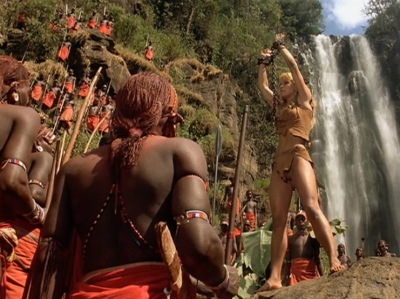
Another childhood favorite of mine was Sheena, starring Tanya Roberts as a female Tarzan who communicates with animals and saves her “people” and homeland from exploitation. I used to run around as a kid putting my fingertips to my forehead Sheena-style, hoping I, too, had a gift for speaking to animals (you probably know how that turned out). When I grew older, I actually became too ashamed to watch the film because it’s so painfully racist (I can’t stand that white savior trope).
Sheena as the great white hope
The thing is, Sheena is a female icon with a lot of history behind her. In 1937, she became the first female character to have her own title. She’s had her own movie and TV series. She is self-reliant, clever, righteous and part of a unique community that includes people and animals, and she chooses her home over love. The character of Sheena speaks to women. My solution to Sheena‘s inherent racism is to make the character African and Black like the people of her community. If The Beastmaster, Sheena’s (totally sweet) animal communicating male counterpart, got his own film trilogy (in which Tanya Roberts herself co-stars) and TV show, then Sheena deserves a second shot as a new and improved Black superheroine to be a role model for the next generation of women, particularly women of color.
9. Tank Girl
Tank Girl had a pretty wacky style
The 1995 film Tank Girl was unsuccessfully translated from its comic origins to the big screen. Despite having a series of celebrity cameos and high profile artists contribute to its soundtrack, the film, like its comic book, was a crazy conglomeration of imagery, absurdist, barely cohesive narrative and haphazard political commentary. Roger Ebert said of the film,
Whatever the faults of Tank Girl, lack of ambition is not one of them…Here is a movie that dives into the bag of filmmaking tricks and chooses all of them. Trying to re-create the multimedia effect of the comic books it’s based on, the film employs live action, animation, montages of still graphics, animatronic makeup, prosthetics, song-and-dance routines, models, fake backdrops, holography, title cards, matte drawings and computerized special effects. All I really missed were 3-D and Smell-O-Vision.
The Tank Girl comic continues its popularity
So Tank Girl didn’t make money. It did become a cult classic, and it was directed by a woman (Rachel Talalay), which are both wins in my book. It’s a story that revolves around a woman who doesn’t take shit from anyone. She smokes, she farts, she has tons of sex and just generally does what she wants. The anarchy of the character of Tank Girl and the defiant example she provides for women deserves another chance to show women that we don’t have to meet a feminine mold; we can call the shots and we can be as weird as we want to be…and still save the day in the end.
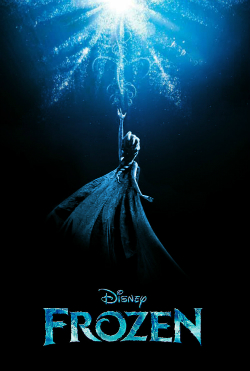
10. Frozen
Elsa uses her powers in Frozen
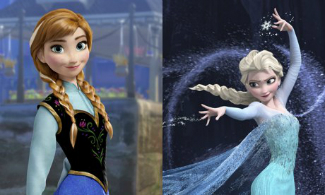
Frozen is the highest grossing animated film of all time and the 5th highest grossing film of all time. Damn. That is some serious popularity. That is some serious proof that people are starving for quality stories about the love and relationships between girls and young women. Loosely based on the Hans Christian Anderson fairy tale The Snow Queen, the Disney film Frozencenters around Elsa and her sister Anna, showing how their love for one another is what truly saves the day.
The power of sisters in Disney’s Frozen
This is the perfect opportunity for Disney to take the reins in their neverending quest for more money and reboot Frozen as a live action movie with all the bells and whistles that a mega-corporation can afford. Such a high profile movie about the beautiful and important bond between young women will help feminism more than I can say. Plus, it’ll be cool to see a live action Elsa use her sweet ice powers.
As I was compiling this list, I realized what a huge influence these superheroines were for me as I was growing up. It’s sad how few of my examples extend into the new century. Though I may have missed a few, it seems more likely that this is because Hollywood hasn’t been making movies about female heroes nearly as often as they should be. With films like Frozen, The Hunger Games, and Divergent, I hope to see a shift in that pattern that neglects the tales of heroines. These movies don’t always get it right, but their very existence is a triumph. Maybe with their success, the lazy producers of movies will dig up some of the films on my list and give them a second, maybe better chance to inspire women of the next generation.
Bitch Flicks writer and editor Amanda Rodriguez is an environmental activist living in Asheville, North Carolina. She holds a BA from Antioch College in Yellow Springs, Ohio and an MFA in fiction writing from Queens University in Charlotte, NC. She writes all about food and drinking games on her blog Booze and Baking. Fun fact: while living in Kyoto, Japan, her house was attacked by monkeys.
Religious devotion is a tricky quality to depict in any medium: so many of us have seen piety as hypocrisy both in film and in life that we’re prepared to laugh at or to dismiss deeply held religious beliefs onscreen. In work made for mostly secular audiences, filmmakers who want to show deeply religious characters have to answer the question: if piety isn’t a joke, what exactly is it?
Religious devotion is a tricky quality to depict in any medium: so many of us have seen piety as hypocrisy both in film and in life that we’re prepared to laugh at or to dismiss deeply held religious beliefs onscreen. In work made for mostly secular audiences, filmmakers who want to show deeply religious characters have to answer the question: if piety isn’t a joke, what exactly is it?
Sincere, spiritual belief in the Korean Zen film Spring, Summer, Fall, Winter… and Spring (which, for long stretches is, in all but name, a silent film) is shown in very specific ways, most compellingly when the young monk pours the ashes of his teacher into the water and we see the fish start to consume them. A very different viewpoint comes from Luis Buñuel, theanticlerical director of Simon of the Desert when he shows the audience that the “goodness” and faith of religious ascetic, Simon, interferes with his ability to understand and connect with other people–which is why his efforts to improve their lives never quite hit the mark.
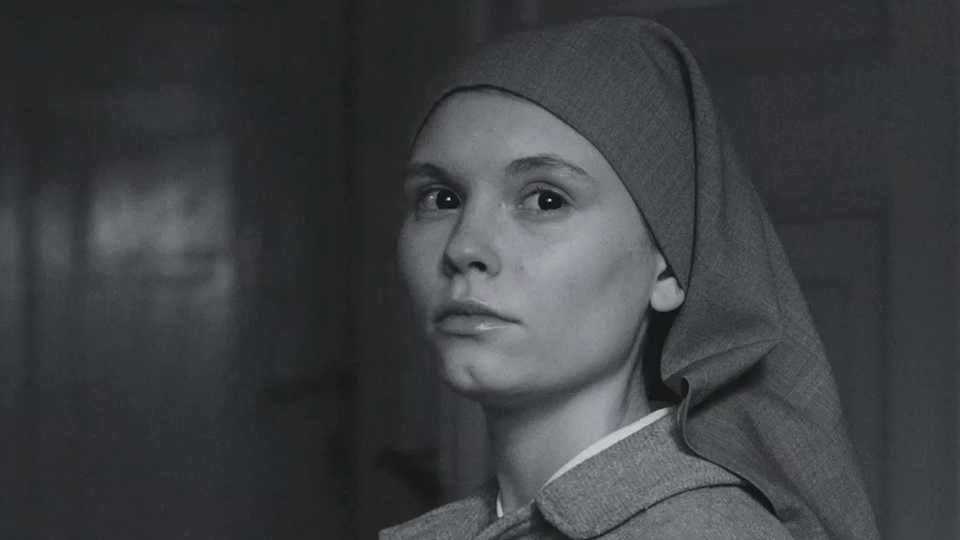
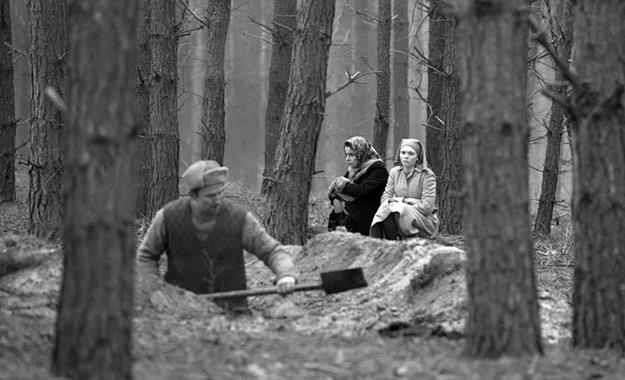
The title character of Pawel Pawlikowski’s Ida (Agata Trzebuchowska) starts out as Anna, a young novitiate in Poland in 1962, ready to take her vows when her mother superior tells her she must first visit her only living relative, an aunt whom she has never met, nor even heard about before. When the aunt, Wanda (Agata Kulesza), first sees Anna at her door she doesn’t even bother greeting her, just stares at her face for an uncomfortably long time. When Anna introduces herself, Wanda tells her that she knows who she is.
Anna comes in and they talk, Wanda says “They never told you? You’re a Jew.” Anna’s parents (her mother was Wanda’s sister) were slaughtered during World War II and Anna/Ida was brought up as an orphan in the convent. Wanda shows Anna/Ida photos of her family (including Anna’s mother, who looks just like her) and asks because Anna’s hair is covered with a wimple “You’re a redhead too, aren’t you?”
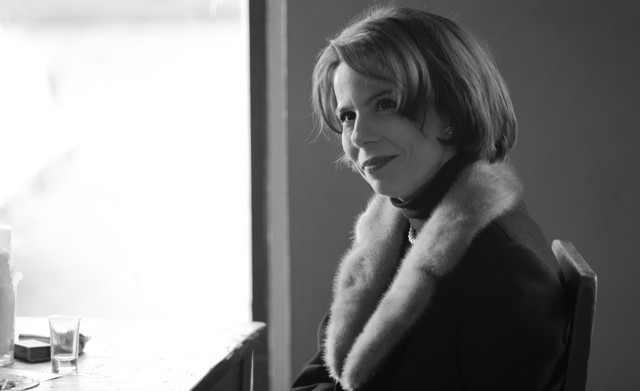
Ida’s Aunt Wanda
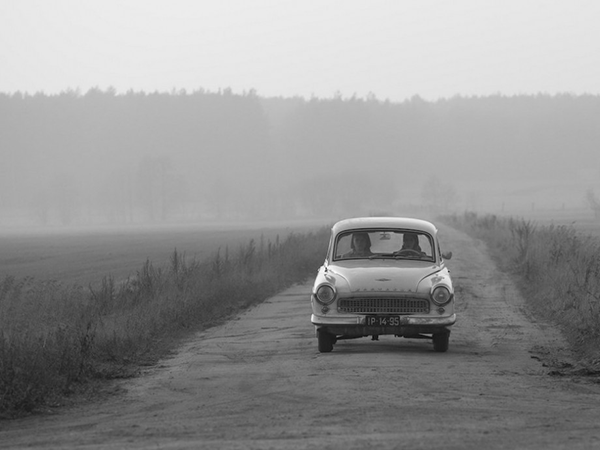
Anna/Ida wishes to find out how her parents were killed and where their remains are buried, so she sets out for the small town in the countryside where they lived and died. Wanda accompanies her, chauffeuring her in the shiny car that, like her spacious apartment, fur-collared coat and tailored dresses, are a perk of being a powerful Communist Party member (she works as a judge) and provide a stark contrast to how most of the others we see in the film live.
Wanda and Ida act as good cop/bad cop with Wanda’s past as a prosecutor put to use when she interrogates those who might know where and how her sister and brother-in-law were killed, while Anna’s wimple and cross serve as entrée through doors that even Wanda’s position as a powerful Party member can’t open. One of the many things the film gets right about the period is the deference laypeople show Anna. In the 60s and early 70s, years before the sexual abuse scandals came to light, a lot of Catholics, especially older people, still looked at nuns and priests with reverence. Even as a farmer’s wife rebuffs Wanda’s efforts to find out about the death of Ida’s parents, she asks Ida to bless her baby.
In the search for dead family
The excellent Enemies, A Love Story,from the late Paul Mazursky, is one of the few other films that shows surviving European Jews living with the aftereffects of World War II’s mass genocide without, as in The Pawnbrokerand Sophie’s Choice, giving us flashback scenes to the camps themselves. But Ida is different in that it takes place in the country where the genocide happened–and where we see precious little soul-searching about it. We find out Ida’s mother and father never made it to the camps, or even into the presence of a Nazi soldier or bureaucrat, but were killed, like livestock, by a neighbor. He knew no one would punish him for their deaths.
He murdered the family to gain possession of the small, run-down farmhouse we see at the start of Ida and Wanda’s search, its dinginess a testament to just how little it takes for someone to lose all morality. When Ida asks the man why he didn’t also kill her, he tells her, “You were tiny. No one would know you were a Jew,” and the arbitrariness that spared her is as bracing to us as a slap.
The film presents but never quite answers a question that still persists in places like Rwanda today: how does one continue to live with the people who wanted to kill you and all the people like you, or at least didn’t try to stop those who wanted to see you and your kind dead? Anna/Ida, without revealing her relation to them asks the town priest if he knew her parents. His answer shows a continuing indifference to them and to their fate: Jews mostly kept to themselves, he says. That indifference is something Anna/Ida might have shared before she knew who her parents were and how they died.
On the road
The black and white cinematography of the film, by Ryszard Lenczewski and Lukasz Zal, is striking: at one point we see the spindly, dark trunks of trees pushing up between the gravestones in an abandoned cemetery like an Edward Gorey illustration come to life. And Ida passes the Bechdel test with flying colors (as they look for clues about her murder, the two women talk about Ida’s mother, but hardly at all about her father, whom Wanda holds responsible for her sister’s death). But a pass or fail of the Bechdel test alone doesn’t determine the worth of any film: in spite of the talent of both actresses, and the deep issues the film brings up, these two characters, in the end, inhabit unconvincing gendered stereotypes.
In the same way that some popular memes have placed men in poses adopted by women in magazine layouts to show the inherent sexism of these photo shoots, we can see how these characters are lacking by imagining the roles rewritten as men. “Adam” is scheduled to soon take his vows as a monk when he is told by one of the Brothers at the monastery that he should first visit his Uncle Waclaw, his only living relative. Waclaw tells Adam he’s Jewish: his real name is “Ira.” The uncle is a former prosecutor who degrades himself by sleeping with a lot of women and frequently getting drunk. But unless we’re seeing a film from director Steve McQueen, no male character succeeds in degrading himself by having sex with a lot of women. And hard drinking often telegraphs the man is the hero.
“Ira” never loses his temper or even cries when he encounters the evidence of his parents’ murder and the confession from the man who killed them. The closest he comes to a stand (outside of his determination to find out what happened to his parents) is a placid-faced, silent and motionless refusal to shake the hand of the farmer when he agrees to show Ira the grave in exchange for Ira dropping any claim to the farm.
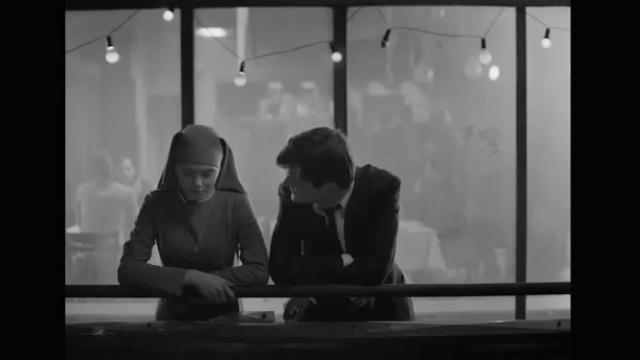
Ida and the saxophonist
The hitchhiker the uncle and Ira pick up would be the woman singer in the jazz band instead of, in Ida, the male saxophonist (the singer would feel safe alone with two men in the car because one was wearing monk’s robes) and later when the monk comes to listen to the musicians jam after their gig, the singer could tell him, looking over his smooth, wide-eyed face (as the saxophonist tells Ida) “You have no idea the effect you have on (wo)men, do you?”
As Wanda’s character could be summed up as a screwed-up “slut” (a word she calls herself and for which there is no male equivalent), Ida/Anna seems to serve as a bastion of purity. The problem with purity as ascribed to everyone from the Virgin Mary through Snow White to every dull, “good” woman rescued by “the hero” is: “pure” is a better descriptor of soap than it is of a human being. In films as in life, purity is rarely an attribute assigned to men, only to women and girls just like “strong” in the emotional sense of the word, is.
I wouldn’t categorize the two main women characters in Pawlikowski’s earlier film, the compelling My Summer of Love(its star Emily Blunt, in the role that brought her to the attention of Hollywood)as ultra-realistic either, but their actions and words seemed to have concrete (if sometimes complex) motivations: those two weren’t the opaque characters Wanda, to some extent, and Anna/Ida, especially, turn out to be. When Anna/Ida makes a life-changing decision toward the end, her expression is as serenely impassive as it was at the beginning, as if nothing had happened to her during the course of the film. Ida seems poised to forget everything she’s learned in the 80 minutes we’ve been in her company–including her own name.
Ren Jender is a queer writer-performer/producer putting a film together. Her writing besides appearing every week on Bitch Flicks has appeared in The Toast,xoJane and the Feminist Wire. You can follow her on Twitter @renjender.
‘Defiance’ is good solid alien-full science fiction television, it’s reliably entertaining each week, and it definitely has better feminist cred than many other shows.
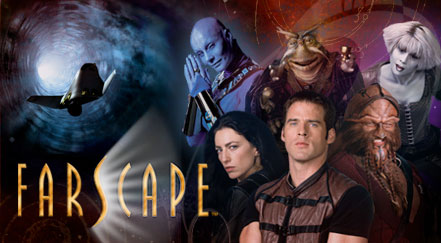
Syfy, the erstwhile Sci-Fi Channel, is not renowned for the high quality of its original programming – Sharknado 2, anyone? Still less did I expect to be especially interested in a show with a tie-in MMORPG. (I talk a big talk about interactivity and fan culture, but I’m fundamentally too lazy to participate much myself.) But the involvement of Rockne O’Bannon, creator of my beloved Farscape, was sufficient motivator for me to at least give Defiancea chance, and I’m glad I did. In our post- and sub-Battlestar Galactica televisual landscape, pure science fiction shows tend to the dreary and the grim, leaving things like “fun” and “watchability” to fantasy, whether it’s the high fantasy of Game of Thronesor the campy fantasy-horror of Sleepy Hollowand Supernatural.
One day I will write about this wonderful, wonderful show.
God knows I try. I gave The Tomorrow Peoplea fair chance, I gave Helixa fair chance (incredibly, it’s been renewed), I’m giving Extanta fair chance. I want good SF on my TV, preferably something with spaceships and aliens, to fill the void left by assorted Star Treks and Fireflyand Farscape, but in all honesty Orphan Blackis the only really quality sci-fi show on television at the moment.
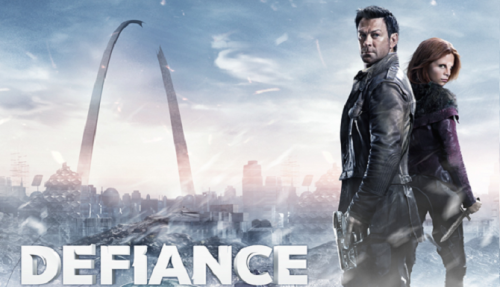
Enter Defiance. Now, Defiance is not BSG, but it is good solid alien-full science fiction television, it’s reliably entertaining each week, and it definitely has better feminist cred than many of the other shows I have already mentioned.
A few decades after the arrival of extra-terrestrial life, Earth hosts an uneasy peace between humans and the various alien species. The former St. Louis is now the titular polis, where a number of different species, languages, and cultures coexist under the mayoral leadership of Julie Benz, whose improbably-named sister Kenya runs a brothel. Perhaps the central characters of the show, insofar as a show whose setting is its true protagonist can be said to have central characters, are the young alien Irisa and her adoptive human father.
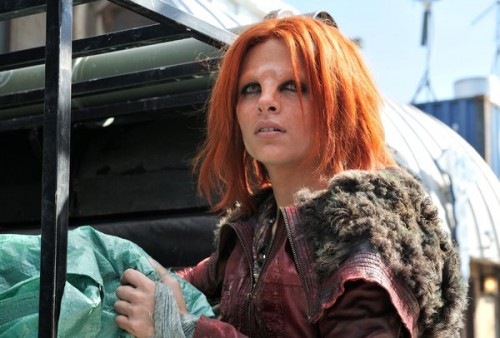
Stephanie Leonidas as Irisa. You can tell she’s an alien because she has a funny forehead.
Irisa is one of my favorite things about the show. She appears to be some sort of Chosen One, and it’s amazing how much better the hoary old Chosen One trope becomes when its beneficiary is not a white man. She’s part of a chosen, interspecies family, and while she and her father love each other dearly, they sometimes struggle to understand one another. Irisa’s efforts to understand herself and her place in the world are somewhat analogous to the issues faced by transracial adoptees, who may have rather complicated relationships with their ethnicity.
Indeed, Defiance offers a number of sci-fi analogues to real-world issues (and, God help me, this is something I adore in my speculative fiction). One subplot follows an interspecies couple as the human wife faces difficulties in comprehending her husband’s alien culture, with its powerful honor/shame culture and its communal bathing habits. Another subplot explores workers’ rights and collective action as both human and alien laborers work in dangerous conditions in the mines. All of the aliens are immigrants, trying to negotiate the place of their culture and customs within those of the humans among whom they live, and there are resonances of (post)colonialism and the fight for independence in the masterplot of Defiance’s struggle for self-governance.
Defy ALL THE THINGS!
There’s an instructive comparison to be made with new show Dominion, which airs immediately after Defiance and of which I could only stomach two episodes. Its Chosen One is a deeply boring white dude, and its one significant female character is defined entirely by her father (the city’s leader), her love for the Chosen One, and the arranged marriage her father wants to push her into. There’s a waifish cancerous-looking child that the Chosen One has taken under his wing because he’s just such a good guy, and the Chosen One has a lot of manpain about putting his boring girlfriend and his blonde lisping surrogate daughter at risk by being the Chosen One. It’s all offensively tedious.
Perhaps neither Dominion nor Defiance is doing anything we haven’t seen before, but Defiance is at least doing it with good politics, interesting characters, and a fair amount of style.
Take, for example, a powerful exchange in the most recent episode between the current and former mayors. The new and heretofore unlikable mayor, quite shaken by a minor assault, talks about his teen experience of being violently raped. The ex-mayor opens up about her own rape and subsequent abortion, and the following exchange ensues:
“Why are you telling me this?”
“I didn’t want you to think you were alone, because you’re not.”
“That’s the kindest thing… thank you.”
Rape As Backstory is a trope that surely needs a few centuries of retirement, but I have rarely seen a male and a female survivor bond in a scene of such sensitivity. Let’s hope the show continues to handle it well.
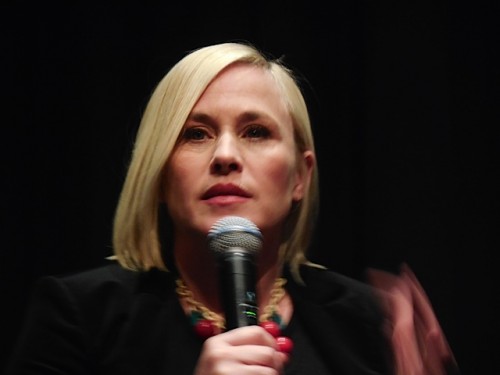
Arquette, who is terrific as Olivia, turns in a nuanced and complex performance that is vanity free. We watch her age perceptively and slowly as her character gains wisdom but still falters. In other words, she’s the kind of three-dimensional woman we rarely see in American films.
The stars of Richard Linklater’s Boyhood–Patricia Arquette, Ethan Hawke, and Ellar Coltrane–age in real time in this one-of-a-kind nearly three-hour film. Boyhood, which was shot in short annual increments over a dozen years so the effect as you watch the actors change imperceptibly and slowly is like watching time-lapse photography.
This approach would come across as a gimmick or stunt if the movie wasn’t so good. The real magic of the film is that as you watch characters grow and age, you can’t help looking back and contemplating your own life changes.
The three stars and the director of Boyhood participated at a lively press conference recently at the Crosby Hotel in SoHo to promote the film. This marks Ethan Hawke’s eighth film with the director, whose most notable collaborations include the Before Sunrise trilogy and Dazed and Confused (1993).
Boyhood tracks the life of a full-faced pouty six-year-old, Mason (Coltrane) and his older, bratty sister, Samantha, played by Lorelei Linklater, the director’s daughter, as they grow up and mature. The story focuses on Coltrane’s character who evolves from boyhood to early manhood amid personal and family dramas, including family moves, family controversies, faltering marriages and re-marriages, new schools, first and lost loves, and good and bad times. Children of divorce, Mason and Samantha are raised by their beleaguered but devoted mother Olivia (Arquette), a hard-working woman with terrible taste in men, and her ex-husband, an immature man with a good heart but little sense of responsibility (Hawke).
Linklater described Boyhood as “this little collection of intimate moments that probably don’t fit into most movies. They’re not advancing the character enough or the story enough or the plot, but they all add up to something much bigger than each little place and each little piece of it, so that was kind of the feel to the whole movie, that it mirrors our lives.”
As to whether the film was an intimate character study or a sweeping family epic, the director said it was both. “It’s very specific and intimate but universal within that specific world. It could have been made in any country and any time. There’s such a commonality here.”
The cast and director of Boyhood
The film could just as accurately been entitled Motherhood or Fatherhood or Parenthood, Hawke said. He described it as “an epic about minutiae. That’s what it is. It’s difficult to title because of that. It’s a family seen through one boy’s eyes, so that title makes as much sense as any other.”
As for whether it was difficult for the actors to get back in character every year for the brief period they shot their roles, Coltrane explained, “It was a very long build up every year. We’d have a couple months to think about what we were doing and then a solid week of kind of work shopping and building the character and figuring out where the characters were that year, so by the time we got to filming we were kind of just already there.”
Arquette, who is terrific as Olivia, turns in a nuanced and complex performance that is vanity free. We watch her age perceptively and slowly as her character gains wisdom but still falters. In other words, she’s the kind of three-dimensional woman we rarely see in American films.
Hawke turned to Arquette during the press conference and told her, “I’m just throwing props your way. I’m surprised that people don’t write about more is that how awesome it is to see Patricia’s character be in this movie and to see a real woman who is a mother and a lover and more than one thing in a movie. I feel so proud to be a part of a movie that respects her character the way this movie does, and I feel it’s also sometimes so real and so true that you almost don’t ever see this in film,” he said. “It’s true in life. We see it all the time, but I don’t see that woman in movies. I don’t see her.”
“She’s in the background or just kind of in the background or ancillary elements to give some encouragement in some way to some scruffy guy. Olivia is a real, three-dimensional human being, and it was so exciting, and the women in my life who see the movie so appreciate it,” he said. ” She’s not just good, she does stupid things and smart things.”
He added, ” I just love her. You can’t pin down. One minute you go, oh she’s a good mother! No, wait, actually that was not a great decision. We’re used to people in movies being one thing, all the time.”
Arquette explained her acting technique. “In acting you have to get past your own head and your own ego and all of these fucking barriers and walls to just get to a place where hopefully you can be present enough in a scene with someone.” She added of the collaborative process, “I trusted the process. It was jumping into the void from the get-go, but when you’re in the right hands, and you jump into the void together, really great things can come of it.”
Patricia Arquette and Ethan Hawke
Ultimately, the director said, the movie “was always going to be a portrait of growing up but also parenting and aging. That you don’t quit growing up, especially once you’re a parent.” Hawke and Arquette’s characters are bumbling through parenting as this was happening in real life with the actors and director. “We had ourselves as parents,” Linklater said. “During this film we had five children born between us and that was just an ongoing part of life.” At the same time, “ You’re thinking of your parents once you’re a parent yourself.”
The movie mirrored what was happening in the lives of the actors and director. “We didn’t want anything to feel like it wasn’t earned or tethered to some sort of reality. I don’t think there’s anything in the movie that didn’t come out of my life or their lives,” Linklater said. His hope was that the film opened the audience up to the possibility of seeing the connection between their lives and that of the characters in the film. “Once you get to this thinking about life in general and your own life and loved ones and your own experiences, triggering all kinds of wonderful things I hope, painful and wonderful things.”
Paula Schwartz is a veteran journalist who worked at the New York Times for three decades. For five years she was the Baguette for the New York Times movie awards blog Carpetbaggers. Before that she worked on the New York Times night life column, Boldface, where she covered the celebrity beat. She endured a poke in the ribs by Elijah Wood’s publicist, was ejected from a party by Michael Douglas’s flak after he didn’t appreciate what she wrote, and endured numerous other indignities to get a story. More happily she interviewed major actors and directors–all of whom were good company and extremely kind–including Brad Pitt, Angelina Jolie, Morgan Freeman, Clint Eastwood, Christopher Plummer, Dustin Hoffman and the hammy pooch “Uggie” from “The Artist.” Her idea of heaven is watching at least three movies in a row with an appreciative audience that’s not texting. Her work has appeared in Moviemaker, more.com, showbiz411 and reelifewithjane.com.