Seed & Spark: “do… you… use… your… tongue… in… kissing… scenes… when… acting… ?” (I actually googled that!)

You see it all the time, actors kissing passionately on screen. It looks like they really mean it. But have you ever thought about what it is like for them – the first time they have to conjure that passion in a roomful of cameras, equipment, and onlookers?

Screen Shot 2014-11-14 at 12.07.11 PM

This is a guest post by Kim Wilson.

You see it all the time, actors kissing passionately on screen. It looks like they really mean it. But have you ever thought about what it is like for them – the first time they have to conjure that passion in a roomful of cameras, equipment, and onlookers?

For me, what started as sheer terror at the thought of my upcoming sex scene for my latest film, Cleave, actually turned out to be not as scary as I thought, AND… okay, I’ll admit it—it was even a little bit hot. When I helped write this film, I didn’t know I’d be cast in it. Only in the preparation for the scene did I chastise myself for writing a sex scene: What. Was. I. Thinking?!

Even my own mother asked what it was going to be like. In the weeks prior to filming, I searched the internet incessantly on what to expect.  Most searches ended up taking me to porn sites, which I can say definitely did NOT help my self-confidence. I needed something to draw from, something to ease the irrational fears bouncing around in my head.  It was all-consuming. It terrorized me hourly.

I was anticipating the worst: bad kissing, missed queues, awkward touching. Sometimes I would have to pull over on the side of the road flushed with anxiety, beads of sweat pooling on my upper lip, trying to catch my breath in a panic.  Could I really pull this off?  My mind manically raced. What if my partner is dreading kissing ME?  After multiple (hundreds of) calls to my acting coach and a few hundred self affirmations I found on YouTube, I finally convinced myself that I would get through this with flying colors because, after all, I am a goddamn professional.

My acting partner and I met before our scene.  This was a good thing. Even though we knew each other already, it was nice to remember he was an actual human being and not this sex demi-god I had made him out to be in my head.  And, what I realized immediately was that this meeting was imperative.  If any of you reading this are actors and you have a racy scene coming up heed this one piece of advice: You must trust your partner implicitly in a scene like this.  They have to have your back.  Your vulnerability is just out there flapping in the wind for the world to see. And by god, we were going to fly high in that windstorm. How do you develop that trust?

COMMUNICATION  

We both agreed we wanted the scene to be authentic as possible.  No robot kissing, but to be “in the moment “ and authentic.  And that meant really allowing us to lose ourselves in each other. Gulp.  We discussed our boundaries in detail: “Yes, you can feel me up.” (That’s an actual quote.)  And while we awkwardly laughed at ourselves during these conversations, it really helped us feel just a wee bit more comfortable. On the day of filming, I was still terrified. I don’t know exactly where my head was, but between my mantras and my power posing, I decided to wear sweatpants to set. Hideous sweatpants. Old sweatpants.  I have no idea why I wore sweatpants.  I must have thought that I would come off as  “casually cool” and “I’m totally okay with this scene that’s about to happen–see? I’m sooooo comfortable.”  Yeah.  My “day after thanksgiving” outfit might not have been the best way for me to communicate to the crew and my scene partner “I’m ready to get sexy!”  One hour before our call time, I had already had the self-talk in the bathroom before the scene – you know the one I’m talking about: the “pull your shit together” talk in the stall.

It’s YOU and HIM (or HER)

My partner and I are in our places. We stand facing each other inches apart. It’s literally minutes until the director calls “action.”  I can tell he is nervous. He can tell I am too.  All of a sudden, this wonderful thing happens: we comfort each other. I stroked his arms.  He stroked my neck.  I reached for his shoulders, he reached for my back. This touching was actually calming us down. It was helping prepare us mentally and er…physically for the impending scene.  There were new beads of sweat forming on my lip now. “Action!” the director called out. We lean in and we kiss. It was effortless. I was surprised. Best of all, it was authentic.  We had built our own little world of intimacy.

As the scene unfolded it went from kissing into more passionate stuff that became less and less awkward.  Even when the director called out, “OK, now arch your back here” and  “drag your hand there,” it felt effortless. Yes, think about that for a moment.  Someone calling out your next sex move as you’re in the throws of passion in a strange bar.  Believe it or not, it was a relief. What could have been robotic and canned, felt natural and easy. I trusted my partner and he trusted me. And I admit, there were mortifying moments as well, such as being taken aside discreetly and told my breathing was too loud during the sex scene.  Yeah. That happened.  (That could be my new all-time low.)  But it’s proven one of the funniest stories I can pull from my hat at parties lately, so I’ve got that going for me. You learn a lot from fake sex. I am not particularly looking forward to seeing myself on screen and thinking to my horror, “I make THAT face?” Fingers crossed I will be able to use it at parties soon as well.

SUPPORT MATTERS MOST

Looking back, I realize one of the biggest reasons that I felt comfortable on set besides my partner was the incredibly gracious crew who didn’t laugh or make eye contact (thank god) with me during those scenes.  Our director had set the stage for all of us, having all of our best interests and safety as her priority.  She was the one that was responsible for the mood, the tone and the professionalism. She met with the crew beforehand, giving them strict instructions on her high expectations during each take.  She met with my partner and me before the scene to assess our comfort levels and allow us to express any concerns. The fact she was a woman was a huge comfort to me. Honestly, I couldn’t have done it without her support as well.

What I learned most of all, was that acting wasn’t so much about myself as it was about the other person. My partner and I learned how to put each other at ease, how to work together as a team to “give and receive” from the each other and how to turn our mortification into laughter.   I am forever grateful to the director, crew and to my acting partner.

So, did I use my tongue in my kissing scene?  I’ll never tell.


To learn more about Kim Wilson and the film Cleave, visit the following sites:

http://www.seedandspark.com/studio/cleave-0

Twitter: @whatsyourlceave

Instagram: Whatsyourcleave

Seed & Spark: What Do Women Want?

Still searching for a way to answer our question of fairness, the young woman of Jumla, sitting wearily before me, looked quizzically at our translator.

Our translator said: “She’s asking what ‘fair’ means.”

unnamed

This is a guest post by Sophie Dia Pegrum.

A voice.  After filming a day in the life of a young woman of Jumla, Nepal, we asked her whether she considered the physical burdens of her life fair in comparison to her young husband.  She thought about it for a long time. I sat, exhausted, watching her thoughts pass across her face from my position behind the camera. As the co-director and DP, I had spent what I considered a fairly grueling day arising before dawn, hauling my first world gear several miles up a mountain pass to follow this young woman while she searched for firewood, chopped it, and carried a seemingly impossible load back down the steep mountain path. The morning’s trek was engaged at a rather leisurely pace by her standards due me getting all the shots I wanted while desperately searching for my inner mountain filmmaker goat. This was just the beginning of a long day which also involved her journey across the village to milk a cow, cook meals for her husband’s family, and to hand clay wash the front of their stone house using freezing water.  Her husband had been hanging out in the village most of the day and had decided to go to the river to fish in the afternoon.

Families in Jumla will often spend their limited resources educating their sons, for as soon as a young girl is married, she goes to live with the family of her husband, and essentially becomes their scullion. Why use the little assets a family has to educate the daughters who will essentially marry into a life of drudgery?

Still searching for a way to answer our question of fairness, the young woman of Jumla, sitting wearily before me, looked quizzically at our translator.

Our translator said: “She’s asking what ‘fair’ means.”

How do you find another way to ask this question? For us, the educated women of the industrialized nation, who stand on the shoulders of our sisters who have fought for our equality, we cannot un-know this history. We are as puzzled by the idea of not conceiving of equality, as the young woman of Jumla, who knits her eyebrows, trying to comprehend the concept.  Moreover, what good will it do her to try to answer this question.  For even if her life was unfair, what could she do to change it?

We spent time on and off over the next three years, embedded in the same village, observing many similar stories and capturing the immense spirit and strength of the women in this remote place in the foothills of the Himalaya.  In the beginning, some women were too shy to even consider talking to us, but often, many women who had never been asked their opinion, began to express themselves in front of the camera, and we saw a subtle shift.

I had often questioned our presence as two women filmmakers, and the impact we may be having.  Certainly, both being about six feet tall, we were often a source of local entertainment as we constantly hit our heads on low ceilings and doors and crammed ourselves into small corners of smokey kitchens to film. Though loaded with irony for my own personal reasons, being lovingly referred to by the locals as the “cameraman,” I enjoyed the moniker that to them, represented professionalism.

unnamed

Over time, we recorded the myriad voices of women here, especially in their song.  Women sang in the fields as they worked together, their strains echoing uphill as they disappeared with their baskets to collect wood.  They sang in their kitchens in the evening after the days work was done and they sang together while they pounded corn.   They sang for us and asked us to share our songs.  My co-director and I tried to figure out if there was another song aside from “Happy Birthday” that we both knew the words to.

Women who had never been asked to air their opinions were sometimes surprised by their own voices.  Often uneducated, they hadn’t had the opportunity to create the thought patterns which allowed them to form their own judgements and ideas, or create a view of themselves in the world.  One woman told us that she didn’t feel that she could take a free class being offered by a local charity because she didn’t think she was capable of learning.

One of the most poignant memories I have was at the end of an interview we did with a man who was running a tea shop and inn with his wife and children.  As I was packing away the camera he came to us and said that he would reconsider the education of his own daughters.  He said that watching us operate “technical things” made him appreciate that perhaps his daughters had more potential than he had realized.  He now understood and believed that women could do things like that and he wanted his daughters to have this opportunity.

Women will still have to find their voices, but within this complex and embedded societal structure, men will need to stand alongside them too and this requires better education for all and a deep shift in thinking.

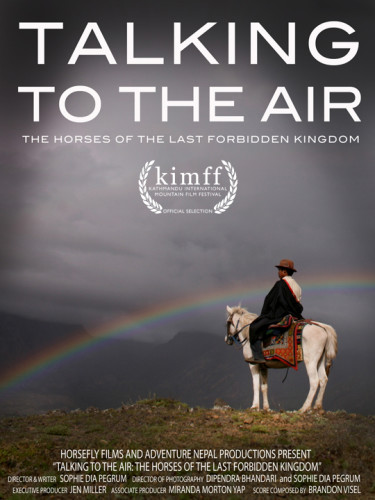
Our film, Daughters of the Curved Moon, will be coming out in the next year and I am looking forward to sharing the inspiring story of these communities with a wider audience.   I am also finishing up another documentary I shot on the roof of the world called Talking to the Air, which I am crowd-funding at Seed&Spark.  My ability to articulate my voice as a filmmaker comes from the determination of so many others before me.  In turn, I wish to use this channel to tell authentic stories of humankind that promote a sense of wonder in us all, and to share the voices of those that are still struggling to find their forum.  After working in the high Himalaya, I am now also determined to learn some new songs.


unnamed

Sophie Dia Pegrum is a director and cinematographer who has produced and shot films in the Antarctic, at the North Pole and in the Himalayas including 77 Below and Daughters of the Curved Moon.  Sophie co-owns Horsefly Films and the Rare Equine Trust and produces docs about rare horses and fragile horse cultures worldwide.  She is currently finishing a film she shot on the Tibetan border titled Talking to the Air: The Horses of the Last Forbidden Kingdom.

The Stronger ‘Vessel’

While the virgin-in-chains turned abortion-activist was my favorite image in the film, the most emotional moment was during an email exchange with a woman from Nairobi. She kisses the pills when she gets them, and a raw, personal email exchange follows as she goes through the process.

1412792178


Written by Leigh Kolb.


Dear Women on Waves,

I’m not married and am pregnant. I cannot have a baby.

I heard you can drink bleach, but I’m scared it will kill me.

My sister told me about your ship. Can you help me?

– Amina, Morocco

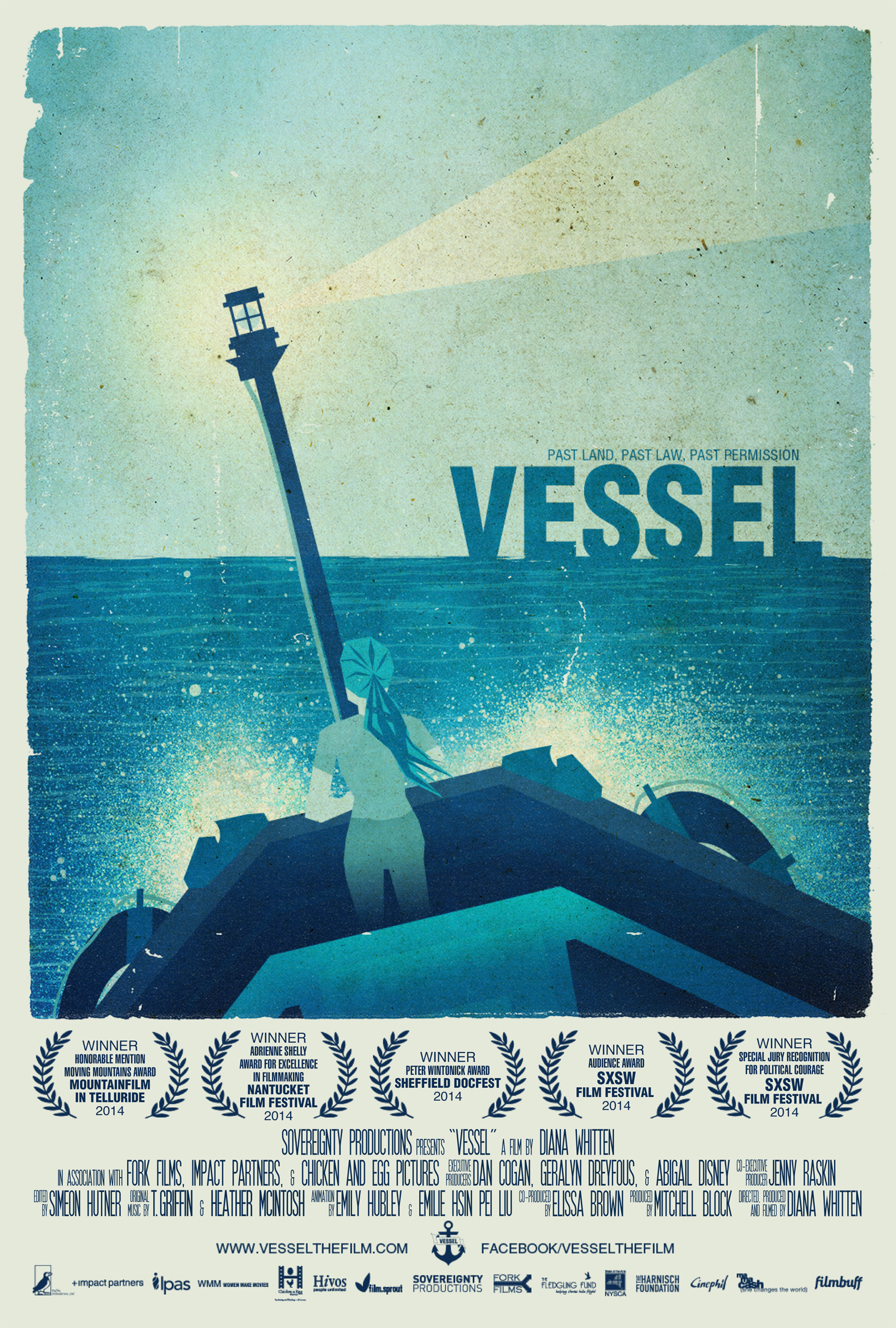
This plea opens Vessel, the documentary about the abortion-rights organization Women on Waves (and Women on Web), led by Dutch doctor Rebecca Gomperts. Women on Waves was launched in 1999, when Gomperts realized that if a Dutch ship sailed to international waters adjacent to countries with abortion restrictions, she could legally help women to have a safe abortion.

Directed by Diana Whitten, Vessel examines how, as Whitten says, “a woman had to leave one realm of sovereignty to reclaim her own.” Gomperts—who has been an artist, Greenpeace activist, doctor, and mother, all roles that inspire her work with Women on Waves—is dynamic on camera. The scenes of her deftly dealing with protesters and pundits show us the power and strength necessary to do the work that she’s doing—providing safe abortions and reproductive education to the women in places least likely to receive those services.

1393994159
Rebecca Gomperts


The original aim of Women on Waves was to sail their mobile clinic (contained in a shipping container) to countries where women most needed their services. They would get the women on board, sail 12 miles off-shore, and administer the medical abortion. Their maiden voyage was to Ireland, where they were met with harsh press, angry protesters, and legal setbacks.

When a journalist presses Gomperts and asks if she’s had an abortion, she shoots back:

“It’s a frequent medical procedure. Just because it’s women, because it’s invisible… no one fucking knows. Are you going to ask someone who works with Amnesty International if they’ve been tortured?”

One of the most powerful aspects of the documentary is the inclusion of the actual women’s words (and women in need call and email constantly). Gomperts is right: abortion is frequent and necessary. The fact that it is about women’s autonomy and choice makes it invisible, and in countries where abortion is restricted, this is incredibly dangerous. The words and voices of these women drive the documentary forward.

When they arrive in Poland, Women on Waves is contacted by a desperate young woman. She was raped, and is seven weeks pregnant. “Welcome Nazis,” male protesters scream at them as they dock their ship. This juxtaposition—the desperate woman, the vicious protestors—underscores the larger issues at play in activism surrounding abortion rights. It’s about male control.

The Portuguese government sends warships to stop their ship from sailing into international waters. The masculine image of a warship up against a small, feminine vessel built to liberate women, is dramatic. The ocean—so often symbolizing femininity—is full of possibility, and full of limitations. Through all of the gorgeous shots of the water, it’s hard to not think about Virginia Woolf or Kate Chopin’s The Awakening. The femininity of the water is liberating and stifling, and Gomperts and her amazing crew feel that when faced with each new obstacle.  “I’m sure we’ll come up with something,” she says.

“We decided if women couldn’t get to the ship, we could help the women get the pills,” Gomperts says, and she announces on air on a Portuguese talk show exactly how women can self-medicate with just Misoprostol to give themselves abortion. She quickly and aggressively gives the prescription as the host nods and the smug male pundit looks stunned.

Immediately afterward, she announces her pregnancy. “If it’s wanted, it’s delicious,” she says. She stresses that she wants to show that side—that you can be pregnant, a mother, and be supportive of abortion rights. This evolution of her ethos goes hand in hand with the evolution of her activism.

A volunteer says that they get more and more emails from women who want to get the pill. There’s a plea for help from a woman in the US military in Afghanistan. “Every story of the women who write is different,” the volunteer says. “It’s hard to generalize because abortions are so common.”

The power of the Internet gives the women a new wave to ride on. They field emails and calls, and created their sister organization, the website Women on Web. It may be illegal to give women the pills, but giving information on how and when to take the pills isn’t illegal. So education—via trainings and hotlines—became their new voyage.

The power of female solidarity in Vessel is overwhelming. These women seem tireless in their goals of empowering women all over the globe—from educational workshops in Tanzania to draping “Tu Decision” with their phone number on the La Virgin del Panecillo in Quito, Ecuador (my favorite scene).

p1010060.jpg(mediaclass-base-page-main.d2c518cc99acd7f6b176d3cced63a653791dedb3)
“Your Decision,” “Safe Abortion” at the feet of the Virgin at El Panecillo in Ecuador


In 2012, Women on Web responded to more than 100,000 emails from 135 countries requesting information about abortion with pills. They point out that in some countries, abortion may be legal, but not accessible to women. The United States of America is one of those countries.

We are often so focused on changing laws that we don’t realize the power in giving women the right tools and education to empower themselves “despite the laws.” Through their campaigns—across the sea and across the web—Women on Waves and Women on Web do it all, effecting change in legislation and in women’s personal lives.

The documentary is understated and beautiful, and we are left with a sense of hope. The images of women celebrating in spite of men screaming and yelling, and the images of a fearless older woman with bruises on her arms from fighting with police who ransacked their ship remind us what power we truly have.

While the virgin-in-chains turned abortion-activist was my favorite image in the film, the most emotional moment was during an email exchange with a woman from Nairobi. She kisses the pills when she gets them, and a raw, personal email exchange follows as she goes through the process. When it’s over, she requests the name of the volunteer who was emailing her. A Women on Web volunteer responds that they are a collective, working as a team, so she couldn’t give the specific name—a beautiful and poignant reminder of the power of both individual stories and collective support.

“Women will make it happen.”


*     *     *

Vessel, Diana Whitten’s first feature film, won the Audience Award in the Documentary Competition and the Special Jury Award for Political Courage at South by Southwest.

Vessel will be shown during DOC NYC on Saturday, Nov. 15.


Recommended Reading: “When Women Take to the Sea to Provide Safe Abortions,” by Jessica Luther at Bitch Media


___________________________

Leigh Kolb is a composition, literature, and journalism instructor at a community college in rural Missouri.

‘Big Hero 6’: Woman Up

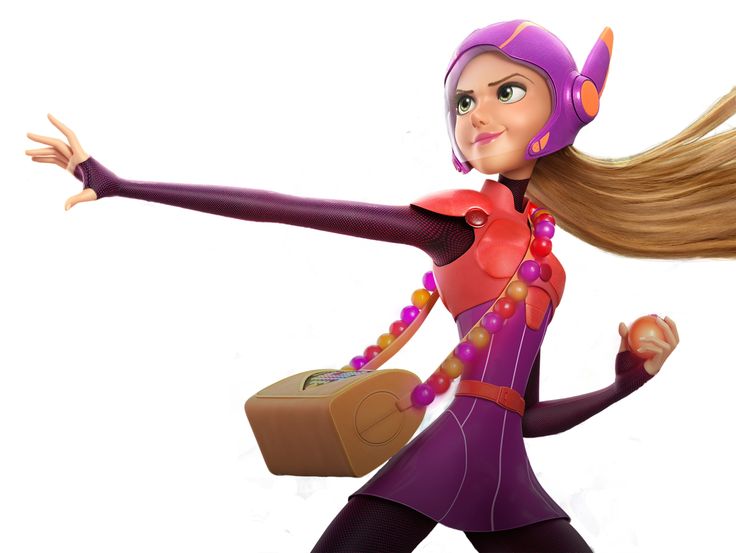
The female team members are often shown as being more capable then the males, both as combatants and as scientists. Gogo Tomago , and Honey Lemon, are two bright, young scientists who exhibit strength of mind, body, and will. During a training montage, Gogo uses the phrase “woman up” to encourage one of her teammates to do better. This was a great, subversive line because it flowed naturally from the character and the context, rather than seeming like a forced injection of faux-feminism.

U.S. release poster.
Written by Andé Morgan.
Big Hero 6 (2014) is a cinematic snack, lighter fare to counterbalance heavier offerings like Christopher Nolan’s Interstellar (2014), much in the same way that Wall-E (2008) contrasts with The Terminator (1984), or a pile of disgusting feces compares with Jack and Jill (2011). Still, the film does touch on universal themes that adults will appreciate: the trials of adolescence, grief, our wonder at science, and our fear of unrestrained technological development.
Other recent Disney animated films, like Planes: Fire and Rescue (2014), and Alexander and the Terrible, Horrible, No Good Very Bad Day (2014), were not, for good reason, box office or critical darlings. But Big Hero 6 is different — it’s an offspring of Disney’s 2009 union with Marvel. Like Guardians of the Galaxy (2014), Big Hero 6 draws on a little-known corner of the Marvel universe. Directors Don Hall and Chris Williams took the heart of that original comic and created a Happy-Meal-ready sequel factory. Thankfully, they left the spandex boob socks and impractical armor behind.
Yeah, this OG Gogo Tomago...
Yeah, this is OG Gogo Tomago…
The story is set in the fictional city of  “San Fransokyo.” While the name is a bit clumsy, the visual fusion of Bay Area landmarks and American and Asian architecture is beautifully done. The influence of Japanese comics and science fiction is tastefully overprinted on all the animation, and it works. I wish I could say the same for the character design. While adequate, it suffers from the same Disney animation facial blandness found in Frozen (2013) and Wreck-It Ralph (2012).
This should be IRL.
This should be IRL.

If you’ve ever seen a Disney animated movie, particularly one of the more recent ones, then you already know the plot beats to Big Hero 6. This is too bad, because after establishing an interesting origin story, screenwriters Robert Baird, Daniel Gerson, and Jordan Roberts let the effort devolve into a decidedly unoriginal superheroes vs. villain story. Hiro Hamada (Ryan Potter) is a 14-year-old orphan (of course) and robotics prodigy, although the puffy robotic heart of the film is Baymax (Scott Adsit), who resembles (at least to this child of the 80s) a futuristic Stay Puft Marshmallow Man. Despite an appearance that may appear androgynous to Westerners, Hiro is definitely a male protagonist, and this is definitely not Frozen. However, gender plays little role in his actions or interactions, and this is where the film really shines.

After rescuing Hiro from certain doom, his brother, Tadashi (Daniel Henney), takes Hiro to the robotics lab at the local R1 university. There he meets Tadashi’s friends and fellow students (who will later become his wrecking crew) and the department head, Professor Callaghan (James Cromwell). Hiro is impressed by the tech, and very badly wants to join Tadashi in college. In order to gain entrance, he competes in a pro-level science fair. He wins, of course, but tragedy ensues and sets the stage for the rest of the movie.

The cast of characters is diverse. In a subtle and pleasantly subversive move, the only white male characters of note are the “villains.” The Black character, Wasabi (flatly voiced by Damon Wayans), did come off a little token-ish, but it’s hard to level that accusation considering the diversity of the entire cast. Also, I have to credit the writers for avoiding race or gender-based humor throughout. This film does not have exceptional voice acting, animation, or story, but it does stand out in one other major way: the relative parity between male and female characters. And I don’t just mean numerical parity, I mean parity in the intent and essence of the roles.
From left to right: Fred, Gogo, Baymax, Hiro, Honey Lemon, and Wasabi.
Several main characters, and an important ancillary character, are women. Aunt Cass (Maya Rudolph), is Hiro and Tadashi’s guardian. She’s a single mother, and not once does she complain about it. No references are made to some horrible tragedy involving her former husband; there are no jokes about her wanting a man. Rather, she’s shown as a happy, competent business owner and caretaker.
The female team members are often shown as being more capable then the males, both as combatants and as scientists. Gogo Tomago (Jamie Chung), and Honey Lemon (Génesis Rodríguez), are two bright, young scientists who exhibit strength of mind, body, and will. During a training montage, Gogo uses the phrase “woman up” to encourage one of her teammates to do better. This was a great, subversive line because it flowed naturally from the character and the context, rather than seeming like a forced injection of faux-feminism. Also of note, the villain’s daughter, Abigail (Katie Holmes), is depicted as a brave test pilot, and her fate is key to the film’s climax.
Big Hero 6 will most strongly appeal to older kids. The heavier questions may be lost on younger children, and some of the fight and chase scenes are a bit violent (bloodless, and no more so than similar films) and frenetic. Adults will (or at least should) appreciate the themes, the gender equity, and the racial diversity of the characters. Most importantly, the film excels at imparting a sense of wonder about science. By showing strong, capable female characters, this film will, I hope, encourage both girls and boys to develop an interest in science.
The film has a trim 102-minute running time, so a six-minute appetizer, Feast (2014), precedes it. The story is told from the visual perspective of a young Boston Terrier, and quickly jumps from a series of hungry-dog sight gags to a saccharine love-marriage-baby-carriage parable. Despite having the look of an experimental short, the animation and the story are deliberate, targeted, and all conventional Disney fluff.
Also on Bitch Flicks: Wreck-It Ralph is Flawed, But Still Pretty Feminist by Myrna Waldron

Andé Morgan lives in Tucson, Arizona, where they write about film, television, and current events. Follow them @andemorgan.

Where is the Female Version of ‘Whiplash’?

I’d really like to see more introspective films about the human experience where the humans experiencing things look like me.

Written by Katherine Murray.

I’d really like to see more introspective films about the human experience where the humans experiencing things look like me.

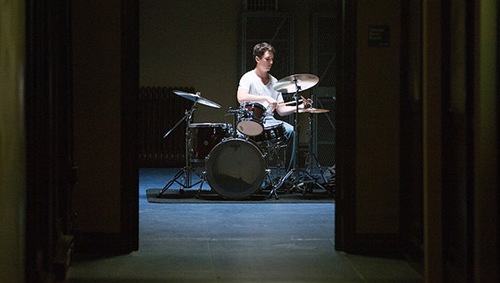
Miles Teller drums in Whiplash
Miles Teller as a person grappling with achievement

Two weeks ago, I made a special trip downtown to see Whiplash, a movie that is every bit as good as its rave reviews have promised. Whiplash is tense and thoughtful, with skilful pacing and a stunning conclusion, and it asks challenging questions about the human experience. What is achievement? What drives us? What is the value of love and approval?

I absolutely recommend it – but that’s not what I want to talk about, here.

Aside from having an awesome, introspective story that deals in universal human themes, Whiplash has one other prominent feature – 99.9 percent of it is dudes.

The music student and music teacher at the core of the story are dudes, the other people in their band are all dudes, the main supporting character – who is the music student’s father – is a dude. Melissa Benoist is there for about seven minutes, cumulatively, and then the rest of the movie is about men grappling with big, important questions.

There’s nothing wrong with that – and, in popular cinema, there’s also nothing unusual about that – but it did make me wonder: why can’t we have more introspective movies about the human experience where the humans experiencing things are women?

Like, speaking as a woman, I am just as interested in big, existential, philosophical, and psychological questions as men are. I spend just as much time trying to figure them out, and they have just as much relevance to my life – but you wouldn’t really guess that from going to the movies.

Most of the time, when you watch a movie about how A Person should deal with X, the person is a man. To the point that it really stands out, when it’s not.

Sandra Bullock drifts through space in Gravity
Sandra Bullock as a person grappling with loss


Gravity, for instance, aside from being a feast for your 3D glasses, is a story about how A Person should deal with loss. And it’s striking because the person is played by Sandra Bullock, and she’s on screen alone for most of the movie, grappling with universal human challenges like how to process grief, and how to find the will to live after experiencing trauma.

A lot of critics have argued that the film would have been better if it had just been about trying to fix a space shuttle without getting blown up, without making it a metaphor for how Sandra Bullock overcomes the loss of her child. It’s the loss and grief story, though, that takes this from being an action movie with a female protagonist – which is rare enough – to being an introspective movie about the human experience with a female protagonist – a genre that might be the rarest of all.

Depending which types of movies you’re analyzing, only 15 to 23 percent of top-grossing films have a female protagonist, despite the fact that women make up half the population. I’m willing to bet that, if we could easily cordon off and analyze the percentage of female protagonists in introspective movies about the human experience, the numbers would be even lower.

You’ve got your female action heroes, and you’ve got your female romantic leads – you’ve even got your female gross-out and/or buddy comedies, now. Occasionally, you even get your female everyman in the shape of Anna Kendrick. But, finding a woman as the stand-in for humanity is like finding a unicorn in a world where horses are already almost extinct.

Kirsten Dunst waits for the end of the world in Melancholia
Kirsten Dunst as a person grappling with depressive realism

If you look at this survey of Hollywood movies that came out in 2012, none of the ones with a female lead – except Brave, which is specifically about how there’s more than one acceptable way to be female – seem to be concerned with especially deep questions. This is the same year that brought us Cloud Atlas, Life of Pi, Looper,  and ParaNorman – male-led stories with varying levels of introspection that focus on questions of history and human connection, belief, our capacity to learn to care for others, and compassion in the face of fear. Female-led movies in the survey include a couple of horror movies, an instalment in the Twilight franchise, The Hunger Games (which was good, but not that deep), and whatever the hell Snow White and the Huntsman was supposed to be.

Casually searching the internet for lists of existential movies, or movies about what it means to be human also returns a lot of movies about dudes.

That’s not to say that there aren’t deep, introspective movies with female protagonists. It’s just that they’re few and far between.

Slogging through Melancholia is about as fun as slogging through real depression, but it’s an introspective movie about a person who’s grappling with Big Questions concerning depressive realism, and whether pessimism is just good sense. Similarly, Black Swan is (arguably) a movie about a person grappling with identity, and how we reconcile with our shadow selves.

Le fabuleux destin d’Amélie Poulain – or, Amélie – is an introspective story about a person who struggles with shyness and how to take risks. And, it works at least as well as The Secret Life of Walter Mitty, which is about exactly the same thing, only starring a male protagonist.

So, there are some introspective films about the human experience that feature a female protagonist. But, why do these stories so often default to male?

Audrey Tautou read a photo album in Amelie
Audrey Tautou as a person grappling with shyness and courage

The first explanation would be that most of the writers, directors, and producers working on movies are men, and therefore they’re more likely to create a male protagonist, because that’s the experience and perspective they’re most familiar and comfortable with.

Fair enough.

Though I hasten to add that Gravity, Melancholia, and Amélie were all written and directed by men,  I think it’s valid for a story-teller to gravitate to telling stories about characters of their own gender, race, ethnicity, and sexual orientation. In some cases, it can even seem arrogant for story-tellers to presume to speak for people with different life experiences. That’s why it’s important to make room for stories told by people who’ve been underrepresented in media. You know, instead of making it as hard as possible for those people to get in on the action.

The second explanation also goes a long way toward answering the question, “Why does this even matter, Katherine?” and concerns the way that media presents “male” as standard and “female” as a special variation on “male.”

This is feminist criticism 101 and I won’t get into a long discussion of it, but everyone reading this blog understands that we live in a culture where “person” defaults to male a hell of a lot more often than it defaults to female – where being a woman is a marked status that denotes something other than a normal/average/neutral individual. Men and women are so used to seeing men as the default human that it can create a self-perpetuating cycle where writers keep reaching for “a man” when they mean to say “a person,” and the constant presentation of “a person” as “a man” on screen just reinforces that bias.

True story: I’m a woman, and I write things, and unless I specifically stop myself and take stock of what I’m doing, I default to male characters when I just need some random person. This is a thing that happens without malice or even intent, which is why it’s important to bring the pattern to conscious awareness.

Introspective human experience movies are typically more about A Person than they are about an individual with really specific characteristics; there’s a good chance that men are the default just because nobody’s thinking about it that much.

The third explanation, and the one that bums me out the most, is that there may be a perception that women either aren’t interested in or aren’t as capable of answering philosophical questions – something that’s also suggested by the unfortunate pattern where male actors are asked deep questions about the issues raised by their movies, and female actors are asked about their bodies and clothes.

Happily, the solution is the same no matter what the explanation is: we need to balance things out by creating more movies like Gravity, and Melancholia, and Amélie, where the stories are about people grappling with problems that people must face, and the people in question are women.

Just like it’s right that Matthew McConaughey should be able to star in a movie that’s specifically about masculinity (Mud), and a movie that’s about the abstract question of human selflessness (Interstellar), female actors should be able to take the lead in movies that are specifically about women as well as movies that are about people in general – because they represent both of those things.

So, where is the female version of Whiplash? It’s 50 years forward in time, when “person” has an equal chance of meaning “woman.”


Katherine Murray is a Toronto-based writer who yells about movies and TV on her blog.

‘The Theory of Everything’: A “Great Man” From The First Wife’s Point of View

Do great women exist? The film industry still hasn’t decided. We had ‘Frida’ a dozen years ago and that bio-pic about Margaret Thatcher (like ‘Frida,’ directed by a woman) from a few years back–which won Meryl Streep an Oscar, but tepid reviews along with a completely irredeemable main character kept me from seeing it. Usually the women in the “great man” films are great only by osmosis, because they married or otherwise provide emotional–and other–support to great men. The actresses who play these roles win Oscars too: they make the “supporting” category a literal one. ‘The Theory of Everything,’ the new bio-pic about astrophysicist (and best-selling author) Stephen Hawking seemed like it might be different since it’s based on the book written by the great man’s first wife, Jane.

TheoryEverythingCover

Like a lot of women, I’m impatient with the “great man” films that invade theaters every year just in time for Oscar consideration. The main character is always a man whose name we all know, played by an actor who really wants an Academy Award. We see his earliest struggles then later, his triumphs. The addition of some failures never succeeds in making the film more interesting, just longer.

Do great women exist? The film industry still hasn’t decided. We had Frida a dozen years ago and that bio-pic about Margaret Thatcher (like Frida, directed by a woman) from a few years back–which won Meryl Streep an Oscar, but tepid reviews along with a completely irredeemable main character kept me from seeing it. Usually the women in the “great man” films are great only by osmosis, because they married or otherwise provide emotional–and other–support to great men. The actresses who play these roles win Oscars too; they make the “supporting” category a literal one. The Theory of Everything, the new bio-pic about astrophysicist (and best-selling author) Stephen Hawking, seemed like it might be different since it’s based on the book written by the great man’s first wife, Jane.

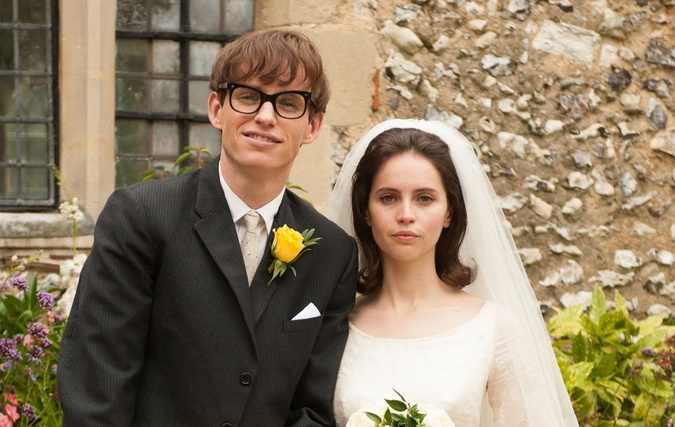
But the movie begins by focusing on him (Eddie Redmayne) not her, as he rides a bike, attends classes as a Ph.D. student in the early 1960s at Cambridge and acts as a coxswain (complete with megaphone) for the crew rowing on the river. Hawking meets Jane (Felicity Jones) at a student mixer and they become a couple. Hawking’s physical awkwardness could pass for that of any geeky man who considers his body merely a container for his brain, but we know what’s coming before the characters do when we see scenes in which Hawking trips and falls in a train station or his hand folds in on itself as he writes equations on a blackboard. When he has a fall in the yard he receives his diagnosis, ALS (also known as Lou Gehrig’s Disease), along with the news “Life expectancy is two years.”

At first he avoids Jane and holes up in his room, but after she finds out from his friends about his illness, in a scene we’ve all watched in countless other films, she marches into his room and declares, “I want us to be together for as long as we’ve got.” Stephen resumes his studies and for his thesis topic chooses “time.”  He and Jane get married and start to have children soon after.

What follows is a portrait of a marriage that combines all the elements of pre-second-wave feminism at once: Jane has to set aside her studies not just to care for her very young children, to make all the meals and clean the house, but also to care for her husband, whose mobility is rapidly deteriorating, even though he’s still a relatively young adult. At the point where he can walk only with the assistance of two canes and can maneuver the stairs in his house only by lying flat on his back and grasping with his few remaining functional fingers the railing to pull himself up or down, we see Stephen hand in a typed dissertation with a barely legible shaky signature; I couldn’t help wondering if the person who typed it was Jane, since he seems unlikely to have been able to do so himself–and so many wives in that era were also their husbands’ de facto secretaries. We’re also seeing an era in which care for disabled family members was often left to a wife or mother (as opposed to paid staff, unless the family was very wealthy), and no one, not Hawking’s family nor Jane’s, ever thinks of taking over his care for even a few hours at a time to give Jane some respite. On the drive back from a dinner at his family’s hillside cottage in the country, a teary Jane tells Hawking she needs help, but he cuts off any further discussion.

TheoryBed
Eddie Redmayne as Stephen Hawking and Felicity Jones as Jane Hawking

Later Jane’s mother can see how stressed she is and (instead of offering to help) suggests she join a church choir (Jane is a regular churchgoer, a contrast to her outspoken, atheist husband). She then meets the handsome choirmaster, Jonathan (Charlie Cox) who becomes a family friend and also helps with Stephen’s care. Stephen seems to see the spark between his wife and Jonathan from the beginning and lets her know in an indirect way that she is free to pursue the relationship. Here the film is at its most interesting: too many “great man” films seem to sum up the wife or girlfriend character struggle of living with the great man as “she was a saint” without considering that she might have needs of her own. Jane’s situation also parallels many others of the 50s and 60s when women got married in their early 20s and found in their 30s and 40s their marriages did not fulfill their own expectations and ambitions. Jane remains devoted to Stephen but is at her happiest when she spends time with Jonathan. The closeness of their relationship invites the scrutiny of others at the christening of her third child, when her mother-in-law follows her into the kitchen and declares the family has a “right to know” whether the child is Jonathan’s. Jane replies that the child’s father could not be anyone but Stephen.

When Stephen has the health crisis that robs him of the ability to talk without assistance, Jonathan steps back and nurses come into the home to help Stephen, along with a man who designs a device through which Stephen can talk again, by slowly “typing” (actually clicking a monitor to choose letters and phrases) and having an electronic voice read the words. Stephen becomes very close to one nurse in particular, Elaine (Maxine Peake), who even helps him to look through the copies of Penthouse that come to his office. He eventually leaves Jane for her. An end title tells us that Jane eventually got her Ph.D., married Jonathan, and that she and Stephen are still friends.

EverythingSpeaks
Jane watches Stephen “speak” through a device while the woman who will be his second wife looks on.

What the film leaves out are the most interesting parts of the story–not just Hawking’s scientific work (we get explanations that are so oversimplified they don’t make much sense), but also that the nurse Stephen lived with (and eventually married and divorced) was the wife of the man who created his speaking device–and that she was also investigated after other caregivers alleged she physically abused Stephen (during their relationship he had unexplained bruises, broken bones and burns). When Jane did publicity for a previous movie based on her and Stephen’s relationship, she said she couldn’t comment on Elaine (who was still married to Stephen then) for legal reasons. She did admit during interviews that she was friends with Stephen mainly for the sake of the children. And she and Stephen weren’t a couple when he was diagnosed, their romance blossomed afterward, which Jane described as being in keeping with the great optimism of the early 1960s that ran parallel with the belief that nuclear war between the super powers could, at any moment, wipe out the world.

Redmayne does a credible job as Hawking (whose character in the film is much more sympathetic than Jane and news sources have portrayed him; this Hawking never runs over anyone’s toes “accidentally” with his electric wheelchair), especially in the later scenes where we see a certain impishness in his face (very like the real-life Hawking’s), while most of his features remain immobile. Jones as Jane does a serviceable job too, but I wish she had been allowed to look and dress less like Jean Shrimpton (the British supermodel popular in the era when the film begins). At least Redmayne (who is also more conventionally pretty than the person he plays) gets to mess up his hair and wear unflattering glasses; Jones, for much of the film, until she starts wearing a crappy short wig and half-assed “aging” makeup, looks like she could have stepped out of a stodgy, British clothing catalogue, even when Jane has three kids and a disabled husband to take care of, and, as Jane points out in her book, and is briefly referenced in the film, very little money. The filmmakers (screenwriter Anthony McCarten and director James Marsh) didn’t seem to think any of these details were worth including. The Theory of Everything is a good, if very conventional, film, but the real story it’s based on could have been made into a great one.

[youtube_sc url=”https://www.youtube.com/watch?v=x8QYUgO-tZo”]

___________________________________

Ren Jender is a queer writer-performer/producer putting a film together. Her writing. besides appearing every week on Bitch Flicks, has also been published in The Toast, RH Reality Check, xoJane and the Feminist Wire. You can follow her on Twitter @renjender

Nudging Up: The Nice Comedy of Adam Hills

Comedy can be potent when it’s a transfiguration of rage at injustice, or of inner demons and self-loathing – but it can also just be nice. Adam Hills is a nice comedian. He’s not punching up or down: he’s not punching at all. At most, he’s nudging up.

Written by Max Thornton.

I suspect a lot of us are very, very sick of the constant attempts to defend bigotry in the guise of comedy. It just never stops. Every single week, it seems, some dude on Twitter or the stand-up circuit gets called out for a shocking instance of racism or sexism or homophobia or transphobia (or, if we’re really lucky, all of them at once), and then he and his minions dig their heels in because it was just a joke!

How many more times do we have to say that nothing is apolitical? How many more times can we explain the “punch up” principle? Sure, there are times when it’s more complicated than that and more nuance is called for, but it’s a good guiding principle, and it is not a difficult one to grasp.

And so, for our sanity, we adore our openly feminist comedians, people like Wanda Sykes or Margaret Cho or the Citizen Radio folks, as a necessary counterweight to the reactionary garbage that comprises much of comedy. These comics are performing a kind of alchemy, transforming their political anger into acts that entertain while speaking truth to power. Comedy can be potent when it’s a transfiguration of rage at injustice, or of inner demons and self-loathing – but it can also just be nice.

Adam Hills is a nice comedian. His stand-up set Adam Hills Stands Up Live, which aired on Britain’s Channel 4 in late 2012, isn’t about mockery or ridicule or attack (whether justified or not). He’s not punching up or down: he’s not punching at all. At most, he’s nudging up.

Look, how about we just don't talk about how it's possible for people outside the UK to watch this, okay?
Look, how about we just don’t talk about how it’s possible for people outside the UK to watch this, OK?

I’m not, of course, claiming it’s somehow apolitical, but this particular set doesn’t feature jokes about, say, gender relations or the government. On his TV show The Last Leg, he is sometimes more overtly political, calling out body-shaming, condemning rape threats, or having a spat with the Westboro Baptist Church, but the politics with which his stand-up is shot through is that of disability consciousness.

Adam Hills has a prosthetic foot. He has covered the summer Paralympics for television in his native Australia or in Britain for the last two competitions. In some ways Adam Hills Stands Up Live is a very gentle primer in the nuances of disability consciousness.

adam-hills-leg

Disability is a slippery category, one with fuzzy borders and a lot of contested terrain. Different disabilities have different, sometimes non-overlapping concerns. Conditions like mental illness, cognitive impairment, and Deafness are not necessarily included under the disability umbrella, whether through the preference of the people concerned or through their exclusion by others. The classic distinction between visible and invisible disabilities has been problematized by pointing out that many disabilities vary in visibility depending on the circumstances. Disability activists long ago distinguished disability as a social category from impairment as a bodily reality, analogous with the feminist distinction between gender and sex, but, like the sex/gender distinction, the disability/impairment distinction has recently come to be recognized as more complex than this simple dualism.

Hills points toward this slipperiness when he says, “I don’t consider myself disabled,” but elsewhere in the set refers to “other people with disabilities,” implying that he is part of the category. It’s a recognition that you don’t always have control over whether or not you are part of a social category. While he notes that “I am extremely lucky to have been born with a ‘disability’ that doesn’t dramatically affect my life,” Hills certainly doesn’t use that as a way to distance himself from other disabled people – on the contrary, he is very involved with disability and its slippery cousins.

Most strikingly, Hills frequently performs with a sign interpreter in order to welcome a Deaf audience to his shows. He incorporates the interpreter into his act, tells a number of jokes about the ins and outs of sign language, and interacts with the Deaf members of the audience.

[youtube_sc url=”https://www.youtube.com/watch?v=pfl7D4_joZU”]

Early in his career, Hills avoided mentioning his artificial foot in his act: “I wanted to prove myself as a comic before talking about this. I never wanted to lean on my leg.” Now, however, he is a public figure who talks and jokes about his disability without playing into ableist stereotypes of the inspirational supercrip or the bitter crip. His jokes about disability and sexuality draw attention to the odd ways in which people with disabilities are simultaneously desexed and hypersexualized, taking on the tipsy friends who wonder if he ever “uses it” in sexual situations as well as the woman who blurted out, “Can you still have sex?” (Answer: “Uh, yeah! What does your husband do? Does he take a run-up?”)

On top of all this, his James Brown bit is some of the purely nicest comedy I have ever seen. White male comedians, stop taking your inspiration from the Daniel Toshes of the world, and learn from Adam Hills instead.

Also, if you dress like Dr. Frank-N-Furter, I will fall in love with you.

_________________________________________

Max Thornton blogs at Gay Christian Geek, tumbles as trans substantial, and tweets at @RainicornMax.

Why ‘The Babadook’ is the Feminist Horror Film of the Year

Firstly, ‘The Babadook’ complicates the depiction of women as primarily victims by presenting Amelia as a complex and multi-faceted figure. For one, she is a not a young big-breasted girl but a mother and fully grown woman. This is not necessarily groundbreaking in itself.

Written by Sarah Smyth.

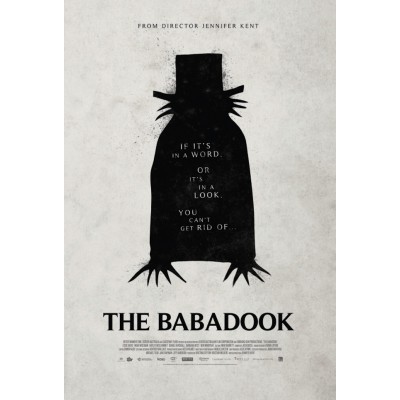
“If it’s in a word, or it’s in a look, you can’t get rid of the Babadook…”

The poster for 'The Babadook'
The poster for The Babadook


So begins the bedtime story read by Amelia (Essie Davis) to her son, Samuel (Noah Wiseman) in the hit Australian horror film, The Babadook. The story focuses on Amelia, a single mother whose husband died in a car crash on their way to the hospital to have Samuel, as she struggles in her role as a parent to her difficult, troubled, and increasingly erratic son. Samuel is afraid of monsters, believing them to be waiting to get him come nightfall. He frequently sleeps in bed with Amelia, and makes his own contraptions to protect both of them. His behaviour becomes so disruptive, however, that he is kicked out of school. One night, Amelia and Samuel read the story of the Babadook in a creepy pop-up book which Amelia has no recollection of owning. The Babadook, a sinister and scary ghoulish figure, will never leave after its presence becomes known. After they read the book, strange occurrences take place, and the rest of the film follows their terrifying encounters with the Babadook.

Amelia and Samuel read the creepy book about the Babadook together


The main strength of the film, in terms of both narrative and gender politics, is the role of Amelia. Before we even consider how women are represented on film, the fact that women are represented on film, particularly by taking on the central role, is an achievement. Not only did only 30 percent of the top-grossing films of 2013 have lead female characters, but a huge number of films still fail the Bechdel test. In terms of race, the picture gets even worse as 73 percent of female characters are white. However, simply making female-led films and passing the Bechdel test is not enough. Transformers: Revenge of the Fallen, Transformers: Dark of the Moon and Transformers: Age of Distinction all pass the test, yet the film’s treatment of women on (and apparently off) screen is atrocious. After Megan Fox quit the franchise, apparently likening Michael Bay, the films’ director, to Hitler, Shia LaBeouf commented that Fox developed “this Spice Girl strength, this woman-empowerment [stuff] that made her feel awkward about her involvement with Michael, who some people think is a very lascivious filmmaker, the way he films women.” The Transformers franchise makes apparent that, in order to get a more accurate look at the role women play and the impact women have in the film industry, we must look at how women are represented on screen as much as whether women are represented at all.

The 'Transformers' franchise demonstrates why the Bechdel test doesn't always cut it...
The Transformers franchise demonstrates why the Bechdel test doesn’t always cut it…


Horror films, in particular, demonstrate this case. Although women are often the lead character in this genre, the representation of women as a whole is often problematic at best. When filming The Birds, Alfred Hitchcock famously claimed he always follows the advice to “torture the women!” something which apparently happened as much off-screen as on-screen. As Sydney Prescott noted in the horror-parody franchise, Scream, horror films often depict “some big-breasted girl who can’t act who is always running up the stairs when she should be running out the front door.” Both Hitchcock and Sydney’s comments demonstrate women’s twofold role in the horror genre: victim and sexual object.

Firstly, The Babadook complicates the depiction of women as primarily victims by presenting Amelia as a complex and multi-faceted figure. For one, she is a not a young big-breasted girl but a mother and fully grown woman. This is not necessarily groundbreaking in itself. The Others, The Ring, and Dark Water all depict their central characters as mothers. However, none so brilliantly present their central character as complicated as Amelia in The Babadook. Amelia is not only a victim and a mother but a colleague, potential lover, sister, neighbor, and grieving widow. The strength of the narrative is the way in which the film meshes the difficulties of being a mother to a troubled child with the haunting of the Babadook, and the way in which this complex combination strains all Amelia’s relationships. It also causes her to lash out at her neighbor, miss days at work, refuse advances from potential partners, and fall out with her sister. But whether it’s the stress of being a mother or the terror of the Babadook remains ambiguous as the film presents her identity, relationships and experiences as layered and complicated.

Secondly, The Babadook consciously subverts the conventional depiction of female sexuality in horror films. Broadly speaking, female characters are either presented as “virgins” or “whores,” where they are punished “appropriately,” or female sexuality is presented as something excessive, disgusting and monstrous. In her authoritative and brilliantly titled book, Men, Women and Chainsaws: Gender in Modern Horror Films, Carol Clover outlines the trope of the Final Girl in the slasher film. The Final Girl, she claims, is the films lead character, who, as both the victim but also the only survivor in the film, serves as both the site of the audience’s sadistic fantasies, and the anchor for the spectator’s identification. Primarily aimed at young heterosexual men, the Final Girl must be “masculine” enough so that this (assumed) spectator can identify with her; she is often androgynous or tomboyish in appearance and sometimes in name. More crucially, she must be sexualised but never sexual; she must provide the fleshy site for the heterosexual male’s voyeuristic fantasies but she must never have autonomy over her own body and sexuality. In fact, she is often virginal. If a woman does have sex in these films, she is branded a “whore” so quickly gets killed off. Examples of films which conform to these tropes include Halloween, Friday the 13th, A Nightmare on Elm Street, Texas Chainsaw Massacre, and, more recently, You’re Next. Post-modern pastiche horror films including Scream and The Cabin in the Woods also play on the trope. On the other hand, as Barbara Creed discusses in her book, The Monstrous Feminine: Film, Feminism and Psychoanalysis, female sexuality is also presented as grotesque and terrifying, reflecting, she claims, male anxieties over female sexuality. Examples include The Exorcist, The Brood, and Carrie.

Laurie in 'Halloween' is a typical example of the Final Girl trope
Laurie in Halloween is a typical example of the Final Girl trope


The Babadook subverts these conventions by presenting woman in possession of (healthy) sexual desire and needs. In one scene, Amelia watches a romantic film alone before going up to her bedroom and taking out her vibrator. Her night of pleasure is ruined, however, after Samuel interrupts her claiming he is terrified of his own room and so cannot sleep in it. Her disappointment is evident; motherhood, it seems, can be as much frustrating as it can be difficult. Crucially, however, the film not only radically foregrounds female sexuality and desire, something which horror films, as I demonstrate, conventionally dismiss. It also links the terror of the Babadook with Amelia’s frustrated lack rather than an excess of grotesque and monstrous sexuality. At moments, the Babadook manifests itself in the form of her late husband. When Amelia first sees him, she passionately hugs and kisses him, clearly missing the affection and sexual intimacy offered from a romantic partner. Only after the Babadook, disguised as her husband, asks for her to bring him the child does she realise that this is a trap. Her husband cannot and will not come back to fulfill the needs she so desperately craves. The Babadook, like the grief she feels for her husband, will continue to haunt Amelia forevermore, serving as a constant reminder of the loss of sexual desire and intimacy which the death of her husband so tragically caused. The terror of the Babadook, then, is as much about the loss of a treasured presence as well as the intrusion of an unwelcome presence.

The Babadook offers a hope for feminist horror fans who are tired of cliché-ridden depictions of two-dimensional, victimised, hyper-sexualised female characters. A film which not only passes the Bechdel test, but presents a complex, multi-layered, sexually autonomous central female protagonist, The Babadook offers hope that the horror genre will shift its depiction of lead female characters to create more compelling, engaging and accurate representations of women onscreen.

___________________________________

Sarah Smyth is a staff writer at Bitch Flicks who recently finished a Master’s Degree in Critical Theory with an emphasis on gender and film at the University of Sussex, UK. Her dissertation examined the abject male body in cinema, particularly focusing on the spatiality of the anus (yes, really). She’s based now in London, UK and you can follow her on Twitter at @sarahsmyth91.

Bitch Flicks’ Weekly Picks

Check out what we’ve been reading this week–and let us know what you’ve been reading/writing in the comments!

recommended-red-714x300-1


African-American Women in Cinema Film Fest Announces 2014 Lineup (November 19-22) by Tambay A. Obenson at Shadow and Act

Betty White, The Golden Girl From The Golden Days Of Television at NPR

Must-See: Spike Lee Slams The Idea Of a ‘Post-Racial America’ by Jolie A. Doggett at Essence

Natalie Dormer: “We Don’t Have Enough Young, Female Antiheroes” by Victoria McNally at The Mary Sue

Forgotten Women of Film History: Lois Weber by Kitty Lindsay at Ms. blog

Todd Solondz Plots Sort of Sequel to ‘Welcome to the Dollhouse’ With Greta Gerwig (Exclusive) at The Hollywood Reporter

Ryan Potter – Big Hero 6′s “Hiro” by Momo Chang at Center for Asian American Media


What have you been reading/writing this week? Tell us in the comments!


‘Laggies’: Mentors, Tortoises, Dads, and Growing Up

A Peter Pan syndrome, or in Jungian terms, the “puer aeternus” complex (forever young), is active here for Megan’s character as she fears personal and professional commitment; the term is “puella aeterna” for women. The appeal of this complex is to stay “forever young,” a girl-woman without adult-level commitments. Her complex is strongly activated by her friend Allison’s (Ellie Kemper) bridal shower and large wedding.

chloe-moretz-kiera-knightley-laggies-movie-photos_5

This is a guest post by Laura Shamas.

Laggies, a new comedy written by Andrea Seigel and directed by Lynn Shelton, explores how indecision and passivity wreak havoc in the personal life of Megan (played by Keira Knightly), a Seattle woman in her late 20s. Various themes and motifs explored in the film include: the desire to be “adolescent forever” or the appeal of the “puella aeterna” complex; the meaning of animal spirit guides; and complications of father-daughter relationships in terms of female identity. In the growing body of work from talented filmmaker Shelton, this movie’s theme could be categorized under a general umbrella of healing troubled family ties, as seen in her previous films Touchy Feely (2013) and Your Sister’s Sister (2011).

Megan (hilariously portrayed by Keira Knightly) is still part of a circle of friends formed in high school. As 30-ish young adults, they are collectively moving on to marriage, parenthood, and ascending careers. Floundering Megan, who quit grad school therapist training, lives with her serious boyfriend Anthony (Mark Webber), and works for her accountant father (Jeff Garlin) by waving signs on the street to advertise his business.  Her friends and her mother express impatience with Megan’s inability to “grow up” and commit to a solid direction in life, be it by marrying, getting career counseling, or finding a new interest of any kind.

laggies

A Peter Pan syndrome, or in Jungian terms, the “puer aeternus” complex (forever young), is active here for Megan’s character as she fears personal and professional commitment; the term is “puella aeterna” for women. The appeal of this complex is to stay “forever young,” a girl-woman without adult-level commitments. Her complex is strongly activated by her friend Allison’s (Ellie Kemper) bridal shower and large wedding. When boyfriend Anthony proposes to her at the wedding reception, Megan takes a moment to consider things and goes outside, where she catches her father passionately kissing another woman.

Upset Megan, in true “puella” style, flees the wedding without explanation, and drives away alone. In front of a store, teenaged Annika (Chloë Grace Moretz), asks Megan to buy alcohol for her lively group of high school friends. Megan agrees, saying it’s a “rite of passage” since someone once did it for her; Megan ends up spending the rest of the evening drinking with the teenagers outside, and even TPing a house. When she returns home, Megan finds that Anthony, her friends and parents were understandably alarmed by her abrupt disappearance from the wedding reception.  However, Megan and Anthony seal their elopement plans and look forward to getting married in the next week or so in Las Vegas.

chloe-moretz-kiera-knightley-laggies-movie-photos_6

This first “regression” sequence for Megan, of hanging out with high school kids, leads to more, as Megan eventually fakes attending a business conference for a week, while in reality, hanging out with Annika’s crowd, staying at her house and getting to know Craig (Sam Rockwell), Annika’s charismatic father. Megan poses as Annika’s mom for a conference with a school counselor, trying on the role of “mother.” Megan’s ongoing vocational interest in “healing” is foreshadowed here as she inquires about the credentials needed to work as a school counselor.

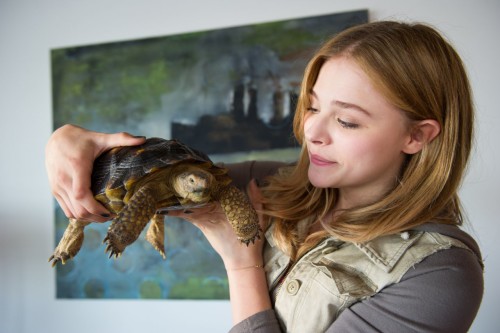
The leitmotif of animal spirit guides is present in the film, used to metaphorically probe the undercurrents of character. Anthony learns, while attending a conference, that his animal guide is “Shark,” a motivating image for him in terms of personal/professional growth. But what is Megan’s spiritual animal avatar? During her weeklong “secret residency” at Annika’s house, Megan takes care of a pet tortoise left behind by Annika’s mother, who moved away. Although the pet has feeding issues, Megan gets on the ground with it in the back yard and cures its eating disorder – another sign of her continued interest in the act of healing. Megan declares to Craig that “Tortoise” is her animal spirit guide. At the teenager’s request, Annika and Megan visit estranged mom Bethany (Gretchen Mol), by tracking her down from a return address on checks sent to Craig. Inside Bethany’s apartment, there are tortoise images on the walls, heading downward towards the floor – a symbolic tie to the family Bethany left behind. Megan, in the encounter in Bethany’s apartment, tries to help both mother and daughter connect, a third instance in the film of Megan promoting a healing process.

ca-f-laggies

In the end of the film, Megan falls in love with Craig while engaged to Anthony, without either of the men knowing about each other. She declares herself to be “a Snake,” but one in the act of transformation, shedding skin. Although some have interpreted the film’s ending to be in the “romantic comedy” vein, the animal imagery here signals that it’s more about Megan’s understanding of herself. More than a simple “happily ever after” ending, she comes to terms with who she really is. Her admission of her own “slow pace” (Tortoise) and duplicity in romance (Snake), along with an articulation of a desire to change (her connection to the “snake’s skin”) leads her to break free from the passivity of her “in-between” life and the stereotypical social pressures of her friends, to go for what she really wants. Siegel and Shelton remind us that our “animal” instincts connect to personal identity and self-acceptance.

Father-daughter relationships get a lot of screen time in Laggies. Two daughters, with loving dads, struggle with identity issues and passivity. Ed has always loved Megan unconditionally, cutting her slack when others judged her “laggie” ways harshly. He never “pushed” her towards easy answers as others in the film seem to do. But Megan cuts off all contact from her dad after seeing him kissing another woman.  In the film’s third act, Megan admits that she is like her father with her own recent bout of cheating; she confronts Ed about his “cheating” incident, and also listens to his advice about the changing nature of relationships, and the ongoing need to work at maintaining them. She’s also happy that he told her mother the truth about what happened, and her parents are going to work through their relationship issues.

Laggies1

Craig and Annika also have a paired focus in the film. Craig’s initial alarm upon finding the adult Megan hanging out in his daughter’s bedroom highlights his role of “protector.” But Annika is protective of her father, too; she cuts off her friendship with wayward Megan upon learning that she’s engaged to another man while becoming involved with her dad. Annika misses her mother; Megan functions as a surrogate mother-mentor figure to her in a large portion of the film, but facilitates a reconciliation visit between Annika and Bethany.

Laggies investigates how a Peter Pan syndrome might lose its appeal, and what happens, at the quarter-life mark, when one outgrows a circle of former high school friends. The film begins with old footage of Megan and her friends jumping into a fenced off pool on their high school prom night. In Act Three, Megan ends up at Annika’s prom night, and mentors her by urging Annika to “take action” at the dance and disclose her romantic interest in high schooler Junior (Daniel Zovatto) to him. Megan realizes that she must take her own advice. The clear emphasis on the need for women to claim agency in the final moments of Laggies elevates its message beyond a “romantic” ending. Megan regrets her own passivity; she learns, by the end when she finally knocks on Craig’s door, that she’s the one who’s responsible for what happens in her life, and doing something about it.


Laura Shamas is a writer, film consultant, and mythologist. Her newest book is Pop Mythology: Collected Essays. Read more at her website: LauraShamas.com.

Eight Elections Later, ‘The Contender’ Still Relevant

To my fellow Americans, happy election week! (Or, depending on your politics and your jurisdiction, unhappy election week.) I thought I’d celebrate by revisiting one of my favorite political thrillers, 2000’s ‘The Contender.’ I’m not sure if it is a credit to this film or a knock against America politics that it holds up so well 14 years later. When ‘The Contender’ was released, Hillary Clinton was in the midst of her first Senate campaign. Now, she’s the front-runner to be the democratic nominee in the next presidential election. But ‘The Contender’ still feels extremely relevant.

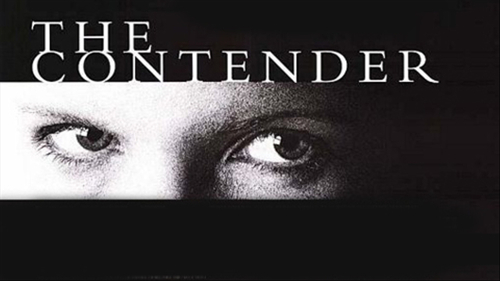
Image from 'The Contender' movie poster.
Image from The Contender movie poster.

To my fellow Americans, happy election week! (Or, depending on your politics and your jurisdiction, unhappy election week). I thought I’d celebrate by revisiting one of my favorite political thrillers, 2000’s The Contender. I’m not sure if it is a credit to this film or a knock against American politics that  that it holds up so well 14 years later.  When The Contender was released, Hillary Clinton was in the midst of her first Senate campaign. Now, she’s the front-runner to be the democratic nominee in the next presidential election. But The Contender still feels extremely relevant.

You’d think The Contender’s assertion that “A woman will serve in the highest level of the executive. Simple as that!”  would feel less bold now, with 14 years and eight elections having passed, aBlack president in his second term and a woman poised to succeed him.  But everything we see Joan Allen’s Laine Hanson go through to be confirmed as a vice presidential appointee seems no less plausible in 2014 than it was in 2000.

Joan Allen as Senator Laine Hansen
Joan Allen as Senator Laine Hanson


The Contender sees Jeff Bridges as lame duck president Jackson Evans (what a great fake president name that is) designating a replacement for his deceased vice president. After the presumptive designee gets tangled up in a news story involving an accidental death, he chooses Ohio senator Laine Hanson, daughter of a governor, liberal Republican turned conservative Democrat, mother of one, terrible basketball player. She’s a lifelong public servant, a true believer in American democracy, 100 percent ready to serve at the pleasure of the president despite her concerns the vice presidency will mean a loss of political power.

But she’s surrounded by doubters, in public opinion, in Congress, even within the president’s staff. The symbolic importance of a woman in the office means something to President Evans, and his aides dismiss the historic designation his “swan song.” The members of Congress in her confirmation hearing, led by the repugnant Rep. Shelly Runyon (Gary Oldman) speak a lot of “greatness,” doubting that Sen. Hanson has it. It seems rather apparent that at least Runyon believes greatness and womanhood are mutually exclusive. Or at least her womanhood automatically makes her greatness suspect, because surely if “the cancer of affirmative action” were not in play, a man would get the nod.

Gary Oldman as the villainous Rep. Shelly Runyon

This doubt of Sen. Hanson leads to brutal and baldly sexist attacks against her. The tamest of these is probably her being questioned about how she’d handle having a child in office, and the shocked silence that follows her answer “my husband and I practice birth control.” The crux of her oppositions strategy against her is a sex scandal involving her alleged “deviant sexual behavior” (basically, semi-public group sex) at a frat party she attended at the age of 19. Sen. Hanson refuses to dignify these “accusations” with a response because “if I were a man, no one would care how many sexual partners I had in college.” Photographs purporting to show her in the act are published on the internet. She’s ambushed on national television by a man claiming to have been a participant. But she remains steadfast in her refusal to deny or respond to the story, which does nothing to silence it.

Interestingly, it is a second “sex scandal,” one where she does admit to the allegations, that is nearly Sen. Hanson’s undoing. Runyon subpoenas the ex-wife of Hanson’s husband, who reveals his affair with Hanson when he ran her first campaign is what led to their divorce. Hanson admits she slept with another woman’s husband. This comparably “mainstream” sexual indiscretion, which again, would unlikely be seen as particularly relevant to the nomination of a man to the post, almost damns Hanson’s confirmation.

Sen. Hansen's confirmation hearings
Sen. Hansen’s confirmation hearing

Sen. Hanson’s personal life is the main focus of her confirmation hearings even though she has some political views and personal beliefs that make even her election to the Senate suspect: she’s an atheist, she “stands for every gun taken out of every home, period,” though she’s also a military hawk.  But with the exception of her support for reproductive rights and her atheism, her politics don’t seem much of interest to those who oppose her nomination.  Both her supporters and her detractors mainly care about the symbolic importance of a woman as vice president.

Ultimately, Sen. Hanson is saved by a plot twist revealed through the investigation of plucky FBI agent Paige Willomina (Kathryn Morris, stealing scenes with her wickedly clever interrogations) that rules out the alternative designee, and President Evans deciding to stick by her and pull on all his charisma and clout to force her confirmation through. In his speech to a joint session of Congress, he says a woman in this office is “an idea whose time has come,” and claims Hanson has all the greatness she was doubted because she refused to play the petty political games to which Runyon and his cronies subjected her.

Jeff Bridges as President Jackson Evans

The Contender succeeds not only as an excoriation of attack politics and sexism against female politicians, but an endorsement of a candidate’s identity being relevant to their qualifications, another way of thinking about the so-called cancer of affirmative action. Something the film does extremely well is deny the myth of meritocracy in national politics. When you’ve got a huge pool of qualified candidates for a position like the vice presidency, “the best person for the job” is rarely if ever going to be a clear choice. After she’s completed her investigation, Agent Willomina begs the president’s chief of staff not to dump Hanson because “She’s hope… hope that there is no double standard. That the goals can be the same.” Hansen being a woman is part of what makes her the best choice for the job.

Fourteen years later, and none of this feels dated (well, the part where a Washington Post reporter literally prints out the faux Drudge Report Internet piece on the sex scandal and acts like he has a scoop is a bit jarring). It all feels pretty depressingly familiar, in fact. As much as I love the film, I wish The Contender didn’t stand up so well to the test of time.

Shishihokodan: Ice Prince/Wolf Rivalry As Female Madonna/Whore

I would argue that genres dominated by female scopophilia and sexual tension, such as the YA Supernatural Action Romantic Comedy (SARCom) genre, challenge Mulvey’s paradigm and allow us better understanding of the role of desire in shaping visual media.

Screen Shot 2014-11-03 at 12.00.09 PM

This is a guest post by Brigit McCone.

With so much feminist discussion of the Objectifying Male Gaze(TM) and its effects, we often fail to consider the hetero-female objectifying gaze, or scopophilia, in visual media. Indeed, feminist film critic Laura Mulvey effectively denied its existence in her influential 1975 essay “Visual Pleasure and Narrative Cinema,” which states that women “cannot view the decline of the traditional film form with anything more than sentimental regret” as female onscreen presence must  monolithically serve as passive erotic fetish for the Male Gaze, unless scopophilic pleasure is disrupted by radical techniques. I would argue that genres dominated by female scopophilia and sexual tension, such as the YA Supernatural Action Romantic Comedy (SARCom) genre, challenge Mulvey’s paradigm and allow us better understanding of the role of desire in shaping visual media.

SARCom was created in 1987 by the manga artist Rumiko Takahashi’s Ranma 1/2. Her mixture of kung-fu demon-of-the-week fights, romance and comedy, with a supernaturally strong heroine, dual shapeshifting supernaturally strong love interests and sarcastically quipping sidekicks, was then a completely unique story and rapidly became popular in the West and Japan. Takahashi’s creative control as visual and story artist (particularly after the success of the slapstick Urusei Yatsura) meant that the aesthetics of SARCom were shaped by the female gaze from the outset. Among its innovations, Ranma 1/2 introduces an Ice Prince/Wolf love rivalry between the hero Ranma and his rival Ryoga, a trope Takahashi would develop in her next SARCom Inuyasha. Joss Whedon’s Buffy the Vampire Slayer popularized the SARCom in mainstream Western culture, developing its own Ice Prince/Wolf rivalry with the characters Angel and Spike. The Ice Prince/Wolf dynamic now dominates teen girl cinema, after Catherine Hardwicke’s Twilight made her the most commercially successful female director of all time.

Twilight‘s inversion of Mulvey’s gendered model of cinema, with Hardwicke’s camera continually privileging Kristen Stewart’s gaze as Bella Swan, and offering Robert Pattinson’s Edward Cullen as erotic spectacle, would be interesting to analyze. Twilight also almost fails a reverse-Bechdel through the intense Bellacentrism of all its characters. In this essay, however, I would like to focus on the Ice Prince/Wolf rivalry itself, as a generic trope of SARCom, and its illuminating parallels with the male Madonna/Whore complex.

Celebrating Celibacy: The “Ice Prince” Archetype

Screen Shot 2014-11-03 at 12.01.23 PM

The defining characteristic of the “Ice Prince” is his combination of emotional fidelity and sexual unavailability, generally accompanied by emphasized superiority and by physical threat. Ranma, the hero of Ranma 1/2, not only rivals the heroine Akane in martial arts, but periodically transforms into a girl more sexually attractive than she is. This tantalizing superiority in femininity enhances the character’s sexual unavailability; the world of Ranma 1/2 plays with gender but is strictly heteronormative with biological sex. His loyalty and rescuing of Akane go alongside Ranma’s constant sexual frigidity. Ranma 1/2 occupies an intermediate position between the shounen (boys’ manga) harem plot of Takahashi’s previous Urusei Yatsura and the love rivalries of her later Inuyasha: as a shounen hero, Ranma is the center of a harem of sex-crazed women, but as a shoujo (girls’ manga) “ice prince” he must be sexually attracted to none of them.

Inuyasha tames its threateningly feral hero, while maintaining his sexual unavailability, by making him frustratingly in love with a previous incarnation of the heroine Kagome – thus, he loves Kagome as a reincarnation, but cannot consummate this love due to his fidelity to the original.

The most extreme “Ice Prince” archetype in Takahashi’s work is Sesshomaru, the haughty, aristocratic pureblood demon introduced as a villain, accompanied by a sycophantic toady, and attempting to cheat his socially inferior, half-brother Inuyasha out of his inheritance; that is, almost exactly the set-up of Fitzwilliam Darcy in Pride & Prejudice. The character is also redeemed by Austen’s strategy: meeting an open-hearted, mischievous and unintimidated girl whom he struggles to scorn as inferior; having his flaws contextualized by introducing his controlling, snobbish mother; finally, risking everything to rescue the redeemer-girl. Introducing a poison-clawed Demon Dog Darcy, with the power to raise the dead and blast his enemies to hell, unbalances Inuyasha: Sesshomaru’s well-written redemption arc commences just as Inuyasha’s own arc grinds to a halt, spending a hundred chapters randomly upgrading his sword while the fandom sways toward the narratively marginalized Sesshomaru. Demon Dog Darcy is then forced to hand his emotionally-earned powers over to Inuyasha in an exasperatingly contrived plot twist. But Sesshomaru’s very marginalization in Inuyasha‘s narrative, and total detachment from the main heroine, function to intensify fangirl emotional and sexual frustration: the ultimate aim of any Ice Prince. Although Demon Dog Darcy progressively thaws emotionally, the character’s sexual unavailability is emphasized by spiked armor encircling his chest and maintained by filling the “Elizabeth Bennet” role with a pre-pubescent girl (one fervently hopes).

In Buffy the Vampire Slayer, Angel loves and saves Buffy but is made sexually unavailable by a curse that he will lose his soul if he has sex with her. This loss of soul also allows the intensification of Angel’s physical threat and sadism, while permitting the ‘real’ Angel to remain a dutiful lover. Twilight likewise presents Edward Cullen as a deeply loving and loyal ‘Ice Prince’ who threatens Bella repeatedly by mentioning his urge to devour her and, of course, is sexually unavailable through his fear of ‘losing control’.

Demon-in-Distress: The “Wolf” Archetype

Screen Shot 2014-11-03 at 12.04.45 PM

The defining characteristic of the ‘Wolf’ is his combination of desperate emotional and sexual availability with repeatedly emphasized vulnerability and animalism. The most exaggeratedly vulnerable is Ranma 1/2‘s Ryoga, a little boy lost in the literal sense that he farcically lacks any sense of direction. The fanged, impulsive Ryoga’s regular transformations into a small, cute piglet add to his vulnerability. His inability to tell the heroine Akane of his true nature and feelings, out of fear of losing his privileged access as her pet pig, forms a near-perfect satire of the “Friendzone” phenomenon.

Inuyasha‘s impulsive, hotheaded Koga, a Ryoga lookalike, is a wolf-demon. In contrast to the elusive, emotionally conflicted hero Inuyasha, Koga falls for the heroine Kagome almost immediately and pursues her consistently. The manga is notable for constantly placing Koga in helpless ‘demon-in-distress’ situations requiring rescue, and for counterbalancing Sesshomaru’s spiked, hug-repellent armor and Inuyasha’s loose robes with Koga’s skimpy armor and furred micro-miniskirt, concealing his crotch only by careful choice of viewing angle.

Although Buffy‘s Spike is a vampire, theoretically an “ice prince” archetype, the character  bears a dog’s name and typical ‘wolf’ impulsiveness and romantic vulnerability. In his second season introduction, he is confined to a wheelchair and forced to watch his beloved Drusilla seduced by “Ice Prince” rival Angel. In the third season, he’s pathetically dumped and weeping. In the fourth, he’s neutered by a brain chip that zaps him for attacking, so ‘he doesn’t chase the other puppies anymore’. In the fifth, the trope of Spike’s nakedness is introduced as vulnerability; he bares his chest to Buffy’s stake and confesses his love. This sequence is revealed as Spike’s dream; he is stripped and Buffy is fully clothed even in his own sexual fantasies. Spike is also stripped and tortured for love of Buffy by the dominant, female deity Glory in this season. In the sixth, after their first sexual encounter, Buffy is again fully clothed, abusing Spike verbally while he sprawls naked and defenseless. She repeatedly violates his sexual boundaries from a position of dominance; his attempt to force himself on her is presented as a crime of pathetic desperation. Though “Ice Prince” Angel wishes to torment and kill Buffy when he is soulless, Spike’s soulless state is no obstacle to his love – the emotional  dependence of the ‘wolf’ knows no bounds.

Twilight’s Jacob Black is another wolf defined by constant loyalty, before attempting to force himself onto Bella in an act portrayed as pathetic desperation. Where Edward’s brief moment of toplessness is a dramatic, suicidal act that will dazzle a watching crowd, Jacob’s toplessness and skimpy attire are chronic, underlining his availability.

Shishihokodan! Or, Why Team Jacob Loses

Screen Shot 2014-11-03 at 12.09.13 PM

Comparing the fandom of all four series reveals an interesting trend: fangirls are roughly equally divided between Team Jacob and Team Edward, Team Spike and Team Angel, Team Ryoga and Team Ranma, Team Koga and Team Inuyasha; nonetheless, the “Ice Prince” always gets the girl. It would be easy to blame the creators. Yet, Stephenie Meyer claims to be “Team Jacob.” Both Marti Noxon and Jane Espenson Buffy‘s main female writer/directors have made statements in support of the BuffyXSpike romance. Rumiko Takahashi’s writings in the romcom genre, Maison Ikkoku and One Pound Gospel, also reward and root for heroes in the vulnerable ‘wolf’ mode, and it is Takahashi who provides a structural explanation for ‘ice prince’ triumph with Ranma 1/2‘s Shishihokodan arc.

The “Shishihokodan” is a blast of energy which enables perpetual loser Ryoga to defeat the hero Ranma by harnessing his heartbreak. Ranma attempts to defeat the all-powerful Shishihokodan with a confidence-blast, but can only triumph by giving Ryoga momentary hope of sexual opportunity. In other words, Ryoga loses not because he is inferior, but because losing is the paradoxical source of his power. Any woman attracted to the “wolf” archetype is inherently drawn to vulnerability; her attraction is intensified by the wolf’s heartbroken rejection. Any woman attracted to the ‘ice prince’ is inherently drawn to dominance; her attraction is conversely reduced by his loss of mastery. As such, pursuing the resistant hero and resisting the pursuing hero create positively and negatively charged polarities to an explosive battery of sexual tension, a narrative trap which dooms the “wolf,” as Takahashi showed herself sympathetically aware with the Shishihokodan arc.

The wolf is difficult to dispose of: any alternative love interest would undermine his painful availability, thus one must be introduced with unsatisfactory suddenness at the last minute. The sudden arrival of a pig-fetishist marks Ryoga’s sidelining in Ranma 1/2; a wolf-girl for Koga is a last-minute addition to the Inuyasha anime, while Koga simply loses his previously foolhardy fighting spirit, forgets his long-established vengeance vendetta and slinks out of the original manga after admitting that Kagome should be with Inuyasha. Most disturbingly, the newly-arrived love interest for Jacob Black is literally newly-arrived as a newborn; his obsessive need to psychologically groom an infant into a future bride doesn’t bother the infant’s parents, presumably merely relieved that the wolf has been disposed of. More satisfyingly, rather than slinking away Koga-style, Spike’s acceptance that Buffy can’t love him “but thanks for saying” allows him to destroy the Hellmouth and be redeemed, incinerating himself in a spectacular blast of purest Shishihokodan.

Shishihokodaaan!!
Shishihokodaaan!!


What does this mean for our reading of film representations of male Madonna/Whore complex? It implies the continual defeat of the Whore as structural necessity – as a pursuing character she must be resisted to generate sexual tension, regardless of whether the author is Team Madonna or Team Whore. So, is womankind’s reading of a value judgement in the Madonna’s triumph flawed, like the hetero-male audience’s resentment of SARCom as poisonously emasculating? In fact, mankind’s Whore is generally portrayed as more empowered than womankind’s Wolf, probably because our culture sees male sexuality as common weakness but female sexuality as social rebellion. It is the female audience’s model of dominant-resistor/submissive-pursuer that aligns the rivalry dynamic of triumphant dominant with the love dynamic of triumphant resistor in a perfect feedback loop that structurally maximizes sexual tension (hence the squealing). But if male readers fail to appreciate Ice Prince/Wolf, are we likewise misreading Madonna/Whore? When Marlene Dietrich’s Frenchy hurls herself in front of a bullet and dies in James Stewart’s arms, is this the patriarchal punishment of a promiscuous woman or is it merely a blast of purest Shishihokodan?


Brigit McCone is unapologetically Team Wolf, writes and directs short films, radio dramas and The Erotic Adventures of Vivica (as Voluptua von Temptitillatrix). Her hobbies include doodling and making weird Pride and Prejudice analogies.