Zombies and Revolution: An Interview with Esther Cassidy, Producer of ‘Birth of the Living Dead’

Zombie fans among our readers will have read my conversation with Amanda last week about Birth of the Living Dead, the new documentary about game-changing horror classic Night of the Living Dead. On Halloween, I got a chance to sit down with producer Esther Cassidy and learn more about the film, the gender politics of George Romero’s work, and the broader symbolism of zombies.

Zombie fans among our readers will have read my conversation with Amanda last week about Birth of the Living Dead, the new documentary about game-changing horror classic Night of the Living Dead. On Halloween, I got a chance to sit down with producer Esther Cassidy and learn more about the film, the gender politics of George Romero’s work, and the broader symbolism of zombies.

Producer Esther Cassidy

Birth of the Living Dead, a passion project for zombie-loving director Rob Kuhns and his (life and work) partner Cassidy, was initially intended to be a “making of” documentary featuring interviews with the cast and crew of Night, but 2008’s One for the Fire stole that thunder. So Cassidy and Kuhns changed tack. They already had experience with socially conscious journalism from their 2001 PBS documentary Enemies of War, about the El Salvadoran civil war, and Kuhns’ work for Bill Moyers got him access to archival footage from Moyers’ tenure as Lyndon B. Johnson’s Press Secretary, from 1965-67 – a.k.a. the years immediately preceding the release of Night of the Living Dead. The upshot is a documentary that superbly locates Night in the context of the US in the late sixties and skilfully analyzes the relationship between horror and sociopolitical climate, both then and now.

“A lot of people don’t realize that horror can make a political statement,” Cassidy observed. She’s a horror fan, powerfully affected by a viewing of Night in college, but, unlike Kuhns, she says she didn’t realize how much she appreciated the film until she came to make this documentary about it. This is a transferable result: Birth is likely to give viewers a renewed appreciation for Night and a deepened understanding of the social forces that influenced the making of modern zombies.

The two major cultural events to which Birth returns again and again are the Vietnam War and the race riots. In a late-sixties milieu, their specific impact lay in their relation to two major factors: the failure of sixties counterculture and the rise of mass media. Cassidy was quick to name the latter as an important component of today’s zombie obsession. Citing the devastation wrought on New York by Hurricane Sandy last year, she proposed that the renewed cultural interest in zombies this century can be linked to an awareness of both how connected we are and how fragile those connections are. “Everyone born since 1945 wakes up every day surprised we haven’t blown ourselves up yet,” she said of our generations’ apocalyptic mentality. Zombie films are a space where we can ask what resources we can muster to survive in a world where everything can change in a heartbeat, where the only certainty is death, and now even this is undone.

Gary Pullin's gorgeous graphics.
Gary Pullin’s gorgeous graphics.

The failure of institutions is a major theme of Night, and no commentator fails to note the “suspicion of authority and unmitigated bleakness” (to quote the narration of Birth). There’s a revolutionary impulse here, a desire to overthrow the forces of war and racism and capitalism and consumerism through a dramatic world-altering event, but there’s also a hopelessness, a fear that perhaps we can never really change anything. The two warring impulses are surely familiar to everyone who has ever felt dissatisfaction with the status quo. I see the current popularity of zombies as reflecting a powerful sense of collective guilt and frustration. Zombies are the systemic forces to which we are subject and which we cannot control, but these same systemic forces are us – they are the result of human actions and human institutions.

Without the rule of law, mass media, and other social and cultural institutions to perpetuate them, racism and other systemic oppressions need no longer be cynically viewed as inevitable aspects of human existence. (The fact that they are still uncritically included in most of the popular zombie stories today bespeaks both a cynicism so deep it borders on nihilism and a profound artistic laziness.) What’s so brilliant about Night is that the conflicts within the farmhouse are to do with survival, not tribalism, and that the racially-coded violence is perpetrated by the forces of social institutions. Neither war nor racism is over, despite decades of activism and protest, so it’s no wonder Night‘s dark ending still speaks so powerfully to audiences. The fact that mainstream zombie fare today does not engage with critical social theory the way Night does instantiates this collective disillusionment on a metatextual level too. What comfort is there? Romero offers, “There’s always the refreshment stand.”
POPCORRRRRN
POPCORRRRRN

Night of the Living Dead is far from an actively misogynistic movie, but it does fail to address the vector of gender oppression, which makes its social engagement, otherwise so sophisticated, seem thoroughly incomplete. Cassidy can provide a feminist counterreading for most of the female characters in the movie, from the teenage girl whose desire to help her boyfriend leads to the downfall of the escape plan, to the strong mother whose love for her daughter is her weakness, but she’s under no illusion that Night is an explicitly feminist text. As she points out, you have to look to Romero’s series of sequels – Dawn, Day, Land, Diary, and Survival of the Dead – for some genuinely well-rounded and interesting female characters. The man has learned, and his work has developed accordingly.

Perhaps, then, there is ultimately a message of hope for redemption, for a new radically reconstructed world, but it requires a lot of work and self-critique and undeniable pain and horror and times of bleakness and despair. And that seems to be missing from a lot of present zombie stuff, wherever engagement with social issues is missing. Without that engagement, zombie stories are cynical voids of human feeling, all style and no substance, pure money-grabbing consumerist culture. They are zombies, in the most Baudrillardian way, and our only comfort is the refreshment stand.

Hope rests in the people who don’t succumb to nihilism. One of the most interesting strands in Birth is the portrayal of an after-school program to promote literacy through film, where Night is a teaching tool for Brooklyn kids – mostly kids of color whose families aren’t exactly high on the socioeconomic ladder – and it’s fascinating to see how much the film engages them. Cassidy herself works with Downtown Community Television Center to “provide outstanding media arts education to underserved populations.” There are ways in which people are attempting to engage horror with a social conscience. And hopefully Esther Cassidy and Rob Kuhns are going to do more of it with their proposed forthcoming work, on the influence of the Holocaust and the atom bomb on horror, SF, and monster movies from 1945 to the present. I eagerly await it.

Birth of the Living Dead opens at New York’s IFC Center on Wednesday.

Max Thornton blogs at Gay Christian Geek, tumbles as trans substantial, and is slowly learning to twitter at @RainicornMax. He thinks way too much about zombies.


“I Kind of Like It When She Calls Me a Bitch. It Makes Me Feel Like Janis Joplin”: Third-Wave Feminism in ‘New Girl’

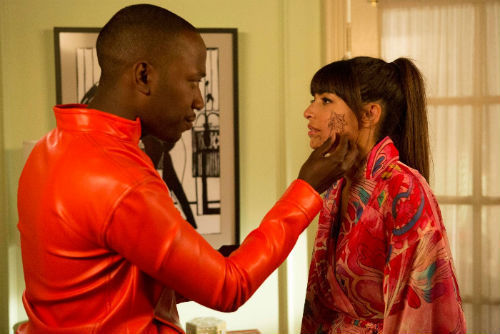
There is no denying that 2013 has been a tough year for women. As a North Carolinian, I have watched as all but one Planned Parenthood in my state got slated for shut-down due to “health requirements” passed by our Republican lawmakers. At the national level, politicians have made too many rape-apologist comments to keep track of. As a feminist and former Women’s Studies major, it’s important for me to develop thick skin, and with it, an arsenal of uplifting weaponry that will keep me sane and optimistic about our future as women. Which is what has brought me to love the Fox television show New Girl. Yes, New Girl is, ultimately, a sitcom, and it is questionable whether sitcoms can hold up to serious feminist criticism or if we should just laugh along and not take them too seriously. But what’s the fun in that? When “lighthearted” media is so often blatantly sexist (the song “Blurred Lines” and its accompanying video have given feminists enough ire to last the entire year) we should acknowledge those forms of media that, even in subtle ways, subvert the sexist norm.

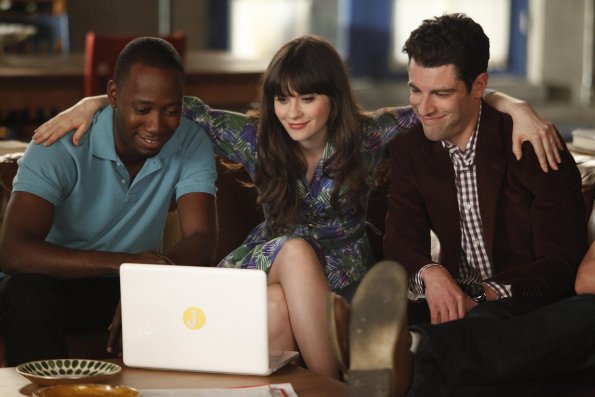
The cast of New Girl


This is a guest post by Susan Mackey.

There is no denying that 2013 has been a tough year for women.  As a North Carolinian, I have watched as all but one Planned Parenthood in my state got slated for shut-down due to “health requirements” passed by our Republican lawmakers.  At the national level, politicians have made too many rape-apologist comments to keep track of.  As a feminist and former Women’s Studies major, it’s important for me to develop thick skin, and with it, an arsenal of uplifting weaponry that will keep me sane and optimistic about our future as women.  Which is what has brought me to love the Fox television show New GirlYes, New Girl is, ultimately, a sitcom, and it is questionable whether sitcoms can hold up to serious feminist criticism or if we should just laugh along and not take them too seriously.  But what’s the fun in that? When “lighthearted” media is so often blatantly sexist (the song “Blurred Lines” and its accompanying video have given feminists enough ire to last the entire year) we should acknowledge those forms of media that, even in subtle ways, subvert the sexist norm.

The premise of New Girl is as follows: Jess (played by Zooey Deschanel) is a recently-single thirty-something-year-old woman who moves into an apartment with three men: Nick, Schmidt, and Winston.  The underlying feminist elements in New Girl are often subtle, which is what lends them so much power.  Just when we’re expecting another average romantic-comedy sitcom, the rug gets pulled out from under us.  This happened to me while watching Season 1 of New Girl for the first time.  Jess picks up her best friend Cece from the bar and brings her back to the apartment to crash.  Jess warns the boys that when Cece’s drunk, “She’s really grabby, really physical, really loose with her body.”  Immediately the scenario seems too predictable: a bunch of men will take advantage of a beautiful, drunk girl.  In fact, the opposite occurs.  Cece practically forces the boys to dance drunkenly with her, while they try clumsily to impress her.  It’s an interestingly equal power dynamic; Cece is drunk and thus not in control, and yet, the boys succumb to her every whim.  They couldn’t take advantage of her if they tried.  The episode takes an interesting turn when Schmidt offers to let Cece sleep in his bed.  He “sheepdogs” her into his room, closes the door, and says he’ll sleep on the couch.  This scene took me completely by surprise and illustrated how deeply ingrained sexist imagery is in our imagination: I was abruptly surprised by the fact that Schmidt was not going to take Cece to bed when she was drunk.  It was a shocking and somewhat sad realization that I expected the wrong thing to happen; it had almost never occurred to me that a man would not take advantage of this beautiful, drunk woman.

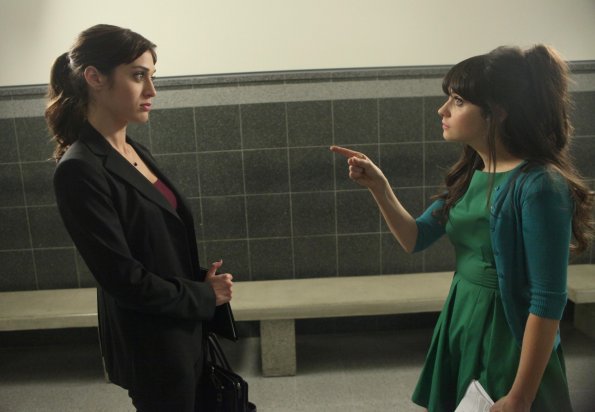
Jess and Julia
Jess and Julia

Jess vs. Julia: Second Wave vs. Third Wave

Jess is a prime example of third-wave feminism because she is a new image of what independence and power look like.  In Season 1, her roommate Nick begins dating a lawyer named Julia.  From the first time Julia and Jess met, Julia was standoffish and cold, quite different from Jess who is friendly and bubbly to a fault.  When Jess needs Julia’s help getting out of a traffic ticket, Julia tells Jess condescendingly that her whole “thing” (meaning Jess’s ultra-femininity and friendliness) might work in front of a judge.

The tension between Julia and Jess reminds me of the very real tension between those who identify with second wave feminism and those who identify with third wave.  Julia has had to combat sexism within her line of work and has done so by taking on traits that would typically be deemed “masculine.”  Jess, on the other hand, is unapologetically feminine.  When the two women break down and finally have it out in the bathroom of Nick’s bar, Julia tells Jess, “If I acted like you at work, no one would take me seriously.”  This is a sad but true fact for women who work in male-dominated fields, like law.  However, Jess counters, “Well if I acted like you at work, my students would turn in really weird, dark dioramas.”  Second-wave feminism of the 1960s and 1970s often took the physical form of women who were trying to stake their claim in society by emulating men in manner and appearance (think of the “hairy legged man-hater” stereotype of feminists).  Third-wave feminists know that female and feminist power can and should be claimed by everyone, including those second-wave feminists, but also by men, people of color, trans-people, and, finally, feminine women.  Jess sums up this point perfectly when she tells Julia that even though she works with kids all day and wears polka-dots, “that doesn’t mean I’m not tough, and smart, and strong.”

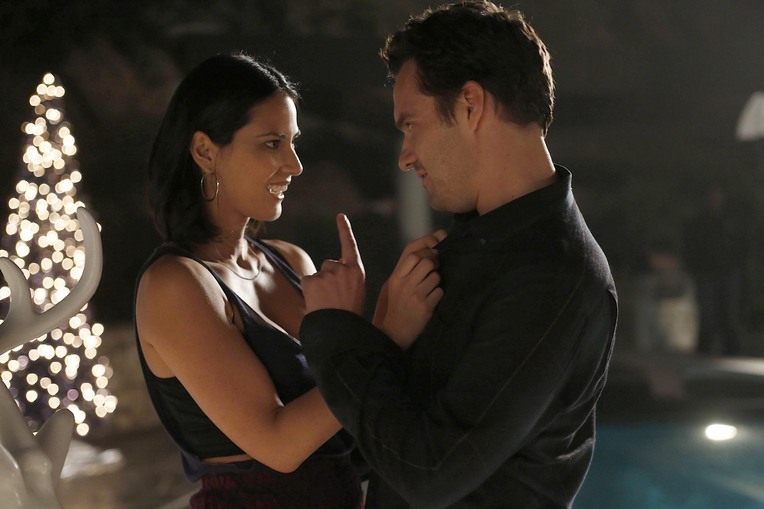
Nick and his girlfriend
Nick and his girlfriend (who happens to be a stripper)


I got another jolt while watching New Girl when roommate Nick begins dating a stripper, and receives no judgment from Jess or any other female character.  Jess supports Nick’s girlfriend’s decision to strip and even pushes Nick to date her because she’s such a headstrong woman.  It is so rare in television and in real life to find women who accept other women’s career and life choices, especially if that choice is to work in a sex industry.  But that is one tenant of third-wave feminism that has caught on particularly well with young feminists.

The feminist movement, like any social movement, has had its fair share of shameful, or at least embarrassing, moments.  Recall the 1968 anti-Miss America pageant demonstration, in which feminists paraded a sheep in front of the event to represent contestants.  Organizers of the demonstration later regretted the tone of the protest because it pitted woman-against-woman instead of uniting them against an oppressive institution.  Now, in the era of New Girl, feminists have realized the power of female friendships and mutual support.

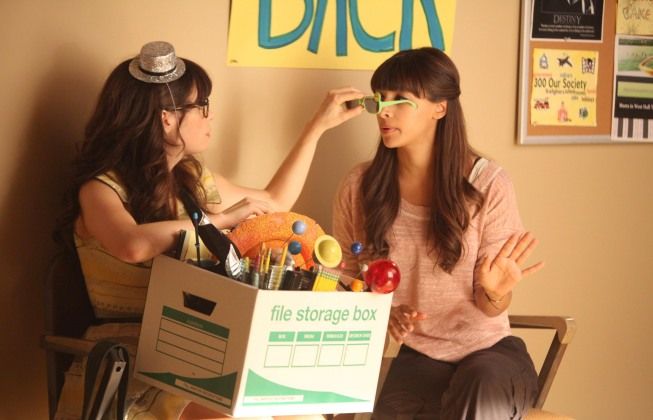
Jess and Cece
Jess and Cece

Female Friendships

New Girl’s ability to portray female friendships accurately is noteworthy.  The premise of the show–that a recently single woman moves into an apartment full of men and hilarity ensues–seems clichéd at first.  And it is, at times.  There are countless scenes of the seemingly hilarious debacles when two genders live together (in one episode, Schmidt finds one of the tampons that Jess has hidden around the house).  But, after all, it is a cable sitcom, and so we must cut it some slack.  After all, the show does make up for the predictable three-guys-and-a-girl scenario with scenes of genuine friendship among women.   For starters, Jess has a diverse group of friends (for television standards); her best friend is an Indian woman (Cece) and her other friend who appears regularly is a lesbian (Sadie).  Within these women there is no gossiping or snarky behavior.  When Jess suspects that Nick’s aforementioned girlfriend Julia may not like her, she confides in Cece and Sadie for their support.  Nick tries telling the women that they’re imagining things, but Jess points out to Nick something about female relationships that is all too true: when girls fight, a lot of it goes unsaid.  There is real conflict between the women in New Girl, but none of it is the catty back-stabbing behavior that we are used to seeing on television.

Winston, Jess, and Schmidt

Writing Diversity

Unsurprisingly, New Girl’s main character, played by Zooey Deschanel, is an attractive white woman (despite the show’s best efforts to portray her as awkward, she is still undeniably cute).  For this reason, New Girl is not particularly revolutionary in its racial makeup.  With the advent of Orange is the New Black, feminist viewers have gotten a taste of race done right in television (although, not without problems; OITNB has been called a “modern slave narrative” because of its use of a white protagonist as a vehicle to portray black and Hispanic characters).  However, New Girl’s ability to successfully joke about race deserves notice.  OITNB has garnered a lot of praise–and rightly so–for addressing race in a serious and respectful manner.  But New Girl is a sitcom, after all, and has to be funny to be successful.

Modern Family, another sitcom, positions itself as a, well, modern representation of American families.  Unfortunately, many of their jokes rely on tired clichés about race and gender (including the nagging wife, the fiery Latina woman, the effeminate gay man, the crotchety old Conservative white man).  One episode in particular that made me roll my eyes consisted of the family’s newborn baby conveniently throwing up any time gay marriage was mentioned.  It seems to me that Modern Family is trying to get away with these lazy, stereotypical jokes by positioning them as ironic; after all, how can it be offensive if it’s purposefully trying to be modern?
Winston and Cece
Winston and Cece


New Girl, while driven by a traditional female protagonist, has a surprisingly diverse cast.  Schmidt is Jewish, Winston is Black, and her girlfriends include an Indian woman, Cece, and a lesbian named Sadie.  The show is surprisingly, almost shockingly, successful in its abilities to joke about race and sexuality in ways that are truly original and funny, and not at all hurtful (disclaimer: because I am viewing the show from a straight, cisgender, white point of view, it is always possible that my privilege allows me to miss offensive humor).  One episode in particular delves into the issue (or rather, the perceived issue) of Winston being the only Black housemate.  Upon seeing Winston interacting with a group of strangers who are Black, Schmidt begins to fear that Winston is not being “his blackest self.”  The episode continues with Winston taking advantage of Schmidt’s naïve idea of what it means to be Black.  Instead of Black stereotypes being the joke (i.e., Black people smoke crack), Schmidt’s assumptions, laced in liberal open-mindedness, are the joke. (We’re laughing at Schmidt for having the assumption that Winston smokes crack.)  Along the way, clever jokes of racial differences are made: Schmidt tells Winston that both of their “people” have done great things for America; African Americans have produced some of the best jazz music, while Jews have produced some of the best managers of jazz musicians.  Another episode concludes with three white roommates taking turns at making Woody Allen jokes, while Winston simply ads, “Yeah, I have nothing to contribute here.”  New Girl doesn’t pretend racial differences don’t exist; it acknowledges them, laughs at them, and moves on.

At the end of the day, it’s difficult to assess how great an impact a sitcom can have on society.  Can twenty-five minutes of cable television enact real change in a society so permeated by racism, sexism, and every other damaging –ism?  I’d like to think so.  The people whose minds need to be changed are not always the ones marching on the streets, reading feminist blogs, and participating in grassroots activism.  They are the ones sitting on their couches, watching television.  So if a show like New Girl can subtly inject feminist values into the mainstream canon, that is something to celebrate.  And now, more than ever, feminists need something to celebrate.


Susan Mackey is a recent graduate from Appalachian State University. She lives in Charlotte, North Carolina, where she teaches preschool and writes about art and feminist issues in her spare time. 


Call for Writers: Male Feminists/Allies

Call for Writers


When we talk about feminism and action for gender equality, we often focus on women–those who fight and create and push against patriarchal forces. For our November Theme Week here at Bitch Flicks, we are focusing on the male feminists and allies who are fighting and creating and pushing against patriarchal forces. We want writers to consider fictional male characters (from film and television), men who are activists and allies in and out of media, and the importance of men in the fight for equality–both on screen and off.

In the article, “I’m a male feminist. No, seriously,” John Brougher says,

“Sexism doesn’t just hurt women, it breaks our very humanity. And ultimately, that’s why I’m a feminist. Because women deserve to be treated as equal human beings, and it hurts every single one of us when that’s not the case.”

Many men get this. We love those men. This month, we want to give a week of Bitch Flicks to these male feminists and allies who get it.

We would like to avoid as much overlap as possible for this theme, so get your proposals in early if you know who or what you would like to write about. We accept both original pieces and cross-posts, and we respond to queries within a week.

Most of our pieces are between 1,000 and 2,000 words, and include links and images. Please send your piece in the text of an e-mail to btchflcks[at]gmail[dot]com, including links to all images, and include a 2- to 3-sentence bio.

If you have written for us before, please indicate that in your proposal, and if not, send a writing sample if possible.

Please be familiar with our publication and look over recent and popular posts to get an idea of Bitch Flicks’ style and purpose. The final due date for these submissions is Friday, Nov. 22 by midnight.


Bitch Flicks’ Weekly Picks

Check out what we’ve been reading this week and let us know what you’ve been reading/writing in the comments!

recommended-red-714x300-1


The Seven Stages of Important Black Film Fatigue by Stacia Brown at American Prospect

Why ’12 Years A Slave’ Is Different From ‘The Help’ And ‘Django Unchained’–And Why It Matters by Alyssa Rosenberg at ThinkProgress

It’s Time To Say Good-Bye To TV’s Strong Black Woman by Nichole Perkins at BuzzFeed

13 Myths Hollywood Uses to Hide Discrimination Against Women Directors by Maria Giese at Women Directors in Hollywood

Voices: Halloween–A White Privilege Christmas by Arturo R. García at Racialicious

The Big O: Oscar Could be Swayed by Leto’s Feminine Mystique by Susan Wloszczyna at Women and Hollywood

15 Fantastic Horror Films Directed by Women by Alison Nastasi at Flavorwire

Creator/Producer Lorne Michaels Responds To Lack Of Black Women On ‘SNL’ Criticism by Tambay A. Obenson at Shadow and Act

Queen Latifah, Patti Labelle, Venus Williams to Be Honored at Black Girls Rock! by Evelyn Diaz at BET

Why White People Can’t Quit Blackface by Camille Hayes at Bitch Media

‘Homeland’ And The Delicate Art Of Withholding by Linda Holmes at NPR

Heroines of Cinema: 10 Great Films About Female Sexuality by Female Filmmakers by Emily Craig, Matthew Hammett Knott and Sophie Smith at Indiewire

Season of the Witch: Conjuring Strength Through Power by Alyssa Rosenberg at Women and Hollywood

Tina Fey’s New Show Picked Up By NBC #Blessed by Eloise Giegerich at Bust


What have you been reading/writing this week? Tell us in the comments!

Women and Gender in Cult Films and B-Movies: The Roundup

Check out all of the Women & Gender in Cult Films & B-Movies Theme Week posts here!

Slumber Party Massacre came up while I was searching for female directors in the exploitation genre. Although it came off as yet another sensationalistic and gory 80s slasher, it stuck out, mainly due to its ridiculous title or the fact that most of the characters were female. Upon viewing it, what shocked me was not so much the gore and violence, but I was surprised by the clever humor, the funny characters, and most of all the incredibly veiled feminist satire.


Fairytale Prostitution in Angel by Elizabeth Kiy

Angel, a 1984 cult film, attempts to be both a melodrama about a teen hooker forced to face her life choices (as the trailer proclaims it “A Very Special Motion Picture”) and a very 80s crime thriller where a tough-talking street kid teams up with a cop to catch a killer, but the resulting film is a mess of clashing tones that seems more campy than hard-hitting.

Luc Besson: Hero of the Feminist Antihero? by Shay Revolver

For the uninitiated, Nikita was the often too realistic story of a drug-addicted young woman who finds herself in jail after a robbery gone horribly wrong. Most filmmakers would have ended there, a cautionary tale of the woman led down the wrong path who ends up punished for her sins. But Besson took the story further; this broken young woman gets turned into an assassin that is used by her government to kill. The killing takes its toll on her, but she values her life and freedom over the other option provided her: death. She meets a guy, falls in love, and at the end of the day Nikita turned out to not be the same story I was used to.

In terms of gender representations, both men and women are shown as the worst possible version of themselves. Barbra swings back and forth from being near catatonic and unable to communicate, to wild and hysterical. Ben even slaps her at one point to get her to snap out of her state. She is weak and unable to deal with the emotions of seeing her brother attacked. Barbra would have already been killed and reanimated were it not for the über masculine Ben to save her from the perils that lie outside.

A Study in Contrasts: The Hunger by Amanda Civitello and Rebecca Bennett

Perhaps for the movie’s purposes, that doesn’t matter: the story seems to be far more driven by the desire to create an artistic film, rather than an intellectually/ethically/scientifically engaging narrative. The scientific aspect for example—the part of the film I found personally most engaging, that it is possible to tamper with the natural life-cycle, halting the aging process in its tracks—is touched upon but it seems, at least to me, to be more of a plot device for bringing Sarah into Miriam’s life than an attempt to explore an ethically challenging issue. The biology behind Miriam’s present state and the fate of her lovers is similarly irrelevant.


When the movie begins we’re introduced to Brad, a hero (Barry Bostiwck) and Janet, a heroine (Susan Sarandon), two straight-laced representations of the all-American, white middle class Christian boy and girl who are suddenly thrown into a den of loose morals and provocative dancing. At all turns, we’re blatantly reminded of their status as a proxy for a nice boy and a good girl, and it’s reinforced with every cliché possible.

Being set in the Valley in the 80s, the film portrays much of the vapidness and consumerism popular at the time, with two of the film’s songs, “Brand New Girl,” and “’Cause I’m a Blonde,” focusing on changing or criticizing women’s appearances. “’Cause I’m a Blonde” is purposely satirical, however, and really serves more to make fun of the blonde “Valley Girl” stereotype than to support it.

Maude and The Dude: Feminism and Masculinity in The Big Lebowski by Rachael Johnson

Populated by mostly male characters, The Big Lebowski is, to some extent, a tale of male friendship. Nevertheless, the cult comedy should never be interpreted and celebrated as exclusively a guy’s film. The Big Lebowski offers an amusing, subversive portrait of masculinity and features an excellent comic performance by one of the most gifted actresses working today. What’s more, it suggests that the future is matriarchal.

Consistently, then, femininity in men is dangerous. It may be actively dangerous, as in Uncle Monty, who assaults Marwood whilst in near-drag, or passively dangerous, in that it makes the feminine man a target for harassment, as in the lout at the pub who calls Marwood a perfumed ponce. Ultimately, it is dangerous because it marks the other, and to be other is to be in danger.

The Blood of Carrie by Holly Derr

Most feminist criticism of Stephen King’s Carrie has focused on the male fear of powerful women that the author said inspired the film, with the anti-Carrie camp finding her death at the end to signify the defeat of the “monstrous feminine” and therefore a triumph of sexism. But Stephen King’s honesty about what inspired his 1973 book notwithstanding, Carrie is as much an articulation of a feminist nightmare as it is of a patriarchal one, with neither party coming out on top.


Birth of the Living Dead: Women & Gender in Cult Films & B-Movies by Amanda Rodriguez and Max Thornton

Birth of the Living Dead is Rob Kuhns’ documentary of the making of George Romero’s 1968 cult horror genre game-changer Night of the Living Dead. Bitch Flicks writers Max Thornton and Amanda Rodriguez discuss both the documentary (BOTLD) and the original film itself (NOTLD).

The ethics of the film are one thing, but it says a lot about the world of the movie that it’s able to go nearly two hours without a single important female character showing up on screen. There are no women cops, there are no women in the mob, there are only a couple of wives or passers-by or maybe a drug-addled girlfriend or two. But no one who matters. The acting characters in the film are all overwhelmingly and vocally male.

Even the ethos of the characters, that they will destroy that which is evil, but leave alone the pure and blameless, is inherently sexist. Because when they say pure and blameless, what they mean is the women and children. In this universe, women are not even people enough to do things wrong. We do not have enough agency even to commit evil.


On any dark and stormy night in the fall, it is a wonderful thing to curl up with a mug of mulled cider and watch Clue. The murder mystery based on the eponymous board game may have been a huge flop when it was released in 1985, but it has gained a passionate cult following in the last 28 years, probably due to its infinitely quotable dialogue and gleeful disregard for the pile of bodies amassed as the movie progresses – as well as being shown on cable about once every two hours.

I’ve lost track of how many times I’ve watched Fight Club. Every time I view it, I end up noticing something new. How did I miss that before? This time, Marla Singer (played by Helena Bonham Carter) captured my attention. What would the situations in the movie look like from her viewpoint?

The midwestern, puritanical values that American Gothic seems to represent so well win at the end of the film, and quite literally kill difference and sexual and gender subversion. While Riff Raff and Magenta go back to their home planet Transsexual, in the galaxy of Transylvania, Brad, Janet and Dr. Scott are left on the cold ground, crawling and writhing in their fishnets.

Here are some game-changing cult classics, divided into handy genre sections. And while we’re looking at the influence of these cult films, why not check out how they portray and treat women? Almost entirely coincidentally, they’re all from the ‘80s. What can I say? It was a culturally rich period.

So I asked Twitter the following question: “Who’s scarier: Jason or Jason’s mom?” Surprisingly, despite all the movies (12 in total) in which Jason is seen slashing throats and hanging victims, his mom (who’s only alive and running amok in the first film in 1980) is apparently considered the more horrifying killer. But I’ve always had a soft spot for Pamela. Not that I condone the gruesome murders of innocent people (of course not). But, unlike Jason, Pamela committed crimes of passion. Her crazy antics were actually revenge for her young son’s fatal drowning, which she felt was caused by the unjustifiable neglect of the camp counselors who failed to watch him (a longtime rumor has faulted the counselors for being too busy fornicating and not paying attention to Jason’s cries for help).

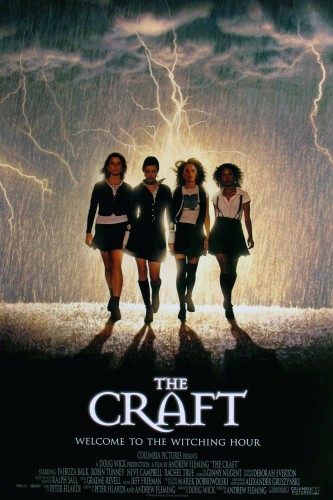
The Craft presents a lesson that coming-of-age films don’t typically make a point to show. A ballot is cast for prom queen or SAT prep sits on the horizon with college days looming, a girl must get a boy to like her, losing her virginity in the process. But this film is about serving the self—the craft of empowering oneself to surmount the archaic persecutions against women—taking back the threat of female power. But like a genie in a bottle that allows three wishes, this craft must be practiced and understood, respected completely before it can be outwardly used, or else it will perpetuate transgression.

Freaks (1932) is a true cult movie, one that’s ridden a rollercoaster of opprobrium and acclaim since its initial release. Tod Browning’s sideshow-set horror-romance destroyed his career (and several others), caused such disgust in early audiences that one woman (allegedly) miscarried, outraged critics and moral guardians, traumatized some of the performers who appeared in it, languished in obscurity after being banned for three decades, resurfaced on the exploitation circuit in the 1960s, and earned a spot in the National Film Registry archives in 1994 before enjoying its current status as a one-of-a-kind classic. It’s been repeated to the point of cliché, but Freaks, once seen, is never forgotten. Love it or hate it, it will stay with you for the rest of your life.

I was neither a discerning nor an educated viewer, but even so I quickly cottoned on to the fact that certain Italian directors had produced some above-average horror flicks in the 1970s, characterized by a cavalier attitude toward nudity, pervasive Catholic imagery, and lashings of gore. Ignorant of the term giallo, I proceeded to dub this subgenre “spag-horror,” which isn’t actually an awful name for it.

As my initiation into the worlds of sex and violence, many European horror films of the 1970s no doubt occupy a Freudian subspace of my psyche. Probably the Ur-example of this genre and its strange, ambivalent attitude toward women and sexuality is Dario Argento’s 1977 meisterwerk, Suspiria.


Before There Was Orange is the New Black, There Was Roger Corman’s Women in Cages by Leigh Kolb

I found myself wondering about the designation of sexploitation. Female nudity in itself isn’t exploitative. Women fighting and women being abused are things that happen in prison. Are representations of women in these situations inherently exploitative, or are we conditioned to see women’s bodies and women’s actions and think: object? Certainly frame after frame of powerful, complex, awful and good, sympathetic and loathsome women has some kind of effect on the viewer. Since we are conditioned to only really consider the straight white male gaze as the norm, we see these movies as highly sexualized and exploitative.


The Shock of Sleepaway Camp by Carrie Nelson

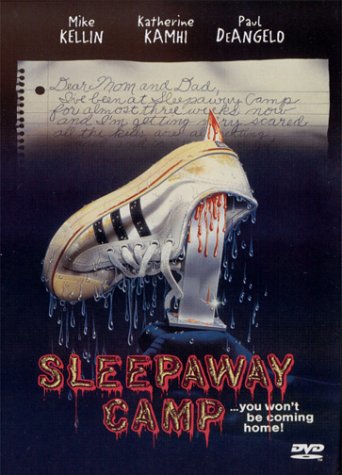
On the surface, Sleepaway Camp isn’t much different than your average 1980s slasher movie. The comparisons to Friday the 13th can’t be ignored – Sleepaway’s Camp Arawak, much like Friday’s Camp Crystal Lake, is populated by horny teens looking for some summer lovin’, and is the site of a series of gruesome and mysterious murders that threaten to shut down the camp for the whole summer. But unlike Friday the 13th and other slasher films, the twist in Sleepaway Camp isn’t the identity of the murderer, and the final girl isn’t exactly who you’d expect.


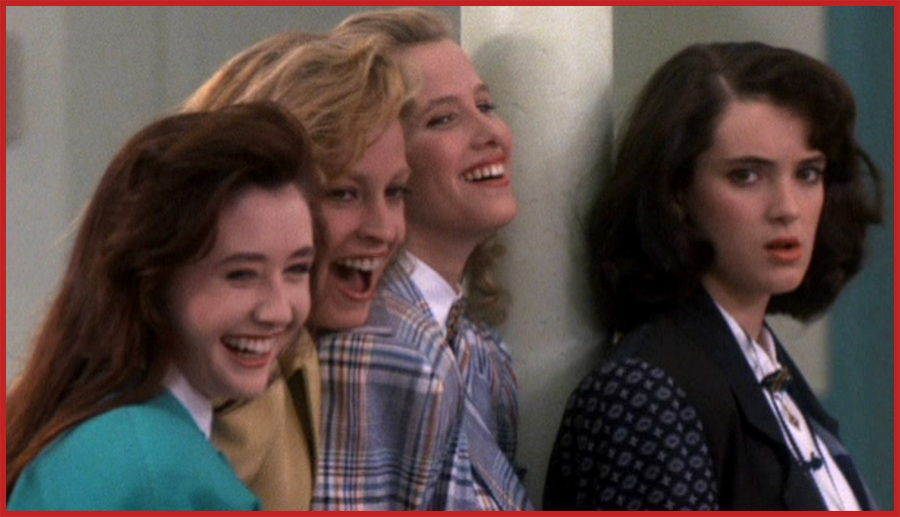
Veronica Decides Not To Die–Heathers: The Proto-Mean Girls by Artemis Linhart

Indeed, the social structure of Westerburg High School is unsettling to say the least. Teens there would rather commit actual suicide than “social suicide.” Their alienation from both reality and ethical values is mirrored not only in J.D., Veronica and the Heathers, but also in the rest of the students. Peer pressure and the dream of popularity result in the “Westerburg suicides,” causing a downright suicide craze. Their supposed actions gave the popular kids depth and humanity and made them more popular than ever. When an unpopular girl attempts to kill herself, the new Heather in charge asserts, “Just another case of a geek trying to imitate the popular people of the school and failing miserably.”


Veronica Decides Not To Die – ‘Heathers’: The Proto-‘Mean Girls’

Indeed, the social structure of Westerburg High School is unsettling to say the least. Teens there would rather commit actual suicide than “social suicide.” Their alienation from both reality and ethical values is mirrored not only in J.D., Veronica and the Heathers, but also in the rest of the students. Peer pressure and the dream of popularity result in the “Westerburg suicides,” causing a downright suicide craze. Their supposed actions gave the popular kids depth and humanity and made them more popular than ever. When an unpopular girl attempts to kill herself, the new Heather in charge asserts, “Just another case of a geek trying to imitate the popular people of the school and failing miserably.”

heathers

This guest post by Artemis Linhart appears as part of our theme week on Cult Films and B Movies.


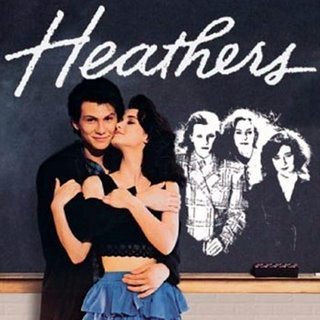
If Heathers (1988) has taught us anything, it’s that “it is one thing to want somebody out of your life, it is another thing to serve them a wake-up cup full of liquid drainer.”

In one of the first and foremost films about the chronic struggle of queen bees versus wannabes, Veronica Sawyer is up against a ruthless trio of Heathers. Led by Heather Chandler, they are the most popular clique in school and, being their newest member, Veronica has already had enough – she longs to return to her “geekish” old friends. The three Heathers can be read to represent the uniformity of the queen bees as well as high school structures in general. As Veronica’s boyfriend J.D. argues, they function in much the same way everywhere: “Seven schools in seven states and the only thing different is my locker combination.” The popular girls seem to be interchangeable templates that, in addition, are the same in every school and, most importantly, every teen movie. But high school as a technicolor battleground has just taken on a new opponent.

mean_heathers

Fed up with using her smarts “to decide what color gloss to wear,” Veronica is more self confident and not as obsequious as Heather Chandler’s other minions. Having a strong sense for right and wrong, she is reluctant to accept the regime of an individual adolescent in the social fabric of the school. In order to function as the blatant satire that it is, the film works with an array of cliché characters, yet it offers a remarkable complexity of female characters that transcends the “smart girl in need of a makeover vs. the popular airhead” shtick. Moreover, it blends juvenile delinquency with girlhood without making use of the “outrageous” John Waters style badass girl gang trope.

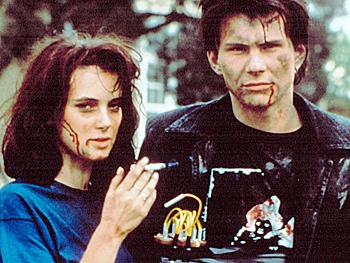
Channeling both James Dean and Jack Nicholson, J.D. remains the driving force behind the murderous madness. However, there is a certain darkness to Veronica’s character that wavers between desperation and spite and contrasts the teenage girl known from the works of John Hughes and the like. Whereas in the 1970s the cinematic image of (pre-)teen girls was defined by a more demonic form of terror in films like Carrie and The Exorcist, a more subtle kind of horror emerged in the decades to come: the everyday kind. Heathers has paved the way for films like Jawbreaker (1999) and Mean Girls (2004), as well as TV series like Gossip Girl (2007-2012), about a bunch of conniving high school girls with cruel intentions and relentless dress codes. We owe this in part to the Waters brothers, who have found a voice to express the fear and loathing popular high school girls can evoke without demonizing the feminine by its very nature. Incidentally, Daniel Waters (the writer of Heathers) and Mark Waters (director of Mean Girls) have recently teamed up for an upcoming film adaptation of the best-selling teenage fantasy novel Vampire Academy.

Frienemies

The effort of negotiating one’s position in high school’s bizarre pecking order is an anguish many teenagers face. The struggle is real. However, in the case of Veronica, it is not an outsider trying to make his or her way into the popular crowd but an insider trying to get out. “Are you a Heather?” J.D. asks Veronica as they first encounter. “No. I’m a Veronica”; she clearly distinguishes herself from the trio and later on explains, “I don’t really like my friends. It’s just like they’re people I work with and our job is being popular and shit.” Popularity came at a price for Veronica. She had to give up her true friends who, by Heathers-standards, are “the scum of the school.” Heather Chandler runs a tight ship. She considers conversing with the “geek squad” to be “social suicide” and forbids Veronica and her other minion Heathers to do so. Veronica feels oppressed and harbors thoughts of deadly revenge: “Tomorrow I’ll be kissing her aerobicised ass, but for tonight, let me dream of a world without Heather – a world where I am free.”

It becomes clear that, similarly to that of the Mean Girls, the Heathers’ friendship is merely a superficial camaraderie based on phony flattery and a feeling of superiority when it comes to fashion choices. And, of course, power.

Power Dangers

From the very start, J.D. takes control of Veronica and her decisions. She describes their unhealthy relationship in her diary, saying, “I’ve got no control over myself when I’m with J.D.” and concludes with, “Are we going to prom or to hell?”

Upon comprehending that her “teen angst bullshit has a body count,” she declares her “Bonnie and Clyde days” to be over and attempts to break up with J.D. As he explains to Veronica that this will not bring back the dead, she responds, “I am not trying to bring anyone back except maybe myself.” Clearly, she has had enough of being bullied by the Heathers as well as her boyfriend and wants to get back in touch with her true self. Moreover, Veronica is well aware of how the mean girl torch is merely being continuously passed on to the next queen bee. In a dream she realizes with distress that “tomorrow someone else is just gonna move into her place,” and, in a worried tone, adds, “That person could be me!”

Within the Heathers, it is Heather Chandler who’s boss. Just like hoop earrings are “Regina’s thing” in Mean Girls, wearing the color red is Heather Chandler’s thing. After her death, the next Heather takes her place and genuinely revels in wearing red. The red scrunchie that we see in the very first shot of the film is passed on from one queen bee to the next and when asked why she is “such a mega bitch,” the new head of the Heathers replies, “Because I can be.”

6741_320c

But as J.D. blackmails her, she goes from controller to controllee and it is once again him who is in charge. The film’s title song, “Que Sera,” stands in great contrast to J.D.’s urge to manipulate those around him and, essentially, “play god.” Eventually, he explains his plans to blow up the entire school by disputing the underlying problems within society itself, his argument being: “The only place different social types can genuinely get along is in heaven.” Basking in his outburst of mansplaining, J.D unmasks high school as a type of societal microcosm and blames it for his own issues as well as structural complications and hierarchies.

Indeed, the social structure of Westerburg High School is unsettling to say the least. Teens there would rather commit actual suicide than “social suicide.” Their alienation from both reality and ethical values is mirrored not only in J.D., Veronica and the Heathers, but also in the rest of the students. Peer pressure and the dream of popularity result in the “Westerburg suicides,” causing a downright suicide craze. Their supposed actions gave the popular kids depth and humanity and made them more popular than ever. When an unpopular girl attempts to kill herself, the new Heather in charge asserts, “Just another case of a geek trying to imitate the popular people of the school and failing miserably.”

In the end, we get a happy ending of the macabre kind. J.D. loses to Veronica’s bravery as she stands up to him and saves the school from a deathly massacre. It is a victory of fairness, feminism, and friendship. Veronica is the new queen bee. While it becomes clear that, on the whole, high school will remain a place dominated by “the cool crowd,” at least Veronica’s authority might allow for a more humane form of leadership.


 Artemis Linhart is a freelance writer and film curator with a weakness for escapism.

The Shock of ‘Sleepaway Camp’

On the surface, Sleepaway Camp isn’t much different than your average 1980s slasher movie. The comparisons to Friday the 13th can’t be ignored – Sleepaway’s Camp Arawak, much like Friday’s Camp Crystal Lake, is populated by horny teens looking for some summer lovin’, and is the site of a series of gruesome and mysterious murders that threaten to shut down the camp for the whole summer. But unlike Friday the 13th and other slasher films, the twist in Sleepaway Camp isn’t the identity of the murderer, and the final girl isn’t exactly who you’d expect.

This piece by Carrie Nelson previously appeared at Bitch Flicks on October 24, 2011 and is republished as part of our theme week on Cult Films and B Movies.

Sleepaway Camp (1983)
On the surface, Sleepaway Camp isn’t much different than your average 1980s slasher movie. The comparisons to Friday the 13th can’t be ignored – Sleepaway’s Camp Arawak, much like Friday’s Camp Crystal Lake, is populated by horny teens looking for some summer lovin’, and is the site of a series of gruesome and mysterious murders that threaten to shut down the camp for the whole summer. But unlike Friday the 13th and other slasher films, the twist in Sleepaway Camp isn’t the identity of the murderer, and the final girl isn’t exactly who you’d expect.
(Everything that follows contains significant spoilers. Read at your discretion.)
The protagonist of Sleepaway Camp is Angela, the lone survivor of a boating accident that killed her father and her brother, Peter. Years after the accident, her aunt Martha, with whom she now lives, sends her to Camp Arawak with her cousin Ricky. Angela is painfully shy and refuses to go near the water, which leads to the other campers tormenting her incessantly. Ricky’s quick to defend her, but the bullying is relentless. One by one, Angela’s tormenters are murdered in increasingly grotesque ways (the most disturbing involves a curling iron brutally entering a woman’s vagina).
So come the end of the film, when it’s revealed that Angela is the murderer, there’s no particular shock – after all, why wouldn’t she want to seek revenge on her tormentors? But the fact that Angela is the murderer isn’t the point, because when we find out she’s the murderer we see her naked, and it is revealed that she has a penis. We quickly learn through flashbacks that it was, in fact, Peter who survived the boat accident, and Aunt Martha decided to raise him as a girl. The ending is profoundly disturbing, not because Peter is a murderer or because he is a cross-dresser (because his female presentation is against his will, it isn’t accurate to call him transgender), but because he has been abused so deeply by his aunt and his peers that he can’t find a way to cope.
sleepawaycamp
Unlike most slasher movies I’ve seen, I wasn’t horrified by Sleepaway Camp’s body count. Rather, I was horrified by the abuses that catalyze the murders. Peter survived the trauma of watching his father and sister die, only to be emotionally and physically abused by his aunt and forced to live as a woman. At camp, he’s terrified of the water, as it reminds him of the tragic loss of his family, and he’s unable to shower or change his clothes around his female bunkmates, as they might learn his secret. But rather than being understanding and supportive, the other campers harass Peter by forcibly throwing him into the water, verbally taunting him and ruining his chance to be romantically involved with someone who might truly care for him. Not to mention, at the start of camp, he is nearly molested by the lecherous head cook. Peter may be a murderer, but he is hardly villainous – the rest of the characters are the real villains, for allowing the bullying to transpire.
The problem, of course, is that the abuse of Peter isn’t the part that’s supposed to horrify us. The twist ending is set up to shock and disgust the audience, which is deeply transphobic. Tera at Sweet Perdition describes the problem with ending as follows:

But Angela’s not deceiving everybody because she’s a trans* person. She’s deceiving everybody because she’s a (fictional) trans* person created by cissexual filmmakers. As Drakyn points out, the trans* person who’s “fooling” us on purpose is a myth we cissexuals invented. Why? Because we are so focused on our own narrow experience of gender that we can’t imagine anything outside it. We take it for granted that everyone’s gender matches the sex they were born with. With this assumption in place, the only logical reason to change one’s gender is to lie to somebody.

The shock of Sleepaway Camp’s ending relies on the cissexist assumption that one’s biological sex and gender presentation must always match. A person with a mismatched sex and gender presentation is someone to be distrusted and feared. Though the audience has identified with Peter throughout the movie, we are meant to turn on him and fear him at the end, as he’s not only a murderer – he’s a deceiver as well. But, as Tera points out, the only deception is the one in the minds of cisgender viewers who assume that Peter’s sex and gender must align in a specific, proper way. Were this not the point that the filmmakers wanted to make, they would have revealed the twist slightly earlier in the film, allowing time for the viewer to digest the information and realize that Peter is still a human being. (This kind of twist is done effectively in The Crying Game, specifically because the twist is revealed midway through the film, and the audience watches characters cope and come to terms with the reveal in an honest, sensitive way. Such sensitivity is not displayed in Sleepaway Camp.)
And yet, despite its cissexism, Sleepaway Camp has some progressive moments. Most notably, the depiction of Angela and Peter’s parents, a gay male couple, is positive. In the opening scene, the parents appear loving and committed, and there’s even a flashback scene depicting the men engaging in romantic sexual relations. Considering how divisive gay parenting is in the 21st century, the fact that a mainstream film made nearly thirty years ago portrays gay parenting positively (if briefly) is certainly worthy of praise.
Sleepaway Camp is incredibly problematic, but beyond the surface-layer clichés and the shock value of the ending, it’s a fascinating and truly horrifying film. Particularly watching the film today, in an era where bullying is forcing young people to make terrifyingly destructive decisions, the abuses against Peter ring uncomfortably true. Peter encounters cruelty at every turn, emotionally scarring him until he can think of no other way to cope besides murder. Unlike horror movies in which teenagers are murdered as punishment for sexual activity, Sleepaway Camp murders teenagers for the torment they inflict on others. There’s a certain sweet justice in that sort of conclusion, but at the same time, it makes you wish the situations that bring on the murders hadn’t needed to happen at all.

Carrie Nelson was a Staff Writer for Gender Across Borders, an international feminist community and blog that she co-founded in 2009. She works as a grant writer for an LGBT nonprofit, and she is currently pursuing an MA in Media Studies at The New School.

Before There Was ‘Orange is the New Black,’ There Was Roger Corman’s ‘Women in Cages’

I found myself wondering about the designation of sexploitation. Female nudity in itself isn’t exploitative. Women fighting and women being abused are things that happen in prison. Are representations of women in these situations inherently exploitative, or are we conditioned to see women’s bodies and women’s actions and think: object? Certainly frame after frame of powerful, complex, awful and good, sympathetic and loathsome women has some kind of effect on the viewer. Since we are conditioned to only really consider the straight white male gaze as the norm, we see these movies as highly sexualized and exploitative.

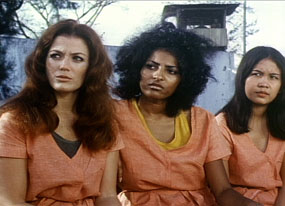
Women prisoners in Big Doll House.


Written by Leigh Kolb as part of our theme week on Cult Films and B Movies.

The designation of “exploitation” is, one would imagine, a negative, damning designation (if that one was an anti-sexist, anti-racist viewer, that is).

When I long ago came across the terms “blaxploitation” and “sexploitation,” something in me instinctively said, “These things are not for you.”

The presence of Pam Grier in so many of these 1970s films, however, made me wade into the genre. I’m so glad I did.

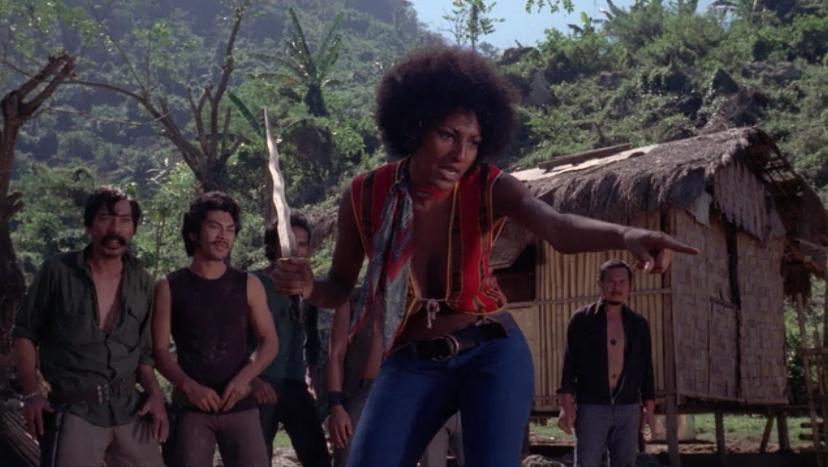
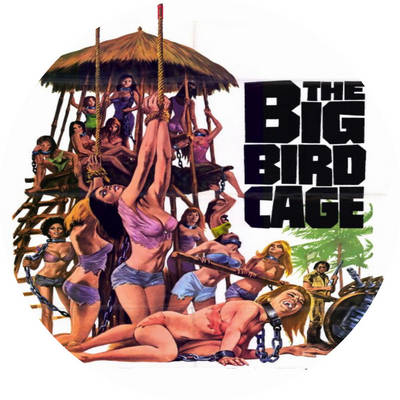
The Big Bird Cage
The Big Bird Cage


Last year I wrote about some of Grier’s early “blaxploitation” films (Sheba, Baby; Coffy; and Foxy Brown) in “The Unfinished Legacy of Pam Grier.” I was amazed at how not exploitative those films were. They weren’t perfect, but they featured fully realized, empowered black characters and women characters. Grier’s role as a powerful female protagonist in those films shocked me, and made me realize what a dearth of empowered women and black character we have in film today. Could the criticism of “exploitation” by the establishment have anything to do with criticizing flipped narratives, where the white man is the villain? I wonder.

Roger Corman–a director and producer who oversaw a huge number of low-budget films–served as a producer for three iconic “Women in Cages” films, which borrowed from the women-in-prison genre. These three films–all of which feature Grier–are exploitative in regard to female nudity, but their inclusion of relatively complex, powerful women characters is noteworthy. There are evil women, rapist women, drug addicts, innocents, victims, and everything in between.

Orange is the New Black, the original Netflix series based on the memoir of the same name, seems groundbreaking in its representation of all different women battling against one another and against common enemies. The diversity of the women has garnered a great deal of attention, and we feel satisfied seeing women who aren’t just good or just bad reflected back at us. (There has also been some criticism of the lesbian relationships, which have been accused of catering to the male gaze.)

Rewind the clock 40 years, and you get a series of “Women in Cages” flicks with Corman at the helm. And while these three films have male directors, Corman often gave women the opportunity to work behind the scenes and direct films, and he was a proponent of having political messages in his films–even if they seem to be obscured by bare breasts.

Big Doll House

Big Doll House–the poster art for these films highlights the women’s sexual urges (even though that isn’t the main focus in the films–justice and freedom are).


Women in Cages

Women in Cages–again, the women are objects in the poster art, even though they aren’t in the film.


The Big Bird Cage

The Big Bird Cage
The Big Bird Cage


All of these films have a few commonalities, besides the prison setting. Shower scenes, rape scenes (female on female, female on male, or forced male on female), evil wardens, and plotting prisoners are woven throughout. The elements of a women-in-prison film are fairly predictable, and oftentimes jarring and offensive.

However, underneath the low-budget production and the sometimes-spotty acting, there are subversive messages about patriarchy and women’s power (or the lack thereof). The evil characters are abusive men and women who perpetuate violence (sexual and physical) against prisoners, who are often in prison for self-defense and addiction. There’s a lot of lip gloss in these prisons, and a questionable lack of undergarments, but the underlying themes are clear and poignant.

I found myself wondering about the designation of sexploitation. Female nudity in itself isn’t exploitative. Women fighting and women being abused are things that happen in prison. Are representations of women in these situations inherently exploitative, or are we conditioned to see women’s bodies and women’s actions and think: object? Certainly frame after frame of powerful, complex, awful and good, sympathetic and loathsome women has some kind of effect on the viewer. Since we are conditioned to only really consider the straight white male gaze as the norm, we see these movies as highly sexualized and exploitative.

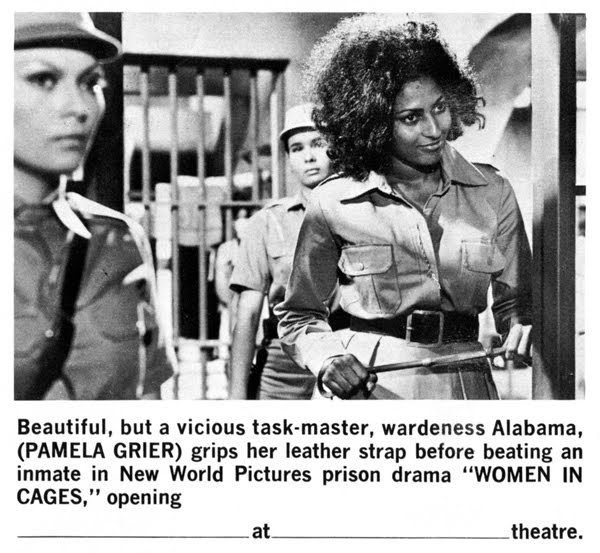
Pam Grier is the abusive warden in Women in Cages.

I couldn’t help but think, though, that if male viewers find these scenes incredibly sexy and tantalizing–there’s something troubling going on. That the female body–being picked for nits, showered, tortured, working in fields–is always a sexual object is more troubling than the genre itself.

These women have agency, and if they don’t, we’re supposed to be critical of that.

Big Doll House
Big Doll House


Last year’s documentary Grey Area: Feminism Behind Bars explored the transformative power of feminism behind prison walls. The statistics about women prisoners in America today are similar to the incarcerated women in the above films (although the films are set in the Philippines, which allowed for low production costs). A majority are victims of abuse and rape, and have been incarcerated for nonviolent crimes.

The portrayal of women in prisons–whether the reality, the fictionalized account of reality, or the exploitation genre–says a great deal about systematic patriarchy and how it hurts women. In Big Doll HouseWomen in Cages, and The Big Bird Cage, women can be violent rapists. They can be vengeful and seek justice. They can be victims and victors. They can be real–albeit with an unreal amount of lip gloss. The complexity of these stories is sadly hidden under the iconic shower scenes, which is incredibly unfortunate.

Ultimately, seeing films like this as simply movies about prison boobs is patriarchal. And a patriarchy similarly cages women and dismisses their roles as little more than sex object and figurative (and literal) prisoner.

But if we read these films as feminists, we can see the full spectrum of female possibility–which can sometimes be gruesome–depicted on screen alongside a critique of patriarchal systems.

Grier’s early films, though typically disregarded as exploitative in nature, are remarkable in their commentary on patriarchy.

These films provide biting commentary against patriarchy and about feminism, anti-racism, and pass the Bechdel Test with flying colors, all with incredibly diverse casts. It’s too easy to dismiss these early-70s exploitation films as just that–just like it’s too easy to dismiss women and women’s stories.


Recommended Reading: “Roger Corman’s New World Pictures,” “The Women in Cages Collection (Review)”

__________________________________________________________


Leigh Kolb
 is a composition, literature and journalism instructor at a community college in rural Missouri. 

Red, Blue, and Giallo: Dario Argento’s ‘Suspiria’

I was neither a discerning nor an educated viewer, but even so I quickly cottoned on to the fact that certain Italian directors had produced some above-average horror flicks in the 1970s, characterized by a cavalier attitude toward nudity, pervasive Catholic imagery, and lashings of gore. Ignorant of the term giallo, I proceeded to dub this subgenre “spag-horror,” which isn’t actually an awful name for it.

As my initiation into the worlds of sex and violence, many European horror films of the 1970s no doubt occupy a Freudian subspace of my psyche. Probably the Ur-example of this genre and its strange, ambivalent attitude toward women and sexuality is Dario Argento’s 1977 meisterwerk, Suspiria.

This post by Staff Writer Max Thornton appears as part of our theme week on Cult Films and B Movies. It was previously published as part of our theme week on Women and Gender in Foreign Films.
I started getting into film when I was a teenager. Growing up with daily power cuts, both scheduled and unscheduled, is not conducive to childhood as a cinephile, and anyway my parents did not consider film a “real” art like literature or music – I can vividly remember being forced, at age seven, to quit Video Club and join Chess Club instead, because my mother did not think that sitting around watching videos constituted a worthwhile extracurricular.
(I am still breathtakingly terrible at chess.)
So, partly as the cultivation of an indoor hobby in response to the unpleasant British climate, and partly as the world’s meagerest teenage rebellion, I started watching films. In particular, I sought out horror films, thanks to the friendly proprietor of our local video rental store (now sadly gone the way of all such places in the Netflix age), who would happily rent the bloodiest, goriest, most revolting 18-ratedmovies to an obviously-14-year-old me, always with a cheery, “Enjoy!”
Most of these.
I was neither a discerning nor an educated viewer, but even so I quickly cottoned on to the fact that certain Italian directors had produced some above-average horror flicks in the 1970s, characterized by a cavalier attitude toward nudity, pervasive Catholic imagery, and lashings of gore. Ignorant of the term giallo, I proceeded to dub this subgenre “spag-horror,” which isn’t actually an awful name for it.
As my initiation into the worlds of sex and violence, many European horror films of the 1970s no doubt occupy a Freudian subspace of my psyche. Probably the Ur-example of this genre and its strange, ambivalent attitude toward women and sexuality is Dario Argento’s 1977 meisterwerk, Suspiria.
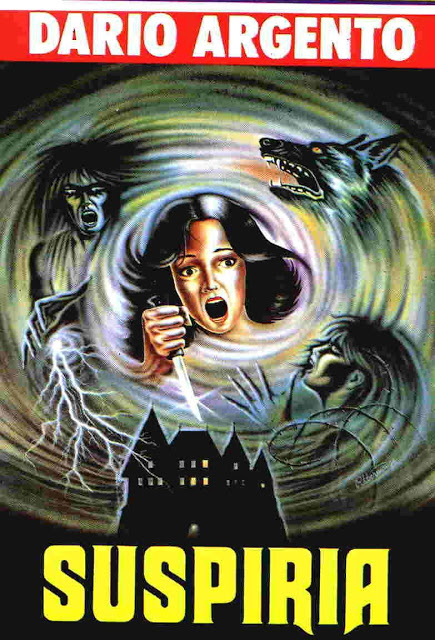
Suspiria poster
Suspiria poster
From its kickass score by prog-rockers Goblin to its borderline incomprehensible plot, I love damn near everything about Suspiria. For starters, it’s set in a ballet school, which is a direct line to my heart; and it features Udo Kier (UDO! KIER!); plus, it’s a strikingly female-dominated story. Argento says of the film: “there are only three men in it: one is blind, one can’t speak and the other is gay. It’s the women who have the power.” Which is such a problematic statement on so many levels, but let’s just focus on the undeniable fact that the film is mostly about women.
The film opens with American dancer Suzy Banyon (played by a young Jessica Harper – did you know she writes children’s books and has a cookery blog now??) arriving at a German airport on a rainy night. Pretty much the first thing we see is her repeated attempts to hail a taxi; her young face, rain- and wind-swept above the virginal whites of her clothes, expresses a vulnerability that will recur throughout the movie. Her big, frightened eyes peer out of the taxi at the gushing storm-drains, the phallic tree-trunks in the spooky woods, the bright red facade of the ballet school (on the subtly named Escher Strasse). Untoward goings-on, shockingly enough, are underfoot at the school, and Suzy soon finds herself completely out of her depth as things get steadily creepier.
Suzy and Sara, swimming.
What’s particularly interesting about Suspiria, especially in relation to the giallo genre as a whole, is its lack of nudity or overt sexuality. There’s a pretty good reason for this, as Argento explains:
To begin with, I imagined the story set in a children’s school, not of teens. I thought that it could be interesting that the school was for very young girls, eight, ten years old. This was the first version. The distributor strongly opposed this choice, and the film was made also with American money, from Fox, and they were against that too. So I changed the script and raised the girl’s age, but I kept a sort of childish attitude, so the characters behaved like children. The decor too… I used little tricks, for example the doors have the handles not at a normal height, but at face level, the height at which a child of 8 years old would find the handle. It gives the impression of dealing with children, even though they have adult bodies.
I don’t think it’s reading too much into the film to find some Freudian undertones in the whites and reds, in the repeated motif of water, in the pivotal role of irises. There is a strong fairy-tale quality to the film’s artifices, its primary colors, scenes awash in blue or red; the story of the young girl entering a world of danger and threat carries echoes of Red Riding Hood, Hansel and Gretel, Snow White – Bruno Bettelheim would surely have something to say about that.
Make no mistake, this is a pretty violent movie. There are some quite fantastically grotesque murders. Within the first fifteen minutes, we see a still-beating heart stabbed and a woman’s face split in two by plate glass. Throughout, the lily-white garments of the murdered women are streaked and splattered with bright red blood. We also get a revolting maggot infestation, some magnificently scary chase scenes, and a truly bonkers climactic sequence.
Red, the color of a very murdered woman.
And yet Suzy retains a sense of childlike innocence and vulnerability throughout, relating to her friends and teachers like the little girl she was originally written to be. It’s a very weird juxtaposition, and I think it crystallizes the strange combination of female empowerment and ingrained misogyny that characterizes classic European horror. What, in the end, are we to make of stories where women are both the brutally murdered corpses and the proactive investigators of the mystery; both the pure childlike heroine and the monstrous villain; both desexed and penetrated by sharp objects; both agents and victims?
It speaks volumes to the general lack of such female-dominated stories in our broader culture that I even find myself asking this question.

Max Thornton blogs at Gay Christian Geek, tumbles as trans substantial, and is slowly learning to twitter at @RainicornMax.

‘Freaks’: Sing the Body Eclectic

Freaks (1932) is a true cult movie, one that’s ridden a rollercoaster of opprobrium and acclaim since its initial release. Tod Browning’s sideshow-set horror-romance destroyed his career (and several others), caused such disgust in early audiences that one woman (allegedly) miscarried, outraged critics and moral guardians, traumatized some of the performers who appeared in it, languished in obscurity after being banned for three decades, resurfaced on the exploitation circuit in the 1960s, and earned a spot in the National Film Registry archives in 1994 before enjoying its current status as a one-of-a-kind classic. It’s been repeated to the point of cliché, but Freaks, once seen, is never forgotten. Love it or hate it, it will stay with you for the rest of your life.

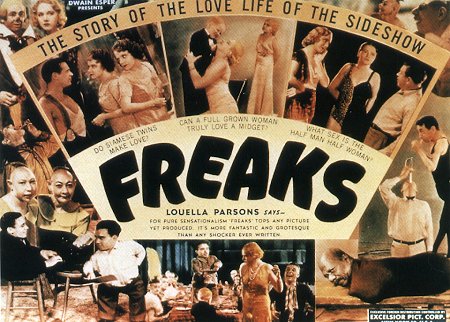
Freaks poster
Freaks poster


This guest post by Karina Wilson appears as part of our theme week on Cult Films and B Movies.

Cult movies are lightning in a bottle, a one-time only circumstance of story, director, cast, crew, location and budget that defies original intentions and transmutes into something unforgettable, unrepeatable, unsurpassable.  Cult movies are accidental, born of a mismatch between the scenes filmmakers thought they were shooting, and what ended up in the can.  Cult movies are magic, of a puckish sort, and we shouldn’t probe their mysteries too closely.  They’re best regarded from a distance, after a significant amount of time has passed.

Freaks (1932) is a true cult movie, one that’s ridden a rollercoaster of opprobrium and acclaim since its initial release. Tod Browning’s sideshow-set horror-romance destroyed his career (and several others), caused such disgust in early audiences that one woman (allegedly) miscarried, outraged critics and moral guardians, traumatized some of the performers who appeared in it, languished in obscurity after being banned for three decades, resurfaced on the exploitation circuit in the 1960s, and earned a spot in the National Film Registry archives in 1994 before enjoying its current status as a one-of-a-kind classic.  It’s been repeated to the point of cliché, but Freaks, once seen, is never forgotten.  Love it or hate it, it will stay with you for the rest of your life.

Originally, Freaks wasn’t intended to achieve any of these feats. All MGM head honcho Irving Thalberg wanted was a box office hit, along the lines of Universal’s Dracula (1931), a movie that exploited the audience’s new-found appetite for the talking horror genre.  So he called Tod Browning, Dracula‘s director, who’d had a run of success during the silent era working with Lon Chaney Sr., and asked the million-dollar question “What else have you got?”

Although “horror” wasn’t a label applied to film in the 1920s, Browning and Chaney’s collaborations dealt with mutilation, disfigurement, and the resulting heartbreak (see: The Phantom of the Opera and The Unknown), subjects dear to the hearts of those whose loved ones had returned home, scarred, from the war in France.  Browning and Chaney had also worked together on box office sensation The Unholy Three, a macabre crime caper featuring the 3’ 3” tall circus performer, Harry Earles.

Earles enjoyed working in the movies but knew there weren’t many roles out there for actors his size. So he brought Browning’s attention to another short story by Unholy Three writer, Tod Robbins, Spurs, a mean little melodrama about a love triangle between a circus midget, a bareback rider, and her normal-sized lover.  Browning had a carnival background (he ran away to join the circus when he was 16), loved the milieu, and, when MGM gave him carte blanche to direct a movie more horrifying than Dracula, he picked Freaks.

In those pre-television days, the circus sideshow ruled supreme as entertainment for the curious masses.  Trumpeted as part edification, part education, the ‘Ten-In-One” tent showcased human oddities and provided a rare opportunity for those born with a difference to earn a living.  People with all manner of abnormalities found a profitable home in the sideshow – armless, legless, eyeless, giant, dwarf, bearded, scaled, obese, skeletal.  Some simply exhibited their unique bodies, others performed an act, introducing music, dance, stage magic or comedy into their routine; many earned good money and toured the globe. After auditioning the crème-de-la-crème of this international talent pool, Browning assembled his cast, the likes of which has never been seen on a movie screen before or since.

The cast of Freaks includes some bona fide female sideshow stars, women who projected glamorous images of considerable wattage despite being born different. They worked their way up through circuses and on the vaudeville circuit, often from a very early age.  They viewed their divergence from the accepted norm as an opportunity to build a show business career, rather than as a debilitation.  Self-sufficient, often with strings of admirers, they didn’t lead easy lives, but charted their own paths and lived to a respectable age.  It’s difficult to imagine any of these performers working in the perfect-image-obsessed entertainment industry today.

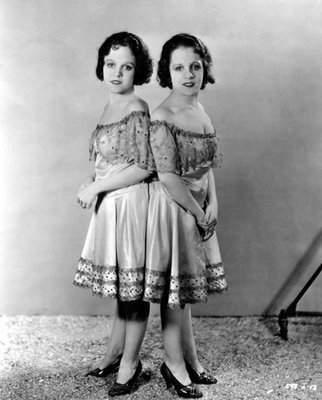
Conjoined twins Daisy and Violet Hilton had been working professionally in vaudeville since the age of three.  Renowned for their beauty, fashion sense and musicianship as well as their dancing skills (they performed onstage with Bob Hope and Charlie Chaplin), they had recently received $100,000 damages and emancipation from their predatory managers (they later said they were “paupers living in practical slavery”) and their appearance in Freaks marked the beginning of their independent career.

freaks3
Daisy and Violet Hilton


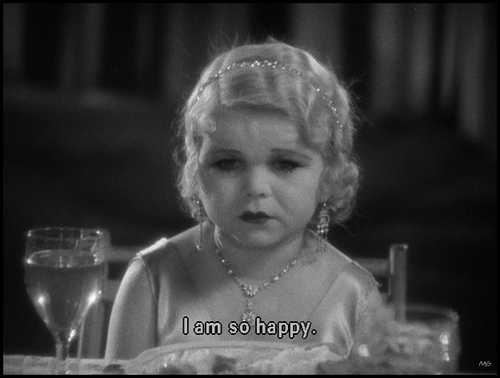
The “midget Mae West,” Daisy Earles (Frieda), along with her brother Harry and two equally short-statured sisters Tiny and Gracie, was part of the Doll Family, a popular act who toured with both the Ringling Brothers and Barnum and Bailey Circuses, and appeared in Laurel and Hardy films.

tumblr_m69fvbVGMX1qbbjxvo1_500

Martha Morris billed herself as “Martha The Armless Wonder” and was a featured attraction at Coney Island and in the traveling Freak City Show in the 1920s. She entertained rubes by writing and typing with her toes as dexterously as if they were fingers.  Frances O’Connor’s stage name was “the Living Venus De Milo,” and she loved to pose in specially designed costumes that showed her entirely smooth and armless (there were not even stumps) torso, whilst impressing admirers with her coffee-drinking, cigarette-smoking and sharp-shooting skills.

By contrast, the non-“freak” women (Cleopatra, the Peacock Of The Air” trapeze artist, and Venus, the animal trainer) are low profile.  Myrna Loy supposedly begged not to play Venus, and, although mentioned in press releases, Jean Harlow failed to materialize as Cleopatra.  Instead, Russian defector Olga Baclanova (a gifted physical actor who was struggling with the shift to talkies) got the villainess role, while hard-working contract player Leila Hyams was cast as Venus.  Both women were regular Hollywood blondes, used to commanding the silent screen with the arch of an eyebrow or the flare of a nostril, but, at 36 and 27 respectively, they were aging out of leading roles and Freaks marked the last major stop on the Hollywood Express for both of them.

Given the luminaries in the cast, it’s not surprising that Freaks is a female-driven narrative, a deft illustration of Madame de Merteuil’s assertion in Dangerous Liaisons, that “When one woman strikes at the heart of another, she seldom misses, and the wound is invariably fatal.”  The plot is simple and universal: unrequited love, greed, jealousy, revenge.

freaks-you-make-me-ashamed

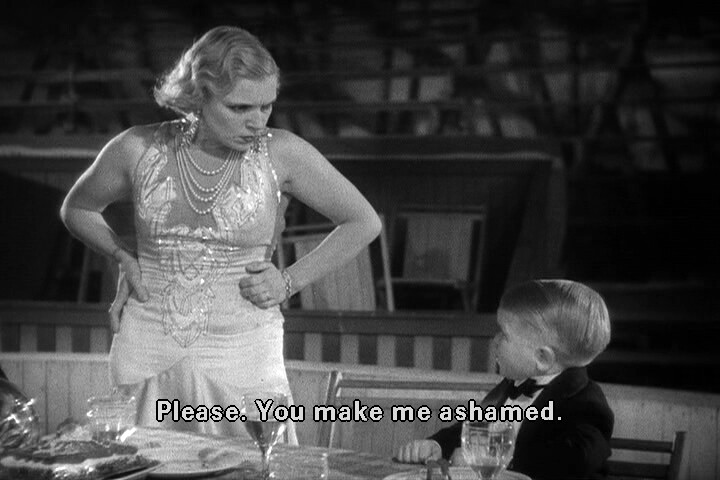
The beautiful Cleopatra knows her co-worker, Hans, is in love with her, although she does not reciprocate the feeling. She enjoys making fun of him, much to the chagrin of his fiancée, Frieda.  When Frieda lets slip that Hans has inherited a fortune, Cleopatra (egged on by her boyfriend, Hercules) persuades Hans to ditch Frieda and marry her.  The other co-workers are suspicious of Cleopatra’s gold-digging motives but, if Hans is happy, they’re happy, and they all attend a celebratory wedding feast to welcome Cleopatra to the family.  Unfortunately, Cleopatra sneers at their attempts to be friendly, and humiliates Hans, who collapses thanks to the alcohol she’s been forcing down him all evening – along with a dubious substance from a tiny black bottle.  Frieda is furious. From that point on, Cleopatra is doomed.  Frieda and the other co-workers close ranks around Hans to protect him from Cleopatra’s nefarious schemes and will do whatever it takes to keep him safe.

This is the type of run-of-the-mill romantic retribution played out every night of the week on today’s Lifetime network.  We enjoy seeing the man-stealing hussy get her just desserts, while the wronged party is reunited with her one true love.  In terms of pure plot, Freaks presents nothing we haven’t seen before.  It creaks.  It’s clumsy.  It’s barely even a horror story.  That’s the point.  That’s why, 81 years later, Freaks still resonates as a progressive text.  By rejecting fantasy, by refusing to use freaks to populate a fairy tale (as The Wizard of Oz would do seven years later), instead slotting them into a bog standard kitchen sink melodrama (albeit with a circus setting) Browning succeeds in making us see his characters as people first.

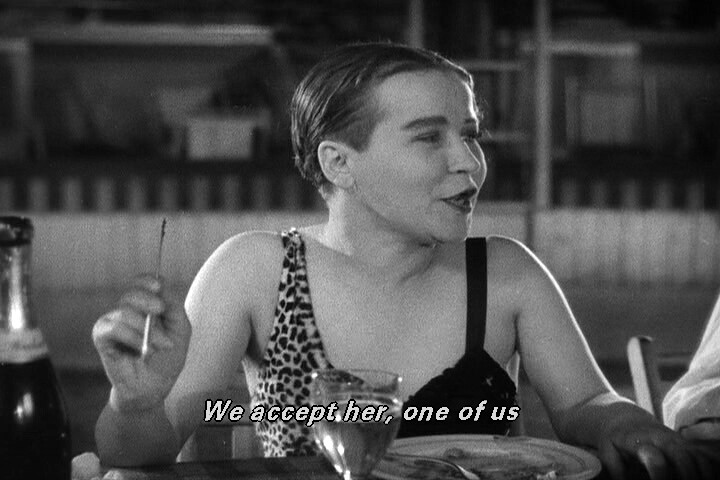
Much of Freaks’ power comes from the humdrum nature of the narrative, coupled with the easy familiarity of the early scenes.  The first half of the screenplay deals with housekeeping, where the circus performers sleep (and who they sleep with), how they peg laundry out to dry, roll a cigarette, sip coffee, present a new baby to their friends.  Dialogue takes the form of petty squabbles, between husband-to-be and conjoined fiancée, and performers discussing the mechanics of their acts.  We’re forced to vacate our circus spectator headspace; there are no sequins or spotlights to direct our gaze.  We quit gawking and embrace domesticity.  It’s O.K. to be “one of us.”

One of us. One of us.


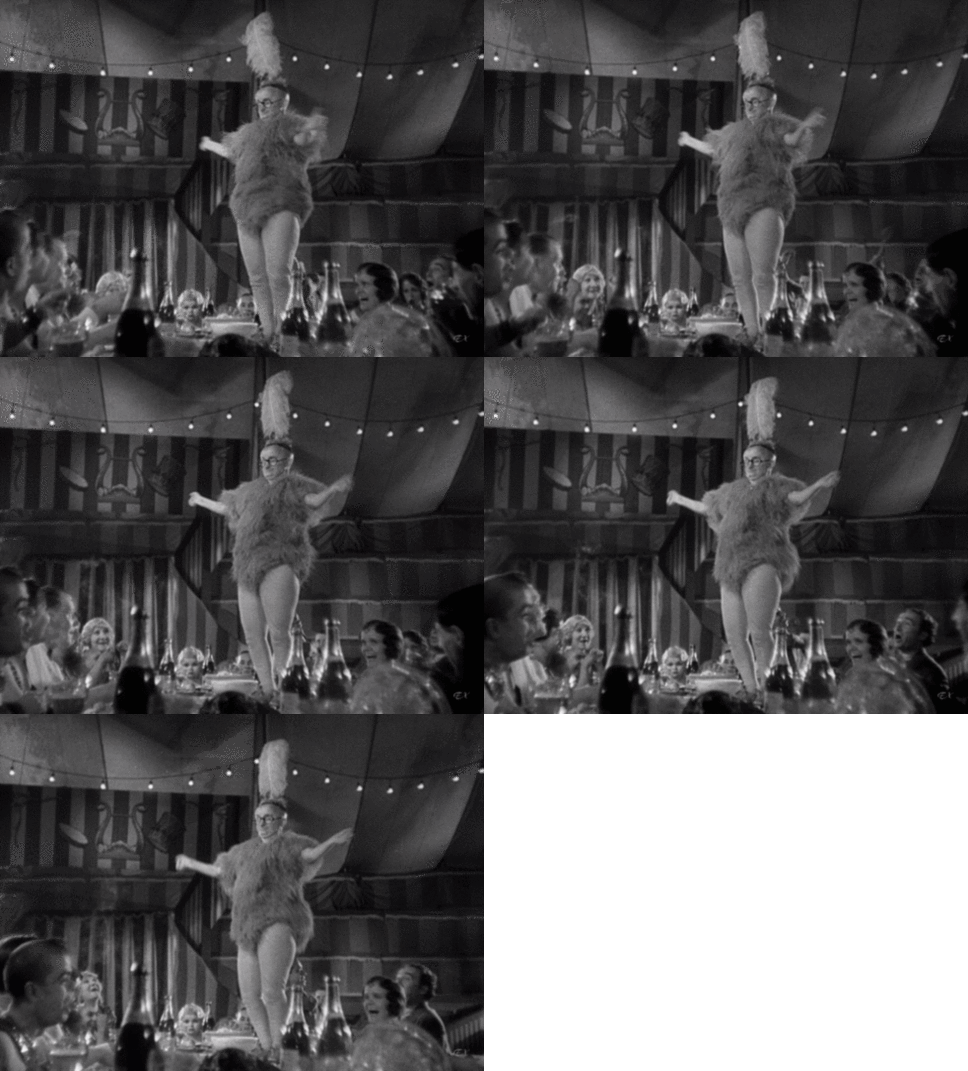
This makes the second half all the more disturbing.  After breaking down their Otherness, establishing the freaks as friendly, ordinary beings, not at all threatening, pussycats in fact, Browning lets rip. These freaks – even infantilized pinheads like Zip and Pip – have teeth.  Masterminded (we assume, although we never see her giving the orders) by the cherubic Frieda, the freaks enact justice.  We’ve been encouraged to recognize their inner contentment and beauty. In the spirit of reciprocity, the freaks pull Cleopatra’s inner hideousness to the surface. Sideshow justice is done, and, within the movie’s running time of little over an hour, it’s all the more terrifying for its swiftness.

Freaks still makes for startling viewing, and, even in these enlightened, CGI-weary times, challenges our expectations of the human form.  We’re so used to seeing physical perfection as the standard, so conditioned to accept the narrowest definition of beauty, so ignorant of the spectrum of human shapes, that many frames of the movie seem like a slap in the face.  Freaks stands as a reminder that, for all our talk about diversity and inclusiveness, we sideline performers with difference.  Unless they are playing “grateful recipient of charity” or “pathetic victim” or “awkward dependent,” we’ve largely wiped them from our screens.

Perhaps the most shocking thing about Freaks is that the diverse human beings in this pre-Production Code picture take it for granted that they can go about their business, flirt, have relationships, express sexual desire and procreate without any hand-wringing, or guilt, or “professional intervention” (a la The Sessions) from the normals.  They invite us to gaze upon them, not with pity, but as players with agency in a story as old as time. Although it’s often criticized for being exploitative (and the critics have a point), Freaks is still the only movie in over a century of cinema history to celebrate these characters so boldly on the big screen.  Until someone steps up to the plate, Freaks remains a unique experience, my cult classic, lightning in a fascinatingly misshapen bottle.

tumblr_l7xe537MKg1qbbjxvo1_500

For more about the making of Freaks go to http://horrorfilmhistory.com/index.php?pageID=freaks.


Karina Wilson is a British writer and story consultant based in Los Angeles.  She writes a regular column on horror fiction at Litreactor and can also be found at Horror Film History.

We’re the Weirdos: Female Power for Good and Evil in ‘The Craft’

The Craft presents a lesson that coming-of-age films don’t typically make a point to show. A ballot is cast for prom queen or SAT prep sits on the horizon with college days looming, a girl must get a boy to like her, losing her virginity in the process. But this film is about serving the self—the craft of empowering oneself to surmount the archaic persecutions against women—taking back the threat of female power. But like a genie in a bottle that allows three wishes, this craft must be practiced and understood, respected completely before it can be outwardly used, or else it will perpetuate transgression.

The Craft poster
The Craft poster


This guest post by Kim Hoffman appears as part of our theme week on Cult Films and B Movies.

There are countless teen films with themes that focus on the ways young females work with, and then eventually against each other, for the sake of a number of factors: their place in a social hierarchy, a jealous feeling, or in summation, an overall insecurity they are plagued with because they’re sixteen and they haven’t yet developed a sense of self-awareness outside of their high school cafeteria.

What I’ve always welcomed in The Craft was the idea that a group of girls could be simultaneously contributing to the ongoing high school drama they’re faced with each day, while nurturing their powers on a higher plane that none of their peers could possibly grasp. Earth, air, fire and water—the four corners of the world, but incomplete without a fourth girl until character Sarah (Robin Tunney) begins attending her new Catholic high school and develops a friendship with the school witches.

The group needs a fourth
The group needs a fourth to be complete.


In elementary school, slumber parties with girlfriends typically involved the game “Light as a Feather, Stiff as a Board.” It was a bonding experience between us girls that didn’t quite mean we believed we could actually make one another float, or invoke a spirit to talk to us through a candle or the Ouija board, but perhaps that very hyper-adolescent female clout was a presence in itself, an ember growing hotter within us, if we dared pay attention. Boys in class picked me on—one called me “Casper” because I was so pale. I was living in Florida at the time and all of the other girls were tan and flirted with boys by dumbing themselves down. I didn’t subscribe to that diluted mindset. I was determined, even as a confused pre-pubescent girl with a deep shyness in me, to move to the beat of my own drums, however weird others thought I was.

The understood leader of this teenage coven in The Craft is Nancy (Fairuza Balk), a girl who stands up to the likes of other mean girls in teen drama history like the most cruel of Heathers or Rose McGowen’s unapologetic lipstick machine Courtney Shane in Jawbreaker. Next to Nancy are Bonnie (Neve Campbell) and Rochelle (Rachel True). Bonnie is scarred with terrible marks on her back, causing her to be shelled and quiet, uncomfortably covered up so no one can see her, fraught to feel beautiful. Rochelle, an African American athlete with a sweet and open disposition, puts up with torment from a girl named Laura Lizzie (Christine Taylor), a popular blonde who makes terrible racial slurs at her. Nancy and her mother live in a dilapidated trailer with her sickening and habitually abusive stepfather. There’s a feeling hanging in the air when Sarah begins to show signs of telekinetic power; the girls know their coven could be complete and that their powers joined could change everything they can’t currently control.

The coven is complete


After popular boy Chris (Skeet Ulrich) asks Sarah out on a date and she agrees, she’s angry to find out that the following Monday at school, a terrible rumor has been spread about her and Chris having sex on that date—despite the fact that they absolutely didn’t. As a result, the three other girls approach her with an idea, a spell. They cast a spell to make Chris do whatever Sarah says. And it works. He’s now following her around like a lost puppy, and Sarah’s slut-shaming rumors are put to rest. It’s a moment of reckoning, wherein a bad school rumor at the hands of a guy is twisted to his disadvantage, causing him to be the weak, demure one that he attributed to Sarah, banishing his ego and putting Sarah in power. But is it power for women, or is it power modeled after male dominance?

Now fueled with delight, greed and confidence, the coven is a complete dynamic troop, marching through the hallways in their Catholic school-girl uniforms, evoking a new brand of strength that makes their school mates fear them even more, which they love and welcome. Nancy’s face says, “Look at me, I dare you.” It’s the high point in the film for these girls, as they’ve joined their powers to reclaim their place, to restore their souls—but as quickly as that power is recognized, they begin to misuse it for revenge—a yin yang of dark and light that must bring chaos if used too recklessly.

The girls perform a healing spell on Bonnie, who only wishes for her scars to be gone. At her next doctor’s appointment, Bonnie, her mother and the doctors are stunned to find out that when they peel back her bandages, her back is completely healed. The next day at school, Bonnie walks in with a new outfit, a new attitude, and an outward vivaciousness that all can see. Of course, the boys take notice—but this is about Bonnie, for Bonnie, and no one else. Simultaneously, Rochelle is handling Laura Lizzie, who is still taunting her in the locker room. Over the course of a few days, Laura finds her hair is beginning to fall out in her hairbrush and in the shower—and it’s only becoming more and more atrocious.  Finally, Nancy causes her stepfather to have a heart attack and die. She and her mother are left with a booming inheritance and can move out of the trailer into a swanky new high-rise condo.

The Smiths’ iconic “How Soon Is Now?” echoes in the background, and the girls, who call upon a deity named Manon, host a ritual in attempt to invoke the spirit within them. What they don’t realize is that Nancy has a plan to take Manon into herself completely, a dark power that the woman at the magick shop they frequently steal from knows is not the kind of magick that amateur witches should mess with without proper practice. The crone shop owner however recognizes Sarah is different from Nancy and the others, a consciousness that rises above the girls who have impulsive, quick-tempered intentions.

Inside the traditional current of teen film subtext in which we root for the new girl/the odd girl out/the girl with the chance to teach something/the girl who has been influenced by the luster of a life she is told will make her more popular, Sarah must defeat the soul-sucking people who seek to make her an object. We root for her because we see what she can’t see yet, and we know that something terrible might have to take place in order for her to come to fully developed realizations that push her into making important choices. This isn’t about making an A; it’s about making sure you aren’t burned at the stake for your high school to witness.

The Craft presents a lesson that coming-of-age films don’t typically make a point to show. A ballot is cast for prom queen or SAT prep sits on the horizon with college days looming, a girl must get a boy to like her, losing her virginity in the process. But this film is about serving the self—the craft of empowering oneself to surmount the archaic persecutions against women—taking back the threat of female power. But like a genie in a bottle that allows three wishes, this craft must be practiced and understood, respected completely before it can be outwardly used, or else it will perpetuate transgression.

The mystery of women, our cyclic connection to the moon, to medicine, math, written words—it has all been condemned and misappropriated as voodoo, black magick, devil worshipping, witch work. To many, witch means bitch. Bitch means witch. What is unconventional is evil. But ego is genderless, and it feeds a darker realm. The people who attack and target Sarah, Nancy, Bonnie and Rochelle represent that gender-neutral aspect that aims to banish female power. The age that is dawning doesn’t require school texts and chalk boards. The real war taking place requires ritual books and goblets filled with blood and wine, you know—typical high school material.

However, Sarah’s spell eventually backfires when Chris tries raping her at a party because he will stop at nothing to be near her and can’t wrap his head around these feelings he can’t part with. Nancy saves Sarah by throwing Chris out of the window with her powers, and he is killed. Despite the harm he has caused, Sarah is mostly just scared of Nancy now. It’s a turning point in the film when the roles shift and the people against them are not the ones to be feared—it’s the girls themselves that have to come face to face with their own shadows.

Nancy
Nancy


After Sarah tries casting a binding spell against Nancy to prevent her from causing harm against herself and others, the girls turn on Sarah. As a real life outcast who was banned from my own in-crowd group of girl friends in middle school, I see this as a blessing in disguise for girls who are meant for bigger things. It’s a calling of sorts—a low hanging cloud that beckons you away from cliques, from being another follower, from believing in something just because someone tells you its real. What about believing in you? Sarah has had the power all along—Nancy knew it. So she muddled Sarah down in the hopes she could overcome her and maintain what would only ever be a false sense of supremacy. All Queen Bees are only as strong as their weakest link; they can’t survive alone.

In the final act, Sarah and Nancy come head to head, Nancy filling up Sarah’s house with snakes and creepy crawlers, attempting to influence Sarah to commit suicide—the ultimate female betrayal in which Sarah’s death is the only means for Nancy to move forward. Motivated by life and a true sense of power that musters itself back to the surface, Sarah defeats Nancy and thereafter Nancy is sent to a mental hospital. We’re left with a few lingering feelings and questions. Most prominent is the feeling that good can defeat evil and that female power is strongest when the belief is in oneself, not what they’re told to follow. But what does this say about a coven of women? Can women work together without turning on each other? What factors would dispel women from competing over control and success? Is The Craft a lesson in the art of witchcraft, or is it a deeper lesson in the very real and everyday transformation we make from girls to women?


Kim Hoffman is a writer for AfterEllen.com and Curve Magazine. She currently keeps things weird in Portland, Oregon. Follow her on Twitter: @the_hoff.


‘Friday the 13th’: In Defense of Pamela Voorhees

So I asked Twitter the following question: “Who’s scarier: Jason or Jason’s mom?” Surprisingly, despite all the movies (12 in total) in which Jason is seen slashing throats and hanging victims, his mom (who’s only alive and running amok in the first film in 1980) is apparently considered the more horrifying killer. But I’ve always had a soft spot for Pamela. Not that I condone the gruesome murders of innocent people (of course not). But, unlike Jason, Pamela committed crimes of passion. Her crazy antics were actually revenge for her young son’s fatal drowning, which she felt was caused by the unjustifiable neglect of the camp counselors who failed to watch him (a longtime rumor has faulted the counselors for being too busy fornicating and not paying attention to Jason’s cries for help).

Friday the 13th
Friday the 13th


This guest post by Candice Frederick appears as part of our theme week on Cult Films and B Movies.

Raise your hand if you remember the chilling first Friday the 13th movie in which–spoiler alert–Jason Voorhees’ mom, Pamela, is the wild-eyed killer.  Those final few moments when she, hobbling and bloody, is chasing down one of the Camp Crystal Lake camp counselors all over the grounds (to her impending death) are forever etched in my mind.

I'm Mrs. Voorhees
“I’m Mrs. Voorhees.”


So I asked Twitter the following question: “Who’s scarier: Jason or Jason’s mom?” Surprisingly, despite all the movies (12 in total) in which Jason is seen slashing throats and hanging victims, his mom (who’s only alive and running amok in the first film in 1980) is apparently considered the more horrifying killer. But I’ve always had a soft spot for Pamela. Not that I condone the gruesome murders of innocent people (of course not). But, unlike Jason, Pamela committed crimes of passion. Her crazy antics were actually revenge for her young son’s fatal drowning, which she felt was caused by the unjustifiable neglect of the camp counselors who failed to watch him (a longtime rumor has faulted the counselors for being too busy fornicating and not paying attention to Jason’s cries for help).

Meanwhile, Jason, who is supposed to be dead, has been on an aimless bloody mission. He is maniacal in the true sense of the word–no trigger, no reasoning, just brutal killing sprees that seem to result only to keep his mother’s legacy alive. I always thought there was nothing scarier than a villain with no real motive. Because he can be coming for you, too. Why? Just because. You’d think his mother took care of all the culprits in the first movie. What’s left for Jason to do? He’s a terrifying, malicious machete-slinging corpse running around with mommy issues and no motive (cue disturbing Psycho score). This is who you should be most frightened of.

"Kill her, mommy."
“Kill her, mommy. Kill her.”


Upon further research, I’ve learned a very interesting back story for Pamela. She got pregnant at 16, and was married to a reckless abuser who she ended up chopping into pieces while he slept. Carrying her unborn son, she burned down the house with her husband’s body still in it. Guys, this is what happened in The Burning Bed (which was released in 1984), and remember, you rooted for Farrah Fawcett’s character in that.

But back to Pamela. Jason was apparently born in June 1946. Pamela and her son moved into a house that was said to be haunted, but of course Pamela, being the boss she is, braved the rumor (and probably got an excellent deal on the mortgage). In the summer of 1957, she later got a job as a cook at the now notorious Camp Crystal Lake. Things were going fairly well for the mother-son pair until Jason drowned. No body was recovered, which means Pamela never got the closure she so needed. And no one was held accountable for Jason’s death. You can only imagine how that could affect someone. This is about the time that I think she started to lose her grip on reality, and began poisoning the water at the then shut-down camp to further delay its reopening. (Her son was killed there and no one seems to care. I mean, I get it.) She did, however, spend six months in a mental institution before she was rehired at the camp in 1958. But she still had that vendetta and understandably couldn’t get her son’s mysterious death out of her mind. Hence, she resorted to her bloodbath, for which she is most famous. This is about where I depart her pity train. I empathize with her because she truly became a broken woman with years of traumatic memories. But she really could have taken permanent residence at that mental institution; it might have saved many lives (and possibly prevented the Jason outbreak).

"My only son, Jason."
“My only son, Jason.”


Now that the antiheroes are having their moment in the spotlight, I have really been thinking about how some of our most dishonorable villains came to be. Pamela’s origin story is particularly intriguing as it inspired one of the most unnerving serial killers in cinematic history. So the next time someone asks you, “Who’s scarier: Jason or his mom?” how will you respond?

This is cross-posted with permission from Reel Talk.


Candice Frederick is an NABJ award-winning print journalist, film critic, and blogger for Reel Talk.