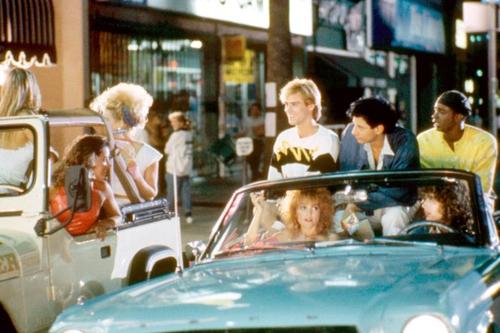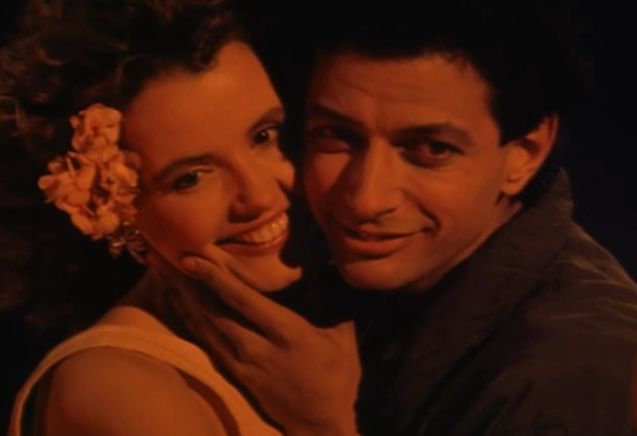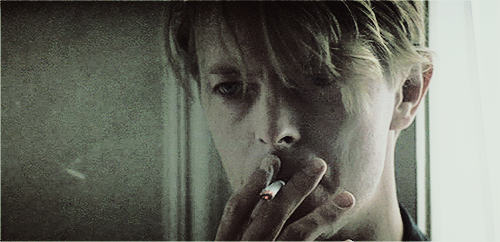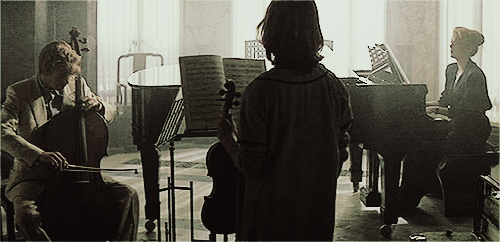

Cult Films that Changed Cinematic History

Here are some game-changing cult classics, divided into handy genre sections. And while we’re looking at the influence of these cult films, why not check out how they portray and treat women? Almost entirely coincidentally, they’re all from the ‘80s. What can I say? It was a culturally rich period.

8_mm_Kodak_safety_film_reel_06

This guest post by Marcela De Vivo appears as part of our theme week on Cult Films and B Movies.


What does it mean to change cinematic history? Is it The Wizard of Oz  with its use of technicolor? Pulp Fiction with its refreshingly out-of-order timeline? Rashomon with its three POV’s?  All of the above, and then some. Here are some game-changing cult classics, divided into handy genre sections. And while we’re looking at the influence of these cult films, why not check out how they portray and treat women? Almost entirely coincidentally, they’re all from the ‘80s. What can I say? It was a culturally rich period.

Film Noir: Blade Runner & Blue Velvet

Almost 70 years after its heydey, film noir is still a popular genre that continues to influence and revolutionize modern cinema. It’s everywhere — from the Keanu Reeves-helmed Matrix series to the femme fatale Black Widow in Joss Whedon’s blockbuster The Avengers. It’s touched many films over the last 70-odd years, including Blade Runner and Blue Velvet.

While at a first glance, Blade Runner seems like something of a misogynist film — two out  of the film’s three major female characters die horribly violent and sexualized deaths — upon closer inspection, it reads more as a commentary on the outdated femme fatale trope. All three women in the film embody the femme fatale in some way — Pris convinces J.F. Sebastian to take her in with her sexuality and Zhora is able to disarm Deckard with her naked body before dressing in that infamous post-Star Wars metal bikini and clear rain coat.
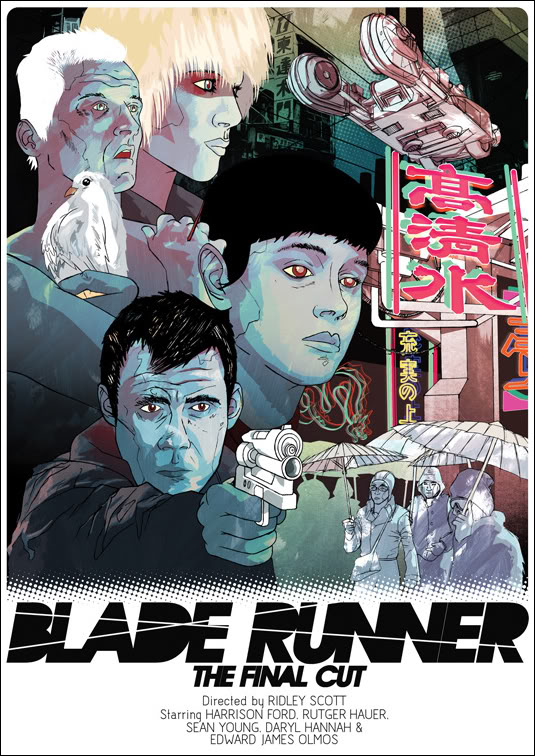
Blade Runner

Rachael, perhaps, fills the role to the fullest — acting as the morally questionable love interest.  And though she’s the only one who makes it out of the film alive, she’s even treated to some violence at the hands of Deckard — their love scene is cringe-worthy: he throws her against the wall, bringing her almost to the point of tears, and orders her around in a sketchily S&M fashion.

While all of these strong women losing their agency to men may seem misogynist, we’re forgetting the setting: completely dystopic 2019. The mistreatment of women instead goes hand in hand with the mise en scéne: a world where a woman can fall through multiple plate glass windows after being brutally shot down in the street and no one bats an eye. Ridley Scott subverts the now-outdated femme fatale trope by making it a part of a post-apocalyptic world.

Blade Runner definitely made its mark on film history; it was one of the harbingers of the cyberpunk genre that emerged in the early 1980s. We can see its influences in everywhere from modern architecture to TV — in fact, it reportedly influenced the cult TV show Battlestar Galactica, and the architecture at the Getty Center in Los Angeles, most recently seen as Starfleet Academy in Star Trek Into Darkness. It was also notably listed as the second most influential visual effects films of all time — if you have an interest in photography or cinematography, you should definitely check this film out.
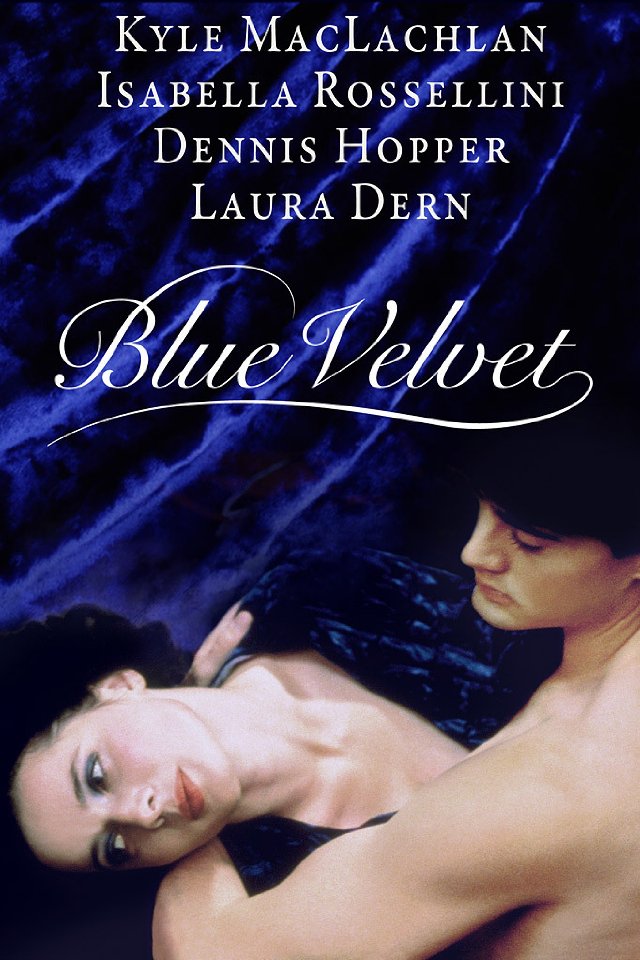
Blue Velvet

Blue Velvet, too, is a veritable can of worms when it comes to the treatment of women — it has some pretty serious virgin-whore dichotomy going on. Sandy and Dorothy? Blonde, cheerleader-adjacent daughter of the sheriff vs. French nightclub singer? Come on, Jeffery. However, unlike Blade Runner subverting femme fatale stereotypes all over the place, Blue Velvet has a decidedly more Freudian twist on its gender relationships. Dorothy/Frank/Jeffrey? It’s so creepily Oedipal and sado-masochistic that I don’t even want to go there. That’s not to say the film’s not worth watching; what it does with the concepts of voyeurism is fascinating, and of course, visually it’s spectacular.

Like Blade Runner, this was the work of an ultra-auteur, playing homage to a smorgasbord of genres. Noir, surrealism, horror? Check, check, and check. David Lynch’s famous cinematic style still has an influence on movies — the dreamy, nightmarish quality of his work is still majorly in play today. His famous and groundbreaking TV show Twin Peaks still has a huge influence as well — this mysterious TV show paved the way for shows like Lost and The X-Files.

And now for something completely different…

High School: Pretty in Pink & Heathers

Say what you will about Pretty in Pink — I still think Andie, played by Molly Ringwald, should have ended up with Duckie (Jon Cryer). I mean, that “Try a Little Tenderness” lip-sync? Pure gold. John Hughes’ oeuvre pretty much revolutionized the teen film genre. He was one of the first filmmakers to give the problems of teens actual weight. Instead of creating straight-up comedies and farces, his characters faced real problems, chief among them class. Pretty in Pink’s whole plot revolves around such issues — Andie’s dad has fallen into something of a depression after being left by his wife, and now Andie can barely get him out of bed, let alone to report to a real job. By treating teens like adults, Hughes created a crop of cult classics that teens and adults alike still enjoy nearly 30 years later.
Pretty in Pink

Pretty in Pink was also somewhat ahead of its time in the Strong Female Character department, especially within its genre — Andie Walsh knows what she wants and she’s going to do her best to get it, no matter if she falters along the way. She lines up job interviews with for her dad, rebuffs her friend Duckie’s advances — she’s even not afraid to tell off the school’s resident asshole, Steff and she gets a lot of life advice from her awesome role model/friend/boss/fashion inspiration, Iona. She’s not the perfect character, but her authentic and genuine personality made her a role model to many young girls.
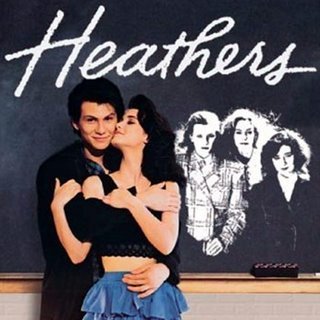
Heathers

And what about the infamous Heathers? Sociopaths, nihilism, and bombs? Dark stuff. Released in 1988, this film is very much a contemporary of Pretty in Pink, and aside from being set in high schools, they’re about as different as two films could be. Heathers was interesting on many levels — the issues it dealt with in varying degrees of satire are still in play today. Plus, it featured a murderous anti-heroine, Winona Ryder, as Veronica Sawyer, who, at the end of the film, leaves her suicidal, sociopathic boyfriend to die, saving the whole school in the process.

What are your thoughts on the above films?  What are some of your favorite cult films?  Share your thoughts in the comments!


Marcela De Vivo is a freelance writer from Los Angeles and has written on a wide variety of topics from her favorite films to interior design tips. She loves watching her favorite female empowering films with her young daughter, Izzy, for a great girls’ only movie night and some much needed mom-and-daughter bonding time.
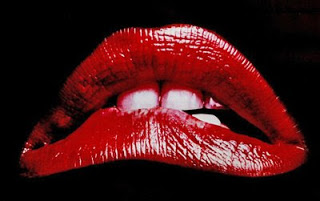
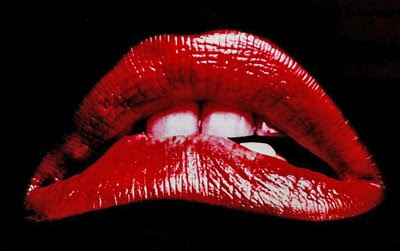
‘The Rocky Horror Picture Show’ and the Pitchfork of Puritanism

The midwestern, puritanical values that American Gothic seems to represent so well win at the end of the film, and quite literally kill difference and sexual and gender subversion. While Riff Raff and Magenta go back to their home planet Transsexual, in the galaxy of Transylvania, Brad, Janet and Dr. Scott are left on the cold ground, crawling and writhing in their fishnets.

The lips in the opening sequence–the biting action has sexual and fearful connotations.


Written by Leigh Kolb as part of our theme week on Cult Films and B Movies.

The cult classic film The Rocky Horror Picture Show, which was based off a British play of the same name, was released in 1975. At that point in American history, audiences (young audiences especially) were eager to have their boundaries pushed and revel in the debauchery that Rocky Horror provided. Whether it was the after-glow of the sexual revolution of the 60s and early 70s or a preemptive strike back to still-noisy social conservativism, Rocky Horror dealt with issues of gender and sexuality in a way that can resonate with viewers almost 40 years later. Buried beneath the campy music and bustiers is strong commentary on religion, gender and sexual norms, social customs and puritanical morality.
After the opening sequence (in which the famous red lips–belonging to Patricia Quinn, who plays Magenta–lip sync to Richard O’Brien, who plays Riff Raff and wrote the original play and screenplay, singing “Science Fiction/Double Feature”), the first shot of the movie is a cross atop a church steeple. The camera pauses, making the audience absorb the contrast between a clearly sexual (and even fearful), disembodied mouth and Christianity.
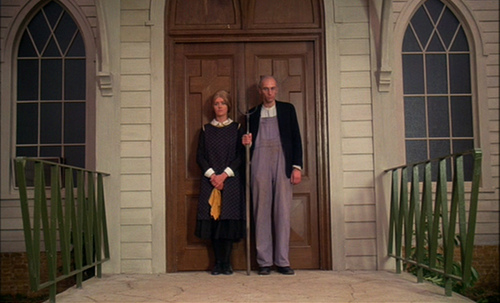
As the camera pans down, a wedding party and guests burst through the doors of the church. Outside of the church doors, a solemn-looking Tim Curry appears as the pastor, and Quinn and O’Brien flank him in the style of the American Gothic painting by Grant Wood.
We will see this image again. It will never really leave us.
The actors who will appear later as Magenta and Riff Raff play American Gothic in the first scene at the church.
According to the Art Institute of Chicago, “American Gothic is an image that epitomizes the Puritan ethic and virtues that he [Wood] believed dignified the Midwestern character.” Puritanical “virtues” are on display in this opening sequence.
As American culture reminds us, when these virtues are imbedded in a society, often the only option for sexual expression is at the extremes of the virgin/whore dichotomy. Suppression and purity on one end of the spectrum, complete surrender to earthly pleasure, no matter the cost, on the other. These extremes are shown throughout the film.
As the wedding comes to an end (and after Janet, played by Susan Sarandon, has caught the bouquet), a car pulls up to take away the bride and groom. Sloppily written on the side of the car is, “Wait till tonight, she got hers now he’ll get his.” The heteronormativity of this scene is clear. Women (including Janet) are eager for marriage, men want to “get theirs” after the wedding is over. Janet’s boyfriend, Brad (Barry Bostwick), does quickly propose to her after they discuss marriage in the church cemetery as a storm brews overhead. A billboard with a heart and the motto “Denton – The Home of Happiness” looms above them. The marriage ritual and social expectations surrounding it are, on the surface, celebrated in this scene (“Dammit, Janet, I love you!” sings Brad as they rollick around the church). However, the symbolism of the cemetery, the pending storm, and the fact that the American Gothic characters are preparing the church for a funeral as they wheel in a casket is not lost on the discerning viewer.
The two set off on a road trip to announce their engagement to a professor they’d had in college (they met and fell in love in his class). On the way, as they drive through a thunderstorm while listening to Nixon’s resignation speech on the radio (perhaps a nod to moral failure), they blow a tire. They end up at a foreboding castle (one used in many “Hammer Horror” movies that Rocky Horror parodies), and motorcycles pass them on the road going to the same destination. Brad says of the biker with judgment, “Life’s pretty cheap for that type.” An “Enter at Your Own Risk” sign invites the couple into the castle grounds, and they do.
After Riff Raff lets them in, they’re quickly initiated into the party that’s being held–the “Annual Transylvanian Convention.” They stand, innocent and wide-eyed, as guests (all dressed in gender-neutral tuxedos) dance the “Time Warp” and thrust their pelvises. The American Gothic painting, as well as the Mona Lisa, both appear on the walls of the castle.
Riff Raff welcomes Brad and Janet to the castle; the American Gothic painting looms behind him.
PBS art commentator Sister Wendy Beckett says, “You can recycle the Mona Lisa any way you like. Back to front, upside down, it remains instantly recognizable. That’s the ultimate compliment and it’s been paid to Grant Wood’s American Gothic. Somehow it seems to speak to the American psyche, though what it actually says isn’t as simple as it might seem.” The coyness of these particular works of art mirror what lies beneath The Rocky Horror Picture Show.
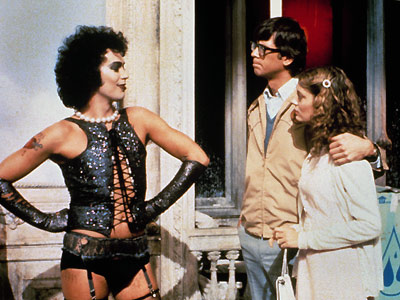
Brad and Janet are visibly uncomfortable in this world (it seems “unhealthy,” Janet says). They, and the audience, which has seen the action from their naïve perspective, are then introduced to Dr. Frank-N-Furter, played by Curry. The camera pans up his fishnet-clad legs, reminiscent of the gratuitous male gaze present in so many other films. However, this time the object of that gaze is a “sweet transvestite from Transsexual, Transylvania,” as he introduces himself in song.
Dr. Frank-N-Furter introduces himself to Brad and Janet.
He invites the couple up to his lab to “see what’s on the slab.” They are stripped to their underwear by Riff Raff and Magenta (“We’ll play along for now,” says Brad). On their way up to the lab, Janet asks Magenta if Frank-N-Furter is her husband. She laughs, and Riff Raff exclaims that he’ll probably never marry (again, marriage is slighted). Frank-N-Furter has changed into a scrubs-style dress (with a pink triangle on the chest) in the lab. He flirts with Brad, calling him a “force of manhood, so dominant,” and Janet begins to giggle and seem less uncomfortable in this new setting. Being stripped of their clothes leaves them almost naked and vulnerable, yet opens them up to sexual possibilities that explore gender and dominance.
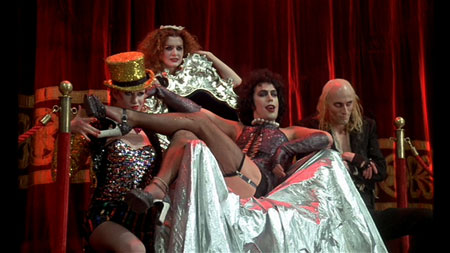
Frank-N-Furter, seated, flanked by (from left) Columbia, Magenta and Riff Raff–all of whom he as used for his gain.
Frank-N-Furter announces that “My beautiful creature is destined to be born!” and the references to Frankenstein throughout the film thus far are fully realized. He climbs above the tank that is holding his “creature,” and drops in rainbow-colored liquid, leaving the creature awash in the rainbow. (In 1975, the rainbow flag had not yet been formally adopted as the LGBT banner, but rainbow flags were commonly used for similar liberal causes starting as early as the late 1960s.)
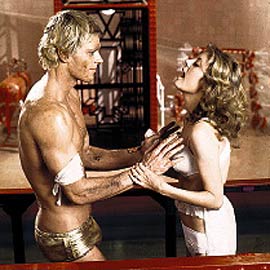
After his creature is born–a muscular, blonde, tan god–Frank-N-Furter ogles and gawks at his creation, chasing and crawling after him, scrambling to even kiss his foot. Rocky (his creature) doesn’t seem interested at all, as he sings about feeling the sword of Damocles above him. As history (and science fiction, like Mary Shelley’s Frankenstein) has repeatedly shown us, when we create a system in which others are to be subservient–whether via imperialism, slavery or patriarchy–the outcome is only good for those in power, and even then the reward is short-lived.
But for now, Frank-N-Furter appears to be getting his way (after ridding himself of Eddie, played by Meat Loaf, who we find out was an ex-lover of Frank-N-Furter and Columbia, played by Little Nell). Masculinity is magnified in this scene as Frank-N-Furter sings about making Rocky a “man” through intense physical workouts and bodybuilding routines, and Eddie’s display of hyped-up violent masculinity (motorcycle, leather jacket, rock and roll). But who is the dominant one in these relationships? Frank-N-Furter, in his fishnets and heels. As heteronormative as the opening scene of the film was, at this point almost all of the lines have been or are beginning to be subverted and blurred.
Frank-N-Furter and Rocky walk out of the lab arm in arm as the wedding march plays and his guests shower them with confetti. The curtain is drawn as they embrace, and the audience expects that they will consummate this “marriage” immediately.
In the middle of the night, Rocky escapes the wrath of Riff Raff and Magenta (he has chains on his ankles as he attempts to flee).
Janet and Brad have been put in separate rooms, of course, so they may retain their pre-marital chastity.
While his creation attempts to escape, Frank-N-Furter visits Janet. He acts like he’s Brad, and she welcomes his embrace and sexual advances. When she figures out it is Frank-N-Furter, she kicks him off: “I was saving myself!” she cried out. After a moment of rough persuasion, she lies back. “Promise you won’t tell Brad?” she says, and laughs as Frank-N-Furter descends upon her.
Afterward, “Janet” visits Brad, and he also welcomes the embrace until he realizes it’s Frank-N-Furter. The scene plays out exactly as it does with Janet–persistent refusal and then “You promise you won’t tell?” Again, Frank-N-Furter moves downward on Brad.
These scenes are poignant in that they are exactly the same–from the strict puritanical refusal to the “secretive” consent to the oral sex act itself–yet the sex of the participants is fluid. Frank-N-Furter is on top, but he’s adamant that the two give themselves “over to pleasure,” which he delivers.
(It’s also worth noting that during the sex scenes others in the house–Riff Raff, Magenta and Columbia–can watch via monitors that display live feed from the rooms. Voyeurism isn’t off-limits, either. Like most issues in this film, there is vast gray area in regard to consent that we are challenged to think about.)
By the next morning, Janet is crying and feeling immense guilt about betraying Brad. However, she happens upon a monitor showing him smoking a cigarette on the edge of his bed, which Frank-N-Furter is lying in. She then spots the injured Rocky, and tends to him. He touches her hand, and she smiles a smile that indicates she has found within herself power and passion.
Janet then bursts into her climactic song, “Touch-a, Touch-a, Touch-a, Touch Me,” a sex-positive female power anthem if there ever was one. She decries her years of avoiding “heavy petting,” since she thought it would only lead to “trouble and seat wetting.” While the narrator says that Janet was “its slave,” it’s more clear that she is sexually dominant in this scene.
After a lustful night with Frank-N-Furter, Janet embraces her sexuality with Rocky (she places his hands on her breasts).
Even in her critique of the woman’s stray curl in American Gothic, Sister Wendy senses something beyond the surface: “Some see the stray curl at the nape of her neck as related to the snake plant in the background, each one symbolizing a sharp-tongued ‘old maid.’ Sister Wendy sees in the curl, however, a sign that she is not as repressed as her buttoned-up exterior might indicate.” Nothing is quite as it seems.
After a cannibalistic dinner (insert corny pun about Meat Loaf here), everything seems to be falling apart. Eddie’s uncle–the Dr. Scott who Janet and Brad were trying to visit in the first place–comes to the castle (he’s both looking for his nephew and doing research on alien life forms). Dr. Frank-N-Furter, seeing everything he’s built to serve himself revolt (Riff Raff, the “handyman,” and Magenta, the “domestic,” are getting antsy to leave to go home to Transsexual; Columbia screams at him for just taking from people–first her, then Eddie, then Rocky, etc.–and Rocky isn’t working out as he planned), clings on to whatever power he can. He mocks Janet and her sexual inadequacy–“Your apple pie don’t taste too nice”–and turns all except for Riff Raff and Magenta into stone via his Medusa switch (the mythology echoing that of Damocles’s sword and what happens when one demands too much).
“It’s not easy having a good time,” Frank-N-Furter laments.
The floor show that follows is a spectacle of gender-bending and sexuality. The stone figures are “de-Medusafied” one by one, and all are wearing kabuki face makeup and Frank-N-Furter-style fishnets, heels, garters and bustiers. They each sing a stanza exploring their current state of drug dependence, uncontrolled libido and freedom in “Rose Tint My World.”
Columbia, Rocky, Janet and Brad have all reawakened in Frank-N-Furter’s gender-bending image for the floor show.
As Frank-N-Furter begins “Don’t Dream It, Be It,” he asks, “Whatever happened to Fay Wray? / That delicate satin draped frame / As it clung to her thigh, how I started to cry / Cause I wanted to be dressed just the same…” Here we see him stripped of his over-exaggerated power as he indicates that he struggled with gender, presumably when he was young. He’s been searching for how and where he fits, and “absolute pleasure” and “sins of the flesh” have been where he looked for fulfillment.
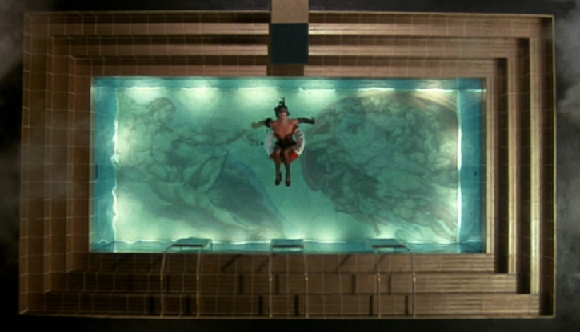
Frank-N-Furter jumps into an on-stage pool, and shot from above he’s floating on a life saver between God and man in Michelangelo’s Creation of Adam. The religious imagery present in the opening scenes is re-visited here, inviting the audience to consider the juxtaposition of “giving in to absolute pleasure” and the church, which is the very institution that dictates much of what we consider gender and sexual norms.
Frank-N-Furter floats in the pool, meticulously placed above Michelangelo’s Creation of Adam.
Janet, Brad, Rocky and Columbia all jump into the pool, and as they lustfully sing “Don’t dream it, be it,” there is a wet conglomeration of fishnets, limbs, tongues and strokes in the pool over the image of the Creation. Janet breathlessly sings, “God bless Lili St. Cyr.” She’s embracing her newfound sexuality by referencing a burlesque dancer/stripper/lingerie designer from the 1940s and 50s.
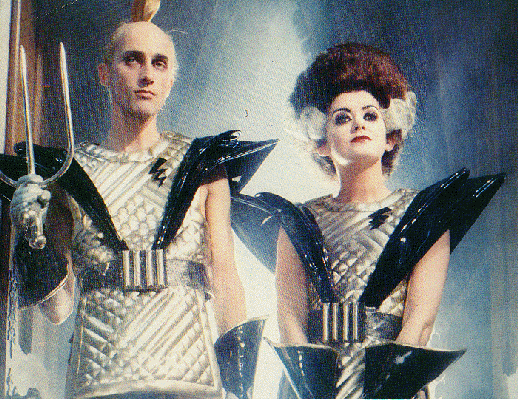
In the midst of this dream-like pseudo-orgy, Magenta and Riff Raff violently storm into the room. Dressed in other-worldly attire (yet gender-neutral), Riff Raff is holding a pitchfork-like weapon (American Gothic, of course), and threatens Frank-N-Furter and the group. “Your lifestyle is too extreme,” Riff Raff scolds, and says he’s subverting the power and will now be the master. For all of this time, Riff Raff and Magenta have been the “help,” and saw the need for an uprising. This also supports the subversive power roles within the film. Also worth noting is that Riff Raff and Magenta are lovers and brother and sister (the American Gothic painting is said to feature a brother and sister or father and daughter, not a husband and wife like many viewers imagine). Relationships, and our expectations and discomfort levels throughout, are meant to be examined.
Riff Raff and Magenta appear again as a futuristic American Gothic; his laser pitchfork will kill those whose “lifestyle” is too extreme.
Riff Raff proceeds to kill Columbia and Frank-N-Furter with his laser pitchfork. Rocky is more difficult to kill, and while he cries and mourns over Frank-N-Furter, he throws him on his back and tries to climb the RKO radio tower on stage. Frank-N-Furter so badly wanted to feel like Fay Wray in his life, and he finally got to after he died. However, Rocky’s plan doesn’t work and the two fall backward into the pool, buried in the very source of life.
The midwestern, puritanical values that American Gothic seems to represent so well win at the end of the film, and quite literally kill difference and sexual and gender subversion. While Riff Raff and Magenta go back to their home planet Transsexual, in the galaxy of Transylvania, Brad, Janet and Dr. Scott are left on the cold ground, crawling and writhing in their fishnets.
The narrator closes the film with the words: “And crawling, on the planet’s face, some insects, called the human race. Lost in time, and lost in space… and meaning.”
We are, the narrator suggests, quite meaningless in our earthly struggles. We blindly grasp on to expectations and norms, whether it be social constructs, gender or sexuality, and if we wander outside of those norms it will very well ruin us because of the deeply ingrained expectations we have in regard to these issues of morality.
Of course, we aren’t supposed to walk away from a midnight showing of The Rocky Horror Picture Show feeling utterly meaningless. O’Brien himself self-identifies as transgender, and has been outspoken about how society should not “dictate” gender roles. He said in a recent interview, “If society allowed you to grow up feeling it was normal to be what you are, there wouldn’t be a problem. I don’t think the term ‘transvestite’ or ‘transsexual’ would exist: you’d just be another human being.” He also has said, in terms of Rocky Horror’s significance, “Well in our western world, England, Australia and the United States etc, there are still strongholds of dinosaur thinking. But, you know, I am a trans myself and I know it’s easier for me now. I can be wherever I want, whatever I want and however I want. And I suppose to some extent, a very small extent, my attitudes in Rocky Horror have helped make the climate a little warmer for people who have been marginalised, so that’s definitely not a bad thing.”
No it’s not. And for all its campy fun, great music and dance moves (and how ironic that the Time Warp lives on at wedding receptions across America), The Rocky Horror Picture Show also provides forceful commentary on religion, gender roles, sexual agency, control and the foreboding power that the pitchfork of puritanism holds over us all still.
 A version of this appeared at Bitch Flicks on Sept. 26, 2012.

__________________________________________________________


Leigh Kolb
 is a composition, literature and journalism instructor at a community college in rural Missouri. 

‘Fight Club’: From Marla Singer’s Viewpoint

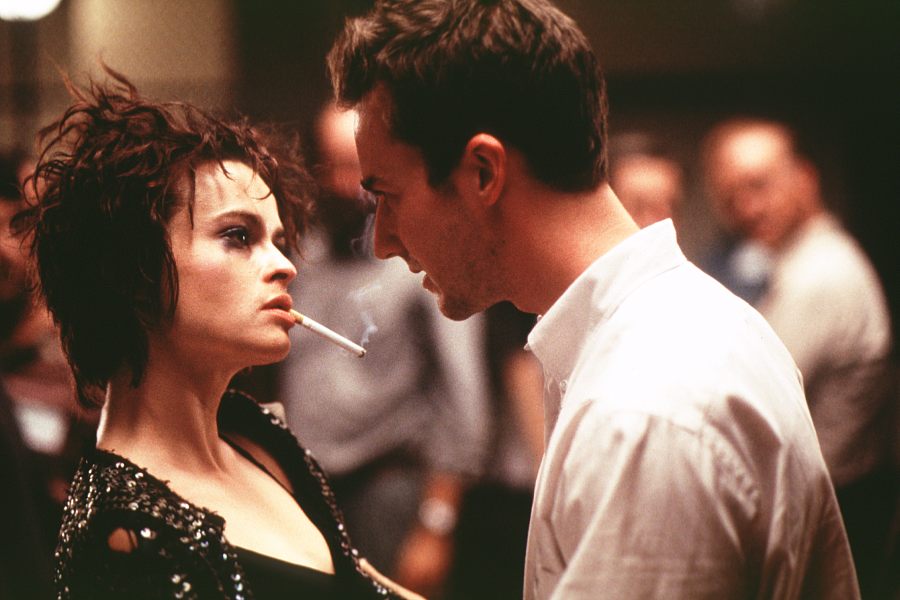
I’ve lost track of how many times I’ve watched Fight Club. Every time I view it, I end up noticing something new. How did I miss that before? This time, Marla Singer (played by Helena Bonham Carter) captured my attention. What would the situations in the movie look like from her viewpoint?

This guest post by Jen Thorpe appears as part of our theme week on Cult Films and B Movies.

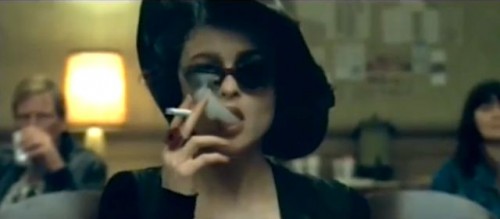
Marla smoking
Marla smoking


Fight Club was released in 1999.  It has some spectacular quotes, a great deal of violence, and an awesome cast.  When people write about this movie, they tend to focus on the Narrator (played by Edward Norton) and Tyler Durden (played by Brad Pitt) and the connection between the two.

I’m going to assume that everyone reading this has already seen the movie.  For those who haven’t, be warned, there will be spoilers here.

I’ve lost track of how many times I’ve watched Fight Club.  Every time I view it, I end up noticing something new.  How did I miss that before?  This time, Marla Singer (played by Helena Bonham Carter) captured my attention.  What would the situations in the movie look like from her viewpoint?

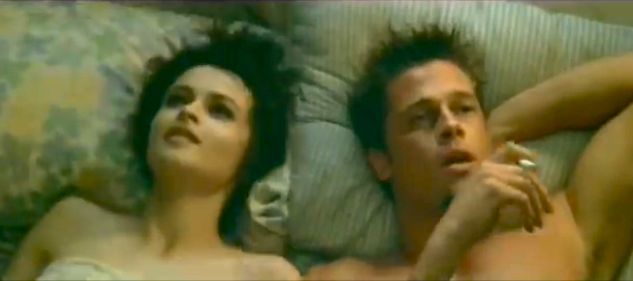
Perhaps the easiest way to describe Marla would be to do it from a chronological viewpoint.  There is a scene where Marla and Tyler have just finished having loud and vigorous sex.  The two are lying on the bed, with satisfied looks on their faces, when Marla reveals something incredibly shocking about her past.

“My God, I haven't been fucked like that since grade school.”
“My God, I haven’t been fucked like that since grade school.”


She says: “My God. I haven’t been fucked like that since grade school.”  Let that sink in for a second. Grade school (or Elementary school) typically has students that are in kindergarten through fifth or sixth grade.  That means that Marla could not have been more than eleven years old when she had a very active sexual experience of the type that she was now having with Tyler.

In the movie, nothing more is said about it.  She would have been well below the legal age of consent.  It is clear she was raped.  Most people don’t go from being a complete virgin directly to having the type of sex that Tyler and Marla had in Fight Club.  I worry that she was sexually abused when she was even younger than eleven, and that the abuse continued for years.

Marla shares what would be, for most people, an incredibly difficult and traumatic childhood experience, as if it were normal.  She doesn’t seem to be trying to shock Tyler.  There is no need for her to do so – she already had his full attention at the moment.  Instead, it seems like she is trying to give Tyler an incredibly awkward compliment on his skills in bed.

As an adult, Marla spends every night attending self-help groups for diseases that she doesn’t have.  She walks into a room filled with people who are dying from cancer while smoking a cigarette.  Marla doesn’t just sit there; she actually participates in whatever therapeutic situation the group chooses to do.  It is as though she is daring someone to confront her, to call her a liar, to notice her.

People who are emotionally healthy do not spend every night in the basement of a church in an attempt to cope with a disease that they do not actually have.  But, Marla isn’t emotionally healthy.  On some level, she realizes that she is damaged and needs help.  Unfortunately, she has no idea how to reach out for the help she needs.

She had to have noticed that there was a guy who was also showing up at the same self-help groups that she was.  She doesn’t know his name because these groups are anonymous.  The two stare across the room at each other, but never speak.

One day, the guy walks up to Marla and begins a conversation with her.  Finally, someone reached out to her!  Someone wants to talk to her – maybe about why they both feel the need to go to all these self-help groups.  The two accidentally end up as each other’s partner at the self-help group for testicular cancer.

Tyler and Marla at the testicular cancer group


Somehow, they actually share a moment together.  This, despite the fact that this guy is trying to convince Marla to go away – to stop going to the groups.  The testicular cancer group ends with two partners sharing their feelings, hugging each other, and crying.

How long had it been since somebody hugged Marla?  She, and the guy whose name she doesn’t even know yet, actually share something meaningful about how they feel, deep down inside.  For a few, brief, seconds, they speak from their hearts.

Narrator: When people think you’re dying, they really, really listen to you, instead of just…

Marla Singer:  instead of just waiting for their turn to speak.

I believe that brief conversation is what made Marla become interested in him.  This, despite the fact that he follows her after the self-help group ends and reiterates that he never wants to see her again.  This guy insists that they split up the self-help groups between the two of them so he won’t have to be in the same room with her.  That must have really hurt Marla.

The first time I watched Fight Club, that scene amused me.  Two people, both of whom are physically healthy, are fighting over diseases that they want to have.  “No, I want cancer!” It’s preposterous.

Look a little closer, and there is so much more going on.  Marla is angry at him.  She fights with him about which self-help groups she gets, and which he gets, the entire conversation.  It’s like she is trying to hold on to them because being there gives her something she is not finding in her life.

The two walk into a laundromat, yelling and screaming at each other.  Everyone in the place had to have taken notice of them.  They probably looked like a couple who was having the type of fight that ends with a breakup.

Marla walks directly over to the dryers, and pulls out more than one load of jeans.  She bundles them up in her arms and leaves the laundromat, still yelling.  At first glance, it looks like she must have put her laundry in the dryer before the self-help group, and was going back to pick up her clothes.  No one else in the laundromat seems to think anything is amiss.

But then, she walks into a shop and sells all of the jeans.  This shocks the guy (whose name she still doesn’t know), so he asks if she is selling her clothes.  Meanwhile, the woman behind the counter is assessing the value of the jeans.  Yes, Marla insists, I am selling my clothes.

Here’s the thing, though.  Does Marla ever wear jeans?  Those aren’t her clothes!  She brazenly marched into the laundromat and stole them, with complete confidence that she would get away with it.  I think this is how Marla makes money.  She never once, in the entire movie, talks about having a job.

Yet, she does, somehow, have an apartment.  The electricity works, and so does the phone.  Perhaps Marla is an incredibly talented “fence.”

By the time Marla is done selling the jeans, she, and the guy whose name she doesn’t know, have sorted out who will be attending which self-help group.  He obviously doesn’t want anything to do with her.  Marla basically throws herself into traffic.  She crosses a busy street, as vehicles honk, without slowing down.  This is the first clue we get that Marla is suicidal.

She stops somewhere in the middle of the street, turns around, and asks the guy his name.  He stayed on the curb (as most people would do).  Viewers do not get to hear his answer, but we later discover he told Marla his name was Tyler Durden.

This is significant.  You’ve seen the movie, so you are well aware that the narrator and Tyler Durden are the same person.  Or, rather, Tyler is a second personality who is sharing the same body with the Narrator.  Marla doesn’t have any way to realize this.  To her – he was always Tyler Durden.

Eventually, Marla notices that Tyler stopped going to the self-help groups that he fought so hard for.  Instead of just letting him go, Marla decides to reach out to him.  She calls him on the phone, out of the blue, and tells him that she has “a stomachful of Xanax.”  It is a desperate attempt to get his attention.  It also isn’t fake; she really did take too many pills.

She wraps the phone cord around her throat as she talks to Tyler, wondering aloud if he would hear her death rattle from over the phone.  At the same time, she insists this is not a real suicide attempt – it’s one of those “cries for help.”

Long story short, Tyler goes to Marla’s apartment and knocks on the door.  She pulls him inside, and it is clear she truly has taken way too many Xanax.  The two leave the apartment together shortly before an emergency crew storms down the hallway.  They pass by Tyler and Marla, as they ask where the apartment they are looking for is located.

Tyler and Marla run away together.  All the while, she is screaming to the emergency crew about the woman who lives in the apartment they are trying to enter.  I cannot recall her exact words, but it is to the effect that they shouldn’t try to bother saving her.  That woman is a lost cause, a waste.  Marla is literally shouting about how much she hates herself – shortly after attempting suicide.

This is the state she is in when Tyler takes her back to the run-down house he is squatting in.  She sits on the dirty floor, drugged almost beyond comprehension, as she tells him that he will have to keep her up all night.  He does, by having loud and vigorous sex with her.  Once again, Marla is not in a state where she is able to give consent.

The next morning, Marla wakes up, puts her clothes back on, and goes downstairs.  Tyler sits at the kitchen table, and seems shocked that she is still here.  He kicks her out.  From her viewpoint, he saved her life, had sex with her all night long, and now…  wants nothing to do with her.

Someone loved this dress intensely, for just one night... and then threw it away.
Someone loved this dress intensely, for just one night… and then threw it away.


Marla makes several attempts to connect with Tyler anyway.  One time, she arrives at his house wearing a bridesmaids dress that she got at a thrift store for one dollar.  She notes that someone loved that dress, intensely, for just one night… and then threw it away.  Again, she is talking about herself.  Tyler is not able to pick up on it, and rejects her after she starts touching him.

After Marla leaves, Tyler appears and talks to the Narrator about her.  Tyler says that the Narrator has some “fucked up friends,” and describes Marla as “limber.”  The Narrator’s alternate personality is able to identify that Marla is a train wreck, while, at the same time, implying that she is interesting to have sex with.

Time passes, and Marla stays away from Tyler.  One night, she takes the bus and arrives at the house he lives in.  To her shock, there are tons of guys in the yard, and in the house.  The air smells badly, and Tyler looks upset.

He tells Marla that Tyler is not here.  Imagine, having the guy you are (more or less) dating tell you that he isn’t there.  He’s standing right in front of you!  She must think he is messing with her head, and she storms off to get back on the bus.

Toward the end of the movie, the Narrator finally figures out that he is Tyler Durden.  He does some fact checking, travels around, and puts it all together.  Now, it’s his turn to call Marla, from out of the blue.  He insists that she say his name – and she does – Tyler Durden.  After that, he hangs up the phone.

Marla and Tyler sort of breakup.  Marla meets him in a restaurant, where he insists that she must leave town.  Of course, the person in front of her is the Narrator, not Tyler.  Even so, Marla says that he is just too messed up and she’s “done.”   She takes the money he’s been trying to give her, says she won’t pay it back (“consider it asshole tax”) and gets on the bus.

Holding hands while the world come tumbling down


The scene that begins the movie is the same one that ends it.  This time, Tyler’s army have kidnapped Marla and are bringing her, kicking and screaming, to Tyler.  The two hold hands as they share the perfect view of the buildings around them blowing up and crumbling.  That image is Marla’s entire life.  She has always been searching for one, small, meaningful connection with someone, who will be there when the world falls apart.


Jen Thorpe is a freelance writer, podcaster, and gamer. She is the cofounder of the No Market website (nomarket.org) and writes for it frequently on a wide variety of topics and subjects. You can keep up with everything she does by following her @queenofhaiku.

In ‘Clue,’ the Real Mystery Is the Bechdel Test

On any dark and stormy night in the fall, it is a wonderful thing to curl up with a mug of mulled cider and watch Clue. The murder mystery based on the eponymous board game may have been a huge flop when it was released in 1985, but it has gained a passionate cult following in the last 28 years, probably due to its infinitely quotable dialogue and gleeful disregard for the pile of bodies amassed as the movie progresses – as well as being shown on cable about once every two hours.

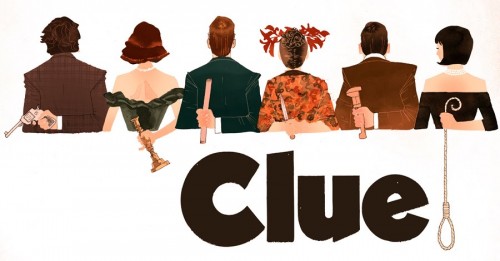
Movie poster for Clue


This guest post by Erin K. O’Neill appears as part of our theme week on Cult Films and B Movies.

Six strangers gather in a New England mansion for a mysterious dinner party. It is revealed that their host is blackmailing them all, but then the tale darkens. First the host is murdered, and then the cook and the maid – and to make a long story short…

Too late!

On any dark and stormy night in the fall, it is a wonderful thing to curl up with a mug of mulled cider and watch Clue. The murder mystery based on the eponymous board game may have been a huge flop when it was released in 1985, but it has gained a passionate cult following in the last 28 years, probably due to its infinitely quotable dialogue and gleeful disregard for the pile of bodies amassed as the movie progresses – as well as being shown on cable about once every two hours.

Mrs. Peacock
Mrs. Peacock


I seriously love Clue. It’s my favorite board game and one of my favorite movies, and has been since one of my friends sat me down and made me watch it one Halloween a long time ago. It’s bawdy and brash and downright hilarious, especially if you have a taste for farcical whodunits.

But: Does it pass the Bechdel Test?

  • It has to have at least two named women in it,
  • who talk to each other,
  • about something besides a man.


In order to help you understand whether or not Clue passes the Bechdel Test, I shall need to take you through the criteria of the test, step by step.

1. Does the movie have two named women in it?

There are five women characters who have names in Clue.

  • Mrs. Peacock, the hysterical senator’s wife.
  • Mrs. White, the widow of a nuclear physicist.
  • Miss Scarlett, Madam of a Washington D.C. brothel.
  • Yvette, the maid and Miss Scarlett’s former employee.
  • Mrs. Ho, the cook. While being listed in the credits as “The Cook,” in one of the first scenes in the movie Wadsworth calls her by her name.


In fact, in the entire movie only one female character doesn’t have a name, and that’s the Singing Telegram Girl.

And so, Clue passes the first step in the Bechdel Test.

2. Do these women talk to each other?

Absolutely. Clue is an ensemble movie with a mile-a-minute dialogue – and more one-liners than I care to count. So, here are a few of my favorite exchanges:


Miss Scarlet: Maybe there is life after death.

Mrs. White: Life after death is as improbable as sex after marriage!


Mrs. White: Maybe he wasn’t dead.

Professor Plum: He was!

Mrs. White: We should’ve made sure.

Mrs. Peacock: How? By cutting his head off, I suppose.

Mrs. White: That was uncalled for!


Miss Scarlet: What was he like?

Mrs. White: He was always a rather stupidly optimistic man. I mean, I’m afraid it came as a great shock to him when he died, but, he was found dead at home. His head had been cut off, and so had his, uh… you *know.*

[Colonel Mustard, Professor Plum, and Mr. Green cross legs]

Mrs. White: I had been out all evening at the movies.

Miss Scarlet: Do you miss him?

Mrs. White: Well, it’s a matter of life after death. Now that he’s dead, I have a life.


And so, Clue passes the second step in the Bechdel Test.

Miss Scarlett
Miss Scarlett


3. Do the women talk to each other about something besides a man?

The third leg of the Bechdel Test is often the one movies fail – while there are often women characters, how often do they not speak of men? And Clue has some integral issues with the plot and structure that would make it difficult to pass this leg of the test.

For one, the movie is an ensemble with a male butler at the center. Wadsworth, throughout the film, controls the action and guides the other players through the plot – he holds all the cards and asks all the questions. Furthermore, it’s a murder mystery where the first and most crucial victim, Mr. Boddy, is a man. Much of the dialogue, even if it’s about murder, is about a man.

And finally, Mrs. Peacock, Mrs. White and Miss Scarlett are all being blackmailed for actions that entirely have to do with men: Mrs. Peacock for accepting bribes for her husband’s senate vote; Mrs. White for allegedly killing her husband (and possibly at least one of her previous husbands too); and Miss Scarlett for running a house of ill repute that caters to men. This means that even when the women are discussing their histories and their motivations, the topic of conversation is men.

Flames-Side-Of-Face

In the dinner scene, Mrs. Peacock tries to start conversation by asking the other women about their husbands and asking the men about their careers. It’s a telling moment, which could perhaps be forgiven by the film’s setting in 1954, which reveals how narrow topics of conversation for women can be. Even in 1954, they could have discussed Abstract Expressionism, or thematically, the McCarthy hearings on the House Committee of Un-American Activities. After all, communism is just a red herring.

I’ve seen Clue, well, let’s just say a lot. And, I had to rewatch the film three times but also scour a copy of the shooting script to find any dialogue where two women talk about something besides a man. As far as I can tell, it happened twice:


Miss Scarlett: Would you like to see these Yvette? They might shock you.

Yvette: No, thank you. I am a lady.

Miss Scarlett: And how do you know what sort of pictures they are if you’re such a lady?


Mrs. Peacock: Uh, is there a little girl’s room in the hall?

Yvette: Oui oui, Madame.

[points]

Mrs. Peacock: No, I just want to powder my nose.


Yep. The second instance is a pun on peeing.

Yvette
Yvette


Are these two, three-line exchanges enough to pass the Bechdel Test? There appears to be much debate about this leg of the test. Some critics claim that in order to pass, the women must speak to each other for more than 60 seconds, or that there must be some depth to the conversations. Since the original comic makes no such distinction and states that the two women must simply talk to each other about non-men related topics, I would argue that their two bits of dialogue meet the criteria.

And so, Clue passes the third step in the Bechdel Test, by the skin of its teeth.


Erin K. O’Neill is an award-winning writer, photographer, and visual editor currently located in her hometown of Ann Arbor, Michigan. A devotee of literature, photography, existentialism, and all things Australian, Erin also watches too much television on DVD and Netflix. Follow her on Twitter, @ekoneill.


In ‘Boondock Saints,’ the Men Shoot Gangsters, and the Women Don’t Exist

The ethics of the film are one thing, but it says a lot about the world of the movie that it’s able to go nearly two hours without a single important female character showing up on screen. There are no women cops, there are no women in the mob, there are only a couple of wives or passers-by or maybe a drug-addled girlfriend or two. But no one who matters. The acting characters in the film are all overwhelmingly and vocally male.

Even the ethos of the characters, that they will destroy that which is evil, but leave alone the pure and blameless, is inherently sexist. Because when they say pure and blameless, what they mean is the women and children. In this universe, women are not even people enough to do things wrong. We do not have enough agency even to commit evil.

-8

This guest review by Deborah Pless appears as part of our theme week on Cult Films and B Movies.

I fell in love with Boondock Saints the summer that I turned sixteen, about four days before I went off to live and work at a Christian summer camp for eight weeks – a torturously long time when you’ve just fallen in love with the most profane and violent movie possible. I was told that I shouldn’t watch it, that I couldn’t watch it, because it was too violent, too swear-y, too much for my faint little heart to take. I told them to eff themselves and watched it anyway. And I fell in love instantly.

It was a long lasting love affair too. I had the poster hanging above my bed, I still own a copy on DVD, and I saw that film so many times that I could recite it in real time as my college roommate watched in horror. I even went to see the sequel. In theaters. On purpose.

-2

But it wasn’t until last year, when I started to write out a list of my all-time favorite movies that I realized something important: I might love Boondock Saints, but it doesn’t love me back. Or, specifically, it doesn’t love my gender. That was when the romance started to fade.

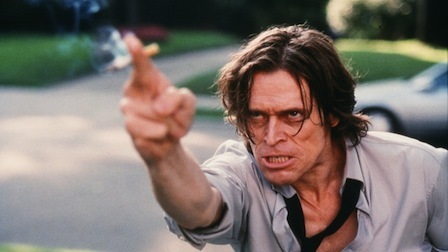
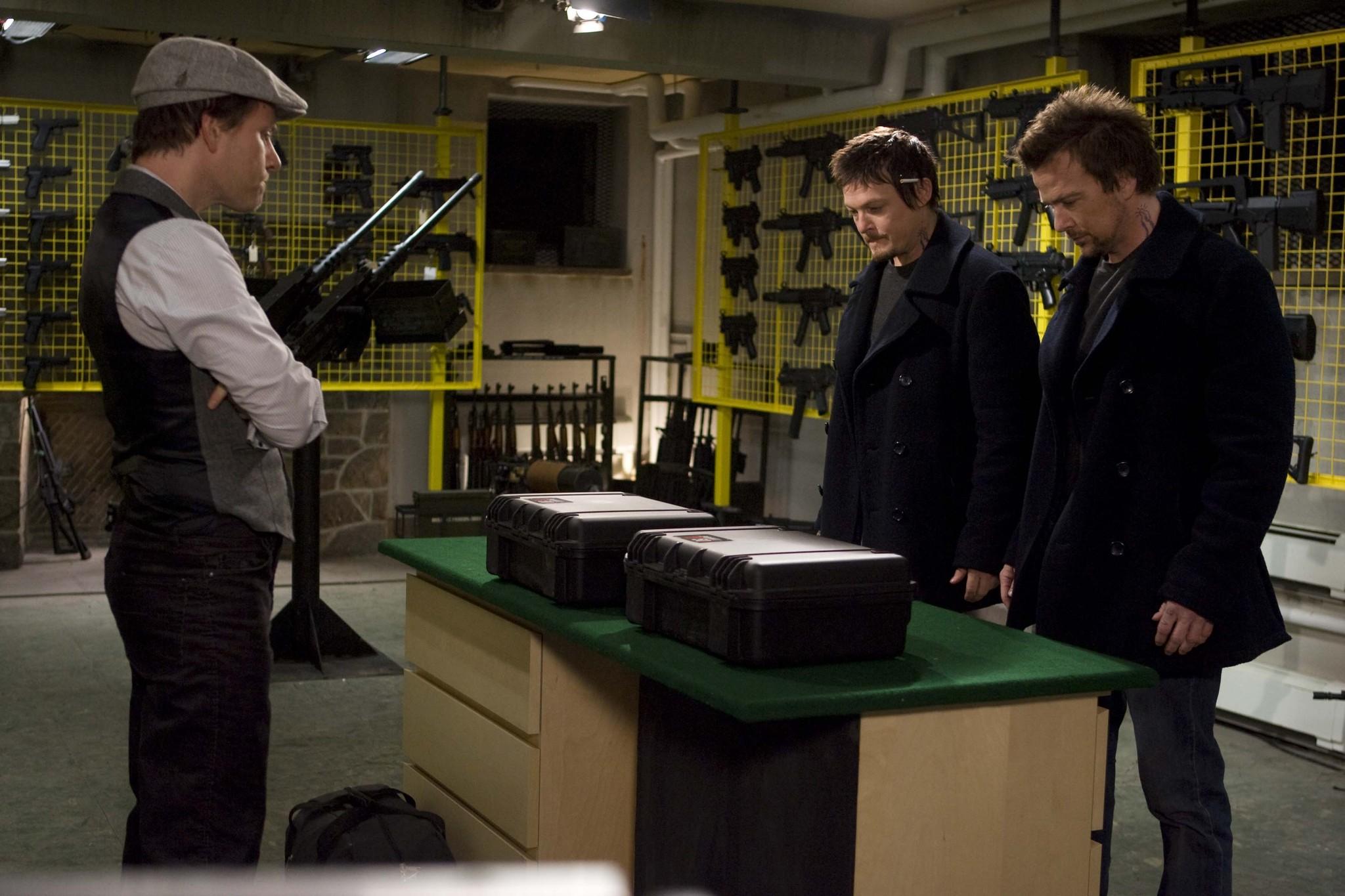
To back up a little, Boondock Saints is a cult shoot-em-up film released in 1999 and written and directed by Troy Duffy. It stars Sean Patrick Flanery and Norman Reedus as the McManus twins, two good old Irish boys living in South Boston who receive a message from God to go kill gangsters. Which they then proceed to do with alarming vigor and good humor. They’re pursued by Agent Smecker, played by Willem DeFoe, and helped by good friend Rocco, played by David Della Rocco.

-1

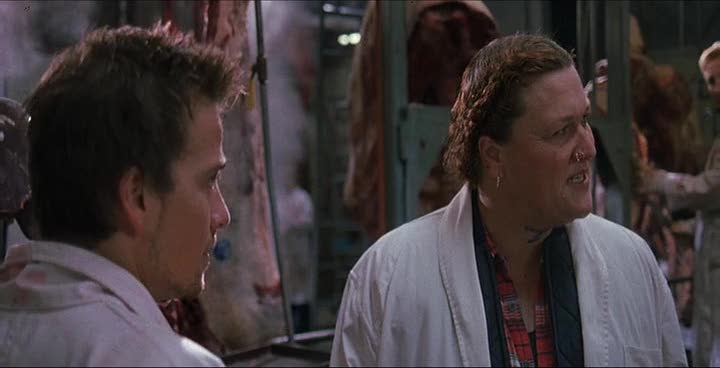
Also, Billy Connolly turns up as a terrifying hit man known only as “Il Duce,” and Dot-Marie Jones makes a brief cameo as Rosengurtle Baumgartner, who kicks one of the boys in the crotch. But I digress.

The film is weird and violent and profane, like I said. The basic premise, that Connor (Flanery) and Murphy (Reedus) are on a holy mission to rid the world of evil is both strange and deeply non-Biblical, but there is a thrill to it that makes you want to believe. The plot kicks off when the boys are involved in a bar fight with two enforcers for the Russian mob. After the fight, the mobsters go track down our heroes and try to finish the job, but Connor and Murphy get the drop on them (literally), and kill the two men.

Agent Smecker is then called out to figure out what the hell happened. Smecker, who is inarguably DeFoe’s best and most interesting character to date, deduces the exact events effortlessly and is proven right when the two boys show up at the police station, turn themselves in, and claim self-defense.

-3

The story would end right there if during the night spent in jail, the two men didn’t receive a vision from God. A mission, you might say, that calls them to “Destroy that which is evil, so that which is good may flourish.” This all tracks in with a sermon shown in the beginning of the film that cites the murder of Kitty Genovese as a sign that good men must do something to stop evil from spreading. All well and good, but I’m not sure the priest was calling for mass murder.

Which is precisely what happens. Connor and Murphy start picking off members of the Russian and Italian mobs, with a little help from their friend Rocco, a low-level numbers runner. They get so good at it, in fact, that Smecker is at a complete loss and the mob is running scared. It all comes to a climax when they try to take out the Don of the Italian mob in Boston, get captured, and come face to face with the man hired to kill them – Il Duce. Except Il Duce is actually their father, and the men happily reunite to go off and kill another day.

Like I said, it’s a weird, violent movie.

-5

There are, in all honestly, a lot of things worth discussing with Boondock Saints, from the way it is one hundred and ten percent a white, male fantasy of justice and badassery, to the fact that it’s so Biblically inaccurate as to be kind of painful, to Agent Smecker as one of the most interesting gay characters to grace the silver screen, to the fact that it’s honestly just a very strange story, chock full of coincidences and arguably terrible writing that somehow becomes awesome instead of cliché. But let’s focus in for a minute on what turned me off of it. Let’s talk about the ladies.

Or, rather, let’s talk about the lack of them. In point of fact, the women of Boondock Saints are most notable by their absence. I can count the number of named female characters on one hand, and none of those characters appear in more than two scenes. That’s actually a false representation as well, because only one of them appears in more than one scene at all. Of all of the female characters in the film, not a single one receives more screentime than the scenes of Agent Smecker in drag toward the end of the film.

That is bad enough in and of itself, but there is also the actual characters to consider. Of the female characters shown or mentioned, one is an unnamed stripper (who, ironically, is the most visible woman in the film, appearing in two whole scenes), two are junkies and sluts (according to Rocco), and one is Rosengurtle Baumgartner, an avowed lesbian who we are supposed to laugh at for taking offense to one of Connor’s jokes. She kicks him in the nuts. He deserves it.

-6

There are two more women of note in the story, but both had their stories cut down in the final version of the film and appear mostly in the deleted scenes on the DVD. One is Connor and Murphy’s mother, who calls them to wish them a happy birthday, and the other is a nice girl outside the courtroom who gives the news cameras a completely convincing and not at all ridiculous explanation of why she is perfectly fine having seen someone shot to death right in front of her moments before.

Like I said, that’s pretty much it. There’s a waitress, a nun in a hospital, an Italian grandmother, and a female news reporter, but I genuinely struggle to think of any more female characters. At all. In the entire movie. It would seem that in the world of Boondock Saints, women are not just irrelevant to the narrative, but also virtually invisible. They just don’t seem to exist.

I suppose it makes sense, given that the film is a white, male power fantasy. Connor and Murphy are the ultimate slacker heroes, the guys we’re supposed to want to be. They have no formal education, but somehow happen to know about six languages fluently. They seem perfectly content living on the fringes of society, because tough guys don’t need furniture or shower curtains or functioning plumbing, I guess. They’re religious, but in the cool way. They don’t have to learn how to use guns, or find out where to buy weaponry, or even struggle as they assume their mission. They just effortlessly seem to know what they need to do and then do it. No fuss, no muss. Without a second of training they are the two most proficient hit men ever to grace the streets of Boston.

-10

It’s a fantasy, and you can see why it would be intoxicating. They’re good at what they do. They’re cool. What they do is unassailably (within the context of the movie universe) right. They get to shoot people and have fun and laugh with their friends, and it’s fine because it’s all justified by God. They don’t kill women or children, so it must be okay, right?

Well, no.

The ethics of the film are one thing, but it says a lot about the world of the movie that it’s able to go nearly two hours without a single important female character showing up on screen. There are no women cops, there are no women in the mob, there are only a couple of wives or passers-by or maybe a drug-addled girlfriend or two. But no one who matters. The acting characters in the film are all overwhelmingly and vocally male.

-7

Even the ethos of the characters, that they will destroy that which is evil, but leave alone the pure and blameless, is inherently sexist. Because when they say pure and blameless, what they mean is the women and children. In this universe, women are not even people enough to do things wrong. We do not have enough agency even to commit evil.

But here’s the problem. I know all of this, and yet I still like the movie. I mean, I’m not in love with it anymore. The scales have lifted off my eyes, and I can see it for what it is – a bloated, self-aggrandizing, violent ode to vigilantism – but I still enjoy it.

How?

I think ultimately it comes down to something deeper. Something about how it took me eight years to realize that the movie was toxic for women. I genuinely did not expect this story, or really any story like it, to include women. I naturally didn’t even think to look for a female character to relate to, because it inherently assumed there wouldn’t be one.

-9

Troy Duffy, aware of the criticism he received for this first film, included a major female character in the execrable sequel, Boondock Saints: All Saints Day. In it, Agent Smecker is gone and in his stead we have Agent Bloom (Julie Benz). But this is just another stunt meant to show how “progressive” and “totally not sexist” Duffy is. Bloom is relegated to a backseat role, and shown to be yet another innocent in the world. She’s a badass lady cop, but actually just a scared little girl who needs to be protected. And if she happens to fulfill a couple of fantasies about women in power suits and heels while she’s at it, then so much the better.

I wish I could tell sixteen-year-old me not to bother with this movie, that I should, for once, listen to my friends and back away slowly, but I don’t think I would, even if I were given the chance. Because as much as I now can see this movie for the sexist doggerel it is, it still has a place in my heart. It was the movie that taught me how much fun schlock flicks could be, the one that showed me that a movie doesn’t have to be good to be fun, and the movie that introduced me to one of my all time best friends. I wouldn’t take it back.

But I still wish it didn’t make me feel so gross inside.


Deborah Pless runs Kiss My Wonder Woman and works as a youth advocate in Western Washington. You can follow her on twitter, just as long as you like feminist rants and an obsession with superheroes.


‘Birth of the Living Dead’: Women and Gender in Cult Films and B-Movies

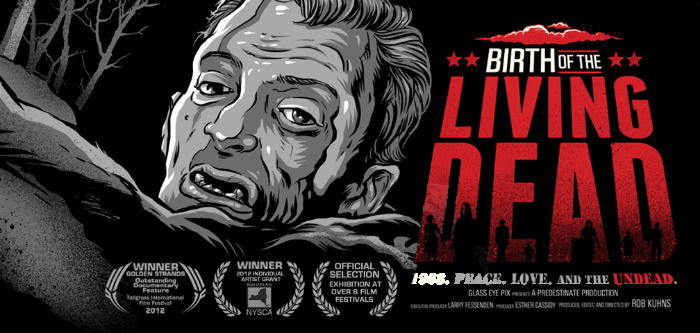
Birth of the Living Dead is Rob Kuhns’ documentary of the making of George Romero’s 1968 cult horror genre game-changer Night of the Living Dead. Bitch Flicks writers Max Thornton and Amanda Rodriguez discuss both the documentary (BOTLD) and the original film itself (NOTLD).

'Birth of the Living Dead'
‘Birth of the Living Dead’

A Conversation Between Max Thornton & Amanda Rodriguez

Birth of the Living Dead is Rob Kuhns’ documentary of the making of George Romero’s 1968 cult horror genre game-changer Night of the Living Dead.

[youtube_sc url=”http://www.youtube.com/watch?v=TowiviD3xgE”]

Bitch Flicks writers Max Thornton and Amanda Rodriguez discuss both the documentary (BOTLD) and the original film itself (NOTLD):

MT: I spent my teens as an ardent fan of all things zombie (and I have a lot of theories about what this says about my relationship to embodiment as a trans person, but that’s another discussion). I went on a zombie walk in London for the 40th anniversary of NOTLD in 2008. I skipped a college class to go meet George Romero when he was doing a signing for the Creepshow re-release. My first academic publication is a chapter on zombies (and queerness, and Jesus, because those are my other favorite things). My cred as a Romero fan is well established, and I’m guessing yours is, too. Do you think someone who’s less of a zombie nut — or perhaps even someone who hasn’t seen NOTLD — could enjoy Birth of the Living Dead?

AR: I am a huge horror and zombie fan, but I didn’t start out life that way. I saw NOTLD when I was 4. I can empathize with Ebert’s observations of the younger children who didn’t have the resources to protect themselves from the fear and dread engendered by the film. I refused to watch NOTLD again until I’d graduated college because it was so formative and so terrifying. Perhaps in large part because of NOTLD, I have always been fascinated with what frightens us and why. The deep psychology of fear and what that fear represents within a larger cultural context have been the subjects of much of my critical analysis and fiction writing. I love the idea that horror, in particular the zombie, is a physical manifestation of our societal fears.

Karen cannibalizes her father, illustrating society's fear of the brutality of youth.
Karen cannibalizes her father, illustrating society’s fear of the brutality of youth.

That said, I’ve only properly seen NOTLD once, so I think the documentary can be interesting to people who aren’t as entrenched in zombie culture; although who isn’t these days, considering they’re such a popular horror subgenre? I found Romero’s continued enthusiasm for the film all these years later to be quite endearing. Film nerds and aspiring indie filmmakers could find value in this documentary. People interested in history, particularly the civil rights movement and the Vietnam war could benefit from seeing this documentary, as it and NOTLD deal with those huge cultural landmarks from a different angle than we’re used to seeing. I also really appreciated the way the documentary casts NOTLD as a meta-narrative of the actual making of the film: the DIY approach and guerrilla tactics the crew used despite the huge filmmaking machine that is Hollywood. The process of making the film becomes its own protest against the Hollywood status quo, the insistence on professional actors, the elitism of art and entertainment. In a way, this is exactly the function of zombies; to disrupt the normalcy and complacency of institutions.

MT: Is this documentary perhaps a little too much of a hagiography? Does it give Romero too much credit for inventing the zombie as we know it, provide too little contextualization of the Haitian origins of the zombi, and thus perhaps whitewash the racism, colonialism, and cultural appropriation inherent in our cultural enthusiasm for the zombie?

Haitian Zombi in 'I Walked with the Dead'
Haitian Zombi in ‘I Walked with the Dead’

AR: Though I thought Romero was a sweet man, and as a fan, I couldn’t help but gobble up his nostalgic reminiscences, the documentary underscored for me the importance of the concept of the death of the author and the fallacy of the notion of authorial intent. It is clear that Romero had no idea what he was making. This film is considered a cult classic and of cinematic significance in spite of him. He makes it clear that he didn’t intend to comment on race by casting a black protagonist, and I doubt he had any idea he was critiquing the Vietnam war or truly upsetting the horror genre in a profound way. I think the film does all those things in a compelling way, which is why it withstands the test of time and is infinitely imitable. Without divesting him of his agency completely, the documentary shows that film experts and filmmakers today understand the important work he created more than Romero himself does.

You’re right that the documentary seems to gloss over the true origins of the zombi, which does divorce it from its racially-charged roots. However, I always thought the movies that predate NOTLD featuring Haitian zombis were painfully racist. Romero zombies are different from the Haitian zombi and speak to our culture in a different way…probably because the Romero zombie is versatile and can morph into any of our greatest fears. It would have made sense, though, to have the documentary further explore the origins of the zombi. Since BOTLD is so racially aware, I would have enjoyed seeing it tackle the implications of colonialism and appropriation. Do you think Romero’s so-called reinvention of the zombi is ultimately racist? Does his malleable notion of zombies only address first-world fears and insecurities?

George Romero Portrait

MT: I think this is something that deserves more interrogation than it tends to receive — consider the fact that he always cites I Am Legend as a huge influence, and not the Haitian voodoo roots or even the massively racist earlier zombie films like White Zombie — but then NOTLD doesn’t actually use the term “zombie.” As well as getting more credit than he deserves, perhaps Romero gets more flak than he deserves when we criticize his appropriation of the zombi, because, as you point out, he doesn’t necessarily know quite what he was doing. (I would note that some people are attempting to balance out the deification of Romero as inventor of the modern zombie: the editors of my zombie chapter, for example, were very insistent on giving Romero’s co-writer Russo equal credit.)

I really enjoyed the film’s emphasis on the social context of the late sixties and how that shaped much of the imagery and message of NOTLD: race riots, Nam, anger, disillusionment with the hippie movement’s failure to elicit major structural change. Are we currently in a comparable period of crisis and distrust in institutions, reflected in the renewed zombie boom of the past decade? And yet is the profound social consciousness of NOTLD largely missing from zombie stories today? For example, I rage-quit The Walking Dead at the end of Season One because it seemed to me so profoundly the white men’s story, with the female characters and characters of color remaining firmly secondary to the almighty White Man. I think maybe I find this particularly disappointing in zombie stories because I want more out of a genre rooted in a movie that was so far ahead of its time in its attitude toward race.

'Night of the Living Dead' hero Ben played by Duane Jones
‘Night of the Living Dead’ hero Ben played by Duane Jones

AR: I think zombies will always appeal to us because our society is a house of cards. Zombies remind us of a life without the comforts of technology, safety, and structure. The more complicated and reliant we become on institutions and corporations, the more relevant dystopian fantasies like zombies become because we are one global crisis away from that house of cards collapsing on us, leaving us weak, reeling, and unable to fend for ourselves.

I think zombie movies are being made left and right because they’re a hot item, but a zombie movie isn’t truly great unless the zombies are a compelling metaphor. The last zombie movie I remember adoring was 28 Days Later because it explored the terrifying fear of pandemics, the brutality of the military, and the rage that exists inside us, constantly questioning whether or not human nature is really as pure and good as we’re led to believe. Though Naomie Harris’ Selena was its secondary protagonist and her characterization falters at the end, she is a majorly badass, smart Black woman who kicks some serious keister with a machete. (However, I didn’t love the sequel 28 Weeks Later because I thought that was some misogynistic bullshit.)

Selena Machete
Selena slays first and asks questions…not at all.

I, too, have been struggling with the TV show version of The Walking Dead. I even wrote a Bitch Flicks article comparing the superior graphic novel series to the show. You’re totally right; the show is reactionary, racist, and sexist. It’s not doing much new or interesting with its post-apocalyptic material, which has vast potential to make meaningful commentary about what day-to-day life looks like when you’ve stripped our society away. There are questions ripe for the asking, such as: What do morals look like? How do you raise children? Can we work together against a common enemy (as touched on in the BOTLD), or are we inherently self-motivated?

What do you think the zombie trope “means”? Why do you think it’s still got such a stranglehold on us after over four decades?

Are zombies then not really a horror subgenre but a dystopian subgenre? Maybe the words “zombie” and “apocalypse” always go together. Can you think of any zombie film examples where the threat of utter human and societal annihilation were not issues?

MT: I wonder — and this is highly speculative, and clearly born out of my perspective as a theologian with seminarian friends who worry a lot about the decline of mainline Christianity in the US — if the zombie’s place as a monster of the 20th and 21st century is intertwined with secularism. Is it a manifestation of a certain cultural anxiety related to the “rise of the nones” — that is, a cathartic expression of a fear of being swallowed up by materialism (in both the philosophical and the economic senses of the term)? As mindless masses of rotting flesh whose only drives are the basest physical urges, zombies represent the logical extreme of pure materialism, and I suspect it’s not a coincidence that our cultural psyche is obsessed with them in a time when global capitalism is engulfing everything while traditional channels for religious/spiritual sensibilities are on the decline — among the young westerners who are the primary audience for zombie culture, at least.

Zombies gravitate to the mall in 'Dawn of the Dead', consumers even in death.
Zombies gravitate to the mall in ‘Dawn of the Dead’, capitalist consumers even in death.

It’s an odd and frustrating paradox that zombie stories are always these grand-scale, global apocalypses, and yet they always focus on your straight-white-male protagonists. This piece does a grand job of addressing this issue. I’d take World War Z as an example of the paradox: the book actually does take on the geopolitics of the zombie apocalypse on a truly global scale, whereas the film is a by-the-numbers Hollywood disaster flick where the global disaster is mere backdrop to the story of whiterocis dude hero and his perfect(ly passive) white family. I think that’s perhaps symptomatic of the increasing polarization of mainstream and independent content in our age of digital distribution, and I suspect that mainstream pop culture zombie tales are only going to get more anodyne and more unthinkingly supportive of the heteropatriarchal status quo, while we’ll have to look to non-traditional channels of production and distribution for interesting stories. I haven’t yet watched Ze, Zombie, a queer zombie film, but I’m deeply intrigued — not least, I admit, because the top update on the website is currently an apology for the film’s excessive whiteness…we’ve a long way still to go, it seems.

For all its social consciousness, though, does NOTLD (and BOTLD – only one of the talking heads is a woman; African-American men are interviewed, but African-American women are not) fall into the trap of so many progressive social movements, both in the sixties (e.g. black power) and still today (e.g. movement atheism): failure to properly include, address, and account for women? Do you know of any actually feminist zombie films (I can’t think of any)? Why is this such a cultural lacuna? Other movie monsters have been reinterpreted in explicitly feminist ways: vampires (Buffy the Vampire Slayer), werewolves (Ginger Snaps) — doesn’t the zombie have feminist potential as a movie monster?

In 'Ginger Snaps', werewolf Ginger revels in her new power.
In ‘Ginger Snaps’, werewolf Ginger revels in her new power.

AR: I’m totally with you on your critique of World War Z the film vs. the book. We’re like E.T. and Elliott here because I wrote a Bitch Flicks review critiquing the film: its narrative choices that narrowed the scope of the book until it was unrecognizable, the way it cast Gerry as a messianic figure, and its under-development of its potentially fierce female characters, rendering them as nothing more than symbols to reflect back upon Gerry’s manly manliness.

I’ve always thought that NOTLD wasn’t feminist when I consider all the female characters in the movie. I wish someone would have commented on the flat female NOTLD depictions in the documentary, but I guess the movie wouldn’t come out looking so well…the documentary does kind of lionize NOTLD.

They were coming to get you, and they got you, Barbara.

I think Jennifer’s Body could maybe be categorized as a female zombie flick, but it’s debatable whether or not its feminist. Return of the Living Dead 3 was kind of a big deal because the protagonist was a woman and a zombie, and she became a sexual icon for teenage boys everywhere. I think part of the problem with associating zombies and women is that zombies aren’t usually sexy, and it seems like a requirement that women and sexuality are linked in cinema whether it’s in a feminist or a non-feminist way. So, I’d say that the lack of feminist zombie films speaks to a larger issue, in which our culture insists on associating women and sexuality.

Mindy Clarke stars as a sexay zombie in 'Return of the Living Dead 3'
Sexay zombie in ‘Return of the Living Dead 3’

There’s no real reason, however, why a woman can’t be the zombie killing heroine, though it happens so infrequently. We’ve got shitty examples like the Resident Evil series, but I think there’s a lot of potential to critique the patriarchy in a film that sets up a lone woman (or a small group of women) working against the never-ending onslaught, the plague of patriarchy. Wow, now I’m stoked to see that movie! Think it’ll ever get made?

Romero identifies as “Spanish” as per his Sharks vs. Jets anecdote in BOTLD, but he’s of Cuban & Lithuanian descent. He’s never represented as a director of color (I bet his last name, as he mentions, is often mistaken for Italian), and I wonder if that has an effect on the distribution and reception of his films? Would horror films directed by a POC known to have an underlying social and political commentary be shunned by the mainstream or turned into an even more exclusive niche (i.e. something like “politically-charged cult horror films by people of color”…ugh)? I also wonder if that’s why he’s well-known for casting characters of color in his films without sort of thinking about it: because he views race differently than, say, his white director counterparts?

Romero contextualizes his sense of race using 'West Side Story'
Romero contextualizes his sense of his race using ‘West Side Story’

MT: Your point about Romero and race is really interesting, and I hadn’t considered that before. The idea that he’s a POC who’s never read that way does go a long way to explain the use of race in his films. The history and theory of the “passing” POC is too often elided or overlooked in a lot of critical race discussions, and perhaps this element nuances the question of misappropriation of zombi above? It definitely merits more analysis!

And I think Romero’s engagement with both race and gender does get more explicit in his later films, notably Day of the Dead (clearly a heavy influence on 28 Days Later) and the very underrated Land of the Dead. It’s not an accident that Land‘s Big Daddy, the first zombie to develop a sense of consciousness, is African-American, and Land‘s whole narrative of class warfare is extremely relevant. (Now I kind of want to have future discussions about each of Dawn, Day, and Land of the Dead, looking at the evolution of Romero’s social consciousness over the years and films!)

AR: I’m in complete agreement about Romero’s evolution as a socially and politically conscious director in his later films. Dawn of the Dead‘s critique of consumerism is probably the reason that I insist upon socially relevant zombie interpretations. I also find it fascinating and a bit depressing that the 2004 Dawn of the Dead remake was lazy in that it eschewed the critical commentary inherent in a mall-based zombie flick, proving once again that we’re not necessarily getting better or more self-aware as a people. Romero’s Diary of the Dead I also thought was an interesting engagement on the notions of the viral connection of online media and the viral nature of information, despite its ultimate disappointment as a film. Although Land of the Dead wasn’t as commercially successful nor as engaging as some of Romero’s other films, I, too, was impressed by its class critique and some of its underlying racial commentary. However, I think the Black man emerging from the water with his new sense of self-awareness is a problematic depiction, putting Africans and African Americans on a slower time line for evolution than white people, claiming (perhaps unintentionally) that their consciousness is nascent, which is a disturbing paternalistic attitude.

Zombie leader, Big Daddy, emerging from the water.

This is one of my long-held issues with the horror, sci-fi, and fantasy genres. In order to tell these socially and politically charged stories, they embody the Other in monster flesh: think the apartheid conversation in District 9 with the grotesque alien bug people or Oz, the werewolf, along with Angel, the vampire, in Buffy and even more so in the Angel series or the way all the Star Trek series are rife with the creation of Othered alien species to elucidate the plight of an oppressed people (not to mention the racism inherent in the vicious warrior Klingons as stand-ins for Black people or the antisemitism of the greedy, urbane Ferengi as stand-ins for Jewish people). While the metaphor comes across, it often dehumanizes and further Others those it is attempting to bolster.

I could talk about this stuff for days and days! Count me in for future convos on the rest of the Romero zombie films! I’m planning to watch his Survival of the Dead, the last of Romero’s zombie series, for a Halloween-y treat since I’ve shockingly never seen it before.

—-

Thanks for joining us for this conversation between Max Thornton and Amanda Rodriguez on ‘Birth of the Living Dead’ and ‘Night of the Living Dead’. Keep an eye out for Max’s upcoming interview with Esther Cassidy, producer of ‘Birth of the Living Dead’.

‘Withnail and I’ and the Danger of the Feminine Man

Consistently, then, femininity in men is dangerous. It may be actively dangerous, as in Uncle Monty, who assaults Marwood whilst in near-drag, or passively dangerous, in that it makes the feminine man a target for harassment, as in the lout at the pub who calls Marwood a perfumed ponce. Ultimately, it is dangerous because it marks the other, and to be other is to be in danger.

Withnail and I promo


This guest post by Barrett Vann appears as part of our theme week on Cult Films and B Movies.

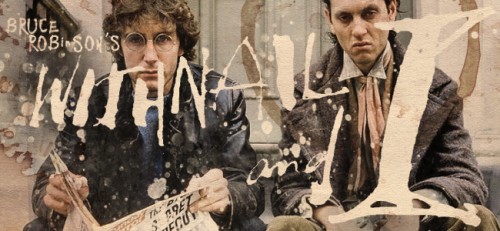
In the film Withnail and I, there are a grand total of four women, only two of whom have any lines, and even then, only a handful. That considered, the film is actually quite interesting from a gender standpoint. Its two protagonists, Withnail, and “I” (named in the script as Marwood), are out of work actors in 1969, strung out and skint broke. Within the world of the film, which deals largely with people who are “outside” mainstream society in one way or another, the stereotypically feminine serves as a marker for the other, and in some cases, the deviant.

Both the two protagonists are marked as feminine in various ways. Withnail is effete and dandyish; Marwood is given to sensitivity and introspection. Both have hair which, while not hippyish by any measure, is nonetheless longer than standard; Marwood’s a tumble of Pre-Raphaelite curls, whilst Withnail’s is viciously slicked back. At one point, Withnail sneers that he’s been turned down from a job because his hair is too long. Their drug dealer, Danny, has hair to his shoulders, and in one scene, expounds on the virtues of long hair, saying, “I don’t advise a haircut, man. …Hairs are your aerials. They pick up signals from the cosmos, and transmit them directly into the brain. This is the reason bald-headed men are uptight.”* Even though this is clearly drugged-up nonsense, it’s a moment of great symbolic significance at the end of the film, when we see that Marwood has shorn his curls in favour of a 1914 cut.

The protagonists
The protagonists


In a scene early on in the film, Withnail throws up over Marwood’s boots after drinking anti-freeze, and to get rid of the smell, Marwood scrubs them with essence of petunia. Later on, down their local boozer, a huge drunk calls Marwood a “perfumed ponce” as he’s on his way to the lavatory. Now, paranoia is one of Marwood’s consistent character traits, but it’s interesting that his reaction to this is a very near cousin to the way a woman might react to similar harassment. He doesn’t snap back, or get annoyed or defensive at the implication; instead, he tries not to react visibly, whilst internally he panics, very aware of the potentially sexual danger the man might present.

As he stands in the toilet cubicle, he notices graffiti on the wall reading I FUCK ARSES, and his voiceover-ed internal monologue seizes on it immediately. “I fuck arses? Who fucks arses? Maybe he fucks arses. Maybe he’s written this in some moment of drunken sincerity. I’m in considerable danger; I must get out of here at once.” Similarly, later in the film, in the face of Uncle Monty’s uncomfortable advances, he adopts a tactic recognisable to probably any woman. Smiling compulsive, nervous smiles, he tries desperately to deflect Monty with politeness and changes of topic.

Marwood is therefore not only perceived by others to have feminine qualities, he reacts to that perception in what is not a stereotypically masculine fashion. When he thinks about the drunk, it is to cast him as comparatively more masculine than himself; “I don’t consciously offend big men like this. This one has a definite imbalance of hormone in him. Get any more masculine than him and you’d have to live up a tree.” Even the phrasing, “I don’t consciously offend big men like this,” implies that this is something that happens even when he doesn’t have essence of petunia all over his boots.

withnail-and-i-04-400-80

Another heavily feminised male character is Withnail’s Uncle Monty, whose cottage in the Lake District Withnail and Marwood go to stay at. Monty is instantly recognisable as a caricature of the faded old theatre queen; he lives alone with his cat and his memories, his manner of speech is elaborate and affected. He giggles and simpers and emotes at the slightest provocation. He also ticks all the boxes of the predatory homosexual. In his first scene, he remarks with relish that “There is a certain je ne sais quoi – oh, so very special – about a firm… young… carrot,” to the obvious discomfort of Marwood, and later in the film, once he’s joined Withnail and Marwood at Crow Crag, sexually harasses and assaults Marwood.

It is interesting to note that prior to the scene of the attempted rape, though his behaviour is marked as feminine in appearance, Monty seems to be nothing but a thoroughly average English gentleman. When he comes to Marwood’s room, however, he’s dressed in a silk dressing gown and velvet slippers, and wearing makeup. Not garish makeup either–delicately applied rouge, a little bit of eyeshadow, a smudge of lip colour. The contrast between his appearance and his behaviour in this scene is striking, whilst visually coded as very feminine, Monty is aggressively sexual, physically looming over Marwood, backing him into a corner and growling that “I mean to have you, even if it must be burglary!” This is not to say, of course, that feminine people cannot be sexually aggressive and dangerous, but that societal standards have designated this kind of behaviour as the extreme of masculine.

Consistently, then, femininity in men is dangerous. It may be actively dangerous, as in Uncle Monty, who assaults Marwood whilst in near-drag, or passively dangerous, in that it makes the feminine man a target for harassment, as in the lout at the pub who calls Marwood a perfumed ponce. Ultimately, it is dangerous because it marks the other, and to be other is to be in danger. When Marwood cuts his hair, it is because he’s landed a leading role in a play and is leaving Withnail’s kind of life for the safety of employment, of making a living in a socially-sanctioned fashion.

Do I think this portrayal of femininity in men as dangerous is intentional? No, I don’t. Withnail and I is in a lot of ways a love letter to a certain period in Bruce Robinson’s life, and to his friend Viv, off whom Withnail is based. A cynical, twisted sort of love letter, certainly, but one that feels to me sad, and fond, and which looks with affection at those who are marked as other within it. It’s still very interesting, though, to look at this pattern and what it says about our society, where femininity is simultaneously vulnerable and sexually dangerous, and to be feminine is automatically to be outside the norm.

*All quotes used in this article are from the screenplay, rather than the film itself, and so may differ in places from the dialogue as it is in the movie.


Barrett Vann has just graduated from the University of Minnesota with degrees in English and Linguistics. An unabashed geek, she’s into cosplay, literary analysis, high fantasy, and queer theory. Now that she’s left school, she hopes to find a real job so in a few years she can tackle grad school for playwrighting or screenwriting, and become one of those starving artist types.

Maude and The Dude: Feminism and Masculinity in The Big Lebowski (1998)

Populated by mostly male characters, The Big Lebowski is, to some extent, a tale of male friendship. Nevertheless, the cult comedy should never be interpreted and celebrated as exclusively a guy’s film. The Big Lebowski offers an amusing, subversive portrait of masculinity and features an excellent comic performance by one of the most gifted actresses working today. What’s more, it suggests that the future is matriarchal.

A poster of The Big Lebowski


Written by Rachael Johnson as part of our theme week on Cult Films and B Movies.

Stuffed with unique characters and superb comic performances, The Big Lebowski is an insanely enjoyable crime caper about mistaken identity, fake kidnapping and fraud. Set in LA in the early 90s, its cast of characters includes zealous bowlers, avant-garde artists and Malibu pornographers. Perfectly played by Jeff Bridges, the hero is Jeff Lebowski, an ageing hippie and contemporary slacker who prefers to be called “The Dude.” Referencing The Big Sleep and the screwball comedy, The Big Lebowski has scenes of surreal visual wit and a wonderfully funny script. The movie was, bizarrely enough, neither a great commercial or critical success when it was released in 1998. Nonetheless, affection for it has grown and the pot-smoking, White Russian-drinking Dude has become a beloved icon of contemporary American cinema. There are now academic conferences and festivals dedicated to The Big Lebowski as well as a faith. Yes, Dudeism is truly a cult.

I will not go into the mad plot in detail but the central premise of the tale is that the Dude is mistaken for a pompous, paraplegic, elderly tycoon (David Huddleston) who shares his name. I am more interested in the brothers’ comic characterizations of the two Mr. Lebowskis, the older man’s adult daughter, Maude, and his young ‘trophy wife’, Bunny. I will draw particular attention to their portraits of the Dude and the tycoon’s daughter. As with the men, the women of the film could not be more different. Maude (Julianne Moore) is a somewhat snooty feminist artist who has decided to have a child and Bunny (Tara Reid) is a nymphomaniac with links to the porn industry. I will not only look at the Coens’ representation of women in the comedy but will also examine their ideas about masculinity. Let us first consider the Dude.

Feminist artist Maude Lebowski (Julianne Moore)


We first see the Dude wandering through a supermarket late at night, being contemptuously eyed by the sales clerk. When he finally goes to the counter, the Dude casts a look at George Bush Senior giving a statement on the store’s television. This is around the time of the first US-Iraq War and the President is issuing a warning: “This will not stand, this aggression against Kuwait.” As not a few Lebowski scholars have rightly noted, the movie’s hero does not conform to capitalist and militarist models of American masculinity. We do not really know how he does it but the Dude survives quite happily outside the world of work. A man without ambition is still considered atypical or odd in society. He is, to a considerable extent, a subversive being. The Dude’s laid-back, pleasure-loving ways are both amusing and appealing to both male and female viewers. It is no accident that we first see the Dude in a supermarket. His relaxed lifestyle, modest apartment and endearingly scruffy appearance all give the finger to the consumerist ethos. The Dude is also a pacifist with a radical past. He claims that he was an author of the original Port Huron statement as well as one of the Seattle Seven. The dominant placing in his home of the iconic photo of Nixon bowling is also a tongue in cheek expression of his anti-establishment politics. The Dude’s personality and progressive values are at odds with the military-industrial complex. Frankly, I think the film’s great cult appeal in both the US and around the world is due, in considerable part, to his peace-loving personality and progressive principles. The Dude appears to be the antithesis of macho American militarism. The cowboy narrator (Sam Elliot) who begins and finishes the tale may be a charming, dreamy character but he is intended as a send-up of a mythic figure of American masculinity. The characterization of the Dude’s buddy Walter Sobchak (John Goodman) as a ham-fisted, egotistical, Vietnam-obsessed nut also serves as a parody of American power. The old-fashioned, obsolete storyteller introduces us to a different kind of man.

The Dude (Jeff Bridges)


The Dude also displays pretty feminist leanings in his recognition of society’s commodification of the female body. A desiring heterosexual man, he openly flirts with Bunny and happily beds Maude. Pornography, however, does not seem to play a significant part of his single sex life. “Mr. Treehorn treats objects like women,” the Dude cries at one point about a certain Malibu-based pornographer named Jackie Treehorn. His upside down observation points to a certain progressive awareness. When Maude shows him a clip of Logjammin’, a film directed by Treehorn and starring her stepmother, his response is droll and sardonic. In the film, a cable man appears at the apartment of two young women. Bunny is semi-dressed and her roommate is topless. Maude notes how “ludicrous” the story is and the Dude responds with a somewhat unexpected sharpness.

Maude: Lord. You can imagine where it goes from here.

Dude: He fixes the cable?

When the Dude encounters Treehorn himself, he is impressed by the man’s pad but not his ambitions. He is not convinced by the director’s promises of technological advancements in the industry and sees through his artistic pretensions. The following snippet amusingly illustrates his skepticism:

Jackie Treehorn: I deal in publishing, entertainment, political advocacy.

The Dude: Which one’s Logjammin’?

“Real-life” incidents and hallucinatory sequences indicate that the Dude manifests classic Freudian fears of castration but I suspect that it is the Dude’s mostly uncomplicated, easy masculinity–as well as laid-back ways and good nature–that make him an unsuspecting (initially at least) sperm donor for Maude.

A different kind of man and hero


The Dude’s first proper meeting with the feminist artist is at her loft. Maude’s eye-catching entrance is literally over the top. Passing directly over him, she sails through the air on ropes before spraying paint on the canvas below. When she descends and frees herself from the harness, we see that she performs her conceptual art in the nude. She dresses and approaches the Dude. With her geometric bob and green velvet robe, the pale, red-haired Maude has a markedly Bohemian look. In a composed though dramatic voice, she fires questions about sex at the Dude. “Does the female form make you uncomfortable, Mr Lebowski?” she asks. The Dude does not seem at all uncomfortable. Maude explains, “My art has been commended as being strongly vaginal which bothers some men. The word itself makes some men uncomfortable. Vagina.” The Dude remains unfazed. Maude seems to have a mid-Atlantic accent. Her crystal-clear enunciation of “vagina” is, in any case, quite special. The Dude is primarily interested in his missing carpet–watch the film!–but Maude continues to ask him if he likes sex. Before he has the chance to answer, she tells him, “The male myth about feminists is that we hate sex. It can be a natural, zesty enterprise…” She then defines satyriasis and nymphomania for him before informing him that Bunny suffers from the latter. What is comic is incongruous, of course, and the interplay between the two is both very funny and well-observed.

In their portrait of Maude, the Coens appear to paint the conceptual artist as pretentious. Their characterization parodies so-called self-regarding aesthetic styles and artsy affectations. In another scene set in her studio, Maude laughs eccentrically on the phone to Italy. Her male colleague in the room giggles along with her. Their laughter is shown to be smug and silly. It is a pointed critique but–as with all satirical portraits–the intention is to shame human–male and female–vanity. The target of the Coens’ satire here is, also, the narcissism of the affluent artist. What is potentially more problematic is their parody of a female, feminist artist. The references to self-referential portraits and nudity are intended to allude to feminist artistic traditions. However, the mocking is not nasty but knowing, and these references could also be meant to ironically refer to popular notions of feminism. Although crafty and patronizing, Maude is not a hateful, misogynistic projection. She is, rather, a richly singular, strong and amusing comic character. Moreover, her theatrical, over-the-top nature actually functions to upset such readings. Julianne Moore’s interpretation of Maude is both vivid and clever and should always be highlighted in pop culture discussions of the comedy.

In bed with The Dude


The Dude and Maude have sex when she later appears without warning at his home. She opens her robe and simply says, “Love me, Jeffrey.” Cut to the Dude smoking a post-coital jay while Maude asks questions about his background and lifestyle. Her face remains impassive as he tells of his radical days and love of bowling but you can tell that she is not impressed. A brief hope that he may have had musical talents is swiftly extinguished when he tells her that he used to a roadie for Metallica. The Dude is initially unaware that Maude has chosen him as a sperm donor and is, quite naturally, taken back by her desire to have a child with him. Quite hilariously, she responds by scolding him for his superficiality: “Well yes, what did you think this was all about–fun and games? I want a child.” However, the Dude does not seem bothered by his purely reproductive role when Maude tells him: “Look Jeffrey, I don’t want a partner. In fact, I don’t want the partner to be someone that I have to see socially or have any interest in raising the child himself.” Maude’s unabashed self-interest and imperious air amuse the viewer. The Dude’s castration anxieties may ironically refer to his lack of sway over Maude and misogynist fears of castrating feminists but the Dude is fundamentally quite happy to provide for his feminist “lady friend” and do what she wants. In a celebrated hallucinatory sequence, a film within a film, Maude plays a commanding Valkyrie.

What is, of course, arguably more predictable and disappointing about The Big Lebowski is the small number of female characters. There is only one other female character of note in the comedy: Bunny Lebowski. Bunny is a Californian stereotype: a tanned, party-loving blonde. The Coens do, in a way, sabotage the stereotype through exaggeration: Bunny is not portrayed as a victim but as an outrageously self-assertive, promiscuous young woman. When the Dude first encounters her relaxing by the pool, she makes him the following offer: “I’ll suck your cock for a thousand dollars.” There is also, it is true, no female solidarity shown by the main female characters in the film. Maude does not like or approve of her stepmother. Although a feminist, she seems to have no problem calling a Bunny a slut. It is not surprising, however, that there is no love lost between them. Seemingly loyal to the memory of her late mother, Maude is, quite understandably, not overjoyed at her father’s marriage to a much younger “trophy wife.” As a feminist, she also cannot commend Bunny’s pornographic experiences.

Bunny Lebowski (Tara Reid)


There is, also, perhaps, a less progressive side to the Coens’ portrait of Maude. Is she not yet another female character in a Coen Brothers movie pregnant or craving a child? Think Fargo or Raising Arizona. What to make of this tendency? Is it pro-natalist or merely life-affirming? Does it reflect male awe of fertility and indicate an endorsement of matriarchy? What makes The Big Lebowski more subversive, however, than Raising Arizona is that the female character is a single mother who does not want a father for her child and has no need for a male provider. Maude is a fundamentally anti-patriarchal cult heroine. She should, therefore, be celebrated by feminist dudettes or dudes everywhere.

It is Maude who sheds light on the real state of the Big Lebowski’s wealth and power. She explains to the Dude that her father does not have money in his own right and that her mother was the wealthy one. We also learn that Lebowski’s role in the company is actually inconsequential. He helps oversee the charities and is given “a reasonable allowance” by Maude. The old man was, moreover, not a great professional success in the past. “We did let him run one of the companies briefly but he didn’t do very well at it,” his daughter explains. The Dude responds with initial wonder but Maude convinces him that this is the case: “I know how he likes to present himself. Father’s weakness is vanity, hence the slut.” Maude not only helps The Dude get a handle on the schemes surrounding him but she also punctures masculine vanity and shines a light on the pretensions of fathers. Personified by Maude’s father, patriarchy is shown to be fraudulent in the Big Lebowski. The dominant placing of Dude’s iconic poster of Nixon in his home, of course, serves as a knowing comment on fallen, deceitful fathers.

Valkyrie
Valkyrie


At the end of the movie, the cowboy narrator assures us, “I happen to know there’s a little Lebowski on the way.” The Coens’ zany Valentine to Californian eccentricity does not end in marriage or even cohabitation. This ending is amusingly intended as a satisfying resolution for both genders. It may not be romantic but both the hero and his “lady friend” get what they want: Maude is blessed with a little Lebowski and the Dude contentedly returns to his old life. The Big Lebowski simultaneously salutes the freedoms of unconventional men as well as female reproductive agency and power. Populated by mostly male characters, The Big Lebowski is, to some extent, a tale of male friendship. Nevertheless, the cult comedy should never be interpreted and celebrated as exclusively a guy’s film. The Big Lebowski offers an amusing, subversive portrait of masculinity and features an excellent comic performance by one of the most gifted actresses working today. What’s more, it suggests that the future is matriarchal.


‘Earth Girls Are Easy’ and Charming

Being set in the Valley in the 80s, the film portrays much of the vapidness and consumerism popular at the time, with two of the film’s songs, “Brand New Girl,” and “’Cause I’m a Blonde,” focusing on changing or criticizing women’s appearances. “’Cause I’m a Blonde” is purposely satirical, however, and really serves more to make fun of the blonde “Valley Girl” stereotype than to support it.

Earth
Earth Girls Are Easy poster


This guest post by Libby White appears as part of our theme week on Cult Films and B Movies.

I’ve loved Earth Girls Are Easy since I was a child. My mother and I would watch it together regularly, even though many of the sexual moments went beyond my comprehension at the time. Having become an adult in the 80s, my mother was a big fan of shows like In Living Color, and Star Trek: The Next Generation. And Earth Girls Are Easy can best be described as the love child of both.

Campy, with over-the-top 80s style, and catchy, but ridiculous, musical numbers, it was a box office flop that faded into obscurity for many years. But it prevailed and has recently reemerged (thanks to DVD and the Internet), and has become a fledgling cult classic.

The pre-makeover aliens


Taking place in San Fernando Valley, California, the movie revolves around Valerie Gail (Geena Davis), a love-sick manicurist who is desperate to please her unfaithful fiancé, Ted. A classic Valley-girl and hopelessly devoted, Valerie is shocked when a spaceship carrying three aliens suddenly lands in her pool one morning. When she realizes the three creatures are harmless, she takes them to her salon to be made over by her friend Candy (Julie Brown). Sheared of their colorful fur, the two women are delighted to realize that underneath, the aliens appear like normal, even attractive, human men. They decide to take the aliens out on the town, and end up at a crowded club, where Zeebo and Wiploc (Damon Wayans and Jim Carrey), become hits with the club’s women. Mac (Jeff Goldblum), has his eyes set on Valerie, however, and the two share a quiet moment together on the roof.

Earth girls and their aliens


When Valerie finally takes the men back home, Ted is there waiting, and demands that the three men leave his house. Valerie reminds Ted that he no longer is welcome due to his cheating, and the police come and take him away. In an attempt to console her, Mac follows Valerie to her bedroom, and the two end up making love.

The next morning, Mac, Wiploc, and Zeebo repair the spaceship, and Mac announces that they will be ready to leave shortly. Valerie is visibly crestfallen, but is interrupted by an apologetic phone call from Ted. Unbeknownst to Valerie, Mac overhears her trying to work things out with Ted. Meanwhile outside, Woody, a pool-boy, comes by and convinces Wiploc and Zeebo to go to the beach with him to pick up women, and the three get caught up in an accidental robbery, a police chase, and a forced trip to the hospital. Valerie and Mac team up to break them out, using the aliens’ otherworldly powers to fool Ted, the attending doctor, and escape.

When they arrive back at home, Mac, believing Valerie to still be in love with Ted, uses his powers to distract her while he and his comrades move onto the now-working spaceship. Valerie snaps out of it however, and admits to Mac that she has fallen in love with him, and jumps onto the ship to join him. Candy happens by just as they take off into the sunset, and Valerie waves goodbye.

Valerie and Mac
Valerie and Mac


The casting for Earth Girls Are Easy is one of its best attributes, and it feels as if each character is essential to the movie. Each actor brought with him or her a special spark to the film from his or her own personal styles; Damon Wayans and Jim Carrey being the comedy, Jeff Goldblum the smoldering seduction, Julie Brown the music, and Geena Davis, the charisma.

Geena Davis is a long-time advocate for the fair representation of women in media, and has been a feminist icon for decades. And while Earth Girls was filmed several years before her rise into activism, Valerie Gail is a good female character (despite such stereotypical flaws as occasional air-headedness and thinking marriage will fix all of a relationship’s problems). She is the voice of reason to Candy’s party-girl recklessness with the aliens, and is as loyal as they come to those she cares about. And the chemistry between Geena Davis and Jeff Goldblum is palpable. Considering the two were married at the time of filming, it’s easy to believe that Valerie could meet and fall in love with Mac all within a day. Damon Wayans’ and Jim Carrey’s characters are adorably hilarious as well, stealing scene after scene with their constant troublemaking.

Julie Brown is truly at home as Candy, having both written and produced Earth Girls Are Easy based off of one of her original songs. She went on to make a stage show version of the film as well, clips of which can be found online. Several of Brown’s songs are included in the movie, either as major musical numbers or as background music. And while her “Valley Girl” characters are a defining part of her career, underneath the 80s slang, Brown is a triple-threat of talent. It is no question that without her, Earth Girls would have lost  its fun spirit.

Valerie and Candy
Valerie and Candy


Being set in the Valley in the 80s, the film portrays much of the vapidness and consumerism popular at the time, with two of the film’s songs, “Brand New Girl,” and “’Cause I’m a Blonde,” focusing on changing or criticizing women’s appearances. “’Cause I’m a Blonde” is purposely satirical, however, and really serves more to make fun of the blonde “Valley Girl” stereotype than to support it. There is even a cameo from a long-forgotten social icon, Angelyne, which furthers the movie’s mocking of itself.  Angelyne, while only briefly seen, was nominated for a Raspberry Award for her performance in Earth Girls, demonstrating the underlying level of petty hatred the public had for her and the lifestyle she represented. Still, Earth Girls itself almost tries to up-play the vapidness of its characters as a parody, as if trying to get the audience to laugh at the incredulousness of their behavior, while simultaneously rooting for them. More than 20 years later, I can only guess that the film originally provided a sense of escapism to the curious. A dose of supposed “Valley life” for those on the outside.

At times the movie can feel jarring; the most notable scene being when a conversation by the pool suddenly cuts to the musical number, “’Cause I’m a Blonde.” This was done to make up for several scenes that had been dropped from the final cut, and ends up leaving certain transitions into scenes overly noticeable.

Like every cult classic, Earth Girls Are Easy isn’t without its flaws. Luckily, its charm outweighs its imperfections. And while its high-energy goofiness may not be for everyone, it nevertheless has slowly been climbing the ranks of  Cult Classics as it is rediscovered by old and new generations. If you ever need a shot of perky and fun energy, Earth Girls is the perfect film to deliver it.


Libby White is a self-proclaimed cinephile and Volunteer Firefighter who currently works as a Guard for Nissan’s headquarters in Tennessee.

Cult Truth: Why The Raunchy ‘Rocky Horror Picture Show’ is Hilariously Humanizing

When the movie begins we’re introduced to Brad, a hero (Barry Bostiwck) and Janet, a heroine (Susan Sarandon), two straight-laced representations of the all-American, white middle class Christian boy and girl who are suddenly thrown into a den of loose morals and provocative dancing. At all turns, we’re blatantly reminded of their status as a proxy for a nice boy and a good girl, and it’s reinforced with every cliché possible.

Written by Rachel Redfern

rhps1
Even the posted screams, “I Am a Cult Classic!”

It doesn’t get more cult classic than the most cultish of all films, The Rocky Horror Picture Show. In fact, I would assert that RHPS (Rocky Horror Picture Show to fans or the “Unconventional Conventionalists“) is the first great cult film.

While many cult films have fan websites and forums, and even conferences and gatherings, they probably haven’t been shown in a movie theater continuously since 1976 (making the RHPS the longest running theatrical release in history), and they most probably are not shows with audience participation. A true showing of RHPS has a script for audience members in response to certain phrases and cues from the film, and some showings even include props, such as toast, frankfurters, confetti, toilet paper, rice, a whistle, a flashlight, newspapers, water guns, and more.

If you haven’t seen the movie, here is the summary my mother gave to me when I first learned of the film in high school: Dr. Frank-N-Furter is a transvestite who really wants to get laid and creates himself a man with “blond hair and a tan.”

If you haven’t seen it, most of this review might seem like the crazed wanderings of a feminist mind, but only because the film is the crazed wanderings of some kind of mind. And while the Glee tribute episode was well done, it can never compare to the sheer raunch and random hilarity of the original.

rhps2
Tim Curry in his ultimate roll

The original had a young, unheard-of Tim Curry as Dr. Frank-N-Furter in one of the most amazing performances of all time; his full-bodied commitment (pun intended) to the part of a flamboyant drag queen is fantastic. I weep a little every time I watch it at the realization that Tim Curry looks better in a corset and garters than I do, and he is rockin’ it with a confidence that would make Lady Gaga jealous.

[youtube_sc url=”http://youtu.be/lwUjJXxoGy4″]

RHPS talks a lot about illusion vs. reality, time vs. space, meaning vs. nonsense, all while mockingly, and seriously, parodying the science fiction genre, having been intentionally set up as a parody of B-movies. But the film is also a gender-bending festival of sexual exploration embodying the sexual awakening of the 60s and later, the 70s, when the Western world was coming to grips with their new social mores: the film is an obvious exploration of the incorporation and aftermath of the feminist movement and sexual freedom.

Why is it that so much of our ideologies and idiosyncrasies are revealed in parody and satire? Richard O’Brien (Riff-Raff in the film), who wrote and composed The Rocky Horror Picture Show, has been an outspoken advocate for removing cultural norms of establishing gender in children, since he himself identifies as transgender.

the_rocky_horror_picture_show_2
Brad and Janet before sex

When the movie begins we’re introduced to Brad, a hero (Barry Bostiwck) and Janet, a heroine (Susan Sarandon), two straight-laced representations of the all-American, white middle class Christian boy and girl who are suddenly thrown into a den of loose morals and provocative dancing.  At all turns, we’re blatantly reminded of their status as a proxy for a nice boy and a good girl, and it’s reinforced with every cliché possible.

For example, Janet faints and screams at the slightest noise and speaks in a breathy, sweet voice; she’s sexy, but also the girl next door. She’s obviously sexy because she doesn’t know she is, until she begins her own seduction of Rocky and sings out, “Touch me! I wanna be dirty!” in her very own musical number.

Brad is confident and protective, placing his arm around Janet and calming her, leading Frank-N-Furter to remark, ““How forceful you are Brad, such a perfect specimen of manhood,” and he is, of course, absolutely heterosexual until Frank-N-Furter crawls into his bed and the two have a happy, little romp, followed by a good smoke.  By the end of the film, Brad’s staunch conservativism is belied by the women’s dressing gown he wears and the lyrics of his last song, “It’s beyond me/help me Mommy/I’ll be good you’ll see/take this dream away/What’s this, let’s see/Oh I feel sexy/What’s come over me?”

Juxtaposed, however, with the happy minion of dancers and their choreographed “Time Warp” dance moves (my dream party) is the intense violence of Eddie’s death, and then his subsequent cannibalism. Eddie’s death is a mercy killing according to Frank-N-Furter because while charming, his muscles weren’t very nice.

As much as I enjoy the film, it is legitimately disturbing in its overtones of rape (toward Janet and Rocky), cannibalism, and gruesome violence. But in the midst of all the destruction, Frank-N-Furter turns to the camera and quips, “It’s not easy having a good time. Even a smile makes my face ache,” biting his finger coyly. It’s such a brilliant, meta moment of recognition for power and privilege and the way that terrible things are acted out in service to his desires.

RHPS-LobbyCard1L
The ending: Lingerie and Confusion

The climax of the film is “The Floor Show,” a confessional performance for each of the characters, held in an empty theater, there revealing their lusts, desires and insecurities. As the performance culminates, and Frank-N-Furter strips off his makeup, vulnerable, and bows to an imaginary crowd, it becomes apparent that everything has been just one big, grand performance. Dr. Scott remarks that, “society must be protected” and Frank-N-Furter removed, and thus, the pretension must go on.

It’s actually a fabulous narrative to couch the ideas of sexuality in, since admittedly, much of sexuality, in terms of preferences, sexual performance, orientation, pornography, and gender roles, are performances of stereotypes and long-held expectations.

A Study in Contrasts: ‘The Hunger’

Perhaps for the movie’s purposes, that doesn’t matter: the story seems to be far more driven by the desire to create an artistic film, rather than an intellectually/ethically/scientifically engaging narrative. The scientific aspect for example—the part of the film I found personally most engaging, that it is possible to tamper with the natural life-cycle, halting the aging process in its tracks—is touched upon but it seems, at least to me, to be more of a plot device for bringing Sarah into Miriam’s life than an attempt to explore an ethically challenging issue. The biology behind Miriam’s present state and the fate of her lovers is similarly irrelevant.

Bauhaus
John Blaylock in the opening scene, set to music by Bauhaus


This guest post by Amanda Civitello and Rebecca Bennett appears as part of our theme week on Cult Films and B Movies.

The Hunger, the 1983 art-house vampire flick by director Tony Scott, is perhaps the definition of “cult film,” with its plot, characterization, soundtrack, and costuming skirting the line between camp and Art. It might not be an especially good movie, despite its all-star cast – Catherine Deneuve stars as the immortal vampire, Miriam; David Bowie plays her centuries-old lover John; Susan Sarandon stars as Sarah, a scientific researcher who becomes Miriam’s new love interest – but it’s frequently beautiful and grotesque, often at the same time. It is, after all, a lavish vampire movie whose vampires are educated, cultured, and well-traveled, but definitely not “vegetarian.” Miriam and John live in a luxurious New York City townhouse decorated with antiquities that serve as a kind of timeline of her existence; she, after all, is an ancient Egyptian. John is a far more recent development (the 18th century) in her life, for the curse of Miriam’s existence is that those whom she turns enjoy an extraordinarily long lifespan, but are not immortal. Over the course of the film, we realize that John’s accelerated aging has put Miriam on the search for a new lover, so that she will not be alone when he finally expires. Dr. Sarah Roberts, a gerontologist, enters Miriam’s life at the perfect time. Ultimately, The Hunger succeeds as a work of visual art but fails on its narrative: rather than engage with the ethical issues raised by ancient vampires living and hunting in contemporary New York, it often refrains from exploring these complex tensions, privileging the visual over the story, making for a rich picture whose story falls flat. For those looking for a “classy” vampire movie for Halloween, this might be it – but be warned, art-house or not, The Hunger is incredibly bloody.

Bowie
David Bowie as John Blaylock


[RB]: The first thing that strikes me in watching the film is the interesting juxtaposition between the contemporary (1980s) and the classical. You see this in the soundtrack, of course, but also in the costuming and the set design. The Blaylock townhouse, for example, is filled with a seeming hodgepodge of antiquities and yet its inhabitants are thoroughly modern.

[AC]: I think it makes sense to approach the film this way, because it’s most successful as an audio-visual experience; it’s far less successful as a story. Let’s start with the music, because that’s something that almost overwhelms the film itself. The soundtrack is really beautiful in its blending of classical work (Ravel, Délibes, Allegri) with the original soundtrack by Howard Blake, and the occasional contemporary popular work.

Miriam
Catherine Deneuve as Miriam Blaylock


[RB]: And this is most effective when there’s more than one kind of contrast. For example, the scene in which the aging John attempts to feed is backed by upbeat hiphop but set within a vintage-looking space, with archways and pillars. Alongside the presence of the beatbox and rollerblades, there’s this fairly antique vampire attempting to murder someone for sustenance. Tony Scott reinforces and even exploits our natural tendency to compare and contrast in the way the scenes are constructed.

[AC]: And there’s the contrast between Miriam and John’s cultured daytime existence and the primal, animalistic nature of their nighttime excursions. I think the soundtrack is used really effectively to that end. Consider the love scene between Miriam and Sarah – which is largely responsible for the film’s cult status. It begins with an impromptu concert in which Miriam plays Délibes’s “The Flower Duet,” from the opera Lakmé, and then, as they go to bed, changes to a vocal performance of the duet. It’s a beautifully romantic, soft love scene, set as it is against such a heady, operatic song. And then Miriam removes the cap from her ankh pendant, and suddenly there’s blood – and through it all, the soundtrack continues with the duet.

Rollerblading
Rollerblading through the archways


[RB]: This is also the case when John murders Alice, one of their music students. She’s playing a beautifully haunting piece of music which continues even as John slits her throat. There seems to be a persistent juxtaposition of the horrific and bloody against the beautiful, such as during the love scene between Sarah and Miriam. The movie’s costuming is similarly effective. As well as simply serving to emphasise just how divine Deneuve truly is, there’s something of a vintage feel to her clothing which reiterates what we already know about her character—that Miriam is a centuries old vampire. I think it’s worth comparing Miriam and Sarah to make this distinction. Sarah is consistently dressed in distinctly modern clothes—androgynous suits and cotton t-shirts. Miriam, on the other hand, though hardly decked out in the eighteenth century garb we see in the flashback to the beginning of Miriam and John’s time together, seems to be somewhat inspired by the elegance of the 1940s.

[AC]: The Hunger is one of those films in which Deneuve was exclusively dressed by Yves Saint Laurent (another is Indochine). Sarandon was not. There’s such a contrast in the design and aesthetics of their clothes; using YSL sets Deneuve apart from everyone else, who wear whatever the wardrobe department rustled up. Miriam’s distinctive look – a big part of what Sarandon’s character deems “European” – is in large part the YSL look. YSL is for the modern, classically elegant, powerful woman – and I think that’s basically Miriam’s character, in a nutshell. That’s important when you’ve got Miriam, dressed to the nines in YSL suits and veiled hats, prowling a nightclub for unsuspecting people to murder. Because she’s wearing clothes that are identifiably YSL – and that don’t exist as “costumes” – the film is able to reinforce that contrast between Miriam’s refinement and animalism while emphasizing her modernity. She might be a glam vampire, but she’s not an Elizabethan caricature.

Classical music
Miriam, John, and their young music student, Alice


[RB]: You learn something new every day! YSL or not, I do still think that Miriam’s costumes serve to emphasise the fact her “otherness” for lack of a better word, as well as the rather dangerous brand of elegance and sensuality which draws people like John and Sarah into her web.

[AC]: I think the film encapsulates that attraction really well, but is confusing on other points. I haven’t read the novel (or its subsequent sequels), but I think part of the reason why the story fails is because it doesn’t elaborate on the novel’s ideas about the nature of vampirism, which takes a sci-fi approach. In the novel, Miriam wasn’t ever human; she’s a different kind of species that resists aging and is very hard to kill. She learns that she can transfer some of her traits, like an extended lifespan, to a lover by sharing blood. This explains why her lovers can’t be turned completely, and why they hover as empty shells. The central premise of the film doesn’t really make sense without this justification. If you approach the film with more traditional vampire lore in mind, you’re searching for a reasonable explanation for why the lovers she turns don’t turn all the way – and moreover, you have to try to work out how Miriam managed to get the way she is. The novel’s reasoning makes far more sense.

Club dudes
The Manhattan nightclub John and Miriam frequent in order to hunt


[RB]: Perhaps for the movie’s purposes, that doesn’t matter: the story seems to be far more driven by the desire to create an artistic film, rather than an intellectually/ethically/scientifically engaging narrative. The scientific aspect for example—the part of the film I found personally most engaging, that it is possible to tamper with the natural life-cycle, halting the aging process in its tracks—is touched upon but it seems, at least to me, to be more of a plot device for bringing Sarah into Miriam’s life than an attempt to explore an ethically challenging issue. The biology behind Miriam’s present state and the fate of her lovers is similarly irrelevant.

[AC]: One thing that I really wish the film had actually addressed is the tension of Miriam’s existence. We know that the fact that she’s condemned a parade of lovers to a miserable half-life, locked away in steel coffins but still “conscious,” tortures her. She actively looks to science to extend John’s life by following Sarah’s research; when it becomes apparent that he has declined beyond all hope, she mourns. And yet, she still turns her attention to someone new. Why?

Miriam and John in the club


[RB]: I suppose as distraught as Miriam might be by the loss of John and her many other lovers, loneliness would be worse. She loves her companions, but it would be worse to exist alone rather than remain faithful to the memory of what they once were and mourn perpetually. Or perhaps it simply serves to drive the narrative forward!

[AC]: And what does that say about her as a character? On the one hand, while it isn’t anything new to see a female villain, Miriam has a conscience. It’s almost as if she can’t help herself.

[RB]: I think it’s significant that she’s motivated by that fear of loneliness. After all, her former lovers are all trapped in those steel coffins because she cannot bear to kill them and end their suffering. It’s incredibly selfish – as is her plan to turn Sarah – but incredibly sad as well.

Miriam mourning
Miriam in mourning for John


[AC]: I have to say, I really despise the ending (in which her former lovers extract their revenge on Miriam, helping Sarah to make Miriam like them), because it doesn’t make sense. In the DVD commentary, Sarandon says, “All the rules that we’d spent the entire film delineating, that Miriam lived forever and was indestructible, and all the people that she transformed [eventually] died, and that I killed myself rather than be an addict [were ignored]. Suddenly I was kind of living, she was kind of half dying… Nobody knew what was going on, and I thought that was a shame.” And I think she’s right. Beyond being implausible in a narrative sense, the ending basically rewrites everything we’ve come to know about Sarah. I think it would have been a more satisfying end to the film to have seen Miriam in London, alone at her piano or, alternatively, with a new lover. It would have been a far more powerful statement for Sarah to have killed herself, and for the final scenes to show Miriam facing the prospect of eternity alone.


Amanda Civitello and Rebecca Bennett are the two halves of a very happy couple who became close while collaborating on this review of Sleepy Hollow, which probably makes them the first Bitch Flicks couple. Together they founded and edit Iris | New Fiction, a new, nonprofit literary magazine of fiction, poetry, and visual art for LGBTQ+ teens and their allies. Catch up with Amanda at her site and twitter, and say hi to Rebecca on twitter.


‘Night of the Living Dead’: Early Reception and Gender Performances

In terms of gender representations, both men and women are shown as the worst possible version of themselves. Barbra swings back and forth from being near catatonic and unable to communicate, to wild and hysterical. Ben even slaps her at one point to get her to snap out of her state. She is weak and unable to deal with the emotions of seeing her brother attacked. Barbra would have already been killed and reanimated were it not for the über masculine Ben to save her from the perils that lie outside.

Film poster for Night of the Living Dead

This guest post by Deirdre Crimmins appears as part of our theme week on Cult Films and B Movies.
George Romero’s 1968 horror classic Night of the Living Dead is a film that needs to be put into its proper context to truly appreciate it.  With this week’s focus on cult films, which are defined by their reception rather than standing alone as artists’ endeavors, it makes sense to first look at the film’s early history of release before diving into its mainly problematic gender representations.
Night of the Living Dead was a micro budgeted independent film, made by a group of filmmakers who had most of their filming experiences with advertising.  Romero had a life-long love of horror films (shooting one as a child on Super 8 led to a mishap that ended with him getting sent to boarding school), and he knew horror had potential for great profits.  After all, the ghouls (the modern zombie was essentially invented in this film, but Romero only referred to his reanimated dead as “ghouls” because the term zombie referred specifically to Haitian voodoo victims) in his film required very little makeup and were a cheap monster to create.
The film famously had two major setbacks early on.   First, Romero decided last minute to change the film’s title from Night of the Flesh Eaters.  Unfortunately, the copyright declaration on the original title card was not reinstated on the new one, and Night of the Living Dead has been in public domain ever since its initial release.  The second setback was a scathing review by Roger Ebert.  He had gone to see the film when it was playing as a matinée.  In the pre-multiplex era the earlier screening times were typically reserved for young children, and Night of the Living Dead was mistakenly programmed to be shown to a very young crowd.   Ebert lamented:
The kids in the audience were stunned. There was almost complete silence. The movie had stopped being delightfully scary about halfway through, and had become unexpectedly terrifying. There was a little girl across the aisle from me, maybe nine years old, who was sitting very still in her seat and crying.
After this review, other critics began discussing how to handle ultra-violence in film.  The expected suggestions of censorship, and comparisons to pornography were thrown around as the film suffered at the box office.  It wasn’t until Night of the Living Dead gained popularity in European film festivals that critics began to see the film as something truly groundbreaking.

Still from Night of the Living Dead

It is tough to see the film today as you would have 45 years ago, but the film itself really was something special.  To compare it to a contemporary horror film is one way to highlight its distinctiveness.  Rosemary’s Baby was released in 1968 as well, and is an equally worshipped horror classic.  That film, however, is in color, had recognizable actors starring in it, was beautifully scored, and was clearly a big budget production.  With this comparison, Night of the Living Dead was essentially the Blair Witch of its time.  It was set in a farm house and actually filmed at a farm house rather than an ersatz farm house in a studio lot somewhere in Hollywood.  The camera work is imperfect, and the sound is not polished.  The performances are raw and from unknown actors.  The ending of the film is frequently compared to Vietnam War footage, and that is exactly the frame of reference that audiences at the time were bringing to the film.  It felt more real than anything else they could see in the theater, and the effect is brutal.

The film is at its core an outbreak film.  Some sort of other worldly satellite debris is causing the dead in to come back to life and to feast upon the living.  This is very unfortunate for Barbra (Judith O’Dea) and her brother Johnny (Russell Streiner), as they are on their way to a cemetery to lay a wreath. Very quickly they are attacked, Johnny is killed, and Barbra is left to hysterically seek shelter.  She finds a farmhouse which is presumptively safer than the outside, but she is not alone.  Ben (Duane Jones) is a determined, organized, and armed man, who is on the house’s first floor.  In the basement a young couple, Tom and Judy (Keith Wayne and Judith Ridley) hide from the ghouls along with the Cooper family (Marilyn Eastman, Karl Hardman, and Kyra Schon).  As soon as Harry Cooper emerges from the basement, he and Ben fight about the best way to get out of the house and travel to one of the safe zones that the emergency broadcasters keep urging survivors to evacuate to.

Still from Night of the Living DEad

In terms of gender representations, both men and women are shown as the worst possible version of themselves.  Barbra swings back and forth from being near catatonic and unable to communicate, to wild and hysterical.  Ben even slaps her at one point to get her to snap out of her state.  She is weak and unable to deal with the emotions of seeing her brother attacked.  Barbra would have already been killed and reanimated were it not for the über masculine Ben to save her from the perils that lie outside.
Despite Barbra’s shortcomings, she is not the most negative character in Night of the Living Dead.  Both Ben and Harry’s overly masculine performances are what ultimately lead to the group’s downfall.  They are completely unwilling to compromise or even band together to save all of their lives.  Instead they bicker and insult one another, looking like a pair of Galapagos albatrosses in the middle of mating dance.  It is their pig-headed defiance, which means that they each resort to death before compromising their gender performances.  Had either one of them been more intent in survival over ego, they all may have survived.
None of the characters in Night of the Living Dead are the sort of folks that you would want to grab a cup of coffee with.  Though this was long before the introduction of the slasher sub-genre, Romero was on to something with maintaining characters that you don’t mind seeing killed.  No one in the audience was mourning Harry or Barbra when each of them was eaten by the undead.  Ben’s death is tragic, but more due to the timing of it than his good nature.  In the end the most interesting characters are the ones that are encircling the house, waiting to feast.  And isn’t that a wonderful prediction of the zombie film as we know it today?
nightlivingdeadgirl

Deirdre Crimmins lives in Boston with her husband and a non-spooky black cat. She wrote her Master’s thesis on George Romero and is a staff writer for http://www.allthingshorroronline.net/.