Luc Besson: Hero of the Feminist Antihero?

For the uninitiated, Nikita was the often too realistic story of a drug-addicted young woman who finds herself in jail after a robbery gone horribly wrong. Most filmmakers would have ended there, a cautionary tale of the woman led down the wrong path who ends up punished for her sins. But Besson took the story further; this broken young woman gets turned into an assassin that is used by her government to kill. The killing takes its toll on her, but she values her life and freedom over the other option provided her: death. She meets a guy, falls in love, and at the end of the day Nikita turned out to not be the same story I was used to.

Luc Besson
Luc Besson


This guest post by Shay Revolver appears as part of our theme week on Cult Films and B Movies.

From moment I laid eyes on the first frame of ET I have loved movies. I will watch anything on celluloid , breathe it in , just so that I can examine and explore every bit of awesomeness exuding from the screen. Good or bad, every film has something to offer. It’s kind of guaranteed, unless of course you’re a woman; then it sometimes can become a crap shoot. Having been born a woman, a minority woman at that, the chance of watching a film and identifying with the main character is slim to none. Sometimes that can be off putting, and I have learned to manage as best I could without taking myself out of the experience. Being a true lover of the art, I’ve learned to be forgiving and try to find the spot of light in the midst of the gender polarizing mess. I tend to go for complexity in art and for a very long time, I watched a parade of less than complex women be carted out in front of me on screen with a sole purpose of filling a very specific and stereotypical role. As a woman, most filmmakers will portray us as a prize to be won, an undeveloped side character, the quirky friend of the queen bee or the bitch. Growing up it was a jarring contrast to my real life where the women I was surrounded by were some of the strongest women I knew. I was raised a feminist. I was taught that my frilly dresses and love of pink were just as valid as my love of playing pool, video games, and climbing trees. I was raised to believe that everything was gender neutral, but that was never what I saw on screen. By the time I was close to hitting puberty, I had all but given up on the fantasy of seeing a strong, complex, multifaceted woman (of any race) on screen.

Most of the time when I get into this debate or lament the lack of strong female characters in media, fellow feminists speak of Joss Whedon. Despite my love-hate relationship with his work, I can see valid points in hailing him as the male champion of the strong female in the gender wars of visual media. But, what if the reigning white knight of strong female characters Joss Whedon isn’t femme powered enough for you? Where does a film loving gal like me go to find true complexity? Enter the often forgotten genius of Luc Besson. I have loved his work since a twelve year old Shay got her first glimpse of video that her big sister showed her. I fell in love with La Femme Nikita, the visuals, the style, the story and the lead. Besson doesn’t get as much credit as he should for his work. Not only does he create some of the easiest to relate to yet stunningly complex female anti-heroes to grace the silver screen, but he creates a world where women almost always end up happier and okay just being alone. Sure, there is a love interest, but he’s always a subplot or distraction on the female hero’s way to her end goal. Besson always has his female lead start from a place of weakness; they’ve had a hard, almost violent life experience, and after having gone through all manner of–often male inflicted–hell, they prevail. They soldier through the trauma. They don’t stay victims or acquiesce to the men in their life trying to save them. They do something that rarely happens on film; they think for and save themselves.
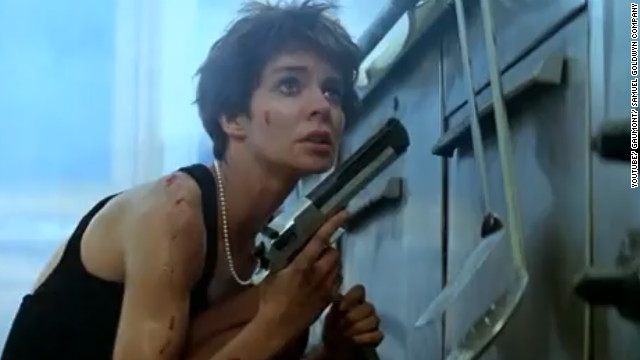
Anne Parilla as Nikita
Anne Parillaud as Nikita in La Femme Nikita


For the uninitiated, Nikita was the often too realistic story of a drug-addicted young woman who finds herself in jail after a robbery gone horribly wrong. Most filmmakers would have ended there, a cautionary tale of the woman led down the wrong path who ends up punished for her sins. But Besson took the story further; this broken young woman gets turned into an assassin that is used by her government to kill. The killing takes its toll on her, but she values her life and freedom over the other option provided her: death. She meets a guy, falls in love, and at the end of the day Nikita turned out to not be the same story I was used to. Besson takes the character from a scared, isolated, broken young woman and turns her into a slave to her own freedom. And then he does something that I hadn’t ever seen before. He lets her be her own hero. After an assassination gone wrong she sees her way out, a way to control her own destiny, and she does the unthinkable, she saves herself and escapes alone. She doesn’t end up with the guy, or stay as a puppet. She takes her evolution and goes off on her own to continue becoming the person that she wants to be. Watching her evolution and seeing all of the complexity that she possessed was an eye-opening journey, not just for the character, but for me as an artist.

Besson has spent his career showcasing strong women making their way through difficult situations, breaking down and then coming out the other end a little dirty, both literally and figuratively, with a delicate light shining on their sweat smeared faces. His world was filled with a range of all the complexities of human emotions and the evolution of women from girl to woman, finding a sweet spot of strength in between. His women were tough and strong because they needed to be. He showcased their beauty and didn’t feel the typical male filmmaker desire to make them man-hating, or imply that if only they had a man, their life would be so much better. In fact, most white knighting was turned on its head. There was no breaking of these women as punishment for their strength. Their strength and independence was shown as beautiful; it was a celebrated quality. It was what made them who they were and what got them out of the often dire end sequence that almost always had them being brutalized at the hands of one of their male antagonists. There was no cowering or apologies; in fact these women fought just as hard and just as strong as any man would. They were resilient and strong and, through Besson’s lens, these women were equals. True equals.
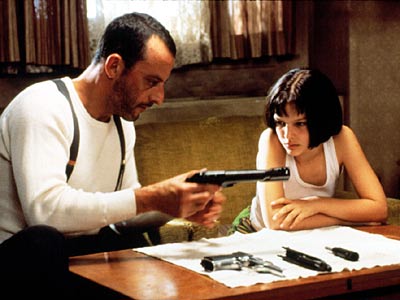
Natalie Portman as Mathilda in Leon: The Professional


In his American follow up to Nikita, he gave us a young Natalie Portman as an actual broken little girl bent on revenge who joins forces with an older assassin who she wants to learn from. There seemed to be a step back in Leon: The Professional because despite all the brilliant acting from Portman, Oldman & Reno, the female character in this film was an actual child, and she needed to be protected. But, in true Besson form, he gave her a voice. She wasn’t just vocal; she was strong and defiant, and even in the face of being overrun, shouted at, and abused by men, she held her own. She stood her ground and didn’t get the usual punishment that any other filmmaker would have doled out. Even in the end when Danny Aiello’s character forces her to go to school, it doesn’t seem like patriarchy at all. Her revenge had been accomplished; she was all alone, and it seemed fitting to know at the end of it all, she was going to be alright. She was going to have a chance to become whatever she wanted to become.

I found myself excited again when Besson showed up with Colombiana, and I could tell from the trailer that he was back to his wonderful old tricks. This was a return to the Besson style that I could so easily relate to, and he even threw in a woman of color as the lead. Like all of his other female characters, he didn’t make her a stereotype or a caricature or a piece of scenery whose sole purpose was to provide visual entertainment as a prize for the male characters. In a way, Colombiana was what you imagine might have happened to Mathilde if Leon had made her wait longer to go after her family’s killers. She was complete and whole onto herself. Colombiana showed an actual evolution of its lead from a little girl who fearlessly escaped to a grown woman with her own agenda of vengeance as a means to find peace. Her passion and emotion, much like all of his female leads, gets her into trouble but, in true Besson form, she fights her way out. In the end, when her mission is complete and her journey is over, she lets go of her rage and moves on to a new life. She wasn’t a soulless killer and worthy of pain, she was human, a little girl who fed the beast inside of her until it had had its fill. She was real, complex and human and we could relate to her pain and growth.

Zoe Saldana as Cataleya in Colombiana


A lot happened in between Nikita and Colombiana, but the messages stay the same. When Besson is directing you’re assured that there will be a woman in the lead and she will be complex, independent, strong and, with the exception of The Fifth Element, the love story would be a side story and not the main attraction. His resistance to making a romantic love story the core of the female antihero’s journey is one of the things I love about his work. When he does show us our lead’s romantic entanglements, he does show only a side story, a throwaway to the real star of the show, the woman and her journey. He makes the men part of her scenery, her manic pixie dream boys who show her how to lighten up and let go. An extra in the movie of her life whose sole purpose is to give her a glimpse at a life she could have when her journey is complete. He lets his female leads do exactly what any male director would allow their male lead to do without batting an eye. He doesn’t try to sugar coat the reality of the situation by showing them as permanent victims. He allows them to grow, evolve and be who they are, be it good, bad, or a work in progress. His camera loves strong women. Their strength is what makes them beautiful. It does not sexualize them or treat them as less than the men on screen. Through his lens we are all human and we are all equal. And, I can’t think of anything more feminist than that.


Shay Revolver is a vegan, feminist, cinephile, insomniac, recovering NYU student and former roller derby player currently working as a NY based microcinema filmmaker, web series creator and writer. She’s obsessed with most books , especially the Pop Culture and Philosophy series and loves movies & TV shows from low brow to high class. As long as the image is moving she’s all in and believes that everything is worth a watch. She still believes that movies make the best bedtime stories because books are a daytime activity to rev up your engine and once you flip that first page, you have to keep going until you finish it, and that is beautiful in its own right. She enjoys talking about the feminist perspective in comic book and gaming culture and the lack of gender equality in mainstream cinema and television productions. Twitter @socialslumber13.
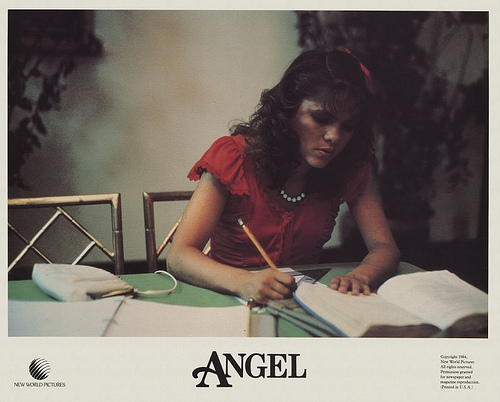
Fairytale Prostitution in ‘Angel’

Angel, a 1984 cult film, attempts to be both a melodrama about a teen hooker forced to face her life choices (as the trailer proclaims it “A Very Special Motion Picture”) and a very 80s crime thriller where a tough-talking street kid teams up with a cop to catch a killer, but the resulting film is a mess of clashing tones that seems more campy than hard-hitting.

Film poster
Film poster

This guest post by Elizabeth Kiy appears as part of our theme week on Cult Films and B Movies.

The prostitute is a common figure in the landscape of crime film–she’s a scared witness, a disposable victim or a condemned woman whose character is rarely fleshed out enough to reveal her as a person. In genres like melodrama and after-school specials, where she is a protagonist, the real-life horrors and anxiety of her work are made explicit and over shadow any possible upside.

Angel, a 1984 cult film, attempts to be both a melodrama about a teen hooker forced to face her life choices (as the trailer proclaims it “A Very Special Motion Picture”) and a very 80s crime thriller where a tough-talking street kid teams up with a cop to catch a killer, but the resulting film is a mess of clashing tones that seems more campy than hard-hitting.

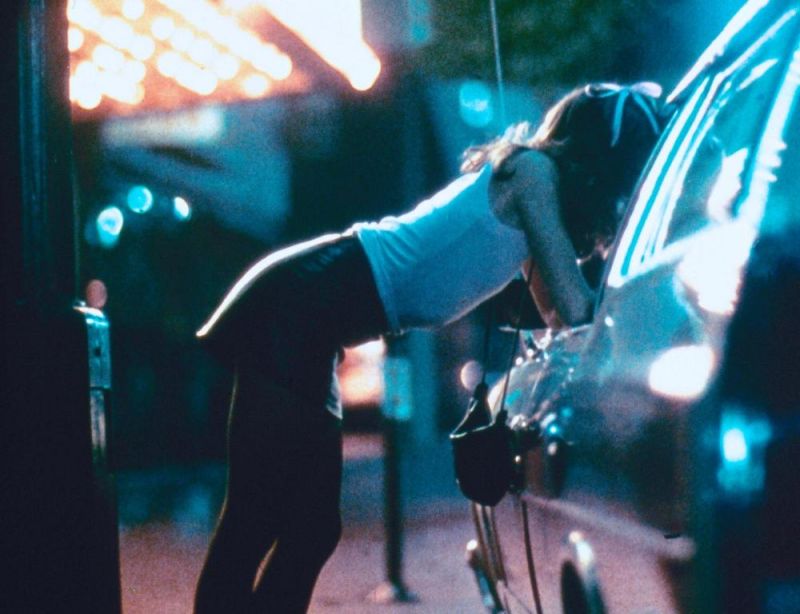
This conflict is clear in the music video for the film’s theme song, “You’ve Got Something Sweet” by the Allies, which hilariously juxtaposes bright, sitcom-ready music with images of men slipping money down a teenage girl’s shirt, the main character, Molly (Donna Wilkes) discovering her friend’s beaten and bloody body, the serial killer ominously shaving his head, and Molly running terrified. And then, in the midst of the lead up to a crime story, there are images of Molly fixing her make-up and walking down the street laughing and smiling.

What’s even more surprising is how much fun Molly’s life looks.

A typical image evoking street prostitution, similar to those used in news reports

In a real world context, the story of the movie is tragic: Abandoned by her parents, Molly has been working as a teenage prostitute since she was twelve, and the adults in her life who make up her surrogate family fail to provide her with other options or suggest they disapprove. While there are characters like the detective and Molly’s guidance counselor who want to help her and a moral message about the desperation and abandonment that give young women no choice but to turn to prostitution seems intended, the film is unwilling to commit to an entirely negative portrayal of Molly’s life.

Instead, viewers are presented with an extended teenage fantasy of complete independence and sexual exploration with bits about murder thrown in. Molly has all the things teenage girls want; there is no one who can tell her what to do, she feels beautiful and in control of her life, and her only moments of awkwardness stem from feeling more mature than her classmates. She lives comfortably in her own apartment, goes to a private school and, at the film’s start, seems to have no worries about the really awful things that could happen in the course of her work. Rather than portraying the detective story of typical violence on the streets or hooker murders that get swept under the rug, this murder case seems instead to be a momentary intrusion into Angel’s fairytale life.

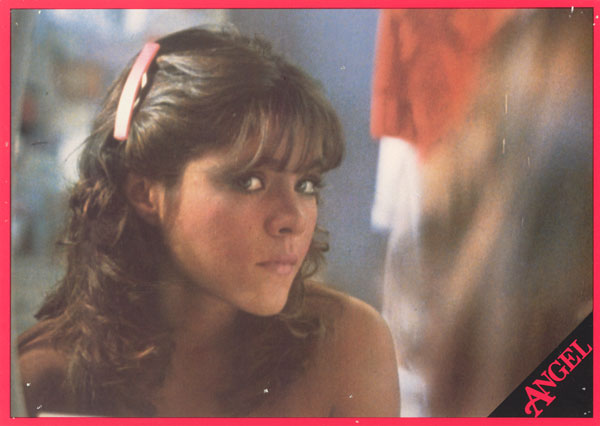
The sequence of Molly getting ready gives her a "glamor moment" familiar to most women
The sequence of Molly getting ready gives her a “glamor moment” familiar to most women

In one scene, soft music plays as Molly sits in front of the mirror, having a “glamor moment.” In a series of close-ups, she carefully puts on her make-up and fixes her hair, smiling excitedly at her reflection, transforming from school girl to sex worker.

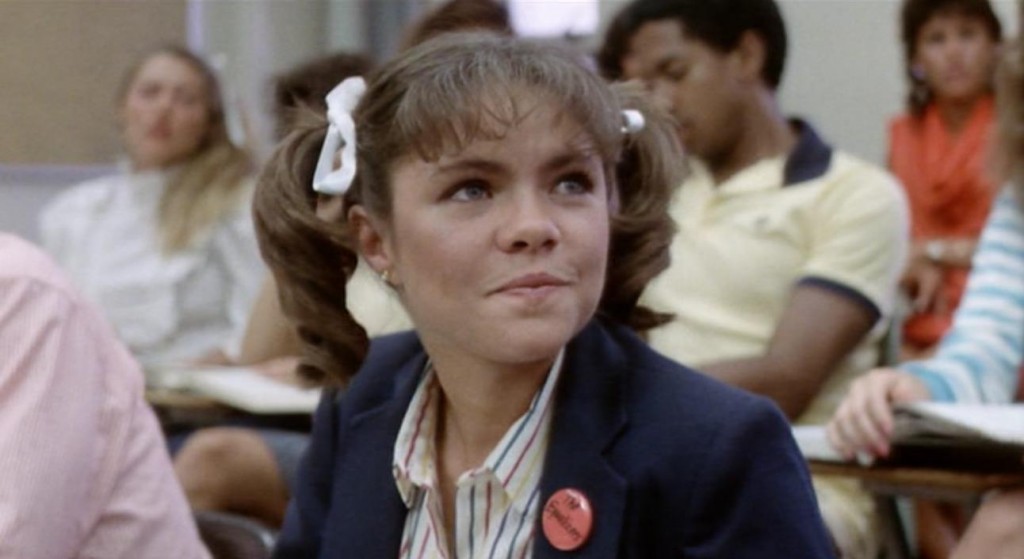
While the viewer knows the film’s protagonist is a prostitute going in because of its promotional material, the opening scenes of Molly at school function as if the viewer doesn’t know.

In doing so, the film drives the viewer to compare the two distinct images and attempts to make the contrast between them jarring.

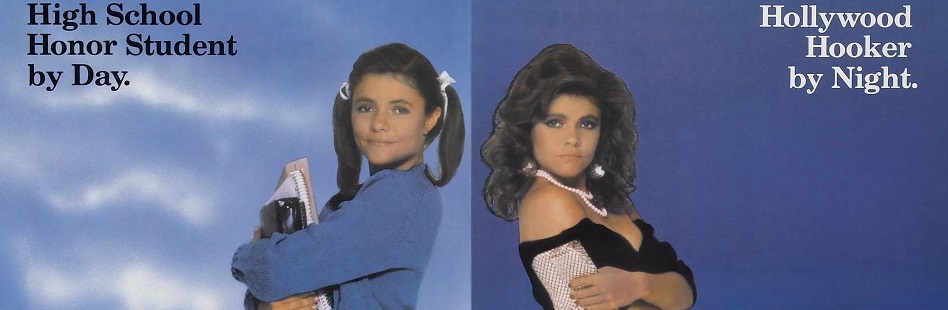
Molly is first introduced to viewers as an ordinary schoolgirl, as the film intends to contrast her two lives
Molly is introduced to viewers as an ordinary girl, as the film intends to contrast her two lives

A Madonna/Whore dichotomy is further suggested in the film’s posters, which read “High School Honor Student by Day, Hollywood Hooker by Night,” suggesting viewers will be shocked to discover they can be one and the same. (Streetwalkin’, a 1985 film has a similar tagline, “She dropped out of high school this morning. Tonight she’s a Times Square hooker.”)

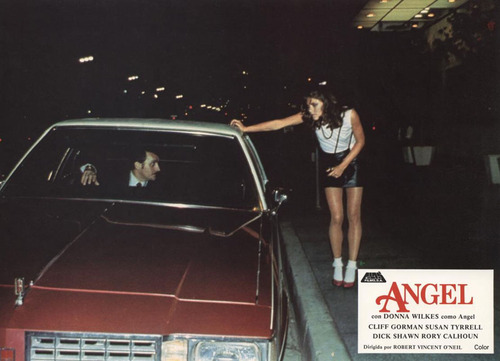
Instead, Molly could be a girl getting ready for a date or a dance. In the end result, she does not appear transformed, just a more polished version of her everyday self. Because this glamor moment is so familiar to many women from their own lives, it instead draws viewer identification and brings positive associations.

Though on one hand, the sequence suggests teenage Molly’s transformation to adulthood,  it could also be interpreted as a subtle indication that she is not as grown up as she feels she is. For me, this scene brings to mind young girls dressing up in their mothers’ clothes, projecting a grown-up image over a child body. As it is followed by scenes on city streets at night, it is also reminiscent of a girl going clubbing.

Dressed for work in lace socks and club-ready separates, Molly's transformation from schoolgirl to prostitute is far from extreme
Dressed for work in lace socks and club-ready separates, Molly’s transformation from schoolgirl to prostitute is far from extreme

In these scenes, Molly strolls confidently down the street, greeting people as she passes and sharing inside jokes and nicknames. When someone she passes condemns her for prostitution, she continues smiling, as if these outsiders will never understand her free and adventurous world. These scenes are portrayed as if she is going home, and to me, they recall walking though high school hallways and greeting friends.

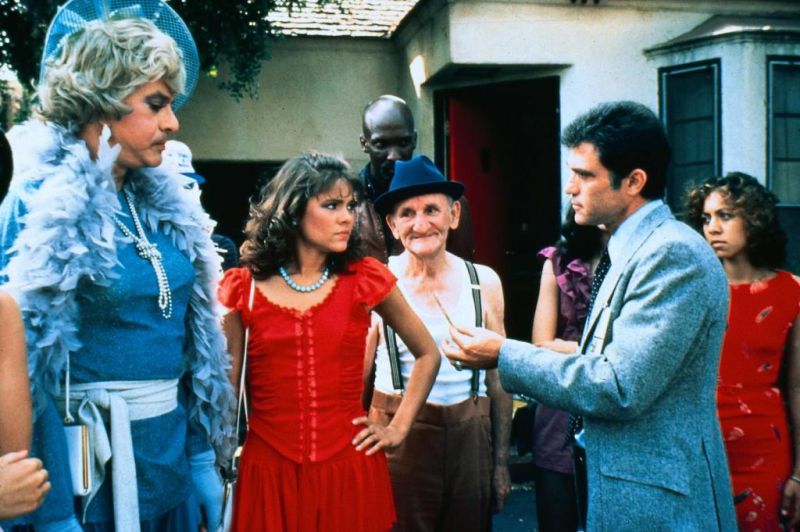
On the street, Molly has put together a surrogate family for herself, populated by the types of characters teenage girls growing up in the suburbs dream of finding in the city, Diane Arbus photos shot through the lens of Lisa Frank.

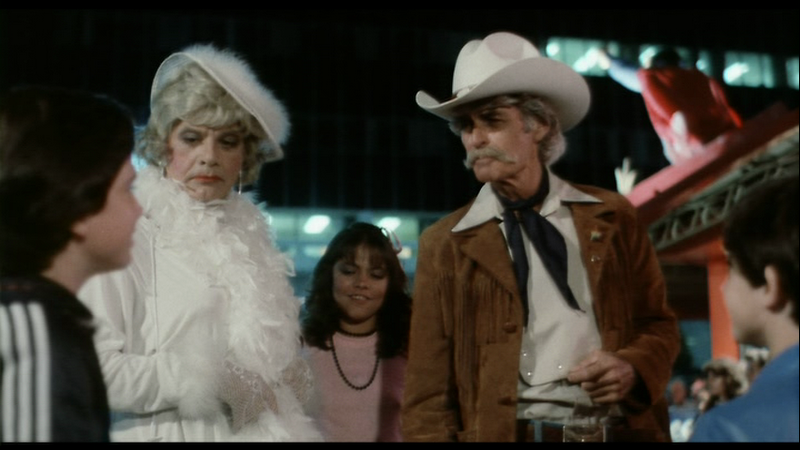
Molly enjoys quality time with Mae (Dick Shawn) and Kit Carson (Rory Calhoun), members of her street family
Molly enjoys quality time with Mae (Dick Shawn) and Kit (Rory Calhoun), members of her street family

Her friends, a transvestite who acts as her surrogate mother, a cowboy movie actor/stuntman, and a butch landlady are presented as outsiders who banded together to support each other in a world that had rejected them. This is mostly implied, but is shown literally through the cowboy, once a star but now a has-been doing stunts for money on the street. Because of this, in parts the film has a certain heartwarming tone, constantly reminding the viewer Molly has a “family” who loves her, even as it descends deeper into a crime thriller. Though she has the independence to be in charge of her life, she does not have to shoulder the burden alone.

The films seem to suggest that by working and supporting herself, she has matured past her peers and doesn’t belong in their world.  As such, one of Angel’s trailers repeats the line, “Angel, it’s her choice, her chance, her life,” glamorizing Molly’s independence and avoiding mention of the factors that made prostitution not a choice but a necessity for her.

By emphasizing Molly’s youth and innocence with the title Angel, the schoolgirl, already a figure of sexual fantasy for some, is cast here as an attainable object. The viewer is told that Molly is a hooker, but never sees her nude or actually having sex. Strangely, the high school cheerleaders she notices in the locker room, who are shown showering fully nude, are more sexualized than she is.

As such, the scene where Molly casually informs the detective that she’s slept with hundreds of men is difficult to believe based on how chastely she has been portrayed. To this end, the film portrays her as a child, joking with her friends and taking breaks from work to go get ice creams and do her homework in hotel lobbies.

Molly takes a break from work to finish her homework and keep up her honor student status

In school, Molly dresses childishly, with pigtails and matching pastels, perhaps to emphasize the contrast. While other prostitutes are dressed in skimpy lingerie or are topless, Molly’s hooker wear is not dissimilar from what a teenage girl would wear to a club.

Conversely, Molly’s independence could be seen as coming from the sacrifice of her innocence or virginity. She is allowed to inhabit dark, dangerous places her classmates will never see as she has entered into an illegal activity and with it, a criminal underworld. As a criminal in this respect, she is given qualities usually reserved for male characters, such as toughness, inclusion in masculine spaces and the ability to use a gun. She also displays enviable bravery as in calling the police, she risks arrest, exposure, or a foster home.

Lieutenant Andrews warns Molly about the killer and her high-risk lifestyle

Homicide detective Lieutenant Andrews, who would be the lead in any other crime drama, functions in relation to Molly and is presented as a secondary character. Viewers don’t see his life outside the case, and the film follows Molly’s story rather than his investigation. Though he is the adult and authority figure, she has power over him, both in his inability to actively save her and his reliance on her to find the killer. The film’s tonal clashes are also apparent in the image of Molly, a young girl in a dress and heels wielding a gun that nearly knocks her over when she fires it, which is presented for comedic effect. Rather than giving Molly the power to cooly seek vengeance for her friends, the suggested unnaturalness of this image through her girlish dress, small size and her friends’ attempts to stop her, further compounds her innocent image instead of tarnishing it.

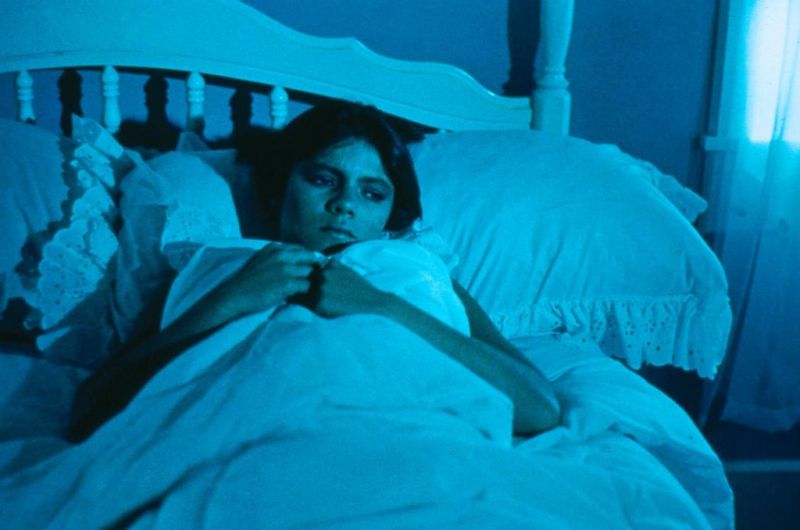
It is interesting to note that the film does not suggest prostitution on a whole is safe and wonderful, but that for Molly it usually is. She’s the exception, who is able to maintain her status as an “Angel” and with it the suggestion of purity, while other women around her are scantily clad and brutalized. In this fashion, the film suggests, she is young enough to be redeemed and live a different life, but older women in more desperate circumstances are long past helping and thus, must be concerned with things like violence, rape, STDs and unwanted pregnancy that are outside of Molly’s orbit. As mentioned before, the crime story of the movie, an (albeit exaggerated) norm for these other women, is presented as an unusual episode in her otherwise happy life. Still, Molly is always able to protect herself and in incidences where she is threatened by the killer and when two of her classmates try to rape her, she takes control of the situation and forces them to leave her alone.

Molly has a rare moment of anxiety and fear late at night

This viewpoint, that the bad things could happen to anyone else, but would never happen to oneself, appears to me to be a very immature, adolescent idea. Likewise, there are many teenage girls who glamorize prostitution as being wanted, or getting paid to be beautiful and enjoy expensive dinners, presents and sex, ignoring the circumstances that drive desperate women to prostitution or the danger and discomfort that even women who choose to be sex workers must take measures against.

However, the film ends abruptly and without any real closure, giving the viewer no sense of what will happen to Molly now with all the changes in her life. It is unknown whether she will go back to her life of fairytale prostitution, go into foster care or find some other solution (in the sequel, Avenging Angel, Molly is off the streets and attending college). Ultimately, I believe this abrupt ending contributes to the film’s fantasy image of prostitution. The viewers don’t have to see Molly live with the consequences, both of picking up the gun intending to kill the villain and of prostitution itself, so it can remain an escapist fantasy. Not a trauma, but another adventure she has bravely overcome.


Elizabeth Kiy has a degree in journalism with a minor in film from Carleton University. She lives in Toronto, Ontario and is currently working on a novel.


‘The Counselor’ and the Feminist Commentary of Ferrari Fucking

The honesty of a man saying, “What the hell was that?” when a woman is trying to do what society expects her to do to be sexy is a pretty clear indication of how our raunch culture makes fools out of women who try to fit into it.
If Reiner had loved it, I think I would have found that scene incredibly Problematic From a Feminist Perspective™. But he didn’t. This otherwise misogynistic character was baffled and troubled by this kind of display.


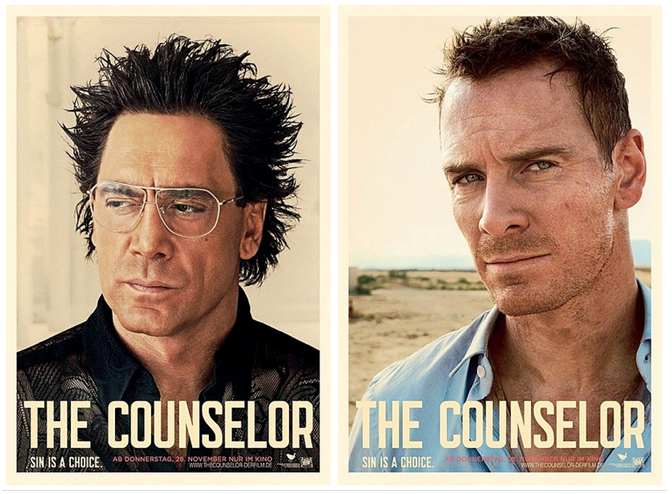
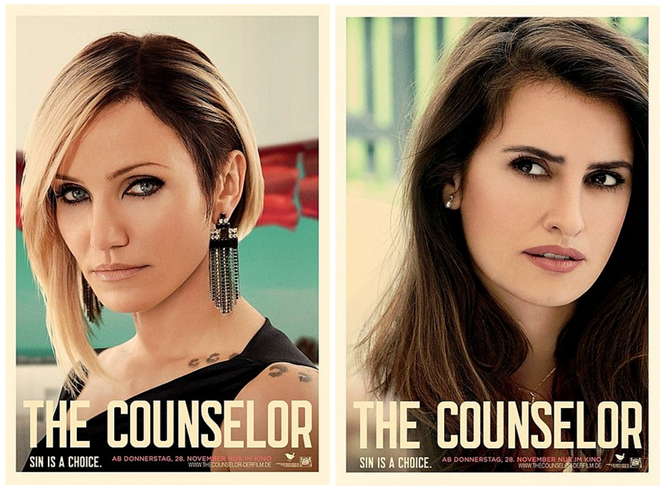
The Counselor poster

Written by Leigh Kolb

As press began trickling out about The Counselor, headlines about how “Cameron Diaz fucks a car” (a Ferrari) dominated my news feeds.

I did not expect that scene to be brilliant. But it kind of was.

The Counselor is by no means the “worst movie ever made.” The writing–Cormac McCarthy’s first screenplay venture–was lovely, if at times a bit much (as one might imagine a script by a novelist would be). The acting was incredible. Ridley Scott’s direction is poignant. This also isn’t the best film ever made, but it has enough strong points.

The two prominent women characters did fit into the problematic virgin/whore dichotomy, but overall I was surprisingly pleased at the depictions of female sexuality on screen, and the larger meaning of those scenes.

The opening scene (which The New York Times describes in loving detail) finds the audience in bed with our protagonist, the Counselor (Michael Fassbender) and his soon-to-be fiancée, Laura (Penélope Cruz). Their exchange is intimate, and he wants her to tell him what to do to her. While she’s slightly shy and hesitant, they are comfortable together. He retreats downward to perform oral sex on her, and she orgasms. Enthusiastically.

In the opening scene, we see a focus on female pleasure that is often foreign in heavily masculine films like this. They have just woken up, but he doesn’t want her to “tidy up.” Their white-sheet-wrapped love seems meaningful and real.

The bulk of the film, of course, follows the Counselor (he is nameless; other characters refer to him only in relation to his identity as a lawyer) and his decision to enter into a drug deal to make some fast money. This descent into a different world happens toward the beginning of the film, and what follows is a classic morality play, in which our prince falls, bringing those around him down with him. The dialogue, like the morality play itself, is Shakespearean, which is a bit much for most modern audiences. (There is a lot of talking…)

Hero, moral dilemma, advice from dubious sources, downfall, pile of dead bodies. Yeah, sounds pretty Shakespearean.

The two women characters are also quite Shakespearean with their subtle complexities and clear contrasts, which push us to consider what feminine power is and how we are supposed to judge the characters who surround them by their relationship with women. The Counselor deeply loves Laura and acts baffled when Reiner (Javier Bardem) speaks with disrespect/bawdiness about women. The Counselor loves giving women pleasure. Reiner sees women as dangerous liabilities.

Malkina, left, and Laura reveal their characters as they discuss diamonds and sex.


Reiner’s girlfriend–who we meet as she’s riding a horse across the desert with a cheetah by their side–is Malkina (Cameron Diaz). She is certainly a cheetah herself–gorgeous, fast, sleek, frightening, and threatening. Her role is impressive and important.

But about that Ferrari scene.

We see the scene as a flashback while Reiner is talking to the Counselor about something he’d “like to forget.” That something is the time that Malkina fucked his yellow Ferrari.

Malkina is trying really hard. Really hard. She slips off her panties and tells him she’s going to fuck his car. She climbs up on the windshield, descends into the splits, and goes to town right above Reiner’s face.

This scene–in which a gorgeous woman has sex with a luxury automobile to try to be really sexy and get off (on the luxury itself?)–is telling in how absolutely ludicrous it is. Reiner is “stunned”–and it doesn’t seem like he’s stunned in a good way. It’s just ridiculous.

(And OK, Reiner’s “catfish” description from his vantage point was funny–when he talks about the “gynecological” display upon the glass in terms of one of those “bottom feeders you see going up the way of the aquarium sucking its way up the glass,” that just intensifies how stupid the whole thing is.) Variety has the dialogue from that scene.

LOL
In its stupidity lies its feminist commentary.


Malkina’s immorality is essential in this morality story. The power she wields is significant–she’s certainly more malicious and skillful than our leading men. However, we are not supposed to be rooting for Malkina (even though we can find her wiles pretty amazing).

The symbolism of her fucking a Ferrari, and getting off in the process (the Counselor is very interested in whether or not she was able to orgasm), shows us just how materialistic she is. It’s not about human pleasure, it’s about object pleasure.

It’s not about genuine, self-aware female sexuality. It is ridiculous. And Reiner’s description of the fish on the aquarium? That’s exactly what it would look like. So dammit, I think it’s hilarious. The honesty of a man saying, “What the hell was that?” when a woman is trying to do what society expects her to do to be sexy is a pretty clear indication of how our raunch culture makes fools out of women who try to fit into it.

If Reiner had loved it, I think I would have found that scene incredibly Problematic From a Feminist Perspective™. But he didn’t. This otherwise misogynistic character was baffled and troubled by this kind of display.

Laura and Malkina aren’t as fully developed as they probably could have been (early on it’s clear that Laura=good and Malkina=bad when the two are having a conversation and Malkina can give Laura all of the details about Laura’s engagement diamond–and Laura doesn’t even want to know how much it’s worth–and their conversations about sexuality make Malkina seem the whore and Laura seem virginal).

Screenshot_114

In the promo stills, the men were allowed to have wrinkles, the women were not.


I did appreciate, though, how the women were their age. As disturbing as the marketing for the film was, these women are presented as neither younger than they actually are nor trying to be younger. While they are beautiful, they have wrinkles. While they are sexy, they are not 20. This is refreshing.

The Counselor isn’t the best–or the worst–film ever made. However, its artistic merit as a modern-day morality play and its representation of and commentary about femininity and female sexuality make it stand out.

__________________________________________________________


Leigh Kolb
 is a composition, literature and journalism instructor at a community college in rural Missouri. 


Bitch Flicks’ Weekly Picks

The feminism of Working Girl, “respectability politics” in 12 Years a Slave, female filmmakers on Twitter, comedy and reproductive rights, female sexuality on primetime, “Black Actress” on YouTube, and a comic about abortion laws… check out what we’ve been reading this week, and let us know what you’ve been reading and writing in the comments!

recommended-red-714x300-1


Acting Right Around White Folks: on “12 Years a Slave” and “Respectability Politics,” by ReBecca Theodore-Vachon at RogerEbert.com

Amy Poehler introduces TO KILL A MOCKINGBIRD at Alamo Drafthouse! at Drafthouse.com

Why female pleasure–not sex–is the real taboo on primetime television by Monica Nickelsburg at The Week

Carrie: A Possibly Unnecessary Remake of a Still-Resonant Horror Story by Andi Zeisler at Bitch Media

Healing from Historic Trauma: “12 Years a Slave” by Janell Hobson at Ms. 

40 Female Filmmakers to Follow on Twitter: A Crowdsourced List by Paula Bernstein at Indiewire

The Hollywood Reporter Announced the Top 50 Showrunners by Kerensa Cadenas at Women and Hollywood

Black Girl ‘Geeks’ Want To See More Of Themselves In Comics at NPR

Carol Burnett Cracks Up Washington by Ashley Southall at The New York Times

Call for Applications: Her Film Project Marketing Grant for Women Filmmakers by Kyna Morgan at Her Film

Everything I Know About Feminism I Learned From Working Girl by Rosemary Counter at Jezebel

‘Black Actress’ Web Series Premieres on Issa Rae’s YouTube Channel by Von Diaz at Colorlines

Comedy, Women, and Reproductive Rights: An Interview with Lizz Winstead by Hannah Strom at NARAL Pro-Choice Oregon

Purity Culture as Rape Culture: Why the Theological Is Political by Dianna E. Anderson at RH Reality Check

Stealth Attack: What You Need to Know About the New Abortion Laws (Comic) by Jen Sorensen at ACLU


What have you been reading/writing this week? Tell us in the comments!

The Ten Most-Read Posts from September 2013

Check out pieces on The Legend of Korra, Breaking Bad, Don Jon, Wentworth, Orange Is the New Black, Golden Girls, Boardwalk Empire, A Teacher, and After Tiller!

Did you miss these popular posts at Bitch Flicks? If so, here’s your chance to catch up!


Why The Legend of Korra Is (Still) a Feminist’s Headache by Erin Tatum

Breaking Bad: Postmodern Redemption and the Satisfying End of Desperate Masculinity by Leigh Kolb

Don Jon: Manhood in the Digital Age by Erin Tatum

Wentworth Makes Orange Is the New Black Look Like a Middle School Melodrama by Amanda Rodriguez

Older Women in Film and Television: The Roundup

Father Worship and the “Bad Fans” of Breaking Bad by Leigh Kolb

How Golden Girls Shaped My Feminism by Megan Kearns

The Feminism and Anti-Racism of Boardwalk Empire (and the Critics Who Don’t Get It) by Leigh Kolb

A (Bad) Teacher by Max Thornton

The Most Important Film of 2013: After Tiller by Max Thornton


The Power of the Feminine in ‘Sons of Anarchy’

It’s fascinating to see complex women characters who aren’t just good or just bad–aren’t just virgins or just whores. When we can have the same kind of conflicted and uncomfortable feelings for female characters that we do their male counterparts, that’s excellent (and feminist) writing.

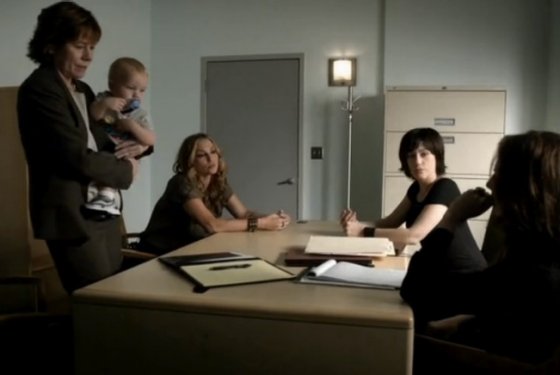
Margaret, Wendy, and Tara plot against Gemma and the Sons.

Margaret, Wendy, Tara, and Ally plot against Gemma and the Sons.

Written by Leigh Kolb

Spoilers ahead (through “Sweet and Vaded,” which aired on Oct. 22)

Sons of Anarchy has always considered itself a modern-day morality play. The club doles out unlawful justice, and usually punishes enough really bad guys to make us feel like they are the good guys. However, the peripheral damage that the club is responsible for took us, the audience, to a breaking point early in season 6.

Some critics were concerned at the beginning of this season because Jax didn’t appear to feel enough remorse after the school shooting (which was made possible because the club ran guns). I argued that this was in keeping with the tradition of morality plays–because we are supposed to judge and question what constitutes virtue and vice, and Sons of Anarchy is forcing us to do that.

At this point in the season, the men have done what they could to stay straight–they’ve gotten out of the gun business and split ties with the Irish (after their clubhouse was bombed).

They’ve moved shop away from a heavily masculine auto repair center to an abandoned ice cream shop. By the end of “Sweet and Vaded” (which aired Oct. 22), the men are literally handing out candy to kids at their refurbished soda shop counter.

The men’s world seems almost ridiculous–motorcycles, a candy shop, giant wooden SOA signs, and leather cuts feel silly compared to the reality of the women’s lives around them.

In “Sweet and Vaded” we got to see the culmination of Tara’s plotting, which has been incredibly suspenseful throughout season 6. Her plans are working exactly as she wants them to. She’s using everything in her power to keep her sons safe and away from the club, and she’s doing so by exploiting her own femininity and collaborating with other strong and powerful women. While she gets limited help from Wayne (who doesn’t know what exactly she’s doing), Tara is able to protect and cleave her children from the outlaw world–at least, this is the first big step in that direction–by collaborating with women.

Tara is taking the reigns into her own hands.

Tara is taking the reigns, with the help of other women.

Tara brings Wendy back in as the most trusted potential guardian for the boys.

Tara’s lawyer, Ally Lowen, pulls legal strings.

St. Thomas administrator Margaret Murphy has long been a support for Tara, and she helps her navigate the hospital’s part in Tara’s plans and is always there for the boys. (I would also theorize that Margaret has been giving Tara hcg shots to skew pregnancy test results–the doctor then would have seen a great deal of blood and nothing on an ultrasound, and assumed that she’d miscarried.)

This feminine collaboration is strong (which is rare to see in film and television), and they are able to work together against the dangers of the club and Gemma.

Tara’s staging of a pregnancy and miscarriage was jarring and unsettling. We are not used to seeing women (or “good” women) use measures like this to gain ground. “Dire circumstances require desperate measures,” Tara says, and means it.

It’s fascinating to see complex women characters who aren’t just good or just bad–aren’t just virgins or just whores. When we can have the same kind of conflicted and uncomfortable feelings for female characters that we do their male counterparts, that’s excellent (and feminist) writing.

What Tara did was horrifying, but she felt it was what she had to do. Her plans clearly aren’t finished, either.

The last few episodes have also featured Venus Van Dam, a trans* woman (played by an excellent Walton Goggins). I was concerned at first (just like I was concerned when Lyla got an abortion), because I wondered how right a show like this could get sensitive subplots that most dramas don’t touch.

Gemma comforts Venus with sensitivity.

Gemma comforts Venus with sensitivity.

However, I didn’t need to worry, because Sons of Anarchy respected its trans* character with a poignant grace that seems rare.

Venus suffered horrific abuse (emotional and sexual) at the hands of her mother, Alice, who could not accept Venus’s true identity. Alice ran a child porn ring (which Venus was a victim of when she was a child), and the emotional accounts that Venus gives are heart wrenching and so incredibly important.

Venus has son, Joey, who thinks he’s her nephew. Venus isn’t ready to mother him, but wants him to be protected from the life that she endured.

Goggins and Kurt Sutter were aware of Venus’s importance, as Goggins says:

“This was always approached with much earnestness as we could muster and seriousness because it is very delicate. [We wanted to] participate in that argument, the conversation that is going on in this country about where we are as a society. And in my mind, if Venus Van Dam is able to help a young man or a young woman in America, in a small town, feel better about themselves because they see their story reflected dramatically, then I feel like we’ve done our job.”

Jax and the crew are recruited to help rescue Joey (Venus goes to Gemma, whose gentle performance as an ally to Venus is powerful and increases our sympathy with Gemma). They find him drugged in a warehouse that’s clearly used as the location for the child porn videos. Alice confronts Venus and is terrible–she verbally abuses her, and finally says that Joey will be devastated about “the awful thing that turned out to be his father.” When she spits that out, Jax shoots her in the head.

Once again, it’s clear to know who we are supposed to root for by what they are against. This hyper-masculine motorcycle club is against the abuse of all women.

They may do business in pornography, but torture porn and child porn leads them to kill for justice. Abuses against women–when sex work isn’t consensual, when gender identity is belittled and attacked, when a woman is raped (as Gemma is again when prison guards force her to have sex with Clay)–represent the vice in this morality play, and the Sons are virtuous.

It’s complicated, though, as it should be. Are we expected to love and respect Macbeth or Lady Macbeth? Or are we supposed to be swept into an amazing story about complicated, sometimes-sympathetic, sometimes-awful people?

These women are not meek and fragile, though, which is incredibly important to keep in mind in regard to Sons of Anarchy. Except for the violent revenge against Alice, the Sons are spending a lot of time regrouping in their little ice cream shop, while the women are collaborating against the dangers they see to protect one another and the children they love.

The beauty of Sons of Anarchy in part lies in its complicated, suspenseful plots involving women. Tara isn’t a character on the side with a subplot, she has a plot to herself, as Gemma always has. It would be easy to dismiss the show by just scratching its surface (masculine men with phallic playthings–motorcycles and guns–and their “old ladies,” who don’t ride or sit at the table).

But the complex and powerful women show us that Sons of Anarchy isn’t just another show by men about men. It’s about all of them.

In an interview, Goggins said about Venus:

“She’s a very courageous, very flawed, very strong woman — or let’s shoot right past that and say [that she’s a strong] person in the world.”

There are people on Sons of Anarchy–they may appear to conform to heteronormative gender roles–but they are not typecast. Bad-ass mothers–Gemma, Tara, Wendy, and Venus–show us that women, and the feminine, can be a powerful force in a sea of masculinity.

To have conflicting feelings about women characters–sympathy, disgust, pity, rage, and pride–feels good. They have prominent story lines and important roles.

The feminine, in all its complexity, is powerful and necessary–now there’s a good morality play.


See also: An Audience on the Edge: Sons of Anarchy, Morality and Masculinity; “Mothers of Anarchy: Power and Control in the Feminine Sphere”

__________________________________________________________


Leigh Kolb
 is a composition, literature and journalism instructor at a community college in rural Missouri. 

Crankytown Announces Winner of Crankyfest, a New (Film Fest) Cycle and Fundraising for ‘Femme Kits’

Earlier this year, we wrote about Crankytown’s unique period-themed website and its short film festival, Crankyfest.
Crankytown is an interactive site about periods that features videos, stories and poems, created by Canadian actresses Liane Balaban, Vanessa Matsui, and Jenna Wright. Crankytown partnered with Playback Digital Company of the Year, iThentic, to launch Crankyfest, a contest for videos about periods.


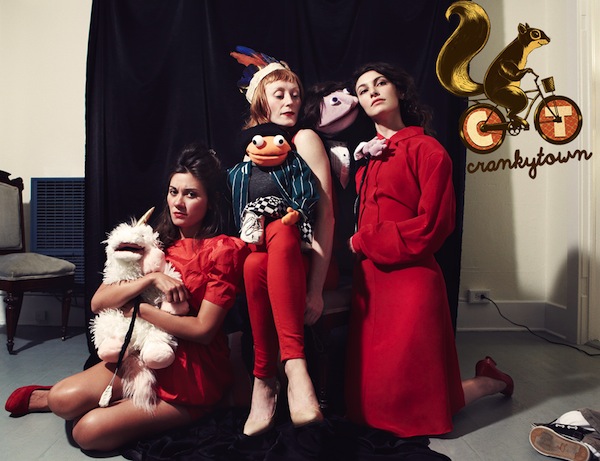
Co-founders of Crankytown.ca, from left, Vanessa Matsui, Jenna Wright and Liane Balaban.
Co-founders of Crankytown, from left, Vanessa Matsui, Jenna Wright and Liane Balaban.


Earlier this year, we wrote about Crankytown’s unique period-themed website and its short film festival, Crankyfest.

Crankytown is an interactive site about periods that features videos, stories and poems, created by Canadian actresses Liane Balaban, Vanessa Matsui, and Jenna Wright. Crankytown partnered with Playback Digital Company of the Year, iThentic, to launch Crankyfest, a contest for videos about periods.

Crankytown announced Laura Maxwell’s short film, First, was the winner of Crankyfest.

[youtube_sc url=”http://www.youtube.com/watch?v=mtLccR4P4pE&feature=share&list=PLRYhF0arr_OYFL2f7y37MSY7z_Vs6ThLJ”]

First seduced me with its distinctive animation style and tender message of love and compassion… a girl’s dream come true!” said juror Jane Grenier from Conde Nast/Teen Vogue.

Still from Laura Maxwell's First, the Crankyfest winner.
Still from Laura Maxwell’s First, the Crankyfest winner.


Crankyfest has started a new cycle, and the deadline for submissions is March 3, 2014. See http://www.crankyfest.com/ for more details.

Winners will be chosen by celebrity jury Jay Baruchel (This Is The End), Denis Villeneuve (Oscar-nominated director of Incendies) Anna Silk (Lost Girl), Kevin Pollack (Usual Suspects) and Amanda Brugel (Seed).

Jay Baruchel Participates in Fundraising Campaign for Femme Kits

Crankytown released a video starring Jay Baruchel (Tropic Thunder, Million Dollar Baby)  in honour of the UN’s International Day of the Girl Child (Oct. 11) to highlight the fact that their agenda for 2013 doesn’t address girls’ access to menstrual products in developing countries.

[youtube_sc url=”http://www.youtube.com/watch?v=5rgqjCHZmAo&feature=share&list=UU72gosZQ7n7arlwbbjvmv4g”]


Often girls are unable to attend school in developing countries because they do not have a means of managing their period. Addressing the issue of menstruation directly reduces rates of absenteeism among school girls. Unfortunately, this issue was not on the International Day of the Girl Child’s agenda for 2013.
So on Oct. 11, Crankytown and Your Box Club released an animated recounting of Baruchel’s early experiences with periods and puberty. Baruchel reflects on his family’s reaction to discussions of menstruation and his sisters growth into womanhood. The goal of the video, which was directed by Jenna Wright and produced by Ithentic.ca, is to help de-stigmatize conversations about periods and bring awareness to the issue of menstruation in developing countries.

“Menstruation is still a taboo topic. Our goal is to de-stigmatize periods because girls who are confident about their bodies are confident in their lives,” explains Crankytown co-founder Vanessa Matsui.

Crankytown and YourBoxClub.com partnered with Femme International, a Toronto-based NGO that provides girls in Kenya’s slums with a hygienic care kit, or Femme Kit, which contains a menstrual cup, an innovative and sustainable product that can be re-used for 10 years, giving young women the means to remain in school when they are menstruating.

According to Femme International’s home page, “Providing sanitary supplies to Kenyan schoolgirls reduces absenteeism by 75%, from 4.9 days to 1.2 days per month.”

Through this collaborative fundraiser, they were able to donate three Femme Kits.


For more information, to watch, compete, or donate, visit:

Crankytown – www.crankytown.com 

Crankyfest – www.crankyfest.com

Your Box Club – www.yourboxclub.com

Femme International – www.femmeinternational.org


What Shakespeare Can Teach Us About Rape Culture

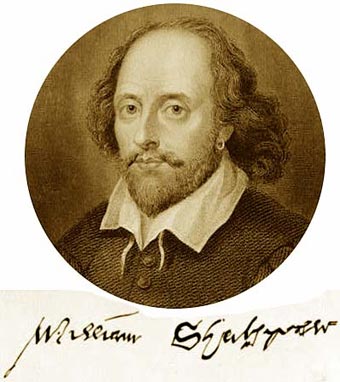
When Shakespeare wrote Titus Andronicus and The Rape of Lucrece in the late 1500s, women were quite literally the property of men (their fathers, then their husbands). The rape culture that plagues us in 2013 was essentially the same, although laws of coverture have dissolved and women are no longer legally property.

And Shakespeare understood the horror of rape. Shakespeare–more than 400 years ago–seemed to understand that patriarchy hurts women. Patriarchy kills women.

Patriarchy is rape culture.

Do not draw back, for we will mourn with thee 

O, could our mourning ease thy misery! (2.4.56-57)


Shakespeare's depictions of rape are too familiar today.
Shakespeare’s depictions of rape are too familiar today. However, his messages about patriarchy and rape aren’t familiar enough.


Written by Leigh Kolb

When a story about a girl who was raped and subsequently shunned and blamed breaks, I’m no longer surprised. It’s familiar. Townspeople gathering behind the rapists–just like in Steubenville–seems like the natural course of things in our toxic rape culture. She shouldn’t have been so drunk. She couldn’t say no. These boys are promising young athletes. 

The rapists in Julie Taymor's Titus--Demetrius and Chiron--are wild young men obsessed with violence and video games.
The rapists in Julie Taymor’s Titus–Demetrius and Chiron–are wild young men obsessed with violence, depraved sexuality and video games.


When Shakespeare wrote Titus Andronicus and The Rape of Lucrece in the late 1500s, women were quite literally the property of men (their fathers, then their husbands). The rape culture that plagues us in 2013 was essentially the same, although laws of coverture have dissolved and women are no longer legally property.

And Shakespeare understood the horror of rape. Shakespeare–more than 400 years ago–seemed to understand that patriarchy hurts women. Patriarchy kills women.

Patriarchy is rape culture.

Last week, I read about the Maryville case with the familiar dread that accompanies these too-frequent stories. When it happens in my state in a town that looks like mine, it’s even closer. But I’m never surprised.

As I was watching Titus with my Shakespeare class, I readied myself for the rape scene (which Julie Taymor handles brilliantly). When Lavinia’s uncle, Marcus, finds her brutalized, he delivers a long monologue, mourning the sexual violence that she has gone through.


Lavinia is raped and mutilated.


At the end of the monologue, he says as she turns away,

 “Do not draw back, for we will mourn with thee

O, could our mourning ease thy misery!” (2.4.56-57)

It took my breath away like it hadn’t before, and I checked the text to read the exact quote. I paused the film and asked my students if they’d heard of the Maryville case (in which the victim and her family were basically chased out of town after the case against the perpetrators was dropped). They hadn’t. I explained, and re-read the final couplet of Marcus’s monologue.

Is this how we respond to women who are raped in our culture?

No.

What if we did? What if we rallied behind not the rapists, but the one who was raped? What if we never said, “I am not saying she deserved to be raped, but…

What if all of this happened immediately and swiftly in our own communities, and not after a case gets national attention?

In Shakespeare’s texts, it’s clear that the rapists are sub-human and villainous. Even when rape isn’t part of the plot, he shows the figurative and literal violence of patriarchy.

Hermia’s father is willing to kill her if she doesn’t marry who he wants her to marry in A Midsummer Night’s Dream. (“I would my father look’d but with my eyes,” she says.)

Hamlet‘s Ophelia commits suicide when she descends into madness being pushed and pulled by patriarchal pressures. (She says to her brother after he advises her to be chaste and virtuous, “Do not, as some ungracious pastors do, / Show me the steep and thorny way to heaven; / Whiles, like a puff’d and reckless libertine, / Himself the primrose path of dalliance treads, / And recks not his own rede.”)

Emilia’s views on the patriarchal constraints of marriage and sexuality in Othello seem radical today.

Shakespeare understood.

Why can’t we?

In Titus Andronicus, Lavinia is brutally raped and disfigured (including having her tongue cut out so she couldn’t speak). This nod to Philomela in Ovid’s Metamorphoses echoes the themes of the brutality of rape and the need for revenge. The women needed to name their rapists and share their stories (Lavinia writes in the sand; Philomela weaves a tapestry that tells her story). The women have as much power as they can in the confines of their society, and we the audience are meant to want justice and revenge.


Lavinia writes the rapists' names in the sand. The men surrounding her are not unlike Anonymous in the Maryville case.
Lavinia writes the rapists’ names in the sand. The men surrounding her are not unlike Anonymous in the Maryville case.


Shakespeare’s epic poem The Rape of Lucrece also follows a young woman who is raped and seeks revenge (although her speech is left intact).

While the death of the women at the end of the plays seems problematic to 21st-century feminists, we must remember that in Shakespeare’s Roman fictions, self-sacrifice or honor killing was honorable and dignified, thus leaving the women with as satisfying an end as they could hope for. There are cultural differences, of course, but the anti-rape and anti-misogyny messages in these centuries-old texts are gripping.

In these texts, the following messages are clear:

• Rapists are depraved misogynists who want some kind of power.

•  Silencing of women is evil.

• Women aren’t always allies (see: Tamora, who mothers and encourages Rape and Murder) .

• Retribution is necessary for justice.

Four-hundred years later, we still can’t seem to grasp these realities.

We look to media for social norms and values. If we see objectification of women on screen, we can clearly see the if this objectification has deeper feminist implications if we are supposed to villainize the objectifiers. (This is, incidentally, why the sexism in The Big Bang Theory makes my skin crawl and Sons of Anarchy–in all of its vengeful Shakespearian glory–is one of my favorite shows.) Shakespeare’s women–who are victims of violent patriarchies–are the ones the audience is supposed to sympathize with. The tragedy of these tragedies is that this patriarchal social order creates hell on earth for many women.

At the beginning of Titus, Lavinia pours a vial of her tears in her father’s honor as he returns home from war. She mourns and rejoices with him and is able to express her emotions surrounding his losses and his victories.

Mourning with him comes naturally. It’s what we expect when men encounter battles.

And just as Marcus says that they must mourn with Lavinia, she must not withdraw, we need to learn to mourn with those who rape culture affects so deeply.

In 2013:

• Rapists are still misogynists who do not want sex, but want power.

• Women are still silenced. (And when they speak out, it is not without consequences.)

• Women still aren’t always allies.

• Retribution is still necessary, although we must fight to see it happen (and rely on online hackers and internet outrage to open up cases). Far too often we must wait for justice, if it ever comes.

When we can look to fiction from centuries ago and see common and familiar–almost radical–representations of the violent outcomes of restrictive patriarchies, we are doing something wrong.

Because the masses still don’t seem to understand that patriarchy hurts women. Patriarchy kills women.

Patriarchy is rape culture.

__________________________________________________________


Leigh Kolb
 is a composition, literature and journalism instructor at a community college in rural Missouri. 


Family, Identity, and the Transgender Heroine in ‘Hit & Miss’

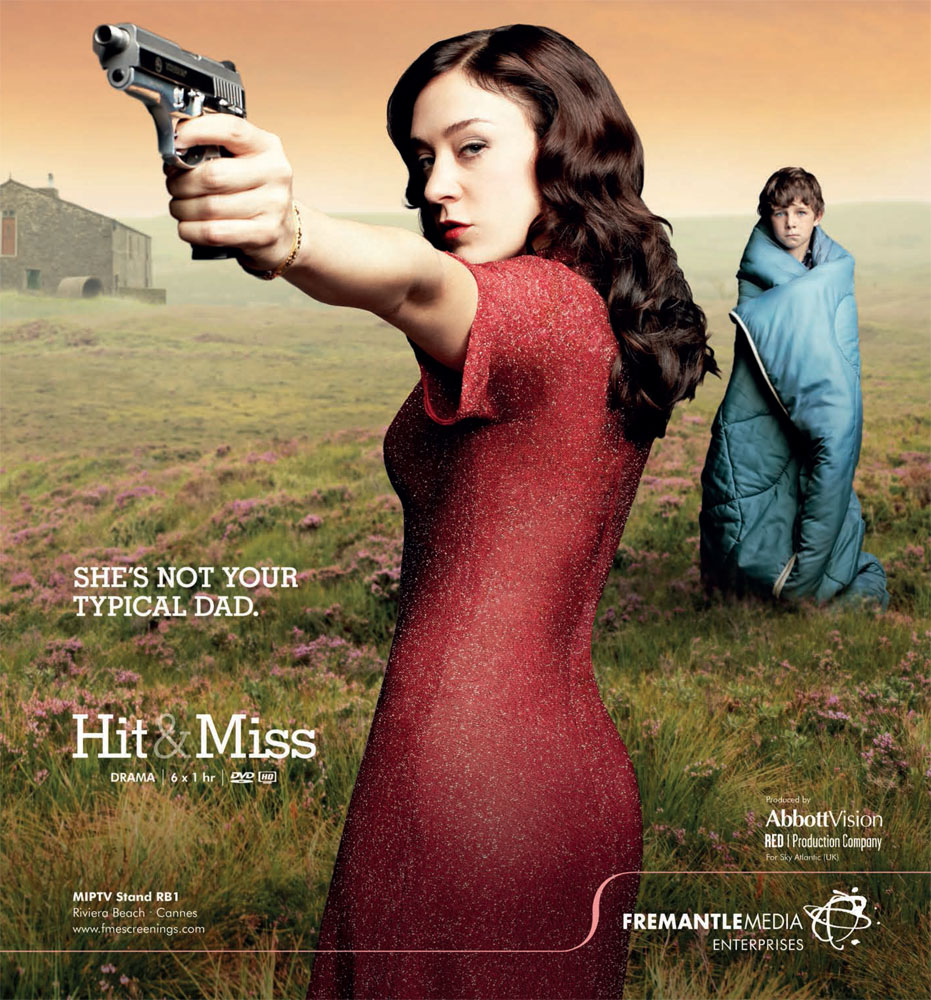
A friend of mine turned me onto the show Hit & Miss, which is a six episode British series currently streaming on Netflix. Hit & Miss follows Mia, played by the ever-talented Chloë Sevigny. Mia is a transgender hit woman who finds she has an 11 year-old son, Ryan.

hit-and-miss-poster
Hit & Miss

Written by Amanda Rodriguez

A friend of mine turned me onto the show Hit & Miss, which is a six episode British series currently streaming on Netflix. Hit & Miss follows Mia, played by the ever-talented Chloë Sevigny. Mia is a transgender hit woman who finds she has an 11-year-old son, Ryan. When Mia’s ex-girlfriend and Ryan’s mother dies unexpectedly, Mia must balance the demands of her brutal, secretive work while trying to build a family with her son and his three other siblings of whom Mia is also now the guardian.

[youtube_sc url=”http://www.youtube.com/watch?v=QpJzeGdlC0U”]

My strongest critique of the series is that the producers did not choose an actual transgender woman to play the role of Mia. Sevigny is, no doubt, an ally and advocate for trans rights as is evinced by her involvement with Hit & Miss as well as Boys Don’t Cry, and while her rendering of Mia is nuanced, strong, and sensitive, it’s just not enough. On Homorazzi.com, Sevigny is quoted as saying, “I was worried people would be angry that they didn’t cast a real person who was transitioning, I asked why they didn’t, and the producers said they didn’t find the right person. It’s a big responsibility toward that community, and I wanted to do them right.”

All I have to say is: bullshit. Bullshit they couldn’t find a capable transgender actress to give authenticity to the character and agency to the transgender community. Look at how amazingly gifted Laverne Cox is as Sophia on the women’s prison series Orange is the New Black. Cox’s portrayal has been successful, breathing life, humanity, and humor into Sophia, proving that there are plenty of transgender actors who are not only talented, but who audiences will receive positively. It’s time to give another under-represented and marginalized group the freedom to represent themselves. Blackface is offensive and is generally accepted as grotesque and hateful. In 20 years, how will people view our insistence that no transgender actors are capable of representing their own lives, struggles, weaknesses, and triumphs?

mia-on-a-job
Chloë Savigny as Mia on a job.

My second major critique of the series is that the camera is obsessed with Mia’s body. Her penis is shown in every single episode. She is often nude or getting dressed, and the audience is encouraged to stare at her body. The camera is fascinated with the incongruity between the curves of Mia’s female form and her (prosthetic) penis. It feels gratuitous and exploitative, objectifying an already marginalized character. The camera’s obsession with Mia’s body tells us two things: 1) Mia is her body; her body is her most important and defining attribute, and 2) Mia is abnormal. The way the camera lingers on her breasts and penis echoes carnival freakshows that insist audience members pruriently gaze at the Other. This isn’t a humanizing, inclusive technique. The camera should not internalize the judgements that Mia and much of the world put on her body because we, the audience, are effectively the camera, it guides our gaze, which should be one of acceptance of the integrity and beauty of its heroine.

Mia nude montage
Mia nude montage

My third major critique is the show’s rendering of Mia’s sexuality. She identifies as a straight woman trapped in the biological body of a man. That would be fine, but she also insists to the kids that she loved Wendy, their mother, and that they were happy together, claiming, “We’d probably still be together if I weren’t a transsexual.” (The use of the word “transsexual” makes me cringe…maybe it’s a British thing?) The idea seems to be that Mia was a straight man, and now she is a straight woman. That decomplicates human sexuality, not to mention trans sexuality, in a disappointing way. Why can’t Mia’s sexuality be fluid? The underlying assumption seems to be that it would make her less of a woman to be attracted to both men and women. That is deeply problematic not only to queer sexuality, but to trans sexuality.

I appreciate that Hit & Miss, however, allows Mia to be more than a gender stereotype. Though she is a very feminine woman (wearing make-up, dresses, lingerie, and cute cowgirl boots), Mia is skilled in weaponry and hand-to-hand combat. Some of the most touching sequences in the series are when Mia and her son, Ryan, work out together, bonding as she teaches him the discipline of fitness and boxing for self-defense.

Mia teaches her son, Ryan, to box.
Mia teaches her son, Ryan, to defend himself from bullies.

Not only that, but Mia is gratifyingly self-possessed when it comes to threats against her person. Watching her beat the ever-loving shit out of the waste-of-space, misogynistic, pedophile, rapist, dumb fuck landlord, John, as he threatens her and the kids is one of the most satisfying scenes of all time. He soooo had it coming.

mia-ass-kicking
Mia fucks John’s shit up. It couldn’t have happened to a nicer person.

Mia’s new lover, Ben, accuses her of still having “too much man left in” her because of her penchant for violence. She rightly tells him to fuck off. Her life is fraught with violence because of her profession and because of her dark, abusive upbringing on the carnival Fairgrounds. I also wonder if the show is saying that violence is inherent in transitioning. It is true that many transgender people face violence and the threat of violence as part of their daily lives. Being who they are is, for some reason, perceived as a threat to hegemony, and fear, aggression, and hate are all too common responses. Hit & Miss also, though, plays with the metaphor of rebirth, and the violent struggle that accompanies it. In a montage sequence, as the children don their sleeping bags (reminiscent of cocoons) to play their favorite game, a butterfly flits across Mia’s sniper rifle scope, causing her to miss her target, which changes her life forever. Mia is in the process of being reborn from a man to a woman, a loner to a family member, and a father to a mother.

Her new lover, Ben, struggles with his own sexuality and masculinity as they relate to Mia’s transition. To prove his straightness, masculinity, and capacity for intimacy, Ben cheats on Mia. He makes a point of performing oral sex on his fling; the significance of which is obvious, but it is also important because Mia isn’t comfortable with Ben touching her penis (understandably so because Mia doesn’t feel her penis is part of her identity). On the morning after the woman has left, Ben finds a handful of hair extensions in his bed. This moment was very compelling for me as a feminist because it is saying that to some degree femininity is a performance even for cis women. This posits the query, “What makes a real woman?” This scene questions the validity that any such creature exists. It subtly asserts that genitalia is as arbitrary as hair length for determining who is and who is not a woman.

mia-and-ben-hook-up
Mia and Ben have sex for the first time.

“Family’s got fuck all to do with blood.” – Mia

That is the best quote of the entire series, and it is one of the major themes of the show. If I had to pick one word to describe the series, it would be: bleak. Hit & Miss is full of violence, trauma, and despair. These are highly damaged people, but together they form a unique family and a new life. Mia pulls them together with her strength, her vulnerability, and her love. By the end of the series, Mia has drawn all the wounded characters together. She senses their need for love and safety, and she gives it freely, in spite of how many curses and slurs they hurl her way. In the depths of darkness, Mia’s indomitable spirit is a beacon, guiding all of them towards hope.

Mia's new family
Mia’s new family

This show has a lot going on; I even question whether or not it’s got too much going on. The primary characters have complex inner lives with myriad painful issues that stem from poverty, neglect, and abuse. A fledgling family getting to know and learning to love each other while navigating these landmine issues; a trans woman learning she has a son, owning her identity, finding romance and family in unexpected places; a hitwoman balancing her seedy career with a desire to give, belong, and build a wholesome life for her family…each of these could be its own storyline. Is it too much to make Mia a hitwoman? Is it purposely sensationalist in order to draw attention to the meat of its tale: family and identity? Is making Mia a hitwoman underscoring Chloë Sevigny’s sentiment that, “There’s a lot more going on with her than just her gender”? Or is an ambitious, often contentious, and always thought-provoking short series like Hit & Miss that’s packed with meaning, metaphor, and depth exactly what we need?


In Praise of ‘The Fall’s Uber Cool Feminist Heroine: Gillian Anderson’s Stella Gibson

The Fall is one of 2013’s television success stories. The five-part BBC crime drama is a compelling, well-crafted production with a fine cast and a terrific lead performance by Gillian Anderson. Set in present-day Belfast–and also shot on location in the Northern Ireland capital–The Fall chronicles the police hunt for a serial killer of attractive, professional women in their thirties. It is created and written by Allan Cubitt–who scripted Prime Suspect 2 (1992, UK)–and directed by Jakob Verbruggen.

Detective Superintendent Stella Gibson (Gillian Anderson)


Written by Rachael Johnson

The Fall is one of 2013’s television success stories. The five-part BBC crime drama is a compelling, well-crafted production with a fine cast and a terrific lead performance by Gillian Anderson. Set in present-day Belfast–and also shot on location in the Northern Ireland capital–The Fall chronicles the police hunt for a serial killer of attractive, professional women in their thirties. It is created and written by Allan Cubitt–who scripted Prime Suspect 2 (1992, UK)–and directed by Jakob Verbruggen.

Anderson plays Detective Superintendent Stella Gibson, an Englishwoman called in from the London Metropolitan Police to review a high profile PSNI (Police Service of Northern Ireland) investigation into the murder of an architect. When another woman of similar looks and background is found murdered, Gibson takes charge of the investigation. The Fall is not a whodunit like Forbrydelsen (2007, DK) or The Killing. We know the identity of the murderer, a certain Paul Spector, from the very first episode. The viewer’s interest lies instead in studying the killer and watching Stella pursue the case.

Calm and Collected
Calm and collected


The serial killer’s personal and professional lives are “normal”: Spector is a young man in a caring profession with a hard-working wife and two small children. He is a bereavement counselor. She is a neonatal nurse. Capably played by Jamie Dornan, Spector is slender, good-looking and athletic. A good family man, he seems to have a loving relationship with his children. His sweet, sensitive daughter adores him. Spector’s wife, Sally Anne (Bronagh Waugh) does not know that she is sleeping with a killer of women. He does not reveal violent, misogynist tendencies in his family life. Nor does he show evidence of any psycho-sexual hang-ups in his marital relations. Returning home from violating the domestic space of a potential victim, he falls into bed and makes love with his wife. Possessing, it seems, a split personality, Spector leads two very different lives. At times, these lives are sustained simultaneously. In one unnerving scene, he stalks a potential victim in a park with his young daughter in tow. At first, Dornan’s Spector struck me as a little too normal to be credible but there is an intensity and arrogance to his character that suggests a darker side. There have been serial killers from very average backgrounds and the makers of The Fall consistently underline Spector’s chilling ordinariness in their observational study of the killer. The writer Allan Cubitt has created a man–not a monster.

A Desiring Woman
A desiring woman


As a writer of a series that introduced the world to Helen Mirren’s Detective Chief Inspector Jane Tennison, Allan Cubitt is, of course, well-acquainted with strong female characters. His Stella is a particularly striking, commanding protagonist. Clad in pencil skirts, silk blouses and stilettos, she cuts an elegant, glamorous figure. Amusingly, Stella’s silk shirts have become a fashion column and pop culture talking point in the UK. The character’s ultra-feminine looks, it must be said, aim to signify authority rather than slavishness to an ideal of femininity. Stella is self-governing and goal-oriented. The English outsider has, in fact, an almost patrician manner at times. Her leadership style cannot be characterized as either buddy-buddy or maternal. Stella is a cool rather than cold woman, however. This is apparent when we see her calmly help a male co-worker recover from a traumatic incident. We admire her poise and intelligence. Stella also shows interest in the lives of her female co-workers. Most importantly, she possesses a feminist consciousness: she exposes misogyny while combating male violence against women.

Murderer and Family Man, Paul Spector (Jamie Dornan)
Murderer and family man, Paul Spector (Jamie Dornan)


Entirely at ease in her skin, Stella is, also, very much a sexual woman. One scene in particular stands out. Spotting a good-looking cop at a crime scene, Stella asks her female companion, police constable Danielle Ferrington (Niamh McGrady) to introduce her to him. When he asks her how long the review will take, Stella tells him point-blank: “I’m staying at the Hilton. Room 203.” It is an impressive, amusing display of female sexual sway. They enjoy their night together but when he makes the mistake of texting a sexy selfie the day after, Stella breaks off contact. She has no interest in pursuing a relationship. Stella is also unafraid of exposing sexual double standards. The one night stand becomes a potentially compromising issue for her male co-workers as the plot develops. Stella, however, detects the underlying reasons for their unease. She puts them in the picture: “That’s what really bothers you, isn’t it? The one night stand. Man fucks woman. Subject man, verb fucks, object woman. That’s ok. Woman fucks man, woman subject, man object. That’s not so comfortable for you, is it?”

Police Constable Danielle Ferrington (Niamh McGrady)


Stella is a rational, self-directed, sexual woman. What is unfortunate is that this particular combination of characteristics in a female protagonist is still rare in mainstream film and television. Unusually, the makers of The Fall have not given Stella a troubled back story or a comforting vulnerable side. She does not appear to be haunted by her past and there is no evidence of alcoholism or other psychological problems. Happily, the script does not seem to support the outdated, bogus belief that successful, professional women can only attain real happiness by marrying and having children. Stella does not seem to be mourning a lost love. Nor does she seem to ache for a child. These tendencies, it must be said, invariably surface in Hollywood and mainstream US television’s characterizations of strong women and it is commendable that The Fall does not take that route.

Stella Takes Charge
Stella takes charge


The Fall could be said to exhibit strong feminist principles. Of course, makers of serial killer dramas risk aestheticizing sexualised violence against women. Although they arguably represent an attempt to get into the mindset of the killer, some may find The Fall’s scenes of voyeurism and violence as suspect as those in more plainly exploitative productions. The Fall is, however, manifestly feminist in its refusal to portray Spector as a monstrous other and in its remarkable characterization of its heroine. It is also evident in the direct way it tackles the issue of victim-blaming. In a conversation with Jim Burns, the Assistant Chief Constable of the PSNI (John Lynch), Stella questions the use of the word ‘innocent’ in describing the killer’s victims:”‘Let’s not refer to them as innocent…What if he kills a prostitute next or a woman walking home drunk, late at night, in a short skirt? Will they be in some way less innocent, therefore less deserving? Culpable? The media loves to divide women into virgins and vamps, angels or whores. Let’s not encourage them.” There are other independent, resourceful women in The Fall and other instances of female solidarity. Stella has a good rapport with pathologist, Paula Reed Smith (played by Archie Panjabi) as well as PC Danielle. We see the latter stung with guilt that she was not able to save a potential victim. Danielle’s sisterly camaraderie even extends to removing the tell-tale signs of Stella’s one-night stand on an errand to her hotel room.

Stella with Pathologist Paula Reed Smith (Archie Panjabi)
Stella with pathologist Paula Reed Smith (Archie Panjabi)


The Fall is not without derivative elements and devices but it is a stylish and quite gritty series. A deeply engrossing thriller, it unsettles, frightens and moves its audience. The Fall’s setting is also interesting. Belfast provides a somewhat tense, moody backdrop. Sectarian conflict is not a distant memory and politics shapes everyday lives. While we may ask whether The Fall provides a particularly pioneering or remarkable study of male violence, it is admirable that its creators are not afraid to emphasize the killer’s normality and masculinity. Most importantly, The Fall has given us a new, über cool feminist heroine. The good news is that there will be another season.

A Girl Worth Fighting For: ‘Ava Snow Battles Death’

For all my cynicism, fall TV season secretly fills me with (false, inevitably dashed) hope every year. I may not always admit it, but I do give a fair chance to any new show that strikes my attention even a little. (Grad school has robbed me of many things – NaNoWriMo, the concept of disposable income, alcohol, the ability to stay awake for more than eight hours at a stretch, my last slender grasp on mental health – but it has not yet made a significant dent in the truly irresponsible amounts of TV I watch.) On some level, I think I’m still searching for something to fill the Buffy-shaped hole in my heart.

For all my cynicism, fall TV season secretly fills me with (false, inevitably dashed) hope every year. I may not always admit it, but I do give a fair chance to any new show that strikes my attention even a little. (Grad school has robbed me of many things – NaNoWriMo, the concept of disposable income, alcohol, the ability to stay awake for more than eight hours at a stretch, my last slender grasp on mental health – but it has not yet made a significant dent in the truly irresponsible amounts of TV I watch.) On some level, I think I’m still searching for something to fill the Buffy-shaped hole in my heart.

(DO NOT mention the comic books. Just don’t.)

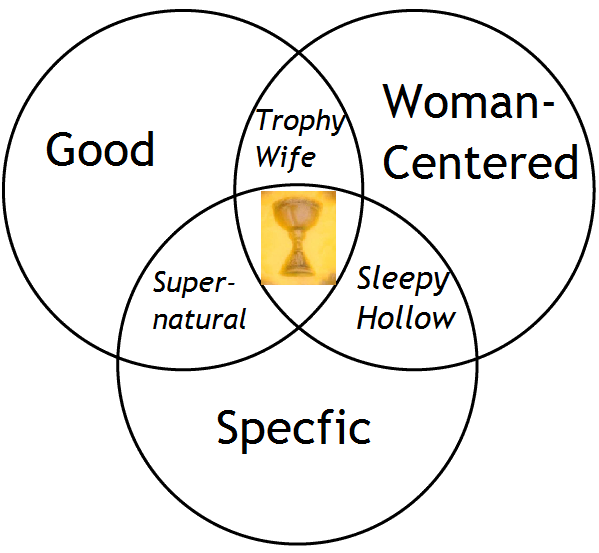
What I want isn’t complicated: good, women-centered specfic.

Pick two.
Pick two.

Primetime just isn’t giving me what I want. Marvel’s Agents of S.H.I.E.L.D. is watchable, but big-screen success has amplified many of the most problematic tendencies in Joss Whedon’s work. Supernatural is my latest mini-obsession (no spoilers please; still in season 5), but it has a MAJOR women problem which even its own stars recognize, and where is my equivalent show about two demon-hunting sisters? Sleepy Hollow is gloriously, magnificently awful and I love every minute of that nonsense, but lord have mercy it’s terribad. The best women-centered specfic of 2013 was indisputably Orphan Black, but it’s disappointingly low-profile compared to those other big-hitters.

TV’s failure to deliver on this front is especially irritating because women-centered specfic is in a general cultural boom. The current crop of post-Twilight YA specfic with female protagonists – Hunger Games, Mortal Instruments, Divergent – proves that there’s an audience hungry for this stuff in both our books and our films, and yet television is still largely determined to prove that it is SRS BSNS, which in our culture always equates to telling stories about white cishet dudes.

And so we turn, as always when life disappoints, to the internet. The Kickstarter campaign for Ava Snow Battles Death was recently brought to Bitch Flick’s attention, and it looks like a series with the potential to deliver the women-centered specfic goods.

Misfits. Knife-fights. Government cover-ups. Ancient curses. Good versus evil. Overlords from another dimension.

That’s right. This web series is going to punch the internet in the face.

Sure, it’s a little cutesy, but it also sounds really cool. Judging from the teasers, this embryonic webseries offers us specfic adventures with thrills and horror and a romance subplot, female friendship between complex characters who easily pass the Bechdel test, and a kickass woman protagonist with amazing hair and a memorably distinctive style.

UGH just look at her. I'm already in love.
UGH just look at her. I’m already in love.

I’m optimistic about Ava Snow for a few reasons.

First, the creative team. The names of the Kickstarter backing levels tell us something about their specfic influences, which are impeccable: from Buffy to Star Wars, from Battlestar Galactica to Game of Thrones, from The X-Files to H.P. Lovecraft, they span the gamut of geek cred.

Second, the backstory of creators Zack Drisko and Arielle Davidsohn.

Zack and Arielle met in Los Angeles in 2009, fell in love, and moved in together. They have always been happy with each other but found themselves struggling with the other parts of their lives. Both creative types, they were frustrated by the obstacles involved with breaking into the Hollywood entertainment industry and doing all the menial odd jobs to get by in the meantime.

So they created Ava Snow as their own personal hero to inspire them. They channeled their hopes and frustrations into Ava Snow, and she became a hybrid of the traits they needed and wanted: someone who never took crap, who never stopped fighting, who refused to conform to what others wanted. She became a hero forged by the real life struggles of her writers.

That is both super adorable and pretty cool, not to mention a mouth-watering possibility for Supernatural-style fourth-wall-destruction somewhere down the line. (As one of my undergrad professors used to say, <British accent>meta is better</British accent>.)

Third and not least, the characters and premise. Unless I’m gravely misunderstanding, Ava Snow’s strength is not of supernatural provenance. She has internal strength built up by facing adversity, and it’s this inner strength that is coveted by evil underlords who are trying to steal her soul. And she has a best friend who’s a shy, awkward nerd girl. Any show with the potential for an odd-couple bromance a la Buffy/Willow gets my seal of approval. ava-snow-2You can visit the official Ava Snow Battles Death website here.

Max Thornton blogs at Gay Christian Geek, tumbles as trans substantial, and is slowly learning to twitter at @RainicornMax. Tatiana Maslany is his queen.

Bitch Flicks’ Weekly Picks

This week, we’ve been reading about Amy and Tina hosting the Golden Globes, the new films Carrie and 12 Years a Slave, the body positivity of The Rocky Horror Picture Show, media representation of African American women, and more. Tell us what you’ve been reading/writing in the comments!

recommended-red-714x300-1


Tina Fey and Amy Poehler sign on to host Golden Globes through 2015 by Jeff Labrecque at Entertainment Weekly

‘Rocky Horror’ And Body Positivity At Midnight by Matthew Weddig at NPR

Hollywood Finally Catches Up With History (12 Years a Slave) by Salamishah Tillet at The Root

‘Carrie’ Is Back. So Is Kimberly Peirce. by Mary Kaye Schilling at The New York Times

The Most Ridiculous Mystical Pregnancies in Fiction by Katharine Trendacosta at io9

“Hollywood’s Not Interested in Stories About Women.” by Sarah Mirk at Bitch Media

5 Highlights from Women Film Pioneers Project: African-American Women in Silent Film, Women Camera Operators and More at Indiewire

The Internet’s Problem with TV Wives at Funny or Die

Heroines of Cinema: ‘Blue is the Warmest Color’ and the Real Problem With Mal Filmmakers and Female Sexuality by Matthew Hammett Knott at Indiewire

Mulan Is Bisexual On ‘Once Upon A Time,’ Disney-ABC Show by James Nichols at The Huffington Post

10 Funny Black Women Who Would Rock “Saturday Night Live” by Erika Star at AfterEllen

Women Battle Online Anti-Women Hate From the ‘Manosphere’ by Alyssa Pry and Alexa Valiente at ABC

Does History Repeat Itself, But With More Porn? by Philip N. Cohen at The Society Pages

College Men: Stop Getting Drunk by Ann Friedman

Meet the Victorian women who fought back by Simon Heffer at The New Statesman

 
What have you been reading/writing this week? Tell us in the comments!