Unsentimental Love and ‘Alice Doesn’t Live Here Anymore’

I’ve long been a little troubled by the women characters in Martin Scorsese’s films. I say this as compliment overall, because though the female protagonists are few, they’re far from shallow and weak. From Lorraine Bracco’s Karen in Goodfellas to Vera Farmiga’s Madolyn in The Departed, Scorsese has shown that he can depict women who are multi-faceted and complex. It’s just that their stories are always told in relation to the men their lives. Theirs is always a kind of power struggle with their husbands or boyfriends, and in the end, that power is rarely on par with men’s. I had heard that Scorsese’s 1974 Alice Doesn’t Live Here Anymore was different, but since it’s one that so rarely talked about, it took awhile for me to finally check it out. And I’m so glad I did.


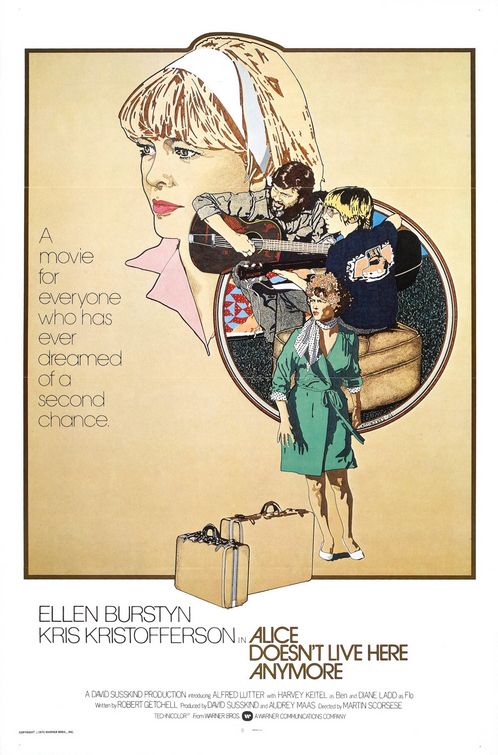
Alice Doesn't Live Here Anymore poster
Alice Doesn’t Live Here Anymore poster


This is a guest post by Heather Brown.

I’ve long been a little troubled by the women characters in Martin Scorsese’s films.  I say this as compliment overall, because though the female protagonists are few, they’re far from shallow and weak. From Lorraine Bracco’s Karen in Goodfellas to Vera Farmiga’s Madolyn in The Departed, Scorsese has shown that he can depict women who are multi-faceted and complex. It’s just that their stories are always told in relation to the men their lives. Theirs is always a kind of power struggle with their husbands or boyfriends, and in the end, that power is rarely on par with men’s. I had heard that Scorsese’s 1974 Alice Doesn’t Live Here Anymore was different, but since it’s one that so rarely talked about, it took awhile for me to finally check it out.  And I’m so glad I did.

Ellen Burstyn’s Alice is a 30-something mother in Socorro, New Mexico, where she lives with her husband Donald (Billy Green Bush) and son Tommy (Alfred Lutter). Donald is an overbearing bastard of a man who does little more than bark at Alice and Tommy, who each take care to stay out of his way.  Nothing Alice does is ever good enough for Donald. Thelma and Louise fans won’t be able to help but compare him to Darryl, the lout of a spouse who bullies Thelma. Unfortunately, there’s no Louise in this film to whisk Alice away in a 1966 Ford Thunderbird Convertible.  Alice’s release from Donald is spurred by a freak car accident that kills him and leaves her and Tommy to fend for themselves. Just like the viewer up to this point, Alice has wished for Donald to disappear, but her guilt is raw, and Tommy senses her ambivalence.  Rather than remain in a town she hates in a house she can no longer afford, Alice packs up the station wagon and heads to Monterey, California to reclaim her first love: singing. What ensues is an unlikely road movie with a mother and son at the center, and men on the periphery.

Alice and Tommy
Alice and Tommy


Alice’s first stop is Phoenix, which is about as far as her money will take her. When she and Tommy settle in to a motel, Alice must go shopping for clothes that will make her look younger, as she tells her Tommy. It was at that moment in watching the film that I saw the story come into focus: what happens when a parent doesn’t hide the difficulty of making ends meet from her kid, but instead matter-of-factly involves him in the day-to-day slog of getting by, promising that good things are to come despite the current circumstances? Rather than keep Tommy in the dark about how broke she is and how no one will hire her for a living wage, Alice unsentimentally–yet lovingly–informs Tommy of her plans as she makes them.

Well, almost. Given that Tommy is still young (10 or 11), Alice does prefer to keep intimate details to herself, particularly when it comes to the first man she meets since her husband’s death, Ben (played by Harvey Keitel), who’s a regular customer at the bar where she lands a singing gig in Phoenix. Tommy is no fool, though, and when he asks one too many personal questions Alice tells him she’s not going to talk to him about her sex life. Sure, she doesn’t take this moment to have the birds and bees discussion, but when was the last time you heard a parent acknowledge the existence of a sex life to their kid? Its instances like that that make this film a fascinating study of a parent-child relationship in the context of shifting gender dynamics in a changing society.
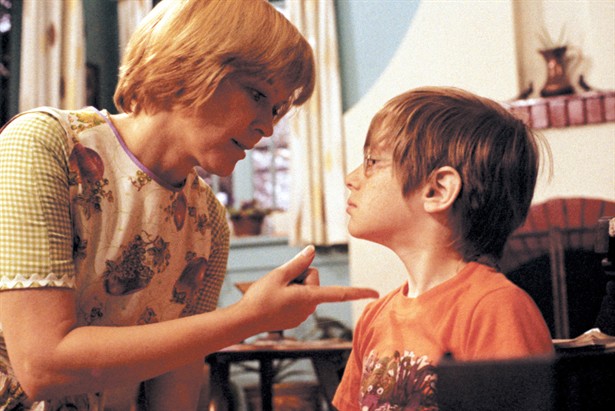
Alice_Doesnt_Live_Here_Anymore_28780_Medium
The film is a fascinating study of a parent-child relationship.


A glance at the movie poster for Alice tells you that she’s going to eventually make her way into the arms of a rugged and mostly affable Kris Kristofferson, but she must deal with Ben first. While Alice initially rebuffs his advances, he eventually wears her down and wins her over. Yay, we think! Someone who will treat Alice with the tenderness she deserves.  It doesn’t take long for Ben to reveal himself as a philanderer and psychopath, and this realization prompts Alice and Tommy to once again pack up the wagon for the next town, Tucson. Alice decides to make a pragmatic move and start working a job that’s close to their motel and will ensure free food: waiting tables. At this point in the plot the story expands to include the women at the restaurant—the brassy Flo (Dianne Ladd) and timid Vera (Valerie Curtain)—and Tommy’s new friend Audrey, played by a very young and very boyish Jodie Foster (creepy alert: two years later she and Harvey Keitel would be joined as the prostitute/pimp dyad in Scorsese’s Taxi Driver, which makes you feel gross when you watch them in Alice). Alice also meets David (Kris Kristofferson), and like her, we’re not altogether sure that his fixation with Tommy is genuine or just a sneaky way to pick up his mom. We see Alice try to work through the challenges of managing her expectations of love and work, and there’s real narrative power in how she fully inhabits all her choices, be they selfish, selfless, stupid, or sane. Though billed as a romance, the real love story has two couples at its core: Alice and Tommy, and Alice and herself.
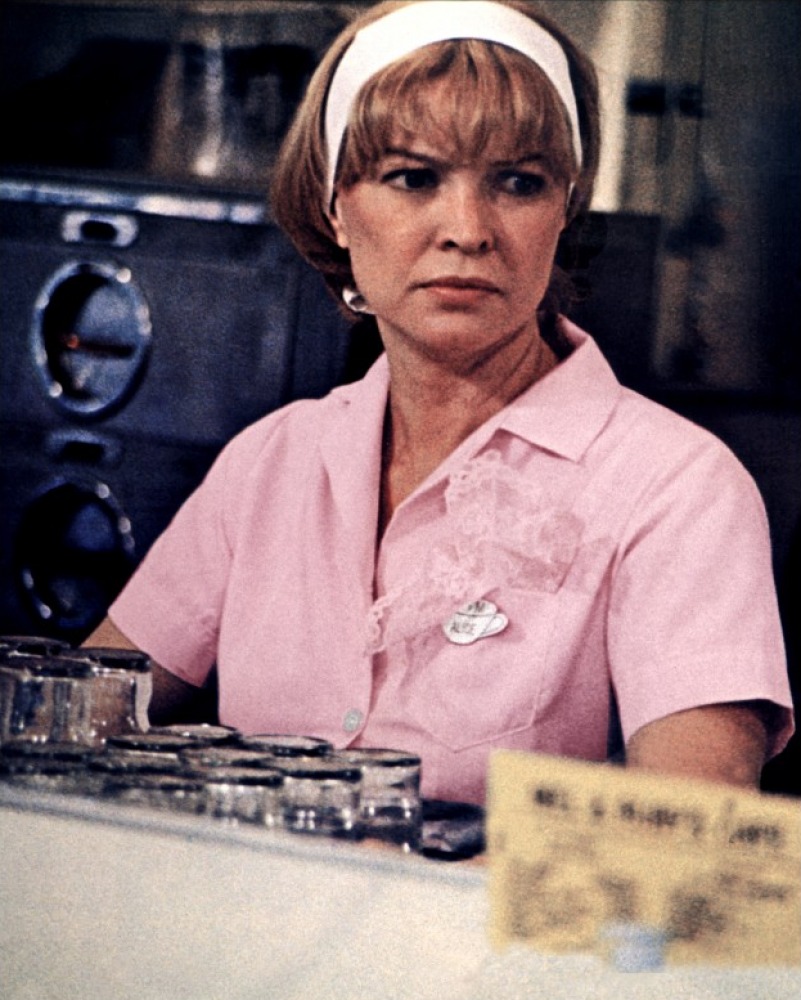
Alice
Alice


Heather Brown lives in Chicago, Ill., and works as a freelance instructional designer and online writing instructor. She lives for feminism, movies, live music, road trips, and cheese.
Notes from the Telluride Film Festival: Reviews of ‘The Invisible Woman’ and ‘Gravity’

Usually movies with such mainstream blockbuster potential are not portrayed at Telluride Film Festival. Telluride opts for more artistic limited release movies. But I suspect Cuaron’s credibility, including casting a woman in the lead over Clooney, made it a Telluride film.

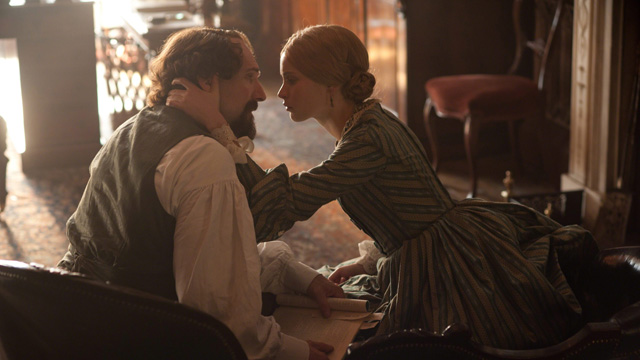
Still from The Invisible Woman


This is a guest post by Atima Omara-Alwala.

The Woman Behind Charles Dickens: A Review of the Film The Invisible Woman

“You men live your lives, while we are left behind. I see no freedom where I stand!” yells protagonist Ellen Ternan at a Dickens’ colleague.

Ternan is the mistress of renowned English novelist Charles Dickens. And that sums up the movie The Invisible Woman. Ternan became the 18-year-old mistress to then 45-year-old Charles Dickens, who was at the height of his fame. Based on the novel of the same name, it accounts their life together, the scandal it caused, as Dickens was still married to his wife. While the film is meant to be focused on this torrid affair between Dickens and Ternan it, by extension, is a telling of the unfortunate status of women in the Victorian era.

English actor Ralph Fiennes, a celebrated actor of his generation (Schindler’s List, Quiz Show, The English Patient, The End of the Affair, to name a few) plays the larger than life Charles Dickens and Felicity Jones plays Ellen Ternan. Invisible Woman is the second film Fiennes directed after Coriolanus.

The Invisible Woman is sumptuous in its costumes and details of the Victorian era, but occasionally lacks in the chain that builds up to the affair. Ternan, whose family of moderately successful actors are good friends of Dickens, finds herself in his company due to a play he is building. You instantly see why Dickens falls for Ternan–she is young, spirited, and passionate about his novels and short stories. Jones’ Ternan does a good job in not overdoing the “fan girl” role, as that can cross over to creepy rather quickly. Her love and understanding of his books touches Fiennes’ Dickens perhaps because his wife doesn’t seem that invested in his work and Ellen is rather young and pretty. One also suspects her adoration soothes his ego. Chats of his works turn to meaningful conversations of life ,which pale in comparison to the awkward stilted and physically passionless relationship that exists between Dickens and his wife, Catherine.

Felicity Jones in The Invisible Woman


Ternan finds herself at a crossroads in her relationship with Dickens, as her family realizes his adoration of her and her growing affection for him.  While she hopes to become an actress, it is made clear to her by the women in her family that she is not good enough to survive in the profession. Since she has not too much formal educational training, any money to inherit, or other marital prospects, the best she can hope for is a relationship with Dickens, who cannot divorce his wife in Victoria era England. But can provide for Ternan. It is not a “choice” that thrills her, especially as she views Dickens’ callousness toward his wife–which includes but is NOT limited to a public letter in the London Times announcing he and his wife (unbeknownst to his wife) have agreed to separate (worse than texting your ex you’re through with them) and forcing his wife to deliver a gift meant for Ternan but accidentally delivered to her so (in Dickens’ mind) the wife can see for herself nothing exists between them.

I personally love Charles Dickens’ writings and thought he was quite the advocate for justice for the poor, but I was stunned at the sheer humiliation he put his wife through. You can imagine Ternan’s thoughts: if he’s that callous to the women who bore TEN of his children, how the hell is he going to treat me?

My biggest complaint was, while I saw a chemistry between Fiennes and Jones, the buildup was not always potent enough for me to think this was supposed to be the renowned passionate affair it apparently was. The timeline was fuzzy at times. Fiennes is outstanding per usual as the larger than life author, and Jones is an ingénue with promise who perhaps reached her limits in playing an older and wiser Ternan after Dickens’ passing, trapped in reflection and struggling to free herself from his ghost. Either way, go see it, if for nothing else to no more about this author and see another outstanding Ralph Fiennes performance.

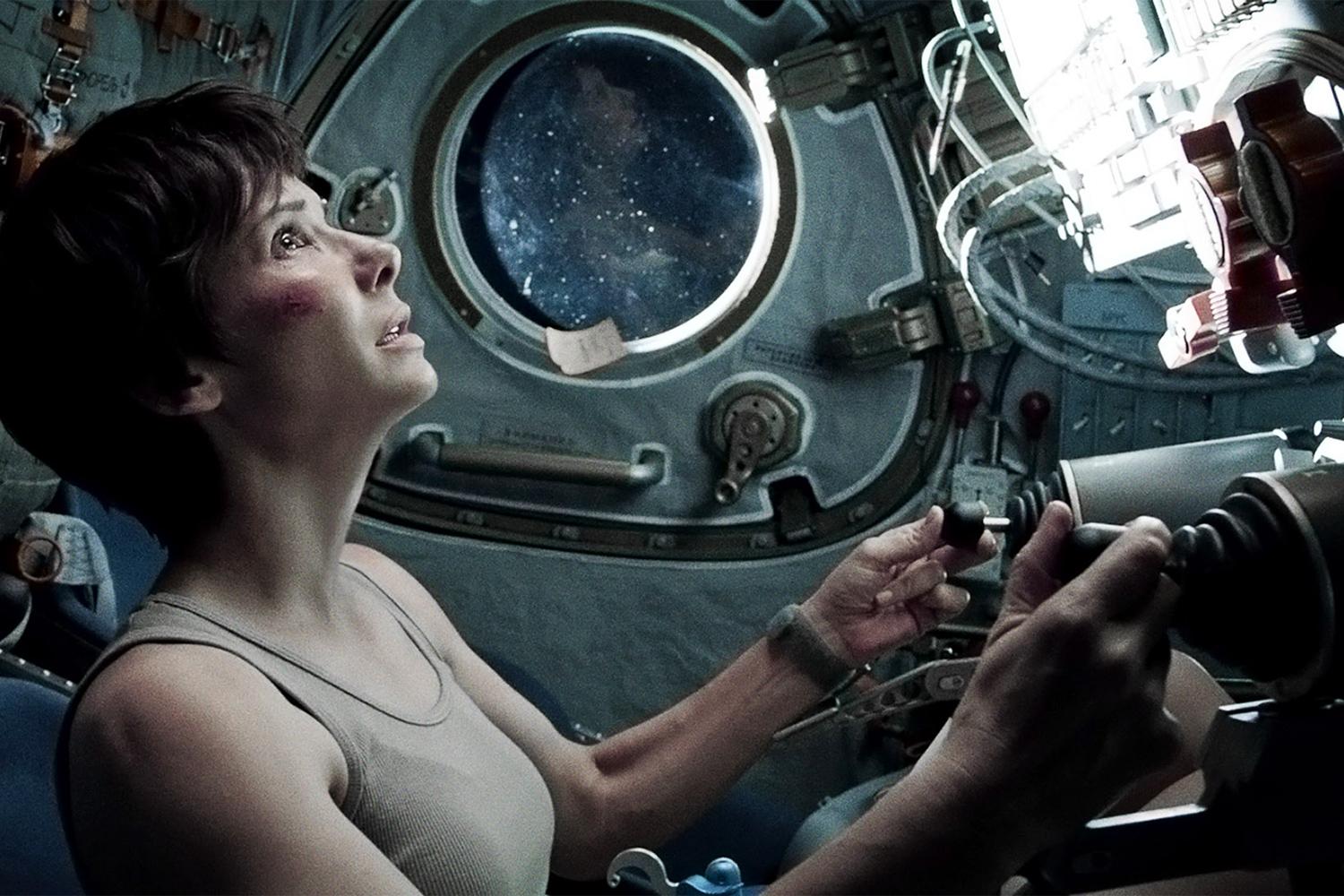
Movie poster for Gravity


A Brilliant Woman Hero: A Review of the Film Gravity

If you ever doubted a woman could literally reach for the stars,  Sandra Bullock changes your mind in her performance as Dr. Ryan Stone, a brilliant  astronaut who becomes a hero in Gravity. The film is directed by Alfonso Cuaron, who also directed A Little Princess (1995), Y Tu Mamá También (2001), and Harry Potter and the Prisoner of Azkaban (2004). Gravity is a 3D movie with George Clooney as Bullock’s co star. Clooney plays fellow astronaut, Matt Kowalsky.

Dr. Stone and Kowalsky, along with others, are in space on a mission when debris from a satellite crashes into their space shuttle Explorer, killing most of their crew. Dr. Stone and Kowalsky (on limited oxygen) must find a way to survive.

Usually movies with such mainstream blockbuster potential are not portrayed at Telluride Film Festival. Telluride opts for more artistic limited release movies. But I suspect Cuaron’s credibility, including casting a woman in the lead over Clooney, made it a Telluride film.

Sandra Bullock in Gravity


Bullock is wonderfully nuanced in her role as Dr. Ryan Stone and I can see why reviews coming back from Venice International Film Festival have her touted for another Oscar nomination. Cuaron portrays a complex, brilliant astronaut with a sad past who is driven by her work. With her male colleagues (particularly Clooney’s Kowalsky, whom she interacts the most with), she confidently holds her own in what she does. When the space shuttle is hit, and Dr. Stone–a less experienced astronaut–is sent flying into space in a breathtaking 3D moment, she is rightfully panicked. I worried she might become the damsel in distress that Kowalsky rescues, but Bullock does not take you into unnecessary hysterics. If anything, the 3D movie makes the audience more empathetic to how scary the reality of flying untethered into space is.  The rest of the movie is an exercise in her using her mental and physical reserves to brainstorm her way out of hairy situations, while the debris still in orbit rotates back around every so often to threaten her survival. I found myself mentally cheering her on as I think all viewers–especially women–will to the end.


See also: Does Gravity Live Up to the Hype? and Gravity and the Impact of Its Unique Female Hero


Atima Omara-Alwala is a political strategist and activist of 10 years who has served as staff on eight federal and local political campaigns and other progressive causes. Atima’s work has had a particular focus on women’s political empowerment and leadership, reproductive justice, health care, communities of color and how gender and race is reflected in pop culture. Her writings on the topics have also been featured at Ms. Magazine, Women’s Enews, and RH Reality Check.


The Sex Scenes Are Shit, and the Director’s an Asshole, but You Should Still See ‘Blue Is the Warmest Color’

A three-hour art film about two queer women with subtitles is like a dream come true for me: I’ve sat through arty, subtitled films twice that long–which didn’t have a trace of queer content. So I’ve obsessively read everything I can about Blue Is The Warmest Color. And I’m puzzled. In an age when writers of color like Wesley Morris and Roxane Gay bring added perspective and insight to their reviews of films like, Django Unchained and 12 Years A Slave, why are straight men the overwhelming majority of people telling the world whether or not the sex scenes in Blue are convincing?

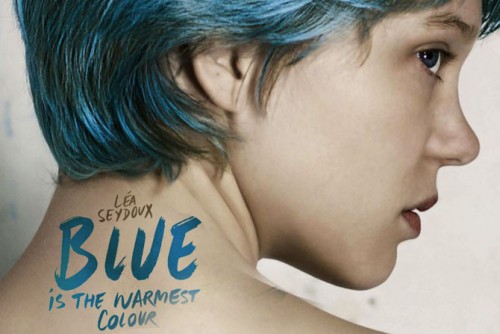
Blue Is the Warmest Color poster


This is a guest post by Ren Jender.

A three-hour art film about two queer women with subtitles is like a dream come true for me: I’ve sat through arty, subtitled films twice that long–which didn’t have a trace of queer content. So I’ve obsessively read everything I can about Blue Is The Warmest Color.  And I’m puzzled. In an age when writers of color like Wesley Morris and Roxane Gay bring added perspective and insight to their reviews of films like, Django Unchained and 12 Years A Slave, why are straight men the overwhelming majority of people telling the world whether or not the sex scenes in Blue are convincing?

I saw the film about five months after it had won the top prize at Cannes (in an unusual move the jury awarded the prize to the two stars, Léa Seydoux and Adèle Exarchopoulos, as well as the director, Abdellatif Kechiche) just prior to its US release. Julie Maroh (the queer author of the original graphic novel on which the film is based) prepared me to not love the sex scenes, which she described as “porn,” ” brutal and surgical,” and “cold.”

What I didn’t expect, in a film that is told almost entirely in close-ups on faces, was the director  (who also co-wrote the script) framing the sex scenes so they have as much tits and ass–especially ass–in them as possible. The actresses (Seydoux as Emma and Exarchopoulos as Adèle: the director named the main character and the film itself–the French title is La vie d’Adèleafter the woman playing the lead) do a beautiful job of making us believe in this romance–during the rest of the film. But here they are stuck playing a joyless game of naked Twister. We can practically hear the director shout, “Put your hand there! Put your face there! No, there! Now slap her ass! Again!” The ass slapping reminded me of the moment in male-directed, girl-on-girl porn clips, in which, to keep the audience from getting bored and give the actresses something to do, one woman is directed to slap (or tap: it makes a noise like slapping) the vulva of the other woman–even though: I don’t want my vulva slapped, and I’ve never met another queer woman who wants her vulva slapped nor one who gets pleasure from slapping the vulva of another woman.

The director frames a scene in a museum much like the sex scenes, so we get an eyeful of the breasts and buttocks from the nude artworks, as if the scene takes place at a peepshow. If the director had been able to stop ogling women’s body parts, he could have redeemed himself. A woman (who has never had sex with another woman) seeing nudes in the company of the woman to whom she has a strong sexual attraction is a situation rife with possibility. And part of what makes Adèle and Emma’s bond believable is the instant and electrifying attraction they have to each other: Adèle literally stops traffic when she first sees Emma and fantasizes about her that night, though the two haven’t even spoken. Every other moment of their relationship feels genuine (except when one woman hits the other during a fight, which also feels like a man’s version of what two women do when they’re alone), so we feel cheated during the naked sex scenes.

We see what the nude scenes could have been later in the film when the characters have a sexual moment but stay fully clothed–which is maybe why the director doesn’t ruin the mood. The camera focuses on their faces and the emotion that plays across them. Perhaps Kechiche finally learned that no one is able to act with her ass. 

Besides being a creep, Kechiche is an asshole. He cheated his crew out of overtime pay and continued a long tradition of male directors harassing their very young, very naked actresses on the set. When the two women had the temerity to complain, well, you can read for yourself his translated public statements at at Flavorwire. In spite of himself and those ten bad minutes (out of 180), Kechiche’s Blue Is The Warmest Color is a great film everyone should see.

Although the filmmakers (I am including the actresses since, according to all parties, improvisation played a big part in the finished film) and straight reviewers are quick to describe the film as being a universal one of first love, and as Maroh has pointed out no queer women had a prominent role in the creation of the film, it captures queer life and love well, especially the intensity and desperation of a teenager’s first relationship with another woman. When the two have their big fight I cringed in recognition–as I did during many other moments.

The isolation Adèle experiences in her relationship with Emma is nothing like the peer-pressure romance she has at the beginning of the film with the sensitive, good-looking, older boy at school. Her high school friends (most of whom have the same neat, fashionable haircut; Adèle’s hair is messily piled on her head but at the same time always gets in her face) seem more eager about the relationship (“He likes you!”) than Adèle does.

After she breaks up with the boy, we see Adèle walking away from the high school friends who are calling her name to be with Emma. Adèle is opening her life to the elements, to a tornado, knowing nothing will be the same afterward and not caring about the consequences. So we’re not surprised that Adèle clings to Emma like a life preserver. And we’re also not surprised to see that later in the film, without Emma, she starts to sink.

After she’s finished with school, Adèle doesn’t talk with straight coworkers about her personal life, even though she gets along with them and likes her job. She wants to avoid coming out to them. She even hides her true address, so none of them find out she lives with a woman. When heartbreak comes she can’t tell the people she works with why she doesn’t feel like dancing with the preschoolers they look after, so she goes through the motions, letting her real feelings surface only after everyone has left, and the day is done.

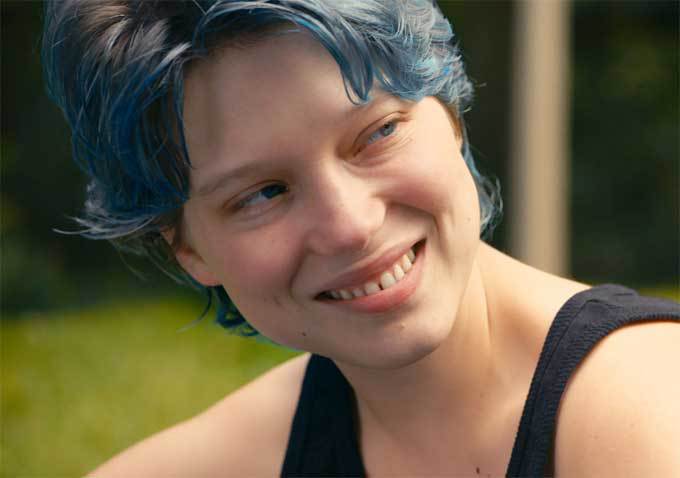
Lea Seydoux
Lea Seydoux (Emma)


Seydoux (whose previous roles are nothing like the one she plays here) makes Emma a beautiful butch, especially in her later scenes in which she seems lit from within, as if she stepped out of a Renoir painting. Emma is an artist herself and so stunning even those of us who are art-snobs can almost forgive her shitty paintings: the director seems to know as much about the art world as he does about sex between women.

Even in the mainstream films queer women love, we usually have to ignore the discrepancy between how non-character actresses in mainstream films are supposed to look and how butches look. Popular films will sometimes feature a butch who wears makeup heavy enough to be visible on camera, or we will see a woman who is supposed to be butch who has obvious breast implants. Though individual butches may have these attributes, they don’t signal “butch” to other queer women, including those in a film audience.

With her pale lashes and unpainted mouth Seydoux is one of the most recognizable butches I’ve seen in any movie, including those made by queer women. And her Emma pleasantly surprises us in the way that people in real life sometimes surprise us. We expect flirtatious, teasing, older Emma, who has her arm around another woman when she first sees Adèle, and a posse of admirers at the women’s bar, to break Adèle’s heart, but Emma turns out to be a serial monogamist who genuinely cares about Adèle. When Adèle first sees the inevitable cracks forming in her relationship with Emma she does the one thing guaranteed to destroy it (without consciously admitting what she is doing). Adèle ends up breaking her own heart.

Seeing the two actresses play the scene in the café toward the end is like watching two great musicians play together. Some viewers have complained the film is too long, but Blue takes time to unwind the way relationships take time, the way heartbreak takes time, the way life takes time. Even at three hours we just want more.

The film also excels in capturing the experiences of queer women who are femmes. At one point, we see Adèle (who wears skirts and heels) cook for, serve and then clean up for a large group of people she barely knows while her butch girlfriend (whose friends are the party guests) literally lies back with her hands under her head. I’ve played a similar “wife” role to a butch partner–and seen too many other femmes I know do so too.

In a long scene at the party, a man corners Adèle into a conversation about her sexuality, his eyes glittering (he could be a stand-in for the director!), and she’s too polite to tell him to fuck off. I’ve been to that party, met that man, and been that woman.

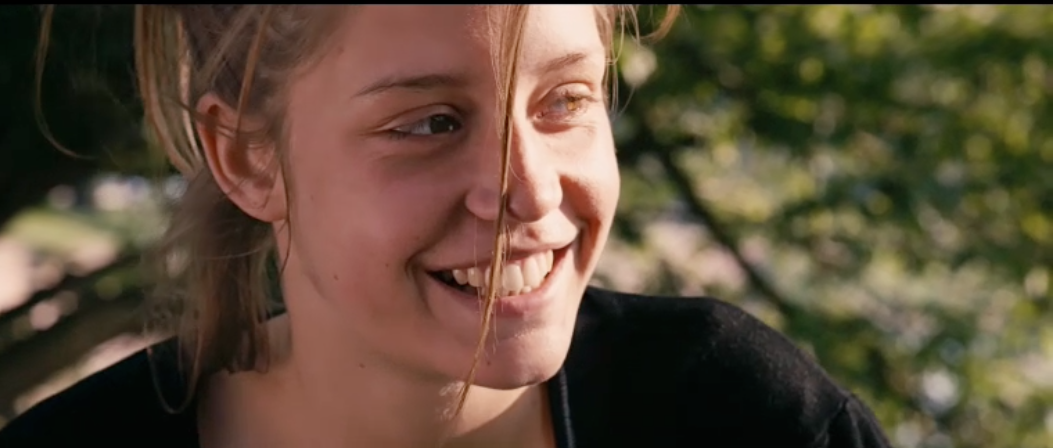
Adele Exarchopoulos
Adele Exarchopoulos (Adèle)


 Adèle is beautiful in the conventional sense (with her hair down, she resembles a younger, more well-fed version of Angelina Jolie), but we see that she doesn’t fit in either at the women’s bar, where she first speaks to Emma or later at the party among her girlfriend’s arty, more conventionally queer-looking friends. She is always, always getting attention from men, even the ones who know she is with Emma–but garners hardly any notice from other queer women.

Though Blue Is The Warmest Color is directed by a straight guy (and one who is, let’s not forget, a creepy asshole) it is, I would argue, a feminist film. It’s centered on one woman and takes her seriously. And Exarchopoulos gives the role (as Adèle jokingly tells Emma she will give her “study” of sex with women) her “all.”  Exarchopoulos’s face here is like a landscape in a Terrence Malick film and Blue, like the works of Malick, should absolutely, positively be seen in a theater, so the experience can wash over us, the way we see seawater wash over Adèle’s face when she is on a working holiday at the beach.

In Blue we see every aspect of Adèle’s life: as a schlumpy teenager, a student of French literature, a daughter, a girlfriend, a protestor, a “friend,” a teacher and finally a stylish twenty-something, alone. Films that cover this range in a man’s life are commonplace, but this week I was supposed to see three acclaimed American movies before their release (some of which competed with Blue at Cannes and may very well compete with it again at the Oscars), and the women in them are, according to even the glowing reviews, types and stereotypes: cute old ladies who talk dirty (and get cheap laughs for doing so) and bitchy ex-girlfriends who show that though the male protagonists may be losers, they aren’t gay losers. So sitting through three hours in a movie theater and focusing on one woman’s life (especially a queer woman’s) was a relief and something I could use a lot more of.  SEE THIS FILM.

[youtube_sc url=”http://www.youtube.com/watch?v=Y2OLRrocn3s”]


Ren Jender is a queer writer-performer/producer putting a film together. Her writing has appeared in The Toast, xoJane and the Feminist Wire. She almost dressed as “Emma” for Halloween, but then decided to be “zombie Lou Reed” instead.

The Women of ‘Thor: The Dark World’

Superhero movies often get better in their sequels because the repetitive and time-consuming business of an origin story has already been taken care of. Some of the greatest beneficiaries of this greater narrative freedom are the secondary characters, a group which, because these are comic book movies, generally encompasses every female character.

And yes, the women are for the most part given More To Do in Thor 2. But is it any more satisfying for the feminist viewer? Read more to find out.

Superhero movies often get better in their sequels because the repetitive and time-consuming business of an origin story has already been taken care of. Some of the greatest beneficiaries of this greater narrative freedom are the secondary characters, a group which, because these are comic book movies, generally encompasses every female character.

And yes, the women are for the most part given More To Do in Thor 2. But is it any more satisfying for the feminist viewer? Read more to find out. Spoiler alert #1: Not Really. Spoiler alert #2: There are spoilers for the film in this review.

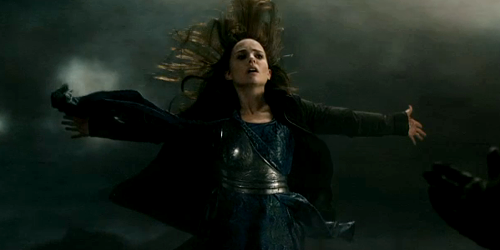
Jane Foster could feel it. She was perfect.


Jane Foster Goes All Black Swan on Us

I know next to nothing about the character in the comics, but I really like Natalie Portman’s Jane Foster. I love how passionate she is about her work (possibly because I married a scientist). And Natalie Portman, with real life academic bona fides, brings invaluable credulity to her role as a brilliant astrophysicist. She also pulls off the character’s social awkwardness convincingly and endearingly, despite “good at science, bad at people” being something of an overdone trope. And my favorite thing about Jane Foster is how embarrassed she is by her romance novel-esque love affair with a godlike superhero from another realm. But while her character was nicely three-dimensional in the first Thor, she wasn’t given much in the way of plot.

So in the sequel, Jane gets plot, but it’s only by coincidentally being possessed by the MacGuffin (some kind of universe-destroying energy called the Aether). This results in her having some self-defending superpowers which are barely called into play (less action than Pepper Potts got with her temporary superpowers in Iron Man Three), and a handful of spooky moments where her eyes turn dark and she grows feathers out of her back. We don’t actually get to know how Jane FEELS about this potentially fatal possession, though. It’s clearly just a plot device to get Jane to Asgard, and a waste of an opportunity for real character development.

Also, that “for New York” face slap she gave Loki in the trailer? Much less effective in the actual film because it comes well after a DOUBLE face slap for Thor for not calling her when he was on Earth to save New York. If I think about that any longer I will actually have a stroke, so let’s move on to…


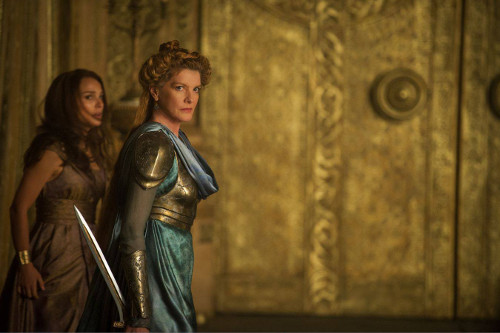
Rene Russo as Frigga


Frigga? More Like Fridge-a

Even though I watched the original (or two-thirds of the original before I fell asleep, no slight on the film, just a side effect of a busy week) on Friday night, I can’t remember what Frigga, mother to Thor and Loki and Queen of Asgard, did in the first movie other than provide the audience with a pleasant moment of, “Hey, Rene Russo!” and offer the camera concerned looks.

It’s not much better for our Queen in Thor 2. She gets one good tactical move and around thirty seconds of “see, strong women!” swordplay before getting killed off by the main baddie, all the better to fuel Thor’s  broodiness. Loki clearly had a stronger bond with Frigga, but the only way we see her death affect him is when he rages out in his prison cell. Which, you know, he probably does when he has a stubborn tangle in his hair, so it’s not all that compelling. With the actually dramatically interesting parts of Frigga’s death left unexplored, it feels all the more egregious a case of the character being fridged.


Sif
Jaimie Alexander as Sif


Sif, also present.

Sif actually gets LESS to do in this movie, and a couple of suggestive edits imply she’s in one corner of a love triangle with Thor and Jane, which I could SERIOUSLY do without (although my Thor expert Ben tells me that in some runs of the comics, Sif loves Thor “big time”). But if they MUST go down that path, at least let us have some meaningful dialogue between her and Jane during their escape from Asgard.

I also get sad when Sif is on screen because she makes me want a Wonder Woman movie even more, but that isn’t Marvel or Jaimie Alexander’s fault, so let’s move on.


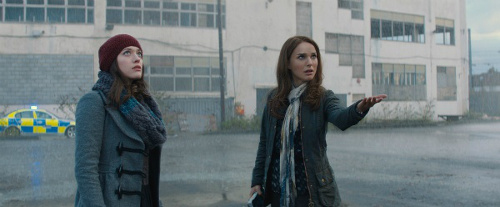
Kat Dennings as Darcy


And Kat Dennings as “Darcy”

Kat Denning’s Darcy is a Miracle Whip character: you either love her or hate her. She worked better for me in the first film, partially because the atrocious sitcom 2 Broke Girls pretty much has the same effect on Kat Denning’s signature shtick as sunlight does on Miracle Whip. Nevertheless, Darcy made me laugh, she helped the film pass the Bechdel Test by leaps and bounds, and, best of all, she reacted to the absurd goings-on the way a normal person would. I wanted to stand up and cheer when she called the police after Jane went missing from a creepy abandoned building, because that is what normal people would do, even when it seems pretty clear she’s missing because she’s in another realm, because there’s no 999 for that.

Even though I realize Darcy isn’t for everyone, I do wish there were more characters like her in the Marvel universe. By which I mean interesting, well-developed human civilian characters. So keep the Darcys coming, Marvel, and try to make some of them people of color, wouldya?


Thor 2's take on women: partly cloudy, some showers
Thor 2‘s take on women: partly cloudy, some showers


In conclusion? Thor 2 isn’t TERRIBLE to its women, even though it isn’t exactly great. Moreover, the treatment of women in the movie is good enough that it doesn’t detract much from the rest of the film, which is for my money very enjoyable and a substantial improvement on the (already pretty good) first installment.  It’s definitely worth seeing–at least so I have more people to talk to about it.
 

It’s ‘About Time’ for a Strong Family Narrative

Everyone loves a feel-good story about an awkward ginger falling in love and bonding with his family! About Time follows the life of Tim (Domhnall Gleeson), a young lawyer whose father (Bill Nighy) informs him on his 21st birthday that he has the ability to time travel. Specifically, that all the men in his family have the ability to time travel. I was a little bit perplexed that the women are kept in the dark about the family secret, but I guess it’s a metaphor for paternal bonding or whatever. Tim immediately endeavors to use his newfound gift to find a girlfriend, which feels slightly immature for a guy who’s out of school and in a steady career. Nevertheless, Gleeson keeps the tone light and heartwarming. Tim soon meets Mary (Rachel McAdams) and makes frequent use of his time travel to ensure that every aspect of their relationship development is perfect.

poster
About Time poster.

Written by Erin Tatum.

Everyone loves a feel-good story about an awkward ginger falling in love and bonding with his family! About Time follows the life of Tim (Domhnall Gleeson), a young lawyer, whose father (Bill Nighy) informs him on his 21st birthday that he has the ability to time travel. Specifically, that all the men in his family have the ability to time travel. I was a little bit perplexed that the women are kept in the dark about the family secret, but I guess it’s a metaphor for paternal bonding or whatever. Tim immediately endeavors to use his newfound gift to find a girlfriend, which feels slightly immature for a guy who’s out of school and in a steady career. Nevertheless, Gleeson keeps the tone light and heartwarming. Tim soon meets Mary (Rachel McAdams) and makes frequent use of his time travel to ensure that every aspect of their relationship development is perfect.

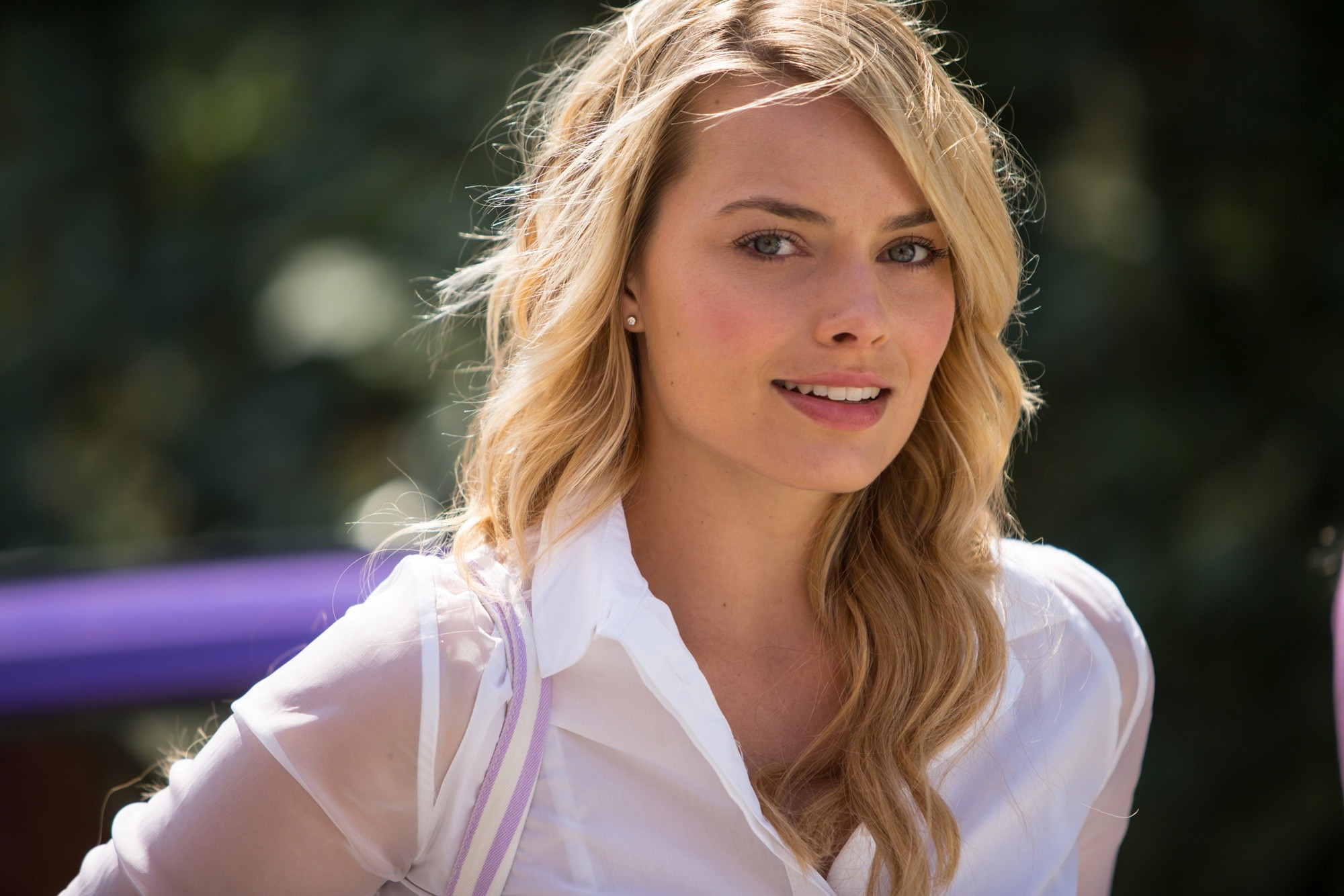
charlotte
Tim initially sets his sights on Charlotte.

What I like about Tim is that he’s flawed in a relatively benign way. While we’ve been conditioned as viewers to see the lead roles as starcrossed lovers, despite Tim’s undeniable love for Mary, he’s indiscriminate. He doesn’t really care who he falls in love with as long as he’s in love. As a testament to this, the film devotes a surprisingly large amount of time to showing his failed conquest of his first love, Charlotte (Margot Robbie). Far from the traditional notions of Hollywood romance, Mary arguably only becomes Tim’s true love because she was the first girl to give him a chance. Tim even goes on an ambiguous date with Charlotte while he’s dating Mary, wherein Charlotte predictably expresses playful remorse for initially rejecting him and makes a move. Tim carefully cuts it off just short of cheating – only by a hair’s breadth – to avoid venturing into unsympathetic protagonist territory. (He conveniently runs home to Mary and spontaneously proposes.)  I will say that I’m not a fan of bringing Charlotte back into the narrative to encourage the audience to thumb their nose at her and feed into smug Nice Guy vindictiveness. However, I do like that Tim and Mary are just sort of together out of coincidence because it proves that you don’t always need an epic back story or a lot of angst to be happy with someone.

Tim and Mary
Tim and Mary.

I have some concerns about female agency in this movie. Tim meets Mary several times with varying degrees of success. He redoes their initial conversation so much that he ironically lands a date with her by using her own opinions verbatim from previous attempts. He discovers through his lackluster interactions with Charlotte that even time travel and the clairvoyance that it brings can’t force someone to fall in love with him, but his experiences with Mary suggest otherwise. Sure, Mary was attracted to him from the start and you could conclude that any little tweaks Tim made wouldn’t have that much of an impact if they truly were “meant to be.” Obsessively manipulating every tiny aspect of your relationship to meet your idealized standards doesn’t exactly feel like you’re allowing the chemistry to develop organically. There’s definitely something uncomfortable about picking a random girl as your love object and then meticulously premeditating everything until she’s basically a blank slate for the perfect partner. That’s not really liberating for Mary. It’s the (500) Days of Summer mentality minus the petulant entitlement.

Tim and Kit Kat stick together.

These problematic aspects are mostly redeemed in that the romance isn’t actually the heart of the story. Refreshingly enough, Tim’s relationships with his family quickly come back to the foreground to pack more of an affective punch than sappy a love story ever could on its own. I’ve never seen the main romance as a faux A-plot in a romcom-esque drama and I couldn’t have enjoyed that twist more. The bond between Tim and his father turns out to be the most emotional aspect of the film. At times, I found Tim’s dizzy sister Kit Kat (Lydia Wilson) airy fairy to the point of being almost obnoxiously childlike, but Wilson and Gleeson have a phenomenal, easy chemistry that evens out her frayed edges. They’re one of my favorite brother/sister relationships in recent memory. Although Tim is clearly protective of her, it’s never overbearing or controlling. When Kit Kat turns to drinking to deal with her abusive boyfriend and gets into a car crash, Tim tries unsuccessfully to undo events before realizing that she needs to make the decision to better her life choices on her own. Somewhat implausibly, she has this epiphany in a few short sentences and finds new love and stability with Tim’s geeky best friend Jay (Will Merrick, bizarrely playing Gleeson’s peer despite a ten year age gap). I much prefer Tim and Kit Kat’s relationship as partners in crime to the romanticized possessiveness of brothers over sisters. I also think the fact that Tim was unable to protect her from all the bad things in life and gently encouraged her to make changes herself is much more realistic. People can get wrapped up in their lives and not notice what’s going on with their family, but that doesn’t necessarily mean they love them any less or should feel obligated to beat themselves up. They can still do the best they can as a support system. The only person I wish had been explored more is Tim’s mom. Oh well, I guess you can’t expect everyone to be totally developed. It’s just strange given that everyone else in his family seems so close.

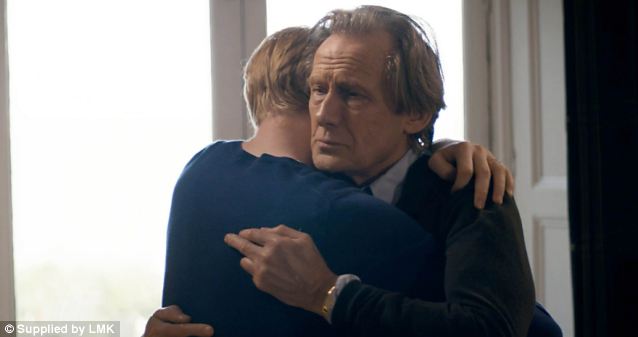
Tim's dad comforts him after breaking the news of his diagnosis.
Tim’s dad comforts him after breaking the news of his diagnosis.

A few unexpected plot twists keep things from becoming stale and work to set limits on the God complex of time travel. Tim takes Kit Kat back in time to stop her from meeting her abusive boyfriend after the car crash, which happened to occur on the day of his daughter’s first birthday. Things appear to go off without a hitch until to his horror, he returns home to a completely different child. His dad explains that he can’t go back in time past the birth of his child because it would effectively create a sperm roulette and produce different children every time, meaning that events are set in stone with the birth of each of his future children. This caveat acquires heart wrenching significance when his dad is diagnosed with terminal cancer. He and Tim continue to spend time together through time travel after his death, but it isn’t long before Mary announces she wants another baby. The meetings between father and son must come to a close. (Although I’m not quite sure how they happen. He can’t time travel because he’s dead. If Tim travels back, isn’t it just his memory of his dad? How does he continue to live? If he is “alive,” it’s a bit rude to leave your dad in purgatory.) Their final scene together is a massive tearjerker. Tim ultimately decides to stop time traveling altogether and live each day to the fullest. Even if you have the power to live every moment again, sometimes the present is perfect enough.

Black Girls Rock The World

BET’s Black Girls Rock! Awards ceremony last week was a magnificent and much-needed celebration of the social and cultural achievements of Black women: in politics and sport, music and local activism. It’s absolutely disgusting that such an important and wonderful event was marred by white racism.

BET’s Black Girls Rock! Awards ceremony last week was a magnificent and much-needed celebration of the social and cultural achievements of Black women: in politics and sport, music and local activism. The ceremony is a 90-minute showcase of monumental talent, guts, and determination among women of color, and it’s absolutely disgusting that such an important and wonderful event was marred by white racism.

FACT
FACT

As a white person watching this event, what struck me most was this: These women were not addressing me. Although I’m trans and queer, I otherwise fall into the coveted “white males aged 18-35” demographic, and all mainstream media content is aimed squarely at me. Our society demonstrably:

And then turns around, smiling sweetly, and claims to be “post-racial.” In this environment, only the most assimilationist and unthreatening of Black voices are given a platform. Will Smith stars in bootrstrappy neocon fairytales. Crash passes for nuanced discourse around race in Hollywood. Kanye West is ridiculed for publicly speaking truths about racism in the US.

There’s an ugly mass silencing of Black voices in white America. That’s what makes Black Girls Rock! so necessary and so compelling.

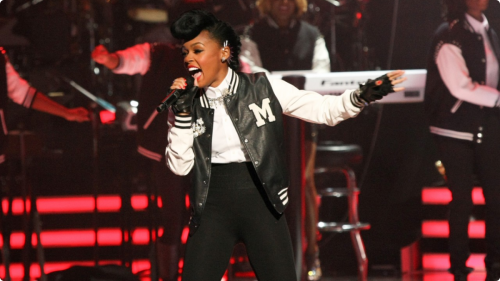
I LOVE YOU, JANELLE
I LOVE YOU, JANELLE MONAE

I’m a white guy, surrounded by white privilege the way I’m surrounded by air, so I didn’t start watching the show for its political content, but out of sheer narcissism: I was at the taping of the opening performance by my beloved Janelle Monáe, and I just wanted to see my own face on TV (you get a split-second glimpse of me at the end of Monáe’s song). I kept watching because it is so unusual for me to witness people of color talking in this way – to, from, and for their community. The women onstage were talking about the intersectional web of systemic and individual oppressions faced by Black women in America, and they were doing this in the context of an awards show. As an avid Academy hate-watcher, I’m accustomed to treating awards shows as the smarmy, self-congratulatory industry circle-jerks that most of them are. This, though! This was a genuinely uplifting celebration of legitimately inspiring work by truly awesome individuals.

Here was the incredible Marian Wright Edelman, Mississippi’s first African-American woman lawyer and a tireless activist for underserved children even well into her seventies.

Marian Wright Edelman
I LOVE YOU, MARIAN WRIGHT EDELMAN

Here was anti-violence activist Ameena Matthews, speaking so powerfully about being a Black Muslim woman that she gave me chills.

Here was TV writer Mara Brock Akil, declaring, “Black women, even if nobody else sees you, I SEE YOU.”

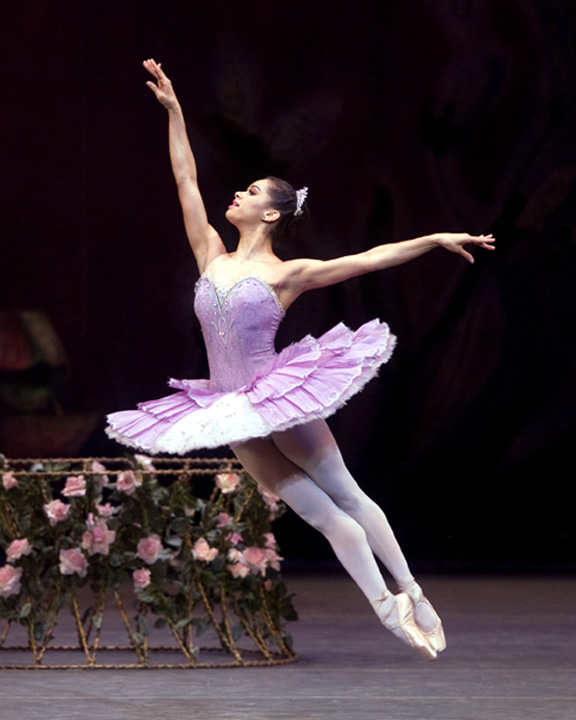
Here was Misty Copeland, a Black woman dancing classical ballet with otherworldly beauty.

Here were three astonishing young women who have made astounding contributions to local activism in their communities, including one little girl who created her own (female, Black) superhero to combat pollution.

As Awesomely Luvvie put it, “Every moment felt like a highlight.” Amber Riley, Queen Latifah, Venus Williams, and Jennifer Hudson were among the stars present, and pretty nearly everything about the show was wonderful. Talented, tireless African-American women were lifting one another up instead of being forced to cater to white supremacy, and it was beautiful.

I LOVE YOU, MISTY COPELAND

So, of course, white people had to throw a hissy fit.

This is the ugly reality of racism’s MO in US society. Staggering forces operate socially, economically, politically, and culturally to maintain white supremacy in every arena, and if everpeople of color do something that is not directly and primarily aimed at perpetuating this, white people start accusing them of racism. It would be funny if it wasn’t borderline-genocidal.

Fellow white people, I am begging you: don’t make this about you. Go watch the Black Girls Rock! show. Give BET your eyeballs, your time, and your attention. When I sat down to watch the show, I was only in it for myself, but I got a humbling and eye-opening exposure to some phenomenal women who are powerful forces for good in our society. May Black girls continue to rock the boat, the house, and the world.

Max Thornton blogs at Gay Christian Geek, tumbles as trans substantial, and is slowly learning to twitter at @RainicornMax. Laverne Cox is his queen.

Bitch Flicks’ Weekly Picks

Check out what we’ve been reading this week and let us know what you’ve been reading/writing in the comments!

recommended-red-714x300-1


2013 Movie Releases Directed by Women at The Cinema Girl

The MPAA’s backwards logic: Sex is dangerous, sexism is fine by Soraya Chemaly at Salon

Why I’m Not Here for #WhiteGirlsRock by Olivia Cole at The Huffington Post

The Evolving Conversation About Women Directors by Melissa Silverstein at Forbes

There’s a New Ms. Marvel, and She’s a Shapeshifting Muslim Teen From Jersey City by Susana Polo at The Mary Sue

Patsey’s Plea: Black Women’s Survival in ’12 Years A Slave’ by Nijla Mumin at Shadow and Act

Very VH1: Chat With ‘Awkward Black Girl’ Creator Issa Rae About Her Web Series + Leap to HBO by Felicia Daniels at VH1

Swedish cinemas take aim at gender bias with Bechdel test rating at The Guardian

15 female TV writers you should know by Leah Pickett at WBEZ

Navigating Hollywood’s Cutthroat Corners with Ms. in the Biz by Holly L. Derr at Women and Hollywood

Shonda Rhimes Knows Where This ‘Scandal’ Will End by Kelly Lawler at NPR

Andrea Lewis of ‘Black Actress’ On Why Black Female Leads on White Shows Aren’t Enough by Nicole Breeden at Clutch

What Joss Whedon Gets Wrong About the Word ‘Feminist’ by Noah Berlatsky at The Atlantic

Scandal: Lisa Kudrow Goes HAM in an Epic Speech on Sexism in Politics by Dodai Stewart at Jezebel

Watch this Amazing Conversation Between bell hooks and Melissa Harris-Perry by Sarah Mirk at Bitch Media


What have you been reading/writing this week? Tell us in the comments!


Notes from the Telluride Film Festival: A New Look at American Slavery in ’12 Years a Slave’

Patsey can be the only the source of her violent hatred; and while Mistress Epps turns her spite on her husband occasionally, she is quickly reminded by her husband of her place in a patriarchal American Southern society–if he tires of her, she is gone. McQueen handles these situations with a frankness and humanity that is not overdone and he brings the best perfomances out of all his actors. The film got a standing ovation at Telluride, several times over, which is rare to happen at the festival.

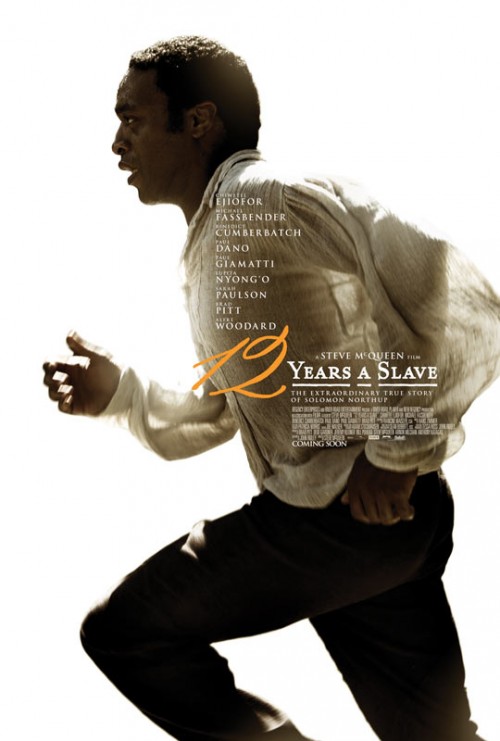
TWELVE YEARS A SLAVE

This is a guest post by Atima Omara-Alwala.

From Red Tails to Lee Daniels’ The Butler and Django Unchained, there have been a lot of “Black Exodus” movies lately, and by Black Exodus, I mean every time there is major motion picture with a mostly African American cast (and usually a historical plot), every black person I know (including myself) goes to see the movie on opening weekend. Usually because there are so few movies, especially great films, that are made with African Americans as a major focus it’s an event to go see such a movie and we want to make sure Hollywood knows it has support.Well if there is any movie worth going to see whether you are black, white, woman or man, I urge you to go see 12 Years a Slave.

12 Years a Slave is based on the autobiographical account of Solomon Northrup, a successful, middle class African American attorney born free who lives in upstate New York with his family in the 1840s. He is kidnapped on his way to Washington DC to pursue a business deal and is sold into slavery at its xenith in the American South. The story accounts his experiences as an enslaved man and his struggle to get back to his family. British (and black) director Steve McQueen (of Hunger and Shame) directs an all-star cast of Chiwetel Ejiofor (Solomon Northrup) Brad Pitt, Michael Fassbender, Benedict Cumberbatch, Paul Giamatti, Alfre Woodard, and outstanding newcomer Kenyan actress Lupita N’yongo.

DF-03057.CR2 DF-03057.CR2

Unlike Django Unchained, it is not particularly rough to watch in its violence. As a matter of fact, because I saw Django Unchained I think I was better prepared to see the brutality portrayed in 12 Years a Slave. To me the most brutal scenes were not of the requisite whipping or hanging of the slaves, but of the systematic emotional break down of Solomon as he realizes what has happened to him and no matter how hard he protests, no one will believe who he is, and if they do, they beat him physically or emotionally until he eventually gives up. Solomon’s breakdown from freeman to slave provides the most interesting twist, because it’s not just about a man who was born a slave, lived a slave, and died a slave. This story was about a freeman with the privileges and rights of any other freeman who had them ripped away. And it’s this that allows the viewer to see the full brutality of American slavery, and how it thrived off depriving the human spirit. It’s Solomon’s determination to get back to his family that keeps him surviving, but it’s his fear and occasional brushes with nearly getting caught, that increase his fear (e.g. writing a letter to his family when slaves aren’t supposed to read and write) and keep him a slave.

The movie does not shy from the gender dynamics that were also at play in American slavery through Solomon’s female counterparts. From a slave woman named Eliza, who is separated from her children, to Patsey (played by outstanding newcomer Lupita Nyong’o), who is the unfortunate object of her slave master’s sexual advances. Through Mistress Shaw, the black mistress of a white plantation owner (played with sass by Alfre Woodard) we hear of the “choices” that many enslaved black women have then as she tries to counsel Patsey.  Submit to the master’s sexual advances or feel the whip on your back and work hours in the fields, she admonishes. However, sometimes even if you submitted to the master of the plantation’s desires, it didn’t guarantee your safety. As Patsey finds out from her sociopathic Master Epps (Michael Fassbender), who has an obsessive fascination with her that results in him brutalizing her and others around her who might get in his way as he “pursues” her. One such object of Epps’ hatred and source of distress for Patsey is Master Epps’ wife, a Bible-thumping bitter woman (Sarah Paulson), who in a fit of jealous rage throws a glass at Patsey’s head when she sees her husband ogling her.

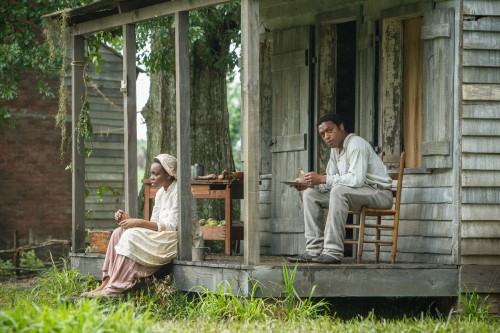
12-Years-A-Slave

Patsey can be the only the source of her violent hatred; and while Mistress Epps turns her spite on her husband occasionally, she is quickly reminded by her husband of her place in a patriarchal American Southern society–if he tires of her, she is gone. McQueen handles these situations with a frankness and humanity that is not overdone and he brings the best perfomances out of all his actors. The film got a standing ovation at Telluride, several times over, which is rare to happen at the festival. The music is by renowned musician Hans Zimmer. 12 Years a Slave is a must-see by all accounts.

See also: Facing the Horror of 12 Years a Slave


Atima Omara-Alwala is a political strategist and activist of 10 years who has served as staff on eight federal and local political campaigns and other progressive causes. Atima’s work has had a particular focus on women’s political empowerment and leadership, reproductive justice, health care, communities of color and how gender and race is reflected in pop culture. Her writings on the topics have also been featured at Ms. Magazine, Women’s Enews, and RH Reality Check.

Facing the Horror of ’12 Years a Slave’

Spirituals and folk songs were essential in African American history–they allowed slaves to communicate and to collaborate. They were a subtle way to resist slavery and develop community (which was exactly what chattel slavery sought to demolish). White people–as the aforementioned overseer demonstrates–often co-opt these important black cultural pastimes, which is something to keep in mind as we seek to hear and see–but not take–African American stories.

12 Years a Slave
12 Years a Slave


Written by Leigh Kolb

As we walked out of the theater from seeing 12 Years a Slave–still tear-stained and overwhelmed–a wealthy-looking white couple filed out behind us.

“That didn’t seem like 12 years,” the woman said.

“It seemed like it to me,” the man replied.

My husband and I discussed which comment was worse–hers, that seemed to diminish Solomon’s terrible journey, or his, that indicated the film was too boring or long.

I wondered what would have compelled this couple to come see this particular film. Awards buzz? Prestige? I don’t know, but I was both horrified and unsurprised at their reaction.

While I don’t imagine their response was shared by most, or even many, audience members, there was something about that retirement-aged white man in a crisp popped collar that made me seethe.

I think, more than anything, this couple represents the response of so many whites in the face of our brutal history.

Because our American history–built on slavery–is so frequently whitewashed, we are not confronted enough with our short-term memory loss and the privilege of not hearing or seeing the cruelties of our recent past.

White audiences rarely have to feel uncomfortable. We are typically the protagonists, the victors, the complex characters. Our stories are universal–or at least they’re marketed as such.

Hopefully, this is starting to change.

12 Years a Slave is the first time a slave narrative has been given the Hollywood treatment, which is almost unbelievable. The slave narrative at its very core is a hero’s journey, and the fact that filmmakers have not looked to these first-person accounts as screenplay material points to a much larger issue in our society.

Solomon as a free man with his family


White America is so deeply ignorant and/or ashamed of its history, these stories are pushed aside, relegated to African American Literature classes. These stories are otherized, even though they are our history.

12 Years a Slave–which will surely be nominated for and win its fair share of awards–is an amazing film. The acting and Steve McQueen’s directing are brilliant, the score is perfect, and its importance is poignant. It is interesting, though, that the director and most actors are not American (with the exception of Brad Pitt, who plays the good-guy Canadian who helps Solomon regain freedom). Chiwetel Ejiofor, who plays Solomon, is incredible. Michael Fassbender’s Edwin Epps is horrifying.

It’s difficult to see our white American selves as the enemy, and for black American directors, I can’t imagine the obstacles against telling those stories. (I’ll think there’s been some kind of real breakthrough when a Nat Turner film gets made for mass audiences.)

Solomon, kidnapped and sold into slavery, with Epps


One of the powerful aspects of the film is its score. The first half of the film features Hans Zimmer’s punctuated horror music, which seems mildly out of place but also perfect, because we are watching a horror film. The vocal music we hear–painfully infectiously–is a white overseer singing “Run, N-gger, Run.” It fits well with the horror theme. This folk song, however, began as a song that slaves would sing, and then it was co-opted as a threat instead of a chant. At this point in the film, everything that Solomon had, that was his, is gone and has been sold.

Another perfect soundtrack choice during these scenes is when Bible verses and sermons are spoken as an abused slave is wailing, or the cruel overseer is spewing pejoratives. This is a not-so-subtle reminder that slavers and those who supported slavery used Christianity to defend the practice.

Solomon
Solomon


We only start hearing slave spirituals and folk songs sung by the slaves themselves about halfway through the film–in resignation, almost, as if there is nothing we all can do except cope with the terrible situation. When Solomon starts singing along to “Roll Jordan Roll” after a fellow slave dies in the cotton field, we know he has changed.

Patsey
Patsey


Solomon’s story isn’t over there, thankfully, but when he starts singing, we know he has changed.

And so have we.

At least we should.

Solomon has–to an extent–resigned and begun to see himself as part of the groups of slaves (more so than when he was lynched, which was one of the most excruciating scenes, next to the rape and whipping of Patsey, played by an incredible Lupita Nyong’o). He is now part of a community, which he wasn’t before, and this makes his return to freedom painful–because they are still enslaved. Spirituals and folk songs were essential in African American history–they allowed slaves to communicate and to collaborate. They were a subtle way to resist slavery and develop community (which was exactly what chattel slavery sought to demolish). White people–as the aforementioned overseer demonstrates–often co-opt these important black cultural pastimes, which is something to keep in mind as we seek to hear and see–but not take–African American stories.

Black Americans have many other stories besides the tragedies that are starting to seep onto the big screen. It’s incredibly important that we be forced to see these tragedies because we are still so remarkably racist, and we haven’t learned our history.

However, we need more than that. We need much more than the “lonely slave narrative” to actually effect change.

One of the previews before 12 Years a Slave was for All is Lost, which was being promoted heavily at the theater. This film is about a man who gets lost at sea. That’s it. No dialogue, no other characters–just one white man being tousled about in the ocean.

While I’m sure it’s a lovely film (and I’m SURE crisp-shirt Richie Rich will love it), it’s amazing that these films can get made–repeatedly. “White man has problem.” “White man has problem.” “White man has problem.”

However, with black films we’re slipping into “Important Black Film” territory–and we need more than that. We need films that accurately portray the years of suffering that we’ve denied. And from a screenplay perspective, what rich source material we have to work from.

Then, and only then, can we move from the jarring and uncomfortable horror music to songs sung in harmony–songs of mourning, of celebrating, of coping, of togetherness. Only when we face the horror can we go forward together.


Recommended reading: “Acting Right Around White Folks: On 12 Years a Slave and ‘Respectability Politics,'” by ReBecca Theodore-Vachon at RogerEbert.com“Hollywood Finally Catches Up With History,” by Salamishah Tillet at The Root; “The Seven Stages of Important Black Film Fatigue,” by Stacia Brown at The American Prospect; “The Racialicious Review of 12 Years a Slave,” by Kendra James at Racialicious“Despite Success Of 12 Years A Slave, Many Stories Set During The Period Still To Be Told,” by Tambay A. Obenson at Shadow and Act; “The ‘Lonely Slave’ Narrative Continues To Thrive In Hollywood,” by Tanya Steele at Shadow and Act


Leigh Kolb
 is a composition, literature and journalism instructor at a community college in rural Missouri. 

‘Wadjda’: Can a Girl and a Bicycle Change a Culture?

At its heart, this film is about how young Wadjda, played by newcomer Waad Mohammed, navigates her culture and adolescence as a Saudi girl, her relationships with other girls and women, and what seems to be the changing attitudes of her country

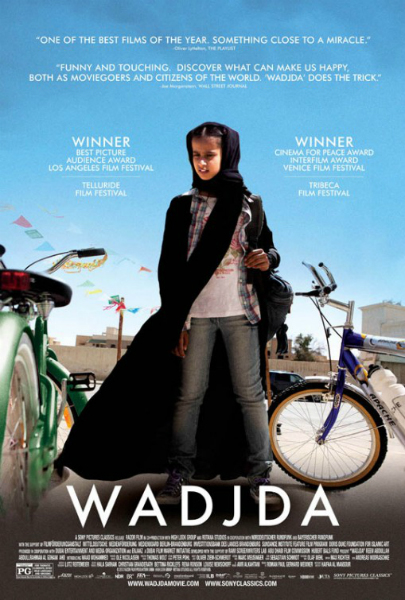
Wadjda Poster resize

Written by Amanda Rodriguez

I’ve been waiting for Wadjda to come to my local Fine Arts Theatre for months so that I could review it for Bitch Flicks! Wadjda is noteworthy because it’s the first Saudi Arabian film to ever be directed by a woman, Haifaa Al-Mansour. At its heart, the film is about how young Wadjda, played by newcomer Waad Mohammed, navigates her culture and adolescence as a Saudi girl, her relationships with other girls and women, and what seems to be the changing attitudes of her country (more on all that later).

[youtube_sc url=”http://www.youtube.com/watch?v=3koigluYOH0″]

Personally, though, I was intrigued by the storyline of her new-found passion and desire for a bicycle.

Some background: I’m a late bloomer. I learned how to drive a car and ride a bicycle at the ripe age of 28. As a woman in my late 20’s, I became obsessed with learning to ride because of the freedom and exhilaration that the bicycle promised. The speed, the control, the sexiness of the road bike, the hint of danger, and the allure of the new experience all kept me riding clumsy circles around my parking lot with a neighbor friend holding the saddle (and therefore keeping the bike upright). For me, learning to ride a bike was not a matter of course as it was with most of the people I know, so I could identify with that longing for the unattainable that Wadjda embodies. Eventually, I learned to ride and became obsessed with it, pedaling my Bianchi 30, 40, 80 miles at a time. I also got really into following professional cycling (more on that later, too…I promise it’s relevant).

Director Monsour, herself, knows a thing or two about doing that which seems impossible. Though she had the permission of the Saudi government to make her film, she was forced to hide in a van for most of the outdoor filming, as it would be unseemly for a woman to give direction, especially to her male actors.

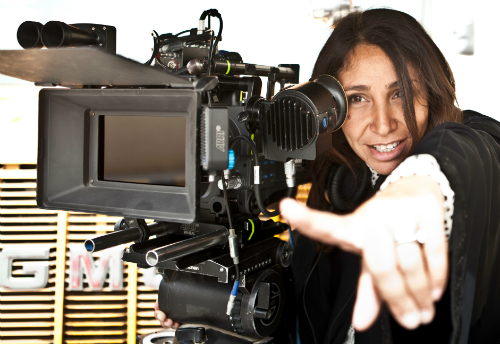
Haifaa Al-Mansour makes history as Saudi Arabia's 1st female director.

Monsour’s heroine also defies convention with her insistence on buying a bike to race her male friend, Abdullah.


Abdullah gives Wadjda a helmet.

Wadjda also wears brightly colored hair clips, Converse sneakers with green laces, and listens to American music. I find it somewhat troubling that Wadjda’s markers of rebelliousness are primarily associated with her exposure to Western culture, but her mother (a generation older) is a complex mix of culture and gender role compliance as well as rebelliousness: her daily work commute is three hours because her husband doesn’t want her working with men, she scolds one of her friends for not wearing a veil with her abaya, she claims Wadjda’s Western music is evil and that girls can’t ride bicycles because it will affect their childbearing abilities, she threatens frequently to marry Wadjda off, and when Wadjda must don a full abaya at the command of the school headmistress, she looks on with glowing pride as it is a treasured rite of passage.

Wadjda & her mother perform dawn prayers.

On the other hand, Wadjda’s mother values her daughter’s happiness and ability to dream, she wears a nose stud, and she rejects the idea of her husband taking a second wife, willing to face drastic consequences if he doesn’t respect her wishes. This shows that over the generations, Saudi women are changing, with mothers imparting traditional values to their daughters while still giving them an increasing measure of freedom and autonomy. Monsour says of her own parents, “They are very traditional small-town people but they believed in giving their daughters the space to be what they wanted to be. They believed in the power of education and training. They taught us how to work hard.” Monsour also asserts that, “[P]eople want to hear from Saudi women. So Saudi women need to believe in themselves and break the tradition.”

I admit that when I saw all the women in the streets and in cars wearing full abayas, I was shocked at the imagery. I immediately perceived them as ghosts flitting through the public sphere with heads down, trying to escape all scrutiny, all notice. As a feminist, I bristled against these uniforms that hide the female form, declaring it taboo and the property of her husband. As the women sat waiting in a hot van with only their eyes visible, I realized, though, that the plight of women in Saudia Arabia isn’t that different from that of women in the US. It is a spectrum, with the US on the opposite end. Saudi culture insists women be completely covered, whereas US culture demands skin, cleavage, form-fitting clothing, and sexiness while simultaneously judging the women who do and those who don’t conform to that standard of femininity. Both cultures insist that the female body is a matter for public debate with the dominant patriarchy making the final judgment (as is apparent in US culture with the current backsliding on reproductive rights due to conservative male decision-making). The female body in both cultures then does not belong to individual women.

The strangely similar treatment of the female body in both US and Saudi culture brought up another intriguing comparison for me: women and bicycles. Abdullah (among others in the film) declare to Wadjda that, “Girls can’t ride bikes.” Now, you might think in the US we get off the hook because most little girls (unlike myself) do, in fact, learn how to ride bikes at an early age, and nothing is thought of it. However, how many of them are encouraged to become professional cyclists? Though there are plenty of American women just like Wadjda who won’t take no for an answer, who follow their dreams to become competitive athletes and cyclists, what does the cycling world look like for them? They’re grossly underpaid, under-represented, and there’s hardly any media coverage of their events. Female cyclists (and, in most cases, female athletes in general) aren’t taught to dream big like their male counterparts, and if they do actually achieve success in their sport, where does it leave them? Mostly, it leaves them in anonymity (do you know the name of the most acclaimed female cyclist in the word? doubt it, but I bet you know the name Lance Armstrong) without nearly the recognition, range of events in which to participate (there is NO female equivalent of the Tour de France), and their rate of pay is a mere fraction of that of male professional cyclists. In essence, US culture is telling us that girls can’t ride bikes. Think about that whenever you want to get all righteous on the Saudi gender inequality issue because we sure as hell haven’t gotten it figured out here in the States.

If there is one theme in Wadjda that cannot be overstated, it’s: The personal is political. In Wadjda, the story of a young girl learning to ride a bike has profound cultural, religious, and gender implications. Her stand is powerful and brave, but more importantly, she never questions the rightness of it. Wadjda never once doubts that she should be able to own and ride a bike. It takes many, many small, personal commitments and triumphs like Wadjda’s to build the foundation of a movement for change.


Amanda Rodriguez is an environmental activist living in Asheville, North Carolina. She holds a BA from Antioch College in Yellow Springs, Ohio and an MFA in fiction writing from Queens University in Charlotte, NC. She writes all about food and drinking games on her blog Booze and Baking. Fun fact: while living in Kyoto, Japan, her house was attacked by monkeys.


A Role of Her Own: A Celebration of Satyajit Ray’s ‘The Big City’

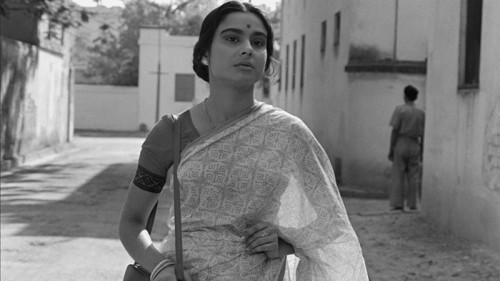
Arati is, in fact, a great screen heroine. She is elegant, giving, gritty and spirited. Committed to supporting others, she has a strong personal and public moral code. She cares for both her loved ones and her fellow female co-workers. She buys presents for every member of the family when she gets her first salary and, although he has hurt her, she does not hesitate to praise her failing husband when she is with others. At work, Arati is not frightened of asking her boss for a raise and she learns to bargain with her colleagues for extra commission pay. When Edith’s virtue is slighted at work (the boss believes Anglo-Indians to be inherently promiscuous), she speaks out against the injustice and makes an extraordinarily risky yet heroic move. It is important to note that Arati is not regressively presented as a maternal martyr but as a dynamic, engaged worker and citizen.

The Big City (1963)
The Big City (1963)


Written by Rachael Johnson.

For most lovers, and scholars of ‘World Cinema’, the great Indian director Satyajit Ray will be forever identified with the Apu Trilogy. Chronically the coming of age of a young Bengali boy in the early part of the last century, the critically-acclaimed Pather Panchali (1955), Aparajito (1956) and Apur Sansar (1959) still feature in highly regarded Greatest Films of All Time lists. While they remain prized, influential films, 2013 has given us the opportunity to look at other great works by Ray. Re-released by the British Film Institute to celebrate its 50th anniversary, Mahanagar (The Big City) is one that particularly caught my eye. It proved a pretty special discovery.

A sign of the city
A sign of the city


Set in 1950s Kolkata, The Big City is an intimate, insightful examination of the role of women in post-Independence India. The heroine of the tale is Arati Mazumdar (Madhabi Mukherjee), a lovely, kind-hearted housewife who lives with her bank clerk husband, Subrata (Anil Chatterjee), and their small son Pintu. They share their modest, lower middle-class home with Subrata’s elderly parents and teenage sister. As he is finding it hard to make ends meet, it is decided that Arati should also help support the family. She procures a job as a door-to-door saleswoman. Initially fearful of stepping out into the city streets, Arati soon adapts to the world of work. Gaining confidence and customers, she displays a considerable talent for the business. She meets people outside her family for the first time and strikes up a friendship with a stylish Anglo-Indian colleague called Edith (Vicki Redwood) who introduces her to lipstick.

Arati with co-worker Edith


But all is not well at home. Horrified by the very idea of his daughter-in-law working, Subrata’s deeply conservative father, Priyagopal (Haren Chatterjee), cold-shoulders the couple. The retired school teacher is particularly ashamed of his son. He believes that he has failed as a husband and that a woman who works suffers great hardship. Interestingly, he feels no shame in asking his former pupils for financial help. Subrata embodies urban post-colonial India and comes across as a quite genial and relatively modern husband. There are nicely-observed scenes at the beginning of the film where he shows engaging support for his wife who is naturally nervous at entering the workforce for the first time. He defends their decision to his father. ‘Change comes because it’s necessary,’ he says. However, Subrata too becomes increasingly threatened by Arati’s new role. She is forced to mollify his masculinist sense of worth. ‘I’m still the same. Just a housewife,’ she says. But he still tells her to quit her job. It is a cruel demand as it shows that Subrata does not care about Arati’s personal happiness and sense of self-worth. It also demonstrates a lack of logic and imagination. The request is all the more discouraging because he is a customarily gentle, likeable man. The Big City is not a polemic and Ray does not express an openly judgmental attitude towards his male characters. The film does, however, indicate that their narrow-mindedness is irrational and self-defeating. The director shows, through the illustration of a potentially disastrous life-changing event, that such reactionary, patriarchal attitudes are dangerous to the survival of both men and women. Unchanging concepts of gender serve neither the family nor community. Ray is, therefore, interested, in both the consequences of women’s participation in the workforce for both the individual and her society.

Awakening
Awakening


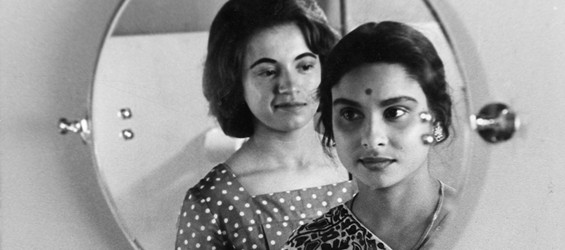
Ray wonderfully shows what work and economic independence mean for Arati personally. His portrayal of her struggle and advancement is both tender and progressive. Ray’s heroine is both good at her job and fulfilled by her work. It energizes her. ‘I work all day, and yet I don’t feel tired,’ she tells Subrata. There are many beautifully-observed moments in the movie but one scene in particular captures Arati’s own feelings towards her emerging role and independence. When she receives her first pay packet at work, she goes into the bathroom and opens the envelope to examine the pristine notes. In front of the mirror, she holds them to her chest and then smells them. She is pensive, a little bemused, and simply, understandably, proud of her success. At home, she tells her husband, ‘If you saw me at work, you wouldn’t recognize me.’  She is, of course, deeply hurt when Subrata asks her to give up her job. Ray addresses social change in humorous ways too. In one amusing scene, a stunned Subrata, having tea in a café, watches Arati, in black shades, cross the busy street outside. She runs into the husband of a friend and accompanies him into the café. It is an entirely innocent meeting but Subrata listens to their conversation behind a newspaper. Arati has two selves for two worlds. At home, she hides the lipstick she wears in the big city. These tensions are handled with delicacy and wit. Thanks to the well-drawn characterization and Mukherjee’s fully-realized performance, Arati’s growth always strikes the viewer as believable. Her spark is actually evident from the very beginning of the story when she wakes Subrata up in the middle of night to tell him, ‘I’m going to work.’

Arati (Madhabi Mukherjee) and husband Subrata (Anil Chatterjee)


Arati is, in fact, a great screen heroine. She is elegant, giving, gritty and spirited. Committed to supporting others, she has a strong personal and public moral code. She cares for both her loved ones and her fellow female co-workers. She buys presents for every member of the family when she gets her first salary and, although he has hurt her, she does not hesitate to praise her failing husband when she is with others. At work, Arati is not frightened of asking her boss for a raise and she learns to bargain with her colleagues for extra commission pay. When Edith’s virtue is slighted at work (the boss believes Anglo-Indians to be inherently promiscuous), she speaks out against the injustice and makes an extraordinarily risky yet heroic move. It is important to note that Arati is not regressively presented as a maternal martyr but as a dynamic, engaged worker and citizen. Her husband respects her decision and praises her for standing up against injustice. Manifesting a generosity of spirit, The Big City also shows that people can change. It promises that both Arati and her husband will join forces and work to support their family. Even her father-in-law asks her to forgive his behavior.

With her disapproving father-in-law


While it is a tale filmed in black and white, and rooted in particular time and place, The Big City has immeasurable universal appeal and contemporary significance. Although it is not without melodramatic elements, it tells a very human story with both wit and kindness. It has a progressive sensibility and great heart. A sensitive study of a woman’s personal awakening and growth, it also understands that the personal is deeply political. The Big City has a wonderful heroine and a memorable central performance. Mukherjee’s turn as the strong, gracious Arati is quite mesmerizing. Newly restored, it is, in addition, gorgeous to look at. Now part of the Criterion Collection, The Big City is not difficult to track down. It is a beautiful film and I cannot recommend it highly enough.


Miss Piggy Turned Me Gay

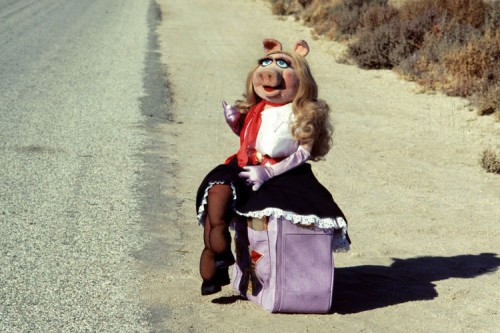
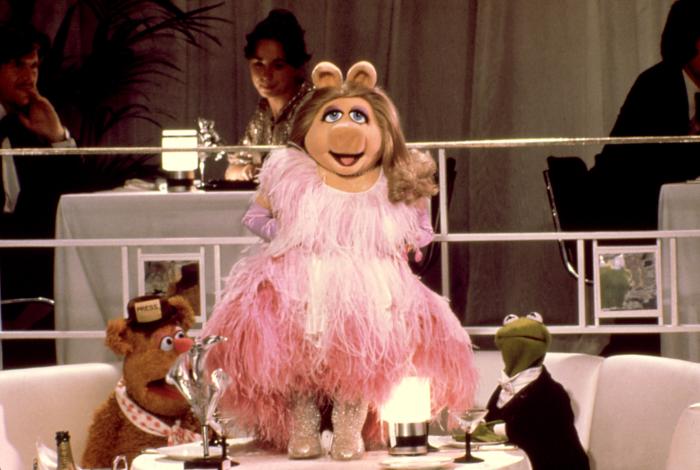
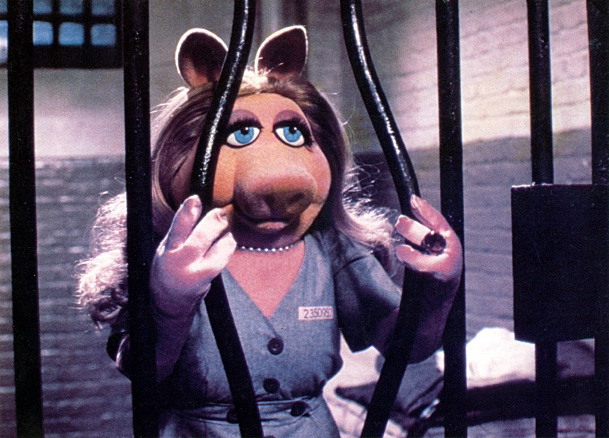
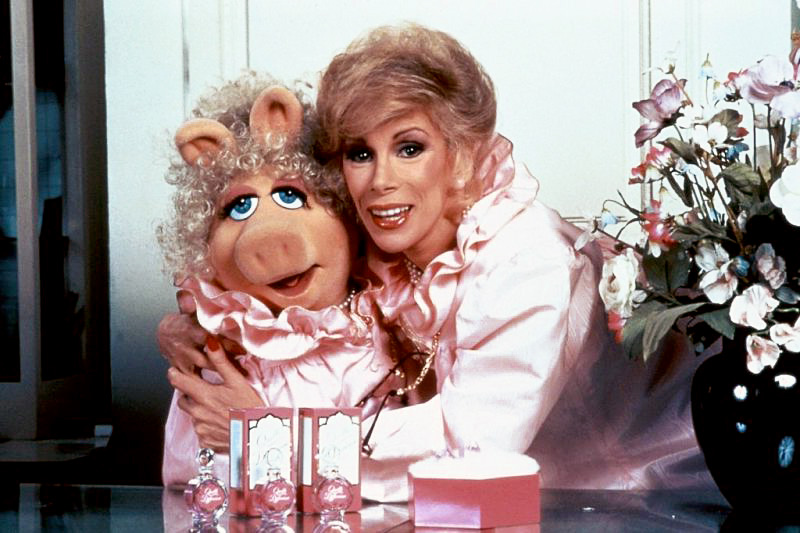
Miss Piggy taught me that femininity and glamour are constructs. They are costumes anyone can wear providing you have the right attitude. I was a slightly effeminate little boy who collected My Little Ponies and owned a pair of Jelly sandals. Miss Piggy showed it was okay to be girly, that there was even power in being feminine.

The Muppet Movie
The Muppet Movie


This is a guest post by Maximilian Mosher.

I’m sorry to disappoint you but Bert and Ernie are not gay. They’re not. When Jim Henson and Frank Oz created them for Sesame Street they were intended as a tribute to the grand tradition of mix-matched comic duos—Laurel and Hardy, Abbot and Costello, Felix and Oscar of The Odd Couple. The fact that in the decades since people have come to view them as a gay couple says more about the normalization of homosexuality and the decline of the comic duo than anything intended by the Children’s Television Workshop.

“They’re puppets,” explained Steve Whitmore, who’s performed Ernie since Henson’s death. “They don’t exist below the waist.” But denials have only added fuel to the fire. With a smirk, gay men enjoy “outing” these symbols of childhood with the same relish they used to reserve for “outing” Hollywood actors. With a continued dearth of same-sex role models in popular culture, Bert and Ernie have been enlisted as gay marriage symbols, appearing on placards, buttons, and t-shirts. Men dressed in Bert and Ernie costumes have even been married at gay pride parades. When it came to celebrating the Supreme Court’s ruling on the Defense of Marriage Act last June The New Yorker chose not an image of a flesh and blood couple but an illustration of the two Muppets cuddling.

It’s not just allies who suspect same-sex shenanigans at 123 Sesame Street.

“Bert and Ernie are two grown men sharing a house and a bedroom,” claimed the Reverend Joseph Chambers on his radio show. “They share clothes, eat and cook together and have blatantly effeminate characteristics… If this isn’t meant to represent a homosexual union, I can’t imagine what it’s supposed to represent.”

The Reverend clearly knows nothing of the show or, for that matter, fashion. Ernie has only ever worn horizontal stripes. Bert, being the more practical one, wears vertical, along with a very 1970’s turtleneck. As for being effeminate, Ernie is a disorganized mess while no stylish gay men would allow the caterpillar that stretches across Bert’s forehead to go un-tweezed.

Bert and Ernie sleep in separate beds, are rarely physical with each other, and never say lovey-dovey things. In fact, they seem ready to murder each other most of the time. (“Sounds like a lot of couples I know,” I can hear you saying.)

But everyone has it wrong. Bert and Ernie are meant to teach children they can be friends with people different from themselves. There’s nothing “gay” about them, save for Ernie’s love of bubble baths. If Reverend Chambers is really worried about kids being introduced to queer culture he needs to move past Bert and Ernie. He should condemn an entirely different show and an entirely different Muppet.

It was Miss Piggy who turned me gay.

The Great Muppet Caper


Despite the celebrity cameos and pop culture spoofs, Sesame Street was always meant for children, but Jim Henson was wary of being seen as a kids’ entertainer. It took years for him to get it on the air but The Muppet Show, which ran from 1976 to 1981, was meant to correct this misconception. Henson sought to prove a show with puppets could have universal appeal.

Like Walt Disney and the creators of the Warner Brothers’ cartoons before them, Henson and his Muppet Workshop forgot to create female characters. (When a girl was needed on Sam and Friends, Henson’s first TV show, he’d throw a blonde wig on Kermit. If only Reverend Chambers had seen that!) There was the odd exception, such as a purple Muppet named Mildred who, with a perm and cat’s eye glasses, resembled a Fraggle librarian. But at the beginning The Muppet Show was an overwhelmingly male affair with male characters performed by male puppeteers. Like a true star Miss Piggy would have to invent herself.

The Muppet performers had used a homely lady-pig puppet in a few TV specials but she lacked a name and distinctive personality. Before the first season of The Muppet Show, Muppet designer Bonnie Erickson replaced the puppet’s beady black eyes with large blue ones and dressed her in a silk dress with lilac gloves. A permanently attached handkerchief was used to conceal the puppet’s arm rod. Paying tribute to Peggy Lee, Erickson named the puppet Miss Piggy Lee, but the “Lee” was swiftly dropped to avoid offending the singer.

Initially Miss Piggy lacked a distinctive voice. Frank Oz and Richard Hunt shared the responsibility of performing her, with the latter giving her a flouncy British accent and a stuffy, Margaret Dumont-ish character. But as Oz gradually took over, Miss Piggy’s personality asserted itself.

During one rehearsal, Henson and Oz were working on a scene in which Piggy slapped Kermit. Oz thought a karate chop was funnier, paired with a dramatic “hiii-yah!”

“Suddenly, that hit crystallized her character for me,” Oz told the New York Times. “The coyness hiding the aggression; the conflict of that love with her desire for a career; her hunger for a glamour image; her tremendous out-and-out ego…” As they say, a star was born.

Miss Piggy in prison


Befitting a diva who stepped out of the chorus, Miss Piggy soon took over. With practically no other females to compete with (other than the androgynous guitarist Janice, originally designed as a big-lipped tribute to Mick Jagger) Piggy would grow in stature to become the only woman the Muppets needed. Her costumes multiplied. Her production numbers became more elaborate. She peppered her speech with ridiculous bastardizations of French, a habit perhaps inspired by the legendary Hollywood agent Sue Mengers. Miss Piggy thought nothing of throwing herself at male guest stars, or stealing scenes from great beauties like Raquel Welch.

Pigs, despite their documented intelligence, are thought of as dirty, rotund, and as far away from showbiz glamour as possible. But as a little kid I never took Miss Piggy as a joke. I accepted her beauty and elegance sincerely. For me, she was the star she believed herself to be. This was perfect training for my eventual love of drag queens, who also don sequined gowns, feather boas, and demand you take their star personae seriously.

Miss Piggy taught me that femininity and glamour are constructs. They are costumes anyone can wear providing you have the right attitude. I was a slightly effeminate little boy who collected My Little Ponies and owned a pair of Jelly sandals. Miss Piggy showed it was okay to be girly, that there was even power in being feminine.

Of course, simmering just below her fuzzy peach surface, Miss Piggy had a well of anger and aggression that busted out in karate chops, punches, and kicks. When she got mad, Frank Oz lowered her voice from its regular high-pitched coo to a low, gruff, streetwise snarl. Being a lady is all well and good, but when the going gets tough, the pig gets rough. A lilac glove can sometimes conceal a fist.

Miss Piggy is a pushy, bullying, manipulative, insecure, egoist. There’s more Diana Ross in her than Peggy Lee. She should be unlikeable.

But she has one trait that humanizes her. She loves Kermit. He’s her Achilles Hoof. Her love for him is pure, passionate, and pathetic. She humiliates herself over and over just to get his attention. As Frank Oz said, quoted in Brian Jay Johnson’s new biography of Jim Henson, “She wants that little green body so badly.” And Kermit, for the most part, brushes her off and ignores her. Loving someone incapable of reciprocating is a tragedy every queer person who’s fallen for a heterosexual can understand.

Miss Piggy and Joan Rivers


Miss Piggy eventually snagged Kermit via a surprise wedding at the end of The Muppets Take Manhattan (1984). The ceremony was performed by an actual New York City minister, and in the years since, puppets and performers alike have enjoyed teasing fans about whether the characters are “actually married” or not. Either way, the union of frog and pig and the nullification of their romantic tension brought a symbolic close to the Muppets’ Golden Age.

I love Miss Piggy, but I realize her characteristics as I’ve listed them aren’t exactly those of a role model. With her diva behavior and camp aesthetic, Miss Piggy is a throwback to the closeted gay world before the Stonewall Riots, when queer men worshipped Mae West and a sharp, sardonic tongue was their only weapon. By the time The Muppet Show was at its height, gay men had already moved on to body-building and Donna Summer. Perhaps this is why Pride Parades feature Bert and Ernie and not Miss Piggy. Miss Piggy, with her exaggerated femininity, barely concealed aggression, and pining love of a “straight” man, reminds gays of their past. Bert and Ernie as a committed couple is a more useful symbol for gay activists still fighting for same-sex marriage, even if it is a projection of fans. Puppeteers aren’t the only ones who can pull the strings.


Max Mosher is a freelance writer who has written for the Toronto Standard, WORN Fashion Journal, the Utne Reader, and Hello Mr. magazine. He tweets under @max_mosher_. Despite his best efforts, he’s more Kermit than Miss Piggy.