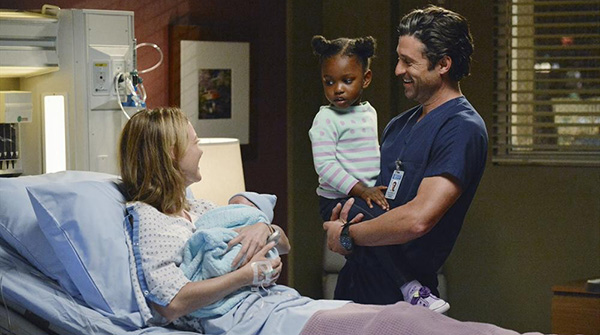
Leaning In to ‘Grey’s Anatomy’

Across its 10-season run, ‘Grey’s’ has dealt with parenting, childlessness, abortion, romantic relationships—both heterosexual and otherwise–illness, loss, friendship, and career mostly through the eyes of its female protagonist, Meredith Grey, and her colleagues, friends and family: Cristina, Izzie, Lexie, Callie, Arizona, April, Addison, Bailey and so on. This season, though, seemed to really tap into the oft-mentioned feminist issue of “having it all” (meaning kids and career) and what happens when a woman shuns that path.

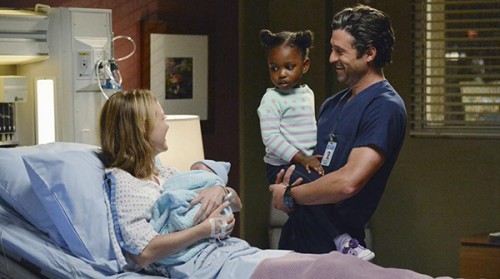
Meredith and Derek
Meredith and Derek


This guest post by Scarlett Harris originally appeared on The Scarlett Woman and is cross-posted with permission.

Grey’s Anatomy is one of the more feminist shows currently on the air. Hell, it’s created by Shonda Rhimes (she of Scandal and Grey’s spin-off, Private Practice, fame), a big champion of woman-centric storytelling on TV.

Across its 10-season run, Grey’s has dealt with parenting, childlessness, abortion, romantic relationships—both heterosexual and otherwise–illness, loss, friendship and career mostly through the eyes of its female protagonist, Meredith Grey, and her colleagues, friends and family: Cristina, Izzie, Lexie, Callie, Arizona, April, Addison, Bailey and so on. This season, though, seemed to really tap into the oft-mentioned feminist issue of “having it all” (meaning kids and career) and what happens when a woman shuns that path.

Early on this season tensions were brewing between Meredith and Cristina when Meredith gave birth to her second child, Bailey, named after Dr. Miranda Bailey who helped deliver him, and leaned out of the surgery game. As Meredith’s life became increasingly family oriented, Cristina felt alienated from “her person,” with whom she used to compete for surgeries and get drunk on tequila at Joe’s bar. This is not to suggest that just because Cristina doesn’t want children (a character consistency since season one) she’s not involved in that part of Meredith’s life: Cristina is often shown caring for and engaging with Meredith’s daughter Zola. But this story arc illustrates that having two children is a lot different than parenting just one (cue Elizabeth Banks-style outrage over mothers of one child being less than mothers of more) and Meredith’s redirected attention certainly takes its toll on her friendship with Cristina.
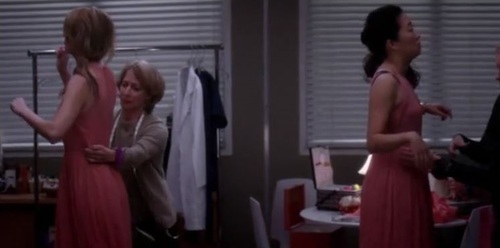
Meredith and Cristina


This comes to a head in episode six of this season when Meredith chooses to continue her mother’s portal vein research using 3D printers (which Cristina later co-ops for one of her groundbreaking medical coups). This is partly because of Cristina’s recriminations in the previous episode, “I Bet It Stung,” that Meredith doesn’t do as many surgeries or as much research as Cristina because she chose to lean in to her children. There is much talk about “choosing valid choices” but ultimately Meredith identifies an impasse between the two friends and surgeons because Cristina doesn’t “have time for people who want things” that she doesn’t want.

Business continues much this way until April’s wedding, in the episode “Get Up, Stand Up,” in which Meredith and Cristina are both featured as bridesmaids. During a dress fitting, Cristina takes issue with Meredith calling her “a horrible person, over and over… because I don’t want a baby.” Harkening back to their very first day on the job, Meredith accuses Cristina of sleeping her way to the top, while Cristina retorts that in her struggle to maintain work/life balance, Meredith’s “become the thing we laughed at.” By episode’s end, Meredith acknowledges her envy of Cristina’s surgical trial successes:

“I’m so jealous of you I want to set things on fire. You did what I tried to do and I couldn’t… I don’t want to compete with you… but I do.”

Come the show’s mid-season return, Meredith and Cristina’s friendship is back on track, with them bonding over Meredith’s anger at her husband Derek reneging on their agreement to focus more on Meredith’s career upon her realisation that she doesn’t want it to slip by the wayside in the wake of motherhood. They do this while drinking wine and looking after the kids at Mere’s place while Derek’s out of town.

Derek’s absence throughout the season, in Washington D.C. on business at the behest of the President (I know!), is juxtaposed with Meredith’s desire to be an attentive mother, which she didn’t have growing up and was the cause of many of her ills, whilst balancing her first love of medicine. In last season’s “Beautiful Doom,” Meredith worries about leaving Zola in the care of others while she operates. Callie, a working mother herself, assures Meredith that “it’s good for Zola to see you work. It’s good for her to see you achieve. That’s how she becomes you.” The season finale sees Meredith decide to stay in Seattle despite Derek accepting a job in Washington D.C. She doesn’t want to become her father, who was a “trailing spouse” to her aforementioned mother.

As far as Cristina’s concerned, though, her ex-husband Owen’s desire for a family is what’s kept them in flux from on-again to off-again for the better part of the past three seasons. In the Sliding Doors-esque episode “Do You Know?” Cristina is given the option of two life paths: one in which she has children, whilst in the other she continues her focus on her career; both involve Owen, and both see Cristina becoming miserable. The married-with-children scenario elicits a certain empathetic desperation as it’s made clear Cristina’s only succumbing to it for her lover. And when Owen meets maternal-fetal surgeon, Emma, whom Cristina described as “picket fence; a dozen kids; fresh-baked goods,” it seems he’s found his happy ending. But Owen’s desire for Cristina, despite his better judgment, causes him to cheat on and subsequently end things with Emma who is befuddled at how her boyfriend went from house hunting to breaking up with her in the space of a day. Owen asserts it’s because Emma wanted to stay home with their kids when they had them and he wanted someone who is “as passionate about her work as I am.” Make up your mind, Owen!
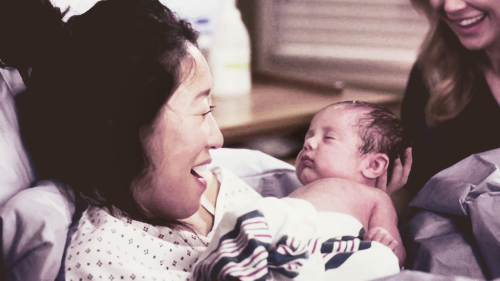
Cristina Yang
Cristina Yang


While Owen’s indecisiveness is annoying, it’s refreshing to see a woman who doesn’t want children framed as desirable over the traditional portrait of womanhood. This is not to mention Cristina’s hardheaded drive. On the other hand, Emma represents the losing battle women face in the fight to “have it all” perpetually highlighted by the concern-trolling media: you’d better want to be a mother, but you’ve also got to be driven in your career; you have to be around to raise your children, but you’d also better be leaning in in the workplace.

Grey’s has always been a staunchly pro-choice show. Upon April and Jackson’s shotgun wedding, Jackson’s mother brings up the issue of April’s faith when it comes to raising their future children who will be on the board of the Harper Avery Foundation, but no pressure! Catherine Avery asks whether April believes in limiting reproductive rights, and whether she’ll raise her children with those views. If so, will that colour their judgment in providing funding to hospitals that perform abortions, like Seattle Grace/Seattle Grace Mercy West/Grey Sloan Memorial Hospital/whatever it’s called now?! And what about stem cell research?

Grey’s certainly doesn’t sweep these issues under the rug because it’s convenient for a storyline or for the show to remain politically unbiased. Rhimes has spoken about Cristina’s unintended pregnancy in a season one/two crossover storyline in which she was scheduled for an abortion but miscarried before she could have the procedure due to an ectopic pregnancy:

“… [T]he network freaked out a little bit. No one told me I couldn’t do it, but they could not point to an instance in which anyone had. And I sort of panicked a little bit in that moment and thought maybe this isn’t the right time for the character, we barely know her… I didn’t want it to become like what the show was about… And [Cristina’s miscarriage] bugged me. It bugged me for years.”

Come 2010/2011’s seventh season, Cristina again finds herself with an unwanted pregnancy to Owen. Rhimes said:

“I felt like we had earned all of the credentials with the audience. The audience knew these characters. The audience loved these characters. The audience stood by these characters. You know, we were in a very different place even politically, socially. Nobody blinked at the studio or the network when I wrote the storyline this time. Nobody even brought it up except to say, that was a really well written episode.”

With no signs of slowing down, but with perhaps one of TV’s most feminist characters departing, Grey’s Anatomy is sure to continue presenting women, work and the myriad choices in between in a positive and realistic way.



unnamed-2

Scarlett Harris is a Melbourne, Australia-based freelance writer and blogger at The Scarlett Woman, where she muses about feminism, social issues and pop culture. You can follow her on Twitter here.
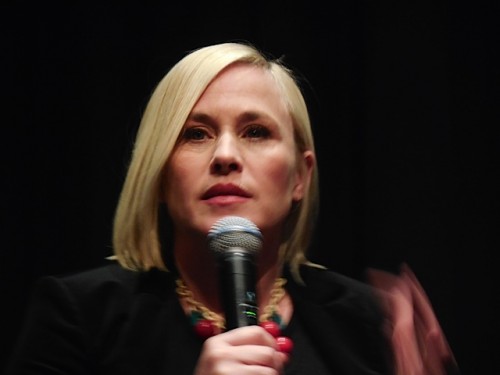
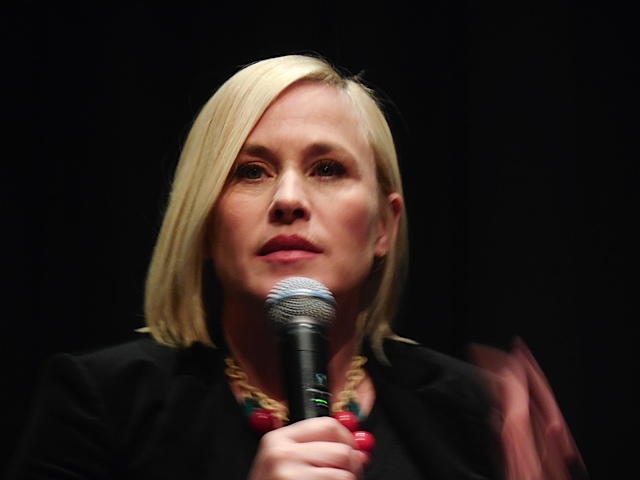
Richard Linklater and Ethan Hawke Praise Patricia Arquette’s Performance in ‘Boyhood’

Arquette, who is terrific as Olivia, turns in a nuanced and complex performance that is vanity free. We watch her age perceptively and slowly as her character gains wisdom but still falters. In other words, she’s the kind of three-dimensional woman we rarely see in American films.

Patricia Arquette
Patricia Arquette


This is a guest post by Paula Schwartz

The stars of Richard Linklater’s Boyhood–Patricia Arquette, Ethan Hawke, and Ellar Coltrane–age in real time in this one-of-a-kind nearly three-hour film. Boyhood, which  was shot in short annual increments over a dozen years so the effect as you watch the actors change imperceptibly and slowly is like watching time-lapse photography.

This approach would come across as a gimmick or stunt if the movie wasn’t so good. The real magic of the film is that as you watch characters grow and age, you can’t help looking back and contemplating your own life changes.

The three stars and the director of Boyhood participated at a lively press conference recently at the Crosby Hotel in SoHo to promote the film. This marks Ethan Hawke’s eighth film with the director, whose most notable collaborations include the Before Sunrise trilogy and Dazed and Confused (1993).

Boyhood tracks the life of a full-faced pouty six-year-old, Mason (Coltrane) and his older, bratty sister, Samantha, played by Lorelei Linklater, the director’s daughter, as they grow up and mature. The story focuses on Coltrane’s character who evolves from boyhood to early manhood amid personal and family dramas, including family moves, family controversies, faltering marriages and re-marriages, new schools, first and lost loves, and good and bad times. Children of divorce, Mason and Samantha are raised by their beleaguered but devoted mother Olivia (Arquette), a hard-working woman with terrible taste in men, and her ex-husband, an immature man with a good heart but little sense of responsibility (Hawke).

Linklater described Boyhood as “this little collection of intimate moments that probably don’t fit into most movies. They’re not advancing the character enough or the story enough or the plot, but they all add up to something much bigger than each little place and each little piece of it, so that was kind of the feel to the whole movie, that it mirrors our lives.”

As to whether the film was an intimate character study or a sweeping family epic, the director said it was both. “It’s very specific and intimate but universal within that specific world. It could have been made in any country and any time. There’s such a commonality here.”

The cast and director of Boyhood


The film could just as accurately been entitled Motherhood or Fatherhood or Parenthood, Hawke said. He described it as “an epic about minutiae. That’s what it is. It’s difficult to title because of that. It’s a family seen through one boy’s eyes, so that title makes as much sense as any other.”

As for whether it was difficult for the actors to get back in character every year for the brief period they shot their roles, Coltrane explained, “It was a very long build up every year. We’d have a couple months to think about what we were doing and then a solid week of kind of work shopping and building the character and figuring out where the characters were that year, so by the time we got to filming we were kind of just already there.”

Arquette, who is terrific as Olivia, turns in a nuanced and complex performance that is vanity free. We watch her age perceptively and slowly as her character gains wisdom but still falters. In other words, she’s the kind of three-dimensional woman we rarely see in American films.

Hawke turned to Arquette during the press conference and told  her, “I’m just throwing props your way. I’m surprised that people don’t write about more is that how awesome it is to see Patricia’s character be in this movie and to see a real woman who is a mother and a lover and more than one thing in a movie. I feel so proud to be a part of a movie that respects her character the way this movie does, and I feel it’s also sometimes so real and so true that you almost don’t ever see this in film,” he said. “It’s true in life. We see it all the time, but I don’t see that woman in movies. I don’t see her.”

“She’s in the background or just kind of in the background or ancillary elements to give some encouragement in some way to some scruffy guy. Olivia is a real, three-dimensional human being, and it was so exciting, and the women in my life who see the movie so appreciate it,” he said. ” She’s not just good, she does stupid things and smart things.”

He added, ” I just love her. You can’t pin down. One minute you go, oh she’s a good mother!  No, wait, actually that was not a great decision. We’re used to people in movies being one thing, all the time.”

Arquette explained her acting technique. “In acting you have to get past your own head and your own ego and all of these fucking barriers and walls to just get to a place where hopefully you can be present enough in a scene with someone.” She added of the collaborative process, “I trusted the process. It was jumping into the void from the get-go, but when you’re in the right hands, and you jump into the void together, really great things can come of it.”

Patricia Arquette and Ethan Hawke


Ultimately, the director said, the movie “was always going to be a portrait of growing up but also parenting and aging. That you don’t quit growing up, especially once you’re a parent.” Hawke and Arquette’s characters are bumbling through parenting as this was happening in real life with the actors and director. “We had ourselves as parents,” Linklater said. “During this film we had five children born between us and that was just an ongoing part of life.” At the same time, “ You’re thinking of your parents once you’re a parent yourself.”

The movie mirrored what was happening in the lives of the actors and director. “We didn’t want anything to feel like it wasn’t earned or tethered to some sort of reality. I don’t think there’s anything in the movie that didn’t come out of my life or their lives,” Linklater said. His hope was that the film opened the audience up to the possibility of seeing the connection between their lives and that of the characters in the film. “Once you get to this thinking about life in general and your own life and loved ones and your own experiences, triggering all kinds of wonderful things I hope, painful and wonderful things.”


Paula Schwartz is a veteran journalist who worked at the New York Times for three decades. For five years she was the Baguette for the New York Times movie awards blog Carpetbaggers. Before that she worked on the New York Times night life column, Boldface, where she covered the celebrity beat. She endured a poke in the ribs by Elijah Wood’s publicist, was ejected from a party by Michael Douglas’s flak after he didn’t appreciate what she wrote, and endured numerous other indignities to get a story. More happily she interviewed major actors and directors–all of whom were good company and extremely kind–including Brad Pitt, Angelina Jolie, Morgan Freeman, Clint Eastwood, Christopher Plummer, Dustin Hoffman and the hammy pooch “Uggie” from “The Artist.” Her idea of heaven is watching at least three movies in a row with an appreciative audience that’s not texting. Her work has appeared in Moviemaker, more.com, showbiz411 and reelifewithjane.com.


Bitch Flicks’ Weekly Picks

Check out what we’ve been reading this week–and let us know what you’ve been reading/writing in the comments!

Seed & Spark: Beyond the Bechdel Test: Strong Female Friendships on Screen

On screen male friendships are portrayed completely differently than their female counterparts. Boys have rebellious adventures together for adventures sake (e.g. ‘Kings of Summer’). Boys pull off heists together (e.g. ‘Oceans 11′). Boys are “bros” and seem to get along for the most part.

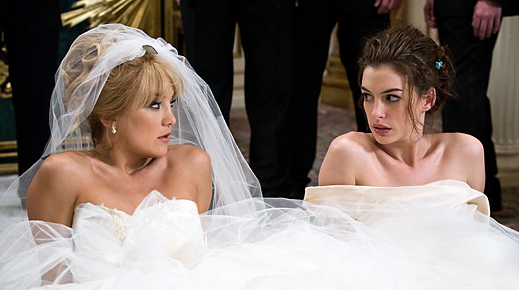
But girls are a different story. Girls fight over boys (e.g. ’27 Dresses,’ ‘Something Borrowed’). Girls are catty (e.g. ‘Bride Wars’). Girls are overly dramatic (e.g. ‘I Hate Valentines Day’).

unnamed

This is a guest post by Molly McGaughey.

When I was 10 years old, there was one thing I knew I needed more than anything else—even more than a drum set (and I was pretty sure I had to have one of those). There was one thing that trumped most other prized possessions.

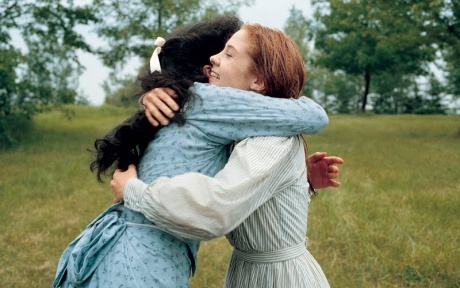
I always knew that I needed to have a bosom friend. Why? Anne of Green Gables told me so. A few hours each week were spent playing the movie over and over and watching the overly imaginative redhead get into mischief with her kindred spirit, Dianna.

I related so much to Anne: the way she let her imagination get the best of her, the way she went on adventures with Dianna and the way that, though they didn’t quite turn out as planned, those adventures were poetic just the same. Because anything can be marvelous when you have imagination and a bosom friend, of course.

For my 11th birthday, I finally got that drum set that I wanted. Sure it was patched up with duct tape and from a yard sale, but it was mine and it was wonderful.

I was thrilled. That is, until I told a neighbor about it. He promptly informed me: “Drums aren’t for girls.”

Though new to me at the time, the process of deciding what is and isn’t for girls or boys started centuries ago. Strangely, it often applies to more than objects, extending even beyond hobbies and careers to relationships. Certain kinds of relationships have been deemed “normal” for each gender.

And, as a film-lover, I can’t help but wonder if the stories told on screen affect why we have certain expectations of same gender friendships.

On screen male friendships are portrayed completely differently than their female counterparts. Boys have rebellious adventures together for adventures sake (e.g. Kings of Summer). Boys pull off heists together (e.g. Oceans 11). Boys are “bros” and seem to get along for the most part.

unnamed

But girls are a different story. Girls fight over boys (e.g. 27 Dresses, Something Borrowed). Girls are catty (e.g. Bride Wars). Girls are overly dramatic (e.g. I Hate Valentine’s Day).

As I grew older and watched less of Anne and Dianna and more of modern day “chick flicks,” I felt my expectations about female friendships shift. But let’s get one thing clear: I think it is unlikely that female friendships are drama-filled because that’s how our gender is programmed to behave. It is time to consider that this is a reflection of what we’ve seen portrayed on screen.

We’ve all hopefully heard about the Bechdel test at this point. We know that strong female protagonists are few and far between in the world of motion pictures. But a vital facet that often gets overlooked is that even when women are portrayed, strong female friendships are not.

Time and time again, when two guy friends are in a movie, it’s an adventurous buddy comedy romp, but the minute that girls are paired together it’s because they are competing for a guy. Or, when that is not the case, one exists just to listen to the other’s problems (and, thus, speed up the storytelling). A third option is that the friends backstab, gossip, and their friendship breaks up. These female friendships are not often a semblance of a healthy relationship.

Have you ever noticed how much girls fight on screen? Whether it be friends or sisters or an evil stepmother, it seems to be a much more common trope for female characters. Can you imagine the latest buddy comedy featuring two guys that try to sabotage each other to get the girl while an evil stepfather looms in the background? Why is that not a thing?

Think about it next time you pop in a “mindless chick flick” starring a group of girlfriends who tend to be dramatic or the next time you stop by the theatre to see the latest action adventure featuring two guys that pull off insane heists together, without an argument. Think about it the next time you see an evil stepmother paired with a father that is totally chill. Are we allowing what’s on screen to dictate what kind of interpersonal friendships each gender should or probably will have?

Movies show us what’s normal. They show us how to be, giving us something to aspire to. When we see dream chasers, friendships, and true love on screen, we want it. So it’s important to have a better representation of what friendship, sisterhood, and girlhood really means.

As an independent filmmaker, I want to tell stories that better represent female friendships and the adventures to be had through kindred spirits on screen.

The latest short film I’m directing, Live a Little, while totally unique from Anne of Green Gables, just happens to be about a spunky, imaginative, talkative redhead and her best buddy. They must conquer an overly ambitious bucket list by the end of the day. Chick flicks don’t have to be about romance or cattiness. It can also be a genre about kindred spirits doing what kindred spirits do best—having adventures.


Molly McGaughey is a director, writer, performer based out of Manhattan. She is crowdfunding for her latest film “Live a Little” on Seed & Spark. She can be found on the internet at mollyvivian.com and also founded The Not So Starving Artist, an online resource for Performers, Filmmakers and Writers. Her comedic directing work has been featured on comedytvisdead, funnynotslutty, playbill, backstage and more. Molly is also a character actress with an affinity for improv and standup. You can find her on Twitter at @Molls_MCG.

Seed & Spark: What Is a Woman’s Story, Anyway?

Nothing has made me more appreciative of my upbringing than the Verizon spot that’s gone viral in the past few weeks, about all the little micro-aggressions that bully women into a societally accepted mold, away from the common interests that all kids share like building and dinosaurs. The spot made me wonder about other ways this belittling behavior has affected women, especially in the way it affects the kind of films women want to watch—and make.

This is a guest post by Elle Schneider.

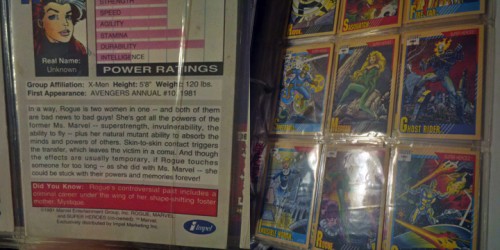
Blade Runner has been my favorite film since a sleepover in sixth grade, and I have 200 Star Wars figures and thousands of Marvel cards stashed away in in my childhood closet (in protective cases, obviously, what kind of barbarian do you take me for?).

Source: my closet
Source: my closet


It was Wes Craven’s Nightmare on Elm Street that made me realize I could make a film by splattering blood on some friends, and James Bond became my directing aspiration. And as far as I knew, this made me just like any other girl growing up in the 80s and 90s.

Nothing has made me more appreciative of my upbringing than the Verizon spot that’s gone viral in the past few weeks, about all the little micro-aggressions that bully women into a societally accepted mold, away from the common interests that all kids share like building and dinosaurs. The spot made me wonder about other ways this belittling behavior has affected women, especially in the way it affects the kind of films women want to watch—and make.

[youtube_sc url=”https://www.youtube.com/embed/XP3cyRRAfX0″]

What if you grew up hearing, “Isn’t this movie a little too scary for girls?”

We worry rightly about girls having heroes to look up to and there is an undeniable need for gender parity in onscreen protagonists. But why must we designate girl heroes for girls, and boy heroes for boys? What’s wrong with a character like Indiana Jones being a hero for both boys and girls? Because it teaches girls to be adventurous? And why, as an industry, are we so massively afraid of letting a woman make a film like Raiders of the Lost Ark?

We tell boys that they should tell any story they want—whether it’s their own struggle or Indiana Jones’ struggle. We laud men who adapt Austen, or make a great biopic about a female heroine like Hawaiian Princess Ka’iulani, as my friend Marc Forby fought for nearly ten years to do. At Cannes 2012, when no women appeared in Competition, filmmakers like Michael Haneke and Jacques Audiard were praised for making great films about “powerful” female characters. The question was raised: does it really matter how many women are represented as directors so long as stories about women are being told?

Sharon Waxman of The Wrap held court at a panel at the American Pavilion that year to discuss the issue of gender at Cannes, and I raised my own question: how can we help the women who want to work in genre films? Her response was one I’ve often heard from women disinterested in genre: “Women shouldn’t feel like they have to make the movies that men make.”

But what if that’s what I want to make? And why is that a bad thing? What if I want to make the same kind of film that excited me as a child, just like Gareth Edwards, Ryan Coogler, Rian Johnson, or any other male filmmaker has had the opportunity to do?

My first film, made in summer 2001. It was a ripoff of EVIL DEAD about kids getting mixed up with the supernatural after finding a tarot card deck in a shack in the woods, and starred Margaret Thomas, Josh Fairchild, Jaya Saxena, Lily Harden, and a young Matt McGorry, who has gotten a better agent in the last 13 years.


When women filmmakers get that rare chance to make a film, we’re usually encouraged to use the opportunity to focus on a “woman’s story” with a “strong female protagonist,” as if a female filmmaker’s first duty is to social issues rather than storytelling or forging a career. But what the hell is a woman’s story, anyway?

Try as society might, women are not one homogenous group; women are not a hive-minded audience solely interested in stories that reflect a single shared experience. Ticket sales show that women make up 50 percent of the theatrical box office, despite the low number of female protagonists on screen, and that’s because women are not myopic viewers. On the contrary, women see men and women as people; men see men as people and women as women. Unlike male viewers, a woman’s story really could be anybody’s story, if only we were encouraged to tell anybody’s story.

I recently had a conversation with a group of women filmmakers who were insistent that men and women are just different kinds of storytellers—women are just naturally more “grounded” and “realistic” in their characters and settings, and that’s why women can’t get work in the testosterone-driven studio system. Studio films are male-power fantasies anyway; one participant mentioned that average white guys are constantly writing action movies, imaging themselves as Ethan Hunt, when they look nothing like Ethan Hunt. Women don’t project fantasies like that; we write what’s real.

Except that’s not true. As the National Science Foundation study cited in the Verizon spot, 66 percent of fourth grade girls express an interest in science. Many young girls I knew growing up were writing amateur versions of Lord of the Rings, as George Lucas and James Cameron did on their path to making Star Wars and Avatar. These were personal fantasies, stories where we played out our day-to-day dramas, angst, and adolescent ideas about the world through the avatars of fictional characters and settings. As a 12-year-old, this was natural. But as a 28-eight year-old? Why bother writing what you know you can’t afford?

As Lexi Alexander succinctly put it: “What do we say to a 12-year-old girl who watches Star Trek for the first time and says: ‘I want to make movies like that.’ Do we say: ‘Yeah, try to reduce your vision to something that’s crowdfundable, you’re a girl after all’?”

The reality is we do say that, as a society, if not in so many words. Women’s stories do tend to be “small” and “personal” because we’re taught to pare down from the get go, to trim our own wings before we can fly. Women are taught to expect limited resources, to envision the world through the scope of our often purposely sheltered life experience. Women are not taught to ask for more, and worse, are not taught that asking is even an option. Women’s stories are the stories of those without a voice.

It’s a myth that women are inherently unable to envision or execute large scope or genre-driven projects, a myth that too many women buy into themselves. That myth is what keeps women from being studio contenders, as Indiewire blog The Playlist recently illustrated in their article 10 Indie Directors Who Might Be The Next Generation Of Blockbuster Filmmakers.” The article features 10 eligible white, male heirs to the throne of Hollywood—because the (male) writers at Playlist can’t envision even someone as accomplished as Debra Granik—whose Winter’s Bone launched the career of blockbuster and Reddit darling Jennifer Lawrence, and whose Vietnam vet doc Stray Dog just won the LA Film Festival—successfully helming a big-budget feature.

The Playlist’s top pics for the future of Hollywood. Such white. Many scruff. Wow.


Granik has more than proved her chops as a storyteller, and she’s done it by with compelling, award-winning portraits about strong men and women. Brit Marling, Lexi Alexander, and countless others have done the same. When do we get to see their takes on Star Wars, whose best installment was written by a woman, Leigh Bracket, back in in 1979? That’s the kind of woman’s story I want to see.


unnamed

Elle Schneider is a writer and director of the genre persuasion. Award-winning graduate of USC’s School of Cinematic Arts, she was the cinematographer of SXSW Film Festival selections I AM DIVINE and THAT GUY DICK MILLER, and is a co-developer of the Digital Bolex cinema camera. She is raising production funds for her action comedy HEADSHOTS this month on Seed&Spark. You can find her on the twitters @elleschneider, and she is deeply sorry to have exceeded 1,000 words.


Bitch Flicks’ Weekly Picks

Check out what we’ve been reading this week–and let us know what you’ve been reading/writing in the comments!

Hollywood studio announces boot camp to nurture female directors by Ben Child at The Guardian

“Tammy”: Melissa McCarthy finally gets creative control by Sady Doyle at Salon

“Orange Is The New Black” Does Not Need To Tell Male Prisoners’ Stories by Rebecca Vipond Brink at The Frisky

Television Shows That Understand Birth Control Better Than The Supreme Court by Jessica Goldstein at Think Progress

Broad City’s Ilana Glazer and Abbi Jacobson: Yes, We Are “Totally” Feminists by Lindsay Miller at POPSUGAR

Long Live Tousstee: Taystee & Poussey Challenge the Portrayal of Black Woman Friendships by Michelle Denise Jackson at For Harriet

What Pennsatucky’s Teeth Tell Us About Class in America by Susan Sered at Bitch Media

How Melissa McCarthy Became a Box Office Powerhouse by Melissa Silverstein at Forbes

Vietnamese-American Filmmaker Turns Lens on NYC’s ‘DIY Generation’ by Jamilah King at Colorlines

What have you been reading/writing this week? Tell us in the comments!

‘Spamalot’: A Feminist Review

Though ‘Spamalot’ doesn’t greatly improve on the number of significant roles for women, it does add a host of female background performers who appear frequently as well as the show-stealing Lady of the Lake (often dubbed the Diva of the Lake). Though she is primarily a love interest, the Lady of the Lake is also essential as she’s the equivalent of a dues ex machina who solves dilemmas the cast faces, puts them on the right path for their quest and generally inspires enthusiasm in the pursuit of the grail.

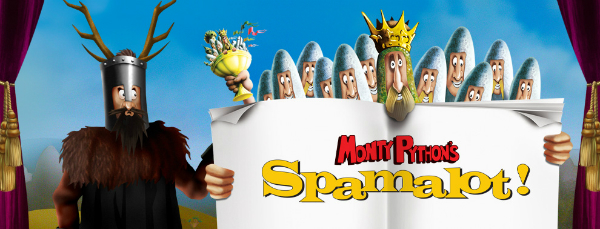
Spamalot poster
Spamalot poster

Written by Amanda Rodriguez.
Spoiler Alert

I recently went to see a local production of the infamous musical comedy Monty Python’s Spamalot (a Broadway adaptation from the 1975 hilarious Arthurian quest film Monty Python and the Holy Grail) at Asheville Community Theatre. Though running a little long at two and a half hours, I loved it. As a fan, it was wonderful to get to see a theatre company bring to life all the gags, costume changes, ridiculous accents, jokes and songs that make Monty Python so special. As a feminist, I’d like to examine how the theatre production measures up to scrutiny through a feminist lens.

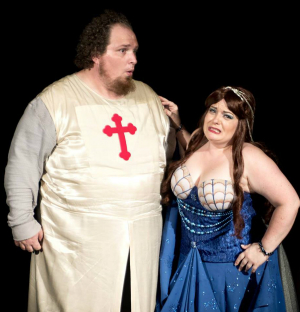
First off, despite my love of it, there’s no denying that the original source material, Monty Python and the Holy Grail, is a sausage-fest. Most of the women are played by men, and the most noteworthy scene featuring women is a bunch of cloistered nun-types at Castle Anthrax who all desperately want to have sex with Sir Galahad (they thankfully omitted this scene in the play). Though Spamalot doesn’t greatly improve on the number of significant roles for women, it does add a host of female background performers who appear frequently as well as the show-stealing Lady of the Lake (often dubbed the Diva of the Lake). Though she is primarily a love interest, the Lady of the Lake is also essential as she’s the equivalent of a dues ex machina who solves dilemmas the cast faces, puts them on the right path for their quest and generally inspires enthusiasm in the pursuit of the grail.

The Lady of the Lake has a lot of tongue-in-cheek meta-songs, and the best one, “Whatever Happened to My Part (The Diva’s Lament),” actually acknowledges how little stage time she’s gotten in comparison to her male compatriots. Though this number concedes that her representation is at best uneven, it doesn’t do much to truly integrate the lone female character into the plot itself.

[youtube_sc url=”https://www.youtube.com/watch?v=ZJqAYUAJbTk”]

In the above clip, we have Sara Ramirez of Grey’s Anatomy fame performing the role of the Lady of the Lake in the original Broadway production. She even won the Tony for Best Performance by a Featured Actress in 2005. I love that a full-figured woman of color was cast in this role, and the world recognized how brightly she shined.

Asheville Community Theatre's Nana Hosmer as the Lady of the Lake
ACT’s Nana Hosmer as the Lady of the Lake


In the Asheville Community Theatre Spamalot production, I was so pleased to see the astoundingly talented Nana Hosmer fill Ramirez’s shoes as the Lady of the Lake. The full-figured diva has a dynamite voice that playfully emulated different musical genres but also shook the rafters with its vibrato. I feel fortunate that I (and all the other theatre-goers) got to see this woman’s powerhouse performance.

The talented Nana Hosmer in Spamalot


All in all, though I lamented the lack of female characters and found the number “You Need a Jew” mildly offensive, I was delighted that, though the play felt the need to end with a wedding, it was a gay wedding between Lancelot and the song-loving, fabulous Prince Herbert. I was worried they wouldn’t have the guts for it, but then I remembered, hey, this is Monty Python we’re talking about here. I was, however, the most moved by Nana Hosmer’s Broadway caliber performance. She, along with Sara Ramirez, reminded me how challenging it is for women of color and women with bodies that don’t match Hollywood’s (very thin) standards to find quality roles in films and on TV. I hope this means that theatre is a more welcoming arena that is appreciative of talent and beauty that comes in different shapes, sizes and colors.


Bitch Flicks writer and editor Amanda Rodriguez is an environmental activist living in Asheville, North Carolina. She holds a BA from Antioch College in Yellow Springs, Ohio and an MFA in fiction writing from Queens University in Charlotte, NC. She writes all about food and drinking games on her blog Booze and Baking. Fun fact: while living in Kyoto, Japan, her house was attacked by monkeys.

Call For Writers: Movie Soundtracks

Music is a powerful tool for the expression of emotions like anger, heartbreak, and lust, but it can also be used to bolster a movement, capture the feeling of a cultural milieu, expose injustices or give marginalized groups an earthshaking voice. Combining quality films with compelling soundtracks is a recipe for the creation of important works of art that speak to more than just our aesthetic.

Call-for-Writers

Our theme week for July 2014 will be Movie Soundtracks.

Music is a powerful tool for the expression of emotions like anger, heartbreak and lust, but it can also be used to bolster a movement, capture the feeling of a cultural milieu, expose injustices or give marginalized groups an earthshaking voice. Combining quality films with compelling soundtracks is a recipe for the creation of important works of art that speak to more than just our aesthetic.

For example, 80s teen films were often concerned with disenfranchised youth. David Bowie’s “Changes” is famously used and quoted in the classic John Hughes film, The Breakfast Club:

And these children that you spit on
As they try to change their worlds
Are immune to your consultations
They’re quite aware of what they’re going through.

The Breakfast Club is so memorable because, through both its scenes and its songs, it examines social hierarchy, gender roles, adult abuse of authority and dysfunctional homes. The Legend of Billie Jean is another 80s teen film that exposes the systemic lack of agency that youth is afforded while electing a moral-minded, charismatic young woman as the spokesperson for a movement (“fair is fair”). With Pat Benatar’s rock anthem “Invincible,” young people, especially young women, rallied around the idea of carving out spaces of power for themselves.

Waiting to Exhale uses its soundtrack with hits like “Count on Me” to emphasize the importance of female friendship, while it relies on tracks like “Exhale (Shoop, Shoop)” to express the wisdom and rich sexuality of the middle-aged women the film depicts. On the other hand, The Runaways employs “Cherry Bomb” to reveal the explosiveness of budding female sexuality.

Use of The Doors’ “The End” in Apocalypse Now encapsulates the madness of war, while The Matrix‘s use of Rage Against the Machine’s “Wake Up” is a battle cry against the invisible system that either keeps us complacent or destroys us. The Jamaican film The Harder They Come was not only famous for the way in which “Black people seeing themselves on the screen for the first time created an unbelievable audience reaction,” but for its diffusion of reggae to the world outside the Caribbean. With Jimmy Cliff’s “The Harder They Come,” the film was able to show how the oppressive forces in Jamaica could be combated with fierce individualism and tenacity.

We’d like you to write about the movie soundtracks that changed you or changed the world. Feel free to use the examples below to inspire your writing on this subject, or choose your own source material.

We’d like to avoid as much overlap as possible for this theme, so get your proposals in early if you know which film you’d like to write about. We accept both original pieces and cross-posts, and we respond to queries within a week.

Most of our pieces are between 1,000 and 2,000 words, and include links and images. Please send your piece as a Microsoft Word document to btchflcks[at]gmail[dot]com, including links to all images, and include a 2- to 3-sentence bio.

If you have written for us before, please indicate that in your proposal, and if not, send a writing sample if possible.

Please be familiar with our publication and look over recent and popular posts to get an idea of Bitch Flicks’ style and purpose. We encourage writers to use our search function to see if your topic has been written about before, and link when appropriate (hyperlinks to sources are welcome, as well).

The final due date for these submissions is Friday, July 18 by midnight.

South Park: Bigger, Longer and Uncut

Reality Bites

Apocalypse Now

Garden State

Pump Up the Volume

South Pacific

The Runaways

The Legend of Billie Jean

Superfly

The Harder They Come

Mary Poppins

Pulp Fiction

The Sound of Music

Rocky Horror Picture Show

The Breakfast Club

Waiting to Exhale

Hedwig and the Angry Inch

The Matrix

Fantasia

O Brother, Where Art Thou?


Bitch Flicks’ Weekly Picks

Check out what we’ve been reading this week–and let us know what you’ve been reading/writing in the comments!

recommended-red-714x300-1


Lynda Obst: Why is Hollywood Ignoring Women? (Hint: Ka-ching!) by Margaret Wappler at DAME

The Women Behind ‘Obvious Child’ Talk Farts, Abortion And Stage Fright at NPR

Children’s Television: The Roundup

Check out all of the posts for our Children’s Television Theme Week here.

The Feminism of Sailor Moon by Myrna Waldron

This has been a post I’ve been meaning to write for a long time. I’m an absolutely die-hard fan of Sailor Moon, and part of that is because it served as my childhood introduction to feminism. That might be a little bit hard to believe, considering the superheroines of the show are known for outfits not much more revealing than Wonder Woman’s. Silly outfits aside (you get used to them), this show was absolutely groundbreaking. Its protagonists are 10 realistically flawed, individual and talented teenage girls (and women) who, oh, you know. Save the world.


Why Jessie is the Worst Show on Disney Channel by Katherine Filaseta

For those who don’t know, this is a Disney Channel series about a girl from Texas who moves to New York City and becomes nanny for a Brangelina couple with four adopted children from around the world. If done well, it could allow for very educational programming for children about diversity and identity. Spoiler alert: it hasn’t been done well. It’s been done terribly.


Was Jem and the Holograms a Good Show for Little Girls? by Amanda Rodriguez

Though the show’s focus on romantic love, fashion, and female rivalry are of dubious value, there are definitely a lot of good things going on with Jem & the Holograms: the notion that fame and fortune should be used for philanthropic means, that female friendships can be strong and form an important network of support, and that a sense of community is crucial.


She-Ra: Kinda, Sorta Accidentally Feministy by Amanda Rodriguez

She-Ra: Princess of Power represents a network of powerful women who not only like each other, but they support each other, organize a rebellion against an oppressive patriarchal regime, and get shit done. The example this powerful group of women set for impressionable girls like myself is tremendous.


Why I Love Adventure Time by Myrna Waldron

Adventure Time is a Cartoon Network animated series that combines surrealistic comedy, fantasy and science-fiction. Based on a 2008 short by Pendleton Ward that went viral, it parodies the tropes, archetypes and cliches of fairy tales, video games and childhood action figure battles. The basic premise is about Finn, the last remaining human, and his best friend/adoptive brother Jake (a shape-shifting dog), going on your typical slay-the-monster-save-the-princess adventures. Now in its fourth season, it’s an enormous hit with all genders and age groups and shows no signs of slowing down. And let me tell you, as a feminist, why I am absolutely celebrating this show.


Anne of Green Gables: 20th Century Girl by Ren Jender

What makes good television programming “for children” is elusive. No demographic is unanimous in its tastes, but children differ from one another more than other groups: what fascinates a 4-year-old can bore an 11-year-old and vice versa. Add to this problem that most critics and programming creators are not children themselves, and we can see why most children’s programming is so terrible: because it, even more than other types of art, is based on, to quote Jane Wagner “a collective hunch.” Still, like a Supreme Court justice famously said about pornography, most of us, even those of us who don’t have children, can recognize excellent children’s programming when we see it, like the 80s made-for-television Anne of Green Gables, based on the book by Lucy Maud Montgomery.


Hey Arnold! A Bold Children’s Show by Nia McRae

Hey Arnold! taught life lessons without the viewer realizing it. An episode called “Stoop Kid” taught kids about the benefits of getting out of their comfort zone. The episode “Chocolate Boy” humorously analogized drug addiction. Arnold’s closeness with Gerald alongside Helga’s rapport with Phoebe highlighted the importance of friendship. The wrongness of first impressions was a reoccurring lesson; a dumb character would have moments of wisdom or a snobby character would have moments of vulnerability or a seemingly lucky rich kid would be shown as unhappy and/or overstressed. My favorite example of this message is in the episode “Ms. Perfect”, which introduced the character of Lila. Her popularity caused female students to envy her at first. But once they learned about Lila’s troubled life, the girls apologized and accepted her.


Gravity Falls: Manliness, Silliness, and a Whole Lot of Awesome by Max Thornton

Figuring out who you are in the face of societal pressures that buffet you every which way is the trial of growing up, and helping people to do that is one of feminism’s goals. It’s also at the heart of Gravity Falls, which helps cement this for me as an exciting show.


Celebrating Sesame Street by Leigh Kolb

So what does idealistic, feminist children’s television look like? It looks like Sesame Street, which over the course of its 45-year run has won more than 120 Emmy Awards. Sesame Street‘s frank and honest treatment of race, women’s rights, adoption, breastfeeding, death, childbirth, incarceration, divorce, HIV, health, bilingualism, and poverty throughout the years has added a dimension of social understanding to a show that also deals with teaching children their ABC’s and 123’s.


Adventure Time – Why Lumpy Space Princess is Important by Gaayathri Nair

LSP’s character design can barely be called feminine in the ways that we as a society code things feminine. This is especially true if you compare her to other female characters on Adventure Time such as Flame Princess and Princess Bubblegum. Her gender markers are the fact that her name is Lumpy Space Princess, the fact that she is pink, and that her speech takes on the patterns and vernacular of a valley girl although her actual voice is low and not immediately parse-able as feminine. The other main gender marker of LSP is the fact that she is into traditionally feminine things such as shopping and make up.


Steven Universe: A Superhero Team We Can Believe In by Megan Wright

Steven Universe embraces non-traditional families. Steven is a perfectly happy kid, who is raised by three women who love him. The Gems are wonderful guardians for Steven, acting as mothers, sisters, and leaders to him. Even though the Gems and Steven don’t always see eye to eye, they always try to step beyond their comfort zones for one another. The Gems may not understand the concept of video games, but if Steven wants to go to an arcade, then they’ll go. If Steven wants to throw them several birthdays for the thousands of ones they haven’t celebrated, they’ll let him dress like a clown and play party games with them, because even though they don’t understand it, it clearly means a lot to Steven.


Friendship Is More Than Magic: Feminism and Relationships in Puella Magi Madoka Magica by Kathryn Diaz

Imagine a world where young girls are trapped in a system that sees them as commodities. Imagine that any girl could be tricked into giving herself up to a life that is by all appearances filled with magic, beauty, excitement, and good, but exists to feed off the energy of their spirit. The girls are purposely pushed to their limits. When they have become too cynical or burdened, the system condemns them and sends in younger counterparts to pick them off. Imagine that these girls are pitted against each other, that once they have been lured in with heroic, fairy tale trappings, they are encouraged to turn around and use the power that they should be grateful for to use and destroy each other. At the top of this system sits a small white creature. He just can’t understand why girls get so upset when they learn the facts of life they signed up for.

…..That wasn’t very hard to imagine after all, was it?


The Magic Garden: Female Leaders In Children’s Television by Hayley Krischer

With their soft voices and pigtails Paula and Carole had a purpose: they created a serene little oasis while sitting on swings and singing, calling kids to “come and see our garden grow.” In The Magic Garden, there was a garden of make-believe where the “magic tree grows lollypop sticks.” Paula picked on her guitar and Carole encouraged you to stamp your feet or clap your hands on the “pop” during “Pop Goes the Weasel” without sounding like a droning fire alarm. Watching an episode of The Magic Garden was like going to a music class—the women pushed kids to sing faster and faster with the speed of the music, harmonizing and smiling, their easy melody a break of sorts to all of the outside noise.


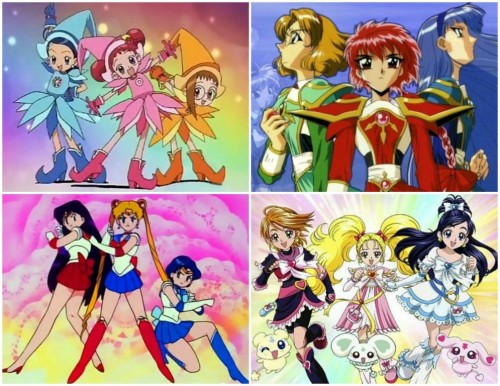
Better Than Two: Female Power Trios in Children’s TV by Emanuela Betti

Power Trios in children’s TV, like duos, are still composed of oversimplified types and characters, yet they also suggest that femininity is not so black and white. Three character ensembles introduce characters types than are on a greyer scale than the polar-extremes of the Light/Dark Feminine trope. In the case of female Power Trios, the formula consists of three characters that respectively represent beauty, brains, and strength. Characters representing beauty are usually ditzy and childish, but they are also sensitive and the mediators (so if they happen to be “dumb” they’re at least depicted with a good heart); characters representing brains are sometimes the group leaders, but also rational without being distant or cold; finally, characters representing strength are usually impulsive and hot-headed, but their rash tendencies are balanced out with a loyal nature.


The Imaginary World of Mona the Vampire by Elizabeth Kiy

The series chronicled the adventures of Mona Parker, a young girl who enjoys dressing up like a vampire and sees saving her town from monsters as her mission in life. The stories are Buffy-lite: a giant bug substitute teacher, a robot babysitter, doppelgängers, a computer virus with mind-control powers, and new cafeteria cooks who aim to poison the school with salmonella. Though the show often pulls out from Mona’s fantasies to reveal the reality of the situation, Mona’s fights against the forces of darkness, usually end up somehow solving the crime or prank, exposing a conspiracy or locating the lost item anyway.


Exploring Imagination and Feminine Effacement in Cartoon Network’s Foster’s Home for Imaginary Friends by Jenny Lapekas

Why examine this offbeat show through a feminist or ethical lens?  Because Foster’s Home for Imaginary Friends (Craig McCracken, 2004-2009) is wildly inventive and subversive.  Its plot, which explains that children’s imaginary friends must eventually go live at Madame Foster’s zany orphanage after he or she has outgrown their friend, insists that a child’s imagination has the power to make something real, whether adults believe it or not.  At this home, young children are welcome to come and “adopt” one of the friends who is housed there.  In this way, the friends are concepts that are “recycled” in order to accommodate children as they grow up.


Adventure Time vs Regular Show by Amanda Lyons

There is one thing that, for me, gives Adventure Time a bit of an edge over Regular Show, and it’s been compounded after sitting through a two-hour back-to-back marathon of both shows over the weekend. It boils down to this: while both cartoons are awesome, Regular Show is pretty much a bro-zone while Adventure Time has a bit more room for the ladies.


Pepper Ann: Pepper Ann Much Too Cool Not To Be On DVD: A Letter to Disney by Janyce Denise Glasper

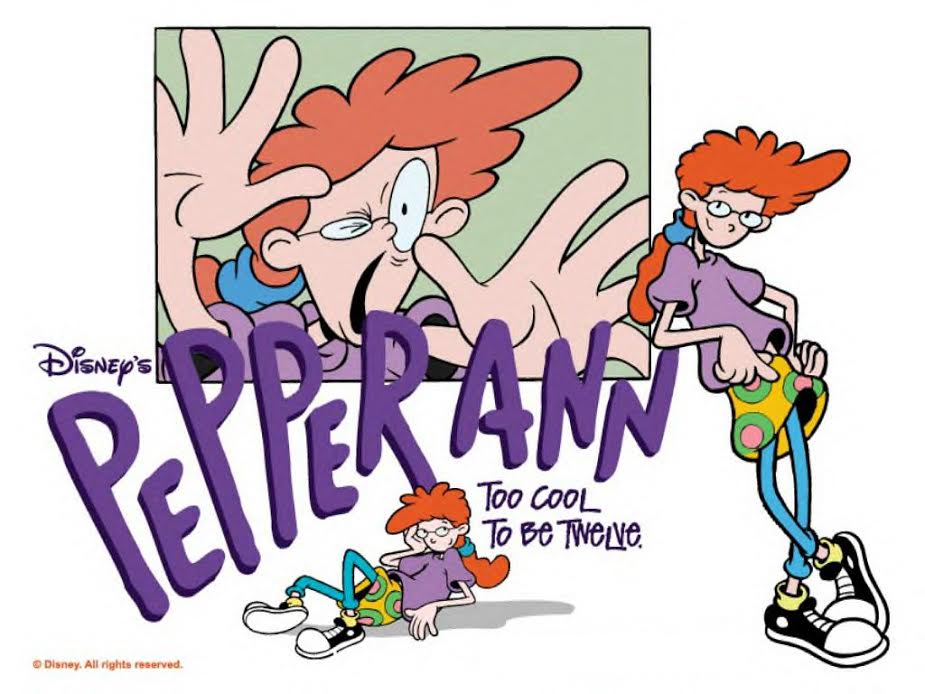
Behind black rounded glasses is Pepper Ann–a puffy red haired chick wearing eccentric style complete with black and white sneakers. An overall normal girl living in a normal world. In the town of Hazelnut, this humorous hip nerd lit up our shared television screen over vast bowls of high sugared cereal bowls. Like my sister, tomboy Pepper Ann played video games, adored roller blades, and sports while Pepper Ann’s precocious best friend Nicky loved books and had an indie spirit vibe like me. Wide range of diverse characters included Pepper Ann and Nicky’s other bff Hawaiian Milo, a rotund Swiss boy, typical popular blond chicks, and African American twins. There seemed to be a treat for everyone.


Pokemon: Escapist Fantasy for the Budding Feminist Child by Nia McRae

Should a writer depict a world that mirrors reality and show the problems within it or should s/he depict the ideal world we want to live in? Pokemon leans more to the latter. Pokemon, just like Star Trek, depicts a world that’s egalitarian or at the very least, very close to it. It’s a world where gender, race, and sexual orientation appear to be irrelevant. As a kid, I couldn’t articulate very well why I loved Pokemon so much but now I can. My joy was due to many things in the show; the adventures which encouraged my love of travel, the fun and catchy songs and most notably, the strong presence of dynamic, ambitious, and fun female characters.

‘Pokemon’: Escapist Fantasy for the Budding Feminist Child

So, should a writer depict a world that mirrors reality and show the problems within it or should s/he depict the ideal world we want to live in? ‘Pokemon’ leans more to the latter. ‘Pokemon,’ just like ‘Star Trek,’ depicts a world that’s egalitarian or at the very least, very close to it. It’s a world where gender, race, and sexual orientation appear to be irrelevant. As a kid, I couldn’t articulate very well why I loved ‘Pokemon’ so much but now I can. My joy was due to many things in the show; the adventures which encouraged my love of travel, the fun and catchy songs and most notably, the strong presence of dynamic, ambitious, and fun female characters.

1

This guest post by Nia McRae appears as part of our theme week on Children’s Television.

Everyone from Bill Cosby to the creators of South Park seemed baffled and amused by the Pokemon craze of the 90s. It still holds a place in the hearts of many millennials because although its obvious aim was to sell products, it didn’t change that the show had a lot of wit and heart. It’s easy to tell a lot of effort went into the episode ideas, world-building, character building, and dialogue. However, most of the people who were adults when the television show first appeared were, and still are, mystified by its appeal. So, I’ll try to explain the show to people who aren’t enthusiasts. Pokemon is an Anime-otherwise known as a Japanese cartoon-that was translated into English by the production company, 4Kids Entertainment. The word Pokemon is short for Pocket Monsters.

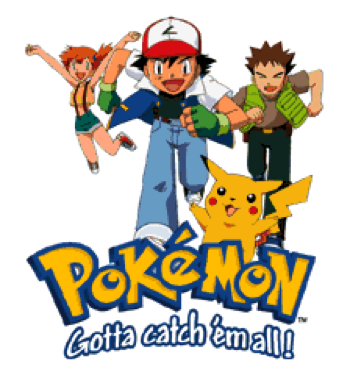
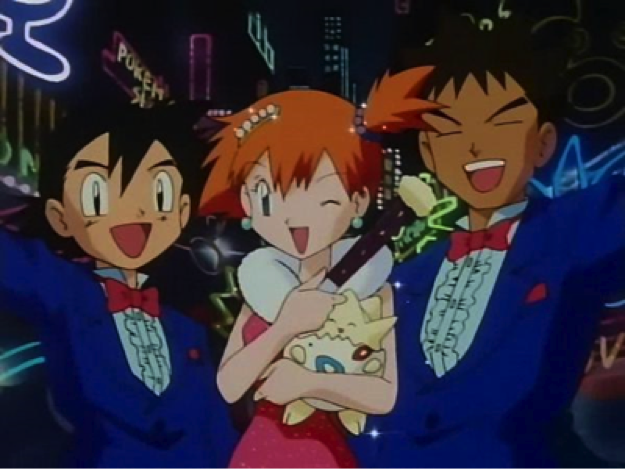
Pokemon is still an ongoing series but my focus will be on the first season. The protagonist is Ash Ketchum, a 10-year old whose traveling companions are Brock and Misty. He wants to be a Pokemon Master, a goal which involves using the pokemon you catch to defeat numerous Gym Leaders and collect badges.

Ash, Misty, and Brock


The show itself featured a world where people catch and train super-powered animal-like beings called pokemon. Humans used Pokeballs to catch pokemon. There are many pokemon-related options that exist such as becoming a Pokemon Breeder or a Pokemon Master.

One of many pokemon-related activities


So, should a writer depict a world that mirrors reality and show the problems within it or should s/he depict the ideal world we want to live in? Pokemon leans more to the latter. Pokemon, just like Star Trek, depicts a world that’s egalitarian or at the very least, very close to it. It’s a world where gender, race, and sexual orientation appear to be irrelevant. As a kid, I couldn’t articulate very well why I loved Pokemon so much but now I can. My joy was due to many things in the show; the adventures which encouraged my love of travel, the fun and catchy songs and most notably, the strong presence of dynamic, ambitious, and fun female characters.

Whenever I watched Pokemon as a kid, I remember finding it refreshing that whenever a female character appeared as a challenger, there was never any shock or amusement on a male character’s face. Female characters being in positions of power were simply an unexceptional fact of life in the pokemon universe. Another thing that wasn’t a big deal in the pokemon world (but of course would be in real life) is the fact that 10-year kids were allowed to roam the earth without parental supervision. But Pokemon wasn’t meant to reflect real life in terms of the dangers and limitations of reality. It was an escapist fantasy which encouraged kids to learn new things and meet new people. It certainly made me look forward to being an adult and having the freedom of Ash and friends.

It had really funny moments and witty lines that still make me laugh when I revisit an episode or two. All of the characters-whether male or female, minor or major, pokemon or human-had distinct personalities and styles.

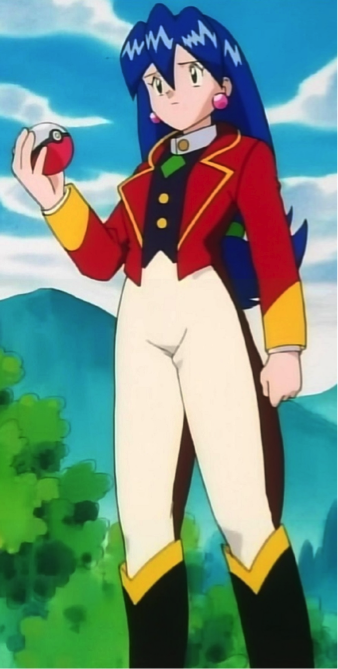
An example of one of many diverse female characters: Stella, Ringmaster of a Pokemon Circus


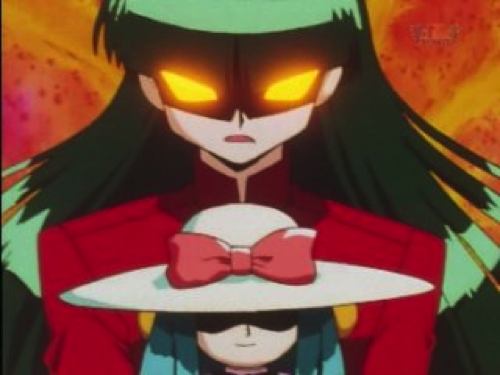
Boys were shown as Gym Leaders and so were girls in many instances. In fact, one of Ash’s most formidable opponents was a psychic Gym Leader named Sabrina. She was creepy because she had telekinetic powers and she had psychological issues. Luckily, her mental problems weren’t caused by man troubles. Ash’s struggle to defeat her took a whole three episodes.

Sabrina using psychic powers


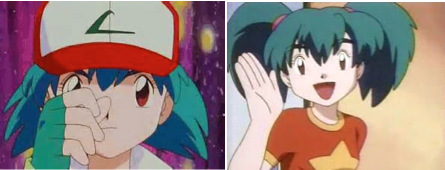
One of my favorite characters was Duplica (yes, that was her actual name) who was working to be an Impressionist along with her shape-shifting pokemon, Ditto. She was a fun and feisty tomboy who could dress up and imitate anyone whether boy or girl. And just like Sabrina, she challenged Ash to see his weaknesses and become a better pokemon trainer.

Duplica dressed as Ash and Duplica dressed as herself


In addition to being Gym Leaders, female characters are found in other occupations: nurse, scientist, professor, rancher, police officer, etc. The show helped to normalize women in any position of power, whether it was common in real life or not. Similar to kid shows like The Magic School Bus or Captain Planet, its goal was to capture a kid’s imagination. Because the pokemon world is so egalitarian, there isn’t a need for any didactic speeches. Girls, just like boys, go out and do whatever they want to do without interference-and there’s a lot of power in normalizing that image.

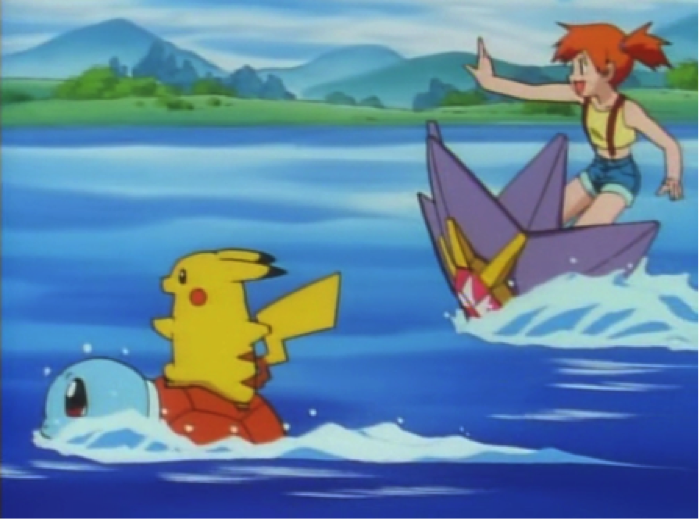
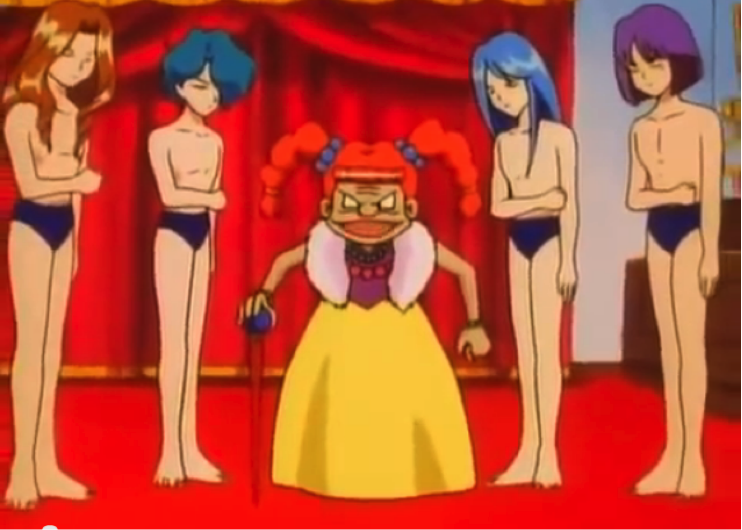
There two most prominent female characters are Misty and Jessie. Misty is a water pokemon trainer. Her three sisters run the Cerulean Gym where trainers can win a Cascade badge. Her passion for water pokemon is showcased in an episode called “Tentecool and Tentacruel.” That same episode involves this scene:

Boss-lady and man-servants. Yes, Pokemon is a weird show
Boss-lady and man-servants. Yes, Pokemon is a weird show.


Jessie is part of the main trio of villains including James and a talking cat pokemon named Meowth. Jessie and James cross-dress a lot. Whenever they’re in disguise, sometimes they’re both wearing girl’s clothing or they’re both wearing guy clothes. Many times, Jessie wears the typical guy attire and James is enthusiastically in a girl’s outfit. There’s a lot of gay coding for James. His voice and mannerisms are foppish. This is part of an ongoing issue of coded gay characters being villains in movies and TV. The only silver lining is that James and Jessie aren’t depicted as people who should be feared or despised. At best, they’re just annoying. Many times, they serve as comic relief and there are even some moments where they’ve helped the heroes of the story.

But Pokemon was progressive in many other ways. It had people of ambiguous ethnic background. Ash, for example, had an olive skin tone and Brock was even tanner. Fans still wonder if Brock is Latino, Black or Southeast Asian. Another subversion of gender roles is that the male supporting character, Brock enjoyed making meals for his friends. He wore aprons and he carried cookware wherever he went. No one questioned his masculinity because of his domestic enjoyments. Ash seemed to come from a working class home and he was raised by a single mom. It was good for kids to see a positive depiction of a single mother. Seeing that the hero of the story came from a happy home with a single mother also helped kids from single-headed households to unconsciously know there’s no shame in it.

But even if there are progressive inclinations here and there, some gender stereotypes still appear. There’s an ongoing gag of Misty’s fear of bugs, propensity for romantic daydreams, and love of cute things. In the episode, “The Water Flowers of Cerulean City,” we meet Misty’s valley girl-sounding sisters. In that same episode, Ash battles Misty and she calls forth a jewel-like water pokemon which prompts Ash to mumble, “Leave it to a girl to show off her jewelry.” But Misty isn’t solely a girly-girl (though there would be nothing wrong if she were). There are many sides to her; she has traits associated with males such as being adventurous, rowdy, and temperamental. Her temper is shown to be her main flaw just as occasional dimwittedness is Ash’s central imperfection. She isn’t just one thing but a combination of traits-which is pretty complex for a kid’s show.

In later seasons, there were controversies around a female character named May because she was viewed as having stereotypical girlie aspirations such as competing in Pokemon Contests. It was seen as a step down because instead of vying for badges, the challenger battled for ribbons. Critics viewed it as an inferior dream because Pokemon Contests placed more emphasis on shallow things like beauty. But I never minded it because 1. It was treated as a legit and respected thing and 2. Boys were shown participating in it too. The beautiful thing about Pokemon is I never noticed any gender segregation. There was no pink ghetto.

However, there was a questionable episode called “Princess vs. Princess,” which involved a holiday (possibly satirizing Valentine’s Day?) that celebrated women. The holiday required guys to serve girls as they shop, participate in beauty contests and do many other girlie things (I can hear the accusations of “Feminazi” already). When the women are fighting over clothing, James comments, “I don’t think I’m tough enough to be a woman.” Again, I don’t mind the show featuring female characters doing stereotypical “girl” things because Pokemon was always good at showing the full range of girls. Not every girl in Pokemon embodied the girly-girl stereotype and even the ones that did had complexities to them (as much complexity as you get in a Pokemon cartoon, of course)

Sadly, as is true for many beloved side characters, Misty was rarely in the spotlight and the same was true for Brock. Ash’s personal journey is what garnered the most attention. But fans loved Brock and Misty-some people liked them even more than Ash. That’s why when Misty’s character was replaced by May, there was a huge outcry, particularly from preteens who wanted to see Ash and Misty as a couple. But the powers that be didn’t want romance to be a distraction. After all, it was still a kid’s show. Even if the executives wanted to squash any chance of romance, it still could be argued that getting rid of Misty was unnecessary. But in the long run, it helped to keep the show fresh. And she wasn’t gone for good; she returned for later episodes.

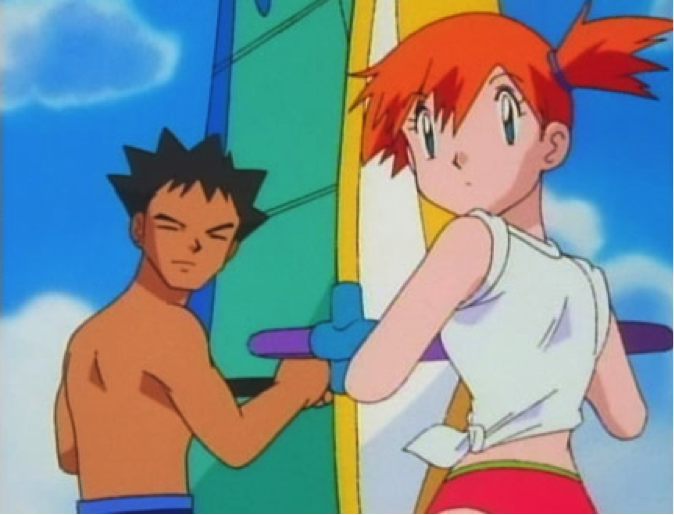
For those who still want more Misty, there’s a spin-off series called Pokemon Chronicles which include episodes that follow characters in the pokemon world other than Ash. Brock gets an episode and Misty features in several episodes. It was a pleasant surprise to see Misty being a main character in her own life which is beneficial for girls to see. In addition to her jewel-type and cute pokemon, she also gets to have a scary, badass pokemon; the serpentine dragon-like type called Gyarados. Pokemon Chronicles reveals a more mature side of Misty as she handles all the responsibilities of being a Gym Leader while her sisters are away. Though she is the youngest sister, she is shown to be the smartest and best-fit as leader. Just like any good leader, she is assertive when the time calls for it and nurturing when the time calls for it.

Brock and Misty
Brock and Misty


Of course, we can’t forget the merchandising. Even today, you can’t talk about any children’s show without discussing the main motivation of selling products. Because the stars of the show were obviously the pokemon more so than the human characters, it was easy to sell pokemon. But the human characters were still necessary in order to be relatable. Pokemon was the King of Advertising. The show’s tag line was “Gotta Catch ’Em All,” which was repeated ad nauseam to hypnotize kids into buying as many trading cards, toys, and games as possible. And it worked, especially in its heyday in the late 1990s. I recall a lot of girls buying the merchandise too. That’s why I think Pokemon serves as a lesson to executives that not only is it socially good but it’s a smart business idea to market to both boys AND girls. Pokemon still resonates with a lot of young people because it created a world that made everyone feel welcomed.


Nia McRae graduated summa cum laude from Medgar Evers College where she earned a Bachelor of Arts degree in Liberal Studies with a concentration in history. She has a strong passion for critiquing racial and gender politics in the media and putting it in historical context. 


‘Pepper Ann’: Pepper Ann Much Too Cool Not To Be On DVD: A Letter to Disney

Behind black rounded glasses is Pepper Ann–a puffy red haired chick wearing eccentric style complete with black and white sneakers. An overall normal girl living in a normal world. In the town of Hazelnut, this humorous hip nerd lit up our shared television screen over vast bowls of high sugared cereal bowls. Like my sister, tomboy Pepper Ann played video games, adored roller blades, and sports while Pepper Ann’s precocious best friend Nicky loved books and had an indie spirit vibe like me. Wide range of diverse characters included Pepper Ann and Nicky’s other bff Hawaiian Milo, a rotund Swiss boy, typical popular blond chicks, and African American twins. There seemed to be a treat for everyone.

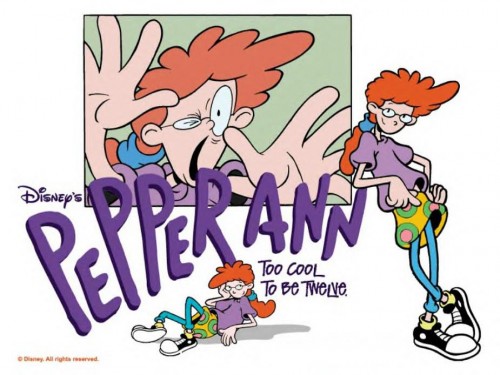
Pepper Ann
Pepper Ann


This guest post by Janyce Denise Glasper appears as part of our theme week on Children’s Television.

Dear Disney,

Sue Rose saved my life.

Seriously.

Instead of taking another princess film out of the precious vault, consider bringing out something more genuine and heartfelt. Release every single Pepper Ann episode on DVD. Now.

Why?

Well, it began long ago. I just started freshman year of high school and still adored the Fox Kids lineup of X-Men, Spiderman, and Teenage Mutant Ninja Turtles. I had Storm, Rogue, Jubilee, Mary Jane, and April O’Neil for breakfast.

Then on an opposing channel, Rose came about.

This female animator penciled in a unique, oddball heroine to ABC’s Disney-dominated One Saturday Morning.

And that character’s name was Pepper Ann Pearson- much too cool for seventh grade.

She didn’t wear a cape or have superhuman abilities, but happened to have one of the best theme songs ever!

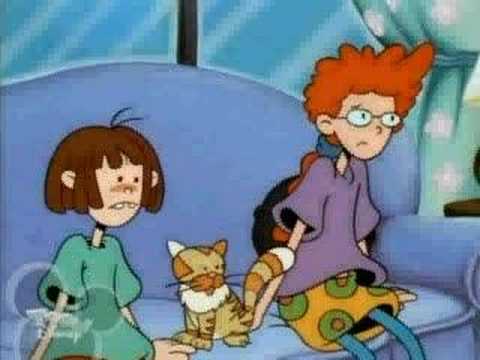
Moose, Steve the cat, and Pepper Ann


Behind black rounded glasses is Pepper Ann–a puffy red haired chick wearing eccentric style complete with black and white sneakers. An overall normal girl living in a normal world. In the town of Hazelnut, this humorous hip nerd lit up our shared television screen over vast bowls of high sugared cereal bowls. Like my sister, tomboy Pepper Ann played video games, adored roller blades, and sports while Pepper Ann’s precocious best friend Nicky loved books and had an indie spirit vibe like me. Wide range of diverse characters included Pepper Ann and Nicky’s other bff Hawaiian Milo, a rotund Swiss boy, typical popular blond chicks, and African American twins. There seemed to be a treat for everyone.

The series revolved around teenage problems like zits, first kisses, awkwardness, fitting in, and questioning identity. Pepper Ann doesn’t want to be considered a freak, but it’s freakiness, it’s weirdness that gives her charm, gives her strength. She’s someone that definitely needs to be around today. This female character could give girls that one shining example that it doesn’t matter how others see them– it’s how they see themselves. When Pepper Ann hung out with eighth grade girls and then confessed that she wasn’t one of them, they still saw her as “cool.” It’s wonderful validation that she didn’t need.

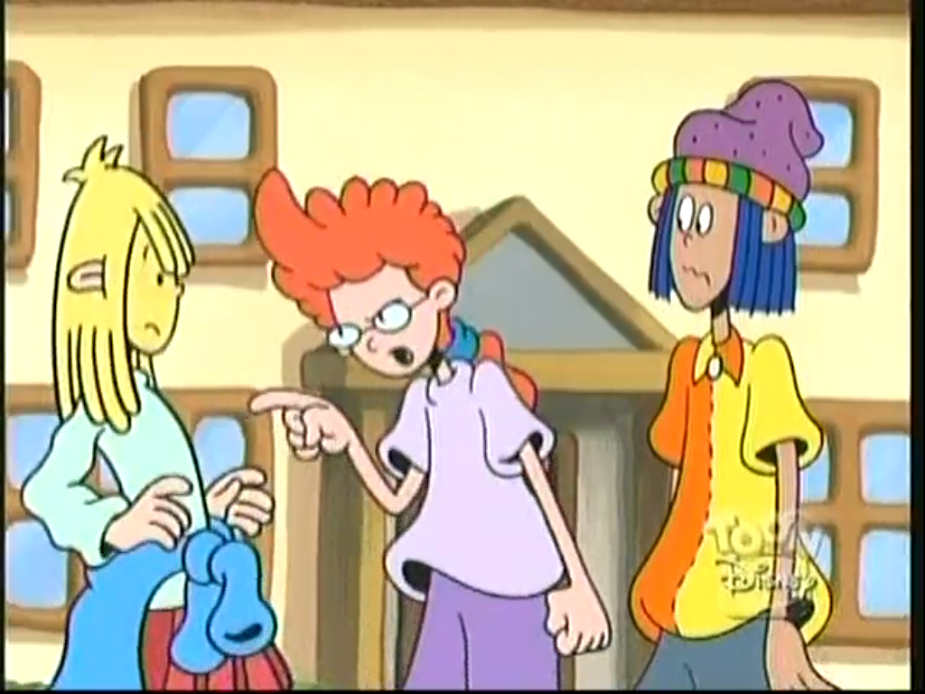
Pepper Ann also showed that boys and girls could be the best of friends- a solid dynamic worthy of applause. It sets a positive example that there’s nothing wrong with adolescent male and female companionship. Pepper Ann, Nicky, and Milo are a unit. They’re inseparable. Although at times, this closeness appeared to be a problem especially with that of Milo questioning his “manliness” and Pepper Ann wanting to focus on her crush- Craig the eighth grader. Of course, they have other fights, but they come together like glue in the end.

Pepper Ann lives with her single mom and skateboard loving younger sister, Moose.

I love that Pepper Ann’s moral conscious talks to her almost every episode. The essence is Pepper Ann, but it’s far more than mirrored image. Crossword puzzle squares and even a plate of cafeteria beans and wieners warps into Pepper Ann’s visage! It’s creative storytelling genius! The wiser mental part of Pepper Ann always reveals right moral ground.

In watching it now, one cannot help noticing feminist hints weaved into whimsical, offbeat animation. There were episodes focused on equal rights for men and women and even ageism.

For example, in “Single, Unemployed,” Pepper Ann’s mom quits her job at a mall fashion boutique. Her boss needed her. Female customers had formed a bond that couldn’t be forged with the male shop owner. She struggled to find another. It illustrated real life situation of being under qualified or overqualified, but being also being a persistent mother who wouldn’t give up. Her boss gave her the job back, allowed her to sell sarongs, and made her partner!

Nicky, Pepper Ann, and Milo


In “Dances With Ignorance,” Pepper Ann is exited to learn about her Native background. Instead of being respectful and considerate, she acts out in complete stereotypes including making inappropriate sounds, wearing her hair like “Pocahontas” (tossing deliberate shade at an offensive depiction) offending the visiting family. She ultimately apologizes for ignorant behavior. It provided an effective way of teaching kids that messages seen in popular media aren’t necessarily true and can be hurtful to a culture. We as a society must hold differing histories in high regard and realize that this issue is still such a sensitive issue.

The vocal stars are a dream, too. Clea Lewis, Jenna Oy, Bebe Neuwirth, King of the Hill alums Pamela Adlon, Kathy Najimi, and the late Brittany Murphy, Inspector Gadget‘s late Don Adams and Cree Summer and the late James Avery.

So please consider finally releasing Pepper Ann on DVD. It’s like quirky, awesome, “one in a million” television. A cartoon, yes, but Pepper Ann’s crazy antics never gets old! It would be a dream come true to see a new generation being influenced by this special, humorous girl.

Or at least stop blocking people from putting up episodes on Youtube.

Thanks,

Janyce


Janyce Denise Glasper is a nerdy afrocentric vegan artist, writer, and film/TV buff from Dayton, Ohio. Currently residing in Philly, she holds a BFA in drawing from the Art Academy of Cincinnati and Post Baccalaureate certificate from the Pennsylvania Academy of the Fine Arts. She will continue MFA studies at PAFA whilst running http://afroveganchick.blogspot.com/ and http://femfilmrogues.blogspot.com/, eating cherry chocolate bars, drinking Starbucks, attending film festivals, and slaying vampires Buffy style!