‘Adventure Time’ vs. ‘Regular Show’

There is one thing that, for me, gives ‘Adventure Time’ a bit of an edge over ‘Regular Show’, and it’s been compounded after sitting through a two-hour back-to-back marathon of both shows over the weekend. It boils down to this: while both cartoons are awesome, ‘Regular Show’ is pretty much a bro-zone while ‘Adventure Time’ has a bit more room for the ladies.

Adventure Time Vs Regular Show


This cross-post by Amanda Lyons appears as part of our theme week on Children’s Television.

I probably wouldn’t know anything about either Adventure Time or Regular Show, both awesome cartoons, if I didn’t have a young niece and nephew. Happily, I do, and they have brought these shows into my life. That’s one of the things that’s so great about having children around; they keep you young.

And I don’t think there has to be a winner and a loser – there’s room for more than one at the top, y’know? It doesn’t have to be one or the other. Besides, both of these shows are awesome. They’re funny, hip, contemporary, relevant; great for kids but stuffed with adult references and jokes as well, and the animation is really great.

(Also, as an aside, Mr. Meows and young nephew Meows both insisted, before I had seen Regular Show, that I am just like Pops. This troubled me; was this a good thing or a bad thing? Were they making fun of me? When I finally saw it, I still wasn’t sure, but I can tell you one thing: they are right! BTW Pops on sugar is analogous to me on coffee)

BUT. There is one thing that, for me, gives Adventure Time a bit of an edge over Regular Show, and it’s been compounded after sitting through a two-hour back-to-back marathon of both shows over the weekend. It boils down to this: while both cartoons are awesome, RS is pretty much a bro-zone while AT has a bit more room for the ladies.

Don’t get me wrong – RS is great, and I do love it. It’s apparently PG-rated and is often required by the Cartoon Network to be toned down. As far as cartoons go, it’s edgy for sure, definitely the hipster older brother of cartoon shows. It’s packed with knowing references to the 80’s and popular culture that may fly over the heads of my niece and nephew (while still making them laugh) but hit my sense of humor square on the target.

But over an hour of watching RS, though I really enjoyed it and laughed a lot, I also felt more and more left out. RS is hip, magical and weird, but all of this comes from men only. Women are marginal and disappointingly, exist only as glorifed T&A with typical cartoon long lashes. Bros get all the funny lines and all the adventures. Women are passive, side-line decoration.

This is thrown into stark relief when you look at the cast of characters. There’s only one (kind of) significant female, Margaret the red-breasted (huh, huh) robin. She’s a secondary character, and pretty much solely exists as a babe that Mordecai has a crush on. They take this pretty far sometimes – check out this clip – fairly hot and heavy for what is, at the end of the day, a kid’s show. (Update: in the newer episodes, Margaret features more and gets to do more stuff so she seems more rounded. They have also added in her utterly adorable friend Eileen and Muscle Man’s girlfriend Starla who’s pretty bitchin’, although she conforms to that weird cartoon law that boyfriend/girlfriend characters have to look more like brother/sister. At the end of the day though, these females are all secondary and important more for how they relate to the main male characters as girlfriends/love objects rather than characters in their own right.)

I’ve addressed this kind of thing before, in my post about The Hunger Games. Maybe some of you will think I’m being whiny and nit-picky. But I find it really disappointing because I want young girls today to have a different experience from the one I had – in which the world reflected back to me was for men only; where they had all the main roles, made all the jokes, solved all the problems, went on all the adventures, while women/girls just looked on adoringly and batted their eyelashes. And it’s not only girls who are affected by this – think of all the debates recently over whether women can be funny, whether they can possibly be authentic participators in geek culture, whether they can be effective leaders in the business world, blah blah blah ad infinitum.  Why is this (still) happening? Because both men and women are affected by a severe lack of positive female role models in our culture – or should I say, exposure of said role models, because they’re there, they just don’t get the air time. As documentary Miss Representation states, “You can’t be what you can’t see.” These cartoon representations may be fictional, but they affect us in our real lives, how we act and how we perceive other people – both boys and girls.

Watching RS I’m taken back to my childhood, to pretend play, and how I would always have to ‘be’ the male characters because they were the ones who were active and funny, they were the ones I admired. RS is the same – I mean, who would want to ‘be’ Margaret?? Sure, she’s cool and all, but she doesn’t do anything except get her norks out!! It worries me the kind of takeaway that kids are going to get from that, and it worries me that kids may already be encouraged to view females as sexualized bodies – it’s all around them already, do we have to put it in cartoons as well?

Oh yeah, there’s also this little gem, from an episode in which Mordecai goes on a series of bad dates. It’s your typical montage of bad date situations, but buried in there is a humorless-looking, unsmiling woman who aggressively asserts, “Oh, so you agree that women are misrepresented in most forms of popular media?” I get that the joke is about people who press their political views on you at inappropriate times, but I feel it’s telling that the writers chose to use a feminist viewpoint, and one that I would consider fairly uncontroversial at that. (Especially as this is a complaint I feel RS could do with taking under consideration – is someone feeling a little defensive? Or worse, do they consider this question annoying or irrelevant?) I also felt like it was a “joke” which had been discarded as passe by 1988, and it was perplexing and disappointing to see it come up in a kid’s cartoon. Do we want to train a new generation of kids to laugh off legitimate feminist concerns as a joke? One wonders how this would come across if they were to replace this “uptight” woman with like, a humorless civil rights activist. Not gonna lie, that did really annoy me (just call me a feminist killjoy) and RS definitely loses a few points for that one.

Princesses: Gotta Catch 'Em All
Princesses: Gotta catch ’em all


Conversely, Adventure Time is much more female-inclusive. The main two characters are still guys, but at least in their land there are a whole lot of females that get to be a significant part of the story – there are heeeeaps and heeeeaps of Princesses with a range of looks and voices. They are rulers and they have far more characteristics than their physical appearance. There’s also a parallel-universe episode where the main characters swap genders – only a one-shot (well, several-shot) but a fascinating idea, and not just done in the name of cheap gender-jokes, but executed in a way that makes it clear the opposite-gender versions of the characters are every bit the equal of the originals – althoooough the Fionna and Cake stories I’ve seen so far have tended to have a bias towards more romantic story lines, but then Finn isn’t without this either – it’s just that because he’s the main man, he gets more variation, as well.

AT is perhaps not as hip as RS, but it is just as magical – perhaps slightly more so. It’s definitely just as weird, existing in a deliciously surreal and at times kind of disturbing universe.

So, at the end of the day, while I raucously enjoy Regular Show (and identify to a worrying degree with Pops) it’s Adventure Time that really has my heart. Keep representing and taking us on your quests, Adventure Time! I love you for it.

Better Than Two: Female Power Trios in Children’s TV

Power Trios in children’s TV, like duos, are still composed of oversimplified types and characters, yet they also suggest that femininity is not so black and white. Three character ensembles introduce characters types than are on a greyer scale than the polar-extremes of the Light/Dark Feminine trope. In the case of female Power Trios, the formula consists of three characters that respectively represent beauty, brains, and strength. Characters representing beauty are usually ditzy and childish, but they are also sensitive and the mediators (so if they happen to be “dumb” they’re at least depicted with a good heart); characters representing brains are sometimes the group leaders, but also rational without being distant or cold; finally, characters representing strength are usually impulsive and hot-headed, but their rash tendencies are balanced out with a loyal nature.

ytFQCRewiXA294DZMun8xWt3VLR6gffl7u0zbBQFB5I

This guest post by Emanuela Betti appears as part of our theme week on Children’s Television.

One of the oldest tropes in children’s TV is the use of characters that fight or solve crimes as an ensemble. Most notably, the Power Trio, or the three character group, is a popular formula in numerous cartoons and TV shows, from Sailor Moon to the Powerpuff Girls. There are very distinct differences in the depiction of female characters between the two-girl tag-along formula, which you can see in The Archie Show or Scooby-Doo, and the three girl ensemble formula in shows such as The Powerpuff Girls.

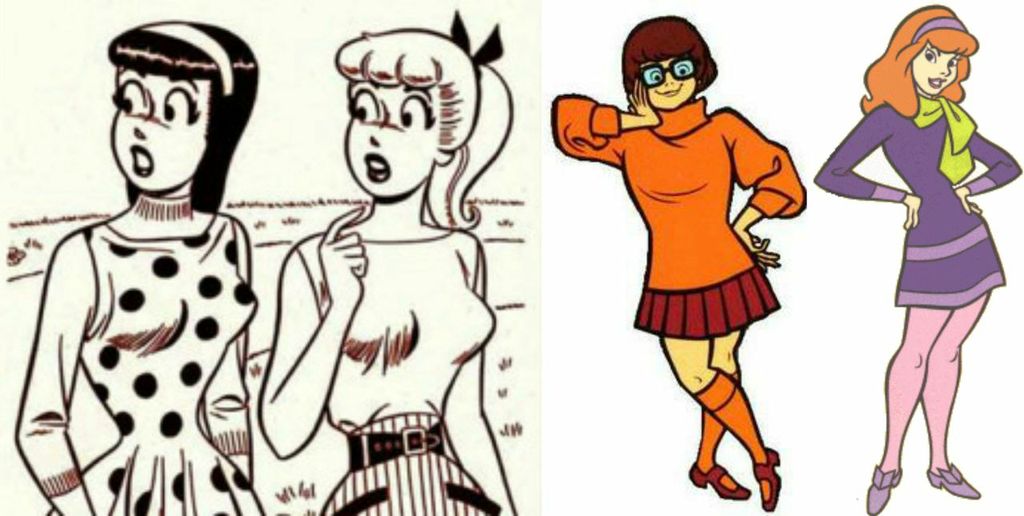
One of the most recognizable female duos in children’s entertainment are the iconic frenemies from the Archie comic books and The Archie Show, Betty and Veronica. Despite their mutual adoration of Archie, the two girls are almost polar opposites: Betty is the tomboyish, girl-next-door blonde, while Veronica is the sultry, high-maintenance brunette; Betty is sensitive and caring, while Veronica is often depicted as cold-hearted and manipulative. Female duos in cartoons and children’s TV, such as the Betty and Veronica duality, play on the Light Feminine and Dark Feminine trope: the idea behind the Betty and Veronica duality implies that a woman is a tomboy or a bitch, a sweetheart or a vixen—but never both. The Betty and Veronica duality could be interpreted as safe female vs. dangerous female: the stereotype that the “safe female” (laid-back, tomboy, funny) is un-dateable, while the “dangerous female” is a guy-magnet but incredibly uptight. Another popular female duo in children’s TV can be seen in Scooby-Doo: Velma is the unattractive but intelligent female, while Daphne is the dumb beauty queen. The stereotype is obvious: smart girls are unattractive, and pretty girls will never be smart. When it comes to children’s TV and cartoons, the oversimplification of characters and character traits is usually excusable, but a simplified character doesn’t necessarily have to be a (mostly negative) stereotype.

x_O4oJJezI-pYb_ZcHGMaqWpc0oCNg9B9UKhlUeGFMI

The problem with dualities—for the sake of contrast—leads to broad generalizations. Mad Men’s “Maidenform” episode, in which the men point out women in the office and classify them as either a Jackie or a Marilyn, is a great example of how women can be easily placed in distinct categories; but generalizations are not accurate, and they imply that the Jackies can’t share any traits with the Marilyns, and vice versa—but Jackie Onassis was a fashion icon, and Marilyn Monroe used to write poetry, so categorizing women is not always that simple. This either-or depiction of femininity is, to say the least, very limiting. Female duos imply that a girl or a woman cannot favor both beauty and brains, but must choose between one of the two. In a sense, the “duo” (as the word implies) is a two-dimensional representation of the feminine: a woman is either intelligent/safe, or dumb/sexy. What is missing is a gray area.

Power Trios in children’s TV, like duos, are still composed of oversimplified types and characters, yet they also suggest that femininity is not so black and white. Three character ensembles introduce characters types than are on a greyer scale than the polar-extremes of the Light/Dark Feminine trope. In the case of female Power Trios, the formula consists of three characters that respectively represent beauty, brains, and strength. Characters representing beauty are usually ditzy and childish, but they are also sensitive and the mediators (so if they happen to be “dumb” they’re at least depicted with a good heart); characters representing brains are sometimes the group leaders, but also rational without being distant or cold; finally, characters representing strength are usually impulsive and hot-headed, but their rash tendencies are balanced out with a loyal nature.

FFIQTCYypkxyLKF7PD7ZZl5GEdmW_HQRN1t7z5H1L5o

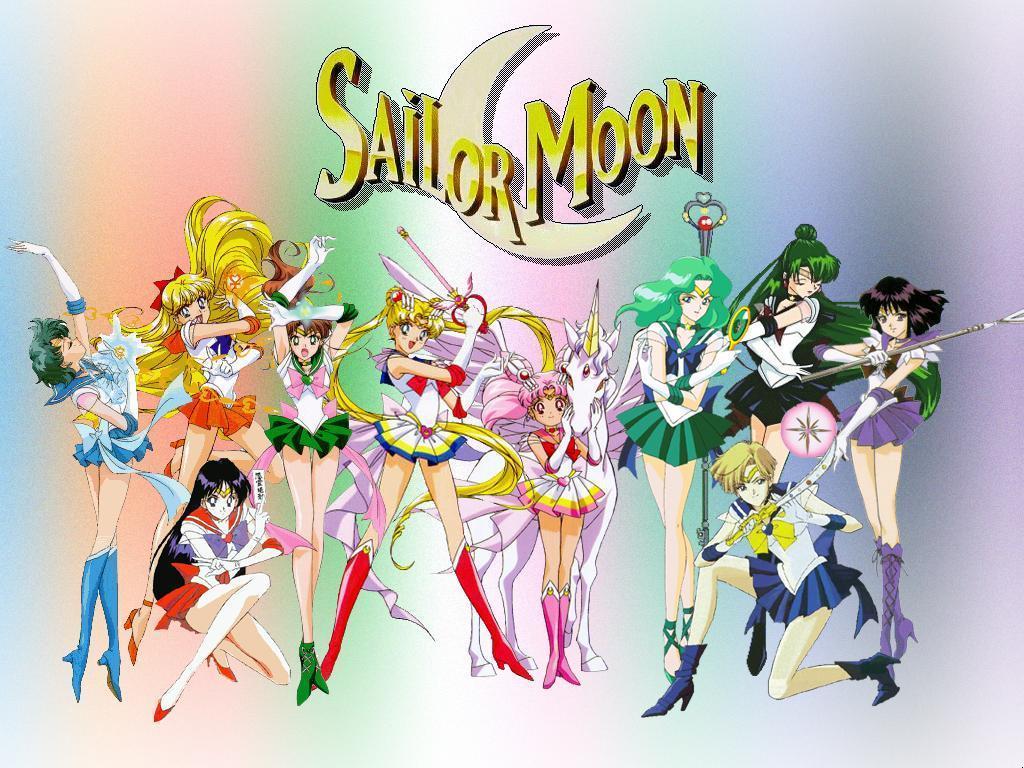
There are countless TV shows and cartoons that feature three girl ensembles, not to mention five girl ensembles, which are an almost different story. Although the trope is typically reserved for children’s entertainment, it has leaked into teen and adult movies and TV shows as well, such as Charlie’s Angels and Charmed. Female Power Trios are extremely prominent in anime, with Sailor Moon paving the way for color-coded magical warriors or witches, and Western animation following suit with shows such as Powerpuff Girls and Totally Spies.

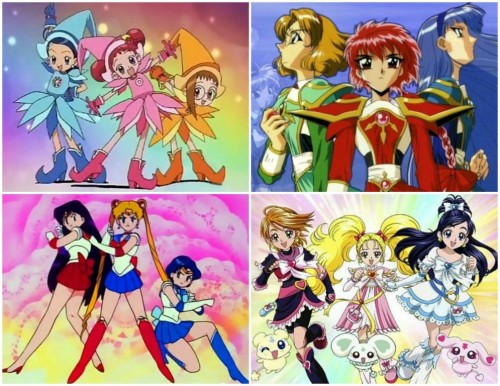
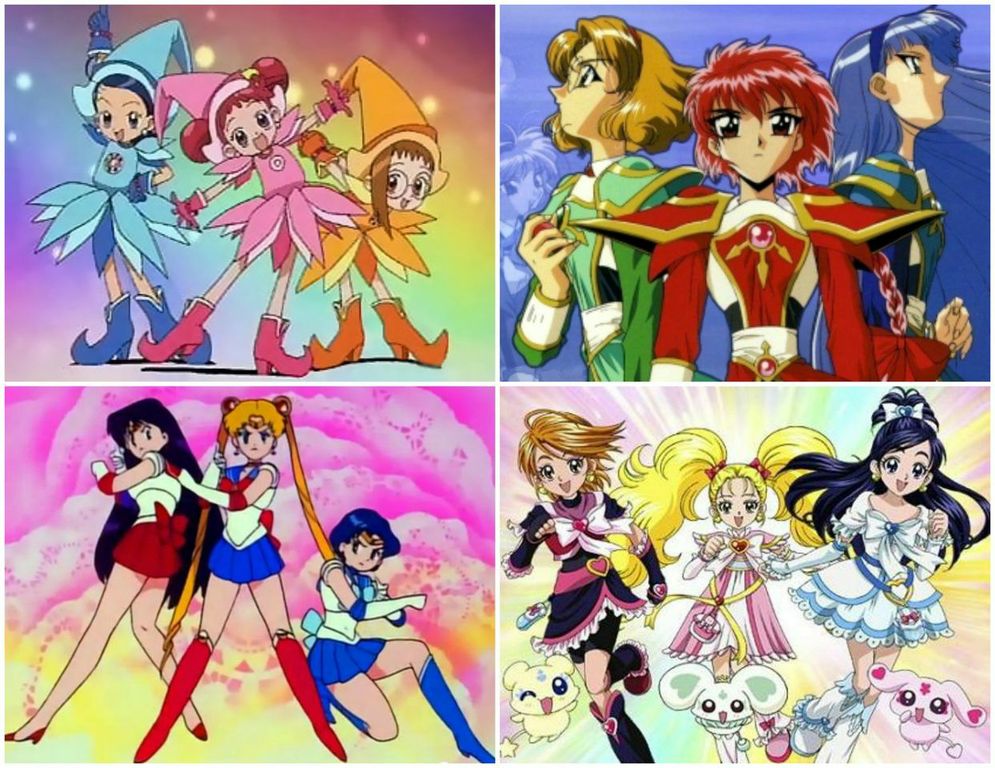
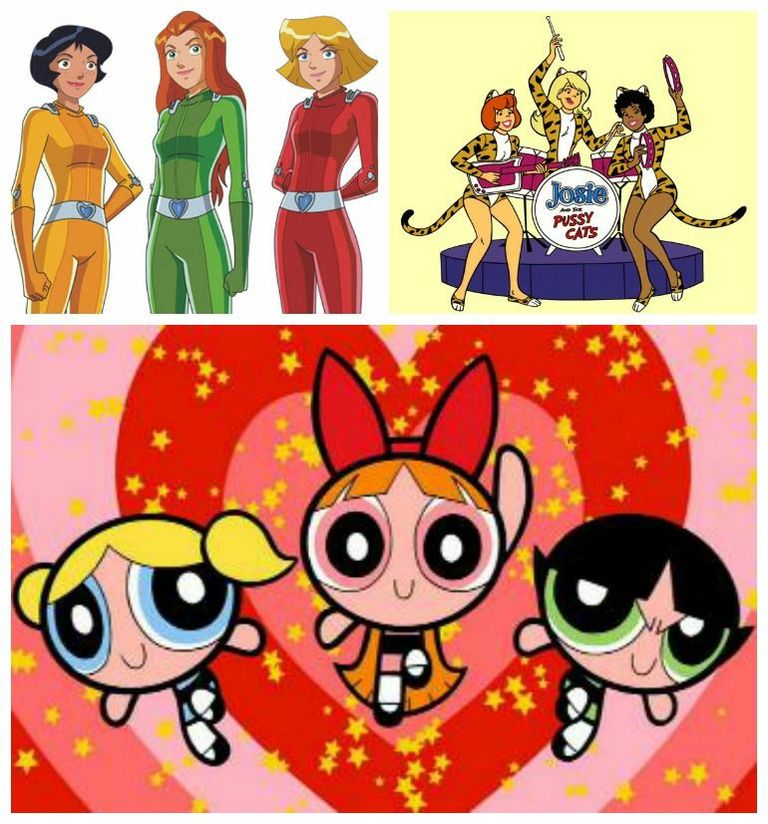
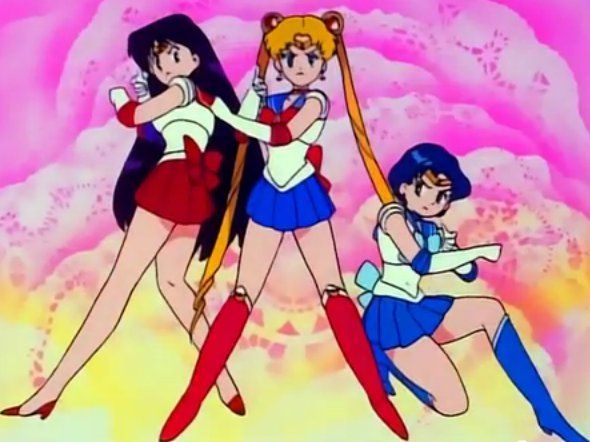
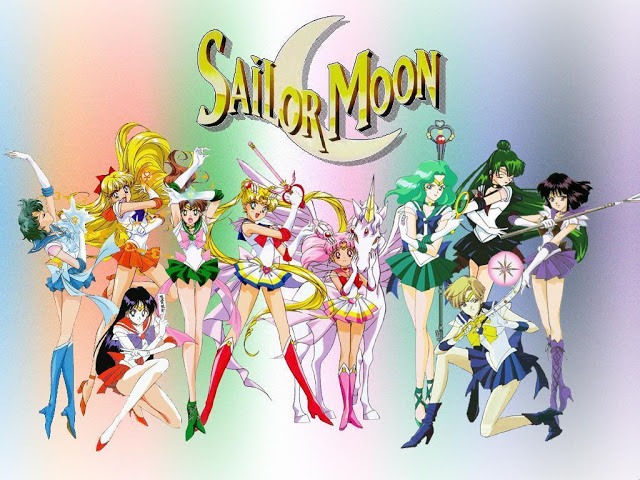
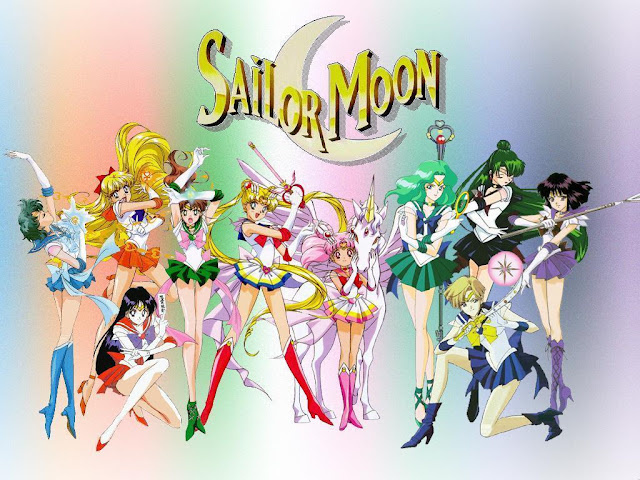
Anime has countless examples of power group/ensemble series. The Power Trio in female-oriented anime was widely popular with the Magical Warriors anime subcategory, most notably with Sailor Moon. While the completed Sailor Senshi group is composed of five girls, the majority of the first season focuses on the trio composed of Usaki/Moon, Amy/Mercury, and Rei/Mars—respectively, they represent beauty, brains, and strength. The last two girls to join the group, Makoto/Jupiter and Minako/Venus, represent a blend of two of the three traits: Sailor Jupiter is a tough fighter, but at the same time also sensitive and easily infatuated; while Minako is similar in appearance to Usagi, but is more level-headed and rational. Several other anime series, some inspired by the Sailor Moon craze, feature color-coded female Power Trios (some turn into five character ensembles): Futari wa Pretty Cure, Tokyo Mew Mew, and Ojamajo Doremi, to name a few. Western animation has its own good share of female Power Trios. Josie & the Pussycats, Totally Spies! and The Powerpuff Girls all follow the same structure: sassy redhead as group leader, tough no-nonsense brunette, and childish but sensitive blondes. Even Australian TV with H2O: Just Add Water features a milder version of the Power Trio with three teenage mermaids who each represent one of the three traits.

3euN4u9yauPIpKEyGse9DsFoFcB_jK4ZfeIirKjfgmI

The Power Trio females typically feature characters with abilities that are valued in their own distinct forms, rather than basing their personal advantage (beauty/brains) through comparison with their opposite (dumb/ugly). In that sense, Power Trio are better than the two-girl formulas, since trios rely on teamwork and collaboration, rather than rivalry. Unlike the female duos, Power Trios suggest that female characters can possess a larger spectrum of abilities than simply the generalized smart/dumb notion.


Emanuela Betti is a part-time writer, occasional astrologer, neurotic pessimist by day and ball-breaking feminist by night. She miraculously graduated with a BA in English and Creative Writing, and writes about music and movies on her blog.

‘The Magic Garden’: Female Leaders In Children’s Television

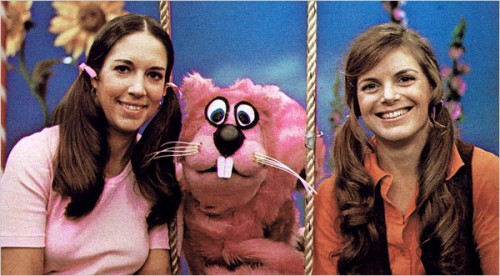
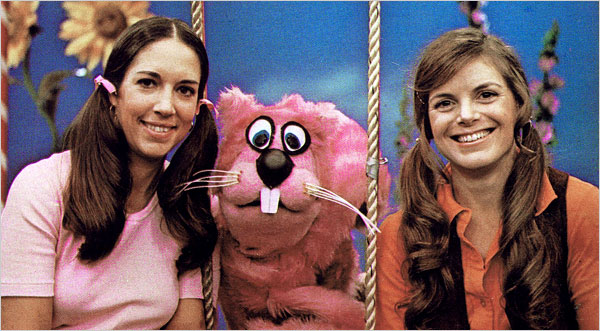
With their soft voices and pigtails Paula and Carole had a purpose: they created a serene little oasis while sitting on swings and singing, calling kids to “come and see our garden grow.” In ‘The Magic Garden,’ there was a garden of make-believe where the “magic tree grows lollypop sticks.” Paula picked on her guitar and Carole encouraged you to stamp your feet or clap your hands on the “pop” during “Pop Goes the Weasel” without sounding like a droning fire alarm. Watching an episode of ‘The Magic Garden’ was like going to a music class—the women pushed kids to sing faster and faster with the speed of the music, harmonizing and smiling, their easy melody a break of sorts to all of the outside noise.

magic.span

This guest post by Hayley Krischer appears as part of our theme week on Children’s Television.

Kids of the 1970s weren’t exactly background noise as they were in the 1950s or worse, used as child labor as they were in the early 1900s, but if you were under 10 between 1971-1978, you probably knew the feeling of getting tossed around in the back seat of a car with no seatbelts. We rolled around in dirty piles of leaves left out on the street. Girls across the US regularly burned their knuckles on the incandescent light bulb used to “cook” brownies in the iconic Easy-Bake Oven. Movies for kids revolved around drunk baseball coaches who cursed you out if you didn’t hit a home run. (Though that movie, with a female pitcher of an all boys baseball team, happened to be my favorite.) We drank potentially lethal doses of Coke and Pop Rocks to see if our stomach would explode. (Urban legend warned the kid from the “Hey Mikey, he likes it,” Life cereal commercial died from the combination.)

The one safe place it seemed for kids of the 1970s was, believe it or not, planted in front of the television. There in the comfort of your den (which morphed into the “family room” by the 1980s), the 70s were at its most educational with Sesame Street, the most influential with Fat Albert, the most feminist with Free to Be You and Me, and the most creative with The Muppet Show. Schoolhouse Rock taught us about interjections. Sesame Street taught us that it was OK to have an imaginary friend (Snuffleupagus used to be Big Birds’s pretend buddy before they allowed everyone to see him).

And squeezed in between all of this creative genius was a sweet little interlude broadcasted on a local New York station headed by Carole Demas and Paula Janis called The Magic Garden. With their soft voices and pigtails Paula and Carole had a purpose: they created a serene little oasis while sitting on swings and singing, calling kids to “come and see our garden grow.” In The Magic Garden, there was a garden of make-believe where the “magic tree grows lollypop sticks.” Paula picked on her guitar and Carole encouraged you to stamp your feet or clap your hands on the “pop” during “Pop Goes the Weasel” without sounding like a droning fire alarm. Watching an episode of The Magic Garden was like going to a music class—the women pushed kids to sing faster and faster with the speed of the music, harmonizing and smiling, their easy melody a break of sorts to all of the outside noise.

And like a lot of children’s television shows in the 70s—Romper Room, Sesame Street, The Electric Company, The New Zoo Revue and the king of make-believe, Fred Rogers The Magic Garden was live-action. Carole and Paula had skits—my favorite being the Story Box: it was a beat up trunk box, really. But when it was opened, a world of imagination appeared, giving me the tools and encouragement to allow my mind to dream. Carole and Paula would pull out props and costumes. Other special regulars included a patch of daisies called the Chuckle Patch where the ladies would pull out jokes on little cards. The flowers would giggle after each joke.

Now it’s hard to watch any children’s television without comparing it to The Magic Garden—though Yo Gabba Gabba, with its sweet songs and not-so-pushy life lessons (“Nice and easy, nice and slow. But sometimes I like to move around and dance, dance, dance!”) feels like a good successor to those shows of the 70s. There’s an element of kitsch delivered with some emotional acknowledgement about how children deal with real life situations.

Watching it as an adult, I see how limited a production The Magic Garden was, but that was part of its appeal, I think. The tree was fake. The Chuckle Patch wasn’t made of real flowers. But as a child, set production isn’t important. The Magic Garden’s focus was all about Carole and Paula—they drove the show forward with their sunny momentum. Other shows during that time had fuzzy and cuddly adult leaders, sure, but they were mostly men. There was Mr. Hooper on Sesame Street, Fred Rogers, Gordon (who is still played by Roscoe Orman) on Sesame Street and Captain Kangaroo. Yes, there was the female host on Romper Room, but she was as rotating host.

Paula and Carole might as well have been my mother’s friends, or neighbors who happened to play guitar and have super cool ideas who smiled all the time and sang in lovely harmony. They came into my house daily with their tales from their Magic Garden. And I adored them.


Hayley Krischer is a regular writer for Salon about the intersection of feminism and pop culture. She co-writes the feminist parenting blog Femamom and you can also find her on Twitter or on her Tumblr where she’s currently obsessing over Orange Is The New Black.

Friendship Is More Than Magic: Feminism and Relationships in ‘Puella Magi Madoka Magica’

Imagine a world where young girls are trapped in a system that sees them as commodities. Imagine that any girl could be tricked into giving herself up to a life that is by all appearances filled with magic, beauty, excitement, and good, but exists to feed off the energy of their spirit. The girls are purposely pushed to their limits. When they have become too cynical or burdened, the system condemns them and sends in younger counterparts to pick them off. Imagine that these girls are pitted against each other, that once they have been lured in with heroic, fairy tale trappings, they are encouraged to turn around and use the power that they should be grateful for to use and destroy each other. At the top of this system sits a small white creature. He just can’t understand why girls get so upset when they learn the facts of life they signed up for.

…..That wasn’t very hard to imagine after all, was it?

Kicking ass and taking names is more fun with your friends


This guest post by Kathryn Diaz appears as part of our theme week on Children’s Television.

Imagine a world where young girls are trapped in a system that sees them as commodities. Imagine that any girl could be tricked into giving herself up to a life that is by all appearances filled with magic, beauty, excitement, and good, but exists to feed off the energy of their spirit. The girls are purposely pushed to their limits. When they have become too cynical or burdened, the system condemns them and sends in younger counterparts to pick them off. Imagine that these girls are pitted against each other, that once they have been lured in with heroic, fairy tale trappings, they are encouraged to turn around and use the power that they should be grateful for to use and destroy each other. At the top of this system sits a small white creature. He just can’t understand why girls get so upset when they learn the facts of life they signed up for.

…..That wasn’t very hard to imagine after all, was it?

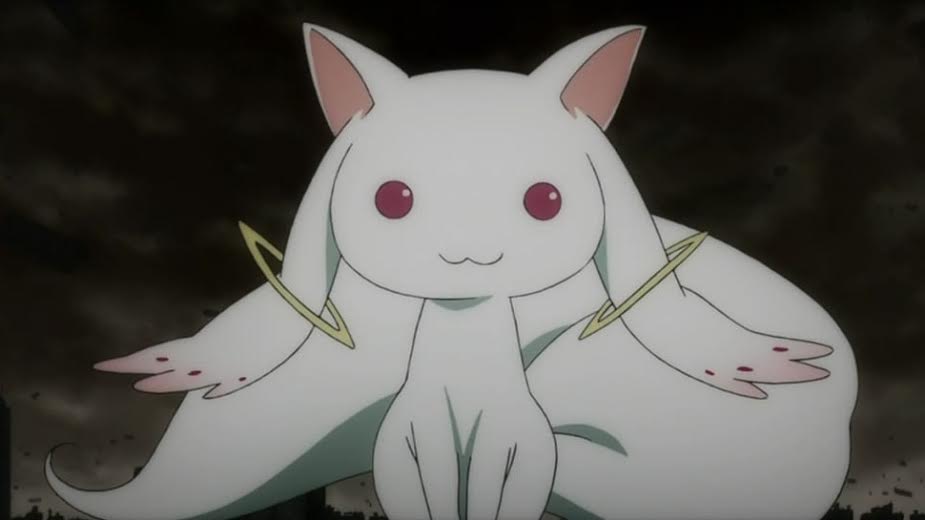
The world of Gen Urobuchi and Alex Von David’s 12-episode anime Puella Magi Madoka Magica (PMMM from here on out) is a bleak one, and the frills of magic and a futuristic backdrop don’t make it any less recognizable. Girls of a certain age are propositioned by manipulative bastard Kyubey to make a contract with him. One wish, one miracle, and they can become beautiful guardians of justice. It’s the kind of rhetoric that sits next door to “any girl can be a princess” and “you can make your dreams come true if you just believe.” And yes, it’s a trap.

Kyubey is so cute you almost forget he’s evil.


The Magical Girls can’t use up too much of their magic, or else their soul gem becomes dirty. To keep the gem “pure,” the girls must earn grief seeds by annihilating witches. Sometimes this means letting a Witch get away with murder until it’s nice and big. Sometimes this means killing another girl for ownership of the seed. That’s just how it is. Don’t whine about hurting other girls, don’t you know they’re after you too? Don’t you want to do the smart thing? In Kyubey’s Magical Girl system–you perish as a girl or suffer long enough to turn into a Witch. That’s right. The Witches are the Magical Girls that couldn’t keep their gems pure enough and lost hope. But don’t expect Kyubey to say that before he orders you to defeat them.

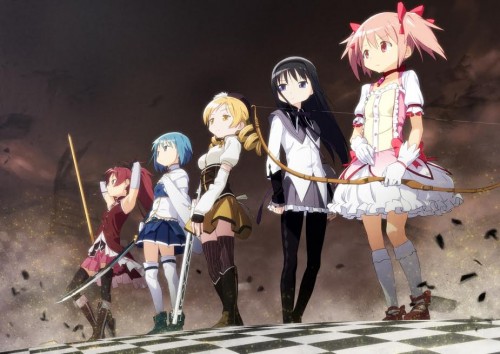
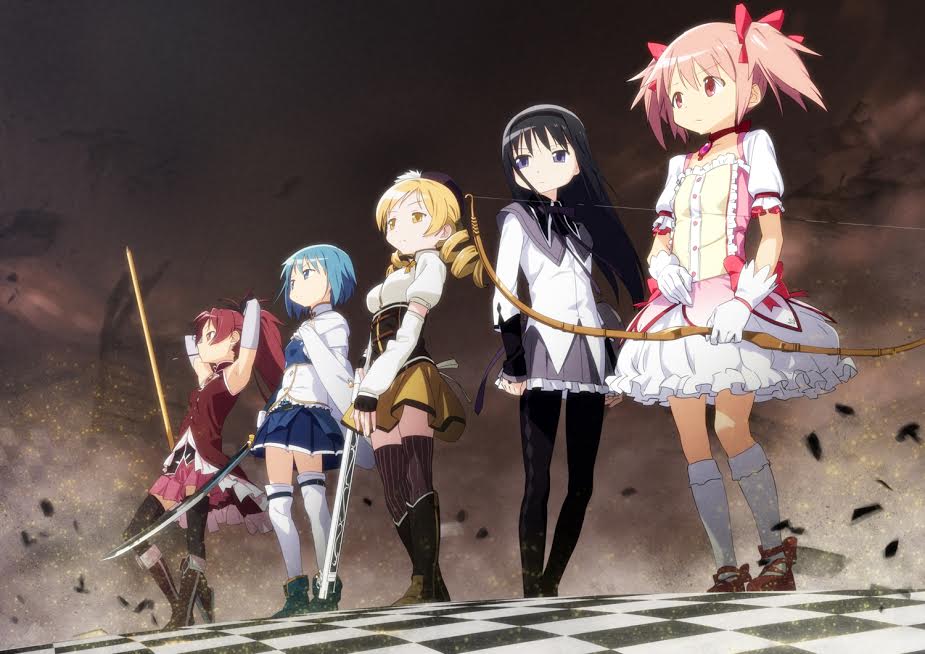
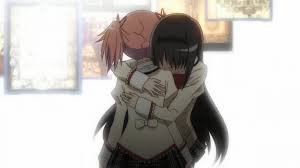
What keeps PMMM from being more than just a grim tableau of systemized manipulation and elevates it into bona-fide feminist fairy tale territory is the girls that populate the landscape and the lengths they go to help each other.  Meet Mami, Sayaka, Kyoko, Homura, and Madoka.

Mami Tomoe is the team mom. She comes onto the scene to the tune of her own theme song and invites Madoka and Sayaka over for tea and snacks after rescuing them from a Witch. Mami is the advice giver, the protector, the good example big sister. “It’s a really hard decision, isn’t it?” She says about Kyubey’s contract. “There’s no reason to rush into it.” Ever assertive, Kyubey interrupts, “Though for me, the sooner you decide, the better.” Mami dismisses him with a laugh, “Nobody likes a boy who pressures girls to do things.”

Sayaka Miki is the black-and-white idealist. She shuffles events, facts, and people into good or bad categories as quickly as she cracks jokes or shrugs off her angst. Sayaka is the one who realizes that she and Madoka can’t think of any good wishes because they’ve lived such sheltered lives and wonders why it’s so unfair. When being a Magical Girl doesn’t turn out the way she wanted, Sayaka resolves to keep fighting. “I’m going to be a different kind of Magical Girl from all of you,” she says. “I’ll be the only Magical Girl who won’t use her magic for herself.”

Kyoko Sakura plays a tough game. She’s a loner, and doesn’t have too many qualms with eliminating other girls or letting go of small prey. “The weak have to give way to the strong,” she says. But underneath her talk, Kyoko has a heart as sensitive as Sayaka’s, and her outlook on life has been earned just as bitterly as any other experienced girl’s. In the end, Kyoko can’t abandon a Magical Girl she identifies with, and proves that she’s as loyal as she is fierce.

Homura Akemi is a woman on a mission, and nothing and no one can stop her. Although we learn that Homura was once a timid girl, the young woman who races against time to stop Kyubey and save Madoka is anything but. Her aloof demeanor is her armor, and her determination is her greatest weapon. The core of Homura’s motive is love. Since she first became a magical girl, Homura has carried a devoted, undying love in her heart. “It’s the only thing I have left to guide me,” she confesses quietly.

Madoka Kaname spends most of the series as “the best friend” of the Magical Girls. She follows her friends on their hunts so they won’t be alone, crying, “This just can’t be right!” from the sidelines. She is a true comforter and supporter of the girls. It’s her hope from the time she’s rescued by Mami to the very end that Magical Girls stand with each other in spite of their differences and support one another.

As mentioned earlier, all these girls, in one way or another, eventually try to help each other in massive ways. These actions in all the forms they take are based in communicating experiences and developing empathy. Not only do these actions form the crux of the Magical Girls’ character arcs, but they serve as the major plot points of the larger PMMM plot. Let’s say that again: the most important events in this story are girls looking out for girls in a system where they are explicitly not supposed to.

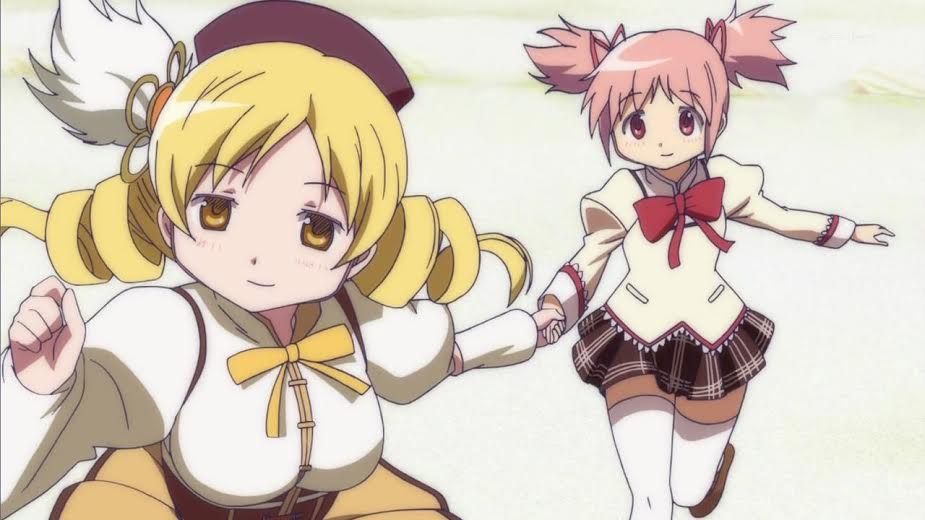
Mami begins the story as Ms. Helpful, but her self-imposed responsibility for Madoka and Sayaka extends beyond showing them the ropes. Mami wants to give them what she never had: the right to an informed, carefully weighed choice. Mami tells Madoka and Sayaka about the lore of Magical Girls to make sure they’ll fully understand the tradition they’ll be becoming a part of. “You have the rare chance to have any wish granted, but remember that wish lies side-by-side with death.” She doesn’t bother with subtlety or ominous words. Life is too short for that, and her junior Magical Girls deserve better. Mami’s most meaningful reveal to the girls, however, is not in lore or an anecdote, but in her very personal feelings. “I only push myself and pretend to be cool,” she tells Madoka. “When I’m scared or hurting, there’s no one I can talk to. All I can do is cry on my own.” Madoka understands, or at least she does her best. She asks to be the person Mami needs and be her Magical Girl partner in justice. Madoka and Mami’s friendship is cemented through sharing and empathy. This has such a profound impact on Mami that she races and twirls through her next fight, overjoyed. “I’m not afraid of anything anymore,” she says. “Because I’m not alone anymore!”

Nothing raises the spirit like true friendship


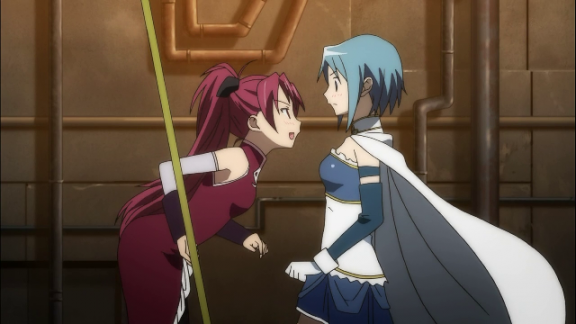
The other profound heart-to-heart in PMMM is between Kyoko and Sayaka. When Sayaka takes the truth about Kyubey’s Magical Girl system particularly hard, Kyoko’s remedy is to take her out for some air and show Sayaka why her self-serving approach to life isn’t so bad after all. “If you only live for yourself, you only have your own mistakes to pay for,” Kyoko says. She didn’t always think that way, but when her selfless wish lead to the deaths of her whole family, she reconsidered. Kyoko’s tragic history doesn’t change Sayaka’s mind about being a selfless Magical Girl, but it does wash away the violent animosity between them and establish a deep understanding based on empathy. From this moment on, the two girls are bonded. Sayaka speaks candidly with Kyoko about her mounting disenchantment and grief. Kyoko comes to care for Sayaka enough to stay beside her even after she turns into a Witch. Because of how they’ve connected, Kyoko understands the kind of pain festering in Sayaka’s Witch. Since she cannot change her back, Kyoko decides to sacrifice her life to end Sayaka’s Witch, staying beside her to the very end and saving the rest of the Magical Girls.

Sass-offs make great groundwork for love and sacrifice


Homura, as it turns out, has been using her time manipulation powers to try and save Madoka from Kyubey. Over. And over. And Over. The more she tries, the more ruthless her determination becomes. Homura gives up all other hopes and aspirations for one impossible task. “It’s the only thing I have left to guide me,” she admits quietly. Why? Because Madoka was kind to her. She showed her friendship and love, and Homura can’t bear the thought of the world losing her forever. The story embraces this devotion when the reason behind Madoka’s exceptional magic potential is revealed. Every timeline Homura negated to save Madoka is stacked inside of her. Every time Homura decided not to give up, every time Homura let a piece of herself go so she could keep trying is nested in Madoka’s soul, and it has only made her stronger.

Homura’s devotion knows no bounds


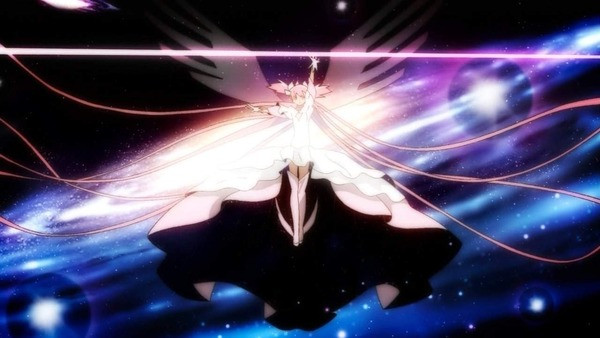
To repay Homura and save everyone she has ever loved, Madoka gets out from the sidelines and puts the strength Homura’s love has given her to good use. It turns out there is something in the world worth becoming a magical girl for: “I wish to erase all Witches before they are born. All the witches in all the universes, both past and future, with my own hands! All those who fought against Witches, who believed in hope as Magical Girls–I don’t want to see them cry. If any rule or law stands in the way of that…I will destroy it. I will rewrite it.”

Madoka rewrites Kyubey-archy and creates a new universe


That’s right. Madoka uses her wish to undo Kyubey’s system and ease the suffering of every Magical Girl there ever was and will be. No more systemized destruction between girls for Kyubey’s benefit. No more exploitation of girls’ hope. No more fighting Witches. Madoka takes the idea of ‘wish fulfillment fantasy’ to a spectacular new level, but I did say this story was a fairy tale, remember? As Madoka’s wish comes true, we see her visit girls in ancient civilizations, in war-ravaged countries, girls of color, girls with different languages, with different cultures and beliefs. She touches their soul gem to take the despair away and shares a moment of understanding with them. When they close their eyes they die, smiling.

This montage matters not just so we can cry into our laptops at the impossible beauty of a little girl willing a kinder world into existence, but so that we know Madoka has not invented world peace. The world still has curses. Life is still imperfect and girls still suffer and die young. Madoka isn’t even Madoka anymore. Standing with every Magical Girl at once means becoming primordial force in the universe, unseen and unknown to those that aren’t Magical Girls. What is achieved is fundamental comfort, peace, and hope. “You aren’t just giving us hope,” Mami says. “You’re becoming hope itself. The hope for us all.” Because Madoka has been a source of comfort and empathy from the beginning, this means that “the hope for us all” starts with reaching out to fellow girls and women across barriers. This means that standing with girls against forces that would have you tear each other apart can help change the world. Not too fantastical after all, huh?

Like all good fairy tales, PMMM sweetens all the tragedy that came before and wraps its rich symbolism in a neat bow. At the end, tucks you in bed with a moral to give sweet dreams:

“Don’t forget, always, somewhere, someone is fighting for you. As long as you remember her, you are not alone.”

And, you know, there’s always room to be that kind of Magical Girl too.


Kathryn Diaz is a writer living in Houston, Texas. You can follow her at The Telescope for more of her work.

‘Steven Universe’: A Superhero Team We Can Believe In

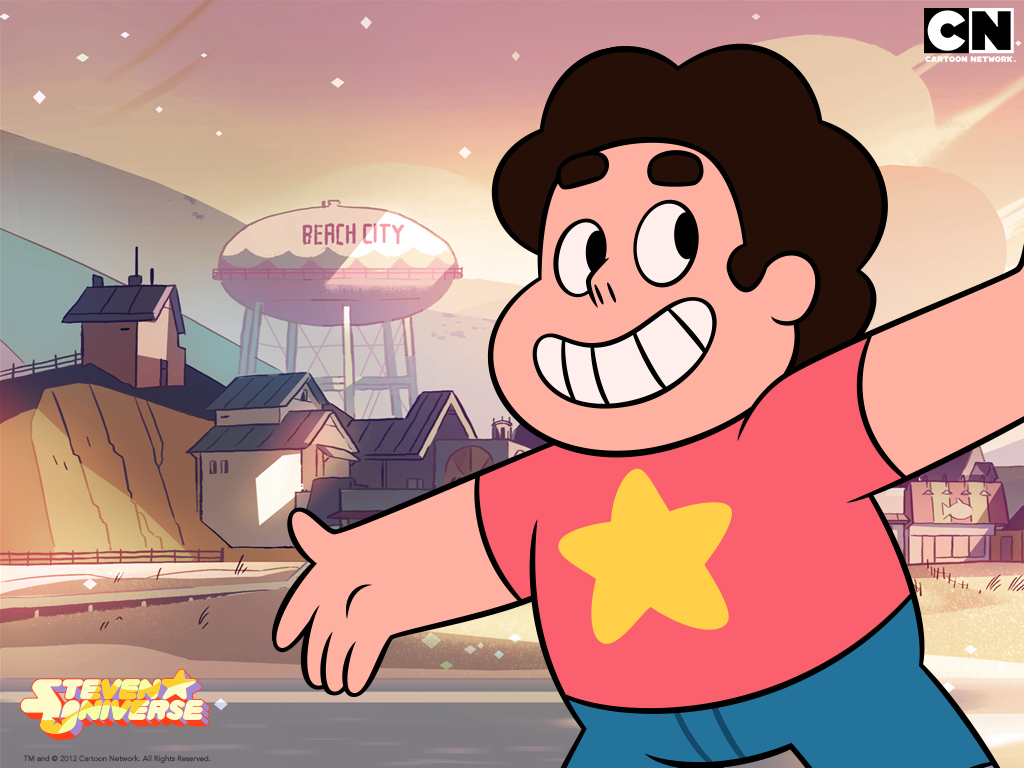
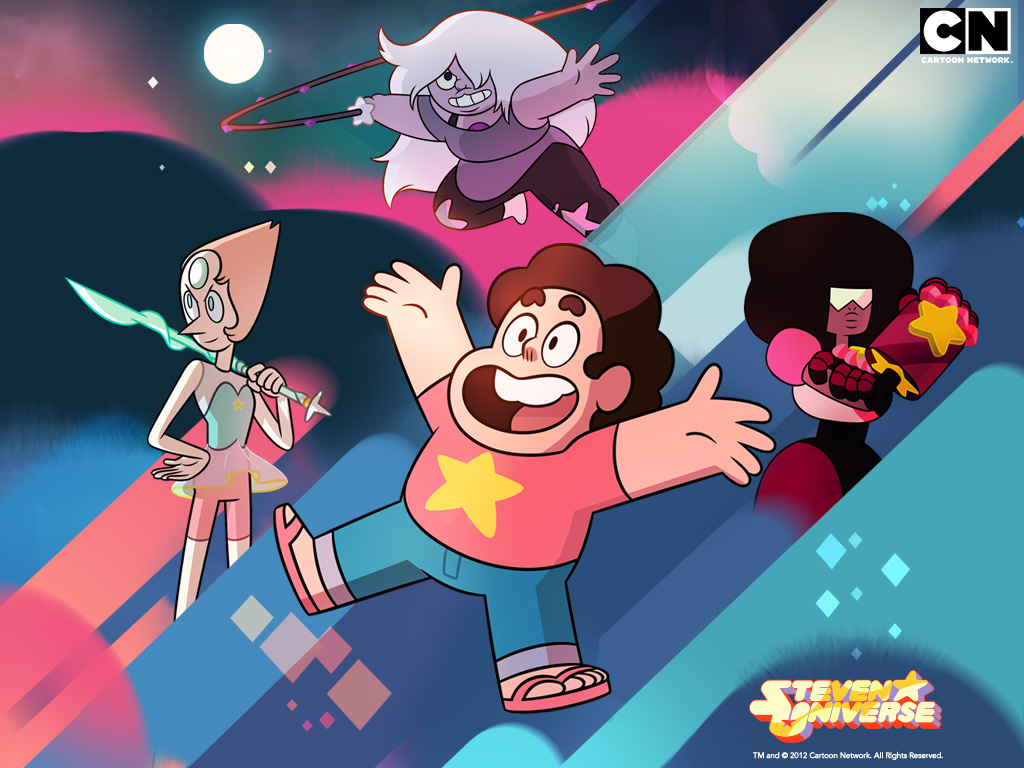
‘Steven Universe’ embraces non-traditional families. Steven is a perfectly happy kid, who is raised by three women who love him. The Gems are wonderful guardians for Steven, acting as mothers, sisters, and leaders to him. Even though the Gems and Steven don’t always see eye to eye, they always try to step beyond their comfort zones for one another. The Gems may not understand the concept of video games, but if Steven wants to go to an arcade, then they’ll go. If Steven wants to throw them several birthdays for the thousands of ones they haven’t celebrated, they’ll let him dress like a clown and play party games with them, because even though they don’t understand it, it clearly means a lot to Steven.

Steven Universe
Steven Universe


This guest post by Megan Wright appears as part of our theme week on Children’s Television.

In the past years, with all the superhero movies coming out, it’s no surprise that children’s shows would become especially interested in making TV shows to capitalize on the trend. Granted, Saturday morning cartoons have always featured some superheroes, but there have been a great deal of superhero shows coming out lately: Avengers Assemble, Ultimate Spider-Man, and Hulk and the Agents of S.M.A.S.H.!, are just a few examples. But Steven Universe, a show that revolves around a young superhero in the making, is one of the best – and most progressive – examples on television.

Steven is a young boy who gets his superpowers from his powerful gem passed on to him from his mother, who died after giving up her gem. Since his birth, Steven has lived with his mother’s former teammates, the Crystal Gems, who raise Steven and help train him to become a Crystal Gem.

Steven Universe embraces non-traditional families. Steven is a perfectly happy kid, who is raised by three women who love him. The Gems are wonderful guardians for Steven, acting as mothers, sisters, and leaders to him. Even though the Gems and Steven don’t always see eye to eye, they always try to step beyond their comfort zones for one another. The Gems may not understand the concept of video games, but if Steven wants to go to an arcade, then they’ll go. If Steven wants to throw them several birthdays for the thousands of ones they haven’t celebrated, they’ll let him dress like a clown and play party games with them, because even though they don’t understand it, it clearly means a lot to Steven.

Steven also has a good relationship with his father, who doesn’t live with the Gems, but rather in his van. Greg Universe may not always understand the Gems and vice versa, but they get along for Steven’s sake. And even though Steven’s superpowers make Greg nervous, he’ll try to understand and help his son with them. The series makes it clear that one of the reasons Steven is such a carefree and sweet child is that he was raised in a positive environment, with four adult figures who clearly care and love him. His ideas, even if they don’t always work, are praised; his enthusiasm for everything encouraged. Even when his superpowers don’t work, the Gems always try to help him get better as a hero.

Family Portrait: The Gems (and their weapons) and Steven


Most superhero shows have mainly male superheroes as either the focus of the show, or the majority of the team. It’s interesting to see a show that revolves mainly around women with superpowers. Due to his young age, Steven’s powers are inconsistent, so most of the monsters that the Gems battle are defeated by his teammates: Garnet, Amethyst, and Pearl. These characters each come equipped with their own special gems, weapons, and superpowers, making them the strength behind the superhero show.

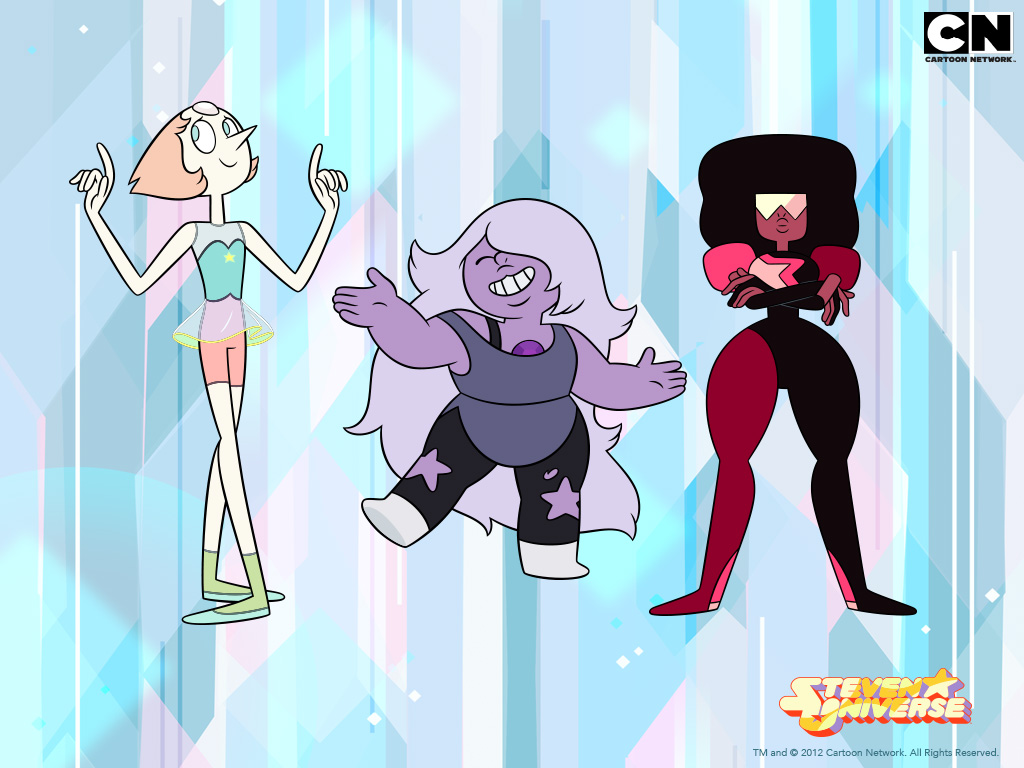
One of the best things about the Gems is how different they are from one another, both in personality and body type. Everything about these characters differs physically: hair, weight, height, superoutfits, etc. Young girls watching this show can probably identify with Amethyst’s outfit of jeans and a shirt, Pearl’s skirt and tights, or Garnet’s shades than they can with Black Widow’s catsuit. It also passes on the message that you don’t have to look a certain way to be a superhero. For girls who constantly have to see huge breasts, skin-tight costumes, and somehow impeccably styled hair if they want to see a female superhero, this show has to be a relief.

Even better is the fact that the Gems all have their own personalities, which go much deeper than most kid shows’ characters. Pearl is orderly and the most cautious of the Gems, but it’s mainly the result of trying to protect Steven on missions. It also doesn’t take away from her abilities as a superhero – she doesn’t shy away from violence and is a master swordswoman.

Meanwhile, Amethyst is much more disorderly and has a lax personality about most things, which leads her to clash with the other Gems. This is explored in “Tiger Millionaire,” an episode where it’s discovered that Amethyst has been participating in underground wrestling in order to get out all her energy and frustration with the other Gems. By the end of the episode, Pearl and Garnet understand Amethyst’s frustration, and support her wrestling.

Garnet is the team leader, a quiet and stoic personality who commands the Gems and keeps them in line. She’s frequently seen going off on missions of her own, and she is the most powerful of the Gems. Her cool head helps keep Steven safe, and keeps Pearl and Amethyst from bickering all the time.

The Gems (from left to right): Pearl, Amethyst and Garnet
The Gems (from left to right): Pearl, Amethyst, and Garnet


The series empathizes teamwork between women rather than fighting. While Amethyst and Pearl might not always get along, the show makes it clear that they are still close teammates. In “Giant Woman,” it’s revealed that Pearl and Amethyst can form together to make Opal, a single being who is a powerful combination of their personalities, weapons, and skills. Unfortunately, because their attitudes clash most of the time, they have a hard time forming her. It’s only when they put their bickering aside that they can become Opal, which gives them an advantage in battle. Opal allows them to crush enemies that they would have been stumped by otherwise. The show empathizes that when women work together, they are more powerful.

I’m a feminist and a superhero fan, and sometimes those two loves conflict. I adore superhero comics, movies, and television shows, but I still have to acknowledge they have their problems. Most women are dressed in skin-tight outfits or barely any clothes at all, women are still in the minority numbers on teams, and there still hasn’t been a movie released yet that has a female as the main superhero.

What Steven Universe gives me is a show that offers a distinctively different take on female superheroes – they’re the most powerful beings on the show, they wear outfits that actually look useful for fighting crime in, and the show allows them to show their inner personalities as well as kick ass. I’m so excited that there’s a show out there like this for young girls: one that reinforces positive cooperation between women, that allows their female characters to have each have their own body types and personalities, and lets them see strong females that don’t apologize for their power.


Megan Wright is a TV reviewer for Gotta Watch It. This is her second time as a guest writer for Bitch Flicks.


‘Gravity Falls’: Manliness, Silliness, and a Whole Lot of Awesome

Figuring out who you are in the face of societal pressures that buffet you every which way is the trial of growing up, and helping people to do that is one of feminism’s goals. It’s also at the heart of ‘Gravity Falls’, which helps cement this for me as an exciting show.

This repost by Max Thornton appears as part of our theme week on Children’s Television. 
I am too old for the Disney Channel. The bright candy colors, the rapid-fire pacing, the saccharine music and headache-y flash-cuts and forced zaniness – it all adds up to one massively hyperstimulating, sugar-coated migraine. Half an hour of all that on a Saturday morning and I am ready to bounce off the ceiling before crashing to earth semi-comatose for the rest of the day.
If you can overcome (or, better, avoid entirely) the excruciating commercials and the overstimulation of the Disney Channel milieu, however, you can experience maybe the most exciting television debut of 2012.
Welcome to Gravity Falls.
Gravity Falls established a pretty dense mythology for itself, jam-packed with occult imagery, cryptograms, conspiracies, clever callbacks, and hidden Easter eggs (and there are already plenty of websites devoted to deciphering this stuff). It’s an enormously fun show, chronicling the supernatural adventures of 12-year-old twins Dipper and Mabel in the creepy, not-quite-right town of Gravity Falls, Oregon. The level of care and detail lavished on the world-building is matched by the depth and – if I can say this of an animated Disney Channel show – realism of the characters.
Dipper and Mabel, voiced by Jason Ritter and Kristen Schaal, are wonderfully characterized as not just siblings but true friends: despite their personality differences, they enjoy spending time together, and although they needle and mock each other, they always have each other’s back. As somebody whose siblings are my best friends, I find it rings very true to life, and the only other show I can think of with a comparably close sibling dynamic is Bob’s Burgers –where, coincidentally, one of the siblings is also voiced by Schaal.
The twins’ age is a savvy writing choice that allows for some spot-on exploration of themes of growing up, pitching the show niftily at the crossover-hit sweet spot for both younger and older viewers. A grown-up trying to convince other grown-ups to watch a Disney Channel animated show can certainly relate to the twins’ swithering between the childish excitement of their supernatural adventures and their desire to prove themselves cool enough for the local teenagers (including Dipper’s hopeless and completely understandable crush, Linda Cardellini-voiced Wendy). Two specific episodes of Gravity Falls work well as companion pieces exploring Dipper and Mabel’s respective struggles to establish their identities.
Season 1, Episode 6: “Dipper Vs. Manliness”
A cutie patootie.
Dipper is the more introspective, bookish twin – as Mabel puts it, he’s “not exactly Manly Mannington.” When an old “manliness tester” machine at the local diner declares him “a cutie patootie,” Dipper’s insecurity about being a man goes into overdrive, and he seeks training in the ways of manliness from a group of Manotaurs (“half man, half… taur!” “I have three Y-chromosomes, six Adam’s apples, pecs on my abs, and fists for nipples!”).
Anyone who’s been a feminist longer than five minutes knows that the enforcement of gender roles harms men as well as women, and this episode features a lot of great jokes lampooning the sheer absurdity of what’s considered manly in our society: the pack of REAL MAN JERKY emblazoned with the slogan YOU’RE INADEQUATE!, the Manotaur council that involves beating the crap out of each other, Dipper convincing the reluctant Manotaurs to help him (“using some sort of brain magic!”) by suggesting they’re not manly enough to do it.
In the end, it’s Dipper’s love for a thinly veiled “Dancing Queen” pastiche that causes him to defy the Manotaurs’ stereotypical definition of manliness. His enjoyment of something considered “girly” opens his eyes to the nonsensical restrictiveness of traditional gender roles. As he says in his climactic speech to the Manotaurs: “You keep telling me that being a man means doing all these tasks and being aggro all the time, but I’m starting to think that stuff’s malarkey. You heard me: malarkey!”
Rejecting the Manotaur’s version of manliness does not, however, answer Dipper’s agonized question about the nature of masculinity: “Is it mental? Is it physical? What’s the secret?” (And how many times have I myself asked that question?) Although the episode puts a neat bow on Dipper’s arc by offering a pat moral – “You did what was right even though no one agreed with you. Sounds pretty manly to me” – it’s made fairly clear that masculinity and femininity do not have to be discrete, oppositional spheres rooted in stereotypes, and the question of what makes a man is left open – as, perhaps, it should be.
Season 1, Episode 8: “Irrational Treasure”
Mabel is the best. She’s my favorite character, and with every episode I love her even more. Her quest for self in “Irrational Treasure” is not a direct counterpart to Dipper’s search for manliness – Mabel is pretty comfortable with both the ways in which she is conventionally feminine and the ways in which she is not (reflecting the sad reality that girls’ freedom to express masculinity is not mirrored by an equivalent freedom for boys to express femininity). In the show’s fourth episode, “The Hand That Rocks the Mabel,” she confronts the societal pressures around dating while female, as she struggles with how to extricate herself from a coercive romantic relationship with the creepy Lil Gideon – an object lesson in how messed up are our society’s ideas of the romantic pursuit of uninterested women by persistent men – but in this episode she faces a less explicitly gendered problem: how to convince everyone that she’s not silly.
The delightfully goofy hijinks of this episode – involving a conspiracy to cover up the existence of Quentin Trembley, the peanut-brittle-preserved eighth-and-a-half president of the United States – are propelled by Mabel’s quest to prove her seriousness to rival Pacifica Northwest. Pacifica is a pretty stereotypical stuck-up-rich-mean-girl archetype thus far, but it seems distinctly possible that an interesting character arc could await her in future. “You look and act ridiculous,” she tells Mabel with scorn, and Mabel takes her peer’s cruelty to heart the way only a pre-teen can. “I thought I was being charming,” she says dejectedly, “but I guess people see me as a big joke.”
Don’t worry Mabel, you really are so so charming.
As it was Dipper’s non-manliness that ultimately proved him a real man, so it’s Mabel’s silliness that saves the day here, allowing her to crack all the clues for the conspiracy and help President Trembley escape the local police (who, despite being called serious by Mabel, are in fact extremely silly). By the episode’s end, Mabel is impervious to Pacifica’s jibes: “I’ve got nothing to prove. I’ve learned that being silly is awesome.”
Figuring out who you are in the face of societal pressures that buffet you every which way is the trial of growing up, and helping people to do that is one of feminism’s goals. It’s also at the heart of Gravity Falls, which helps cement this for me as an exciting show. (Plus, it’s apparently indoctrinating kids into occult symbolism. Cool.)

‘Hey Arnold!’: A Bold Children’s Show

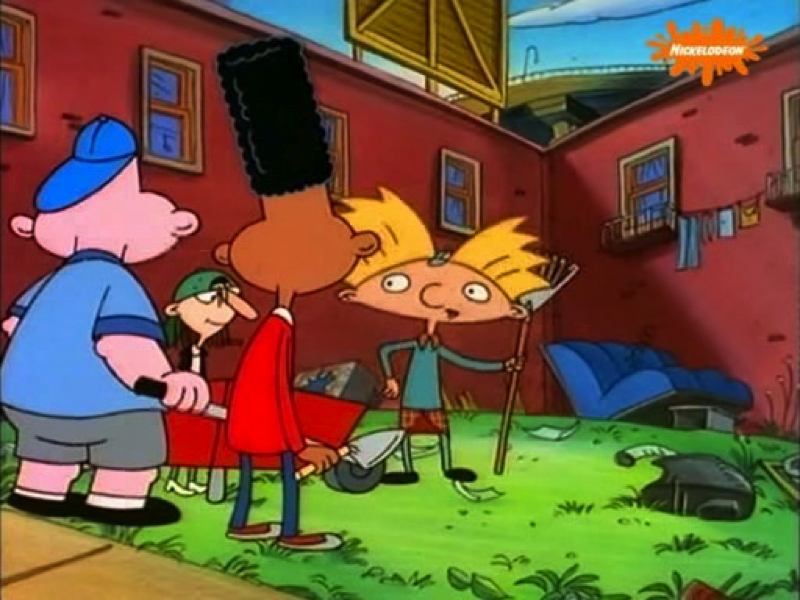
‘Hey Arnold!’ taught life lessons without the viewer realizing it. An episode called “Stoop Kid” taught kids about the benefits of getting out of their comfort zone. The episode “Chocolate Boy” humorously analogized drug addiction. Arnold’s closeness with Gerald alongside Helga’s rapport with Phoebe highlighted the importance of friendship. The wrongness of first impressions was a reoccurring lesson; a dumb character would have moments of wisdom or a snobby character would have moments of vulnerability or a seemingly lucky rich kid would be shown as unhappy and/or overstressed. My favorite example of this message is in the episode “Ms. Perfect”, which introduced the character of Lila. Her popularity caused female students to envy her at first. But once they learned about Lila’s troubled life, the girls apologized and accepted her.

1

This guest post by Nia McRae appears as part of our theme week on Children’s Television.

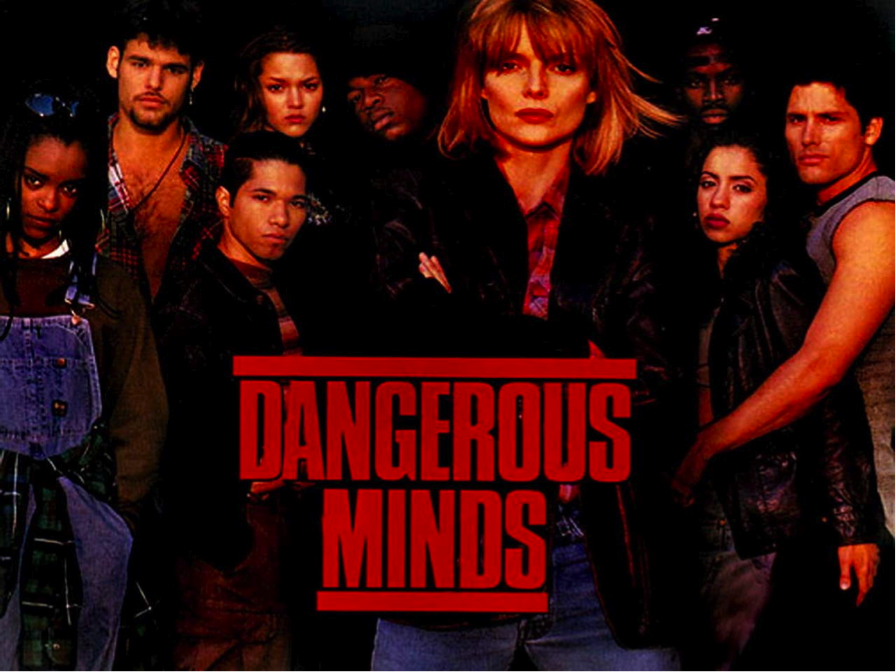
Usually, urban life in movies and television is depicted in a bleak way. Growing up, I found myself confused by why the “norma” high school experience always took place in sunny suburbia. Often times, when school life in urban areas were depicted, it was… well, this:

In Hollywood, all urban areas are Gangster Paradises


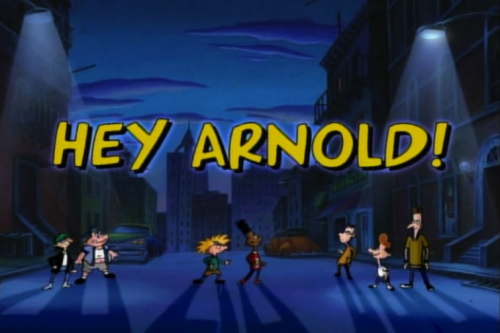
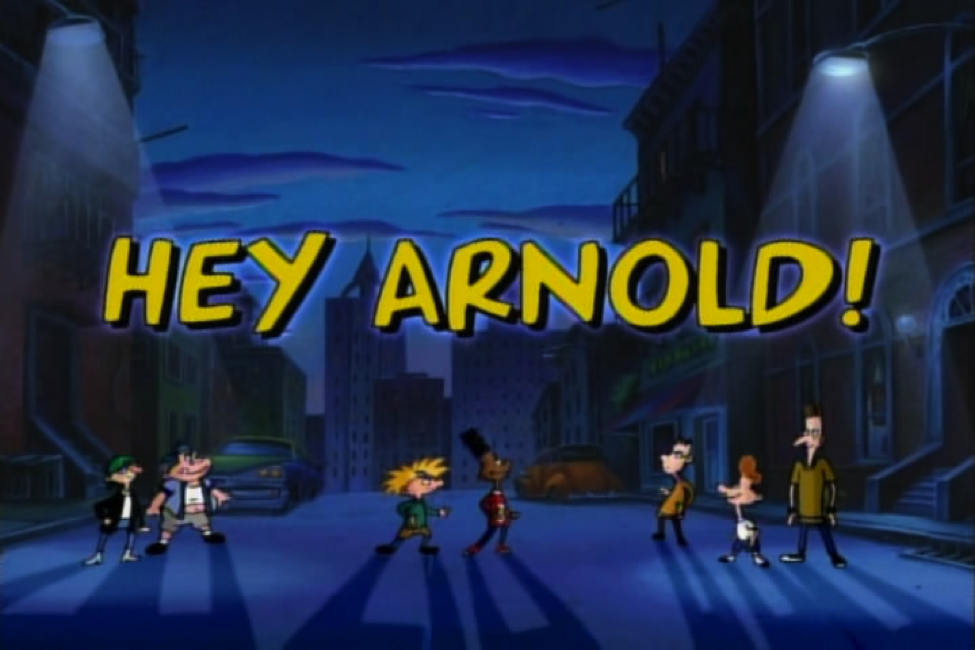
Suffice it to say, it wasn’t an experience that I could relate to. The only depictions of city life that somewhat reflected my experience was the original movie, Fame (1980) and the cartoon, Hey Arnold! (1996). It may sound strange to call a cartoon relatable but HA! was unique in that way. It pushed the limits by showing the good, the bad and the ugly sides of urban life without reducing it to another story about poor and troubled minority youths in need of a white savior.

HA! revolved around the lives of fourth-graders attending PS. 118. It was a character-driven show that treated its child viewers like mature and intelligent people. Adult subject matters like addiction, muggings, family neglect, bullying, politics, war, complicated family dynamics, death, desire, gender identity, activism, capitalism, and many others were explored in an age-appropriate and usually humorous manner. All of the characters came from different walks of life. Arnold was the protagonist but he wasn’t the most interesting character per se. The most fascinating character was Helga G. Pataki. She was full of contradictions. Her tough girl attitude and sports activities would technically classify her as a “tomboy” and yet she had a traditionally feminine appearance (except for the unibrow). She was excessively hateful towards Arnold but only because she was secretly in love with him.

She still remains the most complex female character I’ve ever seen in a cartoon. Helga was a bully with a gentler side that she was too proud to show. She came across as a brute in public but in private, she was creative, cultured, and intelligent. Her multilayered characterization made people cheer for her as a character, especially in hopes of her someday becoming romantically involved with Arnold. The dynamic between Helga and Arnold subverted gender stereotypes. The cartoon gender-flipped the cliché of boys being mean to girls as a way of showing affection. She exhibited “masculine” traits of being rude, violent, and insensitive to others. She was also ambitious; in the episode “Married,” she dreamed of being president. Arnold, on the other hand, exhibited “feminine” qualities of being patient, empathetic, and supportive.

President Helga G. Pataki


Helga had insecurities and anger issues due to her family life. Her dad, Bob was a self-absorbed blowhard who measured a person’s worth by accomplishments. Her mom, Miriam, was a dissatisfied and absentminded housewife. Her sister, Olga, was an overachiever who her parents constantly lavished with praise and attention. Helga was neglected by her family–a fact emphasized by her father’s continual habit of calling her by the wrong name. The episode “Helga on the Couch” revealed that when she and Arnold were toddlers, he was the first to give her positive attention. Because of her extreme loneliness, she responded to Arnold’s kindness with great intensity. The episode gave further insight into why Helga had what’s often viewed as the “masculine” problem of repressing her sensitive side due to the typical “male” fear of being ridiculed and seen as weak.

Despite having qualities associated with boys, Helga wasn’t immune to the pitfalls of being a girl in a patriarchal society. A lot of episodes revolved around her doing stupid things for a guy or being tempted to be more lady-like to please someone. She went above and beyond doing foolish things over Arnold whether it was sabotaging his date with a girl he liked named Lila in “Love and Cheese” or pretending to be very sophisticated in “Dinner for Four” or pretending to be Arnold’s French pen pal in “Arnold’s Valentine.” A lot of things that Helga did for Arnold’s attention were over-the-top for comedic effect. But an episode called “Helga’s Masquerade” was painfully realistic. In the episode, Helga mimicked Lila in fashion and behavior, hoping that Arnold’s affection for Lila would transfer to her.

After she basically turned herself into a carbon copy of Lila, Arnold started giving her the attention she desired. However, she became unsatisfied having changed herself to please him. By the end, she returned to being herself. Another episode that was very informative for young girls was “Helga’s Makeover”; Helga was left out of a sleepover party because she wasn’t girly enough. She conforms despite her best friend, Phoebe, telling her to be true to herself. Once she’s welcomed by the girls, she changes her mind. Its overall lesson was that there’s more than one way to be a girl.

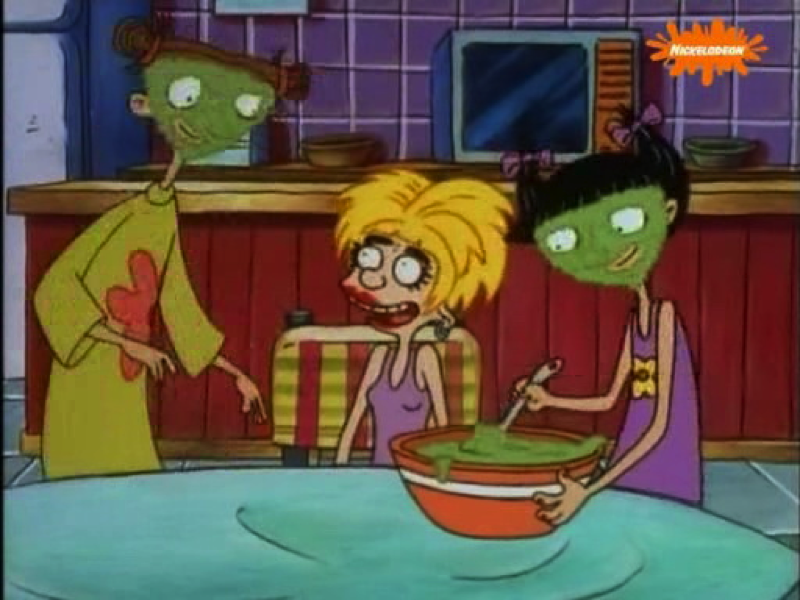
Social commentary about women’s magazines


I was a kid when I first saw these episodes, unaware of how closely Helga’s growing pains would mirror my life in terms of making a guy’s opinion of me way too important or struggling/clashing with expectations of what a girl is “supposed” to be.

They’re nine-year olds, by the way
They’re 9-year olds, by the way


Arnold had personal struggles that also served as inspiration for young viewers. Arnold lived in a boardinghouse that his grandparents owned. He was usually the voice of reason but he sometimes made mistakes. In the episode, “Mugged,” he dealt with being mugged in the wrong way. He had to learn more than once to appreciate his nontraditional family. But overall, he was the embodiment of altruism and a great role model for kids. His tendency to go the extra mile in assisting people caused Gerald to frequently say to him, “You’re a bold kid, Arnold.” His selfless nature was unusual for a kid his age and it made him a target for bullies. Still, he was never self-conscious about being singled out nor was he insecure about his head’s football shape despite how much Helga teased him about it. This clued in the child audience member that it was okay to have physical features that differ from what is considered “normal.”

1

Just like city life, HA! exposed children to a lot of culture. It had episodes that lovingly and creatively gave its own twist on classic operas and plays. Cartoonish sound effects were balanced out with smooth jazz, making for an eclectic musical score that reflected the essence of the show. Additionally, the introduction of country music in episode “Mr. Hyunh Goes Country,” alongside other episodes that involved a Frank Sinatra-like character named Dino Spumoni, helped kids to develop an early appreciation of music. The refreshingly non-stereotypical Jewish character, Harold was probably the first introduction a lot of kids had to Yiddish words. The show normalized interracial couples; Helga’s best friend, Phoebe, was uneventfully shown to be the product of a white mother and Asian father. Also, she and Gerald–an African American–had brief moments of innocent flirtation throughout the series.

Gerald and Phoebe moments


Most bully characters in cartoons are mean just for the sake of being mean. It makes them easy to dislike and dismiss as “bad.” Hey Arnold! didn’t make things easy. Characters that seemed scary were shown to be harmless up close. Harold had an imposing presence and boisterous voice. But his bark was always proven to be bigger than his bite because whenever someone stood up to him, he would cower and sometimes literally cry for his mommy. Helga thought Big Patty was dumb and mean but with Arnold’s help, she discovered Patty was actually reasonable, nice, and perceptive. Helga would be mean to Arnold in public but then hide to secretly profess her love for him and/or express her regret for hurting him. Oftentimes, characters that I thought I was supposed to despise would turn out to have a softer side. As a result, I would feel conflicted and eventually submit to having compassion for them.

The reason why seemingly despicable characters would inspire sympathy is because the show swayed the viewer to see the people from Arnold’s nonjudgmental perspective. There would be episodes that provided explanations, not excuses, for why a bully was mean in order to make children as understanding as Arnold. Helga was not an easy character to pin down and therefore, she challenged young viewers to see the areas of gray. Normally in fiction, a female school bully is reduced to being the catty pretty girl. But Helga’s power didn’t come from being pretty; it came from instilling fear into people with the threat of violence–an attribute that’s traditionally given to a male bully. What kept you from fully hating her is there being episodes that revolved around Helga’s home life that made you feel sorry for her and understand her better.

Hey Arnold! taught life lessons without the viewer realizing it. An episode called “Stoop Kid” taught kids about the benefits of getting out of their comfort zone. The episode “Chocolate Boy” humorously analogized drug addiction. Arnold’s closeness with Gerald alongside Helga’s rapport with Phoebe highlighted the importance of friendship. The wrongness of first impressions was a reoccurring lesson; a dumb character would have moments of wisdom or a snobby character would have moments of vulnerability or a seemingly lucky rich kid would be shown as unhappy and/or overstressed. My favorite example of this message is in the episode “Ms. Perfect,” which introduced the character of Lila. Her popularity caused female students to envy her at first. But once they learned about Lila’s troubled life, the girls apologized and accepted her.

The show also deconstructed the traditional definition of a happy and healthy family. Helga technically had a nuclear family yet they were dysfunctional. Arnold didn’t have a typical nuclear family yet he was emotionally healthy and stable. His parents died when he was young which was explained in the episode “Parents’ Day.” The show never glossed over the pain of losing a love one. There were scenes that showed his sadness and his longing to know more about his parents. The importance of an extended family and surrogate family was highlighted throughout the show; his kooky grandparents were his guardians and the offbeat boarders acted as surrogate relatives. Though the boarders had their funny quirks and various accents, it never went into the territory of caricature. Whatever flaw any character had was attributed to their individual personality, not their race or culture or gender.

An example of the diversity
An example of the diversity on Hey Arnold!


I applaud the show for never babying its audience. It had numerous Halloween episodes that I fondly remember being genuinely creepy. One of the most touching examples of its creative risk-taking is the episode “Arnold’s Christmas,” which revolved around Vietnamese tenant, Mr. Hyunh. He had to separate from his daughter during the Vietnam War to give her a better life. It’s still rare for me to see a show or movie that sympathizes with what ordinary Vietnamese people went through during the Vietnam War. Another episode that had the subject of war was “Veteran’s Day,” in which Grandpa reminisces about his experiences as a World War II veteran. But not all of Hey Arnold! episodes were profound; serious episodes would be balanced with lighthearted episodes like “Beaned,” “April Fool’s Day,” or “Stuck In A Tree,” as to not overburden the viewer.

Hey Arnold! was a show that celebrated diversity and encouraged children to do the same. Like Gargoyles or Batman: The Animated Series, it redefined what a cartoon could be by taking big chances. I’m still awed by the character development, witty dialogue and complicated subject matter it had. Just like Animaniacs, it’s a cartoon show that people can watch again as adults in order to understand the occasional subtle adult humor they overlooked as children. It had great representation when it came to race, gender, class and culture. It was one of the few shows that revealed the positive sides of living in the city, including the richness of knowing people from all walks of life. With humor and sensitivity, it challenged me intellectually and it instilled me with lessons that would be valuable in childhood and beyond.


Nia McRae graduated summa cum laude from Medgar Evers College where she earned a Bachelor of Arts degree in Liberal Studies with a concentration in history. She has a strong passion for critiquing racial and gender politics in the media and putting it in historical context.

Why I Love ‘Adventure Time’

‘Adventure Time’ is a Cartoon Network animated series that combines surrealistic comedy, fantasy and science-fiction. Based on a 2008 short by Pendleton Ward that went viral, it parodies the tropes, archetypes and cliches of fairy tales, video games and childhood action figure battles. The basic premise is about Finn, the last remaining human, and his best friend/adoptive brother Jake (a shape-shifting dog), going on your typical slay-the-monster-save-the-princess adventures. Now in its fourth season, it’s an enormous hit with all genders and age groups and shows no signs of slowing down. And let me tell you, as a feminist, why I am absolutely celebrating this show.

This repost by Myrna Waldron appears as part of our theme week on Children’s Television. 

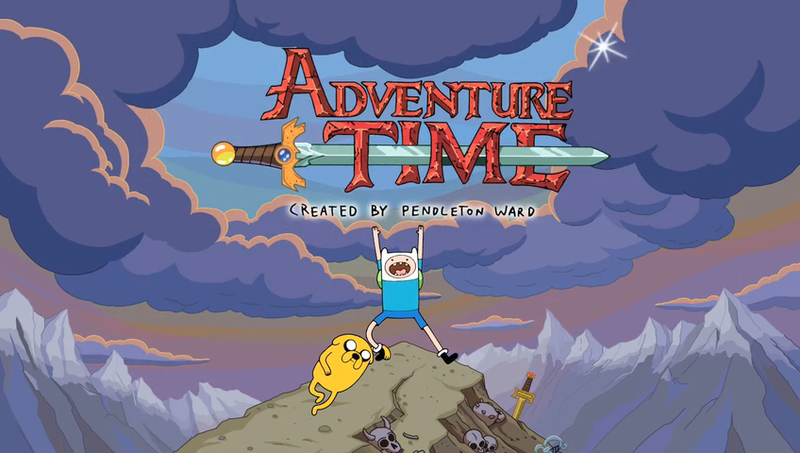
Title screen for Adventure Time

Warning: Spoilers up to the end of Season 3

Adventure Time is a Cartoon Network animated series that combines surrealistic comedy, fantasy and science-fiction. Based on a 2008 short by Pendleton Ward that went viral, it parodies the tropes, archetypes and cliches of fairy tales, video games and childhood action figure battles. The basic premise is about Finn, the last remaining human, and his best friend/adoptive brother Jake (a shape-shifting dog), going on your typical slay-the-monster-save-the-princess adventures. Now in its fourth season, it’s an enormous hit with all genders and age groups and shows no signs of slowing down. And let me tell you, as a feminist, why I am absolutely celebrating this show.

The main cast of Adventure Time
  • Almost every female character is a princess, but the typical cliche Damsel In Distress and/or romance-obsessed girly-girl are parodied and subverted for all they’re worth. In several instances, the princess characters (Bubblegum especially) show little interest in romance, and far more interest in their own personal hobbies. Even more encouraging is that often the female characters are completely able to rescue themselves, and don’t need Finn and Jake’s help.
  • The characters are given genuine honest-to-goodness flaws. Finn is heroic, but has a terrible bad temper and an impulsive streak. Jake is easygoing, but not nearly as clever or level-headed as he thinks he is. Princess Bubblegum is a scientific genius, but can be incredibly callous about the feelings of others. Marceline is a talented musician, but also has deep insecurities about how her friends perceive her. Flame Princess is astoundingly powerful, but also has dangerously passionate emotions. In all of these cases, there’s no black and white morality. It’s an important lesson for children (since this is a children’s show) to present morality as it really is – in shades of grey.
  • I love all the female characters, including the gender flipped versions of Finn and Jake, Fionna and Cake. My main complaint with the series is that the female characters don’t appear nearly often enough, and especially not together. We eventually do get some Bechdel Test passing goodness (Bubblegum and Marceline don’t get along too well – and people have naturally interpreted this as sexual tension) but so far the three main female characters have not yet all appeared in the same story together. I suspect that the main reason for this is because each story is about 11-12 minutes in total, and there’s only so much time for introducing characters and conflicts.
Jake stretching around the other main cast members
  • Speaking of Fionna and Cake, I can see now why that episode is so astoundingly popular amongst the fandom. It’s easily my favourite one of the series. Fionna is an absolutely adorable character – slightly chubby instead of unrealistically slender, tomboyish instead of traditionally feminine, and she still retains her male counterpart’s bravery and heroicism. She still fights with a sword. For my fellow gamers, think of all the games you’ve played in which a female character is a sword fighter. Not very many, right? But there’s no reason they can’t, and this is one thing I really love about the gender flip episode. I also practically exploded with joy at the final scene where Fionna talks about how she has lots of guy friends, but isn’t interested in/isn’t ready to date them, and that there’s nothing wrong with that. THANK YOU. It’s incredibly frustrating how many people think that somehow something is missing if you don’t have an official romantic partner, or that men and women can’t have a platonic friendship. Shippers could do well to remember this – you can like someone without wanting to bang them. (Also, as a Sailor Moon fan, you can’t imagine my joy at seeing Fionna’s ballgown homage to Princess Serenity’s outfit) At any rate, I hope the Gender Swap episodes happen on a regular basis, rather than a once-a-season deal. Wouldn’t it be nice if we had more shows about an ass-kicking girl and her feline best friend? (*coughcoughSailorMooncoughcough*)
  • This is a fairly obvious point, but I really love how Princess Bubblegum’s interest in science is depicted. She’s an absolute genius – shattering the still pervasive stereotype that the sciences are the domain of men – and she also bucks the stereotype that nerdy/geeky people are unable to have fun or to relate to others. Similarly, Marceline’s interest in punk/indie rock also combats the stereotype that rock is a genre made by and for the enjoyment of men. Girls like to headbang too!
  • The Christmas special, which reveals that pseudo-antagonist Ice King was actually a human antique dealer driven insane by his find of a magic crown, is an interesting way of approaching and explaining his very archetypal tendency to kidnap and try to marry princesses. In the Ice King’s case, it’s not so much a wanting to stick to traditional fairy tale gender roles, but a manifestation of his grief over losing the fiance he used to nickname “Princess.” The Ice King is primarily a comic character, but this episode finally established him as being tragic.
Fionna and Cake
  • I appreciated that, for once, romantic tensions are resolved rather than dragged on, and on, and on, and on. They make it clear that while Princess Bubblegum likes Finn as a person, she feels she’s too old for him, and her sometimes callous treatment of his feelings proves that she isn’t the right partner for him. Flame Princess isn’t the perfect girlfriend either, but at least in their case, Finn and Flame got together very quickly, changing the romantic plotline from “Will they or won’t they?” to “What happens now they’ve got together?” I also like that Jake and Lady Rainicorn’s relationship is loving, positive, literally interracial, and well…adult. (Lady Rainicorn’s dialogue is only in Korean, and bilingual viewers have revealed she says some incredibly raunchy things that only Jake can understand)
  • In the “Memory of a Memory” episode, Marceline’s (ex) boyfriend tries to bully her into traditional gender roles. He even pulls the “Go back in the kitchen and make me a sandwich” bit. She finds out he tried to trick her, and kicks his ass. (Also, dear men who think this joke is funny: Wow. You’re original. YES I AM GOING TO GO IN THE KITCHEN AND I’M GOING TO MAKE LOTS OF DELICIOUS FOOD WHICH YOU CAN’T HAVE.)
  • In some ways, other than Marceline, Lumpy Space Princess is my favourite character. She is absolutely hilarious as a sassy valley girl type who, by most accounts, should not be as confident about her body and her sexiness as she “should” be. After all, she’s literally a purple ball of lumps. But this is an important message – you DON’T have to match cultural standards of beauty to be sexy. It’s all about confidence. I’m a fatass, and I’m friggin’ sexy if I do say so myself. And in her own way, LSP is sexy too. At least to fellow Space Lumps.
Finn
  • The show just keeps getting better every season. The quality of animation has spiked, the character arcs are realistic and well-defined, and the storylines are mature without losing their comedic edge. I’m absolutely hooked on this series, and it’s a refreshing feeling that this year, along with Gravity Falls, I got to watch some great new children’s shows that deserve every bit of praise they receive.
  • Lastly, I love the sense of humour in the show. I’ve always been a fan of surrealism, as well as referential humour. And I’m also a big fan of fart jokes, like the one where Jake morphs himself into a farting cheetah. I’m 25 years old, and fart jokes are still funny.


Myrna Waldron is a feminist writer/blogger with a particular emphasis on all things nerdy. She lives in Toronto and has studied English and Film at York University. Myrna has a particular interest in the animation medium, having written extensively on American, Canadian and Japanese animation. She also has a passion for Sci-Fi & Fantasy literature, pop culture literature such as cartoons/comics, and the gaming subculture. She maintains a personal collection of blog posts, rants, essays and musings at The Soapboxing Geek, and tweets with reckless pottymouthed abandon at @SoapboxingGeek.

Why ‘Jessie’ Is the Worst Show on Disney Channel

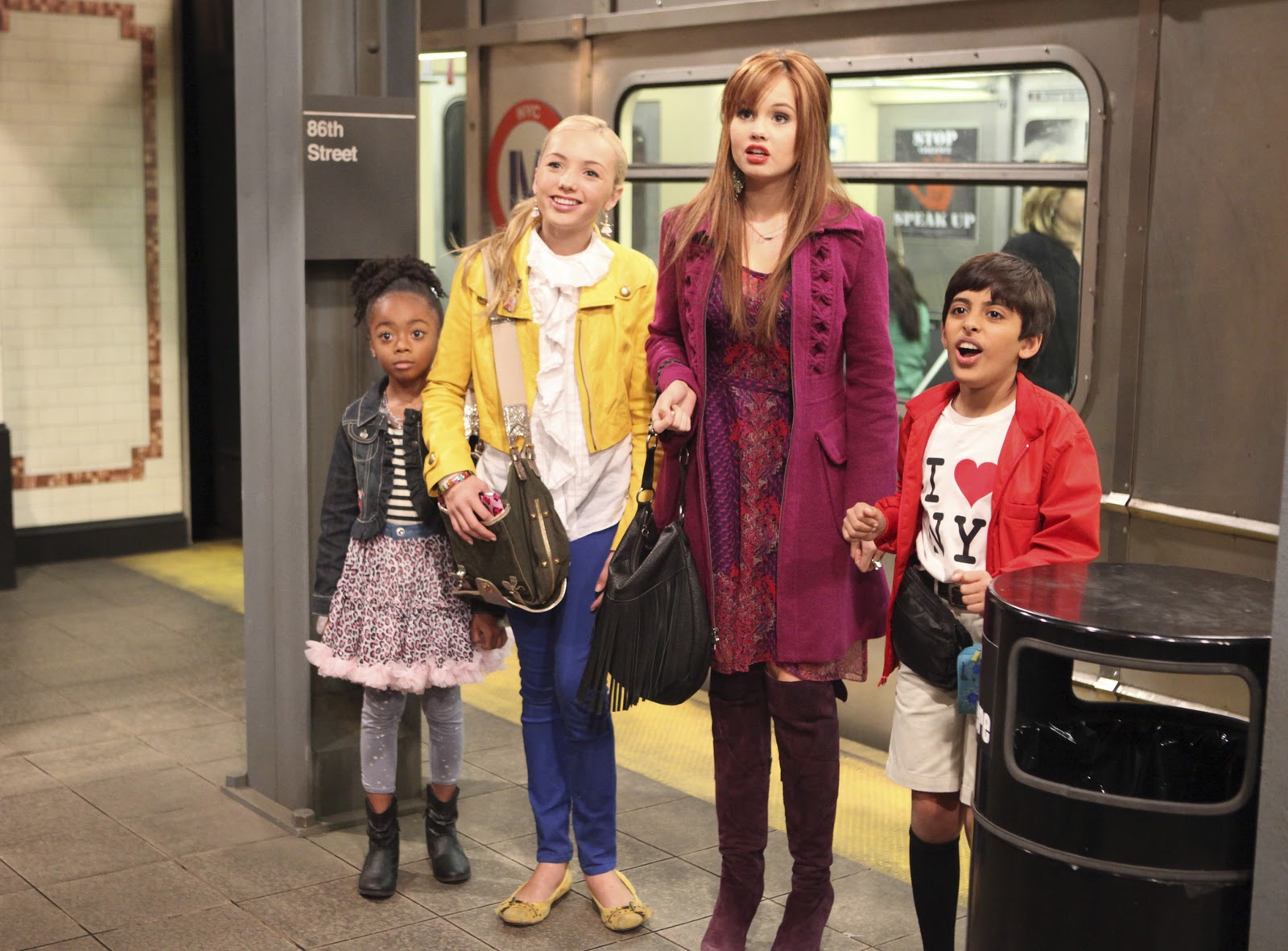
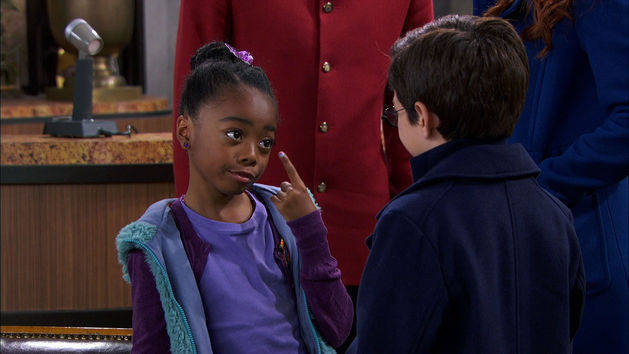
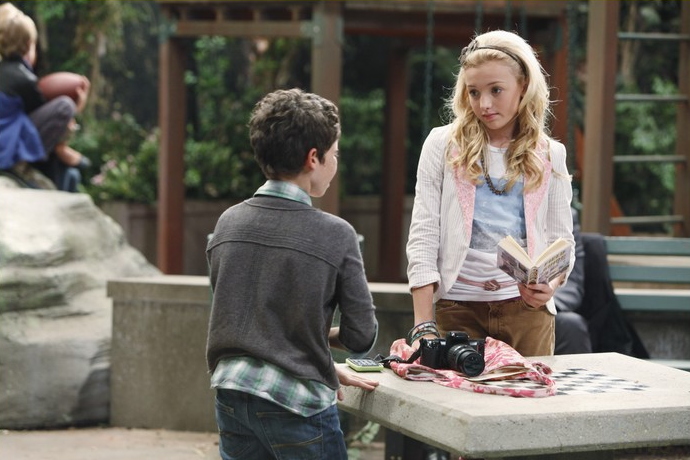
For those who don’t know, ‘Jessie’ is a Disney Channel series about a girl from Texas who moves to New York City and becomes nanny for a Brangelina couple with four adopted children from around the world. If done well, it could allow for very educational programming for children about diversity and identity. Spoiler alert: it hasn’t been done well. It’s been done terribly.

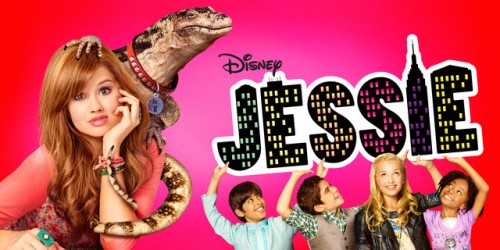
TV poster for Jessie


This cross-post by Katherine Filaseta appears as part of our theme week on Children’s Television and previously appeared at her blog Complaining About Things I Like.

For those who don’t know, Jessie is a Disney Channel series about a girl from Texas who moves to New York City and becomes nanny for a Brangelina couple with four adopted children from around the world. If done well, it could allow for very educational programming for children about diversity and identity. Spoiler alert: it hasn’t been done well. It’s been done terribly.

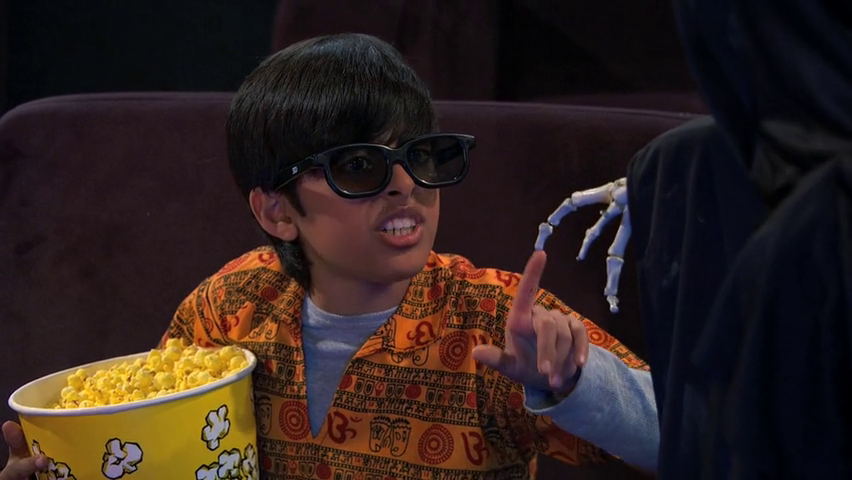
Ravi wearing an Om shirt and probably speaking Hindi


Ravi is the newest addition to the family, recently adopted from India. He brought with him his water monitor (Mr. Kipling), whom he met as a baby. He talks with an exaggerated accent and is constantly referencing Ganeshsamosas, tigers, non-violence, fortune telling, and curry – to name a few. He teaches a yoga class and wears sherwanis.

This entire character is straight out of Edward Said’s Orientalism. Essentially, orientalism is when Westerners lump the entire continent of Asia into one foreign land with which they can associate everything they don’t understand. Things from this exotic land are instantly mystical and weird, because orientalists don’t understand them. This is okay, because orientalists prefer things to be unknown and mysterious and magical. As one of my professors put it: Bizarre Foods with Andrew Zimmern is orientalism; Anthony Bourdain’s No Reservations is not. Jessie is orientalism.

Ravi as a stereotypical Indian tourist, despite living in NYC


The idea that Ravi found a random lizard egg and decided to be best friends with it is one example of the orientalism used in this show. India does have a lot of wildlife, but it isn’t quite teeming with exotic creatures – one issue in India right now is how to protect the few tigers left on the planet, all of which live in India, mostly under precarious conditions. Especially since globalization, India is not really the image we have in our heads from Disney’s The Jungle Book, even though Disney is perpetuating this misconception through Ravi and Mr(s). Kipling’s friendship. We’re also exaggerating the influence Rudyard Kipling actually had on India. He traveled there a few times over a century ago; I’m pretty sure a random kid off the streets of India wouldn’t be naming his pet after him.

More importantly, even a “fresh off the boat” 8-year-old Indian kid who had not previously been exposed to American culture would not say things like “great Ganesh!” This isn’t a thing I have ever heard an Indian person say. I also don’t know any Indians who are constantly consulting their crystal balls and other magical ancient devices. A majority of the stereotypes Ravi embodies in the show aren’t even real stereotypes of India, so I really don’t understand why they are so prevalent. Also, how did an 8-year-old get certified to teach yoga? Is this also just because he is Indian?

Zuri giving a boy some attitude


Zuri was apparently adopted from Africa as a baby and raised by an upper-class white family. However, her catch phrases are things like “mmmmhmmmm” and “oh no you didn’t,” both said in a very stereotypically Black way. She also has a major attitude problem that the adults never address, probably because they just assume all Black people act that way.

The worst part about her character to me is that not just the stereotypes, but the fact that she is exhibiting urban Black stereotypes despite never having been a part of urban Black society. She lives in an Upper East Side penthouse and was born in Uganda. It is reminiscent of early 20th century ideas: things like social darwinism. These characteristics of Zuri exist in her genetics just because of the color of her skin.

Emma wearing pink and Luke being a sloppy boy


Emma and Luke are the two white children in the family. Emma is a typical “dumb blonde”; all she appears to be able to think about is boys, fashion, glitter, and celebrity gossip. She is constantly making ditzy comments and screaming high-pitched screams because she broke a nail. Luke is just a typical “boy,” which means he is always hitting on girls and using sexual innuendos. The sexual innuendos in themselves are in my opinion inappropriate for a children’s show; even if the target audience for these innuendos is parents, the children are the ones saying them. It isn’t just the innuendos in themselves, however – it’s that Luke’s character is perpetuating this idea that making degrading comments about girls’ bodies is okay, because it is just a “thing boys do.” Despite societal expectations, pretty blonde girls can care about more than looking good, and boys don’t have to constantly treat girls like objects.

The least offensive stereotype in this show is of Jessie. Since she’s from Texas, her dad is in the military and taught her how to shoot a gun when she was 5 years old. She also is always talking about how great Texas is. Typical Texan…

Recently, Disney Channel aired the worst episode of this show yet: “To Be or Not to Be.” In it, every character ends up switching bodies (a la Freaky Friday). If anyone had been watching the show and somehow didn’t realize how offensive all the stereotypes were, this episode makes it even more blatantly obvious. Jessie gets to put on a “Black girl” accent (I didn’t even know there was a “Black girl” accent?), and the butler does a terrible imitation of an Indian accent (think Ashton Kutcher Popchips ad, but worse). Wholesome Disney fun with hilarious racial stereotypes!


Edit: It just got even better. The new episode that aired 19 April 2013 has a women’s singer-songwriter show that Jessie is invited to perform at. Apparently the only people who would ever go to support aspiring female artists are other women – specifically, women who don’t shave their legs, hate all men, and wear ‘sensible shoes’. Hey, Jessie! You don’t have to hate men and fashion to be supportive of women. In fact, you can even be a man! And/or wear high heels!


Katherine Filaseta is a recent graduate of Washington University in Saint Louis, who is currently living and working with kids in New York. She really likes Bollywood, education, feminism, the performing arts, and apparently children’s TV. Follow her on twitter and wordpress.


The Feminism of ‘Sailor Moon’

This has been a post I’ve been meaning to write for a long time. I’m an absolutely die-hard fan of ‘Sailor Moon,’ and part of that is because it served as my childhood introduction to feminism. That might be a little bit hard to believe, considering the superheroines of the show are known for outfits not much more revealing than Wonder Woman’s. Silly outfits aside (you get used to them), this show was absolutely groundbreaking. Its protagonists are 10 realistically flawed, individual and talented teenage girls (and women) who, oh, you know. Save the world.

Sailor Moon characters


This repost by Myrna Waldron appears as part of our theme week on Children’s Television. 

This has been a post I’ve been meaning to write for a long time. I’m an absolutely die-hard fan of Sailor Moon, and part of that is because it served as my childhood introduction to feminism. That might be a little bit hard to believe, considering the superheroines of the show are known for outfits not much more revealing than Wonder Woman’s. Silly outfits aside (you get used to them), this show was absolutely groundbreaking. Its protagonists are 10 realistically flawed, individual and talented teenage girls (and women) who, oh, you know. Save the world.

First, let me take you back in time to the summer of 1995. I’m a 9-year-old Canadian girl with a lot of time on her hands. I’m bored out of my mind, because there’s very little on television that appeals to me. Sure, there were shows made for girls back then. But they were Care Bears and My Little Pony (and I sure as heck don’t mean the Lauren Faust version) and obviously meant for very young girls. Jem and She-Ra are long since off the air, and the Powerpuff Girls won’t premiere for another three years. Generally, my choices were gender-neutral shows like Alvin & The Chipmunks, or male-audience shows like the 90s revival of Spider-Man. I wanted a little action. And, bless the alignment of the stars, I see this commercial for this new show called Sailor Moon. The stars aligned so perfectly that I happened to tune in on August 28, 1995, the day that Sailor Moon premiered on YTV. I was hooked after one episode, and I can honestly say that this show changed my life.
So why is Sailor Moon feminist, besides having a mostly female cast? I have decided to take a page from my previous feminist Disney Princess essay and go through the characters individually, and explain why I, as a feminist, value them. Although I initially got into Sailor Moon via the English version, I will be basing my analysis off of the Japanese version of the series. I have long since felt that the English version does a disservice to its fans by making the characters immature, censoring homosexuality, and stereotyping what it is to be a teenager. I will also plead artistic license on the spelling and order of the names. So, without further adieu, the Sailor Soldiers.
Sailor Moon/Usagi Tsukino:
Our heroine. Our very flawed heroine. And how refreshing that is! Instead of a very boring Superman who could do no wrong, here was a fairly young teenager thrown into an overwhelming situation, and reacting negatively to it. She’s clumsy, she’s a glutton, she’s a crybaby. And that’s okay! Teenagers are allowed to have flaws, and superheroes should too. Usagi has demonstrated time and time again that her love for her friends and family is more important to her than anything else in the world. She will give anything, including her life, to make sure that they live on in peace and happiness. As we see in flashbacks during the R movie, she’s the type of person who is willing to be friends with everyone, including the loners and the outcasts. She’s got a tremendously strong moral compass, and is a consummate optimist. Her relationship with Mamoru is firmly established as one of unconditional trust, support, and equality. Overall, Usagi’s character establishes that a good leader does not have to be someone unrealistically perfect. A good leader just needs to care for everyone equally.

Sailor Mercury/Ami Mizuno:

Ami is by far the most popular character in the show (on both sides of the Pacific). It has been theorized that this is because she exhibits the character traits most valued in Japanese society. She’s incredibly studious, brilliant, analytical, and humble (some might even say submissive). What I appreciated most about Ami is how she approaches situations with logic rather than with emotion. Her style of fighting is mostly defensive, so she acts in a support role on the team. She is by no means not valued by the others, as they often turn to her to give the answers that intuition alone cannot determine. In her civilian life, we see that she is very shy, and is sometimes uptight. She also exhibits a tendency to be insecure, and has taken it very hard that her devotion to her studies has ostracized her from her peers. Ami’s character establishes that even the most mature teenager doubts themselves sometimes, and that it’s okay to do so. It’s very feminist to say that we’re allowed to see doubts in ourselves, and that it’s okay to play a supporting role rather than to be a leader.
Sailor Mars/Rei Hino:
Rei’s character is probably the most unfairly treated by the fans, and especially by the dub. Yes, she and Usagi argue all the time. Friends sometimes do that. One aspect of Rei’s character that gets lost in translation is just how close she is to Usagi. The inners usually refer to each other with the “-chan” suffix, which usually denotes a female friend. Rei, however, just calls Usagi “Usagi.” To leave off a suffix indicates incredible closeness, like the relationship between best friends. Now, as for Rei herself, she has some traits that feminists definitely value. She’s very ambitious – she has some interest in men, but would rather focus on achieving her career dreams first. She’s also quite generous – she offers up space in Hikawa Shrine for her friends to study in, and joins them, even though she doesn’t need to take a high school entrance exam. She does this entirely out of solidarity. She also regularly uses her gift of premonition to help her friends, not herself. Rei is someone who knows exactly what she wants out of life – her confidence contrasts nicely with Ami’s character. Here is a character who encourages women to dream, and dream big.

Sailor Jupiter/Makoto Kino:
Makoto is one of the more interesting characters when cast into a feminist light. What Makoto is good at, and the things she loves doing most, are traditionally domestic hobbies like cooking, baking, and cleaning. Being domestic is not the least bit anti-feminist, as women should be able to be whatever makes them happiest. One subtle aspect of her character is her body insecurity, which is a common issue for women that gets comparatively little media attention. As a very tall, athletic and curvy girl, Makoto often feels self-conscious about her body – especially since she is stereotyped by others as a tomboy. She breaks the stereotype of what certain “types” of women are “supposed” to be interested in. She is much more boy-crazy than the others, but I see this more as a manifestation of loneliness. She is an orphan, and while incredibly independent, she has no one besides her friends to confide in. Makoto is one of my favourite characters because she does not allow herself to be confined to anyone’s idea of what a young woman should be. Her protective instincts and fierce independence are incredibly admirable.
Sailor Venus/Minako Aino:
Minako combines a few of the traits of the others (leadership and bad habits from Usagi, ambition from Rei, athleticism from Makoto) but still manages to stand completely on her own. As the personification of the Goddess of Love, Minako’s made it her life’s mission to bring love and joy to others. Her career ambitions are even more defined than Rei’s, as she is shown actively pursuing becoming an idol singer. She was also chronologically the first Soldier to awaken, and this was an inspiration of strength, independence and courage for Usagi. Her backstory, which revealed that she chose to fake her own death rather than come between her two best friends’ romance, despite being in love with one of them, shows tremendous self-sacrifice. Although I would hope no one would have to make the choice Minako did, it’s an important message that sometimes our dreams don’t work out, but that people go through tremendous maturity and growth when they learn to let them go and seek out new dreams. Venus’s self-confidence and determination towards her dream career is another good message – learn what you’re good at, love what you’re good at, and don’t let anyone try to bring you down.
Sailor Chibi-Moon/Chibiusa Tsukino:
Long story short, she’s Usagi’s future daughter, and she’s like her in every way. Starting with the S season onwards though, she starts to come into her own as a distinct character. Usagi has a natural ability to befriend people, but Chibiusa is lonely and, having grown up in isolation as the crown princess, doesn’t really know how to approach people. She also starts out spoiled, but it is excused in that she is physically about 5 years old at her introduction. Where Usagi is ditzy and flighty, Chibiusa is often surprisingly wise beyond her years and is an excellent student – traits, I believe, she inherited from her father. One feminist aspect of her character is her devotion and admiration for her mother. By this, I mean Neo Queen Serenity, not Usagi. Chibiusa values NQS’s grace, maturity and strength. Her greatest dream is to become a mature young woman like her mother eventually became. Chibiusa herself eventually ages to about preteen/early teen age and is much more emotionally mature than how she was at the beginning of the series. This shows the series’ willingness to allow its characters to grow and change, like a real woman would.
Sailor Pluto/Setsuna Meioh:
The Outer Senshi as a whole are noted for being a little bit older (with one…interesting exception) and a little bit wiser than the Inner Senshi. No one personifies the gifts of age and wisdom better than Setsuna. She is the Guardian of Time, and is thus more-or-less immortal because of her duties. However, her duties, as important as they are, are also a curse. She must remain aloof and separate from the others, except in times of crisis. We see glimpses of the loneliness (loneliness is kind of a theme in this series) this causes, but she is incredibly stoic and refuses to let this on to others. She is not truly aloof, as we see in her relationship with Chibiusa. She is incredibly kind and supportive to her, and many have recognized this as a kind of bittersweet maternal instinct. When she adopts a civilian life, she is established as a brilliant scientist, with skills in both biology and physics. This is an important feminist message, as it reaffirms that women have equally valuable skills to offer in the maths and sciences.

Sailor Uranus/Haruka Tenoh:

I’m going to digress a little before I get into analyzing Haruka’s character. Uranus and Neptune were my first introduction to homosexual relationships. Although they were never shown kissing, it was obvious to me that they were in a romantic relationship. And, because I benefited from a largely agnostic upbringing, my only thought as a kid was, “Well, that’s unusual, but so what?” I credit these two characters for showing me that a lesbian relationship is just as loving and just as valid as any other one. It is a feminist belief that people should be allowed to embrace and affirm their sexual identities. Now, as for Haruka herself, she’s one of my absolute favourite fictional characters. She’s even more tomboyish than Makoto (she often physically presents herself as male, though since she identifies as female she is not transgendered) and is an incredibly talented athlete and race car driver. She also possesses a genius intellect. Despite her tough exterior, she shows a “softness” streak in her personality. In the S season, she is much more uncomfortable with the harsh choices she and Neptune must make in order to prevent the world’s destruction. In the episode when Usagi’s heart crystal is stolen, Haruka is shown slamming down in frustration and grief at the thought of having to sacrifice Usagi’s life should her heart crystal be one that forms a world-saving talisman. Haruka is wracked with guilt and sees her hands as being dirty, and must be reminded by Michiru that although the sacrifice of three innocent people is horrible, the destruction of the world is much worse. She is thus an example of someone who defies the stereotype of the tough, masculine woman by demonstrating empathy and vulnerability. In addition to this, many of the younger fans have had difficulty understanding Haruka’s appearance and sexuality (such as thinking that she’s a hermaphrodite or carries the soul of her nonexistent twin brother or something), so she’s an important example of how gender expression and sexuality can and will differ from the “norm.”
Sailor Neptune/Michiru Kaioh:
The polar opposite of Usagi. And that’s great, because one of this show’s greatest strengths is to show how diverse young women can be. Michiru is a gifted artist, both as a violinist and as a painter. She is about 15-16 when she is introduced, but has already made a career as a world-class performer and artist. Haruka often plays piano as her duet partner. She is also quite athletic, but prefers swimming (since it is her element) to running. She complements Haruka’s outward masculinity by presenting herself with a traditionally feminine appearance. Similarly, while Haruka is the “softer” of the two when it comes to performing their duties, Michiru defies the ultra-feminine stereotype by having a much colder and more determined outlook. She and Haruka are absolutely inseparable; two sides of the same coin. She serves as another important feminist example that “traditional” gender performance and sexuality have nothing to do with each other. She defies yet another stereotype of women, especially lesbian women.

Sailor Saturn/Hotaru Tomoe:
My personal favourite. Another character who experiences incredible loneliness, her character arc explores her new friendship with the equally lonely Chibiusa while she struggles with poor health and a mostly absent (and as we learn later, possessed) father. Her friendship with Chibiusa is absolutely adorable. It is an almost ideal best friend situation – no rivalry, no clashing of personalities. They just genuinely enjoy spending time with each other. Chibiusa, now having learned how to be a good friend, worries about Hotaru and does everything in her power to help her. In the S season, Hotaru has the incredible burden of carrying three separate identities – the good (herself), the evil (Mistress 9) and the neutral (Sailor Saturn). Uranus, Neptune and Pluto’s mission is to prevent the awakening of Sailor Saturn, who has the power of life and death and is prophesied to destroy the world. At the end of the season, Hotaru overcomes Mistress 9’s possession by drawing power from her love for others, namely her father and Chibiusa. This love also allows her to turn the prophecy on its head; she uses her destructive powers to destroy evil from its inside, knowing that she will not survive the effort. But, since she also has the power of life, she is instantly reincarnated as a baby, and rescued by a despondent Sailor Moon. She is similar to Usagi in this sense since she is willing to make the ultimate sacrifice for others. Her storyline is resumed two seasons later in the Stars season, and has some very interesting feminist subtexts. Sailor Pluto, recognizing that Saturn’s power will soon be needed once more, adopts Hotaru from her amnesiac father. Due to the pressing need for Saturn’s power, Hotaru grows physically and intellectually at a staggering rate. Setsuna, Michiru and Haruka raise her together, and Hotaru sees each one equally as her parent, calling them Setsuna-mama, Michiru-mama, and Haruka-papa. Similarly to how positively Haruka and Michiru’s relationship is depicted, alternative families are thus depicted positively in this series as well.
I hope you have enjoyed my feminist analysis of the main Sailor Moon cast. This will not be my only examination of the series, as there is so much more I want to say and not enough room in one Tumblr post to say it. The main point I want to get across is just how incredible and important this series is for women of any age. It depicts female characters of incredible strength, ability, kindness and diversity. It shows us just how badly we need more shows like Sailor Moon in the world, and how very little attention is given to superheroines. (Still waiting on that Wonder Woman movie, Warner Bros.) 20 years later, Sailor Moon is still groundbreaking, still influential, still feminist. And in the name of the Moon…that’s pretty awesome.

Original source for the character images borrowed from Manga Style!.


Myrna Waldron is a 25-year-old pop culture fanatic with a special passion for animation. She can be reached on Twitter at @SoapboxingGeek, where she muses openly about whatever strikes her fancy.
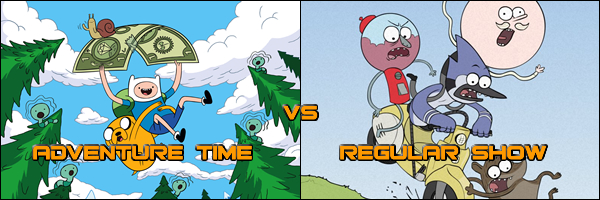
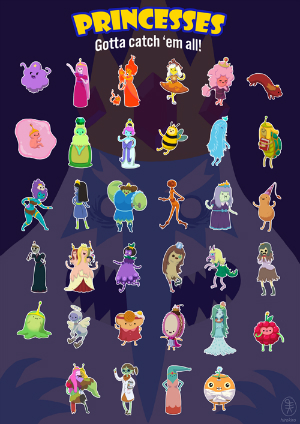
 

Seed & Spark: Hollywood’s Leading Ladies: To Be a Mom or Not to Be; What Role Will You Choose?

For a very long time, women who didn’t want to have children were deemed “selfish,” because — well, I’m not quite sure why. Men, however, although maybe a disappointment to their mothers, weren’t really labeled anything. They were bachelors, at worst.

In many movies, the struggle that men have is not a result of a decision involving kids. But in most romcoms and dramas, if there is a female role of a certain age, it centers upon the subject of children.

I wanted to look at three current movies and their depiction of parents, particularly how their children influence their decision making and where the children fit into their lives.

I chose to examine three movies where the lead was nominated for Best Lead Actress in 2014 and in a fertile age range, which led to the movies ‘Blue Jasmine,’ ‘American Hustle’ and ‘Gravity.’

unnamed

This is a guest post by Kelsey Rauber. 

For a very long time, women who didn’t want to have children were deemed “selfish,” because — well, I’m not quite sure why. Men, however, although maybe a disappointment to their mothers, weren’t really labeled anything. They were bachelors, at worst.

In many movies, the struggle that men have is not a result of a decision involving kids. But in most romcoms and dramas, if there is a female role of a certain age, it centers upon the subject of children.

I wanted to look at three current movies and their depiction of parents, particularly how their children influence their decision making and where the children fit into their lives.

I chose to examine three movies where the lead was nominated for Best Lead Actress in 2014 and in a fertile age range, which led to the movies Blue Jasmine, American Hustle, and Gravity.

As I told a friend about the idea of this article, she immediately interjected: “But it’s not just film! It’s across the board!” She proceeded to name at least four of her very good female friends, whose husbands travel a lot, while they hold a full time job as are the primary person responsible for the child’s well-being. Is this still justified in a world where nearly two-thirds of women are the primary breadwinner of the household?

(May contain some spoilers.)


unnamed

Blue Jasmine by Woody Allen

Jasmine, recently widowed, with no kids of her own but a stepson that no longer speaks to her, makes a good case for child-free living. Her husband cheated on her and embezzled lots of money. To top it all off, her mental health is questionable.

Blue Jasmine, as a movie, feels like a possible realistic take on women–who they can be, how they can fail and the choices that they make. Jasmine, obviously blinded by wealth, doesn’t quite understand what it means to care about other people.

On the other hand, we have Jasmine’s sister, Ginger, who is probably the truest depiction of an underpaid, divorced woman that I have seen in a movie in a long time. The supporting role is her role in life.

She works hard (in a grocery store), doesn’t get out often (hasn’t been to a party in years), and looks for love in all the wrong places because she was never made to believe that she is worthy.

She and her ex-husband share custody of their two boys, but the boys live with their mother. The one thing I find most fascinating about her: She doesn’t complain. She has her life and she lives it. She isn’t unhappy. As far as she’s concerned, she is doing her best and it is good enough.

None of the men that either Jasmine or Ginger date throughout the movie comment on having kids.


unnamed

American Hustle by Eric Warren Singer and David O. Russell

Though I wasn’t a huge fan of this movie as a whole, it is interesting in its different take on the paternal role. Here, it is actually the protagonist, Irving Rosenfeld, who makes a sacrifice for his adopted son. When an FBI agent busts Irving and his partner in crime/mistress, Sydney, she proposes they pack and leave the country. Irving isn’t willing to do it, because he feels a strong sense of responsibility toward his son.

Irving’s wife, Rosalyn, is depicted as a pretty terrible mother. She constantly blows things up seemingly out of sheer boredom. She’s also portrayed as an alcoholic, which fuels her inability to take care of her child (which is her full-time job).

What is interesting here is that the viewer walks away with a feeling that Irving is a good dad. I’m not saying he is a bad father, he clearly cares about his son, but the information that we don’t get in the film is how long he disappears for when he is with his mistress— he manages to have a whole other life with Sydney. I can’t help but feel that this movie sets the viewer up to feel a certain way toward the father/son relationship, even though we really only know part of the story.

If they decided to make a sequel to this movie about the boy, I think we’d see that there is no hope for this kid; his male role models are his adoptive father, a crook, and his mom’s new boyfriend, who works for the mafia.


Gravity (2013)Sandra Bullock

Gravity by Alfonso Cuarón and Jonás Cuarón

Gravity is easiest to discuss given its confinement to two main characters. The viewer is left alone with two strangers for more than two hours, so inevitably things get personal.

Ryan Stone, a medical engineer, specialized in hospital scanning systems and is on her first mission in space. She gets stranded with Matt Kowalski, who is on his final mission, about to retire.

Very early in the movie, Ryan opens up about her deceased daughter: “She was playing tag—she slipped, hit her head, and that was it.”

This revelation sheds some light on Ryan’s passivity. Any loss of this magnitude would change a person’s perspective on life. The viewer is left to wonder, who was Ryan before the loss of her daughter? Was she fun and optimistic? Was she absent a lot because of her job? Would she be in space right now if her daughter was still alive?

Matt,  like most Clooney characters, is a recently divorced, childless, charismatic individual. He doesn’t open up about why he doesn’t have kids. The question is never posed.

I can’t help but wonder, if Matt would’ve been replaced by a female character, would the fun, charismatic individual, who knows the ins and outs of space, not fight a bit harder to save both their lives, rather than sacrificing her own life for a woman who doesn’t give anyone the impression there’s much to live for?


I’m usually fan of movies that defy stereotype. (Un)fortunately, it still seems like a niche quality,  mostly found in Indie films.

All of these movies were written by men and some depict women better than others. Generally, women are given great jobs, great flaws, and a human touch, which is great since… you know, we are human.

What does it mean to not have children, or not want them as a woman? Where can we get answers to these questions? My first response would be: Not Hollywood.

My interest in this topic erupted from my recent diagnosis with PCOS, which is one of the leading causes of infertility in women. I’m also gay, so the thought of having children had already been slightly complicated.

I don’t know if I want kids. I do know that I’d like the option.

After consulting with family and friends, I took an interest in the portrayal of parenthood, as well as the absence of normalcy surrounding not being a parent for women in Hollywood movies, which led to this article as well as the short we are crowdfunding for, titled We Had Plans.

The production company I work with, CongestedCat Productions, drives content with a less generic, more realistic take on individuals whom are usually forced into a box based on gender, sexuality, race, etc. We portray people as people and expect our audience to look at them that way and relate to them on an emotional level. We don’t do caricatures or stereotypes. If this is something you can get behind, we are making films you’ll want to see.


unnamed

Kelsey Rauber is a New York City-based screenwriter and an integral member of CongestedCat Productions. She was named Grand Prize Winner in the comedy division for her feature About a Donkey by the 2012 New York Screenplay Contest. That same screenplay was also a semi-finalist in the 2013 LA Comedy Shorts Festival. She is the writer and co-creator of the comedic web series Kelsey, which premiered on blip.tv in September 2013 to rave reviews and consistent press coverage, being named a Critic’s Pick and one of the best comedy web series of 2013 by Indiewire. She is currently crowdfunding on Seed&Spark for her next projects.


Why All Our Daughters Need to See ‘Maleficent’ Right Now

We need heroines who tell girls that they are strong and capable entirely on their own, that they don’t need a family and ESPECIALLY don’t need a lover in order to become themselves. We need heroines who prove in action that no one ever—EVER—has the right to take your livelihood or body or home away from you, as well as that—if it happens—it doesn’t have to destroy you forever. Girls need to see that it’s okay to seek and use power, that there is nothing at all wrong with being a strong, emotional, powerful leader as a woman.

Maleficent-Poster


This is a guest post by Melissa Cordner. 


***Sole warning: contains all the spoilers.*** 


Reviews and friends will tell you that Maleficent was predictable, at times slow, and seemed to be primarily an excuse for the artists to show off their CG skills (that dragon though!). In terms of action-based plotlines, this is fair, but those who are bored by the film are overlooking one key factor: character development. Maleficent is a classic stereotypical “total bitch”—and THAT’S PORTRAYED AS A GOOD THING.

Maleficent was a sweet little girl, adored by her community and brave enough to defend it peaceably. She fell in love, as we are prone to do, and had her heart broken when the object of her affections left to chase fame and fortune, as we are also prone to do. This heartbreak made her cautious, but it did not destroy her. No, it was when he came back, soothed away the pain of years with his sweet talk and cuddles, and then drugged her and brutally hacked off and stole her wings, that she went a little crazy with pain and rage.

Angelina Jolie as Maleficent


The importance of the wing theft seems a little underplayed in the film; at no point does Maleficent come out and say “the person I was in love with broke my body and spirit by taking away my main source of pride, mobility, and identity.” She spells it out a little for Aurora when she explains that her wings never faltered and were always dependable, but that doesn’t quite get to the heart of it either. On one level, her wings were what made her a fairy and made her the protector of the moors; without them, she is landlocked and crippled, incapable of work and even play. This would destroy anyone, but the fact that her wings were stolen not in battle but under the guise of romantic love adds another more complicated layer to the trauma. This man felt entitled to her body; he felt it fair to drug her and take what he wanted with no respect for what she wanted or needed or how she would survive afterwards. He took away her identity, her pride in her body, and her livelihood. He never asked permission, he never apologized, and she was left with trust in nothing and no one—not even herself.

It is interesting to note that he could not bring himself to kill her, but chose to cause her a lifetime of pain and suffering instead. Like Maleficent in the Sleeping Beauty saga, Stefan is easy to read as evil and malicious; however, we see he still has a bit of compassion when he can’t bring himself to drive the blade into her back. Of course he still destroys her in every way possible by tearing off her wings; does this make him better, or worse, than a murderer? He also could have used the knife and let her bleed to death from the experience but chose instead a chain which (we can guess) was made of iron and therefore cauterized the wounds; is this compassion, or cruelty? Even here, Maleficent shows that things are not always black and white.

maleficent

It is also important to note that her wings—which Stefan keeps locked under glass as a bizarre morbid trophy—come to life and return to Maleficent when she is about to die, immobilized by her inability to fly away from the power-sapping iron (another secret her once-lover has used against her as a way to destroy her, for those of you keeping track). It is no accident that those wings lay dormant behind that glass for sixteen years while Maleficent’s heart was consumed by a bitter storm of resentment and revenge. It is no accident that they came to life when Maleficent was about to die, AFTER she had told Aurora to run, using close to the last of her strength to protect what her heart cherished most. It is no accident that sixteen-year-old Aurora is who topples that trophy case and frees the wings to return to the fairy. Maleficent’s wings return because her heart does when she puts Aurora before herself, just as they disappeared when her faith and ability to love were stolen. You don’t erase a rape or betrayal—ever— but it IS possible to get your livelihood back and become proud of your body again.

The fact that Aurora— the child upon whom Maleficent cast a vengeful curse so powerful even she could not undo it—is the reason Maleficent’s heart (and wings) return to her is hugely important. This shows audience members that we don’t only deserve love, even when we run from it; we also deserve forgiveness. Maleficent was bitter and hurting and angry and made a bad decision. She made a huge mistake that destroyed an innocent person’s life for the sake of revenge… and that person LOVED HER ANYWAY. If Aurora hadn’t loved Maleficent as much as Maleficent loved her, even after finding out the source of the curse, the kiss would not have been of true love and the spell would not have been broken. We know this because the kiss from Phillip didn’t work; they didn’t know each other well enough, they didn’t love each other truly enough. As in Frozen (and Enchanted now that I think about it), Disney finally gives us the message that love at first sight is not all it’s made out to be.

Maleficent and her wings


This generation of girls has had sassy, brave and strong heroines before Maleficent, of course, but all these heroines have left us wanting more complexity. I grew up with Hermione, the cleverest girl at Hogwarts—who solved riddles for the main male character and played a vital-but-still-merely-supporting role to his adventures. Teenagers now identify with Katniss, the badass figurehead of the rebel movement in The Hunger Games—an emotional, confused girl who bravely defended her sister and then forevermore served as a puppet for the movement rather than a leader. Disney’s movies have participated in this movement as well. Tangled’s Rapunzel dared to question authority but was still fulfilled by finding love and a throne; Brave’s Merida valued herself as more of a person than a princess and learned the value of bravery without a supporting man but remained a princess and even—painfully enough—underwent a “makeover” to become more stereotypically beautiful/soft/feminine later on. Frozen gave us female characters with a bit more emotional complexity, but even Anna—who proved that true love does not have to be romantic love—was sweet and a little bumbling and would never hurt a fly… and even she ended up with a boyfriend. All of these women show girls that it’s okay to be emotional and scared, it’s okay to rely on others, and it’s possible to be brave and strong and true to yourself while you do it. That is a message that our girls, who still dress up like Snow White, Sleeping Beauty, and Cinderella, need desperately to hear.

Screen-Shot-2014-01-26-at-11.54.58-PM

But I, for one, think it’s time to take the “you don’t need to be helpless and dependent to be feminine” theme a little further. We need heroines who tell girls that they are strong and capable entirely on their own, that they don’t need a family and ESPECIALLY don’t need a lover in order to become themselves. We need heroines who prove in action that no one ever—EVER—has the right to take your livelihood or body or home away from you, as well as that—if it happens—it doesn’t have to destroy you forever. Girls need to see that it’s okay to seek and use power, that there is nothing at all wrong with being a strong, emotional, powerful leader as a woman. It’s time we tell our girls that you can fight back, even using defensive violence, and still be a good person. It’s time to tell our girls that they can make mistakes and even hurt the people they love, and still deserve that love. Yes, Maleficent DOES have a slow plot, instead centering almost entirely on the character development of one woman—and it is about damn time.


Recommended Reading:

“Monsters and Morality in Maleficent by Gaayathri Nair

“Angelina Jolie: Yes, That Scene in Maleficent Is About Rape” by Dodai Stewart


Mel Cordner is based in Connecticut, USA with her two cats and a car full of rubber ducks. She spends a lot of time writing about queer issues, fighting the system, and supporting local parks and restaurants. For more of her work, check out http://www.permissiontowrite.tumblr.com/