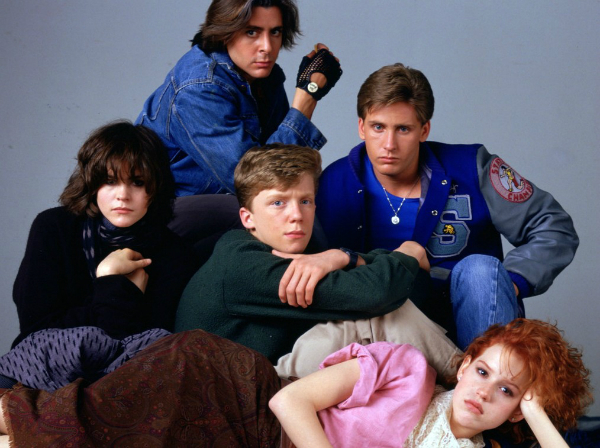
A Brain, an Athlete, a Basket Case, a Princess, and a Criminal: How ‘The Breakfast Club’ Archetypes Set Standards for High School in Brat Pack Cinema and Beyond

While today’s entertainment sources a lot of inspiration from Brat Pack Cinema, especially the high school-coming-of-age era of Brat Pack Cinema, we have to be very aware that we do not fall into the trap of embracing multifaceted male characters and yet only providing a Princess/Oddball dynamic with female characters. Not all of us fall into The Brain, The Athlete, The Basket Case, The Princess, and The Criminal, and while we can look to Brat Pack Cinema for inspiration to create new projects for our generation and generations to come, archetypes are suggestions, not the end-all be-all for characters in entertainment.

Breakfast Club Cast Photo
The Breakfast Club


This guest post by Kylie Sparks appears as part of our theme week on the Brat Pack.

We all remember the first time we saw The Breakfast Club, that wonderful John Hughes ode to Saturday morning detention at Shermer High School (and as a full disclaimer, it’s one of my favorite films).

At first, we saw five teenagers as the Brain, the Athlete, the Basket Case, the Princess, and the Criminal–perfectly neat archetypes in the basic high school caste system, but they actually were five kids who saw the world more than just through their own designated lens. As Brian Johnson (Anthony Michael Hall, or the “Brain”) narrates, “You see us as you want to see us – in the simplest terms, in the most convenient definitions.” At the end of the film, each character grew to explore what would happen across party lines (the Athlete and the Basket Case, the Princess and the Criminal, the Brain becoming his own entity of independence, and the Basket Case being “made over” by the Princess to become another Princess) and we knew their lives were forever changed by that one Saturday in detention.

It’s awesome to see teenagers explore their own identities and not conform to their own archetypes, but if we examine Brat Pack Cinema and how archetypes are portrayed throughout the 1980s coming-of-age films, there is a common trend. High school boys in Brat Pack films are allowed to be the jock, the nerd, the best friend, the weirdo, the leading male, and any other category a person would see themselves in and be multifaceted, while high school girls in Brat Pack Cinema fell under two categories: the Princess or the Oddball. While The Breakfast Club is a classic example of defining the Princess and the Oddball, several other films in Brat Pack Cinema cling to this dynamic, only showcasing that high school girls fall into these two categories with no in between.

Cast Still from Sixteen Candles
Sixteen Candles


Sixteen Candles, which starred Breakfast Club alums Molly Ringwald and Anthony Michael Hall, as well as Michael Shoeffling, Gedde Watanabe, and Brat Pack regulars John Cusack and Haviland Morris, showcases classic archetypes in Brat Pack Cinema: the Athlete/All-American (Shoeffling), the Awkward Princess (Ringwald), the Prom Queen (Morris), the Geek (Hall, Cusack), the Exchange Student/Geek (Watanabe), and the female Oddball (Deborah Pollack, playing The Donger’s girlfriend Marlene or “Lumberjack”). While Ringwald’s character is supposed to be an “awkward” girl on the verge of turning 16, she is cast as our Girl Next Door Princess to be a contrast to Morris’ Prom Queen Princess as “everything she isn’t.”

Given Ringwald’s prominence in the Brat Pack as a leading lady (no matter if she is deemed “awkward,” “poor,” or the “every girl”), she is still viewed as a Princess. Ringwald’s sister in the film is also a classic Princess, as everyone is preparing for her beautiful wedding and forgets Ringwald’s birthday is at the same time. Our only female character who is not billed as a Princess is our Oddball, Marlene. Marlene is also called the “Lumberjack” as she is a strong female athlete who begins dating The Donger (Watanabe), but because of her stature and strength, she is not classified as a Princess, leaving her to be relegated to Oddball status.

While the argument can be made that Sixteen Candles came out a year before The Breakfast Club, the archetype lines are solid. You can categorize the men in various archetypes in Sixteen Candles, but women can only fit inside the boxes of Oddball or Princess with no in between. Pretty in Pink follows a similar archetype map to Sixteen Candles, with Ringwald as the “Poor Outcast” Princess and Andrew McCarthy as the “All-American,” James Spader as “The Douchebag/Criminal” and Jon Cryer as the “Best Friend/Brain.”

Still from Ferris Bueller's Day Off
Ferris Bueller’s Day Off


Other films in Brat Pack Cinema that don’t include The Breakfast Club stars and feel worlds apart from the triumvirate of The Breakfast Club, Sixteen Candles, and Pretty in Pink also follow this same archetype map of Princess/Oddball versus more diverse male archetypes in High School. Ferris Bueller’s Day Off is a classic example. Ferris Bueller (Matthew Broderick), although he’s viewed as a “snot-nosed punk” by Principal Rooney (Jeffrey Jones), actually also falls into the “Popular Everyman” archetype of the high school caste system, adored by all the students –“the sportos, the motorheads, geeks, sluts, bloods, wastoids, dweebies, dickheads…they think he’s a righteous dude” as Rooney’s assistant Grace (played by Edie McClurg) informs Rooney. Ferris’ best friend is Cameron Frye (Alan Ruck), who on first appearance would fall into the “Freak” archetype, also falls into different archetypes as the Rich Kid, and by being Ferris’ best friend, Popular by Association.

Charlie Sheen’s appearance as the kid in the police station falls under the classic “Criminal” archetype, but we don’t know the rest of his background and he could fall under different archetypes. While our male characters are multifaceted, our two prominent female high school characters, Jeanie (Jennifer Grey) and Sloane (Mia Sara) are seen solely as Princesses. Sloane is a classic Princess–pretty and popular. Jeanie, although misunderstood and somewhat of an outcast, is also a Princess falling in line with Ringwald’s classic “every girl” princesses she portrays in Sixteen Candles and Pretty in Pink.  Neither one would be classified as Oddballs based on the criteria presented in Brat Pack Cinema, and Ferris Bueller’s Day Off does not provide any leading, prominent female characters in the high school caste system other than various forms of Princesses.

John Cusack as Lloyd Dobler from Say Anything
John Cusack as Lloyd Dobler from Say Anything…


Say Anything… is also an interesting film to look at in terms of male archetypes versus the Female Princess/Oddball structure since its male lead, John Cusack, played different high school archetypes in Brat Pack Cinema. In this case, in Say Anything… Cusack played iconic underachiever Lloyd Dobler, making millions of hearts break by lifting a boom box playing “In Your Eyes” by Peter Gabriel outside Diane Court (Ione Skye)’s window. Diane is a classic Princess–beautiful, rich, high school valedictorian, and the object of Lloyd Dobler’s dreams. Although Lloyd and Diane have a rocky relationship the summer after high school–between falling in love and breaking up, ultimately–Lloyd has crossed party lines, the Underachievers, to date and fall in love with the Princess, eventually going with her to London for her fellowship. Our female Oddballs are Lloyd’s fellow underachiever friends Corey Flood (Lili Taylor) and D.C. (Amy Brooks); however, with the focus of the film being the relationship between the Underachiever and the Princess as well as the Princess’ father being investigated by the IRS, this is a love story between two classic crossing archetypes we see in Brat Pack Cinema, especially since a few years before, we saw The Princess and The Criminal fall in love in The Breakfast Club.

While we examine character archetypes in High School Brat Pack Cinema, it is also important to examine the actors. Previously, Cusack played a geek (Bryce in Sixteen Candles) and the Artistic Romantic in One Crazy Summer, and with his role as the Underachiever in Say Anything…, it highlights a point that men in Brat Pack cinema may get the opportunity to portray different archetypes in the high school era. Only one female Brat Pack regular comes to mind in portraying both the Princess and the Oddball in High School: Ally Sheedy. Sheedy played Matthew Broderick’s girlfriend Jennifer in WarGames, but also played Allison Reynolds in The Breakfast Club. Every other female in the high school era of Brat Pack films plays either the Princess or the Oddball.

comparison of Allison Reynolds before and after the Princess makeover in The Breakfast Club
Comparison of Allison Reynolds before and after the Princess makeover in The Breakfast Club


After examining these four films (as well as looking at several others), there is the question of how we present teenagers in entertainment today so we do not fall into the trap of basing characters on the Brat Pack high school female archetypes of Princess and Oddball, especially since very rarely do we allow girls to cross these lines unless the Oddball is given a makeover into a Princess and not vice versa. While today’s entertainment sources a lot of inspiration from Brat Pack Cinema, especially the high school-coming-of-age era of Brat Pack Cinema, we have to be very aware that we do not fall into the trap of embracing multifaceted male characters and yet only providing a Princess/Oddball dynamic with female characters. Not all of us fall into the Brain, the Athlete, the Basket Case, the Princess, and the Criminal, and while we can look to Brat Pack Cinema for inspiration to create new projects for our generation and generations to come, archetypes are suggestions, not the end-all be-all for characters in entertainment.

Kylie Sparks is an actor, producer, writer, singer and USC Alumna living with a pug and a pug mix in Los Angeles. She’s passionate about entertainment, pancakes, pugs, coffee, college football and feminism. You can find her @kyliesparks on Twitter and her official website is kyliesparks.com.

What They’re Going Through: The Brat Pack Gave Teens a Voice

Whatever the Brat Pack actors did with their fame in real life does not reflect the impact they ingrained on our culture. They helped put a face and a voice to teen struggles. These talented young actors gave teenagers an identity and platform for their problems that will stand the test of time. We will always thank the Brat Pack for that.

This guest post by Caroline Madden appears as part of our theme week on The Brat Pack.

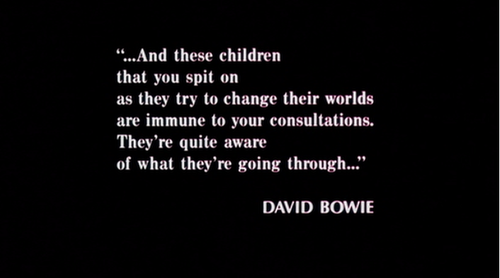
The Breakfast Club opens with a title card quoting David Bowie’s “Changes”:

Changes Title Card The Breakfast Club

The song lyrics express what The Breakfast Club and many of the Brat Pack films were portraying–that teenagers have as much of an understanding, inner conflict, and a place in this world as adults do. Their characters fight the ignorance of their principals, teachers, and parents who don’t bother to listen to what they’re dealing with inside.

David Blum’s 1985 article “The Birth of Hollywood’s Brat Pack” had him acting just like the adults Bowie sang about. He spit upon the young actors of the beloved teen films, and undermined them because they were young. He believed they were not entitled to fame and money and that their talent was not valid, all because of their youth.

The phrase for the group stuck, but Blum was met with scathing criticism from actors and journalists alike. Emilio Estevez, Judd Nelson, and Rob Lowe were the focus of the article, with mentions of other actors. The who’s who of the Brat Pack varies, but most consider those who star in both The Breakfast Club and/or St. Elmo’s Fire. After the article’s release, the Brat Pack actors were angry and humiliated. Their group refused to hang out together anymore, feeling that their reputation as a group was tarnished. Reading the article, it’s easy to see why they were so mad. It paints all of the young actors in the same brush stroke, making them all out to be shallow and money-hungry narcissists.

The cast of St. Elmos Fire

John Hughes himself even expressed distaste for the group name in a 1986 Seventeen magazine interview with Molly Ringwald interviewing him.

JH: I think that this clever moniker was slapped on these young actors, and I think it’s unfair. It’s a label.
MR: People my age were just beginning to be respected because of recent films such as yours, and now it’s like someone had to bring them down a peg or two, don’t you think?
JH: There is definitely a little adult envy. The young actors get hit harder because of their age. Because “Rat Pack” – which Brat Pack is clearly a parody of – was not negative. “Brat Pack” is. It suggests unruly, arrogant young people, and that description isn’t true of these people. And the label has been stuck on people who never even spoke to the reporter who coined it.
MR:  Such as myself. I’ve been called the Women’s Auxiliary of the Brat Pack.
JH: To label somebody that! It’s harmful to people’s careers. At any rate, young people support the movie business, and its only fair that their stories be told.

The Breakfast Club Behind the Scenes

David Blum admonishes the actors for their lack of formal training, addressing how they do not idolize or try to live up to famous method actors Pacino and De Niro: “If I were a Hollywood star I would spend more time working on my craft instead of chasing girls as the Hard Rock.” But even the most famous well-crafted actors also occasionally enjoy the perks of fame.

And so what if they’re not method actors? All you have to do is watch the scene in The Breakfast Club where they all describe how they got detention (which was completely improvised by all of them) to see their impressive talent, regardless of training or not. Blum acts as if they were handed everything on a silver platter, as if they didn’t work hard or even care about their profession.

He goes on about their fame and wealth: “They make major movies with big directors and get fat contracts and limousines. They have top agents and protective P.R. people. They have legions of fans who write them letters, buy them drinks, follow them home. And, most important, they sell movie tickets. Their films are often major hits, and the bigger the hit, the more money they make, and the more money they make, the more like stars they become.” Did the young Brat Pack actors enjoy the perks it came with being Hollywood stars? Of course they did, and that’s nothing new. We’ve seen it time and time again with some of the most famous and well-respected stars.

It is overall an ugly article that portrays them in an unflattering light. Most importantly, what David Blum fails to see is why those films were such big hits, why they were selling so many tickets. People have always been fascinated with the celebrity life, but what the fans cared about more than their off-screen lives was the people that they portrayed onscreen. That is why they were drawn to them in the first place. The Brat Pack actors portrayed the types of characters that teenagers of that time could relate to. They were the faces of thousands of all the teens out there, bringing to life the stories that they had all been dying to hear.

The Breakfast Club

Before the 80s, teen movies were often good vs. evil stories, such as Rebel Without A Cause, or nostalgic looks at teenage lives of the past, such as American Graffiti. Films were rarely marketed or made for teens because executives felt that audiences didn’t care about them, and teenagers weren’t taken seriously. John Hughes comments on this in his Seventeen magazine interview:  “My generation had to be taken seriously because we were stopping things and burning things. We were able to initiate change, because we had such vast numbers. We were part of the baby boom, and when we moved, everything moved with us. But now, there are fewer teens, and they aren’t taken as seriously as we were.”

80s teen films expressed the plights and anxieties of that Regan-era generation, the ones who grew up after Woodstock and before YouTube; there was a huge lack of respect for their generation. 1980s America was suffering from high divorce rates and economic setbacks and unemployment that led to an obsession with money and a huge divide of class distinctions.

Pretty in Pink

1980s teens were very aware of who had money and who didn’t and how painful that divide can be. That is the crux of Blaine and Andie’s relationship in John Hughes’ Pretty in Pink. She’s poor and he’s a rich yuppie–how could it work?  Duckie and Andie drive through a ritzy neighborhood as Andie exclaims about how beautiful a house is: “You know what the really sad thing is? I bet the people that live there don’t think it’s half as pretty as I do.” The Breakfast Club also focuses on that divide, especially between rich girl Claire and rebel Bender over an argument about her earrings. Bender says, “I bet he bought those for you! I bet those are a Christmas gift! Right? You know what I got for Christmas this year? It was a banner fuckin’ year at the old Bender family! I got a carton of cigarettes.”

But for all the statements they made about teenage life in the 80s, these stories are timeless. They changed the world then and remain renowned today. The Breakfast Club is nearly 30 years old and still relatable to teens of this generation. These films had teens that were here to say, “Even though I’m young with my whole life ahead of me, there are things that I have to deal with and I have problems that affect me too.”

Andy The Breakfast Club

These characters talked about how their parents have failed them or hurt them, the pressure to do well in school or have the right friends. Just look at the heartbreaking scene in The Breakfast Club when Bender describes his abusive dad. Or Andrew the jock screaming about how his father so desperately needs him to “Win! Win! Win!”  Think of how many kids in that audience could relate to that. They saw the Brat Pack actors up on the screen, speaking aloud something that they were struggling similarly with deep down inside.

Teenagers are often seen as self-centered brats, and it certainly doesn’t help if they’re also rich and famous. David Blum saw them as brats, as most adults see those who are younger than them. So yes, they are a pack of young kids. But the word “brat” doesn’t have to refer to what they are, but what they’re seen as. Call them brats all you want, but that’s not what they are inside.

Whatever the Brat Pack actors did with their fame in real life does not reflect the impact they ingrained on our culture. They helped put a face and a voice to teen struggles. These talented young actors gave teenagers an identity and platform for their problems that will stand the test of time. We will always thank the Brat Pack for that.

_______________________________

Caroline Madden is a recent graduate with a BFA in Acting from Shenandoah Conservatory. She writes about film at Geek Juice, Screenqueens, and her blog. You can usually find her watching movies or listening to Bruce Springsteen.

Bitch Flicks’ Weekly Picks

Check out what we’ve been reading this week–and let us know what you’ve been reading/writing in the comments!

recommended-red-714x300-1


Emmys Rundown: The Good, the Bad, the Gender Disparity by Sara Stewart at Women and Hollywood

Women Make Up Only 26% Of Nominees for 66th Primetime Emmy Awards by Rachel Larris at Women’s Media Center

Girls on Film: 5 ways movies can be as diverse as television by Monika Bartyzel at The Week

Margaret Atwood has faith in Hollywood by Doug Camilli at The Gazette

Watch: “Women in Refrigerators” Supercut: Female Characters Killed to Give Male Characters Depth by Laura Berger at Women and Hollywood

Did Lois Lowry Sell Out Your Childhood? by Andé Morgan at Bitch Media

Film Adaptation of Opera Classic ‘La Boheme’ w/ All-Black Cast Begins Production… by Tambay A. Obenson at Shadow and Act

This is the Summer of Lesbian Web Series by Anna Miller at Bitch Media

 by ReBecca Theodore-Vachon at Film Fatale NYC

Black Feminists Respond to Ferguson by Miriam Zoila Pérez at Colorlines


What have you been reading/writing this week? Tell us in the comments!


Seed & Spark: Perspective

As the writer, my voice defines each character. Just as male writers paint masculine (or, worse, stereotypical) versions of the female characters they create, my characters each have a decidedly feminine spin. These are not gun-toting, one-dimensional he-men, but rather strong, masculine, flawed characters with quirks and cracks in their armor. They have no need for the mask of locker-room grandstanding. And a woman is telling their story. Unlike other dark comedies/psychological thrillers, this is a character-based story told from a female perspective.

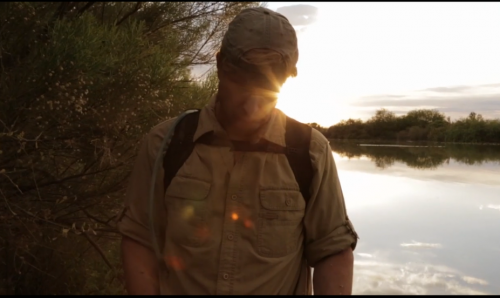
OWEN BY THE LAKE: Brazilian Wood's Owen Bryant portrayed by Bill Wetherill
OWEN BY THE LAKE: Brazilian Wood’s Owen Bryant portrayed by Bill Wetherill


This is a guest post by Kristin LaVanway.

Much has been debated about the limited role that women play in film. Many believe that women’s voices are fewer than their male counterparts because of the limited number of strong female roles that are offered.

I was recently invited to participate in a panel discussion entitled “Leading Ladies are People Too.” This title described several topics related to expanding women’s roles in front of and behind the camera. The initial focus was on creating rich, well-developed roles for women, the lack of which is a large concern for many, given Hollywood’s often shallow female representations.

Kristin LaVanway
Kristin LaVanway


But as the discussion continued, I suddenly felt pangs of guilt, the need to apologize—an overwhelming dread that I had sold out my sisterhood.

You see, I am making a decidedly male-centered feature film called Brazilian Wood.

All but one of the main characters is a dude. In my defense, the lone woman in the pack is an awesome bad guy. She is a murderous, conniving, delicious, determined woman who knows what she wants.  Surely that counts for something in the broad landscape of feminism?

I began assessing my mostly masculine cast to identify possible ways to support the sisterhood and bring a larger X-chromosome component into the fold. Happily, I began to realize that those components already existed. Not in the most obvious way —the gender of the characters— but in the manner in which the characters have been developed and in the way their story would be told: by a woman.

These Leading Ladies are the "People Too" Panel at the 2014 Jerome Indie Film & Music Festival
These Leading Ladies are the “People Too” Panel at the 2014 Jerome Indie Film & Music Festival


As the writer, my voice defines each character. Just as male writers paint masculine (or, worse, stereotypical) versions of the female characters they create, my characters each have a decidedly feminine spin. These are not gun-toting, one-dimensional he-men, but rather strong, masculine, flawed characters with quirks and cracks in their armor.  They have no need for the mask of locker-room grandstanding. And a woman is telling their story. Unlike other dark comedies/psychological thrillers, this is a character-based story told from a female perspective.

These Leading Ladies are the "People Too" Panel at the 2014 Jerome Indie Film & Music Festival
These Leading Ladies are the “People Too” Panel at the 2014 Jerome Indie Film & Music Festival


As a director, I can draw out this untold story. The actors portraying these characters know the back-story. They know the emotional arc these characters will be riding. They are ready to let their emotions show through the cracks, just as strong women do among their trusted friends.  In this way, we can explore the motivations that drive them. We will bring more layers, more depth, and at some level, more estrogen to the audience.

As the editor, I have perhaps the strongest voice of all. I can piece together this multi-layered collection of story, emotion, murder, and mayhem, focusing not on the big splashy action sequences, but on the quiet moments, the nuanced expressions —the “girly” stuff. As the last leg in the storytelling journey, editing has a tremendous impact on the final version of the film. It can completely change the tone, message, and even the plot. That this phase is in my control can have an enormous impact in the portrayal of the characters, bringing a richness to a story that is so often told by simply counting the dead bodies and bowing to the last man standing. Bringing that depth into the frame tells the story from a new perspective.

These Leading Ladies are the "People Too" Panel at the 2014 Jerome Indie Film & Music Festival
These Leading Ladies are the “People Too” Panel at the 2014 Jerome Indie Film & Music Festival


I don’t view myself as a feminist filmmaker. I am a chick telling stories. I’m telling the stories I want to tell, from my perspective as a woman. I love an intriguing plot with twists and turns, interesting and relatable characters, and yes, even the obligatory happy ending. Whether the characters are male or female, a great story told by talented actors within a well-produced film is much more interesting to me than a film that takes a stand. As an independent filmmaker, my story can be told my way. And the voice behind the camera, my voice, despite the volume of testosterone in front of the camera, is decidedly feminine.  No need to apologize for that.


Originally from the beaches of Southern California, Kristin LaVanway is a writer and director living in Mesa, AZ . She has produced numerous short films, including the award-winning  comedy, “Reply Hazy,” “Try Again” and the award-winning drama, Condundrum. In 2014, she joined forces with actor/filmmaker Bill Wetherill to form Resonant Films. She is currently in crowdfunding mode for Resonant Film’s  first feature, Brazilian Wood on Seed & Spark. She is also working with the AZ Audubon Society to develop a multiple film compilation called “Arizona River Stories.”  Kristin is @Rl8rGal on Twitter.


Waiting in the Wings: Why Hollywood Should Make More Comic-Based Films

Geek culture is big business. The big summer Hollywood blockbusters this year are almost exclusively drawn from comics and other science fiction, or fantasy franchises. From ‘X-Men Days of Future Past’ to ‘Guardians of the Galaxy,’ what was once a small audience has become a massive source of revenue for Hollywood. It’s also big business for the comic’s industry. The release of ‘Guardians’ sparked one of the largest sales months for comics in recorded history. This is great news for the two big players in the world of comic publishing, as they attract new audiences and new readers to their franchises. DC and Marvel have television and film media planned well into the next decade.

This is a guest post by Lisa Pavia-Higel.

Geek culture is big business. The big summer Hollywood blockbusters this year are almost exclusively drawn from comics and other science fiction, or fantasy franchises. From X-Men Days of Future Past to  Guardians of the Galaxy, what was once a small audience has become a massive source of revenue for Hollywood. It’s also big business for the comic’s industry. The release of Guardians sparked one of the largest sales months for comics in recorded history.  This is great news for the two big players in the world of comic publishing, as they attract new audiences and new readers to their franchises. DC and Marvel have television and film media planned well into the next decade.

This is also very good news for those who care about how women are portrayed in modern media. That may seem counter-intuitive, given that comics have long been criticized for how they depict women, and how women are treated in the industry. However, an influx of new creative talent, an enthusiastic and ever more diverse fanbase, and a host of characters with long, and complex histories have made comics a wellspring of vast potential for new and better stories. The products created based on comic books can, when done right, be far better than the average action/adventure fare and has the potential to bring more and higher quality action-oriented female roles to the big and small screen.

It’s true that the comic genre has issues with women. There are problems within the industry in how female creators and critics are treated, issues with the art styles that often objectify women’s bodies, and serious issues when women venture into spaces where geek culture is present. In a Bitch Media article, Janelle Asselin published her research on sexual harassment in the comics industry. In her survey of more than 3,600 respondents, 59 percent felt that sexual harassment was a problem in the industry and 25 percent had experienced harassment themselves.  In the world of convention goers, 13 percent reported comments of a sexual nature and 8 percent reported sexual assaults while attending cons. Asselin notes that with the growing number of women attending conventions and other fan-centered events, those percentages means that more than 10,000 women in attendance at San Diego Comic Con (one of the largest comic conventions of the year) would have experienced harassment of some kind. As a comic fan, writer, and critic, Asselin knows that the industry is hostile from first-hand knowledge. In May of 2014, she criticized a Teen Titans cover on Comic Book Resource (a comic industry website) and received not only hate mail, but also rape threats.  It’s clear that there are systemic issues within both the industry and among the fans. So why is Hollywood’s embrace of comic culture a good thing?

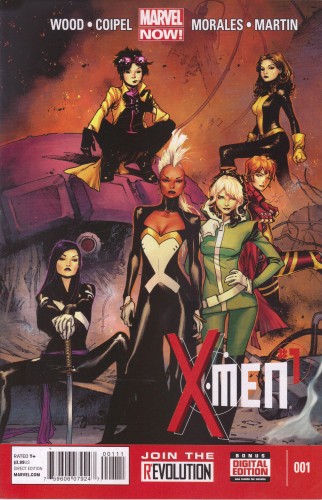
XMen1

First, because the established source material hosts a slew of strong female characters. Art aside, women were superheroes in comics long before they were fighting the good fight in films or on television. The first female superhero appeared in comics in the 1940s, long before Wonder Woman came along to break TV barriers.  Mainstays of current hits like the Avengers can trace their hero backstories to the 1960s when Pepper Pots and Black Widow made their debuts. Catwoman, who most recently appeared in The Dark Knight Rises first appeared in comics in 1961.  While their level of agency and influence has certainly changed over the years, characters who have been appearing in comics this long have a great deal from which to draw. And their art aside, women in comics are often far stronger and wield far more power than their counterparts in action television and film.  Superhero women not only pass the Bechtel test time after time in the pages of comic books, unlike the run of the mill action heroines, they rarely are saved in their own stories.

catwoman

Take, for example Black Widow and Maria Hill in the aforementioned Avengers. In the film, neither woman is saved by a male character, and both are strong members of their respective teams. Now this could be because the film’s director, Joss Whedon, has  long time devotion to both strong female characters and the comic genre. He’s reported that the second Avengers film will host four female lead characters and will feature them as strong members of the team.

background

So from where do bad superheroine portrayals come?   The problems often arise when these characters, who all have extensive and complex backstories, are translated by those who really don’t understand them. For example, in June David Goyer who will be bringing the new Justice League film to life, was asked what he would do with a long running character, She-Hulk, in a film.  His answer was that this character was probably created so that geeky men could fantasize about her having sex with the Hulk, and that she was a “green pornstar.”  The reaction among fans was immediate. Comic fans and producers responded to the quote calling out Goyer. Even Marvel magnate and geek guru Stan Lee responded to the controversy defending She-Hulk’s background and personal agency. Even though she bears a name derived from a male character, they laud her feminist values and strength as something they love about the series. She would make an excellent female lead, but this producer could not see beyond the way she was drawn.  It’s clear that this producer didn’t take the time to really appreciate the legacy that comics offer for their strong female characters.

Moreover many studio producers just don’t think women can carry action films. This idea is being systematically disproven and it seems like even Hollywood producers are beginning to see the potential of tapping these franchises. According to an article in Time Magazine, Sony pictures will be expanding its Spider Man franchise to include a female super hero and Marvel studio president Kevin Feige said that a female-led Marvel film would happen “sooner rather than later.” This could be in response to new data that says in the last year, films with female leads made more money than those without a strong female presence.

wonder-woman-batman-v-superman

There seems to be reason for optimism here.  The new art for Wonder Woman’s role in the Batman vs. Superman film shows a short, but reasonably costumed with Gal Gadot’s stance powerful and strong in the middle of the frame. No butt shot, nor over the shoulder look.  We can only hope her characterization will be as good as the image seems to indicate. Marvel also announced at San Diego Comic Con that Thor, a key role in the Avengers universe would be taken over by a women (not for the first time) and that the transformation would be a long, non-temporary story arc. While many critics were unhappy with the choice, wondering why they wouldn’t create a new female character, it presents even more interesting opportunities within the hero context.

female-thor-art

While there is cause for excitement among female fans about seeing old favorites finally make it to big screen, many are more excited to see some of the work being produced by some of the newer talent in the industry.  Beyond the world of the Avengers, Batman and Superman, there is an exciting cast of characters ripe for film or television adaptation.  A new renaissance is happening within comics that is producing a greater variety of characters and characterizations. From Kelly Sue DeConnick and Dexter Soy’s Captain Marvel who has inspired an entire fandom called the Carol Corps, to Brian K. Vaughan and Fiona Staples’ Saga series which was, until the release of Rocket Raccoon #1, the best-selling comic on the market, a greater diversity of writers and artists are making new characters that Hollywood could, and should draw from.

tumblr_n9ad2tWxHK1re8ucwo1_500

These titles are bringing new fans and a greater female audience, and they are active, excited, and involved in their media. The aforementioned Carol Corps that formed around the new Captain Marvel specializes in body positive, family friendly cosplay, and produces Carol wear for those fighting cancer. Another online campaign, I am Comics was created in response to Janelle A.’s experience over the Teen Titans debacle, and the ConSent campaign was created at the San Diego Comic Con to help those engaging in cosplay to feel safer in that context by raising awareness that cosplay (dressing up as a character) does not give anyone permission to engage in harassment.

2964591-wonderllandsmall

The efforts to make comics a more welcoming place is also coming from the industry. In the aftermath of Asselin’s harassment, the hosting website, Comic Book Resource responded by resetting their forums and publishing a new policy on harassment and online conduct.

No genre is perfect, and comic books and graphic novels certainly have their problems. However, as art primarily created for the male gaze slowly changes, and as a greater diversity of writers and artists break into the world of comics, there is a great potential for dynamic and exciting storytelling that does what all art should:  challenge, excite, and entertain us.  The cast of film-worthy women continues to grow, and as they wait in the wings all we can do is continue to demand that their stories be told, and when they are, to vote with our dollars sending a message to Hollywood that their time has come.


Recommended Reading

If you are interested in trying out some comics with great female characters:

250px-Fearless_Defenders

Fearless Defenders–A short-lived series about an all-female team.

51cridLcG8L._SY344_BO1,204,203,200_

Captain MarvelIn Pursuit of Flight: The first trade paperback in the series.

boombox_lumberjanes_001_a

Lumberjanes–This series has been compared with Buffy the Vampire Slayer.

250px-Saga1coverByFionaStaples

Saga–the number one best-selling series which tells the story of an interspecies war and a child born of two sides. NSFW!


Recommended Viewing

The Talking Comics Vlog on the Geek and Sundry Channel features great titles to get you started.


See Also

The Women of Captain America–The Winter Soldier

Black Widow is More than Just a Pretty Face

The Avengers: Strong Female Characters Failing the Bechdel Test


Lisa Pavia-Higel is a community college educator living in St. Louis, Missouri. When she is not raising her 3-year-old geeklet she writes, performs with an all-female stage combat troupe, and is currently teaching herself to sew, badly. She has also mastered the art of playing video games while yelling at the screen about the stereotypes present within them, which gives her feminist husband and gaming partner no end of joy.  Follow her on Twitter @lisamariepavia 

Morello’s Fractured Relationship with Romance in ‘Orange Is the New Black’

Morello’s abovementioned childlike room, her harping on about how her and Christopher’s romance is “meant to be,” like something out of ‘Notting Hill,’ ‘Pretty Woman’ or ‘Cinderella,’ and her psychotic break that sees her stealing the prison van to break into Christopher’s marital home, shows just how damaging society’s “wedding industrial complex and… [its] need to infantalise grown women,” as Nicky puts it, can be. It’s also an all-too-common one drummed into Western women everywhere they turn.

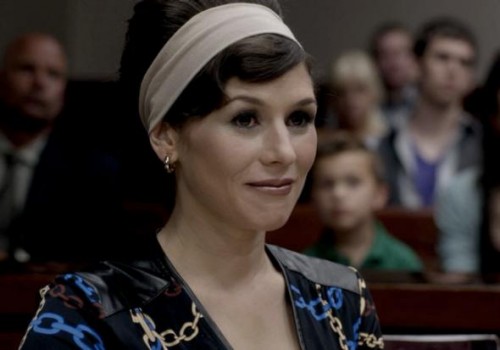
Morello in court
Morello in court


This guest post by Scarlett Harris originally appeared on The Scarlett Woman and is cross-posted with permission.

One of the most explosive backstories on this season of Orange is the New Black has been Lorna Morello’s.

The Italian-American, played by Australian actress Yael Stone, is presumably in prison for credit card fraud, as the opening segments of her life before Litchfield in episode four of the second season that aired last night on Showcase would indicate. We see a Jersey Shore-esque Morello returning to her chaotic familial home after seeing Twilight at the cinema for the “14th time.” She retreats from her accusatory sister, ignorant father, wayward nieces and nephews and sick mother to her bedroom which is adorned with posters of West Side Story (the classic tale of Romeo and Juliet in 1950s New York, with a healthy serving of racism, which Morello is inclined to dish out), male celebrities, and wedding collages. She pauses to caress the glossy face of one of them before calling a mail-order luxury clothing company to request a refund for the patchwork Prada platforms she’s currently wearing but claims she never received.

Many of the women of OITNB have been busted for financial fraud—Sophia and Gloria come to mind—so it seems logical that Morello would be in for a similar crime. But as the episode progresses, it is revealed that Morello’s inner demons are much more extensive. During a trip to the post office to retrieve parcels of designer goods she’ll no doubt attempt to get reimbursed for, she “literally crashes into” the infamous Chris-tuh-phuh, as Morello pronounces it. Christopher promptly asks her out for a coffee after their meet-cute, and the rest is history, if the future Litchfield inmate is to be believed.

The juxtaposition between the following flashback scenes—Morello getting ready for a weekend away with Christopher and her trial on charges of stalking, harassment, violating a restraining order and credit card fraud—illustrates the fractured reality she exists in. Despite Christopher electing not to pursue Lorna after their first date, Morello still believes they’re together years later.

unnamed

Stone plays Morello so sympathetically the audience feels sorry for her when we—or at least her fellow inmates—should approach with caution. The consensus at Litchfield seems to be that Morello’s fantastical romance with Christopher may not be etched in truth and word slowly starts to get around that her former “fiancé” is marrying another woman. When you’re bonding with Crazy Eyes (whom the show is taking pains in its second season not to fetishise and to address by her given name, Suzanne) about unrequited love, it’s clear that something’s not quite right.

Morello’s abovementioned childlike room, her harping on about how her and Christopher’s romance is “meant to be,” like something out of Notting Hill, Pretty Woman, or Cinderella, and her psychotic break that sees her stealing the prison van to break into Christopher’s marital home, shows just how damaging society’s “wedding industrial complex and… [its] need to infantalise grown women,” as Nicky puts it, can be. It’s also an all-too-common one drummed into Western women everywhere they turn.

In a recent Buzzfeed longread, Anne Helen Peterson dissects the films based on Nicholas Sparks’ novels and their contribution to a Taylor Swiftian world where men perform romance and women have it thrust upon them:

“… Many women (and some men) use Sparks’ narratives to replace the lack of emotional intimacy and satisfaction in their own lives and, as a result, cultivate unrealistic ideals about what a relationship—and love—should resemble…

“The Sparks narrative offers a life—and a love story nested within it—that extracts its protagonist from [the concerns of everyday life] and consolidates the demands of life into one, simple task: Open yourself to love, and love in return.”

In a way Morello is like the mirror image of the Santa Barbara shooter, Elliot Rodger: the same but opposite. Rodger took his anger at his lack of attention from women—spurred on by porn and men’s rights forums—out on the female population in general in the most violent way, whereas Morello continues her stereotypically feminine obsession with romance and fixates on one man, dangerously crafting an alternate life with him. In Morello’s fictional existence no one died, but that’s not to say she didn’t try to kill anyone. (In the courtroom she is accused of strapping a homemade bomb to Christopher’s fiancé’s car.) Think that’s too heavy handed a tar with the same brush? They are both criminals with mental health issues, after all.

Morello in the bathtub


In one of the closing scenes of the season, Morello simplistically attempts to explain to the cancer-stricken Miss Rosa the plot of one of her favourite movies, Toy Story (again with the juvenile interests–though, to be fair, Toy Story has universal appeal). Her warped grasp of the children’s classic leads Rosa to exclaim, “You have one fucked up view of the world, kid!”


unnamed

Scarlett Harris is a Melbourne, Australia-based freelance writer and blogger at The Scarlett Woman, where she muses about feminism, social issues, and pop culture. You can follow her on Twitter.


Bitch Flicks’ Weekly Picks

Check out what we’ve been reading this week–and let us know what you’ve been reading/writing in the comments!

recommended-red-714x300-1

#IfTheyGunnedMeDown Shows How Black People Are Portrayed in Mainstream Media by Yesha Callahan at The Root

Why Lauren Bacall was one of Hollywood’s greatest feminist icons by Andrew O’Hehir at Salon

3 things you might not know about the badass feminist icon Lauren Bacall by Katie at Feministing

4 Ways Robin Williams Changed the Way We Think About Feminism and Gay Rights by Derrick Clifton at Mic.

First-Look Photos From Ava DuVernay’s ‘Selma’ by Tambay A. Obenson at Shadow and Act

Lyle Director Stewart Thorndike on Making the Lesbian Version of Rosemary’s Baby and the Need for Feminist Horror by Kelcie Mattson at Women and Hollywood

Movie Review: Sister, An Intimate Portrait Of A Global Crisis by Amanda at Bust

Sam Taylor-Johnson, Lisa Cholodenko, Sarah Polley and Other Female Directors on the Movies That Influenced Them by Jeff Oloizia at T

Ayn Rand’s The Devil Wears Prada by Mallory Ortberg at The Toast

We Heart: Joseph Gordon-Levitt, Self-Proclaimed Feminist by Emily Shugerman at Ms. blog

Sylvia Rivera and Marsha P. Johnson: Trans Pioneers, BFFs, Film Stars by Jamilah King at Colorlines

Sneak Preview Of ‘Women And The Word: The Revival Move’ at 5th Annual Soul of Brooklyn Festival Next Week by Sergio at Shadow and Act

Girls on Film: 5 things that need to happen before Hollywood will ever truly change by Monika Bartyzel at The Week

Sexism and racism permeate music videos, according to new report at The Guardian

Yes, Guardians of the Galaxy‘s Nicole Perlman Wrote A Black Widow Script. But Marvel Has “A Lot On Their Plates.” by Carolyn Cox at The Mary Sue


What have you been reading/writing this week? Tell us in the comments!


My Love Letter to ‘Queen’

From her solo travel to the two gorgeous cities, Rani is not so much “magically” transformed. She is the same person, albeit now adorned with a smile and a quiet self-confidence. In the end, she is just better equipped to deal with anything. This is a milestone film for Bollywood and Indian cinema in general. In this character-driven film, Rani is pretty, but she stands out much more because of her inner beauty, honesty and spirit of life – and this progressive film happened in Bollywood.

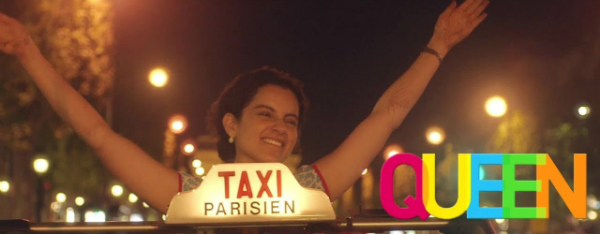
"I want to go on my honeymoon"

Guest post by Nandini Rathi.

ezgif-com-gif-maker-3
“I want to go on my honeymoon.”

untitled-5

If you have courage to do something unconventional (like going solo on your honeymoon, not to mention to far-away, unknown cities) in spite of a heavy heart, there has to be hope. Queen (2014) is a gift to every girl who thinks she can be one. I love this film. I can watch parts of it again and again, smiling and laughing. The soundtrack happens to be just about the perfect accompaniment. Queen is the story of Rani Mehra (Kangana Ranaut), a sweet and submissive girl from Delhi who is on the verge of getting married. But Vijay, her long-term-boyfriend turned fiancé, calls it off two days before the big day – after all the extensive arrangements have been made and paid for by the bride’s family. After his stint at London, Vijay is convinced that he can do much better for a wife than the naive and simple Rani. (Rani also doesn’t have a great fashion sense in the beginning which classifies her as “un-modern.”)

queen2

Although shaken and heartbroken, Rani precariously decides to go alone on her once eagerly planned, much-awaited honeymoon to Paris and Amsterdam. This is an unconventional step for her (or for anyone in her place) and especially her protective family, who have diligently sheltered her from the unknown all her life. But you can get this gist from the trailer and the first ten minutes into the film. The adventure awaits.

From her solo travel to the two gorgeous cities, Rani is not so much “magically” transformed. She is the same person, albeit now adorned with a smile and a quiet self-confidence. In the end, she is just better equipped to deal with anything. This is a milestone film for Bollywood and Indian cinema in general. In this character-driven film, Rani is pretty, but she stands out much more because of her inner beauty, honesty and spirit of life – and this progressive film happened in Bollywood.

queen1


There are so many things about the film that make my heart sing,  such as watching the main heroine dance bad-ass for herself (in the age  of Bollywood   numbers that directly cater to the  male gaze). Kudos to director Vikas Bahl for paying attention to minute details in creating such moments. The best thing I find about Rani’s character is how broad-mindedly she accepts people who are different from her. She genuinely appreciates people for who they are and this inspires her to find herself. Rani just knows to live and let live.

In Paris, she meets and befriends Vijaylaxmi, the fun-loving, bed-hopping, hotel staff member of French-Spanish-Indian ethnic mix. In Amsterdam, she meets Oleksander, Taka, and Tim, her gang of roommates and partners in adventure. She also meets a fellow South Asian, Roxette, a pole dancer – stripper in the Red Light district. Rani’s interactions with all of these people are nothing short of breathtaking. It is the likeability of her character and the candid conversations (co-written by Ranaut herself) which urge the audience (especially the more conservative audience of India) to keep their biases away, at least temporarily.

From Lisa Haydon as Vijaylaxmi to Chinmaya Agrawal as Rani’s kid brother, Chintu, the supporting  actors in Queen have been perfectly cast. As for Kangana Ranaut, she has proved her brilliance and malleability as an actress by playing Rani, who is a fresh change from her heretofore urban and edgy characters. To borrow from film critic Anupama Chopra’s perspective, even though in her eight-year-old film career Ranaut had shown remarkable talent, it hadn’t been easy to love  her dark and volatile characters. That is, until Queen.

Had Vijay married Rani, she would have never realized how capable she is – of taking care of herself, of befriending fun people regardless of language, race or nationality, of being a natural entrepreneur (cooking and selling gol gappas in Amsterdam) and of being a spontaneous bad-ass in unexpected situations e.g. defending her purse from an aggressive pickpocket, and having a “lip-to-lip” kiss with the dishy Italian restaurateur to prove that Indians are better kissers.

foreign-actors-in-queen
Rani with hostel roommates Oleksander, Taka, and Tim in Amsterdam


Her newfound friends in Paris and Amsterdam would fondly remember her as “Queen,” which is what, as she tells them, her name means. Originally, it was Vijay who fondly called her that while trying to woo her. By the end of the trip, Rani has indeed claimed the invisible crown of her namesake. She breaks it off with Vijay in the most affectionate way, and with a genuine “Thank you.” If it wasn’t for his stupidity, her life would have been a completely different story.

The other day I was thinking what is it about the movie that especially resonates with me. As a quote lover, I saw a few well-dramatized one liners:

Don’t judge a person by their outfit:

There can be a broad-minded, caring, and conscientious soul within. Vijay lets Rani go because she seems too “behenji” for his new status. “Behenji” is a mild slur for an unfashionable, not-hip, young woman. Rani is hella brave and just needed to breathe in free air to find and become herself.

This only sets her in contrast with Vijay’s double standards. He’s the kind of guy who drinks and yet yells at his girlfriend for having sipped on celebratory champagne. The guy who on the forehand wants a modern and fashionable partner and on the backhand, freaks out over normal things she does for pleasure (like dancing in public in a group of girls), if it doesn’t fit the bill of what he and his parents would expect from the would-be wife/daughter-in-law. He wants an independent-looking girl (from her selection of clothes and make up maybe) but not one who actually has a mind of her own or wants to do something worthwhile with her life.

Nah, everyone deserves to feel free and dance like this with friends!

untitled-7

Grandmas are Rockstars: 

This reminds me of other insightful and progressive Bollywood grandmas like in Pardes (Ghai, 1997) and Vicky Donor (Sircar, 2012). Rani’s grandmother can see the big picture when the rest are lost. She encourages Rani to chuck any regrets or worries, and believe that the loss of Vijay happened for the better. She even asks her to get out there and meet a gora munda (implied as “white hottie”) in Europe.

Recognize and call out the Hypocrisy:

Love this.

Rani with Vijay's mother in Delhi (right before the end) “ You left without telling us. We were so worried.” “But you didn’t call even once”
Rani with Vijay’s mother in Delhi (right before the end):
“You left without telling us. We were so worried.”
“But you didn’t call even once”


When Vijay meets Rani to get her back, at the cafe in Amsterdam, he claims that he needed to protect her from her friends who he refers to as “weird foreigners,” who he supposedly knows better. Rani has a staggering moment of disenchantment. Especially all this after Rani has had flashbacks of the times Vijay’s patronization had suffocated her.

Who doesn’t want to run happy like that in a gorgeous city (realizing they are actually over a long term, controlling ex)?

untitled-4

Travel for its “crazy” and “wow” moments: 

Knowing that there are ways of living different than one’s own, and that it’s possible to share stories and adventures with all kinds of people that one never expected to meet — that’s some magic!

eiffel

And for the homecoming:

Seeing the beautiful world beyond your own doesn’t result in loving home less. At the end of her journey, Rani is the same girl who is deeply attached to family and exceedingly happy to reunite with them. Even her family acknowledges that they can’t and need not always cocoon her.

ezgif-com-gif-maker-1

Rani hasn’t become flashy just because of the trip “abroad.” She shares a laugh with her mother while recounting that the kurta she got in Amsterdam turned out to be “made in India.” Even when she imbibes a slightly different wardrobe, it happens like a shot of added diversity, a natural “mix ‘n’ match.” It is just cute to see Vijaylaxmi donning on her (Rani’s) kurti at the train station. One doesn’t have to wave a magic wand and discard a former version of oneself in order to evolve for the better.

ezgif-com-gif-maker

Rani is still a sweet and soft-spoken woman, who, as Chopra puts it, has grown a smile and a spine. A queen complete with pride and dignity. See the invisible crown?


Nandini Rathi is a recent graduate from Whitman College in Film and Media Studies and Politics. She loves traveling, pop culture, photography, and adventures. She wants to be immersed in filmmaking, journalism, writing and nonprofit work to ultimately be able to contribute her bit toward making the world a better place. She blogs at brightchicdreams.wordpress.com 

Seed & Spark: Change From The Inside Out

So where are the meaty roles? What do you do when the women you’re asked to play aren’t really women at all, but stereotypes borne out of a writer or producer’s dream of what a woman is supposed to be (or what he thinks she represents to him)? The answer is: make your own work. Change doesn’t come from trying to twist pre-existing notions. It’s borne from within and then you act on it.

Caption: Our current short, Multiverse, is about the pressures anyone can feel about entering social situations.
The short Multiverse is about the pressures anyone can feel entering social situations.


This is a guest post by Rebecca De Ornelas and Michael DiBiasio.

Rebecca On The Challenges of Equal Representation

Acting, from the point of view of trying to get work, is difficult in and of itself. Every role has a fit, and it often comes down to a numbers game to begin booking roles at all – never mind parts that reflect a healthy and multicultural representation of women as we are in the real world.

Many characters I’ve auditioned for over the past several years may or may not have had a name, but in the breakdown they’re often qualified as “The Best Friend,” “The Loyal Wife,” “A Hooker.” Far too many are written in service to a male lead or are female leads solely looking for a man. When you add the fact that I’m part Hispanic, there’s a whole other slew of stereotypes to contend with. You don’t know how many times I have been asked to “Do it again, like Rosie Perez.”

So where are the meaty roles? What do you do when the women you’re asked to play aren’t really women at all, but stereotypes borne out of a writer or producer’s dream of what a woman is supposed to be (or what he thinks she represents to him)?

The answer is: make your own work. Change doesn’t come from trying to twist pre-existing notions. It’s borne from within and then you act on it.

Michael On His Journey to Writing Better Female Characters

To be completely honest, when I first started writing, and for a while after, it was from a decently misogynistic point of view. I don’t completely blame myself for this, but I think it’s important to discuss the point because I’m an example of how things can change for the better. In the years leading up to meeting Rebecca, I had already shifted my perspective substantially. A few friends, male and female, had been calling me out on various forms of sexism that had carried over from growing up in a more traditional environment. But it wasn’t until I met Rebecca that I really began the journey towards becoming a better man.

I don’t think it’s a coincidence that my work also improved, not only in terms of perspective but also of quality.

The dirty secret of ignorance is that, when you’re someone espousing an unjust point of view, you always know that you’re hiding from the truth. Too often, many men make the wrong choice when this knowledge is forced to the surface. We get afraid, and when we’re afraid, we get defensive.

This, more than anything, is what’s holding our society back from more equal gender representation in film and TV. Yes, the first thing we need is more statistically equal representation among writers, directors, producers, actors, and so on, not only in terms of gender but also race. But the second thing we need, is more men (especially those with the power to enact true change) to admit and address the fact that the America we most often see on our screens does not represent what the country actually looks like.

The cast for The Videoblogs is comprised of nearly all-women.
The cast for The Videoblogs is comprised of nearly all women.


Speaking to Rebecca’s point, we’re making The Videoblogs for a lot of reasons. I spent most of the past two years on my website sourcing these reasons out. Essentially we’re seeking to participate in change. With this project, that means doing what we can to contribute to a greater dialogue on mental health with a film that features a non-stereotypical cast.

Most of the characters in the film (particularly the three central characters) are women, and characters vary by race such that they hopefully represent actual Brooklyn. The relationships between men and women in the film are based on everyday interaction rather than only on flirtation and sex.

As Rebecca notes, more than anything else we’re looking to “be the change.” Advocacy like what gets discussed here on Bitch Flicks does a world of good. As artists and filmmakers, though, it’s also up to us to challenge the status quo and force the rest of the world to follow suit by supporting that change.


rd_head

Rebecca De Ornelas (Actor/Producer) was born and raised in Brooklyn, New York. In addition to The Videoblogs, she is also currently working on OnTheRoad Rep’s production of George Kelly’s The Show-Off. For more on Rebecca, please visit her site: www.rebeccadeornelas.com.

michael_bio_pic

Michael DiBiasio (Writer/Director) is currently in preproduction on his first feature film, The Videoblogs. To learn more about his work, or to watch his new short Multiverse (produced with Rebecca), please visit www.mdibiasio.com.

What ‘Baby Daddy’ Can Learn from ‘Parks and Recreation’

Being friends with people of the opposite gender is important because ideally it can bridge empathy gaps. Leslie and Ron have a mutual respect for each other even when they don’t see eye to eye. Despite Ron being a super macho guy that you would assume to be sexist, he’s actually very supportive of Leslie. Whenever they have disagreements, it’s more to do with her enthusiasm for government than with her gender.

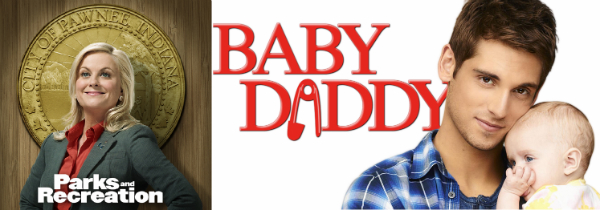
Baby Daddy and Parks and Recreation
Parks and Recreation and Baby Daddy


This is a guest post by Nia McRae.

Baby Daddy is a cute and funny show with a progressive edge. However, it’s not without its flaws. It deconstructs stereotypes in some areas but reinforces stereotypes in other areas. Its issues could be fixed by taking cues from one of my favorite modern comedy shows, Parks and Recreation.
First, the good: BD accomplishes its main goal which is to be funny. The funniest moments usually include Ben’s spitfire mother, Bonnie and goofball friend, Tucker, played by the talented Melissa Peterman and Tahj Mowry respectively. It shines in other ways too:

1. Male stereotypes are deconstructed.

Ben, Tucker, and Danny in Baby Daddy


Ben’s two roommates are Danny–his brother–and Tucker. All three of them are shown handling Emma with tender love and care. Their softness towards her is never framed as emasculating. In the beginning stages, the three bachelors fumble when it comes to taking care of Emma but it has less to do with them being guys and more to do with them being young and inexperienced when it comes to babies.

Danny is a handsome hockey player who predictably is a ladies’ man. In any other show or movie, he would be a dumb and/or mean sports player character or he would be an emotionally-stunted playboy archetype. He can be dumb at times but so can his brother who isn’t a sports player. So, Danny’s occasional dimwittedness is framed more as a family trait than a jock trait. He refreshingly contradicts the jock stereotype by being sensitive, romantic, and sweet. Despite his promiscuity, he is secretly in love with his childhood friend, Riley.

2. Old-fashioned mother stereotypes are dismantled.

Bonnie is far from the 1950s-stereotype perfect mother and that’s what makes her so entertaining. She’s a sassy, loving mother and just like her sons, she enjoys playing the field. Usually women, especially mothers, are expected to be the moral center. Sometimes, she is the voice of reason. But most of the time, she exhibits the same immaturity, narcissism, and selfishness as her sons but never does it go to the point of her being irredeemable. She isn’t demonized for being imperfect and free-spirited. Just like Elaine from Seinfeld, her quirks and flaws make her funny, charming and likeable.

3. Racial minority characters and gay characters aren’t stereotypical.

Tucker is one of the leads and he is African American. His personality has nothing to do with his race. Various racial minorities show up as minor characters throughout the series, never appearing as offensive stereotypes. Positive depictions of gay people are in the episode “The Christening” and a few other episodes too.

Now, let’s move on to the bad:

1. There are too many underwritten female characters.

In a show about a young man raising a daughter, you would think the female characters would be better than this. When it comes to the male characters on BD–like Tucker’s uptight dad, for instance–there are layers to them; they’re never as bad as they seem. However, if they’re not boring pretty faces like Tucker’s girlfriend, Vanessa, then most of the female side characters are just as evil as they seem. They’re also usually the source of conflict–whether it’s Riley’s childhood female rival or Danny’s female general manager. The worst offender was Emma’s mom, Angela, who was already framed as a terrible slut for forgoing being a mother. Her terribleness was further emphasized by having her be an evil seductress who tries to tear Riley and Ben apart.

Solution:

Add more three-dimensional female characters that have quirks and interests the way the male characters do. Every major and minor female character on P and R is unique and interesting because they aren’t solely defined by being a girlfriend. In P and R, April Ludgate could have easily been written as a one-dimensional vixen like Angela. But April’s meanness is not shaped by her sexuality. And every now and then, she shows her softer side. She’s grown over time, showing that she has great admiration and respect for Leslie even if outwardly she pretends to be annoyed by her.

Even though Tammy, Ron’s ex wife, can be argued to be similar to Angela of BD, she was written in a more tongue-in-cheek way for the audience to laugh at-especially considering the fact that the actors that play Ron and “evil” Tammy are married in real life. So, the character was more a parody on the seductress archetype.

Leslie & Tammy on Parks and Recreation
Leslie and Tammy on Parks and Recreation


2. There’s too much female rivalry and not enough female friendship.

Tucker, Ben, and Danny are roommates who have a friendship that’s a joy to watch; they joke with each other, they support each other, they tease each other, and they love each other even when they disagree. Their positive male friendship is at the center of the show while positive female friendships are sadly nonexistent. Female characters usually barely interact with each other. When they do, there’s either indifference or an adversarial feeling between them. Even Bonnie succumbs to it; she shows hostility towards the only other prominent female character, Riley. She gets along better with Tucker more than women her own age. There’s one episode where Riley explains she doesn’t have female friends because all girls are catty. I’m sick of male friendships being framed as superior to female friendships.

Cat Fight on Baby Daddy
Cat fight on Baby Daddy


Solution:

P and R portrays female friendships so much better by not flattening female characters or their relationship to each other. I’m not asking BD to romanticize female relations either. Leslie Knope gets along better with some women (like Ann) than she does with other women (like Joan Callamezzo) just like she gets along with some men (like Ron) better than other men (like Congressman Jamm). That’s life. The show did have women disliking each other–for example, April disliking Ann. But they also showed women getting along in the form of Ann and Leslie. Who someone gets along with depends more on how their personalities mesh together rather than gender. P and R doesn’t set up a false dichotomy that all women are catty and all men are nice. Women get to be individuals just like the men do. Please follow suit, BD.

Ann & Leslie on Parks and Recreation
Ann and Leslie on Parks and Recreation


3. There aren’t enough entertaining platonic male-female relationships

Just like I don’t like gender stereotypes being used to dismiss same-sex friendships between women, I don’t want gender stereotypes being used to dismiss friendships between men and women. If women can’t be friends with women because of cattiness and they can’t be friends with men because of sexual/romantic tension then who can women befriend? The love triangle between Ben, Riley, and Danny and then Ben, Riley, and Angela adds to the archaic belief that men and women can’t be friends. Making Riley the love interest/childhood friend is an easy trope to use to create drama between the male leads. Tucker is the only one of the three male leads that doesn’t have feelings for her.

Solution:

Being friends with people of the opposite gender is important because ideally it can bridge empathy gaps. Leslie and Ron have a mutual respect for each other even when they don’t see eye to eye. Despite Ron being a super macho guy that you would assume to be sexist, he’s actually very supportive of Leslie. Whenever they have disagreements, it’s more to do with her enthusiasm for government than with her gender. They advise each other on different matters and they help each other out when one is in trouble. Their friendship isn’t framed as a consolation prize to the “superior” thing of being a couple. Instead, their friendship is presented as an edifying, significant thing that helps make them better people. And it’s not just about deep connections, friendships between male and females can be fun and lighthearted. Just look at Donna and Tom.

Donna & Tom
Donna and Tom on Parks and Recreation


Add more compelling scenes with Tucker and Riley. Add to the community raising Emma by putting in female characters for the male characters to befriend. I’m not banning BD from showing romantic relationships. I’m just saying don’t add fuel to the “friend-zone” fire by showing male-female friendships as this desert/limbo/wasteland. Show the good sides of being platonic the way P and R does.

4. Stop scraping the comedic bottom of the barrel by making fat a continual punch line.

Riley, like Monica from Friends, goes from being fat and insecure to being skinny, still insecure, but more conventionally attractive and therefore, more aesthetically pleasing to the boy she likes. There are many jokes that refer to Riley once being fat. Danny loved Riley even when she was larger which I guess is supposed to show he has a heart of gold. But chubby women shouldn’t be framed as a walking punch line nor should they be viewed as unattractive beasts that only the purest hearted of men could love/pity.

Solution:

Take Donna of P and R for instance. She’s confident, witty, and beautiful and she has no trouble attracting men. She carries herself well and dresses in flattering clothing. She’s shown doing the rejecting rather than being rejected.

Donna on Parks and Recreation


She doesn’t serve as a thing to be pitied. Unlike Riley, her weight isn’t a running gag. Riley’s transformation from ugly duckling to swan didn’t have to be the same old cliché of physical transformation. Why not have made her shyness the true problem instead of her perceived physical unattractiveness? Having her attractiveness stem from becoming more confident and vivacious would have been a nice change from the weight loss arc. It’s too late to alter her character back story now, so I suggest stopping the fat jokes altogether. Also, maybe introduce a Donna-like female character whose weight isn’t her sole defining trait.

I can see BD is trying to be an enlightened comedy and it has a lot of potential. By climbing out of its cliché pitfalls, it can become a truly modern show just like P and R has done. Not only can it improve in the ways I suggested and still remain funny, it can be even funnier. After all, the best humor comes from truth, not from stereotypes (unless you’re parodying those stereotypes, of course).


Nia McRae graduated summa cum laude from Medgar Evers College where she earned a Bachelor of Arts degree in Liberal Studies with a concentration in history. She has a strong passion for critiquing racial and gender politics in the media and putting it in historical context.

I Scream, You Scream, We All ‘Scream’ for Feminism!

The ‘Scream’ franchise, after all, is about the women. It could be argued that most horror movies are about the women; female victims make for easy targets and garner more of a reaction from the audience. But ‘Scream’ was one of the first mainstream horrors to advocate for equal-opportunity killing: where the men are as fair game as the girls, and two out of the seven killers have been women. More than that, they’ve been the masterminds of the whole operation; using the clueless and fame-hungry men as pawns in their bloody chess game.

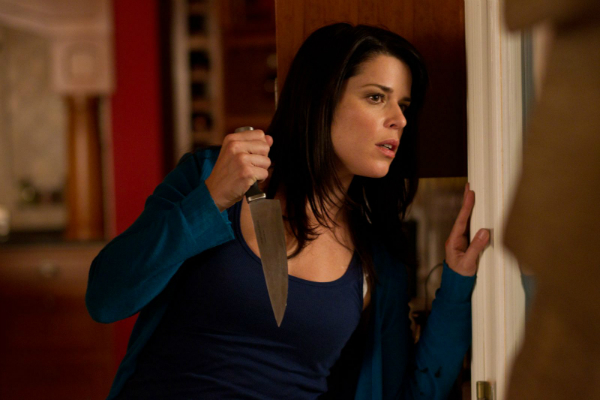
Neve Campbell as Syndey in Scream
Neve Campbell as Sidney in Scream 4

This guest post by Scarlett Harris originally appeared on The Scarlett Woman and is cross-posted with permission.

Scream 4 marked the most recent installment of the horror franchise, which ended in much the same similar way as the past three chapters.

The killer comes back from the dead, gun-wielding Gale Weathers fires a bullet, and central scream queen Sidney Prescott gets the last laugh, with fellow original Woodsboro survivor Dewey fumbling around on the sidelines.

Fifteen years after the original, it is still unbelievable as to how Dewey is on the police force, Gale is still a ball-busting rogue sleuth, albeit with a lot more Botox than the last time we saw her, and Sidney has finally wiped that weepy-eyed look off her face and is kicking ass and taking names.

In the first installment, Sidney is an ineffectual twit who berates horror movie starlets for “running up the stairs when they should be going out the front door” when, only moments later, she does exactly the same thing!

But as I watched each movie, I slowly started to root for Sid. Not only was she dealing with the fallout of her mother’s death and the wrongful allegation against Cotton Weary for the crime in the first film, but she was also dealing with a rat of a boyfriend, Billy, friends, high school and trying not to crumble under the pressure of it all. So I’ll cut her a break.

In the second film, Sidney undergoes remarkable growth due, in part, to going off to college, but the audience can see in the way Sidney carries herself that she believes the murders are over. Oh, how wrong she was! I especially love the final scene in Scream 2, with Sidney outsmarting (one of) the killer(s), Mrs. Loomis, with the help of Cotton. Gale’s there, too, holding on til the bitter end.

The Scream franchise, after all, is about the women. It could be argued that most horror movies are about the women; female victims make for easy targets and garner more of a reaction from the audience. But Scream was one of the first mainstream horrors to advocate for equal-opportunity killing: where the men are as fair game as the girls, and two out of the seven killers have been women. More than that, they’ve been the masterminds of the whole operation; using the clueless and fame-hungry men as pawns in their bloody chess game.

Traditional horror operates on the premise that “she alone looks death in the face.” Not Scream, though.

Ashley Smith in “Final Girl(s) Power: Scream, writes of not only Sidney, but Gale and Dewey, staring death in the face:

“The success of the narrative is predicated now on not an individual woman, extraordinary and significantly boyish, but on the cooperation of two women who together stab, shoot and electrocute the two killers into oblivion. This moment is also notable because it is one of the many instances in Scream that utilizes very self-referential language, not only does it rework the figure of the Final Girl, it talks about itself reworking the figure of the Final Girl. This moment is an example of how the film explicitly works on behalf of the female spectator. Sydney/Campbell is speaking for and speaking as one of the girls in the horror audience who want to see active female characters fighting for each other, and significantly not even bound by a sentimentalised friendship.”

Sidney and Gale start out as sworn enemies (as murdered bestie Tatum Riley says after Sidney punches Gale: “‘I’ll send you a copy.’ Bam! Bitch went down! Sid: super bitch! You’re so cool!”), but I suppose bonding over the murders of pretty much everyone you know will solidify your connection, whether or not it’s one of mutual affection for each other, or mutual hatred for the killer(s).

And then there’s Dewey. He’s a funny character and David Arquette plays him to perfection, but the sum of his survival involves him always arriving to the party 10 seconds late and missing all the action. Sure, he’s been stabbed a few times, but he’s more of the token surviving male than a fully well-rounded character. As Smith writes, “the text allows for powerful and active female figures [that] it compensates [for] with weak, ineffective male ones.”

Before Scream, to survive as a “final girl” you had to be a virgin. This works well for high school victims, as a lot of high school students are virgins. And hey, this is the movies, so so what if it doesn’t reflect real life?

Rose McGowen as Tatum in Scream


The first Scream begins with Sidney as a virgin, but in the height of the killings, she throws caution her virginity to the wind and has sex with Billy. In any other horror film, this would mean she dies. (Casey Becker, Drew Barrymore’s character, and her boyfriend, Steve, die in the opening scene, as does Tatum, girlfriend of Stu, later on in the movie in the doggy-door scene, above. You might imagine these kids to be non-virgins, as they’re in seemingly committed, loving relationships, but this is never directly addressed.) But Scream, being the “meta-text” that it is, takes a page out of Buffy’s book, and the non-virgin fights to live another day.

Drew Barrymore as Casey in Scream

But the exemplar of a strong female character in Scream is Gale. She’s not only a ball-busting, high-powered tabloid journalist who fights to see an innocent man go free but, as I mentioned above, she’s always the last one standing, alongside reluctant partner-in-crime Sidney.

In Scream 4, she’s a struggling stay-at-home novelist with writer’s block, so when Sidney—and the subsequent murders—return to Woodsboro, she jumps at the chance to help with the investigations. Dewey, and his lovesick underling Deputy Judy, don’t want her interfering with the case, so Gale goes rogue.

It is Gale who uncovers most of the developments in the case, including who the killer is. And, according to Melissa Lafsky at The Awl, she’s breaking a lot of other ground, too :

“She [Courteney Cox] slashes her way out of the 40-something female stereotype, and takes over this movie with a flick of her scorn-ready… brow. Let’s face it: Few film archetypes are more brutal than the ‘older woman in a horror movie’—either you’re the psycho nutcase… or you’re the pathetic victim… And no matter what, you’re ALWAYS an obsessive mother.

Courtney Cox as Gale Weathers in Scream 4


“Cox pulls off a pretty impressive coup, upstaging not only the cute flouncing teens, but also her 15-years-younger self. Her character—now successful, childless(!), and utterly bored with the ‘middle-aged wife’ role—shrugs off all orders to ‘stay out of it’ and leaps back into the murderous fray, husbands, younger blondes and kitchen knives be damned. She takes nothing for granted, and thinks not a second about sneaking into dark corners to catch homicidal fruitcakes (and bitch is 47!!!). While Arquette and Campbell slide into their ’90s cliché groove, Cox reinvents and one-ups, kicking this meta-fest to life and providing the only sexy thing onscreen, gelatinous lips and all. Gale Weathers is shrewd, aggressive, cunning, but never heartless; despite it all, she still loves that stupefied ass clown Dewey. And she does it all while sporting a better ass than the 20-somethings. And… she doesn’t even have to die for it!”

You go, Gale!


Scarlett Harris is a Melbourne, Australia-based freelance writer and blogger at The Scarlett Woman, where she muses about feminism, social issues, and pop culture. You can follow her on Twitter.

‘Teenage Mutant Ninja Turtles’ – A Missed Opportunity for a Strong Female Lead

By far the most disappointing aspect of film is the verbal sexual objectification of April O’Neil. She may not be scantily clad, but the male characters (mostly Mikey and Vern) in the film frequently make sexual comments to her, to which her response is complete and total silence. For an actress who has expressed plenty of feminist quips and spoken so adamantly about “refusing to flirt on set,” even going into detail on how she handles it, saying “you never have to feel like someone has power over you,” I’m surprised to not see that influence on this character. There was no script when she signed on to star in the film, and from interviews I’ve watched it seems like the storyline was a collaboration between her, the director, and the producers.

April O'Neil
April O’Neil & Vernon Fenwick


This is a guest post by Melanie Taylor.

There has been no escaping the onslaught of Teenage Mutant Ninja Turtles promotion that’s been inundating every media outlet over the past few weeks. The hype has been huge and the hate has been heavy, even from the beginning back when there was first talk of Michael Bay making the turtles into aliens. Everyone protested Michael Bay “ruining their childhood.” Many fans also lamented the presence of sexpot actress Megan Fox filling the shoes of journalist April O’Neil, the protagonist of the film and the human connection to the outside world. Hate and hype aside, the film carried on, and the cast was filled out by Will Arnett playing Vernon Fenwick, her goofy cameraman sidekick, and William Fichtner as Eric Sacks, the obligatory evil genius.

I, for one, was excited to see Megan Fox in a film that does not revolve around her sexuality. In promotion for the film, Fox says that her character is “courageous” and “ambitious…fighting for the truth,” a Joan of Arc type of character. The director, Michael Liebesman, echoes her sentiment, stating that he didn’t want April to just be eye candy, that she is meant to be an integral part of the Turtles’ survival and mission. While the film starts strong and leads with April aggressively interrogating a source, determined to find an opportunity to report something beyond a fluff piece, the “ambition” teeters off and is never fully realized.

Megan Fox as April O'Neil
Megan Fox as April O’Neil


The first half of the film we follow her character in her quest to uncover the truth, get a story, and stop the destructive Foot Clan that has been causing havoc in the city, but in the second half of the film April completely abandons her career ambitions and is basically just along for the ride in what seems like an endless 45 minute long action scene. I say “first half” and “second half” because there is no third act in this film. There is no wrap up of the main character’s goals or problems, only a stop-the-bad-guy-and-say-goodbye-to-the-Turtles sort of ending. However, you can see from released B-roll footage that at one point there was a third act of some kind at some point.

On top of the lack of a third act, the film almost seemed like a rip off of the 2002 Spiderman storyline — bad guy scientist has a plan to take over the city and kill people with some kind of chemical and the good guys must stop him. The film was practically a parody of the action superhero genre, which actually made the generic dialog more tolerable to think of it that way.

By far the most disappointing aspect of film is the verbal sexual objectification of April O’Neil. She may not be scantily clad, but the male characters (mostly Mikey and Vern) in the film frequently make sexual comments to her, to which her response is complete and total silence. For an actress who has expressed plenty of feminist quips and spoken so adamantly about “refusing to flirt on set,” even going into detail on how she handles it, saying “you never have to feel like someone has power over you,” I’m surprised to not see that influence on this character. There was no script when she signed on to star in the film, and from interviews I’ve watched it seems like the storyline was a collaboration between her, the director, and the producers.

Vern jokes about the nice view of her rear end when she’s leaning out a window, and Mikey makes comments throughout the entire film about being attracted to her, including implying that she’s giving him a boner. Her response is to stare blankly at him like a personality-devoid sex object. Not once does she tell him to cool it, chill out, stop, or respond with some witty come back at least. Aside from the fact that he’s a teenager and she’s a grown woman, she’s there to get a story and help the turtles, not give them boners.

April leans out of a window to snap a pic


Although she does have moments of strength where she saves them, the Turtles don’t seem to care about her beyond thinking she’s hot. Fox has repeatedly stated that she doesn’t mind being the sexy aspect of a film and while a little sex appeal in an action film makes sense, it’s a bit of a contradiction to talk about April being this great role model for girls because she confronts danger and has career goals, both great traits, when that character is also painfully silent in the face of unwanted sexual attention. You can have a sexy character who is not a silent sex object.

This was a missed opportunity for Megan Fox to showcase a truly strong female action hero. When Mikey makes comments about how she can always find him “here” as he points to her “heart” aka chest, she could have shut him down with something like, “Cool it, kid. I’m here to get a story!” or something more clever like what she does in real life. Instead we got deer in the headlights silence as the audience laughs at how much he is drooling over her.

For what it’s worth, this film technically passes the Bechdel Test – April has conversations with her female boss, played by Whoopi Goldberg, and her female roommate in two cute scenes that get a laugh, but the film and entire franchise still suffers from the “Smurfette Principle.”

Shredder, the whitewashed bad guy with boomerang-like knife hands, and Splinter, the rat father of the turtles, could not have been less developed and less interesting as characters. There was little to no backstory for them. Splinter was hideous to look at and Shredder had no personality. Megan’s performance was enjoyable, but kind of weak compared to her performances in This is 40 and Friends With Kids. I’ll give her a pass though, because she was pregnant throughout the entire film, nauseous almost every day on set. Pretty badass to make an action film while pregnant.

The saving grace for TMNT was the humor of jokester Michelangelo. He got the most laughs and was the only thing to make the nonstop, over-the-top action that dominates the second half of the film bearable. He provides the much needed levity to the excessive machismo of the film. Another positive aspect of the film was Will Arnett as Vern, who was charming and likable, even if he was that sort of annoying guy-friend-who-can’t-take-a-hint type. Sexual objectification and lack of a character arc aside, Megan Fox comes off as very likable as well in this film. She’s determined and brave and her backstory and connection to the Turtles gives her character heart substance.

The film ended on a note that very much implied a sequel, and considering the big box office numbers of opening night, a TMNT 2 is inevitable. Let’s just hope that in the second installment, at the very least, that April learns to shut down sexual harassment and gets to reach her career goals and have some kind of character arc along with the Turtles and the bad guys.


Melanie Taylor graduated from CSUN with a degree in screenwriting. She writes for her blog The Feminist Guide to Hollywood and is also a musician who shares her music on soundcloud.com/phantomcreatures. Follow her on twitter: twitter.com/tigersnapp.