Best Frenemies Forever

Can women be friends? Or, most importantly, can two women who share the same man be friends? The depiction of genuinely loving and caring female friends has found its way onto many movies and TV shows, but when it comes to the idea of a more complex situation—the “frenemies”—it’s harder to find characters that do it justice. There is a shallow notion that when two women want the same man, they turn into hair-pulling, catfighting brats.

ltjj7bGu7ELes6BgwIuzuRVQDpdCg_sPka0qGRITZ6o

This guest post by Emanuela Betti appears as part of our theme week on Female Friendship.

Can women be friends? Or, most importantly, can two women who share the same man be friends? The depiction of genuinely loving and caring female friends has found its way onto many movies and TV shows, but when it comes to the idea of a more complex situation—the “frenemies”—it’s harder to find characters that do it justice. There is a shallow notion that when two women want the same man, they turn into hair-pulling, catfighting brats. Some movies, such as Mean Girls, present a world of two-faced friendships and passive-aggressive competitiveness, and although girls and women that act that way do exist, it’s refreshing to see a different take on the “frenemies” trope.

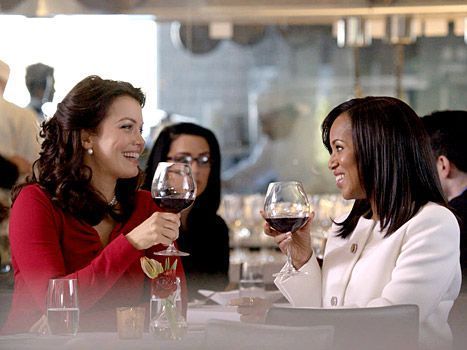
Female characters gain more depth when we realize that, despite their hatred for each other, they are still capable of maintaining a glimmer of respect for their enemy. In the past years, Scandal has been building up two of the most interesting frenemies on TV—Olivia Pope and Mellie Grant. Both women want the same man (President Grant), and both women have a different type of relationship with him—but Mr. President aside, throughout the show the two women develop a complex rapport with one another: one which undoubtedly has many instances of resentment and bitterness, but also a slowly developing sense of respect for the other person. It’s startling to watch Mellie’s resilient self-dignity—yet also vulnerability—when she asks Olivia to help with her husband’s campaign; there is also a sense of empathy on Olivia’s side when she discovers that Mellie was assaulted. If we really have to watch two women fight over the same man, it’s at least a relief when the two women are smart, self-reliant, and civilized beings.

8prDSnbOA5Tg_v3qBVDiydbTnTl-ignLRYiN2i2tA5E

The idea of complex female frenemies is not exactly new to cinema. Two superb foreign thrillers have managed to portray women who are sharing or have shared the same man, but they don’t succumb to the stereotype of the hair-pulling, backstabbing brats. Henri-Georges Clouzot’s Les Diaboliques (1955) and Kim Ki-young’s The Housemaid (1960) present a world in which women are not squealing for a man’s affection, but develop an interesting and emotionally complex alliance with the “other woman.”

_974e65vZyc9GSfMzoaA9HBDBP6VUZWbwtLDgLfS0WA

Les Diaboliques is a French movie about a wife (Christina) and her husband’s mistress (Nicole) teaming up to murder the husband (Michel). Christina owns and runs a boarding school where Nicole teaches, and Michel exudes his authority as if he ran the place. The story begins as a simple murder story with two intriguing female protagonists, but halfway through it becomes a different movie—a creepy thriller in which the wife, Christina, is haunted by her dead husband’s ghost.

Despite the exciting twists and turns, it’s not so much the murder that drives the film, but rather the strange friendship between the two women. Christina is the typical mousy wife who allows her husband to beat and condescend to her; Nicole, on the other hand, is the typical femme-fatale bombshell, a hybrid between Betty Rizzo and Catherine Tramell from Basic Instinct (and I wasn’t surprised that the role was played by Sharon Stone in the 1996 American remake). The relationship between the women is rather intriguing, if not strange: Nicole was having an affair with Christina’s husband, but that is also what brings the two women together. Both get tired of the husband’s cocky and manipulative ways, so they decide to plan his murder.

6zfY2YihwguECh8237y1wQZ5M8jsFOMEErliLuSMfYQ

During moments of calm, we watch Christina and Nicole discuss like old friends, complaining about him, and coolly remember how they hated each other—how a jealous Christina used to carry a knife around, and how Nicole might have wished for Christina’s death. There is a startling sense of dignity and respect for the other, which is often lacking when we’re faced with two women who competed for the affection of a man. Christina is often depicted as physically and emotionally weak, leading Nicole to affectionately treat her like a younger sister—even maternally, when for example she tells Christina not to bite her nails, in order not to give away her nervousness about the murder. Nicole is the only person that defends and consoles Christina when her husband degrades her in public, and during those moments we observe an unspoken yet mutual understanding between the two women who have been abused and mistreated by the same man.

XNnbJlYbfnkFOOdwS8TRyUBHpSIPO2EEM1lbvk6RyYU

Housemaid is a South Korean thriller about a young woman who is hired as a housemaid and ends up feuding with the woman of the household. To sum it up, The Housemaid is a long and twisted cautionary tale about the dangers of having an attractive and seductive young woman in the household, and how a casual affair can turn into a deadly game of manipulation. Events escalate dangerously and gruesomely, and even the innocent and sickly wife reveals an evil side. One of the interesting aspects of the story is the twisted relationship between the housemaid and the wife: the housemaid, despite her psychotic nature toward the husband and children, shows nothing but fear and submission in front of the wife. The wife strategically allows the other woman to remain in the household as a means to keep an eye on her and avoid a scandal.

Mk93n8PAgt6igOD6ZwdDkLrlA8oPzTYk6mQbkcdmn-8

The most twisted part is halfway though the movie, when both women “share” the husband. They’re not exactly friends, but it would be too easy to label them enemies; both women have an unspoken mutual understanding that the husband “belongs” to them, and they manipulate him to get at each other. Both women appear to know what limits the other woman can go to, and that kind of character relationship goes beyond the simple backstabbing teenagers in Mean Girls, or the comic strips in which Betty and Veronica are both tugging at Archie’s arms.


Emanuela Betti is a part-time writer, occasional astrologer, neurotic pessimist by day and ball-breaking feminist by night. She miraculously graduated with a BA in English and Creative Writing, and writes about music and movies on her blog.
 

‘The First Wives Club’ and First World “Feminism”

But the focus on “getting everything” was a little hard to stomach from women living in huge condos in the heart of New York with an interior designer on their payroll. Somehow it felt like the message was getting a little lost in the middle of all the high-society hob-nobbing – there was nothing particularly universal about it, and any feminism that was being communicated was certainly of a rarefied kind that most of us wouldn’t be able to access.

First-Wives-Club

This cross-post by Amanda Lyons previously appeared at her blog, Mrs. Meows Says, and appears as part of our theme week on Female Friendship.

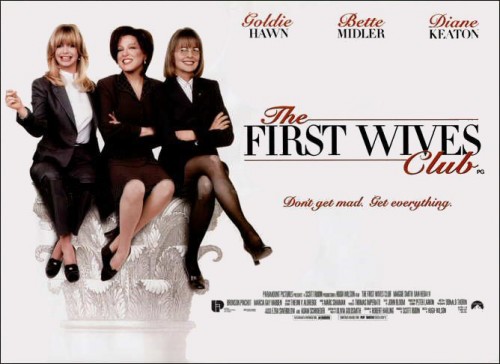
In 1996, the year The First Wives Club was released, I was in my mid teens, and it felt like a good, hopeful time to be a young woman. Grunge and riot grrrl seemed to have ousted the need to conform to restrictive conventions of feminine fashion and behaviour. The music charts were full of talented and unique female artists. Movies and television were starting to show more complex, and sometimes even bad-ass, female characters. Looking back, I feel grateful to experience those difficult formative years in such a time.

It was definitely the right cultural climate for this film. I remember it was featured a lot in the media at the time – a story about a group of discarded first wives plotting revenge on their ungrateful ex-husbands definitely had a whiff of the zeitgeist about it. Indeed, so much so that the book was purchased by a movie studio before it was published as a novel. (The more hidebound publishing industry rejected the novel 26 times. I’m pretty sure I remember seeing the author, Olivia Goldsmith, on Oprah talking about this, saying that many of these publishers thought the male characters were portrayed “too negatively”.)

The_First_Wives_Club_34279_Medium1

Though I thought this movie sounded like a positive cultural event, and quite possibly also a good wheeze, I missed it at the time. So when it happened to be playing on Foxtel on a recent cold Sunday night, I was more than happy to stay in the lounge with the gas heater all rugged up and warm and make up for my neglect.

What was I expecting? I guess a funny and entertaining revenge romp with a feminist punch? What did I get instead? Well, not that…

Probably the most entertaining thing about it was the long and delightful roll-call of actors I recognised from subsequent other things. Dan HedayaVictor GarberMarcia Gay Harden! And of course the peerless Bronson Pinchot. Yay! That was good fun, and I was very glad they got to be part of something that would have given them a big boost at the time.

goldie-diane-bette

The next thing I noticed was the extremely overdone and intrusive score. Guys, I cannot believe this score was nominated for an Oscar. To me it felt like an obnoxious guest at a party who keeps grabbing your arm when you’re trying to talk to other people so he can tell you a really long and boring/offensive story that scares all other guests away from you. Hated it.

My second major hate: Diane Keaton, but I guess that’s probably more of a personal thing, although at least I know I’m not alone. I get why Woody Allen loved her so much – she’s totally the female version of him. Same schtick in every single role she plays: blinky, quirky, neurotic, and when she’s required to get emotional, shrieky. Also ineffably smug. Teeth-clenchingly annoying.

Photo-1-Elise

Next problem: the characters. Was this the fault of the script, the acting, or the direction? I would say an unholy collusion of all three. All the characters are shallow and unlikeable, including the women you are supposed to be rooting for. Nobody seems remotely like a real person – the husbands are drawn as dastardly cardboard villains, the first wives are shrieky caricatures, the second wives are completely one dimensional bimbos. The gags and one-liners are broad, awkward and the timing is just a little bit off every single time. The set pieces are cringey and the plot is just confusing. The revenge plots were a bit unclear and vague to me, as if the writers weren’t quite sure how to pull them off.

I think part of the frustration was that while the story was addressing a real and genuinely affecting issue – the culturally sanctioned discardability of women as they grow older – it opted to bury it inside a combination of broad slapstick and an extremely privileged, neo-liberal kind of feminism concerned solely with economic gain. I was somewhat in wonderment at the moneyed, ten-percenter world these women moved in. Of course separation, abandonment, betrayal, and heartbreak are a great leveller – all of us can suffer whatever our bank-balance. But the focus on “getting everything” was a little hard to stomach from women living in huge condos in the heart of New York with an interior designer on their payroll. Somehow it felt like the message was getting a little lost in the middle of all the high-society hob-nobbing – there was nothing particularly universal about it, and any feminism that was being communicated was certainly of a rarefied kind that most of us wouldn’t be able to access.

tumblr_mmj3gx3TML1rtg76ko1_400

Perhaps key is the fact that the movie was written, directed and produced by men – or more specifically, men who shared the publishing world’s squeamishness about “man-bashing”. As producer Scott Rudin stated in The New York Times:

“When I took this on, I didn’t want a feminist manifesto, which it threatened to be,” he said. ”Initially, it made all the men terrible and was kind of anti-marriage. I didn’t want that. The film is really a satire. The amount of moaning and wailing is an object of satire. We’re not taking anything too seriously.”

Rudin, like so many others, accepted the fallacy conflating feminism with hating men rather than its simple belief that women and men “should have equal rights and opportunities.” That this conflation is so often promulgated is tiresome. It’s also tiresome that charges of “man-bashing”against films are so loud and strident when negative, and even harmful portrayals of women in film and television and everything are so commonplace we don’t even notice them most of the time. And the effect of this kind of distaste for anything remotely feminist in the stories we tell can cut the heart – and the ovaries -right out of them.

firstwivesclub3

Feminism is not the only thing that’s diluted in the adaption of this story from book to movie – certainly the differences between the film and the book seem very revealing. For example, the complete excision of Annie’s (Diane Keaton) daughter’s Down Syndrome – she is turned into a lesbian, instead. (and the way she’s portrayed one sometimes wonders if the writers thought they were just swapping one disability for another??). This removes the onus for Brenda (Bette Midler) to become a lesbian herself, clearing the way for her to have a (SPOILER ALERT) reconciliation with her dastardly husband Morty, a strange and sudden reversal in the storyline of the film.

But one of the most interesting differences is how they choose to “avenge” their friend Cynthia, whose husband’s betrayal resulted in her suicide and provided the impetus for the first wives to reunite, rediscover their friendship and begin their club in the first place.

In the book, the women go after Cynthia’s husband and bring him down for insider trading, to his personal and financial ruin. But in the movie, the women decide that personal revenge is not noble enough – so instead they blackmail their ex-husbands into providing money to open a Crisis Centre for Women. This is a safe aspect of feminism; it’s hard to argue against helping the most vulnerable in society, and it’s easy in our culture to accept women in the role of victims – and indeed, the centre is named after their friend Cynthia Swann Griffin, the movie’s ultimate victim and sacrificial lamb.

Young-and-free-the-first-wives-club-7916219-1008-576

The final scene – the opening party for the Crisis Centre – is intended to be the triumphal close to the movie, but instead it feels patronising and smug, the worst kind of charity. The party is ostentatious, opulent, and replete with the kind of economic excess that seems to cover the characters’ lifestyles like a thin film of oil. It is of course stuffed with the rich and fabulous, New York high society elite. There is a lot of back-slapping. Ivanka Trump appears, as well as Gloria Steinem, in a vague shout-out to “feminism.” There are no specifics discussed as to what kind of crises the centre will be helping women with, what kinds of women will be helped, or how. The husbands have been threatened with destruction but ultimately this female anger has been contained, and now the men are simply implored to open their pocketbooks. In the final scene the three women engage in a truly embarrassing song-and-dance routine, singing Lesley Gore’s “You Don’t Own Me” and dancing like your mum doing karaoke at your cousin’s 21st. The ultimate in Boomer smugness, and of course led by the inimitably irritating Diane Keaton.

In the novel, as the American Popular Culture Archive explains,

“Once the women decide to act, they exude power and energy. Brenda asks Elise, ‘Did anyone ever tell you you’re beautiful when you’re angry?’ Elise replies, ‘No. Mostly they liked me passive. But those days are over, my friend. I’m changing.'”

This movie adaption is, quite frankly, a mess, and seems to replace female power and agency with money. I’m no book adaption purist – I accept that the two mediums are different, and changes have to be made in translation. But in this case, it doesn’t seem that the changes were especially serving the ends of telling a story and preserving a message, so much as containing it to make it more marketable. But unfortunately the end result is clunky, unloveable, and not even entertaining. Perhaps it met the zeitgeist in 1996, but I think that it should probably stay there.


Amanda Lyons is a writer from Middle Earth (AKA New Zealand). By day she writes on finance, by night whatever takes her fancy at http://mrsmeowssays.blogspot.co.nz/.


Scarlett and Melanie: The Ultimate BFFs

Regardless of how psychological or interpretive you want to get with Scarlett and Melanie’s friendship, it serves as an invaluable example for how women can accept, value, and interact with one another.

77206-050-b31ddf5a

This guest post by Jennifer Hollie Bowles appears as part of our theme week on Female Friendship. 

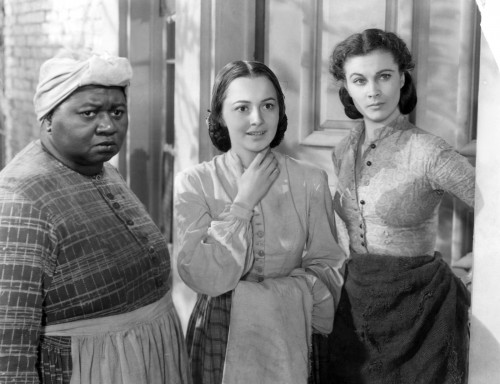
Gone With the Wind is one of my favorite movies of all time. Of course, it has its social ills, historical flaws, and damn if super-strong Scarlett doesn’t whine over men a lot, but I still love it. The dynamic relationships and subtleties of emotions and interactions captured on film is a classically beautiful adventure to behold. Yeah, so I dig the movie, and I’ve always been a fan of Scarlett, her southern spitfire, and her bold feminist acts.

I’ve seen the movie at least a dozen times. When I first watched it as an adolescent, I remember almost hating Melanie. She was so mealy mouthed and annoying. I was, however, not in tune with the more demure, mature, calm, centered, and otherwise introverted part of myself at the time. Flash forward five years, and I start to see Melanie in a different light. Flash forward a decade, and I love her as much as I do Scarlett.

ODH-OliviaDeHaviland-gwtw-unchivalr

Scarlett was often a bitch to Melanie, and even though Scarlett was a bitch to everyone unless she wanted something, she was an uber-bitch to Melanie on purpose—most of the time. Until Melanie needed her. Then she was the most helpful bitch in the world. Melanie, on the other hand, was the epitome of kindness and compassion to everyone—most of the time. Until Scarlett needed her. Then she was kindest you-can’t-say-no-to-me bitch in the world.

One of the most intriguing things about the extreme Scarlet-Melanie polarity is that their best and worst traits were ultimately highlighted through their friendship. Together, they show the manifested metaphors of fire and water. Scarlett maintained a world view of passion; Melanie maintained a world view of non-judgment. Every time that Melanie seemed weak and dispassionate, she rose to the occasion to exhibit passion with Scarlett, and every time that Scarlett seemed strong and judgmental, she rose to the occasion to exhibit compassion with Melanie.

Gone With the Wind9

Melanie’s character was filled with a rare sort of gratitude that most people utterly lack. She was able to read others and feel gratitude for their existence, no matter how different it was from her own (take her kindness toward the prostitute Belle as a prime example). She mentored everyone around her, and she was continuously counted upon to aid those in need. Melanie also had a very deep love for Scarlett right from the beginning. She revered (and perhaps envied in her own way) Scarlett’s hot-headedness, and she expressed her love for Scarlett throughout the film.

Scarlett, on the other hand, was filled with a rare sort of will power and drive that most people utterly lack. She would forge through any circumstance in order to not only survive, but thrive. She was counted upon to make things work when others failed. Scarlett had a very deep jealousy of Melanie, and she expressed criticism and indignation about Melanie countless times throughout the film. However, while the movie does not expose Scarlett’s unfolding realizations per se, we definitely discover Scarlett appreciating Melanie as the story progresses. Scarlett sees Melanie’s strength in an unforgettable scene where Scarlett kills a “Yankee” intruder. Melanie yells out the window and promptly makes up a lie about the gunshot so the others in the household won’t worry. Scarlett says, “What a cool eye you are, Melly.”

tumblr_lnm323zBKg1qbgi86o1_500

An amazing juxtaposition of their characters occurs later in the film. A couple of gossiping no-gooders find Scarlett and Ashley (Melanie’s husband) hugging. Oddly enough, it is the one scene in which Scarlett is not really being inappropriate with Ashley. Everyone in town knows about the hug, and everyone is bashing Scarlett for her shameful behavior. Rhett coerces Scarlett into wearing a gorgeous, sexy scarlet dress and drops her off all by herself at Melanie’s house for Ashley’s big social birthday party.

Both Rhett and Scarlett expect Melanie to publicly throw Scarlett out of her house for being inappropriate with her husband. Melanie does no such thing. She goes against the suggestions and wishes of everyone in the room and embraces Scarlett, doting on her with a plethora of kind, welcoming statements. She even asks Scarlett to help her receive guests, and then refers to Scarlett in the presence of Ashley as “our Scarlett.” Scarlett is obviously immensely grateful for Melanie’s character, friendship, understanding, and behavior in this scene, and Melanie is obviously driven by her own passionate motives to do what she wants, regardless of what others think—just as Scarlett would.

??????????????????

The implications for Scarlett’s ridiculous pining over Ashley and her friendship with Melanie is a complicated one. On the one hand, it seems as though Scarlett is driven by something she can’t put her finger on when it comes to her obsession with Ashley, and Melanie just happens to be his wife. Yet, if we observe closely, we find that Scarlett is as drawn to Melanie as she is Ashley, and near the end of the film, we see Scarlett identifying the highest ideals of a lost way of life with both of them. She loves and yearns for them both along with her love and yearning for lost southern culture because it is in her nature to want what is difficult, and in this case, impossible to attain.

If we get really psychological, we find that Melanie and Ashley are both representations of everything Scarlett is not. It is easier, however, for Scarlett to outwardly—project and individuate—through Ashley, the shadow male/animus archetype of her psyche, rather than the far too close anima/shadow female archetype of her psyche.

GoneMelanieScarlett

Regardless of how psychological or interpretive you want to get with Scarlett and Melanie’s friendship, it serves as an invaluable example for how women can accept, value, and interact with one another. For example, if a woman dresses more provocatively than you, perhaps, as Melanie stated, she is just more “high-spirited,” and she can’t help that the men just “naturally flock to her.” If a woman needs help during childbirth, nothing else matters but helping her, just as Scarlett helped her “Melly.”

It’s suggested all along that Melanie understood Scarlett, and Scarlett understood Melanie. It’s as if Melanie knew all about Scarlett’s pining for Ashley and the underlying reasons why she felt that way, and Scarlett knew all about Melanie’s knowing acceptance. On her deathbed, Melanie asks to see Scarlett, who is the last person she communicates with before she dies. Scarlett receives Melanie’s last words with respect, holding on to their guiding significance and meanings with deeply rooted trust. The entire dynamic of their relationship just makes sense at that point: their bond was unbreakable.


Jennifer Hollie Bowles is a widely published multi-genre writer, including satire, poetry, op-eds, erotica, horoscope columns, fiction, eco living blogs, how-tos, and beyond.  She lives in the Greater Boston area with her amazing husband and their blissed-out pit bull.  She enjoys cooking from scratch, teaching creative writing workshops, and providing unique services via www.holisticnook.com

Seed & Spark: Female Friendship On Screen–Art Imitating Life

But what if I spent my time, instead, helping another female filmmaker make her movie involving female friendship? Wouldn’t that be just as meaningful? And could it perhaps be making an even bigger statement—promoting the “cause,” so to speak?

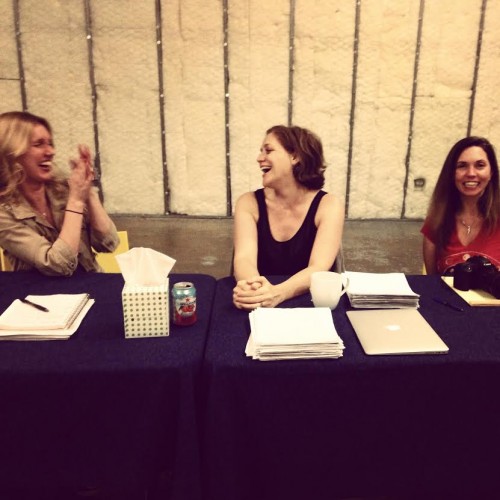
Producer Liz Franke, Writer/Director Augustine Frizzell and Casting Director Tisha Blood having fun during the casting session of Never Goin’ Back.


This guest post by Liz Cardenas Franke appears as part of our theme week on Female Friendship.

The desire to have more female-driven films is such a hot topic in the entertainment industry right now.  And it should be. There is definitely a need for more fully developed, complex female characters in cinema and for stories that are told from a female point of view.

But let’s take it a step further. What I believe is truly lacking are stories that specifically center on female friendships. It seems to me most female-oriented movies often just look at sexual relationships from a female perspective. (OK, sometimes they also show what it’s like to be a mother or juggle family and a career.)

But if you asked someone off the street to name a movie about two female friends, a real movie, not some over-the-top, unrealistic comedy, you would most likely hear Thelma & Louise. Maybe Beaches. And that’s probably it. Sure, there are others. But you have to really think about it for a minute. The same is not true for the male counterpart of this question. Most people would have no problem rattling off a list of pictures that concentrate on male friendship. That’s because there are a ton! There’s even a subgenre for them: the male “buddy” movie.

Liz Franke directing Augustine Frizzell, who had a lead role in the Hungry Bear film, Finding Glory, which is in post-production.


So, as a female filmmaker myself, what could I do to make a difference? Of course, I could go ahead and make one. I do, after all, write and produce films, alongside my husband, and many of them have strong female lead characters. For example, in our family feature, Summer’s Shadow, the protagonist is a bright and independent 12-year-old girl who rescues a sweet, stray dog and will stop at nothing to save him. And it’s her determination that ultimately impacts those around her, both children and adults.  And I just directed (for the first time!) a short film, titled Treading Water, which I also wrote, and it is about a woman in her 30s who tries to come to grips with her new reality of caring for her elderly father in her childhood home.

But what if I spent my time, instead, helping another female filmmaker make her movie involving female friendship? Wouldn’t that be just as meaningful? And could it perhaps be making an even bigger statement—promoting the “cause,” so to speak?

Well, that is what I’ve done. I am currently a producer on the feature film of a fellow female filmmaker (say that three times fast!) who also happens to be a dear friend of mine. Her name is Augustine Frizzell, and she is the writer/director of Never Goin’ Back. Her movie centers on the friendship between two 16-year-old girls who come from lower socio-economic backgrounds (also grossly underrepresented in cinema) and their misadventures as they try to win back their jobs at the local Pancake House in order to make rent. They have absentee parents and are high school dropouts living on their own, except for an older brother and his friends. So, ultimately, they only have each other. And they go through the ups and downs of life together.

Producers and friends Augustine Frizzell, Liz Franke and Kelly Snowden watching the monitor on Franke’s short film, Treading Water.


This is a personal story for Augustine. It is based on her own experiences. So by working as a producer on her feature, I am helping her tell her own story. And I believe if we really want to see more narratives about true female friendships on screen, then we must actually experience them in real life, as well.

Augustine and I have worked on each other’s projects in the past— I was an executive producer on her short film, she was a producer and acted in mine. However, due to the magnitude of this project (a full-length feature with an ultra low budget and a three-week shoot), it has taken our relationship to the next level. And through it all, it’s been such a positive experience.

Being filmmakers in a male-dominated industry (who also happen to be married to male directors), we can relate to each other. We can also be vulnerable and let down our guards in front of each other. And that is what has been so special and has, quite honestly, blown me away.  We do not let ego get in the way. There is no jealousy. No backstabbing. No ulterior motives.  We truly support and encourage each other and want each other to be successful, and you hardly ever see that in movies or on TV.

I have to be honest. I have never really had that before in this business. Of course, my husband is always extremely supportive and encouraging, as is hers. But it has been so rewarding to make a real girlfriend in this business, and someone who is pursuing the same thing as I am. It makes me feel like anything is possible. By helping each other, I think we will make a difference. One movie at a time.

Liz Franke and Augustine Frizzell, who both happen to be actresses as well as writers and directors, filming a scene.


And it doesn’t end there. We have so many women working on this project, many of whom are donating some or all of their time or services.  Kelly Snowden, my fellow female producer on this project, (there is one male producer—we don’t discriminate after all) has worked tirelessly from the beginning to help our director obtain her vision. And from the Casting Director to our Costumer Designer to our Production Coordinator —they are all women. All of them work regularly in the industry and have still found time to help on this project.  This support system of women we’re creating is truly amazing. I was always taught to lead by example, as opposed to simply talking about wanting change. That’s what we’re doing. And it feels really good.


unnamed

Liz Cardenas Franke is an actress, writer and producer. She and her husband have made seven feature films through their production company, Hungry Bear, including the successful “Adventures of Bailey” series.  A member of Women in Film and SAG-AFTRA, Liz was a former reporter for The Dallas Morning News and the Fort Worth Star-Telegram, as well as the Vice President of International Sales for Engine 15 Media Group. She is a graduate of Texas Christian University with a B.S. in Broadcast Journalism.


Bitch Flicks’ Weekly Picks

Check out what we’ve been reading this week–and let us know what you’ve been reading/writing in the comments!

recommended-red-714x300-1

The Last Amazon by Jill Lepore at The New Yorker

Women on TV Making Headway? Not So Much by Michele Kort at Ms. blog

TV Directing Still Dominated by White Men, New DGA Report Finds. No Real Improvement in Diversity Hiring Practices During Past 4 Years by Tambay A. Obenson at Shadow and Act

Bloody Handprints: What Comes After Domestic Violence in Television and Life by Arielle Bernstein at Press Play

‘New York Times’ Reduces Shonda Rhimes’ Characters to Unfair Angry Black Women Stereotype by Kadeen Griffiths at Bustle

Why #LessClassicallyBeautiful Is the Most Important Thing You’ll See on the Internet Today by Nikki Ogunnaike at Glamour‘s Lipstick blog

The Most Feminist Moments in Sci-fi History by Devon Maloney at The Cut

Victim Blaming at the Miss America Pageant by Emilly Prado at Bitch Media

Laverne Cox to Premiere New Documentary, The T Word by Mitch Kellaway at Advocate

7 Life Lessons I Learned From the Ladies of “Twin Peaks” by Mollie Hawkins at xoJane

Watch: Lupita Nyong’o teaches Elmo about skin by Maya at Feministing

Deepika Padukone: Why Bollywood stars are speaking out on sexism by Geeta Pandey at BBC

Cartoonist Alison Bechdel Among 2014 MacArthur Genius Grant Winners by Arit John at The Wire

‘Mindy’ And ‘New Girl’ Navigate Their Worlds Of Crazy Love by Linda Holmes at NPR

It’s Been A Bad Week for Football by Corinne Gaston at Ms. blog


What have you been reading/writing this week? Tell us in the comments!


Bitch Flicks’ Weekly Picks

Check out what we’ve been reading this week–and let us know what you’ve been reading/writing in the comments!

recommended-red-714x300-1

Anita Sarkeesian shares the most radical thing you can do to support women online by Casey Newton at The Verge

A Reminder: Net Neutrality by Ali at Autstraddle

Girls on Film: Why the Toronto International Film Festival is the best platform for female filmmakers by Monika Bartyzel at The Week

TIFF 2014 Review: Few Movies Have Given Female Characters Such Prominence & Agency as in ‘The Keeping Room’ by Zeba Blay at Shadow and Act

The Renaissance Of Reese Witherspoon by Melissa Silverstein at Forbes

Afghanistan’s Teen Girls Turn The Camera On Kabul by Jackie Leahy at Bust

BitchTapes: Grrrlhood (Songs From Films With Female Directors) by James Anthofer at Bitch Media

The Most Radical Films About Young Women’s Lives by Alison Nastasi at Flavorwire

How Should We Remember Joan Rivers? by Gabrielle Moss at Bitch Media

‘Orange is the New Black’ Adds Another Black Corrections Officer by Jamilah King at Colorlines

Barrel Chests, Brawn, and Buffoonery: Controlling Images of Masculinity in Pixar Movies by Tristan Bridges at Feminist Reflections

“Strong Women Characters” Who Made Mistakes (And Learned From Them) by Diana Biller, Chaleece N. Johnson, Vesna Cemas and Kyra Baker at io9


What have you been reading/writing this week? Tell us in the comments!


Seed & Spark: In-Betweeners: The Absence of Gender Fluidity in Media

Characters play a key role in our individual process of self-discovery. Stories have always been there to help us learn, to see from another’s point of view, or think deeper than before. What makes us human is that we turn these lessons into reflections of what we want. Through the pairing of images and concepts, I can wrap together the “idealized” me. But what happens when I cannot find myself in what I see on screen? What happened to those who lived in times when LGBTQI content was more taboo than it is now? We create.

This is a guest post by E.A. Francis.

I am an other, an in-between. I use the term “gender fluid” and I don’t consider myself a woman or a man.

I am still perceived by the world as a woman, though, and was raised as such. Sometimes people study me in public, trying to figure out what I am. It can be an ostracizing experience to move through the world as a point of people’s interest. But at the same time, I realize the value of my position. Those that glance, stare, and make eye contact are looking for my story, even if only for a second. That story is a long one—coming into my own took time. I’ve moved through stages and terms and confines until I grabbed ahold of me. And that’s what I want to see on the screen: the rawness of what it means to be conflicted and confined within your own skin.

In some ways, we have come a long way. I can now turn on the TV or head to the movies and see gay, lesbian, or bisexual characters. Even more recently, I have even seen multiple transgender characters on shows like Orange is the New Black. But there was a time when these representations were less frequent, confined to art house films. I remember my fascination with transmen characters like Brandon in Boys Don’t Cry or Max from The L Word. I looked at them and wondered, “Is that me?” I used to deny just how much we ingest media into our personalities and our understandings of our physical beings, but I’ve come to recognize how I compare myself to the images presented. Since I have no gender fluid characters, I turn toward the lesbian and trans communities.

Characters play a key role in our individual process of self-discovery. Stories have always been there to help us learn, to see from another’s point of view, or think deeper than before. What makes us human is that we turn these lessons into reflections of what we want. Through the pairing of images and concepts, I can wrap together the “idealized” me. But what happens when I cannot find myself in what I see on screen? What happened to those who lived in times when LGBTQI content was more taboo than it is now? We create.

Just like an author who writes the book they wish to read, our first instinct with storytelling is to speak the truths and questions that are within us as individuals in the hope that others share the same thoughts. But there is a stretch, often very long, between conceptualization and the completed project. I applaud our film and TV communities that have pushed for the stories less told, that show us characters with whom the minority can relate—they assist the majority in understanding that we exist and matter. Understanding another’s plight is what has lead humans to our greatest feats and I believe that some of the earliest LGBTQI movements have taken place in film and TV.

But there is a timeline, more or less, when a queer character is introduced in media. Often they are alone in their queerness and are there only to act as a foil, or as a stereotype, or to confirm that it is easy to place this type of person into a single category. Worse still is the implication that their storylines can be disregarded. The audience is supposed to believe that it is enough that the character is onscreen. I watched it happen on The L Word with Max. Quick scenes of transitioning from a female body to a male body, which is a massive process of its own, and then some confusion from the other queer characters about the authenticity of this “new other’s” experience. Here, I watched fictional lesbians, who had faced stigmas and hatred, turn the same bias to another in their queer community.

-1

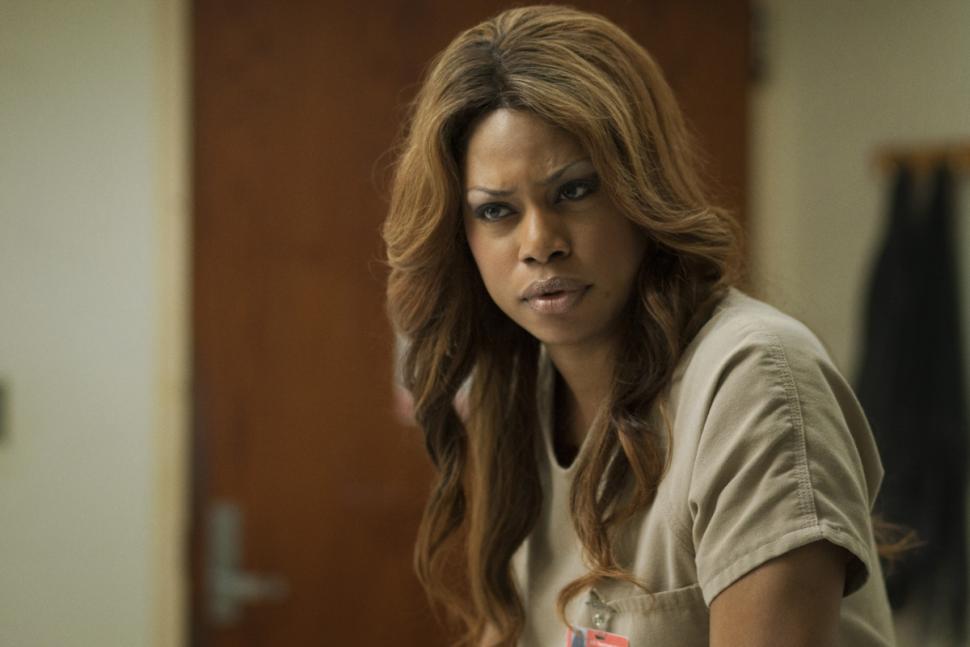
In Orange is the New Black, Sophia, who is struggling to stay on estrogen as she transitions from a male body to a female body, has a storyline that includes her son distancing himself from her and her wife moving on to be with an actual man. These points were left behind in season one and in season two we watched Sophia cut other, more “important” characters’ hair in the same salon— as though they filmed all of Laverne Cox’s scenes in one day. Where was the development? Where was her conflict? A single scene of dialogue between her and the nun about her relationship with her son skirts around the actual emotional turbulence of that time.

As an audience member, I was waiting for the moment her son expressed his thoughts to her in person, where the tension could either rise and peak or leave us hanging and thinking. But we were left, instead, to follow the story of the bisexual white woman, Piper. There are still many, many issues that lesbians, gays, and bisexuals face (including having their sexuality constantly challenged), but they are becoming more “mainstream,” more commonplace, and even deemed acceptable for families (as suggested by the popularity of Modern Family). The queer communities that lie outside of that newly developed safe zone are next in line for scrutiny in the public eye though they have always suffered massively and violently.

This is why it is crucial that our community, filmmakers and audience alike, help lift up projects that explore the experiences of a wider array of people. Frankly? I have all the hope in the world that we will accomplish this goal. It will take time, but perseverance will rule out. Let’s do this.

___________________________________________

-2

E.A. Francis is an activist and interdisciplinary artist based in Chicago, Ill. Their work examines social issues surrounding gender, culture, and politics. E is a graduate of Columbia College Chicago’s Fiction Writing Department. Their current project is Kendra & Obiwhich follows an African American couple working to stay together while yearning to understand themselves as individuals. Patch of Prodigy Productions LLC is hosting a live twitter event on Saturday, Sept. 20, 2014 from 1-3 p.m. CT which discusses POC in the predominantly white world of higher education. Join the conversation, which features guest speakers Sophia Nahli Allison (visual storyteller @SophiaNAllison) and Andrea Hart (Teaching Artist @lenifaye) by using the hashtag #kendraobi. Reach out to E on twitter @eafrancis2 or Facebook at Official EA Francis


Bitch Flicks’ Weekly Picks

Check out what we’ve been reading this week–and let us know what you’ve been reading/writing in the comments!

recommended-red-714x300-1


Remembering Joan Rivers: Groundbreaking Feminist Icon by Eliana Dockterman at TIME

What It Was Like to Work With Joan Rivers by Julie Klausner at Vulture

Mississippi Public Broadcasting Won’t Air Abortion Documentary by Andy Kopsa at Cosmopolitan

The Great 2014 Celebrity Nude Photos Leak is only the beginning by Roxane Gay at The Guardian

Jennifer Lawrence Nude Photo Leak Isn’t A ‘Scandal.’ It’s A Sex Crime. by Scott Mendelson at Forbes

Violence Against Indigenous Women: Fun, Sexy, and No Big Deal on the Big Screen by Elissa Washuto at Racialicious 

Black Girls Can Be Losers Too: From ‘Living Single’ to ‘Scandal’ by LaShea Delaney at Indiewire

Supergirl Takes Flight With TV Series From Greg Berlanti & Ali Adler by Nellie Andreeva at Deadline Hollywood

What ‘The Giver’ and ‘Obvious Child’ say about abortion in America by Brandon Ambrosino at Vox

“The Giver” Delivers Powerful Pro-Choice Message in Slick, IKEA Package by Natalie Wilson at Ms. blog

17 Black Women Who Deserve Their Own Biopics by Ashley C. Ford at Buzzfeed

From Now On, Women Save the World by Brooks Barnes at The New York Times

Interview: Harvard Business School Professor Anita Elbers On What Hollywood’s Love of Blockbusters Means for the Rest of Us by Erika Olson at RogerEbert.com

Beyond Ferguson: Pop Culture Through the Lens of Race by Noah Gittell at RogerEbert.com

‘We Have Always Fought’: Challenging the ‘Women, Cattle and Slaves’ Narrative by Kameron Hurley at A Dribble of Ink


What have you been reading/writing this week? Tell us in the comments!


Seed & Spark: Latinas in the House!

BUTS started as a joke we had about our bodies. We are both pear-shaped women. (And God bless Lena Dunham for putting that silhouette out there without apologizing or qualifying it.) However, as our beauty standards still predicate, the hourglass figure rules. But our “hourglasses” had all the sand in the bottom! We would laugh about it and pad our bras when going to auditions.

Irene and Emma
Irene and Emma


This is a guest post by Irene Sofia Lucio.

First of all, it is an honor to be included in this fancy group of Seed & Spark women writing for Bitch Flicks, given that this is our very first project as co–creators. Reading the past articles written by these inspiring women is humbling, exiting, and gives you a good kick in the butt to keep working and be worthy of this community.

I will start off by saying that I am a Latina woman as is my co-creator, Emma Ramos. Never in a million years did I think I would be starting an article, or a characterization of myself, with those two titles. Perhaps I am naïve.

But it is incredibly important to open with this fact—that I am a woman and a minority. To do so is not only about combatting a lack of representation (or misrepresentation) in media, but also about eroding the loneliness that we all feel when there isn’t a heroine that we can call your own.

I was trained as an actor. And, because I look white, I played all kinds of American and European characters in grad school. After graduating, I adapted to the struggling actor lifestyle right away and was thrust into the casting pool and casting mentality of New York. Since then, I have been similarly cast: When the director was open-minded enough to disregard my Latin name and imagine me as something else, I only played white characters. I realize that I am fortunate to be ethnically diverse, but I felt sad that I could never tell the stories of Latin America. I wasn’t brown enough; I seemed too educated; I seemed too aristocratic. What does that say about how we think of Latinos and how we’re characterizing them?

I am not the typical Latina. I was brought up in a wealthy town in Puerto Rico, went to an American private school, and then two Ivy League schools. These are all privileges and accomplishments that I have often felt apologetic or embarrassed by.  I didn’t experience many of the struggles that Latin Americans have to face on a daily basis, and as a result, I felt I had to prove that I was from Latin America. This is sad— not only because that implies that being Latin American restricts us to a certain experience and color, but also because it suggests that my stories are less valid, or less welcome.

It was at the peak of my frustration with the industry that I had the good fortune of meeting Emma. Though Emma looked “the part” more than I, she too was not “Latina enough” to play the bulk of the roles available. Unfortunately, the majority of these are still restricted to prostitutes, maids, and hyper-sexualized stereotypical figures.  Emma grew up in Sinaloa Mexico, studied business, led radio stations there, and then decided to become an actor in New York City. After graduating from grad school, she too felt the harsh reality of a fundamental lack of roles. Frustrated that our stories weren’t being told, we decided to create BUTS.

unnamed

BUTS started as a joke we had about our bodies. We are both pear-shaped women. (And God bless Lena Dunham for putting that silhouette out there without apologizing or qualifying it.)  However, as our beauty standards still predicate, the hourglass figure rules. But our “hourglasses” had all the sand in the bottom! We would laugh about it and pad our bras when going to auditions.

Soon, though, we realized that our “inadequacy” was reflected elsewhere too. Again, we were too educated, privileged, Americanized, quirky, nerdy—you name it—to be considered Latina by TV and film standards. So, with our butts in mind, we started thinking about how we could expand the conversation. We took a ‘T’ out of the butt and considered the many ways that we as women and Latinas complicate the stereotypes and the very notion of what those two titles mean.  It is our BUT argument to how those labels are being depicted. We have chosen to do it in a comedic format because, as we say in Puerto Rico: “I laugh so that I don’t cry.” And it is crazy how empowering it has been to embark on this endeavor with Emma.

As of now, we have only released one episode, but the laughter and impact it is already creating is extremely encouraging. Episode two will be released at the end of the month. We simply cannot wait to tell more stories of what it means to be an American millennial Latina: a person that identifies more with what it means to be a millennial than what it means to be a minority (even though society continuously insists on keeping us in that box).

unnamed

As I read these other Bitch Flicks Seed & Spark articles in preparation for writing this one, it became incredibly clear that we are all trying to do the same thing: produce work that stands on its own, that “happens” to be by women and by demographics that are considered minorities. Like these other projects, I hope that BUTS will open more windows into more stories that are valid and true. I hope that my little sisters will see the episodes and relate instead of feeling like they are strange hybrids. By opening windows we are creating opportunity, hopefully reaching others, and welcoming them to do the same.

Finally, I will also say that the self empowerment that one feels when producing original work and calling the shots to maintain its integrity is the most thrilling feeling I have ever felt professionally. It surpasses that of standing in front of a large audience and reciting gorgeous text. Thank you for inviting us to be a part of this inspiring community. I look forward to reading many more.


Irene Sofia Lucio was born and raised in San Juan, Puerto Rico. She is an actress, writer, and teacher in New York City. Recent credits include: Love and Information NYTW, WIT at MTC, We Play for the GODS at Women’s Project, Pygmalion at California Shakespeare Co., Bad Jews at Studio Theater of DC, and Romeo and Juliet at Yale Rep, Stranded in Paradise (Sony Pictures), Casi Casi (HBO Latino), and Gossip Girl. She is a graduate from the Yale School of Drama and Princeton University.  www.irenesofialucio.com


Emma Ramos began her career in Mexico in politics and business. She dramatically changed her life to become an actress after training at East 15 Drama School, UK.

Credits Include: NYTW: Scenes from a Marriage. Off-Broadway: Comfort of Numbers (Signature Theater), Accidents Waiting to Happen (IRT), La Santa (Ontological Theater), Him (Soho Rep), Sangre (SummerStage) Mala Hierba (Intar). Film & TV: 3rd St Black Out, Sunbelt Express, El Cielo es Azul, “Unforgettable,” “The Hunt,” “Killer Talent.” www.emmaramos.com


Call for Writers: Female Friendships

Female friendships are the bedrock of feminism. The ideal of a community of women who support, understand, and love each other is a source of succor for sisters in need and a dream towards which the feminist movement strives. There are endless power and agency in female friendships. There is purpose in those bonds, a purpose outside the pursuit of men, even if Hollywood doesn’t see it.

Call-for-Writers

Our theme week for September 2014 will be Female Friendships.

Female friendships are the bedrock of feminism. The ideal of a community of women who support, understand, and love each other is a source of succor for sisters in need and a dream towards which the feminist movement strives.

The notorious Bechdel Test judges films based on three simple criteria: 1.) More than one woman must appear in the film 2.) They must talk to each other 3.) Their conversation must be about something other than men. The Bechdel Test has become a yardstick for measuring the most basic feminist standards for filmmaking because very few movies actually manage to pass the test’s very simple criteria. This means that female friendships, nevermind female-centric or matriarchal communities, are all but erased from cinema.

Classic films like the entire Star Wars franchise present women as anomalous, isolated Others who are likely love interests. If women happen to appear together in films, they usually don’t even rate love interest status; instead they’re decorative, sexualized objects without meaningful lines or personalities. On the rare occasion that we see women interacting on screen together, they are all too often in competition for male attention, which sets up female relationships as necessarily adversarial. This erasure of women from entertainment media along with their sexual exploitation and the stereotype of “catfighting” girl vs. girl are extremely damaging representations. If these examples are all young women see reflected around them, how will they know there are other ways of being?

There are endless power and agency in female friendships. There is purpose in those bonds, a purpose outside the pursuit of men, even if Hollywood doesn’t see it. Tell us about your favorite female friendships on screen or skewer a depiction that fails to show us meaningful female relationships.

Feel free to use the examples below to inspire your writing on this subject, or choose your own source material.

We’d like to avoid as much overlap as possible for this theme, so get your proposals in early if you know which film you’d like to write about. We accept both original pieces and cross-posts, and we respond to queries within a week.

Most of our pieces are between 1,000 and 2,000 words, and include links and images. Please send your piece as a Microsoft Word document to btchflcks[at]gmail[dot]com, including links to all images, and include a 2- to 3-sentence bio.

If you have written for us before, please indicate that in your proposal, and if not, send a writing sample if possible.

Please be familiar with our publication and look over recent and popular posts to get an idea of Bitch Flicks’ style and purpose. We encourage writers to use our search function to see if your topic has been written about before, and link when appropriate (hyperlinks to sources are welcome, as well).

The final due date for these submissions is Friday, September 19 by midnight.

The Runaways

The Women

Sucker Punch

Girl, Interrupted

Heathers

Xena Warrior Princess

Thelma & Louise

Now and Then

Pretty Little Liars

Foxfire

Voilet & Daisy

The First Wives Club

Beaches

The Little Princess

Steel Magnolias

Waiting to Exhale

Boys on the Side

Frozen


The Brat Pack: The Roundup

Check out all of the posts for our Brat Pack Theme Week here.

Mannequin: A Dummy’s Guide to True and Everlasting Love by Karina Wilson

By any regular standards, even the 1980s, Mannequin is a TERRIBLE movie.  It never should have been green lit, let alone hit wide release.  It’s often lumped in with other Brat Pack pics, thanks to the presence of Andrew McCarthy and James Spader, but it really should be categorized separately, as a romcom gone wrong. Showroom dummies that come to life after hours should be the stuff of horror movies, or episodes of Doctor Who, not fluffy fantasies starring a nearly naked Kim Cattrall.  John Hughes wouldn’t have touched this material with a ten-foot pole.


Sixteen Candles, Rape Culture, and the Anti-Woman Politics of 2013 by Stephanie Rogers

Holy fuck this movie. I started watching it like OH YEAH MY CHILDHOOD MOLLY RINGWALD ADOLESCENCE IS SO HARD and after two scenes, I put that shit on pause like, WHEN DID SOMEONE WRITE ALL THESE RACIST HOMOPHOBIC SEXIST ABLEIST RAPEY PARTS THAT WEREN’T HERE BEFORE I WOULD’VE REMEMBERED THEM.

Nostalgia is a sneaky bitch.


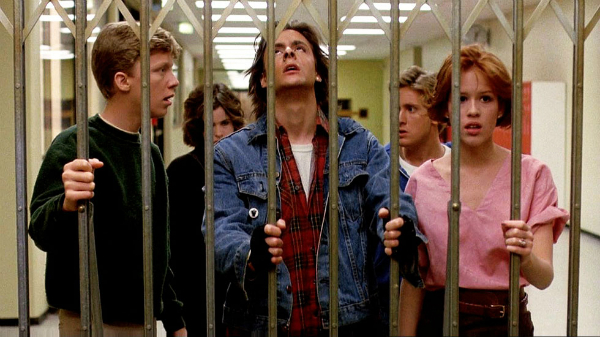
A Brain, an Athlete, a Basket Case, a Princess, and a Criminal: How The Breakfast Club Archetypes Set Standards for High School in Brat Pack Cinema and Beyond by Kylie Sparks

While today’s entertainment sources a lot of inspiration from Brat Pack Cinema, especially the high school-coming-of-age era of Brat Pack Cinema, we have to be very aware that we do not fall into the trap of embracing multifaceted male characters and yet only providing a Princess/Oddball dynamic with female characters. Not all of us fall into The Brain, The Athlete, The Basket Case, The Princess, and The Criminal, and while we can look to Brat Pack Cinema for inspiration to create new projects for our generation and generations to come, archetypes are suggestions, not the end-all be-all for characters in entertainment.


After The Brat Pack: Ally Sheedy in High Art by Ren Jender

Although a few who had fallen under the brat pack sobriquet (like Demi Moore) continued in mainstream star-vehicles well into the 90s (and Rob Lowe, dismissed as another pretty face in the ’80s, was able to sustain a TV career into the present), most had faded from the public view by then, including Ally Sheedy (after starring in 1987’s Maid to Order, her own Weekend At  Bernie’s) –though earlier in her career she, of the whole “Pack,” received some of the best reviews for her work. Sheedy went on to reinvent herself–and make good on her earlier promise–in a series of meaty roles in independent films in the late 90s: the most well known one (for which she won several awards) was Lucy Berliner in writer-director Lisa Cholodenko’s 1998 feature debut High Art.


What They’re Going Through: The Brat Pack Gave Teens a Voice by Caroline Madden

Whatever the Brat Pack actors did with their fame in real life does not reflect the impact they ingrained on our culture. They helped put a face and a voice to teen struggles. These talented young actors gave teenagers an identity and platform for their problems that will stand the test of time. We will always thank the Brat Pack for that.

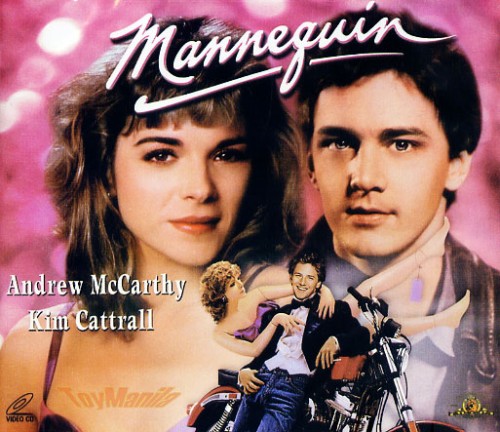
‘Mannequin’: A Dummy’s Guide to True and Everlasting Love

By any regular standards, even the 1980s, ‘Mannequin’ is a TERRIBLE movie. It never should have been green lit, let alone hit wide release. It’s often lumped in with other Brat Pack pics, thanks to the presence of Andrew McCarthy and James Spader, but it really should be categorized separately, as a romcom gone wrong. Showroom dummies that come to life after hours should be the stuff of horror movies, or episodes of ‘Doctor Who,’ not fluffy fantasies starring a nearly naked Kim Cattrall. John Hughes wouldn’t have touched this material with a ten-foot pole.

mannequin-remake-movie

This guest post by Karina Wilson appears as part of our theme week on The Brat Pack.

By any regular standards, even the 1980s, Mannequin is a TERRIBLE movie.  It never should have been green lit, let alone hit wide release.  It’s often lumped in with other Brat Pack pics, thanks to the presence of Andrew McCarthy and James Spader, but it really should be categorized separately, as a romcom gone wrong. Showroom dummies that come to life after hours should be the stuff of horror movies, or episodes of Doctor Who, not fluffy fantasies starring a nearly naked Kim Cattrall.  John Hughes wouldn’t have touched this material with a ten-foot pole.

It’s hard to believe the filmmakers ever thought audiences would fall for the outrageous plot. An Ancient Egyptian princess, Emmy (Kim Cattrall), escapes arranged marriage to a camel dung salesman by disappearing in a puff of smoke and reincarnating as a showroom dummy in 1987 Philadelphia, where she finds true love with the career-challenged Jonathan (Andrew McCarthy) inside a glittering retail palace (Wanamaker’s, now Macy’s Center City).  She exploits the well-documented Philadelphian obsession with classy department store window displays to turn Jonathan’s life around, defeat the bad guys, and [SPOILER ALERT] get married (in a climactic window display!) and live happily ever after.

mannequin028oz4

Critics, understandably, hated it.  Roger Ebert thought it was, quite literally, DOA (“Mannequin is dead. The wake lasts 1 1/2 hours, and then we can leave the theater”).  Janet Maslin in the New York Times lamented the lack of substance (“In place of a real story, there is just the spectacle of stock characters being put through their paces to fill up the time”) and lousy performances (“It’s never a disappointment when the mannequin, which comes to life only intermittently, turns back into wood”).  Leonard Maltin called it “absolute rock-bottom fare. Dispiriting to anyone who remembers what movie comedy ought to be.”   Yet it was a hit – grossing more than $42 million off a $6 million budget – and was nominated for an Academy Award – for Starship’s theme song, “Nothing’s Gonna Stop Us Now.”

I willingly confess to loving Mannequin. It’s so wrong, it’s absolutely right.  It’s a big, tatty rescue pooch who plants her paws on your chest and gives you a slobbery kiss of a movie: certain people, dog people, Mannequin people, can’t help but be charmed.  Even now, watching it as a hard-bitten 40-something, it invokes my inner impressionable teen.

mannequin

I adore the unromantic hero, Jonathan Switcher, because he manages to be simultaneously weird and endearing. There’s something a bit off kilter from the top: when we first meet him, he’s salivating over a naked clothes dummy.  He exudes every which way of warning signal, from the pronounced doll fetish to the Frankenstein complex to the social ineptitude. When the dummy-making gig doesn’t work out, he is hired and quickly fired from a succession of menial occupations, which consequently causes him to be dumped by his improbably put-together girlfriend, Roxie (Carole Davis).  Poor Jonathan would drown instantly if forced to dive into the perilous depths of the 2014 dating pool.  However, this was the 1980s, when you could splash about in the shallow end and still qualify as Kim Cattrall’s dream date.  On the plus side, Jonathan rides a Harley, lives in a sweet studio apartment (obviously comes from money, yay 1980s!), and he’s Andrew McCarthy. Andrew fucking McCarthy. Be still, my perpetual adolescent heart.

For those of you who don’t recall, Andrew McCarthy was the Beta Male of the Brat Pack.  He wasn’t as beautiful as Rob Lowe, or as badass as Judd Nelson, or as peppy as Robert Downey Jr., but you’d take him over Anthony Michael Hall or Jon Cryer any day.  He had a burning blue stare, a voice that dropped to a creaky growl when – as often happened – his character was wracked with emotion, and a lift to his chin suggesting a stubborn streak a mile wide.  He was cool enough to pop his collar and run with the in-crowd, but he was also sensitive enough to be an individual, even (shock!) an artist, and follow his dream.  He was the Nice Guy before the term became so ridiculously devalued.  He was the boy who might, quite unexpectedly, offer to walk you home after prom turned to tears, and then turn misery and humiliation into the most enchanted evening of your life through the power of his goofy grin and kind eyes.  I loved him then and I love him still.

mannequin022he8

He’s wasted in Mannequin. He does his best with the material, and manages to make Jonathan geeky and adorable, a whisper away from quietly insane: in lesser hands, the guy would be plain creepy.  McCarthy makes it halfway believable that Emmy, who has had her pick of hot dates (Christopher Columbus!) throughout history, might finally settle for the lowest status employee in the store.  And Cattrall keeps up Emmy’s end of the deal, regarding Jonathan as a feline would a toy stuffed with catnip – with unadulterated delight.  She bats him between her paws, chews on him gently, and, when the montage is done, curls up beside him and goes to sleep.  Girl clearly likes to dominate, and there’s a coy whiff of BDSM about some of their dress-up-and-play.  What else are they going to do with those tennis racquets other than spank each other’s ass?

In a cute subversion of romcom norms, then, Emmy is the Alpha Female who picks out the Nice Beta Male early on in the narrative and seduces him with a plastic smile.  She has been dating for millennia. When she sees it, she knows exactly what she wants – and it ain’t the traditional alpha hero. Jonathan and Emmy are perfect for one another from the moment they lay eyes on one another.  There’s no need for a makeover montage. This is due to bad storytelling rather than feminist innovation, but it’s so refreshingly unusual, it works.  She’s content to dazzle, he’s content to be awed – and when required, he saves her life.  We should all aspire to such a Mr. Right.

mannequin1

The writers, Michael Gottlieb and Edward Rugoff, manage to throw a few obstacles in the happy couple’s way (the course of true love never did run smooth) in the form of manic supporting characters. Forget three-dimensional, thinking, feeling, human beings – crass stereotypes abound. There’s flamboyant, gay, black, promiscuous Hollywood (Meshach Taylor), the set designer who takes Jonathan under his sateen wing.  Estelle Getty pops up as the store’s owner, Claire Timkin.  G.W. Bailey reprises his Police Academy shtick as Felix, the bumbling security guard – Cattrall was a fellow alumni, best known for her sex kitten turns in Porky’s and Police Academy at this point, so he must have felt at home.  And there’s the villainous Richards, James Spader abandoning his usual sexy-husky bad-boy turn in favor of playing a rival storeowner with cartoonish slicked-back hair and outsize spectacles.  None of it makes much sense. But somehow Jonathan and Emmy win and Richards and Roxie lose and the finale is all “Nothing’s Gonna Stop Us Now” most triumphant good.

That’s all, folks. Mannequin is fun, but wafer-thin.  Although considered a cult classic, it has zero cultural significance, especially when compared to the canon Brat Pack hits that defined a generation.  It’s a vapid Technicolor fantasy that, by being so poorly conceived and written, accidentally manages to subvert all the other Pygmalion stories.  Flimsy as she is, Emmy is the romantic heroine who doesn’t have to be reshaped or reinvent herself in order to deserve her adoring swain.  All she needs is for us to believe she’s real.


Karina Wilson is a British writer and story consultant based in Los Angeles.  She writes a regular column on horror fiction at Litreactor and can also be found at Horror Film History.