When I contemplate women in film, two thoughts come to mind: women in front of the camera, and women behind the camera. We are all familiar with the stereotypical female characters in movies and TV shows that portray traditional, predictable roles. There’s nothing wrong with that, I suppose, but it isn’t teaching us anything new about what it’s like to actually be a woman. When I fell in love with independent film in the early 2000s, it was for one reason: I had never experienced anything as risky or as honest as filmmaking without rules or boundaries. This was especially true in terms of exploration of female characters. It was refreshing, enlightening and, eventually, life changing.
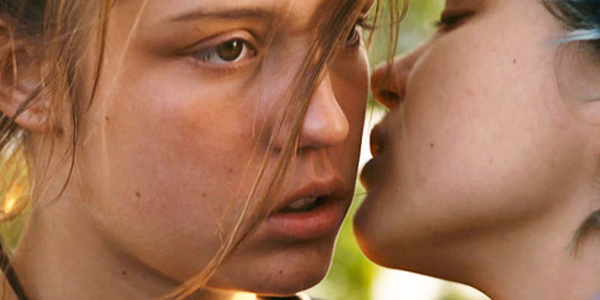
Blue is the Warmest Color
This is a guest post by Jen West.
When I contemplate women in film, two thoughts come to mind: women in front of the camera, and women behind the camera. We are all familiar with the stereotypical female characters in movies and TV shows that portray traditional, predictable roles. There’s nothing wrong with that, I suppose, but it isn’t teaching us anything new about what it’s like to actually be a woman. When I fell in love with independent film in the early 2000s, it was for one reason: I had never experienced anything as risky or as honest as filmmaking without rules or boundaries. This was especially true in terms of exploration of female characters. It was refreshing, enlightening and, eventually, life changing.
One of my favorite films of 2013 was Blue is the Warmest Color. It’s an outstanding example of including high-impact female characters. I stumbled into it one rainy afternoon in Atlanta, flying solo on a weeknight. I grabbed my bag of popcorn and took a seat in the nearly empty theater. I was originally intrigued by the trailer I had seen and the artwork of the mysterious girl with the bright blue hair. I soon saw that there was something different happening between these characters that I had never experienced before— a depiction of a true lesbian love affair on screen. I was sucked into the world of Adèle, a 15-year-old girl exploring love and sexuality for the first time. I know some would argue that the characters were a little too pretty, making the film feel a little like soft porn at times, but I found it to be intimate and intense. It wasn’t afraid to take us in the bedroom and expose the passion that existed between the two girls. Isn’t sexuality a part of all of our lives, whether in abundance or lack thereof? We shouldn’t be afraid to explore that. It was a brave film and the actresses held nothing back for those parts. That’s what independent film is all about— taking risks and pulling out raw emotions in the viewer. I liked that it made me feel vulnerable. I loved that snot dripped out of Adèle’s nose every time she cried. It was female authenticity. I want more of that.
Brie Larson in Short Term 12
Another recent stand-out performance for me was from Brie Larson in Short Term 12. This is a great example of not shying away from the ugly parts of life. Her character, Grace, deals with past sexual abuse as a life-changing event and she continues to deal with it while working at a adolescent treatment facility. She shows us the face of an abuse survivor, which isn’t always pretty. Everyone has demons that chase them down eventually. Each person’s coping process is unique. Grace is a beautifully broken and complex character who will go down as one of my favorites of all time. If you haven’t seen it, then you are missing a pivotal film in the indie universe.
I want the ugly. Give me the behind-closed-doors intimate moments that really mean something to my own struggles. I don’t care about surface appearances and the masks that each of us wear every day in order to fit in. The true self lies far beyond that. It’s a scary, but unifying experience to be let into another’s intimate universe. Film is a great medium to explore this concept, especially with female characters.
Nothing turns me on more than a powerful female performance, whether it be the actors on screen or the writers and directors behind the camera. As I’ve traveled the film festival circuit with short films of my own, I’ve always kept an eye out for my peers. Through this self-initiated challenge I’ve found the likes of Josephine Decker, Eliza Hittman, and Leah Meyerhoff. You should become familiar with these women. When you aren’t paid yet for your craft, when each film comes from your soul—that’s how you know someone is a real artist. It’s hard, sometimes even nearly impossible, but you do it anyway. There is absolutely no shame in wanting to be paid for your work, however there is something to be said for pursuing your passion just because it’s a part of your being. That’s the kind of filmmaker I strive to be.
Filmmaker Josephine Decker
For all of you female filmmakers out there— let’s keep creating characters that reveal something important about our humanity. It doesn’t matter if it’s done through humor or drama. For those of you who are film fanatics, or just the occasional theater dweller, I challenge you to discover more independent female-focused content and filmmakers. It’s easy to turn on Netflix and watch what’s on top of your recommended viewing list. Instead, why not dive into something different (but equally convenient) like Seed & Spark, or just dig a little deeper into your preferred medium for that independent film you’ve never heard of. Better yet, attend your local film festival and see what’s surfacing beyond the TV and movie theater. I guarantee that you’ll discover amazing female-focused content once you start searching.
Born and raised in Birmingham, Alabama, Jen West is a writer and director living in Atlanta, Georgia. She is known for Piece of Cake (2006), Crush (2011), Bubble (2013) and “Call Me” (2014 – music video for St. Paul and the Broken Bones). She wrote her feature script, Electric Bleau, as part of a creative residency with the Cucalorus Film Festival in 2014. Currently she is in preproduction for her next short, Little Cabbage and is crowdfunding on Seed & Spark.
‘OITNB’ does not always blame the id. It also wonders whether larger societal forces are culpable too. Take, for instance, adorable Lorna (Yael Stone) a modern day zeitgeist for Bridezillas. As a compulsive shopper, she’s a victim of the consumer industrial complex that taught her happiness and fulfillment can be bought. When a cute man rejects her after one date, she realizes she can’t buy or scam her way into love so it triggers a fatal attraction in her. Pornstache’s adopted patriarchal mindset that women are merely pleasure objects leaves him jobless, in jail, and alone. Officer Healey’s misogyny leads him to procure a “traditional” wife via mail order, only to discover that true companionship can’t be bought or found through biased gender roles.
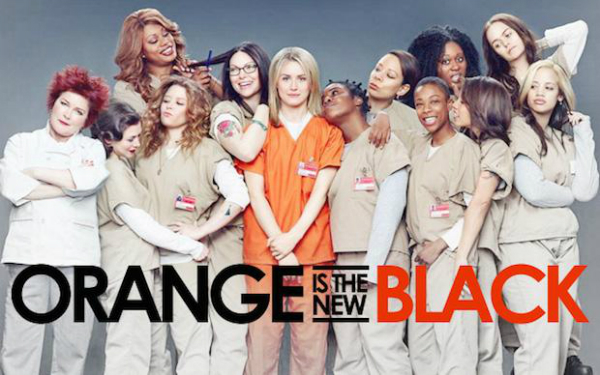
Orange Is The New Black’s second season reveals more about the lives and crimes of its supporting characters. What lies at the heart of season two is not the misdeeds these women committed that account for their imprisonment, but the relationships surrounding them and their personal desires that ultimately contributed to it.
This is a recurring theme in Jenji Kohan’s work. Consider Kohan’s first breakthrough female character, Nancy Botwin in Weeds. Botwin, a dependent housewife, turns to drug dealing once she realizes her lifestyle choice left her financially destitute. Kohan, like many women before her – Simone de Beauvoir to Betty Friedan, iterates that the real crime is the one where women believe relationships are a means to an end.
The Atlantic’s Megan Garber argues that traditional Rom-Coms are a dying Hollywood genre because they don’t include contemporary online dating. I respectfully disagree; OITNB is arguably a new age Rom-Com (plus drama) that still operates on dial-up (Wi-Fi is too fancy for that prison). It merely takes the genre’s traditional trite heterosexual storylines, the romantic city backdrops, and the saccharine plots and puts them into solitary confinement. It then throws away the key.
OITNB reinvigorates this genre by exploring more dynamic and diverse relationships: platonic and romantic, internal and external. Unlike in Rom-Coms, sex is not a driving force in OITNB. It’s merely a perk and even then can lead to complications like Officer Bennett (Matt McGorry) and Dayanara’s (Dascha Polanco) pregnancy. And the show breaks new ground in this obsolete genre with its almost all-female cast. Rom-Coms want viewers to believe that problems will resolve themselves within a relationship; Kohan’s version suggests that’s where they start.
Piper (Taylor Shilling) lies at the heart of this theory. Season two reveals how much her relationship with Alex (Laura Prepon) has negatively impacted her life. However, Piper is not committing crimes in the name of her passion for Alex. In fact, we learn her poor decision-making stems from her relationship with her parents, their habit of obscuring the truth, and her father’s infidelity. Piper’s story makes a compelling argument that one’s nurturing is more influential over personal nature. Maria Ruiz (Jessica Pimental) supports this idea by begging her taciturn boyfriend to talk to their daughter so she grows into a well-adjusted child.
To what purpose Piper is driven to commit these crimes has yet to be revealed, but the question highlights OITNB’s most interesting angle on the new age Rom-Com genre – desire. Season two unveils that the characters’ relationships are merely conduits to attain more intangible, inherent passions like – power, safety, belonging, fortune, favor, excitement, loyalty, relevance, etc.
A bloody Piper on OITNB
This is most evident with Season two newcomer, Vee (Lorraine Toussaint), who, rather than quietly ride her jail time out, is driven by a passion for power and sets out to take Red’s. She’s highly aware of her psychological needs… and others’, which is how she manages to manipulate several women into doing her bidding. She plays off these characters’ needs for family, connection and approval, like Taystee’s (Danielle Brooks), who despite her book smarts, turns to drug dealing in the pursuit of motherly love. Viewers quickly learn that one can only be as healthy and wise as the company one keeps.
That also includes the relationship people have with themselves. In OITNB’s subtle exploration of nature versus nurture, viewers are also shown a compelling argument that personal nature also influences decision-making. As nature drives needs, a person can easily become his or her own worst enemy. Take for instance formerly pro-choice Pennsatucky (Taryn Manning), who, eager for affection from an inattentive boyfriend, quickly switches sides when she realizes how to earn the esteem of the pro-lifers. She’s willing to permanently win their worship by taking the life of a clinic doctor. Sister Ingalls (Beth Fowler) continues to protest despite ones from the Catholic Church, because who is she without her activist conviction more so than without Jesus? Miss Rosa’s (Barbara Rosenblat) boyfriend introduced her to bank robbing, but it was after her first heist that she realized she had a knack for it.
OITNB does not always blame the id. It also wonders whether larger societal forces are culpable too. Take, for instance, adorable Lorna (Yael Stone) a modern day zeitgeist for Bridezillas. As a compulsive shopper, she’s a victim of the consumer industrial complex that taught her happiness and fulfillment can be bought. When a cute man rejects her after one date, she realizes she can’t buy or scam her way into love so it triggers a fatal attraction in her. Pornstache’s adopted patriarchal mindset that women are merely pleasure objects leaves him jobless, in jail, and alone. Officer Healey’s misogyny leads him to procure a “traditional” wife via mail order, only to discover that true companionship can’t be bought or found through biased gender roles.
Lorna and Suzanne “Crazy Eyes” in OITNB
None of these characters is committing crimes in the name of passion per se, but their unrequited desires are usually leading them toward a perpetual cycle of bad decisions, which, for most, result in crimes. With such skewed risk and reward results, viewers have to wonder if they’re aware of what drives their poor decisions.
The prison setting provides good insight into this. Stripped of life’s comforts, the prisoners are faced with meeting the basics of Maslow’s hierarchy. Meals and a roof are nominally provided, but their social and psychological needs remain elusive. It’s not that people in love do stupid things (though that can happen), but people are willing to assume certain risks if it means earning, winning, or attaining whatever it is that they are seeking. Whether the individual characters know these desires does not ensure their survival or success, which is perfectly captured in Vee’s final scene. Soso (Kimiko Glen) sums up the importance of well-rounded relationships: “We should be leaning on each other, finding support in our fellow prisoners. So we’re not isolated…. I need a friend.”
Viewers learn that community is necessary to survive inside prison, but more importantly outside too. Matriarch Red (Kate Mulgrew), who has struggled the most with family, power, and support, appears to be reaching this important arch. This becomes evident as she gathers with her estranged prison family to break bread and offer an olive branch. Her benevolence and selflessness is rubbing off on her family too, such as when Nicky seeks help with her sobriety, who then offers Lorna the recognition of love she’s always desired (even if it’s platonic). Red mirrors the sentiment Kohan is not so subtly reaching at – that failure is inevitable if we let unhealthy relationships and desires define us. Like jail, they can easily hold people back.
Kohan’s spin on female media dives much deeper into characters and relationships than the now-suffering traditional Rom-Com genre. Rom-Coms’ superficiality is its biggest crime, which ultimately led to its lack of popularity and box-office support. OITNB is a compelling game-changer by highlighting the true nature and depth of women’s desire and making their relationships secondary.
However, it’s important to bring up The Atlantic’s controversial article by Noah Berlatsky, “Orange Is the New Black’s Irresponsible Portrayal of Men,”who accuses OITNB from his seat of male privilege that “the problem is that the ways in which OITNB focuses on women rather than men seem to be linked to stereotypically gendered ideas about who can be a victim and who can’t.” It seems that OITNB has also shaken up the crime and punishment genre.
First, he couldn’t be more off the mark about people being overly generous in their sympathy toward female victims of violent crime. If he were right, rape on US campuses wouldn’t be such an egregious current event. His lack of sympathy for victims sounds eerily like victim blaming, but I digress. Secondly, neither OITNB, nor this article, is suggesting these women are victims of their own unfulfilled desires; many take pride in their crimes! The show is merely trying to get to the psychological root of the misdeeds and decisions and if the prisoners can learn from them.
What makes OITNB such compelling entertainment is the same substance that Berlatsky criticizes. The show redefines an entertainment genre and the traditional characterization of women and prisoners. Based on Berlatsky’s argument, for example, there wouldn’t be any dynamic movies featuring female CEOs because 95.2 percent of Fortune 500 CEO positions are filled by men and they’ve only ever been portrayed as Gordon Gekkos. So in Bertlatsky’s, world men deserve better portrayals first. That’s the thing he misunderstands about OITNB‘s psychoanalysis of desire–if we don’t understand what drives us, we run the risk of using our male privilege to ostracize and enrage minorities. ¿Comprende, Bertlatsky?
Media’s crime is portraying women or prisoners with limited scope and vapid storylines. Kohan’s desire to shake up two very stagnant media genres has left many feeling blindly robbed of a genre they once controlled, but for others it’s filling an empty gulf in entertainment. Season two begins to unravel the mysteries surrounding the inmates’ incarceration. It offers an intimate peek into how the nature of relationships is ultimately driven by personal desires. OITNB is honest in admitting that healthy, trustworthy, selfless, and supportive relationships are as elusive for everyone as that freedom all the inmates desire. But the real culprit is that passion, which without understanding, can get anyone in trouble in the first place.
Katrina Majkut (My’ kit) is the founder of www.TheFeministBride.com. It hopes to inspire a new generation of newlyweds who want unique and egalitarian wedding ideas to fit their modern lifestyles. It aims to empower couples to walk down the aisle as equals. As a writer, lecturer, and research-based artist, Majkut is dedicated to understanding and exploring social narratives and civil issues in Western marriage and wedding culture. She is represented by Carol Mann Agency in New York City. Please follow The Feminist Bride on Twitter @FeministBride and on Facebook.
It’s not all doom and gloom, though. Sophia leads the inmates in an episode-long exploration of “which hole” pee comes out of and the importance of knowing your body. This season really attempts to get at life in America’s underfunded and overcrowded minimum security prison system. While there’s still a ways to go in achieving a realistic portrayal of the dire reality many incarcerated women face, it’s the only piece of pop culture striving to do so.
Whereas last year’s inaugural season of Netflix’ women’s prison effort, Orange is the New Black, introduced us to the myriad characters in Litchfield Penitentiary through the incarceration of the WASPy Piper Chapman, this year is all about the more diverse women that wear orange (well, mostly beige).
Specifically, we see the challenges of staying physically and mentally healthy in America’s prison industrial complex.
Last season we did see some of these issues come to light; transgender inmate Sophia Burset, played by the incomparable Laverne Cox, had her hormone medication limited due to concerns about the drug’s side effects, while Suzanne “Crazy Eyes” Warren’s mental illness was a comedic calling card for the show.
The incomparable Laverne Cox as Sophia Burset
This year Suzanne’s backstory gets more airtime, as well as an explosive trajectory for Lorna Morello, which reveals that though both women probably need psychological counseling, they’re not going to get it at the indebted Litchfield. Instead, their issues fall through the cracks so much so that only Nicky is privy to exactly what Morello did to land her in prison.
Season two has been applauded for giving more airtime to the minor characters who also happen to be from racial minorities: Gloria, the Hispanic cook who took over the kitchen from Red and is serving time for welfare fraud, and her Latina cohorts; Vee, Taystee and Poussey’s familial-love triangle cum drug ring; and Rosa, the bank robber with terminal ovarian cancer.
Lorna Morello falls through the Litchfield cracks
There’s also been an influx of older women this season, whom feminist writer Sady Doyle describes as a “knitting circle” with “an alarming tendency to shiv people.” This includes dementia-ridden Jimmy, who wanders the grounds (and even inadvertently escapes!) looking for her presumably long-dead husband, Jack. Due to her deteriorating mental state, Jimmy is given “compassionate leave” which is revealed to be not-so-compassionate when you take into account that she has no family to look after her and is without the mental faculties to secure herself a home or care. Inmate Frieda predicts she’ll be out on the streets and “dead within a week.”
Jimmy is released on “compassionate leave”
Jimmy’s release is apparently due to the above mentioned “budget cuts,” which seem to be happening all too regularly at Litchfield. Reporter Andrew Nance contacts Piper’s ex-fiance, writer Larry, and later Piper herself, to see if he can get the inside scoop on the missing millions from Litchfield.
There was talk of the building of a new gym, but that money—along with the gym—is nowhere to be found. The inmates’ bathrooms are leaking raw sewage and they have no heating in the Eastern winter. The prison’s dire financial state comes to a festering head in the penultimate episode of the season as a storm rips through Litchfield, leaving the prison flooded and without power, a backup generator, or whatever functioning plumbing they had left.
These appalling conditions contribute to newcomer Brooke Soso, Yoga Jones, Sister Jane and some girls from Pensatucky’s former laundry crew going on a hunger strike. Sister Jane’s past as an activist comes to light, and let’s just say she’s not as selfless as she makes herself out to be. Having said that, though, she berates prison administrator Caputo for releasing Jimmy with no accountability:
“The elderly are the fastest growing population in prison and they have special needs. So-called ‘compassionate release’ in lieu of care is completely unacceptable. You can’t dump sick old ladies on the street. It’s unconscionable, inhumane and illegal.”
Surely Rosa would be a better candidate for compassionate release as she has weeks to live?
It’s not all doom and gloom, though. Sophia leads the inmates in an episode-long exploration of “which hole” pee comes out of and the importance of knowing your body. This season really attempts to get at life in America’s underfunded and overcrowded minimum security prison system. While there’s still a ways to go in achieving a realistic portrayal of the dire reality many incarcerated women face, it’s the only piece of pop culture striving to do so. If it keeps heading in that direction, who knows the depths season three will plumb, so to speak.
Scarlett Harris is a Melbourne, Australia-based freelance writer and blogger at The Scarlett Woman, where she muses about feminism, social issues, and pop culture. You can follow her on Twitter.
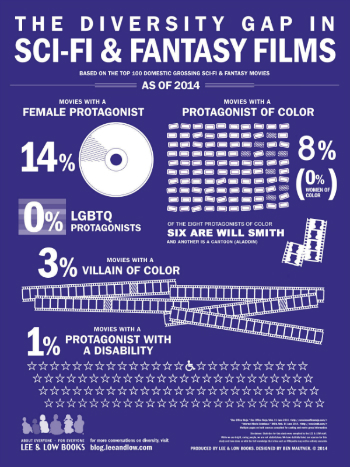
Examining the top 100 domestic grossing sci-fi and fantasy movies as reported by Box Office Mojo, the study finds that only 14 percent of the movies feature a female protagonist and only 8 percent feature a protagonist of color.
This is a guest post from LEE & LOW BOOKS.
As moviegoers flock to theaters this weekend to see Lucy and Guardians of the Galaxy, a new study released by children’s book publisher LEE & LOW BOOKS illuminates the dramatic lack of diversity in top-grossing Hollywood blockbusters in the science fiction and fantasy genres. Examining the top 100 domestic grossing sci-fi and fantasy movies as reported by Box Office Mojo, the study finds that only 14 percent of the movies feature a female protagonist and only 8 percent feature a protagonist of color.
Click for larger image.
The study also finds that no movies on the list feature a woman of color as the protagonist; lesbian, gay, bisexual, and transgender protagonists are likewise absent. Only one movie (Avatar) features a protagonist with a disability. Perhaps most surprising, the study reports that only two actors of color have appeared in lead roles: Will Smith, who plays six out of the eight protagonists of color, and Keanu Reeves (The Matrix Reloaded). The last protagonist of color is Aladdin, a cartoon character voiced by a white actor.
“The statistics are certainly striking, especially since sci-fi and fantasy belong to a genre that prides itself on creativity and imagination,” says Marissa Lee, co-founder of the international grassroots organization Racebending.com, which is dedicated to furthering equal opportunities in Hollywood and beyond. “Hollywood has managed to market some weird stuff, like a tentpole movie about talking teenage turtle martial artists, or cars that change into space robots. I don’t buy that when it comes to marketing diverse leads, suddenly this giant industry can’t do it.”
Imran Siddiquee, director of communications at The Representation Project, a movement that uses film and media content to expose injustices created by gender stereotypes, says Hollywood blockbusters are rarely accidental. “Just look at the top ten films in each of the last five years: nearly every single one had a budget of more than $100 million,” Siddiquee says. “Meanwhile, there hasn’t been a single film released this year starring a person of color with a budget of more than $50 million.”
For more than 20 years, LEE & LOW BOOKS has published award-winning children’s books that are “about everyone, for everyone” (including science fiction and fantasy under the Tu Books imprint). The company is committed to fostering conversations about race, gender, and diversity in publishing and beyond. For more information, visit leeandlow.com.
The infamous Brat Pack of the 80s was and remains a huge cultural phenomenon. A term inspired by the Rat Pack of the 5os and 60s, the Brat Pack immortalized a group of young actors whose films had a tendency to overlap. Though the actors themselves disliked the moniker and some complained it hurt their careers, the term stuck.
Our theme week for August 2014 will be The Brat Pack.
The infamous Brat Pack of the 80s was and still remains a huge cultural phenomenon. A term inspired by the Rat Pack of the 5os and 60s (which included iconic names like Humphrey Bogart, Lauren Bacall, Sammy Davis, Jr., Dean Martin, Frank Sinatra, etc), the Brat Pack immortalized a group of young actors whose films had a tendency to overlap. David Blum coined the term in his New York article: “Hollywood’s Brat Pack.” Though the actors themselves disliked the moniker and some complained it hurt their careers, the term stuck.
Scholar Michael J. Palmer scathingly describes the Brat Pack as “the socially apathetic, cynical, money-possessed and ideologically barren eighties generation.” On the other hand, film critic James Thorburn claims that “Eighties teens drew instruction and inspiration” from Brat Pack films and “had their faith in society reinforced, and their moral fabric strengthened.” Author Susannah Gora weighs in, stating that Brat Pack films “changed the way many young people looked at everything from class distinction to friendship, from love to sex and fashion to music.” Whether identified as a positive or negative contribution to film, the Brat Pack is universally considered “among the most influential pop cultural contributions of their time.”
We’d like you to write about the Brat Pack. Examine a single film, a series of films, the actors’ careers or the effects that the Brat Pack had on an era. Some questions worth considering are:
Who constitutes the Brat Pack?
Did the grouping of these actors under the blanket term Brat Pack help or hinder their careers?
What did/do they stand for?
Was the Brat Pack influence good or bad?
How do these young actors and their works compare to the Rat Pack?
Feel free to use the examples below to inspire your writing on this subject, or choose your own source material.
We’d like to avoid as much overlap as possible for this theme, so get your proposals in early if you know which film you’d like to write about. We accept both original pieces and cross-posts, and we respond to queries within a week.
Most of our pieces are between 1,000 and 2,000 words, and include links and images. Please send your piece as a Microsoft Word document to btchflcks[at]gmail[dot]com, including links to all images, and include a 2- to 3-sentence bio.
If you have written for us before, please indicate that in your proposal, and if not, send a writing sample if possible.
Please be familiar with our publication and look over recent and popular posts to get an idea of Bitch Flicks’ style and purpose. We encourage writers to use our search function to see if your topic has been written about before, and link when appropriate (hyperlinks to sources are welcome, as well).
The final due date for these submissions is Friday, Aug. 22 by midnight.
We hear the song one more time in a moment that mimics the first, after Tom’s illusion is shattered. Instead of listing what he loves about Summer, Tom lists the things he hates about her, concluding with “It’s Like The Wind,” and yelling, “I hate this song!” The romantic illusions are finally cracked. This isn’t the movie he thought it was.
Tarantino’s vast knowledge of music is clear from the very beginning with Reservoir Dogs. However, it isn’t until the Kill Bill series when his soundtracks begin to drift away from pop and instead embrace more orchestral sounds like that of Ennio Morricone. Viewers need no knowledge of the genre to instantly recognize that spaghetti western feel. It’s that famous mix of Spanish guitar, orchestra, whistles, cracking whips, trumpet, flute and sometimes chorus that recalls images of Clint Eastwood clad in a green poncho and cowboy hat as the iconic Man with No Name.
The music throughout the film deals with the lost and rebellious feelings during coming of age for young women. The movie tells the story of these two individuals and how their lives were affected by fame, but underneath that is the coming of age experience for young girls realizing their power and sexuality within a culture that seeks to suppress them.
As evocative as the scene of the Puma Sisters doing their thing might be, and as culturally-charged a time as the release of Dominion Tank Police might have been, much of the success of this scene is owed to the music. “Hey Boy,” by Riko Ejima, is a haunting song that, while seemingly chaste in that it seems to be singing about dancing, captures something deep, deep in the soul.
Ugly singing; ugly make-up. ‘Les Misérables’ is deservedly known as the film that tried too hard to bum us out, and Anne Hathaway is known as the actress who tries too hard to be liked. But, isn’t it nice, sometimes, when somebody makes an effort?
Mike Nichol’s The Graduate has one of the most popular soundtracks of all-time. The songs reveal the dynamics of a character, theme, and a moment without the use of dialogue or a backstory, but simply through the lyrics of a Simon and Garfunkel song.
Love Jones does more than captures a moment in time in the late 90s. It creates the point when neo-soul established itself as the music of all of us with artistic inclinations, those of us leaving fantasies of teenage love affairs behind for a more realistic image of making a relationship work. And, yes, for some of us it brought about a sexual awakening that helped us accept that sex could exist outside a relationship if it’s truly wanted that way.
Lisa Gerrard of Dead Can Dance, one of the few successful women musicians who made the transition to film composer (she won a Golden Globe for her work on Gladiator), wrote and performed the music for 2002’s Whale Rider–and she didn’t have to date writer-director Niki Caro to do so. Gerrard might seem an unlikely choice: when I briefly worked in a women’s sex shop in the 90s, the store owner told me not to play Dead Can Dance on the sound system because they scared away customers. But Gerrard’s score for Rider does what the best movie music is supposed to do: reinforcing the drama of the film without calling unnecessary attention to itself.
Zeffirelli’s Romeo and Juliet is a tale told by the older generation. Luhrmann’s Romeo + Juliet is one told by “unfaded” youth. When Des’ree was singing “Kissing You” as Romeo and Juliet kiss (and oh, how they kiss), she is singing with deep longing and pain. When Glen Weston sings “What is a Youth?” he sings at Romeo and Juliet, about how youth–and female virginity–fades.
That Thing You Do! with its sly humor, strong performances and ultimately heartwarming romance makes for satisfying viewing. It’s a meditation on the tension between art and commerce that manages to acknowledge what can be good about temporary fame. It’s also a squeaky-clean antidote to sordid, drug-filled “Behind-the Music”-type stories both fictional and real.
My attachment wasn’t about Elle Woods or embracing hallmarks of traditional femininity that get belittled by western mainstream society (that would come later). I was all about lyrics like, “That’s not the way/ Nice girls behave/ Oh yeah I know/ You told me/ It’s not your choice/ I have a voice/ I guess you just don’t hear me.” It spoke to me on a spiritual level.
I’m a lot older now and I still squeal with excitement when Girls Just Want to Have Fun comes on. When it showed up on Netflix my daughter and I watched the movie over a dozen times. We would take “supreme silly” dance breaks whenever the music would play and when the Netflix purge occurred we found a DVD copy (OK we got two in case one got scratched or lost) of our very own on Amazon so that we could continue this tradition at will.
The Lost Boys is a classic 1980s vampire flick directed by Joel Schumacher. It is as famous for its soundtrack as it is for its content. The entire film in fact is exemplified in its main theme–“Cry Little Sister,” by G Tom Mac–from the typical horror themed sections to its classic 80s rock moments down to its choral moments. These sections sum up the film almost perfectly.
‘That Thing You Do!’ with its sly humor, strong performances and ultimately heartwarming romance makes for satisfying viewing. It’s a meditation on the tension between art and commerce that manages to acknowledge what can be good about temporary fame. It’s also a squeaky-clean antidote to sordid, drug-filled “Behind-the Music”-type stories, both fictional and real.
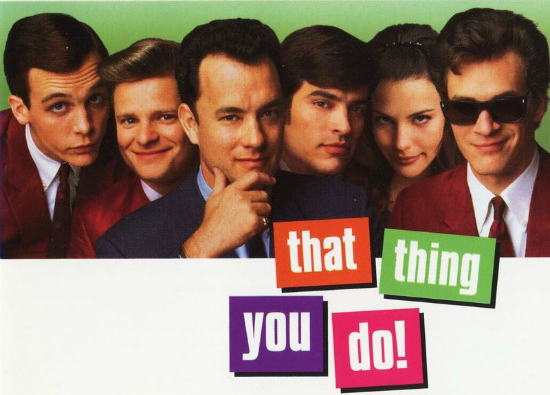
That Thing You Do! movie poster
This guest post by Lisa Anderson appears as part of our theme week on Movie Soundtracks.
What makes a film’s soundtrack memorable? Some beloved films, such as Pulp Fiction, pull together varying songs to capture the essence of a film, while others, like O Brother Where Art Thou? have artists covering existing songs specifically for the movie in question. That Thing You Do! (1996) took a novel approach somewhere in the middle. Writer/director Tom Hanks collaborated with others to create original songs in the style of various musical genres of the time and record them under the name of fictional musical acts from the movie. Despite its initial popularity and the success of the movie, the resulting album has fallen into relative obscurity, but I believe it still holds up.
The movie itself tells the story of a fictional “One-Hit Wonder” band from 1960s Eerie, Pennsylvania. Young Guy Patterson, played by Tom Everett Scott, is asked to sit in with a band for a local contest after their usual drummer (Giovanni Ribisi in a bit role) breaks his arm. Guy brings a new tempo to the band’s signature song, “That Thing You Do!” and also gives them their new name: The Oneders, which is pronounced “Wonders” but hilariously mispronounced “Oh-nee-ders” on multiple occasions.
Guy Patterson: drummer extraordinaire
The pepped-up version of “That Thing You Do!” becomes a hit, and the Oneders go from local radio play to the state fair circuit to the Billboard charts and national TV. Along the way, they have help from Andrew White (Tom Hanks), their manager with the fictional Play-Tone records, and Faye (Liv Tyler), the lead singer’s mistreated girlfriend, after whom Guy pines. Success turns sour, as it inevitably must (at least in the movies), but not before the audience is treated to many great songs that sound like they’re lifted straight from the 60s.
As the film opens, we hear “Lovin’ You Lots and Lots,” by the Norm Wooster Singers — a shout-out to the tame, almost muzak-like sound that’s about to be supplanted by rock ‘n’ roll. As the Oneders play gigs, we hear them perform not only “That Thing You Do!” (of course), but also “Little Wid One,” “Dance With Me Tonight,” and “All My Lonely Dreams.” The first two are up-tempo 1960s rock, while the latter is a slow ballad of the sort that the lead singer, Jimmy, apparently has a proclivity for. His post-Oneders band, the Heardsmen, also has two songs on the soundtrack: “She Knows It” and “I Need You (That Thing you Do),” although the latter is also attributed to the Oneders.
It’s when the Oneders go on a state fair tour with other Play-Tone artists that the music gets even more varied. “Hold my Hand, Hold my Heart” by the Chantrellines captures the sound of Black all-girl groups such as the Supremes. “Mr Downtown,” by Freddy Fredrickson, combines a lounge-lizard sound with the feel of a James Bond title song and a dash of Raymond Chandler. Diane Dane sings in the tradition of female soloist torch singers on “My World is Over.” The Vicksburgs, a rock band much like the Oneders, alludes to the era’s fascination with the automobile in “Drive Faster.”
The world of the Oneders is full of instrumental music, too. “Voyage Around the Moon,” by The Saturn 5, is a spot-on homage to surf music. Cap’n Geech and the Shrimp Shack Shooters provide the sound for the Beach-movie phenomenon in “Shrimp Shack,” and are portrayed by the Oneders in a metafictional movie. Not least of all, Del Paxton, Guy’s favorite jazz musician, performs “Time to Blow.” My only regret is that “I am Spartacus,” Del’s Jam session with Guy, didn’t make the cut.
The movie presents some interesting challenges to those interested in social justice analysis, and it’s hard to say whether that’s a weakness of the script or due to the restrictive cultural environment in which the story takes place. The only named Black characters are somewhat stereotyped — the sage Jazz musician Del and Lamar, the cheerful hotel concierge. But Guy expresses a deep respect for specific Black musicians on several occasions, and the movie seems very conscious of how much American music owes to Black musicians.
The movie does less, in my opinion, to redeem its depiction of women. Most of the female characters seem shallow and hyper-focused on their romantic relationships, with the exception of Faye, who is also very relationship-focused, but is given more substance and seems more genuinely interested in music. Unfortunately, this sets her up as an Exceptional Woman — the kind who you know is better than the rest because her friends are all men — and the movie only passes the Bechdel test by a brief early exchange between her and Guy’s girlfriend. She could have more agency in terms of her relationships, too, but the movie does a nice job of contrasting how Jimmy treats her with how Guy treats her. (On a more subversive note, “Little Wild One” is basically all about the sexual double-standard.)
Liv Tyler as Faye in That Thing You Do!
In the end, Guy must reconnect with his his love of making music in order to decide what to do with his life after the Oneders. That Thing You Do! is not the least predictable movie ever, but with its sly humor, strong performances and ultimately heartwarming romance makes for satisfying viewing. It’s a meditation on the tension between art and commerce that manages to acknowledge what can be good about temporary fame. It’s also a squeaky-clean antidote to sordid, drug-filled “Behind-the Music”-type stories, both fictional and real.
The soundtrack to That Thing You Do! was released by Epic Records under the name of the label from the movie, Play-Tone Records. Hanks later spun off Play-Tone as his own label, to release other movie and television soundtracks, including Bring It On and the soundtrack to The Sopranos. Almost 20 years later, I remain impressed by the quality of the songs and how closely they imitated the genres of the era, and I heartily recommend both the movie and its music.
This is not an article that will chronicle empty mother characters. This is for all the badass mamas out there—the honest mother roles that women have nailed. Hopefully this will present a case for why we need a million more. Here’s to the female characters who have outlived the digital revolution and will continue to. Characters that live with us and remain faulted heroes. And here’s to the women who made them so electric.
Women have been speaking the hell up about gender in Hollywood this year and it’s been an awesome uprising to see. There has been an outpouring of voices across multiple demographics in media getting aggressive about the lack of opportunities available in all of its platforms.
What I find challenging, though, is the near constant focus on scarcity—the highlighting of women missing chances to shape film and media.
Rather than dive into the dark abyss of what feels a regression of women’s roles in the world, I decided to focus this article on what is working. On our successes. It’s much easier to model our creative designs and ourselves after things that we can see. So, if I had a beer right now, I’d pour it all out for my female homies who have trail blazed contemporary cinema. Here’s to the women who are “crushing it” in complex roles, who take every opportunity on screen to serve as their own victory of what can be done.
Last week I went to see this summer’s hot blockbuster Dawn of the Planet of the Apes. Now I will fully admit that this black and white, Italian Neorealism nerd fully enjoyed the ride. Much to my surprise, the film actually had me thinking of Shakespeare and Greek tragedy because— in terms of technicalities of story and character structure— they pulled some classic tricks out of the bag and that’s always cool with me. But during the movie there was one note that kept hitting the wrong key. Can someone, anyone, please explain why Keri Russell had only a one line backstory (that she lost her child as the Simian Flu spread) but then was never touched on again in the film? She was prescribed the role of mother, lone survivor, who clings to others and is a surprisingly talented nurse on a whim. But where in the film did she represent what a woman who has lost her child in a bleak new world might actually be like? There was a human being missing in her character.
(Also brief aside, ladies we’re not really going to survive the apocalypse based on the ratio presented in the film. Because, uterus.)
Keri Russell in Dawn of the Planet of the Apes after walking into ape territory
This article is not one that will chronicle those empty characters. This is for all the badass mamas out there—the honest mother roles that women have nailed. Hopefully this will present a case for why we need a million more. Here’s to the female characters who have outlived the digital revolution and will continue to. Characters that live with us and remain faulted heroes. And here’s to the women who made them so electric.
Boyhood is, by logline and poster art, a film about a boy. But I was not alone in walking out of the theater thinking, “Patricia Arquette, you are a baller.” She is undoubtedly the silent hero of the film. From the start, she’s energetic, imperfect, driven, smart (but not genius) and loves her kids even though she wants nothing more from them than to go the hell to bed. She was a single mom who worked hard, got tired, got things moving in her life, and kept on. We’ve seen the foundations of her role a thousand times. (I will hold my comments about any Tyler Perry rendering of real life.) As the film evolved, she made mistakes; her body changed; at times she was involved with her kids and at times she was distant. What to me makes this a successful female role is that if you were to remove the rest of the cast from her, she still has an identity. Motherhood is a part of what she does in the same way that being married or single is a part of what she does. But stripped of supporting cast, she remains a real person with ambitions that grow internally and thoughts that are driven by her own needs and wants.
You see, there was always a storyline that belonged privately to her. She was the master of her own life and the force behind her children’s. When they grew, she grew too. She was very much a mother character AND an individual. It’s roles like these that are needed time and time again in the process of redefining the women we want to see on screen. She is multidimensional and therefore, truthful. (And, yes, I realize the film spans a very real 12 years in the world but even so. ) Kudos to Arquette for rocking the mom jeans like a warrior for 12 years.
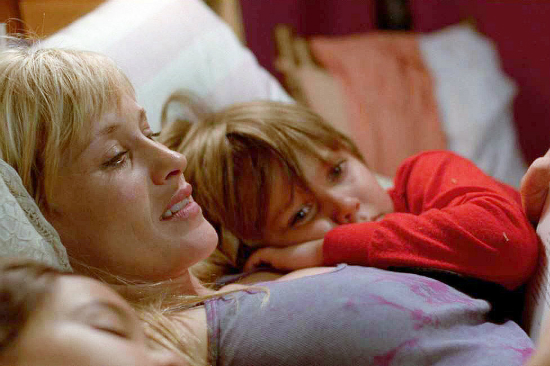
Mother and individual: Patricia Arquette in Boyhood
Definitely more overbearing but equally complex was Melissa Leo’s character in The Fighter. She was so nuanced. She got violent, volatile, and was packed with emotion. While she was unpleasant at many points in the story and her motivations were often outwardly selfish, she was honest. It was a straightforward portrayal of a mother not wanting to be outdone, even by her own children. She channels her own life through them and while this may not be a method condoned by any parenting books, she was very much alive and outspoken—faulted and capable of deep love. Again, if robbed of the other characters in the story, she was still a complete human being. There was nothing sexy added to her and yet her ferocious state of mind made her enigmatic and inescapable. (We need not bare tons of boob to get people to watch.) Her dynamic portrayal of a woman in a particular region and socioeconomic position, coupled with the hyper masculine surrounding pulls from her a wealth of complex emotions and decisions. And, let us not forget, unlikeable characters can still serve as outstanding representations of the depth of the female mind, soul, and existence. One of the elements ignored by women’s press this year is crowdpleasing. We want more opportunities. In every way. But I don’t care about crowd-pleasing characters. I go to the movies in search of truth. Give me that.
The pistol Melissa Leo in The Fighter
Taking it even farther into the realm of complex is Julianne Moore in her disturbingly on point performance as Amber Waves in Boogie Nights. Apart from the fact that the movie itself is genius, much of its success is brought out by the powerful performances of its all-star cast. Moore’s character is particularly wild to follow. She has the softness and natural nurturing quality of a mother who has always wanted to be a mother. She is a soothing source of support but this, in the world of Boogie Nights, of course becomes complicated and perverted by the fact that she is also sexually drawn to the very young Mark Wahlberg. Her attraction to him, their on camera sexploits, and her simultaneous motherly qualities make her immediately full of wonder, questions, and provocations.
Adding to that, she’s an exciting hot mess. The woman likes her cocaine as she proves when doing hearty lines with Heather Graham in the bedroom one fateful afternoon. While in this heightened state, if you will, her inner life comes bubbling out and she emotionally confesses about how much she misses her son. She may be all over the place and her nose miiiiight be white at the end of it but she’s given fair treatment by the filmmaker and audience alike. She is trapped by her history, moves in certain ways because of it and, like any fully formed human being, when in a vulnerable position (or totally f***ed up), her inner demons come out into the world. She misses motherhood and longs for her child. It’s a part of her wiring and yet she continues to live outside of it. A hot mess with a real history—it’s a beautiful, vital performance. She embodies multiple elements of a woman in the world in this time and place and she won’t let you look away from it.
Julianne Moore before the infamous coke binge in Boogie Nights
Compared to the Hollywood backup female roles we usually passively sit through, not one of these roles and not one of these women has created as a silent, flat, disturbingly calm character. That is an untruthful portrayal in this spectator’s opinion. They came out screaming. Their exuberance breathed into these will written roles the fiery heat of a person with a true life, true purpose and fluid identity. These are the kinds of roles that make more room for women to prove that we thrive in the complex—that we are complex and that we want truth on screen.
Examples of female roles that kick ass exist. Women who will not let their roles become secondary exist. It’s been done since the beginnings of film. Alice Guy Blache’ didn’t take any shit and that was at the turn of the 20th century. She directed, produced and wrote more than 700 films. She was doing it then, and women behind and in front of the camera have done it ever since. It’s our job now, in 2014, to recreate what we can accomplish based on our current industry model and find ways to make sure that truthful performances enter the marketplace. Hollywood films have always had plenty of fluff roles. But they’ve always had standouts. We are still in this position. We have model characters who broke ceilings once before in storytelling and will again. So…carry the torch and rock on.
In case you need further encouragement: Eva Khatchadourian in We Need to Talk About Kevin, Ofelia from Pan’s Labrynth, Kym from Rachel Getting Married, Nina Sayer from Black Swan. Marnie, Briony Tallis, Thelma Dickinson, Kate “Ma” Barker, Marge Gunderson, Bonnie Parker, Shoshanna Dreyfus, Nikita. Judy Barton/Madeleine Elster, Amelie, Evelyn Mulwray, Blanche Dubois, Betty Elms/Diane Selwyn, Coffy, Mia Wallace, Lisbeth Salander, Jackie Brown, The Bride, Hermione Granger, Clementine Kruczynski and Annie Hall.
Like Costner said in The Untouchables, “Let’s take the fight to them, gentlemen.” (ladies)
Mara Gasbarro Tasker is a filmmaker based in Los Angeles. She’s currently working as an Associate Producer at Vice Media and has co-created the Chattanooga Film Festival, launching later this spring. She holds a BFA in Film Production from the University of Colorado at Boulder. She is directing a grindhouse short in April and is still mourning the end of Breaking Bad.
‘The Lost Boys’ is a classic 1980s vampire flick directed by Joel Schumacher. It is as famous for its soundtrack as it is for its content. The entire film in fact is exemplified in its main theme–“Cry Little Sister,” by G Tom Mac–from the typical horror themed sections to its classic 80s rock moments down to its choral moments. These sections sum up the film almost perfectly.
This guest post by Bethany Ainsworth-Coles appears as part of our theme week on Movie Soundtracks.
Spoilers Ahead
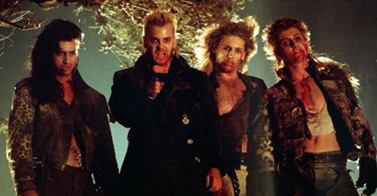
The Lost Boysis a classic 1980s vampire flick directed by Joel Schumacher. It is as famous for its soundtrack as it is for its content. The entire film in fact is exemplified in its main theme–“Cry Little Sister,” by G Tom Mac–from the typical horror themed sections to its classic 80s rock moments down to its choral moments. These sections sum up the film almost perfectly.
The film itself seems pretty simple; Lucy (and her two sons Michael [Jason Patric] and Sam [Corey Haim] move to Santa Carla to live with Lucy’s dad in Santa Carla. However, Michael falls in with a bad crowd and is seduced into being a vampire by David (Keifer Sutherland), the pack’s leader. There is of course more to it than this (a pair of vampire hunters, a small child, and a generic love interest), but that’s the main gist.
The vampire teens
“Cry Little Sister” links to this film perfectly, the way only the best movie themes do. I’m organizing this article in three subtitled sections, which employ quotes from “Cry Little Sister” in relation to parts in the film.
“Love Is With Your Brother”–Homoeroticism and Forgotten Women
In an article about The Lost Boys it would be a travesty to dare forget the amounts of male bonding and homoerotic tension. The vampires and their culture in particular is shown in this light with the androgynous (and gorgeous) David, the supposed leader of the gang as they steal and kill people to feed. He also seduces Michael into drinking the blood, thus beginning his transformation into a vampire. This is an interesting twist on the female seductress trope as seen in most vampire movies. This twist is best summed up Jeff Allard in his review: “Typically (especially today in our Twilight world), either Michael or David would’ve been written as a girl but in The Lost Boys you’ve got a male bringing another male into the fold.”
This is certainly true if we look at typical vampire stories–e.g. Edward turns Bella in Twilight, Dracula turns Lucy Westernra in Dracula, etc. The victim is often the woman and is seen as weak and inferior; by subverting this, Schumacher includes not only an equal playing field but also huge amounts of sexual tension. Especially as in most vampire novels, films etc. the transformation into vampire is often treated incredibly sexually. While this isn’t the first time a man has turned a man into vampire (Anne Rice’s Interview With a Vampire, which is also homoerotic) it is a very interesting occurrence that should not be avoided. David even takes him to his first feed on human blood.
Michael (Jason Patric) looking lovely
The women throughout this are mainly forgotten and depicted in two major roles: the sister or the mother. All the boys share a bond shown throughout the film. Through the vampires themselves, who are the “sons” of Max (Edward Hermann), to the actual brothers of The Frogs (Corey Feldman and Jamison Newlander) and of course are main brothers Sam and Michael. Most of the story revolves around Michael’s betrayal of Sam from trying to attack him when the first gets too great. Sam chooses to help him and save him from the Frogs’ vampire killing obsession. This is shown equally in the song “Cry Little Sister” with “love is with your brother,” which repeated several times throughout the song, reinforcing its importance in the piece.
“The Masquerade, Strangers Will Come”–Broken Families
Whilst brotherhood may be a strong point in the film, families themselves are not shown to be as sturdy. Lucy has had a messy divorce, which is the reason she and her boys have moved to Santa Carla. They themselves despite their non-functional new lives get along well and cracks only appear when Lucy dates Max and Michael becomes half vampire. However, this family is not the most interesting of the families. It’s not even the Frog family, who we only see very briefly as a whole unit.
Lucy and her family at the end
It has to be Max and the boys. Max is the head vampire but has lost control of his boys and is longing to find them a mother, a role he thinks Lucy would be just perfect for. He does genuinely love his boys though, especially when as he walks into the house the final time he sees David’s body.
However, this twisted family image also encapsulates the portrayal of women. During this film, both Star and Lucy take on maternal roles. Lucy, of course, is already a mother, and Star looks after Laddy (the child half vampire). They are both shown to be manipulated by the vampires into becoming family members and helping the group.
“Thou Shall Not Fall”–Innocence Lost
“Cry Little Sister” features a large section of choral vocals repeating religious-type phrases sung by what sounds like children. These are used to great effect during the final scene, where David is impaled and killed by Michael. During this section, once he is impaled, his face slowly regresses back to a child and how he was before he was turned into a vampire thus showing him as an innocent young boy rather than a dead monster. David’s death accompanied by “Cry Little Sister’s” faded choral section singing “thou shall not die” gives the audience just a glimpse of who he was before Max transformed him, probably like Michael against his will. The audience is presented with the horrible truth that David and all the vampires were just missing children shunned by their leader. In death for both David and Marko (Alex Winter, who is the first to be killed and youngest of the boys) they are taken back to being lost children.
David looks noticeably younger
“Cry Little Sister” is the perfect song for a fantastic horror movie. Whilst the movie certainly isn’t flawless, it really is an excellent take on the vampire genre (plus who in their right mind doesn’t like teen vampire with cool hair, leather jackets and motorbikes who lives in an abandoned hotel?). They are living the twisted teenage dream and the soundtrack portrays that perfectly.
Recommended reading: Boomer Beefcake and Bonding’s analysis of subtext in The Lost Boys
Bethany Ainsworth-Coles is a young writer from England who enjoys overanalyzing things and watching films. She tweets over at https://twitter.com/wierdbuthatsok.
I’m a lot older now and I still squeal with excitement when this film comes on. When it showed up on Netflix my daughter and I watched the movie over a dozen times. We would take “supreme silly” dance breaks whenever the music would play and when the Netflix purge occurred we found a DVD copy (OK we got two in case one got scratched or lost) of our very own on Amazon so that we could continue this tradition at will.
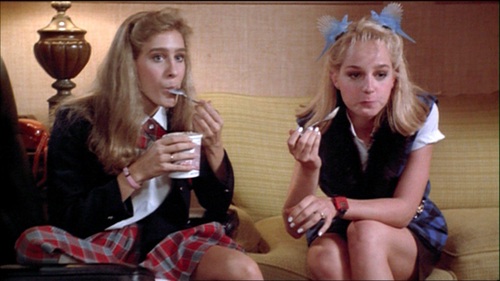
Janey and Lynne bond over Dance TV
This guest post by Shay Revolver appears as part of our theme week on Movie Soundtracks.
The year was 1985. A very young and impressionable Shay had grown quite fond of the moving picture shows. She watched anything and everything. Some of them only once, others she recorded and watched over and over again. She was particularly fond of movies with a great soundtrack. Her older sister’s old bootleg copy of Rock ‘n’ Roll High School with the defiant, audacious and energetic PJ Soles was at the top of her list.
Then one day she came upon a new girl-powered (and probably more age-appropriate) film to love. This film would seal her belief that music and moving images go together like PB and J. It would imprint on her that the tone of a film could be realized through music and create a process by which the older Shay would write every script and edit every frame to a song. It wasn’t the first film that helped her see this beautiful pattern and it wouldn’t be the last, but it would definitely be the most fun. It would be a movie watched over and over again by a feisty little girl after school almost every day for a month in her Catholic school uniform and triple laced LA Gears. She would down all of the Fun Dip, eat all of the popcorn, and drink all the iced tea in the fridge while hanging out on the couch staring up at the big screen TV watching Girls Just Want to Have Fun.
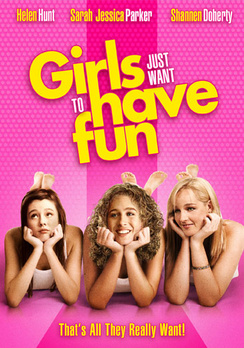
Girls Just Want to Have Fun poster
For those of you that haven’t had the awesome pleasure of seeing this film I’m going to break it down for you: Army brat Janey Glenn (played by a very young Sarah Jessica Parker) gets transferred to Chicago with her family. She meets Lynne Stone (Helen Hunt) at her new Catholic all girls school. They become instant friends over their love of Dance TV, a nationwide TV show. When the opportunity presents itself for them to audition to become dancers on the show they couldn’t be happier; that is, until Janey’s super strict military dad puts his foot down and says NO. The story could end there, but Lynne convinces Janey to do it anyway. A majority of the movie is spent with Janey going behind her father’s back to practice with her partner, thwarting (and retaliating against) the evil plots of her rich girl nemesis, Natalie , falling in love with her “wrong side of the tracks” partner Jeff, and finally standing up to her dad, doing things her way and making her dreams come true.
Janey, wishing she could be on Dance TV
I’m a lot older now and I still squeal with excitement when this film comes on. When it showed up on Netflix my daughter and I watched the movie over a dozen times. We would take “supreme silly” dance breaks whenever the music would play and when the Netflix purge occurred we found a DVD copy (OK we got two in case one got scratched or lost) of our very own on Amazon so that we could continue this tradition at will.
Striking back against Natalie
The thing about Girls Just Want to Have Fun is that it isn’t just about the girl power, female friendships, choosing your own destiny, standing up for what you believe in story line, it’s also about the music. In fact it’s so much about the music that it’s one of the few feature films whose soundtracks have their very own Wikipedia page. The music in the film isn’t just a soundtrack, it’s the story of their lives. It provides a freedom and excitement that is needed to propel the story (and in some ways the girls’ lives) along.
Each song plays at the perfect time in the story and the music gets more and more intense as Janey breaks out of her shell, pulls away from who her father and society expect her to be and becomes the person she wants to be, or has always been but, not had a chance to discover.
The music is Janey in some ways and follows her path throughout the film from the innocent pop music in the beginning as a naive and sheltered Janey begins to explore the world, to the woeful soul music as she faces disappointment, hopelessness, and obstacles on her way to accomplishing her goals, to the “punk” music that plays when she breaks out and begins to express and stand up for herself.
Each note, lyric, and melody seems carefully curated to what’s happening on screen. The soundtrack plays in the background like an extra character in the film. It goes so smoothly with the images on the screen that it seamlessly integrates with the film becoming way more than background audio.
Janey and Jeff go for the win
One of the things that makes this film and its soundtrack so memorable is that you feel every note. When the music plays you feel compelled to get up and dance along, which for the record is why it’s good that this film can be viewed in the comfort of your own home. The music even creates a freeing emotional release in the end when Janey’s father shows up to stop her from doing the final dance off to secure her spot on the show against her monied rival Natalie. As the song plays in the background you know before her dad does or even Janey does that despite seeing her dad, she isn’t going to be that good little girl she had always been. She’d grown up a bit and the defiance in the music shows that.
You could just feel through the music that she was going to acknowledge her father’s presence and do what she felt was right in her heart. She was going to dance, despite the consequences or incurring her father’s disapproval, disappointment, or wrath. When it was all said and done Janey grew up to the music and we all cheered and danced along with her. Even her hard-nosed father came around. He was proud of her and she had gained his respect.
Janey breaks free and flies at the finals
As an avid film (and music) lover, this was one of the films that inspired me. It was all about being bold, blazing your own path and figuring out who you are for you. The music didn’t overshadow the film or try to be hip by using the music of the “kids” and coming off as messy or chaotic. It helped tell the story in such a way that it became a part of the story and it taught me that sometimes you’ve just got to dance, a lesson that I gladly share with my little mouseling whether we’re watching this movie or just baking cookies in the kitchen. It also taught a nation of little girls that sometimes it’s OK to be different, to fight the system, to follow your heart, and let it lead you to your dreams. And in a world where girls are still often taught to be seen and not heard, to be obedient without question and to play nice, everything about Girls Just Want to Have Fun was a welcome wake-up call.
Shay Revolver is a vegan, feminist, cinephile, insomniac, recovering NYU student and former roller derby player currently working as a New York-based microcinema filmmaker, web series creator, and writer. She’s obsessed with most books, especially the Pop Culture and Philosophy series and loves movies and TV shows from low brow to high class. As long as the image is moving she’s all in and believes that everything is worth a watch. She still believes that movies make the best bedtime stories because books are a daytime activity to rev up your engine and once you flip that first page, you have to keep going until you finish it and that is beautiful in its own right. She enjoys talking about the feminist perspective in comic book and gaming culture and the lack of gender equality in mainstream cinema and television productions. Twitter: @socialslumber13.