“I Believe ‘Anita'”

Women and girl characters in film (and the plays and works of literature films are based on) lie a lot. I don’t mean that they tell an occasional (or not so occasional) untruth, the way male characters often do. I mean that the role of a woman or girl in the movie can many times be summed up as “the liar.” The student in ‘The Children’s Hour’, the girl in ‘Atonement’, the girl in ‘The Hunt’, the two teenagers in ‘Wild Things’ the Demi Moore character in ‘Disclosure’ are all liars who disrupt the lives of those around them, usually men, whom they falsely accuse of sexual misconduct or abuse. The men are, of course, always completely innocent of the charges.

AnitaHillThen

Women and girl characters in film (and the plays and works of literature films are based on) lie a lot. I don’t mean that they tell an occasional (or not so occasional) untruth, the way male characters often do. I mean that the role of a woman or girl in a movie can many times be summed up as “the liar.” The student in The Children’s Hour,  the girl in Atonement, the girl in The Hunt, the two teenagers in Wild Things, the Demi Moore character in Disclosure are all liars who disrupt the lives of those around them, usually men, whom they falsely accuse of sexual misconduct or abuse. The men are, of course, always completely innocent of the charges.

This scenario is the opposite of the common real life situation, in which a woman or girl lies (or pretends nothing is wrong) when she has been raped, sexually abused or sexually harassed. She doesn’t bring charges. She tries to function as if the rape, abuse or harassment hasn’t occurred and decides not to disrupt her own family or career by calling public attention to what has happened to her. Those stories we pretty much never see played out in film.

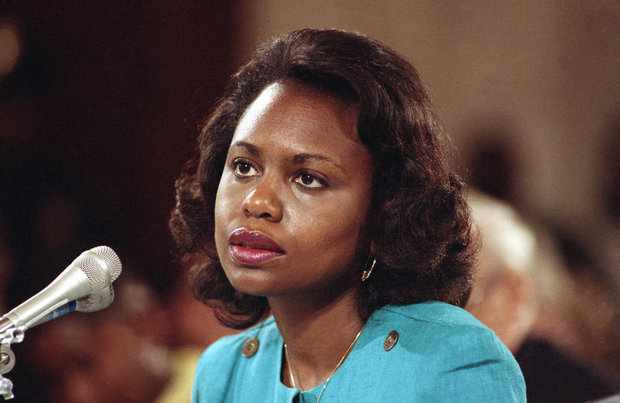
Unless that film is Anita, the new documentary from Oscar-winner Freida Lee Mock about Anita Hill, the woman who came forward during the confirmation hearings, over 20 years ago, for Clarence Thomas as Supreme Court Justice. Thomas had sexually harassed Hill when he was her boss at the Equal Employment Opportunity Commission (EEOC), the agency that is supposed to implement Federal laws against discrimination, including sexual harassment. She had never pressed charges and had even kept a professional relationship with Thomas (for the sake of her career) after moving on from the EEOC. But when officials were interviewing his former coworkers and assistants for a background check, Hill felt she had to tell the truth.

The FBI file that contained Hill’s private interview was leaked to the press. Women politicians and reporters were outraged that the Senate had been prepared to confirm Thomas without looking into his past conduct, so hearings were called in which Hill was subpoenaed to testify in person. We see the media following her with cameras and lights even before her appearance in the Senate, as she makes her way across the University of Oklahoma campus where she was a tenured law professor. “I just want to teach my class,” she tells them. In a humorous moment that didn’t make it into the news stories of the time she mentions what was then her legal specialty. “I can answer any questions you have about contracts.”

The Senate committee grilled her for hours at a time over the course of days, but Hill never lost her composure in spite of being forced to repeat, on national live television, the explicit details of Thomas’s harassment, which included references to pornography and his own anatomy. The excerpts of the hearing are the most striking part of the film, and the documentary could use more of them.

ThomasHillAnita
Thomas and Hill when they worked at the EEOC

The Republicans on the committee (we see some particularly despicable moments from Alan Simpson and Arlen Spector), eager to confirm Thomas, portray Hill as a liar. These old white men do their best to denigrate her, and although the footage of the hearings shows that they never succeeded in diminishing her clear-eyed, precise testimony, they did succeed, in the off-camera arena, in diminishing her reputation.

The film shows, so we don’t forget, that Hill’s testimony was confirmed by four others whom she had told about the harassment at the time it was occurring. They gave their sworn testimony in front of live national television and one of them, another African American woman even mentions why Hill had kept in touch with Thomas, “My mother always told me, as I’m sure her mother told her, that wherever you leave, make sure you leave friends there, because you never know when you will need them.” She goes on to detail that for this very reason she exchanges Christmas cards with former colleagues she can’t stand.

The film also includes the information that Thomas had harassed other women in the workplace, at least one of whom was also subpoenaed, but mysteriously never called to testify. In the live question and answer period after the showing I attended, Hill explicitly blamed now Vice President, then Judiciary Committee Chair, Joe Biden, for this decision. She explained the “he said, she said” narrative the committee wanted to put forth  would have been disrupted if more than one woman had offered testimony of how Thomas had harassed her.

Hill and filmmaker Mock

Because of the all-white membership of the committee, Thomas could get away, in his own testimony, with labeling the hearings “a high tech lynching” (the folly of that description is pointed out in the film by the male African American corporate lawyer whose testimony confirmed Hill’s) while ignoring that Hill too was African American. Hill sums up this narrative as “I had a gender. He had a race.”

Hill always had the support of her large (she is one of 13 children), close family. In another clip that never made its way  into the news stories of the time, we see her 79-year-old mother giving her a hug at the Senate hearing witness table and stand beside her outside of her family home back in Oklahoma, when the media ask for a statement on Thomas’s confirmation. Dignified as always, Hill tells them that she hopes her testimony will encourage other women to speak up about harassment in their own workplaces.

In spite of her tenured position at The University of Oklahoma, Hill felt the pressure from local Republican politicians (who targeted not just her, but also went after the Dean and the institution itself) to resign and eventually moved across the country to a position at Brandeis University where she is now  at the Heller School for Social Policy and Management. She also travels around the country lecturing on sexual harassment, which, she points out, she wouldn’t have felt free to do if she had stayed at the University of Oklahoma. We see that Hill even has a supportive, long term boyfriend. Although the footage of this part of her life is less dramatic than that of the testimony I understand why the director includes it. After people in her own hometown angrily confronted Hill on the street about her testimony, after famously being called “a little bit nutty and a little bit slutty” (by a writer who later recanted though the slander lives on), in spite of Thomas being confirmed and sitting on the court to this day when even Hill’s lawyer’s 12-year-old daughter told her Dad, “I believe Anita,” and in spite of politicians and courts still explicitly or implicitly labeling women as liars when they seek justice against powerful men, we need to see at least one happy ending–to give the rest of us the fortitude to continue fighting.

[youtube_sc url=”http://www.youtube.com/watch?v=DGrWaCCVfq0″]

___________________________________________________

Ren Jender is a queer writer-performer/producer putting a film together. Her writing has appeared in The Toast, xoJane, and the Feminist Wire. You can follow her on Twitter @renjender.
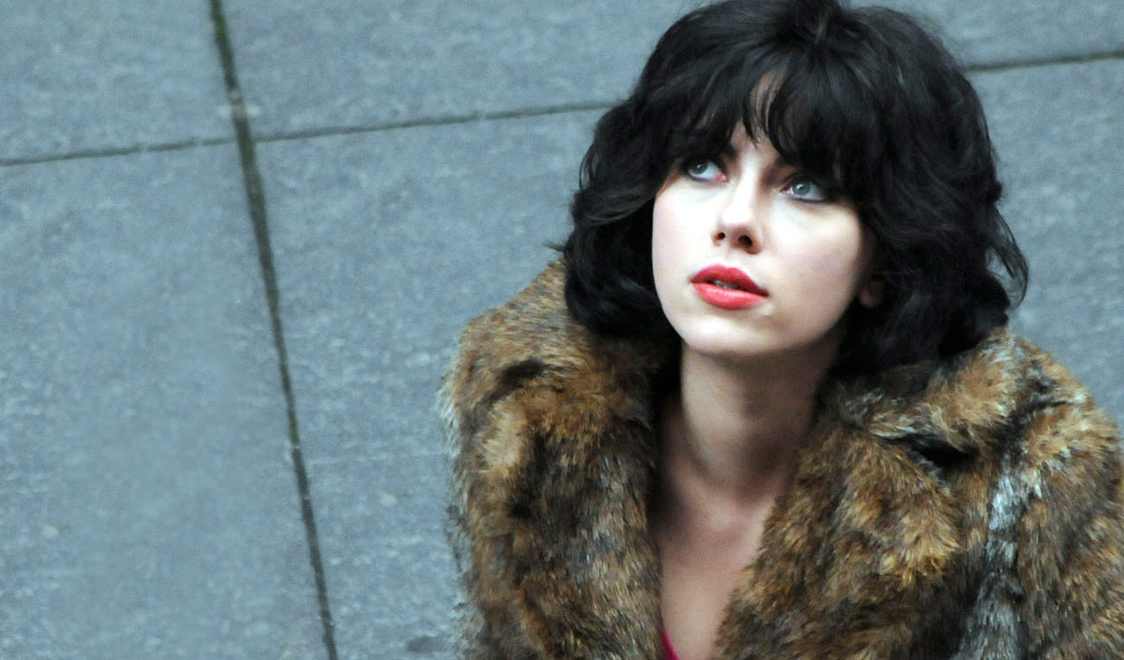
‘Under The Skin’ of the Femme Fatale

Most of these films demonstrate a lack of curiosity about how these women came to be the characters we see: no one in real life becomes as deceptive, manipulative, and callous toward others as these characters are without a backstory, which usually never makes it into these films. So we’re probably overdue for a femme fatale who literally drops, fully formed from the sky: Scarlett Johansson’s main, unnamed character in Jonathan Glazer’s ‘Under The Skin,’ an alien in the guise of a beautiful woman. Johansson, wearing a short black wig, drives around Scotland in a nondescript, white van asking men walking alone along the road for directions and then, if she ascertains, through a few questions, that they won’t be missed, she offers them a ride.

JohanssonSkinCoat

The woman who lures men to their doom is a trope that goes back to the earliest days of film. Theda Bara, one of the first silent screen actresses to have an image of wanton carnality instead of the virginal purity of other  stars of the era like Mary Pickford and Lillian Gish, was referred to as a “vamp“–short for vampire– for her sexy roles in which she proved the downfall of the men attracted to her.  “Vampy” and femme fatale characters have provided career peaks for many actresses since, from classic Hollywood film noir–Barbara Stanwyck  in Double Indemnity and  Lana Turner in The Postman Always Rings Twice through the late 20th century with Kathleen Turner in Body Heat in the 80s and Linda Fiorentino in The Last Seduction in the 90s. In this century, the vampire of Let The Right One In (and its inferior American remake), who appears to the world an ordinary 12-year-old girl, manages to enlist both a man and a boy as her servants (while preying on others for fresh blood).

Most of these films demonstrate a lack of curiosity about how these women came to be the characters we see: no one in real life becomes as deceptive, manipulative, and callous toward others as these characters are without a backstory, which usually never makes it into these films. So we’re probably overdue for a femme fatale who literally drops, fully formed from the sky: Scarlett Johansson’s  main, unnamed character in Jonathan Glazer’s Under The Skin, an alien in the guise of a beautiful woman. Johansson, wearing a short black wig, drives around Scotland in a nondescript white van asking men walking alone along the road for directions and then, if she ascertains, through a few questions, that they won’t be missed, she offers them a ride.

JohanssonCompactSkin
Johansson’s alien on the prowl

We’re cued to how the main character sees human beings in one of the earliest scenes in which a naked Johansson strips the clothes from a freshly killed young woman (it’s unclear whether Johansson or her silent male assistant–also an alien in human guise–did the deed), so she can wear them as her own. As a tear falls down the dead woman’s face, Johansson’s character picks up an ant crawling on the woman’s now naked body and focuses on it as if it were a puppy. The ant helps explain Johansson’s attitude to humans: she’s not cruel. She just sees them as expendable and as removed from her own existence as most of us see insects.

The media and the filmmakers have made a point of revealing that some (but not all) of the encounters Johansson has in the van were unscripted, the men in them random passersby (who didn’t recognize the star of The Avengers), the camera hidden. This information seems pointless given how ordinary those conversations are–as far as we can tell. The accents of most of these men are so heavy they should have been subtitled for American audiences and perhaps UK ones as well.

The alien on the bus

But Glazer has a great touch with professional actors: he made the justly acclaimed Sexy Beast with Ben Kingsley as an unforgettable, ultraviolent, pint-size gangster: the anti-Gandhi. In Glazer’s less acclaimed (but still creepy and atmospheric) Birth he gave us a stricken, affecting Nicole Kidman (also in a short wig) as a woman accosted by an 10-year-old boy who convinces her he is the reincarnation of her dead husband. Johansson hasn’t always impressed me in her movie roles, (I didn’t believe a minute of Her: Johansson’s performance as Samantha was not the whole reason why, but certainly didn’t help) and in interviews she seems to confirm our worst suspicions of how ill-informed and insensitive to people outside their sphere movie stars can be. But she pulls the audience in here, as if we too are her victims, a relief, since for much of the film Johansson is the sole, silent person onscreen. In other scenes, when she talks to the men in a passable English accent (which sounds more natural than the Jersey accent she used in Don Jon) her eyes glitter with emotion. At first we mistake this passion for empathy (and the men mistake it for lust), but her excitement turns out to be the thrill of the hunt.

Each unlucky man follows her into a room (while the disturbing score by Mica Levi plays in the background) in which she strips her clothing as she walks, encouraging the man to do the same (this film isn’t one that discriminates in its nudity: the actors who go to her place are shown in full-frontal shots, two of them with erections) Without realizing he is doing so, his eyes focused on Johansson each man sinks completely into the black hole/digestive tank under his feet, while she pads across the smooth surface like a cat.

SkinInTheTank
Trapped in the tank

In the outside world, we see her knock out a swimmer who saves a man from drowning (the man then tragically goes back into the water to try to save his wife) and ignore the screaming toddler the couple has left behind on the beach. She starts to feel for the humans around her only when, outside of the insular world of her van, walking on city streets, she trips and falls face first on the sidewalk–and men like the ones she has been preying on help her up and ask if she’s okay. She’s as disconcerted by their doing so as if a small band of dragonflies did the same for one of us.

Later she picks up a loner (Adam Pearson) who appears to have the same disease as The Elephant Man (the actor has Neurofibromatosis), his facial features radically distorted. Because she’s an alien, Johansson’s character neither looks away from his face nor stares at it. She stops the van, asks him if he’s ever touched a woman and places his hand on her neck. She does take him back to her place, but the sight of a trapped fly trying to escape a room sparks something in her conscience. She flees the city (and her male assistant) to the Scottish Highlands where she experiences both the best and worst of human nature in men (she rarely interacts with women).

JohanssonMirrorSkin

In this latter part of Skin the filmmakers seem to want to show Johansson’s character finding out what being human means. The problem is: Johansson’s character knows, from the start of the film how to be, by all appearances, a human woman— and the filmmakers never seem curious how she learned to do so. This film isn’t big on explanation–for anything, but this omission nagged at me in a way the other missing pieces didn’t.

The guise Johansson’s character chooses for herself is one which seems like it would require some research. Like the vampire in Let The Right One In she knows inhabiting a female form will make humans less wary of her, but she also somehow knows to take on all the arbitrary and sometimes contradictory  attributes that make a woman attractive in the Western contemporary movie-star/model sense: full breasts (but a small waist), full lips (but a small jaw) and large eyes (but slender eyebrows). Equally puzzling, Johansson’s character knows, from the start, how to act like a conventionally attractive woman. She puts on a bra as if she had spent her adult life doing so; she walks in heels (she even knows to run down stairs in them–sideways, so she won’t trip) without wavering or falling (except for the one time); she applies makeup so it accentuates rather than makes grotesque her eyes and lips. Teenage, femme girls spend years wobbling and stumbling in heels and using too heavy a hand with blush and eyeliner before getting the hang of any of these things, but the filmmakers seem to think these skills come naturally with a female body, the way prizes used to come in cereal boxes. Johansson’s character never says a wrong word or has an awkward moment when she flirts with the men: she doesn’t talk to them with a young teenage girl’s uncertainty, but with the easy confidence of someone who has garnered male attention for most of her years.

If we had seen Johansson’s character struggle and falter with being a convincing, normal-seeming woman earlier in the film, we could better understand–and more easily suspend our belief for–her struggle later with the trials of being in a woman’s body. She has no idea how to maneuver amid men’s various intentions toward her, like the consensual encounter she cuts short when she finds, to her shock (in one of the film’s few comic moments) just what comprises heterosexual intercourse.

Toward the end, Johansson’s character removes the mask she has been wearing throughout the film, and as she looks down on it, it blinks back at her. It’s a visually stunning moment that might have been more emotionally resonant if the filmmakers had bothered to better explore what the world–and movies–expect women to be.

[youtube_sc url=”http://www.youtube.com/watch?v=NoSWbyvdhHw”]

___________________________________________________

Ren Jender is a queer writer-performer/producer putting a film together. Her writing has appeared in The Toast, xoJane and the Feminist Wire. You can follow her on Twitter @renjender.

The Women of ‘Captain America: The Winter Soldier’

As I wrote last week, I love me some Peggy Carter, and worried about how ‘Captain America: The Winter Soldier’ would fare (mostly) without her. So I was pumped that Peggy not only appears from the past (interviewed in a video presentation in the Smithsonian exhibit on Captain America), but as an ailing nonagenarian Steve still calls “his best girl.”
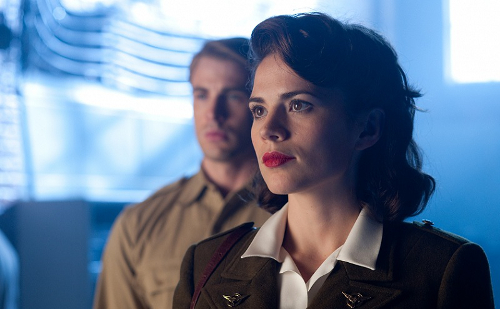
And even better, the other women in the film are all some shade of awesome. I wanted more from all of them, but I’m greedy like that.

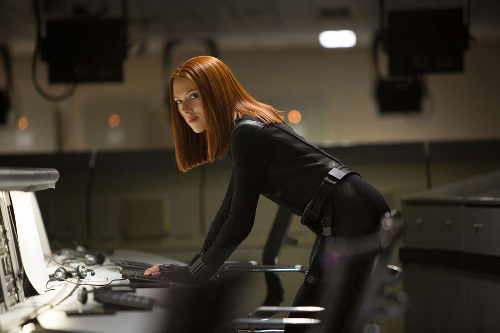
Scarlett Johansson as Black Widow in Captain America: The Winter Soldier

[This review contains spoilers]

As I wrote last week, I love me some Peggy Carter, and worried about how Captain America: The Winter Soldier would fare (mostly) without her. So I was pumped that Peggy not only appears from the past (interviewed in a video presentation in the Smithsonian exhibit on Captain America), but as an ailing nonagenarian Steve still calls “his best girl.”

And even better, the other women in the film are all some shade of awesome. I wanted more from all of them, but I’m greedy like that.

Emily VanCamp as Agent 13

The other Carter to make an appearance is Emily VanCamp’s Agent 13, who is originally introduced as “Kate,” Steve’s cute neighbor from across the hall, who is quickly revealed to be a S.H.I.E.L.D operative tasked to keep an eye on Steve. And let’s be real: all this character needs to do in this movie is exist, click off another “canonical comic character” box and give a bit more set-up in the Marvel Cinematic Universe should she become Cap’s love interest as she has been in the comics. As S.H.I.E.LD is revealed to be riddled with corruption and infiltrated by evil organization HYDRA, we assume Agent 13 is One of the Good Guys because she looks concerned when they cut to her in the control room scenes. She doesn’t get much dialogue, but she does punch a few bad guys at some point, I think. There’s so much punching in this movie I couldn’t keep track of all of it. (Note: this is not really a criticism.) Anyway, she’s Sharon Carter, who will theoretically be some relative of Peggy’s, and in the next sequel she and Cap will probably smooch. They’re is plenty of time to develop her character before Captain America 3 comes out in 2016.

Steve Rogers and Natasha  in battle in their civvies
Steve Rogers and Natasha in battle in their civvies

The woman with the most screen time in the film is Scarlett Johansson’s Black Widow. A lot of critics are saying this is her most substantial outing in the Marvel Cinematic Universe (at least the ones not still hung up on her being mere eye candy), but The Avengers still made the best use of her character. While she may be on screen more in Winter Soldier, she’s not as crucial to the plot here, and not quite as lovable. I was a little put off by her fixation with Steve’s love life, finding it out of character and merely an instrument to highlight Steve’s loneliness. But that’s a minor quibble: Black Widow is still a total badass in this movie, and gets in some great snarky lines, and looks hot doing it.

But what really made Black Widow work in The Avengers was the glimpses of her vulnerability: her genuine fear of The Hulk, he anguish over Hawkeye, her guilt over her past. These made her badass moments so much more satisfying, in particular the turnaround in her interrogation of Loki when she gets him to say too much leaning in to these weaknesses. In the Winter Soldier, Black Widow’s vulnerability is demonstrated through physical injury, which is dramatic, sure, but superficial and less interesting.

And I know, I know, “strong but vulnerable” is the oldest cliché in the book when it comes to well-developed female characters. But that’s because “strong but vulnerable” is what makes characters, irrespective of gender, someone to root for and relate to. And sure, the vulnerable side of the equation for female characters appeals to some because it reinforces sexist ideas about women’s weaknesses. But for me, vulnerability is especially important when it comes to action heroines, to escape the trope of The Fighting Fucktoy (which is exactly what Black Widow was when she first appeared in Iron Man 2).

Cobie Smulders as Maria Hill

Speaking of absence of vulnerability: Cobie Smulders as Maria Hill returns, and remains on the precipice of awesome. I’m patiently waiting for her character to get fleshed out a bit in the MCU, because all we know about her now is that she’s extremely tough. While she’s not as sexualized as Natasha Romanoff has sometimes been, she still looks like Cobie Smulders, and I want her to be more than a Hot Chick With a Gun. She’s the person Nick Fury calls when he’s in trouble. I want to know why. (In the Black Widow movie the whole world desperately wants to see, she could be Natasha’s buddy cop. MAKE IT HAPPEN, MARVEL.)

All in all, Captain America: The Winter Soldier does all right by its women. I’m also going to award it feminism points for the thematic importance of male friendship, because dudes have emotions too! This comes primarily from the epic drama of Steve vs. The Winter Soldier, who is none other than his childhood best friend and fallen comrade Bucky Barnes, which brings about a tremendous amount of what I believe the internet refers to as “feels.” (Bucky is remarkably emotional for someone allegedly brainwashed. I reached the point where I had to stifle my laughter every time his face was in closeup because he’s soooooo tortured. Part of me thinks I laughed so I wouldn’t cry. The other part of me is still chuckling).

The Winter Soldier and his eye beams of inner turmoil


But there’s also Steve and his new BFF Sam Wilson (an unstoppably charming Anthony Mackie), who joins him in what’s pretty much a suicide mission as The Falcon because that’s what good bros do when their buddy is dismantling a corrupt government organization. Steve and Sam bonding over returning from combat and laughing at their own dumb inside jokes is the perfect counterbalance to the tooooooorturrrrred broken relationship between Bucky and Steve.

Best Friends Best Friends Baking a Cake!

Captain America: The Winter Soldier definitely gets my geeky stamp of approval (I can see this being in heavy rotation for me when it comes out on video), and it is nice that doesn’t have to be “in spite of” its treatment of women. If you are even a little bit of a comic book movie fan, you should see this one.


Robin Hitchcock is an American writer who has dressed up as Captain America for Halloween.

Bitch Flicks’ Weekly Picks

Check out what we’ve been reading this week–and let us know what you’ve been reading/writing in the comments!

recommended-red-714x300-1

Hey, Hollywood: Pay Attention to Female War Heroes by Christina Paschyn at Feministing

An Interview with “Saturday Night Live” Writer Katie Rich by Anne McCarthy at Bitch Media

Essie Davis: On Playing A Sexually Liberated ‘Superhero’ Without Apology by Linda Holmes at NPR

The Dollar-And-Cents Case Against Hollywood’s Exclusion of Women by Walt Hickey at FiveThirtyEight

Cate Blanchett Was Right: 5 Reasons The Numbers Are on The Side of Women in Film by Alice Lytton at /bent

The Sexual Evolution is Coming, Thanks in Part to TV by Alicia Lutes at Bustle

MMA Fighter and Action Star Gina Carano On In the Blood and What Makes a Good Heroine by Laura Berger at Women and Hollywood

Hillary Clinton: Media ‘double standard’ on women by Maggie Haberman at Politico

A Million Things We Loved About 10 Things I Hate About You by Kate Dries at Jezebel

Still Very, 25 Years Later: The Bleak Genius of Heathers by Alan Zilberman at The Atlantic

Top 10 women-centric films of Bollywood at India Today

Did a Woman Invent Superheroes? by Molly Freeman at Hollywood

Watch Episode 1 (Series Premiere) Of ‘First’ – New Project from the Ever-Expanding Issa Rae Empire by Karen Marie Mason at Shadow and Act

Women and Hollywood Summer 2014 Preview by Inkoo Kang at Women and Hollywood


What have you been reading/writing this week? Tell us in the comments!


Quirky Free-Spirit or Mentally Ill?: The Mystery of ‘Barefoot’

You wouldn’t be entirely mistaken to assume ‘Barefoot’ is a light-hearted romcom centering on a free-spirited hippie who doesn’t like to wear shoes, instead of the story of a naive mental patient falling in love with an inveterate womanizer and gambler. The former certainly seems to be what the movie is trying to be.
‘Barefoot’ is emotionally manipulative, full of unchecked exploitation, sexism and ableism and worst of all, portrays a woman who supposedly has severe mental illness as something akin to a fairy tale princess.

You wouldn’t be entirely mistaken to assume Barefoot is a light-hearted romcom centering on a free-spirited hippie who doesn’t like to wear shoes, instead of the story of a naive mental patient falling in love with an inveterate womanizer and gambler. The former certainly seems to be what the movie is trying to be.


Jay falls for Daisy, enchanted by her unique view of the world


Directed by Andrew Fleming (of The Craft ) and adapted from the 2005 German film, Barfuss, Barefoot is emotionally manipulative, full of unchecked exploitation, sexism and ableism and worst of all, portrays a woman who supposedly has severe mental illness as something akin to a fairy tale princess. As Daisy Kensington, Evan Rachel Wood spends most of the movie wandering around slack-jawed and amazed by everything she encounters. She’s scared of airplane toilets, thinks driving a car gets you pregnant, is flattered to be asked to perform a hand job (“I’ve never had a job before!”), and on one occasion, asks her companion and pretend boyfriend if she can “go potty.”

Though she tells her doctor in an early scene that she hears voices, the extent of her mental instability as portrayed in the film appears to be panic attacks and extreme naivete caused by being raised in isolation, only interacting with her recently deceased mother for her entire life. Instead, she’s quirky, she knows how to dance because she watched hours of VH1 growing up, she doesn’t like to wear shoes because they hurt her feet, she has no qualms announcing at a fancy dinner, that foie gras looks like cat food. It’s no wonder, Jay Wheeler (Scott Speedman), the estranged son of a wealthy family falls in love with her. Like any manic pixie dream girl worth her salt, she makes his life better, teaches him to take responsibility for her actions and learn how to love. As a free spirit, she strips away from pretentious facade of his family’s extreme wealth and teaches them to value small moments.


Daisy spends most of the film wandering around amazed by everything she sees, it’s all new to her


And of course, right at the end of the movie, it’s revealed that Daisy isn’t crazy after all, so she and Jay can ride off into the sunset together, any complications from her total lack of knowledge of the world or of literary any other person besides him be damned. Watching it, I wasn’t sure to what degree a movie that suggests a character is mentally ill, yet portrays her illness inaccurately for most of the film is redeemed by a last minute revelation of her sanity. Indeed, the revelation comes about from an investigation of Daisy’s past, not from an analysis of her behavior.

Right from the start, Jay is always saving her. Their “meet cute” occurs when he swoops in to rescue her from an orderly who is attempting to molest her, under the pretense of a secret exam. He has no sympathy for Daisy’s innocence or the real issue of abuse suffered by powerless mental patients, instead telling her she needs to learn to take care of herself. Shell-shocked, she escapes the hospital and follows him home, already acting like he is her messiah.

But Jay’s certainly no prize. He’s on probation for assault, holds down a job as janitor at the mental hospital and regularly gives alcohol and pornography to the most catatonic and psychotic patients. He owes thousands of dollars in gambling debts and believes his only option to get the money is to attend his brother’s upcoming wedding with a serious girlfriend, so his family see he’s got his act together.

Originally, he tries to hire a stripper to pretend to be his girlfriend. He’s stunned she considers it degrading and tells him the idea of pretending to be a nurse (used as a fetish object) makes her uncomfortable. A choice quote: “You hump a pole naked for money and this makes you uncomfortable?” Throughout the film, Jay speaks to women like they are children, here insisting the stripper owes him a favor because he is a loyal patron and insinuating that she is unintelligent. After this rejection, Jay sees an opportunity in Daisy, a woman he can easily manipulate.


Jay dresses Daisy in revealing clothing, including ‘stripper shoes’ she can't walk in
Jay dresses Daisy in revealing clothing, including “stripper shoes” she can’t walk in


In the film’s world, Daisy’s mental illness gives him permission to talk to her like a child, instructing her that they’re not lying, only pretending and he’ll explain the difference to her later. He is allowed to tell her anything, ordering her to be quiet, to go to sleep, even telling her what to say and how to dress, like his doll. It seems incredibly abusive that he gives her low-cut and revealing clothes borrowed from a stripper to wear on the trip, given that she does not understand their sexual undertones and did not chose to wear them. In one scene, a maid is shown unpacking her suitcase, which included several pieces of sexy lingerie and corsets.

She has to trust him, because he knows things that she doesn’t. When he fleetingly calls her his girlfriend to explain their relationship, she takes him seriously, believing they have an actual relationship. She says it’s always been her dream to be someone’s girlfriend, something her mother told her would never happen. Note that she never refers to the dream of having him as her boyfriend, it’s all she’s ever wanted to be the object, his possession.


When Jay finds Daisy cleaning his parents house, he teaches her that she doesn’t have to do favors to earn love
When Jay finds Daisy cleaning his parents’ house, he teaches her that she doesn’t have to do favors to earn love


Later on, Jay starts to feel romantic feelings towards Daisy only after she brags about his accomplishments to his family, expanding on the script he gave her. They bond over not being understood, she never went to school and he think of no reason.

After knowing her for only a few days, Jay believes (and is proven right) to have a better knowledge of her condition than her doctor and they quickly become a happy couple, driving around holding hands.

He seems to truly fall in love with her when she tricks a suspicious cop into leaving them alone with her charm, explaining she did it so they can be together. When she despairs that she “can’t do the things other people can do,” he patronizingly explains that by escaping the hospital and helping him lie to his family and evade arrest, she’s been learning how to become a responsible person in the real world.

Near the end, the film flirts with the notion of real consequences when Daisy admits that she was in the hospital because she killed her mother. But alas, she’s only hyperbolic and misunderstood, she didn’t go help her mother when she heard her screaming and thought that meant she killed her. In addition, Daisy never heard voices–her mother did, and kept Daisy isolated because of it.


As Jay spends time with Daisy, he becomes convinced she is perfectly sane and refuses to listen to her doctor


So everything ends up fine. The girl Jay took from the mental hospital isn’t crazy, she shouldn’t even be in the hospital. By taking her, he saved her from misdiagnosis.

Their love is held up as true love. She has no frame of reference, but she knows its’s love because “you just know.” This opinion, which she tells her doctor, is taken as true wisdom. In the end, Daisy is released to begin her real relationship with Jay, instead of going to a group home where she can learn basic skills. In the last scene, her bare feet are highlighted, a sign that she’s still a quirky, free-spirit, even though she’s officially sane.

In Barefoot, Daisy is othered as a mental patient. She and Jay are introduced as being from two different worlds, he has a job and an apartment and responsibilities and she is a patient, unable to take care of herself. Her instability is used as a way to create division between her and Jay and to give him authority over her. It’s used as a way to create a bright-eyed innocent who believes every interaction between a man and a woman is true love and is fully ignorant of the modern world and social mores without entering fantasy dimensions. It’s probably an unsuccessful attempt to avoid being considered sexist: she’s not stupid or childish or an alien fetish object, she’s mental unstable. However, the decision to make this sort of character mentally ill makes an already tired love story truly uncomfortable.


Jay’s mother gives Daisy a makeover, which allows he to fit in at the wedding. That is, until she takes off her shoes


When she has a panic attack at the wedding and Jay’s family learn who she really is, her condition paints her as inhuman, someone that everyone needs to talk to in hushed tones, stop everything they were doing and coddle and stare at her. In one scene, a flight attendant loudly asks Jay while Daisy is present, what is wrong with her, highlighting that she is not an independent person but his charge.

When she is briefly returned to the hospital, Daisy contrasted with the other more patients who present more cinematic  markers of mental illnesses, such as delusions, paranoias, unkempt appearance and strange voices, to make it clear that she doesn’t belong there. Only by separating Daisy from the idea of mental illness, does the film gives her back her humanity and develop her. To become no other, a person viewers can identify with, she has to become “not crazy.”  We’re only meant to sympathize with her, when the hospital becomes a nightmare she is wrongly trapped in.

Just once, I’d like to see a movie where a person falls in love with someone with a mental illness and realizes their partner is actually ill and needs help they cannot provide alone. Or their partner makes an informed decision to support them and becomes educated in strategies for helping them cope. In Barefoot, mental illness is just quirkiness, a lack of social graces that makes a person honest and selfless, it requires no real adjustment. And as with Daisy, it might not even be real.

____________________________________


Elizabeth Kiy is a Canadian writer and freelance journalist living in Toronto, Ontario. She recently graduated from Carleton University where she majored in journalism and minored in film.

____________________________________________________________________

Also on Bitch Flicks: , Crazy Bitches Versus Indulgent Little Girls: The Binary of Mad Women in Girl, Interrupted

“How do we forgive our fathers?”: Forgiveness and Healing in ‘Smoke Signals’

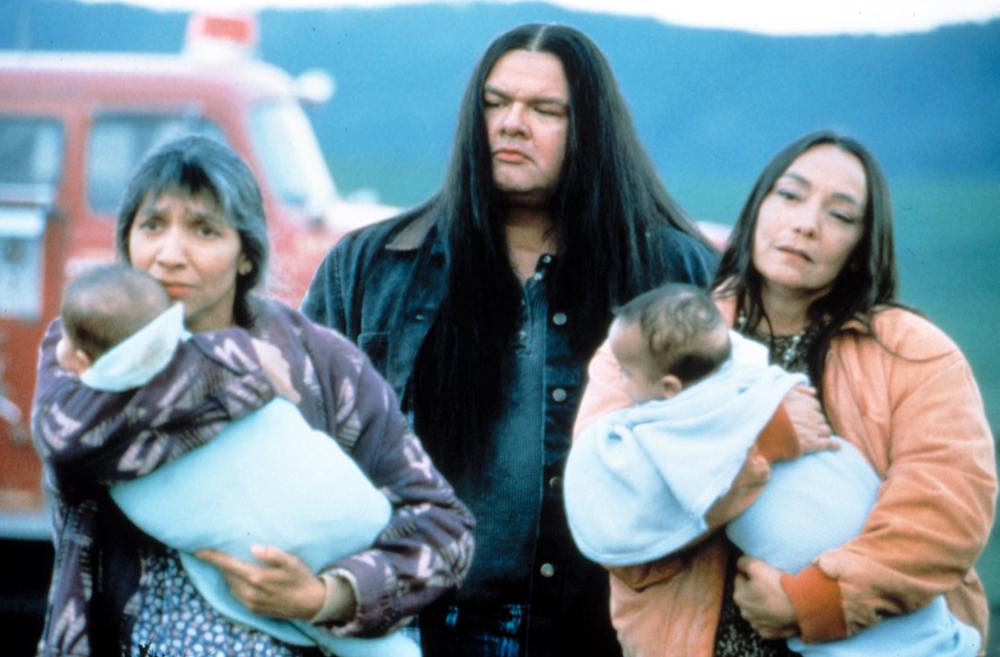
After the film’s opening fire aftermath scene, viewers are introduced more thoroughly to Arnold Joseph, who cut his hair in mourning after the fire and eventually disappeared, and to Thomas and Victor as young men: “Me and Victor? We were children born of flame and ash,” Thomas narrates. Scenes of reservation life also unfold with a quiet humor, punctuated by music: parallel scenes of Victor eating frybread with his mother, Arlene (Tantoo Cardinal, Metis), and Thomas eating dinner with his grandmother (Monique Mojica, Kuna and Rappahannock); flashback scenes of Victor and Thomas as kids and of Victor with Arnold before he disappeared; the ubiquitous rez traffic and weather reporter, Lester Falls Apart; and two women driving a car in reverse down a paved rez road.

Known as the first full-length feature film to be almost entirely written, directed, co-produced, and acted by Native Americans, Smoke Signals (1998) is a quintessential road movie that attempts to investigate the complex nature of Indigenous relationships, cultures, and contemporary realities, especially the relationship between Native American fathers and sons. On its surface, this is a story about Victor Joseph (Adam Beach, Saulteaux) a young Native man from the Coeur d’Alene Indian Reservation in Idaho who has hated his father almost all his life and is trying to forgive him. When Victor finds out early in the film that his father, Arnold, has died, he and his childhood friend, Thomas Builds-the-Fire (Evan Adams, Sliammon First Nation) embark on a journey to collect his father’s ashes. As the journey progresses, the two young men grapple with the limitations of forgiveness, even as Victor begins to heal.

[youtube_sc url=”https://www.youtube.com/watch?v=vQhviwp8j38″]

At the opening of the film, Thomas (Adams) narrates over the image of a burning house: “On the 4th of July, 1976, my mother and father celebrated white people’s independence by holding the largest house party in C’oeur d’Alene tribal history. I mean every Indian in the world was there. And then at three in the mornin’, after everyone had passed out or fallen asleep on couches, on chairs, on beds, on the floor, a fire rose up like General George Armstrong Custer and swallowed up my mother and father. I don’t remember that fire, I only have the stories. And in every one of those stories, I could fly.” This last statement is said over the image of a wrapped baby being thrown out of a second story window.

As the drums and chanting rise in the background, the camera shifts to a long-haired man running and diving to catch the falling baby.  Thomas’ narration continues as we see the man gaze down at the infant: “I was just a baby when Arnold Joseph saved me from that fire and delivered me into the hands of my grandmother.”

The morning after the fire. From left: Monique Mojica, Gary Farmer, Tantoo Cardinal

In the morning, the families are gathered around the pile of ash that used to be Thomas’ house and parents and his grandmother says to Arnold, Victor’s father, “You saved my grandson’s life. . .you did a good thing.” Arnold (Gary Farmer, Cayuga) responds with tears in his eyes, “I didn’t mean to.”

This moment of tension and the sad levity brought on by Arnold’s admission that he didn’t mean to do good sets the tone for the entire film. Humor is always dancing around the edges of anger, sadness, and despair in Smoke Signals, directed by Chris Eyre (Cheyenne/Arapaho). Ten years after the release of the film, Eyre sat down for an interview with David Hofstede for Cowboys and Indians magazine. Hofstede notes that this is still his best known film. Eyre responds:

“I don’t know if that’s a good thing or a bad thing,” he says, with a mix of pride and resignation. “On the good side it’s a wonderful story about forgiveness, and I think in 20 years it will hold up. I’ve made several more movies since then, and I think I’ve done some better work, but Smoke Signals is still the one everyone remembers best. I wonder if I’ll be known better for a movie after that, but either way, I’m fine.”

Director Chris Eyre

As the winner of several major films awards including a Filmmaker’s Award and Audience Award at the 1998 Sundance Film Festival and winner of the Best Debut Performance from the Independent Spirit Awards, Smoke Signals has become a well-recognized, almost canonical, Native American film. It is most likely the film you have seen if you have seen a Native American film featuring the perspective, storytelling, and humor of contemporary Native peoples.

After the film’s opening fire aftermath scene, viewers are introduced more thoroughly to Arnold Joseph, who cut his hair in mourning after the fire and eventually disappeared, and to Thomas and Victor as young men: “Me and Victor? We were children born of flame and ash,” Thomas narrates. Scenes of reservation life also unfold with a quiet humor, punctuated by music: parallel scenes of Victor eating frybread with his mother, Arlene (Tantoo Cardinal, Metis), and Thomas eating dinner with his grandmother (Monique Mojica, Kuna and Rappahannock); flashback scenes of Victor and Thomas as kids and of Victor with Arnold before he disappeared; the ubiquitous rez traffic and weather reporter, Lester Falls Apart; and two women driving a car in reverse down a paved rez road.

[youtube_sc url=”https://www.youtube.com/watch?v=5bctCV38FfU” title=”Victor%20explains%20how%20to%20be%20a%20real%20Indian%20to%20Thomas%20on%20their%20bus%20ride%20to%20Arizona.”]

On the bus to Arizona, Victor admonishes Thomas for being too nice and gullible, saying, “Just remember Thomas, you can’t trust anybody.” Victor’s hard edges are softened over the course of the film by Thomas’ stories, which are primarily about Arnold. Unfortunately, Thomas’ stories mostly irritate and upset Victor, bringing on hurtful memories from childhood such as the morning that Victor witnessed Arnold hit Arlene and leave. But in the end, it is Thomas’ stories and Victor’s acceptance of his father’s shortcomings that opens the space for forgiveness and healing.

[youtube_sc url=”https://www.youtube.com/watch?v=_tpfO7RS7-U” title=”Arnold%20and%20Arlene%20fight%20and%20then%20Arnold%20leaves”]

Ralph Armbruster-Sandoval writes about fatherhood and forgiveness in his Spring 2008 Wicazo-sa Review article, “Teaching Smoke Signals: Fatherhood, Forgiveness, and ‘Freedom’”: “Forgiveness is not a magical panacea and those who forgive are not morally or ethically superior to those who do not. Forgiveness can potentially transform or free people from anger, hate, and rage, however. . .Victor exemplifies this process” (125).

Victor (Adam Beach) and Thomas (Evan Adams)

The moment Victor finds out from Suzy Song (Irene Bedard, Inupiat/Inuit/Metis) why that fire started all those years ago, the one that Arnold saved Thomas from, is the moment his hate begins to wither. Facts muddle memories for him and he begins to see his father in a new and more complicated light. Learning the truth eventually frees Victor from his unending grudge toward his father and his irritation with Thomas.

If you have seen this film before, consider watching it again with new eyes. It has aged well and remains relevant as a story and as an insightful piece about contemporary Native Americans. Smoke Signals is a particularly useful film to incorporate into any class where Native peoples and cultures are being discussed – students respond well to the humor and the central theme of forgiveness. The film is available for streaming on Netflix and Amazon.com.

Thomas recites Dick Lourie’s poem, “Forgiving Our Fathers,” at the end of the film and those words seem appropriate to end this review:

“How do we forgive our fathers?

Maybe in a dream

Do we forgive our fathers for leaving us too often or

forever when we were little?

. . .

Do we forgive our fathers in our age or in theirs or in their

deaths, saying it to them, or not saying it?

If we forgive our fathers, what else is left?”


_____________________________________

Dr. Amanda Morris is an Assistant Professor of Multiethnic Rhetorics at Kutztown University of Pennsylvania with a specialty in Indigenous Rhetorics.

Seed & Spark: The United States of Femerica

Recently, I interviewed for a position on a short film with the director of the project. During the interview, the man, probably 10 years my senior, openly shared with me his experiences as a filmmaker so far, which I can relate to, being a maker of films myself. Needless to say, the conversation was easy-going and I didn’t think twice when I uttered something along the lines of, “I’m a feminist.”

The words had barely fallen out of my mouth when suddenly, instant panic appears in his eyes, train of thought screeching to a stop, sirens, the whole nine. For the rest of the meeting he tip-toed around everything, terrified to set me off on a man-hating rant, or whatever he thought might happen. His reaction almost made me want to apologize for saying it (almost). What the frack? Two minutes ago you were confiding in me and now, that one little word has changed me into an intimidating, unapproachable person?

Downtown production still by Caitlin Machak


This is a guest post by Jaclyn Gramigna.

Recently, I interviewed for a position on a short film with the director of the project. During the interview, the man, probably 10 years my senior, openly shared with me his experiences as a filmmaker so far, which I can relate to, being a maker of films myself. Needless to say, the conversation was easy-going and I didn’t think twice when I uttered something along the lines of, “I’m a feminist.”

The words had barely fallen out of my mouth when suddenly, instant panic appears in his eyes, train of thought screeching to a stop, sirens, the whole nine. For the rest of the meeting he tip-toed around everything, terrified to set me off on a man-hating rant, or whatever he thought might happen. His reaction almost made me want to apologize for saying it (almost). What the frack? Two minutes ago you were confiding in me and now, that one little word has changed me into an intimidating, unapproachable person?

I don’t think this guy quite grasps what feminism is and I suspect he’s not alone. If you don’t have a clear idea of what it is, or even if you think you do, I’ll save you the trouble of looking it up. The Merriam-Webster dictionary[1] defines feminism as, “the belief that men and women should have equal rights and opportunities.” It is as simple as that, or it should be…

But wait—hold the phone! Shouldn’t we, as a modern society, have progressed beyond this? Especially, when surveys[2] say that 96 percent of Americans believe men and women should be equal. Why am I nervous to call myself a feminist when most Americans are technically feminists too?! I can’t tell you exactly why. I could theorize, play the blame game, rant about how it makes me want to punch things (and believe me, I have) but frankly, all it would amount to is more hot air. I will take this moment, however, to quote Oscar Wilde: “Life imitates art far more than art imitates life.” I have a hunch that how men and women are portrayed differently on screen (in the films, TV shows and videos we watch on a daily basis) is at least partly at fault for the lack of progress.

To spell it out, the fact that women are “subtly” portrayed as one note stereotypes, the butts of sexualized jokes and downright inferior to their male counterparts in (particularly) Hollywood movies, instills in our minds that that is how it should be. We grow up seeing this as truth and many people still think there isn’t a problem at all (women can vote, so…)! Of course, there are exceptions, like with everything, but in the end they are exceptions.

Let’s change gears and look at a common “field study.” There’s a lot being written about street harassment right now and it’s about damn time! Despite its “adorable” nickname, “cat calling,” is something that nearly every woman living in a city is victim of. Whether they come from someone homeless or suited up, “Smile, you’re beautiful,” “You got big ass titties!” or, “Come here, I want to get wet between your legs,” all garner a similar reaction: self-consciousness, anxiety and fear, to name a few. No matter if you grow up to be a post office worker a CEO or Beyoncé you’re conditioned by movies and advertisements to have body issues (i.e. “it’s a good thing she’s smart”), which gives men the power to make you feel uneasy and vulnerable and if you stand up for yourself, you’re the bitch because it was meant as a compliment. It is definitely the kind of thing that if we don’t laugh we’ll cry. Especially, because it was not considered to be a legitimate issue until very recently[1] (pardon me while I scream and beat my pillow to a pulp).

Comic illustrating a woman being harassed on the street


I’m going to go out on a limb and say something (not so) radical…if female characters are given the same care (portrayed as more well-rounded people on screen) like male characters generally are (whether they’re good, evil or just lazy), then (life imitating art…) women will be respected and treated as equals in real life!

This is a fantastic thought but it’s an issue whose roots run deep and cannot be changed over night. The fact that Eleonore Pourriat’s short film, Oppressed Majority, (Majorité Opprimée by Eleonore Pourriat) which reverses gender roles, went viral, gives me hope. The fact that some of my male friends who watched it said that it changed their perspective on how women vs. men are portrayed on screen, revs me to action!

A huge reason why I started making films was because they have an unparalleled capability to inspire thought, emotion and change by simulating experiences an audience might never otherwise have. When I first set out to be a filmmaker I didn’t grasp how lopsided the industry was or even why that was a problem. Now that I’ve seen “life imitating art,” I, as a woman and a filmmaker can see how important a voice like mine can be and I feel a responsibility to make work that aligns with these beliefs. (In a world, where women don’t have to fear their own sex appeal…comes a shameless plug, for my short film, Downtownabout a girl who has a very private moment in a very public place—streaming on Seed&Spark.)

Production still from Downtown, taken by Vladimir Weinstein


I’ll take leave with a final call to action: Humans of the world, remember that feminism is inclusive, it’s about equality, not supremacy! I urge you to make art that reflects the world you want to live in and do your best to champion the work that takes care to do so!


Jaclyn Gramigna
Jaclyn Gramigna


Jaclyn Gramigna is a filmmaker and food enthusiast residing in Brooklyn, NY where she is part of the feminist majority and Love is her religion. Follow her at @JACoLYNtern.


‘Nymphomaniac’ Is a Lars von Trier Film That Is Actually a Little Bit Fun

As it turns out, ‘Nymphomaniac: Vol. 1’ is delicately told with both humor and sentimentality. Granted, we are given a rapid sequence of tight close-ups on male genitalia which lasts several minutes, but Gainsbourg’s detached voiceover makes the whole thing feel comical. In fact, we view all the sex acts through Joe’s curious, discerning lens. We’re not just looking at the life of a sex addict, but instead at the intertextual experience of a specific woman who feels she is addicted to sex, but not love. Joe recalls significant moments in her life and analyzes them; in one instance, she wonders why her virginity was taken in a number of thrusts equal to numbers in the Fibonacci sequence.

screen_shot_2014-03-31_at_12.44.10_pm

This guest post by Emily Gaudette previously appeared at Bitch Media and is cross-posted with permission.

In the two weeks before the theatrical release of Lars von Trier’s Nymphomaniac: Vol 1, I watched every film von Trier has ever written and directed. This included the three hardcore pornographies produced by his company Zentropa. I will neither confirm nor deny whether the porn films are successful in their intent.

Some of von Trier’s films are moody and lyrical (Melancholia, Breaking the Waves), and others are gory and severe (Antichrist). Some are musicals (Dancer in the Dark) and others have a noir aesthetic (Europa trilogy). What binds von Trier’s work together is the sense that he’s just experimenting with different variables. Nymphomaniac’s protagonist Joe—played in the present by Charlotte Gainsbourg and in flashbacks by Stacy Martin—simply throws ideas about her sexual desire against a wall to see if anything sticks. She recounts the events of her life to Seligman (Stellan Skarsgård), an academic who finds her unconscious in the film’s opening sequence. The film doesn’t hammer home a central message on female sexuality or even nymphomania, but I’d wager that we’re better off without films making a monolithic message on female sexuality.

von Trier’s films tend to be more literary and nuanced than most critics will admit. Yes, a woman’s clitoris is sliced off in Antichrist, and yes, I shrieked watching it and had to pull my sweater over my head. But the film is a four-part funeral pyre for a dead child whose parents cannot cope with their guilt. There’s so much more at work in Antichrist than the infamous, bloody pair of garden shears (featured prominently on promotional posters). Selling films like Antichrist as torture porn is a disservice to the full text. It’s true that von Trier is obsessed with dark sex acts; in fact, his explicit images of intercourse in 1998’s The Idiots are cited as the genesis of non-simulated sexual films like Catherine Breillat’s Romance (1999) and Vincent Gallo’s The Brown Bunny (2003). However, the classification of these films as “porn” is questionable, especially since the actual pornography affiliated with von Trier’s company differs in tone from his other films. Sex doesn’t have thematic weight in films like Pink Prison (1999), which German Cosmopolitan calls “the role model for the new porn-generation.” I’m not entirely sure what a porn-generation is, but I’m pretty sure I belong to it now that I’ve seen the Zentropa movies.

But what do we do with images of people entering each other on screen, as they do over and over in Nymphomaniac, if these scenes are not intended to arouse us? von Trier’s intent can feel murky in many of his projects (I still don’t know what Europa was about), but the objectives in Nymphomaniac: Vol 1 feel less complex.

I’d like to identify a gaping disconnect between the actuality of Nymphomaniac: Vol 1 and the way it was marketed. The film’s posters feature each of the film’s stars in mid-orgasm. One might assume looking at them that Nymphomaniac is just about a bunch of white people cumming all over the place. There’s even a poster of Christian Slater, who heartbreakingly plays Joe’s father in flashbacks. To my great relief, he doesn’t play a sexual role in Joe’s life, unless you subscribe to Freudian readings of desire (to which I say, “stop doing that”). Considering Uma Thurman’s role as an emotionally ravaged mother and wife, her poster image (shot from above) isn’t logical, or even helpful. In fact, most of the players in the film don’t engage in sex—their personal issues are too emotionally crippling. This discord in tone is the kind of information I would have appreciated before I walked into the theatre gripping my popcorn carton with anxiety. I assumed I was about to watch a grim, brightly-lit orgy featuring actors like Stellan Skarsgård, with unapologetic shots of penises abounding.

florida-children-accidentally-shown-raunchy-trailer-for-nymphomaniac

As it turns out, Nymphomaniac: Vol. 1 is delicately told with both humor and sentimentality. Granted, we are given a rapid sequence of tight close-ups on male genitalia which lasts several minutes, but Gainsbourg’s detached voiceover makes the whole thing feel comical. In fact, we view all the sex acts through Joe’s curious, discerning lens. We’re not just looking at the life of a sex addict, but instead at the intertextual experience of a specific woman who feels she is addicted to sex, but not love. Joe recalls significant moments in her life and analyzes them; in one instance, she wonders why her virginity was taken in a number of thrusts equal to numbers in the Fibonacci sequence.

Notably, after Joe has considered the golden ratio as a metaphor for her sex life, she says simply, “it hurt like hell” to signify the end of her analysis on the matter.  There is a quiet poetry in what von Trier does with seduction in Nymphomaniac. In one scene, we see Joe fellating a penis, preceded by a beautiful sequence in which Joe perceives men on a train as fish in a river. As each man looks up to regard Joe in her shiny red hotpants, his face is illuminated with overlaid footage of running water and long, rippling weeds.

Interestingly, Joe maintains agency in her sexual experiences almost 100 percent of the time. In one sequence, she has sex with three young men in split-screen and tells each of them that they’ve figured out how to give her an orgasm for the first time in her life. It’s clear that this is not true.

Though the New Yorker calls Nymphomaniac a “joyless sexual tantrum,” there are distinct glimmers of happiness littered through the film. As a child, Joe runs bathwater onto the floor, and she and her best friend B (played later by Sophie Kennedy Clark) pretend to be frogs, sliding back and forth on the wet tile, laughing. Joe closes her eyes intently, clearly enjoying the sensation of rubbing her body against the wet surface, and sunlight streams into the bathroom. There is playful, childlike joy here, and the scene is not filmed in a predatory manner. In fact, when the New Yorker’s Richard Brody writes, “the average male art-house viewer emerges from the first part of Volume I filled with the pleasant idea that there are young women out there—young, pretty, sleek, and determined—who will suck him off in a random train compartment even though he’s forty,” he seems to discount the reaction of more than half the film’s audience. The problem is, the conclusions of art-house dudes aren’t relevant in Nymphomaniac. I’d point to the scene in which a young Jerôme takes Joe’s virginity upon her request, painfully and without concern for her pleasure. Before she hobbles outside, she makes a small adjustment on the motorbike Jerôme is attempting to fix, apparently solving his problem. Later, as adults, Joe and Jerôme argue about a parking space which only Joe is able to get into. Jerôme is visibly frustrated in both scenes, but Joe doesn’t seem to care.

The power in Nymphomaniac has nothing to do with any male character’s reaction to Joe; in fact, we never see any of her partners for more than a few moments on screen, discounting only Jerôme, the man she says she loved. von Trier instead fills the film with weighty female characters like B, Mrs. H, or the other young women in Joe’s sex-without-love cult, which calls itself the “little flock.” I felt genuine joy hearing the little flock’s chant: “mea vulva, mea maxima vulva.” Joe builds her personal, erotic mythology in disregard of any man’s opinion. When she is unable to discount the emotions of male characters in her life because of her connection with them, she reevaluates her ethical framework to fit them in. The film’s whispered refrain seems to haunt Joe: the secret ingredient to sex is love.

nymphomaniac-mea-vulva-600x421

I’d argue that Nymphomaniac: Vol 1 is one of von Trier’s most sentimental projects, and I’d point critics to Joe’s meditation on love as an example. She remembers masturbating on a public bus, looking desperately for details on her fellow passengers to remind her of Jerôme. When Jerôme returns to the narrative, pulling Joe to him from above as he does in an earlier scene, Seligman interrupts the flashback and calls the whole situation unbelievable and ridiculous.

“Ask yourself how you’ll get more out of my story,” Joe says. Does Seligman have to believe every part of Joe’s narrative for it to have meaning? Probably not. Do we have to believe her or come to a conclusion about her character? I hope that this isn’t the case, as watching Joe categorize her lovers according to their roles in a polyphonic, sexual spree is enjoyable enough. The film’s interwoven themes of desire and guilt coalesce in its final image, as Rammstein’s “Führe Mich” thunders into the room, the shot cuts to black, and we’re left wondering if Joe’s sex life meant anything philosophical or ethical at all.

Watching Nymphomaniac: Vol. 1 was, weirdly enough, a relief for me, after wading through von Trier’s other works, back to back. It’s certainly the least emotionally exhausting installment in what von Trier calls his “depression trilogy,” which includes Antichrist and Melancholia. Though von Trier’s focus on female characters began in his early work, his attention to detail makes Joe feel more fully realized than his other protagonists. Joe’s femininity is built around her curiosity, and von Trier seems to enjoy watching her experiment with others and fail to achieve emotional intimacy. Though Joe suffers the way von Trier’s other women suffer, she also causes suffering in others, which is a dynamic give-and-take not afforded to characters like Melancholia’s despondent Justine. Most refreshingly, there is more humor in Nymphomaniac than in von Trier’s other work, in its Wes Anderson-style titled chapter structure and the scenes shared by young Joe and Jerôme. in Nymphomaniac, sex remains fodder for von Trier’s dark commentary, but the question of love is a bright spot in his analysis. von Trier seems as transfixed by love as Joe is, and watching both storytellers parse out this confusion is actually fun.


Related Reading: Dark of the Matinee—A Review of Melancholia.


Emily Gaudette is a writer from New Mexico who lives in Boston. She tweets as @genghis_blonde.

The Best Part of ‘Captain America’ is in the Past: An Appreciation of Peggy Carter

Following my geek programming, I re-watched ‘The First Avenger’ in preparation for ‘The Winter Soldier.’ And I was reminded of the sad truth that the best parts of the first flick can’t carry on to this one, because they’re in the 1940s and now Steve Rogers is in the present.

And the best of the left-behind best is Peggy Carter, Hayley Atwell’s British intelligence agent working with the Scientific Strategic Reserve, a precursor to S.H.I.E.L.D. As a British woman surrounded by American military men, Peggy obviously sticks out, but she’s so self-possessed, confident, and skilled that it doesn’t seem far-fetched for her to be in the inner-circle. It’s wonderful to see how the higher-ups, even cad Howard Stark (Tony’s dad) and crotchety Col. Phillips, accept her presence and authority implicitly. The enlisted men who give her guff are quickly put in their place by her tendency to shoot at things that annoy her, which somehow comes across as less reckless than it actually is, probably because she’s so generally competent.

[This review contains potential spoilers for Captain America: The Winter Soldier]

Captain America: The Winter Soldier comes out tomorrow in the US*, with abundant preview showings tonight. I’ve been eagerly anticipating it, even though I remembered Captain America: The First Avenger as just “pretty good,” because I have been programmed by my geeky upbringing to eagerly anticipate all superhero movies.

Further following my geek programming, I re-watched The First Avenger in preparation for The Winter Soldier. And I was reminded of the sad truth that the best parts of the first flick can’t carry on to this one, because they’re in the 1940s and now Steve Rogers is in the present.**

Hayley Atwell as Peggy Carter

And the best of the left-behind best is Peggy Carter, Hayley Atwell’s British intelligence agent working with the Scientific Strategic Reserve, a precursor to S.H.I.E.L.D. As a British woman surrounded by American military men, Peggy obviously sticks out, but she’s so self-possessed, confident, and skilled that it doesn’t seem far-fetched for her to be in the inner circle. It’s wonderful to see how the higher-ups, even cad Howard Stark (Tony’s dad) and crotchety Col. Phillips, accept her presence and authority implicitly. The enlisted men who give her guff are quickly put in their place by her tendency to shoot at things that annoy her, which somehow comes across as less reckless than it actually is, probably because she’s so generally competent.

Peggy Carter shoots at a lot of things.

Peggy gets extra points for showing Steve respect and care before he gets all Hunkified, and then falling for his integrity and heart even with all those distracting muscles. The best thing about Captain America as a character is that his moral decency is as freakishly overdeveloped as his pecs, and that’s clearly what Peggy adores about him, which makes me adore her.

There is no amount of decency that will get you out of this situation

I’ll even give her a pass for getting mad at Cap for locking lips with Natalie Dormer, even though no one should be faulted for kissing Natalie Dormer. Peggy isn’t just jealous, she’s disappointed to see any shade on Cap’s aura of decency, which is much more understandable and forgivable. And of course, Captain was “innocent,” and she forgives him in time to tearfully talk him through his self-sacrifice at the end of the film.

And now Cap’s unfrozen seventy years later, and they’re a Peggy Carter-shaped hole in his story. Fortunately, Hayley Atwell is reportedly appearing in flashbacks in The Winter Soldier. She also starred in her own short film “Agent Carter” included in the Iron Man 3 blu-ray, and has a television series in development. I’m glad we can see more of this great character, but I’m guessing I’ll still miss her in Captain America’s present.

Poster for short film Agent Carter
Poster for short film ‘Agent Carter’

It’s also nice that her independent appearances make Peggy Carter clearly more than a love interest. But I’m still interested to see if the Marvel Cinematic Universe lets Captain America have another love interest, and if she’ll be able to live up to Peggy. In the comics, Peggy’s relative Sharon Carter takes on that role, and Emily VanCamp is in the new film as Agent 13. Hopefully Winter Soldier will overcome Marvel’s occasional issues with the Smurfette principle and develop Sharon Carter successfully alongside Scarlett Johansson’s Black Widow. I will let you know how Captain America: The Winter Soldier fares with its female characters in my next piece for Bitch Flicks.

*this is one of the RARE movies that came out in South Africa (and the UK and many other countries) before being released here, but of course I’m visiting home at the time. Oh well, USA USA!
** I mean, comics and comic book movies FIND A WAY to revive and reintegrate characters from the past or beyond the veil. See the eponymous Winter Soldier.


Robin Hitchcock is an American writer who is presently in America! USA USA!

‘The New Adult’: Generation Delayed

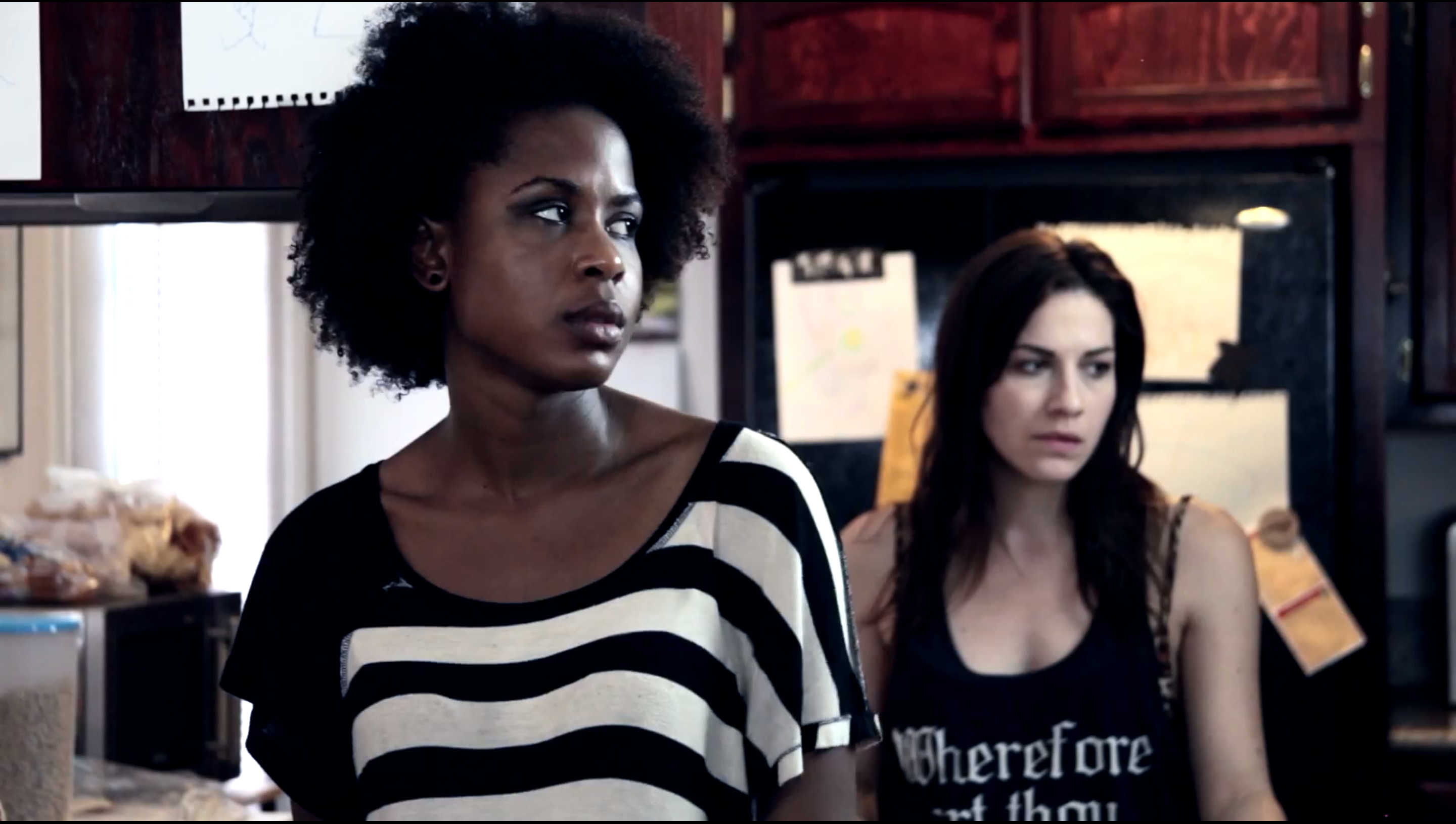
‘The New Adult’ is a small slice of life in the post-Aughts. Amber Morse plays Amber, a 30-something who, after being kicked out of the family home, is living uncomfortably with her best friend, her best friend’s husband, and their young child. The pilot opens with Amber passed out in the backyard. Upon waking she goes inside to get breakfast, and what follows is almost seven solid minutes of excellence.

Review and Q&A with creator/director Katherine Murray-Satchell.

Written by Andé Morgan.

Screenshot 2014-03-31 21.59.06

Can we talk about this awesome new web series pilot?

It’s called The New Adult, and it’s the brainspawn of Katherine Murray-Satchell (creator and director).

[youtube_sc url=”https://www.youtube.com/watch?v=zsX91lHd5VI” title=”The%20New%20Adult”]

The New Adult is a small slice of life in the post-Aughts (how’s that unpaid internship working out?). Amber Morse plays Amber, a 30-something who, after being kicked out of the family home, is living uncomfortably with her best friend, Jamie (Lauren Augarten), her best friend’s husband, Joe (Daisun Cohn-Williams), and their young child. The pilot opens with Amber passed out in the backyard. Upon waking she goes inside to get breakfast, and what follows is almost seven solid minutes of excellence.

While this is Murray-Satchell’s directorial debut, it doesn’t feel like it. The dialogue is real, snappy, and engaging. The cinematography is flawless, and the editing is on point. The cast exhibits great chemistry. The overall effect is that TNA feels polished.

A minor gripe–occasionally, Morse and Cohn-Williams’ deliveries come across a bit stilted, but only momentarily.

Amber is beautifully unlikable. She’s ungrateful, she smokes, and she curses in front of children. But, thanks to Morse and Murray-Satchell, I feel her, and I want more.

She’s also not the typical female protagonist. She’s Black, and she rocks, literally. This also makes her atypical for a Black protagonist, because, as we all know, Black People Don’t.Like.Rock. (or cosplay). Yeah, that cake is a lie.

Amber Morse and
Amber Morse and Lauren Augarten in The New Adult.

Murray-Satchell graciously agreed to an interview to discuss TNA.

Bitch Flicks: When will we see more TNA?

Murray-Satchell: The purpose of making the pilot episode is to use it as a fundraising tool for getting the rest of the episodes made…I have five other episodes written and ready to go, so once the other factors fall into place, I’ll have a better answer for you…I chose for it to be a six-episode season, modeling after the “British Brevity” approach to television production.

Bitch Flicks: How did you get interested in film?

Murray-Satchell: I was a freshman in high school at the Philidelphia High School for the Creative and Performing Arts (CAPA), majoring in Creative Writing. A friend introduced me to the world of screenwriting and filmmaking…me, not really having any knowledge of making movies (or even seeing it as a viable way for me to express myself creatively). My friend gave me a screenwriting book by Syd Field and I was hooked.

My writing became more visual as the years went on, and I would find ways to con my way into the school’s TV/Film class. I got interested in film because it combined everything that I loved into one neat little package: acting, writing, and music. I started to look at movies and TV differently, seeing how emotion could be portrayed much more quickly with one shot than it could with a paragraph. My desire to open people’s eyes to different cultures and philosophies has always been a part of me, and I saw filmmaking as a way to express that.

My ultimate goal is to be a showrunner…By creating TNA, I became a showrunner in my own right.

Bitch Flicks: Adult-child/failure-to-launch stories are part of the post-2008 zeitgeist. What was your inspiration for TNA?

Murray-Satchell: I’ve actually been working on this show idea for three years, I think. Maybe four. It’s been a while. And since then, so many other failure-to-launch stories have come out that for a while, I felt discouraged in making anything of TNA. It’s inspired by a bunch of people I know, and my own inner demons.

I experienced what most people refer to as a quarter life crisis. Back when I was 25, I had a bit of a meltdown when I just kept thinking “Is this my life now?” I had a full-time job, a daily routine, paying rent, paying bills. And I literally just wanted to drop everything and run away because it just became so mundane and not at all what I pictured adulthood to be like.

Building on that, seeing how my friends from high school and college had changed and evolved, I knew that in some way, we were all lamenting about this whole adult thing. No one prepared us for those feelings of despair and confusion. So, the show is an exploration of the different types of adults out there. And it’ll pose the question of what defines being an adult, and what this modern grown-up looks like.

Bitch Flicks: What distinguishes TNA from similar series?

Murray-Satchell: The New Adult will set itself apart from other stories by focusing on the female perspective. While, yes, there are a handful of woman-children in fictional media right now, Amber’s character adds to this mosaic. Most of the things out there really go for the slapstick when it comes to adult-child characters, putting them in situations where they then showcase how immature and silly they are. TNA is a dark kind of funny. It’s a character study on a woman stubbornly going through this adulthood transition.

My intent is to make it real enough to see her torn apart by this whole situation, but funny and absurd enough to keep the auidience wondering how she’s going to dig herself out of this mess. Additionally, making Amber a woman of color gives an alternative representation of the black female–she’s not “ratchet,” the strong single mother, or some stoic professional… there’s a massive gray area that has hardly been tapped (kudos to Mara Brock Akil and Issa Rae for bringing them out), and I’d like to introduce that person to the public.

Bitch Flicks: Tell us more about Amber Morse.

Murray-Satchell: Amber [the character] is a tough pill to swallow when she’s first introduced. She’s deeply flawed, honest, charming when she needs to be, rude, and comes off as a bit of a rebel.

Amber Morse is a super talented woman who could relate to the background of the character. The character was a very specific kind of personality, and casting was extremely tough. She nailed the audition, and I knew that she could add the charming but rough-around-the-edges vibe to the character…I feel like her screen presence is so commanding that she’d be able to carry the show, and I believe in her ability to take the character to the depths that she’ll inevitably have to go to as the story develops.

Bitch Flicks: There’s a distinct lack of female (or WOC or POC, for that matter) directors in the Hollywood system. As Lexi Alexander and others have noted, this may be because Hollywood is less willing to give female directors opportunities, rather than because there are few women who want to be directors. What are your thoughts?

Murray-Satchell: There’s a lack of female and POC directors in the Hollywood system because newcomers don’t see enough of them already present, and they feel that the opportunities are not there, which discourages them from pursuing it…I don’t think of myself as a Black female filmmaker. I like to think of myself as a filmmaker who happens to be a Black female. But I’m not blind. I feel like there are a lot of women who want to be in a more creative filmmaking role like directing but feel like they can’t, or won’t be given the chance. Or maybe they feel like they don’t have what it takes to be a director, or that people won’t take them seriously. It’s a shame, really. With filmmaking tools being more accessible now, anyone can make a movie.

Bitch Flicks: Does the web series format give women and POC an opportunity to be heard that is absent in the traditional system?

Murray-Satchell: Absolutely. So many up-and-coming filmmakers who are women and people of color have been recognized because of how they used the web series format–and the internet in general–to their advantage. The obvious example is Issa Rae, who created a web series to not only showcase her talent, but to give viewers a refreshing take on the modern African American experience. For me, I’m using it as a platform for showing what I’m capable of as a showrunner. By creating a series outside of the Hollywood system, it allows me the flexibility to experiment, to make mistakes, to look at this format as a microcosm for the bigger television industry.

Women and people of color definitely have an opportunity to get their voices heard more easily with a web series… it’s just a matter of getting the audience’s attention.

Bitch Flicks: Who are your cinema and television heroes?

Murray-Satchell: Joss Whedon initially comes to mind. When I really started to break down television series, I loved what he did with the characters on Buffy the Vampire Slayer. Of course as a teenager, you go into the show for the glamour of the vampire saga, but as an adult, I can appreciate it for so much more. I loved the flexibility of television writing and development that could introduce a character, build them up, knock them down, build them up again, change how we as the audience feels about them… it was incredibly influential in my decision to pursue series development and showrunning.

As a cinematographer, one of my heroes was Emmannuel Lubezki. I took a lot of notes watching his work, and I was so glad that he finally got an Oscar in recognition of his work. He’s one of the great DPs who “paints” with the light, and thinking about it in those terms made me approach cinematography in a completely different way.

Bitch Flicks: What are you watching?

Murray-Satchell: I’m a television junkie…I’m watching The Walking Dead, True Detective, Breaking Bad, Scandal, Revenge (the guiltiest of pleasures, but hey), Kroll Show, Bob’s Burgers. Movie-wise, the last few things I watched were Friends With Kids and It’s A Disaster. Netflix streaming is an evil, evil goddess and I love it.

Follow Katherine Murray-Satchell on Twitter @KatStreet1

Also on Bitch Flicks: Flat3 is the Little Web-Series You Have Been Looking For


Andé Morgan lives in Tucson, Arizona, where they write about culture, race, politics, and LGBTQ issues. Follow them @andemorgan.

‘Shameless’: The Most Dramatic Comedy This Season

‘Shameless,’ Showtime’s irreverent story of working-class hardship, has re-categorized itself as a comedy for awards season. That’s a strange choice when you consider that series star, Emmy Rossum, has spent the whole season knocking it out of the park in what is clearly a dramatic role, and clearly the show’s most serious attempt to engage with its subject matter.

Written by Katherine Murray.

Shameless, Showtime’s irreverent story of working-class hardship, has re-categorized itself as a comedy for awards season. That’s a strange choice when you consider that series star, Emmy Rossum, has spent the whole season knocking it out of the park in what is clearly a dramatic role, and clearly the show’s most serious attempt to engage with its subject matter.

Emmy Rossum as Fiona on Shameless

Shameless, a remake of the UK series of the same name, has never been the kind of show that could go toe to toe with the Breaking Bads of the world. It has an uneven tone that often seems to make light of the class-based difficulties its characters face, and a sense of humour that slips over the line from “borderline offensive” to “actually, for real,  offensive” at times. It’s never been entirely clear whether the series is supposed to be grounded in the real world, or take place in a hyper-reality where actions have no consequences and the characters are supposed to be satirical. The show’s dramatic plot lines lean toward the former and its comedic plot lines lean toward the latter (maybe because there’s nothing particularly funny about being poor in the real world).

The series follows the adventures of the Gallagher family–six children, and their drunken, absentee father, Frank. The eldest Gallagher child (and the only one over the age of majority at the series’ inception) is Emmy Rossum’s character, Fiona, who more or less serves as the moral center of the show.

Over the first three seasons, we watch Fiona struggle to care for her siblings while working odd jobs and dating men who turn out to be bad for her. Every time Fiona tries to better her life, the family drags her back down either through sabotage or (more usually) through requiring things from her that aren’t compatible with what she wants. Through all of these setbacks–and despite the occasional outburst–Fiona, like all of the Gallagher children, displays an almost super-human resilience. Despite being abandoned by her parents and dropping out of high school to raise five children on her own, despite shuffling from low-wage job to low-wage job and scrounging for money for food, despite being repeatedly cheated out of even the smallest opportunities for happiness,  Fiona stays positive, optimistic, determined, and focused on doing for everyone else, when no one is doing for her.

It’s the kind of chipper, poor-but-happy attitude the show sometimes displays, which undercuts the seriousness of the situation the characters find themselves in. Events that would scar you for life, in the real world, become funny anecdotes and colourful stories about triumphing over adversity. You might get the impression, watching this show, that being poor is a great adventure that doesn’t hurt anyone’s chances to lead a fulfilling life.

And then season four happens. Wonderful, dramatic, thoughtful season four, which we are now calling a “comedy.”

In this “comedy,” Fiona finally has a stable middle-class office job. She’s a rising star in the sales department, and she has a comprehensive benefits plan that covers all of her dependents. She’s dating her boss, which isn’t great, but he’s a stable, emotionally healthy man who treats her with respect and encourages her instead of dragging her down. With no one trying to sabotage her, Fiona decides to sabotage herself.

Over the course of this season (the last episode airs this week), Fiona torches her relationship, torches her career, and–because that’s not enough–ends up with a felony drug conviction that sends her to prison, passing all of her responsibility onto her next oldest sibling, Lip.

Fiona walks through jail on Shameless
Get it? It’s funny because her life is ruined.

What makes this different from previous seasons is that the story line is played completely straight. Although there’s an element of humour in the earlier episodes, Fiona’s arrest turns this into a Big Deal, and the scenes of her arrest, trial, parole, and incarceration are treated very seriously. They’re much darker than similar scenes on, for example, Orange is the New Black (which is more legitimately classified as a comedy due to its tone), and the show engages in a fairly downbeat explanation of how things ended up this way.

Fiona is a product of the environment she grew up in, and her attempts at mobility are almost pre-destined to fail. At one point, she explains that she never felt like she deserved to have a good job or a stable relationship, and she wanted to prove she was right by destroying it. The values she holds as a working class woman also play a role–she might have been able to get a better deal with the prosecutor if she had sold out the middle-class man who gave her the drugs; she didn’t, because it was unthinkable to her to be a rat.

The penultimate episode invites us, as well, to see the connection between Frank’s poor parenting and the fate of his eldest child, essentially forced into the role of parent during her own childhood. She’s self-destructing the same way her parents did and, in a world of such limited options, when so much pressure has been applied to her, it’s hard to imagine that this wouldn’t have happened someday.

The show also takes a very serious attitude to the way these events affect Lip. The first in his family to go to college, he–like Fiona–struggles with fitting into middle-class culture, and initially tries to sabotage himself by withdrawing. Just as he seems like he’s making progress, he’s forced into Fiona’s role as head (and moral center) of the family, and he looks at her with the same hatred and sense of betrayal that they’ve both directed at Frank.

This is just one of several serious, dramatic story lines this season, but it lends the show a sense of gravity and relevance that it hasn’t always had. It’s also given Emmy Rossum a chance to demonstrate what an outstanding performer she actually is–she’s come a long way from staring into the middle distance while a guy in a mask swarms around her. In fact, I might have liked to see her compete as an actress in a drama series during awards season–I think she might have wormed her way into a nomination, this time.

Alas, this is not the world we live in. In probably the least funny season of Shameless ever, and the season that treated the characters’ situation with the greatest respect, and the season that finally gave the leading actress a meaty, dramatic role to sink her teeth into–one in which, dare I say it, she takes off her clothes to a little more purpose–it’s a comedy. OK, then.


Katherine Murray is a Toronto-based writer who yells about movies and TV on her blog.

‘Half the Road’: Gender Inequality in the World of Women’s Professional Cycling

As an amateur cyclist, I was ecstatic to review Half the Road, especially because the obstacles female professional cyclists face (pathetic prize winnings along with the lack of pay equity, sponsorships, media coverage, recognition, and equal opportunity to compete in events) has long galled me. To finally have a documentary that gives the women most affected by this gender discrimination a platform to show their outrage, their passion for cycling, and their absolute right to “half the road” is crucial for letting the world know this problem exists while (hopefully) acting as a catalyst to evolve the governing body for cycling, the Union Cycliste Internationale (UCI) to accept gender parity as a necessity and the norm.

Half the Road Poster 400
Half the Road documentary poster

Written by Amanda Rodriguez

Half the Road is professional athlete and filmmaker Kathryn Bertine‘s revelatory, inspiring documentary that exposes the rampant gender inequality in professional cycling.

[youtube_sc url=”http://youtu.be/nsKumPrwaQE”]


Half the Road takes us into the homes and lives of professional female cyclists who thrive in their sport, some of whom must work other jobs in order to make ends meet, who must sleep on couches or floors when they travel to race, who hide injuries to maintain a tenuous spot on team rosters due to archaic age regulations, who spend valuable time and energy fighting unfair UCI rulings and bureaucracy, or even one woman who buys tea kettles with her prize winnings because there’s little else she can afford with such a pittance. We see the faces of these elite athletes, like time trialist Emma Pooley, criterium rider and Ph.D holder Nichole Wangsgard, four-time Ironman triathlete gold medalist Chrissie Wellington, and two-time Olympic gold medalist Kristin Armstrong (no relation to Lance Armstrong), and we learn in a straightforward manner about their struggle for gender parity in their sport.

The female peloton at the Tour of Gila
The female peloton (pack of riders) at the Tour of Gila


The documentary’s director, Kathryn Bertine, intimately knows the limitations that stifle female cyclists’ potential because she is a professional cyclist herself. Bertine says:

“As a sports journalist and professional athlete, I knew we had to show the truth about gender equality in sports which is simply a mirror for gender equality in society. As much as everyone wants to believe that Title IX (sports equality law in the USA) has leveled the playing field in sports, the reality is there is still a long way to go. The good news is that cyclists and fans are pushing for change, and at the heart of this movement is a raw, pure, uplifting love of sport specific only to the struggle and triumph of female athletes.”

Kathryn Bertine 2013 World Championship


As an amateur cyclist, I was ecstatic to review Half the Road, especially because the obstacles female professional cyclists face (pathetic prize winnings along with the lack of pay equity, sponsorships, media coverage, recognition, and equal opportunity to compete in events) has long galled me. To finally have a documentary that gives the women most affected by this gender discrimination a platform to show their outrage, their passion for cycling, and their absolute right to “half the road” is crucial for letting the world know this problem exists while (hopefully) acting as a catalyst to evolve the governing body for cycling, the Union Cycliste Internationale (UCI) to accept gender parity as a necessity and the norm.

These athletes, these women, deserve better. I urge you to watch this film and add your newfound knowledge and outrage to this growing movement that demands female professional cyclists be afforded the same rights, privileges, and opportunities that men are given. Because how will we know what heights a woman is capable of achieving if we never give her the chance? Plus, watching Half the Road gives us the treat of seeing all those ladies’ amazing quad muscles in action.

Cyclist version of Rosie the Riveter's "We can do it!"
Women cyclist version of Rosie the Riveter’s “We can do it!”

Amanda Rodriguez is an environmental activist living in Asheville, North Carolina. She holds a BA from Antioch College in Yellow Springs, Ohio and an MFA in fiction writing from Queens University in Charlotte, NC. She writes all about food and drinking games on her blog Booze and Baking. Fun fact: while living in Kyoto, Japan, her house was attacked by monkeys.