Profile of a Wit: A Review of ‘Public Speaking’

Aesthetic influences, talent, and genius are key subjects addressed in the documentary. Although she praises the book reviews of Dorothy Parker, most of the cultural references and influences Lebowitz cites are male. She explains that “much older” gay men constituted her social and intellectual circle from the moment she arrived in the city as a young woman. Although the humorist is a friend of Toni Morrison, Scorsese does not ask why so few of Lebowitz’s influences are women, gay or straight. What has she, for example, gained intellectually and culturally from her relationship with Morrison? This is a missed opportunity.

Public Speaking, 2010


Written by Rachael Johnson

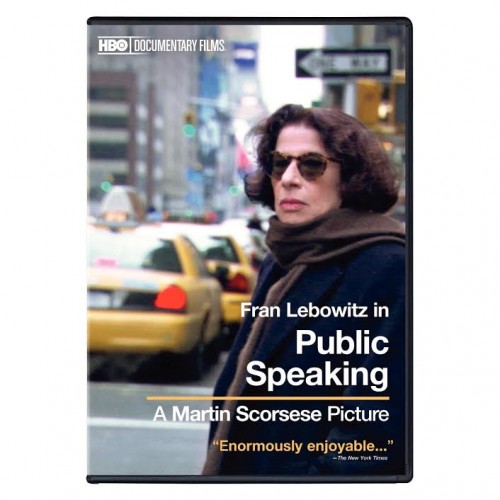
Public Speaking is an HBO documentary by Martin Scorsese about the writer and public speaker, Fran Lebowitz. Unsurprisingly, the humorist and cultural commentator makes an interesting, entertaining subject. Lebowitz’s words–as the title promises–provide the focus of the film although shots of the writer strolling the streets of Manhattan and driving in the city at night serve to add atmosphere as well as identify the writer as a quintessential New Yorker. We see Lebowitz deliver pointed observations about contemporary US culture at public speaking engagements, share the stage with the great Toni Morrison, and hold court at the famed Waverly Inn. There are, also, clips shown of a younger Lebowitz on Conan as well older television footage of the humorist at speaking and reading events. Lebowitz takes on a wide variety of topics in Public Speaking: artistic talent and genius, the New York gay and arts scenes of the 70s, present-day Manhattan, current LGBT rights issues, gender, race, writer’s block, and, yes, overgrown children in strollers. As you would expect from Scorsese, there is, also, some great footage featured. Much of it is of significant cultural figures of Lebowitz’s youth, particularly those who served as models of inspiration. There’s a great and glorious clip of the magnetic James Baldwin whom Lebowitz cites as the first intellectual she set eyes upon, although clips of Truman Capote and Gore Vidal equally fascinate.

Lebowitz public speaking


Aesthetic influences, talent, and genius are key subjects addressed in the documentary. Although she praises the book reviews of Dorothy Parker, most of the cultural references and influences Lebowitz cites are male. She explains that “much older” gay men constituted her social and intellectual circle from the moment she arrived in the city as a young woman. Although the humorist is a friend of Toni Morrison, Scorsese does not ask why so few of Lebowitz’s influences are women, gay or straight. What has she, for example, gained intellectually and culturally from her relationship with Morrison? This is a missed opportunity.

At the Waverly Inn
At the Waverly Inn


Artistic talent is also a central theme in the documentary and Lebowitz underscores the importance of aesthetic standards as well as knowledgeable art critics: “See, what we have had in the last, like 30 years, is too much democracy in the culture, not enough democracy in the society. There’s no reason to have democracy in the culture. None. Because the culture should be made by a natural aristocracy of talent. …. By which I mean… it doesn’t have to do with, you know, what race you are, or what country you’re from, or what religion you are, it should have to do with how good are you at this thing, and that is a natural aristocracy…” Many of her observations do make a refreshing change from the self-affirming, self-stroking mantras of today’s online culture. I must admit that I laughed at her put-down of the populist appropriation of that famous Toni Morrison quote:  “If there’s a book that you want to read, but it hasn’t been written yet, then you must write it.” Lebowitz rightly reminds us, “Writers have to know things…”

Lebowitz is both a believer in cultural aristocracy and a politically liberal. She deeply laments the touristification and commercialization of New York, a city only the rich can now afford: “You cannot say that an entire city of people with lots of money is fascinating. It is not.” There’s a hilarious dig at the Bush administration to enjoy but I wish Scorsese had foregrounded and explored her progressive politics more. She has made many eloquent, passionate, dead-on statements elsewhere about America’s worship of money.

Driving in Manhattan


Her views on contemporary LGBT politics are, perhaps, more fully articulated in the documentary. Lebowitz provides an interesting window into 1970s New York. A young woman at the time, she was a witness to the appalling, everyday oppression of gay people during the era. She talks about gay bars being raided and customers being fired from their jobs for being gay after being named in The New York Times. She, however, takes issue with the focus of contemporary LGBT politics. Although she would vote for same-sex unions, Lebowitz finds the contemporary focus on marriage, as well as the inclusion of gay people in the military, mystifying. They are, she cries, “the two most confining institutions on the planet”. Gay marriage is, fundamentally, a civil rights issue and also, of course, a matter of individual choice yet Lebowitz has the right to ask the deeper, more politically radical question that is not commonly addressed in contemporary mainstream liberal discourse: why is gay culture embracing such a traditional institution? Some may, of course, accuse her of mocking the struggle for equality and happiness but she is not speaking out against the right. Some may also argue that Lebowitz’s stance is somewhat romantic and out-of-date in its seeming support of outsider otherness and difference? Regarding the military debate, it is outrageous that people who are willing to put themselves in harm’s way for their country can be barred from serving. Yet, from a progressive, left-wing perspective, the military is a fundamentally reactionary, right-wing institution.

Martin Scorsese
Martin Scorsese


Lebowitz also addresses race and sexual difference in Public Speaking. At an event in the company of Toni Morrison, she describes race as a “fantasy of superiority” and believes that it is an evil that has more hope of ending than inequality between men and women. The latter will persist, Lebowitz maintains, because of non-fantastical, “real” biological differences between the sexes. Men are naturally aggressive, courtesy of testosterone, and this gives them an “advantage”. They also seek to maintain their social dominance: “Men don’t want women to have power because they already have it. People don’t want other people to have what they have.” Contemporary, child-centered fatherhood is simply a sham for Lebowitz. It’s a “style”, she says. The humorist’s views on motherhood are equally provocative. “Women having babies is really a disadvantage. It is a disadvantage to women. ….It does kind of put you out of commission in lots of ways”, she insists. Unlike a new father, she tells an audience, a woman is “so interested” in her baby. “A woman in a room with her baby is looking at that baby. Ok? Is that who you want for your lawyer?” So then, what to make of these words? Are they not insulting to working mothers everywhere? Do they not ignore women who do not want to have babies? Lebowitz is not, of course, advocating a conservative cultural regime but I have a serious problem with her essentialist thinking here. Are these supposed “real” differences between men and women biological? While it is perfectly valid and feminist to point out the difficulties women encounter bearing and raising children in a still anti-woman society, these difficulties issue from patriarchal social structures, structures that should, of course, be changed. I do, however, agree with Lebowitz’s observations about men- or any dominant social group- refusing to give up power. I also personally believe that modern human society still blindly worships the nuclear family and that it is still fundamentally pro-natalist.

With Toni Morrison
With Toni Morrison


Certainly, by today’s bland standards, Lebowitz is a character. She smokes like a demon, sports Savile Row suits, and drives a Checker Marathon cab in New York City. Despite her self-confessed, aesthetic elitism and snobby digs at out-of-town “hillbilly” tourists, she does not, somehow, radiate smugness or arrogance. Despite her comments about women and babies, she also somehow manages not to come across as a Camilla Paglia-like female misogynist. She’s funny about herself, honest about her alleged extraordinary sloth-“I am the most slothful person in America,” she claims- and utterly content with her total disregard for technology.

It is perfectly valid to criticize Public Speaking as too chummy, too self-indulgent, and, simply, too New York. Lebowitz is not a household literary or comic name around the world. Nor is she one of America’s leading public intellectuals. The humorist is, however,  an amusing, articulate speaker. There are things she says that viewers would question and challenge, and there are those that ring true. More often than not, her pointed wit entertains. A stimulating subject for a documentary, she would, also, no doubt, make an excellent dinner guest. And she would not be checking her iphone because she doesn’t have one.
Joss Whedon’s Indie Film ‘In Your Eyes’ Disappoints

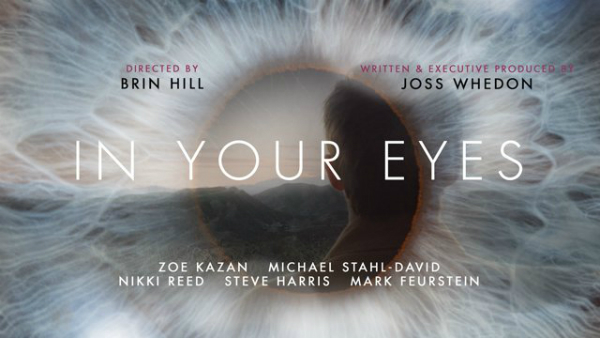
Though beautifully shot with surprising and genuine performances, Joss Whedon’s ‘In Your Eyes’ disappoints with its lazy storytelling and ultimately trite plotline.

In Your Eyes Poster

Written by Amanda Rodriguez.

As a dedicated fan of much of writer/director Joss Whedon‘s work (Buffy the Vampire Slayer, The Cabin in the Woods, and Dr. Horrible’s Sing-Along Blog to name a few), I looked forward to watching Whedon’s latest film: Vimeo’s video on demand indie flick In Your Eyes. The film is a supernatural love story, featuring a man (Dylan) and woman (Becky) who live on opposite sides of the country and discover they’ve been psychically linked since adolescence when Becky had a sledding accident.

Sledding
Young Becky steels herself to face a fearful, snowy descent on her sled


In Your Eyes is beautifully shot with rich colors that starkly contrast Dylan’s arid New Mexico home with Becky’s snowy New Hampshire location. Not only that, but I enjoyed the hip, indie soundtrack, featuring songs from Iron & Wine, Santigold, and The Lumineers (among others). The concept of having a couple telepathically fall in love when separated by great distances poses unique challenges to filming, and those were all handled surprisingly well: mainly the conceit of the characters seeming to carry on conversations with and by themselves while evincing chemistry and a growing affection. This is the equivalent of green screen acting where the performers can’t feed the scene with one another’s delivery or energy. Unlike, say, the new Star Wars trilogy where all the acting was wooden (in part) because of the green screen challenge, In Your Eyes managed to convey a warmth and liveliness to Becky and Dylan’s interactions that are missing from the flatness of their real-life encounters with others in their day-to-day lives.

Through Dylan's eyes, Becky watches a breathtaking New Mexico sunset.
Through Dylan’s eyes, Becky watches a breathtaking New Mexico sunset.


Interestingly, the vibrancy of Becky and Dylan’s love brings these two oft misunderstood loners together but further isolates them from the outside world. Though both characters evolve as a result of this new intimacy, we find them even further withdrawing from the potential for interdependency in aspects of their “real” lives like work, marriage, and social interactions. Neither of them are happy with their lives, but using a secret, long-distance romance and fantasies of escape as lifelines are not particularly healthy or sustainable solutions. As a writer, I also find this to be lazy storytelling. So many scenes are of our lead characters alone in rooms talking to themselves. Not only that, but the more interesting story is what life looks like once Becky and Dylan don’t have the obstacles of distance and unhappy lives between them. Do they integrate better into the world as a unit? Do they continue to feel compelled to speak to each other telepathically all day, every day if they see each other daily? Is this connection all it really takes to heal each other them? We’ll never know.

Dylan sabotages a date as he telepathically communicates with Becky
Dylan sabotages a date because he’s busy telepathically communicating with Becky


Speaking of lazy storytelling, the psychic premise of In Your Eyes is never fully explored. Why are these two linked? Does this make them soulmates? Do they have other yet undiscovered abilities? Are there others like them in the world? Even the boundaries of their telepathic link are haphazardly explained. For example, we learn that they can hear, smell, and feel things in each other’s environments (as evinced in an awkward mutual masturbation session), but can they physically control things in each other’s environments, too? Does distance matter, i.e. does their communication get stronger when they’re closer and fainter when they’re further apart? Not only that, but Dylan and Becky are simply not that curious for answers. If I discovered a psychic link between myself and a stranger across the country, you can bet your ass I’d be obsessed with understanding the why and how of it.
Becky's piss-poor friend thinks her isolation is due to an affair
Becky’s piss-poor friend thinks her isolation is due to an affair


My final and greatest critique of In Your Eyes is how damned trite the story is at its core. When you take away the gimmick of the unexplained and unexplored psychic connection, we have a pretty tame hetero, long-distance love story about two white people who conform to traditional gender roles. Dylan actually hops a plane and ends up in a standard car chase with the cops because he’s white knight’ing it up, on a mission to rescue Becky, the imprisoned/institutionalized damsel in distress. Frankly, that’s boring and uninspired. Simply reversing the gender roles, making Becky the ex-con and Dylan the kept trophy spouse, would have made this story more compelling. I’ve come to expect a lot more from Joss Whedon. At the very least, I expect him to have a more racially diverse cast, amazing dialogue that delights, plotlines that subvert expectations, and, most importantly, empowered female characters.


Bitch Flicks writer and editor Amanda Rodriguez is an environmental activist living in Asheville, North Carolina. She holds a BA from Antioch College in Yellow Springs, Ohio and an MFA in fiction writing from Queens University in Charlotte, NC. She writes all about food and drinking games on her blog Booze and Baking. Fun fact: while living in Kyoto, Japan, her house was attacked by monkeys.

‘Belle’: A Costume Drama Like and Unlike the Others

People of color are often omitted from historical dramas (except to play slaves or servants), with the rationale that it’s not “realistic” to have them in the cast. We can see through this excuse in historical dramas in which casting people of color would match the story being told, but white people still have the biggest roles in–and sometimes even make up the entire cast of–the film, as in the recently released ‘Noah.’ Historical “realism” is not always what we think it is: literature and visual art through the ages confirm that people of color who weren’t slaves, like Alexandre Dumas the author of ‘The Three Musketeers,’ have been in Europe for as long as people have lived there. We need to see more of their stories onscreen.

Bellecloseup

People of color are often omitted from historical dramas (except to play slaves or servants) with the rationale that it’s not “realistic” to have them in the cast. We can see through this excuse in the historical dramas in which casting people of color would match the story being told, but white people still have the biggest roles in–and sometimes even make up the entire cast of–the film, as in the recently released Noah. Historical “realism” is also not always what we think it is: literature and visual art through the ages confirm that people of color who weren’t slaves, like Alexandre Dumas the author of The Three Musketeers, have been in Europe for as long as people have lived there. We need to see more of their stories onscreen.

Director Amma Asante, in her second feature, Belle tells the based-on-fact story (the script is by Misan Sagay) of a young biracial girl, whose Royal Navy Admiral father (Matthew Goode) takes her to the family estate just outside of London, so his great-uncle’s family and servants can raise her in late-18th-century, upper-class luxury  her father says is “due to her.”

The girl, Dido, grows into a beautiful young woman (Gugu Mbatha-Raw in a star-making turn), wearing the finest dresses, often the same cut (with the outrageously low necklines and the upward thrust of breasts typical of the period–like a Maxim cover gone out of control) but in a different shade from those of her blonde, white cousin and companion Elizabeth (Sarah Gadon). Dido carries her father’s last name, and, when he dies, inherits a £2,000 annuity which, as Elizabeth points out, makes her an heiress. But Dido is not allowed to eat dinner with the family–or the servants, because, as her great-uncle, Lord Mansfield (Tom Wilkinson) tells her, neither situation would be “correct” for a woman of her color and social standing.

Dido’s isolation increases when her aunts take the initiative in finding a rich husband for her cousin who, because her father has remarried, has no dowry. Lord Mansfield hands the house keys to Dido and explains that since no gentleman will marry her (because of the color of her skin) and because of her social standing she cannot marry a man who isn’t a gentleman, she can soon replace her “spinster” Aunt Mary (Penelope Wilton) as the caretaker of the house.

belleElizabeth
Elizabeth and Dido

During the family’s stay in London, Dido does attract suitors, for her beauty, charm and for her money. Fans of Jane Austen may see some parallels with her work, especially in Dido’s initial  fraught interactions with John  (Sam Reid), the vicar’s abolitionist son. Belle fails to give the same sense, as the best adaptations of Austen do (like 1995’s Persuasion) of the death grip manners and custom combined with the mores and opinions of their families and social circle had on women, especially young women, at that time (and the film takes place some decades before the works of Austen do). The film pays little attention to the necessity of a young man and a young woman of courting age to always have a chaperone present, a tradition that survives today in some strict religious communities in which the prospective bride and groom  spend hardly any time alone together before they are married.

We see the reason for chaperones when Dido is alone with the loathsome older brother of the penniless gentleman who wishes to marry her. The brother manhandles her as he tells her how disgusting he finds her, and then, out of the camera’s range, seems to sexually assault her. This scene is the only part of the film that, at that time of strict sex segregation among unmarried, unrelated gentry, shows how privileged, white men felt free to sexually prey on women of color. Although the film makes clear that Dido’s father loved her mother, the implications of his meeting her on a Spanish slave ship are disturbing: the mother is never called a slave, so we can infer Dido’s father never owned her (unlike Thomas Jefferson and Sally Hemmings, the mother of his children who were born into slavery) but the relationship (while not rape, as it would be between a slave and owner no matter how much one “loved” the other) would still be an abuse of power if Dido’s mother worked for her father as a paid servant, as Mabel (Bethan Mary-James), the Black maid at the family’s London house, does.

BelleJohn
Dido and John

The customs and mores of the present day always corrupt the “realism” of costume dramas: the well-scrubbed faces and bodies of the actors belying the fact that daily bathing is a relatively recent innovation, their clothes, in the days before dry-cleaning are spotless (in very early silent films we see stained clothes–over a hundred years after the events of  Belle take place–were the norm), their accents in 18th century England are an anachronism.  We suspend our disbelief to ooh and ahh over the pretty dresses, grand mansions and drawing room antics.

The problem with Belle is: we have to suspend our disbelief about the rampant racism, and to some degree the sexism (Dido, at one point, is the only woman in a court full of men and not one of them tries to throw her out) of the time as well. We see plenty of racist sentiment directed toward Dido (especially from Miranda Richardson, who plays the gossipy, sharp-tongued mother of Dido’s gentleman suitor), but the “good” people like Dido’s great-uncle and John end up espousing beliefs about racial equality very much like those the “good” white people of today might. Even though one character wrote a court decision that (spoiler alert) laid the framework for the eventual abolition of slavery in England, and the other (spoiler alert) married a Black woman, giving these 18th century characters (especially those based on real people who lived at the time) the mindset of the 21st century has the effect, as in Downton Abbey  and to a lesser degree in Mad Men, of downplaying the racism of the past, the legacy of which we still see in the present.

Dido_ElizabethPortrait
The real Dido and Elizabeth

Americans don’t have to go back nearly 250 years and over an ocean to find overt racism about the “mixing” of the races from “good” white people. Abraham Lincoln, who signed the U.S. Emancipation Proclamation about 80 years after the events of the film take place,  espoused racist beliefs in historical documents. Film and television producers avoided showing white and Black people together in any relationship other than as master and servant (even on talk shows) well into the 1960s. In the 1970s, when my family lived next door to an interracial couple, the children in the neighborhood called their son and daughter “zebras.”

The second of Dido’s suitors, John, is radically forward-thinking for the time. Much religious rhetoric in those days supported slavery, the way a lot of religious rhetoric today supports homophobia, so John would have had to be something of an apostate too: an unusual position for the son of a clergyman. He also would have been considered a crank and an outcast (like many forward-thinking people throughout history) in most social circles of the time. Instead, he suffers from Perfect Man Syndrome, a disease that also afflicts the romantic leads in Short Term 12  and the upcoming releases Obvious Child and Dear White People: men who are so ceaselessly caring, who never say the wrong thing no matter how aggrieved they are, that they might as well sprout wings and fly into the clouds as angels. Sam Reid’s relative lack of skill as an actor doesn’t help: I had to suppress a giggle when he shouts, “I love her,” in a scene that isn’t supposed to be humorous. The flawless Mbatha-Raw, in particular, shows him up, as does the presence of Wilkinson, Richardson, Wilton and Emily Watson (who plays Wilkinson’s wife) in the film who all give the type of serviceable performances that will neither diminish nor enhance their reputations as great actors. The film score by Rachel Portman (one of the few women who regularly composes music for movies) is also uninspired: cuing the audience to feel emotions the film doesn’t quite earn.

That said, Belle has a great lead performance from a Black actress in a Black woman director’s film of a Black woman’s script about a Black woman in European history (who wasn’t a slave): an opportunity that doesn’t come very often for audiences, so you shouldn’t miss it. If the long line for the women’s restroom after the film is any indication (women are the main audience for costume dramas in film and on TV) Belle will probably be a big art house success. Still, we see glimmers of a better, deeper movie in too few moments of Belle: in Dido’s own initial snobbishness, the trappings of which have left her in a lonely, untenable position. Later, we see her two identities, as an upper class woman and a Black woman, at odds with each other, captured most poignantly when Dido is asked to sit for a family portrait. At first we don’t understand why she’s upset at the request, until she points out that in the paintings on the walls of the mansion, Black people are always positioned at the feet of white people (as pet dogs, cats and birds were often painted with children at the time: in the otherwise excellent A Royal Affair–which takes place during the same general period–a Black child is also portrayed as a “pet” for the white upper class). At the end of the movie the director unveils the real portrait that inspired the film and in the original Dido’s face we see an expression hinting at the more complex and nuanced conduit to the past Belle might have been.

[youtube_sc url=”http://www.youtube.com/watch?v=hFi8YCxq2VU”]

___________________________________________________

Ren Jender is a queer writer-performer/producer putting a film together. Her writing has appeared in The Toast, xoJane, and the Feminist Wire. You can follow her on Twitter @renjender.

‘Transmormon’: The Spaces In Between Religion and Gender

Like so many other orthodox and traditional religions the issue of gender identity is seen as an eternal assignment from God, as are the sexual desires and attractions that accompany it. For Eri Hayward, a transgender woman from one of Utah’s most conservative areas, the difficult experience of realizing what she believes about her own eternal identity is a familial journey steeped within the religious mores of her community.

Written by Rachel Redfern.

Eri4

Many of America’s regions are steeped within the highly charged atmosphere of religion, with some of these religions even dominating a geographic area entirely. This is of course the situation in Utah where over 62 percent of the state population belongs to the Church of Jesus Christ of Latter-Day Saints, or Mormons. Like so many other orthodox and traditional religions the issue of gender identity is seen as an eternal assignment from God, as are the sexual desires and attractions that accompany it. For Eri Hayward, a transgender woman from one of Utah’s most conservative areas, the difficult experience of realizing what she believes about her own eternal identity is a familial journey steeped within the religious mores of her community.

Eri’s courageous story of faith and identity is documented by director Torben Bernhard in Transmormon, a short documentary film and winner of the Artistic Vision Award at the 2013 Big Sky Documentary Film Festival. Bernhard generously agreed to grant Bitch Flicks an interview regarding Transmormon and filming a movie about a woman whose experiences, according to him, embody the tensions circulating around the issues of religion, same-sex marriage and gender identity in America.

Part of what made Eri’s story so compelling to Bernhard is the potential for her story to hopefully ease some of the conflict: “Too often, individual stories get lost and absorbed into statistics and talking points around heated issues. I was interested in attempting to address those tensions, but from the perspective of someone who lives with the reality of those issues in their inner life. I see Eri’s family’s journey as a guide to how we can be kinder, more compassionate, and ultimately gracefully accept and validate the lived experiences of others.”

Transmormon follows Eri and her family just days before Eri leaves for Thailand to have Sexual Reassignment Surgery and complete the physical changes she believes will more accurately reflect her spirit. Throughout the details of Eri’s life and challenges in accepting who she is runs the ever-more familiar theme of coming to grips with religious beliefs.

For much of America’s LGBTQ community being themselves can sometimes come at a price; some families cut their children off, jobs may be lost, and their religious communities might ask them leave. Luckily, Eri’s family is incredibly supportive of her, and while her place within the religion she’s lived her whole life is uncertain, Eri remains a woman of some faith.

However, for faithful LDS members, gender is eternal in nature and Eri’s decision to have SRS means that she can never enter the temple and may only serve a limited role in the church. And in viewing Eri’s story, the inherent pull between change and growth and family and tradition in the Mormon community is highlighted. Berhnard recognized this fact and intentionally included it; “The messages from the pulpit often emphasize the love and compassion that should be extended to LGBTQ members, only to reiterate that marriage is strictly between a man and a woman. So, what are you to do when you cannot conform to the seemingly impossible standards put forward by a church you have always belonged to and have faith in?”

Rather than focusing entirely on Eri’s place within the Mormon religion though, Bernhard chose to focus on Eri’s spiritual and emotional journey as she tries to come to a stable and happy place of acceptance, ultimately mirroring the very human experience of growing up and settling into our individual beliefs. In fact, choosing what exactly to show in Eri’s situation was one of the main obstacles in producing Transmormon: “While editing, we tried to approach this in a number of ways and eventually decided that the criticism we wanted to express already existed in the juxtaposition between her struggle and the institutional policies of the church. Instead, we tried to detail the real struggles that exist for members, while showing that, despite how lovely her family may be, Eri will still ultimately be subject to the judgment of the Mormon church (inasmuch as she accepts their judgment).”

Eri walks the crew through her morning routine.

Because marriage is still generally placed within the context of a chapel, issues of sexuality and gender are still being fought on a religion vs. state battleground and Utah has become a key player.

However, despite the LDS church’s hardline stance on gender roles and even its massive financial contributions to causes like Prop 8 in California, Utah and its creative community are steadily reaching out to the changing face of families and residents like Eri. In fact, Transmormon was conceived because of artistic collaboration in Salt Lake City and was released with an hour-long radio episode dedicated to raising a transgender child.

As Transmormon was screened first in Utah, I was curious about the response that the film would have received; happily, the response to the film has been overwhelmingly positive. In fact, it seems that Transmormon reminds us of the incredible power of storytelling to soften the edges of political and religious difference by placing faces next to difficult topics. Bernhard has received notes and emails from deeply conservative audiences who thank him and Eri for challenging their long-held ideas on gender and identity. Bernhard hopes that “through telling her story, audiences will leave the film with a more nuanced understanding of challenges facing the transgender community and the complexities of gender identity. I also secretly hope that some parents will watch it and make their kids’ lives easier.”

If with every viewing of Transmormon and other films like it, films deeply committed to telling human stories that “transcend biases” audiences are changed and minds are opened, then we desperately need more of them, which luckily Bernhard and other artists are already working on. Bernhard’s next project is a full-length documentary that follows the fight over same-sex marriage in Utah, with exclusive access to plaintiffs and legal teams on both sides. Ultimately though, it’s the ways that these stories touch us on a personal level that make the difference for people everywhere. Even Bernhard, a supporter of the LGBTQ community already, found himself embracing more compassion and respect, “for the individual pain that each family member processes as they grapple with unexpected life turns. There is so much pain implicit in journeys that do not fit neatly into the constrained categories societies often produce.”

The director, Torben Bernhard

You can view Transmormon on Vimeo, but if you’d like to hold a private screening in your community, please do! Bernhard and his team are committed to “opening hearts and minds” however they would like to be aware of the films reach; please email or tweet to let them know.

How’s Eri doing since her surgery? Well, she’s returned from Thailand and a successful surgery, back to Utah and her family. If you’d like to stay updated on her progress you can follow her here.


_________________________________________________________

Rachel is a traveler and teacher who spent the last few years living in Asia. Now back in her native California, she focuses on writing about media, culture, and feminism. While a big fan of campy 80s movies and eccentric sci-fi, she’s become a cable acolyte, spending most of her time watching HBO, AMC, and Showtime. For good stories about lions and bungee jumping, as well as rants about sexism and slow drivers, follow her on Twitter at @RachelRedfern2


Seed & Spark: Agency and ‘Afternoon Delight’

I was lucky enough to listen to Jill Soloway speak recently at a small gathering to discuss a new filmic voice for women, hosted by the genius and innovative Emily Best, CEO of the crowdfunding and distribution platform Seed & Spark. Soloway spoke so eloquently about her process and about women’s opportunities and struggles in the film industry. She was so engrossing and inspiring to listen to that there was a palpable feeling of magic in the room. One of the valuable lessons I took away from our discussion was about her career turning point — from producer to filmmaker — is that she realized that no one else was going to make it happen for her. It makes me wonder how many other women and men are waiting for permission to make their masterpieces, and license to make the characters within them bold, alive, and human.

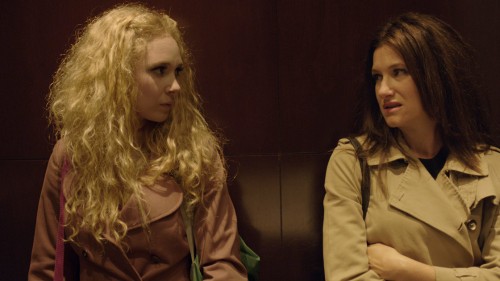
Juno Temple and Katherine Hahn in Afternoon Delight


This is a guest post by Leah Rudick.

I recently made my first foray into screenwriting.  Very exciting, no?  A few months ago, I started writing a script about a woman in her early 30s who finds herself suddenly living in New York City, wading through the murky waters without direction, a passive observer in a sea of eccentric, cruel and hilarious characters.  A woman searching for her purpose.  Who’s excited?  Did I pique your interest?  Is that a resounding YES?!  I wrote about 40 pages, got stuck, and showed it to my intuitive and brilliant better half who read it, gave me some very generous compliments, and then asked, “Why don’t you give Sarah [my heroine] some agency?  What does she want?  Is there a way for her to be bolder instead of having all of these things happen to her?  A way to let her be the ignition for whatever construction or destruction occurs?  Can we watch her be the cause rather than the reaction?”  They were great questions.  Why was I interested in writing something about a woman who seemed comfortable being so inactive?  Who was satisfied sitting back and observing, judging, but paralyzed from actually stepping in and taking part.

It’s a manifestation of a struggle I’ve always had, the fight against my natural instinct to be the shy, passive observer.  It’s something that my inspired 78-year old acting coach worked tirelessly to drill out of my head: “Leah, what do you want in this scene?  You can’t exist in this gray area.  It’s boring!”  It’s an issue that I notice in many films that I’ve seen and worked on.  The female character is the watcher, the muse, the victim, the object.  And while I have been easily able to detect this trope in the work of others, I was totally oblivious to it in my own work.

When I watched Jill Soloway’s most recent feature, Afternoon Delight, I was, in the truest sense of the word, delighted.  It was everything I wanted in a movie: Hilarious, tragic, deeply moving, beautifully shot with incredibly grounded and brilliant performances across the board.  The story follows stay-at-home mom Rachel (Katherine Hahn) who takes in a young stripper named McKenna (Juno Temple) in an effort to save her and also to distract herself from her own upper middle class malaise.

This is a film about women’s agency, and watching it was an eye opener for me.  The movie is so bold and colorful and also so feminine in a more real way than I think one often sees in film, even sometimes in those made by women.  It is emboldening to watch, because it has been created by the voice of a woman who is seemingly unfettered by the much discussed “male gaze” in filmmaking.

Leah Rudick and Katie Hartman in web series Made to Order


I was lucky enough to listen to Jill Soloway speak recently at a small gathering to discuss a new filmic voice for women, hosted by the genius and innovative Emily Best, CEO of the crowdfunding and distribution platform Seed & Spark.  Soloway spoke so eloquently about her process and about women’s opportunities and struggles in the film industry.  She was so engrossing and inspiring to listen to that there was a palpable feeling of magic in the room.  One of the valuable lessons I took away from our discussion was about her career turning point — from producer to filmmaker — is that she realized that no one else was going to make it happen for her. It makes me wonder how many other women and men are waiting for permission to make their masterpieces, and license to make the characters within them bold, alive, and human.

I’m grateful she had the realization, because Afternoon Delight is masterful at defying the norms of the comedy genre in such an incredibly subtle way.  This conversation of agency begs another discussion about which genres best lend themselves to this kind of work.  It is one thing to make an action film with a female lead and make her active and in control and awesome (I am so excited to see the Seed & Spark funded Sheila Scorned, a “grindhouse short starring a quick-witted stripper who’s out to get even with the men in her way” because it looks badass), but what about when the genre is one that typically does not allow for female agency?

I produce a web series with my comedy duo, Skinny Bitch Jesus Meeting, called Made To Order about two sisters who start an underground food delivery service.    It is a sort of high octane comedy about two women who forcefully throw themselves into a world they know nothing about at the expense of everything.  With my very brilliant comedy partner, Katie Hartman, it has been thrilling to create two characters who do rather than watch and manage this in a completely unhinged way.

I love the idea of finding more ways to write female characters with agency in every genre, across the board.   This awareness and need for these types of character in creative work has had a profound effect on my own writing and I know that I’m not alone in this sentiment.  When we start allowing characters to do, rather than to simply watch others do, worlds open up and we can actually started having fun.


Leah Rudick is an actress, writer and comedian. Film credits include Cut to Black (Brooklyn Film Fest Audience Award), Lost Children (Desperate Comfort Prod., IFP Lab Selection), Bloody Mary (Sci-fi channel), Kids Go to the Woods, Kids Get Dead (Darkstar Entertainment),  Prayer to a Vengeful God (Insurgent Pictures) and Jammed (Runaway Bandit Productions).   She can be seen on the popular web series High Maintenance and on the webby-winning youtube channel Barely Political.  She is a founding member of Lifted Yoke Productions, and is currently in pre-production for their feature dramedy, Sweet Parents.  Their first short film, Blackout, can be streamed at Seed & Spark Cinema.  She is a contributing writer to Reductress.com.  She is half of the sketch comedy duo Skinny Bitch Jesus Meeting (Edinburgh Fringe, The PIT, UCBT, NY Fringe Fest) and co-creator/co-star of their upcoming web series Made To Order (madetoorderseries.com).  

Bitch Flicks’ Weekly Picks

Check out what we’ve been reading this week–and let us know what you’ve been reading/writing in the comments!

Surprising Films That Pass The Bechdel Test on BuzzFeedPop

Jenny Slate In The OBVIOUSLY Hilarious And Charming Abortion Rom-Com by Kelsey Haight at Bust

Rape Revenge Fantasies: The Roundup

Check out all of the posts for Rape Revenge Fantasies Theme Week here.

Revenge Is a Dish Best Served…Not at All? by Angelina Rodriguez

Tarantino’s Kill Bill narrative requires The Bride to murder her rapist and to defend herself with some of the masculine characteristics that are used as institutionalized power to oppress women, such as physical strength and aggression. The film insists that she seek revenge, instead of demanding that men simply do not rape. This is barely better than teaching rape avoidance. It dictates that women must assimilate to a male culture of violence in order to have autonomy over their own bodies.


Irreversible: Deconstructing Rape Revenge by Max Thornton

Irreversible deconstructs the ethically dubious pleasures of the rape revenge genre through its structure as well as its plot. Its reverse chronology inverts the formula of rape-then-revenge, thereby robbing the viewer of any sense, however questionable, of justice done, and subverting the whole economy of violence.

“I’ll Make You Feel Like You’ve Never Felt Before”: Jennifer’s Power in I Spit on Your Grave Sophie Besl

No movies ever had to justify a cowboy going on a rogue revenge kick after his log cabin was burned to the ground or his family was killed; certain sufferings of injury, murder of loved ones, robbery, etc., have been accepted throughout cinematic history to merit revenge at all costs. I Spit on Your Grave was a large part of a relatively new phenomenon, possibly born out of the feminist movement, to add rape—based on the woman’s experience of rape, whether validated by law or not—to that list of worthy harms, which is an important statement in our rape culture.


When considering female agents of violence in a film, there is a troublesome tendency that plays to the audience’s anxiety about a women disrupting the essentialist notion that women are naturally gentle and nurturing: the tendency to have the woman acting in response to sexual violence, that only after a woman is overpowered and assaulted can she find a place of violence in her. Once the naturalness of a woman is disrupted by an outside force—a (usually male) perpetrator—she is no longer required to be viewed as “womanly.”

Julie Taymor’s contemporary approach to creating a film of Titus Andronicus then, has to address a variety of factors: 1) she has set up for herself the challenge of filming a Shakespeare play that has been called both an “early masterpiece” and an “Elizabethan pot-boiler”; 2) she’s a female director approaching a play that has, at its center, a ritual killing, a rape, and revenge cannibalism; and 3) she’s creating this piece of art during a historical moment during which entertainment media is rife with violence and there much alleged desensitization, as well as within a culture full of complex and problematic attitudes about rape.


In films, as in life, women aren’t supposed to be violent. Women make up the majority of violent crime victims (domestic violence, assault, rape, and murder) but they rarely retaliate in kind. Even in the relatively rare film where a woman seriously injures or kills a rapist, like Thelma and Louise she does so with lots of tears and anguish–in that film both from the woman pulling the trigger and the one who the man attempted to rape. The unwritten rule in movies seems to be that in order to justify a woman killing or even assaulting someone, we need to see her or some other woman suffer, a lot, beforehand. Contrast that rule with the male heroes of action films who leave dozens of corpses in their wake, and not one of the dead, usually, has raped or otherwise tortured the hero beforehand–though the hero may be avenging some great wrong the dead guy (or guys) did to his wife or daughter.


Cowboy Justice: Rape Revenge in Mainstream Cinema and TV by Morgan Faust

So maybe what had looked like a trend toward marginalizing rape survivors was actually a move toward bringing them into the fold of the American action hero? This is a move that discloses a terrible truth about the handling of rape cases in our legal system, but can be viewed as a genuine attempt to find a way to make the cowboy narrative, and the catharsis that comes with it, available and relevant to survivors of rape.


What Shakespeare Can Teach Us About Rape Culture by Leigh Kolb

In Titus Andronicus, Lavinia is brutally raped and disfigured (including having her tongue cut out so she couldn’t speak). This nod to Philomela in Ovid’s Metamorphoses echoes the themes of the brutality of rape and the need for revenge. The women needed to name their rapists and share their stories (Lavinia writes in the sand; Philomela weaves a tapestry that tells her story). The women have as much power as they can in the confines of their society, and we the audience are meant to want justice and revenge.


But when Dawn learns that Ryan has bedded her as part of a bet while he is still inside of her, Dawn’s evolutionary adaptation intercedes and Ryan is punished for his use and abuse of Dawn.  So now two trusted boyfriends and a doctor have initiated Dawn into the world of oppressive sex and violence, and all three times her vagina—the thing that has left her most vulnerable—has acted as a protector.


More than being shitty to watch, it just pissed me off to 10 because I hate with the fiery passion of 10,000 suns the ubiquitous trope that surviving sexual violence (or attempted sexual violence) turns women into superheroes.


Trespassed Lands, Transgressed Bodies: Horror, Rage, Rape, and Vengeance Within Indigenous Cinema by Ariel Smith

By forcing the subconscious fears of audiences to the surface, horror cinema evokes reactions psychologically and physically–that is its power. This power can serve and support uncensored Indigenous expression by allowing Indigenous filmmakers the opportunity to unleash dark, unsanitized allegorical representations of the abhorrent, repugnant, violent abomination that is colonization.


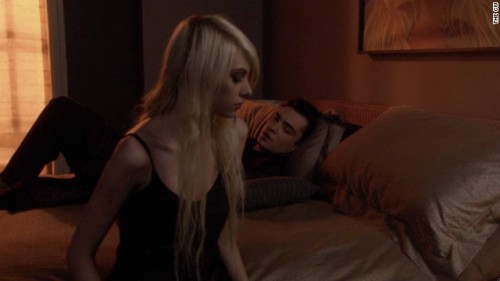
Rape, Lies, and Gossip on Gossip Girl by Scarlett Harris

Her banishment by Blair when she finds out what transpired between Jenny and her on-again, off-again lover is typical of the punish-the-woman mentality Gossip Girl is so fond of. Instead of shaming her partner for taking advantage of a teenage girl, Blair blames Jenny for ruining her proposal. And when Jenny returns the following season to help Chuck take down Blair (keep up, people!), she should really be seeking revenge on her rapist, wouldn’t you say?


Girl Gang Fights Rape Culture in Firefox by Elizabeth Kiy

Though very different, the two films based on Joyce Carol Oates’ novel, Foxfire: Confessions of A Girl Gang, have a shared message: that rape culture is pervasive. and the experiences of girls and women within it are sadly, universal. In both films, one set in the 90s, the other in the 50s, teenage girls inhabit dangerous territory, full of sexual assaults and near misses, all ignored by the authorities around them. Their experiences aren’t considered unusual or justified within their respective narratives, instead, they point out that women are given a lot of reasons to feel unsafe and afraid in our society. At the very least, we’ve all been told not to walk home at night or frightened by a man following too close on our heels.


Agency and Gendered Violence in Thelma and Louise by Jenny Lapekas

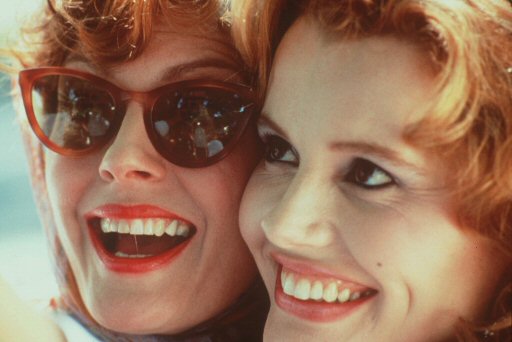
These characters challenge our gendered assumptions about sex, trauma, and vengeance, which can make audiences uncomfortable. I was likely too young when I first watched Thelma and Louise (Ridley Scott, 1991). However, I remember the surge of adrenaline I felt when Louise shot and killed Thelma’s rapist, how incredibly good it felt to idolize these convict women who had had enough with their monotonous lives, at an age when I couldn’t possibly comprehend patriarchal oppression, the comforts of solidarity and sisterhood, or the concept of escapism utilized not necessarily to run away but rather to find your wildest, most genuine self. 


Agency and Gendered Violence in ‘Thelma and Louise’

These characters challenge our gendered assumptions about sex, trauma, and vengeance, which can make audiences uncomfortable. I was likely too young when I first watched ‘Thelma and Louise’ (Ridley Scott, 1991). However, I remember the surge of adrenaline I felt when Louise shot and killed Thelma’s rapist, how incredibly good it felt to idolize these convict women who had had enough with their monotonous lives, at an age when I couldn’t possibly comprehend patriarchal oppression, the comforts of solidarity and sisterhood, or the concept of escapism utilized not necessarily to run away but rather to find your wildest, most genuine self.

Written by Jenny Lapekas as part of our theme week on Rape Revenge Fantasies.

The rape revenge subgenre, typically within the horror realm, is a topic I’ve thought about a lot.  Rape revenge offers catharsis, fantasy, and a feminist departure from the very real patriarchy, where rape is too often underreported or the victim is dismissed as “wanting it” or “asking for it” via her short skirt.  The avenger of the rape revenge film appropriates the criminal act for his or her own empowerment, hence swapping gender roles. Because rape is typically perpetrated by men, women who respond with violence in the form of murder or another rape represent a wonderfully complex hero/villain binary.  When male perpetrators are violated and/or killed by feminist avengers, what does their feminization mean?  That rape is inherently masculine and carried out on the helpless feminine?  The agency of violence is also in question within this discussion; how do viewers navigate feminine (feminist) violence?  These characters challenge our gendered assumptions about sex, trauma, and vengeance, which can make audiences uncomfortable.  I was likely too young when I first watched Thelma and Louise (Ridley Scott, 1991).  However, I remember the surge of adrenaline I felt when Louise shot and killed Thelma’s rapist, how incredibly good it felt to idolize these convict women who had had enough with their monotonous lives, at an age when I couldn’t possibly comprehend patriarchal oppression, the comforts of solidarity and sisterhood, or the concept of escapism utilized not necessarily to run away but rather to find your wildest, most genuine self.

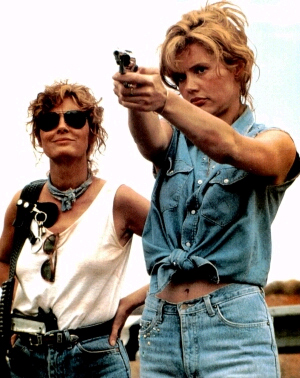
Thelma is submissive and looks to the confident Louise as a feminist role model.


Thelma and Louise seems such an obviously feminist movie, which is why I’d like to focus on Thelma’s rape scene, which galvanizes the pair’s journey thereafter.  I suggest that the film is constructed, then, around the rape narrative, amidst a postfeminist storyline of female bonding and spiritual awakening.  We can easily assess Thelma’s placement as a female character who initially lacks agency; rather, she soothes her husband’s temper tantrums and manages the household.  Like many unhappily married women, she hasn’t a clue what to do about her unhappiness or even how to fully recognize or own it.  The murder of her rapist unleashes a crime spree, but also the act of radical surrender, from which Thelma acknowledges she cannot and will not recover.  This theme of agency is birthed in the rape scene and then climaxes in the famous concluding scene of the women sailing into the Grand Canyon.  Both women make the choice to respond to violence with violence, which is the feminist agency found within the rape-revenge genre.  Women like Thelma and Louise who carry out these acts of violence in order to avenge a rape challenge our cultural understanding of violence as rhetoric and gendered behavior onscreen.

Thelma under the rule of her short-tempered husband and Louise involved in a complicated relationship, the duo plan their vacation with the most innocent of intentions.  We hear Louise call Thelma a “little housewife” in the film’s opening scene, where Louise is introduced to us in her waitress uniform and Thelma is a floral bathrobe.  As she’s packing for their getaway, we see Thelma toss a handgun into her bag as if she’s frightened or repulsed by it; she’s clearly aware of the power the classically phallic symbol boasts, even laying at the bottom of her bag.  When Louise asks her why she bothered to bring it, Thelma says, “Psycho killers, bears, snakes.”  Little do they know that Harlan, the man who attempts to rape Thelma, can be characterized as a “snake,” and they’re the ones who become killers as a result.

I have some trouble taking Christopher McDonald (who plays Darryl, Thelma’s controlling husband) seriously since he’s so incredibly convincing in his roles as goofy characters (see Happy Gilmore [Dennis Dugan, 1996] and Requiem for a Dream [Darren Aronofsky, 2000]).  However, the film’s portrayal of Darryl doesn’t inspire any respect for his character.

Darryl finds that he’s unable to adequately care for himself in Thelma’s absence; Hal even points out during questioning that he’s standing in leftover pizza.


We’ve seen men act as the heroes who thwart rape and assault the would-be rapists (see Untamed Heart [Tony Bill, 1993] and Training Day [Antoine Fuqua, 2001]), but it seems important that in this film, the hero is a woman and a trusted friend who interrupts the crime and actually murders the man attempting to violate Thelma.  Their guns–one bought by Darryl to protect his wife when alone at night and the other stolen from a police officer–are clear representations of male power and privilege; however, the women become quite comfortable appropriating these as weapons in dismantling the phallocracy that governs their choices, their bodies, and their realities while on their infamous road trip.

The rape scene takes place during the first stop on their trip as the ladies are set to travel to the mountains for a getaway.  When Harlan insists that Thelma get some fresh air after a night of drinking and dancing, he tells her that he won’t hurt her, even after hiking up her dress and slapping her in the face.  The level of violence intensifies after she slaps him back, and he bends her over a car and begins to unbuckle his pants.  Louise holds a gun to Harlan’s neck as he puts his hands up and allows Thelma to collect herself and stand up.  It seems that perhaps Harlan will walk away unscathed and even learn a lesson from the experience.  However, he seals his fate when he’s compelled to say, “I shoulda gone ahead and fucked her.”  When Louise turns and asks him to repeat himself, he responds, “Suck my cock,” a fitting sentiment to preface Thelma’s phallic gun exploding and hitting him in the chest.  We gather throughout the film that something happened to Louise in Texas, and it quickly becomes clear that she was the victim of a rape.  Gender-based violence is turned on its head as Louise assumes a position of power, and thus a codified male position.  Thelma’s situatedness within this hierarchy is slow to align with that of the hot-tempered Louise, but when she does transition from “feminine” to “feminist,” she admits that she seems to “have a knack for this shit.”  Shortly before their deaths, Thelma tells Louise that she’s never felt so awake, alerting us that she’s reached a sort of nirvana amidst the mini liquor bottles and desert heat.

We can appreciate Louise's sense of humor in this moment of tension: “You let her go, you fuckin’ asshole, or I’ll splatter your ugly face all over this nice car.”
We can appreciate Louise’s sense of humor in this moment of tension: “You let her go, you fuckin’ asshole, or I’ll splatter your ugly face all over this nice car.”


Immediately after the incident, Louise cradles the gun in her hands as the two ride away, as if she’s trying to grasp the power the small pistol carries.  The naive Thelma believes that they can safely go to the police and explain that it was self-defense, but Louise offers the reality that “we don’t live in that kind of a world.”  Rather, we live in a world that punishes women for attracting men and “asking for it” with our clothing or our smiles.  “If you weren’t concerned with having so much fun, we wouldn’t be here right now,” Louise accusingly tells Thelma.  Although Louise is the one to shoot and kill Harlan, she inevitably blames the entire incident on Thelma’s good looks and also acts as a surrogate Darryl, which Thelma even articulates early on in the trip.  Thelma is almost childlike in her naiveté, which calls for a guardian or a mother to constantly reprimand her and correct her behavior.  Louise maintains this role as she protects and guides Thelma for most of the film.

The men in the film seem to get themselves into hot water over the lewd and otherwise disrespectful ways they choose to speak to Thelma and Louise.


So, does Louise successfully avenge Thelma’s assault or does she have her own axe to grind?  Is Louise, a killer, any better than Harlan or any other rapist slithering through crowded bars or dark streets?  Thelma and Louise offers a feminist catharsis for women viewers, particularly those who are rape survivors, but also for all of us who have been cat-called as perpetual objects of the male gaze.  How many of us now fantasize about blowing up a semi because its driver was making lecherous comments or gesturing with his hands or tongue?  This film serves as a reminder that we deserve to live our lives in peace, free from harassment, and to stop apologizing for ourselves or assuming that our clothing is an invitation for men to put their hands on us.  While Louise makes the decision to repress the memory of her own rape, she actively chooses to avenge the rape of her friend.  Although a murderer, Louise is a hero as she likely prevents any rapes Harlan would have committed had she allowed him to live.

It’s gratifying to witness the transition of the pair’s feminine and feminist identities.  While Thelma makes the noticeable shift from a bored housewife planning dinner to a badass outlaw with a gun, Louise comes to recognize her companion as an equal and to surrender some of her power before the two fly into the Grand Canyon in a blaze of girl-power glory.  Louise identifies her friend’s rape as her own, and unlike Thelma, she is familiar with what some men are capable of in dark parking lots.  The dynamic that propels the plot of Thelma and Louise is friendship, even if that entails a sort of religious awakening on the road (Kerouac style), albeit it via gender equality by way of violence and its appropriation.  Notice that the women and their actions are met with disdain when they demonstrate traditionally “masculine” behavior, such as anger, aggression, and sarcasm.  When Louise initially orders Harlan to stop attacking Thelma, he ignores her; when Thelma finally tells Darryl to go fuck himself, he slams the phone down in disbelief; when the horny trucker discovers that the ladies expect an apology instead of a threesome, he calls them “crazy.”  The women’s actions, then, are met with resistance by most of the men they encounter on their travels, with the exceptions of Hal (Harvey Keitel), the kindhearted cop who longs to help the women, and JD, Thelma’s paramour for one rainy night.

JD steals the money that Louise calls their “future” in Mexico but also unknowingly offers a remedy to their money crisis when he gives Thelma some charismatic lessons on how to rob a store at gunpoint.


I would suggest that these actions are not meant so much to heal or cleanse the two of their pain or their own crimes, but to “right a wrong” even if it means sacrificing their freedom; in this way, the women discover a new sense of liberation that transcends the pursuit of them in their beat up old Thunderbird convertible.  Toward the end of the film, Thelma shares with Louise that if Harlan had completed his assault against her, people would think that she was “asking for it,” and that she’s sorry it wasn’t her that pulled the trigger.  What we can conclude from this exchange is that any course of events post-rape would leave Thelma “ruined” in some way, but she explains that because of her friend, now she’s at least having fun.

Recommended reading:  “Descent”:  Everything’s okay now:  race, vengeance, and watching the modern rape-revenge narrative, ,  “I Wasn’t Finished”:  Divine Masculinity in Untamed Heart


____________________________________________

Jenny Lapekas has a Master of Arts degree in English, and she is a part-time instructor at Alvernia University.  Her areas of scholarship include women’s literature, menstrual literacy, and rape-revenge cinema.  You can find her on WordPress and Pinterest.

Girl Gang Fights Rape Culture in ‘Foxfire’

Though very different, the two films based on Joyce Carol Oates’s novel, ‘Foxfire: Confessions of A Girl Gang,’ have a shared message: that rape culture is pervasive and the experiences of girls and women within it are sadly, universal. In both films, one set in the 90s, the other in the 50s, teenage girls inhabit dangerous territory, full of sexual assaults and near misses, all ignored by the authorities around them. Their experiences aren’t considered unusual or justified within their respective narratives, instead, they point out that women are given a lot of reasons to feel unsafe and afraid in our society. At the very least, we’ve all been told not to walk home at night or to be frightened by a man following too close on our heels.

Written by Elizabeth Kiy as part of our theme week on Rape Revenge Fantasies.


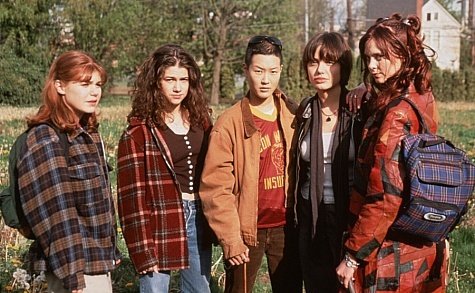
The girls of Foxfire, 1996

Though very different, the two films based on Joyce Carol Oates’s novel, Foxfire: Confessions of A Girl Gang, have a shared message: that rape culture is pervasive and the experiences of girls and women within it are, sadly, universal. In both films, one set in the 90s, the other in the 50s, teenage girls inhabit dangerous territory, full of sexual assaults and near misses, all ignored by the authorities around them. Their experiences aren’t considered unusual or justified within their respective narratives; instead, they point out that women are given a lot of reasons to feel unsafe and afraid in our society. At the very least, we’ve all been told not to walk home at night or to be frightened by a man following too close on our heels.

Unlike a lot of other films discussed this week, the girls of Foxfire are not avenging a particular rape, but are instead rebelling against rape culture in many forms: catcalls, description of women by only their physical attributes, slut shaming, rape and molestation, predatory authority figures and the society that allows men and their opinions more power than women.

While rape revenge films are often criticized for using rape for titillation or as a means to justify nudity and graphic violence, the ideas are invoked here to make viewers think.


The girls of Foxfire, 2012


In these films, one girl is mocked by a teacher for her appearance and has her intelligence demeaned. One girl is groped while another is shamed. Yet another is offered a free typewriter by her uncle in exchange for sex; a fifth is spied on in the shower. During a trial, the defendant’s promiscuity is the most important factor in deciding her guilt. And when one girl returns home after being raped, her mother’s only response is to tell her to clean herself up before her father sees.

Forming a girl gang allows the characters to stop seeing sexual assault as the problem of each individual victim, but as something that effects all of them. When one girl, Rita, thanks the group for helping her, their leader assures her that she isn’t to blame–if Rita wasn’t the victim, it would have been someone else. Women need to band together instead of shaming each other if they have any hope of changing things.

Both films center on a passionate and androgynous leader, named Legs, who mobilizes the girls, first in a series of pranks and acts of rebellion small enough that viewers can cheer them on, then through several dangerous and criminal acts, before culminating in the kidnapping of a wealthy man at gunpoint. Maddy (Hedy Burress), Legs’s closest confidant, observes the events and acts are narrator, chronicling the group’s rise and fall.

The original 1996 film, starring Angelina Jolie as Legs, is clearly a product of the 90s Girl Power movement, a period known for being overly commercialized, but it’s an earnest effort with a female screenwriter, Elizabeth White and director, Annette Haywood-Carter. It’s also an attempt to modernize the novel, about working class 50s teens in Upstate New York, relocating the story to Oregon and dressing it in grunge fashion, with topics for discussion like sexism, female disenfranchisement, parental neglect, and masturbation. However, as a mainstream film, it’s sanitized, more playful than the book and as the girls are middle or upper middle class, the stakes are less dire. Foxfire never becomes a literal gang or a lifestyle, just an episode in their lives, that facilitates their coming of age.

For the remake, director Laurent Cantet restored the novel’s setting and stuck pretty faithfully to the book, attempting to cram in all the causes Foxfire rebels against, including ageism, racism, animal rights, and economic disparity as well as sexism. Lead by a cast of newcomers, Cantet’s film takes a more cautionary tone, as Maddy’s attempt to redeem Foxfire, now remembered only for their criminal acts, by telling their history and their original noble goals.

While Legs in the remake (Raven Adamson) was a classmate of the other girls who they had known for years, in the original, she’s an outsider, a drifter who enters into their lives one day and helps them find their voices. Legs is given a grand entrance, heralded by thunder and followed as she boldly trespasses through the school halls.


Punishing Mr. Buttinger for abusing Rita is the impetuous for Foxfire’s founding


Like a superhero, she arrives to save one of the girls, Rita (Rilo Kiley front-woman Jenny Lewis) who is being bullied by her teacher, Mr. Buttinger, for refusing to dissect a frog. Legs tells the student to “Make him stop,” and it’s a truly revolutionary idea, that a teenage girl could have any power over an adult. Her dream-like entrance and exit through the window, mark her as powerful and unconstrained by society’s rules, she doesn’t go to the school and Mr. Buttinger can’t punish her.

Legs is clearly marked as Other–she’s aggressive, with a leather jacket, heavy boots and swagger. As the camera pans up her body when she’s first introduced, not showing her face for several minutes, it’s clear viewers were meant to think momentarily, that she was a man. It is unclear why she goes by such a strange nickname, one usually thought of as objectifying; perhaps it is an attempt to reclaim something men have called out to her in the street.

Her relationship with Maddy is marked by obvious lesbian subtext, as they frequently flirt, confess their love for each other and share a bed, but her sexuality is never explicitly discussed. It is problematic that the character with the courage to fight against rape culture is the one given traits marked as masculine, while the girls she recruits, are mostly feminine and/or weak. It is also troubling that Legs’s suggested queerness is paired with her hatred of men, two things which are often falsely equated.


Legs enjoys driving the girls in the stolen car


In both cases, the girls are enamored with Legs, who quickly becomes their hero and undisputed leader. In the original, they are all introduced as broad high archetypes, Violet (“the slut”), Goldie (“the druggie”), Rita (“the fat girl”) and Maddy (well-rounded and popular), characterizations which become more three dimensional as the film goes on.

When the other girls learn Mr. Buttinger has been groping Rita’s breasts during detention, they originally hold her responsible. It’s Legs’s influence that makes them realize there is no excuse for Mr. Buttinger’s behavior and no way Rita could deserve his abuse. In the remake, Legs blames Rita only for not fighting back, telling her, “It’s up to you to decide how men are going to treat you.” Rita takes this message to heart, exposing him as sexual predator by painting statements about his attraction to young girls on his car.

In the original, Legs tells the girls that the only way to stop his is to band together. During Rita’s detention, the girls gang up on him, physically assault and threaten him. Rita begins to come out of her shell, finally gaining the confidence to confront her abuser, threatening to castrate him if she ever touches her again. The next day, the girls are called into the principal’s office and suspended, despite their claims of sexual harassment, which are ignored.


The girls perform a candlelit ritual in their headquarters, during which they give each other tattoos


Legs’s idea, that they can fight against abusive men only if they all stick together, but not as individuals, leads them to start Foxfire as their own collective, their own subculture. Before they had banded together, the girls went to the same school and had shared experiences, but cliques kept them segregated. Maddie, from her privileged perspective as a popular girl, looked at someone like Goldie as a sideshow, dismissed Violet as a slut and disdained Rita’s shyness as pathetic, and the cause of her own problems. Later, when they become friends, Goldie is hurt when she notices Maddie’s art project includes an unflattering Polaroid of her, clearly posed as someone to mock.

They begin to gather in an abandoned house in the woods, which they use to make a community and a safe space. Hanging around in the house, they become real friends and partake in typical teenage bonding practices, drinking, dancing, ogling guys, and laughing together. They cement their bond by tattooing each other’s breasts with a small flame logo, marking themselves as part of Foxfire, grouped together for life.

In the remake, the girls rent a house and live together in their own cloistered society as Legs intends to create an institution that would outlast her. The idea of a formal female gang with a manifesto, rules, ritual tattooing, criminal practices and recruitment, is an example of young women adapting masculine rough culture and altering it to suit them. Gangs are typically the province of disenfranchised youth (usually male), those neglected by mainstream society, such as racial minorities and the working class. Foxfire suggests the characters are disenfranchised as women and it is natural for them to act out against the society that oppresses them, as the men around them, in their own gangs, have been doing for years.


Maddy admires her tattoo


In the original film, rape culture is tied to sports culture, as both are posed as masculine spaces men feel women have no right to infringe on nor attempt to police. Their attack on Mr. Buttinger upset a group of jocks who respect him as the coach of their football team and they resent the girls. The boys begin harassing them, visiting their house in the woods and attempting to attack them, eventually trying to rape Maddy. Struggling to escape the jocks, the Foxfire girls steal a car and are arrested for it. At their trial, is implied that the jocks lied and blamed the girls for everything, leading to a “he said, she said” dynamic where the boys’ testimonies are taken more seriously. Legs in sentenced to juvie, while the others are on parole. For trying to dismantle rape culture and save themselves from attack, they are punished and lose Legs, the heart of the group.

There are also girls who help the jocks; one lures Maddy into an ambush, understanding the goal is to rape her, and lies at their trial. Later she gains some redemption when she confesses to the judge. Early on in the remake, the girls in Foxfire are reluctant to let Violet, a beautiful girl all the boys are crazy about, join. They decide Violet is promiscuous because she attracts male attention, without any evidence she returns their interest, and look down on her for it. In the remake, Legs’s mental state begins to deteriorate as she becomes disillusioned with her vision of women helping each other as a community after watching women fighting each other in juvie.

After juvie, both versions of Legs turn to darker, more violent acts. Narrating the remake, Maddy says the committed many crimes against men but most of their were not reported because their male victims were ashamed of having been attacked by girls. The films suggest revenge is acceptable to a certain level, where it’s exposing men who have who they know to be predators or teaching lessons to men who have wronged them, but is wrong once the focus moves away from specific individuals. When Foxfire starts targeting men in general, moving out of the area of defensible grey morality, Legs moves into villainous territory herself.


The Foxfire girls use their members as bait to rob men


Strapped for cash, Foxfire (in the remake) begins to use its most conventionally attractive girls to bait men, luring them into secluded areas and then ambushing them and stealing money. One girl, Violet, finds she can make more by pretending the man tried to rape her and acting afraid until he gives her money to try and comfort her. Though baiting, these girls attempt to turn rape culture on its head and make it work for them. These acts are justified in their eyes as Foxfire begins to operate with the view that all men are rapists deserving punishment, even casting out any girl involved in a relationship as the enemy.

Out of the group in the original film, only one girl, Goldie (Jenny Shimizu) has a dysfunctional home life. In one scene, her father orders her into his car and hits her while her friends watch. Instead of struggling or hitting back as would be expected from the character, Goldie submits. When the girls discover Goldie has been using drugs, Legs goes to her father, demanding money to pay for rehab. When he refuses, though he can clearly afford it, she kidnaps him at gunpoint and ties him up, continuing to pressure him for money. The girls, as both teenagers and girls, would ordinarily be powerless to help Goldie, here, as in many areas of their lives, they find they can only get results through violence. In these scenes, the other girls surround her yelling that she’s gone too far.

In the end, Legs leaves town to escape arrest, as well as the loss of the other girls’ respect. These girls who had previously viewed Legs as a hero, looked at her with disgust and disappointment and admitted to being afraid of her. In the remake, we get some understanding of Legs’s family and background, as her father, an alcoholic, condemns her at her trial and refuses to let her live with him. Conversely, the original leaves Legs’s origins a mystery. She’s clearly damaged and something must have happened to make her, a teenage girl with a criminal record, no place to live, and roaming from town to town. The easiest explanation, is that she may have left home because of her own abuse and it’s easy to speculate that her anger at society, particularly fierce towards Goldie’s father, comes from projecting her own experiences onto their relationship.


Everything begins to go downhill when Legs is released from juvie


Moreover, the 1996 version is framed as a coming of age story, cast as the year Legs came to town, changing everything, making Maddy question her perfect world and then disappeared never to be seen or heard from again- merely an episode in her life. But while the Maddy is central to the remake as its narrator, her observations of Legs and Foxfire’s history form the thrust of the narrative, rather than her own maturation. Both films end with the mystery of Legs’s disappearance and Maddy’s continuing obsession. In the original, Maddy’s decision not to go with Legs when she leaves town is framed as the one decision of her life she has always looked back on, wondering “what if?”

While the original film shows what happens when the leader of a group becomes an extremist or is mentally unstable, the remake suggests the whole group, excluding Maddy who defects, has begun to reject the rules and laws of society. Toward the end, most of the other girls are excited by their efforts at baiting and see Foxfire as one big, dangerous game that allows them to reject the limiting framework they grew up in. For her part, Legs always means well, trying, in the only way she understands, to help her friends and women as a whole.

Both endings are bittersweet. Foxfire disbands and the girls stop fighting for their causes, but they’ve helped some people and made their mark. But Legs is gone and it’s uncertain what ideas viewers are meant to come away with. It’s tricky to judge, as the films are full of feminist ideas and urgings for female empowerment, yet have dark endings where characters are hurt and disgraced. A tagline for the original celebrates the girls’ rebellion and encourages the teenage girl viewer to follow suit: “If you don’t like the rules, Make your own.”


In more light-hearted moments, the girls still have fun together


But what are these films saying about young women who dare to break the rules? That their efforts will succeed unless our leader is unstable? That movements for rape revenge will always become uncontrollable and dangerous or that they’ll succeed only while punishing the guilty, but not when attempting to change the culture?

In the end, what the girls of the Foxfire films have is a strength they might not have found otherwise. That strength and the idea of community are what viewers should remember.


__________________________________________________________________

Elizabeth Kiy is a Canadian writer and freelance journalist living in Toronto, Ontario.

Rape, Lies, and Gossip on ‘Gossip Girl’

Her banishment by Blair when she finds out what transpired between Jenny and her on-again, off-again lover is typical of the punish-the-woman mentality ‘Gossip Girl’ is so fond of. Instead of shaming her partner for taking advantage of a teenage girl, Blair blames Jenny for ruining her proposal. And when Jenny returns the following season to help Chuck take down Blair (keep up, people!), she should really be seeking revenge on her rapist, wouldn’t you say?

unnamed

This guest post by Scarlett Harris appears as part of our theme week on Rape Revenge Fantasies.

There are multiple rapes that occur in the “scandalous lives of Manhattan’s elite” of Gossip Girl lore. In the pilot episode alone, there are two instances of rape.

Newbie to Upper East Side society, Jenny Humphrey, is sexually assaulted on the rooftop whilst a high school dance takes place below. Her assailant, the reprehensible Chuck Bass, who has wormed his way into the zeitgeist as the ultimate bad boy, had earlier forced himself onto Jenny’s brother Dan’s date, Serena van der Woodsen. Whilst Chuck’s entitlement is highlighted here, the way Gossip Girl later paints him as a wolf in sheep’s clothing sheep in wolf’s clothing worthy of a happy ending with the show’s just-as-culpable heroine, Blair Waldorf, is careless. There are plenty of other ways the consequence-free lifestyle of Serena, Blair, et al. could be portrayed that wouldn’t reward misogyny.

But that seems to be Gossip Girl’s calling card: Chuck later goes on to rape Blair by posing as someone else in the season two episode “The Dark Night.” He cuts her face when he smashes a window in rage. He pimps her out to his uncle for a piece of real estate. Said uncle tries to force himself on his dead brother’s widow, Lily. And, in probably the most blurred (story)line involving sex and consent in the CW series, Jenny, years after her violent debut into Manhattan society, shows up on Chuck’s doorstep, dejected and lonely, and the two find objectionable comfort in each other’s sex organs. Cathryn writes about this more extensively than I ever could here.

unnamed

Chuck’s (not-so-distant) rapist past serves as a plot point to show how far he’s allegedly come as a reformed bad boy. Jenny’s rape and subsequent ousting from Manhattan at the hands of Blair, however, positions her storyline as a cautionary tale of what gossip, money, and lack of boundaries can turn a person into. Granted, Jenny caused a lot of trouble for her former friends and family, but rape is never a fitting punishment. Her banishment by Blair when she finds out what transpired between Jenny and her on-again, off-again lover is typical of the punish-the-woman mentality Gossip Girl is so fond of. Instead of shaming her partner for taking advantage of a teenage girl, Blair blames Jenny for ruining her proposal. And when Jenny returns the following season to help Chuck take down Blair (keep up, people!), she should really be seeking revenge on her rapist, wouldn’t you say?

So while Jenny is a metaphor for the toxicity of Manhattan society and the good girl gone bad, her fellow Chuck-rape-almost-victim, Serena, is the opposite: the bad girl striving to make amends.

The parallels between the two blondes closest to “the ultimate insider” and *spoiler alert* the man revealed to be Gossip Girl, Dan Humphrey, are apparent in the first few seasons. In the pilot, Serena returns from boarding school after being embroiled too deeply in the debauchery of the Upper East Side as Jenny is just being introduced to it. They are both romantically interested in Chuck’s bestie, Nate Archibald.

By season three the actress who portrays Jenny, Taylor Momsen, was the quintessential bad girl, sporting thick eyeliner and a negligee as outerwear, and fronting a rock band. Think a modern-day Courtney Love. Meanwhile, golden girl Blake Lively (Serena) was covering magazines, starring in The Town and filming Green Lantern, and dating such high-profile men as Leondardo DiCaprio. Gossip Girl mirrored this metatextually by showing Jenny reading a copy of Nylon magazine with Lively on the cover, breaking the fourth wall.

unnamed

Speaking of art imitating life, season two threw shades of Steubenville. Dan is embroiled in a sex scandal when it’s claimed that he had been sleeping with his teacher. The allegations turned out to be fabricated by Blair, who was then expelled from school and had her acceptance to Yale revoked. Dan’s stepmother, Lily, is sympathetic to Dan’s relationship with Serena being put in jeopardy and his female teacher being branded a sexual predator, but wonders, “Should Blair lose Yale over this? It’s her future.” This is reminiscent of the utmost concern shown to teen Steubenville rapists Trent Mays and Ma’lik Richmond and their bright sporting futures after being found guilty of the crime whilst the welfare of the anonymous victim who’ll be dealing with her assault for the rest of her life went by the wayside.

Whereas Steubenville occurred in real life and the myriad assaults and questionable sexual and gender politics of Gossip Girl take place in a fictional world far removed from many of our own, they both help to colour the way we treat victims of sexual assault. And unfortunately, this is nothing new.


Scarlett Harris is a Melbourne, Australia-based freelance writer and blogger at The Scarlett Woman, where she muses about feminism, social issues and pop culture. You can follow her on Twitter here.


Trespassed Lands, Transgressed Bodies: Horror, Rage, Rape, and Vengeance Within Indigenous Cinema

By forcing the subconscious fears of audiences to the surface, horror cinema evokes reactions psychologically and physically–that is its power. This power can serve and support uncensored Indigenous expression by allowing Indigenous filmmakers the opportunity to unleash dark, unsanitized allegorical representations of the abhorrent, repugnant, violent abomination that is colonization.

1

This guest post by Ariel Smith appears as part of our theme week on Rape Revenge Fantasies.

By forcing the subconscious fears of audiences to the surface, horror cinema evokes reactions psychologically and physically–that is its power. This power can serve and support uncensored Indigenous expression by allowing Indigenous filmmakers the opportunity to unleash dark, unsanitized  allegorical representations of the abhorrent, repugnant, violent abomination that is colonization.

Mi’gmaq filmmaker Jeff Barnaby employes aesthetic strategies and themes from horror cinema in order to push back against stereotypical representations of Indigenous peoples and critique contemporary neo-colonial systems.  Barnaby has been known to recall conventions from both body horror and dystopian science fiction in order to present dark, disturbing narratives in which Mi’gmaq characters navigate through gruesome representations of abjection and assimilation.  In his first feature film, Rhymes for Young Ghouls (2013), we see Barnaby drawing from another sub-genre of horror cinema,  that of the rape revenge film.

-3

Revenge tropes in the hands of Jeff Barnaby are used to not only tell the story of the female lead’s experiences of violation, but also to articulate a visceral, rage-filled revenge fantasy on behalf of a violated peoples.

Rhymes for Young Ghouls is set against the backdrop of Canada’s Indian Residential School System. 

For those who don’t know, from 1884 to 1948, it was compulsory for Indigenous children under 16 years of age living in what is now known as Canada to attend colonial government-funded, church-run day and boarding schools. Children were forcibly removed from their families by Indian agents, and families were threatened with fines or prison if they failed to send their children.  Children as young as 5 could be kept away from their parents for months or years at a time, were prohibited from speaking their language, and were issued severe corporal punishment for any expression of non-Christian  cultural, social or spiritual practice.  The Indian Residential School System’s express and specific, methodical intention was to “Kill the Indian in the child” and resulted in cultural genocide that Indigenous nations are only now beginning to heal from.  Many children experienced heinous sexual, physical, and psychological abuse, as well as being subjected to publicly documented sterilization efforts and starvation experiments. The last residential school closed in Canada in 1996 and this colonial system has resulted in multiple, consecutive generations with both stolen childhoods and parenthoods.  Even Indigenous children who did not attend residential school are affected by inter-generational trauma, as  their parents and/or grandparents most likely attended.

-1

Rhymes for Young Ghouls takes place on a Mi’gma reserve in the late 1970s.  The lead protagonist, 15-year-old Alia, makes her living dealing pot. One of her most pressing expenses is paying off the corrupt and psychotic Indian agent, Popper, in order for herself, and other kids from her community to not be taken away to the residential school, where they will undoubtedly be physically and sexually abused.  Alia winds up being double crossed and taken against her will to the school, but she soon breaks out and on Halloween night, together with a posse of other kids from the rez, enacts violent, bloody, revenge against the school’s abusive staff.

For me, the violence and graphic nature found in Barnaby’s work is fitting and appropriate due to the themes he engages. Barnaby’s films trigger visceral responses by exposing the audience to poetic and raw depictions of colonial violence against Indigenous bodies. As Indigenous people, we understand genocide and trauma; we understand horror, we live it.  Barnaby’s films frame a space where non-Indigenous people must look at the screen and feel repulsed, afraid, and unsafe by facing the terrifying and grotesquely violent truth and reality that is colonial nation building.

The sub-genre of rape revenge is often categorized under an umbrella of exploitation cinema, famous for its use of shock value and extreme scenarios. However, Indigenous filmmakers’ contributions to the rape revenge canon do not require exaggeration.  We do not need to think up imagined incidents of vicious macabre torture.  The Marquis Du Sade has nothing on Canada’s residential schools.   The horror, the terror–it’s all around us, it is the foundation that the colonial states are built upon. We walk in it every day, and prove our resilience through continued survival.

-2

Another example of rape revenge themes within Indigenous cinema can be found in Niitsítapi/Sami filmmaker Elle-Maija Tailfeathers’ short film, A Red Girl’s Reasoning. 

Tailfeathers presents us with a narrative in which an Indigenous woman, who is raped, is failed by the justice system and becomes a vigilantle, seeking and delivering violent revenge against her own and other women’s rapists.

As with Barnaby’s work, it is impossible for A Red Girl’s Reasoning to be read outside of a larger overarching social context, which in this case it is the ongoing epidemic of missing and murdered Indigenous woman and girls. There are over 800 cases of missing and murdered woman and girls in Canada which have been documented so far. Amnesty International Canada states that “According to Statistics Canada the national homicide rate for Indigenous women is at least seven times higher than for non-Indigenous women…There are also a greatly disproportionate number of Indigenous women and girls among long-term missing persons cases. In Saskatchewan,  Indigenous women make up only 6 per cent of the population of the province,  but 60 per cent of its missing women are Indigenous.”

-4

Media coverage and police support is often far less for missing or murdered Indigenous women than in the case of a white woman.  Sexualized violence has been used as a tool of colonial conquest since contact and the epidemic of stolen sisters is a reflection of how Indigenous woman continue to be devalued and dehumanized by white settler society.

The vengeance scenarios portrayed in both Rhymes for Young Ghouls and A Red Girl’s Reasoning resonate deeply with Indigenous audiences as they tap into our collective pain and anger.  These films serve to disrupt the dominant visual culture, which excludes Indigenous perspectives and representation and has all but erased Indigenous peoples from the imagination of settler consciousness. Indigenous filmmakers provide visual allegory for what feminist and author bell hooks has called the “killing rage,”  which is described by Amazon.com as “The fierce anger of black people stung by repeated instances of everyday racism… and the finding in that rage a healing source of love and strength, and a catalyst for productive change”

Approaching and calling attention to the full depth of monstrosity that is colonial transgression is  what makes Indigenous cinema, in general,  such a powerful tool of resistance and resurgence.  Indigenous cinema is bigger than the individual movies we make.  Regardless of content or form, Native filmmakers have not yet been afforded the luxury to create work that is not automatically placed under a socio-political lens.  As Indigenous peoples living in postcolonial/neo-colonial times, our presence–our very existence–is in itself a political statement, and our artistic expression is in itself a beautiful  declaration of sovereignty, and self-determination.


Ariel Smith (Nêhiyaw/Jewish) is a filmmaker, video artist, writer and cultural worker currently based on unceded Algonquin territory, also known as Ottawa, Ontario.  She has shown at festivals and galleries internationally including: Images (Toronto), Mix Experimental Film Festival (NYC),  Urban Shaman (Winnipeg), MAI (Montreal), Gallery Sans Nom (Moncton), and Cold Creation Gallery (Barcelona, Spain).  Her film Saviour Complex (2008) was nominated for Best Experimental at the 2008 Winnipeg Aboriginal Film Festival.   Ariel’s video Swallow (2002) was the winner of the Cynthia Licker Sage Award at the 2004 imagineNative Film Festival, and Jury Third prize at the 2003 Media City Festival of Experimental Film and Video. Ariel’s writing and has been published by The Ottawa Art Gallery, The Ottawa International Animation Festival, imagineNative Festival of Indigenous Film and Media Art, and Kimiwan Magazine.

Ariel also works in Indigenous media arts advocacy and administration and is currently the director of National Indigenous Media Arts Coalition (NIMAC).  

The “Rape Turns Ladies Into Superheroes!” Trope

More than being shitty to watch, it just pissed me off to 10 because I hate with the fiery passion of 10,000 suns the ubiquitous trope that surviving sexual violence (or attempted sexual violence) turns women into superheroes.

Tomb Raider video game


This cross-post by Melissa McEwan previously appeared at her blog Shakesville and appears as part of our theme week on Rape Revenge Fantasies.

So, this weekend, Iain and I were watching some show about video games (as usual), and it featured the “controversial” scene in the origin story of Lara Croft in the new Tomb Raider, during which she fights her way out of an attempted sexual assault. Aphra_Behn recently wrote about it here, and Lake Desire has an excellent round-up on the subject at The Border House. The scene was shitty to watch, and made me not want to play the game, even though Tomb Raider is one of my favorite all-time games (and I battled my way through 3-D navigation issues caused by an information processing disorder just to play it).

More than being shitty to watch, it just pissed me off to 10 because I hate with the fiery passion of 10,000 suns the ubiquitous trope that surviving sexual violence (or attempted sexual violence) turns women into superheroes.

(Geek Feminism has published the Rape As Back Story page TVTropes recently decided did not meet their content policy, which has some examples of the rape-as-empowerment meme mixed in among the plethoric examples of rape being used as short-hand for character development, especially for female characters. Quentin Tarantino has used this device in multiple films, with rape revenge arcs serving as either primary or secondary plots.)

It’s lazy storytelling, but, more than that, it’s wrong.

In Aphra’s post, she noted: “No, fending off an attacker didn’t turn me into a badass fighter, sirs. It turned me into a fucking mess who blamed myself for getting into the situation.” She is certainly not alone in having been temporarily or permanently changed in ways that can send a survivor tumbling headlong into feelings of vulnerability, doubt, fear, and other things that feel a lot like weakness as they undermine one’s senses of self and safety.

Survivors are not “broken,” but sexual violence can be injurious, and to pretend instead that it magically imbues women with superhuman strength and ability is to pretend that a broken leg turns a fella into LeBron James, rather than a dude with a cast who needs to heal like the mortal that he is.

Which is not to say that women who have survived sexual violence and gone on to do amazing things directly related to sexual violence don’t exist. They do. There are female prosecutors, cops, social workers, counselors, activists, writers, actors, and artists for whom victims’ advocacy is central to their work. Many of them are as close a thing to superheroes as there are in this world.

But they didn’t arrive at that point by magic. And they aren’t where they are because sexual violence filled them with some kind of special superhero-making pixie dust. They are there by virtue of their own strength and resilience and tenacity.

To credit sexual violence with the creation of heroes robs them of their agency. And, worse yet, it gives the credit to rapists.


Melissa McEwan is the founder and manager of the award-winning political and cultural group blog Shakesville, which she launched as Shakespeare’s Sister in October 2004 because George Bush was pissing her off. In addition to running Shakesville, she also contributes to The Guardian‘s Comment is Free America and AlterNet. Liss graduated from Loyola University Chicago with degrees in Sociology and Cultural Anthropology, with an emphasis on the political marginalization of gender-based groups. An active feminist and LGBTQI advocate, she has worked as a concept development and brand consultant and now writes full-time.

She lives just outside Chicago with three cats, two dogs, and a Scotsman, with whom she shares a love of all things geekdom, from Lord of the Rings to Alcatraz. When she’s not blogging, she can usually be found watching garbage television or trying to coax her lazyass greyhound off the couch for a walk.