LGBTQI Week: Cracks

This is a guest review by Emily Campbell.

This is a story about lesbian schoolgirls.

Those of you who have already seen Lost and Delirious, The Moth Diaries, D.E.B.S., Therese and Isabelle, Fucking Åmål, But I’m A Cheerleader, Heavenly Creatures, Bilitis, and every other lesbian schoolgirl film out there, just hear me out and try not to roll your eyes yet.

Cracks, the directorial debut of Jordan Scott (daughter of Ridley Scott), is an independent film based on Sheila Kohler’s novel of the same name. Although it was released in Ireland and the UK in 2009, Cracks didn’t come out the US at all until 2011, showing on only six screens. While it takes several liberties with the book, setting it at an isolated British boarding school in the 30’s rather than a South African boarding school in the 60’s, the story faithfully focuses on a group of girls who make up their school’s diving team, their mysterious mentor, Miss G (Green), and the new student who overturns the status quo just by existing.

This is also, mind you, a lesbian boarding school movie in which neither the character with the crush nor the object of the crush tragically commits suicide. Now, I’m not going to swear to you that this is an entirely death-free film, or even that it’s a particularly easy film to watch. I will, however, swear that the characters are fascinating, the score and cinematography are stunning, and Eva Green’s costumes (thank you, Alison Byrne) will take your breath away.

And, for those of you with more refined interests, there’s a scene where she strips off and urges a group of students to join her for some late-night skinny-dipping. This is actually (a) relevant to the plot and (b) shot so beautifully it doesn’t feel gratuitous, both factors that could easily have proven to be pitfalls for several scenes. The entire movie manages to evoke sensuality without crossing the line into lewdness, no mean feat considering how effortlessly it could have portrayed the girls as archetypal nubile young things seething with sexual frustration. Instead, the emphasis is on the characters’ development, not the audience’s titillation.

“To dive is to fly,” says Miss G to her girls. “Set yourself free of the shackles of conformity. Let nothing hold you back except the air itself. You are between heaven and earth. The rules no longer apply.”

And let’s be real, if Eva Green was your diving instructor, you’d probably cede to her every whim too.

When we first meet Miss G, she happens to be wearing the ensemble pictured above while lounging in a rowboat with Di, one of her students, and discussing a scandalous book she had no qualms about lending her.

Di Radfield (Juno Temple) is the star of the diving team and something of a bigwig on campus, the Regina George in the 1934 edition of Mean Girls.

She’s also head over heels for Miss G.

Based on this knowledge alone (and possibly the same three plotlines that tend to occur in most boarding school movies), I personally would already be gritting my teeth in preparation for ninety minutes all about Di’s introspective self-loathing and her efforts to avoid the censure of her peers, the castigation of her teachers, and the denunciation of her desires. In most cases, I wouldn’t be far off the mark: usually, the character with the same-sex crush encounters some kind of scorn from others simply for daring to find another woman attractive, which then becomes the main source of conflict.

But that isn’t the case at all for the girls of the fictitious St. Mathilda’s. Di, instead, is admired for being daring. Already a natural leader, she has even more prestige by being the favorite and having the ear of the teacher all the girls idolize.

Nor does Di herself have any apparent issue with her feelings. “I’ve had rather a lot of lustful thoughts,” she admits during confession, one of only a handful of scenes to feature a male character. “Do I have to be sorry for all of them?”

Her teammates and sometimes lackeys, a garden of British blossoms with names like Poppy (Imogen Poots), Lily (Ellie Nunn), Laurel (Adele McCann), Rosie (Zoe Carroll), and awkward Fuzzy (short for Persephone, played by Clemmie Dugdale), are all in awe of her. One of the first scenes features Poppy eagerly asking if Di, emerging from the chapel, admitted to reading the book Miss G let her borrow. Di only scoffs that they can’t stay pure forever and she sees nothing wrong with wanting to know about the real world. And of course, she would never do anything that might get Miss G into trouble.

Miss G, who is cultured and serene and has a killer wardrobe, teaches diving (though always fully clothed and from the safety of a dock or rowboat) and apparently at least one additional class that involves textbooks. The only evidence we see of the latter is when she has the girls put their books away and then proceeds to regale them with tales of her adventures in far-off lands—which her students, of course, lap up without question.

Enter new girl Fiamma (María Valverde), the Spanish noble who happens to actually be as well-traveled as Miss G claims to be.

Fiamma, the living embodiment of the outside world, quietly challenges the authority of both Di and Miss G almost immediately. She joins the team and usurps Di as their top diver, exposes Miss G’s fantastical stories as word-for-word recitations of Mary Kingsley, and demands to know why the divers never compete against other schools. She is every bit the catalyst her name implies, causing the students to consider several of the questions we as viewers have been accumulating all along.

Until now, the girls have been accustomed to the remoteness of their lives, with only Miss G’s stories as a window to anything else. The school itself, located on a fictional island off the coast of England, is accessible only by ferry. Letters home are meant to show students’ “fine penmanship and turn of phrase” and are read by their teacher before being approved and sent. The divers share the same dorm and classes, bound into an elite little coterie by their positions on the team, led all the while by a teacher who never dives, never risks or plunges herself, but swears that the most important thing in life is desire and makes them all believe it.

While the rest of the team is amazed by her, Miss G in particular becomes fascinated with Fiamma, both wanting her and wanting to be her. Di, however, resents Fiamma for replacing her as Miss G’s favorite.

We learn, through Miss G’s snooping, that Fiamma was sent away for becoming involved with a boy of a far lower social status than her own. While Fiamma believes she will only be held at the school until the air clears for her back home, its almost ethereal isolation assumes a more menacing role when Miss G calmly reels off the names of other girls who also thought they would only be there for a short time. “Only Di,” she tells Fiamma, “realized this is forever.”

But Fiamma’s only response is, “It is not forever. They will leave you.”

Gradually it comes to light that, although Miss G constantly tells outrageous anecdotes about her life, she herself is actually a product of the same school. When asked by a ferryman, she coolly admits she does not care for open water. The one time she leaves school grounds, we see her mumbling to herself and visibly steeling up to stroll through the tiny town on the mainland in order to buy treats for Fiamma. As the girls’ coach, she easily plays the sultry storyteller who captivates them all, but once out of her element she literally isn’t able to walk the walk.

Her obsession with Fiamma manifests in progressively disturbing ways, from showering her with affection to stealing her belongings to a truly disturbing scene where she forces Fiamma to dive whilst on the verge of an asthma attack. While the other girls adore Miss G unquestioningly, Fiamma fails time and time again to be ensnared by her spell. And when Miss G learns that she can never regain control or save face while Fiamma is around, her resolution isn’t pretty.

This is a story about three passionate women that just so happens to take place in a boarding school: Miss G, who struggles to uphold the persona she’s created for herself within the institution she can’t leave; Fiamma, everything Miss G could never be; and Di, enthralled by her hero’s tales of far-off places but so reluctant to accept a person actually from one of them.

Cracks is guilty of falling into the characterization trope of the sophisticated mentor who isn’t at all what she seems, as well as the more troubling trope of the predatory deviant who clearly isn’t right in the head. As Miss G’s obsession with Fiamma escalates, so does her exposure as a pathological liar who glamorizes herself for the teams’ affections. The film also borrows liberally from the old boarding school standby of catty girls turning on each other at every opportunity (interestingly, several actors were boarding school students themselves when the movie was filmed) and their motivations blow hot and cold too quickly to seem logical at times—one minute they’re turning on Fiamma at Di’s behest, and the next they’re striking a truce and planning to have a midnight feast.

While the novel Cracks was titled after a slang term for a crush, throughout the movie we see actual cracks as they appear in Miss G, in the sway she holds over her girls, and in the complacence of the girls themselves when their world and their idol are shaken apart. The story ends with all three of the main characters taking leave of the school in different ways, a conclusion just open-ended enough to leave you wondering if the reality created for these girls actually is forever, or if independence is still possible in spite of it all.

———-

Emily Campbell is an M. Ed. candidate who has taught English on three continents and still secretly wants to be an Animorph when she grows up.


LGBTQI Week: Why You Should Love ‘FlashForward’s’ Janis Hawk

This is a guest review by TJ Murphy.

When considering the finest LGBTQ representation in television, the short-lived science fiction television series FlashForward may not be at the top of your mental list.

The 2009 ABC show—about a mysterious event that causes the entire planet to black out for two minutes and seventeen seconds (exactly), during which each person on Earth experiences a “flash-forward” into his or her life six months into the future—lasted for only one season. The cancellation was perhaps warranted due to the extreme overacting of lead Joseph Fiennes (no doubt better suited for roles like Shakespeare in the lauded Shakespeare in Love) and the contrary “blahness” of his co-lead John Cho. 

However, the show’s premise of getting a glimpse into one’s future provided a gamut of philosophical conundrums concerning free will—whether or not we have any—that charmed the pants of this philosophy major’s heart. If those quandaries would not suffice to make you all hot and heavy though, I have five magic words for why you should find and watch this one-season show: FBI Special Agent Janis Hawk.

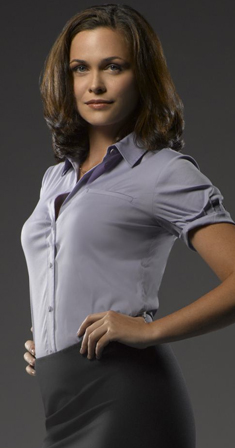
Janis is introduced to the show as a member of the L.A.-based FBI team (led by lead character Mark Benford, played by the histrionic Fiennes) that will strive to solve the mystery of the flash-forward. She wears navy power suits, speaks in a gravely, sarcastic tone, and is, in her own words, “super gay.” Thank you baby Jesus!

Now let’s get this straight. She is (*sob* was) an out lesbian character on a major television network whose sexuality has nothing to do with the show’s premise and little to do with the character’s personality and interaction with her coworkers. She is a strong, female character who happens to like the ladies, much to the dismay of some poor shmuck who asks her out at karate practice. Instead, she leaves with this woman, the alluring Maya: 

You know what? Let’s take a little YouTube break. (This clip will kick your ass, wine-and-dine you and then make you breakfast). Oh, I forgot the last minute of it! It will also make your heart sad.

The fabulous Christine Woods as Janis Hawk is only an auxiliary character; a B story to the show, and her love life is only a B story to her B story, if you will. The fact that Janis’ romance has the emotional turmoil to guide us from first-date jitters to steamy sexual tension and then on to disappointment and abandonment in such a short span of screen time is a testament to the character’s strength.

Indeed, Janis Hawk is not a fabulous character because she is a lesbian and that lends her some sort of diversity credential. She is a fabulous character because she is a layered one. In her fast-forward, she sees herself as pregnant, getting a sonogram, enamored with love for her unborn child. This startles her because 1) she has never wanted a child and 2) in order to have a child, it would seem that there would need to be a penis involved and she remarks dryly, “I don’t like them.”

(Her “I don’t like them”—best delivery of a line… ever).

The fact that Janet broke up with Maya when Maya suggested that Janet’s future baby is theirs is a wonderful example of character complexity. Maya is overeager to make a family with Janet and Janet is understandably protective of her possible future pregnancy. She tells Maya, “This isn’t a me-you thing, Maya, this is a me thing.” She makes clear that her pregnancy would be just that, hers, and that Maya has no right to put claims over it. Feeling pressured and exposed, Janet ends it. What’s left from the brief relationship? Two characters—neither the villain nor the hero, no savior nor saved. These are the pieces left in a broken relationship, whether it be a straight or LGBTQ one, and when film or television manages to mirror reality like this, it is doing something very, very right.

When a run-in with some bad guys leaves Janet with a bullet wound in her stomach and a very rare chance of being able to conceive, Janet faces true heartbreak for the first time. She copes with feelings of failure, inadequacy and hopelessness stemming from the sickening feeling of recognizing her own desire to be a mother too late.

She also probably ruined her olive suit. (It matched my eyes and everything).

On a more frivolous note, the character of Janis wears this silver ring on her thumb—the very same thumb that she uses to draw Maya closer and sink them both into the ephemeral bliss of a kitchen kiss.

That flash of silver just gets me every time.

However, if getting to pretend that you’re dating this bundle of FBI-agent strength, sarcasm and flashing smile–

–is not enough motivation for you to watch the show, let’s remind ourselves of our little secret. Remember that Janis’ romance is a B story to her own B story within the show. There are many other complex and fascinating characters, including the male doctor she spoke with who is diagnosed with cancer yet sees a future with a beautiful Japanese woman and a haggard father who sees, in his vision, the daughter killed in action in Afghanistan alive and well six months later.

Moreover, as stated, Janis’ own story is far more complex than her romantic life and sexuality—as any well-rounded character should be, especially any LGBTQ character whose broadcast might stretch the minds of bigoted people.

At this point, I would like to warn you that there are a lot more surprises to the show that will keep you coming back for more, but if you hate any kind of spoilers, put your hands over your ears and sing “I Was Born This Way” right now. … Did I trick you? Instead, just don’t scroll down past this picture of a bunny in a knitted hat:

If Janis Hawk wasn’t already badass enough, she turns out to be…

A DOUBLE AGENT!!!!!!!!!

My case is closed. Love her, cherish her, cheer her on, and cry that this show only lasted a season so that we do not have more time with Janis Hawk.

———-

TJ Murphy is a rising senior at Dartmouth College studying philosophy and art history. She is now accepting any advice from anywhere as to what she should do for a living. She enjoys writing, bookstores, cappuccinos, and climbing trees and she is not usually bitter about cancelled television shows.

LGBTQI Week: Swoon

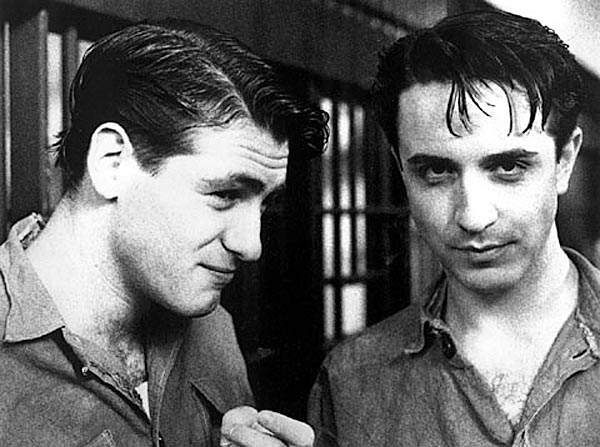
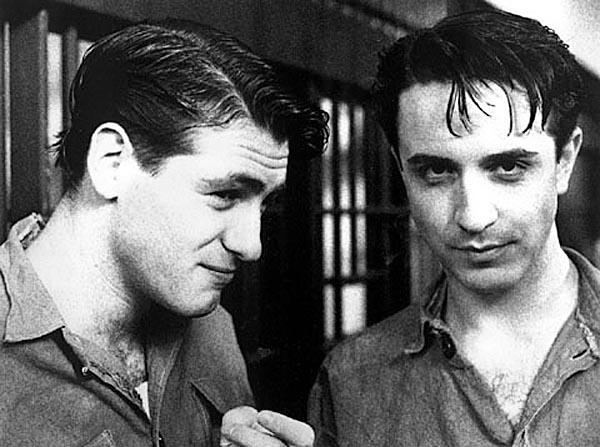
Daniel Schlachet and Craig Chester in Swoon

This is a guest review by Eli Lewy.

Richard Loeb (Daniel Schlachet) and Nathan Leopold (Craig Chester) are enamored with each other. Yet their life is complicated. For one thing, they are two men engaging in a homosexual libidinous relationship in the 1920s, and secondly, they are burgeoning sociopaths. Richard and Nathan desire to commit the perfect crime together and murder an innocent young boy in cold blood for sheer unadulterated thrills.
Tom Kalin’s Swoon is based on a true event, a case that has been adapted by Hitchcock in Rope and Richard Fliescher in Compulsion. However, these two films focus on the psychological makeup of the couple and the court proceedings while purposefully omitting the couple’s homosexuality. Swoon is heralded as one of New Queer Cinema’s triumphs, a film movement that arose in the early 1990s and was lead by openly gay filmmakers like Todd Haynes, Gus Van Sant, and Greg Araki. The transgressive subgenre sought to question heteronormative notions and address queer issues in an explicit way. Kalin chooses to focus on the pathologizing nature of legal and medical institutions and the anti-gay sentiments that were pervasive in the past. Swoon makes use of the transcription of the actual court case, in which it was argued that Richard and Nathan committed the heinous crime because they were deranged perverts filled with unnatural lusts. This is Kalin’s focus, and he proceeds to deconstruct society’s deeply ingrained attitudes.
Swoon’s first scene is a visual whirlwind, a collection of historical footage, gender-bending narrators, and destructive behavior. Richard and Nathan’s romance is invigorated by their petty crimes, but their goal is to take a life, an act they believe will bind them forever. The two privileged men, clearly influenced by Nietzche’s Superman theory, (which in hindsight is most troubling because the pair was Jewish) believe they are above the law and the morals which society is built on. They are constantly in search of something beyond intelligence, something they claim is more pure. Viewers spend a lot of time with the couple, both in their intimate and their despicable moments; so much so that their actions seem uncomfortably real and close.
Swoon reassesses history and the demonization of minorities by dissecting the identity politics of the 1920s, juxtaposing it with anachronistic elements belonging to a different era, like dial up telephones and remote controls. The point of this cinematic device is clear, though Swoon is set in crime-ridden Chicago of the 1920s in crisp black and white, the issues at hand are timeless. Gayness is still seen as something abnormal, an intrinsic default, by many. However, the modern-day parallel is too on the nose at times. The interspersed appearance of several drag queens falls flat, for example. In the 1920s it was unclear what was worse, being a murderer or a homosexual, and Kalin delves into this social frame of mind in a chillingly astute way.

———-

Eli Lewy is a third culture kid and Masters student studying US Studies. She currently resides in Berlin. She is a movie addict and has a film blog which you can find under www.film-nut.tumblr.com


LGBTQI Week: The Problem with GLBT Representation in True Blood and Lost Girl

This is a guest post by Paul and Renee.

When it comes to GLBT representation in the media, unless a television show is targeted specifically at the community, erasure continues to be the norm. Urban fantasy has moved from a small die hard audience to the mainstream and though we can regularly see shows about vampires, werewolves, fae, and ghosts, there are few GLBT characters and a dearth of decent representation.

HBO’s True Blood and Showcase’s Lost Girl have the most visible GLBT characters on television in North America, in terms of the urban fantasy genre. Though both shows have GLBT characters who have extremely high profiles and a reputation of being extremely GLBT friendly, there are certainly many problematic elements.

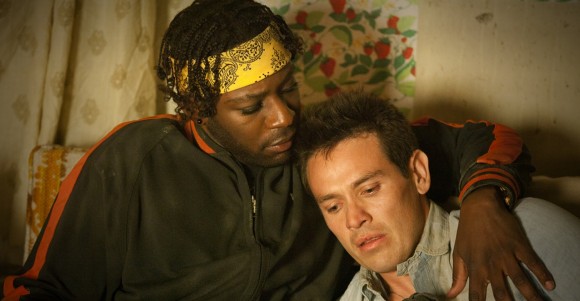
True Blood is based on The Southern Vampire Series written by Charlaine Harris. In the novels, Lafayette is killed off quite early and is shamed for participating in a sex party. Thankfully, the character of Lafayette in True Blood has become a staple of the show. Despite being a fan favourite, Lafayette is a character that inarguably fulfills a lot of stereotypes that are aimed at same gender loving men of colour. Lafayette is a cook but he moonlights as a sex worker and a drug dealer. Though he is routinely given some of the best lines to say, he too often falls into the sassy best friend role.

Nelsan Ellis as Lafayette and Kevin Alejandro as Jesus in True Blood

In season three, we learned that Lafayette only started dealing V and doing sex work to pay for the hospitalisation of his mentally ill mother and though the reason is understandable, no other character on True Blood has been forced into this position though they are all working class.

If Lafayette is dogged by several stereotypes, Talbot revels in them. The lover of Russell Edgington (who is an awesome villain but also personifies the depraved, psychopathic homosexual trope), Talbot is a 700-year-old vampire who squeals at the sight of violence. He throws epic temper tantrums over the interior decorating. Someone stamp a rainbow on him and call his unicorn, he’s done. But to quickly fill his shoes we have Steve Newlin – get yourself another trope bingo card because he’s a) a gay man trying to force his attentions on a straight man b) a closeted homophobe, c) a closeted, bigoted preacher and d) getting campier by the episode – have you hit bingo yet? Bet you will by the end of the season, this was just 2 episodes!

The women aren’t free from stereotyping either; Tara finds her love for women and with it an interest in kick boxing – did she get some free dungerees and power tools with that?

I do have to say that not all the portrayals are stereotyped – Eddie subverts many (albeit he exists to serve and help Jason grow) and Jesus more – we don’t see enough about Pam and Nan to see what they fit. But except for Pam, they all fit one trope – GAY DEATH. Yes, there’s a drastic amount of “gay death” on this show. It’s a sad trope that GBLT people rarely live long on the television screen and their sexualty is often the cause of their deaths – and with Talbot (who actually died during gay sex! And to hurt his gay lover), Jesus (at the hands of his gay lover!), Eddie (found by his killers because he hired a gay prostitute), Sophie Ann and Nan were racking up the body count.

But, perhaps the most glaring flaw in True Blood is how the GBLT romances compare with the straight counterparts. True Blood is not a show that is shy about nudity or sex scenes – it is pretty unusual for episodes to go by without at least someone humping someone wearing very little. Eric, Sookie, Jason, Bill, Sam – we have seen them naked and going at it hammer and tongs. But Lafayette and Jesus? The contrast is blatant – even most of their kisses are in low light conditions. They go to bed wearing multiple layers of clothing (in Louisiana, no less) and their scenes together commonly have them sitting pretty far apart and lacking any real physical (or even emotional) intimacy. The emotional distance is very telling in what should be some of the most poignant scenes between them – when Jesus is grieving over his dead friend, when he is risking his life going into Marne’s shop, when Jesus emerges from that shop injured (Lafayette actually ran to hug Tara while Jesus bleeds); you’d expect some emotional angst here. But throughout season 4, you could have mistaken them for roommates, not lovers. This sanitisation is sadly prevalent with gay and bi male couples in television in general – their sex lives are considered more obscene than their straight counterparts, in need of censorship and “toning down.” True Blood’s straight explicitness makes this extremely blatant – with Lafayette and Jesus and even with Sam and Bill’s “Water in Arkansas” dream sequence (that cuts out just before a kiss). The closest we get to any explicit scenes is with Eric and Talbot – again with low light kissing, no nudity and, of course, saved for straight audiences by including the dreaded gay death.

We contrast that with the lesbian relationships and, if anything, we see a different story. But is this putting them on the same explicit level as the straight relationships or is it an attempt to pander to the straight male gaze? If anything, the scenes between women are more sexualised than between straight couples – not because they’re more explicit, but because they are less personal. Nan Flannigan and Pam both have sex (oral sex that doesn’t smudge their perfect make up, no less) with nameless, characterless women. The only actual relationship we have seen between two women is Tara and Naomi – and again, we saw them make out and have sex almost before we knew Naomi’s name. She appeared in exactly five episodes – and not for much of them at that – and in that time they were either having sex or fighting over Tara’s deception. She has now disappeared. Tara and Naomi’s relationship seemed to exist more to show sex and provide Tara with conflict than to be an actual relationship. All of these sex scenes feel even more gratuitous than the majority of the straight sex scenes because they add precious little to plot, story, development or any relationship – they’re there for the sake of the sex.

Rutina Wesley as Tara Thornton in True Blood

I love that True Blood goes out of its way to include so many GBLT characters – yet at the same time they make me cringe. Inclusion of many characters is great – but we shouldn’t be able to go through TV Tropes, ticking off the stereotypes, the tropes and the unfortunate prejudiced portrayals.

In Lost Girl, we move from having a GLBT character as a sidekick to the protagonist. Bo is a succubus – a being which takes life force from others through sexual contact. At first she is only interested in taking energy from evil doers because she has absolutely no control over her abilities. When she discovers that she is actually a member of the fae, and not some sinful freak, Bo begins a relationship with Dyson – a male werewolf. Vying for her attention is also the beautiful human doctor Lauren.

Essentially what develops is a love triangle and, as to be expected, it is far from simple. Bo has good chemistry with both Dyson and Lauren and in the end engages in sex with them separately. The problem then becomes a question of who does Bo really belong with. It is clear from the outset that though she cares very deeply for Lauren, her real love is Dyson. Dyson even goes as far as sacrificing the most important thing in his life – his love for her at the end of season one, in order to save Bo’s life. When they do have a break in their relationship, it is because he is temporarily unable to feel passion for her. It is during this period that Bo explores further possibilities with Lauren, which rather makes Lauren look like second choice.

Lauren is heavily attracted to Bo, but she is searching for a cure for her comatose girlfriend Nadia, who has been in stasis for five years. The first time that Lauren and Bo have sex, it is because Lauren has been ordered to do so by The Ash – the leader of the light fae. This amounts to sex through deception. Unfortunately, this isn’t the last time that sex between women happens at the behest of a man, which reads like cheap titillation. In a break from both Lauren and Dyson, Bo briefly dates the dark fae Ryan and he initiates a threesome, but what the camera focuses on is Bo’s interaction with the woman he procured. Clearly this was a sexual performance meant to please the straight male gaze.

The cast of Lost Girl

One of the most frustrating aspects of same sex love on Lost Girl is its treatment of the relationship between Nadia and Bo. After spending five years looking for cure for Nadia, Lauren is finally successful. However, after Nadia is infected by The Garuda, a few short episodes later, Lauren quickly assents to her desire to die. How are we to believe that Lauren held this faithful love for all of these years and then so quickly agreed that her partner should die? Nadia and Lauren’s feelings for her were determined disposable for the sake of furthering a love story which has clearly already been decided.

Even when Bo learns to control her desire to drain life energy during sex, there are still only two instances of sex between her and Lauren, which pales to the numerous times that Bo engaged in sex with Dyson. Lauren is the fragile human that Bo can potentially hurt, whereas Dyson literally represents everything that is good in terms of protection, strength and healing.
 

This of course places a premium on the heterosexual relationship over and above the gay one.

And this is perhaps the cornerstone of GBLT depictions in media in general – and certainly in these shows specifically – GBLT relationships are nearly always depicted as secondary to relationships of straight people. They can be there, but they have to take a back seat to the “real” relationships and depictions. Too often this backseat results in characters that are fraught with tropes and are frequently laden with stereotype after stereotype.

We’re happy, after so much erasure, that we’re actually seeing GBLT inclusion – and these programmes certainly do a lot right – but there’s still a lot dogging these characters.

———-

Paul and Renee blog and review at Fangs for the Fantasy. We’re great lovers of the genre and consume it in all its forms – but as marginalised people we also analyse critically through a social justice lens.


‘The Birdcage’: Where You Can Come As You Are

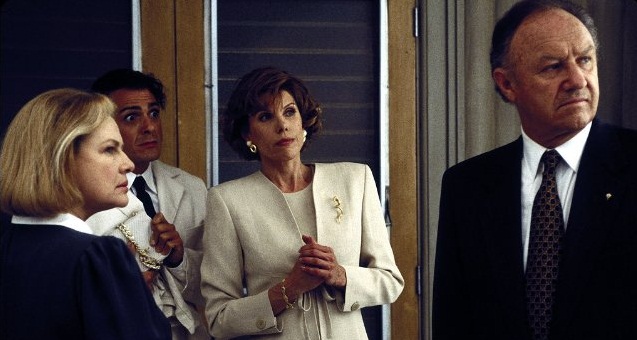
Dianne Weist as Louise, Hank Azaria as Agador, Christine Baranski as Katherine, and Gene Hackman as Senator Kevin Keely in The Birdcage

This is a guest review by Candice Frederick.

There’s a particularly memorable scene in director Mike Nichols’ big screen adaptation of the 1978 French comedy La Cage Aux Folles that few people talk about. Probably because, like much of 1996’s The Birdcage, the comedy is colorfully nuanced when you least expect it.

The setup: Robin Williams plays gay cabaret owner Armand Goldman, whose life partner is Albert (Nathan Lane), one of the must-see acts down at their drag queen hot spot in Miami, The Birdcage. Armand’s 20-year-old son Val (Dan Futterman) has announced that he’s engaged to be married to his teenage sweetheart, Barbara (Calista Flockhart), and must introduce his dad to her conservative parents, right-wing Senator Kevin Keeley (Gene Hackman) and his wife, Louise (Dianne Wiest). The politician and his wife would be in for an unwelcomed shock, if Armand and Albert hadn’t finally come up with the fool-proof plan to have Albert pose as Armand’s wife (in drag).

The scene: Val is with his dad Armand, fretting over having Albert involved in the farce at all as Albert is apparently far too flamboyant to pull off anything other than the performance du jour over at The Birdcage. As Val continues to fret over it, and exchange a few worries with his father, his insecurities begin to show and some of his comments come off unintentionally insensitive. And Albert just so happens to come in on the tail end of Val’s tantrum:

Oh yes, another jibe, another joke at my expense. You were probably laughing at me with Katherine, too. Well, why not? I’m not young, I’m not new, and everyone laughs at me. I’m quite aware of how ridiculous I am. I’ve been thinking that the only solution is to go where no one is ridiculous and everyone is equal. Goodbye, Armand.

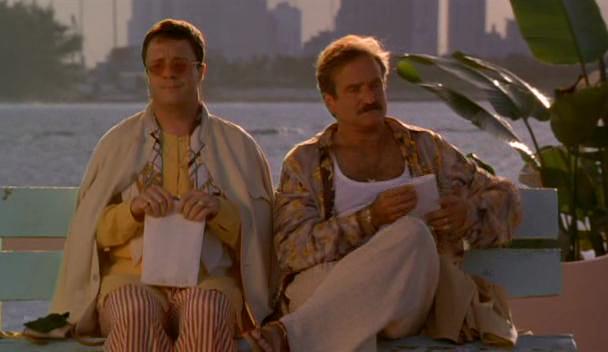
Nathan Lane as Albert and Robin Williams as Armand in The Birdcage
That’s the thing with The Birdcage. It’s more absurd to disguise yourself as someone else rather than to unveil your true self—gay, straight, or otherwise. In other words, Armand and Albert are quite “normal,” despite other people’s projections of them. They are well-off business owners of the hottest spot around, and virtual celebrities in their glamorous hometown. Their swanky penthouse apartment would be the envy of anyone who was lucky enough to visit. They have lover’s quarrels just like anyone in any normal relationship have.

Their abnormality, so to speak, lies in the fact that they are two of the more modern gay male characters, whose sole purpose isn’t simply to enter the scene as the punch line in a mostly straight guy-focused film. Sure, they’re hilarious, their dance moves are enough to make both Beyoncé and Britney Spears blush, and you need a scalpel to remove the amount of makeup Armand has on his face (as Val points out in the movie). But, most importantly, you know their stories. They’re not just the gag.

You do an eclectic celebration of the dance! You do Fosse, Fosse, Fosse! You do Martha Graham, Martha Graham, Martha Graham! Or Twyla, Twyla, Twyla! Or Michael Kidd, Michael Kidd, Michael Kidd, Michael Kidd! Or Madonna, Madonna, Madonna!… but you keep it all inside.
Nathan Lane as Albert in The Birdcage
Interestingly enough, the ‘90s offered a hodgepodge of films like this that showed a fully realized story of gay men. In 1993 we saw Tom Hanks as a gay man suffering from AIDS in Philadelphia. And who could forget 1995’s To Wong Foo, Thanks for Everything, Julie Newmar, where Patrick Swayze, Wesley Snipes and John Leguizamo play three drag queens on a road trip to nowhere town USA, where they discover a certain sense of self? Even on the small screen on Will & Grace (which debuted in 1998), we got to watch a gay male lawyer living large in New York City going through the same ridiculous scenarios we all have to endure.
They are a few exceptions, though we still have far to go, where the bridge between gay, straight or otherwise is just a wee bit narrower. And they serve as launching pads to some of the more impressive gay-themed films we see today.

It shouldn’t come as much of a surprise to learn that The Birdcage held the highest weekend opening gross with an openly gay male lead for thirteen years until 2009’s Brüno. It’s entertaining, tongue-and-cheek, smart, and fully aware of itself.

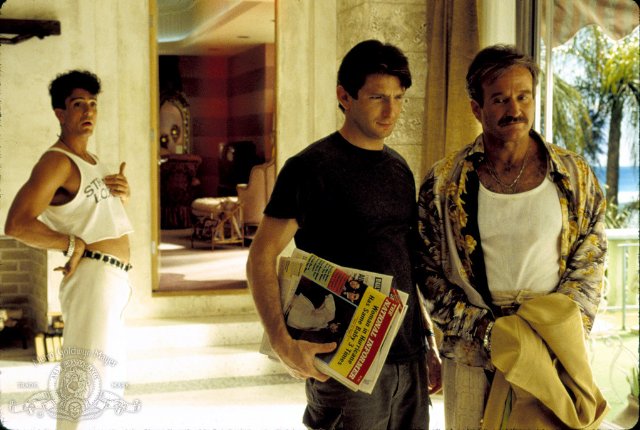
Hank Azaria as Agador, Dan Futterman as Val, and Robin Williams as Armand in The Birdcage
Williams fits very snugly into the role of Armand, who’s the atypical gay male character we tend to see on the big screen. As indicated in the quote earlier, he keeps his sexuality a little closer to the heart, unlike Albert. Armand shows an interesting blend of church and state, and Williams balances those traits quite well, without robbing the character. But once he’s challenged, you really get to see his heart become more profound:
Yes, I wear foundation. Yes, I live with a man. Yes, I’m a middle- aged f*g. But I know who I am, Val. It took me twenty years to get here, and I’m not gonna let some idiot senator destroy that. F&*k the senator, I don’t give a damn what he thinks.

It’s simple, and straight to the point. Broadway veteran Lane and Williams have fantastic chemistry. You can tell that many of the most amusing lines from the movie may have showed their keen sense of improv, which makes these actors even more astounding. Not only are the two leads exceptional, Futterman’s fervent portrayal of a guy desperately trying to do the right thing, for everyone, and Flockhart’s wide-eyed sweet girl act are also captivating to watch. Moreover, Hackman and Wiest are a barrel of laughs as the pretentious senator and his gloriously oblivious wife, who both represent the people on the other side of The Birdcage.

The Birdcage is a little film with knee-slapping scenes coupled with thoughtfully acute moments as well. It doesn’t aim to change the perception of gay culture, but it offers a look into one gay family by putting them into an extraordinarily futile situation indicative of exactly what the characters fight against. You see why they’ve created The Birdcage, where everyone can come as really they are and fit right in.

———-
Candice Frederick is an NABJ award-winning journalist and film blogger for Reel Talk. She’s also written for Essence Magazine and The Urban Daily. Follow her on twitter.

Quote of the Day: Viola Davis on Women of Color, Dreams & Her Life’s Mission

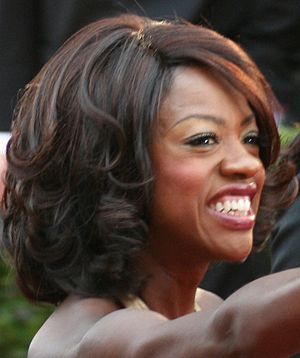
Viola Davis at the 81st Academy Awards
Viola Davis at the 81st Academy Awards (Photo credit: Wikipedia; Image by: Chrisa Hickey )

The internet has been abuzz over Meryl Streep’s badass statement at Women in Film (WIF)’s Crystal + Lucy Awards condemning the “underrepresentation of women” in film and Hollywood’s preoccupation with “big tent-pole failures.” She went on to question, “Don’t they want the money?” since women’s films like The Devil Wears Prada and Mamma Mia have been box-office blockbusters. And the divine Streep couldn’t be more right. We desperately need more women on-screen (and behind the camera), especially considering women comprise only 33% of speaking roles in film.

Streep presented Viola Davis with the 2012 Crystal Award for Excellence in Film. Journalists and bloggers have also been busy reporting on the sisterly camaraderie and “love fest” between the two friends at the awards ceremony.
But what the media seems to have overlooked is the ever poised and articulate Viola Davis’ moving acceptance speech. Davis spoke about her mom, acting as a vehicle for expressing the pain and joy in her life, women of color’s dreams, and the legacy she hopes to leave:
“I realized I spent my entire life trying to be better than my mom. That I am the daughter and the granddaughter and the great-granddaughter and the great-great-great-granddaughter of so many women whose dreams are in the graveyard. They’re women of color who worked in the tobacco fields and the cotton fields and had children by the time they were 15, left school in the 8th grade and a dream was just ambiguous to them. 
“And I realized that I wanted to have a dream. And I think that I chose acting because all my life has been filled with stories of people of color that have been filled with so much complexity and duality. And so much of my life has been filled with so much pain and humor and joyous moments that I felt the need to express that. And I couldn’t do it in a 9 to 5 [job]. 
“I believe unlike my mom and my grandmother and my great-grandmother that the privilege of a lifetime is being who you are, truly being who you are. 
“And I’ve spent far too long apologizing for that — my age, my color, my lack of classical beauty — that now at the age of…well at the age of 46 I’m very proud to be Viola Davis, for whatever it’s worth. 
“And I never want to look in the face of a young actress of color and think to myself, “What’s out there for her?” The only thing worse than a graveyard, artistic graveyard, filled with women…[Davis undoubtedly said something awesome here but the video cut out]
“The higher purpose of my life is not the song and dance or the acclaim, but to rise up, to pull up others and leave the world and industry a better place.” 
Words cannot capture just how much I adore this woman. She is truly a role model and inspiration to us all.
 

Guest Writer Wednesday: A Feminist Review of ‘Prometheus’

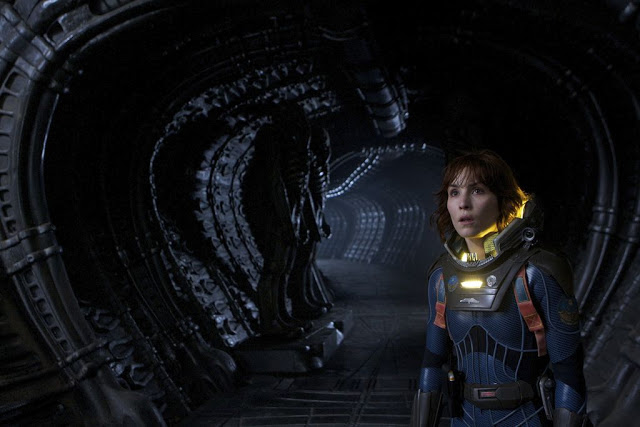
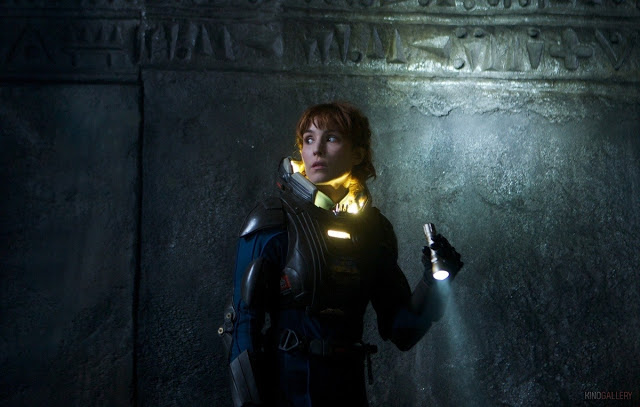
Noomi Rapace as Dr. Elizabeth Shaw in Prometheus

Guest post written by Rachel Redfern originally published at Not Another Wave. Cross-posted with permission.

The prequel and spinoff for the classic film Alien has as much feminist food as its precursor did, albeit slightly less groundbreaking, though we can’t fault it for that: Alien did give us the first female action hero in Sigourney Weaver’s portrayal of the irrepressible Ripley.

Prometheus is naturally larger in scale and far more reliant on special effects, a feature that while clichéd is expected in the current sci-fi action genre (not to be solely negative, the landscape was absolutely amazing and the cinematography superb, seriously, watch for some stunning views of Iceland’s Vatnajökull National Park, Hekla Volcano, and Detifoss Waterfall).
And while some of the scenes are admittedly, far more graphic and gratuitous than I think necessary (there is a simple purity to the original Alien death scenes that I think is lacking here), the film featured some thought provoking and disturbing themes, though all backed again by a strong, smart, female scientist-turned-reluctant heroine and survivor, similar to the original Ripley.
Charlize Theron as Vickers in Prometheus
The Swedish Noomi Rapace (seriously loving these Swedish actors) and South African Charlize Theron oppose each other brilliantly; Theron as the efficient and disdainful corporate heavy, Noomi as the resistant, believing, courageous scientist out to find some answers.
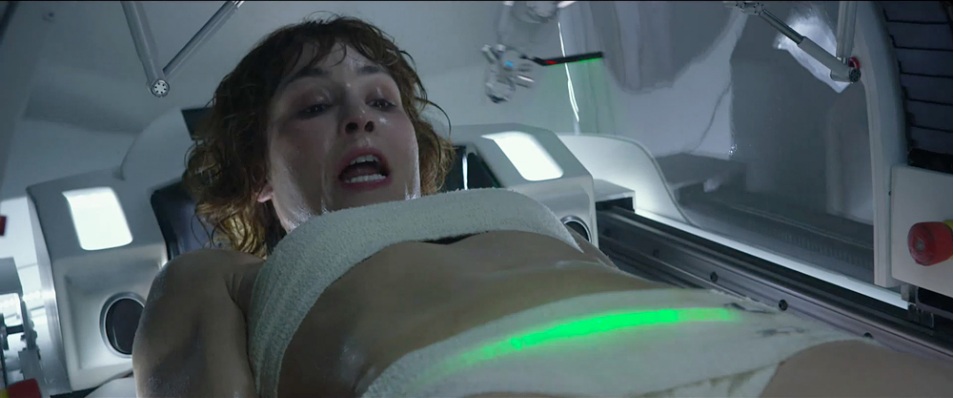
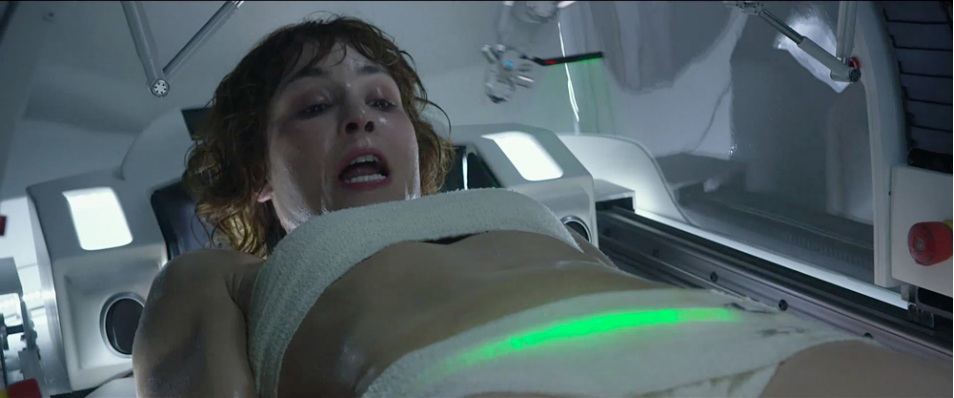
The film features a hefty score of themes for discussion, including one of the most disturbing abortion scenes I’ve ever seen. That scene is apparently what pushed the film up from a PG-13 rating into an R; if the studio had wanted to ensure a PG-13 rating, the MPAA demanded that they cut the entire scene. However, both director Ridley Scott and Rapace felt the scene was pivotal in Shaw’s intense desire to survive and in her emotional and mental development. If you weren’t pro-choice before, chances are you might be after witnessing this scene.
Perhaps notable as well is the fact that Shaw (the character who has the abortion) must physically fight to have one, forcing her to face the ordeal entirely alone. After the operation we see a general disdain for her decision (though perhaps a grudging respect for her will to survive).  What stunned me about the whole situation was the entire lack of care and concern she received after it happened, the whole horrific event was entirely passed over without even a raised eyebrow in her direction as to her well being. She is even brutally hit in the abdomen by an unfeeling thug, an action I felt very deliberate in its exploitation of her recent scarring experience.
In a recent interview, Rapace discussed the scene, stating that the four of days of shooting were the most stressful of the entire film and that she started to have vicious nightmares of alien babies growing inside of her. On a personal note, I can well imagine such nightmares: the fear of losing control, of something taking you over without your will, of something using your body as it’s own instrument, it’s a powerful message about the state of the female body in our society and I found it profound and disconcerting.

Sexual imagery as well abounds in the film and, as has been said of the other Alien films, there is a substantial amount of phallic imagery and perhaps (we don’t want to project too much here) the male fear of rape as many men are violently violated and penetrated by a long, tubular, animal, which of course impregnates them.
An interesting theme that is present in this film, but not the other Alien films is a profoundly religious one, the death of our makers. On Prometheus the death of a parent is the agent of destruction as each main character deals with the abandonment and rejection they feel from their creation and of course, their ensuring resentment towards that creator. Even the mission of the ship is designed to find our own creators and discover why they have abandoned us and why we were created in the first place, if we were just to be left to our own devices. The title of the film then becomes remarkably fitting (as I’m sure was intentional) since Prometheus was a Greek who stole fire from the Gods to give to humans, an act that lead to the humans advancement and eventual independence from their creators. Prometheus was brutally punished for his disobedience and his compassion, destined to suffer for eternity, however that doesn’t stop the continued progression of humanity.
Similarly in the film, the ship and its inhabitants are obviously being punished for their own disobedience and for the overwhelming intention to survive and protect themselves from their own creator’s rejection and malevolence.
Even Michael Fassbender, who plays a Lawrence of Arabia fan and a Peter O’Toole lookalike, states, “We all want our parents dead,” indicating that even he, as a robot is unsatisfied with his creator’s image. In an odd twitch the themes of creation and destruction then becomes mutually inclusive and creation becomes more of an act of ability rather than an act of love. Why do we make something? “Because we could.”
Although disturbing, I found the religious and social themes to be thought provoking and feminist-friendly and I would easily recommend the film. Though I did cover my eyes like a small child during a few of the more intense jump scenes.


Rachel Redfern has an MA in English literature, where she conducted research on modern American literature and film and it’s intersection, however she spends most of her time watching HBO shows, traveling, and blogging and reading about feminism.

‘Lola Versus’ Not Your Average Romantic Comedy: Bad Love Life Decisions, Finding Happiness…and One of the Best Film Endings Ever

Greta Gerwig as Lola in Lola Versus

Romantic comedies usually make me want to gouge my eyes out. Now, that doesn’t mean I hate them all. Some of my favorite films are rom-coms. But every now and again, one comes along that entertains rather than enrages me. Following in the footsteps of female-fronted comedies Bridesmaids, Young Adult and Girls (all of which I love), Lola Versus follows a single woman making horrendously bad decisions yet struggling to find her way. 

Indie muse Greta Gerwig — hands down the best part of Greenberg — plays Lola, a 29-year-old woman whose life is about to unravel. Not only is she on the precipice of turning 30 (a potentially introspective time in any woman’s life), her fiancé (the effortlessly charming Joel Kinnaman…watch him as Holder in The Killing…simply brilliant) breaks up with her shortly before their wedding. Like 3 weeks before their wedding. Understandably, her world crumbles around her. 
Lola is sweet, intelligent and articulate. Gerwig imbues her protagonist with vulnerability and quirky humor. And she’s an absolute mess. A disaster. Lola doesn’t know what she wants or what to do with her life. She now has no man, no fabulous NYC loft to live in any longer, and she’s suffering from writer’s block while trying to complete her PhD dissertation.

Supporting Lola through her break-up are her best friends supportive Henry (Hamish Linklater, who I will forever think of as Julia Louis-Dreyfuss’ brother on New Adventures of Old Christine) and scene-stealing sarcastic Alice (Zoe Lister Jones, who also co-wrote the script).

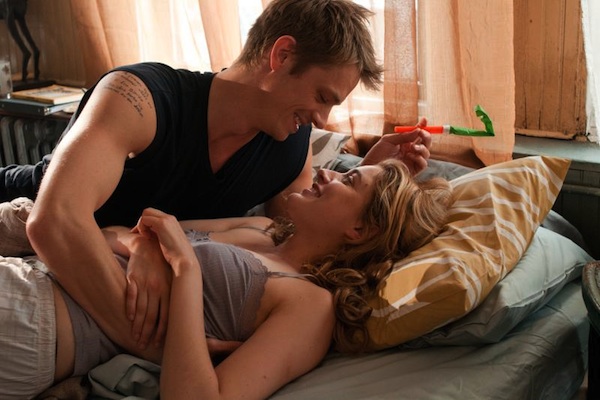
Joel Kinnaman and Greta Gerwig in Lola Versus

As she tries to move on, we witness Lola ask a man to put on a condom and take a pregnancy test. Not only is it great to see aspects of sex and reproduction. It’s refreshing to see a woman exert her sexuality but not be defined by it merely an object for the male gaze.

While it started off promising, I gotta admit, the bulk of Lola Versus pissed me off.  I wanted to shout at the screen, “No, Lola!! Don’t sleep with him!” or “Spend more time with your girlfriends!” or “Don’t believe him that he’s clean…whatever the fuck that means…make him wear a fricking condom!!” or “Stop smoking weed with (and being nice to) your ex-fiancé who dumped you!”

By the end of the film, I realized I wasn’t mad at the movie per se. I was pissed at Lola’s bad choices.

But isn’t that life? Isn’t that what people do when they’re dumped? They obsess over their exes, retracing the steps of their relationship, trying to deciper the clues that led to the relationship’s unraveling. They pine for them. They strategize ways to accidentally run into them (or avoid them like the plague). Either way, there’s a lot of strategizing involved. I wanted Lola to be empowered. To stop obsessing over nice but douchey guys who didn’t appreciate her or who weren’t right for her. I wanted her to hang out with her female friends. But the way the plot unfolded rang more realistic and way more uncomfortable.

Greta Gerwig and Hamish Linklater in Lola Versus

In an interview with Collider, Gerwig shared how the script spoke to her because Lola was such a hot mess:

“Sometime female characters, especially in the genre of something that people consider rom-com, make mistakes in a cute way or they’re a mess in a way that’s palatable. I like that Lola is a real mess. She’s making big mistakes and it’s not just cute. It’s destructive and self-absorbed and not awesome and she has to recover from that. She stands to damage relationships around her. Even as this crappy thing happens to her at the beginning of the movie, she uses that as an excuse to behave badly for the next year of her life. I like movies about women behaving badly, because women behave badly just like men, and we’re not always adorable and cute about it.”  

Gerwig is absolutely right. Women in film aren’t usually allowed to be messy or unlikeable. Although that’s slowly changing.

Lola Versus made me uncomfortable because it reminded me of too many of the bad decisions I’ve made in my life. Falling back into sleeping with people I shouldn’t. Agonizing and analyzing every single conversation. Calling an ex, desperately hoping to rekindle that spark. Settling for someone not that great in a vain attempt to fill the gaping void that my partner’s disappearance has left.

I eventually stopped all this time-sucking nonsense. I thought by hanging onto relationships, I was boldly forging ahead seeking my happiness. But that’s not what I was really doing. I was placing my happiness in the hands of others. And so was Lola.

Zoe Lister Jones and Greta Gerwig in Lola Versus

The movie tackles the topic of single women and aging. As we approach or pass turning 30 (like me!), we contend with societal expectations. Not that turning 30 is some horrible harbinger of doom. Quite the contrary. I’ve been more confident and comfortable in my own skin after turning 30. But it’s still hard to silence the social cues that tell us our lives should fall into place in a certain pattern.

Here’s the thing about Lola Versus. It frustrated me and I rarely laughed out loud. Although the scene where she screams at the party…priceless. But Gerwig mesmerized me and the film enthralled me. It passes the Bechdel Test (yay!!!). And it boasts one of the absolute best endings I’ve ever seen in a film. Ever.

In every romantic comedy, it’s all about two people getting together in the end. Or if it’s really radical — and trust me, I use that term facetiously — they’re already together in the beginning and it’s about the two lovers facing obstacles but ultimately staying together. The only rom-coms I can recall that deviate from this predictable paint by numbers path are Annie Hall, The Break-Up and Kissing Jessica Stein.

I don’t want to spoil the ending. But I will say this. (Aver your eyes if you want to be completely surprised) Lola achieves happiness, something that had eluded her all along. She suffered writers’ block, not being able to silence the voices and noises in her head — ironic since her dissertation was analyzing silence in film — but now she could write again. She became happy with who she was and with her life.

And it had nothing to do with a man.

Now that doesn’t mean she says fuck you to all her relationships. While she knew how to love other people, she didn’t know how to love herself, a lesson most of us need to learn.

Lola talks about Cinderella with her mom (Debra Winger…so glad to see her in more films!). She tells her that she liked Cinderella as a kid but how fairy tales are toxic, teaching girls to wait for a man to sweep them off their feet and give them shoes. Fairy tales set women up for failure. We put these unrealistic expectations on love and romance. Now, I’m not arguing for settling, not by any means. But fairy tales teach girls that when they grow up, they should wait around for men; that they should put romantic relationships before everything else in their life even sacrificing themselves. Lola realizes that she must navigate her own happiness rather than relying on a man or some lofty romantic fairytale.

Too many romantic comedies subject women to stereotypical gender roles. Needy, passive, just out to find a man. Can’t romantic comedies be intelligent? Can’t they highlight the importance of female friendship too?? Yes, yes they can. And Lola Versusdoes.

One of my favorite lines in the film is when Lola says:

“In this world of shipwreck, there’s hope in uncertainty.”
Isn’t that what we do in this world? Try to salvage the wreckage of our disappointments, losses and broken hearts, forging ahead and charting a new course? 
Through her relationships, Lola discovers what she truly wants from life. She realizes it’s okay to have your life in tumult as long you’re happy with yourself. Throughout the film, I kept rooting for Lola — for her to find her place in the world. I was rooting for hope. And ultimately, I was rooting for myself.

Guest Writer Wednesday: Thoughts on Strong Female Characters: Carolyn Fry from ‘Pitch Black’

Guest post written by Rhea Daniel cross-posted from her blog Short Stories with permission. 
So I saw The Avengers(2012). I’ll be honest, pure entertainment, skillful use of existing archetypes to create entertaining group dynamic, how can you not fall for that? 
However the whole ‘strong woman character’ attribution to Joss Whedon isn’t completely merited. I love his truly sympathetic essay about women on Whedonesque.com, and his feminist bent, however as ‘strong’ women go, I could never relate to his female characters.  
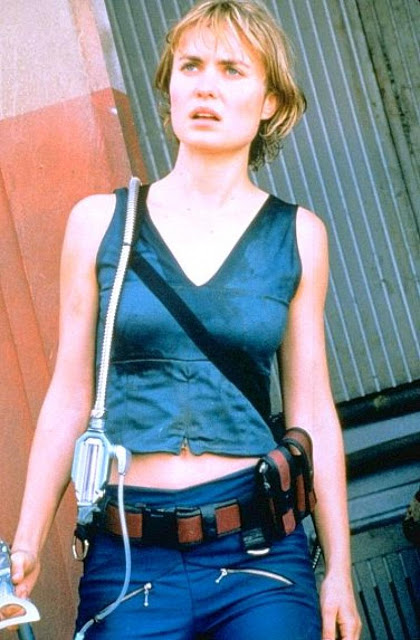
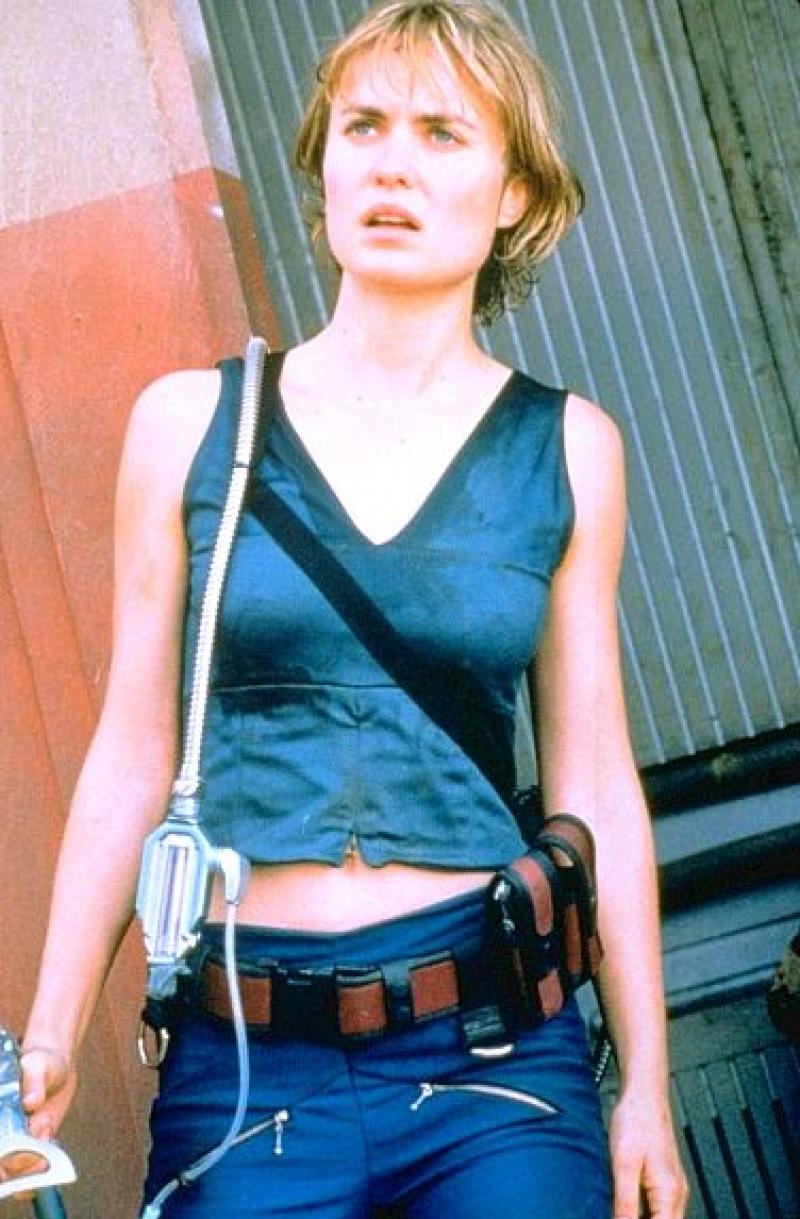
To me a character that deserves the reputation of a feminist heroine would be Carolyn Fry(Radha Mitchell) from David Twohy’s Pitch Black (2000), regardless of whether he intended it that way. We have time to watch her character grow through the movie, but she is a secondary character, Riddick is the famed anti-hero. To make an impression in spite of that is huge.

While Fry takes the reins of the group on the deserted planet by default, the one thing that drives her bravery is her terrible mistake — attempting to eject the passengers in cryogenic sleep to lighten the load of the spaceship before it crashed, stopped from doing so by the more conscientious navigator who died as a result, earning her a lot of resentment from the group, their mistrust eventually pushing her to fight for her leadership position more fiercely. I don’t particularly consider that a negative point, I see a person deeply ridden with guilt, antagonists willing her to fail, Riddick keenly watching her every move, reacting to her willingness to risk her safety for the sake of the others with amusement. I see a lot of a pressure on a person who is not particularly skilled to handle the task before her, but she pushes on in spite of that.  

What’s more, the movie treats its weakest member, Jack (Rihanna Griffith), who disguises herself as a boy (self-protection or to avoid being judged, either one), with a lot of sensitivity. She is young, prone to misplaced hero worship for Riddick who is the creepy bad boy of the group, and changes her loyalties easily. Also she’s in the middle of her period. I’ve never seen a sci-fi acknowledge this obvious part of womanhood, women get pregnant but they never menstruate in sci-fi movies (I’ve seen so far). Jack becomes the unwitting lure for the hungry creatures on the planet. It’s an acknowledgment of Jack’s obvious femaleness in the movie, albeit, a negative one. Fry offers her sympathy when Jack breaks down and cries. Johns, the most profiteering member of the lot, attempts to form a pact with Riddick to throw Jack to the wolves. As far as I remember, there’s a price on Riddick’s head, which gives Riddick good reason to get rid of Johns the mercenary, so Riddick might know exactly what he stands for: himself, and he expects everyone else to behave with the same selfish motives. It’s probably why he finds Fry’s declarations of self-sacrifice so amusing, and why SPOILER!!! -> her eventual death affects him so deeply. <-END SPOILER
Fry’s last attempt at leadership solidifies her loyalties. When she finds Riddick has reached the spaceship and is getting ready to take off, leaving the rest behind, she asserts her position as captain and commands him not to leave. He tries to tempt her into coming with him, and here we see a brief moment of Fry’s inner turmoil as she breaks down, torn between choosing her own safety and the lives of the others. She fights back, insists that they go back for the others, but he overpowers her easily. Fry, with Riddick’s knife at her throat, overpowered, asserts her loyalties for the last remaining members of the crew. It’s the sort of moral ambiguity and growth I love to see in a character, and why I feel Carolyn Fry manages to fit into the ‘strong woman’ archetype better than any of the others I’ve seen, mainly because she’s more believable.  
Perhaps we’re so desperate to see strong female characters that we’re willing to pass over any lapses in logic. The Black Widow in The Avengers (2012) for one, should have been taken to the hospital for broken bones after being tossed aside by the Hulk, but she doesn’t even suffer a single fracture, she’s shaken up a bit and she’s back in action. Did anyone else see that they could have done without that scene, just to spare me that crack in the character sheet? While she’s quick-witted, she’s not tempered by science or invincible armor, she’s just a very skilled fighter, and apparently made of rubber. 
Being torn in two is perhaps the most relatable part of Fry, at least for me, having encountered the dichotomy of being born in a woman’s body. SPOILER!!!-> Her sacrifice, though unwitting, brings about a climactic end, a lament and a brief spurt of vengeance from the Riddick the anti-hero. <-END SPOILER Ripley on the other hand, the mother of mothers, makes the perfect cut as the sci-fi woman warrior. I know she’s incredibly cool, but a quick read of this article by Michael Davis raises a few relevant points about the Alien films, and may I point out that it was written years ago. 
It’s not that I don’t still love Ripley/esque sci-fi warriors, I just find Carolyn Fry’s inner turmoil borne of the vicissitudes of external forces much more approachable, and strangely unsung. I like her more because she is unsure of herself, searching for firm ground to walk upon, because unlike Ripley, she doesn’t know where she stands, steeling her vulnerable frame against the next onslaught. 

Rhea Daniel got to see a lot of movies as a kid because her family members were obsessive movie-watchers. She frequently finds herself in a bind between her love for art and her feminist conscience. Meanwhile she is trying to be a better writer and artist and you can find her at http://rheadaniel.blogspot.com/.

Is ‘Prometheus’ a Feminist Pro-Choice Metaphor?

Noomi Rapace (Dr. Elizabeth Shaw) in Prometheus

Warning: massive spoilers ahead!

A pseudo-prequel to Alien, Prometheus raises existential themes of religion, god, faith, science, creation, mythology and evolution. While these are all worthy topics, I’m much more interested in Prometheus’ treatment of its female characters and its commentary on reproduction. Is director Ridley Scott’s new film a pro-choice metaphor advocating reproductive justice?
I was ridiculously excited to see Prometheus. As I’ve shared before, Lt. Ellen Ripley was my icon growing up…as she was for many of us. And Scott admittedly loves showcasing strong, intelligent female leads.
Here the incredibly skilled Noomi Rapace plays the female protagonist Dr. Elizabeth Shaw, an archaeologist guided by her curiosity and buoyed by her religious faith. She and her colleague/partner Charlie Holloway discover caves with paintings signifying our creators or “Engineers” as they call them. When corporate Weyland Industries (a pre-cursor to Alien’s Weyland-Yutani) funds their expedition, they go in search of the beginning of humanity…with horrifying consequences.
The film is problematic with its weak dialogue and flimsy characters. Aside from Rapace’s Shaw and Idris Elba’s Janek (Stringer Bell cigar-smoking and playing an accordion?? Yes, please!), I seriously couldn’t give two shits who lived and who died, which is particularly annoying since Alien rested on the strength of its nuanced character development. But where the film captivates is in its exploration of reproduction.
Patriarchy perpetuates rape culture and infringes on reproductive rights. Alien centered on rape and men’s fear of female reproduction. Littered with vaginal-looking aliens and phallic xenomorphs violating victims orally, these themes resurface. But this time around, Scott’s latest endeavor also adds abortion and infertility. As ThinkProgress’ Alyssa Rosenberg asserts, Prometheus bolsters the Alien Saga’s themes of “exploration of bodily invasion and specifically women’s bodily autonomy.”
Holloway goes on a diatribe to Shaw about creation and meeting our creators. He says that everyone can create. Shaw responds, “Not me,” shedding tears as she laments her infertility, something rarely depicted on-screen. Their conversation seemed to comment on how society views women as broken and not fulfilling their ultimate purpose unless they give birth.
While Shaw doesn’t give birth, she does become pregnant.
When David the android (Michael Fassbender) obtains some of the mysterious “black goo” from the temple, he poisons Holloway by placing a drop in his drink. After Holloway and Shaw talk about creation and infertility, Shaw has sex with the infected Holloway.
After Holloway dies (torched by a flame-throwing-toting Vickers), David examines Shaw for any infection. He then tells her that she’s pregnant (say what??). She knows this is impossible because of her infertility. Even though she’s stunned by this revelation — because of its improbability and her infertility is a source of pain — Shaw wants it out of her immediately.

But David doesn’t want her to have an abortion, insisting she be put in stasis and trying to restrain her. Like Ash in Alien, it appears David had an agenda to try and keep the creature inside Shaw alive. David tries to thwart Shaw’s agency and bodily autonomy, forcing her to remain pregnant. Hmmm, sounds eerily similar to anti-choice Republicans with their invasive and oppressive legislation restricting abortion. No one has the right to tell someone what to do with their body.
After fighting her way past people, Shaw enters a medpod, a surgical “chamber,” which is only designed for male patients. Now before anyone says that the chamber was intended for secret passenger Weyland (a dude), it still subtly reinforces patriarchy nonetheless. Why couldn’t a medical chamber offer procedures for all genders rather than just defaulting its calibrations to male?
Undeterred, she programs the machine to remove a foreign object. She watches as her stomach is the mechanical arms remove the alien creature and then is stapled up. Hands down this was the most riveting scene (and squeamish…aside from that creepy eye scene), watching a terrified yet steely determined Shaw assert control over her body and her reproduction.

Now, not everyone agrees that Shaw was pregnant or that her procedure should be called an abortion. Some say yes, others argue no, and still others are unsure. Rosenberg asserts it’s not really an abortion as Shaw “isn’t pregnant but rather infected” and the surgery doesn’t result in “the termination of her pregnancy but a premature birth.” But Scott himself calls it a pregnancy.

For those who discount Shaw’s abortion because it’s a foreign object or not a traditional fetus, look at Breaking Dawn. Bella’s vampire/human fetus grew at a rapid rate, made her sick and almost destroyed her body. Yet she chose to keep it. My point is that Shaw could have as well. Instead, she chooses an abortion.

But whatever terminology you use — and I’m in the camp that calls it an abortion — you can’t ignore the abortion metaphor.
Rather than merely succumbing to the trappings of the Mystical Pregnancy Trope, which reduces women to their reproductive organs, we instead see a metaphor for patriarchal constraints trying to strip women of their reproductive rights and bodily autonomy.
Dr. Elizabeth Shaw (actor Noomi Rapace) after having abortion in Prometheus
But before I start jumping up and down that a summer blockbuster features an abortion, there’s a few probs here. The word abortion is never uttered. Nope, not once. Instead, it’s referenced as a “procedure.” When Shaw enters the medpod, she initially attempts to program a caesarean, again not an abortion.
Prometheus also suffers from some problematic gender depictions. While both Prometheus and Alien thrust their female leads into terrifying situations, Shaw and Ripley drastically differ, not only in their personalities and worldviews. But in the way the films treat them.
Alien possessed a strong feminist commentary on sexist patriarchy silencing women’s voices and attempting to objectify and violate their bodies. Unlike Ripley, both Shaw and the icy, seemingly villainous Vickers are sexualized. Both Shaw and Vickers are punished — Vickers by falling into the stereotypical trap of being a cold, selfish shrew and Shaw for her sexuality. Although I’ve got to point out that while Vickers was definitely selfish (not stopping to help a stumbling Shaw when outrunning the crashing ship), I think she made some smart decisions surrounded by an assload of people making idiotic ones. And um, I don’t blame her for not wanting an infected Holloway onboard (which Ripley also tried to do with Kane in Alien). Weyland also makes a sexist statement about inheritance and how David is the closest thing he has to a son, despite his flesh and blood daughter Vickers. It’s as if a daughter is meaningless to him.
Ripley wasn’t defined by her relationship to a man nor did she need a man to survive. But Shaw does…or at least an android taking the form of a man. Yes, she’s a resilient survivor. Although David makes a point to express his surprise at Shaw’s survival, saying he didn’t know she had it in her (ugh, cue bad pun). But aside from her self-induced abortion, Shaw ultimately must rely on others: the squidlike xenomorph extracted during her abortion to save her from a violent Engineer as well as David to escape the planet as he can fly the Engineers’ spacecraft. Although Shaw is the one who determines their course.
Perhaps these gender problems are meant as a commentary on the incessant sexism plaguing today’s society. Or maybe Ripley was such a quintessential feminist film icon that this film pales in comparison.
While it’s not as feminist as it could or should be, The Mary Sue’s Zev Chevat sums up what I liked most about Prometheus:
“Mixing in allusions to birth, the body as battleground, and a female character’s absolute will to regain control belong in this series as much as slimy extraterrestrials. It’s what the Alien films do well, and what Prometheus does best.”
Prometheus is an incredibly flawed film. But when reproductive justice faces a daily barrage of attacks, I have to applaud its efforts to depict its female protagonist not only choosing an abortion, but fighting for her right to exercise autonomy over her body. Especially when so few films and TV series do.

Guest Writer Wednesday: Tarantino’s Women

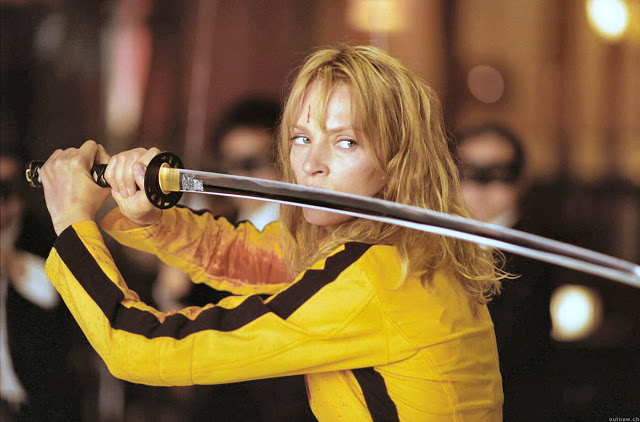
Uma Thurman (The Bride/Beatrix Kiddo) in Kill Bill Vol. 1

Guest post written by Jamie McHale.

I’m going to start this blog post with a bold statement; few directors make films with such strong female characters as Quentin Tarantino. Surprised? Known for stylized ultra-violence and shot to fame with macho flick Reservoir Dogs, you’d be forgiven for thinking Tarantino’s films are more targeted towards guys but let me explain why I think you’re wrong by running down some of his characters and why actually, Tarantino should be celebrated by female cinéphiles.
Shosanna Dreyfus 

Melanie Laurent (Shosanna Dreyfus) in Inglorious Basterds
Putting the fact she runs a Parisian cinema under Nazi occupation in Tarantino’s Inglorious Basterds aside, Shosanna Dreyfus (Melanie Laurent) should be celebrated as a powerful female character. After escaping persecution, she hatches a plan to kill the upper echelons of the Nazi regime, beautifully described in this quote from her dialogue:
“I am going to burn down the cinema on Nazi night. And if I’m going to burn down the cinema, which I am, we both know you’re not going to let me do it by myself. Because you love me. And I love you.”
Beatrix Kiddo

Uma Thurman (The Bride/Beatrix Kiddo) in Kill Bill Vol. 2
B, The Bride, Black Mamba, Beatrix Kiddo or whatever else you want to call her, Uma Thurman’s portrayal of the blood-thirsty protagonist of Kill Bill is undoubtedly one of cinema’s strongest women. Systematically slaying those who crossed her in a self proclaimed “rip-roaring rampage of revenge,” Uma Thurman secures her place as Tarantino’s muse. Dealing strictly in black and white morality and taking no prisoners (well, apart from Sophie) Beatrix Kiddo secures her places as the femme, the most, fatale. In fact, the Kill Bill trilogy (to-be) showcases a plethora of strong women including orphan to Japanese mafia boss O-Ren Ishii (Lucy Liu) and Elle (Daryl Hannah) who makes up for what she lacks in eyeballs with a mean tiger’s crane.
Elle: “I killed your master, and now I’m going to kill you, with your own sword no less. Which in the very immediate future will become my sword.”
Kiddo: “Bitch…You don’t have a future.”
Jackie Brown
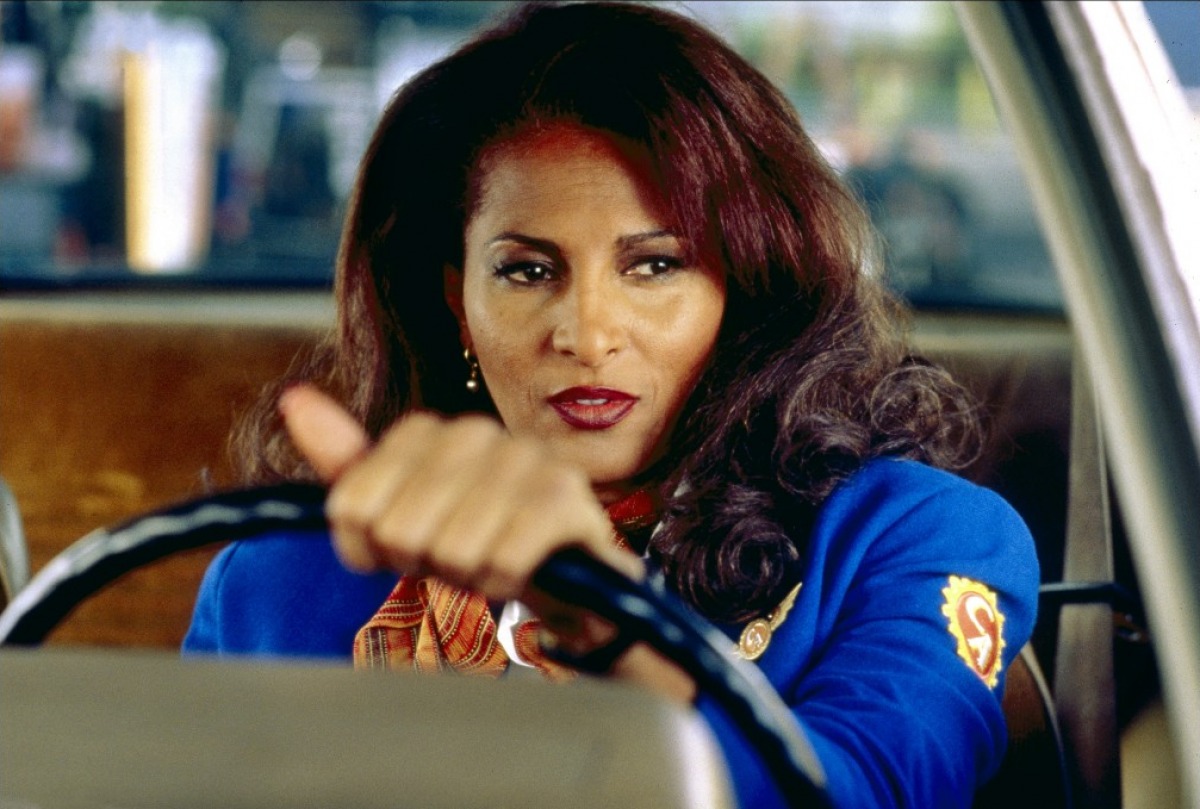
Pam Grier (Jackie Brown) in Jackie Brown
Pam Grier rose to fame in the 70s through a string of Blaxplotation films and was immortalized in pop culture by Tarantino’s 1997 film Jackie Brown. It follows the story of a struggling flight attendant who ends up smuggling money from Mexico into the US only to be arrested by the police. After agreeing to act as an informant to the police she proceeds to play the situation to her advantage in a dangerous double-crossing game. Exuding power, control and cool, the limitlessly cool Jackie Brown is the ultimate screen siren.
Jackie Brown: Now sooner or later, they’re gonna get around to offering me a plea deal, and you know that. That’s why you came here to kill me.
Ordell Robbie: I ain’t come here to kill you…
Jackie Brown: No, no, it’s OK, it’s OK, now. I forgive you.
Few women on screen are so complex, so powerful, so dangerous as Tarantino’s, granted they may be also be violent and often sadistic but they always take centre stage. Almost all of Tarantino’s women deserve a place in the pantheon of great female leads alongside Clarice, Ripley & Thelma. And let’s just forget about Death Proof, please?

Jamie McHale (Twitter: @jamie_mchale) runs pop culture blog TQS which covers film, TV and music as well as anything else that takes his fancy.

Motherhood in Film & Television: The Authentic Portrayal of Mother-Daughter Relationships in ‘Future Weather’

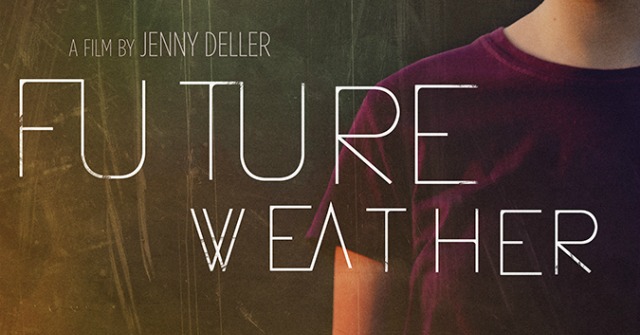
Movie poster for Future Weather

I recently saw the film Future Weather at the Tribeca Film Festival and was blown away by the honest portrayal of motherhood onscreen. The film captures the ups and downs characteristic of mother-daughter relationships and does so without simplifying the women or relegating them to either/or binaries; there is no exclusively Good Mom or Bad Mom in this film. Not only is it nearly unheard of in films today to watch women interact with one another in ways that don’t involve men, but in typical feature films showcasing mother-daughter relationships, audiences are often subjected to a litany of unrealistic absolutes: Good Moms always love and nurture their daughters, sacrificing their entire adult existences and maintaining some virgin-esque purity while doing so; yet Bad Moms ruin their daughters’ lives through manipulation, neglect, or—conversely—smothering and over-protection, to the point that the audience labels these mothers nothing more than villains—usually mentally unstable villains—with no redeeming qualities whatsoever.

But Future Weather avoids these clichés. The women in this film lead hard, complex lives. We know these women. We live with these women. Their interactions remind of us our own multifaceted mother-daughter relationships. And, fortunately—while they’re sometimes messy and often difficult to watch—the women in Future Weather aren’t treated as tropes to merely move a plot forward (no dead ladies/moms for dudes to avenge the deaths of!), and the filmmakers spare the audience from two hours of that cringe-worthy, all-too-familiar “lone woman among a group of complex, likeably awful men” thing.

Here is an excerpt from writer/director/producer Jenny Deller’s summary of the film on imdb:
Thirteen-year-old Laduree lives in a trailer tucked away on a beautiful piece of land in rural America. A loner who takes refuge in nature, she’s grown up looking after her mother [Tanya] as she wanders between men and jobs. A few weeks into the 8th grade, Laduree returns home to find a note in the breadbox with a fifty-dollar bill—her mother has taken off to pursue her life-long dream of becoming a make-up artist for the stars. … Laduree reluctantly begins life at her grandmother’s [in] a small house in town where her mother grew up. … As the two struggle to deal with Tanya’s disappearance, they tiptoe toward each other and apart, finding fragile moments of connection and release amid a glut of lies, omissions, and miscommunications. …

Perla Haney-Jardine plays Laduree (called “Ray” for short) brilliantly. Future Weather is a coming-of-age tale, and Ray’s relationship with her absent mother, Tanya (played by Marin Ireland), never feels false; I attribute that to Jardine’s stunning performance in the role. Ray always keeps her guard up, but underneath her feigned tough exterior lies a wounded child who, like many of us, had to take on adult responsibilities at a young age and never experienced the love she needed from her mother. And while Ray’s mother Tanya enjoys traditionally feminine things like experimenting with makeup—she abandons Ray to move to California to become a makeup artist, after all—Ray loves science, a traditionally male pursuit. She’s a tomboy who likes the earth, particularly plant-life, likes getting dirty, and likes swimming in lakes. These differing interests further separate mother and daughter, and neither knows quite how to relate to the other, though it isn’t for lack of trying.

Perla Haney-Jardine as Laduree and Amy Madigan as Greta in Future Weather

In several quiet scenes, often with no dialogue, the director Jenny Deller illustrates this disconnect perfectly, with Ray unsuccessfully trying to show Tanya her scientific discoveries and Tanya trying to bond with her daughter by giving her a makeover. I love this juxtaposition so much. For one, Ray’s love of science works as a metaphor throughout the film. Ray studies plants in her yard, and when she moves to her grandmother’s house, she must uproot her plants (which she’s named and everything) and physically move them to another home. She worries it will kill them, and that speaks to Ray’s own emotional turmoil in being forced to leave the only home she’s ever known. Ray essentially “mothers” (i.e. nurtures) her plants and loves them in a way she doesn’t feel loved by her own mother. 

Basically, since Ray can’t control her home life, which is utterly chaotic, or navigate her grown-up emotions surrounding Tanya’s abandonment, she focuses on the earth and science (a field driven by absolutes and logic), and immerses herself in finding ways to fix what she sees as the failure of humans to take care of—and nurture—their home.
Perla Haney-Jardine as Laduree in Future Weather

One of the criticisms I’ve read repeatedly about Future Weather is that the film includes too much eco-dialogue. Nope! Sure, Ray speaks passionately about the environment throughout, and in another film, one not directed by a woman who understands subtext, perhaps, (how is this Deller’s first film?!), the eco-dialogue critique might make sense. But in this film, particularly in the scene in which Ray flips out on an entire neighborhood of people about littering, excessive purchasing of water bottles, and not caring about the earth in general, the subtext is absolutely clear: people who possess the ability to care for living creatures also possess the responsibility to do so—to nurture and care for the planet because the planet takes care of us, the way mothers, daughters, and families should take care of one another.

Motherhood, specifically the act of mothering, is presented as a layered and complicated job in Future Weather.

Lili Taylor as Ms. Markovi in Future Weather

We see more evidence of this in Ray’s relationship with her science teacher Ms. Markovi (played by Lili Taylor). Ray connects with her for obvious reasons: she sees herself in Ms. Markovi, another female who loves science (gasp!), and she also sees Ms. Markovi as a stand-in mother, someone who understands her and nurtures her interests in ways both Tanya and her grandmother, Greta (played by Amy Madigan), struggle to do effectively. There are reasons for that struggle. Greta, one of my new, absolute favorite onscreen women ever, is fucking tough. She gave birth to Tanya at a young age and raised her alone, and Tanya replicated her mother’s life with Ray.

And guess what? Single motherhood is hard; the film shows us that.

It shows the hardships—and consequences—of trying to raise a child while struggling financially, getting no real support from the man who, you know, helped create the child, and hearing the constant message from society that mothers cease to exist as individuals once they have children. Forget it, moms. Any dreams or life goals you hoped to achieve once—put them on the backburner for a few decades. (Hint: society spares dads that message.)

I won’t give anything else away about the film, as it’s still screening at festivals and waiting for a distributor. (Someone pick up this film!)

But in the end, unlike so many movies about motherhood, Future Weather doesn’t condemn or vilify mothers, or even praise them. It illustrates the difficulties of motherhood, particularly for single moms. Deller, thankfully, doesn’t shy away from showing us the realities—and occasional horrors (ha)—inherent in mother-daughter relationships. We may question the decisions these mothers make, but they’re questioning themselves throughout, too.

The cast and director of Future Weather