Wedding Week: ‘Coming to America’ and Coming to Terms with New Marriage Traditions

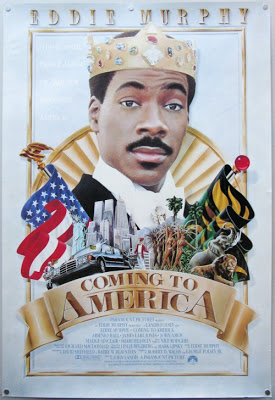
Coming to America movie poster.


Written by Leigh Kolb

When I was a kid, Coming to America was one of my favorite movies. I’m not quite sure exactly what it was–maybe I just thought Eddie Murphy was really cute–but I’d like to think that I was drawn to its message of valuing female intelligence and independence over subservience. 
Coming to America was released in 1988, and helped round out Eddie Murphy’s rise to stardom in the 1980s, from Saturday Night Live to Beverly Hills Cop. While Murphy played side-kicks in many of his early films, Coming to America was unique because it featured Murphy as a romantic lead, and a cast dominated by African Americans. 
The premise of the film–a wealthy African prince travels to America to live modestly and find true love, not an arranged marriage–isn’t particularly groundbreaking, but the film worked because it was (and is, sadly) rare to find a black man as a romantic lead, especially in a blockbuster-friendly romantic comedy.
The film begins by taking the audience over the sweeping landscape of the fictional African country of Zamunda, while a South African choir sings. As the camera focuses in on a palace, it’s important to note the stark contrast of this depiction of an African country against the frequent portrayals of Africa in American media, which showcase Africa as a continent in need of our saving (after all, they don’t even have snow at Christmas time). 
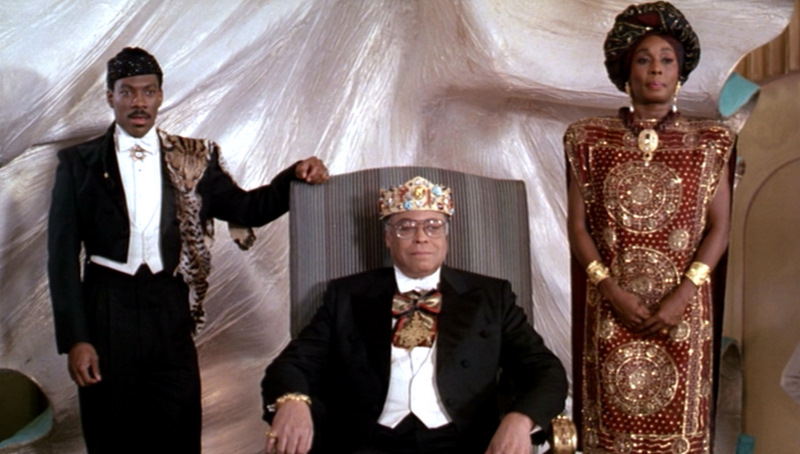
The royal family of Zamunda: Prince Akeem Joffer, King Jaffe Joffer and Queen Aeoleon.  
Prince Akeem (Murphy) wakes up on the morning of his birthday, and he’s attended to by male and female servants (from royal bathers–beautiful women who clean the “royal penis”–to royal wipers in the bathroom). Akeem doesn’t seem comfortable with any of this, and even requests to use the bathroom alone. At breakfast, his father, King Jaffe Joffer (James Earl Jones), assumes his son must be excited to meet the wife they’ve arranged for him to marry. 
Akeem acts unsure, and finally speaks out against being doted upon and the idea that a woman would be chosen for him for his rank, not because she loves him. The tradition of arranged marriage doesn’t sit well with him, and his youthful rebellion takes the form of wanting to fall in love with a woman on his own terms and to be able to be more independent.
Semmi (Arsenio Hall), Akeem’s friend and attendant, serves as a foil to Akeem’s noble goodness. He is baffled that Akeem wants a woman with an opinion instead of having a woman who would follow his every command. Semmi assures Akeem that his wife need only have a “pretty face.”
Akeem asks him, “So you’d share your bed with a beautiful fool?” Semmi says that that’s the tradition for men in power. Akeem says that it’s also tradition for times to change. 
While the film isn’t a bastion of female empowerment, feminist nuggets like that pop up throughout the film, which is always refreshing within the confines of the well-worn tropes in romantic comedies. 
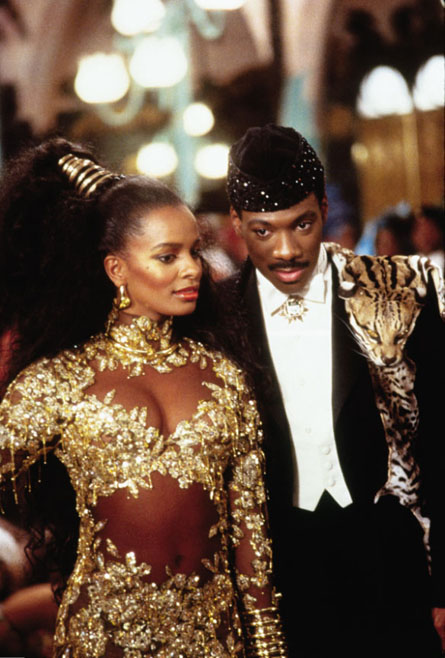
Akeem asks Imani, his chosen wife-to-be, to speak privately, breaking tradition.
When Akeem is presented with the beautiful woman who is to be his wife, Imani (Vanessa Bell), he asks to talk to her privately. She proudly tells him, “Ever since I was born, I’ve been trained to serve you.” He pushes to find out more about her, her favorite music, food, anything. But all she says is that she likes what he likes and will obey him. He says, “Anything I say, you’ll do?” after she refuses to not obey him, which is what he wants. He tells her to bark like a dog, and she complies, making a fool of herself as he is convinced this is not the woman he will marry. 
The fact that she was “born to serve” this man isn’t an anomaly–in patriarchal cultures steeped in tradition, the idea that women should be indoctrinated to be subservient to men is endemic. (Just last week, a U.S. congressman suggested that young boys and girls have segregated classes to be taught gender norms.)
When Akeem pushes back to his father and tries to get out of the marriage, saying he’s not ready, the king assumes he means sex. “I always assumed you had sex with your bathers,” the father says. “I know I do.” Again, the king is presented as misogynistic and patriarchal, without considering that his son may be trying to break free. He allows Akeem to go and travel for 40 days, assuming he wants to “sow his wild oats,” and that he’ll come back and marry the bride they chose for him.
As they prepare to leave, Akeem tells Semmi that he plans to find a wife during his travels. “I want a woman who will arouse my intellect as well as my loins,” Akeem says. They decide to go to New York City, specifically Queens, because he assumes there’s no better place to find a queen.
Akeem is excited to be in Queens; Semmi is less than impressed.
It’s a priority to Akeem that no one knows he’s royalty. He wants them to stay in the most “common” part of Queens, and asks the landlord to choose the “poorest” apartment for them to rent. When a woman throws garbage out of her window, Akeem exclaims, “America is great indeed–imagine a country so free, one can throw glass on the street!” Observations on wealth and ethnocentrism are also peppered throughout the film.
The two drape themselves in New York sports teams jackets and hats, and are mesmerized by a commercial for Soul Glo. Akeem goes to the barber shop (a gathering place near their apartment, where Murphy and Hall both play other parts). He gets his long princely ponytail cut off. The barber is impressed with his natural hair, and Akeem says he’s never put chemicals in it, just “juices and berries.” Later, the barber would rant and rant when Akeem asks for a Jheri curl, touting the importance of keeping hair natural. Between that and the brief rant by a white Jewish man in the barber shop (played by Murphy) that a person should be able to choose his own name, important facets of African American history and identity are touched upon in the barber shop (which were often official gathering places during the civil rights movement). 
After a night of meeting women of various disaster levels, Akeem and Semmi end up at a Black Awareness Week rally (specifically, the Miss Black Awareness Pageant), where Akeem immediately becomes enamored with Lisa McDowell (Shari Headley), the organizer of the rally and daughter of Cleo McDowell, who owns McDowell’s (a small fast food restaurant that borrows a lot from McDonald’s). She takes the microphone to stress the importance of individual expression (somewhat belittling the pageant, even if tongue in cheek) and asks the crowd to donate to a park for children to be able to express themselves. Akeem puts a giant wad of cash in the collection basket, and the next morning, Akeem and Semmi show up at McDowell’s to get jobs.
Akeem learns how to mop, and tries to flirt with Lisa, who is hard at work on a computer in her office. Akeem clearly, and immediately, values a woman with a sense of identity and purpose beyond serving a man.
Soul Glo heir Darryl (Eriq La Salle) is Lisa’s boyfriend, and the audience immediately knows he’s an ass–he puts no money in the collection basket (and lets Lisa think he was responsible for the large donation), he buddies up to Cleo and is condescending toward Lisa. If Akeem was more like Darryl, or even Semmi, his life would have been easier–he could have simply married his chosen wife and followed in the footsteps of what’s expected of powerful, wealthy men because “tradition.” The film presents these men to be critical of how patriarchy works–or doesn’t–within a culture (or cultures). 
The film continues to present these entrenched ideas: “Is this an American girl? Go through her poppa… Get in good with the father, you’re home free,” the barber tells Akeem. “I don’t know how it is in Africa, but here rich guys get all the chicks,” says a McDowell’s clerk (played by Louie Anderson).
Akeem goes along to a basketball game with Lisa, Darryl and Lisa’s sister, Patrice, who is presented comically as shallow and very interested in sexual conquests and wealthy men, unlike the noble Lisa. Can’t have a romantic comedy without a little virgin/whore dichotomy action!
Darryl makes disparaging remarks to Akeem about being from Africa, commenting about how it must be weird to be wearing clothes, and asking if they play games like catch the monkey. Earlier, the landlord says to Akeem and Semmi that the apartments have an insect problem, “but you boys are from Africa so you’re probably used to that.” When characters reinforce the African savage stereotype, it’s clear that these characters are not good.
Akeem is a good friend to Lisa when Darryl is forceful and misogynistic.
And when characters act like women are to be subservient sexual objects without their own identities, it’s also clear that they are in the wrong. From the king’s bawdy suggestions and adherence to the tradition of submissive, chosen wives, to Darryl pressuring Lisa to quit her job (“My lady doesn’t have to work”) or announcing their engagement without asking her if she wants to marry him (he went through her father, after all), men who don’t respect women are not the good guys–they are the ones who need to change.
When Akeem stands up to a robber at McDowell’s (Samuel L. Jackson doing one of the things he does best–wielding a gun and saying “fucker” as many times as possible), Darryl makes light of the fact that he hid, and suggested that Akeem knew those moves from fighting “lions and tigers and shit.” He then says, “They might not admit it, but they [women] all want a man to take charge–to tell them what to do.” Akeem smiles at him, but knows that’s not true. 
Lisa’s affection for Akeem grows when he quotes Nietzsche and when he is a thoughtful, sensitive listener when she’s angry that Darryl steamrolls their engagement, which she refuses. 
“I’m fine,” she assures Akeem. “I’m just not going to be pressured into marriage by Darryl, my father, anybody.” Akeem says he understands, and that he doesn’t think anyone should get married out of obligation. 
When they go out to dinner, Lisa says how nice it is to be with a man who knows how to express himself and she insists on taking the paycheck. Lisa’s attraction to these stereotypically not-masculine traits serves as a reminder that there is value to these qualities in both men and women. 
Lisa is smart and independent, qualities Akeem isn’t supposed to want.
Cleo pressures Lisa to marry Darryl as he sees her drifting toward Akeem. “You only like him because he’s rich,” Lisa says. Cleo–who has positioned himself as the ultimate bootstraps-pulling American dream–tells her that he just doesn’t want her to struggle like he and her mother did. 
Akeem’s charade begins to unravel as his family arrives in Queens via motorcade. Cleo is elated that Akeem is actually a prince; Lisa is devastated that he’d lied to her (and the fact that the king told her Akeem was only sowing his “royal oats” in America before he got married). 
Akeem chases after Lisa, and begs her to marry him. He offers to renounce his throne, and explains that he only wanted someone to fall in love with him for who he is, not for his money or royalty. She hesitates, but refuses, and runs off.
Queen Aeoleon (Akeem’s mother, played by Madge Sinclair) begins pushing back against her husband, challenging him about how he knows Akeem doesn’t love Lisa, and that the arranged marriage is a “stupid tradition.” “Who am I to change it?” asks the king. “I thought you were the king,” she says. 
Back in Zamunda, a royal wedding has begun, and Akeem is waiting for his bride, looking resigned and sad. A bride in an enormous pink dress and veil walks down the aisle. When he lifts the veil from her face, Lisa’s face is smiling at him. He looks elated, and his parents are smiling (the queen’s logic reigned), and Cleo steps up to join the king and queen. 
Akeem is surprised that Lisa is under the veil.
As they ride off in a carriage among a crowd of cheering partygoers, Lisa asks if she would have really given all of this up for her. “Of course,” Akeem responds. “If you like, we can give it all up now.” She says, “Nah,” and they laugh, and live, I’m sure, happily ever after.

The plot is pretty predictable. Female subservience is challenged, but standards of female beauty aren’t. The characters aren’t remarkably complex, but their motives are clear and almost always understandable. That said, this is a romantic comedy. I don’t mean to demean the genre as a whole, but I think it’s safe to say most blockbuster romantic comedies are pretty damn problematic, so to have a romantic comedy that subverts the notion of valuing wives who are simply beautiful and submissive while featuring a predominantly black cast and depicting Africa positively, I’d say that’s a win. 
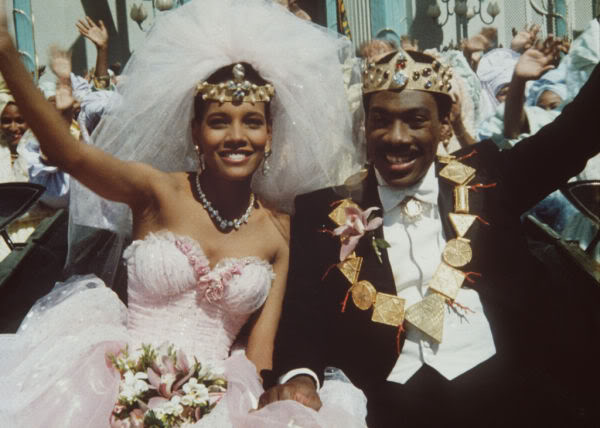
Lisa is OK with her royal title.

Leigh Kolb is a composition, literature and journalism instructor at a community college in rural Missouri. 
You Say Evil Like It’s A Bad Thing

Written by Myrna Waldron.
Maleficent appears at King Stefan’s castle
Last year I wrote a fairly well-received piece defending the Disney Princesses from a feminist perspective, “You Say Princess Like It’s A Bad Thing.” It was always my plan to write a sequel/companion piece to it. I like Belle and Ariel, but I admit that it’s the villainesses that keep me coming back. I get chills watching Maleficent demonstrate her infinite power. I sit in awe as Queen Grimhilde controls the very forces of nature to create her disguise potion. And, as a plus-size woman, I love the confidence Ursula has about her every curve. Yes, the Disney Villainesses are examples of strong female characters…who don’t have to be protagonists. Sometimes, it’s so good to be so bad.
“A thunderbolt! To mix it well. Now…begin thy magic spell.”
Queen Grimhilde:
  • Otherwise known as the Wicked Queen or The Witch, she is, of course, the very first villain in the Disney canon. And by god, is she memorable. Her face has a cold beauty enveloped in a dark headdress and a billowing violet cape. She is notably vain, but who can blame her? The Queen cannot be more than 40something at the most, and yet the Dwarfs, who must be positively ancient, refer to her as the “Old Queen.” Old? OLD? Not a wrinkle on her face and yet a group of dumpy, tiny old men consider her old. To hell with that. It’s quite obvious she lives in a world not so different from our own. A world where the only kind of beauty that is valued is the youthful kind. She fears the encroaching inevitability that one day her looks will fade, and then all that she has worked for–respect, power–will vanish and be transferred to her preteen stepdaughter. Her husband, the King, is noticeably absent, meaning that she is probably a regent. Her power is temporary, just like her beauty. The real tragedy of her death is that she has left her kingdom without a ruler. Snow White’s scampered off to go be with her Prince, and obviously doesn’t care about her birthright.
  • The Dwarfs speak of her talents with black magic. This is a brilliant woman. Deliciously bloodthirsty. The skeleton in her dungeon shows that she has killed before. This is not a woman to be trifled with. Her dungeon is full of books, tomes, instruments, and devices. In another world she would have been a scientific genius. As the Witch, she is an enormously quick thinker, and a rather effective actress. It is impossible for her to completely hide her malice towards Snow White, and yet see how ingeniously she tricks her into eating that poisoned apple. Note how she checked for an antidote to the poisoned apple, a sign of tremendous genre savvy. How was she to know that the Dwarfs would display Snow White’s body above ground as if she was some sort of attraction? Appreciate her enormous amount of power. How she could distill fear into liquid. How she could command the winds and lightning itself. Such a powerful, commanding woman. What a wonderful precedent she set.
Lady Tremaine figures out that Cinderella was the woman at the ball
Lady Tremaine:
  • Another early villainess and Wicked Stepmother whose name is underused (she is only referred to as Lady Tremaine at the ball when her daughters are being introduced). Cold green eyes and meticulously neat grey hair are the most recognizable features of a woman who is not to be trifled with. She has a dangerously quick, brilliant mind, and considering she named her horrible cat after the devil himself, apparently a sense of humour as well. The narrator tells us that she and her daughters are bitterly jealous of Cinderella. Can we really blame them? The daughters are plain, but hardly hideous, and yet the Prince and Duke act like they’re the ugliest women they’ve ever seen. The Prince actually rolls his eyes at them, an incredibly rude act considering that all he knows of them is that they came when summoned to the ball. The Duke shudders when Anastasia tries to show polite deference to him. Asshole. These two men are powerful, so Lady Tremaine has no choice but to be ambitious and try every opportunity possible to get her daughters to a higher station. She’d naturally be jealous of the stepdaughter who will get ahead mostly on the strength of her looks. As for the scene when the daughters rip apart Cinderella’s dress, although they tremendously overreacted, she IS wearing stolen jewelry and fabric. Is the movie seriously trying to tell me that after years of doing their laundry, Cinderella can’t recognize her own stepsisters’ belongings, and didn’t question where the mice got the materials to make the dress with? Come on now. And as for Lucifer, Disney, you are not going to convince me that a cat is evil just because he hunts house mice. I mean, how DARE a cat act according to its biology! Mice are destructive, noisy, disease ridden pests, and their talking and singing in this film has still never endeared me to them. Cat lover for life here.
  • Lady Tremaine herself is an amazingly effective villainess. The first of two Disney villains voiced by Eleanor Audley (who has to be one of the all-time greatest voice actors), I really love watching her brilliant mind work out details, and how quickly she reacts to things. I love the scene where she tells her daughters to control their tempers, and then immediately loses her own temper when she is interrupted by Cinderella. Her eyes are penetrating, and when she walks upstairs to lock Cinderella in her room, you follow her eyes the entire time. Her satisfied smirk when she believes she has succeeded over Little Miss Perfect. I also rather enjoy the touch of sarcasm and spite hidden in faux-affection when she refers to the clearly adult Cinderella as “Child.” Ah, if only all the Wicked Stepmothers in the innumerable adaptations of Cinderella were half as much fun as Lady Tremaine is.
“Now shall you deal with ME, O Prince. And all the powers of HELL!”
Maleficent:
  • I’m going to go out on a limb here and say that Maleficent has got to be Disney’s most popular villain, and probably one of their most popular characters, period. When I asked for nominations of favourite Disney villainess, her name came up more often than anyone else’s. And I absolutely love the hell (pun intended) out of her myself. Her iconic design, combining the horns of Chernabog (the Devil in Fantasia) with a purple and green motif, defines the ultimate Disney villainess. Her infinite power is fascinating to watch. She can make a castle shake and blow hurricane-like winds even before she’s entered the room. Character-wise, like Lady Tremaine, she also has a sick sense of humour. Her curse on Aurora isn’t out of jealousy (let’s not pretend she really gives a shit about whether she was invited to the christening or not) but just because she can. She even kills the Three Fairies’ flowers with frost for the fun of it. And, upon learning that her moronic followers had been searching for a baby for sixteen years, she lets out insane laughter that almost completely conceals her rage boiling within.
  • A commander of all sorts of demons and dragons, she can bend reality itself–her trademark fire is acid green, not red. She also possesses incredible poetry in her speech, once again provided by the amazing Eleanor Audley. “I lay my trap for a peasant and LO! I catch a Prince!” And I don’t think anyone can forget her immortal, iconic, incredible line, “Now shall you deal with ME, O Prince. And all the powers of HELL!” She used the h-word in a Disney film! AND GOT AWAY WITH IT! She also weaves a sarcastic tale to Prince Philip about how she intends to keep him in her dungeon for 100 years, and that when the extremely elderly (if even still alive) Prince finally comes to awaken his Princess, she’ll still be young and beautiful and he’ll be old and withered. She ends her tale with a sarcastic, “Proving true love conquers ALL!” and can’t keep herself from laughing at the idea. She’s aware she’s in a fairy tale. That’s how powerful she is. And, as a Disney Channel special on Disney Villains pointed out to me, she would have won if it had been a fair fight. The Fairies magicked away everything possibly fatal to Prince Philip. The only part he did himself was hacking away at the thorny brambles, which, in comparison to the rocks and boiling pitch, were not a real threat. He didn’t even really strike the final blow. No, in my preferred ending to Sleeping Beauty, Maleficent swallows the Prince and Fairies whole and then goes to get that restful sleep she’s been lacking for 16 years. She deserves it.
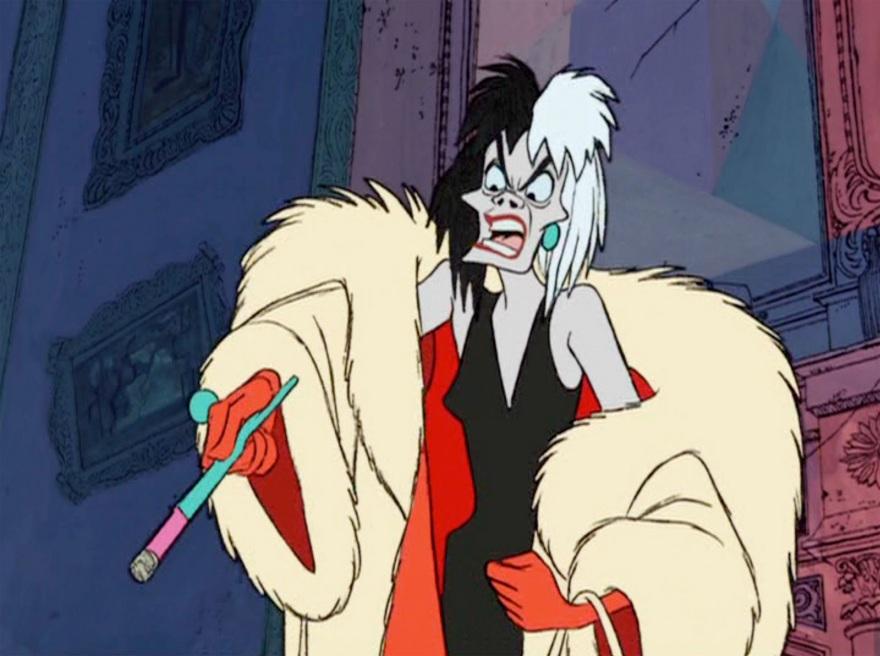
Fearing being discovered by the police, Cruella demands that the puppies be killed quickly
Cruella De Vil:
  • There may be a wide variety of evil women detailed today, but Cruella’s kind of evil is, well…particularly nasty. First she purchases an enormous number of dalmatian puppies, then, just to get back at an old friend, kidnaps 15 more puppies to bring the number to 99. And, of course, what does she want to do with them? Make spotted dogskin coats! She’s quite obviously deranged, and has clearly pulled off this sort of thing before, judging by Anita’s comment about Cruella’s “new” fur coat, and how she addresses Jasper & Horace. But really, can we blame her for losing her mind a little? Her parents literally named her Cruel Devil. It’s like they were expecting her to turn out bad. Plus, her skunk hairdo and literally pointed cheekbones haven’t done her looks any favours. As she says, her only true love is furs–it’s the only way she can feel confident.
  • You have to admire her car. And mourn it when she wrecks the hell out of it. I can only shake my head at the 50-year-old attempt at “humour” with the “Crazy woman driver” bit, but then again, she was trying to make a moving van tip over. That takes some destructive ingenuity. Also, I can somewhat sympathize with her contempt for Roger. He does look stupid with that pipe. I also am in awe of her fantastically vindictive temper. Her suggestions for violently offing the puppies are without any restraint, and she even throws a bottle of wine into a fire, barely even reacting when it explodes. Another trait that makes her a well-developed villain is her verbal tic for calling people idiots. It’s like her favourite insult. She likes calling people fools and imbeciles a lot too. A proper British lady. And what of that song Roger wrote about her? Those lyrics have got to be slanderous, and yet he gets away with it. No human actually finds out it was Cruella who stole the puppies, so there’s no evidence supporting his lyrics. Poor Cruella. Loses that awesome car and now she has to listen to herself being insulted on the radio.
Lyrics from “Poor Unfortunate Souls” in which Ursula tries to persuade Ariel
Ursula:
  • Oh, Ursula. The world is a better place with you in it. A fantastic villain, with a curvaceous octopus frame and a deep voice to match. Like Eleanor Audley, I love just listening to Pat Carroll talk. Woman’s in her 80s and she still happily voices Ursula every time. Ursula may be a villain, but speaking as a fat woman, she is a tremendously important character to me. She’s big, and she doesn’t care. She loves herself, and is pure confidence in an aquatic frame. She does transform herself into a slim woman to become Vanessa, but I think that was more of a “trying to look like Ariel” thing than “trying to be skinny to attract a man” thing. C’mon. Like Ursula doesn’t know she’s sexy in her own way. “BOOODYYYY LAAAANGUAAAAGE, HAH!” I also enjoy her pets, Flotsam and Jetsam. Horrible icky-looking eels, and yet she dearly loves her “little poopsies.”
  • She’s also very, very capable. Look how easily she played Ariel for every step of her story. I’m going to consider the Broadway musical’s plot point that she and Triton are siblings non-canonical for today, but her revenge plan went almost perfectly. When she gets the trident and now commands the entire ocean, her display of sheer unbridled power rivals Maleficent’s transformation into the dragon. That’s not just Triton’s power she’s using, she’s combining it with her own. And oh, what a sweet talker she is. She is the master of the Faustian Bargain. I particularly love her deliberate dramatic irony when she tries to convince Ariel that men don’t care what women have to say. I also love watching her work with her cauldron. Those colours. Those explosions and smoke trails. This is a formidable lady, and an absolutely incredible villainess.
Yzma visualizes turning Kuzco into a flea, then smashing him with a hammer
Yzma:
  • The Emperor’s New Groove came out during that kinda awkward time where I was “too old” for Disney movies, (Hah!) so this was my first viewing of this film. And wow, I wish I’d watched it earlier. Yzma is a twist on all the other villainesses in that she is not only not very good at the whole evil thing, she’s hilarious. And really, it’s kinda evil to try to assassinate an emperor, but he also kinda deserved it. She probably wouldn’t have been a much better ruler than Kuzco was, but her usage of “Peasant” as a pejorative would have at least been memorable. Her looks are a bizarre combination of Maleficent, Ursula, and…Zirconia from Sailor Moon. Seriously, GIS her if you’re not a Moonie. Incredible resemblance. She’s ancient and skinny as a rail with spider-like eyelashes, and yet dresses almost like a Vegas showgirl. Yzma shot up to one of my favourite Disney villains very quickly. The Adam West version of Batman has always been my favourite, so her being voiced by Eartha Kitt made me miss her tremendously.
  • She has a similarity to Queen Grimhilde in that she has her own “secret” lab. And it’s actually a lab this time! She wears a lab coat and goggles and everything! Hey, look at that. A woman of science. Lord knows why she specializes in animal transmogrification potions, but whatever. She has so many funny little quirks that make her a three-dimensional character. Her strong dislike of gravy. Her acquiescing to have dessert and coffee before getting rid of an unconscious Kuzco. Her inexplicable decision to have a lever open a trap door to an alligator-infested moat (which even she doesn’t understand). Her insult that finally makes her assistant Kronk turn on her–that she never liked his spinach puffs–well, honey, I can sympathize. I don’t like spinach either. And, honestly, I was rooting for her the entire time. To heck with Kuzco.
Lyrics from “Mother Knows Best” where Mother Gothel attempts to scare Rapunzel into obedience
Mother Gothel:
  • She’s a very recent villainness since Tangled came out only a few years ago, but she definitely made her mark on this film. Her chief trait is her utter fear of growing old and dying, which, to be fair, is a reasonable fear. What wasn’t so reasonable was her hogging the sunlight flower so only she could benefit from its gifts. But there’s a villainess for ya. Besides Queen Grimhilde, she’s possibly one of the most attractive villainesses Disney has created. Her wavy raven hair is striking, as are her wine red gown and wide grey eyes. Her joke about being a beautiful young woman isn’t all that far off. I can understand wanting to hold on to that. And really, she tried not to be completely evil. Is it her fault that cutting a lock of Rapunzel’s hair severs its magical properties?
  • Another distinctive character trait is just what a…loving mother she is. She’s basically a textbook example of the mentally/emotionally abusive parent. She compliments, then harshly criticizes. She raises Rapunzel to be terrified of the outside world. Gothel insists that Rapunzel is foolish, clumsy and helpless, and only she can protect her from the dangers of the world. She only reluctantly listens to Rapunzel’s wishes, and perhaps this is because she wants to make sure Rapunzel is still willing to sing for her. In a clever touch of subtlety, when she says, “I love you most,” to Rapunzel, it’s her hair she kisses. The interesting thing about Mother Gothel is that she’s obviously trying to straddle between being a decent mother and a cruel one, and she can’t help failing at it because she’s such a completely selfish person. Once Rapunzel’s kidnapping is discovered, Gothel snaps, and decides she is going to be the “bad guy” after all. Her fear of death is such that she’ll control Rapunzel literally forever, and won’t hesitate to kill if necessary. And when Rapunzel’s hair is completely cut and the flower’s spell fades, her incredibly rapid aging is pretty disturbing. She even does the trademark Disney thing of falling to her death…except that she’s already dead. She’s dust before she even hits the ground. Damn! Just how old WAS she?
The definition of the Strong Female Character differs from person to person, but I define it as: #1, She has realistic flaws, #2, She is in charge of her own destiny, #3, She acts with agency independently of male characters, and #4, Her story is compelling to watch. Pretty broad definition, I think, and hey, look at that. Every single one of these villainesses counts. A Strong Female Character does not have to be a protagonist. Sometimes it’s every bit as fun to root for a villain as it is to hope for the hero. And Disney, to their credit, has made some absolutely amazing villains. The ladies profiled here were a combination of my own personal favourites and some votes from my readers. And, I gotta say, I’ve had more fun writing this than I’ve had in a very long time. Viva la evil!

 
Myrna Waldron is a feminist writer/blogger with a particular emphasis on all things nerdy. She lives in Toronto and has studied English and Film at York University. Myrna has a particular interest in the animation medium, having written extensively on American, Canadian and Japanese animation. She also has a passion for Sci-Fi & Fantasy literature, pop culture literature such as cartoons/comics, and the gaming subculture. She maintains a personal collection of blog posts, rants, essays and musings at The Soapboxing Geek, and tweets with reckless pottymouthed abandon at @SoapboxingGeek.

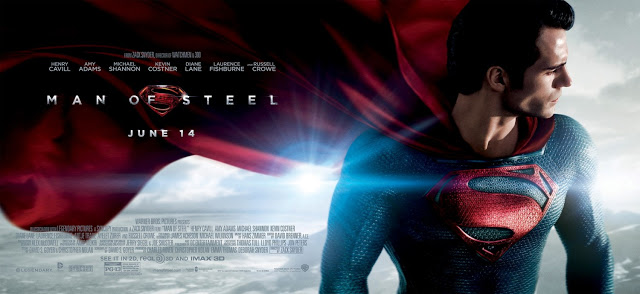
‘Man of Steel’: Wonderful Women, Super Masculinity

Movie poster for Man of Steel
This guest post by Natalie Wilson previously appeared at the Ms. Magazine Blog and is cross-posted with permission.
Amy Adams is amazing as Lois Lane in Man of Steel. Her version of Lois is fearless, witty and wise. Diane Lane and Ayelet Zurer as the respective mothers of Superman are also amazing, as is the fact that both Superman’s Kryptonian mother, Lara Lor-Van (played by Zurer), and his human mother, Martha Kent (played by Lane), are displayed as equal partners with equal power and say to his two fathers. Further, not only are the heroic females strongly played and given substantial dialog, but so, too, is the lead female villain, Faora-Ul (Antje Trau), second-in-command to the Kryptonian General, given just as much screen time, dialogue, and power (if not more) than Zod, the Kryptonian super-villain played by Michael Shannon.
Michael Shannon as General Zod in Man of Steel

In general, Man of Steel, the latest film iteration of the Superman story, conveys that women are just as key to the Superman narrative as men. This is true from the opening moment, when the birth scene of baby Kal-El, who will grow up to be Superman/Clark Kent, focuses on his mother Lara. Then, the decision to send their child to earth is equally shared by Lara and Jor-El (the Kryptonian scientist played by Russell Crowe). Once the movie shifts to the young Clark’s life on earth, his human parents, Martha and Jonathan Kent (Lane and Kevin Costner), are again equally featured. Lane is particularly strong as Martha, saving Clark from the monsters in his own head in an early scene, and later supporting him as he struggles with what the revelation of his identity has wrought. Part of the consequence of this revelation is the destruction of her home—but the only thing she worries about salvaging is the photo albums, telling Superman not to worry about the house, that “it’s only stuff.”

All of this may seem relatively minor, but it is rare for superhero movies to feature females in important, non-sexualized, non-damsel-in-distress roles (as recent articles and Twitter buzz has focused on, particularly in relation to the fact there is still no Wonder Woman movie). It is rare to depict women as non-materialistic and wise, not to mention portraying mothers as being alive (especially in Disney films!), let alone being as important as fathers are. As such, I had planned to focus on the females in the film for my review.

Henry Cavill, Amy Adams, and Antje Traue in Man of Steel
Alas, after looking up the cast of the film on IMDB in order to write this review and coming across the image of the young boy who plays 9-year-old Clark Kent (Cooper Timberline) posing with arms bent on hips, a stern look on his face and a cape flowing out behind him—an image that smacks of muscular masculinity—I was consumed by the image of my own son, age three or thereabouts, running around the house endlessly in his Superman costume. This, coupled with two very young boys who sat in front of me at the screening, astride their mother’s lap, asking questions like “Why isn’t Superman flying?” and “Where is Superman’s cape?” got me thinking: How does the iconic image of Superman shape young boys’ concepts of masculinity? And, given that Superman is generally viewed as the ideal super-hero model for boys (less dark than Batman, less conflicted than Spiderman, more memorable and enduring than Iron Man, Aquaman and so on), what does this new movie deliver in terms of modeling “super masculinity”?
Cooper Timberline as a young Clark Kent in Man of Steel
On the one hand, there are many positives. The film questions hyper-masculinity, militarism and other power-over models, or the reliance on brawn over brains. It condemns the sexual objectification of women, macho bravado and the bullying aspects of male culture.

On the other, though it is critical of hyper-masculinity and the violence it engenders, the film’s extended action-and-explosion-packed ending undercuts this critique. At the level of content, the film offers a feminist-friendly version of Superman, but its visuals—especially the extended fight scenes between Superman and Zod (which dominate the last 45 minutes or so)—contradict this narrative. The content says “Women and men are equally important and violence/domination is bad for everyone” but the visuals say “Let’s blow shit up and watch dudes punch each other through buildings!!”

Still from Man of Steel
Back to the positives, the film not only condemns sexual objectification and harassment of women, or the ways in which traditional masculinity harms women, but also denounces men’s bullying of and violence toward one another—the ways in which traditional masculinity also harms men. Near the start of the film, when a man slaps a waitress’ butt, Clark, working as a busboy, intervenes, calling out the man for his inappropriate behavior. The man then goads Clark with a “what are you gonna do about it” attitude, dumping a beer over his head. The other men at the bar snigger in approval. Rather than resorting to violence, though, Clark walks away. Similarly, later in the film, in a flashback to when Clark was in middle school, a group of boys attack him, prodding him to fight back, but he refuses. Again, the males act in pack fashion, spurring one another to be violent and criticizing those who do not “live up” to the violent ethos of being a “real” man.

The central male characters who champion violence are also rebuked in the film, but none more so than Zod for his imperialistic, genocidal and militaristic goals. The film deserves props here for showing that women can not only be just as good as men, they can also be just as bad as them—exemplified by Zod’s second in a command, a woman. In so doing, it de-genders violence, showing that it is not inherently male but rather that the power-over mentality is the problem, not the gender of the person who buys into it. The weapon-happy stance of the military is also reproached, as when Colonel Nathan Hardy (Christopher Meloni) calls for his soldiers to shoot at Superman, or when General Swanwick (Harry Lennix) is rebuked for sic’ing a surveillance drone on Superman (a very timely rebuke indeed!)

Soldiers in Man of Steel
In contrast to these power- and weapon-happy males, the film offers various representations of a kinder, gentler, more positive masculinity via Jor-El and Jonathan Kent, Superman’s two fathers. Both of these figures encourage Clark/Superman to act with integrity and empathy. Framing him as “the bridge between two worlds,” these fathers insist that Clark/Superman can “embody the best of both worlds” and bring a message of hope that insists “every person can be a force for good.”

Here, the film circulates around the fear of difference in ways that nod to the narrative that arguably undergrids the original comic—a narrative that has been read as criticizing racism and, in particular, anti-Semitism. The author, much like Clark in various iterations of the story, was bullied as a kid, and the original comics were penned during the years preceding World War II and the rise of the Nazi party in Germany. Thus it’s not a stretch to read Superman as a racialized underdog hero, an “alien” who is despised for his difference. His Kryptonian mother’s comment at the outset of the film underscore this reading. She worries that Kal (Clark’s Kryptonian name) will “be an outcast, a freak” on earth. His human parents share similar fears, encouraging him to hide his difference, to “pass” as human. But partway through the film, Kal/Clark sheds his closeted identity in order to save earth and its inhabitants.

Henry Cavill as Superman
In a pivotal scene, he confronts the military brass who have handcuffed him upon the discovery of his “alien-ness,” saying, “You’re scared of me because you can’t control me.” Here, a bevy of connotations arise—how violence is about control, how difference is controlled through violence so that those in power can maintain their power, how viewing difference as an alien threat leads to violence. But, as Superman insists, the inability to control him does not make him an enemy. (U.S. government and military leaders please take note: Just because we cannot control what other countries do, this does not make them our enemy.)

Here and elsewhere, this version of the Superman story questions the way in which power-over mentality, coupled with hyper-masculine bravado, will lead to planetary ruin. Metaphorically, the film questions the reliance on brawn (embodied by Zod and the military brass) over brains (embodied by Jor-el) and heart (embodied by Superman). Further, the Krypton/Earth binary can be seen as emblemmatic of traditional notions of male and female, with the powerful Krypton threatening to control and/or annihilate Earth. Instead of maintaining these dichotomies, the film suggests that both Kryptonians and humans, males and females, can be a “bridge” to a better world. The movie also takes pains to depict Lois and Superman as a team, rather than as a savior and his damsel in distress. This is particularly underscored near the end of the film when someone looks on at the pair after the near destruction of earth, and says “THEY saved us” not “He saved us” or “Superman saved us.”

Lois is depicted not only as a fearless, intrepid investigative journalist, but also adept at figuring out Kryptonian ships and carrying out plans of escape/survival. Near the end of the film, she tells Superman, “I know how to stop them” (Zod and company). As such, she is as much superhero as he, though she is human and he is super-human. To make her even more amazing, she is clearly cognizant of hyper-masculine posturing, as when she is waiting to be shown a Russian submarine the military thinks they have found and says to the brass, who are verbally trying to out-macho each other, “If we are done measuring dicks…can you show me what you found?”

Laurence Fischburne and Amy Adams in Man of Steel
On the less positive side, Superman, as the personification of “super masculinity,” is—as indicated by the reboot title—a hyper-muscular man of steel. His moniker suggests he is hard, unbreakable, impervious and made of muscle—notions that mesh well with the unattainable ideal of masculinity currently in circulation and which are embodied via his excessively built form. Though he uses his strength for good and resorts to violence only as a last resort, the overly-long excessive fight scene between he and General Zod contradicts the earlier narrative claims the movie makes regarding violence, militarism and power. If these things are bad (as the first three-quarters of the film suggests) why do we need to watch scene after scene of he and Zod punching each other, destroying buildings and displaying their uber-strength? Why was it necessary to destroy multiple buildings, cars, planes, semi-trucks, satellites and so on in a way that makes Spock’s overly-long fight scene with Khan in the recent Star Trek: Into Darkness seem short by comparison?

My sense is that those in charge of filming, editing and special effects were loathe to cut these visually arresting scenes. Which reminds me of some comments I heard walking out of the film: “I feel like I am on sensory overload,” “I feel like my senses have been assaulted,” and “After all those explosions, I think I lost some hearing.” As these comments suggest, these action scenes can in themselves be viewed as a form of assault on the audience—one that, admittedly, certain audiences crave—but one that nonetheless suggests that the way to be “super” (as a man or a film) is to be violent, to blow shit up, to be stronger than the other guy/gal.

Laurence Fishburne during some explosions in Man of Steel
As the fight scenes dragged on and on, the two young boys in front of me stopped squirming in their seats and stared at the explosive images on the screen—images that screamed the only way to “win” and be “super” is via violence and weaponry, or have a body that is itself a weapon. This is not the image I hold of my son running around in his Superman costume at age 3, nor of his smiling, dimpled face and curly-haired locks in his kindergarten picture (in which he’s wearing a Superman t-shirt). No, that boy liked the idea of flying, not killing. But with so many images that teach boys (and girls) that to be a “super-male” is to be one capable of violence, how can we expect our boys to soar in ways that promote messages of hope, inclusivity and an insistence “every person can be a force for good”?

I don’t have the answer. But I do know that my now-16-year-old-son, who attended the screening with me, had a key complaint about the film: “The fight scenes were way too excessive.” If a teenager raised in a culture that champions such scenes as “the stuff great blockbuster movies are made of” gets this, why the heck can’t Hollywood?


Natalie Wilson, PhD is a literature and women’s studies scholar, blogger, and author. She teaches at Cal State San Marcos and specializes in areas of gender studies, feminism, feminist theory, girl studies, militarism, body studies, boy culture and masculinity, contemporary literature, and popular culture. She is author of the blogs Professor, what if …? and Seduced by Twilight. She is a proud feminist mom of two feminist kids (one daughter, one son) and is an admitted pop-culture junkie. Her favorite food is chocolate.

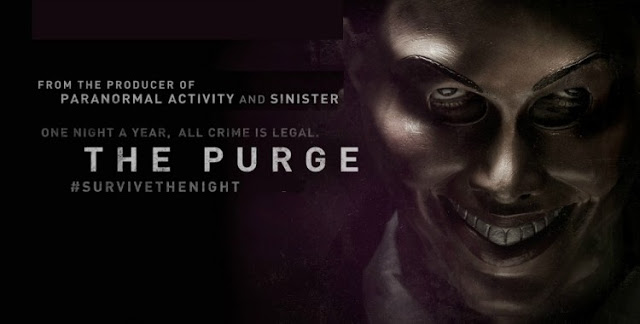
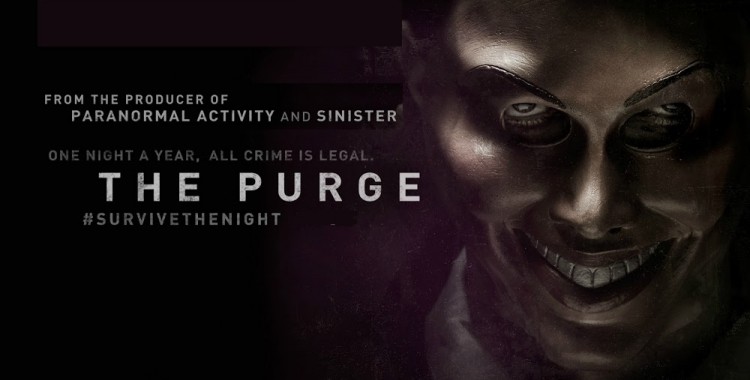
Think There Aren’t Feminist Themes in ‘The Purge’? Think Again

Movie poster for The Purge
Spoiled by Stephanie Rogers.
Turns out, the best way to see the latest violent horror film is to watch it in a packed theater in Times Square. The audience laughed together, squealed together, shouted at the screen together, and collectively bonded over the most ridiculous features of the movie as well as the more progressive aspects.
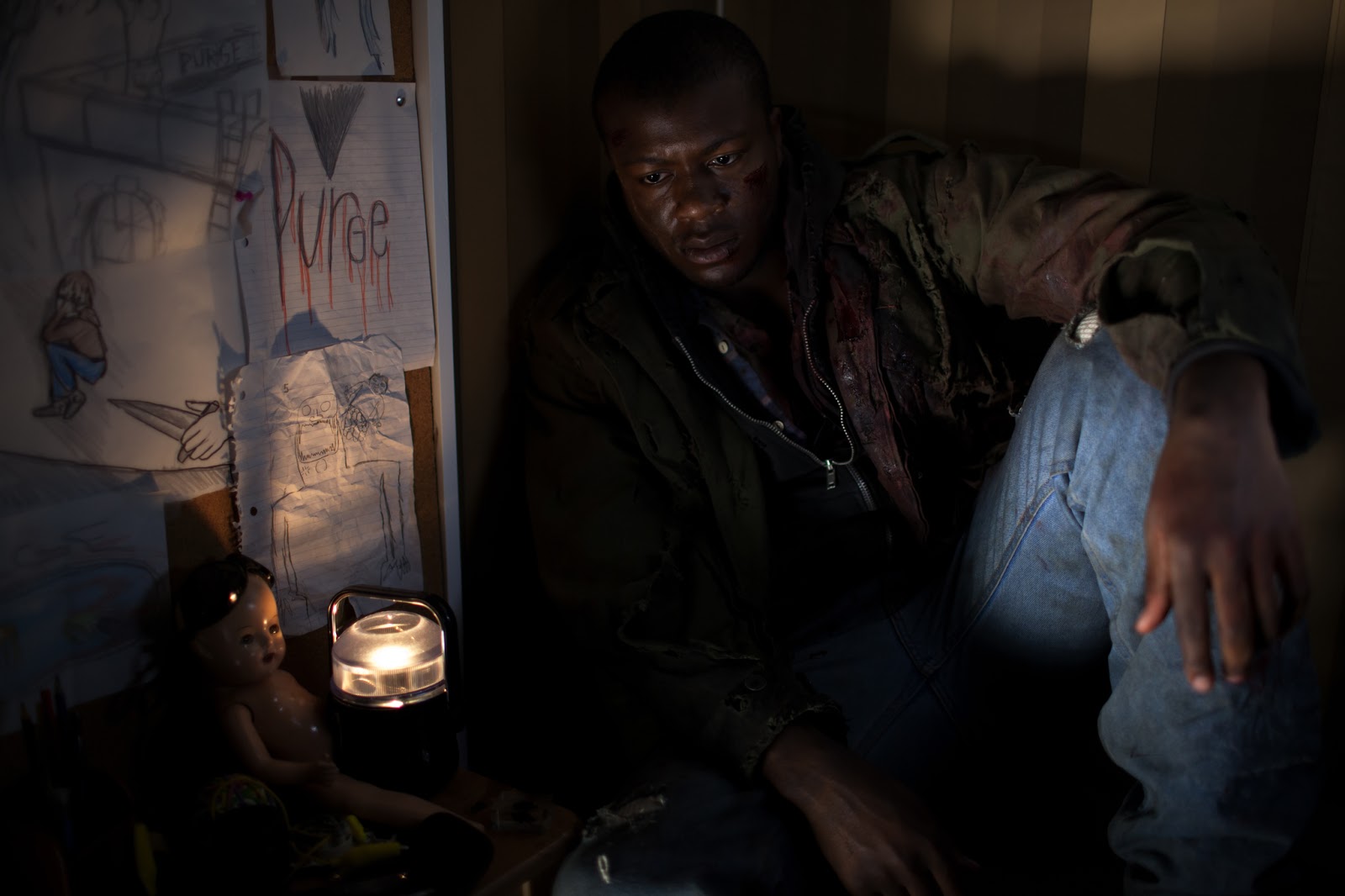
As the credits rolled, a young Black woman sitting behind me stood up and yelled, “And the Black dude survives!” I mean, hadn’t we all been thinking it? We’re so used to filmmakers killing off characters of color, especially in horror films, that watching a Black dude walk into the sun at the end of a movie after saving a bunch of rich white people stood out as a fucking anomaly. The Purge is certainly problematic, but it surprised me to feel a sense of … hope at the end of it. Could this reversal of the white savior trope start a new trend in filmmaking? And did a film finally punish a Rich White Dude instead of celebrating his successes at the expense of others? And what would movies even be like if these became the new tenets of onscreen storytelling?
I like to do this thing sometimes where I show up at films with absolutely zero information about them. The Purge looked like a fun movie to try that with, and I’m glad I did it; if I’d known the premise of the movie in advance, I doubt I could’ve talked myself into paying 75 dollars to see it and spending 45 minutes slow-walking 3 blocks to the theater in the most crowded area of Manhattan. Luckily, the plot made itself clear within the first few minutes. 
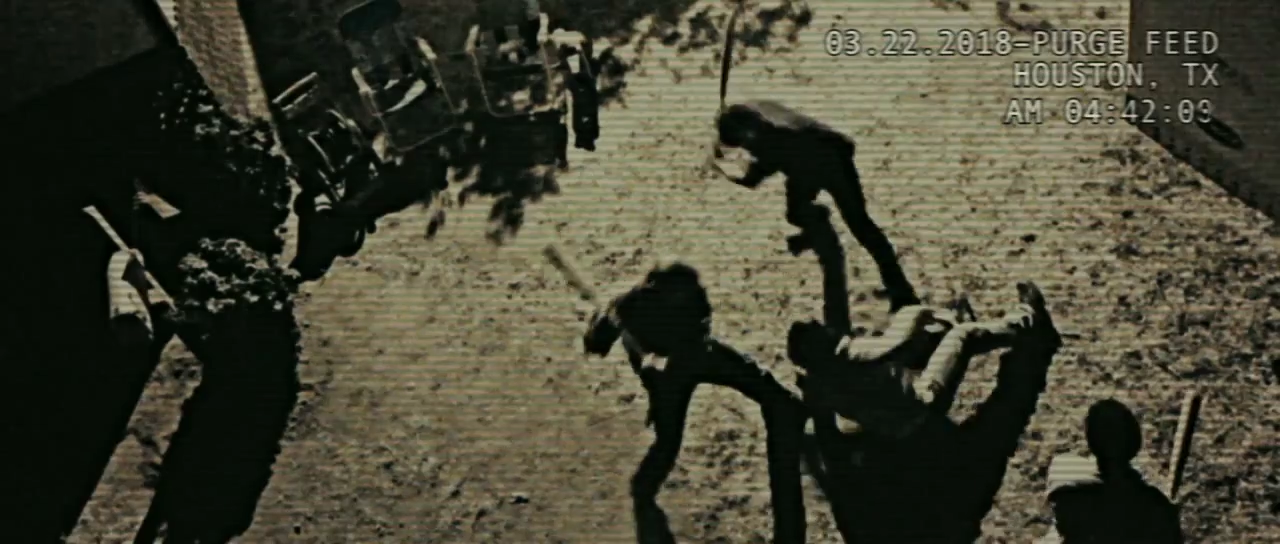
Video footage of the annual Purge
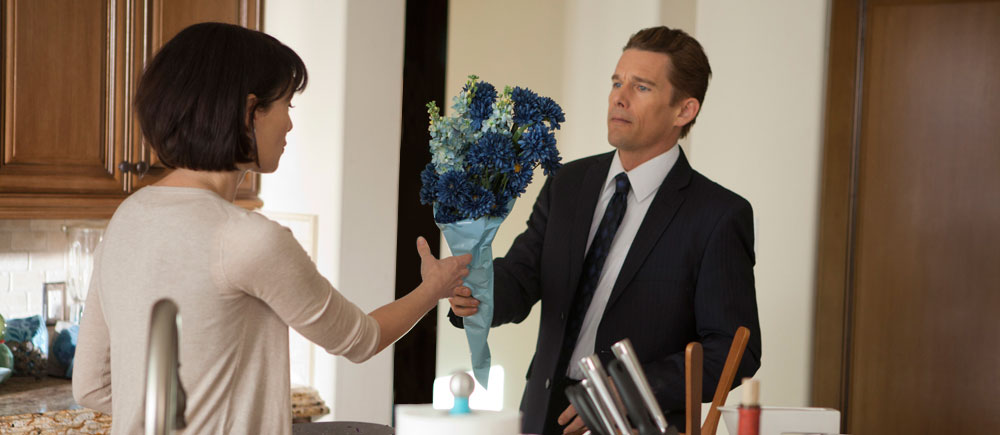
It takes place in the future, nine years from now in the United States, which boasts a government known as The New Founders of America (NFA). The New Founders have instituted an annual day of murder and mayhem dubbed The Purge, allowing anyone to roam the streets freely in search of people to violate so that they might purge themselves of their lurking hate and rage. It lasts twelve hours and during that time no emergency services or police officers exist, making it a free-for-all. Not everyone is required to participate, but people are encouraged at least to indicate their support of The Purge by placing a vase of blue baptisias (baptism, get it?) on their front doorstep in a gesture of solidarity. While the family the film focuses on, The Sandins, appears not to necessarily enjoy The Purge or participate in the “festivities,” they support its existence, mainly because the institution of The Purge lowered the once-staggering unemployment rate to 1%, saving the economy and making the annual crime rate almost nonexistent. The main characters see it as a tolerable, necessary evil, and besides—they’re the richest people in their state-of-the-art secured neighborhood; what’s the worst that could happen to them
“Don’t forget to put the Baptisias on the porch, Honey!”
Well, they could help a Black dude avoid getting murdered by a bunch of creepy, self-proclaimed “highly-educated” white people in their twenties, who roam the gated suburbs carrying machine guns and machetes and wearing masks like they just wandered off the set of The Strangers. Your bad, Sandins, your bad. 
WTFWTFWTF
Let me take a step back.
The Sandins actually fucking suck for the most part, at least in the beginning. Ethan Hawke plays James Sandin, who works as a security developer and who clearly profits off the The Purge; the Sandins own the biggest house in their subdivision—a jealous woman neighbor sarcastically “jokes” that The Purge Survival Systems that James sold to everyone in the hood obviously paid for the new addition to the Sandins’ home—and James himself gloats during that night’s family dinner about his rise to the spot of Top Seller at his security firm. (Rich White Dudes profiting off the hardships of others … does that sound familiar to anyone?) Mary Sandin (Lena Headey) gives the impression she’s a homemaker; we see her cooking dinner and chiding her children (Zoey, a high schooler and Charlie, a younger teen) as she readies them for the pre-purge lockdown, and she leaves the house only to place the baptisias on the porch and speak with the neighbor who envies her family’s wealth. The Sandins seem truly clueless about the extreme jealousy all the less rich white people (minus the token, light-skinned woman of color) feel toward them, but the audience gets the message all over the place: Sandins, consider yourselves fucked. 
Uh-Oh
On the surface, The Purge aims to critique the sick shit going on in our country right now, albeit very problematically. Dan Gainor, VP of Business and Culture at the Media Research Institute called The Purge “an obvious attack on the Tea Party and Christians” and also argued that:
… the movie is a direct attack on the NRA, an organization filled with millions of law-abiding gun owners. The loony left’s reflexive hatred of the 2nd Amendment is founded in the concept that people who don’t break the law are somehow evil for exercising the Constitutional rights.
Okay, Dan Gainor.
The truth? No anti-Christian or even anti-gun message exists in The Purge, although the director, James Monaco, has said in interviews that the film does, in fact, allude to an indictment of gun culture. In reality, The Purge employs extreme gory violence that undercuts any potential critique of violence, and the gruesome knife scenes and weaponless face shattering against tables stick out way more than the gun stuff. At times, The Purge even seems to support gun ownership; the Sandins wouldn’t have survived those twelve hours without guns, and owning a gun for the protection of oneself and one’s domestic space is a much-touted NRA message. The anti-Christian thing, too, is a reach. The characters worship money for sure, and the film critiques that, but neither Christianity nor any religion ever come up.
Unfortunately, The Purge becomes muddled in its message about government; Big Government runs amok here—an old school conservative’s nightmare—and The New Founders essentially sanction the murder of the have-nots, the people on the lower rungs who can’t afford James Sandin’s security system to cordon themselves off from the annual purgers. If anything, it supports the old school conservative argument against Big Government, and a viewer could easily read it as a cautionary tale for a federal government that holds too much influence over its citizens. 
State-of-the-Art-Secured McMansion
On the other hand, neo-cons of 2013 seem to think they dislike Big Government while simultaneously inviting it into wombs all across America, so who the fuck even knows anymore. The point is, The Purge wants to yell from the rooftops, “How awful for the government to endorse the murder of its citizens!” but ultimately yells, “How awful for the government to endorse the murder of its citizens … but, wait, look how well it works when we rid the country of these homeless welfare seekers!” The Purge tries to have it both ways and fails to deliver any real cohesive message regarding guns, religion, or the role of government.
But I definitely heard the slam against the one-percenters loud and clear, and what a welcomed fucking change from the endless dumping of Hollywood Mancession films into the multiplex. The Purge imagines a science fiction-esque United States where the rich take over entirely and wage a violent war against the lower classes, even going so far as to pass a Constitutional Amendment (the 28th) to require its existence. (Most government officials naturally receive legal protection from harm during The Purge.) Simply put: this futuristic United States decides that murdering those most in need makes more sense than uniting together in support of them. In this way, the film does seem to offer a critique of the country’s current fringe groups (the Tea Party, most Republicans) by illustrating a worst-case scenario for a society that values capital over people—and fuck if it didn’t scare me a little. 
This is the scariest person I’ve ever seen on film
Because this is a film about class relations and capitalism, the less rich (white people) end up turning on the super rich (white people) during the night—another nod to the idea that unregulated capitalism leads only to societal destruction. The end of the film includes audio of newscasts that play over the credits, with broadcasters reporting that the high number of deaths made that year’s Purge the most successful ever. So, while the film might not necessarily conclude with any real epiphany by the United States and its citizens (yay for killing the homeless!), it allows the audience a glimpse into the lives of a few one-percenters who try to destroy one another, all because of money. Oh, and because Charlie Sandin (a not-yet-sociopathic teen) decides to help a Black dude. “And the Black dude survives!”
As a feminist movie critic, I adored these flips on conventional horror tropes, and several of them exist. 
Charlie uses his Robot Baby (omg) to help hide the Black dude from his parents
The White Savior: The Black dude, who seriously remains nameless, shows up in their neighborhood after the Sandins’ purge lockdown (where a hardcore security system barricades their entire home). Charlie Sandin hears gunfire in the streets and sees in the surveillance cameras the Black dude yelling for help, covering a bleeding wound. Charlie zooms in on the man’s terrified face and decides, “Duh, I need to help this guy.” So he unlocks the security system and yells for the shocked-as-hell Black dude to come inside, much to the dismay of his parents. At first, I thought, “This white savior trope again?!” but it didn’t last long. While Charlie helps the man, the older Sandins clearly want no part of it, especially after a group of asshole college kids (that I will forever refer to as “the highly-educated murderers”) threatens to break into their home if they refuse to release the Black dude back into the streets. See, “that homeless swine” belongs to them, and if they don’t get to kill him, they’re more than willing to kill the entire Sandin clan instead. So, duh, the parents torture the Black dude—in an effort to throw him back to the highly-educated murderers—while Zoey and Charlie freak the fuck out like, “WHAT ARE YOU DOING.” 
Charlie watches the Black dude on surveillance cameras
The Protective Patriarch: All of this occurs in the name of James Sandin protecting his perfect, white nuclear family. He simultaneously apologize-stabs the Black dude several times while saying, “I’m sorry. I need to protect my family.” Mary Sandin, though, gets her, “James, you’re no better than the people out there!” on—because women and children always play the role of Moral Compass when men go astray. That trope unfortunately remains intact for the rest of the film, culminating with Mary’s decision not to murder her new home invaders (the less-rich jealous neighbors, at this point; did we NOT know they were gunning for the Sandins, too?). At one point Mary says, “Too many people have died tonight, so we’re going to end this night in fucking peace.” Or something. Even the Black dude says to James, “You need to protect your family,” offering up himself to the highly-educated murderers, but James experiences a swift change of heart and refuses to sacrifice him. Thanks to the women and children.
And in a way, I liked that the women and children felt compelled to protect the Black dude and not throw him to the wolves/preppies; I didn’t read their desire to do so as an employment of the white savior trope because these highly-educated murderers aimed to roll in there and kill everybody regardless. So the Sandins weren’t saving the Black dude as much as they were making it only slightly more difficult for him to get murdered. “And the Black dude survives!” in the end. And saves (most of) the Sandins. And walks off into the sun. After looking at Mary Sandin and saying, “Good luck” all deadpan. Ha. 
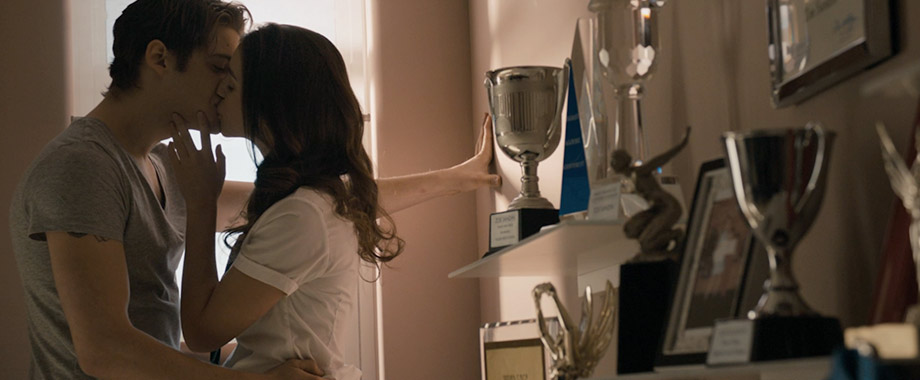
Zoey secretly making out with the bro her dad hates
The Sexual Teenage Girl: Zoey Sandin interests me. Her character follows conventional horror film tropes from the get-go: she dates an older boy, much to the dismay of her disapproving dad because Daddy’s Little Girl. She sneaks around behind her family’s back, and her boyfriend even hides out in her room, staying put for the Sandins’ home lockdown. They make out on her bed while she wears a fucking schoolgirl outfit slash uniform; the scene screams INNOCENT VIRGIN about to HAVE SEX and then DIE because THIS IS A HORROR MOVIE. But. Her dad kills her boyfriend instead in a good ol’ Purge Family Shootout after her boyfriend pulls a gun on James out of nowhere (presumably to purge himself of the rage he feels for not being allowed to date Zoey), and James fires back in self defense. Zoey, a little devastated, runs off and hides for some reason, probably because THIS IS A HORROR MOVIE and groups never stick together.
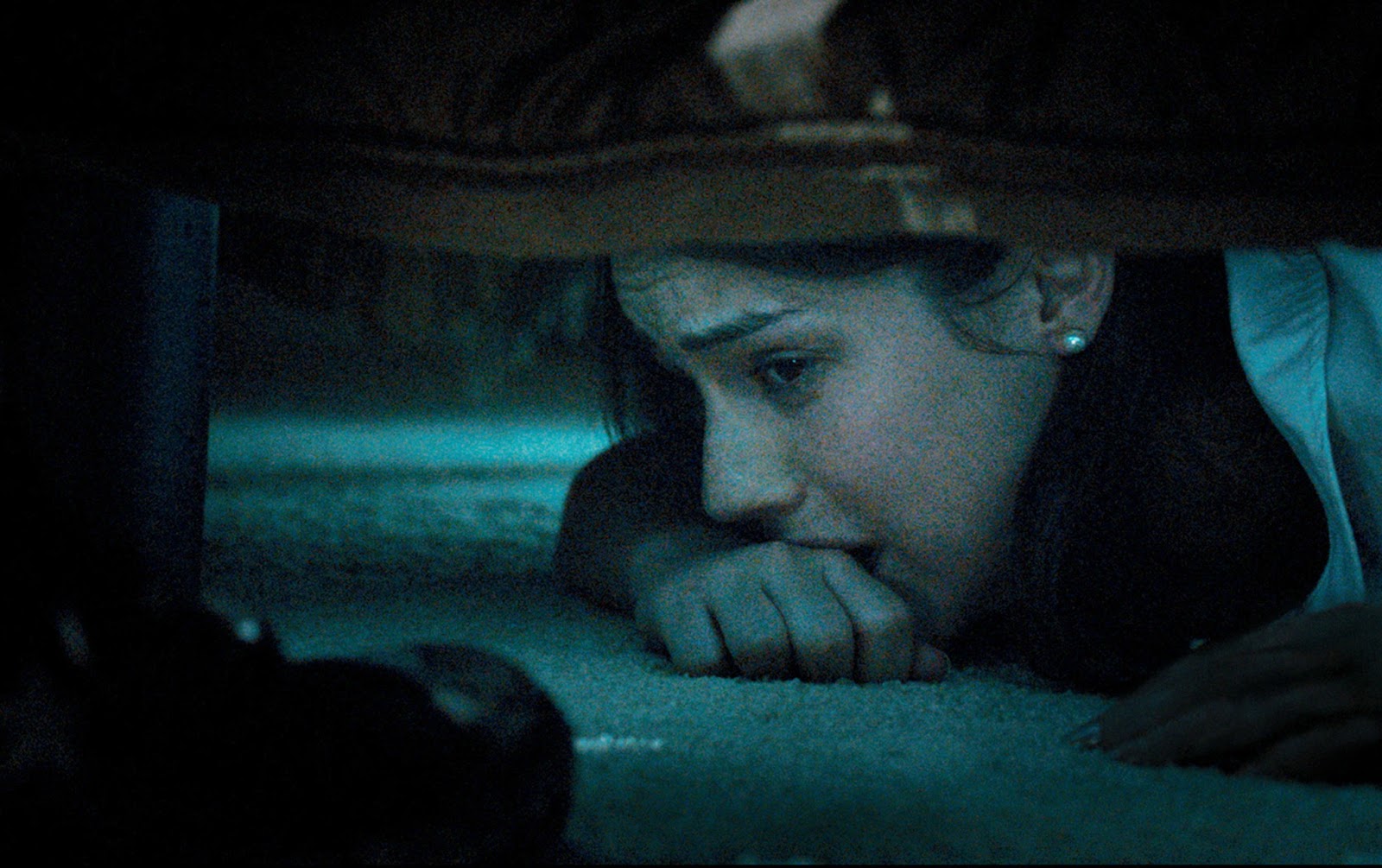
Eventually, the highly-educated murderers breach the Sandin barricade, and we find Zoey hiding under her bed while—duh again—she sees one of them STOP beside her bed. THIS IS A HORROR MOVIE. While this happens, she overhears another murderer—who’s stroking a photo of Zoey—say, “Exquisite. Save her for me, won’t you?” I immediately thought, please don’t rape her please don’t rape her because THIS IS A HORROR MOVIE, and horror films dole out punishment to their sexually provocative heroines hardcore. But the true highlight of The Purge, for me at least, occurred when Zoey murdered the fuck out of the photo stroker, saving (most of) her family and flipping the Sexual Activity Is Punishable By Death convention on its ass. 
Zoey hides under her bed (THIS IS A HORROR MOVIE)
So, all in all, and as unwieldy as The Purge gets (not unlike this review), I couldn’t help but enjoy most of it. The Rich White Dude gets punished, and the minority characters (including women) survive. That shouldn’t be a progressive movie ending in 2013. It is.

She-Ra: Kinda, Sorta Accidentally Feministy

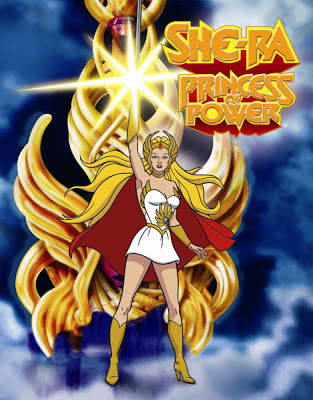
She-Ra: Princess of Fucking Power

Written by Amanda Rodriguez

Confession: as a child of the 80’s, I refused to watch cartoons that didn’t have a significantly visible representation of women in them, and the more visible and the more badass, the better. GI Joe and Transformers were out, but Jem and the Holograms, Thundercats, and He-Man made the cut (don’t ask me to explain my little girl logic). Though Jem had a ton of women in it and I loved the series obsessively, She-Ra: Princess of Power was my favorite because, not only did the show have tons of women in it, but they were all kickass warriors. I still think about and talk about the show more than is probably considered “normal” (whatever that bullshit word means). Now as an adult looking back, I’m compelled to figure out why that show has been so prominent in my consciousness then, as an impressionable young girl, and now, as a feminist grown.First, we’ve got to compare He-Man and She-Ra, twins with magical, transformative, empowering swords. He-Man’s non-magical alter ego is Prince Adam, while She-Ra’s is Adora. Prince Adam takes on the persona of the lazy, whiny, spoiled, conceited prince who is generally a coward, while Adora is the smart, organized, capable, and charismatic leader of The Great Rebellion. While He-Man had to spend half his time pretending to be a fuck-up and to this day people mock Prince Adam (I strongly advise you to watch the video below for some serious yucks), Adora was an example of a tactically astute, benevolent leader who included the talents and ideas of others.

[youtube_sc url=”https://www.youtube.com/watch?v=NjVugzSR7HA”]

When the twins transform into their superhero selves, both have equally unmatched physical strength (though She-Ra is more prone to doing flips and super sweet spin kicks while shouting “Hee-Yah!”). The jewel in She-Ra’s sword isn’t the only difference between her and He-Man’s swords of birthright. Her sword can transform into nearly any physical object she commands (a shield, a lasso, a ladder, even a helmet that lets her breathe underwater).

She-Ra: “Sword to ice-maker.” Great for making ice cream or freezing over lakes to go skating on warm summer days.

She-Ra also has innate powers that are denied He-Man. She can communicate via telepathy with animals. Not only that but she can heal the injured with a good old-fashioned laying on of hands. It’s easy to see some of her additional powers as the writers attempting to feminize the character. Her empathic communication with animals and healing powers could certainly be coded as “nurturing” and therefore more traditionally feminine, but at the same time, She-Ra is just as strong as He-Man. Let’s face it, with her extra abilities, she’s an even bigger badass than he is.

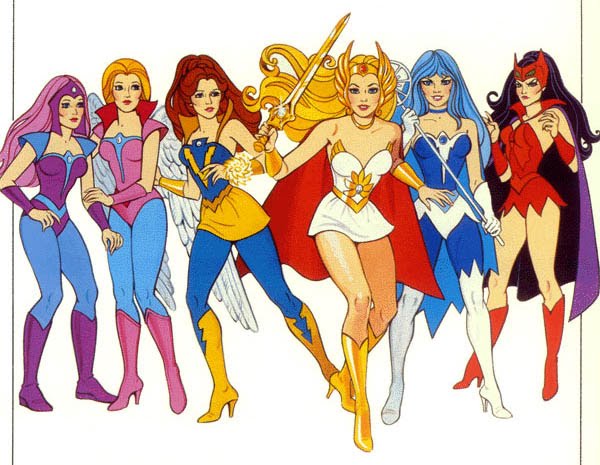
Then we’ve got to consider the sheer number of female heroes in She-Ra.

From left to right: Glimmer, Angella, Castaspella, She-Ra, Frosta, and the villainous Cat-Ra

Like most shows geared toward young girls around that era, there were a lot of female characters and a notable dearth of male characters. In fact, Bow was She-Ra’s only regularly featured male hero to be included in The Great Rebellion. I also remember She-Ra more consistently involving and more fully featuring its wide range of female characters than, say, My Little Ponies or Rainbow Brite.

In part because of the huge female cast, She-Ra also showcased tons of Bechdel test-passing female friendships.

From left to right: Perfuma, Castaspella, Mermista, She-Ra, Glimmer, Angella, Frosta

These women all work as a team for a noble common cause under a female leader, Adora. Glimmer and Angella are even an inter-generational mother-daughter duo with a profoundly strong connection as shown in the He-Man/She-Ra feature-length film The Secret of the Sword wherein She-Ra is introduced to the He-Man universe and must rescue Queen Angella from a minion of The Evil Horde. Glimmer is also clearly Adora’s best friend. In all actuality, the general lack of female rivalry should be attributed to the pre-sexualized nature of the show’s target audience. Though there are some crushes throughout the series, they are all harmless and never consummated (even with a kiss).

Unlike many superheroine mythologies, She-Ra isn’t the only one with astounding abilities. In fact, her friends possess a plethora of mystical qualities that make them assets to The Great Rebellion. Though the female characters are not diverse in their race or in their slim and buxom builds, they are diverse in their talents. Flight, clairvoyance, teleportation, creation of energy shields, spell casting, uncanny aptitude for disguises, power over frost, and physical transformations are just a handful of the amazing strengths She-Ra’s friends possess. To a woman, they are all brave, leaders in their own right, and capable of working as part of a collective.

She-Ra: “Ladies…um, and Bow, let’s kick some ass!”

Let us not forget that The Great Rebellion is a predominantly female rebellion from its leaders to its foot soldiers to the monarch they hope to enthrone. Glimmer’s mother, Angella is the Queen of Bright Moon and is considered the “rightful ruler of Etheria”. A benevolent matriarch, She-Ra and The Great Rebellion fight the evil Horde in order to restore Angella’s kingdom. All these women have joined together to fight Hordak who is a symbol of the tyranny and oppression of the patriarchy. Don’t believe me? Just think about it: in the film The Secret of the Sword when we meet Adora, she is known as Force Captain Adora, and Hordak is a father figure to her. He has indoctrinated her into the Horde, leading her to believe that the Horde is just and the rebels evil. Hordak also surrounds himself with patriarchy-complicit women like Cat-Ra, Entrapta, Scorpia, and even the mother figure, Shadow Weaver who casts her spells to subdue Adora to the will of Hordak. Essentially, Hordak has lied to Adora about reality. Once she becomes aware of his lies, Adora turns against Hordak, discovers her true, empowered identity as She-Ra, joins a band of women, and fights to supplant him with a matriarchy.

She-Ra…for…the…win…

Yes, all the women of She-Ra are white (except for a handful of obscure cameos by Netossa), and they’re all scantily clad, thin ladies with big boobies. Yes, She-Ra is a calculated He-Man spin-off designed to bring in a female audience and sell more toys in the never-ending quest for more money. And, yes, it’s probably an accident that the girl power vibe and transparent anti-patriarchy theme are so strong. Whatever the studio’s reasoning, the end result is a network of powerful women who not only like each other, but they support each other, organize a rebellion against an oppressive patriarchal regime, and get shit done. The example this powerful group of women set for impressionable girls like myself is tremendous. In the 80’s, I had a glittery She-Ra sword that I felt completely justified in swinging around because I, like She-Ra, was the heroine of my own story.

PS: Mom, sorry about that lamp I broke.     


The Women of ‘Man of Steel’ and the Toxicity of Hyper-Masculinity

Amy Adams as Lois Lane in Man of Steel


Written by Megan Kearns.
I’ve never been a huge fan of Superman. Sure I grew up watching and liking the Christopher Reeve films. And I sure as fuck am NOT a fan of Zack Snyder and his frequent faux female empowerment, despite his protestations to the contrary. But I do adore Lois Lane. An intrepid, fast-talking, driven reporter? How could I not?
Lois has had many incarnations: feminist women’s libber, lovelorn damsel in distress, tough business woman. And she’s often a mélange of these traits. She has an extensive feminist history and “she has always reflected conflicting attitudes toward women, especially talented, independent women.” Throughout her history, it seems Lois has always been a crystallization of a woman immersed in a world dominated by patriarchy and sexism. So does Man of Steel give us “a Lois Lane we deserve?”
Lois is a smart, spunky, hard-hitting, Pulitzer Prize-winning journalist. In her first scene in Man of Steel, when there’s some bro-tastic bullshit being spewed, Lois replies, “Now that we’re done having a dick measuring contest.” Fuck yeah!! Love this Lois! When Lois is shown her Spartan quarters at a military outpost in the Arctic, she questions, “Where do I tinkle?” Did Lois really use the word “tinkle?” Since it was juxtaposed after her awesome “dick-measuring” throwdown, I believe it’s intended as a subtle commentary on how society views women as weak, coddled and needing lots of amenities. But who knows, maybe I’m giving the film too much credit.
Lois writes a story about the mysterious stranger who saves her in the Arctic, believing he is not of this world. When her editor Perry White (Laurence Fishburne, the first African-American to play the role…and sadly one of the few people of color in the film, which is a shame considering “Superman’s identity as a transnational adoptee”), won’t publish her story, she persists and leaks it to an online site. Lois refuses to let anyone get in the way of her career. And that’s incredibly admirable.

In the Superman films with Margot Kidder and Christopher Reeve, Lois is a better reporter than Clark. He can type faster but she’s a shrewd investigative journalist. He has the brawn while she has the brains. But both share a morality: he wants to save people in danger; she wants to tell stories to inform the public and expose injustice. Because of this, both are fairly equal despite Superman’s superhero, god-like powers. There’s an interesting change in Lois’ role in Man of Steel. In the comics and previous films, Lois suspects but doesn’t know Clark is Superman, or if she does know, Clark erases her memory of his true identity. But here she discovers the truth early on. It puts the two characters on more equal ground.

Lois (Amy Adams) in Man of Steel
 Producer Deborah Snyder says Lois and Superman in Man of Steel save each other – he saves her physically while she saves him emotionally. Does that sate my need for equality? Notsomuch. Yes, it’s a step in the right direction. Yet it makes me uneasy as it relegates men and women to stereotypical gender roles. That men handle the “tough stuff,” while women the touchy-feely world of emotions.
I like that Lois makes up her mind and has an insatiable curiosity and is career-driven. Yet her life still revolves around Superman. Now some people will argue with me saying, “But the movie is named Superman, NOT Lois Lane!” Yeah, I know. I don’t give a shit. I want women in films to have their own personalities, their own lives, their own identities. Of course Lois’ path is intertwined with Superman’s or she wouldn’t even be in this film. But why must women continuously be reduced to damsels in distress, sidekicks or love interests? Wielding a gun or throwing a punch, isn’t automatically synonymous with power or agency.
Some will argue that Lois fights, playing a pivotal role in defeating General Zod. And she does. But it’s not her ingenuity or skills that enable her achievements. It’s Superman’s daddy via fancy hologram-consciousness instructing her how to defeat Superman’s enemies. Okay, so she can carry out orders. Is that really an improvement? It’s not her ingenuity or intelligence. And of course Lois still remains the love interest and frequent damsel in distress.
Faora (Antje Traue) in Man of Steel

What about Faora, Superman’s female Kryptonian, man-hating (in the comics) nemesis? She kicks some serious ass with a compelling fighting style. And it’s awesome. But again, she merely follows Zod, a dude, serving as his second in command. Why couldn’t she be in charge as the head villain? While she doesn’t have much personality, she does have an interesting exchange with Superman when she tells him he will always lose because he suffers the flaw of morality which she and her brethren have evolved past.

I initially thought this would be an annoyingly bro-tastic film with guidance and support strictly coming from the men in Clark/Kal-El’s life. But women play an equal role in the film. Unlike Star Trek Into Darkness where women remain mostly invisible or as sex objects, we see women in the military, women journalists besides Lois, and women on Krypton in leadership positions. “All of this may seem relatively minor, but it is rare for superhero movies to feature females in important, non-sexualized, non-damsel-in-distress roles.”

What is interesting though is Man of Steel’s commentary on masculinity. Throughout the film, Clark/Kal-El must wrangle with his emotions of identity and belonging. He wants to help people but his father keeps telling him he must hide his powers for people fear what they don’t understand, further underscoring the themes of immigration and xenophobia. When Clark is a young boy, he gets bullied. But he doesn’t fight back; he merely endures. He tells his father he wanted to hit the boy. His father nods and says that part of him wanted him to hit the bully. His father inquires, “But what would that accomplish?” When Clark is much older, traveling around and bouncing from job to job in anonymity, he again encounters a bully objectifying a female co-worker. He endures the bully’s taunts and walks away. There’s a continually dueling masculinity happening on-screen — a mature, calm and rational male who turns the other cheek and a toxic, aggressive, hyper-masculine male vying for supremacy.

Clark/Kal-El (Henry Cavill) and Martha Kent (Diane Lane) in Man of Steel

Both sets of parents — Jor-El and Lara Lor-Van and Jonathan and Martha Kent — influence their son. Man of Steel shows how Clark/Kal-El benefits from the influence of both his adoptive and biological father and mother. Although it would have been nice to see Lara’s consciousness in the Fortress of Solitude, not just Jor-El. Through much of the film, it’s Jor-El and Jonathon Kent providing guidance. But Martha Kent provides as strong an impact on Clark. She teaches her son to silence all of the chaos in his mind (brought on by his superpower senses of hearing, sight and smell), to focus only on the sound of her voice. In a genre that often features “absent mothers,” it’s great to see the power of motherhood here.

By showcasing the strength of his bonds with his father and mother, the film asserts that men need both feminine and masculine spheres in their lives. Superman finds inner peace when he learns of his past and when Lois believes in him. The men in Clark/Kal-El’s life teach him outer strength while the women in his life teach him inner strength.

The message underscoring the film is choice. That we can choose our destiny, choose the lives we lead. I found this especially compelling considering 2013 is shaping up to be the worst year for reproductive rights and the film’s subtle reproductive justice theme as Jor-El and Lara defy the laws of Krypton to conceive Kal-El/Clark. They choose to defy the eugenics of their society and have a child who can choose his own path, not merely follow the one laid out for him by society. They also choose to jettison their child to Earth in order to save his life. While we get to see Jor-El in all kinds of action scenes, Lara is the one who chooses to push the button launching Kal-El when her husband is threatened. By the end of Man of Steel, Superman must make a choice. He must choose Krypton or Earth. And he ultimately decides through a surprising violent act that runs counter to Superman’s moral code. When he breaks down because of his decision, Lois is there to comfort him.

Lara Lor-Van (Ayelet Zurer) in Man of Steel

While I liked it and it’s by far my favorite Snyder film (although trust and believe, that’s not saying much), it’s kind of a mess with tissue-thin characters and not being able to decide what it wanted to be. While it’s “criticial of hyper-masculinity and the violence it engenders” and “condemns sexual objectification and harassment of women,” the film’s last third contained such an onslaught of non-stop violent action it seems to contradict the theme of the perils of violence and aggression. Yet it’s nice to see a film argue that “choice saves the world.”

What does this mean? That men should choose to be gentle? That they should connect with femininity? That men should choose to use violence only when “necessary”? Perhaps it means that men don’t have to be aggressive bullies. They can choose another way as restraint, compassion and tenderness don’t strip men of their masculinity.

While it’s fantastic Man of Steel reinforces the importance of both femininity and masculinity and attempts to deconstruct hyper-masculinity, it’s unfortunate that the film still says women’s lives revolve around men through its failure of the Bechdel Test. Yeah, I don’t really count one-sided conversations of journalist Jenny saying to Lois, “Come see this,” or Faora instructing Lois about her breathing device. What’s annoying is that these conversations could have been fleshed out, along with the discussion between Martha Kent and Lois who talk to each other…but of course about Superman.

Some have hailed Man of Steelthe most feminist action film of the year.” Yes, it depicts women in various roles, boasts an intelligent female love interest and a kickass female villain, and questions toxic hyper-masculinity. Despite all its strides, can a film truly be feminist if it ultimately revolves around dudes?

Superman (Henry Cavill) and Lois (Amy Adams) in Man of Steel
I’m getting really fucking sick and tired of complaining about blockbuster films, particularly superhero films. I love this genre. I love comic books, sci-fi and action films. I want so desperately to have these films be awesome. And feminist. Which would make them even more awesome.
While we’re seeing more women-centric blockbusters like The Hunger Games, Bridesmaids, Twilight and the upcoming The Heat, we desperately need more, especially women in superhero movies (Wonder Woman, She-Hulk, Black Widow, etc, etc, etc). Hollywood has “pretty much entirely devoted itself to telling men’s stories.” It seems like filmmakers are kinda sorta beginning to listen to audiences’ desire for more empowered women on-screen. Yet I’m continuously annoyed that even when filmmakers claim their female roles will be more proactive or empowered, their attempts at appeasement still fail. They still don’t get it.
Some filmmakers and studios think merely increasing the number of women, featuring a female sidekick, or giving a woman a gun solves everything. How about some real empowerment? How about seeing complex female characters with agency? How about we see their perspective, hear their voice and see their struggles?
Man of Steel gets so many things right. Yet it still fails to portray nuanced female characters with agendas of their own who don’t exist to aid in the self-actualization of the men in their lives — roles Lois, Martha, Lara and Faora all serve. It’s a shame especially when you have an iconic feminist female role already embedded in the story.

‘Farah Goes Bang’: A Love Letter to Female Friendships

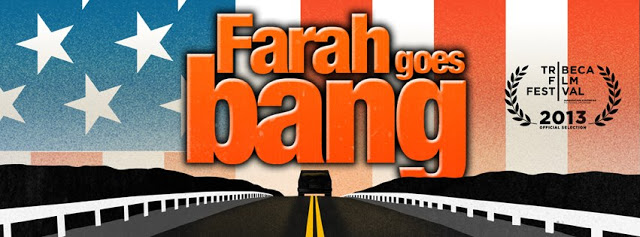
Farah Goes Bang movie poster
Written by Amanda Rodriguez
Spoiler Alert
“I wanted to do something I hadn’t done before. Change the world and be awesome.” – 17 year-old female John Kerry Campaign Volunteer in Farah Goes Bang
Meera Menon’s Tribeca Film Festival award-winning Farah Goes Bang is a lot of things: it’s a coming-of-age and sexual awakening story, a road trip narrative, a political tale, a multicultural expression, a chick flick, and a love affair with all the beauty and grit of the American experience. The strongest facet of this film, however, is its unflinching depiction of the strength and intimacy of female friendship.
The story centers around three young women who’ve just finished college and decide to take a road trip together as volunteers on the John Kerry presidential campaign. Our heroine, Farah, is tired of her pesky virginity and wants to lose it on the campaign trail. On the road, both Farah (Persian) and her friend Roopa (Indian) encounter racism along with its companions stereotyping and bigotry. Menon talked in an interview on KeralaNext.com about the culture clash the women encounter:
“Their odyssey through the heartland of America is meant to demonstrate the ways in which these girls are often not seen as American, though they are as American as any other. I really wanted the film to integrate their faces and races into a new sense of American identity, one that embraces the hybrid, cross-cultural form that I have experienced in my own sense of citizenship.”

All I have to say is: YES. As a feminist woman of color, this kind of representation of my experiences (and the experiences of countless women just like me) is invaluable. Showing these women as rounded human beings with troubles that are not so foreign or alien as white culture would have you believe is something we desperately need as part of a movement toward inclusivity, toward acceptance and the embracing of those our society typically marginalizes and others.   

“I think [the scarf] looks pretty, kinda like it belongs on you.” – KJ  “That is so racist.” – Roopa

Farah Goes Bang passes the Bechdel test all day long. The core of this film is the connection between these three women and how it supports them, gives them strength, allows them their fluidity of identity, and is fun as well as necessary for each of their unique journeys. Menon says

“The film, at its heart, is about the importance of female friendships during the rapid period of personal growth that is your twenties. I have learned so much through my friends, particularly female, about who I am and the woman I hope to be. This film is a love letter to how formative those relationships are when you are young.” 
Near the end of the film, Farah finally gets her hook-up on the much anticipated election night. It’s dark out, so we never clearly see the man she seduces, nor do we learn his name. (The seduction itself is a pivotal character shift because, until this point, Farah had always been meek and incapable of owning her sexuality.) After they have sex, she goes back to the cabin where her friends are, wanting to spend the rest of this meaningful night with the people who are most important to her: her girlfriends. It is the bond of friendship that sees these young women through the crushing disappointment of the election and the very adult realization that the world isn’t very easy to change.
KJ, Farah, and Roopa enjoying a special night of anticipation and fireworks.
Though the film is a bit rose-colored and unrealistic with some of its themes (Roopa’s lack of internal struggles render her one-dimensional when compared to her two friends, KJ’s cathartic conversation with a military vet, and Farah’s empowering encounter with a drag queen followed by her ideal one-night-stand with a beautiful, nameless stranger), it turns out it’s still nice to watch a movie about women that doesn’t involve a rape or murder (especially a women-on-the-road story), where the women don’t necessarily all get what they want, but they come out the other side together, happy, and ready for the next challenge.

Where Have You Gone, Sarah Connor?

Remember Linda Hamilton (playing Sarah Connor) and her guns in Terminator 2?
This guest post by Holly Derr is cross-posted with permission from The Ms. Magazine Blog.
Summer always makes me a bit nostalgic for childhood. I remember fondly the excitement of being out of school, the long days with nothing to do but read and the cool refuge from the hot Texas sun provided by a matinee of a summer blockbuster at the local movie theater.
Unfortunately, this summer’s action movies have left me nostalgic for more than the air conditioning. Only a few of the most highly anticipated movies of the summer feature more than one woman, and those women are primarily co-stars, not leads. After Earth and World War Z have wives who stay home while the man goes on the adventure. Elysium co-stars Jodie Foster as a bad guy, but from what little information has been released on the plot, her weapon of choice appears to be government red tape. Even Monsters University only has one female student—and she’s a cheerleader.
Anne Hathaway as Catwoman
To make matters worse, the characters who do get in on the action are mostly played by women who cannot believably fight. The Heat is a buddy cop movie starring Sandra Bullock and Melissa McCarthy, but it looks to be more comedy than action. The female hero of Kick Ass 2 is a young girl. And though Gwyneth Paltrow as Pepper Potts in Iron Man 3, Zoe Saldana as Uhura in Star Trek: Into Darkness, Gal Gadot as Giselle and Michelle Rodriguez as Letty in Fast and Furious 6, and Rinko Kikuchi as Pacific Rim‘s Mako Mori are supposedly tough, they are so thin that it’s hard to believe that they’re actually capable of action. In fact, though Uhura is present for two of the fights in the new Star Trek, in the first, she mainly hides behind a wall, and in the second, she merely fires a phaser which, being a phaser, doesn’t even have any kickback.
This trend is disturbing but not accidental: The diets these women go on to prepare for their roles mean that no matter how much training they do, they’re not eating enough to build muscle. To prepare for Catwoman, Anne Hathaway went vegan and was, by her own account, exhausted all the time. Not surprisingly she failed to build any muscle despite intensive training: most scientists agree that the full range of amino acids responsible for muscle growth is only found in animal products. (Think about it–have you ever seen a muscular vegan?) Gwyneth Paltrow published her “elimination” diet in her book, It’s All Good, and indeed it does appear she does more eliminating than eating. And Alice Eve, whose totally unnecessary underwear scene as Carol Marcus in Star Trek: Into Darkness has prompted its fair share of criticism, told Allure that to prepare for the role she ate nothing but spinach for five months. Perhaps that’s why she and her counterpart in the film, Saldana (who clocks in it at a whopping 115 pounds) spend most of the movie looking like they are about to cry.
Ellen Ripley
I say we bring back Ripley. To prepare for her role in Aliens, Sigourney Weaver did dumbbell chest presses, squats, shoulder presses, and rows—all with weights—and she didn’t diet at all. Did you hear that? Not at all. I say we bring back Sarah Connor. In Terminator 2, Linda Hamilton did basic soldier training and ate a high-protein diet, and, indeed, she has guns in her hands and on her arms. Or remember when a 140-pound Jamie Lee Curtis did a strip tease to protect her “cover” in True Lies? Now that was a motivated underwear scene. (Note to J.J. Abrams: Having Eve take her clothes off in the middle of rushing from one place to the next for no reason at all is simply objectification.)
These female heroes of yore were popular not just because they were badass: They were also fantastic characters. Unfortunately, the summer movie with the best female fights (and the most diverse casting) is probably going to be the one that provides the least opportunity for character development. Gina Carrano, an actual Mixed Martial Arts professional, and Michelle Rodriguez did almost all of their own fights for Fast and Furious 6, and those fights are pretty damn cool. But because Rodriguez’s character Letty has amnesia, she moves through every moment of the film when she’s not driving or fighting like she’s in a daze. Carrano as Riley never speaks more than one or two lines per scene.


Saldana, Eve and Paltrow are gorgeous and talented, and the problems with their performances are largely the result of underwritten characters. I don’t mean to body shame this summer’s starlets for being slender, though I do wish they would eat. I mean to shame Hollywood for asking them to starve themselves, and to shame a culture that thinks starving women are beautiful. It’s not a coincidence that many women action heroes are actually children—that’s about as big as Hollywood lets women get these days.
Media-saavy Geena Davis, in an interview about her movie The Long Kiss Goodnight (in which she played amnesiac CIA agent Samantha Caine who, like Jason Bourne, has forgotten who she was but not how to fight), explained why this matters:

Thelma and Louise had a big reaction, there was a huge thing at the time, that, ‘Oh my god, these women had guns and they actually killed a guy!’ … That movie made me realize—you can talk about it all you want, but watch it with an audience and talk to women who have seen this movie and they go, ‘YES!’ They feel so adrenalized and so powerful after seeing some women kick some ass and take control of their own fate. … Women go, ‘Yeah – fucking right!’ Women don’t get to have that experience in the movies. But hey, people go to action movies for a reason; they want to feel adrenalized and they want to identify with the hero, and if only guys get to do that then it’s crazy.

Long live Samantha Caine. Long live Thelma and Louise.

Holly L. Derr is a writer, director, and professor living in Los Angeles. She writes regularly for The Ms. Magazine Blog on theater, film, television and reproductive rights. Her tumblr Feminist Fandom addresses representation of sex, gender, sexuality, and race in the media. Follow her @hld6oddblend.


How ‘New Girl’s Jess and Nick Avoided Common Rom-Com Pitfalls

Jess (Zooey Deschanel) and Nick (Jake Johnson) have their first kiss
Written by Lady T 
This year’s season of New Girl introduced a sitcom plot that fans and audience members anticipate and dread in equal measure: the BIG KISS between two lead characters, and the will-they-won’t-they dynamic that followed.
Hooking up the two lead characters of any show is always a risky move for writers to take. No matter how much chemistry exists between the two actors, viewers and critics often fear–with good reason–that once the unresolved sexual tension is resolved, the relationship will become an endless cycle of breakups, reunions, and miscommunication, and no longer be entertaining to watch (ahem).
As a fan of New Girl, I was apprehensive about the idea of Jess and Nick getting together, because I’ve watched TV before and I’ve seen how even great sitcoms can be dragged down by tiresome will-they-won’t-they plots (such as Community’s Jeff/Britta dance of sexual tension before the writers wisely changed course with that storyline). Now that the season has come to an end, I can safely say that Jess and Nick’s kiss did not drag down the show, but elevated a good season into a great one. In fact, Jess and Nick have become one of the more delightful TV romances I’ve ever seen.
How did the writers pull this off?
1. They kept up the pacing and moved the story forward.
On another show, Jess and Nick might have only reached their first kiss by the end of season two, if that. Nick would have realized his feelings for Jess at the end of season one, right after she started dating someone else, and the reverse would happen at the end of season two. On New Girl, Jess and Nick kissed mid-season, had a few awkward conversations about it, kissed again, eventually slept together, and are now in a state where they are pursuing…something, fumbling as they do it. Their relationship is progressing at the pace of actual humans, not characters who know they’re on a television show.

Jess and Nick, before almost kissing.

2. They didn’t forget that the show is a comedy.
So far, there have been no huge declarations of love between Jess and Nick. The closest that came to a declaration was Jess admitting that she didn’t want to call off whatever they had in the season finale, followed by Nick kissing her passionately. Other than that, the writers have emphasized the “comedy” part of romantic comedy, and the results have been great. Whether it’s Nick panic-moonwalking away from Jess on the morning after their first kiss, or Jess finding herself turned on when Nick acts remotely like a responsible grownup (learning how to do laundry!), the characters are still being funny even as they try to navigate their feelings for each other.
3. The barriers to a Jess/Nick relationship are organic to their characters.
The writers on New Girl have not wasted their time with many romantic false leads or contrived subplots designed to keep Jess and Nick apart. They haven’t had to, because there’s enough standing in their way of having a functional relationship without the typical sitcom contrivances.

Nick carries Jess over the threshold.

On the plus side, Jess and Nick are friends and roommates who get along, care about each other, offer each other emotional support, and have plenty of sexual chemistry–all ingredients to a successful relationship. On the other hand, Jess’s sunny disposition, determination, and optimism clash horribly with Nick’s eternal grumpiness and lack of direction. The girl who makes up her own theme songs and the guy who gets so irrationally angry that he yells at doors can’t possibly have a relationship without some serious bumps in the road.
That’s why Jess and Nick’s conflicts have been so refreshing to watch. She’s unsure about his directionless nature and the fact that he has a credit score of a homeless ghost, and he knows that she’s unsure about him because of that reason, which leads to him feeling even more insecure. The fact that they’re friends who live together also complicates matters. If whatever they have becomes more serious, there will be many entertaining bumps in the road along the way.
4. The endgame is a question mark.


Jess dresses as Elvis for Nick’s father’s funeral (it makes sense if you watch the episode)


The relationship between Jess and Nick has been developing for a while, with mutual attraction acknowledged long before they actually kissed, but there’s no sense that Jess/Nick is an “endgame” couple. Considering their differences in personality, there’s a big chance that a relationship between them won’t work at all. They also might stay together for a long time. When they drive off together at the end of Cece’s wedding that wasn’t, there’s a sense that anything can happen between them.
From the perspective of someone who’s watched countless romantic comedies and rom-com pairings on television, I’m relieved to see a different take on a pairing of potentially mismatched friends. As a feminist, I’m happy that there’s no sense of an “endgame” with Jess and Nick, that Jess’s story isn’t all about whether or not she ends up with a guy (even if said guy is my current favorite character on television and Jake Johnson needs to win ALL the Emmys). Whatever she has with Nick is a big part of Jessica Day’s life, but it doesn’t define her, and she’s treated as a human being trying to figure out her life.
Would that all writers of romantic comedy treated their characters the way Elizabeth Meriweather and the staff of New Girl treat Jess and Nick–as people, not props in a foretold rom-com ending.

Nick and Jess, shortly before calling off their relationship (and then un-calling it later)


Lady T is an a writer with two novels, a play, and a collection of comedy sketches in progress. She hopes to one day be published and finish one of her projects (not in that order). You can find more of her writing at www.theresabasile.com.

Andrée Inspires Father And Son In ‘Renoir’

Poster for French film, Renoir.

Written by Janyce Denise Glasper


Gilles Bourdos’ Renoir is a feast for an art appreciator’s enjoyment, opening on lush, brilliant cinematography and a flaming red-haired woman riding a vintage bicycle dressed in vivid orange coat, brown kid gloves, and rounded sunglasses.

This is Andrée Heuschling bringing forth a brazen, illustrious spirit to a real life triad. 

More than young, ripened flesh for master French Impressionist painter, Pierre-Auguste Renoir’s eyes, Andrée amuses and delights both him and his son, future filmmaker Jean Renoir.

Set five years before his death, aging painfully with arthritis overwhelming old hands and body confined to a wheelchair, Pierre still finds pleasure in painting and undergoes wince-filled treatments just to sit at his beloved easel. He is surrounded by former models and lovers who proudly cater to his every whim–giving him baths, mixing paints, etc.


Andrée (Christa Theret) poses for Pierre-Auguste Renoir (Michel Bouquet).


Andrée doesn’t long for that servitude.

She arrives at Renoir’s door solely wanting to model.

Lithe and graceful, laying smooth alabaster skin among colored textile chaises inside cluttered studio or among outdoor grasses on blankets, Andrée courts Pierre’s every instruction and lavishes attentiveness in natural, beguiling light. As his gnarled, knobby hands sketch rounded figure, pencils lingering on back as though touching with fingers instead of eyes, she chatters away animatedly and is unabashed about nudity. She sees posing for art as a job and has no interest in becoming domesticated.

Jean returns from war, injured and limping.

Immediately, the quiet young man is enchanted by Andrée’s personality. She gets him to escape out of his comfort zone, and the two fall into a serene kind of love that is soft and at times erotically charged without overtly sensual love scenes. In one surprising act, the two are in bed, and she puts lipstick on his lips and kisses him passionately, redness coating her mouth upon exchange.

Although nude and unapologetic, seen visually as a still life to wrinkled, nearly dying Pierre, Andrée’s relationship with Jean is much more intimate and private, an exchanging of tranquil stares and gentle touching that occurs away from the eyes of the household.


Andrée (Christa Theret) finds love in Jean Renoir. (Vincent Rottiers)


One short, small scene did incite a furious spark.

Studio doors are opened and inviting while Andrée sleeps without a trace of Pierre. Fabric leaves bared breasts and rounded up thrust waist vulnerable to anyone’s gaze. In steps the younger, darkly disturbed son–Pierre the junior, circles Andrée with predatory sharpness. He then takes a bowl of blue pigment, hovers close, and blows wisps of it onto her skin.

Whether it happened to be a dream or bumpy reality, this moment disturbed the order of things in Andrée’s carefree, liberated world, and it wasn’t even addressed. Pierre the younger certainly gave off a terribly sinister vibe that he would inflict harm unbeknownst to anyone and ignited an ire as if troubling behavior spoke of eventual abuse toward women. 

Christa Theret captures a natural human richness into Andrée. With raspy voice and expressive blue eyes, she offers breadth into a brazen, outspoken character at a time where domesticity still placed women inside a box. To Pierre, she is a motherly comrade, cradling cheek and expressing gratitude to elder patron, but to Jean, she provides him keys necessary to unlock sensitive shell and incites an awakened passion to make film. Andrée knows that she is beautiful, but is also commanding, brave, and intelligent, valuing only for respect, decency, and to break the mold of her sensitively depicted gender.


Andrée (Christa Theret) in most scenes is shown as a piece of art.


However, picturesque Renoir suffers from too much opulence and grandeur, focusing too heavily on Andrée’s lusty body and lovely scenery that purposefully mimics Renoir’s infamously luminous compositions. But that’s supposedly Impressionism’s meaning–all the colors without a paintbrush dipping into black.

Andrée simply stimulated the Renoir men’s taste for sensual inspiration and artistic expression–a muse catering toward creative distraction.

Nothing more. Nothing less.


"We Almost Love Each Other": ‘The Mindy Project’s Rom-Com Conclusion

This is a guest post from Leah Prinzivalli.
Spoiler Alert!
Season one of The Mindy Project concludes with predictable romantic comedy twists between Mindy (Mindy Kaling) and her boyfriend Casey (Anders Holm). The Will they? Won’t they? plotline nods to tradition, allowing the comedy to break convention thematically. 
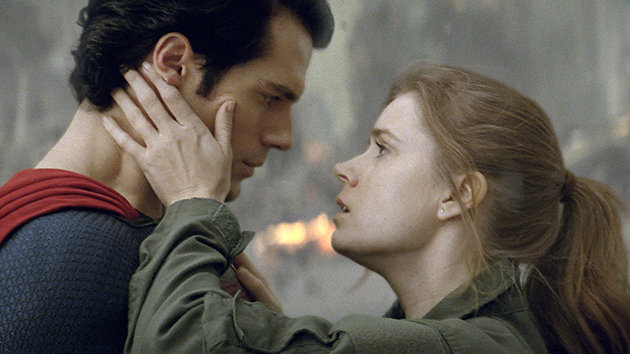
Mindy decides to volunteer in Haiti with Casey, then quickly backs out, setting up the viewer to believe high-maintenance Mindy could not handle third-world living conditions. Her male colleague Danny mocks her, “You called 911 when a butterfly got into your house?” and “You couldn’t last without your Jimmy Choos.” Mindy later goes camping with Casey, Danny (the token “straight guy”), and Morgan (a male nurse). When Danny notices Morgan has caught on fire, Mindy immediately smothers it with her blanket. Danny fails to act and afterward makes an excuse. The incident bolsters Mindy’s confidence in her ability to live in Haiti – leading us to the real reason why she may not end up going, her desire for independence. 
Mindy Kaling stars in The Mindy Project
Despite their constantly changing relationship status, Mindy and Casey’s dynamic is refreshing. When they decide to spend a year together in Haiti, they do so acknowledging, “We almost love each other.” This level-headedness is refreshing both for Mindy as a character and for the traditional romantic comedy plot. At least in this moment, the couple accepts their relationship at face value. 
Not one to stay lucid for long, Mindy tricks Casey both into believing she wants to get married and thinking she’s pregnant in this episode. Danny, again playing the cliché, reminds Mindy that men often fear commitment. Forgetting that Casey is atypical among her boyfriends, Mindy tries to use convention to her advantage in order to escape Haiti and her own fears about committing. When Casey actually does propose, she can’t understand why. Mindy tries to talk him out of it, “I work too much, I’m kinda selfish, I’ve never voted.” He responds, “Who are these guys that make you think that way?” As has become a pattern this season, the importance has been on the men in Mindy’s life to define her view of herself. 
Mindy’s bold take on the romantic gesture
Mindy’s new short haircut is, for better or worse, the most memorable piece of this episode. Danny’s ex-wife/current girlfriend Christina (Chloe Sevigny) remarks, “Whenever I’m in the field I keep my hair short. It’s better for the field and people don’t sexualize you.” A pre-breakup-and-makeup Mindy responds, “Who doesn’t want to be sexualized?” Mindy puts her sexuality and desire to be wanted above the volunteer purpose of the trip, which feels right for the character. This exchange led Mindy to cut her hair short later in the episode, “desexualizing” herself in order to commit to Casey. “Who will have me now?” she asks, implying that only Casey will find her desirable. It is this play on the romantic comedy “bold gesture” that wins Casey back, a comedic device but also a troubling one. When Mindy pulls back her hood to reveal her new hair, one eavesdropping neighbor cries out, “It was a boy the whole time.” Many jokes about the parallel between long hair and womanhood ensue, although the fact remains Mindy still changed her appearance because her boyfriend asked. 
One of the most likable aspects of The Mindy Project is that her career has never been an issue. The character seems most confident in surgery or when dealing with patients and can switch gears instantly from a relationship minidrama to delivering a baby (notably, she works as an OBGYN). For all the focus this episode on Mindy’s relationship struggles, we are reminded of her professional success in a satisfying shot for shot parallel to the first episode. She wipes off her lipstick before surgery to M.I.A’s “Bad Girls.” In the pilot, the “Bad Girls” surgery scene followed Mindy’s arrest for public drunkenness after her ex-boyfriend’s wedding. Last week, we saw Mindy choose Casey over that ex. The patient from the pilot did not have insurance; here she is working as a team with the other doctors to deliver triplets. By the finale, our lead has grown — by a reassuring yet believable amount.

Leah Prinzivalli is a NYC-based writer. For an alarming amount of her thoughts about television, follow her on Twitter @leahprinz.

The Lifelike, Feminist Choreography of ‘Frances Ha’

Frances Ha movie poster.


Written by Leigh Kolb
Spoilers ahead!

“27 is old.”

Frances Ha is a love letter to that idea–that 27 is old, but is, at the same time, the beginning of everything. For this generation, 27 is at that cusp between youth and adulthood and it is painful, terrifying and full of misery and joy.

The film captures that moment perfectly, and its bare French New Wave style allows the story,  which focuses on, in the words of director Noah Baumbach“That period in your 20s where you’re necessarily having to separate yourself from a kind of romantic idea of yourself,” to be on full display.

In addition to capturing that moment, Frances Ha also has at its center a friendship between two women. It easily passes the Bechdel Test, and was co-written by the actor Greta Gerwig, who plays Frances.

“I’m not messy, I’m busy.”

In an interview, Gerwig says that the film and its focus on evolving relationships and changing is about that “moment when you’re exiting your youth and you really only know it when it’s gone. It doesn’t announce that it’s the last day of youth, it just leaves…” While these kinds of stories are not rare, seeing the focus placed on a woman’s life and female friendship is.

Frances Ha is one of those rare films that makes a feminist’s heart grow three sizes in an hour and a half.

The female protagonist and her best friend, Sophie (Mickey Sumner), are engaged in the most important relationship on screen. Frances and her boyfriend at the beginning of the film break up (he wants to get cats and for her to move in with him; she wants to keep living with Sophie), and Sophie has a relationship with the kind of guy who wears a ball cap and says, “I have to take a leak,” but the central relationships are Frances and Sophie and Frances and herself.

Frances and Sophie’s friendship is incredibly realistic.

Frances is an aspiring modern dancer (she’s an understudy and teaches dance lessons to children at a dance company), and anyone with minimal knowledge of the dancing profession knows that 27 is likely far too old to have any hope of joining the company, yet Frances hopes. She’s sure that this is the year she will be chosen for the company and at least get to tour.

Sophie moves out to live with an acquaintance in Tribeca, where she’s always wanted to live. Frances haphazardly becomes a roommate to two “rich kid” young men (an artist, Lev, and a writer, Benji, with wealthy parents), and she doesn’t get asked to dance in the Christmas productions, much less be a part of the company. Frances’s life–which hasn’t yet felt like it’s begun–is unraveling.

Frances, Benji and Lev.

When she goes home for Christmas, she lies in a bathtub full of water as her mother pounds on the door: “Frances, how much longer?” she pleads.

The length of her life seems short and long, and the next step is elusive.

Through it all, Frances perseveres. She doesn’t break down, she doesn’t quit moving, even if her moves sometimes feel clunky–and real.

In what’s arguably her lowest moment, when she’s attending a dinner party with her temporary roommate who doesn’t seem to like her, Frances does break–in her own way. She drinks a bit too much and when she learns (from strangers) that Sophie is moving to Japan with her fiance, Frances decides to go to Paris.

Frances dances through the streets to David Bowie.

“Sometimes it’s good to do what you’re supposed to do when you’re supposed to do it,” she says. At this moment, she means going to Paris–even on a charge card–and having a worldly experience. It’s disappointing, as most of those experiences that we are “supposed” to have often are. Frances is left feeling empty, and more lost than when she began.

She makes sure to be home on Monday, because the head of the dance company had requested a meeting with her. Frances–charmingly delusional–thinks she’s going to ask her to be a member of the company. Instead, she’s offered an office administration job. Frances says no. She’s not ready to move into that part of her life, where she no longer has that unfettered hope of being who she thought she was going to be.

She returns to her alma mater to be an RA during a summer dance camp (where she discovers she’s not even allowed to take dance classes) and a server for special events. It’s during this experience–the juxtaposition of her life and the college students’ lives, and her being an adult in a place of youthful potential–that something changes. She runs in to a drunk Sophie at a fundraiser. Sophie is belligerent and stays over in Frances’s dorm room. Their roles are reversed that night. Frances seems to have it all together and Sophie is falling apart.

“Your blog looked so happy,” Frances says after Sophie says she’s been miserable and won’t be marrying her fiance. They both had been struggling to do what they are supposed to do when they are supposed to do it, but it’s not working. They must separate themselves from that “romantic idea” they’d had of themselves, their “story of us” that included taking over the world, to move forward.

Frances does so by taking the administrative job at the dance company, and is able to continue choreographing. Her eyes glisten with happiness in the control booth as dancers on stage perform her choreography. As the gorgeous, disjointed dance goes on, the camera pans through the audience, focusing on all of the people in Frances’s life who care about and support her. The company owner compliments her work, gushing over the performance. Frances briefly talks to one of her old roommates, Benji, and it is clear that something might develop between the two of them. But the person she’s “making eyes” at is Sophie, her best friend.

The framing of Frances’s life around a dance career is perfect, because dance is a profession that one ages out of, and it’s so much, on the surface, about performance. Frances, as she perceives herself getting older, feels like she needs to perform to choreography not her own. When she realizes she can make her life work in another way, she’s rewarded.

In an article at Forbes, Dina Gachman notes the importance of Frances’s career trajectory, and the lesson that there’s something in between getting exactly what you think you want or settling for less:

“That doesn’t mean you should meander all over the place without a plan waiting for success to rain down on you, but one of the great things about Frances Ha is that it’s saying: It’s OK that your life and career aren’t picture perfect. Maybe the picture is just different than you imagined.”

In the end, Frances is moving into her own apartment, a sign of success, since her living arrangements have always been cause for stress and uncertainty. She’s able to work and make a living in the dance world. She’s everything she wanted to be, just in a different way.

Frances dancing in a grown-up pencil skirt.

As she goes to put her handwritten name plate onto her mailbox, her name is too long to fit. She folds it neatly, and “Frances Ha” peeks out from the window. She did what she needed to do to make it fit, much like she did with her life. When she does figure out how to make all of the pieces fit, she gets everything she needs and realizes what she wants.

In “Why Frances Ha is the Must-See Feminist Film of the Year,” Imran Siddiquee says,

“While capturing the hilarity, awkwardness and anxiety all of us might face in our late 20s – gaining and losing best friends while pursuing what feels like an increasingly impossible dream – Frances Ha says something very specific about gender. It shows us that women can be messy, graceful, sad, funny, artistic, ambitious and caring all at once. You know, human.”

The sheer humanity on display throughout Frances Ha feels much more groundbreaking than it should.  The women and men in the film are not people you aspire to be, but they are people, on some level, who you are and who you know.

After watching the film, I immediately told my best friend she had to watch it. The depiction of female friendship and the muddy misery of the mid-20s was breathtaking. There are so many art-house and Hollywood films that center on men’s coming-of-age stories, and so few about women’s. Frances Ha shows that it can be done, and it can be done well.

That moment when you are in the control booth of your life, which may not look how you thought it would, but it’s just how it’s supposed to be? That’s a great moment.

When a flawed and wonderful woman is having that moment on the big screen? That’s a great moment for all of us.


Leigh Kolb is a composition, literature and journalism instructor at a community college in rural Missouri.