‘A Girl and A Gun’: A Look at Women and Firearms in America

A Girl and A Gun movie poster
Written by Amanda Rodriguez
Trigger Warning
Cathryne Czubek’s A Girl and A Gun is a powerful documentary that broadly surveys the incendiary topic of women and firearms in America. The film shows us the many sides of women and gun ownership, including safety and self-protection, competitive sport, family and culture, anti-violence and gun control activism, and women  who are the victims of gun violence as well as those suffering the consequences of having used a gun to kill another person. Not only that, but Czubek gives us an overview of women and guns throughout American history, including the commercialization and sexualization of the issue. Most importantly, though, this documentary tells the very real and very human stories of women.
First we’ve got writer and blogger Violet Blue who feels guns are empowering and sexy. Violet finds that being open about her status as a capable gun owner (a traditionally-coded masculine tool) shifts threatening online conversations to a more level field. This makes me wonder how many productive dialogues could be had on and off-line if so many women weren’t silenced by intimidation and bullying tactics due to a perceived helplessness that is exploited in order to win an argument (and reinforce patriarchal hegemony, of course). 
“You move through the world as a target when you are female.” – Blue Violet
Robin Natanel is a tai-chi instructor whose house was broken into by an unstable ex-boyfriend. We also meet Sarah McKinley, a widow and mother of an infant, who shot and killed a home invader. Though she abhors violence, Robin purchased a gun because she realized she was the only one who could keep her safe. Both of these women find that the police and the law could not protect them during an attack, even in her their own homes, supposedly the safest and most private of spaces.
“People ask me how I came to own a handgun. I tell them because I have felt the fear.” – Robin Natanel
On the other side of the issue is Stephanie Alexander, a victims’ rights activist, whose daughter, Aieshia Johnson was injured as an innocent bystander in a shooting. Aieshia is paraplegic as a result of the shooting, and the mother and daughter differ on their feelings towards guns. Stephanie sees firearms and violence as the cause of her daughter’s life and mobility being irrevocably altered. Aieshia, feels particularly vulnerable as a woman in a wheelchair and the survivor of a violent crime, so she carries a gun. We also meet Karen Copeland, an inmate, who is serving time because she killed her girlfriend. Karen weeps as she describes the terrible act that she believes would have been prevented had she not owned a gun. The consequences of guns along with their power to destroy are palpable in these three interviews. 
A Girl and A Gun also underscores the gun industry as well as Hollywood’s propensity for the commercialization, exploitation, and sexualization of women with guns. The gun companies goad and exploit women’s fears. 
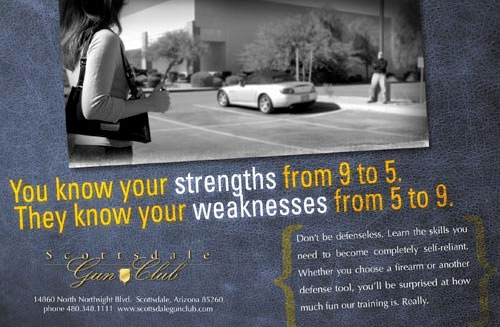
Scotsdale Gun Club ad playing upon and, perhaps, exacerbating the female fear of attack in the public sphere.
These companies discovered in women an untapped market, so they whip up the fear frenzy while producing pink guns and designer concealed-carry handbags.
As a woman, this fear of the violation of your person is not unfounded, nor are the gun companies the only ones playing upon it. In fact, it’s hard not to see mainstream media as perpetuating that cycle of violence by dehumanizing and objectifying women at every turn.
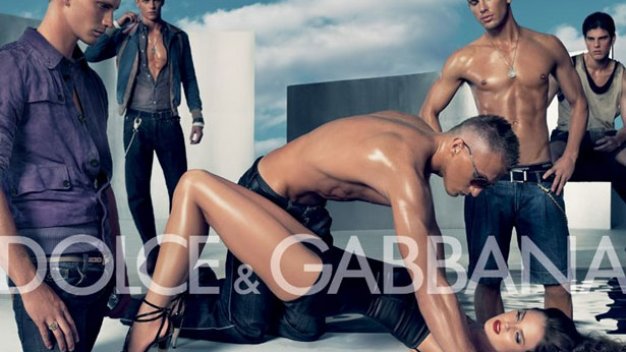
I find this ad (for gang-rape) offensive, and it certainly triggers me.

However, Hollywood would have us believe that the now prevalent imagery of women with guns is empowering to women. Sometimes, of course, it may be. Strong female characters who step into the masculine-tagged realm of guns, violence, and action can be fun and inspiring (think Linda Hamilton as Sarah Connor or Sigourney Weaver as Ellen Ripley). More often than not, though, these images are empty, showing us woman as sex and gun as dick.

Don’t tell me that’s not a phallus.

Though she focuses most on the women who own guns, Czubek doesn’t tell us what we should believe, nor does she give us an answer. Instead, she unfolds the complicated and very individual motivations of women with regards to their choices and firearms. Czubek shows us, too, that we have a history and culture that are at play in all of our decisions and rationalizations. In the end, Czubek allows women to tell their own stories, the stories of the ways in which they navigate a world fraught with impossible rules, threats, and expectations.    
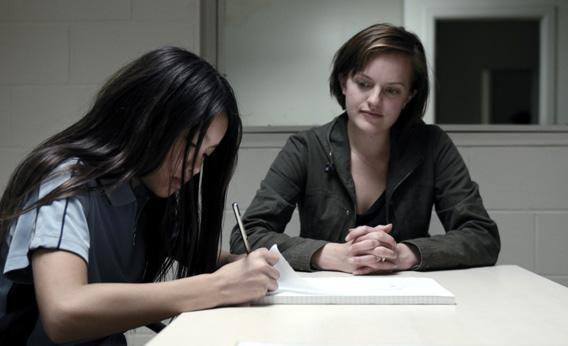
Not Peggy Olson: Rape Culture in ‘Top of the Lake’

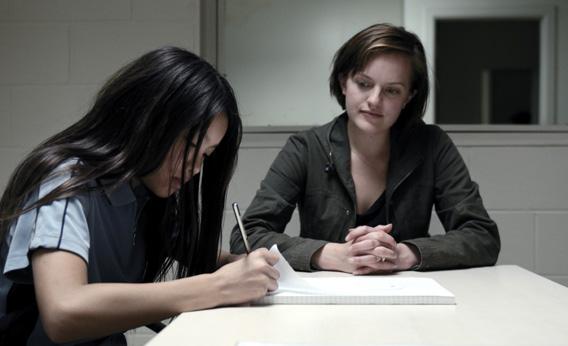
Jacqueline Joe as Tui and Elisabeth Moss as Robin Griffin in Top of the Lake
This guest post by Lauren C. Byrd previously appeared at her blog Love Her, Love Her Shoes and is cross-posted with permission.
You know there’s a Maori legend about this lake… that there’s a demon’s heart at the bottom of it; the beats makes the lake rise and fall every five minutes.

A young girl bikes away from her home, heading through beautiful scenery until she reaches the edge of a large lake. She wades in up to her shoulders. Cut to two shirtless men, muscled and tattooed. Immediately, the feminine: the girl; water is compared to the masculine: men, muscles, tattoos.
These gender-based opening images of the Sundance Channel series, Top of the Lake, set the scene and the ongoing conflict for the New Zealand-based show. Jane Campion, a director known for her feminist take on period dramas (The Piano, Bright Star), injects a feminist element into a police drama, a genre known for viewing women as victims. With Campion at the helm, the series does not shy away from uncomfortable issues, such as the frustrations of living in a patriarchal rape culture.
In the first episode, Tui (Jacqueline Joe), the 12-year-old girl who waded deep into the lake, is discovered to be pregnant. Robin Griffin (Elisabeth Moss) is called in by child services to participate in Tui’s case. Robin grew up in the small town of Laketop, New Zealand but fled the town at an early age and earned her stripes as a detective in a more metropolitan environment.
When Griffin arrives at the local police station to talk to Tui, a cadre of male officers stare at her dumbly while she gives them orders.
Later, Robin fields sexual innuendo and inappropriate questions from her superior, Sargent Detective Al Parker, but instead of objecting, she rolls with the punches, avoiding the questions or changing the subject back to the investigation. It’s a sad reality that she has no other option. She’s an outsider in the local police force, and even if she reported Sargent Detective Parker to someone higher up the food chain, it’s doubtful anything would happen other than word getting back to him. It’s pretty clear the Laketop police is an old boys’ club. Other than Robin, there’s only one female working there, Xena.
When Robin tries to brief the squad about Tui’s case, she is undermined by two of the men on the squad. When she pulls one out into the hall for talking out of turn, the others start to leave before the briefing is finished. Not only do they not respect Robin’s authority on the subject, they don’t care about Tui’s well being.
It’s clear there is a patriarchal order, not only at the police station, which is headed by Sargent Detective Al Parker (David Wenham), but also in the community of Laketop, where Tui’s dad, Matt Mitchum, and his sons, Mark and Luke, reign supreme. 
Top of the Lake‘s “Paradise”–a piece of land where a women’s commune lives
On a piece of land called Paradise, a half dozen women, led by GJ (Holly Hunter) a mother earth type with her long, wispy silver hair, sets up camp. The land is owned by Matt Mitchum, who doesn’t hide his temper from the women upon finding them there. “Who the hell are you?” he asks. Upon seeing GJ he asks, “Is she a she?” One of the women informs Matt she bought the property, but Matt isn’t used to taking no for an answer and throws a hissy fit. “Get out of here, you alpha ass,” another woman calls after him as he storms off the property.
Campion is known for symbolism in her films. Top of the Lake is no exception, starting with the women’s “commune” at Paradise. Paradise is a religious term for a higher place or the holiest place. Paradise also describes the world before it was tainted by evil. Laketop’s Paradise embodies the pastoral, its landscape being made up of large fields which look out over the water. Its leader, GJ, may look like a mother earth type, but her advice to the women is brutally honest. When Tui wanders onto the land, has lunch with the women, and shares her secret about the baby, GJ tells her she has a time bomb inside of her, and it’s going to go off. “Are you ready, kid?” GJ’s advice seems to be for these women to harden themselves emotionally, in a way making themselves more like men. 
Holly Hunter as GJ in Top of the Lake
Another form of symbolism, the lake, around and sometimes in which most of the action takes place, is a mysterious force of nature. The residents of the town often comment on how the water will kill or hurt them, and there’s the sense they don’t mean just the temperature. Maybe they believe it is possessed by the Maori legend (Maoris are the indigenous Polynesian people of New Zealand) of the demon’s heart in it, which Johnno tells Robin:
There’s a Maori legend about this lake that says there’s a demon’s heart at the bottom of it. It beats; it makes the lake rise and fall every five minutes. There was a warrior that rescued a maiden from a giant demon called tipua. And he set fire to the demon’s body while it slept and burnt everything but his heart. And the fat melting from the body formed a trough. And the snow from the mountains ran down to fill it, to form this lake.

Although the legend surrounding the lake features a typical “damsel in distress” tale of a male rescuing a maiden, water is often considered a feminine element. If considered in this way, the patriarchal society of Laketop is surrounded by the feminine: the lake.
Campion may not shy away from a dark look at how patriarchal violence seeps into every corner of life, but the series also offers up hope and possibilities of resistance. As the series unfolds, Robin’s own rape at the age of 15 and subsequent pregnancy is divulged. Although she and Tui’s stories are different, both of them are strong women. Not only is Robin fighting for a resolution to Tui’s case, but she stands up against a group of sexist men in a bar who makes several jokes at her and Tui’s expense. “Are you a feminist?” they ask. “A lesbian? Nobody likes a feminist, except a lesbian.”
Yet another comment in the bar involves victim blaming as the butt of the joke. “Hey, what does it mean if a girl goes around town in tiny shorts? It means she’s hot.”
“Or a slut!” his friend cries out. Robin throws a dart into the shoulder of one of the men. In a later bar scene, one of her former rapists starts flirting with her without realizing who she is. Robin breaks a bottle and stabs him. “Do you remember me now?” she cries.
Upon running away from home, Tui embodies a familiar lone male figure, a cowboy, as she rides into Paradise on her horse, a gun slung over her shoulder. When she disappears from Paradise, Robin fears she has been kidnapped and murdered by whomever assaulted her, but Tui makes a home for herself in the bush and survives on her wits. 
Robin in Top of the Lake
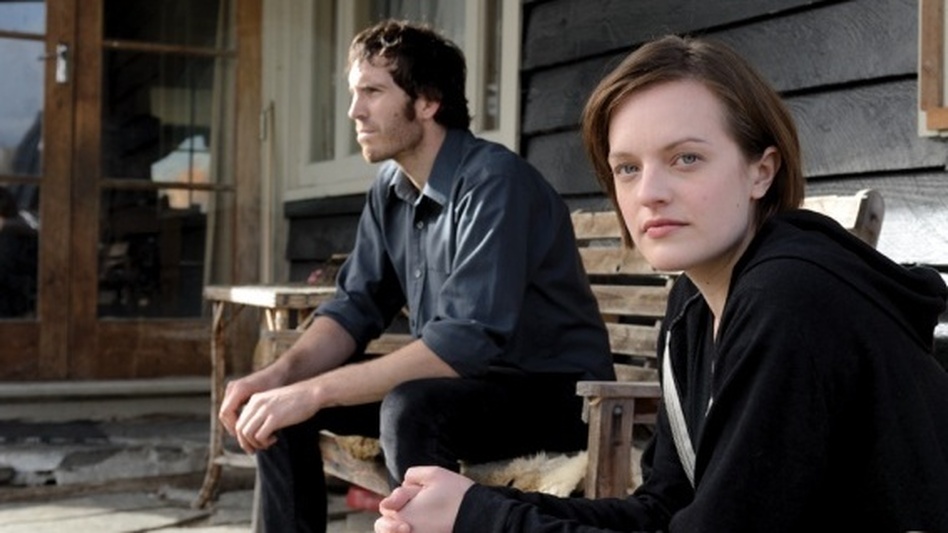
Even among a patriarchal society, there are allies. In Top of the Lake‘s case, it’s men who choose not to be “alpha asses” like Matt Mitchum. Johnno, Robin’s high school sweetheart and Tui’s half-brother, still harbors guilt about the night Robin was attacked. He feels he failed by not standing up for her: “I should have helped you, but I didn’t. I was a coward.” Johnno later attacks one of Robin’s rapists, telling him to leave town. “She was 15!”
Johnno and Robin’s past is marred by painful events, but as Robin continues to work on Tui’s case, they begin to grow close again, and among all the sexual violence, Campion uses the pair to portray the pleasure of a consensual relationship.
Similarly, Tui has a male ally in her life. Her relationship with Jamie is in no way sexual, there are parallels between their relationship and Johnno and Robin’s. Jamie also feels guilt for what happened to Tui, and he literally beats himself up about it in a scene where he slams his head against the doors in his house, only stopping when his mother pulls him away. Jamie brings supplies to Tui while she’s hiding in the bush and plans to help her during the labor.
The series does not wrap up things in a tidy little bow. It may not offer solutions for eradicating sexual assault, but it does more than many previous television series and films: it exposes the truths of a rape culture and violent patriarchal society and how those who live in them choose to survive.

Lauren C. Byrd is a former post-production minion but prefers to spend her days analyzing television and film, rather than working in it. She studied film and television at Syracuse University and writes a blog, Love Her, Love Her Shoes, about under-appreciated women in film, television, and theater. She is currently writing a weekly series about feminism on this season of Mad Men


Travel Films Week: ‘How Stella Got Her Groove Back’


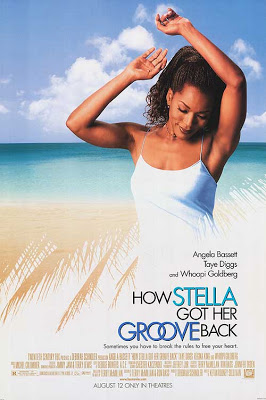
How Stella Got Her Groove Back film poster.

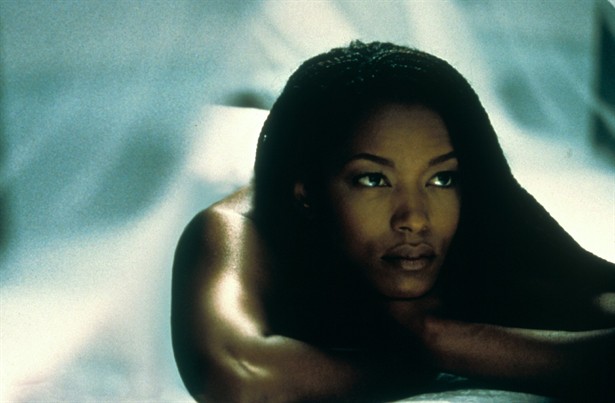
How Stella Got Her Groove Back is based on Terry McMillan’s bestselling novel of the same name and stars two wonderful actresses as best friends–Academy Award nominated Angela Bassett playing strong, determined Stella and Academy Award winning Whoopi Goldberg as hilarious, sassy Delilah. Actor Taye Diggs is Winston, Stella’s Jamaican “groove.”
Hard-working, single mother Stella is devoted to work and parenthood, but just four minutes into the film, her two sisters claim to know what’s best for her.
“You need a husband and your son needs a father,” blasts Angela, Stella’s married and pregnant sister.
“Had him, got rid of him, so glad I did,” Stella retorts.
While family is obsessed with this absurd logic that men are the Holy Grail to women, it’s fun spirited Delilah that demands Stella and she take a nice little getaway to scenic Jamaica together–Stella’s own original idea.

Delilah (Whoopi Goldberg) and Stella (Angela Bassett) checking out the Jamaican view.

“You haven’t been anywhere since I was a natural blonde!” Delilah screams over the phone. One cannot help but applaud Goldberg’s humorous quips of persuasion, especially seeing as she and Bassett have great chemistry as female comrades. It’s an addictive pleasure to see African American women engaged in these quintessential friendships onscreen and no grand schemes of bitterness, jealousy, and hatred so typically written.
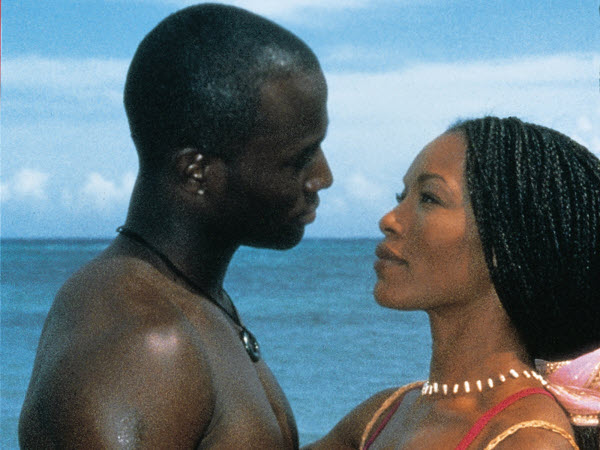
Amongst beautiful, luscious, tropical settings where the twosome have their adventure, Stella meets the much younger Winston and the two engage in a steamy affair.
But during all the drama, Delilah is undergoing a private health crisis and Stella learns of it very late.
Delilah and Stella’s hospital scenes are terms of bittersweet endearment and still make eyes water, for this sisterhood bond is perhaps remarkably closer than the biological glue between Stella and her two siblings. When Stella lays beside Delilah in the white bed and they sing in raspy voices laced with sorrow, both of their hearts are visibly breaking onscreen. Cancer has torn them asunder, ripped the cords of one of the film’s most genuine core relationships and has ultimately broken Stella.
She lost her best friend.
Winston (Taye Diggs) is supposedly Stella’s (Angela Bassett) “groove.”

The ending came with a typical Hollywood bow–tied much too neatly.
“Not every woman needs a man in her life,” Stella had pretty much uttered in the film’s beginning.
But finality proved her to be incorrect.
She clung and frequently apologized to Winston–a childish man that felt threatened by her success and leeched onto her strength. Their vast age difference proved to be a demolition factor; always leaving when times were too rough, insipid, weak-minded Winston was everything opposite of Stella’s majestic character.
It was better suited that Winston return to Jamaica alone while Stella focused on goals for her bright future as an independent and savvy businesswoman. Director’s camera focused on their awkward looks and wet eyes in that last, crushing love scene reeking of desperate closure and unspoken understanding–a solid presentation that the “groove” dwindled.
For Stella to be at the airport and saying “yes” to Winston’s marriage proposal seemed an unbelievable notion.

Stella (Angela Bassett) should have kept Winston as a vacation fling.

Winston should have stayed primarily a Jamaican rendezvous.
Yes. It is always a joyful occasion to see African American romances onscreen (it’s incredibly rare to feature an all African American cast in this genre–unless it’s Tyler Perry related grrrrr!) and not have courtships be the overplayed “thin line between love and hate” stereotype, but Stella’s relationship with Winston wasn’t exactly great as it progressed to turbulent fights and public screaming matches. 
By the film’s cheesy end, I only wished for Delilah’s ghost to visit Stella and continue their friendship in a spiritual manner as Stella embarked on her personal quest. Perhaps even treating herself to more splendid travels and finding other pursuits called “fun” that don’t involve young men.
Winston isn’t worth being the pot of gold at the end of Stella’s rainbow, much less her “groove.”

Travel Films Week: Othering and Alienation in ‘Lost in Translation’

Written by Robin Hitchcock

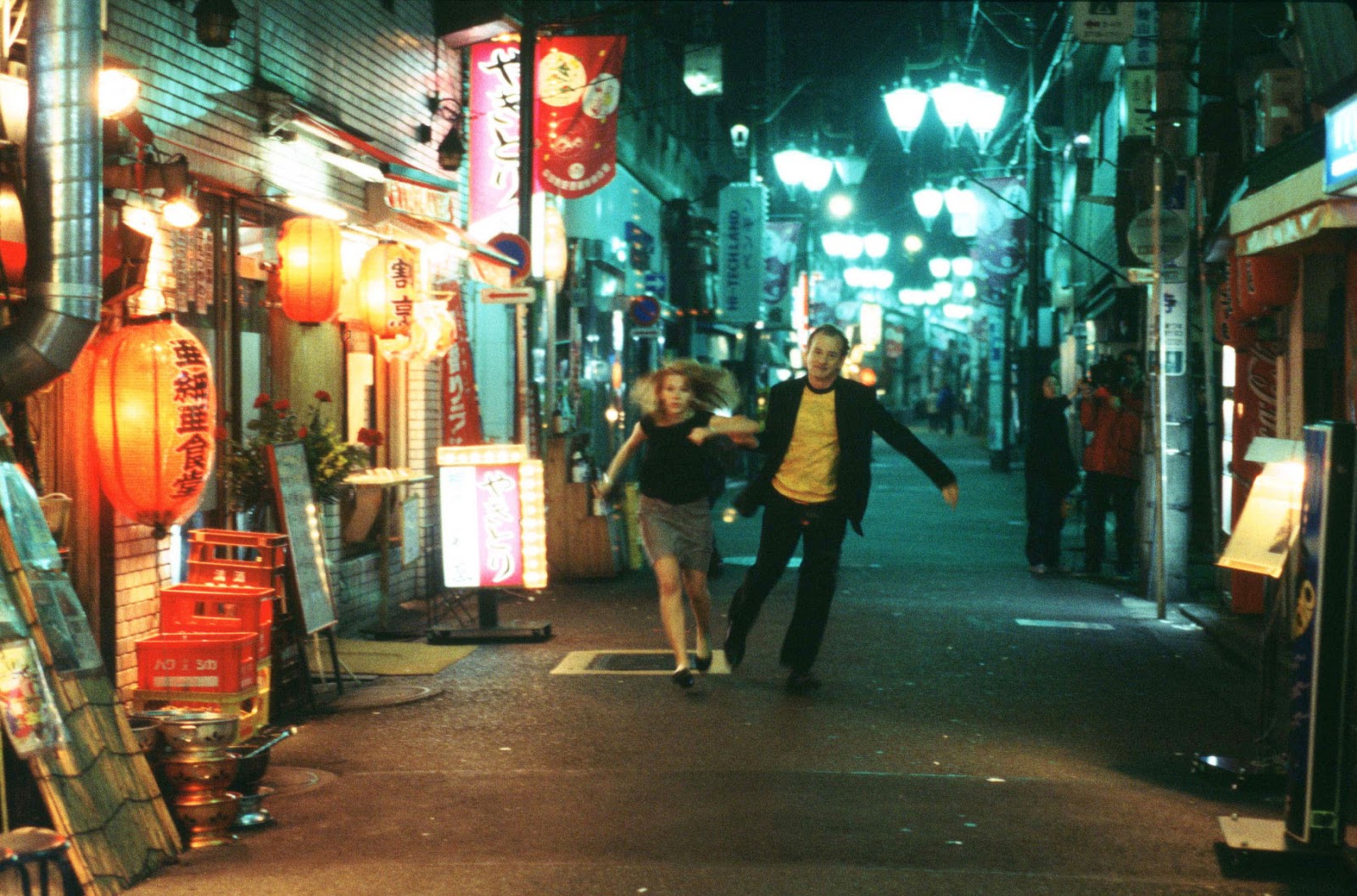
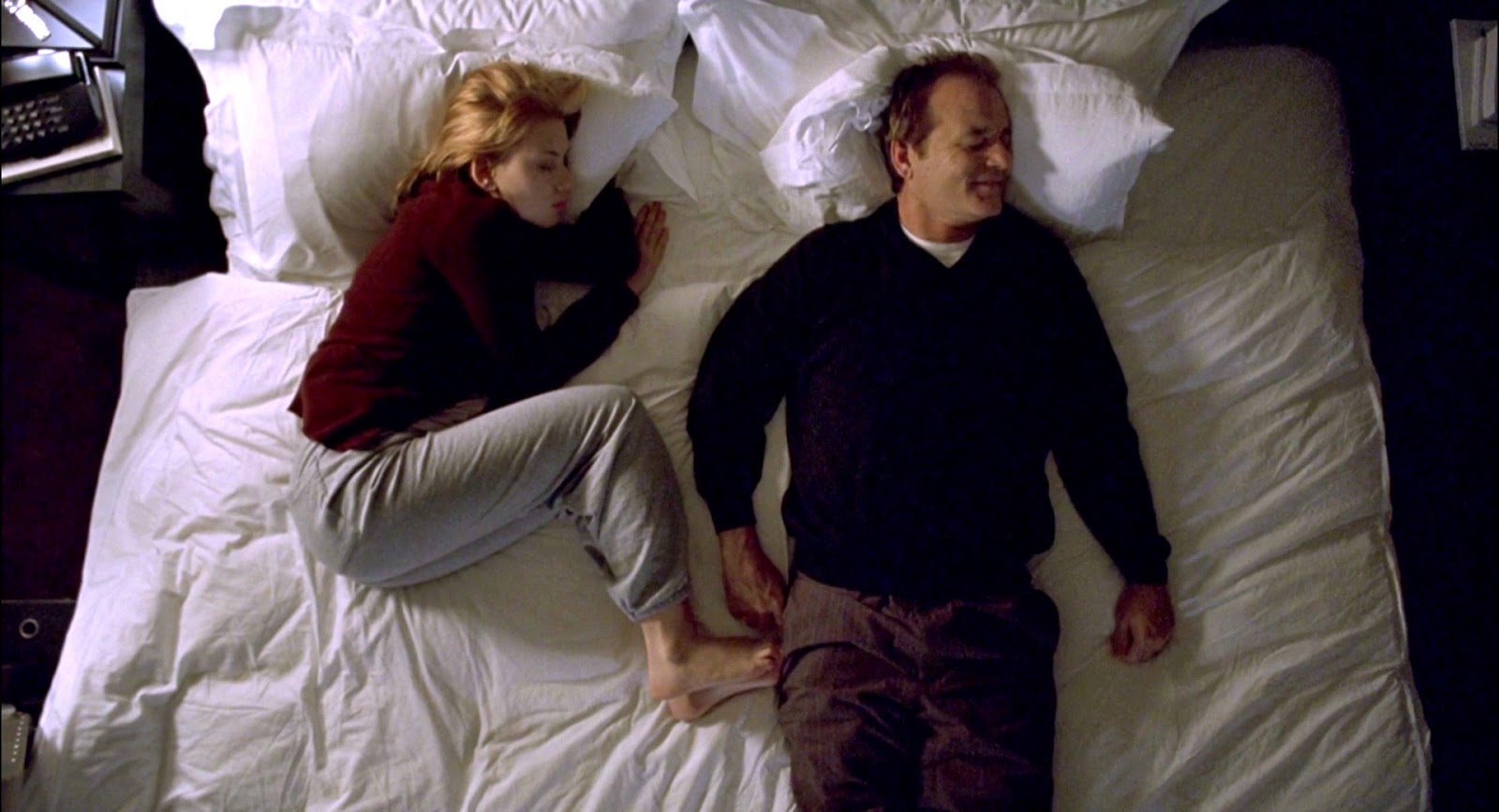
Charlotte (Scarlett Johansson) and Bob (Bill Murray) in Lost in Translation
Sofia Coppola’s Lost in Translation is remembered mostly for the genuinely affecting romance between its leads Scarlett Johansson and Bill Murray, but it also offers a singular depiction of culture shock. Unfortunately, in representing the “strangeness” of Japan through the eyes of its American characters, Lost in Translation often veers into racist stereotypes and caricatures. When the film was up for several Academy Awards including Best Picture in 2004, the anti-racism group Asian Mediawatch advocated an Oscar shut-out for the film because it “dehumanises the Japanese people by portraying them as a collection of shallow stereotypes who are treated with disregard and disdain.” [Despite this protest, Lost in Translation did garner writerdirector Sofia Coppola an Oscar for Best Original Screenplay.]
Bob Harris (Bill Murray) stands tallest in a Japanese elevator
My viewing (as a white American) of Lost in Translation didn’t see disdain for Japan or Japanese people, but rather an aggressive othering, which of course is problematic in its own right. But emphasizing the differences between Tokyo and the American homeland of main characters Charlotte (Johansson) and Bob (Murray) is vital to the narrative of Lost in Translation: both characters are in crisis, unmoored in their daily lives, and the mundane discomfort of their foreign surroundings brings these deeper struggles to bear.
Charlotte looks out at Tokyo from her hotel room window
Focusing on the existential angst of two white Americans in Japan without any well-defined Japanese characters is enough to turn off many race-conscious viewers to begin with, and Lost in Translation doubles down with some cringeworthy Japanese stereotypes. The film gets alarming mileage out of its Japanese characters pronouncing l’s and r’s similarly, which feels even more dated than the also strangely boundless fax-machine humor in this 2003 film. Charlotte at one point asks Bob why “they mix up l’s and r’s” and he suggests it is “for yuks,” but it isn’t actually funny.
Take for example the biggest belly flop of a “comedic” scene in the film, in which an escort arrives at Bob’s hotel room; his host in Japan having gifted him with the “premium fantasy” package. She demands Bob “lip” her stockings. After a classic Bill Murray line reading of “Hey, ‘lip’ them, ‘lip’ them, what!?” the scene devolves as the escort one-sidedly plays out a rape fantasy. Too much of this scene rests on the “humor” of “lip” vs. “rip,” and the rest relies on judging sexism in Japanese business culture from a dubious moral high ground. It’s hard to watch.
Directions during a whiskey ad shoot are literally lost in translation
In contrast, the comedic highlights of the film are the shoots for the whiskey advertisement that brought Bob Harris to Tokyo. The humor in these scenes doesn’t come so much from mocking the Japanese characters as it does mining the disconnect between them and English-speaking Bob (alluding to the film’s title). The flashy director of the ad gives detailed, impassioned instructions in Japanese which are relayed to Bob in brief and inscrutable English directions (“Turn from the right, with intensity!” “Like an old friend, and into the camera.”)
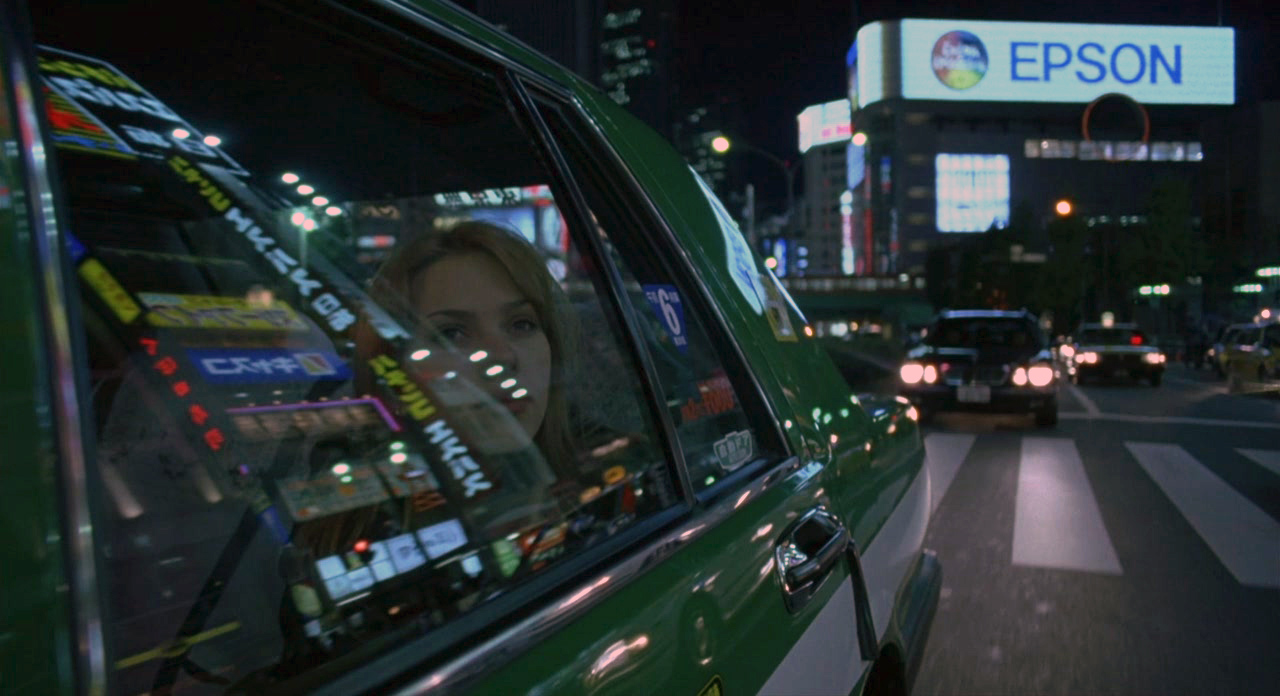
Scarlet Johansson spends a lot of this movie looking out of windows.
Charlotte’s interactions with Japanese culture aren’t comedic, which is likely because Scarlett Johansson is not the established comedic actor that Bill Murray is. Instead, we get a lot of her gazing with wonder at beautiful scenery and meekly participating in ikebana. I think anyone who has ever been a tourist can relate to Charlotte’s wide-eyed stares out of cab windows, but her fascinated observation gets laid on a little thick and starts reeking of Orientalism. Early in the film she peers into a Buddhist temple and cries over the phone to a friend back home that it didn’t make her “feel anything.” That moment lends a lot of credence to those who would dismiss this film out of hand for its white-centricism. 
Charlotte (Scarlett Johansson) and Bob (Bill Murray) in Lost in Translation
But the true heart of Lost in Translation is the relationship between Charlotte and Bob, a sudden and profound connection between two lost souls that transcends its blurred line between friendship and romance. This connection is only credible because of these characters’ alienation in their surroundings, so the emphasis on Tokyo’s foreignness to them is important to the film. And from my limited and privileged perspective as a white American living abroad, the representation of culture shock as alternately funny, sad, and spiritually moving rings true. But Lost in Translation‘s othering of Japan too often crosses into racism and xenophobia, which makes it much less of a movie than it could be.
Bob and Charlotte say goodbye.
I would love to see a Before Sunset type follow-up to this film, to revisit Charlotte and Bob and see what might come of a second meeting between their characters, but also to give us a new take on the experience of being in an unfamiliar location. A more nuanced take reflecting the advancing maturity of the characters and of Sofia Coppola, crafting a better film that’s not only enjoyable with privileged blinders on.


Robin Hitchcock is an American writer living in Cape Town who usually wears pants when she stares out her window to gaze wistfully upon the city. 

Travel Films Week: "It Seems to Me That She Came From the Sea": A Review of Agnes Varda’s ‘Vagabond’

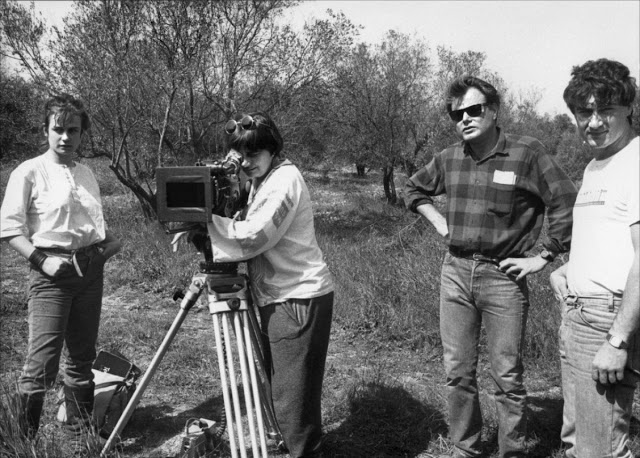
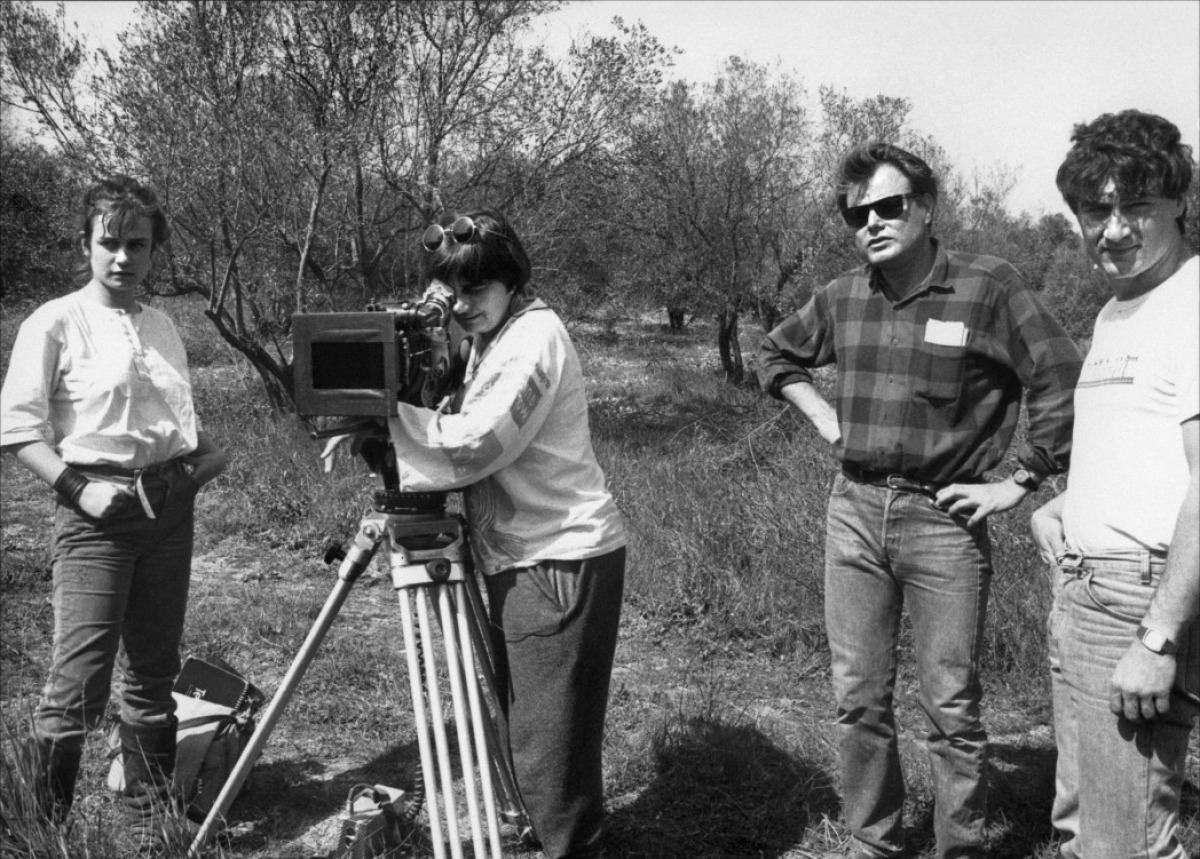
Agnès Varda directs Vagabond
This is a guest review by Rachael Johnson.
Vagabond is one of Agnès Varda’s finest films. First released in 1985, its title in French is Sans Toit Ni Loi–Without Roof or Law or Homeless and Lawless. It is the story of Mona, a young homeless woman roaming the landscape of a French wine-growing region in deepest winter. Lined with a feminist sensibility, Vagabond is both naturalistic and formally remarkable. Filmed in a realistic, pseudo-documentary style, it is structurally ambitious and bleakly poetic. Varda, interestingly, dedicates her film to Natalie Sarraute, one of the key writers of the Nouveau Roman (New Novel), the French literary movement that challenged post-war narrative conventions. Vagabond also features a compelling central performance by Sandrine Bonnaire. The actress, unsurprisingly, won a César (French Oscar) for her courageous turn as Mona. The film itself won the Golden Lion at the 1985 Venice Film Festival.
We begin at the end with the discovery of Mona’s corpse in a ditch. The young vagabond, it seems clear, froze to death. Through interviews with the people she met on the road as well as flashbacks, Vagabond explores the riddle of Mona. The young woman, it soon becomes apparent, is a complex, contradictory figure. Although spunky and independent, she can be curiously passive and sluggish. She does not care what others think of her but is defensive when challenged. She can also be as stubborn and sullen as a small child. Mona’s grit and sass are evident in the opening flashbacks when we see her flipping off a truck driver. There is, equally, a sensuality and earthiness to the young woman. We see her first–in long shot–emerging naked from the sea. The unseen interviewer (Varda herself) narrates in voice-over: “It seems to me that she came from the sea.” 
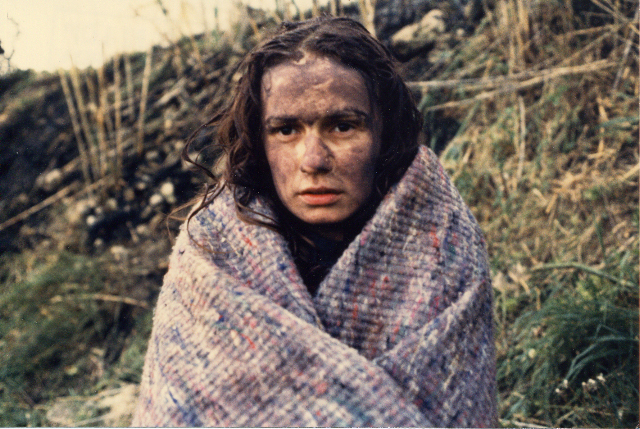
Sandrine Bonnaire as Mona Bergeron in Vagabond
The director’s feminist aesthetics are apparent in the framing of these early flashbacks. As Mona emerges from the sea, the viewer sees that she is being watched by two young men. Varda’s shot of the naked Mona is succeeded by a shot of postcards of naked women for sale in a bar frequented by the same young men. Disturbingly, they talk of missed opportunities. Varda depicts the sexual objectification and exploitation of Mona in a quite unobtrusive, subtle fashion. Many of the male characters reveal their misogyny themselves in interviews. A garage owner who exploits Mona has the audacity to say female drifters are “always after men.”
Many of the women Mona meets seem to understand and appreciate her more. A few even envy her mobility and freedom. A teenager longingly observes, “She was free; she goes where she likes.” Another much older woman admires her character: “She knows what she wants.” Amusingly, she tells her husband that she would have been better off if she had kicked him out at Mona’s age. The charged, poignant comments suggest deep female dissatisfaction with the domestic space.
Mona can be a subversive, liberating force. There is a wonderful scene where she gets drunk on brandy with a wealthy, old lady. The old woman revels in Mona’s anarchic spirit and the mischief of the moment. She knows her nephew wants her money and home and Mona helps her cut through the bullshit of bourgeois propriety and hypocrisy. Amusingly, the young vagabond has been squatting in an abandoned wing of the woman’s château with a young man she has picked up. Mona is also–at first at least–a romantic figure to the old woman’s nurse. A dreamy woman disappointed in love, she is fascinated by Mona’s relationship with the young man. The lovers eat from cans in candlelight, drink wine, smoke pot and listen to music. We see them–in a fine tracking shot–wander the grounds of the property wrapped in blankets. Mona does not, however, play the conventional romantic role for long. An autonomous, capricious spirit, she abandons young male lovers and companions when she feels the need or inclination. 
Mona drinks with a wealthy older woman
The young vagabond is a complicated, ambiguous character. She is prepared to play the dependent, happy to take, and willing to steal. She hooks up with a sweet Tunisian vine-cutter who provides shelter and promises to provide. When he is forced to choose his job and co-workers over her, she is bitterly wounded. She is offered a role and place to stay by a goat farmer but chooses to do very little. She expresses interest in growing potatoes but does not take up the man’s offer of help. She even steals from his wife. The goat farmer, a university graduate, is repelled by Mona’s aimlessness and lack of work ethic. Calling Mona “a dreamer,” he tells her of friends who have been destroyed and taken by life on the road. Mona, it is true, has no plan or ideology. She is not on a journey of spiritual or intellectual enlightenment. She does not want to remake her world. Mona, for her part, defiantly asks why a highly-educated man would herd goats for a living. The suggestion is that the farmer is himself somewhat of a dreamer and even guilty of middle-class self-indulgence. It is never fully clear what drove Mona to choose the road, but we learn that she hated her secretarial job and “jumped-up bosses.” She no longer wants to play the game. When a female agronomist she meets asks Mona why she dropped out, she answers: “Champagne on the road’s better.” Does she believe herself? The factor of class is alluded to but not underscored in Vagabond. Mona quietly observes, “There are so many big houses, so many rooms.” But we know little of her background and education.
The agronomist is intrigued and troubled by the young woman’s way of life. She offers Mona food, champagne, and temporary shelter in her car. The middle-aged woman plays a sisterly-maternal part and expresses deep concern about the dangers that may befall Mona when she finally parts ways with her. They are realised. Mona’s journey takes a tragic turn when she is raped in the woods. Varda, notably, pulls her camera away from the horror. Mona’s life gradually begins to unravel. Although she gains a new set of (delinquent) companions, she becomes increasingly unmoored and scarred by her state. We see her vomiting at a bus station, bombed out of her mind, and we see her, finally, break down and cry. The cold will soon take her. 
Sandrine Bonnaire in Vagabond
Vagabond is an unsentimental study of the road and Mona is not drawn as particularly sweet or predictably heroic. The film does not address gender politics in direct, didactic fashion. Varda’s feminist sensibility and aesthetics are, however, evident throughout. The veteran director never sexually objectifies her female protagonist, and her portrait of Mona is complex, humane, and provocative. The young woman is, in many ways, a truly transgressive figure. Her vagabond state represents an absolute rejection of the comforts, confines, and conventions of domesticity. Although young and attractive, Mona refuses cultural norms of feminine beauty. Mona’s filthiness is, pointedly, the subject of incessant comment throughout Vagabond. With these repeated references, Varda alludes to the deep-rooted misogynist cultural belief that an unclean woman is nothing less than a monstrous aberration. A male student of the agronomist declares, “She’s revolting, a wreck. Makes me sick…She scares me because she revolts me.”
Mona intrigues, unsettles, and repels the people she meets. Vulnerable, variable, tough, apathetic, hedonistic, wayward, and free, she cannot be pinned down and defined. If Vagabond sounds like too grim a journey, it is not. It is an absorbing, at once harsh and beautiful tale about an enigmatic girl who wandered in winter.


Rachael Johnson has contributed articles on film to CINEACTION, www.objectif-cinema.com, and www.jgcinema.com.

Travel Films Week: In Defense of ‘Eat, Pray, Love’

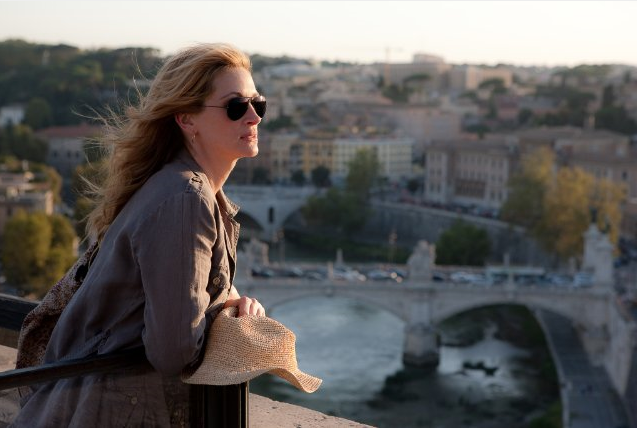
Julia Roberts in Eat Pray Love
Written by Megan Kearns. A version of this article was originally published at The Opinioness of the World. Cross-posted with permission.

I had been looking forward to watching Eat, Pray, Love ever since I saw the trailer. I read the book a few ago, its popularity piqued my curiosity. The prospect of leaving life behind to travel for a year intrigued the armchair traveler in me. I picked the book up…and couldn’t put it down. I loved it. Author Elizabeth Gilbert drew me in with her honesty, humor and raw vulnerability. So I was eager to see the film adaptation.

The film follows Elizabeth “Liz” Gilbert, a successful writer with a seemingly perfect husband and home. Yet as she attains more and more of what she thinks she wants, Liz’s unhappiness grows and her world begins to crumble. Liz endures a devastating divorce followed by a fling with an actor. When that relationship falls apart, her pain consumes her and she’s unsure where to turn. Yearning to reignite her passion for life, Liz decides to travel, living abroad for one year. She chooses to live for four months in Italy to focus on pleasure (“eat”), then India to connect with her spirituality (“pray”) and finally Bali to learn how to balance the two and ultimately lead a life in harmony (“love”).

Julia Roberts eating pizza in Eat, Pray, Love

Lush and gorgeous, the film exhibits breathtaking vistas. It spurs you to want to pick up, leave everything behind and move to Italy, India or Bali. And megastar Julia Roberts is likable, capturing Gilbert’s curiosity about the unfolding world around her. My inner foodie enjoyed the decadent food scenes, which are a big part of the book, reminiscent of those in Julie and Julia. The film boasts a stellar supporting cast, particularly Viola Davis (love her), Mike O’Malley and Richard Jenkins. However, Javier Bardem’s talents are wasted here.

In the book, we have the pleasure of Gilbert’s humorous and vulnerable voice to guide us. While it’s sort of present in the film, it’s somehow diluted. One of the most heartbreaking yet touching moments for me in the book is when Gilbert sobs on her bathroom floor, begging god for help, as she doesn’t know what else to do. She prays that she’s not pregnant, even though she thinks a baby is what she’s supposed to want. Although the film sadly erases her pregnancy scare. I never felt, as much as she tried, that Roberts captures Gilbert’s depression and how she hit rock bottom.

I’m glad the movie retains the female friendship between Liz and Wayan as well as Wayan’s struggle to buy a house in Bali after she leaves her abusive marriage. But in the book, Gilbert spends far more time with Wayan and her daughter Tutti than the movie would lead you to believe, preferring to focus instead on the romance between Liz and Felipe, a Brazilian businessman in Bali.

Gilbert, with the help of friends and teachers along the way, finds the answers she seeks. Yet she also finds them within herself. But the film ignores this important distinction. Especially at the end, it’s as if Liz needs others to tell her what to do, rather than coming to decisions on her own accord. The book, while ending on a fairy-tale ending, focuses on Gilbert’s self-transformation, shifting from always revolving around a man to finding herself and what she wants. She realizes that you have to truly love yourself before you can love another. Gilbert learns to forgive herself, lets go of her unhappiness and embraces life.

Eat, Pray, Love
The movie makes interesting commentaries on gender. When Liz eats dinner with Felipe, he tells her how he stayed at home with his kids while his wife worked. Liz calls him “a good feminist husband.” In Italy, there’s a great scene where Liz and her friends celebrate an American Thanksgiving dinner to say goodbye. Her Italian tutor’s mother asks if she’s married. When she replies no, the mother declares that she doesn’t understand why a woman would go off and travel by herself. Her friend Sophie comes to her defense saying that no one would say that to her if she were a man and calls her brave for traveling alone. Another woman at the dinner comments on the difficulty of women’s choices.

There’s a pervasive notion that women will go see movies in the theatre about men as well as films about women, while men will only go see films starring men. Women and Hollywood’s Melissa Silverstein writes about Eat Pray Love and how “if women like it, it must be stupid” all about how women’s stories and interests are devalued and treated as less important than men’s interests. Silverstein writes:

“Why is it that things that appeal to women are made to seem trivial, stupid and less than? Is it about the fact that large groups of women are embracing something? Is it a fear that if enough women like something we’ll figure out how screwed we’ve been on so many issues that we will all just come together and revolt? Pleeze. Newflash — we aren’t that organized. Shit, we buy more books and see more films, yet stuff that appeals to women is constantly demeaned. Aren’t our dollars as green as the guys?”

Eat, Pray, Love

In her articulate and fascinating Bitch Media article, “Eat Pray Spend”, Joshunda Sanders Diana Barnes-Brown look at the gender theme of Eat Pray Love in a different light. Talking about the book, they write about the pervasive problem of privileged literature (“priv-lit”), asserting that women like Gilbert, Oprah and other self-help gurus tell women to buy their way to happiness. She writes:

“Priv-lit perpetuates several negative assumptions about women and their relationship to money and responsibility. The first is that women can or should be willing to spend extravagantly, leave our families, or abandon our jobs in order to fit ill-defined notions of what it is to be “whole.” Another is the infantilizing notion that we need guides—often strangers who don’t know the specifics of our financial, spiritual, or emotional histories—to tell us the best way forward. The most problematic assumption, and the one that ties it most closely to current, mainstream forms of misogyny, is that women are inherently and deeply flawed, in need of consistent improvement throughout their lives, and those who don’t invest in addressing those flaws are ultimately doomed to making themselves, if not others, miserable.”

Sanders and Barnes-Brown raise many valid points on sexism and consumerism. There’s something to be said for how our capitalist culture continually purports money and possessions as the path to happiness. If we buy this skin cream that erases wrinkles…if we lose weight…if we buy new clothes…we’ll fix ourselves, shed all our problems and finally attain happiness. But in all their Eat Pray Love criticism, Sanders and Barnes-Brown fail to mention Gilbert was able to travel in the first place due to an advance on a book deal from her publisher. So technically, she was still working. Of course this crucial piece of information IS woefully absent from the film. And the Eat Pray Lovemerchandising machine” certainly works to undercut existential messages in the film. Regardless of how Liz funded her trip, it doesn’t invalidate the lessons she learned. Gilbert didn’t intentionally write a self-help manual — she shared her individual experiences. Rather, she wrote a manifesto to let go of fear and follow your dreams, whatever they may be.

Now, I’m no fan of director Ryan Murphy. Too often he erases bisexuality, perpetuates racist stereotypes and reinforcing misogyny in his TV series. But I don’t think the film perpetuates the misogynistic idea that all women are flawed and must be fixed. Liz was incredibly depressed and unhappy in her marriage. She struggled to get pregnant only to realize she didn’t want to have children. She wanted to finally stop putting off learning Italian and embrace her love of yoga. Although it could certainly be because I read the book which shares Liz’s background and her internal monologue, many details which the film glosses over or eliminates. “But if all you have to go on is Movie Liz, she seems like kind of a selfish jerk, and that makes her voyage to better self-care very hard to care about.”

Eat, Pray, Love

While most people can’t jet off to Europe and Asia on a year-long trip (um, I sure as hell can’t afford that), I still think there are aspects of the film and Liz’s journey people can relate to. In addition to being eye candy, Eat Pray Love raises interesting questions about gender and expectations. Women are supposed to want marriage and babies. And yet what we want may differ from societal standards. Society rigidly dictates what women are supposed to want but may feel disillusioned when they achieve those goals and still aren’t happy. Too many women sacrifice their own happiness for others. There’s nothing wrong with putting yourself and your needs first.

Many people often let things hold them back from going after what they want. If people want to go back to school to earn their degree, they think they’re too old. If they want to travel, they think they don’t have the money or the time. As someone raised in a financially-struggling, working class household, who’s often worked two jobs to make ends meet, I’m well aware of the fiscal and time constraints in people’s lives. Yet I think Liz’s story is a testament to seize the moment, to pursue your passions. Walking away from the life you have always known to dare to try something different, to push yourself out of your comfort zone is not only daunting but incredibly brave.
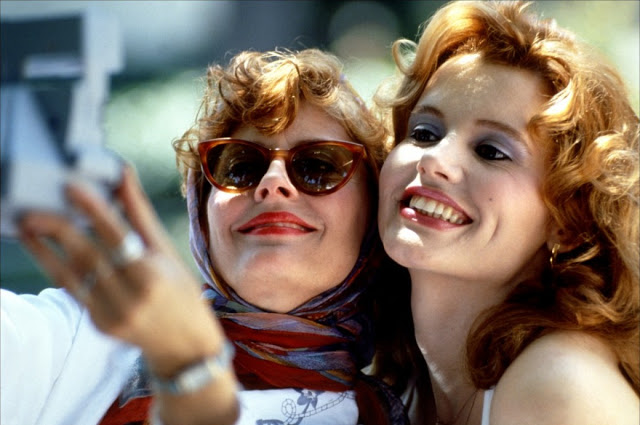
Many will bemoan that Liz is a wealthy privileged white woman who could afford to take a year out of her life. And she is. But would anyone utter this complaint if she were a man? Gilbert emphasizes that you don’t need to travel around the world to find happiness. Despite its flaws, the film (and book) reminds us to chart our own course, no matter what anyone tells us. And that lesson is priceless.

Travel Films Week: Why I Reject the Ending of ‘The Wizard of Oz’

Written by Lady T 

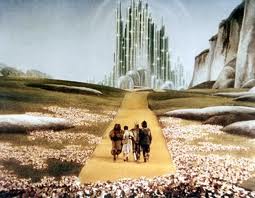
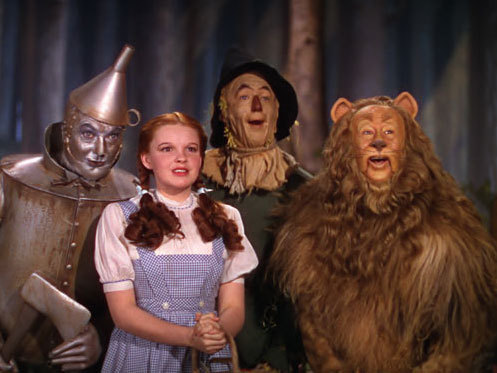
Dorothy and friends skip to the Emerald City
The Wizard of Oz is my favorite movie. There are movies that are more artistically accomplished, movies that are more sophisticated, and funnier films that make me laugh my butt off, but no film I’ve seen has the same sentimental, emotional effect on me as The Wizard of Oz.
I love this movie as I love no other movie. And I hate the ending.
Let me explain.  
The plot of the movie is fairly straightforward. Dorothy and her three male companions go on the same quest: to meet the Wizard of Oz. Each member of the original Fab Four has a different reason to meet the Wizard. The Scarecrow wants a brain, the Tin Man wants a heart, the Cowardly Lion wants courage, and Dorothy wants to go home to her Auntie Em and Uncle Henry in Kansas.
In the end, their quests prove to be unnecessary, and not just because the Wizard is a charlatan who cannot give the characters what they desire. As it turns out, each character already possesses the quality he or she was seeking. The Scarecrow doesn’t need a brain — he’s already the smartest person in the group, a quick thinker and problem-solver who comes up with the plans to break into the Wicked Witch’s castle. The Tin Man doesn’t need a heart — he’s already emotional, crying whenever his friends are in trouble. The Lion doesn’t need someone to give him courage — he already steps up to every challenge that’s presented to him, even when it scares him. And Dorothy doesn’t need to go home — she’s been there the whole time, because the entire colorized section of The Wizard of Oz was all just a dream!
BOOOOO. (Just to make myself perfectly clear, I am, in fact, saying “Boooo!” and not “Boo-urns!”)

“Wait – I thought it was a trip, but I was really just tripping?”

I hate “it was just a dream!” endings on principle, because if the entire conflict takes place in the main character’s head, there’s no real urgency, nothing really at stake.
I hate that the message — “What you thought you wanted is something you really had all along!” – is applied differently to Dorothy than it is to her friends. The Scarecrow, Tin Man, and Lion are told that they always had a brain, a heart, and courage, and the Wizard giving them their “gifts” is affirmation of their strengths. Dorothy, on the other hand, gets a lecture from Glinda and has to realize that “if I ever look for my heart’s desire again, I won’t look any further than my own backyard.” Her friends get to realize that they were always smart, emotional, and brave, while she has to learn a lesson about being grateful for what she already has.
I hate the ending because it breaks my heart to think that Dorothy’s friendships were all a product of her fantasy.

Dorothy yearns for life somewhere over the rainbow

The truth is, Dorothy doesn’t have a bad life on her farm in Kansas. Her aunt and uncle love her and take care of her, and the hired hands on her aunt and uncle’s farm treat her with kindness and consideration. I don’t mind that she takes a minute to appreciate that and realizes that running away is not the best idea.
But even though a loving family is invaluable, guardians are not the same thing as friends.
In Oz, Dorothy has friends and equals. She and the Scarecrow, Tin Man, and Lion share the same adventures and support each other. She invites them on her quest to find the Wizard, giving them hope where they had none before, and in turn, they save her from the clutches of the Wicked Witch of the West. They don’t treat her differently because she’s a girl; any concern they have for her is because they fear for her life in an enemy’s hands, not because they doubt her abilities or strength.
There’s mutual respect and love among Dorothy and her friends and equals, something she doesn’t have in Kansas because there’s no one her age to relate to her — and we’re supposed to happily swallow that this is all just a dream, and there’s no place like home?
Well, I don’t accept it. I refuse. In my mental version of the ending, Oz is real. Dorothy traveled there and came back, and even though she has a renewed appreciation for her day-to-day life, the door is still open for her to return, where the new rulers of Oz — the Scarecrow, Tin Man, and Lion — will all be waiting for her, ready to go on their next adventure.

Dorothy and her three best friends


Lady T is an a writer and aspiring comedian with two novels, a play, and a collection of comedy sketches in progress. She hopes to one day be published and finish one of her projects (not in that order). You can find more of her writing at The Funny Feminist, where she picks apart entertainment and reviews movies she hasn’t seen.

Travel Films Week: Let’s Keep Goin’: On Horror, Magic, Female Friendship & Power in ‘Thelma & Louise’

This guest post by Marisa Crawford previously appeared at Delirious Hem as part of their CHICK FLIX series and is cross-posted with permission.

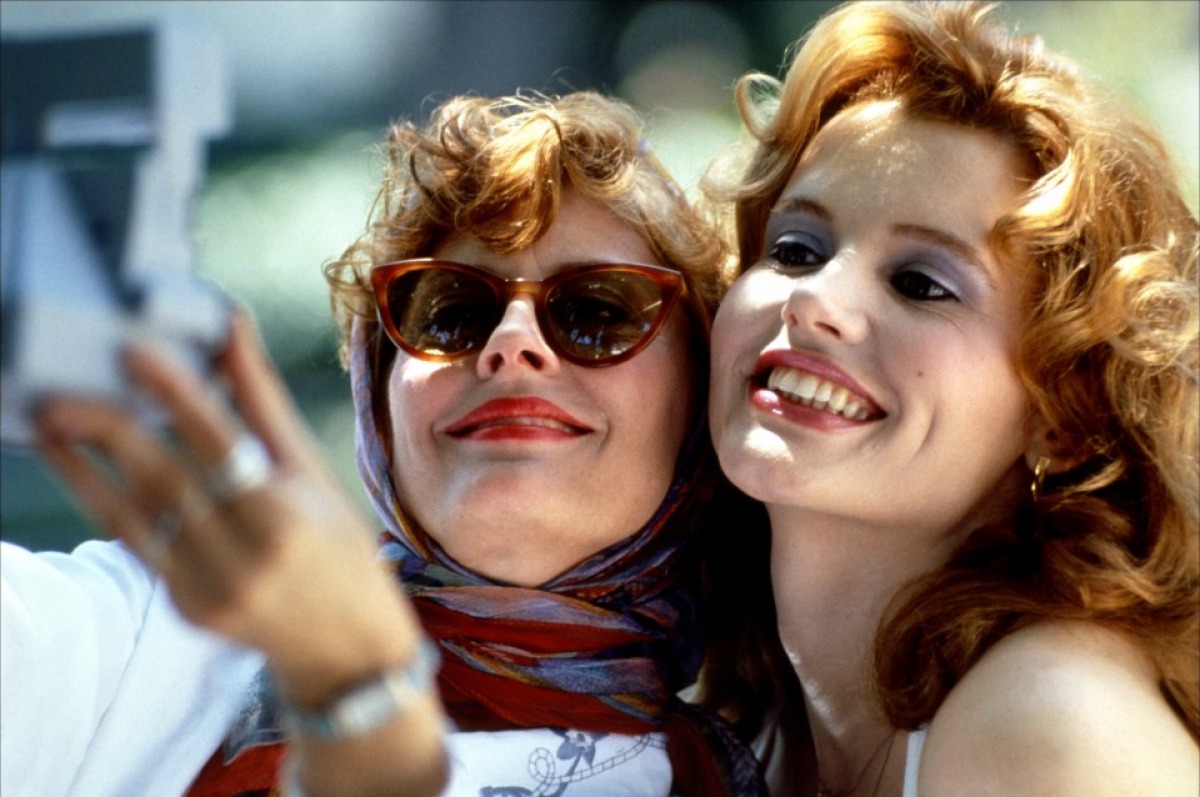
Geena Davis as Thelma and Susan Sarandon as Louise
When I think about Thelma & Louise, I have to start at the end. When Thelma says, Let’s not get caught. When she says, Let’s keep goin’. I’ve wanted to incorporate that line into a poem for years now. But I’m not sure I’ll ever find anywhere to put it because it’s just too powerful to me.

After its release in 1991, Thelma & Louise stirred up controversy mainly surrounding its connection to feminism, its use of violence, and its presentation of male characters.[i] It was criticized for its portrayal of men as one-dimensionally negative. The two heroines were accused of male bashing. It was condemned for advocating violence as a solution to women’s problems. Over twenty years later, though, I think that Thelma & Louise is most often thought of as a wild, raucous outlaws-on-the-run movie, but with girls. A buttered-popcorn, butt-kicking chick flick about female empowerment. Two strawberry blondes in a sea-foam T-bird convertible. Lite feminist fizz.[ii] It’s unthreatening. And yet, it threatens me.

I find it deeply and profoundly scary.

Chrissy and I watching it, drinking whole bottles of vodka in my studio on Mission Street. Her curly hair/my straight hair.

We called it a horror movie.

Because of the end. Because they almost made it. Because they maybe could’ve made it. Because they never could’ve made it. Because the world we live in wouldn’t have let them. And because they knew it.

Still from Thelma & Louise

There’s a trail of breadcrumbs that Thelma and Louise follow out of the confines of the real world. And there’s a thread of mistrust in that world that leads them out of it. After Louise shoots & kills the man who tried to rape Thelma, she says they can’t go to the police because nobody would believe them. Because everyone saw Thelma dancing with him all night, cheek to cheek. And I saw her shirt keep falling off her shoulder.

It threatens me because it happens in my world too. It obscures my view.

When Thelma says shouldn’t we go to the police & Louise says we just don’t live in that kind of world.

When Thelma says how do you know ‘bout all this stuff anyway.

When Thelma says it happened to you, didn’t it.

The trail of breadcrumbs starts with rape & the thread is a product of rape.

They follow the thread in circles, refusing to go through Texas.

Still from Thelma & Louise
When Steph and I were wailing along to “I Can’t Make You Love Me If You Don’t” while driving down Highway One. Her blonde hair/my brown hair.

In Europe when Jenny and I slept in the same bed every night even though there were two.

How in Spain Lana and I would sit in coffee shops for hours and get drunk on the beach and take pictures in Zara.

When we were in Western Mass and Tina brought me to the train and I didn’t want her to leave.

Geena Davis as Thelma in Thelma & Louise
Road trip logic: How you start off making small talk and three days later your hair is dirty, and you lost all your makeup and you’re attached like Siamese twins. And the top is down, and you’re singing into the hot desert wind.

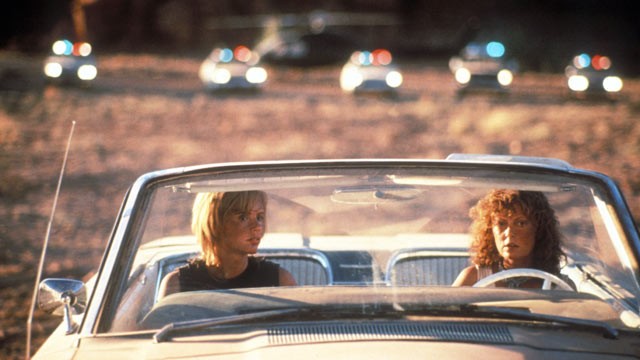
Thelma and Louise being pursued by police
In Thelma & Louise, adult female friendship is a rock-solid and ecstatic alternative to female subjugation and the traditional romance plot. A joyful, vibrating vehicle through which one can achieve true freedom and meaningful self-expression. Until that vehicle drives itself off a cliff.

If men didn’t rape, Louise wouldn’t have shot the rapist. If the system didn’t blame rape victims, they wouldn’t have gone on the run. If men didn’t rape, they could have driven through Texas. If the system didn’t blame rape victims, Louise wouldn’t have been so afraid. If women weren’t taught they deserve to be treated like shit, they wouldn’t have had to become fugitives in order to feel free. If there was a place for liberated, powerful women who live on their own terms in this world, they wouldn’t have had to create their own. If there was a place for liberated, powerful women who live on their own terms in this world, they wouldn’t have had to plummet into the Grand Canyon in order to feel free.

The logic falls in on itself. Like a sea-foam T-bird falling into the Grand Canyon.

When there’s a wall of cop cars behind them and the canyon is in front of them and Thelma says let’s keep goin’.

Thelma with a gun

There’s an alternative ending to Thelma & Louise that you can watch on the Internet.

It shows the car falling all the way into the canyon instead of freezing the frame with the car in mid-air, flying outward on an upswing. Watch it. Because you can see the car getting smaller and smaller, as the canyon gets bigger and bigger. And it starts falling at an angle that no longer looks controlled, no longer looks triumphant. Which is exactly how it should look — the logical conclusion that joyful, strong women have no place in this world.


The way they freeze the frame with the car on an upswing at the end is why people call Thelma & Louise a “chick flick.” It’s why it’s remembered as a girl power-powered outlaw movie, rather than a horror one.

How me and Carrie wrote a song about Kim while she was in the other bedroom.

When Tina and I were drinking sangria in San Francisco, and we couldn’t stop prank-calling you and laughing into our sleeves.

How we were in the Catskills and I yelled at Janie, well why don’t you just eat.

Louise with a gun

Roger Ebert says that the film’s last shot, the freeze-frame of the car going off the cliff, fades to white with “unseemly haste.” He writes, “It’s unsettling to get involved in a movie that takes 128 minutes to bring you to a payoff that the filmmakers seem to fear.”[iii]

Before the credits start to roll, the white screen flashes with a montage of images showing the two women, happy and alive, suggesting a weird kind of magical realism.

It’s all in that phrase: let’s keep goin’. As if by driving off the cliff they really did keep going. As if they had reached a parallel universe in which their journey did not have to end. It reminds me of the end of Pan’s Labyrinth, before the little girl is shot in the labyrinth. In the scene where we see her stepfather watching her talking to thin air, we see a crack in the magic into a horrific reality. The last scene in Thelma & Louise shows no definitive cracks in the magic. Only a triumphant freeze-frame that loops back almost instantly to images of the heroines’ lives.

Thelma and Louise going over the cliff
Rock journalist Ellen Willis writes about how Janis Joplin’s music captured a specifically female pain and longing; pain that was caused by men — and how the emotional risk of expressing that longing was ultimately perhaps what destroyed her. Willis suggests that Joplin opened up this territory for later women artists, and brilliantly frames Thelma & Louise as “perhaps the memorial Janis deserves.”[iv]

I think, for instance, of two movie heroines, born-again desperadoes, who smash one limit after another, uncover the hidden places where anger and despair, defiance and love converge, and finally leap into the Grand Canyon because freedom’s just another word for nothing left to lose.

I can’t decide if I think Willis is letting the film off too easy here, but I love this comparison anyway. Janis Joplin was real; her struggle was real and her death was real. But for me, growing up in the 80s and 90s, she wasn’t a real woman so much as an icon; a symbol of wild, defiant love and art, tough, complex femininity and unrelenting sexuality, her life remembered for the spirit of freedom that she embodies, rather than for the sense of tragedy. And so are Thelma and Louise, for better or for worse — their car still goin’, the music still blasting, the camera still clicking images of them, first in red lipstick, sunglasses and hair kerchiefs, and later in dirtied jeans and cut-off t-shirts, their hair whipping wildly in the wind.

Thelma & Louise DVD cover

[i] This info was found in Karen Hollinger’s book, In the Company of Women: Contemporary Female Friendship Films, University of Minnesota Press

[ii] “Light feminist fizz” is borrowed from Bill Cosford, Miami Herald movie reviewer

[iii] Roger Ebert, “Thelma & Louise,” Chicago Sun-Times

[iv] Ed. Nona Willis Aronowitz, Out of the Vinyl Deeps: Ellen Willis on Rock Music, University of Minnesota Press


Marisa Crawford is a poet, writer and editor living in Brooklyn, NY. She’s the author of the poetry collection The Haunted House (Switchback Books, 2010), and the chapbook 8th Grade Hippie Chic (2013 Immaculate Disciples Press). Her writing has recently appeared in Fanzine, Black Clock, Delirious Hem and HER KIND, and on Feministing’s Community blog.

How The Office’s Jim & Pam Negotiated their Conflicting Dreams

Written by Robin Hitchcock

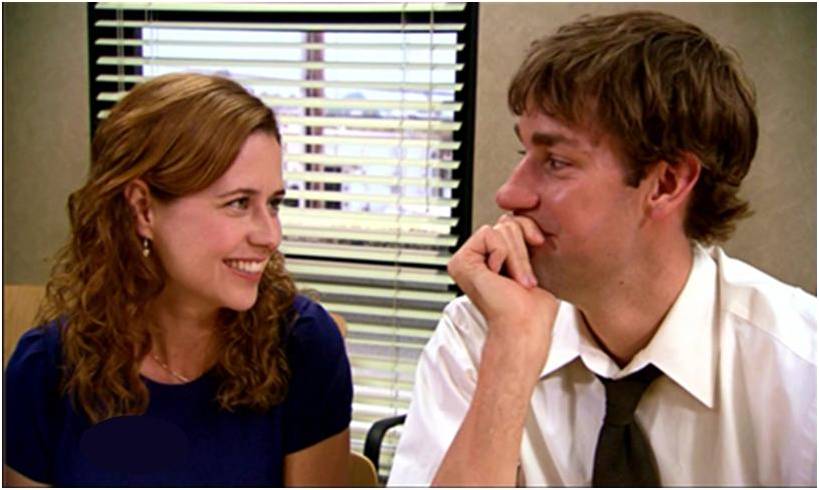
Jim and Pam of The Office
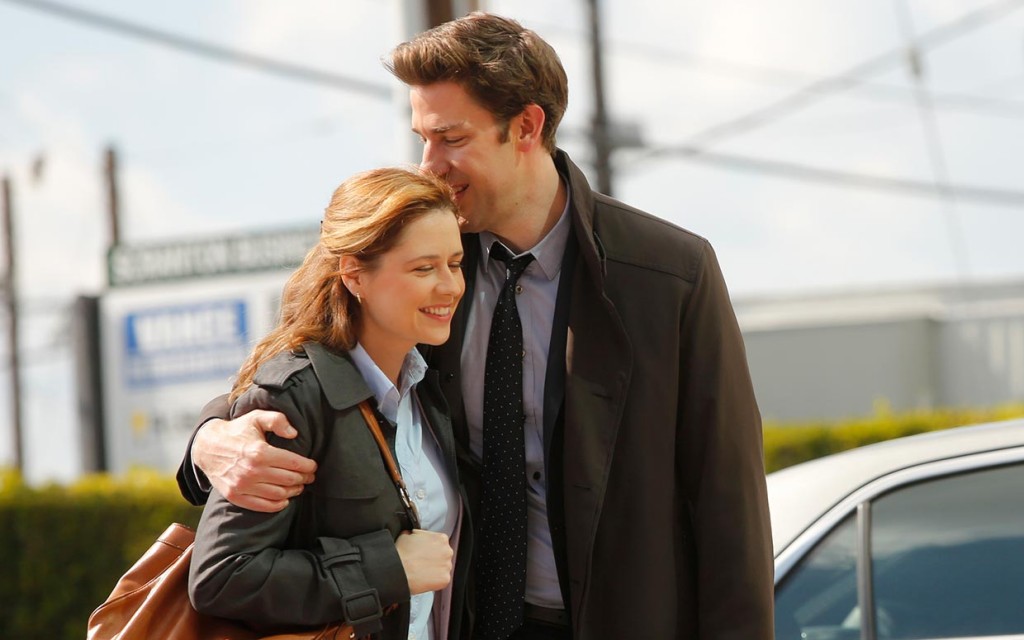
The US iteration of The Office concluded its nine-year run last week with a somewhat mawkish but nevertheless emotionally satisfying finale. We left these characters in a place of personal fulfillment—Dwight and Angela marry, Dwight is regional manager of the Scranton branch of Dunder Mifflin, Andy has turned his embarrassing experiences into something positive and returned to the site of his glory days, Kelly and Ryan foolishly and selfishly run off into the sunset, Erin meets her birth parents. And Jim and Pam, the emotional core of the series, leave Scranton together for Austin so Jim may rejoin the sports marketing startup he and Darryl began working for earlier this season. 
In case you haven’t been watching The Office in its autumn years, Jim and Pam’s relationship has followed the push and pull of the conflict between their commitment to each other and their own personal dreams. In season 5, aspiring artist Pam moved to New York for a graphic design program. The series mined the pressures of long-distance relationships for both comedy and drama, but Jim and Pam’s partnership stayed strong and they got engaged at the gas station midpoint between Scranton and New York. Shortly thereafter, Pam left New York “the wrong way” because she failed a class and doesn’t want to remain in the city for another three months to retake it. She insists it is not because of Jim, but because she doesn’t actually like graphic design, but the viewer knows it is a complex combination of those two forces. 
Pam and Jim after the birth of their first child.
This dynamic is flipped in the final season when Jim joins a friend in Athlead, a new venture connecting famous athletes to sponsorship opportunities. With Athlead, Jim is finally able to work a job he feels passionate about, in stark contrast to his years as a paper salesman. But Jim’s new job puts an immense strain on his marriage with Pam—with whom he now has two children—as he divides his time between Philadelphia and Scranton and has less attention to give to his family. 
Pam is driven to tears by the growing conflict between her and Jim
This is exacerbated by a lack of communication as Jim inexplicably keeps his initial involvement with Athlead from Pam, and increases his commitment to this new job without consulting her several times over. Jim and Pam’s relationship reaches the breaking point, and Jim finally decides to leave Athlead and return to Scranton full-time to save his marriage. 
Pam is wracked with guilt and fears that she is “not enough” to justify Jim abandoning his new career direction. Notably, we saw nothing of this type of guilt in Jim when Pam left art school. With the help of the documentary crew that is finally explicitly woven into the story in this finale season, Jim presents Pam a video montage of their relationship and tells her “not enough for me? You are everything.” 
The series finale is set some time in the future, after the documentary has aired on PBS and Jim and Pam’s relationship is as important to in-universe fans as it is to those of us watching The Office in the real world. During the public Q&A at a reunion panel, several women criticize Pam for stifling Jim’s career. Jim does a satisfactory job of dissuading these questions, but they clearly affect Pam. She’s also moved by seeing the success and happiness Darryl, who has followed Athlead (now Athleap) to Austin. So she secretly sells her and Jim’s house (secrecy is a recurring and frustrating undercurrent in their relationship; this is the same house Jim bought without consulting Pam first) and tells Jim it’s time for them to move on from Dunder Mifflin and relocate to Austin. 
Pam and Jim decide to move on from Scranton
From a Doylist perspective, this gives the audience closure; without Jim and Pam present, the story of The Office feels complete. But on the Watsonian side of things, it means Jim’s career path decidedly beats out Pam’s after many years of back and forth, which puts a damper on my personal satisfaction as a viewer. 
My personal life is clearly influencing my reaction to this storyline: I moved 8,000 miles away from home so my partner could accept his dream job. Obviously, every couple needs to resolve these issues on their own, and it is dated and heteronormative to think this is always going to be a gendered struggle. But for many mixed-gender couples, gendered expectations of whose career matters more and the importance of career vs. family often play a part. And it’s a bit of a let down to see one of the iconic on-screen couples of the last ten years fall into the traditional resolution of the man’s career coming first.

Robin Hitchcock is an American writer living in Cape Town who works out her personal issues by writing about sitcoms.

‘Star Trek Into Darkness’: Where Are the Women?

Star Trek is the future for Christ’s sake. There’s no reason to continue to parrot the shortcomings of a series that always strove to show us a better, more egalitarian future but failed on many levels because it couldn’t see the ways in which it fell victim to the limiting ideology of its own era.

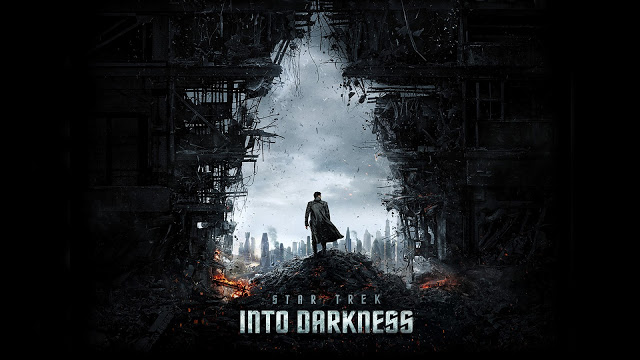
Star Trek Into Darkness movie poster
Written by Amanda Rodriguez
Spoiler Alert
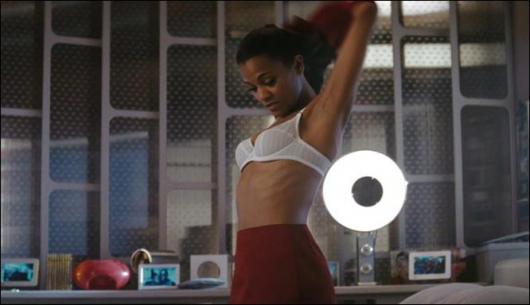
JJ Abrams’ Star Trek Into Darkness came out this weekend, so with fingers crossed and fledgling hope, I went to review the film for Bitch Flicks. Though I love me some Benedict Cumberbatch as well as most TV permutations of the Star Trek franchise, the movie was overly long with a predictable plot and an over-reliance on the image of people being sucked into space like ants into a vacuum. Not only that, but the lack of female characters was stark, and their accompanying lack of depth and three-dimensionality was, frankly, depressing. This latest iteration of Star Trek didn’t even pass the Bechdel Test. In fact, I’m not even sure the two women with speaking roles were even in a single scene together.First, we’ve got Lieutenant Nyota Uhura portrayed by Zoe Saldana. In Abrams’ reboot of the Star Trek series, Uhura is extremely intelligent, ambitious, capable, and sees Kirk’s misogynistic bullshit for what it really is. Though she is generally a strong female character, the film still exploits her femaleness by overemphasizing her sexuality. They do this by keeping her and all the other female Starfleet members in those ridiculously impractical short dresses and having a gratuitous scene of her in her underwear.

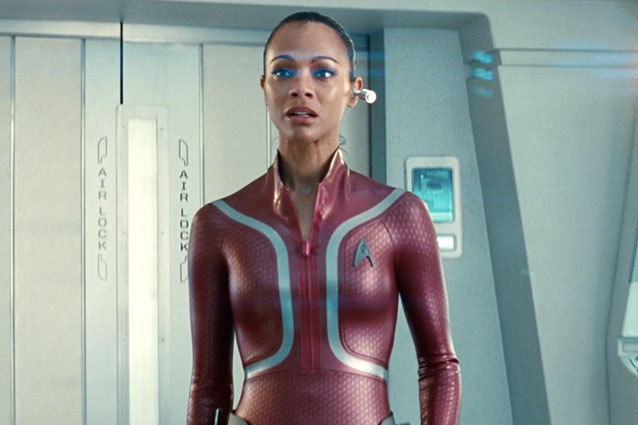
Uhura strips in her quarters not realizing that Kirk is lecherously looking on.

She is attracted to the intelligence of Spock, and the end of the film has the two falling in love. That, my friends, is the end of Uhura as an autonomous, interesting character. At the beginning of Star Trek Into Darkness, Uhura is dressing Spock for an away mission. How is that even remotely her job as a communications officer? She then proceeds to be childishly passive aggressive toward Spock because he’s displeased her and bickers with him during a dangerous away mission to Kronos, bringing her captain into the argument. Talk about unprofessional. Not only that, but her single valiant effort to placate a Klingon group that discovers them through the use of her knowledge of their language and culture fails miserably, nearly getting them all killed, thus proving diplomacy and non-violence are not valid tactical options for Starfleet.

Next, there’s Dr. Carol Marcus, played by Alice Eve, who is strong and spunky (stowing away aboard the Enterprise in order to investigate her father’s top secret weaponry), but, for some reason, it’s important to show her in her underwear as well.

Guess it was crucial to the plot to learn that science officers do, in fact, wear undergarments to match their blue uniforms.

Dr. Marcus is a female character who could’ve been so much more. She is given no history and her presence has little context other than to break up the sausage-fest with a bit of blonde eye candy. While she stands up to her father, who is the most powerful man in Starfleet, the original series character upon whom she is based is infinitely more compelling than this simple doctor of physics with a focus on weaponry. In fact, the original Dr. Marcus was a biologist who discovered how to create new worlds and new life. A weapons specialist is antithetical to that kind of focus on sustaining life and ecosystem balance, nevermind the powerful intellect and will that go into such a scientific endeavor. Though Abrams changes the timeline, it’s unrealistic to think that the doctor’s long path down the road of biology toward Project Genesis would’ve started after that timeline change. Due to the original character’s romantic history with Kirk replete with their son being born and Marcus choosing to pursue her work and raise the boy on her own, we know that Abrams is setting up Kirk and Marcus to fall in love in the third installment of his reboot. If we’ve learned anything from Uhura, we know that’s the kiss of death for any possibility of Marcus’ unfolding complexity and agency within the films.

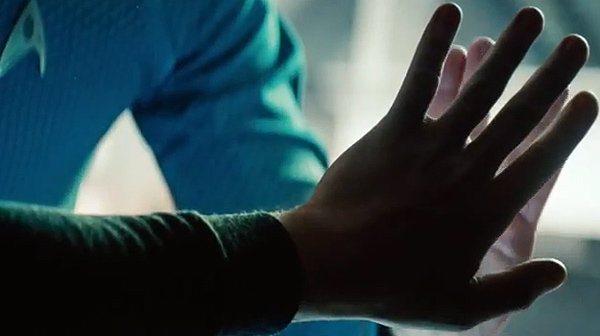
I would’ve been happy, however, if Star Trek Into Darkness could have admitted to itself what its true genre is: Brokeback Mountain in space. This is actually a bromance about the love between Kirk and Spock that climaxes when Kirk sacrifices himself to save his ship. The two men are separated by glass as Kirk is irradiated in an inversion of the finale of Star Trek II: The Wrath of Khan when Spock dies. In both versions, the two men press their hands to the glass, but in Abrams’ reboot, Spock is overcome and weeping; the intensity of both men’s emotions is overwhelming as they say their impossible goodbyes.

Spock and Kirk say their tearful, love-filled goodbyes.

Spock then goes on an enraged rampage to destroy Khan and avenge Kirk’s death. Nothing about his demeanor throughout both films suggests that he would display this intensity of emotion in relation to Uhura. In fact, we have as an example his resigned acceptance of death earlier in the film, in which Spock is able to detach from his emotions towards Uhura and the impending reality of his own death. Not so with the death of Kirk.

Though the homoerotic subtext is strong in the finale of this film, JJ Abrams never really takes any risks with his reboot. The film hints at widespread corruption among Starfleet coupled with a clandestine militarization of the Federation, but Abrams chickens out from truly shaking up the Star Trek universe by having the corruption be limited to a single megalomaniac admiral. Abrams doesn’t depict women in power. How many women were around the table when the highest ranking members of Starfleet and their first officers assembled? I didn’t see any. Aboard the Enterprise, there are only the two women in this article (of dubious depth and agency) who have more than a single line of dialogue, and their outfits continue to model an outdated 70’s mode of sexism.

Our beloved Enterprise goes down, unable to fly under the weight of so much mediocrity.

Star Trek is the future for Christ’s sake. There’s no reason to continue to parrot the shortcomings of a series that always strove to show us a better, more egalitarian future but failed on many levels because it couldn’t see the ways in which it fell victim to the limiting ideology of its own era. This reboot may even have regressed from the days of Next Generation, Deep Space Nine, and Voyager, all shows that took the tenets of the original series and progressively attempted to push the boundaries on subjects of race, gender, sexuality, capitalism, imperialism, etc. In fact, Star Trek Into Darkness reveals that, as a culture, we are still falling victim to that same limiting ideology. Star Trek Into Darkness even has trouble imagining a future that is free from racial hierarchy and the gender binary. This film struggles and fails to see a world that has advanced beyond our limitations as a people and as a culture. Frankly, that is the poorest kind of science fiction because we look to sci-fi to either expose our contemporary hamartia or to teach us how to dream of a better, freer existence that is full of possibility and progress.

Does Uhura’s Empowerment Negate Sexism in ‘Star Trek Into Darkness’?

Lt. Nyota Uhura (Zoe Saldana) in Star Trek Into Darkness

Written by Megan Kearns | Warning: Spoilers ahead!


Yes, I am a Trekkie. I’ve been a huge fan of Star Trek ever since I was a kid. The camaraderie of Star Trek: The Original Series, the intellectual and moral conundrums on Star Trek: The Next Generation, the political intrigue and exploration of social issues on Deep Space 9 — I love them all.

I really enjoyed JJ Abrams’ Star Trek and Star Trek Into Darkness. Both are fun, gripping movies paying homage to the original series. While I enjoy the nostalgia and revisiting these characters, I can’t ignore Star Trek Into Darkness’ vacillating depiction of empowerment and sexism.
In the 60s original TV series, Lieutenant Uhura was a ground-breaking role. It was one of the first time audiences saw a black woman on TV who wasn’t a maid or a servant. She was also part of the first interracial kiss on TV, although that always bothers me as it was against her wishes due to mind control. Uhura’s occupation as the Enterprise’s Communications Officer inspired women (Dr. Mae Jamison, Sally Ride) and African-Americans (Dr. Mae Jamison, Guion Bluford) to become astronauts. We can’t be what we can’t see, one of the reasons media impacts our lives so deeply.
Yet the original Star Trek didn’t exactly delve deeply into Lt. Uhura’s personality. However, we can glean a few things about the Communications Officer. Adept at languages, she was ambitious, climbing through ranks to eventually become a Commander. She enjoyed music and loved to play instruments and sing. She doesn’t really have a tangible persona, not compared to roguish and rebellious Kirk, rational and logical Spock or emotional, metaphor-spewing Bones. So it’s great to see the extremely talented Zoe Saldana — who I will seriously watch in anything — imbue the iconic character with more complexity and depth as an opinionated and assertive woman.
In the original series, Kirk, Spock and McCoy form the central trio. But in Star Trek Into Darkness, Uhura replaces McCoy so now there’s a woman of color in the triad. A lady broke through the boys’ club barrier!! But won’t her ladyparts contaminate the brotastic bond??
Is Uhura in Star Trek Into Darkness a strong-willed, intelligent, assertive badass? Or merely relegated to the role of a dude’s girlfriend? She’s both.

Spock (Zachary Quinto) and Uhura (Zoe Saldana)
Uhura and Spock share an effortless chemistry. As we saw in the first Star Trek film, despite their difference in rank, they appear to be equals in their romantic relationship. Uhura possesses agency, despite her romantic involvement. She’s the one who demands Kirk let her negotiate with the Klingons rather than shooting first. She’s the one who insists on being beamed down to help Spock in the film’s climax. No one is making decisions for her. She’s making them. She’s not afraid to voice her opinion. When she’s pissed at Spock, thinking he held little regard for his life, she’s unafraid to confront him even though Kirk, her boss, is present.
Part of me loves that Uhura, a black woman, is the one in the romance. Too often we see white women play out that plot. Black women often remain on the sidelines as the feisty sidekicks, giving their white friends advice on love. Lucy Liu recently lamented about racist stereotypes in Hollywood, how people don’t think of her in a romantic comedy. While not a rom-com, it’s great to see a woman of color get the guy.
But it pisses off another part of me that Uhura’s role in Star Trek Into Darkness is ultimately defined by her relationship to a man, even though that relationship often takes “a back seat to the bromance between Spock and Kirk.” Uhura’s role as girlfriend exists to convey Spock’s humanity. Uhura is upset at Spock that he seems so cavalier in a life-threatening situation, not giving their relationship a second thought. He assures her that he cares deeply but doesn’t want to endure the anguish of fear. They have a genuine conflict that I wish had been explored more. In the emotional climax, Spock loses control of his emotions due to his feelings for Kirk, not Uhura. Again it feels like it’s all about a dude.
Even though the other female character in the film Dr. Carol Marcus, a weapons specialist for chrissake, she’s ultimately defined by her relationship to a man too — her father, an ambassador and head of Starfleet. She’s also been called the worst damsel in distress ever. Not sure I’d say the worst but yeah it’s pretty bad. Oh and of course we see her in her underwear, for no reason other than to show Kirk ogling her. (In case you’re not familiar with original Star Trek, Dr. Marcus also happens to be the mother of Kirk’s son — another way her character is defined by a man — although she’s also the creator of the Genesis Project, which is pretty badass. But who knows if this will even transpire in the subsequent reboot series.)
Dr. Marcus’ gratuitous half-naked, eye-candy shot has rightfully pissed off a ton of people. Screenwriter and frequent Abrams collaborator Damon Lindelof recently responded to the criticism, proving he doesn’t fully comprehend sexism or misogyny:

I copped to the fact that we should have done a better job of not being gratuitous in our representation of a barely clothed actress.
— Damon Lindelof (@DamonLindelof) May 20, 2013

We also had Kirk shirtless in underpants in both movies.Do not want to make light of something that some construe as mysogenistic.
— Damon Lindelof (@DamonLindelof) May 20, 2013


What I’m saying is I hear you, I take responsibility and will be more mindful in the future.
— Damon Lindelof (@DamonLindelof) May 20, 2013


Also, I need to learn how to spell “misogynistic.”
— Damon Lindelof (@DamonLindelof) May 20, 2013


While it’s nice that he acknowledges their folly, even after he apologizes, it’s more a half-assed excuse as he mentions Kirk is shirtless. No, no. I just can’t. I’m not going to go into all the reasons why reducing a woman who’s defined by men to a sex object specifically for the Male Gaze is so NOT the same as showing a man shirtless. Just trust me. It’s not the same. At all.
I complained in Iron Man 3 of Pepper Potts’ faux empowerment, essentially fulfilling the Damsel in Distress trope. While others have claimed Uhura becomes the Damsel in Distress too, I disagree. While women overall get a pretty shitty treatment in the film, Uhura’s agency is not stripped away. She voices her ideas, desires and annoyances. Unlike Pepper, Uhura fearlessly expresses her opinions and holds steady to them.
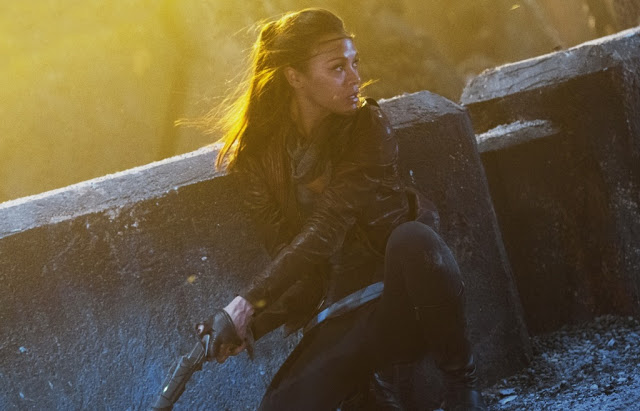
When Klingons surround Uhura, Spock and Kirk’s small spacecraft, Uhura decisively asserts herself. She tells hot-headed Kirk — who of course wants to charge out with guns blazing – that he brought her there to speak Klingon. “So let me speak Klingon.” Uhura wants to be the diplomatic negotiator resolving the situation. Huzzah! Oops, when negotiations go awry things, it’s testosterone to the rescue. And yes, Uhura gets saved by a dude. Annoying. However, in the ensuing melee, Uhura grabs a dagger off a Klingon who was going to kill her and kills him first in self-defense. Later in the film, she asserts herself again when she beams down to help Spock against villain Khan.

Uhura
Star Trek Into Darkness also makes an interesting commentary on stereotypical masculinity. While Ambassador Marcus is aggressive, looking to kill Khan, Kirk learns the importance of following the rules to ensure justice. It initially seems like a denouncement of toxic hyper-masculinity. Ahhhh but not so fast. The climax of the film, the showdown with Khan, isn’t resolved with logic or cunning. Nope, it’s with good old fashioned testosterone as Spock, now in touch with his anger after a Wrath of Khan reversal and the death of Kirk, beats the shit out of him.
Speaking of Khan, while it’s awesome to have an intelligent woman of color featured so prominently in the film, the egregious whitewashing of Khan cannot be ignored. In Star Trek the Original Series and the film Star Trek II: The Wrath of Khan, Khan Noonian Singh was a genetically engineered human augment, a product of the eugenics wars. As a Sikh from Northern India, he was a composite of a variety of ethnicities played by the charismatic Ricardo Montalban, aka one of the awesomest villains. Ever. But in Star Trek Into Darkness, it’s a white dude. Sure Benedict Cumberbatch does an okay job. But this racist whitewashingis a slap in the face” to the audience as well as Gene Roddenberry’s vision of bringing people together from around the globe and galaxy “by a mission of exploration and diplomacy.”
So why am I going off on a tangent about Khan when this is an article about Uhura? Because the ancillary racism and sexism bolsters the film’s message. The original Star Trek series was groundbreaking in its depiction of gender and racial diversity and exploration of social issues. But we don’t live in the fucking 1960s anymore. JJ Abrams clearly doesn’t want to do anything different or “boldly going” anywhere when it comes to dismantling oppression and heralding diversity.
JJ Abrams created strong female characters in Alias (a female-centric series) and Lost, two of my favorite TV series. He showcased female friendship between Sydney and Francie, Sydney and Nadia, Kate and Claire, Kate and Sun. And Lost would have been female-centric too if the networks hadn’t made him change the leader of the survivors from Kate (whose character was more like Rose) to Jack. However, when you start to look at his treatment of characters of color, sadly most of them die on both shows. But in Star Trek Into Darkness, he seems a bit too concerned with harkening back to the good ole’ days of yore. You know, the ones filled with sexism and racism.

Uhura
Is Uhura empowered? Yes. But does it matter when all other women in the film are silenced, absent or objectified? Does it matter when she’s defined by her relationship to a man?
It’s strange in a film that objectifies women and defines them by their relationship to men, we simultaneously see an intelligent, decisive and opinionated Uhura. Aside from Uhura’s rank as a lieutenant, we see no women in leadership roles. No women captains, no women ambassadors, no women number ones (second in commands to captains). Uhura possesses no female friends. She doesn’t talk to a single woman at all. Not one. Not even underwear-clad Carol.
No, Star Trek Into Darkness can’t pass the fucking Bechdel Test but it doesn’t pass up the opportunity to show Kirk having a threesome. A fucking threesome. Because women are nothing more than fantasies and sex objects. Can’t forget he’s a lady-loving, bad-boy rules-breaking playboy. Now, I love Kirk in all his swagger and bravado too. But if we’re going to show women on-screen, can it please for-the-love-of-all-that-is-holy NOT just be women in their underwear? Can we please not just focus on dude’s friendships, sexual conquests, struggles and tribulations?

As actor and nerd icon Felicia Day says, by Star Trek Into Darkness not showcasing women, “we are telling people that only men are worth centering storytelling around, and that’s just bullshit.” As I’ve written before, the Bechdel Test matters because the overwhelming majority of movies fail, indicating the institutional sexism and rampant gender disparity prevalent in Hollywood.

Yes, Uhura rocks. And yes, she asserts her agency. But no matter how opinionated, smart and fabulous she is, the gains made by Uhura begin to erode when you factor in the incessant sexism swarming around.

As I’ve said time and again, if you depict your female characters, no matter how empowered, as only talking to men and not other women, it reinforces the notion that women’s lives revolve around men. Even when women possess agency and intelligence and a budding career, Star Trek Into Darkness perpetuates the trope that women are not complete or whole unless they’re helping a man, looking sexy for a man, or a man stands at their side.

Bearing the name of an iconic boundary-busting, visionary series, I expect more.

Sarah Polley’s ‘Stories We Tell’: A Radical Act

Movie poster for Stories We Tell


Written by Stephanie Rogers.
We live in an age now when things seem … less “real” to me. Facebook lets us put our private lives on display, and even then, it’s a version of our lives that we edit, exaggerate perhaps, and invent—all for public consumption. People become overnight stars when homemade YouTube clips go viral—often another version of an edited public performance. Our television shows, especially Reality TV—and even shows such as American Idol and So You Think You Can Dance—present stories that appear to be true but are, in fact, edited for a public audience.

So, how do we define “real” anymore or, for that matter, what is “true”?

 
Polley and her father in Stories We Tell
Sarah Polley explores this concept in her wonderful documentary, Stories We Tell. While the film focuses on her family background and a long-kept family secret of sorts, it ultimately explores memory—how it aids and fails us, and how the act of storytelling sometimes requires us to fill in the gaps. This isn’t a new concept by any means, but Polley’s decision to tell her story through film, and to put that story on screen for a wider audience—in a society (and film industry) that consistently devalues women’s work and women’s stories—is a radical act.

Mary Jo Murphy gives some background on the film in her New York Times review:

A bit more about “the story”: Ms. Polley is the youngest of five siblings. Dad was an English actor in Toronto; Mom, an actress, had two children from a marriage before she met him. She died of cancer when Sarah was 11, and at some point after that, one or more of her much older siblings began to tease her about her paternity. Eventually she did a little investigating.

When she found her answer, and talked to her father and siblings about it, she became fascinated with how each of them was “telling the story and embellishing the story and making the story their own.” The act of telling the story, she said, “was changing the story itself.”

Polley’s father in Stories We Tell
I love the idea of the past existing as fluid, ever-changing. And Stories We Tell touches on that, reminding us that people truly do live long after their deaths—in the memories and celebrations of those most important to them. I certainly don’t mean to sentimentalize the story because it’s not a sentimental film (which isn’t to say that the audience in the theater wasn’t a weeping mess), but I want to convey that a woman making an emotionally gripping film about herself, about her mother, about motherhood even—is absolutely a radical act. Some disagree. Mike LaSalle of the San Francisco Chronicle wrote the following in his review (titled, “Stories We Tell Review: Not Worth Telling”):


Polley is making a film about her father, her late mother, her siblings. She should protect them. What she shouldn’t do is offer up the resulting feel-good whitewash to the scrutiny of a watching world. She shouldn’t force on strangers the task of sitting through this. And she shouldn’t present a work of vanity and closed-in narcissism as an exercise in soul baring, because it’s embarrassing for everybody.

Polley’s mother and father in Stories We Tell
In actuality, the most important part of this film—and what makes it feminist—is precisely its “vanity” and “closed-in narcissism.” Of course, I wouldn’t use those words to describe it—I’d say “intimacy” and “closed-in confidence”—because they play into the dominant ideology that women’s stories aren’t important. And Stories We Tell is exactly that—Sarah Polley’s story: embellished, re-enacted, unsure, important. She interviews her father(s), her siblings, her mother’s former lovers, and her mother’s friends, all while keeping herself outside the frame and directing her subjects, or “storytellers” as she calls them, to tell their individual version of events. How Polley chooses to direct the film, to edit it, to interrogate the assertions of her storytellers, and to learn from them—that is her story. And telling it is a radical act.


Leigh Kolb wrote a piece for Bitch Flicks last November called, “Female Literacy as a Historical Framework for Hollywood Misogyny” in which she suggested that, “When women finally break through and are able to tell their stories, those stories are immediately dismissed as silly and trivial.” She goes on to say:

Perhaps this bleak, largely anti-feminist landscape in Hollywood is more deliberate. If we acknowledge women’s long history of being neglected education and literacy, and that women have been repeatedly told (or observed) that their stories lack action and intrigue for a broad audience, how can this not have larger social effects? And at some point, do we come to the conclusion that these messages are what the dominant group wants?

Polley’s mother in Stories We Tell
The good news is that reviews like the one written by Mick LaSalle, who refers to Stories We Tell at one point as “the opposite of a courageous piece of work,” look ridiculous next to all the praise for the film. In fact, if we’re lucky, maybe the success of Polley’s piece will spark a larger conversation about the marginalization of women and minorities in our culture, about whose stories “deserve” to be told and who gets to tell them. This film—if “the personal is political” still means anything in the age of my multiple fake Facebook identities—needs to be seen. It deserves to be seen. It’s a film about women knowing and not knowing one another. It’s a film about forgiveness and disappointment and searching for one’s identity and place within the family. It’s about existing as both participant and observer in one’s own life. It’s about longing and loss and how we define families. It’s about the art of filmmaking itself. It’s about mistakes and motherhood and heredity and unconditional love.

And, perhaps most importantly, it’s about a woman in Hollywoodan industry that boasts less than 20% of women film directors and an ever-shrinking number of available roles for women—refusing to accept the devaluation of women’s work, getting behind a camera … and daring to tell a story. 
Sarah Polley, badass