On ‘One Life To Live’: Two Young Women Spiral Into Predictable Complications On Hulu’s Soap Reboot

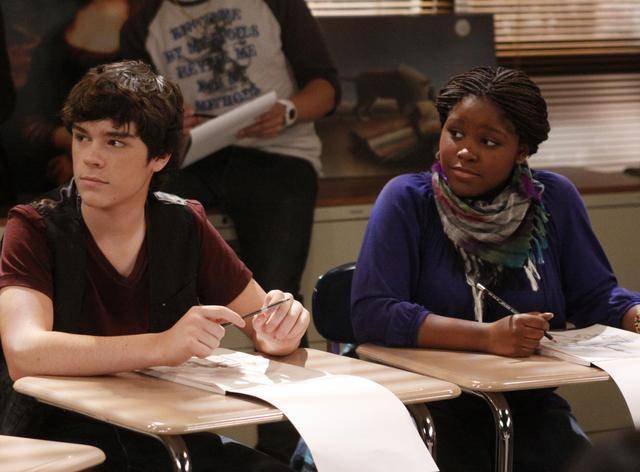
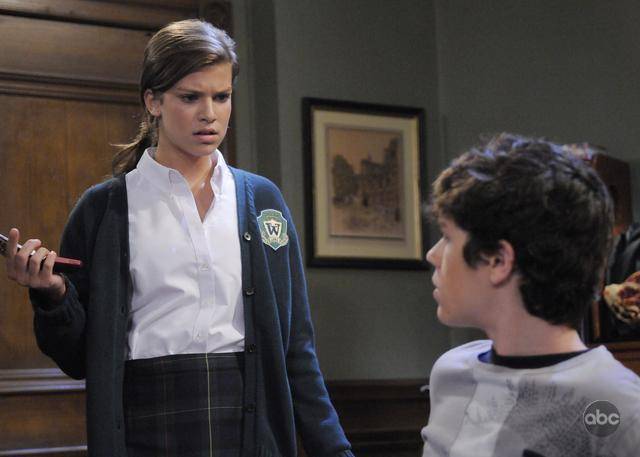
A brand new start for the young set of One Life To Live. (pictured: Andrew Trischitta as Jack, Laura Harrier as new Destiny, Kelley Missal as Dani, and Robert Gorrie as new Matthew)
When One Life to Live got canceled at the same time as All My Children, I felt crushed.
A part of me literally died.
It was easily one of the best written soaps on the air, and the ratings were pretty on par, rising rapidly since ABC’s brutal announcement.
Now, Prospect Park has taken over the reins and produces One Life to Live on Hulu.
Yet the cost of reinvention and brand new start (as vocalized in the autotuned new Snoop Dogg or Snoop Lion produced theme song) made the stories of two young women–Destiny Evans and Danielle “Dani” Manning fall into further character assassination. 
I understand that people change, but why have them both shift into individual shocking circumstances?

High school sweethearts–Matthew Buchanan (Eddie Alderson) & Destiny Evans (Shenell Evans).
Before we get into discussing the reboot, Destiny Evans and Matthew Buchanon’s story was the second teen pregnancy storyline in a matter of two years–the first being Starr Manning’s. Destiny even sought Starr’s counsel. Matthew had always been reluctant about fatherhood, but Destiny carried the burden of adolescent relationships–of the seeming age old philosophy that sex equated to the ultimate commitment and consequences be damned. Rarely is it ever advised to youth that love is sometimes stronger in other avenues.
Destiny, raised by grandparents feigning to be parents, fell in love with Matthew during their high school years. He didn’t return her affection at first and soon recanted, bearing his heart. Alas, they made love and conceived little Drew.

Shenell Evans’ school schedule prevented her return to her NAACP nominated role.
Now in present Llanview, on April 29th, a woman saunters her way into Shelter’s night club opening, cutting passed the long-lined crowd.
“What is your name?” asks the burly security guard.
“Destiny,” she answers, giving a saucy smile. Upon entry, she shifts into the crowd and begins dancing seductively.
It was an immediate double take! This is Destiny? She is certainly different interior and exterior wise. No longer a shy, quiet girl, she is a jezebel, all wild, free, and enticing to the male gaze–no signs of single motherhood in sight.

Laura Harrier is the new Destiny.

Shenell Edmonds couldn’t return and they cast Laura Harrier in her place–an older, skinnier, lighter skinned Destiny who wears midriff baring tops and dances to support Drew.
Recasts are a familiar ways of soap opera life, but it’s the stereotyping that is tough to swallow–one negative pill after another. Teen pregnancy was enough to deal with and now Destiny is going so far down the bad turnpike. One can only expect a surge into a complicated spiral of twisted knots. Her father was a doctor for crying out loud! Can’t something wonderful rub off on her? Why is it always the “Strippers with a Heart of Gold” path? With Matthew’s parents helping her with babysitting duties, shouldn’t Destiny be more liberated in finding passions that didn’t involve stroking the male ego?
Product of Tea Delgado and Todd Manning, things aren’t going dandy for former boarding school Dani Manning either.

Dani Manning (Kelley Missal) and her boarding school friend, Matthew (Eddie Alderson).

Out of control from Todd leaving town and Tea’s lack of attention–her newborn son died earlier this year on another soap, General Hospital–Dani has turned to drugs and alcohol as solace. In the first episode, Dani is barely dressed in an overtly sexy lacy mini and tumbling all over Shelter high on oxycontin and drinks.
I understand that she feels isolated and hurt by Tea and Todd’s parenting skills, but at the same time, it is disheartening that drugs or sex have become the comfort that young women sought. Seeing her rub against men in wanton fashion, looking for escape, is a tired dance routine that the most genius writers continue to utilize. It is as though women have no aspirations, no desires other than to seek intimacy in inebriation and wandering male affection.
Dani is a talented woman who could accomplish greatness and so can Destiny.
I hope that the writers stop going for the deadening shock value factor and bring about a new, refreshing perspective.
Sure, it is part of the soapy goodness phenomenon to break these two girls into complex adult situations, especially seeing as with the new online format cuss words fly like catfight slaps. They are certainly growing up too fast and viewers are brought into the center of this puzzle. I can’t say it is unbelievable because in this medium anything goes.
Sometime as an avid enjoyer, I do long for a little normality and less over-the-top spontaneity.
So where did Destiny and Dani’s maturities go?

A disoriented Dani (Kelley Missal) awakens from her near drug overdose ordeal.

Dani does appear to be on the brink of sobering from the drug habit, slowly. Yet she just moved in with two guy friends–Matthew and Jeffrey. Every dedicated soap fan knows what happens when a woman puts herself in that particular situation.
Still, it would have been nice if Dani and Destiny moved in together, had a young woman’s pad of survival and hope, rubbing off on each other in a way that strengthened a compelling feminine bond and kicked recovery’s ass. They’re around the same age and have similar experiences with hardship. Yes Dani went to boarding school and Destiny went to public; I could see them forming an authentic pact. Dani could gain experience from watching Destiny raise Drew and become a beneficial aide when Bo and Nora are unable to babysit their grandchild.
But of course, close female friendships always seem so frowned upon in soap operas. Catfights truly are the way to go. After all, look at Dorian and Vicki–they’re still at each other’s throats. Plus, Destiny didn’t like Dani in the beginning due to her camaraderie to Matthew. By the way the story is looking right now, Dani and Matthew are getting closer again, and that will likely burn Destiny’s biscuits. Yes. I definitely foresee a catfight (probably decades long if Hulu keeps One Life to Live going) more than bosom buddies in the future of these two women.
Is it any wonder why soaps are fading fast? Dying? Maybe one reason is because of the unoriginal concept of females despising and envying one another. There’s no strength in that.
Sigh.
I have no idea which direction these two women will take, but honestly keep praying that the writers give them happiness stemmed from valuing the importance of self worth. That one life to live doesn’t always have to be so treacherous and evil.
That gets old quickly.

Here’s a Fun and Depressing Graphic About Television, Ratings, and Dudes Who Create Shows

Canceled: Single Season TV Shows – An infographic by the team at CableTV.com

 
Do you have any graphics you’d like to share with Bitch Flicks readers? Share them in the comments or email them to btchflcks(at)gmail(dot)com!


Picture This: A Woman Goes to Film School and Becomes a Filmmaker

Filmmaker Violeta Barca-Fontana
This is a guest post written by Violeta Barca-Fontana.
INT. FILM SCHOOL, CLASSROOM – DAY 
First day of class at a film school in Madrid. Twenty impatient students are waiting for the teacher, PACO, a very well known film director. Also in the classroom is VIOLETA (20). 
The professor enters the classroom with a serious look and a decided walk. Taking a moment to look over the beardless students, some with incurable acne, who return his gaze with eyes wide open waiting for his wise words. 
MASTER 
You are twenty five students. 
Only three of you will ever direct a film.
The students look at each other hoping they misunderstood him. 
The professor continues with his welcome speech. 
MASTER 
I see there are some women here. 
(beat) 
In film women usually end up in make-up, wardrobe, or as script supervisors. 
The six girls, including Violeta, look at each other for moral support not knowing how to react. 
MASTER 
I say that, just so you take it under consideration. 
That was my very first contact with the film world. The first of many scenes I would live through during my career. 
But my professor was wrong. My first boss was a woman; one of the best line producers in Spain and, without a doubt, one of the toughest and most unscrupulous bosses I have ever had. I learned the most about film making from her. I learned how films were really made, and how a well organized production leads to certain success. 
Carmen, my boss, treated the women of her team much more harshly than the men. At first I thought she was very unfair to do so, but after all these years, reflecting on how much I learned being around her, I realized that maybe she did it because she felt she could bring out the best in them that way. 
I worked with her in two different productions. Without a doubt she treated me worse than any of my co-workers. I think she wanted to take the wind out of my arrogance and break through the wall every film school builds around you: “I know everything and I´m the best.” I think she wanted to show me the subterranean underground of real life, where real movies get made, grown-up movies; where if you want to be called Director, first you have to earn your place with lots of effort and years of experience. 
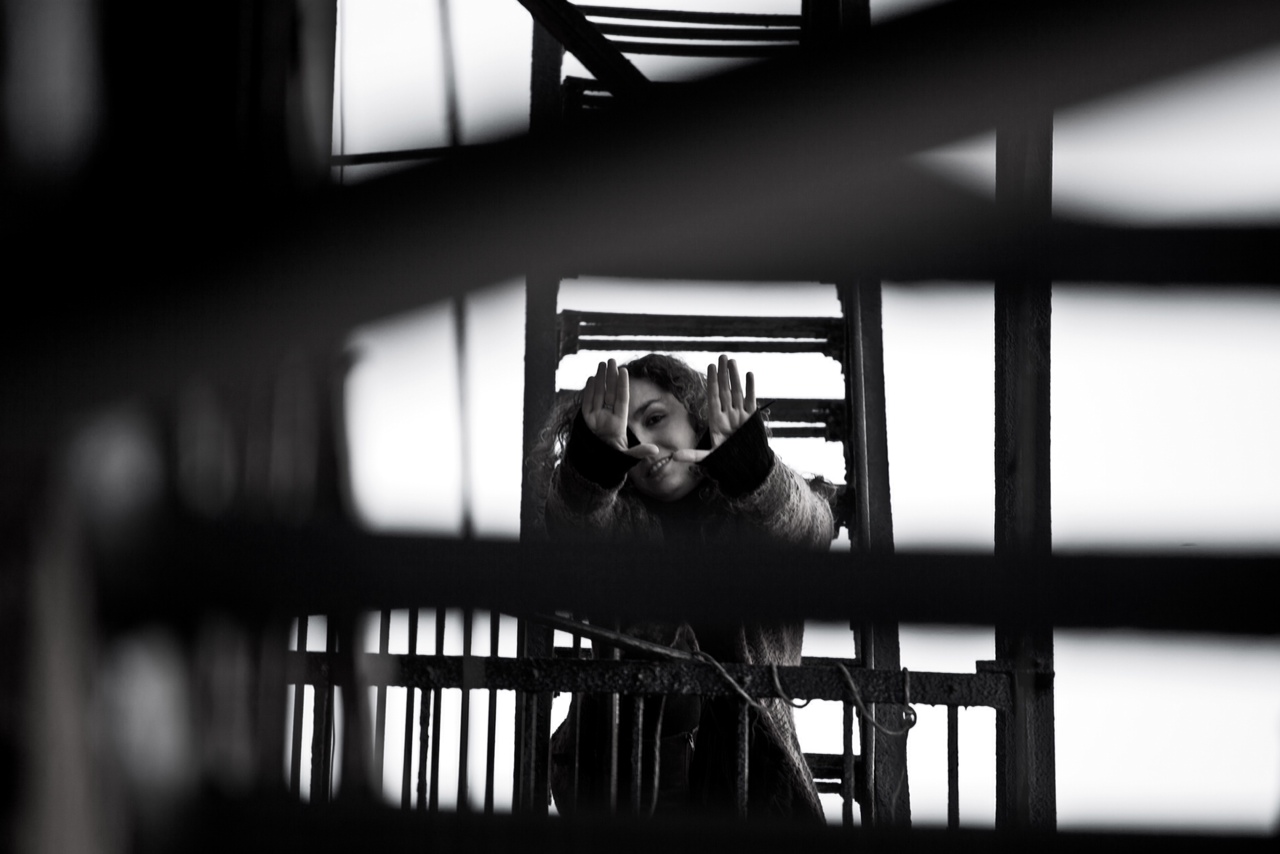
Violeta, in color.
Schools, and above all film schools, just serve to create confusion among the students leading them to believe that their initial easy success inside can be achieved in the professional world. No, ladies and gentleman; making movies is very complicated. 
In my second film with Carmen, she promoted me from PA to Second AD. The director was the very well known master CARLOS, already considered an icon in Spain. 
Pretty soon Carlos took a liking to me and wanted me to sit in front of the monitors with him all the time, explaining every shot to me. I was fascinated to observe how he would sketch the next shot on a scrap of paper with his Mont-blanc fountain pen to show his Director of Photography. As a film student I look back on those hours with him as a divine gift. 
I have great memories of Carlos as one of my greatest teachers, a true genius. Despite this I sensed that inside he believed the idea that women do not direct movies. Carlos constantly asked one of my male colleagues, strangely enough the script supervisor, when he would direct his next short film, and what was he writing lately. I always hoped that longed question would be asked of me, but it never came, as if he assumed that I was not writing, and I had no intention of directing either. I always wanted to expound about my many projects to my Master. 
INT. PLATÓ DE RODAJE – DAY 
A huge set with over fifty people coming and going, working, loading, unloading, cameras, rails, spotlights. Carlos in the background talking to three men in suits, producers. They talk, they laugh. 
Violeta walks in their direction. Within a few feet she feels observed by the group, who have a big laugh. Violeta is about to pass by when Carlos stops her. 
CARLOS 
Violeta, wait. Come here for a moment. 
Violeta draw close. The men in suits stop laughing but kept their smiles behind their ties. 
CARLOS 
Tell me, what are you working on? So you write? 
Have you ever directed anything? 
Violeta pauses. Uncomfortably, she looks at the group which is waiting for her to give them a failed reply. 
VIOLETA 
(timidly) 
Well, I just finished producing a feature film with two colleagues from school. It’s called La Fiesta and the Walt Disney Company has picked it up for distribution. 
Silence. Their smiles go away. Violeta smiles amiably and moves on to continue her work. 
I don’t know if it’s easier or harder to work with men or women. I feel very comfortable working with both. But what I do know is that most of the time working with women means not having to constantly prove your worth. We all know what we’re capable of and just do our job. 
The Color Thief crew.
This theory held up in my last project, Color Thief. A project, and I promise unintentionally, led almost entirely by females, which from the beginning has been characterized by its fluidity. Is this because it is guided by women? I do not know… 

Conspicuous Consumption and ‘The Great Gatsby’: Missing the Point in Style

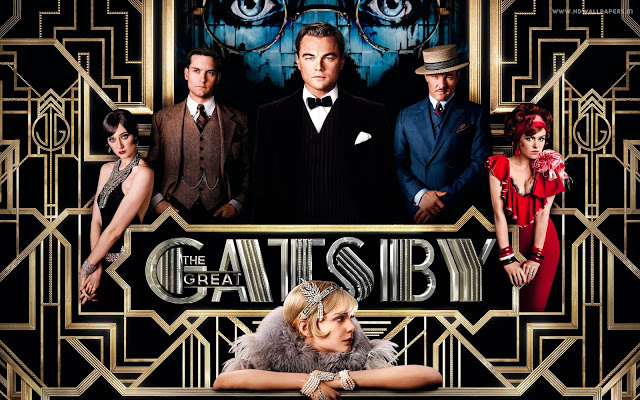
The Great Gatsby (2013)
Written by Leigh Kolb
Critic Kathryn Schulz, in “Why I Despise The Great Gatsby,” bemoans the acclaim that the novel receives in literary circles. She says, “It is the only book I have read so often despite failing—in the face of real effort and sincere ­intentions—to derive almost any pleasure at all from the experience… I find Gatsby aesthetically overrated, psychologically vacant, and morally complacent…”
Well, yes.
Isn’t that the point? 
Had Schulz replaced The Great Gatsby with “The American Dream” (rags-to-riches wealth and power and the reward of lavish lifestyles and romantic fulfillment), then she would have been spot on, and would have captured the exact message that The Great Gatsby has conveyed to generation after generation, ceaselessly beating us against the current… sorry.
I was looking forward to Baz Luhrmann’s much-anticipated adaptation of The Great Gatsby, because I love his Romeo + Juliet so much it hurts. He got it so right, so I figured he could get this right too, especially with Leonardo DiCaprio on board.
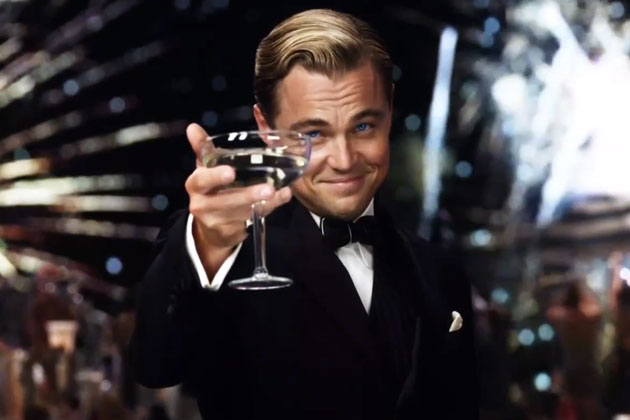
Cheers, indeed.
He kind of got it. The first half of the film is lavish and screams “Baz Luhrmann.” It was exactly what I wanted. Jay-Z’s “100$ Bill” captured the 1920s “Jazz Age” aesthetic of white people co-opting black music. The driving hip hop in the first few scenes exemplified the “hip-hop fascination with money, power, violence and sex,” that soundtrack executive producer Jay-Z saw in Jay Gatsby. 
But something changes. It seems as if Luhrmann wanted too badly to include most of F. Scott Fitzgerald’s text, and his own style was lost in that translation. I wanted the film to be jarring and fast, or painfully slow, with experimental music and filmography throughout. During the second half of the film, the soundtrack became more traditional and subdued. Luhrmann seemed to flirt with style—the typed letters at the end of the film (that I’d like to forget), the slow-motion shot of Tom hitting Myrtle—but there was something lacking in consistency. 
That said, Luhrmann does let us focus—even temporarily—on some poignant themes of the novel. Tom’s destructive masculinity (his trophy room and his racism expose his character) go unpunished in his patriarchal society. Daisy’s vapidity highlights the expectations of a beautiful, wealthy woman, when her hopes for her daughter are that “she’ll be a fool—that’s the best thing a girl can be in this world, a beautiful little fool.” Daisy herself attempts to live that role, and she escapes punishment because of who she is. Tom and Daisy’s privilege shields and protects them. Their “old money,” in contrast to Gatsby’s “new money,” shows the impenetrable American truth that you might be detestable, but you call the shots when you have money and connections. Gatsby’s desperate drive for that green light—to be loved—can be bought only momentarily.
The fact that The Great Gatsby Still Gets Flappers Wrong” didn’t bother me, really (although Hix’s article is incredibly informative). Having an independent, empowered woman in The Great Gatsby would seem as false as the magical typewriter. No one in The Great Gatsby is supposed to be a character we want to identify with or aspire to be. The men are problematic, and so are the women.
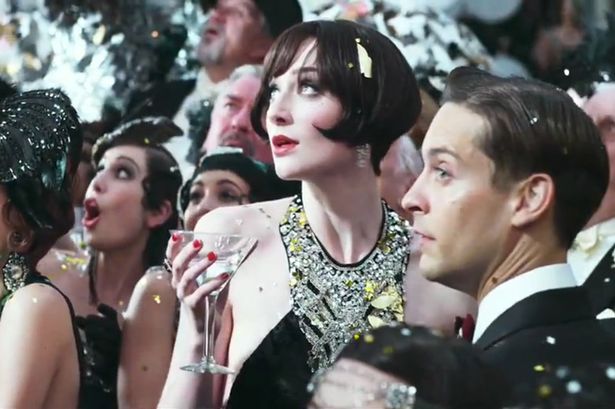
Nick, Gatsby, Daisy and Tom at one of Gatsby’s parties.
Luhrmann’s characters are often more sympathetic than the novel’s, but the core of who they are and what they represent is stable.
Jordan Baker’s role was minimized, but she was still a foil to Daisy’s carelessness.
I would like to deny the storytelling technique that Luhrmann employs with Nick Carraway, but I cannot. I don’t think I would have minded if he’d framed the story as Nick writing a memoir; maybe I even would have forgiven the floating type if it had been consistent (but probably not). However, the fact that Nick begins telling the story to his therapist, who then encourages him to write it down, seems ridiculous. Nick seems just self-aware and self-involved enough to know he has a good story—he wouldn’t have needed someone to persuade him to write it down.
Tobey Maguire’s Nick has a doughy personality. He’s not too likable, but we don’t actively dislike him. Maybe we roll our eyes at him sometimes. He’s true to the novel, that’s for sure.
DiCaprio’s Gatsby is mysterious, beautiful, reserved and is able to elicit sympathy from the audience.
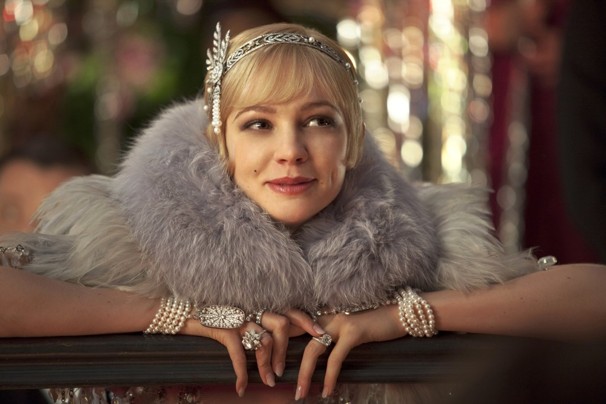
Why yes, you can buy this headpiece from Tiffany’s.
Carey Mulligan’s Daisy is not quite as off-putting as she is in the novel, which seemed to be Luhrmann’s goal. He didn’t completely deny the existence of the emptiness and disappointment the novel conveys, but he clearly wanted us to be swept up in the fashions and romanced by the gorgeous settings and people (and shirts!). 
That (along with the inconsistent style) was my biggest problem with the film—it wasn’t depressing enough. Perhaps it was the lack of Gatsby’s father showing Nick little Jimmy’s meticulous plans, or the lack of a funeral scene, or maybe it was the floaty letters typing out Nick’s thoughts—I didn’t feel the empty weight of the futility of the American Dream, and the bitter disappointment of a life spent wanting more.
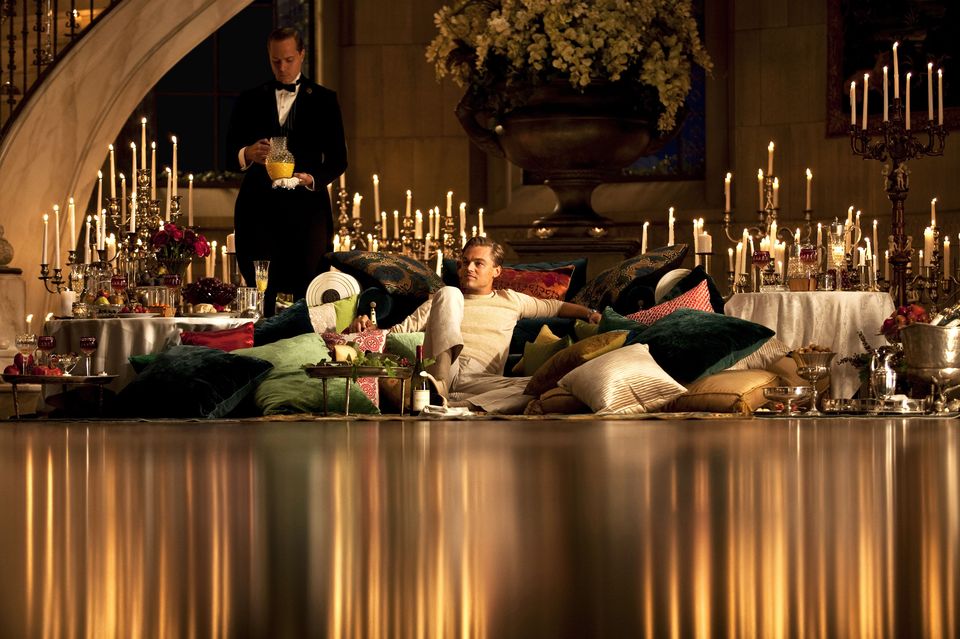
Luhrmann gets caught up in the “romance.”
I know Luhrmann can do it—he did it with Romeo + Juliet, with its era-bending dialogue and music, stylized filmography and heart-wrenching ending—but I think he got too caught up with the romance of Gatsby’s lifestyle (just like Nick did). 
And that’s the great reverse dramatic irony of stories like Gatsby—yes, maybe audiences get on some level that Jay Gatsby’s story isn’t meant to be aspirational. But they relish it in anyway. Donald Trump’s hotel is offering the Trump Hotel “Great Gatsby” Package (for $14,999 you can live like an ill-fated socialite?); Brooks Brothers has “The Great Gatsby” collection. Gatsby is like Don Draper; their true legacy—disappointment, emptiness and the tragic nature of a re-imagined life that isn’t a dream come true—is packaged in fashion and good looks. That life looks exciting, we think. I want hosiery like Daisy’s, and parties like Gatsby’s. Conspicuous consumption is idolized. 
But that’s not the point.
The American Dream is disappointing. Wealth is disappointing. Idealized romance is disappointing.
And then you die. And no one cares.
All of this is meaningless.
Luhrmann’s film and the marketing ploys surrounding it don’t seem to quite get at that. While I was let down, I suppose I’m not surprised. We live in a society obsessed with wealth, status and pulling oneself up from one’s bootstraps. To topple all of that over into an ash heap would be problematic for both the core of American mythology and for Hollywood.

Because if we focus on the tragedy of Jay Gatsby’s aspirations and the injustice of Tom and Daisy’s escape, then we would have to face the fact that the party is really over. But we can’t, and we don’t, so we go on, endlessly dazzled and distracted by shiny things (which women are especially interested in, evidently).

And perhaps that’s what Nick’s final words mean—we keep trying to go back, over and over, to this belief that the green light is obtainable, and it will make us happy. However, that light was not real in 1922, and it’s not real now. It’s just in 3D.


Leigh Kolb is a composition, literature and journalism instructor at a community college in rural Missouri. 

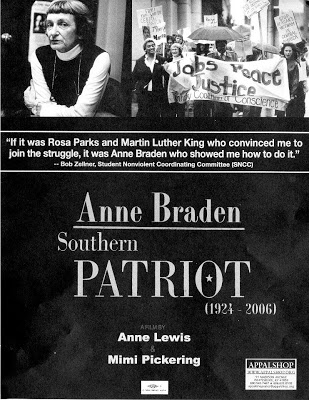
The Remarkable Story of ‘Anne Braden: Southern Patriot’

Anne Braden: Southern Patriot (2012)

“I believe that no white woman reared in the Southor perhaps anywhere in this racist country–can find freedom as a woman until she deals in her own consciousness with the question of race. We grow up little girls–absorbing a hundred stereotypes about ourselves and our role in life, our secondary position, our destiny to be a helpmate to a man or men. But we also grow up white–absorbing the stereotypes of race, the picture of ourselves as somehow privileged because of the color of our skin. The two mythologies become intertwined, and there is no way to free ourselves from one without dealing with the other.” – from “A letter to white Southern women from Anne Braden,” 1972
Written by Leigh Kolb

Anne Braden didn’t think that guilt was productive. 
She thought that what got people involved in the civil rights movement was a vision of a different world.
Born in 1924, Braden grew up in Anniston, Alabamawhere the Freedom Riders’ bus was fire-bombed in 1961. She talks about being a young white child in the south, and seeing her mother’s house cleaner’s daughter wearing her hand-me-down clothes. They were different sizes, so the clothes didn’t fit right, and Braden says, “Something happened to me when I looked at her. I knew something was wrong.”
Braden dedicated her life to exposing and fighting against racial and economic injustice. She was subversive. She was arrested. She was praised by Martin Luther King Jr.

She wanted a different world.

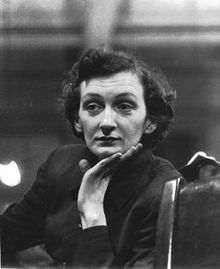
Anne Braden
Braden is the subject of the documentary Anne Braden: Southern Patriot, which is available on DVD and at select screenings nationwide.

Anne Braden: Southern Patriot trailer

Award-winning filmmakers Anne Lewis and Mimi Pickering created this first-person documentary, and its brilliance rests greatly on the fact that Braden herself and her contemporaries, biographer and mentees tell the story. The seemingly hands-off approach by the filmmakers (no audible interview questions or voiceovers) works incredibly well, and lets Braden’s remarkable legacy unfold on its own merits. The soundtrack is appropriately present, but not noticeably so, as it should be in a documentary.

This documentary, in short, is amazing. Aside from the technical success of the film is the fact that Braden herself was an extraordinary human being.

Braden says that when she had the realization that something was wrong, it was like photography: “You put the film in the developing fluid and it begins to come clear, but it’s been there all along.”

The images kept becoming clearer and clearer to Braden as she worked as a journalist in the south and covered the courthouse, seeing black men be imprisoned for looking at white women the wrong way, and seeing how murdered black people were not newsworthy.

She didn’t feel guilt. She felt motivated to change her world.

Early on in her career, Braden recognized that issues of class and race were inextricably linked. She says,

“I was in a prison and life builds prisons around people and I had the prison that I was born white in a racist society. I was born privileged in a classist society. The hardest thing was class. I don’t know that I could have ever broken out of what I call the race prison if I hadn’t dealt with class.”  

She married Carl Braden, who was a “radical” activist active in the labor movement. “We got married to work together,” she says. By 1951, Braden was combining marriage, motherhood and activism.

Early on, her activism focused mainly on writing for and talking to black audiences about white people’s roles in racism and classism. The head of the Civil Rights Congress, William Patterson, told her that black people already know what she’s telling themshe needed to talk to white people, because they are the problem. She remembers that he said to her, “You know you do have a choice. You don’t have to be a part of the world of the lynchers. You can join the other America–the people who struggled  against slavery, the people who railed against slavery, the white people who supported them, the people who all through Reconstruction struggled.” She says, “I was very young, and that’s what I needed to hear.” Her work began in earnest.

The Bradens bought a house for a young black family, the Wades, in an all-white neighborhood (it was a way around segregationAndrew Wade gave them the down payment, the Bradens purchased it, and then transfered the deed). The Wades’ home was shot at, crosses were burned in the yard and a bomb was set off underneath their daughter’s window (remarkably no one was physically hurt).

The Wades, showing where rocks had been thrown and broken the windows of their home.

The bomber was never caught or tried, but the Bradens were, along with five other whites who helped defend the Wades’ house. They were charged with seditionit was, prosecutors said, all a plot by communists to overthrow Kentucky and the nation.

Braden says that “If you use every attack as a platform, they can’t win and you can’t lose. It works like a charm.” They used their arrest and jail time as a platform. “You can’t kill an idea anyway,” she says. “To a segregationist, integration means communism.”

The film highlights footage from Ku Klux Klan rallies, newspaper stories, meetings, marches, beatings and shootings during the red scare and the civil rights movement. The footageoften presented without narrationis powerful and provides the visual, historical context to Braden’s stories.

The film moves forward through each decade, highlighting social justice struggles (especially regarding race and economic injustice) and Braden’s continuous role. The complexity of anti-communist sentiment, the freedom of speech and association and violence of the ongoing civil rights struggles are examined in depth.

It was difficult watching the momentous struggles and changes of the 60s make way into the 70s, when she says, “That sense of being part of something larger gets lost.” Political activists were repressed and imprisoned, and much of the momentum was lost.

Anne Braden

As the footage from the 70s surfaces, it’s in color; all of a sudden history doesn’t seem so far away. When white women are screaming and chanting about “Niggers” when busing was implemented in 1975, and throwing rocks at the buses, it’s jarring how close it all is. David Duke screams about white power. Communist workers at an anti-Klan rally are shot and killed in the late 70s.

In a statement that seems all-too true today, Braden says of the lasting legacy of this era:

“And this idea of reverse discrimination took hold of the country, and I think it’s the most dangerous idea that’s ever been inflicted on this country. It tells white people that the source of their problem is people of color and it’s such a damn lie because it’s based on the theory that what black people got took something away from white people, and that is the opposite of what happened, every piece of legislation everything that happened that the black movement won, helped most white people and certainly poor and working class white people.”

At a 1980 rally in response to the communist workers’ deaths, she said,

“The real danger today comes from the people in high places, from the halls of congress to the board rooms of our big corporations, who are telling the white people that if their taxes are eating up their paychecks, it’s not because of our bloated military budget, but because of government programs that benefit black people; those people in high places who are telling white people that if young whites are unemployed it’s because blacks are getting all the jobs. Our problem is the people in power who are creating a scape goat mentality. That, that is what is creating the climate in which the Klan can grow in this country and that is what is creating the danger of a fascist movement in the 1980s in America.” 

As the film progresses, we see Braden marching for economic justice and to end police brutality. She stands out, with her cropped gray hair, small body and denim jumpers. Her voice shakes into a megaphone when she speaks at rallies, but her age doesn’t stop her. She keeps marching. When she can’t march, she’s pushed in a wheelchair.

Braden passed away in 2006 at age 81. Right before she died, she said, “I just don’t have time.” She still felt she had too much to do.

Anne Braden and Cornel West

I don’t know that I’ve ever been so inspired by a documentary. By the end, I was crying, near-sobbingin celebration of Braden’s life, in mourning her death and in feeling a burning fire in my white belly that I needed to do something in this world. Anne Braden had effectively told me that I needed to get to work.

At a march, Braden says, “We who believe in freedom cannot rest until it’s won.” It hasn’t been, and we must continue her legacy.

Anne Braden: Southern Patriot puts Braden’s lifelong activism into the developing fluid and makes it clear to all of us. We should all look carefully at these images and be moved to not just frame them for display, but to make them shape our world now.

The Flobots’ “Anne Braden”


Leigh Kolb is a composition, literature and journalism instructor at a community college in rural Missouri. 

Wonder Women and Why We Need Superheroines

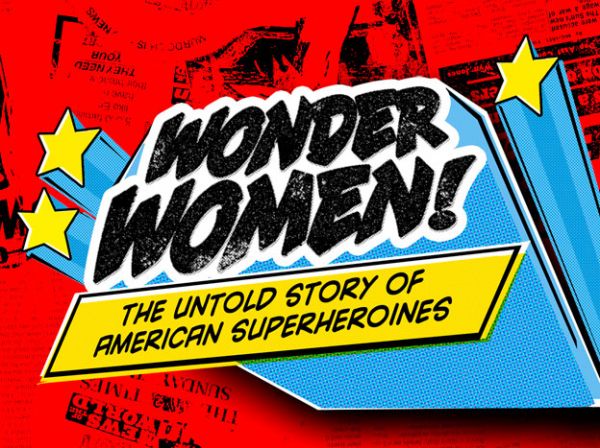
Wonder Women movie poster
Wonder Women: The Untold Story of American Superheroines is a documentary by Kristy Guevara-Flanagan available for free streaming on PBS (I heart free stuff). The film shows us Wonder Woman from her inception as a feminist character designed by her creator William Moulton Marston to usher in a matriarchal era to her loss of powers after World War II when women were pushed to leave the work force and go back to their homes, and finally, to the legacy of superheroines who would not have existed without her. In just shy of an hour, we get a comprehensive history and learn what makes Wonder Woman and other superheroines so important for women and girls. 
Wonder Woman spent many post-World War II years sans powers as a non-feminist character and her many years after continued to render her as a dubious feminist role model. Kathleen Hanna of the feminist punk band Bikini Kill is interviewed in the film, and she says, “There’s, like, so few images of powerful women that women get desperate…we’ll just take any kind of garbage or crumb off the table that we can find and claim that as powerful, even when it’s kinda not.” I agree in many cases with Hanna, especially concerning the pornulated female figures of film and TV whose abilities are confined to that which is sexy and that which pleases men, and though Wonder Woman is often given those qualities to keep her shallow and without a greater political or social relevance, the idea of Wonder Woman has taken root in the collective female psyche as a symbol of strength, independence, and equality. I find it the most fascinating and the most compelling that different iterations of Wonder Woman have ceased to affect her image. Women can be empowered by taking Wonder Woman and personally interpreting her into whatever kind of role model they choose because she is so iconic, regardless of any specific representations throughout her long history.
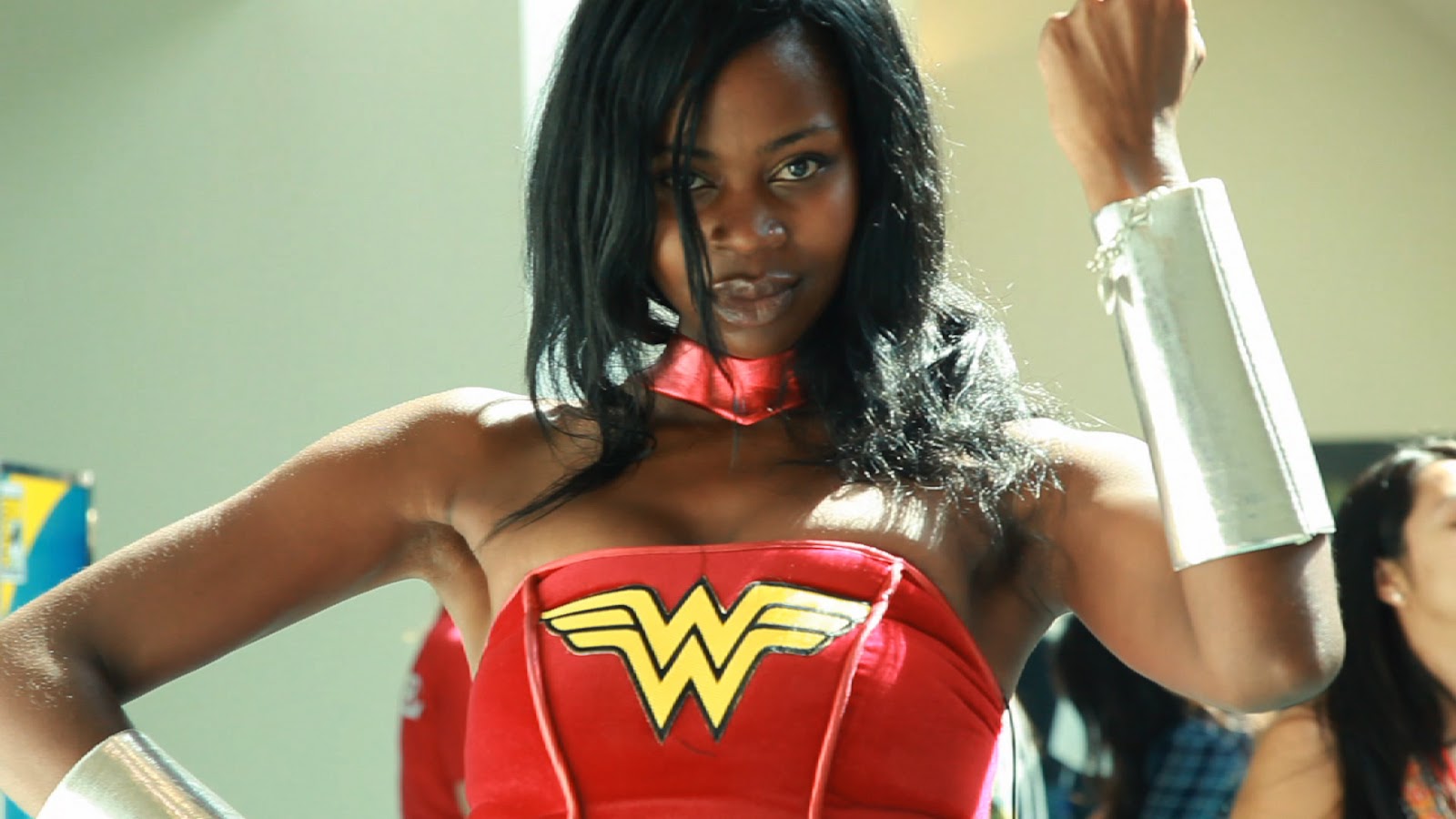
The feminism of Wonder Woman cosplay is up for debate, but the dedication to superheroines is all radness.
It is perhaps because of Wonder Woman and her endless interpretability that we have more contemporary superheroines/powerful female figures like Xena Warrior Princess, Buffy the Vampire Slayer, and even Thelma and Louise or the women of the Deadly Viper Assassination Squad of Kill Bill. Like Hanna says, sometimes these heroines are not imbued with the most feminist qualities, but their success is a testament to that hunger for strong female representations.  
Why are women and girls so hungry for kickass superheroines in the media? Lindsay Wagner, star of the hit 70’s series, The Bionic Woman recounts feedback from a fan who’d grown up with the show, “‘My dad wanted me to go to beauty school, but…I’m an engineer at NASA…because your character showed me that I could be something far beyond what we were ordinarily on track to be.'” These independent, smart, capable, and confident characters do show the women watching them that they, too, can be all those things. I won’t get into it too much here, but the documentary Miss Representation is extremely informative (and a bit depressing) as it details the shocking dearth of female stories portrayed in our popular culture…nevermind stories about strong women. How can women aspire and achieve if there are no examples of other women overcoming similar or even bigger challenges? 
Carmela Lane draws inspiration from Wonder Woman to meet daily challenges & to give her daughter more opportunities than she had.
Gloria Steinem views superheroines in our culture as critical:
“Girls actually need superheroes much more than boys when you come right down to it because 90% of violence in the world is against females. Certainly women need protectors even more, and what’s revolutionary, of course, is to have a female protector not a male protector.” 
Think about it: if women can get where they are today, replete with all of our struggles, resistance, strength, and resilience, spurred on by such a paltry offering of role models, imagine what we could achieve if we had a truly diverse base of powerful, intelligent, resourceful superheroines to inspire us to unfathomable heights.
Katie Pineda: Wonder Woman enthusiast with the mantra: “Keep going; keep going; you’re going to be more.”

"I made a decision to have a preventive double mastectomy."

Angelina Jolie
This guest post by Melissa McEwan appears at her blog Shakesville and is cross-posted with permission.

Angelina Jolie has written an extraordinary op-ed for the New York Times, titled “My Medical Choice,” about her recent decision to have a preventative double mastectomy after learning she carries the BRCA1 “breast cancer” gene and had an estimated 87% risk of developing breast cancer.
 

This piece is remarkable for a lot of reasons. Jolie notes that she “finished the three months of medical procedures that the mastectomies involved” on April 27, and: “During that time I have been able to keep this private and to carry on with my work.” And having managed to keep it a secret, itself a rather impressive feat, she decided to then publicly disclose it, in order that “other women can benefit from my experience.”

It’s remarkable because she writes very plainly that her ability to get the $3,000 BRCA1 test is a privilege, and advocates wider access:

Breast cancer alone kills some 458,000 people each year, according to the World Health Organization, mainly in low- and middle-income countries. It has got to be a priority to ensure that more women can access gene testing and lifesaving preventive treatment, whatever their means and background, wherever they live. The cost of testing for BRCA1 and BRCA2, at more than $3,000 in the United States, remains an obstacle for many women.

And because she does not assert or imply that her decision is the only right decision, but one of many options:
For any woman reading this, I hope it helps you to know you have options. I want to encourage every woman, especially if you have a family history of breast or ovarian cancer, to seek out the information and medical experts who can help you through this aspect of your life, and to make your own informed choices.

I acknowledge that there are many wonderful holistic doctors working on alternatives to surgery. My own regimen will be posted in due course on the Web site of the Pink Lotus Breast Center. I hope that this will be helpful to other women.

And it’s remarkable because Angelina Jolie is generally regarded as one of the most beautiful women in a world that profoundly values beauty and defines women’s worth by their sex appeal, and she is telling women to value their health.

There is something deeply moving to me for a woman whose body, by nature of her profession, has been treated like public property even more than most of us, writing such an intimate piece about her body, making it public property in yet another way by her own choice, for the benefit of other women.


Melissa McEwan is the founder and manager of the award-winning political and cultural group blog Shakesville, which she launched as Shakespeare’s Sister in October 2004 because George Bush was pissing her off. In addition to running Shakesville, she also contributes to The Guardian‘s Comment is Free America and AlterNet. Liss graduated from Loyola University Chicago with degrees in Sociology and Cultural Anthropology, with an emphasis on the political marginalization of gender-based groups. An active feminist and LGBTQI advocate, she has worked as a concept development and brand consultant and now writes full-time.


She lives just outside Chicago with three cats, two dogs, and a Scotsman, with whom she shares a love of all things geekdom, from Lord of the Rings to Alcatraz. When she’s not blogging, she can usually be found watching garbage television or trying to coax her lazyass greyhound off the couch for a walk. 
 

Problematic Patriarchy in Jackson Katz’s ‘Violence and Silence’ TED Talk

Written by Rachel Redfern

Jackson Katz’s incredibly popular TEDxFiDiWomen talk has a lot of people excited and I understand why. He’s engaging and passionate about his incredible support for feminism and minorities and that’s an amazingly positive thing. However, upon review of his solutions to the great problems of patriarchy in the United States, there are actually some very problematic ideals that he’s promoting.

The first ten minutes of Katz’s talk is filled with effusive praise for feminism and what it’s accomplished. Past that though, during the last 10 minutes of his talk he says that he wants to change people from the level of leadership. He suggests that we work within the existing framework to change patriarchy by teaching patriarchs (CEOs, coaches and other leaders) to stick up for women.

Say hello to corporate feminism.

This corporate feminism is basically the patriarchy co-opting feminism and using it, not only as a way to make money for their leadership seminars, but also as a way to continue to promote the status quo of women being taken care of by their male leaders in jobs that are notoriously difficult for women to get. Within Katz’s idea, women are still held apart from the leadership positions that could help to make the changes that directly affect them.

What ‘leadership’ should look like. I suppose.

Worse than that, those leadership seminars continue to promote ideas of hierarchy and authority. What do these expensive leadership courses say to their students? “Someone has to be in charge.” “Life is like a boat; there has to be a captain, otherwise it would be chaos.” “People need to listen to you because you’re in charge.” “Take control of a situation.” Hierarchy, hierarchy, hierarchy. Move within the system: Maintain, maintain, maintain.

Katz believes that these leaders of men should be held accountable for the disparaging and inappropriate things that they say. I agree; of course men in powerful positions should be held accountable for their actions and for the things that they say. I hope that media, bloggers, and viewers will continue to go further in demanding such levels of accountability from those around us. And then comes the sales pitch: “We need more leadership training.” Guess what Jackson Katz does for a living? Leadership training. He wants to teach men in power to stand up for women. Are we, as a culture, saying we live in a world where in order to attain a level of common human decency men have to participate in weeklong, over-priced corporate leadership training programs?

Are we so naïve that we believe adult men don’t already know that they should be nice to women? These men (the ones in those amazing and out-of-reach-for-thousands-of-qualified-women leadership positions), are most likely men of education and world experience, and they know that disrespecting women is inappropriate. It’s like telling a group of college kids to not answer their phone during a lecture. Everyone knows you shouldn’t answer your phone during a lecture and we shouldn’t even give the idea credence by positioning it as an option of ignorance. They know better and cries of, “my leadership training program didn’t teach me not to say sexist, disrespectful things about the other half of the population” just isn’t a good excuse and we shouldn’t allow it to become one.

If people say sexist, racist, homophobic, and other offensive remarks, more conveniently placed “corporate feminism” isn’t going to save the day. The day is going to be saved when good people speak out (yes, even those who don’t get to become NBA coaches) using a strong sense of justice and morality without relying on leadership training to do so.

Katz states (timestamp 16:37) that it is “institutional authority” which will save us all. In a larger sense, perhaps it will, as in the case of policemen who arrest perpetrators of domestic abuse, and violence and the justice system which tries and judges them. However, propagating “institutional authority” and its intense vestiges of patriarchy and hierarchy are the problem. We can no longer be happy with the meager scraps of freedom that these ideologies continue to throw at us; we need to be more assertive, more demanding of our rights and the need for respect for others and ourselves. Don’t worry; I’m not calling for torches and pitchforks to storm the castle, but I am saying that we shouldn’t rely on the overblown theories of benevolent authority and patriarchy.

Demotivator® genius. Demotivator® truth?

This leadership training is a minor subversion that ultimately still reinforces the establishment of control that is already in place.

I’ll be honest. I resent the notion that I have to rely on the good will of university presidents, coaches and CEOs to lead the way in my own beliefs of right and wrong. I don’t need their leadership though; rather, I need them stop doing bad things and getting away with it. I’m freely capable of knowing good from evil, offensive and inoffensive, without Joe Paterno’s expertise, thank you very much. This idea puts down everyday, good people and robs them of the ability to make powerful changes, by placing that ability on the shoulders of other, more distant folks.

Now, on a few things I do agree with Katz: these issues affect everyone and they should not be designated solely as women’s issues or men’s; rather they are overwhelmingly society’s issues, humanity’s issues, human rights issues. And I believe that there are wonderful men and women out there desperately trying to fix these problems; even Katz’s sincerity and excited approach is necessary. But continuing to perpetuate the systems that are doing the damage by reinforcing so many structures of control and hierarchy is not the way to fundamentally change all the problems inherent within those systems.

Katz closes with this statement: “We need more men with the guts, with the courage, with the strength, with the moral integrity to break our implicit silence and challenge each other and stand with women, not against them.” I would posit that we should change that “men” into “people” and say that just as much as we need people with the courage to speak out, we also need people with the courage to tear down and rebuild the systems of privilege and hierarchy, not reinforce them.

What do you think? Is the Katz talk a brilliant harbinger of change and feminism? Or relying too much on patriarchal authority?


Rachel Redfern has an MA in English literature, where she conducted research on modern American literature and film and its intersection, however she spends most of her time watching HBO shows, traveling, and blogging and reading about feminism.

The Occasional Purposeful Nudity on ‘Game of Thrones’

Written by Lady T.
Much has been said about the gratuitous nudity on Game of Thrones. Several feminist critics (such as yours truly) have written about the objectification of the female characters, and how the writers use naked women as objects for male fantasy or to develop male characters.
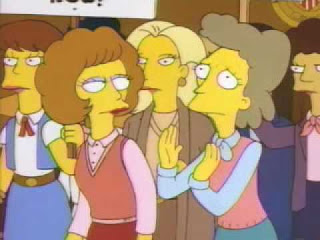
Challenging the use of nudity in a TV show or film will predictably result in accusations of prudishness and pearl-clutching, as though feminist critics are nothing but live-action versions of Helen Lovejoy.

“Won’t somebody please think of the children?!”

It’s easy to assume that critics are ranting because they’re too squeamish and repressed to look at pictures of naked women without feeling embarrassed. Leaping to that conclusion is much more comfortable than acknowledging the problematic aspects of using naked female bodies as decoration and masturbatory fodder.
The accusation of prudishness is also a strawman argument, assuming that viewers who object to objectification can’t tell the difference between gratuitous nudity (where naked bodies are used for spank bank material) and nudity that serves an artistic purpose.
In fact, the difference between gratuitous nudity and artistic nudity is not that difficult to discern. Even Game of Thrones, the show that puts the word “tit” in “titillation,” occasionally uses nudity in a way that isn’t exploitative and adds to a scene rather than detracting from it.
One such example can be found in the story of Daenerys Targaryen, a character who is more frequently naked than most other characters on the show. The very first time we see Daenerys, she is a pawn in her brother’s game to earn the throne he feels is rightfully his. Stripped naked, Daenerys steps into a bathtub, her eyes haunted and her expression blank. She is the sacrificial lamb and she knows it, and her nakedness is symbolic of her status as an object.
The last time we see Daenerys in the first season, she’s naked again–except this time, she has just emerged from flames and hatched three dragon eggs. The fire that consumed her enemy and her clothes has left her skin smudged but unburnt. Her nakedness is no longer a symbol of her vulnerability–it’s a symbol of strength.

The Mother of Dragons, Daenerys the Unburnt

Daenerys doesn’t have to be naked for the viewer to understand the change in her character, but the nudity in both scenes highlights and reinforces the dramatic growth she’s had over ten episodes.
Another scene that includes purposeful nudity takes place in the third season, where Jaime Lannister and Brienne of Tarth, captive of Stark family allies, bathe in the tub (though sitting on opposite sides). Jaime, having lost his swordfighting hand, is even more sarcastic than usual, insulting Brienne’s prowess as a fighter and implying that her former king died because she wasn’t a good enough knight. At this, the maid of Tarth leaps to her feet, completely naked in front of the Kingslayer, staring him down until he apologizes for impugning her honor.
This is a great moment for Brienne’s character–only moments before, she was embarrassed to share a bath with the Kingslayer, but when he insults her, she wastes no time in asserting herself. When she rises to her feet, naked as the day she was born, she isn’t subject to the same male gaze as the chorus of nameless prostitutes on Game of Thrones. She’s still a warrior, and being stripped of her armor doesn’t change that fact one bit.
And the scene only gets better from there. Jaime Lannister, used to being the strongest and most skilled person in the room (in both swordplay and wordplay), is stripped in every sense of the word. He’s vulnerable in a way he’s never been before, confessing the truth about his reasons for killing the Mad King, and he eventually faints into Brienne’s arms, whispering, “Jaime. My name is Jaime.”

Brienne hears Jaime’s tale of killing the Mad King
Much like Daenerys’s scenes at the beginning and end of season one, the nudity in this scene represents both strength and vulnerability. In this scene, Jaime Lannister reveals more of himself than he’s revealed to any other person, and this only works if they’re both literally stripped bare.
Now imagine how much MORE powerful these scenes would be if the frequent use of gratuitous boob shots hadn’t turned this aspect of the show into a running joke.
Despite strawman arguments that claim the contrary, it’s really not all that hard to discern the difference between gratuitous nudity and nudity that serves an artistic purpose. People who claim otherwise are not confused; they’re deliberately disingenuous. 

Lady T is a writer with two novels, a play, and a collection of comedy sketches in progress. She hopes to one day be published and finish one of her projects (not in that order). You can find more of her writing at www.theresabasile.com.

The Occasional Purposeful Nudity on ‘Game of Thrones’

In fact, the difference between gratuitous nudity and artistic nudity is not that difficult to discern. Even ‘Game of Thrones,’ the show that puts the word “tit” in “titillation,” occasionally uses nudity in a way that isn’t exploitative and adds to a scene rather than detracting from it.

Written by Lady T.
Much has been said about the gratuitous nudity on Game of Thrones. Several feminist critics (such as yours truly) have written about the objectification of the female characters, and how the writers use naked women as objects for male fantasy or to develop male characters.
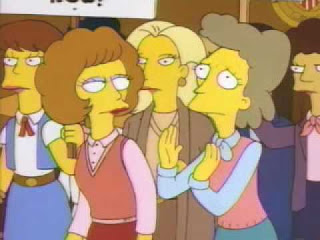
Challenging the use of nudity in a TV show or film will predictably result in accusations of prudishness and pearl-clutching, as though feminist critics are nothing but live-action versions of Helen Lovejoy.


“Won’t somebody please think of the children?!”


It’s easy to assume that critics are ranting because they’re too squeamish and repressed to look at pictures of naked women without feeling embarrassed. Leaping to that conclusion is much more comfortable than acknowledging the problematic aspects of using naked female bodies as decoration and masturbatory fodder.
The accusation of prudishness is also a strawman argument, assuming that viewers who object to objectification can’t tell the difference between gratuitous nudity (where naked bodies are used for spank bank material) and nudity that serves an artistic purpose.
In fact, the difference between gratuitous nudity and artistic nudity is not that difficult to discern. Even Game of Thrones, the show that puts the word “tit” in “titillation,” occasionally uses nudity in a way that isn’t exploitative and adds to a scene rather than detracting from it.
One such example can be found in the story of Daenerys Targaryen, a character who is more frequently naked than most other characters on the show. The very first time we see Daenerys, she is a pawn in her brother’s game to earn the throne he feels is rightfully his. Stripped naked, Daenerys steps into a bathtub, her eyes haunted and her expression blank. She is the sacrificial lamb and she knows it, and her nakedness is symbolic of her status as an object.
The last time we see Daenerys in the first season, she’s naked again–except this time, she has just emerged from flames and hatched three dragon eggs. The fire that consumed her enemy and her clothes has left her skin smudged but unburnt. Her nakedness is no longer a symbol of her vulnerability–it’s a symbol of strength.


The Mother of Dragons, Daenerys the Unburnt


Daenerys doesn’t have to be naked for the viewer to understand the change in her character, but the nudity in both scenes highlights and reinforces the dramatic growth she’s had over ten episodes.
Another scene that includes purposeful nudity takes place in the third season, where Jaime Lannister and Brienne of Tarth, captive of Stark family allies, bathe in the tub (though sitting on opposite sides). Jaime, having lost his swordfighting hand, is even more sarcastic than usual, insulting Brienne’s prowess as a fighter and implying that her former king died because she wasn’t a good enough knight. At this, the maid of Tarth leaps to her feet, completely naked in front of the Kingslayer, staring him down until he apologizes for impugning her honor.
This is a great moment for Brienne’s character–only moments before, she was embarrassed to share a bath with the Kingslayer, but when he insults her, she wastes no time in asserting herself. When she rises to her feet, naked as the day she was born, she isn’t subject to the same male gaze as the chorus of nameless prostitutes on Game of Thrones. She’s still a warrior, and being stripped of her armor doesn’t change that fact one bit.
And the scene only gets better from there. Jaime Lannister, used to being the strongest and most skilled person in the room (in both swordplay and wordplay), is stripped in every sense of the word. He’s vulnerable in a way he’s never been before, confessing the truth about his reasons for killing the Mad King, and he eventually faints into Brienne’s arms, whispering, “Jaime. My name is Jaime.”


Brienne hears Jaime’s tale of killing the Mad King
Much like Daenerys’s scenes at the beginning and end of season one, the nudity in this scene represents both strength and vulnerability. In this scene, Jaime Lannister reveals more of himself than he’s revealed to any other person, and this only works if they’re both literally stripped bare.
Now imagine how much MORE powerful these scenes would be if the frequent use of gratuitous boob shots hadn’t turned this aspect of the show into a running joke.
Despite strawman arguments that claim the contrary, it’s really not all that hard to discern the difference between gratuitous nudity and nudity that serves an artistic purpose. People who claim otherwise are not confused; they’re deliberately disingenuous.


Lady T is an aspiring writer and comedian with two novels, a play, and a collection of comedy sketches in progress. She hopes to one day be published and finish one of her projects (not in that order). You can find more of her writing at The Funny Feminist, where she picks apart entertainment and reviews movies she hasn’t seen.


Choose Your Own Sexist Adventure: Victim Blaming, Domestic Violence, and the Glorification of the Nice Guy™ in ‘Mud’

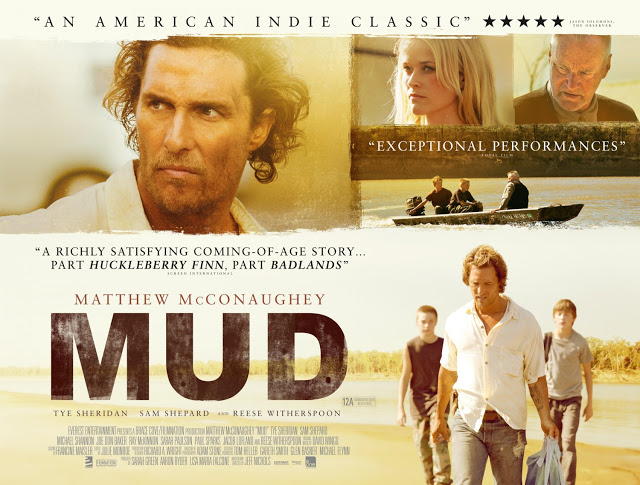
Matthew McConaughey all over the movie poster for Mud
Written by Stephanie Rogers, who spoils the entire movie. 
I wanted to see Mud because it looked like an interesting film about the cult of masculinity. It is, in fact, a film about masculinity and father-son relationships, but it goes out of its way to avoid offering an actual critique of masculinity. If anything, Mud celebrates the masculine by demonizing the feminine. The women in this film carry the sole responsibility of ruining every dude character’s life, and Mud screams through a megaphone its Women Are Awful message from the first scene all the way to “Help Me, Rhonda” playing over the closing credits. And I thought Side Effects was bad.
I hated that I had to hate Mud; the young boy who plays Ellis (Tye Sheridan) and his best friend Neckbone (Jacob Lofland) blew my mind, and Matthew McConaughey as Mud gave his best performance since Ghosts of Girlfriends Past (ha). Reese Witherspoon somehow even managed to garner sympathy for a second with her ten minutes on screen, a serious feat given the fact that the character she plays (Juniper) gets blamed by everyone for Mud’s predicament as a fugitive in hiding. Ellis’s parents, too, particularly Sarah Paulson (as Mary Lee) of recent American Horror Story: Asylum fame, gave moving performances, and I especially liked Michael Shannon’s three brief scenes as Galen—not because anything other than sexism and man-childness occur—but because he always commands the screen (see Take Shelter and Revolutionary Road). The actors, specifically the two young boys, save this film from entirely shitting all over itself.
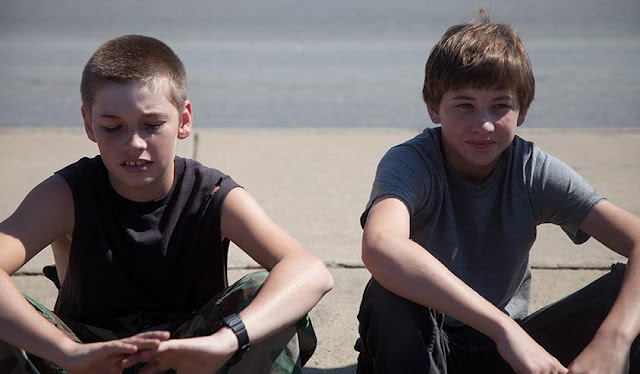
Jacob Lofland (Neckbone) and Tye Sheridan (Ellis) in Mud
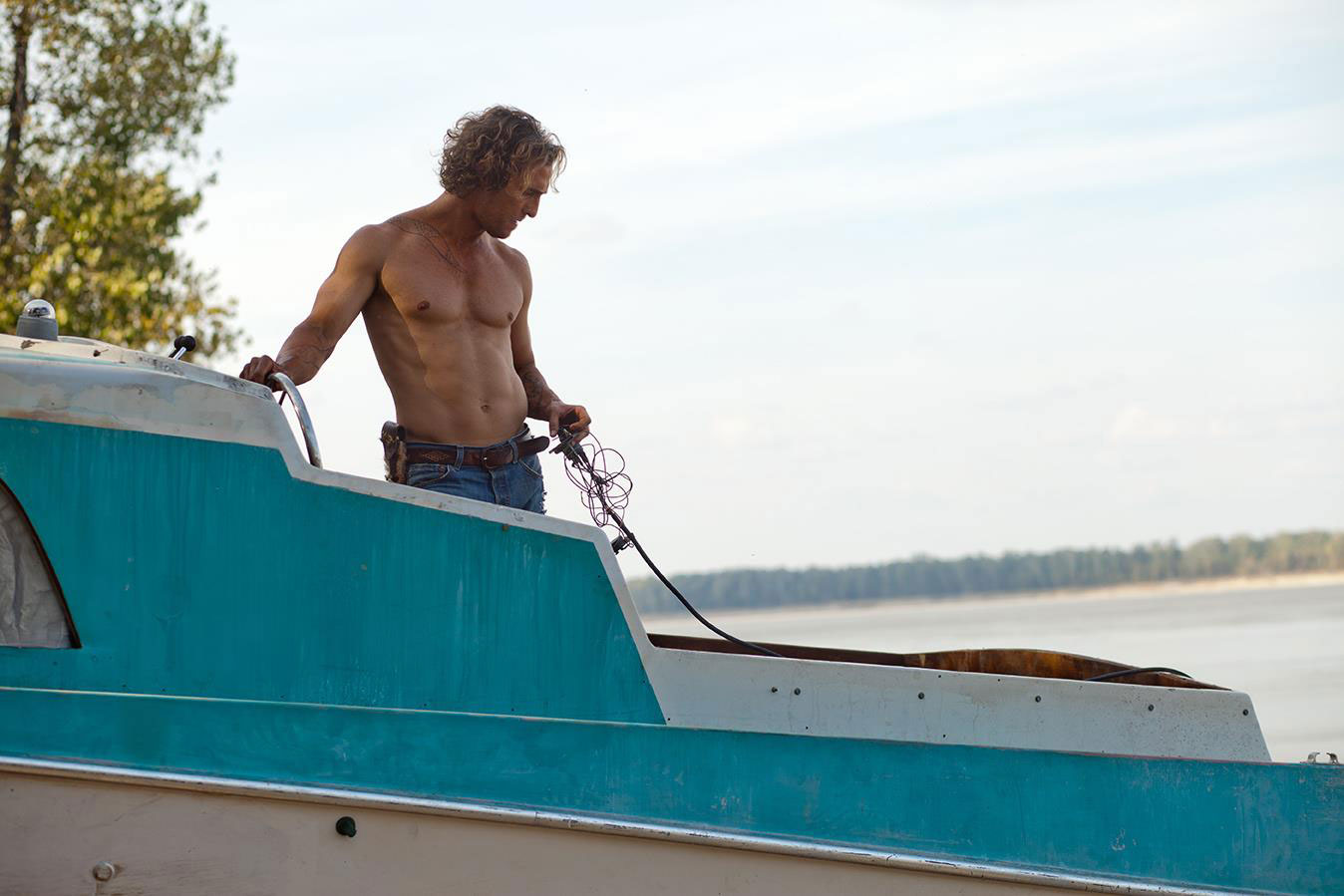
Matthew McConaughey plays Mud, the title character, and I keep reading everywhere that Mud is a retelling of Huck Finn, so okay. Two 14-year-old boys, Ellis and Neckbone (best. name. ever.), live in a poor yet quaint and lovely town on the Mississippi River. In conventional boys-as-adventurous-explorers fashion, they sneak their small boat off to an island down the river where they find an abandoned boat stuck in a tree. After climbing up there and sifting through a treasure trove of Penthouse magazines (because that’s necessary) and finding a bag of canned beans, they realize someone lives on the boat. Mud! The rest of the film shows men bonding with one another by objectifying women, beating up men to defend the honor of women, and blaming women both for the abuse inflicted upon them by men and for the problems they “cause” for the men around them. It’s a real win-win for the ladies of Mud.
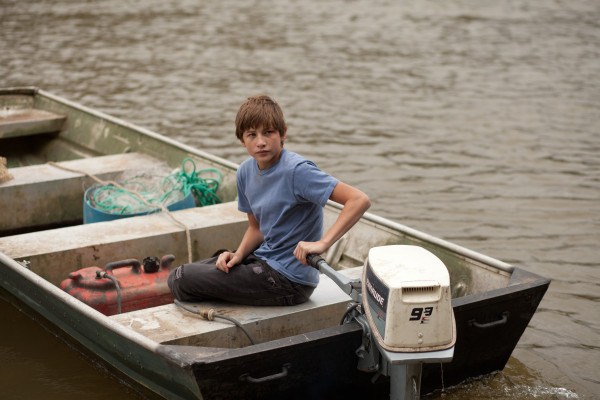
Ellis goes to find Mud on the island

There is not a woman in this movie who doesn’t betray her man, cheat on him, use him, steal his home, rob him of his authenticity, make him move to a boring condo complex in the suburbs, or otherwise force him [out] of his natural and driving male essence … This thing might as well be a river fort with a giant “No Girlz Allowed” sign out front.

Hard to argue with that. Here’s why.
I guess I knew in pretty much the first scene (and in the first lines of dialogue), when Ellis told Neckbone he had a crush on a girl and Neckbone responded with, “She’s got nice titties,” that Mud might walk a fine line between either existing as a coming-of-age tale or offering up a sexist piece of shit under the guise of a coming-of-age tale. It’s a little bit of both.
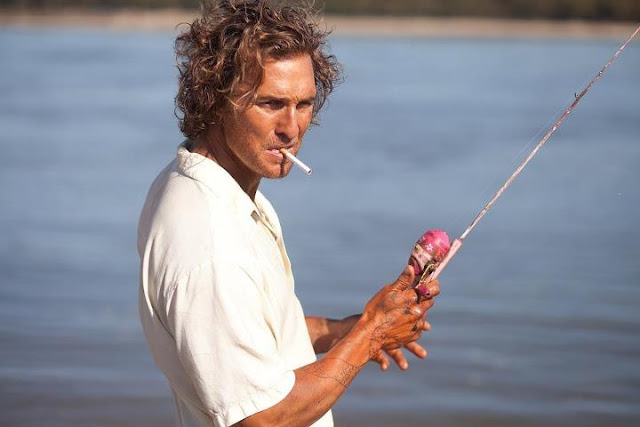
The freakshow Ellis and Neckbone see when they first meet Mud
The neatly tied up plot goes like this: “Two teenage boys encounter a fugitive and form a pact to help him evade the bounty hunters on his trail and reunite him with his true love.”
Sounds romantic, right? See, I definitely teared up during its most manipulative moments, and I definitely came to care about the characters, and I definitely wanted to leave the theater feeling okay about that rather than feeling guilty for liking a movie that portrayed my gender (and even men), with such simplicity and disrespect. I psychically begged Mud to reverse all its misogyny in the end, to somehow invalidate the sexist ideology it spent nearly two hours enforcing, so that I could write about its complexity and nuance and be all, “Wow, what a smart deconstruction of Southern masculinity!” No dice.
Instead, I get to write about typical Hollywood gender-trope drivel, except it exists in a fucking semi-indie film, and, according to me—a genius—indie films ain’t supposed to rely on Hollywood gender-trope drivel anymore. Let’s begin.
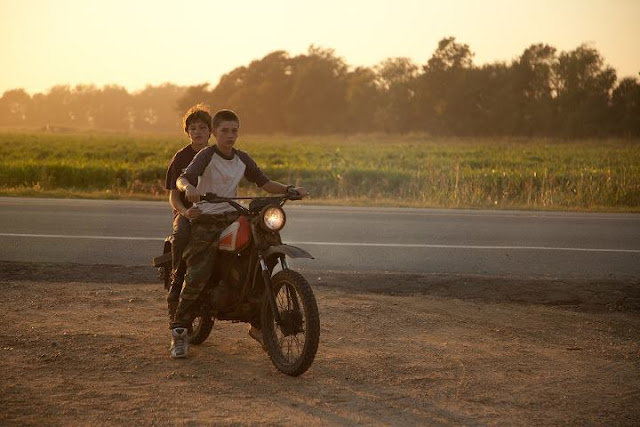
Best Fucking Friends Ever
Every man in this movie tells a story about a woman who wronged him. Every. Single. One. The opening scene (juxtaposed with the “nice titties” comment and the Penthouse porn) shows Galen, Neckbone’s uncle and sole caretaker, getting reamed by his girlfriend. She bolts from his home, whips around to find the two boys sitting on the porch, and says something like, “You make sure you always treat girls like princesses!” We quickly learn that Galen tried something in bed that his girlfriend didn’t like, so when she throws a handful of gravel at him and yells, “I’m a princess!” Galen and the boys (and the audience) laugh at her “irrational” reaction and prudishness. Boys will be boys, honey.
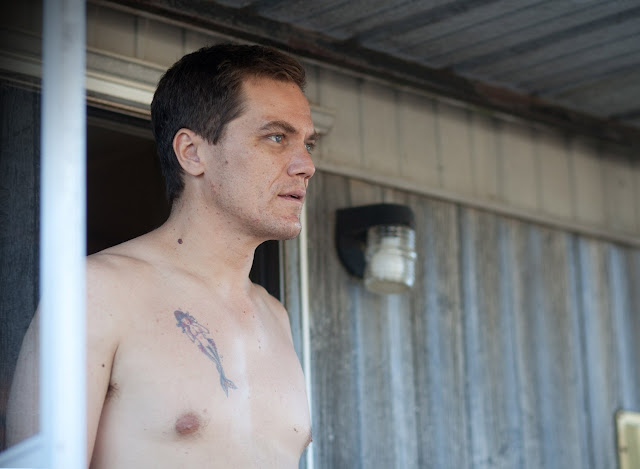
Michael Shannon as Galen, aka Misogynist of the Year
Ellis and Neckbone then leave the house carrying Galen’s book on how to understand the opposite sex (because that’s necessary), and the film officially begins its Women Are Awful message with not even a hint of fucking subtlety or irony: welcome to prudes, princesses, titties, Mars/Venus, hysteria, virgin/whore nonsense, and porn, all within the first five minutes of screen time.
Not surprisingly, we learn that Mud finds himself stuck on an island and running from the law because of Juniper, a woman he fell in love with as a young teenager. The film pulls no punches in its insistence on blaming Juniper for Mud’s situation; she involved herself with an abusive man—a pattern for her—and since Mud lurves her so much, he obviously needed to murder the man responsible for beating her and causing her to miscarry. Juniper’s beating also destroyed her reproductive system (why not?), and that factors strongly into Mud’s decision to kill. The message here, and Mud all but says it, is that robbing a woman of her God-given responsibility to bare children is unforgivable and punishable by death.
I wish that were the only instance of blaming a woman’s reproductive capacity for another man’s misery, but, alas, Tom (a possible former CIA assassin, played creepily by Sam Shepard) can barely stand to interact with anyone ever since his wife and son died during childbirth. He raised Mud as his own son (only Ellis knows his biological father, played by Ray McKinnon), and sits on the river shooting his gun every now and then like a hater. Basically, women are misery-inducing killjoys who suck at performing their duties of procreation.
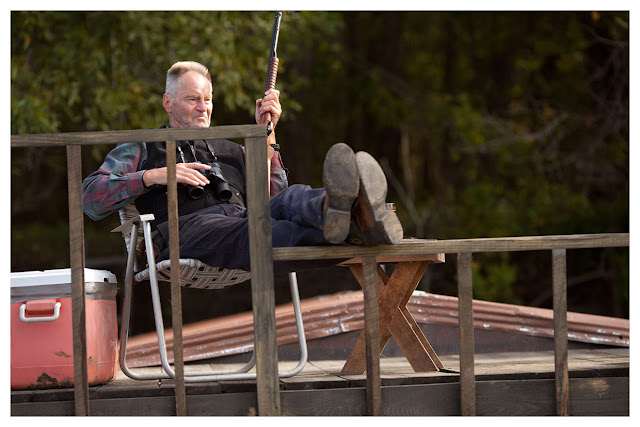
Sam Shepard waiting to … kill … something?
When women deign to momentarily stop holding hostage the broken hearts of men everywhere, they fall into the coveted category of Desired Object, going from active life ruiners to passive beauty queens.
Reese Witherspoon as Juniper with Smeared Mascara
We first meet Ellis’s girl crush (presumably the one with the nice titties) when Ellis sees an older boy put his hands all over her in the parking lot of the Piggly Wiggly. May Pearl (the next best character name after Neckbone and Mud) pushes away the sexual harasser, but do you think that stops Ellis from charging through the parking lot with reptilian stealth and jacking a high school senior in the jaw? No way. That would mean not employing the Damsel in Distress trope, and, in turn, allowing women to wield their own authority and agency. But Mud gives no fucks about women other than how they push the male-focused plot forward. As Megan Kearns notes in her review of Iron Man 3:

The problem with the Damsel in Distress trope is that it strips women of their power and insinuates that women need men to rescue or save them. And yet again it places the focus on men, reinforcing the notion that society revolves around men, not women.

That’s Mud in a nutshell, although many reviewers—and most people in the history of everywhere—still manage to confuse misogyny with Nice Guy™ acts of “chivalry.” 
The Piggly Wiggly: after-school hangout
Interestingly Upsettingly Predictably, the moment that moves Ellis away from rescuing May Pearl—after she rewards him with a kiss and tells him to call her, in typical Damsel in Distress trope fashion—relies on even more misogyny. The congregation of boys in the lot stops their commotion cold when Juniper suddenly appears—in all her blonde-haired glory and cut-off daisy dukes—and saunters into the Piggly Wiggly. The boys gape at her. The teenage girls squirm all jealous. And my brain jerks from all this Sexist Whiplash.
To rewind and parse: a boy street harasses a girl; another boy saves her from said harassment (Damsel in Distress); she publically rewards him for saving her; Juniper shows up as Desired Object; women become jealous of one another over male attention; and Ellis and Neckbone begin their inevitable lightweight stalking of Desired Object. In the span of three minutes.
Okay.

Juniper as Desired Object with Black Eye
It gets worse, though, way way worse. Later, Ellis and Neckbone find one of Mud’s bounty hunters, who was hired by the father of the man Mud murdered (hi, alliteration!), beating the crap out of Juniper in a motel room off the highway like, “Bitch, tell me where Mud’s hiding OR ELSE.” (Stalking women comes in handy sometimes, for both bounty hunters and young boys.) Naturally, the boys save our resident Damsel in Distress by bursting through the motel room door at just the right moment and pretending to sell a cooler full of fish (ha). The mob thug smacks Ellis down too, though, and that’s when the film finally turns into the Southern gothic crime thriller I’d been hoping for—but not before Juniper rewards Ellis with a kiss for saving her.
LIKE, ARE WE IN FUCKING SUPER MARIO BROTHERS?!?!?!
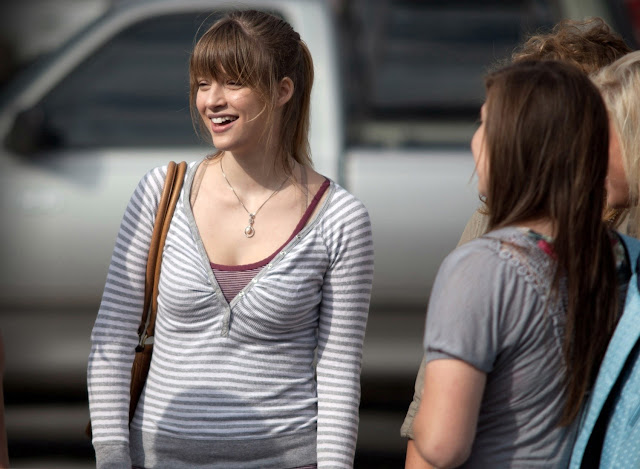
May Pearl smiles at her knight in shining armor
The abuse of women in Mud, which serves no purpose other than to normalize domestic violence for the viewer, is horrifying in its own right, but I ultimately found the Blame the Victim ideology the most disturbing aspect of Mud. Not only does the film voyeuristically depict the harassment and physical abuse of women at the hands of men with no critique or analysis, but it also shows the male characters verbally blaming women for the abuse inflicted upon them. Tom, who acts as a father figure to Mud, delivers a lengthy monologue to young Ellis all but calling Juniper a no-good whore for getting involved with so many abusive jerks and ruining Mud’s entire Nice Guy™ life. (You know, because Women Are Awful and consequently at fault for all the choices men make, including their choices to beat the shit out of women.)
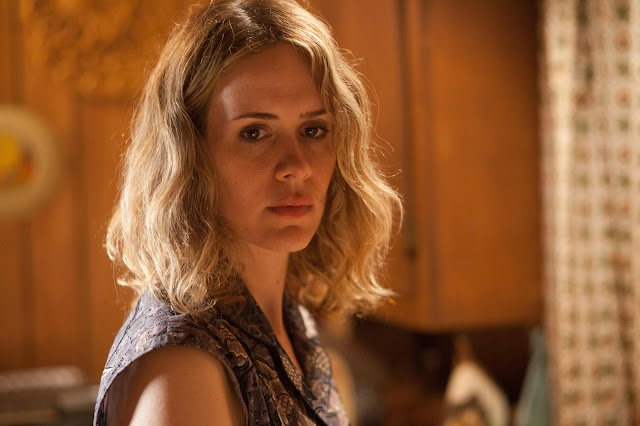
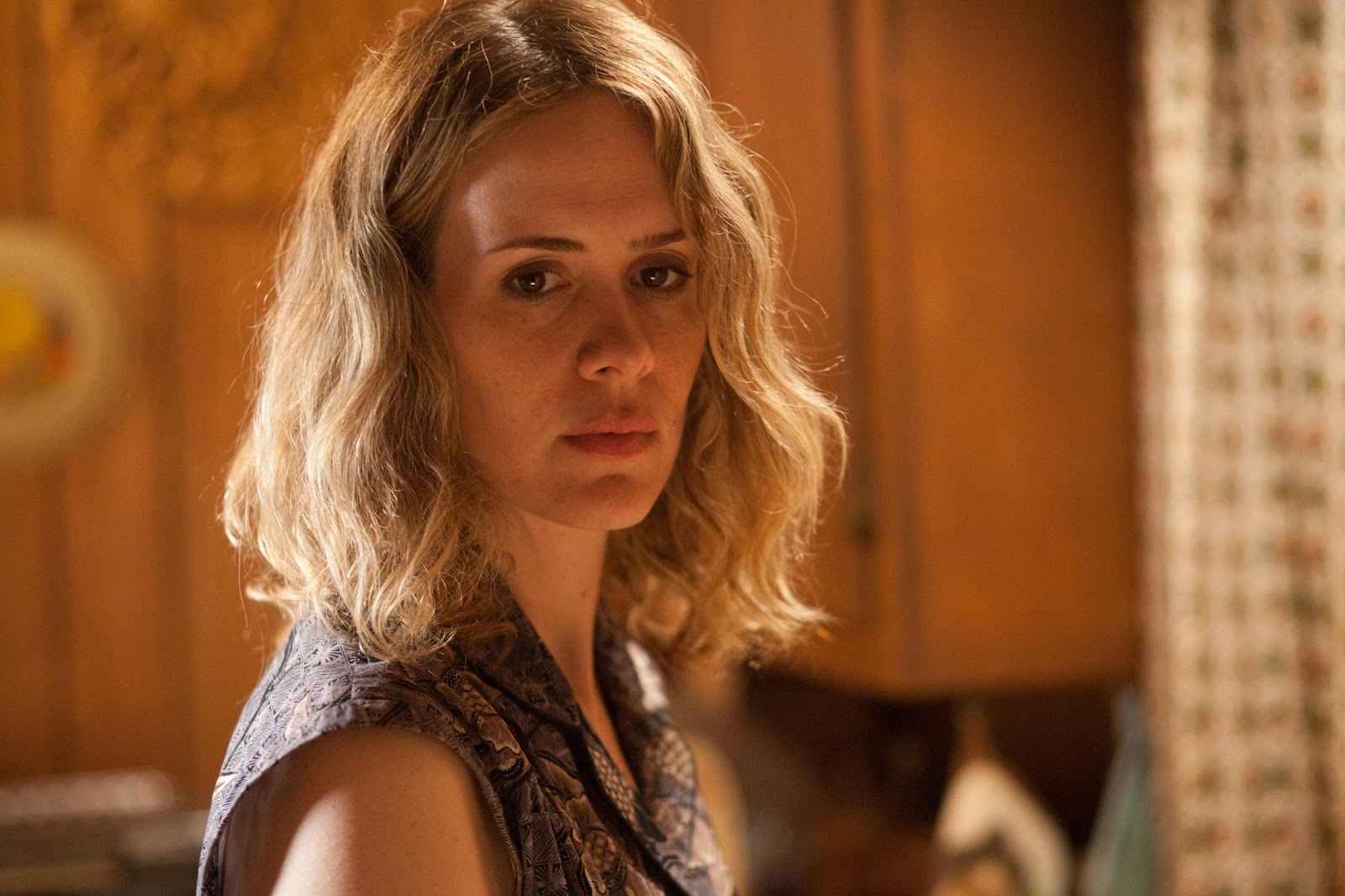
Sarah Paulson as Mary Lee in Mud
The film’s message devolves even further to insinuate that—because Mud hasn’t been physically abusive toward Juniper and has even heroically punished the men who have been—he has both earned and deserves her love. And so, the audience can’t help but dislike Juniper when the boys catch her slutting it up at a bar with a billiards-playing bro instead of sailing off to Mexico with Nice Guy™ Mud in his fixed up former tree boat. A small part of me waited for the film to pause on Juniper’s face for a moment and toss up an UNGRATEFUL BITCH title card, just to make sure the audience got the point.
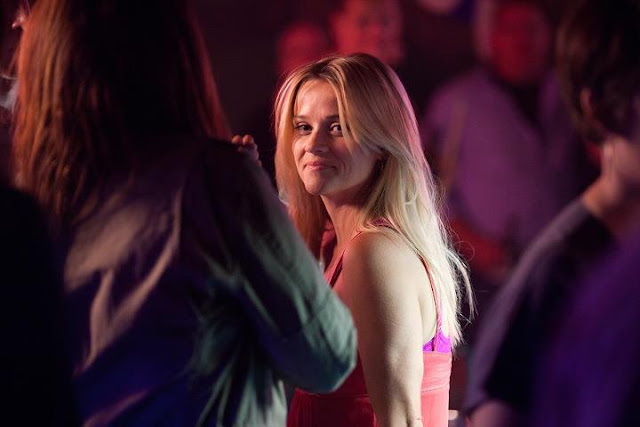
Juniper, aka UNGRATEFUL BITCH

The takeaway to the story seems to be that the only people you can count on in this world are your male friends and your father figure. At the end of the movie, after all hell breaks loose as Ellis and Neckbone’s entanglement with Mud gets crazy and deadly, we see each male character have a touching moment with his father figure. None of them are any good—Ellis’ father can’t make money, Mud’s adopted father is a deadly “assassin,” and Neck’s uncle treats women possibly the worst of any of them—but, heck, in a man’s world it’s the man who teaches you how to man like a man that man man man. And some of the man manning that men masculine you with is hatred of women. Ellis’ father … tells him at one point, “Women are tough. They set you up for some.” Eventually, when Ellis confronts Mud about how much girls suck, Mud replies, “If you find a girl half as good as you, you’ll be all set.” See, a woman can never be as good as a man.
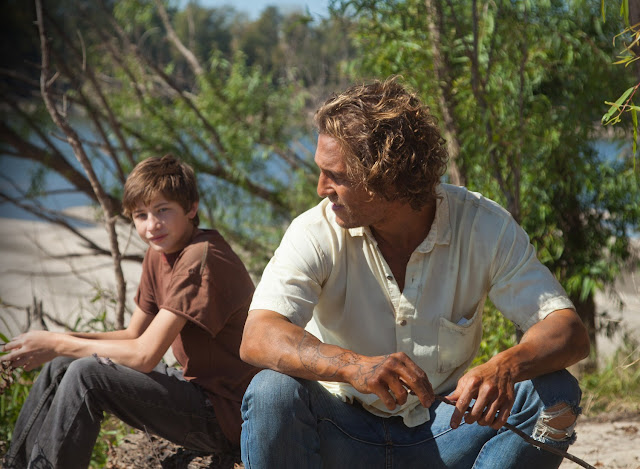
Ellis and Mud talk about Being a Man probably
I can already hear the arguments. Mud exposes the hyper-masculinity present in Southern culture! The boys don’t know any better! That’s just how it is down there! Maybe. But, an intelligent film might consider taking that harmful social construct to task rather than rewarding the male characters for their sexist behavior. Mud presents misogyny as endearing for fuck’s sake, and art—in my opinion—possesses a responsibility to challenge those constructs because it also possesses the power to change them. The dudes in Mud experience no consequences for their bullshit; the film, in fact, revels in their Women Are Awful blues and invites the audience to participate. I’m less interested in whether the depiction of Southern masculinity is authentic. Why not make a statement about how that authentic Southern masculinity hurts women and men?
It never comes close to saying that. But it does manage to deliver a much more cynical message.
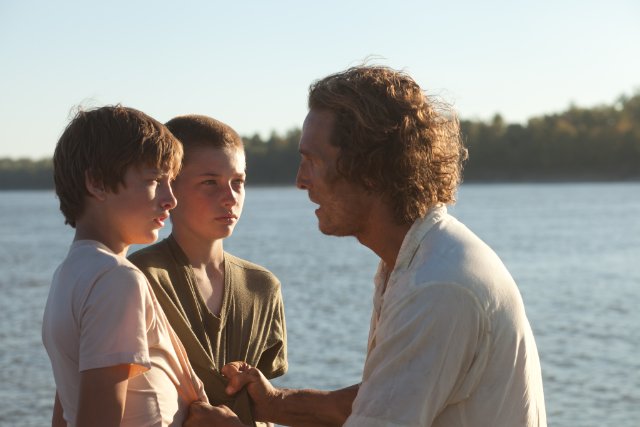
Ellis and Neckbone, rightly looking a little terrified of Mud
Halfway through the film, Galen says to Ellis, “This river brings a lot of trash down. You gotta know what’s worth keeping and what’s worth letting go.” Sure, he’s referring to literal trash (as he points to a newly repaired chandelier he found in the river), and he’s referring to Mud, a known fugitive (because he’s seen Ellis and Neckbone hanging out in the river with Mud), but—make no mistake—he’s also referring to women. The film never stops telling us that Women Are Awful, worthless, disposable.
In the end, Ellis’s dad comes to terms with his wife leaving him; Mud finally moves past Juniper; Ellis ogles a new girl (in slow motion!) after May Pearl breaks his heart in public; even Tom learns to leave the death of his wife behind. The men’s collective triumph becomes the fact that they finally learn to let go of The Trash in their lives and hold onto what’s most important—their relationships with other men. So while Mud is a coming-of-age tale in the traditional sense, and coming-of-age tales deliver all kinds of important messages for their young protagonists to absorb, the film mostly wants Ellis to learn that sometimes you just need to fucking drop a bitch.
How sweet.
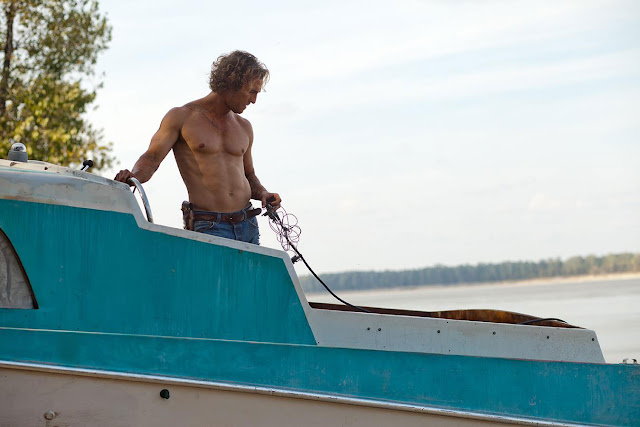
How sweet, indeed