The Terminatrix Problem

Written by Robin Hitchcock

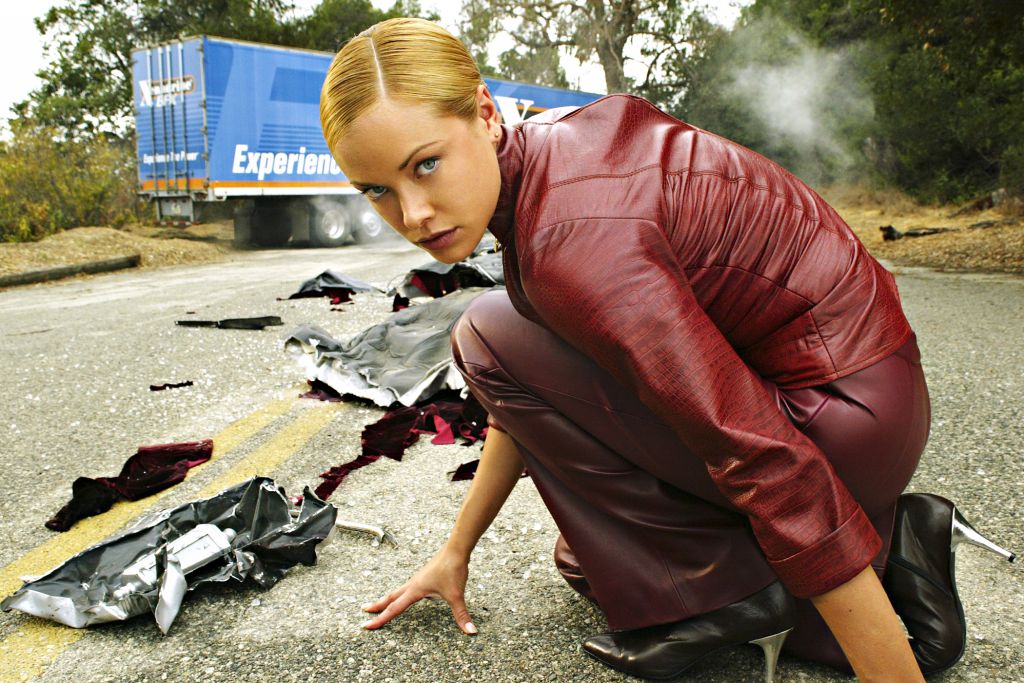
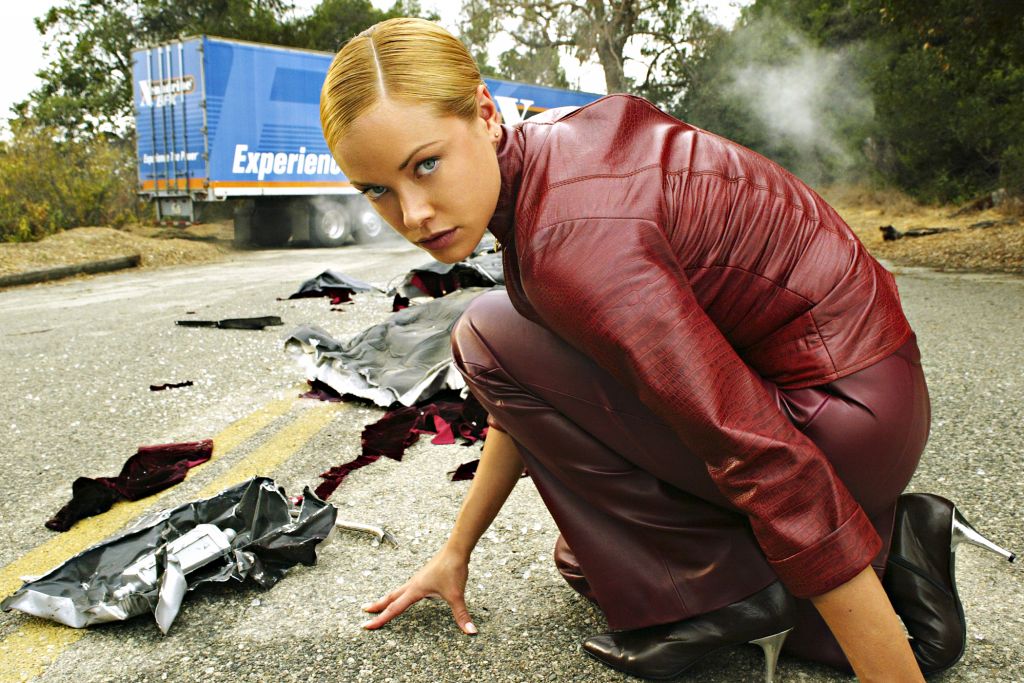
Kristanna Loken as the T-X or “Terminatrix” in Terminator 3: Rise of the Machines
On round one thousand seventy eight of the eternal “do the time travel rules in the Terminator movies make any sense?” debate, my partner and I decided the only reasonable course of action was a Terminator movie marathon [we excused ourselves from having to suffer through Terminator Salvation, because life is too short to watch that dull abomination more than once].
The time travel debate, of course, rages on, but watching the first three Terminator films in short order made their relative strengths and weaknesses all the more clear. [Or, in the case of T2: Judgment Day, relative strengths. That movie HAS NO WEAKNESSES.] I held out hope that Terminator 3: Rise of the Machines might have some new charms or interest placed directly next to its legendary big sister. It’s a movie I want to like more than I do, despite the crippling absence of Sarah Connor, awkward recasting of John Connor, and the distractingly aged Schwarzenegger. Oh, and James Cameron out of the director’s chair, half-heartedly replaced by some “I made one of those submarine movies from the early aughts, and no my name isn’t Kathryn Bigelow” hack (Jonathan Mostow).
I know now why you Botox
And then there’s that whole thing where Terminator 3 completely defies the defining spirit of the series “no fate but what we make for ourselves” and goes all predestination on our asses. You have a fate! You have a fate! EVERYONE HAS A FATE! Man, this movie has a lot of problems.
But allow me to expand on just one of them: The T-X, or Terminatrix, played by Kristanna Loken. Judgment Day had one of the most memorable movie villains of all time in Robert Patrick’s T-1000. Living up to that standard is a tall order. T3’s only answer for how to up the ante is boobies.
Inflatable boobies! [To be fair, they also give the T-X various and sundry additional powers like technopathy and plasma weapons, but they feel thrown against the lingerie billboard and they don’t quite stick.]
From a gender studies point of view, there’s a lot of potential in introducing the first female terminator. What are the tactical advantages of boobies? Why do robots (shape-shifting robots, at that!) even have gender identities? Why does the T-X have a “sexy” curvy endoskeleton?
That’s not how skeletons work!
Spoiler alert: none of these questions will be answered or even adequately addressed by T3. Instead, Kristanna Loken will do her best Robert Patrick impression whilst having boobies, and it will fall completely flat (pun perhaps subconsciously intended).
Nothing will ever be this scary.
There’s several problems with Loken (as well as the writers and the director) deciding to go the T-1000 imitative route. First, obviously, is that it’s essentially impossible to live up to the memory of Robert Patrick’s chilling performance. Secondly, it throws away the fascinating idea introduced in T2 that different Terminators have distinct personalities (thankfully, the Battlestar Galactica reboot would pick up their fumble).
And finally, a beautiful woman acting robotic just isn’t that notable in our culture of objectification.
Women are so often used as beautiful emotionless props it can be hard even for feminists to notice when it’s happening. In the era of widespread photoshop abuse, images of women are increasingly not quite human: everyone has the same glowy, flawless, fresh-off-the-factory line look.
3-D printed Natalie Portman
Emma Stone with upgraded robolashes
Olivia Wilde is a female pleasure unit.
She requires a new coat of paint.
These images should freak us out, but they’re all too easy to accept as honest representations of a inhuman beauty to which we should all aspire. This objectification is such a pernicious part of the cultural DNA that the usual rules of the uncanny valley don’t apply to beautiful women. When Robert Patrick played the T-1000 with inhuman rigidity and emotionless focus, it was terrifying. But when Kristanna Loken played the Terminatrix using exactly the same mannerisms, she was just another sexy fembot.
Ask your beautician about mimetic polyalloy, the new revolution in skincare
Even when something is as thoroughly pre-ruined as Terminator 3: Rise of the Machines, the patriarchy finds ways to make it even worse.
—————-

Robin Hitchcock is an American writer living in Cape Town. She always leaves the room when Sarah Connor starts carving “no fate” into a picnic table during T2 because she’s afraid to watch the nuclear attack dream sequence that comes next. 

‘Girl Rising:’ What Can We Do To Help Girls? Ask Liam Neeson.

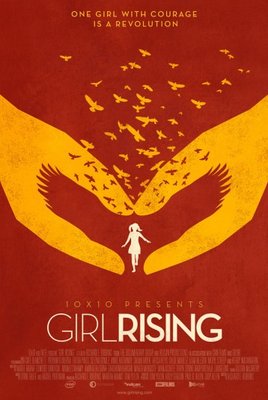
Girl Rising (2013)

This is a guest post written by Colleen Lutz Clemens.

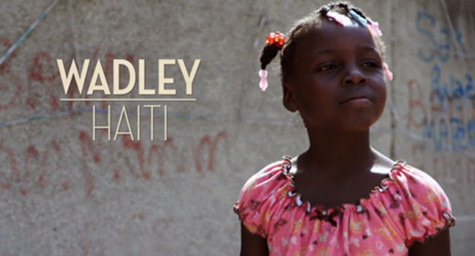
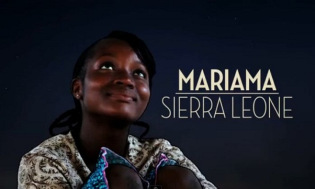
Girl Rising unites prominent female authors, such as Edwidge Danticat from Haiti or Aminatta Forna from Sierra Leone, with girls such as Wadley or Mariama from their respective countries. Together, Danticat and Wadley, Forna and Mariama, and seven other pairs have their stories of oppression, resistance, community, and family narrated by the likes of Beyoncé or Meryl Streep. Each story works as a discrete unit in the film, using animation, music, and images to give the viewer a glimpse into each girl’s reserve of resilience.
Wadley from Haiti 
Mariama from Sierra Leone

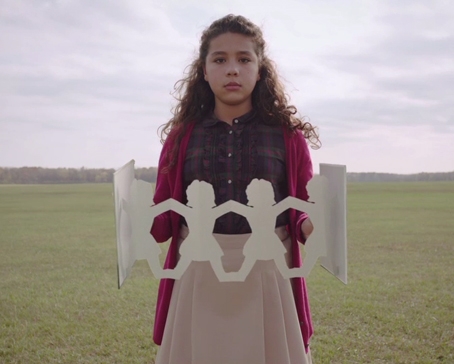
Connecting the nine stories are interludes which show other girls in school uniforms as they hold us up signs sharing dreary statistics about girls in the developing world, such as boys outnumber girls in primary schools by 33 million. The stories teach the audience that these girls live in families that love them—even if that love looks different than it does in “the West”—and that education, poetry, art, and organizing are the keys to giving each girl the tools to recognize her own importance and to find her voice.

One of the interludes.

Girl Rising knows and plays to its audience: women in “the West” with access to basic services and education who have some extra money in the bank and a desire to help other women. The documentary works to connect audience members to a movement with the lofty goal of raising money to ensure more girls are educated worldwide.

I love the idea of educating girls. LOVE IT. I love any movie that takes the time and attention to tell the stories of girls to an audience that otherwise would not hear such narratives. I want every girl who wants (and maybe even doesn’t want) to be sitting on the floor or on a chair wearing a hijab, burqa, or baseball cap in a classroom to be there. If that movie is working toward that goal, then I am just about all in, which as a scholar and critic is pretty much as “in” as I can get. However, what proves potentially problematic is the way in which narrator Liam Neeson offers the convenient promise that once girls are educated throughout the world, then global issues will diminish and all will be right.
Thus, two things are still bothering me after seeing the movie a few weeks ago. First, fixing the world via education seems like a pretty big burden to put on the shoulders of girls. The implication of the film is that if girls would just have access to education, so many of the world’s problems such as poverty and malnutrition would disappear. To me this rings the same bell as when people say, “If only women ran the world, there would be no more wars.” There would be wars. There isn’t some kind of natural peace sense linked to the X chromosome. I want girls and women to have the agency that women around the world have been working for—I believe in that idea and in the movie’s thesis that if girls have education, the world can be better. But I don’t think it is just or fair to expect girls to fix all of the problems the movie seems to think they should fix.
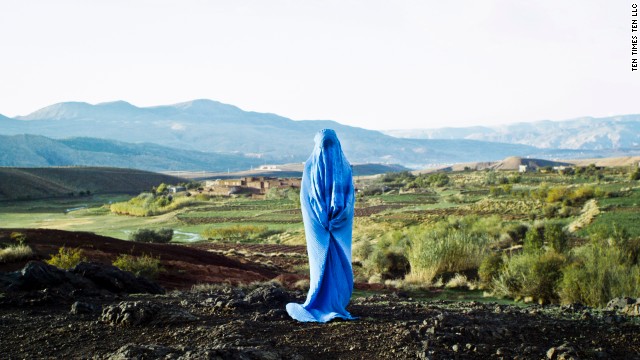
Second, the film exploits the burqa to make its point about women’s suffering. It should be no surprise that the last segment is the one that Western audiences will be most eager to witness: the story of Amina in Afghanistan. This young girl is forced to marry at an age when an American girl would still be hanging One Direction posters on her pink walls. Watching her story takes the viewer’s breath away. The girl seemingly has no agency, no voice, until Western filmmakers come and listen to her. She lives in fear of violence, of becoming shamed by expressing her desire to live a life different from the one prescribed to her by virtue of her gender. She is the image of the Aghani woman Westerners are so familiar with but know little about.
Amina

Here’s my concern: I don’t think any of these problems will go away if she rejects and sheds her burqa. So when (spoiler alert) veiled girls start to run up the hill tearing off their burqas as the music crescendos and the voiceover offers us the idea that liberation is just around the corner once the girls reveal their identities, I cringe. This gesture is a bravery manufactured for the audience. Taking off a burqa is a solution that makes the audience feel good. It echoes the rhetoric of post-9/11 warmongering when suddenly we needed to invade countries in the name of women who needed liberation, a convenient excuse when those same women’s plights were completely ignored up until September 10, 2001. Of course, the movie does this on purpose, allowing us to feel justified all over again in our simultaneous invasion and ignorance.

I admire the girls. I want Amina to have everything she wants, even after only meeting her for ten minutes in the film. Yet I fear the other girls’ stories get lost in the noise of the past decade’s war with countries where “brown, veiled” people live. I was thrilled to be invited to co-lead a discussion after the film, yet the moment the lights went up the audience only wanted to talk about Afghanistan, about the Taliban, about Islam. Ten minutes into the discussion I gently steered the conversation back to the girls, as they had already been forgotten in the audience’s desire, and I might say selfish desire, to forget the bigger issue and make the suffering and anxiety all about ourselves again.
But Amina’s section also contains my favorite part of the film: when she looks at the camera and accuses the audience of being silent. She pointedly asks: what are “you” going to do? Of course, right after this segment, the film gently supplies an answer: text GIVE to 5515 and donate money to the 10×10 organization. I didn’t see a flood of phones light up in the theater. But this move of Amina looking at an audience filled with Americans and calling them out for staying silent in regards to her actual issue—“I have no school to go to, my family married me off at 13”—gives me the greatest of hope. Not her running up a hill taking off a burqa that she probably put right back on when she got to the other side of the hill: I can only imagine that she was forced to put her veil back on, although the film’s website says it cannot offer information about her current status as it may endanger her. But that she would look the West in the eye and say “You cannot forget about me. I will not forget about you. We are in this together”: that kind of girl rising is the kind of movement I want to be a part of, one what works toward greater access to education and doesn’t need to make me temporarily feel good or justified in the process.
Azmera


Colleen Lutz Clemens is assistant professor of non-Western literatures at Kutztown University. She blogs about gender issues and postcolonial theory and literature at http://kupoco.wordpress.com/. When she isn’t reading, writing, or grading, she is wrangling her one-year old daughter, two dogs, and on occasion her partner.

Is Pepper Potts No Longer the "Damsel in Distress" in ‘Iron Man 3’?

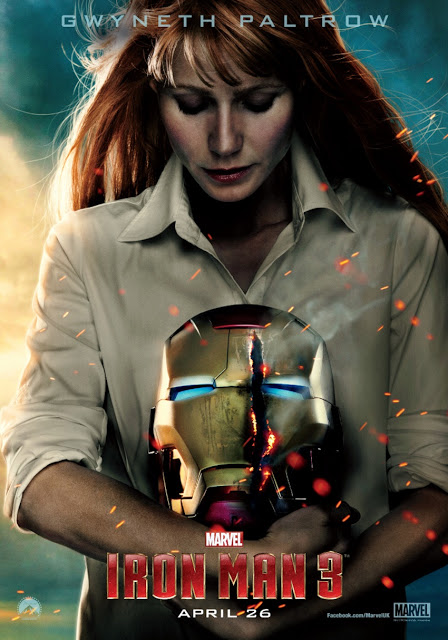
Movie poster for Iron Man 3

Written by Megan Kearns | Warning: Lots of spoilers ahead!

Superhero films often exhibit assertive, outspoken female characters. Yet they often simultaneously objectify women’s bodies, reduce them to ancillary love interests or perpetuate gender stereotypes. So when I heard that Pepper Potts would have a more active role in Iron Man 3, I was excited yet remained cautiously skeptical.

Gwyneth Paltrow eagerly talked about putting on the Iron Man suit and getting tired of the “damsel in distress”:
“I was really hoping that Pepper would be more engaged in this movie…So I was really happy, not only that she was wearing the suit, but that you see her really on equal ground with Tony in their interpersonal dynamic, and as a CEO, and then she’s got all this action… I think in order to move things forward and keep it fresh, you can only be the damsel in distress for so long, and then it’s old.”
Producer and Marvel Studios President Kevin Feige also said they wanted to “play with the convention of the damsel in distress…there is fun to be had with “Is Pepper in danger or is Pepper the savior?” over the course of this movie.” Okay, okay, this all sounds awesome to me. 
Now I’m all for subverting gender norms. But is Pepper really empowered? Or does she really remain a rearticulation of the Damsel in Distress trope?
When Pepper puts on the Iron Man suit, it’s not of her own volition. It’s not because she cleverly thought of it. Tony, who can now recall his arsenal of Iron Man suits on command, remotely puts it on Pepper to save her during an attack. Once she’s in the suit of armor, Pepper does make the most of it as she gets scientist Maya (who of course has to have had a sexual past with Tony) to safety and protects Tony from a falling ceiling as well.

Tony Stark
However, when Gwyneth Paltrow discussed putting on the suit, I envisioned an assertive move by Pepper — that she boldly decides to put on the armor so she can go out and save Tony. Not something she passively has placed on her body by a man. What could have been an interesting exploration of Pepper and gender becomes a wasted opportunity.

Just because Pepper donned the Iron Man suit for like two minutes, doesn’t mean she isn’t a “damsel in distress.” She still is for a majority of the film. Archvillian Aldrich Killian kidnaps Pepper and ties her up, using her as bait to lure Tony and blackmail him. Yep, that sounds like a passive damsel to me.

In Iron Man, Pepper is Tony’s personal assistant and according to him, his only true friend. In Iron Man 2, she becomes the CEO of Stark Industries. By The Avengers, they co-exist as a team, partners both in romance and work as Pepper helps Tony develop Stark Tower and the Arc Reactor. In each film, Pepper grows and progresses to have a more important role. So how did Pepper — Tony’s friend, partner and brilliant CEO of Stark Industries — get reduced to an objectified and victimized “damsel in distress” yet again?
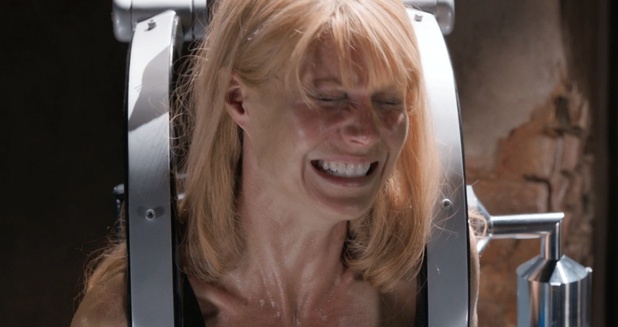
Gwyneth Paltrow in Iron Man 3

Discussing the Damsel in Distress Trope in video games, although it’s also completely applicable for film too, Anita Sarkeesian at Feminist Frequency talks about how the trope provides incentive and motivation for the male protagonist. The trope is also a form of objectification and is not synonymous with “weak” but rather a form of disempowering women, even strong ones, while empowering men:
“So the damsel trope typically makes men the “subject” of the narratives while relegating women to the “object.” This is a form of objectification because as objects, damsel’ed women are being acted upon, most often becoming or reduced to a prize to be won, a treasure to be found or a goal to be achieved…The damsel in distress is not just a synonym for “weak,” instead it works by ripping away the power from female characters, even helpful or seemingly capable ones. No matter what we are told about their magical abilities, skills or strengths they are still ultimately captured or otherwise incapacitated and then must wait for rescue. Distilled down to its essence, the plot device works by trading the disempowerment of female characters FOR the empowerment of male characters.”

Surprisingly, as it revolves around Tony, Iron Man 3 passes the Bechdel Test. Huzzah! A brief conversation transpires between Pepper and Maya, the botanist who invented the Extremis virus. Maya laments being naïve about science, just wanting to help people and how her ideals became distorted. Pepper reassures her, telling her that Stark Industries once carried out military contracts so she shouldn’t be so hard on herself. What a nice moment. But don’t get too cozy. This moment of sisterly bonding shatters when Maya betrays Pepper. Sidebar, it’s interesting that Maya has a change of heart not after talking to Pepper but after talking to Tony later in the film.

There’s a telling exchange near the end of the film when Killian tells Tony he injected Pepper with the Extremis virus because he wanted to make Pepper perfect. Tony, ever the good boyfriend, retorts, “That’s where you’re wrong. She already was perfect.” This could have been a nice albeit clichéd message about accepting and appreciating people how they are, rather than trying to change them. But 5 minutes later, when Pepper asks if she’s going to be alright because she’s got the unstable virus in her, Tony says he’s going to “fix” her because that’s what he does, he “fixes things.” Ahhh the mechanic imagery strewn throughout the film comes full circle.

Gwyneth Paltrow in the Iron Man suit

It’s a strange juxtaposition between “she’s perfect the way she is” and “I’ll fix you,” especially in proximity to one another. This dialogue could have easily been altered to show Pepper’s agency — that either she wanted to keep the virus and harness the superpower or have it removed. We could have seen things from her perspective. But instead, it’s all to convey how Tony is decisive and protective of his woman and how he’s grown emotionally.

Taking place after The Avengers, we see a changed Tony Stark. Due to the stress of combating aliens and traveling through worm holes, Tony suffers anxiety, insomnia and PTSD. I was pleasantly surprised at the film’s respectful depiction of mental illness. Although its treatment of people with disabilities is abhorrent. We see the weight of Tony’s obsession creating Iron Man suits straining their relationship. Pepper is frustrated that his suits come before her. But they never resolve their issues. It’s as if Pepper said, “Oh I almost died, got injected with some fiery shit and now you fixed me? Okay, we’re good now!” Um, no. 
So what’s the lesson here? Don’t worry, ladies. The right man will fix you and all your problems. 
Pepper isn’t an empowered, self-actualized character in Iron Man 3. Instead she’s used as an object for the two dudes to fight over. She’s used to show that Killian is a villain who never really loved her while she’s used as an incentive for Tony to fight and to realize what truly matters in life. Tony and Killian battle it out with Pepper as a trophy to the victor, aka the better dude. 
As film critic Scott Mendelson said: “For Potts, the movie was about other men giving her temporary agency/power and then quickly taking it away again.” Despite her intelligence and success, she possesses no agency of her own. Men bestowed power upon Pepper. Any power she appears to exert stems from men. Now some superheroes (Spiderman, Wolverine) have their powers given to them by others, either by accident or against their will. But once they have their powers, they decide what to do with them. They decide through their intelligence or cunning how best to utilize their powers. But Tony and Killian make all the decisions for Pepper. She doesn’t make any for herself. Pepper doesn’t choose to don the suit. Tony does. Killian decides to inject her with the Extremis virus that grants superhero powers. She doesn’t choose to keep the Extremis virus or have it removed. Tony decides to remove the virus. Even though she has a brief romp with superpowers and briefly kicks ass, Pepper somehow remains less empowered in Iron Man 3 than in the other films. Men decide her fate.

Gwyneth Paltrow as Pepper Potts in Iron Man 3
If the film really played with the conventions of a “damsel in distress,” rather than playing out every other superhero trope, Pepper wouldn’t have been kidnapped or if she had, she would have saved herself, rather than needing Tony’s rescue. At the film’s climax, we do see Pepper, injected with the Extremis virus, kick ass and save Tony. Oh and of course she does it in a skimpier, sexy outfit. So even in the shadow of empowerment, Pepper must be anchored as a sex object, intertwining power and sexuality. Again, it isn’t about Pepper’s growth and development. It’s about how Tony sees her.
While she acknowledges it “isn’t perfect on gender issues,” Alyssa Rosenberg posits that Iron Man 3’s “progressive gender play is noteworthy when you consider the kinds of roles actresses in superhero movies usually get stuck with.” But no, no it’s not progressive. Did we watch the same movie? Having women scientists and women CEOs in your film, while a good start, isn’t smashing gender stereotypes if you ultimately reinforce the same old tired gender tropes and clichés. It isn’t actually showcasing powerful women if you continually undercut women’s agency. 
While action sequences are enjoyable, fighting is probably not what audiences find empowering. It’s characters’ decisiveness, assertiveness, ingenuity, struggle to survive — all of which can be conveyed through a visual manifestation of action sequences.
Sure, it was nice to see Pepper kicking ass. But let’s be clear here. Just because a female character wields a sword or shoots a gun or uses her fists to punch a villain, doesn’t automatically make her emotionally strong or empowered. Possessing agency to speak her mind, make her own decisions, chart her own course — these are what make a character truly empowered.

The problem with the Damsel in Distress trope is that it strips women of their power and insinuates that women need men to rescue or save them. And yet again it places the focus on men, reinforcing the notion that society revolves around men, not women.

Maybe I’m a greedy feminist but four minutes of ass-kicking does not automatically make an empowered female character shattering gender tropes, nor does it satiate my desire for a depiction of a nuanced, complex, strong female character. Sigh.

Miyazaki Month: Princess Mononoke

Written by Myrna Waldron.

You will find few well-known directors as overtly feminist as Hayao Miyazaki. Of the 10 films he has directed, only two, The Castle of Cagliostro & Porco Rosso, have male protagonists. The others have dual male and female protagonists (Castle In The Sky, Princess Mononoke, Howl’s Moving Castle and Ponyo) or female protagonists (Nausicaa, My Neighbour Totoro, Kiki’s Delivery Service, Spirited Away). And not only are many of the main characters in his films female, they are also well rounded, realistically flawed, and given a great deal of agency in their stories. When I think of the Strong Female Character feminist media critics are always hoping for, I think of Miyazaki’s characters first.

For the month of May, I will be writing about 4 films directed by Hayao Miyazaki: Princess Mononoke, Spirited Away, Howl’s Moving Castle and Nausicaa of the Valley of the Wind. The first three are my personal favourites of his work, and it will be my first time watching Nausicaa. It is my plan not only to discuss feminist aspects of the films, but also to discuss other themes/messages present in Miyazaki’s work (environmentalism and pacifism most commonly) and to compare the Disney/Miramax English dubs of the films to the original Japanese dialogue.

The Deer God gives life and takes life away

Princess Mononoke was the first Hayao Miyazaki film I watched. It came out a couple of years after Sailor Moon had introduced me to anime, and all of my nerdy peers were excited about the film because it was by this great, talented animator, and in Japan the film was even more popular than Titanic. It was refreshing for me to watch an animated film with complex themes, moral ambiguities and some decidedly un-kid friendly violence. I was already fascinated by animation, and Princess Mononoke showed me just how broad a medium it could be.

This is why I found the comparisons of Hayao Miyazaki to American films & filmmakers particularly frustrating. He’s been called “The Walt Disney of Japan,” which, frankly, reeks of a statement by someone who doesn’t really understand or respect animation that much. About all the two have in common is that they directed critically acclaimed animated films. Miyazaki’s films are steeped in Japanese culture and mythology, Disney’s films are distinctly American (even when they’re adapting other cultures’ stories). One particularly annoying thing is on the original Princess Mononoke DVD release, they’ve got the usual banal blurbs from film reviewers that marketers insist on ruining their DVD art with. But the quote they chose baffles me. “The Star Wars of animated features!” says The New York Post. I know the Post is a goddamn travesty of a newspaper, but what does that even mean? What does a film about Japanese mythology, environmentalism and industrial progress have to do with giant spaceships and lightsabers? (Best that I can come up with is that they’re both films popular with nerds.)

Sigh. Anyway, here are my observations about Princess Mononoke:

The first glimpse of San
  • I was able to simultaneously compare the English dub script (written by Neil Gaiman, a name that should be familiar to any fantasy literature fan) with the Japanese script by having the audio be in English and the subtitles be a literal translation of the Japanese script. For the most part, Gaiman’s adaptation was very accurate (which is what Disney promised Studio Ghibli upon offering to distribute their work in North America), and he was able to convey the general meaning of most of the dialogue. There were some parts I was disappointed with, however. There was a lot more exposition in the English dialogue, especially in the opening narration, which makes me feel like the people in charge of the English adaptation didn’t trust their audience. Ashitaka’s dialogue kind of had a Captain Obvious element to it, as well. In one scene, he wakes up, sees his demon scar is still on his hand, and says “The scar’s still there,” as if we can’t tell. In the Japanese script, he said nothing, just sighed. The biggest loss in this adaptation was that a great deal of Japanese culture – geography, history and mythology – was removed from the English script (especially from Jiko’s dialogue). I imagine this was done to help localize the setting for a Western audience, but it seemed a bit disrespectful, considering how distinctly Japanese Miyazaki’s films are. Gaiman also made the inexplicable choice of changing the Deer God’s name to “Forest Spirit.” I suppose Forest Spirit sounds a bit more poetic and more-or-less describes the Deer God’s role, but considering the other large animals are referred to as Gods, and the Deer God is a DEER, why the change?
  • The marketing for the initial DVD release sucks. I have mentioned the bizarre “Star Wars of animated features!” reviewer blurb. Another problem is that they gave the film the world’s most cliched and inaccurate tagline. “The fate of the world rests on the courage of one warrior.” First off, it’s not the world, it’s just that particular area of Japan. Second, the fate of the “world” doesn’t just rest on Ashitaka’s shoulders, it is equally San’s burden too, AND the people of both the forest and Irontown. Don’t give Ashitaka all the credit. The DVD artwork is pretty boring too – a picture of Ashitaka in a sword fight, which paints the film as more action-oriented than it actually is. And note that the title character, Princess Mononoke/San, doesn’t even appear on the cover. She’s just given a small section of the back cover that she shares with Eboshi, and her mouth is wide open in it! She does appear on the cover artwork for DVD releases for other markets, which, unfortunately, yet again shows how little female characters matter to North American marketers.
  • Ashitaka as a protagonist isn’t nearly as interesting as the other characters. I get that he’s meant to be both the audience surrogate and a neutral party between the endless war between the beings of the forest and the residents of Irontown. But he doesn’t seem to have any of the fascinating flaws that the other characters have. His mission is to see the truth with eyes unclouded by hatred, which he tries to stick to, but his cursed scar has other ideas. The scar’s super strength forcing him to dismember his attackers seems to be the only flaw Ashitaka has, and it’s not even a natural flaw. He seems to exist mostly as a mouthpiece for pacifism – he continually asks the forest dwellers and the people why they can’t live in peace, and refuses to accept their cynical answers. His complete goodness in a story full of moral ambiguities makes him seem like he doesn’t even belong in his own tale.
  • San, on the other hand, fascinates me. As the adopted human child of a Wolf God mother, she is both human and animal, and neither human nor animal at the same time. She has grown up hating humans, as her mother Moro has witnessed them acting as selfish and disrespectful beings that continuously defile her forest. The first time Ashitaka sees her, she is sucking the blood out of a wound Moro has suffered in an attempt to get at the iron bullet within her. She is wild, defiant, and free. She continually tries to reject her own humanity – her war mask is grotesque, and when she is at war, she considers herself an animal. A female protagonist with complete agency, she makes several difficult moral choices throughout the film and drives her own story forward. Like many of the other characters, her morals are in shades of grey. We can sympathize with her fervent desire to save the forest which has been the only home she has ever known. Less sympathetic is her tendency to blame all humans for the actions of a few, and her obsession with executing Lady Eboshi.
  • Unlike how other films present love stories, San and Ashitaka’s relationship subverts all the cliches. Notably, he does not get the girl, because she is a being in control of her own life, and not a prize to be won. They agree to part as friends, because she cannot forgive humans for what they have done to her forest. He accepts this, and tells her that he will help the people rebuild Irontown, and also promises to visit her whenever he can. This is the best possible outcome for their relationship, for if San were to be with him, she would be rejecting the animal side of her, and it is so ingrained in her, body and soul, that she would be giving up a part of herself. Another important aspect of their bittersweet love story is that, rather than San’s actions being influenced by her relationship with Ashitaka, it is HIS actions that are influenced by his knowing her. That reversal of gender roles is itself remarkable.
San vs. Lady Eboshi
  • Lady Eboshi is another well-rounded female character who is just as fascinating as San. On the positive side, she is a genius tactician, a revered leader to the people of Irontown, and a compassionate and generous benefactor to those most vulnerable. And yet she is also realistically flawed, as she is greedy, overconfident, and sometimes smug. To have won the respect and deference of everyone in Irontown, men included, already makes her unusual, and she is an interesting example of a capable woman in a position of leadership. It is initially implied that Eboshi is an antagonist, for it was she who killed the God Nago, and it was because Nago became a demon that Ashitaka was cursed in the first place. Yet as we meet her, she very quickly becomes just as sympathetic and just as morally ambiguous as San. As the men in the village tell Ashitaka, she has bought up the contract of every brothel girl she can find, which has incredible feminist implications. Whatever your personal opinions are of sex workers, Eboshi has saved these women from a very hard life, and granted them more agency than they ever would have had normally. She was also the only person to treat lepers with kindness and compassion, as she washed them, cleaned their wounds, and gave them employment and a purpose for living. And yet, on the other hand, she ambitiously wants to clear the entire forest so that she can transform it into one of the richest lands in Japan. She also knows full well of the destructive capabilities of the guns and flares that the lepers design for her, and uses them ruthlessly against both the forest animals and invading samurai warriors.
  • Irontown seems to have developed an almost matriarchal society as a result of Lady Eboshi’s influence. Not only is she the undisputed leader of the people, it is the women of the town that drive the economy. The men do the trading, mining and warring, and the women pump the bellows of the ironworks and defend the village from attackers. Together, they have made Irontown incredibly prosperous. Eboshi fears humans (particularly men) far more than she fears Gods, so she specifically requests that the lepers design guns light enough for the women to wield. Eboshi has more than enough reason to fear men in this case, as Lord Asano’s samurai continuously attack the village, and she specifically rescues brothel girls to prevent them from having to submit to the worst kind of men. She has given these former brothel girls a tremendous amount of freedom and agency. They have a great purpose and pride in their work, choose their own husbands, do not have to conceal their sexualities, and have as much input on how Irontown is run as anyone else does. Here, under Lady Eboshi, the women are equal.
  • The most important theme in the film, by far, is its message of environmentalism. Because the film takes place hundreds of years in the past, we feel the modern tragedy that what the Gods feared most did come to pass – the forests and their spirits have all but disappeared because of the onslaught of consumerism, industrialism, and capitalism. It emphasizes that there must be a balance – each side has to be willing to give something to survive, and that living together in peace is the best solution for everyone.
  • There are a lot of fascinating dichotomies at play in this story – animal vs. human, nature vs. industry, spiritual vs. secular, life vs. death, war vs. peace, men vs. women, etc. Most interestingly, we are not meant to pick a “side” in any of these dichotomies, but are meant to understand that there are reasons for everything in the world. Morality is not black and white. Even the most pressing dichotomy, nature vs. industry, doesn’t have a clear “side” expressed in the film. Letting the forest thrive and not destroying it is preferable, but the people of Irontown have to eat, and have to sustain their economy somehow. It’s a difficult choice, and the film respects its audience enough not to make it for them.
Princess Mononoke is a fascinating film with many layers of dichotomies, moral ambiguities, and complex themes. In the eternal battle of men vs. women, this film posits a strong message of equality, and of both men and women working together. Notably, in the climax of the film, it is both San and Ashitaka who return the Deer God’s head – they are equals working together, and without each other, they could not have saved everyone. And out of the death that the headless Night Stalker caused, it granted life instead. Life and death are as natural as everything else. The film also explicitly argues that there should be a balance between economic industry and preservation of nature. Human beings have to survive, but animal beings must survive as well. Princess Mononoke is a masterpiece of animation, and an overtly feminist themed media. Its strong female characters are given agency, dignity, independence from men, and realistic flaws. Everything that a feminist media critic hopes for.

———-

Myrna Waldron is a feminist writer/blogger with a particular emphasis on all things nerdy. She lives in Toronto and has studied English and Film at York University. Myrna has a particular interest in the animation medium, having written extensively on American, Canadian and Japanese animation. She also has a passion for Sci-Fi & Fantasy literature, pop culture literature such as cartoons/comics, and the gaming subculture. She maintains a personal collection of blog posts, rants, essays and musings at The Soapboxing Geek, and tweets with reckless pottymouthed abandon at @SoapboxingGeek.

Good Hair From Root To End: Why Is Nappiness Still Considered A Sin?

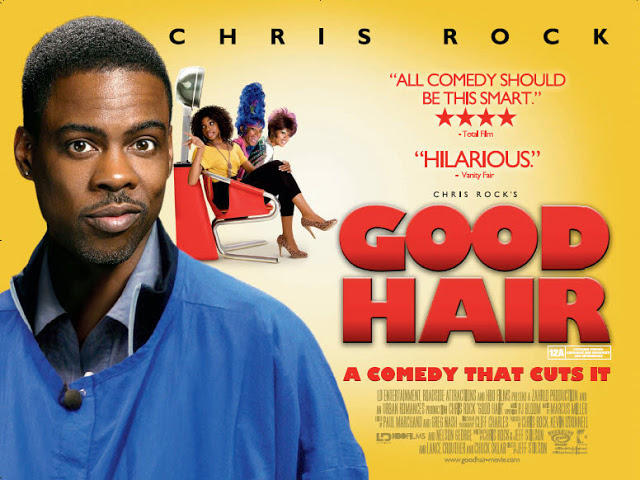
An advertisement for Good Hair.
“Why should you get a perm?” asks Chris Rock, narrator and co-writer of Good Hair, speaking to a little girl who has endured the burning sensations of relaxers–“the nap antidote” and/or “creamy crack” since age three.
“Because you’re supposed to,” she replies.
Good Hair.
It has been stimulated since birth that European straightness is a coveted desire for its sleekness, bounce, and venerable marriage to a fine toothed comb. In Rock’s documentary that often seems more mockumentary dives into why this is the way of the world for African American women and how men must come to terms with this high cost of hair shame.
I remembered my first perm at age seven. It hurt like the devil. I didn’t get it because I wanted to. I was bullied into it- girls my own age hated my lovely braids coated in Vaseline sheen. So I hated them too and begged my mom for that perm, for that beautiful acceptance. I thought the pain was worth it. But often I regret being brainwashed early and wondered who influenced those same girls to get their heads “straightened.”
Good Hair reveals African American women allowing their children to endure unbearable excruciation at such an elemental age and it is horrendous, especially with “it’s hard to comb” being a prime excuse. We’re not raised to treat natural hair properly. As witnessed in scenes at Dudley School of Beauty- only the science of perming and hot comb techniques are taught. Is it any wonder why parents consider relaxers to be an “easy way out?” It’s an ignorance issue that a rare few want to unlearn.
When I went natural, many African American stylists didn’t want to do my heaping head of feral strands. Often I heard, “I cannot do that!” or “I will only do it if she put a relaxer on that head!” Always spoken with nasty disdain and cruelty. These comments (there are some unmentioned Rated R kinds) built negative self reflection for years.

A six-year-old girl gets her second perm in Good Hair as Chris Rock watches.
When Rock enters hair salons, hairstylists talk about nappy roots like it’s the ugliest catastrophe known to man, while applying burning white “elixir” from root to end to their clients. It strikes an emotional nerve. Those bullying days come back at full force at each wince and laughter from women spending so much time and money burying the truth.
A good friend once told me, “I don’t know why they make fun of your kind of hair when they’re hiding the same thing.”
It has been so heavily ingrained in African American society, in our culture, that all elements of black don’t necessarily equate to beauty and that some elements must be bought. In this instance, hair flown in overseas is much more valuable than attempting to honor and appreciate kinky curled existence.
Rock is also gearing up for a behind-the-scenes hair competition and funnily enough, every stylist feels threatened by Jason, a Caucasian man considered to be the “Rosa Parks” (adding insult to injury) of the contest because he knows African American hair so well. This seems to be the metaphor, the pink elephant in the room that African American competitors “fear” him.
Dr. Melayne Maclin, an expert dermatologist speaks out against the negative factors attributed to relaxers- its harsh, unreadable chemicals and brutal realities set upon little girls. Yet Dudley thrives on this exploitation, being one of the few African American owned hair businesses marketing to ironed out ideology. Strangely enough, in this billion dollar industry, Caucasians make more off African American’s insecurities with Asians being second. How odd is that? It’s as though hair has ultimately become another chain, another barrier and this time, no one is marching around with signs and chanting, “we shall overcome.” A perm is a normal rite of passage- straight hair is victor and nappy roots are a curse.

Her definition of good hair- “something that looks relaxed and nice.”

Rock laughs with them all at the perm’s downside- the murdering scalp sensation, reddened ears, ugly patches where skin has been scorched off. But these women beam proudly, acknowledging worth like a soldier’s battle scars.
After I gave a presentation on black hair’s manifestations in art and design history class, someone asked me, “does black people hair really grow out like that? I’m so used to it being straight like ours.”
The documentary is a cruel implication that only one type of hair is acceptable and defined as “good.”
Rock didn’t find enough women who aren’t being imprisoned by relaxed and European culture. Alopecia survivor, Sheila Bridges bravely chooses not to wear wigs and showcases her bald head beauty proudly. “I never want to feel like I was hiding something,” she speaks articulately.

Tracie Thoms discussing why she loves being natural.

Actress Tracie Thoms appeared to be one of the few celebrity champions. She spoke up on celebrating forbidden other side. She believes that a freedom comes from natural beauty, embracing God given gift while the other Hollywood women were bluntly bragging about their expensive weaves like it gave them confidence and prestige. Thoms, however, was an anomaly. She raises an important question- “to keep my hair at the same texture as it grows out of head is looked at as revolutionary- why is that?”
Whether shaven bald, out free in afrocentric glory, braided, twisted or locc’ed, this “I’m not stressed” hair movement has been gradually rising for years. With entrepreneur women like Lisa Price, owner of natural hair line, Carol’s Daughter, things are shaping up into a new form of Angela Davis/Pam Grier inspired reformation thanks to hair bloggers and urgent call for earthly, less chemical ingredients in haircare.
“If my daughters wanted to wear weave one day, I had to see where it came from,” defeated Rock says, giving up on the idea that his children would actually want to remain natural, continuing to instead expose more vanity of oppressed black women and their disgrace.
He travels as far as to India where women, even crying babies are sacrificed in head shaving rituals called Tonsures- an exchanging of hair for God’s blessings. Sometimes Indian women are robbed of hair in sleep just to appease black market greediness- hair is such a valuable commodity that it is perceived to be wealthier than gold. Clear packages of long, glossy Indian roots are wrapped up like bundles of cocaine and shipped to people who probably know little about the history of this hair, of the person who was shaved bald intentionally or otherwise.
Rock tries, but with no success in trying to sell African American haired wigs. It’s both comical and sad, worsening when an African American woman working at an Asian hair store says, “black people don’t wear their hair nappy anymore.” Her agreeable boss with hands widening (wild “scary” afro), “they don’t want to look like Africa.” He points at the Indian hair and waves down his hands. “They want to wear their hair straight. It’s more sexy, more natural.”
But it is not natural. It is a preconceived, very contrived notion stimulating from white men’s rule that whiteness embodies beauty and thick, coarse, matted naps opposes that law.
And where is the sexiness when it becomes a production, a choreography in a relationship?
Despite men joking and women testifying, weave does get in the way of real life- financially, physically, and emotionally. It is an expensive venture and some women actually do attend to themselves more than paying mortgage and car notes on time. Touching is a natural occurrence in intimacy and to have a law where hair isn’t a part of deal sounds quite preposterous. As these men showcase scandalous stories and speaking of preferring other nationalities, African American women are appearing shallower and less desirable than ever.
But alas this documentary is written by three men and told through the eyes of a man.

Chris Rock talking to scandalously clad women about hair.

It is difficult to watch because this isn’t a one hundred percent honest depiction. These women loving their weaved safety nets aren’t very likeable or representational of a whole culture. Hair is a sense of pride, power, and creativity- as seen in the hair/ fashion show taking much of Rock’s attention. In the natural hair world, severely lacking here, there is no hiding, no masquerades.
“Hair is a woman’s glory,” says Maya Angelou who got her first relaxer at seventy years old. She couldn’t be anymore right.
Rock may close with the fluffy, “it’s what’s inside their heads that matters most” philosophy, but it is a contradiction- what positively reflects on the outside should match what’s within. If there were a sequel to Good Hair seen through the scopes of an admirable African American woman who knows fierce, independent trendsetters worthy of worship and inspiration, most of the men featured in Rock’s production will wish they never defamed her character. 

Let’s Re-Brand "Disney Princesses" as "Disney Heroines"

Written by Robin Hitchcock
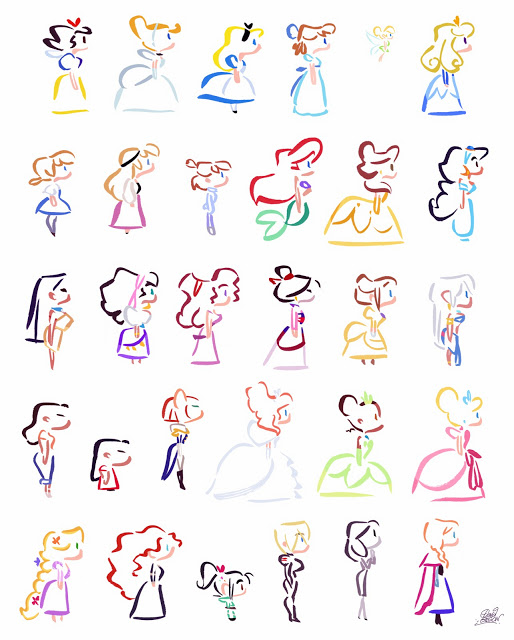
A piece of fan art and the particularities of French to English translation may have solved our Disney Princess problem: 
Disney Heroines Simple Lines, by David Gilson
Feminist parents (and grandparents and aunts and uncles and siblings) often worry about their young girls getting sucked into Disney Princess culture, and not just because of the intimidating price tags at the Disney store. We don’t want our kids growing up with female role models solely labelled with the coveted status of “princess,” and therefore defined by their relationships with men (be they fathers or husbands), and admired largely for their status over others. It’s pretty much the last thing a feminist would want for their kids. 
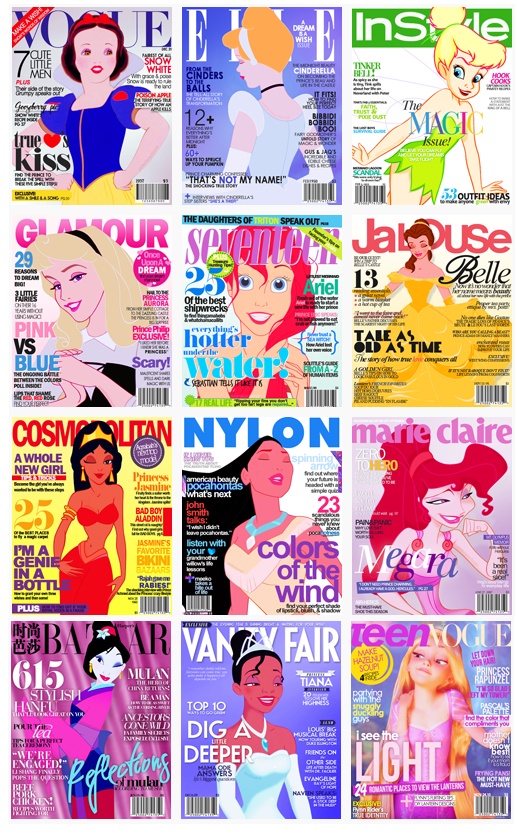
A more typical (but still very clever) piece of fan art depicting
Disney Princesses as cover models on women’s magazines. Artist unknown.
However, criticism of Disney Princess culture often overlooks that Disney has created a battalion of strong female characters who are in fact fantastic role models for children, particularly since the dawn of the Disney Renaissance
There’s a recurring theme of headstrong rebellion against societal expectations (Ariel, Jasmine, Mulan, Merida), which might sound a little scary from a parenting point of view but is certainly a vital part of a developing feminist consciousness. Disney Heroines are accepting of people their peers reject and other because of their differences (Belle, Pocahontas, Esmerelda, Jane). And Disney Heroines are self-assured even though they themselves can be awkward and not really fit in (Ariel, Belle, Mulan, Lilo, Rapunzel), even when they are actively scorned by society (Esmerelda, Vanellope Von Schweets). 
Particularly in the most recent films, Disney Heroines expressly have their own interests, skills, and goals completely unrelated to romance and social status (Tiana, Sgt. Calhoun). And they’re smart and sassy and lovable (pretty much all of them, but I just want to give a special shout-out to my homegirl Megara). 
These are characters we should want our kids to be obsessed with. Shifting from “Disney Princesses” to “Disney Heroines” widens the field on a semantic level to include a lot more fantastic characters, but more importantly highlights what really makes these women special. It’s not their status as princesses; it is who they are.
———–
Robin Hitchcock is an American writer living in Cape Town, South Africa. Disney movies are her favorite cold medicine, hangover cure, and anti-depressant.

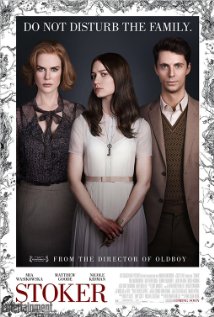
‘Stoker’ and the Feminist Female Serial Killer

Move poster for Stoker
Written by Amanda Rodriguez
Spoiler Alert

The first time you watch Stoker, it’s something of a perplexing experience because the narrative is such a genre-bender. I spent at least half the movie wondering what kind of movie I was watching. Not to toot my own horn overly much, but I’ve got a bit of an eye for formulas and am pretty good at spotting them. A film that can keep me on my toes like Stoker did is a rare, commendable animal. The direction Stoker did end up taking was also surprising, unique, and oddly feminist.
Ultimately, Stoker is the coming-of-age tale of a blossoming female serial killer. A “true” female serial killer is not only rare in cinema, but in real life as well. You’re probably thinking, “What the hell is she talking about? There are a slew of female serial killer movies and real-life figures I can think of off the top of my head.” In truth, women serial murderers kill for reasons different from their male counterparts. Typically, women kill for money or revenge, targeting people they know or to whom they’re related. Whereas male serial killers tend to predominantly kill strangers with the motivation being sexual in natural. To clarify, male serial killer motivation surrounds power and usually displays itself in sexualized killings or in the sexual response the killer has to his murders. Not only that, but some of the world’s most famous female serial killers work in partnership with a male serial killer, thus simulating that psychosexuality inherent in their murders. 
India Stoker (portrayed by the amazingly talented Mia Wasikowska) meets her creepy serial killer uncle Charlie (Matthew Goode), and the more strangely he behaves and the more evidence India has of his murderousness, the more attracted she is to him. 
Finds housekeeper’s dead body in the basement freezer. Starts hanging out with Charlie more.
Their unsettling, incestuous flirtation culminates in their joint murder of India’s classmate, Whip. The boy and India make out in the woods, and when she decides she’s had enough of him, the boy tries to rape her. Charlie swoops in to rescue her, and, together, the two kill India’s assailant. The movie makes it clear that Whip is an utter piece of shit and totally has it coming, so there’s little moral ambiguity in this kill, which differentiates it from Charlie’s prior murders (the housekeeper, an aunt, and, at this point, we suspect India’s father). India’s actions of self-defense and the shittiness of the victim leave the lingering possibility that India is not, in fact, serial killer material. 
The following scene is the classic post sexual assault shower scene with a twist. We see India hunched over and whimpering in the shower intercut with flashbacks to the assault and Whip’s death. It gradually dawns on the audience that India isn’t weeping, she’s masturbating. This scene is pivotal and is, in fact, one of the major climaxes of the film, which makes the structure of the film itself more feminist. Feminists have noted for many years that the typical story structure with the single climax near the end of the film followed by the denouement more closely resembles the pattern of male sexual pleasure. A more feminist structure would allow for multiple climactic scenes, which Stoker does. (There are more climactic moments nearer the end of the film, which I’ll get into shortly.) Not only is the film’s first climax a scene that ends with a woman actually orgasming, it is a masturbation scene wherein India is pleasuring herself.
That’s a boat-load of female agency right there.
India comes to realize in yet another climactic, pivotal scene that Charlie is mentally ill (perhaps even more than she is herself), that he wants to take her away with him, and that he has always wanted to be with her. Not only that, but the film reveals to the audience what India strongly suspects: Charlie murdered India’s father in order to be with her.
India goes through the stack of Charlie’s letters addressed to her over the years. She realizes that though Charlie claims to send them from around the world, in fact, they’re all sent from a mental institution.
Despite her realization that Charlie is insane, India agrees to leave with him because his presence and guidance have triggered her coming-of-age and shown her that she isn’t alone in her proclivities. It turns out, though, that a prerequisite for running away with Charlie is allowing him to kill off her mother, Evelyn (Nicole Kidman). Because India and Evelyn have a difficult relationship in which they don’t relate to one another with no love lost between them, Charlie supposes this is an easy enough task to get out of the way before spiriting his beloved India away. While he brutally strangles Evelyn with his belt, India calmly puts her rifle together, aims her sights (at who? Evelyn or Charlie?), and fires.
Let’s take a quick second to examine Charlie and India’s choice of weaponry. Charlie favors a belt, stolen from his brother/India’s father, with which he strangles his victims to death. India, we learn, favors her hunting rifle. Not choosing the tool of her mentor differentiates her from him, allowing her an identity unique to him despite their overwhelming similarities. Not only that, but you could get all psychoanalytic on this shit and view their weapon choices as a form of gender role reversal. Charlie’s belt, which encircles and constricts could be viewed as vaginal, while India’s gun with its shape and its firing of bullets is a common phallic symbol. Within our world that views masculinity and masculine symbols as superior, India’s weapon of choice subtly establishes her dominance over Charlie, a fact that is further reinforced when she kills him.
In spite of the sexual connection India has with Charlie, in spite of their shared interests and secrets, in spite of the estranged relationship she has with her mother, India chooses to save Evelyn and nonchalantly shoots and kills her uncle. I admit I was worried for a minute because it’s not a very strong feminist statement when a young girl must essentially murder her mother in order to come into adulthood and into her sexual identity, even if we’re talking about a budding serial killer. India, unlike her mother, does not choose a man fresh on the scene over the woman with whom she’s been sharing a home and life for 18 years. Neither, though, does India stick around to live out the rest of her life trapped in a mother-daughter dynamic wherein neither one of them is capable of loving the other. Instead, she takes off in her new black pumps wearing her father/Charlie’s belt with her rifle and her uncle’s flashy convertible. If it’s unclear which path she’s chosen, we have a final climactic moment in which India shoots the sheriff (har, har) who pulls her over for speeding. 
India with the rifle
The more I think about this movie, the more I like it, and the more feminist tropes I see in it. The Freudian parallels, genre subversion, and feminist subtext (or just regular text?) didn’t happen by accident; director Chan-wook Park is meticulously deliberate about his imagery, symbolism, and delivery of dialogue. The strict, generally accepted, masculine definition I gave above for what constitutes a serial killer is, in itself, a gender-biased, sexist definition that gives legitimacy and near rockstar status to men who murder multiple people (predominantly women) in order to feel a sexualized rush of power. By this definition, serial killers are an elite boys club of He-Man Woman Haters who don’t allow female participation. Trying to make a woman fit into this masculine mold is a dubious honor, but I can’t help but appreciate the deft skill with which Park makes this a believable possibility. Not only is India a multifaceted character, but she is strong, smart, independent, and finds her own path while creating her own moral code outside the patriarchal strictures that Charlie attempts to impose upon her. India may transition from heroine to anti-heroine throughout the course of Stoker, and she may be a scary-ass serial killer, but she is, nonetheless, a powerful, feminist figure.  

#FemFuture Roundtable with Bitch Flicks Editors

Amber: Hi, all! 
Megan: Hola!! 
Amber: I’m reading the report now, so I’ll let you two take the lead in the convo.

Stephanie: So, FemFuture … not to get narcissistic right off the bat, but where do blogs like ours fit into that discussion?

Megan: I don’t think that’s narcissistic at all. I think it’s a pertinent question.

Stephanie: Because funding IS important, but who decides WHO gets funding — the “connected” people? Because that’s certainly what it seems like.

Megan: Very true. But even the “connected” people are often times not funded either.

Stephanie: No one is funded now.

Megan: Or are not funded enough to make it their primary job. Feministing comes to mind.

Stephanie: The FemFuture discussion was about HOW to get funding for bloggers, right?

Megan: It was about the future of online feminism, part of it was funding as well as meeting annually and networking. But yes, a big thrust of it was the argument that online feminists aren’t getting funded and should be.

Stephanie: Right. So … I mean, they really didn’t even mention Shakesville? LOLOLOL

Megan: I KNOW. Ridiculous. How could you ignore Shakesville???? One of the most influential and prolific feminist blogs???

Stephanie: So, the “connected” people are the ones deciding whose blogs are important and who gets funding.

Megan: Shameful. I saw their argument or conversation more as everyone should be funded. BUT by leaving Shakesville out, which as Melissa McEwan states in her post about FemFuture, is not in NYC or DC, it does make it seem that is what is happening, even if not explicitly stated.

Stephanie: Trans blogs, vegan blogs, etc.

Megan: YES!!!!

Stephanie: That report was a fucking shitshow.

Megan: I mean c’mon, ridiculous.

Amber: From what I’ve read, I agree!

Stephanie: It was SO OUT OF TOUCH and that’s what scares me.

Megan: YES!!!

Stephanie: Like, you’re The Leaders of this and you have no fucking idea what’s going on with blogs right now.

Megan: I really, really, really like that a report like this was done. However, and that’s a ginormous however. If you’re going to do it, and discuss how marginal online feminism and feminist blogs are, shouldn’t you strive to be as inclusive as possible? And not perpetuate exclusion??

Amber: I also think that what we’re doing is at the intersection of film and feminism, which doesn’t really fit their precise definition of what feminist online activists are and what we do.

Megan: YES, Amber!!! People don’t often think of feminism and the arts as part of the “feminist online community.”

Amber: Same as what Steph said, with regard to vegan feminists, et al.

Megan: Well, as a vegan feminist, I can tell you there aren’t a whole hell of a lot of vegan feminist blogs but that’s beside the point.

Stephanie: It’s true, and it’s funny … because (not to be ridic) but I think what we’re doing is  important because it’s challenging media portrayals … and media portrayals are what feed these fucking stereotypes about people/women/etc.

Megan: They should be reaching out to ALL kinds of feminist blogs. Omg you are so NOT being ridiculous AT ALL. I agree. Media starts shaping our lives inculcating us into sexism and patriarchy at an early age.

Stephanie: It’s like, how is this NOT where we start? Especially with kids (which is why I liked the animated films week so much).

Megan: Yes, yes, yes.

Stephanie: Maybe they felt like they already involved Women’s Media Center and Jenn Pozner’s media site.

Megan: And as we age, media shapes how we view the news, and what news we see and hear.

Amber: As someone who does not, and has not ever, lived in a major media center, the clubbishness and exclusiveness of the fem community has always angered me.

Megan: If you’re going to write about how online feminism needs to be more inclusive and funded and not treated as a fringe thing, then maybe you should be, oh I don’t know, INCLUSIVE.

Amber: YES.

Megan: Amber, I live close to NYC and still feel that way too.

Amber: There’s such a contradiction in the very premise of it: we’re diverse and living all over the place, yet only the NYC fems (no offense, NYC) get to determine the future???

Megan: I mean, the NYC feminist community, the people who are a part of it are super nice and friendly and welcoming. But it can still feel cliquish.

Amber: Shouldn’t this have been a big organized teleconference? THAT would have been historic.

Megan: I had a very brief convo about this on Twitter. About how all feminist bloggers live in NYC. When I replied that I don’t, they were like yeah but you’re in the Northeast. True but trust me, Boston and NYC are not the same.

Stephanie: So read this….this is from the new FAQ from FemFuture report/site: “We chose people whose work we knew about and respected who represented a diverse range of perspectives and kinds of work. Our hope was to see if in-person conversation and convening could add something to the conversation that already existed online. One particular regret was, we weren’t able to bring much geographic diversity to the convening—which we wanted to be in person and intimate. While so many of us originally come from different areas of the country (and world), and have built online communities of readers, followers and colleagues worldwide, the majority of the convening attendees currently live on the east coast. This was a gap we acknowledge and hope will be filled in follow up conversations—either online or in person—and welcome ideas.”

Megan: Also, I checked on the geographical location of most of the speakers…They don’t just live on the East Coast…They live in NYC or NJ.

Stephanie: Bwwahahhaahah NYC/NJ equals all of the East Coast now!

Megan: I KNOW!!!! I mean, what the fuck. Just talking about cities, fuck you, Boston, DC, Atlanta, Miami, Baltimore, Charleston. Bleh.

Stephanie: I love how I’m getting even MORE pissed.

Megan: LOL right????

Stephanie: Also, they apparently didn’t even CONSULT with people who don’t live there (like Liss) … and it’s funny because the Flyover Feminism blog they started together is important in addressing that not all feminists live in these metro areas.

Megan: I KNOW!!!!

Stephanie: ALSO, I fucking live in NYC, and I don’t have a big networking personality, so fuck that.

Megan: You were exactly who I was thinking of!!!

Stephanie: Our bloggers live ALL OVER (the country/world LOL) so fuck that too.

Megan: So it’s exclusionary to you too despite your physical proximity.

Stephanie: Exactly.

Megan: EXACTLY.

Amber: YES. And doesn’t that create a more diverse perspective? Our bloggers being everywhere, I mean.

Stephanie: I mean, like 5 people came to our party, and we’ve been around for 5 years in NYC.

Megan: Yes to both of you! Did either of you read Flavia Dzodan’s reply US Centrism and Inhabiting a Non-Space in FemFuture? So, so good.

Amber: I have Flavia’s piece open now.

Megan: Basically she talks about living in Europe and how she doesn’t fit the U.S. feminism mold.

Stephanie: “I sincerely have no thoughts because I don’t belong in this.”

Megan: Yep. And THIS! “To call what is going on in an Anglo centric environment ‘online feminism’ is to cast me (and millions like me) away from the umbrella. We live elsewhere.”

Stephanie: Love.

Amber: “My resistance ends up being a double bind: I need to resist the policies, racism, discrimination, etc of a State that considers those like me disposable and I need to resist the absorption of the ‘Mother Ship’ that owns the discourses around which feminist issues matter the most.”

Megan: Mmhmm

Stephanie: I wish I knew how to express my emotions about this but I don’t wanna be all “they didn’t incluuuuude uuuuuus” LOL

Megan: LOL I know. And part of me feels like we should band together. But a larger part of me is like fuck that noise. There’s nothing wrong with being critical of our own community, even a community that we’re kinda sorta not even really a part of because it doesn’t speak to us, include us or address us.

Amber: They’re not speaking to us or for us, and maybe that’s okay?

Stephanie: YES. No, YES to Megan, not Amber. LOL

Amber: I mean, it pisses me off.

Megan: Zerlina Maxwell tweeted that FemFuture is not a zero sum end game. It’s a starting point. Amber, I hear you but I don’t think it is okay.

Stephanie: It is absolutely not okay … but maybe people’s anger/disappointment about the whole thing could change it.

Megan: I think if you’re talking about “feminism” or “online feminism,” then you need to be as inclusive and diverse as possible.

Stephanie: A real inclusive way to handle it would’ve been to tweet or blog or something to get the word out and have bloggers send in their responses about what the blogosphere is like for them.

Megan: YES!!!

Stephanie: I mean fucking DUH.

Megan: LOL

Stephanie: You get together in a closed room like a bunch of fucking Republicans and try to discuss some shit you know nothing about?

Megan: Did either of you see MAKERS, that documentary?

Stephanie: Nope.

Megan: Okay so the documentary is really good, chronicling the history of the women’s movement and feminism in the U.S. BUT…

Stephanie: It’s like, bloggers are already discouraged. What isn’t helping is you getting up there with your very successful blogs and being all “how do we get funding for ourselves”? LOL. Sorry, go ahead …

Megan: …it leaves only 5 or 10 mins for feminism in the past 10 years and doesn’t even fucking talk about online feminism!!! This pissed off a shitload of people on Twitter because duh. We were written out of this documentary’s history of feminism. But now it feels like that’s exactly what’s happening here. Bitch Magazine has a compilation of people’s responses to FemFuture. And Feministe does too.

Amber: I’ve been much less engaged in the overall FemFuture convo, and I’m honestly on the fence about my anger. On one hand, RAGE, you know? But on the other, this is just more of the same. It’s anti-feminist to create this online feminist hierarchy. But that’s what’s been happening for years, and that’s what FemFuture is continuing. I’ve never wanted to be part of the Professional Feminist Club, because that entire fucking notion is anti-feminist. What Steph said about them acting like a bunch of fucking Republicans is true.

Megan: Yes, yes to all of this. I’m not even sure they realize what they’re doing. Which is shitty. You need to recognize and check your privilege at the door. And living in NYC and having a huge feminist blog or backing organization gives you privilege. It kinda reminds me of the arguments I’ve heard when people critique anti-choice laws in the South or Midwest…”Why don’t they just leave?” Um, fuck you. Who are you to tell someone to leave their home??? But I digress.

Amber: No, it’s all the same. Not a digression.

Megan: Thank you. And true, it stems from the same argument.

Amber: I grew up in the Midwest and live in the South. Shouldn’t FemFuture be reaching out, not to ME, Amber, but to people/orgs/blogs who are slogging through in hostile areas? Rhetorical Q, duh.

Megan: YES. I mean to not reach out to Shakesville or Flyover Feminism, bare minimum, is just shameful.

Amber: Totally.

Megan: I keep saying or rather writing shameful because it is. I mean I know they (Courtney Martin and Vanessa Valenti — both of whom I respect) know about them because Feministing did a piece on Flyover Feminism. And um hello, google??? But I know what you mean about feeling torn. I do too. I feel like we’re not supposed to complain or critique because women and feminists get torn down all the time. But this is seriously wrong. Just thinking about urban areas for a moment, I also don’t like the argument that all urban areas are the same. Because living in Boston, which is only 4 hours away from NYC, has different challenges. For example, for our Bowl-a-thon to raise money for abortion funds, Boston has to do a Triathlon instead of karaoke and Wii Bowling because no bowling alley will host us.

Amber: I remember us chatting about that a while back.

Megan: Yeah, it just bugs me.

Amber: It bugs me, too.

Megan: It’s like I adore NYC. Love, love, love. But the sun doesn’t rise and set only on NYC. What else should we discuss about FemFuture? How do we move forward??

Amber: Well, that’s the real question. We could chat all day about the exclusionary aspects of it. But I still can’t get over the fundamental flaw of the “report.” And the marginalization of pop culture blogs as an “entry point.” We’re doing important, challenging work. Not just Bitch Flicks. Taking culture to task is a central issue.

Megan: YES!!!! It infuriates me how people see pop culture, media and art criticism as fluffy entertainment. It’s not. That’s why it’s such crucial work, because people don’t recognize and appreciate its insidious power. But are there other aspects of the conversation or report that bother you that we haven’t discussed?

Stephanie: Just jumping in on that last comment — um, yeah! If people saw abortion depicted in a humanizing way on their fucking TV shows (which people increasingly watch more and more), then our entire political discourse around the subject would CHANGE.

Megan: EXACTLY.

Stephanie: Talking about political discourse without talking about media representations is completely BACKWARDS in 2013.

Megan: Yes, I don’t know how you can divorce the two.

Stephanie: Our society is run by media devices.

Megan: Yes, advertising, media outlets, film studios….everything. What else do we want to say? What are the solutions?

Amber: Treat it like any other media we critique. Take the authors to task for their exclusiveness.

Stephanie: It might be a better use of our time to discuss writing a new “ABOUT” manifesto for Bitch Flicks and tie the FemFuture thing into it. Like, why is BF important…

Amber: LOVE!

Megan: That’s a great idea!

Stephanie: …and make people fucking understand WHY it’s important, because even some feminists seem unclear on that.

Megan: Some…seems like almost all!

Stephanie: I was working on something like it for a while, behind the scenes. Here’s an excerpt: “That’s both the biggest challenge and the greatest opportunity of blogging about film and television from a feminist perspective—learning to understand how the images we’re fed by the media pretend to reflect back the current cultural climate in an effort to maintain it. And what the predominantly white, patriarchal, heteronormative industry insiders want to maintain is a white, patriarchal, heteronormative status quo.”

Megan: That quote is AWESOME. That quote meaning your quote :)

Stephanie: Haha! Thx. Well, let’s start a document and add some stuff to it. We need a new manifesto!

Megan: Sounds great! Anything else we want to say about it?

Stephanie: “Because, more than anything, we believe the blind and uncritical consumption of media portrayals of women contributes to furthering women’s equality in all areas of life. And the absolute most challenging aspect of blogging about the portrayal of women in film and television is finding a way to make those connections, to reinforce the fact that watching a TV show, for instance, in which a woman is violently beaten onscreen—for voyeuristic, entertainment purposes only and without critical commentary—helps to desensitize us and normalize violence against women.” That’s another section [of the BF manifesto].

Megan: YES, love!

Stephanie: I don’t want a group of elite privileged feminists speaking for me. It’s the same set-up that feminism tries to work AGAINST. So why are we recreating it? We’re supposed to be looking for new ways of doing things. It reminds me of all the Occupy Wall Street in-fighting … the people with the loudest voices (usually dudes), with the most confidence, automatically took over and spoke for everyone. I’m glad FemFuture is having the conversation, but they should’ve asked under-the-radar bloggers to contribute and, you know, Shakesville. LMAO. 
Megan: And yes to what you said about Occupy Wall Street and in-fighting and how we’re supposed to be doing it differently so why are we perpetuating same hierarchical bullshit?? 
Stephanie: yes — HIERARCHICAL is the word. Sit back and fucking LISTEN. 
Megan: YES.
Stephanie: They should’ve had Women & Hollywood at least. I mean c’mon. 
Megan: You can’t be truly diverse or truly inclusive if you don’t reach out to as many groups, blogs, individuals as possible. And having women of color participants doesn’t automatically equate diverse representation. 
Stephanie: YES!! 
Megan: So what else can we do? Are there any other solutions to FemFuture? Besides to keep doing what we’re doing writing about female filmmakers and critiquing media. 
Stephanie: I think we need to 1) write a new ABOUT page that we publish on our site and that emphasizes why what we’re doing is so important 2) mention the FemFuture discussion and how media bloggers need to be (and absolutely are) at the forefront of online feminism’s future, and 3) talk about how talking about media is an important way to reach people who aren’t necessarily thinking intellectually/theoretically about Feminist Issues all the time. 
Megan: Love it all. You know what else we can do?? 
Stephanie: The future of online feminism absolutely cannot be White Feminists in an intellectual Ivory Tower talking to other feminists. No, WHAT?! 
Megan: We could put out a call to have people send us who should have been on that report
Stephanie: YES!!!!!! 
Megan: All the under the radar bloggers and even not so under the radar (hello Shakesville and Flyover) 
Stephanie: We could just make a fucking list … with a link and a description of their blog.
Megan: YES, exactly. We could start a list and ask people to contribute. I’m just so tired of complaining (although I do love to complain LOL) and not having solutions. 
Stephanie: LET’S DO IT

Bart Simpson’s Feminine Side

Written by Lady T 

Bart Simpson appreciating some gay culture

In my umpteenth viewing of episodes from season four of The Simpsons, I noticed something that never occurred to me in my first viewings of the show: Bart Simpson has a feminine side.
This shouldn’t come as much of a surprise. An episode in the eighth season, “Homer’s Phobia,” shows Bart becoming appreciative of gay culture (much to Homer’s dismay) after the family befriends a delightful gay man named John. The episode has an important lesson where Homer learns a lesson about acceptance, but Bart’s development isn’t explored in detail, as his appreciation of gay culture is just a catalyst for Homer’s (temporary) growth as a person.
Earlier (and later) episodes, though, show that Bart’s feminine side is more than just a passing trend. It’s a trait that appears sporadically during the series, and is amusing every time.
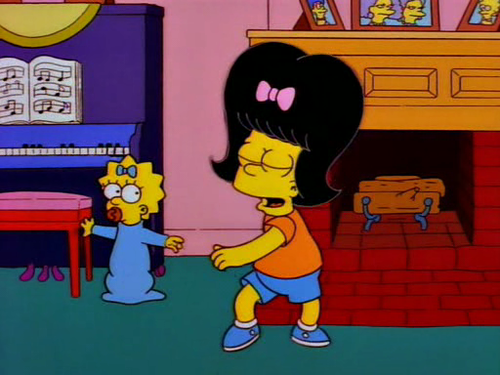
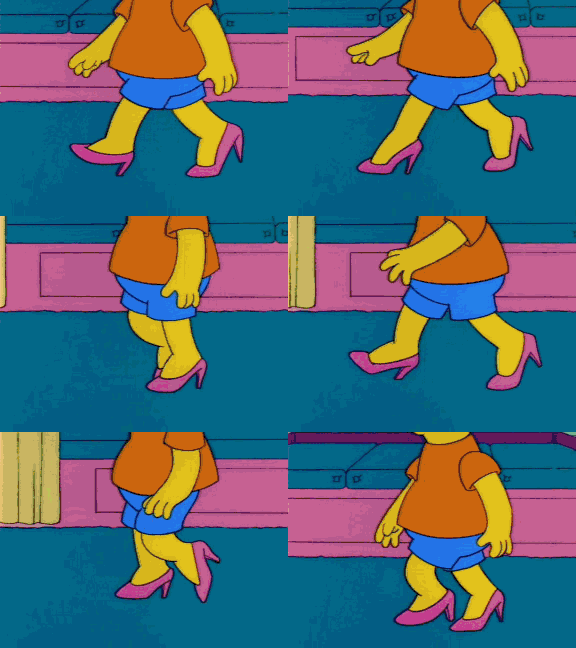
In “Lisa the Beauty Queen,” Bart shows his little sister how to walk in heels for the competition. When Lisa asks Bart if he really thinks she could win, he strikes a pose and says, “Hey, I’m starting to think I could win!”

Heel, toe, heel, toe…
In “Marge in Chains,” Bart shares his plan to break his mother out of prison: “Don’t worry, Mom. I’ll bust you out of there as soon as I get a cocktail dress and a crowbar.” Then we see Bart’s dream sequence of dancing with the warden, who says, “Oh, Bartina — before I met you, I was a lonely man.”
[True story: I watched that episode with my roommate when she was resting on the couch with a sprained ankle, and she laughed so hard that she almost fell off the couch and sprained it again.]

“Fresh!”
Two seasons later, Bart reluctantly signs up for ballet class when there are no other P.E. electives available. He’s not happy about wearing tights or being in a sport “for girls,” but he soon realizes that he has a talent for ballet — and loves it!

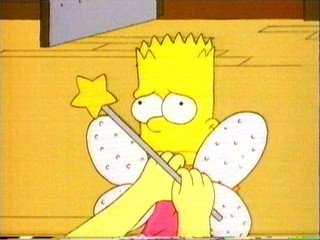
“Put on this fuschiatard! You are a fairy.”

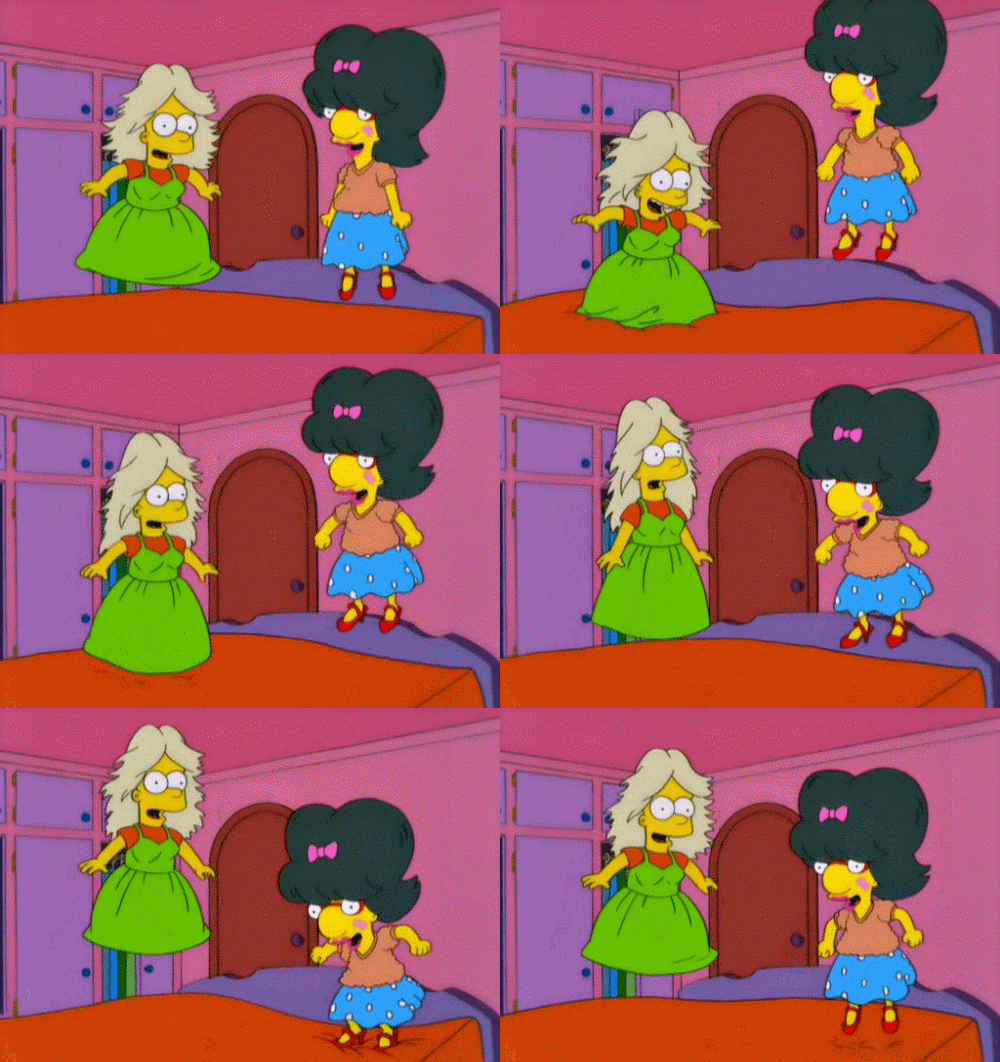
Several seasons afterwards, Bart and Milhouse raid his parents’ closet when they have nothing else to do, and when Milhouse suggests they “dress like ladies,” Bart quickly notices that his mother’s dress hides his thighs, and soon they’re jumping on his parents’ bed.

“Sisters doin’ it for themselves!”
Clearly, Bart’s feminine side is more than just a one-episode gag or a prompt for Homer to get over his phobia. It’s a recurring character trait. But what does it mean?
Probably not much when considering the writers’ intents. The writers of The Simpsons are fond of having characters act in unexpected ways, where the punchline is simply the character acting out of character (Nelson loving Andy Williams, Jimbo being a fan of The Joy Luck Club, Ned Flanders having lax beatnik parents). Bart knowing the “ancient art of padding” is funny because we wouldn’t expect him to know about it.
Still, writer intent aside, I love the moments where Bart slips on a pair of heels, dons a dress, or fantasizes about seducing a warden to get Marge out of jail. Even a character who prides himself on being America’s bad boy has a girly side.
———-

Lady T is a writer with two novels, a play, and a collection of comedy sketches in progress. She hopes to one day be published and finish one of her projects (not in that order). You can find more of her writing at www.theresabasile.com.

Summer Movie Preview

Written by Max Thornton.
Time’s relentless onward march has brought us to the end of April. In just a few days it will be the first weekend in May, which is – in the strange, terrifying minds of Hollywood executives – the first weekend of summer.
Summer movies are an odd and frustrating bunch. I have taken a cursory glance at some of 2013’s biggest, emptiest spectacles and pre-judged them with extreme censure, so you don’t have to.
Iron Man 3 (May 3)
The deal: The first Iron Man was a pleasing diversion for a world with low expectations of a second-tier-superhero film. The second Iron Man was much like the first, but bigger, louder, and overlong. If other superhero trilogies are anything to go by, the third Iron Man will be even bigger, even louder, and – 130 minutes, are you freakin’ kidding me? Why does no one heed Hitchcockian wisdom re: film lengths and bladders?
Likelihood of passing the Bechdel test: 25%. Rebecca Hall has third billing after Robert Downey Jr. and Gwyneth Paltrow, but I’ve seen a superhero movie before, and I don’t really expect anyone to talk about anything other than Iron Man.
Likelihood of general intersection!fail: The inestimable Andrew Ti of Yo, Is This Racist? says 100%. Who am I to dissent?
Will I see it?: Eventually, probably on DVD. I don’t care very much about Iron Man, but I am a little stoked to learn it’s directed by Shane Black, writer-director of my beloved Kiss Kiss Bang Bang.
The Great Gatsby (May 10)
The deal: You went to high school. You don’t need me to tell you what The Great Gatsby is about. (But, if you need a refresher, it’s boring and the plot is basically the same as R. Kelly’s Trapped in the Closet.)
Likelihood of passing the Bechdel test: Like no percent, unless they change stuff from the book I guess.
Likelihood of general intersection!fail: 100%. It’s about straight white rich people, like fully all of big Hollywood movies.
Will I see it?: No. I don’t like Gatsby and I don’t like Baz Luhrmann. If you have a different opinion on either or both of these things, you will feel differently.
Star Trek Into Darkness (May 17)
The deal: Much like the first Iron Man, the 2009 Star Trek reboot was a slight popcorn delight for those of us with low expectations; much like Iron Man 2, this latest Trek will probably sink under the weight of current heightened expectations. If nothing else, it’ll be jolly to once again witness Karl Urban channel DeForest Kelley (and cringe at Simon Pegg’s Scottish accent, oy).
Likelihood of passing the Bechdel test: 25% if I’m generous. There are fully two lady-type humans in this movie, and as much as I’d like the writers to overcome the failures of the original series, that’s a lot of failure to overcome.
Likelihood of general intersection!fail: High. See above re: failures of TOS.
Will I see it?: I don’t see how I can possibly avoid it.
Spaceship! *starts salivating*
The Hangover Part III (May 24)
The deal: No.
Likelihood of passing the Bechdel test: 0%.
Likelihood of general intersection!fail: 1000%.
Will I see it?: Oh fuck no.
Man of Steel (June 14)
The deal: Superman is boring and zzzzzzzzz.
Likelihood of passing the Bechdel test: Low.
Likelihood of general intersection!fail: High.
Will I see it?: Yawn.
World War Z (June 21)
The deal: World War Z is probably the greatest zombie novel ever written and you should go out and read it, like, yesterday. I am so over how enormously boring this film adaptation looks, and I mourn for the TV miniseries that was once talked about and would have been a much better way of adapting the sprawling complexities of the book.
Likelihood of passing the Bechdel test: 10%. If Brad Pitt is the core linking the story together, I can’t see much happening without him. Also, I’m very afraid that this movie will do the horrible Walking Dead/ Stephen King / every apocalypse story ever thing of taking the apocalypse as an excuse to revert all of humanity to gross reductive caveman gender roles.
Likelihood of general intersection!fail: 90%. A summer Hollywood blockbuster in which a white dude travels all around the world trying to save it? Racism, xenophobia, and neocolonialist paternalism pretty much guaranteed.
Will I see it?: I expect so, and I expect I’ll hate it.
Seriously, read the book.
Monsters University (June 21)
The deal: While I hear the argument that Pixar needs to take a step back from the sequel-ing and prequel-ing, they had me as soon as this website rocked up months and months ago. And tell me that any TV enthusiast could look at the list of voice talent involved without squeeing: Nathan Fillion! Aubrey Plaza! John Krasinski! Charlie Day! Dave Foley! And that’s just the people who are on TV shows I like!
Likelihood of passing the Bechdel test: 5%. Pixar is awesome at so many things, but representing the non-male demographic is not one of them. I will continue to dream of a scene in which Aubrey Plaza’s character and Helen Mirren’s character hang out and shoot the shit, but I don’t hold out hope.
Likelihood of general intersection!fail: I mean, it’s a movie about monsters? I don’t know to what extent I can really hold it accountable for, say, race!fail.
Will I see it?: HELL YES.
Pacific Rim (July 12)
The deal: I may have mentioned this before, but I am losing my mind over how impossibly amazeballs this movie looks. ROBOTS VS. ALIENS. GUILLERMO DEL TORO. IDRIS ELBA. My fingertips are tingling just typing about it.
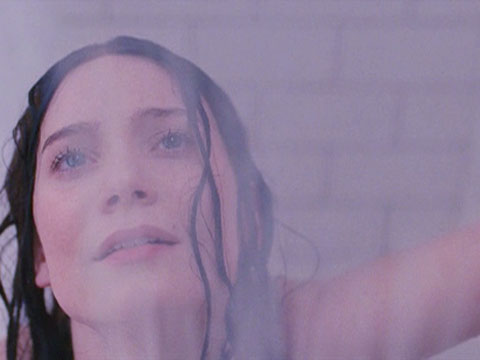
Likelihood of passing the Bechdel test: 5%. Women are not so much with the being in this movie.
Likelihood of general intersection!fail: 70%. Rinko Kikuchi is in this movie, and if God loves me she will share scenes with Idris Elba and my eyeballs will burst into flames from so much hotness onscreen at once; but I know better than to expect, say, queers or PwD to be represented meaningfully in mainstream SF.
Will I see it?: HELL EVEN YES-ER.
 
Hee hee

This summer in sum: Not every forthcoming blockbuster looks to be entirely egregious in every respect – some of them I might even enjoy quite a bit – but women are conspicuously, depressingly, appallingly underrepresented in the big popcorn flicks. As usual, Hollywood utterly fails to notice or care that women comprise half the human race, and we’ll have to look to smaller and independent cinema for acknowledgment of that basic, yet still somehow controversial, fact.
———-

Max Thornton blogs at GayChristian Geek, tumbles as transsubstantial, and is slowly learning to twitter at @RainicornMax.


Mara Adina on Producing Indie Flick ‘Chuck Norris vs. Communism’

Chuck Norris vs Communism
This is a guest post written by Mara Adina, producer of Chuck Norris vs Communism.
I started my career in film in the Middle East as after university I moved to Kuwait where I worked at the national television (KTV).
I spent the majority of the first month working there trying to find ways for the all-men crew that worked with me to acknowledge my existence, and not just turn their backs when I spoke and then to get them to listen to what I had to say.
I struggled with finding ways to keep hold of my feminine identity and not succumb to the pressure of becoming “one of the guys” in order to be listened to.
On my return to the UK, I look back to what I thought were very extreme circumstances and realise that they are actually a reality here as well. We all know it’s difficult to be taken seriously as a woman in film and broadcasting – but if you add to that a pair of heels and red lipstick, things become even more tricky.
Today, I run my own company and I am one of the few who is trying to break through the bleak statistics of female producers in the industry.

Mara Adina, producer of Chuck Norris vs. Communism
I am currently producing my sister’s feature documentary, Chuck Norris vs Communism, and we are both so proud to tell the world the story of a very strong and brave woman.
Irina Nistor was one of the only female film translators to work in the Eastern Bloc during the 1980s. She dubbed over 5,000 Western blockbusters that entered Romania illegally during communism. Their rapid spread of the VHS tapes across the country turned Irina’s voice into a symbol of freedom and allowed a whole country to subvert a brutal regime. Here is our trailer:
We fell in love with the story and every bit of the journey of making this film has been incredible. We don’t just want to make this film through conventional avenues, we want to fund it by gathering the support of those to whom the story speaks, inspires and empowers.
We want to build a community around it and bring this film and Irina’s story to you, who are also striving to break through the statistics.
So we have launched a crowdfunding campaign for the film where like minded people can join the crew and help tell this story through contributions as small as $10. Please have a look at our campaign and help however you can.

Screen shot from Chuck Norris vs. Communism
The fundraising campaign for Chuck Norris vs Communism is live until this Thursday (May 2).
Produced by Vernon Films in co production with Kloos & Co in Germany, 4Proof Film in Romania and WMM in North America.
Chuck Norris vs Communism tells the story of the transformation of a nation through a seemingly small act of resistance. In the 1980s, Ceausescu’s Romania became the most Stalinist regime of the Soviet bloc.
At the same time, hidden from the scrutinising eyes of the Secret Police, Irina Nistor dubbed over 5,000 foreign blockbusters that entered Romania illegally.
They turned Irina’s voice into a symbol of freedom, Chuck Norris, Van Damme and Bruce Lee into national heroes and allowed a whole country to subvert a brutal regime.
The filmmakers have been working on the project for the past year and a half, shoot for three months and are now in a critical phase of post production. 
The film is nearly complete but they need you to get over the finishing line! So, they have set up a campaign page where you can make pledges and become a part of this film. 
Follow this LINK for the crowdfunding page where you will find an array of exciting rewards including the chance to become an animated character in the film!
For more information go to: 

Roundup: Infertility, Miscarriage, and Infant Loss in Film and TV Week

Children of Men (2006)

The “Plague” of Infertility in Alfonso Cuarón’s Children of Men by Carleen Tibbetts

Women can’t get pregnant anymore and nobody knows why. This the central lamentation in Alfonso Cuaron’s 2006 dystopian film Children of Men, based on P.D. James’s novel. Set in England in the year 2027, this is the story of the human race entering its final phase. Cuaron brings us into Orwellian territory in which nations worldwide have fallen as a result of war, disease, and famine. Britain remains a sort of lucrative last bastion in these end times and people across the globe are scrambling to get in.


 Sarah from Inside (2007)

Inside: French Pregnant Body Horror at Its Finest by Deirdre Crimmins

Horror films have a unique way of showcasing exactly what we fear, but they often do so in a subtle way. While is it goes without saying that ax-wielding maniacs are to be feared, these films often slyly expose the issues that our society is too shy to deal with head on. In the 2007 French horror film Inside (directed by Alexandre Bustillo and Julien Maury), fertility, reproduction, and infant loss are dealt with in a refreshingly direct and uncompromisingly bloody outcome, with no room for subtlety.


Robin in How I Met Your Mother

How I Met Your Mother: One of the Few TV Shows to Explore a Childfree Life for Women by Megan Kearns

HIMYM suffers many gender problems. Yes, it infuriated me Lily received so much backlash when she went to LA to pursue her dream of an art career. Almost everything Barney says or does – his sexist stereotypes, objectification of women, and fat-shaming – pisses me off. And yes, it bugs me that Robin’s unconventional female personality of Scotch drinking, hockey loving, cigar smoking and gun ownership has been pinned on her father raising her as a boy…even going so far as to name her Robin Charles Scherbatsky, Jr. But the show hasn’t fallen into the sexist trap that a woman isn’t a “real” woman without a baby.


Buffy comics, Season 9

Buffy Season 9: Sci-Fi Pregnancies and the Story that Almost Was by Pauline Holdsworth

Nikki Wood—New York punk slayer and the mother of ex-Sunnydale High principal Robin Wood—had been absent from the Buffyverse for a long time. So it’s a bit of a surprise when she shows up in the opening scenes of “On Your Own,” the second volume of the Season 9 Buffy the Vampire Slayer comic books. She’s being held off the edge of a tall building by the throat, pumped full of sedatives that have taken away her powers for a Council-mandated rite of passage. She’s pregnant.


Peekaboo: Still born. Still loved

Stillbirth. Still Ignored by Debbie Howard [Trigger Warning]

I completed my short drama Peekaboo nearly two years ago, but I started writing it about three years before that. I had two friends who had experienced baby loss, one to miscarriage and one who had given her baby up for adoption. I had a dream one night that merged these two stories together; this was the beginning of Peekaboo, which is about a couple who has lost three babies to stillbirth. I wrote a first draft of the script then started researching in great detail as I developed the script. I was shocked to discover that hardly anything had been made about this subject before.

Tell Me You Love Me (2007)

Infertility and Miscarriage in HBO’s Tell Me You Love Me by Stephanie Rogers

Perhaps what I found interesting, and even important, especially as a woman starting to understand how feminism fit into my life in a practical way, were the gender dynamics at play in Palek and Carolyn’s pregnancy struggles. Throughout the ten-episode arc, Carolyn basically treats Palek as a sperm donor, and his complaints about the lack of intimacy in their relationship stem from that—he wants feeling and emotion attached to making love with his wife; yet Carolyn sees that as unimportant, often demanding that he provide her with sex whenever she asks for it.


Kee, played by Clare-Hope Ashitey

The Exploitation of Women in Alfonso Cuarón’s Children of Men by Amanda Rodriguez

Children of Men‘s depiction of women as props, tools, symbols, or cardboard underscores the notion that women’s true purpose is reproduction, and when women can’t reproduce, they’re not only useless, but society itself collapses under the burden of their neglect of duty. Despite many of the intriguing themes this film explores (including a scathing denouncement of the treatment of immigrants), Children of Men ends up falling in line with its mainstream contemporaries to assert that women are merely bodies, that a woman’s value lies in her ability to reproduce, and that she has and should have no control over that body or that ability to reproduce.


Jennifer Garner as Vanessa Loring in Juno

Vanessa Loring: Pathetic or Plausible? A Matter of Perception by Talia Liben Yarmush

What really hit me was Jennifer Garner’s character, Vanessa. In past viewings of the movie, the hopeful adoptive mother seemed somewhat desperate. Her overly enthusiastic smile. The fact that Juno’s snarky remarks would fly past her with barely any recognition. Her obsessive questioning and controlling perfectionism. When saying goodbye after meeting for the first time, Vanessa asks Juno how likely she is to go through with the adoption, and Juno says, nonchalantly, that she is going to do it. “How sure would you say you are? Like, would you say you’re 80% sure, or 90% sure?” Vanessa pushes. She was more than desperate, really. She was pathetic. She seemed to be written for the purpose of added comic relief. But as my friends laughed at her on screen, I felt sad, and angry.


We Want a Child (1949)

The Power of Portrayal: Infertility, Reproductive Choice and Reproduction in We Want a Child by Leigh Kolb

The frank discussion about infertility, abortion, prenatal care and adoption make this film noteworthy. It feels quite remarkable to watch characters discuss the range of emotions surrounding these subjects. The film isn’t a masterpiece, and it moves quickly and relies on some common tropes surrounding the topic of infertility and adoption, but some of the dialogue is striking in its honesty and timelessness.

Ronnie from Eastenders

The Characterization of Bereaved Mothers: Are We Getting It Right? by Angela Smith

Ironically, script submissions are often invited by TV and film producers with the emphasis on creating strong female characters. However, soap writers seem all too eager to completely and utterly smash these women down to the point of no return. It’s one thing to cleverly show different sides to their personality, but to completely destroy a useful and inspirational character is unnecessary and sadistic.


Yerma (1999)

Yerma: The Pain, Heartbreak and Destruction of Infertility and Patriarchy by Leigh Kolb

Yerma’s words about the deep, miserable feelings surrounding infertility are poignant and heartbreakingly accurate. While much is going on in this film worth discussing–the patriarchal culture that arranges marriages and ties a woman’s worth solely to her ability to have children, obviously, and the immediate blame of the woman when a couple can’t conceive–Yerma’s struggle with infertility is one of the most accurate portrayals of that grief that I’ve ever seen.


A mother makes a difference.

How a Flatliners Ad During a Movie Showing Made This Woman Walk Out by Pandora Diane MacMillan

I think this was one of the very first film showings that included a special, movie-only commercial meant to promote a new line of Levi’s jeans. The new line was apparently to be called “Flatliners,” yes, a promotional tie-in with that film, with the association that Flatliner Jeans would make the wearer look slim and “flat.” They also apparently thought it would be cute, hip, and hilarious to display the young male wearer of said jeans as DEAD and FLATLINED and to have someone jumpstart the person’s heart with defibrillators(!).


Days of Our Lives

Days of Our Lives: Punishing Nicole’s Fetus by Janyce Denise Glasper

Days of Our Lives writers appeared to be Nicole’s biggest adversaries, judgmentally weaving a “how can we top that last terrible heartbreak for this evil woman who committed paltry crimes at best?” Horrific enough that she went through the tragedy of losing a baby once, but to push her into repeating that trauma in an astonishingly grotesque manner seemed much uncalled for and heinous. They made an example of out this Mary Magdalene pariah, promising miraculous motherhood twice and ripping it from her grasp, a condemnation for her tumultuously stormy past.


Away We Go (2009)

Away We Go: Infertility and the Indie Film by LD Anderson

I found Tom and Munch to be hurtful caricatures of infertile couples. I understand that the desire to have children of one’s own loins is very natural, and that the inability to do so can be extremely painful. However, I would dare say that society’s insistence on considering adoption second-rate, and its complete failure to recognize childless couples as families, makes it far more painful than it has to be.

I can tell you that the first theme, miscarriage, is shown in only seconds, and it is a scene that will remain with you throughout the entire film. In thirty seconds, this animated family film is able to portray the loss in such a visceral way that even if you have never had an experience like it, you will be brought to tears. And I can tell you that the second theme, living childfree, is complicated and filled with mixed emotions.


“You are not alone in this.”

Empty Wombs and Blank Screens: The Absence of Infertility and Pregnancy Loss in Media by Leigh Kolb

I try to rationalize why portrayals of infertility and pregnancy loss are so rare. Where is the action, a scriptwriting professor scribbled in my margins when I had too much internal dialogue or a conversation between female friends. There’s not much action in infertility. The struggle is literally and figuratively inside. 
But then I realize I’m just making excuses for Hollywood. Infertility and pregnancy loss are rich with story-line possibilities. The very nature of these tragedies is in lock-step with literary conflicts and archetypes. (Wo)man vs. self? Check. (Wo)man vs. nature? Check. Journey/quest? Check. Unhealable wound? Check.
But now that she has lost her son, Daenerys decides she will take the Iron Throne herself and rule the Seven Kingdoms. Now that all the men in her life – her husband, son and brother – have died, she now claims the throne for her own. Dany becomes the metaphorical phoenix rising from the ashes, purging the last vestiges of her former timid self to transition into her life as a powerful leader…The Mother of Dragons cares for the dragons as if they were her own babies…Yet it is the loss of her son that enables Daenerys to envision herself in the role of leader. No longer is she supporting a man to be a great leader. She has become that leader.


Previously appeared at Bitch Flicks:
Feminist Flashback: Who’s Afraid of Virginia Woolf? by Megan Kearns (first published on June 14, 2011)
Movie Review: Baby Mama by Amber Leab (first published on October 23, 2008)

Reproduction & Abortion Week: Mother and Child by Candice Frederick (first published on April 25, 2012)

What to Expect When You’re Expecting: Unexpected Gem by Robin Hitchcock (first published on October 12, 2012)