Writer Misan Sagay Talks About Her Jane Austen-Like Heroine in ‘Belle’

Sagay discovered the subject of her Jane Austen-like drama a decade ago when she viewed the 18th century portrait by an unknown artist of a beautiful, biracial woman standing next to a blond, a woman in a pink brocade gown, in the galleries of Scone Palace in Scotland. The blond woman reaches out to the other woman who is slightly above here in the picture, and who wears a silk gown and an exotic headdress. She has a twinkle in her eye and exudes life and even has a sense of mischief. You cannot take your eyes off her.

Misan_Sagay_Belle_DSCN2609-594x501

This guest post by Paula Schwartz previously appeared at The Movie Blog and is cross-posted with permission.

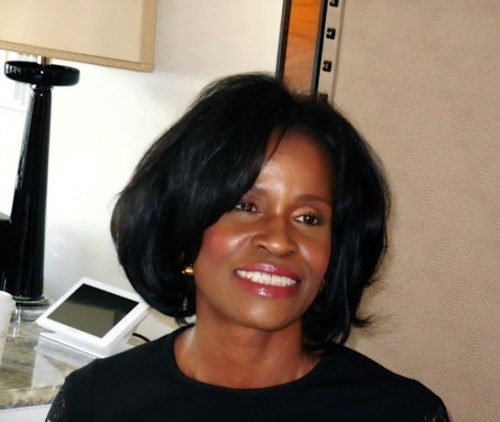
Misan Sagay, the brilliant and passionate screenwriter of Belle, was in Manhattan recently to promote the film. Director Amma Asante and actors Gugu Mbatha-Raw (Belle), Miranda Richardson and Sam Reid also fielded questions from the press in separate rooms.

Sagay discovered the subject of her Jane Austen-like drama a decade ago when she viewed the 18th century portrait by an unknown artist of a beautiful, biracial woman standing next to a blond, a woman in a pink brocade gown, in the galleries of Scone Palace in Scotland. The blond woman reaches out to the other woman who is slightly above here in the picture, and who wears a silk gown and an exotic headdress. She has a twinkle in her eye and exudes life and even has a sense of mischief. You cannot take your eyes off her.

Here are highlights of the interview with the screenwriter, who is also a medical doctor. Sagay speaks with a precise and clipped English accent, but she exudes warmth and passion, especially when she talks about the genesis and the message of Belle.

What was it like to see it fully realized from your script? Was it everything you envisioned?

I think it surpasses what I think that everything at every level more and more was brought to the thing and I think it’s a marvelous movie, so I’m very proud of it.

How did you first discover the story?

I was at university in Scotland. I was a medical student… It’s where William and Kate met. It’s a very traditional university, so quite often I would be the only black person around and so I went to visit Scone Palace and I was walking through and I came to a room and bang, there was a black woman in a painting, and I was stunned and intrigued and thrilled. She didn’t look like a servant or a slave. And I though, ‘Wow!’ and I looked at the caption and it just says, ‘The Lady Elizabeth Murray,’ so Dido is not known. The black woman is unknown. She’s completely silent and I remember carrying this image with me for years and when I went back to Scotland years later and I saw it again, the caption had been changed to ‘The Lady Elizabeth Murray and Dido, the Housekeeper’s Daughter.” I looked at that and I thought, ‘The Housekeeper’s daughter”? She doesn’t look like that, it doesn’t look right, and that was what was the jumping off point for me for the script. Who was she? Who was this woman who was gazing out of this portrait, not just with directness but with a mischief in her face, and who was pointing to her cheek as though, you know, “I’m what I am,” and I really wanted to tell her story.

Did you ever find out why they updated the portrait?

I think it’s almost a Teutonic shift that the older Mansfields were probably less accommodating to the view that this was blood and this was a relative and that the younger generation then are receptive to it. It may be it was updated because people began to ask, up until then no one had asked, and then people had begun to ask. Yes, I think it’s odd that was the story that was put there but that’s what they felt comfortable with I suppose.

It seems like that same story could happen today couldn’t it?

Absolutely. I lot of the research that I did was actually going to speak to people who had been adopted into very, very white environments and yes that story can play out today.

Dido was educated. She could write. There was no reason she hasn’t left a journal. She’s not left a word. This is a girl who lived very carefully about what she said and did. She may have been a Mansfield but she certainly wasn’t free. It was the same feeling I got when I spoke to people who lived in those environments, beloved and taken care of, but always slightly on eggshells.

What did you find out about her father?

That he was an Admiral… But what I found out, the two things that are really interesting, he must in some way he must have lived with Dido’s mother in the West Indies beforehand. And also when he came back to England that his relationship with Dido’s mother fell apart and he then married appropriately but appears never to have lived with that new woman. Whenever you’re doing research you always end up reading stories in the gaps between the stories and my romantic story is that they broke up that relationship and he never loved again. But he certainly never lived properly with his new proper wife, never had children with this new woman.

So you have archival material that no one else saw?

I don’t know that other people didn’t see it. I know that other people, who had seen it, did not – you look at the papers that were out that time – lots of them sort of fudged the issue of who she was. I think it was an issue who she was. I don’t want to say I was the only person, but I was prepared to name – and I wanted to name – what was there. I thought it was a lovely story.

How long did it take for you to develop this story?

I wrote the pitch in 2004 and I began to write the story then, and then the screenplay developed over (time). By 2010 it was over, so it was a long process. It’s a difficult script, many, many difficult decisions had to be taken in order to stay true to this central thing that it would be Belle’s story, so how do we do that? And also what is our aim? Belle herself did not marry until she was 32. It would be perfectly possible to write a long story of her as a life frustrated and a life from which she did not really fulfill herself until after everyone had died. I just didn’t want that for her! I wanted her loved! I wanted her to be beautiful! I wanted somebody to rip off her bodice and want to do so.

I wanted her to be beautiful and so that was why I took that decision that what might be the obvious story was not the way we would go; I would go with a love story.

I also wanted to make sure we looked at this cusp when she would really be discovering, really what being black meant. In the Arcadia of Kenwood and cocooned by childhood and wealth she would not have encountered that until she could encounter the point where she wanted to get married and that there is no place for her… The moment when you understand what your race actually means I think is a big one and I wanted that for her.

What other research did you do to make it factually true to the cultures and to the period?

This kind of thing needs massive research, especially when you’re writing about women. For example, the decision to put women and to have their relationships, which I’m always interested in, to write this sort of Jane Austen romance, made this research absolutely key, that finding the voices of women like this at this time. I was amazingly lucky to stumble on the diary, on the actually diary written by the Countess of Hardwick… much of what was the day to day life we see arise from looking at those women.

I was always looking for emotional truth. There weren’t video camera. We don’t know what actually went on. But it is true in that the Zong case happened.  She was in his house. He had to deal with it, so there was a huge amount of that sort of research. (Lord Mansfield, the Lord Chief Justice of England, handed down a decision in this case, which involved the massacre of slaves, and which became instrumental in the abolition of slavery. He also raised Dido as though she were his daughter.)

There are so many parallels with Belle’s story and even with stories of women of color today. What is the message you would like to get out?

It’s terribly important that this is a voice of black women, that’s what this film is. The main thing for me is this issue about your worth.

There are so many messages, and a lot of it is subliminal but from a very young age what are you worth, compared to other people? And I think it was something Belle had to encounter. What was she worth? She was worth loving but she wasn’t worth eating with.

At the moment where Belle herself had to say, you know what? I’m worth me. I’m worth loving and I can have it. And I can be myself and I think that is the message and I think at the end of the day when every screening I’ve attended the women will stand up and clap because the moment when she says that is a great moment for all of us. I think that it’s a terribly empowering moment and I think that that was the aim.

This movie is so unique, just by the mere fact that both the writer and director are black and female. What type of relationship do you guys have?

I was unwell and I left the project. In 2010 Amma came on as director and she – I believe and feel that at the moment where I maybe had flagged, because it had been seven years, but the script was there, the subject was there, everything was there, that Amma was able to take the baton and run with it, and run for her life with it and she has done an extraordinary, extraordinary job. She’s been true to absolutely everything that was the aim from the beginning.

I assume you’re talking a bit about the controversy. [There was a Writers Guild of America decision that credited Misan Sagay as the Belle screenwriter.] Whenever you see tough opinionated women, you will see tough opinions. And I think that’s what we have here, but I have nothing but admiration and respect for what she’s done as a director, and I think it’s a marvelous movie, marvelous.

What’s next for you?

I’m doing a historical story set in Burma during the Second World War. We always think that it’s white people who have fought that battle, which is called the Forgotten War, but in fact it was won by 300,000 black Africans that were taken over there as part of the British Empire and it was a war that Britain was losing and they brought the Africans and they fought their way through the jungle and helped. Without them the War in the East would not have been won but no one’s told their story.

You’re also a medical doctor. How does that inform your writing?

I think it informs my writing because one of the things you that you look for – maybe you all know this without being a doctor – you’re looking for truth. You look at what’s in front of you and you say what is the emotional truth here?

It’s not that different a process for me. I love doing both things. There’s an immediacy to medicine which there isn’t in this. It can take years looking for a story but to me they’re not that different.


Paula Schwartz is a veteran journalist who worked at the New York Times for three decades. For five years she was the Baguette for the New York Times movie awards blog Carpetbaggers. Before that she worked on the New York Times night life column, Boldface, where she covered the celebrity beat. She endured a poke in the ribs by Elijah Wood’s publicist, was ejected from a party by Michael Douglas’s flak after he didn’t appreciate what she wrote, and endured numerous other indignities to get a story. More happily she interviewed major actors and directors–all of whom were good company and extremely kind–including Brad Pitt, Angelina Jolie, Morgan Freeman, Clint Eastwood, Christopher Plummer, Dustin Hoffman and the hammy pooch “Uggie” from “The Artist.” Her idea of heaven is watching at least three movies in a row with an appreciative audience that’s not texting. Her work has appeared in Moviemaker, more.com, showbiz411 and reelifewithjane.com.
 

Becoming Not She, But Her: Motivation, Cinematography, and the Alien-in-Girl’s Clothing in Glazer’s ‘Under the Skin’

If you hear that people hate this movie, this re-inscription of feminine expendability and excoriation is probably, I’m guessing, why. Or there’s not enough explicitly in the surface of the movie: everything’s implied, ergo too many loose ends. They probably hate what happens to the baby: I think that’s when women walk out of the movie. The fact that men regularly walk out of screenings (because of the erect penises on the victimized men–that is a whole other essay for a whole different internet venue and I want to read that essay a.s.a.p.)

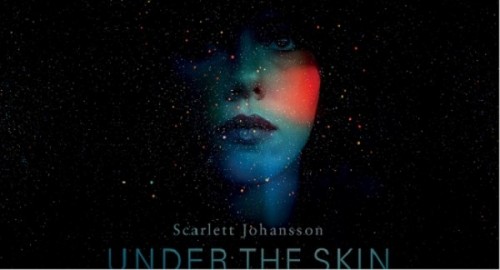
Under the Skin poster


This is a guest post by Cynthia Arrieu-King.

SPOILER ALERT

Scarlett Johansson herself says the movie Under the Skin is about an “it” becoming a “her”. Not a she: subjective, but a her: objective. This is the key dynamic character shift in the film, so that you’d think this film would embody a cultural critique of how women are treated, or at least, the idea of human predation. Because the “it” is a predatory drone and becomes a “her”, it first discovers slowly and sadly the immense vulnerability and mundanity of being a human person and then of being a human woman. The attractiveness of the Johansson human body (the thing for which she was singled out) ends up completely working against the alien. Its alien culture didn’t fully understand the position it was putting “it” in by putting “it” in a female body, and the amount of thinking we can see on the alien’s face as it is preying on people amounts to what we get from watching a spider on a web. Sometimes it’s the glass of water that does in an alien (Signs); sometimes it’s Johansson’s face and body.

In the first minutes, I didn’t think of a femme fatale; I thought Johansson was acting out some revenge fantasy–the abducted woman with the very deadpan comic twist: men don’t have to be abducted by force or tripped up by a woman’s doubt of her own instinct for being in danger; you can just promise them a one-night-stand with a lost English woman who looks like Johansson, and they’ll conveniently take their clothes off. That seems like the wink from the director, past the affectless alien, to us. Except the movie has a hard time offering up meaning from the gross amount of predation foisted on men—though it sure keeps showing their demises to us, over and over again.

Under the Skin

What do you do with the insinuation that feminine wiles are basically manipulation? Or that men are so overwhelmed they can’t pick up on the fact that her questions are faintly pushy and one-track? Honestly, if I saw a gorgeous man on a beach, and he kept asking, “What are you doing here/are you alone/what country are you from?” I’d be taking ten steps back, turning, and walking  away quickly. Which to his credit, is kind of what the surfer on the beach does when Johansson’s alien accosts him. The camera hangs on his face, taking in and registering the alien’s intrusiveness: she/it asks point blank what country he’s from. Viewers may worry, thinking: Are you gonna buy this, man? Are you really not noticing this is weird? He seems to feel baited, and the whole exchange is pushed aside for his altruism in wanting to help the drowning woman and dog. This is clearly a movie by a man: because if it were a movie by a woman. But we’re seeing a vulnerability in men we don’t often see on film. Considering the way the social criticism stays on a silent, not-very-deep level in this movie, backed up mostly by silence and blackness to fill in the gaps not covered in the story-writing meetings, I’ll take this one chance to see the tables get turned and go horribly wrong.

It’s hard to say what exactly is the trigger for the alien that makes her understand humans as something other than a meat parade. Is it mundane night life, malls, and people walking on the street? The alien’s modus operandi is a blend of “hunter” as well as tedious, dutiful, and atonal. I did not think she developed feelings or pity for humans. Her project is tedious to her. Is she really having a revelation about people? Or is this actually about sentience? Is she discovering the little bugs (humans) she’s picking off are values-driven?

maxresdefault

Under the Skin seems more focused on the dreadfulness of being in another body, constantly amongst people who will want to kill her if they discover what she is. This isn’t, however, to say the movie is about Otherness in the way speculative fiction critiques and instructs on Otherness. It’s more about the weariness of being. Of being any being. Her work is so repetitive that I almost got enraged that it was still happening narratively, much less to these poor dudes. There’s no clue of how or when it could end. This can be read as rigor of repetition or, perhaps, as art for art’s sake.

under-the-skin-scarjo-4

Then comes the turning point, but it’s so crazily silent that it takes the length of this very long shot to understand what’s happened. The overpowering substance of the shot is that she looks out a window or into a glass tank and we see her face move from darkness into half-light. The beauty of this is its eyes go from an examination of the human as Other to self-regard pretty seamlessly. When the eyes dip into the light, the shot really communicates reticence and an inability to accept this gaze, this human face, these eyes. Does it look gruesome to itself? Maybe it loves this face? Is it creeped out? We don’t know whether or not sympathy is in the emotional currency on the alien’s planet, but we see something blows the alien’s mind. As a result, she releases the guy with neurofibromatosis (Adam Pearson) that we rolled our eyes to see going into her trap.

Why compassion for him and not the baby? She has remorse. Because she relates to alienation? Because of job burnout?

Under-the-Skin-feat-Scarlett-Johansson

It’s worth saying a few words here about the cinematography and the setting of Scotland. In an overwhelming number of shots, the lighting is so dim you almost don’t know what you’re looking at, and there’s neon and noise and gold and graphics. This is a nod toward Jordan Chenoweth (cinematographer for Blade Runner) from DP Daniel Landin. The alien repeatedly echoes Rachel from Blade Runner in the use of eyelights—an almost totally dark face except for eyelights and the lighting of the lower third of her face. Why are we echoing Rachel here? Because Rachel’s humanity was tested through her eyes. She’d thought she was human but actually wasn’t. Here, Johansson’s alien ascertains something through an examination of her own eyes, thinks she’s not human, but, as the symmetry of this subtext goes, is about to find out she feels just like one.

Once out of the comfortable workplace of her van, Johansson’s alien is trying to stop with the predation. Except her kind didn’t study women enough to understand that just by walking alone on a road, she’s vulnerable. Here comes symbolic and literal fog on the road. She cannot see where she’s going now that she’s acquiring a conscience. She walks through the fog until she’s just passed it. This whiteness counters the blackness attached to everything the aliens do as day-to-day business. She rides a bus, now alone, and looks utterly freaked out like a woman who is trying to get out of a traumatic domestic situation. Except, it’s the situation she was sent here to embody that she’s trying to leave. She would prefer something more domestic, it seems, as she keeps going into houses—first a man’s and then a shelter in some woods.

680x478

There’s so much to say about the most retold, re-cast tale about predation in Western culture (Little Red Riding Hood) regrouping itself into some horrifyingly corrupted archetypes here in the last fourth of the movie. The book on which this horror movie is based is a piece of Michel Faber’s Dutch/Scottish horror. Little Red Riding Hood originated from a group of sexual assault warnings that filtered through the French countryside in the 17th century. Don’t let yourself be tracked. Don’t accept people on appearances (shey could be a wolf with your grandmother in its stomach). A wolf in grandmother’s clothes. And here after an interlude of almost-happiness in which Johansson’s alien-woman checks out her body in a mirror and ventures to have consensual sex, realizes what’s between her legs, she runs out into a forest where she shouldn’t be, where she has little idea how dangerous it is, and she’s warned to follow a trail by a woodsman, who ends up being the wolf.

The woodsman hits on her just the way she hit on men for the first half of the movie. What happens next is even harder to process, because in the end, isn’t she the wolf trapped in a woman’s body?

Under-the-Skin

She pays for the underestimation, but the woodsman also pays for his underestimation with a terrible surprise for his rape-impulse. But wait a minute. After all the totally lamb-like men she’s picked up and stowed in her death lake, she’s out in a forest and the ONE MAN in the WHOLE FOREST that she runs into not only hits on her while trying to give her directions, but goes to find her so he can molest her, which then turns into him chasing her in the woods to straight up rape her.

Why is this piece of crap woodsman the last human she encounters on earth? Oh that’s right, we’re re-inscribing the message we apparently don’t get enough of: lone women who aren’t protected will be raped and killed. If you’re a wolf in woman’s clothing, good luck preserving your wily alien-wolf self because this near criminally insane woodsman will immolate you for being the uncanny. What did she do to become a predator magnet instead of the predator? She started feeling stuff. She gave up her predatory sex-kitten game. She tried to back up and see how she could possibly fit in and try to consider the essence of what she was doing. And so she ends up in a fate reserved for the more spectacular pieces of murdered women porn regularly paraded between 8-11 pm every night of the year on network television in both magazine and crime shows. Back to an object save the second moment of self-regard she has when she looks on her own Johansson face as a mask in her lap. It’s the one moment that makes this ending uncanny, and I would say, ultimately about being a human.

scarlett-johansson-under-the-skin

If you hear that people hate this movie, this re-inscription of feminine expendability and excoriation is probably why. There are too many too many loose ends and surface-like implications. People probably hate what happens to the baby: I think that’s when women walked out of the movie. The fact that men regularly walked out of screenings (because of the erect penises on the victimized men) is a whole other essay for a whole different internet venue and I want to read that essay a.s.a.p.

When Johansson’s corpse is burning up into the sky, the black smoke mingles with snow that flakes down to obliterate the literal camera lens. The fog comes back. And that male body-snatching alien looks off a cliff with his back to us, seeing or not seeing this black smoke, trying to find a sign in the confounding mist. He is not unlike a Romantic hero mystified who constantly feels alienated from Nature–a more tableaux version of what Johansson’s alien, in her last look upon her human face, must have felt.


See also at Bitch Flicks: Under the Skin of the Femme Fatale by Ren Jender


Cynthia Arrieu-King teaches literature and creative writing at Stockton College in New Jersey and has two published volumes of poetry. She has taught about 17 sections of freshman composition in which plagiarism was covered thoroughly, so beware internet magazines with sticky fingers. cynthiaarrieuking.blogspot.com.  


Bitch Flicks’ Weekly Picks

Check out what we’ve been reading this week–and let us know what you’ve been reading/writing in the comments!

Read Gabourey Sidibe’s Wonderful Speech From the Ms. Foundation Gala by Jennifer Vineyard at Vulture

Why Women Rarely Get To Narrate Movie Trailers… by Tambay A. Obenson at Shadow and Act

Lupita Nyong’o Is Cast In “Star Wars” at Clutch Magazine

We Need More Female Buddy Comedies, Please! by Kit Steinkellner at Hello Giggles

Producers Ann An and Paula Wagner to Make War Drama About Heroic Chinese Nurse by Inkoo Kang at Women and Hollywood

Girls on Film: The hidden feminism of Audrey Hepburn by Monika Bartyzel at The Week

The Vagenda: A Righteous Guide To Dismantling Mainstream Media Garbage by Kelsey Haight at Bust

In Search of the Next ‘Broad City’: Five Comedy Web Series That Could Make It to TV by Carrie Battan at Hollywood Prospectus


What have you been reading/writing this week? Tell us in the comments!


Call For Writers: Representations of Female Sexual Desire

Why is female sexuality so controversial? Why does it make people (particularly the people who create our media) so uncomfortable? With desire comes subjectivity, which is powerful and subversive for a woman to experience within the context of patriarchy. Regulation of female reproductive rights and rape culture are two techniques used to deny women sexual agency.

Call-for-Writers

Our May Theme Week for 2014 will be Representations of Female Sexual Desire.

Female sexual desire is one of the most controversial subjects on the face of the planet. Wars are waged to control female sexuality: from The Trojan War with the coveted Helen at its core (depicted throughout the ages from the Greek literature of Homer’s Iliad to Hollywood’s Troy) to Robert’s Rebellion of the ever popular Game of Thrones with the “virtue” of Lyanna Stark at its root. In the documentary This Film Is Not Yet Rated, we learn that the graphic violence of Boys Don’t Cry with Brandon’s gang rape, beating, and murder didn’t warrant concern on the part of the MPAA, but its depictions of female sexual desire (a sex scene between Brandon and Lana that focused on Lana’s sexual pleasure) got the film slapped with the dreaded Unrated label.

Why is female sexuality so controversial? Why does it make people (particularly the people who create our media) so uncomfortable?

With desire comes subjectivity, which is powerful and subversive for a woman to experience within the context of patriarchy. Regulation of female reproductive rights and rape culture are two techniques used to deny women sexual agency. Oftentimes, popular depictions of female sexual desire can also serve to invalidate or objectify women (i.e. the controversial rape of Cersei Lannister in Game of Thrones or the denial of the existence of lesbianism in Gigli). Frequently, female desire is depicted as being powerful, but out-of-bounds, uncontrollable, and even horrific (Teeth, Ginger Snaps, Jennifer’s Body). On rarer occasions, depictions of female desire can be just as empowering as the desire itself (The Fall, Stoker, Lost Girl).

We invite writers to explore the complex, controversial theme of female sexual desire as depicted in film and TV. Feel free to use the examples below to inspire your writing on this subject, or choose your own source material.

We’d like to avoid as much overlap as possible for this theme, so get your proposals in early if you know which film you’d like to write about. We accept both original pieces and cross-posts, and we respond to queries within a week.

Most of our pieces are between 1,000 and 2,000 words, and include links and images. Please send your piece as a Microsoft Word document to btchflcks[at]gmail[dot]com, including links to all images, and include a 2- to 3-sentence bio.

If you have written for us before, please indicate that in your proposal, and if not, send a writing sample if possible.

Please be familiar with our publication and look over recent and popular posts to get an idea of Bitch Flicks’ style and purpose. We encourage writers to use our search function to see if your topic has been written about before, and link when appropriate (hyperlinks to sources are welcome, as well).

The final due date for these submissions is Friday, May 23 by midnight.

Game of Thrones

Gigli

Teeth

Troy

Bound

Lost Girl

The Fall

Boys Don’t Cry

Mad Men

Stoker

Blue is the Warmest Color

Philomena

Jennifer’s Body

Girl with the Dragon Tattoo

Thelma & Louise

Ginger Snaps


Seed & Spark: Agency and ‘Afternoon Delight’

I was lucky enough to listen to Jill Soloway speak recently at a small gathering to discuss a new filmic voice for women, hosted by the genius and innovative Emily Best, CEO of the crowdfunding and distribution platform Seed & Spark. Soloway spoke so eloquently about her process and about women’s opportunities and struggles in the film industry. She was so engrossing and inspiring to listen to that there was a palpable feeling of magic in the room. One of the valuable lessons I took away from our discussion was about her career turning point — from producer to filmmaker — is that she realized that no one else was going to make it happen for her. It makes me wonder how many other women and men are waiting for permission to make their masterpieces, and license to make the characters within them bold, alive, and human.

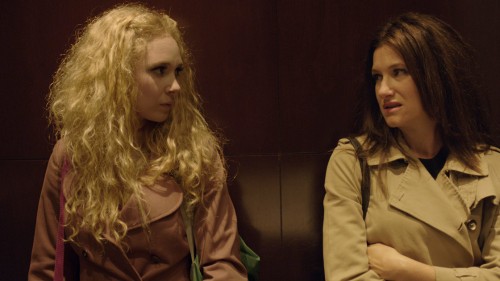
Juno Temple and Katherine Hahn in Afternoon Delight


This is a guest post by Leah Rudick.

I recently made my first foray into screenwriting.  Very exciting, no?  A few months ago, I started writing a script about a woman in her early 30s who finds herself suddenly living in New York City, wading through the murky waters without direction, a passive observer in a sea of eccentric, cruel and hilarious characters.  A woman searching for her purpose.  Who’s excited?  Did I pique your interest?  Is that a resounding YES?!  I wrote about 40 pages, got stuck, and showed it to my intuitive and brilliant better half who read it, gave me some very generous compliments, and then asked, “Why don’t you give Sarah [my heroine] some agency?  What does she want?  Is there a way for her to be bolder instead of having all of these things happen to her?  A way to let her be the ignition for whatever construction or destruction occurs?  Can we watch her be the cause rather than the reaction?”  They were great questions.  Why was I interested in writing something about a woman who seemed comfortable being so inactive?  Who was satisfied sitting back and observing, judging, but paralyzed from actually stepping in and taking part.

It’s a manifestation of a struggle I’ve always had, the fight against my natural instinct to be the shy, passive observer.  It’s something that my inspired 78-year old acting coach worked tirelessly to drill out of my head: “Leah, what do you want in this scene?  You can’t exist in this gray area.  It’s boring!”  It’s an issue that I notice in many films that I’ve seen and worked on.  The female character is the watcher, the muse, the victim, the object.  And while I have been easily able to detect this trope in the work of others, I was totally oblivious to it in my own work.

When I watched Jill Soloway’s most recent feature, Afternoon Delight, I was, in the truest sense of the word, delighted.  It was everything I wanted in a movie: Hilarious, tragic, deeply moving, beautifully shot with incredibly grounded and brilliant performances across the board.  The story follows stay-at-home mom Rachel (Katherine Hahn) who takes in a young stripper named McKenna (Juno Temple) in an effort to save her and also to distract herself from her own upper middle class malaise.

This is a film about women’s agency, and watching it was an eye opener for me.  The movie is so bold and colorful and also so feminine in a more real way than I think one often sees in film, even sometimes in those made by women.  It is emboldening to watch, because it has been created by the voice of a woman who is seemingly unfettered by the much discussed “male gaze” in filmmaking.

Leah Rudick and Katie Hartman in web series Made to Order


I was lucky enough to listen to Jill Soloway speak recently at a small gathering to discuss a new filmic voice for women, hosted by the genius and innovative Emily Best, CEO of the crowdfunding and distribution platform Seed & Spark.  Soloway spoke so eloquently about her process and about women’s opportunities and struggles in the film industry.  She was so engrossing and inspiring to listen to that there was a palpable feeling of magic in the room.  One of the valuable lessons I took away from our discussion was about her career turning point — from producer to filmmaker — is that she realized that no one else was going to make it happen for her. It makes me wonder how many other women and men are waiting for permission to make their masterpieces, and license to make the characters within them bold, alive, and human.

I’m grateful she had the realization, because Afternoon Delight is masterful at defying the norms of the comedy genre in such an incredibly subtle way.  This conversation of agency begs another discussion about which genres best lend themselves to this kind of work.  It is one thing to make an action film with a female lead and make her active and in control and awesome (I am so excited to see the Seed & Spark funded Sheila Scorned, a “grindhouse short starring a quick-witted stripper who’s out to get even with the men in her way” because it looks badass), but what about when the genre is one that typically does not allow for female agency?

I produce a web series with my comedy duo, Skinny Bitch Jesus Meeting, called Made To Order about two sisters who start an underground food delivery service.    It is a sort of high octane comedy about two women who forcefully throw themselves into a world they know nothing about at the expense of everything.  With my very brilliant comedy partner, Katie Hartman, it has been thrilling to create two characters who do rather than watch and manage this in a completely unhinged way.

I love the idea of finding more ways to write female characters with agency in every genre, across the board.   This awareness and need for these types of character in creative work has had a profound effect on my own writing and I know that I’m not alone in this sentiment.  When we start allowing characters to do, rather than to simply watch others do, worlds open up and we can actually started having fun.


Leah Rudick is an actress, writer and comedian. Film credits include Cut to Black (Brooklyn Film Fest Audience Award), Lost Children (Desperate Comfort Prod., IFP Lab Selection), Bloody Mary (Sci-fi channel), Kids Go to the Woods, Kids Get Dead (Darkstar Entertainment),  Prayer to a Vengeful God (Insurgent Pictures) and Jammed (Runaway Bandit Productions).   She can be seen on the popular web series High Maintenance and on the webby-winning youtube channel Barely Political.  She is a founding member of Lifted Yoke Productions, and is currently in pre-production for their feature dramedy, Sweet Parents.  Their first short film, Blackout, can be streamed at Seed & Spark Cinema.  She is a contributing writer to Reductress.com.  She is half of the sketch comedy duo Skinny Bitch Jesus Meeting (Edinburgh Fringe, The PIT, UCBT, NY Fringe Fest) and co-creator/co-star of their upcoming web series Made To Order (madetoorderseries.com).  

Bitch Flicks’ Weekly Picks

Check out what we’ve been reading this week–and let us know what you’ve been reading/writing in the comments!

Surprising Films That Pass The Bechdel Test on BuzzFeedPop

Jenny Slate In The OBVIOUSLY Hilarious And Charming Abortion Rom-Com by Kelsey Haight at Bust

Rape Revenge Fantasies: The Roundup

Check out all of the posts for Rape Revenge Fantasies Theme Week here.

Revenge Is a Dish Best Served…Not at All? by Angelina Rodriguez

Tarantino’s Kill Bill narrative requires The Bride to murder her rapist and to defend herself with some of the masculine characteristics that are used as institutionalized power to oppress women, such as physical strength and aggression. The film insists that she seek revenge, instead of demanding that men simply do not rape. This is barely better than teaching rape avoidance. It dictates that women must assimilate to a male culture of violence in order to have autonomy over their own bodies.


Irreversible: Deconstructing Rape Revenge by Max Thornton

Irreversible deconstructs the ethically dubious pleasures of the rape revenge genre through its structure as well as its plot. Its reverse chronology inverts the formula of rape-then-revenge, thereby robbing the viewer of any sense, however questionable, of justice done, and subverting the whole economy of violence.

“I’ll Make You Feel Like You’ve Never Felt Before”: Jennifer’s Power in I Spit on Your Grave Sophie Besl

No movies ever had to justify a cowboy going on a rogue revenge kick after his log cabin was burned to the ground or his family was killed; certain sufferings of injury, murder of loved ones, robbery, etc., have been accepted throughout cinematic history to merit revenge at all costs. I Spit on Your Grave was a large part of a relatively new phenomenon, possibly born out of the feminist movement, to add rape—based on the woman’s experience of rape, whether validated by law or not—to that list of worthy harms, which is an important statement in our rape culture.


When considering female agents of violence in a film, there is a troublesome tendency that plays to the audience’s anxiety about a women disrupting the essentialist notion that women are naturally gentle and nurturing: the tendency to have the woman acting in response to sexual violence, that only after a woman is overpowered and assaulted can she find a place of violence in her. Once the naturalness of a woman is disrupted by an outside force—a (usually male) perpetrator—she is no longer required to be viewed as “womanly.”

Julie Taymor’s contemporary approach to creating a film of Titus Andronicus then, has to address a variety of factors: 1) she has set up for herself the challenge of filming a Shakespeare play that has been called both an “early masterpiece” and an “Elizabethan pot-boiler”; 2) she’s a female director approaching a play that has, at its center, a ritual killing, a rape, and revenge cannibalism; and 3) she’s creating this piece of art during a historical moment during which entertainment media is rife with violence and there much alleged desensitization, as well as within a culture full of complex and problematic attitudes about rape.


In films, as in life, women aren’t supposed to be violent. Women make up the majority of violent crime victims (domestic violence, assault, rape, and murder) but they rarely retaliate in kind. Even in the relatively rare film where a woman seriously injures or kills a rapist, like Thelma and Louise she does so with lots of tears and anguish–in that film both from the woman pulling the trigger and the one who the man attempted to rape. The unwritten rule in movies seems to be that in order to justify a woman killing or even assaulting someone, we need to see her or some other woman suffer, a lot, beforehand. Contrast that rule with the male heroes of action films who leave dozens of corpses in their wake, and not one of the dead, usually, has raped or otherwise tortured the hero beforehand–though the hero may be avenging some great wrong the dead guy (or guys) did to his wife or daughter.


Cowboy Justice: Rape Revenge in Mainstream Cinema and TV by Morgan Faust

So maybe what had looked like a trend toward marginalizing rape survivors was actually a move toward bringing them into the fold of the American action hero? This is a move that discloses a terrible truth about the handling of rape cases in our legal system, but can be viewed as a genuine attempt to find a way to make the cowboy narrative, and the catharsis that comes with it, available and relevant to survivors of rape.


What Shakespeare Can Teach Us About Rape Culture by Leigh Kolb

In Titus Andronicus, Lavinia is brutally raped and disfigured (including having her tongue cut out so she couldn’t speak). This nod to Philomela in Ovid’s Metamorphoses echoes the themes of the brutality of rape and the need for revenge. The women needed to name their rapists and share their stories (Lavinia writes in the sand; Philomela weaves a tapestry that tells her story). The women have as much power as they can in the confines of their society, and we the audience are meant to want justice and revenge.


But when Dawn learns that Ryan has bedded her as part of a bet while he is still inside of her, Dawn’s evolutionary adaptation intercedes and Ryan is punished for his use and abuse of Dawn.  So now two trusted boyfriends and a doctor have initiated Dawn into the world of oppressive sex and violence, and all three times her vagina—the thing that has left her most vulnerable—has acted as a protector.


More than being shitty to watch, it just pissed me off to 10 because I hate with the fiery passion of 10,000 suns the ubiquitous trope that surviving sexual violence (or attempted sexual violence) turns women into superheroes.


Trespassed Lands, Transgressed Bodies: Horror, Rage, Rape, and Vengeance Within Indigenous Cinema by Ariel Smith

By forcing the subconscious fears of audiences to the surface, horror cinema evokes reactions psychologically and physically–that is its power. This power can serve and support uncensored Indigenous expression by allowing Indigenous filmmakers the opportunity to unleash dark, unsanitized allegorical representations of the abhorrent, repugnant, violent abomination that is colonization.


Rape, Lies, and Gossip on Gossip Girl by Scarlett Harris

Her banishment by Blair when she finds out what transpired between Jenny and her on-again, off-again lover is typical of the punish-the-woman mentality Gossip Girl is so fond of. Instead of shaming her partner for taking advantage of a teenage girl, Blair blames Jenny for ruining her proposal. And when Jenny returns the following season to help Chuck take down Blair (keep up, people!), she should really be seeking revenge on her rapist, wouldn’t you say?


Girl Gang Fights Rape Culture in Firefox by Elizabeth Kiy

Though very different, the two films based on Joyce Carol Oates’ novel, Foxfire: Confessions of A Girl Gang, have a shared message: that rape culture is pervasive. and the experiences of girls and women within it are sadly, universal. In both films, one set in the 90s, the other in the 50s, teenage girls inhabit dangerous territory, full of sexual assaults and near misses, all ignored by the authorities around them. Their experiences aren’t considered unusual or justified within their respective narratives, instead, they point out that women are given a lot of reasons to feel unsafe and afraid in our society. At the very least, we’ve all been told not to walk home at night or frightened by a man following too close on our heels.


Agency and Gendered Violence in Thelma and Louise by Jenny Lapekas

These characters challenge our gendered assumptions about sex, trauma, and vengeance, which can make audiences uncomfortable. I was likely too young when I first watched Thelma and Louise (Ridley Scott, 1991). However, I remember the surge of adrenaline I felt when Louise shot and killed Thelma’s rapist, how incredibly good it felt to idolize these convict women who had had enough with their monotonous lives, at an age when I couldn’t possibly comprehend patriarchal oppression, the comforts of solidarity and sisterhood, or the concept of escapism utilized not necessarily to run away but rather to find your wildest, most genuine self. 


Rape, Lies, and Gossip on ‘Gossip Girl’

Her banishment by Blair when she finds out what transpired between Jenny and her on-again, off-again lover is typical of the punish-the-woman mentality ‘Gossip Girl’ is so fond of. Instead of shaming her partner for taking advantage of a teenage girl, Blair blames Jenny for ruining her proposal. And when Jenny returns the following season to help Chuck take down Blair (keep up, people!), she should really be seeking revenge on her rapist, wouldn’t you say?

unnamed

This guest post by Scarlett Harris appears as part of our theme week on Rape Revenge Fantasies.

There are multiple rapes that occur in the “scandalous lives of Manhattan’s elite” of Gossip Girl lore. In the pilot episode alone, there are two instances of rape.

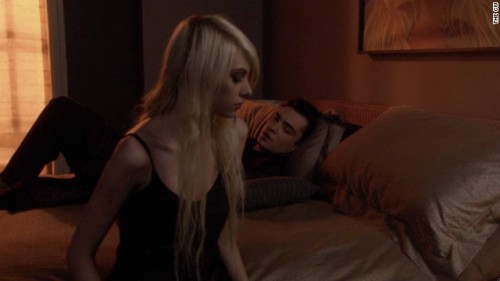
Newbie to Upper East Side society, Jenny Humphrey, is sexually assaulted on the rooftop whilst a high school dance takes place below. Her assailant, the reprehensible Chuck Bass, who has wormed his way into the zeitgeist as the ultimate bad boy, had earlier forced himself onto Jenny’s brother Dan’s date, Serena van der Woodsen. Whilst Chuck’s entitlement is highlighted here, the way Gossip Girl later paints him as a wolf in sheep’s clothing sheep in wolf’s clothing worthy of a happy ending with the show’s just-as-culpable heroine, Blair Waldorf, is careless. There are plenty of other ways the consequence-free lifestyle of Serena, Blair, et al. could be portrayed that wouldn’t reward misogyny.

But that seems to be Gossip Girl’s calling card: Chuck later goes on to rape Blair by posing as someone else in the season two episode “The Dark Night.” He cuts her face when he smashes a window in rage. He pimps her out to his uncle for a piece of real estate. Said uncle tries to force himself on his dead brother’s widow, Lily. And, in probably the most blurred (story)line involving sex and consent in the CW series, Jenny, years after her violent debut into Manhattan society, shows up on Chuck’s doorstep, dejected and lonely, and the two find objectionable comfort in each other’s sex organs. Cathryn writes about this more extensively than I ever could here.

unnamed

Chuck’s (not-so-distant) rapist past serves as a plot point to show how far he’s allegedly come as a reformed bad boy. Jenny’s rape and subsequent ousting from Manhattan at the hands of Blair, however, positions her storyline as a cautionary tale of what gossip, money, and lack of boundaries can turn a person into. Granted, Jenny caused a lot of trouble for her former friends and family, but rape is never a fitting punishment. Her banishment by Blair when she finds out what transpired between Jenny and her on-again, off-again lover is typical of the punish-the-woman mentality Gossip Girl is so fond of. Instead of shaming her partner for taking advantage of a teenage girl, Blair blames Jenny for ruining her proposal. And when Jenny returns the following season to help Chuck take down Blair (keep up, people!), she should really be seeking revenge on her rapist, wouldn’t you say?

So while Jenny is a metaphor for the toxicity of Manhattan society and the good girl gone bad, her fellow Chuck-rape-almost-victim, Serena, is the opposite: the bad girl striving to make amends.

The parallels between the two blondes closest to “the ultimate insider” and *spoiler alert* the man revealed to be Gossip Girl, Dan Humphrey, are apparent in the first few seasons. In the pilot, Serena returns from boarding school after being embroiled too deeply in the debauchery of the Upper East Side as Jenny is just being introduced to it. They are both romantically interested in Chuck’s bestie, Nate Archibald.

By season three the actress who portrays Jenny, Taylor Momsen, was the quintessential bad girl, sporting thick eyeliner and a negligee as outerwear, and fronting a rock band. Think a modern-day Courtney Love. Meanwhile, golden girl Blake Lively (Serena) was covering magazines, starring in The Town and filming Green Lantern, and dating such high-profile men as Leondardo DiCaprio. Gossip Girl mirrored this metatextually by showing Jenny reading a copy of Nylon magazine with Lively on the cover, breaking the fourth wall.

unnamed

Speaking of art imitating life, season two threw shades of Steubenville. Dan is embroiled in a sex scandal when it’s claimed that he had been sleeping with his teacher. The allegations turned out to be fabricated by Blair, who was then expelled from school and had her acceptance to Yale revoked. Dan’s stepmother, Lily, is sympathetic to Dan’s relationship with Serena being put in jeopardy and his female teacher being branded a sexual predator, but wonders, “Should Blair lose Yale over this? It’s her future.” This is reminiscent of the utmost concern shown to teen Steubenville rapists Trent Mays and Ma’lik Richmond and their bright sporting futures after being found guilty of the crime whilst the welfare of the anonymous victim who’ll be dealing with her assault for the rest of her life went by the wayside.

Whereas Steubenville occurred in real life and the myriad assaults and questionable sexual and gender politics of Gossip Girl take place in a fictional world far removed from many of our own, they both help to colour the way we treat victims of sexual assault. And unfortunately, this is nothing new.


Scarlett Harris is a Melbourne, Australia-based freelance writer and blogger at The Scarlett Woman, where she muses about feminism, social issues and pop culture. You can follow her on Twitter here.


Trespassed Lands, Transgressed Bodies: Horror, Rage, Rape, and Vengeance Within Indigenous Cinema

By forcing the subconscious fears of audiences to the surface, horror cinema evokes reactions psychologically and physically–that is its power. This power can serve and support uncensored Indigenous expression by allowing Indigenous filmmakers the opportunity to unleash dark, unsanitized allegorical representations of the abhorrent, repugnant, violent abomination that is colonization.

1

This guest post by Ariel Smith appears as part of our theme week on Rape Revenge Fantasies.

By forcing the subconscious fears of audiences to the surface, horror cinema evokes reactions psychologically and physically–that is its power. This power can serve and support uncensored Indigenous expression by allowing Indigenous filmmakers the opportunity to unleash dark, unsanitized  allegorical representations of the abhorrent, repugnant, violent abomination that is colonization.

Mi’gmaq filmmaker Jeff Barnaby employes aesthetic strategies and themes from horror cinema in order to push back against stereotypical representations of Indigenous peoples and critique contemporary neo-colonial systems.  Barnaby has been known to recall conventions from both body horror and dystopian science fiction in order to present dark, disturbing narratives in which Mi’gmaq characters navigate through gruesome representations of abjection and assimilation.  In his first feature film, Rhymes for Young Ghouls (2013), we see Barnaby drawing from another sub-genre of horror cinema,  that of the rape revenge film.

-3

Revenge tropes in the hands of Jeff Barnaby are used to not only tell the story of the female lead’s experiences of violation, but also to articulate a visceral, rage-filled revenge fantasy on behalf of a violated peoples.

Rhymes for Young Ghouls is set against the backdrop of Canada’s Indian Residential School System. 

For those who don’t know, from 1884 to 1948, it was compulsory for Indigenous children under 16 years of age living in what is now known as Canada to attend colonial government-funded, church-run day and boarding schools. Children were forcibly removed from their families by Indian agents, and families were threatened with fines or prison if they failed to send their children.  Children as young as 5 could be kept away from their parents for months or years at a time, were prohibited from speaking their language, and were issued severe corporal punishment for any expression of non-Christian  cultural, social or spiritual practice.  The Indian Residential School System’s express and specific, methodical intention was to “Kill the Indian in the child” and resulted in cultural genocide that Indigenous nations are only now beginning to heal from.  Many children experienced heinous sexual, physical, and psychological abuse, as well as being subjected to publicly documented sterilization efforts and starvation experiments. The last residential school closed in Canada in 1996 and this colonial system has resulted in multiple, consecutive generations with both stolen childhoods and parenthoods.  Even Indigenous children who did not attend residential school are affected by inter-generational trauma, as  their parents and/or grandparents most likely attended.

-1

Rhymes for Young Ghouls takes place on a Mi’gma reserve in the late 1970s.  The lead protagonist, 15-year-old Alia, makes her living dealing pot. One of her most pressing expenses is paying off the corrupt and psychotic Indian agent, Popper, in order for herself, and other kids from her community to not be taken away to the residential school, where they will undoubtedly be physically and sexually abused.  Alia winds up being double crossed and taken against her will to the school, but she soon breaks out and on Halloween night, together with a posse of other kids from the rez, enacts violent, bloody, revenge against the school’s abusive staff.

For me, the violence and graphic nature found in Barnaby’s work is fitting and appropriate due to the themes he engages. Barnaby’s films trigger visceral responses by exposing the audience to poetic and raw depictions of colonial violence against Indigenous bodies. As Indigenous people, we understand genocide and trauma; we understand horror, we live it.  Barnaby’s films frame a space where non-Indigenous people must look at the screen and feel repulsed, afraid, and unsafe by facing the terrifying and grotesquely violent truth and reality that is colonial nation building.

The sub-genre of rape revenge is often categorized under an umbrella of exploitation cinema, famous for its use of shock value and extreme scenarios. However, Indigenous filmmakers’ contributions to the rape revenge canon do not require exaggeration.  We do not need to think up imagined incidents of vicious macabre torture.  The Marquis Du Sade has nothing on Canada’s residential schools.   The horror, the terror–it’s all around us, it is the foundation that the colonial states are built upon. We walk in it every day, and prove our resilience through continued survival.

-2

Another example of rape revenge themes within Indigenous cinema can be found in Niitsítapi/Sami filmmaker Elle-Maija Tailfeathers’ short film, A Red Girl’s Reasoning. 

Tailfeathers presents us with a narrative in which an Indigenous woman, who is raped, is failed by the justice system and becomes a vigilantle, seeking and delivering violent revenge against her own and other women’s rapists.

As with Barnaby’s work, it is impossible for A Red Girl’s Reasoning to be read outside of a larger overarching social context, which in this case it is the ongoing epidemic of missing and murdered Indigenous woman and girls. There are over 800 cases of missing and murdered woman and girls in Canada which have been documented so far. Amnesty International Canada states that “According to Statistics Canada the national homicide rate for Indigenous women is at least seven times higher than for non-Indigenous women…There are also a greatly disproportionate number of Indigenous women and girls among long-term missing persons cases. In Saskatchewan,  Indigenous women make up only 6 per cent of the population of the province,  but 60 per cent of its missing women are Indigenous.”

-4

Media coverage and police support is often far less for missing or murdered Indigenous women than in the case of a white woman.  Sexualized violence has been used as a tool of colonial conquest since contact and the epidemic of stolen sisters is a reflection of how Indigenous woman continue to be devalued and dehumanized by white settler society.

The vengeance scenarios portrayed in both Rhymes for Young Ghouls and A Red Girl’s Reasoning resonate deeply with Indigenous audiences as they tap into our collective pain and anger.  These films serve to disrupt the dominant visual culture, which excludes Indigenous perspectives and representation and has all but erased Indigenous peoples from the imagination of settler consciousness. Indigenous filmmakers provide visual allegory for what feminist and author bell hooks has called the “killing rage,”  which is described by Amazon.com as “The fierce anger of black people stung by repeated instances of everyday racism… and the finding in that rage a healing source of love and strength, and a catalyst for productive change”

Approaching and calling attention to the full depth of monstrosity that is colonial transgression is  what makes Indigenous cinema, in general,  such a powerful tool of resistance and resurgence.  Indigenous cinema is bigger than the individual movies we make.  Regardless of content or form, Native filmmakers have not yet been afforded the luxury to create work that is not automatically placed under a socio-political lens.  As Indigenous peoples living in postcolonial/neo-colonial times, our presence–our very existence–is in itself a political statement, and our artistic expression is in itself a beautiful  declaration of sovereignty, and self-determination.


Ariel Smith (Nêhiyaw/Jewish) is a filmmaker, video artist, writer and cultural worker currently based on unceded Algonquin territory, also known as Ottawa, Ontario.  She has shown at festivals and galleries internationally including: Images (Toronto), Mix Experimental Film Festival (NYC),  Urban Shaman (Winnipeg), MAI (Montreal), Gallery Sans Nom (Moncton), and Cold Creation Gallery (Barcelona, Spain).  Her film Saviour Complex (2008) was nominated for Best Experimental at the 2008 Winnipeg Aboriginal Film Festival.   Ariel’s video Swallow (2002) was the winner of the Cynthia Licker Sage Award at the 2004 imagineNative Film Festival, and Jury Third prize at the 2003 Media City Festival of Experimental Film and Video. Ariel’s writing and has been published by The Ottawa Art Gallery, The Ottawa International Animation Festival, imagineNative Festival of Indigenous Film and Media Art, and Kimiwan Magazine.

Ariel also works in Indigenous media arts advocacy and administration and is currently the director of National Indigenous Media Arts Coalition (NIMAC).  

The “Rape Turns Ladies Into Superheroes!” Trope

More than being shitty to watch, it just pissed me off to 10 because I hate with the fiery passion of 10,000 suns the ubiquitous trope that surviving sexual violence (or attempted sexual violence) turns women into superheroes.

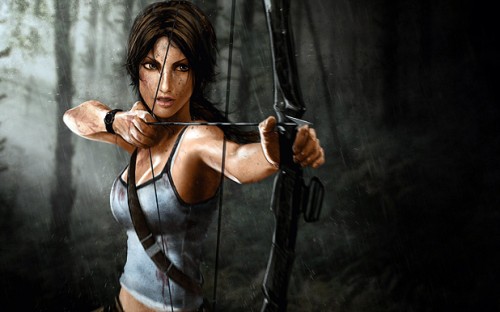
Tomb Raider video game


This cross-post by Melissa McEwan previously appeared at her blog Shakesville and appears as part of our theme week on Rape Revenge Fantasies.

So, this weekend, Iain and I were watching some show about video games (as usual), and it featured the “controversial” scene in the origin story of Lara Croft in the new Tomb Raider, during which she fights her way out of an attempted sexual assault. Aphra_Behn recently wrote about it here, and Lake Desire has an excellent round-up on the subject at The Border House. The scene was shitty to watch, and made me not want to play the game, even though Tomb Raider is one of my favorite all-time games (and I battled my way through 3-D navigation issues caused by an information processing disorder just to play it).

More than being shitty to watch, it just pissed me off to 10 because I hate with the fiery passion of 10,000 suns the ubiquitous trope that surviving sexual violence (or attempted sexual violence) turns women into superheroes.

(Geek Feminism has published the Rape As Back Story page TVTropes recently decided did not meet their content policy, which has some examples of the rape-as-empowerment meme mixed in among the plethoric examples of rape being used as short-hand for character development, especially for female characters. Quentin Tarantino has used this device in multiple films, with rape revenge arcs serving as either primary or secondary plots.)

It’s lazy storytelling, but, more than that, it’s wrong.

In Aphra’s post, she noted: “No, fending off an attacker didn’t turn me into a badass fighter, sirs. It turned me into a fucking mess who blamed myself for getting into the situation.” She is certainly not alone in having been temporarily or permanently changed in ways that can send a survivor tumbling headlong into feelings of vulnerability, doubt, fear, and other things that feel a lot like weakness as they undermine one’s senses of self and safety.

Survivors are not “broken,” but sexual violence can be injurious, and to pretend instead that it magically imbues women with superhuman strength and ability is to pretend that a broken leg turns a fella into LeBron James, rather than a dude with a cast who needs to heal like the mortal that he is.

Which is not to say that women who have survived sexual violence and gone on to do amazing things directly related to sexual violence don’t exist. They do. There are female prosecutors, cops, social workers, counselors, activists, writers, actors, and artists for whom victims’ advocacy is central to their work. Many of them are as close a thing to superheroes as there are in this world.

But they didn’t arrive at that point by magic. And they aren’t where they are because sexual violence filled them with some kind of special superhero-making pixie dust. They are there by virtue of their own strength and resilience and tenacity.

To credit sexual violence with the creation of heroes robs them of their agency. And, worse yet, it gives the credit to rapists.


Melissa McEwan is the founder and manager of the award-winning political and cultural group blog Shakesville, which she launched as Shakespeare’s Sister in October 2004 because George Bush was pissing her off. In addition to running Shakesville, she also contributes to The Guardian‘s Comment is Free America and AlterNet. Liss graduated from Loyola University Chicago with degrees in Sociology and Cultural Anthropology, with an emphasis on the political marginalization of gender-based groups. An active feminist and LGBTQI advocate, she has worked as a concept development and brand consultant and now writes full-time.

She lives just outside Chicago with three cats, two dogs, and a Scotsman, with whom she shares a love of all things geekdom, from Lord of the Rings to Alcatraz. When she’s not blogging, she can usually be found watching garbage television or trying to coax her lazyass greyhound off the couch for a walk. 

On Milk-Bones, Toothed Vaginas, and Adolescence: ‘Teeth’ As Cautionary Tale

But when Dawn learns that Ryan has bedded her as part of a bet while he is still inside of her, Dawn’s evolutionary adaptation intercedes and Ryan is punished for his use and abuse of Dawn. So now two trusted boyfriends and a doctor have initiated Dawn into the world of oppressive sex and violence, and all three times her vagina—the thing that has left her most vulnerable—has acted as a protector.

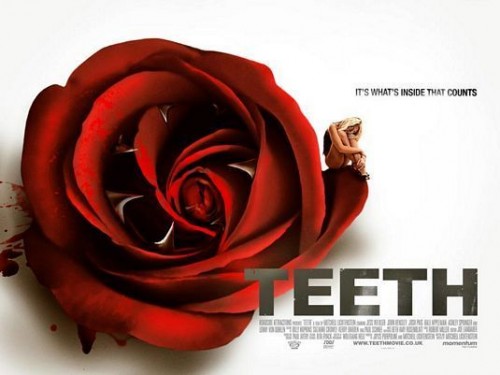
Teeth movie poster
Teeth movie poster


This repost by Colleen Lutz Clemens appears as part of our theme week on Rape Revenge Fantasies.

Mitchell Lichtenstein’s 2007 comedic horror film Teeth plays to and with the audience’s anxiety about a young girl’s burgeoning sexuality.   In a town flanked by a nuclear power plant, the main character, Dawn, grows into her sexuality while coming to terms with having a vagina dentata–a toothed vagina.  In a time when toothed condoms called Rapex to prevent rape are coming onto the market, Dawn’s travails force the viewer to consider what is necessary for a woman to survive as a sexual being in a climate of violence and rape.

Early in the film, Dawn is a nymph-like virgin committed to “saving herself” until marriage.  She is the poster child for the “good” girl:  a loving daughter who obeys the doctrines of the church and spends her time spreading the gospel of virginity.  Everything Dawn knows about the world and herself changes when her falsely pious boyfriend Tobey takes her to a far off swimming hole and tries to rape her.  A confused and terrified Dawn reacts by screaming and then—much to everyone’s surprise—cutting off his penis to interrupt the rape.  Little does Dawn know that her lessons about Darwin in her biology classes are taking hold in her own body.


Toby loses his penis
Tobey loses his penis


Dawn turns to the Internet to learn what has happened to her body (and I suggest you, dear reader, might want to avoid Googling “vagina dentata” if you are faint of heart) and learns that her vagina—something she didn’t want to see the picture of even before the rape—is a tool of terror, in her opinion.


Dawn does some research


In a desire to learn about her body, to confirm what is normal or abnormal biology, she goes to another man whom should be trusted—her gynecologist.  During the exam, he also takes advantage of Dawn’s vulnerabilities and assaults her.  When he doesn’t listen to her protests, he loses a finger, and Dawn flees screaming at the fear she now has over her own body and it sexual nature.  With little to no information about her own body brought upon by her abstinence-only education, Dawn is left confused while her curiosity mirrors that of any young woman starting to learn about sex.


Dawn visits the gynocologist
Dawn visits the gynecologist


Viewers finally relax when they see Dawn in the hands of a loving partner, Ryan, who seems to care for her.  With loving embraces and tenderness, Ryan takes a nervous Dawn to bed.  Her vagina dentata seems to be reserved only for instances in which Dawn needs protection, so Ryan is safe in her embrace.  But when Dawn learns that Ryan has bedded her as part of a bet while he is still inside of her, Dawn’s evolutionary adaptation intercedes and Ryan is punished for his use and abuse of Dawn.  So now two trusted boyfriends and a doctor have initiated Dawn into the world of oppressive sex and violence, and all three times her vagina—the thing that has left her most vulnerable—has acted as a protector.


Ryan loses his penis


Finally, upon the death of her mother, Dawn starts to see her vagina as a tool not only for survival but also for justice.  Her awful stepbrother Brad is the first to be the victim of the vagina dentata used purposefully.  Having ignored the cries of his dying stepmother, Brad allows the most important woman in Dawn’s life to die a horrible death.  A coy Dawn seduces Brad to punish him.  His vicious dog gets to eat the spoils of the sexual encounter Brad had been taunting Dawn with for years.


Brad's penis (before the dog eats it)
Brad’s penis (before the dog eats it)


The final scene does the most interesting work in terms of considering Teeth as part of the rape revenge genre (spoiler alert).  Dawn has left her home to begin a new life as she can no longer survive in her town.  After a succession of men whom Dawn should be able to trust take advantage of her, Dawn finally embraces her toothed vagina and uses it as a tool of resistance and justice as she works to protect other women from the awful men roaming the world.  When hitchhiking, she is picked up by the archetypal “dirty old man” that solicits sex from her as his dry tongue licks his even dryer lips.


Dirty old man
Dirty old man


In the film’s final moments, the audience sees Dawn smile and go toward this encounter, and we know that Dawn will use her vagina dentata as an act of vigilante justice.  She will sever the penis of this man so he cannot use it again and hurt other girls.  Instead of being surprised by her vagina or using it as a form of reactive self-protection, Dawn is now being proactive and seeking out the opportunity to use her “teeth” to act as a fighter.  She goes toward the encounter and accepts her body for what it is:  a powerful sexual being that has adapted to a world that is often harsh and dangerous for the female species.

I have taught this film several times in my college courses.  If I were to make a generalization, at the end of the film, the male students groan and the female students cheer.  I suppose that is a natural response to some degree.  After all, we did just witness a dog eat a severed penis as if it were a Milk-Bone. However, this film always leads me to ask the question:  Is this the kind of agency that we as women want—access to violent acts? Is Dawn, as Tammy Oler calls Dawn in her Bitch article on rape revenge films “The Brave Ones,” a “satisfying fantas[y] of power and fortitude”?


Dawn looks powerful
Dawn looks powerful


The film seems to argue that Dawn’s growth is a requirement, a form of natural selection–that a young woman growing up in a white, suburban, Christian, capitalist society MUST develop such a “mutation” in order to survive a patriarchal world.   Dawn’s vagina dentata is the epitome of her biology teacher’s earlier lesson on natural selection, that along with the help of the effects of the nuclear power plant combined with the need to survive, women will start to adapt and grow vaginal teeth.  Though she is still monstrous (the film isn’t called “Dawn,” but is instead named after the thing that makes her a monster), she also has access to mobility—she is leaving—and sexual power—she is about to control the sexual situation for the only the second time in her sexual life.  Sadly, though this situation is one of power, not of love.

We do see earlier in the film that she can control her teeth when having sex in a loving environment, so the adaption will not hold her back from having a healthy sexual encounter that is safe for both partners.  But when that safety is compromised, the audience is to assume that Dawn will always have the upper hand.  Or should we say the upper jaw?


Colleen Lutz Clemens is assistant professor of non-Western literatures at Kutztown University. She blogs about gender issues and postcolonial theory and literature at http://kupoco.wordpress.com/. When she isn’t reading, writing, or grading, she is wrangling her two-year old daughter, two dogs, and on occasion her partner.


Cowboy Justice: Rape Revenge in Mainstream Cinema and TV

So maybe what had looked like a trend toward marginalizing rape survivors was actually a move toward bringing them into the fold of the American action hero? This is a move that discloses a terrible truth about the handling of rape cases in our legal system, but can be viewed as a genuine attempt to find a way to make the cowboy narrative, and the catharsis that comes with it, available and relevant to survivors of rape.

This guest post by Morgan Faust appears as part of our theme week on Rape Revenge Fantasies.

When I set out to research and write this article, I assumed (can you make an ass out of me and you when it’s just one person?) I would be writing a piece on how American cinema has let down women when it comes to reflecting and portraying a constructive image of rape and it’s aftermath. The rape revenge fantasy genre of exploitation films a la  I Spit on Your Grave certainly did, striking me as cinematic renderings of discomfort and titillation wrapped in the guise of catharsis (I mean….look at the poster art). However, only a niche audience seeks these out, so while these films certainly have their fans and detractors, most people have never seen them.

What I wanted to know was how is mainstream cinema and tv presenting the topic? Outside of afterschool specials and the life and times Kelly Taylor? What I found  was a trend of well-drawn female heroines,  marginalized by society, who in the aftermath of being raped, had become, to some degree, vigilantes. OK, not terrible, but why were these survivors all presented as isolated loners? Usually viewed as crazy? And then I realized something: in its own limited way, American cinema has tried to comprehend the complexity and challenge of dealing with the issue of rape, an issue that brings up deep feelings of anger, shame, guilt, arousal, questions about gender and power dynamics, the woeful reality that only 3 percent of rapists ever spend a day in jail, by forcing these storylines into our most American of male hero molds: the lone cowboy.


1


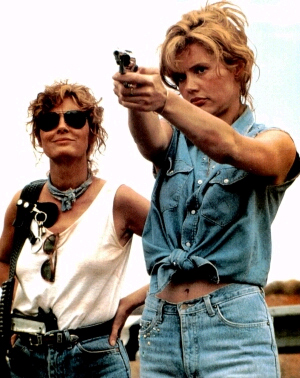
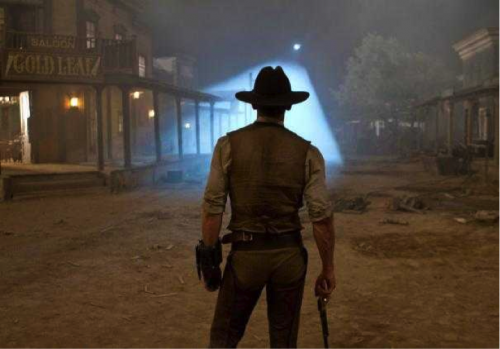
Thelma and Louisethe most critically acclaimed, mainstream of all the rape revenge movies–seemed like a great starting point. This is a movie about a rape survivor (Louise) and a woman who was almost raped (Thelma) evolving from, respectfully, a repressed waitress and a subservient housewife into a pair of vigilante outlaws with an aim to better the world by  teaching men how to treat women better.


On Becoming Cowboy: Louise (Susan Sarandon) and Thelma (Geena Davis)


The near rape of Thelma is the inciting incident that gets this story rolling; however, the roots of their cowboy nature run much deeper with Louise, which is why she is the mentor figure of the duo.  Louise’s entire character is built out of her rape: she is a highly controlled individual (look at that hairdo at the beginning of the movie), unwilling to trust others, completely self-reliant, and since she uprooted herself and fled her home in Texas (in an attempt to get as far from her rapist as possible), she has little in way of a family or community outside of Thelma and boyfriend Jimmy, both of whom she keeps at a safe distance.  In the first few minutes of the movie we’re told that Darryl (Thelma’s husband) thinks Louise is “out of her mind.”  In a different movie this could simply seem like an insult a controlling husband uses against his wife’s friend, but in this movie the women have reclaimed the word crazy to mean self-actualized, truly yourself, truly a woman, truly a cowboy.


3


See what I mean (this is taken from the cop chase near the end of the movie):


THELMA

    I guess I went a little crazy, huh?

LOUISE

  No… You’ve always been crazy.
This is just the first chance you’ve
had to really express yourself.

Screen shot 2014-04-22 at 12.23.47 PM

Thelma and Louise serves as a kind of origin story for many of the women in other rape revenge movies. Louise’s rape, and the near-rape of Thelma sever them from society, forcing them into a life where they must seek justice on their own.

Veronica Mars, another marginalized loner, despised  by her fellow classmates and working as an amateur PI, has a very similar backstory to Louise: once a naive, happy, student with a popular boyfriend, she was drugged and raped at a party, contributing to and the result in her ostracization from society. The private eye, of course, is the narrative twin of the cowboy: “The private-eye novel was a western that happened somewhere else,” William Reuhlmann says in Saint with a GunVeronica only becomes the strong, smart, dogged, lone gun vigilante we know and love in part as a result of the rape.

By keeping this secret inside of them, these women had been transformed. In rape revenge films, that transformation is from an open, trusting person to someone isolated, and alone, but damn tough.

Screen shot 2014-04-22 at 12.24.43 PM

But why were all these women alone? Why after so much discussion on college campuses of coming forward, not being ashamed, speaking out about what had happened, was I finding this pattern of women in cinema having to seek justice on their own rather than through their community? It just seemed to reinforce ideas that contradicted the messaging around rape I’d heard from crisis centers and abuse shelters. There is of course The Accused….but that actually is a movie that proves just how difficult it can be to get justice against rapists in the court of law (let’s look again at that disturbing statistic of only 3 percent of rapists serving time in jail).


The Accused: Sarah Tobias (Jodie Foster) fighting to get her day in court.


Rape is an intensely personal violation, something you live with for the rest of your life. On cinematic terms, it is equivalent to murder–the kind of thing that John Wayne seems to be speaking about directly when he said in Stagecoach“There’s some things a man just can’t run away from.” So if society isn’t providing women with the means to achieve justice, perhaps this cinematic response of the isolated vigilante made real sense. Veronica Mars explains her choice to seek vengeance on her own saying  that she didn’t tell her father because “no good would’ve come of it.”  For a recent reminder of just how difficult our society makes it for women to confront their rapists, look to the ongoing “Girl who Ratted” scandal unfolding at Vanderbilt University, where a woman reported a rape and was immediately torn to shreds on the University’s messaging boards. Thankfully, there is a support structure building around her; however, the culture of shaming, ridiculing and marginalizing rape victims is still going strong, giving Veronica’s comments a reality and weight more profound than most network TV programs care to touch.


Before there was Thelma and Louise ... Butch Cassidy and the Sundance Kid
Before there was Thelma and LouiseButch Cassidy and the Sundance Kid


Is  the cowboy actually a cathartic outlet for the “fantasies” of women who found society turning against them in their time of need, rather than offering support? America suffers from a schizophrenic sense of cinematic  self-identity: we should all be patriots and defend the American way of life to the death, yet a extremely high number of individuals are forced to take the law into their own hands when society lets them down. So maybe what had looked like a trend toward marginalizing rape survivors was actual a move toward bringing them into the fold of the American action hero? This is a move that discloses a terrible truth about the handling of rape cases in our legal system, but can be viewed as a genuine attempt to find a way to make the cowboy narrative, and the catharsis that comes with it, available and relevant to survivors of rape.

In most westerns or private eye movies our hero is tasked with saving a vulnerable person. Sometimes it’s a kid, but usually we are talking about a damsel in distress. With rape revenge stories, the damsel needing saving is the woman herself; in order to save herself, she must become the protector of other weak and vulnerable people.


In the rape revenge films the damsel in distress and her savior are one and the same
In rape revenge films, the damsel in distress
and her savior are one and the same


Veronica Mars is an entire show about how she uses the skills she has honed in response to going through the crucible of tragedy that was her rape and the death of her best friend to serve the student body of Neptune High and right the wrongs inflicted upon them. Think of Thelma and Louise blowing up the rig of the dirty truck driver. Why? To teach him to stop harassing women. The Girl with the Dragon Tattoo’s Lisbeth Salander, a hacker–the modern version of the cowboy, policing uncharted virtual terrain, living by his/her own moral code–is a highly introverted woman, isolated and unwilling to conform to social norms,  the victim of sexual abuse and rape. She uses her power to solve the mystery of Harriet’s disappearance and uncover the culprit behind a number of murders of young women.

Lisbeth Salander (Noomi Rapace), modern Cowboy
Lisbeth Salander (Noomi Rapace), modern cowboy


In one rare example, Hard Candy, we have a protagonist in Hayley Stark who is never identified as having had any sexual abuse in her own past, but has taken on the mantle of vigilant to make the men responsible for the rape and death of  a 14-year-old girl (and possibly others) pay for their crimes. Here we have a far more traditionally male hero set-up, as she is avenging  the death of a loved one.  She is presented as a wanderer, and since she is a con artist we can presume we know nothing about her past, except that she has killed before and is methodical in her approach to administering her own form of justice against these pedophiles and killers. She is, in a way, our Man without a Name.

The Kid without a Name (Ellen Page), seeking vengeance for those who can’t do it for themselves


I was feeling fairly positive about this new spin I had found. I was a little frustrated that so few action-oriented female characters exist without the rape back story, but intrigued to discover that the isolated vigilante trope was actually aligning these women with a strong American tradition of self-reliance and cowboy caretakers. And then I looked at a few films where the victims of rape are men. Outside of  Sleepers, I had a hard time finding films that fit the rape revenge model, so I expanded to films that contained significant rape sequences–Pulp FictionDeliverance,  American History X–and you know what I found? A whole different set of storylines–no isolated, marginalized characters. In fact, quite the opposite. I saw men working together to help each other deal with both the rapists and the aftermath of the act. I saw men transformed into more understanding, caring individuals in the aftermath of being raped. What the hell?

Sleepers, victims, but they are not alone
Sleepers–victims, but they are not alone


One takeaway here is the very likely possibility that filmmakers are even less comfortable with exploring the psychological effects of being raped when the victim is man so they treat it lightly; however, I can’t help but ask what it says about us if the stories we tell about female  rape victims continue to be ones of trauma and marginalization, while men remain well-adjusted members of their community?

I think what it says is that we (and when I say we I am making the assumption here that cinema reflects us) still don’t know how to respond to incidences of rape.We still have difficulty talking about it, and are unsure how to understand the nuances of each case and how it differs when it is a stranger, or a friend, or a spouse, or a relative, or when the victim is  a child, or an elderly person, or when the victim is drunk or high. Choosing to make these women into cowboys is ultimately a safe choice. The women are presented as brave and strong; the catharsis is satisfying–there are good guys and bad guys, and no outside forces (like police or lawyers) have to get mixed up in it, confusing the issues, bringing up unwanted questions. I am eager to see more films that tackle this subject with a new perspective (Black Rock gave it a shot, with limited success), films that don’t reinforce the notion that female victims of rape have no place in common society. But I have to admit that I have found a greater respect for the existing canon.


Morgan Faust started working in film as an intern for the Squigglevision classic Dr. Katz and never looked back. A graduate of Columbia University’s MFA program, she now works as half of BroSis, a brother/sister writing and directing team with brother Max Isaacson in Los Angeles, where they are finishing up their first feature script (a female-helmed actioner), and ramping up to direct a pair of films in 2014. Her short film Tick Tock Time Emporium won numerous film festivals and is distributed in the US, India, Greenland, Denmark, the Faroe Islands and is available online at Seed & Spark. Her other credits include Gimme the Loot (editor), 3 Backyards (editor) and Mutual Appreciation (producer).