Sexual Desire on ‘The X-Files’: An Open (Love) Letter to Dana Scully

Oh Scully. You beautiful, badass, rosebud-mouthed, flame-haired Valkyrie wearing a blazer two sizes too big for you: what do you desire? We know what Mulder desires. He wants to look at porn in his office. He wants to flirt and call the shots. He wants ALIENS. He does not want to give you a desk.

xfiles

This guest post by Caitlin Keefe Moran appears as part of our theme week on Representations of Female Sexual Desire.

Oh Scully. You beautiful, badass, rosebud-mouthed, flame-haired Valkyrie wearing a blazer two sizes too big for you: what do you desire? We know what Mulder desires. He wants to look at porn in his office. He wants to flirt and call the shots. He wants ALIENS. He does not want to give you a desk.

But what about you? Why do we get such a cursory glimpse into your passions? How is it possible that in nine years we only see you go on two dates, Scully? (Three if we’re counting that one weird dinner with the Smoking Man… Lord help us if that was a date.) And when we finally do see you express interest in someone…oh, Lord. Remember him? The guy with the hallucinogenic tattoo? You were pretty into him; plus you felt stagnant in your personal life, and Mulder wouldn’t give you the damn desk. And it was nice to see you let loose a little bit, honestly. You even got a terrible lower-back tattoo of a snake biting its own tail, which… OK it’s not what I would have picked for you, but hey! You were living. All this fun goes sour when this dude’s tattoo tells him to murder you after you slept together. That you slept with him at all is conjecture—the camera pans away before we even see you kiss him, which is much more prudery than the show’s directors ever exercised with Mulder. Tattoo guy tries to put you in his building’s incinerator. It wasn’t pretty.

This date is going to end badly, Scully


Did it seem to you that the message you were supposed to get was, “Whoa, rein it in there, girlie! Don’t go flaunting those goods all over town!”? Because that’s what it seems like to me. Expressing your sexuality makes you vulnerable, the message goes, and, if the snake tattoo is any indication, faintly ridiculous. Expressing your sexuality makes you shameful. Expressing your sexuality makes you deserving of punishment.

Or how about Padgett, the writer who stalked you? Remember him? John Hawkes at his most moon-eyed and creepy? He might be the king of the all the men lining up to mansplain your feelings to you (though he’s only slightly ahead of the Smoking Man and his “wall around your heart” speech. STFU, Smoking Man). He has a lot to say (and write) about the way you present or hide yourself as a woman, and it hurts because it’s pretty much all true (and because he’s straight-up bonkers). Padgett watched you for long enough to read your insecurities as if they were typed out in one of his manuscripts—and sometimes they are. He knows that you downplay your femininity as much as possible so your (almost exclusively male) coworkers will take you seriously, because, as Padgett puts it, “to be thought of as simply beautiful was bridling, unthinkable.”

Gillian Anderson as Dana Scully

In fact, most of the women on The X-Files only show their sexuality when they are outside of themselves. Sometimes they’re controlled by an unusual alignment of the planets, like Detective White in “Syzygy.” Other times they’re products of a male fantasy (or an artificial intelligence’s approximation of a male fantasy), like the nurses in Kill Switch, or a lingerie-clad Diana Fowley in The Sixth Extinction II: Amor Fati. It would make sense, then, that you would want to keep your sexuality on lockdown beneath the frumpy blazers (also: it was the 90s). But that doesn’t make it any less frustrating to see you squash any hint of womanhood (let alone sexuality) because any hint would be unwelcome in the testosterone cloud of the FBI.

I wish you had a female friend, Scully. We hardly ever see you talk to another woman, much less confide in one. It’s not like she has to be your bosom buddy or anything. Just a pal you can get drinks with after work, blow off some steam, swap stories about your frustrating coworkers. Maybe you two could talk about what you want, at work, in bed, in life. As people. If only Monica Reyes could have shown up a couple of seasons earlier. I like to imagine the two of you at a drunk brunch, bonding over pumpkin spice pancakes with maple bacon glaze and a gallon-sized bucket of Bloody Marys. There’s strength in numbers, after all. Maybe with the two of you together, everything wouldn’t have seemed so….buttoned-up. Maybe with someone to talk through your anxieties with, you and Mulder wouldn’t have waited seven years to…but never mind, that’s a whole other article.

Mulder and Scully: the dream team


Let’s talk about Baby William for a second. Your miracle baby. Your super soldier. Your half-alien messiah. The Christ allegory in the Season 8 finale was slathered on so thick we could have spooned it off and eaten it. The lowly birthplace, the star of Bethlehem (which was, what, a spaceship? Do we ever figure that out?), the Lone Gunmen showing up after the fact with gifts like the Three Wise Men. But what does this say about you, Scully? The virgin mother of the miracle child. Immaculate and without sin. Clean. It takes us a season and a half to learn that you weren’t, in fact, visited by the Holy Spirit, or the aliens, or the government; your baby was born of sexual intercourse with another human being, like most other babies. But we don’t get to see this moment, with Mulder, no less, the love of your life—instead we hear it described callously by an NSA agent, who had the whole place bugged. Why is this, Scully? Is it because once presented with the idea that you might be a sexual being, we couldn’t see you any other way? That we wouldn’t be able to take you seriously as a person if we understood that you could, just possibly, desire sex?

It certainly seemed that way in “Three of a Kind,” when the Lone Gunmen snooker you into helping them spy on a Defense Department contractor’s convention in Las Vegas. Of course you remember this, Scully—when a government operative injected you with an anoetic histamine that inhibited your intellect so you would forget the damning results of the autopsy you just finished? You certainly were silly then, trying to push a table bolted to the floor as if it was a rolling cart, tickling strangers at whim. Everyone attributed it to jetlag until you found your way to the hotel lobby and began flirting with the assembled contractors. The sight of you seductively taking a cigarette out of Morris Fletcher’s (admittedly skeezy) fingers so disturbed Lone Gunmen member Frohike that he grabbed you and immediately brought you in for evaluation. Message: a flirting Scully isn’t Scully at all. Sexual desire is something you’re above. You roll your eyes at Mulder’s innuendo and come-ons, because you are a Serious Woman, doing Serious Work. The roles you can play are proscribed by your gender, even as you have greater freedom than many of television’s women, what with the gun-touting and the badge-flashing. But there is a limit to this freedom: sexual desire is dangerous, dangerous, dangerous. And in the face of this danger, sometimes it’s just easier to clam up and clamp down. To go quiet. But Scully, I wanted so much more for you.


Caitlin Keefe Moran is an editor in New York City. Her work has appeared on The Toast, in The Iowa Review, and other outlets. She lives in Queens and feels passionately about donuts and splitting infinitives as a form of protest.
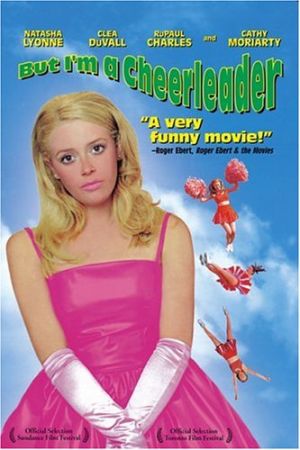
‘But I’m a Cheerleader’: Stripping Away the Normalcy of Heteronormativity

‘But I’m a Cheerleader’ literally queers the stereotype of the popular cheerleader going steady with a handsome football player. The film’s overt display of oppression over queer sexuality speaks to the dominant patriarchal society that strives to eliminate all non-normative ways of living.

'But I'm a Cheerleader' movie poster
But I’m a Cheerleader movie poster


This guest post by Abeni Moreno appears as part of our theme week Representations of Female Sexual Desire.

But I’m a Cheerleader literally queers the stereotype of the popular cheerleader going steady with a handsome football player. Natasha Lyonne, who plays the main character, Megan, is confronted by friends and family who suspect her of being the “L” word. That’s right…a lesbian. Megan keeps provocative pictures of women in her locker, despises kissing her boyfriend and sexually fantasizes about her cheermates. It is then that she is sent off to a correctional program called “True Directions.”

But I’m a Cheerleader‘s overt display of oppression over queer sexuality speaks to the dominant patriarchal society that strives to eliminate all non-normative ways of living. In this case, the film focuses on Megan’s experience of discovering her queer sexuality ironically through her participation in “True Directions.” There she meets love interest Graham, Clea DuVull, who is portrayed as the bad girl with a trust fund. It is within their romantic involvement that the film makes painfully apparent conversation therapy fails miserably. Both characters find love and sexual desire in a place that is made to consist of homophobia, stereotypes, and internalized gender roles.

Graham and Megan find love in 'But I'm a Cheerleader'
Graham and Megan find love in But I’m a Cheerleader


But I’m a Cheerleader exaggerates gender-“appropriate” color schemes throughout the film, presenting the audience with the ridiculousness of assigned gender roles that people are expected to embody throughout their lives. The Pepto Bismol pink and baby blue uniforms along with the decorated living quarters help illustrate the defined “normalcy” of gender and sexuality often forced upon people by our society. When Megan arrives at True Directions, she is unaware that her sexual fantasies about women and undesirable boyfriend are “abnormal.” The definition of normal is pushed even further when a more tender, intimate, and sensual love scene between Megan and Graham is highlighted as beautiful and loving. In comparison, Megan and her boyfriend are sloppy, awkward, and unaffectionate. But I’m a Cheerleader shows heterosexuality as mundane and unattractive. The film’s focus on a woman sexually desiring another woman is a creative protest of normative sexuality.

The film challenges other forms of gender/sexual expectations. For example, an androgynous character named Jan realizes she is heterosexual during a group therapy session. Her epiphany brings up a vital point that we should not pre-judge and  categorize other people’s sexuality based on their gender, whether it be butch, feminine, trans*, etc. Jan states, “Everybody thinks I’m this big dyke because I wear baggy pants …play softball and I’m not as pretty as other girls, but that doesn’t make me gay… I like guys.. I can’t help it.” The other characters believe Jan is in denial because her outer appearance is masculine. Mike (RuPaul) even bluntly suggests, “Who is she trying to fool?” But I’m a Cheerleader uses Jan to comment on the way people label their peers and define their ways of love and sexuality for them even within the queer community.

Jan But I'm a Cheerleader

Overall, But I’m a Cheerleader shows that there are few safe spaces for alternative sexuality and desire. The characters suppress their identities during their time at True Directions, showing how society often leaves little space for the queer community to be open and out. Megan and Graham hide their relationship, Sinead uses aversion therapy and Andre fails at being butch. These are all common obstacles that many people can relate to. Plus, the film’s 1950s nuance and decor displays the decade’s reputation for the nuclear family and cisgender children as commentary on a time where the majority of the queer community was not out and proud but underground. But I’m a Cheerleader makes it clear that we sometimes internalize discrimination and homophobia to try to fit in. But in the end, we can’t change who are or how we love no matter how much we try to drown ourselves in pink clothes and do our best to throw a football. It’s inevitable that we will break out of the 1950s definition of “normal” that seeks to determine sexual desire and lifestyle.


Abeni Moreno is a Chicana feminist and a recent graduate from California State University Long Beach. She is also a volunteer radio host at Kbeach Radio and KPFK in Hollywood California.

The Sin of Sexuality: Desire in ‘Philomena’

Sex is everywhere and nowhere in ‘Philomena.’ Sex is the reason that the titular heroine is sent to Roscrea as a young woman, to have her illegitimate baby behind closed doors. Sex is also the reason that Philomena’s son, Anthony, is adopted out to an American family even though his mother is still living.

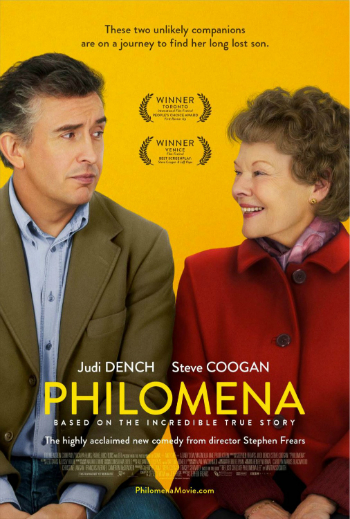
'Philomena' movie poster
Philomena movie poster


This guest post by Caitlin Keefe Moran appears as part of our theme week on Representations of Female Sexual Desire.

Philomena, directed by Stephen Frears, tells a recognizable story: a mother searches for the child she gave up for adoption in her youth. What complicates this recognizable story is that this isn’t the story at all: Philomena’s child was given up against her will by the Sisters of the Sacred Heart at Roscrea Abbey in Ireland, who held her in bondage as a laundry girl until she repaid the debt caused by her sin of sexual indiscretion. Sex is everywhere and nowhere in Philomena. Sex is the reason that the titular heroine is sent to Roscrea as a young woman, to have her illegitimate baby behind closed doors. Sex is also the reason that Philomena’s son, Anthony, is adopted out to an American family even though his mother is still living; the very fact that she gave birth to him at all, unmarried as she was, means she is unfit to be his mother. But we never see any sex—we get the faintest whisper of a flirtation at a county fair, a couple of innocent giggles, a dropped caramel apple, before the camera pans away. The next time we see Philomena, she is pregnant, standing before a firing squad of nuns, answering questions about her virtue.

Judi Dench as Philomena Lee, looking through the gates at Roscrea Abbey


The bulk of the film follows Philomena (Dame Judi Dench) as she tries to find her son after over four decades of separation with the help of journalist Martin Sixsmith (Steve Coogan, who was nominated for an Oscar for co-writing the screenplay). After being stonewalled by the nuns currently living at Roscrea, Philomena and Martin end up in Washington DC, following a tip from an Irish bartender that most of the Roscrea children were sent to America. I won’t spoil the surprise of what she ends up finding but I will say that we get to hear Judi Dench say the word “clitoris,” which in my opinion justifies just about every endeavor.

Catholic ideology hangs over the film like an incense-scented altar cloth. All discussions of sex, or sin, or pleasure, are tied to each other and connected in a messy tangle. When the nuns interrogate a pregnant Philomena, they don’t focus on what she did; they interrogate her agency and her gratification. “Did you enjoy your sin?” they ask. “Did you take your knickers down?” Sexual pleasure, in other words, makes an already execrable sin that much worse. Philomena herself buys into this logic; after she and Martin travel to Roscrea together for the first time, she speaks frankly about her first sexual experience. “And after I had the sex,” she tells Martin, “I thought anything that feels so lovely must be wrong.” To which Martin, a lapsed Catholic and former altar boy, replies, “Fucking Catholics.”

Philomena and Martin on the way to America—and answers.


Religion and sexuality were, and remain, uncomfortably coupled, not only in Ireland but in Catholic countries everywhere. In the climax of the movie, when Martin and Philomena confront Sister Hildegarde, the nun who purposely withheld information about Philomena from her son when he was dying from AIDS and searching from her, Sister Hildegarde lays it out for them: “I have kept my vow of chastity my entire life. Self-denial and mortification of the flesh. That’s what brings us closer to God. Those girls had no one to blame but themselves and their carnal incontinence.” (To which Martin, lapsed Catholic and former altar boy, replies, “I think if Jesus were here right now he’d tip you out of that fucking wheelchair.” Go Martin!) In Sister Hildegarde’s world, sexual purity is the only thing women possess that makes them valuable, worthy of both earthly and divine love. Once that purity has been lost—and especially if the losing of it was enjoyable—then women also lose the right to be treated like human beings. When Philomena was in labor, Sister Hildegarde was the attending nurse who refused to call a doctor or administer pain medication when it became clear that the baby was breach. “Her pain is her penance,” she says to another nun as she stood over a screaming Philomena. An exercise in sexuality may start out pleasurably, but it can only end in pain. Martin, too, learns this when he discovers old graves in the back of the abbey, all anonymous, for the women who hadn’t survived labor at Roscrea. Mother and child, in childbirth.

Philomena Lee was one of thousands of girls between the mid-18th century and the late 20th century who worked in the Magdalene laundries (named for Mary Magdalene, who in early Christian tradition was suspected of being a prostitute). Sometimes they came, like Philomena, pregnant and unwed. Others came from state-run hospitals and psychiatric wards, or were simply plucked from the street and delivered up to the nuns. Once in the control of the nuns, the women and girls worked for no pay doing backbreaking labor until they expunged their sins. But for women like Philomena, this was impossible. Her sexuality was her sin. Many of the Roscrea girls came from backgrounds rife with sexual abuse and violence. In 2013, the Sydney Morning Herald published interviews with women who had survived the laundries; one of them, named Mary Currington, described her three-decade marriage after incarceration in the laundries thusly: “I’m afraid I was a failure in the bedroom department. It was all tied up with the abuse as a child. I tried to be a good wife, but every time it felt like rape… It was a humiliating, degrading, shaming life and it doesn’t leave you.”

Young Philomena with Anthony, before he was taken away


The last of the Magdalene laundries closed down in 1996 (let that sink in for a moment). In 2011, after sustained efforts from survivors’ groups and the United Nations Committee against Torture, the Irish government officially recognized its role in the operation of the laundries and apologized. The religious orders that had run the laundries, however, refused to pay restitution to the surviving victims (justifying the note I scrawled in the margins of my notebook while watching the movie: “Damn, nuns are cold”). These were absolutely not the sins of the father being visited upon the son; the Church was still benefitting from the laundries only 15 years before the government’s formal apology, so they should have been held accountable. But the rhetoric of sexual indiscretion allowed them to escape culpability for their abuses. These were damaged women, irredeemable women. The fallen. If they had committed any other crime, any other sacrilege, then perhaps they would be worthy of an apology. But not these women. Not Philomena. After all, she took her knickers down.

In the end, Philomena finds it within herself to forgive the nuns of Roscrea for what did to her; Martin, ever the cranky atheist, can’t. As a viewer, I tended to side with Martin on questions of faith and forgiveness. If I were Philomena, the world could have pried my bitterness out of my cold, dead hands as I was lowered into the ground. But even more important than Philomena’s forgiveness of a wretched old nun is that throughout the movie she maintains an open heart and a loving soul in the face of incredible loss. She lives not as a woman afraid but as a woman mourning what was lost, who nevertheless keeps going. She maintains a love of the world, of things and of people, of cheesy romance novels that she continuously narrates to Martin and free booze on airplanes. She marries and has more children, who are good to her. In spite of a world that would have gladly consigned her to the anonymous headstones in the abbey’s graveyard, she lives.


Caitlin Keefe Moran is an editor in New York City. Her work has appeared on The Toast, in The Iowa Review, and other outlets. She lives in Queens and feels passionately about donuts and splitting infinitives as a form of protest.

‘Stoker’: Love, Longing, Desire, and Acceptance

In addition to telling a great story, ‘Stoker’ also shows an open and often eerie portrayal of female sexual desire, longing, perception of love and acceptance of one’s self as an autonomous sexual being. The film doesn’t shy away from pure desire and want as justifiable means to actions.

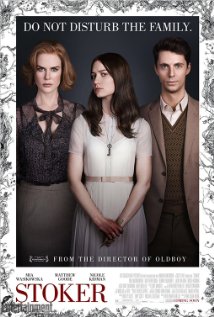
'Stoker' poster
Stoker poster

This guest post by Shay Revolver appears as part of our theme week on Representations of Female Sexual Desire.

A good psychological thriller pulls its viewers in like a spider web. The director and cinematographer work together like a couple of spiders, the actors and their performance become the web. If all of these elements come together as they should, a trap is set and the viewer becomes a fly. There is a sense of magic in Chan-wook Park’s Stoker. The story is compelling, the stage wonderfully set , the camera work is intense and the actors are amazing. If you haven’t seen the film yet, I urge you to check it out for these reasons alone. I will warn you, however, that there is an attempted rape in the film, and some of the other scenes might be a bit disturbing to watch. The beauty of the film isn’t the only thing that makes this film amazing. In addition to telling a great story, Stoker also shows an open and often eerie portrayal of female sexual desire, longing, perception of love and acceptance of one’s self as an autonomous sexual being. The film doesn’t shy away from pure desire and want as justifiable means to actions. Seeing such an open portrayal on screen is refreshing.

Virginal India Before the Sexual Awakening


Stoker tells the story of the newly 18 India Stoker, played by a very stoic and introspective Mia Wasikowska. India is coming to terms with the recent death of her father, Richard. He died in a tragic car accident on her birthday, leaving her alone to enter young adulthood with her cold and often irrational mother, Evelyn, played by Nicole Kidman. As if all of these feelings and emotions weren’t enough on their own, the funeral brings India’s uncle, Charlie, into the mix. The women have never met him because he has spent his life traveling the world and he offers, and by offers, I mean tells them that he is going to stick around and help out.

This is the point in the film where female desire starts taking shape and bringing itself to the forefront as a real theme of Stoker. Evelyn is a woman with needs and desires. With her husband now gone she finds herself in need of someone to connect with, someone to take care of her and make her feel wanted, desired, and loved. Her husband devoted himself to their daughter India, which gave India a sense of under-the-surface confidence and stripped away Evelyn’s “value” as a sexual, desirable woman. Because of this shift in the marriage you get the sense from the very beginning of the film that Evelyn has been alone in a sense for a very long time. With her husband now out of the picture, she finds herself alone with her daughter to lean on. However, India has just turned 18 and is trying to figure out who she is as a woman and what she wants. This leaves Evelyn vulnerable and hurt. This desire for a connection and to be needed that exists inside of her makes her easy prey for Charlie’s charm. She welcomes him into the home and her life to fill the hole inside of her.

Evelyn and Charlie
Evelyn and Charlie


India, on the other hand, is far more skeptical of her uncle and his motives. While she is mourning the loss of her father, she is not in such a rush to have another male figure come in and take his place. Having recently turned 18 and trying to figure out her place in the world, she’s already begun separating herself from her mother and her father’s death, while hurting her deeply, gave her an added sense of freedom. She also finds herself drawn to her uncle in an odd way. Having never met him she finds his gaze strange and his seduction of her mother even stranger. She watches him with equal parts curiosity and annoyance.

Charlie continues his seduction of Evelyn, which delights Evelyn because she has wanted to be desired for so long. However, the closer that the two of them become the further India pushes both of them away. Soon India’s great aunt arrives to visit and check up on India and Evelyn. This visit and subsequent conversations with her great aunt solidify India’s distrust of her uncle and his motives. Evelyn, on the other hand, believes that great aunt Gwendolyn is just continuing her pattern of being judgmental towards her and ignores her subtle warnings. Evelyn is finally feeling like a woman again, and she refuses to have this feeling ruined.

Evelyn and India mourning


One of the interesting things about Stoker is that while it doesn’t shy away from female desires or awakenings, it doesn’t exploit them either. It treats them as part of the story. Both female leads are experiencing a sexual awakening of sorts but from different ends of the spectrum. Evelyn is finding a second life through her intimate interactions with Charlie. She’s starting to feel alive again, wanted. Her needs are being met. India is experiencing an awakening as well. She’s exploring her sexuality and figuring out what excites her. After a rather violent day at school where she stabs a bully in the hand with a pencil, she returns home to witness Evelyn and Charlie exploring each other. This drives her from the home and into fellow classmate Whip. Wanting to explore her own sexual feelings she goes with him into the woods, they make out for a while and she begins to discover where her desires lead. As the make-out session gets more exploratory she bites Whip. Not in the playful coy way–in a violent way. A way reminiscent of the stabbing of the bully at school so much so that a correlation can be seen between the penetration of the male bully by the less-than-helpless India as the catalyst to her sexual awakening. This awakening is confirmed by her interaction with Whip.

This interaction with Whip starts to take a turn for the worse and Whip attempts to rape India; this interaction ends with Whip being buried in India’s garden. Her Uncle Charlie shows up at the last minute and breaks Whip’s neck with his belt buckle. This tragic experience doesn’t mortify India like such an horrifying back-to-back interactions would mortify most young women; instead, it excites her. So much so that her awakening comes to a head while she masturbates in the shower and climaxes to the memory of Uncle Charlie breaking the neck of her would-be rapist.
India Stoker masturbates in the shower
India masturbates in the shower


By this point in Stoker, Evelyn has begun to feel alive again and like a vital wanted woman and India has realized that her uncle is a murderer. While going through her dead father’s office, she finds letters from her uncle and realizes that her suspicions were founded–he’s crazy and she shouldn’t trust him. She confronts her uncle and you discover that not only is he delusional and probably in love with her, but he also killed her father. She covers her anger well and plays along nicely when Charlie steps in to save her again by giving her an alibi when the sheriff comes around to find out what happened to Whip, whom he believes has disappeared. As a thank you, India uses her new-found sexuality and seduction techniques on her eager uncle just in time for her mother to catch them before things go too far. Evelyn is hurt. Her need to be desired and to feel like a woman and sexual being seems to be on the verge of yet again being taken away by India. Evelyn begins to verbally attack India in a very cold way before confronting Charlie with the truth–something she plans to use to keep Charlie around as her lover and separate him from her daughter.

Evelyn and India have a mother-daughter talk


Her plan goes awry, and after an intense seduction by Charlie, he attempts to do what he does best and kill her. His plan doesn’t quite go as planned because the very capable India shows up and kills Charlie before he can kill her mother. She buries her uncle in the backyard and decides to follow her original plan and move to New York to start a new life.

As India drives off into to sunset in her/Charlie’s car, you can tell something is different about her. No longer the same unsure little girl she was at the beginning of the film , India had evolved into something altogether new. She experienced her awakening; she discovered the art of seduction. She knew what turned her on, what excited her, and you get the sense that she was going forth to find it. One of the great things about this film is that there is no judgment. Charlie’s character, while prominent, is more of a supporting role than a lead. His sole purpose in the film is to facilitate the awakening of Evelyn and India. His violent actions open the gateway for India to explore her masochistic , violent and dominating desires and his charm facilitate Evelyn’s return to being a sexual being after what the viewer can assume has been an 18-year void.

India breaks free
India breaks free

The film doesn’t ever fully punish the women as they go through their sexual transformations or subject them to a gratuitous male gaze-focused sex scenes like most films would have done. It treats their desires, needs, and curiosities as matter of fact and a part of life. It acknowledges that all women are, at their core sexual, beings just as much as men are, and they have needs and wants. Stoker never once shies away from these needs and desires. It even shows how these desires and awakenings can come on slowly over a period of time, like India’s, or can be latent and come on quick and all at once like Evelyn’s. It gave an actual unapologetic portrayal of women coming alive and actually wanting to be sexually and physically satisfied without condemnation or shame placed upon the act or their desire for it. And that makes Stoker not only an amazing psychological thriller with a gripping story, but also a representation of being a woman: discovering what turns you on and what you need from other people and from yourself, going for it, and being unapologetic for what you want.


Shay Revolver is a vegan, feminist, cinephile, insomniac, recovering NYU student and former roller derby player currently working as a New York-based microcinema filmmaker, web series creator and writer. She’s obsessed with most books, especially the Pop Culture and Philosophy series and loves movies and TV shows from low brow to high class. As long as the image is moving she’s all in and believes that everything is worth a watch. She still believes that movies make the best bedtime stories because books are a daytime activity to rev up your engine and once you flip that first page, you have to keep going until you finish it and that is beautiful in its own right. She enjoys talking about the feminist perspective in comic book and gaming culture and the lack of gender equality in mainstream cinema and television productions. Twitter: @socialslumber13.

Enjoyment Isn’t an Item on ‘The To Do List’

The sex in ‘The To Do List’—which comes about for Plaza’s character Brandy Klark after she realizes she has no sexual experience going into college—was utterly joyless; it was as if Brandy was going through the motions. This is hardly surprising considering the premise of the film is to check off a smorgasbord of sex acts over summer vacation in order to be appropriately sexually educated as she becomes tertiary educated.

"The To Do List" poster
The To Do List poster

This guest post by Scarlett Harris appears as part of our theme week on Representations of Female Sexual Desire.

I was moved to watch The To Do List after seeing Emily Nussbaum tweet about it over the Christmas break. It was a stinking hot Saturday afternoon in my corner of the world, so I thought I’d watch along with her as she tweeted her disillusion with the Aubrey Plaza vehicle.

Nussbaum’s main complaint was that the sex in The To Do List—which comes about for Plaza’s character Brandy Klark after she realizes she has no sexual experience going into college—was utterly joyless; it was as if Brandy was going through the motions.

This is hardly surprising considering the premise of the film is to check off a smorgasbord of sex acts over summer vacation in order to be appropriately sexually educated as she becomes tertiary educated.

"The To Do List" list
The To Do List


It’s not a wholly ineffective idea: Brandy understands studying and academic excellence better than she does social mores, so making a project out of a desire to know what to do come college (pardon the pun) prepares her for the next chapters in her life: more academic aptitude and more sex.

Previously on Bitch Flicks, Leigh Kolb wrote in praise of The To Do List, asserting that in the film, “Brandy’s desire is always paramount,” but I don’t think this is the case. While Brady’s parents—well, at least her mum, played to scrunchie-wearing perfection by Connie Britton—and sister, Amber (Rachel Bilson) are portrayed as pretty sexually progressive, their dialogue doesn’t seem to connote “the joy of sex,” so to speak. For example, upon giving Brandy a tube of lube, Mrs. Klark tells her daughter, “As you move forward on your sexual journey, promise me one thing.” “To have fun?” Brandy asks. “No, to use lube,” Mrs. Klark replied. Here, enjoyment seems an afterthought.

A joyless kiss in "The To Do List"
A joyless kiss in The To Do List


Brandy’s sexually active sister, Amber, doesn’t seem to enjoy the copious amounts of sex she’s had, either. Though she does tell Brandy to “have fun getting your cherry popped” in the penultimate scene of the movie, it’s said with a heavy dose of sarcasm.

It’s important to note that part of the reason Brandy decides to cultivate a “sex manual,” as the objects of her attractions are wont to call it, is due to peer pressure. She’s called a virgin during her valedictorian speech, and her friends insinuate that Brandy can’t go to college as inexperienced as she is. The tipping point in Brandy’s decision to do her… erm… The To Do List ultimately lies in her lust for shirtless guitar player/lifeguard Rusty (Scott Porter), but even that turns out to be about what other people will think of her landing a college guy. At the end of the movie, she tells Rusty, “Am I going to regret losing my virginity to you? No, you are going to be an awesome story to tell my friends.”

Brandy
Brandy

So while The To Do List appears as part of the recent cannon of sex positive “chick flicks,” which includes For a Good Time, Call…, not everything is as it seems. The To Do List is more about peer pressure and the sexual experiences you should be having at that age than it is about actual young female desire.


Scarlett Harris is a Melbourne, Australia-based freelance writer and blogger at The Scarlett Woman, where she muses about feminism, social issues and pop culture. You can follow her on Twitter here.

Room for One: A Positive Representation of Female Sexuality on ‘Bates Motel’

However, there exists an antidote of sorts in the character of Emma Decody (Olivia Cooke) – a 17-year-old with cystic fibrosis. In a show where sex is conflated with violence, male desire, and death, Emma is an oasis of sex positivity, female desire, and life.

This guest post by Rachel Hock appears as part of our theme week on Representations of Female Sexual Desire.

Conventionally, horror films punish women for their sexuality. This is particularly evident in the slasher films of the 70s and 80s such as Halloween and The Texas Chainsaw Massacre. But the grandaddy of them all is Alfred Hitchcock’s 1960 Psycho. The classic suffered three sequels in the 80s and early 90s and an ill-received shot-for-shot-remake by Gus Van Sant in 1998. Most recently, proto-slasher Norman Bates has been reincarnated in the pre-Psycho A&E TV series Bates Motel.

Bates Motel is both prequel and reboot. Set in the present day, it depicts Norman’s violent psychosexual development. Norman’s formative years are alluded to in Hitchcock’s film – an uncomfortable codependency with his mother – but the show’s creators have free reign to imagine what happened to Norman Bates to make him Norman Bates.

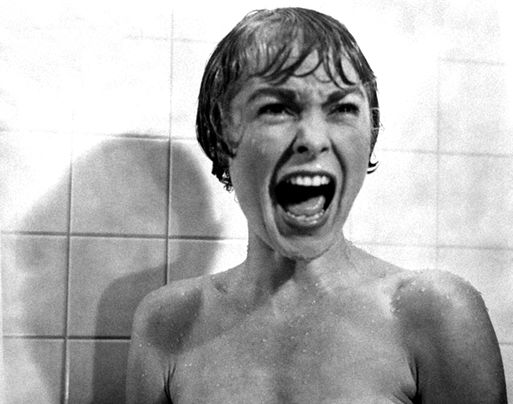
The iconic shower scene from 'Psycho'
The iconic shower scene from Psycho


To put it lightly, there is plenty of fodder for a discussion of what is wrong with Bates Motel when viewed through a feminist lens. The series is garish in its use of sexual violence. There are instances of rape, sex slavery, and, as in its source material, women being punished for having sex. Even when there are consensual sex scenes, the narrative purpose is usually to forward the story or character arc of a male character. (Bitch Flicks writer Amanda Rodriguez explores the rape scene in the first episode of the series and its implications in her post “Rape Culture, Trigger, Warnings, and Bates Motel.”)

However, there exists an antidote of sorts in the character of Emma Decody (Olivia Cooke) – a 17-year-old with cystic fibrosis. In a show where sex is conflated with violence, male desire, and death, Emma is an oasis of sex positivity, female desire, and life.

Emma Decody played by Olivia Cooke
Emma Decody (played by Olivia Cooke)


After being friend-zoned (if you’ll excuse the expression) by Norman (Freddie Highmore) in favor of troubled popular girl Bradley (Nicola Peltz) in the first season, the second season presents a new love interest for Emma – small-time pot dealer Gunner (Keenan Tracey). When the beach-side memorial that Emma plans for ill-fated Bradley turns into a kegger, Emma gets drunk and asks Gunner to “make bad choices” with her.

What does it mean for Emma to want to “make bad choices”? By “bad choices,” she means doing those things that adults pretend teenagers don’t do: sex, drinking, and drugs. She is a level-headed character with good judgment and prone to doing the right thing; she is a Good Girl.  For Emma to want to get a little bit wild, the valuable emphasis is on “choices.” The “bad” is coy and ironic. She doesn’t want to do bad things, she wants to make bad choices, or rather, she wants to make choices. She wants agency.

Drunk on the beach in this episode, Emma tells Gunner, “We’re not dead, OK. So we should live. But we’re going to die, y’know?” For her, with a stated life expectancy of 27, agency – and sexual agency in particular – is very much tied to the act of living.

Emma wakes up at the Bates Motel, which is more than can be said for its more famous occupant, who never made it out of the shower.


The next episode finds Emma waking up in Gunner’s bed the next morning, unsure what had transpired the night before. When she finally confronts him to ask if they had sex, she is relieved to find out that they did not. (Gunner’s response – “Not that I didn’t want to sleep with you, just I prefer when the girls are conscious. Besides, if we did sleep together, you’d remember.” – makes me wince. He’s a real charmer, this one. But at Emma’s age I would have eaten it up.) Emma does in fact want to have sex with Gunner, which he senses, so later he finds her to ask her why her reaction was one of relief. “I was relieved because it would have been my first time,” she reveals.

Despite his preference for girls who are conscious, it escapes him that having sex with a blotto Emma would have been rape. Although she does not recognize this directly, she does indicate that the significance of her first time having sex is not derived from antiquated and romanticized notions of virginity and purity. Her first time is important to her because having sex is proof of being alive: “Just think how much pressure people put on their first time knowing that they’re going to have like a million more. Mine could be my only time, so I just, I want to make it count. Or at least be something I can actually remember.” Her life has been given an expiration date, and she’s more than halfway there. Having sex, and having the opportunity to consent to it, is literally a vital experience.

Emma asks Norma for advice. "I tried googling it, but what I read just scared me."
Emma asks Norma for advice. “I tried Googling it, but what I read just scared me.”

But sex isn’t merely symbolic for Emma. She wants to have sex. As Gabrielle Moss points out in a piece for Bitch Magazine about Bob’s Burgers‘ Tina Belcher, “the teenage girls of TV are typically portrayed as only capable of responding to sexual overtures – with varying degrees of disinterest, disgust, or enthusiasm, sure, but their sexuality almost exclusively exists in response to the overtures of male characters.” Emma doesn’t entirely break this mold. She waits for Gunner to make the moves. But just because she doesn’t take action first doesn’t mean that she isn’t an active participant. In anticipation of a date with Gunner, Emma asks Norman’s mother Norma (Vera Farmiga) what it’s like having sex for the first time. Emma confides, “There’s someone that I met and every time I’m with him that’s pretty much all I think about.” By thinking about and preparing for sex, she is represented as being in control of her sexuality.

And so Emma and Gunner have sex. They laugh and joke together as they undress and it seems every bit as lovely as Emma had hoped it would be. She is not punished for it. In fact, nothing comes of her tryst with Gunner. (In the next episode she does have a scary experience jumping off of a rope swing into a river, but there is nothing to suggest that this would not have happened if she had not had sex.) The other characters are unaffected. The plotline stands independently; Emma’s sexuality remains her own.

“Are you going to kiss me now?”


Does Bates Motel deserve a pat on the back and a job-well-done for including one positive representation of female sexuality? Not really. But a character like Emma in a show like Bates Motel is worth paying attention to.


Rachel Hock is a theater producer and arts administrator in Boston. She received a BA in English from the University of Rochester in 2009, and dreams of someday going to grad school to continue studying film theory and racking up student debt. She tweets mostly about food and TV at @RachelCraves

Bitch Flicks’ Weekly Picks

Check out what we’ve been reading this week–and let us know what you’ve been reading/writing in the comments!

What have you been reading/writing this week? Tell us in the comments!

Seed & Spark: The Film Industry Needs Women Like You

Being a female in the male-driven world of film often elicits instant praise: “Good for you! The industry needs women like you!” which opens the door for us to respond with, “Yes! Let me tell you all about our documentary, ‘Trichster’!” The problem is—because Hollywood is well-known for having an astonishing lack of females—this is without having ever seen or heard about our work; we’re just what the industry needs (having lady parts and all). We are proud to represent the growing number of women in the independent film industry and gladly share the story of our team, but we’d prefer the focus to be on our work.

Why an all-woman film team is marketing gold—and what that says about the industry

The all-woman creative "Team Trichster": Producer Amanda Giordano, Director Jillian Corsie, DP/Co-Producer Seun Babalola, Producer Carolyn and Cinematographer/Co-Producer Katie Maul)
The all-woman creative “Team Trichster“: Producer Amanda Giordano, Director Jillian Corsie, DP/Co-Producer Seun Babalola, Producer Carolyn and Cinematographer/Co-Producer Katie Maul)


This is a guest post by Katie Maul.

I’m co-producing a film with a team of four smart, innovative, creative professionals, who are, yes, all women. Take the time you need to applaud, throw your fist in the air and share this article on your social pages.

Being a female in the male-driven world of film often elicits instant praise: “Good for you! The industry needs women like you!” which opens the door for us to respond with, “Yes! Let me tell you all about our documentary, Trichster!” The problem is—because Hollywood is well-known for having an astonishing lack of females—this is without having ever seen or heard about our work; we’re just what the industry needs (having lady parts and all). We are proud to represent the growing number of women in the independent film industry and gladly share the story of our team, but we’d prefer the focus to be on our work.

Director of Photography and Co-Producer for Trichster, Seun Babalola


Our film, Trichster, follows seven people living with trichotillomania, a disorder that causes them to pull out their own hair. According to the Trichotillomania Learning Center, the little known disorder is “estimated to affect one to three percent of the population,” and “by adulthood, 80-90 percent of reported cases are women.” As a direct result, our audience and cast reflect those percentages, and our growing fan base is largely female. Touting our all-woman creative team is a perfect way to reach and expand that audience and our rare case of an all-woman team is marketing gold.

Co-Producer and Cinematographer, Katie Maul, shooting a scene with Rebecca Brown


As team-appointed “marketing strategist” for the film, this is not lost on me, and it’s why with every pitch, synopsis, interview or discussion about the film, the phrase “all-woman creative team” is brought up and is often the main focus. Interest is piqued at the mention of our collective gender and gives us access to apply for specialized grants, media/blog coverage, and mentorship programs and groups. “Five females producing their first film” is not only pleasing alliteration, but the inclusion of “female” automatically boosts our appeal and makes us “different and interesting.”  It opens doors and opportunities to collaborate with other women trying to break into the industry and gives us VIP access to women-only events and workshops.

It’s great marketing for us, but it’s a sad reflection on the industry as a whole.  The slowly expanding crack in the glass ceiling of filmmaking still hasn’t cleared enough women to come remotely close to evening out the playing field, so it’s no wonder that an all-woman team is news. The problem is: It shouldn’t be. We shouldn’t get attention for something as basic as our gender—we didn’t have to do anything to be born with vaginas. Somehow, the fact that we were simultaneously helps and hurts us in the film world. We are an anomaly, which is great for marketing opportunities, but not so great for our prospects in an industry where that anomaly exists.

Producers Carolyn Maher and Amanda Giordano


Dr. Martha M. Lauzen’s study, The Celluloid Ceiling: Behind-the-Scenes Employment of Women on the Top 250 Films of 2013, shows that 16 percent of key behind-the-scenes positions of the top grossing 250 U.S. films were filled by women in 2013— that’s down 2 percent from 2012. Only 6 percent of last year’s directors from those films were women (another disappointing decline from the previous year). The numbers don’t lie; the off-balance industry is extremely one-sided when it comes to gender. The need for specialized grants, mentorship programs and organizations that support and encourage female filmmakers is real—and it’s infuriating. Don’t get me wrong, these groups should be commended on their persistent efforts and the advancements they’ve made to shatter that “celluloid ceiling,” but I have a feeling they would all agree that their necessary existence is maddening. An all-woman team shouldn’t be surprising or noteworthy; it shouldn’t be anything more than trivial information about the film, but, here, in 2014, our team is a pioneering anomaly. We will gladly do our part and continue to stand up for female filmmakers as we storm our way into the industry. And we will produce a film that will make the industry and those trying to break into it proud.


katie
Katie Maul

Katie Maul is Co-Producer and Cinematographer on Trichster, a documentary about seven people living with the little-known disorder, trichotillomania. She works full time as Marketing Strategist and Content Producer at Critical Mention, a media monitoring company. Katie pursues freelance projects on nights and weekends as an editor, producer, and videographer.

The Gaze of Objectification: Race, Gender, and Privilege in ‘Belle’

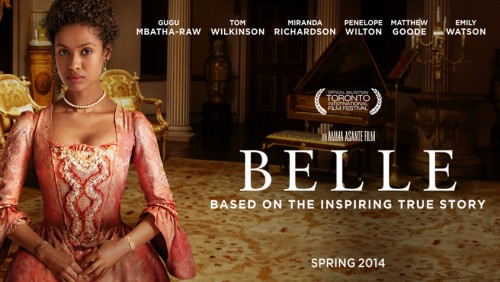
What does it mean in a young woman’s life to be constantly stared at and treated as “the Other”? ‘Belle,’ directed by Amma Asante and written by Misan Sagay, has a lush, gorgeous look from the costumes to the landscape, and throughout this new film we, too, are invited to “look,” and to understand that “the dominant white male gaze” is related to power in 18th-century England. An actual 1779 portrait currently hanging in Scone Palace, Scotland, credited to artist Johann Zoffany, is at the heart of the complex ‘Belle,’ as is the issue of race.

Movie poster for Belle


This guest post by Laura Shamas, PhD, previously appeared at Huffington Post and is cross-posted with permission.

What does it mean in a young woman’s life to be constantly stared at and treated as “the Other”? Belle, directed by Amma Asante and written by Misan Sagay, has a lush, gorgeous look from the costumes to the landscape, and throughout this new film we, too, are invited to “look,” and to understand that “the dominant white male gaze” is related to power in 18th-century England. An actual 1779 portrait currently hanging in Scone Palace, Scotland, credited to artist Johann Zoffany, is at the heart of the complex Belle, as is the issue of race.

The film is based on the true story of Dido Elizabeth Belle (poignantly played by Mugu Mbatha-Raw), the illegitimate mixed race child of Captain Sir John Lindsay (Matthew Goode) and a woman named Maria Belle; her parents met on a Spanish slave ship. Dido’s mother dies before the story begins. The opening images of the film depict a child in a cloak in the shadows, a carriage ride on a rough road in England in the 1700’s, and then, the emergence of Captain Sir John Lindsay, who’s come to claim Belle as his daughter. But he’s unable to raise her, as he must sail away with the Royal Navy. He brings Dido to Kenwood House in Hampstead, the home of his aristocratic uncle, Lord Mansfield (sensitively portrayed by Tom Wilkinson), who is the Lord Chief Justice of England. He leaves Dido in the care of the Mansfields, but before Lindsay departs, he assures the girl that she is loved.

B-01384.NEF

The pastoral Mansfield estate already has a young blonde charge on the premises: Lady Elizabeth Murray (Sarah Gadon plays the older Elizabeth), whose own father abandoned her while he’s moved on to Europe. The young Elizabeth and Dido become inseparable, and as “cousin-sisters” grow up doing everything together: frolicking in the grass, sharing a bedroom, studying music, letters, French, and eventually, the proper mores of society as taught by their watchful aunts, Lady Mansfield (Emily Watson) and Lady Mary Murray (Penelope Wilton). The Mansfields themselves are childless, and truly love their great-nieces. The two girls are raised on relatively equal footing in the home, with some notable exceptions. For example, when visitors come, Dido is not allowed to dine with them, due to being born out of wedlock. She is, however, able to meet and greet guests after dinner in the parlor.

The news of Captain Lindsay’s eventual death is delivered by letter; Dido becomes an heiress, afforded an sizable annuity, and therefore, is set financially for life; this is in direct contrast to Elizabeth, who has no dowry and must marry well, much as in a Jane Austen novel, in order to maintain the standards of her upbringing and lineage.

095_Belle_ScreenGrab_039.JPG

When male visitors do eventually arrive for dinner at Kenwood House, such as potential suitors James Ashford (Tom Felton) and his brother Oliver (James Norton), they stare and whisper in asides, sizing up “the mulatto”; director Asante aptly depicts the 18th-century concept of women as objects here. In a later carriage scene, Elizabeth directly expresses to Dido that choices facing them, as women, are depressingly limited; they are unable to work, and a good marriage seems to be their only hope for the future.

The motif of “looking” is emphasized further in other sequences in the film. There’s a very touching scene of Dido staring at herself in the mirror, and clawing, in agony, at her own skin, trying to come to terms with her own identity.

gugu-mbatha-raw-in-belle-movie-11

But when a painter is commissioned for a family portrait of the two girls, there are several separate shots of Dido holding a pose, gazed upon by not only the painter, but surreptitiously spied upon by another potential suitor, the budding abolitionist John Davinier (Sam Reid).

The film points to the multiple meanings of “gazing” at Dido: yes, due to her remarkable female beauty, as in the title, but also because she is “the Other” in 18th-century British society: aristocratic, educated, and biracial. In one scene, this is especially highlighted. Both Elizabeth and Dido are asked to play the piano for the Ashfords during their first visit to Kenwood House. Lady Ashford (Miranda Richardson) doubts that Dido will be able to play at all. But it is Dido who, between the two girls, is the more accomplished musician. In a later scene, the objectification of Dido in British society is more dire, as misogynistic James Ashford, who once called beautiful Dido “repulsive,” stares at her on a river bank, and then assaults her.

belle-2

Mabel (Bethan Mary-James), the freed servant in the Mansfield’s London home, is another character connected to “looking.” Dido and Mabel stare at each other upon meeting, a recognition of their shared heritage — and yet their different positions in society. Later, in front of a mirror, Mabel shows Dido how to comb through her hair properly, starting with the ends first. Mabel tells Dido that a man first showed her how to do it.

Courtship becomes a major crucible in the film. Who will get a viable marriage proposal? Dido’s first proposal occurs under the watchful eye of a marble statue of Aphrodite in a bathing pose, seeming to imply it’s a love match. But later, the romance falls apart. Earlier, Lord Mansfield tried to entrust the keys of the house to Dido, offering her the honored place that her spinster Aunt Mary holds — a Hestia position as household caretaker. Hestia is the virginal domestic Greek goddess of the hearth who never leaves home. Worried about her future, Lord Mansfield implies that Dido won’t be able to make a suitable marriage match, due to her liminal societal position: her ethnicity combined with her aristocratic background. But his offer greatly disappoints Dido, and so we know that a romance is in her future; she chooses the way of Aphrodite, not Hestia.

Gugu Mbatha-Raw in Belle

Classism and racism are key parts of a secondary parallel plot involving Lord Mansfield, who must render a judgment on the horrible Zong massacre of 1781, about insurers and the deaths of 142 slaves on a cargo ship. Davinier becomes secretly allied with Dido here, trying to convince Lord Mansfield to rule against the ship’s crew, in favor of the insurers. Although there are several points in the film that seem anachronistic, as if twenty-century sensibilities are in motion instead of the more likely constraints of the time period, it is Dido’s agency in this later part of the film that seems most modern, and perhaps unlikely. Still, it gives Dido an important activist goal, and the two plotlines come together well in the end: Dido’s ability to decide her own future, the verdict in the Zong trial, and romance.

The famous Zoffany portrait of the girls is revealed in the end, highlighting the focus on its unusual qualities: a handsomely gowned, pearl-wearing young black woman touched by a well-dressed white woman, given equal center space at eye line level. In the film, Asante has shown us other pictures of the era, where Africans in paintings are given little space, infantilized, or enslaved, depicted as property. The impact of the independent spirit of Dido in the painting, and the equality in stature of the two girls in the portrait, is evocative and satisfying. Director Asante again reminds us of the motif of looking, gazing, as we ourselves finally stare at the family portrait that our heroine dutifully posed for at Kenwood. And instead of Dido merely seated, she’s smiling and in motion. Symbolically, and in contrast to Elizabeth, she is going somewhere. The theme of “looking,” or gazing upon from a position of privilege as related to objectification, is explored thoroughly in Belle. The film challenges us: what do you really see and why do you see it?


Laura Shamas is a writer, film consultant, and mythologist. Her newest book is Pop Mythology: Collected Essays. Read more at her website: LauraShamas.com.

Bitch Flicks’ Weekly Picks

Check out what we’ve been reading this week–and let us know what you’ve been reading/writing in the comments!

recommended-red-714x300-12

Cannes Film Festival: Jane Campion Accuses Film Industry of ‘Inherent Sexism’ by Rachel Donadio at The New York Times

This History-Making Marriage Equality Documentary is a Joyful Tearjerker by Sarah Mirk at Bitch Media

Op-ed: Why Days of Our Lives‘ Will & Sonny Might Be the Most Important Couple on TV by Jeremy Helligar at Advocate

Seed & Spark: On Ambivalence

A useful piece of advice I received as a screenwriter was to make my main character proactive. If my lead was willful and had a clear goal, I would have no problem following them through their own actions to achieve, or not achieve, that goal. This was useful insofar as it allowed me to finally complete a script. With just a little finagling the plot points unfolded in all the right places and things made good sense. But naturally, I was therefore incapable of writing anything remotely true to my own life experience.

This is a guest post by Cat Papadimitriou.

A good friend of mine does an uncanny impression of me: he waits a moment to respond to something, and finally says “Well, yes, and no.” It’s true that I never have a one word answer for anything.

A useful piece of advice I received as a screenwriter was to make my main character proactive. If my lead was willful and had a clear goal, I would have no problem following them through their own actions to achieve, or not achieve, that goal. This was useful insofar as it allowed me to finally complete a script. With just a little finagling the plot points unfolded in all the right places and things made good sense. But naturally, I was therefore incapable of writing anything remotely true to my own life experience.

I had this film in my head about a girl who had a painfully pressing urge both towards and away from things she could not identify.  For months I lived in the colors, sounds and smells of the world of this film, and with the feelings she had. But for the love of God I could not make this chick DO anything!

I decided to re-watch a few of my favorite films and play “spot the goal.”

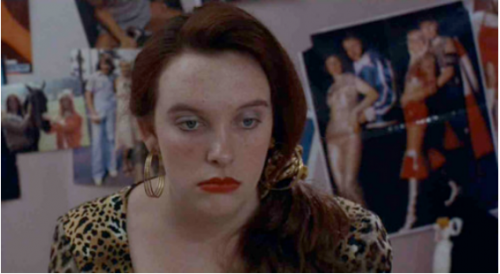
Muriel listening to ABBA in Muriel's Wedding
Muriel listening to ABBA in Muriel’s Wedding


Muriel’s Wedding. OK, Muriel wants to get married. And the events that propel the film forward are in fact brought on by her own actions. But she isn’t really acting on her desire to be married. She’s acting on her desire to avoid everything that reminds her that she’s not. It’s more a film about low self-esteem and disappointment in life than it is a film about a girl who only wants to be a bride.

In Trainspotting, the first thing Renton declares is that he is going clean. There’s a clear goal! Except that goal is one he acts on by shooting up “one last time.” Before the film is halfway through he has gone through withdrawal and started using all over again. As soon as I’m asking myself, “was quitting the goal?” he is floored by the presence of Diane at a nightclub, and is on a quest for love. But that is short-lived as well. Renton seems to hop all over the place trying to figure out what he wants, and that’s part of what makes the film so engaging; his desires change constantly. He wants one thing one moment, but life has another in store. We’re not bored by his lack of conviction, we’re enthralled by his thought process through it all.

Trenton and Diane talking about drugs in Trainspotting


So I tried to get to know this Nia girl living in my head. When I met her, she didn’t really want anything. And when I went down the list, “do you want to graduate college?” “Do you want a better relationship with your mom?” and so on, the answer was always “Well… yes and no.” So I let her act, or not act, on the yes and the no.

I let her inner conflict steer the film, and a cool thing happened. The drama came FROM her, and not as a result of her.

Contrary to what I was warned, Nia wasn’t wishy-washy. That’s not what being ambivalent is. It’s about being conflicted. And I found that Nia’s choices were much more interesting, spontaneous, and genuine when she was acting somewhat in spite of herself. She was surprising me. As in real life, she was not really affecting the world around her in any tremendous way. Life was going on, as it does, and she was the one changing. There were larger things at play than what Nia might have wanted.

Nika Ezell Pappas as Nia in Nia on Vacation


I’m an atheist, by the way. Not because I am 100 percent positive that when I die my consciousness as Cat also ends. I believe this, but I also know that it is only a belief. We’re all agnostic by default. Ambivalence is the awareness that a single truth can encompass conflicting ideas—yes and no. Nothing is black or white. It’s usually black and white. Not so much grey, but checkerboard, or perhaps herringbone.

And the films I tend to gravitate toward are the ones that represent life, and people, in this way—truthfully.

Was the advice I got as a screenwriter good advice? You guessed it. Yes, and no.

If we’re not following actions taken by the main character, well, he or she is not the main character. But whether those actions are towards any one specific goal, or whether there is any awareness of a goal at all, is, I think, optional. Just think of all the amazing films we would be writing off if it wasn’t.

Guido, drifting away in thought in 8 1/2


Where is young Anton going in The 400 Blows? Or Benjamin Braddock, in The Graduate? All that’s really clear is that they both want something else.

It takes Guido, in Federico Fellini’s 8 ½, over 75 percent of the film to admit that he wants nothing more but to make one honest film, and to look at his wife without shame. Yet we are enraptured as we watch him half-heartedly muddling through the production of his current film project. We’re not really watching the film he’s supposed to be making. We’re seeing his heart where it really is: in the past, in longing, in his understanding of himself, as it unfolds.


unnamed

Cat Papadimitriou is a Bronx born Brooklyn based filmmaker and story-teller devoted to telling stories of the under-represented.  Her last film adventure abroad was as camera assistant and educator in a two woman crew on the project Fire in Our Hearts and she is currently working on her first feature narrative, Nia On Vacation. She is most proud of her cooking abilities.

Bitch Flicks’ Weekly Picks

Check out what we’ve been reading this week–and let us know what you’ve been reading/writing in the comments!

recommended-red-714x300-12


Why Feminists Need to Take Over School Boards by Soraya Chemaly at Ms. blog

I Was Shailene Woodley: I Used to Say I Wasn’t a Feminist by Ann Friedman at The Cut

Amy Schumer and the Women of Broad City: Paving the Way for a Female “Golden Age” by Sara Stewart at Women and Hollywood

TV Corner: Fargo by Melissa McEwan at Shakesville


What have you been reading/writing this week? Tell us in the comments!