‘The Foxy Merkins’ and the Uncharted Territory of the Fat, Lesbian Protagonist

That separation is reinforced by much of the film’s comedy, but Margaret isn’t positioned as an object of ridicule or disgust, as is often the case with fat and/or gender non-conforming characters. She is naive, gauche, and in over her head, but she is also the character with whom the audience empathizes most.


This guest post by Tessa Racked appears as part of our theme week on Fatphobia and Fat Positivity.


This article contains spoilers for The Foxy Merkins

Selected for the NEXT series at the 2014 Sundance Film Festival along with films like Obvious Child and A Girl Walks Home Alone at Night, The Foxy Merkins is a comedy by and about queer women with an episodic structure and humor fueled by social awkwardness and mundane absurdism (think Louie). Simply put, it’s part fish out of water comedy, part buddy film, and all lesbian hookers. Set in contemporary New York City, the film creates a world of sex work in homage to Midnight Cowboy and My Own Private Idaho, but populated by women who have sex with other women. As with its progenitors, this subculture is scandalous, but hardly clandestine. These sex workers bide their time on the sidewalk in broad daylight until approached by other women, which occurs with relative frequency.

The film charts unexpected territory by merging stereotypes about seemingly disparate subcultures. Its narrative maintains the beats of taboo sex and danger expected from a story about sex workers, but does so through the filter of lesbian culture and stereotypes. In one exchange between the two main characters, Jo (Jackie Monahan) advises Margaret (Lisa Haas) to market her services by using the hanky code. However, the film’s version isn’t quite the same one used by gay men in the 70s to signify their kinky preferences: “A yellow bandana in your left back pocket means you have more than one cat… a red bandana in your right back pocket means you like women who have been through the Change.”

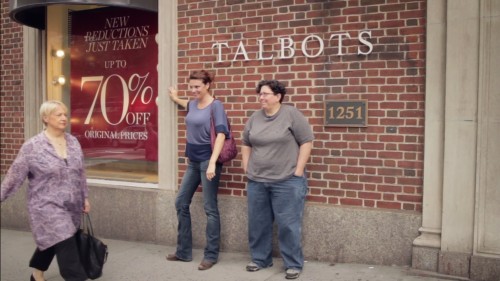
Jo and Margaret at work. “A lot of the girls hang out in front of Talbots.”


The film predominantly focuses on Margaret, a newbie sex worker with a degree in Women’s Studies who happens to be fat and butch. She is a pastiche of red-blooded hunk Joe Buck (Jon Voight) from Midnight Cowboy and sulky sylph Mike (River Phoenix) from My Own Private Idaho, but her size and gender expression set her apart from their more normative representations of beauty. That separation is reinforced by much of the film’s comedy, but Margaret isn’t positioned as an object of ridicule or disgust, as is often the case with fat and/or gender non-conforming characters. She is naive, gauche, and in over her head, but she is also the character with whom the audience empathizes most.

Margaret bumbles her way through interactions with clients, but this characteristic diverts from the standard depiction of fat and/or gender non-conforming women as undeserving of sexual desire. The Foxy Merkins uses a more nuanced approach. We do see glimpses of her as a sexual being, such as a scene that begins by implying she’s just had an orgasm, even if it quickly turns its focus on her awkwardness. This trait is partially inherited from Joe Buck, who isn’t genteel enough to seduce the rich Manhattanites he targets. It’s charming in its relatability: as someone who can barely navigate small talk in a professional setting, let alone a sexual encounter, I could easily see myself in Margaret’s shoes. But these scenes are also ground for meta-humor, as film trope clashes with cultural expectations. What happens when someone who looks like Margaret assumes the role of soul-searching hustler formerly and famously occupied by normatively attractive men? The Foxy Merkins’ predecessors supply setting, story, and characters, but like a Warner Brothers cartoon character running off their background onto a blank screen, there is a dearth of precedent for a fat, butch film character to communicate sexual allure, either to fellow characters or to an audience who has been groomed to lust after thin, feminine women. The energy that Haas brings to these scenes suggests an undercurrent of resigned bewilderment.

Margaret socially functions as a sexual being by virtue of existing within a subculture of lesbian sex work, but that subculture largely retains real-world beauty standards, rendering her body simultaneously unattractive and sexually commodified. Jo explains to Margaret how she is seen by potential clients: “You’re the type of lesbian they are mortified to be seen with… they do not want to be caught with you. So they’re gonna pay you extra to sneak around with them… honestly, you should have so much more money.” Thin, femme Jo takes on the role of Margaret’s docent, as well as her foil. Carefree (and often careless), Jo opts to do sex work as a way of rebelling against her wealthy upbringing. Despite repeatedly stating that she is not sexually attracted to women, she is more experienced and successful than Margaret in their profession. In one scene, the two walk down a busy Manhattan street as Jo casually claims to have slept with every woman they pass, while Margaret seems to barely keep up with mentally processing what her friend is telling her.

Margaret’s allergies are triggered while visiting a client’s house.


The film continues to grapple with the clashing expectations of Margaret’s profession and appearance through a sequence of encounters with a rich, conservative client (Susan Ziegler). During their first encounter, the client asks Margaret to take her clothes off. In opposition to the sexy tone she ought to set, she chastely removes her bra and underwear once she is under the bedsheet. (Her client coquettishly refers to this maneuver as a “magic trick.”) While another film might construct an erotic scene with gliding closeups and sensual music, this one involves a stationary shot of Margaret squirming and rocking under the sheet as her client waits patiently off to the side, amplified sounds of rustling cloth the only soundtrack. The scene self-consciously buys into the mainstream trope that “nobody wants to see” fat bodies or expressions of queer sexuality. The client obviously wants to see Margaret’s body and have sex with her, but Margaret remains in her culturally sanctioned role of chaste lesbian/unseen fat person to the point of absurdity.

Unsurprisingly, this is not a film that passes up a chance to satirize the right wing. Margaret’s aforementioned client has hired two men (Charles Rogers and Lee Eaton) to dress as cops, burst into her hotel room, and terrorize Margaret, who is unaware that the scene is staged. In the second of three scenes to this effect, Margaret is completely naked. Fat bodies in a state of undress are usually cause for a film protagonist to express disgust, with the expectation that the audience will empathize with that disgust. This time, however, the fat body belongs to our protagonist. She isn’t modestly positioned with her back to the camera or cheekily blocked by an object in the foreground. The audience sees her full frontal in the center of the screen, flanked by the two cops pointing guns at her. As with her “striptease,” the camera is unwavering. This static view heightens our sense of Margaret’s shock and embarrassment, but is also confrontational.  This is a film that asks the audience to relate to a fat, lesbian protagonist: if a viewer has been trying to empathize with Margaret by downplaying her size or queerness up to this point in the movie, those characteristics have become starkly unavoidable.

foxymerkins4

The male gaze that reinforces standards of thinness and straightness and is ubiquitous in cinema, even if only present in a handful of scenes in The Foxy Merkins, is embodied in this scene by the two cops. They repeatedly tell Margaret to drop what she’s holding, despite her protests that she isn’t holding anything and attempts to placate them by making dropping motions with her empty hands. They even insist that she has “something tied around [her] waist” and is wearing “a collared shirt,” as if they have no sense of what a fat woman’s body looks like in the nude. An absurdist feedback loop is created of a command that cannot be followed and cooperation that is inherently uncooperative. This dynamic is reminiscent of the often frustrating relationship that queer and fat people have with a dominant culture that demands compliance even when attempts to do so are demonstrably futile. We still hear voices of authority telling us to “drop it” with regards to weight and desire for non-heteronormative love and sex, despite evidence that diets don’t work in the long run and sexual orientation can’t be changed at will.

But these two men have no genuine authority, they have been ordered to act as police by the client. As Jo later explains to Margaret, “It’s her fetish, it’s her kink.  She likes to see people naked with the police.” The client watches these confrontations from behind the bedsheets, distancing herself from the situation by feigning shock and claiming that Margaret showed up in her room uninvited. This rich, white, thin woman who is hiding her own queerness to maintain her privilege actively seeks pleasure from seeing the oppression of marginalized people. Their third date even includes a Black woman, ostensibly the client’s maid, getting shot by the cops. Jo, who has the privileges of her appearance and wealthy upbringing, similarly benefits from the situation, as she has been paid to withhold from Margaret that the scenes aren’t real. The client’s fetish parallels the common use of schadenfreude in film to entertain at the expense of not only fat people, but people of color, sex workers, and queer, trans, and gender nonconforming people.

Of course, The Foxy Merkins is a comedy, and the scenarios it presents are not as cruel as the realities it satirizes, or even the films to which it pays homage. The pretend bust is the closest Margaret comes to experiencing violence on the job, and even that ends with the cops and their shooting victim laughing and walking offscreen together. Nevertheless, the lighthearted humor speaks to real disparities in media representation. The audience is not allowed to forget that Margaret is occupying a position that the film industry did not historically intend to include someone of her sexuality, gender expression, or size. Both as a lesbian hooker and as a film character, her existence is a struggle. She ultimately realizes that she must move on from the former role, but as the latter, she is a quiet triumph.


Tessa Racked is a Women’s Studies major who makes a living as a social worker, writes about fat representation in film at Consistent Panda Bear Shape, and dispenses witticisms @tessa_racked. They live in Chicago.


Fatphobia: What ‘Daria’ Got Wrong

She tells the girls she isn’t supposed to eat chocolate, but she’d like to buy some anyway. Then, she faints as a result of hypoglycemia and possibly exhaustion, the results of her being so large. Daria and Jane stand still for a moment, startled and clueless, and then Jane takes a picture.

MsJohanssen4


This guest post by Maggie Slutzker appears as part of our theme week on Fatphobia and Fat Positivity.


Daria might be my favorite show in the entire world. In the last two years, I’ve watched the series straight through at least four times. I love almost everything about it— the way Quinn pimps high school boys, Ms. Barch’s misandry, Mr. DiMartino’s dry sarcasm, and everything about Jodie Landon. Helen Morgendorffer is my idol, and I long to spend a weekend with the Lane family. Most of all though, I love Daria and Jane’s friendship and how it survives every obstacle it encounters. Daria is the only show that makes me laugh, motivates me, and reminds me to appreciate my friends and family, all at the same time. But, since the very first time I viewed the series, there has always been one thing that made me uncomfortable. Through its five seasons, Daria was able to tackle so many issues with grace—being ditched by your best friend, alienation by your peers, sexism, racism, elitism, marriage, the true tedium of high school, and douchebag boyfriends. So what isn’t on this list? Fatphobia.

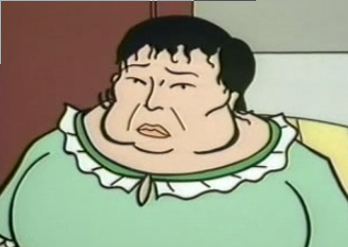
There is one notably fat character on the show, but if you aren’t an obsessive watcher like I am, you may not remember her. Her name is Mrs. Johanssen, and she’s probably diabetic.

latest

Mrs. Johansen never appears for very long, but she’s always a source of comic relief. We first meet her in a season one episode (“Cafe Disaffecto”) in which Daria and Jane are selling chocolate bars for a school fundraiser. She tells the girls she isn’t supposed to eat chocolate, but she’d like to buy some anyway. Then, she faints as a result of hypoglycemia and possibly exhaustion, the results of her being so large. Daria and Jane stand still for a moment, startled and clueless, and then Jane takes a picture. Mrs. Johansen wakes up and insists on buying every single chocolate bar they have. When Daria and Jane leave without selling them to her, Mrs. Johansen calls up legendary principal Angela Li and complains. When Ms. Li suggests that maybe Mrs. Johansen wanted the chocolate for her family, Jane says, “She has no family. She ate them.”

In her handful of appearances throughout the series, Mrs. Johansen is always depicted in a very specific way: short, messy hair; usually panting, sweating or having some sort of physical trouble; always wearing a muumuu; and of course, always obsessively pursuing some sort of food, whether chocolate bars or cheese logs. This is briefly explained in the episode “Psycho Therapy,” in which she is speaking with a psychologist about using food for comfort her parents didn’t provide. There is emotional trauma behind her fatness.

fdc46c08363508b62e1c437c10483ea7

One of the great things about cartoons is that they have a unique opportunity to make characters of literally all shapes, sizes, and colors, and treat every single difference, no matter how bizarre, as completely normal. The fact that Skeeter from Doug was blue or that Arnold and Gerald from Hey Arnold! had some non-standard head-shapes were acknowledged, but in the end these features were only background to the real problems characters dealt with. Daria too never ignored a character’s appearance, from Brittany’s chest, to Trent’s tattoos, to Jodie’s Blackness and related struggle. The show was excellent at revealing new sides and dimensions to characters, and seemed to take pleasure in showing hidden strengths and weaknesses. Mr. DiMartino had a gambling addiction and a sensitive side, and vain Quinn turned out to be pretty clever and even kind. Daria was excellent at showing that there was always more to a person than an image or stereotype. So why make the only fat character utterly one-dimensional, more a device than a person?

It’s also interesting to me that a show so centered around teenage-hood barely seems to mention fatness, something most teen girls hear about constantly. Among Daria’s own struggles with body image, weight is never mentioned, though a lack of curvaceousness is. The only other characters who discuss weight and fatness in detail are, of course, the Fashion Club. The Fashion Club quartet are beloved to me, especially Quinn, whose developmental arc in the series is one of my favorites. But they are— and of course, they’re intended to be— problematic and ridiculously, hilariously superficial, and the episode about weight gain is no exception. The episode in question, “Fat Like Me,” begins with the Fashion Club deciding whether to set a weight limit for its members. Just minutes after the topic is introduced, club president Sandi Griffin falls down a flight of stairs and breaks her leg. She manages to stay out of school for several weeks, and when she returns…she is “fat.” (If we assume all members of the Fashion Club are under a size four, then I’m guessing “fat” means maybe a size seven or eight?) At Daria’s thinly veiled advisement, Quinn becomes Sandi’s coach after the weight gain threatens to destroy the Fashion Club, and Sandi loses the weight. For Sandi, a fat body is an obstacle to overcome.

01

In writing this, I don’t mean to say that you’re a bad person if you laughed when Mrs. Johansen and Mr. DiMartino faced off over free sample cheese logs. Nor do I mean to claim that there aren’t fat people who are unhealthy or even whose lives are threatened by a condition related to their weight. What I’m saying is that this is not the only way fat people exist. There are plenty of of healthy, happy, stylish people who are also overweight or obese. There are fat people who exercise, and there are fat people who aren’t obsessed with food. To put it plainly, fatness isn’t automatically a problem. But Mrs. Johansen embodies every negative fat stereotype there is. Her fatness is a medical condition, a consequence of excessive and unhealthy living as well as possible abuse. When Sandi gets fat, it is a result of forced inactivity and again, something that she and Quinn have to solve. When, at the end of the episode, Quinn suggests the Fashion Club ease up on weight limits, it is another suggestion that weight gain is a consequence of unfortunate circumstances, another implication that fatness is a problem to be pitied.

For Daria to indicate that fatness comes solely from inactivity and junk food is particularly frustrating because Daria herself adores junk food. There are frequent mentions of cheese fries, and pizza plays a pivotal role. She drinks soda. Quinn chides her for eating hamburgers, chocolate cake (for breakfast), and a cartoon version of Pop Tarts. Quinn herself is an embodiment of popular beauty standards— one of her first priorities is “bouncy hair,” and though boys are constantly fetching her soda, we’re pretty sure that it’s diet. The show repeatedly uses Quinn and the Fashion Club to poke fun at all things superficial, and Daria to expose the hypocrisy behind the messages we send teenagers and consumers. But while Daria doesn’t diet, rarely puts on makeup, and never lets fashion dictate her wardrobe, she also never gets fat. So why the automatic connection between fat and food when the TV show itself acknowledges that skinny people can easily love and eat junk food?

johanssen-z

Now, Daria may be a slightly older program, but its narrow depiction of fat characters is part of a problem we’re still dealing with today. It is rare to see a fat character whose fatness isn’t made into comic relief (think Bridesmaids), an embarrassing history (Schmidt from New Girl), or some sort of terrible consequence (Precious). It is nearly always a negative, something to be pitied. Daria strived to point out that nothing is perfect, not all is as it seems, and everyone is vulnerable. But sadly, for a show so determined to point out the absurdities of societal expectation, Daria really didn’t shed any light on fatphobia other than to contribute to it.


Maggie Slutzker is a writer, feminist, and fervent Daria fan. You can follow her on Twitter @SuchaSlutzker.

‘Steven Universe’: Many Dimensions of Fat Positivity

He is soft. He is round. He is squishy and loving and completely without pretense. There is no guarding wall around his heart, no desire to compete with other boys, no need to be seen as “cool” or “tough” or “edgy,” and no compulsion to become anything other than what he already is because he knows that “what he already is” has value.

JrhAQ


This guest post by Anthony DellaRosa appears as part of our theme week on Fatphobia and Fat Positivity.


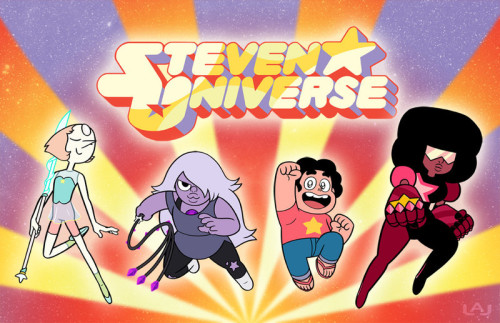
Steven Universe is a kids’ cartoon show that’s made a lot of noise lately, especially in circles having to do with feminism or social justice, and looking at even the most basic summary of the premise, it’s not hard to see why. For one thing, the show stars a radically non-nuclear family. For another, it’s a family made up partly of a son who totally disregards the conventional standards of modern American masculinity and three adoptive moms, all of whom are non-binary people who choose to use feminine pronouns, two of whom are strongly coded as People of Color, and one of whom is literally the physical manifestation of the unconditional love between two same-sex lovers who actually share a kiss on-screen.

Now, that’s a lot to take in, and if you’re not previously familiar with the series, it might already sound a bit overwhelming, but the important thing to remember is that any show that can help teach our kids about the diversity that exists in our world instead of flagrantly ignoring it — and, specifically, anything that can do that teaching in a colorful, exciting, adventurous way that can also spark their creativity — is something worth looking at. And that’s Steven Universe in a nutshell. Of course, we can dissect the show’s approach to diversity in any number of ways with any number of focuses, but the one that’s perhaps the most immediately evident, requiring nearly no specific in-depth knowledge of the lore and mythology, is the very visible presence of many, many fat characters in the show’s core cast. So, how does Steven Universe tackle weight?

image0081

Well, the main character is Steven himself (voiced by Zach Callison). Steven is a boy who sits right on the line that divides childhood from adolescence, and in the show, he’s specifically defined by his incredible empathy and his unparalleled protective instincts. Those are the elements of his character that make him a hero, the elements that allow him to see any situation through to the end with the best possible results, and those are the elements that his weight serves to underline. He is soft. He is round. He is squishy and loving and completely without pretense. There is no guarding wall around his heart, no desire to compete with other boys, no need to be seen as “cool” or “tough” or “edgy,” and no compulsion to become anything other than what he already is because he knows that “what he already is” has value. That’s not to say that he’s necessarily complacent – because he’s incredibly energetic and always eager to learn new things about life, about himself, and about the world around him. It simply goes to say that he is consciously aware that, whatever else happens, he has an intrinsic worth that can never be diminished as long as he keeps his mind open and his heart warm. He is effortlessly endearing and unabashedly vulnerable, and that is what makes him strong.

Steven’s mother, Rose Quartz (voiced by Susan Egan), is also fat. As a matter of fact, she’s canonically over eight feet tall, and she wears a 2XL T-shirt, which fits snugly, with pride. She is unapologetically huge in every possible regard — in height, in weight, in love, in mercy, in joy, in optimism — and she is completely and unflinchingly comfortable within her own skin. She is beautiful, inside and out, and that’s just not my own personal judgment. That is a fundamental fact of the series, an opinion shared by every character who ever knew her and every character that matters, including her most bitter and longstanding enemies. That belief is a condition of entry for any aspiring viewer. It is necessary. It is real.

latest

Now, Rose is a lot of things in this show. She’s a mother, first and foremost. That’s how we’re initially introduced to her, more or less — as the saintly woman who, in the series’ backstory, traded her own life force to bring Steven’s into existence, and her weight does emphasize the cuddly, maternal aspects of her character. She’s pillowy and soft. She’s warm and round and comforting, without any sharp edges, devoid of all straight lines.

But she’s also a warrior. She’s fat, beautiful, feminine, maternal, and the cunning leader of a ragtag alien strike team who came to Earth over six thousand years ago to conquer and colonize it for an outer-space empire, but when she found the planet and its people too rich and too precious to harm, she turned traitor. She stood on the front lines of a war against her own kind as Defender of the Earth, and because she loved the members of her team, and because they loved her back, they stood with her, protected in battle by her legendary shield, and they won. She is fat, and she is beautiful, and she is cuddly and soft with a big, goofy smile and huge, expressive eyes, and she is also the glorious rebel queen who saved a planet from an imperialist regime, and the wonderful thing about this show is that none of this — absolutely none of it — is ever presented as a contradiction. It’s not “oh, she’s fat, but she’s beautiful” or “she’s fat, but she’s strong.” There is no doubt, no dismay, no disbelief, and no fanfare for the fact that she can be all these things at once. It’s a given. She’s fat, she’s elegant, she’s drop-dead gorgeous and wickedly silly, she’s a mother, she’s a commando, and she’s so much more all at once because, simply, why not? Why couldn’t a person be all those things?

stevenuniverse-greg

Rose exists to show the kids at home that a person can be endlessly generous, magnificently compassionate, feminine, flowery, funny, principled, decisive, and completely kickass while also refusing to be ashamed of her curves, rolls, folds, and bulges.

Of course, if Steven’s mother is the kind of person we can all aspire to be like, Steven’s father, Greg (voiced by Tom Scharpling), is more like the kind of person we might see every day. Greg is fat. He’s also technically homeless, living in the same old broken-down, rusted-out hippie van he had when he was a teenager, and, frankly, homeless people and fat people do end up on the receiving end of a lot of the same stereotypes. They’re lazy. They’re dumb. They have no ambition. They have no drive, perseverance, or passion. They have no self-control. They’re pathetic, contemptible, a burden, or an eyesore. They’re an unsightly, unseemly, disgusting waste. But that’s a list of everything Greg Universe isn’t. It’s not that he has no drive, and it’s not that he has no passion. It’s that, in a world controlled by the wealthy for the wealthy, even the hottest passion and the hardest work in the world make for no guarantee of comfort or success. Unlike Rose Quartz, Greg Universe is a product of the planet Earth, and the planet Earth is not a meritocracy. People don’t just get what they deserve here, so Greg was chewed up, spit out, and left to pick up the pieces on his own, with no support and no safety net, by a series of institutions that were never designed to work in his favor, and his weight, like his living conditions, can easily be read as a function of modern American economics. Greg keeps his head above water — barely — by working every day at a car wash at the edge of town, and for people like that, for the working poor, meals, by necessity, have to be cheap, easy, and quick, and it’s not a coincidence that the cheapest, easiest, and quickest-to-make meals in the country tend overwhelmingly to be the greasiest and the most fattening. Healthy eating is not a privilege we can assume Greg has, especially when the only prominent purveyors of food in the show are a donut shop and a French fry stand, and that reflects a truth that affects millions of people every day, generation after generation.

thumbnail_34188

Still, while Greg’s weight is a constantly present piece of his character, very little — if any — specific attention is actually ever drawn to it in dialogue. Instead, the show’s focus consistently rests upon his grief for his wife, his bombastic love for his son, and his tremendous (if not profitable) expertise in the fields of music and sound design. He’s a hardworking, vulnerable, sincere, and well-meaning man who tries his best to be there for the people who need him, and in a show full of sweet people, he’s one of the sweetest of all. He is fat, and he is kind, and his son wouldn’t have him any other way.

The only main character who ever gave me a bit of pause on a personal level is Amethyst (voiced by Michaela Dietz), one of the members of Rose’s old rebel team and one of Steven’s current guardians. Amethyst is short, stout, and pudgy, and at first glance, her character actually does seem deliberately designed to invoke a lot of the most degrading fat stereotypes. She’s wasteful, rude, crude, generally unmotivated, unorganized, full of obviously bad ideas, and low on impulse control. Now contrast that with her foil, Pearl (voiced by Deedee Magno Hall), who is a fastidious, relentlessly goal-oriented perfectionist with the rail-thin body of a ballerina, and it becomes more than clear why the creators of this show designed these characters the way they did: They were channeling one-dimensional stereotypes and the shallowest expectations of the audience to shape these characters and inform their traits. Of course the perfectionist is thin and the loud, immature, goofy slacker is fat. Of course they are — because fat is imperfect, right? Fat is wrong. Fat is bad. So, the perfectionist wouldn’t be fat, would she? The lazy one is fat. The gross one is fat. That’s what the audience expects because that’s what the old stereotype is, so that’s what the creators of this show did when they made these characters: They tailored them to specifically fit the stereotypes for maximum convenience in lieu of more creative, subversive, or interesting concepts.

latest

That bothered me for a long, long time. It didn’t invalidate the good the show was doing, but it certainly accounted for quite a bit of bad, and it colored the way I saw the show and limited who I felt comfortable recommending it to, but then came an episode called “On the Run,” which honestly changed a lot about how I thought about Amethyst as a character. She was the star of the episode, which was all about her self-image, her self-esteem, her most deep-seated insecurities, her worst fears, and her biggest, proudest, most personal victories. The big takeaway from the episode was that Amethyst isn’t Rose. She’s not graceful. She’s not perfect. She isn’t always comfortable in her own skin, and she isn’t always okay with being who she is, with being born where she was, or with feeling the way she so often does. Deep down inside, she can actually be viciously self-loathing, and she does what she can, day to day to day to day, to be happy, to be comfortable, and to care for herself, and in the episode, the point is made explicitly that there is no one alive who has a right to try and judge her or make her feel bad for that. She is who she is, even if “who she is” isn’t always conventionally appealing or easily digestible to more quote-unquote “mainstream” sensibilities. Her fundamental rights to dignity and happiness are completely inalienable, and anyone who dares to infringe upon them is doing something unspeakably despicable.

In a way, she’s a lot like Greg — a necessary and more realistic counterpart for Rose and, to an extent, a counterpart for Steven. The way Rose is written and portrayed, she’s effectively a goddess on Earth, a perfectly balanced master of all things who demonstrates what we can all aspire to, and Steven follows in her footsteps. But Greg and especially Amethyst show us that we don’t always have to be like that and that it’s okay if we’re not. They show us that, as imperfect as we can be sometimes, we are still beautiful, loveable, admirable, and valid, and at the end of the day, even if Amethyst has a unique outlook on life and a bawdy sense of humor, she’s portrayed as no less heroic and no less worthy of worship and care. Steven looks up to her just as much as he looks up to Rose and Pearl and all the others, and she lays down her life to protect the beauty of the Earth and every single living being on its surface every bit as quickly.

stevenuni-breakfast

And, after all, that is the key idea. In the end, Steven Universe is a show that doesn’t always get everything right and certainly isn’t always perfect, but it’s a show built around the idea that all life, regardless of where it comes from or what it looks like, is inherently precious and worth protecting, and the creative team’s steadfast dedication to building an emotionally complex, rich, and diverse cast is a demonstration of its commitment to that concept.

Recommended Reading: How Does Steven Universe Expand Our Ideas of Family?, Steven Universe: One of the Most Positive, Progressive, and Affirming Shows on TV, Throwing Popcorn: Steven Universe


Anthony DellaRosa is an amateur critic and aspiring author with a particular passion for the stories we tell our children. He can be found on his blog, where he does informal reviews of movies, TV shows, video games, and books, and also on Twitter.


What They Did Right in ‘The Heat’

Her character may at first feed the stereotype that fat people are overbearing, belligerent and take up too much space, but the camera doesn’t make her body a joke (with accompanying thunder-thighs music). I like M.I.A.’s “Bad Girls” as the song of choice, and they do look pretty believably badass, with a comic overtone.

I had barely typed anything in before I got this


This guest post by Rhea Daniel appears as part of our theme week on Fatphobia and Fat Positivity.


The thing with fat-haters is, that even a fat person, man or a woman, trying to stay healthy is offensive to them. Anybody who keeps bringing up your body out of the health concern, it’s just an excuse, they don’t really want to see you jiggling around. To quote Junot Díaz, You think people hate a fat person? Try a fat person who’s trying to get thin.

The presumption is that all fat people are unhealthy and lead a sedentary lifestyle, never mind that with all this fat-obsession in the medical field, the health of skinny kids gets ignored.

So let’s see what is perceived as “fat”: as with my case, anything above a US size 6 or 8 and you’ve crossed the point of no return. A size 2 would be perfect (but a size 0 would be too thin). Even the plus size industry is guilty of false advertising, fat models with the voluptuous, “proportionate” ideal are a crock. The fact is that the perception of the ideal female body has changed several times over hundreds of years, and here’s my beef: if this is true, and we know that the female body ideal is somehow connected to food availability and wealth, and that our bodies are some sort of sounding board off of which these subconscious perceptions are projected, different ones for different cultures and classes, then it’s time to stop falling for this illusion. And it’s time for women to stop doing it to each other.

Untitled2

So to The Heat.

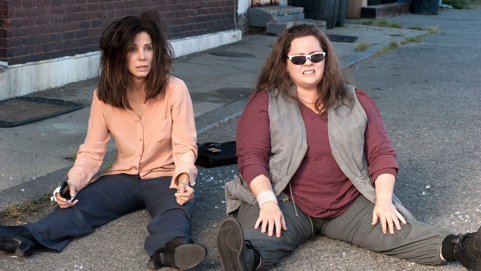
Melissa McCarthy plays an ill-tempered, foul-mouthed detective and I like that she’s incorrigible just because; also, her entire godawful family is like that. Her primary concerns are the welfare of her brother and eventually of her cop-buddy, played by Sandra Bullock, so she is something of a protective mommy-bear. Her character may at first feed the stereotype that fat people are overbearing, belligerent and take up too much space, but the camera doesn’t make her body a joke (with accompanying thunder-thighs music). I like M.I.A.’s “Bad Girls” as the song of choice, and they do look pretty believably badass, with a comic overtone.

McCarthy’s character is literally a slob, and I see parts of this character in a lot of her movies—and yet it is her character who is comfortable with her body and sexuality, she couldn’t be bothered with romance (and no make-overs, thank goodness). The mantra in the media and the world in general is, that for a woman to have any substance, fat or otherwise, she has to be considered desirable, doesn’t matter by which demographic. If you really want to be inclusive (and I’m not talking Glee inclusivity—a fat person is either an object of pity or attractive to someone with a sudden, inexplicable fat-fetish), chuck desirability in the grinder. If you’re concerned about representing fat people, it’s time to dispense with the compensatory love interest, or some day someone will come along who loves you just the way you aaah…zzzz….. It’s patronising, and it’s tired storytelling.

Sandra Bullock’s character is a bit of a dweeb and its not the first time she’s played an FBI agent who has trouble winning the respect of her male colleagues. It is her character, of the more acceptable body-type, who feels the need to overcompensate, who wears Spanx and has trouble forming romantic relationships, or any relationship. Not exactly a subtle role reversal, but her reasons for being insecure seem pertinent as she grew up in foster care. Also, it’s not like even models who fit into an acceptable mold of beauty don’t feel insecure.

Now if you’re not used to seeing women in situations of slapstick violence, you might not like this movie. Consider those home videos where kids do ridiculous things and get their nuts hurt. Those are real people getting hurt. Slapstick comedy, on the other hand, is centuries old and a well-practiced art. The women in this movie express pain, stoically take it, and do their jobs. There’s a scene where they’re tied to chairs and McCarthy has to remove a knife lodged in Bullock’s thigh to cut their ropes and then shove it back in before they’re caught. I thought it was evil, comedic genius: Jackass for girls. No rubber super-maidens here. The kind of violence I dislike is eroticised violence and this is how to actually do it without insulting an entire gender.

Also see Jumpin’ Jack Flash, because I told you to.

So this is not a comedy a social critic would be comfortable with. How do you make an offensive comedy inoffensive toward minorities and without being obvious, actually turn the tables? Dan Bakkedahl who plays the albino DEA agent in the film specifically addresses the trope of the evil albino. While not completely off the hook, they tried and made some good decisions. I’m looking forward to a sequel where they might address any other issues.

And Melissa McCarthy…I’m sending you hearts and bouquets from this end of the world.


Rhea Daniel lives in Mumbai. She frequently finds herself in a bind between her love for art and her feminist conscience. She is trying to become a better writer and artist and you can find her at rheadaniel(dot)tumblr(dot)com.

16 and Healthy: ‘My Mad Fat Diary’ Is Teen Girl Fat Positivity Gold

And therein lies what makes the show such a wonderful example of fat positivity and feminism—Rae is, per her own description, mad and fat, but it takes less than a single episode to make it abundantly clear that she is so much more than that.


This guest post by Ariana DiValentino appears as part of our theme week on Fatphobia and Fat Positivity.


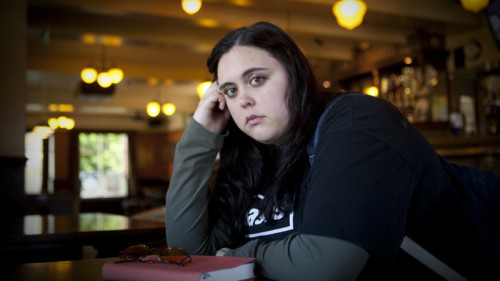
Considering the number of things media aimed at teenage girls typically gets wrong, it’s refreshing to see a mainstream TV program getting it very, very right. My Mad Fat Diary is a British series about Rae Earl (played by Sharon Rooney), a 16-year old girl who is big in size and bigger in personality. Having just been released from a stay in a psychiatric hospital after a suicide attempt, the show follows Rae struggling with mental health and body image issues alongside the slew of other issues that come with being a teenage girl: friends, school, sex, and family.

My-Mad-Fat-Diary-Series-1-e1375285823520

From the outset, the show’s approach to Rae’s weight is spot-on. She’s not particularly confident in her appearance (what 16-year-old is?), but she is trying her damnedest. Unlike the pitfalls many “lovable fat person” stories fall into, happiness and overall self-acceptance for Rae aren’t attached to her losing weight—not even under the common guise of “loving oneself enough to take care of your body.” Weight loss is rarely the question for Rae. Working toward her own mental health, with the help of her straight-talking therapist Dr. Kester (Ian Hart), constantly is.

What makes My Mad Fat Diary stand out is how it brings all of these topics to life in a way that is undeniably entertaining. For one thing, it’s set in 1996, with throwback outfits and a soundtrack to match. When it wants to be, the show is dead funny, and not in a slapstick or grotesque way centered around Rae’s size. When she makes genuine jokes at her own expense—on her own terms, it’s funny; when neighborhood hooligans do, it’s righteously nauseating. Rae herself is a clever, sharp-witted and outspoken character who pokes fun at everything and anything, making her friends laugh as often as viewers. Surrounded by a quirky band of friends and an unconventional home life (her flighty mother is harboring her younger, non-English-speaking, undocumented immigrant boyfriend Karim from Tunisia in the house), Rae may describe herself as “mad,” but she is often the sanest character of the cast.

cool-as-fuck

Some of the show’s best jokes (as well as troves of heart-wrenching moments) stem from Rae’s fully budded sexuality. Here still, there’s much less temptation to laugh at Rae than with her. While Melissa McCarthy’s overt sexuality in Bridesmaids, for example, derives its humour at least as much from the idea of a horny but sexually undesirable woman as from McCarthy’s truly hilarious farcicality, Rae’s sexuality doesn’t position her size as the butt of its joke. Rather, her private thoughts read like a Cosmo column that’s more colorful than internet literotica and yet more relatable than either of the two. Anyone who’s been a sexually frustrated adolescent can appreciate phrases like “sculpted piece of testosterone wonder” and her general outlook on butts. If only we had all had Rae’s wicked sense of humour at 16, not to mention her complete comfort with her own desires.

tumblr_n19f5ip5i11qzkwp1o1_1280

Rae’s maturity is about on par for her age, and as such, we cringe as she blunders through conflicts with boys, friends, and worst of all, her mother, with youthful brashness. Her adolescent perspective is written to a T, best exemplified in the sixth episode of Series 2, “Not I,” in which Rae is forced to confront the events of the past several months through the eyes of her pretty, popular, but equally insecure best friend, Chloe. Rae may be naïve at times, but the show itself is far from myopic. Even older viewers will be along for the ride as Rae deals with anxieties—such as her aversion to eating in front of people—that are perfectly expressed and at times, truly heartbreaking in their honesty.

And therein lies what makes the show such a wonderful example of fat positivity and feminism—Rae is, per her own description, mad and fat, but it takes less than a single episode to make it abundantly clear that she is so much more than that. Rae’s character and her problems are just so real. It’s rare enough for teenage girls to see positive representations of themselves onscreen, and even less so for those outside the typical beauty norms. Rae Earl is an extremely well-developed, well-written character—one we could all afford to take a cue from now and then when it comes to speaking up for others and advocating for our own well-being. My Mad Fat Diary and shows like it deserve to flood the airwaves from here to Lincolnshire.


Ariana DiValentino is a lover and budding creator of all things film and feminism, based in New York. Catch her in action on Twitter @ArianaLee721.


‘Parks and Recreation’: How Fatphobia Is Invisible

I don’t think it would be quite the same barrel of laughs if the motto of Pawnee were “First in Friendship, Fourth in Poverty.” Fat shaming and fat jokes like the People of Walmart photos are often a socially acceptable stand-in for the classist shaming of poor people. Poor people are more likely to be fat, after all. We get paid less and we’re more likely to be fired. Oh, the comedy!


This guest post by Ali Thompson appears as part of our theme week on Fatphobia and Fat Positivity.


I’ve been binge watching Parks and Recreation episodes on Netflix over the past few weeks, and I really wanted to love it. But every time I am about to decide that I do, Parks and Rec makes a fat “joke.” I have to put the word joke in quotes because the punch line seems to be that fat people exist.

It’s weird that a show that is renowned for its kindness and feminism would rely so heavily on fat jokes, but it also isn’t. The discrimination and microaggressions that fat people endure are invisible to the wider culture, and Parks and Rec is a good example of this.

Fatphobia is a consistent presence in the show. In the “Sweetums” episode Ann Perkins says, “Pawnee is the fourth most obese city in America. The kids here are beefy. They’re just beefy, big-boned, chunk monsters. I call ’em like I see ’em.”

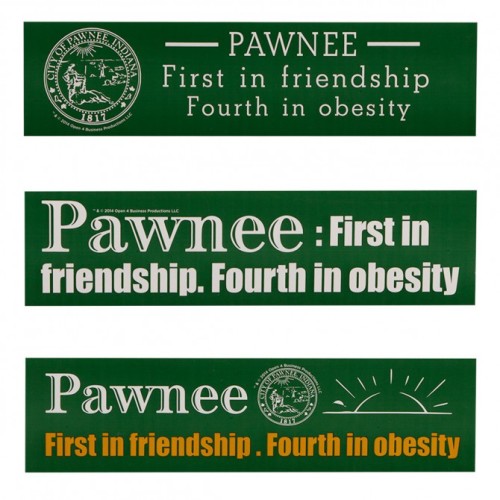
This happens in the second season, and apparently the writers found the existence of fat people so hilarious that they never let up after. Pawnee’s motto is “First in Friendship, Fourth in Obesity.” NBC is still selling shirts and bumper stickers featuring it.

parks-and-recreation-pawnee-bumper-sticker-set-set-of-3_670

I don’t think it would be quite the same barrel of laughs if the motto of Pawnee were “First in Friendship, Fourth in Poverty.” Fat shaming and fat jokes like the People of Walmart photos are often a socially acceptable stand-in for the classist shaming of poor people.  Poor people are more likely to be fat, after all. We get paid less and we’re more likely to be fired. Oh, the comedy!

There are plenty of times that Amy Poehler will say the word “obesity” as the supposed punch line of a joke, and then smirk at the camera slightly, like—“See? Fatties! Amirite??” The joke here seems to be that just the word “obesity” is funny.

I don’t accept the idea that this mockery is ironic or satirical. The assumption here is that the very existence of fat people is funny. That’s not subversive in any way. It’s “What’s the deal with airplane food” of making fun of what people look like. It is tired and lazy and hacky. And it causes real damage.

The word obesity refers to the mere existence of a fat body as a disease that must be cured. This medicalization of fat bodies has led to an increase in the stigma against fat people.  Fat people are constantly confronted with microaggressions related to inaccurate assumptions about our health, even—and especially—at the doctor’s office.

Multiple studies have shown that the majority of medical personnel have negative attitudes about their fat patients and are more likely to see them as lazy and noncompliant.

Parks and Recreation seems to find this stigma hilarious. I don’t. If you had to wade through the never-ending cesspool that is being a fat woman in public and online, you probably wouldn’t either.

Parks and Rec also makes the tired old claim that all fat people have diabetes, which is not only fatphobic but is ableist because it frames diabetes as a punishment for being fat.

00293617-778184_1000

In the “Telethon” episode, the telethon is supposedly a fundraiser to end diabetes, but what they really seem to want to get rid of is fat people. The show repeatedly conflates diabetes and fatness and seems to find this incorrect and ableist conflation a source of high hilarity.

“Tonight we’re hoping the people of Pawnee will dip their big chubby hands into their plus size pockets and donate generously… Coming up, a very special video presentation called Even My Tongue is Fat: The Story of Pawnee.”

The existence of the Sweetums factory, which makes high fructose corn syrup, is supposed to be the reason the characters are concerned about diabetes, but here’s the thing: you don’t get diabetes from eating sugar.

Framing diabetes as the punishment fat people get for their laziness and lack of self-control drains the empathy out of any conversation about the disease. It actively harms people with diabetes because everyone, even their doctors, think they have the disease because they did something wrong. It’s hard to get decent health care when even your doctor blames you for being sick.

The “Soda Tax” episode is an example of some of the worst fatphobia and ableism of the show.  It uses what Dr. Charlotte Cooper calls “the headless fatty”- images that show fat people as symbols of fear and disgust, removing their humanity so that they can be more easily turned into objects—because bodies without heads are bodies without minds or voices.

-1

“Soda Tax” also continues to conflate fatness and diabetes and to present both as problems to be solved, proposing that a tax on soda could get rid of diabetes, which is wrong and also ableist victim blaming.  The reality is that diabetes existed before soda did. It existed before refined sugar did. The idea that getting rid of a source of sugar will get rid of diabetes is profoundly ignorant.

What it does demonstrate is the current trend of the government increasing revenues by targeting taxes at despised groups. We can’t raise taxes on businesses or the wealthy anymore because that option has been removed by anti-tax partisans, but the government needs money, so who can they get it from?

Why not fat people? Or people who smoke or drink? No one will complain about targeting those people. If you really wanted to offset the harm you believe soda manufacturers are doing, why not target them for taxes, at the point of manufacturer?  But politicians know they could never challenge large corporations that way. So they pick an easy target.

Fat people are the easiest target. We are framed as deserving of every bad thing. We are always available to scapegoat and target.

And then there’s Jerry—the ultimate target.

Jerry Gergich is fat, and he portrayed as stupid and clumsy. He is constantly the butt of mean jokes around the office, bullied by people he considers friends, but who openly talk about how much they hate him.

He is constantly farting. His pants rip when he bends over. He’s so stupid that he will eat anything placed in front of him, including a bowl of glue substituted for his soup. He lies about being mugged in the park, but he really fell into a creek because he was trying to retrieve a breakfast burrito he dropped.

You know fat people! They go WILD over food. Why, they’ll even try to eat food that fell into a dirty creek! Har har har.

Parks and Recreation - Season 5

Jerry’s wife Gayle is played by supermodel Christie Brinkley. The “joke” is how could a good-looking person could find something lovable in fat, unattractive Jerry? Fat people are only supposed to be partnered with other fat people. How could someone so low status and of such little value as Jerry be married to a conventionally beautiful woman?

Comedy!

paunch+burger

It makes no sense to me that a show that uses imagery like this, and refers to fat children as beefy monsters, can still be lauded as the “comedy of super niceness.”

The perception of Parks and Rec as super nice, which ignores the show’s constant, mean-spirited mockery of fat people and people with diabetes, is consistent with the media’s general unwillingness to engage with actual fat people. Reporters are obsessed with getting the other side on some topics, but when it comes to publishing the most recent press release from the Fat People are Terrible Monsters Think Tank (funded by Weight Watchers and diet pills), they just copy and paste whatever and call it a day.

I am a fat woman and the constant positioning of the existence of my body as a huge problem for the entire world to butt in and have a say in solving is insulting and exhausting. My body is not a disease or a problem.

When was the last time you saw someone advocating for the rights of fat people and fat kids? Probably never. What about our right to not be bullied, discriminated against, and shamed by an entire culture?

Everyone talks about fat people, but no one talks to us.

To be fat is to be invisible. Most of the time, I won’t see anyone who looks like me anywhere in the media. And if I do, that person is the subject of mockery.  I believe this contributes to the hatred of fat people and the discrimination against us. We are not considered people. We appear nowhere, except as a mean joke or as a decapitated image of a body—another fat body to be used as an object in the cultural panic that is the Obesity Plague.

The invisible fatphobia of Parks and Recreation is just a symptom of a wider cultural problem. And that problem is that fat people are not treated like people who have feelings and thoughts just like everyone else.


Ali Thompson is an artist, a writer, a fat activist, and an unapologetic weirdo. She is the creator of ok2befat.com.


Bitch Flicks’ Weekly Picks

Check out what we’ve been reading this week–and let us know what you’ve been reading/writing in the comments!

recommended-red-714x300-1


Shit People Say to Women Directors and Other Women in Film on tumblr

Amy Schumer Is Making Genius Feminist Comedy (Video) by Kali Holloway at AlterNet

Cecily Strong’s top 10 jokes of the 2015 White House Correspondents’ Dinner b

The Best & Worst Depictions Of Abortion In TV & Film by Dionne Scott at Refinery 29

Can Kathleen Kennedy use ‘Star Wars’ to change Hollywood? by Alyssa Rosenberg at The Washington Post

Meryl Streep Boosts Over-40 Women Screenwriters by Maria Giese at Ms. blog

Every High School (Public & Private) in the USA Will Receive a Copy of ‘Selma’ on DVD Free of Charge by Tambay A. Obenson at Shadow and Act

Laura Bispuri’s Transgender Odyssey ‘Sworn Virgin’ Wins Tribeca Film Fest’s Nora Ephron Prize by Inkoo Kang at Women and Hollywood

‘Fun Home,’ the Musical, Takes Alison Bechdel’s Life to Broadway by Michael Paulson at The New York Times

Native Actors Walk Off the Set of the New Adam Sandler Movie by Kira Garcia at Bitch Media

GLAAD Studio Responsibility Index Reveals Queer Women Basically Don’t Exist In Movies by Heather Hogan at Autostraddle

Women speak out about pulling off the “radical act” of filmmaking in the male-dominated movie business by Alice Robb at The New York Times

Study: Female Directors Face Strong Bias in Landing Studio Films by Cynthia Littleton at Variety

Carey Mulligan, Rose Byrne, and Geena Davis Are All Sick Of Hollywood’s Sexist Crap This Week by Sam Maggs at The Mary Sue

What have you been reading/writing this week? Tell us in the comments!

‘The Wolfpack’ Brothers Walk the Red Carpet at the Tribeca Film Festival

Six brothers spent their lives cloistered inside a messy Lower East Side tenement in Manhattan where only their father had the key. Only once or twice a year were they allowed outside their claustrophobic apartment, subsidized by welfare checks their mother received from home schooling them. They spent the day watching movies. This went on for years and years. This is not the subject of some horror film. It’s a stranger-than-fiction story that is the subject of documentary, ‘The Wolfpack.’

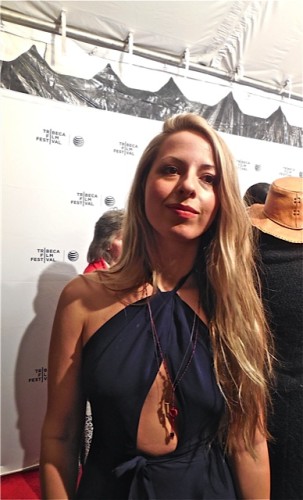
Wolfpack director Crystal Moselle
The Wolfpack director Crystal Moselle


This is a guest post by Paula Schwartz.


Six brothers spent their lives cloistered inside a messy Lower East Side tenement in Manhattan where only their father had the key. Only once or twice a year were they allowed outside their claustrophobic apartment, subsidized by welfare checks their mother received from home schooling them. They spent the day watching movies. This went on for years and years. This is not the subject of some horror film. It’s a stranger-than-fiction story that is the subject of documentary, The Wolfpack.

Directed by Crystal Moselle, the documentary created a stir at Sundance where it premiered, where the brothers turned up for the screening but spoke very little with the press.

Last weekend, The Wolfpack made its New York premiere at the TriBeCa Film festival at the SVA Theater on 23d Street, not so far from where the boys spent almost all their lives inside the closed walls of their claustrophobic and unkempt apartment.

Five of six Angulo brothers


Everything that the six boys – whose surname is Angulo – knew of the world they gleaned from movies. Quentin Tarantino’s movies were favorites, along with those of Martin Scorsese, Christopher Nolan, and David Lynch. The boys – Govinda, Bhagavan, Narayana, Krisna, Jagadesh, Mukunda – spent their time watching movies and then reenacting scenes wearing costumes they created out of thrift shop clothes they retooled to resemble that of their characters.

One of the brothers described their existence as living in a prison. One sibling said they lived inside their minds.

As they got older, once or twice a year the siblings would walk in the streets. It was on one of their rare expeditions that Moselle found them. The production notes from the film said it was like “discovering a long lost tribe.” They were a vision in their waist-length hair and Pulp Fiction-inspired wardrobe, which featured a badly fitting dark suit, white shirt, and sunglasses. Over five years, Moselle gained their trust and recorded their story. She is still very protective of them.

On the red carpet, I asked the director if the boy’s father, Oscar, a Peruvian immigrant, who in the film was often drunk and ranted incoherently, had emotionally abused his sons. She replied tersely, “I’m not going to answer those questions.”

Moselle described her relationship with the brothers as sisterly, so they felt comfortable around her. (Their actual sister, to whom they are very close, is mentally disabled.)

“I watched them grow up,” Moselle told me. “There’s an incredible transformation that they went through so it was a beautiful thing to see this great transformation, and then now they’re making films in the world and socializing and happy people.”

Neither of the boys’ parents, including their mother Susanne, who seems as controlled as her sons in the film, appeared on the red carpet.

I spoke to Govinda, who is the second oldest and has a twin, what life is like now. “Life now is busy. It’s taken off cause this has pushed us to just start relationships with people, and in the filmmaking world it’s all about relationships,” he said like a pro.

Angulo brothers
Angulo brothers


“Offers are flowing in,” said the charismatic, handsome 22-year-old. “We’re starting our own production company, Wolfpack Productions. We’re working as assistants on sets, so there’s a lot happening for us. It’s opened up a lot of doors.”

The brothers still play out scenes from their movie scenes. “We’ll always do that,” Govinda smiled. “That’s the heart for us, so we’ll takes these movies with us wherever we go.”

They are still stunned by the Sundance success. “What could be more surprising and stupendous than that, the Oscars?” I asked. “You never know,” Govinda told me.

This red carpet stuff is something they’ve dreamed about since they were kids sitting on dirty mattresses watching movies, Govinda said. “This is something that we always dreamt about when we were 12 year olds and we’d turn on the TV and watch people on the red carpet and be like, ‘I want to do that some day! I want to be in front of those cameras some day and be on the red carpet!’”

The boys wore their signature outfits. “We actually thrift shop buy everything,” he told me. “We search around all New York City; we go to all the different stores and then we reference clothes from movies and this is like our Reservoir Dogs look.”

Soon, designers will be calling them and asking them to wear their suits, I told them. “That started already,” Govinda noted. They already have a fashion spread in the works. “We’re doing stuff with big magazines, so there’s a lot of talk in the works.”

Maybe because of years of being shut off from the outside world, the brothers’ speech is still a little off kilter, and Govinda speaks slowly and chooses his words carefully. I asked him how his parents were doing with all the media attention.

“They’re doing well. Dad’s more – he’s not a big public eye guy so he doesn’t like being in front of the camera and everything. You know how he was in the documentary, but mom is all for it.”

How did his Dad feel about the way he was portrayed?  “We got a bunch of comments from people saying I wish I could do that to my children, in a joking kind of way,” Govinda laughed. “But my Dad, he loved the movie. The movie was an honest portrayal.”


Paula Schwartz is a veteran journalist who worked at the New York Times for three decades. For five years she was the Baguette for the New York Times movie awards blog Carpetbaggers. Before that she worked on the New York Times night life column, Boldface, where she covered the celebrity beat. She endured a poke in the ribs by Elijah Wood’s publicist, was ejected from a party by Michael Douglas’s flak after he didn’t appreciate what she wrote, and endured numerous other indignities to get a story. More happily she interviewed major actors and directors–all of whom were good company and extremely kind–including Brad Pitt, Angelina Jolie, Morgan Freeman, Clint Eastwood, Christopher Plummer, Dustin Hoffman and the hammy pooch “Uggie” from “The Artist.” Her idea of heaven is watching at least three movies in a row with an appreciative audience that’s not texting. Her work has appeared in Moviemaker, more.com, showbiz411 and reelifewithjane.com.

One to Watch Out For: HBO’s ‘Bessie’

There is, nevertheless, something magical about Bessie’s life and career. How did an impoverished, orphaned Black girl who spent her childhood singing on the streets not only survive but succeed in a land that still lynched its Black citizens? There is something profoundly modern and heroic about the woman herself. An independent woman with attitude and talent, she has to be one of the most charismatic feminist icons of the 20th century.

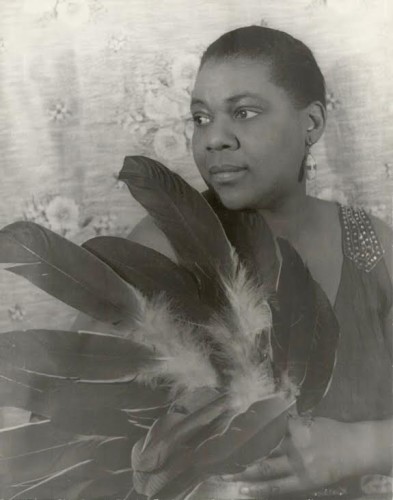
A portrait of Bessie Smith by Carl van Vechten


Written by Rachael Johnson.


HBO’s Bessie has to be one of the most exciting offerings on 2015’s cultural calendar. Helmed by Dee Rees and starring Queen Latifah in the title role, the telefilm will recall the extraordinary life of the “Empress of the Blues,” Bessie Smith. It has all the makings of a quality production. Dee Rees impressed us back in 2011 with her well-observed coming-of-age drama, Pariah. An attractive, charismatic presence, Queen Latifah is, equally, an excellent casting choice. But who was Bessie Smith? Although hugely respected by musicians throughout the generations, many of us remain unfamiliar with the entertainer. In anticipation of Bessie, let’s remind ourselves of the exceptional life and career of the “Empress of the Blues.”

Director Dee Rees
Director Dee Rees


Born in Tennessee in 1894, Bessie Smith was one of the greatest Blues singers of the 20s and 30s. Her childhood was marked by poverty and she lost both of her parents by the age of 9. She sang on the streets before performing in touring groups. A dancer, at first, she was a member of the Rabbit Foot Minstrels, the same minstrel show as the great Ma Rainey, another Blues singer, by the way, who deserves her own biopic. Bessie signed a contract with Columbia Records in 1923 and was soon catapulted to fame–and riches. Earning an astonishing $2,000 a week, she became, in fact, the highest-paid Black entertainer of her era. She had her own show and her own railroad car.

Her private life was, by all accounts, pretty lively. Her marriage to husband Jack Gee was turbulent and she was particularly fond of gin. She broke many of the rules of her day. Reportedly bisexual, she had affairs with women during her marriage. Bessie Smith was sexual and successful as well as, of course, immensely gifted. The extraordinary depth and power of her voice is evident from this following clip from the short film, St Louis Blues (1929).

[youtube_sc url=”https://www.youtube.com/watch?v=JpVCqXRlXx4″]

“Downhearted Blues,” “Nobody knows You When You’re Down and Out,” and “Baby, Won’t You Please Come Home” are among some of the songs Bessie recorded. Her popularity waned–music historians cite the Depression and changes in musical taste–but there were, it seems, indications that she was on the verge of a comeback. Tragically, Bessie Smith was killed in a car accident in 1937 at the age of 43.

Queen Latifah
Queen Latifah


There is, nevertheless, something magical about Bessie’s life and career. How did an impoverished, orphaned Black girl who spent her childhood singing on the streets not only survive but succeed in a land that still lynched its Black citizens? There is something profoundly modern and heroic about the woman herself. An independent woman with attitude and talent, she has to be one of the most charismatic feminist icons of the 20th century.

Another portrait of the "Empress of the Blues" by van Vechten
Another portrait of the “Empress of the Blues” by van Vechten


Bessie is a refreshing, tantalizing prospect. God knows, of course, that dramatizing the lives of female cultural heroines doesn’t seem to be much of a concern to the powers that be. This is particularly the case, let’s face it, with women of color. But that must change. Movie studios and television companies, moreover, need to pay tribute to people who create more instead of offering romanticized, revisionist accounts of snipers. The Empress of the Blues’s commanding voice and pioneering spirit resonate today. Hopefully, Bessie will help restore her to our collective memory. She occupies a unique, vital place in 20th century popular culture.


Seed & Spark: Being Bossy, Unbreakable, and Daring Greatly

But as Sheryl Sandberg’s Ban Bossy campaign states, “When a little boy asserts himself, he’s called a ‘leader.’ Yet when a little girl does the same, she risks being branded ‘bossy.’” As a 28-year-old, I can vouch that it’s not just little girls that are affected by “bossy.” I’m trying to Ban Bossy in my own brain (or accept that I am a boss and it’s OK if I’m “bossy”) and it got me thinking about our society’s gender expectations and how they can hold all of us back.


This is a guest post by L Jean Schwartz.


Occasionally recently I’ve wondered, “Am I being bossy?” I’m a writer/director/producer, currently crowdfunding for my first feature film The Average Girl’s Guide to Suicide, and the sole manager of the LLC for our film. So, I am a boss. (Not like this, but a bit like a #bosswitch). But as Sheryl Sandberg’s Ban Bossy campaign states, “When a little boy asserts himself, he’s called a ‘leader.’ Yet when a little girl does the same, she risks being branded ‘bossy.’” As a 28-year-old, I can vouch that it’s not just little girls that are affected by “bossy.” I’m trying to Ban Bossy in my own brain (or accept that I am a boss and it’s OK if I’m “bossy”) and it got me thinking about our society’s gender expectations and how they can hold all of us back.

In Brené Brown’s book Daring Greatly, she writes that according to society’s rules women have to “be willing to stay as small, sweet, and quiet as possible, and use our time and talent to look pretty.” This made me laugh out loud, because A) I have often felt pressure to be as small, sweet, and quiet as possible, and use my time and talents to look pretty, and B) as a director you generally should not try to be as small, sweet, and quiet as possible or use your time or talents to look pretty. It’s not bad to be small/sweet/quiet/pretty if that’s your nature, but forcing yourself to be as small or quiet as possible is rarely conducive to getting a movie made. Personally I’m not small, not often quiet, I try to be kind (but not saccharin sweet), and I’m no beauty queen. As we’ve been expanding our team, talking to more people about the film, and crowdfunding, I’m constantly running into the societal expectations embedded in my brain. Self-promotion is not small, sweet, or quiet. Making a dark comedy about suicide is not small, sweet, or quiet. Asking people for money is not small, sweet or quiet.

Behind the scenes of making the teaser video for The Average Girl’s Guide to Suicide.


Luckily I’m not alone in this struggle. Brené Brown writes: “…every successful woman whom I’ve interviewed has talked to be about the sometimes daily struggle to push past ‘the rules’ so she can assert herself, advocate for her ideas, and feel comfortable with her power and gifts.” If you’re reading this, it’s likely that you can relate also. Think about how incongruous it is for female CEOs, doctors, or fighter pilots to be concerned with being small/sweet/quiet/pretty. I hope you just laughed. Perhaps the next time you feel pressure in your own life to be small/sweet/quiet/pretty, remind yourself of that laugh you just had.

Women aren’t the only ones who are hampered by society’s expectations; “the rules” for men can be just as suffocating as “the rules” for women. According to Brown these expectations for men can be summed up as: don’t be wrong, don’t be weak, and don’t show fear. If men step outside those lines, they are often shamed. The more I’ve leaned into leadership roles, the more I’ve felt these expectations too and they aren’t fun. Recently I felt so scared about whether we would hit our crowdfunding campaign goal, and felt like I needed to keep a brave face for everyone else and not show my fear. Then I realized the trap I was falling into. I’m lucky to have friends and family who are there for me, and even several friends who have told me that the middle of a crowdfunding is a terrifying desert. Getting support from friends and family and remembering that I’m not alone help me get out of shame spirals.

The ever-inspiring Brené Brown.


There have been several articles recently critiquing the concept of “Strong Female Characters.” The problem isn’t with realistic female characters who show resilience, but instead to women who are…basically dudes. From one such article: “A female character simply having typically masculine traits doesn’t necessarily strengthen her; it only promotes the view that men are the strong ones in the world, and that to be strong means to emulate them.” I would also argue that in real life, to be strong women we don’t need to try to be strong men. I’ve been that girl: trying to be stronger, tougher, and more foul-mouthed than the guys, and it’s exhausting. Because though I can be strong, tough, and sometimes rather foul-mouthed, I am also very empathetic, caring and sensitive. Trying to be as strong and tough as possible doesn’t leave room for empathetic and sensitive, and I believe it’s better to embrace your true nature rather than fake another. A friend has a poster that to me has good examples of how letting go of gender norms can ease the burden on both genders. I look forward to a world where we can accept and celebrate men and women equally for their sensitivity as well as their strength.

Recently there’s a new strong feminine heroine: the Unbreakable Kimmy Schmidt. She encourages others to pursue their dreams, and determinedly pursues her own. She likes helping people, she’s good at it, and she also takes care of herself. She’s strong because when she gets knocked down, she gets back up. Kimmy Schmidt shows that being kind, optimistic, and supportive can be part of being strong.

A little rain won’t stop The Unbreakable Kimmy Schmidt!
A little rain won’t stop the Unbreakable Kimmy Schmidt!


As a woman and a writer, it’s encouraging to see strong and empathetic characters. My film is about a young woman’s journey to accept herself and create a life she wants to live, and it took several years of working on the script (and “doing the work” in my life) to really understand what self-acceptance feels like. It’s easier to write about a character accepting herself than to accept myself, and it’s still something I work on every day. I love how fictional characters can help teach us in our real lives, and my characters continue to teach me. They push me and challenge me to be as brave as they are, and I hope they can inspire you too.


L Jean Schwartz makes comedies about things you’re not supposed to laugh about, such as LOVELY STALKING YOU, IN SEARCH OF MY FIRST EX-HUSBAND, and THE AVERAGE GIRL’S GUIDE TO SUICIDE.   Hailing from San Clemente, California, she fell in love with filmmaking when she made a behind-the-scenes documentary about the film BRICK at age 17.  She’s a graduate of USC’s School of Cinematic Arts, and is currently crowdfunding for her first feature film.

‘Dogtooth’: The Blindfold of Socialization

By introducing the audience to a tight-knit family with a very peculiar upbringing, the film allows a glimpse into socialization, explores gender politics, and shows how art can lead to individualism.

Dogtooth - Blindfold copy


This is a guest post by Janie Contreras-Johnson.


On a micro level, Yorgos Lanthimos’s film, Dogtooth, is a portrayal of one family’s socialization, yet on a macro level, it challenges its audience to reflect on the ways in which society accepts and perpetuates social norms. By introducing the audience to a tight-knit family with a very peculiar upbringing, the film allows a glimpse into socialization, explores gender politics, and shows how art can lead to individualism.

The film is set in a non-descript location that—only by the language spoken—the audience knows is Greece. The film revolves around a family wherein the parents employ bizarre methods to keep their three adult children safe and obedient under their roof.

Lanthimos immediately introduces the audience to the unusual development of this family; the first scene finds the three adult children listening to a taped recording of their mother giving a vocabulary lesson. We hear common words, but the definitions the tape is providing are inaccurate (“Highway: a gently blowing breeze”). It is one of the many times in the film Lanthimos establishes the childlike innocence and obedience that puts the children at the mercy of those meant to care for them. This sentiment is reiterated later in the film, when the father speaks with a dog trainer who explains that “dogs are waiting for you to show them how to behave.” The children live in a world where yellow flowers are called “zombies” and one is old enough to drive and move out on their own when their “dogtooth falls out.” Through this family, we are shown that we process information and beliefs by what we are told, whether that is from parent to child, or on a larger scale, government to society, or media to audience.

Initiating one of the children's many games and competitions
Initiating one of the children’s many games and competitions


The film also illuminates the perpetuation and acceptance of patriarchy in society. We see the parents show a great deal of concern with the male child’s sexuality, even going to the lengths of hiring the father’s co-worker, Cristina, as a sexual partner for their son. Yet never is there any concern for the two female children’s sexuality. The girls accept this as normal and do not attempt to exercise any form of sexual freedom. When Cristina offers to trade a headband for oral sex from the eldest, the eldest sister does not question her sexuality, and acts on the arrangement but only in a perfunctory manner, devoid of any insight into the act she’s being asked to perform. When the son’s arrangement with Cristina dissolves, the parents allow their son to choose which sister he would like to sleep with, and at the cost of their daughter’s sexual freedom, encourage incest to satisfy the son’s sexuality. Again, neither sister fights their parents’ or brother’s decision to dehumanize and objectify them, and instead the sisters accept it—like many other things in their upbringing—as normal.

Cristina, being carefully taken to the family's secluded home as part of the arrangement
Cristina, being carefully taken to the family’s secluded home as part of the arrangement


But the film acknowledges the possibility of escape from these norms by establishing how art can lead to critical thinking. The only child to make an effort to leave is the eldest sister. We see her capacity for free thinking expand throughout the film, beginning with art’s influence. She is loaned two videos—Jaws and Rocky—by Cristina. We know that these are the only films the eldest has been exposed to, as it is established previously that the only videos the children have seen are home videos, which have been viewed so many times that the youngest can mouth every word as they are played. The eldest is transformed by these new films: she no longer participates in the other children’s games, and instead chooses to re-enact scenes from the movies. She holds a sip of water in her mouth and mimes being punched in the face while channeling Rocky Balboa, then cites lines from Jaws while lunging at her brother in the pool. Finally, after being forced into incestuous sex, we are shown the culmination of this exposure to new ideas. She mouths a phrase that is neither from the films nor the sheltered world she was raised in, but is inspired by the language of the art she has seen: “Do that again, bitch, and I’ll rip your guts out. I swear on my daughter’s life you and your clan won’t last long in this neighborhood.” From then on, we witness the eldest navigate the strange milestones she has been taught. In a disturbingly gory scene, she uses a dumbbell to knock out her dogtooth, and attempts to escape. In the ambiguous conclusion, we are never shown whether this escape is successful, but are left wondering, contemplating how warped socialization occurs and whether anyone is exempt from it.

unnamed


Janie Contreras-Johnson is a Mexican American feminist who loves books, music, and movies, especially Charles Bukowski, Courtney Love, and GoodFellas. She co-hosts Fifth Opinion, the movie podcast dedicated to dissent, discourse, disagreement, and debate. 


Stop Leaving Money on the Table: Change Who’s Sitting At It

Men are spoilt for choice; women are starved. Targeting women is like selling ice to a Bedouin, during a heatwave, in a particularly bad year for the ice harvest. Quality content for women has scarcity value.

bridesmaids


This is a guest post by Zoe Samuel.


We live in the age of data, on the personal and demographic scale.  Research is changing our understanding of who consumes content, how they do so, and what value they offer advertisers and partners.  We know now that there is a group of people who control 70 percent of domestic consumer spending; spend more time  on social media; buy 52 percent of  movie  tickets and 68 percent of theater tickets; and watch more TV than any other group.  This demographic is vast: 51 percent of the population.

The group in question is, of course, women.  The market opportunity represented by this demographic, as creators and consumers, remains the greatest source of untapped or under-exploited revenue in entertainment.

rs_1024x759-140826073311-1024.Ben-Affleck-Gone-Girl-JR-82614

The amount of competition for the attention of women, when compared to the amount of competition for men, is still currently very low.  This demo is horribly under-served, both in the quality and the quantity of content available to it.  As far as quality, when it looks at a screen, it is perhaps surprising that it doesn’t have a rage fit and throw things.  If it were to buy into how it is portrayed on the screen, it would see itself as few in number; vapid and narcissistic; over-sexualized but rarely possessing any actual desire of its own; an unfunny mirror for other people’s comedy; limited in age range; almost entirely devoid of agency (bearing in mind that feistiness is not a substitute); and just plain stupid.  Even given all of this, it is still the bedrock of the market.

bc58c742bdc0203eb9ed59c83e20b9ef

Regarding quantity, the mere fact that content is predominantly still aimed at men is proof in and of itself that instinct, not data, is guiding decision-making here, and that that instinct is about 40 years out of date.  Men are spoilt for choice; women are starved.  Targeting women is like selling ice to a Bedouin, during a heatwave, in a particularly bad year for the ice harvest.  Quality content for women has scarcity value.

There is a huge opportunity here.  If women buy even when they are not targeted, they buy many times over when they are.  This demo rapaciously consumes any content that speaks to it as it is, and as it wishes it could be: three-dimensional, flawed, sexual, old, young, eccentric, powerful, intelligent, funny, varied.  Whenever it is treated with this sort of basic respect, it shows up in vast numbers: Bridesmaids, The Heat, The Hunger Games, The Fault In Our Stars, Gone Girl, Divergent, Frozen, Cinderella … these are not aberrations.  This is not a niche.  This is the invisible hand at work, throwing huge piles of money at people who are paying attention.

copy-burn-the-fault-in-our-stars-dvd

This is a demo worth aiming content at, and that requires creators who get their audience’s needs and wants.  Selling to a demographic you don’t understand is essentially impossible.  And the only way to understand women is – just as with men – either to listen to them, or be them.  Clearly men who listen to women can write for women: the songs that made Frozen a hit were written by a married couple, Bobby Lopez and Kristen Andersen-Lopez.  Joss Whedon has impeccable credentials when it comes to appealing to women.  Shakespeare was doing it centuries ago.  It works in reverse, too: Kathryn Bigelow has made a stellar career out of making very dudely movies watched mostly by dudes.
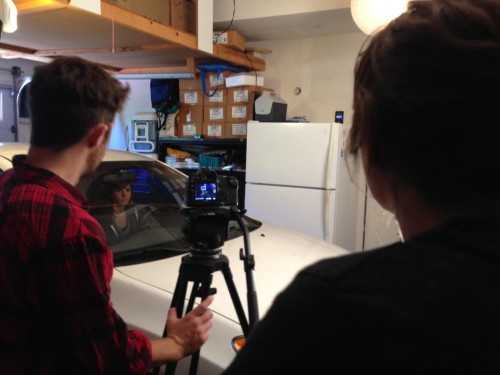
2.168183

That said, there are certainly correlations showing that women on the team result in women on the screen, and we’ve already established that women on the screen equals bringing in the green.  The same way that women in the boardroom correlate with higher profits, women on the creative team are good for the bottom line.  In the words of Sheryl Sandberg, “If men want to make their work teams successful, one of the best steps they can take is to bring on more women.”  Shows with a more mixed writers’ room enjoy higher audience retention and are more likely to get a second season.  Just as people typically hire in their own image, they tend to create in their own image, which means a team with a bigger variety of voices is more likely to competently portray a variety of characters.  It’s not because the creators are better, but that they are unlike each other.  It’s Darwinian; their strength comes from their variety.  (It is probably–and it would be great to see data on this–also because the sort of company that hires and promotes against stereotype when it comes to women is self-evidently adaptable and creative, and is thus more robust in other ways, such as hiring the highest quality men.)

the-heat-5

Women, as an audience, represent more value for less effort.  Data is everything, and the data doesn’t lie.  What’s happening to the media marketplace is not a trend.  It’s not even a movement.  It’s the economy, stupid, and it’s not going away.

In short, it doesn’t matter how you feel about women qua women.  What matters is how you feel about money, qua money, in your wallet, paying your bills, sitting on your driveway in the form of a really expensive car (that, statistically speaking, your wife bought).  The last person into any market has the toughest time.  The wise course is to get in now before all the best seats are taken, and then fill a bunch of them with women.  Alternatively, leave all that money on the table, and wait for someone else to come along and take it.


Zoe Samuel is a British-born writer who writes for stage and screen from her home on a plane between New York and London. She’s also VP of Theater for Concert Live, who provide mobile merchandising and data analytics for live events. Talk data to her at zoesamuel.com and @zoe_samuel.