Bitch Flicks’ Weekly Picks

Check out what we’ve been reading this week–and let us know what you’ve been reading/writing in the comments!

recommended-red-714x300-1
Mad Men: Joan Would Like To Burn Shit Down, & Other Feminist Concerns by Julianne Escobedo Shepherd at Jezebel’s The Muse

The Sisterhood of Night by Olivia at Rookie

Ana Lily Amirpour Steals the Show by Vanessa Lawrence at W Magazine

Finally, a Summer Movie Season for Women by Kara Cutruzzula at Vulture

Why Can’t Strong Female Characters Just Be Complex? by Latonya Pennington at Black Girl Nerds

This “Raging Granny” Crashed a Wall Street Dinner to Demand Answers by Peter D’Auria at Yes Magazine

Jane Fonda And Lily Tomlin Reunite In Netflix’s ‘Grace And Frankie’ Trailer by Erin Whitney at The Huffington Post

What have you been reading/writing this week? Tell us in the comments!

‘Crossroads’ Was a Dry Run for ‘Grey’s Anatomy’

In the haze of her Shondaland television production empire, many people forget—or aren’t aware at all—that Rhimes’ success began in 2002 when she wrote the screenplay for a little movie called ‘Crossroads,’ which also happened to be Britney Spears’ silver screen debut.


This is a guest post by Scarlett Harris.


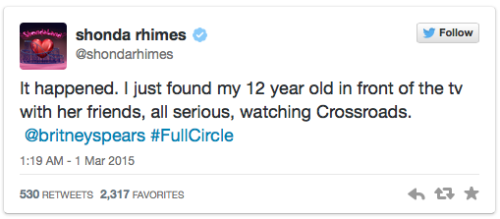
Grey’s Anatomy and Scandal showrunner and How to Get Away with Murder executive producer Shonda Rhimes recently tweeted the following:

Screen Shot 2015-04-10 at 11.57.37 AM

In the haze of her Shondaland television production empire, many people forget—or aren’t aware at all—that Rhimes’ success began in 2002 when she wrote the screenplay for a little movie called Crossroads, which also happened to be Britney Spears’ silver screen debut. Spawning the coming of age anthems “Not a Girl, Not Yet a Woman” and “Overprotected,” Crossroads may have been a critical flop but it drew $61 million internationally and will forever remain a cult classic for many millennials, myself included.
Another of Rhimes’ success stories that allowed her to go on to produce some of the hottest dramas on TV was Grey’s Anatomy. Originally sweeping the Golden Globe and Emmy nominations (with a few wins here and there) in its early years, the general consensus about Grey’s today is consternation that it’s still airing after 11 seasons. What originally began as a dramatic look at the lives of a diverse cast of surgical interns arguably devolved into a shark jump of epic proportions with Izzie’s cancer-induced hallucinations and a musical episode. As a lifelong Grey’s fan, I’ll defend it to the death and contend that it has corrected course in the past few years while not being afraid to take risks.
At first glance, two of Rhimes’ early successes might not look so similar, but I’m here to argue that Crossroads acted as a dry run for Grey’s Anatomy. Let me count the ways…
unnamed
unnamed
First, both center on a somewhat boring white woman whose less conventional friends turn out to be much more interesting. Crossroads (along with Center Stage) introduced us to Zoe Saldana, the well-to-do popular girl to Spears’ awkward valedictorian and Taryn Manning’s pregnant teen from the wrong side of the tracks, subverting stereotypes of race in the small Georgian town where the movie is set, which has become Rhimes’ calling card.
In Grey’s, Meredith finds immediate kinship with Cristina Yang, and later brings Latina Callie Torres and mixed race half-sister Maggie Pierce into a fold that’s more fucked up than their Crossroads counterparts. Like Orange is the New Black (in which Manning also stars), Meredith and Lucy act as Trojan horses to introduce audiences to the lives of other, more diverse women.
unnamed
unnamed-1
There’s also the awkward, bumbling love-interest-that-wasn’t. In one of Crossroads’ opening scenes, we see a lingerie-clad Lucy about to have sex for the first time with Justin Long’s Henry, who’s pined after Lucy for the three years they’ve been lab partners. Over in Shondaland, it was Meredith who drunkenly succumbed to George’s subtle advances, but it was not to be–she started crying during sex and damaged their friendship, working relationship, and housemate dynamic for a long time. (The one aspect in which Grey’s differs to Crossroads is that Anson Mount’s Ben is certainly no McDreamy.)
unnamed
unnamed
Crossroads is a road trip flick whereas Grey’s primarily takes place inside a hospital, but make no mistake: there have been plenty of outings away from the four walls of Seattle Grace/Mercy West/Grey-Sloane Memorial Hospital. These include the men’s camping trip in which Alex and George get into a “slap-fight” (“open-handed combat” to protect their surgeon hands); the residents’ sojourn to San Francisco to take their boards where April and Jackson finally get it on; Cristina’s fellowship at the Mayo Clinic sees her isolated in icy Minnesota; and the car accident involving Callie and Arizona which spawns the abovementioned musical episode, “Song Beneath the Song.”
unnamed
unnamed-1
Speaking of music, Crossroads is a film that utilizes it quite heavily and with Britney Spears as your leading lady, you’d be (“Drive Me) Crazy” not to. In addition to the songs I mentioned above, there’s also the requisite karaoke scene in which Spears, Manning and Saldana sing “I Love Rock & Roll,” also released as a single for Spears. Like The O.C. before it, Grey’s is one of those TV shows that has become better known perhaps for its music than its melodrama. In 2006, the show won a Grammy for best compilation album featuring two of the songs the show is perhaps best known for: “Chasing Cars” by Snow Patrol and “How to Save a Life” by The Fray. Both have the requisite Madonna singalong while Grey’s has made famous the “five second dance party” and drunken boogie sessions Meredith and Cristina frequently engage in.
unnamed
unnamed
Finally, both protagonists have strained family lives. Lucy in Crossroads grew up with her father (Dan Aykroyd) after her mother left them to start a new family; this is part of the reason Lucy tags along on the road trip in the first place. The titular Meredith Grey rivals Lucy in the dysfunctional family department: in addition to her father walking out and her mother’s cold and distant demeanour, Meredith discovers later in life that she has not one but three half-sisters spawned from her parents’ subsequent dalliances (spoiler alert: these sisters three don’t all share the same DNA).
Crossroads’ Mimi (Manning) begins the movie pregnant but miscarries at the culmination of the road trip, while Grey’s Izzie gave the product of her teen pregnancy up for adoption. Where Crossroads doesn’t deal with abortion, Grey’s certainly does, with Cristina undergoing an abortion and a miscarriage for her two pregnancies. For a teen movie, Crossroads isn’t afraid to deal with rape, either, which is how Mimi came to be pregnant in the first place.
At first glance the two Rhimes productions couldn’t be more different, and while Grey’s is far more sophisticated, Crossroads is evidence that Rhimes began her progressive storytelling long before Meredith, Olivia, Annalise and co. hit our TV screens. Who would have thought that Britney Spears would be involved?

unnamed
Scarlett Harris is a Melbourne, Australia-based freelance writer and blogger at The Scarlett Woman, where she writes about femin- and other -isms. You can follow her on Twitter.

Seed & Spark: The Feminist Act of Telling a Man’s Story

‘The wHOLE’ explores humanity, exposes the prison industrial complex which controls and subverts the humanity of all those it houses, and in the course of the series it invites viewers to grow in empathy for a person, who, for some, would be otherwise unlikely to evoke it.

unnamed


This is a guest post by Jennifer Fischer.


As a female filmmaker, I’ve asked myself many times why my latest dramatic project, The wHOLE, focuses on a man in an almost exclusively male milieu. In the pilot episode, no women appear on screen until the very end of the episode, and then only for a few minutes.

Given the show’s subjects–torture, racism, mass incarceration–to begin the series with a woman in solitary confinement would have been equally powerful, and equally realistic.

A part of me longed to begin the series there. Perhaps a woman was sent to an isolation unit because reported she had been raped by a correctional officer (as is quite common), or perhaps a transgender woman was sent to isolation “for her own protection,” only to find that isolation offers no protection, but only psychological, emotional, mental, even physical trauma.

We could have started the series in these places and more, but we didn’t. We started with Marcus, an African-American male.

We start the show with an individual unlikely to receive sympathy from most viewers: we offer no immediate explanation for why he has been sent to solitary confinement, nor do we hint at why he is imprisoned in the first place.

This individual is defiant, he has rage. This is an individual that many might think deserves his punishment.

Though the story centers on a man, telling his story becomes a feminist act. A friend recently shared her definition of feminism with me: “The crux of feminism is about equality. Feminism cannot ever be separated from the multiple layers of our identity—race, class, culture, etc. Feminism is about exploring our underlying humanity and the forces which try to control or subvert us.” Drawing on this understanding she went on to say, after watching our pilot episode, “Your story is a feminist story.”

Yes, I realize, it is. The wHOLE explores humanity, exposes the prison industrial complex which controls and subverts the humanity of all those it houses, and in the course of the series it invites viewers to grow in empathy for a person, who, for some, would be otherwise unlikely to evoke it.

As I developed this project, I did a lot of research—speaking, meeting, and working alongside individuals who have themselves lived the experiences we’re highlighting. Cast and crew on the project have spent a combined seven years in solitary confinement.

And lately, I’ve been reading and listening to Angela Davis, a feminist and prison abolitionist icon, who spoke the now familiar phrase, “The personal is political.” She references Beth Richie, who discusses the ways that current incarceration practices reinforce “the intimate violence of the family, of the relationship… [t]he individual violence of battery and sexual assault.” The current system fails to offer restorative justice or solutions that benefit our society. It offers no solutions worthy of a feminist paradigm.

Solitary confinement is perhaps the most violent, most dehumanizing aspect of the prison industrial complex. When a person is placed in a small box for 23 hours a day with no human contact, it strips identity from them. It calls their existence into question. It is domination and subjugation at the most intense level. It is everything that feminists struggle against.

unnamed

Bringing this hidden reality (facing approximately 80,000 men, women, and children in the U.S.) to light in a very authentic and real way is an act of feminism, an act of defiance, and an act of hope. Feminism is uplifting not only to women. Insisting on the humanity of all is a feminist act.

Angela Davis says, “Prisons are constituted as Normal. It takes a lot of work to persuade people to think beyond the bars, and to be able to imagine a world without prisons and to struggle for the abolition of imprisonment as the dominant mode of punishment.”

She’s right. We’ve come to see prisons as a way of life. Some viewers of the series may think the system is working because they are not affected by the problem. And if it doesn’t affect them, they need not act. But the truth is this series is about the whole of our society—our acceptance of a violent, oppressive system that only echoes the worst of our history (colonialism, slavery, patriarchy).

Davis does insist that a feminist approach to understanding prisons must focus on imprisoned women as well, not exclusively on men. As it traces its narrative arc, The wHOLE will do that as well—it’s one of the main reasons The wHOLE is a series, rather than a film. We will tell many more stories from behind bars as the series unfolds and through transmedia storytelling during the initial season.

We’ll tell stories of women who are imprisoned, of children who are imprisoned, of exonerees, of the families left behind, of the correctional officers, nurses, psychologists, and others asked to enforce this isolation. And each of these stories will be told through a feminist lens because ultimately, The wHOLE, is about the humanity of us all. Its insistence on humanity, on equality, and on the dignity of all lives is what makes it a feminist story.

This is why I am proud to be a woman telling a man’s story. And it seems only fair, given how often men have taken it upon themselves to tell women’s stories. I’m proud, too, to be collaborating with men who share my vision, who understand this project as an act of resistance and defiance. I’m proud of our feminist lens.

Become a part of The wHOLE by either watching the pilot and/or supporting the series, and by inviting others to become a part of The wHOLE as well.


unnamed

Producer Jennifer Fischer co-founded Think Ten Media Group with Ramon Hamilton. Prior to producing The wHOLE, Jennifer produced the company’s multi-award winning feature film, SMUGGLED, and served as the Producer of Marketing and Distribution for the film, successfully self-distributing the film, which screened at universities, colleges, and community organizations throughout the United States and abroad. She holds a BA from Sarah Lawrence College and an MA in Middle Eastern Studies from Harvard University, where she fell in love with filmmaking and directed and produced her first short film, “Songs of Palestine.” She followed that with a narrative award-winning short film, “Rachel’s Fortune,” which she wrote, edited, scored. She served as a technical consultant on “In Conflict With Kismet,” a short film from Writer/Director Dani Dixon, which debuted on BET and was featured at the Reel Women International Film Festival.

Jennifer can be found on Twitter @IndieJenFischer, and she curates a Film Articles and Resources Pinboard that Indiewire selected as one of the Top 10 Pinboards for Independent Filmmakers to Follow. She also recently started a Women In Film Pinboard as well. Tweet your best Women In Film stuff at her so that she can pin it!


Seed & Spark: Damn the Consequences. Take the Plunge.

How you define risk – be that financial, ethical, physical or moral – is vital. It shapes who we are and, even more so, what we see in the media and onscreen. We all know that male studio heads define “risk” as films helmed by women (despite the overwhelming stats that women-led films do better financially). It is clear to me that now, more than ever, we need risk-takers in charge. We need risk-takers to make women better represented in film, on both sides of the camera.


This is a guest post by Stacey Davis.


I am a risk taker.

When I say risk, I’m talking about the impulsive, why-the-hell-not, damn-the-consequences kind.

Case in point, several years ago I convinced my husband that we should open an ice cream shop in our neighborhood. Why did I think this was a good idea for two full-time working adults with a toddler at home? Well, I couldn’t get the image out of my head of kids on bikes coming in with piggy bank change clinched in their palms, falling over themselves to buy penny candy.

“It’ll be great” was my best argument for why we should jump off this cliff. And it was great. We had a stream of neighborhood kids pour in with eager faces and wander out with sticky ones. But, despite our enthusiasm, it failed.

After 11 months, we closed the doors. But I’d do it again. I’ve never looked upon that experience as a mistake. Instead, I think, “Damn, if I knew then what I know now, I could have killed it.”

How you define risk – be that financial, ethical, physical or moral – is vital. It shapes who we are and, even more so, what we see in the media and onscreen. We all know that male studio heads define “risk” as films helmed by women (despite the overwhelming stats that women-led films do better financially). It is clear to me that now, more than ever, we need risk-takers in charge. We need risk-takers to make women better represented in film, on both sides of the camera.

So, my question is this: How can we all learn to take more risks?

How can we encourage each other to take them? For starters, we must never let past failures influence future success. A few years after the ice cream shop shuttered, I decided it was time for me to move on from the law firm where I had practiced for the last 12 years. My passion was entertainment law and the only way to pursue that path in Birmingham, Ala. was to set up my own shop.

I never once second-guessed the idea of starting another small business. Consequences be damned, remember? So two months later, I opened my own entertainment law practice, the Law Firm of Stacey A. Davis. It hasn’t been easy, but a year later the doors are still open.

I didn’t let one failure chain me down or stop me from taking another risk. I couldn’t. The fear of sitting behind a desk working another 10 years at a job that was just a job and not a passion was far more insidious than the fear of failure.

As Drew Barrymore said, “If you don’t take risks, you’ll have a wasted soul.” And my soul craved the risk.

unnamed

Still, I can hear the chorus shout: “It’s easy for you. You’ve got a safety net” or “Your family is so supportive.” Whether or not that’s the case, I encourage everyone to take the plunge themselves. Regardless of your circumstance, it does not feel safe.

During my legal career, I’ve represented a lot of first-time filmmakers who failed to achieve the level of success they wanted with their first film. Hell, some of them didn’t even finish their films. They took a risk and it didn’t pay off. But being afraid of failure only makes future success impossible. It is those filmmakers who shouted the mantra of consequences be damned and jumped off the cliff again (and again) that have etched out a career in this business.

One of my writing instructors once told me every no gets you closer to a yes. I’ve heard a lot of nos. And I looked at each one of them as a way to get one step closer to a yes (granted, that perspective is not always immediate and usually involves a margarita or two).

Call it eternal optimism. Call it the growth mindset. (If you haven’t read Carol Dweck’s Mindset, read it now.) But I believe that the risk mindset is the No. 1 quality a woman filmmaker needs in order to succeed in this industry. You’ve got to fight for it. You’ve got to take it.

unnamed

So now I’ve moved on to my next adventure. Making my first film, The Sibling Code. I’ve been writing for many years and knew I needed to take the next step. It’s a big risk. Maybe my Seed & Spark crowdfunding campaign will fail. Maybe the film will be a flop. Maybe in a year I’ll say, “Damn, if I knew then what I know now, I could have killed it.” But I don’t live for maybes. I don’t get out of bed for maybes. My name is Stacey Davis and I take risks. And I wouldn’t have it any other way.


unnamed

Stacey Davis is an entertainment attorney and the writer/producer of The Sibling Code, a comedic short about the love-hate relationship of siblings. Stacey lives in Birmingham with her husband, Nick, and 8- year-old-son, Charlie. Stacey can be reached at sdavis@staceydavislaw.com, www.staceydavislaw.com or @staceydavislaw.

For more information on The Sibling Code:

Twitter: @siblingcode

Facebook: /thesiblingcode

Website: www.thesiblingcode.com

Support: http://www.seedandspark.com/studio/sibling-code


Seed & Spark: Oh … You’re Not Making a Rom-Com?

Considering more than one in five women are raped in their lifetime in the USA, I feel it is a hard-hitting reality and it is about time this film is made. I should also point out, that the script focuses on the recovery of a rape survivor and is much less of a tragic tale, than a realistic and a hopeful one.

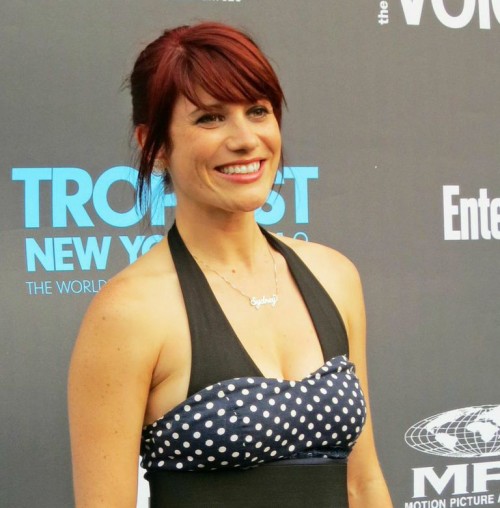
Filmmaker, Jessica M. Thompson, at the premiere of her short film, Across the Pond, at Tropfest NY 2013


This is a guest post by Jessica M. Thompson.


When I started writing my latest feature film, The Light of The Moon, I had a few comments from friends lamenting that I was not writing a Romantic-Comedy. Now, I should point out, I have not written or directed many Rom-Coms in my life – I am definitely more driven by the genres of Drama, Thriller, and even Sci-Fi – so these friends were not making a statement about my previous Rom-Coms being an utter hit and that I should not digress from my proven track record. These friends were making assumptions about the types of films that women write and direct, and also suggesting that these are the types of films that resonate with female audiences. Because, you know, Rom-Coms are the only types of films that women want to see, right?

Carlo Velayo and Jessica M. Thompson from Stedfast Productions at Tropfest NY 2013


Now I am very picky about my friendships: I only mingle with highly intelligent, interesting, creative and progressive women and men of the world, so I was pretty shocked to hear some of them make such blatantly pigeonholed comments. I had the overwhelming sense that the overarching stereotypes that Hollywood projects on to female writers, directors, actors, characters, and audiences were even starting to encroach on the Brooklynites of New York.

Director, Catherine Hardwicke, on the set of Red Riding Hood, 2011. (Photo courtesy of IMDB)
Director Catherine Hardwicke on the set of Red Riding Hood, 2011. (Photo courtesy of IMDb)


There has been a long pervading idea in Hollywood that it is only men, between the ages of 18-35, who go to the movies. This has been disproved time-and-time again, with one article in Variety pointing out that women made up 51 percentof all film audiences in 2011. Yet, only 30 percentof speaking roles in movies in 2014 were female characters (and this includes animated films that suggested we should just “let it go!”). And to make the situation direr, those speaking roles were largely supporting characters who were passive in nature and contributed very little to the overall plot within the film.

Director, Catherine Hardwicke, at the premiere of Red Riding Hood, 2011. (Photo courtesy of IMDB)
Director Catherine Hardwicke at the premiere of Red Riding Hood, 2011. (Photo courtesy of IMDb)


Writer/director Catherine Hardwicke struggled to secure funding for her indie hit Thirteen in 2003. “Of course there are double standards. No one can say it’s a level playing field,” she said. Stories with strong female leads are often disregarded for funding by the largely male-dominated production and distribution companies of Hollywood. Although Thirteen went on to win the Sundance Award for Best Director, be nominated for an Academy Award for Best Actress in a Supporting Role and earn over $4.5 million at the box office, Hardwicke still found it hard to get her future films, with ladies in the leading roles, off the ground.

Actor/Writer/Producer, Brit Marling, in I Origins, 2014. (Photo courtesy of IMDB)
Actor/writer/producer Brit Marling in I Origins, 2014. (Photo courtesy of IMDb)


Interesting to note, Hardwicke did go on to direct the first Twilight movie in 2008, which grossed over $392 million worldwide, only to have male directors take over her role for the last four films in the series. As Hardwicke points out: “Despite achievement at the highest levels, women still find themselves pounding on doors that are slow to open.”

Actor/Writer/Producer, Brit Marling, in The East, 2013. (Photo courtesy of IMDB)
Actor/writer/producer Brit Marling, in The East, 2013. (Photo courtesy of IMDBb)


The film I am making this year, The Light of The Moon, is about the first six weeks after a sexual assault and the impacts on the main character, Bonnie, and her relationships. When I have spoken to some savvy film festival audiences about the story, I’ve heard comments, like: “Wow, sounds like a real picker-upper” or “isn’t that a bit too depressing to watch?” Considering more than one in five women are raped in their lifetime in the USA, I feel it is a hard-hitting reality and it is about time this film is made. I should also point out, that the script focuses on the recovery of a rape survivor and is much less of a tragic tale, than a realistic and a hopeful one.

Jessica M. Thompson co-founded Stedfast Productions in 2010. This year, Stedfast will be making their first feature film, The Light of The Moon, which is now crowd funding through Seed&Spark.

But these comments did make me start to wonder if male directors, like Derek Cianfrance, encountered the same problems when pitching an utterly sad, romantic-tragedy, like Blue Valentine? Or if our darlings, Matt & Ben, got some slack for making a film about a genius who was violently abused as a child and now has emotional problems in Good Will Hunting? Or any of Lars Von Trier’s movies for that matter!

The Light of The Moon will be Jessica M. Thompson's feature directorial debut. It is now crowd funding through Seed&Spark.
The Light of The Moon will be Jessica M. Thompson’s feature directorial debut. It is now crowd funding through Seed&Spark.


Do we have a problem with women who are not just passive side-characters? Do we have an issue with women making films where the female characters do not only act as sexy half-time entertainment or as the love interest of the male protagonist? Do we have a problem with seeing complex female characters, who make mistakes, who hurt, and change, and grow, and fight, and struggle to achieve what they want?

Check out Stedfast Productions and their Seed&Spark crowd funding campaign for The Light of The Moon


No. Actually, I don’t think we do. Because the movies that have been made in the past with dynamic female leads, like Thirteen, Boys Don’t Cry, Hunger Games, Girl With The Dragon Tattoo, Kill Bill, Amélie, Juno, Erin Brokovich, (etc., etc.), have all proven otherwise. They have all performed ridiculously well, both in the critics’ circles and at the box office. But I do think, despite all of these success stories showing that film audiences want to see more interesting female characters on screen, it is the male-dominated Hollywood executives who still have a problem with funding movies about women and by women.

Stedfast Productions is a NYC based collective of visual storytellers - www.stedfastproductions.com
Stedfast Productions is a NYC-based collective of visual storytellers – www.stedfastproductions.com


Fortunately, there is hope. As Brit Marling said at this year’s Sundance Film Festival: “I think it is something like less than 10 percent of directors and screenwriters are women? So, of course then, cinema and TV is usually from the male perspective…so I think the more women that go into writing and directing – I think that will be the beginning of the shift…women taking the reigns and saying: ‘I’m not finding the characters that I need, I’m just going to sit down and write them.’”

With females now making up the majority of the human population and theatregoers alike, surely, it is about time we give the masses what they want. It is about time that art reflects life in this matter. So ladies, pick up your pens and your cameras and keep on fighting the good fight!


Jessica M. Thompson is an Australian filmmaker who moved to Brooklyn, New York over four years ago and founded Stedfast Productions – a collective of visual storytellers. Jess has directed several short films, music video clips and commercials and recently edited Cheryl Furjanic’s award-winning documentary, Back on Board: Greg Louganis.

Jess looks forward to making her feature directorial debut with The Light of the Moon, which is currently crowd funding through Seed&Spark.


The Future Is Behind You: David Robert Mitchell and Maika Monroe on the Chilling, Thoughtful ‘It Follows’

The fact that ‘It Follows’ is a horror film, and a surprisingly effective one, is almost secondary to the respectful way it develops its characters, particularly its protagonist, Jay, portrayed in a breakout performance by Maika Monroe.

The film is a huge sleeper hit, by low-budget indie standards. This week, it expanded to an astonishing 1,655 theaters nationwide. I spoke with Monroe and Mitchell recently by phone about how the film was made and what makes it so unique.

3


This is a guest post by Josh Ralske.


In 2010, writer-director David Robert Mitchell made his feature directorial debut with the charming and insightful The Myth of the American Sleepover. Unlike many contemporary coming-of-age comedies, Sleepover evinces nostalgia for youth, but shows tremendous respect and honesty in its treatment of its adolescent characters, male and female, and is beautifully shot, with the smooth camerawork tracking the teens, and a gradually darkening palette giving a sense of the potential trials of impending adulthood. The influences, notably George Lucas’s American Graffiti and Richard Linklater’s Dazed and Confused, are evident, but Mitchell has his own gently observant style.

In a way, It Follows picks up where Sleepover left off. Poignant drama over a first kiss or a missed opportunity at love is replaced with the uncertainty of first sexual encounters and an underlying genuine terror at the responsibilities of adulthood. The fact that It Follows is a horror film, and a surprisingly effective one, is almost secondary to the respectful way it develops its characters, particularly its protagonist, Jay, portrayed in a breakout performance by Maika Monroe.

After what seems a lengthy courtship, Jay has a sexual encounter with Hugh (Jake Weary), who infects her with a kind of sexually transmitted poltergeist: a malevolent entity that can take the form of any person, and will stalk Jay until it kills her, or until she has sex with someone else, passing it onto that unfortunate person. Hugh (who turns out to be using a fake name) tells the terrified Jay that if the slow moving entity succeeds in killing her, it will move back on to him. Jay has to balance the immediate physical danger to her life with the moral quandary of passing along the curse. She’s lucky enough to have a support system: her tough-minded sister, Kelly (Lili Sepe), brainy pal Yara (Olivia Luccardi), sexually confident dreamboat neighbor Greg (Daniel Zovatto), and her friend Paul (Keir Gilchrist), who’s had an unrequited crush on Jay since they were children. Once she convinces her friends the threat is real, the group goes to great lengths to help Jay save herself. In a way, the film is sort of like a more thoughtful, slowed down, and thematically denser version of the Final Destination films, with a relentless, inexorable force pursuing a group of kids, as they desperately seek a way to put a stop to it.

2

The film is a huge sleeper hit, by low-budget indie standards. This week, it expanded to an astonishing 1,655 theaters nationwide. I spoke with Monroe and Mitchell recently by phone about how the film was made and what makes it so unique.

“Calm” is an odd way to describe a horror film, particularly one as chilling as It Follows, but that’s the word Mitchell uses, and it’s apt. This is a beautifully structured film.

“There’s a simplicity to it, to a certain degree,” Mitchell says, “and it’s actually quite complicated in other ways. It’s very simple and balanced, and calm most of the time, but there’s also a certain amount of staging and planning that goes into making it feel that simple and calm.” The film’s camerawork is intrinsic to its slow-burn paranoid terror. “We have a very steady, cool, objective camera a lot of the time,” Mitchell explains. “We often use a very wide-angle lens, and we leave a lot of space in the frame, so you can kind of see along the edges. If the characters are in the foreground, you can see into the background, and the idea was to actually place the audience within the environment that the actors are within. So that you are sort of an active participant within the film.” This effectively puts the viewer on edge, on the lookout for that slow-walking human-shaped monster on the edge of the frame. In one chilling sequence, when Jay and Greg visit a local high school looking for a lead on “Hugh,” Mitchell’s camera does a slow 360 degree pan around the pair, showing the entity moving slowly toward them outside the school, then unnervingly coming to rest on Jay and Greg, viewed through the window of a school office, and as unaware of the entity’s current location as we in the audience are.

IT FOLLOWS

“The goal is to be very deliberate,” Mitchell says. “Pretty much everything in the film was about being very precise and specific. Everything needed to be a choice. You don’t always hit this, but the goal is for everything to be a deliberate part of a plan. Nothing just happens because that’s what we have to do. I didn’t want to have to put a cut in a sequence unless I wanted a cut in the sequence. I didn’t want to have to move the camera unless I needed to move the camera. Everything had to be a very strong choice.”

For Monroe, in her first starring role, acting in the film was a strange, but intense experience. “It was just physically and mentally very demanding,” she tells me. “It was having to be in a dark place for almost the entire five weeks, which is not easy to do. Every day, screaming, running, crying. It’s not easy.”

Despite the intensity of the process, because of the way the film was made, Monroe had little sense of what its impact on audiences would be. “You’re filming it, and most of the time you just feel kind of ridiculous, or you’re just not thinking about trying to scare someone. I’m just more focused on the role and making it as real as possible. It only comes up with an audience, and seeing how an audience reacts, you think, ‘Oh, this might actually be scary!'” Having watched Myth before accepting the role of Jay, Monroe says, “When I was reading it, I wasn’t sure how it was going to translate into a movie, or how audiences would take it, but I had complete faith in David.”

1

Monroe also co-starred in another buzzed-about indie horror film, Adam Wingard’s The Guest and has a longtime interest in the genre. “Well, I grew up watching. I remember the first horror movie I watched was The Shining. My dad showed me that. And then Blue Velvet, Halloween, Nightmare on Elm Street. Those were all movies that I really loved and that really freaked me out. They scarred me for life. I really like them.”

Monroe remembers Mitchell asking the cast to watch David Lynch’s suburban nightmare, Blue Velvet, before making the film. A big fan of horror, he cites a number of other influences. “There’s a lot [of] stuff I like, and it’s probably entered into this, in some way. Creature from the Black Lagoon is probably my favorite horror movie. Invasion of the Body Snatchers, the original, [and] the [Philip] Kaufman version from the ’70s is a tonal influence. The original Thing and the [John] Carpenter remake as well. I watched both of them religiously. The Shining. A lot of Cronenberg. Romero. Lynch. At least in terms of horror, these are some of the people that I love.”

Monroe was also struck by the setting of the film, a Metro-Detroit suburb that grows increasingly ramshackle and dilapidated as the characters approach the battle-scarred city.

it-follows-main

“Detroit’s just a fascinating place,” she tells me. “So many abandoned buildings where nature has taken over. It’s quite cinematic, in kind of a darker way. It was very cool to explore. I probably never would have gone to Detroit if not for filming the movie, and I think it was a really cool experience. I don’t think I’ve ever seen a place like it in the United States. It’s pretty fascinating. I feel like everybody should go there at some point.”

Mitchell set the film in the area, as he did with Myth, in part because he grew up there and knew what locations would look right on film. But there’s an undercurrent of despair to the film that the location suits perfectly. “Within the story, one of the things that I wanted to highlight a little bit was people talking about the separation between the city and the suburbs, and how sad that is, and shitty that is, to be honest,” he explains.

When I asked Mitchell about the strong female protagonists of his first two features, he seemed hesitant to engage the question. “I write stories about all different kinds of characters, but these are the two that I’ve been able to make. I don’t know.” He went on to explain, “I guess it depends on the film. In regards to It Follows, it just seemed like an interesting perspective to take. I think we’re sort of playing on one of the cliches of horror films — this sort of female protagonist — and I guess I just thought I could maybe add something a little unique to that. I don’t know what to say other than I think it’s interesting to write a female character. It’s just interesting to me as a writer/filmmaker to try to see things from different points of view. When I write a character, I try to put a little bit of myself into their personality, or I try to imagine myself in that world.” Mitchell apologizes to me for that answer, but I think his empathy with Jay and the other characters is a salient and laudable feature of his work to date.

5

Despite the virtues of Myth, in a way, It Follows is a big step forward for Mitchell. It’s a more polished work and also one that lends itself to a wealth of interpretations. It’s a scary good time at the movies, for sure, but it also seems like the kind of film that will be studied and written about in thesis papers for generations to come.

“I’ve heard all kinds of interesting interpretations of the film,” Mitchell states, “some of which I intended, some of which I didn’t, but I love that. To me, this kind of movie is designed with that in mind.”


Josh Ralske is a freelance film writer based in New York. He has written for MovieMaker Magazine and All Movie Guide.

Being the Sun – Women and Power in ‘Grey’s Anatomy’ Season 11

Is this Rhimes saying to all us die-hard female ‘Grey’s fans that we as women need to take the focus off of other people and put it back on ourselves in order to be the best version of, well, us? It certainly seems that way.


This is a guest post by Alize Emme.

SPOILER ALERT: Do not read unless you have watched all current episodes of Grey’s Anatomy Season 11.
Grey’s Anatomy has long been a show about love stories. The show’s tagline when it premiered in March of 2005 was “Operations. Relations. Complications.” Relationships have always been part of the game. Showrunner and producer Shonda Rhimes has created characters who season after season will do just about anything in the name of love – specifically, the female characters. Type “Craziest Things Grey’s Anatomy Characters Have Done For Love” into Google and the Izzie Stevens entry page of Wikipedia is the first result.

But this season, Season 11, has turned that theme on its head. The female characters are no longer doing things just for love; they’re doing things for themselves.

Grey’s Anatomy
Grey’s Anatomy


Rhimes deserves a lot of credit for creating a show about women who embrace their sexuality. And while critics over the years have questioned the idea that a medical drama could also be a romantic soap, Rhimes has shown that women can be sexually active AND successful, which is why focusing on just women getting back to their true selves feels like a natural and important transition for this show.

So far, this season has been about women standing in their power and kicking ass. Meredith Grey (Ellen Pompeo), who is definitely not the least interesting Grey’s character, is especially kicking in the ass department.

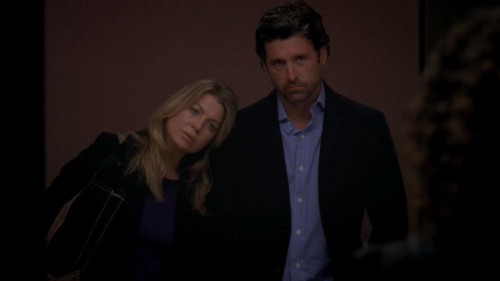
At the end of season 10, which saw the departure of beloved character and Meredith BFF, Cristina Yang (Sandra Oh), the two twisted sisters dance it out one last time – but not before Cristina offers some crucial parting words. In her Cristina way, she tells Meredith that Derek Shepard (Patrick Dempsey), aka McDreamy, aka Meredith’s husband, is “very dreamy. But he is not the sun. You are.” After ten years together and a relationship Rhimes says is based on her own Cristina, this is what her last words are. Essentially, stop revolving your life around Derek, start revolving around yourself… Or, you know, something more eloquent and science-y, but nevertheless make yourself a priority!

Cristina’s wise parting words.


If ever there were a theme that needed to be explored in 42 minutes not including commercials on network television, this would be it!

During the multi-episode absence of Derek McDreamy Shepard, Meredith has made herself a priority and is quite literally kicking ass and taking names. And those names? They’re the names of all the people Meredith has consecutively saved since Derek has been gone. Yes, while her husband is away on a fancy project for POTUS, Meredith is 90 names deep in the lifesaving department. She literally hasn’t lost a patient since Nov. 14 of last year (Grey’s is real time, real world so, a while). And when Derek does return? Streak over. Patient gone.

This idea, this storyline that Meredith is at the top of her game when all the other factors in her life are taken out of the equation is so impactful. Her husband is across the country doing a job he thinks is more important than hers; her kids are being doted on by a sister-in-law and a surprise half-sister. All Meredith has to do is focus on Meredith and that means focusing on surgery. Is this Rhimes saying to all us die-hard female Grey’s fans that we as women need to take the focus off of other people and put it back on ourselves in order to be the best version of, well, us? It certainly seems that way.

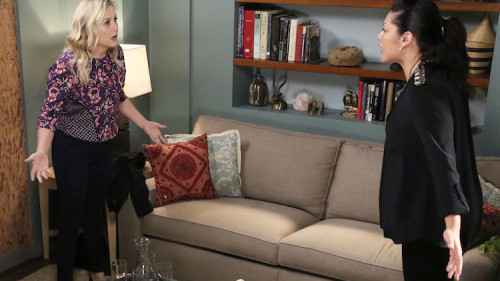
Meredith isn’t the only female character who’s seen a general life resurgence this season. Callie Torres (Sara Ramirez) makes the completely gut-wrenching, completely unforeseen, and completely sense-making decision to end her relationship with Arizona Robbins (Jessica Capshaw) because she has lost herself in the marriage. Callie used to dance around in her underwear; she used to be a badass bone surgeon. Despite still loving Arizona, Callie realizes being away from Arizona was the first time she truly started to find herself again. Callie makes the decision to stop trying to fix her marriage. A bold and heart-breaking choice, but Callie is choosing Callie and that’s what is most important.

Callie and Arizona’s heartbreaking break up.
Callie and Arizona’s heartbreaking breakup.


Amelia Shepard (Caterina Scorsone), who is not only Derek’s sister but also his replacement as head of neurosurgery, has also proven she can stand on her own two feet. After deciding she is the only brain surgeon who can remove Nicole Herman’s (Geena Davis) life-threatening tumor, she literally has to solidify herself not as Derek’s baby sister, not as a recovering addict, but as a badass brain surgeon. During a critical moment of self-doubt, when Amelia asks Richard Webber (James Pickens Jr.), her unofficial sober companion, to bring Derek back from Washington to save her in the middle of surgery, Richard gives Amelia a similar speech Cristina gave to Meredith. “Derek isn’t here,” he tells her. “YOU’RE here.” In other words, Derek can’t save her; Derek isn’t “the sun.” Amelia needs to step out of Derek’s shadow and own her power. She not only rocks her surgery, but saves Herman’s life. She also earns herself a spot in the Derek Is No Longer The Sun Club.

All other female characters are doing their part to be awesome this season, too. Stephanie Edwards (Jerrika Hinton) is off being a superhero with Amelia. Newcomer Herman saves unborn babies and beats a terminal brain tumor. Arizona is Herman’s living legacy, saving babies left and right with magical knowledge and was basically Herman’s life saving catalyst. Jo Wilson (Camilla Luddington) is the one who realized Meredith’s streak of bad ass-ness. April Kepner (Sarah Drew) is taking a tragedy and using it to better herself. And Miranda Bailey (Chandra Wilson) is using her voice to stand up for those who aren’t always heard. Bailey is also married to Ben, so let’s be real, Bailey wins by just waking up in the morning.

Let’s take a moment here to acknowledge Maggie Pierce (Kelly McCreary). I definitely had the thought earlier this season: Does Meredith Grey really need another sister? But Maggie is the sister Meredith needs and deserves. She’s the sister everyone needs and deserves. She fills a Cristina void, a Derek void and, most importantly, she’s just really good. She’s a good cardiothoracic surgeon, she’s a good sister, she’s a good friend. And she’s normal! Like, aside from not being able to form constructive sentences around attractive men, she is basically the most normal and balanced character Grey’s Anatomy has ever seen. So, yay for Maggie who apparently has been around in theory since Season 4.

Maggie Pierce just being her likeable self.


The male characters this season, while always interesting, have definitely taken a step back story-wise to make room for these women to really shine. Seasoned Grey’s fans will remember the days when the male characters were much more of a force to be reckoned with, adding a sexual undertone to all hospital activities. And as much as I, and every other viewer, loved Mark McSteamy Sloan, he was basically a walking sex education class.

Really this season has been about self-reflection, loss, and healing for the male characters. Richard is coming to terms with discovering a daughter he didn’t know he had. Alex Karev (Justin Chambers) is navigating being Meredith’s “person” while realizing he’s in it for the long haul with Jo. Jackson Avery (Jesse Williams) is coping with the loss of his unborn child. Owen Hunt (Kevin McKidd) is dealing with the loss of Cristina. And Derek is busy crossing lines with a woman who is not his wife.

While we know now that Derek did in fact kiss his subordinate, we also know that Meredith has handled Derek’s suspected infidelity with serene stability. The moment that really solidified Meredith’s coming into her own? During last week’s episode (1117) when Derek came back from Washington D.C. refusing to reveal his assignations, he told Meredith he cannot live without her. To which Meredith says she can live without him. Derek is no longer the sun in this moment. Meredith has found who she is without her husband. Of course, Meredith then says she doesn’t want to live without Derek, but still, Meredith is now revolving around Meredith and Derek is just some passing comet, pretty to look at but not a crucial heavenly body in this planetary system.

“You guys are a freaking romance novel,” Callie says to Meredith about her relationship with Derek. Everyone is pulling for these two. But what happens next is anyone’s guess. Meredith can survive without Derek. So Derek needs to majorly step up.

MerDer, the Living Romance Novel – kidding.


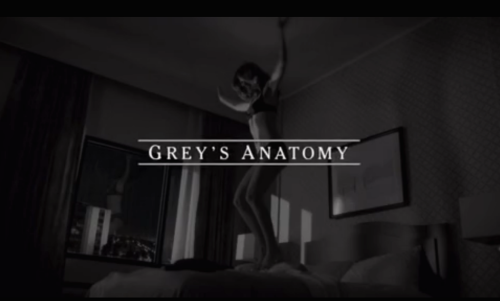
Every once in a while I’ll catch a bit of fan-generated Grey’s Anatomy reviews online. And if you are one of the surprising number of confused people who have no idea why the end title card for episode 1112 was a freeze frame image of Meredith jumping on a bed in her underwear  — well, I’m going to tell you!

Season 11 has been all about Meredith getting back to who she really is. Instead of going to D.C. to work on her marriage, she checks into a crappy airport motel and works on herself. She watches movies, raids the mini bar, and, yes, strips down to her skivvies and jumps like a kid on the bed.

Meredith being the sun.


That whimsical image (set to the fantastic song “Priory” by The Weekend), is the message of this entire season and something we as women, and everyone, should be doing:

Get back to yourself, put yourself first, love yourself first.

A powerful message from Shonda Rhimes and the Grey’s writers, indeed!


Alize Emme is a writer and filmmaker living in Los Angeles. She holds a B.A. in Film & Television from NYU and tweets at @alizeemme.

How Should a Show About Witches Be?

It seems in Hollywood, you can’t talk about women without talking about witches.


This is a guest post by Kaitlyn Soligan.


If “Women in Television” has a unifying theme of the moment, it is this: Everybody Wants a Witch. American Horror Story, Witches of East End, Salem, and HBO’s new Jenji Kohan project The Devil You Know are only the latest instances in recent years of television venturing deeply into witchy woods, with decidedly mixed results. Besides a litany of recent shows devoted solely to Magical Women and Where to Find Them, witches also play various parts in the plethora of supernatural and fantasy shows on television right now; witches are featured in main or recurring roles on Supernatural, The Vampire Diaries, and Grimm, among recent others. More general mainstream fare, including Outlander, Pixar’s Brave, and even the upcoming Avengers: Age of Ultron have fantastical elements and crucial plot points that include or revolve entirely around witchy women. It seems in Hollywood, you can’t talk about women without talking about witches.

Historically, witches have been everything from women who speak their mind to women who own property. Witches have been men who supported women or wouldn’t back down from an argument; witches have been those with a more fluid gender expression or characteristics that failed to fit neatly into an acceptable box on medical forms. Witches have been those with a race or ethnicity that differed in any way from that of those around them, particularly when they occupied the space they did as a result of forceful intervention and colonization. Witches have been the poor and disenfranchised and unlucky. Witches have been sexually powerful and enviable, wealthy and confident; occasionally, witches have been anyone who accused someone else of being a witch, when the tides quickly turned and luck was unsettlingly re-distributed. Witches have those with a faith that differed even slightly from the dominant one of the place and time, including, at intervals, Jews, Pagans, Wiccans, practicers of Hoodoo, and those with basic medical knowledge or an interest in science, among others.

Witches are in the very fabric and nature of gender and queerness and the margins we live in. So if “the season of the witch” just won’t end, how, exactly, should a show about witches be? How about this: Womyn-centric. Gender queering. Aware of race and ethnicity and faith and their role and lived reality in any particular time and space. Deeply intersectional and examining of those aforementioned spaces in the context of that intersectionality. And, without reservation and above all else: totally, joyfully bonkers.

Recent attempts to bring witches to the mainstream have succeeded and failed in almost equal measure. American Horror Story: Coven, created by an out gay man, had a sense of camp about it that harkened back to The Witches; it had something of the horrible feminine in those early images of Kathy Bates smearing her face with blood, of what women will do for power when power is ferociously limited by age and desire; it had some notion to examine race and its implications in magic and magical portrayals. Unfortunately, it also had an abhorrently mishandled rape scene in the first episode, and, whether for fear or incompetence, neither asked the right questions about race nor answered any at all.

Salem, while certainly a missed opportunity to examine the actual Salem witch trials, which were consumed by all of these questions and more, also has camp, gore, and a gleefully nuts sexuality going for it. Witches – both men and women – are everywhere among the good townspeople, who are painfully repressed and not particularly good. The devil is real and holding massive orgies in the woods. Two witches seduce a man, pin him down, and force-feed him a frog. One witch feeds the frog nightly from an extra nipple. Pure insanity abounds.

Also, Salem is pretty gross.


What Salem and so many other shows that feature witches gets painfully wrong is race. The character of Tituba is weak and jealous, and, as one of the only characters with implications of queerness, leaves us with a jealous almost-lesbian who practices a weirdly racialized magic as the sole character of color on the show. While plenty of other characters are similarly messy or even mishandled, having the entire diversity of the cast rest on that one token portrayal makes Tituba’s mismanagement unconscionable as well as flat-out uncomfortable. Moreover, Tituba actually is a fascinating historical figure, and deserves some of the dignity of the woman herself, whose story is one of dislocation and survival in an extraordinarily dangerous time.

Surprisingly, Lifetime’s Witches of East End’s sometimes diverse cast handled the intersection of race and magic well – to a point. One early character was an African American librarian who thought magic was a fun game of pretend and was the incidental victim of real magic gone wrong, as was a brief romantic lead who became a ghost (obviously). A later romantic interest for one of the main characters was a badass warrior witch that resulted in a few episodes that explored a magical, interracial same-sex relationship of equals, making those traits incidental and the relationship itself about commitment and ego and family. The cast on the whole was diverse in a laid-back way that really worked, until a storyline about an ostensibly Caribbean witch fell into a trap earlier laid by historical misrepresentation, AHS: Coven, Beautiful Creatures, and many others: magic was suddenly racialized, with the Caribbean witch doing dark “blood magic” with bones and powders that was nothing like the ostensibly “better” or cleaner magic practiced by the white leads.

You can feel the sexual tension radiating off of this photo, and these two weren’t even the ones sleeping together.


Aside from the sadly typical mishandling of representation, Witches of East End had some of the things one would hope for; certainly bonkers, sexual, funny, community and family oriented, it also had a messy, sometimes defiantly non-existent narrative structure that in and of itself queered television – if only by making it almost unfollowable, requiring the viewer to give up on the notion of neat boundaries and control.

It’s this new Jenji Kohan HBO vehicle that shows the most promise and gives audiences the most to hope for in terms of what genre-bending things a show about witches could bring to TV. Kohan has headed the excellently written and extremely diverse Orange Is the New Black, proving that she gets women and deliberately women-centric spaces in television. That show also did some cool things with narrative structure, partly as a way to bring an audience in through a typical white-girl-fish-out-of-water point of entry and then go to different, much more interesting places. That cast gave us the unbelievably fabulous Uzo AdubaThe Devil You Know offers similar cause for excitement. It’s full of less-knowns who’ve shown enormous potential, particularly Zawe Ashton, who was part of the weird and moving Dreams of a Life, a queer kind of cinematic endeavor in and of itself, and better-knowns like Karen Gillan, a movie star and genre favorite in her own right as well as a badass action star who shaved her head for a role. Most significantly, the cast includes Eddie Izzard, simultaneously a seriously phenomenal dramatic actor and one of the greatest stand-up comedians in the world, who once explained to a reporter, “Drag means costume. What I do is just wearing a dress.” And all of these moving pieces will be on HBO, the venue that brought us True Blood, which was, for all its problems, queer, dark, funny, extremely sexual, and absolutely, joyfully, bonkers.

Witches are an energetic reality; like ghosts, monsters, and loneliness, they wouldn’t have such a deep psychological pull if they weren’t. We examine these things because they obsess us and keep us awake at night; we examine these things because they are an unquantifiable, intangible, undefinable reality, but a reality all the same. Witches have been terrified victims, sexual beings, rich women trapped in penthouse apartments and more; all of this is so. But what witches do has been and is another matter entirely. Witches upend: dreams, homes, lives, whole villages and cities. They make us uneasy. They steal outright: babies from cradles, men from beds; they take quietly in the night: crops, a sense of security; they give: love potions, stories, endless wonder. They pervert and fascinate beyond measure.

Witches have been wild and untamable for all of recorded human history, and for as long as we’ve had the written word, from The Brothers Grimm to Arthur Miller to Bewitched to Buffy, hardly a storyteller hasn’t tried to tame them. It’s time to stop trying. Let loose the beasts. They won’t promise not to hurt you, but if rumors or true, they will show you a hell of a good time.


Kaitlyn Soligan is a writer and editor from Boston living in Louisville, Kentucky. She writes about that, and bourbon, at www.ivehadworseideas.com. You can follow her on twitter @ksoligan.


Call for Writers: Fatphobia/Fat Positivity

Negative depictions of fat people are the norm throughout all of pop culture. Though fatphobia crosses racial, gender, and class lines, audiences judge women the most harshly. Fat characters are frequently shown as disgusting, sad, or unlovable. In the horror genre, fatness is frequently represented as terrifying and unnatural. In comedies, fat bodies are often the source of humor. Though few and far between, there are a growing number of fat positive representations popping up throughout TV and film.


Call-for-Writers-e13859437405011

Our theme week for April 2015 will be Fatphobia/Fat Positivity.

Negative depictions of fat people are the norm throughout all of pop culture. Though fatphobia crosses racial, gender, and class lines, audiences judge women the most harshly. Fat characters are frequently shown as disgusting, sad, or unlovable like Chrissy Metz’s Barbara/”The Fat Lady” in American Horror Story: Freak Show or Darlene Cates’ Bonnie from What’s Eating Gilbert Grape. Fat people are often cast as the villains, their bodies being a symbol of excess, shame, and/or nonconformity–examples being Ursula from The Little Mermaid or Miss Trunchbull from Matilda. In the horror genre, fatness is frequently represented as terrifying and unnatural (Slither and Crazy Fat Ethel II). In some cases, fatness is a punishment like in Drop Dead Diva or Mean Girls.

In comedies, fat bodies are often the source of humor, such as Melissa McCarthy’s character Megan in Bridesmaids or pretty much anything starring Chris Farley. The deplorable practice of donning a fatsuit to get some laughs (Shallow Hal, Austin Powers: The Spy Who Shagged Me, and all The Nutty Professor movies) seems to be on the rise.

Though few and far between, there are a growing number of fat positive representations popping up throughout TV and film. Though sometimes problematic, these examples show fat people as multifaceted human beings (Girls), sympathetic (Louie), heroines/heroes (Precious), sexy (The No. 1 Ladies’ Detective Agency), and/or funny because of who they are and not their bodies (Roseanne). Are these samples of fat positivity the beginning of a movement? Are they enough to change the prejudice and fatphobia inherent in Hollywood and our culture?

Feel free to use the examples below to inspire your writing on this subject, or choose your own source material.

We’d like to avoid as much overlap as possible for this theme, so get your proposals in early if you know which film you’d like to write about. We accept both original pieces and cross-posts, and we respond to queries within a week.

Most of our pieces are between 1,000 and 2,000 words, and include links and images. Please send your piece as a Microsoft Word document to btchflcks[at]gmail[dot]com, including links to all images, and include a 2- to 3-sentence bio.

If you have written for us before, please indicate that in your proposal, and if not, send a writing sample if possible.

Please be familiar with our publication and look over recent and popular posts to get an idea of Bitch Flicks’ style and purpose. We encourage writers to use our search function to see if your topic has been written about before, and link when appropriate (hyperlinks to sources are welcome, as well).

The final due date for these submissions is Friday, April 24 by midnight.

Shallow Hal

Gilmore Girls

American Horror Story

Matilda

Bridget Jones’ Diary

The No. 1 Ladies’ Detective Agency

Tammy

Game of Thrones

Precious

South Park

Crazy Fat Ethel II

Louie

Tommy Boy

Roseanne

Drop Dead Diva

Bridesmaids

Austin Powers: The Spy Who Shagged Me

Austin Powers: Goldmember

Enough Said

The Nutty Professor

Death Becomes Her

Broad City

Girls

The Little Mermaid

Mean Girls

Shrek


Bitch Flicks’ Weekly Picks

Check out what we’ve been reading this week–and let us know what you’ve been reading/writing in the comments!

recommended-red-714x300-1


For White TV Writers Who Have Considered Racism When *Ethnic* Diversity Is Too Much by Jai Tiggett at Shadow and Act

Critics are Pissed That People of Color are Finally Being Represented in Media by Sesali B. at Feministing

At the Box Office, It’s No Longer a Man’s World by Brooks Barnes at The New York Times

Hollywood’s Women Problem: Why Female Filmmakers Have Hit the Glass Ceiling by Gili Malinsky at The Daily Beast

What DreamWorks movie ‘Home’ means for Hollywood representation by Alexandra Samuels at USA Today


What have you been reading/writing this week? Tell us in the comments!

Whispers of a House Mouse: Attempting to Disrupt ‘Cinderella’ in 2015

However, just as with the rest of the movie, I also felt an anxiety about those scenes as I felt the weight of my daughter, sitting on my knee at this point in the movie. If the goal to be attained is the love of a wealthy man in just about every film marketed to her, and if her initiation into girlhood isn’t going to be completely mediated by me (though how I wish that were possible), what are my choices?

unnamed


Written by Colleen Clemens.


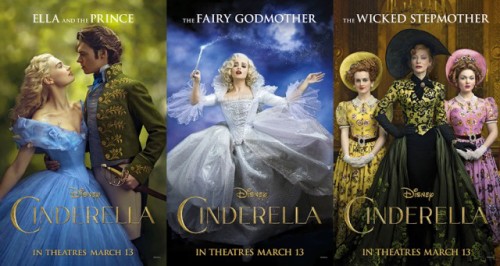
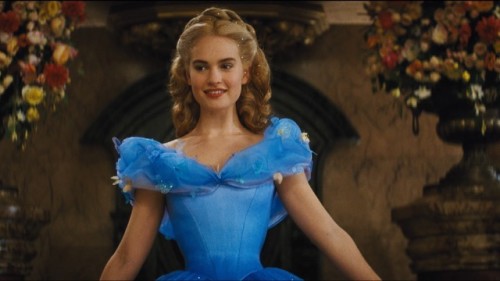
I took my daughter to see Kenneth Branagh’s live action Cinderella over the weekend, even though before my daughter was born, I swore there would be no princesses.

We knew she was a girl early on but, much to the consternation of those around us, didn’t share the news. I wanted to avoid the “pink tide” for as long as possible.   We have a strict “No Barbie” policy in the house. I teach Gender Studies; I rail against the princesses during class hours. But my home isn’t a feminist utopia. My daughter made bracelets instead of bridges with her Goldie Blocks. At this point in her life, she is more interested in accessorizing than engineering.

I was parenting solo that weekend. I had a cold and was exhausted. The movie was cheap, the popcorn and soda for dinner even cheaper. I told myself it was a material issue, that it was a feminist act that I chose my sanity, the promise of her being still and entertained for a few hours worth the exposure to blond, white princesses. And there was the Frozen short we were both curious to see.

In the end, I liked the movie. But I didn’t love that I took her. Because I worry that some of the images from the film—as much as I tried to disrupt them—will stick with her. I can think of three specific examples.

unnamed

First, the waists. I had been so worried about the whiteness, the blondeness, the general thinness, that I forgot to think about the waists, but during my viewing, all I could do was stare at Lily James and Cate Blanchett’s waists. I hadn’t read all of the pre-film hype about the issue, that James had eschewed solid food for days on end to fit her already slim waist into the corset. During the movie, my mind raced: Will my daughter think this size is normal, even though she often pulls up my shirt to look at my very normal belly to press my belly button? Will she start comparing my stomach to Cinderella’s? I kept wondering: Can film editors do the same tricks that print editors do? Is there some kind of filmic Photoshopping happening? (They swear there is no digital magic happening.) The waists are something to behold and left me trembling. Meanwhile, my daughter housed a large popcorn without a care in the world. But how long will it be before she starts to make connections between food and body shame, even if I do all I can to disrupt it?

unnamed

Second, the love story. The idea that all stories work toward a heterosexual coupling is a myth we work toward disrupting in our household, for both familial and political reasons. We have lots of conversations about what love can look like for her and for those around us. So I wasn’t too upset when she insisted she needed to go to the bathroom at the moment Cinderella and Kit come together to declare their love. However, the line at the loo foiled my plan. As we stood at the back of the theater and watched the two come together, I whispered in her ear: “Remember, this movie is about a boy and a girl in love. And there are lots of other ways to love. But this movie right now is about a boy and a girl.” I can whisper in her ear all I want. Until she actually sees a romance that goes beyond the one trope we all know, these whispers may fall on deaf ears.

unnamed

Third, the desperation. The shenanigans that the women of the kingdom enact to jam their feet into the glass slipper are hysterical. I laughed. Especially at the wicked stepsisters and their desperation to get…that…foot…into…that…shoe.

However, just as with the rest of the movie, I also felt an anxiety about those scenes as I felt the weight of my daughter, sitting on my knee at this point in the movie. If the goal to be attained is the love of a wealthy man in just about every film marketed to her, and if her initiation into girlhood isn’t going to be completely mediated by me (though how I wish that were possible), what are my choices? I can whisper in her ear that marriage isn’t everything, that waists aren’t that tiny, that love looks like many things, but aren’t the shouts of Disney in this world louder than my whispers in her ear?

unnamed

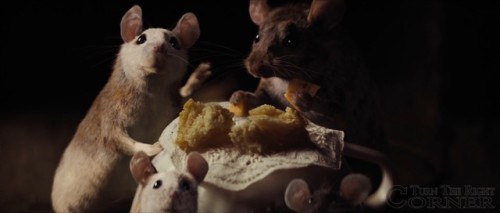
I may only be as loud as the mice that flit about Cinderella’s feet.

unnamed


Colleen Lutz Clemens is assistant professor of non-Western literatures at Kutztown University. She blogs about gender issues and postcolonial theory and literature at http://kupoco.wordpress.com/. When she isn’t reading, writing, or grading, she is wrangling her two-year old daughter, two dogs, and on occasion her partner.

Asian Womanhood in Pop Culture: The Roundup

Check out all of the posts for our Asian Womanhood in Pop Culture Theme Week here.

The Social Network and the China Doll/Dragon Lady Syndrome by Stephanie Charamnac

Part Dragon Lady, part China Doll, Christy is 100 percent stereotypical. It’s hard to believe that such a distorted representation, steeped in age-old myths, only dates back to 2010. Even more disheartening is the fact that most film critics did not raise an eyebrow at this deeply flawed portrayal.


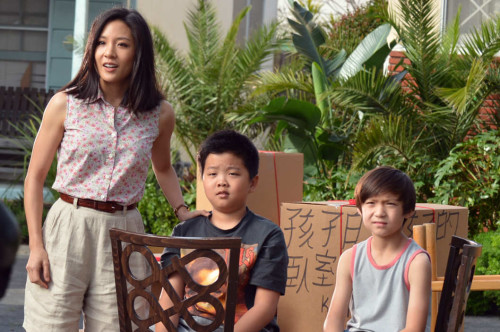
Fresh Off the Boat’s Jessica Huang Is Loud, Abrasive, Intense, and Exactly What We Need by Deborah Pless

I don’t want to jump the gun here, since the show has only been on now for a month and a half, but Jessica Huang might just be my new favorite female character. Why? Because she is hilarious, brilliant, incredibly sarcastic, and because she refuses to let anyone get away with anything. Basically, because I see myself in her and I love it. What can I say? I’m naturally egotistical.


Kuch Kuch Hota Hai: Bollywood Hurts Men, Too by Brigit McCone

By supplying excuses all around, Kuch Kuch Hota Hai upholds the status quo while venting its resulting frustrations; the performances lovingly celebrate female feistiness, while the plot constantly punishes and suppresses it in favor of traditional ideals of self-sacrifice and emotional martyrdom. Cue predictable feminist outrage. You already know everything I would write. So instead, I’d like to focus on another aspect of the film: its utter contempt for male agency. Yes, male.


Kalinda Sharma Is My Favorite Queer Uncanny Star by Rosie Kar

Though based in downtown Chicago, there is a paucity of people of color in the show, and those who do make appearances seem to be present for only short amounts of time, save for one: Kalinda Sharma. She is an independent private investigator for the firm Lockhart and Gardner, and is a supporting character in the series’ narrative. Played by actress Archie Panjabi, the role of Kalinda Sharma is one that is groundbreaking in terms of thinking about queer South Asian bodies onscreen in the American imaginary.


The World Before Her: Between Liberalization and Fundamentalism–India’s Two Faces by Asma Sayed

Pahuja sees the film as going beyond the issues of women’s rights; according to her, the film is about India, and what’s happening there, and the fear about the future as the culture of the country goes through extreme changes. She adds that, through the film, she would like to showcase the kind of “hatred being taught in the camps in the guise of patriotism.”


Ouran High School Host Club: Haruhi, Heteronormativity, and the Gender Binary by Jackson Adler

At its heart, Ouran is about gender and, for better or worse, how it is perceived and performed. Though often praised and adored for its challenges to heteronormativity and gender roles through its range of characters, especially its protagonist, it ends up reinforcing heteronormativity and the gender binary to a large extent.


Mother India: Woman, Pillar of the Nation by AP

Mother India treats Radha’s abnegating nature as a positive. Look how nobly she suffers for her husband and sons, the movie seems to say. In real life, such glorification of women’s suffering enables an exploitative system of economic growth on the backs of underpaid, overworked women. They get nothing except lip service, sometimes not even that.


Saving Face: About Chinese American Women, Not Based on a Book By Amy Tan by Ren Jender

Like Chutney Popcorn, Saving Face is one of the few films focused on queer people of color and their families. Having those two elements together might seem like a modest achievement, but Pariah is one of the only recent films that also includes both. Mainstream movie makers apparently think queer people of color don’t have families, but instead are deposited as eggs in a sandy, warm spot by a pond until they hatch and make their way, independently, into the world.


Not Everybody Is Kung Fu Fighting by Katie Li

Western audiences aren’t interested in the talking points though; they just want to fast-forward to the action. They glorify the violence and exotify Chinese culture, while completely missing out the subtle, important messages of martial arts training: values like discipline, hard work, and how your training and skills aren’t used to harm others, but to better yourself.


English-Vinglish: Straddling Patriarchal and Linguistic Hegemony by Asma Sayed

Moving away from the Bollywood style masala and dancing-around-the-trees numbers, this film focuses on the real-life issue of the position of women in the domestic and social spheres in India.


Why Fresh Off the Boat Is Kind of a Big Deal by Katy Koop

So, in a world where people think you don’t have to cast Asians to play Asian parts, Fresh Off the Boat gives hope that maybe Asian kids or mixed kids like me will actually see a sitcom and see themselves a little. And maybe if it’s a success, more shows and better casting will follow.


The Kims Next Door: Korean Identity on Gilmore Girls by Elizabeth Kiy

While Rory struggled with the myriad of concerns afforded to a main character: her love life, her future, her friendships and family, Lane’s biggest conflict was always her overbearing, uber-religious mother and to a lesser degree, her own Korean heritage. Being Korean is never posed as a positive thing for Lane, it is only a marker of difference.