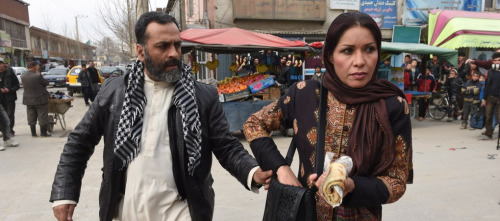
Who Protects Leena Alam? Spectacles of Violence in Afghanistan vs. France

Though fictional, Alam’s character, Shereen, faces real issues that aren’t typically up for discussion in Afghanistan. It begs the question: How does a nation begin to discuss layers of womanhood, selfhood, and projection after years of oppression?

tumblr_inline_nn4ej3TGrh1t414f3_500


This guest post by Molly Murphy previously appeared at WhoCaresAboutActresses and is cross-posted with permission.


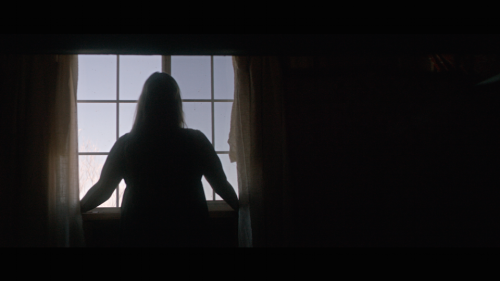
WhoCaresAboutActresses celebrates Leena Alam, the actress starring in Afghanistan’s first feminist TV drama, Shereen’s Law, about a middle-aged woman navigating the hurdles set by patriarchy in modern-day Kabul. The hard reality of women’s oppression has spilt over into the production; one woman, set to play the supporting role of Shereen’s lawyer friend, had to back out due to pressure from her husband. Even Leena Alam acknowledges fear for her safety on set:

“It’s a bit dangerous, even for myself. Yesterday we were shooting outside. When… I’m waiting for the shot I’m always scared that somebody may throw acid on me or somebody may hit me with a knife.” –Leena Alam

Though fictional, Alam’s character, Shereen, faces real issues that aren’t typically up for discussion in Afghanistan. It begs the question: How does a nation begin to discuss layers of womanhood, selfhood, and projection after years of oppression? Shereen venturously seeks to, at the very least, begin scraping the surface of that question. In theory, her life is set. A 36-year-old mother of three, she has a husband she was arranged to marry, and a job working as a courtroom clerk where she silently documents the judicial process as it unfolds in Kabul. Shereen, however, wishes to pierce through the layers cast upon her; she wants a divorce, and, as I suspect, wants more than to sit in the courtroom with her hands folded.

Leena Alam’s mention of acid-throwing keeps echoing in my head. I know people are capable of atrocious acts of violence, but how could someone do that? I wonder who the target of violence is that Alam fears for. Is it actress, Leena Alam, herself? The fictional character, Shereen? The image of a woman seeking answers to her burning questions? The new words that threaten to seep into courtroom documents at the hand of the unabiding clerk? Perhaps these things are one in the same.

tumblr_inline_nn4ehh67Zm1t414f3_500

I can’t help but draw parallels between Alam’s concerns and the fears that manifested in restrictions on action film shoots in Paris in the wake of the Charlie Hebdo attacks. In February, reality spilt over into film production as the city of Paris searched for ways to address the very real post-traumatic-stress of its citizens:

“I was shocked to hear witnesses of the Charlie Hebdo attacks say on television: It seemed like a movie shoot to us…” –Police Commander, Sylvie Barnaud 

The ban on action films continues today:

“There’s a problem with these action-type scenes, as the actors in uniform could be targets for terrorists… Also, the actors could pose confusion for the general public – during this highly sensitive period.” –Barnaud

While I see these sentiments as paralleled, I also see them obscured to one another; France fears for the well-being of its “Je suis Charlie” nation, while Shereen’s Law gives life and representation to issues faced by women. Leena Alam is enduring; Shereen, perhaps, a martyr in the making. As is the duty of any city, Paris is adamant about protecting its citizens from the spectacle of violence. Shereen, the first character of her kind, is still being filmed and set to have her story air on Afghan TV before the end of the year.

“There’s been an enormous consultation, an enormous review of the script and of the whole storytelling process to make sure that it raises these issues, but it doesn’t raise them so bluntly and so offensively that it’s going to make the programme go off air” –Writer/director of Shereen’s Law, Max Walker

As decisions move forward and stories evolve, I can’t help but wonder what protects Leena Alam.


unnamed

Molly Murphy is an artist and cinephile who currently works in collaboration with critically-acclaimed artist/filmmaker, Elisabeth Subrin on a feminist tumblr called whocaresaboutactresses.tumblr.com


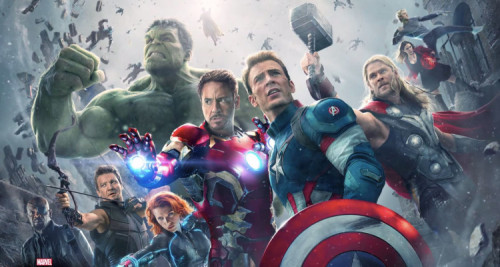
Do Black Widow and Scarlet Witch Bring Female Power to ‘Avengers: Age of Ultron’?

The scene with her blazing after Ultron on a motorcycle was one of the highlights of the film for me (though I could have done without the “I am always having to pick up after you boys” joke when she grabs Captain America’s shield from the road). Regarding action, super-hero skills, and the ability to banter (an aspect of the film many reviewers like the most), there is not much of a gender differential. The inclusion of a “rape joke” and the perpetuation of the infertile-women-as-monstrous trope detract from this more egalitarian super-hero world, however.

211ox9s-750x400


This guest post by Natalie Wilson previously appeared at Skirt Collective and is cross-posted with permission.


Black Widow has far more clothing than Wonder Woman. The fact that this seems worthy of noting is not the greatest recommendation for super-heroes as a vehicle for feminism. Yet, Wonder Woman was created by a feminist – and envisioned AS a feminist super-hero (as documented in Jill Lepore’s book, The Secret History of Wonder Woman).

Are Black Widow and Scarlet Witch feminist heroes as well? In my book, yes. However, some of their fellow super-heroes (and the actors who play them) don’t make the feminist cut due to their propensity for “rape jokes” and slut-shaming (Tony Stark is guilty of the former, while Jeremy Renner and Chris Evans of the latter, as discussed here and here).

As discussed in “An Open Letter to Joss Whedon from a Disappointed Feminist Fan After Watching ‘Age of Ultron,’” Whedon has “maintained, loudly and publicly, that you were on the side of making that world a better, more welcoming, more nuanced place for women — as fictional characters, and as viewers.” Yet, as the post documents, Black Widow’s story arc is disappointing from a feminist perspective while Black Widow’s powers ally with those “dreamed up by men who are terrified of women.”

Alas, while I went in fully expecting to start itching to leave early, Avengers: Age of Ultron kept me hooked until the end. A large part of this is thanks to Black Widow and Scarlet Witch, and, yes, as much as I was NOT a fan of the Iron Man sequels and feel Tony Stark is a high-octane-asshole, I still have a soft spot for Robert Downey Jr. I blame the 80s.

The_Avengers_Cast_2010_Comic-Con_cropped-1024x518

Age of Ultron may suffer from a bit of Smurfette Syndrome, but Natasha Romanoff/Black Widow is a complex character with a rich backstory, not just a sidekick. In this film, she is shown to be friends with Laura Barton, is called Auntie by the Barton/Hawkeye children, and interacts with Dr. Helen Cho, Maria Hill, and Wanda Maximoff/Scarlet Witch all in ways NOT about romance with a man, making the film pass the Bechdel Test several times over.

The scene with her blazing after Ultron on a motorcycle was one of the highlights of the film for me (though I could have done without the “I am always having to pick up after you boys” joke when she grabs Captain America’s shield from the road). Regarding action, super-hero skills, and the ability to banter (an aspect of the film many reviewers like the most), there is not much of a gender differential. The inclusion of a “rape joke” and the perpetuation of the infertile-women-as-monstrous trope detract from this more egalitarian super-hero world, however.

Yet, thankfully, one of the additions to the Avengers team – Wanda Maximoff/Scarlett Witch – gives Black Widow another woman to fight the good fight with. Like another female associated with red and witchery, Carrie White, Wanda’s primary skills are mind manipulation and telekinesis. In one scene, as she stops a train with her mind, her hands emit enough bright red to rival Carrie’s scarlet-hued infamy.

Black_Widow_Age_of_ultron_poster

I gotta admit super-hero films are not my favorite genre – not by a long-shot. That I stayed until the credits means the film kept me engrossed, providing enough story arcs to keep me interested– especially the Black Widow/Hulk romance theme. Ironically, this sub-plot irked me the most.

On the one hand, I enjoyed it, which made me feel like a bad feminist. Why? Because when films/genres that need not bring romance into the plot do so in overt ways, I feel as if we are back to the “women are only good as lovers/girlfriends/wives” meme. I like romance as much as any normal human does that lives in a culture such as ours, but need we pair off the entire planet hetero-monogomous style EVEN in our super-hero movies? (Please, SOMEONE, make a queer-positive Batwoman film!)

On the other hand, I also loathed it for its May/December connotations. Johansson is 30, Ruffalo 47. Imagine if Natasha was instead paired with someone near her own age? GASP. What a concept.

Further, the scenes where Black Widow takes Hulk’s huge hand to calm him back into his nice-guy-Bruce- Banner-self are too redolent of Beauty taming the Beast. And, given as the Hulk is presented as the MOST monstrous, so monstrous it is not safe for him to be around civilians, should it bother us that Natasha pines for the Green Guy? Sure, Bruce is a nice guy, but his “alter ego” has a wee bit of an anger management issue.

The_Avengers_Age_of_Ultron_70574

Hulk is, I must admit, a better choice than Iron Man/Tony Stark, he of wealth-amassed-via-militarism. With lines like “I see a suit of armor around the world,” the film itself nods to his pro-weapon-douchery. Further, the super-hero twins were orphaned due to a weapon labeled “Stark,” a point Wanda emphasizes. Later, she points out Ultron’s earth-destroying impulses come from the person who designed him, Tony Stark:

“Ultron can’t tell the difference between saving the world and destroying it…where do you think he gets that?”

Thus Tony, in my book, is horrible partner material (a fact that escapes the naïve Bruce Banner). He jokes about reinstating “Prima Nocta” (which sanctions rape), creates yet another world-destroying weapon via Ultron, and even scolds Natasha, “you and Banner better not be playing hide the zucchini” (ha ha, so funny to think about the BIG green man and the Black Widow boning… thank goodness the joke didn’t use a “black hole” reference as well…) Nevertheless, as I will admit, Downey is great in the role. He makes Tony the guy you love to hate.

Speaking of hate, I full on HATED the fact Black Widow cries when she reveals she was sterilized. As this post so clearly elucidates, in so doing, she equates “infertility with inhumanity.”

aven

Finally, despite the seat-gripping special effects and a good mix of action, dialogue, and character building, I found it very hard to watch so much realistically rendered destruction due to current real world events. Buildings being demolished, the mass destruction of cities, police in riot gear, terrified humans running for their lives, stony-faced armed militia, and a long-closing arc that brings earthquakes to mind are all a bit too close to contemporary realities. Of course, this is what the super-hero genre is all about – I get it –imagining how fictional heroes could save us from tragedy. Nevertheless, it was hard to get into super-hero-cheering mode, even with Whedon’s masterful world-building. This, coupled with Black Widow’s “monstrous” infertility and Tony-Stark-douchery, made the film less enjoyable from a feminist perspective than the bulk of Whedon’s oeuvre.

Feminism insists “the personal is political” and that fictional media has a powerful role in our interactions with the real world – and, while the filmmakers could not have known the release of the movie would come shortly after a devastating earthquake, they do know that such tragic events are common place. As such, why not at least nod to how these very personalized super-heroes could serve as conduits for thinking about solving real world problems or condemn them for the problems they perpetuate – such as the “ha, ha, ha, rape is so funny” attitude.

The 3-D world that surrounds us could really use some more feminist super-hero powers – maybe next time Whedon wants to dust off his WMST degree before making his final cut?


Natalie Wilson teaches women’s studies and literature at California State University, San Marcos. She is the author of Seduced by Twilight and blogs for Ms., Girl with Pen and Bitch Flicks.


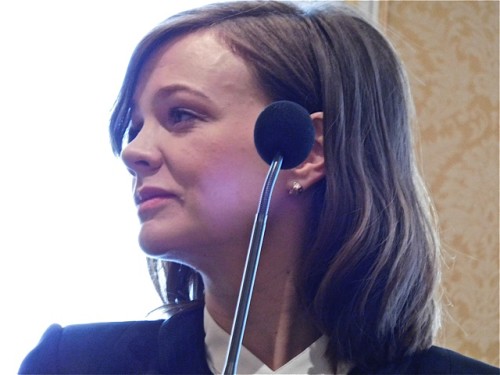
Carey Mulligan on Her Feminist Character in ‘Far from the Madding Crowd’

Following are highlights from the press conference with Carey Mulligan, where among other things, she talked about her character, her collaborative work with her co-stars and director, the elaborate costumes, and how expert she became handling sheep.

Carey Mulligan (photo by Paula Schwartz)
Carey Mulligan. (Photo by Paula Schwartz)


This is a guest post by Paula Schwartz.


Carey Mulligan took time off last week from her duties in the Broadway revival of David Hare’s 1995 drama, Skylight, to promote her new film, Far From the Madding Crowd, based on the 1874 Thomas Hardy novel. In Skylight, for which Mulligan just earned a Tony nomination, the English actress plays Kyra, a teacher in an urban London school who struggles to be independent and lead a life of purpose when her former, much older lover, a wealthy restaurateur (Bill Nighy), tries to worm his way back into her life after his wife dies.

In Far From the Madding Crowd, Mulligan plays Bathsheba Everdene, a country girl who inherits her uncle’s farm, and takes a crash course in how to shear sheep, plant crops and run a manor. Bathsheba’s last name sounds familiar because it inspired the naming of the feminine heroine of The Hunger Games, Katniss Everdeen. Like Katniss, Bathsheba is willful and independent. When she’s forced to behave in ways contrary to her nature, Bathsheba also wears elaborate costumes, with corsets and cinched waists that restrain and confine her and seem fetishistic.

Despite the different historical periods, the women Mulligan plays in Skylight and Far From the Madding Crowd, also have similar concerns; they are complicated, ambitious and brainy women who struggle to find their identity and place in the world, even as men and society try to control them.

Directed by Thomas Vinterberg with a script by David Nicholls, the film fixes on the darkness and perversity just below the surface of restrained and repressed Victorian life. Vinterberg – just as he showed in his last film, The Hunt – finds nature as beautiful and powerful as it is unfeeling and scary. Charlotte Bruus Christensen filmed the luscious, sun-soaked vistas of the English countryside, filled with enough sheep to make anyone consider becoming a vegetarian, particularly after one tragic sequence involving cliffs.

Practical, stubborn, smart, sharp-tongued – even irritating at times – Bathsheba struggles to be independent in a world in which a women’s life is circumscribed by society and custom. While marriage isn’t even on her radar, Victorian society pushes her to find a husband. Soon a trio of very different suitors, played by Matthias Schoenaerts, Michael Sheen and Tom Sturridge, propose marriage. Shocking in her day as much for her sex drive as for her independent lifestyle, Bathsheba chooses for love and desire rather than security or advancement. She is modern and relatable in her pursuits, drives, flaws and contradictions. She chooses the wrong guy when the right one is right under her nose.

Carey Mulligan and Matthias Shoenaerts. (Photo by Paula Schwartz)


Following are highlights from the press conference with Carey Mulligan, where among other things, she talked about her character, her collaborative work with her co-stars and director, the elaborate costumes, and how expert she became handling sheep:

Can you talk about how Bathsheba is unique for the time she’s living in?  

Carey Mulligan: I’d never read the book. I still haven’t. When I read it, that’s what I was most excited about, that it was a story that started with a woman who turned down a proposal of marriage and a good one… a really good one in our film.

It’s a young woman in a Victorian classic that isn’t looking to be married and isn’t looking to be defined by a man. It hasn’t even crossed her mind. That’s what was so exciting. That’s obviously not the viewpoint of most women during that time and throughout the whole story, she sort of enjoys bucking social convention, being different. That’s who she is. There’s so much to her. She’s incredibly complicated and stubborn, fallible, spontaneous and impetuous and all these things mixed together.

Do you find that there’s a similarity between this character and Kyra Hollis, who you’re currently playing on Broadway? 

There’s definitely a similarity between them. The thing about Bathsheba is that she’s so extraordinary in her time but Kyra isn’t that extraordinary in modern times – so I think it’s that Bathsheba feels so contemporary. They both have a real drive. Neither of them wants to be defined by men but both have the capacity to fall head over heels in love.

They’re both really strong yet flawed people, which is rare as an actress to get to play.

This kind of period romance has been done quite a bit. How did you make sure that the performance differed from others before it? 

When you get to work with actors like this (she refers to her co-stars). There’s a certain security to that. Especially when you make an idiot of yourself. One of my improvisations with Michael was my interview to be a governess and he was the master of the house. It was the first time I was ever acted with Michael Sheen. It was terrifying and at the same time it was also brilliant because after that I could do anything in front of him and it wasn’t scary. The same (happened) with Matthias. All of that was good preparation.

Also, (there were) so many long conversations with Thomas Vinterberg and David Nicholls. We had an awful lot of time in comparison with other projects I’ve done and we were able to hash things out over and over and over again. [Laughs] I was really annoying and we came to a point where we were on set and it was a complete collaboration between all of our ideas for the story and what we wanted to do.

Carey Mulligan. (Photo by Hosoki Nobuhiro)


This is a character with so many sides to her. How do you think that was reflected in the clothing, hair and makeup choices? 

That was a conversation with Janet Patterson, our costume designer, and Charlie Rogers, who did the hair and makeup. Working with Thomas and working on David’s version of the story we never wanted it to feel like a buttoned up costume drama with people wearing outfits and looking uncomfortable. This was about real people. The way that Thomas shoots it’s all about the performances. The camera moves with you and it’s all very relaxed on set.

The makeup and the hair, because we were outside all the time, it couldn’t get ruined immediately by being outside. It had to be durable and functional as well.

Skylight has been on hiatus for a week while you promote the film. Can you speak about taking a break from the show to do press? 

We had a hiatus from Skylight so that we could do press in London. That was just the generosity of the producers. They knew well in advance when this film was coming out and we’re all so excited about it and proud of it that we wanted to be able to really do some good press junkets [Laughs].

It’s just a headspace break I suppose. When you do a play, you do it for a long run, I took it as an opportunity to take a break from the play and enjoy hanging out with these guys. Then coming back to the play, you kind have more energy in a way because you’ve been away from it for a week because plays can get a bit relentless.

How modern was life on set? Did you stay immersed in the time period between takes? 

No, I took it with me like you take your homework home and tried to learn my lines for the next day. (Laughs) I’m not a method actor. When you’re in every day you feel a sort of weight of responsibility playing a very famous character, you obviously are thinking about it a lot but it wasn’t a character thing that I was carrying with me… We used our phones on set sometimes. [Laughs]

Carey Mulligan. (Photo by Hosoki Nobuhiro)


You’ve been very discerning about the characters you’ve built and brought to life. Bathsheba is a character who has influenced the modern kickass woman on film. Would you consider playing an action hero? 

I don’t know. I would never say never to anything. The decisions I’ve made over the last couple of years have been driven by the characters and by the script and by the director. This was a perfect marriage of all of those things. I wasn’t really looking to do another period drama. I’ve done a lot of films that have been period recently and I did a lot of Austen (Pride and Prejudice) and Dickens (Bleak House) when I was younger. This was too good an opportunity not to work out.

I don’t rule anything out. I just think I’m always drawn to really strong characters, particularly characters who have a lot to them. I’m not really interested in playing two-dimensional people. But I think what’s amazing about Bathsheba is how complex and complicated and mixed up and strong and resilient. She’s so many different things in one, and that’s what I’m driven by and looking for and if that came along in the form of some action hero, then of course that would be great… But it might not.


Paula Schwartz is a veteran journalist who worked at the New York Times for three decades. For five years she was the Baguette for the New York Times movie awards blog Carpetbaggers. Before that she worked on the New York Times night life column, Boldface, where she covered the celebrity beat. She endured a poke in the ribs by Elijah Wood’s publicist, was ejected from a party by Michael Douglas’s flak after he didn’t appreciate what she wrote, and endured numerous other indignities to get a story. More happily she interviewed major actors and directors–all of whom were good company and extremely kind–including Brad Pitt, Angelina Jolie, Morgan Freeman, Clint Eastwood, Christopher Plummer, Dustin Hoffman and the hammy pooch “Uggie” from “The Artist.” Her idea of heaven is watching at least three movies in a row with an appreciative audience that’s not texting. Her work has appeared in Moviemaker, more.com, showbiz411 and reelifewithjane.com.

Call For Writers: Bad Mothers

Few human beings are quite so stigmatized as bad mothers. Despite the fact that motherhood is demanded of women as an intrinsic part of the female experience, women who struggle with motherhood are seen and depicted as the worst kind of scum. No failure, it seems, is as great as that of a woman who is bad at being a mom…or, worse yet, who decides after having children that she no longer wants to be a mother.

Call-for-Writers-e13859437405011

Our theme week for May 2015 will be Bad Mothers.

Few human beings are quite so stigmatized as bad mothers. Despite the fact that motherhood is demanded of women as an intrinsic part of the female experience, women who struggle with motherhood are seen and depicted as the worst kind of scum. No failure, it seems, is as great as that of a woman who is bad at being a mom…or, worse yet, who decides after having children that she no longer wants to be a mother.

Despite the fact that it’s commonplace and borderline acceptable for a father to abandon his children, all manner of blame and shame are heaped at the feet of the smothering, neglectful, or the abandoning mother. The cultural narrative would have us believe that she is the cause of serial killers (Dexter, Psycho), all forms of misogyny, wars, and even the collapse of the heteronormative nuclear family. While woman are defined by motherhood and shoulder intense, unrealistic burdens, there is little appreciation or acknowledgement for the role itself and the women who inhabit it.

Not only that, but the trope of the “wicked stepmother” is one of the worst kinds of stereotypes for motherhood. The stepmother is villainized as an unnatural simulation of a mother who can’t be trusted because she isn’t the real thing. Disney has proliferated this damaging trope, insisting that giving birth to a person is the only way to truly claim motherhood.

Though few and far between, there are some nuanced and even sympathetic representations of women who struggle with the ceaseless demands of motherhood. The Babadook is a fantastic example, and The Hours…tries.

Help us illuminate the stories of women who are bad mothers. Let’s dissect this cultural narrative that scoffs at and punishes women for their transgressions against the seemingly sacred institution of motherhood.

Feel free to use the examples below to inspire your writing on this subject, or choose your own source material.

We’d like to avoid as much overlap as possible for this theme, so get your proposals in early if you know which film you’d like to write about. We accept both original pieces and cross-posts, and we respond to queries within a week.

Most of our pieces are between 1,000 and 2,000 words, and include links and images. Please send your piece as a Microsoft Word document to btchflcks[at]gmail[dot]com, including links to all images, and include a 2- to 3-sentence bio.

If you have written for us before, please indicate that in your proposal, and if not, send a writing sample if possible.

Please be familiar with our publication and look over recent and popular posts to get an idea of Bitch Flicks’ style and purpose. We encourage writers to use our search function to see if your topic has been written about before, and link when appropriate (hyperlinks to sources are welcome, as well).

The final due date for these submissions is Friday, May 22 by midnight.

The Killing

The Babadook

Precious

Carrie

American Horror Story

Beloved

Dexter

Psycho

The Grifters

Bates Motel

The Graduate

Cinderella

Ever After

Game of Thrones

The Shipping News

Once

Throw Mama From the Train

Revenge

The Darjeeling Express

The Hours

Snow White

Grey’s Anatomy


Bitch Flicks’ Weekly Picks

Check out what we’ve been reading this week–and let us know what you’ve been reading/writing in the comments!

recommended-red-714x300-1


Crowdfund This: Dawn Porter’s ‘Trapped’ (On the Abortion War & Women’s Rights) – Watch Trailer by Tambay A. Obenson at Shadow and Act

Op-ed: Bruce Jenner Helps Us Stand Taller in Our Truth by B. Scott at Advocate.com

Did Louie Get Raped? by Danielle Henderson at VultureThe
Leslie Mann to Star in R-Rated Comedy About Motherhood by Inkoo Kang at Women and Hollywood
What have you been reading/writing this week? Tell us in the comments!

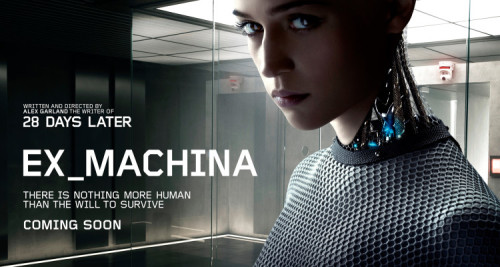
‘Ex Machina’s Failure to Be Radical: Or How Ava Is the Anti-thesis of a Feminist Cyborg

Caleb has won a trip to spend time at Nathan’s research-lab/home. While there, Caleb is given the task of giving Ava (the lead robot) a Turing Test to determine if she can “pass” as human. During his stay, Caleb learns of another female robot, Kyoko, who is basically a sex slave for Nathan. Yes, that is right, the males are human, the females are (fuck) machines.

ex_machina_2015_movie-wide-750x400


This guest post by Natalie Wilson previously appeared at Skirt Collective and is cross-posted with permission.


I am going to admit: Ex Machina profoundly disturbed me – so much so that at one point I had to leave the theatre and catch my breath. It is very rare for me to walk out of a film. Rarer still for me to walk out not because the film is horrible, but because it is so disturbing that it makes me physically nauseaous and emotionally weary.

The film, with only four characters, poses key questions about artificial intelligence, gender, and sexuality – yet, as noted in the Guardian review, “the guys keep their clothes on and the ‘women’ don’t.”  The “guys” of the film are human – Nathan, an egotistical scientist with a god complex (hence the film’s title) and Caleb, a computer programmer who works for Nathan’s Internet search company.

2015_04_alex_garland1

Caleb has won a trip to spend time at Nathan’s research-lab/home. While there, Caleb is given the task of giving Ava (the lead robot) a Turing Test to determine if she can “pass” as human. During his stay, Caleb learns of another female robot, Kyoko, who is basically a sex slave for Nathan. Yes, that is right, the males are human, the females are (fuck) machines.

Before seeing Ex Machina, I had high hopes it would be a movie that actually addressed sexism and females as sexualized in profoundly misogynistic ways, especially as the writer and director, Alex Garland, gave various interviews that made it sound as if the film was going to critique such matters. His claim that “Embodiment – having a body – seems to be imperative to consciousness, and we don’t have an example of something that has a consciousness that doesn’t also have a sexual component,” made me envision a film that would suggest alternative, more feminist models of sexuality – perhaps ones not based on power, jealousy, ownership, and control, but ones based on mutual pleasure, desire, and consent.

“…wouldn’t it be so much easier for the real humans (meaning male humans) if their lowly female counterparts could just be sexy in all the ways they desire, obedient, and easily modified, then upgraded or tossed away without fuss when they no longer ‘work.’”

Garland’s claim that “If you’re going to use a heterosexual male to test this consciousness, you would test it with something it could relate to. We have fetishised young women as objects of seduction, so in that respect, Ava is the ideal missile to fire” also gave me hope, given Garland specifically notes woman are fetishized and objectified. Alas, I should have instead latched onto his other suggestion – that Ava is no more than a “missile” that will be used to fire up human male sexuality.

ex-machina-movie

Admittedly, the film does explore sexuality and gender in intriguing ways, but fails to explicitly condemn how the sex/gender paradigm is used as a tool of domination in profoundly deleterious ways. Instead, the film delivers the same message so many movies with female robots/replicants have – namely: wouldn’t it be so much easier for the real humans (meaning male humans) if their lowly female counterparts could just be sexy in all the ways they desire, obedient, and easily modified, then upgraded or tossed away without fuss when they no longer “work.”

Alicia Vikander is excellent in the role of Ava, and I don’t wish my repulsion towards the film to reflect badly on what an obviously talented actor she is. In fact, everyone ACTED the heck out of their roles. The film also had an amazing mis-en-scene, immersing viewers in Nathan’s technological man-cave replete with techno-gadgetry, minimalist design, and, yup, a closet full of female body parts, presumably “out of date” sex slave robots. Nathan’s hangout also has the handy ability to SEE everything, making it rival Hitchock’s vision of the predatory male gaze enacted in Rear Window.

Nathan (Oscar Isaac), as the lead scientist, is your garden variety, bearded intellectual. He is an alcoholic, mega-maniacal ego, with dark skin and hair, subtly cluing the audience to the fact he is a “bad guy” (yes, the film has problematic racial depictions too – not only is the “dark dude” the bad one, Kyoko, the sex slave, is Asian, while Ava is coded as normatively porn-star white).

ava-from-ex-machina-borg

Caleb, as the nubile male ingénue (with the requisite blonde hair and blue eyes), is a bit too innocent, too ready to fall in love with Ava, too reluctant to quell his male gaze.

On this note, did Ava’s body HAVE to be so sexualized and so transparent, forcing us to gaze inside of her along with Caleb, as if her body has no boundary? Or perhaps this is just the point – we can finally see INSIDE a woman’s body, and she is not that musty, smelly, hairy thing of so many nightmares (Freud’s included), not the vagina dentata or a giver/taker of life – no, she is built like a car of all things – and under her roof her parts sing and hum like a well oiled engine.

“Nathan has PROGRAMMED gender into her system, much the way our culture programs us each day to live within a world defined by a binary gender system.”

As the film continues, it forces the audience to be complicit in the covetous gazing Nathan and Caleb enact, a gaze that is linked to Ava’s sexualization. Indeed, Ava has been built to match Caleb’s porn preferences by Nathan, which prompts Caleb to ask, “why did you give her sexuality?” and “Did you program her to flirt with me?”

Ex-Machina-01-GQ-22Jan15_rex_b_1083x658

The suggestion is ultimately that Nathan gave her sexuality simply because he wanted to and he could (as a “male god/creator”). Garland’s remarks on the subject are telling: “If you have created a consciousness, you would want it to have the capacity for pleasurable relationships, so it doesn’t seem unreasonable that a machine have a sexual component. We wouldn’t demand it be removed from a human, so why a machine?” But, what Nathan/Garland don’t own up to is that they are the CREATORS – they are not REMOVING sexuality from their creations but CONSTRUCTING it in, and doing so in an incredibly heterosexist, misogynist way. (In the film, Nathan notes of Ava “in between her legs is a concentration of sensors”…WTF?)

As noted in a HuffPost review, “Ex Machina is a very smart movie…but it’s not immune to the everyday misogyny of our world.” Arguing that if robots have access to the history of internet searches of all humanity, with “all of its tropes, and all of its prejudices,” it does not make sense that Ava “chooses” to present as female, that when she makes her escape at the end of the film “It’s almost hard to imagine she wouldn’t have grabbed a dick on her way out into the world.” However, I would counter Ava does not have free choice – Nathan has PROGRAMMED gender into her system, much the way our culture programs us each day to live within a world defined by a binary gender system.

“….most films display extreme anxiety around the issue of female empowerment”

Though films about artificial intelligence have the possibility to deconstruct gender/sex norms, most films trade in stereotypes with those featuring female robots according to misogynist memes of women as sex-bots (Blade Runner, Cherry 2000, The Stepford Wives), destructive forces (Eve of Destruction, Lucy, Metropolis), or a combination of the two (Austin Powers). Even Wall-E promotes the idea good robots are male and constructs female robots as useful only in terms of how they can please males and/or be good “seed receptacles” for male (pro)creation (as noted in my review here). To be fair, male robots don’t fair that much better and are also depicted in stereotypically masculine ways (as discussed here).

There are a few exceptions to this stereotypical gendered script, however. For example, Star Wars’ C-3PO was modeled on the female robot from Metropolis, with breasts and hips removed, leading the Guardian reviewer to name him “the first transgender robot.”

Alas, as argued by scholar Sophie Mayer, most films display extreme anxiety around the issue of female empowerment, and as Mayer notes, within their narratives “these empowered women must be punished” so that a happy-patriarchal ending can ensue, or, as she puts it, “The resolution always assures us the status quo is going to be preserved.”

Sigh. When might we see a film that brings Donna Haraway’s notion of the cyborg to life – a feminist hybrid that eschews binaries; a creature that lives in a post-gender world? “This is the self,” as Haraway puts it, “feminists must code.” It is also the self film’s have – as of yet – failed to code. So come on feminist filmmakers, give us a female cyborg we can root for…


Natalie Wilson teaches women’s studies and literature at California State University, San Marcos. She is the author of Seduced by Twilight and blogs for Ms., Girl with Pen and Bitch Flicks.

Seed & Spark: Vive La Revolution!

In my own life, I’m embracing the idea that films can make a difference, and that they do. It’s not just the content of the film, but how we make them, how we finance them, how we share them.

Scene from Test Shoot for Of Dust and Bones


This is a guest post by Diane Bell.


Last year, like many people I know, I was overwhelmed by the terrible events unfolding across our world. From Ukraine to Gaza, from the streets of Ferguson, Missouri to the ongoing war in Syria, it seemed like the world was reaching breaking point. It felt like it was all falling apart.

At the same time, I was facing my own small battles, finishing my second film, Bleeding Heart, which just premiered at the Tribeca Film Fest. Bleeding Heart is a kind of feminist fantasy thriller starring Jessica Biel as an affluent yoga teacher and Zosia Mamet as her biological sister, a young sex worker trapped in an abusive relationship. It was born from my desire to see on screen a story I rarely see: a woman rescuing another, a celebration of strength in sisterhood and the sacrifices we can and should make for it.

In the depths of my struggle to finish it, I wrestled with the question of why I make films. The process can be so long and hard, financial rewards so meager; what is the point? Why do it? In the face of so much real suffering and true hardship in the world, is it just a vanity? Wouldn’t it be better to pack it all in and do something truly meaningful? Something that could help the world be a better place? Isn’t that why we’re all here?


[youtube_sc url=”https://youtu.be/IB08M3b0rYM”]

Concept trailer from test shoot for Of Dust and Bones


As I meditated on these questions, I kept coming back to this belief: films can change our world. The stories on our screens don’t just reflect our reality, they create it. And that is why it is essential that many different voices are empowered to make movies and why as audiences we must seek out the voices that inspire us and support them however we can. We can’t let the only movies out there be those that support the Big Lies (no matter how entertaining those movies can sometimes be). We need films that tell small, honest truths, that shed light onto our shared humanity, that enable us to explore the problems we face individually and collectively, and help us see a way towards positive change in our troubled world.

After coming to these conclusions, with my producing partner, Chris Byrne, I launched the Rebel Heart Film Workshop to teach two-day intensives on how to make a standout indie film. These workshops are not only for people who already consider themselves narrative film directors, but also for storytellers of all kinds: actors, writers, producers, poets, activists, documentarians, artists. Based on our own experiences making our first film, the Sundance award winning Obselidia, we break down the process of making a film to 16 simple steps and provide a clear blueprint for how to make a stand out indie. My hope is that through these workshops we will empower diverse voices to tell their stories in films – and to do it successfully.

To that end, we share the honest truth about making films. There’s no gloss, no lies. We share our budget, our schedule, the amounts of money we made from different sources. Crucially: we share our mistakes as well as the things we did right, something incredibly rare in our industry – and in doing so, we give other filmmakers a shot at making better choices with their films, creating a situation where they can make films over and over, regardless of whether their first or second (or third or fourth for that matter) is as outwardly successful as they hoped.

Still from Bleeding Heart


Through teaching these workshops, I realized that I had to walk the talk. What I was teaching about building community, about making creatively risky films that come from the heart: this is what I had to do again myself. And so I wrote a film called Of Dust and Bones.

This film is as far from mainstream as you could imagine. It was borne totally from my reflections on the global situation last year, particularly the ongoing devastation in Syria, as well as my horror at the beheadings of journalists James Foley and Steven Sotloff by ISIS. These are not sexy, easy to market, Hollywood subjects, but it’s where my heart was.

I started to dig into the idea of a film about the widow of a war journalist who–following his brutal murder–has retreated to a reclusive life in the desert. The only sane reaction to an insane world, she believes, is to have nothing to do with it (something I often feel myself). An uninvited guest arrives: her dead husband’s colleague, and he’s come with an agenda. He wants the rights to her husband’s last work for a film that he is making – rights that she doesn’t want to give him.

From Test Shoot for Of Dust and Bones


The film wrestles with the question: can a film change the world? Can a picture? What is worth sacrificing to get that picture or make that film?

These aren’t easy questions and I don’t think the film will give easy answers. In my own life, I’m embracing the idea that films can make a difference, and that they do. It’s not just the content of the film, but how we make them, how we finance them, how we share them. To that end, I’m trying to make this film in a far more community based way than my previous works. I’ve been blogging about it on my website and we launched a crowdfunding campaign, not just to raise crucial finance, but also to involve a village of people in the making of it.

The world still often seems like an incredibly dark, chaotic, violent place, but I honestly believe the only hope we have is to come together, support each other, and create strong community networks that are founded upon shared dreams and stories.

We can’t do it alone – any of us. But together we have a real chance to create the world we want to live in. Let’s do it.


unnamed

Diane Bell is a writer and director.  Her second film, Bleeding heart, a thriller starring Jessica Biel and Zosia Mamet, premiered Tribeca 2015.  Her first feature, Obselidia, premiered in Dramatic Competition at Sundance 2010, winning two awards and was nominated for two Independent Spirit Awards.  She recently launched the Rebel Heart Film Workshop, teaching how to make a stand out indie film, and is currently raising funds for her next feature, Of Dust and Bones.


Fatphobia and Fat Positivity: The Roundup

Fat, Black, and Desirable: Fat Positivity and Black Women by Chantell Monique

If these women aren’t seeing any positive images of themselves on screen, how are they able to construct an identity of truth? Even though they can rely on their community for positivity, if it’s not reinforced through media representation then it renders that support useless.


Invisible Fat Women on How I Met Your Mother and The Big Bang Theory by Stephanie Brown

Several sitcoms, however, rely not on the on-screen presence of a so-called “unruly body,” but rather on the imagined image on an off-screen one.


Fatphobia: What Daria Got Wrong by Maggie Slutzker

She tells the girls she isn’t supposed to eat chocolate, but she’d like to buy some anyway. Then, she faints as a result of hypoglycemia and possibly exhaustion, the results of her being so large. Daria and Jane stand still for a moment, startled and clueless, and then Jane takes a picture.


Steven Universe: Many Dimensions of Fat Positivity by Stella DellaRosa

He is soft. He is round. He is squishy and loving and completely without pretense. There is no guarding wall around his heart, no desire to compete with other boys, no need to be seen as “cool” or “tough” or “edgy,” and no compulsion to become anything other than what he already is because he knows that “what he already is” has value.


What They Did Right in The Heat by Rhea Daniel

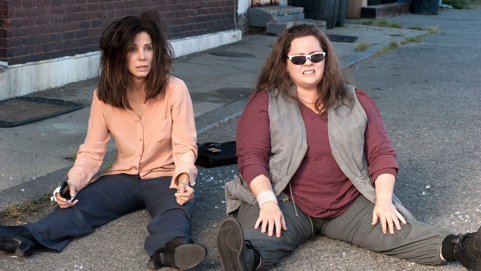
Her character may at first feed the stereotype that fat people are overbearing, belligerent and take up too much space, but the camera doesn’t make her body a joke (with accompanying thunder-thighs music). I like M.I.A.’s “Bad Girls” as the song of choice, and they do look pretty believably badass, with a comic overtone.


16 and Healthy: My Mad Fat Diary Is Teen Girl Fat Positivity Gold by Ariana DiValentino

And therein lies what makes the show such a wonderful example of fat positivity and feminism—Rae is, per her own description, mad and fat, but it takes less than a single episode to make it abundantly clear that she is so much more than that.


Parks and Recreation: How Fatphobia Is Invisible by Ali Thompson

I don’t think it would be quite the same barrel of laughs if the motto of Pawnee were “First in Friendship, Fourth in Poverty.” Fat shaming and fat jokes like the People of Walmart photos are often a socially acceptable stand-in for the classist shaming of poor people.  Poor people are more likely to be fat, after all. We get paid less and we’re more likely to be fired. Oh, the comedy!


Shallow Hal: The Unexpected Virtue of Mockery by Brigit McCone

Its challenge to fatphobia is covered in fat jokes and gross-out humor, tailored to trigger our prejudices. We can laugh, if prepared to question why. We can sympathize, if braced against an awkwardly half-choked, giggling snort. Humor strikes faster than self-censorship.


When Being Fat Isn’t A Big Deal: Jenny Gross on Winners and Losers by Ren Jender

The default body size also extends to actresses who are not meant to be “decorative.” In writer-director Andrea Arnold’s powerful, excellent Red Road, from the UK, star Kate Dickie has a nude scene which is neither meant to be nor is erotic, but her body has as little fat as that of a professional marathon runner. When women see these bodies as “the norm” in films and TV even those of us fortunate enough not to hate our bodies (and even those of us who are not habitually called slurs because of our size) have to fight against the tendency to ask, “What exactly did my body do wrong to be so unlike that of nearly every woman I see onscreen?”


The Foxy Merkins and the Uncharted Territory of the Fat, Lesbian Protagonist by Tessa Racked

That separation is reinforced by much of the film’s comedy, but Margaret isn’t positioned as an object of ridicule or disgust, as is often the case with fat and/or gender non-conforming characters. She is naive, gauche, and in over her head, but she is also the character with whom the audience empathizes most.


The Revolutionary Fatness of Steven Universe by Deborah Pless

It does my heart a lot of good to watch this show and imagine a world where no one gives two craps about my weight. But I can only dream of how much this must mean to the little kids watching it. I mean, bear in mind, this is a children’s show. It is meant to be consumed by children. And those children will be watching the wacky adventures, thinking to themselves, “These heroes look like me. That means I could be a hero too!”


The Fat Stardom of James Gandolfini by Sarah Smyth

What’s clear is that, in our contemporary society and culture, the male body is not invisible. Although the female body continues to be more heavily regulated and controlled, particularly in terms of weight and appearance, the male body is no longer removed from similar considerations. As we continue to look more intensely and critically at the male body, we can anticipate a time when new images of masculinity become not only realized but embodied.


Sophie in Don Bluth’s Anastasia by Jackson Adler

Sophie is still exceptional among animated characters, and even live action characters. Though a fantastic character, she should not be the exception. She should not be a rare case of fat-acceptance. It should not be rare that a fat woman loves herself and is loved.


Geraldine Granger, the Vicar at Large: Fat Positivity in The Vicar of Dibley by Rachel Wortherley

Because of their position in the church as a figure that facilitates human connection to a higher power, people usually disconnect priest, vicars, etc. from human emotions. Being sexless or promiscuous is also attributed to female characters in media who are fat, or overweight…One of the exciting things about The Vicar of Dibley is that Geraldine is not a sexless and humorless character—as a vicar and a woman with a fat body.


What Your Doctors Really Think About You: Fatphobia on Medical TV by Elizabeth Kiy

Fat bodies have a curious position in medical drama, reflecting the fatphobia existing within the medical profession. Doctors tend to assume weight always a cause rather than a symptom and overweight patients are either lazy, uneducated or poor. The wealthier we are, the more opportunity we have to strive for thinness. As a class, doctors are incredibly privileged, both highly educated and wealthy, they have the privilege of deciding to be thin that many of their patients do not.

Fat, Black, and Desirable: Fat Positivity and Black Women

If these women aren’t seeing any positive images of themselves on screen, how are they able to construct an identity of truth? Even though they can rely on their community for positivity, if it’s not reinforced through media representation then it renders that support useless.


This guest post by Chantell Monique appears as part of our theme week on Fatphobia and Fat Positivity.


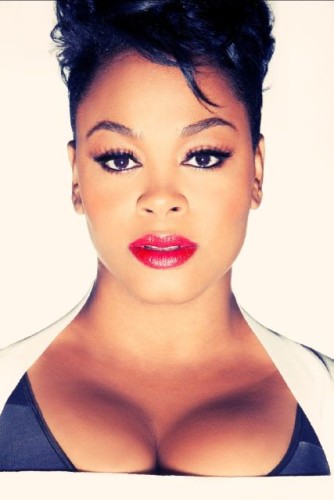
When thinking about positive images of fat Black women in television, one normally thinks of any television show starring Queen Latifah or Jill Scott. Unfortunately, work by these two women is not enough to combat the plethora of stereotypical and fat-phobic images that plague fat Black women. While it has been difficult to find positive images of fat White women on television, for the past five years there has been more positive visibility than that of Black women. There is a slow and steady body-positive movement taking place in the form of social media and television representation; however, due to White privilege and constant stereotyping, fat Black women have been excluded from this conversation. Including Black women in this movement can potentially lead to more fat-positive representation, e.g. complex characters and romantic love interests, thereby allowing fat Black women to challenge stereotypes and restructure their image to include desirability and worth.

Tess Holliday plus-size model and body-positive activist
Tess Holliday, plus-size model and body-positive activist


Poet Sonya Renee Taylor wrote a passionate piece for The Militant Baker titled, “Weighting to be Seen” in which she discusses the body-positive movement and the lack of women of color involved. She highlights a few names of bloggers and “body positive heroines” noting that aside from their body sizes, it’s their whiteness that allows their images of “bravery” to go viral. Taylor says, “Our society tells us fatness is not beautiful. Blackness is not beautiful. So even while reclaiming size diversity as beautiful, the presence of Blackness complicates the narrative.” She argues that although there is a body-positive movement occurring, including Black women in this conversation “complicates the narrative”; therefore, it’s easier to leave them out altogether. She’s not asserting this is by anyone’s conscious choice, but it’s a result of White privilege. Taylor says, “Being seen in our bodies, in our fullness and beauty is a birthright women of color have never had…the vehicle to even beginning to dismantle weight stigma is to be seen as fully human in this society [which] is a privilege that requires white skin…” Taylor’s observation of the body-positive movement challenges the notion that all women can and have been included; in addition, it underlines why there has been a lack of fat-positive representation of Black women in television.

Melissa McCarthy in Mike and Molly


Hollywood has a complicated relationship with fatness, especially female fatness; how it chooses to deal with fat bodies indicates a general lack of respect, and worth. We’ve witnessed fat female bodies being used a comedy, marginalized or ignored all together. Yet over the past five years, we’ve seen a modest amount of fat-positivity in terms of female representation. For example, Melissa McCarthy in Mike & Molly (2010-)–Molly is the protagonist worthy of a romantic relationship which fuels the show’s storyline. In addition, Drop Dead Diva (2009-2014) follows the love and career of a feisty model reincarnated as a plus-size attorney. It must be noted, being reincarnated in the form of a plus-size woman can be seen as a punishment; however, once the show deals with this theme, it rarely mentions her fatness in a negative way. Instead, the viewer gets to watch the heroine argue cases and fall in and out of love. After a string of strong film performances, Australian actress Rebel Wilson landed a starring role on her own show, Super Fun Night (2013-2014). Even though it got canceled, she was the lead, not a stereotypical sidekick. Another body-positive representation is HBO’s Girls (2012-); Lena Dunham’s ability to showcase her body on television either casually or sexually highlights the notion that no matter the size, women are complex, sexual and beautiful beings. The last and most interesting body-positive handling of a fat woman is in Showtime’s Homeland (2011-); although not a fully flushed out character, a plus-size woman engages in “fat sex” with the hunky male lead that stunned most viewers while also commenting on idea that yes, fat women have sex! These images, in conjunction with the body-positive social media presence, bring awareness to fatness in a way that encourages consideration and thought. Unfortunately, like Taylor points out, the faces that represent this movement are White, which leaves fat Black women alone to battle engrained stereotypes such as the ever-present Mammy.

Gabourey Sidibe red carpet appearance


In “Mammies, Matriarchs, and Other Controlling Images,” Patricia Hill Collins argues that stereotypes such as The Mammy “simultaneously reflect and distort both the ways in which black women view themselves…and the ways in which they are viewed by others”; therefore, if the image of the Black woman is relegated to an asexual nurturer who lacks desirability, how can she or others see her as worthy of love? This notion has been egregiously reflected in television; for example, Cate Young writes an article for Bitch Flicks that investigates the treatment of Gabourey Sidibe’s Queenie in American Horror Story: Coven. She uses the Strong Black Woman stereotype in order to analyze Sidibe’s character, asserting that “Queenie is presented as being the only one unworthy of love or sex.” While Young doesn’t mention Sidibe’s size, one can only assume it was easier for AHS to portray a fat Black woman as unlovable instead of a thin one. Thin Black actress experience stereotyping also but there is substantial proof that indicates Hollywood is comfortable showcasing them as more lovable than fat Black women.

Amber Riley as Glee’s Mercedes


Unfortunately, there aren’t fat-positive images of fat Black women comparable to those of fat White women e.g. leading characters that show some semblance of depth and complexity. Instead, fat Black women have been pushed to the margins of television, infiltrating stereotypical roles that communicate undesirability. To illustrate, Amber Riley’s character on Glee (2009-) never had a lasting romantic relationship. We were able to see the majority of Glee’s cast fall in love and engage in sustainable relationships but not her. At one point she dates two gentlemen but finally decides not to be with either one. While one can appreciate a woman’s right to be single, not giving the plus-size Black girl a romantic relationship implicitly reinforces her undesirability. Through these images, fat Black girls are able to shape their identity but if television says their undesirable, if affects their self-perception.

Jill Scott, one of Hollywood’s go-to plus-size Black women


There has been constant discourse regarding representation of fat Black women in television and because images help to shape our identities, consuming negative images can impact how fat Black women see themselves. Dwight E. Brooks and Lisa P. Hebert, authors of “Gender, Race, And Media Representation,” argue, “How individuals construct their social identities, how they come to understand what it means to be male, female, black, white…is shaped by commodified text produced by media…”; consequently, there are no innocent images out there and relying on stereotypes in order to define a group of people greatly impacts their self-perception. This can be directly applied to fat Black women who have been characterized as undesirable and unworthy of romantic love. If these women aren’t seeing any positive images of themselves on screen, how are they able to construct an identity of truth? Even though they can rely on their community for positivity, if it’s not reinforced through media representation then it renders that support useless.

1990s Living Single starring Queen Latifah


There are talented fat Black actresses desperate to play complex characters without submitting to mainstream standards of beauty but there are no substantial roles available to them. During the 1990s Golden Age of Television (Living Single, Moesha, The Parkers, That’s so Raven, etc.) there were countless parts for women of color but as times have changed, so have the opportunities. We’re unable to rely on Queen Latifah and Jill Scott to speak for a whole group of women and because a powerful showrunner like Shonda Rhimes has normalized diversity on television, it seems unfair to ask her to create characters that actually look like her, especially after all she’s done for Black women. This means fat Black women must not only become part of the body-positive movement but perhaps the face of it; in addition, we must look for creative ways to tell our stories, taking an active role in our media portrayal. Only then can we combat White privilege and stereotypes in order to restructure our images to include desirability and worth.


Untitled

Chantell Monique is a Creative Writing instructor and screenwriter, living in Los Angeles. She holds a MA in English from Indiana University, South Bend. She has previously written for Bitch Flicks and is a contributor for BlackGirlNerds.com. She’s addicted to Harry Potter, Netflix and anything pertaining to social justice and Black female representation in film and television. Twitter @31pottergirl


Geraldine Granger, the Vicar at Large: Fat Positivity in ‘The Vicar of Dibley’

Because of their position in the church as a figure that facilitates human connection to a higher power, people usually disconnect priest, vicars, etc. from human emotions. Being sexless or promiscuous is also attributed to female characters in media who are fat, or overweight…

One of the exciting things about ‘The Vicar of Dibley’ is that Geraldine is not a sexless and humorless character—as a vicar and a woman with a fat body.

unnamed


This guest post by Rachel Wortherley appears as part of our theme week on Fatphobia and Fat Positivity.


Audiences were first introduced to English actress and comedian Dawn French in various comedy series: The Comic Strip (1982), Girls on Top (1985), and as half of the comedy duo, French and Saunders (1987) with Jennifer Saunders, star of the beloved series Absolutely Fabulous (1992). However, it was The Vicar of Dibley (1994), in which French made her mark.

When the elderly vicar of the fictional small village in Oxfordshire called Dibley dies, the townspeople are appointed a new vicar by the bishop. However, they are stunned that upon the new vicar’s arrival that he is a she. Viewers are first introduced to the vicar, Geraldine Granger (Dawn French) at the same time as the characters.   She is already perceptive, funny, and charming. Upon her meeting with the conservative Parish Council leader, David Horton, she says, “You were expecting a bloke—beard, bible, bad breath. Instead you got a babe with a bob cut and magnificent bosom.” When introduced to the vicar another character, Owen Newitt, says, “She’s a woman,” to which Geraldine responds, “Oh! You noticed! These are such a giveaway, aren’t they?” while pointing to her breasts. During her first sermon, the congregation, which usually yields three to four parishioners—all from the church council, has all the pews filled. Parishioners are curious about the prospect of a female vicar, but the congregation, as well as, the audience is charmed by Geraldine’s charisma, wisdom, and warmth.

unnamed

Authority figures in religious factions, specifically in the Church of England or in Roman Catholicism are largely viewed as being devoid of desire, humor, or sexuality. Because of their position in the church as a figure that facilitates human connection to a higher power, people usually disconnect priest, vicars, etc. from human emotions. Being sexless or promiscuous is also attributed to female characters in media who are fat, or overweight. Either they are sexless, yearning for someone who is deemed to be out of their league, or they overcompensate by being promiscuous. Examples of this can be found in any Hollywood high school comedy.  One of the exciting things about The Vicar of Dibley is that Geraldine is not a sexless and humorless character—as a vicar and a woman with a fat body. Geraldine is the funniest vicar on television, especially if we point to her bawdy jokes at the end of each episode–jokes that are hilarious and almost of the quality of Geoffrey Chaucer’s Canterbury Tales.

unnamed-1

Geraldine’s ideal man is actor Sean Bean, whose picture hangs on the wall next to Jesus Christ. She is able to maintain a sense of being sexy, yet spiritual. There are occasions where Geraldine also finds herself swept up in romance. In Season 3, Episode 1, “Autumn,” David’s brother, Simon, visits Geraldine for a romantic weekend. Upon their first meeting in Season 2, Episode 4, “Love and Marriage” Geraldine gushes with flirtatiousness and wit. She resembles a high school girl with a crush. Geraldine even dyes her hair blonde because Simon is looking for a “buxom blonde” and considers moving to Liverpool where he lives. When they reunite for a romantic weekend, Geraldine and Simon kiss passionately and retreat to her bedroom for sex. Prior to that, the “eccentric” friend of Geraldine, Alice Horton (Emma Chambers), comments:

“You know all about eternal damnation and pneumatic drills in your brain tissue if you so much as look upon a man with lust. Especially as a vicar. God will probably have to strangle you with his bare hands.”

Geraldine is progressive in her thoughts and action on pre-marital sex. But, what is significant about this scene is that Alice and the townspeople assume that she will not be having sex, not because she is fat, but because of Geraldine’s clerical position as vicar. What is even more rewarding is when Simon descends Geraldine’s stairs, dressed in a bathrobe, declaring to three of the council members—David being one of them: “I’ve been waiting for this gorgeous creature for hours.” Geraldine is mortified, but the men quietly leave them and do not chastise her for having a sexual appetite.

unnamed

Writer and creator Richard Curtis, best known for Four Weddings and a Funeral (1994), Notting Hill (1999), and Love Actually (2003), writes Geraldine Granger, as well as the other characters, with good hearts. While audiences can look at Geraldine and see that she is not a size two, the writers choose not to highlight that fact, or make it a running joke. She indulges in her favorite chocolate bars, but no more or less than any other female character who is hungry or has their heartbroken. Her weight and self-esteem are not directly linked as Bridget Jones in Bridget Jones’ Diary (2001). In The Vicar of Dibley, her mind and body are embraced.

We can look to the Parish Council—consisting of all men with the exception of Geraldine and formerly Mrs. Letitia Cropley (Liz Smith)—as examples of men who embrace all aspects of Geraldine. While Owen sexualizes the vicar through his comments, Season 3, Episode 15, sees David Horton looking at the vicar in the new light. David begins to see that Geraldine and he are the only two in the extra-ordinary town of Dibley, who have brain cells. He declares his love for her and proposes. However, Geraldine accepts then rejects. While they are evenly matched, they are not in love. Geraldine gets her dream in the episodes, “The Handsome Stranger” and “The Vicar in White.”

unnamed

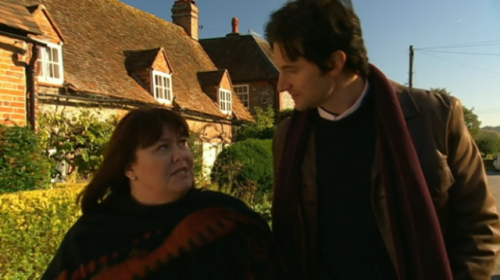
“The Handsome Stranger” and “The Vicar in White” see Geraldine falling in love with an accountant and new resident of Dibley, Harry Kennedy (Richard Armitage). He is handsome and exceeds her expectations on a physical level—Harry is arguably more handsome than her ideal—actor, Sean Bean. Harry falls in love with her upon their first meeting and later proposes. Harry’s proposal funnily sparks the proposals of Owen, Jim, and classmate Jeremy (Hugh Bonneville). While Harry’s proposal to Geraldine may seem unbelievable to most because she is overweight, it is not for three reasons. The first reason being that Dibley is an eccentric village where the unbelievable occurs. The second reason being that so much of the show focuses on how someone unexpected, a female vicar, transforms the hearts and minds of the congregation. The last reason being, why not? Why can’t Geraldine be just as happy as Kevin James is with Amber Valletta in Hitch (2005)? As a viewer, the feeling of Geraldine obtaining her dream husband in looks and intellectuality is fulfilling. The vicar ends up getting married in her pajamas, and Harry still accepts her.

unnamed-1

Dawn French as Geraldine Granger perpetuates a positive image of fat women/bodies in comedy. Her persona outshines her overweight visage and she is allowed to be herself. In Hollywood, the last time a woman in her late 30s-40s, who was overweight, and starred in her own television show was Roseanne Barr in Roseanne.   The closest example in England is another British sitcom, Miranda (2009). While Miranda Hart in the television sitcom Miranda is not overweight, there are body image issues present. At 6 foot, Miranda Preston is 35 years old, single, socially awkward, taller than a majority of the men she meets, her clothes are unflattering, and she is dubbed “Queen Kong” by her friend Tilly. Miranda stumbles, bumbles, and is called “sir” by people. Yet, as the series continues through the end, Miranda builds her confidence up. The unconventional heroine trope is explored in The Vicar of Dibley and continues throughout to a show like Miranda. British television, especially sitcoms, demonstrates that there is so much more to comedy than the running gag of fat bodies as “messy, unattainable, or unlovable.”   Boadicea (Geraldine’s first name in season one) is beautiful, bodacious, with a big personality.


Rachel Wortherley earned a Master of Arts degree at Iona College in New Rochelle, New York.  Her downtime consists of devouring copious amounts of literature, films, and Netflix.   She hopes earn an MFA and become a professional screenwriter.


The Revolutionary Fatness of ‘Steven Universe’

It does my heart a lot of good to watch this show and imagine a world where no one gives two craps about my weight. But I can only dream of how much this must mean to the little kids watching it. I mean, bear in mind, this is a children’s show. It is meant to be consumed by children. And those children will be watching the wacky adventures, thinking to themselves, “These heroes look like me. That means I could be a hero too!”

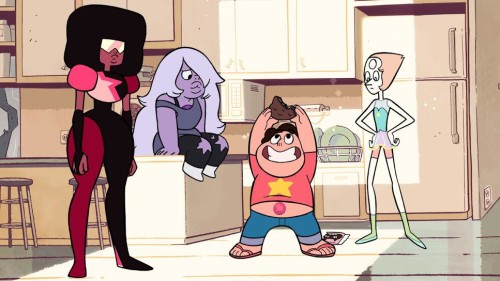
Garnet, Amethyst, Steven, and Pearl in the first episode.


This guest post by Deborah Pless appears as part of our theme week on Fatphobia and Fat Positivity.


I’ve never really been comfortable cosplaying. First and foremost, because it’s always seemed like a lot of effort, but I will admit that a huge part of my hesitance has always come down to one thing: I am way too big to cosplay as any of my favorite characters.

And I know that’s self-defeating and I’m not really because who cares about body type? But I still think that. I think that I could cosplay as Peggy Carter or Xena or Veronica Mars or Lagertha or Maleficent, but I wouldn’t really look like them. And there are loads of people who will do those cosplays so much better than I could. Why bother?

It’s taken me years to break this down and analyze it for what it truly is, because I don’t really like thinking of myself as being insecure about my weight. Well, my weight and my height. I’m a fat, tall person, and frankly, I’ve never really seen a character I wanted to cosplay badly enough to make me want to put my body on display like that. Until I finally watched Steven Universe and saw something amazing: bodies. All different kinds of bodies. Some of which actually look like mine!

Steven loves food and is never shamed for it.


See, what slowly dawned on me as I started watching Steven Universe in earnest is that this show is doing something genuinely revolutionary in children’s animation. Not only is it a really interesting show about space and fighting monsters and being a hero, but it’s also a show that takes representative diversity very seriously. It’s a show that has clearly been designed intentionally, with awareness of the fact that their audience is made up of little kids longing to see themselves as the heroes on screen. And that seeing those heroes look like them would change these kids’ lives.

So for those of you who haven’t yet made Steven Universe appointment television, it goes like this. Steven Universe (Zach Callison) is a little boy who lives with his three mothers (or two mothers and pseudo-sister, if you want to be more specific) in a temple by the sea. He lives with them because he and they are Crystal Gems, a sort of alien superhero species tasked with protecting the Earth from monsters that keep trying to attack it.

Steven’s parents, Greg Universe and Rose Quartz.


Steven is only half-Gem, however. His other half is that of his human father, Greg Universe (Tom Scharpling). Steven’s biological mother was a Gem named Rose Quartz (Susan Egan). Rose tragically died in giving birth to Steven (more or less) – a plot point that becomes more important as the show goes on – and now Steven is raised by Rose’s fellow Gems. The Gems, Garnet (Estelle), Amethyst (Michaela Dietz), and Pearl (Deedee Magno) adore Steven as their own son, even if his human ways confuse them sometimes.

The bulk of the show is your standard Cartoon Network kids’ fare, albeit much more imaginative than anything I remember from my childhood. In any given episode we might see Steven and the Gems fight a horde of centipede monsters or we might just see a whole episode of Steven trying to get his action figure back from another little kid. It’s not the action and storylines that are revolutionary here – well, they are but not in terms of body size and representation – it’s the way the universe is built.

See, in the world of Steven Universe, all sorts of people get to be heroes. All sorts of people who look all sorts of different ways. Steven himself is a chubby little kid with big bushy hair, and no one ever comments on this, says that Steven is fat and should lose weight, or in any way even acknowledges it. Steven is pudgy. So what?

In fact, there is an entire episode devoted to Steven’s desire to start working out and “get beefy” as he puts it – “Coach Steven” – never once mentions Steven getting thin. That’s not one of his stated intentions or even a side effect. Steven doesn’t want to be skinny or lose weight, he just wants to put on muscle so that he can be a better fighter. And though he does corral a group of friends to work out with him, none of them say they want to lose weight either. They’re there to get strong, which is a great message.

The humans of Beach City, where most of the action of the show takes place, are a pleasing mix of races and body types. And it’s clear this is not an accident. The animators have very definitely made a choice here to include body diversity. We can see this most clearly when a close-up shot of a secondary character, Sadie (Kate Micucci) shows her to have leg hairs. That means the animators and artists specifically drew leg hairs onto Sadie’s legs because they wanted kids to see that body hair is normal and okay.

Steven tries to teach the Gems about birthday parties.


But what really gets me is the Gems. Because while the show is unclear on how much control the Gems have over their base appearances, they have the power to shapeshift and can look like whatever they want. So this makes it really interesting that a lot of the Gems we meet are what we would call “plus-sized.”

I’ve already mentioned Rose, who is characterized at one point by Greg as a “giant woman” – she is apparently over eight feet tall and very heavy – but there’s also Amethyst, who although being a very talented shapeshifter (she appears as various animals and at one point a male pro-wrestler), chooses to stick to her main form as a short, heavy-set woman. Garnet is a tower of muscles and black skin, and while Pearl is the most “conventionally attractive” of them all, being tall and thin, that seems more likely to be because that’s an efficient bodytype when your preferred weapon is a fencing foil.

The Gems have complete control over how they look, and they choose to look, well, normal. Frequently plus-sized. Non-white in some cases. They don’t look like glamorous superheroes torn from the centerfold, but like actual people you could meet on the street. If you can get past Amethyst’s skin being purple, that is.

Clearly the Gems have no internalized crap about body image or weight, but what’s super cool is that in this universe, it kind of seems like no one does. No one tells the Gems they’re ugly. A recent episode revealed that one of the recurring characters had a big crush on Garnet and thought she was incredibly beautiful. Which is good, because she is. Rose is established as having been gorgeous and beloved, and no one ever says that she was too fat to fight.

Stevonnie – a fusion of Steven and Connie – overwhelms Sadie and Lars with attractiveness.


And it’s made perfectly clear that the Gems live in a world that doesn’t acknowledge body shaming. At one point Steven and his friend Connie “fuse” into one person, fondly known as “Stevonnie.” Stevonnie is about six feet tall, genderless, and not-white, and the general reaction in town isn’t “Ah, what the hell is that thing and where did it come from!” it’s one of jaw-dropping attraction and general appreciation.

No one in this world seems to care what anyone else in this world looks like, at least not any of the characters we’re meant to like. At one point another Gem seems on the verge of pointing out that Steven is the only boy Gem, but then doesn’t. In fact, it’s never really mentioned. That fact, like the fact of Rose’s fatness or Garnet’s blackness, is never relevant to the story.

It does my heart a lot of good to watch this show and imagine a world where no one gives two craps about my weight. But I can only dream of how much this must mean to the little kids watching it. I mean, bear in mind, this is a children’s show. It is meant to be consumed by children. And those children will be watching the wacky adventures, thinking to themselves, “These heroes look like me. That means I could be a hero too!”

I cannot emphasize enough how important that is to a little kid. But I probably don’t have to. Chances are, you remember what it was like to want someone who looked like you in a leading role. You wanted to be able to imagine yourself as the hero, and it’s always been easier if you can look at the screen and see someone up there who looks as fat, as Black, as hairy, as short, as ridiculously tall, as whatever as you do.

The Gems are also presented as historically having these same body types.


It would be massively overstating it to say that Steven Universe has solved all of our representation problems forever. It hasn’t. Representation is still an issue that needs to be addressed. But this show is a massive step in the right direction. Fat characters whose weight is never the punchline or even the storyline. Black characters who have natural hair and are called beautiful. Women with leg hair. Women with big butts. Little boys who cry and talk about their feelings a lot. It’s all there, and it’s all really important.

In a world where the most common representation of fat women is as a problem to be fixed, where we are generally considered sexually undesirable, and where our bodies are viewed as public property to be commented and acted on at will, Steven Universe is, well, revolutionary. It gives me hope. It shows me that I can be fat and beautiful and loved, and it makes me think that just maybe there’s a little kid out there who is going to see this show and never think that being fat means they can’t be everything good too.


Deborah Pless runs Kiss My Wonder Woman and works as a freelance writer and editor in western Washington when she’s not busy camping out at the movies or watching too much TV. You can follow her on Twitter and Tumblr just as long as you like feminist rants, an obsession with superheroes, and sandwiches. Also, she’s totally going to cosplay as Rose Quartz this year at GeekGirlCon.


Invisible Fat Women on ‘How I Met Your Mother’ and ‘The Big Bang Theory’

Several sitcoms, however, rely not on the on-screen presence of a so-called “unruly body,” but rather on the imagined image on an off-screen one.

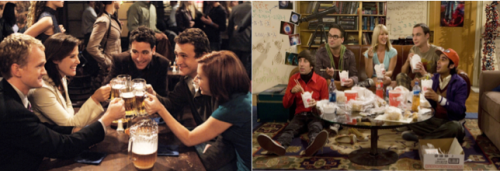
The casts of CBS’s How I Met Your Mother and The Big Bang Theory


This guest post by Stephanie Brown appears as part of our theme week on Fatphobia and Fat Positivity.


Trevor Noah, heir to The Daily Show throne, recently came under fire for some fat jokes, (among others) that he made on Twitter, demonstrating once again that fat jokes, especially about women, have long been a staple of the comedy writer’s toolbox. Critics of Noah seem to forget that Jon Stewart and Stephen Colbert have been making jokes about Chris Christie’s weight for years, a disturbing trend that NPR’s Linda Holmes beautifully addressed in an essay last year. You would think Christie’s policies and actions as governor would provide more than enough material for satire, but comics have found that using fatness as a punch line is a reliable way to get cheap laughs.

Sitcoms, too, have frequently been guilty of using “fat” as a punch line. From Monica’s fat-suit flashbacks on Friends, to Mike and Molly’s poking fun at its main characters, to the Seavers’ constant ribbing of Carol about her weight on Growing Pains (made more disturbing by the fact that Tracy Gold suffered from a serious eating disorder), sitcoms have long made fun of characters for taking up too much space on screen. Often characterized as a moral failing, fatness is policed through ridicule. Such jokes tend to rely on the mere presence of an overweight character to generate laughs.

Courtney Cox in her “Monica fat-suit.”


Several sitcoms, however, rely not on the on-screen presence of a so-called “unruly body,” but rather on the imagined image on an off-screen one. For instance, on NBC’s Will and Grace, Grace’s sidekick Karen consistently rattles off one-liners about her obese husband Stan. CBS’s The Big Bang Theory (2007-) continues in this tradition with its recurring jokes and storylines about Howard Wolowitz’s mother.

Howard Wolowitz in his signature colors


Howard is an engineer turned astronaut who lives for a majority of the series with his overbearing mother. The difference between Stan and Mrs. Wolowitz is, of course, that we hear Howard’s mother, played by the recently deceased actress Carol Ann Susi. Howard obviously loves his mother, despite their constant bickering, and the show deals with the death of both the actress and the character very poignantly. Regardless of any underlying affection toward Mrs. Wolowitz, though, the show generally mines humor from descriptions of her unseen obesity.

Throughout the course of the The Big Bang Theory, Mrs. Wolowitz’s weight provides an easy punch line for Howard and his friends. In “The Hawking Excitation” (5.21), Sheldon apparently sprains his wrist helping Howard’s mom into a dress when he takes her clothes shopping. Earlier in the series in “The Engagement Reaction”(4.23), Penny reacts with disbelief to Howard’s story of lifting his mother in order to take her to the hospital, joking that Mrs. Wolowitz’s own legs could barely lift her up. Not only is Mrs. Wolowitz characterized by her weight, she is also described as an overbearing, gluttonous nag. In her character we see the ways in which obesity is tied to morality and humanity, or rather, a lack thereof. And, because she never appears on screen, the audience is free to imagine an even more extreme version of this stereotypical character.

Notably, Mrs. Wolowitz appears briefly on screen during “The Spoiler Alert Segmentation” (6.15), walking back and forth through a doorway behind Raj while he sits in the dining room. Her appearance is meant to work as a sight gag not only because the audience has never seen her, but also because the mere presence of an overweight body is reason enough to laugh.

A faceless Mrs. Wolowitz appears behind Raj as he eats dinner.


While CBS’s How I Met Your Mother (2005-2014) doesn’t have a defined invisible fat character to use as a punching bag, the show is similarly permeated by fatphobia. The series, centering on a group of five friends in New York City navigating their late 20s and early 30s, is told from the perspective of the show’s main character, Ted Mosby. For a show that was often wonderfully smart, funny, and sweet, the writers’ strange obsession with making fun of fat women was often infuriating and frequently baffling, as others have noticed and written at length about.

While most of the show’s characters get in a “fat chick” joke at some point during the show’s run, most of the fat panic stems from Barney, the show’s resident bro-y bachelor. While the audience was likely originally meant to read Barney as an entitled, misogynist jerk, because he’s played by likeable human Neil Patrick Harris, the argument that we’re meant to be disgusted by Barney’s behavior rings hollow. Indeed, this site has previously written about the show’s unsettling misogynistic streak.

Barney demonstrates his notoriously icky “Crazy/Hot” Scale.


Like his misogyny, Barney’s fat jokes span the entirely of the series. He feels the need to constantly assert that he doesn’t have sex with fat women, in one instance making his friends swear a “broath” not to interfere with his life unless “unless it is a matter of health, national security or I’m about to get up on a fattie” (“The Broath,” 7.19). He also feels the need to warn his friends not to have sex with fat women. In the season three episode “Third Wheel” (3.3), he makes sure the combined weight of the ladies Ted is about to have a threesome with is “under 400 pounds.” If that weren’t enough, he frequently makes proclamations that no one should have sex with fat women:

Minister: If you want to get married in my church, you’ll stop breaking the ninth commandment.

Barney: Uh, no fat chicks?

Minister: Thou shalt not lie!

Barney: With fat chicks?

(“Knight Vision, “ 9.06)

Rather than punish him for his sociopathic, misogynistic conduct, the show rewards Barney with clever one-liners and fancy suits.

Just one of Barney’s many proclamations of his own awesomeness.


His friends make half-hearted attempts at condemning his behavior, but even they join in on the show’s the panoply of fatphobia, like when Marshall tells Barney that he “sounds like a fat girl on Valentine’s Day” (“Not Father’s Day,” 4.7). Even Lily and Robin often join in gleefully mocking other women. This includes, of course, making fun of the mere idea of fat women. Robin joins in with Marshall and Barney in this lovely exchange after Ted tells them about a wealthy architecture client:

Marshall: He’s rich? Please tell me he wrote you a big, fat check. A check so fat, it doesn’t its shirt off when it goes swimming.

Barney: That is a big, fat check. A check so fat, after you have sex with it, you don’t tell your buddies about it.

Robin: A check so fat, when it sits next to you on an airplane, you ask yourself if it should have bought two seats.

(“Fast As She Can,” 4.23).

Like the characters in The Big Bang Theory, Barney and his friends don’t direct their cruelty at a visible person. They don’t direct their jokes at any specific person at all, but rather at all fat women. Their jokes construct fat women not as people with feelings let alone family, friends, or lovers. They’re either a joke or a disembodied threat to the main characters’ sexual pride.   Nameless, faceless, and bodiless, these imagined, invisible women are, like Mrs. Wolowitz, treated as less than human.

An addendum to this point is the way the show treats one of the only fat characters, Robin’s co-worker Patrice. Patrice’s main function on the show was to be yelled at by Robin for no reason and, eventually, to act as Barney’s fake girlfriend so he can convince Robin that he has changed his philandering ways and is now marriage material.

Barney talks to Patrice as Robin, Ted, and Lily try to discern the true nature of their relationship.


This particular storyline shows us, once again, that a fat character’s only function is to act as comic relief and to help the traditionally attractive main characters find love. She may be visible, but her visibility is conditional on performing the one-dimensional supportive friend that so many underdeveloped, potentially interesting fat characters have before been relegated. As Michael Arbieter of Hollywood.com noted about the storyline:

“We can’t be left to forgive Barney and How I Met Your Mother, to subjugate and marginalize Patrice. The fact that we’re asked to do this so cavalierly is frightening.”

Indeed, the casualness and frequency with which the characters make fat jokes on The Big Bang Theory and How I Met Your Mother, two series that frequently deal with themes of friendship and belonging, imbues them both with an unnecessary cruelty. While fat jokes are often wielded as a way police on-screen bodies, the ridiculing of absent bodies even further objectifies fat people. By not even giving the audience a chance to identify with the character or characters being ridiculed, all subjectivity is, in essence, taken away. Such erasure tells the audience, yet again, that thinness is the price of admission to our television sets. Not only are these characters deserving of ridicule based on their appearance, their appearance is so distasteful as to be banished from the screen.

As we’re reminded by anonymous online harassment or something as simple as talking badly about an absent friend, distance and invisibility often enable cruelty.

Barney just about sums it up.


While film and television have historically mistreated and relegated fat characters to supporting status, How I Met Your Mother and Big Bang Theory push their fat characters completely off screen. Such distancing brings the process of dehumanization to its natural conclusion, allowing fat-phobia to rage unchallenged.

As Lily once tells Ted, “If there’s one thing you never do, it’s call a woman fat right to her face!” (“The Mermaid Theory,” 6.11). Otherwise, you might actually have to take responsibility for those words.


Stephanie Brown is a television, comedy, and podcast enthusiaist working on her doctorate in media studies at the University of Illinois, Urbana-Champaign.