‘Mad Men’: Masculinity and the Don Draper Image

Upon viewing the series after knowing the show’s finale, we see that the Don Draper arc reflects a small change in gender perspectives during that era. The Don of Season 1 would never act as the Don in the Season 7 finale. We see that Mad Men was all about shattering the hyper-masculine Don Draper mythos that he built and trapped himself within.


This guest post by Caroline Madden appears as part of our theme week on Masculinity.


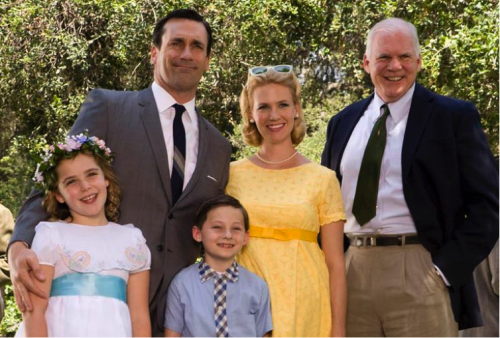
Mad Men’s leading ad man, Don Draper, started out as an enigmatic and virile figure–a creative genius on the top of his career who has a beautiful wife and family and an insatiable sexual appetite fulfilled by many other mistresses. Don Draper, for audiences and the characters that surrounded him alike, was the ultimate male figure. Characters around him constantly likened him to matinee idols such as James Garner and Gregory Peck, or an astronaut, and even Batman. Don is constantly seen by others as handsome yet inscrutable, as he swaggers around the office winning pitches and charming clients, yet remaining distant and unwilling to share anything personal. No one, whether it be the clients at work or the beautiful women he seduced, could resist the Don Draper charm. But the seemingly infallible wall and perfect image that surrounds Don slowly diminishes as the series goes on. And we learn that it is just that: an image.

Untitled

We discover early on in the show that Don Draper is really Dick Whitman- a poor farm boy from Pennsylvania. His mother was a prostitute who died in childbirth, his father a cruel drunk who died in front of him after being kicked by a horse. Dick moved with his stepmother and grew up in a whorehouse. Dick then volunteered for the Korean War to get out of his home. He accidentally killed his C.O., the real Don Draper, and switched dog tags with him in order to start a new life under his name. Ever since then, Dick has been constantly trying to escape his past by reinventing himself as a new man–a man who has, as Peggy Olson notes in the episode “The Fog,” “everything, and so much of it.” The farm boy now has more money than he knows what to do with and a beautiful home and family. Don tries to live the picturesque life that he conjures up in advertisements. But like most of advertising itself, it is false. Despite his new start, Don cannot escape his past and issues, it is constantly bubbling over and seeping into his life. Don’s seemingly perfect family life and ways of self-medication is, how Pete Campbell reflects on in his own monologue, a “temporary bandage on a permanent wound.”

Mad Men has seven seasons, and is set across an entire decade from 1960 to 1970. The show is rampant with the gender stereotypes of the era, and they are especially visible in the first seasons. The sexist attitudes of the era are shown in the dialogue and depiction of office and family life; there are far too many examples to name. We see these gender stereotypes reflected again and again in the brainstorming and final fruition of advertisements that Sterling Cooper creates. However, not only does Mad Men tell the stories of people who live in that time period, but the characters and story also end up symbolizing the turmoil and transformations of the decade itself. Upon viewing the series after knowing the show’s finale, we see that the Don Draper arc reflects a small change in gender perspectives during that era. The Don of Season 1 would never act as the Don in the Season 7 finale. We see that Mad Men was all about shattering the hyper-masculine Don Draper mythos that he built and trapped himself within.

Untitled

Throughout the series, we have seen Don reach several small epiphanies and seemingly making some progress, only to circle around and revert back in the end. Much like the Springsteen song, Don was constantly moving “one step up, and two steps back.” In Season 4, Don loses control of himself after his divorce from Betty. Most notably in the episode “Waldorf Stories,” Don gets blackout drunk and ends up sleeping with two women in one night. He also shows up at a meeting where he drunkenly and sloppily pitches to Life Cereal. He even references the notion of “nostalgia,” which pathetically evokes the most poignant pitch of his career for Kodak. This is not the cool, calm, and collected Don of Season 1. Don remarries Megan to get himself back on track, and for a while it works. In Season 5, he was able to remain faithful and cut back on drinking. He was open with her about his past as Dick Whitman, his relationship with Anna Draper, everything. But by Season 6 he is having an affair with his neighbor and drinking heavily again.

The culmination of Season 6 is a major collapse of Don’s masculine, perfected, and guarded image. The charm and swagger that used to work so well for his business is losing its power. During a pitch for Hershey, we see Don his most vulnerable in front of other men. At first, Don tells a fake story of how he would mow the lawn for his father and be rewarded with a Hershey bar. The executives are pleased; it’s the exactly what they want to hear. But it’s a lie. Then, Don decides to sell the truth for once. He confesses,

“I was an orphan. I grew up in Pennsylvania in a whorehouse. I read about Milton Hershey and his school in Coronet magazine or some other crap the girls left by the toilet. And I read that some orphans had a different life there. I could picture it. I dreamt of it. Of being wanted. Because the woman who was forced to raise me would look at me every day like she hoped I would disappear. Closest I got to feeling wanted was from a girl who made me go through her john’s pockets while they screwed. If I collected more than a dollar, she’d buy me a Hershey bar. And I would eat it alone in my room with great ceremony, feeling like a normal kid. It said ‘sweet’ on the package. It was the only sweet thing in my life.”

Don continues this reveal of his true self to the ones he owes it the most, his children. He takes his children to see the decrepit house he grew up in. He attempts to break the circle of this false identity he has built for so long.

Untitled

Upon reflection, the breakdown of Don’s persona seems a clear journey for this character, but to many audience members it is hard to see Don in weaker moments. Many prefer seeing Don as the alpha male of Season 1. In Matthew Weiner’s interview with Hanna Rosin at The Atlantic they remark that the audience has trouble when Don loses his confidence. Rosin comments that the audience “Could tolerate his wickedness if he was alpha. But if he cried, or lost his bearings-” To which Weiner replies that there have been other ‘weak’ moments for Don on the show: “He’s cried before. He lost his bearings in the Carousel scene at the end of the first season. That’s the most famous moment in the show. He was filled with regret and weeping over something very, very un-masculine. He ran to Rachel Menken and said, ‘Let’s run away,’ and could not have been weaker.” But the Hershey moment was remarkably different than these moments.

In the Season 7 finale, for Don has to finally hit rock bottom in order to truly shed his false persona. Don has ended up in California at the Esalen Institute, a therapeutic treatment center. He did not go willingly, but was brought by his acquaintance, Anna Draper’s niece Stephanie. During a class in one exercise, you are told to face another person and physically communicate with them how they feel. Don remains guarded with his arms crossed and brow furrowed, a gesture certainly fitting. Don has long felt psychology was false and a waste of time, and this is no different. Sharing your feelings was seen as weak, and Don was always telling others to stop crying or grieving.

However, eventually Don has a nervous breakdown. The culmination of Stephanie leaving him, telling him he is not her family, and news of Betty dying leaves him paralyzed with emotion. He calls Peggy on the phone, who fears that he is near suicidal. “I messed everything up. I’m not the man you think I am. I broke all my vows. I scandalized my child. I took another man’s name and made nothing of it.” He confesses. A kind woman takes him to a group therapy session, but he can only sit in a trance. Then, a nebbish man Leonard sits a chair and begins opening up: “It’s like no one cares that I’m gone. They should love me. I mean, maybe they do, but I don’t even know what it is. You spend your whole life thinking you’re not getting it, people aren’t giving it to you. Then you realize they’re trying and you don’t even know what it is.” The beginning of his speech gets Don’s attention, and by the end Don is standing up and walking over to embrace the sobbing Leonard. This scene is incredibly important for Don Draper’s character arc.

Untitled

Matthew Weiner remarked in his interview with the New York Public Library that they studied videos from Esalen: “These guys have had it. Even if they’re not veterans, they are just—the alienation that was created by success, political, racial tension, the technology, which is I think what’s happening right now, the isolation, these guys were like they’re going to crack, and it’s not like they haven’t always done that, but it was really something that I felt that was part of the story of the era of the sixties.” The era of the ’60s is ending, as well as Don’s journey. Don has had it; he has cracked and cannot take it any longer. The story of the characters end up reflecting the era they’re living in.

Don Draper is from The Silent Generation, where children were taught to be seen and not heard, especially male children. And especially Don, whose stepmother hated him. Boys were (and still are today) taught never to cry, or express their feelings. Being emotional is seen as being feminine, which men of that era would never want to be been seen as. It is a harmful stereotype for all men, leaving them stunted and suppressing their emotions. This expectation for men to remain these silent heroes, doubled by the false perfect persona that Dick Whitman puts on as Don Draper, is what leads him to make so many of his mistakes and fuels his turbulent emotional problems.

The Mad Men finale, as well as Don’s entire journey, demonstrates how destructive the rules of “being a man” can be. Especially during a time when sexism was so open, when the lines were so clearly drawn between what made a man and what made a woman. We had seen Don cry or open up emotionally a handful of times, but for the most part Don remained so closed off from everyone, folding his arms to the world. The finale shows the first time he finally opens them and embraces, both literally and figuratively, not only himself, but another man suffering the same problems as well. It is an incredibly important moment for Don. Don begins as a man unable to express himself and forced to uphold unwavering masculinity due to his upbringing, the era he lived in, and the persona he crafted for himself. He ends by rejecting those notions, which allows him to fully connect with others around him and make peace with his inner conflicts and past.

Untitled


Caroline Madden has a BFA in Acting from Shenandoah Conservatory and is working on an MA in Cinema Studies at Savannah College of Art and Design. She writes about film at Geek Juice, Screenqueens, and her blog. You can usually find her watching movies or listening to Bruce Springsteen. 


The Complex Masculinity of ‘Outlander’s Jamie Fraser

It’s a surprising twist on the trope. Jamie is undoubtedly a force of man to be reckoned with, though the fact that he is a virgin and thus relatively inexperienced in terms of sex when he encounters Claire – the older, more experienced woman – attributes some unexpected “feminine” qualities to his character.


This guest post by Carly Lane appears as part of our theme week on Masculinity.


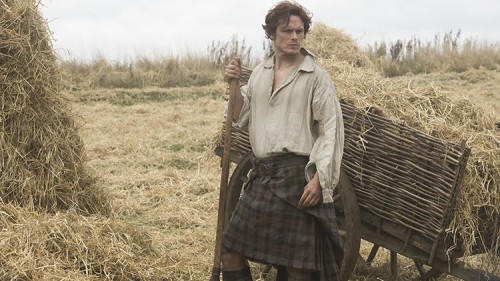
Jamie Fraser, of the Outlander series (and subsequent television adaptation), is the quintessential romance hero. Mention his name to any fan of Diana Gabaldon’s works and you will likely hear a swoon in reply. When it comes to romantic traits, Jamie’s got them in spades. He’s a Highland warrior, a well-educated man, and he’s good with horses – not to mention easy on the eyes.

His role in the series, however – first as Claire Randall’s love interest, then as her hastily wedded husband – is anything but predictable, and it’s in looking at his story in the first book (and first season, respectively) that we realize just how multifaceted this masculine hero truly is.

When we’re first introduced to Jamie in the year 1743, he’s actually something of a damsel-in-distress; due to a dislocated shoulder suffered in the heat of battle, he cannot ride a horse without intense pain. Although Claire has been recently rattled by her time travel through the stones from the 1940s, her medical training won’t allow her to sit by and watch while his fellow Highlanders attempt to set his arm incorrectly. She takes it upon herself to put his shoulder back in place – and then to tend to him later through various gunshot and stab wounds. It’s interesting to watch the dynamic between the two characters in their first interactions together. Claire is familiar with taking charge in a situation after serving as a nurse in the Second World War, but Jamie doesn’t allow his masculine pride to get in the way of letting her help him. (Then again, given Claire’s headstrong nature, he likely doesn’t have much of a choice either way.)

And he can wear the heck out of a kilt, ya ken?


The more we learn about Jamie, the more we come to see him as the epitome of a manly man. He volunteers to take a public beating instead of a lashing for a girl accused of loose behavior, and we see him smiling even after getting punched in the face. We’re witness to his participation in a very violent game of shinty against fellow clansmen, tackling other players into the mud. He’s survived through two severe whippings at the hands of Black Jack Randall, a captain of the British army, which left him with serious scars on his back. And when he relays his past as a fugitive to Claire in private conversation, we find out that he’s had to do some pretty hairy things in order to stay alive – like eat grass, for example.

But what’s most surprising about Jamie is that he encapsulates both the (fairly) innocent virgin and the male warrior in tandem, something that has almost been unheard of in fiction. After he and Claire learn that they will need to get married in order to ensure Claire’s protection from Black Jack, she confesses that she’s not exactly a virgin due to her first marriage. “Does that bother you?” she asks. “No,” he answers, “so long as it doesna bother you that I am.”

It’s a surprising twist on the trope. Jamie is undoubtedly a force of man to be reckoned with, though the fact that he is a virgin and thus relatively inexperienced in terms of sex when he encounters Claire – the older, more experienced woman – attributes some unexpected “feminine” qualities to his character. In the wedding episode, there are several scenes dedicated to his sexual education. His comprehension of the act in itself is completely transformed – he admits to Claire that, up until that night, he had believed it was something done with the man behind the woman, “like horses.” He does make a point of reminding Claire after a particularly heated first kiss, however, that while he may be a virgin it doesn’t mean he’s been a monk.

But he is a fast learner and a conscientious partner – he listens to Claire when she tells him he’s crushing her with his weight, and he’s careful to ensure he hasn’t hurt her when she experiences an orgasm the second time they have sex, inquiring if it happens every time for a woman. That thoughtfulness and willingness to reshape his worldview is not something that often goes hand-in-hand with an uber-manly man.

He does define the meaning of "heart-eyes" from time to time.
He does define the meaning of “heart-eyes” from time to time.


That worldview is also challenged again when Claire runs away, endangering the clan in the process, and Jamie is expected to beat her as a disciplinary act according to tradition. In the beginning, he can’t grasp why Claire is angry with him for doing so – but later agrees that adhering to a custom is not always the best course of action. After a particularly intense interlude on the bedroom floor (during which Claire holds Jamie’s dirk to his throat in the throes of passion and makes him swear he won’t beat her again), Jamie understands that what may be the conventional response to something in the 18th century isn’t necessarily the right thing to do.

Jamie is not the first character to experience sexual assault in Outlander, but he is the first male character. When he is captured by British soldiers, his masculinity and how he views himself as a man are completely fractured after his traumatic assault at the hands of Black Jack Randall in Wentworth Prison. His entire sense of identity is shattered in those harrowing hours where he faces abuse after abuse, and through his recounting of the events to Claire the audience is privy to every agonizing moment. Not only is he subjected to physical violence that permanently impacts the full use of his hand, he is emotionally manipulated by Black Jack into forced climax, his body unable to stop what his mind is straining to resist.

It’s no wonder Jamie feels less than a man when he is finally rescued from Wentworth. The damage that has been done to not only body but mind causes him to pull away from Claire and any sense of shared intimacy between them. He admits that he can’t even think of returning to his wife’s bed when any attempt at sex would make him feel sick to his stomach.

Through Claire’s love, support and assertion of his masculinity, as well as his willingness to share about his experience, Jamie is finally able to begin to reclaim his sense of self – and the first season ends on a note of hope, as the two sail away from Scotland together. It is rare that a series portrays a leading male protagonist – especially the undisputed romantic hero of the story – as a survivor of rape and sexual trauma, and how he will be healing from that harrowing experience as time goes on.

At first glance, Jamie Fraser might seem like just your average hero – but he’s a fascinating, layered character who doesn’t simply fall prey to the typical traits of masculinity. In true Highlander fashion, he defies them.


Recommended reading: “The Romance of Male Virginity in Outlander” by Laura Stanley @ Chew


Carly Lane is a writer based in New York City who specializes in obscure pop culture references and miscellaneous geekery. Her work has been featured on HelloGiggles, The Mary Sue, Femsplain and more. You can find her on Twitter at @equivocarly.


Off the Fury Road and Without a Map: Masculine Portrayal in the New ‘Mad Max’

Wrapped in a hypermasculine Trojan Horse of violence and war custom is a heady lesson about the dangers of ceding to those expectations, and about the road away from them and toward something like redemption. Here is a film where women are shown to be men’s combatative equals. Even more so, it is a film where the only way the men can escape their own oppression is to join up with, and occasionally defer to, these women.

This guest post by Zev Chevat appears as part of our theme week on Masculinity.


In our generation, action dominates the box office with bombast, containing enough C4 to blow up a major city, and enough stuntpeople to populate it. While it’s high entertainment, it may seem like the last place to find social progress, let alone a challenge issued to its own core values. Yet this summer’s first great critical and commercial success has done the seemingly impossible, uniting powerful messages about gender and society with enough explosions to bring people into the megaplex seats.

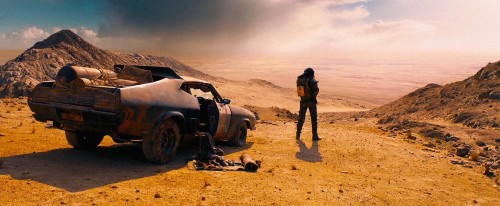
While much hay has been made, and rightfully so, about the women in Mad Max: Fury Road, it was the men who began to catch my interest on a second viewing. Tough, monosyllabic, and utterly capable on the surface, the main men of Fury Road are also deeply flawed individuals who have been poisoned by the expectations placed on males in their (and, therefore, our) culture. Wrapped in a hypermasculine Trojan Horse of violence and war custom is a heady lesson about the dangers of ceding to those expectations, and about the road away from them and toward something like redemption. Here is a film where women are shown to be men’s combatative equals. Even more so, it is a film where the only way the men can escape their own oppression is to join up with, and occasionally defer to, these women.

By diverging male heroes from the narrow path that action movie precedent has carved for them, and eschewing the trappings of toxic masculinity for emotionally mature character growth, this film is striking out into new, more complex territory. Critics and audiences alike have responded with enthusiasm, crowning Fury Road an instant cult classic, and lauding the potent mixture of images and ideas that set it apart. For, although Fury Road’s most obvious addition to the conversation is its women, especially Charlize Theron’s Furiosa, the portrayal of its main men is just as radical, if more quietly so.

One of the biggest complaints from opponents of Fury Road is that Max (Tom Hardy), though ostensibly the title character, is not only upstaged; they say, he’s also barely a character at all. But, if he seems like non-existent person that’s because, for much of the film, the things that make Max himself, both material and mental, have been taken away or buried far underground. Max Rockatansky’s journey, it could be said, regards the mastery of himself, rather than the domination of others. Fury Road is about many things. Among them is Max’s arc, one in which a man in shellshock re-gains his humanity through cooperation, empathy, and compassion.

Max fights his way through the future.

First, the cooperative aspect, the lowest-hanging desert fruit on the thing-I mean tree. What gets Max that semblance of redemption he’s seeking is not simply overtaking the enemy with superior skill, though that plays a part. Nor is it taking up the mantle of despot at the film’s conclusion. Instead, the normally lone male warrior must team up with a group of women – some warriors, some escaped “Wives” – if he is to survive the coming onslaught.

Though initially combatants (their brawl upon meeting is one of the film’s most interesting set pieces), and highly suspicious of one another, Max and Furiosa quickly develop a strong respect, and trust. Recognizing Max’s reaction to her questions as evidence of trauma, Furiosa extends an olive branch of mutual trust when she tells him, “I need you here, you may have to drive the rig.” By saying, essentially, that she needs to trust him, so he better be trustworthy, Furiosa begins to help Max emerge from his shell. This is a reversal of the common trope of the in-control man who must bring a damaged woman into the fold. Here, it’s Max who has baggage, and who needs to meet Furiosa halfway. He does, and the two begin to work in deadly tandem almost immediately thereafter.

Through his interaction with the group of escaping women, not just their hard-bitten commander, Max becomes gradually more human. When it looks like Splendid (Rosie Huntington-Whiteley), one of the Wives, has been bashed off the rig by a rocky outcrop, she reappears, smiling from behind the curve of the truck’s cab. Max gives her the thumbs up and, it appears, the first expression approaching a smile from him. He cares about what’s happened to this member of their group; he’s thinking about all of them, and no longer just himself. The extension of Max’s compassion culminates when Max speeds out into the salt flats after the group of Wives and Vulvalini, and convinces them to turn back instead of driving to what may well be their deaths.

All this puts Hardy’s Max in stark contrast to Mel Gibson’s taciturn cop, who swooped in to help a group of survivors in The Road Warrior. Gibson’s Max needed no one, and while he was not without heart, he was allowed to show little change. By the time he saunters off into the post-apocalyptic sunset, Hardy’s Max has not so much softened –there being no place for softness in Miller’s hyperviolent and hard world – but expanded, from bludgeoned bloodbag to being a man.

Crazed War Boy Nux rides into a "lovely" day.

This path, though evident in Max, is even more obvious when it comes to the character of the War Boy Nux, played with glee and a certain amount of sensitivity by Nicholas Hoult. Nux is a product of a tyrannically patriarchal society, who, through equal interactions with women, instead of domination of them, has a change of heart. His turn from emotionally barren war pup to white hat with a mind of his own is, even more so than Max’s, a tale of remarkable self-mastery. As some have perceptively pointed out, the men under Immorten Joe are treated like disposable commodities, determined to find glory at the end of their “half-life.” Their entire lives are built not around heroic deeds and deaths, but around the witnessing, the verification by other men, of those deeds. In an era without written history, the men need someone to see what they do, to affirm their reality. When Nux’s chain catches on the War Rig and he falls in front of Immorten Joe, his leader, the loss of face represents a greater failure, a systemic one. Adhering to the warmongering patriarchy has led to Nux’s decline and, in a sense, exile. Abandoned by the very things that propped him up, Nux devotes himself to the cause of the Wives after Capable (Riley Keough) shows him compassion. Nux is a man so bereft of affection and touch that, when Capable puts her finger to his lips, he keeps them absolutely still in mild terror. Here is Miller’s theme writ large: that patriarchy controls us all equally, and can prove venomous regardless of gender.

As the War Rig tears a furious path of destruction through the desert, it may seem as though such sentiments are secondary, if present at all. Yet Fury Road, and films like it, are pushing the envelope of social themes as much as you can in an action movie without dissolving the very genre in a vat of metatextual acid. Sci-fi blockbusters such as Pacific Rim (where masculine angst is overridden by a literal meeting of minds), and Edge of Tomorrow (where ego must be cast off in favor of cooperation), as well as the classic Terminator 2 (where survival depends on trusting and following a strong woman) are all successful examples that are threaded with many of the same concerns as Miller’s opus. But none present their thesis as clearly as Miller does his. Here is a brutal world that has entrapped and broken men as well as women, where the way to salvation is couched in qualities outside the typical action hero mold. The lone man blasting his way through the enemy will not lead to triumph. It is only together, with care in and joint effort with women, that a man may “come across some kind of redemption.”

“At least that way we'll be able to... together... come across some kind of redemption.”


Zev Chevat is a writer, artist, and animator who specializes in feminist discussions of film and media. In addition to Bitch Flicks, he has written extensively for TheMarySue, Bitch Media, and Animation World Network. Follow him on Twitter @zchevat, or on tumblr at justchevat.tumblr.com.


Bitch Flicks’ Weekly Picks

Check out what we’ve been reading this week–and let us know what you’ve been reading/writing in the comments!


recommended-red-714x300-1


Jon Stewart, Jamelle Bouie, And Others Weigh In On The Charleston Massacre by Kinsey Clarke at NPR

How Feminist TV Became The New Normal by Zeba Blay at The Huffington Post

Orange Is the New Black Quietly Reinvents Itself by Losing the Villain Narrative by Margaret Lyons at Vulture

Angela Lansbury’s School of Feminist Witchcraft by Jessica Mason McFadden at Gender Focus

SIFF Review – ‘Tangerine’ Takes on Every Label: Black, Brown, Poor, Trans, Woman & Sex Worker by Jai Tiggett at Shadow and Act

In “3 1/2 Minutes,” We See a Life Cut Short by Nijla Mu’min at Bitch Media
An Open Letter to Jerry Seinfeld by Julia Robins at Ms. blog
Broadening a Transgender Tale That Has Only Just Begun by Erik Piepenburg at The New York Times
Want to understand what it means to be a woman? Look to robots. by Alyssa Rosenberg at The Washington Post
Get Ready for Wes Studi as Badass Native Antihero in ‘Ronnie BoDean’ by Wilhelm Murg at Indian Country Today Media Network
What have you been reading/writing this week? Tell us in the comments!


Seed & Spark: Why I Have a Giant Lady Crush on Elizabeth Banks

I will begin by saying that Elizabeth Banks is totally on my radar. If you are a producer and an actress who does comedy (as I am), you will sit up and take notice when other ladies – especially comediennes – break the boy-code barrier and succeed at straddling that fine line between marketable (aka “attractive to audiences”) and powerful (aka running your own series and being a lady-boss).

unnamed


This is a guest post by Jeanette Bonner, who is currently crowdfunding through Seed & Spark for her latest project


I will admit it: I’m a beauty-magazine buyer. I want to be one of those people that shun them the way I shun impulse-buying those “Stars: They’re Just Like Us!” magazines at the grocery store. But there are certain times when it’s really ALL my brain wants to process, even though I know I should be learning about tragedy in China/ Supreme Court misdoings and failures/ who Amal Clooney is saving this month.

Occasionally, some of them have content worth reading. Many of them, like Allure and Marie Claire, have recently gone pro-fem and are really letting the world know who’s the most ass-kicking female of the moment.

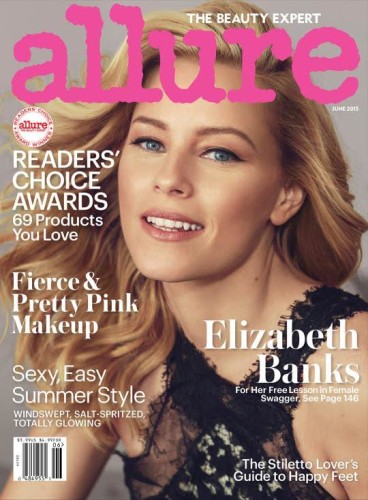
May’s issue of Allure featured another gorgeous blonde starlet with fan-blown hair waves of envy, in a gorgeous dress none of us will ever own, looking wrinkle-less and flawless as usual. That lady was Elizabeth Banks.

I will begin by saying that Elizabeth Banks is totally on my radar. If you are a producer and an actress who does comedy (as I am), you will sit up and take notice when other ladies – especially comediennes – break the boy-code barrier and succeed at straddling that fine line between marketable (aka “attractive to audiences”) and powerful (aka running your own series and being a lady-boss). You can probably think of three straight off the bat. Tina Fey and Amy Poehler are the Queens, Mindy Kaling comes next. Then I would suggest Jenny Slate (who went from SNL reject to Create-Your-Own-Content baller), and then I bet your next thought is for the two Best B*tches of the Moment: Abbi Jacobson and Ilana Glazer. But I bet your thoughts don’t naturally then go to Elizabeth Banks, even though they should.

Sometimes as a producer, you have to physically lend some extra support.


Elizabeth Banks first caught my attention in The 40-Year-Old Virgin, as the overtly promiscuous hot party-girl type. She has an orgasm in a bubble-bath in front of Steve Carrell, and I thought – “Man. That girl is fearless. It takes a lot to not only put aside your pride and have an orgasm in front of Steve Carrell, but do it in a funny way that doesn’t automatically make you want to slut-shame her and write her off. She’s a badass.” She was, of course, in a lot of things before that, Wet Hot American Summer being one of them, but after The 40-Year-Old Virgin, just like the way it seems everyone owns a green car the moment you think of buying a green car, she suddenly seemed to me to be everywhere.

I don’t need to list her credits to you to prove she’s awesome, and that’s not my point either. We all know she’s talented and Hollywood loves her and yeah she’s pretty and funny and held her own against Alec Baldwin in 30 Rock. Here’s why I have a lady-crush on her – this quote, from the aforementioned Allure interview:

“If I had to pick a theme of the things that I do,” Banks says, “it would be: Girls win.”

Pitch Perfect, a hard-core “girls win” -kinda movie, was Banks’ first hit of the production company she started with her husband. When the original director wasn’t available for Pitch Perfect 2, the studio asked Banks to direct it herself:

“Once you get offered a studio job, as a woman, it’s really hard to say no because they don’t let women do this very often,” she says. “So I knew I needed to embrace it and I couldn’t mess it up. Because if you mess it up, they don’t let you do it again, and you become representative of female directors as a whole. Like, ‘See, girls can’t do it!’’ [Allure, June 2015]

BOOM. They asked, and she stepped up to the plate. Without reservation. No one asked politely. No one had to convince her. She did not seek out permission. They offered her something with a TON of responsibility and she accepted, despite probably already being overwhelmed with producing the damn thing AS WELL AS acting in it (it’s not an easy feat to wear all three hats, as I learned with my web series, Ghost Light, for which I’m the writer, producer, and also actor).

unnamed

I have often found in my life – and certainly this is true when it comes to producing my own web series – that I seek permission before I do anything. It takes me a long time to wrap my mind around a new idea. I consider myself spontaneous and risk-taking yes, but if someone offers me something outside of my comfort zone, anything that I haven’t previously decided that I can do, I don’t take action immediately. I wobble, waiting for someone to convince me. Skiing? “I’m not sure I can, I’ve never been and I hear a lot of adults have accidents their first time.” Malaysian food? “I’ll go if you tell me what to order.” How about doing something crazy, like moving to North Carolina to start a business? “What! I don’t know the first thing about starting a business. Or North Carolina!” You see what I mean.

We all do this. Psychologists say this is our ego keeping us safe, because risk equals danger, and danger equals death. I know that if some huge studio head asked me to direct a $30 million dollar movie with a cast and crew of nearly 300, I’d balk. I’d make excuses. I’d say, “I don’t know how, I don’t have enough experience, I don’t have time.” Instead, Elizabeth Banks said, “Of course I’ll do it. Because if I don’t, just by saying no, as a woman – I fail.”

Her next project as a producer is an HBO movie based on the life of tennis star Billie Jean King. In her Allure interview Banks said, “Billie Jean King’s activism is mind-boggling. She has a Presidential Medal of Freedom. She’s so inspirational.” And just like that, she’s off and running again, no doubts in her mind that anyone could tackle this film better. Because why would they? She’s a kickass, empowered, inspired, strong woman who makes her own path in this crazy industry and in her life.

As are we all, right? AS ARE WE ALL.


unnamed-1

Jeanette Bonner is an award-winning actor, writer, and producer in NYC. She has been writing informally since the age of 5, and is now combining her love for writing with her passion for theater.  In addition to Ghost Light she has written and produced the one-woman show Love. Guts. High School.  It premiered at the 2012 Midtown International Theatre Festival, where it won nominations for Best Actress and Best Solo Show, and then went on to the Chicago Fringe Festival, where it was named a top ten “Critic’s Pick” by Time Out Chicago.  Last year it received top reviews at the 2014 Edinburgh Fringe Festival, where she performed it 23 times (whew!).  As an actor in New York, she has performed with Magic Futurebox, Manhattan Theatre Source, and Vital Theatre Company, and workshopped plays with Rattlestick Playwrights Theater, Abingdon Theatre, and Primary Stages. She has been a company member of improv troupe National Comedy Theater for seven years, and in her downtime she shows tourists around town as a licensed NYC tour guide.

Girls on Cam: The Many Problems of ‘Hot Girls Wanted’

But it’s hard to be on the side of the documentary that continually treats its female subjects like they don’t know what to do, like they’re little girls who’ve wandered off the trail of goodness, like they don’t know any better and the terrible things they’ll experience here will teach them a lesson. That kind of sex negative attitude, and what’s more, “rescuer” mentality that does more harm than good to sex workers.

unnamed


This is a guest post by Kyle Turner.


There seems to be a fallacy surrounding much of the discussion around the Netflix distributed documentary Hot Girls Wanted, directed by Jill Bauer and Ronna Gradus and produced by Rashida Jones. My friend pointed it out to me the other day that some have noted that it is, by its very existence of showing someone leaving the sex work industry, anti-feminist. I should disclose that I am a cisgendered queer male, but I consider myself a sex positive feminist ally nonetheless. I don’t really have a place to say what is or is not feminist, and I’m disinclined to mansplain. The issue with Hot Girls Wanted, though, is that it takes the cognizance of its subjects and casts it aside in favor of portraying its performers as infantilized victims, which seems like it will do more harm than good.

From the opening moments of the film, a collage of images rushes across the screen in quick succession, a montage ostensibly to illustrate the current culture’s obsession with female sexuality and the objectification of women’s bodies. Included in this clip reel in the din are an interview with Belle Knox, the Duke Porn Star (we’ll talk more about her later) and a clip from Nicki Minaj’s “Anaconda” music video. Immediately, the film either has a misunderstanding of these clips, or wants to portray them deliberately out of context: Belle Knox has been open about her experiences in the sex work industry, a move that she’s explained is based both in financial need as well as a desire to reclaim a kind of image or agency which is seen to be robbed of women in pornography, or in other facets of sex work. Nicki Minaj’s video is also an interesting thing to pick out and then utilize in this supposed introduction to one’s thesis: sampling Sir Mix a Lot’s “Baby Got Back,” Minaj is overtly trying to subvert and reclaim the gaze upon Black women’s butts, the lyrical and visual content of the full video nodding to denial, sex with a specific goal (personal pleasure), and castration. Yet, out of context, both of these clips just seem like, in the grand scene of this film’s argument, objects for a male audience devoid of autonomy.

unnamed

It isn’t that that is not true in many cases, that women are often subject to a kind of leering gaze in media that is not used on men, it’s that Hot Girls Wanted has a bunch of rather interesting, very intelligent young women who are cognizant of what they are doing and why, and yet want to invalidate their agency in doing such. The film broadly wants to argue that the pro-am, or professional amateur, porn industry is exploitative and dangerous. While I don’t doubt that that is true, the footage contained in this film not only does not actually show the exploitation it so desperately wants to use as argument, but also, rather than suggest solutions to protect women and other performers in the sex work industry from exploitation (like harsher regulation), suggests rather vehemently that they should not be doing it in the first place.

We encounter and get to know Tressa, Rachel, Karly, Michelle, and Jade, all introduced in some invariably “normal,” inconspicuous way, in addition to their name, stage name, and period of working in the sex work industry via an onscreen rendering of a Twitter profile. This Twitter motif is used throughout the film, but surprisingly little thought goes into it making any kind of cogent meaning with regard to the subjects of the documentary. Though some performers speak explicitly about the characters they play for certain scenes, this idea of performativity, never mind persona, in conjunction to social media is never explored. It’s as if the film is trying to make the subjects seem as bland as possible (which doesn’t totally work) to contrast against the work that they do. They’re all around 18-22, a point that’s made in order to infantilize each person.

unnamed

Despite the fact that nearly all of the performers are, as aforementioned, cognizant of what they are doing and why, the directors take specific steps to invalidate their words: moribund music cues underline Tressa’s declaration that this is what makes her happy; Michelle says “people are going to see it anyways” not once, but carefully edited so she says it three times; Jade examines the performative nature of facial abuse, but the scene leans on the actual performance to undercut her agency in the matter; Rachel talks about a mild injury on the set of a bondage scene and recalls how sensitive and receptive the crew was in terms of her safety, but the scene it against framed with grim music; the girls watch another Belle Knox interview, which is then juxtaposed against one of Knox’s scenes of facial abuse, again seemingly utilized to invalidate her autonomy in the matter.

The Belle Knox scene is particularly interesting because, for a poor documentary that mostly fails to build any kind of substantive argument (regardless of whether or not I agree with said argument), it’s able to articulate several different discourses that the film at large never seems interested in. On the one hand, it’s several Latina performers, including Jade, watching this interview. They scoff, Jade remarking that, in response to Knox’s vehement feminism and financial need, she and other performers have been doing it for years and already know how that model works. Jade succinctly critiques a racist capitalist model that benefits rich white women going to prestigious universities. (Another thing the film never gets into is why these subjects would be interested in doing this work in the first place, inasmuch as the current job climate necessitating it.) From another approach, there is that sharp contrast between Knox’s confident interview and the facial abuse scene itself, which feels to be used intentionally in a maternal way, skeptical of this young woman’s awareness.

unnamed

Which is one of Hot Girls Wanted’s major issues: the maternalistic skepticism with which it treats all of its subjects. We follow Tressa perhaps the most closely, from her home life where her mother knows and vehemently disapproves of her work, to her boyfriend, who also disapproves of her work, to the actual work, and back again. As the film profiles her towards the beginning, she mentions how happy this job makes her, how she would hate to live at home (in Florida) and work a minimum wage job. By the end of the film, both her mother and her boyfriend essentially guilt trip her into quitting, almost victim blaming her. “Dignity” and “self-respect” are thrown around in the conversation, inferring she has none because she’s in the sex work industry. The last time we see her on screen, she’s living with her boyfriend, saying that getting out of porn was all she ever wanted. But there’s an odd reticence to her voice, as if she’s trying to convince herself.

Which is where the fallacy I mentioned at the beginning of this piece comes in: it’s entirely her, as it is anyone else’s, prerogative to do sex work or to leave sex work. But it’s hard to be on the side of the documentary that continually treats its female subjects like they don’t know what to do, like they’re little girls who’ve wandered off the trail of goodness, like they don’t know any better and the terrible things they’ll experience here will teach them a lesson. That kind of sex negative attitude, and what’s more, “rescuer” mentality that does more harm than good to sex workers.

The intentions are well-placed to some degree, but the tone deafness and willful ignorance of what its subjects are actually saying and how they feel about the work is worrisome and even dangerous. Hot girls may be wanted, but in an ironically patriarchal move, their voices and opinions are not.


Kyle Turner (@tylekurner) is a freelance film critic and writer. He’s also the assistant editor of Movie Mezzanine and began writing on the Internet in 2007 with his blog The Movie Scene. Since then, Kyle has contributed to TheBlackMaria.org, Film School Rejects, Under the Radar, and IndieWire’s /Bent. He is studying cinema at the University of Hartford in Connecticut and relieved to know that he’s not a golem.


Alicia Vikander Stars As World War I Feminist and Pacifist in James Kent’s ‘Testament of Youth’

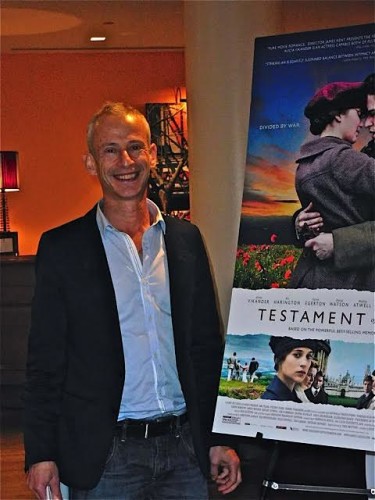
Director James Kent: “People offer me these projects and I’m immediately intrigued by the woman’s story in history because often I think women are written out of in history because they are the underdogs. Often it’s a better story than the one who’s king; he’s got it all his way. “

James Kent
James Kent


This is a guest post by Paula Schwartz.


Featuring an interview with director James Kent

Alicia Vikander, who recently embodied female robotic perfection in Ex Machina, stars in James Kent’s circa 1914 drama Testament of Youth. The movie is adapted from the World War I memoirs of British pacifist and feminist Vera Brittain, who spoke for her generation when she chronicled her wartime struggles and losses. Brittain, contrary to the wishes of her family and what was expected of women at that time, pursued an Oxford education instead of a husband. Instead she fell in love with her brother’s friend, Roland (Kit Harington from Game of Thrones), and deferred her education to serve as a nurse on the French War Front. Sweepingly romantic and seemingly old fashioned on the surface, the feistiness and determination of the heroine gives the story a modern kick.

Vikander is having a moment, and the director, making his feature film debut, lucked out in his timing. At a recent press event to promote the film, he told me that if he had cast Vikander now he wouldn’t be able to afford her. The Swedish actress first came on everyone’s radar as Denmark’s queen in A Royal Affair, while the sci-fi Ex Machina propelled her to the next level. She seems to be everywhere with at least five other films scheduled for release this year. She will soon appear with Eddie Redmayne in Tom Hooper’s highly anticipated film, The Danish Girl.

Vikander is dating Michael Fassbender, whom she met when they made The Light Between Oceans, also scheduled for release this year. The 26-year-old actress was staying at the same hotel where she and the director were promoting the film. Now with her sudden celebrity, paparazzi circled outside the Crosby Street Hotel for hours in hopes of getting shots of Vikander and Fassbender leaving together.


Following are highlights from my interview with director James Kent about his film, his inspirations and especially his star:

Talk about the movie’s pacing and how you told the story.

James Kent: It’s not rushed, so you enter the film and you have these moments where you think, I’ve got a moment to think about what I’ve just seen. Otherwise it’s like plot, plot, plot, and you can’t stay in her head. And there’s a slightly reflective quality to the film that allows, hopefully, certain elements of the audience who get it to feel that it speaks to them singularly. Otherwise it could be boring.

Also I had never made a feature film. I made documentaries and television dramas, so this was my first feature I was obviously anxious to prove that I would be able to shed the televisual side, which is different, although it’s more cinematic now than it’s ever been. There’s a sort of different type of vernacular for television than cinema, and I wanted to make a film that felt like cinema.


You didn’t get the memo that audiences don’t want to see female heroines in film?

I didn’t get that memo and you know what, I think cinema isn’t getting the memo either at the moment. There’s Far From the Madding Crowd. There’s going to be the Suffragette movie. There’s Brooklyn with Saoirse Ronan and Mad Max: Fury Road starring Charlize Theron. I think, finally, they are waking up to the fact that most of the audience is actually women.


This is your first narrative film, but you’ve made television movies featuring women, including Maggie about Margaret Thatcher. Are you especially drawn to woman protagonists?

People offer me these projects and I’m immediately intrigued by the woman’s story in history because often I think women are written out of in history because they are the underdogs. Often it’s a better story than the one who’s king; he’s got it all his way. What’s a better story than Joan of Arc? And I also happen to be a gay man and I think that gay men also are underdogs, so maybe there’s a connectivity I feel is there between myself and the women’s experience. I also think women are much more psychologically alert and emotionally alert.


World War I is not an especially known subject for Americans. Were you concerned it would find an audience here? 

It was a challenge, but what I’m hoping is that the power of Vera’s story and her pioneering spirit, which is largely in a love story but beyond that because Roland dies, it’s about a woman who powers herself and inspires herself to do what she always wanted to do, which is to become a writer. I think that’s a universal story. That’s not a World War I story.

Also the way I filmed it–because it’s filmed in a very subjective way–it’s very much her interior mind, and I think that modernizes that story. It’s not a 100-year period film. It’s a story about love and loss and rebuilding.  You could have done that in modern dress.

Alicia Vikander
Alicia Vikander


You have a wonderful supporting cast but your star, Alicia Vikander, is basically the whole film. Your timing couldn’t be better. You got her right after A Royal Affair and Anna Karenina and before Ex Machina. She has about five other films coming out this year.

What can I say? It’s her film. We were fated. God smiled on us. Alicia Vikander was free, available, affordable, willing. And it was my first film! What more could a first film director want? And then to have her and then to have Taron Egerton, who’s in Kingsman, also on the rise. And Kit Harington, who’s in Game of Thrones, phenomenally successful, but all fresh, all not seen in the cinema world by big English language audiences.

I think Alicia produces a very specific Vera. There’s a sort of gritty determination, powerhouse there. You know she was a ballerina with the Swedish Royal Ballet from the age of 9. Now think of Black Swan. There’s a particular kind of girl who has that fortitude to be a dancer. They’re ambitious. They’re also very determined. And they set themselves the highest standards. And that’s what Vera did, and I think Alicia immediately focuses us on those qualities. An actress, what they do is they allow the audience to immediately focus on a particular aspect of that person that the film’s about. Another actress will alter that. It doesn’t mean they won’t do a great role, but you’ll have a different impression of that person. Alicia brings out some of the core qualities of Vera really within the first few seconds of meeting her. You know. You sense because that’s what Alicia’s like.


The scenes where Vera and her brother and Roland and a friend are bathing in the pond are particularly effective because of what happens later to all of them. Were the water scenes as much fun to shoot as to watch?

There was no joking around. That water was 8 degrees. And we’re talking February in England. I mean that was a lot of production panic because of my desire to have them in the water. Luckily we shot that part late because we didn’t want to kill off our actress. But she has no body fat. I mean her body double for the close-ups, she could stay in there. But Alicia because she’s so slim, that water went straight to her bones and so she was in and out. She never complained. Incredible.


You came into the project rather late, in 2012 when there was already a script in place. Did you make major changes?

It shifted. My agent told me as a first time film director I would only have a certain element of power. If it goes well, the second film you’ll have a lot more power. And that’s how it works. You desperately want the film to happen. I’m also in love with the script and it so happened coincidentally a great friend of mine, Juliette Towhidi, had written the script, so I did love the script but there were things that I wanted changed. I wanted more internalizing on the script, more subjectivity from her viewpoint. I wanted the War to be clarified. I didn’t want to stint on the warfare and the suffering that the audience would have but I didn’t want it to be too much either.


The love scenes are so understated, which makes them even sexier. What inspires you?

I’m quite good at romance. Some of my television projects are about romance and I’m very good at asking actors to do follow my direction that less is more, but to do it with their eyes, and with their mouth, and with their hands. Like that scene in the café, where they touch fingers, that was straight out of David Lean’s Brief Encounter for me.

I was very inspired by that movie. That’s a movie with Celia Johnson and she has this sort of internal voice and it’s like a close up and it’s all about trains and separation. These are the things Testament has in it and I love the lavish amount of romanticism of Brief Encounter. It was radical for its time to do that, to have internal voices and the way it’s shot. It’s just so radical, and I found that inspiring.

What I do, I try desperately to look for film references because you’re trying to give your crew and actors something to watch and say, “Look, it’s got a semblance of this.” I find it really hard to find things that I love. I love movies but I find it really hard to find something specific for the one that I’m making, but that came closest. And also as you can tell, a bit of Gone With the Wind. Because I think there’s also something about Vera and Scarlett O’Hara, there’s something about her feistiness, she won’t be told what to do by men.


Paula Schwartz is a veteran journalist who worked at the New York Times for three decades. For five years she was the Baguette for the New York Times movie awards blog Carpetbaggers. Before that she worked on the New York Times night life column, Boldface, where she covered the celebrity beat. She endured a poke in the ribs by Elijah Wood’s publicist, was ejected from a party by Michael Douglas’s flak after he didn’t appreciate what she wrote, and endured numerous other indignities to get a story. More happily she interviewed major actors and directors–all of whom were good company and extremely kind–including Brad Pitt, Angelina Jolie, Morgan Freeman, Clint Eastwood, Christopher Plummer, Dustin Hoffman and the hammy pooch “Uggie” from The Artist. Her idea of heaven is watching at least three movies in a row with an appreciative audience that’s not texting. Her work has appeared in Moviemaker, more.com, showbiz411 and reelifewithjane.com.


Pixar’s ‘Inside Out’ Provides Long-Term Joy

As for ‘Inside Out,’ it gives us not one female protagonist, but three – Riley, Joy, and Sadness – and NONE of them are princesses! And, minor criticisms aside, the film is a true joy to watch – and, like deeply felt joy – it has its moments of hilarity, of reflection, of nostalgia, and, yes, of sadness too.

inside-out_wide-023d966aa5cc88687e7f3c4e75228c3cc79c7b62-s800-c85-750x400


This guest post by Natalie Wilson previously appeared at Skirt Collective and is cross-posted with permission.


Inside Out is an excellent addition to the Pixar canon, one that, like the equally amazing Brave, has female characters front and center. A coming-of-age story about Riley, a young tween forced to leave her beloved Minnesota, the film departs from the typical stories about girlhood – stories that often focus, in soppy-romantic-teen-angsty fashion on L-O-V-E at the expense of character development and female friendship. Some of these films are good (yes, I admit to liking The Notebook), some are rather great (I sobbed my face off at The Fault in Our Stars), and some make me feel like spewing vomit Exorcist-style (Breaking Dawn). Inside Out is in a league of its own, however – hardly surprising given the unstoppable Amy Poehler is the lead voice.

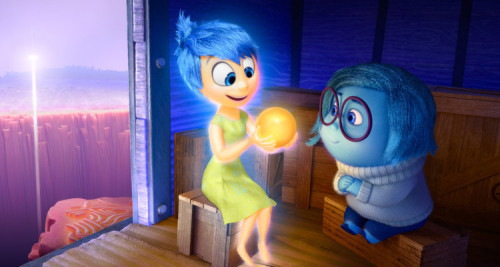
Focusing mainly on the inner-workings of Riley’s brain, the film is a coming-to-emotional-maturity story featuring Riley’s main emotions –   Joy (Amy Poehler), Fear (Bill Hader), Anger (Lewis Black), Disgust (Mindy Kaling) and Sadness (Phyllis Smith). These emotions run “Headquarters” – the part of Riley’s brain that creates the “core memories” making up her identity. The unflappable and infectious Joy believes herself to be Riley’s most important emotion, but when the usually happy Riley goes into a tailspin after the family’s move to San Francisco, havoc erupts at “Emotion Headquarters”causing Joy and Sadness to embark on a journey through Riley’s brain in hopes of salvaging her once happy, confident personality.

INSIDE OUT

The movie is brimming with clever nods to how we think about thinking (Riley’s brain includes a “Train of Thought”), pop-psychology (trouble-making memories and thoughts get taken to the prison-like subconscious), and imaginary friends (in the form of Bing-Bong). It is perhaps Pixar’s deepest film, a laugh- and tear-fueled lesson about the key role emotions and our thoughts about them play in our lives. Nope, this is not the id-filled fun of Toy Story, or the ego-pumping race of Cars, but a super-ego tinged exploration of how our emotions will control us if we don’t get control of them.

Most of the movie takes place within the landscape of Riley’s mind, allowing for witty forays into the dream production center (replete with its “reality distortion filter”), inventive exploration of abstract thought (characterized as a “danger zone”), and adroit usage of those commercial ear-worms that take-over one’s brain. The scenes set in real-world San Francisco are similarly delightful, mocking the ire Riley feels when broccoli pizza is the only choice on the menu, evoking the horrors of being the new kid at school, and capturing the frustrations of trying to fit one’s old life into a new house.

Screen Shot 2015-06-16 at 2.28.41 PM

The film’s use of emotion and memory is inventive and ingenious, ultimately offering a lesson about the importance of emotional diversity (hint: Joy, as it turns out, is not quite as important as she thinks). Adding to the poignancy of the emotional rollercoaster ride (my daughter named it “the saddest kids movie ever”), is the incredible cast of voice actors. Joy is reminiscent of Poehler’s ever-positive Parks and Rec character, while Phyllis Smith (from The Office) stands out ingeniously as Sadness, playing her blue-bodied character with the palpable dreary, depressive ennui that all of us (except Leslie Knope perhaps) experience at some point or another.

If I have a quibble with the film, it would be with its gendering of emotions. While it is hard to portray genderless characters to an audience still embroiled in the gender binary, some slight changes could have nudged the film towards a more gender-fluid narrative. Riley’s emotions are presented as a mixture of female (Joy, Sadness, Disgust) and male (Anger and Fear). This gendering of her emotions nods to the “unfixedness” of gender pre-puberty, especially as all the adults (most notably, her mom and dad) are presented as having emotions that match their sex/gender (and the dad’s are not only male, but think in sports terms!).

maxresdefault

The end of the film, which includes a look inside the brains of various characters, accords with this view – that once someone moves beyond puberty into the realm of adulthood, one’s emotions “match” the sex/gender of the person. While this is a minor criticism of an otherwise great film, it could have been easily remedied by not stereotypically displaying the inner minds of post-puberty characters. I get it, stereotypes are a quick and fast route to comedy, but they also lead us to dead-end either/or thinking. One other beef is that Riley’s mom (voiced by Diane Lane) doesn’t seem to have a job. No, not ALL women have to have jobs/careers, and NOOOOOOOOOOOOO I am not saying that being a mother is not a more-than-full-time, important job — what I am questioning is a world in which dads are still depicted  as the major breadwinners and also often get to be “good dads” to boot, while moms are more often “just moms.” Perhaps these gender-conforming aspects of the film can be partially put down to what one reviewer calls  “the Mouse’s boot” on Pixar’s neck – or, in other words, the fact that Disney now owns Pixar. Yet, while Pixar admittedly gave us a marvelous run of inventive movies that put the tried-and-true princess narratives to shame, they were not without their gender problems, with Brave standing out as the most feminist in its exploration of gender confines that bind.

As for Inside Out, it gives us not one female protagonist, but three – Riley, Joy, and Sadness – and NONE of them are princesses! And, minor criticisms aside, the film is a true joy to watch – and, like deeply felt joy – it has its moments of hilarity, of reflection, of nostalgia, and, yes, of sadness too. I agree with this review, that “One viewing is nowhere near enough to appreciate the extraordinary level of detail lavished on this world.

So see it and see it again, my many-emotioned friends, and take all your emotions with you, even the non-gender conforming ones!


Natalie Wilson teaches women’s studies and literature at California State University, San Marcos. She is the author of Seduced by Twilight and blogs for Ms., Girl with Pen and Bitch Flicks.


Sweet Nectar of the Matriarchy: Breastmilk in ‘Fury Road’

Furiosa, the “Wives,” the Vulvalini, and Max’s triumphant return to the Citadel finds the once chained-to-their-pumps milk mothers now opening the floodgates and pouring water down on the people below. It seems likely that our sheroes and the milk mothers will move forward on the “plentitude model” – bathing in an abundance of sweet, thick human milk, sharing water access, and growing green things from heirloom seeds – rather than continue in the scarcity model exemplified by Immortan Joe, with the milk mothers as capitalists profiting from their own production.

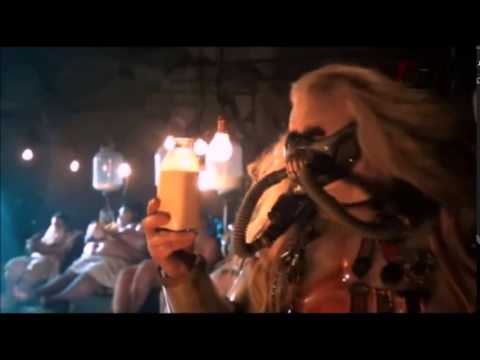
Immortan Joe sampling the goods with milk mothers and their machines in the background


This is a guest post by Colleen Martell.


Liquids abound in the otherwise dry landscape of Mad Max: Fury Road: precious gasoline (or “guzzoline”), scarce water, spray-on chrome, blood transfusions, and stolen mother’s milk. A dystopia wrapped around a feminist utopia, Fury Road has been cheered by women’s rights supporters and action film lovers alike. The film’s nightmarish post-apocalyptic world is characterized by a patriarchal power that exploits women’s reproduction and consolidates resources, leaving many in abject poverty. Hard to imagine, I know. It’s no surprise then, that the film was boycotted by MRAs. While rape and forced procreation are the most obvious examples of women’s exploited reproductive labor, breastmilk recurs throughout Fury Road as a symbol of that oppression. We view women imprisoned in milk-pumping machines, much like harrowing images of factory dairy farms. And unlike sex and sexuality, which are left conspicuously out of the film’s uprising, redemption is symbolized through human milk: “Mother’s Milk” anoints Max’s (Tom Hardy) face after his first proactively selfless act in support of Furiosa (Charlize Theron) and the “Five Wives,” for example.

We live in a culture that has a complicated relationship with breastmilk: on the one hand, there’s an almost fanatical love of it as a healing substance, and on the other, fear and disgust so intense that mothers are routinely shamed for public breastfeeding (it’s supposedly “unsanitary”). Fury Road dramatically and imaginatively reproduces this stance toward breastmilk. The Citadel’s inhabitants worship Mother’s Milk–they chant these words, among others, before Furiosa’s supply run to Gas Town (the implication is that the city exports milk in exchange for gas and therefore it is central to their economy)–but we also see that the women providing milk are chained to breast pumps with their mouths covered, holding sad, filthy baby dolls in their arms meant to stimulate milk production. Women the producers are unsanitary and devalued; the milk they create is holy. Holy and commodified, of course: it’s meant to sustain the patriarch Immortan Joe, his sons, and anyone else he deems worthy, and to keep the hierarchical structure going through trade with neighboring patriarchal cities.

Water flowing
Water flowing


Feminist breastfeeding scholars point out that we already live in a world in which breastmilk is a commodity. Linda C. Fentiman argues that human milk is “marketed both literally and figuratively, as a good for sale, a normative behavior, and a cure for a variety of contemporary social and medical problems.” Pediatricians promote breast is best, nonprofit milk banks and milk sharing organizations are popping up everywhere, and even for-profit formula companies use breastmilk in their scientific studies. All of these benefit people; rarely do they financially benefit those providing their milk. In response, Fentiman proposes we make more explicit the market value of breastmilk, because this would recognize women’s labor in milk production. Why not let mothers quantify and sell their milk? Why not give nursing mothers more economic power within the system as it is?

But others, like Fiona Giles, encourage us as a culture to “waste breastmilk.” Our intense fear of “the leaky body,” she says in Breastmilk: The Movie, means that we often treat women’s bodies as “monstrous.” Shaming nursing mothers is one example of how society strives to keep women’s bodies controlled and neat and orderly. Breastmilk (and pregnancy and menstruation, for that matter) threatens to make the leaky body public. Yet at the same time, we have public health campaigns praising human milk as “liquid gold” and dictating diet, sleep, behavior, and more to protect and champion this substance. The conflicted message here, which Fury Road so vividly amplifies, is disgust of the body itself while praising what the body produces. And so why don’t we push back by pouring it everywhere? “Let’s throw it around,” Giles says. “Let’s do what we feel like in it. Have baths. Who cares?” This has a double effect: refusing bodily shame and rejecting the idea of milk as something precious and rare. Or to use Giles’s terms, wasting human breastmilk moves us from a “scarcity model” to a “plentitude model.” In the scarcity model, we see fear of insufficient production, rhetoric that links “good” behavior with breastfeeding, individual responsibility for failure or success in infant nourishment, and anxious hording of backup milk. But why not operate from a place of abundance instead? Resist the system as it is and disrupt “orderly” (read: controlled) public spaces with leaking breasts, unpredictable bodies, and shared milk?

maryjesussm

Furiosa, the “Wives,” the Vulvalini, and Max’s triumphant return to the Citadel finds the once chained-to-their-pumps milk mothers now opening the floodgates and pouring water down on the people below. It seems likely that our sheroes and the milk mothers will move forward on the “plentitude model” – bathing in an abundance of sweet, thick human milk, sharing water access, and growing green things from heirloom seeds – rather than continue in the scarcity model exemplified by Immortan Joe, with the milk mothers as capitalists profiting from their own production. In other words, the film suggests these women will build a new economy altogether; I hear echoes of Charlotte Perkins Gilman’s feminist utopia Herland (1915) and philosopher Luce Irigaray, who writes a wildly fascinating theory about the feminist power of liquids in This Sex Which Is Not One (1977). For me the promise of this new economy is the film’s most cathartic gesture.

Cathartic, but not perfect. It isn’t human milk that flows at the triumphant end, but water drilled from deep in the earth. Does the milk mothers’ liberation come at the cost of the earth’s resources, I wonder? Or are we meant to conflate maternal women with the earth? Both troublesome suggestions. And of course as controversial as mothering is in our culture, a maternally centered revolution remains less threatening than would, say, any gesture toward sexual pleasure at the heart of the uprising. If we are disgusted by maternal bodies, we are downright terrified by sexually empowered women’s bodies.

breast-milk

Yet, regardless of what happens next in the Citadel, Fury Road’s use of breastmilk both in its oppressive and resistant visions demonstrates that when we talk about human breastmilk we aren’t just talking about feeding human infants, personal choice, or love and bonding. We’re also talking about economics and labor, and our societal fear of unpredictable, leaky female bodies even while society commodifies what those bodies produce. Fury Road concretely and imaginatively re-connects bodies with human milk, making milk-producing breasts very much public. Although the film’s ending is more symbolic than prescriptive, the final scene suggests that prosthetic-free Furiosa, the seed-wielding Wives, and the water-pouring milk mothers are no longer outliers in an otherwise orderly society, but are now the source and foundation of society’s structure. This enables us to imagine a world in which the leaky body is not an object of shame or fear, but instead a source of power and creation.


Colleen Martell is a writer, literary agent, and lecturer of public health and women’s studies based in Bethlehem, Pennsylvania. There’s a place for both breastfed and formula fed babies in her feminist utopia. She tweets about bodies at @elsiematz.


The American Lens on Global Unity in ‘Sense8’

‘Sense8’ is a clusterfuck of clichés, mediocre storylines and inept world building. Still, binge watch the series to enjoy the human journey of the eight sensates and maybe the Wachowskis and Netflix will take note and improve season 2 – they’ve mapped out five seasons. ‘Sense8’ will prosper on Netflix.

The Sensates "Mom" Angelica
The Sensates “Mom” Angelica


This is a guest post by Giselle Defares.


The paradoxical desire for global inclusivity that is created or controlled from an American perspective is characteristic for our modern pop culture. Harsh, maybe. We are in the 21st century after all, so it seems more than natural – albeit refreshing in our current cinematic climate of reboots – to explore an array of themes such as religion, gender identity and politics (LGBT) all served with a thin layer of sci-fi. The Wachowskis put their own spin on the mosaic narrative with Sense8. Robert Altman’s Short Cuts, Paul Thomas Anderson’s Magnolia and Alejandro Gonzaléz Iñárritu’s Babel paved the way. Sense8 aims to portray the brittleness of cultural barriers and the importance of global unity. Do the Wachowskis succeed?

Directors Lana and Andy Wachowski ventured from the start of their career into the field of “mindfuck” cinema. Their previous work on the Matrix trilogy, V for Vendetta, Speed Racer, and Ninja Assassin prepared them for their Magnum opus: the film version of the incomparable deemed novel of David Mitchell: Cloud Atlas – or was it the critically panned Jupiter Ascending?

The announcement of the series created a lot of buzz online but criticism rose against Lana Wachowski as a result of her previous comments when it came to the racial insensitivities in Cloud Atlas; and the fact that Wachowski was a keynote speaker at the Chicago Trans 100 – this annual event honors influential voices that are leading the transgender movement. In her speech she tried to focus on the “eradication of otherness,” but made several anti-Black comments, compared the current trans movement and its hardships to the American Civil Rights Movement, and appropriated Indigenous language. This is the same woman who brought us the premise of diversity with Sense8. Dilemma.

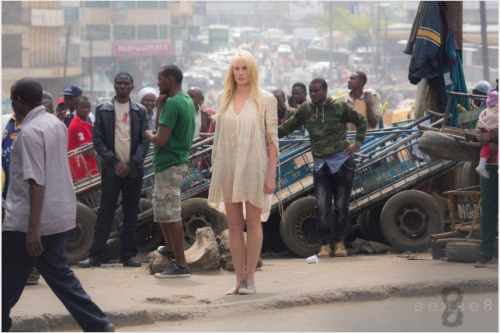
Sun and Capheus connect


Sense8 has a challenging narrative structure. Eight different places, eight protagonists and eight stories that seemingly fit together as matryoshkas. The eight characters all influence each other in subtle ways and thereby change the course of events. In an interview with Buzzfeed director Joe Straczynski states,It’s a global story told on a planetary scale about human transcendence and what it ultimately means to be human in a contemporary society.” Right.

The plot centers around the idealistic Chicago cop Will (Brian J. Smith) who has father issues; Icelandic DJ Riley (Tuppence Middleton) who runs from her traumatic past; happy-go-lucky Kenyan bus driver Capheus who is obsessed with Jean Claude Van Damme (Aml Ameen); Korean business woman Sun (Bae Doona) who is a kick ass martial artist at night and deals with her inept brother and father; Mexican telenovela actor Lito (Miguel Angel Silvestre) who is closeted and afraid to come out, Indian scientist Kala (Tina Desai) who is stuck in a “love match” with a man she doesn’t love; German criminal Wolfgang (Max Riemelt) who struggles with his Slavic family; and San Franciscan blogger and ex-hacktivist Nomi (Jamie Clayton) who is a transwoman and is haunted by her family’s disproval. The series was shot in San Francisco, Chicago, Mexico City, London, Berlin, Iceland, Mumbai, Nairobi, and Seoul.

The eight strangers have one thing in common and that is that they’ve evolved into “sensates” and thus can share the thoughts, feelings, memories, skills, and experiences of other sensates. At the start of the series, the sensate Angelica (Daryl Hannah) and Jonas (Naveen Andrews) give “birth” to the group of adult sensates which ties them together into a “cluster”, which means that they can reach out to each other without being in physical contact first. The cluster is composed of eight sensates who are all born at the exact same time but are scattered all over the world. Conveniently enough they can use each other’s language, knowledge and skills. Well, no story is complete without the big bad wolf. The cluster is haunted by the Biologic Preservation Organization (BPO) under the leadership of Whispers (Terrence Mann).

The series has a very slow start. The Wachowskis take their sweet time to introduce all the characters. Will is the one who sets the story in motion when he finds out he can connect with other people – and has had a similar experience in his childhood. Jonas contacts Will and reassures him, “You’re not losing your mind, it’s just expanding.” Nomi often questions the ability of the sensates and her girlfriend’s mother quips, “ To be something more than what evolution would define as ‘yourself,’ you’d need something different from yourself.” Lovely pseudo-profound statement.

Nomi and Amanita
Nomi and Amanita


The Wachowskis made the creative choice to focus more on the day to day lives of the sensates and their relationships with their loved ones instead of fully embracing the sci-fi element. There should be a better balance between the sci-fi elements and the different relationships of the sensates. It truly distorts the flow of the series. The Wachowskis try to embrace the equality of different world culture and underline the universality of the human experience. It seems that they aimed for a similar vibe as seen in documentary films such as Baraka or Koyaanisqatsi.

However, they opt to include every cliché in the book when it comes to the non-western countries and the characters. Mexico City looks like it was copied out of a popular telenovela; Mumbai is multicolored, lots of jewelry, flowers, Hindu iconography and Kala busted out the classic Bollywood dance with her fiancé; Seoul is almost sterile with a grey-futuristic aesthetic and lots of mirrors and windows; Nairobi looks sweaty and lots of earth tones were used; and Reykjavik and London look like glossy tourist commercials and so on and so forth…

Naturally, Kala is a smart scientist who is stuck in a “love match” but knows that the arranged marriage will make her family very happy. Capheus is a poor yet happy bus driver who cares for his sick mother. Her illness? AIDS. He also has several battles with the local gangs. At first glance, Sun’s story seemed the most fleshed out. Only her arc reaffirms several stereotypes on East Asian culture, see the manifestation of sexism (“Oh, I wish my daughter was a son”) and she’s the ultimate fighter. Despite filming in Korea, the city is only used as a backdrop in the ultra-masculine business where Sun works or a seedy night club scene; Lito is the colorful, sensitive yet conservative homosexual telenovela actor who doesn’t want to bring his career in jeopardy by coming out. Honorable mention goes to Will as the idealistic white cop who tries to safe a black child’s life after he’s been shot and the Black nurse at the ER refuses to help at first and asks him if it will be worth it. Luckily this element of his arc was quickly dropped.

When it comes to (pop) cultural influences, they’re all American. Capheus is obsessed with Jean-Claude Van Damme. Wolfgang and his friend live by the philosophy of Conan the Barbarian and Riley inspires the cluster to a sing along with the 4 Non Blondes song “What’s Going On?” We are not introduced to the local (pop) culture of Mumbai, Mexico City, Seoul or Nairobi – besides the tired cliché of Kala’s Bollywood dance.

The creative decision to let all the characters speak English albeit with a hint of an accent here or there seemed unnecessary. In the other Netflix show, Daredevil, several characters spoke their native language and subtitles would suffice. On the other hand, there are small moments in the series where you know that the sensates speak to each other in their own language but because of their connection they understand each other, e.g. when Sun and Capheus meet and they understand each other, Sun asks him, “Do you speak Korean?” and Capheus says, “No.”

It has to be said, all eight storylines are mediocre when you look at them separately. Riley’s tragic loss is wonderfully acted but looks too familiar. Capheus’ narrative brings at times some lighthearted relief but it doesn’t add to the general arc. Lito, his boyfriend Hernando and beard Daniela have great chemistry- a Tumblr dream come to life. Yet, Lito’s narrative stands on his own until the last couple of episodes where’s he’s pulled into the fight of the sensates to rescue Riley. The only exception could be Nomi – played by the trans actress Jamie Clayton (!) – who plays an important part as a San Franciscan trans female character who fight society’s standards and the occasional TERF. Her arc is natural, layered and she has wonderful chemistry with her very supportive girlfriend Amanita.

Some of the performances fall flat and the swishy camerawork definitely doesn’t add to the quality. You can’t escape the cheesiness and terrible, terrible dialogue. Sure, Sun and Wolfgang are always used as the fighters when the others are in trouble; Will brings his critical thinking skills in times of duress; Capheus knows how to drive the get-a-away car; Lito will tell the perfect lie; Nomi can erase you from the internet; and Riley plays the white damsel in distress whilst being in a bland relationship with Will. All the sensates are seemingly good, kind and idealistic. Nevertheless, it still is a welcome change from the usual assholes that parade on our screens. Plus: Diversity (!).

Why should you watch Sense8? A) The genuine bond between all the sensates; B) The series really flows when the sensates finally work together to fight against Whispers and BPO and manage to control their skills; C) The Wachowskis do know how to aptly bring fight choreography to life on screen.

Sense8 is a clusterfuck of clichés, mediocre storylines and inept world building. Still, binge watch the series to enjoy the human journey of the eight sensates and maybe the Wachowskis and Netflix will take note and improve season 2 – they’ve mapped out five seasons. Sense8 will prosper on Netflix.

[youtube_sc url=”https://www.youtube.com/watch?v=iKpKAlbJ7BQ”]


Giselle Defares comments on film, fashion (law) and American pop culture. See her blog here.


Bitch Flicks’ Weekly Picks

Check out what we’ve been reading this week–and let us know what you’ve been reading/writing in the comments!

recommended-red-714x300-1


We Have the Data, Hollywood, Where are the Results? by Kat Kucera at Ms. blog

There’s No Feminism to Be Found in Jurassic World’s Genetic Code by Jada Yuan at Vulture

How LA Film Festival Achieved Diversity by “Looking for People Who Are Seeing the World Differently” by Inkoo Kang at Women and Hollywood

The Human Rights Watch Film Festival Explores Social Justice by Stephen Holden at The New York Times

Interview: Akosua Adoma Owusu’s ‘Kwaku Ananse’ at the Institute of Contemporary Art (Philadelphia) by Rissa Papillion at Shadow and Act

Four Years After Bridesmaids, the Summer of Female Comedy Is Finally Here. What Took So Long? by Inkoo Kang at Vanity Fair

Women of Color in Hollywood Need Equal Work Opportunities Too by Tanya Steele at RH Reality Check

Taraji P. Henson, Viola Davis and Drama Actress A-List Tackle Race, Sexism, Aging in Hollywood by Stacey Wilson Hunt at The Hollywood Reporter

The Definitive Oral History of How Clueless Became an Iconic 90s Classic by Jen Chaney at Vanity Fair

Television’s Conversations with Masculinity by Rachel Catlett at The Mary Sue


What have you been reading/writing this week? Tell us in the comments!

Seed & Spark: Finding Ourselves In Our Work

We are so quick to label adolescent girls as these terrible, unruly, hormone-driven monsters, but underneath the name-calling and back-stabbing, where do the behaviors originate? It’s easy to say that we, as women, should be holding one another up rather tearing each other down, so why do we lash out so quickly at one another?

the youtube diaries that became the installation, yr a slut (2010)
The YouTube diaries that became the installation, yr a slut (2010)


This is a guest post by Megyn Cawley.


Sluts, famewhores, gold-diggers – all terms I was encouraged and paid to use while working in the entertainment media industry in my early 20’s. After a long stretch of unemployment post-undergrad in the late ’00s (hello, recession), I gladly accepted a position as an editorial assistant with a somewhat infamous media company. Initially, I was so stoked to have landed the job, but the thrill of “working in Hollywood” quickly wore off. My workdays became a daily exercise in shaming women’s appearances and pitting them against one another. It was difficult for me to digest that my weekly paycheck depended on perpetuating these antiquated stereotypes and gender divisions. Who am I to publicly deface any woman as an “off-the-rails coke whore” or “lezbot”? How is a broke lil’ feminist with minimal job experience supposed to stay afloat in an inherently misogynistic industry without defaulting on her student loans? By turning to art.

Although leaving my job was not a realistic option at that moment in time, I realized if I could make films and videos aligning with my feminist point of view, they would somewhat diffuse the growing pit in my stomach screaming, “WHAT HAPPENED TO YOUR MORALS, GF???” While attending the California Institute of Arts for my MFA in Film & Video, I started scavenging YouTube for video diaries of teenage girls for an installation. The first-person videos feature young girls publicly declaring their classmates and frenemies as “sluts” and “whores,” all while giggling, suggesting punishments for the girls who may or may not have wronged them. I felt like I was watching a real life version of the the snark I perpetuated at my job. When cut together in rapid succession, the nonstop string of of these girls publicly humiliating their peers from the safety of their bedrooms quickly turned barbaric. We are so quick to label adolescent girls as these terrible, unruly, hormone-driven monsters, but underneath the name-calling and back-stabbing, where do the behaviors originate? It’s easy to say that we, as women, should be holding one another up rather tearing each other down, so why do we lash out so quickly at one another?

still from girl (2012)


I began exploring the psyche of the adolescent female for my graduate thesis film, GIRL. I interviewed women of all ages and backgrounds, asking them a series of the same questions – “How would you describe your teenage self?” “When did you become conscious of wanting to belong to a certain clique or social circle?” “Did you ever feel isolated or depressed?” and so on. Although the experiences varied from woman to woman, the psychology driving their behaviors was almost identical- the desire for validation of self. Surprise, surprise- teenage girls have an inherent desire to be accepted, to have their existence validated by someone outside of themselves. If I feel self-conscious about my appearance, you better be damn sure I’m going to make you feel self-conscious too. I soon realized, through making the film, that being open and candid about our personal experiences in adolescence, our empathy for one another as adults can grow tremendously.

My goal is to bring that understanding of commonality of self to my newest project, LIL’ MER (currently crowdfunding on Seed & Spark). The short film is an experimental retelling of the classic Hans Christen Andersen fairy tale, The Little Mermaid, using the framework of the story to explore gender identity and self-actualization. The story centers around Mirabella, a young woman struggling to express her inner self, and turns to a late night infomercial for the solution. The desire to shed our insecurities and feel free be our true selves is one of the hardest struggles we encounter, and by making this film, I think I may be one step closer in my own path to finding her.


unnamed-2

Megyn Cawley is a multimedia artist and filmmaker based in Los Angeles. By channeling nostalgia and camp ethos through the juxtaposition of analog and digital media formats, her work explores the expression of ego, self and gender identity. Megyn holds an MFA in Film & Video from the California Institute of the Arts, and has exhibited her films and multi-channel installations across the western US. She is currently in pre-production and crowdfunding for her latest short film, LIL’ MER.