As I sit writing this post, it’s 6 a.m. I’m up early not by choice but because my internal alarm clock has gone off three hours early. Usually when this happens, it’s because of two reasons: I’ve fallen asleep drunk and it’s my beer alarm, or I’m extremely anxious about something. In today’s case, it’s Day 21 of my Kickstarter campaign for my first feature film.
This is a guest post by Christina Choe.
As I sit writing this post, it’s 6 a.m. I’m up early not by choice but because my internal alarm clock has gone off three hours early. Usually when this happens, it’s because of two reasons: I’ve fallen asleep drunk and it’s my beer alarm, or I’m extremely anxious about something. In today’s case, it’s Day 21 of my Kickstarter campaign for my first feature film.
Seeing my struggling artist friends, my friends’ mothers, former collaborators, and strangers donating to my film has been extremely moving. It’s an uncomfortable position to be in, asking people for money so you can make your dreams a reality. And perhaps a very American concept. Like my immigrant mom says, “People in Korea only give you money if it’s a funeral or a wedding.”
During the lulls of the campaign, I’ve definitely thought to myself, I’m totally insane. Why am I putting myself through this masochistic process? Today, I was comforted by Robert DeNiro’s NYU commencement speech:
“When it comes to the arts, passion should always trump common sense. You weren’t just following dreams, you were reaching for your destiny. You’re a dancer, a musician, a filmmaker, a photographer, an actor, an artist. Yeah, you’re fucked.”
It’s hilarious but brutally true. As an artist we have to rely on our passion to keep going. As a Korean-American growing up in a small all white town in New Jersey, I didn’t know anybody pursuing the arts. I was also the black sheep in my family, who came to this country for the American Dream and wanted me to be a doctor or lawyer.
I chose the irrational. I also chose to tell stories about outsiders, because of some deep need to connect to others through cinema. While getting my MFA at Columbia University, I wrote/directed several shorts that screened around the world (Telluride, SXSW, Slamdance, Rooftop Films, etc). From The Queen, a film about a Korean-American teen coming out at his parents’ dry cleaners, to I am John Wayne, about a young Black cowboy grieving his best friend’s death, I’ve been lucky to connect with audiences with my films. That’s truly what keeps me going.
Since making those shorts, I’ve been working on making my debut feature. The script, NANCY, is a gripping, psychological drama about a female imposter who lies to gain emotional intimacy. The film is inspired by the literary hoax of JT Leroy, Fredreic Bourdin (The Imposter documentary), the fake blogger, “A Gay Girl in Damascus,” and my own former writing professor who turned out to be a fraud.
Nancy is a woman on the edge of society. She yearns for emotional connection through lying. She is morally ambiguous, charming, disturbing, and complex, in the vein of many male anti-hero characters we love like Travis Bickle, Walter White, Tony Soprano, etc.
As many of us already know, female filmmakers are still a minority and as a result, there are fewer complex female protagonists on screen. For female filmmakers of color the statistics are even more dismal. But I truly believe with a village of supporters, this film will be made.
We have seven days left! Please consider donating to our campaign and spreading the word to your friends! We have awesome female director tote bags as Kickstarter rewards.
Christina Choe is an award winning filmmaker. She has received funding from New York Foundation for the Arts (NYFA), Jerome Foundation, and Canada Arts Council for the Arts. Her short films, The Queen, Flow, and I am John Wayne, have screened at film festivals around the world, including: Telluride, SXSW, Slamdance (Grand Jury Prize), Los Angeles Film Festival, Aspen Shorts Fest, and Rooftop Film Festival. Her films have been featured on VICE, Hammer to Nail and Vimeo Staff Picks.
In 2012, she was invited to the Berlinale Talent Campus and The MacDowell Colony. In 2013, she was selected as one of two fellows for the HBO/DGA Directing Fellowship, shadowing directors on Girls, Boardwalk Empire, and Looking.
She received an M.F.A from Columbia University for writing/directing and is currently in development for her first feature, NANCY, which was selected for Emerging Storytellers at IFP Project Forum, Venice Biennale College Cinema Program, the Hamptons International Film Festival Screenwriter’s Lab, Film Independent’s Fast Track & Directing Lab. In 2015 she received the Roger and Chaz Ebert Foundation Fellowship for Emerging Filmmaker at the Spirit Awards.
Lindsay does not like to think of herself as a mother. Whether it has to do with her negative feelings about her own mother, or the fact that it might make her seem old (or, quite possibly, a combination of both), it becomes very obvious that she does not seem to feel comfortable in this role.
Now the story of a wealthy family who’s literally lost it and the two mothers who had no clue how to keep it all together. It’s Arrested Development.
When it comes to parenthood, there is little to be learned from the Bluth family other than how not to do it. There are bad parenting choices all over the place. Moreover, when it comes to parenthood, discussions usually focus on the mother as the central character involved in the matter, sidelining the dads, which has to do with the antiquated gender roles our society is still prone to perpetuate. It is due to this habit that when talking about bad parenting, it is the mothers who are judged a lot more harshly than the fathers. When a mother neglects what is still often believed to be her natural role of the nurturing individual in a child’s life, she often faces scrutiny and reproach. Acknowledging this inadequacy, this article will nonetheless concentrate on the mothers of Arrested Development. Let the record show, however, that the fathers of the Bluth family are just as bad, if not worse.
Lucille Bluth, the matriarch of the family, has managed to raise her kids to resent her. The four (later to be five) siblings don’t usually agree on much. All the more telling is the fact that they readily agree on one thing: that their mother is a horrible person.
She has, however, maintained the love and loyalty of her youngest son, Buster, by strictly repressing his independence. The two of them have an inappropriately codependent relationship which, at times, reaches disturbing levels.
Lindsay Bluth has handled her daughter in the exact opposite way. She rarely knows Maeby’s whereabouts, nor does she seem to care at all. She prides herself on her liberal parenting style and all the freedom she is giving her daughter, when in reality, she simply fails to take notice of her.
While Maeby does enjoy the pleasures of a laisser-faire upbringing and the ability to take control of her own life as she pleases, she is also deeply hurt by her parents’ neglect.
All of this, however, is, in all its awfulness, used – and works perfectly – as a comedic device.
Stay-in-bed Mom
Not only does Lindsay forget Maeby’s birthday every single year, but she oftentimes fails to acknowledge, or even forgets, that she actually has a child. Thus, over the course of the previous four seasons, Maeby goes through a whole series of attempts to shock or spite her parents, none of which are successful, as they go completely unnoticed. This is already established in the very first episode when she tries to teach her parents a lesson about how their family ties are so loose that she doesn’t even know her own cousin, by kissing George Michael on the mouth – consequently sending him into a spiral of awkwardly improper feelings for her.
Her parents’ disinterest in her life reflects in her performance at school. Lindsay doesn’t care what grades Maeby gets, nor does she even know what grade she is in. This does work to Maeby’s advantage when she decides to quit school and work as a fake but highly successful movie executive instead.
Interestingly enough, Maeby’s constant need to rebel against her parents takes after Lindsay to some extent. After all, the whole reason Lindsay married Tobias was to spite her parents who, as they make perfectly clear, will never like nor accept him.
Lindsay does not like to think of herself as a mother. Whether it has to do with her negative feelings about her own mother, or the fact that it might make her seem old (or, quite possibly, a combination of both), it becomes very obvious that she does not seem to feel comfortable in this role. When she refuses to take Maeby to the Bluth company’s Christmas party, she argues: “You see, if I show up with you, it’ll just make me seem like I’m a mother.” As Maeby replies, “I’ve never thought of you that way,” which speaks volumes in itself, Lindsay is flattered and responds, “That’s sweet.”
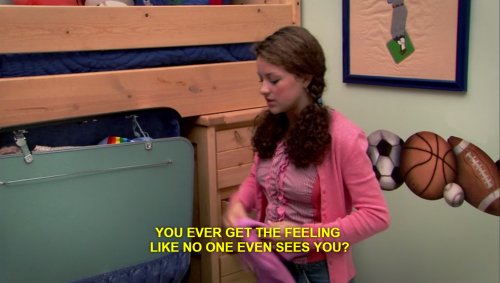
Season 4 illustrates quite clearly the relationship between Lindsay and her daughter. In the two episodes dealing with Lindsay’s experience, Maeby is not a part of the plot. This is foretold metaphorically as Lindsay deems her framed photos of Maeby unnecessary baggage and leaves them behind, because her suitcase is too full. As a matter of fact, Maeby only appears in these episodes disguised as a shaman, which isn’t revealed until later in the season. This can be seen as an apt metaphor for Maeby’s struggle of being around all the time but never being seen. The episode centers around Lindsay, who, when asked by said shaman whether she has kids, instinctively says no.
Maeby’s Season 4 episode, on the other hand, deals exclusively with her trying to get her parents to notice that she is flunking high school – unsurprisingly, to no avail. As it turns out, Lindsay and Tobias have sold their house and gone their separate ways, abandoning Maeby, who they both believe they had sent to boarding school. While she is visibly disappointed by all of this, she is clearly not at all surprised. This goes to show just how badly she already thinks of her parents and how well she blends in with the Bluth family, where oblivion is king and no one has any respect for anyone.
One thing Lindsay deserves some credit for, though, is that by not caring about Maeby, she is also very accepting of her. Lucille, on the other hand, is highly critical of her children, especially focusing her verbal disapproval on Lindsay. Her looks and weight in particular are what Lucille loves to dwell on. When Lindsay declares that she “doesn’t feel like being criticized around the clock,” Lucille’s harsh, yet hilariously nonsensical reply is: “I don’t criticize you. And if you’re worried about criticism, sometimes a diet is the best defense.”
In fact, Maeby does learn to appreciate her mother’s aloofness when she briefly befriends Lucille, who quickly starts subjecting her to the same rebuke about her physical appearance. She subsequently even tells Lindsay that she’s glad to have her as a mom.
Another thing that sets Lindsay apart from her mother Lucille is that she is not a control freak. Lucille who, incidentally, sometimes happens to be out of control due to her excessive drinking, keeps tabs on all the goings-on in the Bluth family. In a way, she is the evil puppeteer of the family, monitoring her children’s every move and manipulating them not only into doing things for her and getting her what she wants, but also into turning against each other for that very purpose.
Her fear of her children ganging up on her is another reason she pits them against each other. In Season 1, for instance, she tells Lindsay that Michael thinks of her as a stay-in-bed mom – when it was really her, who coined this ever so fitting description of her daughter.
Maeby pretending to move out of the model home, in an effort to outrage her parents. Lindsay, meanwhile, is sound asleep.
A run for their money
Despite their differences (of opinion and in general), Lucille and Lindsay share quite a few (appalling) characteristics.
While they both have a very hands-off parenting style, they certainly have a very hands-on attitude towards the family money. When it comes to finances, both are hugely irresponsible. They have grown accustomed to a certain lifestyle and are not willing to relinquish it in the face of their going broke. In a family where no one cares about anything but themselves, they take whatever they can get their hands on, mostly by lying to everyone about everything – that being another character trait the Bluth family has collectively perfected.
Not unlike the rest of the Bluths, they are both entirely out of touch with reality. Whether it’s Lindsay’s pretend interest in political causes and desultory fundraisers, or Lucille’s bizarre appraisal of the world (“I mean, it’s one banana, Michael. What could it cost? Ten dollars?”), it becomes very clear that money is a non-issue for them. This does not change in a time where it should be and is very much of great concern, seeing as the company is in jeopardy of going out of business.
With the goal of maintaining her luxurious lifestyle, she uses her children as pawns in order to maneuver her way around her son Michael’s policy of handling the company money responsibly. What matters to her is that she gets her way. Her disregard of other people’s feelings also shows in how overly vocal she is about disliking her children, especially GOB. Out of her four biological children she clearly harbors the most disdain for him. After her “baby,” Buster, Michael seems to be the one who she is the fondest of. The way she phrases this demonstrates not only her inability to say something nice to her children, but also how much of a burden she seems her children to view as: “You are my third least favorite child.”
However, this fondness might have to do with the fact that he handles the family money. A case in point is the following conversation in Season 1:
Michael: “I don’t have the money, alright, Mom?”
Lucille: “Then why are you here?”
Not only does she not make a secret out of not liking her children, at times she even goes out of her way to be mean to them. For example in Season 1, when she deliberately tries to hit GOB with her car, which she later blames on an unsuspecting Michael. In order to prevent him from remembering what really happened that night, she repeatedly hits him over the head with heavy objects, all the while pretending to be the caring mother figure who just wants the best for her son and is there to nurse him.
Speaking of nursing…
When George Sr. goes to prison, Lucille’s grip on Buster tightens. For fear of being all alone, she relies on her youngest son to be there for her. This works well for poor, brainwashed Buster, whose affection for Lucille knows no bounds.
As the overbearing mother that she is to him, she dresses him, gives him baths and decides what he can and can not do. In return, he does what he can to serve and please her, which grows more absurd as the series progresses: From the fairly harmless zipping up of her dresses to the unsettling practice of a mouth-to-mouth ritual when Lucille takes up smoking and Buster inhales the smoke from her mouth and blows it out the window, because she refuses to get up to do this herself.
Despite all this closeness and codependence, their relationship is subliminally based on a mutual hatred of some kind. His constant presence, as they can no longer afford to send him off to postgraduate studies, annoys Lucille and she starts to resent Buster.
Small, yet very real insults are exchanged behind each other’s backs. Lucille says about him, “His glasses make him look like a lizard,” whereas Buster speaks his mind to his siblings, who regularly badmouth their mother themselves: “She gets off on being withholding.”
Aside from being terrible at parenting, Lucille is an alcoholic. While she is usually heavily “under the influence,” the whole family is subject to and under the influence of her insane whims.
Her drinking might also help explain why Buster seems a little bit strange in general. When he unwittingly drinks alcohol for what we believe to be the first time, the narrator clarifies: “It was the first taste of alcohol Buster had since he was nursing.”
Clearly, theirs is a love of many a troubling detail. There are little clues dropped here and there that shape up to an image of an unhealthy, sheer unbreakable bond between mother and son. It is a slippery slope from Buster’s remarks such as “This is not how my mother is raising me” (note the present tense) to Lucille admitting in Season 3 that she has only just quit taking her post-partum medication, 32 years after having Buster. Michael gently suggests “cutting the cord,” but Lucille isn’t having any of it. “He needs me” and “he’s weak” are her excuses to keep him under her wing.
When ultimately he does break free from Lucille’s dominant parenting, he literally doesn’t get very far: He gets involved with Lucille’s best frenemy, Lucille 2, who lives across the hall, and quickly moves in with her. In a way, she takes on the role of a mother-substitute while also being Buster’s lover, the lines of which seem to be a big blur for Buster as it is, as is often insinuated throughout the seasons of the show, but especially in season 4.
For the first time, Buster is free from Lucille and greatly enjoys his newfound liberation (with the other Lucille). He wants to experience life and do all the things his mother never allowed him to do.
Meanwhile, a jealous Lucille, who has never lived alone, is initially terrified and tries to break up Buster and Lucille 2. However, it doesn’t take long for her to also explore her freedom, and soon she is found dancing drunk in her apartment, smoking a cigar and singing along to “Mama’s all alone, Mama doesn’t care, Mama’s lettin’ loose” blasting on the stereo.
As the two of them are living it up without each other, it becomes clear that this is not a long-term solution. Buster eventually breaks up with Lucille 2: “I’ve already got a Lucille in my life!”
However, Buster is not the only one to seek a replacement for the other. Lucille needs the security of taking care of “her baby” and takes whoever is convenient to her at the moment.
Lucille’s trust in Buster is shaken and she gets an adoptive child who she believes to be named Annyong (“Hello”). She uses him to make Buster jealous as a type of revenge for him leaving her for a different Lucille. Though she is deeply annoyed by the kid who hardly ever speaks a word other than “his name,” she still keeps him with her as a way of showing Buster how little he is needed.
When Buster goes off to the army, she admits that if anything were to happen to him, she would be lost.
She instantly pulls George Michael close to her and declares, “You’re going to have to be the baby of the family” and with a kiss on the cheek she commands, “You’re never going in the ocean. You’re my baby, I’m never letting you go!” as she holds him in a tight embrace.
Undoubtedly, she is not thinking clearly in this state of emergency, because usually, Lucille isn’t one for showing her affection. In fact, as she once hugs Michael, he seems startled and confused as to what is happening.
What is remarkable about the Bluth family is that, considering all their resentment toward and estrangement from each other, they are exceptionally close. They see each other every day or speak on the phone and while those are rarely friendly interactions, they are still very involved in each other’s lives.
All the overwhelming chaos and the myriad of issues create a wide array of feelings – and where there are feelings, there is certainly a bond. In the end, they can count on being there for each other, even when bribing is usually involved.
Lastly, it remains to say that Jessica Walter is brilliant in the role of the detached, alcoholic mother. For all those who can’t get enough of the wonderful and hilarious Lucille, there is always the adult animated TV series Archer, where Walter voices a character that bears an uncanny resemblance to Lucille Bluth.
Friendship between women has been depicted in an array of illustrious shapes in our pop culture. Who hasn’t seen the indelible images of Thelma and Louise, Cher and Dionne, Romy and Michelle, Leslie and Anne? The new kids on the block that will nestle themselves into our cultural lexicon are: Olivia and Rachel. British humor is revered and known for blending dark humor with peculiar physical comedy, but try listing at least three films off the top of your head that are focused on the Black British experience and black British humor; you’ll likely come up short. However, there’s now ‘Ackee & Saltfish,’ a witty step forward in closing the gap.
Friendship between women has been depicted in an array of illustrious shapes in our pop culture. Who hasn’t seen the indelible images of Thelma and Louise, Cher and Dionne, Romy and Michelle, Leslie and Anne? The new kids on the block that will nestle themselves into our cultural lexicon are: Olivia and Rachel. British humor is revered and known for blending dark humor with peculiar physical comedy, but try listing at least three films off the top of your head that are focused on the Black British experience and black British humor; you’ll likely come up short. However, there’s now Ackee & Saltfish, a witty step forward in closing the gap.
The Jamaican-British director Cecile Emeke forged her own path of limitless creativity – outside the mainstream media – with her honest, humoristic storytelling. Another filmmaker who created her own niche is Issa Rae, who established an successful career out of her YouTube series The Misadventures of Awkward Black Girl, that resulted in a deal with HBO for her TV pilot and a bestselling novel of the same name. While both managed to create space where the doors were closed that’s where the similarities end.
Emeke garnered the public’s attention via her “Fake Deep” poem, and through her phenomenal work on the Strolling docu-series. She has carved a safe space for young Black women and men to vent and offer their unique perspectives navigating the Western world whilst being Black. In an interview with The Washington Post, Emeke explained how she created her docu-series, saying, “Strolling was born out of a desire to capture and share intra-communal discussions within the black community in hopes of affirming others and relieving alienation. I started off capturing conversations with friends, but since Strolling has grown, the conversations have grown to include people all over the world. I’m aiming to touch every corner of the diaspora.” Those are lofty goals and it seems she’s about to fulfill them. Her work was selected by Tribeca N.O.W., which celebrates new online work of independent filmmakers, BBC Trending recently called her YouTube channel “young, British, witty and black.” The New York Times said her work was “rendered with a complexity and depth that is exhilarating to watch.” Not bad for someone who only picked up a camera at the start of 2014.
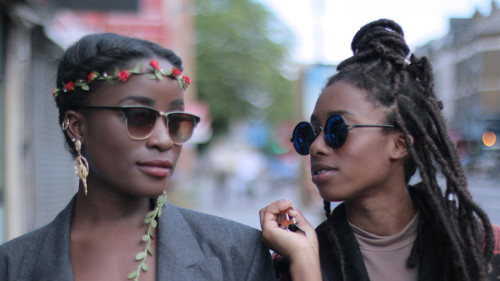
Rachel and Olivia enjoying life
Ackee & Saltfish is set on a warm Sunday afternoon in East London where we follow Olivia (Michelle Tiwo) and Rachel (Vanessa Babirye) on their quest to find food – or to be precise – the traditional Caribbean dish Ackee and saltfish. The duo planned a lavish brunch but Rachel forgot to soak the saltfish overnight so now they’re on a serious mission to find an authentic plate of Ackee and saltfish. On their stroll through the city hilarity ensues and tensions rise when we follow the best friends on their holy quest to find their Caribbean takeaway. The short film is written and directed by Emeke.
Emeke allows the viewer to closely follow two best friends who talk about pop culture, love, classism, racism, and the world at large, but there’s no drama when it comes to boyfriends, drugs, or other redundant tropes that seem to be prevalent when it comes to modern films about the Black British experience – i.e. Adulthood, Kidulthood, Top Boy (TV).
It’s a double-edged sword when it comes to Black women and media–they are underrepresented but at the same time molded in archetypes that are damaging society’s perception of Black women. Think of the Strong Black Woman, Mammy, Jezebel, Video Vixen, and so on. What’s so refreshing about Ackee & Saltfish is that Emeke simply presents an alternative. Olivia and Rachel are two Black women who are just livin’ life.
There’s an excellent balance between the two characters. Olivia has a distinct personality: bubbly, brash, outspoken and quick with her sometimes insensitive quips while Rachel is more grounded, contemplative and not necessarily as interested in talking about socio-political issues. When Olivia is firing up about gentrification and cultural appropriation, Rachel sarcastically claps back with “Aww, did you learn some new words off Black Twitter today?” Her reaction reflects their different stances on the issues at hand. Whilst Olivia is ready to fight the status quo, Rachel succumbs to the fact that they can’t change the situation right away. For many, Olivia’s anger will seem justified but Emeke never portrays the characters being right or wrong. It’s up to the audience to form their own opinion.
Can we see Olivia and Rachel as carefree Black girls? Jamala Johns wrote in her article for Refinery29 on carefree Black girls: “By putting the word ‘carefree’ front and center, it’s making a statement that we don’t want to be solely defined by hardships and stereotypes so we can enjoy our lives as we please. Carefree should not be mistaken with careless.” So with that in mind, it’s refreshing to see Olivia and Rachel quibbling whether or not Olivia will find her own Common but they’re simultaneously aware of the issues surrounding religion, race, the social implications of gentrification in their neighborhood, and so much more. There are a couple of funny scenes where Olivia and Rachel riff off each other:
Olivia: “I want Solange to adopt me.”
Rachel: “Why?”
Olivia: “Well, think about it, Solange as a mother would be the most amazing thing in the world.”
Rachel: “Why?! How do you know that?”
Olivia: “Like, Julez is livin’. I’m trying to live with Julez.”
This and several other short scenes underline the depth of their friendship and the ease with which they talk to each other on the most mundane topics. Emeke gives us a glimpse into the private world that exists between two best friends. Often comparisons are made with the Comedy Central hit Broad City, or Pursuit of Sexiness by SNL’s Sasheer Zamata and Girl Code’s Nicole Bryer, where you also follow the lives of two 20-somethings in the big city, but you’ll find out that Ackee & Saltfish stands on its own.
The crux of the appeal of Ackee & Saltfish lies in the humor and the familiarity. The underlying layer of authenticity simmers throughout the film when you hear Olivia and Rachel throw quips back and forth. It’s like you can see them walking past you on the street, and you catch funny snippets of an intimate conversation where you want to chime in – but instead you’ll hold your tongue. The cinematography of the film is straightforward, sometimes Emeke uses soft focus, or slow, inquisitive zooms. Emeke narrows the story down to the classic unity of time, place, and action. The core of the film is a long walk, recorded in real time and the takes create the appearance that the scenes are off-the-cuff improvised, but in fact they’re carefully scripted and extensively rehearsed. It’s cinematic strolling at its best.
Ackee & Saltfish is a short film that consists of small events, many conversations, and a lot of friendship. It is a tribute to healthy female friendship between Black women, but also a film about pop culture, gentrification, classism, race and just two girls enjoying life. The narrative is not groundbreaking. Nevertheless, the natural chemistry between the leads, the sometimes uncontrollably witty scenes, dialogues and observations and richness of details carry the film with ease.
Just like the Caribbean dish, this short film will make you thirsty and crave for more. Luckily, you can now quench your thirst since Emeke followed the short format with a five-part series on YouTube where you can follow the everyday adventures of best friends Olivia and Rachel.
The film is beautifully shot and highly stylized, allowing us a panoramic view of Minnie’s inner life through animated versions of her intense and thoughtful comic illustrations, drawn frame by frame. Still, ‘Diary’s best feature is its script. While the lessons Minnie learns are expected ones, they are important and the audience will be deeply pleased to see her arrive there. As Minnie reflects on her changing body, interests, and desires, it becomes easy to empathize with a character so familiar and yet so individual.
This is a guest post by Ariana DiValentino.
When it comes to budding sexuality, movies have frequently told us stories of the trials and experimentations (sometimes with baked goods) of high school boys who can’t hardly wait. Teen girl sexuality, however, gets far less screen time and even less nuance. This is why TheDiary of a Teenage Girl, directed by first-timer Marielle Heller, stands out as an exciting rare gem.
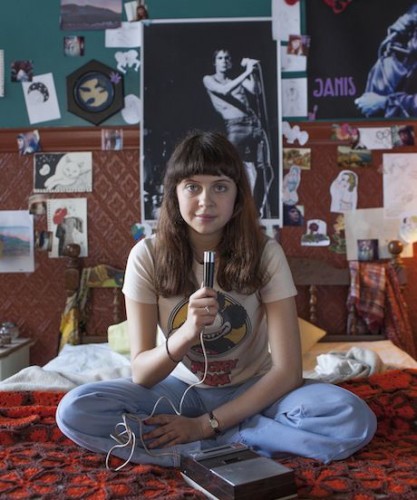
Bel Powley stars as the 15-year-old Minnie living in San Francisco in the 1970s, who is simultaneously naïve and precocious—both in her artistic and sexual endeavors. Minnie initiates an affair with her mother’s boyfriend, Monroe, played by Alexander Skarsgård, when, after he discloses an untimely physical reaction to some horseplay, she realizes for the first time that a man views her as a sexual being. Though Monroe is two decades her senior, the film manages to turn the Lolita trope on its head by avoiding illustrating Minnie as a deviant teen seductress or vilifying Monroe as a predatory monster. We are along for the ride, alternatingly understanding Minnie’s crush and desire for affection, and cringing at the blatant manipulation she is unknowingly subjected to.
Powley plays a hilariously and touchingly feisty, creative, and confused Minnie, whose bad behaviors are little mystery given the juvenile, wild-partying adults she is surrounded by. Alexander Skarsgård, while initially charming in Minnie’s eyes, portrays an excellent man-child who cannot grasp the impact of his actions on others. Kristen Wiig removes all doubt about her ability to play dramatic roles as Minnie’s loving but deeply flawed mother, Charlotte. Christopher Meloni makes a pleasant appearance as Charlotte’s ex-husband, and the closest thing Minnie has to a protective parental figure.
The film is beautifully shot and highly stylized, allowing us a panoramic view of Minnie’s inner life through animated versions of her intense and thoughtful comic illustrations, drawn frame by frame. Still, Diary’s best feature is its script. While the lessons Minnie learns are expected ones, they are important and the audience will be deeply pleased to see her arrive there. As Minnie reflects on her changing body, interests, and desires, it becomes easy to empathize with a character so familiar and yet so individual. The film finds its humour in its truth, deriving laughs from lines like the dead-serious “I’ve had breasts for three full years now” and genuine, sometimes embarrassing scenes of intimacy.
Not easily categorized, The Diary of a Teenage Girl is a deeply dramatic coming-of-age story with moments of sharp, undeniable wit. Minnie navigates the San Francisco of 1976, sharing thoughts and making mistakes that even more recent survivors of adolescence will gleefully identify with. Marielle Heller has proven herself to be a writer-director to watch, utilizing specificity and a deep understanding of people across generations to create a beautiful and deeply human portrait of growing pains.
Ariana DiValentino is a lover and budding creator of all things film and feminism, based in New York. Catch her in action on Twitter @ArianaLee721.
Earlier on the red carpet, I mentioned to Garbus that Nina Simone is having a moment. Gina Prince-Bythewood has her protagonist sing “Blackbird” in ‘Beyond the Lights’ and Simone’s music seems to be getting a new audience as well. Garbus said, “It’s very interesting. You know I can’t explain that. I was in Starbucks this morning for half an hour and what was playing was Nina Simone. I guess we just needed her.”
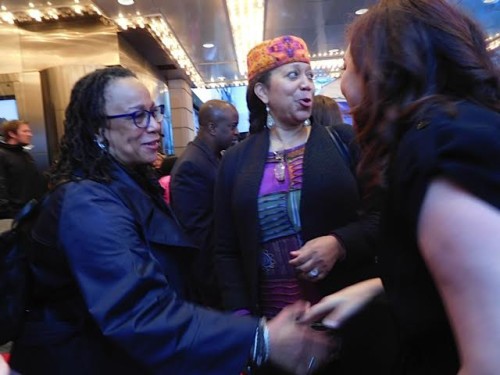
S. Epatha Merkerson, Atallah Shabazz, Liz Garbus
This guest post by Paula Schwartz previously appeared at Showbiz 411 and is cross-posted with permission.
Lauryn Hill’s rousing performance following the screening of What Happened, Miss Simone?Monday evening at the Apollo Theater turned into a celebration and tribute to the genius and artistry of the musician/activist Nina Simone. The sensational evening was presented by Netflix and the Film Society of Lincoln Center. (The documentary will air on Netflix on Friday, June 26.)
Hill, who first performed at the Apollo at age 13 where she was booed for singing “Who’s Lovin’ You” off key, got a very different reception last night.
Dressed in a white halter-top and flared pants, Hill looked terrific, and even channeled the legendary singer; her outfit resembled an outfit Simone wore in a legendary performance featured in the documentary directed by Oscar nominated filmmaker Liz Garbus (The Farm: Angola, 1998).
Hill’s voice was raspy from some ailment mentioned by producer Jayson Jackson in his introduction before her set, but that that only made her voice sound even more like Simone’s baritone. In her nearly 50-minute set, Hill danced and swayed and sang signature Simone numbers.
Liz Garbus
The former Fugees singer opened with a moving rendition of “Ne Me Quitte Pas” and followed up with a dynamic version of “Black Is the Color of My True Love’s Hair.” She sang backed up by a full orchestra that included lush sounds of string instruments.
There were problems with the sound mix and some failed starts and stops, but Hill is a perfectionist and demanding bandleader and it all finally came together. For her next number she enthused, “We goin’ try to rap with this,” and Hill performed a new rap song inspired by Simone’s music.
Afterward she introduced the terrific Jazmine Sullivan with, “She can sing for the both of us tonight,” and added, “Watch this!”
Sullivan launched into Randy Newman’s 1977 song “Baltimore,” a tune Simone memorialized, which with Baltimore’s current problems could have been written today: “Man, it’s hard just to live. Oh, Baltimore. Man, it’s hard just to live, just to live.”
The song is included in a Simone tribute album timed to be released in conjunction with the documentary, which includes artists Hill, Common, Usher, Mary J. Blige, and Simone’s daughter, Lisa Simone Kelly, a singer who also appears in the documentary and provides some of the film’s most poignant moments and insights into her mother’s life and career.
Usher
After Sullivan’s performance, Hill returned and ended on an even higher note, with her take of “African Mailman.” The long instrumental showcased the band with solos by the drummer, violinist, and backup singer. But the program was all about Lauryn Hill and her channeling of Simone, and despite the crowd’s stomping and cheering as the show ended its nearly hour-long set, there was no encore.
As suggested by the title, What Happened, Miss Simone? the documentary portrays a musical genius, but also a troubled artist who often fell on hard times. Driven by her art and social activism, and constrained by racism and her own inner demons – Simone was diagnosed late in life with bipolar disorder – she was also controlled by an abusive husband/manager Andrew Stroud, a former cop. He furthered her career but also beat her. There are archival segments of the couple together and present-day interviews with Stroud, who did not attend the premiere. (Simone’s daughter, who is promoting her new album, also did not attend.)
Notable celebrities at the premiere included grandchildren and friends of Simone, along with her longtime musicians Al Schackman, Lisle Atkinson and Leopoldo Fleming. Atkinson, a bass player who played with Simone for five years, told me her legendary tantrums and difficulty as a performer were exaggerated and he never had a bad moment on stage with her. He told me he believed she would want to be remembered for her music.
Schackman, a guitarist with perfect pitch, performed with Simone throughout her career and his astute comments and obvious love and esteem for Simone provide for some of the film’s most perceptive and informative moments.
Jasmine Sullivan
In her introduction from the stage to the film, Garbus thanked Netflix and all the contributors to the documentary and related a story from Simone’s memoir. “Friends say I might have trouble with the crowd here because the Apollo is well known for giving artists a rough time,” read Garbus from Simone’s notes. “And I’m well known for the same to audiences.” The audience laughed. “So the two of us getting together was looked at as a kind of championship boxing match with the Apollo as the champ and me as the contender. In the end we fought to a draw.”
From the time she was a girl of 3, Nina Simone aspired to be the first Black classical pianist. “That was all that was on my mind,” she said in an interview in the doc, where in archival footage she famously said of her political activism that often got her into hot water, “I don’t think you have a choice. How can you be an artist and not reflect the times?”
Earlier on the red carpet, I mentioned to Garbus that Nina Simone is having a moment. Gina Prince-Bythewood has her protagonist sing “Blackbird” in Beyond the Lights and Simone’s music seems to be getting a new audience as well. Garbus said, “It’s very interesting. You know I can’t explain that. I was in Starbucks this morning for half an hour and what was playing was Nina Simone. I guess we just needed her.”
Speaking of her inspiration for the doc, Garbus said, “I’m a conduit to bringing her to audiences that didn’t know her before or giving her audience who loved her a little more of her. That’s a wonderful position to be in.”
Lauryn Hill
The director noted that Simone is one of the greatest artists of the 20th century who had 15 ways of singing the same song. When she undertook the project, Garbus told me she didn’t know Simone’s personal life: “But of course as soon as I started to peel away layers of that I was even more committed and desirous of bringing her story to the screen.”
As for what Garbus hopes audiences take away from seeing the film, she told me on the red carpet, “I want them to listen to her music all over again and for that listener it will be a delicious experience because you’re going to know what this woman went through and what she was bringing to that music.”
Celebrities who attended the premiere included John Leguizamo, Sandra Bernhard, S. Epatha Merkerson, Usher, Gina Belafonte, Ilyasah Shabazz, and D.A. Pennebaker.
Paula Schwartz is a veteran journalist who worked at the New York Times for three decades. For five years she was the Baguette for the New York Times movie awards blog Carpetbaggers. Before that she worked on the New York Times night life column, Boldface, where she covered the celebrity beat. She endured a poke in the ribs by Elijah Wood’s publicist, was ejected from a party by Michael Douglas’s flak after he didn’t appreciate what she wrote, and endured numerous other indignities to get a story. More happily she interviewed major actors and directors–all of whom were good company and extremely kind–including Brad Pitt, Angelina Jolie, Morgan Freeman, Clint Eastwood, Christopher Plummer, Dustin Hoffman and the hammy pooch “Uggie” from “The Artist.” Her idea of heaven is watching at least three movies in a row with an appreciative audience that’s not texting. Her work has appeared in Moviemaker, more.com, showbiz411 and reelifewithjane.com.
Masculinity is a pervasive concept in our culture, setting the tone for our entertainment, our politics, and our interpersonal lives. This is because masculinity itself traditionally belongs to men who are, to quote blogger Twisty Faster of ‘I Blame the Patriarchy’, “the default human.”
Our theme week for June 2015 will be Masculinity.
Masculinity is a pervasive concept in our culture, setting the tone for our entertainment, our politics, and our interpersonal lives. This is because masculinity itself traditionally belongs to men who are, to quote blogger Twisty Faster of I Blame the Patriarchy, “the default human.” Femininity is often defined in contrast to masculinity, as if the two modes were binary. The traits typically ascribed to masculinity (physical strength, aggressiveness, rational thinking, and stoicism) are then seen as absent from the feminine and opposite of the traits typically ascribed to femininity (nurturing, emotional, physically weak, and irrational).
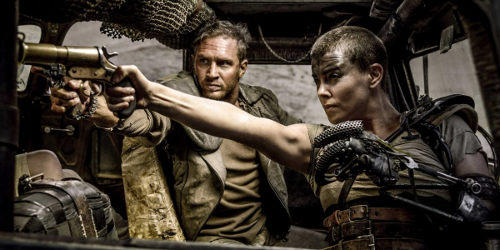
Some examples of different permutations of masculinity include the chivalrous, but monosyllabic type like Luke from Gilmore Girls, the sexually potent, brimming with physical prowess action hero types like The Rock or Vin Diesel from all The Fast and the Furious films, or the destructive hypermasculine types depicted in the dystopian fossil fuels focused Mad Max: Fury Road. In many ways, the toxic embodiment of masculinity is the strong-arm of patriarchy.
While masculinity can often be associated with power and male privilege, the expectations associated with masculinity can be limiting and oppressive just as any prescribed gender role can be oppressive. We sometimes see this in narratives involving gay and/or sensitive men (The Karate Kid) who don’t “measure up” to the expectations of masculinity. However, with the greater visibility of genderqueerness and as more people begin to see gender on a spectrum, the embodiment of masculinity is becoming similarly malleable and open to interpretation (Pelo Malo, Orange is the New Black, etc).
Feel free to use the examples below to inspire your writing on this subject, or choose your own source material.
We’d like to avoid as much overlap as possible for this theme, so get your proposals in early if you know which film you’d like to write about. We accept both original pieces and cross-posts, and we respond to queries within a week.
Most of our pieces are between 1,000 and 2,000 words, and include links and images. Please send your piece as a Microsoft Word document to btchflcks[at]gmail[dot]com, including links to all images, and include a 2- to 3-sentence bio.
If you have written for us before, please indicate that in your proposal, and if not, send a writing sample if possible.
Please be familiar with our publication and look over recent and popular posts to get an idea of Bitch Flicks’ style and purpose. We encourage writers to use our search function to see if your topic has been written about before, and link when appropriate (hyperlinks to sources are welcome, as well).
The final due date for these submissions is Friday, June 19 by midnight.
However, I’d argue that ‘Mad Max: Fury Road’ contains more critique of patriarchy and entrenched inequality than critics or even some fans have given it credit for.
Many who devote ourselves to the struggle for gender equality want to claim this movie as our own. Others have said feminists need to demand more from our entertainment than Mad Max: Fury Road actually delivers.
To wit:
Feminism doesn’t simply mean women getting to partake in typical badass “guy stuff.” Feminism is about redefining our social value system.
They’re right. Our culture glorifies violence, equates strength and power with violence, and attributes that strength and power to men. While violence may sometimes be necessary in self-defense or in rebellion against oppression, the glorification of violence is distinctly patriarchal. We can’t fight patriarchy’s values by adopting them. We can’t simply substitute a woman in the place of a man, giving her strength and power according to patriarchy’s narrow definition, and call it feminist. There’s nothing revolutionary about masculine power fantasies, even with a woman at the center of them.
But. They’re also wrong. They’re wrong about Fury Road and exactly what’s going on in that movie.
I want to say, as a side note, that there’s nothing wrong with fantasies of violent rebellion against violent oppression. When you experience the frustration of being dehumanized and marginalized and discriminated against, you need catharsis. It’s exhilarating. It’s fun. It’s necessary. But, OK – maybe if we want to narrowly define what makes a “feminist film,” we can say it’s not, strictly speaking, feminist.
However, I’d argue that Mad Max: Fury Road contains more critique of patriarchy and entrenched inequality than critics or even some fans have given it credit for.
Yes, the villains are caricatures, or at least, they’re cartoonishly exaggerated – as everything in the movie is. The whole thing is basically a cartoon. But we don’t have to read the movie so literally. To say that a narrative must literally portray the dismantling of realistic social and economic systems is setting the bar too high. A message about social justice, like any message, can be conveyed symbolically or subtextually. Science fiction has always done that. Sometimes a flame-throwing guitar is NOT just a flame-throwing guitar. Well, OK. It’s just a flame-throwing guitar. But some of the other stuff has meaning.
Fury Road depicts a patriarchal society controlled by a small and very powerful elite. It’s not accidental that all the warlords in the movie are older white men. They even have ailments that make them each of them physically deformed and weak – Immortan Joe has visible abscesses all over his back and requires an apparatus to breathe – highlighting that their power doesn’t rely on their own physical strength. Their power is systemic. They control others through religion/ideology (promising the War Boys honor and entry to Valhalla) and hoarding of resources (most obviously water). The 1 percent, if you will, keep the rest of the population in line by forcing them to rely on whatever meager allowance of resources the warlords dole out. Men and boys are exploited for labor and as foot soldiers. Women are exploited for their sexual and reproductive capacities. No, it’s not subtle, but it’s not empty action movie nonsense either.
The narrative is driven (heh) by women exercising their agency. It’s easy to see the central plot as an old, sexist trope: rival characters battling over possession of damsels in distress. But Fury Road turns the trope on its head; it’s the damsels who engineer their own escape. “We are not things” is the memorable line, but their scrawled message, “Our babies will not grow up to be warlords,” is the key to understanding Fury Road’s critique of patriarchal systems. The “wives” want more than just escape from sexual slavery; they want to stop contributing to the oppressive systems around them. The repeated question, “Who killed the world?” implies a larger critique as well – it was a male-dominated society which created this apocalypse and men who are responsible for current conditions.
Another trope that gets turned on its head is the contrast between society and wilderness. Traditionally wilderness is understood as a dangerous place for women, who are too weak and vulnerable to withstand its dangers. They need the protection of society. But in Fury Road, society, i.e. The Citadel, is the dangerous place. The women experience relative safety only when they reach the wilderness. The Vuvalini, Furiosa’s matriarchal tribe, may struggle to survive in a barren wasteland, but they’re still better off than women living under the protection of a warlord, who protects them only from other men. Away from male-dominated society, they’re safe.
The most feminist yet least talked about aspect of the film might be Nux’s story. He starts out happily ready to die in glory on behalf of Immortan Joe, but he learns that there’s another way. When Capable discovers him hiding in the War Rig, she treats him with tenderness instead of vengefulness. Nux discovers something to live for, rather than something to die for. He finds a bit of the redemption Max and Furiosa are also seeking.
Ultimately, Furiosa’s rebellion isn’t just an escape or revenge fantasy; instead we see an exploited people liberated. So the film asserts the need to overturn oppressive systems, and depicts a whole society benefiting from feminism – men and women alike.
Of course, there are problems. Nux’s rejection of warrior ideology might be more powerful if he had been allowed to live. Instead, he simply dies for a better cause, and the movie misses the chance to affirm that death isn’t really glorious. Also the “wives” aren’t the developed characters they could and should be. The narrative revolves around them, yet they barely assert individual identities. It’s hard to accept the claim that they’re “not things,” when they’re beautiful but rather anonymous for most of the movie. The role of the Vuvalini is also a bit disappointing; they appear in the narrative, strong and capable, possessing nearly forgotten knowledge and values… only to die one by one. They might as well have been wearing red Star Trek shirts.
So maybe this isn’t a feminist movie? Fantasy violence probably doesn’t help dismantle patriarchy. It really doesn’t. But then again there is more to Fury Road than that. It offers more than a tough woman killing cartoon misogynist bad guys. There is a narrative about social structures and the nature of power.
OK. In the end, we’re not going to liberate anyone from oppression by driving fast and skeet shooting motorcycles. Action movies are not ever going to be a serious and meaningful way to talk about feminism, in the strictest sense. But perhaps we should differentiate between a feminist movie, and a movie feminists can really enjoy. Fury Road is definitely at least one of those two things.
Rebecca Cohen is the creator of the webcomic The Adventures of Gyno-Star, the world’s first (and possibly only) explicitly feminist superhero comic.
They’re complicated women who have both scarred each other over the years, and there’s no getting past that easily. But they both try. And in trying, we get a better picture of who they are as human beings. Like I said in the beginning, there’s something so valuable in seeing a character like Emily who is, unequivocally, a bad mother also be a good person. Because she is a good person. Sometimes. Mostly.
Eventually, Madeline is pushed to the absolute limit in protecting her child and kills those trying to take her daughter from her…and feeds them to her. “What doesn’t kill you makes you stronger” is explored to the nth degree as the blood of those trying to destroy the mother/daughter relationship are then utilized to keep baby Grace alive.
Throughout the course of the 22-episode series, Michiko abandons Hatchin to get laid, lets Hatchin work a part-time job rather than pay for shoes she herself stole, leaves Hatchin with an abusive orphanage (more on that in a second), lets her run away half a dozen times, all while the two bicker constantly about often incredibly petty matters. All of this rolls up to establish that Michiko is, well, basically just a terrible, terrible mom.
And that’s pretty amazing.
Every woman is a mother? Yeah, no thanks. If Gloria is a “mother” to Phil then she’s also a lifetime member to the Bad Moms Club. In the beginning, Jeri, Phil’s real mom, calls on Gloria to take her kids. She tells Gloria that their family is “marked” by the mob. A gangster even waits in the lobby. Jeri begs her to protect her kids to which Gloria bluntly responds: “I hate kids, especially yours.” Despite her tough-talk, this ex-gun moll, ex-showgirl reluctantly agrees.
Vilifying mothers is a national pastime. Absent mothers, celebrity mothers, helicopter mothers, working mothers, stay-at-home mothers, mothers with too many children, mothers with too few children, women who don’t want to be or can’t be mothers–for women, there’s no clear way to do it right.
Most people I talked to and most of the reviews that I read about The Babadook concluded that the film is about motherhood or mother-son relations. While I agree, I also really tuned in on the complicating element to this whole narrative, which is that the mother is mentally ill.
I went into Mommy, the magnificent film from out, gay, Québécois prodigy Xavier Dolan (he’s 26 and this feature is the fifth he’s written and directed) knowing that Anne Dorval, who plays the title character, was being touted in some awards circles as a possible nominee for “Best Actress” in 2014 (she’s flawless in this role, certainly better than the other Best Actress nominees I saw)–as opposed to “Best Supporting Actress.” But this film (which won the Jury Prize at Cannes) kept surpassing my expectations by keeping its focus on her and not the one who would be the main character of any other film: her at turns charismatic, obnoxious and violent 15-year-old, blonde son, Steve (an incredible Antoine-Olivier Pilon).
These two characters’ inability to see each other as anything other than personal property emerges as the compelling dramatic engine of unfolding events involving far more sinister agents, who eventually exploit the fissure in the mother-daughter bond.
Amelia didn’t need to be possessed to have feelings of vitriol towards her son; they were already there, lurking inside her at the beginning. Rarely, if ever, is a mother depicted in film this way. Mothers are expected to be completely accepting and loving towards their child 24/7, despite any hardships or challenges their child presents to them.
For women, male anxieties over female abusers combine great risk of demonization with great opportunity to forge connection. Men, like women, understand boundaries primally through their own bodies and identification. Rejecting one’s own abuse teaches one to fight against all abuse; excusing it teaches one to abuse.
Splice explores gendered body horror at the locus of the womb, reveling in the horror of procreation. It touches on themes of bestiality, incest, and rape. It’s also a movie about being a mom.
As an orphan of common origins, Drew Barrymore’s spunky protagonist, Danielle de Barbarac, is forced into a life of servitude to her father’s widow, the Baroness Rodmilla de Ghent, and the Baroness’s two natural daughters, Jacqueline and Marguerite. As Baroness Rodmilla, Anjelica Houston is equal parts breathtaking as she is fearsome, as cruel as she is oddly sympathetic.
It’s fascinating that all four of Shonda Rhimes’ protagonists have strained relationships with their mothers… Shondaland’s shows work to combat the stereotype that if you don’t have a functional family unit, replete with a doting, competent mother, you’re alone in the world.
This conflict drives Sydney’s arc and establishes a recurring question at the heart of Alias: can you be both a mother and a spy? … Sydney’s own mother Irina figures powerfully into this conflict. … Yet Irina’s arc throughout Alias is the tension between her desire for a relationship with her daughter and her independence as a spy.
Riding in Cars with Boys showcases a humanity to women who are mothers that our media lacks. Women are constantly punished and depowered for their sexuality, and their motherhood status is often used as another way to control in media.
Elements of Mildred Pierce play on the maternal sacrifice narratives that made films like Stella Dallas (1937) and The Sin of Madelon Claudet (1931) so powerful, and updates them for a more cynical era, positing that her sacrifice has not saved her children but ruined them…
These three “bad moms” fashion themselves the Moirai, the Fates, the three women in control of everything on earth. …These films were just the start of audiences’ obsession with controlling mothers. We continue to see these tropes replayed in a multitude of ways.
These three “bad moms” fashion themselves the Moirai, the Fates, the three women in control of everything on earth. … These films were just the start of audiences’ obsession with controlling mothers. We continue to see these tropes replayed in a multitude of ways.
Mothers who abuse their children, abandon them, or neglect them are easy to spot and label as “bad mothers.” Then there are the subtler forms of “bad mothering.” For these types it all comes down to control; control through religion, respectability, or ambition. It is in these three arenas that the Mommie Dearests of the world push their daughters to the breaking point. These three “bad moms” fashion themselves the Moirai, the Fates, the three women in control of everything on earth. These types of manipulation in the extreme are the things of nightmares, or of the big screen.
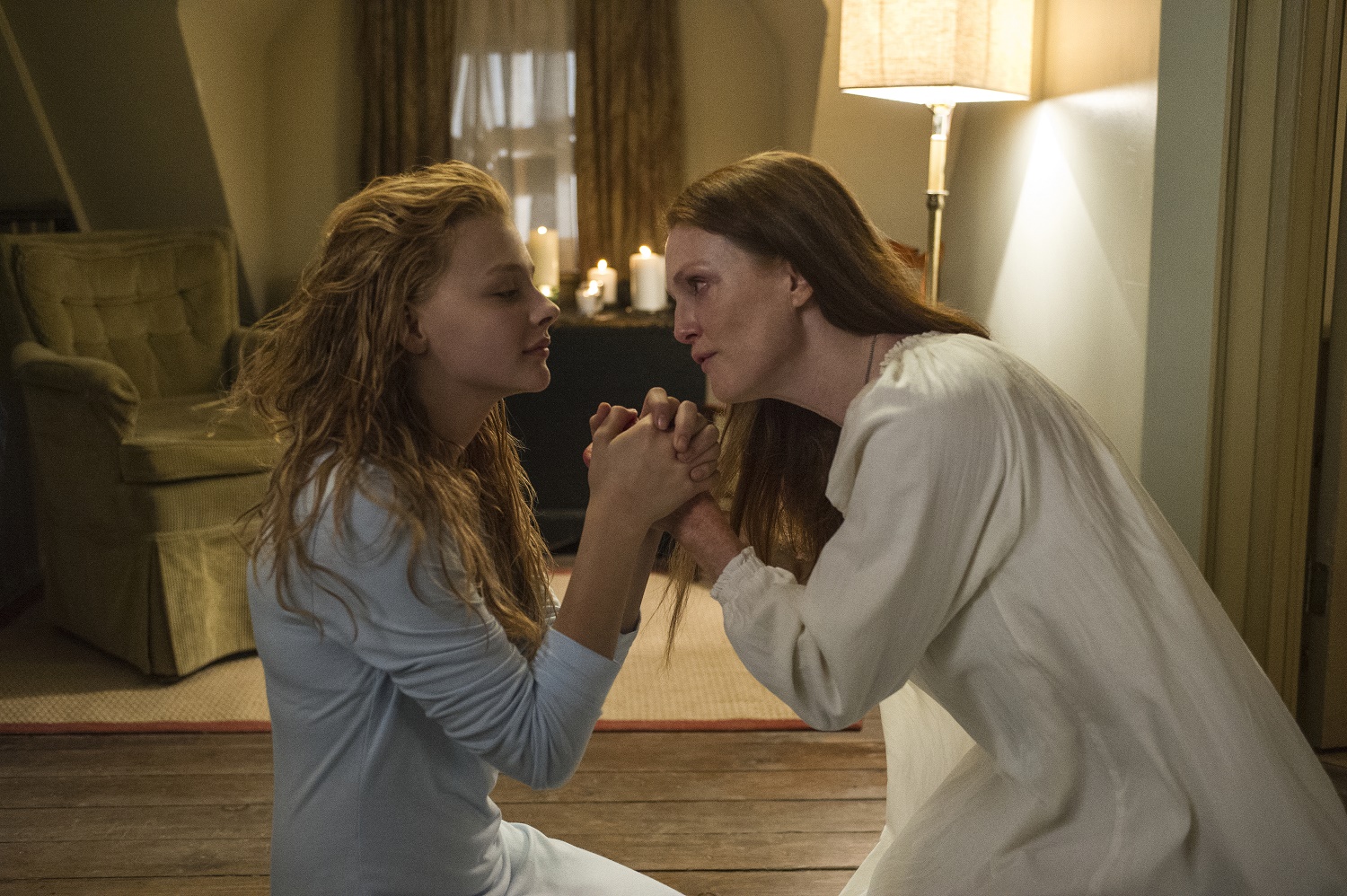
The insidious part is that it is meant to seem like this behavior stems from a slight corruption of maternal love, of wanting the best for your child. In the case of Carrie (1976), Margaret White (Piper Laurie) wants better for her daughter than she had for herself. Throughout the course of the film it’s revealed that Carrie was conceived after her mother was raped by her own husband, and now Margaret wishes constantly to cleanse Carrie of this sin through cruel and overbearing religion. After Carrie is tormented by her fellow students for finally getting her period, and having no idea what it is, her mother locks her away for prayer and reflection.
Carrie 1976
Of course, it being a horror movie based on a Stephen King novel, the outcome is not so simple as a terrifying “religious cleansing.” When Carrie and Margaret finally have a heart-to-heart it’s the biproduct of the telekinetic teenager having just murdered a good percentage of her high school. Margaret cannot suffer to let this witch live, and attempts to end her daughter’s life, a final act of ultimate control, and ends up on the wrong end of Carrie’s new found powers.
Movies have been curious about this maternal tension since the get-go. While Carrie may have had the super skills, all three of these mothers have very realistic power over their offspring. In Now, Voyager (1942), Bette Davis plays rich, mousey Charlotte Vale, a woman whose life is entirely dictated by her mother (Gladys Cooper). Mrs. Vale does not push Charlotte into closets, or chant biblical passages at her. In fact, this matriarch barely moves throughout the film. Instead, Charlotte’s life is controlled through her mother’s emotional manipulation. Like Carrie, Charlotte was an unwanted child and Mrs. Vale makes sure she knows it. She tells Charlotte what to wear, how to talk, whom to associate with, all in the name of ladylike propriety.
Now Voyager
Through therapy and travel Davis’s character finds her own voice (and was a babe-in-disguise, perhaps one of the earliest films in that trope as well). When the two women meet again they’re at a stalemate. What is a controlling mother without a child to control? Mrs. Vale’s demise is more similar to Margaret White’s than one might expect from a “weepie” film, finally leaving Charlotte to be her own woman.
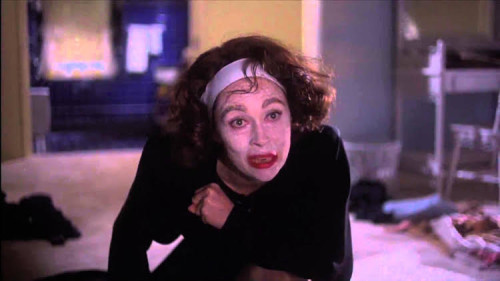
Hollywood would like us to believe that this kind of parent is just one bad turn away in everyday life. And maybe that’s true: Mommie Dearest is based on the memoirs of Joan Crawford’s (Bette Davis’s biggest rival) daughter. It’s the tale of Joan Crawford (Faye Dunaway) tormenting her adopted daughter Christina in bizarre, abusive ways. Again an unwanted child, but this time not by her mother. Though Joan chose Christina, it becomes clear that it was all an act, like much of Crawford’s life in this film.
Mommie Dearest
Eventually Christina makes it onto the big screen herself, perhaps due to years of her mother’s ambition being shoved down her throat. But when she’s too ill to make it to set, Joan, a much older woman, takes the role from her. Joan doesn’t join Margaret White and Mrs. Vale in the Killed-By-Our-Daughters afterlife, but Christina did wait until after the death of her mother to publish these memoirs and, hopefully, find some resolution.
Mommie Dearest
These films were just the start of audiences’ obsession with controlling mothers. We continue to see these tropes replayed in a multitude of ways. Carrie (1976) was recently remade for the second time, Carrie (2014). Though this time it offered a slightly more sympathetic view of both mother and daughter. Audiences may not have loved it as much as the first attempt, but it was still the Halloween pick for many movie-goers.
Black Swan
Mommie Dearest’s fame-driven mother finds a spiritual successor in Natalie Portman’s mother in Black Swan (2010). Portman is driven to the brink of insanity by her own ambition, but couple that with her mother’s drive and it’s just too much for the young ballerina. You can also watch moms incredibly similar to Crawford and her drive for success in any of the many seasons of Dance Moms available on Lifetime. Or watch the beginning of “no more wire hanger” relationships in Little Miss Perfect, and, my personal favorite, Toddlers & Tiaras. Audiences seem to love to hate the controlling pageant mom.
Mothers are important, they guide children through life in a multitude of ways, but some children get stuck with the women who never wanted them. Perhaps these mothers, raped, or widowed, or abandoned, see too much of themselves in their daughters and push too hard. Perhaps the real life version of these mothers deserve more of our sympathy than to be turned into monsters of the big screen in a multitude of ways. But these three mean moms? Maybe they got the ends they deserved.
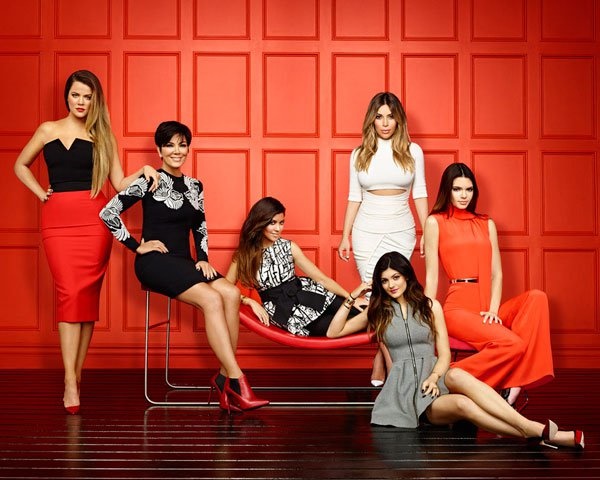
She’s constantly on Khloe for her weight, Kim to prioritise her money-making appearances with family and love, and Kourtney to get married before she has another child. Not to mention that she neglects, according to them, Rob (who hasn’t been seen on the show in or public with the family for a while), Kendall and Kylie in favour of her older daughters. (Although with Kendall’s earning power as a supermodel and whatever it is that Kylie now does, Kris may have an increased interest in her younger offspring.)
But is Kris Jenner a bad mother because of this?
One could argue that she spent her early days of motherhood raising her six kids (not to mention step-parenting Bruce’s four other children from previous marriages), and is rewarded by earning 10% from their business endeavours as their momager.
But some of the things Kris says and does arguably aren’t in the best interests of the well being of her children. Or is that just how they/she choose/s to portray her/self on Keeping Up With The Kardashians?
In the first season of Khloe & Lamar, Kris berates Khloe for her size, saying it’s not cohesive with her other sisters’ frames, nor with QuickTrim, the diet supplement the Kardashian sisters promoted at the time. In other episodes of the KUWTK franchise, Kris was on Khloe’s back to have a baby during her marriage to Lamar.
Kris also doesn’t approve of Kourtney’s boyfriend and baby daddy Scott Disick, and in earlier seasons of the show, who could blame her? But even after Scott made a 180° turnaround in his behaviour after his children were born, Kris still struggles to accept him.
Kim, the head moneymaker of the Kardashian clan, can usually never put a foot wrong in her mother’s eyes, but every now and then Kris will get upset with her for being so uptight. So do her sisters, for that matter.
In a damning article published by The New York Times a couple of weeks ago, the dichotomy of Kris as mother and businesswoman is dissected:
“… in The New York Times review of the show’s first episode, Ginia Bellafante wrote: ‘As a parent, Ms. Kardashian’s mother, Kris Jenner, was concerned for her daughter, she explains. But as her manager, she thought, well, hot-diggity.’”
The article goes on to assert that the lack of public comment from the Kardashians/Jenners regarding Bruce’s transition isn’t about being respectful to the family patriarch’s privacy, but to milk Bruce’s coming out for all the world to see… on their E! special, of course.
I’d like to think I’m less cynical about Kris and her cohort of children’s success, but we also know that reality TV is far less rooted in actuality than it purports itself to be. Kris says:
“‘It doesn’t mean that we’re always looking for more or that we’re greedy… There’s a lot of people that have great ideas and dreams and whatnot, but unless you’re willing to work really, really hard, and work for what you want, it’s never going to happen. And that’s what’s so great about the girls. It’s all about their work ethic.’”
When their lives are out there for all the world to see, it’s easy to judge the Kardashians. If Kris is guilty of one thing, it’s working her children too hard and not allowing them to make mistakes. Kim’s sexual escapades were caught on film in a way that might mortify many people, but she and her mother took them to new famous-for-being-famous heights. Kendall and Kylie have had cameras in their faces since they were 12 and 10, respectively, and have been working on book, clothing and beauty lines for almost as long, so it’s no wonder Kylie behaves older than her 17 years. The controversy surrounding her lips and relationship with an older man who also happens to be a father are begrudgingly touched on this season, scarcely shedding light on the family dynamic that would allow and encourage a 17-year-old to do these things. It remains to be seen if such actions mean Kylie’s heading off the rails, but other young stars could stand to have such a strong work ethic instilled in them.
Say what you want about Kris and the Kardashians, but they’ve managed to carve out an entire genre of entertainment that Paris, Nicole and the Osbournes could only have dreamt about. Their money shouldn’t protect them from criticism, but I do think the Kardashians cop a lot more flak for capitalising on their existence in a world that we watched them influence than other, arguably worse, public figures. The Kardashians seem to be relatively happy, healthy and challenge the notion that your past defines you. Whatever the case, Kris and company are laughing all the way to the bank while we labour over thinkpieces about them.
Scarlett Harris is a Melbourne, Australia-based writer, broadcaster and blogger at The Scarlett Woman, where she muses about feminism, social issues and pop culture. You can follow her on Twitter here.