‘How to Lose Your Virginity’ or: How We Need to Rethink Sex

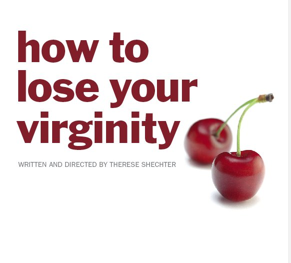
How to Lose Your Virginity promo.
 
Written by Leigh Kolb
If you talk to a feminist for a significant amount of time, you’re going to hear about virginity–specifically the value placed on women’s virginity in our culture and the persistent virgin/whore dichotomy that places women in an impossible sexual bind (and not the good kind).
The 2013 documentary How to Lose Your Virginity follows filmmaker Therese Shechter’s reflections on her own “loss” of her virginity in her early 20s. Her first-person narrative gives way to interviews with experts and sexual novices interspersed with historical tidbits and definitions.
Shechter features excellent interviews with feminist heavy hitters–Joycelyn Elders, Scarleteen founder Heather Corinna, Shelby Knox, Jessica Valenti, Hanne Blank, Sady Doyle of Tiger Beatdown, and love and relationship coach Abiola Abrams, among others. Shechter speaks to numerous young people about their perceptions of virginity and sex–including those who claimed/reclaimed virginity or actively shunned it. She talks to the president of Harvard’s chastity club and she goes on location with the co-founder of the “Barely Legal” porn series, Erica McLean.
How to Lose Your Virginity poignantly points out that in our culture, if you are a woman and have sex, you’re doomed, and if you don’t have sex, there’s something wrong with you.
Shechter covers all of her bases, and leaves no sexual stone unturned.
I pressed play to watch How to Lose Your Virginity thinking that I didn’t have that much to learn. I think/write/teach about these issues a lot. However, I  was captivated throughout the entire film. Shechter tackles what we know–virginity mythology, hymen obsessions, queer definitions of virginity, purity balls and the virgin-whore dichotomy–and takes it all a step further, researching and delving into others’ stories and history.
A crew member of Barely Legal shows the white panties that the virginal “first-timers” wear during shoots. The female owner and director points out that her films are about the “first memorable time that you [as a young woman] liked the person.” 


My favorite part of this film is that it is upbeat from start to finish. There’s no anger, there’s no judgment. I don’t want to riff on the “angry feminist” stereotype, but I know I tend to get pretty worked up and, well, angry when I talk about our culture’s toxic obsession with female sexuality and expectations of virginity. Shechter’s ability to teach, dismantle, expose and explore is remarkable. The audience is left with newfound knowledge with which they can criticize myths of virginity in our culture. However, the audience is also left with respect for everyone’s stories–those who are remaining virgins (no matter their personal definition), those who don’t and those who have no idea what it all even means. When a documentary can do that, it succeeds in a big way.


The phrase “purity balls” will never not make me giggle.

Throughout How to Lose Your Virginity, Shechter establishes common ground and values every individual’s experience, criticizing only the cultural myths that make us feel fear and shame about our sexuality. Even when she tackles pornography and purity balls, she does so with respect and cultural criticism, not disdain.

She wishes that it wasn’t called “losing your virginity,” but instead making your sexual “debut,” and that sexual experiences are a series of first times that create our sexual history. In her peppy, happy narration, she asks us to not think about losing virginity, but instead losing the mythology about virginity that’s controlling how we think about sex.
Now that is something worth losing.
Shechter, who got engaged during filming, tries on wedding dresses and comments on the fantasy and recent history of a white-clad virginal bride. She jokes and laughs with the store attendants, but shows us that the fantasy has gone on long enough.


How to Lose Your Virginity is a selection from Women Make Movies, an organization that “facilitates the production, promotion, distribution and exhibition of independent films and videotapes by and about women.”
________________________________________________________
Leigh Kolb is a composition, literature and journalism instructor at a community college in rural Missouri.


‘The Grey Area: Feminism Behind Bars’ Explores Transformative Feminism in Prison

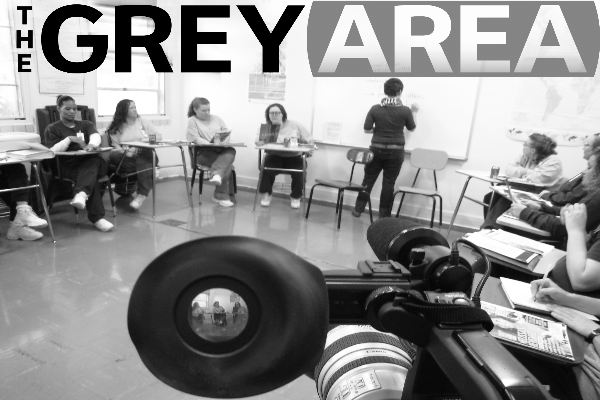
The Grey Area: Feminism Behind Bars promotional still.
 
Written by Leigh Kolb
 
With the success of the memoir-turned-Netflix-TV series Orange is the New Black, the feminist blogosphere has been abuzz with commentary and analysis. Besides looking at the show as an artifact within a vacuum, many feminists are taking this opportunity to think about incarceration–especially in the case of female prisoners. While the show is entertaining, the reality behind the fiction transcends one privileged woman’s memoir.
The 2012 documentary The Grey Area: Feminism Behind Bars examines the lives of a group of women in a maximum security prison in Mitchellville, Iowa. Filmmaker Noga Ashkenazi was part of Grinnell College’s Liberal Arts in Prison program in 2009 (her senior year).
Ashkenazi said,

“I wanted to make a documentary about my experience there because I had a feeling that teaching a feminism class at the women’s prison would be a good framework to talk about women’s issues in the criminal justice system in general and to bring the stories of these women to the public through this film.”

So she gathered footage, edited it, got funding, and released the film. And The Grey Area provides an excellent framework for discussing the oft-ignored issues surrounding incarcerated women.
The film opens with sobering facts: the number of incarcerated women in the US has grown 800 percent in the last three decades. Two-thirds of the women in prison are there for nonviolent crimes. Eighty percent of incarcerated women have a history of being victims of sexual assault and/or domestic abuse.
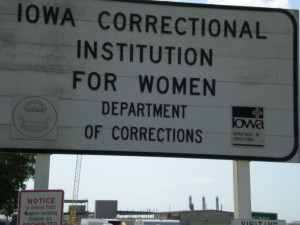
The documentary was filmed at the Iowa Correctional Institute for Women.
The Grey Area presents the stories of inmates–their whole stories, not just their rap sheets–cut with interviews with prison officials and social workers and commentary from the three young female college students who are conducting the Grinnell course on feminism to the prisoners.
The interviews with and footage of the incarcerated women are incredibly moving. The nature of their crimes highlighted the title of the film–there are so many gray areas, yet our prison system only has settings for black and white. Toward the end of the film, the prison warden herself said that about 20 percent of the prisoners actually need to be there (she says the rest aren’t violent or a danger to their communities).
The way the women respond to the weekly classes on feminism (with topics such as motherhood, bodies, sexual assault and privilege) is poignant and insightful. When the class wraps up, the women are asked about the impact of feminism. They eagerly claim the title of feminist, and respond with comments on how talking about feminism has “empowered” them. More than one says that being in prison helped her identify as a feminist because she learned she didn’t need to depend on a man. One says, “Our lives are posters for what not living in a feminist society can do.”
These women’s stories were highlighted throughout the documentary.
The Grey Area isn’t simply a snapshot of the college course on feminism. While the college students have insightful things to say, the real excellence in this film lies within the prisoners’ stories and the professionals’ commentary. Ashkenazi did an excellent job of gathering and editing footage to create and sustain suspense and elicit an emotional response from her audience. The parole hearings and anxious hopes for commutations were nerve-wracking and sometimes heartbreaking. The follow-ups with the inmates are uplifting and devastating.
Toward the end of the film, you learn how many commutations Iowa’s governors have granted in the last 30 years, and you feel as if you’ve been punched in the stomach.
The Grey Area tackles a subject that we all too often ignore and forces us to face the fact that justice is neither blind nor black and white. Cycles of abuse, sexual assault, poverty, objectification and social injustice are all feminist issues, and are all under a microscope in America’s prison systems. It’s our job now to have the conversations and work to effect change. Documentaries like The Grey Area provide a clear, in-depth context for having conversations beyond what happened on this season of Orange is the New Black.
The Grey Area: Feminism Behind Bars is a selection from Women Make Movies, an organization that “facilitates the production, promotion, distribution and exhibition of independent films and videotapes by and about women.”
______________________________________________
Leigh Kolb is a composition, literature and journalism instructor at a community college in rural Missouri.

Documentary Explores the ‘Forbidden Voices’ of Three Female Bloggers

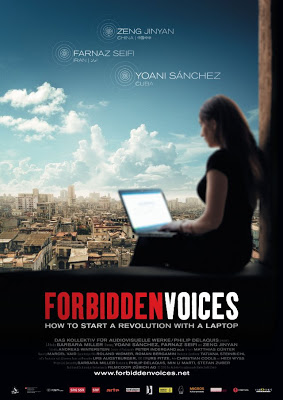
Forbidden Voices movie poster.


Written by Leigh Kolb

In repressive societies, voices of dissent are dangerous to the regime, and are stifled as quickly as possible. The documentary Forbidden Voices, by filmmaker Barbara Miller, weaves together the struggles of three female bloggers who have done tremendous work against the governments that have tried, sometimes successfully (but only temporarily), to silence them. 


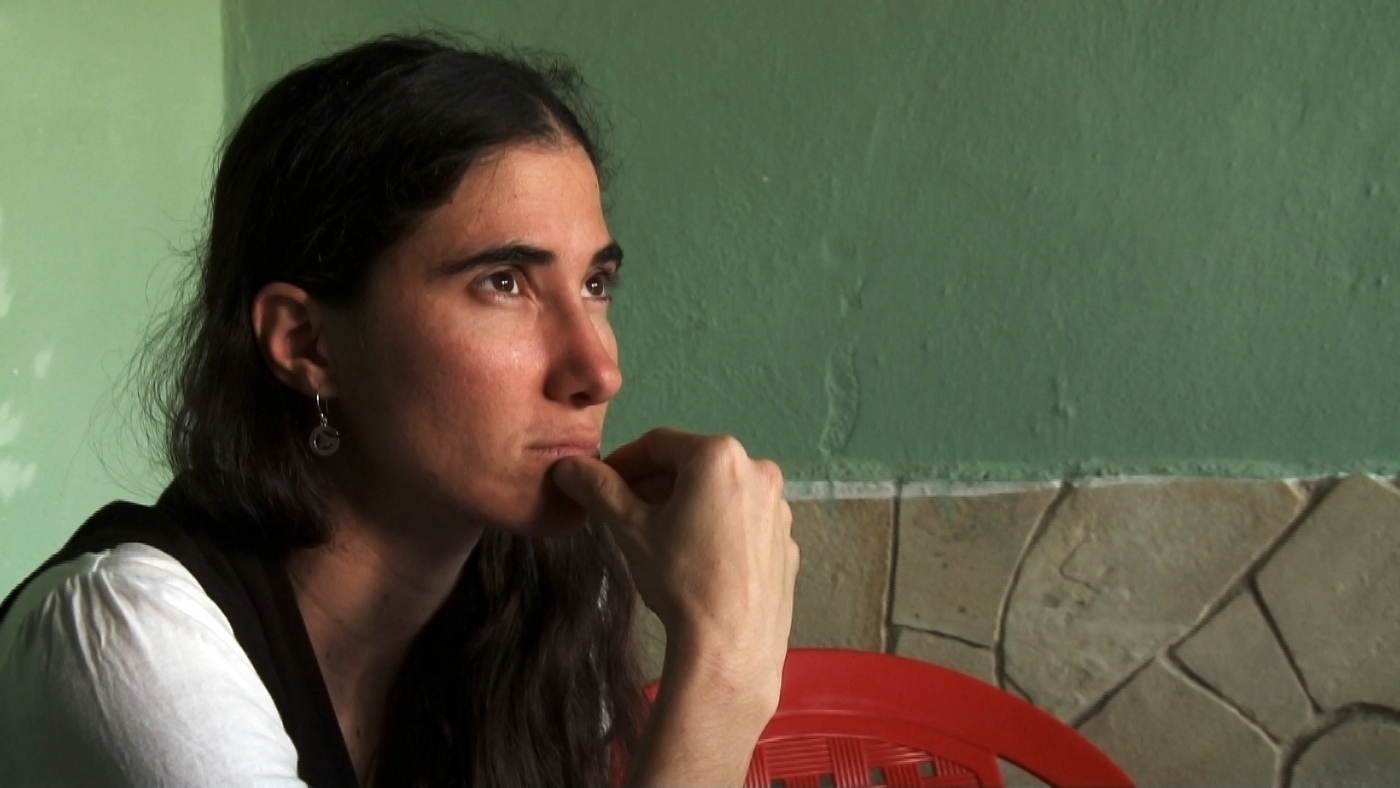
Yoani Sanchez


Yoani Sanchez, Cuba
Yoani Sanchez’s blog has been censored by the state. She has been beaten by police. She says, “I live in fear.” But she keeps writing. She has been profiled as one of Time magazine’s 100 most influential people and toward the beginning of the film, she’s unwrapping and lovingly sniffing her brand new book, Cuba Libre. Sanchez is featured in Forbidden Voices as a prominent Cuban blogger. She not only spends her time writing and covertly updating her blog, but she also holds blogging workshops for other writers and is a human rights activist (the film focuses on her work for a specific political prisoner who is on a hunger strike). 
Sanchez’s parts of the film–since she is still active in her country–are powerful and disturbing. The recording of her being beaten by police is played and there is footage of protests and state-sanctioned counter-protesters. While Sanchez is not safe–she knows her phone is tapped and constantly feels like she’s in danger–she keeps working. She says that she does so for her son, so she can answer him when he asks, “Mom, what did you do to help change things?”
Farnaz Seifi
Farnaz Seifi, Iran
When Farnaz Seifi started her blog in 2003, the Iranian government had little to do with censoring the blogosphere. Six months after she and a few other women started blogging about women’s issues in Iran, the censorship and arrests began. 
In the film, Seifi explains how the Iranian revolution caused women to lose all of their rights. She cites the legal case that if a man’s genitals were to be hurt in a car accident, there’s more money awarded to him than if a woman is killed in a car accident. 
Seifi says that she was drawn to blogging because “You can be the media yourself.” Shortly after, the government started filtering the word “women” and access to the women’s rights activists’ blogs was denied. Feminist groups held peaceful protests, and police responded with brutality (the film has footage). Seifi was arrested, and she now lives in exile and works with Reporters Without Borders. When she is featured in Forbidden Voices, it’s clear that she aches for her family and for making change in her home country. She, against her desires to have her name out there, blogs anonymously to protect her family. Seifi speaks of the “cyber war” and that at this point it is a “cyber army vs. the government.” Online activism and social media have been a central focus during the uprisings in the Middle East, and Seifi’s interests in writing about the abuses of women’s rights have helped keep the momentum going. 
Zeng Jinyan
Zeng Jinyan, China
Zeng Jinyan has used blogs and Twitter to speak out against human rights abuses in China. Her activism has resulted in house arrest (which is shown in the film). Her husband was imprisoned for over three years for his AIDS/human rights activism, and she and their new baby were kept in an apartment. But she continued to write. 
In the film, she says, “I’m desperate. I don’t know what to do.” She is continually shadowed by agents (in one chilling scene, they repeatedly try to block her from moving forward on the sidewalk). Their apartment was searched, phones and computers were confiscated and their internet was shut off. She argues that their freedom of speech is protected by the Chinese constitution, but it’s being ignored. Jinyan explains the “great firewall of China,” the cyber police, and the fact that many people don’t even know about Tiananmen Square. “Everything resembles Orwell’s 1984,” she says. She focuses on how cruel the house arrest is for her daughter, who is growing up with an imprisoned father and no access to parks. Jinyan says, “My keyboard now is the only thing that helps me bear my sorrow and indignation.”
Forbidden Voices is a compelling and deeply disturbing documentary that makes those of us who freely sit at our laptops and type realize how much we take for granted, and how powerful these women’s voices are in their repressive societies (and how threatening that power is, which is evident in the fact that they are continually threatened and silenced). The end of the documentary points out that there are thousands of Internet activists in jail right now. This wave of courageous blogging, especially at the hands of women like Sanchez, Seifi and Jinyan, is a threat to patriarchal, repressive regimes. May their voices stay strong. 


Forbidden Voices is a selection from Women Make Movies, an organization that “facilitates the production, promotion, distribution and exhibition of independent films and videotapes by and about women.”


Leigh Kolb is a composition, literature and journalism instructor at a community college in rural Missouri.

‘Salma’: The Poetry of Repression and Seclusion

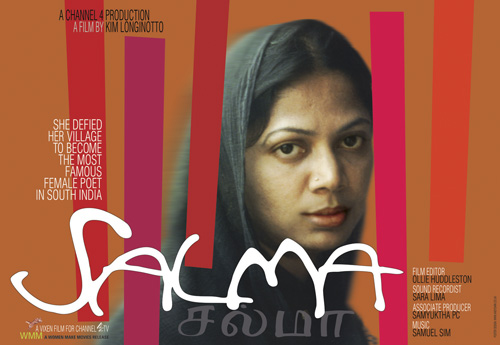
Salmai movie poster.


Written by Leigh Kolb


In the village of Thuvarankurichi in rural India, young Muslim girls are locked away once they start their periods. While their early years are filled with school and play, once puberty hits, they are taken away from the outside world and relegated to the confines of their family homes until they are married (which often happens soon after menses).

Salma was one of those girls. The internationally acclaimed documentary Salma explores her return back to the village after she has, despite innumerable odds, become an accomplished poet and politician.
Her determination is highlighted throughout the film, and no amount of dramatization is needed to convey the depths of despair for the women in this culture and the odds that were–and still are–against Salma.

Interviews with family members show how conflicted many of them are about Salma’s success. Her father says, “She’s a good girl, but she’s too clever.” Her aunt says also that Salma has always been “clever,” although she was also always “disobedient.” The women around her have poignant observations on what it means to be a woman in their society, but are unsure how to change it.

When Salma was removed from the outside world, relegated to a basement room with a small grate for a window, she was still desperate to learn and read. Groceries came wrapped in old newspapers, and she would dig them out of the trash so she had something to read. She was in despair over her situation, and she says the “anger was boiling inside me”–so she started writing poetry. Her poetry grew out of the intensity of the realization that her life was to “get married, have kids and die.”

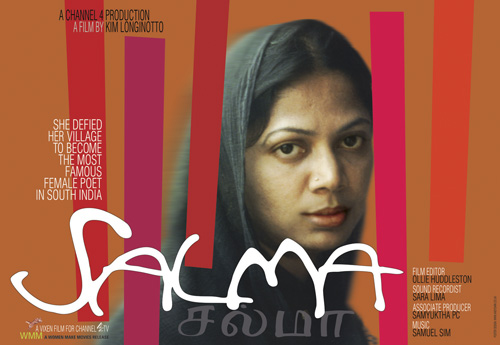
Salma, a Tamil poet and politician.

She finally was forced to marry the man who had been chosen for her, and she tried to continue writing. She would keep a journal, and the journal would disappear. She would write on torn-up bits of paper and hide the paper and pens in boxes of sanitary napkins and under blouses–they would still disappear any time her husband found them. She finally discovered a place that she could hide her writing, and would smuggle it out to her mother, who would send them to a publisher.  
We are able to follow Salma’s rise to power through a window of her world, which still isn’t perfect. Her husband says that he’s accepted her gift, but he clearly harbors a great deal of anger and resentment–their relationship appears cold and distant. Salma seems exhausted and tired of fighting in many scenes, except when she has the opportunity to talk to young girls about their plans and futures. 
Salma consistently encourages girls to stay in school, and is most alive and exuberant when speaking to young women about their educations. Her heart clearly breaks as she watches other young girls get whisked out of school and into arranged marriages. She is working through her writing and through her leadership to empower and educate young women and has success in preventing child brides, but all too often, the traditional culture wins. 
One of the most poignant and difficult aspects of this film is the complexity of Salma’s family members. Her mother was both her captor and her rescuer–she took her out of school and locked her up, but also helped her get her poetry published. Salma’s husband is angry and for years destroyed her work, but he now supports her political and writing careers. It was difficult as a viewer to try and condemn her family, because each of them is portrayed as a complex human being with clear motivations. It’s incredibly powerful when, as a viewer, you are left with the heaviness of a complex reality.
Perhaps the most disturbing part of the film is hearing the next generation of men speak. Salma’s nephew doesn’t want his mother (Salma’s sister) going to the movies, and he’s critical of Salma’s choice not to wear a head scarf. He goes on and on about how burkas are women’s rights, and they should wear them for “men and society.” He doesn’t want his mother going to the cinema “for her own good,” and expresses disappointment in Salma. Salma’s sons, too, seem to disapprove of her and she says that being in the village turned them against her. 
While Salma’s successes and continued influences on women’s lives are powerful forces, the battle is not won. The film does a beautiful job showing that.

Salma still must confront resistance from her family and the next generation.

It’s also important to note that the practice of shutting girls away–literally and figuratively–upon puberty is not relegated to conservative Muslim cultures. In Salma, a young Hindu girl is shown getting married, stunned and sick-looking. In America, there is the Christian Patriarchy movement, which keeps girls in the home and away from higher education. While Salma captures the devastation of patriarchy in one little corner of the world, the ideals and practices are not confined to India by any stretch of the imagination.  
Filmmaker Kim Longinotto has spent her career highlighting the plight of oppressed women, and she does so in Salma with grace and precision. Salma doesn’t simply present the life of a Tamil poet; instead, it is a suspenseful unfolding of a complicated story without a wholly happy ending. Salma–the film and the poet–shows the great power and limitations of one woman who takes a stand against the confines of her environment. It’s a reminder of the great strides that still must be taken around the world for women’s equality. As Salma tirelessly points out, education is where it all must begin. And in a larger culture that has a history of keeping women from literacy and silencing their voices, this is an imperative step. 
Salma is a selection from Women Make Movies, an organization that “facilitates the production, promotion, distribution and exhibition of independent films and videotapes by and about women.”


Leigh Kolb is a composition, literature and journalism instructor at a community college in rural Missouri.

10 Fascinating Female TV Characters Who Are Often Overlooked

Written by Rachel Redfern

As a spin-off from last week’s discussion about the female characters and the rise of the male anti-hero on TV, I thought that today I would point ten of the most interesting female characters on television within the past ten years (although I’m sure there are many more out there), many of whom are only side characters and might have been passed over.
Note, this is not about the most bad-ass female characters, or even the ones I would consider to be role models (though some are); this is about the most interesting female characters. Just as it can be limiting to find male characters as always the knight in shining armor, or the action hero superstar (hence the darker, more varied male characters on television), I think it can be the same for women since they are often placed into their own boxes.

So here it is, ten female characters that I find unique and fascinating, and unfortunately, often overlooked (please add any more you think of in the comments).

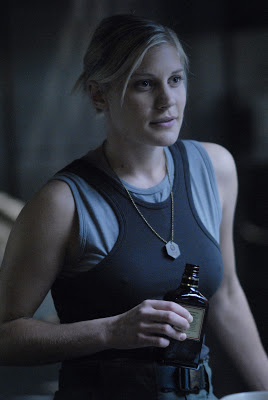
Katee Sackhoff as Starbuck in Battlestar Galactica
Starbuck (Katee Sackhoff)

Starbuck was a man in the original Battlestar Galactica series and Ronald Moore’s decision to revamp the character into a woman for the remake was pretty traumatic; Sackhoff even reported that she had death threats after the casting decision had been made. However, Starbuck quickly became a show favorite and with good reason. Starbuck is one of the most diverse female characters on TV, ever.

She smoked cigars and drank to excess, got into a lot of fights, struggled with commitment, but loved her husband and friends deeply. She was fearless and talented as a pilot, but conversely sensitive to music and painting because of her relationship with her absent father.

Moore gave her a pretty intense back story as well, showing the physical and mental abuse that her mother submitted her to as a child, and her struggles with pain, having children, and the intense developments her character was subjected to.

Robin Weigert as Calamity Jane and Kim Dickens as Joanie Stubbs in Deadwood
Calamity Jane (Robin Weigert) and Joanie Stubbs (Kim Dickens)

Deadwood has a few strong and interesting women, but Calamity Jane and Joanie Stubbs and their relationship have often been overlooked.

Robin Weigert was masterful as the blustering, loyal, drunk Calamity Jane, managing to display both bravado and a deep frailty. Weigert consistently portrayed Jane’s insecurities and sadness, effectively showing her as a sensitive and lonely outcast.

Joanie Stubbs (Kim Dickens) was an elegant whore who has spent her whole life under the physical and sexual control of men, first her father, then her unstable and dangerous boss, Cy Tolliver. But Joanie’s search for freedom and escape from her past life became very painful and difficult to survive and understand her own place in the Deadwood camp.

The fact that the two women, both on the fringes of acceptable society, both damaged and distraught, find each other and develop a strong friendship (with it growing into a possible romantic one) was a beautiful subplot for the show.

Julia Louis-Dreyfuss as Selina Meyer in Veep
Selina Meyer (Julia Louis-Dreyfuss) 
Selina Meyer (Julia Louis Dreyfuss) from HBO’s Veep is intensely unlikable, and I love that. She’s selfish and oblivious, whiny and incompetent (the perfect politician) and treats her employees and staff horribly.

But there is something very important about such unrelatable and unlikable characters–not all women in the world are pleasant, but despite her flaws, Selina is a deeply human character in a competitive world.

Yunjin Kim as Sun Kwon in Lost
Sun Kwon (Yunjin Kim)

Sun, at least in the beginning of Lost, seemed to be a minor character, one whose sad smile and soft voice suggested a submissive and lackluster personality being pushed around by her husband. Of course, that wasn’t the case, and it became apparent through later episodes that she was a strong, intelligent, forceful character, willing to do what was needed in order to survive.

Sun’s character and backstory provided a fabulous look into how humans change, seeing her first as the sweet, naïve bride, then the angry, bitter woman desperate for her freedom, and finally as a strong survivor in later seasons.

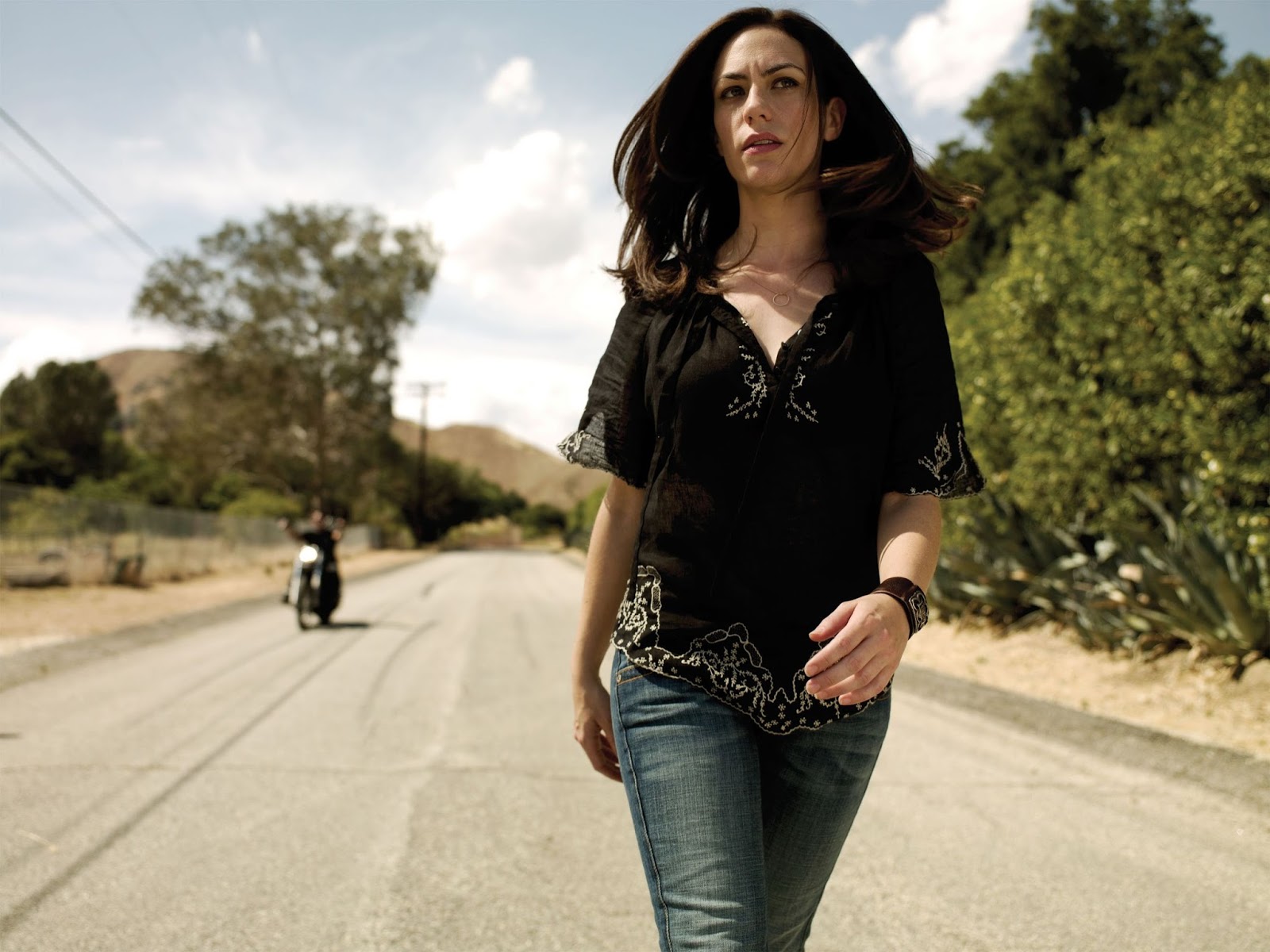
Maggie Siff as Tara Knowles in Sons of Anarchy
Tara Knowles (Maggie Siff)

Gemma, the great matriarch of the Sons of Anarchy clan, often gets most of the attention, and she is an amazing character: strong, fierce, and dangerous. But I also find Tara, Jax’s wife, to be complicated and compelling character. As opposed to Gemma, whose whole life has been the motorcycle club, Tara is a respected young surgeon attempting to raise her children in a normalized environment.

But then she changes and starts to exhibit a darker side, a change that heralds in her own deep conflicts with her healing career but destructive personal life. In season five she takes a wrench to another woman for possibly endangering her husband; a few episodes later she’s performing delicate surgery on an infant.

Liza Weil as Paris Geller in Gilmore Girls
Paris Geller (Liza Weil)

Gilmore Girls is sometimes dismissed as being light entertainment, an opinion that does a disservice to a snappy show with amazing dialogue and clever, quirky characters.

One of these characters being of course, the hyper-intelligent, aggressive, irrepressible, intense Paris Geller. Originally, Paris was only intended for a few episodes in the first season, but quickly grew into a main character because of the unique perspective that her personality offered to the show.

Paris’ character, that of an elitist academic loaded with money, quick temper, and fast-talking, clever comebacks, can’t really be found in any other show. She was a mashup of brilliance and so many neuroses and problems that it’s almost overwhelming, but also funny and sad.

The truth is, women like her, passionate, intense and bossy, are often completely hated and overly stereotyped, whereas Gilmore Girls managed to present her as a lovable and competent women, albeit with a few idiosyncrasies.

Rutina Wesley as Tara Thornton in True Blood
Tara Thornton (Rutina Wesley)

Sookie gets all the attention in True Blood, both on- and off-screen. Which is a shame, because Tara Thornton, Sookie’s best friend from childhood is an angsty, wisecracking southern girl who always took the show to the next level.

Intelligent and well-read, but dealing with her mother’s alcoholism (and intense religiosity) and poverty, makes Tara full of emotional issues and anger, but also passionately loyal. Tara is astute and honest and not afraid to tell other characters when they’re being stupid. The world probably needs a lot more people like her.

Natalie Dormer as Margaery Tyrell in Game of Thrones
Margaery Tyrell (Natalie Dormer) 

The rich world of Game of Thrones has several noteworthy women–so many in fact, that some of the minor, but equally interesting female characters, can get passed over. For example, Margaery Tyrell (most prominent in the third and last season) is actually far more dynamic in the TV show than in the books, and much more unique.

Margaery is an incredible politician; she’s manipulative, cold, ambitious, charismatic and astute. I love how each action is carefully planned out, revealing a methodical and calculating nature, one that is far more dangerous than Cersei (I think) because of her ability to control her temper.

I love a good ambitious character; powerful women who aren’t afraid to get their hands dirty fascinate me. In fact, I would argue that Margaery Tyrell is a born leader, one with an innate understanding of politics and power.

Vote for Margaery?

January Jones as Bretty Francis Draper in Mad Men
 
Betty Francis Draper (January Jones)

Mad Men’s women are incredibly varied, from sexy, confident Joan, to naïve, talented Peggy, but often pushed to the side is Don’s beautiful and bitter ex-wife. Mad Men’s portrayal of her obvious loneliness, and her (deserving) anger over Don’s behavior is incredibly sad, but also poignant.

Rather than sugarcoating her character and painting her as a distressed angel, Betty builds upon the difficulties that pushed her way, and her flawed decisions are thrown in with attempts to pull her life together.

Sometimes redemption is hard; so is pulling yourself out of cycles of pain and resentment. Betty is therefore complex and interesting, incredibly frail and static, but also unbending and aggressive in her life choices.

Nicolette Sheridan as Edit Britt in Desperate Housewives
Edie Britt (Nicolette Sheridan) 

Desperate Housewives‘ Edie is probably no one’s role model, and at first she seems like the perfect stereotype of a wealthy, self-absorbed, boy-crazy blonde. She sleeps with everyone, has multiple affairs, and has no qualms about manipulating people.

However, she was also hilarious, clever, and often incredibly honest and realistic. She made no bones about who she was or her actions, and more than once was the voice of reason.

And sometimes, there’s nothing wrong with being a little selfish.


Rachel Redfern has an MA in English literature, where she conducted research on modern American literature and film and its intersection; however, she spends most of her time watching HBO shows, traveling, and blogging and reading about feminism.


‘Girl Most Likely’ to Not Meet Expectations

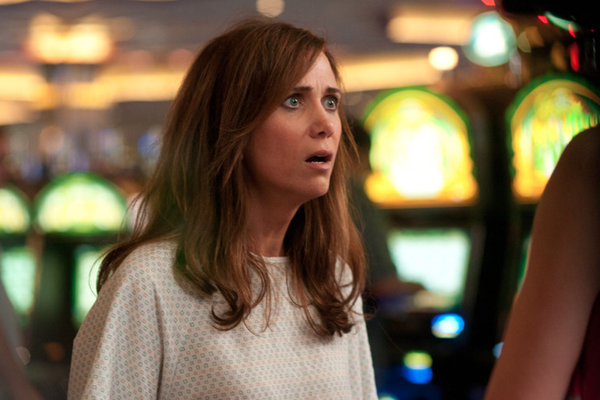
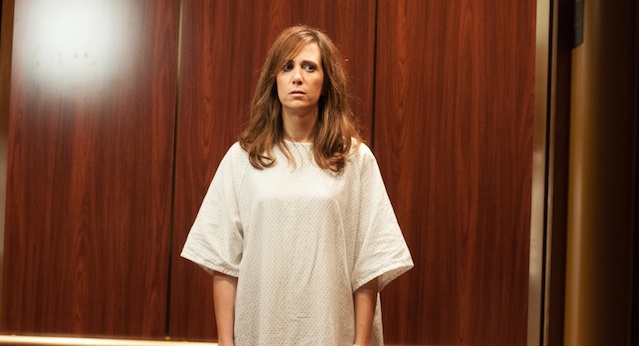
Kristen Wiig as Imogene in Girl Most Likely

Written by Lady T   

There’s a certain risk involved in being excited for a film. High expectations often lead to disappointment, especially when anticipating the film for two years.
Such was the case with me and Girl Most Likely. When I first heard about this film, it was called Imogene and still in pre-production. The premise intrigued me immediately: a female playwright fakes a suicide attempt and is forced into the custody of her overbearing mother.
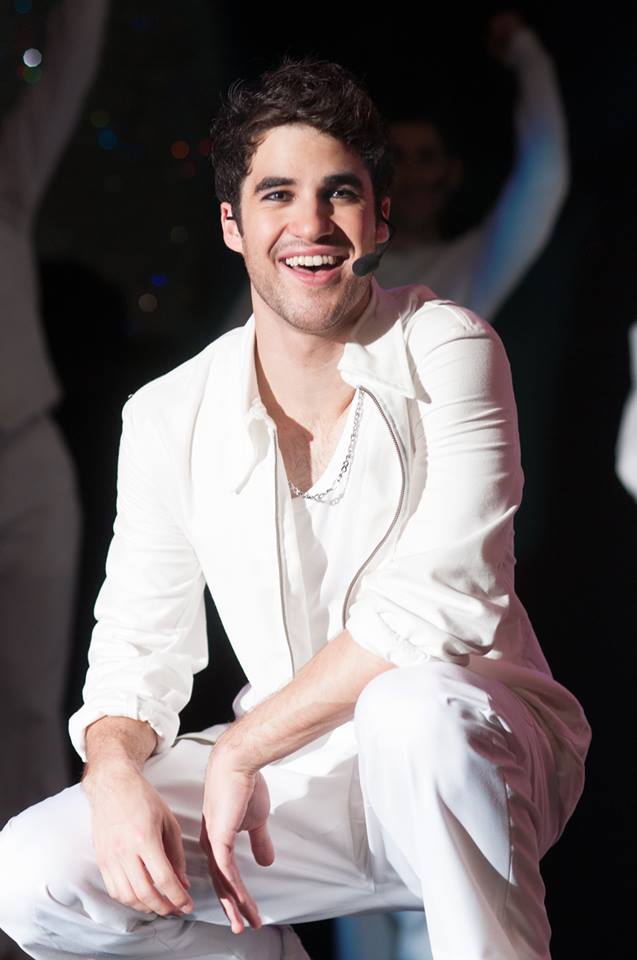
I wasn’t just eager for this film. I was pumped, and not just because of DARREN CRISS OMG. The premise had “dark comedy” written all over it. I expected Imogene to be the next Young Adult and give us the next great comic antiheroine. With the combined talents of Kristen Wiig, Annette Bening, Matt Dillon, and Darren Criss, Imogene was going to be a brilliant dark comedy that would immediately make its way onto my DVD shelf, be completely ignored by the Academy Awards, and prompt another scathing blog post from me criticizing the Oscars for disrespecting comedy and not recognizing great female characters.

These two women in the same movie? Sign me up!

Instead, Imogene was a movie called Girl Most Likely, a quirky film about a woman in New York City whose life falls apart, and she has to return home to her family in New Jersey. At first, she resents having to go back to a life that she didn’t care for, and doesn’t like living with her quirky and strange family, but eventually, she Learns to Appreciate the Important Things in Life and reject all those New York snobs who didn’t really care about her as a person.
So, kind of like Sweet Home Alabama, except in New Jersey. Not exactly the great dark comedy I was looking for.
Now, I still enjoyed a lot of things about the movie. The script is often unfocused, but contains a lot of sharp writing and clever dialogue. Imogene’s family is delightful, and I was immediately charmed by her younger brother Ralph (Christopher Fitzgerald), a mollusk aficionado. I loved the relationship between Zelda (Bening) and “George Bush” (Matt Dillon), two weird, offbeat people who adored each other. (I also love that Zelda being older than “George” was not mentioned at all – extremely rare in depictions of relationships between older women and younger men.) Bening, Fitzgerald, and Dillon are consistently funny, and Darren Criss is charming and sexy as a singer/performer in a Backstreet Boys cover band.

I’m sorry, I lost my train of thought for a minute.
Because there was a lot to enjoy about Girl Most Likely, I tried not to be overly critical just because it wasn’t the movie I expected. In the wise words of Marlo Stanfield from The Wire, “You want it to be one way. But it’s the other way.” It’s not the film’s fault that I expected something different after reading the premise. I tried to judge the movie for what it was, not for what I wanted it to be.
But even after putting my expectations aside, I couldn’t help but notice two glaring flaws in the film: 1) Imogene isn’t likable, and 2) the story trivializes suicide.
Regarding flaw #1 – I recognize that female characters are often held to a higher “likability standard” than male characters. (Theater critic and my good friend Carey Purcell has a great article about likability on her website.) I don’t need all, or even most, of my female characters to be likable. But I got a very strong sense from the script that Imogene was supposed to be likable – and she’s not.
And whether the character is male, female, or genderqueer, if the writer wants us to like the character and we don’t…well, that’s A Problem. 
There are very few times in the film where I genuinely like Imogene, and all of those scenes involve her interactions with Ralph. She’s affectionate to Ralph and supportive of him, and as a big sister of brothers, I have a soft spot for sister characters who are nice to their brothers. 

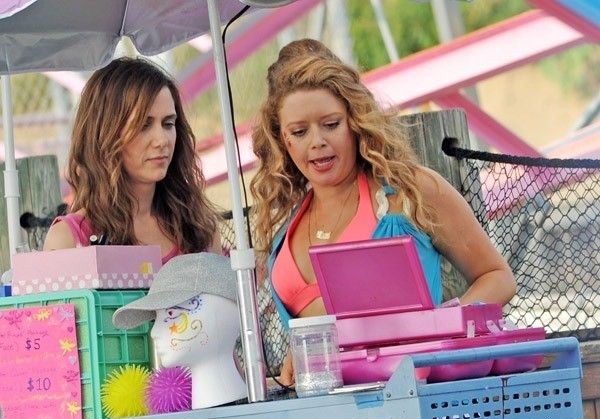
Imogene talks to her brother’s crush. (Don’t get too excited to see Natasha Lyonne – this is, like, her only scene in the movie.)

But when Imogene interacts with any other character in the film, I have to wonder, “Why are these people wasting their time with this woman?”

When Imogene talks to her mother, I want Zelda to stop being so nice and yell at her daughter for being an ungrateful brat. When Imogene hangs out with Lee, I can’t help wondering what he sees in her. When Imogene finally confronts her absent father (Bob Balaban), the father character is written as such an over-the-top intellectual snob stereotype that I can’t take Imogene’s pain seriously. 

But the main reason I find Imogene unlikable ties directly into Glaring Flaw #2 – the movie trivializes suicide.

Remember, Imogene fakes a suicide attempt to get her ex-boyfriend back. She fakes a suicide attempt to get her ex-boyfriend back.
In the real world, threatening to kill oneself to get a partner or ex-partner to stay with you is an act of emotional abuse. But for Imogene, it’s just a sign that she really needs help, poor thing.

Lee is really into her, for some reason.
And when Imogene confronts her ex-boyfriend and snobby fake friend at a book launch party, we’re supposed to recognize that these people are jerks and cheer her on. Because gasp – her ex-boyfriend didn’t even check in on her after she tried to kill herself! And he was totally cheating on her before he dumped her!

And we’re supposed to be outraged about this – except, considering that the suicide attempt was fake, I don’t think Imogene has any leg to stand on.

And if a screenwriter wants us to sympathize with the main character, I shouldn’t watch the big confrontational scene between the main character and her snobby fake friends and think, “Uh, the snobs kind of have a point here.” 

More problematic, though, is the way a faked suicide is portrayed as another quirky character flaw in a film filled with quirky people. It’s just like Ralph’s fondness for mollusks, or Zelda’s penchant for gambling, or Lee’s Backstreet Boys cover band, or “George Bush” having been struck by lightning three times. 

I don’t think I need to explain why portraying a faked suicide as a mere sitcommy quirk is a problem, do I? Good.

Imogene is depressed. So am I, but for a different reason.

And this goes right back to my initial point about my expectations for Imogene and the movie that Girl Most Likely turned out to be.
It’s not a bad thing that Girl Most Likely wasn’t the movie that I expected. It’s not the screenwriter’s job to write a dark comedy about an antiheroine just because that’s a movie I want to see.
But while a faked suicide attempt is a great inciting incident for a dark comedy about an antiheroine, it doesn’t work as well for a quirky comedy about a woman who needs to pull herself up and learn to appreciate her family. 
And if Girl Most Likely would rather be a quirky comedy than a dark comedy, that’s fine. But I can think of about ten different inciting incidents to bring Imogene back to New Jersey that don’t involve trivializing suicide or pretending that emotional abuse is just a quirk. Would it have been so hard to have Imogene reluctantly go back home because of Ralph’s birthday, a dead grandparent, or just because she left the first draft of the play she was most proud of in her mother’s basement?


Lady T is a writer with two novels, a screenplay, and a collection of comedy sketches in progress. She hopes to one day be published and finish one of her projects (not in that order). You can find more of her writing at www.theresabasile.com.

Welcome New Staff Writer Erin Tatum!

Written by Erin Tatum
Hey everyone! My name is Erin and I’m so excited to contribute to this awesome website. I just recently graduated from UC Berkeley with a major in Film and a minor in LGBT studies, so I think I win the award for the bachelor’s degree that is simultaneously the coolest and most irrelevant to just about any mainstream career path.
I’ve been addicted to television for years now, but my love for media hasn’t stopped me from noticing that television and film don’t always do right by women and other minorities. Although I definitely endorse television as escapism, I also think it’s critical that we don’t just shut our brains off. I am a bit of a trope analysis junkie. To put that more accurately, I live on TV Tropes. The fact that media representations fall into certain patterns fascinates me because I think it speaks volumes about how our society perceives a group at large. In particular, as a disabled woman, I am deeply invested in the representation of disability. Frankly, we have a lot of work to do. I also eagerly await the day when killing off both disabled and LGBT characters is no longer your run-of-the-mill resolution.
Don’t ever let anyone tell you that watching television is a waste of time. I was able to turn my love for the show Skins into a presentation at an academic conference and it was amazing! It really confirmed my commitment to obsessing over television in a professional context for the rest of forever. However, that doesn’t mean that I don’t have preferences for what I watch. I absolutely loathe love triangles and I think they’re the cheapest and most tired gimmick in the creativity handbook. Yes, we understand these things happen in real life and that happy relationships are supposedly boring to portray, but that doesn’t mean you have to beat that dead horse into glue every season. Part of the reason I get so attached to certain shows is because I am a sucker for innovation. I am easily seduced by strong performances and fresh ideas and I’m not ashamed.
I have an unhealthy obsession with the BBC. Some of the programs I watch include Orphan Black, My Mad Fat Diary, Fresh Meat, Bad Education, Orange is the New Black, Skins, Misfits, Downton Abbey, Futurama, Bomb Girls, Girls, and New Girl. Actually, I watch a lot of things with the word “girl” in it, which probably gives my blatant feminism away right off the bat.
In summary, if you ever want to talk to a bona fide TV fanatic fixated on improving representation of marginalized identities, I’m your girl.

‘Fruitvale Station’: White Audiences Need to Look, Not Look Away

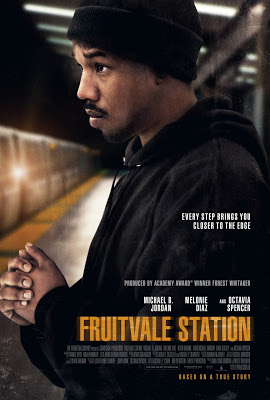
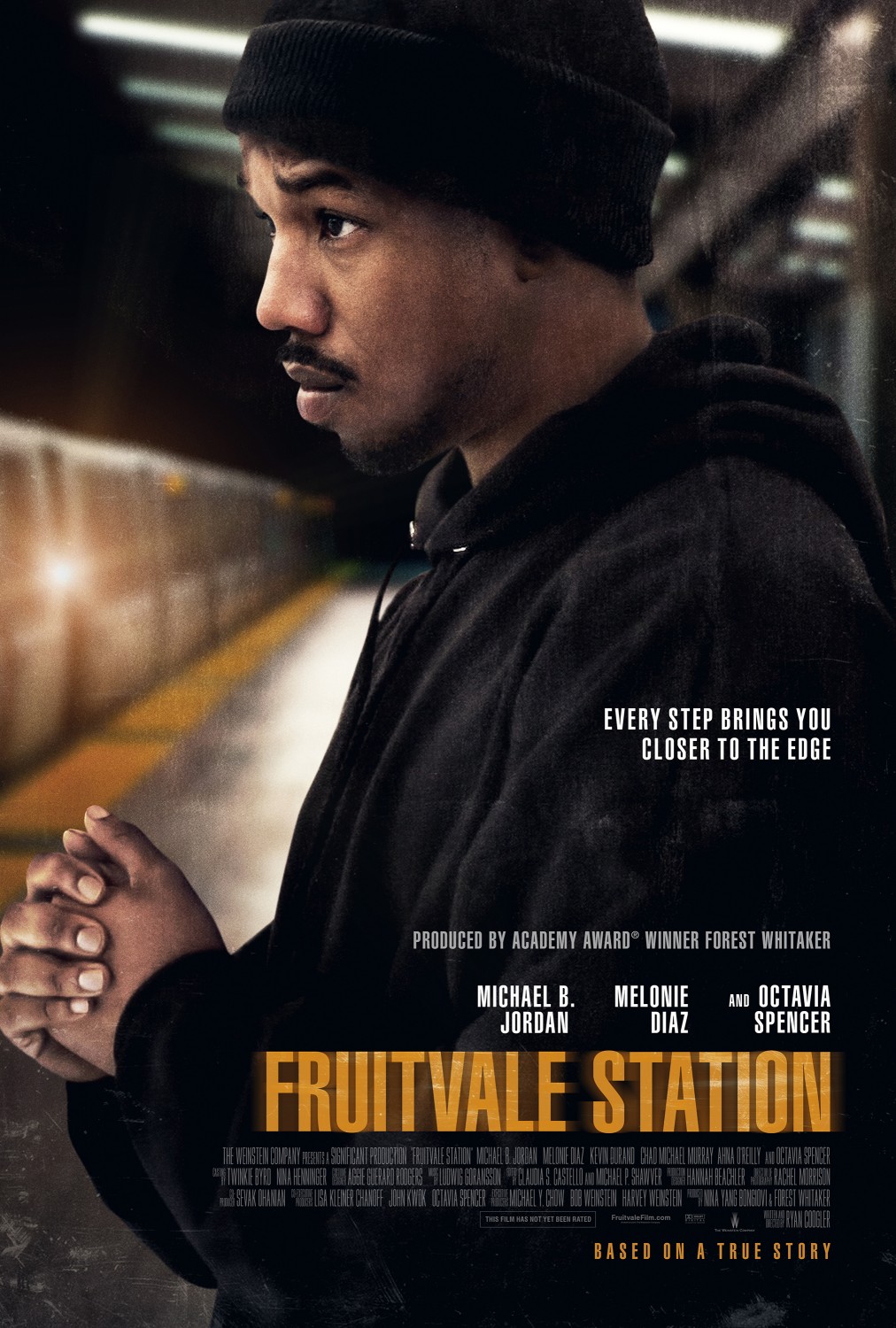
Fruitvale Station movie poster.


Written by Leigh Kolb

Fruitvale Station, unlike most feature films, is not told from and for the perspective of the white gaze. For white audiences, this is startling, uncomfortable and heartbreaking. It should be.

The film is a harrowing re-telling of the true story of Oscar Grant, who was killed by a police officer in the early morning hours of New Year’s Day 2009.

Oscar’s murder (the 22-year-old was unarmed) was in the national spotlight and incited protests, both peaceful and violent, surrounding the racial profiling and violence that perpetually victimizes black men.
A black man is killed by police or vigilantes every 28 hours.

Fruitvale Station provides a snapshot into the last day of Oscar Grant’s life without turning him into a martyr or villain, but depicting him as an individual–imperfect yet deserving to live.
The film opens with real-life cellphone video footage of the arrest and shooting that was taken by a bystander. There’s screaming, there’s police brutality and there’s a shot. Audience members gasped. It was shocking. It should be. We are forced to look at reality.
However, the shock and terror that we feel at that scene is part of an American historical context that has perpetually reminded young black men, especially, but really all black people, that their lives are not only in danger from white supremacists, but also from those who are supposed to be protecting them.
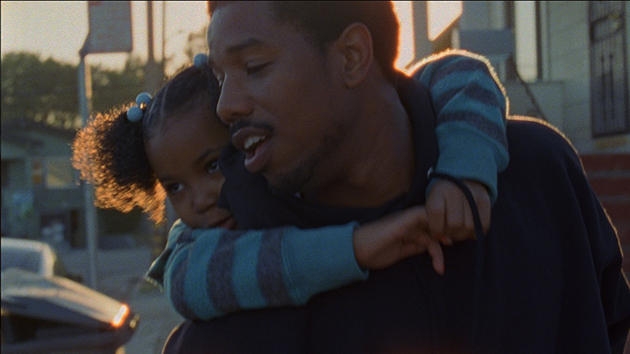
Oscar Grant (Michael B. Jordan) and girlfriend Sophina (Melonie Diaz).
While Oscar (Michael B. Jordan) is a man, his relationship with his mother (played by Octavia Spencer) is highlighted–in flashbacks when she visits him in prison, when she scolds him for talking on the phone while driving and when she pleads with him to take the train instead of drinking and driving when he and his girlfriend Sophina (Melonie Diaz) go out for New Year’s Eve. Emphasizing their relationship reminds viewers that Oscar’s age–22–is technically in adulthood, but he’s still growing and needing guidance (as most of us do in our early 20s). In a recent article for Jet, bell hooks, addressing Trayvon Martin’s death, explains:

“…black children in this country have never been safe. I think it’s really important that we remember the four little black girls killed in Birmingham and realize that’s where the type of white supremacist, terrorist assault began. That killing sent a message to black people that our children are not safe. I think we have to be careful not to act like this is some kind of new world that’s been created but that this is the world we already existed in.”

Oscar’s death was just another part of this world that hooks is talking about. The remarkable difference about his legacy is that it is now a feature film in more than 1,000 movie theaters across America (it was in the top 10 in box office numbers in its opening weekend). Fruitvale Station humanizes Oscar Grant and makes audiences look instead of look away.
Oscar’s mother (played by Octavia Spencer).

“By the time the credits roll, Oscar Grant has become one of the rarest artifacts in American culture: a three-dimensional portrait of a young black male—a human being. Which raises the question: If Grant was a real person, what about all these other young black males rendered as cardboard cutouts by our merciless culture? What other humanity are we missing?”

In one (fictionalized) scene, Oscar is approached by a stray pit bull at a gas station. Oscar loves on him (there appears to be a marking around the dog’s neck that could signify he was used in fights, or chained up) and the dog goes on its way. A few minutes later, the dog is hit by a car, and the vehicle speeds away, leaving it in the street. Oscar runs and cradles the dog, calling for help, and moves him out of the street. No one comes. The dog dies. All Oscar can do is pull down his stocking cap and get in his car.
This scene was heart-wrenching, of course, but as viewers we can’t help but see this as foreshadowing, knowing what’s to come at the end of Oscar’s day. On a larger scale, the dog scene symbolizes what so often happens with these stories of young black men dying–there’s a hit, there’s a run, no one responds and no one is punished. As a white viewer, I understood that angle, because the driver in this allegory has usually been one of us. Even if we don’t perpetuate violence, we continuously look away from the violent reality of being black in America, which is directly borne from a long history that is often belittled or ignored.
On his inspiration for that scene, writer-director Ryan Coogler said:

“Oscar was always talking about getting a house and one of the reasons he wanted to get a house is because he’d have a backyard for the first time and he could own a dog… And he wanted a pit bull. That was the kind of dog that he likes … it’s interesting because when you hear about pit bulls in the media, what do you hear about? When you hear about them in the media, you hear about them doing horrible things. You never hear about a pit bull doing anything good in the media. And they have a stigma to them … and, in many ways, pit bulls are like young African-American males. Whenever you see us in the news, it’s for getting shot and killed or shooting and killing somebody — for being a stereotype. And that’s what you see for African-Americans in the media and the news.…So, there’s a commonality with us and pit bulls — often we die in the street. Do you know what I mean? That’s where we die.”

Peeling back the layers of this scene even further–beyond a white audience member’s reaction into the director’s thoughts and Oscar’s aspirations–reveals even more depth to what is at the core of Fruitvale Station: Oscar Grant’s humanity and how it fits into the woven-together history of what it means to be a young black man in America.
There is a focus on Oscar’s relationship with his daughter, Tatiana (Ariana Neal).
The police officer who shot Oscar was sentenced to two years in prison, and served less than one. Just a few years later, in Florida, George Zimmerman was found not guilty in Trayvon Martin’s death. In the aftermath of that verdict, the most common and pervasive displays of racism I saw were white people insisting that the case had nothing to do with race, or arguing that the media needed to shut up about the case. It was revealed that the jury never discussed race while deliberating.
While Grant’s and Martin’s deaths and their killers’ court cases weren’t the same (although they bring up both sides of the aforementioned police-brutality and vigilante-justice coin and one critic noted that Fruitvale Station served as a eulogy to both young men), they both share the quality of being able to be ignored, dismissed or forgotten by white audiences. The dismissal of the disproportionate violence against (and mass incarceration of) young black men is our generation’s Jim Crow.
Next to discrimination and violence, looking away is one of the most racist things whites can do.
Fruitvale Station also quietly shows, through a young white woman named Katie, the ways in which whites can or should be allies.
Early in the film, Katie is shopping at the same fish counter as Oscar (who is buying crabs for his mother’s birthday dinner), and it’s clear that she has no idea what she’s doing. She wants to fry fish for her boyfriend, who loves Southern food, but she doesn’t know what she’s looking for or how to do it. When Oscar approaches her, she seems uncomfortable, and when he asks if her boyfriend is black (because of his food preferences) she laughs and says, “He’s white, but he knows a lot of black people I guess.” (Katie, at this point, is virtually playing “Problematic White Lady Bingo.”) “I don’t know what I’ve gotten myself into,” she laughs.
Oscar calls his Grandma Bonnie and puts her on the phone with Katie. Grandma Bonnie teaches her what she needs to know about frying fish.
While this scene is ostensibly about frying fish, it can be read as a lesson to white people in regard to race relations (stay with me here). At first, Katie feels uncomfortable. But after talking to someone who knows more than she does, she’s enlightened.
Too often, white feminists don’t do this. We have a long history of marginalizing and ignoring women of color–caring about racism, but not pulling in those whom it affects. Just last week the turmoil over a blog post showed how completely tone deaf white feminists can be in regard to talking about race. (Read a response to it by Jamilah Lemieux at Ebony and this history lesson by Anthea Butler right now.) We talk, but we don’t listen.
By the end of the film, Katie sees Oscar again on the train, beaming at him and calling him over to her. When he’s arrested and brutalized, she is enraged and doesn’t understand, but takes a video on her cell phone. She’s pushed back onto the train, and is taken away from the scene.
The black men are profiled and taken off the train car (while the white man in the fight remains on the train), accused and arrested. Oscar is killed.
This happens too. For white allies, when that veil is lifted, and we are in a place of truly listening and caring, we feel like Katie must have felt–enraged but separated. Protected, privileged and safe, but unable to take clear action against what we see around us.
But we need to keep trying. We need to listen more. We need to learn history and look hard at the world around us and figure out what we can do to help fix it. It might be having a conversation. It might be recording injustice. It might be teaching others what we learn and encouraging them to seek out authentic voices. But we need to listen first. More than anything, it needs to be not looking away.
The success of Fruitvale Station (before its box office success, it won awards at Cannes and Sundance) will hopefully usher in more films that challenge the white gaze. Because now, perhaps more than ever, American society is at a dangerous crossroads. Too many want to forget the past and move forward to a future where white hegemony is intact. This denial and erasure of what our society was built upon is the utmost form of racism and white privilege.
White allies will never be able to fully empathize, and we shouldn’t pretend like we can. In an incredible essay, Jessie-Lane Metz addresses “Ally-phobia: On the Trayvon Martin Ruling, White Feminism, and the Worst of Best Intentions.” She quotes Audre Lorde, who wrote,

“Some problems we share as women, some we do not. You fear your children will grow up to join the patriarchy and testify against you, we fear our children will be dragged from a car and shot down in the street, and you will turn your backs upon the reasons they are dying.”

When I was crying at the end of the film, I wasn’t crying the same tears as the black woman behind me was. White allies can’t fully understand that fear and pain that Lorde speaks of, but we need to listen to those who can. We can only create a better and safer world for all of us and all of our children if we listen. After we listen, we can speak.
Fruitvale Station, in humanizing and presenting a three-dimensional young black man, is, remarkably, groundbreaking in 2013. We’ve kept our backs turned too long on stories like his. Films allow us to see the world differently, and that kind of media representation is desperately needed. So we need to ask, listen, watch and learn. We need to look.
Recommended reading
Timeline of real events.

Leigh Kolb is a composition, literature and journalism instructor at a community college in rural Missouri.

’20 Something’: Youth and the American Dream

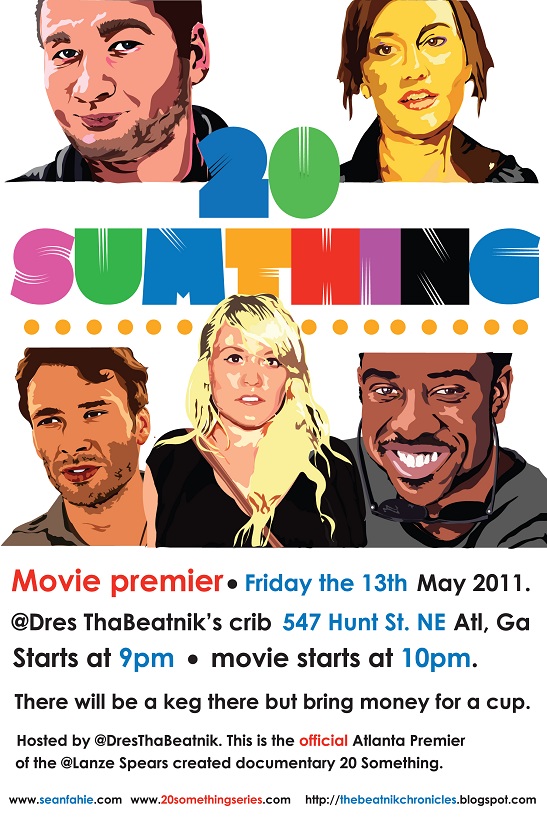
20 Something Documentary Poster

Written by Amanda Rodriguez

The documentary 20 Something is a labor of love for its creator Lanze Spears.With a non-existent budget while sleeping on floors as he filmed, Spears followed and actualized his dream, which is exactly what 20 Something is about.

20 Something trailer.
The documentary follows a handful of early “twenty somethings” who are struggling to “make it” in the world. Spears isn’t documenting any aspiring teachers, accountants or chefs, though; his subjects’ dreams are of fame, fortune, stardom and critical acclaim. We’ve got a model, a painter, an actress, an indie filmmaker and an artist working through communication and digital design. 
I was disappointed that the two women Spears followed were interested in professions that placed a very high premium on physical appearance (the model and actress), and I kept thinking even the inclusion of a dancer would mix things up a bit because, despite the fact that her carefully sculpted body would continue to be paramount, she would be using hard-earned physical prowess, technique, and discipline. It turns out that Spears’ follow-up in his series is 20 Something New York, following a trio of, you guessed it, dancers, all of whom are women! Though more limited in its exploration, I’d definitely be interested in seeing Spears’ take on the New York dance scene, the struggles of female dancers to make it in that business, and get a chance to see how accurate Black Swan‘s depictions of ballet life really is.
(To be fair, the model, Clare, like the male communications specialist and graphic designer Taylor, finds her passion in advertising and graphic design with a more nuanced perspective on success in the “real world,” unlike her foundering starlet cohort Anastasia.)
The documentary stylistically reminded me of a more compassionate version of MTV’s The Real World. It was a bit too hip, didn’t always delve deep enough, and had some painfully artistic shots and stomach-turning use of camera filters. I wanted the film to critique the American Dream more than it did because success isn’t out there for everyone. Everyone can’t be rich and famous. Sometimes how hard you work doesn’t make a dent, and that is just how life is.
However, 20 Something very much captured that bittersweet 20 something feel, caught between dreams and the real world, one’s perception of one’s potential and the cold need to earn money to survive. Some of our stars compromise their dreams (Anastasia gives up on LA, deciding to teach English as a second language, hopefully in France in order to get involved the French film scene) while others expand their vision (Sean begins to imagine curating art, his and others, in a gallery dedicated to medium inclusivity as well as human diversity). The cast’s slowly dwindling naivete made me sad for them, forced me to roll my eyes at their self-absorption, lingering like baby fat, and inspired me a bit to dream again, as it reminded me what it was like when I was that age and the future held so many possibilities.

The Golden Age of Television: Boys Only

Written by Rachel Redfern

The rise of the anti-hero has most TV and media reviewers heralding the past ten years as revolutionary, a “golden age of television.”

And I think it’s true, great television seems to be popping out of the seams of my TV and an ever-expanding “To Watch” list on my desk. In fact, looking at the recent figures for big summer blockbusters (most of which seem to have failed miserably) some (myself included) are wondering if Hollywood studios might be fading into the shadows of networks such as AMC and HBO.

TV, because of its much longer time allowances (12-20 hours of viewing per season) and recently-improved watching options (Hulu, Netflix, DVD releases and, let’s face it, illegal streaming and downloading) seem to create far more interesting characters and way more space for subtle scheming and intrigue in their plot lines. Increasingly, Hollywood opts for a bigger explosion to counteract its total lack of originality and character development.

So, in a word, I would argue yes, I find higher quality entertainment and better stories about life and humanity in television than I do at the movies.

But I don’t see many women in these shows either. 

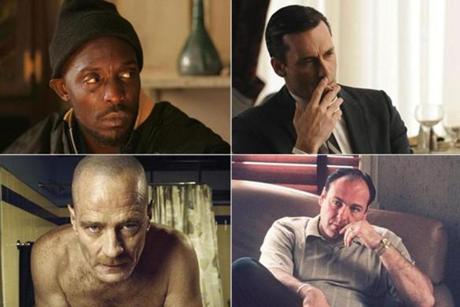
Some of Brett Martin’s “Difficult Men”
GQ writer Brett Martin’s new book Difficult Men: Behind the Scenes of a Creative Revolution from ‘The Sopranos’ and ‘The Wire’ to ‘Mad Men’ and ‘Breaking Bad’ is all about the fabulously conflicted male characters springing up in television: Walter White, Don Draper, Al Swearengen and the others that are the front men for this great revolution. And writing about these complex male characters is important, but the book’s content reveals one of the major flaws within this golden age–where are all the conflicted, complex women and the TV shows that center on their lives?
I can think of only two (please add to this list though in the comments if you can think of any more): Homeland and Weeds, although Game of Thrones has several interesting female characters running around. (It perhaps has one of the better ratios of compelling female and male characters.)
Claire Danes as Carrie Mathison in Homeland
I’m not sure that blaming the producers and writers of these shows is going to get us anywhere because the problem is obviously much deeper than that, and it begs the question, why aren’t women’s stories interesting to producers and writers? Why aren’t female protagonists fascinating and complex?

Do audiences consider stories with female protagonists un-relatable? Uninteresting? Too unbelievable? Or does this lack merely reflect life in that there aren’t any women doing enough “complex” and “darkly-human” things to model the character after?

I don’t believe any of that is true, but that doesn’t change the amount of women headlining an AMC show. In thinking about my favorite shows, I can only think of a few female characters that I would consider unique and groundbreaking. Consider Breaking Bad: while Skyler is an interesting enough character, she’s far less compelling (and obviously secondary) to the character development that Walt is showcasing, often being seen as no more than a “nag” or “hen-pecking shrew” to many viewers (not this one).  In fact, the backlash against Skyler (Anna Gunn) has been so intense (consider the meme below as a common example of how the internet seems to view the poor woman) that Gilligan actually addressed the problem in a recent interview.

One of the nicer internet memes for Skyler White (Anna Gunn)
However, as a whole, with the story centering on and following a female protagonist, the number is proportionately small.

So ladies, either we are far too flat and boring to be on TV, or as it has been for so long, our stories and interactions are still being undervalued. Therefore, we should set some goals for ourselves: be marvelously interesting (sarcasm) and (more importantly) continue to write, produce, direct and support more TV shows about women–because I don’t see many others doing it for us.


Rachel Redfern has an MA in English literature, where she conducted research on modern American literature and film and its intersection; however, she spends most of her time watching HBO shows, traveling, and blogging and reading about feminism.

‘The To Do List’: The Movie I’ve Been Waiting For

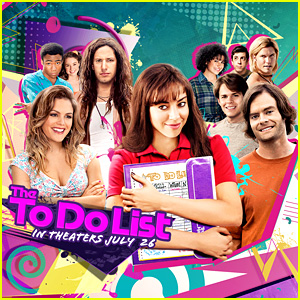
Let’s get to work, vagina. – Brandy Klark, The To Do List


The To Do List.
Written by Leigh Kolb


I remember leaving the theater after seeing Superbad and asking my friends if any of us could imagine a film like that being made about young women–quirky best friend teenage girls who were on a quest for those things that so many teenagers are on a quest for.
We agreed that we couldn’t imagine it (and then I probably delivered a lecture on the great harm of stifling female sexuality).
That notion–that those teenage “cumming-of-age” stories are reserved for boys only–has been deeply ingrained in us through pop culture. When American Pie came out while I was in high school, the message was clear: there’s a myriad of ways that teenage boys get to claim and act out their sexuality, but if you’re a woman who does the same, you will be singled out and considered an oddity, a freak or simply a prize.
Even before that, I remember always noticing that young adult novels or films about teenage girls that I enjoyed often de-sexed the female protagonist. Teenage female sexuality was either nonexistent or an anathema, set apart to frighten girls or teach lessons. I never saw myself and my feelings truly and fully reflected back to me.
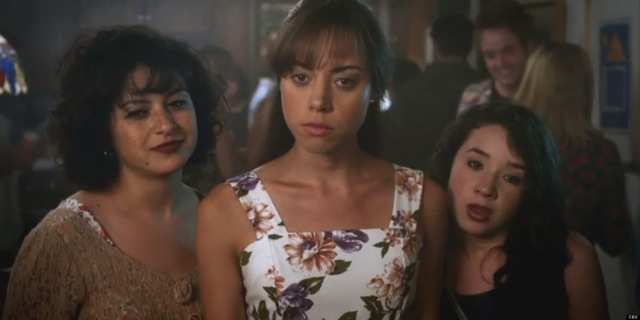
“Sisters before misters”–best friends Fiona (Alia Shawkat), Brandy (Aubrey Plaza) and Wendy (Sarah Steele).
When I saw the trailer for The To Do List, I started to get excited. Maybe this is it–what I’ve been waiting for all of these years.
It’s set in the early 90s. My heart rate quickens.
I see the soundtrack‘s track list. I just can’t even.
And then I saw it–a film that extols the importance of female agency and sexuality with a healthy dose of raunch, a film that includes a sexually experienced and supportive mother, a film that celebrates female friendship and quotes Gloria Steinem, a film that features Green Apple Pucker and multiple references to Pearl Jam and Hillary Clinton.
Yes. This is it.
 
It was everything I wanted.
 
I especially love how the “To Do List” itself wasn’t borne out of peer pressure. Brandy (Aubrey Plaza) is mildly affected when her peers shout “Virgin!” at her, but what makes her want to explore and understand her own sexuality is twofold: she wants to be able to be comfortable knowing what to do with hot guys (she’s the one who is attracted and drawn to the college guy), and it’s explained to her that college is like a sexual pop quiz, and she needs to study to ace it.
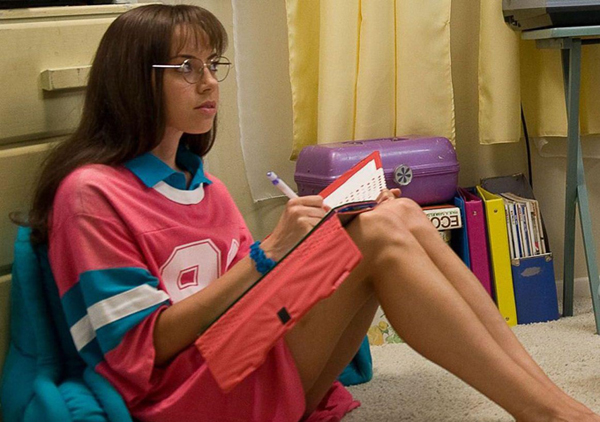
Brandy takes notes as her older, experienced sister (played by Rachel Bilson) talks about sex.
She understands studying. She understands her own blossoming sexual desires. So she opens up her Trapper Keeper, lines her paper into a grid, and makes a list of sexual acts she must complete before the end of summer, with the ultimate goal being “Intercourse.” (The fact that the film was set in 1993 is important not only for nostalgia’s sake but also for the fact that Brandy didn’t have the Internet and couldn’t easily look up the definitions of the “jobs” she was writing on her list.)
Brandy’s “To Do List” replaces buying shower shoes for the dorm with sexual exploits.
Early on in her journey, Brandy reads statistics about how few women achieve orgasm, and she’s incensed. She writes “Masturbation” on her list (and does so wearing a “Pro-Choice Pro-Clinton” T-shirt, which writer-director Maggie Carey said she wore frequently in high school). The masturbation scene is important because, as Carey says, “When you do see women masturbating, it’s usually a male fantasy about a woman masturbating, it’s not what actually happens.”
Brandy voices anger over the virgin/whore dichotomy, referencing Gloria Steinem. And yet as much as this film empowers female sexuality and independence, it does not do so at the expense of the men in the film. (Remarkable, how completely possible it is to have fully sympathetic male and female characters in a raunchy comedy.) Even Brandy’s father, a Rush Limbaugh-reading, overprotective man who is uncomfortable talking about sex, is portrayed in a sympathetic light.
The teenage boys have stereotypical sexual desires, but Brandy’s desire is always paramount. For the first time while watching a teen comedy, I got to reminisce and laugh from my own perspective–and oh, how I could taste that Pucker when I saw it on screen and feel those goosebumps when “Fade Into You” started playing–instead of imagining what life must have been like for boys I knew in high school.

The film also really has a “radical” message about virginity–not panicked, not preachy, but reasonable and realistic. Maybe most importantly, Brandy never has any regrets (“Teenagers don’t have regrets,” she says. “That’s for your 30s”). The To Do List is “nonchalantly” feminist from start to finish.

After she read the script for the first time, Aubrey Plaza said,

“When I read the script, I just thought it was funny, be it female or male, but I love that it was from a female perspective, and I’d honestly never seen anything that had explored the specifics of that time in a girl’s life when they’re experiencing all their firsts.”

This film is a first full of firsts.
And unlike most first-time sexual exploits, writer-director Maggie Carey knew what she was doing and made it really pleasurable for the audience.
“It’s a skort!”
(And who doesn’t want to make out to Mazzy Star?)
A teenage sex comedy that subverts what’s usually “reserved for the boys” and shows female sexuality and agency as, you know, an actual thing (while celebrating 90’s pop culture)? Check.
And just as Brandy will want more and more of the final exploit she checks off, I want movies like this to keep coming and coming.

Leigh Kolb is a composition, literature and journalism instructor at a community college in rural Missouri.

Disabilities Week: One Woman Holds The Breakthrough Key In ‘The Miracle Worker’

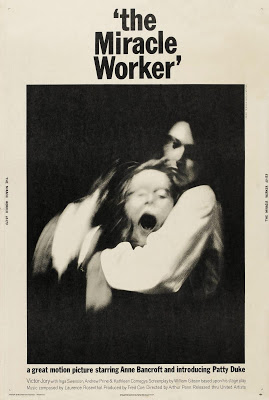
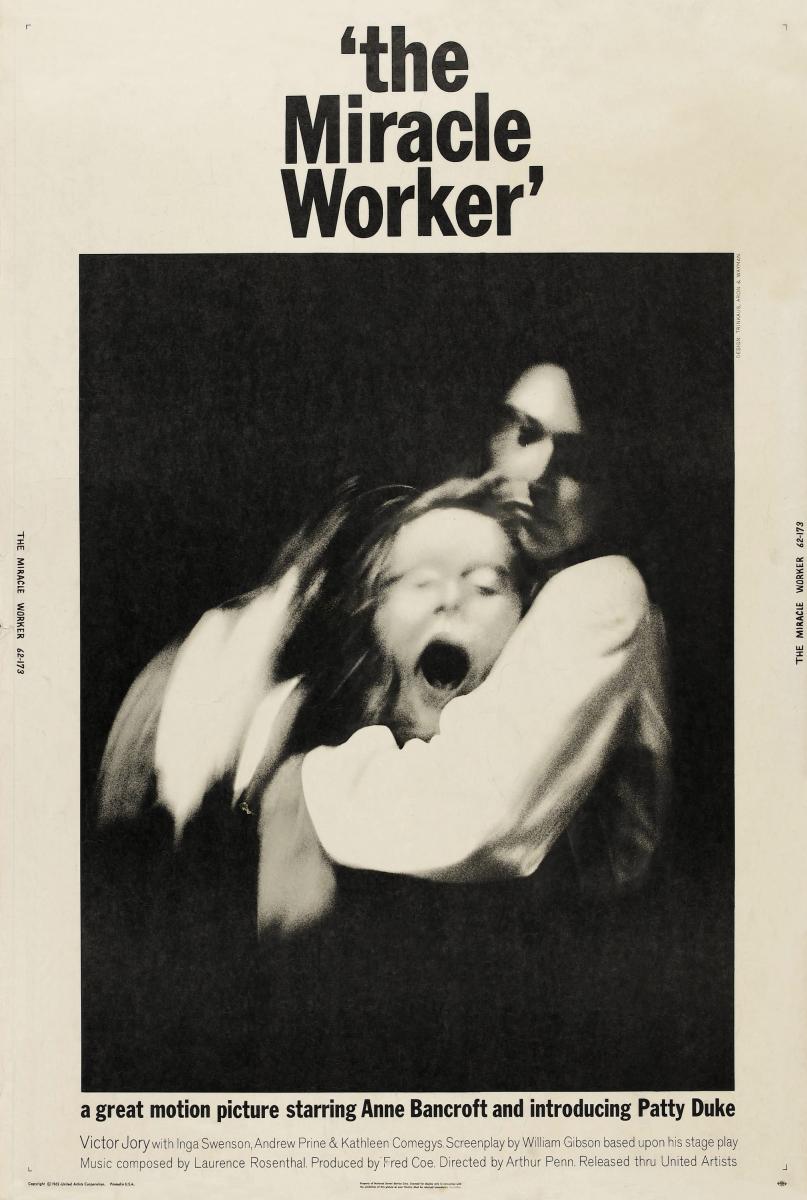
The Miracle Worker film poster.

The Miracle Worker summarizes the turbulent beginnings of one of the most remarkably profound relationships in history–Anne Sullivan and her pupil/mentee Helen Keller. Various films have been made about this duo, but nothing quite compares to the original 1962 adaptation of William Gibson’s stage play. Both Broadway actresses, Anne Bancroft and Patty Duke, reprise their respective lead roles as Anne Sullivan and Helen Keller.

The first scene ends on Kate Keller screaming in outlandish revulsion at the shocking discovery of having a blind daughter, as though the crib contained a grisly, terrifying monster straight out of her nightmares. Helen’s discrepancies are depicted in extreme exaggeration on the film poster–an open mouth on blurred face looking possessed by devil’s agony while a calm, serene woman holds her steady, showcasing psychological depth rather than horror thriller.
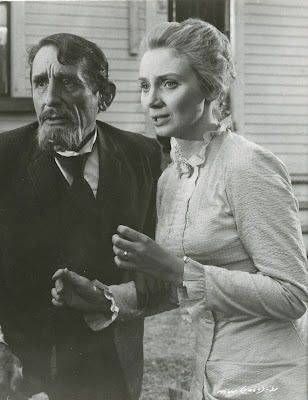
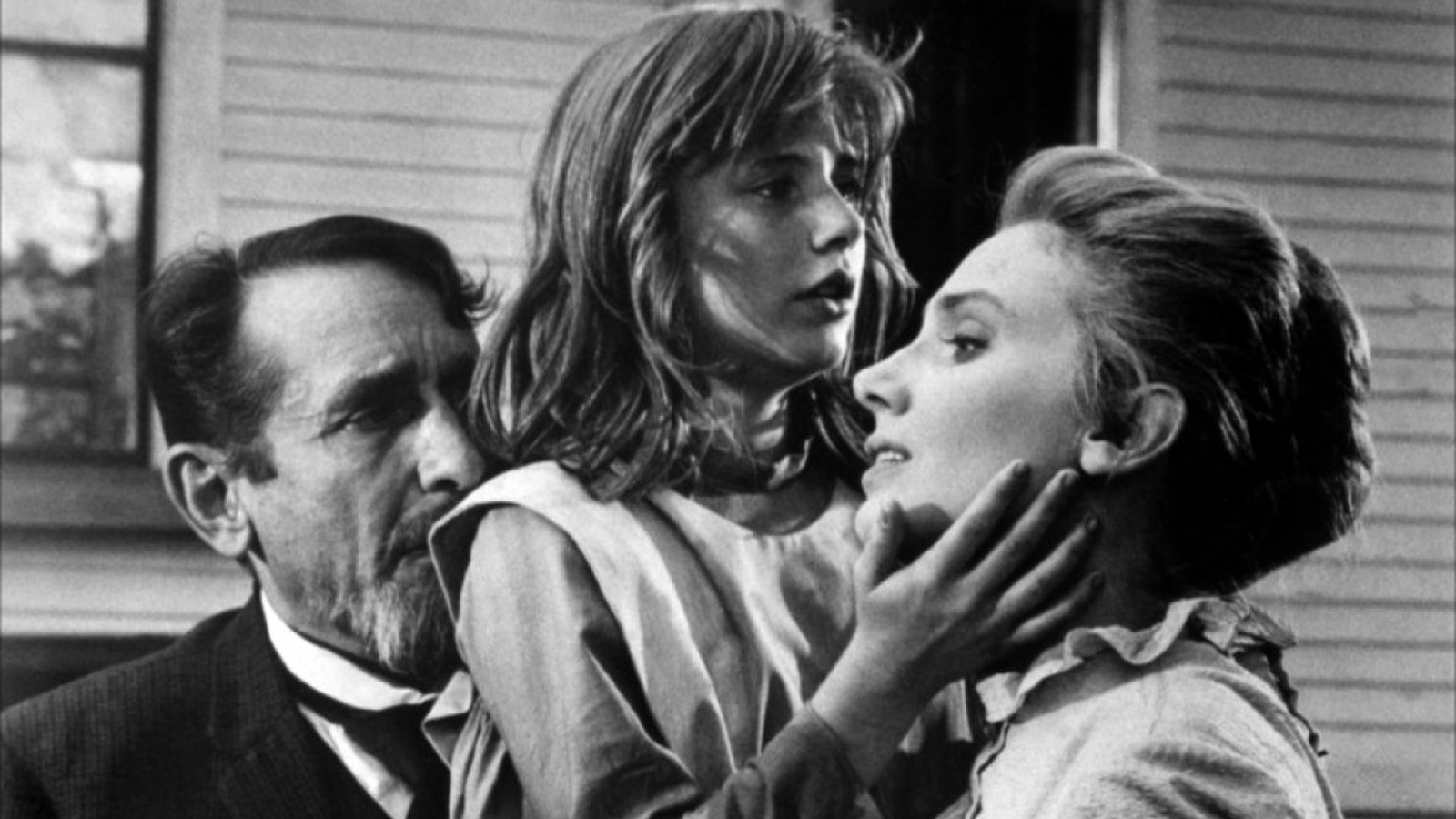
Helen’s parents spoil instead of nurture–Captain Arthur Keller (Victor Rory) and Kate Keller (Inga Swenson).
Years pass by and despite being rich, slave-owning Southerners, the Kellers have searched far and wide for solutions in curing their deaf, blind and mute child. The family has somewhat accepted Helen, coddling her ignorance. They hover and pet her like a wild animal, but do not educate further while Helen desires to learn and comprehend the world around her.
“Put her in an insane asylum!” protests Jimmy, Helen’s half brother, after Helen accidentally knocks down the baby’s crib–with baby still inside.
It is easy to place an incomprehensible diagnosis inside a box and throw away logic. Back in the turn of 19th century, people of Helen’s delicate condition would have been sentenced inside “madhouses” because no one knew how to communicate with them or even try. Jimmy is oblivious in seeing that Helen’s manic outbursts are not signs of mental disorder. Helen’s incoherent mumbles, cries, and physical punches stem from frustrations of an isolated mind desiring to learn how to address humankind–not doctors, needles, and shock therapy. It doesn’t help that Kate wants to keep Helen just to baby her and Captain Keller simply obliges Kate’s wishes to have their daughter close. They love her, but none of them realize what Helen sincerely needs.
Helen has a mind dying to be nurtured, but the Kellers don’t know to broaden her horizons.
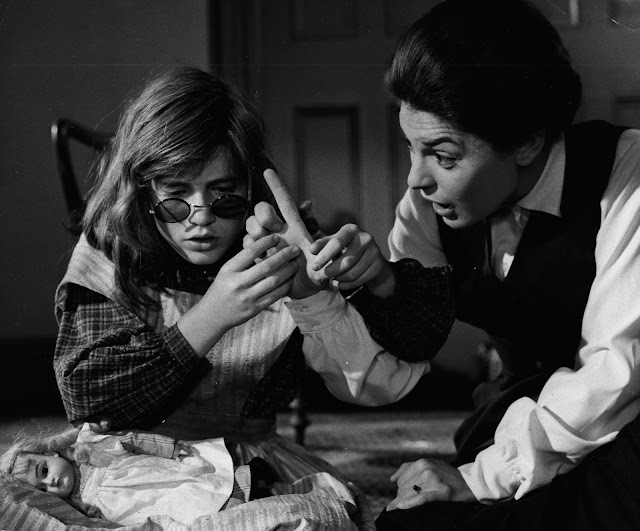
Helen (Patty Duke) explores Anne’s (Anne Bancroft) suitcase.
In comes Anne Sullivan the answer to their troubles. She is a freshly graduated valedictorian tormented by events of a troubling past. She often remembers desiring to learn amongst strict caretakers who believed her incapable due to blindness. That lifelong quest for knowledge is a trait companionable to Helen’s silent plight. When Anne greets her young protégé on the porch, Helen immediately touches both Anne’s suitcase and her face, feeling Anne’s entire structures with curiously wandering hands, knowing instantly that she is a new person.  Helen picks up the suitcase, slaps Anne who tries taking it away, and takes her suitcase inside house and up the stairs–signs of both kindness and gracious hospitality. Helen’s joy slips away suddenly at Anne’s stern ways of teachings, in a stricter fashion than Helen is unused to. The angry, spoiled child locks Anne into her room and hides the key, revealing a sneaky intelligence and fiery spirit.
Captain Keller, however, is displeased with Anne’s age and appearance, especially her rounded black spectacles.
“Why does she wear those glasses?” Captain Keller asks.
“She had nine operations on her eyes,” Kate says. “One just before she left.”
“Blind! Good heavens! They expect one blind child to teach another?” He asks, very disapproved. “Even a house full of grown adults can’t cope with a child. How can an inexperienced half blind Yankee school girl manage?”
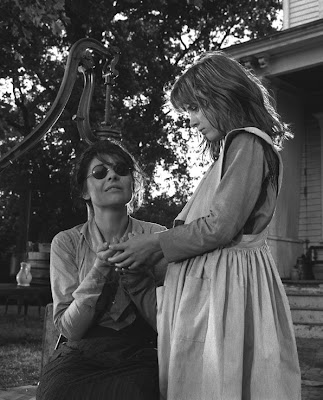
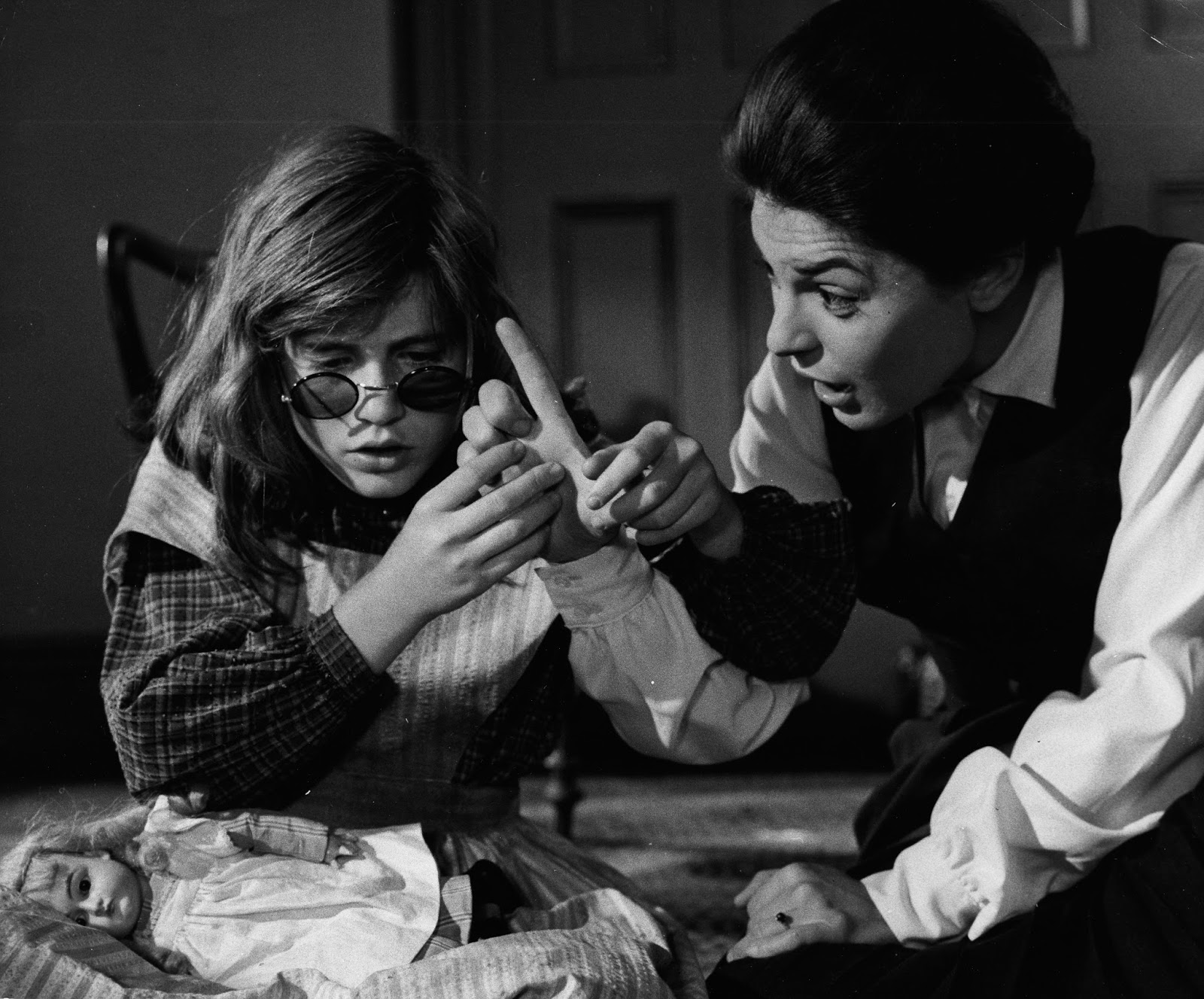
Anne (Anne Bancroft) and Helen (Patty Duke).
Anne manages, and she manages well.
In the breakfast scene of severe sound and action, in moments of brutally charged, disturbing pandemonium, Anne single-handedly demonstrates powerful mastery over Helen’s wildly aggressive tendencies by battling fire with fire instead of pampering her. Anne is trying desperately to get Helen to eat with a spoon instead of the barbaric, uncivilized audacity to eat off her family’s plates with bare hands. Helen bites, slaps, spits, and bangs on locked doors, fighting stubbornly against new lessons, but Anne is forceful and undeterred, pushing Helen into unlearning childish behavior. Glasses shatter and food is spilled everywhere, but Anne has made an alarming advancement.
“The room is a wreck but her napkin is folded,” she reveals to Kate.
Kate beams with pure joy at this statement, but Captain Keller doesn’t see why.
“What in heaven’s name is so extraordinary about folding a napkin?” He asks.
“It’s more than you’ve ever done,” Kate replies.
The real life Helen Keller and Anne Sullivan.
Men appear to be damaging catalysts–undermining Anne’s progress in every which way since she arrived. From first appearances alone, Captain Keller believes Anne to be young and inept, but after giving her a chance to prove diligence he wants to fire her because she’s not docile and kind like fair sex allots. In fact, she tells him what to do on many occasions and it infuriates him. On the other hand, Jimmy wants Anne to give up and see that Helen is a creature that needs pity, but with being typical male, in the same breath he also says, “You could be handsome if it weren’t for your eye.”  These two characters appear to be more angered by the fact that she’s a woman and that threatens their authority. Captain Keller just wants another instructor while Jimmy still insists that Helen be institutionalized.
However, Anne sees the true thorn in the Keller household and it’s not just the men making circumstances problematic.
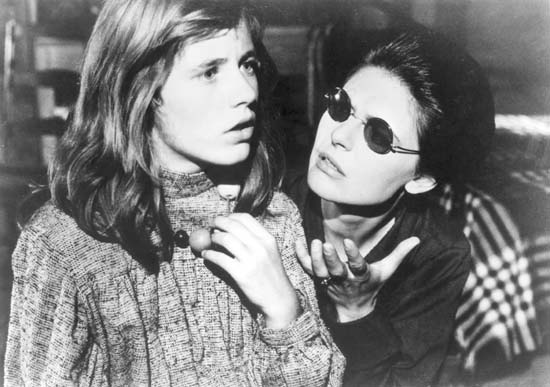
Slowly Helen (Patty Duke) is learning from Anne’s (Anne Bancroft) unorthodox methods.
“Mrs. Keller, I don’t think Helen’s greatest handicap is deafness or blindness,” Anne reveals to Kate, her devout champion. “I think it’s your love and pity. All these years you’ve felt so sorry for her you’ve kept her like a pet. Well, even a dog you housebreak.”
Surprisingly, she doesn’t include the hired help. Although slavery has been abolished (15 years before Helen was born), they too are considered lower housebroken beings, hardworking “dogs” that labor for the wealthy family. They don’t get the same favorable treatment as Helen due to their skin color and a cruelly unjust class system. When Anne forces a black child to get up out of bed and factors him into her lessons with Helen, he winces in fright. This demonstrates that the child is expendable and however much Helen hurts him, no one would care.
Anne gets permission to teach Helen for two weeks outside of Keller custody. Helen is upset to be alone with her, but in a couple of days, Anne’s instructions and experiences start sinking in as well as emotional components of joy, excitement, and humor. Manic episodes diminish slowly and engaging happiness brightens Helen’s once timid disposition.
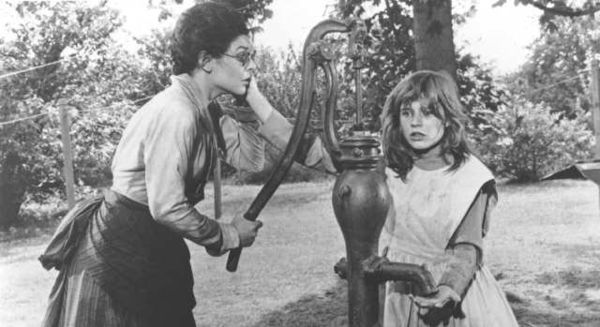
Helen’s (Patty Duke) remarkable breakthrough of water thanks to Anne (Anne Bancroft).
Unfortunately, Kate doesn’t agree with Anne’s need for more time alone with Helen, claiming to miss her daughter and saying that obedience is enough. It’s off-putting. Anne wants to teach Helen, but iron gates have once again been placed around Helen as though she were a living doll to adore and not a person worthy of truly learning about words and meanings behind them.
Back at home, Helen is determined to revert back to her old ways, but Anne wants her not to forget all that she has taught and thanks to Jimmy’s surprising aid she does just that. It is just as she is refilling the pitcher, water covering her hands, that Helen makes a most impressive breakthrough.
“She knows!” Anne shouts joyously.
And in a bittersweet exchange, towards the end in an utterly touching display of symbolic affection, Helen finally gives Anne back the key to her locked room.
The Miracle Worker is a wonderful portrayal of two strong women, and Bancroft and Duke won Academy Awards for their leading and supportive roles. Anne and Helen impacted the world by not letting blindness or deafness confine them into a shelled prison sentence. They relied solely on one another. Partly due to Anne’s vigorous aide, Helen–a writer, activist and lecturer–went on to become the first deaf blind person to earn a bachelor’s degree. Together Anne and Helen used these unique circumstances as stepping stones toward helping others find their worthiness, showing that though the world appears black and soundless, this is not a hindrance or burden.
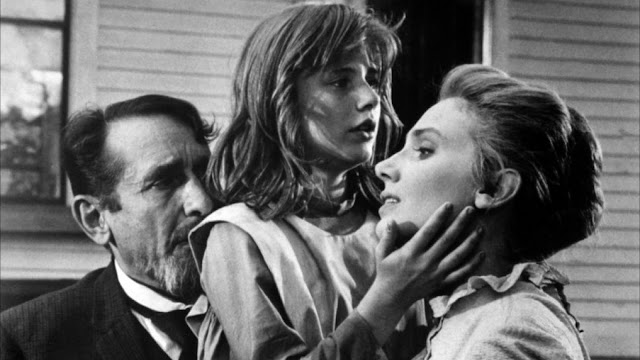
Helen (Patty Duke) touches her parents (Victor Fury and Inga Swenson) in a beguiling discovery. 
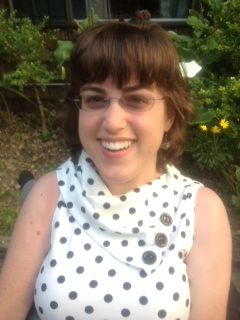
Their friendship may have faced tempestuous struggle and staggering barriers, but Anne Sullivan and Helen Keller concluded 40 years of camaraderie with compelling milestones that continue to be worth honoring today.