Anna Gunn Breaks the Fourth Wall in a ‘New York Times’ Op/Ed

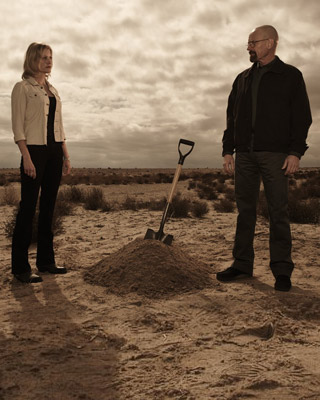
Skyler White (Anna Gunn) sheds a light on our society’s misogyny.
It isn’t rare to see an actor or actress to take to the op/ed pages to pen support or disdain for political issues and candidates or to come forward with personal stories to enlighten and advocate. The actor or actress, however, typically speaks as an individual, removed from his or her fictional life. 
However, Anna Gunn (Skyler White on Breaking Bad) took to The New York Times opinion page to tackle an issue that brings the fictional world that Skyler inhabits into Gunn’s personal world. She weaves in the cultural causes and implications of the vitriol directed at Skyler’s character, at Gunn herself, and at certain kinds of women in our society.
In the beautifully written and poignant “I Have a Character Issue,” she describes how she expected, and even understood, that her character was not going to be well-loved at first. After all, she is Walt’s antagonist, and Walt is the protagonist–the greedy, depraved, meticulously drawn anti-hero.
In her analysis of the horrible response Skyler received from Breaking Bad fans (including Facebook pages that we’ve written about at length), Gunn briefly touches upon her fulfillment in playing the role, and her fear for her own safety when online threats and death wishes devolved from using Skyler’s name to actually singling out Anna Gunn–the real person, not the character she played. Her focus, however, is that this response to Skyler is part of a much larger problem in our culture.
Gunn writes,

“My character, to judge from the popularity of Web sites and Facebook pages devoted to hating her, has become a flash point for many people’s feelings about strong, nonsubmissive, ill-treated women.”

And with that, she nails it. Feminists have spent a great deal of time suggesting that the hatred of Skyler White (and other notable anti-heros’ wives) is rooted in misogyny. Vince Gilligan, the show’s creator and writer, acknowledged this in a Vulture interview last May. He said,

“…I think the people who have these issues with the wives being too bitchy on Breaking Bad are misogynists, plain and simple.”

For those of us who already knew that, this was a refreshing sound byte. However, there is much more to audiences’ reactions to Skyler, and Gunn’s piece takes that simple reflection on misogyny and unpacks it, giving meaning to our reactions to the fictional world as being indicative of our society as a whole. And she’s right.
Gunn says,  

“…I finally realized that most people’s hatred of Skyler had little to do with me and a lot to do with their own perception of women and wives. Because Skyler didn’t conform to a comfortable ideal of the archetypical female, she had become a kind of Rorschach test for society, a measure of our attitudes toward gender.”

The Skyler White Rorschach test has certainly revealed a great deal of hideous, blatant misogyny and hatred toward women who don’t conform.

Gunn’s New York Times op/ed breaks through a glass fourth wall. Not only is Skyler White one of the most complex female characters on television, but Gunn also uses her real voice in a national publication to lend force to the idea that the hatred and violence directed toward her character, and toward her, reveals much more about our society than most would be willing to admit.

Art imitates life. Life imitates art. And how we feel about that art tells us a great deal about ourselves. In the case of how much hate is directed at characters like Skyler White, it’s no wonder that the work of women’s equality activists–whether they are fighting for proper representation in the media or working for pro-women legislation–is not nearly done.

________________________________________________________

Leigh Kolb is a composition, literature and journalism instructor at a community college in rural Missouri.

Bitch Flicks Weekly Picks

Gender Flipping in Hollywood by Holly L. Derr at Ms. Magazine Blog

First Annual Studio Responsibility Index Finds Lack of Substantial LGBT Characters in Mainstream Films by Max Gouttebroze at GLAAD

25 Movies by Female Directors Every Aspiring Filmmaker Should See by Michelle Dean via Flavorwire

Will Black Actresses Ever Catch Up To Their Peers? by Aisha Harris at Slate 

Julie Taymor’s 10 Golden Rules of Moviemaking by Jennifer M. Wood at MovieMaker

13 Kickass Women’s Movie Roles Originally Meant for Men by Autumn Harbison at PolicyMic

How Cristina Yang Changed Television by Willa Paskin at Slate

The Skyler White Problem: Can We Accept Complex Female Characters? by Jos Truitt at Feministing

Wonder Woman Can’t Have It All by Alexander Abad-Santos at The Atlantic Wire

Racism within white feminist spaces by Mia at Black Feminists Manchester

On Feminist Solidarity and Community: Where Do We Go from Here? by Mikki Kendall at Ebony

A Day In the Life of a Troubled Male Antihero by Mallory Ortberg at The Toast

“The Butler,” My Grandmother, and the Politics of Subversion by Nijla Mu’min at Bitch Media

I Have a Character Issue by Anna Gunn at The New York Times


What have you been reading/writing this week? Tell us in the comments!

Bitch Flicks’ Weekly Picks

Gender Flipping in Hollywood by Holly L. Derr at Ms. Magazine Blog

First Annual Studio Responsibility Index Finds Lack of Substantial LGBT Characters in Mainstream Films by Max Gouttebroze at GLAAD

25 Movies by Female Directors Every Aspiring Filmmaker Should See by Michelle Dean via Flavorwire

Will Black Actresses Ever Catch Up To Their Peers? by Aisha Harris at Slate 

Julie Taymor’s 10 Golden Rules of Moviemaking by Jennifer M. Wood at MovieMaker

13 Kickass Women’s Movie Roles Originally Meant for Men by Autumn Harbison at PolicyMic

How Cristina Yang Changed Television by Willa Paskin at Slate

The Skyler White Problem: Can We Accept Complex Female Characters? by Jos Truitt at Feministing

Wonder Woman Can’t Have It All by Alexander Abad-Santos at The Atlantic Wire

Racism within white feminist spaces by Mia at Black Feminists Manchester

On Feminist Solidarity and Community: Where Do We Go from Here? by Mikki Kendall at Ebony

A Day In the Life of a Troubled Male Antihero by Mallory Ortberg at The Toast

“The Butler,” My Grandmother, and the Politics of Subversion by Nijla Mu’min at Bitch Media

I Have a Character Issue by Anna Gunn at The New York Times


What have you been reading/writing this week? Tell us in the comments!

‘Breaking Bad’ and the Power of Women: Skyler, Lydia and Marie Take Control

Skyler is calling the shots now.
Written by Leigh Kolb
Warning: Spoilers Ahead

Throughout the last five seasons of Breaking Bad, the female characters have played key roles–from playing adversaries to aiding and abetting–yet they are often overlooked as secondary characters. In fact, a recent article in The Atlantic doesn’t even mention any of the female characters (save for a passing mention of Jane being a “lovely” secondary character in an infographic). While Walt and Jesse are the focus of the series, and they operate in a largely masculine and man-centric world, without Skyler and Lydia, they would have been stopped long ago. 
Skyler thought of the car wash. She got the car wash. She laundered the money and kept it safe. She kept the IRS away from her boss and her household. She is consistently rational and protective of her life and her family.
Lydia provided an “ocean” of methylamine. She had threats to the business taken care of. She expanded the operation overseas, and won’t settle for disappointed customers. She is fiercely in charge of her business.
Marie figured out the details of Skyler and Walt’s deceptions quicker than Hank did. She’s willing to attempt to steal–baby Holly this time, not a spoon–to punish Skyler and protect her niece.
Is there a new holy trinity in Albuquerque? 
We can’t help but think about the juxtaposition of scenes in last summer’s “Fifty-One” when Skyler submerges herself in the pool and we cut to Lydia at an electrical grid. Each episode, these two become increasingly invested in and in control of producing and protecting Walt’s legacy. Skyler confronted Lydia at the car wash, but that was her home turf. Surely they’ll meet again–and that meeting (like the water and electricity) could be deadly.

(It’s important to note that this most recent episode, “Buried”–perhaps the most woman-centric of the series–was also directed by Emmy-nominated Michelle MacLaren, who some critics consider the show’s “best director.” Another fun fact? A female chemistry professor is the show’s “lead meth consultant.”)

However, the male characters (and audience members) habitually underestimate the women. Hank assumes Skyler is an innocent victim. “Ladies first,” Declan says to Lydia. 

In “Buried,” Skyler and Lydia are rising to the top of their prospective enterprises. 
Skyler covers a sickly Walt with a feminine quilt, comforting him, and nursing him back to health. “Maybe our best move here is to stay quiet,” she says, acknowledging that to keep the money and keep all of them relatively safe, they need to not talk. She reassures Walt that Hank seemed to have “suspicions, but not much else.” (She knows this because Hank corners her in a diner and tries to get her to talk and give him something–she refuses, screaming “Am I under arrest?” to get out of the situation.) Hank calls her a victim. By the end of the episode, it is clear that Skyler’s no victim. How far could Walt have gotten without her?
The feminine is highlighted in “Buried,” and given great power.
Lydia visits the meth lab in the desert, where Declan and company are making meth that is not up to her or her Czech clients’ standards. “It’s filthy,” she says of the lab. “What are you, my mother?” Declan responds. They underestimate Lydia. If they would have listened to her and followed her pure-meth protocol, perhaps they would have survived. She covers her eyes as she walks past the carnage that she ordered (she was brought to the desert blindfolded, and chose to leave blindly). She steps next to corpses with her feminine, red-soled Christian Louboutins.

If the cooks had listened to Lydia, things would have ended differently.

Lydia often isn’t focused on as a main character, but those Louboutins are carrying her into a pivotal role. But will she be taken seriously? A critic at Slate said, “Her girliness is annoying—calling Declan’s lab ‘filthy’ was sure to make him reference his mom—but she also happened to be right. The man had no standards.” Would Walt have been “annoying” if he had critiqued the way a lab was run? Probably not. 
Even with Skyler and Lydia’s power plays and scheming, too many are still focused on the likability of the female characters. (In a thread on Breaking Bad‘s facebook page right now, hoards of people are calling for Skyler to be beaten or killed.) Lydia is too “girlish.” And Marie? “She is so annoying that she deserves to die.”
Critics and audiences wring their hands over who we’re “supposed” to like in Breaking Bad. If we operate in high-school superlative absolutes of “most likable” and “most hated,” how would Vince Gilligan have us categorize the characters? Are we truly supposed to feel good about liking anyone but Jesse?
In reality, we’re allowed to like male characters who maim, kill and hurt children. We’re allowed to root for male anti-heroes and revel in their dirty dealings. The women? Well, if they’re not likable, Internet commenters want them dead. 
In “She Who Dies With the Most ‘Likes’ Wins?” Jessica Valenti argues,

“Yes, the more successful you are—or the stronger, the more opinionated—the less you will be generally liked… But the trade off is undoubtedly worth it. Power and authenticity are worth it… Wanting to be liked means being a supporting character in your own life, using the cues of the actors around you to determine your next line rather than your own script. It means that your self-worth will always be tied to what someone else thinks about you, forever out of your control.”

And while I’m fairly certain Valenti wasn’t cheering on money launderers, murderers, or meth dealers, the women of Breaking Bad have appeared to break bad. Their moves will undoubtedly decide the course of the rest of the series.
Audiences, though, too often want to box female characters into “likable” and “hate and kill” categories. While Skyler populated the latter category for years, it seems as if people are now–to an extent–trying to wedge her into the “likable” category. (This critic lauds her as the “best character” on Breaking Bad, and describes her as a wife and mother and extols the virtues of her as a moral center–why does she have to be moral to be a good character? Is it because she’s a woman?) 
The Breaking Bad social media team coined #Skysenberg after “Buried,” showing that Skyler has crossed over and fully enmeshed herself with Heisenberg. (This is awfully and misguidedly close to her taking her husband’s name and adopting his characteristics. Because Skyler isn’t necessarily doing what she’s doing to protect Walt.) 
This symbolic move into Walt’s court, though, won her some new fans: 
Ugh, awful women.
High five, bro!
Heisenberg is sacred–no girls allowed!
And that’s what’s most important.
Yes. You’re right. Everything he did was for her.
Ding ding ding!
Skyler doesn’t care if you like her. Neither does Lydia. Or Marie. Gilligan himself recognizes the hatred and has said, “I think the people who have these issues with the wives being too bitchy on Breaking Bad are misogynists, plain and simple.” Skyler, Lydia and Marie are poised to decide the outcome of Breaking Bad. Skyler is calling the shots instead of Heisenberg. Lydia is decimating–and will certainly replace–a drug cartel. Marie desperately wants to see Walt and Skyler punished; her desire for revenge seems to overshadow Hank’s desire to protect his career.

In the excellent “I hate Strong Female Characters,” Sophia McDougall points out that

“If Strong-Male-Character compatibility was the primary criterion of writing heroes, our fiction would be a lot poorer. But it’s within this claustrophobic little box that we expect our heroines to live out their lives.”

Skyler and Lydia especially are clearly breaking out of these boxes, and Marie isn’t very far behind. But aren’t women supposed to be moral centers? Aren’t their roles as “wife” and “mother” supposed to define them? Aren’t they supposed to not get their hands dirty? We are so accustomed to enjoying and eagerly watching male antiheroes, but watching female characters embody the same traits has been, until now, incredibly rare.

At this point in the series, though, these complex female characters are calling the shots. (“The men are basically just sitting around diddling themselves,” my husband said.)

We don’t need to like female characters for them to be well-drawn and powerful (just like we don’t need to like Walt). We need to get over that. Skyler, Lydia and Marie aren’t just wives and/or mothers anymore. The are characters–not just female characters, or worse yet, “strong female characters.” They are effective and compelling, just how characters who happen to be women should be.

Skyler isn’t Skysenberg. She’s Skyler. And she’s got this.

Are we done here?

________________________________________________________
Leigh Kolb is a composition, literature and journalism instructor at a community college in rural Missouri.

‘Elizabethtown’ After the Manic Pixie Dream Girl

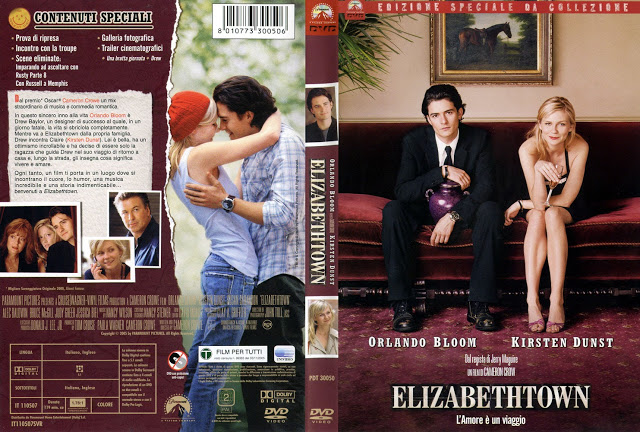
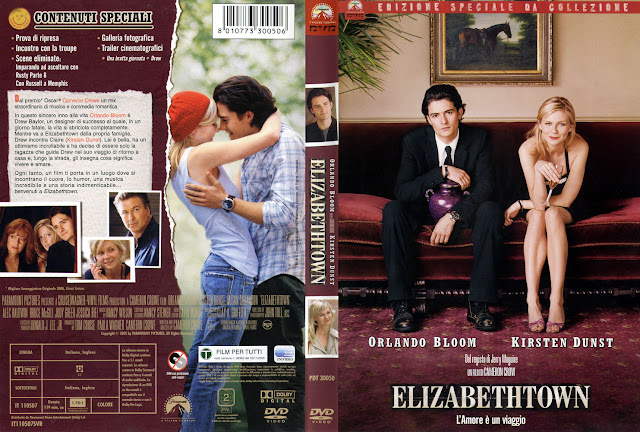
DVD cover for Elizabethtown
This is a guest review by Amanda Civitello.
When she was ten, my little sister pronounced herself a “Young Feminist in Training” and authored an editorial for a school newspaper entitled, “Sarah Palin: Feminist? No!” I was surprised, then, when she said last week that she wanted to watch Elizabethtown for our girls’ movie night. “Really?” I asked. “The film that launched the Manic Pixie Dream Girl?” She shrugged, and, as she predicted, I loved it. I loved it for what it is: a fun little moralistic summer movie with a good soundtrack and an interesting – if somewhat farfetched – premise, as well as an incredibly moving final fifteen minutes. The story of a failed shoe designer whose plans for suicide in the wake of his “fiasco” are foiled by his father’s premature death, writer/director Cameron Crowe’s Elizabethtown stars Orlando Bloom as Drew, the brooding architect of a catastrophic business failure, and Kirsten Dunst as Claire, the woman who descends from the sky – practically literally; she’s a flight attendant – to rescue him from his melancholy with an overabundance of quirky good cheer. But rather than find it a guilty pleasure, something I liked in spite of the inadequacies and disappointments of its manic pixie of a female lead character, I found that Claire didn’t really merit the MPDG moniker at all.
From its first appearance, in a review of Elizabethtown by film critic Nathan Rabin, the “Manic Pixie Dream Girl” seemed preternaturally possessed of staying power. It had two things going for it: a catchy name and truth. There are too many films in which a female lead seems to exist solely to improve the outlook of the male lead with a winning combination of pep, quirkiness, and vintage clothing. Unsurprisingly, it’s very easy to find a plethora of examples of characters fitting this trope.
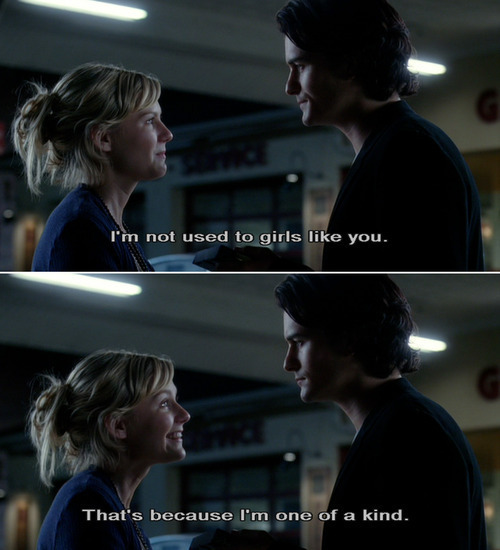
Kirsten Dunst (Claire) and Orlando Bloom (Drew) in Elizabethtown. This is just before Drew tells Claire she needn’t make jokes to be likeable.


The idea of the Manic Pixie Dream Girl was, at the beginning, a critique of those films that view women through an unabashedly male gaze, in which the viewer identifies primarily with the leading man and is therefore predisposed to regarding the leading lady as an extension of the man. (Elizabethtown makes Drew the identifiable character from the first few moments, which consist of voiceovers from Orlando Bloom. We’re definitely supposed to watch Claire, not stand in her shoes.) In many cases – as in the case of Elizabethtown, as Nathan Rabin so rightly argued – the female character does serve to remind the male of his zest for life, and that’s all she seems to do. The MPDG was meant to describe a phenomenon of the male gaze as evident in scripts written by men and films made by men, as Rabin explicitly stated: “The Manic Pixie Dream Girl exists solely in the fevered imaginations of sensitive writer-directors to teach broodingly soulful young men to embrace life and its infinite mysteries and adventures.” At its inception, therefore, the MPDG was all about critiquing men. In recent years, however, as writers have pointed out, the MPDG label has expanded to become more broad. It’s often used to describe a kind of woman, rather than how she is written/seen by a man, and to incorporate characters and films – like Annie Hall – without good reason, and has actually been used to describe real women. It’s even become shorthand for one real woman in particular: Zooey Deschanel. It’s ridiculously simplistic and extraordinarily misogynistic to reduce a real woman to a trope.
For me, then, the MPDG label, while it started out as a catchy, if somewhat simplisti, truthism, turned problematic and even pejorative in recent years. (As a side note, because it isn’t really germane to this post: using the word “manic” is troubling as well. After all, “manic” is a weighty word, associated as it is with bipolar disorder. There are other, but less memorable, words that could better describe the kind of peppy, preternatural cheerfulness that hangs about these characters. My discomfort with the use of “manic” is compounded when the character demonstrates depressive tendencies, as does Claire in Elizabethtown. When the term is applied to real people with real conditions it’s even more troubling, as it is here to Edith Bouvier Beale, who suffered from a stress-related condition with tragic consequences.) It was, therefore, with great relief that I read the many articles this past spring/summer heralding the demise of the Manic Pixie Dream Girl. You don’t need me to summarize them, so check out these posts from Jezebel and xojane, and let’s get back to Elizabethtown, because now that we have poked holes in the trope itself, and others have concurred or found other reasons to get rid of it, I think the film that launched the MPDG deserves a second look.
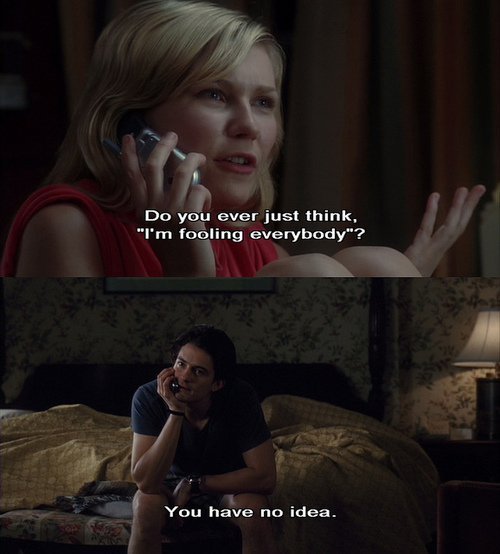
“Do you ever just think, ‘I’m fooling everybody?'” — Claire
Elizabethtown is an interesting little indie-esque effort from Cameron Crowe. By and large, it succumbs far too readily to mistakes that detract from the enjoyment of the film. The great moments – and there are two – manage to redeem it in my estimation. The first is a long conversation between Drew and Claire, in which Bloom and Dunst really manage to capture the joy of recognizing oneself in someone else, and in which Crowe effectively contrasts their discussion – alternately probing and amusingly shallow – with the ordinary tasks we all do while on the phone. The second sequence is Drew’s cross-country road trip with his father’s ashes, following a map that Claire has (mostly unbelievably) made for him. The stops on Claire’s map are all places of historic, national, or cultural importance. Drew scatters some of his father’s ashes in the waters of the Mississippi and along a stretch of flat American highway surrounded by farmland. He visits the National Civil Rights Museum at the Lorraine Motel and Earnestine and Hazel’s Bar & Grill in Tennessee. It’s a reminder of all the things worth seeing and visiting in this country (and, like lots of other reviewers, has made me totally game for a road trip). Drew’s trip is juxtaposed with memories of his childhood, and we see little Drew dancing and roadtripping with his dad, and it’s this connection – the idea that someone’s dad can be to him as great a man as Martin Luther King, Jr. – that is really compelling. But these effective and moving scenes are hampered by the many, many scenes that don’t work, most notably Drew’s mother Hollie’s (Susan Sarandon) big moment at her husband’s memorial. That, unfortunately, is the victim of poor editing: the first part of her scene is a comedy routine detailing all the things she’s tried to learn since her husband’s death, and at one point, borders on the ridiculously crass (it is a memorial service, after all). The second part, the part that should have stood mostly on its own, with only a few words of introduction, is a moving little tap dance she performs to their favorite song. Like the road trip that follows, it’s a quiet, personal moment that’s deeply rooted in the little things that give life meaning.
With regard to its female characters, Elizabethtown has far more issues. Of the three female characters – Claire, Drew’s sister Heather, and their mother, Hollie – each is the victim of poor writing. The characterization of Heather in particular is downright egregious: it seems that her only personality trait is a kind of modern-day hysteria. She’s a woman who begs her brother to “handle everything” with regard to their father’s death because he’s the only one capable of it, who watches her mother flit from activity to activity in a frantic display of unmoored grief, and occasionally widens her eyes and throws up her hands and shrieks. While deep, raw grief is to be expected, as a grown woman with a kid, Heather is the caricature of the stereotypical woman who just can’t deal with it, because she’s just too darn emotional.
Drew and Claire


Claire, on the other hand, is at least compelling in spite of her faults. She’s interesting, and she has an admittedly underdeveloped back story. She’s a self-described “helper” and a “substitute person.” She invents trips to Hawaii and waxes on about boyfriends that don’t exist. She is, at her heart, immersed in much the same pursuit of happiness as Drew. She has her own struggles which we grasp only tenuously. The problem with Elizabethtown is that it doesn’t explore that complexity nearly enough – but not that it doesn’t exist in the first place. Claire isn’t a vacuously vapid MPDG; she has beginnings of a complex characterization that the writer only hints at, but doesn’t seem to think is worth developing. There were opportunities to do so: Why doesn’t the conversation about Claire’s unnecessary jokes continue? Why don’t we get to see an answer to Drew’s confrontation about the faux-boyfriend? Why, when we know as well as Drew that she has something slightly darker lurking beneath the quirky veneer, do we not get to see it? In my book, that’s a bit worse than creating a one-note plot device of a character.
So: did Claire deserve to be the original Manic Pixie Dream Girl? I don’t think so. I think it was perhaps a fair assessment upon a single viewing. But tucking her neatly into the MPDG box denies vital aspects of Claire’s character. True, we don’t know much about her ambition or life apart from Drew. That’s absolutely a failing on Cameron Crowe’s part as screenwriter. And for part of the film, Claire certainly does fill that role for Drew. She’s there to answer the phone when he wants someone – anyone – to talk to, happy to sit on hold waiting for him while he bounces between his fuming ex-girlfriend and crying sister, neither of whom – credit where it’s due – particularly like being kept on hold. Claire is the placid one, patiently waiting her turn to work her magic, as Drew expects. What saves Elizabethtown is that Drew comes to recognize that his sort-of girlfriend is not an MPDG.
“I’m impossible to forget, but I’m hard to remember.” — Claire


When Drew says, “You don’t have to make a joke. I like you without the jokes,” he pinpoints Claire for what she is: a complex character hiding behind a cheerful façade. Midway through the movie, he realizes that he doesn’t need Claire to be anything but who she is. He calls her out for the jokes he previously found engaging and attractive and confronts her about her imaginary boyfriend Ben. It’s a shame that Elizabethtown doesn’t show us this new Claire. We’re presented with a glimpse of the real woman, and then she slips away. This most interesting shift, when Drew realizes that he doesn’t want an MPDG for a girlfriend anyway, is given the least amount of exploration, because the film almost immediately switches to the long closing sequence of Drew’s cross-country road trip, back to the overarching theme of grief.
Drew isn’t the only one to think this way. Claire’s theory of “substitute people” actively refutes the MPDG pigeonhole. In describing this theory – which basically sounds a whole lot like Manic Pixie(-ish) Dream People – Claire is asserting that she knows perfectly well the image she projects. The implication, of course, is that it’s nothing but an image. She knows just as well as Drew that what she’s saying is a convenient label, nothing more. She’s aware of it in much the same way as is Clementine in Eternal Sunshine of the Spotless Mind, although Clementine is far more direct in her refutation of the MPDG label: “Too many guys think I’m a concept, or I complete them, or I’m gonna make them alive. But I’m just a fucked-up girl who’s lookin’ for my own peace of mind; don’t assign me yours.”
“You shouldn’t be a substitute for anybody.” — Drew


Elizabethtown’s major problem is that it makes a halfhearted attempt to be a love story, when really, it’d have done far better to focus on grief. It would have been a much more compelling movie, because the moments that shine are the ones which have Drew – sometimes with Claire – facing the full implications of what happened. Would we have read the film differently from the start if there’d been no sex scene, no agonizing introspection over whether or not they’re dating? I think so. And it would have been refreshing to see a movie featuring a male/female friendship that wasn’t aching to become more.
In the end, from the oversaturated colors to the overwhelming (but expectedly awesome) soundtrack and the entirely implausible narrative, Elizabethtown is a kind of fairy tale: the kind of story that sticks with you in spite of its tenuous grip on reality, the kind of confection that you enjoy even though it falls apart when you look too closely. Cameron Crowe would have been better to structure Elizabethtown like 500 Days of Summer. 500 Days of Summer works because of its nonlinear narrative and impressionistic array of short scenes. Where Elizabethtown explicates far too much, spelling out each character’s thought process and motivation, 500 Days of Summer allows for the audience to draw conclusions and make connections between scenes. When the story is written in such a way, when there’s no need to explain everything, the characters can be more spontaneous. They can have moments in which they do not conform to our expectations of them. Eternal Sunshine of the Spotless Mind works, in part, for the same reason. ESotSM and 500 Days of Summer are not passive films. They require far more thought from the audience than does a film like Elizabethtown, where all plotlines seem to find a neat little happy ending. They work precisely because they’re impressionistic, which is, at least in my opinion, the most effective way to treat a modern fairytale.
Amanda Civitello is a Chicago-based freelance writer and Northwestern grad with an interest in arts and literary criticism. She has contributed reviews of Rebecca, Sleepy Hollow, and Downton Abbey to Bitch Flicks. You can find her online at amandacivitello.com.

‘Fill The Void’ Beautifully Opens Doors To The Ultra-Orthodox World

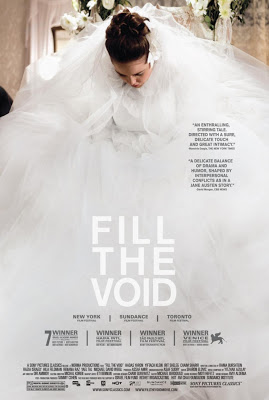
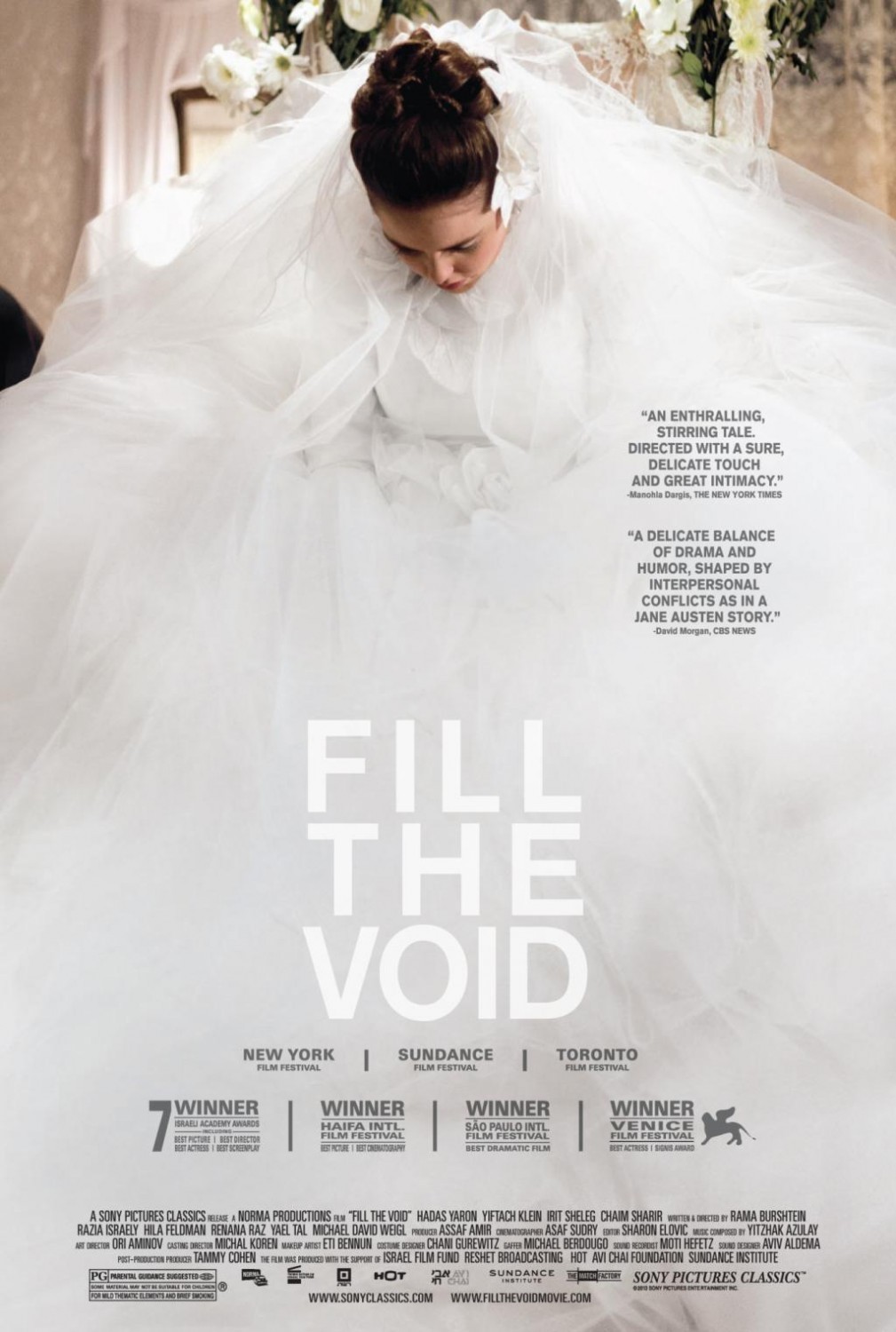
Fill The Void film poster.
In this summer alone, film wise, I’ve been cordially invited to three weddings– Joss Whedon’s Shakespearean, black and white Much Ado About Nothing, Susanne Bier’s Italian scenic Love Is All You Need, and Rama Burshtein’s ultra-Orthodox Jewish Fill The Void.
Fill The Void was an entirely new cinematic experience, diving into Hebrew language, a culture familiar, but not fully illustrated to my knowledge. We are typically just shown pointed beards and tall hats. Wonderfully enough, a woman—Rama Burshtein, a filmmaker actually living and breathing the ultra-Orthodox sector–crafted this educational picture. She ultimately chooses to adapt her world on the big screen, which is quite brave, and irons out ignorance by showcasing strict and religious rituals taking center stage, but laces humor and integrity throughout, directing perspective from the eyes of Shira, female protagonist.
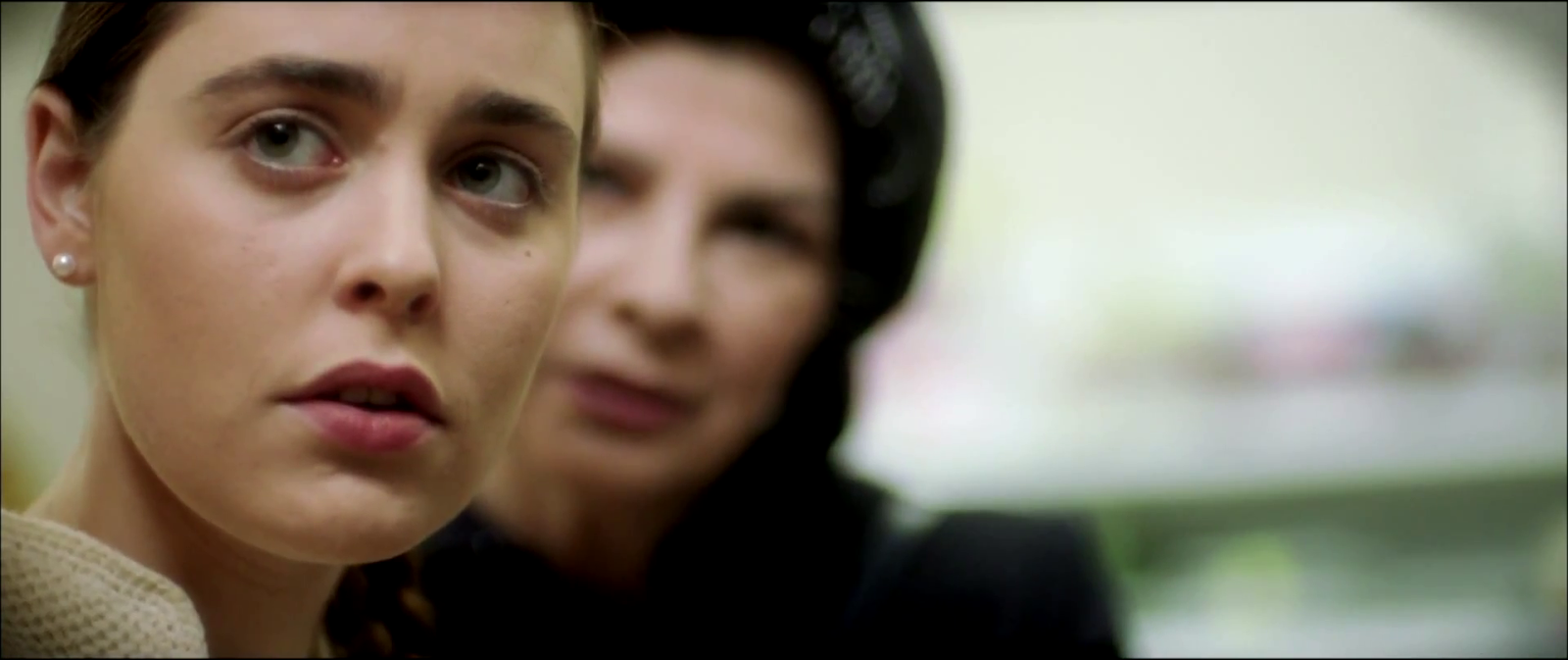
Shira (Hadas Turon) and her mother (Irit Sheleg) play supermarket spy.
It starts out innocently enough. Shira and her mother sleuth around a supermarket looking for Shira’s intended betrothal match. After a humorous phone call (“He’s in the dairy department!”), they find him and spy from afar. Shira is in wordless awe and is over the moon at witnessing the Miller’s son wipe and blow off spectacles.
“You’ll have to do a lot of washing,” her mother huffs. “Do you not have a tissue?”
That doesn’t hinder Shira’s enchantment over husband-to-be. As she stands and waits for Esther, her older sister, Shira’s demeanor is filled with excited tension. It’s funny how her exasperated body language attempts stoic composure, but joyous facial expression just terrifically shouts, “I want to tell someone!”
“It was strong I want to scream it out,” Shira exclaims.
“Stay calm, first of all,” instructs Esther. “He doesn’t need to know that you feel so strongly…”
The views of women transcend almost every culture–a poised, pious manner is revered and expected and opposition is horrifically demonized. In an old advertising class of mine, we were taught that boys/men were always seen as active and girls/women were meant to be still and decorative. Women must keep docile composure or else males would think her wild and wild equates to carefree and promiscuous–unwanted traits in a wife. In ultra-Orthodox, these terms are a stricter, devout practice.
Interestingly, however, Yochay, Esther’s husband tells Shira that she should “scream to the Lord!”
Shira’s world gets further complicated when Esther suddenly dies during ninth month of pregnancy. It is devastating because their sisterly bond was so sweet and genuine. Yet mourning goes to a whole other level–her sister’s husband is going to move to Belgium with the baby boy much to the horror of Shira’s family. The solution? Shira should marry him.
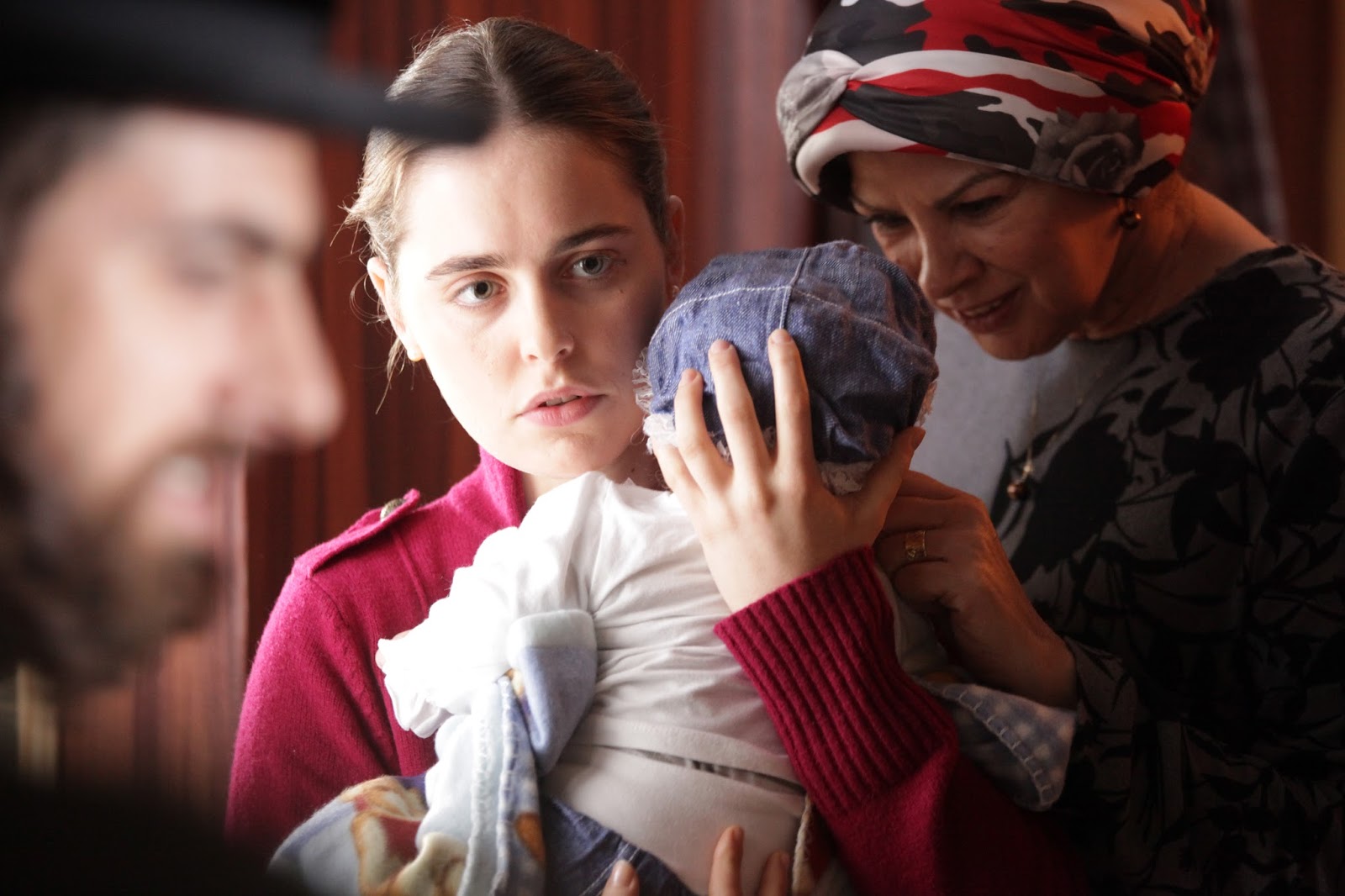
Shira (Hadas Turon) holds the bay with her mother (Irit Sheleg) looking on and Yochay (Yiftach Klein) looking pensive.
The situation goes from losing a loved one to taking that loved one’s place.
Shira is conflicted, questioning her confusing feelings and her desires. Another devastating milestone gets tossed along tattered path–the Millers have decided against her marrying their son. Shira considers Yochay, due to much pushing from her mother, but Shira continues asking Yochay questions about Esther, which is understandable. She did overhear him drunkenly professing Esther of love prior to childbearing death and it’s only appropriate to feel overshadowed by a sister’s ghost, for knowing that she was his first wife. That alone locks inside her emotions starting to unravel for Yochay, who longs for her to speak plain truth. In moments of solitude and softly spoken prayer, she wants to be brave and follow her heart, but fears of being considered bad stop her.
By the film’s end, visibly nervous with mascara dripping, rocking back and forth praying in rich, huge white wedding gown, Shira alone makes the life changing decision to be a mother to Esther’s child and wife to Esther’s husband.
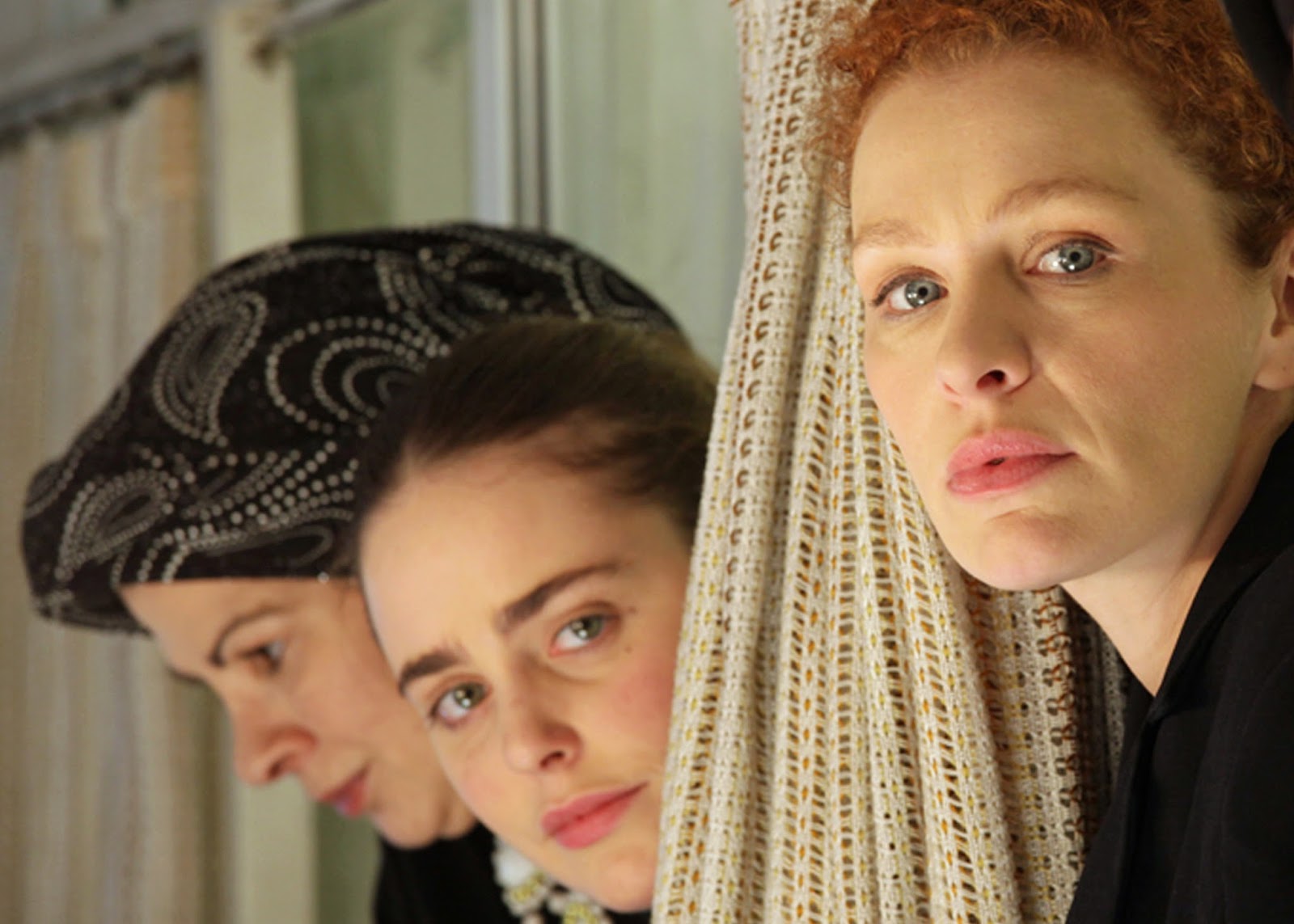
Shira’s mother (Irit Sheleg), Shira (Hadas Yuron), and Shira’s cousin, Frieda (Hela Feldman).
Other female characters take up a great deal of screen time. It’s refreshing to see women have such power and be more vocal and at times having more authority over men when they are supposed to be seen as still, especially Shira’s mother. She’s the meddlesome figure who constructed the entire idea of Shira marrying Yochay. After seeing Yochay and Shira interacting with the little baby boy, she starts the fireworks, calling the rabbi and getting her husband on board—albeit reluctantly. Frieda, Shira’s cousin, gains the most sympathy. Frieda is always sad, hanging her uncovered head, at every female’s announcement of marriage and everyone gives her the pitying, “You’ll be next in line.” Esther had promised the sorrowful spinster that if anything happened to her, she would prefer Frieda to marry Yochay. Shira attempts to place them together, but for reasons unknown Yochay believes her cruel, but doesn’t even know why he doesn’t want to marry Frieda. Maybe it’s simply because he isn’t quick to compliment her beauty and youthfulness as he does Shira. Thankfully, however, Frieda finally does get married and is everyone’s pity turns to happiness. The unmarried aunt, who covers her head because the rabbi suggested it to stop embarrassing questions, also wants what’s best for Shira. She believes Yochay is too old and that Shira should be with a man her own age, but of course Shira’s mother wants to end their communication quickly.
“Stay away from Shira,” she warns.
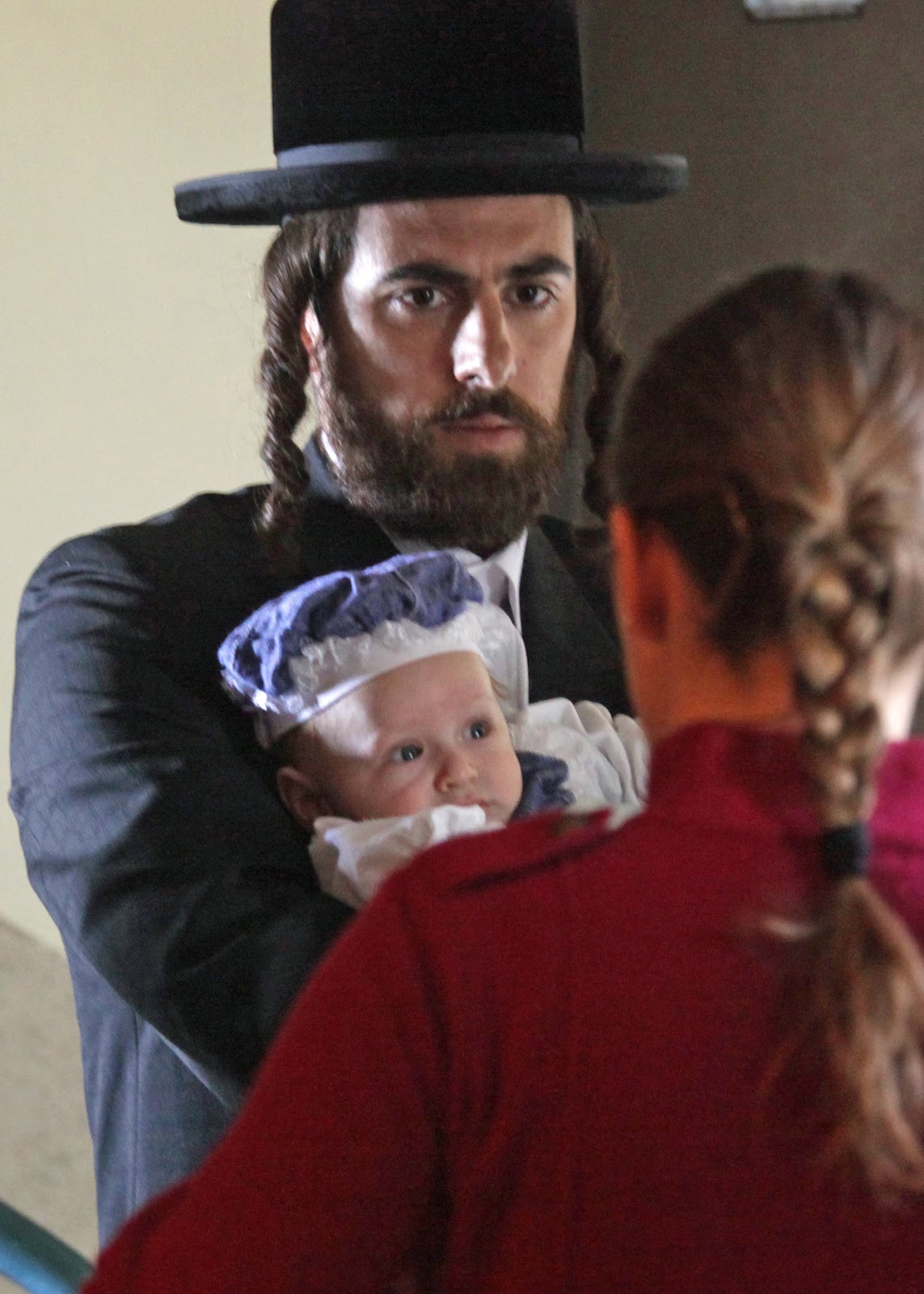
Yochay (Yiftach Klein) & Shira (Hadas Yuron) become an instant family.
Overall, Fill The Void is a lovely piece of filmmaking that allows viewers a glimpse into Jewish customs and in a uniquely riveting way that sews in the roles of these women through a woman’s camera lens.
Rama Burshtein addressed reasoning behind creating Fill The Void to the Washington Post:
“I’m a storyteller more than anything, and I realized that we had no cultural voice. Most of the films about the community are done by outsiders and are rooted in conflicts between the religious and the secular,” says Burshtein, 45, mother of four who was born in New York and lives in Israel. “I wanted to tell a deeply human story.”
Fill The Void has been a tremendous feat for Burshtein’s first major screenwriting and directing effort. It swept the Israeli Film Academy Awards and became Israeli’s choice for Best Foreign Film nominee at the 85th Annual Academy Awards. Unfortunately, it didn’t secure a slot in the male-dominated category, losing in the first round, but it’s still laudable that a woman’s artistry and direction is chosen to represent an entire country. Her muted colors, quiet scenes, and modest wardrobe have a soft women’s touch, a poignant clarity that is delicately layered in a meticulous, respectful manner as it opens awareness towards this cloistered society. 
Fill The Void actress Hadas Yuron (left) with screenwriter/director, Rama Burshtein.
The performances were wonderful, especially Hadas Yuron, who is an actress I want to keep seeing. She portrays Shira’s plight in such a convincing light, in a brave performance that is both graceful and tender, rendered marvelously well by Burshtein’s compelling direction. A scene could be absent of distracting props and Yuron delivers poetry, a steadfast heart-moving somberness to Burshtein’s remarkable screenplay.
Hopefully, this isn’t the last beautifully articulated lesson Rama Burshtein entails on a place rarely seen outside of war. I cannot wait to see other offerings brewing inside of that incredibly courageous mind of hers.

Black Masculinity in ‘Lee Daniels’ The Butler’

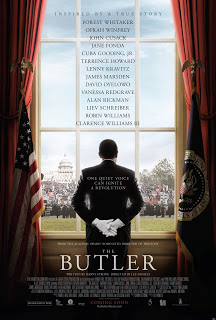
Lee Daniels’ The Butler
Written by Erin Tatum.
My experience going to see Lee Daniels’ The Butler made an impression on me even before the film started playing. I don’t think I have ever been to a movie where every single preview featured a protagonist of color. It reminded me just how whitewashed Hollywood is. Why are films about people of color only marketed through the platform of other films whose primary audience is anticipated to be people of color? Maybe I’m naive – I had forgotten how big of a factor racial demographics are for advertising. All of the previews were spectacular and left me wanting to see more. It’s a shame that these gems don’t get more publicity.
Lee Daniels’ The Butler is a tall order to say the least: it runs a staggering 132 minutes and spans eight presidential administrations with an all-star cast including Forest Whitaker, Oprah Winfrey, Mariah Carey (blink and you’ll miss her), David Oyelowo, Terrence Howard, and Cuba Gooding Jr., just to name a few. It’s to the point where one article calls the film a “cameo roulette.” The amount of history covered is absolutely breathtaking in scope. The script can feel uneven at times because of this, especially in the beginning. You might spend 20 minutes in one year and then cover the next five years in 10 minutes. I applaud the tenacity of the casting director, as I don’t think I’ve ever seen so many cast changes to reflect characters aging. Of course it is a little ridiculous that 52-year-old Forest Whitaker plays Cecil from approximately age 25 into his 90s, but the magic of makeup does wonders. The attention to detail in this film is meticulous, from the clothing to the decor to the hairstyles. The differences and subtleties of each presidential personality are also captured thoroughly even if briefly. There is even a particularly funny scene where Dwight Eisenhower gruffly asks Cecil for… toilet paper assistance… as his beagles sit loyally by the toilet.
Cecil and Gloria.
At its core, the film chronicles the cross-generational struggle to define black identity and masculinity in a racist American society. Little Cecil learns that subservience is the best policy after his father is shot dead for uttering a simple monotone “hey” at the ruthless cotton farm owner, Thomas (Alex Pettyfer), who had likely just raped his mother. Thomas’ elderly mother (Vanessa Redgrave) takes pity on Cecil and allows him to become a domestic servant, where he quickly adapts to being neither seen nor heard. These skills come in handy when he leaves the South and begins serving wealthy white clientele at various DC hotels, leading to his recruitment as a White House butler. Before starting the job, he is reminded that “there are no politics in the White House.” He thus resolves to continue to be painstakingly neutral on any potential political conflict, even if he is explicitly asked for his opinion. His commitment to his career soon borders on obsessive as he works long days and nights, leaving his marriage to wife Gloria (Winfrey) in a perpetual state of decay. Although he watches her battle alcoholism and strongly suspects her affair with the neighbor, Cecil’s commitment to family values and tradition never wavers.
Gloria is unhappy and has an affair.
Cecil’s attitude of racial uplift through hard work starkly contrasts to the restlessness of his older son Lewis (Oyelowo). He is shown to be scornful of and perhaps embarrassed by his father’s position from the time he is a teenager, a disconnect that is all the more exacerbated when he begins to participate in nonviolent civil rights protests while in college. The scenes of the diner sit-in and the Freedom Rides are some of the most emotionally resonant of the film. You can actually feel the burning hatred of their attackers and a few well-timed close-ups ensure that you’re up close and personal to some of their most inhumane and humiliating tactics. One girl has ketchup smeared on her face. Lewis has hot coffee thrown in his eyes. On that note, I’ve never been more disgusted by saliva. You watch one of the attackers lean in and spit a loogie on the cheek of one of the girls protesting and it is vile. Lewis continues to participate in the civil rights efforts despite multiple arrests, much to his parents’ chagrin. Cecil remarks that he “doesn’t understand how Lewis can’t see that the president is going to make things better for us,” particularly after witnessing slow but steady changes in racial policy.
Cecil and Gloria with Lewis (right) and Charlie (left)
What we are witnessing here is friction in the generation gap over ideas about the best means to achieve racial uplift. Cecil espouses the belief in assimilation through passivity and diligence. He grew up in an era where discrimination was benign and silence was survival. In contrast, Lewis believes that discrimination means disrespect and silence equates to, dare I say, emasculation. When Lewis’ generation came of age in the 60s, what was really at stake was the question of the reputation and respectability of black masculinity. Cecil views his way of life as making the best of the limited parameters available for the fulfillment of black manhood, whereas Lewis perceives such servitude as a shameful complacency with histories of racial power dynamics and as an insult to black integrity. In what is arguably one of the most dramatic moments of the film, Cecil snaps on Lewis and his hippie girlfriend Carol (Yaya Alafia) essentially for being apathetic flower children with no respect for the sacrifices of their parents, prompting Lewis to call him an Uncle Tom. This insult provokes an epic slap from Gloria and I must say Oprah has one hell of a backhand. The freeze between father and son becomes permanent and only deepens after Lewis fails to attend his younger brother Charlie’s funeral following his death in the Vietnam War.
Cecil confronts Lewis after he is first sentenced to jail.
Inevitably, the ideological rifts between them soften over the decades. Cecil finally gets the recognition he deserves when he successfully advocates for equal compensation and promotion opportunities for black White House employees during the Reagan Administration (it’s appalling that it took that long). The Reagans invite him and Gloria to the state dinner as guests, but something isn’t sitting right with Cecil and he finds himself increasingly dissatisfied with his job. He decides to patch things up with Lewis and joins him in protesting the imprisonment of Mandela, even getting a taste of Lewis’ life by being arrested and briefly incarcerated. As an old man, Cecil retrospectively feels a great sense of pride for Lewis’ contributions to the civil rights and black power movement. Masculinity is therefore reaffirmed as having the persistence to make your mark on society in the face of great adversity.
Things come full circle as Cecil and Gloria eagerly campaign for the election of Obama in 2008. Gloria passes away, leaving Lewis as Cecil’s last surviving family. Father and son watch the election results with tears in their eyes. Cecil is invited to meet the new president and is warmly greeted by the butler, who is also an African-American man. As Cecil walks stiffly but proudly to meet Obama, there is a definitive sense of collective triumph. Eight decades later, black masculinity is allegedly getting the respect it deserves. Although masculine privilege remains unquestioned and racial dynamics will always be a work in progress, the poignancy of the ending does bring a smile to your face.

Bitch Flicks’ Weekly Picks

I Hate Strong Female Characters by Sophia McDougall at New Statesman


Why “Solidarity” is Bullshit by Tina Vasquez at Bitch Media

New Film “Lovelace” Leaves a Lot to Be Desired by Monica Castillo at Bitch Media
Austenland movie review by Susan Wloszczyna at RogerEbert.com

What have you been reading/writing this week? Tell us in the comments!

Bitch Flicks Weekly Picks

I Hate Strong Female Characters by Sophia McDougall at New Statesman


Why “Solidarity” is Bullshit by Tina Vasquez at Bitch Media

New Film “Lovelace” Leaves a Lot to Be Desired by Monica Castillo at Bitch Media
Austenland movie review by Susan Wloszczyna at RogerEbert.com

What have you been reading/writing this week? Tell us in the comments!

We Need More Coming of Age Films With Female Leads and Characters of Color

“We’ve All Been There” (“we” being young white males).

This guest post by Candice Frederick previously appeared at her blog Reel Talk and is cross-posted with permission.

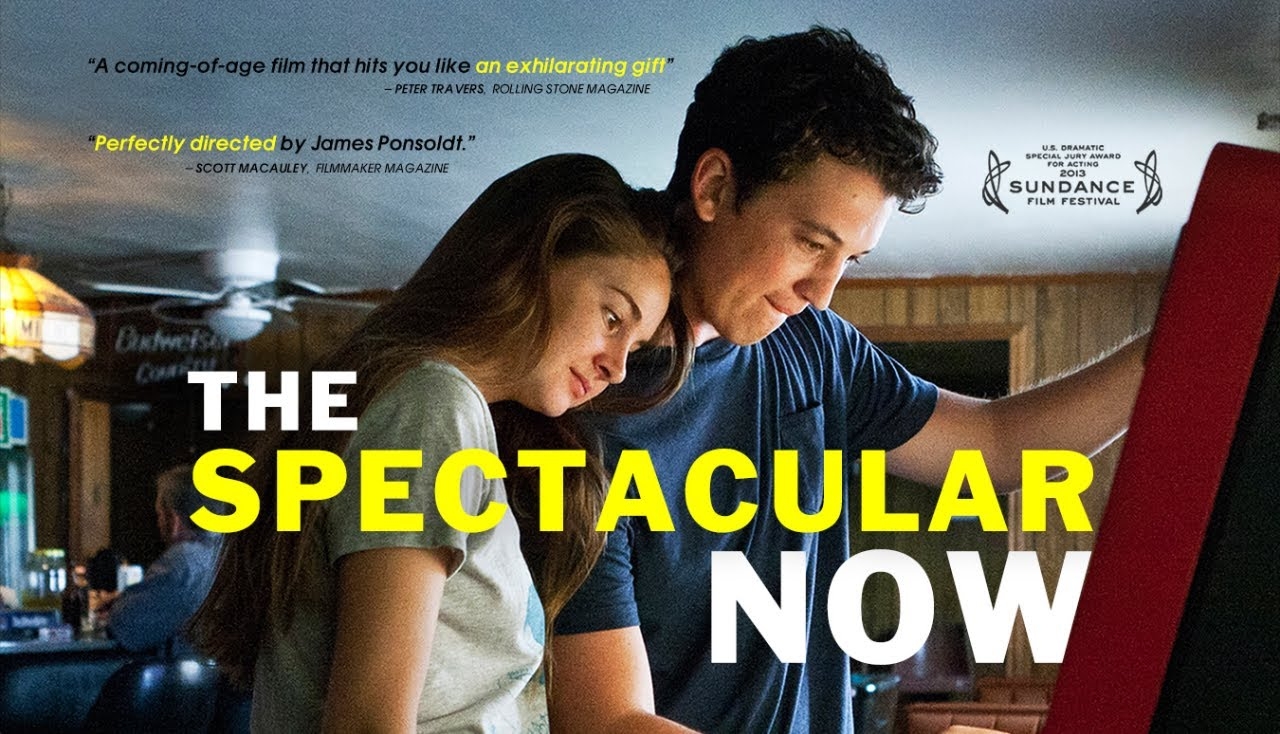
Lately there has been a lot of attention paid to the new crop of coming of age films turning up everywhere, most recently The Way, Way Back and The Spectacular Now. I get it; we all want to revisit that warm and fuzzy (and sometimes awkward) time in our lives when we weren’t quite sure who we were and what we wanted to become, but we were excited–or fearful–about the possibilities. 

But have you noticed that many of these films share one glaringly common theme among them? I’m talking about the fact that in most cases they’re about young white males, or even their older–and apparently still directionless–counterparts. Michael Cera and Paul Rudd aren’t the only ones who could play wondrously clueless wusses on screen. What about all the young girls who struggle with the pains of adolescence, or women who may for whatever reason be looking for a new beginning, or even the characters of color who must contend with a whole other set of challenges as they set out into the world on their own? They’re inexplicably–and unforgivably–being overlooked.

Another white male protagonist.

While Hollywood has promoted and accepted this trend (relying on the fact that some of the themes may be universal), audiences are starting to take notice and voice their discontent about it. Black Girl Nerds posted a piece questioning “Where Are All The Twenty-Something Black Actresses?” The writer lamented over the fact that young actresses of color are rarely sought after for coming of age tales. You’ll also notice that whenever many writers construct a list of the top coming of age films, you’d be hard pressed to find many (or any) where the main character is a female or of color. 
So why the imbalance? Is there any need to rehash the fact that Hollywood’s virtually unwavering focus on the white male goes far beyond the coming of age genre? While the industry timidly tries to break out of that pattern with films like Girl in Progress or The Kids Are all Right, the overwhelming number of white male films not only take precedence but are often the ones that garner more critical accolades. 
Girl in Progress

I wonder whether the common misconception that females tend to be the more focused and mature gender has anything to do with their virtual absence in the genre. However, Kristen Wiig seems to be single-handedly fighting against that stereotype as she’s carved out her very own “hilariously hot mess woman who desperately tries to get her act together” category of films. I’m just saying, it would be nice to see more stories like that of Eve’s Bayou, Under the Tuscan Sun, or Eat, Pray, Love–imperfect films that at the very least more eloquently illuminate the term “coming of age.” 
Pariah — a coming of age film about a young black lesbian.

And I don’t know about you, but I am tired of the so-called coming of age stories featuring characters of color who “come of age” by taking part in some kind of a crime or witnessing something equally devastating. That image has been played to death and is just a crutch at this point (note: that angle is not restricted to films with characters of color, but still). With the critical success of Pariah, you’d think Hollywood would be interested in promoting similar films, ones that illuminate that the drama that comes along with growing pains is often triggered by internal not external circumstances. 

Let’s do better, Hollywood. It’s 2013.

Candice Frederick is an NABJ award-winning print journalist, film critic, and blogger for Reel Talk.

Bitch Flicks’ Weekly Picks

It’s Not Easy for Black Celebrities Like Raven-Symoné to Come Out by Allison Samuels via The Daily Beast

Women Directors Take Record Number of Emmy Nods, If Not TV Jobs by Amy Dawes via The Los Angeles Times

She Did That! Issa Rae Brings ‘Awkward Black Girl’ to HBO via Madame Noire

The Banal, Insidious Sexism of Smurfette by Philip Cohen via The Atlantic

More Leading Roles for Asian Actresses Shows Hollywood’s (Slow) Progress by Vera H-C Chan via Yahoo! Movies

‘Orange is the New Black’ Offers New Opportunity to Discuss Trans* Issues by Mychal Denzel Smith via Feministing

Why Talking About Women Directors Matters by Melissa Silverstein via Women and Hollywood
Damsel in Distress (Part 3) Tropes vs. Women by Anita Sarkeesian via Feminist Frequency
What have you been reading/writing this week? Tell us in the comments!

Bitch Flicks Weekly Picks

It’s Not Easy for Black Celebrities Like Raven-Symoné to Come Out by Allison Samuels via The Daily Beast

Women Directors Take Record Number of Emmy Nods, If Not TV Jobs by Amy Dawes via The Los Angeles Times

She Did That! Issa Rae Brings ‘Awkward Black Girl’ to HBO via Madame Noire

The Banal, Insidious Sexism of Smurfette by Philip Cohen via The Atlantic

More Leading Roles for Asian Actresses Shows Hollywood’s (Slow) Progress by Vera H-C Chan via Yahoo! Movies

‘Orange is the New Black’ Offers New Opportunity to Discuss Trans* Issues by Mychal Denzel Smith via Feministing

Why Talking About Women Directors Matters by Melissa Silverstein via Women and Hollywood
Damsel in Distress (Part 3) Tropes vs. Women by Anita Sarkeesian via Feminist Frequency
What have you been reading/writing this week? Tell us in the comments!