‘The Punk Singer’ and a Room of Her–and Our–Own

…the beauty of riot grrrl lies in the fact that we do get to remake our girlhoods, inserting anger and rioting where before there was quiet sadness and loneliness. It’s easy to flip back and forth between Bikini Kill and The Julie Ruin (and everything in between) and be catapulted back to a moment or into a moment. This idea that we can rewrite our histories and revise our futures by pressing “play” is woven throughout The Punk Singer. Creating ourselves in our rooms, and then stepping outside of our rooms and talking to one another and listening to one another is essential.

Written by Leigh Kolb

The Punk Singer, the Sini Anderson-directed Kathleen Hanna documentary released Nov. 30, is ostensibly about Hanna–the iconic feminist and  punk artist, and iconic feminist punk artist. It is also, however, about the power of women collaborating. From Kathy Acker’s advice to Tobi Vail and Kathi Wilcox’s encouragement to Johanna Fateman’s zines and friendship, Hanna’s career trajectory from feminist punk singer to feminist pop singer to her current project, The Julie Ruin (a perfect combination of feminist punk and pop), has been shaped by female creative power and collaboration.

Hanna stresses the importance of not only girls’ individual power and creativity, but also the need for us to talk–and sing–to one another and to truly listen and believe. This is something that feminism consistently struggles with.

A sexist USA Today article by a female reporter about Bikini Kill and riot grrrl from the early 1990s was featured as a turning point in Hannah’s career. Hanna and her bandmates began a press blackout after the USA Today article and other mainstream press outlets framed the band and the movement around the performers’ bodies and clothes and focused in on their sexuality/sexual pasts.

How disappointing, then, that an NPR article about the new documentary and her project’s new album (The Julie Ruin’s Run Fast), leads with her “bra and panties” past, sexual abuse, and her looks (“She’s striking, with her jet-black hair, oval Modigliani face, pale Liz Taylor eyes…”). Even a Bitch Media reviewer says, while analyzing how riot grrrl was exclusive to white women, that Hanna’s beauty is “the elephant in the room” in the film (“She is one drop-dead-gorgeous-looking woman, both as a teenager and now as an adult. I would argue that it was her physical attractiveness helped her music get mainstream attention”).

Most interviews and reviews have steered clear of focusing on Hanna’s physicality and sexuality, thankfully, but it’s still disheartening and distracting to see any publication bringing up her looks as a source of commentary (and both are by female journalists). Indeed, the media blackout that Bikini Kill led in the 1990s isn’t needed now–Hanna brings up the changed media landscape in multiple interviews–and Hanna has been granting a great number of interviews in recent months as a lead-up to The Punk Singer and Run Fast.

[youtube_sc url=”http://www.youtube.com/watch?v=fwrXC5OXqgc”]

We are lucky to be hearing Hanna’s voice as much as we are. She was diagnosed with late-stage Lyme disease in 2010 after suffering without a diagnosis for six years. The Punk Singer spends a great deal of time chronicling her illness–how it ended her musical career after Le Tigre (she says that she made the excuse that she was done with her music because she had nothing left to say instead of facing that she might not be able to do what she loved so much anymore).

Director Sini Anderson and Kathleen Hanna

The Punk Singer is a powerful showcase of the last three decades of not only Hanna’s life, but also the relationships and collaborations that shaped a  generation of third-wave feminists and beyond. Footage from live performances and interviews, and personal films/photos  are interwoven with interviews from Hanna’s contemporaries, bandmates, and journalists to tell a story about a feminist icon and a movement that would shape the future of music and feminism. Lynn Breedlove, Ann Powers, Corin Tucker, Kim Gordon, Joan Jett, and Adam Horovitz (her husband), among others, add powerful reflections to the history of the riot grrrl movement and Hanna’s professional and personal life.

Hanna speaking about her illness and the desire it gave her to make more music.

The term riot grrrl itself had its origins in collaboration–Jen Smith (of Bratmobile and The Quails) talked about the need for a girl riot, and Bikini Kill’s Tobi Vail wrote about angry grrrls. The two terms combined to name a movement of in-your-face feminist punk music that fought against patriarchy and sexual assault with the motto “girls to the front” defining the ideology and the concert space–which was/is often a masculine, hostile space for women.

Breedlove–who provided some of the most poignant sound bites in the film–says that riot grrrl was about “girls going back to their girlhood… reclaiming their girlhood,” and pledging to “relive” their girlhood with power. Perhaps that’s one of the reasons that so many of us can plug in a Bikini Kill album at 20, 30, 40 and beyond, and feel catapulted back into a poster-filled bedroom, imagining ourselves as girls with power and strength, and revising our histories inside and outside of our girlhood rooms.

The goal of riot grrrl, Hanna and others in the DC-based movement said, was that women anywhere could take it and “run with it”–making it mean what it needed to mean for them. This one-flexible-size-fits-all goal of feminist activism is often difficult to actually manage, but for a moment in the 90s, there was a worthy effort. The repeated importance of fanzines highlights the importance of both collaboration and women’s authentic voices (even ones with “Valley Girl” accents).

The effort of the waves of feminism are highlighted in the documentary in a brief foray into history. While short and somewhat superficial (which is appropriate for the scope of the film), it was interesting and important that the coverage of first- and second-wave feminism noted that women “turned race consciousness on themselves” during the abolitionist movement of the first wave and the civil rights movement of the second wave. Savvy viewers will take that and understand what that means to the historical context of Western feminism (a meaning that is complex and problematic).

Collaboration hasn’t been a strong point for feminists throughout history. The air of critique surrounding Hanna’s beauty and privilege combined with the relative whiteness of riot grrrl both serve to create divisions and otherness within our own ranks. The job of this documentary isn’t to serve as an investigative piece into the beautiful whiteness of feminism–it’s to tell the story of one woman and her personal, professional, and political past and present.

When Bikini Kill broke up in 1997, Hanna recorded the album Julie Ruin under an assumed name (to “escape” what had happened to her in prior years–the bad, sexist press, the threats, the physical attacks).

Hanna says that in Bikini Kill, she was singing to the “elusive asshole” male. With Julie Ruin, she wanted to “start singing directly to other women.” She recorded the entire album in her bedroom, which she points out was purposeful and meaningful. She says that girls’ bedrooms are spaces of “creativity” and great power–but these rooms are set apart from one another; girls have this creativity and personhood in separated, “cut out” spaces. She wanted her album to feel like it was from a girl in her bedroom to girls in their bedrooms, and she succeeded.

She went on to form bands and perform with Le Tigre and The Julie Ruin, constantly revising and evolving the concept of feminist art and performance.

Kathleen Hanna

Throughout the documentary, Virginia Woolf’s words kept ringing in my ears–that women need “a room of one’s own” to create and be independent. For too long, women who have had the undeniable privilege of having rooms of their own have been doing so behind closed doors, apart from one another, as Hanna talks about in regard to Julie Ruin and how girls have these safe, powerful spaces that are set apart from one another.

And as Breedlove points out, the beauty of riot grrrl lies in the fact that we do get to remake our girlhoods, inserting anger and rioting where before there was quiet sadness and loneliness. It’s easy to flip back and forth between Bikini Kill and The Julie Ruin (and everything in between) and be catapulted back to a moment or into a moment. This idea that we can rewrite our histories and revise our futures by pressing “play” is woven throughout The Punk Singer. Creating ourselves in our rooms, and then stepping outside of our rooms and talking to one another and listening to one another is essential.

Continuous moving–rioting, dancing, singing, shouting, collaborating–is how we will survive and thrive, just as Hanna has. Her contributions to feminism and feminist culture (and great music) are undeniable, and The Punk Singer does a beautiful job of inviting us into her room, and making it our own.

20101101-192132-392841

The Punk Singer is available on Video on Demand and in select theaters.

Recommended Links: Interview with Kathleen Hanna on the Strength It Takes to Get On Stage, by Sarah Mirk at Bitch MediaForget ’empowered’ pop stars–we need more riot grrrls, by Daisy Buchanan at The GuardianPunk Icon Kathleen Hanna Brings Riot Grrl Back To The Spotlight, by Katherine Brooks at The Huffington Post13 Reasons Every Feminist Needs To Watch “The Punk Singer,” by Ariane Lange at Buzzfeed; Film Review: ‘The Punk Singer,’ by Dennis Harvey at VarietyQ. & A. Kathleen Hanna on Love, Illness and the Life-Affirming Joy of Punk Rock, by Matt Diehl at The New York TimesKathleen Hanna and ‘The Punk Singer’ Director On New Doc, Riot Grrl and Why People Hate on Feminism, by Bryce J. Renniger at Indiewire; Riot Grrrl in the Media Timeline at Feminist Memory; Kathleen Hanna Reading “The Riot Grrrl Manifesto” at Henry Review; Don’t Need You – The Herstory of Riot Grrrl


Leigh Kolb is a composition, literature and journalism instructor at a community college in rural Missouri. 

Call for Writers: Child and Teenage Girl Protagonists

We thought it might be a fun note to end the year on, with the exploration of films like Harry Potter and Matilda, while also taking a closer, more serious look at portrayals of adolescence and girlhood in films and TV. Some questions to think about include, what are Hollywood’s expectations of girls and teenage girls in films and TV? And how do those expectations feed into the public’s acceptance of a teenage girl’s sexuality, for instance. Further, how might a girl character impact a young girl who’s viewing her on screen?

Call-for-Writers

Our final theme month for 2013? Child and Teenage Girl Protagonists.

We thought it might be a fun note to end the year on, with the exploration of films like Harry Potter and Matilda, while also taking a closer, more serious look at portrayals of adolescence and girlhood in films and TV. Some questions to think about include, what are Hollywood’s expectations of girls and teenage girls in films and TV? And how do those expectations feed into the public’s acceptance of a teenage girl’s sexuality, for instance. Further, how might a girl character impact a young girl who’s viewing her on screen?

We’ve seen very recently how difficult it is for girls to make their transition from young girl star to teenage sex symbol—see Hannah Montana/Miley Cyrus for one example. (And why is that always the trajectory for girls and young women, anyway?) We’ve also seen the media’s abhorrent reaction to girl child stars, Oscar nominee Quvenzhané Wallis, for one, who got called the C word in a “hilarious” and “satirical” tweet by The Onion.

We’d also like writers to explore how expectations differ for boy childhood stars versus girl childhood stars and the significance of those differences. And lately, it seems that our childhood girl stars get to grow up and play Pick Your Own Princess Movie … why is that?

There’s so much to explore with this month’s theme, and those are just a few ideas to get you started. We’ll also include a list of films below that are worth analyzing, but this certainly isn’t an exhaustive list. Please propose your own ideas as well. Animated heroines count, too!

We’d like to avoid as much overlap as possible for this theme, so get your proposals in early if you know who or what you would like to write about. We accept both original pieces and cross-posts, and we respond to queries within a week.

Most of our pieces are between 1,000 and 2,000 words, and include links and images. Please send your piece a Microsoft Word document to btchflcks[at]gmail[dot]com, including links to all images, and include a 2- to 3-sentence bio.

If you have written for us before, please indicate that in your proposal, and if not, send a writing sample if possible.

Please be familiar with our publication and look over recent and popular posts to get an idea of Bitch Flicks’ style and purpose. The final due date for these submissions is Friday, Dec. 20 by midnight.


Catching Fire

Pieces of April

Napoleon Dynamite

True Grit

Love & Basketball

Modern Family

Felicity

Veronica Mars

Friday Night Lights

Pan’s Labyrinth

The Wizard of Oz

Glee

Harry Potter

Carrie

Whale Rider

Matilda

Hannah Montana

My Sister’s Keeper

My Girl

Juno

The Exorcist

Beasts of the Southern Wild

White Oleander

Girl, Interrupted

Winter’s Bone

An Education

Jennifer’s Body

Anywhere But Here

The Golden Compass

Sucker Punch

Center Stage

Teeth

Sense & Sensibility

Precious

The Man in the Moon

Pretty in Pink

The Breakfast Club

American Pie

Monster

Taxi Driver

Ponette

To Kill a Mockingbird

Paper Moon

Firestarter

Akeelah and the Bee

Princess and the Frog

Twilight

The Parent Trap


Bitch Flicks’ Weekly Picks

Check out what we’ve been reading this week–and let us know what you’ve been reading/writing in the comments!


recommended-red-714x300-1


The Best Part of “Catching Fire” is What it Says About TV News by Sarah Mirk at Bitch Media

5 Hilarious Web Series That Were Created By Women by Shannon Iggy at Bust Magazine

The Book Thief: Stealing Hearts and Minds by Natalie Wilson at Ms. blog

For Every Woman Working in the Film Industry, There are Five Men by Sarah Mirk at Bitch Media

Kathleen Hanna and ‘The Punk Singer’ Director On New Doc, Riot Grrl and Why People Hate on Feminism by Bryce J. Renninger at Indiewire

Infographic: Gender Inequality in Hollywood (It’s Worse than You Think) by Inkoo Kang at Women and Hollywood

Emma Thompson Calls Out Hollywood Sexism in Ten Different Ways at THR Actress Roundtable by Inkoo Kang at Women and Hollywood

MHP’s Black Feminism Reading List by Melissa Harris-Perry at msnbc

Black Women, White Women and the Solidarity Question by Janell Hobson at Ms. blog

Top 12 Feminist Reasons to Be Thankful This Year by Melissa McGlensey at Ms. blog

What have you been reading/writing this week? Tell us in the comments!

Male Feminists & Allies Theme Week: The Roundup

Check out all of the posts for Male Feminists and Allies Theme Week here.

Tarantino has created dynamic and interesting female characters throughout his cinematic career, celebrating their strengths, personalities, and never presenting gender as an obstacle—instead, being a woman in his stories is often an advantage.


“A Bit Of An Evolution”: On Louis C.K. by Max Thornton

It’s exhausting to consume any media as a trans* person. It’s not really a matter of if I will become a punchline, but when. This goes triple or quadruple for comedy, and Louis C.K., for all his good qualities, is no exception.

Pacific Rim’s Raleigh Becket Is a Strong Female Character, and That’s Great by Deborah Pless

So, yes. Raleigh Becket is a Strong Female Character. Sure, he’s not female, but as far as our understanding of SFCs goes–which here means well-written female and feminine characters–he’s aces. Raleigh Becket is supportive, sweet, intuitive, and loving, and there is absolutely nothing wrong with that. Not a damn thing.

And in a society where male revelations about abuse, physical, emotional, or sexual, are still considered a mark of weakness, it’s fantastic that such a successful figure is willing to set an example. Especially when that person is Captain Jean Luc Picard, a super smart, sexy, sensitive, nerves-of-steel spaceship captain. I have a feminist daydream of Kirk (Shatner), Janeway (Mulgrew), Sisco (Brooks), and Picard (Stewart) doing a women’s rights PSA: I would make it my ringtone forever.

Adelle, Willow, Zoë, Natasha–you name her, Joss Whedon offers a multitude of heroines with a wide range of diverse identities. A topic as extensive as this, regarding a person with as much output as Joss Whedon’s, would serve to fill entire volumes.


Canadian-born Ryan Gosling is a talented actor, charismatic movie star and global sex symbol. The Notebook (2004) made Gosling a romantic screen icon but he has also, of course, given a number of inspired, thought-provoking performances in both independent and mainstream movies. His roles have been mostly varied and complex, but if you want a general sketch of his screen persona, I would say it’s a potent mix of melancholy, vulnerability, romanticism and sensuality. There is also an aggressive side. While they may retain a vulnerable aspect, he has played quite a few violent men. A seductive presence on the screen, Gosling is also an object of desire for multitudes of women around the world.

Vedder has spent his career fighting for a modern world that accepts and promotes women–he’s fought for reproductive rights, spoken out against sexual assault, and worked for worldwide safe pregnancy/childbirth.

Quote of the Day: Marlo Thomas on Male Allies

“… as we all know, in all movements, the only way to effect change is for everyone to be moving it forward.”


Caroline somehow knows that Adam is not a typical young man simply working for minimum wage at a local diner in Minnesota; he is a heavenly catalyst sent not to offer completeness in Caroline’s life, but to remind her that she is worth loving, even in his absence.

A Sunny South Korean Song for Sisterhood by Ben Cowburn

… Kang seems to be a strong advocate for feminism in film. Though South Korea cinema (and the country as a whole) clearly needs far more women in off-screen positions of power, Sunny seems like a small but hopeful step towards equality, and may well inspire girls in today’s high school cliques to one day demand those positions.

When you think about feminism in television, The OC and teen soaps in general are probably not the first example to come to mind. If you’re not familiar with The OC, it’s about a troubled youth named Ryan Atwood (Ben McKenzie) who is taken in by the Cohens, a very wealthy family, after his own family has abandoned him. I’m very passionate about The OC and it is much more than that, but I shall not digress (or at least try not to). The Cohens are comprised of Kirsten (Kelly Rowan), a wonderful mother as well as a successful architect and businesswoman, Seth (Adam Brody), the awkward and endearing pop-culture-referencing son, and Sandy (Peter Gallagher), a righteous public defender, father, and husband.


My first introduction to Matt Damon was the same as many movie viewers – Good Will Hunting, a film that he starred in and co-wrote with Ben Affleck. It was my favorite film of 1997 and still holds a special place in my heart for its humor, poignancy, and moving portrayal of the lasting effects of abuse.

So what’s feminist about it? Although the word “feminist” is never uttered, Michael plays Dorothy as a bold, liberated woman. At the audition, slimy director Ron Carlisle (Dabney Coleman) tells Dorothy she’s too “soft and genteel” and “not threatening enough” for the part. Dorothy replies: “Yes, I think I know what y’all really want. You want some gross caricature of a woman. To prove some idiotic point, like, like power makes women masculine, or masculine women are ugly… Well shame on the woman who lets you do that.” Right out of the gate, Dorothy not only speaks her mind, but also openly protests sexism.

“All men should be feminists. If men care about women’s rights the world will be a better place…

“We are better off when women are empowered – it leads to a better society.”


Quote of the Day: John Legend on Why All Men Should Be Feminists

“All men should be feminists. If men care about women’s rights the world will be a better place…

“We are better off when women are empowered – it leads to a better society.”

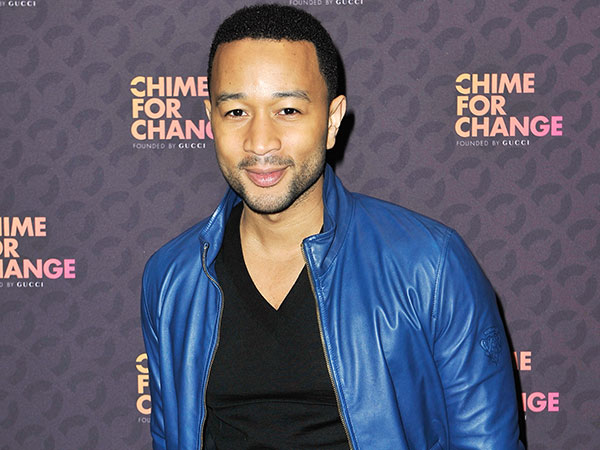
John Legend, who fundraised for Chime for Change through The Sound of Change Live last summer
John Legend, who fundraised for Chime for Change with The Sound of Change Live last summer


As we wrap up our week of celebrating male feminists and allies, it seems appropriate to conclude with the words of singer/songwriter/actor John Legend.

Last spring, Legend said:

“All men should be feminists. If men care about women’s rights the world will be a better place…

“We are better off when women are empowered – it leads to a better society.”

While the role of an ally can sometimes be murky, it would be hard to deny that more male feminists who care about women’s rights and empowering women have a clear role in the move toward equality.

There can be women’s movement after women’s movement, but until men move with us, we can’t all move together. And at the end of the day, the best society will be one full of equally empowered women and men, working together to crush harmful gender stereotypes and expectations, which harm everyone.

‘Tootsie’: The Good, the Bad, and the Ugly Woman

So what’s feminist about it? Although the word “feminist” is never uttered, Michael plays Dorothy as a bold, liberated woman. At the audition, slimy director Ron Carlisle (Dabney Coleman) tells Dorothy she’s too “soft and genteel” and “not threatening enough” for the part. Dorothy replies: “Yes, I think I know what y’all really want. You want some gross caricature of a woman. To prove some idiotic point, like, like power makes women masculine, or masculine women are ugly… Well shame on the woman who lets you do that.” Right out of the gate, Dorothy not only speaks her mind, but also openly protests sexism.

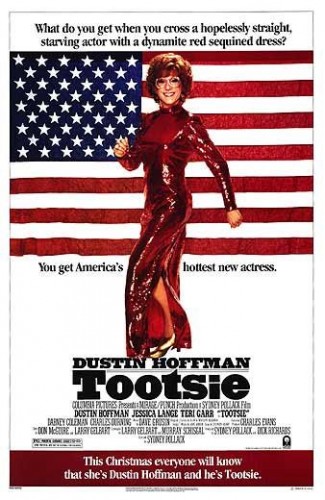
Movie poster for Tootsie


This guest post by Rebecca Cohen appears as part of our theme week on Male Feminists and Allies.

Have you seen the 2012 AFI interview with Dustin Hoffman, where he gets emotional about his role in the cross-dressing 1982 comedy Tootsie?  In the video clip, Hoffman relates his disappointment in discovering that, although makeup artists could help him pass as a credible woman, he would never be a beautiful woman. Hoffman says he cried, realizing that if he were at a party he would never approach a woman who looked like him. He concludes tearfully, “There’s too many interesting women I have … not had the experience to know in this life because I have been brainwashed.”

The video of those remarks went viral recently, and most reactions were enthusiastically positive. Hooray for Dustin Hoffman, breaking through his social conditioning to see the world from a woman’s perspective. Thank you to Dustin Hoffman, for expressing the harshness of beauty standards in such a concise and heartfelt way. Making Tootsie made Dustin Hoffman a feminist ally.

Right?

Well… yes and no. Hoffman’s statements, like the movie Tootsie itself, are a good start. They’re a sincere attempt by a well-intentioned man to address feminist issues. Still, both his words and the movie fall short in many ways.

The Good

In Tootsie, Hoffman plays unemployed actor Michael Dorsey, who disguises himself as a woman to land a job on a daytime soap opera. After winning the role, Michael must continue to pretend to the world that he’s actress Dorothy Michaels. Hilarity, as you might expect, ensues.

So what’s feminist about it? Although the word “feminist” is never uttered, Michael plays Dorothy as a bold, liberated woman. At the audition, slimy director Ron Carlisle (Dabney Coleman) tells Dorothy she’s too “soft and genteel” and “not threatening enough” for the part. Dorothy replies: “Yes, I think I know what y’all really want. You want some gross caricature of a woman. To prove some idiotic point, like, like power makes women masculine, or masculine women are ugly… Well shame on the woman who lets you do that.” Right out of the gate, Dorothy not only speaks her mind, but also openly protests sexism.

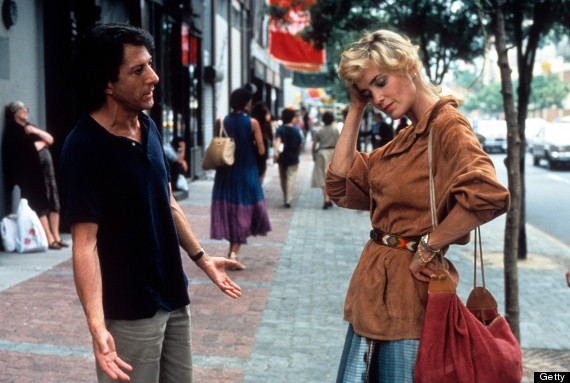
Michael non-apologizing to Julie


Although the role she’s auditioning for, Emily Kimberly, is written as a ball-busting harridan, Dorothy plays her with both fire and vulnerability. Director Ron remains unimpressed, but producer Rita Marshall (Doris Bellack) is obviously moved by the portrayal, and Michael/Dorothy gets the job.

This in itself is pretty layered and rather feminist, if you think about it. The role of Emily Kimberly is written as a sexist stereotype, a cardboard cutout of an unfeminine woman – basically, a man in a dress. But when presented with an actual, literal man in a dress, Ron declares him too feminine. The film thus (probably unintentionally) unpacks some complex ideas about gender and performativity. In order to pass as a woman Michael must play Dorothy as delicate and refined; in a way, he has to present as more feminine than a “real” woman. And this, ironically, almost costs him the role.

From there, the movie continues to develop an overtly feminist narrative. In order to avoid kissing a male co-star, Michael refuses to perform a scene as written. Instead of swooning, the character asserts herself. Producer Rita loves it. Michael/Dorothy continues to depart from the scripts, insisting on making Emily Kimberly feisty and self-assured, and Rita continues to allow it. The character’s popularity grows, Dorothy’s fame grows, and soon Dorothy becomes an outright feminist role model, even appearing on the cover of Ms. Magazine (and Cosmopolitan too, perhaps so we can be assured she’s not that militant). At one point, Rita marvels at what Dorothy has accomplished:  “You are the first woman character who is her own person, who can assert her own personality without robbing someone of theirs. You’re a breakthrough lady for us.”

Dorothy also becomes a personal role model for co-star Julie (Jessica Lange). Through her friendship with Dorothy, Julie gains the strength and self-confidence to break up with Ron. She tells Dorothy, “You wouldn’t compromise your feelings like I have. You wouldn’t live this kind of lie, would you?… I deserve something better, you know? I don’t have to settle for this.” Through the movie, Julie repeatedly expresses how Dorothy has taught her to stand up for herself.

At the same time, Michael learns his own lessons about feminism, drawn from his experiences living as a woman. He’s taken aback by the effort and expense required of women to keep themselves attractive. He attempts to voice concerns on set, but gets frustrated when Ron dismissively talks over him. Experiencing the world as Dorothy, Michael comes to believe he really has a new understanding of what women endure. He tells his agent, George (Sydney Pollack): “I feel like I have something to say to women, something meaningful,” explaining how he knows what it is to feel helpless and not in control.

In one of the most memorable moments of the film, Michael/Dorothy, fed up with Ron’s patronizing treatment on set, stands up to him:

Michael/Dorothy: Ron, my name is Dorothy. It’s not Tootsie or Toots or Sweetie or Honey or Doll.

Ron: Oh Christ.

Michael/Dorothy: No, just Dorothy. Now Alan’s always Alan, Tom is always Tom, and John’s always John. I have a name too; it’s Dorothy. Capital D, O, R, O, T, H, Y. Dorothy.

Titling the film Tootsie emphasizes that Michael’s experience of being marginalized, of struggling to demand respect, is meant to be understood as a focal point of the film.

So, clearly it’s a feminist movie. In some ways.

Dorothy and Michael
Dorothy and Michael


The Bad

So why does Rita Marshall, a seasoned and capable TV producer, never include independent, assertive women on her show until Dorothy Michaels comes along and steamrolls her into it? Did it never occur to her that such a thing was possible, or that her mostly female audience might enjoy it? Similarly, why is Dorothy the only woman who stands up to Ron’s harassment, even though it’s evident he’s been behaving this way with impunity for years?

The film seems to imply that Michael, coming from a position of male privilege, is uniquely positioned to call out sexism. He isn’t accustomed to enduring second-class status. Women deal with it grudgingly, because, you know – that’s how the world works. But Michael hasn’t been conditioned to accept it. So he doesn’t.

Here’s the thing. This situates Michael as the White Knight, the male savior of women’s rights. Spending only a few months experiencing how the world treats a woman, he’s better able to challenge the status quo than the women who’ve spent their entire lives experiencing it. Like many cross-dress comedies, Tootsie falls into the trap of implying that a man is better at being a woman than any woman knows how to be.

Also, what does Michael do with his newfound understanding of the struggles women face? He sees how Ron mistreats Julie, lying to her yet claiming it’s to spare her feelings. But Michael does essentially the same thing to his longtime friend Sandy (Terri Garr). He sleeps with Sandy to cover up his secret, then lies to her and strings her along even as he’s steadily falling in love with Julie. It’s women, specifically Sandy and Julie, who bear the brunt of the harm caused by Michael’s deceit. Recognizing how men use lies to abuse women doesn’t stop Michael from doing it himself.

Dorothy shaving
Dorothy shaving


Even after the truth is revealed, Michael never apologizes to Julie for deceiving her. (Interestingly, he does apologize to her father in suitably man-to-man fashion.) He tells Julie, “I just did it for the work. I didn’t mean to hurt anybody.” In other words, instead of acknowledging her hurt and owning the harm he caused, he tries to explain and justify. He tells her, “I was a better man with you as a woman then I ever was with a woman as a man.” This is the lesson Michael draws from his experience as Dorothy: it has made him a better man… somehow.

Thus the film undercuts its early feminist promise. Michael never has to answer to the women who admired him as a feminist icon, only to find out he was a man all along. He never apologizes to the women he deceived on a very intimate level. He doesn’t, when all is said and done, make anything better for women. But that’s not important. What matters is that he has become a better man. “I just gotta learn to do it without the dress,” he explains.

Terri Garr, speaking to the Onion AV Club in 2008, shared her thoughts about Dustin Hoffman’s Tootsie-inspired insights about gender: “They put a man in a dress, and he’s supposed to know what it feels like to be a woman. But of course he doesn’t. I think what Dustin [Hoffman] says is, ‘I realize now how important it is for a woman to be pretty. And I wasn’t pretty.’ God! That’s all you realized? Jesus Christ. Oh well. Don’t quote me. Actually, quote me.”

Dustin Hoffman’s epiphany about women being judged based on their looks is most certainly A Good Thing. So is his acknowledgment of his own role in marginalizing women who don’t meet a certain beauty standard. But even as he laments all the interesting women he never took the time to know, Hoffman’s comments still center on himself. It’s about his loss in not getting to know these hypothetical women. It’s about his regret. And fundamentally, as Terri Garr points out, something is still missing.

[youtube_sc url=”http://youtu.be/Ch57pIuYhbM”]

I’m genuinely pleased to know that making Tootsie taught Dustin Hoffman to be a better man, just as his character Michael Dorsey learned to be a better man. But being a male feminist or feminist ally isn’t primarily about men’s personal character growth. It’s supposed to be about liberating and empowering women. And it’s frustrating to see people respond as though Hoffman has discovered some earth-shattering truth, when women have already spoken and written about these issues at length. Why does it carry more weight when a straight, white, cis, wealthy, famous man expresses it?

Of course, like it or not, people listen when straight, white, cis, wealthy, famous men speak. So I can’t criticize Dustin Hoffman for using the platform he has to amplify a feminist message, even if what he says should be obvious to everyone by now. Terri Garr is absolutely right: Dressing as a woman for a day does not convey the entirety of what it means to be a woman in a patriarchal society. But I wouldn’t object if more men wanted to give it a try.


Rebecca Cohen is the creator of the webcomic “The Adventures of Gyno-Star,” the world’s first (and possibly only) explicitly feminist superhero comic.


Matt Damon’s On- and Off-Screen Feminism

My first introduction to Matt Damon was the same as many movie viewers – Good Will Hunting, a film that he starred in and co-wrote with Ben Affleck. It was my favorite film of 1997 and still holds a special place in my heart for its humor, poignancy, and moving portrayal of the lasting effects of abuse.

Written by Lady T as part of our theme week on Male Feminists and Allies.

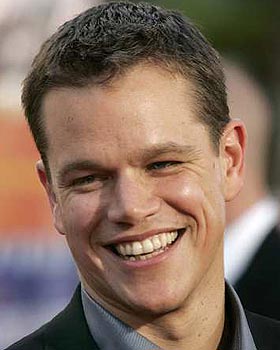
Where's Matt Damon's "hey girl" meme?
Where’s Matt Damon’s “hey girl” meme?

My first introduction to Matt Damon was the same as many movie viewers–Good Will Hunting, a film that he starred in and co-wrote with Ben Affleck. It was my favorite film of 1997 and still holds a special place in my heart for its humor, poignancy, and moving portrayal of the lasting effects of abuse. While the main focus of the film is on Will’s character development and his relationship with his psychologist, Sean Maguire (Robin Williams), the romantic subplot plays an important role in the story and features an intriguing love interest.

Skylar, played by Minnie Driver, is one of the more fleshed-out female supporting characters I’ve seen in film. Because she is a supporting character, she is, by definition, in the movie to assist with Will’s development, but she’s still a fully developed human being rather than an obligatory “girlfriend” archetype included in the script to throw a bone to a female audience. She loves Will and is committed to their relationship but is primarily motivated by her academic and career ambition, and we’re encouraged to sympathize with her when Will lashes out at her. While much of the success with Skylar’s character lies with Minnie Driver’s performance, Damon and Affleck share credit for writing a woman who has a backstory and motivation beyond, “Hey, this movie needs a girl in it.”

Damon and Minnie Driver in Good Will Hunting

Considering the level of care put into the writing of Skylar’s character, it’s no surprise that Damon is an outspoken feminist ally and supporter of issues that directly affect women.

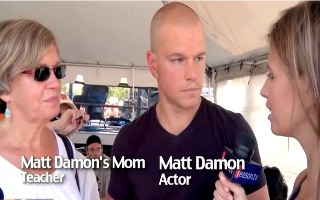
Public education is one of Damon’s major political causes, largely inspired by the lifelong work of his mother, Nancy Carlsson-Paige, Professor Emerita of early childhood education at Lesley University. Outspoken advocates for teachers and education, Damon and Carlsson-Paige were questioned two years ago by libertarian ambush reporters who alleged that job insecurity was motivation for teachers to improve their performance, to which Damon gave this now well-known response:

“So you think job insecurity is what makes me work hard? I want to be an actor. That’s not an incentive. That’s the thing. See, you take this MBA-style thinking, right? It’s the problem with ed policy right now, this intrinsically paternalistic view of problems that are much more complex than that. It’s like saying a teacher is going to get lazy when they have tenure. A teacher wants to teach. I mean, why else would you take a shitty salary and really long hours and do that job unless you really love to do it?”

As a former public school teacher who left the profession largely because of this “intrinsically paternalistic view of problems” that Damon speaks of, I appreciated this interview on multiple levels. I appreciated that Damon deferred to Carlsson-Paige’s superior knowledge in the field (even though the interviewers only referred to her as “Matt Damon’s Mom”), challenging the reporter’s incorrect assumptions by reminding her that an expert in the field was proving her wrong. I appreciate that Damon is so invested in a field where over 70 percent of teachers are women, showing that he believes women’s work is valuable.

Most of all, I love that Damon criticizes the “intrinsically paternalistic” nature of education reform, pointing out that problems are very complex, and solutions need time to grow. Similar to the way many people would like to pretend that complex problems like racism, sexism, and homophobia are of the past, many leaders in education reform would like to believe that the next set of standards or change in tenure policy will fix all the problems in public schools. Acknowledging the complexity of systemic problems is a key component, regardless of whether or not Damon is directly tying his public school advocacy to women’s rights.

She has a name, "Reason".tv!
She has a name, “Reason”.tv!

There is, however, at least one cause where Damon specifically advocates for women, and that’s through Water.org, a nonprofit organization that he co-created with Gary White. Water.org’s main goal is to improve access to safe water and clean toilets. The website makes a point of saying that “We believe people in developing countries know best how to solve their own problems,” showing that there’s a level of respect for different cultures that is sometimes absent from other charities.

Perhaps even more remarkable than the lack of a “white American savior” attitude is the fact that Water.org has its own page for “the women’s crisis,” showing how the water crisis affects women specifically. The page also details the organization’s approach to helping women:

“Around the world, women are coming together to address their own needs for water and sanitation. Their strength and courage transforms communities. With the support of Water.org and its local partners, women organize their communities to support a well and take out small loans for household water connections and toilets. They support one another, share responsibility. These efforts make an impact, taking us one step closer to ending the global water crisis.”

There are many wonderful things about this organization’s work, and one of my favorite aspects of this activism is the language used. “With the support of Water.org and its local partners, women organize their communities.” This careful phrasing shows not only investment in issues that directly affect women, but respect for women’s empowerment. The language used shows a key understanding of effective ally work: not to rescue or save a marginalized group, but to give the support needed so that people in that group can improve their own lives. Given Damon’s other criticisms about an “intrinsically paternalistic view of problems,” I can’t think that the phrasing is a coincidence.

Whether he’s advocating for causes that affect women on a global scale or simply writing a decent female character, Damon has proven to be an ally to women. No wonder Sarah Silverman was so proud to be f***ing him:

[youtube_sc url=”http://www.youtube.com/watch?v=eSfoF6MhgLA”]

________________________________________

Lady T is a feminist blogger, sketch comedy writer/performer, and author of Fanged, a young adult novel available for purchase today.

Sandy Cohen: Father, Husband, Friend, and Feminist Ally

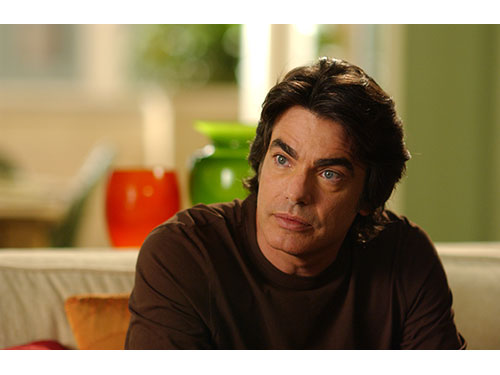
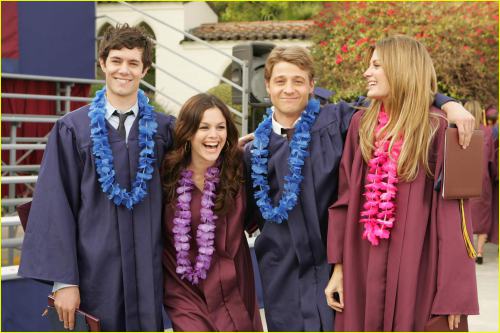
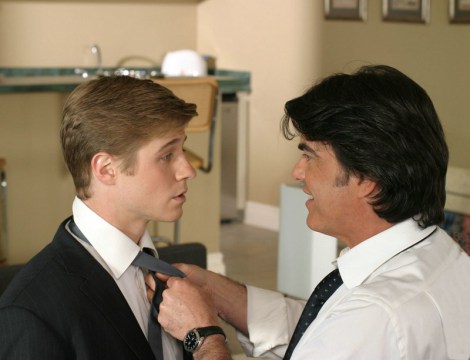
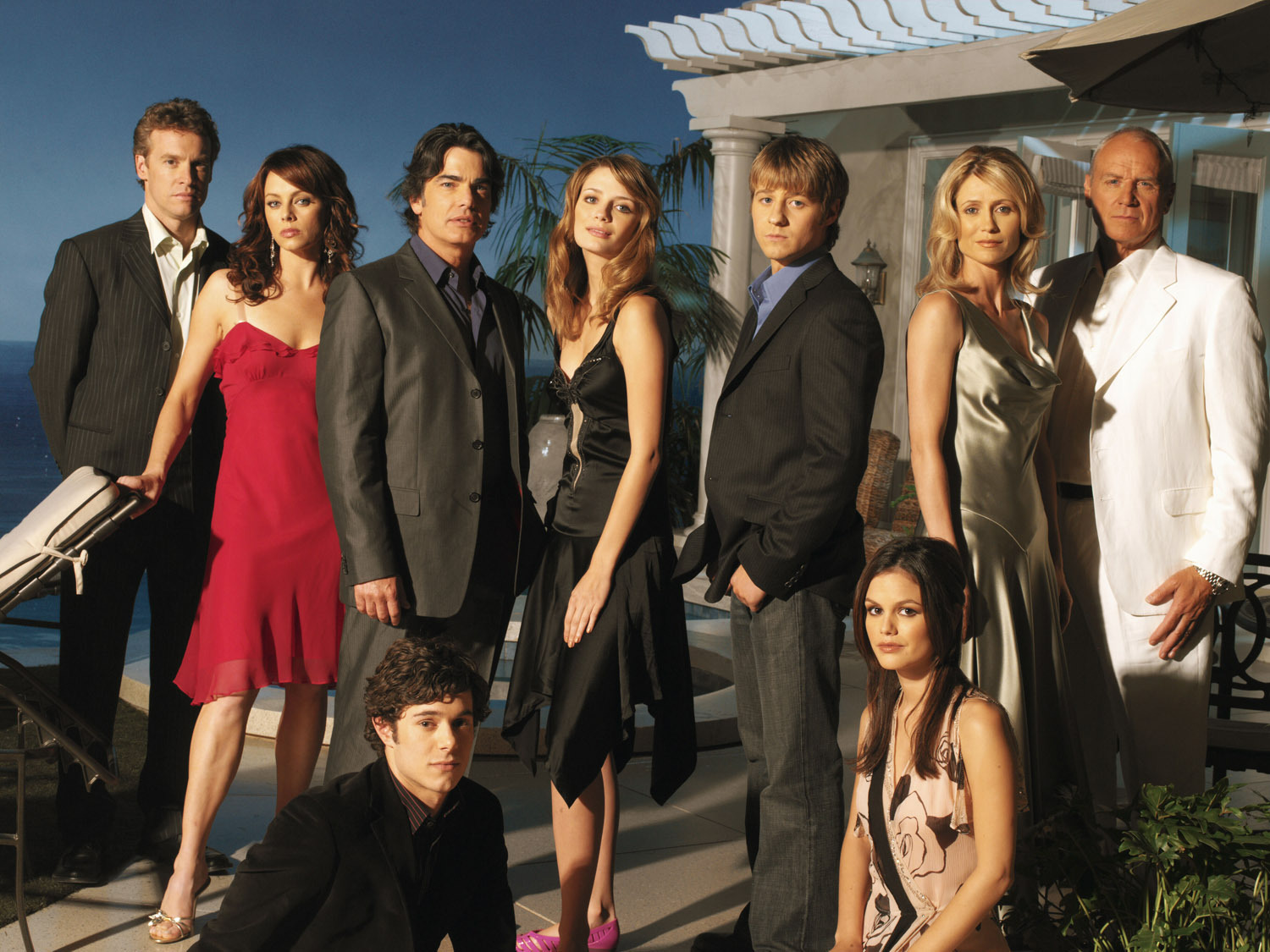
When you think about feminism in television, The OC and teen soaps in general are probably not the first example to come to mind. If you’re not familiar with The OC, it’s about a troubled youth named Ryan Atwood (Ben McKenzie) who is taken in by the Cohens, a very wealthy family, after his own family has abandoned him. I’m very passionate about The OC and it is much more than that, but I shall not digress (or at least try not to). The Cohens are comprised of Kirsten (Kelly Rowan), a wonderful mother as well as a successful architect and businesswoman, Seth (Adam Brody), the awkward and endearing pop-culture-referencing son, and Sandy (Peter Gallagher), a righteous public defender, father, and husband.

rbk-tv-dads-love-OC-lgn

This guest post by Victor Kirksey-Brown appears as part of our theme week on Male Feminists and Allies.

When you think about feminism in television, The OC and teen soaps in general are probably not the first example to come to mind. If you’re not familiar with The OC, it’s about a troubled youth named Ryan Atwood (Ben McKenzie) who is taken in by the Cohens, a very wealthy family, after his own family has abandoned him. I’m very passionate about The OC and it is much more than that, but I shall not digress (or at least try not to). The Cohens are comprised of Kirsten (Kelly Rowan), a wonderful mother as well as a successful architect and businesswoman, Seth (Adam Brody), the awkward and endearing pop-culture-referencing son, and Sandy (Peter Gallagher), a righteous public defender, father, and husband.

the-oc-season-finale30

Now that we’ve got some of the basics down, I’ll get to why Sandy Cohen is a feminist and an ally to the movement. First of all, as previously mentioned, he is a public defender and is always fighting for the underdog. He strives for equality and justice for all, even if it’s for his ruthless neighbor Julie Cooper (Melinda Clarke) or coldhearted father-in-law Caleb Nichol (Alan Dale). He simply never refuses to help and always tries his best to do what’s right. Judging from that description alone, it’s clear to see that Sandy is an ally.

tumblr_m5iwfths2x1r1co8do1_500_large

When it comes to married life, Sandy and his wife Kirsten break all conventions. Kirsten is the main and sometimes sole financial provider. She helps run her father’s company, the Newport Group, a company mostly involved in real estate and housing development, making her and her family millionaires. Kirsten is also a terrible cook and by far the stricter parent. She does the majority of the grounding and often says Sandy has a “hippie” way of parenting. However, Sandy is always supportive of her; he loves that Kirsten is successful at what she does. The only time he ever wants Kirsten to quit her job is when he sees that it’s making her unhappy, and still he doesn’t tell her to quit and stay at home, he knows she values work and suggests she goes into business for herself and get away from her manipulative and controlling father. As long as Kirsten is happy with what she’s doing, Sandy could care less about who makes more money. He’s happy doing the cooking and being a stay-at-home dad. When Kirsten’s ex Jimmy Cooper (Tate Donovan) tells him, “You live in a fantasyland, you’re married to the richest girl in the county, you live in a house you’ve never paid for, you get fired–Kirsten wouldn’t even notice it! You have no idea what it’s like to provide for a family!” Sandy simply responds, “I think there’s more to providing for a family than money.” This stands out because it not only displays that a father can have a role in a family other than bread winner and still be a great dad, but it also says the same for mothers. This statement stands up for all the stay-at-home moms, arguing that just because you may not bring in a lot of money, doesn’t mean that your role is any less important in the family.

Another testament to Sandy and Kirsten’s marriage as well as Sandy’s inner feminist, is the way that they dealt with their marital problems. When another man threatens to come between them in the second season, Sandy never goes the route of slut shaming Kirsten or attacking her character in anyway. He chooses to trust Kirsten, to look at the things he’s done wrong that could have caused a rift between him and his wife, and he and Kirsten work together to fix their problems. No matter what issues they’re facing, whether it be Sandy’s law firm suing the Newport Group, differences in parenting techniques, Kirsten’s drinking problem, or deciding whether or not to move back to their small home in Berkley (small being relative to their Newport mansion), Sandy never tried to pull being the alpha or “man of the house.” Sandy and Kirsten always effectively communicated with one another and made decisions together as a team.

enhanced-buzz-10263-1366656736-4

Sandy was a man that many people went to for help, and he would provide guidance time and time again without judgment. Instead of vilifying Dawn (Ryan’s biological mom, played by Daphne Ashbrook) and casting her out as a bad mother, Sandy searched for her and when he found her, he sympathized and tried to understand the reasons she left Ryan. Sandy never judges her for her decisions, even when Kirsten does. He and Kirsten do their best to help Dawn get back on her feet and reunite Ryan and his mother. In the end, for the sake of the show, Dawn decides that Ryan is better off with the Cohens, but Sandy never attacks her character and he and Kirsten continue to encourage Ryan to reach out to Dawn when he’s ready.

In the second season, when that ruthless neighbor Julie comes to Sandy for help because her ex, a porn producer, is trying to extort her with a pornographic film she starred in, Sandy helps her without question. Despite Sandy and Julie being far from buddies, Sandy never judges her for making a porn film and doesn’t think any less of her for it. He understands why she made it, and understands why she would like to keep it secret from her husband and two daughters (,though he does encourage her to tell her husband and allow him to help her.) He also lets her know that, even though she may view the film as a mistake, she shouldn’t be ashamed of it and she should try to trust her family with it.

Also in the second season, when Renee Wheeler (Kathleen York) reveals that she and Caleb have a love-child together, Lindsay (Shannon Lucio), from an affair they had while she was his secretary, Sandy helps her. Even though she’s going to cause a major divide in his family, he doesn’t attack her or judge her, he helps her do what’s right and pushes to make the reveal as easy of a process as it can possibly be.

Sandy never tires to coerce or manipulate any of the women who he helps. His help isn’t always selfless, but he doesn’t try to use his help as a play for power which is a route often taken by men in positions to help women on television.

ryan-and-sandy

Another great thing about Sandy is that he does his best to dissuade Ryan from being hyper-masculine and thinking he always has to save the day. To Ryan’s defense, this doesn’t come from him thinking he has to be a macho man, but rather from the fact that he grew up being the most responsible person in his household. He’s used to stepping in and taking control of a situation and Sandy helps him to realize that that isn’t always his job. When Sandy sees that Ryan is involving himself too much with Marissa’s (Mischa Barton) problems in the first season he tells him, “Marissa is going to have to figure this out on her own, and you gotta let her. You’re here with us now. You don’t have to be the parent anymore.” When Ryan finds out Theresa’s (Navi Rawat) boyfriend is physically abusing her, Sandy encourages Ryan not to resort to violence to try and resolve the problem, but to use his head. “Theresa has to decide on her own to leave Eddie. You can’t force her. …I’ve seen way too many kids just like him and I know that it will not be you to suddenly make him change.” Though it takes Ryan until the third season to fully take these teachings to heart, he does eventually get it. With Sandy’s help Ryan realizes that women are fully capable of handling their own problems and that he doesn’t always have to step in. Everyone needs help now and then, but you have to also allow people to help themselves.

ryan-seth-kirsten-sandy-seth-and-ryan-2167236-1555-1039

There are a other, more obvious male feminist allies I can think of in television, Ron Swanson, Eric “Coach” Taylor, and Cliff Huxtable to name a few, but I grew up watching soap operas with my mom and I LOVE teen soaps. Seeing a character like Sandy Cohen in the teen soap genre is rare and something I consider very important. It shows young women (the core audience of this genre) that they should not allow the men in their lives, whether it be their brothers, fathers, uncles, boyfriends, teachers or whoever, to view them as someone always needing to be guided and saved. It allows them to see that a relationship should be a partnership and that they shouldn’t be expected to aim low to avoid hurting some guy’s ego or stand on a higher moral ground because they’re a woman.

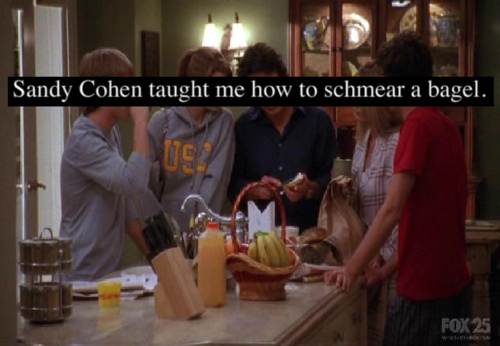
I grew up surrounded by an abundance of strong female role models and seeing a male character on television that respects women, doesn’t consider powerful women to be a threat to his manhood, and just generally treats women as equals is something that stood out to me and that I admired. As a male viewer I looked up to Sandy Cohen because he exhibited all these traits and helped to further instill them in me. I still strive to one day be at least half the husband, father, and friend that Sandy is.

Season-2-Cast-Photo-Shoot-the-oc-5221402-1500-1125

If you’ve never seen The OC, I highly recommend giving it a try and if you have, I recommend watching it again…and again…and again. I’ve learned a lot from it and fell in love with its characters and I think that you will too. I’ll leave you with a mash-up I found of some of Sandy Cohen’s best advice.


 Victor Kirksey-Brown lives in Minneapolis, Minn.


A ‘Sunny’ South Korean Song for Sisterhood

… Kang seems to be a strong advocate for feminism in film. Though South Korea cinema (and the country as a whole) clearly needs far more women in off-screen positions of power, Sunny seems like a small but hopeful step towards equality, and may well inspire girls in today’s high school cliques to one day demand those positions.

This guest post by Ben Cowburn appears as part of our theme week on Male Feminists and Allies.

Despite the recent election of the country’s first female president, South Korea isn’t the easiest place to find examples of gender equality. The country has one of the world’s largest gender gaps (1), a corporate culture still shaped by patriarchal Confucian traditions, and extreme pressure on young women to conform to very particular beauty standards. At first glance, Korean cinema appears to mirror this lack of progressiveness, as in terms of behind-the-camera power, the country’s film industry, which boomed with the Korean Wave of the late 90s, seems to be as much a boys’ club as Hollywood (2). However, the situation for on-screen representations of women and girls seems to be steadily improving in South Korea, driven in part by successful filmmakers who could easily be described as male feminists.

Korea’s most internationally visible writer/directors Park Chan-wook and Bong Joon-ho, and festival favourite Lee Chang-dong, have all crafted films based around female characters at least as complex as the men they come into conflict with. Park’s Lady Vengeance gave Lee Yeong-ae a role as starkly uncompromising as Choi Min-shik’s in Oldboy, and his films I’m A Cyborg but it’s Okay and Stoker both feature female protagonists. Bong’s film Mother is based around a searing performance from celebrated TV actor Kim Hye-ja, and even the seemingly male-dominated Snowpiercer features strong roles for Ko Ah-sung, Octavia Spencer, Alison Pill and Tilda Swinton, who gives one of her most memorably strange performances. Lee’s Secret Sunshine and Poetry feature complex, unglamorous, down-to-earth female protagonists, portrayed in award-winning fashion by Jeon Do-yeon and Yun Jeong-hie.

In the less internationally prestigious corners of the industry, South Korean cinema has developed a crowd-pleasing line in modestly budgeted films with predominantly female ensemble casts. Though often determinedly formulaic, films such as Forever the Moment, based on a women’s handball team, and Harmony (3), set in a women’s prison, are relentlessly entertaining, easily pass both Bechdel and Maki Mori tests, and have proved very popular. The most commercially successful example of this mini-genre is Sunny, released in 2011, and directed by Kang Hyeong-Cheol, who co-wrote the script with Lee Byeong-Heon (4). Both Kang and Lee are men, but Kang reportedly based the story on his mother’s recollections of her high-school life (5), and the film, which is powered by the memorable performances and excellent chemistry of its largely female cast, has a strongly feminist message.

Sunny centres around a clique of seven friends in a Seoul girls’ high school sometime in the 1980s (the film is a little hazy with the actual continuity), who are reunited in the present day, after being estranged for more than 25 years. The film is structured to give equal weight to the friends’ time in high school and to their eventual reunion, and cheerfully ticks off most of the tropes viewers would expect from its set-up. In the high school scenes friendships are forged, sisterhood is strained, bullies are bested, cute guys are crushed on, and families are fought with. In the present day, nostalgic jokes and reveries are shared, disappointments and failures are revealed, and the bonds of friendship are shown to be timeless. All pleasantly predictable and satisfying for fans of coming-of-age stories, and elevated by the playful zest of the film-making, entertaining plot absurdities, and  most of all, by the irresistible energy of the cast.

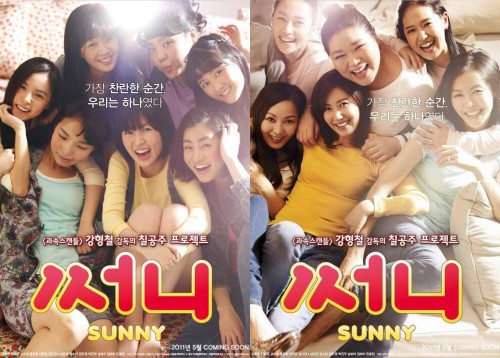
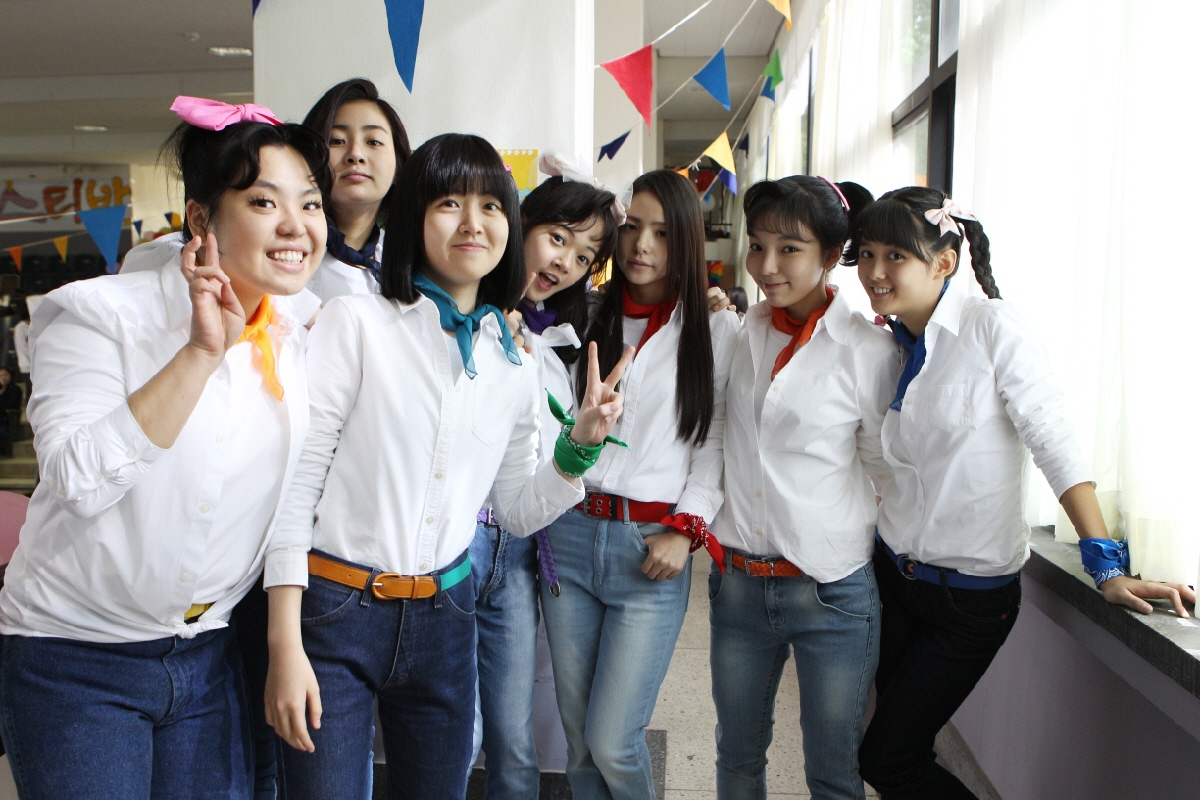
The cast of Sunny’s 80s (left) and present-day scenes (right).

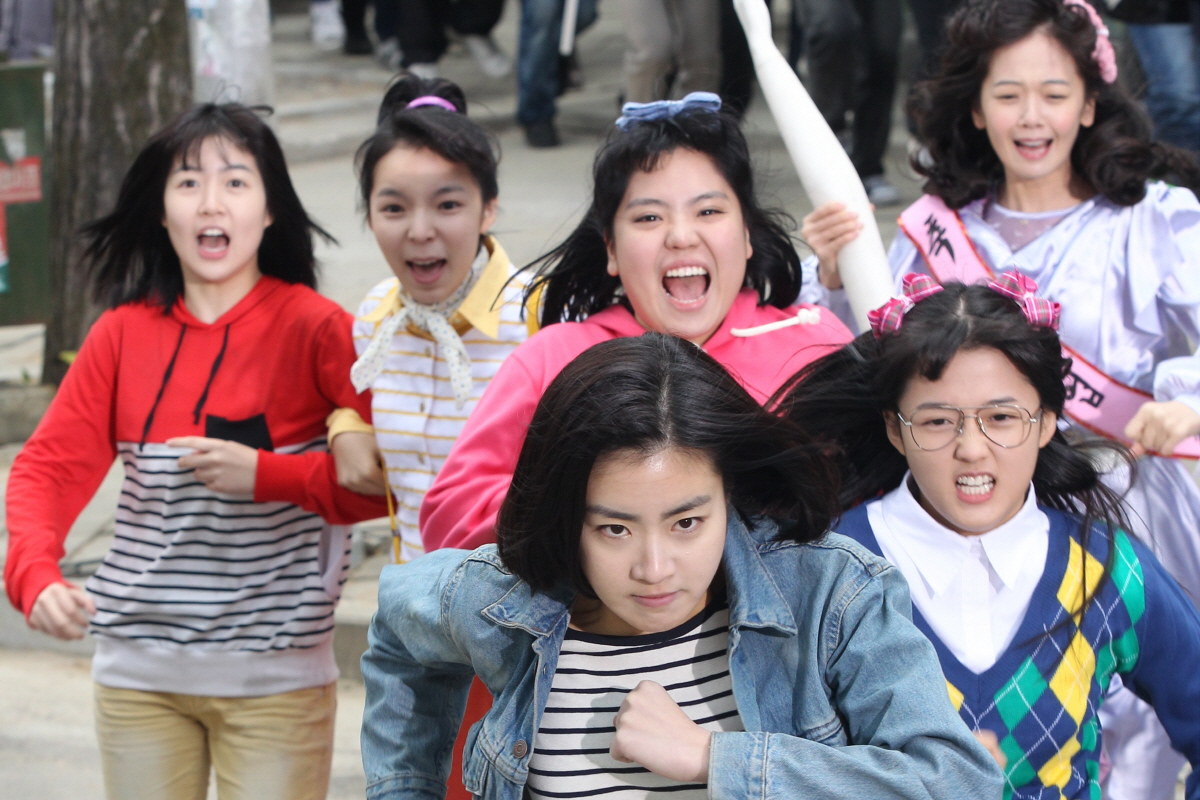
The film is told from the perspective of Na-mi, a newcomer to the school in the 80s, and an under-appreciated wife and mother in 2011. A chance present-day encounter with old friend Chun-hwa leads Na-mi into a series of flashbacks, and sparks an attempt to get the old gang back together. Gang is the right word, as in the flashbacks we see the seven girls trade insults, and eventually punches and flying kicks, with a rival posse from another school. Chun-hwa, the group’s charismatic leader, brings Na-mi into the fold when she proves useful in squaring off against the enemy. Despite some friction (there has to be some friction) with another member, Na-mi is soon initiated into the group, which is given the name Sunny by a radio DJ, and practising a chaotic dance routine to accompany Boney-M’s version of Bobby Hebb’s ode to looking on the bright side.

The 80s scenes are a blur of logo-strewn sports bags, candy-coloured sweaters, synthed-up disco tunes and reverb-heavy ballads. The script mixes in references to current K-pop groups, as well as winking predictions for a future of professional video gamers and “portable phones.” Anachronisms are also cheerfully thrown around: characters mention watching MTV, which wasn’t broadcast in Korea until 1991, and the story plays out against a backdrop of civil unrest, which seems to suggest the student-led June Democracy Movement that flared up in 1980. This turbulent background seems to mainly be set up to allow for a highly entertaining slow-motion fight between the two gangs amidst a melee of riot police and protesters. The ridiculous bravado of the scene, which is clearly filtered through the older characters’ memories of the fight, makes the clunky exposition and obvious expense of the extra-strewn scene completely worthwhile.

Na-mi, Chun-hwa and friends in action.

The heightened, highly-charged nature of the flashback scenes reflects Na-mi’s nostalgic (and sometimes painful) recollections of her school days, and contrasts nicely with the slightly more subdued style of the present day scenes. At times, the two time periods are swirled together, as in another deliriously weird fight sequence, and in a touching montage in which Na-mi’s teenage disappointment over an unrequited crush is cross-cut with her mid-40s acceptance of a path not taken. Mostly, though, the streams are crossed with playful in-camera transitions, which employ doorways, walls, and windows as time portals, and music as a bridge between periods. A pivotal (and probably obligatory) scene in which Na-mi watches a video recording of the teenage gang members addressing their older selves is adeptly realized, thanks to the vitality of the girls’ ensemble work, and the weaving of on-going conflicts into the video.

There are few scenes in the 80s storyline in which Na-mi doesn’t face an elemental teenage challenge, either from within the gang or from the outside world, and this helps sustain a charged and immediate atmosphere. Though the present-day scenes aren’t quite as potent, they provide plenty of opportunities to underline the important role the girls played in each other’s formative years, and what they have missed out on since high school. The easy, affectionate chemistry between the older actors nicely mirrors the frenetic fellowship of the younger cast, and the present-day scenes deliver plenty of abrasive humour to complement dollops of well-earned sentiment.

Na-mi and Chun-hwa in a present-day scene.

The actors in both story-lines brilliantly unify their linked performances, and this was clearly a major focus of the casting and Kang’s work with his cast. Particularly compelling are Sim Eun-kyeong and Yu Ho-jeong as the younger and older Na-mi, and Kang So-ra and Jin Hee-kyung as Chun-hwa, but each member of the gang is sharply defined, especially in the 80s scenes. The characterisation is mostly archetypal, but the girls are all shown to be witty, smart and determined, and no one is bodily humiliated or slut-shamed. In fact, sexuality has only the briefest of roles in proceedings, which is perhaps a little unrealistic, but helps to keep the focus firmly on the friendship between the girls. The single romantic complication is swiftly dealt with, so that the gang can get on with the real business of practising their dance moves, kicking ass and keeping the world at bay with a combination of mutual support and bag language.

Swearing plays a surprisingly important role in the film. Early on Na-mi’s possibly senile grandmother spews out a stream of backwoods invective, which Na-mi later copies to help the gang scare off their rivals and gain acceptance. In both time periods, the friends routinely refer to each other as ‘shibal nyun’ (usually translated as ‘fucking bitch’), and one of the younger gang members dreams of writing a swearing dictionary. The film’s original cut had so much cursing that it to be edited to ensure a PG-15 certificate, which seems to have been the right choice, as the film presents some very positive messages for teenage girls. The director’s cut restores the characters to their full, foul-mouthed glory, which gives scenes in the past and present bite and authenticity, and could be seen as a challenge to the subservient role women are often still tacitly expected to perform in Korean society. Other satirical touches include digs at South Korea’s enduring obsession with very specific beauty ideals, such as “double eyelids,” and the undermining of a male teacher’s army-derived methods of corporal punishment.

The Sunny girls face off against a rival gang.

The teenage characters have a refreshingly diverse range of ambitions (most of which remain unfulfilled in their present day lives, of course), and they are never objectified or marginalised, with costume design and shot choice underlying another important theme: that each of the girls needs to become the protagonist in her own story. This is somewhat unnecessarily spelled out out at several points, but the film mostly follows through with the idea, only fudging things a little in its final scene, which seems to present money as a key to solve everyone’s problems. More importantly, though, the resolution shows the women learning to take inspiration from their teenage selves, and vowing to reclaim agency in their lives.

Although seemingly machine-tooled to yield maximum comic and emotional impact, Sunny has plenty of rough edges and plot contrivances: Na-mi’s husband is mysteriously called away on a two-moth-long business trip, to give her more time to bond with her estranged friends, and the climactic event that closes the 80s storyline doesn’t convince as a reason for the girls to completely lose touch for a quarter century. The director’s cut, which I watched, could certainly use a trim, with a few unnecessary side stories adding little to the main characters’ arcs. None of this really matters, though, as Kang and his cast manage to cram in plenty of heady scenes of triumph, defeat, affection and antagonism into the 80s storyline, most of which are paid off in the present-day scenes. Do the 40-something friends reunite to perform the dance to Sunny they practised as teenagers? Does each woman find solace and strength in her re-invigorated friendships? Does the dictionary of swearing ever get written? I couldn’t possibly say.

The 80s cast in off-duty poses.

Sunny proved endearingly popular on its cinema release (6), and became the second highest grossing domestic film in Korea of 2011, due in part to a surge in nostalgia for the culture of the 7080 generation, but mainly to strong word-of-mouth. As with Bridesmaids and The Heat, the film clearly shows the huge demand for female-lead films, and like those film’s director, Paul Feig, Kang seems to be a strong advocate for feminism in film. Though South Korea cinema (and the country as a whole) clearly needs far more women in off-screen positions of power, Sunny seems like a small but hopeful step towards equality, and may well inspire girls in today’s high school cliques to one day demand those positions.


1 – South Korea currently ranks number 111 out of 136 in the World Economic Forum Gender Gap Report, and the country has been on a downwards trajectory for the last few years.

2 – All of 50 most popular Korean films to date have male directors.

3 – One of the most successful Korean films with a female director, Dae-gyu Kang, Harmonymade me weep repeatedly when I saw it on a plane a few years ago. I blame the altitude.

4 – Not the devilishly handsome actor of the same name, best known to international audiences from The Good, The Bad and The Weird.

5 – According to a Q+A transcribed here.

6 – The film opened at number in the Korean box office, stayed there the following week, and returned to the top spot five weeks later.


Ben Cowburn is from England, and currently works as an English language teacher in Jinju, South Korea. He also writes and takes photos. Words and pictures, can be found at: thelightthroughthewindow.tumblr.com.

“I Wasn’t Finished”: Divine Masculinity in ‘Untamed Heart’

Caroline somehow knows that Adam is not a typical young man simply working for minimum wage at a local diner in Minnesota; he is a heavenly catalyst sent not to offer completeness in Caroline’s life, but to remind her that she is worth loving, even in his absence.

This guest post by Jenny Lapekas appears as part of our theme week on Male Feminists and Allies.

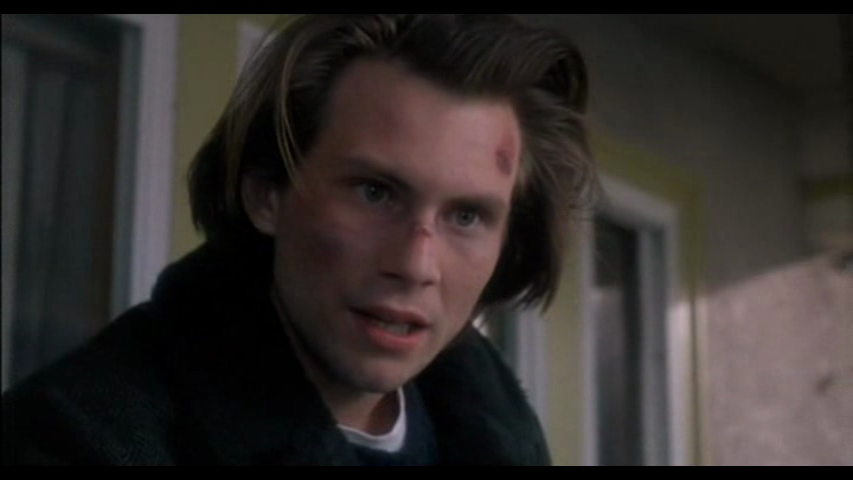
In Tony Bill’s romance Untamed Heart (1993) Adam (Christian Slater) is very much a Christ-like figure throughout the film–he carries an aura of secrecy, we see him consistently bathed in light in many scenes, and he saves Caroline (Marisa Tomei) from her would-be rapists in a dark park in Minneapolis.  In fact, Adam–whose name echoes the biblical Adam of the Garden of Eden–saves Caroline throughout the film, and it only makes sense, after proving his sacrificial love for the waitress, that he dies at the film’s conclusion.  The film immediately focuses on Adam as it opens with his upbringing as an orphan raised by nuns.  When the juvenile Adam has medical issues with his heart, one of the concerned nuns pleads, “Don’t you break our hearts,” a clear indication of his divine links as a person and a child of the church.

When Caroline questions Adam about fighting off the pair of drunken men, she is almost accusatory:  “You follow me home?”  After her attack, the last thing she wants to believe is that Adam’s sweet gaze is actually predatory.  Adam interrupts her charming babbling with a sobering, “I wasn’t finished,” which becomes his mantra throughout the film; Caroline tends to talk herself in circles, but Tomei has a way of winning over viewers with her cyclical monologue when interacting with the dreamy Christian Slater.

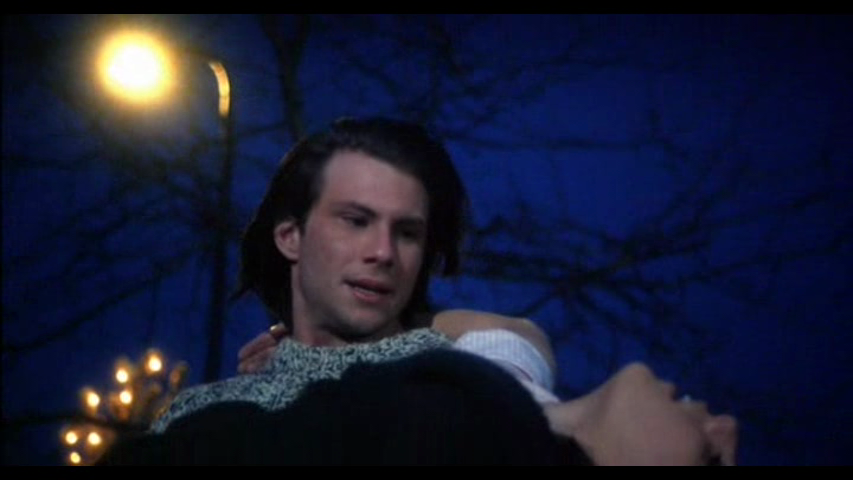
The street lamp looks almost like a halo above Adam’s head as he carries home an unconscious Caroline, post-attack.

To further emphasize Adam’s goodness, all other male characters found in Untamed Heart are in some way flawed:  Two men who show interest in Caroline end up as her assailants, Caroline’s father is uptight and largely absent, and her immature little brother fails to pick her up from work, causing her to walk home alone.  After her attack, we see a defeated-looking Caroline at the mall amidst the holiday bustle.  As she rises on an escalator, we see Adam pass by on the descending side–we’re almost surprised to see such a saintly man traveling downward rather than ascending upward, albeit in the space of a mall.  Caroline is taken by surprise when he lovingly places his hand over hers.

Most noticeable is that Adam is bathed in light as he floats downward and gazes at Caroline.

“If you look up long enough, you’ll see a shooting star,” Adam tells Caroline when he begins walking her home from work:  not only evidence of his virtue but also a pleasant reminder that Caroline can take a break from suspiciously looking around her long enough to look above her.  The couple’s nonverbal agreement to walk home together after their shifts secures Adam’s placement as Caroline’s guardian, protector, and confidante.  While the men Caroline typically encounters are quick to dismiss, forget, or victimize her, Adam is fixated and irrevocably in love with her.

Even as the two first become intimate, Adam appears “too good” to engage in earthly pleasures.  Because Caroline is studying to be a beautician, she invites Adam over to cut his hair, but it’s delayed when Adam begins touching Caroline’s breasts as he sits before her; rather than sexual attraction, this scene highlights the awe Adam feels for Caroline.  Although she leads him to the bedroom, it is Caroline that is being led to understand what true love looks like.  After Caroline undresses and sits with Adam on her bed, he begins to cry, and she tells him, “I’m gonna fall in love with you,” which halts any possibility of sex or foreplay we anticipate in this scene; rather, this vow is their foreplay.  As he continues to cry, she explains that he doesn’t have to return her love; this scene can be read as the couple merging as one, giving themselves to each other, in a landscape of celibacy.

When Caroline explains to Adam that his heart is diseased, visibly agitated, he exclaims, “No one is taking away my heart!”

When Adam dies, he does so peacefully, and not so unexpectedly.  After he is stabbed by Caroline’s attackers while taking out the garbage, he leaves the hospital early and finds Caroline.  He believes that he has the heart of a baboon and that he will survive, despite what doctors tell him.  Because Adam knows that his love is innocent, he equates this to the state of his heart, and ultimately, how he feels about Caroline.  Because Adam seems to exist on a different plane than those around him, it only makes narrative sense that he passes away after he and Caroline have fallen in love.  We don’t expect any violent or traumatic death; rather, Adam sort of burns out, like the sun.  At his funeral service, Caroline describes him as an angel and attributes agency to herself within the romance:  “I was good at loving him.”  Adam enters Caroline’s life not only to care for her but also to prove that she is not as flaky as she may have thought.

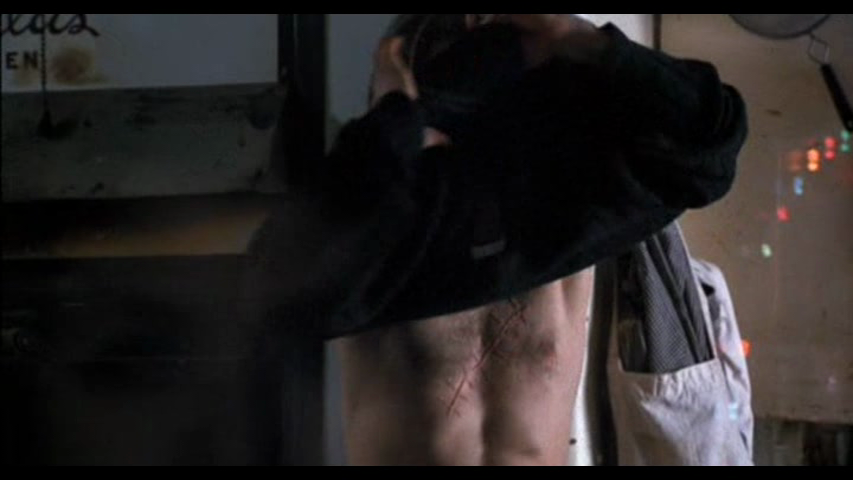
Caroline spots Adam’s massive scar as he changes at work.

The pair find one another amidst rude customers, raucous holiday gatherings, and those who fail to understand their young relationship.  Caroline tells her best friend Cindy, “I don’t make sense, he doesn’t make sense, together we make sense!”  Slater brings instant mystery to this role as the quiet busboy who secretly admires his waitress co-worker, and ensures that she arrives home safely every night after making the walk from work.  We also fall in love with Tomei’s vulnerability and her willingness to trust the newness of a young romance after so many failed relationships.  Caroline somehow knows that Adam is not a typical young man simply working for minimum wage at a local diner in Minnesota; he is a heavenly catalyst sent not to offer completeness in Caroline’s life, but to remind her that she is worth loving, even in his absence.

We love Adam because he comes to Caroline quietly, modestly, seeming to have always existed in the shadows, behind the scenes, loving her selflessly from afar, making his presence known only out of necessity.  In a busy city that seems to challenge our mousy heroine at every corner, Adam is an ally, a soul mate, and a reason to watch the not so tired plot of “boy meets girl.”


Jenny Lapekas has a Master of Arts degree in English, and she teaches Composition at Alvernia University in Pennsylvania. Her areas of scholarship include women’s literature, menstrual literacy, and rape-revenge cinema.

Quote of the Day: Marlo Thomas on Male Allies

“… as we all know, in all movements, the only way to effect change is for everyone to be moving it forward.”

Equal Rights Amendment march (Phil Donahue, center)

Appearing as part of our theme week on Male Feminists and Allies.

In “Guys Who Get It: The Men of the Women’s Movement,” longtime women’s rights activist Marlo Thomas writes about the importance of having men march beside women in the fight for equal rights (and the importance of recognizing their efforts and working together). She quotes Gloria Steinem, who said, “Cooperation beats submission.”

Feminism–at its best, and how it should be–is not about submission. It’s about equality and a more fair power structure, where gender, class, race, ability, and sexuality intersect and fight for an equal playing field. Divided, we are all easily oppressed. Together, we can dismantle the power structures that work against those not in power.

Thomas says,

“For all that’s been written about the passionate and courageous women who have led the march to gender equality throughout history, often overlooked are the men who have marched (and continue to march) at our sides. That’s understandable. Their commitment notwithstanding, the number of men willing to step forward and take a public stand on behalf of women’s rights — to speak out, to raise awareness — is simply smaller than the coalition of women that has been forming and reforming for centuries.

“But men’s presence in the movement is vital. As my late friend, Bella Abzug, once noted, ‘We have done almost everything in pairs since Noah, except govern — and the world has suffered for it.’ And, as we all know, in all movements, the only way to effect change is for everyone to be moving it forward.”

We talk a great deal about the women’s movement in American history (specifically in the 1960s and 1970s) and women’s fights for suffrage and rights before second- and third-wave feminism. For a movement to truly move, however, we need everyone on board. All too often men are left out or left behind when we discuss women’s rights (sometimes by their choosing, sometimes not). If we expect them to fight with us and for us–which we should expect–then we have to recognize them as pieces in this movement that we need to move.

Feminism isn’t just about women. Feminism isn’t just for women.

Sexism, patriarchy, misogyny–these cultural scourges hurt everyone.

In an accompanying slide show to her piece, Thomas recognizes 18 men who “get it” and have been integral in women’s rights. These men include William Moultan Marston (the creator of Wonder Woman), comedian Dick Gregory, Frederick Douglass, Alan Alda, Eddie Vedder, and more.


Check out the tumblr Men Who Are Feminist for even more reminders that feminism is for everyone, and everyone is invited to the fight.


Eddie Vedder’s Feminism: Flannel-Clad Activism

Vedder has spent his career fighting for a modern world that accepts and promotes women–he’s fought for reproductive rights, spoken out against sexual assault, and worked for worldwide safe pregnancy/childbirth.

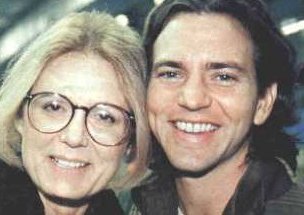
Gloria Steinem and Eddie Vedder


Written by Leigh Kolb as part of our theme week on Male Feminists and Allies.

Toward the end of Pearl Jam’s Oct. 16 show in Oklahoma City, Eddie Vedder turned the microphone over to a woman in the front row who wanted to propose to her boyfriend. She got down on one knee, proposed, and kissed the man who had said “yes.”

Vedder congratulated them and said, “That’s beautiful–it’s a modern world.”

Vedder has spent his career fighting for a modern world that accepts and promotes women–he’s fought for reproductive rights, spoken out against sexual assault, and worked for worldwide safe pregnancy/childbirth. Vedder’s feminism has followed him from the highest rafters at Lollapalooza in 1992 to being the father of two daughters in 2013.

Justin Hampton’s PJ20 poster, featuring Neil Young, Gloria Steinem, and young Pearl Jam members.

His politics have never taken second stage, and his feminism has always been a part of what is stereotypically a masculine, male-dominated, female-unfriendly world of rock.

Vedder’s ethos shaped my adolescence, and normalized feminism. While Pearl Jam as a whole (Jeff Ament, Stone Gossard, and Mike McCready)  presented itself as a progressive force in the grunge scene, taking female protagonists and feminist issues to the radio and MTV, Vedder’s voice and actions made an incredible impact on me as I fully realized my own feminism, even if I couldn’t name it at age 10.

Listening to Pearl Jam growing up, I consistently heard songs with female protagonists. I loved reading the lyrics–they weren’t against me or at me. The lyrics told stories about women and girls facing mental health issuesdisappointing relationships, being misunderstood by parents and men, and aging in a small town–all from the woman’s perspective. They commented on the privilege of being white and male in our society, the ramifications of not having that privilege, and the damaging and idealized masculinity of guns.

No question: pro-choice

When Vedder scrawled “Pro-Choice” on his arm with a Sharpie during an MTV Unplugged performance, he did what many celebrities don’t–loudly proclaim to a huge audience a commitment to the right to choose. Pearl Jam performed at Rock for Choice concerts. Vedder wrote an essay for SPIN magazine in 1992 (“Reclamation”) looking at abortion on a macro and micro level.

Penning first-person narratives of abortion experiences is still groundbreaking 20 years later, and too often women are held responsible for telling stories to effect change.

Vedder’s essay is gorgeous and powerful–he manages to stress that reproductive choice is a human rights issue, and men and women must come together and “shout” to make their voices heard. He points out that if it were about men’s bodies, “there would be no issue.” In just a few paragraphs, he acknowledges patriarchy, religious influence, the notion of “freedom,” women’s autonomy, and weaves in his personal experience with abortion.

Twenty years later–we still need more of these voices. And although I’ve read Vedder’s account over and over, I’m moved every time.


Voters for Choice concert


In 1995, Vedder took to the airwaves, citing Ms. Magazine and Gloria Steinem, and reading a lengthy memo from Voters for Choice about the heightened violence against abortion providers.


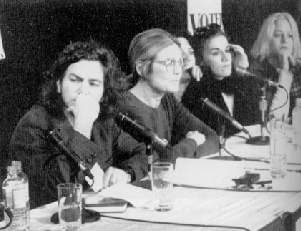
Eddie Vedder and Gloria Steinem at a Voters for Choice press conference


Vedder still brings up a woman’s right to choose as one of his top priorities when talking about his activism.

Anti-rape messages have also been woven through Vedder’s rhetoric over the years. At the very beginning of their career, Vedder commented on a Red Hot Chili Peppers’ song entitled “Party On Your Pussy” before launching into a cover of Fugazi’s anti-rape “Suggestion.” He said, “Don’t go partying on anybody’s pussy unless they want you to.”

What a novel idea… one that still doesn’t seem clear in our culture.

While Vedder and Pearl Jam’s commitment to reproductive rights and women’s sexual and bodily autonomy stand out, they’ve also consistently been outspoken about other feminist causes–environmentalism, gun control, the justice system, health carebullying, unjust war, and child abuse. Certainly not all of their fans appreciate their politics, which makes their conviction all that more poignant.

Vedder has also recently contributed “Skipping” (which features his daughter’s voice) to the compilation Every Mother Counts, an album that raises funds for women and maternal health in underserved areas around the world. Fatherhood hasn’t softened Vedder beyond recognition; in fact, he’s said that fatherhood just “fueled” his anger about the world around him and the injustices he sees. In a recent interview, he discusses the importance to be present as a father, reasons to celebrate in our society (increased gay rights and pot legalization), and reasons to mourn (compromised voters’ rights).


Vedder showing support for Every Mother Counts


The company that Vedder and Pearl Jam have kept over the years–Sleater-Kinney, Cat Power, Natalie Maines, Carrie Brownstein–certainly add to their feminist cred.

Pearl Jam and Sleater-Kinney


As Pearl Jam wrapped up their weekend-long 20th anniversary PJ20 celebration in Troy, Wisconsin in 2011, Vedder said to the crowd, “Everybody, every member of this group has a very powerful woman next to us, behind us and in front of us… We love you.”

Their career has proven that they see women in general as behind, beside, and in front of them. This clearly goes for the women in their personal lives, but it has always felt that way for their audiences as well.

As a girl, I would press my forehead against the cool glass in the backseat of my parents’ car, having convinced them to put in Vitalogy as I flipped through the fascinating liner notes. I never felt like a girl or an object, or otherized by their music and lyrics. It was just part of me. As I grew older, and more political–naming my feminism and activism–how surprised and relieved I’ve been to realize that Vedder and company have been there all along. Next to me, behind me, and in front of me, normalizing women’s stories, fighting for women’s rights, and working for a greater, more equal world.

Cheers to feminism (and Eddie Vedder and Ani DiFranco tattoos)


Recommended Reading/Listening: “Reclamation,” by Eddie Vedder; Transcript of Vedder’s Radio Broadcast (1995); “Better Man”; “W.M.A.”; “Why Go”; “Glorified G”; “Elderly Woman Behind the Counter in a Small Town”; “Daughter”; “Porch” (pro-choice performance); Carrie Brownstein Interviews Pearl Jam; Sleater-Kinney Reunite at Pearl Jam Show (Nov. 29, 2013)

Related: “Nirvana’s Secret Feminism,” by Amanda Marcotte


Leigh Kolb
 is a composition, literature and journalism instructor at a community college in rural Missouri.