The Fantasy of Mammy, the Truth of Patsey

However, I want to challenge that particular narrative: that nothing has changed. If we juxtapose McDaniel’s Mammy alongside Nyong’o’s Patsey, we might realize that, apart from being slaves, their characters are nothing alike. Indeed, from a historical and cinematic context, something significant has changed. Mammy is the mask that pro-slavery apologists used to erase the existence of the Patseys in slavery. It is remarkable that it took 75 years to remove that mask from depictions of cinematic slavery.

Hattie McDaniel
Hattie McDaniel


This guest post by Janell Hobson previously appeared at the Ms. Blog and is cross-posted with permission.

It was not lost on some that, 75 years after Hattie McDaniel became the first African American to win a Best Supporting Actress Oscar, the beautiful, poised, and talented Lupita Nyong’o would become the sixth black woman to win that same Oscar—and for playing the same type of role, a slave.

If we count Halle Berry’s Oscar for Best Actress in a Leading Role, that brings the full count of African American women Oscar winners to seven. And when we look at the types of portrayals that won these awardsMcDaniel as “Mammy,” Whoopi Goldberg as a con-artist spiritual adviser, Halle Berry as an oversexed and imbalanced grieving widow and mother, Jennifer Hudson as a sassy yet rejected lover singing with much attitude, Monique as a deranged abusive welfare mother, Octavia Spencer as a sassy yet abused maid, and now Lupita Nyong’o as a raped, whipped and victimized slave—it’s very easy to imagine that our subservience as black women (or even our hysteria as women in general;  just look at the roles that white actresses often win for) is what is recognizable and later celebrated.  In short, such recognition might convince us that nothing has changed.

Classic Mammy dolls
Classic Mammy dolls


However, I want to challenge that particular narrative: that nothing has changed.  If we juxtapose McDaniel’s Mammy alongside Nyong’o’s Patsey, we might realize that, apart from being slaves, their characters are nothing alike. Indeed, from a historical and cinematic context, something significant has changed. Mammy is the mask that pro-slavery apologists used to erase the existence of the Patseys in slavery. It is remarkable that it took 75 years to remove that mask from depictions of cinematic slavery.

There are other changes that we cannot overlook: The fact that McDaniel was forced to sit in the back row the night of the Oscars ceremony, segregated from the rest of her white cast members in the movie Gone with the Wind, contrasts with Nyong’o sitting up front with all the other A-list stars. There is also the fact that McDaniel and other black actors in the Negro Actors Guild fought to remove the n-word from the script of Gone with the Wind, as well as other offensive scenes of racial degradation (shoe-shining her master’s shoes on her knees, or having Butterfly McQueen’s Prissy eating watermelon or being slapped onscreen by Vivien Leigh’s Scarlett O’Hara).  I sometimes wonder: Had the Negro Actors Guild not intervened and those elements remained in the film, would we be able to celebrate this classic without embarrassment?  Thanks to the efforts of McDaniel, she infused a long-standing stereotype of Mammy with some complicated humor, and she also helped make Gone with the Wind respectable for later generations.

Vivien Leigh and Hattie McDaniel in Gone with the Wind


But this is 2014, and we no longer play to respectability politics. The Civil Rights generation exposed the harsh realities of slavery’s history, with its legacy of racism and white supremacy, through our own felt experiences; the hip-hop generation embraced and poked holes in the n-word with a vengeance; and the millennial generation rightly condemns the nostalgic lies that movies like Birth of a Nation and Gone with the Wind have fostered about slavery. Those lies are hard to erase, since the big, expansive movie screen, with its elaborate montage in Birth and dreamy technicolor in Wind, solidified these myths. Against these grand narratives, the marginal and enslaved black woman’s story is often silenced.

It took a no-holds-barred black filmmaker like Steve McQueen to not only face the  harshness of slavery—as told in Solomon Northup’s 1853 narrative, 12 Years a Slavebut to paint its cruelty in sharp colors, to sparingly use sound to build up dread or emotional release and especially to cast a dark-skinned actress such as Nyong’o who could interject sexuality and emotional depth to a character who might otherwise have been reduced to symbolic black woman victimhood. Instead, she emerged as the emotional center in one of the few slave movies that fully humanizes the slave story.

Lupita Nyong'o in 12 Years a Slave
Lupita Nyong’o in 12 Years a Slave


Which is why the journey from Mammy to Patsey is a historic big deal. The image of Mammy was deliberately designed by pro-slavery advocates to deny the existence of slave rapes. Her dark skin (now celebrated thanks to Nyong’o’s natural beauty) was loudly negated as an aesthetic ideal. Her big and shapeless body created in the white imagination an image of safety, in which racial mixing did not occur except in the realm of loyal servitude and fierce protectionism. Moreover, her unfeminine, aggressive style made it difficult to view her as victimized by the slave system (imagine how Mammy would look in a scene with Michael Fassbender’s terrifying Edwin Epps).

Mammy was literally the visual opposition to Scarlett O’Hara, someone confined to slavery and sidekick status to the white heroine. Contrast such a pairing with Patsey and Mistress Epps (portrayed icily by Sarah Paulson), two women confined to the same man while one is given the privilege of her class position as wife and the power of whiteness to subjugate Patsey to cruelty and violence—an added insult to the injury of sexual violence that Patsey must endure from her master.

Lupita Nyong’o
Lupita Nyong’o


12 Years a Slave removes the masks from Gone with the Wind, and we recognize this through the very different depictions of Mammy and Patsey.  As we bask in the afterglow of Lupita Nyong’o’s win—the climax to a whirlwind awards season in which we witnessed Nyongo’s transformation “up from slavery” to red-carpet fashion icon and role model for darker-skinned women everywhere—her Oscar acceptance speech said it best:

“It does not escape me for one moment that so much joy in my life is thanks to so much pain in someone else’s, and so I salute the spirit of Patsey.”

How can we, like Nyong’o, salute the spirit of Patsey? It only took 75 years for us to even catch a glimpse into the truth of her life.  I would call that cinematic progress, and it’s merely the tip of the iceberg of painful history that technicolor tried to distort and which we can now watch with a bit more realism.


Janell Hobson is an associate professor of Women’s, Gender, and Sexuality Studies at the University at Albany, State University of New York. She is the author of Body as Evidence: Mediating Race, Globalizing Gender (SUNY Press, 2012) and Venus in the Dark: Blackness and Beauty in Popular Culture (Routledge, 2005), and a frequent contributor to Ms.


Bitch Flicks’ Weekly Picks

Check out what we’ve been reading this week–and let us know what you’ve been reading/writing in the comments!

recommended-red-714x300-1

Watch online: MAKERS – Women in Comedy

Siskel and Ebert made their own ‘tropes vs. women’ video in 1980 by Ben Kuchera at Polygon

8 Incredible Female Directed films at VIFF

What Country’s Film Industry Has the Best Gender Equity? by Sarah Mirk at Bitch Media

Issa Rae’s Color Creative Calls for TV Diversity by Margeaux Johnson at Ebony

12 Times Leslie Knope Totally Nailed Being a Feminist by Isis Madrid at GOOD

Does Television Spanglish Need A Rewrite? by Jasmine Garsd at NPR

So, What Kind of Girl Is She? The Critics’ Appraisal of Lena Dunham by Maggie Lange at Vulture

The NFL’s Domestic Violence Problem and Our Race Problem by Jessica Luther at Vice Sports

Another day, another incongruous casting choice: Catherine Zeta-Jones to play Colombian drug lord Griselda Blanco by Soraya Nadia McDonald at The Washington Post

Three New Sci-Fi Epics With Female Protagonists in Development by Inkoo Kang at Women and Hollywood


What have you been reading/writing this week? Tell us in the comments!


What’s Missing from the ‘Gone Girl’ Debate? Privilege!

‘Gone Girl’ has been called misogynist, an amalgamation of negative stereotypes of women, a text that perpetuates rape culture, and a narrative that fuels Men’s Rights Acivtists’ ugly depiction of the gender equality feminists are trying to achieve.

Putting the talent of the author aside – because I do think Gillian Flynn is an incredible writer – I want to address this feminist ire directed at ‘Gone Girl.’

To an extent, I agree with it. Yet, what is missing from the discussion is a focus on privilege.

This guest post by Natalie Wilson previously appeared in a shorter version at the Ms. Blog and is cross-posted with permission.

gone-girl-white-title

WARNING: THIS PIECE CONTAINS SPOILERS!

Gone Girl has been called misogynist, an amalgamation of negative stereotypes of women, a text that perpetuates rape culture, and a narrative that fuels Men’s Rights Acivtists’ ugly depiction of the gender equality feminists are trying to achieve.

Putting the talent of the author aside – because I do think Gillian Flynn is an incredible writer – I want to address this feminist ire directed at Gone Girl.

To an extent, I agree with it. Yet, what is missing from the discussion is a focus on privilege.

Amy Elliot Dunne, the protagonist of Gone Girl, is white, wealthy, heterosexual, and conventionally attractive (many privileges which her creator, Gillian Flynn, shares).

gone-girl-whysoblu-6

Yes, Amy is a female, but she is an EXCESSIVELY privileged one, so privileged, in fact, that she has the necessary funds, skills, know-how, and spare time to concoct a near iron-clad story in which she convinces the media, the law, her community, and her family that she has been raped, abused by her husband, kidnapped, imprisoned, and possibly murdered.

Flynn, even given the worldwide success of her writing, is, I would guess, not nearly as privileged as Amy. Plus, if details at the author’s website are correct, she worked odd jobs throughout high school; Amy is not the type of female that had to work in high school, and especially not at anything where she would be made to dress up as a cone of yogurt.

In addition to her privilege, is Amy in fact a compilation of the evils MRAs spout on about in relation to “strong” women? In ways, yes. But this is just it – she is able to be strong – and, yes, to be evil – because she has the privilege to do so. As the saying goes, idle hands make the devil’s work.

gone-girl-df-01826cc_rgb_crop

Amy is narcissistic, vain, and shallow – and has enough time on her hands to fill her calendar with carefully labeled, color-coded post-its with details of her murder plot. And, once the plot is set in motion, handily has secured enough cash to buy a car, a new wardrobe, and keep her going for who knows how long. When that falls through, there is the very rich former boyfriend Dezi, who will put her up in his “lakehouse” – a spare house that makes many mansions look shabby.

Yes. This is fiction. Yes, it’s a dark, twisted, mystery. It is obviously meant to be. The author herself made it clear that she “wanted to write about the violence of women” after her first book, Sharp Objects. And this is not a problem – not at all – but what is vexing with Gone Girl is at the heart of its narrative is a woman that falsely accuses several men of rape and assault – and tries to frame one of them for murder. This story is a fiction. But rape and assault are at epidemic levels in our society – along with the horrible statistics is a pervasive narrative often called “blaming the victim.” At the heart of this narrative is the myth that females lie about rape. Not once in a blue moon. But often.

This is not what I want to focus on though – what I want to focus on is how privilege allows the fictional Amy to get away with all the atrocities she commits. If she “cried rape” (as MRAs and the media often suggest women do), would she be as readily believed if she were a woman of color? What if she were a prostitute? What if she committed murder and tried to convince the cops of her innocence via mere words? Would she be believed if she were, say, a young Black male? If she accused her partner of physical abuse and adultery would she become America’s media darling if she were not cisgender?

gonegirl5

The story of Kalief Browder, featured in The New Yorker, who served three years at Ryker’s Island, most of it in solitary confinement without trial before he was deemed innocent; of Renisha McBride; of Ferguson; is proof that innocence does not mean much for people of color in a society that frames those with non-white skin as born guilty (to borrow Dorothy Roberts claim made in her classic Killing the Black Body).

Gone Girl is not making a critique of privilege though, nor of how Amy’s whiteness and wealth – at least in ways – puts her above the law. Instead, Amy’s ability to frame others for crimes they did not commit and become America’s media darling has been acclaimed as a wonderfully concocted mystery by a talented author. As for Amy’s ability to pull off her fictive story within a story in the novel and the film adapation, this ability is never overtly linked to her privilege – unless you count the fact the film nods toward how wealthy she is, given her cat has its own bedroom. Rather, her success at framing others is presented as a very well-planned revenge plot carried out by a very smart, very malicious woman.

Admittedly, there are things the story does well in terms of critiquing societal problems. A key area in this regard is the portrayal of the media. As with the novel, the film delves into the media circus, giving us talking heads that spin hypotheses about Amy’s whereabouts and who is to blame for her disappearance – hypotheses that quickly lead to the narrative Amy intended: that her husband Nick is guilty, and she is the innocent, abused spouse all America should be routing (and praying) for.

GONE+GIRL+Movie+HD+Trailer+Captures00023_1_1

Amy clearly knows how to play straight into the hands of the of “The Ellen Abbot Show” – a fictionalized version of the likes of Nancy Grace. Amy notes, while concocting her plan, that “America loves pregnant women,” and, indeed, Ellen plays up Amy’s pregnancy to garner sympathy for her – and ire for her husband Nick. However, had Amy been a pregnant Latina, or working class, or a single woman, would she still be framed in this way by the real Ellen Abbots of the  world? Doubtful.

In fact, if Amy’s accusations of rape against not one, but three men, were to be reported in the real world media, it is likely she would blamed, interrogated, and have her reputation besmirched, especially if she lacked many of the privileges Amy’s character has. As noted in “Gone Girl and the Specter of Feminism,”

“Our society makes real-life survivors of rape into villains every single day. We assume ulterior motives. We invade and question their sexual history as if it’s relevant. We make rape survivors into whores and sluts, into evil, evil women who are only out to hurt and punish men. And that’s if we don’t ignore them altogether, or if they can summon the courage to report the rape at all.”

And though only 2 to 8 percent of reported rapes are determined to be unfounded, it is, as #2 reports, a “norm of the media to question the authenticity of rape victims that dare to step forward and seek justice.”

ben+affleck+and+rosamund+pike+in+GONE+GIRL

In the film, Tanner Bolt , the big-shot lawyer defending Nick, is portrayed as particularly media savvy. He says of Amy, for example, that “she is telling the perfect story.” And though his race is not highlighted as a factor, his know-how of the media and the key role public perception plays can be read as shaping the story he tells the world in public appearances.

Tanner advises Nick to do the same, telling him, “This case is about what people think of you,” and emphasizes the need for a huge re-alignment of public perception. Tanner knows this, and Nick should (especially given his former work as a journalist). Read through the lens of race, however (a lens, let me emphasize, the narrative itself does NOT interrogate), one can argue Tanner has to be more savvy than Nick and that Nick is allowed to live in a privilege bubble, one that leads him to assume people are going to believe him.

What people think of Amy – and Nick – is largely determined by their privilege. They live in a huge house, she is a “housewife,” they are both former writers, they are attractive, white, heterosexual, and have the requisite pet – as well as aspirations –  on Nick’s part at least – to have children. They are the picture-perfect American couple.

Gone-Girl-Trailer

But, this image is a fiction. And the fact the story plays around this fictive construct of what perfection is – and what a perfect marriage is – is one of its most intriguing features. Amy’s diary, a mixture of truth and fiction, is key here. In one telling scene, Detective Boney (my favorite character by far, perhaps as she has the most feminist gumption) goes through Amy’s diary, now being used as police evidence, and asks Nick what is true and what is fiction. The mixture of lies and truth within the diary, and within the entire narrative, make it hard to discern any reliability.

As argued in “The Misogynistic Portrayal of Villainy in Gone Girl,” Amy makes a magnificent unreliable narrator. Sadly though, she is believed – by the media, by the community, even by us, the audience.

If only her believability was tied to her privilege, Flynn could have had a narrative that did something feminists could applaud – a narrative that pulled back the sham of “perfect femininity” and showed the ugly undersides of unfair societal dictates.

gone-girl-rosamund-pike-ben-affleck-600x445

Instead, Flynn gives us a character that shares her own privileges – and her own penchant for spinning fictions – rather than one who lays bare the injustices that make the likes of Ellen Abbott believe her, that have lawyers running to defend Nick pro bono, that result in a media machine feeding off this one tragedy while ignoring wider injustices – injustice the camera actually lingers on at the start of the film, making the Missouri of Gone Girl remind one of the Detroit featured in Michael Moore’s Roger and Me.

While the narrative condemns what director David Fincher calls the “tragedy vampirism” of the media, it never takes the next step of pointing out how the poverty and homelessness of the community in which the story takes place plays a role in why Amy becomes a media darling and allows her husband to plausibly suggest the “homeless” are to blame for Amy’s disappearance.

The narrative also never takes any step toward addressing the reality of widespread sexual violence and domestic abuse, instead using this device as just one more piece of grist for its suspenseful, plot-twisting mystery.

Ben-Affleck-in-Gone-Girl

In one scene, Amy creates the “proof” of her rapes via thrusting a wine bottle inside herself as she icily gazes in the mirror (a scene also in the book). This comes after we learn she has destroyed the life of a completely innocent man by also framing him for rape, merely because he lost interest in her. And, in the most fraudulent, unbelievable plot point, this man tells us he was about to be put away for 30 years on a first degree felony. Guess how often rapists are put away for 30 years? Not often.

So, yes, Amy is a villain, some suggest a sociopath, but I heartily disagree that her horribleness could only come from a “female mind” – which is exactly what the actress who plays her – Rosamund Pike  – claims, that “the way her brain works is purely female.”

Instead, Amy’s villainy, and the fact she gets away with it, can be linked to her substantial wealth, her Ivy League schooling, her full immersion into the culture of “cool girls” and personality quizzes and, perhaps most of all, her sense of entitlement, revealed particularly in the way she expects to be treated, especially by Nick. In a key passage from the novel (also used in the film), Amy embodies the faux-feminism that defines her character, condemning constricting expectations of femininity on the one hand, but, on the other, hinting at  the narcissistic darkside of her anger:

“I hated Nick for being surprised when I became me. I hated him for not knowing it had to end, for truly believing he had married this creature, this figment of the imagination of a million masturbatory men, semen-fingered and self-satisfied. He truly seemed astonished when I asked him to listen to me. He couldn’t believe I didn’t love wax-stripping my pussy raw and blowing him on request. That I did mind when he didn’t show up for drinks with my friends… Can you imagine, finally showing your true self to your spouse, your soul mate, and having him not like you?

In ways, we want to applaud Amy for condemning the “cool girl” and demanding females deserve to be listened to – as this seems a feminist message. But, ultimately, Amy is far more like Ann Coulter than Amy Poehler.

goneg-girl-nick-and-amy

Though some might argue Amy is fully aware of and even using her privilege, I disagree. She is aware of being attractive, wealthy, and powerful, yes, but not any feminist way that questions or denounces or even deliberately deploys her privilege. One of the most telling parts of the narrative to display this is in her interactions with Greta, a working class character Amy assumes to be stupid and inept. Greta sees through Amy’s disguises though, and craftily separates her from her wad of cash (which is when Amy is forced to call on Desi to rescue her). The stark difference in the scope of their crimes can be linked to privilege – Amy’s excess verses Greta’s lack. Their experiences and attitudes toward violence are also telling, Greta is familiar with how common male violence against women is, where Amy is not – the violence she accuses men of is actually violence her privilege has protected her from. This is not to say priviledged women never experience violence – but Amy does not, at least not physical violence. Though this strand of the narrative has much feminist potential, the narrative overall does not offer a feminist critique of privilege, let alone violence.

Further, as argued in a post at Interrogating Media, there is a discernible backhanded attitude towards feminism littered throughout the novel. Amy condemns post-feminist men afraid of sexual roughness, for example. But, more than actual comments from Amy, there is a sort of post-feminist cheerleading in the narrative, one that is in keeping with Flynn’s discussion of why she is drawn to writing about the violence of women::

“Isn’t it time to acknowledge the ugly side? I’ve grown quite weary of the spunky heroines, brave rape victims, soul-searching fashionistas that stock so many books. I particularly mourn the lack of female villains — good, potent female villains. Not ill-tempered women who scheme about landing good men and better shoes (as if we had nothing more interesting to war over), not chilly WASP mothers (emotionally distant isn’t necessarily evil), not soapy vixens (merely bitchy doesn’t qualify either). I’m talking violent, wicked women. Scary women. Don’t tell me you don’t know some. The point is, women have spent so many years girl-powering ourselves — to the point of almost parodic encouragement — we’ve left no room to acknowledge our dark side.”

This passage seems to come from within a privilege bubble – one that allows the author to suggest that “fashionistas” or “WASP mothers” or “soapy vixens” – and of course “brave rape victims” – are rather dreary and boring, and that what is needed is to do away with this annoying “girl powering” so we can fill libraries with stories of generations of brutal women (something Flynn seems to envy about male stories). And, don’t get me wrong, like Flynn, I agree we need wicked queens and evil stepmothers and villainous women.  It is her reasoning I don’t agree with, that “women like to read about murderous mothers and lost little girls because it’s our only mainstream outlet to even begin discussing violence on a personal level.” Hello? Gillian? Have you heard of this little thing called feminism? Perhaps the phrase “the personal is political” rings a bell?

o-GONE-GIRL-facebook

You see, Flynn’s version of “girl-powering” feminism leaves out actual feminism. Like the stuff of an Ann Coulter dream, it points a finger at Amy, a “girl who has it all” and says, “look at what that women’s lib stuff has wrought!” What it does not point a finger at, not even give a quick passing glance, is those working in sweat shops to make the shoes the “fashionista” covets, the thousands of rapes that go unreported, not due to lack of bravery, but to do the complicated realities of living in a rape culture, the girls who don’t have access to the “parodic encouragement” of any sort of girl-power because they are poor, they are undocumented, or, to use Flynn’s fictive idea, they are nothing like the “Amazing Amys” of the world.

To be clear, I am not suggesting that all narratives need to pack a social justice punch. However, given that Flynn’s novel explores an extremely hot button issue, and created quite the intense feminist debate, it seems odd Flynn never directly addresses the key critique lobbied at Gone Girl, but instead made widely publicized claims the ending of Gone Girl would be changed in the film adaptation–suggesting the changes to the narrative would reframe the very things that angered readers. Though the screenplay is altered from the book, the ending remains the same overall – Amy is not arrested or even blamed – instead, she has manipulated Nick into staying with her and keeping mum about her guilt by impregnating herself with some of his semen she handily stored away. Ah, the privilege of access to sperm banks!

Such tales are not by any means unique in Hollywood – nor are they bad per se. Rather, Flynn’s keenness to defend her work while naming herself a feminist seems off somehow – at least – what seems missing – is a recognition of her own partial, and very privileged, viewpoint. Some women do in fact have  to discuss and think about violence all the time in order to survive, not to write bestselling novels. And I want her to keep writing – she is a great writer – but it would be wonderful if at some point she could address – specifically – some of the realities of the rape culture of our society in an interview or public appearance. Not addressing feminism is fine, but to do so in the vein of being so burnt out on “spunky heroines” and “brave rape victims”? Well, that doesn’t sit so well with this feminist.

GONE+GIRL+Movie+HD+Trailer+Captures00028_1_1_1

Perhaps the “parodic encouragement” Flynn refers to as defining feminism is her experience of feminism. Maybe this is partly what fueled the plot point in Gone Girl wherein Amy’s parents made their fortune via “Amazing Amy” books – a series whose main character is much like the real Amy, but better. In a sense, these books are parodying Amy’s life and encouraging her to be more amazing. A woman who has and does it all. A real go getter. This fact serves as an explanation as to why Amy “has never really felt like a person, but a product” (Gone Girl).

But, again, the story falls short of condemning this type of “you go girl” faux-feminism or the notion women can (and should) have it all. It also is not critical of celebrity, fame, and fortune – even though the fortune of Amy’s family comes at the expense of her happiness and sanity. Yes, at one point Amy notes that her parents exploited her childhood and she does seem bitter about this. But this exploitation, from parents she interestingly defines as feminist, is partly what leads to her ability to constantly be playing at being Amy – to live the role of cool girl, good wife, battered wife, and so on. We are not instructed to condemn Amy’s parents exploitation of her – instead we are encouraged to be angry at her parents for mismanaging their money and having to borrow from her trust fund – leaving poor Amy to survive in a Missouri mansion rather than a Manhatten brownstone.

Though much has been written about Flynn’s comments about feminism, her portrayal of women, and her writing, I have not come across her ever mentioning privilege being something she was interested in exploring, even though her characters and  her own discussions of why she chooses the focus matter she does drip with privilege.  Flynn comes from a privileged background herself, and perhaps this partly explains Gone Girl’s failure to own up to the role Amy’s privilege plays in her “success” in any overt way. Who knows. What I do know is this: not addressing Amy’s privilege directly – and Nick’s, and Dezi’s and Margot’s –  has the effect of making the novel seem to be – as argued in the “Gone Girl and the Specter of Feminism,” a piece that serves as a “crystallization of a thousand misogynist myths and fears about female behavior” as if we had “strapped a bunch of Men’s Rights Advocates to beds and downloaded their nightmares.”

20141001161815__Gone_Girl___Movie_Review_by_David_Morris__LATF_USA

In The Guardian piece, “Gillian Flynn on her bestseller Gone Girl and accusations of misogyny”, Oliver Burkeman writes “This is a recurring theme in Flynn’s life: the psychological bungee-jump that permits an author to plunge into barbarity precisely because she’s securely moored in its opposite.” Detailing how Flynn locks herself away in her writing basement for hours, Burkeman notes that “In the early afternoons, she surfaces from the gloom into daylight, to play with her son for an hour or two.” Then, in Flynn’s own words, “It’s back down through the basement again, to write about murder.” Ah, the joys of a post-feminist life!

So, to wrap up this privileged take on Gone Girl: is it a good film? Yes and no. Fincher is great director and Flynn is a great writer – they both tell dark stories well. The movie is compelling and Pike is great as Amy, as is Kim Dickens as Detective Boney, the most feminist character of the film and the one I would most like to see a spinoff series about!

It is good as a film, but it is not a feminist film.

As Esther Bergdahl asks rhetorically in her post, “Is a film feminist if a female character vindicates every men’s rights activist on Reddit?” Of course not. But, just as obviously, this doesn’t mean feminists shouldn’t see it – and discuss it – in fact, just the opposite.


Natalie Wilson, PhD is a literature and women’s studies scholar, blogger, and author. She teaches at Cal State San Marcos and specializes in areas of gender studies, feminism, feminist theory, girl studies, militarism, body studies, boy culture and masculinity, contemporary literature, and popular culture. She is author of the blogs Professor, what if …? and Seduced by Twilight. She is a proud feminist mom of two feminist kids (one daughter, one son) and is an admitted pop-culture junkie. Her favorite food is chocolate.


Seed & Spark: 20 Is the New 50 (Percent)

We live on a planet, populated, in near-equal parts, by males and females. We move about the world, where (in our country at least), the work-force is again, split right down the middle. We all come from families, where, at least for nine months of our existence, we were held within the experience of a woman. Our first connection to another human, a literal connection which formed and fed us, was with a woman. But, you just don’t see that. Once in the world, our art and culture belie that experience. The populations in TV, in film (maybe all arts and culture), tilts strangely in one direction. It is disorienting. Disorienting because it is a lie. I don’t think art is a place for lies. I think, it’s the place for truth-tellers. For whistleblowers.

2013-07-26-11ORANGEBLACKarticleLarge

This is a guest post by Carol Roscoe. 

Last week,  I was talking with some actors about the TV series we were currently binge-watching. One mentioned Orange is the New Black. (Full disclosure: I was the only one among us who hadn’t seen OITNB, yet.)

“Yeah, my girlfriend wanted me to watch it with her, but then I got totally into it.”

“You sound surprised by that,” I said.

“Totally,” he agreed. Before I could ask why, another actor at the table said, “My girlfriend is really into Orange but, eh. I was really put off by it.”

“What put you off?” I asked.

I was talking with a savvy actor-writer-director and was expecting something like: not believable, didn’t like the characters, didn’t like the writing. What he actually said took me by surprise. It was this:

“Well, the characters are all really fascinating. Compelling. Like, I want to know what happens to them and about where their stories will go and all. I mean each character is really interesting enough to get their own series.”

“But…”

“But, well, I just couldn’t identify with them. I mean, all the characters are women. You just don’t see that.”

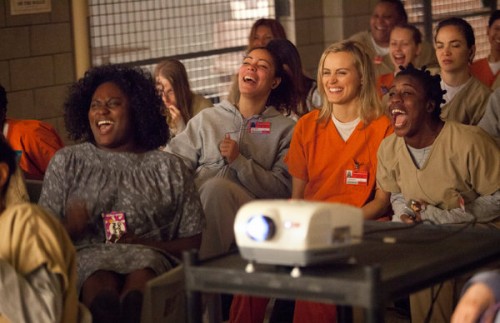
Cast of Orange is the New Black


“No,” I said, “you don’t.”

“Right?” he continued, “I mean, imagine trying to watch a show where nobody reflected your experience.” (Oh, one more disclosure: I was the only woman at the table.)

“Because they are all in prison?” I asked, just in case I misunderstood him.

“No, because….you do know the premise of the show right? It’s all women.”

Pablo Shreiber and Kate Mulgrew

“I’d heard that.”

“That’s just really hard for me to connect to.”

“So it’s really disconcerting to see a story about so many people who, well, aren’t like you. I mean, gender-wise.”

“Yeah, exactly,” he said.

I nodded, trying to figure out exactly what kind of conversation I was interested in having.

“I have total compassion for you,” I said, “I know exactly what you mean.”

He looked doubtful, so I continued. I shared how my life had been plagued by the same experience. Everywhere were stories that focused on people of that other gender; books, TV, plays, movies seemed to hinge on the experience of people who, in fact, were not female. It was weird, I confessed, disorienting and disheartening. As an actor alone, that had a limiting effect on the number or roles available in a season, in theater or film. You could look it up, only 30 percent of speaking roles in film were female characters. In theater, especially classical theater, this disparity was even greater, at times male characters outnumbering females 14 to one.

“Our show’s different,” he said, proudly.

“Yes,” I agreed. “Out of five roles, one is female. We are achieving a 20 percent representation of half the world’s population.”

Graph courtesy of Econ Proph blog and the U.S. Census Bureau


“Look,” I added before he could explain how that was good, “I empathize with you. It can be a real challenge, seeing stories about people who aren’t like you. It can feel disconcerting, even marginalizing. Perhaps, though, and I can only suggest this based on my own experience, perhaps one might encounter the story as a human story, irrespective of gender. One might even investigate the difference or similarity between experiences. One might expand one’s awareness, one’s compassion, and get to experience what life is like for another person. There just might be value in that.”

He was silent for a while. Maybe he was wondering what kind of conversation he wanted to be having. After a moment he said, “Right.”

But, I was thinking about other things, like: why bother? Why be an actor? Why work that hard, for that little, in order to play a mind-boggling narrow range of roles? And for an audience made up of people who weren’t interested in anything they didn’t already know?

I got to thinking about my next project, the story of a whistleblower. In researching people who have come forward with state or corporate secrets I was struck by by how many were driven by a sense of fairness to break their code of silence. Each saw injustice, irresponsible and/or criminal acts occurring; each chose to step forward, risk their career (their lives) to act for the common good. For the whole of humanity. Not just a part of it.

unnamed

We live on a planet, populated, in near-equal parts, by males and females. We move about the world, where (in our country at least), the work-force is again, split right down the middle. We all come from families, where, at least for nine months of our existence, we were held within the experience of a woman. Our first connection to another human, a literal connection which formed and fed us, was with a woman. But, you just dont see that. Once in the world, our art and culture belie that experience. The populations in TV, in film (maybe all arts and culture), tilts strangely in one direction. It is disorienting. Disorienting because it is a lie. I don’t think art is a place for lies. I think, it’s the place for truth-tellers. For whistleblowers.

I empathize with that young man’s distress. But, I’m not interested in lying to him. Or to our audiences. How do we move from misrepresentation–no, how do we move from lying about the world to telling the truth? To breaking the silence about the injustice, disregard and dehumanizing aspects of our culture? Of our industry? How do we continue that conversation when the punishment for whistleblowers is so clear?

I’d be lying if I said I have the answer. Well, other than the obvious one. Keep having the conversation. Keep doing the work. Choose meaningful work. Create meaningful work. Work with as little misrepresentation as possible and hope that it will connect to someone. Hope that the work reaches someone across the gulf of whatever divide and offers a tiny glimpse of what life is like on the other side.

Morgan Freeman, Tim Robbins in The Shawshank Redemption


unnamed

Carol Roscoe makes her home in the wilds of the Pacific Northwest where she teaches, acts, directs, and writes. Film work includes West of Redemption, Gamers:Dorkness Rising, Gamers: Hands of Fate, The Dark Horse, and The Whole Truth, and others. Her latest film, If There’s a Hell Below, will be released early next year. She has appeared on stages in Seattle, London, New York, Washington DC, Chicago, Tucson and Pheonix.


The Allure of the Female Ghost in ‘Ringu’

Horror. It’s a genre that ignites different reactions: excitement, disgust, fear or indifference. Who would have thought that an inanimate object – and the female ghost that comes with it (free of charge) – could be so frightening? The enigma of the monstrous female can be found throughout history in literature, movies, and contemporary pop-culture. An array of female monsters are waddling around in our hazy pop-culture memories. Think of the witch, vampire, psychopath, and the scorned ghost. The term “ghost girl” has now even levitated itself to our cultural lexicon.

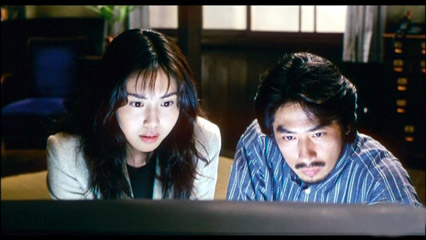
Reiko and Ryuji mean business


This is a guest post by Giselle Defares.

Horror. It’s a genre that ignites different reactions: excitement, disgust, fear or indifference. Who would have thought that an inanimate object – and the female ghost that comes with it (free of charge) – could be so frightening? The enigma of the monstrous female can be found throughout history in literature, movies, and contemporary pop-culture. An array of female monsters are waddling around in our hazy pop-culture memories. Think of the witch, vampire, psychopath, and the scorned ghost. The term “ghost girl” has now even levitated itself to our cultural lexicon.

The Japanese horror genre gained popularity since the fifties, thanks to a group of visionary directors such as Masaki Kobayashi (Kaidan), Nobuo Nakagawa (Ghost Story of Yotsuya) and Kaneto Shindo (Onibaba). These directors usually brought adaptations of traditional Japanese stories, but they were not afraid to experiment with other genres or even psychedelic influences. The crux is that the appeal of the Japanese horror movie lies in the fact that the genre constantly renews itself, while ensuring to remain faithful to its roots.

In 1998, a new creative and commercial momentum took place thanks to Ringu (Ring), an adaptation of the bestselling novel by Koji Suzuki. The story has some elements from the 18th-century Japanese ghost story Bancho Sarayashiki. Director Hideo Nakata managed to visualize a clever but vulnerable heroine, and themes were subtle interwoven by using the power of the media to portray the heroine’s fears. Ringu, an unusually oppressive  movie, became a blockbuster, followed by the inevitable sequels, American remake, a television series, and a series of comic books.

Ringu follows the storyline of the TV journalist Reiko Asakawa (Nanako Matsushima) who investigates a bizarre rumor: her niece Tomoko and three of her friends apparently died after seeing a videotape. Reiko hears stories that the videotape kills the people after they have watched it, and they all die in the exact the same way. Reiko investigates the story, finds the videotape, and ends up watching it herself. Soon after, Reiko receives a phone call with the news that she has only one week to live. What follows is a race against the clock, in which Reiko tries to figure out the origin of the videotape. Her ex-husband Ryuji (Hiroyuki Sanada) tries to help her break the curse and find the true story behind the cursed videotape and the connection with a psychic who died 30 years ago and her child Sadako.

Reiko has to make a though choice. To watch or not to watch.


Why are we so enthralled with female monsters? In The Monstrous Feminine, cultural critic Barbara Creed refers to Freud’s controversial theory of castration anxiety – children notice the difference between boys and girls aka penis or vagina, boys are of the opinion that something is taken away from girls, and this makes them worried – in dreams, myths, and in movies this fear translates to the symbolic loss of a phallic symbol. It can be a sword, a motorcycle, or car. When you flip the coin, the vagina is portrayed in a less favorable way. All too often the vagina is depicted as a dangerous – monstrous – hole to be avoided at all costs. This is described as the “vagina dentata,” the symbolic representation of a vagina with teeth, making the Freudian castration anxiety tangible within the story. In popular culture, the vagina dentata can for example be seen as the eye of Sauron in The Lord of The Rings or the desert monster Sarlacc in the Star Wars trilogy.

Creed also connects the creation of female monsters with abjection. She refers to Julia Kristeva who defines abjection as that which crosses borders, positions, rules and identity, system and all that disturbs the peace. In other words, anything beyond the strict limits of the phallic order and that aims to disturb the order. The abject not only crosses borders but draws the existence of limits itself into question, and thus the existence of the phallic order. This abjection is strongly related to the patriarchal vision of femininity. Creed describes horror movies where the monster is portrayed as abject as an “attempt to separate out the symbolic order from all that threatens its stability, particularly the mother and all that her universe signifies.”

For this reason, there are many movies that don’t have a male but a female monster. Abjection includes everything that we consider to be dirty. It’s what we learn as a child that is seen as bad and what we need to suppress. In particular, bodily secretions such as blood, urine, mucus, and pus. The horror genre plays with this fear of the abject and wants to break taboos. In Ringu, Sadako, the female ghost is portrayed as a lurchy and dirty, rotting dead girl with long, dark hair that obscures much of her face, dressed in white, and her fingernails are broken and bloody. Yuck.

The ghost Sadako
The ghost Sadako


We find Freud’s idea of castration anxiety also within the psychoanalytic film theory in terms of the male gaze. Laura Mulvey argues that cinema ideally is meant for the male audience: “The determining male gaze projects its phantasy onto the female figure which is styled accordingly. In their traditional exhibitionist role women are simultaneously looked at and displayed, with their appearance coded for strong visual and erotic impact so that they can be said to connote to-be-looked-at-ness. ” The problem lies in the fact that the woman is just a lust object on the screen, but that the male viewer meanwhile still has that (irrational) fear of the woman.

In Japanese horror  movies, they flip the script, and more often than not the focus is only on the eyes. This is also the case in Ringu. For a long time we do not even see the eyes of Sadako, and the tension builds up until the moment when we get to see them. In general, people blink around 15 times per minute. Ghosts don’t blink. They seemingly stare with an endless gaze ahead. But there’s another ambiguity. Sadako’s eyes show no sign of life; they are merely hollow, black orbs. At the same time they seem to register all the movement in her environment, and her looks are purposeful and deadly. It’s almost like the gaze of Medusa. In that sense, Sadako’s Medusa’s gaze is projected from the male gaze. The woman stares back at the man. In Ringu, it’s the woman who actually kills with her ​​looks. Ryuji symbolizes the male voyeur and gets punished. The fear of the man is a reality here.

Reiko watches the video tape


Throughout the movie, director Nakata leaves room for your own imagination and strengthens the feeling of uneasiness that the story evokes. To be quite honest, on paper, the plot for the story line is at first sight not scary at all. The strength of Ringu lies in its absence and not particularly the gore that is visible on the screen. The hard, screeching and metallic, non-diegetic sounds, ups the creepiness of the movie. The editing, camera angles and lighting, lift the mediocre plot to the next level. The videotape – a seemingly innocent inanimate object (!) – of Sadako stands symbol for the mass media and for the pernicious influence they have on society. After all, only the people who watch the videotape die.

Ringu keeps your attention because – let’s be real here – the female ghost is a fascinating entity. All too often the source of their pain has nothing to do with the supernatural, but it’s a painful residue of their human lives. Sadako wanted vengeance, but her vengeance was randomly destructive. This makes her all the more powerful. You can see this in Kabuki and Noh theater also known as Oiwa, in which the spirit of a woman returns to her husband, who poisoned her. Unlike the average monsters in other horror movies, ghosts can think, feel, and they have a certain consciousness. Sadako holds the power to haunt us in our dreams. Yikes.

Ringu gave our pop-culture some of the most indelible images. The movie came out in 1998, and since then a variety of female ghosts have graced our screens. It would be interesting to see how this genre can renew itself over and over again. Let’s see what the future of horror brings.

[youtube_sc url=”http://www.youtube.com/watch?v=JruLV_Wjkp4″]


Giselle Defares loves television shows like Äkte Människor and The Fades;  movies like The Fall, The Invader, High Fidelity. See her tumblr here.


Call For Writers: Demon/Spirit Possession

Halloween is upon us, so it’s time to contemplate the prolific theme of demon/spirit possession in film and on TV. Why is this such a prevalent theme? In many ways, possession explains evil as something separate from ourselves, something that infects us, which dichotomizes good and evil.

Call-for-Writers-e1385943740501

Our theme week for October 2014 will be Demon/Spirit Possession.

Halloween is upon us, so it’s time to contemplate the prolific theme of demon/spirit possession in film and on TV. Why is this such a prevalent theme? In many ways, possession explains evil as something separate from ourselves, something that infects us, which dichotomizes good and evil. An example of this is the separation between Angel and Angelus in both the shows Buffy the Vampire Slayer and Angel. In this case, vampirism is used as a metaphor for addiction; it is something that happens to Angel, taking away his subjectivity and rendering him choiceless. Another prime example is Bob from Twin Peaks, an evil spirit who possesses victims, compelling them to perform depraved acts of violence, sexual deviance, and destruction.

Does separating evil from the person who performs the act actually explain the “evil” itself, or does it simply make excuses for bad and, sometimes, inexplicably cruel behavior?

Another permutation of possession creates a binary between innocence and evil, which we see in films focusing on child possession (The Exorcist, The Children, and Village of the Damned). These types of films articulate discomfort surrounding the loss of innocence as well as a generalized fear of children, representing them as unknowable and even alien. The question sometimes arises, “Are they even possessed, or are children by nature this wicked and amoral?

In possession themed media, we also see a binary between innocence and sexuality. This example occurs particularly when young women are the victims of possession. Such films allow forbidden sexual desires to be acted out on film giving the audience voyeuristic indulgence like in the case of Jennifer’s Body or Witchboard while iterating a cultural fear of female sexuality in young women. In these cases, female sexuality is seen as dangerous and uncontrollable, powerful, and without boundaries.

In any of these types of possession film, punishment is very often an underlying theme. The possessed person punishes those around them and is simultaneously punished as a consequence of the spirit or demon’s disregard for its host’s health, relationships, or life. It’s worthwhile to consider why these narratives single out certain people or groups for punishment.

Feel free to use the examples below to inspire your writing on this subject, or choose your own source material.

We’d like to avoid as much overlap as possible for this theme, so get your proposals in early if you know which film you’d like to write about. We accept both original pieces and cross-posts, and we respond to queries within a week.

Most of our pieces are between 1,000 and 2,000 words, and include links and images. Please send your piece as a Microsoft Word document to btchflcks[at]gmail[dot]com, including links to all images, and include a 2- to 3-sentence bio.

If you have written for us before, please indicate that in your proposal, and if not, send a writing sample if possible.

Please be familiar with our publication and look over recent and popular posts to get an idea of Bitch Flicks’ style and purpose. We encourage writers to use our search function to see if your topic has been written about before, and link when appropriate (hyperlinks to sources are welcome, as well).

The final due date for these submissions is Friday, October 24 by midnight.

The Exorcist

Witchboard

The Evil Dead

Evil Dead II

Army of Darkness

Game of Thrones

The Children

Child’s Play

Christine

The Prophecy

Ghost

The Lovely Bones

The Exorcism of Emily Rose

All of Me

Jennifer’s Body

The Possession

American Horror Story

Fallen

Satan’s Baby Doll

Supernatural

House

Rock ‘n’ Roll Nightmare

Constantine

The Shining

Twin Peaks

The Amityville Horror

Paranormal Activity

This is The End

Buffy the Vampire Slayer

Angel

Ghostbusters II


Angry or Complicated?: Misrecognizing Black Women

At best, the White Gaze can be challenged on Twitter (see: #lessclassicallybeautiful); at worst, it can get you killed (see: Michael Brown, Eric Garner, Ezell Ford, Renisha McBride, Trayvon Martin). And for black women, in particular, our complex experiences disappear in the crossroads of intersectional oppression. Where racism and sexism meet, we fall through the cracks.

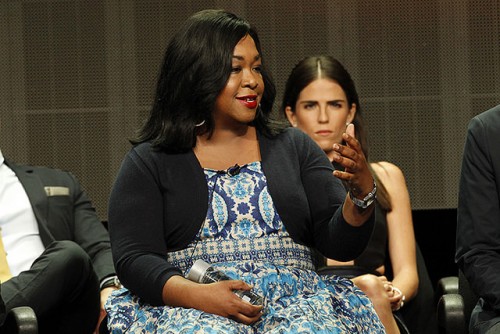
Shonda Rhimes
Shonda Rhimes


This guest post by Janell Hobson previously appeared at the Ms. Blog and is cross-posted with permission.

Anyone who may have seen interviews with Shonda Rhimes, read her forthright speech on diversity on television, or watched her hit TV show Scandal, would not recognize her in Alessandra Stanley’s description of an “angry black woman.”

It would be easy, actually, to become an “angry black woman” after reading Stanley’s New York Times review, but what such descriptors ultimately reveal is how certain critics fall back on readily available stereotypes and misrecognize the complexities of black womanhood.

Rhimes has rightly been lauded for bringing much nuance to her portrayals of black female characters in her television shows: the brilliant and assertive Dr. Miranda Bailey on Grey’s Anatomy, the ultra competent but vulnerable, wine-guzzling Olivia Pope on Scandal, and now the take-charge but flawed Annalise Keating in the new murder mystery, How to Get Away with Murder. Such characters have demonstrated a wide array of emotions on screen. Yet, Stanley reduced them all to “Angry Black Women.”

Chandra Wilson as Miranda Bailey on Grey's Anatomy
Chandra Wilson as Miranda Bailey on Grey’s Anatomy


In her clumsy attempts at praising Rhimes for enabling more complicated portrayals of black womanhood, Stanley revealed the often difficult task of transcending the White Gaze, which has a long history of racial distortion and misrecognition. “Confidence” or any behavior not characterized as servile from a black woman becomes “angry” and “scary.”

These distortions often manifest in other ways too, so that dark-skinned Viola Davis becomes “less classically beautiful” and “menacing” in her sexiness, and Nicole Beharie, who stars in the Fox TV show Sleepy Hollow, is reduced to a “sidekick.” Even when these women land leading roles in their respective TV shows, Stanley reduces their star power (through looks or character status).  No wonder, then, when black women assert themselves, appear confident, or fail to merely be “of service,” they can only become the “Angry Black Woman.”

At best, the White Gaze can be challenged on Twitter (see: #lessclassicallybeautiful); at worst, it can get you killed (see: Michael Brown, Eric Garner, Ezell Ford, Renisha McBride, Trayvon Martin). And for black women, in particular, our complex experiences disappear in the crossroads of intersectional oppression. Where racism and sexism meet, we fall through the cracks.

Kerri Washington as Olivia Pope on Scandal
Kerry Washington as Olivia Pope on Scandal


This is why so many have been eagerly awaiting Shonda Rhimes’ latest drama to arrive at Shondaland. We know she will feature shows that reinforce black women’s humanity.

In a culture where Janay Rice‘s suffering at the hands of her husband, Ray Rice, was only believed once her privacy was breached by TMZ’s release of a video illustrating her husband’s violence—and not when earlier video showed him dragging her out of an elevator, which merely prompted conversations that she must have “deserved” his treatment (i.e. a black woman’s “anger” instigates domestic violence)—and in a society where Oklahoma City police officer Daniel Holtzclaw can have his bail reduced when he is accused of raping and sexually assaulting eight black women, the “Angry Black Woman” trope makes it difficult to view these women as “victims.”

And even when black women’s bodies become the site on which national outrage and public conversations emerge to address problems such as domestic and intimate partner violence, they are still excluded from the table, as occurred when the NFL’s attempts to form an advisement panel—in the wake of the Ray Rice scandal—failed to include women of color. If we are not readily recognized as “victims,” we are also not recognized as “experts” or sources of knowledge and wisdom. And when we complain of this unfair treatment, we once again become “Angry Black Women.”

Viola Davis as Annalise Keating in How to Get Away with Murder
Viola Davis as Annalise Keating on How to Get Away with Murder


Of course the media landscape does not have sole power to transform our society and change what ails us. However, media normalizes concepts of race and gender, and any portrayals that advance our humanity can help us unpack our assumptions and challenge the racialized and gendered gazes that we bring to such images.

Will we recognize complex characters when we see them? Or will we resort to convenient stereotypes, as Stanley did in her review?  And I don’t wish to only single out this one New York Times writer.  Recently, advertisements for Fox’s new TV show Red Band Society, featuring Octavia Spencer as Nurse Jackson, described her as a “scary bitch“; they were eventually pulled from Los Angeles public buses after complaints from community members. Obviously, this rush to stereotype manifests not only in the pages of a widely read newspaper.

We need more diverse stories and more complex characters and images of black womanhood in media. But more than that: We need viewers to push themselves to interpret what they see on screen beyond recognizable stereotypes.

Octavia Spencer in one of the "scary bitch" ads for Red Band Society
Octavia Spencer in one of the “scary bitch” ads for Red Band Society


Fortunately, Rhimes has led the way. It’s time the rest of us learn to complicate our views.


Janell Hobson is an associate professor of Women’s, Gender and Sexuality Studies at the University at Albany, State University of New York. She is the author of Body as Evidence: Mediating Race, Globalizing Gender and Venus in the Dark: Blackness and Beauty in Popular Culture, and a frequent contributor to Ms.


Trans* Women and the Horror of Misrepresentation

While women (especially women of color) are constantly misrepresented, the trans* woman is without a doubt the most misrepresented minority group in existence. The horror genre frequently comes under fire for its formulaic uses of tropes and characters, and the “mentally ill trans* woman/psycho killer” is one we should really stop using.

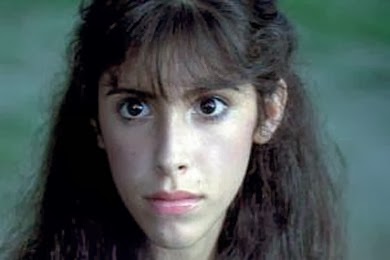
Felissa Rose as Angela Baker in Sleepaway Camp


This guest post by BJ Colangelo previously appeared at her blog Day of the Woman and is cross-posted with permission.

While women (especially women of color) are constantly misrepresented, the trans* woman is without a doubt the most misrepresented minority group in existence.  The horror genre frequently comes under fire for its formulaic uses of tropes and characters, and the “mentally ill trans* woman/psycho killer” is one we should really stop using. (NOTE: The asterisk at the end of “trans” is an umbrella term to encompass all non-cisgender gender identities including: transgender, transsexual, transvestite, genderqueer, genderfluid, non-binary, genderfuck, genderless, agender, non-gendered, third gender, two-spirit, bigender, and trans man and trans woman.)

The first thing that needs to be addressed is the depressing use of trans* women or cross dressers in horror and the fact filmmakers are treating the two like they’re interchangeable.  For example: Norman Bates in Psycho may lose his cool and dress like his mother when he kills someone, but that doesn’t make him a trans* woman. However, Angela Baker in Sleepaway Camp is revealed as having male anatomy but then returns years later in the sequels happily living and identifying as a woman. I’d make the argument that Angela Baker is a trans* woman. Buffalo Bill in The Silence of the Lambs wanted to be a woman, I’d consider him a trans* woman, while The Bride in Black from Insidious and Insidious 2 may have been struggling from an identity crisis caused by the years of abuse inflicted on him by his mother.  It’s difficult to tell whether The Bride in Black wanted to castrate himself because he truly wanted to be a woman, or if it meant his mother would finally love him.  That’s a complex issue and one that could easily constitute its own article.

Origin of The Black Bride in Insidious 2 (see: boy in a dress)


Mey Valdivia Rude is a trans* woman and contributing editor/author to Autostraddle who recently covered this very topic with an incredible article titled “Who’s Afraid Of The Big, Bad Trans* Woman? On Horror and Transfemininity.”  Her article is highly informative, but it is her experiences as a trans* person and a horror fan that are truly telling of the impact film has on its audiences.  In describing her theatrical experience watching Insidious 2 she states:

As the movie was ending, I sank down into my seat, hoping that no one would notice that I was trans*. I was afraid that if someone realized I was trans*, they might make the connection between me and the serial-killer-turned-ghost in the movie. After all, if you don’t know me, you might see me and (incorrectly) think that I’m just some man who is dressed up like a woman. According to the filmmakers behind Insidious Chapter 2, that makes me creepy, insane and dangerous.

When I think of women in horror films that I can identify with, I can respond with characters like the bodacious and brash Elvira, Mary from Hocus Pocus, and a handful of other sassy, independent women.  For trans* women, they have motel owning serial killers, kidnapping lepidopterists, malicious ghosts, and slashers. Considering horror films are predominately made by men and the fact Western society heavily values men over women, it’s somewhat predictable that we’d have all of these “mentally ill” male characters dressing like women. Why would a man want to live as a woman? That’s just insane! Henry Lee Lucas was forced to dress like a girl when he was a kid, and look how he turned out! Mey Rude goes on in her article to say, “The same insanity that causes them to be transgender is the thing that causes them to become serial killers, and causes them to be seen as frightening.” It’s very difficult for the average cis-gendered male to understand what it feels like to misidentify with the gender their anatomy and society tells them they’re “supposed” to be. Film representation is very, very important. Think of it this way–if Jaws made people scared of the ocean and IT made people afraid of clowns, what sort of idea are we perpetuating about trans* women if they’re frequently shown as psychotic, violent, or perverted?

Buffalo Bill putting on lip makeup in THE SILENCE OF THE LAMBS
Buffalo Bill putting on lip makeup in The Silence of the Lambs


A recent study showcased that trans* people across the U.S. experience three times as much police violence as non-transgender individuals. Even more terrifying, when trans* gender people were the victims of hate crimes, 48 percent reported receiving mistreatment from the police when they went for help. These statistics are the true horrors. Mey Rude sums it up perfectly:

When people look to pop culture and see trans* women portrayed as dangerous impostors that they should be afraid of, they cease to see trans* women as people and start seeing them as monsters. In the fictional world of movies it may be the trans* women who are frightening and menacing killers, but in real life, those trans* women are far, far more likely to be the victims of horrific and violent murders.

To my knowledge, there is really only one horror movie that showcases trans* women in a positive light, and even then the film showcases drag queens…not trans* women. (Pro-tip, not all drag queens are trans* women and not all trans* women are drag queens.) Ticked-Off Trannies with Knives is a tongue-in-cheek rape revenge film meant to be an entertaining film of empowerment a la I Spit on Your Grave.  GLAAD (Gay & Lesbian Alliance Against Defamation) protested the film at its original Tribeca screening, but opinions on the film are extremely polarized.  Considering the somewhat cartoonish film is the only real positive representation trans* women have in horror, I can sympathize with the anger from the trans* community. At the end of the day, I can’t hate the player but I will hate the game. Hollywood (horror in particular) needs a makeover on its portrayal of trans* women, and fast.

Just picture Jamie Clayton as a Final Girl real quick. THAT is a film I want to see.


If horror were to take a page from the books of dramatic films like Dog Day Afternoon, Dallas Buyers Club, or even the smash hit TV series Orange Is the New Black, we can start showcasing trans* women as actual people with feelings and complex thoughts and not just an easy way to tell an audience “this guy is supposed to be a weirdo, so we put him in a dress.”  There are amazing trans* women actresses, and they would be amazing additions to the female horror cannon as much more than a punch line or a quick villain. Laverne Cox, Harmony Santana, Jamie Clayton, and Candis Cayne are just a few working actresses that would completely dominate in the horror world. Trans* women deserve proper representation in horror, and it’s about time someone does something about it.


BJ Colangelo is the woman behind the keyboard for “Day of the Woman: A blog for the feminine side of fear” and a contributing writer for Icons of Fright. She’s been published in books, magazines, numerous online publications, all while frantically applying for day jobs. She’s a recovering former child beauty queen and a die-hard horror fanatic. You can follow her on Twitter at @BJColangelo.


Finally! A TV Show That Handles Transgender Issues With Grace

Television, historically, has not been a welcoming place for transgender people. “Trans representation” has previously consisted mainly of male sitcom characters relating stories about dating women who turned out to be transgender, and then saying “Eww!”

Things are changing now, though, with the breakthrough success of Laverne Cox on ‘Orange is the New Black’ and now director Jill Soloway’s new half-hour dramedy ‘Transparent.’

transparent_uxas1_tv_transparent_s1._v360745579__sl940_

This guest post by Leela Ginelle originally appeared at Bitch Media and is cross-posted with permission.

Television, historically, has not been a welcoming place for transgender people. “Trans representation” has previously consisted mainly of male sitcom characters relating stories about dating women who turned out to be transgender, and then saying “Eww!”

Things are changing now, though, with the breakthrough success of Laverne Cox on Orange is the New Black and now director Jill Soloway’s new half-hour dramedy Transparent.  All eleven episodes of Transparent are available for binge-watching on Amazon today.

Transparent revolves around the Pfefferman family, made up of three adult children—housewife Sarah (Amy Landecker), record company professional Josh (Jay Duplass), and free spirit/lost child Ali (Gaby Hoffmann)—and their divorced parents, Jewish caricature Shelly (Judith Light) and wealthy near-retiree Mort (Jeffrey Tambor).

Nearly all the publicity that’s greeted the show since its pilot’s appearance in March has concerned its main plot point: father-figure Mort commences her transition, aligning her body with her female gender identity. The first episode handles this quite elegantly. Mort gathers the children to their childhood home but is unable to break the news to them.  Later, we see Tambor, now named Maura, at an LGBT support group sharing a story about encountering micro-aggression level transphobia at a big box store when having to produce an ID for a judgmental clerk (bonus points for accuracy!). At the group, Maura also voices a combination of disappointment and bewilderment at the selfishness and self-absorption of her three children. It’s an appraisal the viewer might share.

Jeffrey Tambor, Jay Duplass, and Gaby Hoffman form an awkward family.


Throughout the pilot, Sarah, Josh and Ali all come off as extravagantly privileged, arrogant, and shallow. They speak exclusively in off-puttingly “clever” banter that’s either the result of overwritten dialogue or inadvisably preserved improv.

Critics often say viewers shouldn’t judge a show’s quality by its pilot because writers discover their characters’ voices and rhythms as they go. That may well be the case with Transparent. While the show deals with its central character’s identity very well,  there’s certainly room for improvement when it comes to the rest of the family.

A central conceit of the pilot is that not just Maura, but all the characters have hidden sides of themselves. Throughout the pilot, we see each family pursue their hidden interests. Sarah, for instance, comes across a former girlfriend from college, rekindling a passion she’d long forgotten. Josh, who’s dating a super young, skinny blonde singer, is revealed to have a seemingly secret relationship with an older, bigger woman of color. Ali, for her part, seeks out a strict, militaristic personal trainer, and quickly establishes a kinky dynamic in their workouts.

These plots are all interesting and I can imagine them developing nicely throughout the first season, but the show’s pace feels a little slack in the pilot. The three children’s narcissism and the exemption them seem to enjoy from any of the stress that defines daily life for most people, makes their experiences appear trivial.

This isn’t true of Maura. The necessity of grappling with her gender transition lends gravity to her story. Likewise, her impatience with her offspring’s myopic behavior makes her a kind of audience surrogate.
Tambor is terrific in the part. While it might have been nice to see a trans woman in the role, the fact that Maura is just embarking on her transition mitigates any charges that Tambor, as a cis man, has “stolen” the part from a trans woman actress, in my view. Moreover, Soloway has spoken about hiring many trans crew members for the set, and trans actresses and actors for other parts throughout the season.

Tambor lends real pathos to the role, communicating Maura’s gentleness and offering glimpses of the pain she experiences living an authentic life in a culture where unconscious transphobia lingers and informs countless otherwise impersonal encounters.

jeffrey-tambor-in-transparent

I can imagine that as the siblings engage with the reality of their parent’s transition, they’ll experience an increased intimacy in areas of their own lives. Whether the viewer will find that journey compelling or not remains to be seen.

Like fellow female show creator Jenji Kohan (Orange is the New Black), Solloway organically constructs a world seen through women’s eyes. The show’s main male character, Josh, surrounds himself with women, and seems at home with his sisters, and, in one of his few lines of dialogue, Sarah’s husband Len declares, “I like lesbians.” Unlike in OITNB, however, this world seems untethered to reality. The characters swim in money derived from unnamed or farfetched sources (a wealthy, successful music executive in 2014?).

That Soloway’s cisgender characters feel the most unrealistic shows how successful she’s been at representing Maura’s trans experience. In interviews promoting her show, she’s stressed how important that is to her, and has walked the talk, correcting NPR anchor Arun Rath when the latter misgendered Maura, and used the term “transgendered.”

Transparent‘s motives and sensitivities are unimpeachable. Let’s hope its drama and pacing become that way, as well. If that happens, it will be a must-see series.


Leela Ginelle is a trans woman playwright and journalist whose work appears in PQ Monthly, Bitch, and the Advocate.


Three Reasons Why Feminists Should be Watching ‘Mom’

It’s no coincidence that ‘Mom’ drew the ire of One Million Moms, a conservative media watchdog group that seeks to eliminate immorality and vulgarity (their words) in entertainment. In an undated post titled “CBS Makes ‘Mom’ Look Bad,” the group called for moms to protest ‘Mom,’ pointing specifically to the show’s portrayal of mothering: “If possible, try to imagine the worst possible characteristics a mother could have. Then multiply that by ten….” The post listed numerous examples of what was deemed “unacceptable content” on ‘Mom,’ but I think it’s the show’s deliberate challenge to the new momism that really ticked off One Million Moms.
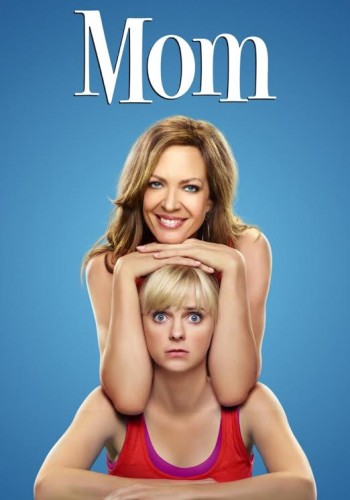
Mom features two strong female leads played by Anna Farris and Alison Janney
Mom features two strong female leads played by Anna Faris and Allison Janney


This is a guest post by Jessamyn Neuhaus. 

I’m a feminist and I’ve loved television all my life.  Now TV has finally started to love me back with some of the most interesting and intelligent female lead characters ever seen in any entertainment medium.  But there’s still lots to loathe, with gold-digging hussies, hysterical bridezillas, and helpmeet housewives aplenty on TV.

So when a show—particularly a show on one of the elderly big three networks—gives us something better, we should pay attention.  Mom, the latest sitcom spearheaded by longtime TV writer and producer Chuck Lorre, is something better.  Featuring two strong female leads, this CBS show about Kristy (Anna Faris), a recently sober single mother of two who is rebuilding a relationship with her own negligent mother Bonnie (Allison Janney), is not a flawless feminist text.  But for those of us who believe mainstream popular culture can be a place for both reinforcing and challenging gender stereotypes, there are at least three reasons to be watching when the second season of Mom begins on Oct. 30.

1.  Allison Janney is perfect.

Lorre has an uneven record when it comes to his female characters.  Roseanne and Grace Under Fire were high points, and I think we can all agree that Two and a Half Men is the lowest of the low points.  Even Lorre’s best shows are characterized by an unabashed mainstream commercialism, so it’s not surprising that some aspects Mom are cookie-cutter mediocre sitcom.

For instance, TV’s version of “working class” is frequently cringeworthy and Mom is no exception.  Lorre has gotten props for his blue collar characters, but on Mom, a single waitress (admittedly, at an upscale restaurant) with two children and sober for only six months can afford to rent a three-bedroom home in a safe neighborhood and provide her family with smart phones, laptops, video games, and Anthropologie bed linens.  Sitcoms don’t set out to be “realistic” of course, but it’s jarring to see the supposedly broke family enjoying luxury consumer goods.  Kristy also sports a haircut and color that costs more per month than many viewers’ rent or mortgage payments.

A working class single mother of two could never afford these bed linens.  Just sayin.’
A working class single mother of two could never afford these bed linens. Just sayin.’


In addition, many of the men on Mom are rather shallowly drawn male caricatures, from the loveable high school stoner who impregnates Kristy’s daughter Violet, to the loveable stoner ex-husband who impregnated Kristy years ago, to the whiny married-to-a-battle-ax boss with whom Kristy has a brief affair.

Then there’s the widely panned laugh track.  At this point, a laugh track (even if it’s ostensibly recorded live audience laughter) is more than outdated.  It undermines the show’s comedic impact.

And finally: the fat suit Farris donned in “Sonograms and Tube Tops.”  It’s offensive, and it’s also just not funny.  Really.  Not.  Funny.

Mom’s not perfect.  But Allison Janney is.

Not to say that Faris isn’t good too.  She has excellent comedy timing and physicality, and also handles some of the more serious moments in the show well, giving Kristy emotional depth within the limitations of a comedy-tackling-serious-subjects-with-a-light-touch framework.  Farris has often deftly undercut the typecasting trap of being a cute petite blonde girl, and she does so on Mom.

But Faris’ solid skills are outshone in every scene with Janney, whose crackling delivery and unique physical presence exude…well, the only word is power.  Power that is remarkable to see so confidently exercised by a female character on a traditional sitcom.  Bonnie has a lot of past problems (teenage pregnancy, drug dealing) and current flaws (tenuously sober, intermittently employed, and highly self-absorbed).  She’s making some amends to Kristy now, but she wastes no time on pointless guilt or doubt.  Bonnie is always beautifully self-assured.  It’s a real pleasure to see, on a traditional sitcom, a strikingly tall, handsome (not “pretty”), deep-voiced woman OVER 50 YEARS OLD strut her stuff without being made into a buffoon or an object of pity.

Alison Janney’s Bonnie is a woman to watch.
Allison Janney’s Bonnie is a woman to watch.


Janney won an Emmy this year for her work on Mom, as well as numerous other awards and accolades, and rightly so.

2.  Female sexuality and reproduction are multifaceted and messy.

When the pilot ended with Kristy’s discovering that Violet might be pregnant, I almost gave up on Mom.  Another TV teenage pregnancy, because that’s the most interesting thing that can happen to a high school girl, and naturally she’ll never consider an abortion because abortions don’t exist in TV Land?  No thanks.  But as the season continued, I was won over by some of the nuances and complexities of female sexuality and reproduction on Mom, including Violet’s pregnancy.

Although sitcomish in many ways, the pregnancy story depicted Violet truly struggling to decide whether to raise the baby herself or give it up for adoption.  Violet changes her mind several times, up to and throughout her labor and delivery in the season finale. It was an emotionally difficult process, which included choosing potential adoptive parents and convincing her boyfriend it’s the right decision on “Clumsy Monkeys and Tilted Uterus,” and a tearful but determined goodbye to the baby after the birth.  Meanwhile, Bonnie and Kristy support Violet’s decision but also experience it as a deep loss—though the emotional toll doesn’t stop Kristy from picking up her camera phone during Violet’s labor to “make a video for you to watch the next time you think about having unprotected sex.”

Kristy encourages Violet to use birth control in the future.


The National Council for Adoption praised the story line, and it was a refreshing change from the standard flippant sitcom treatment of birth mothers and adoption.  (Ironically, one of the most egregious examples of such stories was the 2004 episode of Friends in which a birth mother played by Anna Faris is so nonchalant that she doesn’t even realize that she’s having twins.)

There are other things to applaud about the show’s depictions of sex, which are often humorous without falling into gratuitous references to horniness and/or female genitals (Two Broke Girls, I’m looking at you).  The show begins with Kristy’s bad decision to sleep with her married boss but she clearly knows it’s stupid and soon ends it.  She tries to make smarter sexual decisions, postponing intercourse with a nice guy in an effort to maintain her sobriety and to explore the long term potential of the relationship.  But in “Nietzsche and Beer Run,” she falls immediately into bed and almost-love with a smolderingly hot philosopher/fireman (and who could blame her?  What a combo!).  This guy has a drinking/drugs/womanizing problem and for most of “Jail Jail and Japanese Porn,” Kristy teeters on the edge of messing up her life big time to be with him, but then snaps out of it and cuts him loose.  Kristy also occasionally sleeps with her ex-husband, but with a minimum of drama.  In contrast to TV’s tired “woman in her 30s who can’t find a husband or manage her romantic life,” Kristy’s sex life is convincingly messy but never demeaning or disempowering.   She’s unashamedly sexual, gladly accepting the gift of a vibrator from Bonnie and joking that the only thing that could possibly cause her to relapse and drink again would be “I have a stroke and forget how to masturbate.”  But sex is just one part of her life, and although she’s doing some fumbling, she’s not overwrought or hung up about it.

Bonnie’s healthy sexual appetite is sometimes portrayed as unfortunate promiscuity and sometimes embarrassing for Kristy, but Bonnie is never belittled by the writers for being a sexual person.  She’s absolutely, completely confident in her attractiveness and picks up desirable (often younger) men with flawless and humorous ease that never stoops to presenting her as a laughingstock.  Though Bonnie frets about the onset of menopause in “Estrogen and a Hearty Breakfast,”  most of the time her sexuality is sophisticated and fluid in a way that’s unusual for network TV.  In “Corned Beef and Handcuffs,” she smoothly comes out the victor in a kinky standoff with a pervy chef, and in “Leather Cribs and a Medieval Rack” casually reveals that she had a long time relationship with another woman.  “You were gay?” gasps Kristy.  “Not gay so much as temporarily disgusted with men,” smiles Bonnie.  She knows she’s sexy, but more importantly, so do the viewers because the show does not depict Bonnie as a pathetic old cougar.

3.  The moms on Mom are not “moms.”

Mom, in its title and in its content, strikes a blow against one of the more insidious aspects of gender ideology today: “the new momism.”  Identified by Susan J. Douglas and Meredith W. Michaels in The Mommy Myth, the new momism sets impossibly high ideals and norms for good mothering.  Douglas and Meredith argue that one symptom of the new momism is the widespread use of the term “mom” itself.  They point out that “Mom” is what kids call mothers and in many ways it can be patronizing and problematic when adults use “mom” to describe women.

Recovering addicts, Bonnie and Kristy both attend AA meetings.


On Mom, the mothers are loving, but not even close to ideal moms.  And not in a merely goofy Modern Family kind of way, but in seriously screwed up ways.  Both Bonnie and Kristy are trying to reestablish trust with their daughters after years of addiction and neglect.  Their AA friend Marjorie (Mimi Kennedy) is estranged from her children due to her past drug and alcohol abuse, and another friend, Regina (the always awesome Octavia Spencer) has to leave her son behind when she goes to jail for embezzlement.  These are mothers who have messed up, but they are still trying to do right by their kids.

At times, Mom offers funny yet astute counterpoints to our society’s relentless glorification of mothering.  For example, in “Loathing and Tube Socks,” Kristy’s son Roscoe’s run out of clean clothes and in desperation, she stops at a dollar store (a small but noteworthy nod to Kristy’s financial pressures) on the way to school to buy him new underwear.  But Roscoe balks because they have anchors on them and “anchors are stupid” and he “likes his underwear to make sense.”  “Oh for God’s sake, it’s just a design! It doesn’t mean anything,” she snaps, adding “I am not having this conversation with you.”  Then a store employee won’t let Roscoe use the restroom to change.  Kristy freaks, whips open a beach towel in front of Roscoe, and orders him to take off his pants and change right there in the aisle.  The scene captures the frenzied moments when real-life parenting is absurdly exasperating; when you find yourself acting like a total jackass—arguing about anchor underpants with an eight-year-old, for example—and it’s not funny ha ha, it’s funny because it’s so frustrating and ridiculous that you either laugh or completely lose it.

It’s no coincidence that Mom drew the ire of One Million Moms, a conservative media watchdog group that seeks to eliminate immorality and vulgarity (their words) in entertainment.  In an undated post titled “CBS Makes ‘Mom’ Look Bad,” the group called for moms to protest Mom, pointing specifically to the show’s portrayal of mothering: “If possible, try to imagine the worst possible characteristics a mother could have.  Then multiply that by ten….”  The post listed numerous examples of what was deemed “unacceptable content” on Mom but I think it’s the show’s deliberate challenge to the new momism that really ticked off One Million Moms.

Kristy, Bonnie, and even Violet are not sitcoms’ typical “good moms.”  Rather, they are interesting, often complex, women who are definitely worth watching.


unnamed

Jessamyn Neuhaus is a professor U.S. history and popular culture at SUNY Plattsburgh.  She is the author of Housework and Housewives in American Advertising: Married to the Mop (Palgrave Macmillan, 2011).


Bitch Flicks’ Weekly Picks

Check out what we’ve been reading this week–and let us know what you’ve been reading/writing in the comments!

How to Get Away with Dynamic Black Women Leads by Corinne Gaston at Ms. blog

Jill Soloway on Transparent and How Lena Dunham’s Success Convinced Her to Stop Pretending by John Horn at Vulture 

How Bring It! is changing our perception of Black girls and performance by Sesali Bowen at Feministing

Here’s Some History Behind That ‘Angry Black Woman’ Riff the NY Times Tossed Around by Blair L.M. Kelley at The Root

Viola Davis Responds to Being Called ‘Less Classically Beautiful’: ‘You Define You’ by Yesha Callahan at The Root

The Power of Doc McStuffins by Katti Gray at Women’s Media Center

Why I Left by Jana Monji at RogerEbert.com

People Magazine Deletes Offensive Tweets About Viola Davis and Scandal by Rebecca Rose at  Jezebel

Powerhouse Female Producers Join Forces to Launch New Company by Inkoo Kang at Women and Hollywood

20 Facts Everyone Should Know About Gender Bias in Movies by Soraya Chemaly at The Huffington Post

Reese Witherspoon Was Inspired by Tina Fey, Wants to Help Women in Hollywood by Corinne Heller at E!

Interview: ‘Black-Ish’ Creator Kenya Barris Talks Blackness in the Age of Obama and in the Shadow of Cosby by Jai Tiggett at Shadow and Act

What have you been reading/writing this week? Tell us in the comments!

Female Friendship: The Roundup

Check out all of the posts for our Female Friendship Theme Week here.

Pretty Little Friendships by Victor Kirksey-Brown

I don’t know if the writers portray this type of friendship and steer away from many of the harmful female friend tropes on purpose, or if it’s just because there’s no way to fit them in with all the other crazy shit that’s going on, but the strong and positive friendship these girls share is one of the reasons I enjoy Pretty Little Liars.


“I’m a Veronica”: Power and Transformation Through Female Friendships in Heathers by Alize Emme

A snappy dark comedy set in a high school bubble, Heathers touches on difficult subjects including murder and suicide, and nonchalantly addresses major social issues like female friendship and power. The friendships we are introduced to steer every aspect of the story as it progresses and bring us into a world where female characters aren’t just cardboard cutouts but multidimensional, seriously flawed, and sinfully interesting young women.


It Takes Two for Friendship by Laura Money

To me, this movie is all about a deep female friendship. Yes, it is a bit narcissistic on the surface – instantly falling in love with someone who looks just like you – but it really captures the essence of friendship, connection, and trust. Alyssa and Amanda realise that they look alike on their first meeting but soon understand that they are also both deeply unsatisfied with particular elements in their lives.


“She’s My Best Friend”: Friendship and the Girls of Teen Wolf by Andrea Taylor

The girls of Beacon Hills, especially Allison and Lydia, are loyal, dedicated friends. They help each other out and they encourage each other. They stand up for each other. They’re best friends with all the complexities that relationship implies. There are better, or at least more consistent, examples in media to turn to, but the perfect moments of female friendship in Teen Wolf mean a lot to me.


You’ll Never Walk Alone: Heavenly Creatures and the Power of Teenage Friendship by Caroline Madden

Peter Jackson shows the girls interacting and playing in these worlds. “The Fourth World” is a beautiful garden. Borvonia is a dark and delightfully wicked world of castle intrigue and courtly love. Seeing the girls in the worlds they’ve created demonstrates the extent of the fantasies and the pleasures their imaginative and playful friendship brings. Pauline and Juliet have an intense friendship; they don’t want anyone to stand in their way of spending time together or stop the joy that it brings for them.


Why This Bitch Loves the B— by Mychael Blinde

I avoided Don’t Trust the B—  in Apartment 23 for quite a while; at a cursory Netflix glance it looked like anti-feminist tripe featuring catty women pitted against each other in a false dichotomy of “nice” and “bitch.” Then I watched it.

I could not have been more wrong.


The Queer Female Friendship of Frances Ha by Sarah Smyth

For Frances Ha is not a film where “boy-meets-girl,” and there is definitely no diamond ring. The love story of Frances Ha is between the titular character, Frances (Greta Gerwig) and her best friend, Sophie (Mickey Sumner), and it is precisely this friendship between two women which questions, resists, and challenges the definition of love posed by the (primarily) heterosexual and (almost always) heteronormative romcom genre.


I Married a Monster: Female Friendship in The Other Woman by Chantell Monique

Instead of hating and seeing each other as competition, the women form a bond, increasing their woman-power. Kate decides that she wants to make Mark pay for his unfaithfulness saying, “I want him to have to start over,” but she’s afraid she doesn’t have the killer instincts to do it. Her new friends step in, telling her that she does and that if they work together, they can get their revenge.


In Spite of Mean Girls: The Radical Vision of Pretty Little Liars by Jessica Freeman-Slade

In her bestselling collection ‘Bad Feminist,’ Roxane Gay starts the listicle entitled “How to Be Friends with Another Woman” with this as the very first item: “Abandon the cultural myth that all female friendships must be bitchy, toxic, or competitive. This myth is like heels and purses—pretty but designed to SLOW women down.”


Romy and Michele’s High School Reunion: Bosom Buddies Against The World by Emma Kat Richardson

While there’s quite a bit that’s frivolous about Romy and Michele – the film’s tagline is “The Blonde Leading the Blonde” – there is also, much more importantly, the heartwarming love story at the film’s creamy center. But this love has nothing to do with the complications and disappointments that romantic relationships can bring; rather, it’s what the Greeks called agape, or a deeply spiritual, passionate love between intimate friends.


We’re All for One, We’re One for All in A League of Their Own by Rhianna Shaheen

At the end, many of the league’s players reunite to be inducted into the National Baseball Hall of Fame. Old friendships rekindle and emotions soar. After following these women through what must have been the best time they ever had in their youth it is refreshing to see authentic portrayals of them as older women.  It feels like their lives are unfolding before my eyes.


Walking and Talking With Non-Toxic Women Friends by Ren Jender

A short clip at the beginning of  writer-director Nicole Holofcener’s first film, 1996’s Walking and Talking, lets us know that Amelia (Catherine Keener) and Laura (Anne Heche) have been friends since adolescence. Both are in their 30s and living in New York City–Laura with her boyfriend Frank, and Amelia alone in the sort of sunlit airy apartment someone with her job, even in a pre-gentrified New York (which, like many films from then and now is also mysteriously bereft of people of color), would never be able to afford.


Practical Magic: Sisters as Friends, Mirrors by Olivia London-Webb

This is why I love this movie. I have two real sisters in my life. One born and one chosen. I have strong powerful women everywhere I look–my friends, my mother, my sister-in-law, and my mother-in-law. I would go through hell for them. They would go through hell for me. What we are more than anything else are each other’s mirrors.


Martyrs: Female Friendships Can Be Bloody Complex by Dierdre Crimmins

Often in feminist criticism female friendships are discussed as a great barometer for the authenticity of the female characters. Strong bonds and healthy interactions serve the dual purpose of highlighting positive female roles and for showing the many dimensions of women as whole persons. I propose that in order to continue the push to show women as well-developed characters we also need representations of flawed female friendships.


St. Trinian’s: Girlish Wiles and Cunning Friendships by Bethany Ainsworth-Cole

Now whilst this seems like an odd collection of friendships, it is an important selection of lessons. It fosters the idea that girls working together will always be better than scheming men, and will always sort things out even if they do need help. Girls are fearless: willing to steal, blow up iron bars, fight back against creeps, and speak out. And most importantly, it’s OK to make mistakes. The girls also enjoy themselves doing it.


Best Frenemies Forever by Emanuela Betti

Can women be friends? Or, most importantly, can two women who share the same man be friends? The depiction of genuinely loving and caring female friends has found its way onto many movies and TV shows, but when it comes to the idea of a more complex situation—the “frenemies”—it’s harder to find characters that do it justice. There is a shallow notion that when two women want the same man, they turn into hair-pulling, catfighting brats.


The First Wives Club and First World “Feminism” by Amanda Lyons

But the focus on “getting everything” was a little hard to stomach from women living in huge condos in the heart of New York with an interior designer on their payroll. Somehow it felt like the message was getting a little lost in the middle of all the high-society hob-nobbing – there was nothing particularly universal about it, and any feminism that was being communicated was certainly of a rarefied kind that most of us wouldn’t be able to access.


Scarlett and Melanie: The Ultimate BFFs by Jennifer Hollie Bowles

Regardless of how psychological or interpretive you want to get with Scarlett and Melanie’s friendship, it serves as an invaluable example for how women can accept, value, and interact with one another.


Seed & Spark: Female Friendship On Screen–Art Imitating Life by Liz Cardenas Franke

But what if I spent my time, instead, helping another female filmmaker make her movie involving female friendship? Wouldn’t that be just as meaningful? And could it perhaps be making an even bigger statement—promoting the “cause,” so to speak?


Homegirls Make Some Noise: Antônia and the Magic of Black Female Friendships by Lisa Bolekaja

Classism, racism, sexism, and colorism are very real in the world of Antônia. But the film shows us a fresh narrative of Black women succeeding despite living in a slum, despite poverty, despite violence and all the ills that pervade real life. For just a moment, I’m able to watch Black women who are free to be themselves. They don’t have to unpack external baggage based on a checklist of intersections involving their skin color, social status, or gender. That is a rare treat. It’s their tight friendship that sustains them. Music is friendship, and friendship is music.


Kamikaze Girls: When a Lolita Meets a Yanki by Jasmine Sanchez

While their connection doesn’t form immediately, especially in Momoko’s case, the two eventually are able to form a close bond. When they first meet they are both taken aback by one another’s exterior–Momoko is horrified to be dealing with a yanki and Ichiko thinks that Momoko is a little girl. Once she finds out they are the same age Ichiko admits to her folly, “I shouldn’t judge by appearances,” which Momoko counters with, “But appearances says everything.” This sets up their dynamic for the rest of the film as Ichiko is willing to look beyond, while Momoko prefers the superficial.


Julia: A Portrait of Heroic Friendship in an Age of Darkness by Rachael Johnson

Although peppered with flashbacks to the women’s childhood and youth, Julia is set during their formative academic and professional years. The film chronicles the women’s personal and political lives in the decade that saw the rise of Fascism. We witness how the fight against those dark forces transforms both friends.


9 to 5: The Necessity of Female Friendships at Work by Deb Rox

Like the three fates, the friends conjure a life-altering force by listening to each other, by laughing, by being friends.  The scenes where they envisioned the demise of their “sexist, egotistical, lying, hypocritical bigot” of a boss start to play out for real in madcap, accidental, and intentional ways. As the fabric unrolls, each woman experiences being supported by the other two and feels compelled to help her friends. In their confusions, cover-ups, and retribution schemes, Violet, Doralee, and Judy knit together a solid friendship where each character finds strength and support. And manage to avoid getting caught. It’s the little things.


“I Love You More Than My Luggage”: Female Friendships and Fertility by Joanne Bardsley

The implication of the relative richness of the representations of female friendships at either end of the fertile period is that at these times the female is free to explore relationships which are not sexual but during the fertile period the female’s most important relationships are sexual. This is damaging and dangerous as it is a structural reinforcement of the objectification of women. We only see our friendships represented on screen when we are no longer of use to the patriarchy, when we have either yet to serve our function or have already performed our reproductive duties. It is only in the margins that we are free to pursue our own interests.


Making Sure Female Friendship Films Aren’t Forgotten: Take Care of My Cat by Adam Hartzell

The film is about the evolving friendships of five young South Korean women as they step away from their technical high school into a less certain world. Their degrees of closeness shift as they consider their futures in the face of particular restrictions in work and life opportunities due to gender and class discrimination.


Frances Ha: Chasing Sophie by Rachel Wortherly

In my experience, people who have seen this film often mistake Sophie’s actions as abandoning Frances for her boyfriend, Patch.  The fact that it happens differently is a breath of fresh air.  Rather, it represents an early point in which audiences experience the divide between Frances and Sophie in physical and emotional aspects.  Sophie sees the opportunity to move on and fulfill her dreams, while Frances’ dream is fractured.  The story of “us” that precedes this action becomes their separate, respective stories: “the story of Frances” and “the story of Sophie.”


Fearless Friendship! Usagi and Rei by Kathryn Diaz

Growing up isn’t cute. At six or 16 or anywhere in between, figuring out who you are and what your place in the world is isn’t sparkly fun-times. The best you can hope for is to have a real friend to muddle through the worst of it with you, someone who is having just as much of a crazy time as you are, who will run to your defense, give you pep talks when you’re about to face the Dark Kingdom, and shamelessly make fun of you for being such a crybaby after you call her a meanie.


What Now and Then Taught Me About Friendship by Kim Hoffman

Summer has always been a magical time where childhood lingers, and every time I get on a swingset again, or have a hankering for a push pop, or throw on my Now and Then soundtrack, I think of my childhood and feel invigorated with that rush of youth. I think of Taylor and Sara, and a time when we were so eager to make our own adventures. I also think of those four girls from the Gaslight Addition; somehow they affected my life by making me appreciate what it means to be and have a true friend in this wild world.


Reality Bites: A Tale of Two Ladies by Beatrix Coles

While a fun exercise, it’s really just as counter-productive to reduce these two women to their Reality Bites character archetypes as it is pointless. But yet, there is something familiar and soothing in these roles. We want the pretty girl who falls from grace punished, just as we want the girl wearing glasses to have a political point of view and to not be too concerned about whether she has a boyfriend.


Feisty and Heisty: Female Friendship in The First Wives Club by Artemis Linhart

The main characters’ friendship goes way back: a flashback shows the group in college, together with their valedictorian and close friend Cynthia. The four of them vow to be friends forever. This, however, turns out to be easier said than done. After graduation, the four of them lose touch and are only reunited years later, with the occasion being Cynthia’s funeral. After her husband took financial advantage of her and then left her for a younger woman, she commits suicide. At a post-funeral get-together, the three women bond over their own failed marriages and spite for their ex-husbands. Their friendship is rekindled as they decide to settle the score with their exploitative exes.


 When Friendships Fray: Me Without YouNot Waving But Drowning, and Brokedown Palace by Elizabeth Kiy

Not all friendships are built to last. Teenage friendships are little romances between two people, tiny beautiful, impossibly fragile things that break apart upon touch or close examination. Just as a true romantic relationship between two unformed people rarely lasts, so often we grow out of our early friendships. Because so much of growing up means developing into a person who can live in the world, films about the ends of friendships can be just as satisfying coming of age stories as the typical narratives of beginnings. Each ending after all, is the beginning of something else.


“We Stick Together”: Rebellion, Solidarity, and Girl Crushes in Foxfire by Jenny Lapekas

In the spirit of Boys on the Side, along with a dose of teen angst, Foxfire is perhaps the most bad ass chick flick ever.  Many Angelina Jolie fans are not aware of this 1996 phenomenon, where Angie makes a name for herself as a rebellious free spirit who changes the lives of four young women in New York.  Based on the Joyce Carol Oates novel by the same name, ‘Foxfire’ is the epitome of girl power and female friendship, a pleasant departure from the competition and spitefulness often portrayed between women characters on the big screen (see Bride Wars and Just Go with It).  However, it does seem that Hollywood is catching on as of late, and producing films that cater to a more progressive viewership (see Bridesmaids and The Other Woman).  When I first saw Foxfire around 16 years old, I stole the VHS copy from the video store where I worked at the time.