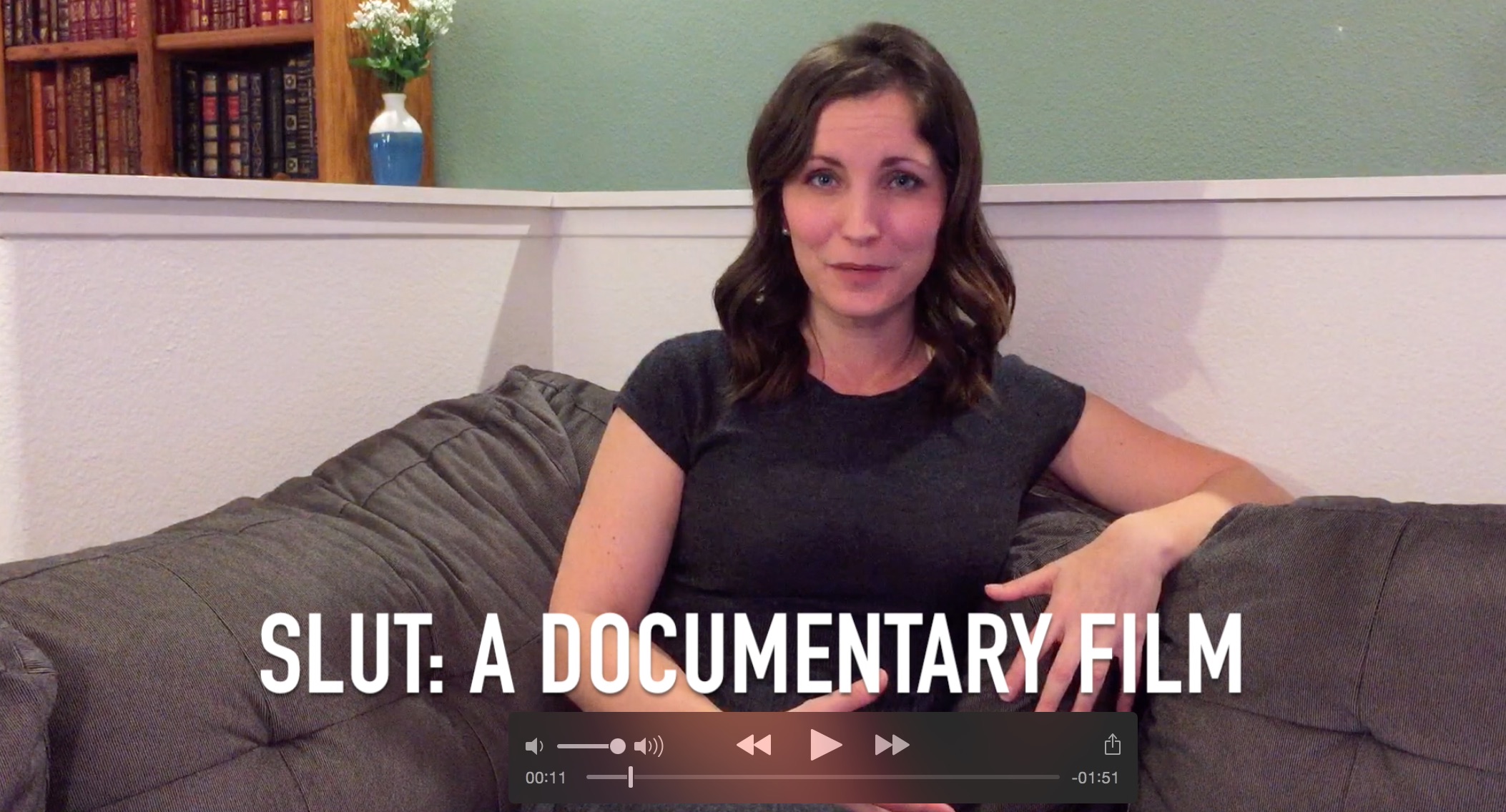
So when I started production on ‘Slut: A Documentary Film,’ I knew the intensity of what I was asking of the women I interviewed. Not only were they sharing their personal experiences with sexual shaming, they were doing it on camera. They were using their full, legal names. They were putting their faces and their voices out there into the world, with the hope that what they had to say would change someone’s life.
Contribute to the Slut: A Documentary Film crowd-funding campaign to help The UnSlut Project complete post-production.
This is a guest post by Emily Lindin.
When I first started The UnSlut Project, I imagined it would function like the It Gets Better Project – but rather than focusing on LGBT youth, it would be geared toward girls who were being “slut”-shamed. The parallel was obvious: like people who are bullied for being LGBT, girls who are sexually bullied are often convinced that it’s not something about them that is “wrong”; rather, it is their very being, who they are, that is “dirty” and “bad.” This can make them feel worthless as a person and, in the most tragic cases, can lead to self-harm and even suicide.
In case you’re not familiar with the It Gets Better Project, the premise is that when LGBT youth don’t have supportive adults in their lives (which is, unfortunately, often the case), they can find comfort in videos made by adults who have survived similar bullying. These videos provide solidarity, hope, and the message that it will get better.
Slut: A Documentary Film is currently crowd-funding for post-production.
My idea was that this kind of project would make sense for young girls who were being sexually bullied, since they, too, often lack support from the adults in their lives. Many parents’ first instinct is to blame their daughter for being labeled a “slut” by her classmates, rather than to help her overcome that reputation in a kind, open-minded way. I had supportive parents growing up, but when I was bullied as the school “slut” back in the late 1990s, I would have greatly benefited from the reassuring messages of women who had survived something similar.
N’Jaila Rhee shares her experience being shunned by her parents and church community after being sexually assaulted, as part of Slut: A Documentary Film.
So women started submitting their stories. But here’s the thing: they wrote to me instead of recording video messages, and in most cases they asked me to keep their submissions anonymous. Some of these women were in their 40s or 50s; decades before, someone had decided they were a “slut.” But there was still so much shame surrounding that time in their life that they could not risk being identified. They wanted to reach girls who were going through sexual bullying, they wanted to speak out about their stories, but the stigma surrounding the “slut” label was still so strong that they could only do so anonymously.
Allyson Pereira shares her experience being sexually bullied after sending a photo of her breasts to her high school ex-boyfriend, as part of Slut: A Documentary Film.
I can’t blame these women for wanting to protect their identities. The stigma they fear is not imagined; in many cases, they could be putting their jobs or personal relationships at risk. In fact, when I first launched The UnSlut Project by blogging my own diary entries from when I was labeled a “slut” in middle school, I changed the names of everyone involved. To this day, I use a pen name to protect the people who bullied me over 15 years ago.
So when I started production on Slut: A Documentary Film, I knew the intensity of what I was asking of the women I interviewed. Not only were they sharing their personal experiences with sexual shaming, they were doing it on camera. They were using their full, legal names. They were putting their faces and their voices out there into the world, with the hope that what they had to say would change someone’s life.
They were doing something braver than I have ever done. And they were trusting me to represent their stories clearly and honestly, to make a film that will not only reach adults who need to know just how pervasive and widespread the issue of “slut”-shaming is, but whose message will find girls who need to know that “it gets better.”
_______________________
Emily Lindin is the founder of The UnSlut Project and the creator of Slut: A Documentary Film. She was labled a “slut” at age 11. Now a Harvard graduate pursuing her PhD in California, Emily started The UnSlut Project by blogging her middle school diaries. The project has grown into an online community where people who have experienced sexual shaming can share their stories, and where girls who are currently suffering can find support.
Irene comes across as sexually inhibited in her relationship with Driver because she knows that her husband will soon return home from prison. However, from the moment that she meets Driver, she relies on him for help.
The alluring femme fatale always played an important part in our Western cinematic history. The archetype of the errant woman was present ever since Theda Bara graced the screen in the silent film era of the 1920s. Nevertheless, it was film noir that polished the archetype. The highly stylized and suspenseful film genre formed the basis of the Hollywood creation of the femme fatales in the 1940s and 1950s. The genre broke the conventional stereotypes of one-dimensional, insecure and dependent women. Instead women were vivacious, captivating, seductive female characters who owned the screen while sashaying through their own created webs of deceit and betrayal (although some would say they were manipulative and cold-blooded with an sexual self-serving attitude). The archetype changed over time, which is intertwined with the modernization of the film industry. The femme fatale is in its essence a tool to help us understand the limits of social and cultural roles surrounding women. The neo-noir Drive (2011) is an homage to the old-fashioned art form of escapism.
It took more than six years before Drive was shot. The film adaptation of the novel by James Sallis initially appeared to be heading in the same direction as the popcorn flick The Fast and the Furious. Hugh Jackman and director Neil Marshall (Doomsday, Centurion) were first attached to the project. When Gosling took the place of Jackman, he specifically asked for director Nicolas Winding Refn. The quirky Danish director debuted with the raw thriller Pusher, and followed it with Bronson with Tom Hardy as lead about Britain’s most violent prisoner and he also directed Valhalla Rising, a Viking movie filled with brutal fights, but ends in silent contemplation. Winding Refn is an unpredictable director with his own peculiar visual style. The film has similarities with an ’80s classic. In 1978, Walter Hill created The Driver with Ryan O’Neal as nameless hero. Similar to the main character in Drive, we will never know his name. They do share a profession: if somewhere in the city a robbery is committed, they are the cold-blooded drivers of the getaway car. In 2011, Winding Refn won the award for Best Director at the Cannes Film Festival for Drive.
Drive centers around Ryan Gosling as a handsome loner, silent, gentle and a master on the road. He works in the garage of Shannon (Bryan Cranston), who gives him criminal jobs and occasionally work as a stunt driver on Hollywood film sets. Shannon wants his most talented driver to start a new career in the professional racing circuit and concludes a deal with two mafia business partners, Bernie Rose (Albert Brooks) and Nino (Ron Perlman). The young driver, meanwhile, gets acquainted with his neighbor, Irene (Carey Mulligan) and her son, Benicio. Irene immediately falls for his charm. Only the scorpion on the back of his jacket recalls the dark aspects of his existence. And that one, beautiful, ominous shot where we see him on a film set as a stand-in with a latex mask over his head.
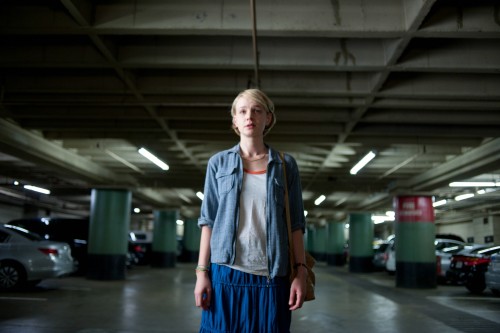
Irene (Carey Mulligan) and Driver (Ryan Gosling)
Is Irene the modern femme fatale in Drive? One of the interesting aspects of the character is that she’s played by Mulligan. The original character in the script was an Hispanic woman named Irina. In a conversation with Interview Magazine, Winding Refn bluntly states that he gave Carey Mulligan the part because she “seemed pure,” like someone he wanted to protect. Apparently he couldn’t imagine a Latina actress in the part. He picked Mulligan specifically because she fits the mold of the damsel in distress that in Hollywood is synonymous with white.
Irene is described as a beautiful and seductive woman but she’s not a direct danger to Driver. We can see that there’s tension between Driver and Irene, but Irene is more insecure than hyperaware of her sexuality. Irene is the object of sexual desire of Driver and because he becomes intrigued by her, he will do anything to help her. The classic femme fatale is often seen as sexually uninhibited, independent, and ambitious. Irene comes across as sexually inhibited in her relationship with Driver because she knows that her husband will soon return home from prison. However, from the moment that she meets Driver, she relies on him for help.
“Trouble ahead”
Irene’s husband asks Driver for help when he comes back from prison because of an outstanding debt. Driver wants to protect Irene and as a result he becomes entangled in a criminal job to raise the money, and that’s eventually his downfall. Irene never explicitly asked Driver for help. Instead of the so-called “evil seductress who tempts the man and brings about his destruction,” Irene seems more a passive, innocent woman who indirectly without intent, will perish the man.
Irene seems to be a combination of the femme fatale and the femme attrapée. The femme attrapée is, according to Janey Place in “Women in Film Noir,” a woman who “offers the possibility of integration for the alienated, lost man into the stable world of secure values, roles and identities. She gives love, understanding (or at least forgiveness), asks very little in return (just that he come back to her) and is generally visually passive and static.”
Driver is here the alienated, lost man and Irene gives him love and understanding. Both characters seem lonely and find solace in their relationship. Irene comes across as a passive, brave, and sweet woman but functions in the story as a femme fatale. Her innocence ensures that Driver makes the wrong choices. In film noir, the male protagonist would make the wrong choices because the femme fatale has instigated him with her sexuality, but Drive allows Driver to make these choices to save Irene. Drive has an open ending so the future of Driver remains unclear.
The femme fatale in the modern neo-noir films from the 1960s, 1970s and onward transformed into a more passive role, rather than active and manipulative. We see elements of Irene herein. Irene doesn’t fit the classic description of the femme fatale. She’s no Gloria Swanson, Marlene Dietrich, Barbara Stanwyck or even a Sharon Stone. It’s not the loss of control by a seductive woman that resulted in the downfall of Driver but instead taking the rains, coercion and protective instinct. The archetype will pop up in films in years to come since it always captures our imagination.
The tight script was penned down by the Academy Award-nominated screenwriter Hossein Amini. Amini was hesitant at first because of the non-linear structure of the novel but he definitely made the transition from page to screen work. Cinematographer Newton Thomas Sigel neatly used wide-angle lenses instead of handheld camerawork to capture Winding Refn’s visual style. The film was shot digitally and Winding Refn was able to capture evocative, intense images of Los Angeles. The film has a 1980s atmosphere which comes true via the cars, music, clothes, but especially with the architecture in downtown Los Angeles. It all reflects the art house approach of Winding Refn.
Wending Refn follows the beat of his own drum. As a result, Drive isn’t your run of the mill action flick. The emphasis in Drive lies first and foremost on the characters, accompanied by the speed, and the wonderful soundtrack. Winding Refn managed to create an enigmatic film that engages, shocks, and surprises–old fashioned escapism and inescapable at once.
Firstly, a definition of sorts: the myth of the “strong Black woman” is loosely defined as a Black woman who is emotionally hardy to the point of feeling no pain. She is never fazed or hysterical. She is cold and calculating. She has no personal needs or desires and doesn’t complain. She can take a beating and come out on the other side unharmed. This is supposed to be seen as a good thing. Black women are “so strong” that no amount of abuse will break them. They will always keep plodding on. “Strong black women” are superhuman.
This guest post by Cate Young previously appeared at her blog, BattyMamzelle, and is cross-posted with permission.
Last week, I read a great article by Nichole Perkins on Buzzfeed that talked about the way the character development of the leading ladies of both Scandal and Sleepy Hollow were working toward dismantling the harmful depictions of “strong Black women” in media. It was a great read, and I loved that someone else shared my conclusions about Olivia Pope’s characterization.
What stuck out to me however, was Perkins’ characterization of Gabourey Sidibe’s character Queenie on American Horror Story: Coven as a negative embodiment of the “strong Black woman” stereotype. She says:
Then there is Gabourey Sidibe as Queenie on American Horror Story: Coven, a “human voodoo doll” whose supernatural power is the inability to feel pain, even as she inflicts said pain onto someone else. […] These Strong Black Women feel no emotional pain, tolerate severe physical trauma with no reaction, and menace others with stone faces.
I love American Horror Story: Coven. But even though I had immediately made the connection to the racialized violence against Black bodies this season, I hadn’t picked up on Perkins’ perspective of Queenie as an SBW. After seeing the episode “The Replacements,” I not only vehemently agree with her, I also want to expand on her observations.
Firstly, a definition of sorts: the myth of the “strong Black woman” is loosely defined as a Black woman who is emotionally hardy to the point of feeling no pain. She is never fazed or hysterical. She is cold and calculating. She has no personal needs or desires and doesn’t complain. She can take a beating and come out on the other side unharmed. This is supposed to be seen as a good thing. Black women are “so strong” that no amount of abuse will break them. They will always keep plodding on. “Strong black women” are superhuman.
Immediately, we can see the issues with this so-called “positive stereotype.” It paints Black women as unfeeling, and incapable of emotional pain. It justifies abuses perpetuated against them as “not as bad” because “they can take it.” In essence, it makes Black women a target for “warranted” violence, because the belief is that said violence will not affect them.
Now, on Perkins’ original point, AHSC‘s Queenie is a Black witch (superhuman) whose magical power is to literally injure herself without feeling pain. The only way she is able to inflict pain on other people is to inflict it on herself first. Her suffering is part and parcel of her experience. And yet, she feels no pain, therefore hurting her isn’t really hurting her is it? She can take it! With Queenie, Ryan Murphy has conceived of a character that is the literal embodiment of a harmful stereotype.
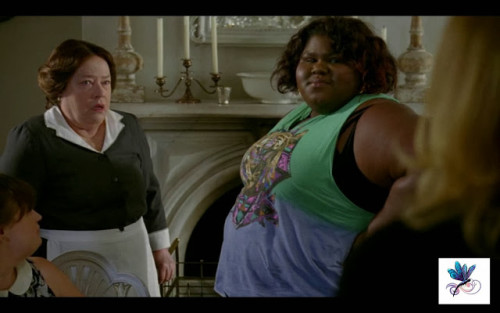
That’s not all. In “The Replacements,” Fiona Goode (Jessice Lange) appoints the racist Madam LaLaurie (Kathy Bates) as Queenie’s personal slave as punishment for her bigotry. LaLaurie is openly racist towards Queenie and uses every opportunity she can to demean her, and “remind her of her place” even though their “traditional roles” have been effectively subverted. Queenie takes it all in stride until she realizes who exactly LaLaurie actually is and recalls her reputation for torturing her slaves.
Later though, the minotaur that LaLaurie created comes back to haunt her, sent by former lover Marie Laveau (Angela Basset). Terrified, LaLaurie begs Queenie to protect her. The very same woman who she said wasn’t worthy to be served at breakfast, should put her own safety on the line to save her. And she DOES. Despite all of LaLaurie’s ill treatement, Queenie still feel compelled to protect her against the present threat. This plays into ideas about Black women being in service to white women, but never equal to them. Think The Help and Hilly Holbrook‘s “Home Health Sanitation Initiative.”
The other major issue I had with this episode was the presentation of Queenie’s sexuality. Queenie is presented as being the only one unworthy of love or sex. Early on, we learn that Queenie is the only virgin in the house. Later she tells LaLaurie that she is fat because “Dr. Phil says that kids from broken homes use food to replace love,” indicating quite explicitly that love is not something she feels she as access to. After confronting the minotaur to save LaLaurie, she offers to have sex with him as she masturbates:
You just wanted love, and that makes you a beast. They called me that too. But that’s not who we are. We both deserve love like everybody else. Don’t you want to love me?
So, not only is Queenie not worthy of love or sex, the only love/sex is entitled to is from a literal beast. And let’s not even get into the demonization of black sexuality by literally and figuratively turning a Black man into a beast. Queenie’s sexuality is degraded as being less than, a fact that she seems aware of. She is so “desperate and deranged” that she loses her virginity to an animal.
The use of the word “we” is significant to me also. Not only does Queenie see the minotaur as a beast, she sees herself as one too. She has internalized the idea that her blackness correlates to bestiality, and has now literally given into that characterization. The fact that she sees herself as equal to an animal that is subhuman and that that idea isn’t challenged in any way is a very problematic and racist way to portray black sexuality.
There is a lot of anti-Black sentiment tied up in Queenie’s character and it makes me uncomfortable and unhappy. It could be argued that half the story is about a racist slave owner who was renowned for her cruelty, and so anti-Blackness is to be expected in the narrative. But in my opinion, not enough is done to subvert those stereotypes. Having Fiona declare that she hates racists simply isn’t enough if every interaction of Queenie’s upholds the existing status quo. It is a disservice to have a talented actress like Sidibe, who has already been heavily maligned because of her weight, be characterized in a way that reinforces ideas about why she isn’t suitable for better more complex roles in Hollywood.
This isn’t the first time that AHS has had a problem with women. The show has a long history of disempowering women through rape, so it’s not surprising that it would also have a problem with Black women specifically. But to play into deeply racist ideas about Black womanhood is unsettling to me in a completely personal way. Having Queenie be characterized as a superhuman beast who is unworthy of love is a powerful message to send in a world rife with anti-Blackness where #stopblackgirls2013 can trend for an entire day. I can only hope that the rest of the season gets better.
Cate Young is a Trinidadian freelance writer and photographer, and author of BattyMamzelle, a feminist pop culture blog focused on film, television, music, and critical commentary on media representation. Cate has a BA in Photojournalism from Boston University and is currently pursuing her MA in Mass Communications so that she can more effectively examine the symbolic annihilation of women of colour in the media and deliver the critical feminist smack down. Follow her on twitter at @BattyMamzelle.
As you can see from the image above, there’s nothing wrong with the way either of the women in the sketches look. And as reality shows are wont to do, everything is tied up in a nice little bow by episode’s end, with Eva realizing she has issues that she needs to work on. “I’m a normal girl who has her own insecurities,” she says.
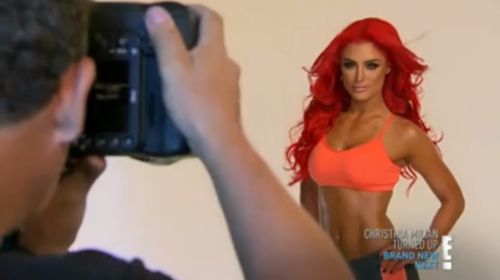
Sunday night’s episode of Total Divas centered around Eva Marie’s recovery from breast augmentation after her previous implants started leaking, her subsequent Muscle & Fitness Hers magazine shoot, and her body image issues.
The irony here is that Muscle & Fitness Hers is a magazine that I assume is promoting the “strong not skinny” ideal that permeates the health and fitness industry. As we saw on Sunday, Eva Marie’s mindset is anything but. After her surgery, she’d been unable to exercise so when she found out the magazine wanted her to shoot for them, the pressure was on to get back into shape. Throughout the show, Eva has made stray comments about her body, saying she’s too fat or looks ugly, and in this episode, she sees her visage on the side of a WWE trailer and says the same. This all comes to a head when Eva and Ariane are shopping and Eva nearly collapses in the change room because she hasn’t eaten for a day.
Ariane is concerned for her friend and worried about the message Eva’s poor body image is sending to their fans. “We’re WWE Divas. That means we’re empowering women who are role models and WWE wouldn’t even think about putting her on, like, three trailers if she wasn’t TheBomb.com [one of Ariane’s myriad catchphrases],” she says.
Putting aside Ariane’s correlation between being hot = being empowered, she takes Eva to a sketch artist similar to the one used by Dove in their infamous viral campaign featuring women describing how ugly they are vs. how beautiful strangers think they are. Because all that matters is how other people think you look, right?
The sketch artist’s assistant’s description of Eva results in a more accurate drawing whereas the way she describes herself produces a sketch of a more “normal”-looking woman. As you can see from the image above, there’s nothing wrong with the way either of the women in the sketches look. And as reality shows are wont to do, everything is tied up in a nice little bow by episode’s end, with Eva realizing she has issues that she needs to work on. “I’m a normal girl who has her own insecurities,” she says.
The thing is, the Divas aren’t normal women. Like models, they work in an industry that trades primarily on how they look. Sure, they need their bodies to be strong but if they don’t look good while taking a bulldog or delivering a dropkick, fuhgedaboutit.
And as Nattie says on the episode, “It’s part of our job to look great and feel great.”
Total Divas’ other main storyline this week was that of Rosa’s infatuation with Paige, resulting in an awkward kiss. We’ve seen Rosa struggle with her own insecurities throughout the season and she continuously says she just wants the other Divas to like her. Rosa is recovering from a bad breakup, a stint in rehab for alcoholism and, upon her return to the WWE and her Total Divas debut, she underwent breast augmentation herself. On Sunday night she also revealed that she uses injectables such as Botox in her face.
I don’t want to perpetuate the harmful stereotype that those with body image issues turn to surgery, or that surgery perpetuates those issues, because there are plenty of people who love and hate themselves and their bodies who have and haven’t turned to surgery as a remedy. But it is telling that both Eva and Rosa struggle with their self worth and the way they look, have both had substance abuse problems and have both had cosmetic surgery.
On the other hand, many of the Total Divas (and WWE Divas who aren’t involved with the show) have also had surgery but seem to have pretty healthy self-esteem. (Or, more accurately, any body image woes they do have aren’t aired on E! to further the show’s storylines.) To reiterate Nattie’s sentiment, there’s a certain ideal Divas have to subscribe to. I also work sporadically in television, so I can relate. However I don’t think the correlation the Total Divas make between being role models and looking hot is the healthiest mindset to have. Eva touches on this somewhat in the trademark reality TV voiceover:
“I think it’s the pressure of being a role model and having so much on your shoulders. I think there’s a massive amount of pressure on any woman. All of us are striving for some type of perfection.”
Until being a Total Diva—nay, a women’s wrestler—is more about what they can do in the ring that what they look like, that perfection is going to remain outward rather than turning inward.
Scarlett Harris is a Melbourne, Australia-based freelance writer and blogger at The Scarlett Woman, where she writes about femin- and other -isms. You can follow her on Twitter.
Unfortunately, I don’t think these four “cold, intelligent women” are illuminating “problematic mechanisms of power” at all. Rather, they are expressions of the persistent distrust of female authority in our current culture. These characters serve as a type of sexist shorthand for a society gone terribly, terribly wrong.
SPOILER ALERT: This post contains big spoilers if you have not seen the films Divergent, The Maze Runner, and The Giver. If you have not read the Hunger Games novels, it contains a major spoiler for Mockingjay Part 2.
Scary, right?
Almost 100 years after first-wave feminists secured American women the right to vote, there is still a massive gender gap when it comes to political power in the United States. Consider our new 2015 Congress: a whopping 80 percent of our elected leaders in D.C. are men (oh, and 80 percent white and 92 percent Christian). That paltry 20 percent is ginormous compared to female American CEOs and top executives—5 percent at last count. Then there’s my personal favorite, the enduring tendency among college students to automatically give their male professors better evaluations than female professors. When it comes to wielding real political, economic, and cultural authority over other people, many Americans still seem to assume that the person in charge should also wield a penis.
Popular culture reinforces, and challenges, the notion that if a woman achieves a leadership position, there must be something suspect, something unfeminine, about her. TV and movies remain chockablock with depressingly conventional depictions of women in power: bitchy and/or oversexed bosses, ball-busting iron maidens, and professionally-successful-but-personally-a-mess singletons. However, at the same time, women are also far more equally represented alongside men in cinematic offices of power than in real life. Catch any random Law and Order episode and you will see successful and influential female attorneys, detectives, police officers, judges, politicians, doctors, and business professionals in action. Heck, on TV women are not only Secretary of State, but also Vice President and even POTUS. I, for one, would immigrate immediately to any nation where Alfre Woodard is giving the executive orders.
President Woodard, we salute you.
Of all the genres that could envisage a world of more complete gender equality, science fiction seems like our best bet. After all, life has got to be better a few hundred years from now, right? Not according to American entertainment, where the future is always dystopian, not utopian. In our movies, TV, and fiction, the world to come is inevitably a hellish urban wilderness or a post-apocalyptic badland plagued by vampires, viruses, aliens, malevolent robots, or ecological disasters.
YA dystopian fiction in particular is having its moment right now. Last year saw the release of at least four dystopian films based on young adult fiction containing some pretty dire visions of future societies. All four featured an almost identical female leader character. She’s coldly calculating, middle aged, icily beautiful, and a villainess—or, at the very least, a highly misguided leader whose blind devotion to a rigidly depersonalized or somehow “perfected” world forms the basis of the conflict with the main characters. In Divergent, Kate Winslet plays Jeanine Matthews, Erudite faction leader; Ava Paige is the head scientist of W.I.C.K.E.D. and played by Patricia Clarkson in The Maze Runner; Meryl Streep plays the Chief Elder in The Giver; and President Alma Coin is played by Julian Moore in The Hunger Games: Mockingjay Part 1 and Part 2 (coming in 2015).
Now, on the one hand, you gotta admire a movie employing any one of these talented actors. Even though they are all A-listers, because they are over 34 years old these four women will earn less and be offered fewer parts in Hollywood than their male counterparts. Also, there’s something to be said for simply seeing a powerful female character in a leadership role. As Amanda Rodriguez writes in a Bitch Flicks post about Julian Moore’s character in Mockingjay Part 1, “this embodiment of a nontraditional representation of matriarchy in Coin is refreshing. She is decisive, smart, calm when under attack, and always thinking about the greater good of the people.”
President Coin, rocking an awesome hairdo that celebrates the gray.
But on the other hand, there’s a troubling trend here, because four movies in one year definitely counts as a trend. All of these future worlds are shaped and influenced by beautiful but heartless middle aged women who rule over a dehumanized dystopia with an immaculate but totally iron fist. In Mockingjay Part 1, Julian Moore’s President Coin is leading the rebellion and although she’s ruthless, she’s one of the good guys. But WARNING! BIG SPOILER HERE in the final chapters of the novel Mockingjay we learn that in her own grab for unlimited power, Coin callously facilitated the death of Prim, Katniss’s beloved sister, and blamed it on the Capitol. Presumably, Part 2 will include this big reveal, and Coin will then join the ranks of dystopian female fanatical leaders depicted in The Giver, The Maze Runner, and Divergent.
Meryl Streep’s Chief Elder character in The Giver is not as overtly evil, but her insistence on the rigid eradication of human individuality and free will to maintain peace and order in “the community” is definitely creepy and makes her the very bad guy in charge. In one pivotal scene, we learn that the policies Chief Elder enforces are so mercilessly conformist that even a young infant who fails to live up to certain standards of behavior will be dispassionately dispatched down a bad baby chute to oblivion.
The Chief Elder will eliminate pesky human individuality and free will.
Patricia Clarkson’s Ava Paige in Maze Runner is a hazy figure in the main characters’ flashbacks, until LAST WARNING, I MEAN IT, SPOILER AHEAD a scrappy band of teenagers escapes the maze and discovers that Paige is the head scientist/leader of the sinister scientific organization that imprisoned them in the maze in the first place. Paige claims that she did it in order to test a possible cure-all for the disease/ecological apocalypse threatening human existence. For a minute it seems that Paige is the ruthless but brilliant scientist who stops at nothing to save the world, even shooting herself at the end of her video message in the ultimate sacrifice to the cause. But no. She appears in one last scene, calmly wiping the fake blood off her face and announcing the commencement of…Phase Two. Bwahahahaha!
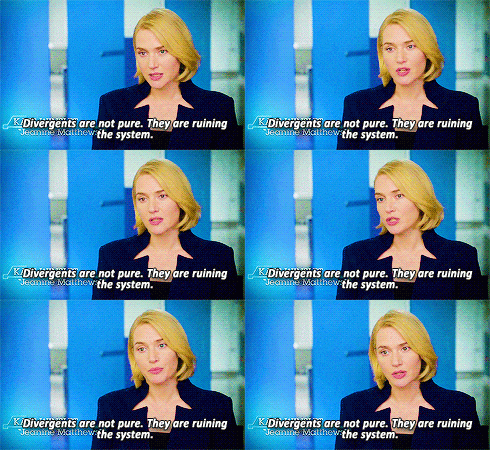
The Divergent villainess played by Kate Winslet is similarly cavalier with human lives, orchestrating a takeover by the relentlessly logical Erudite faction that begins with a planned mass extermination of all men, women, and children in the peace-loving Abnegation faction. Because, um, nothing’s more bloodcurdling than an intimidating perimenopausal woman in a chic suit who values brains more than abnegation? So it seems. Rodriguez writes in her Bitch Flicks post reviewing Divergent: “I’m frankly so tired of the cold, fanatic female villain trope.” (She also points out that this trope is not unique to YA-based dystopias, citing Jodie Foster’s 2013 turn as Delacourt in Elysium.) Rodriguez rightly asks of Divergent: “Is it claiming that cold, intelligent women are the problem? Are they the purveyors of this dysfunctional culture? If so, for which real world social ill is the post-apocalyptic world of Divergent a stand-in? What problematic mechanism of power does this sci-fi series seek to illuminate?”
Unfortunately, I don’t think these four “cold, intelligent women” are illuminating “problematic mechanisms of power” at all. Rather, they are expressions of the persistent distrust of female authority in our current culture. These characters serve as a type of sexist shorthand for a society gone terribly, terribly wrong. Though not necessarily the sole “purveyors of this dysfunctional culture,” their pitiless rule symbolizes just how bad it’s gotten, because when women hold the kind of power and authority that renders them coldblooded killers, there’s something awfully amiss. But it’s essential to note that we’re talking here only about the power and authority of older, non-motherly, women. In these films, it’s perfectly all right, nay, imminently laudable, for women to kick ass and flex their muscles and be all empowered—as long as they are teenagers. If your boobs are still high and firm and your skin youthful and dewy, why, there’s nothing more attractive than leading the rebellion or fighting your way to freedom.
Snark aside, two of the youthful female protagonists in these films are pretty great. Calling attention to some of the problematic aspects of these films certainly doesn’t erase the positive features. Katniss is one of the most interesting female pop culture characters in recent years and is played by an extremely talented young woman who has chosen a range of nuanced roles—all hail Jennifer Lawrence! Shailene Woodley’s protagonist in Divergent is not bad either, casting off her namby-pamby Abnegation name “Beatrice” for gender-bending “Tris”; doggedly training at bare knuckle fighting; and eventually bringing a mad conspiracy to its knees (kinda with the strength of her devoted love for the young hero, but it’s YA, so they get a pass there). Even the tiresome helpmeet-to-the-hunky-hero female teenage characters in The Giver and Maze Runner are relatively strong and capable and not particularly cringe-inducing (though in her Bitch Flicks post Megan Kearns accurately points out that The Maze Runner exemplifies the Smurfette Principle).
So what’s with those other female characters, the Ice Queens of the future? If the teenage women can be heroes, why do the militant extremists running these four YA dystopias have to be older women? The novelists who created these characters and the filmmakers who brought them to the screen are demonstrating that despite the many gains we’ve made toward gender equality, we’re still stuck with rigidly defined ideals of femininity for women over 40—and those ideals do not include attaining professional positions of power. That old favorite, the Madonna/whore dichotomy, takes a contemporary dystopian twist here. The older female characters embody a mom/megalomaniacal dictator dichotomy, in which the acceptable roles for middle aged women appear to be limited to either the mother of the protagonist or deranged antagonist, drunk with power and out for world domination.
In my book Housework and Housewives in American Advertising I discuss how the “new momism” (identified by Susan J. Douglas and Meredith W. Michaels in The Mommy Myth) shapes contemporary gender norms and advertising, and I wrote about it in another Bitch Flicks post. Although Americans have long idealized motherhood, the new momism of our era is the basis for a freshly insidious ideology that subtly but persistently demarcates parenting as women’s (unpaid) work—in fact, women’s best and only really valuable work. The villains of these four dystopias are the antithesis of good mothers. They are a direct and active threat to the teenage protagonists. And, it’s very clearly implied, what could possibly be more disconcerting? More dystopian? These disturbing versions of future dehumanized societies suggest that a middle aged female head of state is particularly chilling.
Interestingly, the mothers of the main characters do appear in The Giver and Divergent and throughout the Hunger Games. In The Giver, Katie Holmes plays the mother character, who’s an emotionless adherent to the dehumanizing rules that govern “the community.” Paula Malcomson as Katniss’ mother in The Hunger Games is not such a stooge of the regime, and joins the rebellion in the capacity of a healer, but when the trilogy begins, she’s willing to comply with the requirements of the Hunger Games and offer her daughter for possible sacrifice. She has virtually no impact on Katniss’ life by the end of Mockingjay—she’s just a minor character.
Ashley Judd’s mother character, Natalie, plays a bigger role in the plot of Divergent. The piously humble Abnegation paragon Natalie reveals at a crucial point that she is divergent like her daughter and possesses all the fighting ability and fearlessness of the Dauntless faction. But Natalie exercises this power in a completely mom-appropriate way. Natalie only reveals her abilities in order to save daughter Tris from certain death at the hands of the Erudites. Then Natalie sacrifices her own life in a gun battle to keep Tris safe. She’s the total and complete opposite of Jeanine Matthews. The casting and wardrobe is instructive as well, with baby-faced Judd as the mom in sackcloth serving as a dramatic contrast to chilly blonde razor-edged power suited Winslet as the anti-mom.
This is what a good mom looks like.
It’s no coincidence that the laws of these four dystopias, which are led by four really scary bitches, trash the most sacred of familial bonds. Quite literally, in the case of the baby chute in The Giver. These worlds feature dehumanizing regulations, brutal power regimes that keep the masses broken and victimized, and/or rigid emotionless policies that heartlessly separate mother and child. They conform to the most exaggerated stereotypes of what will happen when women who don’t know that their real place is in the home caring for their children start prowling the halls of power. What happens when women take charge? What happens when moms can’t be moms? Or, worse yet, choose not to be? Just the end of the world, that’s all.
Obviously, the scenario of mom-aged women not being good moms holds particular significance for a YA audience. I’m no Freudian but as a college teacher, the mother of a fourteen year old son, and a former teenager myself, I can attest to the fact that many adolescents and young adults experience a mostly unconscious fear of/highly conscious burning desire to be on their own and to do it without parental interference. It’s a pretty standard stage of emotional development, and the source of a great deal of conflict between parents and their teenagers. Not that I’ve been reading any parenting advice books about this or anything.
To some extent, this may help explain the almost identical villainesses in Divergent, The Maze Runner, The Giver, and Mockingjay. In the YA dystopian landscape, the cruel mom-aged woman in charge adds to the terror and thrill of fighting your way to freedom. In Divergent, the teen protagonist Tris defeats Kate Winslet’s Matthews in hand to hand combat, finally defeating Matthews with—oh irony!—the same mind-control drug Matthews used to enslave the Dauntless faction to do her evil bidding. In Katniss’s case, the betrayal of Julianne Moore’s President Coin is the final push Katniss needs to instigate the climax of the Hunger Games series. To truly free her people, Katniss must defeat this cold surrogate of a mother figure. Meryl Streep’s Chief Elder in The Giver, a softer villain, is moved to tears by the new knowledge she gains of human connection. Her crying clearly shows her evolution toward a more appropriately female emotional responses. Meanwhile, we have to wait and see what’s to become of Patricia Clarkson’s Wicked Witch of W.I.C.K.E.D. until the next installment in The Maze Runner franchise.
But although the defeat of the powerful anti-mother may appeal in some developmental, metaphorical way to many teenage consumers, it is also clearly infused with broader social and cultural fears about women in power. These characters markedly reinforce our wider unconscious and consciously accepted assumptions about who should be in charge in politics, in business, in the college classroom, and just about everywhere else. To solely see these dystopian villainesses as archetypes in the psychosomatic journey to adulthood doesn’t take into account the specific time and place and culture that produced them and the very real ways gender bias shapes actual power distribution in today’s United States. A fictional world depicting a powerful female leader as an unfeminine antifamily power-hungry bitch looks way too much like our real world, where powerful female leaders are often depicted as…you know.
I’m not saying the bad guys in dystopian fictions should always be, well, guys. Nor am I arguing that all evil female fictional characters should be subject to rigorous feminist deconstruction. Sometimes a villainess is just a villainess. But I do want to suggest that we have a problem when the bad guys in four widely read and viewed YA dystopias are, across the board and uniformly, supposed to be especially frightening because they so blatantly contradict what women of a certain age should be. They reiterate and reinforce the notion that nothing could be more dystopian than a mother-aged woman who doesn’t act motherly. Fear of the future? No, the same old fear that still shapes how Americans vote and learn and hire and live: fear of a woman in charge and in power.
The show expertly demonstrates how the show’s female characters find ways to move through a world that refuses them power or autonomy. Because of this, I’m very surprised and disappointed that the show chose to have its title character violently raped as a way to advance the plot.
This guest post by Cate Young previously appeared at her blog, BattyMamzelle, and is cross-posted with permission.
Trigger Warning: This post contains discussion of rape and sexual assault.
Let me start by saying that Reign is a great show. I started watching during the break between seasons one and two and haven’t turned back since. In a lot of ways, Reign is typical CW fare: pretty people’s pretty problems, but in others, it’s a very progressive and feminist look (even if wildly historically inaccurate) at the life of one of history’s most notorious and fascinating women.
One of the show’s biggest strengths is that Reign deals quite openly with the struggles that women faced at the time–from their inability to own property to their inability to guide the very direction of their lives. The show expertly demonstrates how the show’s female characters find ways to move through a world that refuses them power or autonomy. Because of this, I’m very surprised and disappointed that the show chose to have its title character violently raped as a way to advance the plot.
I am not as plugged into this show’s online fandom as I am with other shows that I watch, so I was not aware that the details of this particular plot had leaked online a few months ago, and consequently did not see it coming. I will admit that even as it happened, I thought Mary might escape. After all, this would hardly be the first time that Mary has been under threat of rape in the show. Additionally, Reign had previously tackled rape (poorly) when Catherine de Medici, Mary’s mother-in-law, admitted that she had been gang-raped as a child in a season one episode. A petition started back in October to persuade the showrunners not to go through with the storyline nicely sums up many of my issues with this episode:
Many of us have come to love this show for its portrayal of strong female characters and the unflinchingly feminine light it shines on the dynamics and pitfalls of power in a world that is dominated by men. Much of the series has focused on Mary’s womanhood and how she has learned to utilize it, manipulate and weaponize it, even as the outside world has looked upon it as her greatest weakness. After persevering through so much adversity and triumphing over those who have fought so hard to silence her, to have her suffer through this violent assault sends the message that the world will only punish–crushingly and humiliatingly–those women who dare to assert their places within it. It is a message jarringly out of tune with everything we have come to admire about this series, and it has no place in a show geared toward young women who dream of a future in which they may rise without fear of retribution at the hands of men.
As with the HBO drama Game of Thrones the argument can certainly be made that the threat of rape is a historically accurate concern for women of the time. But Reign makes no pretense at accuracy and never has; this rape is a fictional concoction inserted into the story solely to create controversy and advance the plot. They cannot even hide behind the defense that they simply bungled the retelling of a true story.
This development is also particularly jarring considering the context of the rest of the episode and the tone of the show in general. Mary and her four ladies have dealt with the conflicts of finding love and honouring their duty to marry well and ensure the financial future of their country and families. In this episode, Francis’ younger sister Claude spends most of the episode plotting to purposely destroy her reputation in order to prevent her mother from marrying her off. Claude refuses to stop fighting for autonomy even as she remains caught between the needs of the crown to create a political alliance, her mother’s desire to get her out of the castle and her own desire to remain young, free and in control of her own destiny.
When Mary proposes a Protestant suitor for Claude in an effort to help quell the growing religious unrest in France, and reminds her that Francis can compel the marriage if he chooses, Claude defiantly declares to both Mary and her mother: “Tell the king, my brother, that I’m not a brood mare to be bartered and sold. By any of you!”Clearly, the show is no stranger to the themes of female empowerment, independence, and the struggles of retaining either in such a strictly patriarchal society.
And this brings us to Mary’s rape. In an interview with Entertainment Weekly, Reign showrunner Laurie McCarthy essentially confirms that Mary was brutalized as a way to advance the plot:
It really started from the end of last season when we made the choice to have Francis kill his father. Even though it was a righteous action, I always felt like it would be something that just had to haunt him, and we obviously played that in many different iterations. But it really felt like it should be something that should haunt his rule as well. It seemed like something that he couldn’t tell Mary, that he wouldn’t tell Mary, and then we looked at, “What if the wrong person found out and he became a compromised king and it made him make choices that he wouldn’t otherwise have made?” And then since we’re playing the civil unrest in the nation, which is historically accurate, we thought, “What could be one of the worst things that could happen that would really affect the person he loves the most?” And that’s Mary. So we looked at it originally through the prism of Francis, and then we looked at it through the prism of Mary, and I couldn’t imagine any other character—other than Catherine—who could experience something like this and that we would be able to then take on a journey of healing, somebody who could truly rise above this but who also would be in the worst possible situation to have something like this happen to her as a queen, as a woman, as a new wife.
Reign raped Mary to punish Francis. Reign raped Mary to motivate Francis. Reign came as close to fridging its own main character as it is possible to do without actually killing her.
I have been vaguely cognizant of how much Mary had been sidelined this season in favour of Francis dealing with the repercussions of murdering his father last season, but seeing as avoiding charges of treason seemed like a fairly realistic concern given the situation, I didn’t think much of it. But to now know that strong, independent, star of the show Mary, Queen of Scots was brutally raped as a way to better raise the stakes for her husband’s actions and deepen his guilt, makes the situation completely unacceptable.
Once again, we’re left with a woman whose sexuality is demeaned as a way to diminish the men around her. Once again, her terror, pain, and suffering is used as a bargaining chip between the men who actually hold power and those who seek to take it. Once again, a brilliant woman is reduced to the act of violence that is committed against her.
What upsets me most about this scene is that even in the aftermath, the show demonstrates that it deeply understands the politics that make this scene in such poor taste, making the choice even more infuriating. When Catherine finds Mary running through the halls after she manages to get free, she takes her into her chambers and asks her point blanks if she has been raped. When Mary collapses in tears, Catherine offers a rousing speech of support:
I know you don’t want to be touched. That’s all right. But you’re safe. I don’t know how you managed to escape but you did. You are alive. You will survive this. I know this, because I survived, you know that. They tried to destroy you by taking your pride and your strength but those things cannot be taken, not from you. Not ever. We’re going to change your clothes, fix your hair, erase any mark of their hands on you. We are. We are going to do this for you and for Francis and for Scotland and for France. They tried to diminish a King tonight by degrading a Queen and they will not succeed because the world will never know what they did to you. It is, because you will walk out of here and you will face your court as if this never happened. Yes, you can. You have to. Mary your guards saw you. You must put to rest any rumours immediately. These next moments of your life will either define you as a victim or a powerful Queen untouched by a failed assassination attempt. They will define who you are perceived to be. Your place in history. Do not let them win. Trust me. Trust me and let me help you. Trust that I can get you through this because I swear to you that I can.
But even here there are problems. Even as Catherine seeks to support Mary in her most vulnerable moment, she also encourages her to bottle up her emotions, to lie about her trauma and to pretend it never happened. TVLine‘s Eleni Armenakis said it best:
What could possibly be gained from this? More strife between Mary and Francis as Francis copes with the guilt that his wife was raped while he was murdering an innocent man—and not, as she thinks, pleading with the Vatican for religious tolerance? It would be another failing on Reign’s part to turn an attack on Mary into yet another crisis for her husband.
Does it make Mary a stronger, harder queen? She already was—and reducing her to a crumpled, crying ball on Catherine’s floor only undercuts that. Powerful speeches that force her to hide both her inward pain and her outward bruises don’t make her strong. They make her yet another woman who’s learned to keep things like this hidden so she won’t be seen as less than. For a series that has done so much for young women, this is one “lesson” they don’t need to hear again.
Reign failed big time with this episode and undid much of what made this show so progressive to begin with. It took a show and a character defined by her independence and willingness to push back against social mores in order to do what is best for her people and herself and reduced her to a pawn in her husband’s story. It’s unforgivable, but especially from a show that made a point early on of celebrating female sexuality and sexual liberation. To turn around and use that sexuality as a weapon against its own protagonist even after being begged by the show’s fans not to do so is something I’m not sure it can bounce back from.
Rape is a very real and very traumatic event that millions of women are forced to deal with every day. Reducing it to a plot point that doesn’t even serve to further the assaulted woman’s story is reprehensible and using said plot to reinforce the code of silence that surrounds sexual assault as a means of reclaiming strength is a damaging precedent to set for a show with such a young audience.
Cate Young is a Trinidadian freelance writer and photographer, and author of BattyMamzelle, a feminist pop culture blog focused on film, television, music, and critical commentary on media representation. Cate has a BA in Photojournalism from Boston University and is currently pursuing her MA in Mass Communications so that she can more effectively examine the symbolic annihilation of women of colour in the media and deliver the critical feminist smack down. Follow her on twitter at @BattyMamzelle.
“We’ve been very lucky,” Silverstein says. “People have given their time to come in and share and teach, because we want to inspire people. The goal, really, is to just allow girls to dream and to believe that they could be directors and producers and writers, and for boys to see women can do this, too.” Silverstein hopes the message they take away is, “Everybody can be successful. It’s about talent. It shouldn’t be about your gender.”
The Athena Film Festival has grown more ambitious with each passing year, and this year, its fifth, is no different. The festival’s co-founders, Kathryn Kolbert of the Athena Center for Leadership Studies at Barnard College, and Artistic Director Melissa Silverstein of Indiewire‘s Women and Hollywood, spoke with us about this year’s festival and the scant progress women filmmakers have made in Hollywood in recent years.
This year’s festival has gotten unprecedented media attention for its premiere of Dan Chaykin’s Rosie O’Donnell: A Heartfelt Stand Up and for Lifetime Achievement honoree Jodie Foster. The opening night film, Kim Longinotto’s Dreamcatcher, is a documentary about Brenda Myers-Powell, a former prostitute from Chicago who has turned her life around and devoted herself to helping other women and girls break free of the cycle of abuse and exploitation.
Rosie O’Donnell
“Once I saw Dreamcatcher and I saw this amazing woman, Brenda, I just knew that it was our movie,” Silverstein tells me. “It’s just one of these stories of people that are doing amazing work in their communities that you would never see. We’re thrilled to be able to share the story at its New York premiere.”
“We’re looking for films that are inspiring and that can demonstrate positive social change in ways that demonstrate women’s agency, their ability to make a difference,” Kolbert explains, “and I think Dreamcatcher really fulfills all of those goals. It’s a particularly inspiring film, and one in which individual women have worked together to make a difference in the lives of women who have lived as prostitutes and wanted to come out of that world.”
Still from Dreamcatcher
Dreamcatcher‘s themes fit perfectly with the festival’s unique goals and mission. “We’re a unique festival in that we tell the stories of women in leadership roles,” Kolbert says. “We show films that are made by both men and women, as long as women are the protagonists of the story.”
As the festival’s main programmer, Silverstein works at finding a balance between “movies that have been overlooked,” and “great stuff that might have been playing at their multiplex that they missed.”
Co-Founders of the Athena Film Festival, Kathryn Kolbert and Melissa Silverstein
“What I try to do is curate a conversation,” she explains. “So I want to be able to have foreign movies, movies about women leaders in all different areas: in music, in science, in sports. It just shows the breadth and the depth of what women’s experiences are, and that’s what I try to do.”
While Silverstein is often frustrated by what studios will send to the small but steadily growing festival, sometimes she sees a film that she knows immediately they need to show. That was the case at the Berlinale last year, where she saw Athena’s Closing Night film, Difret, Ethiopian-born filmmaker Zeresenay Berhane Mehari’s drama of a teenage girl who responds violently when she’s abducted into marriage, and the bold young lawyer who takes her case. “The second I saw that movie, I knew that it had to play Athena,” Silverstein states, “and I have been like a rabid dog trying to get that movie.”
Difret
This year’s festival also includes some higher profile films, including the Centerpiece, Gina Prince-Bythewood’s underseen backstage drama, Beyond the Lights, featuring Gugu Mbatha-Raw and Minnie Driver, screening Saturday with the filmmaker, who’s receiving an award from the festival, in attendance. Filmmaker Gillian Robespierre will also be on hand for Satuday’s screening of her bluntly funny Obvious Child. The racially charged indie comedy Dear White People and Lukas Moodysson’s buoyant punk rock coming-of-age film We Are the Best!will also screen this weekend.
Then there’s actor-director-producer Foster’s well-deserved honor, the Laura Ziskin Lifetime Achievement Award. “Foster has been a quiet leader,” Silverstein says. “She’s been pushing the boundaries. She started to direct, as an actress before other actresses did that.” As an actor, Foster’s career highlights expanded Hollywood’s vision of the type of roles women could play. “The roles that she won the Academy Award for … The Accused was about gang rape, and that was in the late ’80s. That wasn’t a subject matter that was discussed at that time, and she really took that on,” Silverstein points out, “and then with Silence of the Lambs, she was really ahead of the curve. I think that’s what the Athena Film Festival wants to be, and Jodie embodies that.”
Beyond the Lights
As a director, Foster hasn’t made a feature since 2011’s The Beaver, starring her embattled friend Mel Gibson. Like many talented women directors, she’s turned to the small screen, directing episodes of Netflix’s House of Cards and Orange is the New Black. She has a new feature in pre-production, Money Monster, starring George Clooney and Julia Roberts.
I asked both Kolbert and Silverstein if 2015’s successful films directed by women, including Obvious Child, Ava DuVernay’s Selma, Jennifer Kent’s The Babadook, and Amma Asante’s Belle, which opened the festival last year, offer cause for optimism. I pointed out that Michelle MacLaren had been hired to direct the upcoming DC Comics adaptation of Wonder Woman for Warner Bros., based on the strength of her television work, including several outstanding episodes of Breaking Bad. Neither was particularly sanguine about what these milestones mean for women in Hollywood as a whole.
Jodie Foster
“In the film industry, I don’t see a lot of progress,” Kolbert states, “except for the fact that now the paucity of women in film has become an issue that’s discussed.”
“The numbers have been really static for the last decade,” Silverstein points out. “We did a survey at Women and Hollywood from 2009 to 2013, and 5 percent of all the studio films were directed by women and only 10 percent of the indie films were directed by women.” She doesn’t mince words about the backward attitude those numbers reflect. “That’s just abysmal. We’re half the world. And we don’t get the opportunities. It’s not a lack of talent; it’s a lack of opportunities.”
Gina Prince-Bythewood
Silverstein agrees with Kolbert that at least people are talking about the issues involved, as in the Academy’s recent snub of DuVernay, which Kolbert bluntly calls “a travesty.” As Silverstein sees it, “The progress has been in this robust, wonderful, inquisitive, and actually angry conversation about the lack of opportunities for women. I will be very happy when the numbers move to where the conversation is.”
The Athena Film Festival is playing a part in moving things along. That’s why it also includes a practical element, with Seed & Spark’sEmily Best giving a workshop on crowdfunding, and industry leaders Prince-Bythewood, Cathy Schulman, and Stephanie Laing providing Master Classes in their respective fields. “We’ve been very lucky,” Silverstein says. “People have given their time to come in and share and teach, because we want to inspire people. The goal, really, is to just allow girls to dream and to believe that they could be directors and producers and writers, and for boys to see women can do this, too.” Silverstein hopes the message they take away is, “Everybody can be successful. It’s about talent. It shouldn’t be about your gender.”
Kolbert makes a similar point. “My goal for the festival is that over the long term, when you think of leadership, you’re going to picture women,” she says, rejecting the traditional image of “a white guy with a little gray hair at his temples.” She sums up the Athena Film Festival’s mission nicely, quoting Marian Wright Edelman: “You can’t be what you can’t see.”
Josh Ralske is a freelance film writer based in New York. He has written for MovieMaker Magazine and All Movie Guide.
Our theme week for February 2015 will be Unlikeable Women.
Representations of female antiheroines are on the rise. Contemporary audiences love morally ambiguous female characters who are hard, powerful, and determined. The soft-spoken but ruthless Claire Underwood of House of Cards is a prime example of women we love to hate, who push or ignore boundaries to get what they want. The elegant antiheroines who tend to be wealthy, goal-driven, and charismatic (Olivia Pope of Scandal, Patty Hewes of Damages, or Angelina Jolie’s Maleficent), while comparable, are a slightly different breed from the outright unlikeable women who are popping up all over film and television.
Whiny, self-obsessed Piper Chapman of Orange is the New Black and Hannah Horvath of Girls are perfect examples of these downright unlikeable female characters. What sets them apart from the traditional antiheroine archetype? Michelle Jurgen of Mic posits,
“It’s alienating simply because we’re not used to being served up unpalatable women: women who are naked just because, who give themselves terrible haircuts, and who are frank, judgmental and do whatever they want without regard for others. Women who act in a way we’re used to seeing only male characters act, which has unfairly branded them unlikable rather than well-crafted and complex.”
Jurgen further goes on to suggest that it is the humanness of these antiheroines that is difficult for audiences to stomach. Along with Piper and Hannah are characters like Cersei Lannister of Game of Thrones and Annalise Keating of How to Get Away with Murder who are equally vulnerable. They’re petty, manipulative, and needy. They make mistakes, often stupid mistakes, and they’re usually in damage-control mode, putting out the fires they either set or caused to be set.
If these unlikeable women are so “unpalatable,” why are they still being created? Why are we still watching them? Why are these productions winning so many awards and accolades?
Feel free to use the examples below to inspire your writing on this subject, or choose your own source material.
We’d like to avoid as much overlap as possible for this theme, so get your proposals in early if you know which film you’d like to write about. We accept both original pieces and cross-posts, and we respond to queries within a week.
Most of our pieces are between 1,000 and 2,000 words, and include links and images. Please send your piece as a Microsoft Word document to btchflcks[at]gmail[dot]com, including links to all images, and include a 2- to 3-sentence bio.
If you have written for us before, please indicate that in your proposal, and if not, send a writing sample if possible.
Please be familiar with our publication and look over recent and popular posts to get an idea of Bitch Flicks’ style and purpose. We encourage writers to use our search function to see if your topic has been written about before, and link when appropriate (hyperlinks to sources are welcome, as well).
The final due date for these submissions is Friday, Feb. 20 by midnight.
Gareth does not “happen to be Black”; the pressure on him to conform to white culture, to avoid limiting his own narrative, mirrors the show’s own need to conform to that culture, to avoid limiting its audience. This conflict is slyly embodied in plausibly deniable food metaphor.
Prince-Bythewood’s ability to draw commentary about the Black family experience in America is so well-integrated we, as the audience, are able to enjoy the emotional ride the characters take us on without the feeling that we’re watching a heavy-handed representation of the social issues of the time.
While the show is not overt, at its core the story is about race and gender relations. Race- and gender-specific language is often omitted from the dialogue, yet the meaning is there. Rhimes takes the White patriarchy of America and individualizes its contributors so that neither (most of) the characters nor the audience realizes that they are contributing to harmful White patriarchal norms and internalizing them until the rare moments when they take a step back from the action.
The son then picks on other kids, including his younger sister. Stan’s (nameless) wife yells at the kids too, because of her own frustrations, both with Stan’s depression and the “friends” of his who stop by, like the ones who talk about killing someone they know and ask for his help. After he turns them down she goes off on them, shouting, “Wait just a minute you talk about being a man. Don’t you know there’s more to it than your fists?”
What makes Desmond’s unique is its layered and often nuanced portrayal of immigrant Afro-Europeans and their assimilating progeny that are more closely connected to their African roots than any African American TV show I’d ever seen. It also has a cross representation of class in Black British society by showing retired, working class, upper-middle class, college-educated, college-bound, and not college-bound Black people interacting together all the time. Not only are different classes intermingling, but there are also four series regulars who are white, and their whiteness is not the punchline of tired racial jokes.
While many of the film’s events differ from Gardner’s memoir, the film compensates for this with its extremely authentic and loving portrait of a Black father/son relationship that is rarely seen in mainstream media.
When Solomon, Eliza, and her two children are both sold, she is sold away from her children. Their new slave owner, William Ford, (Benedict Cumberbatch), feeling guilty when he hears Eliza’s sobs of protests, tries to buy the children, but the auctioneer refuses to sell the them. William Ford takes Solomon and a devastated Eliza to his plantation, where she continues to cry on the journey to the plantation. When Ford’s wife, Mistress Ford, hears of new slave Eliza’s plight she callously responds, “Oh poor thing, well she’ll get over it in a day or two.”
The humor isn’t meant to put down white folks, but rather poke fun at the very real actions of white guys who attempt to adopt Black culture simply because it’s “cool.” This sort of behavior has existed in “white sitcoms” for nearly a century (making the Back character the “token” of the show) and it seems the only reason ‘Smart Guy’ comes under fire is because white critics are now seeing the characters they identify with in positions that aren’t of power or virtue.
There is a lot said in this film without dialogue, and without anything spoken within the first few minutes of the film. Most of the African American characters have an unspoken sense of solidarity, one which Will eventually learns to hear. The film explores how Black families are often torn apart and turned against each other by the pressures of a white patriarchal society.
The story of Eve also elevates the image of Black women as the foundation of families. This element becomes most important as the film progresses.
This guest post by Rachel Wortherley appears as part of our theme week on Black Families.
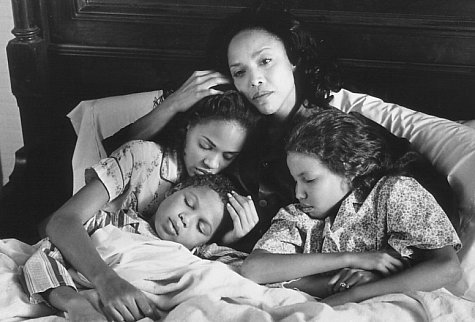
Eve’s Bayou (1997) begins with the haunting lines: “The summer I killed my father I was 10 years old, my brother Poe was 9, and my sister Cisely had just turned 14.” With this preamble is the expectation of the tragic to occur. While the core of a majority of Black family dramas involves tragedy in the form of slavery, poverty, or mental/physical abuse, Kasi Lemmons’ directorial debut reinvents the way audiences view Black families. On a rare occasion, the story of a Black family is allowed to be told through the eyes of a Black female protagonist. Eve’s Bayou is in part a “coming of age” drama.
The history of the Batiste family of Louisiana lies in their ancestry. Eve, an African slave, saved a French aristocrat, Jean-Paul Batiste, from cholera. In return, Batiste granted her freedom and named the island in Louisiana, after her. In turn, Eve bore Batiste 16 children. Ten-year-old Eve Batiste (Jurnee Smollett), the story’s protagonist, is named after her and is a descendant of Eve and Jean-Paul Batiste. The fact that their ancestry is an integral part of their lives reveals several things: the first being that they clearly know who they are in terms of culture. Through the sordid decades of slavery, Blacks in America have little to no knowledge of their genealogy. It is a part of our past that is not clearly defined. However, in Eve’s Bayou, their background is not only acknowledged but embraced. They can often be heard speaking French phrases throughout the film. The story of Eve also elevates the image of Black women as the foundation of families. This element becomes most important as the film progresses.
The first time audiences meet the Batiste family, we are immediately thrust into a world that is uncharted and unfamiliar for most Black families in motion pictures, as well as the audiences. The hot sound of jazz fills the Victorian mansion, women are dressed in fine satins, and laughter fills the air. The young Eve appears and immediately incites mischief upon her brother Poe (Jake Smollett), while her sister, Cisely (Meagan Good), reprimands them, likening them to William Shakespeare’s Tybalt and Mercutio. Louis Batiste (Samuel L. Jackson) is their father and a successful, beloved doctor in the community. Their mother, Roz (Lynn Whitfield) is a homemaker, whose beauty is referenced throughout the film. There appears to be a strong family dynamic and they are living the quintessential American dream. Here, the Black family to audiences is “normalized” to a general American landscape. This factor becomes a metaphor for the supernatural aspects—the gift of second sight—of the film. Lemmons forces her audience to see beyond what is generally depicted about a Black family in the 1950s.
While the traditional family dynamic is important in the film, the coming of age aspect is even more so instrumental to the plot. When audiences first meet Eve, we see through her eyes how she feels marginalized within the family dynamic. She suffers from the classic “middle child” syndrome. Poe, her younger brother, is the quintessential “mama’s boy” to Roz, while Cisely is the clandestine “daddy’s girl” to Louis. Eve finds kinship in her aunt Mozelle (Debbi Morgan). Both share two qualities: their beautiful red hair and the gift of second sight. Not only do Eve and Mozelle see the future, but they are hyper-aware of their surroundings. This becomes especially significant when Eve becomes cognizant of her father’s infidelity. This realization not only disrupts the harmonious father-daughter relationship, but ultimately changes their family dynamic.
Louis’ penchant for adultery is not something that is usually portrayed in stories about Black families. Largely, Black fathers are either portrayed as: physically/emotionally absent or highly upstanding. In comedies, fathers are most likely the source of comic relief, while his wife is the “straight man” and the situational aspects generally focus on him or he is involved in some manner in the resolution. A current example of this is ABC’s Black-ish, while earlier incarnations are The Cosby Show, and The Jeffersons. I think that in Lemmons’ film, as well as Spike Lee’s Jungle Fever, fathers are portrayed as loving, yet flawed. Louis is undoubtedly a serial adulterer, but that does not change his affection toward his children.
When Eve discovers Louis’ infidelity she and Cisely begin to either cling to or detach themselves from him. Eve accompanies him on his house calls—once he closes the door in Eve’s face to give a patient what can be presumed “sexual healing.” This later prompts Eve to question, “Do you ever want other children besides us?” Louis assures her by telling her that he loves her mother, but the seed of distrust was planted the night of the party when she witnessed his infidelity in the shed with family friend, Mrs. Matty Mereaux. Cisely begins to cling to her father. She waits up for him at night when he arrives home late from house calls and pours him a drink to assuage his stress. Cisely also contends with Roz, who scolds Louis about his late nights. Cisely sees her mother as the antagonist who is driving her father out of their lives. This anxiety arguably prompts the “kiss of death” that transpires between Louis and Cisely.
The kiss that occurs between Cisely and her father is what Eve thinks led to his subsequent death. Cisely confides to Eve that one night, she went to comfort her father and a sexual kiss was exchanged. At her resistance he slaps her to the grown and a look of rage filled his eyes. This admission prompts Eve to procure the local witch, Elzora (Diahann Carroll), to cast a spell of death. However, the night that Louis is killed, something within Eve prompts her to attempt to save her father. In going to the town bar to bring him home, it is likely that Eve has reservations about how he hurt Cisely. But it is hard to not believe her sister when Eve has witnessed her father’s distrust on a number of occasions. Yet, it is too late, Mr. Mereaux in a crime of passion, shoots Louis dead, with Eve as witness. This moment leaves Eve forever changed, even more so when she discovers that Louis did not molest Cisely. Rather Cisely’s prominent memory is that Louis hurt her. Symbolically this means that everything Cisely disbelieved about her father to be true.
It is significant that in the beginning of the film, adult Eve states: “The summer I killed my father I was 10 years old, my brother Poe was 9, and my sister Cisely had just turned 14.” Whereas at the end she says: “The summer my father said goodnight I was 10 years old, my brother Poe was 9, and my sister Cisely had just turned 14. ” This changing in lines demonstrates that Eve accepts that her father’s death was not of her provocation, but his own.
The death of Louis allows for several new things to occur. It brings Roz closer to her children, it allows Eve to understand that not everything is “black and white,” and most significantly, women continue to be the foundation of their family. Though Poe is the sole male in their household, perhaps upbringing from Roz, Cisely, Eve, and Mozelle will influence him on how to respect women. However, Cisely and Eve are missing years in their adolescence in which fatherly love and influence is key. Yet there is not the sense that the sisters will stray. The indicator of this lies in the final shot as Eve destroys Louis’ letter in which he reveals the miscommunication between him and Cisely. Ten-year-old Eve assumes the role of her ancestor Eve by nurturing her sister. As they stand together, hand in hand, looking out across the bayou, they intend to deal with this situation and future hardships together. Eve’s Bayou ultimately becomes about how women and sisters look beyond tragedy to find strength in one another.
Rachel Wortherley is a graduate of Iona College in New Rochelle, New York and holds a Master of Arts degree in English. Her downtime consists of devouring copious amounts of literature, television shows, and films. She hopes to gain a doctorate in English literature and become a professional screenwriter.
Black families can be rich and poor and everything in between on TV, but why can’t we show the mental health crises Black families face?
This guest post by Keisha Zollar appears as part of our theme week on Black Families.
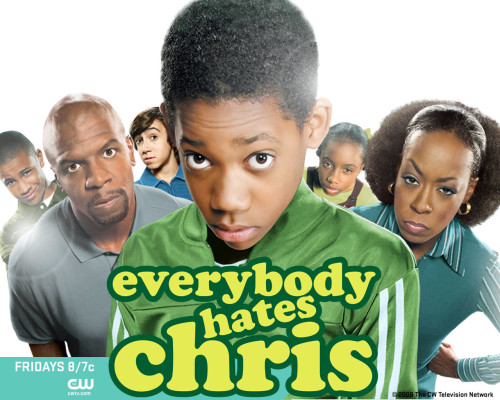
When watching Black families in film and TV like Everybody Hates Chris, Soul Food, and Bebe’s Kids, mental illness was/is invisible. I think to myself, which Cosby kid battles with depression? Does Uncle Phil have an eating disorder? And would Dr. Doolittle ever see a therapist?
Are Black families so marginalized in film and TV that we are afraid to show the cracks of mental illness as they actually are?
As many as 25 percent of Americans suffer from mental illness, and some of those Americans are Black.
Growing up in the early-late 1980s and early 1990s, most of the Black TV families I saw were high functioning, white-collar families with an upstanding father figure who was always around, and there was plenty of food on the table. There were also TV shows like Roc, reruns of Good Times, and other tales of the economic divide where I saw a different Black experience. As a kid, my immediate family was more Cosby than Good Times but I did have relatives who were more Roc than The Fresh Prince of Bel-Air in their day-to-day lives. Growing up, it felt like TV was holding a mirror up to my family but with one exception: why was no one as sad and anxious as I felt? Why did no one talk about overwhelming emotions? The process of dealing with addiction? The pain of divorce?
I also remember the Black movies of my childhood.
My grandparents took my family to watch Do The Right Thing because my Grandma said, “It’s important to support Black artists like Spike Lee.” I remember the story, the realness, the colors–also what we might call nowadays: “grit.” My parents would show me Roots, Bebe’sKids, and Nutty Professor with pride and joy.
The movies and television I watched as a child inspired me to pursue my own journey in entertainment. Entertainment was/is a noble pursuit of truth, exploration, fantasy, and more.
Then the economic bubbles of the 1980s-1990s burst and burst and burst…
“In a decaying society, art, if it is truthful, must also reflect decay. And unless it wants to break faith with its social function, art must show the world as changeable. And help to change it.”
-Ernst Fischer
Then in the early 2000s I became an adult; my parents divorced, I struggled with depression and anxiety, I got in therapy, and realized that the TV and films I loved as a child were missing something. Where was the “Real Talk” about mental illness in entertainment? Where was the entertainment that went beyond just telling Black people to pray, to be strong, to avoid sugar and crack cocaine? Why was everyone being so mean about Uncle Phil’s weight in the The Fresh Prince of Bel-Air?
Uncle Phil’s weight in the The Fresh Prince of Bel-Air always seemed to be the punchline. Episode to episode Uncle Phil is fat shamed–by main characters, auxiliary characters, and even by himself. Every character on the show knew Uncle Phil had a problem with food. The adult in me kept thinking, “Why did no one acknowledge Uncle Phil’s cries for help, his risk factors for diabetes, his possible food addiction?”
Then I thought about Hillary’s shopping addiction!
And of course The Cosby Show…
Denise Huxtable was the “wild child,” or a character on TV who was crying out for help. Denise was a beloved character that couldn’t hold onto a job, then disappeared on the show to go to college, dropped out of college, ran off to Africa, married a man unknown to her parents, then showed up on the Huxtable doorstep with her own family, then tried school again and didn’t finish (the order of events in Denise’s life isn’t fully accurate but I’m painting an impressionistic portrait of Black media from my POV, there you go Super Cosby Fans).
It was a liberating moment on TV to see a main character struggle with education, not because he was “dumb” as a character trait, but because he was flawed. In the episode where Theo found out he had dyslexia he was overjoyed because he had a diagnosis; it was TV saying it was OK to have a learning disorder. It felt like The Cosby Show said it was OK to see if you had learning challenges.
I remember thinking while watching the show when it aired, “This is important, and it’s OK if I have dyslexia too.”
As an adult I know I don’t have dyslexia, but I’m still waiting for my TV moment on an important Black show to describe what I do have: depression and anxiety.
Getting diagnosed has changed my perspective on watching film and TV. I see the PTSD that poverty can cause in cartoon movies. I see eating disorders where I used to see “harmless” fat jokes. I see the stress of being Black in America but no mention of eating disorders, obsessive compulsive disorder, and panic disorder.
Now I watch these shows and I think, maybe I’m making up all this mental illness in the Black community, but then I look at Surgeon General’s reports and check out pages like this.
House of Payne shows the ravages of addiction with a recurring crack-addicted mother, and a few other shows seem to tackle addiction but it seems the vast majority make mental illness invisible. It feels like Black TV and film wants us to ignore or pray away the fact mental illness exists.
Black families can be rich and poor and everything in between on TV, but why can’t we show the mental health crises Black families face?
My desire to see Black families explore mental illness in media is not about victimizing the oppressed in media. I just want to see my own Theo moment on TV; maybe some little Black teenager who is smart and capable, but is sad and cries too much goes to see a nice doctor with her parents. This little Black girl gets tested and gets diagnosed as being depressed and she runs home to tell her parents about her depression. Her parents hear the word “depression” and are relieved at a diagnosis and the audience empathizes and learns, and everyone is OK.
Keisha Zollar is an actor-writer-comedienne. Keisha has been seen on Orange Is The New Black, Celebrity Apprentice Season 14, The Today Show, College Humor, Comedy Central, MTV, UCBComedy, and numerous web-series. Currently, Keisha in post production for An Uncomfortable Conversation About Race and she has recently directed her first interactive sketch called Neggers. She is proud of her latest series In Game, a diverse web-series about LARPing (nerd stuff). Learn more at www.KeishaZollar.com.