Dystopia Within ‘Neon Genesis Evangelion’

What helps ‘Evangelion’ continue to grow its popularity is not the focus on religious or sci-fi elements, but its commitment to showcasing the fragility of humanity through its flawed and destructive characters tasked with saving the world and themselves. And how does the franchise show this? By literally placing the future of what’s left of the world in the hand of dysfunctional and emotionally fragile children.

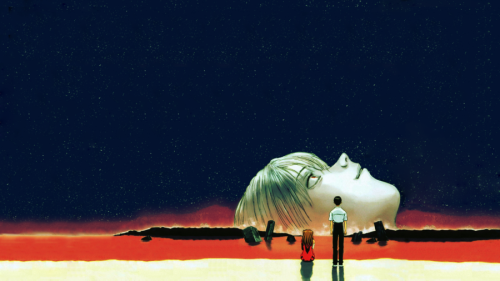
end_of_evangelion_by_chr5d50-wallpaper


This guest post by CG appears as part of our theme week on Dystopias.


Dystopian landscapes have begun to grow in popularity with audiences, particularly in film and literature. Franchises like The Hunger Games and The Walking Dead have given audiences this love affair with settings that include abandoned cities, constant threats of death, and the occasional love triangle in an attempt at normalcy. But what these popularized franchises have done is cloud our definition of what dystopian media can do. In fact, there has been dystopian media done before that called for us to embrace and examine how humanity is represented in these otherwise bleak landscapes.

With this, I call to you the brilliance of the Neon Genesis Evangelion franchise.

For those of you who are unfamiliar, Neon Genesis Evangelion refers to a franchise created by Hideaki Anno and Gainax Studios, going on to include a 25-episode anime, six films (including three reboots), and a 13-volume manga series. The franchise itself is incredibly popular, launching back in the 1990s and maintaining a steady fanbase ever since. What helps Evangelion continue to grow its popularity is not the focus on religious or sci-fi elements, but its commitment to showcasing the fragility of humanity through its flawed and destructive characters tasked with saving the world and themselves. And how does the franchise show this? By literally placing the future of what’s left of the world in the hand of dysfunctional and emotionally fragile children.

The story of Evangelion focuses on three 14-year-old pilots that control giant robots called Evangelion Units, as they battle monsters called Angels that threaten to destroy (what’s left of) the world. These Angels have already destroyed half of the world – the oceans have turned red, half of the world’s population has been killed. Some of the characters live with the consequences of the Second Impact – one character, Misato Katsuragi, tries to live with her guilt of directly surviving the Second Impact while her father does not.

images

The pilots of the Eva Units serve as the main characters of the franchise, and remain the gatekeepers to the internal conflict of the internal conflict of the franchise. The main character is Shinji Ikari – abandoned by his father who later asks him to pilot one of the Eva Units, Shinji revels in the feelings of guilt and unraveling that comes with feeling horribly inadequate to everyone around him. One of the episodes of the original anime is called “Hedgehog’s Dilemma,” focusing on a psychological condition that makes for Shinji’s insecurity to hinder him from getting close to others, for fear of further rejection. For Shinji, he reclaims some of that validation in the form of piloting the Eva. Like the other pilots, the Eva Units give him identity beyond his own limitations. Although, as we soon learn, it is not enough to allow them to completely escape.

The second pilot is Asuka Langley-Sohryu, a hotheaded and brash girl who clings to her title as an Eva pilot as a badge of honor. To Asuka, she revels in being needed and having purpose. But her overconfidence shadows a deeper hurt of fierce inadequacy. When her title as an Eva pilot is no longer enough to shield her from facing her fear of being useless, it quickly manifests into putting Asuka in further danger. In this unforgiving future, where the survival of humanity rests on the sounders of three teenagers, Asuka’s mental unraveling to be more dangerous that we would expect.

The final pilot is Rei Ayanami, a girl who is seen as emotionless and stoic. She follows orders without thought or individuality, and she has a strange connection to the Eva Units themselves, as well as to Shinji’s deceased mother, Yui. Rei is interesting in that she must learn to reclaim her individuality and importance as a person. She struggles to find meaning with being expendable.

The psychological stability of the pilots, as well as the adults that are supposed to be directing and guiding them, become paramount to the development and plot of Evangelion. It’s not simply the bleak landscape that draws out the despair in the characters; it is the drive of destruction that lingers on the tongue of everyone around. Shinji, Asuka, and Rei are left to salvage humanity out of the hopelessness that surrounds them.. and it makes for oddly addicting media.

from left: Eva Unit 02, 01, 00

Though the franchise explores other themes of faith, relationships, and tragedy – at its core, Neon Genesis Evangelion gives us a tale of searching for meaning and embracing the strength of flawed humanity, even when the situation is bleak.


CG is a writer, blogger, and fangirl from New Jersey. Most of her online writing can be found on her site (blackgirlinmedia.com).

Totally Radical Girls and the Bitchin’ Burden of Civilization

I mean, she doesn’t wrap her arms around some guy’s waist to hold on for the ride of her life or even jump onto a Vespa or something weak. Nope, she’s a zombie-fightin’ shoulder-padded biker who escapes danger on her own and looks just as feathery-haired good when she gets to her destination as when she put down her attacker in the alley (although this was the early 80s while CFCs were being phased out, so big hair treated with a half-bottle of AquaNet always had some hold).


This guest post by ThoughtPusher appears as part of our theme week on Dystopias.


Uh, like, 30 years ago or something, I was totally into a valley girl end-of-the-world scenario. Even! That’s like exactly what’s going on in Night of the Comet (so 1984) when this total bummer of an apocalypse happens on account of a comet that comes back after a wicked long time, the same one that like ended the dinosaurs and stuff, and so it totally wrecks the world just when these two teenage sisters were like about to grow up and get out from the bogus control their two-timing stepmom.

I remember loving Thom Eberhardt’s 1984 cult classic when I was younger, so I wanted to revisit it in all its glorious 80s post-apocalyptic deserted-downtown-L.A. splendor for this month’s theme week. But then I got a little nervous. (Stephanie Rogers just wrecked my assumption of great 80s movies with her dead-on reevaluation of the now-horrifying themes and language in Sixteen Candles, released in the same year as this flick.) Holy crap, what if my nostalgic adoration was misplaced and this killer zombie flick was really a social or moral nightmare to behold? Well, I watched it again, jaw and most muscles clenched, ready to suffer the pain of shattered dreams… but it really turned out to be OK-ish. Some cringe-worthiness, but not in the way I expected…

So this apocalypse deal could have been righteous. Like, fer sure. Especially for girls like Reg and Sam who got some kind of totally tubular elite kick-ass training from their military dad who wanted sons and treated them like they could grow up into Green Berets or something but then motored to fight some war when they got old enough to want to do girl things.

Regina (Catherine Mary Stewart) and her younger sister Samantha (Kelli Maroney) are a couple of valley girls who survive the initial wave of cosmic radiation emitted from the rare comet’s tail. They are left nearly alone to cope with a zombie apocalypse in downtown L.A. Their mom split after their dad came back from Vietnam, so they are used to taking care of themselves. Their dad did give them some training, though. As indicated by their male nicknames, it looks like their father would have been more interested in having sons. He trained them in weapons and hand-to-hand, but Reg reports that it became painfully obvious around sixth or seventh grade that they wouldn’t be go to Ranger school, so he went off to serve in more wars and conflicts. Even though he’s gone, he has prepared them to survive this kind of world.

Eberhardt’s vision for this dystopian landscape is empty, isolated, and eerily red, but still fully stocked with useful stuff like clothes and cars and radio stations. Yet these girls have been abandoned by both of their parents. Perhaps because of that, they stick together throughout the movie, and even get involved with a guy who has to check in on his mother (so he also doesn’t abandon his family or his new friends) and two kids who they essentially take in as niece and nephew to their little survivor clan.

As one house in a neighborhood party, Sam is pissed that her step-mom, Doris, has ordered her to serve chips and dip. This is just one of about a gazillion parties going on, not to mention a New Year’s Eve vibe on TV with handwritten posters and couples kissing in overcrowded public venues. Sam scoffs at Doris’s overly friendly relationship with a feelsy neighbor guy and sasses her way to calling Doris an asshole, which brings an immediate slap to Sam’s face. Sam slaps her in response, but then Doris wigs out and socks Sam so hard she tumbles over the couch. Like, some ditz can just deck a step-kid she’s supposed to take care of?! Doris sucks, so Sam could be all like, “What’s your damage?” and “Take a chill pill!” but she just jets without a place to go, so she spends the night in the lawn storage shed. That totally barfs me out, but I guess we’ve all gotten “shack” in MASH sometimes.

So the whole world parties in anticipation of this super-rare comet’s passage close to the atmosphere, except a few wary scientists who lock themselves in an underground bunker. Reg calls home and colludes with Sam (who is upholding a sisterly duty but completely unconvincing while doing it) to try to sell a “science trip” to the observatory as a reason to stay out all night. Doris lays out the situation: while the Major is away, she’s in charge. She doesn’t care what the girls do, but doesn’t want to be held responsible in case their dad survives and actually returns home. But as this scene plays out, the public corporal punishment of a teenage girl with a bad attitude seems acceptable.

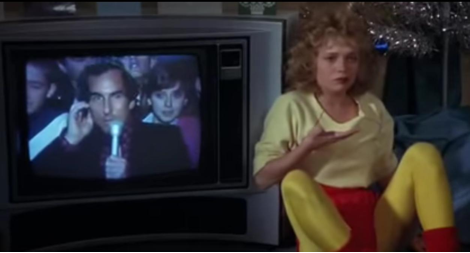
Untitled1

This might be the most disturbing scene in the movie, even though it is before the apocalyptic crisis or the zombie attacks or the ensuing power-struggles. It just seems so normal, so acceptable, so parental for Doris to punch Sam across the room. There are even neighbors in the doorway who glance over during the domestic altercation but do nothing other than continue their conversation. The dystopian landscape of this horror movie turns out to be the contemporary social conventions and what is deemed permissible in the treatment of children. Of course there are parties everywhere. Of course a few scientists and military men take precautions and later bring unexposed survivors (including kids) back to their bunker to use them for their physical production of healthy blood. But aside from the anticipated decadence and violence and darker side of humanity, this pre-comet event is what takes my breath away for a moment as the corners of my eyes cringe at the abrupt violence. Sam’s encounter with Doris and her behavior during her conversation with Reg the next morning run the gamut of trauma reactions: she is shocked, then saddened, then runs away, then tries to conceal the bruising with makeup, then jokes about it, then angry enough to tell her dad and try to get Doris out of their lives. (But she doesn’t get quite to that stage of the process until Reg comes home the next morning…)

After playing an arcade game for a while and thinking that her projectionist pseudo-boyfriend has ditched her, Reg goes outside and gets locked out of the dive theater. She spazzes out when she runs into this fugly zombie creepazoid in the alley who looks like he could be a Garbage Pail Kid. He’s scabby and oozy and should totally bag his face. Gag me with a spoon! But Reg fights him off and hops on Larry’s motorcycle to book it home. Nobody is around but the stuff from the party is still in the street along with clothes and grosser-than-gross red dust, so she looks for Sam to find out what’s up.

Reg has some hand-to-hand skills (not to mention her later comment that “the mac-10 submachine gun was practically designed for housewives”), so she survives the attack. But the thing that always stood out to me about this was the nonchalance of her ability to hop onto a motorcycle and drive off. Although Eberhardt presents an strangely empty L.A., most post-apocalyptic cities are represented as worlds where abandoned vehicles clutter the roads; if you want to travel from place to place with ease, you should ride a bike… it’s a part of a lot of movies in the genre, but that just seems like a survival skill that most teenage girls lack in traditional portrayals. I mean, she doesn’t wrap her arms around some guy’s waist to hold on for the ride of her life or even jump onto a Vespa or something weak. Nope, she’s a zombie-fightin’ shoulder-padded biker who escapes danger on her own and looks just as feathery-haired good when she gets to her destination as when she put down her attacker in the alley (although this was the early 80s while CFCs were being phased out, so big hair treated with a half-bottle of AquaNet always had some hold). Reg initiates the era of a fashionable, kick-ass heroine with a sharp wit and massive protective instincts. (Can anyone say Buffy, or Zoë, or Buffyverse, or River, or Echo, or any other female leads in forthcoming Joss Whedon projects?) Even later in the movie, Reg sees Sam after being told that she was dead; and their conversation shifts quickly from relieved surprise to “Hey, that’s a great outfit!” / “Thanks. Is that guy in the hallway dead?” It seems to foreshadow the content and mood of the closing sequences of most Buffy episodes.

Reg tries to tell Sam that there is something messed up with the world, but Sam applies some makeup in the mirror to cover up the bruise from the night before. (Dude! It’s all kinds of “I walked into a door again” and stuff.) Instead of dealing with what Reg is saying, Sam carries her boom box from room to room, which is what gives them the idea to go to the local radio station ‘cause the dj’s counting down the weekly top twenty, so he might have the 411 on what happened the night before since he does the news and stuff. When they get to the station, it’s like all automated but a guy with a gun comes at the girls to see if they’re still human. Hector is this trucker just passing through town, but he had the same idea about maybe somebody being at the station. Sam finds the controls and gets to be the new dj, which is totally rad.

(OK, so I get that it’s a plot point to go to the broadcasting source, but having a radio station setting in the course of the movie was so 80s. [sigh…] God I miss 80s movie soundtracks.)

When Hector gets the drop on the girls at the radio station, Reg tries to negotiate Sam’s release. She is the big sister and is going to take care of Sam. But it gets fun when Sam starts broadcasting, choosing what songs to play and talking over them to any audience that might be listening. She proclaims herself to be one-third owner of the station, and then begins changing the world order: all finals are cancelled, and the new drinking age is 10… with ID. She gets a call on the “hit line” and loses the connection, but the broadcast continues and the scientists in the desert compound deduce that the normalcy of the radio station will keep the small group there long enough to retrieve them. After all, the not-so-smart scientists left the vents open in their bunker, so they were partially exposed to the comet’s radiation and they are slowly turning into zombies. (The scientists in this little sci-fi story are not the knowledgeable crowd usually portrayed.)

During a bad dream, Sam is driving and defending herself from the fault of losing the connection with the scientists when she exclaims, “I’m not the phone company… nobody’s the phone company anymore!” She recognizes that no one is responsible for the phone lines, but she also starts to freak out when a cop pulls her over. She doesn’t have her license, so she’s sure she will be in trouble. This is all part of a dream (within a dream to boot), but it demonstrates the inherent assumption of civil authority over personal behavior. And it’s far from Eberhardt’s only reference to traffic violations and rules of the road.

Hector announces that he has to go to San Diego in the morning, and Reg wonders why. Even though Hector has a mother and sister and friends there, she assumes they’re gone. After a bit of getting-to-know-you personal time, Hector jokes, “What will you give me if I come back?” Reg ponders this and offers up Texas. Then Florida and Texas. Hector counters with Florida, Texas, and Hawaii. Territories don’t seem to matter much anymore. But the next morning Hector leaves and later Sam has it out with Reg about the older sister getting every guy Sam ever had her eye on, and now probably has the last guy in the world. After a slight pause, they both start laughing this off. Sibling rivalry takes a back seat to survival, and they have a real heartfelt moment together in their next encounter.

Untitled2

This is a soft conversation between sisters in the midst of a desolate landscape, but Eberhardt chooses a really nice visual presentation: the girls sit on the hood of a police car, Reg in the cop’s jacket twirling a nightstick and Sam still in her cheerleading uniform. Sam talks about a boy she liked who was going to ask her out and a friend who was trying to figure out how to keep her parents from finding out she was flunking algebra. All those problems are completely detached from their present condition. Sam is down and wants to go home to change, but Reg does a big sister job of cheering her up: the stores are open and there’s no need for credit cards! (Cut to an awesome mall-shopping montage set to the recognizable beat but different singer of “Girls Just Want to Have Fun.”) As one of the scientists will later note, they are in the midst of a monument of consumerism. Unlike the lack of resources that lead to the corruption of humanity in many dystopian presentations, this kind of immediate isolation in a wasteland of material bounty provides a wealth of available goods free for all those who want them.

Later at the galleria, these grody-to-the-max half-zombie wastoids are so out there. I mean, they’re like so gross and want to take control of the girls for invading their space where they were stock-boys but now think they’re all kinds of important and stuff. What neo-maxi-zoom-dweebies! But the wannabe henchmen are like total space-cadet hosers and can’t do anything without the gnarly leader guy telling them what to do. Like, I’m sure.

Sam asks for Reg’s fashion advice and then why she chooses one piece of clothing over another. Reg states quite obviously, “Because it’ll stay in style longer.” There’s just stuff going on in this whole movie about social standards that remain intact even after the people in society disappear. And I think that’s pretty cool.

The girls get captured by the stock-boy zombies, but the scientists from the compound have come to town looking for the radio-station survivors. They rescue the girls from the stock boys in time to take Reg back. They wait for Hector to return and they secretly plan to kill Sam because she is exhibiting signs of zombie-onset. (They don’t know that she breaks out in a rash like whenever she’s stressed.) However, one scientist among the group doesn’t think their survival trumps the welfare of healthy survivors. She had a problem with bringing any survivors into the facility for testing, even before two kids arrive in pajamas like they were just pulled from their Saturday morning cartoons.

She saves Sam by dosing her with a sedative that makes her look like she is dead, leaves the rag-tag group some field notes to brief them on the global situation and what is going on in the research facility, and takes her own life before she turns into a zombie. Hector does come back, and Sam joins him to go to the research facility to rescue Reg, along with the two kids that were brought in earlier, Sarah and Brian. The sisters and Hector (who seems to have enough knowledge of explosives to MacGyver some car bombs to avoid chase at the climax) seem like they will get along just fine once this whole zombie problem runs its course.

Night of the Comet doesn’t present typical military fears of the genre (since their dad trained the girls before going back to service), but silhouettes and partial frames of guards in and around the underground compound suggest an armed force aligned with the scientists. The scary factor here might just be the idea that (compared to the rest of the world we’ve seen survive) the group in the bunker seem to have knowledge of the situation and the power to take the measures they deem fit as best for their group, regardless of how many healthy survivors they have to use as their own personal unconscious blood banks. But if they are the smart ones, who the heck left the vents open?

I kid you not: I woulda veged with nobody to tell me what to do, but Reg steps up and takes charge of family life like it’s no biggie at all. She’s like all conventional-o-rama, and seeing it start to play out makes Sam think she’s left with a lame-ass Joanie future. But then Sam is stoked to find a stud of her own who rolls up in a choice ‘Cedes out his fresh-to-death collection of 23 cars. He is totally on board with the rules of the road, so when Sam brings up what could be a downer of a reality, he thinks it’s a bitchin’ prospect to be, like, responsible for the future of civilization. Yar!

The newly formed family unit is all dressed up in their Sunday best, and Reg is taking Polaroids of the kids as they stand for the pictures smiling but rolling their eyes in between shots. Reg moves to fix their clothes and hair, telling them that she needs to take a few more pictures, so “don’t slouch.” To the side, Hector drops their cache of guns in to a trashcan. Sarah asks if she can have a gun since they are going to waste. Reg, shaking the development of another picture, says to Hector, “Don’t look at me. I mean, I don’t know where she gets that stuff.” Reg has taken on the responsibility to raise a proper family, which apparently involves placing blame on external sources for any questionable behavior.

The happy family walks down from a plaza toward a street, and across from them Sam starts ruminating on her possible future, mumbling, “Maybe I could be a nun or something.” The family walks to the crosswalk, and Reg pushes the button for the walk sign. Sam thinks that they look like the Brady Bunch and yells out to ask why they are waiting. Hector says that they are waiting for the light to change. In disbelief, Sam questions their sanity, but Reg replies, “The whole burden of civilization has fallen upon us.” Reg then adds the edict: “It means we do not cross against the light!” Reg recognizes that even in an isolated existence some social standards must be maintained. Sam runs into the middle of the street as she proclaims how stupid it is to wait for the light when there is no one else in their ghost town.

Untitled3

Suddenly, a car turns the corner and speeds down the street, swerving as Sam bolts away. Reg reinforces the lesson as she looks down at Brian to ask rhetorically, “See what happens?” Lesson learned, the boy nods as the car screeches around to return to Sam. The driver circles back to apologize, but also notes, “God, I’m sorry, but you shouldn’t cross against the light like that.” As they both pull up their sunglasses (since they are both wearing cool shades by the standards of any pre- or post-apocalyptic social trends), the guy smartly deduces that they are survivors, too. Sam agrees to go for a ride without any hesitation. Hector asks who this guy is, why they should trust him, and so Sam gets his name. Reg tells them to be back by midnight, and he is shocked at the imposition of a curfew. Sam repeats the reasoning: “The burden of civilization is on us, OK?” They agree that that is a bitchin’ prospect, and they drive off, the family waving them goodbye from the middle of the street.

The whole traffic-law scenario hearkens back to Reg’s initial escape from the theater alley: she drives the motorcycle on the empty streets but comes to a complete stop at a red light and takes a moment to turn on the headlight. Traffic safety might not seem like the first bastion of social order, but the rules of the road set up the foundation of civilized behavior. Even if no one’s around, you don’t run a red light. I really hope Eberhardt intended for that theme to show through in so many scenes.

What would you do to reinforce the social acceptability of some behavior? Would you sweep the leg in obedience? Would you buzz the tower in defiance? Would you beat down your step-kid when she won’t serve hors d’oeuvres at your decadent party? Would you check in on your parents even if all rational hope for their survival is lost? Would you rescue kids being exploited by others and try to teach them life lessons? Would you look both ways and refuse to cross against the light? Yeah, I can see how that one might stand out as somewhat insignificant, but once you start deciding what kind of world order you would choose, the burden of civilization is on you… and that is a totally bitchin’ landscape, dude.


ThoughtPusher might live somewhere near you (especially if you have a neighbor who blasts New Order or Tears for Fears most nights), but certainly is a cinephile who has no interest in being followed or asking to be liked.


When Skies Fall, Bodies Fail: Gender and Performativity on a Dystopian Earth

In rejecting Lexi, Anne perpetuates the false solidarity and universal acceptance Butler points out in the above passage. Anne sees Lexi as failing to perform the necessary gender of her body. Lexi is the very symbol of a failed body, the failed universal woman Anne has expected of her daughter.

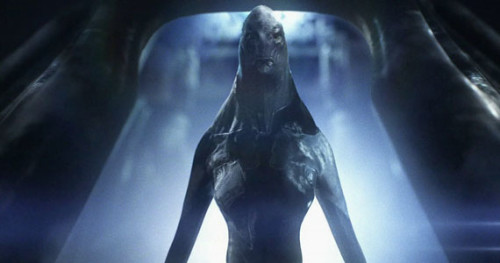
Picture 1 Espheni Overlord


This guest post by Sean Weaver appears as part of our theme week on Dystopias.


I’ve often stood under the night sky, barefoot in the dew-soaked grass, contemplating the vast expanse of the universe, the sky. The stars, like little blips of life, unfold and become more prominent the further away from the cityscapes that fill suburban horizons. I’ve felt the uncanny feeling that exists when contemplating that space. I’ve also felt the familiar feeling, knowing that I am not the first to experience such phenomena. Like countless others before, I’ve stared at that unknown, that unreachable space, in which only a few have ever touched. On the other hand, I’ve experienced the gravity that tethers all objects and bodies to the ground. The weight of the sky, pressing feet firmly to the ground, reminds me of the forces that define my life and the gravity we hold so much faith in. What were to happen if we suddenly lost that faith, the sky falling, crashing down, with the full weight of gravity behind it? What if the gravity holding your body in stasis failed?
Many science fiction narratives seek to answer this question, to go beyond the familiar into the uncanny where every aspect of our existence is called into question, especially when alien beings have come to colonize the Earth and its inhabitants. It’s a dystopian narrative told over and over. Aliens discover a valuable resource on Earth. Aliens pillage and destroy. Humans sometimes prevail. Given the Earth’s colonial history, we can understand the fascination behind such narratives. Enter Falling Skies. Falling Skies takes place after Earth is imperialized by alien overlords called the Esphendi. The show focuses on a group of Americans, led by Tom Mason (Noah Wyle), his family, and Captain Weaver (Will Patton), who have pulled together to fight the alien hostiles, even naming their ragtag group of misfits the 2nd Mass. This is, more or less, all anyone needs to know in terms of narrative/summary; to go into further detail would give away to many spoilers.

Picture 2 Flag Background

While many critics and viewers have pointed out the flaws in Steven Spielberg and Robert Rodat’s Falling Skies—such as its romanticism of white European settler propaganda and disregard for indigenous tactics of colonial resistance, to its blatant portrayal of male dominance /heteronormativity, and its American patriotic ethnocentrism—the show has drastically changed since its first airing in 2011. Although I agree with what many have said of the show, even having my own love/hate relationship with it, the show evolves in season four, and that’s where I’d like to focus in this critique.

The show shifts gears, moving away from the male dominant narratives, to finally developing its female protagonists, and in doing so reveals the gravity gender and performativity have over certain bodies, and its certain tendency to perpetuate the oppression of said bodies. Judith Butler writes, in her book of critical feminist/queer essays Bodies That Matter, on the discursive limits of sex, the body, and performativity, stating:

Hence, the reading of “performativity” as willful and arbitrary choice misses the point that the historicity of discourse and, in particular the historicity of norms (the “chains” of reiteration invoked and dissimulated in the imperative utterance) constitute the power of discourse to enact what it names. To think of “sex” as an imperative in this way means that a subject is addressed and produced by such a norm, and that this norm—and the regulatory power of which it is a token—materializes bodies as an effect of that injunction. And, yet, this “materialization,” while far from artificial, is not fully stable…And further, this imperative, this injunction, requires and institutes a “constitutive outside”—the unspeakable, the unviable, the nonnarrativizable that secures and, hence fails to secure the very borders of materiality. The normative force of performativity—its power to establish what qualifies as “being”—works not only through reiteration, but through exclusion as well. And in the case of bodies those exclusions haunt signification as it abject borders or as that which is strictly foreclosed: the unlivable, the nonnarrativizable, the traumatic…To the extent that we understand identity-claims as rallying points for political mobilization, they appear to hold out the promise of unity, solidarity, universality.

Picture 3 Anne Evolution

In this passage, Butler reveals that it is not enough to read bodies and performativity as necessary, or forced. This type of reading reproduces hegemonic norms, and regulates power structures that oppress bodies, specifically the bodies of women. Furthermore, Butler reveals that this type of treatment of bodies and performativity creates a “constitutive outside,” which leads to false promises of unity and solidarity.

It is this “constitutive outside” that I would like to explore in regard to season four of Falling Skies, and how the main female protagonist Anne Mason (Moon Bloodgood) reproduces the artificial illusion of unity and solidarity while forcing her hybrid daughter into the traumatic space this outside represents. Throughout the show, Anne has pushed the boundaries of gender and tradition in her survival in the dystopian landscape created by the arrival of the Esphendi overlords. She is at the head of her field, a field dominated by men, and as a doctor she is the best there is—even developing a technique to remove the harnesses that change the children into the Skitter slaves that do the work of their alien oppressors. In this sense, Anne pushes past the restraints of performativity that men would expect of her.

However, in the beginning of season four, Anne has stepped out of her role as the healer. She is no longer the doctor who has kept the bodies of her people stitched together. After experiencing a traumatic capture at the hands of the Esphendi, resulting in Anne giving birth to a hybrid daughter, Alexi (Scarlett Byrne), Anne begins to lose control. For the Esphendi are master colonizers, and realize that to control the men they must first control the women. This experience changes Anne, and she no longer takes up the role of doctor. Instead, she steps into the role of leader and a warrior woman out for revenge. But she no longer pushes past performativity; instead, she lets performativity control her. She forgoes all feelings, and in doing so reveals the true nature of dominance over other bodies. Anne becomes so raveled up in performing the role of warrior, that she begins to instill fear in others in regards to the nature and being of her daughter Lexi.

Picture 4 Lexi

Lexi is a hybrid in every sense of the word; she is both human and Esphendi. Due to her hybridity, Lexi can control the matter and elements of the Earth. She also has the ability to mature quickly. However, as a hybrid Lexi is rejected by the people of the 2nd Mass, including her own mother. In fact, at one point Anne exclaims that the Esphendi had killed her daughter, leaving Lexi perplexed at the idea of family. She even questions her mother stating, “But, I am your daughter; we are family. Why am I different simply because I am Esphendi and human?” Eventually, through Anne’s rejection, Lexi sacrifices herself in a mission to the moon to destroy the power source of the Esphendi Empire because she realizes that her existence is artificial, insubstantial. She finds herself in the space of the “constitutive outside.” Unknowingly, Anne perpetuates the fear of otherness. She doesn’t recognize her daughter as a woman, because she is foreign, alien, hybrid. In rejecting Lexi, Anne perpetuates the false solidarity and universal acceptance Butler points out in the above passage. Anne sees Lexi as failing to perform the necessary gender of her body. Lexi is the very symbol of a failed body, the failed universal woman Anne has expected of her daughter.

This is only the second evolution of Anne’s character arc. But, it reveals the nature of performativity and how it may be experienced in a dystopian world. Falling Skies is finally beginning to evolve and question the very ideology that seems to define our existence. I wonder, however, what more will be revealed when it comes to the nature of bodies. While season five is the final season, I wonder how Anne will handle the conflicts to come. What will become the outcome when Anne and her family begin to rebuild the world once the Esphendi have been defeated, if they are defeated? Will they repeat the past? Will Anne push pass the performativity that has come to control her actions and beliefs or will she succumb to the gravitational pull that forces certain bodies to fail when skies come falling down?


Sean Weaver has a MA in English/Literature from Kutztown University. He is currently News Editor at Vada, an online magazine from the UK with a new queer perspective. When he isn’t reading or writing, he is hard at work looking for new ways to understand what it means to be queer.

Twitter: @levirush8

Blog: http://post-colonial-scholar.blogspot.com


The Burden of Carrying On: The Currency of Women in Dystopian Films

I can’t keep count of the number of times the fact that women menstruate has been used as a reason to render us incapable of doing something. However, the fact women can have children (while cis-men cannot) is arguably our greatest power in a time of crisis.

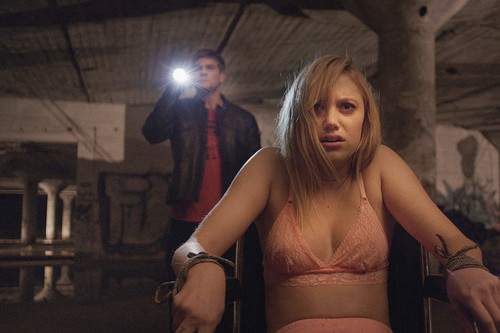
It_Follows_review_-_CANNES_article_story_large


This guest post by BJ Colangelo appears as part of our theme week on Dystopias.


When I was 8 years old, I was given written permission from my parents to watch Titanic on VHS at my friend’s 10th birthday party. Loaded up on birthday cake, potato chips, and as much cherry Coke as I could stomach, I sat in awe as I watched the seemingly unsinkable ship crack in half and kill approximately 1,500 people. As the string quartet played their final notes, the main antagonist of the film (Billy Zane’s Cal Hockley) grabbed a stray child claiming her to be his daughter in order to secure himself a space on a lifeboat reserved for women and children. My friend’s mother was a feminist, liberal arts school college professor and upon watching this scene uttered:

“Leave it to a man to manipulate the only system put in place where a woman’s life is actually given any sort of value.”

997TNC_Billy_Zane_019

Every day, women are made to feel worthless. Whether it’s the media bombarding us with contradictory ideas on how to be, or the fact politicians still think our rights need to be settled by a vote, women are still struggling for equal treatment in just about every aspect of existence. During the March 10 edition of Fox News’ The O’Reilly Factor, Bill O’Reilly hosted Marc Rudov, author of Under the Clitoral Hood: How to Crank Her Engine Without Cash, Booze, or Jumper Cables, to discuss “What is the downside of having a woman become the president of the United States?” Rudov’s initial response to the question was, “You mean besides the PMS and the mood swings, right?” I can’t keep count of the number of times the fact that women menstruate has been used as a reason to render us incapable of doing something. However, the fact women can have children (while cis-men cannot) is arguably our greatest power in a time of crisis.

As seen in Danny Boyle’s 28 Days Later… Christopher Eccelston plays the leader of what appears to be the last of surviving civilians in Britain after the epidemic of the Rage Virus. Eccelston’s Major Henry West is a military man through and through, as are the overwhelming majority of the men surviving at his outpost. Major West sent out a radio broadcast searching for survivors to join him and his men, but once characters Hannah, Selena, and Jim arrive at the sanctuary, the true motivations for the radio broadcast become horrifyingly clear:

“Eight days ago, I found Jones with his gun in his mouth. He said he was going to kill himself because there was no future. What could I say to him? We fight off the infected or we wait until they starve to death… and then what? What do nine men do except wait to die themselves? I moved us from the blockade, and I set the radio broadcasting, and I promised them women. Because women mean a future.”

28DaysLater-Still1

While Major West’s speech (and the events that shortly follow) opens up an entirely new can of worms regarding the sexual politics of the apocalypse, it’s still a reminder that women are arguably the most important symbols of hope in dystopian landscapes.

We often think of dystopian films set in fantastical and futuristic worlds after some post-apocalyptic cause. What we see in It Follows is the wastelands of Detroit and the aftermath of economic devastation. It’s this backdrop set in a contemporary setting that blurs our vision of the forest for the trees. The value of women in this dystopian world is quantified by the supernatural curse that starts to follow these characters. This outside force makes it so that a sexual encounter is needed in order to survive. It’s blatantly said through the film that it’s easy for Jay (Maika Monroe) to pass it on, “because she’s a girl.” She even has two suitors fight over the opportunity to take on this curse, allowing her to be in the power position to have a choice in which suitor essentially lives or dies. It’s from the male perspective that women are seen as currency, as something holding the most value, and they will do anything to obtain them.

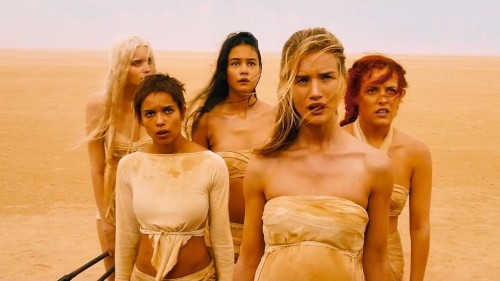
Mad Max: Fury Road enforces this practice through the lens of women fully aware of their value. The plot of the film is centrally focused on gender politics, but it never once feels heavy handed. Surprisingly, the escaped “wives” in the center are also never sexualized, even from their former captor.  The girls do discuss the villain Immortan Joe having a “favorite,” but the women are fully aware of their value. Amidst gunfire, these women use themselves as shields, understanding the War Boys’ fear of harming them. However, this fear isn’t rooted in a sexual desire, but in the desire to survive. Sexuality isn’t used as a weapon, but the women use themselves as a weapon to address the fact they are in control of any hope for the future. Immortan Joe’s desire to save the women comes not from a loss of beautiful sex slaves, but from a loss of the possibility of continuing his familial line. Men cannot continue on their own without women, and the world of Fury Road knows it. In this universe, we must work together to make a future.

MAD MAX: FURY ROAD

The unfortunate reality of the value of women in dystopian societies is that the relegation of women as currency brings out the absolute worst in humanity. They say that money is the root of all evil, and if women are now being valued as a currency, the evil is bound to leak through. In 28 Days Later… the soldiers are willing to rape the first women they see, and in It Follows, a man has chloroform at his disposal, presumably for use in case Jay were to have denied him sex. While there is power in women gaining the ultimate value in dystopian landscapes, there is also a great risk that comes along to being reverted to nothing more than currency.


BJ Colangelo is the woman behind the keyboard for Day of the Woman: A blog for the feminine side of fear and a contributing writer for Icons of Fright. She’s been published in books, magazines, numerous online publications, all while frantically applying for day jobs. She’s a recovering former child beauty queen and a die-hard horror fanatic. You can follow her on Twitter at @BJColangelo.


The Margins of Dystopia: Darren Aronofsky’s ‘Noah’

It certainly isn’t a feminist world she lives in, but she does her level best to undermine her husband in an enclosed space. As Noah himself veers away from his family tradition of life-supporting environmental husbandry, Naameh continues to practice what he (used to) preach, preserving her daughter-in-law, the animals, and the land once they find it again.

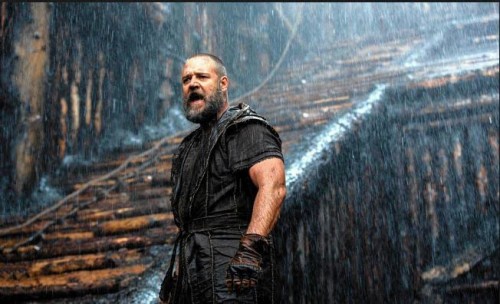
Russell Crow as Noah


This guest post by Rebecca Willoughby appears as part of our theme week on Dystopias.


I’ve written before about a Darren Aronofsky film that I liked tremendously, Black Swan. I was a fan of The Wrestler and The Fountain. So when news of the director’s intent to tackle a Biblical epic in Noah was revealed, my reaction was a cautious excitement, but also: “Huh?” After seeing it, the “Huh?” response is pretty much still there.

But I was fascinated by Noah as a representation of dystopia, and, by its conclusion, of a supposed utopia. Its thinly veiled save-the-earth message seemed to simultaneously re-tell the Bible story with a new twist, and reinterpret it for non-believers (see also the “updated” environmental message of Scott Derrickson’s 2008 remake of The Day the Earth Stood Still). It was rather a strange experience, however, that for much of the film I had no idea what was going to happen next. That is not how I expected to experience a semi-familiar Bible story I heard many times as a child. These “inaccuracies” comprised the bulk of the negative reviews of the film, like this one from The Guardian.

It was easier then, perhaps, to see its story as a cautionary tale about our own time and place, removed from specifically Christian ideologies (except maybe for the Rock-Biter-esque Nephilim). So while it was clear enough how the film addressed environmental issues such as sustainable growing practices and the exploitation of natural resources, what did it say about other resources, like people? Human capital? Gender roles? Well, these topics were also disintegrating in the dystopic mess.

1

How dystopian is Noah’s opening act? Well, after a brief VFX sequence summarizing Creation, we fast-forward right to the murder of Noah’s dad at the hands of a young Tubal-Cain (sorry, spoilers…also something I didn’t expect to say in an essay about a Biblical story). Quite frankly, after sitting through the two hour and 20-minute movie, the plot points of the Bible story and the film have blurred a bit. What viewers know for sure is that Adam and Eve have been dispelled from the Garden, murder is a thing (thanks to Cain), and there are two factions of humans. One is the followers of Tubal-Cain, Biblical forger of bronze and iron, who are aggressively industrial, environmentally exploitative, and eat meat (sometimes human, sometimes CGI, pre-flood fantasy animals). Their existence is shown to be difficult, dirty, warrior-like, and (of course) patriarchal. It is only by accident, for instance, that a raiding party of these denizens leaves young Ila (Emma Watson) alive, and their violence has left her barren, though Noah’s wife Naameh (Jennifer Connelly) is able to save her life. This interaction, specifically, highlights differences between the two groups: essentially, one carries death, the other life.

The tribe of Noah are the descendants of Seth (brother of Cain and Abel, for those following along in the Genesis story), who possess a particular set of skills when it comes to the Earth. Members of their line appear to be caretakers of the land and perhaps the first environmentalists. They’re also vegetarians, in case you were wondering. Their existence is also seen to be difficult, and yet because of their family dynamic, close relationships, and respect for all living things, viewers understand that their ethos is preferable. Their costumes are softer, natural fabrics rather than metal armor and leather; they have names and distinct personalities as opposed to a mob-like, metalwork-blackened horde. The film goes a pretty long way to ingratiate these characters to us, most likely because later Noah himself will come close to tearing them all apart. But throughout most of the film, we see two clearly demarcated factions with clearly defined ideological beliefs in direct opposition to each other. Pretty divisive, and therefore pretty dystopian.

Of course we know that the story goes further than just setting up a conflict on the human scale. Noah’s main internal conflict lies in his troubling dreams and visions. His confusion creates tension not only within Noah’s own mind, but also within his family, as he tries to discern what exactly the Creator wants him to do, and to what end. Much of this conflict has to do with reproduction. Throughout the film, he successfully alienates almost everyone dear to him when he comes to believe that the Creator is so distressed with the human state of affairs that He wishes humanity to completely die out. He refuses his sons’ wives, and threatens to kill his grandchildren. His narrative becomes one of punishment for the variety of ills humankind has visited upon the Creator’s Earth, of which he comes to see himself and his family as equally guilty members in spite of their life-focused ethos.

1

Charting Noah’s emphasis on life and reproduction may illuminate the film’s dystopian arc. Early in the film, Noah experiences a vision of seeing a flower sprout spontaneously from a drop of water. Disturbed by this vision and his frequent dreams of a destructive flood, he seeks out his grandfather, Methuselah (incredibly, Anthony Hopkins). Methuselah gives Noah a seed, which, when planted, sprouts an entire forest full of trees from which to build the ark. While this seed is certainly a sign of life, and gives life to all of this lush CG greenery, it is a resource grown to be exploited in a way not unlike Tubal-cain’s mining operation. Is this permissible because it’s in the service of the Creator?

While the ark-building is happening, Noah’s children are growing up. Including Ila, who has become an adopted daughter, beloved of Noah’s eldest son, Shem. Because she is barren as a result of her childhood encounter with those violent raiders, Noah goes looking for wives for his two younger sons (after all, they have to repopulate the Earth after the flood). But when he arrives at a neighboring encampment, he sees chaos, violence, fire, and animals being ripped apart for food. It isn’t pretty, and we can understand why this vision seems to support Noah’s new interpretation of the Creator’s plan: his family’s purpose is only to save innocent animals, and when that task is done, humans will die off as the last of his family perishes. It is Naameh who cannot reconcile this plan, and she visits Methuselah to ask him to intercede. Here, we have the restrictions of a patriarchal society functioning within the life-driven Noah clan, where the potential for the continuation of the human race seems to rest not with the women who might bear the children, but with the aging male progenitor: his word may sway Noah and save humanity.

Meanwhile, Noah’s son Ham refuses to abide by his father’s wishes (rejection of the patriarchy) and goes to find his own wife. When he’s captured and imprisoned by Tubal-Cain’s league, he meets Na’al, a female captive. As the flood rains begin, the two escape, and Ham leads Na’al toward the ark to save her. But Noah has waded into the forest to find Ham, and as they run from the Cainian hordes, Na’al’s foot is caught in an animal trap and Noah forces Ham to leave her behind (re-establishment of the patriarchal law). They barely make it to the ark in time to be saved from numerous crazy CG geysers contributing to the rain and rising floodwaters.

And, in a surreal but somehow predictable turn of events, Ila encounters Methuselah in the forest and he magically cures her infertility. With his supernatural blessing, she seeks out Shem and they have a passionate moment in the forest just before boarding the ark. We can see where this is going—Ila will become pregnant and bear Noah’s grandchildren—but it’s significant that her ability to reproduce is granted her by the patriarch of Noah’s family.

1

All the while, Naameh maintains her role as an herbalist and a midwife and maybe the first organic farmer. Though she’s continually shot down, she does consistently object to Noah’s rule; I can’t quite reconcile this review’s characterization of her as a “drip.” And because representation matters, it’s worth noting that I think Connelly is channeling Linda Hamilton’s arms in Terminator 2 even as she participates in traditionally feminine activities like midwifing and healing. It certainly isn’t a feminist world she lives in, but she does her level best to undermine her husband in an enclosed space. As Noah himself veers away from his family tradition of life-supporting environmental husbandry, Naameh continues to practice what he (used to) preach, preserving her daughter-in-law, the animals, and the land once they find it again.

The end of the film predictably sews things back up between Naameh and Noah, especially after he is moved to mercifully spare his twin granddaughters’ lives after feeling only “love” when about to kill them. The patriarchy is duly restored. Yet there are cracks. In an epic case of middle-child syndrome, Ham quells his rebellious attitude but strikes out on his own just as the rainbow covenant moment glows through the denoument. Additionally, I couldn’t help but notice that there STILL isn’t a wife for Japheth, the youngest son. And who’s going to marry/mate with Ila’s daughters? In its final adherence to the Biblical source, Aronofsky’s film leaves some troubling questions even as its narrative may—through its departures from that source— subvert ancient patriarchal structures that are still part of the female dystopia.


Rebecca L. Willoughby holds a Ph.D. in English and Film Studies from Lehigh University. She writes most frequently on horror films and melodramas, and is currently Visiting Assistant Professor at Bucknell University in Lewisburg, Pennsylvania.  


Reflecting on ‘True Detective’s First Season

But, at the end of the day—at the end of a lot of days—I’m tired of watching these shows and seeing women as props and symbols used to push the hero along his way. I’m tired of watching these shows and seeing the massive chasms between what they present, what they claim to represent, and what their fans insist they represent.

2


This guest post by Lisa Shininger previously appeared at her site and appears now as part of our theme week on Dystopias. Cross-posted with permission.


Spoilers ahoy.

I’m tired today.

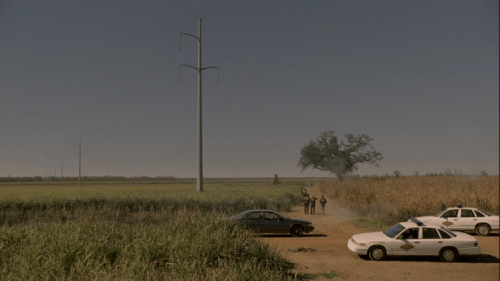
I stayed up too late last night to watch the first season finale of True Detective, the lush, loquacious portrait of Southern decay that held me in thrall all weekend, racing to catch up to the zeitgeist, if not the killer(s). I’m no stranger to late nights—nor to the toll of an extended media binge—but the seemingly endless spin of the HBO Go loading wheel (and the horrified contortions of my face once the show began) were more tiring than I had expected.

More than that, though, this tiredness also stems from choosing for a weekend to almost wholly submerge myself in the barely fictional, humanity-ravaged landscapes of Louisiana. The glimpses we had of the fading memory of a town—of man-made structures being devoured by the march of time and nature—mirror the Rust Belt city I live in, where my drive to work has been carefully mapped around abandoned factories and crumbling facades so the unrelenting misery of impotent nostalgia doesn’t get its claws too deep into me.

There is no escape from Pizzolatto and Fujinaka’s post-apocalyptic vision in the world of True Detective. Rust and Marty end almost where they began, but they will be forever tied to that land that sinks ever further out of sight.

Sometimes it feels like there is no escape in my neck of the woods, either. While no swirling, galactic vortices yawn open above my head, I see hints of humanity’s high-water mark in every rusted fence falling inexorably beneath a new grassy tide.


That’s not entirely why I’m tired today, though.

Sure, I’m tired of driving through familiar post-industrial wastelands, of hearing the echoes of a Springsteenian wail with every mile, both in reality and in fiction.

And I’m tired of the artistic fetishization of decline, of photo essays about the crumbling American industrial civilization with little or no context for the societal forces that precipitated that decline, and those that continue to accelerate it while we avail ourselves of disaster porn.

But, at the end of the day—at the end of a lot of days—I’m tired of watching these shows and seeing women as props and symbols used to push the hero along his way. I’m tired of watching these shows and seeing the massive chasms between what they present, what they claim to represent, and what their fans insist they represent.

I’m tired of watching these shows be widely praised for the quality of their writing, their fully dimensional characters, their gritty and realistic depictions of life—while I’m wondering where the other half of the world is.


1

In high school, I fell hard for The X-Files. Harder than for any other thing in my life, before or since. It fed my adolescent desire for darkness and the occasional lingering shot of David Duchovny’s fishbelly-pale torso.

The infamous fourth season episode, “Home,” touched on some of the same themes and archetypes revealed through this season of True Detective. The abduction and violation of women. The high American Gothic horror of the backwoods inbred. The willful ignorance of what happens in our communities. The invisible threads of malice and terror that we imagine—and occasionally reveal—crisscross our heartlands.

There, the monsters weren’t just the malignant and malformed Peacock men who roamed the Pennsylvania hills in their classic car to the dulcet tones of a Johnny Mathis sound-alike, in search of new breeding stock and targets for their violent protective urges. The monster was also the literal thing under the bed: the woman who presumably birthed them and continued to give birth to their doomed offspring. The episode hinges on Mulder and Scully seeking her out, to rescue her from her captors, from the horrors they assume she endures. But when Scully engages her, Mrs. Peacock reveals herself to be every bit the horror that her sons are. She is complicit and consenting—by the show’s terms—both in her confinement and in the rampages her sons commit.

We meet her presumable counterpart in the True Detective finale, but when the present-day detectives Gilbough and Papania begin to tell us her role among the evil that surrounds her, Marty Hart tells them to stop. He is as uninterested in her life as he is in that of any of the women who surround him, when their lives aren’t in support of his own. He is as uninterested in her life as the show is in the lives, or deaths, of any of the women we encounter.


 From Elastic’s True Detective title sequence pitch, via Art of the Title

From Elastic’s True Detective title sequence pitch, via Art of the Title

There’s always an argument to be made in favor of women-as-prop as an essential part of True Detective’s narrative and message. Over at The A.V. Club, Todd VanDerWerff says in a lengthy, weighty True Detective postmortem:

The most frequent criticism about this season has been its lack of “well-defined” female characters. This is a misleading statement. That there are no “well-defined” female characters on True Detective is the point.

Is it? Really?

It’s an essential part of the character of Marty, sure. His life outside the job is populated by women he barely knows: his wife, his children, his mistresses. It’s also an essential part of how Rust doesn’t allow himself to make connections with people—he only knows what he can see in service of his work.

But, how does the absence of women in the show—as viewpoint characters, as protagonists, as anything more complex than eyewitnesses and victims—further that point in ways that can’t be done within the narrative?

If the point of having no developed women—outside of Maggie, who I can’t forget never acts on anything unless it is in reaction to Marty—is to illustrate the disregard and disdain the world has for them, isn’t that point made in the way, for decades, dozens of women and children vanish and no one cares enough to pierce the veil of lies hung in their wake?


3

The question that kept ringing through my head as I mainlined the show was: Why are these always men’s stories? Monsters in myriad guises prey on women and children, but it’s always more men telling us stories about those monsters. Always.

If Pizzolatto’s aim in making this show was to transform the common beats and tropes of the murder story into something that transcended the genre, why do we have eight episodes that retread the most common of tropes: the victimization of passive women?

The inciting point of the entire season is the ritual murder of a woman and the destruction of property, which could arguably be seen as equivalent crimes. We first encounter Dora Lange as a literal object, a doll posed by unknown persons in a tableau that is as dehumanizing as it is unsettling. Greyed by death, frozen in a ritualized pose, crowned with antlers and transformed into a once-living sculpture: she is nothing but a piece of art, for whoever left her there, for Rust, and for us as well. The camera lingers on her naked flesh the way we imagine her killer might have done.

What more do we know about Dora Lange at the end of the season that we didn’t learn in those first scenes in the cane field? Rust tells us she is likely a prostitute, and so we learn she was. She had an ex-husband, who leads us into the mid-season digression into the hyper-macho world of drug dealers and undercover operations. How she came to be married to that man, working in that mobile home brothel, dead in that field, is only explained in the barest of strokes needed to move our heroes around their boards.

By the time we know that the men the show tells us are directly responsible for her murder are themselves dead, even Dora herself has been subsumed: by the detectives’ quest, by the horror visited upon her, by the monsters who set her death in motion, even by the young girl whose image has supplanted hers on Rust’s wall.

These are never stories told by women about how they’re preyed on. About how they try to protect themselves and fail, or how they succeed. About how they choose to be complicit in their own abuse, or how they never had a choice. These stories are never even about women who are preyed on. It’s always about men, and men, and men.


Lisa Shininger is a writer and designer from Dayton, Ohio. She cohosts Bossy Britches, and yells about pop culture at lisashininger.com and @ohseafarer.


‘Mockingjay – Part One’: On YA Dystopias, Trauma, and the Smokescreen of the “Serious Movie”

Though we get a sense of District Thirteen’s manipulations in the novel, Katniss savvily negotiates with them, resists their orders, and remains distrustful of their motivations, in contrast to her comparatively slight unease in the film. While these changes leave most of the major plot elements intact, they undermine our sense of Katniss as an intelligent political actor who is connected to and moved by the revolution itself, rather than just her personal stake in the events.

Mockingjay: Part One sees Katniss struggle in her role as the figurehead of the revolution against the totalitarian Capitol.

This guest post by Charlotte Orzel appears as part of our theme week on Dystopias.


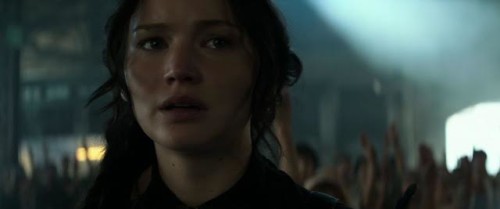
Mockingjay: Part One, the latest instalment of the massively popular Hunger Games series, begins with a terrified Katniss Everdeen huddled in a corner, muttering frantically to herself in a tearful fit, before being dragged off and sedated. Even for a series whose subject matter is children killing each other for sport, from its opening moments the film presents itself as noticeably darker than its predecessors. Director Francis Lawrence paints a grim portrait as the film explores the consequences wrought by the earlier events of the series, touching on torture, the large-scale destruction of warfare, violent suppression of insurrection, the mechanics of war propaganda, and the trauma the series’ violence has inflicted on its characters. But Mockingjay’s dark trappings mask the way the film foregrounds Katniss’ desperate romantic plight at the expense of both other aspects of her character and coherent dystopian critique. In doing so, Lawrence spins the illusion of a gritty, realistic criticism of war and propaganda headed by an independent, emotionally complex female character without truly providing the substance of either.

In Mockingjay, Katniss is at the centre of a political maelstrom, being urged by District Thirteen, the military leaders of the rebellion, to help create the propaganda material it needs to incite a revolution against the totalitarian Capitol. Katniss is suffering from PTSD and distraught about the capture of Peeta Mellark, her partner and love interest from two previous rounds in the Hunger Games. But when Peeta is forced to broadcast his demands for a ceasefire by the Capitol, Katniss concedes to take on the role of the revolution’s figurehead to ensure his immunity should the rebels win. Desperate to protect him from harm, Katniss must negotiate both District Thirteen’s subtle machinations and the violent retaliation of President Snow as she becomes entangled in the representational politics of a national war.

This is a significant departure from the way these events play out in the source material. In the first half of the novel, Katniss makes several decisions that within Lawrence’s film, are influenced or made for her by the rebel government and her handlers. For instance, the novel opens on Katniss having chosen to return to return to her firebombed home district against the wishes of President Coin’s strategy team. What she witnesses there causes her to react passionately against Peeta’s coerced call for a ceasefire and willingly adopt the role of Mockingjay. She does this not to ensure Peeta’s immunity, but to do what she can to strike back against the President Snow’s regime after the violent Capitol oppression she has witnessed and experienced. After witnessing a strike on the hospital in District Eight, it is Katniss who actively seeks out the cameras to make a speech to inflame the districts against President Snow’s regime. In the film, these events are reframed as ideas conceived by the rebels and their propaganda machine to maneuver Katniss into furthering their cause. Though we get a sense of District Thirteen’s manipulations in the novel, Katniss savvily negotiates with them, resists their orders, and remains distrustful of their motivations, in contrast to her comparatively slight unease in the film. While these changes leave most of the major plot elements intact, they undermine our sense of Katniss as an intelligent political actor who is connected to and moved by the revolution itself, rather than just her personal stake in the events.

Despite her more suspicious and antagonistic attitude in the book, Lawrence’s film portrays Katniss more like a pawn of District Thirteen’s rebels.

But the most important difference from the novel is the absence of Katniss’ voice from Mockingjay. The novel, told in first-person, gives the reader a clear sense of Katniss’ desires and emotional state. Both verbally and cinematically, the film often fails to articulate her feelings about the proceedings, outside a sense of generalized trauma, vague unease about District Thirteen and her mounting concern for Peeta’s well-being. Part of this problem is the reduced role played by Gale Hawthorne, who is not only a love interest to Katniss, but her best friend since childhood. In earlier films and the novels especially, Gale’s function as a character is not only to create romantic conflict, but to also advocate for the necessity of the revolution and articulate the violence enacted by the Capitol, including how it extends beyond the Games to the oppression of the districts. By cutting down his role and changing the content of his conversations with Katniss into arguments about Peeta, Mockingjay squanders a valuable opportunity to allow Katniss to voice her perspective on the political environment she finds herself caught up in. It also seems to do so to up the romantic stakes at the expense of portraying a more nuanced relationship between these characters that includes but is not limited to romantic love. Without allowing Katniss to express her viewpoints on these broader issues, through her relationship with Gale or another character, the film feels directionless except in moments where Peeta’s safety is at risk.

Katniss and Gale speak little about politics in this film as Lawrence focuses on the love triangle.

Mockingjay appears to justify this shift in narrative purpose through Peeta’s capture itself. The choice to continuously orient Katniss’s decision-making around Peeta suggest that it is his capture that is the major source of her trauma, the trauma that pulls her attention continuously away from the political scene. As other reviewers have argued, it’s refreshing that Katniss is permitted to show emotionally vulnerability as the heroine of a major action film. But not only does much of Katniss’ trauma stem from issues unrelated to Peeta—growing up in the Capitol’s oppressive society where she lived on the edge of starvation; being subjected to violence and forced to perpetrate it within the Games; witnessing the violent repression of resistance to the regime; the destruction of her home district—these traumatic events are precisely the reasons she should be (and in the book, is) compelled to fight back against the Capitol. It would be remiss not to mention that these aspects of her history and the film’s political themes would have also have benefitted by portraying Katniss as a woman of colour, as she is strongly implied to be in the novels. In this volume of the series, doing so would have drawn our attention to the powerful social and psychological effects of racism, and the way its violences intertwine with capitalism. This choice would have also given more potent, layered meaning to Katniss’ newfound position as the “face of the revolution.” Ignoring these important elements of Katniss’ experience and the way they affect her decisions diminishes the particularity of her pain and the complexity of her character. And framing the progression of events in this way suggests that even if we do see more political action from Katniss in the next film, it will be incited by Peeta’s victimization by the Capitol and not her own experiences of oppression and violence.

To a certain degree, Katniss is also incapacitated by Peeta’s capture in the novel. The key difference, however, is that Katniss’ mounting fears about Peeta’s torture lead to a direct conflict between her personal and political goals: any action she takes to spur on the revolution will be met with physical harm to the boy she has grown to love. This internal struggle makes Katniss feel like a whole person with a range of concerns, but it also generates the kind of narrative momentum that drives effective stories.

Making Peeta’s safety Katniss’ central concern in the film undercuts her character’s complexity and the film’s dramatic urgency.

Making Peeta’s capture and rescue Mockingjay‘s central concern also considerably deflates the film’s dystopian themes. Mockingjay purports to have something interesting to say about capital, war, propaganda, and trauma, but without Katniss’ perspective on these issues to anchor us, they lack both nuance and coherence. Lawrence draws parallels between the propaganda produced by District Thirteen and the spectacle of the Hunger Games, but while this gives us a broad sense that we should distrust President Coin and understand that war propaganda is bad, it fails to articulate this connection in a meaningful way. The film treats Katniss’ trauma as a cue that the film is dark and serious, while simultaneously using it as an excuse for avoiding a clear stance on its political issues. Unfortunately, these problems prefigure similar issues in the final half of Collins’ book that will likely make their way onscreen in the next film.

The problem with Katniss’ detachment from the political action becomes most acute in the last portion of the film, when the rebels launch a risky mission to rescue Peeta from the Capitol. In an effort to distract the Capitol forces, Katniss speaks directly to President Snow via video feed, telling him she never asked to be in the Games or become the Mockingjay, and that she only wanted to save her sister and Peeta. She begs him to release Peeta, offering to give up her role as figurehead and disappear. Then, conceding that he’s won, she pleads to let her exchange herself for Peeta. These statements seem like fundamental betrayals of the struggle Katniss has been growing into throughout the series, but film makes Katniss’ sincerity disturbingly unclear, especially in light of the ambiguity of her political stance earlier in the film. Is she just telling Snow what she believes he wants to hear, or is she truly so desperate to save Peeta that she will sacrifice the revolution itself for his safety?

No matter which is the case, Snow’s answer – “It’s the things we love most that destroy us.” – comes across as an interpretation of the outcome of Katniss’ efforts that, strangely, the film seems to validate. Pushed by Capitol torture into a distorted reality where Katniss is a dangerous enemy, the star-crossed lovers’ reunion results in an extended, disturbing sequence where Peeta wrestles Katniss to the ground, violently choking her. She escapes the encounter, and in a final sequence, watches him in a psychiatric ward, her reflection imposed over his thrashing body on the glass that separates them, as President Coin announces the successful outcome of the rescue at a political rally. This final, ghostly image of Katniss’ tortured face is a far cry from the expression of defiance that closed Catching Fire.

Unlike the final frame of Catching Fire, Mockingjay: Part One closes on Katniss visually erased by Peeta and her concern for him.

This sequence might have played differently had Katniss’ efforts to protect Peeta been only part of her focus in Mockingjay: Part One, or if this plot point had only been the midpoint of an adaptation of the entire novel. But as an ending, even to a film that promises a sequel, it seems bizarrely punitive and, frankly, horrifying. The film has spent two hours leading its audience alongside Katniss as she gives all her energy to Peeta’s rescue, only to tell both her and us that not only have her efforts been useless, but her loving sacrifices have only served to weaken her against her enemies. Of course, part of the rationale for this is to set up challenges for Katniss and Peeta to overcome in the next instalment. But the film should be able to offer a narrative experience that stands on its own and can thematically justify its existence, particularly if we’re meant to pay upwards of twelve dollars to see it. Obviously, we are not supposed to agree completely with President Snow, who is essentially the embodiment of pure evil in the film’s universe. But the story’s mixed messages offer us little alternative to conceding his victory.

The success of The Hunger Games’ franchise and its dystopian imitators such as the Divergent series or the CW’s The 100 seems to suggest that Hollywood is catching on to the idea that young audiences are willing to pay to see complex female leads and meatier social criticism. Mockingjay’s marketing implores us to embrace it as a gritty critique of oppression, propaganda, and war, and a feminist blockbuster led by a powerful teenage girl with more on her mind than romance (think about both propaganda-inspired posters and Jennifer Lawrence’s press tour pullquotes about how Katniss has too much on her plate to worry about who her boyfriend is). The problem with Mockingjay is not that either Katniss’ trauma or her love interest make her an uninteresting or weak female character. It’s that the film hypocritically champions its own success as female-driven, serious social critique, while in reality treating both these aspects with little depth or care.

As Mockingjay: Part Two looms on the horizon, we should remember that Hollywood’s willingness to deliver stories packaged to appeal to certain kinds of social consciousness does not mean filmmakers will engage beyond a surface level with the issues they use to sell their films. Teenage girls, as much as any audience, deserve complicated female characters, coherent and responsible social criticism, and well-crafted narratives in their media. As critical-minded viewers, we need to continue to demand and support substantive stories within and outside mainstream Hollywood and continue to identify those movies that only lay trendy glosses over empty promises.


Charlotte Orzel will take KA Applegate over Suzanne Collins any day of the week. Her interests include YA war stories, film exhibition, marriage dramas, and making fun of True Detective. She is a Master’s student in Media Studies at Concordia University in Montreal and tweets about life and film at @histoirienne.

Can a Dystopian Society Be Redeemed? Lessons from ‘Mad Max: Fury Road’

And, although The Citadel is ruled by powerful men with disabilities, we understand it to be a fundamentally ableist society. Immortan Joe is questing for a “perfect” son and has clearly chosen The Wives for their beautiful, unblemished, able bodies in an attempt to breed one. We understand that this is a patriarchy in its most extreme form where women have no personhood at all.


This guest post by Gabrielle Amato appears as part of our theme week on Dystopias.


Often, dystopia is about exposing where we’re going wrong and giving us a reason to course correct by showing us the worst case scenario of consequences. Human folly is a common undertone in dystopian fiction, especially sci-fi and horror, showing us an exaggerated form of the suffering we will have to endure if we cannot change. In Battle Royale, we see a world where the criminalization of youth has lead a society to fear its own children so much that middle-schoolers are forced to murder each other. In I Am Legend, a proud doctor informs the world that she has cured cancer using an engineered virus, but her hubris is our downfall. The virus kills 90 percent of the population and turns the other 10 percent into ravenous zombies. In Fahrenheit 451, rampant anti-intellectualism produces a world where books are illegal.

Mad Max: Fury Road is less about illustrating for us what consequences await if we don’t change our ways and more about what we must do once those consequences befall us. It’s about whether or not society can, as Furiosa hopes, be redeemed. Fury Road shows us a quick sketch of our situation: the world is a barren, wind-blasted desert; Immortan Joe controls the water and the people, using women to breed and feed an army of War Boys who maintain his grip on The Citadel by sacrificing their lives in battle. The driving plot of the movie is Furiosa and The Wives looking for a way out of this oppressive dystopia.

Although Fury Road does not show us how we arrived here, it does a very good job of identifying exactly who and what is wrong with society. Women are livestock, used for breeding and milking to maintain Immortan Joe’s army. With the exception of Furiosa and her honorable position as the driver of a massive war rig, the only place we see women in The Citadel is within Immortan Joe’s chambers, imprisoned there for his use. In the chase through the desert, The People Eater frequently refers to The Wives as “assets” to be protected.

The Wives have been specially chosen to breed a “perfect” son


And, although The Citadel is ruled by powerful men with disabilities, we understand it to be a fundamentally ableist society. Immortan Joe is questing for a “perfect” son and has clearly chosen The Wives for their beautiful, unblemished, able bodies in an attempt to breed one. We understand that this is a patriarchy in its most extreme form where women have no personhood at all.

When The Wives flee their chambers, they leave behind two explicit messages: “we are not things” and “our babies will not be warlords.” Immortan Joe’s patriarchy doesn’t only objectify and exploit women. Though only older boys are sent riding to war we see many War Pups, boys who haven’t reached puberty yet, some barely more than toddlers, in The Citadel.

Indoctrination starts early for boys in The Citadel


Though these War Pups are too small to drive and fight their faces are still painted like skulls, their little bodies pressed into the service of Immortan Joe. In The Citadel little boys do not enjoy a childhood. They have no experience and therefore no concept of compassion or kindness or human connection. The moment they are useful they are put to work and, more importantly, begin receiving the brainwashing that will eventually render them into fanatical War Boys willing to die at the whim of their leader. Women are livestock and boys are weapons.

It doesn’t matter how the world got this way, but it does matter who made it this way because those people are still in power. Who Killed The World? The implication is clear; it was the patriarchy. It was men like Immortan Joe, The People Eater, and The Bullet Farmer who even now continue the same destructive habits. Resources are tightly controlled by these men to satisfy their greed, and only doled out to others if it will serve the masters. Immortan Joe goes so far as to stage the ceremonial release of water down onto The Wretched just to display and revel in his own boundless power.

Joe’s big show
Joe’s big show


It’s a surprisingly explicit reference to the connection between power and abuse: Immortan Joe positions himself as a savior figure while at the same time turning the blame for the suffering of The Wretched back onto their own “addiction” to water. The systematic oppression of The Citadel is denied.

So what can Furiosa and The Wives do under these circumstances? Their first strategy is one most of us would choose. If the place where you live is terrible, you leave it behind. You try to find a new place, a green place. But escaping isn’t so easy. When Furiosa’s war rig breaks down and the fugitives realize that they are being pursued, Cheedo has a crisis of courage. She runs off across the sand toward the coming army, insisting, “We were his treasures. We were protected. He gave us a life of luxury, what’s wrong with that?” Cheedo has learned to survive as an object, and still believes that the best possible life she can hope for is one with the meager privileges of being chosen as the treasure of a powerful man. Although they are far from The Citadel, Cheedo has not left it yet. But it isn’t only Cheedo’s internalized oppression that conspires against these women. When Furiosa at last brings her companions to a place she remembers, the remaining Vuvalini they meet tell her that The Green Place is now barren. Even that piece of earth has gone sour like all the rest. Now there are only two choices left: keep running and hope to stumble across an oasis or return to the only place they know to be capable of sustaining human life.

They cannot escape this dystopia and find a utopia; the former must be refashioned into the latter. Mad Max: Fury Road shows such a remaking of the world is possible by first showing such a remaking of people. When Capable discovers Nux stowed away on the war rig she treats him like a person. She is kind to him and when she touches him she does so with tenderness. This is the first time that Nux has experienced human interaction that isn’t based in violence, as far as we can tell. Early in the film we see that his relationship with other War Boys is based on masculine posturing and competition. In a moment when he is vulnerable, lost, and humiliated Capable meets him with compassion and empathy, and we see how quickly it changes him. Having his humanity validated immediately turns Nux’s loyalties – he doesn’t want to be a thing anymore.

When Cheedo reaches for Rictus Erectus from the hood of the war rig we wonder if she has given up hope once and for all. But instead she uses her own fragility as a trick, and we understand that she has changed too.

Now less fragile but sneakier


Even Cheedo, so fearful that she wanted to turn back, has decided that it is better to risk everything for the chance to be a person than to return to being a treasure. She doesn’t want to be a thing anymore either. It is through the transformations in Cheedo and Nux that we see how Furiosa, the Vuvalini, and The Wives will transform the entire Citadel.

“Where must we go, we who wander this wasteland in search of our better selves?”


At first, The Wives leave with Furiosa because, as she tells Max, they are looking for hope. But Max knows that hope is a mistake; you have to fix what’s broken. It’s Furiosa’s desire for redemption the reveals the right path. The fact is, it is too late to avert disaster. We are already living in an oppressive patriarchy that treats women like breeding stock and men like weapons, and our environment has already been drastically altered by global warming. But there is no green place we can escape to. We cannot leave society and we cannot leave the planet; this is what we’ve got to work with. Further, even if we could run away to some hidden oasis to form our utopian feminist society, who would we leaving behind? Is it right to abandon the War Pups, the Milking Mothers, and The Wretched to save ourselves? Mad Max: Fury Road teaches us that the only way out of the dystopia is through it. You must choose to remake it, and yourself, into something better.


Gabrielle Amato received her BA in Liberal Arts from Sarah Lawrence College where she focused on women’s studies. Currently she works in violence prevention, and in her spare time attempts to write useful and interesting articles about feminism, pop culture, and rape culture.


Learn from the Future: ‘Battle Royale’

And just as the film articulates these contrasting attitudes and dilemmas with regard to controlling powers and zero sum attitudes, so too does it address these issues within themes of gender, sexuality and authority.


This guest post by Belle Artiquez appears as part of our theme week on Dystopias.


We have all seen dystopian futures represented in film and literature: desolate landscapes with survivors of some war-torn/zombie apocalypse struggling to live their bleak lives under the rule of brutal and selfish dictators who are only out for themselves.  It’s a theme we are well-accustomed to, and there are numerous examples of different dystopian futures: zombie apocalypses are in full swing at the moment in TV and film (The Walking Dead, The Last Ship, World War Z), but then there is also the fall of religion (The Book of Eli), the loss of fertility (Children of Men), and the loss of resources such as water and oil (Mad Max).

The examples of how humanity could fall are in such abundance that when we get a film that doesn’t necessarily look that different to our own current world, it may not be the harsh dystopian world that we are so used to seeing on screen.  Battle Royale (2000) is that film, and yet its reality is somewhat harsher than these other dystopian themes.  Directed by Kinji Fukasaku, and adapted from a book of the same title, the apocalyptic film portrays a totalitarian government that rules Japan, where communication with the western world is forbidden, and every year one school class is chosen to be pitted against each other in the ultimate fight to the death as a way of controlling the young generations and reminding them that they cannot rebel, they cannot be free, and they will only ever be restrained by their government.

The actual Battle is set on a highly guarded, isolated island, and the chosen class (a ninth grade class) is brought to it and ordered to fight in a zero sum game of death in a highly publicized slaughter game where there will be only one winner. The children are given one weapon each  ranging from sauce pans to rifles and survival gear with maps and other necessities as they navigate through the island, of which there are interchangeable “forbidden zones.”  Around their necks, a collar with the power to instantly kill is fitted to make sure any student disobeying the rules or being in a death zone at the wrong time will be killed.  It appears to all to be a completely unfair setup, but this is a harsh dystopian world, so what do we expect?

9th grade class photo, looking like students not murderers
Ninth grade class photo–all looking like students, not murderers.


Not only does the film portray existing anxieties for Japan, it also represents the severe landscape of our current era–the fact that people struggle to survive already, that some are unfairly given better opportunities regardless of value (portrayed through the weapons the students are given) and are almost set up for failure.  The fact that a ninth grade class is always the chosen class depicts the hardship and suffering of actual ninth grade classes in Japan currently.  Up until that grade, students need only be in attendance to proceed to the next grade, but suddenly at ninth grade they are faced with extremely difficult exams in order to get a placement in a more prestigious school, putting immense pressure on students who are suddenly pitted against each other for these few places.  Apart from this obvious nod, the film also suggests that we are already currently set up for failure worldwide. Our banking system for instance is the biggest fraud of our time, where people are given loans of money that doesn’t actually exist only to have to work even harder to repay the non-existent money back with actual hard cash. We are told that we need to earn a living doing jobs that we hate, instead of living and doing what makes us happy. We are born into constant monitoring, not being able to move around the world without asking permission or being watched.  Governments may not be totalitarian, authoritarian ones but they certainly act in similar ways under the guise of protectors.  These are all aspects of what the students of Battle Royale have to cope with.  They are watched not only by the controllers of the battle, but by the entire country, as if nothing more than a reality show.

The “Forbidden Zones” also illustrate the ways in which laws are put in place.  We know that most laws are put into place for our benefit–murder, theft, and abuse are all illegal for the good of the people–so that we feel safe in our day-to-day lives.  However, governments have been known to create laws for their own benefit, take for example the new law created in Australia that states it is illegal for detention centre workers to report child abuse, rape and human rights violations.  Or the American law that states it is illegal to film and report animal abuse on farms, establishing severe criminal sanctions for those who would report the abuse as opposed to those causing the abuse.  These laws are not in place to protect the people, they are conceived in order to protect the corporations in charge, the authorities.  This use of law-making is of course related to the “Forbidden Zones,” which are set up so the game will run within the three day time limit, and also for the entertainment of viewers watching from the safety of their homes.  The students have not only to fight and kill their classmates with whatever they were given but they also have to worry about where they go, at what times.

The leader and man in charge of the battle is also the representative of our current powers/governments/politicians.  Kitano is the man who tells the students the rules of the game, as well as handing them their weapons and survival gear, and who likewise has no problem killing two students before stating it is actually against the rules for him to do so. By breaking the rules in such a nonchalant manner Kitano shows the class that they must obey a hypocritical generation in order to survive.  He even goes as far as asking the students to be friends with him, establishing a false sense of security, the contrast between being friends with this man and then witnessing him kill two of them is stark and also conveys the same governmental control that most countries understand, the “We are here to help you” attitude while they only ever help themselves.  Another facet of this dynamic relationship refers to the fact that the classmates are all friends with histories and memories together and now they must let go of all of that and slaughter each other.  However, not all students have the ability to do this and end up committing suicide as a way out of this and also as an escape of the imminent betrayal they will face.

Kitano threatens a student, and shows the hypocritical nature of authority.
Kitano threatens a student and shows the hypocritical nature of authority.


And just as the film articulates these contrasting attitudes and dilemmas with regard to controlling powers and zero sum attitudes, so too does it address these issues within themes of gender, sexuality and authority.  Battle Royale does stereotype its female and male characters to conform to society’s ideas of femininity and masculinity.  Most of the women are rendered weak, helpless, and in need of protection.  Where some girls need the help of their male friends to survive (Noriko, whose protection is passed on when her initial protector is killed), others cling to each other in the hopes that some sort of sisterhood will unite them and make them strong enough to survive, showing a kind of stupidity on their part since there can only be one winner.  These united girls end up in anarchy as one of them eats a poisoned dinner meant for a male classmate and suddenly they are all slaughtering each other without even trying to overcome the misunderstanding.  In total contrast to this we see male students working together in perfect harmony even with a few moments of misunderstandings as a few of them work together to get the death collars deactivated.  The male characters do their best to protect the female students, but only the ones that have strong emotional relationships with the men.

Noriko hides behind male student for protection portraying the fragile nature of the class's female students
Noriko hides behind a male student for protection, portraying the fragile nature of the class’s female students.


The only strong female character also happens to be presented as the villain of the piece (as does the previous winner of the game who happens to be a young girl, although we only see her briefly at the beginning), and this is possibly because she is independent, sexual, and in control.  Mitsuko is violent, she quickly becomes a killing machine in order to survive, and even uses her sexuality to do so.  A loner in her class before the slaughter, a victim of sexual abuse and a murderer at a young age (in self defense against the man who was going to abuse her), she now just “doesn’t want to be the loser anymore” and uses everything at her disposal to win.  This includes her obvious sexuality, which she uses in ways similar to a Venus fly trap.  A good deceiver, she entices a two male classmates and while they feel at ease, happy to be getting any sexual action, she kills them.  Now who’s at fault for this? The girl who was just playing the brutal game like all the other students in order to survive, or the boys who stupidly thought that sex was worth the risk?  Yet Mitsuko is the villain, which may actually just be another acknowledgment of current gender expectation in Japan, which is where the film and book are based on after all.  Gender roles are an important part of Japanese society: men are expected to work hard, and housewives are considered valuable for their child rearing abilities; this could be why we see the group of girls acting in ways similar to the housewife, while the male students work to either outright win the game or fight the authority by breaking the collars. Traits associated with individualism such as assertiveness and self-reliance is not seen in high regard, which is why we are shown Mitsuko in a negative, villainous way.  So for a film that nearly entirely describes our current living situation, it could be said that the gender roles and stereotypes too are another way of acknowledging existing gender positions and expectations in Japan.

While the strong, independent female characters are shown in negative lights.


This is certainly a terrifying film; we are presented with a nightmarish portrayal of a hyper-violent, dystopian, totalitarian world we would be afraid to be a part of, yet we are also delivered a unique depiction of the word we are already a part of and that in itself is the most nightmarish aspect of Battle Royale.  The film is an acknowledgment of not only the world we live in right now but also of the human condition and the gender roles that are currently prevalent in a society that is supposed to be based on equality; however, it is anything but.  We need to look to such films and recognise that although they are fictional, and depictions of a harsh dystopia, they are also reflections of our present issues in society. They are showing us how bleak and grim our own realities are without the slaughter games and authoritarian powers that make the Battle Royale world so frightening.

Congratulations for being chosen to take part in this horror game called life!


Further reading:

“Dangers of Governmental Control”

“Violence in Contemporary Society and Battle Royale”


Belle Artiquez graduated from film and Literature studies in Dublin and since has continued her analysis and critique of film, TV, and literature (mainly in the area of gender politics and representations) as well as cultural and societal critiques on such blog spots as Hubpages and WordPress.


Death and Dating: Love, Hope, and Millenials in ‘Warm Bodies’

R and Julie have opted out of the capitalist conveyor belt that turns humans into braindead zombies and or war-mongering huddled masses. While it could also be read as a fundamental laziness to even stand up for themselves, the two succeed by not fighting.


This guest post by Emily Katseanes appears as part of our theme week on Dystopias.


George Romero’s 1978 zombie flick Dawn of the Dead opens in a newsroom. As the world descends into chaos, darkness and violence, two talking heads are deadlocked into an intellectual debating about the causes of what’s killing so many people and then bringing them back. The theme of humanity’s utter banality and pettiness is backed up as we meet our main character, Francine, who is trying to get her boss to stop broadcasting inaccurate shelter station locations at the bottom of their screen. Even the 2004 remake of this movie repeats this cynicism. Zack Snyder’s film of the same name includes a particularly gruesome scene in which a human husband restrains his pregnant, zombie wife, keeping her alive to birth an undead child, which of course, causes the outbreak to take down the rest of the remaining humans.

Seriously, what a bad day.


The message in both cases is overwhelmingly clear: the post-apocalyptic zombie landscape is one in which the violence of the undead’s feasting is small potatoes compared to man’s inhumanity to fellow man. It’s a familiar theme in both dystopian and zombie genres.

And that’s what makes Warm Bodies such an interesting dystopian flick: The film deftly defies expectations by presenting a world gone to hell that’s still full of humanity and, dare I say it, romance. The 2013 film centers around a charmingly vulnerable and mostly decay-free Nicholas Hoult as R, a zombie with a heart of gold and a reluctance to resort to the monstrous behavior normally associated with the undead. Partway through the film, he encounters Julie (Teresa Palmer), a tough, tender, and fully alive human girl. The two form a friendship and, later, romantic relationship. The star-crossed lovers’ relationship sets off a chain reaction that ends up rehabilitating most of the undead and uniting them with the living against the malicious, more-decayed Boneys.

The film first defies the genre by blending the zombie gross-out factor with a teenage romance, as if George Romero and John Hughes collaborated on a script. But beyond that, Warm Bodies stoutly rejects the pessimism that haunts the hellscapes that are Romero’s zombie America and Hughes’ Shermer, Illinois high schools. Instead, the film fully embraces all the messiness of the Millennial and manages to make an argument for hope in that most maligned generation.

Hoult’s character R is the narrator and driver of the plot. He’s a deadpanned young dude, given to quips such as this introduction to his best friend Marcus, played humorously by Rob Coddry: “This is my best friend. By best friend, I mean we occasionally grunt and stare awkwardly at each other.”

R’s blend of irony and sincerity—he really does count Marcus as a friend even as he pokes fun at the concept—registers well with the Millennial attitude. Hoult, who’s even Millennial enough to be the subject of a Buzzfeed listicle, is outfitted as well as any Brooklynite or San Franciscan can be who’s cool without trying to be too cool. He wears a red hoodie with skinny jeans and lives in an airplane bedecked with a record player and other irony-heavy objets d’art, such as a bobbleheaded Chihuahua and an old-fashioned viewfinder.

R, as befits the stereotype of the Millennial hipster, is sensitive almost to a punch line. He laments the loss of the pre-zombie world not for its safety or conveniences, but for a population that “could express themselves, and communicate their feelings and just enjoy each other’s company.” (In that most-Millennial blend of irony and sincerity again, the movie plays off a visual gag, showing a world of everyone sucked into smartphones, even as R’s voiceover remains serious.)

Julie, on the other hand, reads as a woman of the new Millennium, albeit differently. Although she’s not the bespoke-wearing, Zooey Deschanel, quirky girl who handcrafts and bakes, she’s a woman in the vein of Scandal’s Olivia Pope or The Mindy Project’s Mindy Lahiri. She’s traditionally feminine and yet stoic, independent and able to hold her own against any men (including her dad, played by John Malkovich). Whereas R is the perpetually awkward, sensitive boy, Julie is cool, competent and clad in plaid.

He may be undead and falling in love with someone alive, but like teens the world over, R still can’t pick up his clothes.


Beyond aesthetics, R and his fellow fresher zombies, called “u,” increasingly follow Millennial markers. They’re more listless than ravenous, underwhelmed rather than driven by rage and seem, more than anything, bored by the routines of middle-class life. R and Marcus meet to hang out at an airport bar and other zombies are seen going through the motions of their pre-death jobs. But, again echoing Millennials and the fraught economy they came of age in, it’s a middle-class lifestyle that’s no longer accessible to them. In an economic recession that renders a 9-to-5 with a travel expense account almost as mythical as a zombie, the lifestyle that Marcus portrays of the traveling businessman is as far away for Julie and R as it is for most 18- to 24-year-olds.

R and Julie also tap into the somewhat aimless creativity of the hipster/Yuccie generation. They’re creative, but it’s geared toward no particular endeavor. Julie and R aren’t poets, painters, or revolutionaries. Their creativity expresses itself as curators: of clever one-liners, tastefully decorated rooms, and arty Polaroids of each other. They’re lifestyle bloggers for the post-apocalyptic youth.

All of this makes the dystopia of Warm Bodies at once threatening and not threatening at all. While the zombie threat is a plot catalyst, the actual undead shamblers often take a backseat to the interactions between the two leads. And that’s where Warm Bodies’ genre subversion really takes off. Like all dystopian flicks, it’s a commentary on our current world. The difference is that while most films in this genre present characters who are oblivious or somehow unaware of the lurking catastrophe humanity’s bringing upon itself, Warm Bodies presents characters who are well aware the world’s already gone to hell. They’re just not going to buy into all that negativity, man.

“I guess I’ll improve the world or…whatever.”


And that’s not just a twist on the zombie dystopia. It’s a twist on how R and Julie’s generation is painted throughout media.

In addition to being the main characters, R and Julie are the happiest. In a world that’s fraught with danger and starvation, most of the other humans and zombies on screen seem to experience only fear and grim determination. In one of their early scenes together, R and Julie drive a red convertible. It’s a familiar scene of carefree enjoyment, whooping and hollering as they speed around.

But even beyond that, Julie and R are successful. They’re the ones who enact change in the world, creating a “cure” for zombie-ism by getting the undead creatures to feel love again. And they do it by proving the Millennials’ critics simultaneously right and wrong. R, Julie and their allies end up shifting the world by doing…not much of anything. It’s Julie and R’s simple affection for each other, born of those afternoons taking Polaroids and dancing to records, that gets the zombies feeling, dreaming and living again.

R and Julie have opted out of the capitalist conveyor belt that turns humans into braindead zombies and or war-mongering huddled masses. While it could also be read as a fundamental laziness to even stand up for themselves, the two succeed by not fighting. It is the peaceful revolution hippies of the 1960s might have wanted or it’s the ultimate move by a generation of wimps.

But whatever it is, it works. It changes the world, for the better. And that’s a narrative that’s not only missing from most dystopias, but from many depictions of the current generation. Of course, like a lot of narratives about Millennials, this remains problematic. The world of Warm Bodies is overwhelmingly white and the characters read as upper-middle class. In a film arguing for optimism for the youth, it’s both telling and disappointing that the youth included are white and affluent. There’s still a long way to go to get our representations to actually reflect the demographic of the world they exist in. It’s also easy to blow off the movie as teenage fluff and in a way, it is. It’s a cutesy romance that uses Shakespeare’s Romeo and Juliet as a skeletal structure and adds a killer soundtrack and a budding romance to flesh it out. But like R, who (mild spoiler alert), becomes human by the end of the film, it’s a vision of humanity that grows less not more fetid as it goes on.


A native Nevadan, Emily Katseanes has degrees from the University of Nevada and New Mexico State University. She has done everything from cleaning houses to filing fatality information at a gold mine to reporting on city council meetings in rural Idaho. Currently, though, she works her favorite job of all: teaching English at Louisiana State University.


‘Advantageous’: Feminist Science Fiction at Its Best

Though this happens in a future in which cosmetic surgery has become much more than a matter of lift and tuck, Koh’s struggle with whether and how to change her body for the sake of her daughter and her career, combined with the behind-the-scenes machinations of the corporation, casts a complicated light on the present struggles of women trying to succeed in both career and motherhood while facing the social pressure to stay young and be perfect.

title_banner


This guest post by Holly Derr previously appeared at the Ms. blog and appears here as part of our theme week on Dystopias. Cross-posted with permission.


A sighting of that rare bird called feminist science fiction is truly a thing to celebrate. It does exist, sometimes by accident (see Alien), and sometimes on purpose (see almost anything by Octavia Butler). With Advantageous, a film written by Jacqueline Kim and Jennifer Phang, directed by Phang and starring Kim, the feminism is entirely purposeful.

Influenced during her studies at Pomona College by the work of such experimental filmmakers as Cheryl Dunye and Alexandra Juhasz, Phang has always tried to represent a diverse world in her films and to tell stories about identity, specifically Asian and Asian American identities. Speaking on the phone from her San Francisco office, she told the Ms. blog that when the Independent Film and Television Service approached her seeking proposals for science fiction shorts, she jumped at the chance to make an Asian American woman the center of the film. When actor Ken Jeong (The Hangover, Community) saw the short, he was so moved that he offered to help turn it into a feature, and that feature went on to win the Dramatic Special Jury Award for Collaborative Vision at Sundance.

The central character in Advantageous, Gwen Koh (Kim), is the spokesperson and head of The Center for Advanced Health and Living, a cosmetic surgery company that has developed a way for the aged and infirm to move their consciousness into a younger, healthier body. When the center decides that Koh is too old to continue as their spokesperson—just as her daughter is entering an elite and very expensive private school—she decides to undergo the body-changing procedure herself.

In reality, she has been manipulated into making this decision by the real head of the center, played by a (somewhat ironically) beautifully aging Jennifer Ehle. Though this happens in a future in which cosmetic surgery has become much more than a matter of lift and tuck, Koh’s struggle with whether and how to change her body for the sake of her daughter and her career, combined with the behind-the-scenes machinations of the corporation, casts a complicated light on the present struggles of women trying to succeed in both career and motherhood while facing the social pressure to stay young and be perfect.

[youtube_sc url=”https://www.youtube.com/watch?v=jnBT0izYi7A”]

Not coincidentally, Koh, in collaboration with the company, chooses not only a young body into which to transition, but also a more ethnically ambiguous one (Freya Adams). Phang said that she cast Adams “not just because she’s a great actor, but also because she was able to play someone with a universal look. So the audience has to explore what is it about her that makes them want her to be the look of their company.”

Koh isn’t eager to take the extreme step of cosmetic surgery, so before undergoing the transition she attempts to find work through an agency she has worked with in the past. She discovers, however, that the voice on the other end of the phone is not only not a genuine supporter of her work, but isn’t even human, leading to one of the most profound conversations in the film:

Gwen: Drake, are you human being?

Drake: That’s a funny question. How do you define a human being?

Gwen: Do you have blood running through your veins? Do you get thirsty?

Drake: That is a definition of a human being?

Gwen: I didn’t know.

Drake: That sounds more like a human being. Not to know.

To say that Advantageous is a meditation on the meaning of life sounds cliché, but I can find no more fitting phrase. Both the mother and daughter at the center of the film spend the film’s duration in the pursuit of fulfillment, improvement, and a seemingly ever-elusive kind of achievement, and the tempo of the film ensures that both the characters and audience have plenty of time to think about what fulfillment really means.

Phang considers herself an idealist, and it is true that in this film, to a certain extent, daughter and mother both secure the kind of success for themselves that this near-future world believes to be paramount. But, as with the kind of feminist art that intends to make its audience think, most of the questions about the actual meaning of human existence are left unanswered. The 12-year-old daughter, Jules (Samantha Kim), states twice—once to her original mother and once to her mother-in-a-new-body—“I don’t know why I’m alive.” Though her mother offers a few answers, and different ones each time, the meditative quality of the daughter’s question and her mother’s answers makes it hard to believe that either finds much comfort in them.

In fact, even the background moments of buildings being blown up by terrorists are greeted not with terror but with an attitude of resignation that such things cannot be helped, and the process of changing bodies is more like the passage of time during sleep than the usual explosive, special-effects ridden climaxes of most science fiction movies. The most gripping moments of the film are found in the reactions of Gwen’s family to the consequences of her choice, beautifully revealing that even in a world where technology has become advanced enough to change the nature of life, being human is still a matter of feeling intimacy, love, and loss, of wanting to understand something that is inevitably just out of our reach and, ultimately, of accepting that no matter how successful or rich you are and no matter how technologically advanced our culture is, being human is mostly a matter of not knowing.

Phang is already hard at work on her next two films: One is a science fiction romance adapted from a play by Dominic Mah called Look for Water. The other is a film about climate change based on the work of real-life scientist Inez Fung, which she hopes will inspire audiences to reengage with climate change issues before it’s too late. She was recently awarded a $40,000 Kenneth Rainin Foundation grant from the San Francisco Film Society to support herself while developing these projects, something Phang told the Ms. blog she wouldn’t be able to live without:

I am fortunate to live in a time when organizations understand that in order to have sustainable media careers, women need support of some sort. The SFFS has a visionary program called Filmmaker360 that aims to change the representation of women in genre films by supporting women creators, which is a big deal for me and a big deal for women.

Advantageous is currently streaming on Netflix.

This review is dedicated to Michele Kort, who taught me how to be journalist and how to live in the human state of not knowing.


Holly L. Derr is a feminist media critic who writes about theater, film, television, video games and comics. Follow her @hld6oddblend and on her tumblr, Feminist Fandom.


Killing Time: The Luxury of Denial in ‘Dawn of the Dead’

While the men are shopping, Francine is left alone to fend off a zombie with no means of self-defence. As she attempts to escape onto the roof, the others return to save her from the zombie and bring her back inside. She is dismayed to realize that they intend to stay there indefinitely. While the men enthusiastically describe the mall as a “kingdom” and a “goldmine,” Francine describes it as a “prison.”


This guest post by Jennifer Krukowski appears as part of our theme week on Dystopias.


George A. Romero’s 1978 zombie classic, Dawn of the Dead, poses many of the same questions as your average zombie flick: what is the difference between living and surviving, and what makes us human? Where Dawn of the Dead stands apart from the rest is its exploration of the childlike bliss of denial in a time of crisis. We don’t know what the world looks like in this particular zombie epidemic because the heroes isolate themselves from it after seeing a mere glimpse of the beginning of the end. The characters spend more time literally watching paint dry than fighting zombies, and yet it is still an entertaining, scary, and thought-provoking experience for the viewer. The end of the world means not having to plan for the future. There’s a banal comfort in that. It is pleasurable to imagine certain responsibilities crumbling away in the wake of a disaster.

Of the four main characters in this film — Roger (Scott H. Reiniger) and Peter (Ken Foree) who are police officers, and Francine (Gaylen Ross) and Stephen (David Emge) who work for a local news station — Francine is the only one who does not indulge in the luxury of denial. She is willing face the scary and uncertain future of the outside world, whereas Peter, Stephen, and Roger prefer to distract themselves from the possibility that there may not be one. Being that Francine is nearly the only survivor, Romero seems to express through this film that, against all odds, hope for a better life — or at the very least, a “real” life — is far more brave than it is naive.

Stephen, Roger, Peter, and Francine flee the city in a stolen helicopter — the most detached mode of transportation available. When they land on the roof of an abandoned shopping mall, the initial plan is to rest briefly, get a few supplies, and move on. As the men sleep, eat, and smoke, Francine paces anxiously, ready to keep moving. Initially, Peter and Roger venture into the mall only to collect a few essential supplies. On their way down, they switch on the power for everything in the mall because “we might need it,” although things like rotating window displays and decorative water fountains are functionally useless beyond creating the illusion of normalcy. As soon as they realize that they have access to a fully stocked department store, the desire for necessity is lost in the wake of a delirious shopping spree. Even Francine’s boyfriend, Stephen, agrees that Peter and Roger are acting like “maniacs,” and yet he grabs a gun that he doesn’t know how to shoot and rushes off to join the fun.

No rest for Francine


While the men are shopping, Francine is left alone to fend off a zombie with no means of self-defence. As she attempts to escape onto the roof, the others return to save her from the zombie and bring her back inside. She is dismayed to realize that they intend to stay there indefinitely. While the men enthusiastically describe the mall as a “kingdom” and a “goldmine,” Francine describes it as a “prison.” And though it may be smarter to leave, it is certainly more convenient to stay. Squatting in a shopping mall seems like a viable option to everyone but Francine who, feeling trapped and vulnerable, knows that it is too delicate a bubble to settle into. She makes frequent attempts, often subtle and sarcastic, to remind the others that they are simply indulging in a fantasy, most notably when she refuses to accept a wedding ring from Stephen, telling him that “it wouldn’t be real.” If he wants to marry her, he must part with his fantasy life first. He never does.

The dichotomy of real/artificial is exhibited in many ways as the characters go through the motions of daily life, where everything is an imitation of something familiar and resources seem unlimited. Pre-recorded announcements to shoppers are an unsettling reminder of how alone they are. Roger gorges himself on candy and plays an arcade game wherein his character dies, but comes back to life to play another round with no consequence. For a moment, Peter may be contemplating a return to the outside world when he takes money from the bank, but when he and Stephen strike a pose for the security cameras with fists full of cash, he knows that his actions lack consequence, and thus the money, too, lacks value. He will never spend it.

Stephen and Peter pose for security cameras


Mannequins, a vaguely threatening presence, are featured almost as prominently as zombies and contribute similarly to the theme. Roger is startled briefly by a mannequin, and the mannequins are also used for target practice. When Francine attempts to comfort herself by indulging in a makeover, she models her hair and makeup after a gaudy mannequin head. It is one of the film’s more disturbing images, reflecting her slow mental break from reality, which she is ultimately able to overcome.

Francine's makeover
Francine’s makeover


Time seems to stand still for a while in the shopping mall, perfectly preserved and untouched by an outside world that grows increasingly mysterious as radio and television broadcasts become more sporadic. One of the only signifiers of time passing is Francine’s pregnancy. As she nears her due date, her body is as a visual reminder of the inevitability of change, which may subconsciously threaten the others who are less willing to consider the future when, for the moment, everything they need is right at their fingertips. While it would be possible to give birth inside the mall, Francine’s pregnancy forces her more than anyone else to physically experience the passage of time and consider her future, no matter how uncertain it may be. It is very possible that the mall is the safest place for them to be at the time, and while we can only speculate as to why exactly it is so important to Francine that they get away, what really seems to make her nervous is not having an exit strategy. She is the first to demand helicopter lessons from Stephen in case anything happens to him. As Stephen is her lover and presumably the father of her unborn child, it is surely more difficult for her to imagine the possibility of his death than it is for Peter or Roger, but she has the strength to consider the dangerous reality of their situation and prepare for the worst case scenario.

Francine contemplates maternity


It is not only her future responsibilities as a mother that gives Francine strength. This is a part of her personality. She is often drinking and smoking, so she is not portrayed as a perfect mother-to-be. Not everything she does is for the benefit of her child’s future. While at her job in the television studio, we see that she is highly focused and assertive. When a cameraman walks off the job during a live broadcast, Francine quickly jumps behind the camera and takes over. This example of taking the wheel is mirrored later when she has completed her flying lesson with Stephen, sincerely happy for the first time in the film. It is in her nature to take charge, which is ultimately what saves her life.

Francine may not have a perfect survival strategy. It could be that she is the one who is truly in denial. But in the end, Francine wants to leave the mall, and she does. Roger and Stephen want to stay, and they die inside. When their bubble becomes overrun by looters and zombies, Peter decides that he would rather kill himself than face the uncertain outside world, but at the last moment he changes his mind and joins Francine in the helicopter. They don’t have much fuel and they might not survive, but waiting to die is no way to live, no matter how you pass the time. Although the future probably isn’t optimistic for Francine and Peter, their willingness to face reality is what keeps them alive. At least until they take off.

Francine escapes with Peter


Jennifer Krukowski is your average eco-feminist horror enthusiast. A graduate of York University’s Theatre Studies program, Jennifer currently works as an actor and odd-jober in Toronto while pursuing an interest in writing for film and television.
Twitter and Instagram: @jenkrukowski