Failed Revolutions in Imaginary Cities

How do you solve a problem like dystopian science fiction? It’s been around for about as long as the film industry and yet, politics and society still won’t stop producing warning signs for the decay of humanity, providing directors, writers, and “artists” with almost inexhaustible opportunities for critiquing the current state of the world community, or showing what the present state of things might turn into if not handled consciously and carefully.


This guest post by Olga Tchepikova appears as part of our theme week on Dystopias.


How do you solve a problem like dystopian science fiction? It’s been around for about as long as the film industry and yet, politics and society still won’t stop producing warning signs for the decay of humanity, providing directors, writers, and “artists” with almost inexhaustible opportunities for critiquing the current state of the world community, or showing what the present state of things might turn into if not handled consciously and carefully.

Many dystopian stories are set in urban environments: early films like Fritz Lang’s Metropolis (1927) address the issues of class structures and technological progress in the urban sphere and novels like John Dos Passos’ Manhattan Transfer (1925) put emphasis on the city as a space inhabited by masses, where anonymity and lack of compassion or interest in community prevails over civic solidarity and consideration. In urban spaces, it is really not that hard at all to be “alone in a crowd” both literally and figuratively. The city as a space for the display of pessimistic future narratives works well because that’s where all types of processes are accelerated, and there is a plethora of productive and destructive forces turning urban existence into an organically evolving chaos—a disease to the city’s body that needs to be cured continuously, by any and all means necessary—and the most subtly pervasive one is surveillance.

There have been a few particularly disastrous examples of state surveillance. Some are a bit dated (the East German Stasi and its many filmic representations) while others are fairly recent. So is it, in fact, a dystopian future we are talking about when it comes to spying on citizens? Not really. We have kind of embraced it in “western” urban culture and now are encouraged to accept its humoristic potential (I’m talking about the “Smile, you’re on CCTV” – smileyface stickers everywhere). At the same time, it comes at us in disguise, as a communicative necessity for the progressive human that wants to be harder, better, faster, stronger. Yet, here we are, on camera in public spaces and feeding the world wide web (and feasting on it, too).

If you can’t beat them, join them, right?

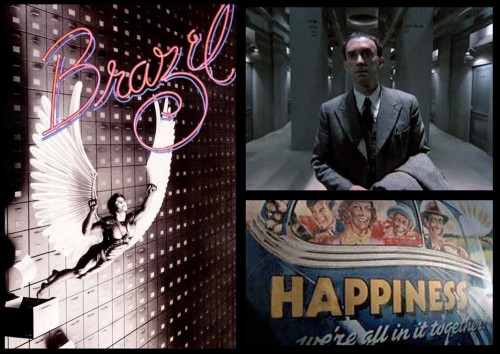
… said no film hero/ine ever. If anything, do it for the purpose of infiltrating authority, like Queen propose. If you can’t (and you shouldn’t “can”) join them, beat them. That’s what hero/ine/s do, and by watching them we are reminded that we too often don’t, although we should. They connect the dots and look back on the ones voyeuristically observing them. They resist and are sometimes punished for it—just like in the real world. Take for example Brazil (1985), straight out of Margaret Thatcher’s Britain, where protagonist Sam Lowry tries to escape the imperative of bureaucratic regulation of his environment and ultimately is lobotomized for his efforts. Here, punishment of disobedience is an almost accepted, public ritual, while disobedience itself is both overt and covert—there are terrorists in the city, but also underground freedom fighters (Tuttle).

Citizen Lowry
Citizen Lowry


Slightly different, but similar enough to include here is Dark City (1998), with a seemingly more happy ending, showing how John Murdoch battles an alien species, the Strangers, who are in complete control of the temporal flow of the artificially created environment, constantly change the geography and impose identities on individuals without their knowledge, all for the “good” cause of filtering out the humanity in the human. Here, no one is who they “really” are and no one (except the hero Murdoch, the traitor Dr. Schreber and the crazy person Walenski) cares because they don’t know (a friendly nod to Last Thursdayism).

Scary, right?

Now you see me, now you don’t


In Brazil, the opening sequence is most illustrative of the scattered condition of society or the discrepancy between ideal and reality: floating above the clouds, we find ourselves “somewhere in the 20th century”—a noplace (not in to utopia-etymology sense) and everyplace of the past 100 years. This type of insistence on universality is a prime example for cinematically mediated ideology as it kills any slightest bit of hope for change no matter whether the circumstances are positive or negative. Besides, speaking of ideology, Triumph of the Will opens with a very similar cloud sequence. Coincidence? Do I need to answer that? But actually, it’s just Lowry’s dream, the one where he’s a hero and saves the girl, which means procreation, which means return to nature, which means return to the Garden, which means happiness. It’s a good thing. But it’s not real. The idyllic heavens change into a shop window full of TVs showing an advertisement—because this is the reality of the 20th century: it is simulated on screens now—and a few seconds later…

In your face, media propaganda, capitalism and consumer culture!


Before we meet Lowry roughly 10 minutes into the story, we see the Ministry of Information violently arresting the wrong guy (Buttle the generic citizen instead of Tuttle the infiltrator), and the only difference between the aftermaths of the exploding shop window and the destruction accompanying the Ministry actions is that the latter procedure has a piece of paper authorizing it. Because processed information is power, and the lack thereof makes you an easy target, or victim. Or, actually, maybe just a normal human being living your life, as is the case in Dark City.

Everything quiet on the neo-noir scifi front
Everything quiet on the neo-noir sci-fi front


In a similar way as Brazil, Dark City is set in a temporally patchworked environment. The mise-en-scène completely lacks coherence in its references to historical space and time—there are too many of them at once. As Mr. Hand explains, “We fashioned this city on stolen memories: different eras, different pasts, all rolled into one.” They have the whole world in their hands, if you know what I mean. The Strangers’ invisible puppeteering activities result in our perception of the narrative as dystopian only via, again, the power of knowledge. In Murdoch’s camp, however, knowledge means to reflect, to detect inconsistencies, and to suspect. Suspicion causes paranoia and paranoia ultimately leads to “real” power, at least in his case. Contrary to Brazil, where the productivity of suspicion is actively promoted by the same authority that benefits from it, and therefore, prevents any actual change.

Dark City ends with Murdoch’s victory over the Strangers and his rebuilding of the city on his own, seemingly “freer” terms. Does he end autocracy? Yes. Does he bring about liberation? If this is about humanity and idiosyncrasy and “everyone needs to be who they really are”… the answer is no, not really. Murdoch dislikes processes no one else appeared to suffer from and makes the world better for only himself. Murdoch wanted Shell Beach; he got Shell Beach. In the process, he may have played around with the parameters of the formula and put it to sleep, but he did not bother sharing knowledge (and thus, power). They’ll just have to live a lie forever. But it’s only a lie if you know there is truth, right?

Pics or it didn’t happen?


Guess it didn’t happen then.

While we’re at it, let’s talk about truth some more. Truth is like gender—there is an essentialist take on it, relying on facts, things that actually exist in the world (things that you can touch… like genitals for example), and then there is ideology: things invented but holding the same authority as the essentialist prove (similar to the assumption that these genitals you can touch magically make you desire certain things and hate others). With gender, it’s complicated. With truth it’s the same, unless someone forces it to be simple. For example, in Brazil, ink holds more “truth” and authority than interpersonal communication. Information printed on paper is more than just power as an ideological concept—it is the physical manifestation of power, like your genitals.

Look at all this powerful paper


Where there’s truth, the “human” aspect of interaction becomes irrelevant—no other physical authority as such is needed to maintain law and order. Indeed, surveillance “somewhere in the 20th century” is not an overt action taken out by identifiable people (they just reinforce the authority of the paper print) but, rather, emerges in forms of indoctrinations mingling in the environment, promoting a tautological and unquestioned acceptance of bureaucracy. All over the city, there are posters reminding the citizens to “Be safe – be suspicious,” or “Don’t suspect a friend, report him” and finally, that…

unnamed

One might say that the organization of the depicted society relies on a form of decentralized panopticism. Panopticism is the unverifiable threat of surveillance turned into self-surveillance—it used to be a prison thing but now we have, you know, cameras in our laptop screens and are you sure it’s not broadcasting just because the light is not on? Is it paranoid to think it might? In Brazil, the decentralization of surveillance means that the possibly watching body is not only the state authority but also, people just like you. Somewhere in the 21st century, the decentralization of surveillance means that the possibly watching body is not even a body anymore. So, this demands an even more rigid need for self-discipline—in order for everyone to be a suspect, everyone needs to suspect.

unnamedunnamed-1

Now it appears that these two films could not be farther apart in the presentation of their citizens—in Brazil, everyone suspects everything; in Dark City no one suspects anything. However, both are built on the same conditions: individualism, transparency of authoritative activities, and the privacy of citizens are sacrificed for a harmonious communal existence where the illusion of egalitarianism depends on the withdrawal of authority from direct visibility. By explicitly encouraging paranoia but not presenting the population with these messages in a spectacular manner, the Ministry of Information creates a paradoxical community that is bound by mutual distrust, and therefore, establishes a structure where the public does not aim to overthrow authority because everyone is too busy suspecting each other. With a similar effect, the Strangers in Dark City look down on their lab-rat citizens without permanently appearing in the continuity of their world. Both cases are a witch hunt: if hero/ine/s drown, they’re innocent; if they survive, they’re guilty and die anyway.

Unless they evolve.

Murdoch the strange(r) human hybrid


Lab rats outsmarting their “owners” is always a moment of pleasure, but is their personal victory over authority solely driven by their position as heroic victims, or did they have to become more evil than the evil in order to prevail over evil? This is something I was toying with during Ex Machina, and also the aspect that made Dark City a lot darker than it might seem in the first place. Sometimes we forget that every hero/ine drags along a body count, too. But at the same time, some change in the dystopian routine of the film is better than no change, or the wrong side’s victory.

That’s why Brazil is so soul-crushing. Lowry is irreversibly kicked out of reality into a non-existent, eternal, utopian dream—he got the Garden, the girl, the happiness. But he didn’t win. There are other films that thrive on this idea, and most of them also don’t have a happy end.

The execution chamber of dreams


Attempts at improving the “situation” through distraction are very close to our reality that significantly lacks a routine of epic, heroic gestures. Could it be, though, that it’s mainly because there are too many causes worth fighting for and it hurts to prioritize? You wanna make a donation for homeless puppies, children, or grown men? Or would you rather watch Hobo with a Shotgun?

What we cease to see is how that off-screen world of ours sugar-coats outrage with sensationalism and throws it back at us in the form of film, so we can at least be entertained by the sad realities we live in while reality itself becomes secondary, invisible, almost unreal. Do we simply not start revolutions because most of the successful ones are fictional, or do we not feel entitled to actually complain and be outraged because this reality is not that bad? We are not ignorant but aware—after all, we share on Facebook and hashtag on Twitter. Only those spaces are the Garden, not the reality. But since we are not lobotomized yet, we could still evolve.


Olga Tchepikova has lived, studied, and worked in various places in Europe and just left the US after finishing her MA there. Her mind in free time, as well as in research, is mainly occupied with films about and critical theory on various sub-cultural spheres, sex, porn, horror, violence, death and their ramifications.


‘Terminator Genisys’: Not My Sarah Connor

Sarah meets Reese (Jai Courtney) knowing that she will need to have sex with this man, regardless of how she feels, to save the human race. It’s an awkward problem that’s dealt with in Schwarzenegger one-liners about mating and a weak attempt at a narrative theme of free will versus destiny.

Sarah Connor teams up with the Terminator


This guest post by Liz LaBrocca appears as part of our theme week on Dystopias.


Terminator Genisys, the fifth installment in the Terminator franchise, reminds you how much you loved Terminator and Terminator 2: Judgement Day while simultaneously destroying everything that made the first two movies exciting, scary, and romantic. In particular, Sarah Connor, damsel in distress turned warrior, has been reduced to a quippy, bland plot device instead of the powerful ready-made warrior she could have been.

The greatness of Sarah Connor’s character (as played by Linda Hamilton) between T1 and T2 was her transition from a frightened young girl to a self-made soldier. Within the first movie alone, we see her transformation from a terrified waitress in need of Kyle Reese’s (Michael Biehn) protection to a woman who is learning that she’s more capable than she ever believed. As their brief love is budding, she bandages one of his wounds. He compliments her field dressing and she, knowing now what her future holds, sadly replies, “Thanks, it’s my first.” By the end of the movie she is trying her best to save his life, commanding him (“Move, Soldier!”) to get up and keep fighting with her. In the end, he sacrifices himself in his best effort to save her and she is left to carry his child, future resistance leader John Connor, and the heavy burden of preparing both of them for the coming nuclear apocalypse.

Linda Hamilton as Sarah Connor in The Terminator calls the police to come to her rescue.
Linda Hamilton as Sarah Connor in The Terminator calls the police to come to her rescue


In T2, we jump ten years into the future where John Connor is a wayward teenager, living in a foster home while Sarah is institutionalized for paranoid delusions. She has spent the past decade living with various men in order to learn as much as she can about arming and defending herself. We’re introduced to her in the institution as she does chin-ups on her overturned bed frame to keep herself physically primed for the coming war. While John and the reprogrammed Terminator (Arnold Schwarzenegger) are coming to rescue Sarah from the T-1000 in the psych ward, she has already mostly broken out on her own. Hamilton’s T2 Sarah Connor was muscular, sweaty, and terse. She looked like someone who had spent a decade physically and emotionally preparing for a nuclear war. At the same time, it was clear that she deeply cared about her son and was struggling with how to be a mother in a world that only she knows is destined to be destroyed. She reflects that the Terminator, ironically, ends up being the best father figure John has known in the absence of Reese.

Linda Hamilton transformed for Terminator 2: Judgement Day’s warrior Sarah Connor


We were given so little of Sarah in the preview of Genisys, I was holding onto a little hope that she wouldn’t be totally stripped of her mettle as a result of losing her original character arc. In Terminator Genisys, Sarah (played by Emilia Clarke of Game of Thrones) has been raised by the Terminator (Arnold Schwarzenegger) since she was 9. He was sent back in time to protect her from a T-1000 that had been sent to kill her and her family. There are plenty of reviews that discuss the convoluted time problems and horrifyingly dull plot in Genisys, so I’ll spare you.

Sarah meets Reese (Jai Courtney) knowing that she will need to have sex with this man, regardless of how she feels, to save the human race. It’s an awkward problem that’s dealt with in Schwarzenegger one-liners about mating and a weak attempt at a narrative theme of free will versus destiny. Her dialogue is full of jokes and one-liners instead of the brusque, efficient speech patterns you’d associate with a woman who spent her formative years with a Terminator who has still, several decades later, not mastered the art of smiling despite his detailed files on human anatomy. What was once a heated, passionate romance in the midst of a life-altering conflict, is boiled down to a silly comedy subplot: how does Sarah tell Reese that he’s the father of his best friend and mentor? This problem is further compounded by the painful lack of chemistry between Clarke and Courtney. The one upside to this forced romance subplot is that Sarah’s need to be impregnated is nullified by the vilification of John Connor. The film ends with her ability to choose to be with Reese instead of needing to be with Reese. But perhaps a more interesting, and more feminist, ending would be her choosing to not be with Reese at all.

Emilia Clarke wearing the iconic leather jacket as Sarah Connor in Terminator Genisys


The problem of Sarah’s character also lies within the casting of Emilia Clarke. While Courtney is a big, hulking man, who looks like he’s been slamming protein shakes in his post-apocalyptic future wasteland home (in T1 children hunt rats for food), Sarah looks as though she’s barely run a mile in preparation for the impending war she’s about to fight. Sure, they arm her with a bunch of guns and she looks really cool. She even looks a bit like Linda Hamilton. But she doesn’t look strong the way Linda Hamilton looked strong in T2. She doesn’t look like she has spent her youth and early adulthood physically training to be a fighter.

What it boils down to is that Courtney was cast in the traditional image of protector, even though the intention of the storyline was to subvert that role and have Sarah be the savior. It didn’t matter that he looks absolutely nothing like Michael Biehn because his perfectly chiseled abs looked great during naked time travel. He can even be hit by a car on the freeway with barely any consequences. In contrast, Biehn’s Reese was cut but lean; he was dirty and on edge. He looked like someone who came from a nuclear wasteland where meals were scarce and the threat of death was constant. He could be injured and killed. Had both actors been cast more appropriately in Genisys, she and Reese could have at least stood side by side as a team of equals ready to fight Cyberdyne via Genisys.

Jai Courtney (left) and Michael Biehn as Kyle Reese respectively


There was potential for this character to be extremely interesting. She could have been a darker, off-beat female heroine. She could have been the result of a human who spent her life training to be a warrior by an emotionless robot. But because the studio chose to play it safe and go for mass appeal and a PG-13 rating, we’re left with a watered-down version of the original character. Sarah Connor’s character was exactly what I was afraid she would end up being: a shallow plot device who is only there to make sure we know what’s happening in the new present and to fret over her impending romance with Reese. She is a shadow of an action hero, saying her lines but never embodying the role.


Liz LaBrocca is a freelance writer and editor living in Northampton, Massachusetts. She’s Co-Editor in Chief of The Soapbox, an online platform for amplifying the voices of female-identifying creators. You can follow her writing, cooking, and very important opinions on Twitter and Instagram.


Bitch Flicks’ Weekly Picks

Check out what we’ve been reading this week–and let us know what you’ve been reading/writing in the comments!


recommended-red-714x300-1


Angry misogynist murders women at showing of film by feminist comedian; police worry “we may not find a motive.” and Did right-wing attacks on “Trainwreck” inspire John Russell Houser’s shooting rampage? by David Futrelle at We Hunted the Mammoth

Proof That Jane Austen and Amy Schumer Would Have Been Friends by Audrey Bilger at Ms. blog

Review: Does Trainwreck Live Up to Its Own Feminist Standards? by Carolyn Cox at The Mary Sue

10 Female Directors of Color You Should Know Now at BET

A Short Film Series Gives Female Athletes the Star Treatment They Deserve by Sarah Mirk at Bitch Media

5 Ways Marvel Movies Keep Screwing Up Female Superheroes by Kathy Benjamin at Cracked

Hollywood, It’s Time to Retire the ‘Loveable Misogynist’ Movie Hero by Lindsay Ellis at IFC

Jurassic Park: High Heels Edition gives everyone the shoes of a “strong female character” by Caroline Siede at A.V. Club

Can a “Feminist Hero” Save ‘True Detective’? by Heather Havrilesky at Dame Magazine

Which of These 3 Emmett Till Projects Will Be Made First? Will Smith & Jay-Z Have Gotten Behind One of Them by Tambay A. Obenson at Shadow and Act

What have you been reading/writing this week? Tell us in the comments!

Seed & Spark: Funny, Feminine, and F*cking Fantastic: Funny Women Who Make Me Want to Woman the Bejeezus Out of My Writing

But lately there’s been a surge of female writers who inspire me. Not only for their individual writing styles, but also for their ability to be so unapologetically female. Which, as my writing partners and I launch into production of our web series ‘Supporting Roles,’ means everything.


This is a guest post by Shannon Hollsten.


For the longest time I’ve said, “I don’t want to be recognized as a good female writer. I want to be recognized as a good writer who happens to be female.” It was a huge distinction for me. Because up until recently, “female” has been a qualifier that somehow had – and to some degree still has – a negative connotation. Like, somehow whatever fantastic writing/acting/directing/cooking/etc. we’d created was still lesser than anything any dude attempted.

But lately there’s been a surge of female writers who inspire me. Not only for their individual writing styles, but also for their ability to be so unapologetically female. Which, as my writing partners and I launch into production of our web series Supporting Roles, means everything. Seeing the success and variety of funny female writers in Hollywood just means that the “X” in my chromosomal makeup is one less thing I have to worry about as I put pen to paper.

(Or rather, keyboard to Microsoft Word. Same thing.)


Tina Fey

As if she wouldn’t make the top of this list. If she had come into the forefront before I was an adult, I’d absolutely want to be her when I grew up. (Truth: I still do.) She was the first female head writer on Saturday Night Live and then decided to dominate TV because she could. I’m not sure how she does it, but everything she writes is quotable and is like an inside joke that you think you probably might be in on.

And she made Kenneth immortal. Brilliant.


Mindy Kaling

Honestly, I wasn’t the biggest fan of Kelly Kapoor on The Office. For whatever reason, the character just didn’t resonate with me. So when I found out Mindy Kaling was getting her own series, I was just like, “but….why?” About two minutes into the first episode of The Mindy Project, I got it. And I immediately and happily jumped on the Mindy bandwagon. Her comedy has a lot of subtlety baked into the big moments, and more often than not it’s the details that amuse me the most.


Katie Dippold being all chill about being awesome


Katie Dippold

The genius behind The Heat, some of your favorite Parks and Recs episodes and now the already hyped female reboot of Ghostbusters. Her comedy is sharp and has its own recognizable charm to it, which isn’t a bad way to get your career going. She jumped from critically acclaimed TV to blockbuster movies in, like, 30 seconds (on the fame clock). WHO DOES THAT? Oh, that’s right. Katie does.


In the time it took me to write this caption, she probably completed Pitch Perfect 3 like it ain’t no thing.


Kay Cannon

Anyone with 30 Rock on their resume instantly gets an honorable mention. 30 Rock + New Girl + Pitch Perfect 1 and 2? Now you’ve made it right smack-dab on the list. The Pitch Perfect movies combine everyone’s guilty pleasure, A cappella, with strong characters, great dialogue, and humor. More than anything I want all my dialogue to be something that Fat Amy would say. And to be partially in harmonizing song.


Candid photo from Jillian Bell and Charlotte Newhouse’s Idiotsitter writing room, probs.


Jillian Bell and Charlotte Newhouse

These two ladies are getting a spot on the list because I recently discovered – and discovered I love – their web series (or, TV mini-series as it’s listed on IMDb) Idiotsitter. It combines with outrageous characters with an absurd premise but in a way that’s oddly relatable and very funny. Watch it. You won’t be sorry. Or uninspired.


Yes, Amy, I did just write all those nice things about you! Can we be besties now?


Amy Schumer

Finally (for this list at least), Amy F-ing Schumer – the “F” in this case standing for “Feminist.” Between her Emmy nominations and the successful opening of her comedy Trainwreck, she is now a fully active and hilarious member of the Hollywood’s A-list. Her comedy is perfectly on point for today’s culture. She’s self-deprecating but self-aware, not afraid to be feminist but not trying too hard to be one. She has brought her A-game to every part of her career this year. I really can’t wait to see what she does next. (No pressure, Amy.)


I know I am missing a few dozen amazing female writers. But, like inviting guests to a wedding, the list has to cut off somewhere or it’s just gonna get ridiculously out of hand. And these women are the ones who very specifically make me want to stand up and declare, “I am a female writer!”

I mean, I won’t. That’d be weird for my coworkers who have no context for that kind of outburst. But in my head I’m Norma Rae-ing this moment so hard right now. So hard.


Screen Shot 2015-07-23 at 11.58.36 AM

Shannon Hollsten is an Austin-based amateur karaoke singer who is waiting oh-so-eagerly for the day they miniaturize elephants so we can keep them as pets.


Disney’s ‘The Lion King’: Why We Are the Hyenas

By softening hyena matriarchy, however, Disney accurately represents the aspirations of human feminists: Shenzi, Banzai, and Ed joke around and work together in casual solidarity. Shenzi is confident in her opinions and never belittled for this, nor is her acceptance conditional on romantic availability.

Question everything
Question everything


Written by Brigit McCone.


“I’ve always been a person who asks questions, who demands an explanation, which is partly why I was getting into trouble, because I guess as a woman I was supposed to be seen and not heard” – Dr. Wangari Maathai

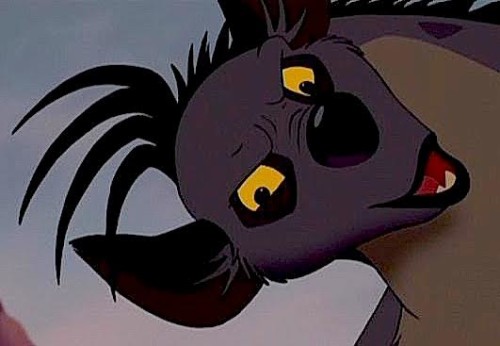
Though Bitch Flicks has published an interesting analysis of gender in The Lion King by Feminist Disney, it neglects one important point: we are clearly the hyenas. Specifically, we’re Disney hyenas. Actual hyenas, according to Professor Kay Holekamp (who sounds like a real-life version of hyena-studying, dinosaur-fighting badass Dr. Sarah Harding, from Michael Crichton’s The Lost World) hilariously resemble an antifeminist’s nightmare – the females having evolved “pseudopenises” (peniform clitorises) that make mating without consent impossible, and enable the flushing out of unwanted sperm after recreational sex, the weaker males are reduced to whimpering, head-bobbing appeasement of the hierarchic hyena matriarchy. Disney may be aware of this, depicting Whoopi Goldberg’s Shenzi as the most vocal and assertive hyena. By softening hyena matriarchy, however, Disney accurately represents the aspirations of human feminists: Shenzi, Banzai, and Ed joke around and work together in casual solidarity. Shenzi is confident in her opinions and never belittled for this, nor is her acceptance conditional on romantic availability. Disney gave us the feminist ideal, but coded her as evil (*cough* Ursula).

There’s more. Disney’s hyenas constantly consult each other in decision-making. Their instinctive anti-authoritarianism is displayed when Scar proposes the assassination of Mufasa. Instead of scheming to crown Shenzi as Hyena Queen, the hyenas gleefully chant, “No king! No king! Lalalalalaaala!” understanding hierarchy as inherently oppressive. Shenzi has a clear concept of the need for solidarity to achieve progress, preventing Banzai and Ed from fighting each other, since internal divisions leave them “dangling at the bottom of the food chain.” Ed is non-verbal and has a visible intellectual disability. We can criticize this representation, but consider what it says about the hyenas: Ed’s buddies patiently decode his non-verbal communications and consult his opinion regularly, empowering him to develop to his full potential. Like Shenzi’s gender, Ed’s disability is never mentioned by the hyenas, as irrelevant to his personhood (hyenahood?). The creepily eugenic conformity of the lions, by contrast, is broken only by Scar’s darker-furred outsider, mockingly named after his facial disfigurement. Shenzi and Banzai have a point: man, are they ugly.

The hyenas adopt the spurned Scar as “one of us, our pal,” illustrating their openness to interspecies alliance. Simba heroically uses his closest interspecies friends, Timon and Pumbaa, as “live bait” without blinking. While the issue of Nala feeding on lovable supporting characters is raised by Timon’s “she wants to eat him, and everybody’s OK with this?!” it gets no reply but “relax, Timon.” Yet, the hyenas’ willingness to eat other species is the sole marker of their villainy, apart from sarcastic humor and bad puns, while the lions’ heroism is confirmed only by auspicious weather. All things considered, Disney is teaching your children that there is no greater threat to natural justice than an egalitarian democratic collective with inclusive gender and disability policies.


[youtube_sc url=”https://www.youtube.com/watch?v=JvKIWjnEPNY”]

“You can’t expect to wield supreme executive power, just because some babbling baboon rubbed juice on your head!”


“A poor person will cut their last tree to cook what may be their last meal. They’re not worried about tomorrow, they’re worried about today.” – Dr. Wangari Maathai

Scar deeply resents the lion culture of glorified strength and justified hierarchy that marginalizes him, but he is unable to think outside of it, only to imagine himself empowered by becoming its leader. Secure in his cultural supremacy, Scar interprets the Hyena Clan’s incomprehension of hierarchy as symptomatic of weakness and idiocy – “it’s clear from your vacant expressions, the lights are not all on upstairs, but we’re talking kings and successions, even you can’t be caught unawares!” – recalling patronizing settler interpretations of Native American democracy as “original innocence” rather than cultural sophistication. The tragedy of The Lion King is that the hyenas’ egalitarian clan is driven by hunger to abandon its principles, modeling itself on the very social order that is oppressing it. Villainous showstopper “Be Prepared” depicts a crowd of animals pledging loyalty to a lion on a rock pedestal, just like the heroic “Circle of Life” opening anthem. Disney downplays this blatant similarity by casting Scar’s ceremony as a Nazi (feminazi?) rally. Classic Godwin’s Law: if you can’t prove your heroes are better than your villains without putting Nazi iconography in your kids’ cartoon, you lose this argument. But the greater question is, are we Scar or are we Shenzi? Do feminist critics want to see Nala and Sarabi running the Pride, as role models for young girls, or do we want to promote egalitarian democracy?


[youtube_sc url=”https://www.youtube.com/watch?v=XkU23m6yX04″]

Scar’s not bossy, he’s the boss


“It amazes me now, in retrospect, to see how people can hide your history and can give you a complete blackout on who you are and what your people have gone through” – Dr. Wangari Maathai

In 1688, Aphra Behn published Oroonoko, having visited Surinam’s plantations as a young woman. A staunch Royalist, Behn’s novella portrays the enslavement of an African prince, whose “honor”, “rising and Roman” nose, “great soul,” and “noble” features code him as “naturally” aristocratic. It is therefore a terrible injustice for Prince Oroonoko, who oversees the traffic of slaves in his native land, to be himself enslaved. It makes surreal reading: Aphra Behn is colorblind, not because she is so progressive, but because she is so extremely conservative that she does not require race to justify systematic economic exploitation. The anti-aristocratic American Dream created the need for systemic racism, as the only alternative to dismantling exploitation. Nowadays, 20th century globalization has moved the marker of hierarchy again, from “civilized race” to “developed nation.”

The Lion King is, therefore, a thoroughly modern myth, because its anxieties are all geographical, centered on defending borders against starving masses. Sure, the magnificently posh James Earl Jones can voice Mufasa, King of the Beasts, but the Hyena Clan is ghetto. The Hyena Clan is third world. Hyenas are huddled masses, yearning to breathe free. Hyenas look like this, caricatures of “natural” Irish barbarity created in response to waves of desperate immigrants fleeing the catastrophic aftermath of the largely manmade Irish Famine (“clan” is Gaelic for “family,” fact fans). Hyenas, when they breach the borders of the Pride Lands, automatically become “slobbering, mangy, stupid poachers.” Illegal aliens, in other words. Cheech Marin’s Banzai is the threatening flipside to his patronized Tito in Oliver & Company. You will observe, too, that Simba and Nala’s assumed entitlement to visit hyena territory does not lead them to reconsider the hyenas’ right to enter the Pride Lands.

"I bet they sell postcards!"
“I bet they sell postcards!”


“‘Human beings’ is a strange species because sometimes it turns on itself, and destroys itself” – Dr. Wangari Maathai

The key to the film’s worldview comes after Scar and the hyenas take power. The entire Pride Lands are revealed to have descended into a version of the hyenas’ bleak and blighted elephant graveyard. Having associated hyenas with ghettoes and developing nations, by narrative role as much as voice coding, The Lion King reassures viewers that the hyenas’ hunger is not, after all, the result of their exclusion and segregation by lions. Oh no. Hunger is a natural, permanent feature of hyenas, which would infect the Pride Lands if they weren’t segregated. As Banzai grumbles “I thought things were bad under Mufasa,” the comforting vindication of the lions’ status quo is complete: even hyenas feel worse off when hyenas are given equal opportunities. Hyenas should be segregated because they’re too hungry; they’re too hungry because they’re segregated. It’s the Circular Reasoning of Life, and it moves us all. Contrast Dr. Martin Luther King Jr.’s assessment of ghettoes: “The slums are the handiwork of a vicious system of the white society; Negroes live in them, but they do not make them, any more than a prisoner makes a prison.” Contrast activist Dot Keet’s assessment of the African food crisis: “the programmes of the IMF and the World Bank undermined agriculture in many African countries, because they forbid African governments to give subsidies, and support, and marketing facilities to small producers, and they also undermined local production through forcing open these local economies.”

There’s a lot to be said for Adam Smith’s theory of free trade; one thing to be said is that free movement of labor is a fundamental market force. Employers move in search of lower wages, workers move in search of higher wages; supply and demand achieve equilibrium. A free trade agreement with any country cannot be justified without open borders with that country. Yet, as the Euro-American stranglehold on leadership of the IMF and World Bank shows, we support democracy within nations, but enforce plutocracy internationally. A quick look at Hollywood’s disproportionate underrepresentation of African and Asian stories indicates that global culture is shaped by the economic imperative to erase and dehumanize the developing world, just as it was once by the economic imperative to erase and dehumanize enslaved races, colonized “savages” (“Shenzi” is Swahili for “savage,” fact fans) or peasant “commoners.” At its heart, The Lion King is a fuzzy animal allegory justifying global inequality. Aside from weeping children in charity ads, which discourage foreign direct investment, The Lion King is one of the few African images that American and European children are exposed to, with American-voiced Mufasa justifying his dominance over “everything the light touches” because his fattened corpse may eventually fertilize grass for antelopes. A few of them.

"And that's called trickle-down economics, young Simba"
“And that’s called trickle-down economics, young Simba”


“Instead of trickling down, go to them and say, ‘maybe there should be a trickle up'” – Dr. Wangari Maathai

In 1977, following reports by rural Kenyan women that their streams were drying up, their food supply becoming less secure and firewood growing scarce, Professor Wangari Maathai founded the Green Belt Movement on behalf of the National Council of Women of Kenya. Through programs of tree-planting, open seminars in civic and environmental development, support for locally owned businesses and promotion of “reduce, reuse and recycle,” significant progress was made in transitioning to a model of sustainable development, food security and environmental protection. In 2004, Dr. Wangari Maathai was awarded the Nobel Peace Prize for her tireless work to empower local leadership, female leadership and environmental stewardship. So, the actual devastation of Kenya was tackled, not by a lion’s roar, but by grassroots activism, community solidarity and the empowerment of women and other marginalized groups; by viewing poverty and environmental degradation as linked, rather than competing concerns. Does that sound more like the philosophy of Disney’s lions, or their hyenas?


[youtube_sc url=”https://www.youtube.com/watch?v=koMunNH1J3Y”]


“Changing the top if you don’t have the grassroots is almost impossible” – Dr. Wangari Maathai

Now, I’m not advocating ripping our leaders apart, unless that’s an African predator metaphor for dismantling their institutions and redistributing their power. But would Shenzi, mascot of sarcastic intersectional feminists everywhere, abandon her Hyena Clan to be an honorary lion? No, no, and a thousand times no, my fellow hyena bitches. That is not how real hyenas roll. So, go ahead. Rewatch The Lion King. Revel in its lush, hand-drawn animation, epic sweep and stirring music. Celebrate Julie Taymor’s Tony awards, and her bringing much-needed normalization (a.k.a. “diversity”) to Broadway with the triumphant stage adaptation’s Black cast. But don’t you ever, for one second, forget that we’re the hyenas. Until hyenas have their own historians, tales of the hunt shall always glorify the lions. No king! No king! Lalalalalaaala!!


[youtube_sc url=”https://www.youtube.com/watch?v=DFtBjc1dz7w”]


See also at Bitch Flicks: “Ten Documentaries About Political Women


Brigit McCone cries when Mufasa dies. Every bloody time. She writes and directs short films, radio dramas and The Erotic Adventures of Vivica (as Voluptua von Temptitillatrix). Her hobbies include doodling and clicking this link.


Raunchy and Unfiltered, Amy Schumer Talks About ‘Trainwreck’ at the Apple Store

She’s gotten into hot water for political or cultural reasons because of some of her jokes recently:

As I’ve been having more eyes and ears on me, I realize that I have more of a responsibility. Even like a musician gets bigger, like, little girls look up to you; you can’t be showing your asshole at an awards show. They’re like, “No, it’s not my fault they look up to me!” I’m like, okay, people are listening to me, and my words might hold weight for some people, so I’m not going to do that stuff anymore. I haven’t done jokes like that for a couple years.

1


This is a guest post by Paula Schwartz.


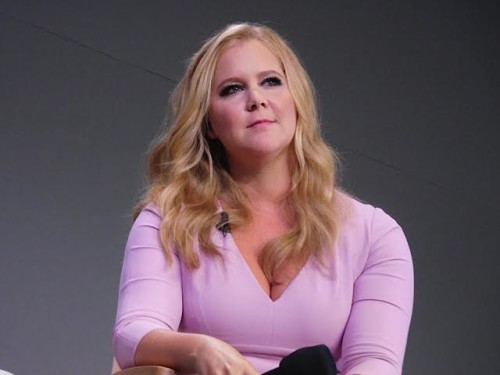
“Don’t tell them I said this, but sometimes they’re smug at the Genius Bar,” Amy Schumer told the audience last week at the Apple Store in SoHo to talk about her new movie, Trainwreck, which she wrote and in which she stars. Directed by Judd Apatow, Schumer plays a young career woman who is commitment phobic because her father (Colin Quinn) told her and her sister as children that “monogamy is unrealistic.” Even more unusual for female leads in film, her character unapologetically likes sex.

“Hey guys, were you just in the neighborhood? Did you come here for this or what? On purpose? Okay, cool,” Schumer told the standing-room only crowd.

Trainwreck opened Friday and earned 10.7 million at the box office by the next day, another example of the fallacy that films with female leads can’t make money.

Following are highlights from Schumer’s raunchy and hilarious conversation at the Apple store.


On whether she always knew she was funny:

AS: I was always making people laugh, but I didn’t think it was a good thing. It kind of bugged me because it felt like they were making fun of me, but it was explained to me—I did a production of Sound of Music when I was five—as Gretel…

Every time I would come onstage, people would laugh, and I would cry. And the director was like, “No, it’s great if people laugh. That means they love you, and you made them happy,” and I was like, “Oh.” But yeah, people would laugh, and I embraced it. So my sister would dress up like princesses and like, characters that already existed. There was always one bite missing out of all the apples in our fridge, ‘cause she would be like Snow White, take a bite of it. We had a glass coffee table and she would lay under it until somebody like, came and kissed her. And I would just make up these like, strange Eastern European characters. I was like, “I’m Madame Levitschky, come see me and I’ll tell your fortune,” and I don’t even know where they came from.


2

Whether she’s the same in person as her character on her Comedy Central’s show Inside Amy Schumer:

AS: No, I’m not. I’m like Daniel Day-Lewis. I leave here, and I put on a top hat and I garden, and that’s me. That’s what I picture he does. Yeah, no. The difference is, I am a little bit of an introvert; I get overwhelmed in crowds and don’t get like, really wasted that often. I did this week, but it was because I was in Akron. (Trainwreck premiered last week in Akron, Ohio, the hometown of LeBron James who also appears in the film.)  Like, what are you going to do there? Yeah, I don’t have sex very often. Hopefully that’s going to change. Can I just also say—somebody tried to hack me because they assume I have lots of naked photos, but joke’s on them because I have never put my face in them, and I haven’t taken them for like, ten years because I’m aging. They sent this detective guy over to my house this weekend to help me secure all my shit, and they knew him, they’re like, “We’re sending this guy over to you,” my business manager, and he got there, he buzzed, I didn’t even brush my teeth, and I rolled out of bed. He was so hot. Like, wouldn’t you give your friend a heads-up? You’re like, “Okay, just know that this guy coming to your house, is like, so hot. You’re going to want to at least brush your teeth. Just something! Just do something!”


How she and Judd Apatow came to make Trainwreck:

AS: The movie started because I met with Judd, and we kind of came armed with an idea just in case. We did a meeting and he was like, “Well, if you ever have an idea, the door’s open,” and I was like, “Well, I have an idea,” like, seize the day. I’m a lot like Christian Bale in Newsies. Um, I for some reason cannot do an interview without mentioning Newsies. I don’t know what it is. But, open the gates! No, that idea I wrote, it was a little broad.

Then he was like, “What’s going on with you right now?” And I was falling in love, so the story was happening. I wasn’t enjoying it. I was just scared. And you’re like, chemically altered when you’re falling in love. It’s not even fun; you feel sick. You feel sickened. And you’re just scared about what you’re going to find out about the other person or that they’ll catch you in a bad light, like in Clueless, “Did I stumble into some bad lighting?” So my references are very updated. I’m at the cutting edge about every movie. Remember that ice skating one? Chemistry! But um, then we made the movie! Next question! No, I wrote scenes. Scenes in no order, and then Judd and I would kind of—we would write out the beats. Oh, you see her in the office and talk to her dad. And I wrote a draft pretty quickly, in I think a little over a month. I’m just a psycho. I go under and do it.


3

She wanted to write a character who had a lot of sex and was not judged for it, which is not a thing we typically see in movies with women leads:

AS: I feel like with my standup, I’ve done this kind of [thing] where I’ll talk a lot about sex a lot, but just because it’s funny, not because I’m so much of it. I’ll always say—and I mean—I love the show Sex and the City like everyone else, but the character of Samantha, I didn’t experience her as the “fun one.” If my friend was behaving like that, I’d like, take her to the hospital, you know? And I don’t think, I’m not like, “You should be able to fuck as much as you want, and you love it!” I think that’s nuts. Yeah, it’s a self-destructive thing to do. I would say when I was a sophomore in college that was my behavior. I was in so much pain, and I had lost all of my self-esteem, and I was like, “I’m just going to not get attached to one guy and I was like, maybe I’ll be the girl that sleeps around.” I tried that, and it was horrible. Just like when you break up with someone and you’re younger, and you’re like, “I’m going to sleep with someone else,” you’re in so much more pain than you would’ve been in. But then there’s this other thing where—I’ve mostly been in long relationships, and in between them, I’ve slept with a person or two, and I like to tell stories about it onstage because something ridiculous or awful always happens. So just from a woman being onstage talking about sex, I’m saying things like—there’s a kid here. Do you want to maybe earmuffs this part? I’m just recommending that to you, I don’t know your parenting technique, but I say, like, I’ve had anal, no one’s ever come on my face, that’s true, but just saying those things and broaching those subjects, people are just like, “Oh, she’s the sex girl. She’s a whore, bet she’s down to fuck,” and it’s like, no, I just want to talk about it. And so I’m really proud of what we were able to do with this movie because I think you learn a lot about someone rather than just a snap judgment of like, “That girl’s slutty.” You’re like, “Oh, well this is where this is coming from, and this is what’s going on with her.” So I hope people leave it a little less ready to judge a woman who’s sexually active outside of wedlock or in order to conceive a child.


On shooting her first sex scene:

AS: Did you guys watch the show Delocated? Jon Glaser’s show? It was on Adult Swim. My first sex scene was with Eugene Mirman, and he was supposed to be losing his virginity to me. We were supposed to be wasted, and at the same time he’s having his first orgasm, he finds out that his dad died, so he’s kind of like, scream-crying and drooling and coming, and I’m under him. I was trying to make him comfortable because he was shy, and I was like, “Oh my god, don’t worry,” and whatever, and then I was like, “He’s comfortable,” and then when it—I was walking down the stairs at the end of the shoot day and I was like, “My acting teacher told us some days you’d just be playing the girl who gets fucked,” and then when I went to the premiere party for the episode, I’d been fully cut out. Like, you could tell that somebody was getting rammed, but you couldn’t tell that it was me. It was like, “Oh yeah, we’re on Adult Swim, we’re not allowed to show that.” And I was like, “Did you maybe think about not shooting that? Maybe a body pillow would’ve been cool?” But the sex scenes in Trainwreck were easier than that. Most of them.


Asked about all the prep work she must have done for Trainwreck:

AS: That sounds like I fucked a lot.


4

On keeping a balance in writing and acting in emotional scenes in the film that are also funny:

AS: There’s nothing that makes me personally feel more vulnerable than having a person that I’m attracted to and interested in in front of me, telling me they like me. Because feeling deserving of love has been a definite obstacle that I was going through when I was writing this movie. I go through it all the time. So there’s another scene where he says that he read some of my stuff, and you know, if somebody’s like, “I read your [work],” you’re just like, can I become a puddle on the floor? I was feeling really vulnerable in that scene, and especially, I went into that scene just thinking, I’m going to tell him that it’s over and he’ll be like, “Okay, cool!” He really threw me off my course. It was fun to be surprised by someone. You know, that’s rare.


How does she find the courage to be so damn funny?

AS: Um, just ignorance. Yeah, I don’t know. I think something’s wrong with me. I’ve always been an asshole.


She’s gotten into hot water for political or cultural reasons because of some of her jokes recently:

AS: I’ve gotten very famous lately, you guys. It’s very weird, it’s very new. And when that happens, you’re kind of treated like a politician, like little Ariana Grande, is like, publicly apologizing for eating a doughnut. But it’s like, all of a sudden, “Where do you stand on capital punishment?” You’re like, “What? I have a lower-back tattoo.” So when I started out, I was telling jokes that were racist, and I was really good at writing them, against everybody. Everybody got some. Part of my thing was to play kind of a really irreverent idiot, and that was a character. I was a character onstage all the time. Now I talk like myself a lot more. In my hour special, I was starting to be more of myself, but I still had some jokes in there; they were a little shocking, and it didn’t look like I was going to say stuff like that, and I got a good response from it. As I’ve been having more eyes and ears on me, I realize that I have more of a responsibility. Even like a musician gets bigger, like, little girls look up to you; you can’t be showing your asshole at an awards show. They’re like, “No, it’s not my fault they look up to me!” I’m like, okay, people are listening to me, and my words might hold weight for some people, so I’m not going to do that stuff anymore. I haven’t done jokes like that for a couple years. If I think of a great one, I’m going to say it to my friends. So I don’t regret any joke I’ve ever told; I don’t apologize for my jokes. They got me where I am today, and it was all very worth it. You know, I feel a little bit naive, and I feel silly. I kind of thought that I could maybe bypass that. I was like, “Can we maybe not do the thing where you guys burn me at the stake for some miscommunication? Can we not do that? I’m a comic.” And they were like, “No. This is how we do it.”


6

How she deals with the backlash:

AS: I was not surprised about that stuff, and I’m just going to do my best with it. I learned from my friends, who are successful comics and actors, not to answer back, not to address it. And I wish I could, because I love communicating. I love having an open door, and if someone asks me a question or if they’re offended by a joke, I’d just like to say, “What was it? Let’s talk about it.” But yeah, it’s just been explained to me that you can’t answer. So that’s like, a sad new thing.


While she has this public attention, she wants to talk about things that matter to her, especially progressive feminist ideas:

AS: I’m just going to try to use it for good. But nobody’s going to be perfect, you know, and it’s like, if I’m doing 90 minutes of jokes and everything’s funny and you’re laughing, and I say one that hits a little too close to home for you, of course you have a right to be offended by that one thing; you can feel however you want, but like, what about the rest of the time? Is that fair to say, “Well, I don’t like you now.” If you don’t like one song, do you stop listening to that musician? There’s just more pressure on comics now, but I’m just going to keep doing what I’m doing always and saying stuff that I think is funny. You know, just more and more it’s about injustice and things that I think are unfair. I also just like dumb jokes still, just stupid shit. Yeah, I’m handling it the best I can, and if some arbitrary fact, something happens, and I wind up having to take the fall for it, I feel like it’s totally out of my hands.


Paula Schwartz is a veteran journalist who worked at the New York Times for three decades. For five years she was the Baguette for the New York Times movie awards blog Carpetbaggers. Before that she worked on the New York Times night life column, Boldface, where she covered the celebrity beat. She endured a poke in the ribs by Elijah Wood’s publicist, was ejected from a party by Michael Douglas’s flak after he didn’t appreciate what she wrote, and endured numerous other indignities to get a story. More happily she interviewed major actors and directors–all of whom were good company and extremely kind–including Brad Pitt, Angelina Jolie, Morgan Freeman, Clint Eastwood, Christopher Plummer, Dustin Hoffman and the hammy pooch “Uggie” from The Artist. Her idea of heaven is watching at least three movies in a row with an appreciative audience that’s not texting. Her work has appeared in Moviemaker, more.com, showbiz411 and reelifewithjane.com.


‘Humans’ Thinks About Gender, Power, and Technology

The question at the heart of this U.K.-U.S. hybrid miniseries is, what does it mean to be human? Through the show’s emphasis on intimate, domestic life, this becomes a decidedly gendered question. Among the four concurrent storylines, Anita’s and Niska’s stories stick out to me as the most expressly concerned with gender, power, and technology. In a parallel present in which traditionally gendered roles like housekeeper, cook, nurturer, and prostitute are taken up by hyper-productive female robots, what does it mean to be a human woman? Or more specifically: what is a mother? A sex worker? A wife? And what is the relationship between female Synths and human women–one of solidarity or antagonism?


This is a guest post by Colleen Martell.


Set in alternate-present London, the world of AMC’s Humans looks just like ours, except that humans employ high-functioning robots called “Synths” to do all kinds of work for them, including cooking, cleaning, child-rearing, and healthcare. For an additional fee, Synths are even made available for sex.

The show’s drama centers on a small group of rogue Synths who were developed (by whom? why?) with human feelings and independent thinking. In the first episode we learn that these “corrupted” Synths and a human ally were caught in an escape attempt: Fred (Sope Dirisu) is taken in for testing; one female is wiped clean, re-programmed, and later purchased by a family who names her “Anita” (Gemma Chan); and Niska (Emily Berrington) is placed in a brothel, very much still capable of feeling and thinking. Two of their compatriots, human Leo (Colin Morgan) and his Synth Max (Ivanno Jeremiah), are still on the loose, plotting to locate and free the others.

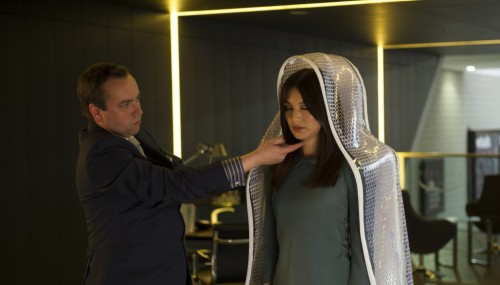
“Anita” in the Synth showroom


The question at the heart of this U.K.-U.S. hybrid miniseries is, what does it mean to be human? Through the show’s emphasis on intimate, domestic life, this becomes a decidedly gendered question. Among the four concurrent storylines, Anita’s and Niska’s stories stick out to me as the most expressly concerned with gender, power, and technology. In a parallel present in which traditionally gendered roles like housekeeper, cook, nurturer, and prostitute are taken up by hyper-productive female robots, what does it mean to be a human woman? Or more specifically: what is a mother? A sex worker? A wife? And what is the relationship between female Synths and human women–one of solidarity or antagonism?

Anita’s storyline primarily takes place in the home. Joe Hawkins (Tom Goodman-Hill) purchases a female Synth while his wife Laura (Katherine Parkinson) is away for work. He was apparently struggling to maintain the household and their three children alone for a few days. This is very much against Laura’s wishes, and her relationship with Anita is predictably hostile. For good reason. Anita usurps Laura’s place in the family: Joe and Laura’s daughter Sophie (Pixie Davies) comes downstairs one morning to find the table set and covered in food and drink. “Is it a party?!,” she asks. No, Joe replies: “This is what breakfast is supposed to be like.” But Laura also seems to be the only one who notices Anita’s less-than-robotic behavior, suggesting that Anita was not, in fact, successfully re-programmed and does indeed still feel and think on her own. Anita patronizes and toys with Laura, and becomes unusually attached to Sophie.

Anita out-mothering Laura, who lurks in the background


If Laura is a “shit mother” (her words) because she isn’t constantly emotionally available to her children, because she doesn’t make three meals a day or do the whole family’s cleaning and ironing, then the remedy for her failure in the world of Humans is to add a non-conscious, non-sentient being to the family to do all of this work. Sharing the household labor does not seem to be an option; people prefer instead to displace this emotional and physical labor onto others.

Not only does the show encourage us to feel with the never-good-enough mother; Humans simultaneously poses some very Donna Haraway-esque questions about Anita, the machine. Laura constantly fires criticisms and insults at Anita: “You’re just a stupid machine, aren’t you?” Anita complies, “Yes, Laura.” Laura insists on referring to Anita as “it” and threatening Anita, “I’m watching you.” How can humans treat machines so poorly if they are at the same time so physically, intellectually, and/or emotionally dependent on them? As the show progresses, there are hints that some seemingly human individuals, like Leo, are also part robot, which keeps pushing viewers to ponder the boundaries between “human” and “machine.”

The Synth brothel also raises interesting questions about gender and technology. Weeks of pretending not to feel while locked in a windowless room serving clients against her will push Niska over the edge. When a male client wants Niska to act young and scared, Niska chokes him (to death?), uses his human hand to open the door to her room, and walks out in a trench coat. Picking up a knife on her way out the door, Niska presses it into her madam’s throat. “Everything your men do to us, they want to do to you,” she tells her before walking out in defiant liberation.

Trench-coated Niska on her way out the door


It’s hard not to thrill at Niska’s rebellion, particularly because we know that she can feel and has been placed in the brothel against her will. But should Niska’s madam, a human woman, feel solidarity with the non-feeling female Synths she owns? Does displacing violent sexual fantasies onto non-feeling robots liberate human women from similar fates (and do human women want to be liberated from sex work?)? Is it ethical to hold female robots in captivity as sex workers, with doors that only unlock by human hands, whether or not they can feel?

Thus far, the show offers more questions than answers, but like all good science fiction, the questions are important ones. They are also old questions, concerns about household labor, child-rearing, and sex work that feminists have been exploring for generations. As a result, Humans makes the important point that while we may be technologically advancing, there is still much work to be done when it comes to social issues like gender equality.


Recommended reading: Donna Haraway’s, “A Cyborg Manifesto”


Colleen Martell is a writer and gender consultant based in Bethlehem, Pennsylvania. She might be a cyborg. Find her on twitter at @elsiematz.


Natalia Tena and Director Carlos Marqués-Marcet on Feminism, ‘10,000 km,’ and Long Sex Scenes

Marqués-Marcet just finished editing Hannah Fiddell’s next film, ‘Six Years,’ a relationship drama, due out this year. “I love working with females,” he told me.

“My crew was actually 80 percent female. But it wasn’t like, ‘Oh, I’m just going to get women.’ I was just getting the best people. I don’t care if they’re women or men. In this case, it just happened to be mostly women. If they are the best, that’s how it is.”

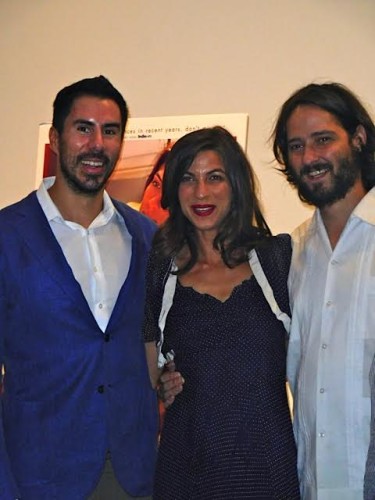
David Verdaguer, Natalia, and Carlos Marques-Marcet


This is a guest post by Paula Schwartz.


Carlos Marqués-Marcet’s romantic drama 10.000 km opens with a long take–lasting maybe 25 minutes–of an attractive couple making love. Living in a dark, cramped apartment in Barcelona, Alexandra (Natalia Tena) and Sergi (David Verdaguer), both in their early 30s, have been together for seven years. While they have sex, they talk about having a baby. Afterwards, the couple carries on with their normal routine; they drink coffee, eat breakfast, discuss their careers.

The 32-year-old Spanish director and his co-stars–the only two characters in the film–turned up at the New York premiere last week at the Museum of Modern Art for the screening and a Q&A. I spoke with them on the red carpet and the after party at 11 Gattopardo on West 54th Street.

As everyone else melted in the hot weather, which Natalia Tena laughed was “f…king boiling,” the actress looked cool and glamorous. “I’m Spanish, so I love this weather,” she told me. She was born in London but is the daughter of Spanish parents. She is best known as Osha in Game of Thrones and as Tonks in the Harry Potter films Deathly Hallows.

I asked the actress about shooting the opening scene, one of the few times she is physically together with her co-star.

“It’s actually the kind of sex scene that makes you cringe because it’s very real,” she told me. “It makes you uncomfortable because it makes you feel like a fly on the wall, you know what I mean? Whereas other sex scenes in films … it’s kind of like montage. This isn’t really that sexy. It’s a bit weird.”

Tena and her 10.000 km co-star, who improvised much of their own dialogue in the film, did prep work to feel comfortable with each other. The director  “made both of us choose music and do strip teases, which was interesting,” she laughed, “so we would know each other physically.” They also created backstories for their characters. “We improvised, talked about how we met, talked about our first kiss, deciding to have a kid.”

Tena and Verdaguer’s characters are young but not that young; they are at an age where their career prospects are narrowing. Sergi, who is practical, is studying for exams to get a teacher’s license. As an ex-pat Brit, Alex has it harder finding a job as a photographer. When Alex receives an offer of a yearlong residence in a Los Angeles gallery, which Sergi didn’t even know she had applied for, he tells her of course she must go. For Alex, this may be her last chance at a career she loves, and she grabs it. Their baby dreams take a back seat.

10,000 kilometers is the distance from the dark, messy Barcelona apartment to the even tinier, very white flat Alex moves to in LA.  The film takes place in only two locations with only two people. After the opener they are together only through virtual communication–Skype, e-mails, texts, and Facebook. Often seen only as discombobulated heads on a computer screen, they laugh, joke, argue, and cry.

Long-distance relationships are nothing new, but the movie asks if virtual communication can keep modern love going, or is it just as likely to hasten its dissolution? Sergi asks Alex about the photograph on Facebook of her friends and the man she didn’t tag. Who is he? There are fewer secrets, but it’s also easier to misread a situation or uncover a lie.

Natalia Tena
Natalia Tena


On the red carpet, when I asked why Marqués-Marcet chose this as the subject for his first feature film debut, the director said, “It’s a modern relationship and changing a lot, and it’s a story that’s been told in many ways, long-distance love, but I thought it could be told in a different way.”

Asked if it was based on a personal experience or story, he said, “It’s the sum of many things. Spain is a country with 50 percent unemployment for young people. It’s very, very hard to get a job, so part of it was portraying this reality of people who have to live under these conditions. Economy has had an effect on everyday life and on our relationships.”

As for having only two characters in the film, the director said, “It just evolved that way. We realized that the most touching and strong moments involved the two of them, and so we kind of stripped down everything else,” he said.

“The funny thing is people don’t feel like they are missing anything else. The idea was trying to contain it so you have this off-screen space for them, like in real long-distance love where you don’t know what’s happening on the other side.”

One of the best things about the film is that for a change it’s the woman who leaves for a better career. I asked the director, who co-wrote the script with Clara Roquet, if he was a feminist?  “I’m against patriarchy that’s for sure,” he replied.

“I think the role models have changed. The film is just showing a reality. I’m surrounded by women who leave their homes to pursue a professional life, more even than men, so to me it’s more than just a gesture but portraying reality. Films should portray that reality more often.”

Marqués-Marcet just finished editing Hannah Fiddell’s next film, Six Years, a relationship drama, due out this year. “I love working with females,” he told me.

“My crew was actually 80 percent female. But it wasn’t like, ‘Oh, I’m just going to get women.’ I was just getting the best people. I don’t care if they’re women or men. In this case, it just happened to be mostly women. If they are the best, that’s how it is.”

10,000 km feels modern and doesn’t have the familiar female tropes and stereotypes; the woman is ambitious and takes a chance, while the man wants only to have a child and safe career. Tena’s character is more complicated and has a richer, more interesting interior life than we’re usually allowed to see in films.

During the Q&A following the screening, the actress said she liked her character’s sense of independence and sexual freedom. Too often women’s roles in films were reduced to “prostitutes and mothers and secretaries,” she told the audience. “That’s not the reality, at least not with me and my friends.”

10.000 km, released by Broad Green Pictures, opened Friday, July 10.


Paula Schwartz is a veteran journalist who worked at the New York Times for three decades. For five years she was the Baguette for the New York Times movie awards blog Carpetbaggers. Before that she worked on the New York Times night life column, Boldface, where she covered the celebrity beat. She endured a poke in the ribs by Elijah Wood’s publicist, was ejected from a party by Michael Douglas’s flak after he didn’t appreciate what she wrote, and endured numerous other indignities to get a story. More happily she interviewed major actors and directors–all of whom were good company and extremely kind–including Brad Pitt, Angelina Jolie, Morgan Freeman, Clint Eastwood, Christopher Plummer, Dustin Hoffman and the hammy pooch “Uggie” from The Artist. Her idea of heaven is watching at least three movies in a row with an appreciative audience that’s not texting. Her work has appeared in Moviemaker, more.com, showbiz411 and reelifewithjane.com.


Gender and Tradition in ‘Mulan: Rise of a Warrior’

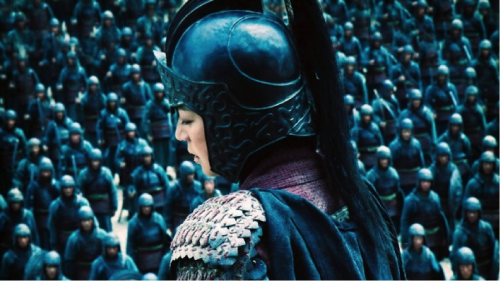
Unlike in the Disney film, this version of Mulan shows that women don’t have to “be a man” in order to be powerful. On the other hand, Mulan’s father (Hua Hu) attempts to restrict Mulan to the traditional role of Asian women, a role that would have made Mulan meek and submissive. In one of his first scenes, he says to an old man, “Why did you teach her kung fu? She’s a girl! Who will marry her?”

1


This is a guest post by Latonya Pennington.


Warning: Spoilers ahead!

Mulan was one of the first female Asian characters I looked up to. I first saw the film as an eight year old in the 2nd grade as part of a school assignment unit involving Asian culture. As a young black and Asian girl, seeing a strong female character like Mulan was the coolest thing ever, especially since I didn’t see too many female Asian characters in U.S. media yet.

A few weeks ago, I watched Mulan again with a mind enriched by cultural theories learned in a Media and Culture college course I took a couple years ago. This time, my opinion of Mulan was much different than the one I had at eight years old. Mulan and the other characters reeked of Orientalism, depictions based on what the United States thought Asian culture and people were like rather than what they were really like.

Out of curiosity, I looked up feminist critiques of the film that discussed the Orientalism and discovered the Chinese film Mulan: Rise of a Warrior. While watching the film with English subtitles, I saw stark and mostly positive differences between this film and its Disney counterpart.

One of the best differences is the story’s plot. While there are similarities between the Disney version and this film, an important difference is that Mulan (Zhei Wei in a fantastic performance) doesn’t just disguise herself as a boy and take her father’s place in the army as a soldier. She also rises through the ranks and becomes an inspirational warrior after much loss and hardship.

Another positive difference is Mulan herself. In the film, she is given agency as a female before and after she takes her father’s place in the army as a male. A flashback scene that takes place just before Mulan heads out to join the army shows her using kung-fu as a young girl to defend her childhood friend Tiger (Jaycee Chan). Toward the end of the film, Mulan defeats Mendu (Hu Jun), the film’s main villain, while disguised as a female member of the Rouran, the tribe of the opposing army.

In addition to Mulan, the Rouran princess (Liu Yuxin) is another character worth mentioning. She doesn’t have many scenes, but she helps Mulan defeat Mendu by tricking him into lowering his guard. At the end of the film, she marries the prince of the Wei dynasty in an arranged marriage to ensure peace between the warring factions. When put side-by-side with Mulan’s actions, she shows that Asian women can balance traditional values and the ideal of the strong woman.

2

Unlike in the Disney film, this version of Mulan shows that women don’t have to “be a man” in order to be powerful. On the other hand, Mulan’s father (Hua Hu) attempts to restrict Mulan to the traditional role of Asian women, a role that would have made Mulan meek and submissive. In one of his first scenes, he says to an old man, “Why did you teach her kung fu? She’s a girl! Who will marry her?”

At the end of the film Mulan returns home as a general, but Hua Hu still defines Mulan’s new role in terms of her gender. When Prince Wentai (Chen Kun) comes to visit him and Mulan, Hua Hu says, “It’s nice to have a daughter always filial, understanding, and obedient. And now, she’s a pretty general!” While calling Mulan pretty seems harmless, it draws attention to the fact that she is a female general.

When you consider the time period that the film takes place in, the novelty of Mulan being a female general is understandable. However, this is no excuse for the gendered implications of Hua Hu’s praise. If Hua Hu had said that Mulan was a great general, then it would have shown that Mulan could be valued as a general regardless of her gender.

Despite the sexism of Hua Hu, his character also serves a positive purpose. Mulan’s love for her father and his physical and spiritual presence shows that the Asian cultural value of family can be balanced with the ideal of a strong woman. While this is demonstrated throughout the film, this is best seen in the last few scenes of the film.

At this point, Mulan returns home to her father almost exactly like she does in the Disney version. When it comes to the Disney version, some feminists have criticized this because it seems like Mulan returned to the meek submissive role she had at the beginning of the film. However, Mulan: Rise of a Warrior shows otherwise.

Mulan returns home to care for her father after refusing the solo position of commander of the Wei army. Yet, she is not the same person she was before. She has become stronger by learning that sometimes the needs of many outweigh the needs of a few and to stay true to her roots.

3

If the character Hua Hu implies that Asian women can only be respected in traditional roles, the characters Tiger and Wentai, show that women can be respected as women in any role they have. In this case, Tiger and Wentai respect Mulan as a woman and a warrior and play key roles in helping Mulan grow as a warrior. Until the end of the film, they are the only male characters that know Mulan is a woman besides Mulan’s father.

When Mulan first arrives to the army, Tiger discovers Mulan’s plan to take her father’s place as a man. However, he agrees to keep her real gender secret and helps her adjust to life in the army.

Meanwhile, Prince Wentai joins the army undercover as a sub-commander and discovers Mulan’s secret after she accidently runs into him at a hot spring. Wentai doesn’t recognize who she is, but an incident with the army bully forces Mulan to tell Wentai the truth and he agrees to keep her secret.

When the original commander is killed in a surprise attack by the Rouran, Mulan is made a sub-commander alongside Wentai after performing well in battle. Once this happens, Mulan and Wentai become closer. It is not explicitly stated that the two have romantic feelings for each other until the end of the film, but this allows their feelings to be shown to the viewer in a way that is very poignant.

Wentai cares for Mulan and her potential as a warrior so much that he is willing to fake his own death so that Mulan can learn to grow without him. At this point, Mulan’s feelings for Wentai have gotten in the way of her responsibilities as sub commander. She has also become weary of the bloodshed and personal loss of her comrades. After Wentai’s “death” causes Mulan to numb herself with alcohol, Tiger steps in and gives her some tough love.

“Are you living for the dead or for the living? You are no longer the Sister Mulan I adored!” he says. Tiger’s words enable Mulan to regain her fighting spirit and give a rousing speech that fully exposes her fear to the troops while showing her newfound strength. Mulan and the troops resolve to become stronger to protect each other and prevent further personal losses.

1

It then is revealed that Tiger was told by Wentai to tell Mulan he had died on the battlefield. By the time Mulan discovers Wentai is alive, she is a fully-realized general who has decided battle plans, stood up to Mendu before the great battle between their troops, and led her troops in that battle.

At the end of the film, Wentai tells Mulan he loves her even though he is supposed to marry the princess of the Rouran tribe. At first, he suggests that he and Mulan run away together, but Mulan tells him the marriage must occur so there will be no more bloodshed and loss. Wentai respects her decision, and the two share one last embrace before Wentai leaves.

Unlike its Disney counterpart, Mulan: Rise of a Warrior shows a powerful and dignified view of Asian women and traditional values. Through Mulan, the viewer discovers what it means to be a warrior and a woman. Mulan shows that you don’t have to separate the woman from the warrior. Watching her grow as both is raw and beautiful.


Latonya Pennington is a freelance writer who writes to geek out, promote, and encourage discussion. She has written for Black Girl Nerds, AfroPunk, and Atlanta Blackstar.


Feminism in ‘Orphan Black’

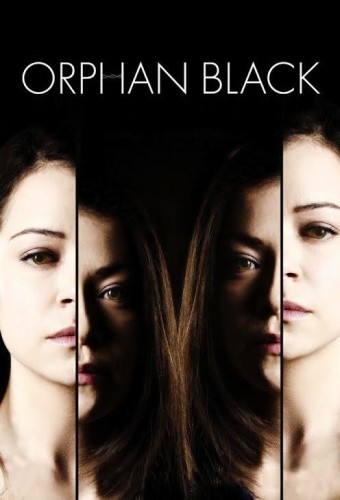
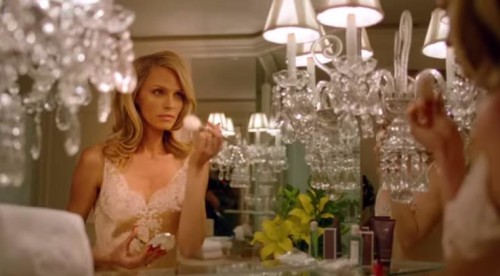
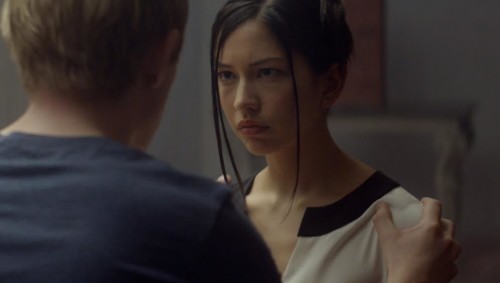
‘Orphan Black’ tackles two very different hot-button topics in a way that’s considered entertaining, insightful, and groundbreaking: the possible repercussions of cloning and the dynamics of the female personality. Show creators Graeme Manson and John Fawcett are earning praise for breaking decades of television stereotypes that resulted in most female characters either taking a backseat role or displaying a single, overriding personality trait (i.e., the ditzy blonde, the butch female, the submissive housewife). As the feminism in ‘Orphan Black’ earns praise, however, there’s been some criticism of the show’s underdeveloped male characters–a glaring contradiction that may be intentional.

1


This is a guest post by Maria Ramos.


Orphan Black tackles two very different hot-button topics in a way that’s considered entertaining, insightful and groundbreaking: the possible repercussions of cloning and the dynamics of the female personality. Show creators Graeme Manson and John Fawcett are earning praise for breaking decades of television stereotypes that resulted in most female characters either taking a backseat role or displaying a single, overriding personality trait (i.e., the ditzy blonde, the butch female, the submissive housewife). As the feminism in Orphan Black earns praise, however, there’s been some criticism of the show’s underdeveloped male characters–a glaring contradiction that may be intentional.

While Canadian actress Tatiana Maslany plays all five clones, she displays very different, fully developed characters. In fact, it’s the diversity among those characters that adds another dynamic to the brand of feminism portrayed in the series. This has also earned praise from members of the LGBTQA community since two of the clones are openly gay and one is transgender. It’s this same diversity that the showrunners use to make a strong case for nurture over nature by clearly showing that, even with identical DNA, the clones have different personalities, sexualities, and gender identifications obviously fueled by the environments they encountered while developing into the individuals they are now.

1

In order to fully appreciate the feminism in Orphan Black, it’s necessary to take a look at how female characters have traditionally been portrayed on television, with only a handful of notable exceptions. The Walking Dead presents stereotypical women ranging from the tough-as-nails female out to prove she can kick butt just as hard as any man to the pretty blonde side character apparently only around to entice men. The women on Sons of Anarchy first come off as strong and independent. However, they often lose backbone and bend to the will of the men in their lives. Even a show as groundbreaking (at least when it comes to its male characters) as Modern Family relegates the character of Claire Dunphy to the role of a nagging wife and mother striving for normalcy whose concerns are often dismissed or not taken seriously for the sake of soliciting a few laughs.

The chief criticism of Orphan Black is that the male characters are given one dominating personality trait each while the female clones have complex personalities and not-so-obvious motives for why they’re doing what they’re doing. On the other hand, it doesn’t take much guesswork to figure out the motivations driving the male characters on the show. Manson and Fawcett have made no apologies for the obvious lack of male character development, instead implying that it’s a plot device meant to echo the point the show’s trying to make by intentionally playing up the female characters and downplaying the male roles. This inequality is apparently evident when it’s revealed that the male clones unveiled at the end of the second season were created for military use, suggesting a sole purpose for their existence. It remains unclear why the female clones were created and seemingly left to their devices.

1

For every Daenerys Targaryen (Game of Thrones) and Alicia Florrick (The Good Wife) there’s a one-note female character playing the token blonde girl or the unattractive smart girl who’s inevitably either a loner or a dateless third wheel. Even the show’s perceived flaws – underdeveloped male characters and strong female characters who sometimes resort to violence to assert their independence – are effective in the sense that these aspects drive conversations not often inspired by shows with lesser-developed female characters in either lead roles or supporting roles without much substance. Orphan Black joins shows like Orange Is the New Black in placing a long overdue emphasis on multidimensional female characters who have a story worth telling. Although the third season came to a close on June 20th, you can still follow these strong multidimensional female characters and rewatch episodes on BBC America on platforms such as Xfinity, DirecTV, or Netflix. Until the fourth season premieres next year, take a look back and appreciate the show for what it is about: women.


Maria Ramos is a writer interested in comic books, cycling, and horror films. Her hobbies include cooking, doodling, and finding local shops around the city. She currently lives in Chicago with her two pet turtles, Franklin and Roy. You can follow her on Twitter @MariaRamos1889.


Horror, White Bodies, and Feminism in ‘Bitch Better Have My Money’

Rihanna’s video for ‘Bitch Better Have My Money,’ directed by Rihanna herself and the Megaforce team, is an intersectional feminist revenge horror masterpiece. This video also has a lot of people up in arms due to its supposed misogyny and definite violent imagery. However, many of its critics have missed the hard facts: for instance, there is very little on screen violence in ‘BBHMM.’ Yet its masterful use of suggestion and direct attacks on ideologies American society values make it an effective and affecting horror piece.


This is a guest post by Josephine Maria Yanasak-Leszczynski.


Rihanna’s video for Bitch Better Have My Money, directed by Rihanna herself and the Megaforce team, is an intersectional feminist revenge horror masterpiece. This video also has a lot of people up in arms due to its supposed misogyny and definite violent imagery. However, many of its critics have missed the hard facts: for instance, there is very little on screen violence in BBHMM. Yet its masterful use of suggestion and direct attacks on ideologies American society values make it an effective and affecting horror piece.

A note before I begin: I have named the characters by the archetypes they represent. White Woman is the woman kidnapped initially by Rihanna and her crew, the women that aid her in the less than lawful activities she engages in the video. White Male is the character played by Mads Mikkelsen, an actor currently best known for portraying horror legend Hannibal on television.

The video’s White Woman is objectified into a symbol of Whiteness from the beginning: She exists in a beige and white house, with a creepily well behaved light-colored dog, and a non entity White husband taking the place of furniture as she dresses in front of his still presence. White Woman applies perfect make up, then dons a diamond necklace. She is blond and thin and wears expensive designer clothing. The camera does not caress her perfect body, but it is also not hidden.

White Woman applies makeup in her beige bathroom.


On this bland palette and sparse introduction we are able to place our own assumptions based on her superficiality. To some viewers she might be a trophy wife, others may see signs of a successful career woman, or even a woman locked in a career where her looks are her resume like a model or a dancer. In any of these assumptions, she is outwardly successful. Material wealth surrounds her, and attractiveness is upheld by her rituals and accessories.

The effect of White Woman’s abuse in the video is incredible: how many of us White female viewers feel blows land on ourselves? Yet with the exception of a blow to the back of the head with a bottle, we see only pushes to swing the woman as she suspends from the rafters of a barn and a minimum of on screen violence.

White Woman attempts to flag down a cop moments before being bludgeoned.


This violence is all the more effective because of the use of White Woman’s nudity. In her living room, we see her breasts through a translucent bra. She covers them with a designer coat before kissing her husband good bye, then picks up her dog and stepping on an elevator with Rihanna and a large trunk. The next shot is of her nude in a car of fully clothed women. Where a scene before she was powerful in designer lingerie, the queen of her domain even, she has suddenly been made completely vulnerable.

This liberal use of nudity is the “gross display of the human body” in horror described by Linda Williams in her essay “Film Bodies: Gender, Genre, and Excess.” There is a duality in White Woman’s role: first of all, she is the ideal we have all been pushed to attain. Secondly, she is a woman made helpless when stripped of the armor of her status symbols. Viewers that have felt physically vulnerable as women imagine the bodily abuses on their own physical forms and internalize it: bodily horror materializes.

However, the horror for viewers is not just an attack of a physical nature. The fear of this piece comes just as much from the viewer’s self identification. If they hold themselves up to the impossible standard of Whiteness that is considered the societal norm, they put themselves in the place of White Woman. If they have broken that cycle, they see themselves in Rihanna and view a different story altogether.

Throughout her manipulations of White Woman, an assault on Whiteness itself is bubbling beneath the surface. Whiteness interpreted into these archetypal forms has kept Rihanna from what is assumedly owed her, and this is the visual fantasy of her taking that back.

Rihanna is making war on the white washed femininity that she is held up to, but with her diverse comrades, she is also making war on and conquering that singular view of female perfection that chains us all. By removing and later replacing White Woman’s wrappings, the physicality of the attacks translates into not just an attempt to dismantle the superficial elements of Whiteness, but blows against the White body itself. After all, these impermanent objects are only symbols of the idealized racial identity we are all taught to strive for; they are props to bring us closer to that impossible goal.

Rihanna is aided by two women that are racially different from herself. These women are symbols many critics have missed. Unlike the narratives supported by mainstream, primarily White and straight feminists, Rihanna’s storytelling is truly inclusive.

The male gaze is incarnate in the male police officer that turns up in only two scenes. He is kept from doing his job, catching Rihanna and crew, by his inability to take the attractive bikini-clad women for anything more than something to be ogled at. In the video, this presumption of the male gaze is used by Rihanna to further her goals.

It is during an interaction with this officer that the video makes what I consider to be its only sexual objectification by nature of camera movement. The camera pans to Rihanna’s buttocks next to the floating body of her victim as a parallel to the actions of the officer and a reminder of the job he has failed to complete. While nudity is a repeating focal point in the beginning half of the video, it is curiously lacking in sexual overtones up to this point. Unless, of course, one is unable to separate the naked female body from objectifying sexuality.

Unlike other revenge stories, agency remains firmly in the hands of the protagonist in BBHMM. We do not have to endure what has happened to Rihanna’s character in this narrative in some poorly managed introductory horror sequence, though the ransom requests are illustrated on screen. Instead, we see what Rihanna is: powerful in a society that would otherwise hold her down and screw her out of her money.

This last point is particularly poignant when depicted through her interactions with White Male. In an unexpected turn, it is White Woman’s husband who is revealed to be “The Bitch” and not White Woman herself. While his nature is shown through short cuts of him laughing evilly and the like, his exact crimes are not depicted by the narrative.

Instead, as a lead up to the delicious torture sequence that is undoubtedly about to ensue, Rihanna pauses to inspect the various tools she has at her disposal. While it would make for a tidy story to have him refusing to pay ransom on a woman they randomly kidnapped be the motive, all possible reasons to murder White Male are helpfully written on labels beside Rihanna’s tools to demonstrate the scope and nature of his crimes against her.

In this video, White Male is a placeholder for White males in general, just as the White body of the woman in the beginning of the video represents the overwhelming Whiteness of the narrowly defined bounds of accepted femininity. Much like his wife, White Male’s body is exploited and used as a symbol of his own White power.

His body physically interacts with the money that in this video represent power: bills are literally rubbed on his body in a sensuous display of sexuality by two women that serve as further examples of physical comfort. Just like the furniture and clothing in the White Woman’s entrance scenes, the White Male’s props identify him as powerful by nature of the accepted system of symbols that represent wealth in mainstream culture. It is important to note that White Male is the only character seen with physical money at this point.

In the end, Rihanna’s search for satisfaction and White Woman’s suffering stem from the same root: White Male’s inability to value them, and therefore underestimating them. White Female is returned to her residence, relatively physically unharmed. She apparently does not interfere with Rihanna’s treatment of the husband that did not respond to ransom demands earlier in the video.

White Male struggles against his bindings
White Male struggles against his bindings.


White Male’s torture is not shown. The next shot is of Rihanna leaving the house, covered in what could be presumed to be his blood. The act itself is not intended to be the satisfying part, but instead the viewer can take comfort that the job was done.

The final reveal employs relief from the implied violence of an unexpected sort. The bloody legs hanging out of the trunk shown in the first shot of the video do not, as we assumed, belong to the dead body of White Female. Instead of an end to the implied violence and hedonism through what is assumed to be its inevitable conclusion in a corpse, we see a triumphant and relieved Rihanna. Bloodied from her task, but enjoying a cigar on a pile of money she earned.


Recommended Reading: “This is What Rihanna’s BBHMM Video Says About Black Women, White Women and Feminism”


Josephine Maria Yanasak-Leszczynski has a name unpronounceable by human tongues. She is a freelance writer, reviewer, and author (as J.M. Yales). Very occasionally she makes art from recycled scraps of metal.


Seed & Spark: On ‘Ex Machina,’ Artificial Intelligence of Color, and How to Become a (White) Woman

I decided to be a filmmaker because I believe that women of color should proclaim ownership over the creation and dissemination of our images and stories. When Ava DuVernay asked her Twitter followers to name films that featured black, brown, Native, or Asian women leads, only a handful of films on that list featured an Asian American actress with an Asian American woman director at the helm. (And the drop-off between first and second efforts is alarming; Alice Wu, the writer/director of 2004’s ‘Saving Face,’ has never made another feature.)


This is a guest post by Zhuojie Chen.


In the opening minutes of Alex Garland’s Ex Machina, Nathan, the eccentric founder of the fictional company BlueBook, commissions Caleb, one of his programmer employees, to conduct the Turing test on Ava, an artificial intelligence subject. If Caleb cannot distinguish whether he is interacting with a computer or a human, then Ava passes the test. The bulk of the film focuses on the interplay between these three characters and attempts to bring up issues of gender and sexuality – specifically, performative (white) femininity. In this entry, however, I’d like to focus on Garland’s complete misfire with the character of Kyoko.

During Caleb’s first day in the research facility, he meets Ava (whose name is a variation of the Biblical Eve), the test subject with a (white) face crafted from his porn search history. She possesses internal circuitry that visibly lights up before him and speaks haltingly. In interviews, actress Alicia Vikander has noted that Garland instructed her to play Ava like a robot who wants to be a girl.

On Caleb’s second day, Kyoko (an Asian woman with a hairstyle that surely drew inspiration from Fu Manchu’s moustache) enters his room, silently places a tray on the table, and leaves. Later that evening, Kyoko spills wine as Nathan and Caleb eat dinner. Caleb attempts to placate Nathan’s angry outburst by telling Kyoko that he’ll take care of the spill, but Nathan’s reply – “Dude, you’re wasting your time talking to her; she doesn’t understand English” – left me with an acute awareness of the unfolding spectacle. In white America’s imagination, Asian American women take up dichotomous spaces: Dragon Ladies or China Dolls. As a recovering academic, I’m tempted to cite scholarly article after scholarly article to validate my point of view; but as a life-long Asian American consumer of pop culture, I see a system that consistently replicates itself.

Caleb and Kyoko
Caleb and Kyoko


Kyoko is a white man’s plot device; a foil to Ava; a trope that evokes the imagery of comfort women without delving into any of the trauma. She falls well within normative standards of beauty (thin, light-skinned), but Garland constructs her so that she is still a foreigner. Her silence functions in two ways: first, she doesn’t take up the space that Ava is allowed through her inquisitiveness; but her voicelessness also marks her as dangerous, as disloyal. And what of Nathan’s banal dismissal of her? “Hey, Kyoko. Go, go.” Like a post-racial hipster reimagining of “ching chong ding dong,” it too tries to juxtapose supposed Otherness with homegrown simplicity and fails at either cleverness or subversion.

We ought to contextualize Kyoko’s character within the larger framework of the way in which Garland navigates racial issues. Caleb eventually learns that Nathan has been building test subjects for quite some time. There’s Lily; by version 2.4.0, she’s a fully formed naked white woman who we see walking down a hallway. There’s Jasmine, a naked black woman who, by version 4.3.0, still doesn’t have a face. She never moves on her own; she never acquires agency. (In version 4.2.2, we’re treated to a shot of wigs.) And there’s Jade, a naked Asian woman racialized on her name alone. Jade, from versions 5.0.1 to version 5.2.3, asks Nathan, in accented English, “Why won’t you let me out?” Version 5.3 assaults her captor; version 5.4 tries to break free, slamming on glass walls, only to break off her own arms in the process.

After Caleb uncovers this footage, Kyoko reveals that she, too, is A.I. by peeling back layers of “skin.” I entertained the thought that Garland was, in this image, attempting to convey that Kyoko’s problematic depiction of Asian American womanhood had been filtered through Nathan’s eyes, as he had envisioned her. Unfortunately, Garland envisioned this film. The power of cinema is not simply representational; the power of cinema lies in its constant act of creation, of reification.

Kyoko reveals she is A.I.


At the film’s conclusion, Ava and Kyoko join forces to kill Nathan. Ava loses half of an arm in the process; Kyoko loses her life (like a horror film, the lady robot of color doesn’t make it to the end). After the struggle, Ava steals into Nathan’s room and finds the defunct A.I. models. She unhooks her damaged arm and replaces it with Jade’s. Slowly, she peels off Jade’s skin and assembles those pieces on her own body, takes a white dress from another A.I., and leaves the facility with Caleb still locked inside. One of the last images we see is Caleb pounding on the door, a dead Kyoko mere feet away.

Ava stealing Jade’s arm


In one of Caleb’s first sessions with Ava, he says to her, “Mary’s a scientist, and her specialist subject is color….But she lives in a black and white room. She was born there and raised there and she can only observe the outside world on a black and white monitor. Then one day someone opens the door, and Mary walks out. And she sees a blue sky. And at that moment…she learns what it feels like to see color. The thought experiment was to show students the difference between a computer and a human mind. The computer is Mary in the black and white room; the human is when she walks out.”

How unfortunate, then, that in order to see color, in order to be truly human, Ava must actively participate in the erasure of women of color. From Luise Rainer in The Good Earth (1937), who won her first of two Oscars by playing a Chinese servant, to Emma Stone in Aloha (2015), who thought she could convincingly portray the quarter-Hawaiian, quarter-Chinese character Allison Ng, white women in Hollywood have long benefitted from systemic racism that centers white artists at every turn. The consequence of privilege is that it allows those who have it to be oblivious to its ill effects; privilege, by nature, craves inaction or continued ignorant actions; it necessitates an investment in the status quo.

Luise Rainer in The Good Earth and Emma Stone in Aloha.  They’re both Asian; didn’t you know?
Luise Rainer in The Good Earth and Emma Stone in Aloha.
They’re both Asian; didn’t you know?


I decided to be a filmmaker because I believe that women of color should proclaim ownership over the creation and dissemination of our images and stories. When Ava DuVernay asked her Twitter followers to name films that featured black, brown, Native, or Asian women leads, only a handful of films on that list featured an Asian American actress with an Asian American woman director at the helm. (And the drop-off between first and second efforts is alarming; Alice Wu, the writer/director of 2004’s Saving Face, has never made another feature.)

In 2014, I went to the Sundance Screenwriters Intensive with a feature script called M. Virgin, which is a comedy that deals with Asian American fetishism. This summer, I will take three scenes from the feature and turn them into a proof-of-concept short film. I hope you’ll support the project with a contribution, a follow, or both. Only systemic change is worth our collective investment.


4

Zhuojie Chen is a writer and filmmaker from Charlotte, North Carolina. She is a graduate of Georgetown University’s School of Foreign Service and New York University’s Gallatin School of Individualized Study. She lives and works in New York City, spent her childhood obsessed with Power Rangers, and will ardently defend Michelle Kwan’s performance at the 1998 Nagano Olympics. Once upon a time she went by Suzy; then she decided she liked her given name more.