Horror Week 2012: The Final Girl Gone Wild: Post-Feminist Whiteness in ‘Scream 4’

 
Guest post written by Jeremy Cornelius. Warning: massive spoilers ahead!!

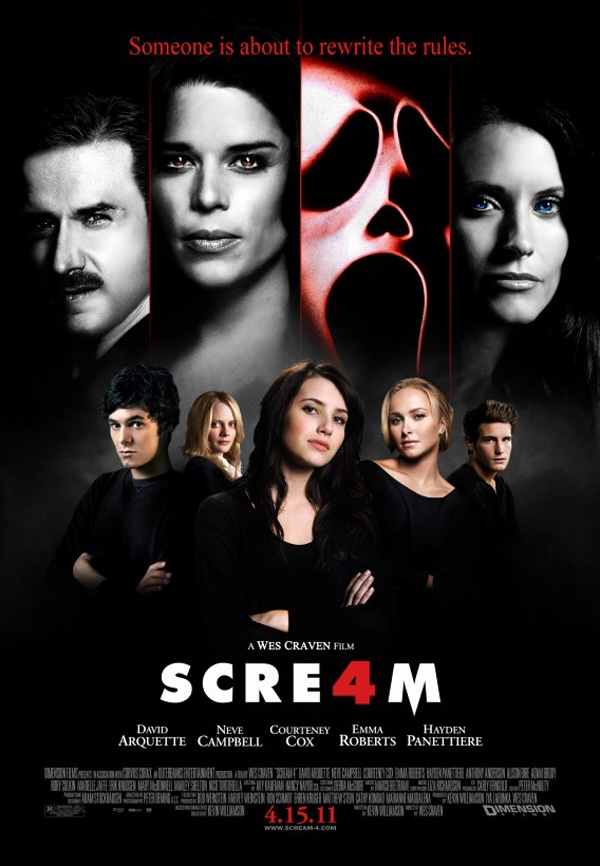
Wes Craven’s 1990s Scream trilogy completely rewrote the slasher genre in a postmodern meta-film. In March 2011, Scream 4 was released, ten years after Scream 3 was originally released, starring the original trio: Neve Campbell, David Arquette, and Courtney Cox-Arquette along with some new teen stars to apparently spur a new trilogy. Yet again, this film rewrites the genre, only this time the film plays with concepts of post-racial, post-feminist girl power by making Ghost Face a white sixteen-year-old girl, Sidney Prescott’s cousin Jill (played by Emma Roberts). Craven portrays Jill as the most violent and aggressive killer of any of the other serial killers in the Scream films. Jill kills mostly other white teenage girls (her best friends), a black police officer who is depicted in a racist fashion, and her own mother. Jill’s vitriolic aggression is fueled by her neoliberal pursuit of media fame and self-consciously performing the role of victim while veiling herself as the white-faced killer draped in a black shroud.

 
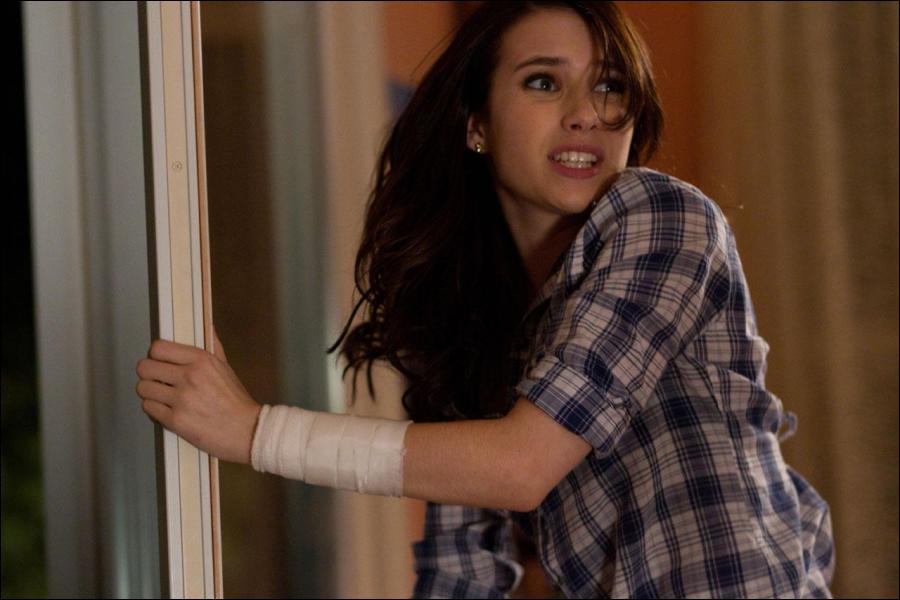
Jill Roberts (Emma Roberts) in Scream 4
In the original 1996 Scream film, which Scream 4 constantly refers to and reconstructs, a masked killer known as Ghost Face begins terrorizing a predominantly white upper-middle class neighborhood in rural Woodsboro, California. Sidney is the sixteen-year-old protagonist, who is dating a boy named Billy. Her mother, Maureen Prescott, is mysteriously murdered one year before these serial murders and the film starts in Woodsboro. And Gail Weathers (Cox), a TV journalist, covered “last year’s hottest court case,” and the fame-obsessed Weathers is in the process of finishing up a book on the murders entitled, The Woodsboro Murders. Meanwhile, Deputy Dewey Riley (Arquette) is the bumbling deputy on a (usually) failed mission to look after Sidney. Dewey’s character is in the tradition of Craven’s depiction of the two bumbling cops in his first film, and commonly known exploitation flick, The Last House on the Left. Drew Barrymore has a brief cameo at the beginning of the first film (she was the original pick for the character of Sidney) and is the first victim. The unseen killer calls her as she is home alone about to watch a scary movie. After much stalker-esque dialogue between the killer and Barrymore, she is viciously stabbed and hung from a tree outside of her house, where she is left for her parents to discover her body, leading to the first chilling scream as the title comes across the screen.

Sidney is constantly stalked by the killer and becomes an attempted target in her house, but she eventually manages to stop him and take refuge in her room. Time passes and characters develop a little more before the final scene during a house party at Sidney’s schoolmate, Stu’s house. The killer attacks the kids at the party, and Sidney is left alive to confront, who she discovers, are two killers: her boyfriend Billy and his friend Stu. They confess to having raped and killed her mother one year before. Gail comes in and briefly deters the two killers from killing Sidney, but in the end Sidney manages to kill both of them, declaring, as her surviving friend Randy comments, “Be careful, they always come back for one last scare,” and just as Billy sits up surprisingly, Sidney shoots him in the head, and she states, “Not in my movie,” claiming the construction of the Final Girl as a place of productive empowerment for girls and violent defense against women-hating men.

Sidney Prescott (Neve Campbell) in Scream 4

The gaze of Wes Craven’s Scream 4 intrudes on white girls’ domestic spaces. Technology facilitates the killer’s murderous rampage. The killer attempts to terrify them into panic and submission, but they resist this submission to fear such as in the first scene: two girls are alone in a house watching Stab 7 (a thinly veiled, meta-movie franchise with the Scream storyline within the Scream series). One girl goes upstairs because she hears a noise, but then prank calls her friend downstairs with the Ghost Face app on her iPhone. When she goes downstairs after the call is cut short and wanders around the house calling her friend’s name, she gets a call. Assuming her friends’ disappearance is her friend trying to get back at her for scaring her, she assuredly answers the phone, but the killer calls her on her iPhone and tries to scare her into terrified submission by saying, “you’re the dumb blonde with the big tits, whose part is about to be cut,” but she quickly retaliates with “I have a 180 IQ and a 4.0 GPA, asshole.” Of course, in the end, in the Scream tradition of the slasher theme, the killer prevails by stabbing the girl before the title of the film dramatically flashes onto the screen with the Swedish band The Sounds playing in the background. 
Carol Clover theorizes about gender in slasher films in her well-known book Men, Women, and Chainsaws and addresses the concept of masochistic gazing in horror films. Watching these films, though it could be read as sadistic to consume slasher films, are a mascochistic form of “perverse pleasure” through gazing and seeing what “should not” be seen. The audience can identify with the victim in the Scream films and feel the terror that they feel. The camera shows them reacting to the killer’s calls, and the audience sees and hears the same as the victim. So with every suspenseful moment for the character on screen, the audience feels the same emotion of fear. Carol Clover compares the affect of pornography to horror films, saying:

“Pornography thus engages directly (in pleasurable terms) what horror explores at one remove (in painful terms) and legitimate film at two or more.” 

The affect of terror and pleasure, though, seem to also be blurred when thinking about slasher films. Audiences are entertained by the desire to see violence that is unseen. They get a horrific glimpse into the pain inflicted between humans (mostly men killing women), but one productive element of the Scream series presents a productive feminist subversion of these elements of pleasure, pain, humor, and gender. Clover qualifies the commonly found surviving girl at the end of horror films in her essay, “His Body, Himself: Gender in the Slasher Film”:

“The image of a distressed female most likely to linger in memory is the image of the one who did not die: the survivor, or Final Girl.” 

And this position of the final girl in horror films is destabilized in Scream 4, as the final girl and masked killer are the same person. 

Kathleen Rowe Karlyn writes about the feminist potential in the first three Scream films in her book, Unruly Girls, Unrepentant Mothers:

“According to the logic of realism, Scream might well be seen as endorsing violence in the hands of a teen girl. But when viewed in its cinematic context, the film, like the slasher genre in general, provides an opportunity to examine cultural and individual fantasies as they relate to gender and power.” 

The girl violence in the Scream films takes a new direction as Jill takes on the role of the killer and enacts violent murders against mostly white teenage girls, a black man, and her own mother in the film, symbolically, hyperbolically constructing post-feminist girl power gone horribly wrong. Jill’s performs a coy demeanor and unassaultive character at the beginning of the film, which is starkly contrasted after her unveiling to Sidney as the killer in the second to last scene of the film. She asserts her position as the “empowered” female remake of Billy as the killer and Sidney as the victim, saying “I don’t want to be like you. I want to become you,” right before she stabs Sidney, thinking she murders her. Jill then proceeds to stab herself, throw herself onto a glass coffee table (evocative of a scene out of Fight Club) as a way to bodily victimize herself. 

Jill Roberts (Emma Roberts) in Scream 4
J. Jack Halberstam in his article, “Automating Gender: Postmodern Feminism in the Age of the Intelligent Machine,” describes the temptation wrapped up in the symbol of Apple products in relation to the creation myth. Halberstam discusses cybernetics’ relationship to gender and deconstructs the symbol of the Mac apple, and he claims,

“We recognize the Apple computer symbol, I think, as a clever icon for the digitalization of the creation myth [. . . ] The bite now represents the byte of information within a processing memory.” 

He discuses the temptation of biting into the forbidden fruit, which Eve does despite the prohibitions offered by God to her and Adam in Eden. Halberstam relates this Biblical story to the marketing of Apple products with the bitten apple logo on Apple products representing a capitalist seduction of consumer technology and information. Craven takes this concept one step further by having most every character in Scream 4 tote around some Apple product. The Ghost Face killer calls different characters on their iPhones before each murder. The killers use Apple technology to facilitate and capture the murders on film by using webcams to record each murder and post them onto their blog, reconstructing a do-it-yourself remake of the first Scream film within the sequel. The placement of Apple products throughout the film could be read as a synergistic business pursuit by the film makers, and in some ways, people probably were influenced to purchase a new iPhone after seeing this movie. The film also skillfully challenges the obsessive (mis)use of technology, and the Apple products, to use Halberstam’s analysis, symbolize capitalist seduction and female exploitation through violent murders. In “The Scream Trilogy: “Hyperpostmodernism” and the Late Nineties Teen Slasher” by Valerie Wee, she deconstructs the hyperpostmodernism in the Scream films:

“This shift to hyperpostmodernism was motivated by several factors: (1) the development of new media technologies such as cable, video, and an increasing range of digital media; (2) the emergence of a new teen demographic in the United States; and (3) the entertainment industries escalating commitment to cross-media promotional and marketing practices.” 

As Wee argues, the Scream franchise’s insistence on including new media, promotion, and adjusting to the “emergence of a new teen demographic” applies perfectly to Scream 4’s hyperpostmodernism as a next step in the evolution of the series.

L-R: Jill Roberts (Emma Roberts) and Kirby Reed (Hayden Panettiere) in Scream 4

The teenage girls in Scream 4 are constantly on their iPhones in the film and are connected to Ghost Face through their phones. In the first scene of the film, there is a comment made that there is now a Ghost Face app. for the iPhones so anyone can replicate the killer’s voice as a prank call to friends. Female bodies become fused with technology: they become as fused with it as it is their source of survival and simultaneously the killer’s invasion into their white middle-class spaces. Halberstam writes:

“The female cyborg, furthermore, exploits a traditionally masculine fear of the deceptiveness of appearances and calls into question the boundaries of human, animal, and machine precisely where they are most vulnerable — at the site of the female body.” 

Viewers disidentify with Jill and see the violent masochistic pleasure in watching Scream 4. This poses an interesting dilemma of white girl power manifesting in violence and aggression targeted against other white girls, black men, and mothers. Jill symbolizes the ultimate pursuit of individual identity and separation from her community. She manifests her rage and expectant media fame by slaughtering her friends, her mother, and others in her community to escape it. Jill embodies the ideology of post-feminism and exceedingly demonstrates her white neoliberal pursuit of a murderous “girl power” at the violent expense and exploitation of people in Scream 4
———-
Jeremy Cornelius, a queer feminist writer and aspiring women’s and gender studies academic making his way in Philadelphia. Common activities include zine making, obsessively watching b-horror movies on Netflix, dressing like a gay sailor from the 1920s, and writing about queer childhood (to take the phrase from J. Jack Halberstam and Kathryn Bond Stockton) and coming from the U.S. South. Common pen name for zines and social media accounts is Riot Robin because of the Robin (from Batman) tattoo on his left arm.

Weekly Feminist Film Question: Who Is Your Favorite Female Horror Movie Hero?

Women in horror movies comprise a range of roles from homicidal villain and gory murder victim to the badass, resourceful Final Girl survivor. Since next week is Women in Horror Film Week, we thought we would kick things off a little early. (Are you all as excited as we are??) So we asked you to tell us: Who is your favorite female horror movie hero?
——
Ellen Ripley (Sigourney Weaver) in Alien
Jess Bradford (Olivia Hussey) in Black Christmas
Carrie White (Sissy Spacek) in Carrie 

Sarah (Shauna MacDonald) The Descent

Christine Brown (Alison Lohman) in Drag Me to Hell
Ginger Fitzgerald (Katharine Isabelle) and Brigitte Fitzgerald (Emily Perkins) in Ginger Snaps 

Laurie Strode (Jaime Lee Curtis) in Halloween 

Sally (Catherine O’Hara) in Nightmare Before Christmas

Nancy Thompson (Heather Langenkamp) in Nightmare on Elm Street

Angela Vidal (Jennifer Carpenter) in Quarantine
Sidney Prescott (Neve Campbell) in Scream
Clarice Starling (Jodie Foster)  in Silence of the Lambs 

Suzy Banyon (Jessica Harper) in Suspiria 

Selena (Naomie Harris) in 28 Days Later

The Woman (Pollyanna McIntosh) in The Woman
Did your favorite women in horror make the list? Tell us in the comments!
——

Each week we tweet a new question and then post your answers on our site each Friday! To participate, just follow us on Twitter at @BitchFlicks and use the Twitter hashtag #feministfilm.

Bitch Flicks’ Weekly Picks

Amber‘s Picks:
Megan‘s Picks:

Race and The Walking Dead: Why Michonne Matters by Renee and Sparky via Racialicious
Labor of Love: How Women Are Changing Documentaries by Chanda Chevannes via Women and Hollywood

What have you been reading this week? Tell us in the comments!

Too Many Hitchcocks

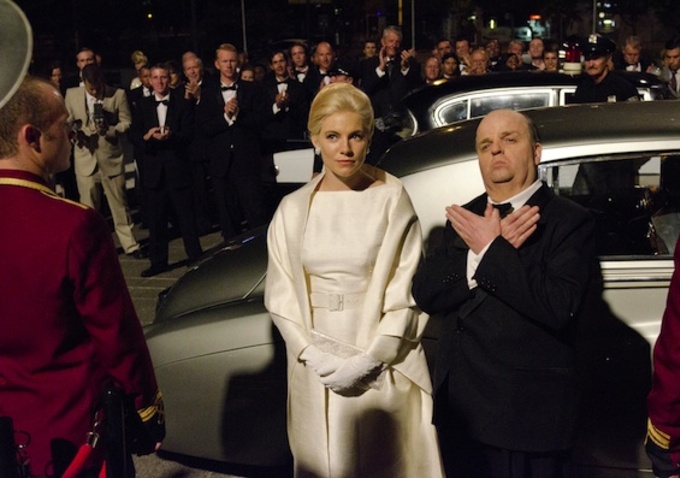
Sienna Miller and Toby Jones in HBO’s The Girl

1997 had volcano movies. 2000 had Mars movies. 2006 had magician movies. 2012 has Hitchcock movies.
The Girl, premiering tomorrow on HBO at 9PM, stars Toby Jones as Hitch, Imelda Staunton as his wife Alma, and Sienna Miller as Tippi Hedren. Hitchcock, opening in limited release November 23rd, stars Anthony Hopkins as the title character, Helen Mirren as Alma, and Scarlett Johansson as Janet Leigh. Having only seen the trailers, it is my suspicion that the close proximity of these movies’ releases will sabotage the artistic impact of both films.
Based on Donald Spoto’s book Spellbound by BeautyThe Girl centers on Hitchcock’s obsession with and harassment of Tippi Hedren as he worked with her in The Birds and Marnie. It is a dark and unpleasant story, where the director is clearly depicted as a creepy antagonist:

And while “it’s not TV, it’s HBO,” The Girl debuts in the shadow of its theatrical release twin, Hitchcock. Toby Jones yet again plays the also-ran version of the lead actor in a biopic, six years after his take on Truman Capote in Infamous was eclipsed by Philip Seymour Hoffman’s Oscar-winning turn from the previous year. For me, the biggest “this is only a TV movie” black mark is the casting of “We wanted X, but we got” Sienna Miller as Tippi Hedren.
But The Girl may well get its revenge on the flashier Hitchcock by undermining its depiction of the Master of Suspense as a lovable maverick; eccentric, sure, but far from diabolical:

It’s awkward to watch these trailers together, especially with the one for Hitchcock taking multiple opportunities to ogle ScarJo T&A and closing with a zinger about large breasts. I’m wagering that uncomfortable disconnect will be only more noticeable when comparing the two actual films. So while Hitchcock gets the bigger stars and better buzz, The Girl may pull the red carpet out from underneath it.
Robin Hitchcock (no relation) is an American writer living in Cape Town.  She has been grumpy for years that the adjective form of her last name is already taken.

Dating Violence and Sexual Abuse in ‘The Perks of Being a Wallflower’

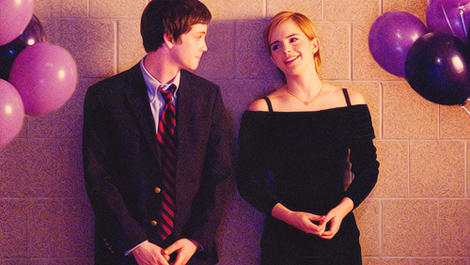
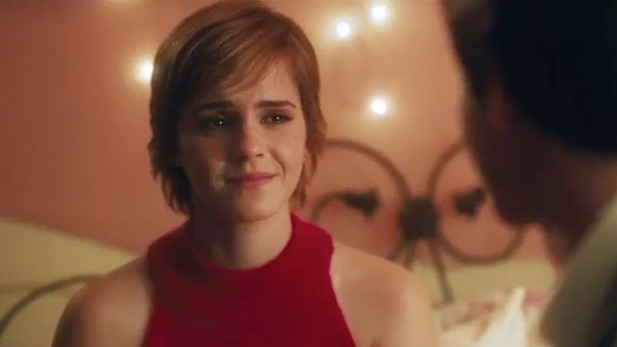
Logan Lerman and Emma Watson in The Perks of Being a Wallflower
[This post is very spoilery for the plot of The Perks of Being a Wallflower.]
“We accept the love we think we deserve.”
This line is spoken twice in The Perks of Being a Wallflower. First, Charlie (Logan Lerman) asks his teacher, Bill (Paul Rudd), why his friends and family choose to be with people who treat them badly. Later in the film, Sam (Emma Watson) poses Charlie the same question. The response is the same both times, echoing a theme that resonates throughout the movie.
Charlie’s sister Candace (Nina Dobrev) excuses the violence she receives from her boyfriend (nicknamed Ponytail Derek), who slaps her in the face. She defends her boyfriend to her brother, giving a list of excuses that seem all too familiar: he’s not usually like that, she was egging him on, he’s a sweet guy most of the time.
Charlie’s friend Patrick (Ezra Miller) is in a secret relationship with a closeted gay student Brad (Johnny Simmons). Brad doesn’t want to make the relationship public because he fears losing his social position, and fears a violent backlash from his father – but he no longer has to get himself drunk before being intimate with Patrick. Patrick accepts the terms of the relationship because it’s still an improvement from what it used to be. 
Charlie and Patrick (Ezra Miller) in shop class
Charlie’s friend Sam is in a relationship with a guy who cheats on her, disrespects her, and doesn’t value her opinion. She doesn’t end the relationship until she finds out about his cheating. Before then, she makes excuses for him, and even halfway admits that he’s no good for her, but she still continues the relationship for longer than she should.   
Charlie himself enters a relationship with Mary Elizabeth (Mae Whitman) almost by accident. He doesn’t really want to be with her, is turned off by her aggressive personality, and has lingering romantic feelings for Sam, but he continues to date Mary Elizabeth because he doesn’t want to hurt her feelings by breaking it off. Mary Elizabeth, in turn, doesn’t seem to be getting much from her relationship with Charlie, but his appeal to her seems obvious – he’s nice, he’s her friend, and he won’t disrespect her.
Charlie after a date with Mary Elizabeth (Mae Whitman)
All of the characters accept less than they deserve, and the consequences are humiliating and/or catastrophic, as we see them experience behaviors that range from normal teenage insensitivity to violent assault. 
Candace has the easiest time getting away from Ponytail Derek’s violent behavior; she breaks up with him off-screen and attends her senior prom with her girlfriends. The rest of the characters aren’t as lucky.
Charlie kisses Sam in a game of Truth or Dare, hurting Mary Elizabeth’s feelings and throwing a wrench into her friendship with Sam. He is forced to keep his distance from his new friends for several weeks and some of his bad episodes return.
Brad’s father finds out about his son’s relationship with Patrick, and violently beats Brad. Brad’s friends jump Patrick in the middle of the cafeteria after calling him a faggot, and he’s at risk of serious injury until Charlie steps in and saves him – but the moment is less than triumphant, as Charlie blacks out during the fight and doesn’t remember knocking out two strong athletes. The fight indicates something troubling about Charlie’s past, and Patrick has to live with his anger at Brad and his guilt for what Brad’s father did to him.
Sam finds out that her boyfriend Craig has been cheating on her, and she breaks up with him. We learn that Sam received her first kiss from her father’s co-worker at the age of seven, which goes a long way to explain her attitudes towards men. Cheating is a drop in the bucket compared to what happened to her as a child.
Sam has a tearful conversation with Charlie
Shortly after that, Sam and Charlie kiss and become intimate. It’s a beautiful moment between two friends who love each other, but the result is near calamitous. A flood of repressed memories washes over Charlie as he realizes that his beloved aunt, the one member of his family who he felt close to and understood him, molested him when he was young, and he has a mental breakdown.
The characters in The Perks of Being a Wallflower make excuses for the way their partners treat them – “He’s not usually like that,” “At least he doesn’t have to be drunk to love me anymore” – but the most telling excuse of all is the reason why Charlie ultimately forgives his late aunt: he knows that she, too, was sexually abused as a child.
October is Domestic Violence Awareness Month. The Perks of Being a Wallflower premiered in September, but its themes resonate in a month dedicated to understanding and stopping domestic violence and sexual abuse. The characters in the film show us how the cycle of abuse repeats itself, how abuse victims often blame themselves or make excuses for the people who hurt them.
But the film still ends on a note of hope, as Charlie begins to recover in therapy and his friends and siblings visit him in his institution. It shows that empathy and strong ties of friendship and family can help heal old wounds, and how survivors can help each other cope through trauma with love and understanding.

Why I Love ‘Adventure Time’

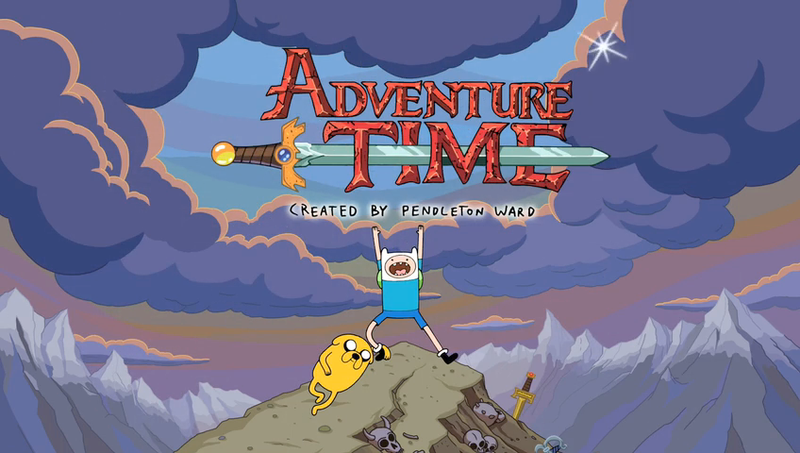
Title Screen for Adventure Time
Warning: Spoilers up to the end of Season 3

Adventure Time is a Cartoon Network animated series that combines surrealistic comedy, fantasy and science-fiction. Based on a 2008 short by Pendleton Ward that went viral, it parodies the tropes, archetypes and cliches of fairy tales, video games and childhood action figure battles. The basic premise is about Finn, the last remaining human, and his best friend/adoptive brother Jake (a shape-shifting dog), going on your typical slay-the-monster-save-the-princess adventures. Now in its fourth season, it’s an enormous hit with all genders and age groups and shows no signs of slowing down. And let me tell you, as a feminist, why I am absolutely celebrating this show.

The main cast of Adventure Time
  • Almost every female character is a princess, but the typical cliche Damsel In Distress and/or romance-obsessed girly-girl are parodied and subverted for all they’re worth. In several instances, the princess characters (Bubblegum especially) show little interest in romance, and far more interest in their own personal hobbies. Even more encouraging is that often the female characters are completely able to rescue themselves, and don’t need Finn & Jake’s help.
  • The characters are given genuine honest-to-goodness flaws. Finn is heroic, but has a terrible bad temper and an impulsive streak. Jake is easygoing, but not nearly as clever or level-headed as he thinks he is. Princess Bubblegum is a scientific genius, but can be incredibly callous about the feelings of others. Marceline is a talented musician, but also has deep insecurities about how her friends perceive her. Flame Princess is astoundingly powerful, but also has dangerously passionate emotions. In all of these cases, there’s no black and white morality. It’s an important lesson for children (since this is a children’s show) to present morality as it really is – in shades of grey.
  • I love all the female characters, including the gender flipped versions of Finn and Jake, Fionna and Cake. My main complaint with the series is that the female characters don’t appear nearly often enough, and especially not together. We eventually do get some Bechdel Test passing goodness (Bubblegum and Marceline don’t get along too well – and people have naturally interpreted this as sexual tension) but so far the three main female characters have not yet all appeared in the same story together. I suspect that the main reason for this is because each story is about 11-12 minutes in total, and there’s only so much time for introducing characters and conflicts.
Jake stretching around the other main cast members
  • Speaking of Fionna and Cake, I can see now why that episode is so astoundingly popular amongst the fandom. It’s easily my favourite one of the series. Fionna is an absolutely adorable character – slightly chubby instead of unrealistically slender, tomboyish instead of traditionally feminine, and she still retains her male counterpart’s bravery and heroicism. She still fights with a sword. For my fellow gamers, think of all the games you’ve played in which a female character is a sword fighter. Not very many, right? But there’s no reason they can’t, and this is one thing I really love about the gender flip episode. I also practically exploded with joy at the final scene where Fionna talks about how she has lots of guy friends, but isn’t interested in/isn’t ready to date them, and that there’s nothing wrong with that. THANK YOU. It’s incredibly frustrating how many people think that somehow something is missing if you don’t have an official romantic partner, or that men and women can’t have a platonic friendship. Shippers could do well to remember this – you can like someone without wanting to bang them. (Also, as a Sailor Moon fan, you can’t imagine my joy at seeing Fionna’s ballgown homage to Princess Serenity’s outfit) At any rate, I hope the Gender Swap episodes happen on a regular basis, rather than a once-a-season deal. Wouldn’t it be nice if we had more shows about an ass-kicking girl and her feline best friend? (*coughcoughSailorMooncoughcough*)
  • This is a fairly obvious point, but I really love how Princess Bubblegum’s interest in science is depicted. She’s an absolute genius – shattering the still pervasive stereotype that the sciences are the domain of men – and she also bucks the stereotype that nerdy/geeky people are unable to have fun or to relate to others. Similarly, Marceline’s interest in punk/indie rock also combats the stereotype that rock is a genre made by and for the enjoyment of men. Girls like to headbang too!
  • The Christmas special, which reveals that pseudo-antagonist Ice King was actually a human antique dealer driven insane by his find of a magic crown, is an interesting way of approaching and explaining his very archetypal tendency to kidnap and try to marry princesses. In the Ice King’s case, it’s not so much a wanting to stick to traditional fairy tale gender roles, but a manifestation of his grief over losing the fiance he used to nickname “Princess.” The Ice King is primarily a comic character, but this episode finally established him as being tragic.
Fionna and Cake
  • I appreciated that, for once, romantic tensions are resolved rather than dragged on, and on, and on, and on. They make it clear that while Princess Bubblegum likes Finn as a person, she feels she’s too old for him, and her sometimes callous treatment of his feelings proves that she isn’t the right partner for him. Flame Princess isn’t the perfect girlfriend either, but at least in their case, Finn and Flame got together very quickly, changing the romantic plotline from “Will they or won’t they?” to “What happens now they’ve got together?” I also like that Jake and Lady Rainicorn’s relationship is loving, positive, literally interracial, and well…adult. (Lady Rainicorn’s dialogue is only in Korean, and bilingual viewers have revealed she says some incredibly raunchy things that only Jake can understand)
  • In the “Memory of a Memory” episode, Marceline’s (ex) boyfriend tries to bully her into traditional gender roles. He even pulls the “Go back in the kitchen and make me a sandwich” bit. She finds out he tried to trick her, and kicks his ass. (Also, dear men who think this joke is funny: Wow. You’re original. YES I AM GOING TO GO IN THE KITCHEN AND I’M GOING TO MAKE LOTS OF DELICIOUS FOOD WHICH YOU CAN’T HAVE.)
  • In some ways, other than Marceline, Lumpy Space Princess is my favourite character. She is absolutely hilarious as a sassy valley girl type who, by most accounts, should not be as confident about her body and her sexiness as she “should” be. After all, she’s literally a purple ball of lumps. But this is an important message – you DON’T have to match cultural standards of beauty to be sexy. It’s all about confidence. I’m a fatass, and I’m friggin’ sexy if I do say so myself. And in her own way, LSP is sexy too. At least to fellow Space Lumps.
Finn
  • The show just keeps getting better every season. The quality of animation has spiked, the character arcs are realistic and well-defined, and the storylines are mature without losing their comedic edge. I’m absolutely hooked on this series, and it’s a refreshing feeling that this year, along with Gravity Falls, I got to watch some great new children’s shows that deserve every bit of praise they receive.
  • Lastly, I love the sense of humour in the show. I’ve always been a fan of surrealism, as well as referential humour. And I’m also a big fan of fart jokes, like the one where Jake morphs himself into a farting cheetah. I’m 25 years old, and fart jokes are still funny.

Myrna Waldron is a feminist writer/blogger with a particular emphasis on all things nerdy. She lives in Toronto and has studied English and Film at York University. Myrna has a particular interest in the animation medium, having written extensively on American, Canadian and Japanese animation. She also has a passion for Sci-Fi & Fantasy literature, pop culture literature such as cartoons/comics, and the gaming subculture. She maintains a personal collection of blog posts, rants, essays and musings at The Soapboxing Geek, and tweets with reckless pottymouthed abandon at @SoapboxingGeek.

‘Pitch Perfect’ and Third-Wave Feminism

Written by Leigh Kolb

Social movements are not without their problems. America’s second- and third-wave feminists (the mothers from the 60s and 70s and their literal and figurative daughters, who have come to age in the 80s, 90s and 2000s) have often appeared to be at odds with one another, and even within themselves. Even though the “women’s movement” is often marketed as a monolith in our culture, it is far from that.

Pitch Perfect, a new musical comedy, is about the all-female a cappella group the Barden Bellas, who are vying for respect among their peers and for the title of best college a cappella group in the nation at the International Championship of Collegiate A Cappella. The core problem for them (besides the vomiting–we’ll get to that in a minute) is that they are stuck in the past. While other groups are showing off creative arrangements and flashy dance choreography, the Bellas have rigid movements, dress like stewardesses and only sing “classics” from the 80s and 90s (“The Sign,” “Eternal Flame,” and “Turn the Beat Around” is their standard set list). The Bellas are also uniform in their looks and body types–light-skinned and thin.
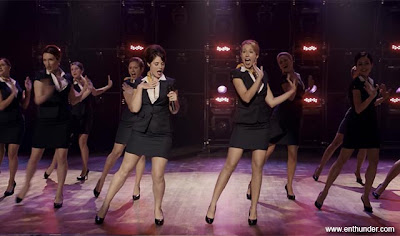
The original Bellas are uniform in appearance and skin tone.

As the two matriarchs of the group–Chloe (Brittany Snow) and Aubrey (Anna Camp)–recruit young women to audition at the back-to-school activities fair, Aubrey makes it clear that they are looking for women with “bikini-perfect bodies.” Chloe responds quietly with “How about we just get good singers?” Thus begins the Bellas’ journey into a new world filled with women of color, overweight women, “alternative” brunettes with lots of eyeliner and lesbians.

Aubrey remains steadfast in her traditionalism until almost the bitter end. Her insistence on the value of tradition, and how it’s always been and how they’ve always looked, could represent second-wave feminism, which was criticized for its lack of inclusion for women of color and lesbians.

The protagonist in the film, Beca (Anna Kendrick), desperately wants to be in LA to be a DJ, but is stuck at Barden University because her father is a professor there and she has a free ride (we’ll get to that in a minute, too). She represents third-wave feminism, which has been criticized for a lack of female camaraderie and a disregard for the past.
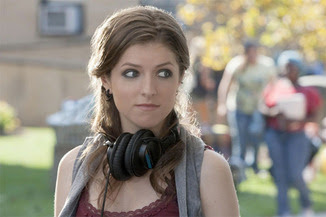
Beca as the “alternative” girl (black nail polish is a dead giveaway).


Pitch Perfect, on its surface (and even mostly below the surface), is a fun female-centered comedy with good music. It’s clearly co-produced by a woman (Hollywood feminist Elizabeth Banks) and written by a woman (30 Rock and The New Girl’s Kay Cannon). However, a feminist reading of the film suggests that far below the surface, viewers can take the plot of the film as an allegory of second- and third-wave feminism in America. 

The new members of the Bellas see early on that they have no chance of winning with their old routine. They learn it, they go through the motions, but it simply doesn’t work. Aubrey stands firm in the old choreography–she becomes more and more uncomfortable with the concept of changing their form, no matter how “tired” it is.

When the group arrives at their first competition of the season, the commentators (Gail, played by Banks, and John, played by John Michael Higgins) comment on their looks. “This does not look like the fresh-faced nubile Bellas…” John says. They are “refreshing, yet displeasing to the eye,”says Gail. (The interplay between these two judges provides some great one-liners throughout the film.)
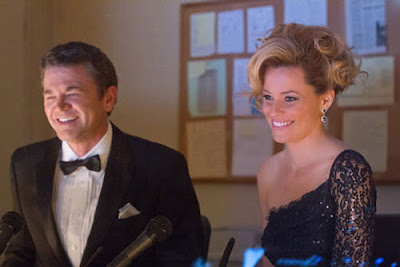
John and Gail provide funny, and poignant, Christopher Guest-style play-by-plays.


The Bellas get on stage and perform the same, tired routine. Toward the end, however, Fat Amy (yes, we’ll get to that in a minute) shakes things up during her “Turn the Beat Around” solo, ripping off her jacket and growl-singing the once demure lines. The audiences and the judges love it, and they manage to place. At regionals, Beca sees the audience getting bored and injects some mash-up vocals toward the end of their set (“Titanium,” a bullet-proof anthem that weaves its way throughout the film). The audience enjoys it, but Aubrey is enraged and kicks her out.

The group suffers, but they have to pull it together because they need to perform at nationals after another team was disqualified. Beca comes back, and tells the fractured group, “I’ve never been one of those girls who had a lot of friends who were girls–now I do, and it’s pretty cool.” Aubrey hands Beca the reigns, and they perform Beca’s own mash-up of modern and older songs. She has been turned on, at first reluctantly, to The Breakfast Club by her love interest, Jesse, and includes “Don’t You (Forget About Me),” by Simple Minds, and also includes tween anthem “Party in the U.S.A.” Notably, Fat Amy interjects a line from “Turn the Beat Around” at the climax of their set.

The women have collaborated, and evolved. They’ve kept their individualism, and been frank about their desires and motivations. They dress differently, and they sing new music. However, they don’t leave the past in the dark, and become better and closer when they decide to move forward. At the end, they’re not dressed like one another, they don’t look the same, and they win (on stage and off).

As with the social movement, the film isn’t without its problematic aspects, which ultimately speak to the current state of feminism in our culture.

Gross-out humor: The Bellas are humiliated on the national stage at the beginning of the film when Aubrey projectile vomits on the stage and audience. Later, during the Bellas’ “let it all out” moment that brought them back together, Aubrey does it again. One member gets pushed into it, and makes a snow angel in it. Is this necessary? Was there no other way to symbolize Aubrey’s anal, yet out of control, nature? These scenes felt exactly like the gross-out scenes in Bridesmaids, which were written in by Judd Apatow to appeal to the male viewer. Women, at this point, surely have proven that they’re funny, and that women’s stories can be universally entertaining. OK, maybe we’re not there yet, but the only way into the boys’ club doesn’t have to be to play exactly like them. It’s not a matter of being prude, it’s simply a matter of these scenes–Pitch Perfect‘s vomit or Bridesmaids‘s diarrhea–feeling utterly out of place in the films. What could be more appropriate, and Pitch Perfect does enter into this territory, are jokes about gynecological visits or Gail’s college group, which was called the “Menstrual Cycles.” 

Fathers as idols: Yet again, we have multiple narratives of influential fathers and absent mothers. Beca’s father is the most prominent, as he is a literature professor at BU. Beca is surly and angsty toward him, and references her “stepmonster” and his divorce from her mother, yet doesn’t talk about her mother. Even when she goes to her father during spring break and they bond over tea, it’s all about him. He visits her in her dorm room more than once, which feels awkward, and clearly controls her future (bargaining with her that he’ll send her to LA after one year at BU). Aubrey, in the transformative scene where the Bellas bond, says that “My father always said, ‘If at first you don’t succeed, pack your bags.'” The two characters who most clearly represent the old and the new, in regard to the feminist movement allegory, are driven and inspired/controlled by their fathers. This trope is relentless with female protagonists–fathers are almost always more visible and more important than the characters’ mothers. This consistent story line makes sense if we examine opportunities for men and women in the decades leading up to these young women’s formative years. Girls are taught they can be anything, and too often it’s the man of the house who is represented as powerful, in work and at play. They are who are to be emulated in this culture.
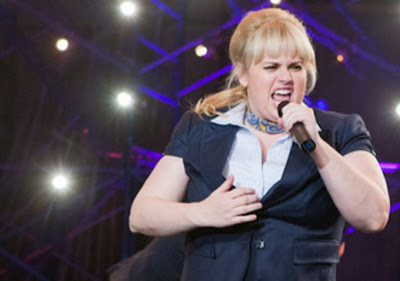
Fat Amy is a star performer on stage and off.

Fat acceptance: Fat Amy (played by the the amazing Rebel Wilson) introduces herself as Fat Amy to Chloe and Aubrey at the activities fair so “twig bitches like you don’t do it behind my back.” Although jokes are made about her size (by her and by others), Amy has solos, sex and friends. Her body is used for comedy, as is the fat body of the male sidekick of the college’s a cappella organizer. It’s still acceptable in our culture to demonize and discriminate against people who are overweight (or use them as comic relief). Amy’s character skewered that with humor (while also reaffirming it), but audiences seem really happy to see a woman of size on screen. While these casting decisions provide great fodder for entertainment writers (and who doesn’t love clever word play: “In a sea of size-0 starlets, Wilson has the confidence of a performer twice her age and half her size”). While some coverage is obviously cringe-worthy at best and fat-shaming at worst, reviewers (and certainly feminists) are embracing this representation. Even if representation is problematic, or has “mixed messages,” it’s representing reality. Would it be believable to have a fat woman on screen and no one comment on it? Unfortunately, we’re not at that point yet.


Race issues: From early on in the film, the portrayal of Asian women is problematic. Beca’s roommate is Korean, and tinkers with a bonsai tree while quietly, solemnly glaring at Beca. She only opens up when around her Korean peers (although she does seem to warm to Beca toward the end of the film). She scowls one evening, “The white girl is back,” when Beca gets back to her room. The Bellas also have a Korean member, who is awkward, speaks in a muted whisper (and when she is audible she’s saying strange things) and only really opens up during their last number. There’s no clear defense for these character portrayals, but they do seem to line up with what’s happening in the greater world of entertainment and feminist conversations even in 2012. Visit the comments section on a feminist blog defending Girls (or simply read about the show’s problematic history). Too often the face of third-wave feminism–especially the early 20s crowd–is white and privileged. This is in lock step with second-wave feminism, which caused a rift with women of color (Alice Walker claimed the title “womanism” because of this), and even first-wave feminism, when early suffragists used racism to further their cause. It was a problem then, and it’s a problem now.


Sex and sexuality: When Beca first arrives on campus, she’s handed an “official BU rape whistle” by a perky upperclassman. She warns, “Don’t blow it unless it’s actually happening!” While many reviewers found this joke tasteless, the audience can’t help but think that it’s supposed to be startling and tasteless. We’re supposed to think, “That’s insane,” and then immediately think about how “legitimate rape” has been a talking point and male legislators have had to re-write laws to change “rape” to “forcible rape.” Instead of just being offensive, that joke has the possibility of satirizing how we are discussing rape on a wide scale.
The “original” Bellas have a rule that no Bella can be romantically involved with a Treblemaker (their all-male rival group). This strict sexual gatekeeping causes them to lose members at the beginning, but Beca speaks out against the rules and continues to fraternize with Jesse (a Treblemaker). The two don’t embrace and kiss until the end, but it’s another traditional rule broken. Women don’t want male legislators policing their bodies, but they also don’t want other women doing so either (in the name of tradition and virtue, or competition with men).
The group has one member who frequently makes jokes about her sexual exploits (“dude’s a hunter,” she says of her vagina, adapting to the double standard of being a stud) and wears revealing clothing and dances provocatively. She is not punished for this, and doesn’t have to change. Even Chloe is seen showering with a young man at the beginning of the film, with no judgment.
The Bellas’ token lesbian, a black woman, is whispered about and assumed to be gay. When they are all bonding toward the end of the film, they have a moment of honesty, when the members admit to secrets about themselves. Her secret isn’t that she’s gay, but that she has a gambling problem (that started after she and her girlfriend broke up, she says cavalierly, as it’s revealed that this ex-girlfriend is also a Bella). No big deal. Even if there were whispers at first, she didn’t find that to be part of her identity worth hiding. The joke about her sexuality was ultimately on the rest of the women.

As the Bellas wow the crowd at the finals, John says, surprised, “I would never expect it from an all-female group!” Gail responds, “Well, you are a misogynist at heart.” Even with its problems, Pitch Perfect ends on a note of women’s power. John gets put in his place, and while the all-male Treblemakers don’t win, they’re all working together at the beginning of the next school year. 

There are always tensions between generations, and when these generations are women who have essentially been at battle for rights and representation for hundreds–really thousands–of years, there are not going to be perfect transitions and easy paths.

Eight years ago, Bitch magazine co-founder Lisa Jarvis wrote a piece for Ms. entitled, “The End of Feminism’s Third Wave” (adapted from a speech she’d given to the National Women’s Studies Association). She adeptly breaks down the dichotomy of second- and third-wave, and argues that the “master narratives” are largely false, and no one can seem to focus on the similarities. She says:
The rap goes something like this: Older women drained their movement of sexuality; younger women are uncritically sexualized. Older women won’t recognize the importance of pop culture; younger women are obsessed with media representation. Older women have too narrow a definition of what makes a feminist issue; younger women are scattered and don’t know what’s important.Stodgy versus frivolous. Won’t share power versus spoiled and ignorant.
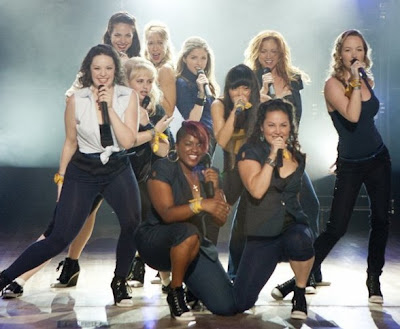
The Bellas at the end break out and win.

There are many similarities, though. And while Pitch Perfect isn’t perfect, it is not tone-deaf to feminism’s struggles, problems and potential. It passes the Bechdel Test with flying colors, and even challenges the idea of masculinity (Jesse’s roommate gushes about the Treblemakers, “That’s what being a man is all about”). The Bellas ultimately win because they blend the old with the new, and allow themselves to move past their guarded individualism and work together. At the end, the women of color get a strong voice, and Aubrey embraces the changes (and Fat Amy proudly sings, “Can you feel the passion?”).

Jarvis goes on:
We may not all agree on exactly what it looks like or how to get it. We should never expect to agree. Feminism has always thrived on and grown from internal discussions and disagreements. Our many different and often opposing perspectives are what push us forward… I want to see these internal disagreements continue. I want to see as much wrangling over them as ever. But I want them articulated accurately. And that means recognizing the generational divide for what it is — an illusion.

Jarvis’s words ring true for the larger feminist movement in 2012, and for what allows the Bellas to win the International Championship of Collegiate A Cappella at Lincoln Center. 

What feminism needs now is for everyone to get on stage.


Leigh Kolb is a composition, literature and journalism instructor at a community college in rural Missouri. 
The Women’s Media Center Announces Social Media Award Nominees

  
From the Women’s Media Center website:

As part of this year’s Women’s Media Awards, the Women’s Media Center is opening voting for its Social Media Award to the public. Cast your vote today for one of nineteen incredible bloggers, social media gurus, activists, and new media makers for gender justice! The winner will be honored at the Women’s Media Awards on November 13, 2012 in New York City. 

You can vote by clicking here. GO VOTE!
And here’s a special shout out to two of the nominees–Jessica Luther and Tami Winfrey Harris–who’ve both published pieces at Bitch Flicks!
Congratulations to all the nominees!

Female Sexuality in Polley’s Disappointing ‘Take This Waltz’

This small, Canadian romantic indie film starring Seth Rogen, Michelle Williams and Luke Kirby and directed by Sarah Polley seems like it should a moving and insightful film about relationships (much like Michelle Williams earlier movie, Blue Valentine, was). However, despite its female centered love triangle, the film offers little of interest.

If you were to read the synopsis of this film on IMDB it would tell you that “A happily married woman falls for the artist across the street,” a pretty uninformative summary since it’s apparent from the first scene that Margot is unhappy and struggling in her marriage.  The film follows Margot (Michelle Williams) as a slightly off-kilter aspiring writer married to chicken cookbook-writer Lou (Seth Rogen). Margot meets Daniel (Luke Kirby) while doing research for a pamphlet she’s writing and then again on the plane, only to discover that he lives on the same street as her. And so begins their romance, full of clichéd significant looks and fevered whispers, as they get lost in the forbidden.

Unfortunately, my two sentence synopsis was far more interesting than the movie itself, since much of the movie was long shots of Williams looking confused and depressed and Rogen acting oblivious.  The music was a particularly pretentious brand of lackluster indie and on the whole, the film just felt like it was trying too hard to be profound.

In reality, the best parts of the film came from Margot’s interaction with her sister in law, Geraldine or the brilliant Sarah Silverman. Silverman’s character is a recovering alcoholic who, at the end of the film, offers one of the two best lines in the film, “Life has a gap in it, it just does, but you can’t go crazy trying to fill it.” (She’s also a part of a legitimately funny scene involving the incredible world of water aerobics, I tried to find a clip of it online, but alas, I failed).

It’s after the water aerobics scene when we get the second best line of the film, delivered by a naked older woman in the women’s locker room (a great scene by Polley that doesn’t shy away from the normally unsightly issue of aging and women’s bodies—read more about it here); Margot is wistfully considering the merits of “something new” with Geraldine and the woman smiles wisely and replies “New things become old.”

There was a subplot of the film that had some potential as well had it been developed a bit more, in particular the issue of Margot’s sexuality. It’s obvious that Margot and Lou are not the most sexually active of couples since we see Margot attempt to seduce Lou several times, only to be rejected in favor of his cooking. While the lack of sex doesn’t seem to especially bother him, it could be argued that one of the reasons Margot continues to seek after Daniel is the promise of sexual discovery that he offers her. At one point in the film, there is a montage of Daniel and Margot having sex  (it sounds spicy, but really, don’t get excited) where it becomes apparent that Margot is finally able to explore that part of herself; the premise was interesting and one that I think many women can identify with, however I think it could have been fleshed out a little more.

I wanted this film to be good; the trailer was interesting, all of the actors are talented, and Polley is a promising new director (and you know how Bitch Flicks feels about new female directors). While there were good moments and unique ideas being toyed with, the film was, in reality, a lukewarm portrayal of a good topic; in short, I was bored most of the time. 

**Cross posted from Not Another Wave

Rachel Redfern has an MA in English literature, where she conducted research on modern American literature and film and it’s intersection, however she spends most of her time watching HBO shows, traveling, and blogging and reading about feminism.

Weekly Feminist Film Question: What Are Your Favorite Movie Moments Between Women?

While there are a lot of great female-fronted films, there aren’t nearly enough that showcase mothers and daughters, sisters bonding and female friendships. So last week we asked: What are your favorite movie moments between women? Here’s what you told us!

——

Beaches — “Most of ‘Beaches’ Barbara Hershey and Bette Midler so good in those roles.”

Bridesmaids — “The competing bridal shower toasts scene between Kristen Wiig and Rose Byrne is ridiculous and hilarious.”

Center Stage — “When Eva (Zoe Saldana) tells Jody and Maureen that she’s no longer dancing for the ballet company’s approval, she’s dancing for herself.”

The Color Purple — “The end when Celie (Whoopi Goldberg) sees her sister for the first in years and meets her children for the first time. Gut-wrenching and heartbreaking.”

Iron Jawed Angels — “Women’s suffrage, female friendships, women banding together fighting for equality…pretty much love the entire movie.”

Kamikaze Girls — “The ending of Kamikaze Girls when Ichiko and Momoko ride off together after defeating the yankis.” 

Mona Lisa Smile — “When all of Julia Roberts’ students ride their bicycles alongside her car. Makes me weep every time.”

Pariah — “Alike’s sister tells her she doesn’t care what her sexual orientation is, she loves her no matter what.”

Princess Mononoke — “Mononoke and Lady Eboshi fighting (up until freaking Ashitaka’s interuptty one-up-manship don’t get me started on Ashitaka).”

Scott Pilgrim vs. the World — “Roxy and Ramona’s fight, Mae Whitman did such a splendid job as her character.”

Sense & Sensibility — “When Elinor confesses to Marianne that she bottles up her emotions.” 

Steel Magnolias — “The end of Steel Magnolias when Clairee & Weezer have a love fight on the bench.”

Twin Peaks: Fire Walk With Me — “Donna and Laura in Twin Peaks: Fire Walk With Me. The bar scene, and, later, the ‘are you my best friend?’ scene. Heartbreaking.”

Whip It — “Love when Juliette Lewis tells Ellen Page that she started skating when she was 31 and it took her a long time to find something she was good at and she worked her ass of for it.”

Did your fave movie moments make the list? Tell us in the comments!

——

Each week we tweet a new question and then post your answers on our site each Friday! To participate, just follow us on Twitter at @BitchFlicks and use the Twitter hashtag #feministfilm.

Counterreading ‘Here Comes Honey Boo Boo’

Reality television has never held much appeal for me. I get plenty of reality in reality, thanks – I like my TV fictional. Besides, hasn’t the last decade or more of respectable journalism assured me, in the shrillest possible tones, that reality TV is the very lowest form of entertainment, positively reveling in the filth of humanity’s worst, most voyeuristic excesses: a Coliseum for the digital age?
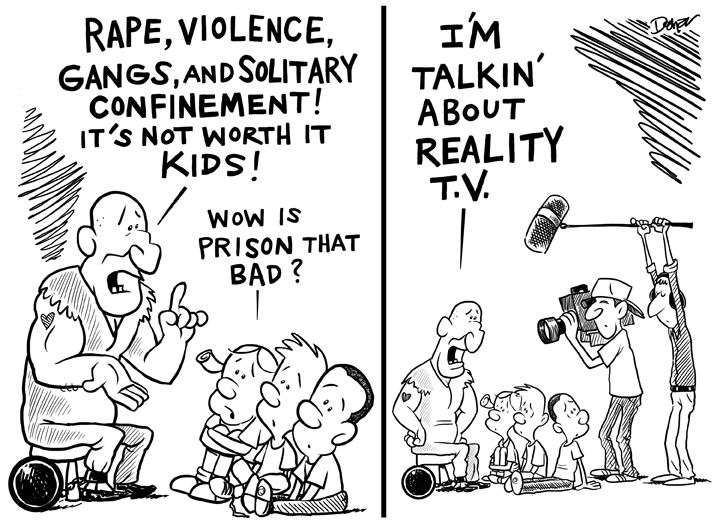
SATIRE!!!1111!1
Even without watching it myself, I’ve become less and less comfortable with the traditional critiques of reality TV as I’ve sharpened my critical apparatus. For a start, it seems predicated on the notion of a hierarchy of art, the assumption that some forms of entertainment are somehow innately higher or better than others. It’s a terribly condescending form of knee-jerk moralizing.And if you don’t ever watch it, it’s a bit presumptuous to be judgmental about the whole genre.
I’ve tried to stay in the moral middle ground, having no real opinion on reality TV other than that it’s not for me. I’d likely have continued my reality-TV-free existence, had it not been for this excellent piece at the incomparable Womanist Musings.
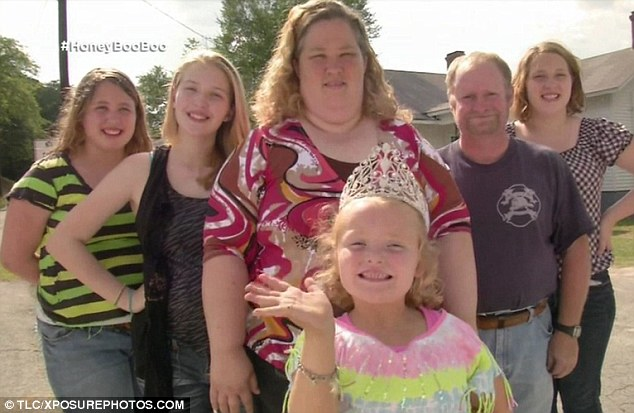
Renee and Sparky watched TLC’s infamous Here Comes Honey Boo Boo, the reality show about six-year-old beauty pageant contestant Alana and her working-class Georgia family, and their reaction was not necessarily what you’d expect. They make many terrific points about how repugnant the show is as a piece of television, how it “other[s the family] at every turn,” but they also offer an invaluable counterreading. They like this family – the four daughters aged between six and seventeen, the quiet father figure, and heroic matriarch June – and they’ll continue to like them, no matter what the show’s structure seems to want us to think.
I love them all, but “Pumpkin” is my favorite.
If you consume entertainment and have any conscience at all, you are a practiced counterreader. You have to be, if you’re going to stand up to the hateful kyriarchal bullshit with which 21st-century westerners are bombarded every minute of the day. All responsible entertainment consumption requires a risk assessment, weighing the potential value to be gained against the potential harm to be done, and everybody’s evaluation is slightly different. For one person, well-rounded white female characters but no characters of color is worth the trade-off; for another, it simply isn’t. And sometimes performing an adequate counterreading requires you to marshal all your critical resources.
Here Comes Honey Boo Boo is not a text that welcomes counterreadings with open arms. Operating well within the established format of reality television, it utilizes an arsenal of techniques – both subtle and not so much – to impel voyeurism. TLC makes it very, very easy to sneer at and judge Honey Boo Boo and her family. You have to work quite hard to counteract this compulsion. You really have to be on the critical ball the whole time. And is that okay?
All summer the debate has raged as to whether, or to what extent, the show is exploitative. Having watched all of it inside of a week, I’m still undecided. There are moments when June and the girls express a self-awareness and a confidence that has me cheering them to the skies, sure that their assertions of not caring what people think of them are sincere. At times, though – especially when outsiders arebrought in to interact with the family, an etiquette teacher or a pedicurist, and get all flustered and shocked by them – the whole thing seems enormously exploitative and gross.
It’s this indeterminacy, this openness to a multiplicity of different interpretations, that has the national conversation about Honey Boo Boo going so fiercely. As Time’s James Poniewozik observes:
overall, she has a kind of sassy sweetness to her. In the second episode, she gets a pet teacup pig as consolation for losing a pageant and decides to dress him as a girl, which she says will make him gay. The ensuing argument with her older sister is both ridiculous and oddly wise in a 6-year-old way: “It’s not gonna be gay.” “Yes it is, because we’re making it a girl pig! And it’s actually a boy pig!” “O.K., but it’s not gonna be gay.” “It can if it wants to. You can’t tell that pig what to do.”
You can’t tell that pig what to do. See, you can look at that scene, like you can most of Honey Boo Boo, several ways. You can laugh at the intensity of Alana’s conviction that she’s right. You can tut-tut at the gender-role signals this pageant girl must be getting to conclude that you can “make” someone or something gay by dressing it in girl clothes. But you can also see something kind of remarkable in it: a little country girl, whatever confusion and misinformation she has in her mind, fervently arguing a teacup pig’s right to determine its own sexual identity.
AWWW
There are plenty of other interesting aspects of this show (Salon considers the race angle; Slate tackles the class issue), but the two that can’t be ignored are the gender dynamic and the class factor. The gender dynamic is pretty glorious: five strong, opinionated women who love each other deeply and don’t take anyone’s shit. They do what they want to do, they look how they want to look, and they are happy. Dare I suggest that one of the reasons the country’s spent its summer in thrall to these people is that we just don’t see women like this in our scripted entertainment?
Of course, it’s rare to see poor white people portrayed sympathetically on US TV at all. My understanding of class in the US is much less nuanced than my understanding of the British class system, but I’m aware of this country’s distaste for its own working poor. “Rednecks” appear in the media as rapists, as racists, as the butt of jokes and the object of revulsion. Voyeurism and disgust motivate hate-watching in our culture to an obscene degree, and that is why I think it’s important to perform a counterreading, to celebrate this family and refuse to let your responses be dictated by classism and hatred. If you want to be truly horrified by your fellow humans, check outthe comments on this Gawker article (I hope you have a strong stomach). To me, this is the aspect of Honey Boo Boo that’s truly awful – not a happy family letting a camera crew into their lives in exchange for some money they surely need, but the legions of haters who judge Honey Boo Boo and her family to be less human, less worthy of dignity and respect for their life choices, than themselves.
The family certainly does not reciprocate that sentiment. Even in the throes of labor agony, when asked, “Do you recommend to anybody else to get pregnant at 17?”, oldest daughter Anna replies, “Do whatever you want to do.” She just refuses to tell anyone else what to do with their body or their life. The rest of America – from legislators to judgmental internet commenters – could learn something from her.
Max Thornton blogs at Gay Christian Geek, and is slowly learning to twitter at @RainicornMax.

Bitch Flicks’ Weekly Picks

Amber’s Picks:

GOP women contribute importantly to the political landscape — with their looks via About-Face

The Man Who Loved Movies (and Women) Andrew Sarris Honored by MoMA, American Academy of Arts & Letters by Penelope Andrew via HuffPost


Megan’s Picks:

Amy Poehler and Meryl Streep Are Pissed About Attacks on Reproductive Rights by Amanda Marcotte via Slate’s XX Factor

Yes, There Are Fat Women Getting Hollywood Roles…But We Still Treat Them Like Crap by Lindy West via Jezebel

Nashville, and Why All Female Rivalries Aren’t Catfights by Alyssa Rosenberg via ThinkProgress

Middle of Nowhere and the Black Independent Film Movement by Roya Rastegar via The Huffington Post

“Your Women are Oppressed, But Ours Are Awesome”: How Nicholas Kristof and Half the Sky Use Women Against Each Other by Sayantani DasGupta via Racialicious

Women on TV Step Off the Scale by Allessandra Stanley via The New York Times

Could Issa Rae Save the Black Sitcom? by Jason Parham via The Atlantic 

10 Reasons We Won’t Participate in the Lena Dunham Backlash by Emma Gray and Margaret Wheeler Johnson via The Huffington Post

Why Dredd Is Really a Superheroine Movie by Alyssa Rosenberg via ThinkProgress

What have you been reading this week? Tell us in the comments!