‘What to Expect When You’re Expecting’: Unexpected Gem

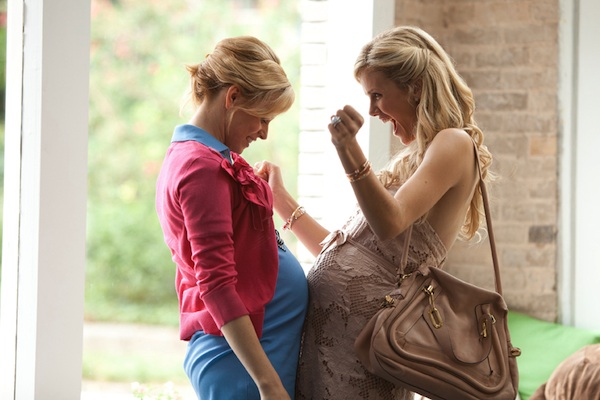
Elizabeth Banks and Brooklyn Decker in What to Expect When You’re Expecting
What to Expect When You’re Expecting was [excuse the hack writing here, it’s unavoidable:] not what I expected.  I expected it to be another He’s Just Not That Into You: an insipid, generally obnoxious star-studded ensemble piece loosely inspired by a bestselling cultural touchstone of a nonfiction book.  Instead, it is an entertaining, surprisingly touching star-studded ensemble piece loosely inspired by a bestselling cultural touchstone of a nonfiction book.
One of the best things about What to Expect is that it never attempts to universalize pregnancy or parenting.  The five semi-connected expecting couples in the film all have different conception stories (from an oops one night stand, to getting lucky after years of infertility, to choosing adoption) and pregnancy experiences (from Brooklyn Decker’s walk-in-the-park pregnancy with twins to lactation advocate Elizabeth Bank’s hormone-fueled emotional breakdown to [spoiler alert!] an astonishingly sensitive depiction of miscarriage).  While the film unfortunately depicts an Atlanta that knows no gays and is largely white, it at least partway makes up for its lack of demographic diversity by exploring a rich diversity of experience.
“Dudes Group” of fathers in What to Expect When You’re Expecting
I was also very happily surprised by the depiction of fatherhood in What to Expect When You’re Expecting, especially after seeing the bit in the trailer where a group of dads pushing strollers slo-mo walk to Biggie’s “Big Poppa.”   I expected this plotline to be another iteration of “men doing ladywork: HILARIOUS!”  But the “dudes group” is celebrated, not mocked, for embracing fatherhood, and while the group has a code of “no judging” when they share such parenting mishaps as “last week, my kid ate a cigarette”, the dads are not depicted as incompetent impostors in a woman’s world. They’re equal partners in parenthood.
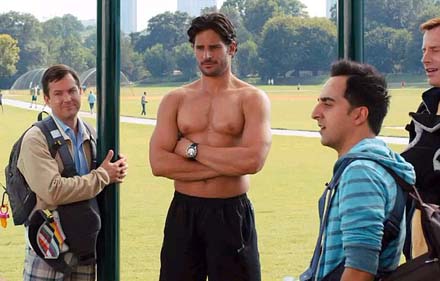
And best of all, What to Expect When You’re Expecting is genuinely funny and emotionally affecting.  It’s sort of unfortunate that the movie features a lot of humor bizarrely specific to the 2012 zeitgeist, from food truck rivalries to autotuned remixes of public breakdowns; because the movie could be, like the book of the same title, something of a perennial classic for expecting parents.  But What to Expect When You’re Expecting makes up some points by also including some of the best things about the 2012 cultural moment: scene-stealing Rebel Wilson and shirtless Joe Manganiello. 
Shirtless Joe Maganiello is one of the best things about living in 2012.

Surprise: Rich White Men Dominate the Cinema

I don’t want to see the film Oliver Stone will want to make about Romney
Here is my draft of an open tweet I am working on for directors and producers of Hollywood who continue directing and producing movies mostly about rich white men:

@WealthyDirectors&Producers I know ppl r told 2 “write what u know” & the nxt logical step 4 filmmakers would b 2 “film what u know.” But, stop, we’ve had enuf of rich men.

So, an open tweet might not be the best format to address my frustration with Hollywood and the seeming upsurge in rich-white-man-falling-from-rich-graces story arc. And, it might not be practical to address it to a made-up twitter handle. But, when the system is so dang exclusive, I got to get by with my gimmicks.

Our whole movie-making industry fits comfortably into the laps of well-to-do white men between the ages of 18-35. So, even though great films are coming out, the ones that are – during a recession for Christ’s sake – are falling radically at the ends of a spectrum at around poverty porn or bewailing the epic fall of an epic hero.

Why is it, for instance, that we had to endure another Oliver Stone movie – a sequel to Wall Street ­­Wall Street: Money Never Sleeps? While it touched on some pretty timely issues – i.e. it followed our fall into economic crisis – it only looked through wealthy characters. These characters’ flaws were pretty solidly greed and excessive ambition. Help me out here, but that is just not where most Americans are at right now.

The two highest grossing movies of this year both feature obscenely rich playboys wielding their pocketbooks to fight crime. Tony Stark in The Avengers, is brilliant, but can only functionally be a superhero because he’s wealthy. While Bruce Wayne, in The Dark Knight Rises, would still be pretty badass without the money, he wouldn’t have gotten far in challenging Gotham’s worst without his high-tech gadgets and his martial arts training obtained overseas.

Past the summer blockbusters, even Oscar-chasers are focusing mostly on the stories of the rich and prestigious. Black Swan followed the story of a woman, (yes, a woman!) but she was a ballerina (not exactly an art form available to the middle-class budget) whose fall was connected with her ambition and rise to enormous success. The Great Gatsby is coming out in 2013, and while a great story on the failures of the “American Dream” it is still about the fall of a rich white man.

It seems like directors are pretty fascinated with the greed and corruption that led to the desperate state of our current economy. But, what about the result for the majority of Americans? You know, the big group of folks who are now dealing with tight budgets and un/underemployement? And why is the more pertinent entertainment not accessible to the groups who could relate to it? Why was Death of a Salesman only on Broadway? Doesn’t that seem like a good thing to send to theaters? I mean, if we have to look at the woes of white men – can they at least be struggling with culturally relevant strife? Why is Lena Dunham’s show Girls centered around the stories of struggling twenty-something (white) women, such a big hit on HBO and not a network? As in: why is a show about financially struggling young people available on a station that only people who can afford cable can watch.

Of course we’re not completely sunk. The third highest grossing film was The Hunger Games – a film featuring a strong young woman fighting the powers that be that continue to disenfranchise her and her society.

We need more people making film who aren’t obsessed with wealth and power. We need to address themes other than those concerning megalomaniacs. Wouldn’t it be a relief to see some blockbusters where the audience can actually relate to the problems the characters face?

Erin Fenner is a writer based in Portland. She likes film and feminism and alliteration. 

Why I’ve Fallen in Love with ‘New Girl’

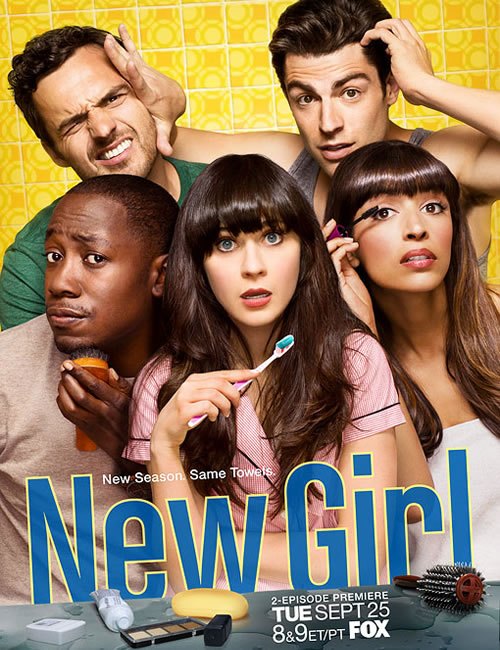
The main cast of New Girl

I’m not sure what’s happened, but I have fallen head over heels in love with FOX’s New Girl. I devoured the first season within a week and immediately caught up on the first few episodes of season two. 

New Girl wasn’t a show I ever planned on watching. I actually like Zooey Deschanel, but I didn’t feel like I needed to see half an hour of her “adorkable” antics every week. The initial ads also made me believe that this show was going to be about a weird woman-child who moved in with three men who would eventually either a) pull a My Fair Lady on her and craft her into a more normal human being, or b) come to appreciate the quirky elf magic of this manic pixie dream girl and learn how to live their lives, or c) both of the above. Then one of them would fall in love with her, and they’d have a “She saved him back” moment from Pretty Woman, and they’d live manically and pixie-like forever after.
Well, this goes to show how marketing can be misleading, because New Girl is not that show at all. 
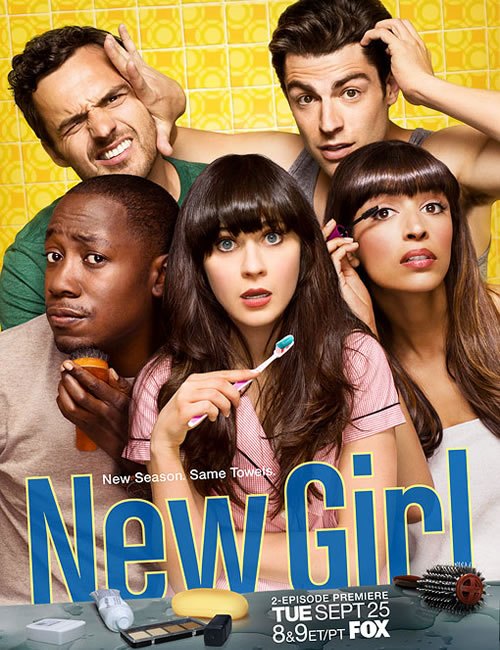
Jess (Zooey Deschanel), Nick (Jake Johnson), Schmidt (Max Greenfield), and Winston (Lamorne Morris)
Yes, the first few episodes were largely about Zooey’s character Jess moving in and the male friends adjusting to her personality, but soon, the audience was introduced to the weirder sides of Nick, Winston, and Schmidt, and we quickly saw that this was a group of people who are all freaky oddballs. Sure, Jess makes up her own theme songs and speaks in silly accents, but Nick believes that an old man who speaks to him at the bar is himself from the future, Winston gets overly competitive about a middle school bells group, and Schmidt…is Schmidt. 

Sometimes Jess is the voice of reason among the weird people, sometimes she’s the odd one that one of the guys has to rein in, and sometimes, in the very best episodes, the whole gang is completely off the wall. More importantly, Jess  never has to be the mommy to a group of manchildren, and the guys never have to be the condescending Three Men and a Little Lady daddies to a girl-woman. I was afraid of both of those tropes before I started watching of the show, but neither has been the case.

On top of that, New Girl also showcases a female friendship that I find delightful to watch. Jess’s childhood best friend Cece, a confident, gorgeous model, is another main character on the show, and they complement each other perfectly. They’re highly supportive of each other, they share tough love when they need to, and their heartfelt moments are always genuine. When they fight, they fight like real women fight, not like a male fantasy of catty, bitchy women.

One of my favorite episodes of New Girl is “Secrets,” when Schmidt and Cece’s secret relationship becomes known to everyone else in the apartment. Jess is horrified to learn this information, but she’s also hurt that she was the last person to find out, thinking that Cece doesn’t trust her anymore. Cece, meanwhile, was afraid of Jess’s judgment, but was more afraid of admitting that she cared about Schmidt as something more than a hookup. The fight was over by the end of the episode, and there was a refreshing lack of catfight jokes.
Jess makes up with Cece (Hannah Simone)
There was another episode that featured an argument between two women – Jess and Nick’s girlfriend Julia – that was a great commentary on the way women fight when their personalities clash. Julia (Lizzy Caplan) is immediately put off by Jess’s whole persona, assuming that her super-girly attitude is nothing but an act, and feels threatened by Jess’s  place in Nick’s life:

“I know that I’m the mean lawyer girl who wears suits and works too much, and you – you’re the really fun teacher girl with all the colorful skirts, and you bake things, and eventually Nick will come running to you, and you’ll tuck him in under his blankie.”

This ends in an argument where Julia flat-out admits that she doesn’t like Jess and quietly asks her to go away so she can cry in the bathroom. Jess doesn’t want to leave because then she won’t have anywhere to cry, but runs into the men’s bathroom to see Nick crying, and is then forced to cry in the hallway. 

The sequence is hilarious and I watched it several times, but I also thought the scene, and the episode in general, was a great portrayal of how women sometimes misunderstand each other. Julia sees Jess as a threat because Jess is the living embodiment of the bubbly feminine stereotype that male writers use and re-use and over-use in their navel-gazing stories. Julia’s not being fair to Jess, but her feelings are more than understandable. Our society gives us such a narrow definition of how to be a woman that it’s easy to have knee-jerk feelings of resentment towards women who are more traditionally feminine, even if we know it’s irrational.
Julia (Lizzy Caplan) and Jess – two clashing personalities
And by the end of the episode, Jess and Julia have put their issues aside and bonded over some girl time crocheting. They’re not suddenly best friends, but they’re cool with each other, and it was so refreshing to see two women put aside their differences without a) showing any underlying cattiness, or b) turning the show into a Hallmark card. 

The show isn’t perfect, of course. The writers broke up Schmidt and Cece much too quickly, almost as though they bought into the idea that happy couples are never funny. Winston as a character still isn’t as clearly defined as the other three roommates, even though Lamorne Morris is a very funny actor. And as a former teacher, I’m perplexed as to why Jess has to quit teaching entirely after getting laid off from one school, instead of, I don’t know, trying to find a job at a different school, like most teachers do. But despite its flaws, I love New Girl for introducing me to this group of weird people and treating all of its characters with respect and affection. 
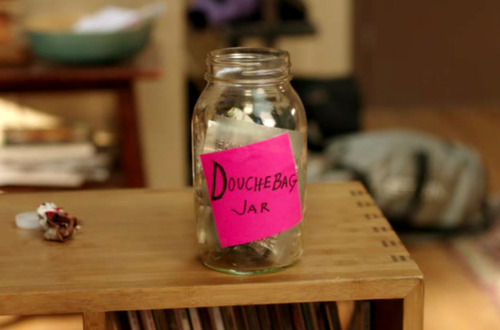
Did you think I would write a whole post about New Girl without a reference to the douchebag jar?

10 Reasons Why ‘The Addams Family’ Is Awesome(ly) Feminist

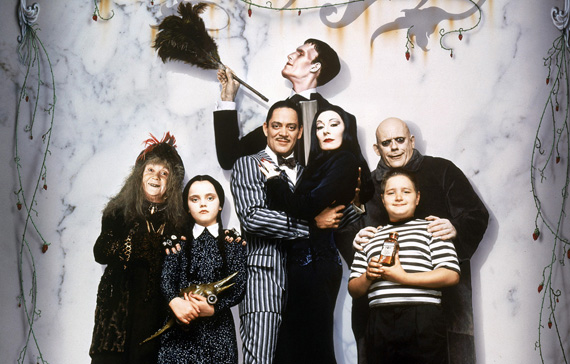
The cast of The Addams Family

1. Anjelica Huston was 40 when she played Morticia. Considering that it’s very hard for women over 40 (who aren’t A-listers) to get lead parts, that’s already a milestone. But she’s also sexy. Incredibly sexy. Yes, she’s playing the mother of a pair of preteens, but she appears immaculately (and eerily) beautiful in every scene she’s in. How often do we see a mother character who is genuinely sexy?
2. Morticia and Gomez Addams are famously in love with each other. What set the 1960s series apart from all other sitcoms was that this was a married couple who were crazy about each other, instead of fighting. In the film, this tradition of their great love affair continues. There are no mother-in-law jokes, both take responsibility in raising the children, and have a very healthy sex life. So many stories have the love story end at marriage, or have the couple grow to loathe each other over time. Just think of it – a loving marriage was groundbreaking.
3. Addams Family Values explicitly challenges conformist WASPs at the Summer Camp that Wednesday and Pugsley stay at. The siblings absolutely refuse to compromise themselves and pretend to be happy or to enjoy sickeningly sappy things (like Annie the musical). The camp counsellors show favouritism to the traditionally attractive blonde white rich kids, and it’s made quite obvious how hateful and hypocritical they really are. At the end of the movie, Wednesday and the other “outcasts” deliberately sabotage the counsellors’ tremendously racist Thanksgiving play by symbolically enacting revenge for the genocide that Native Americans suffered at the hands of white people.
4. Despite the Addamses having both a boy and a girl child (at least in the first film), it is the girl that gets the good parts. That doesn’t happen very often at all – other examples of media that has two siblings of each sex almost always emphasizes the brother. Christina Ricci’s sarcastic and deadpan portrayal of Wednesday is one of the highlights of an already perfectly cast set of films. It contrasts sharply with the cheerful Wednesday from the TV version, but I can’t be the only one longing for more sardonic brunette girls in family movies…who aren’t the villains.
5. The climax of The Addams Family seemingly has a damsel-in-distress situation…except that it’s been turned on its head. Morticia…enjoys…being tied up and tortured. Yep kiddies, here’s your first introduction to bondage and BDSM! It’s played for laughs of course, as it always is, but notice that when Gomez and Morticia discuss her predicament, it’s with absolute passion. Their kinkiness is just another aspect of their already healthy sex life. And in the end, the damsel-in-distress isn’t really in distress at all! Sure, she needed to be untied, but Morticia was definitely not in any danger.
6. The characters are evenly split male/female. On the male side, we have Gomez, Fester, Lurch, Pugsley, and Tully Alford. On the female side, we have Morticia, Wednesday, Grandmama, Dr. Pinder-Schloos and Margaret Alford. The four leads (arguably Raul Julia, Anjelica Huston, Christopher Lloyd and Christina Ricci) are split evenly too. And, of course, the film passes the Bechdel Test pretty easily.
7. The villain of Addams Family Values, Debbie (played by Joan Cusack), is a parody of the femme fatale. She’s a black widow with the most ridiculous motives possible. She supposedly killed her parents as a little girl because they got her Malibu Barbie instead of Ballerina Barbie. The tropes of the femme fatale are stretched to their absolute limit of believability, which helps to highlight just how silly a character archetype it is. And naturally, the Addamses accept her faults wholeheartedly (as they always do – they don’t judge anyone except those who judge them). They just take issue with her attempting to murder them too. And decorating with pastels. One must never decorate with pastels.
8. The first film depicts a realistic (well, for a bizarre comedy) breakdown of a marriage. Tully Alford is a coward and a liar, who has practically bankrupted his family by relying too much on loan sharks and vainly hoping that his wealthy Addams clients will bail him out (but instead of asking them for help, he tries to trick them out of money). Margaret openly wonders why she married Tully in the first place. A few weeks later, when the Addamses are holding their family reunion in Fester’s honor, Margaret hits it off with Cousin Itt. They dance, and talk together, and Itt is clearly the first person to make her smile, laugh, and open up about her troubles. She is initially guilty about the affection she’s showing for Itt, but it’s obvious by this point that her husband has begun to ignore her completely in his pursuit for money. When Tully “dies” at the end, it frees Margaret to begin a relationship with Cousin Itt. Instead of vilifying Margaret, her loneliness and subsequent happiness with Cousin Itt is depicted very sympathetically. Should she have gotten a divorce instead, I have no doubt it would have also been portrayed sympathetically.
9. Morticia becomes pregnant at the end of the first film, and has a son, Pubert, in the second one. This is another unusual depiction of motherhood. We know that Huston was in her 40s when the films were shot, and her character is probably around the same age since she has teenage children. Here we see an “older” mother getting pregnant and having a child, AND a family where there’s a big age gap between one or more siblings. As someone roughly twice the age of my younger sister, I can’t tell you how much I appreciated that a film recognized that not all siblings have to be born within 10 years of each other. I also appreciated that, once again, it depicted a mother who isn’t traditionally “young” (which I’ll define as under 35). As women wait longer to get married and/or to have children, this is an important social change to recognize.
10. They are genuinely FUNNY. The two films are ones I can watch over and over, and I’ll maintain that they are probably the best feature film adaptations of a TV series ever. They utilize black humour in a way that is both clever and ridiculous (exaggeration being the favourite tool of comedians) without being gory or mean-spirited. I also believe that the films couldn’t have had a finer cast, god rest Raul Julia. I leave you with one of the finest jokes ever written for a comedy film. Happy Halloween!
Girl Scout: Is this made from real lemons?
Wednesday: Yes.
Girl Scout: I only like all-natural foods and beverages, organically grown, with no preservatives. Are you sure they’re real lemons?
Pugsley: Yes.
Girl Scout: Well, I’ll tell you what. I’ll buy a cup if you buy a box of my delicious Girl Scout cookies. Do we have a deal?
Wednesday: Are they made from real Girl Scouts?

Myrna Waldron is a feminist writer/blogger with a particular emphasis on all things nerdy. She lives in Toronto and has studied English and Film at York University. Myrna has a particular interest in the animation medium, having written extensively on American, Canadian and Japanese animation. She also has a passion for Sci-Fi & Fantasy literature, pop culture literature such as cartoons/comics, and the gaming subculture. She maintains a personal collection of blog posts, rants, essays and musings at The Soapboxing Geek, and tweets with reckless pottymouthed abandon at @SoapboxingGeek.

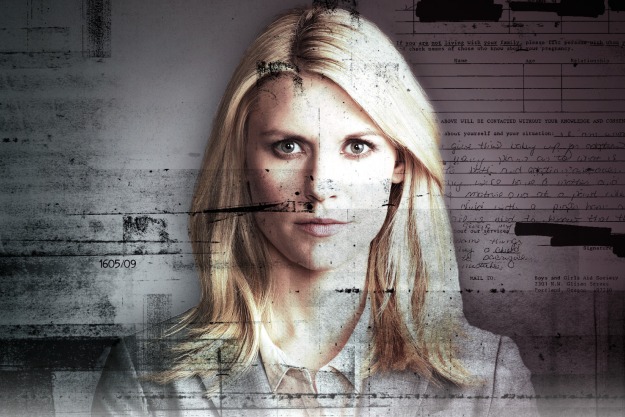
‘Homeland’s Carrie Mathison: A Pulsing Beat of Jazz and ‘Crazy Genius’

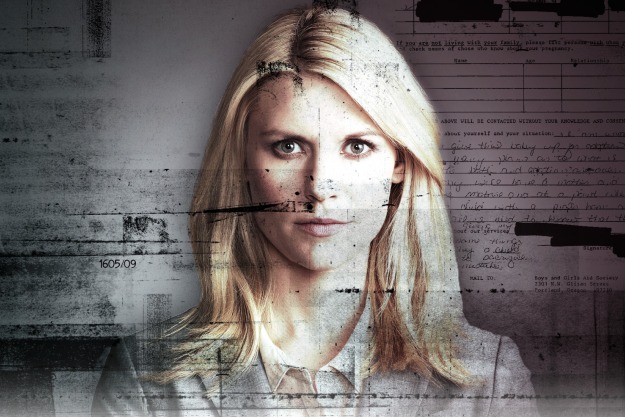
Carrie Mathison, a haunted yet brilliant CIA analyst.

Warning: spoilers ahead!

“I hate straight singing. I have to change a tune to my own way of doing it. That’s all I know.”
 

— Billie Holiday

In the pilot episode of Homeland, Carrie Mathison (Claire Danes), hurries back to her Washington D.C. apartment after a night out, and the audience sees a photo of jazz musicians and pieces of artwork emblazoned with the word “Jazz.” Jazz–the nebulous, wholly American musical genre–is improvisation. It is individualism and collaboration. It is color-outside-the-lines, boundary-pushing rhythm. It is Carrie, a CIA analyst who must push and navigate her way around the patriarchal CIA and her brilliant and bipolar mind.
Carrie shows very early on that she doesn’t strictly play by the rules. In the opening scene of the pilot, she is driving around the streets of Baghdad, headscarf down, and talking on the phone with her superior back in D.C. When she gets stuck in traffic, she simply gets out of the car and starts walking, pulling up her headscarf. She doesn’t hesitate to improvise, and is constantly navigating to make inroads that seem impossible.
The Ken Burns Jazz documentary website states,

“So while it is true that jazz is a demanding and competitive field for both men and women, it is also true that a woman who shows up for an audition or jam session with a tenor sax or trumpet in her gig bag is greeted with a special variety of raised eyebrows, curiosity and skepticism. Is she serious? Can she play? Time-worn questions about women and jazz buzz through the room before she blows a note.”
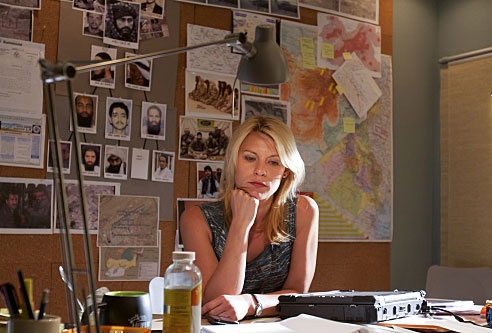
Carrie’s personal and professional lives weave together–the professional trumps the personal, but her private battles threaten her career.

When Carrie is questioning the American POW Nicholas Brody (Damian Lewis) for the first time, she is calm and firm, yet her pressing questions make her supervisor question her, as Brody is clearly uncomfortable. The CIA has moved past its extreme “woman problem” of the 80s and 90s, but certainly it’s not immune to continued gender bias.
The audience knows that Saul (Mandy Patinkin) has been Carrie’s mentor, and he continues to be one throughout the series. This older man, who helps guide and protect a young female protagonist, is a popular trope (Ron Swanson, Jack Donaghy and Don Draper, to name a few). It makes sense to the audience that a young woman doesn’t break into the boys’ club alone, so oftentimes these male mentors serve as powerful gatekeepers to gendered worlds. Whether this trope is realistic or reductionist, or somewhere in between, is an important point of discussion (much like the fact that Carrie’s mother is an absent character and her father shares an intense connection with her as they share the same bipolar disorder–this recurrent “absent mother” trope for female protagonists is problematic to say the least). 
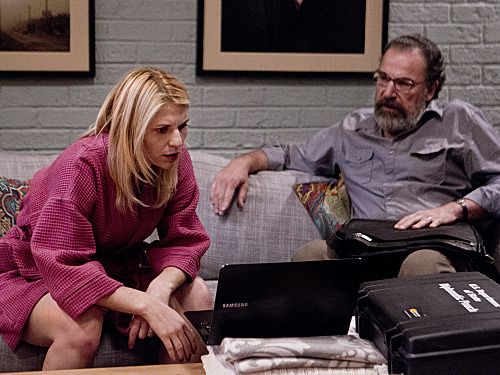
Saul serves as a mentor to Carrie. (Patinkin has been outspoken about issues of television and feminism.)

While the audience can assume that Carrie has seen and felt many “raised eyebrows, curiosity and skepticism” in her rise through the ranks, her creativity and improvisational talent give her power.
“It’s ill-becoming for an old broad to sing about how bad she wants it. But occasionally we do.”

— Lena Horne

In the aforementioned scene, when Carrie rushes home after a night out, she strips down to a slip and wipes her crotch with a damp washcloth while brushing her teeth. She hurriedly slips off a wedding ring as she leaves to go to work at CIA Headquarters.
Later, she goes to a jazz bar (after laboriously–not pleasurably–putting on black lace) and tells a man in a suit that she wears the ring to “weed out guys looking for a relationship.” After some obligatory flirting, she suggests they leave and go elsewhere.
When Carrie strikes up a sexual relationship with Brody later in the first season (after drunken, raw sex in her backseat), it’s always mildly unclear whether she’s doing so for professional gain. The relationship ebbs and flows in and out of her favor, and the audience realizes that Carrie enjoys sex and some level of human connection. Even when it looks and feels like a chore (as she puts on her black lace, for example), sex is something that Carrie needs. Period.
No strings, no clear ulterior motives, no obsession with marriage. Carrie’s sexual persona is as startling–and as normal–as the crotch-wipe after a night out.
The complexity of relationships and marriages is a central theme in many subplots (Brody’s wife, Jessica, believing her husband dead, has a serious relationship with his best friend; Saul’s wife struggles with his work schedule, although she is a highly successful professional herself). The relationships all reflect very realistic scenarios, and the women–supporting characters, even–are complex and whole.
“Jazz is not just music, it’s a way of life, it’s a way of being, a way of thinking. . . . the new inventive phrases we make up to describe things — all that to me is jazz just as much as the music we play.”
— Nina Simone
When Carrie gets up to leave the jazz bar with her catch of the night, she stops and notices Brody and his family on television. She observes the finger movements of the trumpeter, pianist and bassist, and connects them to the finger-tapping motions Brody is making on his televised press conferences. She leaves her date behind and rushes to Saul’s house, more convinced that Brody has been turned.
Carrie has a wall in her apartment dedicated to unraveling the al-Qaeda terror plot she believes Brody to be operating in. Her personal life and professional life have few boundaries (and her only clear pleasures–jazz music and sex–bleed into her career as well).
Her thought processes are very rarely black and white, as are her male colleague’s. She always seems to be trying to connect new and different dots, and looking at other pieces of stories. When Aileen Morgan and Raqim Faisel were being hunted as prime terrorist suspects, the male agents assumed Aileen was the “terrorist’s girlfriend.” It was Carrie who finally said, “Maybe she’s the one driving this…” And she was. The blonde white woman was the catalyst to their involvement with a terror plot, and Carrie had to point out the possibility that their assumptions (white woman tricked and trapped by a Middle Eastern extremist) were wrong.
A Guardian blog post connected the fact that a Thelonious Monk song was playing as a backdrop when Carrie drove to attend a meeting at the CIA Headquarters. The writer notes,

“Monk was hospitalised at various points in his career due to an unspecified mental illness and there has been some debate about whether he could have had a schizophrenic or bipolar disorder. (In fact, jazz and schizophrenia have long been linked. It is argued that New Orleans cornetist Buddy Bolden, the ‘inventor of jazz’, improvised the music he played as his schizophrenia did not allow him to read music, evolving ragtime into a more free form of music in the process.) It is an association that positions Carrie, who takes anti-psychotics, as a ‘crazy genius’ like Monk.”

Carrie’s mental and emotional well-being, as is exposed in the first season, is held together by those non-aspirin pills she takes out of the aspirin bottle every morning. Her sister gives her anti-psychotics illegally, since she would not be able to be a CIA agent if they knew she had bipolar disorder. Her tenacity, her genius and her fragility (she sobs to her sister at one point, “I’ve been on my own for a while now…”) are in constant battle. She is, very often, on the edge.
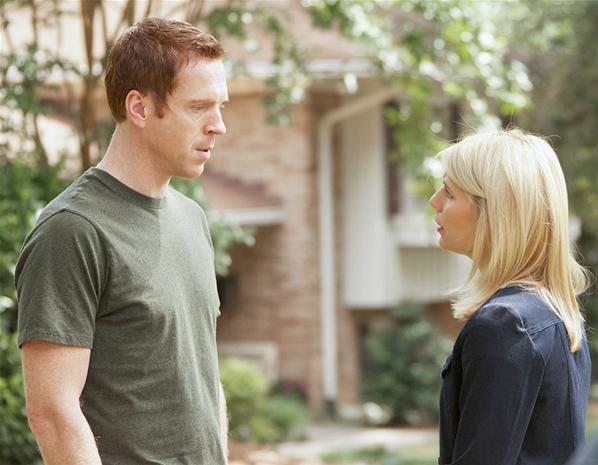
Nick Brody and Carrie develop a complicated relationship, although her theories of his terrorist involvement were correct.

When she got (many) drinks with Brody before they first had sex, she told him,

“When I was a girl, my friends and I used to play chicken with the train on the tracks near our house and no one could ever beat me, not even the boys.”

One can see Carrie’s life as an endless game of chicken, whether it’s with trains, sex, surveillance without warrants or hiding a mood disorder. That constant challenge–not unlike a call-and-response jazz pattern that encourages louder and faster feedback–both energizes and limits Carrie throughout the series.

“One day a whole damn song fell into place in my head.”
— Billie Holiday

Carrie’s right. She knew Brody was turned, though no one would listen. Brody’s teenage daughter, Dana (in all of her teenage angst), with Carrie’s help, figured it out as well (and some argue it was Dana who really stopped Brody).
However, Brody stopped himself (his conscience and a malfunctioning bomb stopped him, rather, or even Dana’s phone call). He reigns in the public eye as the good guy, the rising politician, and the complexities of his terrorist motives (connected to drone strikes that killed a young boy) are difficult for the audience to make right and wrong out of. (This is, of course, what good storytelling does.)
Carrie, however, has been found out. A hospitalization left her without her medication, and she chooses to undergo electroconvulsive therapy (ECT, or shock treatment, which is becoming more popular in the US, mostly with female patients) to “heal” her mental disorder. The treatment makes her forget much of what she knew, and she can’t realize that she’s helped thwart another terrorist attack. Her intense guilt after “missing something” on 9/11 certainly drove her mania deeper, yet she is compelled to give up the part of herself that drives her forward with the ECT.
Just as the song is truly falling into place in her head, she loses it.
Not to discount the real and debilitating nature of Carrie’s bipolar disorder, one must also reflect upon women’s history in terms of mental illness and the diagnosis and treatment plans women were subjected to. Carrie enters into Season 2 a more domesticated woman (teaching English, gardening, attempting “domestic normalcy”). Treatment for women’s emotional disorders–or perceived disorders–in the late 1800s and early 1900s was often the “rest cure,” when women were isolated and kept away from mental and physical stimulation. This harmed more women than anything, and Carrie being kept from her challenging mental stimulation and work is not, most viewers would argue, good for her. This feminine fragility at the hands of a mental illness isn’t new, nor is the treatment. She’s consistently second-guessed and made to feel insecure, which leads her to doubt herself. However, Saul understands their need for her at this point in Season 2, and will hopefully continue to be her cheerleader and help her navigate the waters.
Carrie’s inner conflicts, starting from her girlhood, are repeated every episode in the show’s opening credits. Dissonant jazz trumpets play in the background, and scenes showing a little girl’s hands playing the piano and trumpet are cut with professionals’ playing. As the audience sees pictures of a young Carrie growing up–in a mask, in a maze, smiling for the camera–news footage from America’s recent history is spliced in (from Ronald Reagan to Barack Obama, with sound bites from numerous domestic tragedies). Her sleeping eyes dart, and her panicked adult voice repeats her guilt and fear of “missing” something from ten years before. Even from this opening sequence, the audience is left tense and uncomfortable feeling and seeing Carrie’s thought patterns.
Improvising is much more difficult than reading sheet music. Jazz musicians must perform on a much different plane than classical musicians–the uncertainty, the complexity and the unexpectedness of what your fingers, or your band mate’s fingers, might do next is nothing short of terrifying. But in this game of “chicken,” the end result is a masterpiece.
Momentarily, Carrie has been relegated to the padded room of elevator music, soft and predictable.
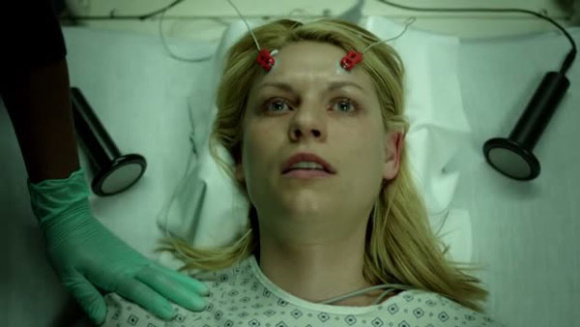
Carrie chooses to undergo ECT, as she convinces herself in Season 1 that her suspicions about Brody are delusions.

Former CIA covert-operations officer Valerie Plame Wilson, who wrote “The Women of the CIA” nearly two years before Homeland first aired, says of Carrie Mathison:

“Carrie does not suffer from the common female need-to-please trait and, in fact, insists she is usually right. She is impulsive in a job that rewards patience and lies to the few people who can tolerate her…You root for her because those very despicable qualities also make her extraordinarily good at her mission. Danes breathes life and realism into a character who, for once, goes against the clichés of what a female CIA officer is supposed to do and look like.”
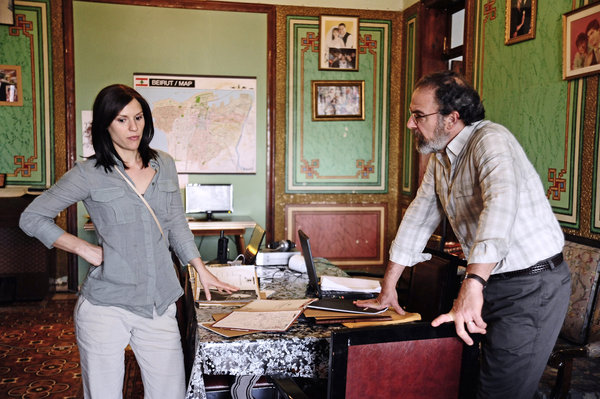
Carrie is back in action in Season 2, and Saul is listening.
Carrie, much like the female jazz musicians before her, does her best to break boundaries and succeed in the boys’ world. Perhaps she could, and hopefully she will, as long as she can both overcome her bipolar disorder while at the same time retaining the impulsive, creative, compulsive thinking that makes her brilliant.


Leigh Kolb is a composition, literature and journalism instructor at a community college in rural Missouri. 
‘The Master’: A Movie About White Dudes Talking About Stuff

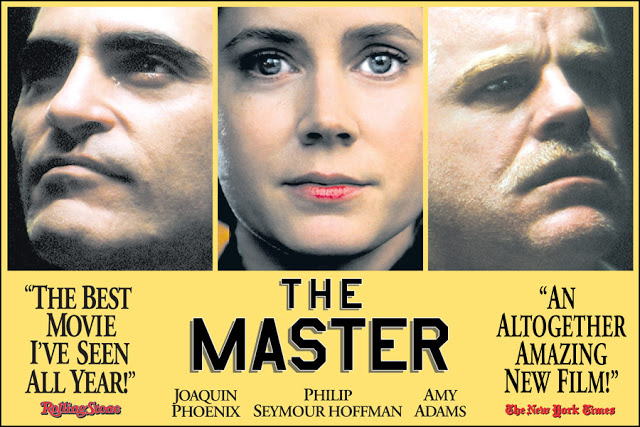
Movie poster for The Master
Well this movie is a piece of shit.

Slim at Gone Elsewhere does an excellent job of explaining the plot, so if you don’t know the plot, go there first … then come back here and let me explain to you why this movie is a piece of shit.

I went into it thinking it had the potential to be good because Paul Thomas Anderson made Magnolia, and Magnolia has some wonderfully nuanced and well-developed women characters, so I know he’s capable of not creating films exclusively about white dudes talking about stuff, but fuck, I honestly couldn’t get over his absolute reveling in the incessant blathering of white dudes to other white dudes.

Don’t get me wrong; Joaquin Phoenix’s emotionally disturbed character, Freddie Quell, totally makes a sand-woman on the beach—complete with breasts and spread legs—that he then proceeds to hump and fingerfuck in front of a group of cheering white dudes (even they get uncomfortable after a few seconds of this) before beating off into the oh-so-vast and Oscar-worthy cinematographically-shot ocean, but as far as women characters go, the sexually assaulted sand-woman left a little to be desired.

Freddie Quell pinching a sand-woman’s nipple in The Master

Okay, okay, Amy Adams appears a few times, once to read a naughty sex passage from a book to Freddie—who wouldn’t want to hear Amy Adams say “opening the lips of her cunt” (or something) for no discernible reason?—and she shows up again to jerk off her husband (The Master!) Philip Seymour Hoffman over a fucking bathroom sink, so I don’t want to mislead anyone—women exist in this sea of white dudes talking about stuff, but in between giving handjobs, carrying around infants, defending their men, and gratuitously exposing their breasts to drunk and violent sociopaths, they’re just kinda blah.

I don’t want to mislead anyone. I’m not saying I haven’t exposed a breast or two to a sociopath in my day, but that doesn’t mean I found these ladies relatable, and that includes the violated sand-woman.

Amy Adams in The Master, looking pissed

And I wish I knew what to say about Freddie’s love for a 16-year-old girl named Doris, especially since he looks like he’s in his mid-50s throughout the film. Okay, in fairness, Freddie only interacts with Doris in his memories (because this is art, people), so it makes sense that we never actually get to see Doris age. (But still, Freddie was either like 30 when she was 16, or they should’ve hired some better fucking makeup artists.)

Regardless of the potential statutory rape situation, Freddie can’t seem to get over his First Love because then we wouldn’t have the quintessential white dude movie plot dilemma: there’s a girl he can’t have, or a girl who died, or a girl he lost, or a girl he has to save—if there’s one thing we all know about films about white dudes talking about stuff, it’s that women emotionally fuck up white dudes so hard!

Eeeek, bitches, can we cool it already?

Doris and Freddie in Freddie’s creepy memory/flashback in The Master

This film will probably win a million Oscars and other accolades because the people who determine award winners in Hollywood are white dudes who like watching movies about other white dudes talking about stuff. And the critics lauding this film? They’re mostly white dudes who like helping white dudes who determine award winners in Hollywood vote for movies about white dudes talking about stuff. So yeah, expect this to grace the list of Best Picture Oscar Nominees.

Getting back to this movie being a piece of shit, here’s the thing: a million people will say, “Stephanie, you obviously just don’t get this film. It’s genius! You don’t understand art! It’s a metaphor for the ways in which religion and absolute power corrupt! These dudes are supposed to be awful!” Perhaps all of that is true. Except, of course, for the fact that none if it is true.

Freddie Quell, boom

Okay, on a less pissy day, I might go along with the argument that Anderson is attempting a successful metaphor regarding men and religion and corruption, but that doesn’t blind me to the fact that he ultimately uses women characters tropes of women to move forward the fairly boring plight of white dudes struggling with … something. I certainly don’t buy the argument either that this is just how things were back then i.e. whenever this film is supposed to take place; there’s an important difference between depicting a time period and straight-up worshiping it.

The point is, if your film contains about three speaking women total (oh, and a woman made of sand), and each of these women is constantly doing one of the following—standing by her man, carrying around babies, jerking dudes off, existing only in the occasional flashback, lying on a couch and talking about how she remembers a penis poking her when she was still a fetus in the womb—or, if she’s a literal fucking object (i.e. she’s made out of sand), then your film suffers from, at the very least, lazy writing.

The Master and his ladies

Yes, I just said that Paul Thomas Anderson, creator of There Will Be Blood (white dudes all over the place), Boogie Nights (a movie about a white dude with a giant cock), Hard Eight (white dudes), Punch Drunk Love (a movie about a white dude phone sex operator pimp or whatever), and Magnolia (a movie in which we get to hear famous white dude Tom Cruise tell us to “respect the cock”), got particularly lazy with his women characters in this one. Movies made by a white dude about white dudes talking about stuff—stuff like power and corruption in capitalism and religion, for instance—can succeed (There Will Be Blood)—just leave the fucking recycled caricatures of women out of it (There Will Be Blood).

Of course, then we wouldn’t be treated to last-line-of-the-film-gems like this:

Freddie (talking to a woman while she’s riding him): “You’re the bravest girl I’ve ever met. Now stick it back in, it fell out.”

If you want a different, slightly more intellectual (ha) take on The Master, you should read this review by Didion, who writes “… this film shows that Anderson has a lot more sensitivity toward women than his prior films would suggest.”

Preach it!

Quote of the Day: Nico Lang On Gaycism

A month ago, Lauren Bans coined the term gaycism, defined as “the wrongheaded idea that having gay characters gives you carte blanche to cut PC corners elsewhere.” Bans fingered the sitcoms Modern Family, The New Normal, Partners, and Two Broke Girls as major offenders.
The case of Two Broke Girls is especially frustrating. I want to see a show centering on two women who have ambitions beyond the romantic. I want to see an awesome show about female friendship which tackles class and economic issues and has characters of color. I want to watch and like that show; Two Broke Girls is not that show.
Two Broke Girls is like your white gay friend who thinks he’s entitled to say whatever he pleases because he’s been oppressed, so he’s allowed to oppress other people and call it being an “equal opportunity offender.”  He’s earned the right to be a racist, insensitive asshole, because I guess he asked Audre Lorde and she said it was okay?

Lang also criticizes The New Normal, which comes to us from the mind of Glee‘s Ryan Murphy:

Remember hipster racism?  This is that turned up to 11, like Murphy throwing a big blackface party on TV.  However, the biggest issue with pointing it out is that people often don’t realize that such “ironic racism” is still just racism.  And what actually makes the show’s gaycism so doubly troubling is that the act of being systemically oppressed should make people more aware of the ways in which they have the ability to marginalize others, because they have experienced the same thing themselves.

Read the whole piece; it’s great, and full of links to other great pieces.
Television right now is a bitter disappointment. It gives with one hand while taking away with the other. You can have a show about female friendship, but only if it’s full of racist stereotypes. You can have a show about gay parents, but only if it’s crammed with racist jokes. You can have one nice thing, but only if it’s garnished with horribleness.
My television will be intersectional or it will be bullshit. This year, the networks seem to have picked bullshit.
Max Thornton blogs at Gay Christian Geek, and is slowly learning to twitter at @RainicornMax.

Presidential Debate Update: Where Are the Women(‘s Issues)?

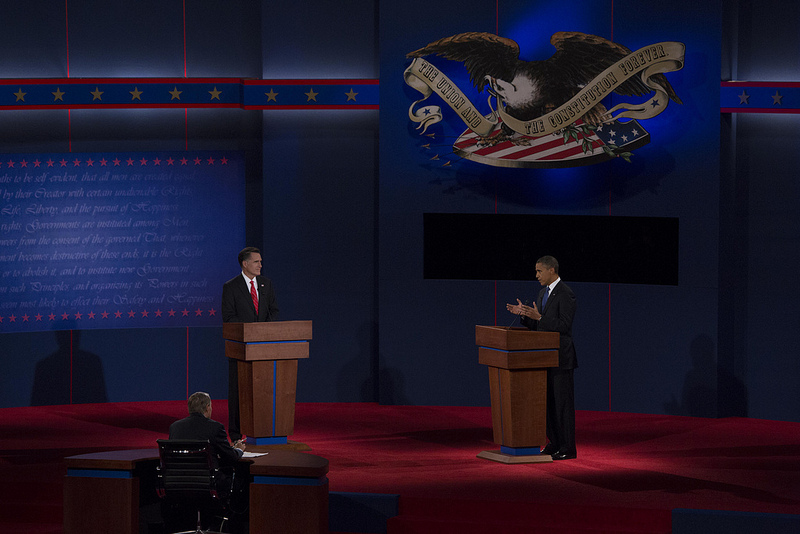
The first presidential debate between Mitt Romney and Barack Obama

The first presidential debate between Barack Obama and Mitt Romney was much less intriguing than every pundit and media ogler alike was hoping for. We wanted zingers and gaffes, but had to settle for the mildly miffed, but embarrassingly unassertive, Jim Lehrer. The NewsHour host may have gotten memed even more than the candidates since the debate. But, sorry Big Bird, even an outraged PBS isn’t that interesting.

Yes, many media followers, long for the days of primary debates when tom-foolery and missteps abounded. Those were the days when follow-up commentary was bountiful and hilarious. The Ricks, Herman Cain, and Newt Gingrich may have outraged feminists, but damn they made our job of dissecting dickery easy.

Yes, the debate was “wonky” but all three men involved didn’t seem keen on bringing up the social issues that have been driving political discourse this year.

So, we feminist bloggers have to talk about what wasn’t talked about. And, frankly, there’s only so much fascination I can draw up from between the lines. Women’s health was not just glanced over, but completely ignored. And that was a disappointment – not for gossip’s sake, but because our candidates should be representing these issues as valuable. No, women’s health and reproductive rights should not be categorized as a distracting issue, but should be recognized as fundamentally intertwined with the issues determining the health of our country.

See, our candidates seem to consider economic and health care issues separate from social issues. But, marginalized folks understand via experience that they are not. Moderate Romney and Moderate Obama both stuck to taxes and the role of government while referencing the Affordable Care Act (ACA) and Dodd-Frank but not addressing how social issues are connected.

Discounting social issues and focusing on the “real” issues like the economy misses the point that these issues are not exclusive. No, the economy is not more real than women trying to cover the costs of their health insurance while looking for work in a bad economy.

The ACA makes it illegal for insurance companies to discriminate among genders when providing coverage. And it makes contraception more easily accessible. It basically stops allowing the practice of treating men as the generic sex – as in; people should get good coverage for the same costs regardless of gender and/or sex. This is a pretty important aspect of the ACA that was not looked at during the debate.

So we can hope that we see these discussions happen in upcoming debates. Hopefully our candidates and moderators don’t shy away from these issues. Candy Crowley, we’re looking to you. 

Bitch Flicks’ Weekly Picks

Stephanie‘s Picks:

Gaycism and the New Normal: The “Hot” Trend This TV Season Is Bigotry by Nico Lang via In Our Words

Caroline Thomson: BBC Still Has Work to Do on Sexism and Ageism by Emma Barnett via The Telegraph

Presidential Debate Commission Co-Chair Blames TV Networks for Lack of Diversity Among Moderators by Tracie Powell via Poynter

Where the Girls Aren’t: What the Absence of Female Friendships on Network TV Reveals by Sheila Moeschen via Huffington Post

Joss Whedon’s S.H.I.E.L.D Show Will Feature A Lot of Women by Alyssa Rosenberg via ThinkProgress

Women in Film: A Feminist’s Take by Riley Stevenson via Flux Magazine

What Do Feminists Have Left?: The Factuary

“Ugh, What’s Up With All These Feminists Being Funny?” Says Chronically Unfunny Woman by Erin Gloria Ryan via Jezebel

Megan‘s Picks:

Amy Poehler’s Systematic Dismantling of the Emmys by Alex Cranz via FemPop

When Will the Media Start Portraying Black Women Without Betraying Them? by Tracey Ross via Racialicious

Rebel Wilson, Pitch Perfect and Body Acceptance by Kerensa Cadenas via Women and Hollywood

Awkward Black Girl‘s Issa Rae Gets a Sitcom with Shonda Rhimes’ Help by Alex Cranz via FemPop

Funny Women Flourish in Female-Written Comedies by Sandy Cohen via The Boston Globe

The Best Quotes from Tina Fey’s Entertainment Weekly Interview by Kerensa Cadenas via Women and Hollywood

DGA Report Shows Few Strides for Female and Minority TV Directors by Richard Verrier via The Los Angeles Times

Raising Hope Star Martha Plimpton on Politics in Television and The War on Women by Alyssa Rosenberg via ThinkProgress


What have you been reading this week?? Tell us in the comments!

Oscar Hosts Preferable to Seth MacFarlane: An Abbreviated List

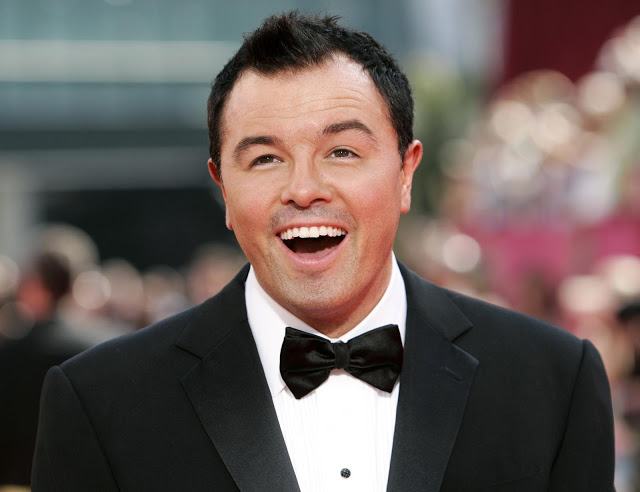
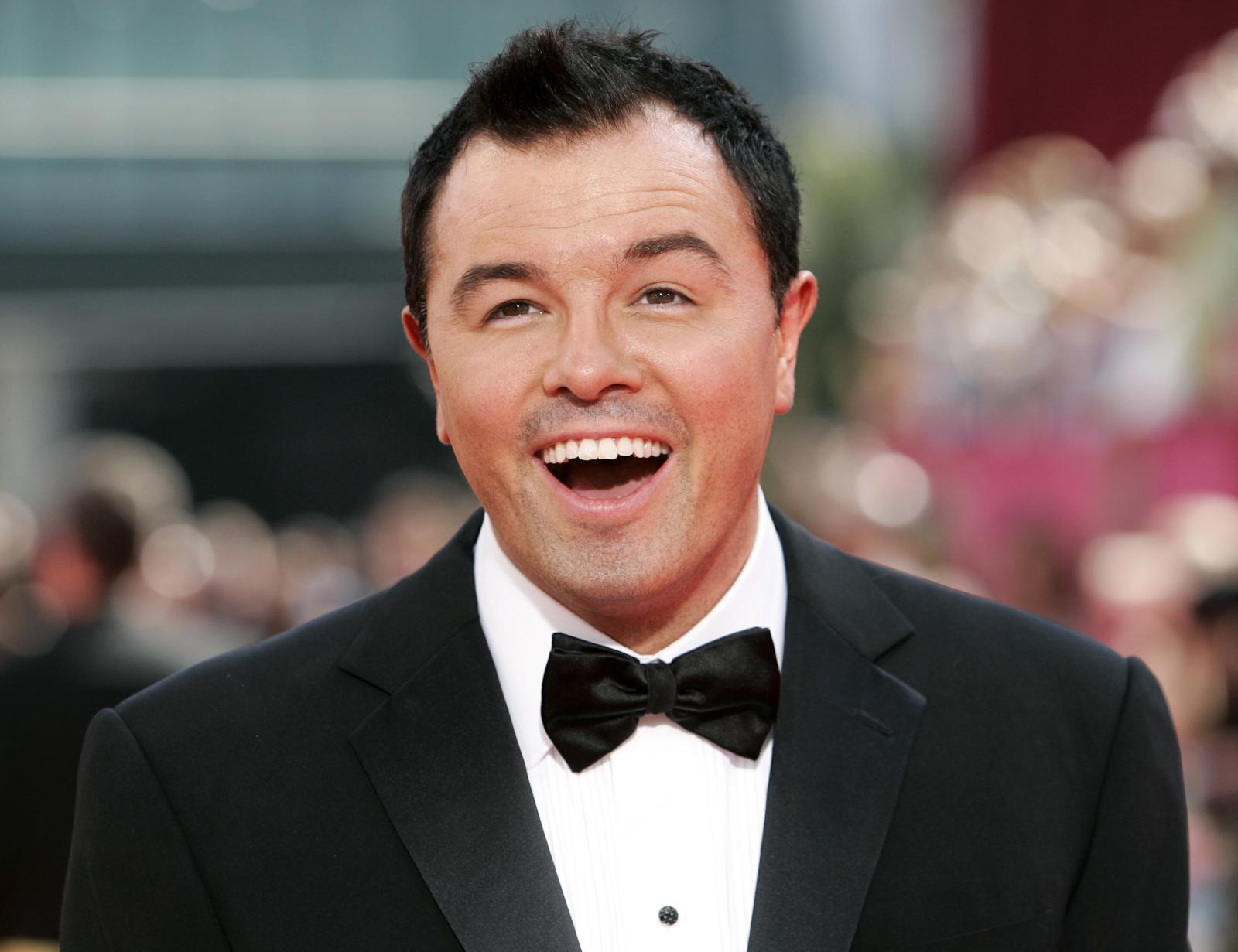
Seth MacFarlane, unpleasant person and recently-announced host of the 85th Annual Academy Awards 
Seth MacFarlane has been tapped to host the 85th Annual Academy Awards next February.  MacFarlane is the creator of The Family Guy and several other animated television programs (American Dad, The Cleveland Show) known for their blatant hostility toward women, people of color, the LGBTQ community, and the basic tenets of comedic storytelling.  MacFarlane’s first motion picture, Ted, was a box office hit last summer.  He can sing and do funny voices and he looks pretty good in a tux.  The producers of the Academy Awards ceremony are hoping he can bring in his lucrative young male demographic to boost the declining ratings for the Oscars telecast.  [And I guess they already forgot about that whole debacle with Brett Ratner and Eddie Murphy last year.]
While it’s possible MacFarlane as host will bring in droves of 18-year-old boys to watch montages celebrating old movies they’ve never heard of interspersed with awards being granted to movies they’ll never watch, the Academy Awards have alienated at least one lifelong die-hard Oscars fanatic: me.  
It’s hard for me to think of someone I’d be less excited about seeing host the Oscars than Seth MacFarlane.  Instead, I humbly present an abbreviated list of potential Oscar hosts I think would do a better job:
1. Miley Cyrus

2. Billy Ray Cyrus
3. James Franco in a wig made from Anne Hathaway’s Les Mis chop
4. Tom Brokaw after half an Ambien
5. A brigade of mimes from Cirque du Soleil
6. Ben Affleck and Matt Damon [The 90s are BACK, people!]
7. On that note, how about reuniting the dynamic duo of the 1994 Oscars:

Oprah. Uma.
8. The Oogieloves
9. Anne Curry
10. One of the lesser Kardashians
11. A fully-articlated Oscar statuette, played by Andy Serkis in mo-cap, IN 3D
12. The Romney Sons
13. The cast of The Avengers dressed as the “Let’s All Go to the Lobby” snacks
Sam Jackson can play the popcorn.
14. The cast of Magic Mike in fat suits, because LULZ 
15. Jennifer Aniston handcuffed to Angelina Jolie
16. Suri Cruise with a Speak & Spell
17. Mrs. Knerr, my first grade teacher
18. This guy:
That blue bodybuilder dude from Prometheus
19. The reanimated corpse of Bob Hope
20. The reanimated corpse of [insert non-dead previous host, but not Billy Crystal, I like him]
21. Clint Eastwood, live via satellite from an empty furniture store
22. The Fandango lunch bag puppets
23. Daniel Day-Lewis in character as Lincoln and Bill Murray in character as FDR
24. The last five hosts of the Sci-Tech awards, mud wrestling
25. Jay Leno. I mean it: Jay. Leno. I would rather watch Jay Leno host the Oscars than Seth MacFarlane. Let that sink in. Think about what that means. Jay Leno would be better. Did you ever think those words would appear on the internet? Well there they are, and they are true.
    Robin Hitchcock is an American writer living in Cape Town, South Africa. Her actual proposed Oscar host is Paul Rudd.

    White Dudes Sayin’ Stuff: A Journey Through Conservative Political Cartoons

    Trigger Warning: Misogyny, rape, child abuse, domestic abuse
    Dripping sarcasm ahead.
    And now for something completely different.

    In addition to my hobbies of watching films and cartoons, I like reading comics. Sometimes I read the highbrow stuff like Maus or Persepolis, and sometimes I read trash. Complete and utter bullshit. One of the longstanding traditions of the Something Awful Forums is its Political Cartoon Thread, which is an ongoing discussion of how the mainstream media interprets political debate through metaphor and imagery. And by that, I mean they find the worst cartoonists possible and make fun of them. Somehow all the really bad cartoonists are conservative! I couldn’t imagine why that could be, could you?

    And if there’s one thing conservatives have made themselves known for lately, it’s just how well they understand the issues of women. It’s like there’s a War on Women or something. And if there’s one thing I’ve noticed, it’s that white dudes seem to have a particularly nuanced understanding of what it is to be a modern woman facing such issues as birth control, abortion, and sexual harassment. See how well the following white dudes represent their totally well thought out opinions:

    “Arrested for choking Lindsay Lohan?” “For not finishing the job.”
    That Lindsay Lohan. How dare she have a crippling drug addiction. It’s almost as if she’s been in the public eye all her life and completely abandoned by her irresponsible stage parents! But Sean Delonas knows how to deal with Lindsay Lohan. Oh yes. Let’s not let these slutty druggies get away with being sluts and drug addicts any more. Let’s kill them. It’s not like she doesn’t deserve it or something.
    “Banned cooking fats… No smoking in bars… Laws against paddling my kids.. Now you’re going to make me give my daughters a shot that may prevent cervical cancer. Government involvement in my everyday life is really starting to worry me!”
    Terry Wise understands science so well. And who are we to tell this guy how to raise his daughters? His daughters don’t have cervixes! What do you think he is, a pimp? The second you give his daughters a vaccination, they’ll get autism in their vaginas! If he wants his precious little angels to get cancer, that’s HIS RIGHT. GOD. BLESS. AMERICA.
    Which is more important? Free birth control or FREEDOM?
    Willful misunderstanding of Sandra Fluke’s speech is a time-honored tradition amongst white male conservatives. But Mike Ramirez, winner of TWO Pulitzers, doesn’t have time for research or fact checking. For you see, YOUR TAX DOLLARS ARE PAYING FOR US TO BE SLUTS! SLUTS, I TELL YOU! There is only one use for birth control pills, and that’s for sex. Only men are allowed to have sex! That’s why Viagra is covered by insurance and the Pill isn’t. After all, they wrote right in the constitution that “Freedom is only for the Penis.” They also wrote, “Catholics have more freedom than you do.” No tax for sluts!
    I’m not going to bother transcribing this. Just imagine a ton of Men’s Rights bullshit.

    I’ll forgive you if you can’t make heads-nor-tails of this. Chris Muir’s “Day By Day” is a webcomic about Zed (who looks suspiciously like Muir), his half-Irish half-Japanese wife Sam, her liberal sister…somebody, her centrist best friend…someone else, and the centrist’s black husband Black Mouthpiece. Fun fact: None of these people (except the self-insert) exist, but Muir likes using his fictional women and fictional black guy to espouse incomprehensible political opinions that stepped right out of the MRA subreddit. He also draws these women with enormous heaving breasts, pokey nipples and they’re constantly pregnant. It’s rather adorable how a middle-aged single conservative copes, isn’t it?

    Democrats Try To Court Modern Women “Hey there groovy lady…I’m down with the cause…free love…”
    Eric Allie sees right through those crafty Democrats. Modern Women won’t fall for their tricks, what with their equal pay laws and funding for domestic abuse shelters! Oh no, Women will rise up and stand up to those crazy Democrats, because Women HATE contraception, and they HATE it when an opposing political party points out that the Republicans seem to be disproportionately targeting Women’s Issues in their bills. What’s that? Obama has an 18 point lead over Romney amongst female voters? Pssh. Liberal media bias.
    “Why are you so upside down on the FREE birth control issue?” “Keep your WOMB out of my WALLET!”
    Sandra Fluke has sex. She has sex CONSTANTLY. And she wants YOU to pay for her! To have sex! SEEEEEEX! She even has sex upside down! She has sex with your taxes! SEEEEEEX! Men like A.F. Branco know better though. They use their own tax dollars to pay for their own sex. Prostitutes always give receipts.
    “Stay out of my uterus, government!! …That is, right after paying for my free birth control.”
    White dudes REALLY hate Sandra Fluke, including Gary McCoy. That Sandra Fluke, with her grotesquely ugly face and 500 pound frame and unshaven legs. She totally discussed an opinion on abortion too, because she wants to have lots of sex and then KILL ALL THE BABIES. She’s coming to your house and she’s going to KILL. YOUR. BABY. And then she’s going to prostitute herself in a bathroom because she’s a slut. Sluts never shave their legs, doncha know.
    Young Woman’s Values Class – Plan A: Responsibility, Family Planning, Self Esteem, Keeping A Good Reputation. Plan B: The Chance To Act Like A Drunken Whore
    Brian Farrington knows how to raise teenage girls. There’s nothing more important than a good reputation, and old ladies TOTALLY understand how family planning works, right? There are only two kinds of young women in the world. Good girls who keep their legs closed, and DRUNKEN WHORES! Don’t be a drunken whore, because Mr. Farrington is judging the shit out of you! Don’t let those “women’s libbers” tell you how to think, teenage girls. White Dudes know better than they do.
    A 14-year-old girl is pregnant by her 21-year-old boyfriend. Shouldn’t someone have to pay for this? The fetus and the taxpayer, of course!

    White Dudes get SO close to being compassionate and understanding of the problem, but then they remember that there are women to oppress. Chuck Asay knows that Planned Parenthood employees ALWAYS recommend abortion and ONLY abortion, and that their main concern is keeping the whole thing quiet rather than getting a statutory rapist prosecuted. For you see, ONLY the fetus shall pay for this crime (and, okay, the taxpayer, who is more important than anyone else in the cartoon), when it should totally be the 14-year-old child who was exploited by her adult boyfriend. It’s tough, but that’s what she deserves. Also, she’s black. Maybe you noticed that.
    Paterno knew about a sexual predator and is a “Scumbag.” Clinton got a blowjob. That’s worse.
    A consensual extramarital affair is completely comparable to a man who looked the other way while his colleague was repeatedly raping little boys. Bill Clinton got away with the worst crime in history! And after all, football is the most important thing in the universe! Won’t somebody think of the child molesters and their enablers? Glenn McCoy (brother of Fluke hater Gary McCoy) speaks for the oppressed pedophiles. Also, Monica Lewinsky is a fat ugly skank. (Here’s a bonus Glenn McCoy cartoon if you can bear looking at bloody fetuses)

    So you see, White Male Conservatives truly understand how the world works. We silly women just don’t get it. They have penises, they make the rules. They get to have all the sex, we are just allowed to lie there and put up with it. And we’d better have as many babies as humanly possible, or we’re SLUTS. And don’t forget it. Also, Sandra Fluke sucks. The White Dudes have spoken.

    Myrna Waldron is a feminist writer/blogger with a particular emphasis on all things nerdy. She lives in Toronto and has studied English and Film at York University. Myrna has a particular interest in the animation medium, having written extensively on American, Canadian and Japanese animation. She also has a passion for Sci-Fi & Fantasy literature, pop culture literature such as cartoons/comics, and the gaming subculture. She maintains a personal collection of blog posts, rants, essays and musings at The Soapboxing Geek, and tweets with reckless pottymouthed abandon at @SoapboxingGeek.

    Quote of the Day: Jennifer Livingston

    Jennifer Livingston, a morning anchor for a CBS affiliate in Wisconsin, took some time on air Tuesday morning to respond to a letter she’d received from a viewer.
    The letter claimed that by her “choice” of being obese, Livingston was not being a “suitable” role model for young people, especially young girls.
    Instead of putting aside the letter and not internalizing the criticism (as media personalities must do frequently), Livingston felt the need to address the letter in front of her audience. She’d received an outpouring of support after her husband–an anchor on the same station–posted the letter on his Facebook page.
    Livingston’s take-down of the letter-writer has gone viral online. National news and entertainment outlets are picking up her story, and Ellen DeGeneres tweeted in support.
    Jennifer Livingston delivers a poignant editorial.
    In the segment, Livingston says:
    The truth is, I am overweight. You can call me fat — and yes, even obese on a doctor’s chart. But to the person who wrote me that letter, do you think I don’t know that? That your cruel words are pointing out something that I don’t see? …Now I am a grown woman, and luckily for me I have a very thick skin, literally — as that email pointed out — and otherwise. That man’s words mean nothing to me, but really angers me about this is is there are children who don’t know better — who get emails as critical as the one I received or in many cases, even worse, each and every day. … 
    I leave you with this: To all of the children out there who feel lost, who are struggling with your weight, with the color of your skin, your sexual preference, your disability, even the acne on your face, listen to me right now. Do not let your self-worth be defined by bullies. Learn from my experience — that the cruel words of one are nothing compared to the shouts of many.
    She points out that October is Bullying Prevention Awareness Month. As she articulately points out, children do not bully in a vacuum. Children act what they observe, and a quick look around the adult world–from the covers of tabloids in the grocery store to political pundits–show “bullying” (whether in the form of judgment, concern-trolling or outright hate and discrimination) as the norm.
    People like Livingston need to continue to speak out to remind us all that bullying education and prevention doesn’t just belong in elementary school.
    Women’s bodies have long been seen as public property (especially if those bodies do not fit the ideal). We audiences are so desperate for women to come forward and speak out against this that we’ve begun creating the quotes ourselves.
    We’ve heard some remarkable verbal attacks against women’s bodies and sexuality lately, and thankfully, heard and seen the “shouts of many” reverberate back at them. Acts like Livingston’s should be celebrated, applauded and encouraged. May the well-reasoned shouts prevail.


    Leigh Kolb is a composition, literature and journalism instructor at a community college in rural Missouri.