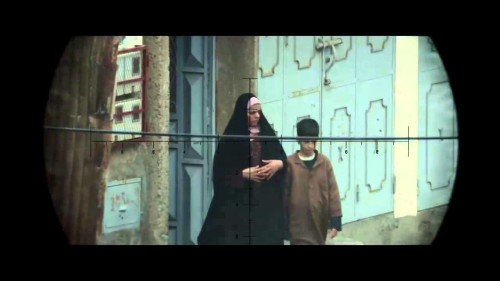
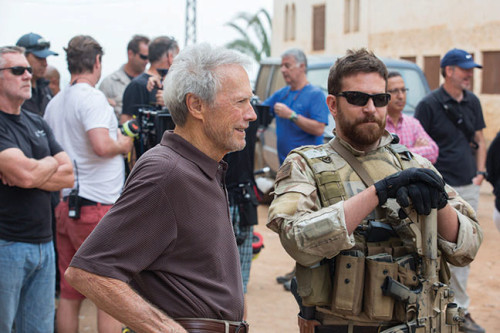
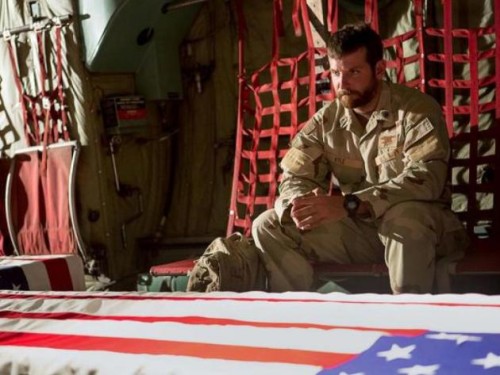
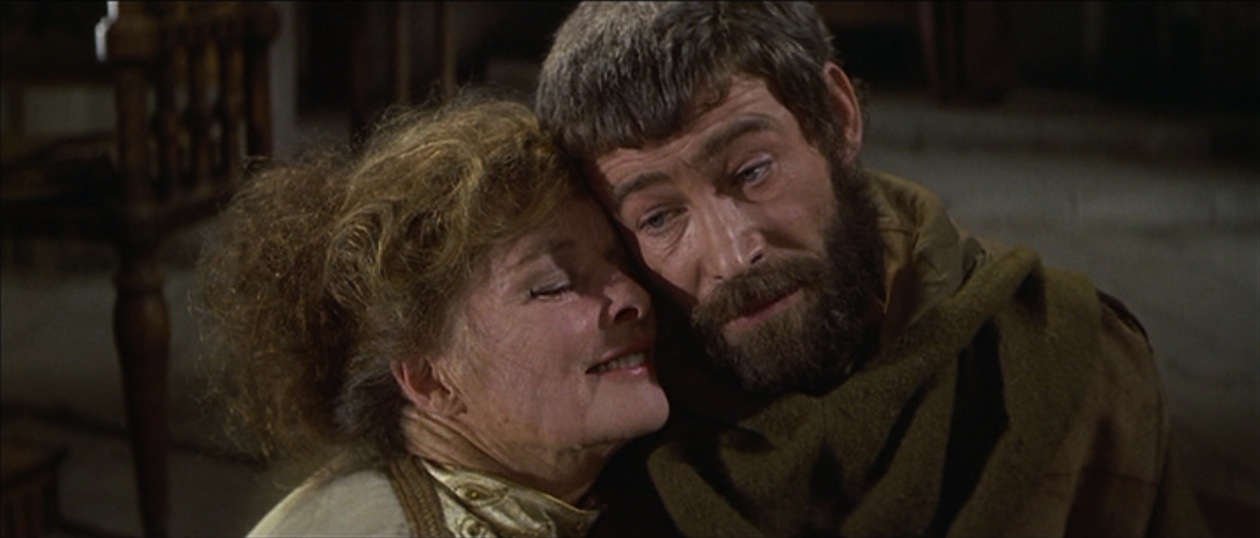
‘The Imitation Game’ and ‘Citizenfour’: Secrets Then and Now

Sometimes I wish the mainstream film industry would stop making movies about queers. The rare times that a queer person is allowed to be the main character in one of its movies, as in this one, he (almost always a “he”), like the rare main character of color is usually unrealistically isolated from the community he comes from, a trope fostered from before Stonewall to the ’90s to now: we are oh-so-tragic and oh-so-alone.

ImitationGameCover


This repost by Ren Jender appears as part of our theme week on the Academy Awards.


A stereotype in popular media about very smart people is that they must have some great deficiency in other areas of their lives–as if someone with extraordinary intelligence being able to make friends and get laid would be unfair to the rest of us. The only reason I can surmise for the positive reviews The Imitation Game, a highly fictionalized new film about gay, World War II codebreaker Alan Turing is that it confirms all the “normal” audience’s worst suspicions about “genius” and queer life, without offering any meaningful insight into either.

Sometimes I wish the mainstream film industry would stop making movies about queers. The rare times that a queer person is allowed to be the main character in one of its movies, as in this one, he (almost always a “he”), like the rare main character of color is usually unrealistically isolated from the community he comes from, a trope fostered from before Stonewall to the ’90s to now: we are oh-so-tragic and oh-so-alone. Because he has no peers to rely on, the main gay guy invariably confides in the straight guy (particularly ridiculous in The Imitation Game’s 1940s setting) just like in movies set in the Civil Rights-era South, Black people have all their deepest conversations–and bonds–with white people. When a film shows the rare group of people of color relying on each other, as in Selma, awards snub it and prominent white guys denounce it. When a film like the underrated Pride shows a group of queers working together, the blurb on the back of the DVD makes sure it doesn’t offend any “Christian values” by mentioning something as crass as LGBT identity.

“Homosexuals”–as they were known then–could be arrested during the time the film takes place (as Turing was after the war, one of the few parts of the film that isn’t doctored) and imprisoned both in England and elsewhere, but that didn’t stop them from existing or having sex with each other–and straight people knew them even if they didn’t acknowledge that they did. World War II was a vehicle for many queers from the US (and probably those in the UK too) to find each other, no longer isolated in their small hometowns. But even before the war, academia (where Turing came from) was, notoriously, also a refuge for gay men. The arts were another. Accounts from those who knew him say that Turing was quite open about his sexuality (instead of the anguished confessions we see here): and then, as now, straight people (and I’m presuming most of the people interviewed were straight) were always the last to know. Also unchanged in the intervening years: the rules for men in power or ones with powerful friends were different: actor John Gielgud was arrested in the same time period as Turing was for having sex with another man, but faced neither imprisonment nor the forced hormone treatment Turing accepted instead of a prison sentence.

Joan Clarke (Keira Knightley) and the guys


All the most interesting twists of the story are the ones the film avoids. As part of the huge wartime operation at Bletchley Park Turing had helped win the war against the Nazis (in fact his team’s decryption might have been the deciding factor) but he couldn’t tell anyone about it–nor could anyone else. Some powerful people did write letters of support for him during his trial, but they couldn’t say precisely why they were writing them. If his work during the war hadn’t been secret the charges against him probably would never have come to trial–or been made in the first place.

Instead, what passes for drama in this film are pedestrian scenes that are the invention of screenwriter Graham Moore. Even though there’s no historical evidence of any such incident we get more than one sequence in which Turing’s supervisors attempt to destroy his work. “You will never understand the importance of what I’m creating here,” Benedict Cumberbatch, as Turing, cries in the first film performance I’ve seen that is best encapsulated by the phrase “the gnashing of teeth.”

These scenes might be a reflection of the vanity of its hack filmmakers (writer Moore along with director Morten Tyldum). “I’m afraid these men would only slow me down,” the film’s Turing says about the team of other codebreakers. Not only does this film leave out all the other people (including some Polish cryptologists who made a valuable prototype) who helped Turing get to the point where he could successfully design and run Bombe (not “Christopher”: the name Turing gives his codebreaking computer in the film– after his first love!) but in the film he’s also perpetually misunderstood and under-appreciated by others the same way white, male writer and director “auteurs” seem to often feel they and their own work are, even as they dismiss (and underpay) the many other people who make their films possible and enjoyable. Maybe this parallel is the reason for the spate of “great man” films and the awards they always seem to collect this time of year.

The lone woman with a decent-sized part in the film is Joan Clarke (played by Keira Knightley) Turing’s fellow cryptanalyst who becomes his friend and, for a time, is engaged to him. Unlike the ridiculous scene in the film when Turing breaks up with her, the real-life Clarke was reportedly “unfazed” when she found out her fiancé was queer, because in those days (as the film touches very briefly on) marriage was the only way for most young women to get away from the control of their parents.

And even though a big deal is made of Joan Clarke being one of the only woman cryptanalysts, like “Rosie The Riveter” stateside, 80 percent of Bletchley Park’s employees were women. The codebreakers were popularly known as “Dilly’s girls” after the (male) head of the operation, none of which is reflected in Game. Thanks for erasing the historical contributions of women again, mainstream film industry!

[youtube_sc url=”https://www.youtube.com/watch?v=S5CjKEFb-sM” iv_load_policy=”3″]

Another film about genius and secrets making the rounds of top ten lists and awards is Laura Poitras’s Citizenfour, the documentary about Edward Snowden, who acted as a whistleblower by releasing evidence of the US’s widespread and unconstitutional spying on its own citizens.

You’d never know from the many news accounts about Snowden that Poitras was the first person he made real contact with when he decided to go public. Poitras reads his first message aloud on the soundtrack, “Laura, at this stage I can offer nothing more than my word. I am a senior government employee in the intelligence community. I hope that you understand that contacting you is extremely high-risk.”

CitizenfourMain

The film makes clear, hilariously, that when Snowden first tried to get in touch with Glenn Greenwald, who is usually given the credit for bringing Snowden’s story to the rest of the world, Greenwald couldn’t learn to use the encryption Snowden (who knew how volatile this information was) insisted on, so Snowden moved on to Poitras (who was well-versed in encryption after the government had seized footage from her previous documentaries, including one about the Iraq war). After a time Snowden suggesting that she bring in Greenwald–when presumably she could instruct him what he needed to do to get his encryption skills up to snuff.

Citizenfour, I had to keep reminding myself, shows us history in the making. We meet Snowden before his first media interview. We see him in the hotel room in Hong Kong where he was first holed up when the story broke. I had to keep telling myself what I was seeing was important because most of it is otherwise pretty dull.

Filmmaker Laura Poitras


We never find out much about Snowden beyond what we’ve seen in other media. He is a man who is preternaturally sure and calm about what he’s done, perhaps because, as an autodidact (he has a GED) at the top of a highly skilled field, he was able to think for himself on the implications of the work he was being asked to do.

We do see the travails of another whistleblower who went through more traditional channels and is still suffering blowback for it, to show us why Snowden released the info to the media directly. And we see Snowden upset at how the girlfriend he lived with and left behind in Hawaii is treated by the government in his absence. But as a friend remarked as we left the theater, “Watching Edward Snowden stare at his laptop isn’t very exciting.”

Although Snowden was sure he would be tried and imprisoned for his actions, saying in one of his preliminary messages to Poitras, “In the end if you publish the source material I will likely be immediately implicated,” he eventually saw that he could, with help, escape and chose to do so. But the scenes that should build up tension and our empathy for him (even those of us who admire his actions and sympathize with his plight) fall flat.

An exception is when we see Snowden’s face on video blown up to epic proportions in a main Hong Kong Square, just after his first big media interview, and then cut back to Snowden still in his hotel room, trying to change his appearance so he won’t be recognized (and abducted) on his way to the airport. Otherwise we don’t feel like we are in Snowden’s shoes in this film, even as we spend much of our time looking and listening to him. At the end we see Snowden has reunited with his girlfriend in Russia (where he has been trapped since the US government cancelled his passport–just before he could catch the second leg of his escape flight). We see them through a window, preparing dinner together, from a distance, an apt metaphor for how well we have come to know Snowden in this film ostensibly about him.

[youtube_sc url=”https://www.youtube.com/watch?v=XiGwAvd5mvM” iv_load_policy=”3″]


Ren Jender is a queer writer-performer/producer putting a film together. Her writing, besides appearing every week on Bitch Flicks, has also been published in The Toast, RH Reality Check, xoJane and the Feminist Wire. You can follow her on Twitter @renjender
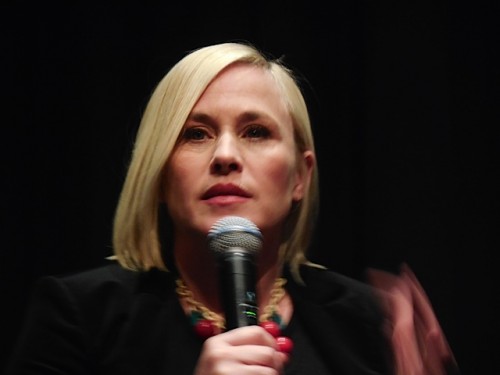
Richard Linklater and Ethan Hawke Praise Patricia Arquette’s Performance in ‘Boyhood’

Arquette, who is terrific as Olivia, turns in a nuanced and complex performance that is vanity free. We watch her age perceptively and slowly as her character gains wisdom but still falters. In other words, she’s the kind of three-dimensional woman we rarely see in American films.

Patricia Arquette
Patricia Arquette


This repost by Paula Schwartz appears as part of our theme week on the Academy Awards.


The stars of Richard Linklater’s Boyhood–Patricia Arquette, Ethan Hawke, and Ellar Coltrane–age in real time in this one-of-a-kind nearly three-hour film. Boyhood, which  was shot in short annual increments over a dozen years so the effect as you watch the actors change imperceptibly and slowly is like watching time-lapse photography.

This approach would come across as a gimmick or stunt if the movie wasn’t so good. The real magic of the film is that as you watch characters grow and age, you can’t help looking back and contemplating your own life changes.

The three stars and the director of Boyhood participated at a lively press conference recently at the Crosby Hotel in SoHo to promote the film. This marks Ethan Hawke’s eighth film with the director, whose most notable collaborations include the Before Sunrise trilogy and Dazed and Confused (1993).

Boyhood tracks the life of a full-faced pouty six-year-old, Mason (Coltrane) and his older, bratty sister, Samantha, played by Lorelei Linklater, the director’s daughter, as they grow up and mature. The story focuses on Coltrane’s character who evolves from boyhood to early manhood amid personal and family dramas, including family moves, family controversies, faltering marriages and re-marriages, new schools, first and lost loves, and good and bad times. Children of divorce, Mason and Samantha are raised by their beleaguered but devoted mother Olivia (Arquette), a hard-working woman with terrible taste in men, and her ex-husband, an immature man with a good heart but little sense of responsibility (Hawke).

Linklater described Boyhood as “this little collection of intimate moments that probably don’t fit into most movies. They’re not advancing the character enough or the story enough or the plot, but they all add up to something much bigger than each little place and each little piece of it, so that was kind of the feel to the whole movie, that it mirrors our lives.”

As to whether the film was an intimate character study or a sweeping family epic, the director said it was both. “It’s very specific and intimate but universal within that specific world. It could have been made in any country and any time. There’s such a commonality here.”

The cast and director of Boyhood


The film could just as accurately been entitled Motherhood or Fatherhood or Parenthood, Hawke said. He described it as “an epic about minutiae. That’s what it is. It’s difficult to title because of that. It’s a family seen through one boy’s eyes, so that title makes as much sense as any other.”

As for whether it was difficult for the actors to get back in character every year for the brief period they shot their roles, Coltrane explained, “It was a very long build up every year. We’d have a couple months to think about what we were doing and then a solid week of kind of work shopping and building the character and figuring out where the characters were that year, so by the time we got to filming we were kind of just already there.”

Arquette, who is terrific as Olivia, turns in a nuanced and complex performance that is vanity free. We watch her age perceptively and slowly as her character gains wisdom but still falters. In other words, she’s the kind of three-dimensional woman we rarely see in American films.

Hawke turned to Arquette during the press conference and told  her, “I’m just throwing props your way. I’m surprised that people don’t write about more is that how awesome it is to see Patricia’s character be in this movie and to see a real woman who is a mother and a lover and more than one thing in a movie. I feel so proud to be a part of a movie that respects her character the way this movie does, and I feel it’s also sometimes so real and so true that you almost don’t ever see this in film,” he said. “It’s true in life. We see it all the time, but I don’t see that woman in movies. I don’t see her.”

“She’s in the background or just kind of in the background or ancillary elements to give some encouragement in some way to some scruffy guy. Olivia is a real, three-dimensional human being, and it was so exciting, and the women in my life who see the movie so appreciate it,” he said. ” She’s not just good, she does stupid things and smart things.”

He added, ” I just love her. You can’t pin down. One minute you go, oh she’s a good mother!  No, wait, actually that was not a great decision. We’re used to people in movies being one thing, all the time.”

Arquette explained her acting technique. “In acting you have to get past your own head and your own ego and all of these fucking barriers and walls to just get to a place where hopefully you can be present enough in a scene with someone.” She added of the collaborative process, “I trusted the process. It was jumping into the void from the get-go, but when you’re in the right hands, and you jump into the void together, really great things can come of it.”

Patricia Arquette and Ethan Hawke


Ultimately, the director said, the movie “was always going to be a portrait of growing up but also parenting and aging. That you don’t quit growing up, especially once you’re a parent.” Hawke and Arquette’s characters are bumbling through parenting as this was happening in real life with the actors and director. “We had ourselves as parents,” Linklater said. “During this film we had five children born between us and that was just an ongoing part of life.” At the same time, “ You’re thinking of your parents once you’re a parent yourself.”

The movie mirrored what was happening in the lives of the actors and director. “We didn’t want anything to feel like it wasn’t earned or tethered to some sort of reality. I don’t think there’s anything in the movie that didn’t come out of my life or their lives,” Linklater said. His hope was that the film opened the audience up to the possibility of seeing the connection between their lives and that of the characters in the film. “Once you get to this thinking about life in general and your own life and loved ones and your own experiences, triggering all kinds of wonderful things I hope, painful and wonderful things.”


Paula Schwartz is a veteran journalist who worked at the New York Times for three decades. For five years she was the Baguette for the New York Times movie awards blog Carpetbaggers. Before that she worked on the New York Times night life column, Boldface, where she covered the celebrity beat. She endured a poke in the ribs by Elijah Wood’s publicist, was ejected from a party by Michael Douglas’s flak after he didn’t appreciate what she wrote, and endured numerous other indignities to get a story. More happily she interviewed major actors and directors–all of whom were good company and extremely kind–including Brad Pitt, Angelina Jolie, Morgan Freeman, Clint Eastwood, Christopher Plummer, Dustin Hoffman and the hammy pooch “Uggie” from “The Artist.” Her idea of heaven is watching at least three movies in a row with an appreciative audience that’s not texting. Her work has appeared in Moviemaker, more.com, showbiz411 and reelifewithjane.com.


Captain Uhura Snub: The Politics of Ava DuVernay’s Oscar

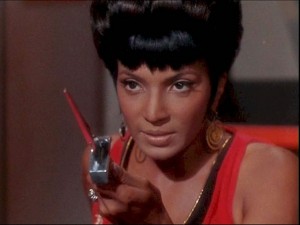
It is appropriate, when celebrating the legacy of Martin Luther King Jr., to recall Dr. King’s words to Nichelle Nichols, as she considered quitting ‘Star Trek’ in frustration at the limitations of her role: “You can’t leave!… For the first time on television, we are being seen as we should be seen every day. As intelligent, quality, beautiful people … who can go into space.” Dr. King’s words show that he clearly understood the value of a token image, as a symbol, a precedent and a possibility model for future progress.

Written by Brigit McCone as part of our theme week on the Academy Awards.

After seeing Selma, I’ve finally stopped yelling “Ava DuVernay was robbed! Robbed, I tell you!” long enough to jot down some thoughts. Let’s be clear: Ava DuVernay was robbed because her work on Selma turns familiar history into a gripping story, humanizes Martin Luther King Jr. while honoring his legacy, and captures the sweep of history without sacrificing the resonance of individual lives. It was inspirational history, the kind the Oscars typically reward, executed with supreme skill. Though her representation of L.B.J. was criticized, DuVernay’s characterization accurately reflected his wider shift from obstructing to supporting civil rights, while taking artistic liberties with the timeline of that shift. If Ron Howard could win Best Director for the blatantly inaccurate A Beautiful Mind, DuVernay was obviously due a nomination for Selma. Minimum.

Not pictured: Steve McQueen and Kathryn Bigelow


It is because DuVernay’s work was brilliant, beyond her race and gender, that we must ask why a Black woman was snubbed. Did 12 Years A Slave‘s triumph at the 2014 Oscars influence the snubbing of Selma‘s director and actors? Recall Kathryn Bigelow’s win for Best Director in 2010. The moment Barbra Streisand stepped out to present the award, it was clear Bigelow’s name would be called. Though Bigelow’s acceptance speech never referenced being the first woman to win, Streisand’s presence shrieked, “It was time we gave it to a woman,” even as the hypermasculine Hurt Locker hardly challenged the Academy’s preference for male stories. Or recall 2001, when Denzel Washington and Halle Berry made their historic wins at the same ceremony as Sidney Poitier’s lifetime achievement award, a synchronicity that shrieked “It was time we gave it to Black performers,” threatening to overshadow Washington and Berry’s individual excellence. The Academy is not exactly subtle in framing minority wins as token gestures. If Bigelow resisted the symbolism of her win, Berry embraced it, using her speech to honor Dorothy Dandridge, Lena Horne, Diahann Carroll, Jada Pinkett, Angela Bassett, Vivica Fox, and Oprah Winfrey. Tokenism is uncomfortable, but it’s still visibility. Tokens are symbols, precedents and possibility models (as Laverne Cox might put it). If we read Oscars partly as tokens, the question arises: was Ava DuVernay snubbed because, as a Black woman, the Oscars of Steve McQueen and Kathryn Bigelow collectively represented her category?

The African American feminist Ana Julia Cooper wrote “Women versus the Indian” in 1891, criticizing white suffragettes who viewed women as a separate category, in competition with racial minorities for their rights (see also Sojourner Truth’s “Ar’nt I a Woman?”). Those who mentally isolate categories of oppression seek to maximize mainstream approval in their choice of spokesperson: the straight man of color for racial justice; the white, cis woman for feminism; the white, straight-acting gay man for LGBT causes. Each individual choice of “representative” collectively upholds the overall superiority of the straight, white male perspective (add wealthy, educated, able-bodied etc.). Because this pattern channels subversive impulses into a collective reinforcement of dominant ideology, dominant culture rewards it. One symptom is the repeated use of white women and Black men to collectively represent Black women – “the Captain Uhura snub.”

Not pictured: Captains Sisko and Janeway


It is appropriate, when celebrating the legacy of Martin Luther King Jr., to recall Dr. King’s words to Nichelle Nichols, as she considered quitting Star Trek in frustration at the limitations of her role: “You can’t leave!… For the first time on television, we are being seen as we should be seen every day. As intelligent, quality, beautiful people … who can go into space.” Dr. King’s words show that he clearly understood the value of a token image, as a symbol, a precedent and a possibility model for future progress.

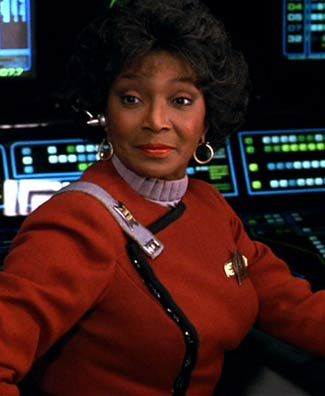
Nichelle Nichols’ Lieutenant Nyota Uhura should be an icon to every woman who is underemployed and unappreciated at work. Her mouth said, “Klingons on line one, Captain,” but her eyes said, “I should be running this place.” Within the limitations of her role, representing both token Black lieutenant and token woman, and thereby freeing a seat for another white guy, Nichols took every opportunity to demonstrate Uhura’s intelligence, charisma, courage and sex appeal. When allowed to banter with Spock, in scenes that inspired their romantic relationship in JJ Abrams’ reboot, Uhura revealed herself to be Spock’s respected intellectual equal, with the skills to man the helm, navigation and science station if needed. In combat with Mirror!Sulu, she revealed potential as an action heroine, anticipating Pam Grier (whose groundbreaking stardom in blaxploitation inspired a trend of white action heroines, instead of mainstream opportunities for Pam Grier). Uhura was cool under pressure and commanding. Though the original Star Trek‘s “Turnabout Intruder” episode claimed that women were not emotionally capable of captaincy, Uhura disproved that claim on the animated (and female-authored) “The Lorelei Signal.”

In time, society progressed and its vision of the future evolved. Dr. King’s dream of television normalizing inspirational Black leadership came true for the Trekverse, when Captain Ben Sisko of Deep Space Nine took command, combining professional skill with hands-on fathering. The aspirations of feminists paid off when Kate Mulgrew’s swashbuckling Janeway helmed Voyager. But while evolution in Star Trek‘s racial and feminist politics produced a few token promotions of Uhura’s rank, it left her marginalized supporting role unchanged. Zoe Saldana’s Uhura occupies roughly the same position in Star Trek reboots as Nichelle Nichols did on the original show. Black women can be judges, police chiefs, or politicians on our screens, at statistically disproportionate rates, but only in tokenist supporting roles that serve to discredit the reality of discrimination. When the time comes for diversity among aspirational heroes, those heroes become white women and Black men. That, in a nutshell, is the Captain Uhura snub, the intersectional finger trap of representation politics. Nichols herself aged regally and with no diminishing of spirit in the later Star Trek films, but Sisko and Janeway substitute for the unique icon that Nichols’ Captain Uhura could have been, not only as a Black woman but as a woman who  paid her dues in limited and sexualized roles before showing what she was capable of. Voyager drew a sharp line between the asexual (or rather, not overtly sexualized) competence of Janeway and the spandex-clad sex-bot Seven of Nine. Captain Uhura would have straddled that line, challenging the assumed incompatibility of being a sexual object with being an aspirational hero.

Not pictured: Captain Marvel and Black Panther
Not pictured: Captain Marvel and Black Panther   


Ororo Munroe, a.k.a. Storm, is an icon. As a member of the X-Men, she fights for the rights of the mutant minority, against those who fear what they cannot understand. As an ally (and sometime wife) of Black Panther, she defends the sovereignty of Wakanda against colonial forces. Oh, and she also flies, bends the elements to her will and shoots lightning. 20th Century Fox owns the rights to X-Men, so Marvel Studios cannot be directly blamed for scheduling Captain Marvel  and Black Panther to headline instead of Ororo (though they can easily be blamed for taking a decade to produce diverse superhero films). But upcoming plans to film starring vehicles for Wonder Woman and Captain Marvel have put female superheroes on the agenda. Why hasn’t this prompted 20th Century Fox to greenlight a solo outing for Wind-rider Storm, despite the rich source material of Greg Pak’s popular solo comics and the fact that the woman shoots lightning? Storm’s role in Bryan Singer’s X-Men franchise screamed “Lieutenant Uhura,” providing visible diversity while being constantly marginalized by the plot. Pak has the last word: “Storm’s the embodiment of fierce, raw power – and deep abiding empathy. She’s the most powerful woman in the Marvel Universe — incredibly exciting and elemental — even dangerous.” Movie, please. 

Not pictured: Richard Pryor and Joan Rivers


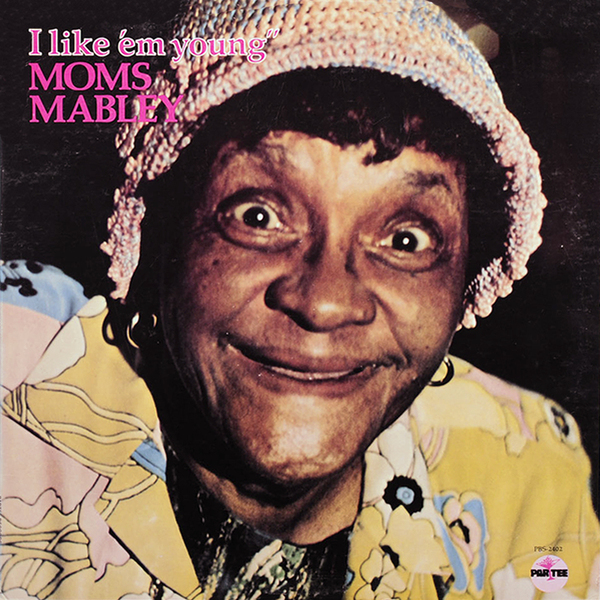
In an earlier post, I discussed evidence for regarding Loretta Mary Aiken, better known as Moms Mabley, as the pioneer of modern stand-up comedy. Evolving from vaudeville monologues, Jackie Mabley was nicknamed “Moms” because of her nurturing attitude to other performers. Her tackling of taboo topics such as race, gender, sexual double standards, poverty, and substance abuse, defined the truth-telling role we associate with the art of stand-up today. Moms herself said that everyone stole from her apart from Redd Foxx, and she was older than Redd, too.

In particular, Richard Pryor and Joan Rivers, many decades younger than Mabley, both recognized her as a major influence. In pop culture, Pryor is often hailed as the “Godfather of Comedy.” The tendency of Black comedians to recognize Pryor as the most significant pioneer of Black comedy comes at the expense of Pryor’s own acknowledged debt to Mabley, as does the tendency of feminists to cite Joan Rivers as the groundbreaking pioneer of female stand-up. Moms is often totally omitted from lists of top stand-ups, despite her claim to being the original. These choices of “representative” diminish the unique contribution of Moms Mabley, and the visibility of Black women as innovators of world culture. 

Not pictured: Barack Obama and Hillary Clinton


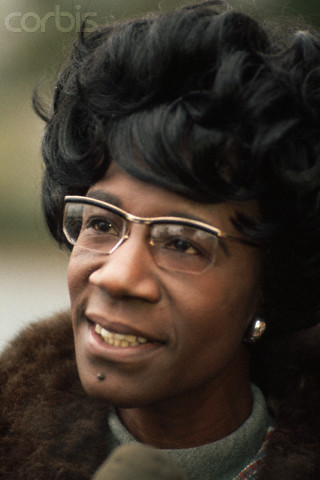
As we prepare for Barack Obama to step down from the U.S. presidency, all indicators point to the next Democratic nominee being a white woman, with Hillary Clinton and Elizabeth Warren as the frontrunners. When we celebrate womankind finally getting their shot at global leadership (Angela Merkel aside), let us take a moment to remember the candidacy of Shirley Chisholm (not to mention that Ana Julia Cooper should clearly have been running the country in the 1890s).

A founding member of the 1971 National Women’s Political Caucus, as well as the first Black congresswoman, Chisholm actively mentored an all-female staff, took political stands in favor of reproductive rights and against the Vietnam war, and fought against social exclusion on the basis of class, race and gender. Her political philosophy may be summarized by her 1972 presidential campaign slogan: “Unbought and Unbossed.” She was the first woman to win delegates for a major party nomination and the first Black candidate to run on a major party ticket. Chisholm’s voting record shows exceptional integrity and political courage, matched by the intelligence and determination to rise from a background of poverty and intersectional discriminations. Chisholm was an exemplary candidate. The fact that her career trajectory – breaking boundaries for both women and Black candidates before being snubbed for leadership – mirrors a fictional Star Trek character, hints at the power of the collective imagination to shape reality.


Change will come. After establishing her reputation with Grey’s Anatomy, which introduced a dynamic, multiracial cast behind the commercial appeal of white protagonists, Meredith Grey and Dr. McDreamy, Shonda Rhimes has created compelling, multi-faceted Black heroines (or antiheroines) who dominate Scandal and How To Get Away With Murder. Whoopi Goldberg has directed a documentary on Moms Mabley, while Shola Lynch directed one about Shirley Chisholm’s presidential bid. Last year, directors Amma Asante and Gina Prince-Bythewood offered Gugu Mbatha-Raw starring roles as fully realized protagonists. But these are all examples of Black women directors, fighting alone for better screen representations. Yes, Ava DuVernay has demonstrated talent and ambition with Selma that cannot be destroyed by a mere Oscar snub. Yes, she will probably continue to make great films until her achievements are officially recognized (am I the only one rooting for a biopic of Queen Nzinga starring Lupita Nyong’o?). But it’s high time that the “progressive” mainstream, from the Academy to Star Trek to white feminist commentators, started opening doors without waiting for them to be beaten down.

"Open a hailing frequency, Mr. Kirk"
“Open a hailing frequency, Mr. Kirk”


Brigit McCone reckons Ranavalona of Madagascar should be the next epic Shonda Rhimes antiheroine. She writes and directs short films and radio dramas. Her hobbies include doodling and shouting at the television on Oscar night.

‘Birdman’ Is ‘Black Swan’ for Boys

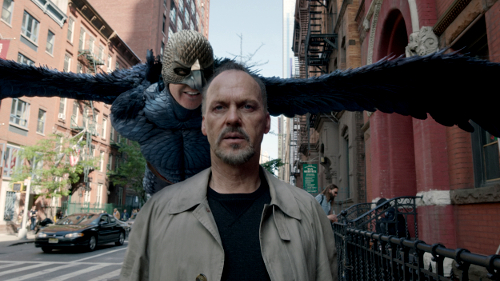
‘Birdman’ bears striking similarities to ‘Black Swan,’ both in the broad strokes—each follow their protagonist’s slipping grip on sanity in the days before a high pressure stage debut—and in a strange number of superficial details—hallucinations of menacing black winged creatures, “surprise” lesbian scenes, and ambiguous suicides at least partially showcased on stage.

Michael Keaton in 'Birdman'
Michael Keaton in Birdman


This repost by Robin Hitchcock appears as part of our theme week on the Academy Awards.  


This review contains spoilers for both Birdman and Black Swan.


Alejandro González Iñárritu’s new film Birdman or (The Unexpected Virtue of Ignorance) bears striking similarities to Darren Aronofsky’s 2010 film Black Swan, both in the broad strokes—each follow their protagonist’s slipping grip on sanity in the days before a high pressure stage debut—and in a strange number of superficial details—hallucinations of menacing black winged creatures, “surprise” lesbian scenes, and ambiguous suicides at least partially showcased on stage. Of course, these two films differ in many ways, most significantly in tone (Birdman is a black comedy, Black Swan is a chilling psychodrama if not an outright horror movie). It is in these departures that we see the significance of gender in stories about identity, art, and mental illness.

1. Phase of life

Riggan in front of his dressing room mirror in 'Birdman'
Riggan in front of his dressing room mirror in Birdman


Birdman‘s Riggan Thomson is a fading movie star, years after playing the title character in a series of superhero blockbusters (casting Michael Keaton in the role deepens the character tenfold). The play at the center of the film is his own adaptation of Raymond Chandler’s What We Talk About When We Talk About Love, which he is also directing and starring in. This vanity project is Riggan’s hope to change his legacy, to transform from the kind of has-been actor who gets attention from tourists to the kind of eternally relevant artist who gets respect from theatre critics.

Nina in front of a mirror in 'Black Swan'
Nina in front of a mirror in Black Swan


Where Riggan is in the twilight of his career, Black Swan shows Nina Sayers is at the dawn of hers, as she ascends from the corps to play the Swan Queen in Swan Lake.  Nina’s transformation over the course of the film is partially a metaphor for her belated sexual awakening and maturation from girl to woman. This becoming is the crucial moment in Nina’s life; she will never face Riggan’s struggle to stay relevant. As we see from the prima ballerina Nina replaces, Winona Ryder’s Beth Turner, there is no option to age gracefully. This is why, even as Nina apparently dies at the end of the film, it is “perfect.”

2. Perfection vs. Superpowers

Riggan's first appears in Birdman impossibly levitating
Riggan’s first appears in Birdman, impossibly levitating


It is the pressure to be perfect that pulls Nina apart in Black Swan. Not only the physical rigors and intense competition of professional ballet, but the paradoxical obligations of womanhood as represented through her dual role as the Swan Queen and Black Swan.  But Riggan doesn’t want to be perfect, he wants to be exceptional. His delusions of his superhuman abilities are his way of reassuring himself that his existence is noteworthy, that he matters, that he deserves to be remembered.

Nina finds herself sprouting feathers


Nina hallucinates body horrors and birdlike transformations reminding her of the separation between her human self and the perfection required for her role. Riggan has easily incorporated superhuman abilities into his sense of self. As a man, he is entitled to do so. Nina’s are horrific transformations as she loses her sense of self.

3. Rivals

Mila Kunis as Lily in 'Black Swan'
Mila Kunis as Lily in Black Swan


Although early marketing for Black Swan played up the “rivalry” between Nina and Mila Kunis’s Lily, Lily is not so important to the plot as she is a character foil for Nina. Lily represents the raw sexuality and effortless grace that Nina’s drive for perfection precludes her from acheiving. Lily is the Natural Beauty, the girl who can eat hamburgers and stay ballerina slim, party all night and still be perky and gorgeous in the morning, who you’ll never see touching up her lipstick but she’ll always have a perfect glossy pout. No matter how hard Nina works, she’ll never best Lily, because she’s less than her just by having to work for it at all.

Ed Norton as the difficult Method actor Mike Shiner in 'Birdman'
Edward Norton as the difficult Method actor Mike Shiner in Birdman


In Birdman, Riggan’s “rival” is a hotshot actor named Mike Shiner (Edward Norton), even though he is known to be difficult to work with. Mike, a rigorous method actor, is the opposite of Lily: his talent comes from his dedication to his craft. And it is Mike’s well-honed skills that make him threatening to Riggan, who landed his career through charisma, good looks, and luck. That’s not the fame Riggan wants. It is the fame of a woman, and he knows he cannot carry it into old age and beyond (see Beth Turner). As a man, Riggan is not only allowed to “work for” his success, he even more respectable for doing so.

Just before opening night, Riggan faces off with theatre critic Tabitha Dickinson (Lindsay Duncan), who resents a movie star for taking up Broadway stage space that could go to a real artist. Riggan throws back the usual barbs against critics labeling art without making it: “None of it costs you anything. You risk nothing.” Putting on the airs of the hardworking artist he knows he is not, Riggan sounds just like someone denying their male privilege played any role in their success. Because achieved greatness is the highest virtue for a man.

4. Conclusions (the films’, and mine)

Both Birdman and Black Swan end ambiguously, with their protagonists appearing to die by suicide. In Black Swan, we see Nina’s apparent murder of Lily was not real, and that Nina rather stabbed herself. At that point in the film we’re neck deep in duality symbolism and pretty much all accept Nina attacking herself with a shard of mirror glass is a metaphor for killing the innocent side of herself, especially because girlfriend is one heck of a dancer for a stab victim.  But in the final moments first Lily, then director Thomas and the other dancers also see the wound and the audience is left thinking Nina’s suicide must have been real. Because, as I mentioned before, dying after a brilliant debut performance is actually perfect for Nina, because she has nowhere higher to go from there.

Nina's apparent suicide in 'Black Swan'
Nina’s apparent suicide in Black Swan


In Birdman, Riggan first attempts suicide by replacing a prop gun with a loaded pistol on stage. Apparently, he only shoots off his nose (earning him a superhero’s face mask of bandages). Then, after hearing Tabitha gave him a glowing review and finding personal resolution with his estranged ex-wife, his best friend, and his troubled daughter, he leaps from his hospital room window. When his daughter Sam (Emma Stone) returns to his empty hospital room with an open window, we see her horrified realization that her father probably jumped. But when she looks down to the street level, she appears confused. Then she looks up, to the sky, and her face fills with wonderment.  There’s ambiguous hope where Black Swan offers only ambiguous despair. Even in the darkest interpretation, that Riggan actually killed himself on stage and these final scenes aren’t real, we see that Riggan has successfully circumvented his fade to mediocrity. He “wins” in a way that Nina never could.

The more hopefully ambiguous final moment of 'Birdman'
The more hopefully ambiguous final moment of Birdman


Looking at Birdman and Black Swan as two versions of the same story highlight the immense differences men and women face in life and in art, in expectation and in reality.  It is in large part the significance of gender that makes these two movies that seem to have so much in common ultimately turn out to be quite different.


Robin Hitchcock is an American writer living in Cape Town who cannot fly nor grow feathers.

Am I The Only Person Incredibly Bored With This Awards Season?

Only one of the Best Actress nominations is from one of the Best Picture nominees, whereas four of the five Best Actor nominations are for Best Picture-nominated films. As I wrote in 2013, this trend suggests that movies with significant roles for women aren’t considered as great or important by the Academy. This year, it is even worse: four of the five Best Actresses were in movies not nominated outside of the acting categories.

White hands holding Oscar statuettes.


This repost by Robin Hitchcock appears as part of our theme week on the Academy Awards.


When nominations for the 87th Academy Awards came out, I should have been on the edge of my seat. I normally completely buy into all the Oscars hype. But this awards season just hasn’t been doing it for me, and now that the Oscar noms are out the stage is set for the Boringest Academy Awards In History (or at least since that year Lord of the Rings won everything).

Honestly, the most exciting nomination to me is “Everything is Awesome” getting a nod for Best Original Song. But everything is not awesome on this nominees list:

  • Eight out of the nine Best Picture nominees are primarily about white dudes. Two of them are historical dramas about real life white dude geniuses.
  • Selma, the only Best Picture nominee about people of color, was shut out in all the other major categories (its director Ava DuVernay would have been the first Black woman nominated in the category).
Snubbed 'Selma' director Ava DuVernay
Snubbed Selma director Ava DuVernay


  • All of the acting nominees are white.
Nominees include Whitest Man Alive Benedict Cumberbatch


  • There are no women nominated for best director or in either screenplay category.
  • Only one of the Best Actress nominations is from one of the Best Picture nominees, whereas four of the five Best Actor nominations are for Best Picture-nominated films. As I wrote in 2013, this trend suggests that movies with significant roles for women aren’t considered as great or important by the Academy. This year, it is even worse: four of the five Best Actresses were in movies not nominated outside of the acting categories.
'Still Alice' shut out aside from Julianne Moore's nomination for Best Actress
Still Alice shut out aside from Julianne Moore’s nomination for Best Actress


  • Note that the one Best Actress nominee from a Best Picture nominee is Felicity Jones in The Theory of Everything, as the love interest to White Dude Genius #2.


And aside from my disappointment at the total lack of representation in the slate of nominees, I’m also just BORED by these movies. The Grand Budapest Hotel tied with Birdman for total number of nominations. The Grand Budapest Hotel was released all the way back in February, before last year’s Oscars even aired, and I had no idea it was even in contention. And I still have no idea why. I fell asleep trying to watch that movie no less than three times. I thought Boyhood was mediocre (although I’m glad Patricia Arquette was nominated). Birdman was great, but I’d rather be rooting for it as an offbeat dark horse instead of a front runner in an incredibly weak field.

The Grand Budapest Ambien


The past few years I’ve mounted my own attempts at what Sarah D. Bunting calls the “Oscars Death Race” by trying to see every nominated film. I’ve never even come close to succeeding (it is hard to do in any circumstance, but basically impossible in South Africa), but through the effort I’ve seen a lot of great movies I would have otherwise missed. (I also subjected myself to The Wolf of Wall Street, but it has still been a net positive.)

I’m not sure I’m going to even bother this year. I mean, maybe one or both of the White Dude Genius Period Piece movies will actually turn out to be lovely. Maybe American Sniper will be this year’s Captain Phillips, a “dad movie” that is actually an incredibly well-crafted piece of cinema. Maybe Whiplash, which I honestly had not even heard of before today, will be my favorite movie of the year.

For all I know, 'Whiplash' could be the greatest film of all time.
For all I know, Whiplash could be the greatest film of all time.


But I’m not optimistic. My love of Awards Season pomp and circumstance is waning in the face of my growing cynicism about Hollywood. Do I really want to throw more money at movies about white dudes just because the white dudes in the Academy voted for them? Maybe I should save my Oscars Death Race bib for next year.

How do you feel about the Oscar nominations? What would you have rather seen get recognition this year?

Bitch Flicks’ Weekly Picks

Check out what we’ve been reading this week–and let us know what you’ve been reading/writing in the comments!

recommended-red-714x300-1

Explore the films that fail the Bechdel Test with these interactive graphs by Caroline Siede at AV Club

Watch: Ava DuVernay’s ’60 Minutes’ Interview on Opening Doors and White Savior Films by Laura Berger at Women and Hollywood

Jon Stewart’s Replacement onThe Daily Show Should Be a Woman by Eliana Dockterman at TIME

The promise of Laverne Cox’s new show by Alyssa Rosenberg at The Washington Post


What have you been reading/writing this week? Tell us in the comments!

Seed & Spark: #EarlyCinemaSoBlack

But they did not do it for fame or hardware, they saw a new industry that they could use to instill pride and confidence in their community and propel the race forward. So for this Black History Month, we can proudly say #EarlyCinemaSoBlack.

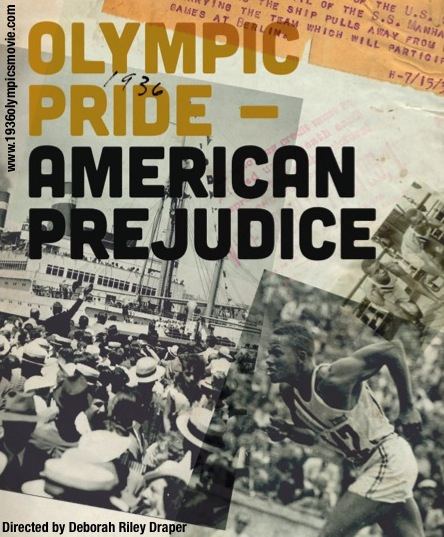
OPAP Movie Art

This is a guest post by Deborah Riley Draper.

Fortunately I have the honor and privilege of preserving and elevating the historical contributions of people of color everyday.  But, since it is Black History Month, I would be remised if I didn’t take this opportunity to highlight some of the original baddass chicks of cinema.  Contrary to the misconceptions and blatant neglect of historical fact, Black women have enjoyed success and failure in the movie-making business since the industry began practically.  And not too unlike today, these trailblazers of the Silent Movie Era operated fully and completely outside of the Hollywood or the burgeoning Hollywood system.

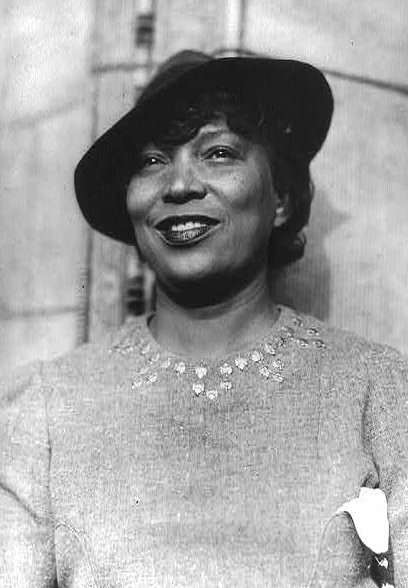
Of course, most people are familiar with Zora Neale Hurston and her books because Halle Berry starred in the 2005 TV movie adaptation of Their Eyes Were Watching God produced by Oprah Winfrey. The Harlem Renaissance bad girl was not only a celebrated novelist and playwright but a noted anthropologist as well.  She produced ethnographic films in 1928 capturing the lives, customs, and beliefs of Southern people.  If you are ever in the Library of Congress, be sure to check Hurston’s filmography.

Zora Neale Hurston

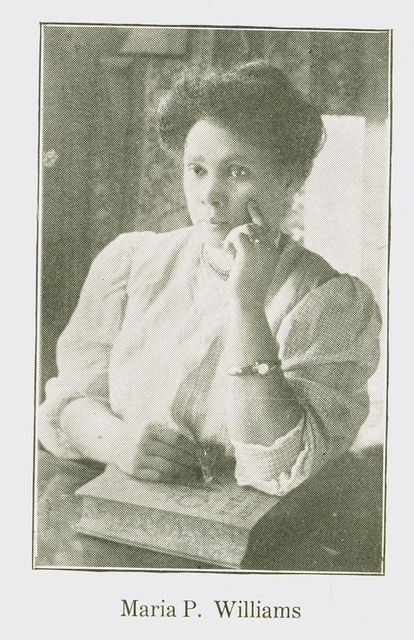
Seven years before Hurston’s films and exactly 100 years before #OscarsSoWhite was trending, the legendary Black newspaper The Chicago Defender mentioned the “three-reel drama” Shadowed by the Devil, penned and produced by Mrs. Miles Webb, in their section “Among the Movies.”   Around the same time, photographer Jane Louise VanDerZee Toussaint Welcome, personal photographer of Booker T. Washington and sister of famed Harlem photographer James VanDerZee, and her husband Ernest Toussaint Welcome opened The Toussaint Motion Picture Exchange.  Jennie directed Doing their Bit, a short detailing the efforts of Blacks in the military during WWI.   Another film pioneer, Maria P. Williams, produced, distributed, and acted in her own film, The Flames of Wrath (1923) and the Norfolk Journal and Guide printed, “Kansas City is claiming the honor of having the first colored woman film producer in the United States.” And Williams’ best friend, Tressie Souders was lauded by the Black press as the first African American woman director for her film, A Woman’s Error (1922), which was distributed by the Afro-American Film Exhibitors’ Company based in Kansas City, Mo.  These woman ignored stereotypes, Jim Crow laws, and the lack of women’s rights to get behind camera to capture and document important stories.  They used a pen and a camera to create important pathways and springboards to fuel the march to equality.

Drusilla Dunjee Houston

It is important to mention, since we are talking about woman who used film to impact the social consciousness of a very racially oppressive society, the writer Drusilla Dunjee Houston.  She wrote the screenplay, “Spirit of the South: The Maddened Mob,” one of earliest African-American responses to Thomas Dixon and D. W. Griffith’s The Birth of a Nation (1915).  She was unable to get it financed and produced. 

Maria P. Williams

Black women have been involved in every aspect of film from the beginning.  While Oscar Micheaux is regarded as the father of Black independent cinema, we must also applaud the women who stepped out prior to men and women of all races to create jobs, opportunities and provide authentic depictions of them on the screen.  These woman found their own spark and seed money to create a lane, a voice and compelling narratives that would accurately depict African American life and inspire the next generation. They pioneered cinematic techniques and introduced ways to flourish outside of Hollywood.  They were entrepreneurs with start-up film companies.  Maybe one day, they will trend on twitter or receive posthumous recognition for their contributions. But they did not do it for fame or hardware, they saw a new industry that they could use to instill pride and confidence in their community and propel the race forward. So for this Black History Month, we can proudly say #EarlyCinemaSoBlack.

Though not cinematic pioneers, two historically significant women will be featured in the upcoming documentary Olympic Pride, American Prejudice.  The film captures the heroic turn of 18 African American athletes who defied racism on both sides of the Atlantic to complete in the 1936 Olympics.  And, Louise Stokes and Tydie Pickett, the first Black women ever selected to an American Olympic team, bravely and proudly stepped onto the U.S.S. Manhattan to represent the U.S. almost 30 years prior to the Civil Rights Bill.  This film is currently funding on Seed&Spark.  Please support the telling of this significant chapter in American history and a precursor in the modern Civil Rights movement.  Click here to contribute or log on to www.1936olympicsmovie.com to learn more.

See also at Bitch Flicks: Forgotten Great Black Actresses: “Race Films” in Early Hollywood and Through a Lens Darkly: Toward a More Beautiful Family Album

___________________________________


Deborah Riley Draper headshot-1

Filmmaker Deborah Riley Draper has a proven track record for creating compelling brand stories as an advertising agency executive. Draperʼs first documentary, Versailles ʼ73: American Runway Revolution, brought to life the legendary 1973 fashion battle between five French and five American designers. Versailles ʼ73 has screened all over the world and received acclaim from critics and fans alike, including the New York Times, LA Times and Harperʼs Bazaar. The film was selected to the St. Louis International Film Festival, NY Winter Film Awards, John Hopkins Film Festival, Marthaʼs Vineyards African American Film Festival, Denver Film Society Winter DocNights, and Gateway Documentary Festival as well as selected to screen at fashion and design festivals in Canada, Saudi Arabia, Croatia, Estonia and Australia. Versailles ʼ73 is distributed through Cinetic/Filmbuff on VOD in North America, Europe and Australia. The documentary has also been optioned for development into a feature film.

Draper is currently completing production on Olympic Pride, American Prejudice, the story of the 18 African American athletes of the 1936 Summer Olympic Games. She is also completing two feature film scripts. Draper recently contributed to several museum projects, including The Groninger Museum in The Netherlands exhibition on Marga Weiman, Museum of the City of New Yorkʼs Stephen Burrows: When Fashion Danced and the Andre Leon Tallyʼs An American Master of Inventive Design at SCAD. Draper will be a contributing writer to the Fall 2015 NKA: Journal of Contemporary African Art Fashion Edition.

Draper has been making long format content and commercials for more than 15 years for clients such as Coca-Cola Classic, Sprite, The Georgia Lottery Corporation, Blue Cross-Blue Shield, ExxonMobil, Fedex, Bayer CropScience and HP. She is currently the Client Service Director at Iris Worldwide. Prior to iris, Draper spent eight years at BBDO and three years at the Publicis network agency Burrell Communications Group. Her advertising work has won two Regional Emmy Awards, Gold Effie, and numerous Addys.

The avid Florida State University Seminole is frequent lecturer for the AAAA Advertising Institute and a 2014 Distinquished Visiting Professor at Johnson & Wales University, Florida Campus.

On ‘Annie,’ Lady ‘Ghostbusters,’ and “Ruined” Childhoods

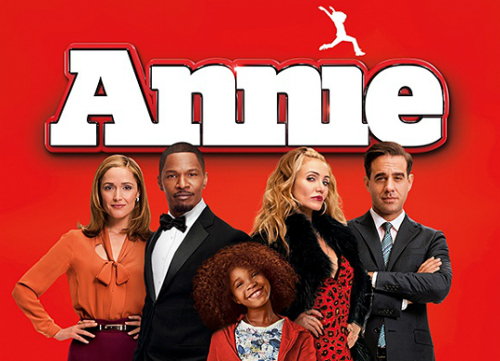
And the matter of representation here is so important. Little Black girls deserve to see themselves on screen, to try to be like Annie the way I tried to be like Punky Brewster when I was a kid. They deserve to see this kind of Cinderella story, where the benefactor is a successful Black businessman (Jamie Foxx as cell phone-mogul and mayoral candidate Will Stacks, the less-creepily named equivalent to Daddy Warbucks). Black parents deserve to take their kids to movies that will show families like theirs. And people of all ages and all races need to see Black actors star in movies like this so the gross privileged reaction of “but the star isn’t white OH NOES!” goes away.

'Annie' (2014)  movie poster
Annie (2014) movie poster

Written by Robin Hitchcock.

Some conversations I have had about the 2014 remake of Annie, starring Quvenzhané Wallis:

“Got any exciting plans this weekend?”

“Yes! I’m finally going to get to see the new Annie!”

“Why are you excited about that?”

“Well I probably watched the old movie upwards of 100 times when I was a kid.”

“I would think then you’d want to avoid this one? It’s probably just going to ruin your childhood memories.”

“Is it weird that I feel weird about the new Annie being Black?”

“Yes.”

“But it’s just that my image of the character is a little redheaded girl with freckles.”

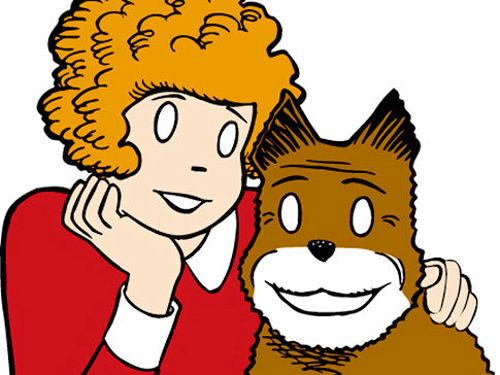
“Well the original image of the character didn’t have pupils in her eyes, so, things change.”

Comic Annie's creepy blank eyes.
Comic Annie’s creepy blank eyes.


When an Annie remake was announced in 2011, produced by Will and Jada Pinkett-Smith with their daughter Willow attached to play the title character, the “Annie can’t be Black!” nonsense started up, and ebbed and flowed with every new development on the film. Oscar nominee Quvenzhané Wallis cast. “Annie can’t be Black!” Trailer released. “Annie can’t be Black!” Film opens and enjoys modest box office success. “ANNIE CAN’T BE BLACK!”

The remake brilliantly takes on this “controversy” by opening on a white curly-haired redheaded girl with freckles named Annie, who tapdances when she finishes giving her school report. The teacher then calls up “Annie B.” and out comes Quvenzhané Wallis with her charm cranked up to 11. She gets the classroom to participate in her report on FDR and the New Deal, and I can’t imagine anyone in the audience not being won over by the new Annie in this one scene, unless your racism is the Klan kind and not the internalized “but Annie NEEDS to be white” kind. (Which is still bad, and you should work on that.)

Annie and her foster sisters.


In fact, the new Annie being Black is a huge benefit to this film. First, it gives it a reason to exist. Family-friendly movies with Black protagonists are desperately lacking. Plus, an all-white crew of plucky foster kids (in this movie, Annie is very adamant she is a foster kid and not an orphan, because she believes her parents to be alive) in modern-day New York would be unbelievable.  And it lets Quvenzhané Wallis star, and I defy you to name a more charming child actor working today.

And the matter of representation here is so important. Little Black girls deserve to see themselves on screen, to try to be like Annie the way I tried to be like Punky Brewster when I was a kid. They deserve to see this kind of Cinderella story, where the benefactor is a successful Black businessman (Jamie Foxx as cell phone-mogul and mayoral candidate Will Stacks, the less-creepily named equivalent to Daddy Warbucks). Black parents deserve to take their kids to movies that will show families like theirs. And people of all ages and all races need to see Black actors star in movies like this so the gross privileged reaction of “but the star isn’t white OH NOES!” goes away.

Family-friendly movies starring black actors are important.
Family-friendly movies starring Black actors are important.


The movie itself? I liked it a lot! It has some issues: 1) Cameron Diaz can’t sing 2) everything sounds a little excessively auto-tuned (Jamie Foxx and Quvenzhané Wallis CAN sing, so that’s no excuse) 3) The new songs don’t blend in as well as they could have 4) The Obamas do not cameo in place of Annie meeting FDR 5) Rooster Hannigan doesn’t exist, and Traci Thoms as Lily St. Regis stand-in doesn’t get to sing “Easy Street,” so the best scene from the 1982 movie turns into one of the worst in the remake (Cameron Diaz really, really, REALLY can’t sing).

And here’s the thing: it could have been TERRIBLE and my childhood would be intact! It wouldn’t make the old movie cease to exist, wouldn’t change my memories of loving it as a child. Also my childhood was a lot more than one weird musical with a racist caricature named Punjab serving as the inexplicably mystical valet to a guy named, for realskies, Daddy Warbucks.

The old Annie was racist.
Cringe!


And embittered dudes out there, your childhoods were more than Ghostbusters as dudes. Lady Ghostbusters will NOT ruin your childhood unless the movie is actually about them time travelling to steal your lunch money and eat your homework (I would actually totally watch that movie).

Look. Every now and then they threaten to remake Casablanca. At one point there were rumors of a Bennifer (that’s the former power couple Ben Affleck and J.Lo for those with a short celeb culture memory) version. And yes, this gives me the “WHY!? NO! HANDS OFF!” reaction that I suppose people are having to new Annie and new Ghostbusters. So I’m trying to be sympathetic and give people the benefit of the doubt here, that they aren’t just being racist or sexist.

Did the Looney Tunes take on Casablanca ruin my childhood or my adulthood?


But keep this in mind, childhood-defenders who are particularly upset when their childhood faves stop being white or male: changing the demographic profile of the stars gives these remakes a reason to exist. Like, if they HAD remade Casablanca with Ben Affleck and Jennifer Lopez, but made it about modern-day immigration issues (people forget that Casablanca was NOT a period piece) it might have been really interesting!  Making the Ghostbusters women gives them the ability to create relatively original characters instead of awkwardly attempting to replicate the old ones. And the world needs more women-led comedy films, like it needs more Black family films.

The world absolutely does not need more movies starring white people, especially white dudes. I say this as a white person. I’ve had my fill. Hollywood relies on remakes and reboots an incredible amount, and thank goodness they’ve taken to changing the race or gender of some of these characters or we’d be in a never-ending cycle of universal white dudeliness.

It's going to be ok.
It’s going to be OK.


So fellow white people, please keep in mind: you will still exist if you are not absurdly over-represented on screen. White dudes: Remember how upset you were when they made Starbuck a girl? Remember how that was awesome? It’s going to be OK.


Robin Hitchcock is an American writer living in Cape Town. She is an actual orphan so you should trust her take on Annie.

‘Through a Lens Darkly’: Toward a More Beautiful Family Album

For example, in 1840–just one year after photography was invented in France–Jules Lion (an African American man) opened a daguerrotype studio in New Orleans. Ten years later, Louis Agassiz, a scientist from Harvard, worked with a daguerreian in South Carolina to capture images of slaves. The contrast of a free Black photographer and the “specimen”-like treatment of the slaves (and the fact that both were largely forgotten or lost) is, at its core, the contrast–the double consciousness–of the imagery of Black America.

throughalensdarkly_header

Written by Leigh Kolb.

Many of the images in Through a Lens Darkly: Black Photographers and the Emergence of a People that are most familiar are the horrifying caricatures of African Americans in advertising and the photos–that were often shared as postcards–of lynchings.

Of course, those images are not what Through a Lens Darkly–the beautiful documentary about the history of both the literal and figurative African American family album, and groundbreaking Black photographers throughout history–focuses on. Those images are ingrained into our visual and cultural psyche, burning feelings of contempt, pity, disgust, and denial into white viewers’ eyes and hearts. The lens that America looks through is white. The subject of America’s family album is white. When Black Americans have been the subject in photography, too often these images have been distorted to fit a racist, white supremacist narrative.

James Baldwin said in 1963,

“Every Negro boy and every Negro girl born in this country until this present moment undergoes the agony of trying to find in the body politic, in the body social, outside himself/herself, some image of himself or herself which is not demeaning.”

Filmmaker Thomas Allen Harris digs into his own family album and reflects on the images of African Americans throughout history as well as the African American image-makers throughout history to find those images. It’s a stunning documentary, and does an incredible job showing the impact that photography has had and still has in our culture. Harris says that he was trying to “reconcile two conflicting legacies”–“self affirmation vs. negation.” “Our salvation of a people, of a culture,” he says, “depends on salvaging our images.” This, he says, would be the true “American family album.”

Harris, with a poster featuring his grandparents.
Harris, with a poster featuring his grandparents


Deborah Willis‘ groundbreaking Reflections in Black: A History of Black Photographers from 1840 to the Present inspired Harris, and her extensive research (the project took more than 30 years) uncovered those image-makers and images that went forgotten for too long.

For example, in 1840–just one year after photography was invented in France–Jules Lion (an African American man) opened a daguerrotype studio in New Orleans. Ten years later, Louis Agassiz, a scientist from Harvard, worked with a daguerreian in South Carolina to capture images of slaves. The contrast of a free Black photographer and the “specimen”-like treatment of the slaves (and the fact that both were largely forgotten or lost) is, at its core, the contrast–the double consciousness–of the imagery of Black America.

The photo of Gordon, the escaped slave-turned Union solider, and his brutally whipped back was used in Harper’s to display the “transformation of slave to warrior,” and his courage and patriotism. Over time, it turned in to a photo of victimization. The film points out that photos of the Black soldiers in the Civil War (nearly 200,000 fought) are often absent. When we see those photos, Robin D.G. Kelley points out, we see the reality that slaves freed themselves. If we don’t see those images, we stay swept up in the myth that Abraham Lincoln freed the slaves. Kelley says, “We’re torn between the stories we’ve been told, and the truths we see reflected in these images.”

The photos of everyday African Americans during the Reconstruction era show, as the film points out, “The best American democracy has to offer.” The hope, the humanity, and the freedom that those years promised was all too often hidden or violently thwarted, with the establishment of Black Codes and Jim Crow laws.

And then Birth of a Nation. Images of the “Black brute” dominated; advertisements with caricatures of Black people, and staged photographs with Black men committing petty crimes became popular. The images were terrifying and terrorizing to Black Americans (by design), and the narrative of white supremacy was clear. As white families would send each other postcards of photos of lynchings, the American family album was clearly a segregated, exclusive set of images. Black Americans have consistently had to fight to find themselves remembered and represented accurately.

Just as Sojourner Truth and Frederick Douglass knew that their photographed images were essential to their reputations, Booker T. Washington and W.E.B. Du Bois also worked to highlight images of successful Black Americans. From the 1900 Paris Exposition to the cover of The Crisis magazine, complex, beautiful, humanizing photographs of Black Americans showcased that they were a “rising” people, far exceeding the savage, brutish images that audiences were used to.

It is powerful that the parts of the film that show the painful images that white Americans were responsible for are relatively short. It’s not a film about white Americans; it’s a film about finding and creating a complex, complete family album that belongs to and features African Americans. And as important as it is to know and be faced with the horrors that white Americans created, that’s not what Harris dwells on. Not because these images aren’t powerful and tragic, but because this isn’t a film about white people. That’s important.

Another noteworthy part of the film is the driving force of women’s voices in the documentary itself, women’s talent, and the historical context of women photographers (Louise Jefferson, Winifred Hall Allen, Vera Jackson, Ella Watson, Florestine Perrault Collins, and others are discussed as pioneering photographers and business-owners).

Carrie Mae Weems: from The Kitchen Table Series.
Carrie Mae Weems: from The Kitchen Table Series

Renée Cox: Yo Mama's Pieta
Renée Cox: Yo Mama’s Pieta


Through interviews with photographers and historians, Harris weaves together a history lesson and a gallery of images, highlighting the image-makers and the audiences–those creating the album, and those in the album. There is so much in this relatively short documentary, but it’s also just the beginning. We find ourselves wanting to research more, and to be surrounded by the photographs of Carrie Mae Weems, Renée Cox, Jeanne Moutoussamy-Ashe, Gordon Parks, Ernest Withers, Roy DeCarva, James VanDerZee, and Hank Willis Thomas.

Gordon Parks.
Gordon Parks


We want the images of Black Civil War and WWI soldiers to be more familiar than the images of racist caricatures. We want Gordon’s back to symbolize him as a slave-turned-warrior, not a victim to be forgotten. We want to swipe a copy of The Sweet Flypaper of LifeWe want a new American family album.

Toward the end of the film, Weems asks how she can “get you to love me back.” This inquiry is reminiscent of the Langston Hughes’ poem, “I, Too”:

I, too, sing America.

I am the darker brother.

They send me to eat in the kitchen
When company comes,
But I laugh,
And eat well,
And grow strong.

Tomorrow,

I’ll be at the table
When company comes.
Nobody’ll dare
Say to me,
“Eat in the kitchen,”
Then.

Besides,

They’ll see how beautiful I am
And be ashamed—

I, too, am America.

Through a Lens Darkly takes photographs and photographers and places them in a more true, complete, and beautiful American family album–one that should be at all of our tables. We see how beautiful it is.


A First Run Features film, Through a Lens Darkly is available on iTunes and DVD, and will be on Netflix Feb. 17. The film premiers Feb. 16 on PBS Independent Lens.


Recommended: Toronto Black Film Festival Review: Through A Lens Darkly: Black Photographers & the Emergence of a People by Zeba Blay at Shadow and ActViewfinders: Black Women Photographers by Jeanne Moutoussamy-Ashe; Reflections in Black: A History of Black Photographers 1840 to the Present by Deborah Willis; American History Through an African American Lens; “Light And Dark: The Racial Biases That Remain In Photography”


Leigh Kolb is a composition, literature, and journalism instructor at a community college in rural Missouri.


‘Below the Line’: Women Cinematographers’ Panel at Athena (Part 1)

Caryn James: There are some really appalling numbers about women cinematographers in the industry. In a study done last year by Celluloid Ceiling for the year 2013, of the 250 top-grossing films, only 3 percent had women cinematographers which was 1 percent more than the previous year and for some reason a decrease from 1998. And just to get a sense of the range here, 6 percent of those films were directed by women, 17 percent were edited by women, 25 percent had women producers. But only 3 percent of women cinematographers in that group. Why do you think that is? Are there historical reasons for that ? What is going on?

(L-R) Kirsten Johnson, Nadia Hallgren, Reed Morano


Written by Ren Jender


The following is a transcription (edited for concision and clarity) of the first part of the panel “Below the Line” held Saturday, Feb. 7, 2015 at the Athena Film Festival. The panel featured women cinematographers Kirsten Johnson (Derrida, Pray The Devil Back To Hell, Citizenfour), Reed Morano (The Skeleton Twins, Frozen River) and Nadia Hallgren (Citizen Koch, Searching for Sugar Man) speaking with Indiewire critic Caryn James


Caryn James: There are some really appalling numbers about women cinematographers in the industry. In a study done last year by Celluloid Ceiling for the year 2013, of the 250 top-grossing films, only 3 percent had women cinematographers which was 1 percent more than the previous year and for some reason a decrease from 1998. And just to get a sense of the range here, 6 percent of those films were directed by women, 17 percent were edited by women, 25 percent had women producers. But only 3 percent of women cinematographers in that group. Why do you think that is? Are there historical reasons for that ? What is going on?

Kirsten Johnson: I was really excited to see that study. But I thought, “That doesn’t really apply to me.” Because the 250 top-grossing movies obviously we know what those movies are and there aren’t that many women. But I just came back from Sundance where I was on the US Documentary jury and you know, there are two women programmers at the Sundance Festival and I was on this wonderful jury. I did statistics on the US Documentary this year at Sundance and there were listed 19 cinematographers who were men, one cinematographer who was a woman. I went back through the numbers and out of 16 films several of them were codirected. So there were 15 men and there were eight women directors. In two of those cases the women did not list themselves as cinematographers even though they shot their own films: which is this interesting thing of a devaluation of the role and also an expectation of women in the documentary field: “I don’t have any money. I have to shoot this film myself. But I’m not really good at this. Sometime when I get some money I’ll hire someone else.” I think that’s often the case with women documentary directors who shoot their own work and certainly don’t consider it a profession.

'Pray The Devil Back To Hell' (Kirsten Johnson, cinematographer)
Pray The Devil Back To Hell (Kirsten Johnson, cinematographer)


The number that really made me sad was the subject matter of the films. So of the 16 films there were only three that had major women characters. One of those was the mother, Lucia McBath, of Jordan Davis who was shot, so she was one of an ensemble of people featured in the film. The other was How to Dance in Ohio, an ensemble piece about teenagers with autism. A couple of those teenagers were girls. And the third one was Hot Girls Wanted which was a study of amateur porn so the women who had the presence on the screen were 18-year-olds being exploited by the amateur porn industry. The rest of those 16 films, including the ones made by women, were all about men.

Caryn James; How do you account for that? Even at Sundance where you’d expect things to be more equitable. Are there historical reasons why it’s tougher for women to break into that area?

Reed Morano: I don’t know. I feel like expectations have been set up by the industry. Also it could be subconscious thinking. I mean just speaking from having made my own feature with a woman lead: it took a long time to get financing but even a longer time to get a male lead that would play second to her. I think maybe there’s a fear: you want to get the movie made, and it’s harder to get it made with a female central character.

Kirsten Johnson: I think we could break this down into several different categories. The world Reed is from is a primarily fictional world and Nadia and I are in documentary.

Caryn James: Well how did you all become cinematographers in the first place? Nadia, what was your impulse for becoming a cinematographer? Was it something you always wanted to do? Or just floundered into, the way most of us do in our careers?

Nadia Hallgren: Well I started out in still photography, black and white photography, as a kid. Someone gave me a video camera and then I started to make my own films. People seemed to respond to them. I ended up making a short film that screened at a local film festival in the Bronx, where I grew up, and I met Michael Moore’s longtime producing partner. And she liked my film. We talked and I told her I wanted to shoot films and she ended up hiring me and promised me if there was ever a chance to shoot on the film she would give it to me. And she did. That’s also how I met Kirsten who was one of DPs (director of photography) on Fahrenheit 9/11. Before we wrapped shooting I told her I wanted to be a cinematographer. I wanted her to teach me stuff and she did. It was through encounters with women that gave me an opportunity. You realize you are going to be part of this boys’ club. There were plenty of times when I was in vans with ten guys who were talking about football and I couldn’t really relate. Finding your way to other women who are supportive is key: other cinematographers, directors, producers willing to bring you in.

Oscar Winner 'Searching For Sugar Man' (cinematographer: Nadia Hallgren)
Oscar Winner Searching For Sugar Man (cinematographer: Nadia Hallgren)


Caryn James: So how does that work if there aren’t all that many women in the field? Who are the people who helped you along? Who are the cinematographers who mentored you?

Kirsten Johnson: I went to film school in France. I was encouraged to go into the camera department since there was no way they were going to let an American into the directing department. I discovered cinematography. I discovered I love the camera. I moved to New York and I didn’t know anybody. I was working for the Shoah foundation interviewing Holocaust survivors. Those were all male cinematographers. One of the things in this field is: you have to fun to be with because you’re going on long trips and going to be spending long hours with people. It’s like the most important part of the job. If people want to hang out with you, they’ll hire you. And one of the other things that I learned, maybe before becoming a cinematographer, when I made this choice after college to move to Senegal because I was interested in African cinema. And I didn’t know anything, but I wanted to do it so badly. I bluffed things. I have tried to mentor folks because there was nobody to mentor me except for women directors.

When I moved to New York, there were five women who were cinematographers, like I could name all of them. They were all busy working . None of them had time to talk to me. I met with women directors like Barbara Kopple, who wanted to work with women and wanted to work with me. But I didn’t yet have that much experience. Going to Senegal and not knowing anything taught me to try. You can’t study cinematography. You learn it by doing it. And for some reason many more young men are so cocky about this, like, “I can do this. I can hold this camera.” So I started saying that too. You just say “yes” and then you learn it on the job.

Caryn James: That really is the kind of thing that speaks to the kind of confidence women should have in general. Is there something specific about working with the camera? One of the things that might have been historically factored in here was the idea that these poor, little women can’t lug around big, heavy equipment, so they shouldn’t be doing this, which is not so much the case anymore. The other thing is a lot of it is technical. You need to know science and things like lenses: not the “girly” thing to do. Is that a factor in keeping women out of that area more than other areas?

Kirsten Johnson: Well also, when you’re on a feature film you have to run a crew and most of that crew are men. So you’re the boss of men. Whereas working in documentary you’re doing it all yourself. You have to have some kind of mastery over the actual camera. But you can sort of practice that and get that under your belt. But I think in the case of features…

'The Skeleton Twins' (cinematographer: Reed Morano, ASC)
The Skeleton Twins (cinematographer: Reed Morano, ASC)


Reed Morano: You run a crew of men and also they’ll find out really fast if you don’t know what you’re doing. The only way to run a crew successfully is if you have their respect and they have confidence in you and you know what you’re talking about. You don’t have to overprove yourself, but the things you ask for have to make sense. You’re not running people around in circles. You know what you want. You’re not waffling. You make immediate decisions. I’m about to do a show right now for HBO, a pilot, with my key grip and gaffer who are probably a good 20 to 30 years older than me and they’ve been in the union forever and probably were making movies long before I was. And they’re awesome. They totally respect me and are psyched to do it.

Caryn James: How did you get there?

Reed Morano: Well personally all the films I had to do before I got into the union were with friends and peers, male or female. And you learn how to work with guys. I came up as a key grip as well which is typically, that’s a very male-dominated job. Because it’s basically heavy lifting. I remember the first time I was gripping and I had to receive a 4 x 8 feet sheet of plywood from a guy on top of a truck. I was like, “I don’t really know if I can do this. Okay, I’m doing it. And I’m not wearing (work) gloves because I’m a girl.” It was like a learning curve. And like you were saying, people have to like you.

Caryn James: What has been the turning point in your career? Has there been a moment when you really got some help or made some breakthrough that made you think “I can do this”?

Nadia Hallgren: I think the moment comes and comes. I think it’s an ongoing evolution. Being a cinematographer, every new experience kind of does that for me. I’m always surprised at what I learn and that that teaches me something about myself.

Caryn James: Did you go to film school?

Nadia Hallgren: No

Caryn James: So how did you know what to do?

Nadia Hallgren: I would stare at magazines. And I loved composition. I didn’t know why or what I was doing. It was just very attractive to me. Then I got into a photography program, a community program in the Bronx. I still didn’t understand what I was doing, but a lot of it was just watching movies, talking to people about movies, trying to understand what was happening in front of me and just doing.

Caryn James: Reed, did you go to film school?

Reed Morano: Yeah, I went to NYU and I went with the intention of writing and directing. And then when I got there, just from the very first shoot as a PA (production assistant) I just couldn’t stop watching what the DP was doing. I was like, “That must be the most amazing job,” because you make everyone see what you see. You control that. I asked everyone: to become a DP what do I have to do? And the only advice was: take every technical class. Everyone at NYU wants to be a director, so no one wants to take technical classes. Then I would tell everyone, “I want to shoot your movie.” They all didn’t care because they just wanted to be directing. So I shot a few. At the time I was in film school everything was pretty much shot on 16 mm or 35. It was a big, scary, cool moment, but everyone was in it together which was helpful and you came out of it with sort of a reel but not really. You get to make your mistakes with other students. The “doing” part of it for me was the most important part. I don’t think I really learned how to light until a few years after film school.


Ren Jender is a queer writer-performer/producer putting a film together. Her writing, besides appearing every week on Bitch Flicks, has also been published in The Toast, RH Reality Check, xoJane and the Feminist Wire. You can follow her on Twitter @renjender


‘American Sniper’: We Can Kill It for You Wholesale

This cowboy motif is no accident, as it connects this film to the old John Ford Westerns and the nostalgia some folks feel about John Wayne flicks and the mythology of good white cowboys fighting off savage Indians who were keeping good white settlers from utilizing this “wilderness” that would become the U.S.A. Dehumanizing non-whites is the foundation for creating this nation. It’s the glue that holds apple pies and hot dogs together.

American Sniper poster. Starring Bradley Cooper.


On Sept. 11, 2001, I was on the West Coast, living in the mountains of Southern Cali and preparing to go to work. A co-worker came running into our office screaming that the Twin Towers had fallen. Mind you, we were on West Coast time, and by the time I saw the attacks on television, the networks were on replay mode and editing footage deemed too gruesome for viewers.

Gathered around the one tiny TV in another office, my co-workers and I stared in disbelief, and the one thing I said out loud was something I remembered Malcolm X saying about chickens coming home to roost. “This is payback for something folks,” I said to them. While my co-workers were the flag-waving Patriotic types, I was already shaping this assault on American soil as retaliation for the untold dirt our military and government had done for years to countries who didn’t uphold our global agenda. This caused some ruffled feathers between me and some of my colleagues. It was a surreal moment. Our Pearl Harbor for the new millennia.

Looking back at the Sept. 11 attacks, it shouldn’t surprise me why American Sniper was such a big hit with the patriotic ‘muricah crowd.  It is the military chicken soup of the soul cinema experience. It is propaganda of the highest order for viewers who need the Matrix blue pill to live with the lie of America’s War on Terror.

Men are war.
Men are war.


What makes American Sniper a disappointing viewing experience is not the ahistorical nature of the film, but quite frankly its generic storytelling. It’s downright boring. I may not agree with the politics of a film in order to enjoy it, but dammit, I have to be engaged with the content and its characters. The only time American Sniper really held my total interest was the appearance of a villainous character named Mustafa (played by Sammy Sheik), another sniper from Syria who we learn was a medal winning sharpshooter in the Olympics. He is for all intents and purposes Chris Kyle’s Arab counterpart. Sammy Sheik is riveting to watch in the brief moments we see him, although he never speaks. (Sidenote: every Arab character is a bad guy in this movie. There are no grays or complexity at all. Men, women, and children are all portrayed as evil, conniving, and dangerous. The idea that they could be defending their country from the cowboy antics of American soldiers is never even hinted at.)

Sammy Sheik as "Mustafa" and the only compelling character to hold my interest.
Sammy Sheik as “Mustafa” and the only compelling character to hold my interest.


Bradley Cooper’s portrayal of Chris Kyle as a good ole boy going off to defend American citizens from the new Boogie-Men-of-the-Moment is pretty cut and dry. Usually Cooper is quite engaging to watch with his big baby blues and mega-watt smile. But here he’s not captivating at all, despite his eagerness to be serious and Oscar-worthy. His Kyle comes off as a big dumb reactionary bloke trying to find his manhood through “masculine” pursuits like bronco busting in rodeos and later a trumped up war (lest we forget, the excuse for bludgeoning Iraq was because U.S. intel claimed there was proof of W.M.D.’s—Weapons of Mass Destruction. There were no W.M.D.’s, and the 9/11 hijackers were from Saudi Arabia, but I digress). This cowboy motif is no accident, as it connects this film to the old John Ford Westerns and the nostalgia some folks feel about John Wayne flicks and the mythology of good white cowboys fighting off savage Indians who were keeping good white settlers from utilizing this “wilderness” that would become the U.S.A. Dehumanizing non-whites is the foundation for creating this nation. It’s the glue that holds apple pies and hot dogs together.

The original "Savages" that Cowboys fought. Actually Native people defending their land and liberty.
The original “Savages” that Cowboys fought. Actually Native people defending their land and liberty.


The new Wild West of the east. Actually American weapons of mass destruction.


Clint Eastwood, a veteran of old school cowboy flicks and the poster boy for conservative old boy politics, paints American Sniper as another addition to that long line of wild west nostalgia in contemporary war cinema. Unfortunately the script tells us nothing new or insightful about the American psyche in relation to war today. As it stands, the simplistic plot of American Sniper tells us what we already know. Men are war, and American men thrive on it under the guise of Democracy and helping other countries liberate themselves from tyranny–by ironically (maybe intentionally) becoming the new tyranny in places we are supposed to be helping. Every generation, America creates new evil henchmen: Native Americans on the frontier, The Yellow Peril, Red Scare Russians, Black people and Civil Rights, Communist Cuba, and renegade North Korea. Since the 90s and our first trumped-up invasion of Iraq, the Arab world is the new thing that goes bump in the night. Our penchant for war only teaches us that xenophobia and colonialism never went away. We just dress them up with new language like insurgents and failing diplomacy.
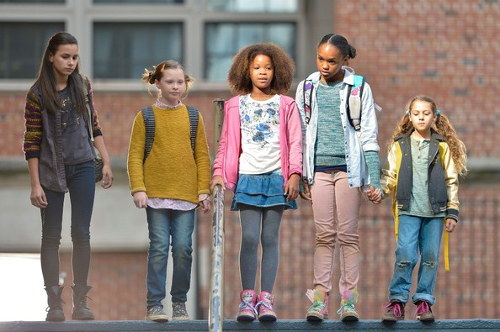
Kyle’s indoctrination into war comes when he sees the bombing of the U.S. embassy in Kenya on television, and he only feels bad when he learns some Americans were killed. When the Twin Towers drop, he is gung ho to go to war. Not to protect people, but really, just to have something to do. Before the war, Kyle appears aimless, searching for a purpose. War gives him purpose. He gets married because that seems to be what he is supposed to do. He goes through life following a script pre-written for him. There are obligatory flashback scenes to show his stern father and the simplistic philosophy he was raised to believe in. That there is evil in the world at all times. That there are three types of people in the world: Wolves, sheep, and sheepdogs. And of course, a real man uses a gun and beats the crap out of people. Kyle internalizes these ideals, and carries them with him throughout the rest of his life.

New marriage, but already thinking of battle. Chris and Taya get married. (Bradley Cooper and Sienna Miller)


The introduction of his wife, Taya (Sienna Miller), adds no meat to the story. She is regulated to being the good wife, the baby maker, the nagging spouse crying on the phone with an infant swinging off her breasts. (Let me say that the fake animatronic baby was creepy as hell and so distracting.) Although it probably wasn’t intended in the writing, you get the impression that Kyle preferred to be away from home not because he wanted to be a war hero, but because being a husband/father was a real drag for him.

Kill shot. Marc (Luke Grimes) and Chris Kyle (Bradley Cooper)


We are taken through Kyle’s four tour of duties, and each tour builds Kyle up as the sniper with the most kills. There are two scenes, one in the very beginning of the movie, and one later on, where Kyle is faced with the task of killing a child or not. These scenes are meant to show a moral dilemma, but they rang false to me because if someone is the deadliest sniper in American military history, they didn’t get that high body count by worrying about shooting children. There are no children in the Arab world according to this story. Just little insurgents ready to make war.

The "bad guys" in the sniper crosshairs. In America they would be considered Patriots for fighting back.
The “bad guys” in the sniper crosshairs. In America they would be considered Patriots for fighting back.


In the theater that I watched the film, a rotund older white gentleman (probably retired military by his crew cut) was actually rooting for Kyle to shoot a child. Because all the Arabs in the movie were considered “savages,” I have no doubt that Kyle never questioned or worried about assassinating children. They weren’t Americans, and therefore not human. (In real life, Chris Kyle bragged about shooting 30 Black people right after Hurricane Katrina in New Orleans. He bragged about killing fellow American citizens who I’m sure he didn’t view as human. His Katrina shootings were said to be a lie he made up, but his lies spoke volumes about his character. So his fictional quandary regarding Arab children rang false to me because we are never shown a man who questions anything ever. He’s just an unthinking workhorse used by the military.)
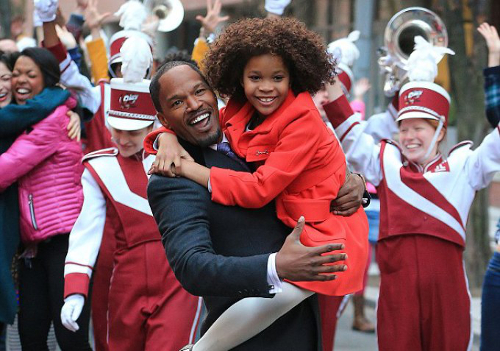
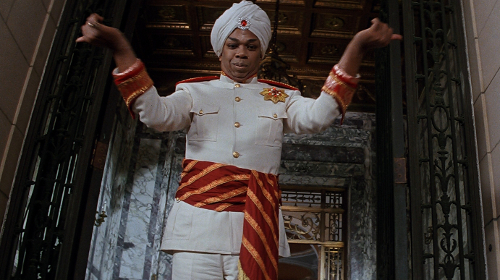
The concept of showing a man who just goes along with the war machine could be enhanced dramatically by having side characters who offer a different viewpoint. Unfortunately, we never spend too much time with side characters.  The one character who does begin to question the meaning of this war, Marc ( Luke Grimes—who needs to be in more movies), barely registers a blip on Kyle’s radar of understanding. The plot drags on for over two hours until there’s a stand-off between Kyle and Mustafa. By then, when he’s about to get his ass handed to him by death, Kyle calls his wife and says he finally wants to come home. Not because war has changed his consciousness or philosophy, but because he’s losing a skirmish that he created by not following orders. He went rogue, it backfired, and now he wants out. That was the realest moment in the entire film. Not heroic, just honest human self-preservation.

Snipers in Ferguson, Missouri, their crosshairs on American citizens .
Snipers in Ferguson, Missouri, their crosshairs on American citizens.


This is U.S. terrorism. Snipers against Americans.


Watching an audience root for snipers to kill humans defending their right to exist on their own land reminded me of images of American snipers here in the states pointing guns at Black American citizens  and their supporters protesting murders by cops in the United States. This same audience that cheered the heroics of Bradley Cooper as Chris Kyle probably cheered the actions of police forces on American streets aiming gun sights on folks with extra melanin. Cognitive dissonance is entrenched in the Patriotic American psyche. It allows Americans to rally around American Sniper, turning it into a blockbuster, while ignoring the home grown terrorism white Americans perpetuated against Black Americans that was depicted in the film Selma. I saw Americans of all colors streaming in to view Selma. American Sniper was vanilla heavy. Not a big surprise to me. Because, history.

Director Clint Eastwood claims he made an anti-war film. He didn't.
Director Clint Eastwood claims he made an anti-war film. He didn’t.


Clint Eastwood made spurious claims that American Sniper is an anti-war film. This disingenuous claim falls flat given the simplistic story-line, and the film’s ending dripping with flag waving from real-life  footage of Kyle’s funeral. Had Eastwood really wanted to impress upon an audience the agonies of war, then he would be better off showing actual wounded veterans recovering from the various body traumas they come home with. A lot of flag-waving might become less vigorous when we see war up close and personal. Americans don’t know war. Not really. We watch it on TV like video games. We don’t sleep, eat, go to work, or go to school worrying about unmanned drones and bombs falling out of the sky from some hopped up dudebro with a military computer joystick thousands of miles away.

Unlike the rest of the world, Americans are spared from these continuous horrors and daily PTSD. We are coddled like babies, and this coddling has made us immature children in regards to war. So we deserve a movie like American Sniper. The only message it gives us (like it did Chris Kyle in real life), is that the war you perpetuate abroad will come back to haunt you in another form. Chickens coming home to roost indeed.

No one likes seeing the bodies coming home in movies or in real life.


Queens, Princesses, and the Battle of the Sexes in ‘The Lion In Winter’

Their strength lies in being able to laugh at the terrible or dangerous situations in which they find themselves, and this is particularly true of the female lead, Eleanor of Aquitaine, who declares that smiling is “the way [she] register[s] despair.” Indeed, while the 2003 adaptation shows Eleanor’s war with her husband Henry II of England at the beginning of the movie, and shows her in armor and taking part in the action, to take away or lessen Eleanor’s sense of humor is to take away both her greatest weapon and greatest defenses.

Written by Jackson Adler

James Goldman’s 1964 historical play The Lion In Winter: A Comedy In Two Acts has twice been adapted to the screen, first in 1968 starring Peter O’Toole and Katharine Hepburn, and again in 2003 as a made-for-TV movie starring Sir Patrick Stewart and Glenn Close. When Goldman originally wrote his play, he attempted to make it as historically accurate as possible, but time has shown that some of his sources were incorrect in their information. However, the power of these characters is true to their historical counterparts, and Goldman’s dialogue and pacing have stood the test of time. While both screen adaptations are heavy handed with the moments of drama, and the second adaptation forgets that it’s a comedy altogether, which actually takes away from the strength of these characters. Their strength lies in being able to laugh at the terrible or dangerous situations in which they find themselves, and this is particularly true of the female lead, Eleanor of Aquitaine, who declares that smiling is “the way [she] register[s] despair.” Indeed, while the 2003 adaptation shows Eleanor’s war with her husband Henry II of England at the beginning of the movie, and shows her in armor and taking part in the action, to take away or lessen Eleanor’s sense of humor is to take away both her greatest weapon and greatest defenses. Katharine Hepburn’s delivery of Eleanor’s sharp wit depicts a woman of power, strength, and ambition. In the 1964 adaptation, it is not necessary to show Eleanor in battle because we can already tell that she has done much and ruled long just from the way she speaks and carries herself. Glenn Close rages, screams, and cries, but Katharine Hepburn as Eleanor is allowed by her director to simply be a badass and give no fucks, much like Katharine Hepburn herself.

The story of The Lion In Winter focuses on Henry II of England’s midlife crisis during a partial family reunion at Christmas with an incredibly dysfunctional family. The play was finished in 1964, only a year after the release of The Feminine Mystique, and appeared on Broadway in 1966, the year of the founding of the National Organization for Women (NOW). Much of the conflict in the play is between Eleanor and Henry, with Eleanor having been locked up for years by her husband for challenging his rule, much like middle and upper class women were confined to the home after World War II. This comparison would not have been so easily lost on the audience of the 1968 film, especially with Hepburn’s film history in the backs of their minds. The 2003 film could still have been powerful in spite of the different cultural context, but when combined with the lack of humor, and therefore a disruption of the pacing required by Goldman’s dialogue, it falls flat. The 2003 film’s saving grace is Yuliya Vysotskaya as Alais. The French princess Alais was raised with Eleanor and her family since she was betrothed to Henry’s and Eleanor’s second son Richard (the Lionheart). Eleanor was her surrogate mother, but after Eleanor is locked up, Alais becomes Henry’s mistress. Alais does not joke as much as most of the other characters, mainly because there are “Kings, queens, knights everywhere [she] look[s] and [she’s] the only pawn,” and she’s sick of their shit. She has never been permitted to rule any part of land, or any army of the any kind, unlike most all the other characters. As she says “[She] hasn’t got a thing to lose. That makes [her] dangerous.” Vysotskaya’s delivery of these lines of flawless, showing that while she lacks political power of her own, she has fierce determination to keep her self autonomy. The 1968 film attempted to contract Hepburn’s Eleanor with a soft portrayal of Alais by Jane Merrow, highlighting the fact that Henry would in many ways prefer a younger, more docile, and not as uppity female companion. However, this conflicts with how the character of Alais is written. At first glance she may seem and even purposefully act submissive to Henry, but her first act and line in the story are in defiance to Henry, refusing to come down from her room to interact with the family, whom she accurately sees as enemies. Jane Merrow’s portrayal of Alais forgets that she was raised by the powerful and independent Eleanor for a majority of her life, and while she may know how to pretend to be submissive in order to get what she wants, she can be just as fierce as any of the other characters. She proves this by almost getting Henry to lock up his surviving sons for life when the chance arises for Henry to annul his marriage with Eleanor in order to marry Alais and start a line of heirs of their own. Alais’ dream of becoming Henry’s powerful queen almost comes true, largely due to her own actions.

Yuliya Vysotskaya as Alais and Sir Patrick Stewart as Henry.


While the 1968 film does well at depicting Henry’s mid-life crises through his relationships with the women in his life, Alais’ character and her relationship with Eleanor is undermined. In the story, Alais and Eleanor share a particularly beautiful scene that briefly passes the Bechdel Test. In the scene, the true reason why Alais has been so cold to Eleanor in spite of Eleanor’s warmth toward her is revealed. Alais has heard that Eleanor poisoned Rosamund, Henry’s former mistress, and fears that the ambitious Eleanor might do the same to her despite their past mother-daughter bond. When Eleanor claims she never had Rosamund poisoned, Alais throws herself into Eleanor’s arms and starts to cry, and they are mother and daughter once more. Alais literally calls Eleanor by the French “Maman” for “Mom.” Henry interrupts this scene, partly because nothing could threaten him (or the patriarchy) more than the women in his life (or in 1960’s America) working together. Eleanor does not blame or hate Alais for becoming Henry’s mistress, but sees her as a victim of circumstance, though she does seem to have some bitterness for Henry over it. Hepburn is allowed to play all this very well, but Merrow has appeared particularly sensitive and vulnerable throughout the film so that when she becomes vulnerable in this moment with Eleanor, the change is hardly noticeable. Yuliya Vysotskaya was permitted by her director husband to show more of a range of character, and therefore gives a much more stirring portrayal of the princess, and creates a more touching moment between Alais and Eleanor.

Katharine Hepburn as Eleanor and Jane Merrow as Alais.


The story is not entirely feminist, as it not only centers on Henry, but emphasizes that the two women remain divided, in spite of their affection for one another, because of their romantic love for him. When Alais confronts Eleanor after it appears that Eleanor helped save her sons not only from being locked up for life, but from punishment for almost murdering Henry, Alais says, “You always win, Maman,” and Eleanor replies “Except the prize,” most likely referring to a romantic relationship with Henry.

The ending has conflicting messages, emphasizing the theme of the battle of the sexes between Henry and Eleanor, but also emphasizing Henry’s and Eleanor’s love for each other. When Henry complains about the tragedies of his life, Eleanor calls him out on it by saying, “I could take defeats like yours and laugh. I’ve done it. If you’re broken, it’s because you’re brittle.” Indeed, Henry, their sons, and the patriarchal laws of Medieval Europe have made her life nearly unbearable. Henry shifts in this last scene from feeling sorry for himself to having profound sympathy for his wife. Henry claims that he has nothing, in spite of his political power, land, armies, wealth, and freedom, though what he most likely is referring to is others’ lack of love and sympathy for him. Eleanor, however, responds, “You don’t know what nothing is.” The final scene is absolutely brilliant in the 1968 film, showcasing the chemistry between and the talents of Peter O’Toole and Katharine Hepburn. Due to the lack of relief from the drama and darkness of the 2003 one, though, the bittersweet and almost uplifting ending comes out of nowhere, despite featuring the two talented actors, Sir Patrick Stewart and Glenn Close.

The story’s best feminist virtue is that it depicts Eleanor as a complicated and at times particularly sympathetic character, not as a vicious man-eating harpy undermining the glory of an otherwise perfect man. This could easily have been done, as the play is almost a sequel to Jean Anouilh’s 1959 play Becket, or The Honor of God. A film adaption was made in 1964, starring Peter O’Toole, who has said that he could never have played Henry in the 1968 The Lion In Winter if he hadn’t first played the same character in Becket. Anouilh’s Becket implies that Henry had strong homosexual love for his frenemy Thomas Becket (played by Richard Burton in the film), and that Eleanor (barely present in play or film) was an annoyance to Henry, and hardly worthy of being a rival to his manly love for his friend. Pamela Brown’s Eleanor is particularly one-leveled, and it is supposed to be amusing when Henry yells at her and puts her down. However, it seems neither the play nor the film of Becket could deny the historical character’s astuteness, as it is Eleanor who first openly speaks of Henry’s love for Becket, saying that he loves him “like a woman,” to which Henry flies into a rage. In The Lion In Winter, the subject of the late Becket is broached, and while Peter O’Toole’s Henry evidently still has love for him. This time, he has a complicated and fully fleshed out Eleanor in Katharine Hepburn’s portrayal with whom he can have a more nuanced conversation about the subject. When Eleanor falsely claims to have had an affair with Becket, O’Toole’s Henry lividly responds, “That’s a lie!” to which an amused Eleanor responds, “I know it. Jealousy looks silly on us, Henry.” The scene is incredibly different in the 2003 film, which not only lacks the cultural context of the 1960’s, but has no tie to the play or the 1964 film of Becket. Sir Patrick Stewart dismissively, almost as if he is bored, responds “That’s a lie,” undermining the incredible history and emotion that can be present in the scene, and giving little to which Glenn Close’s Eleanor can realistically respond with her next line.

Richard Burton as Thomas Becket and Peter O'Toole as Henry in the 1964 film Becket.
Richard Burton as Thomas Becket and Peter O’Toole as Henry in the 1964 film Becket.


While the consistency of the character of Henry through Becket and The Lion In Winter’s can be important for Henry’s character arch and motivations (and, arguably, also for his son Richard, who has a homosexual affair in The Lion In Winter), it’s a relief that the character of Eleanor was given so much more time and substance in Goldman’s story. Eleanor and Alais are not only queen and princess, but complex human beings fighting for self-autonomy as well as love. In this way, they are afforded the same care by Goldman as Anouilh gave in writing Thomas Becket and Henry. Goldman’s Eleanor is Henry’s mental equal and rival, and he loves her very much. However, it is implied that if she is ever “let out” by Henry (or if 1960’s middle and upper class women are ever permitted to leave the home to be equals in the workforce), that her ambitions will cause chaos and war (ignoring the fact that chaos and war had been occurring in Medieval Europe both with and without Eleanor and other women), and Henry will lose any and all of the power that he still possesses. Interestingly, it is also implied that Henry’s reign won’t continue for long, for better or for worse, hence the midlife crisis that he experiences.

Though this is implied in the dialogue, the stage directions of the play are explicit, stating that his physical health is “just before the start of the decline.” Hopefully, the fear that men reliant on the patriarchy (such as Henry) experience when women challenge their authority will diminish, and men and women will continue on the path to and reach equality, when no one oppress or have the other “locked up.”