“Colorblind Casting,” Whitewashing, and the Erasure of PoC Histories

Thus, theatre erases the histories of People of Color in Europe by claiming that they use “colorblind casting” instead of just “casting” when they cast a Person of Color in a role that, historically, could have been a person of color. Meanwhile, TV and film European period pieces erase that history by Whitewashing it, not casting and thereby not providing employment to, or visibility and representation of, actors who are People of Color at all.


Written by Jackson Adler.


According to Wikipedia (please, just go with me), “Colorblind casting” is “the practice of casting a role without considering the actor’s ethnicity.” This definition (and the first that many people will read when they first Google it) is problematic, as that is rarely how “colorblind casting” is carried out. In theatre, “colorblind casting” is most often used for European period pieces, in which at least one Person of Color is cast as a role that the White public has usually thought of as White, regardless of whether people of that actor’s ethnicity were prevalent in the character’s location and social standing. While often used in the theatre, “colorblind casting” is rarely used in TV and film, supposedly because TV and film claim to be more concerned with historical accuracy, despite the fact that People of Color of various groups have had long histories in Europe. Thus, theatre erases the histories of People of Color in Europe by claiming that they use “colorblind casting” instead of just “casting” when they cast a Person of Color in a role that, historically, could have been a person of color. Meanwhile, TV and film European period pieces erase that history by Whitewashing it, not casting and thereby not providing employment to, or visibility and representation of, actors who are People of Color at all.

The film Les Miserables, featuring White people.


An excellent example of both “colorbind casting” and Whitewashing is the musical Les Miserables, which takes place in early 19th century France. In the film, most all of the cast, from the leading characters to the background characters, were White. In its various London, Broadway, and other stage incarnations, “colorblind casting” has been used. The film was historically inaccurate in its Whiteness, because, particularly in Paris where trade was incredibly prevalent, there were many People of Color of various groups, with Black and Chinese people being particularly large minorities. For the stage productions to claim that they use “colorblind casting,” especially when casting Black and Chinese actors, is ignorant and racist because it is erasure of the history of People of Color in France. Did the dramaturges not even do the bare minimum historical research? Did the newest revivals not even use Google or Wikipedia to look up French history? These creative teams of the stage production are, unknowingly, not employing “colorblind casting”; they are employing “casting.” Meanwhile, the creative team behind the film was just racist, as well as unknowingly historically inaccurate.

Vanessa Hudgens as the titular Gigi


A more recent example is in the casting of Vanessa Hudgens as the titular Gigi on Broadway. Vannessa Hudgens is Filipina, as well as Chinese, Spanish, Irish, and Native American. While rare for a girl of Gigi’s social standing in Paris in the year 1900, it would not be impossible for Gigi to have had the same exact ethnic heritage as Vanessa Hudgens, and very possible for Gigi to have had an ethnic heritage similar to Hudgens’. Also, in the original novella, Gigi’s maternal side of the family is Spanish, with her grandmother in particular being described as “dark.” The rest of Gigi’s ethnic background is not described in the novel. Not only is it historically accurate to cast Hudgens as Gigi, but it is supported by the original text off of which the musical is based.

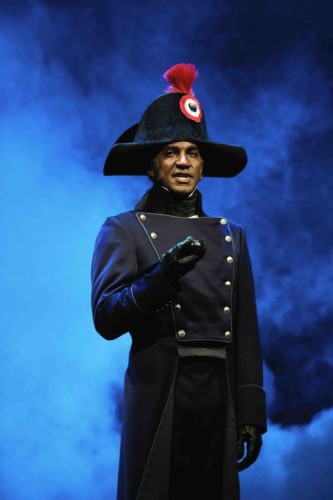
Norm Lewis as Javert in Les Miserables


It should also be noted that even creative teams who claim to be “colorblind” are not. An actor’s appearance, possibly even more than their performance skill level, is always taken into account. It is always “seen.” Few creative teams would cast Cosette and Eponine as 6’1’’ and Marius as 5’4’’, for example, due to stigma against tall women and short men. In fact, when theatrical creative teams use “colorblind” casting, usually Eponine is more likely to be a Woman of Color (take note that she DIES, and in the service of Marius, no less), than is Cosette (the girl Marius marries). It is also rarer to have a Person of Color play the protagonist Valjean than the villain/morally ambiguous Javert. But it’s totally not racist, everyone. The creative team doesn’t see color! …right? (Sigh.)

Gugu Mbatha-Raw as Dido in Belle


It is not only the poor and middle class in Europe who had ethnic diversity, but even European royalty, especially in Spain and Portugal. Queen Charlotte, wife to King George III of England, was visibly biracial/mixed race. Needless to say, Amma Asante’s Belle, starring Gugu Mbatha-Raw, should not be the only film, or one among a few films, to present these stories of upper class People of Color in Europe.

“Colorblind casting” is not entirely the fault of the creative teams behind these projects, however, as it is also largely the fault of White historians Whitewashing and revising history, especially in school textbooks. However, dramaturges and creative teams should be expected to do their research well. The creative team behind the TV miniseries The Bible (not a European story in origin, but a story important to many ethnic Europeans, so please go with me) felt they had to justify its casting of (only a very few) Black actors as Biblical figures in a special that gave its viewers a (very) short history lesson. The creative team did their homework, and applied (some of) it, even knowing that they would still get criticized by White viewers for not having an all White cast (though many, if not most, of the actors they cast were still White, with Joseph even having a Cockney/Estuary dialect). However, in reality there would have been even more People of Color, and it wouldn’t have been historically inaccurate to even have cast no White actors. No one should feel they have to justify depicting Mary Magdalene as Black. Meanwhile, how many Arab or Black actors have played Jesus? While how many White actors with light hair and blue eyes have played Jesus? Hollywood has also Whitewashed the stories and characters of Noah, Moses, and Cleopatra, and shows little sign of stopping this long-time trend.

Even in European folklore, there are People of Color. An example of this is the Black or Arab Arthurian knight Sir Palamedes, who was a rival to Tristan for Isolde’s hand in marriage. However, most film adaptations of Arthurian legends leave out that character, and have an all White cast. Many of the fairy tales in “Into The Woods” have origins outside of Europe, such as Cinderella, elements of the story having origins in Chinese history and Ancient Egyptian history and folklore. The setting of Disney’s Into the Woods was purposefully made to be vague, but even if it were set in a specific time period and place, it would not be historically inaccurate for even The Princes to be played by People of Color. However, while the background characters of the film Into The Woods were ethnically diverse, the main and supporting characters were all White.

Cast members, including those playing The Genie, Aladdin, and Jasmine, in Disney's stage musical Aladdin
Cast members, including those playing The Genie, Aladdin, and Jasmine, in Disney’s stage musical Aladdin


The Bible is far from the only example of non-European stories being Whitewashed both in film and onstage. The story of Aladdin has a problematic background, with it being “discovered” in France, but probably taking place in China, and definitely having Arab characters. The creative team behind Disney’s stage musical of Aladdin, originally cast no Arab performers at all, despite the Disney film clearly setting it in the Middle East (albeit with many ethnic stereotypes and depicting Aladdin and Jasmine as light-skinned and more European-looking than other characters). Similar to the situation with Les Miserables, it is not “colorblind” casting to cast someone light skinned and White-passing (in this case, biracial Filipino and Ashkenazi Jewish) as Aladdin, while casting someone who is Black as the comedic and literally tap-dancing Genie. These actors were specifically chosen for these specific roles, and there is nothing “colorblind” about it, nothing about their appearances that was ignored. Meanwhile, even contemporary works such as Avatar: The Last Airbender and Ghost in the Shell are and have been Whitewashed by Hollywood.

People of Color, historical and contemporary, in Europe and outside of it, are still being silenced, as well as colonized and erased, by Europeans, even onstage and on film. There is no excuse that can back it up. Even though historians Whitewash history, there is still a lot of material available to dramaturges and creative teams, whose jobs require them to do that research. Whether racism is intended or not, whether it is through ignorance or not, it is still racism, and still erasure. It is still wrong.


Who Protects Leena Alam? Spectacles of Violence in Afghanistan vs. France

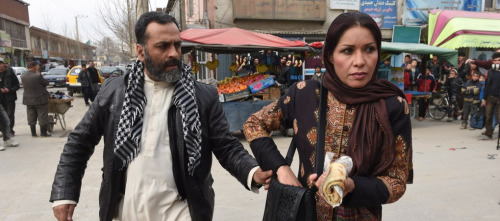
Though fictional, Alam’s character, Shereen, faces real issues that aren’t typically up for discussion in Afghanistan. It begs the question: How does a nation begin to discuss layers of womanhood, selfhood, and projection after years of oppression?

tumblr_inline_nn4ej3TGrh1t414f3_500


This guest post by Molly Murphy previously appeared at WhoCaresAboutActresses and is cross-posted with permission.


WhoCaresAboutActresses celebrates Leena Alam, the actress starring in Afghanistan’s first feminist TV drama, Shereen’s Law, about a middle-aged woman navigating the hurdles set by patriarchy in modern-day Kabul. The hard reality of women’s oppression has spilt over into the production; one woman, set to play the supporting role of Shereen’s lawyer friend, had to back out due to pressure from her husband. Even Leena Alam acknowledges fear for her safety on set:

“It’s a bit dangerous, even for myself. Yesterday we were shooting outside. When… I’m waiting for the shot I’m always scared that somebody may throw acid on me or somebody may hit me with a knife.” –Leena Alam

Though fictional, Alam’s character, Shereen, faces real issues that aren’t typically up for discussion in Afghanistan. It begs the question: How does a nation begin to discuss layers of womanhood, selfhood, and projection after years of oppression? Shereen venturously seeks to, at the very least, begin scraping the surface of that question. In theory, her life is set. A 36-year-old mother of three, she has a husband she was arranged to marry, and a job working as a courtroom clerk where she silently documents the judicial process as it unfolds in Kabul. Shereen, however, wishes to pierce through the layers cast upon her; she wants a divorce, and, as I suspect, wants more than to sit in the courtroom with her hands folded.

Leena Alam’s mention of acid-throwing keeps echoing in my head. I know people are capable of atrocious acts of violence, but how could someone do that? I wonder who the target of violence is that Alam fears for. Is it actress, Leena Alam, herself? The fictional character, Shereen? The image of a woman seeking answers to her burning questions? The new words that threaten to seep into courtroom documents at the hand of the unabiding clerk? Perhaps these things are one in the same.

tumblr_inline_nn4ehh67Zm1t414f3_500

I can’t help but draw parallels between Alam’s concerns and the fears that manifested in restrictions on action film shoots in Paris in the wake of the Charlie Hebdo attacks. In February, reality spilt over into film production as the city of Paris searched for ways to address the very real post-traumatic-stress of its citizens:

“I was shocked to hear witnesses of the Charlie Hebdo attacks say on television: It seemed like a movie shoot to us…” –Police Commander, Sylvie Barnaud 

The ban on action films continues today:

“There’s a problem with these action-type scenes, as the actors in uniform could be targets for terrorists… Also, the actors could pose confusion for the general public – during this highly sensitive period.” –Barnaud

While I see these sentiments as paralleled, I also see them obscured to one another; France fears for the well-being of its “Je suis Charlie” nation, while Shereen’s Law gives life and representation to issues faced by women. Leena Alam is enduring; Shereen, perhaps, a martyr in the making. As is the duty of any city, Paris is adamant about protecting its citizens from the spectacle of violence. Shereen, the first character of her kind, is still being filmed and set to have her story air on Afghan TV before the end of the year.

“There’s been an enormous consultation, an enormous review of the script and of the whole storytelling process to make sure that it raises these issues, but it doesn’t raise them so bluntly and so offensively that it’s going to make the programme go off air” –Writer/director of Shereen’s Law, Max Walker

As decisions move forward and stories evolve, I can’t help but wonder what protects Leena Alam.


unnamed

Molly Murphy is an artist and cinephile who currently works in collaboration with critically-acclaimed artist/filmmaker, Elisabeth Subrin on a feminist tumblr called whocaresaboutactresses.tumblr.com


‘Iris’: One Older Icon’s Portrait of Another

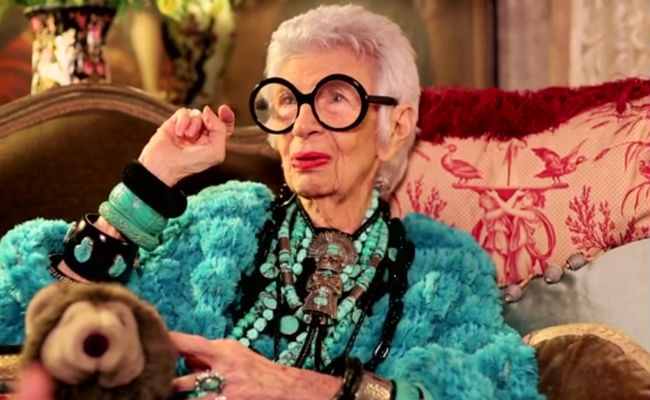
The center of the film is Iris Apfel, who although she had a successful career as an interior and textile designer when she was younger (she and her husband/business partner, Carl, who turns 100 during the film, talk briefly about her work at the White House and he lets slip that “We had a problem with Jackie,”) became well known to a wider public when, as a last minute substitution for another exhibit, a collection of the distinctive outfits she put together for herself (always pants and a top often accessorized by trademark layers of big heavy necklaces which catch the eye like the iridescent breast plumage of exotic birds) became a surprise hit. The exhibit traveled from New York’s Metropolitan Museum of Art to the Norton Museum of Art in Florida and the Peabody Essex Museum in Massachusetts–making her a star at 84.

IrisCover


In the exact same way that movie and TV actresses have become thinner as the rest of the population have become larger, characters in movies and TV are becoming younger as the population ages. Not just Harry Potter, but a plethora of underage protagonists (often from books in the young adult–YA–category) are onscreen, enough to make me want to never again watch a film in which all the main characters attend high school. Being very young isn’t usually interesting, even to those who are very young, a reality YA novels and films themselves seem to acknowledge with popular dystopic settings in which young teenagers fight for their lives instead of worrying whether they studied enough to get a decent grade on the history test.

Current mainstream and even “indie” narrative film portrayals of older women are pathetic: women graduate from being the girlfriend to the wife to the mother to the grandmother without ever accruing a personality; even those quirky, cranky grandmas who talk dirty for “comic” relief are a tired trope that should be retired immediately. Documentaries are the few films where older women are allowed the complexity they have in real life (like the grandmother we currently have running for the US presidency). Elaine Stritch: Shoot Me showed a woman toward the end of her career (and close to the end of her life) who, despite some serious health problems, wasn’t the mess our worst suspicions about older people, particularly older women, might make us think she would be. Instead she was a funny, frank woman who was trying to figure out each day–just as those of us who aren’t in our 80s try to do.

Iris, currently in theaters (which I saw as part of the Independent Film Festival of Boston), is one of the last documentaries directed by Albert Maysles (who died in March at 88) a pioneer of cinéma vérité, which even those not familiar with the term recognize as the predominant style of documentaries today. The center of the film is Iris Apfel, who although she had a successful career as an interior and textile designer when she was younger (she and her husband/business partner, Carl, who turns 100 during the film, talk briefly about her work at the White House and he lets slip that “We had a problem with Jackie,”) became well known to a wider public when, as a last minute substitution for another exhibit, a collection of the distinctive outfits she put together for herself (always pants and a top often accessorized by trademark layers of big heavy necklaces which catch the eye like the iridescent breast plumage of exotic birds) became a surprise hit. The exhibit traveled from New York’s Metropolitan Museum of Art to the Norton Museum of Art in Florida and the Peabody Essex Museum in Massachusetts–making her a star at 84.

IrisBW
Iris in her Park Avenue apartment


At 93 she continues to wear outfits that sometimes straddle the edge between “genius” and “over the top.” She also does work associated with fashion–debuting (and selling out) a collection on the Home Shopping Network, beautifully styling several career women (including three Black women with wildly different body types and style preferences) as part of a special event for the women’s clothing store (now online only), Loehmann’s (Apfel has her own memory of the original “Mrs. Loehmann” who told her when she was a young woman, “‘You’ll never be pretty, but it doesn’t matter. You have something much better. You have style'”), attending fashion events and even making an appearance on a magazine cover (the outfit the stylists put her in is, of course, the least flattering one she wears in the film).

But she also has the concerns of an older person, telling us she feels the same as an older woman she knew when she was young who told her, “Everything I have two of, one hurts.” Her husband has also “not been feeling well” and is anxious about her well-being too, so she keeps from him that she has broken her hip (which she gets surgery for). Her nephew tells us that she’s told him that she keeps herself busy to stave off depression. She has begun sending away a lot of her outfits to be stored for posterity and to sell off the many items the couple have kept in storage which can’t fit into the Park Avenue apartment crowded with so many one-of-a-kind pieces (like a life-size wooden ostrich whose wing flips up to reveal a small built-in bar) it looks more like a specialty shop–or movie set–than a place where people live.

But none of these complications keep Iris from being delightful company–telling us how all the older women she socializes with have a crush on the filmmaker, her relish in haggling with a Harlem shopkeeper about items she wants to buy or a sudden intense alertness, like a cat stalking prey, when she sees a runway fashion that captures her fancy. Iris, in spite of interests many people consider superficial, is an incisive wit and not in the least flighty, hesitant or forgetful in conversation. When asked why she never had children she simply states that she wanted to work, to travel (her search for items that no other designer could provide led her all over the world), that she didn’t want her child to be raised by a nanny and concludes (in defiance of the paradigm of women “having it all”) “you can’t have everything.”

She and her husband, Carl, aren’t the cantankerous older couple we’re used to seeing onscreen but two people who complement one another (Iris buys the brightly colored and intricately patterned pants he wears with fairly conservative shirts and jackets) and after nearly seven decades together they still seem to enjoy each other’s company. She’s also not critical about what others choose to wear. At one point the photographer Bruce Weber tells her that he hasn’t once heard her badmouth anyone else’s fashion sense and she says, “I can’t judge… It’s better to be happy than well-dressed.”

Maysles, whose much lauded career included Grey Gardens and Gimme Shelter, doesn’t just coast on his reputation in Iris: he brings a perspective a younger filmmaker probably could not. We see a tinge of melancholy in the well-wishes, speeches and cake at Carl’s 100th birthday and that mood seems more in keeping for a man whose health isn’t great and may not make it to his next birthday than the relentlessly cheerful “Happy 100th to you” shout-outs of morning television, always delivered by people who aren’t close to that age themselves. Iris’s life is neither filled with loss nor one long, jaunt of constant happiness, but a combination, like the lives the rest of us will lead.

[youtube_sc url=”https://www.youtube.com/watch?v=Fo8jwJ_2l0c” iv_load_policy=”3″]


Ren Jender is a queer writer-performer/producer putting a film together. Her writing. besides appearing every week on Bitch Flicks, has also been published in The Toast, RH Reality Check, xoJane and the Feminist Wire. You can follow her on Twitter @renjender
Barbara Loden’s ‘Wanda’: A Persuasive Portrait of Female Aimlessness and Alienation

It does not rejoice in the freedom of the open road. There are no cool, seductive lovers or beautiful cars. Wanda is not a charismatic counter-culture heroine or anti-heroine. She’s not a heroic working-class figure either. Loden’s portrait, however, aims to shed light on the psychological condition of young, working-class women disconnected from societal demands and expectations.

unnamed


Written by Rachael Johnson.


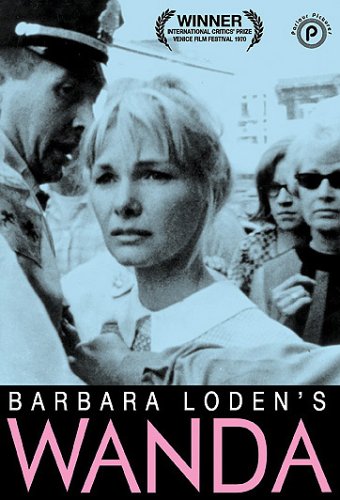
Set in coal-mining Pennsylvania, Wanda (1970) is the story of a directionless working-class woman who leaves her husband and young children for a life on the road. Barbara Loden (1932-1980) not only plays the title role of Wanda, she also wrote and directed the film. Although it would, sadly, be the only feature she would make, it remains one of the most culturally significant portraits of American womanhood of its era, as well as one of the greatest independent films of all time.

We see Wanda at the beginning of the film sleeping on her married sister’s couch, but she soon embarks on a journey to nowhere. Unable to secure and maintain a job, her situation becomes increasingly precarious. She is ditched by a man at a rest stop outside of town following a one-night stand, and robbed of her money when she falls asleep alone in a movie theater. She meets a small-time, hopeless crook, Mr. Dennis (Michael Higgins) and develops a relationship of sorts with him. He’s an aggressive, charmless man but he offers a kind of security. Initially hesitant, she becomes Mr. Dennis’s accomplice in a bank robbery. It all ends disastrously, and at the close of the film we see her surrounded by strangers in a bar, as isolated and aimless as she was at the start of her journey.

Wanda
Wanda


Some may find Wanda’s inertness and passivity baffling, even exasperating. We are not given much insight into her former life. We only have her husband’s testimony in court that she was a poor homemaker and neglectful mother. Was she bullied and belittled by her husband? Why does she not fight for custody of her kids? In the courtroom, she instructs the judge to give her husband the divorce he wants and states that the children “will be better off with him.” Although it is what society dictated for women, perhaps Wanda never even wanted a family.

Loden’s description of Wanda in a 1972 interview on the Mike Douglas Show is quite instructive:

“She’s really running away from everything…She doesn’t know what she wants but she knows what she doesn’t want, and she’s trying to get out of this very ugly type of existence but she doesn’t have the equipment that a person that has been exposed to more different kind of people that would help her… She can’t cope with life..”

It is, indeed, evident that no one was there for Wanda growing up–no loving, supportive parent/s, inspirational teacher or mentor. Loden, interestingly, got the inspiration for the film from a newspaper article telling the curious tale of a female accomplice to a bankrobber who thanked the judge for sentencing her to twenty years in jail but it is also semi-autobiographical. A native of North Carolina, Loden did not come from a privileged home. Brought up by strictly religious grandparents following her parents’ divorce, she endured a hard childhood. Loden equally understands Wanda’s psyche. In an interview with the Los Angeles Times (1971) she explained, “I used to be a lot like that… I had no identity of my own. I just became what I thought people wanted me to become.”

Numbing the pain
Numbing the pain


Crucially, the director seems to recognize that countless working-class American women of her background and generation were never taught to develop their very identity and assert themselves. Although Hollywood tries to propagate the myth, not everyone survives shitty childhoods through self-education and force of will. There are, also, indications that Wanda was abused and/or neglected as a child. To say she has poor sense of self-worth is an understatement. Unlike mainstream American movies, Wanda, moreover, recognizes that human beings of all backgrounds repeat the same mistakes over and over again. Loden does not judge her protagonist and nor should we. Judging Wanda does not help us understand her. In fact, it reflects a position of privilege.

Barbara Loden’s own journey was remarkable and successful though ultimately tragic. Unlike her heroine, she was graced with opportunity and talent, as well as encouraged to realize her creative ambitions. Loden was a dancer and model before becoming a screen and theatre actress. She was married to director Elia Kazan and starred in his films Wild River (1960) and Splendor in The Grass (1961). As said, Wanda was her first and last film. Other projects remained unrealized up until her death. No doubt misogyny played an ugly, starring part in keeping her out of the film business. She tragically died of breast cancer in 1980 at the age of 48.

With Mr. Dennis
With Mr. Dennis


Wanda was critically acclaimed when it was first released- it won the International Critics Award at the Venice Film Festival in 1970- but in the years that followed, it fell into relative obscurity in the United States (Loden and Wanda have always been more appreciated in France).

Shot on a small budget, Wanda is a stark film devoid of sentiment. Nicolas Proferes was the cinematographer and editor, and in terms of its look and form, it’s a grainy, unpolished film that reeks of the real. It is, in fact, a road movie but without the usual romantic qualities of the genre. It does not rejoice in the freedom of the open road. There are no cool, seductive lovers or beautiful cars. Wanda is not a charismatic counter-culture heroine or anti-heroine. She’s not a heroic working-class figure either. Loden’s portrait, however, aims to shed light on the psychological condition of young, working-class women disconnected from societal demands and expectations. Some may find her portrait of female identity lack and alienation a tough viewing experience but it is a rewarding one. Loden’s low key performance, it should be noted, is, also, entirely persuasive.

A lost woman
A lost woman


Although the film is beginning to be rediscovered and revisited, Wanda needs to be even more appreciated. Loden’s story too should also be more widely known. As we are only now beginning to fully realize, the history of women in film has, criminally, been one of forgetting. We need to remember and honor Barbara Loden as a director of one of the most grittiest and unconventional American films of the 20th century.


The Love Quadrangle with 10 Million Views: Julie Kalceff Answers our Question about Her Lesbian Web Series, ‘Starting From… Now!’

In recent years, web series have emerged as a platform for LGBT stories – so much so that that Bitch magazine named 2014 the summer of lesbian web series. Just as technology has helped to democratize other forms of story-telling, the falling price of video and audio production, and free delivery platforms like YouTube, have created a world where content that would be a tough sell for network television can find a niche audience online. The crowd-funded Australian web-series ‘Starting From… Now!’ provides a good example of how creators can connect with fans through content, despite their budget limitations.

Written by Katherine Murray.

In recent years, web series have emerged as a platform for LGBT stories – so much so that that Bitch magazine named 2014 the summer of lesbian web series. Just as technology has helped to democratize other forms of story-telling, the falling price of video and audio production, and free delivery platforms like YouTube, have created a world where content that would be a tough sell for network television can find a niche audience online. The crowd-funded Australian web-series Starting From… Now! provides a good example of how creators can connect with fans through content, despite their budget limitations.

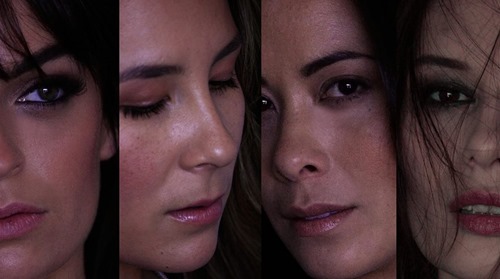
The cast of Starting From... Now!
Four corners of a love quadrangle

In terms of niche markets online, Starting From… Now! falls somewhere in the romance > lesbian > angst > love triangle > PG-13 category. Its central character is Steph, a young graphic designer who moves to Sydney, Australia, and immediately falls in love with her friend’s long-term partner, Darcy. Believing that nothing can happen with Darcy, she soon starts dating a friend from work, placing herself in the corner of what will shortly be a love quadrangle where everyone gets hurt.

The first (and slowest) season hangs on whether or not Steph and Darcy will have an affair – no prizes for guessing that they will. Seasons two and three, though, focus on the fall-out from that decision, and the dynamics between the characters. It isn’t clear how much of an age difference exists between Steph and Darcy, but there’s a sense of realism in the way that Steph, the younger of the two, is convinced that she and Darcy are at the start of an epic love story, and the careless willingness she has to burn her bridges in pursuit of what she sees as the great, forbidden romance in her life. There’s also a sense of realism as we discover that Darcy, the older of the two, is in the middle of an identity crisis that has nothing to do with Steph, and that she might be using Steph as a way to escape from having to face conflict with her partner more directly. It starts to seem less like Steph is someone Darcy could fall in love with, and more like she’s a way for Darcy to implode her existing relationship, without having to end up alone.

Starting From… Now! is at its most interesting when it explores Darcy’s motivations for behaving the way she does, and when it forces Steph to face the consequences of being careless with other people’s feelings.

Partly supported by crowd-funding from viewers, the series now has 18 seven- to 10-minute episodes and over ten million views, with a fourth season in pre-production. Bitch Flicks had the chance to interview writer/director Julie Kalceff about the series, her plans for season four, and the character development we’ve seen so far.

What has the interaction with viewers and fans been like?

The interaction with fans has been amazing. It’s been one of the highlights of making the series. What’s surprised us is not only how passionate some of the fans become about some of the actions and choices of the characters, but also how much the series has meant to some audience members. We’ve received a number of messages saying how having access to lesbian content online has made them feel less alone.

How has releasing Starting From… Now! as a web series shaped the content of the show?

There’s a certain degree of freedom you have in making a web series that you don’t get when making a television show. You have far more creative control when making a web series. What you don’t have, however, is the budget of a television series. This means that a number of your choices are affected by the amount of time and money you have in regards to both production and post-production. We’ve worked hard to try and overcome these constraints. The goal from the start was to try and produce a quality show that still looks good, despite the budget constraints. If you have strong, complex characters and you build drama through the actions of those characters, then you have a chance of creating a compelling series, regardless of time and money.

With the exception of a couple of office workers in minor roles, there aren’t a lot of male characters on the show. Is that a deliberate choice?

This wasn’t a deliberate choice. In fact, it wasn’t until we had our first male speaking role in Season 3 Episode 5 that we realised this was the case. The fact that there are very few men is just a reflection of the world of these characters. They are lesbians. They spend most of their time with women.

In episode 3.5, we also find out some new information about Darcy’s parents – her father cheats and her mother has a lot of unfulfilled ambition. It’s clear that she’s worried about turning into them. How much do you think Darcy’s like her parents, and how do you see that relationship influencing her decisions?

That’s spot on, Darcy is worried about turning into her parents. Some viewers are critical of Darcy and her actions but I really think she’s doing the best she can. We’re a product of our environment and Darcy came from a pretty toxic environment. At least now she’s trying to take responsibility for her actions and make choices that take into consideration those around her.

What can we expect from season 4?

Season 4 is darker than the previous seasons. We’re taking the opportunity to explore new topics and push the boundaries a bit in regards to this world and the world of online content.


All of the existing episodes of Starting From… Now! are available for free on YouTube and the series’ official website.


Also on Bitch Flicks: Moving us Forward: Carmilla the series


Katherine Murray is a Toronto-based writer who yells about movies and TV on her blog.

Do Black Widow and Scarlet Witch Bring Female Power to ‘Avengers: Age of Ultron’?

The scene with her blazing after Ultron on a motorcycle was one of the highlights of the film for me (though I could have done without the “I am always having to pick up after you boys” joke when she grabs Captain America’s shield from the road). Regarding action, super-hero skills, and the ability to banter (an aspect of the film many reviewers like the most), there is not much of a gender differential. The inclusion of a “rape joke” and the perpetuation of the infertile-women-as-monstrous trope detract from this more egalitarian super-hero world, however.

211ox9s-750x400


This guest post by Natalie Wilson previously appeared at Skirt Collective and is cross-posted with permission.


Black Widow has far more clothing than Wonder Woman. The fact that this seems worthy of noting is not the greatest recommendation for super-heroes as a vehicle for feminism. Yet, Wonder Woman was created by a feminist – and envisioned AS a feminist super-hero (as documented in Jill Lepore’s book, The Secret History of Wonder Woman).

Are Black Widow and Scarlet Witch feminist heroes as well? In my book, yes. However, some of their fellow super-heroes (and the actors who play them) don’t make the feminist cut due to their propensity for “rape jokes” and slut-shaming (Tony Stark is guilty of the former, while Jeremy Renner and Chris Evans of the latter, as discussed here and here).

As discussed in “An Open Letter to Joss Whedon from a Disappointed Feminist Fan After Watching ‘Age of Ultron,’” Whedon has “maintained, loudly and publicly, that you were on the side of making that world a better, more welcoming, more nuanced place for women — as fictional characters, and as viewers.” Yet, as the post documents, Black Widow’s story arc is disappointing from a feminist perspective while Black Widow’s powers ally with those “dreamed up by men who are terrified of women.”

Alas, while I went in fully expecting to start itching to leave early, Avengers: Age of Ultron kept me hooked until the end. A large part of this is thanks to Black Widow and Scarlet Witch, and, yes, as much as I was NOT a fan of the Iron Man sequels and feel Tony Stark is a high-octane-asshole, I still have a soft spot for Robert Downey Jr. I blame the 80s.

The_Avengers_Cast_2010_Comic-Con_cropped-1024x518

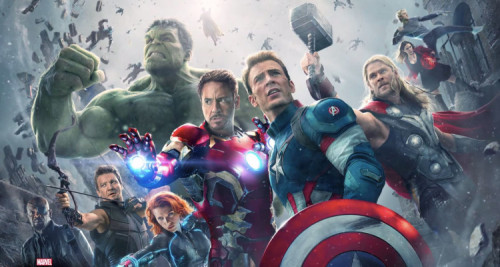
Age of Ultron may suffer from a bit of Smurfette Syndrome, but Natasha Romanoff/Black Widow is a complex character with a rich backstory, not just a sidekick. In this film, she is shown to be friends with Laura Barton, is called Auntie by the Barton/Hawkeye children, and interacts with Dr. Helen Cho, Maria Hill, and Wanda Maximoff/Scarlet Witch all in ways NOT about romance with a man, making the film pass the Bechdel Test several times over.

The scene with her blazing after Ultron on a motorcycle was one of the highlights of the film for me (though I could have done without the “I am always having to pick up after you boys” joke when she grabs Captain America’s shield from the road). Regarding action, super-hero skills, and the ability to banter (an aspect of the film many reviewers like the most), there is not much of a gender differential. The inclusion of a “rape joke” and the perpetuation of the infertile-women-as-monstrous trope detract from this more egalitarian super-hero world, however.

Yet, thankfully, one of the additions to the Avengers team – Wanda Maximoff/Scarlett Witch – gives Black Widow another woman to fight the good fight with. Like another female associated with red and witchery, Carrie White, Wanda’s primary skills are mind manipulation and telekinesis. In one scene, as she stops a train with her mind, her hands emit enough bright red to rival Carrie’s scarlet-hued infamy.

Black_Widow_Age_of_ultron_poster

I gotta admit super-hero films are not my favorite genre – not by a long-shot. That I stayed until the credits means the film kept me engrossed, providing enough story arcs to keep me interested– especially the Black Widow/Hulk romance theme. Ironically, this sub-plot irked me the most.

On the one hand, I enjoyed it, which made me feel like a bad feminist. Why? Because when films/genres that need not bring romance into the plot do so in overt ways, I feel as if we are back to the “women are only good as lovers/girlfriends/wives” meme. I like romance as much as any normal human does that lives in a culture such as ours, but need we pair off the entire planet hetero-monogomous style EVEN in our super-hero movies? (Please, SOMEONE, make a queer-positive Batwoman film!)

On the other hand, I also loathed it for its May/December connotations. Johansson is 30, Ruffalo 47. Imagine if Natasha was instead paired with someone near her own age? GASP. What a concept.

Further, the scenes where Black Widow takes Hulk’s huge hand to calm him back into his nice-guy-Bruce- Banner-self are too redolent of Beauty taming the Beast. And, given as the Hulk is presented as the MOST monstrous, so monstrous it is not safe for him to be around civilians, should it bother us that Natasha pines for the Green Guy? Sure, Bruce is a nice guy, but his “alter ego” has a wee bit of an anger management issue.

The_Avengers_Age_of_Ultron_70574

Hulk is, I must admit, a better choice than Iron Man/Tony Stark, he of wealth-amassed-via-militarism. With lines like “I see a suit of armor around the world,” the film itself nods to his pro-weapon-douchery. Further, the super-hero twins were orphaned due to a weapon labeled “Stark,” a point Wanda emphasizes. Later, she points out Ultron’s earth-destroying impulses come from the person who designed him, Tony Stark:

“Ultron can’t tell the difference between saving the world and destroying it…where do you think he gets that?”

Thus Tony, in my book, is horrible partner material (a fact that escapes the naïve Bruce Banner). He jokes about reinstating “Prima Nocta” (which sanctions rape), creates yet another world-destroying weapon via Ultron, and even scolds Natasha, “you and Banner better not be playing hide the zucchini” (ha ha, so funny to think about the BIG green man and the Black Widow boning… thank goodness the joke didn’t use a “black hole” reference as well…) Nevertheless, as I will admit, Downey is great in the role. He makes Tony the guy you love to hate.

Speaking of hate, I full on HATED the fact Black Widow cries when she reveals she was sterilized. As this post so clearly elucidates, in so doing, she equates “infertility with inhumanity.”

aven

Finally, despite the seat-gripping special effects and a good mix of action, dialogue, and character building, I found it very hard to watch so much realistically rendered destruction due to current real world events. Buildings being demolished, the mass destruction of cities, police in riot gear, terrified humans running for their lives, stony-faced armed militia, and a long-closing arc that brings earthquakes to mind are all a bit too close to contemporary realities. Of course, this is what the super-hero genre is all about – I get it –imagining how fictional heroes could save us from tragedy. Nevertheless, it was hard to get into super-hero-cheering mode, even with Whedon’s masterful world-building. This, coupled with Black Widow’s “monstrous” infertility and Tony-Stark-douchery, made the film less enjoyable from a feminist perspective than the bulk of Whedon’s oeuvre.

Feminism insists “the personal is political” and that fictional media has a powerful role in our interactions with the real world – and, while the filmmakers could not have known the release of the movie would come shortly after a devastating earthquake, they do know that such tragic events are common place. As such, why not at least nod to how these very personalized super-heroes could serve as conduits for thinking about solving real world problems or condemn them for the problems they perpetuate – such as the “ha, ha, ha, rape is so funny” attitude.

The 3-D world that surrounds us could really use some more feminist super-hero powers – maybe next time Whedon wants to dust off his WMST degree before making his final cut?


Natalie Wilson teaches women’s studies and literature at California State University, San Marcos. She is the author of Seduced by Twilight and blogs for Ms., Girl with Pen and Bitch Flicks.


Carey Mulligan on Her Feminist Character in ‘Far from the Madding Crowd’

Following are highlights from the press conference with Carey Mulligan, where among other things, she talked about her character, her collaborative work with her co-stars and director, the elaborate costumes, and how expert she became handling sheep.

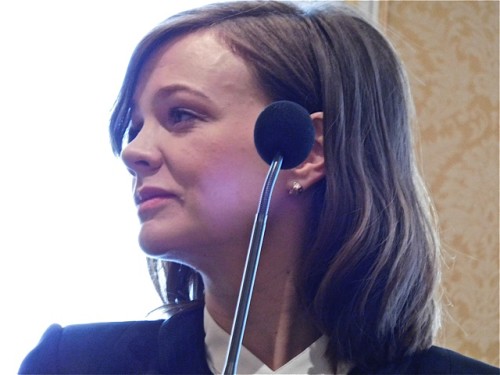
Carey Mulligan (photo by Paula Schwartz)
Carey Mulligan. (Photo by Paula Schwartz)


This is a guest post by Paula Schwartz.


Carey Mulligan took time off last week from her duties in the Broadway revival of David Hare’s 1995 drama, Skylight, to promote her new film, Far From the Madding Crowd, based on the 1874 Thomas Hardy novel. In Skylight, for which Mulligan just earned a Tony nomination, the English actress plays Kyra, a teacher in an urban London school who struggles to be independent and lead a life of purpose when her former, much older lover, a wealthy restaurateur (Bill Nighy), tries to worm his way back into her life after his wife dies.

In Far From the Madding Crowd, Mulligan plays Bathsheba Everdene, a country girl who inherits her uncle’s farm, and takes a crash course in how to shear sheep, plant crops and run a manor. Bathsheba’s last name sounds familiar because it inspired the naming of the feminine heroine of The Hunger Games, Katniss Everdeen. Like Katniss, Bathsheba is willful and independent. When she’s forced to behave in ways contrary to her nature, Bathsheba also wears elaborate costumes, with corsets and cinched waists that restrain and confine her and seem fetishistic.

Despite the different historical periods, the women Mulligan plays in Skylight and Far From the Madding Crowd, also have similar concerns; they are complicated, ambitious and brainy women who struggle to find their identity and place in the world, even as men and society try to control them.

Directed by Thomas Vinterberg with a script by David Nicholls, the film fixes on the darkness and perversity just below the surface of restrained and repressed Victorian life. Vinterberg – just as he showed in his last film, The Hunt – finds nature as beautiful and powerful as it is unfeeling and scary. Charlotte Bruus Christensen filmed the luscious, sun-soaked vistas of the English countryside, filled with enough sheep to make anyone consider becoming a vegetarian, particularly after one tragic sequence involving cliffs.

Practical, stubborn, smart, sharp-tongued – even irritating at times – Bathsheba struggles to be independent in a world in which a women’s life is circumscribed by society and custom. While marriage isn’t even on her radar, Victorian society pushes her to find a husband. Soon a trio of very different suitors, played by Matthias Schoenaerts, Michael Sheen and Tom Sturridge, propose marriage. Shocking in her day as much for her sex drive as for her independent lifestyle, Bathsheba chooses for love and desire rather than security or advancement. She is modern and relatable in her pursuits, drives, flaws and contradictions. She chooses the wrong guy when the right one is right under her nose.

Carey Mulligan and Matthias Shoenaerts. (Photo by Paula Schwartz)


Following are highlights from the press conference with Carey Mulligan, where among other things, she talked about her character, her collaborative work with her co-stars and director, the elaborate costumes, and how expert she became handling sheep:

Can you talk about how Bathsheba is unique for the time she’s living in?  

Carey Mulligan: I’d never read the book. I still haven’t. When I read it, that’s what I was most excited about, that it was a story that started with a woman who turned down a proposal of marriage and a good one… a really good one in our film.

It’s a young woman in a Victorian classic that isn’t looking to be married and isn’t looking to be defined by a man. It hasn’t even crossed her mind. That’s what was so exciting. That’s obviously not the viewpoint of most women during that time and throughout the whole story, she sort of enjoys bucking social convention, being different. That’s who she is. There’s so much to her. She’s incredibly complicated and stubborn, fallible, spontaneous and impetuous and all these things mixed together.

Do you find that there’s a similarity between this character and Kyra Hollis, who you’re currently playing on Broadway? 

There’s definitely a similarity between them. The thing about Bathsheba is that she’s so extraordinary in her time but Kyra isn’t that extraordinary in modern times – so I think it’s that Bathsheba feels so contemporary. They both have a real drive. Neither of them wants to be defined by men but both have the capacity to fall head over heels in love.

They’re both really strong yet flawed people, which is rare as an actress to get to play.

This kind of period romance has been done quite a bit. How did you make sure that the performance differed from others before it? 

When you get to work with actors like this (she refers to her co-stars). There’s a certain security to that. Especially when you make an idiot of yourself. One of my improvisations with Michael was my interview to be a governess and he was the master of the house. It was the first time I was ever acted with Michael Sheen. It was terrifying and at the same time it was also brilliant because after that I could do anything in front of him and it wasn’t scary. The same (happened) with Matthias. All of that was good preparation.

Also, (there were) so many long conversations with Thomas Vinterberg and David Nicholls. We had an awful lot of time in comparison with other projects I’ve done and we were able to hash things out over and over and over again. [Laughs] I was really annoying and we came to a point where we were on set and it was a complete collaboration between all of our ideas for the story and what we wanted to do.

Carey Mulligan. (Photo by Hosoki Nobuhiro)


This is a character with so many sides to her. How do you think that was reflected in the clothing, hair and makeup choices? 

That was a conversation with Janet Patterson, our costume designer, and Charlie Rogers, who did the hair and makeup. Working with Thomas and working on David’s version of the story we never wanted it to feel like a buttoned up costume drama with people wearing outfits and looking uncomfortable. This was about real people. The way that Thomas shoots it’s all about the performances. The camera moves with you and it’s all very relaxed on set.

The makeup and the hair, because we were outside all the time, it couldn’t get ruined immediately by being outside. It had to be durable and functional as well.

Skylight has been on hiatus for a week while you promote the film. Can you speak about taking a break from the show to do press? 

We had a hiatus from Skylight so that we could do press in London. That was just the generosity of the producers. They knew well in advance when this film was coming out and we’re all so excited about it and proud of it that we wanted to be able to really do some good press junkets [Laughs].

It’s just a headspace break I suppose. When you do a play, you do it for a long run, I took it as an opportunity to take a break from the play and enjoy hanging out with these guys. Then coming back to the play, you kind have more energy in a way because you’ve been away from it for a week because plays can get a bit relentless.

How modern was life on set? Did you stay immersed in the time period between takes? 

No, I took it with me like you take your homework home and tried to learn my lines for the next day. (Laughs) I’m not a method actor. When you’re in every day you feel a sort of weight of responsibility playing a very famous character, you obviously are thinking about it a lot but it wasn’t a character thing that I was carrying with me… We used our phones on set sometimes. [Laughs]

Carey Mulligan. (Photo by Hosoki Nobuhiro)


You’ve been very discerning about the characters you’ve built and brought to life. Bathsheba is a character who has influenced the modern kickass woman on film. Would you consider playing an action hero? 

I don’t know. I would never say never to anything. The decisions I’ve made over the last couple of years have been driven by the characters and by the script and by the director. This was a perfect marriage of all of those things. I wasn’t really looking to do another period drama. I’ve done a lot of films that have been period recently and I did a lot of Austen (Pride and Prejudice) and Dickens (Bleak House) when I was younger. This was too good an opportunity not to work out.

I don’t rule anything out. I just think I’m always drawn to really strong characters, particularly characters who have a lot to them. I’m not really interested in playing two-dimensional people. But I think what’s amazing about Bathsheba is how complex and complicated and mixed up and strong and resilient. She’s so many different things in one, and that’s what I’m driven by and looking for and if that came along in the form of some action hero, then of course that would be great… But it might not.


Paula Schwartz is a veteran journalist who worked at the New York Times for three decades. For five years she was the Baguette for the New York Times movie awards blog Carpetbaggers. Before that she worked on the New York Times night life column, Boldface, where she covered the celebrity beat. She endured a poke in the ribs by Elijah Wood’s publicist, was ejected from a party by Michael Douglas’s flak after he didn’t appreciate what she wrote, and endured numerous other indignities to get a story. More happily she interviewed major actors and directors–all of whom were good company and extremely kind–including Brad Pitt, Angelina Jolie, Morgan Freeman, Clint Eastwood, Christopher Plummer, Dustin Hoffman and the hammy pooch “Uggie” from “The Artist.” Her idea of heaven is watching at least three movies in a row with an appreciative audience that’s not texting. Her work has appeared in Moviemaker, more.com, showbiz411 and reelifewithjane.com.

‘Age of Ultron’s Black Widow Blunders

‘Avengers: Age of Ultron’ succeeds in all the places you’d expect it to fail, but while Joss Whedon was tiptoeing around all the expected pitfalls of a major franchise sequel, he stumbled over a cliff when it came to the one character I would have most trusted him to get right: Scarlet Johansson’s Natasha Romanoff, or Black Widow.

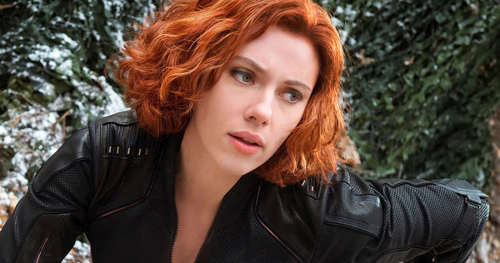
Scarlet Johansson as Black Widow in 'Avengers: Age of Ultron'
Scarlet Johansson as Black Widow in Avengers: Age of Ultron


I liked Avengers: Age of Ultron. A lot. What follows is going to read like a very negative review. If I could selectively switch off my feminism, I could write you the most thumbs-uppiest of glowing reviews for Age of Ultron. But I cannot, and this is why my dad would say “it’s hard to be Robin.” But if you’re a regular Bitch Flicks reader, it is also probably hard to be you (that’s sort of why we exist). And you also will probably walk away from this movie with some serious reservations.

Age of Ultron succeeds in all the places you’d expect it to fail: the new characters are compelling; the amped-up battle sequences manage to be as coherent as they are thrilling; and for a movie with 17 actors listed on its poster, it somehow manages to not feel that overstuffed.  But while Joss Whedon was tiptoeing around all the expected pitfalls of a major franchise sequel, he stumbled over a cliff when it came to the one character I would have most trusted him to get right: Scarlet Johansson’s Natasha Romanoff, or Black Widow.

Spoilers from here on out, friends.

Black Widow under the male gaze


When Black Widow was introduced in Iron Man 2 (a sequel which DID fail in all the predictable ways), her character was so fully entrenched in the male gaze it was kind of gross. We’re first introduced to her cover identity, Natalie Rushman: a submissive secretary who modeled in Japan and suggestively asks, “is that dirty enough for you” after leaning over to present her boss Tony Stark with a martini. But what’s even hotter Natalie Rushman? Natasha Romanoff pretending to be meek and accommodating while in fact being a badass superspy who can take out fifteen guys, hack computers, and save the day without mussing her flowing red curls (one of the worst wigs in the history of cinema, but that’s just a personal bugaboo of mine). This kind of sarcastic-quotation-marks “strong female character” is a dime a dozen in action movies and not someone I’d beg to see a standalone movie about.

Black Widow beating people up in a terrible wig in 'Iron Man 2'
Black Widow beating people up in a terrible wig in Iron Man 2


But then came The Avengers,  where Black Widow was so much more than the Fighting Fucktoy. She was still a sexy badass, but she also got to be wickedly clever, dryly funny, warm and loyal to her friends, and in what was probably the biggest revelation for a Strong Female Character: fearful of scary things. This more solid characterization carried over to Captain America: The Winter Soldier, where we continued to see Natasha’s rare moments of emotional vulnerability alongside her intellectual and physical competence.

In 'Avengers' and 'Captain America 2', Black Widow was more than eye candy
In Avengers and Captain America 2, Black Widow was more than eye candy


Black Widow had become a character I loved. And I would have given a lot of credit for that to Joss Whedon. But then he went and did this all this to her.

These two? Seriously?


AoU‘s first sin against Natasha is awkwardly shoehorning her into a romantic subplot with Bruce Banner, of all people. Maybe I’d be less disgruntled about Natasha in lurve if the pairing worked better for me? But it felt pretty out of left field, and lacking in chemistry.  Like they crossed off the crossed off the characters who already had love interests and flipped a coin to settle on Bruce.

Now, one of the benefits of being a well-rounded character should be the chance for a love interest. The rest of the core six all have their sweeties! But note how all of them had outside characters as their love interest. Usually our male Avengers have their own movie or movies to make space for that character, but Hawkeye’s previously-unseen wife was given screen time in Age of Ultron.  It is unthinkable for Natasha to have a similar surprise husband, because “doting pregnant wife” is a complete female character as far as Hollywood is concerned. A side character male love interest is much harder for Hollywood to handle, because they see “man” and think “center of the story.”

Natasha is responsible for de-Hulking Bruce with a "lullaby"
Natasha is responsible for de-Hulking Bruce with a “lullaby”


So Natasha had to be connected to another main character, and it happened to be Bruce, and even if that didn’t feel as random to you as it did to me, it brings about some problems. First, I wasn’t crazy about Natasha having the role of soothing Bruce out of Hulk form with their”lullaby” ritual to begin with, but adding romantic overtones makes it even more skeevy. There are unavoidable allusions to domestic violence inherent to the Hulk. Having his romantic partner hold the responsibility for talking him down from his rage state, and portraying this as part of their bond, underscores this in an unpleasant way.

Scarlet Witch induces a vision of Black Widow's past
Scarlet Witch induces a vision of Black Widow’s past


Worse, Natasha’s arc in Age of Ultron got completely wrapped up in her feelings for Banner, even though we finally—finally! In her fourth appearance in a Marvel movie—got to see Natasha’s backstory, her childhood training/brainwashing into superspyness by the sinister Red Room. (Granted, we see it in a dream-like flashback that’s only long enough for you to go, “Hey, is that Julie Delpy?”).

Natasha’s history gets rolled over into her romantic subplot in the most bizarre, uncomfortable—let’s just say worst—scene in the film. Bruce is giving Natasha the speech about how she could have no future with him, gesturing around to the child’s room they are in. She tearfully reveals that she can’t have children either, because she was sterilized as part of her “graduation” from the Red Room. She speculates the forced sterilization was to avoid problems, attachments, and that “It made everything easier, even killing.” And then she calls herself a monster.

WAIT WHAT?
WAIT… WHAT?


RECORD SCRATCH. Wait, a woman who can’t get pregnant is A MONSTER? On a level comparable to a dude who turns into an actual unstoppable force of destruction we had just seen level a city? What… I just… what? What!!!!????? The idea that anyone—*cough* Joss Whedon *cough*—would think infertility makes a woman something less than human is extremely gross, but it’s even worse to see Natasha internalize such warped misogyny and biological essentialism.

And I haven’t even mentioned the part where Black Widow gets kidnapped by the bad guy and locked in a dungeon. That really happens. For real for real. I assume this was to accommodate Scarlett Johansson’s pregnancy during filming, but there are plenty of ways to write her out of the story for a little while without making her a damsel in distress (send her on a side mission, any side mission, DON’T LOCK BLACK WIDOW IN A DUNGEON).  And thinking about how Johansson was pregnant at the time somehow manages to make that horrible sterilization confession scene even more unpleasant.

Elizabeth Olsen as Scarlet Witch in 'Age of Ultron'
Elizabeth Olsen as Scarlet Witch in Age of Ultron


The only good news when it comes to Black Widow in Age of Ultron is that she’s no longer saddled with being the Smurfette, as Elizabeth Olsen’s Scarlet Witch provides us with a Sassette Smurf of sorts. Cobie Smulders is also back as Maria Hill, but she doesn’t have much to do. Claudia Kim plays Dr. Helen Cho, who does things that are important for the plot but gets less character development than Hawkeye’s wife, who might as well be listed in the credits as “Hawkeye’s wife.” But even though Natasha isn’t the only woman in Age of Ultron, she’s still the one nearest and dearest to the audience, and it is heartbreaking to see her utilized so poorly.

Black Widow deserves better


Robin Hitchcock is a writer based in Pittsburgh who has never been pregnant. Is she, too, a monster!?


Call For Writers: Bad Mothers

Few human beings are quite so stigmatized as bad mothers. Despite the fact that motherhood is demanded of women as an intrinsic part of the female experience, women who struggle with motherhood are seen and depicted as the worst kind of scum. No failure, it seems, is as great as that of a woman who is bad at being a mom…or, worse yet, who decides after having children that she no longer wants to be a mother.

Call-for-Writers-e13859437405011

Our theme week for May 2015 will be Bad Mothers.

Few human beings are quite so stigmatized as bad mothers. Despite the fact that motherhood is demanded of women as an intrinsic part of the female experience, women who struggle with motherhood are seen and depicted as the worst kind of scum. No failure, it seems, is as great as that of a woman who is bad at being a mom…or, worse yet, who decides after having children that she no longer wants to be a mother.

Despite the fact that it’s commonplace and borderline acceptable for a father to abandon his children, all manner of blame and shame are heaped at the feet of the smothering, neglectful, or the abandoning mother. The cultural narrative would have us believe that she is the cause of serial killers (Dexter, Psycho), all forms of misogyny, wars, and even the collapse of the heteronormative nuclear family. While woman are defined by motherhood and shoulder intense, unrealistic burdens, there is little appreciation or acknowledgement for the role itself and the women who inhabit it.

Not only that, but the trope of the “wicked stepmother” is one of the worst kinds of stereotypes for motherhood. The stepmother is villainized as an unnatural simulation of a mother who can’t be trusted because she isn’t the real thing. Disney has proliferated this damaging trope, insisting that giving birth to a person is the only way to truly claim motherhood.

Though few and far between, there are some nuanced and even sympathetic representations of women who struggle with the ceaseless demands of motherhood. The Babadook is a fantastic example, and The Hours…tries.

Help us illuminate the stories of women who are bad mothers. Let’s dissect this cultural narrative that scoffs at and punishes women for their transgressions against the seemingly sacred institution of motherhood.

Feel free to use the examples below to inspire your writing on this subject, or choose your own source material.

We’d like to avoid as much overlap as possible for this theme, so get your proposals in early if you know which film you’d like to write about. We accept both original pieces and cross-posts, and we respond to queries within a week.

Most of our pieces are between 1,000 and 2,000 words, and include links and images. Please send your piece as a Microsoft Word document to btchflcks[at]gmail[dot]com, including links to all images, and include a 2- to 3-sentence bio.

If you have written for us before, please indicate that in your proposal, and if not, send a writing sample if possible.

Please be familiar with our publication and look over recent and popular posts to get an idea of Bitch Flicks’ style and purpose. We encourage writers to use our search function to see if your topic has been written about before, and link when appropriate (hyperlinks to sources are welcome, as well).

The final due date for these submissions is Friday, May 22 by midnight.

The Killing

The Babadook

Precious

Carrie

American Horror Story

Beloved

Dexter

Psycho

The Grifters

Bates Motel

The Graduate

Cinderella

Ever After

Game of Thrones

The Shipping News

Once

Throw Mama From the Train

Revenge

The Darjeeling Express

The Hours

Snow White

Grey’s Anatomy


Bitch Flicks’ Weekly Picks

Check out what we’ve been reading this week–and let us know what you’ve been reading/writing in the comments!

recommended-red-714x300-1


Crowdfund This: Dawn Porter’s ‘Trapped’ (On the Abortion War & Women’s Rights) – Watch Trailer by Tambay A. Obenson at Shadow and Act

Op-ed: Bruce Jenner Helps Us Stand Taller in Our Truth by B. Scott at Advocate.com

Did Louie Get Raped? by Danielle Henderson at VultureThe
Leslie Mann to Star in R-Rated Comedy About Motherhood by Inkoo Kang at Women and Hollywood
What have you been reading/writing this week? Tell us in the comments!

‘Ex Machina’s Failure to Be Radical: Or How Ava Is the Anti-thesis of a Feminist Cyborg

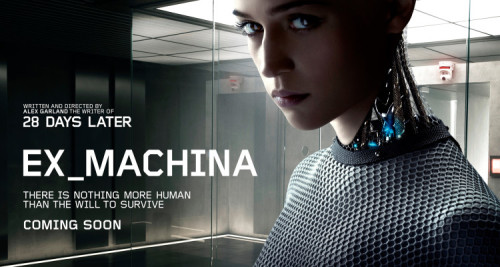
Caleb has won a trip to spend time at Nathan’s research-lab/home. While there, Caleb is given the task of giving Ava (the lead robot) a Turing Test to determine if she can “pass” as human. During his stay, Caleb learns of another female robot, Kyoko, who is basically a sex slave for Nathan. Yes, that is right, the males are human, the females are (fuck) machines.

ex_machina_2015_movie-wide-750x400


This guest post by Natalie Wilson previously appeared at Skirt Collective and is cross-posted with permission.


I am going to admit: Ex Machina profoundly disturbed me – so much so that at one point I had to leave the theatre and catch my breath. It is very rare for me to walk out of a film. Rarer still for me to walk out not because the film is horrible, but because it is so disturbing that it makes me physically nauseaous and emotionally weary.

The film, with only four characters, poses key questions about artificial intelligence, gender, and sexuality – yet, as noted in the Guardian review, “the guys keep their clothes on and the ‘women’ don’t.”  The “guys” of the film are human – Nathan, an egotistical scientist with a god complex (hence the film’s title) and Caleb, a computer programmer who works for Nathan’s Internet search company.

2015_04_alex_garland1

Caleb has won a trip to spend time at Nathan’s research-lab/home. While there, Caleb is given the task of giving Ava (the lead robot) a Turing Test to determine if she can “pass” as human. During his stay, Caleb learns of another female robot, Kyoko, who is basically a sex slave for Nathan. Yes, that is right, the males are human, the females are (fuck) machines.

Before seeing Ex Machina, I had high hopes it would be a movie that actually addressed sexism and females as sexualized in profoundly misogynistic ways, especially as the writer and director, Alex Garland, gave various interviews that made it sound as if the film was going to critique such matters. His claim that “Embodiment – having a body – seems to be imperative to consciousness, and we don’t have an example of something that has a consciousness that doesn’t also have a sexual component,” made me envision a film that would suggest alternative, more feminist models of sexuality – perhaps ones not based on power, jealousy, ownership, and control, but ones based on mutual pleasure, desire, and consent.

“…wouldn’t it be so much easier for the real humans (meaning male humans) if their lowly female counterparts could just be sexy in all the ways they desire, obedient, and easily modified, then upgraded or tossed away without fuss when they no longer ‘work.’”

Garland’s claim that “If you’re going to use a heterosexual male to test this consciousness, you would test it with something it could relate to. We have fetishised young women as objects of seduction, so in that respect, Ava is the ideal missile to fire” also gave me hope, given Garland specifically notes woman are fetishized and objectified. Alas, I should have instead latched onto his other suggestion – that Ava is no more than a “missile” that will be used to fire up human male sexuality.

ex-machina-movie

Admittedly, the film does explore sexuality and gender in intriguing ways, but fails to explicitly condemn how the sex/gender paradigm is used as a tool of domination in profoundly deleterious ways. Instead, the film delivers the same message so many movies with female robots/replicants have – namely: wouldn’t it be so much easier for the real humans (meaning male humans) if their lowly female counterparts could just be sexy in all the ways they desire, obedient, and easily modified, then upgraded or tossed away without fuss when they no longer “work.”

Alicia Vikander is excellent in the role of Ava, and I don’t wish my repulsion towards the film to reflect badly on what an obviously talented actor she is. In fact, everyone ACTED the heck out of their roles. The film also had an amazing mis-en-scene, immersing viewers in Nathan’s technological man-cave replete with techno-gadgetry, minimalist design, and, yup, a closet full of female body parts, presumably “out of date” sex slave robots. Nathan’s hangout also has the handy ability to SEE everything, making it rival Hitchock’s vision of the predatory male gaze enacted in Rear Window.

Nathan (Oscar Isaac), as the lead scientist, is your garden variety, bearded intellectual. He is an alcoholic, mega-maniacal ego, with dark skin and hair, subtly cluing the audience to the fact he is a “bad guy” (yes, the film has problematic racial depictions too – not only is the “dark dude” the bad one, Kyoko, the sex slave, is Asian, while Ava is coded as normatively porn-star white).

ava-from-ex-machina-borg

Caleb, as the nubile male ingénue (with the requisite blonde hair and blue eyes), is a bit too innocent, too ready to fall in love with Ava, too reluctant to quell his male gaze.

On this note, did Ava’s body HAVE to be so sexualized and so transparent, forcing us to gaze inside of her along with Caleb, as if her body has no boundary? Or perhaps this is just the point – we can finally see INSIDE a woman’s body, and she is not that musty, smelly, hairy thing of so many nightmares (Freud’s included), not the vagina dentata or a giver/taker of life – no, she is built like a car of all things – and under her roof her parts sing and hum like a well oiled engine.

“Nathan has PROGRAMMED gender into her system, much the way our culture programs us each day to live within a world defined by a binary gender system.”

As the film continues, it forces the audience to be complicit in the covetous gazing Nathan and Caleb enact, a gaze that is linked to Ava’s sexualization. Indeed, Ava has been built to match Caleb’s porn preferences by Nathan, which prompts Caleb to ask, “why did you give her sexuality?” and “Did you program her to flirt with me?”

Ex-Machina-01-GQ-22Jan15_rex_b_1083x658

The suggestion is ultimately that Nathan gave her sexuality simply because he wanted to and he could (as a “male god/creator”). Garland’s remarks on the subject are telling: “If you have created a consciousness, you would want it to have the capacity for pleasurable relationships, so it doesn’t seem unreasonable that a machine have a sexual component. We wouldn’t demand it be removed from a human, so why a machine?” But, what Nathan/Garland don’t own up to is that they are the CREATORS – they are not REMOVING sexuality from their creations but CONSTRUCTING it in, and doing so in an incredibly heterosexist, misogynist way. (In the film, Nathan notes of Ava “in between her legs is a concentration of sensors”…WTF?)

As noted in a HuffPost review, “Ex Machina is a very smart movie…but it’s not immune to the everyday misogyny of our world.” Arguing that if robots have access to the history of internet searches of all humanity, with “all of its tropes, and all of its prejudices,” it does not make sense that Ava “chooses” to present as female, that when she makes her escape at the end of the film “It’s almost hard to imagine she wouldn’t have grabbed a dick on her way out into the world.” However, I would counter Ava does not have free choice – Nathan has PROGRAMMED gender into her system, much the way our culture programs us each day to live within a world defined by a binary gender system.

“….most films display extreme anxiety around the issue of female empowerment”

Though films about artificial intelligence have the possibility to deconstruct gender/sex norms, most films trade in stereotypes with those featuring female robots according to misogynist memes of women as sex-bots (Blade Runner, Cherry 2000, The Stepford Wives), destructive forces (Eve of Destruction, Lucy, Metropolis), or a combination of the two (Austin Powers). Even Wall-E promotes the idea good robots are male and constructs female robots as useful only in terms of how they can please males and/or be good “seed receptacles” for male (pro)creation (as noted in my review here). To be fair, male robots don’t fair that much better and are also depicted in stereotypically masculine ways (as discussed here).

There are a few exceptions to this stereotypical gendered script, however. For example, Star Wars’ C-3PO was modeled on the female robot from Metropolis, with breasts and hips removed, leading the Guardian reviewer to name him “the first transgender robot.”

Alas, as argued by scholar Sophie Mayer, most films display extreme anxiety around the issue of female empowerment, and as Mayer notes, within their narratives “these empowered women must be punished” so that a happy-patriarchal ending can ensue, or, as she puts it, “The resolution always assures us the status quo is going to be preserved.”

Sigh. When might we see a film that brings Donna Haraway’s notion of the cyborg to life – a feminist hybrid that eschews binaries; a creature that lives in a post-gender world? “This is the self,” as Haraway puts it, “feminists must code.” It is also the self film’s have – as of yet – failed to code. So come on feminist filmmakers, give us a female cyborg we can root for…


Natalie Wilson teaches women’s studies and literature at California State University, San Marcos. She is the author of Seduced by Twilight and blogs for Ms., Girl with Pen and Bitch Flicks.


Seed & Spark: Vive La Revolution!

In my own life, I’m embracing the idea that films can make a difference, and that they do. It’s not just the content of the film, but how we make them, how we finance them, how we share them.

Scene from Test Shoot for Of Dust and Bones


This is a guest post by Diane Bell.


Last year, like many people I know, I was overwhelmed by the terrible events unfolding across our world. From Ukraine to Gaza, from the streets of Ferguson, Missouri to the ongoing war in Syria, it seemed like the world was reaching breaking point. It felt like it was all falling apart.

At the same time, I was facing my own small battles, finishing my second film, Bleeding Heart, which just premiered at the Tribeca Film Fest. Bleeding Heart is a kind of feminist fantasy thriller starring Jessica Biel as an affluent yoga teacher and Zosia Mamet as her biological sister, a young sex worker trapped in an abusive relationship. It was born from my desire to see on screen a story I rarely see: a woman rescuing another, a celebration of strength in sisterhood and the sacrifices we can and should make for it.

In the depths of my struggle to finish it, I wrestled with the question of why I make films. The process can be so long and hard, financial rewards so meager; what is the point? Why do it? In the face of so much real suffering and true hardship in the world, is it just a vanity? Wouldn’t it be better to pack it all in and do something truly meaningful? Something that could help the world be a better place? Isn’t that why we’re all here?


[youtube_sc url=”https://youtu.be/IB08M3b0rYM”]

Concept trailer from test shoot for Of Dust and Bones


As I meditated on these questions, I kept coming back to this belief: films can change our world. The stories on our screens don’t just reflect our reality, they create it. And that is why it is essential that many different voices are empowered to make movies and why as audiences we must seek out the voices that inspire us and support them however we can. We can’t let the only movies out there be those that support the Big Lies (no matter how entertaining those movies can sometimes be). We need films that tell small, honest truths, that shed light onto our shared humanity, that enable us to explore the problems we face individually and collectively, and help us see a way towards positive change in our troubled world.

After coming to these conclusions, with my producing partner, Chris Byrne, I launched the Rebel Heart Film Workshop to teach two-day intensives on how to make a standout indie film. These workshops are not only for people who already consider themselves narrative film directors, but also for storytellers of all kinds: actors, writers, producers, poets, activists, documentarians, artists. Based on our own experiences making our first film, the Sundance award winning Obselidia, we break down the process of making a film to 16 simple steps and provide a clear blueprint for how to make a stand out indie. My hope is that through these workshops we will empower diverse voices to tell their stories in films – and to do it successfully.

To that end, we share the honest truth about making films. There’s no gloss, no lies. We share our budget, our schedule, the amounts of money we made from different sources. Crucially: we share our mistakes as well as the things we did right, something incredibly rare in our industry – and in doing so, we give other filmmakers a shot at making better choices with their films, creating a situation where they can make films over and over, regardless of whether their first or second (or third or fourth for that matter) is as outwardly successful as they hoped.

Still from Bleeding Heart


Through teaching these workshops, I realized that I had to walk the talk. What I was teaching about building community, about making creatively risky films that come from the heart: this is what I had to do again myself. And so I wrote a film called Of Dust and Bones.

This film is as far from mainstream as you could imagine. It was borne totally from my reflections on the global situation last year, particularly the ongoing devastation in Syria, as well as my horror at the beheadings of journalists James Foley and Steven Sotloff by ISIS. These are not sexy, easy to market, Hollywood subjects, but it’s where my heart was.

I started to dig into the idea of a film about the widow of a war journalist who–following his brutal murder–has retreated to a reclusive life in the desert. The only sane reaction to an insane world, she believes, is to have nothing to do with it (something I often feel myself). An uninvited guest arrives: her dead husband’s colleague, and he’s come with an agenda. He wants the rights to her husband’s last work for a film that he is making – rights that she doesn’t want to give him.

From Test Shoot for Of Dust and Bones


The film wrestles with the question: can a film change the world? Can a picture? What is worth sacrificing to get that picture or make that film?

These aren’t easy questions and I don’t think the film will give easy answers. In my own life, I’m embracing the idea that films can make a difference, and that they do. It’s not just the content of the film, but how we make them, how we finance them, how we share them. To that end, I’m trying to make this film in a far more community based way than my previous works. I’ve been blogging about it on my website and we launched a crowdfunding campaign, not just to raise crucial finance, but also to involve a village of people in the making of it.

The world still often seems like an incredibly dark, chaotic, violent place, but I honestly believe the only hope we have is to come together, support each other, and create strong community networks that are founded upon shared dreams and stories.

We can’t do it alone – any of us. But together we have a real chance to create the world we want to live in. Let’s do it.


unnamed

Diane Bell is a writer and director.  Her second film, Bleeding heart, a thriller starring Jessica Biel and Zosia Mamet, premiered Tribeca 2015.  Her first feature, Obselidia, premiered in Dramatic Competition at Sundance 2010, winning two awards and was nominated for two Independent Spirit Awards.  She recently launched the Rebel Heart Film Workshop, teaching how to make a stand out indie film, and is currently raising funds for her next feature, Of Dust and Bones.