‘Carousel’: A Fairytale Screen Adaptation of the 2012 Republican Anti-Woman Agenda

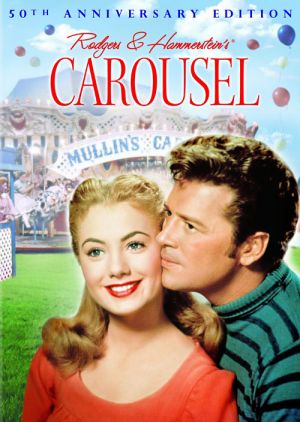
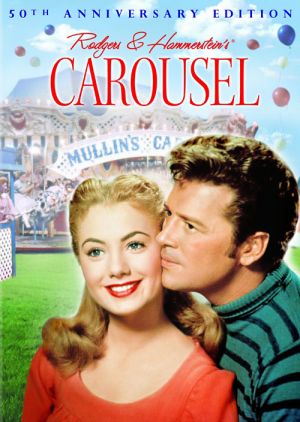
Movie poster for Carousel

I loved this film. When I was 13 or so.

Re-watching it this week—for the purpose of writing about how much I admired the way it handled domestic violence issues (in 1956, no less)—I realized my 13-year-old self understood jack shit about misogyny in film, and she certainly didn’t understand what constitutes successfully raising awareness about violence against women.
The only thing I can think to say about Carousel now, as a 34-year-old woman who’s been both a witness to and a victim of physical abuse at the hands of men, isn’t just that I’m appalled by its sexism or the blasé nature in which it deals with physical abuse (I am), but that I’m seriously freaked out by how a movie musical from sixty years ago manages to feel like a fairytale screen adaptation of the 2012 Republican anti-woman agenda.

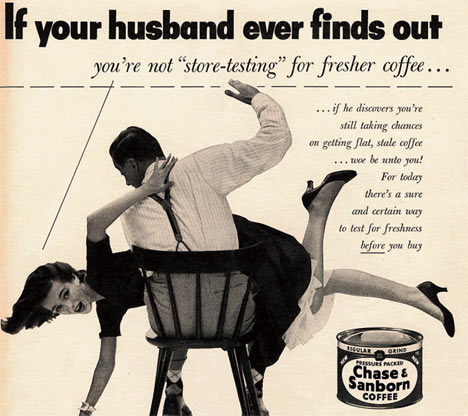
A film written, directed, and produced in 1956 will obviously echo the cultural climate of the 1950s, and during that time, rigid gender roles permeated; primarily, men were the breadwinners, and women were the homemakers. And advertisements like this existed:
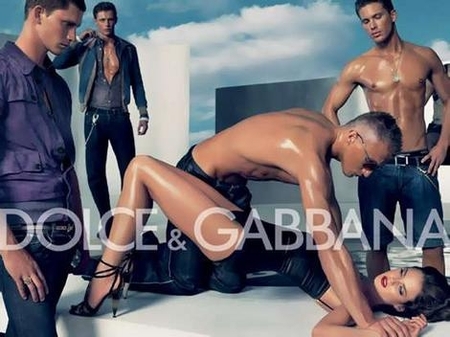
Women can work outside the home now without the universe exploding (thanks, bros!), but that doesn’t mean we don’t still regularly deal with nonsense I mean gang rape fantasy advertisements like this: 
We’ve come a long way, baby? I don’t fucking think so. But I’ll get back to that. 
First of all, the plot: Billy Bigelow is a barker (a person who tries to attract patrons) at a carousel, and all the ladies love him, including Mrs. Mullin, the carousel owner. Billy catches the eye of the young, pretty Julie Jordan and helps her onto the carousel like she’s a child, and then stands next to her the whole time, staring at her like a fucking serial killer. The jealous Mrs. Mullin kicks out Julie and her friend Carrie, and when Julie argues about being treated unfairly, Mrs. Mullin slut-shames her for a supposed indiscretion with Billy. The indiscretion? Julie let Billy put his arm around her waist. Floozy! 

Billy and Julie in Carousel
Billy appears out of nowhere to defend Julie, and as a result, Mrs. Mullin fires him. In one of the most offensive moments in the film, Billy smacks Mrs. Mullin on the ass and says, “Go on, then, git,” as if she were an animal.

Carrie decides to go home (they have a curfew because apparently being a woman and being a child are the same thing in 1956), but Julie refuses—even though she knows it’ll mean getting fired from her job as a mill worker—because she wants to spend time with this older man whom she knows nothing about, except that he wants to bum money from her; that he’s a womanizer; and that he keeps asking “aren’t you scared of me?” like he’s offended that she isn’t. (Man up, Bigelow!)


This is a movie musical, though, so within the next five seconds Julie and Billy sing a song about love. I’m not going to pretend I don’t love this song.


They get married. Billy can’t (or won’t) find work, so they live off Julie’s aunt. Billy—because he’s so distraught and self-loathing about his inability to find employment—physically abuses Julie (off-screen), but he admits he did it because “we would argue, and she’d be right.” Well then!

Billy basically ignores her for the entire rest of the film in favor of hanging out with his criminal friend Jigger (WTF) until Julie tells Billy she’s pregnant, at which point he caresses her arms and stomach as he helps her walk up like five steps because oh my god delicate flower carrying his spawn.

I laughed in horror at the spawn-song soliloquy that follows; it perfectly encapsulates the creepy gender constraints of 2012 I mean 1956:


“His mother can teach him the way to behave, but she won’t make a sissy out of him. Not him! Not my boy! Not Bill! Bill … my boy Bill; I will see that he’s named after me, I will. My boy, Bill! He’ll be tall and tough as a tree, will Bill!”
The song continues in the same ridiculous fashion, with Billy listing off all the shit His Boy Bill might do when he gets older (e.g. hammering spikes, ferrying a boat, hauling a scow along a canal, becoming a heavyweight champ, or, if that doesn’t work out, maybe becoming the President of the United States, duh). But then, Billy’s all—“Wait a minute! Could it be? What the hell! What if he is a girl?” Actual lyrics.
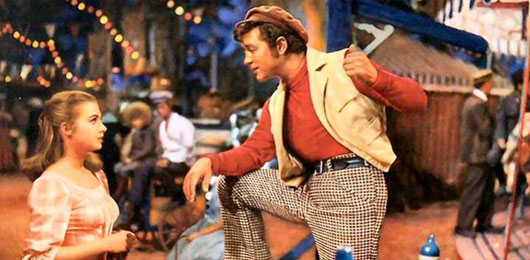
Let the horror get more horrifying.

Listen. “You can have fun with a son, but you gotta be a father to a girl.” Got it? And this girl, she’ll have ribbons in her hair, and she’ll be pink and white as peaches and cream! We don’t experience the pleasure of hearing about what Peaches and Cream Girl will do with her life, but we definitely get an earful about 1) her looks and 2) all the things Daddy needs to do before her arrival. Suddenly—at the mere prospect of raising a girl child instead of a boy child—Daddy goes all Male Provider on our asses.


Let me not forget to mention this end of the song creep-out moment: “Dozens of boys pursue her. Many a likely lad does what he can to woo her from her faithful dad. She has a few pink and white young fellers of two or three, but my little girl gets hungry every night, and she comes home to me!” What is this—a song from one of those 100% unacceptable for obvious reasons father-daughter purity balls? (That lovely little tradition started as recently as 1998, by the way.)


In the end, Billy dies by falling on his own knife (seriously, fail) when he and Jigger try to steal money from a rich dude. After his death, he passes on to some makeshift Heaven-type situation where he polishes fake plastic stars for all of eternity, and for some reason, the owners of Heaven allow him to return to Earth for a day in order to help Julie and his daughter feel less horrible about him having been an overall shitty husband and criminal. Yay.
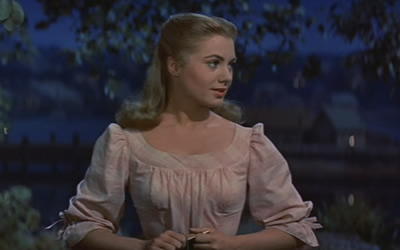

By this point, his daughter Louise is fifteen years old. Upon his return to Earth, Billy finds Louise dancing on the beach and, after he realizes everyone keeps making fun of her because of his robbery attempt, he tries to cheer her up—by giving her one of the fake plastic stars he stole (ha ha ha theft again) from Heaven.


But Louise refuses to take it! Because who the fuck is this dude!


And what does she get for refusing a gift from a random man who showed up out of nowhere? A slap on the hand. Literally. The same man who physically abused his wife when he was alive somehow walks out of Heaven and slaps the shit out of his daughter within the first ten minutes of meeting her for the first time. That isn’t even the worst of it.


The worst of it?

She runs inside to tell her mother that a strange man on the beach slapped her—but—but—it didn’t feel like a slap, she says; it felt like a kiss.


Awwwww, that’s sweet, right? Nope! Not for a fucking second. Let me tell you why.
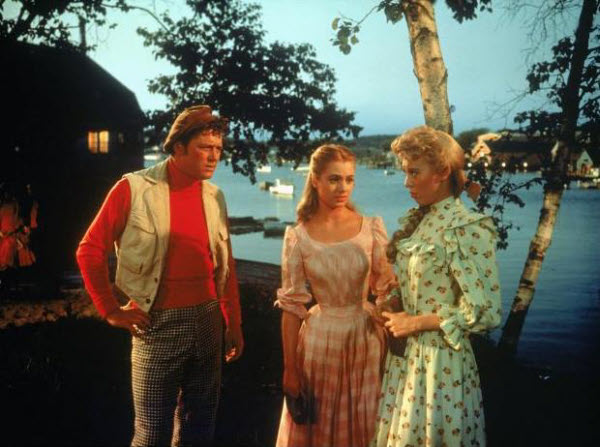

I started this piece by talking about how my thirteen-year-old girl self remembered Carousel as a happy musical that shed light on a bad man who hit his wife. I remembered, too, that he died, but I remembered it as a punishment of sorts, a repercussion caused by living life as an abusive dickface who treated women like absolute shit. I didn’t care about his death. His death felt like a consequence of bad behavior to me, and in a way, it is—stealing money from someone at knifepoint is probably wrong, for the most part, heh. But the ultimate message of Carousel (that I somehow glommed onto as a teenager) isn’t saying to men: “Don’t abuse women, or else.” It’s saying something closer to: “SEE WHAT HAPPENS IF YOU DON’T MAN UP AND SUPPORT YOUR WOMEN, YOU LAZY BUMS?”


It’s a cautionary tale about the dangers of “failing” as a man. It’s oh-so-1956. It’s oh-so-2012.

We’re living in an age in which women’s basic rightsspecifically the right to bodily autonomy, including safe and legal access to abortionkeep coming under fire by conservative Republicans and unfortunately aren’t more than half-assedly defended by supposed “progressive” Democrats, either. Further, the arguments against abortion and reproductive rights center around this lie that it’s all about Stopping the Murder of Innocent, Yet-To-Be Born Infants.

Bullshit.

The abortion debate (and now the access to birth control debatefor fuck’s sake!) exists because we live in a culture that time warped to, or possibly never actually left, 1956. Women are still fighting for basic human rightsin 2012because power-hungry, neo-conservative bullies can’t stop jerking off to the fantasy of living out the rest of their lives in Carousel-Land.

That’s why re-watching this harmless little musical made me absolutely cringe.

It’s a film with dizzying dance sequences and well-known musical numbers to be sure, but it’s also a film in which women are valued and treated with respect only while pregnant, and who are otherwise disregarded, objectified, slut-shamed, abused, or infantilized, and who are expected to accept the actions of the men around them without judgment, regardless of the harm those actions may cause. And there you have it, readers: the 2012 G.O.P. Platform

Now let’s all cry together:

Women and Gender in Musicals Week: That ‘Glee’ Photo Shoot

This piece by Fannie previously appeared at Bitch Flicks on October 27, 2010.

No
So, there is this. View the slideshow (warning: might not be safe for some workplaces).

I love Glee. I sometimes am annoyed by it, but generally, I appreciate its ode to geekiness. I also do sometimes like looking at photos of attractive women (and men), if the photos are tastefully done and don’t seem like they’re completely exploiting the person. And subtlety is good. Subtext, to me, is often sexier than in-your-face displays of sexual availability.

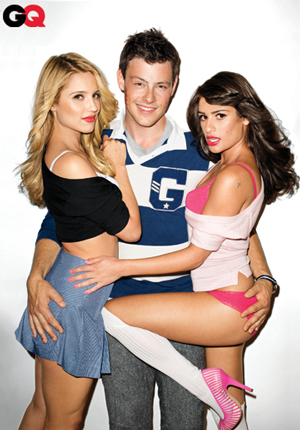
Those disclaimers aside, I could now go on about how these photos at once infantilize adult women by portraying female actresses as sexy schoolgirls while also inappropriately sexualizing these characters, who are supposed to be under the age of 18.

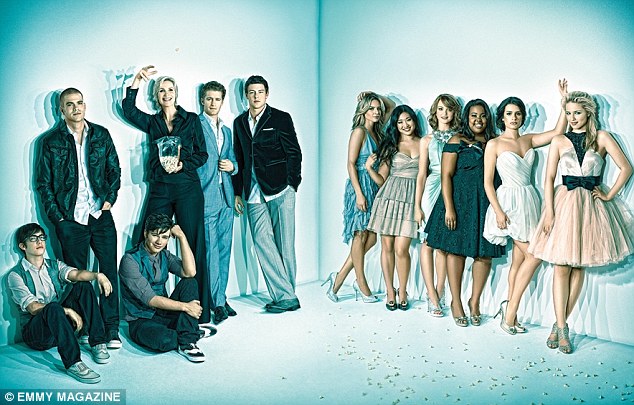
I could also talk about how annoyingly predictable it is that, of all of Glee’s diverse cast members, it is the two women who most conform to conventional Hollywood beauty standards who have been granted the empowerful privilege of being sexified for a men’s mag. For, despite Glee’s idealistic and uplifting message that It’s What’s On the Inside That Counts, the show’s resident Fat Black Girl With A Soulful Voice is noticeably absent from the shoot.

And then there’s the fact that it’s titled Glee Gone Wild! a not-so-subtle allusion to that paragon of klassy art that made Joe Francis a pimp wealthy man. Yeah, I could talk about how that’s not my favorite.

We could also explore how the photos are clearly intended for the heterosexual male gaze (or, say, the gaze of a sexually abusive photographer who talks about how his “boner” compels him to want to “dominate” girls) and his sexual fantasies.

And I will talk about that for a minute, actually.

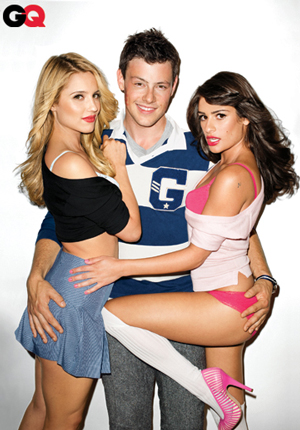
GQ is a men’s magazine, so while some lesbians and bisexual women might be titillated by such images, they should not be so naive as to think it is they who are the intended recipients of these images. Finn, the football player, is perhaps the one dude on the show who Average Joes most identify with. In GQ’s slideshow, he is almost fully clothed in regular streetwear throughout and often adorned with the Ultimate Straight Male Fantasy of not one, but two, hot chicks who might first make out with each other and then subsequently have sex with him.

As for the women depicted, the images predominately feature the two actors wearing the sexy-lady Halloween costume known as Sexually Available Schoolgirl, thus letting gay men know that this photo shoot about characters in a musical TV show is not intended for them, either.

Which brings me to the self-indulgent, possibly shallow, item I really want to talk about.

See, well, Glee used to be our thing.

The geeks, the losers, the queers, the disabled, the atheists, the dudely jock who likes to sing and dance, the pregnant girl, the teen diva, and the male Asian actor who is supposed to be geeky-cool but who never gets a speaking part in Glee solo. The popularity of Glee has been Revenge of the Nerds all the way and for that reason it has been pretty, dare I say, special to a lot of marginalized people and teenagers in all its campy dorkwad glory.

But now, the GQ photo shoot has subverted geekiness to give heterosexual men yet another thing in this world that can be, erm, special to them. And what’s supposed to special about Quinn and Rachel in these photos is not their voices, their struggles, their dorkiness, their self-centeredness, their insecurities, or their dreams, but rather, the never-been-done-before message that it’s women! Who are hot! And young! And thin! Who men want to fuck!

GQ, on behalf of its straight male readership, flaunts Rachel and Quinn in these photos like Sue Sylvester boastingly displays her ginormous cheerleading trophies as yet another reminder to the geeks that “not everyone can be champions” because some people are meant to dominate and others to be dominated. The photos are the equivalent of a major studio finally producing a Xena movie, writing in that long-awaited for Xena/Gabby actual make-out scene, and then having the two main characters end up married. To men, that is. Because what heterosexual men would like to see happen to two female characters is, let’s face it, always what is most important when it comes to TV and film and to hell with any other major fan base.

Glee should know better.

Trying to be popular by catering to the “I only watch shows with multiple major female characters if they’re hot” crowd might make a couple of dorks cool for a while, but it’s also why the rest us can’t have nice things.

———-


Fannie, author of Fannie’s Room, who, when not hanging out at her blog, can probably be found planning the homosexual agenda, twirling her mustache, plotting a leftist feminist takeover of the universe, and coordinating the recruitment effort of the lesbian branch of the Gay Mafia. Her days are busy.


Women and Gender in Musicals Week: That Glee Photo Shoot

This piece by Fannie previously appeared at Bitch Flicks on October 27, 2010.

No
So, there is this. View the slideshow (warning: might not be safe for some workplaces).

I love Glee. I sometimes am annoyed by it, but generally, I appreciate its ode to geekiness. I also do sometimes like looking at photos of attractive women (and men), if the photos are tastefully done and don’t seem like they’re completely exploiting the person. And subtlety is good. Subtext, to me, is often sexier than in-your-face displays of sexual availability.

Those disclaimers aside, I could now go on about how these photos at once infantilize adult women by portraying female actresses as sexy schoolgirls while also inappropriately sexualizing these characters, who are supposed to be under the age of 18.

I could also talk about how annoyingly predictable it is that, of all of Glee’s diverse cast members, it is the two women who most conform to conventional Hollywood beauty standards who have been granted the empowerful privilege of being sexified for a men’s mag. For, despite Glee’s idealistic and uplifting message that It’s What’s On the Inside That Counts, the show’s resident Fat Black Girl With A Soulful Voice is noticeably absent from the shoot.

And then there’s the fact that it’s titled Glee Gone Wild! a not-so-subtle allusion to that paragon of klassy art that made Joe Francis a pimp wealthy man. Yeah, I could talk about how that’s not my favorite.

We could also explore how the photos are clearly intended for the heterosexual male gaze (or, say, the gaze of a sexually abusive photographer who talks about how his “boner” compels him to want to “dominate” girls) and his sexual fantasies.

And I will talk about that for a minute, actually.

GQ is a men’s magazine, so while some lesbians and bisexual women might be titillated by such images, they should not be so naive as to think it is they who are the intended recipients of these images. Finn, the football player, is perhaps the one dude on the show who Average Joes most identify with. In GQ’s slideshow, he is almost fully clothed in regular streetwear throughout and often adorned with the Ultimate Straight Male Fantasy of not one, but two, hot chicks who might first make out with each other and then subsequently have sex with him.

As for the women depicted, the images predominately feature the two actors wearing the sexy-lady Halloween costume known as Sexually Available Schoolgirl, thus letting gay men know that this photo shoot about characters in a musical TV show is not intended for them, either.

Which brings me to the self-indulgent, possibly shallow, item I really want to talk about.

See, well, Glee used to be our thing.

The geeks, the losers, the queers, the disabled, the atheists, the dudely jock who likes to sing and dance, the pregnant girl, the teen diva, and the male Asian actor who is supposed to be geeky-cool but who never gets a speaking part in Glee solo. The popularity of Glee has been Revenge of the Nerds all the way and for that reason it has been pretty, dare I say, special to a lot of marginalized people and teenagers in all its campy dorkwad glory.

But now, the GQ photo shoot has subverted geekiness to give heterosexual men yet another thing in this world that can be, erm, special to them. And what’s supposed to special about Quinn and Rachel in these photos is not their voices, their struggles, their dorkiness, their self-centeredness, their insecurities, or their dreams, but rather, the never-been-done-before message that it’s women! Who are hot! And young! And thin! Who men want to fuck!

GQ, on behalf of its straight male readership, flaunts Rachel and Quinn in these photos like Sue Sylvester boastingly displays her ginormous cheerleading trophies as yet another reminder to the geeks that “not everyone can be champions” because some people are meant to dominate and others to be dominated. The photos are the equivalent of a major studio finally producing a Xena movie, writing in that long-awaited for Xena/Gabby actual make-out scene, and then having the two main characters end up married. To men, that is. Because what heterosexual men would like to see happen to two female characters is, let’s face it, always what is most important when it comes to TV and film and to hell with any other major fan base.

Glee should know better.

Trying to be popular by catering to the “I only watch shows with multiple major female characters if they’re hot” crowd might make a couple of dorks cool for a while, but it’s also why the rest us can’t have nice things.

———-


Fannie, author of Fannie’s Room, who, when not hanging out at her blog, can probably be found planning the homosexual agenda, twirling her mustache, plotting a leftist feminist takeover of the universe, and coordinating the recruitment effort of the lesbian branch of the Gay Mafia. Her days are busy.


Women and Gender in Musicals Week: Glee!

This review by Cali Loria previously appeared at Bitch Flicks as part of our Emmy Week 2011 series.
Not since E! has any one thing on television been so damn exclamatory. Glee! celebrated its everyman song-and-dance style before its slushy flying face-offs ever aired. After a Journey-style breakthrough and myriad episodes featuring pop music gone oh so right, the show ended its first Emmy award-winning season and began a second. Can the plotlines featuring teen pregnancy, teen love, and a bitter gym teacher make it with a little Britney Spears mixed in? The answer is: yes. However, following the line of Britney logic, all its women have had to suffer in the meantime: bitches be crazy (e.g. writing underdeveloped characters who become caricatures of themselves, ending in a mockery of those whose very geekiness Glee attempted to celebrate).

In the beginning Glee made a brand out of celebrating the insecurities, joy, and passions of a group of social outcasts. Quickly, however, Glee called into question its treatment of women, prompting the New York Post to ask “Does Glee! Hate women?” In season one alone a woman is shown to be conniving enough to fake a pregnancy to “keep her man” and another, this time a teenager, grappled with pregnancy until, poof, the storyline magically disappeared. Luckily Madonna’s “Papa Don’t Preach” was able to get into the mix first, or I would have been pissed.

Besides the stereotypical portrayals of women-as-girls-as-GQ-cover-models-being-schoolgirls that this show offers, Glee goes further by, perhaps unintentionally, mocking its characters. Vitriolic gym teacher Sue Sylvester (who eerily resembles my elementary school gym teacher) relies on her bitter use of the pretty girls and exploitation of the token special needs child as a means to succeed to her ultimate end. As their most fully fleshed-out character (and perhaps most accomplished actor) Jane Lynch does a great job being angry but does nothing for the stereotype of the angry lesbian gym teacher taunting kids to make herself feel better. Coach Beiset’s introduction furthered this by presenting this gem of a storyline: no man wanted to kiss her so what was a woman to do but become an angry, middle-aged football coach: the better to scream at you, my dears.

Mixed in with the older women who suffer to fall in and keep love and affection, the teens of Glee keep the teenage dreams coming faster than Katy Perry’s hits. Puck, the number one misogynist/baby daddy/Neil Diamond Crooner and the show’s resident sometimes Gothic sometimes snarky, always shown eating or wrestling, Lauren, are just one of many unconventional couples Glee has drummed up. Lauren’s morbid obesity might once have proven to be a means for character slander, as Puck himself proclaimed when he said to then pregnant Quinn “I’m not breaking up with you. I’m just saying please stop super-sizing because I don’t dig on fat chicks.” Now, however, it is the stuff of fetishistic pop preening. First, Puck serenades his new love interest with a rendition of “Fat Bottom Girls” and, shock, she finds it offensive. To make it better he sings the original number “Big Ass Heart” because it is okay for the organ that pumps our blood and, symbolically, falls us in love to have a “big ass” even though a heart has never won a pie eating contest or needed two seats in an airplane. We get it–there’s a size difference here.

Having a character on TV who does not fit into the mold of being a perfect Westernized ideal of beauty would, in someone else’s hands, be refreshing. Glee, however, focuses on the extremes of women, enjoying the overt and campy hyperbolization of its characters which, in essence, detracts from actual storylines and only serves to render the women flat and one-dimensional: Jewish starlet, slut, dumb blonde, conniving cheerleader, sassy black woman, an Asian, and, now, a full-fleshed female. Glee has a recipe with every ingredient, but stirred together it’s one big lump of heterogeneous stereotypes. I’m not saying this couple should not exist; I am simply implying that it may have been beneficial to give her a love interest that does not appear to be ten seconds from dumping pigs blood over her head at prom.

Two other prominent female characters central to Glee’s narrative arc are slutty Santana and dumb blonde Britney. These two rarely have lines, and, when they do, it is solely to enforce these two personas. What they do have, however, is a girl on girl on glee make out session. Of course Glee would need to have two of its beautiful, popular women fall in love and make out, why not? Glee loves Katy Perry and she kissed a girl and, damn it, she liked it. The issue is not girls kissing girls; it is the exploration of lesbianism in a trite and frivolous manner.

The trials and tribulations girls in high school are facing today are by no means easy. From eating disorders to bullying, the very struggle of learning who you are as a woman, inside, out, sexually, emotionally, is a process. Women today are barraged with images of who they should be, how they should act, and whom they should kiss. Glee, in an attempt to make it okay to be whomever you are, has simply created an hour of sing-along to the pain and pleasure of all the versions of themselves  that girls see when they look in the mirror. We are all sexy and scared, stupid and skinny, fat and fabulous–but fleshing out these various facets to frivolous plotlines and self-mocking monologues is akin to giving every girl a Barbie with adjective occupations. Women deserve more than this style of characterization. 

 
———-
Cali Loria is a thug with unbelievable scrabble skills. She is mother to a King and a lover of film, food, and feminism. 


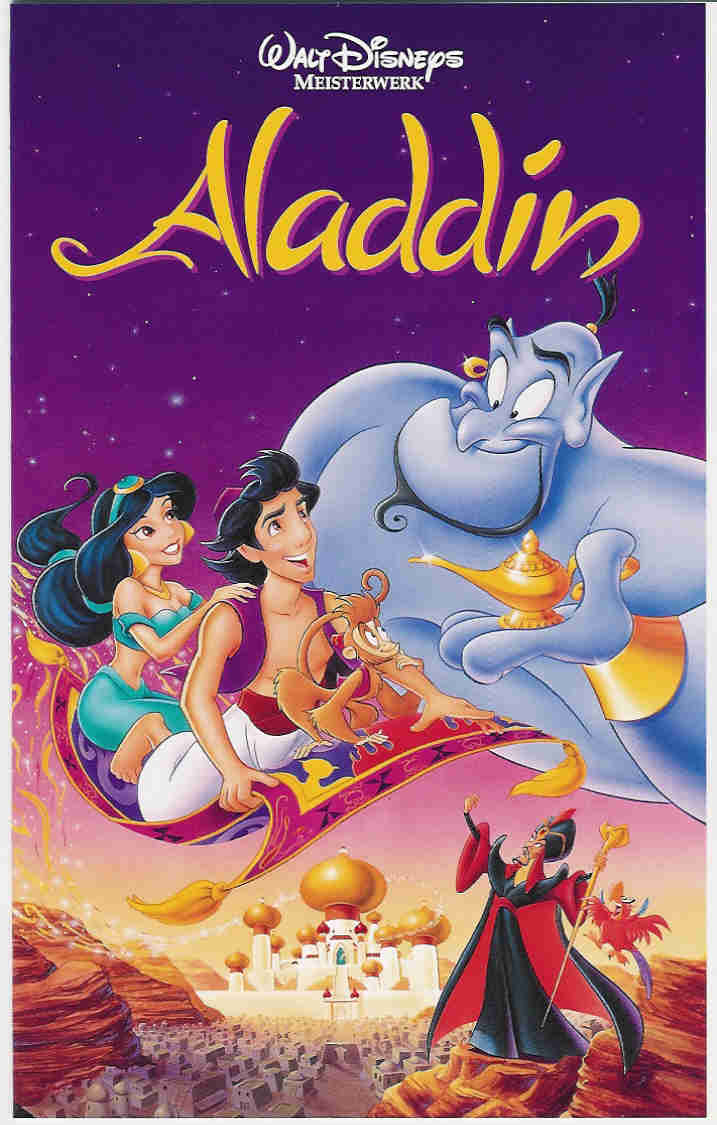
Women and Gender in Musicals Week: Aladdin

This review previously appeared at Bitch Flicks as part of our series on Animated Children’s Films.

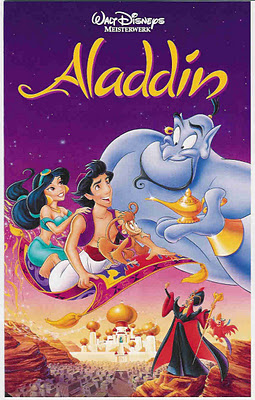
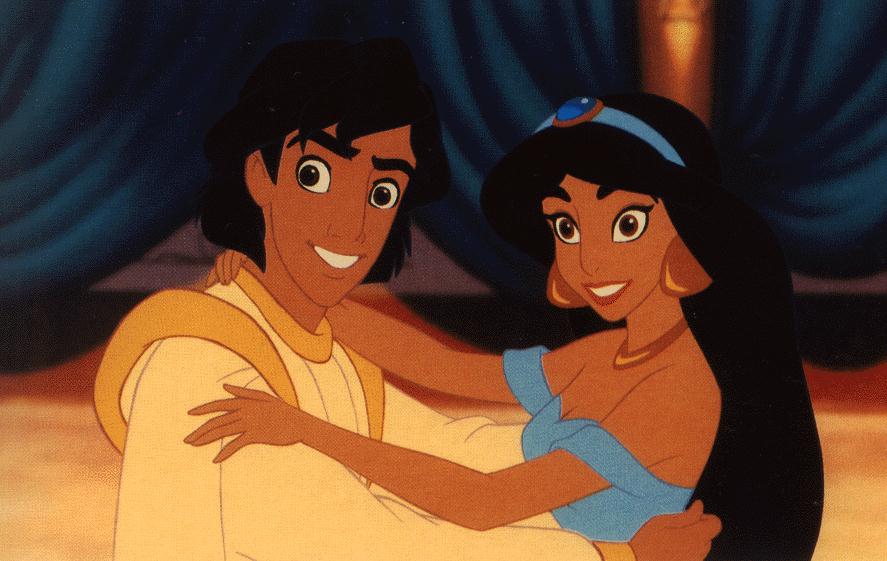
This movie is about a princess and a “street rat” who fall in love and must overcome the evil Jafar to get married. This movie is also about generalizing non-Western cultures (mainly Middle Eastern cultures) and perpetuating cartoonish stereotypes of Arabic peoples. As an added bonus, this movie masquerades as a girl power film when in fact, it enforces the traditional gender role of men as active/women as passive.
The first time I saw this children’s movie was over this past summer, when I was the assistant director of a summer production of the musical Disney’s Aladdin. I was the only person involved in the production that had not seen Aladdin when I was a child. Every single one of the children (almost entirely girls, ages 9-12 with one 7 year old) came in with ideas of what the show would look like, because they had all seen the movie and they knew every single song. Because they knew the music, we had more time to work on choreography. For a marketplace scene, I asked the kids to strike a pose to freeze in during dialogue. I was looking for marketplace-y poses: two people talking, maybe gesturing to another person, walking poses, etc. They immediately put their arms up with their palms together so that their arms framed their face and their necks were moved to one side (a pose associated with “Arabia” in pop-culture). They all wanted to do their hair in the “I Dream of Jeannie” hairdo, because it was “so Arabian”. I wondered, where did they get such a stereotypical view of the Middle East? And then I saw the movie and all of those questions were answered.


My director thought that this was a girl power movie. Look! At the end, the Sultan declares that Jasmine can marry whomever she chooses, when she chooses! And she rejects all of those suitors because she’s “not a prize to be won”! Girl power yeah! No. This movie is producing yet another hetero-romantic story where women sit there and men pursue them. She was naïve before Aladdin shows her a “whole new world”—she is the passive learner while he is the active teacher. How does she help with the defeat of Jafar? She kisses him—using her body to be attractive to men—the rest of the time she just kind of stands there while Aladdin fights Jafar. Again, she stands there lookin’ sexy and being passive, he fights actively. Even their body stance around each other assumes a dominant/submissive look—Aladdin’s body is tall and upright, Jasmine is leaning into him or sitting behind him or being held in his arms. He is also physically larger, aside from her hair (her ponytail is thicker than her waist), she is extremely thin and takes up very little space when compared to Aladdin’s broad shoulders and muscular body. And of course, what other characters in this movie are women? Oh that’s right, they are all men. Because women can only be in stories to be the object of men’s affections, not to fill other roles. There are some background women in the dance scenes, but those are the “harem girls” and other sexualized women (because foreign=exotic and sexy!)
Essentially, all of the women are defined by their attractiveness to men. “Ugly” women, then, are used as comic relief. In one of the first scenes, when a woman opens the door and says of Aladdin, “Still I think he’s rather tasty!”, everybody in the audience is supposed to laugh. Aladdin looks at the woman (who is quite large) and jumps in surprise and disgust. Oh, silly fat woman, you can’t have feelings because you’re ugly! We’re supposed to laugh at how ridiculous her thinking Aladdin is “tasty” is—because fat women and ugly women are not supposed to have sexual desires. Only when the sexy women do this is it okay—nobody is laughing at Jasmine’s proclamations of love for Aladdin, because it doesn’t seem ridiculous now. Aladdin is attractive, she is attractive, so they can be in love.


So doing this story where every single role had to be filled by a girl made this an interesting production. Some girls told us they didn’t want to be a male character. Some girls who were cast into men’s roles started acting like men—they lowered their voices and changed their body language to reflect a stereotypical man. Some girls who were cast into men’s roles adopted them to be women’s roles—the girl playing Jafar, for example, had no issue with being a female Jafar. The girl who played Aladdin, the title character, made it clear that she was acting like a man—I, personally, thought that it would have been fine for her to be a female Aladdin (but the lesbian love story was not an idea that they particularly were comfortable with, which is interesting given how comfortable they were with heterosexual love stories).
In fact, I think it would have made the movie better if Aladdin was a girl (and if all the racism was taken out). Suddenly, “A Whole New World” takes on a whole new meaning—but these movies with antiquated gender roles would not have been as widely accepted into culture if the relationship it portrayed was queer.
When watching this movie, it’s hard to not get depressed about the fact that this is what little girls are told to aspire to. Watch something else instead.

This is an anonymous review.

Women and Gender In Musicals Week: The Surprising Feminism of ‘Gentlemen Prefer Blondes’

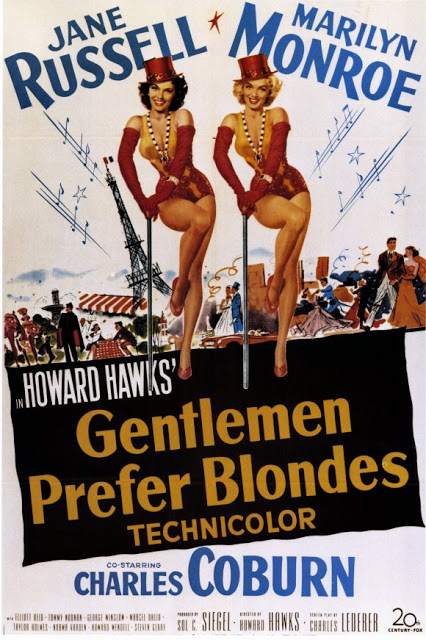
Gentlemen Prefer Blondes Movie Poster
It’s always difficult to review older movies from a feminist outlook, especially ones that predate not only second-wave feminism, but the civil rights movement as well. On the surface, Gentlemen Prefer Blondes is kinda anti-feminist – we have the stereotypical dumb blonde and the smart brunette, the dumb blonde is a blatant golddigger, we don’t get a full Bechdel Test pass (almost all of the conversations are about men), and the film is shot with the intention of emphasizing the lead actress’ sexiness as much as possible (with a few obligatory male gaze shots). Yet I was asking myself why I love this now almost 60 year old film so much. I looked a little deeper, and realized that there is a lot in this film for feminists to celebrate – not only the stars, Marilyn Monroe and Jane Russell, but also the characters’ friendship, their mutual sexual liberation, and how a little song named “Diamonds Are A Girl’s Best Friend” is not as much about being materialistic as it seems.

Marilyn Monroe has to be one of the most misunderstood household names. When people think of her, sure, they think of her beauty and sex appeal, but they also think of her drug addiction, her early death, rumoured plastic surgery, rumoured promiscuity, her stage name, and her difficulties as a performer. No one ever seems to know about her good points. They seem to think that her dumb blonde sexpot persona is her actual personality, when, in fact, she was acting. She was actually an intellectual who loved reading (and I’m talking difficult texts like Proust and Nietzsche) – her favourite photographs of herself are of her reading. There’s a reason she married Arthur Miller! She was also an early civil rights advocate – Ella Fitzgerald would recollect that Monroe personally called the owner of popular club Mocambo, which at the time was segregated, and demanded that Fitzgerald be booked as a performer immediately, promising that she’d be at a front table every night, and bring the press with her, if the owner did so. Her actions made sure that Fitzgerald would never have to play a small club again. Marilyn Monroe could act (in both comedic and dramatic roles), dance, and sing, and yet all that she is remembered for is her looks and her personal demons. She deserves better, especially as someone I consider to be an early feminist icon.

Marilyn Monroe & Jane Russell in the film’s opening sequence
Jane Russell is another performer who deserved a lot more accolades than she got. Her portrayal of Dorothy Shaw is overtly feminist – sexually and intellectually confident in an era that tried to force patriarchal notions of morality. My Baby Boomer mother also fondly remembers her commercials for the Playtex Cross-Your-Heart 18-hour Comfort Bra (it remains one of Playtex’s most popular products). Here was a well-known star as a spokesmodel for lingerie. Even now, we don’t see famous women (besides the Victoria’s Secret supermodels) selling lingerie – at least not for the sake of promoting comfort over sex appeal. Never mind selling lingerie made especially for larger-chested women. These days, we buy non-sports bras for the look of them or the curves/cleavage they create, not because it kinda hurts to jiggle. Here was an actress who basically stated to the world, “Yes, I have large breasts, yes, I need a decent bra, and so does every other woman out there.”

The friendship between Lorelei Lee and Dorothy Shaw is one of the most positive female friendships depicted on film, and is one aspect of the adaptation distinctly improved from the original novella by Anita Loos. (Yes, I’ve read the source material this time.) In the original novella, Lorelei is a flapper who keeps a diary of her daily events and describes both her ambitions of wealth and her attempts to juggle three suitors at once. She is vain, poorly educated (the prose is littered with deliberate misspellings), and disdainful of other women. Dorothy is supposedly her friend, but she often makes sarcastic snipes at Lorelei’s expense (which Lorelei is too dimwitted to pick up on). They’re a lot closer to frenemies in the original, which is a surprisingly misogynistic depiction of women from a female writer. The musical version instead makes Lorelei and Dorothy inseperable. They are absolutely devoted to each other and protective of one another. They disagree on relationships – Lorelei believes in only dating rich men and falling in love with them later, whereas Dorothy is a romantic who keeps falling in love with poor men. Each thinks the other is foolish when it comes to relationships, but they accept each other’s differences and are loyal to each other before any other man in their lives. Sisters before Misters.

Marilyn Monroe & Jane Russell
Another feminist aspect of the film, one which I think is left over from the characters’ original incarnations as flappers, is their complete sexual liberation. Despite what Baby Boomer conservatives would like you to think, there was no such bastion of morality in the 1950s. In Gentlemen Prefer Blondes they make it clear that the lead characters are “lower class.” (“We’re just two little girls from Little Rock, we came from the wrong side of the tracks.”) Both are completely confident about themselves and their life choices. It’s heavily implied that neither girl is a virgin, especially in the “Isn’t Anyone Here For Love” sequence, which is littered with innuendo. (The sequence has also infamously been read as subtly homoerotic – there’s a reason the Men’s Olympic team isn’t interested in Dorothy.) Lorelei is a master seductress, whose suitor Gus has to repeatedly turn himself away from because he has trouble resisting her charms. They drink, they smoke (though they are never seen actually smoking, just buying cigarettes), they dance, they party, they stay out late. And while wealthy men like Gus’ father look down on women like Lorelei, they are completely unapologetic about their choices.

The film also depicts the women as unmistakably intelligent, albeit in different ways. Dorothy is very obviously meant to be the “smart” one, who corrects Lorelei’s mistakes, catches on to other people’s insinuations, and is always ready with a witty retort. But while Lorelei might be “book dumb,” she’s not stupid. Together, Lorelei and Dorothy are master manipulators, and she’s far more devious than she lets on. Famously, at the end of the film, she convinces Gus’ father to let them marry through some admittedly clever logic. (“Don’t you know that a man being rich is like a girl being pretty? You wouldn’t marry a girl just because she’s pretty, but my goodness, doesn’t it help?”) Dorothy isn’t entirely smart either, because she tends to think with her heart over her head. She knows that Ernie Malone is a private detective out to ruin her best friend’s life, but falls in love with him anyway. Notably, however, she makes it clear that she chooses loyalty to Lorelei first.

Marilyn Monroe in the “Diamonds Are A Girl’s Best Friend” sequence
The most famous number in the musical, by far, is “Diamonds Are A Girl’s Best Friend,” which has endured for over 60 years and is considered Marilyn Monroe’s signature number. The sequence, depicting her in a hot pink gown against a bright red backdrop, is so iconic it has, amongst other homages, served as the visual inspiration for Madonna’s music video for “Material Girl.” On the surface the song is about being materialistic – that Lorelei’s love for jewels supercedes all other things, and at the surface, yes, it would be a theoretically anti-feminist song. But I think the song is actually about a longing for financial independence. If you pay attention to the lyrics, they describe how the men in Lorelei’s life are generous for a while, but are shallow (“Men grow cold as girls grow old, And we all lose our charms in the end.”). She is actually saying that while she appreciates romantic attention, she relies on their expensive gifts to live. (“A kiss may be grand…but it won’t pay the rental on your humble flat, Or help you at the automat.”) As a duo of showgirls, Lorelei and Dorothy might be fairly successful, but they’ll never earn enough to be truly financially independent. Don’t forget that in the 1950s, women were still expected to be homemakers. Lorelei’s manifesto is that having diamonds will grant her the opportunity to live on her own, feed herself, and be able to support herself along with her showgirl job. She will need that financial independence long after her looks have faded and the shallow men in her life have moved on. (“Cause that’s when those louses go back to their spouses”) This song, above all else, is advocating for women to work and take care of themselves, but until that day when they are allowed to be truly independent, Lorelei’s going to get to her dreams the best way she knows how.

Yes, the film is flawed, especially if taken at its apparently anti-feminist face value. But contextually, I feel that this film’s depiction of women is quite fair for its day. Yes, it would be nice if the girls weren’t stereotypes and Lorelei wasn’t a blatant golddigger, but then, where would the plot be? Not only are its stars, Marilyn Monroe and Jane Russell, important landmarks in feminist history, but their characters are too. Their friendship is absolutely ironclad – they put each other first, even though both are looking for love in different ways. Their confidence in their intelligence, lifestyle, and sexuality is incredibly liberated for what was supposedly a time of suffocatingly patriarchal morality. And lastly, the famous song “Diamonds Are A Girl’s Best Friend” might be about celebrating materialism, but is really about a woman’s dreams of financial indepdencence. All things considered, Gentlemen Prefer Blondes is surprisingly feminist.

Myrna Waldron is a feminist writer/blogger with a particular emphasis on all things nerdy. She lives in Toronto and has studied English and Film at York University. Myrna has a particular interest in the animation medium, having written extensively on American, Canadian and Japanese animation. She also has a passion for Sci-Fi & Fantasy literature, pop culture literature such as cartoons/comics, and the gaming subculture. She maintains a personal collection of blog posts, rants, essays and musings at The Soapboxing Geek, and tweets with reckless pottymouthed abandon at @SoapboxingGeek.

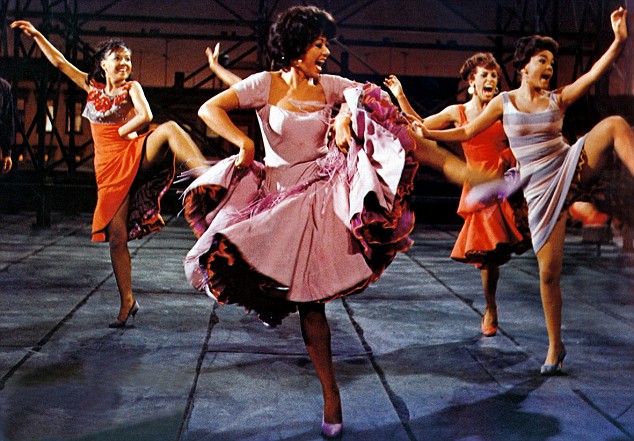
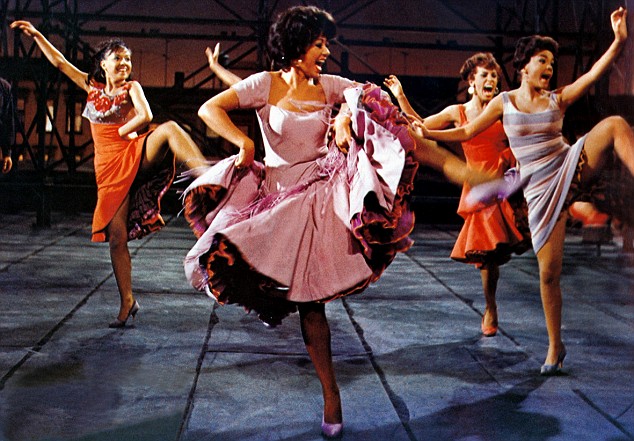
Women and Gender in Musicals Week: Female Friendship, Madonna/Whore Stereotypes and Rape Culture in ‘West Side Story’

[Trigger warning: for discussion of rape] | Spoilers ahead

West Side Story is one of my absolute favorite musicals. I adore the catchy lyrics, the breathtakingly exquisite choreography and cinematography, the heartbreaking love story. A modern Romeo and Juliet taking place in New York City amongst two rival gangs — one white, one Puerto Rican — it tackles racism, bigotry, murder and teen angst. But many audiences overlook the film’s portrayal of gender, female friendship and rape culture.
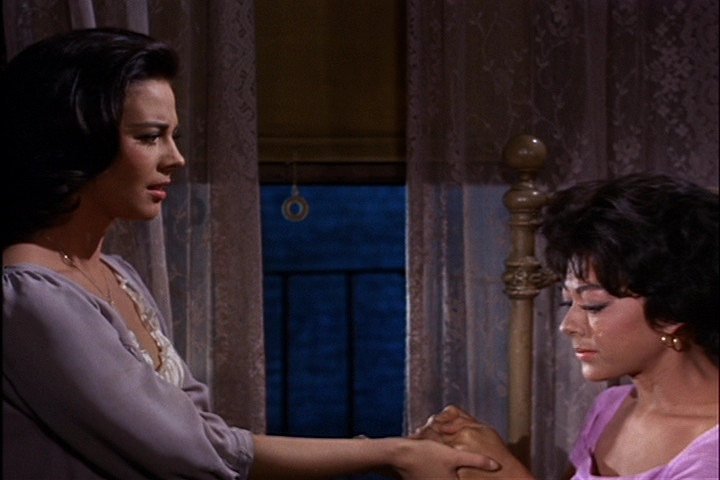
Anita and Maria are dear friends who confide in each other. Two strong women who know what they want and aren’t afraid to speak their minds. Rather than the film pitting the two women against each other, they support one another. But as awesome as this is, I can’t shake the feeling that we’re witnessing a Madonna/whore dichotomy in female archetypes.
Maria is sweet and naïve. When Tony first meets Maria, he asks her if she’s joking. She responds, “I have not yet learned how to joke that way.” Her brother Bernardo and Anita try to shield her from trouble as people view her as pure and virginal. Reinforcing this imagery, we see Maria pray in front of the Virgin Mary and in “Maria,” Tony sings “say it [her name] soft and it’s almost like praying.” But Maria tries to resist the label of purity as she tells her brother a white dress is for babies.

In stark contrast to Maria, Anita is opinionated, savvy, charismatic and flamboyant (and clearly my favorite character!). Outgoing and gregarious, she wears colorful frocks, as opposed to Maria’s white gowns. As much as I love her, Anita reinforces the feisty Latina harlot stereotype. Of course the depiction of race is problematic as the film employed brownface make-up for its Latino/a characters.

Anita proudly asserts her sexuality, eagerly singing about how she’s “gonna get her kicks” and “have a private little mix” with her boyfriend Bernardo in “Tonight.” The chemistry and banter between Anita and Bernardo reveal their tender feelings for one another. But their relationship is framed in sexuality. Even though Maria and Tony sleep together, their relationship is constantly surrounded by dreamy words of love, commitment and wedding imagery. While Anita sings about sex in “Tonight,” Maria croons about seeing her love and how the “stars will stop where they are.” It’s as if there’s a right and a wrong way to portray female sexuality.

Throughout the film, pragmatic cynic Anita tries to protect idealistic dreamer Maria. She expresses her worries about her dating Tony at the bridal shop. Later, in “A Boy Like That,” Anita warns Maria to stay away from him as he “wants one thing only” and “he’ll kill her love,” like he murdered hers. But Maria’s buoyant hope stave off Anita’s concerns.

It’s interesting how other characters treat women in the film. In “America,” the Sharks sing about the xenophobia and racism they experience while the women sing about their aspirations and the promise of a  better life in NYC. One of the Jets exasperatedly wonders why they’re fooling around with “dumb broads.” To which Graziella retorts, “Velma and I ain’t dumb.” Anybodys is the tomboy who desperately longs to be in the Jets. She hangs around the guys, spits on the ground and insults women, and sees the male gender as far more desirable. But rather than depicting gender variance or even a trans character, the Jets view Anybodys as a defective female. Some of the Jets taunt her that no one would want to sleep with her. Because apparently to them (and patriarchal society at large), a woman’s status resides only in her beauty, sexuality and desirability.
While gender relations are far from perfect, the Sharks and their girlfriends debate equally. But the Jets seem to view women as nothing more than objects. This objectification continues in the assault and attempted rape of Anita.

Maria begs Anita to give a message to Tony at Doc’s drug store. Anita reluctantly does so. When she arrives, she encounters violence at the hands of the Jets. In Aphra Behn (of Guerilla Girls)’s Gender Across Borders article, she disparages the ’09 Broadway revival as it turns the assault and “mock rape” of Anita into a real rape with the unzipping of A-rab’s pants:

“Why does everyone from Broadway to High School stage this scene as a fully realized rape scene? Because rape culture does not allow us to see it as anything but such a scene.” 
Behn may be right that this scene reinforces rape culture. But she’s completely wrong attempting to differentiate between a mock rape and a real rape. Rape is rape. Period.
I always interpreted the film version of West Side Story displaying assault and attempted rape. If Doc hadn’t stepped through the door and intervened, Anita would have been raped. Does it really make it better that the Jets were pretending to rape? Or that they were prevented from committing rape? No, no it doesn’t.
Behn states the original stage direction was to assault Anita and treat her like an object, not a sex object. But rape is not a sexual act. It’s an act of power. The Jets feel powerless over the death of Riff, their friend and leader. Being young, they’re tired of everyone telling them what to do, how to feel and behave. When Anita enters Doc’s drug store, she materializes into an outlet for their frustration and pain. As the Jets hold racist views, they see Anita, as a Latina, an other — an object to overpower
The Jets verbal and physical harassment and attempted rape disgust and disturb the audience. When Rita Moreno filmed that scene, she broke down and sobbed for 45 minutes for it reminded her of past pain, anger and trauma, including an attempted rape. This scene portrays the ramifications of patriarchy, racism and rape culture. It shows how society normalizes violence against women.
Anita’s anger, hatred and shame at the boys for what they’ve done to her ultimately causes the tragic ending. Her lie — that Chino murdered Maria — causes Tony to run around screaming for Chino to kill him too, which he does. Tony’s death causes hatred to fester inside Maria, corrupting the ingenue. Rather than evoking sympathy for an assault survivor, it seems we the audience are supposed to be angry at Anita for her treachery.

Anita is considered most people’s favorite character. And in my opinion, rightfully so. She’s a badass. While audiences continually embrace the role of Anita — awarding an Oscar to Rita Moreno, a Tony to Karen Olivo in the ’09 revival — it appears the film tries to vilify her, a cautionary warning to women. Women can be good and nice, like Maria, or sexually assertive and ultimately manipulative liars destroying lives, like Anita.
Women are supposed to choose the “right” kind of woman to emulate or suffer dire consequences.


Women and Gender in Musicals Week: ‘The Rocky Horror Picture Show’ and the Pitchfork of Puritanism

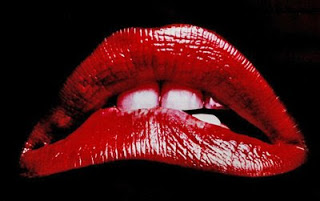
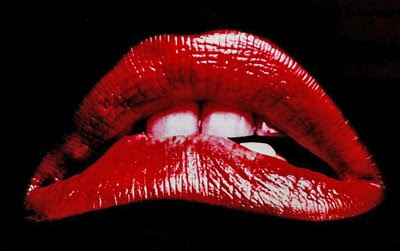
The lips in the opening sequence–the biting action has sexual and fearful connotations.
The cult classic film The Rocky Horror Picture Show, which was based off a British play of the same name, was released in 1975. At that point in American history, audiences (young audiences especially) were eager to have their boundaries pushed and revel in the debauchery that Rocky Horror provided. Whether it was the after-glow of the sexual revolution of the 60s and early 70s or a preemptive strike back to still-noisy social conservativism, Rocky Horror dealt with issues of gender and sexuality in a way that can resonate with viewers almost 40 years later. Buried beneath the campy music and bustiers is strong commentary on religion, gender and sexual norms, social customs and puritanical morality.
After the opening sequence (in which the famous red lips–belonging to Patricia Quinn, who plays Magenta–lip sync to Richard O’Brien, who plays Riff Raff and wrote the original play and screenplay, singing “Science Fiction/Double Feature”), the first shot of the movie is a cross atop a church steeple. The camera pauses, making the audience absorb the contrast between a clearly sexual (and even fearful), disembodied mouth and Christianity.
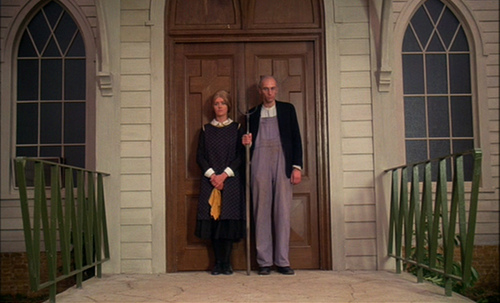
As the camera pans down, a wedding party and guests burst through the doors of the church. Outside of the church doors, a solemn-looking Tim Curry appears as the pastor, and Quinn and O’Brien flank him in the style of the American Gothic painting by Grant Wood.
We will see this image again. It will never really leave us.
The actors who will appear later as Magenta and Riff Raff play American Gothic in the first scene at the church.
According to the Art Institute of Chicago, “American Gothic is an image that epitomizes the Puritan ethic and virtues that he [Wood] believed dignified the Midwestern character.” Puritanical “virtues” are on display in this opening sequence.
As American culture reminds us, when these virtues are imbedded in a society, often the only option for sexual expression is at the extremes of the virgin/whore dichotomy. Suppression and purity on one end of the spectrum, complete surrender to earthly pleasure, no matter the cost, on the other. These extremes are shown throughout the film.
As the wedding comes to an end (and after Janet, played by Susan Sarandon, has caught the bouquet), a car pulls up to take away the bride and groom. Sloppily written on the side of the car is, “Wait till tonight, she got hers now he’ll get his.” The heteronormativity of this scene is clear. Women (including Janet) are eager for marriage, men want to “get theirs” after the wedding is over. Janet’s boyfriend, Brad (Barry Bostwick), does quickly propose to her after they discuss marriage in the church cemetery as a storm brews overhead. A billboard with a heart and the motto “Denton – The Home of Happiness” looms above them. The marriage ritual and social expectations surrounding it are, on the surface, celebrated in this scene (“Dammit, Janet, I love you!” sings Brad as they rollick around the church). However, the symbolism of the cemetery, the pending storm, and the fact that the American Gothic characters are preparing the church for a funeral as they wheel in a casket is not lost on the discerning viewer. 
The two set off on a road trip to announce their engagement to a professor they’d had in college (they met and fell in love in his class). On the way, as they drive through a thunderstorm while listening to Nixon’s resignation speech on the radio (perhaps a nod to moral failure), they blow a tire. They end up at a foreboding castle (one used in many “Hammer Horror” movies that Rocky Horror parodies), and motorcycles pass them on the road going to the same destination. Brad says of the biker with judgment, “Life’s pretty cheap for that type.” An “Enter at Your Own Risk” sign invites the couple into the castle grounds, and they do.
After Riff Raff lets them in, they’re quickly initiated into the party that’s being held–the “Annual Transylvanian Convention.” They stand, innocent and wide-eyed, as guests (all dressed in gender-neutral tuxedos) dance the “Time Warp” and thrust their pelvises. The American Gothic painting, as well as the Mona Lisa, both appear on the walls of the castle.
Riff Raff welcomes Brad and Janet to the castle; the American Gothic painting looms behind him.
PBS art commentator Sister Wendy Beckett says, “You can recycle the Mona Lisa any way you like. Back to front, upside down, it remains instantly recognizable. That’s the ultimate compliment and it’s been paid to Grant Wood’s American Gothic. Somehow it seems to speak to the American psyche, though what it actually says isn’t as simple as it might seem.” The coyness of these particular works of art mirror what lies beneath The Rocky Horror Picture Show.
Brad and Janet are visibly uncomfortable in this world (it seems “unhealthy,” Janet says). They, and the audience, which has seen the action from their naïve perspective, are then introduced to Dr. Frank-N-Furter, played by Curry. The camera pans up his fishnet-clad legs, reminiscent of the gratuitous male gaze present in so many other films. However, this time the object of that gaze is a “sweet transvestite from Transsexual, Transylvania,” as he introduces himself in song.
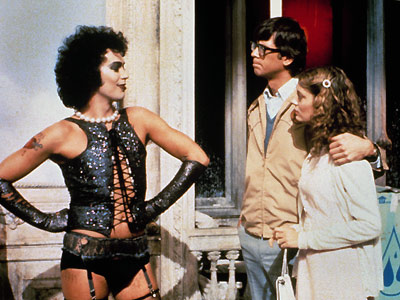
Dr. Frank-N-Furter introduces himself to Brad and Janet.
He invites the couple up to his lab to “see what’s on the slab.” They are stripped to their underwear by Riff Raff and Magenta (“We’ll play along for now,” says Brad). On their way up to the lab, Janet asks Magenta if Frank-N-Furter is her husband. She laughs, and Riff Raff exclaims that he’ll probably never marry (again, marriage is slighted). Frank-N-Furter has changed into a scrubs-style dress (with a pink triangle on the chest) in the lab. He flirts with Brad, calling him a “force of manhood, so dominant,” and Janet begins to giggle and seem less uncomfortable in this new setting. Being stripped of their clothes leaves them almost naked and vulnerable, yet opens them up to sexual possibilities that explore gender and dominance.
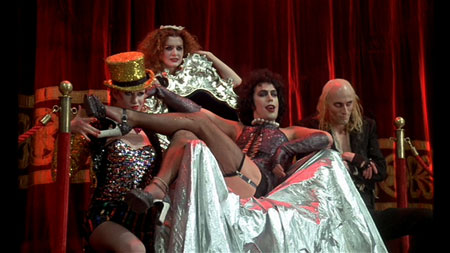
Frank-N-Furter, seated, flanked by (from left) Columbia, Magenta and Riff Raff–all of whom he as used for his gain.
Frank-N-Furter announces that “My beautiful creature is destined to be born!” and the references to Frankenstein throughout the film thus far are fully realized. He climbs above the tank that is holding his “creature,” and drops in rainbow-colored liquid, leaving the creature awash in the rainbow. (In 1975, the rainbow flag had not yet been formally adopted as the LGBT banner, but rainbow flags were commonly used for similar liberal causes starting as early as the late 1960s.)
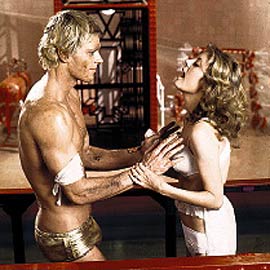
After his creature is born–a muscular, blonde, tan god–Frank-N-Furter ogles and gawks at his creation, chasing and crawling after him, scrambling to even kiss his foot. Rocky (his creature) doesn’t seem interested at all, as he sings about feeling the sword of Damocles above him. As history (and science fiction, like Mary Shelley’s Frankenstein) has repeatedly shown us, when we create a system in which others are to be subservient–whether via imperialism, slavery or patriarchy–the outcome is only good for those in power, and even then the reward is short-lived.
But for now, Frank-N-Furter appears to be getting his way (after ridding himself of Eddie, played by Meat Loaf, who we find out was an ex-lover of Frank-N-Furter and Columbia, played by Little Nell). Masculinity is magnified in this scene as Frank-N-Furter sings about making Rocky a “man” through intense physical workouts and bodybuilding routines, and Eddie’s display of hyped-up violent masculinity (motorcycle, leather jacket, rock and roll). But who is the dominant one in these relationships? Frank-N-Furter, in his fishnets and heels. As heteronormative as the opening scene of the film was, at this point almost all of the lines have been or are beginning to be subverted and blurred.
Frank-N-Furter and Rocky walk out of the lab arm in arm as the wedding march plays and his guests shower them with confetti. The curtain is drawn as they embrace, and the audience expects that they will consummate this “marriage” immediately. 
In the middle of the night, Rocky escapes the wrath of Riff Raff and Magenta (he has chains on his ankles as he attempts to flee).
Janet and Brad have been put in separate rooms, of course, so they may retain their pre-marital chastity.
While his creation attempts to escape, Frank-N-Furter visits Janet. He acts like he’s Brad, and she welcomes his embrace and sexual advances. When she figures out it is Frank-N-Furter, she kicks him off: “I was saving myself!” she cried out. After a moment of rough persuasion, she lies back. “Promise you won’t tell Brad?” she says, and laughs as Frank-N-Furter descends upon her.
Afterward, “Janet” visits Brad, and he also welcomes the embrace until he realizes it’s Frank-N-Furter. The scene plays out exactly as it does with Janet–persistent refusal and then “You promise you won’t tell?” Again, Frank-N-Furter moves downward on Brad.
These scenes are poignant in that they are exactly the same–from the strict puritanical refusal to the “secretive” consent to the oral sex act itself–yet the sex of the participants is fluid. Frank-N-Furter is on top, but he’s adamant that the two give themselves “over to pleasure,” which he delivers.
(It’s also worth noting that during the sex scenes others in the house–Riff Raff, Magenta and Columbia–can watch via monitors that display live feed from the rooms. Voyeurism isn’t off-limits, either. Like most issues in this film, there is vast gray area in regard to consent that we are challenged to think about.)
By the next morning, Janet is crying and feeling immense guilt about betraying Brad. However, she happens upon a monitor showing him smoking a cigarette on the edge of his bed, which Frank-N-Furter is lying in. She then spots the injured Rocky, and tends to him. He touches her hand, and she smiles a smile that indicates she has found within herself power and passion.
Janet then bursts into her climactic song, “Touch-a, Touch-a, Touch-a, Touch Me,” a sex-positive female power anthem if there ever was one. She decries her years of avoiding “heavy petting,” since she thought it would only lead to “trouble and seat wetting.” While the narrator says that Janet was “its slave,” it’s more clear that she is sexually dominant in this scene.
After a lustful night with Frank-N-Furter, Janet embraces her sexuality with Rocky (she places his hands on her breasts).
Even in her critique of the woman’s stray curl in American Gothic, Sister Wendy senses something beyond the surface: “Some see the stray curl at the nape of her neck as related to the snake plant in the background, each one symbolizing a sharp-tongued ‘old maid.’ Sister Wendy sees in the curl, however, a sign that she is not as repressed as her buttoned-up exterior might indicate.” Nothing is quite as it seems.
After a cannibalistic dinner (insert corny pun about Meat Loaf here), everything seems to be falling apart. Eddie’s uncle–the Dr. Scott who Janet and Brad were trying to visit in the first place–comes to the castle (he’s both looking for his nephew and doing research on alien life forms). Dr. Frank-N-Furter, seeing everything he’s built to serve himself revolt (Riff Raff, the “handyman,” and Magenta, the “domestic,” are getting antsy to leave to go home to Transsexual; Columbia screams at him for just taking from people–first her, then Eddie, then Rocky, etc.–and Rocky isn’t working out as he planned), clings on to whatever power he can. He mocks Janet and her sexual inadequacy–“Your apple pie don’t taste too nice”–and turns all except for Riff Raff and Magenta into stone via his Medusa switch (the mythology echoing that of Damocles’s sword and what happens when one demands too much).
“It’s not easy having a good time,” Frank-N-Furter laments.
The floor show that follows is a spectacle of gender and sexuality. The stone figures are “de-Medusafied” one by one, and all are wearing kabuki face makeup and Frank-N-Furter-style fishnets, heels, garters and bustiers. They each sing a stanza exploring their current state of drug dependence, uncontrolled libido and freedom in “Rose Tint My World.”
Columbia, Rocky, Janet and Brad have all reawakened in Frank-N-Furter’s gender-bending image for the floor show.
As Frank-N-Furter begins “Don’t Dream It, Be It,” he asks, “Whatever happened to Fay Wray? / That delicate satin draped frame / As it clung to her thigh, how I started to cry / Cause I wanted to be dressed just the same…” Here we see him stripped of his over-exaggerated power as he indicates that he struggled with gender, presumably when he was young. He’s been searching for how and where he fits, and “absolute pleasure” and “sins of the flesh” have been where he looked for fulfillment.
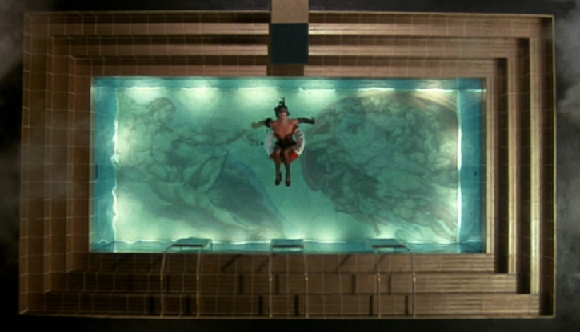
Frank-N-Furter jumps into an on-stage pool, and shot from above he’s floating on a life saver between God and man in Michelangelo’s Creation of Adam. The religious imagery present in the opening scenes is re-visited here, inviting the audience to consider the juxtaposition of “giving in to absolute pleasure” and the church, which is the very institution that dictates much of what we consider gender and sexual norms.
Frank-N-Furter floats in the pool, meticulously placed above Michelangelo’s Creation of Adam.
Janet, Brad, Rocky and Columbia all jump into the pool, and as they lustfully sing “Don’t dream it, be it,” there is a wet conglomeration of fishnets, limbs, tongues and strokes in the pool over the image of the Creation. Janet breathlessly sings, “God bless Lili St. Cyr.” She’s embracing her newfound sexuality by referencing a burlesque dancer/stripper/lingerie designer from the 1940s and 50s.
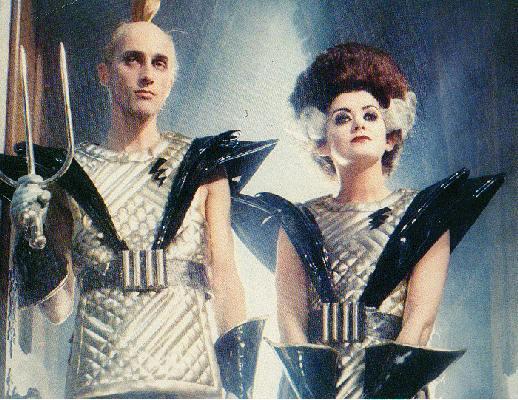
In the midst of this dream-like pseudo-orgy, Magenta and Riff Raff violently storm into the room. Dressed in other-worldly attire (yet gender-neutral), Riff Raff is holding a pitchfork-like weapon (American Gothic, of course), and threatens Frank-N-Furter and the group. “Your lifestyle is too extreme,” Riff Raff scolds, and says he’s subverting the power and will now be the master. For all of this time, Riff Raff and Magenta have been the “help,” and saw the need for an uprising. This also supports the subversive power roles within the film. Also worth noting is that Riff Raff and Magenta are lovers and brother and sister (the American Gothic painting is said to feature a brother and sister or father and daughter, not a husband and wife like many viewers imagine). Relationships, and our expectations and discomfort levels throughout, are meant to be examined.
Riff Raff and Magenta appear again as a futuristic American Gothic; his laser pitchfork will kill those whose “lifestyle” is too extreme.
Riff Raff proceeds to kill Columbia and Frank-N-Furter with his laser pitchfork. Rocky is more difficult to kill, and while he cries and mourns over Frank-N-Furter, he throws him on his back and tries to climb the RKO radio tower on stage. Frank-N-Furter so badly wanted to feel like Fay Wray in his life, and he finally got to after he died. However, Rocky’s plan doesn’t work and the two fall backward into the pool, buried in the very source of life.
The midwestern, puritanical values that American Gothic seems to represent so well win at the end of the film, and quite literally kill difference and sexual and gender subversion. While Riff Raff and Magenta go back to their home planet Transsexual, in the galaxy of Transylvania, Brad, Janet and Dr. Scott are left on the cold ground, crawling and writhing in their fishnets.
The narrator closes the film with the words: “And crawling, on the planet’s face, some insects, called the human race. Lost in time, and lost in space… and meaning.”
We are, the narrator suggests, quite meaningless in our earthly struggles. We blindly grasp on to expectations and norms, whether it be social constructs, gender or sexuality, and if we wander outside of those norms it will very well ruin us because of the deeply ingrained expectations we have in regard to these issues of morality.
Of course, we aren’t supposed to walk away from a midnight showing of The Rocky Horror Picture Show feeling utterly meaningless. O’Brien himself self-identifies as transgender, and has been outspoken about how society should not “dictate” gender roles. He said in a recent interview, “If society allowed you to grow up feeling it was normal to be what you are, there wouldn’t be a problem. I don’t think the term ‘transvestite’ or ‘transsexual’ would exist: you’d just be another human being.” He also has said, in terms of Rocky Horror’s significance, “Well in our western world, England, Australia and the United States etc, there are still strongholds of dinosaur thinking. But, you know, I am a trans myself and I know it’s easier for me now. I can be wherever I want, whatever I want and however I want. And I suppose to some extent, a very small extent, my attitudes in Rocky Horror have helped make the climate a little warmer for people who have been marginalised, so that’s definitely not a bad thing.”
No it’s not. And for all its campy fun, great music and dance moves (and how ironic that the Time Warp lives on at wedding receptions across America), The Rocky Horror Picture Show also provides forceful commentary on religion, gender roles, sexual agency, control and the foreboding power that the pitchfork of puritanism holds over us all still.

Women and Gender in Musicals Week: ‘Singin’ In the Rain’

This is a guest review by Deirdre Crimmins.  

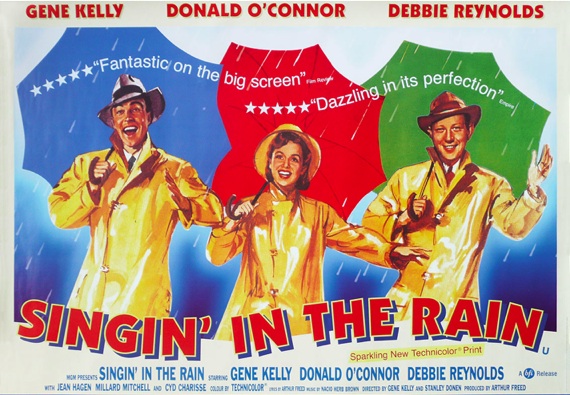
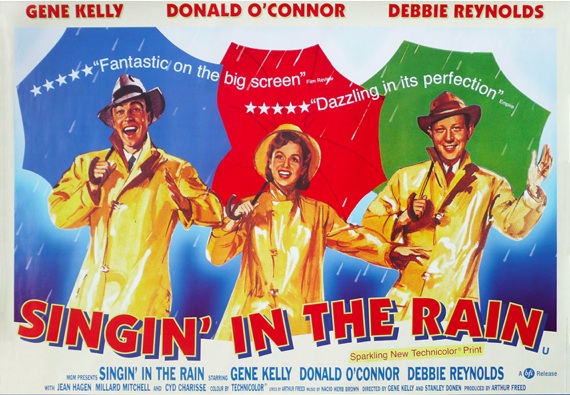
Singin’ In The Rain (dir. Stanley Donan & Gene Kelly)

Though my first love in cinema will always be horror films, I have such an affection for musicals. The glitzy costumes. The aggressively perky and optimistic characters. The song and dance that always seems spontaneous, and from the heart. This odd, and utterly fabricated world, is always both the complete antithesis, and the perfect compliment to the grimy underbelly of film in which I typically dwell. In fact, you will even find an umbrella just for Gene Kelly nestled in my tattoos amongst the zombies and vampires.

While the genre can whisk you away to foreign lands, and domestic bliss, it is also historically problematic when it comes it its representations of women, and gender in general. Though the men are singing and dancing, they are always men’s men, expressing their gender through ruggedness and emotional unavailability. The women are often window dressing, and pawns in the plot, rather than autonomous people who have actual emotions and ambitions. Singin’ In The Rain suffers from some of the same issues that many musicals have with their treatment of genders, but it does have a surprisingly progressive character as well.

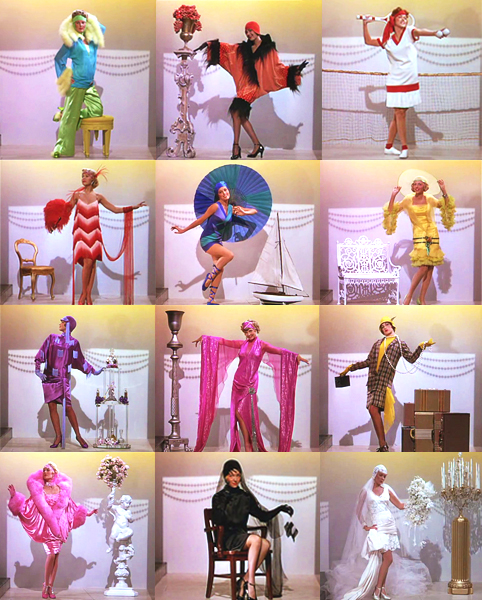
First, we must cover the unfortunate representation of women in the film. Even within the context of a film released in 1952, but portraying the invention of the talking pictures in 1927, it has some nearly inexcusable moments. The worst of which is the “Beautiful Girls” number. The title of this song, crooned by a matinee idol, is just the beginning of my issues with it. The song follows a man describing all of the latest fashions for a modern woman as we see each of these outfits modeled by woman in dioramas to showcase the fashion as it would be worn in the world. Each of the women is frozen in place, to mimic a lifeless, soulless, mannequin, with varying degrees of success in not fidgeting. This transformation from people to objects is enough to put many people into a gender misrepresentation-spin, but my issues with the sequence does not stop there. The culmination of this sequence is when the modern “girl’s” life hits its highest point: the wedding dress. The music soars, and it is clear that all of her outfits and activities have built towards this final costume. When this gown is revealed all of the women come to life, and then surround the singer to frame him as he belts out those last lyrics. Clearly this sequence in particular is communicating the end all, be all of a woman’s life is her wedding. After that there is no more soaring musical numbers, and no more fancy outfits to be had. While this sequence does have major problems ideologically, it is unfortunately not too far from how women are portrayed today as well. If you browse any modern newsstand you will still see these framed female bodies, each frozen in their own dioramas of life with the perfectly corresponding outfit. You will also see the great white wedding dress being sold as the most important object a woman will ever buy. This is why I hesitate to be too critical of the film–we are not too far from these representations. It by no means validates these portrayals, but it does put them in perspective. 

Somehow, in the sea of women (all of them far past the age of being called “girl), swaying next to the crooner is our heroine, Kathy Selden (Debbie Reynolds). Kathy is by far one of my favorite, and the best characterized, women in musicals of this era.

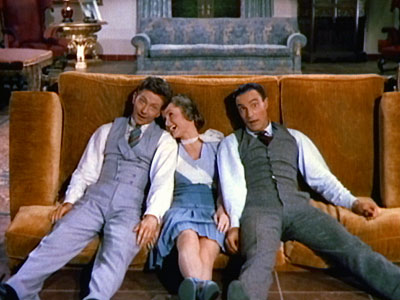
We first meet Kathy when Don Lockwood (Gene Kelly) jumps in to her car to escape a throng of overzealous fans. With Kathy driving herself we instantly associate her with independence. And unlike the pursing fans, Kathy can act logically and contain herself.

Inevitably Kathy and Don fall in love, and spend the rest of film ensuring that they are able to stay together while growing their careers.

The thing that I find unique about Kathy’s character is that she is so balanced. She is never a caricature. She is able to keep up with Don and his buddy Cosmo (Donald O’Connor), but she never veers into becoming “one of the guys” by sacrificing her femininity just to match them in comedic timing. She also dances and sings along with them, but never as a partner who is put there to make Don look better. And it seems no matter what else is thrown at her, she remains herself. Being so self aware and content is not always shown for characters in musicals. Frequently the women are shown as aggressive career women who sacrifice themselves for their careers (Majorie Reynolds in Holiday Inn) or women who are put there just to be romanced by the main character. Kathy is strong enough to not only know who she is, but also can be true to herself and pursue both her personal life and her career. 

It is this intersection of career and love which makes the final scene in the film heart wrenching. At a film premier Kathy is called upon to continue providing the voice for the shrieking silent film star Lina (Jean Hagen), at the expense of her own burgeoning career. Singing for Lina again would mean giving up any hope for singing herself, but both the head of the studio and Don are threatening her with ending her career if she refuses. She begrudgingly agrees to help them, but tells Don that she can’t love him if he asks her to sacrifice her career for his. Though their love is so strong, Kathy knows that what Don is asking her to do is selfish, and goes against what her desires are. She is clearly pained by the decision, which is refreshing to see. She wants both love and career, and knows that she should not be forced to choose between the two. In the end, Don and Cosmo expose Lina for what she is, and Kathy’s career and love life are saved. I have no objections to the fact that Kathy is saved by the men of the film. Conversely, I celebrate that Don needed to find a way to save Kathy’s career in order to win her back. He could have just let her run away, and then attempt to woo her back after the fact, but in order to win her heart again he needed to prove to her that he took her career as seriously as his own. Had he not prioritized her career, their relationship would be ultimately doomed.

With Kathy’s level-headed portrayal in Singin’ In The Rain it is easy for me to long for other women characters in modern film to be like her. It is her self-assuredness, and strength without stubbornness that make her believable and admirable. And any woman who can effortlessly keep up with Gene Kelly should be considered heroic.
———-

Deirdre Crimmins lives in Boston with her husband and two black cats. She wrote her Master’s thesis on George Romero and works too much.

‘The Nightmare Before Christmas’

This review by Jessica Critcher previously appeared at Bitch Flicks as part of our series on Animated Children’s Films.


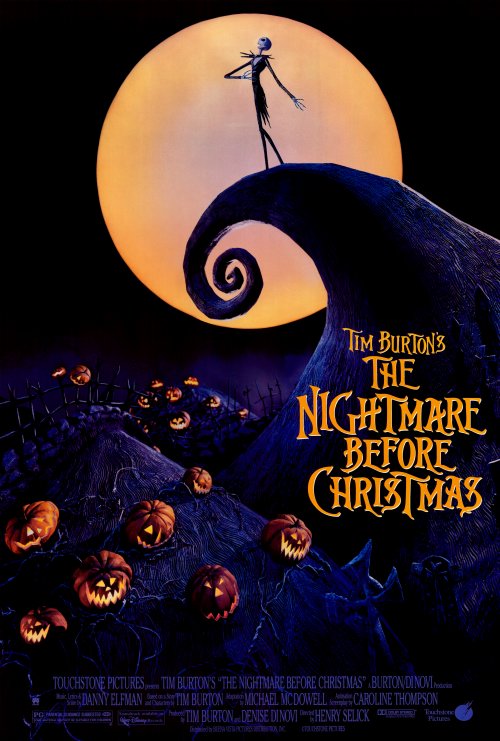
The Nightmare Before Christmas (1993)


This Halloween my husband and I stayed in and cuddled up with Funfetti cupcakes and a movie. We capped off our week-long 90’s Halloween movie marathon with a favorite from my childhood, The Nightmare Before Christmas. I’ve probably seen this film a hundred times. I know all of the songs by heart. I remember watching it on VHS when it first came out, which is making me feel increasingly old. But as is the case with several things from my childhood, some of the nostalgia wears thin when subjected to critical analysis.


For one thing, as I would love to describe to my five-year-old self, the film doesn’t pass the Bechdel test. To refresh your memory, passing the Bechdel test means a film has to have two female characters (with names) who talk to each other about something besides men. That’s it, and yet even this very basic requirement is usually too much for Hollywood to handle. Sally the rag doll and Shock, the witch trick-or-treater, only talk to men. According to Wikipedia, the two witches aren’t given names in the film, only later in a video game. But even without the name part, they only talk to and about Jack. This sends the message to boys and girls alike that female characters do not have anything substantial to contribute to the dialogue or the plot of the film. Girls and women do not, apparently, have anything interesting or relevant to say to one another, and children internalize that very deeply. While this was probably unintentional, the effect is still the same.


Shock
Maybe you’re thinking that’s a bit harsh. After all, the named female characters do seem to have quite a bit of agency. Shock is frustrated with her “dumb” cohorts and seems to be the brains of the outfit. She is quick to point out flaws in their plans and ultimately decides the best method to kidnap Santa Claus. But her development as a character ends with that scene. Shock is a naughty child motivated by nothing apart from her desire to do mischief. While there is nothing wrong with this type of character per se, there is something wrong with the fact that she represents half of the named female cast. And, while Shock is admittedly fun, I feel she does not do justice to Catherine O’Hara’s talent.


This brings me to Sally, also voiced by O’Hara. On the surface, Sally is the perfect heroine. She is constantly outsmarting her doddering caretaker, Doctor Finklestein. She repeatedly slips “deadly nightshade” into his food, putting him to sleep so she can wander free. Her knowledge of herbs and potions is a serious inspiration to Jack in his quest for the meaning of Christmas. He even asks her to make his “Sandy Claws” suit, because she is the only one “clever enough” to do it. She has the foresight to know his plan will be a disaster, so she tries to stop Christmas with fog juice. Then, she rushes to the aid of Santa Claus, leading him to tell Jack, “The next time you get the urge to take over someone else’s holiday, I’d listen to her! She’s the only one who makes any sense around this insane asylum!” Jack eventually realizes that he was a fool not to listen to Sally, or notice her affection for him.


Sally
So, my five-year-old self loved Sally mostly because she is smart and resourceful. But Sally isn’t defined by her intelligence. She is defined by her relationships to the men in the story. Five-year-old me never bothered to question why she was the property of her creepy father in the first place. And while Jack is motivated by his role in the community and a quest for self-discovery, Sally is only driven by her desire to be with Jack. After Doctor Finklestein declares Sally to be too much trouble, he sets about building a new female companion who won’t disagree with him or run away. Sally’s world, which revolves around being with Jack and taking care of him, is at peace when he finally notices her and wants to be with her.


I still like the film. It gets me feeling all fuzzy inside and it serves the double purpose of celebrating Halloween and getting me amped up for Christmas. But I’m not five anymore. We live in a very complicated world where many changes need to take place, and girls and boys need to see these changes in the media they consume. Maybe someday Tim Burton could revamp the film and have Sally take over as mayor of Halloween Town (because seriously, that guy is an incompetent idiot). Maybe Shock could apprentice under the two witches and learn a useful trade to put her wits to better use. Maybe somewhere in Halloween Town, two women could talk to each other about something—anything—and the town could join us all in the 21st century. That sounds more like a Halloween classic I would want children to see.

———-


Jessica Critcher loves to write about feminism and gender issues, and she is a regular contributor to Gender Focus. While she loves living in Boston, she often misses Honolulu, where she earned her bachelor’s degree in English (and forgot that there was such a thing as snow). 


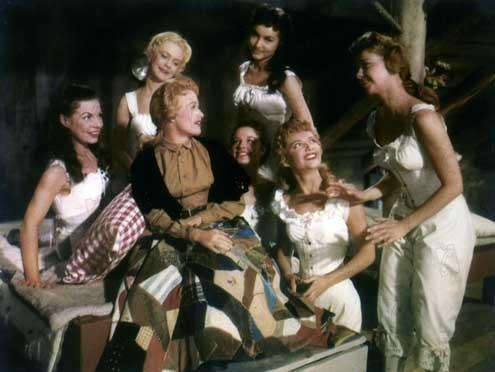
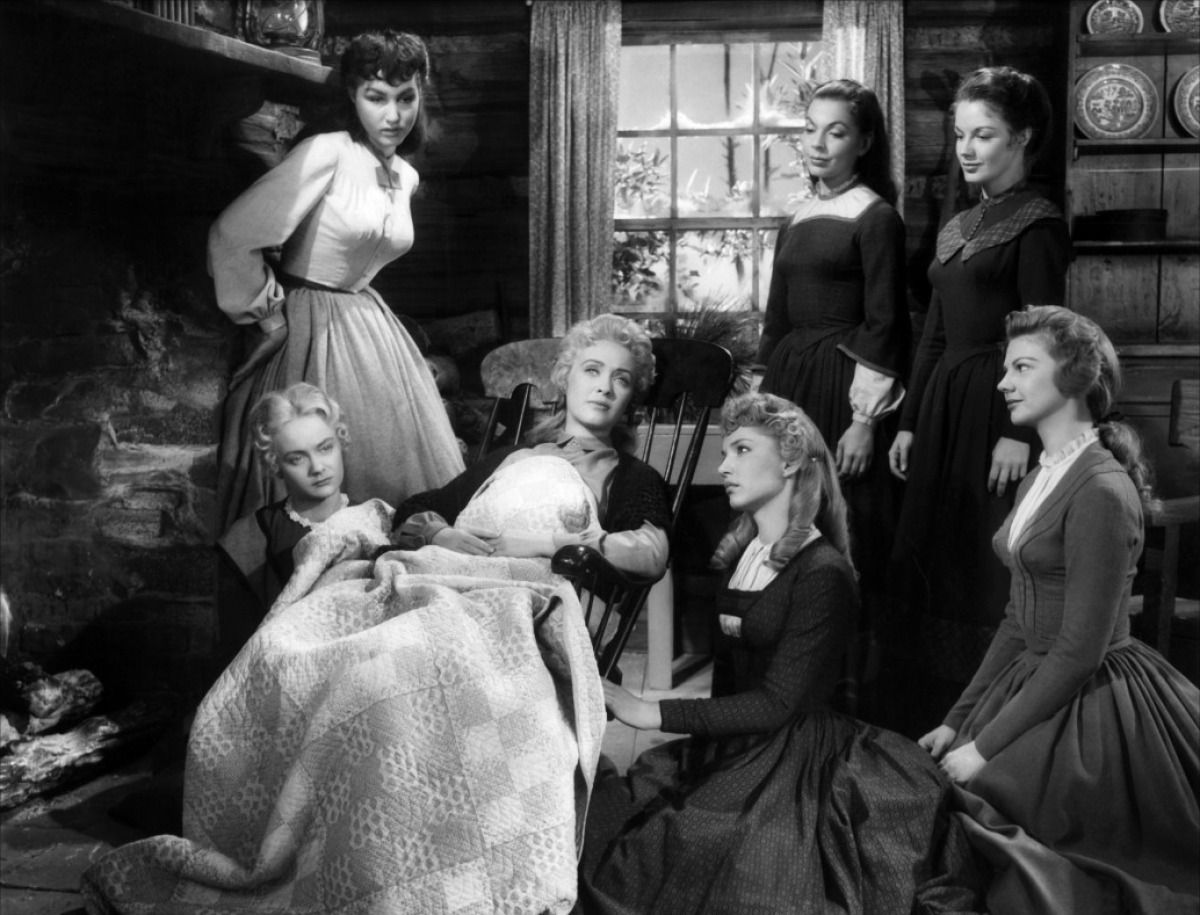
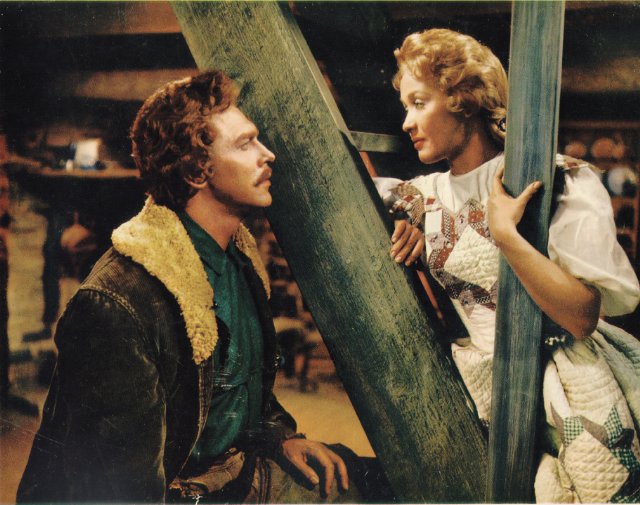
Women and Gender in Musicals Week: Bros Before Hoes, or How Kidnapping Makes for Great Dance Numbers: on ‘Seven Brides for Seven Brothers’

This is a guest review by Jessica Freeman-Slade
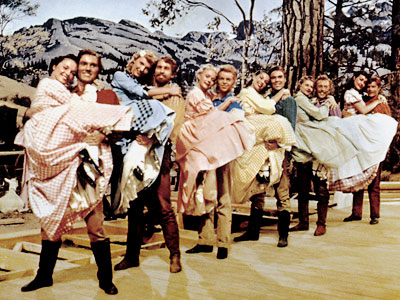
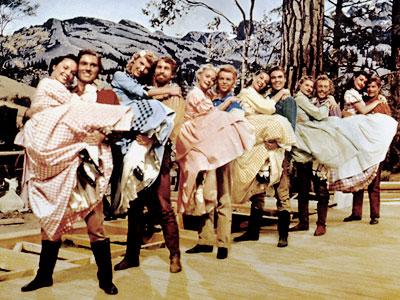
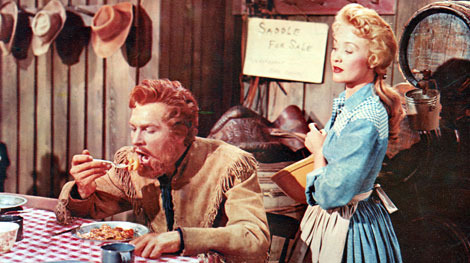
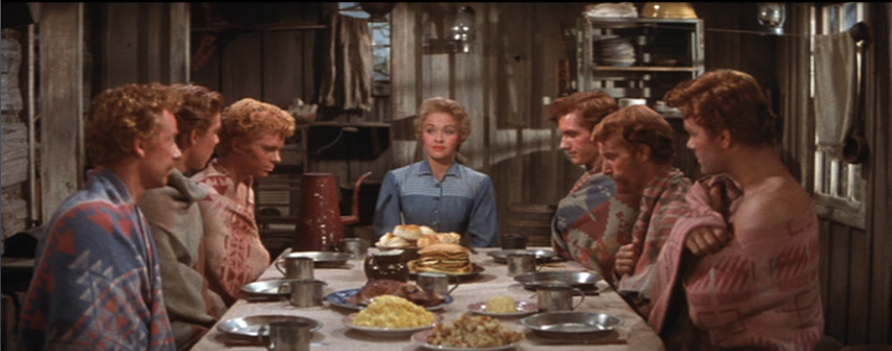
When Bitch Flicks first put out the call for a review of the movie musical landscape, this was the first movie that came to mind. It has all the elements of a great movie musical: the hummable ditties of Kiss Me, Kate, the buoyant dance sequences of West Side Story, and the Technicolor treatment of the great Pioneer experience of Oklahoma! But when you add blatant misogyny, barn-raisings and male bravado, and taking women by force as the ultimate romantic gesture, you get Seven Brides for Seven Brothers. The 1954 movie, directed by Stanley Donen (Singin’ in the Rain) with music by Saul Chaplin and Gene de Paul and lyrics by Johnny Mercer, with choreography from the great Michael Kidd, is often overlooked when considering the movie musical genre. There are, admittedly, many musicals that enjoy examining the battle of the sexes, and most old-school romantic comedies start with a Dude™ and a Chick™ squabbling over their differences. But very few of those ever let the man be so backwards that he equates courtship and conquering, or has a woman responsible for civilizing and subduing men’s worst impulses. It’s like Lysistrata and The Hangover got together and held a barn dance–a big, beautiful Crayola-colored extravaganza.

In 1821, Oregon Territory, Adam Pontipee (the impossibly rugged Howard Keel) is looking to fetch himself a wife—not for the purposes of high-falutin’ romance, family, and lifelong happiness, no. “I’d like best a widow woman that ain’t afraid to work,” he says, at the general store, where he’d just as quickly pick up a mate as he would 25 pounds of chewing tobacco. “There’s seven of us men, me and my six brothers. Place is like a pigsty, and the food tastes worse….” Adam is out for marriage in the purest economical sense: in this new territory, there are ten men for every woman, and so Adam’s priority is availability, not compatibility.


“Bless Yo’ Beautiful Hide,” he booms, and it’s not until he sees Millie (Jane Powell, strong of axe and soft of heart) that he knows he can go out and buy with gusto. She makes great stew, so that’s half the battle, and she is used to tending men in a boarding house, so he considers her the perfect bride.

He offers marriage, she accepts (as she’s fallen for him on first sight), and off they go in his wagon back to his cabin in the mountains, where she meets his six red-bearded, bullish brothers. Millie bristles at caring for her brother-in-laws without some control, and so she withholds a hot breakfast and newly washed clothes until they promise to shave and settle down like gentleman. It seems that what this house has longed for is not an extra hand in the washroom, but a gentle and firm guide to proper etiquette.

What Millie discovers, as she gets to know these boys, is that they long to go out and snatch up girls of their own—which they do, in spectacular fashion, at the town’s barn raising. The brothers Pontipee, all in primary colors, demonstrate through dazzling choreography how dashing and desirable they can be, and sweep the girls off their feet. Just watch how leapfrogging, arm wrestling, log-rolling, and balletic machismo pays off. (This is the most spectacular sequence of the movie, and it’s impossible to watch without a slaphappy grin. Jacques d’Amboise and a very young Russ Tamblyn steal the show as Ephraim and Gideon, defying gravity with every move.)

But of course, the boys get into a fistfight with the girls’ other suitors, and soon they’re back on the farm, suffering through the early days of a long winter. It’s lovely to see these men pining, something so rarely explored outside of the musical theater realm, while maintaining their rugged outdoorsmen personas. (This is, of course, expressed through the delicate art of ax ballet.)
The enlivening force of Seven Brides is male longing, and it makes for great theater. The Pontipee brothers have lived hard, but falling in love is what softens and civilizes them. But all that civilization is for nothing when Adam, modern man that he is, devises a brilliant scheme, pulled straight out of Millie’s copy of Plutarch’s Lives. Why not do like the Romans did with the Sabine women?
And then comes the merriest song about rape ever.
The brothers are shaken out of their depression by the chance to reassert their manhood, and off they go to town, snatching up their girls from backyards and front porches and carrying them off, squealing and crying. An avalanche falls as they are passing through the mountains, preventing the angry families and boyfriends from reaching the Pontipees. Millie, horrified to discover what the boys have done, reasserts her right over the house (the one territory that has become completely hers to control) and sends the boys to the barn for the entire winter, taking the girls inside and keeping them under close watch.

This ends up being a bit of a tease, since the girls get their own dance (about marriage, natch), and Millie discovers she’s pregnant. And though the girls start warming up to the brothers (peeking through windows, running around in their skivvies), the snow that blocks the pass never melts.

Once it does, we get lovely sequences of the girls and boys frolicking together with baby farm animals (no, this movie is not subtle), and Adam stays holed up in his hunting cabin, resentful of Millie’s banishment. But once he learns he has a baby—and at that, a baby girl—Adam breaks down and returns home to be the man he’s supposed to be. Though their families come to retrieve them, and the brothers are ready to set them free, the girls refuse to leave, claiming the newborn as their own. For better or for worse, we get a group marriage of a finale, and a whole bunch of color-coordinated couples once more.
So what do we make of such a strangely backwards story of frontier courtship? For one, that men, without the guiding impulses of a good woman, will behave like savages. Whether they demonstrate that savagery at the breakfast table or at a barn-raising, it’s clear that the Pontipee brothers have impulse control issues, and they just can’t help themselves. Their needs—for food, for dominance, for love—trump almost everything reasonable and refined, and they have been taught, as pioneers of this new and uncharted territory, to take when they can. Though Adam is charming and sexy as hell—seriously, George Clooney and Howard Keel could have a smirk-off—he treats Millie like a servant at best, and property at worst. “It wouldn’t hurt you to learn some manners, too.” she remarks at the barn-raising. “What for?” he counters. “I already got me a wife.”

You can argue that Millie should’ve seen this unfair exchange coming when Adam first walked into her boarding house—and she had no real incentive to get married. Gainfully employed, resourceful, well-liked and respected by her community (especially by the women), Millie could’ve easily stayed on her own in this new country. But she, too, is softened by love, and so she is the one that understands the brothers’ plight, not Adam. You can fault the captured girls a little less than Millie, at least initially—but they too get their attic ballet-in-bloomers about the dream of summer weddings. We are expected, no matter if our house or barn needs tending, to wish for a pairing-off, and the frontier certainly looks less terrifying if you are facing it alone.

But ultimately this is a movie that asks where male compassion comes from—and the last few scenes seem to conclude that it’s when sexual politics are made personal. Holding his newborn baby girl in his arms for the first time, Adam says, “I got to thinking up at the cabin, about the baby. How I’d feel if someone came creeping in and carried her off. I’d string him up the nearest tree. I’d shoot him down as I would a thieving fox.” It’s when Adam has to think about another man out there, treating his daughter like she was property just waiting to be taken, to stir him to a nobler state of mind. Just imagine if a Seven Brides scenario applied to every zealot or backwards politician who questioned a woman’s right to her own body and state of security, if all their wives and girlfriends were subjected to sexual scrutiny. We’ve be living in a very different universe—and this ain’t even Oregon territory.
Seven Brides for Seven Brothers can certainly leave you feeling ambivalent, and possibly wondering whether this lovely closing marriage sequence is a symptom of Stockholm syndrome. But what it mostly offers—spectacular dance sequences, memorable songs, and an interesting take on what it means to be “civilized” by love—makes for a rollicking good musical, and an underappreciated classic.
———-
Jessica Freeman-Slade is a writer who has written reviews for The Rumpus, The Millions, The TK Review, The Los Angeles Review of Books, and Specter Magazine, among others. She works at Random House as a cookbook editor, and lives in Morningside Heights.
    

Women and Gender in Musicals Week: The Funny Face Always Gets the Big Number: on ‘Funny Girl’

This is a guest review by Jessica Freeman-Slade.

I imagine that at least once a day somewhere in America, some little Jewish girl (or girls with big noses, close-set eyes, skinny legs, and less than model looks) has a benevolent mother, sister, or aunt who pops in a DVD and tells her to sit down. She squirms a bit, but her mom says “Just trust me.” And then up on the screen pops a wildly unself-conscious, funny, brazenly self-confident woman with a voice to stop traffic. Even though she’s seen Glee and watched Lea Michele emote her way through many of these songs, nothing compares to this other creature, the one and only Barbra Streisand, in her debut film, the incomparable Funny Girl.

The 1968 movie is legendary, almost impossible to remake due to Streisand’s unforgettable turn (recreating her role from the 1964 stage musical), and with music by Jule Styne and lyrics by Bob Merrill. It’s based on the true story of 1920s entertainer Fanny Brice, one of the major attractions in the golden age of Florenz Ziegfeld’s Follies. Fanny knows she’s a star, but is constantly told that her unconventional looks will keep her off the stage (or as her neighbor puts it, “If a girl’s incidentals/are no bigger than two lentils/then to me it doesn’t spell success.”) But Fanny stands out, because she’s hilariously funny and has a golden voice, and so fame, like anyone who watches the movie, finds her irresistible. What the movie has at its core, is a message about female self-confidence, about self-reliance, about how the world reacts to strong women, and how, ultimately it’s all about chutzpah. Which Fanny (and Streisand) has in spades.

Streisand had only appeared in one Broadway show before then, a small but memorable part in I Can Get It for You Wholesale, and she was far from the only candidate to play Fanny. When Jule Styne consulted Steven Sondheim about the development of the show, Sondheim had major qualms about potentially casting a marquee star like Mary Martin. “I don’t want to do the life of Fanny Brice with Mary Martin. She’s not Jewish,” he said. “You need someone ethnic for the part.” And Streisand was ethnic, especially when put up against a bevy of chorus girls that looked like they’d stepped straight out of Beach Blanket Bingo. The other contenders before her included Anne Bancroft, Martin, and Carol Burnett, but Streisand took the ugly duckling premise and turned it on its head every time she sang. (Fanny’s first line to a skeptical producer says it all: “Suppose all you ever had for breakfast was onion rolls. Then one day, in walks… a bagel! You’d say, ‘Ugh, what’s that?’ Until you tried it! That’s my problem—I’m a bagel on a plate full of onion rolls.”) And she stood out among the other Broadway stars at the time, in the same way Fanny did in her day.

Of course, therein you meet the first problem with Funny Girl—that to buy it, you have to believe that Barbara Streisand is ugly.

Yes, I know. You have to believe that this girl…


…is considered unattractive, uncastable, and undesirable.

The real Brice had big gummy features–a clown’s face. And though Streisand looks gorgeous in every shot, even in Fanny’s pre-fame days (check out those amazing nails), she doesn’t lose her undeniably ethnic look. She stands out, especially when surrounded by all the Aryan thin-nosed beauties of the Ziegfeld follies. And so the premise of Funny Girl, of almost every joke, rests on whether you believe that Fanny, despite her face, earns every drop of success because of her extraordinary talent. Each joke has the same structure: someone throws a derogatory comment Fanny’s way. Fanny volleys, with wit and acid and intelligence. The movie provides a model to every girl out there (no matter how attractive she is) about how to deal with a world that doubts you because of your appearance, because of your difference. When everyone’s a critic, especially in the entertainment industry, and you know you’re something special, they will have to accept you as you are, and fall in love with you for what you bring to the performance. Just watch Fanny’s first performance for a theater, and how she bends the audience to her will:

By the time she’s backstage, she’s won over the crowd…and within it, her future love interest, the dazzlingly handsome Nicky Arnstein (Omar Sharif.)

Then the joke changes—how could a guy as perfect and beautiful as Arnstein fall for a gummy-faced girl like Fanny? Because he knows what the rest of the world doesn’t—that she has a spark, she stands out, and that’s a sign she’s going to be a star. But the movie, as it traces Fanny’s rise to stardom, constantly returns to the presumably unassailable fact that she can’t hold Nick, or anything, in place simply by being female and beautiful. And so the movie becomes a commentary on what an unconventional woman does to keep herself successful in a world that doesn’t immediately recognize her talent.

Fanny, blessedly, has little time for people who insist she behave conventionally. Even when she lands the dream job, as a featured player among the glittering chorines of Ziegfeld’s follies, she balks at behaving like any other starlet. When Ziegfeld (Walter Pidgeon) puts her in the star spot in the closing number, she says, “I can’t Fanny: I can’t sing words like: “I am the beautiful reflection of my love’s affection.” I mean… Well, it’s embarrassing… If I come out opening night…telling the audience how beautiful I am, I’ll be back at [my first job] before the curtain comes down.” When he refuses to do so, Fanny concedes, but finds her own special twist for the number:

And of course it pays off—Fanny becomes a huge star, but it doesn’t change the kinds of jokes thrown our way. When Nick finally attempts to seduce her, every line of his advance is played for laughs. Pitting Nick’s debonair style against Fanny’s neurotic dodging is meant to underline just how unlikely this pairing is…and to make the viewer as skeptical as Fanny.

 Even when Fanny hooks Nick, and even after she gets to sing a ditty about how great it is to be “Sadie, Sadie,” married lady, the story continues to treat Fanny as a liability. When Nick finally starts showing his shortcomings as a card shark, he is too insecure and prideful to ask Fanny to bail him out. He is thrown into prison, and Fanny gets the news just as she’s heading out of the theater for the night. “You still love him, Miss Brice?” the reporters shout. “The name’s Arnstein,” she replies defiantly. This is a woman who refuses to let her critics define her—even if it means putting the joke on her.

What ultimately carries Fanny, and Funny Girl, as one of the greatest musical comedies ever (and makes Fanny one of the best characters, male or female, ever written for Broadway) is that her weapon is always her strength, her self-reliance, that aforementioned chutzpah. Fanny truly believes that she can do or accomplish anything, including saving her own doomed marriage, if someone just gives her the chance. When she and Nick decide to separate after his release from prison, she is utterly heartbroken. But even in that moment, she pulls herself up and delivers a superb performance, looking more beautiful and elegant than ever. And that’s where the message of Funny Girl really sings out: NOTHING is as radiant as self-confidence.

———-

Jessica Freeman-Slade is a writer who has written reviews for The Rumpus, The Millions, The TK Review, The Los Angeles Review of Books, and Specter Magazine, among others. She works at Random House as a cookbook editor, and lives in Morningside Heights.