Tanya Erzen’s ‘Fanpire’ Blog Tour: Fans of the Twilight Saga

 
This guest post by Tanya Erzen is part of a blog tour to promote the release of her newest book, Fanpire: The Twilight Saga and the Women Who Love It, which you can purchase at the Beacon Press website. Other blogs participating in the tour include Women and Hollywood, Feminism and Religion, Fangtastic Books, and Everyday Sociology.
Even though Breaking Dawn Part 2, the long-awaited final film of the Twilight series, premieres on November 16 in Los Angeles, devoted fans will begin camping out for days and weeks ahead of time. They’ll sleep in tents and shuffle through interminable lines in a grimy parking lot, all for the fleeting glimpse of a Twilight celebrity on the black carpet. After all, this is the age of mundane celebrity: everyone wants to be one and be close to one. Fan sites like the Twilight Lexicon and HisGoldenEyes will roam the premiere, hoping to obtain the coveted interview with stars like Robert Pattinson or Kellan Lutz. In the fan firmament, these sites reign near the top of the hierarchy, where they have access to insider gossip, corporate giveaways, and visits to film sets.
The massive fan demand to be at the film premiere as the Twilight juggernaut reaches its crescendo has prompted Summit Entertainment to almost double the numbers they will accommodate at “fan camp.” Mothers and daughters, groups of girls and contingents of TwilightMoms, traveling from afar to the tent city will feel the elation of being among other captivated fans. After days together, they’ll be bonded to legions of others with the same aspirations, embarking upon a kind of public happiness absent from their daily lives. There have certainly been fan crazes before, but what differentiates the Twilight phenomenon is that its fan base consists almost entirely of women and girls.
Denigrating these female fans as rabid, obsessed and hysterical is a favorite pastime for many media outlets. The specter of hundreds of stargazing women, clamoring for a glimpse of actors, evokes snarky bewilderment among pundits. Descriptions of fans typically include comments about unbridled fanaticism and the ear-piercing shrieks of thousands of girls.
At one Comic-Con, the longstanding convention that is a lure for, mainly, male fans of comics, science fiction, and fantasy, Twilight fans camped out on sidewalks for days to attend the actors’ panel. The invasion of female fans into the Comic-Con stronghold sparked a backlash. A few disgruntled male attendees sported signs that read, “Twilight Ruined Comic-Con,” and one baffled online commentator at Rotten Tomatoes wrote, “Fan boy culture’s hold on the Con was hijacked by a vampire romance, of all things.”
Applying adjectives like “screeching” and “stalking” to female fans, commentators imply that Twilight fans should just get a life. Older women, especially, are a favorite target. They’re “stalker moms,” pitiable addicts, and negligent parents. Details magazine mocked them for reverting back to adolescent folly: “It’s not uncommon to hear them break into unprompted gasps, giggles, and squeals.” The implication is that these women just need to get a life instead of spending all their time obsessing about a frivolous interspecies romance.
It is unsurprising that critics deride a phenomenon that attracts mainly women, to all extents labeling it as an instance of mass hysteria. The misogyny lurking here is obvious. One has to wonder why, for example, equally zealous fantasy-football players or sci-fi geeks, many of whom happen to be male, do not endure the same disdain.
The refrains go something like this: the books are poorly written and riddled with cliches, the people who like them must be dupes of the patriarchy or simply burdened with bad taste. These screeds overlook what makes the series compelling for millions of women and girls. In my time with Twilight fans around the world—from the occasional forum participant and those who watched the films fifty times to the person who corralled her entire office into choosing Team Edward or Team Jacob—I have found they also spoke of how the fanpire transformed their everyday lives, not as mere escapism but as a vehicle for connecting with others and forging new identities beyond that of Mormon mother or ordinary teen.
At conventions and premieres, thousands of girls and women discard their cares about boys and men to bond in aerobics and self-defense classes and dance together at elaborate Twilight-themed vampire balls. Married women in the group TwilightMoms temporarily abandon domestic responsibilities for convivial sleepovers where they simultaneously bemoan the absence of spicy sex and intimacy in their marriages and reassure themselves that heterosexual marriage is the only way to envision their lives. Three generations of families bond with each other over their enchantment with the books, attending book releases, conventions and tours of Forks. None of these fans care if Comic-Con is no longer teeming solely with men wearing alien and superhero costumes, nor do they need or want rescuing from the scorn they receive for their fanaticism.
At the same time the fanpire encompasses authentic ways to belong and connect to others, the ceaseless commercialization of Twilight means that for many fans, ravenous consumption of all things Twilight is the main way to retain their feelings of enchantment. When they begin to feel Post-Saga Depression (PSD), what fans call the blue feeling that descends after finishing the books and realizing there is no actual Edward, there are Edward and Bella Barbie dolls, calendars, video games, graphic novels, and fangs readily available in the vast, bazaar-like atmosphere online or at some conventions. Everything on display at official conventions is based on spinoff marketing, celebrity endorsement, and steering fans to other movies that feature the Twilight actors.
Even while critics continue to disparage the fans, they remain a key concern of Summit and other brands eager to exploit their earnings potential. Tent city is now a Summit-sponsored event, designed to harness fan’s buying power. A fan once described the fanpire as an army storming bookstores, conventions, and movie theaters. Twilight-lovers want the ineffable high to last as long as possible, and the corporate sponsors of these events are certainly delighted to oblige. Creation Entertainment knows that the danger for fans arises when, without another book to read, life begins to feel barren. The swoon-inducing possibility of celebrity proximity and the desire for the next Twilight product sustain fans in the months of drought between a new film or significant fanpire gossip.
Critics scoff at Twilight fans, and then they wonder why Fifty Shades of Grey, originally a smut Twilight fan fiction story, is a national bestseller. It’s time that they began taking the complicated practices and pleasures of female fans seriously. The corporate marketers certainly are.
———-

Tanya Erzen is an associate professor of comparative religious studies at Ohio State University. Her work has appeared in the Nation, the Boston Globe, and the Washington Post. She is the author of Straight to Jesus: Sexual and Christian Conversions in the Ex-Gay Movement, which won the Gustave O. Arlt Award and the Ruth Benedict Prize. She is a recipient of a National Endowment for the Humanities fellowship and a visiting scholar at the Simpson Center for the Humanities at the University of Washington. She lives in Seattle.
Women’s Anger or Women’s Violence in ‘Sons of Anarchy’?

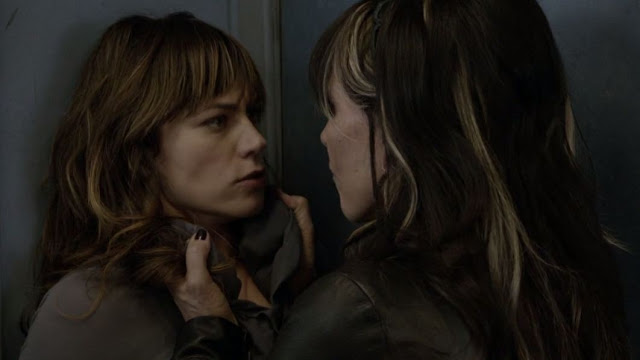
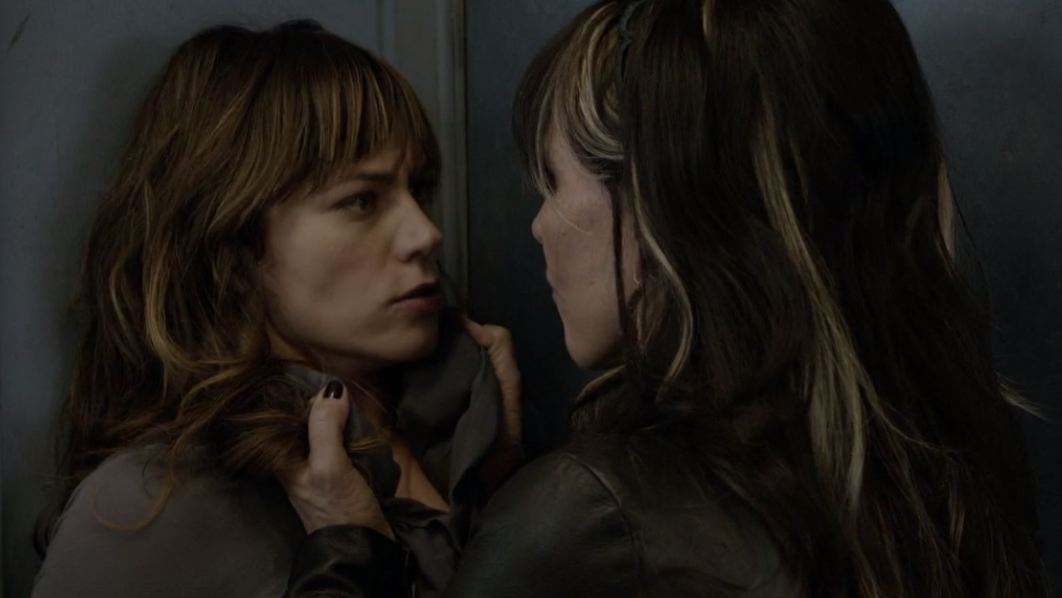
L-R: Tara (Maggie Siff) and Gemma (Katey Sagal) in Sons of Anarchy

In a recent interview, Mark ‘Boone’ Junior, the actor who plays Bobby in Sons of Anarchy, stated that one of the strengths of the show is that it has, “tapped into a lot of women’s anger.”

It’s an interesting point about a show that does have some very angry women, but more so than that, it has some very violent women. Several times a season there’s a pretty physical fight between a few of the women, and not a standard hair-pulling and a few slaps kind of fight either. Gemma “nails some tart from Nevada” with a skateboard, throws around a very peppy Ashley Tisdale, Gemma and Tara beat up Nero’s assistant Carla, Tara shoots up another girls car, punches her boss, and most recently decks Gemma.

While there is often a sexual fantasy aspect associated with most ‘girl fights,’ I would posit that there is very little sexualizing of the Sons of Anarchy women during these moments, rather these fights seem to mirror the more ‘outside of society’ feeling that the male fights have.

Women’s anger is often portrayed as very catty and manipulative, rarely as physical, so in that respect, Sons of Anarchy is unique. I wonder though, are the physical encounters between these women really expressions of anger, or more a demonstration of women’s own brand of violence? 

In order to access the interview, follow this link, scroll down to the section ‘Before the Anarchy’ and click on ‘Bobby.’

Roundup of Feminist Celebs’ Political Videos

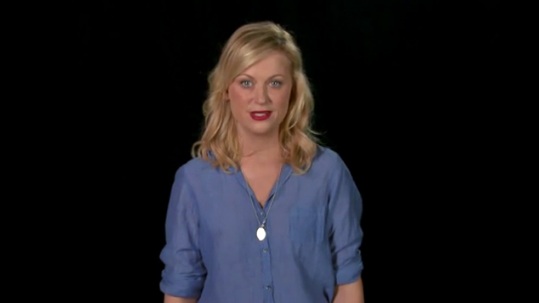
Screenshot of Amy Poehler in Center for Reproductive Rights’ Draw the Line campaign

Election Day is tomorrow, people! So I’m going to chat a bit about politics.

Many assume Hollywood is a liberal nirvana (or I guess a hellhole if you’re a Republican). But that’s not exactly true. Not only do films lack gender equality, they often purport sexist tropes. While many participate in fundraisers or ads for natural disasters or childhood illnesses or breast cancer, most celebrities remain silent when it comes to supposedly controversial human rights issues like abortion and contraception. But not this year! Because of the GOP’s rampant attacks on reproductive rights (gee thanks, GOP!), more celebs are adding their voices to the pro-choice symphony dissenting against these oppressive laws.

Now some people say, “Who the hell cares what celebs think??” Okay, sure. But I care. I care that people with money, visibility and power use their sway to speak out against injustice.

As I’m kind of obsessed with feminist celebs (aren’t we all??), I thought I would post a roundup celebrating some of the awesome videos featuring Hollywood celebs advocating for reproductive rights and women’s equality and speaking out against “legitimate rape” bullshit and discriminatory voter ID laws. So kudos to Amy Poehler, Meryl Streep, Kerry Washington, Tina Fey, Eva Langoria, Joss Whedon, Martha Plimpton, Lena Dunham, Sarah Silverman, Kevin Bacon, Kyra Sedgwick, Audra McDonald, Scarlett Johannson, Tea Leoni, Mary J. Blige, Julianne Moore, Kathy Griffin and Cher for taking an unapologetic stand and speaking up for our rights.
And don’t forget to get out and vote!

Trans* People On TV

I spent my weekend at a conference for transgender people, and it was a little frustrating. If there’s one place in the world you might hope to escape clueless questions, utter ignorance, and the necessity of patiently holding people’s hands through Trans* 101, it’s at a conference by, for, and largely attended by trans* people.
Alas, no such luck.
It’s well past time popular culture assumed the burden of basic education. Pop-culture overthinkers like myself enjoy citing articles that indicate the profound influence of the mass media on public attitudes. The Cosby Show changed the televisual landscape for African-American-centered shows. Will & Grace taught America about The Gays (FACT; Joe Biden says so). Isn’t it time Middle America learned, from its favorite babysitter / best friend / water-cooler-conversation facilitator, that transgender people are human too?
Stupid TV! Be more trans-friendly!
Certainly it’s much, much more likely for pop culture to get it wrong than right. I’ve read queer theory textbooks assigned for class that left much to be desired on the trans* front, and I hardly expect better from the mass media.
Of course, there are some lovely, sensitive, non-rage-inducing portrayals of trans* people to be found in books, film, and TV, but these tend to be fairly obscure. In the mainstream, things are still pretty terrible.
For example.
Apparently there are no actual trans* actors in Hollywood. Apparently a trans woman needs to be portrayed by a cis woman, and a trans man needs to be portrayed by a cis woman, and the films need to focus obsessively on these characters as explicitly trans bodies. We have to see all of the little things a trans person does in order to pass. We have to see crotch shots and/or invest all meaning in bottom surgery. We have to cast an ugly, voyeuristic eye over these bodies – bodies which, lest we forget, in real life belong to cis women: there’s a weird doubling of voyeuristic focus here, on the characters as trans and on the actresses as women, and while on one level we are being invited to leer over these bodies as trans bodies, we are certainly also being invited to leer over these bodies as women’s bodies.
For example.
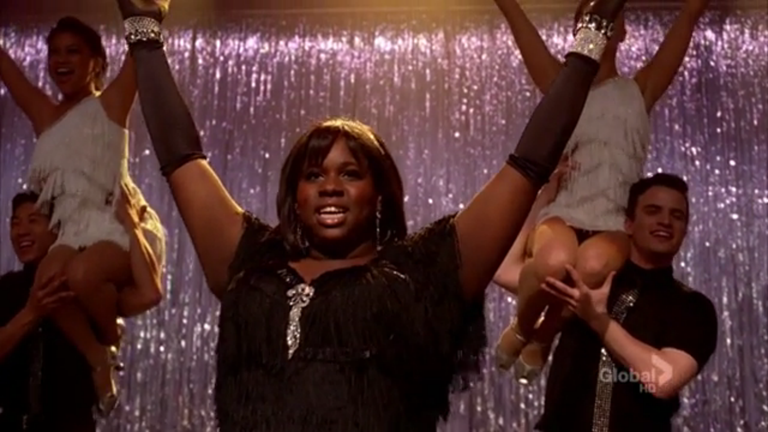
I rage-quit Glee long before the introduction of its trans* character, and so did fully half the Americans who used to tune in on a weekly basis when the show was in what I (for want of a better term) will call its prime. People just aren’t talking about this show the way they used to. From what I can make out, the portrayal of the trans* character has been reasonably well-received; but, as always with Glee, things could spiral horrendously out of control at any moment. An unholy chimera of offensively over-the-top jokes and earnest After School Specials, and never remotely consistent with its tone or characterization, Glee would not have been the ideal venue for a realistic depiction of a trans* person even at the zenith of its cultural impact.
(And now I have wasted an hour of my life reading up on recent developments in this stupid show, and I have the TV equivalent of a caffeine headache.)
Help me. Friends don’t let friends relapse.
 For example.
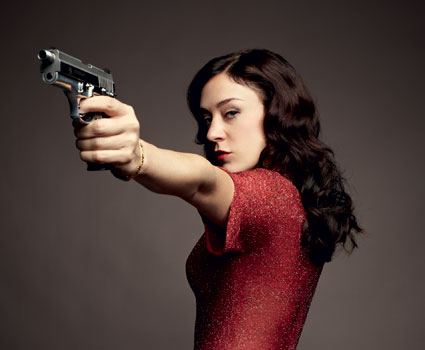
A friend recommended the show Hit & Miss, starring Chloe Sevigny as a trans woman who is an assassin. But I’d already seen this interview, and I knew there was no way I could watch this show without spontaneously combusting from rage. I mean, really:
Whenever Mia is shown changing or in the shower, there are quick glimpses to remind viewers that a crucial part of her is still male. Hence the prosthetic, which took two hours to attach. 
 “It was horrifying,” says Sevigny. “I cried every time they put it on me. I’ve always been very comfortable being a girl, so it was hard to wrap my head around the fact that someone could feel so uncomfortable in their own skin.”

Everything about that just makes me so incredibly furious. The fact that the show’s producers thought it was necessary to include those “quick glimpses.” The journalist’s phallocentrism and essentialism. Just the whole fact that Chloe Sevigny is appropriating and trivializing the experience of gender dysphoria for the sake of some TV show. I’m so happy that all those times I sobbed in the shower because I hate my body, all those hours spent wishing myself away into some non-physical realm, the absolutely inescapable feeling of discomfort and discontent in my own skin – I’m so happy that all of that was able to be comprehended by comfortably cisgender Chloe Sevigny when she donned her prosthetic penis to play a transsexual assassin in a TV show.
Things that are retroactively ruined because I can’t see Chloe Sevigny without ragesploding: American Psycho, Boys Don’t Cry, that one episode of Louie
Some things are getting better. Lana Wachowski is pretty high-profile at the moment; I could personally take or leave her films, but as a human being she is perfection, and Hollywood’s first mainstream trans director is a BFD. And maybe Glee is going to do a really excellent job with its trans* character, and the six million suckers who still watch it will be vindicated.
But I don’t think I’m going to run out of things to be angry about any time soon.
Max Thornton blogs at Gay Christian Geek, and is slowly learning to twitter at @RainicornMax.

Bitch Flicks’ Weekly Picks

Amber‘s Picks:

The Science of Racism: Radiolab’s Treatment of the Hmong Experience by Kao Kalia Yang via Hypen Magazine

Oscar 2012: Best Actress, Old and Young by Jackrabbit Slim via Gone Elsewhere

Parody piece is more feminist than Rolling Stone‘s actual women’s issue via About-Face

Lana Wachowski Wins Visibility Award From HRC by Monica Castillo via Bitch

Feminism Friday: Sexism, Misogyny and Dictionaries by tigtog via Finally, A Feminism 101 Blog


On the production of heterotopia, and other spaces, in and around lesbian and gay film festivals by Ger Zielinski via Jump Cut


Megan‘s Picks:

Election Coverage Falls Short on “Women’s Issues” by Kristal Brent Zook via Women’s Media Center

Feminist Guide to Horror Movies, Part 1: Daddy Knows Best; Part 2: It’s Not Just About Vampires; Part 3: Worlds Without Patriarchy by Holly L. Derr via Ms. Magazine Blog

Beyond Clarice: Underrated Horror Heroines by Sarah Marshall via The Hairpin

Is Skyfall a Less Sexist Bond Film? by Jane Martinston via The Guardian

A Personal Take on the Nina Simone Biopic’s Casting Troubles by Akiba Solomon via Colorlines

The manicured mercenaries with Sly in their sights: Move over, macho men. Here come the ExpendaBelles by Francesca Steele via The Independent

Book Excerpt We Killed: The Rise of Women in Comedy: A Very Oral History by Yael Kohen via Women and Hollywood

TV’s Disappointing Gay Dads by Alysia Abbott via The Atlantic

Beth Ditto: “I Feel Sorry for People Who’ve Had Skinny Privilege and Then Have It Taken Away from Them” via Jezebel

Women in Film Expands Outreach with Speed Mentoring; Top Ten Pieces of Advice by Sophia Savage via Thompson on Hollywood 

How Rap Can Help End Rape Culture by Michael P. Jeffries The Atlantic 

Call the Midwife: What Nuns Know About Reproductive Justice by Jill Moffett via Bitch Magazine Blog

Quote of the Day: I Wanted to Show People That Pregnancy is Not a Disability, And a Pregnant Lady Can Be in a Position of Power and Crazy Shit Won’t Happen – Diablo Cody by Melissa Silverstein via Women and Hollywood

Kerry Washington, Star of ABC’s ‘Scandal,’ on Why She’s Voting for Barack Obama by Kerry Washington via The Daily Beast

Bond Girls, Action Heroes, Sexuality and Power by Alyssa Rosenberg via ThinkProgress


What have you been reading this week?? Tell us in the comments!

How ‘Vamps’ Showcases the Importance of Women Friendships

I’m reposting my review of Vampswhich previously appeared at Bitch Flicks on May 3, 2012in honor of Vamps opening in theaters (in limited release) tonight and releasing on DVD November 12.
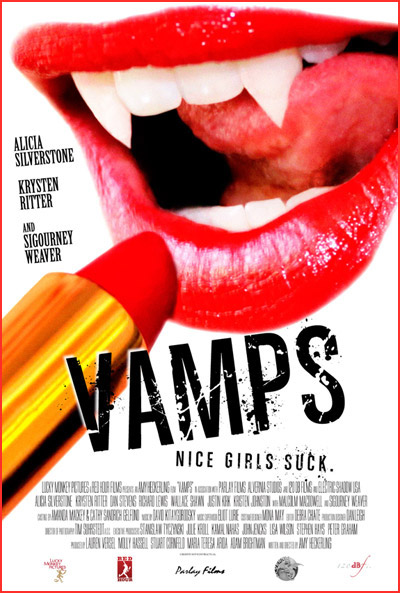
Movie poster for Vamps
Vamps, the new indie film directed by Amy Heckerling and starring Alicia Silverstone and Krysten Ritter (the upcoming star of the TV show Don’t Trust the B—- in Apartment 23) takes the vampire genre and turns it into a fun, feminist celebration of youth culture and female friendship. The film is part spoof of the recent onslaught of vampire fare, part romantic comedy, part buddy movie—with women!—part history documentary, with some astute political commentary thrown in, and, ultimately, a film about aging, which pays particular attention to the struggles women face within a culture that values youth and beauty above all else.

Jason Buchanan on Rotten Tomatoes effectively captures the plot as follows: “Radiant New York City vampires Goody (Alicia Silverstone) and Stacy (Krysten Ritter) find their immortality in question after learning that love can still smolder in the realm of the undead. Meanwhile, Russian bloodsucker Vadim (Justin Kirk) prowls the streets in search of the next big thrill, and Dr. Van Helsing (Wallace Shawn) seeks to exterminate the creatures of the night as young Joey Van Helsing develops an unusual fixation on Stacy. As ravenous ‘stem’ vampire Ciccerus (Sigourney Weaver) presides over her dark dynasty with the help of her loyal assistant Ivan (Todd Barry), oddball Renfield (Zak Orth) strives to impress Stacy and Goody by any means necessary. Amidst all of the bloodshed and intrigue, nefarious vampire Vlad (Malcolm McDowell) works to perfect his knitting skills.” 


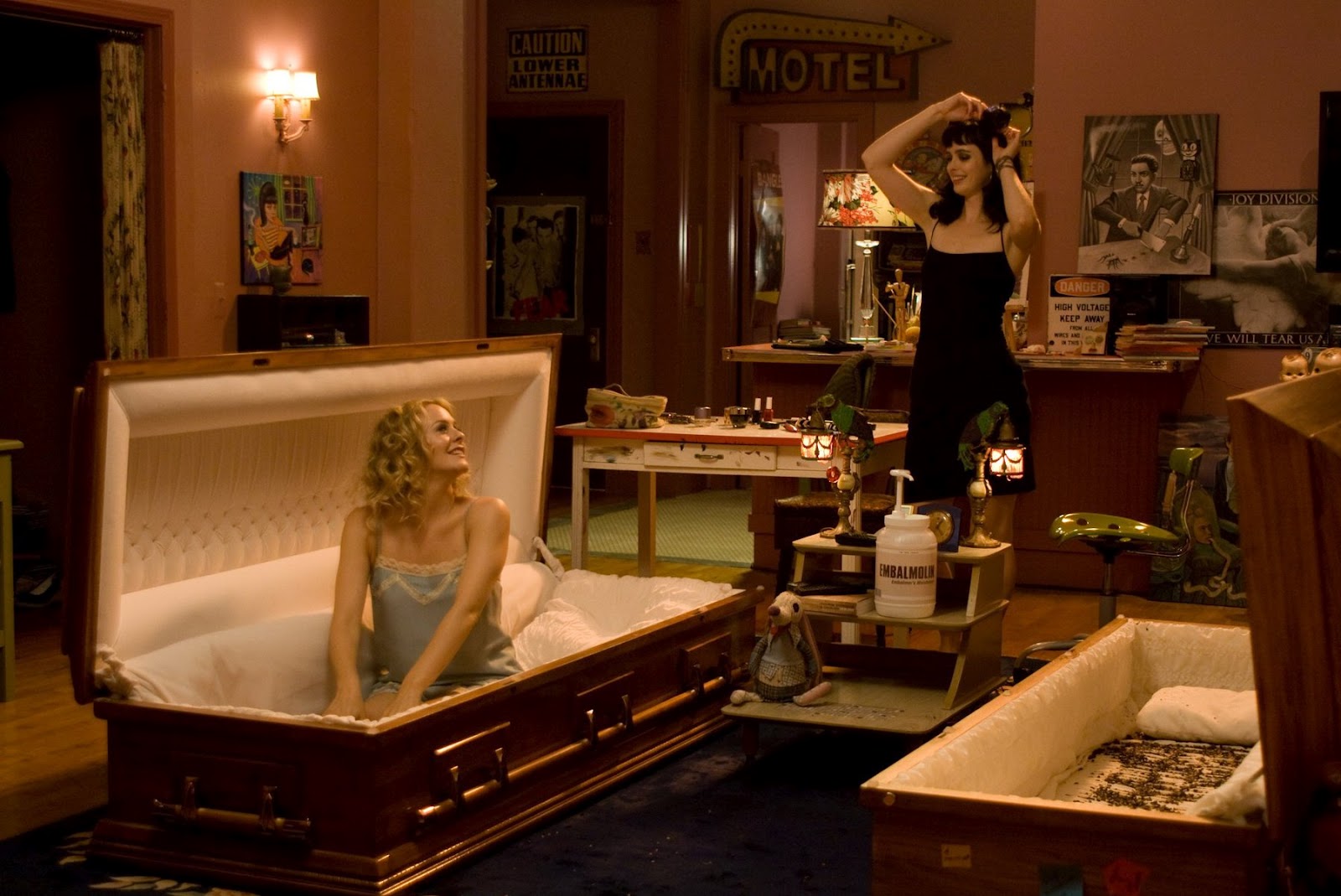
Alicia Silverstone as Goody and Krysten Ritter as Stacy in Vamps
It’s a fun cast of characters for sure, but Silverstone and Ritter shine as the main (women) characters. And for once there’s almost no reason to discuss The Bechdel Test; these two ladies barely talk about men for the first half of the film. Instead, we get to see them playing practical jokes on each other, hanging out in their shared apartment (often texting back and forth while inside their two side-by-side coffins), discussing their fashion choices—which is hilarious, as they struggle to make sure they’re fitting in with the latest 2012 trends (Stacy was first turned into a vampire in the 80s, and Goody lived all the way through the 1800s)—and generally looking out for each other and even (gasp) looking out for other women.

[SPOILER] Case in point: one of my absolute favorite scenes in the film happens early on, when Goody and Stacy head out for their nighttime ritual of club-hopping and imitating the new dance moves of the local youth “Day Walkers” (the term they use to refer to The Living among them). A couple of particularly horrible dude vampires approaches a woman after she bends over, ass in the air, with the word “Juicy” written on her tight pants. The dude vamps merely introduce themselves to her, to which she responds, “I’ll get my coat.” Goody chastises the horrible dude vampires—Goody and Stacy drink only the blood of rodents, not humans—and the dudes respond with, “She’s asking for it,” referring to her “Juicy” attire. It’s a pretty fucking great commentary on the victim-blaming that always accompanies any instance of the rape or sexual assault of women


Stacy and Goody on the computer
Goody walks over to the woman with the goal of getting her to stay away from the vampires, but she ultimately ends up hypnotizing her; in this film, vampires have the power to erase the memories of Day Walkers. At first Goody says something to the woman (paraphrasing), “Listen, you don’t want to leave with them. They’re really bad guys.” The woman says, “I like bad guys.” Goody begins hypnotizing her, repeating, “No, I like nice guys.” The woman walks away, passing the horrible dude vampires, while saying, “I like nice guys. I like guys who listen to me when I say things.” (I laughed out loud at that.)

This scene makes me so happy for a couple of reasons. First, a woman intervening to help another woman avoid getting killed by two horrible dude vampires—an obvious metaphor for rape in this scene, rarely happens in movies. How lovely to see that! Because women looking out for their friends certainly happens in real life—first-hand experience! Second, while I don’t necessarily like the implication that women always go for Bad Boys, I appreciate the acknowledgment that bros like this, who want to harm, abuse, and assault women, definitely exist. 


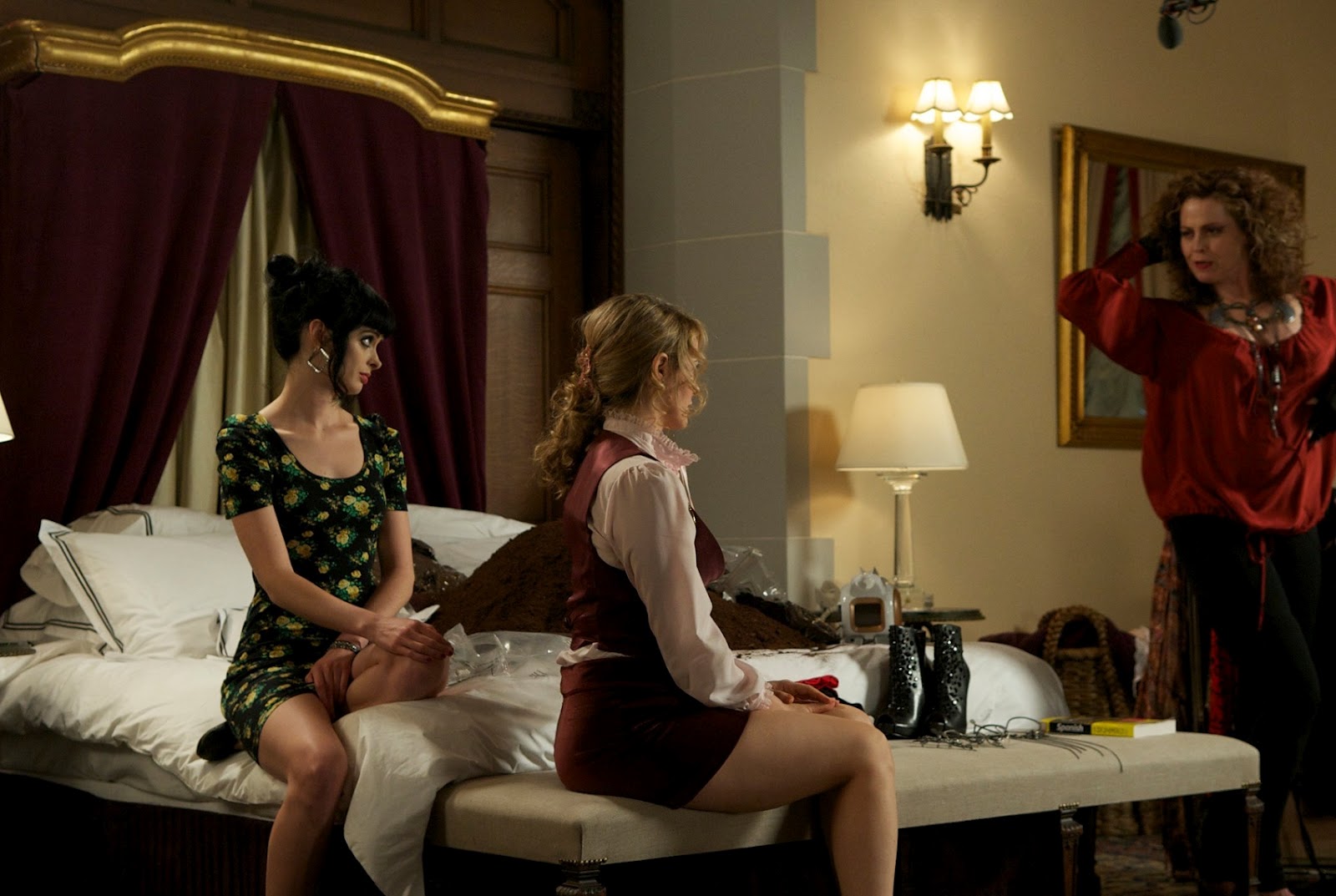
Stacy, Goody, and Sigourney Weaver as Cisserus in Vamps
Also, get this: I turned 33 six months ago. I still have my crappy 35-dollar Blackberry that my sister’s dog spent an hour chewing on. (There are bite marks on the fucking battery.) Let me just say, I could relate to the commentary about youth culture in this film. Heckerling makes wonderful observations about technology, with constant mentions of Twitter, Facebook, texting (there’s a funny reference to someone being in a “textual relationship” due to lack of real-life communication), and other technological stuff I’m probably forgetting because I don’t know what it is. While the film definitely celebrates youth culture, especially in its appreciation of women’s fashion (which reminded me so much of Heckerling’s famous film Clueless), it also juxtaposes that celebration with a critique of the value our society places on youth. That theme comes into play throughout the film, but the focus on women and aging sharpens with the introduction of the head vampire in charge.

Two words: Sigourney Weaver. Do we not adore her? The Alien films, mainly due to Weaver’s badass role as Ellen Ripley, remain one of the quintessential go-to franchises for getting that much-needed feminist fix that Hollywood movies today seem less willing to provide. (Quick shout out to Hunger Games, though!) And Weaver’s role in Vamps as Cisserus, the head vampire, or “Stem,” as they refer to the few vampires who possess the power to turn people into vampires, displays some feminist qualities—strength, leadership, and ambition, to name a few—but her character isn’t without flaws.

While the other vamps fear Weaver’s character—because she’s In Charge—they mainly fear her because she’s the evil, murderous villain. She obsesses over acquiring the love of young men, and when she doesn’t get it, well, you know, she eats them. In many ways, she reminds me of a vampiric version of Miranda Priestly, Meryl Streep’s character in The Devil Wears Prada. She often summons Goody and Stacy (by psychically speaking to them), and it’s almost always to make them model clothing. (Ha!) See, vampires can’t see themselves in mirrors (invisible!), so Weaver wants to look at these women wearing her very youthful, fashionable clothing so that she can visualize what it possibly looks like on her. Eventually though, Cisserus’ power goes so far to her head that she begins putting the other vampires in danger, and the tagline for the last act of the film basically becomes “This Bitch Needs to Die.” 


Vampires hanging out at the club
A woman-in-charge who becomes an evil, power-hungry bitch who ruins lives? Where have I seen that before? (Clue: EVERYWHERE.) I did get the sense from Vamps, though, that it’s making light of that trope rather than relishing in it, and casting feminist film icon Weaver in that role further pushes it toward satire. An interview with Weaver in Collider sheds a bit more light on that:
Collider: What made you decide to jump into the vampire genre with Vamps?

Weaver: Well, I’m a big Amy Heckerling fan, and I also loved the character. She was so unrepentant … I love playing delicious, evil parts like that.

Collider: How does your character fit into the story?

Weaver: She is the person who turned the girls into vampires. So, they have to do her bidding, and she’s very unreasonable and demanding. I would have to say that the one change I made was that I thought she was not really enjoying herself very much, in the original script. I thought, “What’s not to enjoy?” She’s 2,000 years old, she can have anything, she can have anyone, she can do what she wants, so I wanted her to be totally in-the-moment. So, I talked to Amy about it and she just evolved that way. She’s a really happy vampire. She digs it.

(I have to admit, I can kind of get behind a woman—vampire or not—saying, “Fuck it; I own this town.”)
Most of the descriptions and plot summaries I’ve read of Vamps say things like: “Two female vampires in modern-day New York City are faced with daunting romantic possibilities” … (from imdb). True, but not quite. It’s ridiculous to reduce the film to the status of cheesy rom-com because, while both Stacy and Goody somewhat struggle with their hetero-romantic relationships, Vamps ultimately celebrates the friendship and love between the two lead women. (I will say that I have a feminist critique of the ending, but I can’t give it away YET; the movie only recently got picked up by Anchor Bay Films and will be released in theaters around Halloween.)

Stacy and Goody at the club
Overall, it’s pretty significant that I left the theater feeling that this movie—a vampire movie that follows most of the same vampire tropes as all vampire movies—explores something new. It’s also disappointing that I left with that feeling. Because when I thought about it later, I realized what felt so new to me was the depiction of a female friendship that seemed wonderfully authentic. Their dude problems were fairly secondary; their loyalty to each other trumped all other obstacles. Their friendship, in fact, resembled my real-life friendships with women: we don’t fight over men; we don’t sit around endlessly talking about men; we don’t get together and stuff our faces with entire cakes if a man doesn’t call.

That’s why this close relationship between Goody and Stacy is so important to see on The Big Screen in 2012.

In an interview conducted with the director Amy Heckerling by Women and Hollywood, Melissa Silverstein asks the question, “Do you have any comment on the fact that only 5% of movies are directed by women?” Heckerling’s response? “It’s a disgusting industry. I don’t know what else to say. Especially now. I can’t stomach most of the movies about women. I just saw a movie last night—I don’t want to say the name—but again with the fucking wedding, and the only time women say anything is about men.”

Word.

Sexism Leading Up to the Elections

The big day is coming up. Pundits, politicians and trolls have a lot to say about it.
The race is so close, that the candidates and their parties have gone beyond the mudslinging phase into a spastic political dance. We’ve moved beyond a two-step and are now doing a politicking polka.
Democrats obnoxiously pander to women, but the GOP manages to surpass them all with outright ignorance and embarrassing insensitivity. Here are some of the more recent things that conservative leaders have been saying about women the weeks leading up to the election.

  • Newt Gingrich realized the problem that Republicans have been having with outrageous rape comments! It’s not that conservatives are holding too tightly to antiquated and harmful assumptions about sexual assault. It’s that women are not responding well. Regarding ignorant comments; Gingrich said people need to “get over it.” In response, women all over the country sigh a breath of relief, and realize they don’t have to get worked up over assault any more.

  • If you have come late to the political party and weren’t ambivalent about the Republican’s stance on women’s health, Richard Mourdok is here to clarify. He said that pregnancy resulting from rape is something “God intended.” He followed that up with a shrug-it-off comment that “you can’t put toothpaste back in the tube.” That seems to indicate that the toothpaste – which here would probably represent the GOP’s real stance on rape and abortion – is no longer within the tube – or the presentation of the GOP’s position on women’s health in a way that is palatable to the general public.
  • Candy Crowley moderatedthe second presidential debate largely because of a petition started by three teenage girls. These girls wanted to see a female moderator since there hadn’t been one at a presidential debate for 20 years. Crowley got mixed reviews for how she managed the debates – some saying her correction of Romney was good journalism, while others said it was an inappropriate intervention. Unfortunately, the reaction to a woman playing such an important role in this fundamental part of the political process was all-too-predictably sexist. 

#Irrelevant&Sexist
The Twitterverse was lighting up with live tweeting coverage of whatever Obama and Romney threw at each other. Tweets trying to catch and ride the next meme latched on to Crowley’s weight.Tweeters managed the internet-version of heckling by all-capsing their disapproval of Crowley’s shape and size. Crowley is the chief political correspondent at CNN. She’s covered war, natural disasters and elections. How she looks is totally inconsequential, and we can make a pretty good guess that the reason her looks were an issue was because of her gender.
There are four days left until the election. Who wants to bet we will have to deal with yet another sound bite or internetstorm of sexism before November 6?

Call for Writers: Women in Politics in Film and TV


Call for Writers: Women in Politics
In the United States, women make up only 17% of Congress, and there has never been a female president or vice president. These are sad facts that many of us know and often trot out in political discussions. How can any government claim to be representative when there are so few women in positions of power? Women have it worse in oppressive societies that refuse to even allow them suffrage, and women are far better represented politically in others.  
When we turn to media–contemporary television especially–we see numerous women in leadership positions. In the world of fiction, women have been presidents and vice presidents, congresspersons, community leaders, and the list goes on. Even when they are present in larger numbers, the representations tend to have many of the same problems that we discuss generally with women in media: the women are objectified and their stories are sidelined. You can’t be what you can’t see, after all. We need to see more women in politics in movies and TV.
With election season nearing its end, we encourage you to step into the world of Women in Politics for our latest theme week. We’re interested in fictional women in politics and representations of women in politics today and historically. We want to talk about women in politics here; a marked contrast from the 2012 election cycle. You can pretend the current election isn’t really happening, if only for a little while. (Don’t forget to vote, U.S.)
Here are some suggested movies, documentaries, and TV shows.

Commander in Chief
The West Wing
Veep
Parks and Recreation
A Foreign Affair
Miss Representation
The Iron Lady
John Adams
The Manchurian Candidate
Saturday Night Live
Bhutto
Iron-Jawed Angels
Battlestar Gallactica
24
Chisholm ’72: Unbought and Unbossed
Made in Dagenham
The Lady
The Contender
Mrs. Mandela
Election
Game Change
W.
The Kennedys
14 Women
Frontrunner: The Afghan Woman who Surprised the World
l’Etat de Grace
Pray the Devil Back to Hell
Political Animals

As a reminder, these are a few basic guidelines for guest writers on our site:

–We like most of our pieces to be 1,000 – 2,000 words, preferably with some images and links.

–Please send your piece in the text of an email, including links to all images, no later than Friday, November 23rd.
–Include a 2-3 sentence bio for placement at the end of your piece.

Email us at btchflcks(at)gmail(dot)com if you’d like to contribute a review. We accept original pieces or cross-posts.

Submit away! 

Horror Week 2012: The Roundup

The Final Girl Gone Wild: Post-Feminist Whiteness in ‘Scream 4’ by Jeremy Cornelius

Wes Craven’s 1990s Scream trilogy completely rewrote the slasher genre in a postmodern meta-film. In March 2011, Scream 4 was released, ten years after Scream 3 was originally released, starring the original trio: Neve Campbell, David Arquette, and Courtney Cox-Arquette along with some new teen stars to apparently spur a new trilogy. Yet again, this film rewrites the genre, only this time the film plays with concepts of post-racial, post-feminist girl power by making Ghost Face [SPOILER ALERT!!!] a white sixteen-year-old girl, Sidney Prescott’s cousin Jill (played by Emma Roberts). Craven portrays Jill as the most violent and aggressive killer of any of the other serial killers in the Scream films. Jill kills mostly other white teenage girls (her best friends), a black police officer who is depicted in a racist fashion, and her own mother. Jill’s vitriolic aggression is fueled by her neoliberal pursuit of media fame and self-consciously performing the role of victim while veiling herself as the white-faced killer draped in a black shroud.

As well as being a zombie aficionado, I spent my teen years deep in confusion and denial about sexuality and gender – and these two things are perhaps not unrelated. Vampires and werewolves are explicitly sexual and very gendered, but my movie monster of choice erases sex and gender entirely by its very nature. There are no alluring seductions, no monthly cycles, no explosions of pent-up masculine rage in the zombie: only a creeping sameness and inevitability, all social categories dissolved into nothingness, all physical difference literally consumed in the nightmarish Eucharist of undead cannibalism. Of course, this erasure of sex and gender does not mean that sex and gender are not explored in zombie films. On the contrary, there are some very interesting things going on, as we shall see in our whirlwind tour of the Three Eras of Zombie Cinema.

Not only is Kristen (Liv Tyler) the film’s protagonist, she’s a woman who is not presented as a helpless idiot…It is Kristin who loads the shotgun after James confesses he’d lied about going hunting with his father and doesn’t know how to work it. Ultimately, James fires the gun, but by loading it Kristin proves she isn’t an incompetent damsel-in-distress. Throughout the film she strives to fight back…The Final Girl phenomenon is problematic because it is predicated on society’s sexist notion that women are the weaker sex. But scream time results in screen time, and while watching a movie like ‘The Strangers,’ with whom is the viewer being asked to identify? The masked maniac? Or the woman frantic to survive? (Hint: it’s not the maniac.)

The Failure of the Male Gaze in ‘The Vampire Lovers’ by Lauren Chance

In both the novella and The Vampire Lovers, Carmilla (Ingrid Pitt) exclusively stalks female victims, showing little interest in the male characters as anything other than fodder or a means to an end; Ingrid Pitt’s Carmilla never looks quite as comfortable with the lone male in the film she interacts with in a sexual manner as she does with the various women she seduces and bites…indeed the appreciation of Carmilla is seen in the faces of the female characters and it is with tentative exploration that they approach the mysterious woman.

‘Absentia’ Showcases Terror, Strong Female Characters and Sisterhood by Deirdre Crimmins

While I could continue on about the remarkable characterization of Callie and Tricia, it saddens me a little bit that strong non-sexualized female characters in horror films are such a unique phenomenon. While there are plenty of ass-kicking final women in slasher films, and many smart lady doctors who help stop the spread of a zombie outbreak, it is rare to feature a realistic female friendship, or a complicated sibling rivalry, in a horror film. Both Callie and Tricia are attractive, but that is not why they are there. The purpose that they are serving goes so far beyond their gender and their bodies that the contrast to other horror vixens seems like night and day. And neither of them plays the victim, or the unnaturally stoic heroine. They are both complex, and with long histories that they carry with themselves, and impact their judgments.
ELLEN RIPLEY (Aliens): This is perhaps the only scary movie where the villain (a 7-foot alien) was actually slightly intimidated by the intended victim, in this case a female lieutenant trapped on board an alien-infested ship. If she was ever frightened by the aliens, Ripley rarely showed it. As one of the only women on the ship, Ripley (Sigourney Weaver) often swooped down to save her fellow male shipmates from becoming dinner for the aliens without hardly breaking a sweat. This is why we love her.
The central pleasure of Jennifer’s Body — the confusing love Needy feels for Jennifer, and the trouble she takes to clarify that feeling, and act on it (revenging Chip), then act on it again (revenging pre-demon Jennifer) — might be precisely what turned off male reviewers. For all the promise of eye candy going in, this is a story about young women negotiating the horrors of the adolescent-to-adult obstacle course with some dignity, loyalty, and social conscience intact. The infamous male gaze has to work harder to appropriate a film told from the p.o.v. of cute but bookish, shy but self-respecting Needy, whose closest bond is, and might ever be, her friend Jennifer.
When Moira is not around a living straight man, a target for that sexuality, she is an old woman displaying a damaged eye where she was shot. She is presented as completely lacking in sexual attractiveness — not only in appearance but in demeanour as well. Her sexual nature is reserved for straight men…Moira does get to be seen as a tragic figure for this. We see her pain and her loss when her mother dies in a nursing home. We get to see her fear and frustration over trying to be free from the house and having her plans thwarted. We get to see her pain and anger in the face of Constance’s constant taunting and needling of her, still holding a grudge for her husband’s infidelity. But in all these instances we’re expected to sympathise with the older Moira — the good Moira, the non-threatening Moira and, tellingly, the non-sexual Moira. Sexual Moira is not a person to be pitied or a person due sympathy or who feels pain.

For those who haven’t read the comics (like me), Michonne…seems to be a strong, powerful, complex character. She’s clever since she uses two incapacitated walkers to hide from other zombies. She appears to be a fierce and fearless survivor. But what’s even more exciting is that she’s a woman of color. Yet I’m skeptical as the show hasn’t done a great job portraying gender so far…I’m sorry, did the zombiepocalypse also signal a rip in the fabric of time where The Walking Dead characters now live in fucking 1955?! So Lori, women shouldn’t be “playing” with guns or hunting for food or protecting the camp. Nope. Women are only good for domestic duties like cooking, cleaning and child-rearing. Leave the tough stuff to the men. Silly me for forgetting. Thank god Andrea told Lori and her bullshit off…While blaming it on Lori’s “irrational behavior” due to her pregnancy and “going through a lot of stuff” (um, aren’t they all?), writer/creator Robert Kirkman ultimately defends this exchange and the show’s depiction of traditional gender roles…Why must we constantly see a rearticulation of sexist gender stereotypes?…Why is everyone on the show struggling to maintain white male patriarchy??

The Stepfather (the 1987 version) is not like most slasher films; it is a uniquely feminist horror film. Carol J. Clover’s theory of the “final girl,” the trope in horror cinema that leaves one unique girl as the sole survivor, is brilliant and generally accurate. But our heroine, Stephanie, is not like other final girls. For one, she is one of the ONLY girls in the film. The film is full of empty, impotent signifiers of male power: the male lieutenant, the male therapist, the male high school teacher, the male hero/amateur detective, the male reporter and, of course, Stephanie’s dead father. More importantly, throughout the duration of this film no women are killed. Let me repeat that: NO women are killed. It may not be obvious to some viewers, but it is strikingly obvious to me, a feminist who loves horror films. When the film opens, Jerry (or Henry Morrison, his identity before Jerry) has already killed his previous family, which we know contained a wife and at least one daughter, but during the film only men are slaughtered. They are men who attempt to rescue Stephanie and her mother Susan, but the only person who actually rescues Stephanie is Stephanie.
Instead, these little girls embody society’s growing fears of female power and independence. Fearing a young girl is the antithesis of what we are taught — stories of missing, kidnapped or sexually abused girls (at least white girls) get far more news coverage and mass sympathy than stories of boy victims. Little girls are innocent victims and need protection…Their mere presence in these films spoke not only to audiences’ fears of children losing innocence, but also the intense fear that little girls — not yet even women–would have the power to overthrow men. These girl children of a generation of women beginning a new fight for rights were terrifying — these girls would grow up knowing they could have power.
Call it The Nervous Wife, which is more concise than “women are super emotional, illogical and fearful and cannot be trusted.” The Nervous Wife is a staple of the haunted house film genre, and now that paranormal shows are slowly taking over the small screen, it can be found there, too. In the first season of the FX channel’s American Horror Story, the character Vivien Harmon had to be committed and impregnated with a devil baby, and her teenage daughter dead and haunting the family abode, before her husband would believe that something spooky was going down. Yes. Yes. I know. Science says ghosts and goblins and such don’t exist. True enough. It is natural for a body to be skeptical of supernatural claims. Would you believe it if you were told the portal to hell was in your laundry room? Likely not. The problem is that women in horror films are rarely, if ever, the skeptical ones. Logic is portrayed as a man thing. Little ladies are quick to believe the unbelievable. And to be frightened by it.
But really, I think that the guys who made this film have no idea what kind of culture they are feeding into. I think that V/H/S is a horror film, not because it is well-made, or clever, or scary, but because these are the stories we expect to hear. Girls are murderous. Girls are sluts. Girls won’t give it up. Girls can’t be trusted. Girls are victims. Girls. Are. The. Worst. Those girls? They’re even worse than those guys. But you know what, guys who made this film? When you feed into this culture, when you populate your brains and ours with these images, with these narratives, you make it more and more likely that the only option girls have when date raped, when stuck in a loveless marriage, when victimized, when traumatized is to strike out. To strike back.
I started thinking about the five college students in The Cabin in the Woods and how their roles ar e defined by gender. The two women, Jules and Dana, are defined as The Whore and The Virgin – two opposite ends of the spectrum whose deaths are meant to serve as bookends for the others. The order of deaths is irrelevant except in the case of the women. Jules, as the corrupted Whore, has to die first, and Dana, the Virgin, has to die last, if she dies at all. As Hadley (Bradley Whitford) says, “The virgin death is optional as long as it’s last.” The female characters are defined only by their sexuality – nothing else about them really matters. Still, the men don’t fare much better…What I find particularly interesting, though, is how the “puppeteers” (as Marty calls them) recognize that the five people they’ve selected for the sacrificed don’t easily fit into the prescribed archetypes.
[Bexy Bennett]: Strong women don’t necessarily need to be role models, though. I certainly wouldn’t want my children to raise the headless horseman from the dead to exact revenge for previous injustices, but I can admire Lady Van Tassel’s forbearance – she and her sister are left alone, as children, in the Western Woods, yet she ensures their survival and raises herself to a position of some importance in the village. Of course her motives are questionable but does that diminish her strength?
[Amanda Civitello]: Given the way that the other lead female character is portrayed, I have the impression that it’s a deliberate editorial decision to make the one strong female character into the antithesis of a role model. The audience is meant to identify – or if not identify, at least feel for – sweet Katrina Van Tassel, who does all she can to save the man she loves. But Katrina isn’t nearly as well-rounded a character as Lady Van Tassel. She’s more of a generic type of filler than anything else; to compensate for the lack of development of Katrina’s character, it’s as if they wanted to ensure that Lady Van Tassel would be so offensive and so off-putting that they made her into something bordering on a monstrous caricature.
The horror genre has a tradition of terrorizing women, of chasing them through the woods and attackingthem in houses. It also has a tradition of The Final Girl, a trope that is simultaneously empowering and reductive: the only survivor is a virginal woman who wields a phallic weapon and destroys the monster. The ‘Paranormal Activity’ trilogy features a different kind of Final Girl: she doesn’t kill the monster — she becomes it.
Ableist and sexist stereotypes of women and mental illness abound in horror movies and TV (American Horror Story, Orphan, Gothika, Nightmare on Elm Street 3, The Ring and Misery)…Society polices women’s appearances, language and behavior. We can’t let the ladies get out of control. Who knows what could happen??? Calling a woman “crazy,” doubting not only her veracity but her very sanity, is offensive. It’s also an attempt to control women, demean them and strip them of their power. Women with mental illness are often silenced, invisible from the media aside from victims or villains in horror. When we do see them on-screen, they instill fear as they are depicted as violent, volatile and uncontrollable…The “crazy bitch” trope and label — in both pop culture and reality — silences and dismisses women while simultaneously shaming and stigmatizing women living with mental illness.
Without a doubt, the movie is doing many exciting, transgressive things. I find particularly important the way the audience is analogous with “the gods” because we are the ones demanding these elaborate, repetitive sacrifices that push people into these stereotypical roles. It’s not only an indictment of the horror genre but of the voyeuristic spectatorship that perpetuates these horror tropes. However, I expected more from the feminist powerhouse team that created Buffy the Vampire Slayer. I find myself wishing Marty had been cast as a woman, and the two women, the fool and the non-virgin virgin, would be the pair of survivors who finally say “no more” to a horror genre that dismembers, kills, and punishes them for being women.
The woman’s scream has been an essential part of horror. Women play a fundamental role in horror films – possibly more than other genres. Women function as a foil. They are wrought by terror. They scream the way we, in the theater, want to…The problem is that we are still dealing with an either-or sort of situation. Women can be preternaturally courageous and stoic. Or, they can be spastic screeching machines that fall to pieces.
And while my confession at the start of this remains the same, upon closer inspection, I realized that Leslie Vernon’s treatment of women is left to be desired. While there is a lot of discussion about empowering the survivor girl to become a strong woman, it is described from a mocking male’s perspective. One scene in particular especially rubbing me the wrong way, in which Leslie discusses with Taylor how the faux survivor girl, Kelly, will imminently end up at an old shed to find a weapon. He describes her choice of weapon as “empowering herself with cock.” The axes, sledgehammers, and other long handled devices purposely phallic.
Horror films are commonly seen as one of the most sexist film genres; utilizing the voyeuristic male gaze, objectifying the female body, and reveling in helpless women being victimized. I am not discounting these claims, but horror has the potential to be more than that: films which subvert the genre’s sexism and incorporate strong, distinct female characters do exist.

Quote of the Day: Screenwriter/Director Callie Khouri Weighs In On How TV Friendlier to Women

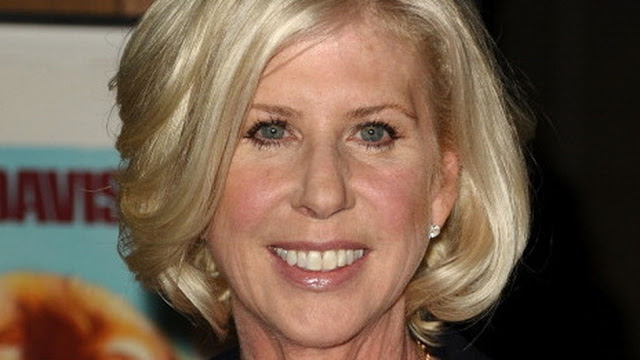
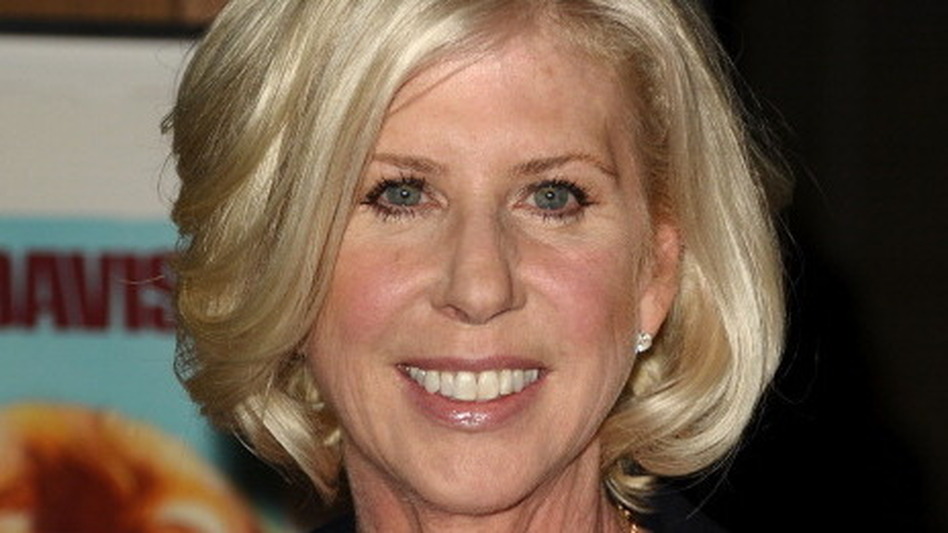
Callie Khouri

In a recent interview with Salon, Academy Award-winner Callie Khouri weighed in on how TV seems to be more friendly to shows about women. Khouri (who wrote Thelma and Louise for that Oscar) is the writer and producer for ABC’s new musical drama Nashville.
Salon asked her about television telling women’s stories and Khouri responded with thoughts that articulate the difficulties in writing feature films about women (adding that “I don’t think any studio in a million years would make Thelma and Louise right now”), and how to properly write stories once you get the green light.

Salon: People who make TV also seem much more comfortable making shows for women than people making movies do.

Khouri: “Because you’re allowed. You’re allowed to make things for women on television and there’s not like … you don’t have to go through the humiliation of having made something directed at women. There it’s just accepted, whereas if it’s a feature, it’s like “So, talk to me about chick flicks.” … I just think it’s insulting that if there is something with women in it, it’s relegated to this kind of trash heap. It doesn’t matter what it is, how good it is, if there is emotion in it, it’s immediately going to be talked down to. And I’m obviously irritated by that. Probably all women are. Certainly a lot of women filmmakers are.Anyway, I don’t want to just complain about features, but it does seem unduly hard given the number of women that exist in the world.”

On the show not being “about a catfight,” even though it starts out that way:

Khouri: “…You come at things from the place where everybody thinks they know everything about what they are seeing. And then you just slowly peel back the layers until you’ve got very complicated human beings with very different sets of problems, all of them doing something that’s impossibly hard to begin with and trying to make their place in this world. Watching two women go at it is boring. There are so many other shows where you can get that. I want it to be about something more than that.”

The depth and breadth of female characters on TV is stunning right now. Whether the female is the protagonist (Homeland, The Mindy Project, 30 Rock, Parks and Recreation, etc.) or females are strong supporting characters (Boardwalk Empire, Sons of Anarchy, etc.), women’s stories on TV are becoming much less of an anomaly.
Women on the big screen, however… well, we still see a distinct difference, as Khouri notes, between “chick flicks” and “Hollywood blockbusters.” This is why the Bechdel Test has to exist; it’s rare for a film to place value on women’s stories and anything that might, as Khouri says, have “emotion in it.” 
As she goes on to observe, to properly tell women’s stories you have to “slowly peel back the layers” after presenting the audience with a stereotype. Perhaps that’s why it’s easier to do in TV — the sheer time that TV writers have to lure audiences in with character development and storytelling.
It seems Hollywood’s two hours, more or less, just aren’t enough to properly “peel back the layers.”  Are women’s stories really that much more complicated than men’s? Or is the “otherness” of women just so ingrained that a writer would need a few hours to first deconstruct the stereotypes and cultural myths that the audience walks in with?
Whatever the case may be, Khouri is right. This double standard is “unduly hard given the number of women that exist in the world.” Their stories are being showcased in the private sphere of the home, but they just can’t seem to break through to the public big screen. It’s time for that to change.


Leigh Kolb is a composition, literature and journalism instructor at a community college in rural Missouri. 

Quote of the Day: Screenwriter/Director Callie Khouri Weighs In On How TV Is Friendlier to Women

Callie Khouri

In a recent interview with Salon, Academy Award-winner Callie Khouri weighed in on how TV seems to be more friendly to shows about women. Khouri (who wrote Thelma and Louise for that Oscar) is the writer and producer for ABC’s new musical drama Nashville.
Salon asked her about television telling women’s stories and Khouri responded with thoughts that articulate the difficulties in writing feature films about women (adding that “I don’t think any studio in a million years would make Thelma and Louise right now”), and how to properly write stories once you get the green light.

Salon: People who make TV also seem much more comfortable making shows for women than people making movies do.

Khouri: “Because you’re allowed. You’re allowed to make things for women on television and there’s not like … you don’t have to go through the humiliation of having made something directed at women. There it’s just accepted, whereas if it’s a feature, it’s like “So, talk to me about chick flicks.” … I just think it’s insulting that if there is something with women in it, it’s relegated to this kind of trash heap. It doesn’t matter what it is, how good it is, if there is emotion in it, it’s immediately going to be talked down to. And I’m obviously irritated by that. Probably all women are. Certainly a lot of women filmmakers are.Anyway, I don’t want to just complain about features, but it does seem unduly hard given the number of women that exist in the world.”

On the show not being “about a catfight,” even though it starts out that way:

Khouri: “…You come at things from the place where everybody thinks they know everything about what they are seeing. And then you just slowly peel back the layers until you’ve got very complicated human beings with very different sets of problems, all of them doing something that’s impossibly hard to begin with and trying to make their place in this world. Watching two women go at it is boring. There are so many other shows where you can get that. I want it to be about something more than that.”

The depth and breadth of female characters on TV is stunning right now. Whether the female is the protagonist (Homeland, The Mindy Project, 30 Rock, Parks and Recreation, etc.) or females are strong supporting characters (Boardwalk Empire, Sons of Anarchy, etc.), women’s stories on TV are becoming much less of an anomaly.
Women on the big screen, however… well, we still see a distinct difference, as Khouri notes, between “chick flicks” and “Hollywood blockbusters.” This is why the Bechdel Test has to exist; it’s rare for a film to place value on women’s stories and anything that might, as Khouri says, have “emotion in it.” 
As she goes on to observe, to properly tell women’s stories you have to “slowly peel back the layers” after presenting the audience with a stereotype. Perhaps that’s why it’s easier to do in TV — the sheer time that TV writers have to lure audiences in with character development and storytelling.
It seems Hollywood’s two hours, more or less, just aren’t enough to properly “peel back the layers.”  Are women’s stories really that much more complicated than men’s? Or is the “otherness” of women just so ingrained that a writer would need a few hours to first deconstruct the stereotypes and cultural myths that the audience walks in with?
Whatever the case may be, Khouri is right. This double standard is “unduly hard given the number of women that exist in the world.” Their stories are being showcased in the private sphere of the home, but they just can’t seem to break through to the public big screen. It’s time for that to change.


Leigh Kolb is a composition, literature and journalism instructor at a community college in rural Missouri. 

The Unexpected Portrayal of Motherhood in ‘Looper’


Warning: Spoiler Alert

It seems an obvious sort of review to talk about the unexpectedly large presence of motherhood in Looper, but while I expected to have plenty to say on the movie’s women (or lack thereof) I was not expecting to see motherhood played out in such a diverse way. It’s just not something I expect in a Summer/Fall Hollywood science fiction blockbuster: shame on me for my lack of faith in Hollywood’s creativity.

The first part of Looper is a tangled, intriguing, sometimes gory, exploration of time travel: what happens to your future when we mess with your pass? How do you remember the past if your future doesn’t exist anymore (or vice versa for that matter)? A great question would be, if you chop off a person’s legs in the past, while their future self is in the past, wouldn’t that change their future, even if they’re in the past? Oddly enough, all those questions are answered in the first hour of the film.


But the film really took off for me during the second half, when a different film than the one the trailer promised me, emerged. Cityscapes were traded in for cornfields and discussions on the finer points of temporal displacement are exchanged for character development.

In the second half of the film, Looper did a really great job of showing a few different kinds of mothers starting with Summer Qing (Qing Xu), who plays Bruce Willis’ wife, wants a child, but never gets to have any (explicitly stated in the film). Sara, (Emily Blunt) may or may not have given birth to a seriously creepy, possibly homicidal destructor of the future, and Suzie (Piper Perablo) is a prostitute and exotic dancer who independently raises and supports her young child (and is proud to be able to do so).

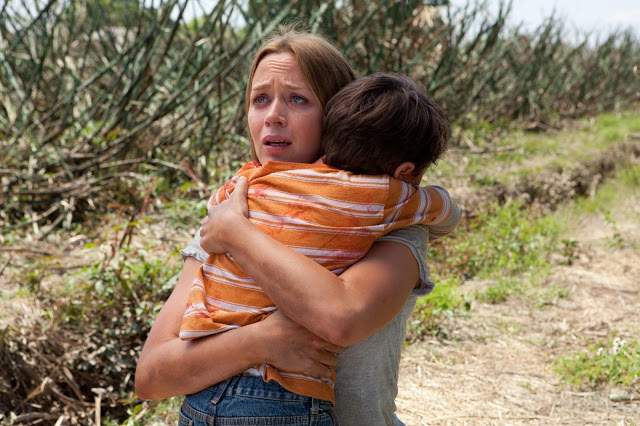
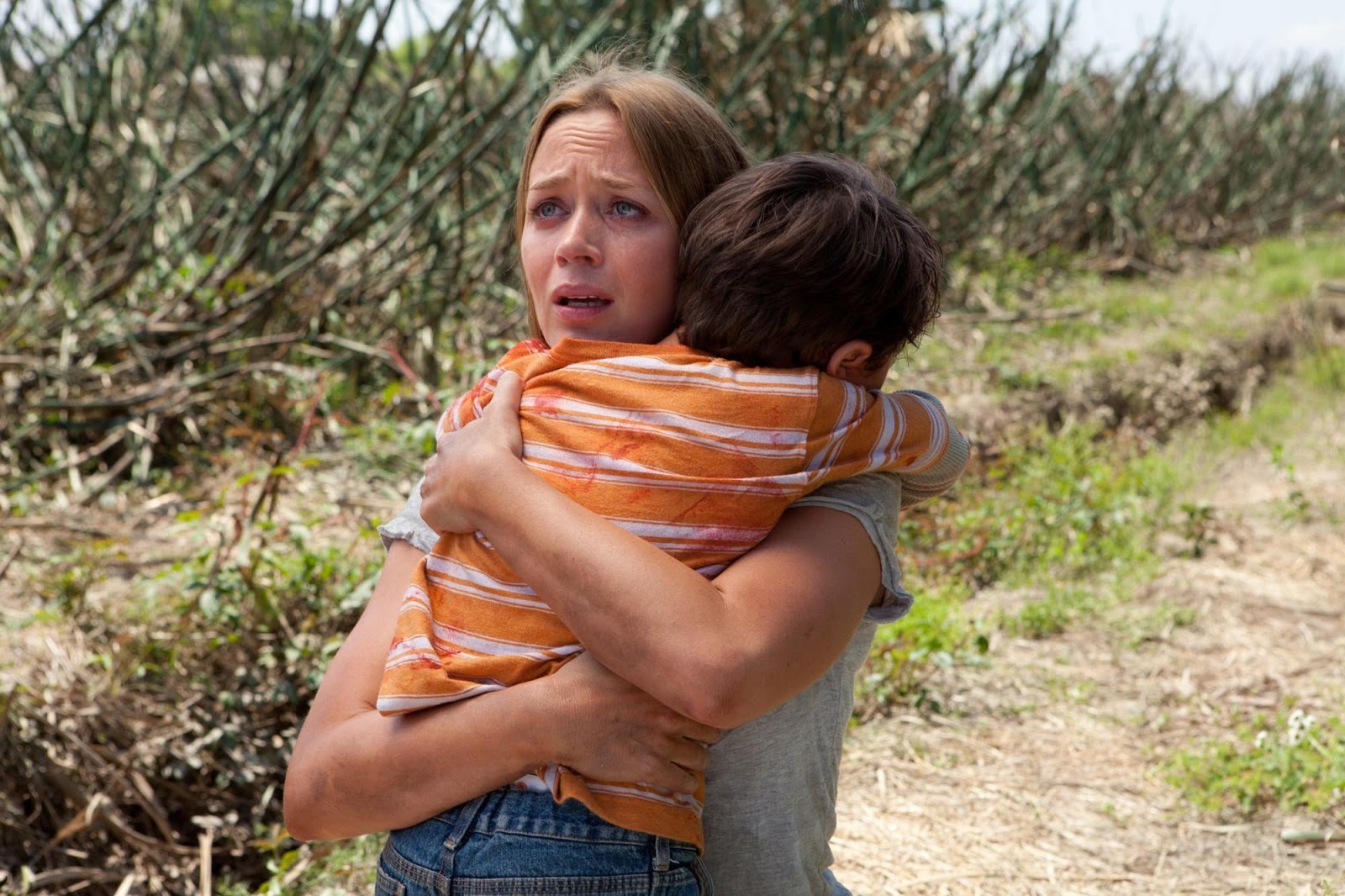
Sara’s (Emily Blunt) storyline centers on her incredibly creepy kid, Cid (Pierce Gagnon) who is possibly one of the best child actors I’ve ever seen. Sara’s storyline is unique in that she is a late mother to her son, but despite her fear, and the fact that Cid doesn’t believe she’s really her mother, feels that she must and can save him from a possibly violent future. It’s sort of reminiscent of a Harry Potter plotline—a mother’s love is all that’s needed to make a child grow up “good” and “safe.” The audience is left with the hope that Sara’s belief in her own mothering skills will be enough to stabilize the troubled child and keep him from harming others.

It’s a really sweet sentiment, this “power of love” idea, and to its credit, the film doesn’t specify whether it does heal all ills, but I find this idea sort of problematic. So many parents believe that every mistake their child has made and every bad thing that they’ve done is their fault as a parent. Obviously, this is not always the case. I’m no sociologist and the argument for nature vs. nuture is still swirling around out there, but reinforcing the ideals of a perfect motherhood and it’s redemptive powers seems to be placing too much responsibility on the shoulders of women (without regard for temperament and personality). This is not to devalue motherhood and the great job of raising their children that so many women do, but rather to point out a possibly naïve and damaging ideology that we seem to be indirectly promoting, that if a person were to do something really, really awful (for instance, murder someone) that it would be based on some failure of the parents.


Emily Blunt and Pierce Gagnon in Looper

Looper does get credit though for the fact that it does portray a less-than traditional type of mother: Single mom, out on her own on a farm, raising a child she barely knows since her sister raised him first. She was just a woman, doing what she could to be a good mother (though she had some pretty high expectations for herself, and I can say I’d feel a bit of pressure to be the best mother ever if I knew my son would become an evil mob boss and the man I loved had killed himself so I could have a chance to raise him right and stop that from happening). Spoiler Alert by the way.

I bring this up because of an interesting article I read a while ago about children who display characteristics of psychopaths. I feel awful just typing that, but hey, the New York Times said it first. In the article they talk about children who seem to have a neurological condition in the brain centers that control empathy and shame, two essential traits that help to regulate our behavior and response to others. The part I find fascinating is the fact that some children have neurological disorders and that parenting, no matter how wonderful and loving, might not change that. The article quotes a psychologist who, in regard to the possibility of diagnosing the disorder in children, stated:

This isn’t like autism, where the child and parents will find support,’ Edens observes. ‘Even if accurate, it’s a ruinous diagnosis. No one is sympathetic to the mother of a psychopath.’”


Poor Sara with her troubled, possibly evil, child. Nobody feels support for the mother of a psychopath except the psychopath who didn’t have a mother, Joe in this case. Joe mentions his own mother several times in the movie, asking his girlfriend (lover? prostitute?) to rub his hair as his mother did when he was a child (I’ll ignore that possibly Oedipal situation) and telling Cid that his own mother sold him to the gangs. Joe obviously sees himself in Cid, particularly the scenes where he projects into Cid’s future, riding the train alone, hurt and scared, resenting his mother and others for abandoning him and then eventually taking it out on everybody else by becoming homicidal (Jon does kill for a living, it’s not like he’s particularly well-adjusted himself).

The scene seemed a bit fallacious, in terms of it’s logical progression, as I said, loss of a mother should not indicate future murderer. However, I did appreciate the sub-idea that Cid, despite his known future, is not predetermined, perhaps he can change and learn to control himself, and therefore obviously deserves to live.

The movie’s dark beginnings really ended in a very hopeful, life-affirming place, even though it begins and ends with the loss of life. 

Rachel Redfern has an MA in English literature, where she conducted research on modern American literature and film and it’s intersection, however she spends most of her time watching HBO shows, traveling, and blogging and reading about feminism.