‘The 100’: Not as Bad as You Would Think

The acting is poor, the dialogue is terrible, and the production values are low, but the first season of ‘The 100’ has its moments, and most of them are pretty effing dark.

Written by Katherine Murray.

The acting is poor, the dialogue is terrible, and the production values are low, but the first season of The 100 has its moments, and most of them are pretty effing dark.
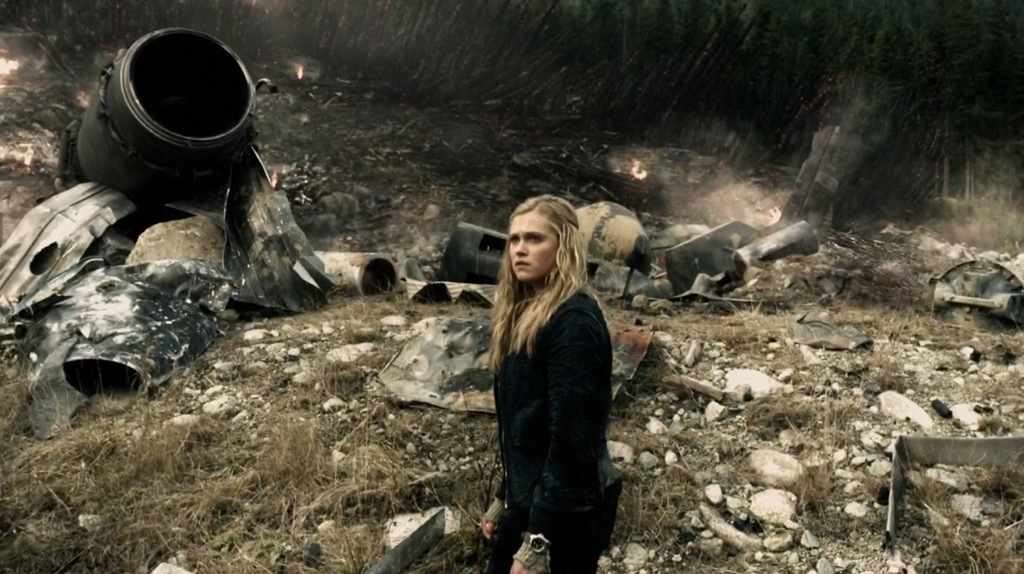
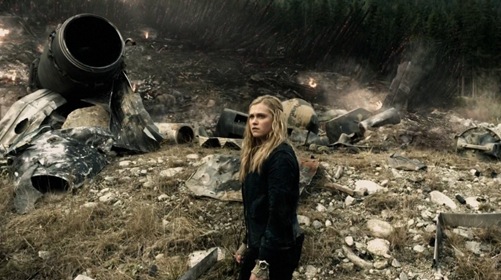
Eliza Taylor stars as Clarke on The 100
Clarke, in the Rubble of a Plot Point

With the finale airing tonight, the CW is set to wrap up the first season of its post-apocalyptic YA series, The 100 .  Based on a novel of the same name, the show takes place in the future, where humanity has been forced to live on space stations after destroying the Earth. Almost a century after the exodus, the crew of the last remaining station, The Ark, discovers that life support is failing and decides to send a team of one hundred twenty-something models teenage prisoners back to the planet, to determine whether it’s fit for colonization. Unfortunately, the prisoners immediately lose contact with the space station, leading each group to believe that it is alone, facing difficult choices about its survival.

The main character on the ground is Clarke, a political prisoner who’s basically the same serious, hyper-competent seventeen-year-old girl who stars in all post-apocalyptic YA fiction. Clarke knows a little bit about medicine, which makes her valuable to the group, but her main job is being right all the time and lecturing the others about why they are wrong. The group’s de-facto leader is an older boy named Bellamy, who snuck onto the transport ship because his sister was on board, and a lot of the tension early on comes from Clarke thinking the group should do one thing, and Bellamy thinking they should do something else.

The story on the space station is anchored by Clarke’s mother, Abby, who’s a doctor and sits on the governing council (mirroring Clarke almost exactly, but in a world of adults, rather than teenagers). Abby believes that Earth is habitable and keeps pushing for a wait-and-see approach, while other councillors want to start culling the population in order to extend life support. Her main adversary is  the Vice Chancellor, Marcus, who argues (pretty persuasively) that, if Abby is wrong, then, the longer they wait, the more people will have to die.

There are thirteen episodes in the season, including tonight’s finale, and the premiere episode is rough. Rough, like it’s kind of painful to watch, and you think, “This is the worst show that I’ve ever seen.” The tone is all over the place, the actors look and sound like they feel really awkward, everything looks cheap, and the story is silly. The second episode, in all honesty, isn’t much better.

But, then the third episode happens and, it’s not that the show becomes good, but it becomes about a million percent better than it was, and it keeps it keeps improving from there.

The third episode of The 100, “Earth Kills,” does two important things. The first is that it displays honest emotion. Clarke’s backstory is that her father was the engineer who discovered the life support system was failing, and he was executed for trying to warn the population (Clarke was in solitary because she knew the secret). Her best friend, and the Chancellor’s son, Wells, is also on Earth with her, but they’re not really friends anymore because he’s the one who ratted her father out after she told him the plan. We know this already, but most of “Earth Kills” is taken up with flashbacks that dramatize these events in a much more visceral way. We see Clarke watching as her father gets sucked into space (the preferred method of execution on The Ark), and it’s horrible. It completely explains why she’s so mad at Wells and why everyone else who’s had a loved-one sucked out the airlock hates Wells’ father for pushing the button.
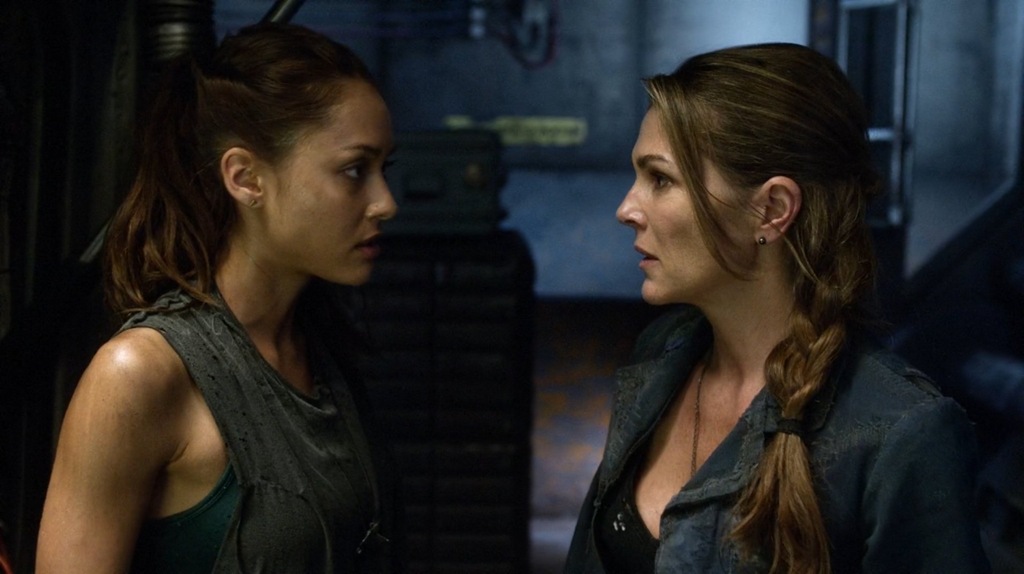
Lindsey Morgan as Raven and Paige Turco as Abby on The 100
Raven and Abby have the Best Relationship on the Show

The second important thing “Earth Kills” does is end with a shocking, gruesome, grimdark twist that makes sense, given the emotional journey we’ve been on, but also establishes the tone of the show much more clearly. Because, despite the wacky hijinks in the first couple of episodes, The 100, once it gets going, is surprisingly dark for a network TV show.

I mean, William Golding understood in 1954 that, if a bunch of kids built a society, it wouldn’t be all bonfires and sparkly butterflies — I have no grounds to be surprised. Still, after the ridiculousness that was a Jaws-attack by a giant, invisible water snake in episode one (a scene that ends with everyone having a chuckle about it), I was not prepared for episode three, or episode five, or any episode where the series actually followed through on a threat and had something terrible happen.

It’s not that I think being shocking, and making your show a big downer automatically means that it’s good – in fact, I would still hesitate to say that The 100 ever actually gets good – but, The Hunger Games, and second-wave sci-fi, and the generally  dark as hell turn that TV  has taken in the last few years, have taught us that moral complexity requires a certain engagement with unpleasant content. I think we also may have reached the tipping point where it’s now a “safe” decision to include that in your show – where even a drama for the CW, staring insanely good-looking people who want to hook up, needs some violence, death, and torture, just to stay relevant.

I’m not being judgemental – I enjoyed this show a lot more, once it turned serious and dark. I’m just saying, I notice that a lot of pop culture is tilting that way, and I wonder what it means.

Setting aside the tone for a second, some other good things happen once the series gets going. To start with, the actors relax more into their roles. They forget to be embarrassed and, as they take themselves more seriously as penal colonists on a strange planet, it’s easier to suspend your disbelief. It’s also easier because the costuming and makeup departments are so good at making everyone look dirty.

You can tell that the series is based on a book, because there seems to be a plan as the action moves forward. The 100 throws a lot of twists and cliff-hangers our way – just as one problem is solved, it turns out there’s another – but, unlike other shows, where it feels like the writers are just trying things out, the plot in The 100 progresses more organically. One thing leads to another, and the stakes raise each time, building to the climax.

The characters are also allowed to disagree and still be likable. At the outset, it looks like Marcus is evil, but, once we get to know him, we see that, like everyone else, he’s trying to make good decisions in a bad situation. Similarly, we’re invited to like both Bellamy and Clarke, even though they often disagree with each other, and sometimes make the wrong move.

And, while this isn’t the first show I would point to for awesome portrayals of women, it does better than you’d expect.

Marie Avgeropoulos as Octavia on The 100
Octavia and the Sparkly Butterfly of False Hope

Even though Clarke is ripped straight from the pages of every YA novel ever, she’s a pretty decent heroine, and it’s nice that she and Abby serve as our entry points into this world. Whether or not we identify with Clarke, most of the major events on the ground are filtered through her point of view – she’s involved in all the major missions, she has a really loud opinion about everything, and we learn about this world and its characters at roughly the same pace she does. While she’s initially presented to us as an idealist (and a kind of a self-righteous one, at that), it’s interesting to see how she reacts as she’s forced to solve problems with no good solution.

There’s also a secondary character named Raven who’s introduced to us first as a mechanic, and only secondly as somebody’s girlfriend. Even though there’s some triangle drama happening with the character, the most important thing about Raven is that she’s smart and she knows how to build stuff. There’s even a nice scene where one of the boys tells her that they need her around for that reason. One of the most interesting relationships on the show is also between Raven and Abby, as they scheme together aboard The Ark.

On the flipside, there’s another character who’s more problematic.

Bellamy’s sister, Octavia, is initially presented as The Sexy One – an angry, outspoken, promiscuous girl who’s competing with Clarke for the affections of a boring boy named Finn. The first episode has this eye-rollingly bad scene where she gets undressed in front of everyone while they stare at her; in the second episode, she’s macking on three different dudes, partly just to rebel against Bellamy.

After the first couple of episodes, though, her personality does a 180, and she becomes Saint Octavia, a gentle and innocent soul, who’s annoying in a wholly different way. Saint Octavia literally trips over her own feet, at one point, and knocks herself out, necessitating a daring rescue. She also falls in love with a man who kidnaps her and chains her up in a cave. (Then she apologizes to him for freaking out when he chained her  up in a cave – I’m not making this up).

Whereas the other characters are more active, the main point of Octavia is how other people feel about her – whether or not they’re attracted to her, how Bellamy structures his life to protect her, etc. In fact, the whole reason she’s named Octavia in the first place is because of how Bellamy relates to her – when she was born, he named her Octavia because Octavia was the Emperor’s sister, just as she is his.

Either version of Octavia is hard to take, but she’s an anomaly on a show that’s otherwise pretty balanced when it comes to gender. The characters who drive the action are just as likely to be male or female, and the show passes the Bechdel test pretty often, considering that it’s pre-occupied with heterosexual dating relationships.

If I had an award for “most improved show,” I think The 100 would win it. Most sci-fi series take a while to figure out what they’re trying to be, but the contrast between the first two episodes of The 100 and the rest of the season is pretty extreme. I’m actually excited to see the finale, and, since it’s already been picked up for a second season, I’m planning to tune in again.

Programming note to my fellow Canadians: Netflix Canada streams The 100 the day after it airs in the States.


Katherine Murray is a Toronto-based writer who yells about movies and TV on her blog.
Top 10 Superheroines Who Deserve Their Own Movies

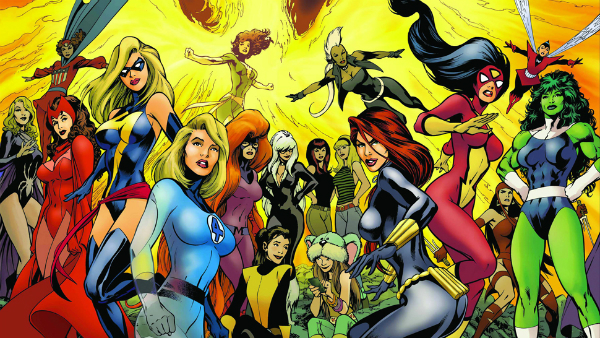
So few superheroines are given their own movies. I’m officially declaring that it’s high time we had more superhero movies starring women. The first in a series of posts, I’m starting with a list of my top 10 picks for super babes who deserve their own flicks.

My heroines
My heroines

Written by Amanda Rodriguez.

Most sane people seem to agree that we desperately need more representations of female superheroes to serve as inspiration and role models for girls and women alike. In truth, there is no shortage of superheroines in the world; we’ve got seriously acclaimed, seriously badass female characters from comic books, TV shows, and video games. Though these women tend to be hypersexualized or relegated to the role of supporting cast member for some dude, we still love them and can’t get enough of them. It still remains that so few superheroines are given their own movies. I’m officially declaring that it’s high time we had more superhero movies starring women. The first in a series of posts, I’m starting with a list of my top 10 picks for super babes who deserve their own flicks.

These are the superheroines I’d choose to get a movie if I ran Hollywood:

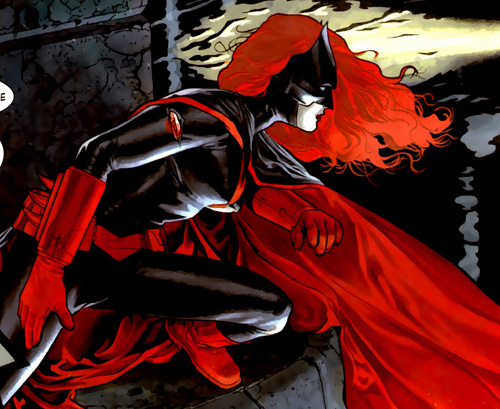
1. Batwoman

Batwoman makes me swoon


Not to be confused with Batgirl, the DC character Batwoman is the highest profile lesbian character in comic book history. A wealthy military brat who was expelled from West Point Academy due to “Don’t Ask, Don’t Tell.” Batwoman is a defiant, tattooed socialite by day and a crime asskicker by night. With compelling, topical social themes (particularly with regard to queer culture), amazing action sequences and a lush, lurid and darkly magical underbelly of Gotham that we never saw with Batman, Batwoman has so much to offer audiences.

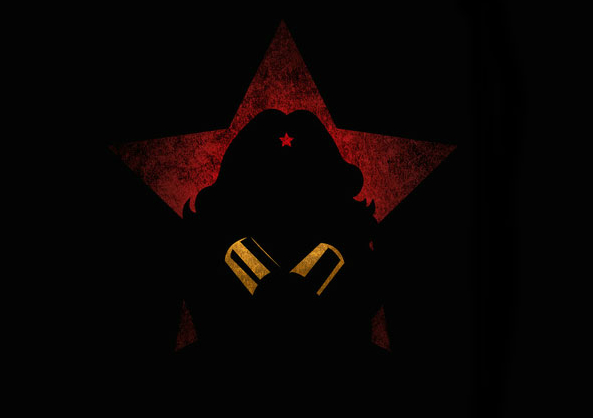
2. Wonder Woman

The one, the only Wonder Woman
The one, the only, Wonder Woman


Wonder Woman is practically a goddess; she’s an Amazon princess with superhuman strength and agility raised only among women on the concealed Paradise Island. With her superior physical prowess and training, she constantly saves the day and her love interest, Steve Trevor. Not only that, but she also has cool gadgets like her invisible plane, Lasso of Truth, and her bullet deflecting bracelets (Wolverine’s adamantium bones ain’t got nothing on Wonder Woman’s gauntlets). The world has been clamoring for and drumming up rumors of a Wonder Woman movie for at least a decade. She’s as steeped in history as Superman, as iconic as Batman, as patriotic as Captain America, as strong as Hulk and way sexier than Ironman, and yet Superman, Batman, and Hulk have all had their own movie series AND their own series’ reboots while the rights to Wonder Woman languish on the shelf. Hell, the 70s were more progressive than today because they recognized the need and market for female superheroes when they created the beloved Wonder Woman TV series starring Lynda Carter that ran for four years. Give the woman a movie already, damn it!

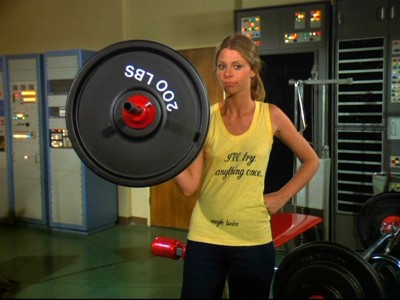
3. The Bionic Woman

The Bionic Woman
Lindsay Wagner as The Bionic Woman


Speaking of the 70s and their penchant for female-driven TV shows, Jaime Sommers, aka The Bionic Woman, first had her own TV series in 1976, which was then rebooted in 2007 as Bionic Woman. After an accident nearly kills her, Jaime is retrofitted with a bionic ear, arm, and legs, giving her superhuman strength and speed in those limbs as well as acute hearing that she uses in her secret agenting. Though Jaime Sommers was imagined as a spin-off to the male-driven series The Six Million Dollar Man, she was successful in her own right and expanded the horizons of little girls in the 70s. I want Jaime to get a real movie, not just some piddly made-for-TV deal. My only requirement for said movie is that it keep the super sweet 70s sound effects for when she uses her bionic powers.
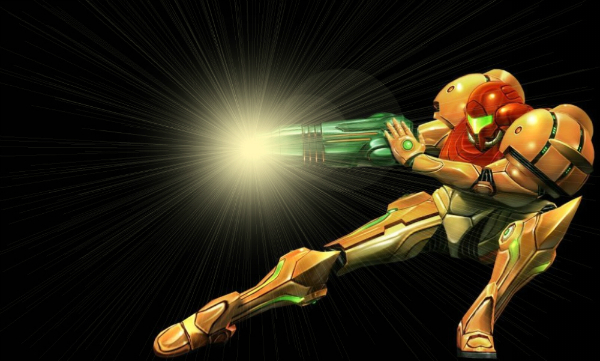
4. Samus Aran from Metroid

The biggest reveal in Nintendo history: Metroid is a GIRL
The biggest reveal in Nintendo history: Samus is a GIRL


Samus Aran is a space bounty hunter who destroys evil Metroids in the Nintendo video game (you guessed it) Metroid. Because of Samus’ androgynous power suit, game players assumed she was a man until the big reveal at the end of the original 1986 game when she takes off her helmet. Gamers loved it. Not only that, but Metroid was and continues to be one of Nintendo’s most lucrative and popular game series, such that the latest installment of the game (Metroid: Other M) came out as recently as 2010. With ever-expanding plotlines and character development, Samus has proven that she is compelling enough to carry a series for over two and a half decades. Instead of making another crappy Resident Evil movie, I say we give Samus a chance.

5. Runaways

The young women of "Runaways"
The young women of Runaways


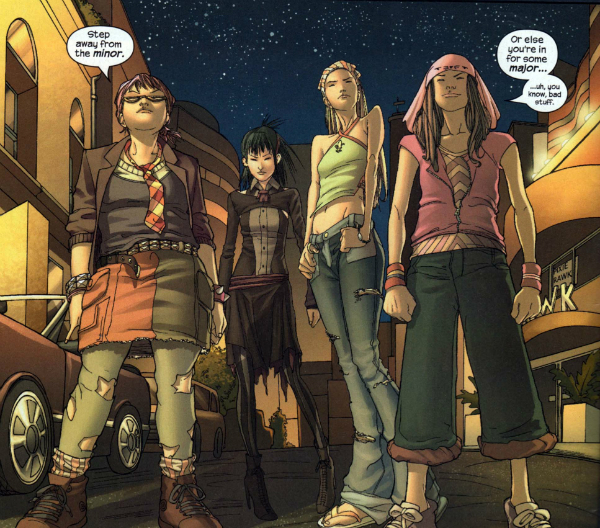
Runaways is a comic book series that chronicles the adventures of a group of minors who discover that their parents are supervillains. Not wanting to go down the evil paths of their parents, the kids make a break for it. Now, both boys and girls are part of the gang, but there are more girls than boys, and the women are nuanced, funny and smart. The de facto leader of the rag-tag group is Nico, a goth Japanese-American witch (um…how cool is that??). Then there’s Gertrude who doesn’t have any powers (unless you count her telepathic link to her female raptor), but she’s tough, smart, confident and is a fat-positive representation of a nontraditional female comic book body type. Next, little Molly is a scrapper and a mutant with superhuman strength and great hats who kicks the shit out of Wolverine. Finally, we’ve got the alien Karolina with powers of light and flight who explores her sexuality, realizing she’s a lesbian. Karolina ends up falling in love with the shapeshifting Skrull, Xavin, and the storyline explores transgender themes. Joss Whedon himself was involved for a time in the series, so you know it’s full of humor, darkness and deep connections to the character. There’s so much WIN in Runaways that it’s a crime they haven’t made a movie out of it yet.

6. She-Ra: Princess of Power

She-Ra: Princess of Power. EF yeah.
She-Ra: Princess of Power. EFF yeah.


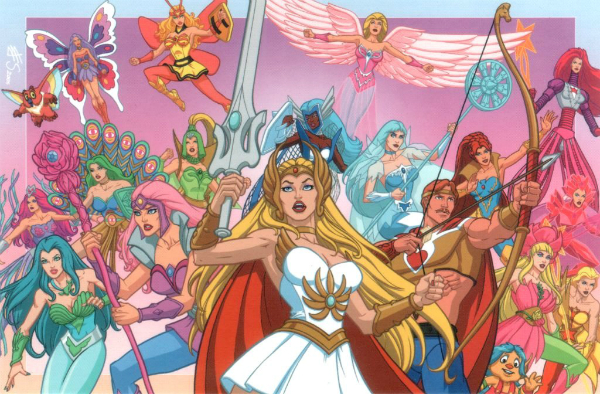
She-Ra is the twin sister (and spin-off) of He-Man. Possessing incredible strength, a healing touch, an ability to communicate with animals, and a power sword that transforms into anything she wants, She-Ra is, frankly, the shit. Ever since I was a bitty thing, I always loved She-Ra, and I’d contend that with her organizing of a 99.9% female force to fight the evil Horde, She-Ra and her powerful lady friends are busting up the patriarchy. Though 1985 saw the feature length animated film introducing She-Ra’s origin story through the eyes of her brother in The Secret of the Sword, it’s time for She-Ra to have her own live action film. I mean, He-Man got his chance on the big screen with Masters of the Universe, starring Dolph Lundgren. Though I love Lundren’s mush-mouth rendition of the most powerful man in the universe, it’s universally regarded as a steaming pile of Cringer crap. I’m sure She-Ra can easily top reviews like that, especially with her women-powered “Great Rebellion.”

7. Storm

Storm: goddess of the elements


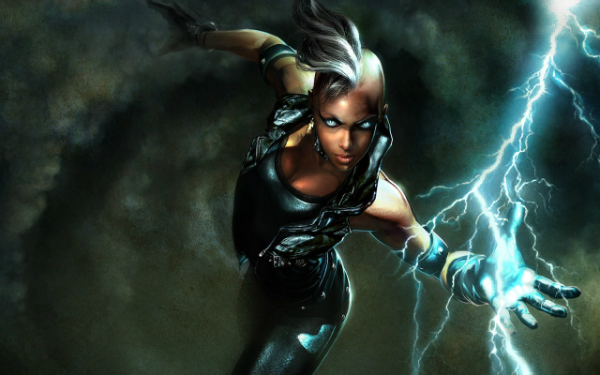
Storm, aka Ororo Munroe, is one of the most powerful mutants in the X-Men franchise. She is intelligent, well-respected and a leader among her mutant peers and teammates. Storm also flies and controls the fucking weather. Does it get more badass than that? Storm was the very first prominent Black female in either DC or Marvel, and the fanbase for this strong Black woman grows all the time. Though the X-Men film series sprung for the acclaimed Halle Berry to play Storm, her character is habitually underutilized and poorly developed. Enough! Let’s get Lupita Nyong’o to play Storm in her origin story, chronicling her thievery in Cairo, her stint as a worshiped goddess when her powers first emerged and her eventual induction into the X-Men. That, friends, is an epic tale.

8. Xena: Warrior Princess

Fierce Xena 325
Fierce Xena

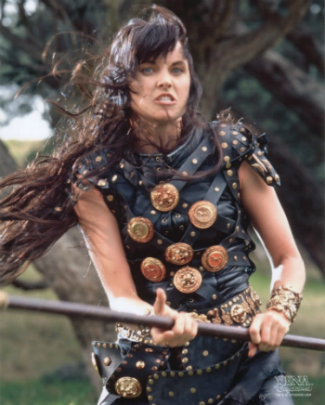
Xena: Warrior Princess is a TV series that ran for six years about a couple of women traveling and fighting their way across the world, their stories weaving in and out of ancient Western mythology. Xena herself is a complex character, full of strength and skill in combat, while battling her own past and demons. Her companion Gabriel, though also quite skilled at martial arts, is the gentler of the two, always advocating compassion and reason. Together, the pair formed a powerful duo with pronounced lesbionic undertones that has appealed to queer audiences for nearly 20 years. I suspect the statuesque Lucy Lawless could even be convinced to reprise her role as this fierce female warrior who stood up to gods and men alike.

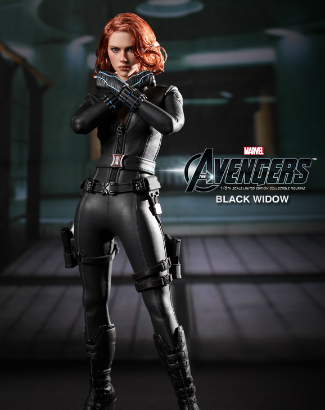
 9. Black Widow

Remarkably life-like Black Widow action figure


Black Widow, aka Natalia Alianovna “Natasha” Romanova, began as a Russian spy. With impressive martial arts abilities and wily womanly charms, Black Widow is renowned as one of the deadliest assassins in the Marvel universe. In an attempt to redeem her past, Black Widow joins the S.H.I.E.L.D agency and the Avengers, adding her considerable skills (that she has cultivated without the aid of magical abilities) to the team. Though I’m not, personally, the biggest fan of Black Widow, I’m impressed by her universal appeal. She’s appeared in a handful of comic book movie adaptations, most notably The Avengers, and people go ga-ga for her. Even those who care little for the rallying cry for greater female on-screen representation and even less for feminism are all about Black Widow starring in her own film. Hell, she even has a remarkably life-like action figure…proof positive that this gal has made it to the big-time.

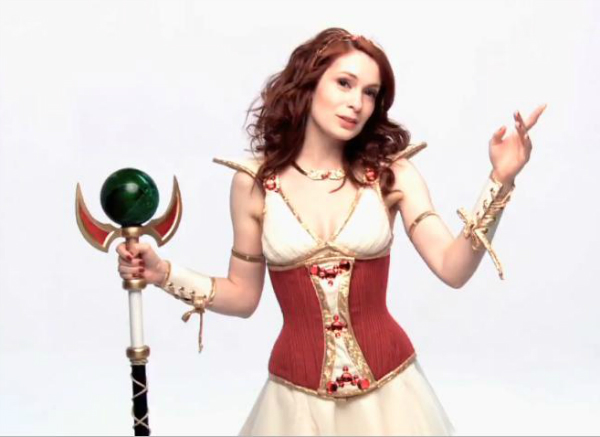
 10. Codex from The Guild

Codex: a charming nerdgirl with delusions of epicness


The Guild is a web series with short episodes that focuses on Codex, aka Cyd Sherman, an introvert with an addiction to massive multi-player online roleplaying games (MMORPG). In her online guild, Cyd is the powerful priestess Codex. Reality and her online personae collide when members of the guild begin to meet in real life. This is a fun and quirky web series written and created by its female star, the talented Felicia Day. Not all superheroines need to have superpowers and save the day. In fact, some superheroines just have to give it all they’ve got to make it through the day. With powers of humor and authenticity, Codex would make a welcome addition to the superhero film family.

Honorable Mention

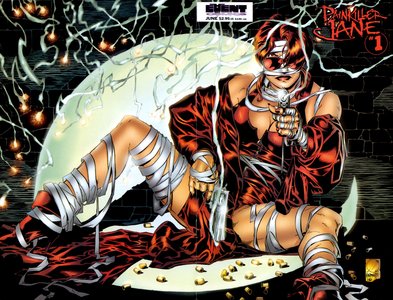
1. Painkiller Jane

Painkiller Jane

Queer Painkiller Jane has rapid healing powers like those of Wolverine, but she tends to be far grittier and darker, even facing off against the Terminator in a particularly bloody installment. She briefly had her own craptastic television series starring Kristanna Loken before it was wisely canceled.

2. Rogue

From the X-Men, Rogue is the complicated and compelling daughter of Mystique with vampire-like powers that make her nearly invulnerable but also render her unable to touch any other living creature.

3. Batgirl

Batgirl has had many permutations throughout the ages, beginning as a sidekick to Batman and Robin in comics, TV as well as film and ending with several different versions of her own comic series, including her incarnation as Oracle, the paraplegic command center for the Birds of Prey comic and disappointing TV series.

4. Power Girl

Power Girl is another version of Supergirl who, therefore, has the same powers as Superman. She is a leader among other superheroes, a formidable foe, and renowned for being “fresh and fun.”

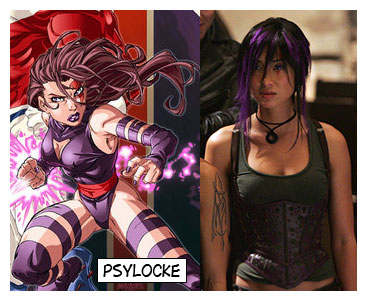
5. Psylocke

Comic Psylocke and her bit-part film counterpart


It might seem crazy that so many X-Men made this list, but, damn, they got some awesome ladies on the roster. I’m ending with Psylocke, my all-time favorite X-Men character. Elizabeth Braddock is a telepath who can use her telekinesis to create pyschic weapons. Upon her death, she inhabits the body of a Japanese ninja, eventually taking over the body completely so that she adds hardcore martial arts skills to her repertoire.

I know I missed a bunch of amazing superheroines. That’s a good thing because it means there are so many badass super babes out there that I can’t possibly name them all. Now we’ve just got to get a bunch of those ladies up on the big screen to show us reflections of ourselves and to inspire us to be more.

Sound off in the comments by listing your top female superhero picks to get their own films!

Take a look at the rest of my Top 10 installments: Top 10 Villainesses Who Deserve Their Own Movies, Top 10 Superheroine Movies That Need a Reboot, and Top 10 Superheroes Who Are Betters as Superheroines.

Read also:

Black Widow is More Than Just a Pretty Face in Captain America: The Winter Soldier
The Women of Captain America: The Winter Soldier
Dude Bros and X-Men: Days of Future Past
She-Ra: Kinda, Sorta Accidentally Feministy
Wonder Women and Why We Need Superheroines


Bitch Flicks writer and editor Amanda Rodriguez is an environmental activist living in Asheville, North Carolina. She holds a BA from Antioch College in Yellow Springs, Ohio and an MFA in fiction writing from Queens University in Charlotte, NC. She writes all about food and drinking games on her blog Booze and Baking. Fun fact: while living in Kyoto, Japan, her house was attacked by monkeys.

Father Archetypes in Guillermo Del Toro’s Films

There are patterns in Guillermo del Toro’s dark fairy tales, one of the obvious ones being the ease with which he puts children in harm’s way, some of their trials being so painfully harsh that one can’t help suspecting that he puts them in his stories just to tear at our heartstrings. Thankfully, the stories of childhood loss are balanced with protective Nurturer figures, some women, some men, but I’ll be focussing purely on the men because of the clichéd figure of the female nurturer.

1


This is a guest post by Rhea Daniel

There are patterns in Guillermo del Toro’s dark fairy tales, one of the obvious ones being the ease with which he puts children in harm’s way, some of their trials being so painfully harsh that one can’t help suspecting that he puts them in his stories just to tear at our heartstrings. Thankfully, the stories of childhood loss are balanced with protective Nurturer figures, some women, some men, but I’ll be focussing purely on the men because of the clichéd figure of the female Nurturer.

The Father archetype takes the form of king, tyrant, judge, doctor, executioner, devil, god, priest, take your pick, anything that traditional male roles offer. In real life as on reel, if their characters slip into the feminine role of nurturer (which should not be mistaken for saviour) we gush with praise, because he’s done something so contrary to his nature. On the other hand, we hold up the Mother to some very exacting standards, and are less likely to let her deviate from her primary role. While I’ve examined women’s roles in movies (because I felt there was such a dearth of complex ones), it jumped out at me how many men in Guillermo del Toro’s movies fit into archetypal Fatherhood roles, their characters too being complex, sometimes contradictory.

: : : SPOILERS AHEAD!! : : :

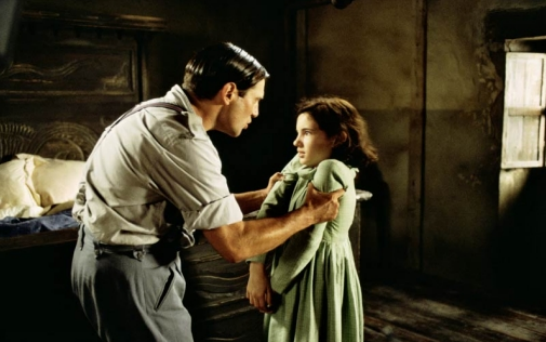
Vidal and Ofelia in Pan's Labyrinth
Vidal and Ofelia in Pan’s Labyrinth


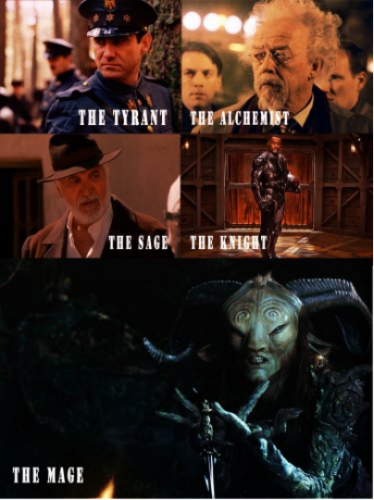
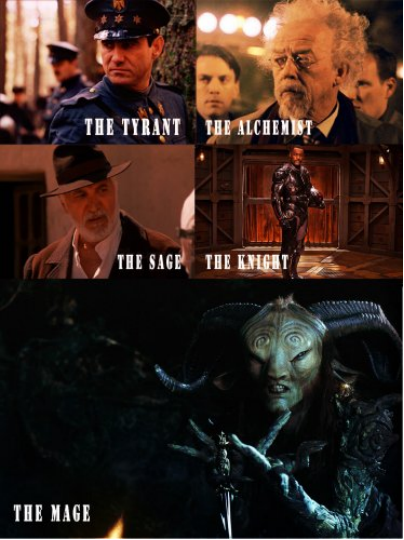
The Tyrant

Captain Vidal from Pan’s Labyrinth (2006)

Vidal fits perfectly into the role of The Tyrant. Part of Ofelia’s trial is escaping his oppressive clutches and trying to save her mother at the same time. The Tyrant is your model patriarch; as a fascist, he represents the worst of the Patriarchy. He values sons over daughters, females are only valued as hosts to create the next generation of tyrants. In fact, the entire movie is ridden with imagery and subtexts of the oppressed feminine battling the militaristic autocracy of the despotic tyrant. While he was willing to allow his wife to die if it allowed his son to live, his Nurturer side, though selective, surfaces when the child is born.

A patriarch deigns to give his name only to those he prizes as legitimate offspring, the age-old system of the patriarchy wields its power as long as its descendants hold its dynastic title, and by being denied the right to perpetuate his name just before his death, The Tyrant is truly defeated.

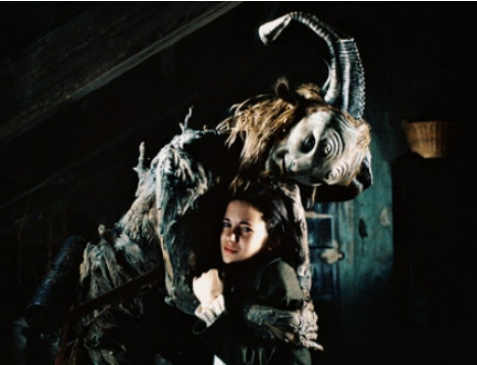
The Faun and Ofelia in Pan's Labyrinth
The Faun and Ofelia in Pan’s Labyrinth

The Mage

The Faun in Pan’s Labyrinth (2006)

The Faun’s role is significant because his character displays the duality of the Mage/Trickster archetype. As an ancient being, with “old names that only the wind and the trees can pronounce,” he occupies the noble archetypal roles of the Mage– a Magician, for he is capable of magic; Holy Man for his ancient wisdom; Guide–because he helps Ofelia find her way home; Nurturer–for the advice, comfort and help he gives her when she needs it.

When Ofelia bungles at her tasks, however, he shows his ugly side by turning into Tyrant, and finally when the time arrives for the final test, he turns Trickster by posing a moral dilemma to Ofelia: if she allows her brother to be harmed she would gain entry to her father’s kingdom, if she doesn’t she will lose that chance forever.

Ofelia proves her worth and gains access to the fairy kingdom through unintentional sacrifice. In the real world children might be rewarded for their bravery but not for their innocence, and the director sure rubs that in.

Trevor Bruttenholm and Hellboy in Hellboy II: The Golden Army


The Alchemist*

Trevor Bruttenholm in Hellboy (2004)

The Alchemist can be wizard or scientist, he represents transformation and change. In a negative context, he nurses an destructive ambition to exploit the natural world for profit. Trevor Bruttenholm as the occultist is the positive Father-Nurturer, transforming a demon child, a monstrous thing born of another dimension, into a force for good. Rasputin on the other hand represents the other side of the Alchemist’s persona, destruction and change for the sake of personal gain.

Dr Casares and Carlos in The Devil's Backbone
Dr Casares and Carlos in The Devil’s Backbone


The Sage

Dr. Casares in The Devil’s Backbone (2001)

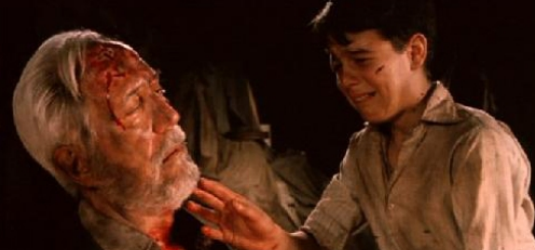
This movie is also set in a militaristic background, the orphan children are again victims of tyrants. Dr. Casares plays a true Nurturer figure in The Devil’s Backbone. As a man of science, he is a rationalist who denies the existence of Santi, the ghost child that tries to warn them of a coming disaster, emphasized by the unexploded bomb in the courtyard of the school.

His impotency might portray him as half a man, since virility is a necessary part of the Patriarchy, as it symbolizes power and regeneration. Casares is anything but a cold rationalist. When he takes a sip of the panacean Devil’s Backbone elixir, at first glance it’s a half-hearted attempt to cure his impotency, but by being teacher, guide and saviour to the fatherless children, he ultimately sacrifices his life while performing the role of Father-Nurturer, a role that requires the strength and willingness to put oneself in harms way to make sure one’s progeny survives.

Stacker Pentecost and Mako Mori in Pacific Rim


The Knight

Stacker Pentecost in Pacific Rim (2013)

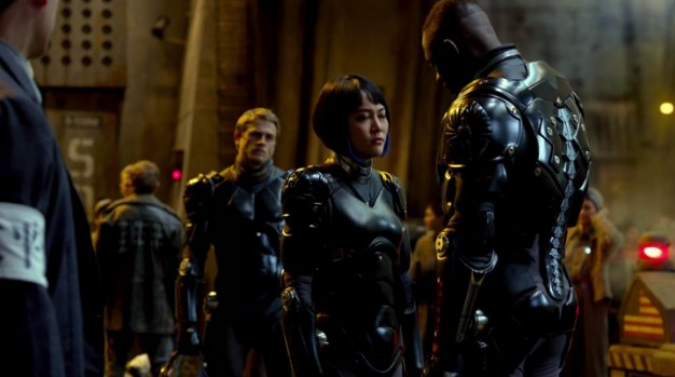
The Knight is a warrior with a code. He fights for justice, for the innocent, for the weak. He is chivalrous and stoic and that chivalry contributes to his sexism. While the argument between blind obedience and freeing oneself of the Father-Tyrant is shown several times, there are two fathers who let go of their children in the story. The ability of the Knight is limited, he can’t always protect his children, so to avoid becoming the hated archetypal Tyrant, the Knight has to free himself of the glory of his saviour role and acknowledge his limitations. Stacker Pentecost learns to let go, his eventual acknowledgment of Mako’s maturity shows his growth. He does not have to let go of his gallantry however, to “clear a path for the lady,” so she can make her own choice whether to risk her life in the battle.


* Going purely by the movie.


Rhea Daniel got to see a lot of movies as a kid because her family members were obsessive movie-watchers. She frequently finds herself in a bind between her love for art and her feminist conscience. Meanwhile she is trying to be a better writer and artist and you can find her at rheadaniel(dot)tumblr(dot)com.

‘Edge of Tomorrow’: Yesterday’s Tom Cruise

Please don’t let my snarky tone fool you – I love science fiction, particularly near-future stories with a dystopic veneer. So does everyone else, which is why this film genre has been so strongly represented lately, e.g., ‘RoboCop’ (2014), ‘Captain America: The Winter Soldier’ (2014), and ‘X-men: Days of Future Past’ (2014), to name a few. And that’s the problem – it’s difficult to watch ‘Edge’ without comparing it to its contemporaries.

Written by Andé Morgan.

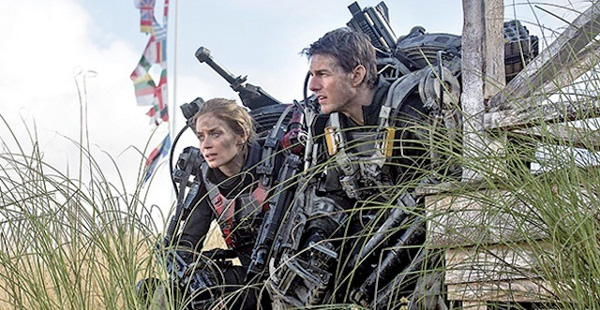
Edge of Tomorrow stars Emily Blunt and Tom Cruise as near-future warriors battling alien invaders. It was directed by Doug Liman.

Release Poster.
Release Poster.
There is something perverse about attacking a film for its lack of originality when the central conceit is that the main character repeats the same day over and over again. So, in an effort to preserve my purity, now for something completely different. You remember Groundhog Day (1993), yes? It had plenty of Bill Murray and Andie MacDowell, but it was lacking… sci-fi. Specifically, it needed some quantum pseudoscience and a horde of generic squido-mechanical pod people.
Anyway, Edge of Tomorrow (2014). Released this weekend (June 6), it stars Tom Cruise as military PR weasel Major William Cage. We meet him after a trite news reel intro composed of an anthology of worldwide unrest footage (most, it seems, from the last century for some reason). He has been summoned by a large man who commands the world’s unified armed forces. Instead of spinning war from afar, Cage will be imbedded with the troops during the imminent (second) landing at Normandy. This time, humanity is attempting to take back continental Europe from an alien aggressor, so far only vaguely referenced as the “Mimics.” Cage is a coward, and clumsily threatens blackmail in an attempt to avoid combat. It doesn’t work. Instead, Cage is arrested and sent to a forward base to meet his fate as a deserter conscript. Behold, the premise.
Tom Cruise does ride a motorcycle.
Please don’t let my snarky tone fool you – I love science fiction, particularly near-future stories with a dystopic veneer. So does everyone else, which is why this film genre has been so strongly represented lately, e.g., RoboCop (2014), Captain America: The Winter Soldier (2014), and X-men: Days of Future Past (2014), to name a few. And that’s the problem – it’s difficult to watch Edge without comparing it to its contemporaries.
Like the films mentioned above, Edge features frenetic action sequences and trailer-worthy tech pieces. Most notable are the exo-suits (“jackets”) employed by the Earthican forces. Exoskeletons are having something of a moment recently; see RoboCop (2014), The Amazing Spiderman 2 (2014), the Iron Man franchise, and others. So, who wore it better? My sense of aesthetics favors Murphy in RoboCop. Perhaps this is not a fair comparison, as RoboCop was much more concerned with the ethics and practical reality of cyborgism. Still, the exosuits in Edge, which are really the film’s party piece, were just so mundane compared to those envisioned in RoboCop. Instead of a fresh vision of technological advancement, they seemed like a regression from the Caterpillar P-5000 Powered Work Loader in Aliens (1986). In fact, they seem like tech that might really only be a few years away, much to the detriment of their wow factor.
That loader.
That loader.
The Mimics too, are unremarkable. Spastic glowing balls of slashing alien death have been done better by the Matrix films, and, even, by Battleship (2012). It’s explained that the mimics have a hierarchal structure composed of a legion of small fiery footsoliders, rare blue “alphas,” and a central “server” being (I was reminded of the brain bugs in Starship Troopers). During the first iteration of the beach landing Cage is, of course, killed. On his way out, he kills an alpha and the alien’s blood mingles with Cage’s. The brain mimic has the power to TURN BACK TIME, and does so whenever an alpha is killed. However, while the head mimic can list time travel, telepathy, organo-metallic bioengineering, and interstellar travel as hard skills, it is unable to discern that Cage is actually a human. Time is reversed, and Cage awakens to face battle once again.
And again.
And again.
And again.
Hilarious.
Hilarious.
Yeah, I am down on this movie. I can forgive a lack of originality if the other elements of a story shine, but we don’t even find out why the aliens are called mimics! What do they mimic? Aliens from other movies? What the hell, man?
The supporting cast doesn’t fare much better. Cage’s fellow soldiers are a rag tag crew in the vein of every war movie ever. There is a mean southern (y’all can tell by the accent, y’all) drill sergeant, a fat guy, a “crazy” guy, a black guy, a foreign guy, and a woman. It can be refreshing to see women depicted in combat roles, but Edge, like so many other films before, falls into tropes in its depiction. The female solider is shown as less clean, less sensible, and gratuitously gruff, as if she has to curse and posture constantly to defend her presence in the unit.
Blunt’s character, Rita Vrataski, is something different. She is a battle-hardened soldier that Cage has set up as a figurehead for the military to rally around. She wears practical armor (except for a helmet – no one has time for hat hair on the battlefield), and dispatches her foes with a badass Final Fantasy sword. To his credit, Liman avoided eroticizing her combat moves and generally stayed away from FFD clichés, save for a few superfluous yoga poses. A superior warrior, she teaches Cage in anti-chrome-cephalopod techniques in a training montage filled with hilarious homicide sight gags.
It is great to see a feature with a woman warrior who is not also a sex object, but there are a few problems. The other soldiers in the film refer to Rita as the “Full Metal Bitch,” a term she clearly does not care for.  And while she initially trains Cage, he soon takes over a protector role, and attempts to use time travel trickery to seduce her. This scene is kinda creepy, and it does not help that Blunt and Cruise lack chemistry.
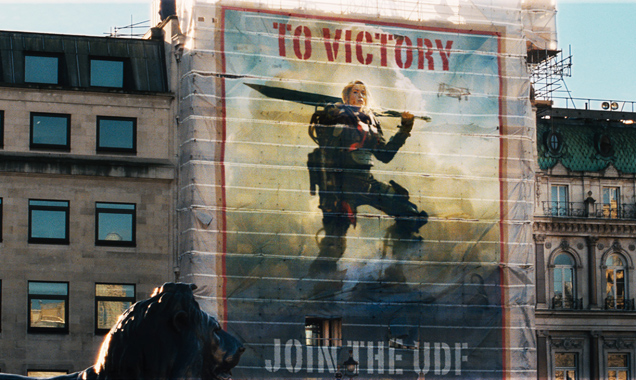
The best image in the film.
Rita does make it to the climax without getting well and truly fridged, and joins Cage in making a heroic sacrifice. Unfortunately, the script fails both the spirit and the letter of the Bechdel test. I did not note any female characters talking to each other, and the several women in the film were always either talking to Cage or talking about Cage.
Edge of Tomorrow is not a repugnant film – its treatment of women is uneven, but trending towards positive. But neither is it a great film (despite what the interwebs may tell you). For example, the dialogue was hokey in a way befitting it’s genre. Midway through the film a wild-haired-scientist tells us that the aliens’ “only vulnerability is…humanity.”
Post climax, a feel-good ending closes with a slapsticky shot of Cruise laughing to camera right. As the credits start to roll, the viewer is left with a quickly fading memory of an unremarkable vision of the future. The film does borrow heavily from the other movies mentioned above, as well as from previous Cruise vehicles like Minority Report (2002) and Oblivion (2013). In fact, Rachel Redfern was on point in her review of Oblivion: “Tom Cruise’s latest movie…is exactly that, a movie about Tom Cruise.”
I agree. Likewise, it’s best not to evaluate Edge as an original film, a science fiction film, or a feminist film – it’s a Tom Cruise film.
Note: For more information on things like “why are they called mimics,” and “what the hell is this movie supposed to be about,” here’s the source material: All You Need is Kill by Hiroshi Sakurazaka.

Andé Morgan lives in Tucson, Arizona, where they write about culture, race, politics, and LGBTQ issues. Follow them @andemorgan.

Bitch Flicks’ Weekly Picks

Check out what we’ve been reading this week–and let us know what you’ve been reading/writing in the comments!

recommended-red-714x300-1

The 8 Biggest Lies About Abortion, Debunked by the Year’s Most Important Rom-Com by Elizabeth Plank at PolicyMic

‘Obvious Child’ Tries to Reverse the Trend of Risky Abortions in Film by Pema Levy at Newsweek

‘Obvious Child’ Changes the Rom-Com Game by Sarah Seltzer at RH Reality Check

How ‘The Facts of Life’ Broke One of TV’s Most Taboo and Uncomfortable Topics by Barbara Fletcher at OZY

The XX-Factor of ‘Game of Thrones’: Why the Women of Westeros Are the Real Stars by Rebecca Raber at Take Part

The Secret Lives of Black Girls: Expanding The Coming Of Age Film by Nijla Mumin at Shadow and Act

A History of Women in Animation: Mothers of a  Medium by Carrie Tupper at The Mary Sue

Maleficent: Finally, Disney Gives us a Positive Witch/Mother by Natalie Wilson at Ms. blog

What Lupita Nyong’o and Gwendoline Christie Bring to ‘Star Wars: Episode VII’ (Analysis) by Graeme McMillan at The Hollywood Reporter

First Look: Carey Mulligan In ‘Suffragette’ Plus Official Synopsis by Kevin Jagernauth at The Playlist

In Shonda They Trust? Black Women Take Over TV by Aaron Randle at Ebony

Film Corner: Disney’s Big Hero 6 by Melissa McEwan at Shakesville

‘A Million Ways to Die in the West’ is a love letter to the ‘nice guy’ myth by Dominick Mayer at The Daily Dot

10 LGBT Film Festivals To Head To This June at /bent

Updated: Lupita Nyong’o Options Chimamanda Ngozi Adichie’s Trans-Atlantic Love Story Americanah by Inkoo Kang at Women and Hollywood

Jenny Slate Is Comedy’s Next “It” Girl by Erin La Rosa at Buzzfeed


Don’t Worry So Much: How Not To Review Women’s Writing by Mallory Ortberg at The Toast


What have you been reading/writing this week? Tell us in the comments!


Breaking: Dame Judi Dench Is Not Entirely Perfect

Judi Dench’s charming, Oscar-nominated performance as the eponymous character carries with it a rather shaky Irish accent.

I’m trembling, deigning to disparage one of the greatest actresses in cinema, particularly in this fine performance. So let me clarify that this isn’t one of those embarrassingly overwrought or perplexingly unrecognizable attempts at an accent. The problem is she does not commit. There are moments when—to my admittedly untrained American ears—her accent is convincing. But those moments last about half a line of dialogue every twenty minutes of film. The rest of the time it is just Judi Dench’s (glorious, enviable) regular voice.

This is shaking my world-view. There is something Dame Judi Dench cannot do perfectly.

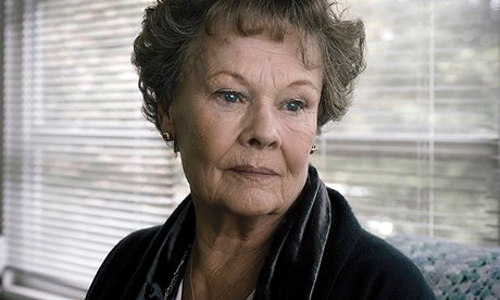
Judi Dench in 'Philomena'
Judi Dench in Philomena

I finally saw Philomena, the sole outstanding 2013 Best Picture nominee on my list. Better yet, I saw it on my way to Ireland, a key setting in the film, where I’m currently enjoying an impromptu vacation.

These circumstances drew my attention to something rather shocking: Judi Dench’s charming, Oscar-nominated performance as the eponymous character carries with it a rather shaky Irish accent.

I’m trembling, deigning to disparage one of the greatest actresses in cinema, particularly in this fine performance. So let me clarify that this isn’t one of those embarrassingly overwrought or perplexingly unrecognizable attempts at an accent. The problem is she does not commit. There are moments when—to my admittedly untrained American ears—her accent is convincing. But those moments last about half a line of dialogue every 20 minutes of film. The rest of the time it is just Judi Dench’s (glorious, enviable) regular voice.

How is it possible that this woman is not perfectly perfect in every way?

This is shaking my world-view. There is something Dame Judi Dench cannot do perfectly.

I am trying to spin this positively. If Judi Dench can craft a great performance, but one with a significant flaw, perhaps any of us can do great things (maybe not Dench great, but you know, our personal best) even if there is some part of it we struggle with. See, I write for the esteemed site Bitch Flicks, but I just ended a sentence with a preposition.

Here’s some things other than an Irish accent that I’m willing to venture Dame Judi Dench cannot do very well:

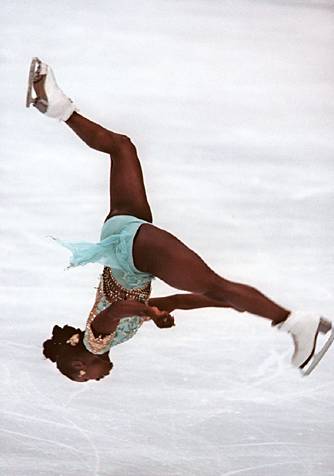
Surya Bonaly can do something Judi Dench cannot.
  1. A back flip on ice skates. Well, certainly not a back flip landing on a single blade, like Surya Bonaly.
  2. Juggle a dozen quail eggs.
  3. Speak fluent Xhosa.
  4. Fold a fitted sheet with one hand tied behind her back.
  5. Run a marathon in high heels and a straightjacket.
  6. Recite pi to 300 digits.
  7. Breed pandas.
  8. Explain the plot of James Joyce’s Ulysses.
  9. Communicate with ducks.
  10. Recreate every braided hairstyle she sees on Pinterest.
  11. Traverse the Darien Gap.
  12. Fold a piece of paper in half more than 11 times.
  13. Climb Everest without oxygen tanks.
  14. Score over 1,000 in Flappy Bird.
  15. Recall every meal she’s had for the last 20 years.
  16. Write her name on a single sesame seed.
  17. Catch a cloud and pin it down.
  18. Solve the P versus NP problem.
  19. Travel through time.
  20. Paint her nails without getting any on her cuticles.

So that’s that. Dame Judi Dench isn’t perfect. Her Irish accent in Philomena was inconsistent and weak. She PROBABLY can’t do the things listed above (at least not yet). But that’s OK. We’re all OK.


Robin Hitchcock is an American writer presently in Galway, Ireland. Her Irish accent is substantially worse than Judi Dench’s.

‘Rabbit-Proof Fence’: Racism, Kidnapping, and Forced Education Down Under

‘Rabbit-Proof Fence’ (2002), directed by Phillip Noyce, is a powerful and assertive film version of this tragedy. Based on three real-life indigenous survivors of this era, known collectively as the Stolen Generation, the film is set in 1931 and tells the story of three young girls who were kidnapped on the government’s authority, forced into an “aboriginal integration” program 1,200 miles from home, and who are determined to run away and make it home on their own by following the fence. Unfortunately, the school’s director hunts them with the veracity of an early 1800s US slavemaster. He is relentless and determined, but the girls are as well.

In the United States, there were Indian Boarding Schools that coerced and invited Native American parents to release their children into the system that would transform them into good little American citizens with such useful vocations as domestic and farm labor. Sometimes, school officials resorted to kidnapping when parents obstinately refused to hand over their children. From the government’s and schools’ perspectives, this was a tremendously good deal for those pesky Indigenous creatures, but for the Native children who suffered and survived the experience, it was anything but beneficial in many circumstances. Across the ocean, in Australia, the government and like-minded citizens did much the same thing to their aboriginal population from 1869 through 1970.

Rabbit-Proof Fence (2002), directed by Phillip Noyce, is a powerful and assertive film version of this tragedy. Based on three real-life indigenous survivors of this era, known collectively as the Stolen Generation, the film is set in 1931 and tells the story of three young girls who were kidnapped on the government’s authority, forced into an “aboriginal integration” program 1,200 miles from home, and who are determined to run away and make it home on their own by following the fence. Unfortunately, the school’s director hunts them with the veracity of an early 1800s US slavemaster. He is relentless and determined, but the girls are as well.

[youtube_sc url=”https://www.youtube.com/watch?v=Lbnk8wSVMaM&feature=kp”]

The film opens with a narrative voiceover in Aboriginal language by the real Molly Craig, describing what she sees from her perspective in the future: “This is a true story. Story of me, my sister Daisy and my cousin Gracie when we were little. Our people, the Jigalong mob, we were desert people then…walking all over our land. My mum told me about how the white people came to our country. They made a storehouse here at Jigalong…brought clothes and other things: flour, tobacco, tea. Gave them to us on ration day. We came there, made a camp nearby. They were building a long fence.”

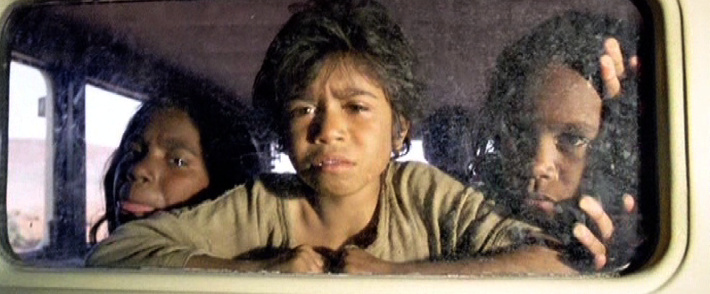
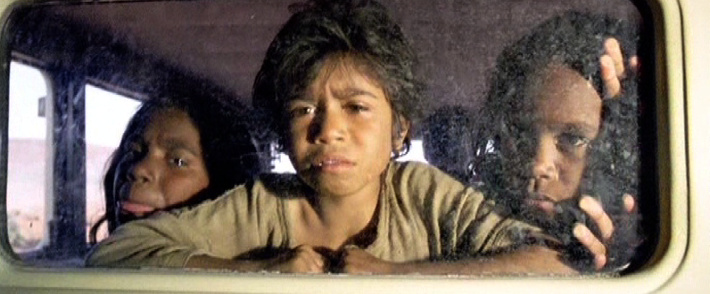
The girls peer out the back window as the soldier drives them away from their family.

The voiceover accompanies cinematic views of the desert landscape, bright sun, open land, and sky. These opening two minutes set the stage, the scene, and the perspective of the film. It is clearly the director’s intention for viewers to see this moment in history from the Indigenous peoples’ perspective and to understand that this type of thing really did happen. For anyone who dislikes boldly polemical films, this approach might be a turn-off, but I encourage you to stick with it. The story itself is moving and well-acted by all players. You will end up hating Neville, the government official granted guardianship of all Aboriginal peoples by the Aborigines Act, played by Kenneth Branagh, and you will root for the girls to succeed in their quest to return home. The villain in this film, and in reality, is the government and its racist policies.


Kenneth Branagh as Neville (on right), with David Gulpilil as Moodoo (on left)


Molly Craig (Everlyn Sampi), Daisy Craig Kadibill (Tianna Sansbury), and Gracie Fields (Laura Monaghan), are considered by the government to be “half-castes,” because they have white fathers. In the opening scene where the girls and their female elders are hunting iguana, the idyllic family scene is overshadowed by the presence of a white soldier and a white tracker, who identify the girls and ride past their outback home. The viewer is meant to feel the discomfort of being watched and cataloged. The scene then shifts to a neat, wooden-cabinet-lined government office where Neville calmly and dispassionately writes out the kidnap orders for Molly, Gracie, and Daisy.

With a bold stamp on the papers, Neville explains to his secretary these new orders:

“Now this report from Constable Riggs about the three little half-caste girls at the Jigalong. . .Molly, Gracie, and Daisy, the youngest is of particular concern, she’s been promised to a full-blood. I’m authorizing their removal. They’re to be taken to Moore River as soon as possible.”

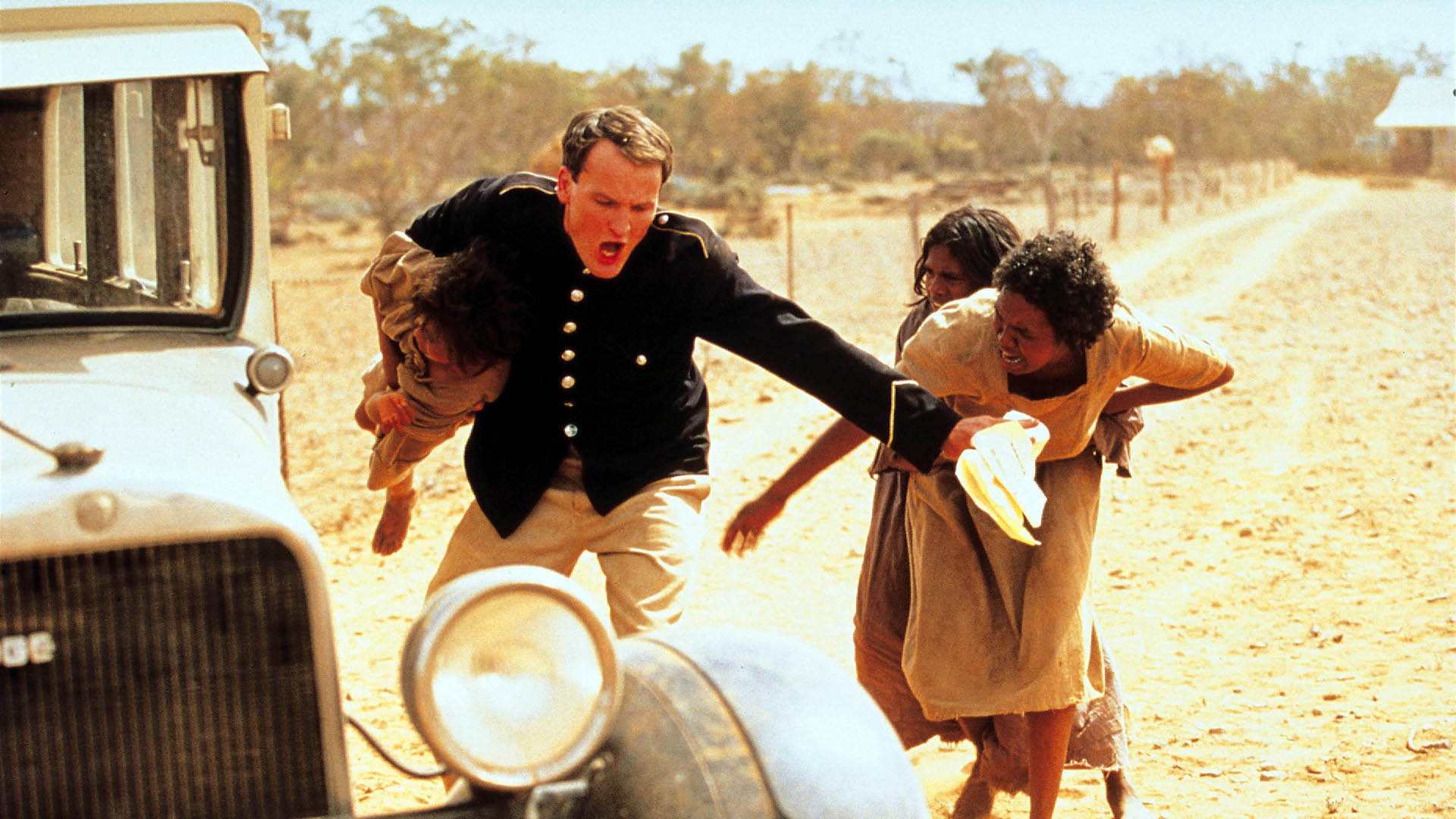
And just like that, three girls’ lives are changed in abominable ways. Constable Riggs (Jason Clarke) arrives on ration day and chases the panicked and running girls with their mother with a car, threatening to lock the mother up if the girls don’t come with him. He forcefully pulls the fighting girls away from their screaming mother and pushes them into the back seat of his car. The girls and mother wail and scream as the solder drives the car away, leaving the older women moaning on the desert land. Affecting doesn’t begin to describe this scene, especially for any woman who is a mother. Just imagine your government coming after your child in this manner.

The white soldier kidnaps Molly, Gracie, and Daisy, on official orders from Neville,
the Chief Protector of Aborigines.


Immediately following this scene, Neville is once again in a well-appointed room, showing photos to a group of white women who support the efforts of government-run Aboriginal integration schools such as Moore River, and explaining the rationale for the government’s racist policy of forced removal and education:

“As you know, every Aborigine born in this state comes under my control. Notice, if you will, the half-caste child. and there are ever-increasing numbers of them. Now, what is to happen to them? Are we to allow the creation of an unwanted third race? Should the coloreds be encouraged to go back to the black? Or should they be advanced to white status and be absorbed in the white population? Now time and again, I’m asked by some white men, if I marry this colored person, will our children be black? And as chief protector of Aborigines, it is my responsibility to accept or reject these marriages.” At this point in his speech, Neville changes the slide to an image of two women and a young boy before continuing.

Neville (Kenneth Branagh) explains how the Native is bred out.

“Here is the answer. Three generations. Half-blood grandmother, quadroon daughter, octoroon grandson. Now as you can see in the third generation, or third cross, no trace of Native origin is apparent. The continuing infiltration of white blood finally stamps out the black color. The Aboriginal has simply been bred out.. . .In spite of himself, the Native must be helped.”

Therein lies the reasoning behind Aboriginal integration in Australia.

At the Moore River school, where the girls are sent by Neville, the goals are integration into white society as domestic workers and farm laborers, removal of all Aboriginal language and culture from the children, and physical abuse to reinforce these goals.

Molly, Daisy, and Gracie experience their first morning at
the Moore River Native Settlement.

After the girls are fed and washed, they are given clothes. Gracie says to Molly in their own language, “New clothes!” The white female teacher leans down and says, “This is your new home. We don’t use that jabber here. You speak English.”

Downloadable clip from Australian Screen: Neville inspects Molly at Moore River.

After seeing a girl returned and punished for trying to escape, Molly lays awake at night thinking about how these people make her sick, and then she dreams of the spirit bird that her mother told her would always guide her. The next day, while everyone is at church, Molly watches from the dormitory doorway as a thunderstorm growls on the horizon. In this moment, she makes a decision. She turns back to Gracie and Daisy, who are on the bed, and says, “Come on. Get your things. We’re going.”

Gracie asks, “Where we going?”

Molly responds, “We’re going home, to mother.”

Daisy looks down at her lap and then looks up to Molly. “How we gonna get there?”

Molly ties up her small bag and says, “Walk.”

Gracie is skeptical and Daisy fears that the tracker, Moodoo, will catch them. But Molly is an experienced hunter at 14 years old and knows that the rain will cover their tracks. This is the moment.

Their absence is not discovered until bed check that night and the hunt is on.

After escaping Moore River Settlement, the girls try to make it home by following the fence
that bisects the continent to keep the rabbits on one side and farms on the other.

One of the most refreshing surprises in this story is the kindness the girls receive from both Aboriginal and white strangers whom they encounter along the way. The food and guidance they receive assists Molly’s considerable survival skills as the girls make their way North to an unknown conclusion, especially as they enter the most unforgiving and dangerous terrain of the desert. This is compelling cinema for anyone with a sympathetic heart and a mind inclined toward justice.


Rabbit-Proof Fence promotional poster


Rabbit-Proof Fence is available to stream on Netflix, Amazon, and Google Play. This film would make an excellent addition to any curriculum or class dealing with racism, government oppression, global history, indigenous peoples, family bonds, or individual powerlessness in the face of centralized power. Government oppression of indigenous peoples has been going on as long as there have been powerful central governments that want to control people, and this is worthy of acknowledgment and study because it continues today. One way to break down acceptance of such offensive and damaging control practices by governments is to watch films like Rabbit-Proof Fence, or read stories by the real people who survived such oppression, and widen our view of the world; see racism and other nefarious governmental practices for what they are and then perhaps speak out against those practices, possibly by sharing such stories with others. The more the average citizen truly knows and understands, the less likely she is to just blindly accept what the government claims is good for her. And isn’t that one of the more noble and beneficial goals of education?

_____________________________________

Dr. Amanda Morris is an Assistant Professor of Multiethnic Rhetorics at Kutztown University of Pennsylvania with a specialty in Indigenous Rhetorics.


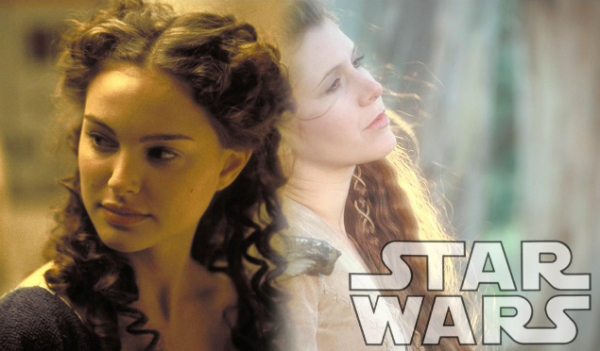
The Very Few Women of ‘Star Wars’: Queen Amidala and Princess Leia

With cast members Daisy Ridley, Carrie Fisher (reprising her role as the iconic Princess Leia), Lupita Nyong’o and Gwendoline Christie, these women quadruple the number of female leads that typically appear in a ‘Star Wars’ trilogy. That’s right. Until now, space has apparently been no place for women, especially strong women with more than one or two lines.

Mother and daughter: Padme and Leia
Mother and daughter: Padmé and Leia


Written by Amanda Rodriguez.

As buzz builds around the upcoming and presumably final Star Wars trilogy following the announcement of the Episode VII’s cast, I’m relieved to see that, with the recent addition of Game of Thrones‘ Gwendoline Christie and 12 Years a Slave‘s Lupita Nyong’o, the Star Wars franchise is trying to overcome its reputation as a sausage-fest. With Daisy Ridley on board (I’m guessing to play Han and Leia’s daughter) and veteran Carrie Fisher, who’ll be reprising her role as the iconic Princess Leia, these women quadruple the number of female leads that typically appear in a Star Wars trilogy. That’s right. Until now, space has apparently been no place for women, especially strong women with more than one or two lines. Now we just have to hope that Christie and Nyong’o won’t be used as Othered alien cameos and that these women’s considerable talents will be used, instead, to enrich the flagging franchise.

Consider the way the questionable way George Lucas has dealt with the very few women of Star Wars from the beginning. For the original Episodes IV-VI, we have Fisher as the tough rebel leader, but still royalty, Leia Organa…the only female character of note in the entire trilogy.

Leia in camouflage uniform on the forest moon of Endor


In the prequel Episodes I-III, we have Natalie Portman playing Padmé Amidala, Luke and Leia’s mother as well as a strong, independent, politically savvy queen…the only female character of note in the follow-up trilogy.

'Star Wars Episode I: The Phantom Menace' featured an ass-kicking Amidala
The Phantom Menace featured an ass-kicking Padmé


Basically, despite the fact that entire Star Wars trilogies feature only a single female lead, each trilogy starts off with promise because that lone lady happens to be an empowered women who leads others with compassion, but isn’t afraid to get her hands dirty by firing a few blasters.

Mother and daughter both start off as forces to be reckoned with


Though Leia is the apex of yet another insipid (and incestuous) cinematic love triangle, her role as a critical leader in the rebellion is far more defining of her identity. In A New Hope, Leia is captured by Imperial forces and tortured. Not only does she not reveal the location of the rebel alliance, she is also integral in the success of her own rescue at the hands of Han and Luke. She also displays remarkable bravery, intelligence, and an innate talent for The Force (shown in both Empire Strikes Back and Return of the Jedi through unexplained knowledge, strength, and a supernatural connection to her twin, Luke).

A deceptively helpless imprisoned Leia moments before her escape


Interestingly enough, one of Leia’s most seriously badass scenes is also, conversely, her most iconically objectifying one as well. When Leia poses as a “ruthless” bounty hunter to infiltrate Jabba’s Palace to rescue Han in Return of the Jedi, her cool points went through the roof. I love the idea of the woman organizing a team to go in and rescue her male love interest. However, women being in love within the Star Wars universe never goes well, and Leia is captured and forced to don scanty clothing and lounge beside Jabba. The film is vague about whether or not she has been raped or forced to engage in sexual acts with Jabba, but from here on out, Leia’s image as “Slave Leia” has gone down in pop culture as well as sexual fetish history and continues to be a popular cosplay for nerd gals and others.

I hate that Leia is best remembered for her "Slave Leia" outfit
I hate that Leia is best remembered for her “Slave Leia” outfit


Though Leia is demeaned, harassed, threatened, and disgusted by her captor, in the end, she’s able to take charge. With nothing but the chain around her neck, enslaving her, she kills Jabba, one of the most iconic villains of all time before aiding the rest of her friends in their escape. Her self-liberation, that she’s integral to her team and their escape, and that she fucking killed Jabba the fucking Hut goes a long way to distract us from the fact that for two films, we didn’t even see Leia’s wrists or ankles and suddenly, now that she’s in love, she’s a prime target for grossly sexualized objectification.

Though scantily clad, Leia is heavily armed


Later in Return of the Jedi, things get even dicier for Leia when she’s befriended and essentially held hostage by the furry Ewoks (I wonder if Lucas has some sexual fetishes he was indulging in this film). They give her a rustic dress, braid her hair and make her wear it down for the first time in the trilogy. They protect her and ignore her. Essentially, the Ewoks relegate Leia to a traditional female role, removing her agency. Leia is rescued by her friends yet again. The fact of the matter is that Leia, our only female character, is captured and rescued more than any other character in the trilogy. In the end, the film gives her back a measure of agency, and she is allowed to fight in the final battle.

Leia’s mother, Padmé, is a more extreme example of Lucas’ at best confused, at worst fucked-up attitude toward women in that her highs are higher, but her lows are so very, very much lower. On the positive side, Padmé is a popular and well-respected ruler-turned-Senator who is courageous in her dedication to her people. She generally wields her power for good, in defense of her planet and is never power hungry, nor is she a mere figurehead (despite the ridiculous ornamental nature of her wardrobe). She is alternately a diplomat and a warrior when the need arises.

Amidala doesn't shirk from necessary conflict
Padmé doesn’t shirk from necessary conflict


Though considerable, that’s where Padmé’s awesomeness ends. Throughout all three films, she is treated like a doll with her parade of outfits and her elaborate face painting. There’s even a Star Wars wiki page dedicated to her extensive wardrobe. Much of her Naboo state attire is even offensive with its appropriation of Asian cultural aesthetic.

So...many...costume...changes
Does Lucas also have an Asian fetish?


Despite the focus the films place on her body via her endless stream of costumes, Padmé mostly remains a badass (except for her vote of no confidence in Chancellor Valorum that opens the door for Palpatine to take control of the Senate, ushering in the tyranny of the Empire for decades to come…except for that). All agency slips from her, though, when Padmé falls in love with the atrociously acted Anakin Skywalker.

Padmé becomes little more than a love interest and a pretty face


Her story ceases to be one about political advocacy, diplomacy, and her struggles to keep her people’s liberties and safety intact. Instead, Padmé becomes little more than a love interest and a pretty face. Ignoring the fact that the love story is painfully trite and stilted with zero chemistry and wooden acting, this romance becomes all that Padmé is about. She marries Anakin in secret and becomes pregnant, and her personality totally changes. She becomes a simpering, deplorable character who dies of a broken heart. I mean, who cares that Anakin has been a childish wanker from the beginning and that she’s got a newborn set of twins? Life, I guess, is just too unbearable for a once strong and independent woman once she realizes she made a bad choice in love.

[youtube_sc url=”https://www.youtube.com/watch?v=tfX01lURXFk”]

Interestingly enough, Lucas did a better job in the 70s and 80s with his depiction of Leia than he did 20 years later when he brought Padmé to life.

Of the renderings of Skywalker women, Leia wins the prize for badassery


It’s a sad state of affairs when representations of women become progressively less feminist as time goes on. Despite the fact that certain parties are involved: Lucas with his growing record of bad judgment and J.J. Abrams with his habit of taking all the substance out of sci-fi franchises, I can’t help but be hopeful that the new Star Wars trilogy will get it right where its predecessors failed. Though the series has let me down before (Episodes I-III were, frankly, Bantha fodder), having several actresses on the cast for this new trilogy, women known for their strong female characters is a bright spot in a franchise that’s rapidly turning towards the Dark Side.

Of George Lucas, I, like Luke, can only say, “There is good in him. I’ve felt it.” And I, like Luke, will continue to have faith until it is perhaps too late.

Read also: Women in Science Fiction Week: Princess Leia: Feminist Icon or Sexist Trope?


Bitch Flicks writer and editor Amanda Rodriguez is an environmental activist living in Asheville, North Carolina. She holds a BA from Antioch College in Yellow Springs, Ohio and an MFA in fiction writing from Queens University in Charlotte, NC. She writes all about food and drinking games on her blog Booze and Baking. Fun fact: while living in Kyoto, Japan, her house was attacked by monkeys.


Maria Bamford: Challenging Mental Health Stigma Through Comedy

For whatever reason, all the reactionary tropes inherent in pop culture seem to get amplified in comedy. If it’s still rare to find a mainstream comedian with openly feminist leanings, finding one who speaks openly and progressively about mental illness is almost impossible.

Written by Max Thornton.

One of the true blessings of my grad school experience thus far has been a relative openness about mental illness. My fellow students and I compare notes on our medications, encourage each other to get the help we need, even theorize about our mental illnesses in papers and dissertations. Perhaps this is uncommon outside of programs with “philosophy” in the title – maybe even outside of the two graduate institutions I have attended – but it’s certainly almost unknown in wider society.

The more disability and crip theory I read, the more I notice the prevalence of ableist rhetoric in pop culture, from patronizing Hollywood Oscar-bait to problematic portrayals of Deaf culture to miracle cures to the uncritical, pervasive use of the language of disabilities to describe things that are bad.

And, for whatever reason, all the reactionary tropes inherent in pop culture seem to get amplified in comedy. If it’s still rare to find a mainstream comedian with openly feminist leanings, finding one who speaks openly and progressively about mental illness is almost impossible.

Luckily, there's at least one.
Luckily, there’s at least one.

It’s probably incorrect to call Maria Bamford “mainstream,” despite her ongoing voice work on Adventure Time and those Target ads from a couple years ago.

[youtube_sc url=”http://youtu.be/Eh9vddkombM”]

“Watch it again. Sometimes it takes a second to get it” is not a bad mantra for Bamford’s stand-up. Hers is an unusual brand of existentialist tragicomedy specializing in the use of funny voices.

My introduction to Bamford’s work came a few years ago, when I stumbled across her series of 20 short videos, The Maria Bamford Show. The show is about Bamford’s experience of moving back in with her (hilariously Midwestern) parents after a breakdown, which was not wholly irrelevant to my own life when I first saw it. Using her endless arsenal of voices and her wonderfully expressive face, Bamford performs all the characters – her parents, her sister, old high-school rivals – in their interactions with herself. It’s odd, idiosyncratic, and hilarious (doubly so once you have heard her parents speak at the end of her Special Special Special and realized just how spot-on her impressions of them are).

My favorite entry in The Maria Bamford Show, hands down, is episode 10, “Dark.”

[youtube_sc url=”http://youtu.be/SCqDReW8f_s”]

If I had to pick a single clip as a quintessential encapsulation of what I love about Bamford’s work, it would have to be that one. It’s hilarious and sad, painfully relatable for anyone with experience of mental illness, existential and weirdly comforting, all at the same time.

Bamford also tackles the social stigma around mental illness in a head-on fashion. In the Special Special Special (currently streaming on Netflix! Go watch it!), she uses one of her most brilliant jokes:

People don’t talk about mental illnesses the way they do other illnesses. [snooty voice] ‘Apparently Steve has cancer. It’s like, fuck off! We all have cancer.’

This bit is not incidental to Bamford’s comedy agenda. In interviews, she makes it explicit that, while she doesn’t have an idealistic view of comedy as world-changing, one of her goals is to make a small-scale challenge to the mental illness stigma:

[A]t least I can try to change it for myself. Because I feel super insecure and embarrassed and ashamed about mental health issues.

As wonderful and important as her focus on mental illness is, it would be unfair to reduce Bamford solely to a “mental illness comedian.” As a woman on the far side of 40, she has an important and under-heard perspective on sexism and ageism in the entertainment industry. For example, at the beginning of this clip, she responds to a suggestion that she should use Botox by exploring the range of excellent things she can do with her face:

[youtube_sc url=”http://youtu.be/GQyPCcuVHiI”]

Maria Bamford is not interested in conforming to conventional beauty standards. She’s not interested in conforming to convention, period. Thank Diet Coke and People magazine for that.


_________________________________

Max Thornton blogs at Gay Christian Geek, tumbles as trans substantial, and is slowly learning to twitter at @RainicornMax. Once Maria Bamford favorite one of his tweets. 

Call For Writers: Children’s Television

In our culture, where children now watch an average of 35 hours of television per week, much of that formative information that children are rapidly absorbing and storing comes from TV. We must, therefore, consider what kind of programming we’re offering to these hugely malleable young people. What kind of messages are we sharing with our children? Are we giving them lessons of acceptance, diversity, and cooperation? Are we teaching them vital critical thinking skills? Or are we, instead, feeding them gender roles, racial hierarchy, and the centrality of the nuclear family?

Call-for-Writers

Our theme week for June 2014 will be Children’s Television

They say children are like sponges for a reason. It turns out that a “child has already developed half of his total adult intellectual capacity by the time he is four years old and 80 percent of it by age eight.” This fact lays bare how critical it is for children to be exposed to expansive, quality learning experiences. In fact, neurobiologist at Baylor College of Medicine Dr. Martha Pierson says, “Children need a flood of information, a banquet, a feast.” In our culture, where children now watch an average of 35 hours of television per week, much of the formative information that children are rapidly absorbing and storing comes from TV.

In our capitalist society, many corporations see children as just another demographic with the power to influence their parents to buy toys. Around the 70s, many children’s TV shows became little more than advertisements for products, such that the FCC mandated children’s programming contain some educational content, which inspired the oft derided, tacked-on PSA (public service announcement) at the end of episodes to meet that regulation. This ruling was struck down in the 90s, so now we must rely on the questionable intentions of the corporations who produce children’s media to provide programming that enriches the lives and expands the brains of children.

Ultimately, we must consider what kind of programming we’re offering to these hugely malleable young people. What kind of messages are we sharing with our children? Are we giving them lessons of acceptance, diversity, and cooperation? Are we teaching them vital critical thinking skills? Or are we, instead, feeding them gender roles, racial hierarchy, and the centrality of the nuclear family? What kind of people, what kind of citizens will these children grow up to be?

We’d like you to examine children’s television shows, analyzing what role they play in the feminist movement as well as the general upbringing of children. Feel free to use the examples below to inspire your writing on this subject, or choose your own source material.

We’d like to avoid as much overlap as possible for this theme, so get your proposals in early if you know which film you’d like to write about. We accept both original pieces and cross-posts, and we respond to queries within a week.

Most of our pieces are between 1,000 and 2,000 words, and include links and images. Please send your piece as a Microsoft Word document to btchflcks[at]gmail[dot]com, including links to all images, and include a 2- to 3-sentence bio.

If you have written for us before, please indicate that in your proposal, and if not, send a writing sample if possible.

Please be familiar with our publication and look over recent and popular posts to get an idea of Bitch Flicks’ style and purpose. We encourage writers to use our search function to see if your topic has been written about before, and link when appropriate (hyperlinks to sources are welcome, as well).

The final due date for these submissions is Friday, June 20 by midnight.

Barney & Friends

Teletubbies

Kim Possible

Hannah Montana

Jem & the Holograms

G.I. Joe

He-Man

She-Ra

Adventure Time

Dora the Explorer

Blue’s Clues

My Little Pony

Pokémon

Sponge Bob

Power Rangers

Reading Rainbow

Powerpuff Girls

Scooby-D00

Fraggle Rock

Mister Rogers’ Neighborhood

Sesame Street

Teenage Mutant Ninja Turtles


Bitch Flicks’ Weekly Picks

Check out what we’ve been reading this week–and let us know what you’ve been reading/writing in the comments!

This hit Indian movie offers a chance to see an empowered everyday woman on the big screen by Megan Williams at PRI’s The World

Ava DuVernay Begins Filming for ‘Selma’ by Joneka Percentie at For Harriet

Why do all the best movie villains have to be men? by Kelsey McKinney at Vox

10 More Great Women-Directed Films Streaming on Netflix: ‘The Virgin Suicides,’ ‘Concussion,’ ‘Bastards’ and More by Paula Bernstein at IndieWire

Lupita Nyong’o’s ‘Acceptable Blackness’ and the Myth of a Post-Racial Hollywood by Rawiya Kameir at The Daily Beast

Why Time’s Profile Of Laverne Cox Is A Big Step Forward For Transgender Equality by Zack Ford at Think Progress

The culture of “we”: What women can learn from “Broad City” by Hayley Krischer at Salon

Pixar Reveals Plot Details of ‘Inside Out’ by Alex Stedman at Variety

Confirmed! Lupita Nyong’o Gets Film Rights to Chimamanda Ngozi Adichie’s “Americanah” at BellaJaija.com

The Director of “Tank Girl” is Now Behind-the-Scenes on the New “Doctor Who” by Sarah Mirk at Bitch Media


The Erasure of Maya Angelou’s Sex Work History by Peechington Marie at Tits and Sass


What have you been reading/writing this week? Tell us in the comments!


Representations of Female Sexual Desire: The Roundup

Check out all of the posts for Representations of Female Sexual Desire Theme Week here.

Love Isn’t Always Soft and Gentle: Female Sexual Desire in Secretary by Jenny Lapekas

Sex and sexuality are complicated, whether we believe it or not. Most of us have experienced some type of same-sex attraction or participated in some kinky activity in the bedroom. Movies often help us to make sense of these feelings and experiences. However, too often, female sexual pleasure and arousal are still deemed unfit for viewing by mainstream film and television. America has a bipolar and hypocritical relationship with female sexuality. Our culture consumes copious amounts of porn and then doesn’t hesitate to slut-shame the women who create and act in pornographic films. Is this because pornography can be seen as objectifying women, while mainstream film humanizes them? Why does the marriage of sexuality and human intimacy feel so dangerous?


How Is The Sex, Masters and Johnson? by Rachel Redfern

The biggest question for the show will obviously be, um, what about the sex? Sex is in the title: the opening sequence bathes in it, and every episode features it. As a big proponent of women’s sexuality I’m pretty much all for it; however, I desperately hope that Masters of Sex doesn’t just become cheap exhibitionism driving up late night ratings; I want to know that Masters of Sex is trying to tell us something in all of the orgasmic moaning (fake or real).


Prom and Female Sexual Desire in Pretty in Pink and The Loved Ones by Ingrid Bettwieser and Steffen Loick

In this piece we focus on “Prom” as a densifying trope for teenage female sexual desire in many cultural representations (think of Carrie, She’s All That, My-So-Called Life or Glee to name just a few). We are doing so by complementing John Hughes’ rather classic romantic-comedy and “Brat Pack” movie Pretty in Pink with the horror/torture movie with comedy elements The Loved Ones directed by Sean Byrne – two examples of female desire as imagined by male writers.


Sexual Desire on the X-Files: An Open (Love) Letter to Dana Scully by Caitlin Keefe Moran

Oh Scully. You beautiful, badass, rosebud-mouthed, flame-haired Valkyrie wearing a blazer two sizes too big for you: what do you desire? We know what Mulder desires. He wants to look at porn in his office. He wants to flirt and call the shots. He wants ALIENS. He does not want to give you a desk.


Enjoyment Isn’t An Item on The To Do List by Scarlett Harris

The sex in The To Do List—which comes about for Plaza’s character Brandy Klark after she realizes she has no sexual experience going into college—was utterly joyless; it was as if Brandy was going through the motions. This is hardly surprising considering the premise of the film is to check off a smorgasbord of sex acts over summer vacation in order to be appropriately sexually educated as she becomes tertiary educated.


Stoker: Love, Longing, Desire and Acceptance by Shay Revolver

In addition to telling a great story, Stoker also shows an open and often eerie portrayal of female sexual desire, longing, perception of love and acceptance of one’s self as an autonomous sexual being. The film doesn’t shy away from pure desire and want as justifiable means to actions.


Bewitched by Bridget: Female Erotic Subjectivity in The Last Seduction by Rachael Johnson

Female viewers may derive psychological pleasure from watching Bridget’s erotic, self-interested shenanigans. It’s exhilarating to see a female cinematic character take sexual control and outwit her male partners. It makes a refreshing change from watching women suffer the pain of romantic love. We know that Bridget will never be a victim. She will never tolerate domestic drudgery or the compromises marriage brings. In fact, it’s pretty much a given that she will always overcome her opponents. Life is a pitiless yet entertaining Darwinian game in The Last Seduction, and Bridget plays it brilliantly.


A Streetcar Named Desire: Female Sexuality Explored Through a Bodice-Ripper Fantasy Gone Awry by Nia McRae

A Streetcar Named Desire (1951), a classic movie based on a Tennessee Williams play presents how society shapes, shelters, and shames female sexuality. Williams’ is well-known for writing plays that dealt with the gender-specific issues women faced, sympathizing with the way women were kept from being whole and balanced human beings.


Room for One: A Positive Representation of Female Sexuality on Bates Motel by Rachel Hock

On Bates Motel, the character of Emma Decody (Olivia Cooke) – a seventeen-year-old with cystic fibrosis. In a show where sex is conflated with violence, male desire, and death, Emma is an oasis of sex positivity, female desire, and life.


Queer Women as Sexual Beings: The L Word and More by Elizabeth Kiy

Today’s media landscape is fuller than ever with queer characters (though most of them are still white and/or male), yet the stories we see are still most commonly either angst-ridden fumbling towards a coming out or pregnancy and adoption dramas. It’s rare to see a fully realized queer character, too old for coming out and too young for children, actually dating and enjoying sexual encounters. It’s rarer still when it’s a woman.


The Sin of Sexuality: Desire in Philomena by Caitlin Keefe Moran

Sex is everywhere and nowhere in Philomena. Sex is the reason that the titular heroine is sent to Roscrea as a young woman, to have her illegitimate baby behind closed doors. Sex is also the reason that Philomena’s son, Anthony, is adopted out to an American family even though his mother is still living.


But I’m a Cheerleader: Stripping Away the Normalcy of Heteronormativity by Abeni Moreno

But I’m a Cheerleader literally queers the stereotype of the popular cheerleader going steady with a handsome football player. The film’s overt display of oppression over queer sexuality speaks to the dominant patriarchal society that strives to eliminate all non-normative ways of living.


Feminine Fire Burns Behind Mad Men by Danielle Winston

However, female desire occasionally lives in the subtext of Mad Men like fire ants fighting to dig themselves out of a mountain of sand. The show’s complex female characters are regularly lusted after, and at times brave leaps are taken into the sea of their cravings. Other times, their behaviors appear inconsistent, and it seems we’ve been cheated out of crucial discoveries that lurk just beneath their surfaces.


Catherine Breillat’s Transfigurative Female Gaze by Leigh Kolb

The grotesque is enmeshed with sexual pleasure and violent death–all images and storylines that patriarchal cultures have been weaving together for centuries. A woman’s sexual desire and her actions stemming from those desires are often presented as horrifying and punishable: “unwatchable.” Much of what Breillat shows supports the reality that female sexual desire is real, and the societies in which we must function are at best, uncomfortable with that desire, and at worst, violently hostile.


Of Phallic Keys and Ugly Masturbation: Let’s Talk About Mulholland Drive by Katherine Murray

That’s right, you guys. I’m gonna try to analyze Mulholland Drive for sexual desire week. I do this partly out of love for you, and partly out of hate for me. Let’s get this party started.


The To Do List: The Movie I’ve Been Waiting For by Leigh Kolb

And then I saw it–a film that extols the importance of female agency and sexuality with a healthy dose of raunch, a film that includes a sexually experienced and supportive mother, a film that celebrates female friendship and quotes Gloria Steinem, a film that features Green Apple Pucker and multiple references to Pearl Jam and Hillary Clinton. Yes. This is it.


Wish You Were Here Sex and Obscenities By the English Seaside by Ren Jender

In the words for women that have no male equivalent–like “bitchy,” “slut,” and “hag”–we can easily discern sexism, but we can also see it in words and phrases that mean something different when applied to men than when applied to women–or when applied to boys rather than girls. A boy who is “acting out” is often a euphemism for a boy who is physically threatening or harming others or (less likely) himself. A girl, especially an adolescent girl, who is said to be “acting out” is sometimes harming herself (and even more rarely harming others), but is more likely behaving in ways that, in a bygone era, would have been called “unladylike” (when no one ever used the word “ungentlemanlike”). She’s loud; she’s crude; she’s inconsiderate–all things girls and even adult women are rarely allowed to be. When she is seeking out her own pleasure she is “acting out sexually,” another phrase with no male equivalent.


Sex, Love and Coercion in The Americans by Joseph Jobes

The tension of the spy antics in The Americans really gets my heart racing in the climax of most episodes. Besides that phenomenon, though, there’s another aspect of this show that puts me on edge: I cannot tell if I think the way that The Americans portrays sexual and romantic relationships in a progressive way, or in a, for lack of a better term, creepy and abusive way.