‘Pride’: A Fun “Feel Good” Movie About A Very “Feel Bad” Time

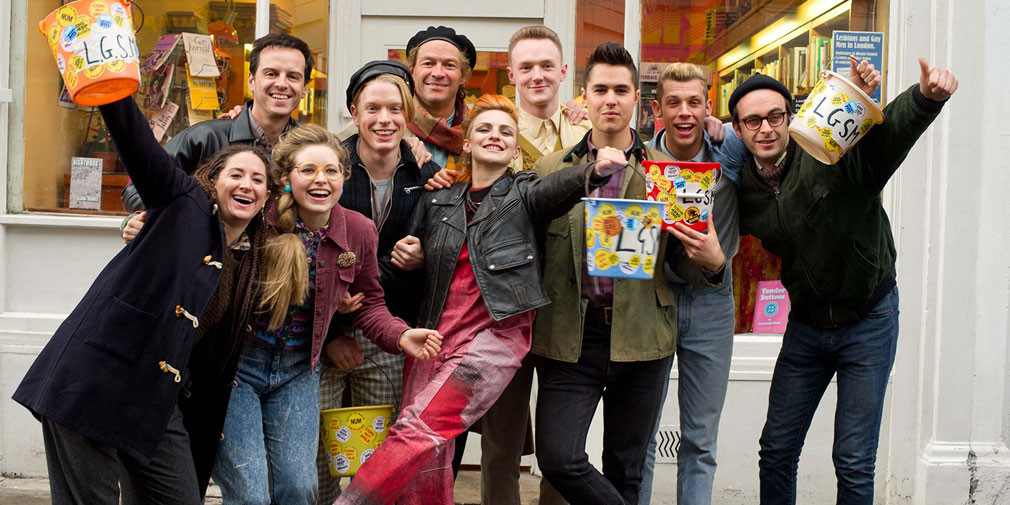
Although director Matthew Warchus isn’t gay, the screenwriter Stephen Beresford is, which, after seeing the film, my gaydar told me even before I looked up his bio. The film starts and ends with the queer characters, not the working class (mostly) straight people, as the focus. Mark (Ben Schnetzer, who’s from the U.S. but went to drama school in London) keeps a huge, “Thatcher Out” banner hanging from the windows of his flat, rallies his friends and closeted newbie Joe (George MacKay) to collect money for striking coal miners as Lesbians and Gays Support The Miners–LGSM (because in those days most queer groups didn’t acknowledge the participation of bisexual and trans people). “Mining communities are being bullied just like we are,” Mark explains to the others, and the group ends up befriending one village’s striking Welsh miners and their families.

pridecover

The “feel good” British comedy that also has working-class characters overcoming their homophobia was, for a time,  a popular enough genre that it could’ve had its own section in video stores, which were also plentiful then.  I’m thinking of films like Kinky Boots, which is now a Broadway musical and starred a pre-12 Years a Slave Chiwetel Ejiofor as the drag queen designer who saves the factory of the working class town, and The Full Monty whose lineup of mostly working-class, bored, unemployed guys-turned-strippers by the end included a couple in love. Although I enjoyed The Full Monty (which had an acute enough take on class that it played like a comedic version of Das Kapital–with flashes of skin) by the time Kinky Boots came out, in 2005,  I’d had enough of twinkle-eyed, straight characters smiling at their new-found “tolerance.” So I was hesitant to see Pride (which opens Sept. 26) with a plot synopsis (queer people help striking miners in Thatcherite Britain, loosely based on a true story), title, and even a movie poster that easily could have come from the ’90s.

Although director Matthew Warchus isn’t gay, the screenwriter Stephen Beresford is, which, after seeing the film, my gaydar told me even before I looked up his bio. The film starts and ends with the queer characters, not the working-class, (mostly) straight people, as the focus. Mark (Ben Schnetzer, who’s from the US but went to drama school in London) keeps a huge, “Thatcher Out” banner hanging from the windows of his flat and rallies his friends and closeted newbie Joe (George MacKay) to collect money for striking coal miners as Lesbians and Gays Support The Miners–LGSM (because in those days most queer groups didn’t acknowledge the participation of bisexual and trans people). “Mining communities are being bullied just like we are,” Mark explains to the others, and the group ends up befriending one Welsh village’s striking miners and their families.

LatentPRIDE
The beginnings of LGSM

I lived in London six months before the events in the film start and Pride gets the period exactly right: the music of The Smiths plays at a queer party and Pete Shelley’s “Homosapien” and Dead or Alive’s “You Spin Me Round” play at the queer clubs. Post-punk fashions are popular among the queers (as they were among many young Londoners then) but we see the era’s big earrings, shiny shirts, stonewashed jeans, permed hair, and Bo Derek braids (!) on queer characters too. The miners’ strike was big news: when I was back in the US more than one British import record, popular on college radio, included snippets of speeches from striking miners. And, as I’ve written elsewhere, people from most walks of British life had a fierce, abiding hatred of Margaret Thatcher.

Because the film doesn’t have only one or two queers to focus on, its characters, like Dear White People‘s Black characters, show a range of different personalities and life experiences that we’re not used to seeing in mainstream films. Mark is a funny, committed activist with the gift of gab who looks great in a black leather motorcycle jacket. He asks a crowd, when remarking on how the police have started beating up striking miners instead of harassing patrons of queer clubs, “Do you think they got sick of all that Donna Summer?” Reticent, neatly dressed, 20-year-old Joe is a college student who lives with his parents, so even though he spends much of his time doing work with an openly queer group he is not out to any of his family. We even meet a few queer women: Steph (Faye Marsay) in a mohawk and heavy eyeliner becomes Joe’s best friend and two women who are a couple join the group after they hear a rousing speech in a queer London club from village miner Dai (Paddy Considine in an unflattering period haircut).

We first meet Jonathan (Dominic West who played Jimmy on The Wire) trashed and in full drag, who, after a full day and night celebrating Pride, doesn’t quite succeed, despite persistent, enthusiastic attempts, in blowing the whistle around his neck. In spite of Jonathan being the kind of  camp character whom other films (especially those made by straight people) rarely use for anything more than a few good quips and some attitude, he does turn out to have a political conscience. And some of the loveliest moments in the film are glimpses of  his tender relationship with his partner: quiet, serious Gethin (out gay actor Andrew Scott whom some may recognize played Moriarty on Sherlock), the owner of the gay bookstore where the group meets. West, playing against type, makes us believe in Jonathan as a whole person, not just a caricature, though in one showy scene he can’t quite stop himself from dancing more like a straight man than a queenie, gay guy.

The film also shows nuanced portraits of the women villagers: Sian (Jessica Gunning) looks like a miner’s wife: short and busty, her pretty face framed by a mullet (in those days not just a hairstyle for older lesbians). But she doesn’t act like the little woman. She, along with Dai are the first villagers to argue that the queer group should be invited to the local hall just as the other groups who have supported the miners have been. “Your gays have arrived,” one of the older women from the village tells the two of them when the group comes to town in a van.

The women from the village

During their visit Jonathan coaches Sian on the legal ins and outs of being stopped and arrested for no reason (until relatively recently, police regularly harassed and arrested white queer people as they now do with Black people and trans women of color). Sian then goes to the jail and gets the police to release the illegally detained miners. We also see Imelda Staunton as Hefina show off her considerable comic abilities, quite a change from her work in movies like Vera Drake. The cast is uniformly excellent: Bill Nighy is also on hand, barely recognizable here as a slick-haired, slouched, shy villager.

Films about activism, especially queer activism, usually skip the part about it being great fun as well as a good way to get laid. We see the joy the group gets out of their work and Joe hooks up with the cute guy who asks him at  “Pits and Perverts” (which would have been a better title for the movie) a benefit concert organized by LGSM, “Are you going to take my picture too?”

In many ways Pride is a very conventional film. Its script has the regulation triumph-setback-triumph structure that keeps many mainstream films from having the twists and complications that make documentaries like Stories We Tell and One Cut, One Life great. But the mix of real-life characters and events keeps Pride from becoming saccharine. The miners were striking to return to hard work that meant an early death for many of them (as well as repercussions for the environment), but they knew that work and the union were all they had. When they lost the strike the mining communities became impoverished and, with the eventual closure of the mines, remain so to this day.

Unlike a lot of films and TV shows that take place in the past, Pride‘s portrait of the ’80s isn’t clouded by nostalgia. The film shows that being shunned or kicked out of one’s family for being queer was the norm back then (though in best case scenarios the rift was temporary). A record company receptionist tells the group (when they are looking for bands for the benefit) that they don’t have any queer artists on their label–as we see posters of Elton John (who many forget was briefly married to a woman in the ’80s) and Soft Cell in the hall. And although the screenwriter is a politically aware gay man, he still gets feminism wrong. The script seems to disparage the women who form a separate group the same way the core characters do. But in the 90s I belonged to a queer activist group and gay men talked right over the women, even as we packed up and left to strike out on our own.

In a postscript we find out one of the real-life characters in LGSM died of AIDS two years after the last events of the film–as much of the queer community did in the 80s and 90s. But another real-life character goes back to school and eventually becomes a member of Parliament, continuing to serve there today. Although many will insist on calling the film “feel good” the same way they mischaracterized another film based on a true story, The King’s Speech, the real-life events of both films defy the glibness of any marketing label and in the end prove deeper, more complex and more poignant.

[youtube_sc url=”http://www.youtube.com/watch?v=vsFY0wHpR5o”]

___________________________________

Ren Jender is a queer writer-performer/producer putting a film together. Her writing. besides appearing every week on Bitch Flicks, has also been published in The Toast, RH Reality Check, xoJane and the Feminist Wire. You can follow her on Twitter @renjender.
‘Matilda’: Women, Class, and Abuse on Page, Stage, and Screen

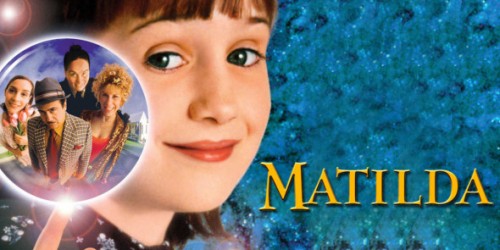
For my birthday this year, my partner took me to see the Broadway musical of ‘Matilda,’ which I loved. The cast recording has been in regular rotation on my iPod ever since, and this week I decided to watch the 1996 film again for comparison.

Written by Max Thornton.

Like many a precocious young bookworm, I counted Roald Dahl’s Matilda among my very favorite books from an early age. Matilda was relatable – her classmates classified her as The Smart One; she adored her teacher; she had found her earliest and best friends among books – but she was also aspirational for me: she was kind and well-liked, she was brave enough to stand up to injustice, and the only time she ever loses her temper in an uncontrollable screaming tantrum it’s in an entirely justifiable, even heroic, confrontation with her evil headmistress. In a way, she was my first role model.

For my birthday this year, my partner took me to see the Broadway musical of Matilda, which I loved. The cast recording has been in regular rotation on my iPod ever since, and this week I decided to watch the 1996 film again for comparison, with a particular eye to the treatment of class. It had been many years since I last saw the movie, and all I really remembered was hating the changed ending, but I conjectured that a transplantation of a very British story to an American context would illuminate some of the differences in UK and US attitudes toward class.

matilda-movie

In the book and musical, Matilda’s parents are, regardless of their precise economic status, clearly lower-class, in the “trashiest” way possible. In Britain, the relationship between social class and economic class is complicated: having money doesn’t necessarily make you middle-class (and not everyone wants to be middle-class, as they seem to in the US – working-class pride is strong, while being middle-class is associated with a certain bourgeois pretentiousness). Dahl codes the Wormwoods as insufficiently respectable from a bourgeois perspective: they use “excessive” beauty treatments and wear garish clothes; they play bingo and eat dinner in front of the TV; they have only contempt for literature and education; they are loud, dishonest, and – worst of all! – proud of their loudness and dishonesty.

Most of these markers of the lower classes make the transatlantic leap, but the film takes care to add some new ones for the US audience: junk food, being overweight, kitschy artifacts. The movie Wormwoods live in a nice house full of nice things, but they commit the unforgivable sin of having bad taste. These class markers are important as signifiers that their American dream is a sham, even on the terms of the American dream itself.

By contrast, Miss Honey is the deserving poor, whose economic misfortune does not reflect her character: she values education, doesn’t own a TV set, doesn’t indulge in beauty products, in fact lives ascetically, like the good poor people who don’t waste their money on smartphones and refrigerators… The musical makes the contrast explicit between Mrs. Wormwood’s anthem “Loud” and Miss Honey’s gentle song “My House.” Miss Honey has a roof, a door, a chair, a table, pictures on the wall, lamplight to read by: “It isn’t much, but it is enough for me.” Matilda’s mother, however, recommends “A little less brains, a lot more hair! / A little less head, a lot more derriere!”

You’ve gotta be loud, loud, LOUD!
You’ve gotta give yourself permission to shine,
To stand out from the crowd, crowd, crowd!”

Like the children at the beginning of the book and musical, Mrs. Wormwood has self-esteem and isn’t ashamed of it. It’s perhaps not surprising that the theme of “people who have self-esteem but shouldn’t” is cut out of the movie. Back in the 90s, long after the era of normalized institutional child abuse in which Dahl grew up but before all of this tedious media handwringing about millennials being thin-skinned and entitled, we tended to think that self-esteem was a good thing. Well, Americans did – it’s always been considered rather déclassé in Britain. So self-confident Mrs. Wormwood is a villain, while modest Matilda and diffident Miss Honey are the heroes.

The movie excises this “self-esteem is bad” message, and instead amplifies the book’s rather weird messages about women. The villainous women are those who do womanhood “wrong.” Miss Trunchbull is too masculine (even played, in the musical, by a man in drag): she’s athletic, strong, violent, not conventionally attractive; she dislikes children, and objects to the “Mrs. D Mrs. I Mrs. FFI” poem by asking, “Why are all these women married?” – indeed, her own female honorific is usually removed so that she becomes “the” Trunchbull, a monstrous hybrid figure of female masculinity. Mrs. Wormwood, meanwhile, errs on the side of too much femininity: she dyes her hair and uses tons of beauty products, overindulging in the artifice and frivolity that comprise femininity in the misogynistic imagination.

YOU'RE doing womanhood wrong!!
YOU’RE doing womanhood wrong!!
YOU'RE doing womanhood wrong!!
YOU’RE doing womanhood wrong!!

(There’s an undercurrent of transmisogyny here, too: the women who are rejected are either too masculine or too artificially feminine, two modes of attack often used to delegitimize trans women’s womanhood.)

Miss Honey, the “good” adult female character, displays neither masculinity nor “artificial” femininity. She is meek, nurturing, softspoken, gentle, conventionally feminine – and, in the film, is deeply emotionally invested in a doll from her childhood. A good woman, it seems, is infantilized in her femininity.

You're pretty, so you're doing womanhood right!!
You’re pretty, so you’re doing womanhood right!!

For all its mixed messages about class and about femininity, this is ultimately a story most powerfully about two abuse survivors creating a family and finding healing together. As Miss Honey tells Matilda in the film, “You were born into a family that doesn’t always appreciate you, but one day things are going to be very different.” As the tempered nature of this line suggests (doesn’t always appreciate her? Try doesn’t ever), the abuse theme is here rather downplayed. Mara Wilson brings exactly the sort of presence we wanted from a child protagonist in the mid-90s – precociously delightful without being alienating or smug – but her Matilda is a smart kid, and not much more. Book-Matilda and musical-Matilda have a streak of otherworldliness to them, a dissociative tendency perhaps not uncommon among abuse survivors; whereas when movie-Matilda is getting yelled at by her father, she just kind of gives him the stinkeye and then skips away to scheme without seeming to internalize his abuse. Obviously the theme of child abuse is going to get downplayed in a PG family film directed by Danny DeVito, but it’s explored with such nuance and sensitivity in the book, and especially in the play, that it’s rather a shame the movie chose to steer for a tone of purely magical whimsy, rather than magical whimsy with some depth.

Nowhere is this clearer than in the treatment of Matilda’s telekinesis. In the book, Matilda’s power is something mystical, perhaps dangerous (in one practice session, she zones out entirely and tells Miss Honey, “I was soaring past the stars on silver wings”); in the film, it’s pure whimsy. This, I think, is why it’s narratively necessary and satisfying for the book to end with Matilda losing her power – the book acknowledges that telekinesis is an astounding, paradigm-shifting power, whereas in the film it is but a wizard wheeze.

I don’t think the film of Matilda is terrible, but I don’t find it particularly good either. It’s resolutely child-friendly, softening the sharpest and nastiest edges that helped make Roald Dahl’s books so compelling and enduring, even as they reproduce some of the most problematic tropes of their society.

Go see the musical if you possibly can; it's wonderful.
Go see the musical if you possibly can; it’s wonderful.

____________________________________

Max Thornton blogs at Gay Christian Geek, tumbles as trans substantial, and is slowly learning to twitter at @RainicornMax. Believe it or not, he actually cut a bunch of material from earlier drafts of this piece.

Bitch Flicks’ Weekly Picks

Check out what we’ve been reading this week–and let us know what you’ve been reading/writing in the comments!

recommended-red-714x300-1


Remembering Joan Rivers: Groundbreaking Feminist Icon by Eliana Dockterman at TIME

What It Was Like to Work With Joan Rivers by Julie Klausner at Vulture

Mississippi Public Broadcasting Won’t Air Abortion Documentary by Andy Kopsa at Cosmopolitan

The Great 2014 Celebrity Nude Photos Leak is only the beginning by Roxane Gay at The Guardian

Jennifer Lawrence Nude Photo Leak Isn’t A ‘Scandal.’ It’s A Sex Crime. by Scott Mendelson at Forbes

Violence Against Indigenous Women: Fun, Sexy, and No Big Deal on the Big Screen by Elissa Washuto at Racialicious 

Black Girls Can Be Losers Too: From ‘Living Single’ to ‘Scandal’ by LaShea Delaney at Indiewire

Supergirl Takes Flight With TV Series From Greg Berlanti & Ali Adler by Nellie Andreeva at Deadline Hollywood

What ‘The Giver’ and ‘Obvious Child’ say about abortion in America by Brandon Ambrosino at Vox

“The Giver” Delivers Powerful Pro-Choice Message in Slick, IKEA Package by Natalie Wilson at Ms. blog

17 Black Women Who Deserve Their Own Biopics by Ashley C. Ford at Buzzfeed

From Now On, Women Save the World by Brooks Barnes at The New York Times

Interview: Harvard Business School Professor Anita Elbers On What Hollywood’s Love of Blockbusters Means for the Rest of Us by Erika Olson at RogerEbert.com

Beyond Ferguson: Pop Culture Through the Lens of Race by Noah Gittell at RogerEbert.com

‘We Have Always Fought’: Challenging the ‘Women, Cattle and Slaves’ Narrative by Kameron Hurley at A Dribble of Ink


What have you been reading/writing this week? Tell us in the comments!


When is This Movie Going to End? or, Extended Adolescence and Meta Moments in ‘Freddy Got Fingered’

I know the nineties are over, but I’m still a fan of Tom Green and his eccentric brand of humor. When critics and filmgoers dismiss ‘Freddie Got Fingered,’ I feel it’s for the wrong reasons; to pass the movie off as a cinematic abortion of sorts is narrow thinking. People probably still wonder, “Who gave Tom Green money to make a movie?” I know, it’s like writing a kid a blank check and sending him into a candy store. However, if we’re not receptive enough to uncover the ideas and themes Green presents, and to assess their relevance to Hollywood ideals, celebrity status, and family politics, we need to re-evaluate how we watch film. There’s good stuff to be found in ‘Freddy.’

Written by Jenny Lapekas.

I know the 90s are over, but I’m still a fan of Tom Green and his eccentric brand of humor.  When critics and filmgoers dismiss Freddy Got Fingered, I feel it’s for the wrong reasons; to pass the movie off as a cinematic abortion of sorts is narrow thinking.  People probably still wonder, Who gave Tom Green money to make a movie?  I know, it’s like writing a kid a blank check and sending him into a candy store.  However, if we’re not receptive enough to uncover the ideas and themes Green presents, and to assess their relevance to Hollywood ideals, celebrity status, and family politics, we need to re-evaluate how we watch film.  There’s good stuff to be found in Freddy.

In the trailer for Freddy, Green tells us, “If you like acting, then you’ll like Freddy Got Fingered.”  The film itself works as a commentary on the movie-making process and essentially laughs in its face.  Green’s declaration is meant as a sneer at the generic nature of not only popular film, but the reasons behind that popularity: that many viewers hold low expectations when evaluating movie quality.  The mantra throughout Freddy seems to be “I’m a 28-year-old man”:  Green’s character asserting his maturity to his parents, who are well aware that their baby is still very much a baby at 28 years old.  While his mother would prefer her baby boy to stay at home, Gordy’s father (played by the incomparable Rip Torn) wants to see his son succeed and make something of himself.

When Roger Ebert reviewed this film, he had this to say:  “This movie doesn’t scrape the bottom of the barrel.  The movie isn’t the bottom of the barrel.  This movie isn’t below the bottom of the barrel.  This movie doesn’t deserve to be mentioned in the same sentence with barrels.”  Then why mention it?  It’s clear that Green doesn’t want to be taken seriously.  He spends his time satirizing movie tropes and evading the cinematic qualities that define film as a meaning-making process.  To discuss Freddy alongside Hollywood blockbusters is apples and oranges.

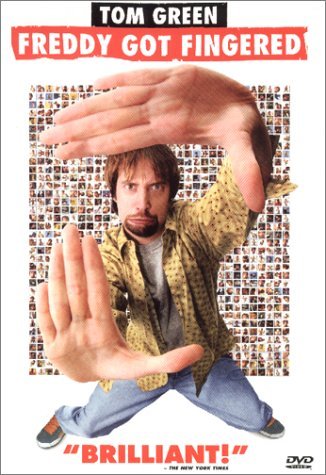
Even the film’s cover–Green mimicking the gesture filmmakers use when describing their creation or cinematic vision–pokes fun at itself.


When we meet Gordy, his placement as an overgrown child is solidified when we watch him laying in bed, describing the absurd backstories that accompany the comics he’s drawn, which are actually quite good and show a great deal of artistic talent.  Gordy’s job at the cheese sandwich factory is a satirical commentary on the struggling artist who works the meaningless, manual labor job while attempting to aspire to something greater in this life.  Gordy’s departure from this job also serves to confirm his authentic identity as an animator.

The comical depiction of extended adolescence, especially in men, is seen often in film (see Step Brothers, Slackers, and Young Adult), yet it rarely seems tackled as a topic for discussion.  Green’s lunatic brand of surrealist humor (see Tim and Eric Awesome Show, Great Job! and The Mighty Boosh) and viewers’ not so warm reception of his film are a reflection of people’s desire for logic and the comfort we find in the assurance that gravity still exists each day when we wake.  In an interview on the podcast “The Joe Rogan Experience,” Green even explains that he was trying to make the “stupidest movie ever.”

Green pokes fun at the “feel good” moments we come to expect in films, the moments that inspire us and evoke tears.  We see such a moment when Gordy spontaneously delivers a baby and has a revelatory moment about his life (see Mixed Nuts and Saved!), and again when Betty (Gordy’s love interest) invents a rocket-powered wheelchair.

Signature of Green’s absurd humor, he shows up at a swanky L.A. restaurant to track down bigwig Dave Davidson (Anthony Michael Hall) to see if he can score his own television series based on his drawings, all dressed as an English bobby.


The head of Radioactive Animation Studio patiently explains to Gordy, “Your drawings are pretty good, but it doesn’t make any sense, OK?  It’s fucking stupid,” which incidentally describes Green’s humor as well as the general theme of Freddy.  We have these moments of raucous laughter, but we can’t explain the bizarre satisfaction we gain from watching Green’s stunts, which includes a fair amount of physical comedy in the same vein as Jackass, such as crashing into people and doors as he awkwardly moves around in the film, very much resembling a clumsy, pubescent boy.  When Davidson tells him that his characters are lame, Gordy pulls out a gun and puts it in his mouth:  more satire relating to the extreme measures artists take when their art goes unrecognized or they fail at becoming rich and successful (see Airheads).

"I'm a loser!  I wish I was dead!!!"
“I’m a loser! I wish I was dead!!!”


Freddy is a hyperbolic look at the consequences of extended adolescence, and several scenes exemplify this theme, particularly those involving Gordy and his dad.  When Gordy is forced to move back home, he insists he’s going to eat a fast food chicken sandwich at the dinner table after his mother has made a lovely roast beef dinner.  He argues with his father, citing his age as the reason that he can do as he pleases–a sure sign of adolescence–and his father sarcastically tells him how “impressive” it is that he can eat the food he chooses independently.  This scene of family dysfunction is so telling and significant; the child-parent relationship is just that: between parents and a temperamental child who desperately wants to convince his parents that he’s not worthless.  Gordy’s insistence to his father that he’s an adult and can make his own decisions–at the very least, what he chooses to eat for his dinner–serves as proof that he’s in fact not an adult at all.

Amongst his antics, Gordy dons scuba gear in the shower, where he pretends he’s diving for buried treasure, and he dresses as “the Backwards Man,” a tragic inversion of the savvy businessman his father dreams he could become.


When Gordy decides to quit the “sandwich business” once and for all to fulfill his dreams of becoming an animator, his father even tries grounding him and sending him to his room.  Ironically, Gordy’s fed up dad propels his son into success by showing up at his pitch and trashing the office of Davidson, who’s under the impression that it’s all a creative act.  Although Gordy spends most of his million dollar check to drug his father and bring him to Pakistan, he finally proves himself by selling his “doodles” and taking on a job.

Aren’t we thankful there’s a movie out there where we can see Rip Torn spanking Tom Green like a naughty child?


The title, admittedly, has very little to do with the plot of Freddy, if we can get away with claiming that the film does indeed have a plotGordy accuses his father of molesting his brother, Freddy, which is, of course, untrue.  In accordance with this theme of extended adolescence, the 25-year-old Freddy–ambitious and cocky, and hence Gordy’s polar opposite–is taken into custody by Child Protective Services, and we see him in an orphanage watching television with young children.  Gordy also makes sure to downplay his little brother’s success by telling him over breakfast, “You work at a bank.  Am I supposed to be dazzled?  You live in a tiny little shit hole, and you can’t afford breakfast, so you come here and eat for free.”  Gordy has a point and manages to cast doubt on Freddy’s pride and sense of accomplishment.  Despite Gordy’s talent as a troublemaker and Freddy’s work ethic, Gordy somehow remains the favored of the two sons.

Gordy tries to impress Betty by pretending he works as a stockbroker.
Gordy tries to impress Betty by pretending that he works as a stockbroker.


The role of Gordy’s love interest, Betty, is interesting.  Betty is in a wheelchair and is called a “retard slut whore” by Gordy’s dad, representing a demographic that mistakes physical disability with mental impairment.  Gordy purchases a ridiculous bag of jewels that he presents to Betty after stepping off a helicopter on top of a building, and she rejects them, claiming, “I don’t care about jewels.  I just want to suck your cock.”  We’re confronted with an image of female sexuality that many viewers find problematic; disabled female characters tend to be desexualized in film and TV, and we’re also faced with the challenge of negotiating Betty’s voracious sexual appetite with our own misgivings about kink, foreplay, and sadomasochism.

While attempting to give Gordy a blow job, Betty finds his umbilical cord taped to his stomach, a clear reference to his permanent infantilization, which he seems to simultaneously embrace and loathe.


So why watch Freddy?  How does the “stupidest movie ever” redeem itself for viewers unwilling to understand surrealist humor?  The meta moments we find in the film culminate in the grand conclusion that “the Hollywood movie” can be interpreted as a pretentious joke, and Green is not taking his own film seriously enough to even stumble upon any form of success.  Green’s treatment of this concept undermines critics’ ability to evaluate his film.

If you’re still skeptical, watch Freddy if only for Julie Hagerty’s performance.  Hagerty, who’s always fabulous as “the mom” (see Just Friends, She’s the Man, and Storytelling) plays Gordy’s nervous, overprotective mother, even though Gordy is practically 30 years old.

At the advice of Gordy, Julie Brody leaves her husband and begins sleeping with Shaq.


Green explains that the point of the movie was to be polarizing and that he found further humor in the highly divisive viewer responses.  Green makes us question our own sense of rationality and how we’ve constructed reality thus far in our lives.  Freddy is funny for its unpredictable and nonsensical nature, not its inability to paint a picture of logic and reason.  If viewers feel violated after watching a subversive film that simply cannot be explained away or dismissed, there are plenty of movies that contain tired tropes and stereotypes (see The WomenBechdel Test, anyone?–and every Tyler Perry movie ever).

In the film’s trailer, Green even tells us, “I don’t really know how to make a movie.”  When Gordy shows Davidson his drawings, he schools Gordy on narrative structure:  “There actually has to be something that happens that’s actually funny.  What the fuck is happening here?”  We may ask that very same question about Freddy.  What’s going on here?  Using surrealist humor to question social contracts and deride an audience that is too entrenched in the trite, the cliche, and the creatively irresponsible, that’s what.

Moments before the film ends, a self-deprecating meta reference.


Any “hard-hitting” criticism of Freddy or movies like it is like judging the lasagna some nut brought to the National Pie Championships.  Ebert was right:  Freddy doesn’t scrape the bottom of the barrel, because Tom Green is too busy wearing the barrel on his head and making everyone uncomfortable to notice.  Green’s movie inherently resists critique, which in fact makes this review, in a certain philosophical sense, nonexistent.

____________________________________________

Jenny holds a Master of Arts degree in English, and she is a part-time instructor at a community college in Pennsylvania.  Her areas of scholarship include women’s literature, menstrual literacy, and rape-revenge cinema.  She lives with two naughty chihuahuas.  You can find her on WordPress and Pinterest.

Talking Horse Anchors Adult Comedy For Everyone: ‘Bojack Horseman’

Most surprising of all was the content. ‘Bojack Horseman’ is a late night style comedy that doesn’t shut anyone out. Though the series abounds with the typical crude humor, it’s threaded through with a surprising amount of feminism, nothing I’d expect at first glance.
There’s no shortage of fascinating female characters, both major and minor.

Bojack Horseman, my latest comedy binge-watch, was a real surprise. I’d heard nothing about it before it showed up on Netflix, but I gave it a try. I’m glad it I did, it was super fun time that left me wanting more. Thankfully, Netflix has already renewed it for a second season.


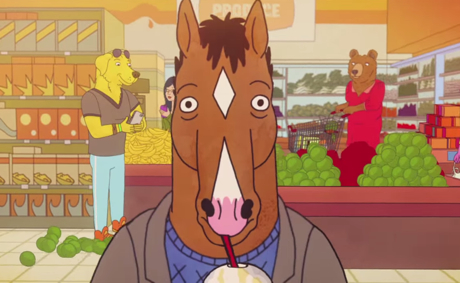
Theme song image from Bojack Horseman


Everyone’s favorite magician, Will Arnett, stars as Bojack, a formerly famous 90s sitcom star, conceited womanizer, and literal man-horse struggling through a strange version of Hollywood that keeps our pop cultural touchstone and ads anthropomorphic animals. Cats chase dangling strings on the treadmill, birds at the window are paparazzi, and two dogs converse like stereotypical annoying TV women about how much they love chocolate even though it could kill them.

Arnett is joined by a great cast, a veritable who’s who of beloved comedic actors, among them Alison Brie, Kristen Schaal, Paul F. Tompkins, Patton Oswalt, and Amy Sedaris. Breaking Bad star Aaron Paul takes a comedic term and gives an unexpected, often scene-stealing performance as Bojack’s slacker roommate who’s obsessed with composing a rock opera.

Most surprising of all was the content. Bojack Horseman is a late night style comedy that doesn’t shut anyone out. Though the series abounds with the typical crude humor, it’s threaded through with a surprising amount of feminism, nothing I’d expect at first glance.


Bojack’s agent and girlfriend Princess Carolyn often has complicated schemes


There’s no shortage of fascinating female characters, both major and minor. First off, Princess Carolyn (Amy Sedaris, who should really be in more things) is, in addition to being a giant pink Persian cat, Bojack’s agent and on-again/off-again girlfriend. She’s is driven and goal-obsessed, and in her dynamic with Bojack maintains the unique skill of compartmentalizing, speaking to him either as agent or lover. With her Machiavellian schemes and air-tight manipulations, she might even be the closest thing the series has to a villain, besides Bojack’s colossal ego. Sadly, her role begins to peter out towards the end of the season, though her remaining plot line, about unknowingly dating Vincent Adultman, three kids stacked on top of each other in a trench coat, is worthy off-the-wall material.


Diane gives Naomi Watts tips on how to play a complex character


As a show set in a Hollywood, Bojack Horseman also makes several stirring points satirizing celebrity culture. Naomi Watts shows up for a episode to play a role in a movie based on Bojack’s life, ironically because she is tired of getting complicated, three-dimensional roles. When the role becomes much meatier, she gets frustrated and loses interest in the movie. Much seen but little remembered character actress Margo Martindale appears multiple times as a sort of actress for hire. Fed up with the limited roles normally offered to her as an older woman, she accepts roles offered to her by Bojack, which include posing as a bank robber and pulling off a real bank heist. Ultimately she turns to a life of crime and relishes her time in jail because she considers it the role of a lifetime.

Most fascinating are Sarah Lynn (Kristen Schaal) and Diane Nygen (Alison Brie), the most important women in Bojack’s life. Sarah Lynn was his TV daughter on the sitcom Horsin’ Around and today is a washed-up former pop princess, crucified by the media who have no use for her now that she’s turned 30. In flashbacks to her teenage years, we see her as a self-obsessed young woman attempting to rebel against the cutesy little girl image with songs that twist her TV nickname, prickly pear into a vaginal euphemism. All her music is about sex and she announces on a talk show that she plans to be sexy forever. But when she hits 30, she’s replaced by new it-girl Sextina Aquafina. Sextina says she grew up with Sarah Lynn’s music, but she is now irrelevant and has no reason to be famous anymore.


Bojack tries to fix his TV daughter, Sarah Lynn


Today, Sarah Lynn is like many of our former child stars. She’s dramatic and out of control, and spends her time popping pills, partying, and trying to kill herself when her boyfriend breaks up with her. Her relationship with Bojack is incredibly complicated, though she’s always looked at him as a father figure and he sees her as a surrogate daughter, they end up sleeping together when Bojack decides to try to “fix her.” Sarah Lynn rightfully calls him out on this, yelling at him for claiming to know how she feels and trying to be her savior. She tells him she has been exploited her whole life, first by her mother, a stage-mom, then by the scores of men who write her every day to tell her she is the first person they ever masturbated to. Bojack, she feels, has no right to try to be her father or her lover.


Young Sarah Lynn looked to Bojack as a father figure


Diane is a writer who meets Bojack when he hires her to ghostwrite his memoirs. Though she is meant to be desirable and is described as attractive, Diane is drawn with an average woman’s body and wears a boxy jacket and thick glasses. In fact, she looks a lot like Daria, a show she’d probably love. The main character and others,  fall in love with her and most of the first season is a love triangle revolving around her. Although love triangles are a bit of a tired plot device, it was refreshing to see one involving such a realistic idea of a woman. Diane is no two dimensional dream girl. She’s a writer with a thriving career and intense interests and opinions. She’s sarcastic and well-informed, but she can also be self-centered and brutally ambitious, such as in plot line towards the end of the season where she attempts to publish an unflattering portrayal of Bojack without his permission. It’s crucial that Diane is never made to look like an evil seductress who manipulates Bojack. She’s just a person and even though she is eventually vindicated, it’s acknowledged that it was a terrible thing to do.


Bojack falls for his feminist ghostwriter, Diane
Bojack falls for his ghostwriter, a third wave feminist named Diane


Diane identifies as a third wave feminist, but is unsure what that means for her. In one scene, she enters into a long monologue about pop singer Sarah Lynn who she claims not to think much about. She’s conflicted, on one hand she appreciates how Sarah Lynn has reclaimed her sexuality but on the other, she questions whether it is truly possible to do so in a patriarchal society.

Diane is also an interesting conversation point for discussions of race in animation. The character is Vietnamese, yet she is voiced by a white actress. Though I loved Alison Brie in the role, this casting made me question whether there is a distinction between racebent casting in live action and animated programs. Unlike stereotypical animated characters, like Apu on The Simpsons, Diane does not have either a subtle or exaggerated Vietnamese accent, so there’d be no specific distinction between her and a Vietnamese actress in the role. But does it matter whether white actors lend their voices to animated POCs?

We must not forget that any media project, especially these days, has a meta-textual component, such as interviews, photo shoots, recommendations, and career opportunities for its stars and creators. Though Brie is excellent, this could have been a great opportunity for a Vietnamese actress to make a name for herself. I’m not sure what to think on the issue or whether it is indeed an issue, it just occurred to me as an interesting idea to consider. Kudos to the team behind Bojack for creating an Asian-American woman character to play such an integral part of the story regardless.


Diane is often frustrated with her happy-go-lucky boyfriend Mr. Peanut Butter


Though on multiple occasions the show mentions an in-world personality test, “Zoe or Zelda,” that reduces each person to one of two types, the women on the show are not so easily reduced to virgins or whores. Sensible Diane has a vibrant sex life with her dog-boyfriend Mr. Peanut Butter, while sex-pot Sarah Lynn has given a great deal of thought to her image and desires to control it. It’s great touches like these, and its intricate animal-person analogies that make Bojack Horseman worthy of a watch. Other than its covert feminism, the most unique thing about the program is its sequential story. Unlike most adult animated comedies, that tell one-off self-contained stories, the first season unfolds as a complete a well-paced story arc.

Of course, if you’re not into late night comedies, Bojack may not be the show for you. But I recommend giving it a chance. It starts slow, but only gets better.
_________________________________________________________________________________________

Elizabeth Kiy is a Canadian writer and journalist living in Toronto, Ontario.

The Gifted Girls of Bekoji: A Review of ‘Town of Runners’

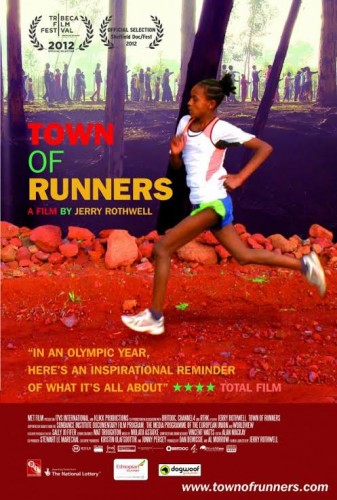
Directed by Jerry Rothwell, ‘Town of Runners’ is a 2012 documentary about promising young athletes from the highland town of Bekoji in Ethiopia. It’s a very special place, Bekoji. A remarkably high number of world-class runners have been trained there, including the great 10,000 and 5,000 meter Olympic champion, Tirunesh Dibaba, and 10,000 meter sporting pioneer, Derartu Tulu, the first African woman to win an Olympic gold medal.

Town of Runners
Town of Runners


Written by Rachael Johnson.

Directed by Jerry Rothwell, Town of Runners is a 2012 documentary about promising young athletes from the highland town of Bekoji in Ethiopia. It’s a very special place, Bekoji. A remarkably high number of world-class runners have been trained there, including the great 10,000 and 5,000 meter Olympic champion, Tirunesh Dibaba, and 10,000 meter sporting pioneer, Derartu Tulu, the first African woman to win an Olympic gold medal.

 Hawii
Hawii


Distance runners are greatly celebrated in Ethiopia.  Running is bound up with national identity and pride. A scene at the beginning of Town of Runners, showing a group of young people watching the Olympics on television, movingly illustrates the romantic hold the sport has in the country.

Alemi
Alemi


Town of Runners follows the careers of two talented teenaged girls from Bekoji who are seeking to emulate their famous compatriots, best friends Hawii Megersa and Alemi Tsegaye. Their story is charmingly narrated by an ambitious young boy called Biruk Fikadu. The girls are both competitive and good-natured. Their equally engaging coach, Sentayehu Eshetu, is a hugely supportive, down-to-earth man with an extraordinarily successful record in training Olympic gold winners. Encouraged by Eshetu, the girls are offered places on training programs in another part of the country. Their farming families do not prevent them from pursuing their dreams. Running offers a life of independence as well as an escape from poverty. It’s not easy road though. The specter of unfulfilled promise, of course, shadows young athletes all around the world but those in poorer countries face extra challenges such as lack of funding, poor lodging and neglect. But the girls’ dedication to the track never wavers. Greatness is born on overgrown tracks in Ethiopia.

Coach Sentayehu Eshetu


Town of Runners is not, it must be said, an expose of exploitation in African sport. It is not an overtly political documentary. Rothwell does not tell a tragic tale. Nor does he provide the viewer with a socio-cultural analysis of the role of athletics in Ethiopia. He takes an observational rather than polemical approach. There are shortcomings. Although Town of Runners records signs of change, while offering glimpses into enduring aspects of Ethiopian culture, such as faith, and family, the viewer is not given much historical context. The documentary, moreover, does not provide in-depth analysis of why the town has produced so many sensational runners. Nevertheless, it paints an empathetic portrait of female talent while paying homage to a blessed place. What’s more, it’s refreshing to see a Western film-maker tell a largely positive story about contemporary Africa. Town of Runners is a compassionate, beautifully made documentary with universal appeal.

Training in Bekoji
Training in Bekoji


Seed & Spark: Latinas in the House!

BUTS started as a joke we had about our bodies. We are both pear-shaped women. (And God bless Lena Dunham for putting that silhouette out there without apologizing or qualifying it.) However, as our beauty standards still predicate, the hourglass figure rules. But our “hourglasses” had all the sand in the bottom! We would laugh about it and pad our bras when going to auditions.

Irene and Emma
Irene and Emma


This is a guest post by Irene Sofia Lucio.

First of all, it is an honor to be included in this fancy group of Seed & Spark women writing for Bitch Flicks, given that this is our very first project as co–creators. Reading the past articles written by these inspiring women is humbling, exiting, and gives you a good kick in the butt to keep working and be worthy of this community.

I will start off by saying that I am a Latina woman as is my co-creator, Emma Ramos. Never in a million years did I think I would be starting an article, or a characterization of myself, with those two titles. Perhaps I am naïve.

But it is incredibly important to open with this fact—that I am a woman and a minority. To do so is not only about combatting a lack of representation (or misrepresentation) in media, but also about eroding the loneliness that we all feel when there isn’t a heroine that we can call your own.

I was trained as an actor. And, because I look white, I played all kinds of American and European characters in grad school. After graduating, I adapted to the struggling actor lifestyle right away and was thrust into the casting pool and casting mentality of New York. Since then, I have been similarly cast: When the director was open-minded enough to disregard my Latin name and imagine me as something else, I only played white characters. I realize that I am fortunate to be ethnically diverse, but I felt sad that I could never tell the stories of Latin America. I wasn’t brown enough; I seemed too educated; I seemed too aristocratic. What does that say about how we think of Latinos and how we’re characterizing them?

I am not the typical Latina. I was brought up in a wealthy town in Puerto Rico, went to an American private school, and then two Ivy League schools. These are all privileges and accomplishments that I have often felt apologetic or embarrassed by.  I didn’t experience many of the struggles that Latin Americans have to face on a daily basis, and as a result, I felt I had to prove that I was from Latin America. This is sad— not only because that implies that being Latin American restricts us to a certain experience and color, but also because it suggests that my stories are less valid, or less welcome.

It was at the peak of my frustration with the industry that I had the good fortune of meeting Emma. Though Emma looked “the part” more than I, she too was not “Latina enough” to play the bulk of the roles available. Unfortunately, the majority of these are still restricted to prostitutes, maids, and hyper-sexualized stereotypical figures.  Emma grew up in Sinaloa Mexico, studied business, led radio stations there, and then decided to become an actor in New York City. After graduating from grad school, she too felt the harsh reality of a fundamental lack of roles. Frustrated that our stories weren’t being told, we decided to create BUTS.

unnamed

BUTS started as a joke we had about our bodies. We are both pear-shaped women. (And God bless Lena Dunham for putting that silhouette out there without apologizing or qualifying it.)  However, as our beauty standards still predicate, the hourglass figure rules. But our “hourglasses” had all the sand in the bottom! We would laugh about it and pad our bras when going to auditions.

Soon, though, we realized that our “inadequacy” was reflected elsewhere too. Again, we were too educated, privileged, Americanized, quirky, nerdy—you name it—to be considered Latina by TV and film standards. So, with our butts in mind, we started thinking about how we could expand the conversation. We took a ‘T’ out of the butt and considered the many ways that we as women and Latinas complicate the stereotypes and the very notion of what those two titles mean.  It is our BUT argument to how those labels are being depicted. We have chosen to do it in a comedic format because, as we say in Puerto Rico: “I laugh so that I don’t cry.” And it is crazy how empowering it has been to embark on this endeavor with Emma.

As of now, we have only released one episode, but the laughter and impact it is already creating is extremely encouraging. Episode two will be released at the end of the month. We simply cannot wait to tell more stories of what it means to be an American millennial Latina: a person that identifies more with what it means to be a millennial than what it means to be a minority (even though society continuously insists on keeping us in that box).

unnamed

As I read these other Bitch Flicks Seed & Spark articles in preparation for writing this one, it became incredibly clear that we are all trying to do the same thing: produce work that stands on its own, that “happens” to be by women and by demographics that are considered minorities. Like these other projects, I hope that BUTS will open more windows into more stories that are valid and true. I hope that my little sisters will see the episodes and relate instead of feeling like they are strange hybrids. By opening windows we are creating opportunity, hopefully reaching others, and welcoming them to do the same.

Finally, I will also say that the self empowerment that one feels when producing original work and calling the shots to maintain its integrity is the most thrilling feeling I have ever felt professionally. It surpasses that of standing in front of a large audience and reciting gorgeous text. Thank you for inviting us to be a part of this inspiring community. I look forward to reading many more.


Irene Sofia Lucio was born and raised in San Juan, Puerto Rico. She is an actress, writer, and teacher in New York City. Recent credits include: Love and Information NYTW, WIT at MTC, We Play for the GODS at Women’s Project, Pygmalion at California Shakespeare Co., Bad Jews at Studio Theater of DC, and Romeo and Juliet at Yale Rep, Stranded in Paradise (Sony Pictures), Casi Casi (HBO Latino), and Gossip Girl. She is a graduate from the Yale School of Drama and Princeton University.  www.irenesofialucio.com


Emma Ramos began her career in Mexico in politics and business. She dramatically changed her life to become an actress after training at East 15 Drama School, UK.

Credits Include: NYTW: Scenes from a Marriage. Off-Broadway: Comfort of Numbers (Signature Theater), Accidents Waiting to Happen (IRT), La Santa (Ontological Theater), Him (Soho Rep), Sangre (SummerStage) Mala Hierba (Intar). Film & TV: 3rd St Black Out, Sunbelt Express, El Cielo es Azul, “Unforgettable,” “The Hunt,” “Killer Talent.” www.emmaramos.com


‘Baby Mama’ Makes Fun of Pregnancy More Than Poor People

Shockingly, despite both Tina Fey and Amy Poehler being on my Fantasy Dinner Party Guest List, it took me six years to finally watch Baby Mama, the 2008 surrogacy comedy starring everyone’s favorite FFBFFs (famous funny best friends forever). I made the classic error of judging a movie by its trailer and thought ‘Baby Mama’ was going to be 90 minutes of “this old bat has such raging baby fever she lowers herself to associating with—get this—poor people!” and/or “This chick is so poor she sublets her uterus! It’s funny because she’s poor.”

'Baby Mama' movie poster
Baby Mama movie poster

Shockingly, despite both Tina Fey and Amy Poehler being on my Fantasy Dinner Party Guest List, it took me six years to finally watch Baby Mama, the 2008 surrogacy comedy starring everyone’s favorite FFBFFs (famous funny best friends forever).

Aside from having been released during the pop culture blackout period that was my first year of law school my giant mistake, I also made the classic error of judging a movie by its trailer and thought Baby Mama was going to be 90 minutes of “this old bat has such raging baby fever she lowers herself to associating with—get this—poor people!” and/or “This chick is so poor she sublets her uterus! It’s funny because she’s poor.”

Amy Poehler's Angie holds breast pumps over her eyes.
Amy Poehler’s Angie holds breast pumps over her eyes.

Fortunately, Baby Mama is not as grossly classist as I feared. Yes, Tina Fey’s Kate, the wealthy businesswoman who can’t get pregnant, is shocked by her surrogate Angie (Amy Poehler) for everything from her diet (heavily featuring Tastykakes and Dr Pepper) to her manners (discarding gum under a reclaimed barnwood coffee table) to her interests (the American Idol karaoke video game Kate bought for her niece). But the audience is invited to laugh at both sides of the class divide between these characters,  and there are actually significantly fewer jabs at Angie for being insufficiently classy than there are at Kate for being a yuppie snob. It’s just that peeing in the sink makes for better trailer material than jokes about forced nicknames for gentrified neighborhoods.

"You peed in the sink, isn't that against everyone's rules?"
“You peed in the sink, isn’t that against everyone’s rules?”

However, if you’re looking for any kind of meaningful exploration of the power dynamics and body politics inherent to contracted surrogate pregnancies, Baby Mama is not your movie. This is strictly a situation comedy, with a surprising reliance on plot twists and a mostly superfluous romantic subplot involving Greg Kinnear as a slightly more sincere yippie (Young Urban Professional Hippie) than Kate.  A lot of the humor is derived from the absurdities that apply to pregnancy and parenting more generally rather than surrogacy specifically: birth shaming, strollers with airbags, books like 101 Things That Can Go Wrong With Your Pregnancy.

Kate reads 101 Things That Can Go Wrong With Your Pregnancy

But, the surrogacy forces the Hollywood Movie Unobtainium that is a central female relationship. And it is the chemistry between Fey and Poehler that keeps this movie afloat despite its meandering pace, some repeated jokes that never quite land (Steve Martin as Kate’s boss is one yuppie joke too many, Sigourney Weaver as the surprisingly fertile surrogacy agent), pointless tertiary characters (Maura Tierney as Kate’s supermom sister, Romany Malco as Kate’s weirdly ubiquitous doorman), and a final plot twist  that made me feel like I had morning sickness.

Really, if the combined powers of Tina Fey and Amy Poehler can make a movie as thoroughly mediocre as Baby Mama so much fun to watch, we should probably be legally requiring them to make at least one movie together a year.  Call your congressperson.

Our fave FFBFFs high five


Robin Hitchcock is an American writer living in Cape Town who just looked up how many days there are until the next Golden Globes (129).

20 Years Later: Powerful Realism and Nostalgia in ‘My So-Called Life’

Twenty years later, we need more of what My So-Called Life gave us a taste of. We need teenage girl protagonists to be sexual, not sexy. We need honest portrayals of what it is to be a teenager–not only for teenagers who need to see themselves in faithful mirrors, but also for adults who are still trying to figure themselves out.

My So-Called Life
My So-Called Life


This repost by Leigh Kolb appears as My So-Called Life turns 20. 

Recommended listening: “Dreams,” by The Cranberries“Spin the Bottle,” by Juliana Hatfield“Return to Innocence,” by Enigma“Late At Night,” by Buffalo Tom“Genetic,” by Sonic Youth“Blister in the Sun,” by Violent Femmes“Red,” by Frozen Embryos

Our teenage years are often unfulfilled and disappointing. We relentlessly try to find ourselves, to make things good, but those short years are over quickly, and we don’t truly get it until much later.

These years are much like the short-lived My So-Called Life, which aired from 1994 to early 1995, and was canceled after just one season. The protagonist of My So-Called Life, Angela Chase (Claire Danes), is a powerful representation of those short teenage years. She  is self-centered, horny, and emotional. She is pulled from every direction, trying to separate from her parents and evolve with new friends. She has high expectations and deep disappointments. Angela and her friends are painfully accurate portrayals of what it is to be a teenager.

As sad and unjust as it is that the show only lasted one season, there’s something poignant about how it was short and open-ended, yet packed such intensity into 19 episodes. My So-Called Life is, essentially, a mirror image of adolescence not only in narrative, but also in format.

Angela Chase
Angela Chase


My So-Called Life is a gold mine for feminist analysis–the show includes many thoughtful critiques of what it means to be a young woman in our culture, what it means to be a wife and mother, what it means to be a man, and what it means to be gay. Topics typically reserved for superficial after-school specials (sexuality, drug use, abuse, coming out) are treated with an intensely real humanity that many critics have argued completely changed the genre of adolescent and family dramas.

Being a teenage girl in our culture is fraught with cultural expectations and disappointments. Angela–along with girlfriends Rayanne and Sharon–are portrayed not as caricatures, not as virgins or whores, not as good girls or bad girls. They are complex and sexual; they are selfish and confused; they are wonderful and awful.

Teenagers are typically–biologically–self-centered and sexual, and the power of nostalgia drives us to consider and reconsider our teen years (in them and after them). My So-Called Life stands the test of time because it deals with these issues through characters and plot lines that reflect reality.

Self-Centered

Early in the season, the writers frame most episodes with lessons that the students are learning in school. Kafka’s Metamorphosis is juxtaposed with Angela changing her looks (dying her hair red) and feeling misunderstood by her parents. Angela sits in a class about JFK’s assassination, and says she’s “jealous” that she hasn’t had that defining moment in life that she’ll always remember where she was when it happened. Malcolm X’s words are turned into a lament about a zit. Students flirt and make out, ignoring the art on a field trip to the art museum.

On the surface, these woven-together stories seem jarring–we watch Angela turn everything into an insignificant comparison to her own life. But this is exactly what we do in adolescence. We pout that nothing important has happened in our lifetime without understanding the weight of history because we think that we are the center of history. There is scientific proof that teenagers’ brains function differently–it’s important to remind ourselves of that.

My So-Called Life, specifically through Angela’s narrative, portrays that era of life perfectly. Creator/writer/producer Winnie Holzman said, “I just went back to what it was like to be a teenager for me. Sure, Angela’s me. But at the risk of sounding. . . whatever, all the characters were me.” Holzman researched further by teaching at a high school for a couple of days, and realized that teenagers were “exactly the same” as they always had been (which is perhaps why the show still seems so real).

Defining self
The unending journey to define “self”


This selfishness is not presented with judgment or disdain, though. All of the characters–teens and adults alike–have human motivations, which we sometimes like, and sometimes don’t. Their selfishness is examined through the consequences and normality of being self-centered as a teenager, and how that looks and feels different when one is a parent or teacher. Angela worrying about a zit over Malcolm X’s words seems off-putting, but it’s painfully real.

Angela’s relationships with her friends–Rayanne, Rickie, Brian, and Sharon–also highlight the inflated sense of self that navigates us through those formative years.

Horny

One of my favorite aspects of the show is the way young female sexuality is portrayed. Angela is horny as hell. Those fresh, out-of-control adolescent sexual urges are clear and accurate throughout the series, and the writers deal with teenage sexuality with truth and nuance that is too rare in portrayals of teenage sexuality (especially teenage girls’ sexuality). Angela’s inner monologues about–and eventual makeouts with–Jordan Catalano reveal that intensity.

Intense
Intense

Angela is clearly sexual, but also struggles with the disappointing reality of teenage male sexuality when Jordan tongue-attacks her with a terrible, awkward kiss, or expects sex before she’s ready. She wants him so much, but the expectations and imbalance of sexual power are crushing. Angela is never anti-sex, but she is nervous. She speaks with her doctor about protection, and opens up to Sharon. Her reasons for not being quite ready don’t have to do with her parents or religion–it’s about her. And that’s just how it should be.

Meanwhile, straight-laced Sharon is getting it on constantly. She shares with Angela that the expectations that disregard female agency are problematic, but she enthusiastically enjoys sex. While Sharon seems the most judgmental and prudish, she has a fulfilling and active sex life. Angela realizes–as do we–that sexual acts don’t define a person, but sexuality is an important part of who we are.

Rayanne is known by her peers as promiscuous and “slutty,” but we are also challenged to look beyond that. She wants to define herself, and that’s the label that has stuck–so she decides to be proud of the designation (she and Sharon share sub-plots about their sexual reputations). Her sexual experiences–the drunken night with Jordan being the only time we know she has sex–don’t seem to be healthy or for her. All of the characters needed more seasons to have their stories fully realized, but Rayanne especially needed more than 19 episodes to be explored.

My So-Called Life turns the virgin-whore dichotomy on its head. Young women’s sexuality–the intensity, the confusion, the expectations–is presented realistically, and the message that when it’s good, it’s good, is loud and clear.

Intense
INTENSE

Angela and Jordan’s makeout scenes are, well, amazing, and the female gaze is often catered to. When Angela is skipping geometry study sessions to go make out with Jordan in the boiler room, we understand why she’s doing it. That episode has some excellent commentary on young women’s educational motivations, especially mathematics. When an instructor laments that it’s “so sad” when these smart girls don’t try, another instructor says that it’s because of their low self-esteem.

While that’s not an untrue assessment, it’s also important to recognize that in Angela’s case, she was horny as hell. We brush off boys’ behavior–the idea that they can’t stop thinking about sex in their teen years–but girls are right there, too.

As Angela tells a confused Brian, “Boys don’t have the monopoly on thinking about it.”

My So-Called Life reiterates that idea, which is heartbreakingly rare in depictions of teenage girl protagonists.

Commentary on the pressures that teenage girls face are woven throughout the show.
Commentary on the pressures that teenage girls face is woven throughout the show.


Nostalgic

The Greek roots of the word nostalgia are to return (home) with pain. We often think of nostalgia as telling stories with old friends, or looking through old yearbooks as we reminisce. But it’s much more than that.

Angela says, “I mean, this whole thing with yearbook — it’s like, everybody’s in this big hurry to make this book, to supposedly remember what happened. Because if you made a book of what really happened, it’d be a really upsetting book.”

My So-Called Life ends with Angela stepping into a car with Jordan and driving away. Jordan has just met her mother, Patty, and the two sit and visit. Patty has been waiting for her old high-school love interest to stop by for a drink (and a business conversation), but he doesn’t show up. Patty and Jordan share a fairly intimate conversation, and both seem to understand something they hadn’t before.

Jordan comes outside, asks Angela to come along with him, and says that her mom says it’s OK. In understanding her own trajectory from teenager to adult, Patty has released Angela.

It’s sudden, it’s unclear, and it’s vague. It–the show, and adolescence–goes by so quickly, and we can’t fully understand it until we look back at the literal and figurative pictures of our life. Not just the smiling yearbook photos, but those things that remain inside.

We don’t know exactly where Angela is going at the end of My So-Called Life, and neither does she. The restraints and possibilities of adolescence can be overwhelming, and as life changes into adulthood, the restraints and possibilities both tighten and grow. By looking back–in all of its pleasure and pain–into those years of intense growth and confusion, we can better know ourselves.

Angela rides away with Jordan at the end.


When My So-Called Life originally aired, I was in middle school. Our antenna didn’t pick up ABC, so I wasn’t able to watch it in real time. I knew, however, from the occasional Sassy magazine that I wanted to be Angela Chase, and I wanted Jordan Catalano. Years later, after living through almost all of the plot lines of the show, I watched the entire series. And then again, years after that. I’m struck by how much I can still feel what I felt at 15 by listening to Angela’s internal monologue. Good television, like good literature, can do that–take us, through fiction, back to times and places. Whether those times and places are crushing or celebratory, there is a distinct pain in going back–that nostalgia that shapes us and creates our realities.

asdf
Imagine the power in seeing this ad as a teenage girl: “Yes, I DO know how it feels!”

Twenty years later, we need more of what My So-Called Life gave us a taste of. We need teenage girl protagonists to be sexual, not sexy. We need honest portrayals of what it is to be a teenager–not only for teenagers who need to see themselves in faithful mirrors, but also for adults who are still trying to figure themselves out.

That season of our lives is fleeting, open-ended, and ends abruptly. It’s meaningful but unfortunate that My So-Called Life so accurately portrayed those particular aspects of adolescence.


Leigh Kolb is a composition, literature and journalism instructor at a community college in rural Missouri. 

When Dead People Have Something Useful to Say: Sexuality and Feminism in Neil Jordan’s Vampire Movies

Neil Jordan is best known for ‘The Crying Game’ —aka The Movie Where It Suddenly Turns Out That the Main Character is in Love with a Trans Woman – but he also made two vampire movies, and damn if those weren’t kind of interesting, too. Taken together, they show that the vampire genre can be re-invented in all kinds of ways, as long as there’s substance under the biting and blood.

Written by Katherine Murray.

Neil Jordan is best known for The Crying Game —aka The Movie Where It Suddenly Turns Out That the Main Character is in Love with a Trans Woman – but he also made two vampire movies, and damn if those weren’t kind of interesting, too. Taken together, they show that the vampire genre can be re-invented in all kinds of ways, as long as there’s substance under the biting and blood.

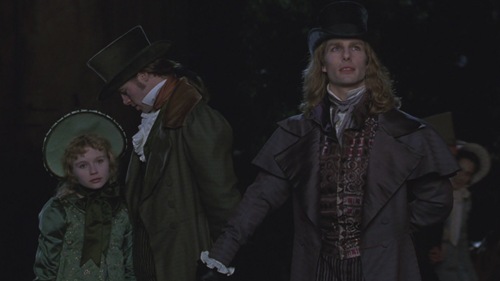
Kirsten Dunst, Brad Pitt, and Tom Cruise star in Interview with the Vampire
This family is non-traditional in more than one way

Let’s start with the obvious one. Interview with the Vampire is unusually relaxed about its LGBT content, especially given that it came out 20 years ago, in 1994 (a special anniversary blu-ray will be available soon). It’s a mainstream Hollywood movie about a bisexual man finding the self-esteem to leave an emotionally abusive relationship, and it has bankable A-list actors – one of whom famously sues people for saying he’s gay – in the lead roles.

Yet, it’s not remembered as being especially controversial. The characters don’t have sex – in the Rice verse, vampires are pretty much impotent and only get off on biting – but it’s clear that Brad Pitt’s character, Louis, is in two separate homosexual relationships over the course of the film.  Interview was marketed as a vampire movie, though, rather than a gay romance, and the fact that people are biting each other rather than kissing apparently masks all other content.

In fact, “They’re vampires!” seems to mask many of the emotional and interpersonal dynamics in the film, which is kind of a shame, since Interview with the Vampire is a very complicated, well-dramatized story about co-dependency and toxic, emotionally abusive or incestuous relationships. The fact that at least two of these relationships are homosexual is treated as No Big Deal by the movie, and could potentially sail right past you – I guess – because of the fangs.

The female vampire, Claudia (played by a 12-year-old Kirsten Dunst), is literally an adult woman trapped in a child’s body, but she’s also a representation of how her fathers’ infantilizing treatment of her has kept her from becoming independent. When Lestat (Tom Cruise) turns her into a vampire, he does it specifically to manipulate Louis, after Louis threatens to leave him – it’s not about wanting a child, or wanting Claudia, specifically; it’s about wanting another thing to control and another avenue to control what he already has. We find out later in the film that what he’s done is forbidden – that vampires generally feel it’s wrong to create something that can’t survive on its own; a creature that will be trapped with you through its dependency.

Claudia is never allowed to become an adult and, since she and Louis are both victimized by Lestat, they form an emotionally incestuous bond that’s based on his taking care of her, and her being (sort of) his wife. She’s afraid that he’s going to leave her; he feels guilty about what will happen if he tries to strike out on his own.

In the end, Louis finds a new boyfriend, who murders Claudia in order to have Louis to himself and, at that point, Louis realizes that he can’t spend the rest of eternity taking care of people – whether it’s Lestat, or Claudia, or this new guy – and he decides to go live by himself, at which point he discovers that that possibility is not as terrible as he imagined.

“They’re vampires!” certainly adds an extra layer of interest to the story, and creates lots of opportunities for gory, stylized violence, but it’s the all-too-boring, all-too-common human dynamic beneath it that makes the vampire stuff worthwhile. It’s a story that spans centuries and uses fantastical elements like, “Look, this child can never grow up!” to touch on deeper reflections about dysfunctional relationships, boundaries, and self-esteem. The fact that it snuck the idea of two gay/bisexual men raising a child together into popular culture is just an added bonus.

Jordan revisits some of the same themes in his less well-known but more political vampire movie, Byzantium (2012), written by Moira Buffini.

Saoirse Ronan and Gemma Arterton star in Byzantium
Some vampires are made in a cave

More in-your-face than Interview with the Vampire, Byzantium tells the story of Clara and Eleanor Webb (Gemma Arterton and Saoirse Ronan), a vampire mother and daughter on the run from others of their kind who want to kill them.

Most of the story takes place in the present day, but flashbacks slowly reveal the tale of how Clara (who is Eleanor’s biological mother as well as her vampire!mother) was forced into a life of prostitution by a misogynist naval officer, Captain Ruthven, and later stole the map to immortality from him.

The way we get this information is really ham-fisted, and it’s lacking in any kind of subtlety or emotional weight, but the idea is important. Ruthven comes by the map in the first place because local Nice Guy, Darvell, who thinks of himself as a good person, invites Ruthven to join his Secret Special Amazing Fraternity of Super Cool Dudes, knowing that Ruthven viciously destroyed Clara’s life. He feels sorry for her, but the idea that Ruthven is responsible for doing this to her is in no way incompatible, for him, with the idea that Ruthven is the kind of guy you’d want to be blood brothers with for eternity.

When Clara steals the map to the supernatural cave that turns people into vampires (just go with it), Darvell gets pissed-off and tells her that she ruined everything by becoming the first female vampire. She’s forbidden from turning anyone else, but, when Ruthven attacks Eleanor as revenge for Clara stealing his map, Clara brings Eleanor to the cave and makes her a vampire, too. Nice Guy Darvell spends the next two hundred years trying to kill them because they wrecked his super special brotherhood.

Along the way to driving home this point about women’s equality, Byzantium also explores the uncomfortable dynamic between Clara and Eleanor, where they’re more like sisters than parent and child – partly owing to the fact that Clara was so young when she gave birth to Eleanor – and the uncomfortable way in which Clara keeps resorting to prostitution as a way of making money. (This is maybe the only vampire movie where the vampires are not somehow rich, and you can easily trace it to the lack of opportunity they’ve had as women).

In the end – spoiler, spoiler – Darvell finally figures out that he’s being an asshole, and Clara figures out that Eleanor needs to have her own life rather than being a project for Clara to work on.

Byzantium is not a subtle movie, but it’s interesting in that it uses the long life of vampires to trace the social position that women have held in Western culture, over the past 200 years. When we first meet Clara, she isn’t even treated as a person – in fact, she steals personhood from a group of men, and passes it onto her daughter, making her public enemy number one. Flash forward to the present, and it’s ridiculous to suggest that Clara and Eleanor aren’t people – so ridiculous that even Darvell comes around to the idea, in the end.

It’s a very different narrative about vampirism than the one where male aristocrats get to hang out being rich and good-looking, luring women toward them in some kind of magical thrall. It’s a narrative that takes into account that the world looks different depending on whether you’re standing on top, or getting your face stomped in, down below.

Whereas Interview with the Vampire has a more general message that isn’t specifically about being gay, and casually pulls in gay characters, Byzantium is much more overtly political, and much more about articulating an experience that is specifically female. Both approaches are interesting, and both offer something more than “They’re vampires!” to steer the story.

Interview with the Vampire and Byzantium are both movies that use their supernatural elements as a springboard for exploring social and psychological content that’s relevant to the world we live in. Rather than using real-life issues as window-dressing (True Blood), or being purely escapist (Twilight, Dracula), Neil Jordan’s vampire movies (and the source works they’re based on) show how you can re-imagine the vampire in different, less superficial ways, based on what kind of analogy you’re trying to make.

We’re living in a time of vampire saturation, but it’s a (blood) well that doesn’t actually have to run dry. As long as “vampire” is tied to something more than having fangs, I’ll keep watching these movies forever.


Katherine Murray is a Toronto-based writer who yells about movies and TV on her blog.

Exposing Real Lies: ‘Reel Injun: On the Trail of the Hollywood Indian’

What does an “Indian” look like? If you are like most Americans, your answer will fall somewhere between Disney’s Pocahontas character, Johnny Depp’s depiction of Tonto, and the Washington NFL team logo. That’s because your education, family, friends, and society have no idea what actual, living Native peoples look like thanks in large part to Hollywood film representations. The 89-minute documentary ‘Reel Injun: On the Trail of the Hollywood Indian’ (2009) will begin to correct some of those misrepresentations floating around in your brainpan.

What does an “Indian” look like? If you are like most Americans, your answer will fall somewhere between Disney’s Pocahontas character, Johnny Depp’s depiction of Tonto, and the Washington NFL team logo. That’s because your education, family, friends, and society have no idea what actual, living Native peoples look like thanks in large part to Hollywood film representations. The 89-minute documentary Reel Injun: On the Trail of the Hollywood Indian (2009) will begin to correct some of those misrepresentations floating around in your brainpan.

[youtube_sc url=”https://www.youtube.com/watch?v=rbDvteUUrm4″]

What will really blow your mind is when I say that “Indians” don’t exist. “Indian” was the term Columbus labeled the indigenous peoples of this land because he thought he was in India. So this mistake has become the generic name for all 500+ nations that still remain in this land. Charming. And in Hollywood films, Native peoples exist only as stereotypes. Thomas King (Cherokee) writes in his latest tome, The Inconvenient Indian, “Indians were made for film. Indians were exotic and erotic. All those feathers, all that face paint, the breast plates, the bone chokers, the skimpy loincloths. . .The only thing film had to do was to collect such materials and cobble them together into a series of functioning cliches. Film dispensed with any errant subtleties and colorings, and crafted three basic Indian types. There was the bloodthirsty savage, the noble savage, and the dying savage.”

The history of this practice is laid bare in Reel Injun and will shock and amaze you. Director Neil Diamond (Cree), and co-directors Catherine Bainbridge, and Jeremiah Hayes craft an alternative narrative to the one you think you know. For instance, did you know that the most famous “Indian” actor, Iron Eyes Cody, was Sicilian, not Native?

[youtube_sc url=”https://www.youtube.com/watch?v=65PpeJkix5g”]

Did you know that the story you think you know about Crazy Horse and Custer isn’t true? Or that in many “classic” Hollywood westerns where Native actors are speaking a Native language, they are making fun of the scene or their fellow white actors instead of saying the lines presented in English on screen? Or that in the 1930s, Native Americans directed and acted in films from their own perspectives? Or that the headband seen so often on Native characters in westerns was because of the costume department and has absolutely nothing to do with real Plains cultures?

After a scene in a Hollywood costume vault, Ojibway film critic Jesse Wente says, “This is actually, while probably not calculated, an ingenious act of colonialism. You are essentially robbing nations of an identity and grouping them into one.”

Ojibway film critic, Jesse Wente.

Reel Injun starts off by reminding viewers that Hollywood has represented “Indians” in over 4,000 films for over 100 years before launching into a film clip smorgasbord that washes you with image after image that reinforces Thomas King’s statement.

The director/narrator, Neil Diamond, does a simple voiceover as the camera captures young Native kids watching one of those ubiquitous Hollywood westerns where “Indians” are the enemy. His voiceover: “Growing up on the reservation, the only show in town was movie night in the church basement. Raised on cowboys and indians, we cheered for the cowboys, never realizing we were the indians.”

Diamond’s stated goal is to “make sense of the world’s enduring love affair with the Hollywood indian. . .this image has captured the world’s imagination.” From the silent era when Native Americans were directing and acting in films to the twentieth century when representations of Native peoples remained wildly inaccurate and fantastical.

Cree director of Reel Injun, Neil Diamond.

Adam Beach, John Trudell, Russell Means, and Chris Eyre are among an impressive list of interviewees in the film and their comments are dispersed among historic photographs, film clips, and images of iconic American landscapes. About 13 minutes in, Chris Eyre explains, “The reason that indians were projected so heavily into movies was the romance of the tragedy, Greek-Roman tragedy.”

Philip J. Deloria addresses the representation of Native peoples in film in his book, Indians in Unexpected Places, writing, “Films, of course, never repudiated the sensibility of Indian violence found in the Wild West. Indeed, they were key to the shifting of Indian violence from nineteenth-century possibility to twentieth-century titillation and metaphor” (55).

At one point, director Diamond visits one of the many summer camps held in America every year that keep “Hollywood’s notion of the noble savage alive and well,” where little white boys romp and play and fight dressed in face and body paint and grunt and shout and vocalize the Atlanta Braves’ “tomahawk chop” tune under the watchful eye of their white leaders. Before he meets this group of campers, Diamond says, “I wonder if any of these kids have ever met a Native person. Or if their image of us comes only from the movies. I hope I don’t disappoint them.”

In The Inconvenient Indian, King provides a guiding perspective with which to consider the documentary Reel Injun, as well as any representations of Native peoples you may see on film or TV: “The good news is that none of these Indians was a threat. To the White heroes in particular and to North America in general. None of them ever prevailed. What we watched on the screen over and over was the implicit and inevitable acquiescence of Native people to Christianity and Commerce. No matter what happened, the question that was asked again and again on the silver screen was: Can Indians survive in a modern world? And the answer, even in sympathetic films such as Broken Arrow, Little Big Man, and Dances with Wolves, was always: No.”

Reel Injun won Gemini Awards for Best Direction and Best Visual Research and was nominated for Best Original Score in a Documentary Program. Available to stream on Amazon and Netflix, this documentary would make a wise and balanced addition to any classroom studying film, film history, Native Americans past and present, as well as issues of representation or identity.


_____________________________________

Dr. Amanda Morris is an Assistant Professor of Multiethnic Rhetorics at Kutztown University of Pennsylvania with a specialty in Indigenous Rhetorics.

Ten Documentaries About Political Women

A pioneering advocate for gender equality, co-founder of Ms. Magazine, and cultural icon, Gloria Steinem has played a prominent role in modern American history. The HBO-produced profile ‘In Her Own Words’ features thoughtful interviews with the woman herself as well as fascinating archival footage. Steinem comes across as sincere and engaging while clips of central moments in 70s women’s history capture the energy and spirit of feminist activism.

Written by Rachael Johnson.

In Her Own Words
In Her Own Words


1. Gloria: In Her Own Words (Peter W. Kunhardt, 2011)

A pioneering advocate for gender equality, co-founder of Ms. Magazine, and cultural icon, Gloria Steinem has played a prominent role in modern American history. The HBO-produced profile In Her Own Words features thoughtful interviews with the woman herself as well as fascinating archival footage. Steinem comes across as sincere and engaging while clips of central moments in 70s women’s history capture the energy and spirit of feminist activism. Other illuminating footage, exposing the mind-blowing sexism of the US media, clearly indicates what women were up against. In Her Own Words offers, too, a fairly intimate profile of Steinem. Addressing family and romantic relationships, as well as Steinem’s feminist awakening, the documentary marries the personal and political.

Taking Root
Taking Root


2. Taking Root: The Vision of Wangari Maathai (Lisa Merton and Alan Dater, 2008)

The late, great Kenyan environmentalist Wangari Maathai (1940-2011) remains one of the moral figures of our age. Maathai founded the Green Belt Movement, a tree-planting organization benefiting rural women facing firewood and food scarcity on environmentally degraded land. In 2004, she became the first African woman to receive the Nobel Peace Prize for her contributions to sustainable development. A strong, energizing figure brimming with personality, Maathai also confronted sexism and political oppression. Taking Root tells the story of an eco-feminist crusader who empowered her fellow women and citizens. It’s both a stirring study of singular courage and a story of people power.

Free Angela & All Political Prisoners


3. Free Angela and All Political Prisoners (Shola Lynch, 2013)

Free Angela and All Political Prisoners chronicles the extraordinary life of an extraordinary woman, activist, and academic, Angela Davis. Directed with style and verve, it addresses a particular episode in the radical icon’s life, her arrest and trial following the 1970 kidnapping of, and killing in a shootout, of a Californian judge. The incident occurred during an escape attempt at the trial of one of the Soledad Brothers, three men accused of killing a white prison guard after the killing of several Black inmates. As the guns were registered to Davis, she was accused of involvement. Fleeing arrest, she was put on the FBI’s Most Wanted Fugitive List. Davis was acquitted of all charges in 1972 after spending 18 months in prison. The historical context is hugely important, of course. Davis was seen by many in the United States, and globally, as a victim of a racist legal justice system and society that actively persecuted people of color. A left-wing philosophy philosopher at UCLA with close links to the Black Panthers, Davis posed a threat to the right-wing white establishment. She had, previous to the Marin County incident, been fired from her teaching post. Although one documentary feature cannot hope to fully capture the woman and her life’s work- -her writing encompasses gender, race, class, and the US “prison industrial complex”- Shola Lynch’s documentary vividly portrays her uncanny intelligence and charisma. The archival footage and funk soundtrack are electrifying and the director provides an evocative portrait of those turbulent times.

Not For Ourselves Alone


4. Not for Ourselves Alone: The Story of Elizabeth Cady Stanton and Susan B. Anthony (Ken Burns, 1999)

Focusing on the lives and careers of two key figures of the 19th century women’s movement, Elizabeth Cady Stanton and Susan B. Anthony, Not for Ourselves Alone examines the long, hard struggle for women’s suffrage in the United States. It’s a hugely informative, richly detailed and beautifully made film. It is highly recommended.

Union Maids
Union Maids


5. Union Maids (Julia Reichert, James Klein, Miles Mogulescu, 1976)

The Oscar-nominated documentary, Union Maids, is a little gem. Blending extraordinary archival footage, and stills, with compelling, contemporary interviews with three labor activists–Kate Hyndman, Stella Nowicki and Sylvia Woods–it is a powerful tribute to the politically engaged, working-class woman of 30s America. It is an invaluable historical resource.

Ukraine Is Not a Brothel


6.  Ukraine is Not A Brothel (Kitty Green, 2013)

Ukraine is Not A Brothel is an intelligent documentary about the controversial feminist movement Femen. Founded in the Ukraine in 2008, the group privileges the female body as a site of liberation and resistance. Wearing crowns of flowers, activists use their bare breasts to protest patriarchy, religious authority, and sexual exploitation. Green mixes interviews with footage of the women’s protests. Their methods invite scepticism and accusations of hypocrisy- the typical Femen activist seems to be tall, blonde and beautiful- but the women do lay themselves on the line. Members relate distressing incidents of abuse. The documentary reveals, however, that their leader is a man, a certain Victor Svyatski. But that’s not the end of this complex tale. Members like Sasha have distanced themselves from Victor and Femen is now based in Paris. Embedded with the women for more than year, Green provides the viewer with an authentic, in-depth portrait of the organization. 

Pray the Devil Back to Hell


7. Pray the Devil Back to Hell (Gini Reticker, 2008).

Pray the Devil Back to Hell is a powerful ode to non-violent resistance. It documents an awe-inspiring episode in Liberia’s recent, war-scarred history when an inter-generational, inter-faith movement, comprised of ordinary women, successfully petitioned for peace. The film gives voice to the members as it acknowledges and honors their courageous, creative efforts. One remarkable woman featured in the film, movement organizer, Leymah Gbowee, jointly won the Nobel Peace Prize in 2011 with the current President of Liberia, Ellen Johnson Sirleaf. Pray The Devil Back to Hell is a unique contribution to peace studies.

Unbought & Unbossed
Unbought & Unbossed


8. Chisholm ’72: Unbought and Unbossed (Shola Lynch, 2004)

Chisholm ’72 chronicles the political career of American’s first Black Congresswoman, Shirley Chisholm (1924-2005) focusing on her unsuccessful yet trail-blazing 1972 presidential bid. Blending interviews with contemporaries with captivating archival footage, it’s an absorbing documentary about a genuine, progressive figure who personified the promise of a more democratic, socially inclusive America. Chisholm promoted voting and greater political engagement, and her example remains an inspiration for candidates today. Shola Lynch’s film is a vital tribute to the uncommon resolve of a candidate who set out to transform the system.

Pussy Riot: A Punk Prayer


9. Pussy Riot: A Punk Prayer (Mike Lerner, Maxim Pozdorovkin, 2013)

This British-Russian documentary chronicles the political career of the anti-authoritarian, anti-clerical feminist punk band, Pussy Riot. It’s both a colorful and disturbing tale. Pussy Riot, of course, gained world attention in 2012 when they performed a “punk prayer” in Moscow’s Cathedral of Christ the Saviour in multi-hued balaclavas. As the film makes clear, the jokey, subversive stunt was politically motivated. It was a finger-to-the-father protest against the Orthodox Church’s backing of Putin as well as misogynist religious ideology. Three of the band members- Nadezhda Tolokonnikova, Maria Alyokhina and Yekaterina Samutsevich- were put on trial and given lengthy prison sentences for hooliganism and inciting religious hatred offences although Samutsevich latter would soon have her sentence suspended. The severe punishment the women received was condemned by Western human rights organizations such as Amnesty International. (Tolokonnikova and Alyokhina were finally released under Russia’s amnesty law at the end of 2013). The Sundance award-winning documentary is an engrossing account of one of the most fascinating feminist stories of our time.

We: Arundhati Roy
We: Arundhati Roy


10. We: Arundhati Roy (Anonymous, 2006)

We does not offer a conventional profile of Arundhati Roy. As its underground filmmakers promise from the very start: “This film is not about her. It is about her words.” The viewer is solely informed that the Indian writer and activist won the Booker Prize in 1997 for The God of Small Things and the Sydney Peace Prize in 2004. A formally inventive film, it mixes commentary and clips from Roy’s compelling 2002 “Come September” speech with powerful illustrative footage. The wide-ranging speech covers corporate globalisation, the legacy of colonialism, imperialism, the war on terror, civil unrest, and resistance. Roy’s lyrical voice hypnotizes while her words pack a punch. The soundtrack, featuring the likes of Massive Attack and Nine Inch Nails, is equally mesmerizing. Giving voice to an eloquent, courageous woman, We speaks truth to power.


See also at Bitch Flicks: Biopic and Documentary Week: Gloria: In Her Own Words, Pray the Devil Back to Hell Portrays How the Women of Liberia United in Peace, Changed a Nation, Pussy Power and Control in Pussy Riot: A Punk Prayer and Ukraine is Not a Brothel: Intimate Storytelling and Complicated Feminism