Classic Literature Film Adaptations Week: ‘Their Eyes Were Watching God’ by Zora Neale Hurston

Zora Neale Hurston
  

This is a guest post by Martyna Przybysz.

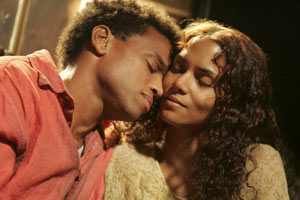
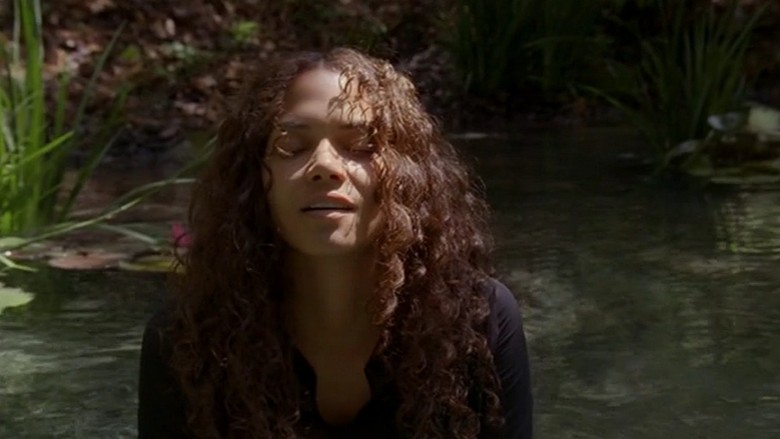
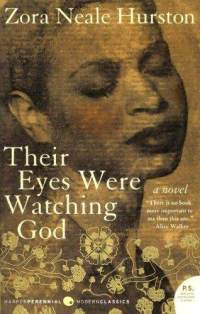
Hurston’s novel has found a huge following not only amongst African-American readers and writers, such as Alice Walker, but ever since being brought into the spotlight back in the 1970s, it has had a growing female readership. It is not an easy novel to get through – the use of local dialects, and the ever changing narrative styles, make it an almost laborious read. As noted by a Black British writer, Zadie Smith, in the introduction to the novel from 2007 “Hurston rejected the ‘neutral universal’ for her novels – she wrote unapologetically in the black-inflected dialect in which she was raised.””Unapologetic” is the key word here – Zora, as the writer, and a woman, went against the grain, just like her character, Janie. That is what makes the novel compelling and draws the reader in. Similarly so, the character potrayed by Halle Berry is driving the film’s narrative.

Janie and Tea Cake
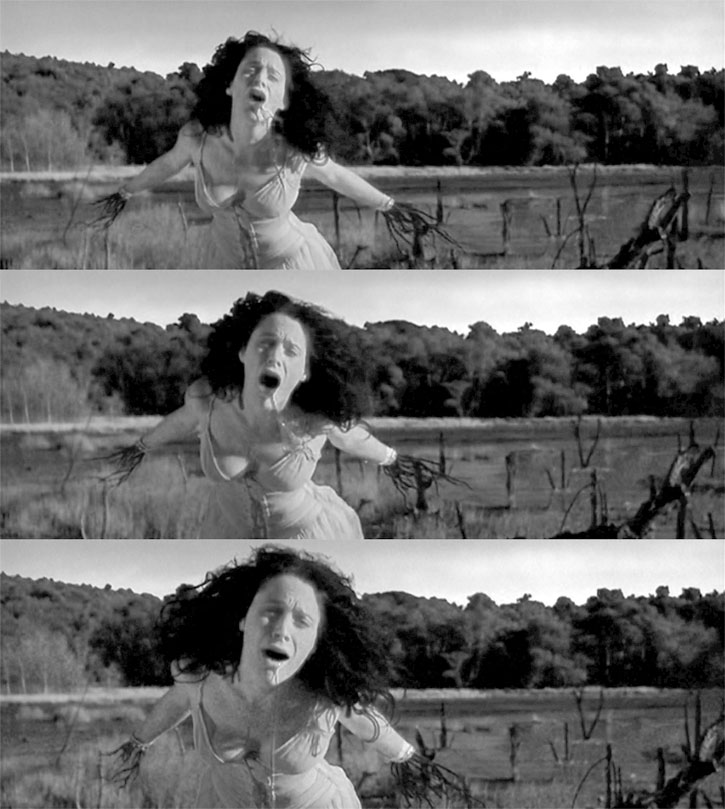
Janie Crawford is a survivor. In the opening scene of the film, just like in the novel, she has just come back from burying the dead – the only love of her life, a light-hearted slacker, Tea Cake. The first sentence signals the narrative that will later dominate the entire movie. It could be argued that film, being a visual medium, has an advantage over the written word in establishing the mood, and here it does so with the jittery camera movements, and extreme close-ups of Janie’s body. “There’s two things everybody got to find out for theyselves, they got to find out about love, and they got to find out about living” she says, as she stumbles through a village path, in nothing but dirty overalls.

Isn’t it a powerful, universal statement? It is indeed; however, as the film progresses, we lose the sense of identity search that is so prevalent in the novel. We are instead invited to a roller-coaster ride that are Halle Berry’s… wait, Janie Crawford’s romantic endeavours. Because yes, as aptly pointed out by one of the reviewers, “she’s Halle Berry – and the movie never lets you forget it.”

Halle Berry as Janie
Perhaps because I got to watch the film prior to reading the novel, it was easier for me to accept Halle’s interpretation of Janie. I couldn’t, however, shake off the feeling that a multilayered novel has been reduced to a Harlequin-esque epic drama. Having Oprah Winfrey summarise the film in the trailer only made that impression stronger. What the film fails to do is adapt the strong visual imagination of the writer that built a much more complex identity for Janie.
Whilst the novel slowly introduces us to Janie, and goes as far back as her childhood, in the film we are immediately transported back to that unlucky afternoon when her Gran spots her kissing a regular farm boy and decides to give her away to a rich land-owner. Logan Killicks is a non-invasive older man, who places Janie in the role of a housewife. It is by his side that she grows into a woman and realizes that her romantic dreams of love may not be fulfilled. It isn’t long, however, until she meets a handsome gentleman called Joe Starks (played by Ruben Santiago-Hudson) and runs away with him. And here again, the search for her own identity as a female seems rather futile. Janie becomes an accessory and feels restricted by her relationship and the social role (being the Mayor’s wife) that she has to fulfill. “I think it keep us in a kinda strain,” she says. She’s just there to stay by her man’s side and should not have any further expectations, as according to Janie’s granmother “de nigger woman is de mule uh de world.” Janie, however, will not rest until she finds happiness in a relationship.
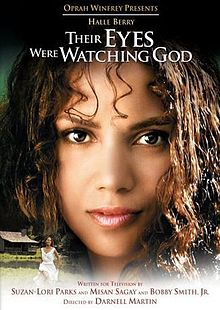
DVD cover
Without fail, Halle Berry conveys her character’s search with utmost sensitivity and attention to detail – it is all in the small gestures that we learn about Janie and her heart’s desires. She wants to feel and love and share that feeling with the world, but most importantly, she adapts this approach to life and the world in order to find her own sacred place in the arms of a caring man. That, for her, is the destination. As a contemporary woman, I find this concept a beautiful one in itself, but not quite liberating, and based on a presumption that a woman cannot be whole without a man. The search for female identity through the romantic love of a man emanates from the character of Janie throughout the film. She loves nature, and she loves God; she’s curious, and open, and somewhat free and wild. Through the camera work and sentimental music, Their Eyes Were Watching God explores that aspect of Janie’s personality, and when oppressed by her second marriage, she confesses to the audience that she is not “petal-open anymore.” What a striking, if slightly sentimental, analogy that brings to mind one of my favourite quotes from Anais Nin: “And the day came when the risk to remain tight in a bud was more painful than the risk it took to blossom.”

What the film, as well as the novel, are suggesting is not only that small town mentality is something that Janie has long outgrown, but by building her identity as a female in her own right, she is also going against the stale racial and gender stereotypes that enslave her community. When she finally meets “the love of her life,” Tea Cake (played by Michael Ealy), the passion between the two is undeniable, and so is everyone’s harsh judgment about their romance. But Janie is not a rebel; she simply follows her heart and is not afraid of being herself. Sexuality is an important aspect of her identity as a woman, and she is way ahead of her time with her natural and unconstrained ability to explore it.

However controversial or open-minded its description of sexual scenes was at the time when the novel was published (perhaps less when it was later read and fully acknowledged), Darnell Martin, the director of the TV movie, has made the scenes almost poetically erotic. The main sex scene between Halle and Michael brings us to a finale of the passion that has been building up between their protagonists – Janie looks and acts twenty years younger, just like a woman who has found herself by finding love in another. “I felt for the very first time like I was living my life – I had love, and it was real. Tea Cake gave me the whole world, every day.” That concludes Janie’s search for love, as well as her search for identity.

Although I find it thin and slow in places, I struggle to dislike Darnell Martin’s adaptation of Hurston’s novel. After all, it manages to carry a powerful message, despite it not being in favour of the current feminist perception of gender roles and female identity. Yet remembering that it is set in the early 20th century reality of African-Americans, one has to admit that it does a fair job at depicting a woman who goes beyond her time. Even if it does so not without pretense, and in a more simplistic way than Hurston’s beautiful novel.

———-
Martyna Przybysz is a Pole who resides in London, UK. She works in film production. This is her blog: http://martynaprzybysz.tumblr.com.

Classic Literature Film Adaptations Week: Titus the Tight-Ass: Julie Taymor’s Depictions of the Virgin and Whore

Written by Amanda Rodriguez

Trigger warning: frank discussion of rape & PTSD

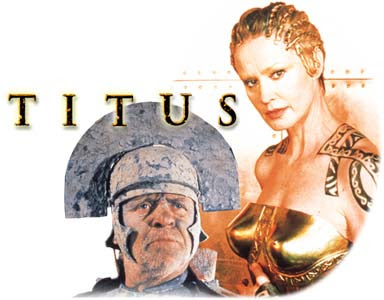
Julie Taymor’s Titus (based on Shakespeare’s Titus Andronicus) is a highly stylized production, involving elaborate costumes, body markings, choreography, era prop mash-ups, and extravagant violence. I tip my hat to Taymor for the scope and splendor of her vision, and I also applaud her for paving the way for other talented female directors in Hollywood. Though Taymor updates much of the Shakespeare play (using cars, guns, and pool tables alongside swords, Roman robes, and Shakespearean language), Taymor does little to re-interpret the female roles in an effort to make them more progressive and complex. 

The only two women of note in the film are the captured Goth queen turned Roman empress, Tamora, portrayed by Jessica Lange and Lavinia, the gang-raped and dismembered virgin daughter of Titus, played by Laura Fraser.

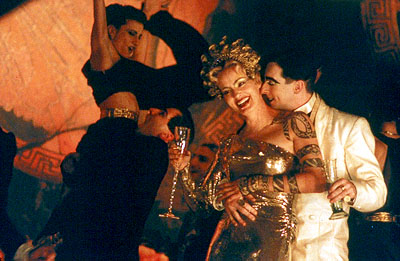
First, there’s Tamora, the barbaric queen of excess and unnatural sexual appetites.

Tamora: all-around orgy party gal
In college, I wrote a psychoanalytic paper on her called, “The Earth and Tamora: The Cannibalistic Vagina in Titus Andronicus (Or Chomp, Chomp: The Little Vagina that Could)”. Though it was a lot of fun to write, it focused on the unhappy subject of the demonizing of the Goth queen for her sexuality. Neither the play nor the film seem particularly concerned with sympathetically portraying a woman who’s lost her country, her eldest son, and been forced to marry the odious emperor who conquered and colonized her land and people. Instead, Tamora is exoticized and condemned as a bad mother who uses her boundless sexuality as her power. She uses this power to seduce the emperor, which opens the door for her to inflict her revenge on the Andronici.
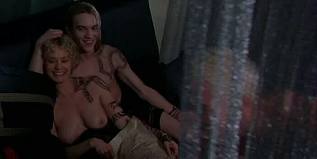
Tamora is the unnatural mother with unnatural appetites, which is literalized at the climax of the film when Titus feeds her a meat pie filled with her murdered sons. Taymor shows Tamora’s relationship with her two surviving sons as bizarre and borderline incestuous. Her sons are wild, over-indulged, and psychotic. We see them knife fight each other all around the palace, bickering over which one of them will get to rape the virginal Lavinia. Tamora caresses and shares lingering kisses with them. Not only that, but she lounges in bed naked with them. Her sexuality is so gross and excess that it spills over onto her sons, which Taymor implies warps them into narcissistic mama’s boys who go around raping and dismembering girls for funsies.
This would be an awkward scene to walk in on.

Tamora lacks an appropriate maternal instinct. She’s either too overbearing and clingy with her children, which reveals itself in her sexual attitude toward them, or she is a cold and immoral figure as is evinced by her desire to murder the infant son born from her affair with Aaron the Moor. (Even her relationship with Aaron, her black lover, is meant to be another example of her unnatural appetites, which is hella racist and could be the topic of a whole other post.) Lavinia pleads for Tamora to just kill her without letting her sons rape her, but Tamora is unmoved. This is another lost opportunity to show Tamora as having complex, compassionate, or even conflicted feelings at the sight of another woman begging for mercy in a mirror image of Tamora kneeling at Titus’ feet, weeping that he spare her son. Lavinia says to the sons, “The milk thou suck’dst from her did turn to marble,” and, at that point, the audience is inclined to agree, especially since Tamora is apparently so turned on by all this raping and murdering that she declares she’s going to find Aaron and have sex with him. 

Then there’s Lavinia, the dutiful, virgin daughter.
Lavinia: post-rape with her arms cut off then stuffed with branches and her tongue cut out
Taymor hammers home Lavinia’s obedience by showing her meekly, willingly switching her betrothal from one brother (Bassianus) to the other (Saturninus) upon Titus’ instruction. This is another missed opportunity to complicate the personhood of a woman who is not treated as human, who is always depicted as a piece of her father’s property and a reflection of his honor.

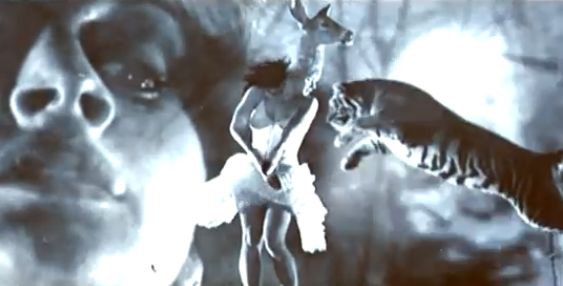
Lavinia is raped, her arms hacked off then cruelly stuffed full of tree branches and her tongue cut out so that she can’t name her assailants. There is so much that a director could do to articulate the inhuman atrocity that’s been inflicted upon Lavinia. It is the epitome of victim silencing, literalizing the struggle many survivors face after their attack. Unfortunately, Taymor renders the rape of Lavinia in the same lavish, stylized manner as everything else. When Lavinia sees her attackers for the first time after her rape, Taymor uses an abstract hallucination sequence to symbolize the rape. Lavinia is wearing a deer head atop her own as two tigers leap towards her from either side.

W…T…F

The sequence is bizarre, trippy, and kind of pretty, but it in no way expresses the horror of rape (not to mention the unimaginable horror of being dismembered). With all the stylizing and symbolizing Taymor’s doing, Lavinia’s rape is effectively trivialized.

When Titus first sees Lavinia after the attack, he says, “My grief was at the height before thou camest,
And now like Nilus, it disdaineth bounds.” Her father monologues about how her attack hurts him.  Even Lavinia’s grief and her rape are not her own because Titus egotistically can only fathom his own pain, pride, and outrage. Throughout this scene and the rest of the film, Lavinia is a background adornment. As Titus bemoans his plight, Lavinia stands there without emoting or interrupting. The camera only shows her as meek and solemn. The only exception is a strange scene in which she is given a long stick in order to write the names of her attackers in the sand. Lavinia moves to put the tip of the stick in her mouth, and the audience recoils at the image that echoes fellatio (nobody wants to see a rape survivor performing simulated fellatio). Instead of putting the stick in her mouth, though, Lavinia frantically carves out the names as she is accompanied by discordant music. Instead of documenting her reaction to writing out the names (relieved? angry? exhausted?), the names themselves are focused on in an overhead shot, once again removing Lavinia’s agency and subjectivity.

Lavinia’s life and her death are both symbols. Her life is symbolic of her father’s honor, and after she’s raped, her lost chastity (puke) is symbolic of his shame. Her chastity, Titus insists, is more precious than her hands or tongue (projectile puke). In his mind, Titus must kill her in order to alleviate his own shame. Even Lavinia’s death at her father’s hands is meek and willing. The logic is that she’s so shamed, so “martyred” that death is preferable. It’s true that survivors may go through a host of emotions following their attack, and thoughts of suicide are not uncommon. Lavinia behaves as a doll, though, being positioned placidly for Titus to snap her neck. One could even defend her lack of emotions as PTSD (post-traumatic stress disorder), but I contest that Lavinia doesn’t have any real emotions because Taymor gave her very little depth of character, and Lavinia’s docile nature is more for convenience that to articulate the range of responses a survivor might have.

What’s the saying? “Like a lamb to the slaughter.”

 Tamora and Lavinia fit solidly into opposite camps of the virgin/whore dichotomy. Tamora = whore. Lavinia = virgin. The beauty of working from a play as source material is that a director has such incredible freedom to interpret character and setting appearance as well as character tone of voice, emotions, and actions. Though Taymor’s reboot is flashy and gritty, it doesn’t do much work to creatively re-imagine the inner life of its characters. In fact, it doesn’t appear to give much inner life to its female characters at all. In Taymor’s defense, the Shakespearean play does cast its women as virgin and whore, not allowing for much in the way of range. I just can’t accept a contemporary filmmaker (especially a woman) so cavalierly putting her only female characters in the same box as a 16th century white man, a box out of which women still struggle to climb today.

———-

Classic Literature Film Adaptations Week: ‘Farewell My Concubine’

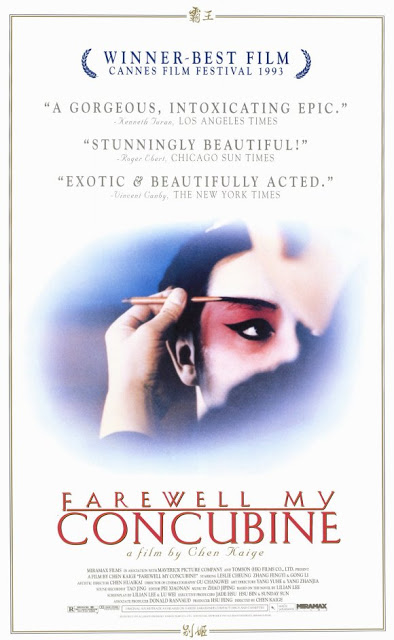
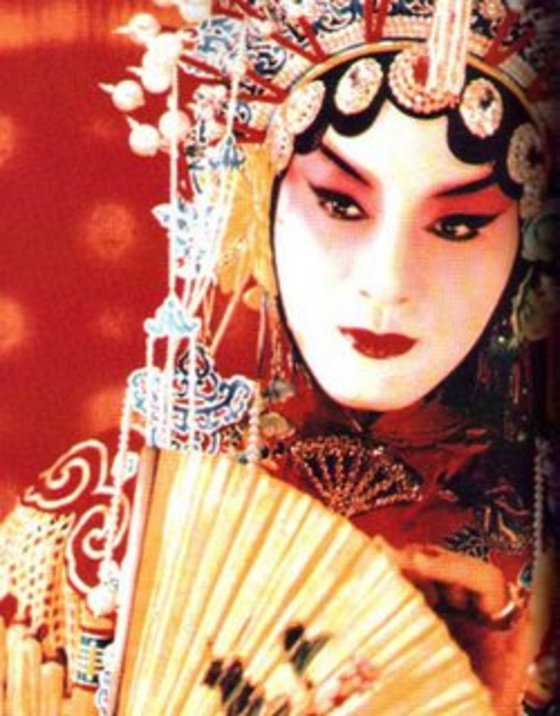
Official movie poster for Farewell My Concubine
 This is a guest post by René Kluge.
[Trigger Warning for rape and sexual violence.]
The protagonist in Farewell My Concubine (PR China, 1993) is a woman. Or is it? On the one hand the lead role is played by the famous male Hong Kong actor Leslie Cheung. On the other hand, since being a little boy in a Bejing Opera training school, Cheng Dieyi gives up his male identity and plays the female parts in renowned Beijing Operas. The rest of the movie shows him adapting femininity not only on stage but also in real life. In fact, he struggles with telling the Opera world and real life apart. Even his stage name – Dieyi, which loosely translates to Butterflydress – has a female connotation. His femininity is contrasted with the hyper masculinity of his stage partner Duan Xialou. Between him, Xialou and Xialou`s wife Juxian, a complex ménage à trois with changing relationships develops. According to some commentators[1] the asserted analytical solution to this scenario is to take Dieyi as a symbolic woman. Dieyi is male, but in the context of the movie, he performs the function of a woman.
Leslie Cheung as Cheng Dieyi
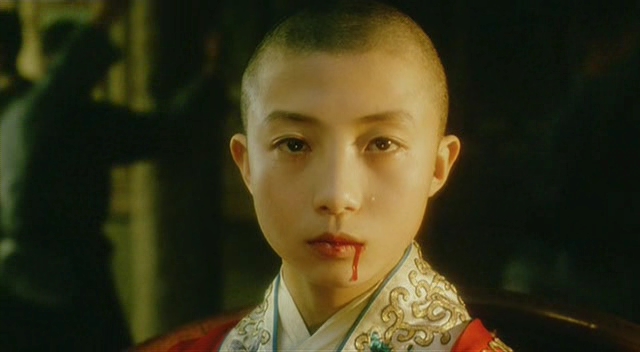
The interesting part is how he becomes that symbolic woman. It is not his own decision based on sexual preferences, as in known trans* movies like The Birdcage or Boys Don´t Cry; it is also not cross-dressing as in Some Like it Hot or Mulan. Instead, Dieyi suffers through a violent process, which forces him to adapt a female identity and give up his masculinity. Right in the beginning of the movie, Dieyi´s own mother cuts of his sixth finger with a butcher knife in order to make him acceptable for the opera school admission standards. Dieyi´s mother is a prostitute and even in the brothel there is no place for him. He has to go through this act of “straightening” to be fit for any kind of social community. While the sexual connotation of this brutal amputation is not outright obvious, the next initiation Dieyi has to endure has a clear symbolism. Dieyi starts training to become a Bejing Opera actor. It quickly transpires that he is exceptionally gifted in all the required skills and talents. The only problem is, when asked to recite a passage from a traditional play, he refuses to sing the correct line I am by nature a girl and not a boy and stubbornly sings, I am by nature a boy and not a girl. In the presence of an influential opera producer, this behaviour risks the future of the whole company. Consequently Xiaolou, who is by now Dieyi´s close friend, forces a pipe down his throat. He does this so vigorously that a small stream of (defloration) blood flows out of Dieyi´s mouth. As a result, Dieyi dutifully sings the role and uses the correct words: I am by nature a girl. Dieyi has to submit to this procedure in order to become a successfull Opera actor – a Dan, male actors who only play female roles. After Dieyi´s and Xiaolou´s first big and successful opera performance, the two get seperated. Dieyi is led to the chamber of an old eunuch who rapes the still very young boy. Right after this, Dieyi finds an abandoned baby on the street side, which he decides to take with him. Continuously disciplined with brutal beatings by the harsh opera teacher, Dieyi runs the gamut from castration, penetration rape, and accidental motherhood to complete his way to a female identity. The symbolic woman is not born, but the product of (violent) social conditions. It is therefore not completely absurd, as some commentators argue, to see Farewell as a filmic interpretation of the feminist philosophies of Judith Butler and Simone de Beauviour.
The young Deiyi after the penetration with a pipe
To get a broader view of the filmic representation of femininity in Farewell we have to take a closer look at Juxian, the other (biological) woman in this movie. Juxian is played by Gong Li. As with other movie stars, Gong Li brings with her the aura of her prior roles. She is particularly known for starring in Zhang Yimou’s so-called Red Movies. In Red Sorghum, Judou, and Raise the Red Lantern, she playes women who are unwilling to passively accept the rigid social roles that the traditional Chinese society reserved for them. Whether through deceit, protest, escape or inner refuge, all those female protagonists fight against the oppression of women by men. Juxian herself is proud and strong. She is a prostitute, but buys herself out of a brothel to marry Xialou. While Xialou is unemployed and suffers from depression, she runs the little inn they own by herself, and when Dieyi struggles to overcome an opium addiction, she is the one who brings up the emotional and physical strength to lead him through detoxification. In an enigmatic scene at her wedding, she takes the red veil – which serves as the symbol of domestic oppression in all the Red Movies – off herself, signaling that it is she who initiated the wedding and that she is no victim of an arranged marriage. But if we look closer, it becomes obvious that her goal is not independence, but rather seeking Xiaolou´s love and companionship. The women in the Red Movies were trapped by the social institution of marriage and struggled to get out. Juxian, on the other hand, is a social outcast and seeks to find her way into mainstream society and into marriage. She needs Xiaolou; she needs the male to accomplish this goal. The emancipatory impetus of Juxian is therefore a double-edged sword.

The same double-edgedness can be found in the portrayal of homosexuality in Farewell. There is no mention or depiction of homosexuality in Farewell, but the connotations are very clear. While there seems to be some underlying homoerotic tensions between Dieyi and Xiaolou, Dieyi engages in an escapade with an influential opera patron. Homosexuality was virtually absent from Chinese cinema up to that point, so having a homosexual protagonist in a big and expensive production movie seems like a big step forward. Sadly, this protagonist is teemed with homophobic stereotypes: he is timid, soft, and jealous. In contrast to A Lan, the protagonist in the Chinese independent movie East Palace West Palace, that premiered just three years later, Dieyi is not openly homosexual. He has no self-confident homosexual identity. Instead he hides his preferences from society and from himself. Most importantly, he plays the role of a woman. Probably the most common prejudice that gay men have to tackle is the imagined coherence between femininity and homosexuality. Dieyi becomes gay when he takes on the female identity. Masculinity and homosexuality still seem to be mutually exclusive phenomenons. Zhang Yuan, the director of East Palace West Palace is not a homosexual. In an interview, he explained that he still felt capable of identifying with the stigmatization and hardship that gay men in modern Chinese society have to endure because he himself, being an underground artist, often faces similar problems. On the other hand Chen Kaige, the director of Farewell is not an underground artist. The commercial and critical success of Farewell made him one of the most popular Chinese directors today, who seldom has problems with funding, obtaining filming permits, etc. One could argue that Zhang Yuan´s marginalized social position enabled him to show an attitude of solidarity toward homosexual men and create a filmic image of them, which is free of discriminating stereotypes. In contrast, Chen Kaige was incapable of obtaining this position of solidarity. Thus his portrayal of homosexuality is more abstract and artificially detached.

Gong Li as Juxian
A gender conscious reading of Farewell hence raises a question that seems to play a big role in many contributions on Bitch Flicks: In light of a film history that has in big part either ignored women or made them the objects of the male gaze, is the sheer visibility of women and/or trans* people already a step forward, or must we pay closer attention to the substance of the representation? This is a question that is not easy to answer, especially for me being a white heterosexual male with no shortage of role models and media idols. Maybe this question is actually very personal and revokes an abstract theoretical analysis. Maybe every female, trans* and/or homosexual person has to choose for her/himself. If they can relate to Dieyi or Juxian, identify with them and understand their personal emancipation and empowerment through them, then no detached scholarly interpretation could argue with that.
[1] For example Wendy Larson: The Concubine and the Figure of History. Chen Kaige´s Farewell my Concubine. In: Sheldon Lu: Transnational Chinese Cinema. Identity, Nationhood, Gender. Honolulu: 1997.

———-

René Kluge is a German PhD. student. He studied Philosophy and Chinese Studies in Berlin, Potsdam and Beijing. His main interests lie in questions of labour, gender and interculturality. 

Classic Literature Film Adaptations Week: ‘For Colored Girls’ Reveals Power of Sisterly Solidarity & Women Finding Their Voice

Written by Megan Kearns, originally published at The Opinioness of the World.

I was excited to see For Colored Girls. A film about 9 women, as a feminist, how could I not be? But I have to admit, I questioned whether or not I should even be writing this review. Writing about a film revolving around African-American women, based on a seminal play on race, and I’m not a woman of color…would it be inappropriate? Would I be breaking some kind of taboo? But then I realized after reading the play and watching the film, while it speaks to women of color and the experiences they endure, it portrays myriad experiences women face.

I don’t want to diminish the unique racial struggles that women of color encounter in this film and in life for that matter. I will never know what it’s like to be followed in a store because of the color of my skin. I will never be told that I should have babies with a white man so my children will have lighter skin and be prettier. But I think this is an important film for women and men to see for the commentary it makes on gender and race and the struggles women of color endure.

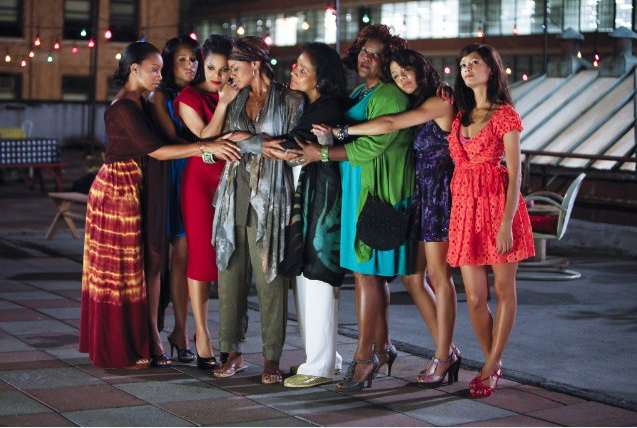
For Colored Girls follows 9 African-American women whose lives intersect in a New York City brownstone. A mosaic of stories as their lives weave together. Janet Jackson is an unyielding corporate magazine mogul with intimacy issues; Loretta Devine, a nurse opening a non-profit clinic dating an unreliable boyfriend; Anika Noni Rose, an effervescent and optimistic dance instructor; Kerry Washington, a happily married social worker who can’t have the one thing she so desperately wants; Kimberly Elise, Jackson’s personal assistant and a mother of two living in an abusive relationship; Phylicia Rashad, the all-knowing wise neighbor; Whoopi Goldberg a devoutly religious woman and mother of Thandie Newton, a promiscuous woman with a thirst for life and a painful past, and Tessa Thompson, a teen who aspires to be a dancer. Almost every aspect of a woman’s life is shown: sex, losing virginity, abortion, rape, falling in love, jealousy, domestic violence, murder, sisterhood, motherhood, infidelity, infertility, break-ups and friendship.

The film For Colored Girls is Tyler Perry’s adaptation of the critically acclaimed Obie award-winning 1974 play and choreopoem For Colored Girls Who Have Considered Suicide When the Rainbow is Enuf written by Ntozake Shange. I had never even heard of the play until a couple of years ago when my co-worker Nai adamantly insisted that I must read it. I was so glad she did as I was blown away by Shange’s brutally honest yet devastatingly beautiful prose. It’s raw and rhythmic, moving with a fierce visceral cadence. In the play, each woman is represented by a color: red, blue, yellow and so on. With striking visuals, the film incorporates this theme by having each of the women who signify wear outfits and garments that symbolize that color. When one of the women is raped, she stops wearing her bright color, donning black clothing instead, as if the trauma had drained her color, her vibrancy. Each woman was so unique: different classes, ages, shades of black (as my co-worker pointed out). It’s rare to find a powerful woman lead a film; it’s almost unheard of for a film to tell nine women’s distinctive tales. The movie and the play both open with these pleading words:

“somebody / anybody sing a black girl’s song bring her out to know herself to know you but sing her rhythms carin / struggle / hard times sing her song of life she’s been dead so long closed in silence so long she doesn’t know the sound of her own voice her infinite beauty she’s half-notes scattered without rhythm / no tune sing her sighs sing the song of her possibilities sing a righteous gospel…”

Perry incorporated most of the play’s language into the dialogue of the film. The powerful poetry is so strikingly beautiful and haunting, so lyrical, that at times it can yank you out of the film, reminding you that it’s not real.All of the women gave fantastic performances, particularly Thandie Newton, whose portrayal could have meandered into a caricature yet never did, Anika Noni Rose, yielding a heartbreaking depiction, and Kimberly Elise, whose restrained and poignant performance made it feel all the more authentic. I noticed that the dialogue separated the decent actors from the outstanding ones. The phenomenal actors (Rashad, Newton, Jackson, Divine, Rose, Elise), inhaled Shange’s words, tasted them and exhaled seamless monologues, making them truly their own.

Women knowing their own worth and finding their voice are messages continually conveyed. Thandie Newton utters one of my fave lines (which differs slightly from the play’s text),

“Being alive and being a woman is all I got, but being colored is a metaphysical dilemma I haven’t conquered yet.”

While it speaks to the unique intersectional experiences of race, gender and identity black women confront, I found I could still relate. I’m proud to be a woman; my gender shapes my identity yet I don’t want it defining who I am. Shange wrote the play in 1974, just after Roe v. Wade had been passed. Yet the material still rings true today. It was surprising to see one of the characters not only seeking an abortion but actually obtaining one. As I’ve written before, it’s still rare for a film or TV show to portray women getting abortions. When describing a back-alley abortion, one of the women cries:

“…metal horses gnawin my womb / dead mice fall from my mouth…”

Some of the characters contend with unspeakable hardships. When one of the characters is raped, she has to defend her actions to a police officer, how she didn’t ask for it. She whispers:

“the stranger we always thought it would be, who never showed up, cuz it turns out the nature of rape has changed…”

But watching the scenes with Kimberly Elise, in which she tiptoes, avoiding upsetting her abusive boyfriend, were some of the hardest for me to sit through, especially as a domestic violence survivor. Elise’s subtle performance makes the pain that much more palpable.
The film shows how far many women will go to please men. For Colored Girls doesn’t blame women. Rather, it shows the responsibility women bear in navigating their lives through the choices, good and bad, they make. When the hilarious Loretta Devine finally has had enough with her cheating boyfriend letting her down, she yells:

“I got a real dead loving here for you now, because I don’t know anymore how to avoid my own face wet with my tears! Because I had convinced myself that colored girls have no right to sorrow!”

She goes on to tell the women at her clinic:

“somebody almost walked off wid alla my stuff…like a kleptomaniac workin hard & forgettin while stealin this is mine / this ain’t your stuff…did you know somebody almost got away with me / me in a plastic bag under their arm…”

Many women often do too much for men, putting up with too much mediocrity. Janet Jackson experiences a similar epiphany when she tells her husband that she’s tired of hearing his apologies. She says,

“…I got sorry greeting me at my front door you can keep yours …I’m gonna haveta throw some away I can’t even get to the clothes in my closet for all the sorries… …well I will not call I’m not goin to be nice I will raise my voice & scream & holler… …& I wont be sorry for none of it”

Perry’s film has been simultaneously criticized and lauded with reviewers at both ends of the spectrum. Some have called it a “choppy mess”, claimed he “butchers” Shange’s play while others have criticized it for its men bashing. While the overly negative depictions of men may be valid, the point of the play was that men can and do inflict pain and suffering on women. Women need to look for happiness and fulfillment not with men but in themselves. But maybe some people have a problem with a film in which the men are superfluous. Manohla Dargis of the NY Times gave a favorable review discussing the tragic storylines:

“That might sound unbearable, but done right it’s thrilling — specific in its pain, universal in its reach — and Mr. Perry works very hard and gets it mostly right.”

Matt Zoller Seitz at Salon praised the film and Perry:

“[Perry] gathers together some of the greatest African-American actresses in America — actresses who are lucky to get one or two scenes in a film with a predominantly white cast — in leading roles that let them chase dreams, make mistakes, fall in love, have their hearts broken, flirt, seduce, manipulate, preen, pout, rail against injustice, and endure and transcend Old Testament-level suffering. And they reward Perry with performances so heartfelt, and often so accomplished, that they make all of his films worth seeing no matter what you think of him as a director.”

For those who hated it, I can’t help but wonder that if the tribulations these women confronted were faced by men, people would have enjoyed the film more. Perhaps people are uncomfortable seeing this much pain, this much torment. But women do experience these painful situations, even the shockingly horrific domestic violence scene near the end of the film. I think people miss the movie’s point by scoffing at it for being too depressing. I’m not going to sugarcoat it and claim it’s not gut-wrenching and horrific. Oh it is, at times dipping into the melodramatic. And yes, I felt like a mack truck had run me over halfway through the film. Yet the ending was ultimately hopeful, a testament to sisterly solidarity amongst women.
In the beginning of the film, the women fight with one another and can’t get along. I was worried saying to myself, “What the hell has Tyler Perry done to Ntozake Shange’s beautifully feminist play?!” But my fears were unfounded. Women in the film face a crossroads in their lives. They suffer unspeakable tragedy and then must find a way to move forward. After the women brave wave upon wave of heartbreak and terror, the film ends, as the play does, with the women coming together; a united front, knowing their self-worth. Kimberly Elise declares,

“…I wanted to jump up outta my bones & be done wit myself leave me alone & go on in the wind it waz too much I fell into a numbness till the only tree I cd see took me up in her branches held me in the breeze made me dawn dew that chill at daybreak the sun wrapped me up swingin rose light everywhere the sky laid over me like a million men I waz cold / I was burnin up / a child & endlessly weavin garments for the moon wit my tears I found god in myself & I loved her / I loved her fiercely”

I was initially apprehensive about Tyler Perry directing and writing this adaptation, as was Shange who said in an interview that she was “worried about his characterizations of women as plastic.” While a more adept filmmaker might have done something different or even better, I don’t think people are giving Perry due credit. He portrayed fully dimensional characters, showing the respect for women I’ve always assumed he feels despite his previous lackluster films. Perry added some important pieces to the film, like Whoopi Goldberg, as my co-worker Nai pointed out, divulging how her father gave her to a white man as he didn’t want ugly grandbabies. He also added Janet Jackson’s line where she says, “Women give up too much of their power.” I think Perry did a fantastic job of knowing what to keep and what to leave out. He remained faithful to the play, capturing its breathtaking essence.
Professor and writer Reza Aslan said in an interview on the Colbert Report:

“the best way to reframe perceptions is not through information or knowledge or education…but through the arts, through literature, through film. These are the things that really break down the boundaries and borders between us…”

Making this argument tangible, in Elle Magazine’s Women and Hollywood November 2010 issue, director/actor Victoria Mahoney (Yelling at the Sky) said that if we want to see more women’s films, we must go and see them; we need to vote with our dollars, a sentiment uttered by Melissa Silverstein at Women and Hollywood. If we want to see women on-screen, if we want to open the dialogue on racism and sexism, if we ever hope to open our minds to experiences that both differ from and echo our own, then we need to support films with women and women of color as protagonists.
The theme of a woman’s voice echoes throughout the film. Women being silenced…by shame, fear, abuse, their mothers, the men in their lives, society…is threaded throughout. Shange’s play and Perry’s film testify the power of women finding solace, self-acceptance and strength in themselves and reclaiming their voice. It’s time we listened to women’s voices and hear what they have to say.

"Wickedly" Disappointing

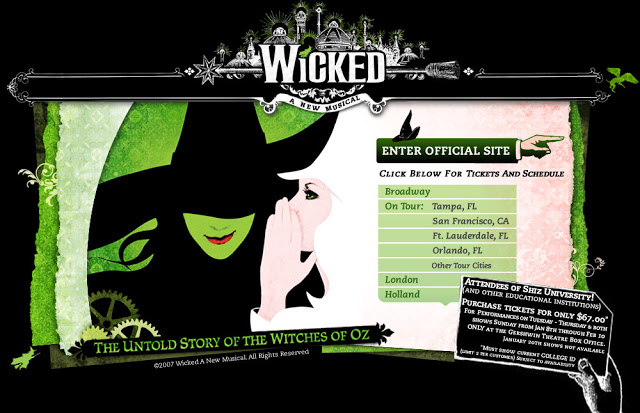
Official website for Wicked
This is a guest post by Marilyn Recht.

Besides being stale and lackluster from running overlong on Broadway, with a dull cast that runs on automatic, the musical Wicked (unlike the much more intelligent and complex book) is laughable from a feminist perspective.

As it opens, Glinda the Good Witch admits to her admiring audience that she was once friends with Elphaba the Wicked Witch in college. The flashback scene that follows is a predictable faceoff of the “popular” kids led by a dazzlingly white Glinda vs the very green dumpy Elphaba and her wheelchair-bound sister Nessarose (the future Witch of the East).

Performance of “Defying Gravity” from Wicked
Glinda is horrified to be chosen as Elphaba’s roommate but eventually takes her on as a personal project to popularize her (much like the star of the movie Clueless), inflated by her own sense of goodness. Elphaba meekly agrees and her attempts at being coy—flicking back her long black hair, tittering and twitching—are ridiculous. But rich boy Fiyero is struck by her independent spirit and advocacy for the less fortunate, when their goat-man teacher suffers under new rulings that animals may no longer speak and is removed from the school.

Elphaba insists to the headmistress that Glinda join her in sorcery class. However, we never see this interesting bit develop. What ensues is a meh secret rivalry between good and bad witch for the affections of Fiyero. Glinda assumes he belongs to her, since they are each the gleaming epitome of style and superficiality. When Elphaba asks Glinda to accompany her to Oz to seek an audience with the Wizard, Glinda is befuddled by Elphaba’s quest for power to free the animals.

After intermission the tedium continues with the town turned against Elphaba and in favor of Glinda. Fiyero passively agrees to marry Glinda but when Elphaba turns up he instantly drops Glinda. Elphaba stages her own liquidation (the audience can see Dorothy pouring water on her behind a screen) then [spoiler alert] is mysteriously reunited with Fiyero who is now a scarecrow thanks to her spell to make him immortal.

Cast of Wicked
The witches’ friendship is so threadbare that Fiyero’s choice is hardly felt to come between them. And any illusion of Elphaba as an independent woman is dashed in the service of her desperate triumph as a love object. Further, there’s no indication that Fiyero’s fate as a straw man is meant to be ironic.

It should be noted that the alternative backstory as adapted from the book is itself interesting. The Wicked Witch, exemplar of the unconventional, becomes a powerful sorceress exploited by the Wizard. And the Good Witch is a narcissistic beauty enslaved by public opinion. But as it’s played out in the musical, with the cast breaking into torturous song every 10 seconds, the original plot is watered down to a simple morality tale for eager overpaying tourists.

———-

Marilyn Recht is alternately a prose writer and poet. She has written science fiction, children’s stories, drama, and experimental pieces. Most recently she was a columnist and copy editor for the fashion magazine Creative Sugar. Web sites featuring her writing include NYCfoto and Examiner. In the late 1980s she participated in downtown Manhattan’s performing arts scene with poetry readings and a short play entitled Cowboys. In 1996 she published her poetry book, She Must Have Been a Giant. Marilyn has worked in most aspects of publishing, marketing, and advertising, as a writer, editor, proofreader, digital production artist, and manager. She is currently a senior medical editor. Marilyn can be reached at mazrecht@gmail.com.
 

The ‘Zero Dark Thirty’ Controversy: What Does Jessica Chastain’s Beauty Have to Do With It?

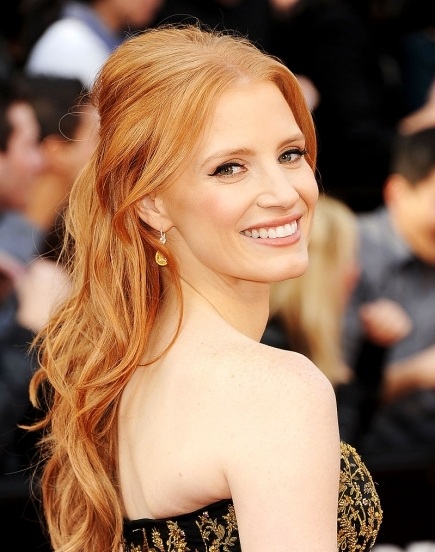
The beautiful Jessica Chastain in Zero Dark Thirty

This was originally posted at The Funny Feminist.

David Clennon does not want you to vote for Zero Dark Thirty for any single Academy Award.

Who is David Clennon, you might ask? An actor and activist who is a voting member of the Academy of Motion Picture Arts and Sciences. He does not want you – and by “you,” I mean other members of the Academy – to vote for Zero Dark Thirty in the five categories which the film was nominated. He does not want anyone to vote for Zero Dark Thirty in the Best Picture, Actress, Original Screenplay, Film Editing, or Sound Editing categories.

Kathryn Bigelow? NO MORE OSCARS FOR YOU!

He does not want anyone to do this because he believes Zero Dark Thirty promotes torture. He also believes that Jessica Chastain should not be rewarded for her performance in the film because actors have moral obligations to choose their projects well. He writes on truth-out.org:

“Everyone who contributes skill and energy to a motion picture – including actors – shares responsibility for the impressions the picture makes and the ideas it expresses. If I had played the role that was offered to me on Fox’s 24 (Season 7), I would have been guilty of promoting torture, and I couldn’t have evaded my own responsibility by blaming the writers and directors. So Jessica Chastain won’t get my vote for Best Actress. With her beauty and her tough-but-vulnerable posturing, she almost succeeds in making extreme brutality look weirdly heroic.”

There are many things about this piece that are reactionary and completely misinterpret the point of Bigelow’s complicated film, and many things about the extreme backlash to Zero Dark Thirty that are ill-considered.

For now, though, I have only one question: what does Jessica Chastain’s beauty have to do with it?

The gorgeous Jessica Chastain

Clennon mentions Chastain’s beauty later in the piece as well:

“Later, the female interrogator (and Zero’s heroine Maya [Chastain]), supervises the beating and near-drowning (aka waterboarding) of another detainee, Faraj; he gasps for air, gags, shudders and chokes; director Kathryn Bigelow then shows Chastain in a clean, well-lighted restroom, looking pretty, but tired and frustrated; Bigelow does not give us a view of Faraj after his ordeal.”

Again, I ask the question: what does Jessica Chastain’s beauty have to do with it?

The lovely Jessica Chastain

It seems strange to me that her looks are mentioned twice in an article that has a count of fewer than 600 words.

Clennon isn’t the only one who uses that adjective in describing Chastain’s character. Marjorie Cohn’s piece at The Huffington Post also calls Maya the “beautiful heroine” – a beautiful heroine who says that she’s “fine” in response to watching a detainee get tortured:

“Torture is also illegal and immoral — important points that are ignored in Zero Dark Thirty. After witnessing the savage beating of a detainee at the beginning of the film, the beautiful heroine ‘Maya’ says ‘I’m fine.’”

Once more, with feeling: what does Jessica Chastain’s beauty have to do with it?

Did we mention she’s a hottie?

I don’t think Jessica Chastain’s physical attractiveness is remotely relevant to the film’s stance on torture, but apparently, these writers do. They link her beauty with her supposed heroism. Clenon does this most blatantly by stating that Chastain’s beauty, combined with her tough-yet-vulnerable personality, almost makes torture seem heroic.

It seems to me that these writers, Clenon particular, has swallowed the Beauty Equals Goodness trope hook, line, and sinker. At the very least, they’ve been conditioned to believe that “beautiful woman = heroic woman” in a Hollywood movie, that Chastain’s beauty is the director’s way of telling the audience that we’re supposed to see her as the moral center of the film.

This is a sign, to me, that much of the criticism surrounding Zero Dark Thirty has roots in a very latent, subtle form of sexism. Jessica Chastain is a beautiful woman, and therefore her character must be the moral center of the film, a spokesperson for both the film’s message and the director’s beliefs. Beautiful women only exist in mainstream film to be rescued, to be prizes for the male characters, or to be the film’s moral center. Maya does not need to be rescued and is no prize for a male lead (because there isn’t one), so therefore she’s the moral center, and omg this movie supports torture!

Girl purdy, ergo she must be stating the film’s message

 
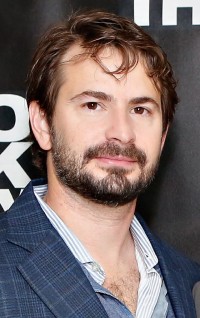
Am I reaching with this theory? Perhaps. But I can’t help notice that, even though Clenon cautions the Academy to avoid awarding any Oscars to Zero Dark Thirty, Chastain and Bigelow are the only two people he mentions by name. He never once mentions the name of Mark Boal, the screenwriter who penned those torture scenes he found so offensive and morally wrong. He never says “the screenwriter,” period. All of the attention is on either Chastain or Bigelow, not writer.

He mentions that when he was choosing parts, it would have been unfair of him as an actor to put all the blame on the director and writers for their material. Yet in his article on Zero Dark Thirty, he does put some blame on the director – yet not the writer.

Screenwriter Mark Boal. Attractiveness level irrelevant.

It doesn’t take a genius to play “one of these things is not like the other” with Jessica Chastain, Kathryn Bigelow, and Mark Boal. Anyone with a background of watching Sesame Street can guess why Boal’s name was left out of this plea to other members of the Academy, why the screenwriter let completely off of the hook.

Bigelow, on the other hand, is apparently no better than Leni Riefenstahl.

Pictured: Leni Riefenstahl. Not Kathryn Bigelow.

Bigelow, like Chastain, is also an attractive woman. So attractive that prominent writers (or writers who were once prominent ages ago) believe that she only receives acclaim because of her physical beauty.

It appears that when women step out of their designated roles to be moral centers of a story, they are no better than Nazi propagandists.

When beauty fails to equal goodness, Beauty is Bad.

The face of evil, apparently

Interestingly enough, Jason Clarke, the actor who plays the torturer CIA agent Dan in Zero Dark Thirty, is a handsome man. I never assumed that I was meant to find his actions morally correct, or view him as a moral authority, because he was handsome.

I also never assumed that I was meant to find his actions morally correct, or view him as a moral authority, because he was a man.

It’s a shame that Bigelow didn’t cast an ugly woman or a man in the lead role of Maya. Then the audience would have known right away that the protagonist was not necessarily meant to be a hero, and this confusion over the film’s stance on torture would never have occurred.

Actor Jason Clarke. Attractiveness level also irrelevant.

Lady T is a writer with two novels, a play, and a collection of comedy sketches in progress. She hopes to one day be published and finish one of her projects (not in that order). You can find more of her writing at www.theresabasile.com.

The ‘Zero Dark Thirty’ Controversy: What Does Jessica Chastain’s Beauty Have to Do With It?

The beautiful Jessica Chastain in Zero Dark Thirty

This was originally posted at The Funny Feminist.

David Clennon does not want you to vote for Zero Dark Thirty for any single Academy Award.

Who is David Clennon, you might ask? An actor and activist who is a voting member of the Academy of Motion Picture Arts and Sciences. He does not want you – and by “you,” I mean other members of the Academy – to vote for Zero Dark Thirty in the five categories which the film was nominated. He does not want anyone to vote for Zero Dark Thirty in the Best Picture, Actress, Original Screenplay, Film Editing, or Sound Editing categories.

Kathryn Bigelow? NO MORE OSCARS FOR YOU!

He does not want anyone to do this because he believes Zero Dark Thirty promotes torture. He also believes that Jessica Chastain should not be rewarded for her performance in the film because actors have moral obligations to choose their projects well. He writes on truth-out.org:

“Everyone who contributes skill and energy to a motion picture – including actors – shares responsibility for the impressions the picture makes and the ideas it expresses. If I had played the role that was offered to me on Fox’s 24 (Season 7), I would have been guilty of promoting torture, and I couldn’t have evaded my own responsibility by blaming the writers and directors. So Jessica Chastain won’t get my vote for Best Actress. With her beauty and her tough-but-vulnerable posturing, she almost succeeds in making extreme brutality look weirdly heroic.”

There are many things about this piece that are reactionary and completely misinterpret the point of Bigelow’s complicated film, and many things about the extreme backlash to Zero Dark Thirty that are ill-considered.

For now, though, I have only one question: what does Jessica Chastain’s beauty have to do with it?

The gorgeous Jessica Chastain

Clennon mentions Chastain’s beauty later in the piece as well:

“Later, the female interrogator (and Zero’s heroine Maya [Chastain]), supervises the beating and near-drowning (aka waterboarding) of another detainee, Faraj; he gasps for air, gags, shudders and chokes; director Kathryn Bigelow then shows Chastain in a clean, well-lighted restroom, looking pretty, but tired and frustrated; Bigelow does not give us a view of Faraj after his ordeal.”

Again, I ask the question: what does Jessica Chastain’s beauty have to do with it?

The lovely Jessica Chastain

It seems strange to me that her looks are mentioned twice in an article that has a count of fewer than 600 words.

Clennon isn’t the only one who uses that adjective in describing Chastain’s character. Marjorie Cohn’s piece at The Huffington Post also calls Maya the “beautiful heroine” – a beautiful heroine who says that she’s “fine” in response to watching a detainee get tortured:

“Torture is also illegal and immoral — important points that are ignored in Zero Dark Thirty. After witnessing the savage beating of a detainee at the beginning of the film, the beautiful heroine ‘Maya’ says ‘I’m fine.’”

Once more, with feeling: what does Jessica Chastain’s beauty have to do with it?

Did we mention she’s a hottie?

I don’t think Jessica Chastain’s physical attractiveness is remotely relevant to the film’s stance on torture, but apparently, these writers do. They link her beauty with her supposed heroism. Clenon does this most blatantly by stating that Chastain’s beauty, combined with her tough-yet-vulnerable personality, almost makes torture seem heroic.

It seems to me that these writers, Clenon particular, has swallowed the Beauty Equals Goodness trope hook, line, and sinker. At the very least, they’ve been conditioned to believe that “beautiful woman = heroic woman” in a Hollywood movie, that Chastain’s beauty is the director’s way of telling the audience that we’re supposed to see her as the moral center of the film.

This is a sign, to me, that much of the criticism surrounding Zero Dark Thirty has roots in a very latent, subtle form of sexism. Jessica Chastain is a beautiful woman, and therefore her character must be the moral center of the film, a spokesperson for both the film’s message and the director’s beliefs. Beautiful women only exist in mainstream film to be rescued, to be prizes for the male characters, or to be the film’s moral center. Maya does not need to be rescued and is no prize for a male lead (because there isn’t one), so therefore she’s the moral center, and omg this movie supports torture!

Girl purdy, ergo she must be stating the film’s message

 
Am I reaching with this theory? Perhaps. But I can’t help notice that, even though Clenon cautions the Academy to avoid awarding any Oscars to Zero Dark Thirty, Chastain and Bigelow are the only two people he mentions by name. He never once mentions the name of Mark Boal, the screenwriter who penned those torture scenes he found so offensive and morally wrong. He never says “the screenwriter,” period. All of the attention is on either Chastain or Bigelow, not writer.

He mentions that when he was choosing parts, it would have been unfair of him as an actor to put all the blame on the director and writers for their material. Yet in his article on Zero Dark Thirty, he does put some blame on the director – yet not the writer.

Screenwriter Mark Boal. Attractiveness level irrelevant.

It doesn’t take a genius to play “one of these things is not like the other” with Jessica Chastain, Kathryn Bigelow, and Mark Boal. Anyone with a background of watching Sesame Street can guess why Boal’s name was left out of this plea to other members of the Academy, why the screenwriter let completely off of the hook.

Bigelow, on the other hand, is apparently no better than Leni Riefenstahl.

Pictured: Leni Riefenstahl. Not Kathryn Bigelow.

Bigelow, like Chastain, is also an attractive woman. So attractive that prominent writers (or writers who were once prominent ages ago) believe that she only receives acclaim because of her physical beauty.

It appears that when women step out of their designated roles to be moral centers of a story, they are no better than Nazi propagandists.

When beauty fails to equal goodness, Beauty is Bad.

The face of evil, apparently

Interestingly enough, Jason Clarke, the actor who plays the torturer CIA agent Dan in Zero Dark Thirty, is a handsome man. I never assumed that I was meant to find his actions morally correct, or view him as a moral authority, because he was handsome.

I also never assumed that I was meant to find his actions morally correct, or view him as a moral authority, because he was a man.

It’s a shame that Bigelow didn’t cast an ugly woman or a man in the lead role of Maya. Then the audience would have known right away that the protagonist was not necessarily meant to be a hero, and this confusion over the film’s stance on torture would never have occurred.

Actor Jason Clarke. Attractiveness level also irrelevant.

Lady T is an aspiring writer and comedian with two novels, a play, and a collection of comedy sketches in progress. She hopes to one day be published and finish one of her projects (not in that order). You can find more of her writing at The Funny Feminist, where she picks apart entertainment and reviews movies she hasn’t seen.

Meet New Bitch Flicks Writer Amanda Rodriguez

Written by Amanda Rodriguez

Hello all my new lovelies!
I can’t tell you how excited I am to be the newest member of the Bitch Flicks writing team! I’m honored to be counted among such stellar, ass-kicking feminist pop culture gurus.

When I consider what draws me to the examination of issues like gender, race, class, etc., I’m reminded of this quote:

Books are not made to be believed, but to be subjected to inquiry. When we consider a book, we mustn’t ask ourselves what it says but what it means. – Umberto Eco

Eco’s words ring obviously true about the medium to which he refers: books. I find that the analysis of movies, TV, and other forms of pop culture entertainment is less valued among many scholarly circles as well as within the public. People only want to give credit to the so-called “high brow” forms of expression for being culture shapers and shifters. They dismiss entertainment media as being meaningless fluff. I vehemently disagree with this dismissal of pop culture that ignores its power to subvert or advance damaging stereotypes. That’s why I’m so in love with Bitch Flicks. This site is an excellent forum to examine the often insidious effects that film and TV can have on our identities as women, whether we be women of color, queer women, socioeconomically challenged women, etc.

What, then, are my qualifications to write for such a superhero site that deals daily blows to the patriarchy and all manners of oppression? First of all, I desperately love film and TV. I seek out strong female leads in my addiction, from Buffy and Veronica Mars to barbarian badass Red Sonja (keep your eyes open for my upcoming post on her); not to mention Ellen Ripley, Sarah Connor, or even Velma from Scooby-Doo. I graduated from the infamous revolutionary in-training grounds of Antioch College in Yellow Springs, OH with a BA in Language, Literature, and Culture. After that, I got my MFA in fiction writing from Queens University in Charlotte, NC. When I write fiction, it is usually dark magical realism from a feminist lens (or at least a socially conscious lens).

My interest in literary analysis easily translated to the study of film after taking an undergraduate class with the award-winning documentarian, Anne Bohlen (director of Blood in the Face dealing with U.S. neo-nazis and producer of Oscar nominated With Banners and Babies about the women involved in the 1937 GM strike). She taught me how to observe the ways that filmmakers manipulate the presentation of information and the audience response. She taught me that every choice in a film is deliberate and cannot go without critique.

Through Anne’s class, I realized that I can personally love and respect a film or TV show, but I still must call it out for its faults and negative representations. Take my beloved Buffy the Vampire Slayer, which depicts myriad strong female characters. Joss Whedon, however, fails in his representation of characters of color, especially women of color (remember Kendra…cringe). Also, his brand of feminism is very white middle class, assuming a level of privilege that is denied many women.          

What do I do when I’m not saving the world one movie review at a time? I’m an environmental activist working to protect southern U.S.forests, and I live in stunning Asheville, NC. Originally from Florida, I’m a first-generation Cuban American on my father’s side and Sicilian-Italian on my mother’s side (that’s a whole lotta awesome).

I love comic books, especially ones with a strong heroine (Batwoman, Whiteout, The Runaways, etc.). In 2012, I had the honor of presenting a paper on the graphic novel Preacher at “Monsters in the Margins”, the University of Florida’s Ninth Annual Conference on Comics & Graphic Novels. It was a meditation on religion and power.

Who’s the woman behind the super-heroine mask? I write about food and create drinking games on my site Booze and Baking. I’m also a writer for the online magazine The Asheville Post. I teach indoor cycling classes at the YWCA of Asheville, and I dig road biking, swimming, weight lifting, yoga, hiking, and rock climbing. My birthday lasts an entire season, and I love eating, baking, knitting, and whiskey (not necessarily in that order).

If you’re interested, you can follow me on one of these various social networking sites…

———-

2013 Athena Film Festival Lineup: Films on Women & Leadership

Here at Bitch Flicks, we’re super excited by the 3rd annual Athena Film Festival! We’ve attended each year, watching fearless and inspirational women on-screen and listening to brave and bold filmmakers. The festival features narrative films, documentaries, short films along with panels and workshops for filmmakers — all focusing on women’s leadership. Co-founded by Melissa Silverstein and Kathryn Kolbert, the festival runs from February 7-10 in New York City at Barnard College.
Kathryn Kolbert, Athena Film Festival Co-Founder and the Constance Hess Williams Director of the Athena Center for Leadership Studies at Barnard College, said:

“We are proud to announce such a robust lineup for this year’s Festival. The variety of films and filmmakers at the festival this year exemplifies the increasing presence of female leaders in the industry.” 
Melissa Silverstein, Athena Film Festival Co-Founder and Artistic Director and head of Women and Hollywood, said:

“The balanced mix of films represents the breadth and depth of the Festival’s mission. Each year we strive to selectfilms that inspire filmmakers and industry members. This year’s slate is our strongest yet and continues to convey this focus.”

With only 5% of women directing films, female writers comprising 24% of all writers in Hollywood and women in only 33% of speaking roles in films, women’s experiences and perspectives are often missing. Women don’t just sit on the sidelines. They lead, advocate and inspire. The films featured at the Athena Film Fest celebrate women’s diverse lives yet their common goal to catalyze change.

Purchase tickets and passes here.

FEATURE FILMS

Beasts of the Southern Wild
Director: Benh Zeitlin
Run Time:
Language: English

In a forgotten but defiant bayou community cut off from the rest of the world by a sprawling levee, a six-year-old girl is in balance with the universe, until a fierce storm changes her reality. Buoyed by her childish optimism and extraordinary imagination, and desperate to save her ailing father and sinking home, this tiny hero must learn to survive unstoppable catastrophes. Hailed as one of 2012’s most original films, Beasts of the Southern Wild appeared on many critics year-end top 10 lists.


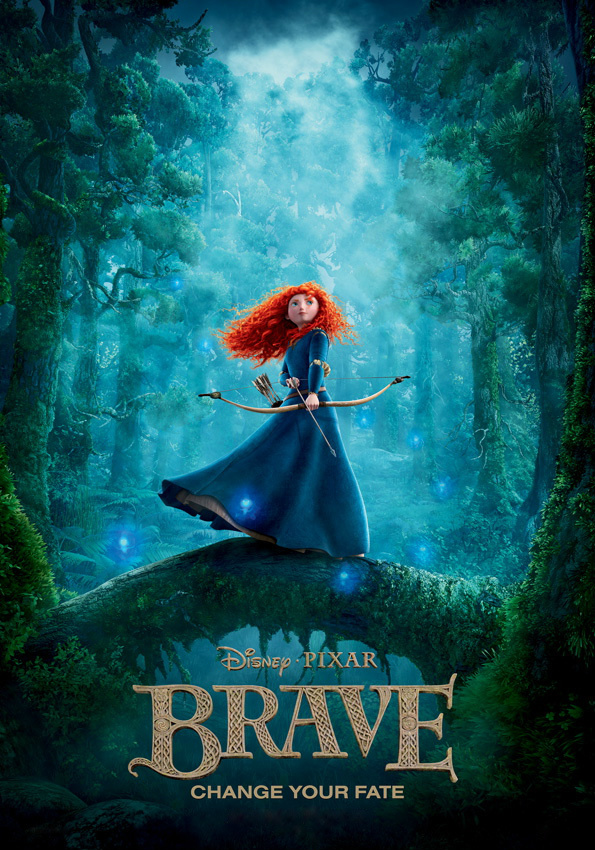
Brave
Director: Mark Andrews, Brenda Chapman
Run Time:
Language: English

Determined to make her own path in life, Princess Merida defies a custom that brings chaos to her kingdom. Granted one wish, Merida must rely on her bravery and her archery skills to undo a beastly curse.


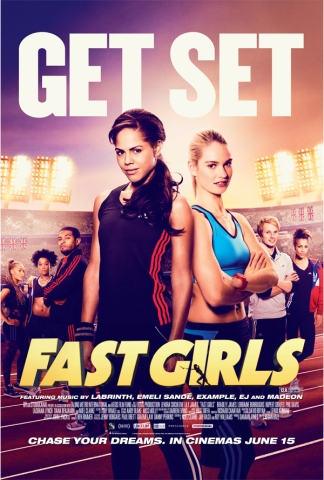
Fast Girls
Director: Regan Hall
Run Time: 91 minutes
Language: English

When a sassy streetwise runner meets an ambitious, wealthy competitor, their two worlds collide with explosive results. As the fast girls strive to qualify for the World Championships, they battle adversity and rivalry on a dramatic, heartwarming and inspirational journey. 

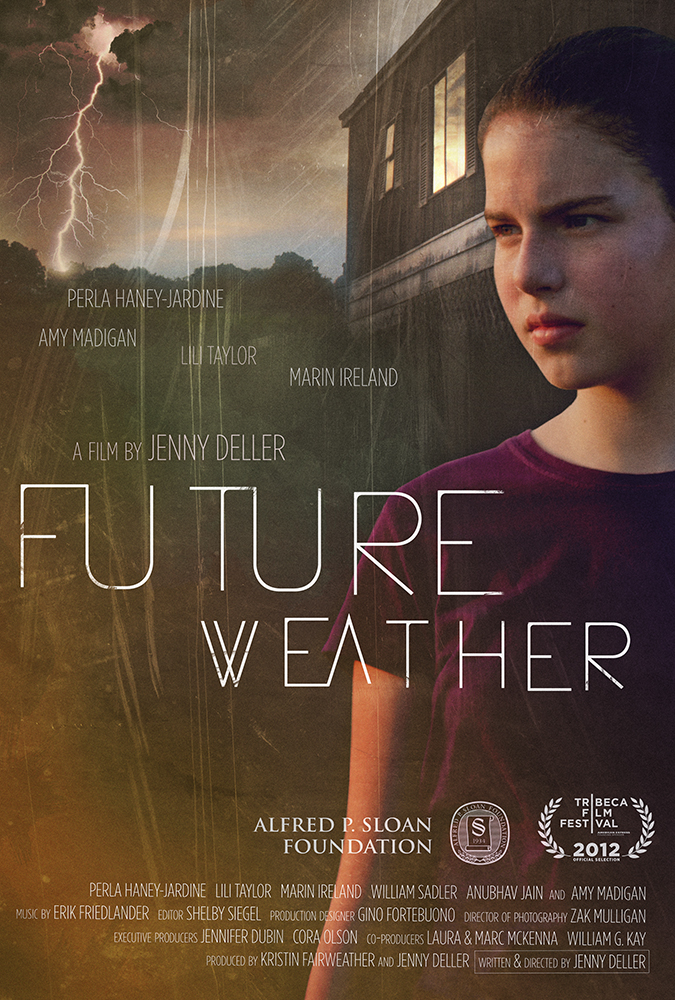
Future Weather
Director: Jenny Deller
Run Time: 100 minutes
Language: English

Abandoned by her single mom, a teenaged girl becomes obsessed with ecological disaster, forcing her and her grandmother, a functioning alcoholic, to rethink their futures. Inspired by a New Yorker article on global warming, Future Weather uses the refuge of science and the environment as a backdrop as the two women learn to trust each other and leap into the unknown.


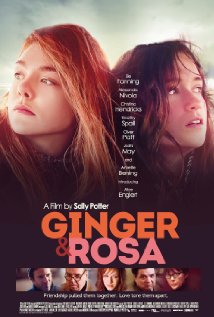
Ginger and Rosa 
Director: Sally Potter
Run Time: 90 minutes
Language: English

London, 1962. Two teenage girls — Ginger and Rosa — are inseparable. They discuss religion, politics, and hairstyles, and dream of lives bigger than their mothers’. But, as the Cold War meets the sexual revolution, and the threat of nuclear holocaust escalates, the lifelong friendship of the two girls is shattered –by a clash of desire and the determination to survive.


The Girl
Director: David Riker
Run Time: 90 minutes
Language: English, Spanish with English subtitles

Emotionally distraught from losing custody of her son and running out of options to earn a living to win him back, single mother Ashley (Abbie Cornish) becomes desperate when she loses her job at a local Austin megastore. So when the risky opportunity arises to become a coyote—smuggling illegal immigrants over the Texas border—she takes it. The harrowing experience results in unforeseen rewards and consequences, as Ashley forges an intense bond with a young Mexican girl who forces her to confront her past, accept the mistakes she’s made, and look to the future.

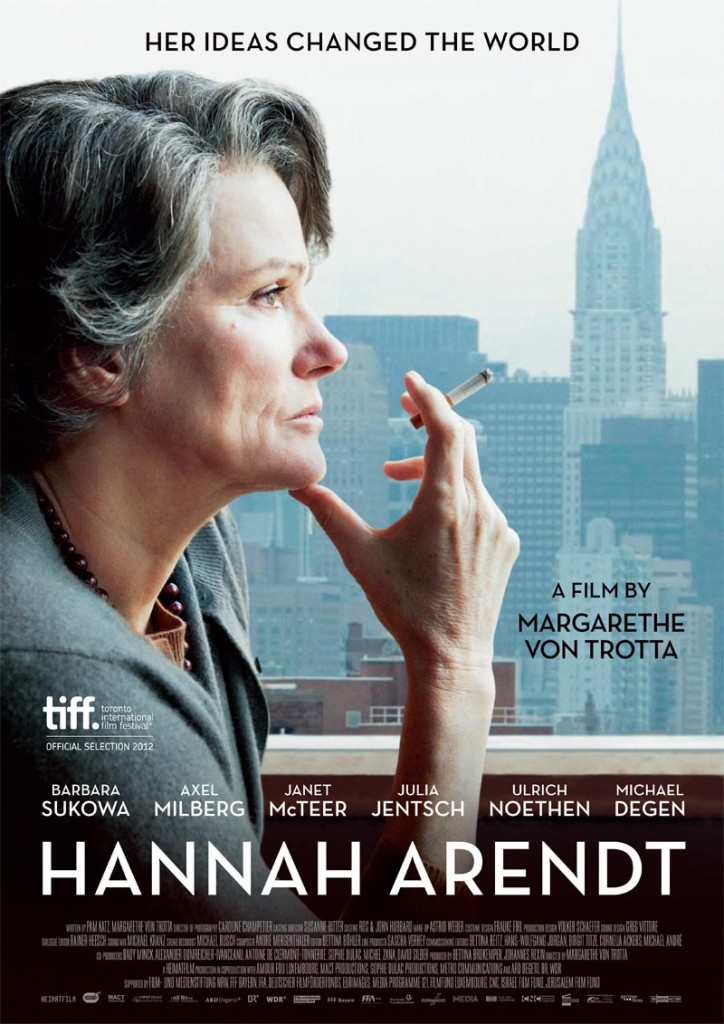
Hannah Arendt
Director: Margarethe von Trotta
Run Time: 113 minutes
Language: English, German with English subtitles

Hannah Arendt is a portrait of the genius that shook the world with her discovery of “the banality of evil.” After she attends the Nazi Adolf Eichmann’s trial in Jerusalem, Arendt dares to write about the Holocaust in terms no one has ever heard before. Her work instantly provokes a furious scandal, and Arendt stands strong as she is attacked by friends and foes alike. But as the German-Jewish émigré also struggles to suppress her own painful associations with the past, the film exposes her beguiling blend of arrogance and vulnerability — revealing a soul defined and derailed by exile.


Middle of Nowhere
Director: Ava DuVernay
Run Time: 97 minutes
Language: English

When her husband, Derek, is sentenced to eight years in a California prison, Ruby drops out of medical school to focus on ensuring Derek’s survival in his violent new environment. Driven by love, loyalty, and hope, Ruby learns to sustain the shame, separation, guilt, and grief that a prison wife must bear. Her new life challenges her identity, and propels her in new, often frightening directions of self-discovery. Winner of Best Director Award at 2012 Sundance Film Festival and Best Actor at the 2012 Gotham Awards.


La Rafle
Director: Roselyn Bosch
Run Time: 115 minutes
Language: French, German, Yiddish with English subtitles

This film is the story of the infamous Vel’ d’Hiv roundup in 1942 when French police carried out an extensive raid on Jews in greater Paris, resulting in the arrest of more than 13,000 people — including 4,000 children. Told from the perspective of the children and the nurse who cared for them, this is an emotionally astute and sensitive exploration of a long taboo subject in France — one that caused former French President Jacques Chirac to issue a public apology in 1995. 


Violeta Went to Heaven (Violeta Se Fue A Los Cielos)
Director: Andrés Wood
Run Time: 110 minutes
Language: Spanish and French with English subtitles

This is the extraordinary story of the poet and folksinger Violeta Parra, whose songs have become hymns for Chileans and Latin Americans alike. Director Andrés Wood traces the intensity and explosive vitality of her life, from humble origins to international fame, her defense of indigenous cultures, and devotion to her art.


DOCUMENTARIES

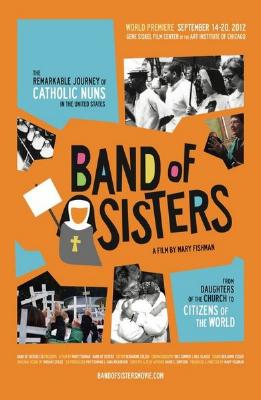
Band of Sisters
Director: Mary Fishman
Run Time: 88 minutes
Language: English

The work of two nuns outside a Chicago-area deportation center introduces us to the tumultuous and engaged world of U.S. Catholic nuns in the fifty years following Vatican II. From sheltered “daughters of the church” once swathed in medieval dress to activists for social justice, Band of Sisters follows the journey of these religious women as they work for civil rights, and immigration reform, and become increasingly relevant and visible in aid of the poor and disenfranchised. 

Birth Story: Ina May Gaskin and The Farm Midwives
Director: Sara Lamm and Mary Wigmore
Run Time: 95 minutes
Language: English

Birth Story: Ina May Gaskin and The Farm Midwives captures a spirited group of women who taught themselves how to deliver babies on a 1970s hippie commune. They grew their own food, built their own houses, published their own books, and, as word of their social experiment spread, created a model of care for women and babies that changed a generation’s approach to childbirth. Today, as nearly one-third of all U.S. babies are born via C-section, they labor on, fighting to preserve their knowledge and pushing, once again, for the rebirth of birth. 


Diana Vreeland: The Eye Has To Travel
Director: Lisa Immordino Vreeland
Run Time: 86 minutes
Language: English

The legendary Diana Vreeland was the arbiter of the fashion world for four decades. From her early days as a columnist at Harper’s Bazaar to her eight-year reign as Editor-in-Chief at Vogue beginning in 1963, Vreeland’s larger-than-life personality and flair for the slightly outrageous gave her the final word in pushing fashion forward. 


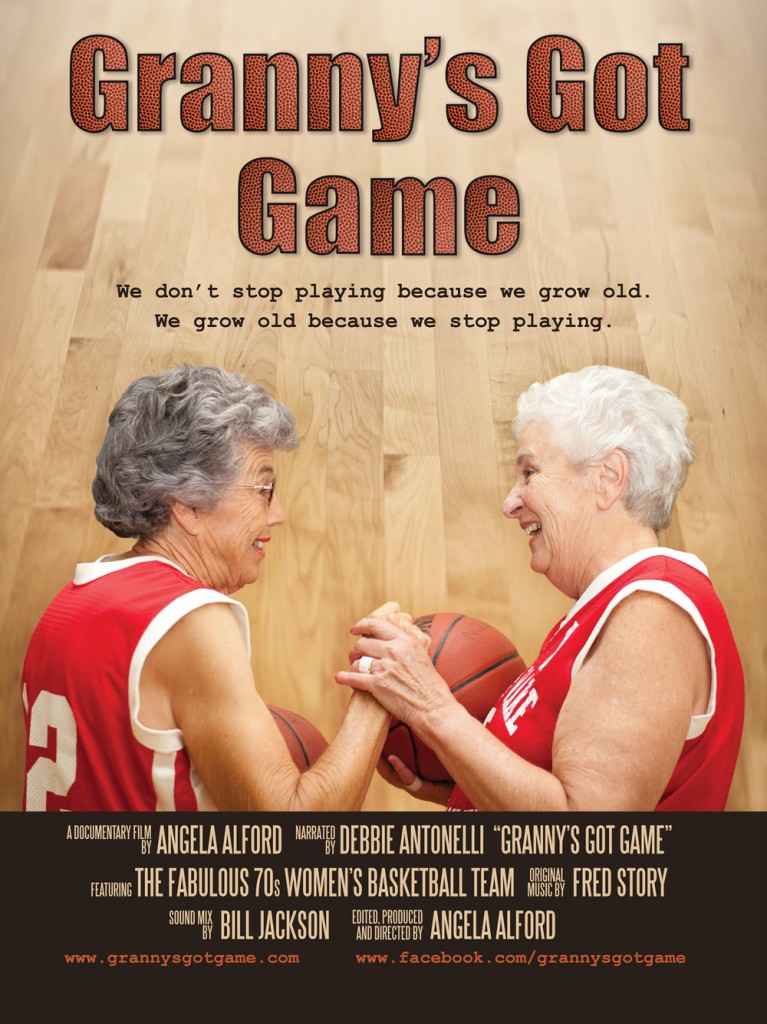
Granny’s Got Game
Director: Angela Alford
Run Time: 74 minutes
Langauge: English

Granny’s Got Game tells the story of six fiercely competitive women in their seventies who battle physical limitations and skepticism to keep doing what they love. The film follows the inspiring women for a year as they compete for another National Senior Basketball Games Championship.

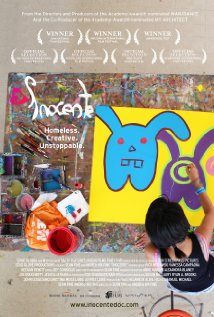
Inocente
Director: Sean Fine and Andrea Nix Fine
Run Time: 40 minutes
Language: English and Spanish with English subtitles

At 15, Inocente refuses to let her dream of becoming an artist be thwarted by her life as an undocumented, homeless immigrant. The extraordinary sweep of color on her canvases creates a world that looks nothing like her own dark past — punctuated by a father deported for domestic abuse, an alcoholic and defeated mother of four, an endless shuffle through San Diego’s homeless shelters, and the constant threat of deportation. Neither sentimental nor sensational, Inocentewill immerse you in the very real, day-to-day existence of a young girl who is battling staggering challenges. But the hope in Inocente’s story proves that the hand she has been dealt does not define her, her dreams do.


I Stand Corrected
Director: Andrea Meyerson
Run Time: 84 minutes
Language: English

Watch Jennifer Leitham perform and it’s obvious the striking redhead is an original. When this world-famous jazz bassist takes center-stage, she’s a special talent made all the more unique because Jennifer Leitham began her life and career as John Leitham. I Stand Corrected explores Leitham’s enlightening story of success and survival, of betrayal and compassion, and the risks she takes to embrace who she truly is. 


Putin’s Kiss
Director: Lise Birk Pedersen
Run Time: 85 minutes
Language: Russian with English subtitles

Putin’s Kiss portrays contemporary life in Russia through the story of Masha, a 19-year-old girl who is a member of Nashi, a political youth organization connected with the Kremlin. Extremely ambitious, the young Masha quickly rises to the top of Nashi, but begins to question her involvement when a dissident journalist whom she has befriended is savagely attacked. 


Women Aren’t Funny
Director: Bonnie McFarlane
Running Time: 78 minutes
Language: English

Female comedian Bonnie McFarlane sets out along with fellow comedian and husband Rich Vos (and their adorable 3 year old) to find out once and for all if women are funny and report her unbiased findings in this important documentary film. Working around stand up gigs, quarrelling with her husband and parenting their daughter, Bonnie manages to squeeze in interviews with a wide range of comedians, club owners, talent bookers and writers about why there remains such a pervasive, negative stereotype about women in comedy.


WONDER WOMEN! The Untold Story of American Superheroines
Director: Kristy Guevera-Flanagan
Run Time: 62 minutes
Language: English

Tracing the fascinating evolution and legacy of Wonder Woman and superheroines in film from the birth of the comic book superheroine in the 1940s to the blockbusters of today, WONDER WOMEN! examines how popular representations of women reflect society’s anxieties about women’s power and liberation. Goes behind the scenes with Lynda Carter, Lindsay Wagner, comic writers and artists, and real life superheroines as well.


SHORT FILMS 

Shorts Program 1
Shorts Program 2
Shorts Program 3
Works in Progress

PANELS AND DISCUSSIONS

A Hollywood Conversation with Gale Anne Hurd

Hear from this year’s winner of the Athena Film Festival’s Laura Ziskin Lifetime Achievement Award, Gale Anne Hurd, as she discusses her career and experience as one of the industry’s most respected and innovative film and television producers. Hurd has developed and produced films that routinely garner Academy Award nominations, and TV programs that win Emmys and shatter ratings records. She has carved out a leading position in the male-dominated world of the blockbuster, and become a recognized creator of iconic cultural touchstones including the blockbuster cable hit, The Walking Dead, and such iconic films as The Terminator, Aliens, The Abyss and Terminator 2: Judgment Day.

In Her Voice: Women Directors Talk Directing

In Her Voice is the first book to ever take the words and experiences of celebrated women film directors and put their voices front and center. This unique volume of interviews presents more than 40 feature and documentary directors from around the world including Debra Granik (Winter’s Bone), Courtney Hunt (Frozen River), Callie Khouri (Mad Money), Sally Potter (Rage), Lone Scherfig (An Education) and Lynn Shelton (Humpday).

Sundance Institute Presents: Women Directors in Independent Film

The Sundance Institute has partnered with Women and Film to examine the submissions and selections for the Sundance Film Festival and for Sundance Institute Feature Film and Documentary Film Programs to determine whether gender makes a difference. After examining data from multiple years, the research identifies systemic obstacles that hinder women directors at key stages in their independent film careers. The research was released at the 2012 Sundance Film Festival. Keri Putnam, Executive Director of the Sundance Institute will participate in the discussion.
2013 Golden Globes Week: ‘Zero Dark Thirty’ Raises Questions On Gender and Torture, Gives No Easy Answers

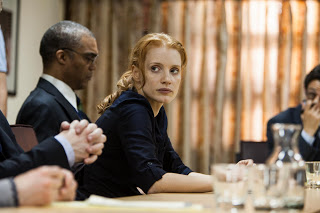
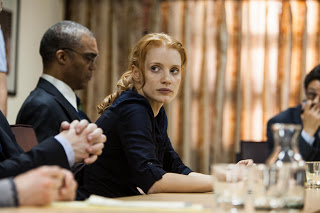
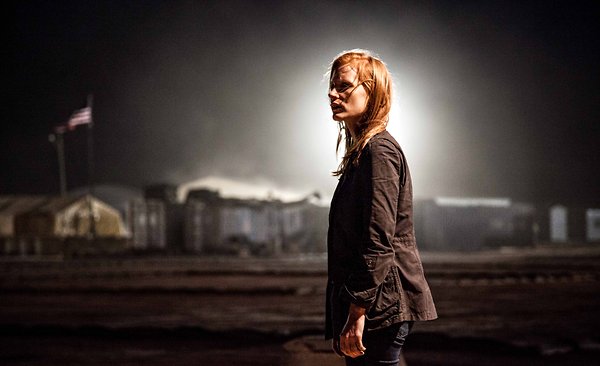
Jessica Chastain as Maya in Zero Dark Thirty

Written by Megan Kearns. | Warning: Spoilers ahead!!

Driven, relentless, bad-ass women in film always hold a special place in my heart. Ripley from Alien and Aliens, Patty Hewes from Damages, Carrie Mathison from Homeland. Maya, the female protagonist of Zero Dark Thirty, is no exception. But can a film be feminist if it depicts horrific violations of human rights?

Played effortlessly by Jessica Chastain, Maya is a smart, tenacious and perceptive CIA analyst who navigates the 10-year hunt for al-Qaeda terrorist leader Osama bin Laden. Intense and focused, she relentlessly pursues her work with one singular goal: finding bin Laden. Unyielding, she refuses to give up. She’s a cinematic version of Carrie Mathison. Interestingly both women have an irrefutable compass when it comes to being right. They boldly trust and follow their uncanny instincts.
Zero Dark Thirtyis riveting, fascinating and jarring. It assaults the senses with evocative images, haunting music, booming explosions and chilling 911 calls on 9/11. Powerful and exquisitely crafted by Kathryn Bigelow, it is unrelenting in its vision.

As Candice Frederick asserts, Maya anchors and propels the film. With a woman at the center of this story, it’s hard not to question gender. Zero Dark Thirty doesn’t overtly discuss gender politics, as Bigelow points out. Yet it reveals gender dynamics in subtle and important ways.

In the beginning of the film, Maya appears queasy about torture. Yet she refuses to turn away. When Dan (Jason Clarke), another CIA analyst, says she can watch the interrogation on video, she insists on being in the room. Early on, a colleague calls her a “killer,” a moniker that doesn’t quite seem to fit her composed demeanor and soft-spoken voice. Or is that supposed to challenge our stereotypical gender assumptions? But it certainly fits as the film progresses.

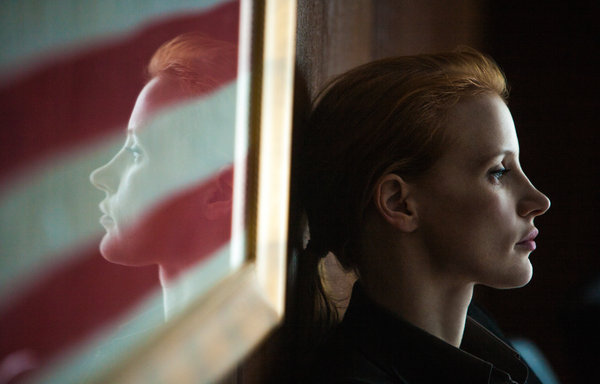
Maya (Jessica Chastain) in Zero Dark Thirty

We witness a hyper-masculine environment in which Maya’s boss George (Mark Strong) slams his fist on the desk screaming at CIA analysts, “I want targets. Do your fucking jobs. Bring me people to kill.” After years in the field, after her friends have died, after relentlessly pursuing bin Laden, Maya swears, screams at a superior and boldly tells the CIA Director (James Gandolfini) in a room full of men, “I’m the motherfucker that found this place, sir.” Inoo Kang asserts this one statement draws attention to her gender: “anyone can be a motherfucker, man or woman – just like anyone can find bin Laden.” Does she adopt stereotypical masculine behavior to adapt? Or is her aggression merely a manifestation of her frustration and obsession? Or is she merely a bundle of contradictions, like most people?

Writer Katey Rich said she was fascinated how Maya’s “femininity is never talked about out loud, but influences everything she does and the way her colleagues react to her.” All of the male colleagues and superiors refer to her as the infantilizing term “girl” rather than “woman.” Yet Maya engenders enormous respect from her colleagues and superiors. Two times in the film, a superior asks one of Maya’s colleagues if she’s up for the job. In each instance, she’s described as “a killer” and “intelligent,” although James Gandolfini as the CIA Director dismisses that assertion by saying, “We’re all intelligent.” A Navy SEAL trusts Maya’s judgment on bin Laden’s location because of her unwavering confidence.

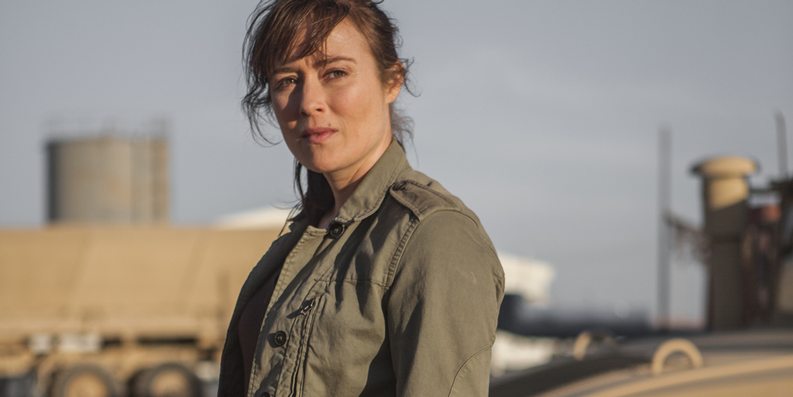
One of the best things about having a female director? Not only do we see an intelligent and complex female protagonist. We also see female friendship. Passing the Bechdel Test, we see Maya and her colleague and friend Jessica (Jennifer Ehle) debate, strategize, unwind and challenge each other. Reinforcing their friendship with a visual cue, Maya’s screensaver on her computer is a picture of her and Jessica.

Jennifer Ehle as Jessica in Zero Dark Thirty

After Maya becomes convinced that a vital lead is dead, it’s young analyst Debbie (Jessica Collins) who makes a crucial discovery through researching old files. She tells Maya that she’s been her inspiration. It was nice to see female admiration and camaraderie, even if Maya is too busy, too focused on work to acknowledge her compliment.

When Jessica asks Maya if she has a boyfriend or is sleeping with a co-worker, Maya firmly tells her no. Jessica encourages her to get a little somethin’ somethin’ to take the edge off. She says, “I’m not that girl that fucks – it’s unbecoming.” Now I’m not exactly thrilled with that statement. But I’m delighted Maya isn’t defined by her relationship to a man. She defines herself.

Some have called Zero Dark Thirtya feminist epic” based on “the real women of the CIA.” But it’s also been criticized for its perpetuation of the Lone Wolf Heroine trope. When asked about the role of Maya’s gender, Bigelow – who was pleasantly surprised to discover how many women were involved in the CIA’s search for bin Laden – said “the beauty of the narrative” is that Maya is “defined by her dedication, her courage, her fearlessness.”

Maya (Jessica Chastain) in Zero Dark Thirty

I’m honestly not entirely sure if Zero Dark Thirty is a feminist film. But with its subtle gender commentary, female friendship, and female protagonist who’s defined by her actions rather than her appearance or her relationships, it’s hard for me to say it’s not.

Bigelow is a talented filmmaker who made an exceptional film. Which is why it’s shocking she didn’t receive an Oscar nomination. Kathryn Bigelow has continually faced sexism, whether it’s with asshat writer Bret Easton Ellis calling her overrated because she’s “hot,” or by not being awarded an Oscar nomination, despite winning numerous film awards. It’s also unfortunate because the Academy so rarely nominates directors of women-centric films.

Only 4 women have ever been nominated for a Best Director Oscar: Lina Wertmüller (Seven Beauties), Jane Campion (The Piano), Sofia Coppola (Lost in Translation) and Kathryn Bigelow (The Hurt Locker). Out of these 4, only the Piano was female-centric. Bigelow is the only woman to ever win. Ever.

Did the Academy ignore Kathryn Bigelow because of sexism? Did they not want to honor a female director twice? Or was it because of the raging shitstorm of controversy regarding the film’s depiction of torture? Or was it because of the pending Senate investigation? And would the Senate have even investigated Zero Dark Thirty had it been directed by a man? I have a sneaking suspicion that sexism resides at the root of each of these questions.

Maya (Jessica Chastain) in Zero Dark Thirty

Many have raised the question whether Zero Dark Thirty excusesor glorifiesor endorses torture while others have refuted these claims, arguing it depicts but doesn’t defend torture or is ambiguous in its stance. Some of the same people who didn’t give two shits about torture and halting human rights atrocities in Abu Ghraib and Guantanamo – including Senator John McCain, himself a torture survivor with a “spotty record on torture” as he speaks out against torture yet votes in favor of it  — are the same vocalizing outrage over Zero Dark Thirty. Both Bigelow and screenwriter Mark Boal have vehemently denied the film being an endorsement of torture. Yet Bigelow has been called a Nazi making propaganda, “torture’s handmaiden” as well as having “zero conscience.” Wow. That’s ridiculously harsh, don’t you think? While I’m all for critiquing art, as Stephen Colbert (of all people!) pointed out, why are we railing against a filmmaker rather than the government who still hasn’t fully investigated the use of torture in the War on Terror?

Now does depicting horrific atrocities equate approval? Absolutely not. Films like The Accused and The Girl With the Dragon Tattoo portray rape graphically yet exist to combat victim-blaming rape culture. What matters is in the film’s portrayal.

Zero Dark Thirtydoes not shy away from graphic depictions of torture. Bigelow said that while she wished torture “was not part of that history,” it was. Within the first 20 minutes, we witness detainee Ammar (Reda Kateb) waterboarded, beaten, humiliated, starved, sleep deprived, stress positions by being forced into a tiny box, disoriented with lights and heavy metal music, and walked around with a collar and a chain like a dog. Later, we see other detainees in jumpsuits with wounds and scars. The abuse is horrifying and disturbing to watch. It’s repulsive to see the culmination of the racist, xenophobic colonialism that spurred the use of torture against Muslim Arabs.

Torture does not yield accurate information. Yet Dan repeatedly says to Ammar, “You lie, I hurt you.” When Ammar begs Maya for help, she tells him, “You can help yourself by telling the truth.” Not only does it subvert our gendered assumptions that she would be sympathetic to him. It puts the onus on the tortured detainees, not on the racist atrocities committed by government officials.

Admiral Bill McCraven (Christopher Stanley) and Maya (Jessica Chastain) in Zero Dark Thirty

But Zero Dark Thirtyalso shows the inefficacy of torture. When Ammar is put into the box, he lies that he doesn’t know if there will be another attack. And yet we quickly see an attack in Saudi Arabia. We see CIA analysts uncovering intelligence without torture. After Ammar has been abused, demoralized and dehumanized repeatedly for months (years?), Maya and Dan eventually treat him with a modicum of decency and respect. Only then does he finally provide accurate and vital information.

Most tellingly, Dan says he’s leaving as he no longer can torture people. He says he wants to go to DC and do something “normal.” He warns Maya not to be “the last one holding a dog collar when the oversight committee comes.” This sense of awareness doesn’t acquit Dan’s or Maya’s actions. But it does convey that Dan knows that torture is fundamentally wrong.

But Zero Dark Thirtyalso portrays characters who repeatedly say that they can’t do their job without torture — or as they put it “enhanced interrogation techniques” — even after finding leads without torture and even after torture fails to stop terrorist attacks, which undercuts the message that torture is ineffective and reprehensible. It frames torture more as a Machiavellian means to an end: it’s not pleasant but still kinda necessary. But maybe that’s the point — to showcase the traditional thinking of the CIA in how to obtain intelligence, even when everything points in the opposite direction. While it certainly doesn’t condone torture, sadly Zero Dark Thirty doesn’t outright condemn human rights atrocities either.

It is this back and forth, this ambiguous juxtaposition of narratives and views that makes it difficult to analyze and open to interpretation. Zero Dark Thirty has been called a “reverse Rohrsach test” where everyone will see in it “something they would rather not see, but no one can agree on what’s wrong.” Take the opening: some will see replaying voices calling 911 on 9/11 as inciting fear and terror, while others (aka me) will see it as transporting us back to that time, reminding us why we as a nation reacted – right or wrong – the way we did. Bigelow herself said “there’s certainly a moral complexity to that 10-year hunt” for bin Laden. Bigelow and Boal didn’t spell everything out for us and “didn’t spoon-feed their opinions to the audience in a way that made for easy digestion.”  They expect us to complete the puzzle for ourselves.

Maya (Jessica Chastain) in Zero Dark Thirty
However, the biggest clue as to the film’s overall stance appears in its finale. Zero Dark Thirtymay not criticize torture as much as it could or should. But that doesn’t mean it panders to politics. Rather it questions the course the U.S. has taken. It makes a bold and damning statement critiquing post-9/11 failures and the emptiness of the War on Terror. When bin Laden’s compound is invaded and he’s killed, it’s a taut and suspenseful albeit disturbing sequence. In the end, there’s no rejoicing, no celebration.

The last image we see is Maya, alone shedding silent tears. She allows herself a much-needed emotional release. While she should be satisfied at the culmination of her life’s work, pain tinges this moment. Lost and forlorn, she doesn’t know where to go next.

Zero Dark Thirtydoesn’t provide any easy answers. Rather it asks complex questions. Like any masterful work of art, it challenges us and pushes us, at times in uncomfortable ways. It forces us to look at ourselves as a nation, to our collective pain and to our response to tragedy. Zero Dark Thirty essentially asks us if it was all worth it. It asks how we can move forward. Just like Maya, where do we go from here?

2013 Golden Globes Week: Big Bang Bust

This is a guest post by Melissa McEwan and is cross-posted with permission from her blog Shakesville
I have never been a great lover of sitcoms. Despite their ubiquity in American primetime television, especially when I was growing up, there just weren’t a lot of them for me to love. So much of the com always relied on sits that mocked or belittled or straight-up hated the characters in the show with which we were meant to identify. I have only ever been able to love sitcoms that loved their characters.

The earliest sitcom I remember loving—I mean really loving—was Good Times, a show about a black family who lived in the Chicago projects, the central feature of which was their struggle to navigate life in poverty. It was an imperfect show: There was a strong message of bootstraps, which simultaneously challenged narratives about the Welfare Queens to whom Ronald Reagan had not yet given a name, and indirectly entrenched judgment of anyone who would accept “a hand-out.” But it was an important and challenging show, which did not shy away from discussions of racial and feminist justice. And it loved its characters deeply.

The next sitcom I remember really loving was The Golden Girls, for so many reasons, but chief among them that the show loved its characters. There were jokes at the women’s expense, but they were delivered by one another (usually Sophia), and thus was it ever unmistakable these were in-jokes of a loving group. We weren’t invited to laugh at them, but with them.

There have been other shows I’ve loved along the way, some very much. But something about these not quite as lovable shows held me (or obliged me to hold myself) at a distance. I deeply dug The Cosby Show as a child, but there was always a thread of one-upping—between Cliff and Claire, between Cliff and the kids—that put me at unease. Someone was always getting the better of someone else, which never sat precisely right with me. I loved Family Ties, but there was always a weird hostility toward Mallory’s girlyness that alienated me.

It is a subtle difference, but I have always been most strongly drawn to the shows that invite me to love their characters because of their flaws, rather than in spite of them.

For all the times Parks and Rec has made my teeth grind with its Jerry bullying, I have known, always, that the show loves Jerry, and wants us to love him—and when the other characters are thoughtless or cruel to him, it is they who are wrong. It is their flaw, their envy, their self-involvement—not anything wrong with the inimitably lovable Jerry.

It is so rare that I love, really love, a sitcom that I feel overwhelmed with a bounty of riches that there are two shows currently airing that I adore: Parks and Rec and New Girl, about which I have written before that “the thing I like most is that it loves its characters. It asks me to root for them, and I do!”

All of which is prelude to this: The Big Bang Theory doesn’t like its female characters anymore, and so I don’t really like The Big Bang Theory anymore.

I didn’t like TBBT the first time I watched it, which was just some random episode in the middle of the series. But then I watched it from the beginning, when it went into syndication, and I liked it a lot. It’s never been a show I’ve loved like the aforementioned shows, but it was a show I enjoyed quite a bit, anyway—and I thought it did a pretty swell job of exposing Nice Guyism for the garbage that it is.

Mostly, I liked Penny.

I really liked this female character, despite her tokenism, who was routinely drawn as a complex human being despite the guys’ objectification of her. I liked that she was allowed to be funny, and clever, and have sexual agency, and teach the guys by example how to stand up to bullies.

The show, I thought, liked Penny, too.

And I really liked the additional female leads that were added in time. I liked Bernadette—even though she has a terrible case of Bailey Quarters which compels us to pretend that she’s not beautiful because she wears glasses and someone else is supposed to be the sexpot on the show—and I loved Amy Farrah Fowler. (I really like Leslie Winkle whenever she shows up, too.) I liked most of the scenes between the girls, and I was glad Penny wasn’t isolated in a tower of Exceptional Womanhood anymore.

But then something changed. I’m not sure exactly when it happened, but the show lost its respect for Amy Farrah Fowler. Once a formidable complement to Sheldon Cooper, she has been reduced to an unwanted trophy—he gets a girl (that he doesn’t even seem to want) and she has to settle for a shitty relationship because, hey, she’s a nerd; it’s not like she could do (or deserves?) any better.

And, this season, the show seems to have lost every trace of the love it once had for Penny.

Penny isn’t allowed to be good at anything anymore. She can’t accomplish this, she can’t understand that, she’s not even smart enough to take science classes at community college. This is the same character who used to (literally) kick ass on earlier seasons, and now her entire oeuvre consists of drinking wine and making sure Leonard still thinks she’s sexy.

There was an episode earlier this season, in which Penny was taking a history course, and couldn’t even write a decent paper on her own. Leonard was being a complete asshole about it, and, watching the show, Iain and I were bitterly complaining that the show had rendered Penny incapable of writing a 101-level essay. When at last Penny presented Leonard with a B+ paper, we were so happy—only to be immediately crushed by the reveal that Bernadette and Amy had helped her, and only helped her enough to get a B+, because they wanted it to be “realistic.”

Every time Penny trudges by in her waitress uniform, I now cringe. Because it’s just a reminder about how the show won’t let her succeed. At anything.

Which certainly doesn’t make for a better show. I would have found an episode about Penny and Leonard trying to navigate their relationship while she’s taken away by a movie role (professional success! yay for Penny!) exponentially more interesting than the last episode, where I instead watched Penny put on sexy glasses to give Leonard a boner to assuage her insecurity after another woman flirted with him.

The fact is, TBBT has officially fallen out of love with Penny. And that makes TBBT pretty damn unwatchable for me.

Take note, sitcom writers: I can’t love your characters more than you do.

———-

Melissa McEwan is the founder and manager of the award-winning political and cultural group blog Shakesville, which she launched as Shakespeare’s Sister in October 2004 because George Bush was pissing her off. In addition to running Shakesville, she also contributes to The Guardian‘s Comment is Free America and AlterNet. Liss graduated from Loyola University Chicago with degrees in Sociology and Cultural Anthropology, with an emphasis on the political marginalization of gender-based groups. An active feminist and LGBTQI advocate, she has worked as a concept development and brand consultant and now writes full-time.

She lives just outside Chicago with three cats, two dogs, and a Scotsman, with whom she shares a love of all things geekdom, from Lord of the Rings to Alcatraz. When she’s not blogging, she can usually be found watching garbage television or trying to coax her lazyass greyhound off the couch for a walk. 


‘Silver Linings Playbook,’ or, As I Like to Call It: FuckYeahJenniferLawrence

Movie poster for Silver Linings Playbook
Written by Stephanie Rogers

It went down like this: My sister and I were visiting my mom for Thanksgiving in the tiny but lovely and water-surrounded town of Solomons, Maryland. This was like a four-day adventure, and after spending one day eating, another day sleeping and watching football (don’t judge me), and another day accidentally setting off the entire alarm system at the college where my mom teaches Labor Studies, we thought … why not take a break from almost getting arrested and see a movie?

I wanted to see Life of Pi, mainly because it was right down the street, and the next closest movie theater was a two-hour drive, or, as my mom likes to say, “It’ll only take us 45 minutes to get there.” That’s apparently code for two hours. But my sister was all, “I want to see Silver Linings Playbook because Bradley Cooper!” And I was all, “I don’t even know what that is!” And she was all, “You get to see whatever you want all the time because you live in New York and never hang out with anybody and have no life!” And I was all, “Fine, Asshole. Fine.” So that’s how I ended up bitterly walking into a movie theater after seething in a car for two hours to see a movie starring one of those bros from ApatowEtcetera. I didn’t expect much.
But OMG!
(I have no idea why I’m writing this review like a 34-year-old 14-year-old, but this is how it’s going down, and I can’t stop it.) 

Jennifer Lawrence and Bradley Cooper in Silver Linings Playbook
If my sister had merely said, “That chick from Winter’s Bone is in it,” I would’ve been all, “You had me at Bone,” and we could’ve avoided a two-hour passive-aggressive insult-fest loosely refereed by my mom, who should really know the difference between 45 minutes and two hours by now, so don’t feel bad for her.
Look, Bradley Cooper isn’t The Worst. I kind of liked him in Limitless, and I could probably write a feminist analysis of Wedding Crashers if I felt like intellectually torturing myself for a minute, and The Hangover movies aren’t real (they fucking aren’t), and he did help out Sydney Bristow on a few episodes of Alias, so I’ll give the guy a break for all those things, but mainly for asking Sean Penn a question on Inside the Actors’ Studio in like 1992.

Tell me that’s not adorable.
But, who cares about Bradley Cooper when Jennifer Lawrence exists. I mean. Right? Winter’s Bone. The Hunger Games. And yes, say it with me: Silver Linings Playbook.
God I loved this movie. I’m not sure I know exactly why yet, or how it managed to incorporate elements of Dirty Dancing, One Flew Over the Cuckoo’s Nest, Goodfellas, He’s Just Not That Into You, Rain Man, and Rudy into one cohesive-ish film that seems to both celebrate and critique the embarrassing clichés inherent in each of those movies, but I know I loved it. I know Jennifer Lawrence and Bradley Cooper will deservedly get Oscar nods for their performances, and I wouldn’t be surprised to see a Best Picture Nomination bestowed upon it. I know the film felt—as most do these days—occasionally problematic in its representations of gender, but I also know that I left this particular film giving way less of a fuck about those problems than I normally do. That isn’t to say I’m letting it off the hook for its failures; I’m just saying let me love it for a minute. 

Jacki Weaver and Bradley Cooper in Silver Linings Playbook
Here’s the premise: Bradley Cooper plays Pat. He gets committed to a mental hospital for eight months after he brutally attacks the man who’s sleeping with his wife (Nikki). He gets diagnosed with bipolar disorder. He gets out. He moves in with his parents because Nikki left him and got a restraining order against him. He tries to get his illness under control in the hopes that Nikki will take him back. Because his married friends Ronnie and Veronica (Nikki’s friend) realize that the probability of Nikki taking him back is, like, no, they decide to introduce him to Veronica’s sister. Enter Tiffany aka fuckyeahjenniferlawrence.
Lawrence plays Tiffany, a young woman whose husband died unexpectedly the previous year (and we don’t find out the details of his death until a heart-wrenching scene toward the end of the film). I worried at first that Tiffany might veer into Manic Pixie I-must-save-this-dude-from-himself-so-hard territory, but that doesn’t entirely happen. What prevents it from happening? Tiffany is a depressed, lonely mess herself, and she’s in just as much need of “saving” as every other character. The film doesn’t name a specific mental illness for her, but we know she takes medication and “goes to a lot of therapy,” as some dude warns (read: SHE’S CRAZY). 

Jennifer Lawrence and Bradley Cooper in Silver Linings Playbook
One could write a full-length book about whether this film accurately portrays mental illness or if it relies too heavily on conventional on-screen mental illness stereotypes. Most reviews I’ve read tend to focus on the fact that Silver Linings Playbook at least attempts to depict the strains mental illness places on the sufferer’s interpersonal relationships. (I will say, for the record, that Pat does start taking his meds once he realizes he needs them to manage his bipolar disorder, and he also consistently goes to therapy. I don’t understand how so many reviewers keep missing this, as it’s a pretty significant argument against the idea that Silver Linings pushes some kind of superficial, new age-y pop psychology agenda that promotes “the power of positive thinking” as the exclusive treatment for mental illness. It does not do that.)
What it does do, though, is take a subtle jab at the cult of masculinity in America. The conflicts in the film are often caused by male anger and aggression, and several scenes even conclude with male violence—like when Pat’s rage fit with his dad (DeNiro) leads him to (albeit accidentally) hit his mother in the face, or when he throws a book through a window because he hates the ending, or when he gets arrested for intervening in a brawl at a football game. The film makes it perfectly clear that this style of hyper masculine conflict resolution ain’t getting anybody anywhere. Pat begins to succeed and really change in Silver Linings only when he agrees to take his meds and become Tiffany’s partner in a local dance contest—and it doesn’t get less traditionally masculine than the phrase “local dance contest.” 

Bradley Cooper and Jennifer Lawrence in Silver Linings Playbook
But, like Helen Hunt in The Sessions, it’s Jennifer Lawrence who grounds this film. Her performance as the emotionally disturbed Tiffany could’ve easily turned into a parody of women with depression (hi!), and the often absurdist nature of Silver Linings certainly lays a foundation for that. Tiffany never goes there, though. She fights to stay above ground, by dancing, by trying to forge a connection with Pat, and, as the film clearly indicates early on, by experimenting with medications to treat her (unnamed) illness.
Yes, she sleeps around. Yes, she manipulates Pat into entering the dance competition (eventually telling him a big ol’ horrible lie about Nikki). Yes, she buddies up with Pat’s over-nurturing mom (an excellent Jacki Weaver) to get information about Pat’s jogging routes so she can track him down—most of Pat and Tiffany’s initial conversations take place during exercise, ha.
And I didn’t love a lot of that. 

Jacki Weaver and Robert DeNiro in Silver Linings Playbook
I understood it, though, and even within the lack of believability at times, the emotions driving Tiffany’s decisions rang true for me. Who hasn’t been lonely and desperate to connect with another person? Who hasn’t made questionable choices in order to do that? I want to see those women on screen, women who I get to adore and despise, who make me feel uneasy and ecstatic, who I’m rooting both for and against. Why? Because I get to see dudes like that on screen all the time. We don’t expect our dude heroes to be perfect, and we shouldn’t expect it of our women heroes either. Where’s the fun—or truth—in that?
(Let me add, though, that I did not like the fact that Pat’s wife Nikki, who we see exactly one time in the movie, acts as nothing more than a vehicle to move the plot forward. Can we do away with that fucking women in refrigerators trope already?) 

Bradley Cooper and Robert DeNiro in Silver Linings Playbook
True story: I’m mentally ill. That’s probably the worst transition in the history of anything ever written, so I’mma just ignore it and keep on going. I’ve struggled with bipolar II for the past fifteen years, and I spent a good portion of that time undiagnosed (which is much scarier than the actual, very stigmatized diagnosis). Perhaps that’s one reason I loved the movie so much. The director, David O’Russell, mentions in an interview that his son is bipolar, so his desire to make the film stemmed from personal experience. That comes through wonderfully, in the actors’ performances especially, but also in the tragic comedy of it all. Silver Linings Playbook reminded me of one long obligatory party, with every mentally ill member of my family trying to interact with one another without snapping.
There might be fights, accusations, and the occasional horrific anxiety attack, but that doesn’t mean there isn’t understanding and love.