Adelle, Willow, Zoë, Natasha–you name her, Joss Whedon offers a multitude of heroines with a wide range of diverse identities. A topic as extensive as this, regarding a person with as much output as Joss Whedon’s, would serve to fill entire volumes.
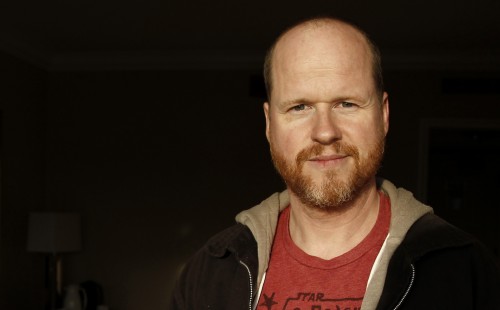
Joss Whedon
This guest post by Artemis Linhart appears as part of our theme week on Male Feminists and Allies.
Adelle, Willow, Zoë, Natasha–you name her, Joss Whedon offers a multitude of heroines with a wide range of diverse identities. A topic as extensive as this, regarding a person with as much output as Joss Whedon’s, would serve to fill entire volumes. Accordingly, this article addresses only a few specific aspects regarding the roles of women in Whedon’s oeuvre.
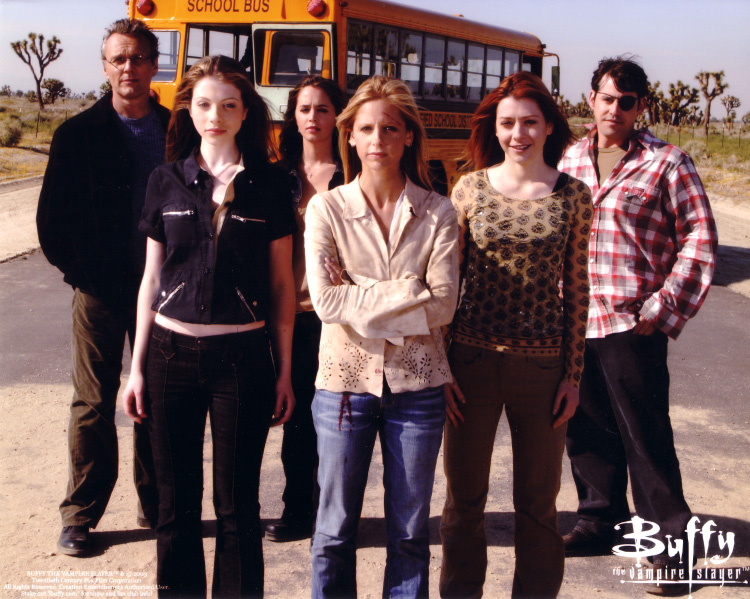
It is Darla who, in the very first scene of Buffy, sets the tone for things to come when she subverts the “Damsel in Distress” routine. What is more, female-fronted bands (as for example the great Cibo Matto themselves) playing the “Bronze” is an entirely normal thing. It is subtleties like these through which Whedon continuously subverts common tropes of fiction and pushes the boundaries of our viewing habits.
What is striking in most of his work is that women are not defined by their womanhood. They are simply characters who happen to be female–much like real life.
This holds true especially for the female villains of his shows. They tend not to suffer from what Anita Sarkeesian of “Feminist Frequency” fame calls “personality female syndrome,” wherein female characters are “reduced to a one-dimensional personality type consisting of nothing more than a collection of shallow stereotypes about women.” In general, their underlying motives are not characterized by psychological or emotional factors concerning “woman issues” or driven by some form of “hysteria,” as is the case in a lot of fiction centering around female villains. While they do tend to use their sexuality as a means of power or manipulation, they are, however, often indistinguishable from the classic, male “bad guy,” were it not for their, often “typically female” exterior.
Bold and Beautiful
Indeed, strong women are altogether normal in Whedon’s work. This suggests that they can be forceful, resolute and–quite simply–badass, without having to look “butch” or display characteristics commonly associated with men. By way of example, Buffy can be described as a stereotypical “Barbie” on the outside, yet that does not make her weak or squeamish. On more than one occasion she is seen fighting demons while wearing a mini skirt or even a prom dress.
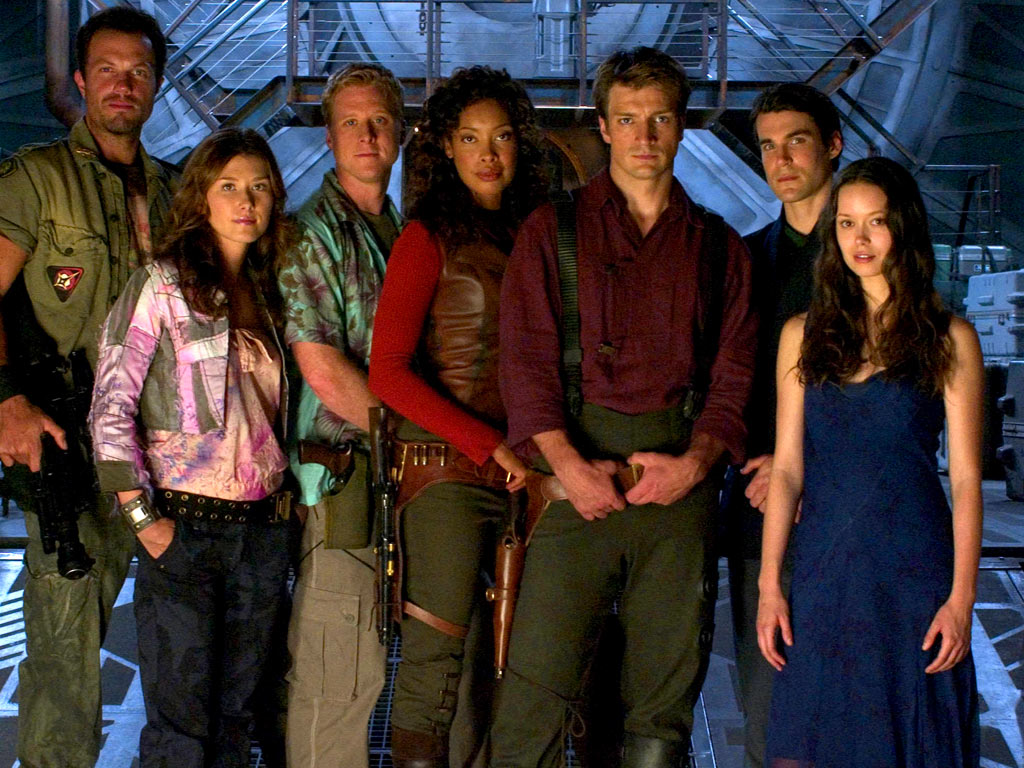
Correspondingly, female strength is not something to be fundamentally feared by Whedon’s male characters. On the contrary, it is a desirable quality. It is Firefly’s Wash who puts this so eloquently, as he claims to be “madly in love with a beautiful woman who can kill [him] with her pinkie.”
However, Whedon makes it quite clear that not everyone has to be a hero(ine)–especially not all the time. This is what makes his characters multi-dimensional and complex. There have been many discussions amongst fans concerning Buffy’s “shortcomings” and whether she is truly a strong character. This lively, ongoing discussion just goes to show society’s overly critical attitude towards women in film and TV. Buffy should not have to be denied her strength whenever she shows weakness. After all, human beings (and even superhuman beings like The Slayer) have feelings, are vulnerable and even weak at times.
It is treated quite nonchalantly that Firefly‘s Kaylee is an excellent mechanic who also happens to enjoy wearing a pink, frilly dress. And why wouldn’t she? What Whedon portrays are multi-faceted, realistic characters.
In Buffy‘s musical episode “Once More With Feeling,” Buffy sings, “Don’t give me songs, give me something to sing about!”
And indeed, with Whedon, female characters get not only songs, with prefabricated attributes and story arcs, to work with. They get a chance to flourish into something that is their very own selves. They get real substance, real problems, personalities, flaws–lives.
This is mirrored in Buffy‘s series finale, “Chosen,” where it becomes clear that–together with both the “Scoobies” and the “Potentials,” they have created a sheer army of Slayers. Buffy is no longer The Chosen One. It doesn’t take a Slayer to fight evil. Not only does this emphasize that all women can be powerful but, more importantly, it defies the tradition constructed and determined by the Shadow Men. Buffy creates an opportunity for the “Potentials” to unfold and evolve into greater beings–with greater stories.
While all of this should be common practice in today’s fiction, the truth is that it very much isn’t. Therefore, it comes as no surprise that, as a male TV writer, Whedon is praised by feminists despite there undoubtedly being room for improvement.
In spite of all of the female-positive representation in his work, certain aspects remain controversial. There is, for example, Dr. Horrible’s Sing-Along Blog, which has two male protagonists fighting over the affection of their desired female. Penny, seeming innocent and pure, is clearly idealized and functions more like an instrument to the story of Dr. Horrible and Captain Hammer. It wouldn’t be Whedon, however, if he didn’t subvert this cliché framework using nuanced details of clever subtlety.
While the Watcher–considered by some to be the personification of the Male Gaze–in itself is an integral part of the concoction of male authority that is the tradition of the Slayer, and while it is repeatedly undermined by Buffy’s stubborn and autonomous spirit, it remains Whedon who created him. Whedon may place the responsibility on those evil, ancient patriarchs called the Shadow Men, and call it a metaphor for real life patriarchy, yet he allows for a solution only in the very finale of the TV series.
Furthermore, there is a considerate amount of mansplaining in the Whedonverse. Besides Whedon himself, who took the liberty of explaining the word “feminist” to the world, there are such delightful characters, for instance bookwormish Giles or cocky whiz kid Topher–the latter of whom so smugly refers to himself at one point, saying “I don’t want to use the word genius, but I’d be okay if you wanted to.”
Nonetheless, Whedon does offer female counterparts to the likes of them. Bennet Halverson appears as somewhat of a female version of Topher and, unlike Amy Acker’s character, she proves not to be an “Active” imprinted to replace a male scientist.
Jenny Calendar and Willow Rosenberg, on the other hand, function in a very meta way as a modern extension to the intellectual bibliophile Giles. The antiquated order of the man explaining things can’t keep up with the modern world, just as Giles hands over control when it comes to computer-related things.
Innocence
Buffy is certainly no “Final Girl.” While Whedon does play with this trope in Cabin in the Woods, virginal purity is no requirement for the Slayer to survive. What is more, instead of escaping death, Buffy seeks our danger and demons with an aggressive, empowered stance.
Similarly, the sex worker Inara is portrayed in a way that acknowledges her self-determination and poise. Unlike the “metaphorical whores” in Dollhouse, she can take charge of her own work life.
Generally, Whedon’s work resonates with a limited amount of “othering.” This is especially notable in Inaras character, pertaining to her line of work. Whedon incorporates one of the most marginalized professions in an ostensibly non-pejorative manner. While the character of Inara is pro-sex per se, form and content do at times cast her in a “gazed upon” role.
The male fantasy is further exploited, as she is seen in a sex scene with a female client. Though the visual representation of same-sex intercourse merits acclaim, in this case it implies the concept of the girl-on-girl porn fantasy, as Inara is hardly shown this explicitly in her interactions with male clients.
It seems that, not least by making the role of Willow a pioneer of lesbian representation on TV, Whedon has become so idolized that he is now held to much higher standards of feminist sensibility than other TV writers. At the same time, he can get away with a great deal when it comes to questionable representations of gender, sexuality, and relationships. Therefore it is refreshing to see that Whedon’s recent rant has sparked an active discourse among fans. This demonstrates that, while broadly adored, Whedon’s feminism does not remain unchallenged.
Here’s hoping that this will lead to many more positive representations in his cinematic and TV work, including issues inclusive of sexuality as a broad spectrum, as well as non-cis individuals.
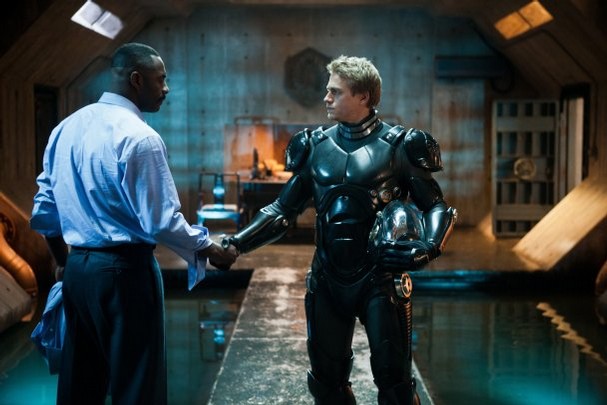
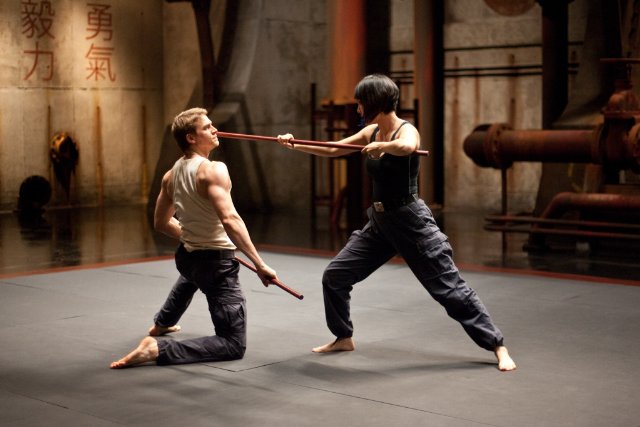
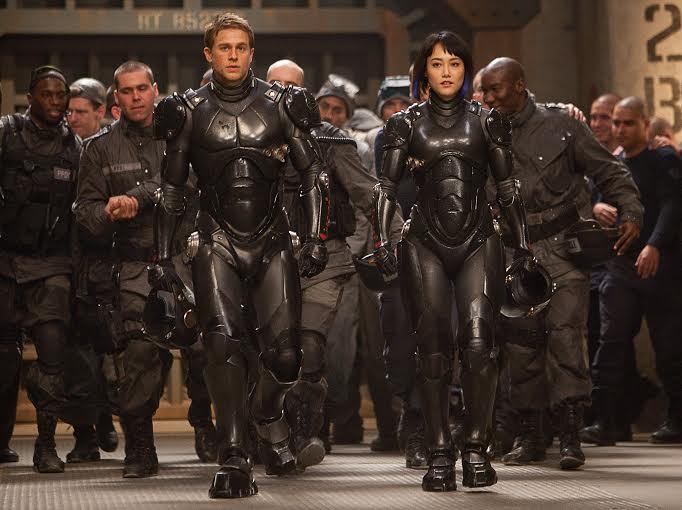
So, yes. Raleigh Becket is a Strong Female Character. Sure, he’s not female, but as far as our understanding of SFCs goes–which here means well-written female and feminine characters–he’s aces. Raleigh Becket is supportive, sweet, intuitive, and loving, and there is absolutely nothing wrong with that. Not a damn thing.
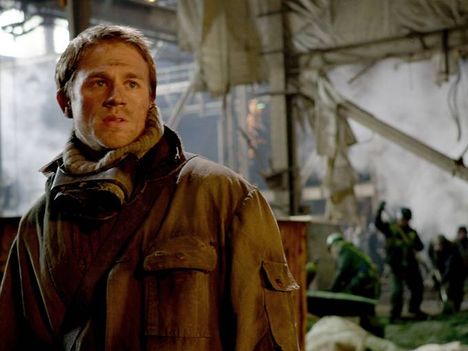
Charlie Hunnam as Raleigh Becket
This guest post by Deborah Pless appears as part of our theme week on Male Feminists and Allies.
No, that is not a typo. No, you are (probably) not suffering from a stroke. Neither am I. Yes, I am really referring to Charlie Hunnam’s character from Pacific Rim, the alarmingly dude-shaped Raleigh Becket. He’s a strong female character. And it’s great.
So what do I mean when I say this? Well, obviously, Raleigh isn’t technically female. Not in the physical sense, at least. He does not identify as a woman that we know of, nor does he exhibit any strong feminine traits. At least, not externally. Dude goes from being a street brawler to a cocky Jaeger pilot to a welder–all traditionally very masculine jobs and roles. To top it off, he’s a dude’s dude, always talking about the mechanics of his Jaeger, Gipsy Danger, and slightly prone to getting into unauthorized fights. All of which doesn’t sound all that stereotypically female. I know.
But Raleigh does exhibit other traits, ones much less on the surface, and those traits, while not exclusively female, are more traditionally feminine in nature. What I mean is, out of everyone in the movie, Raleigh, not Mako, is closest to our understanding of the “strong female character” trope. And that’s awesome.
Still from Pacific Rim
For those of you who haven’t yet seen Pacific Rim, here’s a quick rundown. In 2013, Earth was first attacked by giant monsters that climbed out of an interdimensional rift in the Pacific Ocean. At first, these mega-godzillas devastated our shores, but the world quickly banded together to fight the threat. The solution? Giant robots, called Jaegers, which can fight the monsters, now dubbed Kaiju. The Jaegers are so massive that they need too pilots to “share the neural load” and for plot related reasons, the pilots have to be linked mentally to each other and the machine, so that they can work perfectly in sync.
Yeah, it’s a bit to get through just so we can start the story, but don’t worry. It’s worth it. Also, beware. This is gonna be SPOILERIFIC.
The film picks up seven years into the Kaiju War. Raleigh Becket (Charlie Hunnam) and his brother Yancy (Diego Klattenhoff) are Jaeger pilots, and two of the best. Cocky, charming, and completely assured in their abilities, the boys charge out into the night-time Bering Strait to face another Kaiju–the biggest one ever spotted.
The Becket Brothers
They lose. Hard. Or rather, they win, but at a terrible cost. The Kaiju is both larger and stronger than they’ve ever faced, and as a result, they underestimate it. During the fight, it manages to tear off an arm of their Jaeger (which means that Raleigh experiences the sensation of having his own arm torn off), and then bites into the Jaeger’s head and straight up eats Yancy. Raleigh manages to kill it, but only barely. He pilots the Jaeger back to shore and then collapses.
Cut to five years later. The once thriving Jaeger program is on the brink of collapse. Raleigh has faded into obscurity as a drifting welder working on an anti-Kaiju wall, and the world is about to end. So naturally it’s right then that Marshall Pentecost (Idris Elba), head of the Jaeger program, finds Raleigh in order to recruit him for an end of the world mission to save the planet. The clincher? “Haven’t you heard, Mr. Becket? The world’s coming to an end. So where would you rather die? Here? Or in a Jaeger.”
It’s an easy choice.
Still from Pacific Rim
There’s just one problem. Raleigh was still in “the Drift” with his brother when Yancy was eaten, and that kind of mental scarring doesn’t just go away. He’s leery of having someone in his head again. It seems like the central emotional story of the film is clear. Raleigh will struggle to trust someone enough to pilot again, pulling it together, after a few hours of brooding, just in time to save the world and get the girl. Right?
Well, no, actually. Raleigh comes to the Hong Kong Shatterdome with the expectation that he can’t let anyone back in, a belief that lasts about five minutes. Because immediately upon arrival at the Shatterdome, Raleigh meets Mako Mori (Rinko Kikuchi), Pentecost’s adopted daughter and a potential Jaeger pilot. Immediately, Raleigh changes his tune from “I’m not sure I can let anyone in my head again,” to “That’s her, she’s perfect, everyone in the Jaeger, let’s go fight some Kaiju!” It’s shocking, and fast, and completely not the characterization you expect.
Still from Pacific Rim
In fact, the central emotional story of the film turns out not to belong to Raleigh, but rather Mako. An orphan of the Kaiju War, Mako wishes desperately to become a pilot in order to avenge her family, but is deemed too angry and emotionally volatile to make a good pilot. As it turns out, it’s Mako, not Raleigh, whose grief and rage endanger their connection, and it’s Raleigh’s job to emotionally balance her out and soothe the tempers around him.
This is what I mean when I say that Raleigh is a “strong female character.” Raleigh’s role in the film is that of friend, counselor, and emotional support–commonly the role given to a girlfriend or wife in a movie like this. He’s the Peggy to Mako’s Captain America, the Jane to her Thor, the Katara to her Aang. Raleigh is the supportive, emotionally intuitive counterpart to his impulsive, rash, and angry best friend. His journey is over in the first 20 minutes of the movie. Hers has just begun.
Part of what makes this film so remarkable is Raleigh’s complete lack of macho behavior. When verbally baited, both by a socially inept scientist (Charlie Day) and by an antagonistic pilot (Robert Kazinsky), Raleigh responds with honesty and tact. He’s calm, even when angry, and more in tune with the emotions of those around him than anyone else in the movie. The only time we see him react in anger is when the jerk-face pilot, Chuck, attacks Mako, and this particular scene actually feels rather out of character.
Still from Pacific Rim
Not only this, but Raleigh is supportive to a degree rarely seen in action films at all. Upon finding out that Mako wishes to be a Jaeger pilot, his reaction is not to offer advice or criticism or anything about himself. Instead, he just tells her that he’s sure she will be. Even after she insults him and his actions, his response is still not to denigrate her dream. Rather, he says, “Well, thank you for your honesty. You might be right. But one day when you’re a pilot you’re gonna see that in combat you’ll make decisions, you have to live the consequences. That’s what I’m trying to do.”
Yeah. That’s what he says when he’s insulted. I am 95 percent sure that I have never been that nice in my entire life. Ever. It’s crazy.
And when Raleigh realizes that Mako could be his co-pilot, he is fierce and relentless in his efforts to get her in the role she dreams of. He argues with Marshall Pentecost. He faces down Chuck. He even argues with Mako, insisting that she follow her dream. Throughout all of this, the message is clear: I support you. You matter. Your hopes and dreams and feelings matter.
When she shuts him down, Raleigh leaves her alone. When he and Mako fight, he doesn’t go easy on her, but he’s thrilled when she beats him. When Mako screws up their trial run, Raleigh is the first one demanding that they get another try. Basically, Raleigh, far from being a macho manly man dealing with his inner angst, is actually a cheerleader campaigning for presidency of the Mako Mori Fan Club.
Like I said above: none of these are actually gendered traits. Raleigh is supportive, but that’s not a women-only kind of thing. Lots of men are supportive. And he’s emotionally engaged as well, but that’s not an exclusively female trait either. Not in reality.
Still from Pacific Rim
But in movies? Yeah, kind of. Most movies, especially big-budget action flicks like Pacific Rim, the women are supportive and the men are emotional time-bombs. It’s so incredibly rare to see a man like Raleigh, who is both fully male and also incredibly feminine. Because that’s what these are. These are traditionally feminine traits, portrayed by a dude who likes to walk around with his shirt off.
And isn’t that what feminism is about, really? The right for women to pursue avenues traditionally held for men, and the right for men to pursue lives traditionally reserved for women. It goes both ways. Raleigh’s femininity in no way diminishes him as a character. In fact, it serves to enhance, and when combined with Mako’s masculinity, it makes them an unstoppable pair. Their partnership is built on their compatibility, and the fact that neither of them is cookie cutter masculine or feminine is just another part of that.
So, yes. Raleigh Becket is a Strong Female Character. Sure, he’s not female, but as far as our understanding of SFCs goes–which here means well-written female and feminine characters–he’s aces. Raleigh Becket is supportive, sweet, intuitive, and loving, and there is absolutely nothing wrong with that. Not a damn thing.
Deborah Pless runs Kiss My Wonder Woman and works as a youth advocate in Western Washington. You can follow her on twitter, just as long as you like feminist rants and an obsession with superheroes.
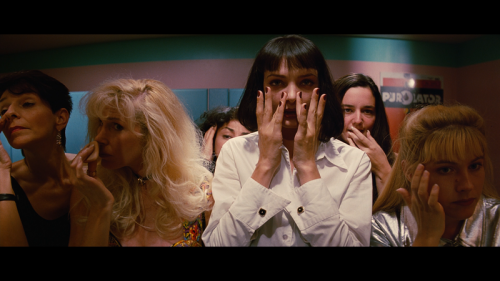
Tarantino has created dynamic and interesting female characters throughout his cinematic career, celebrating their strengths, personalities, and never presenting gender as an obstacle—instead, being a woman in his stories is often an advantage.
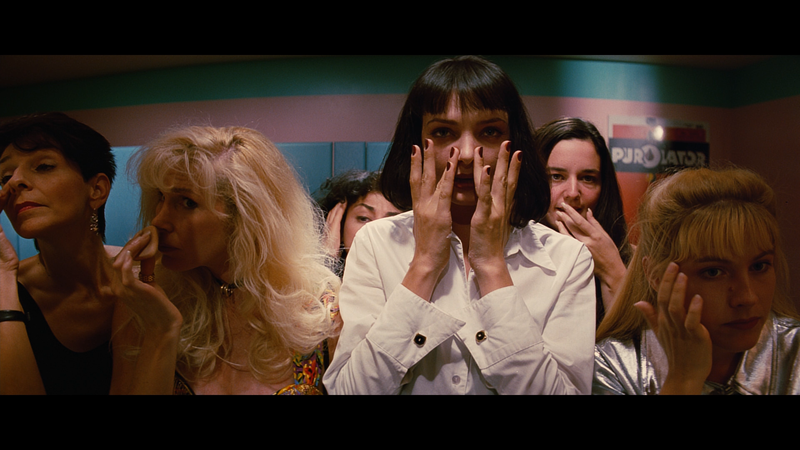
Uma Thurman in Pulp Fiction
This guest post by Emanuela Betti appears as part of our theme week on Male Feminists and Allies.
I’ve often considered Quentin Tarantino the new Russ Meyer for various reasons: bringing exploitation cinema to mainstream screens, their unconventional humor and unique storytelling, and in particular for their celebration of women. Roger Ebert called Russ Meyer a feminist filmmaker, and although Tarantino never openly called himself a feminist, many of his films place women at the center of the story. Just like Russ Meyer’s films, Tarantino’s women are the stronger sex: they are sharp-minded, better fighters, and always outsmarting their male counterparts. The men, on the other hand, often underestimate women, like Ordell in Jackie Brown or Stuntman Mike in Death Proof, resulting in them being the butt of the joke.
Watching a Tarantino movie is like watching the 1973 Battle of the Sexes tennis match, in which Billie Jean King defeated Bobby Riggs, proving that women are just as equally skilled and able as men. In many Tarantino movies, the idea of gender equality is prominent in many ways—take for example the two screenplays written by him before his directorial debut: True Romance and Natural Born Killers. Both stories revolve around a Bonnie-and-Clyde outlaw couple; however, the female characters are not merely ornamental girlfriend, but “partners in crime,” as in both genders are equally involved in the story. Later, we see the theme of outlaw partnership between Jackie Brown and Max Cherry, when at the end Jackie tells Max, “I never lied to you … we’re partners,” and also with Pumpkin and Honey Bunny in Pulp Fiction. A partner is a more respectable role, because she’s not there for the male protagonist, but is a protagonist with him. The idea of equality is present in another way, taking for example Kill Bill and Death Proof. In these two movies, the main characters are doubles: Beatrix and Bill are both equally able fighters, while Zoe Bell and Stuntman Mike are both professional stunt performers, and are equally prepared to react to a dangerous situation.
In a recent Natalie Portman interview, the actress shed some light on the fallacy of Hollywood’s idea of a feminist character, saying that a woman kicking ass is not necessarily feminist, it’s “macho.” I agree, and projecting male qualities onto women is not about celebrating women’s strengths. When looking at Tarantino characters, we see female characters with strong motives and personal qualities, who are strong, smart, yet still very complex. I will focus on his most women-centric films: Jackie Brown, Kill Bill, and Death Proof.
Like Pulp Fiction, Tarantino’s follow-up movie Jackie Brown was a love letter to cinema (Blaxploitation) and its icons (Pam Grier). The opening sequence is a reference to The Graduate, in which we see a character “gliding” through LAX. Like the movie it references, Jackie Brown is a story about age—getting older, and dealing with that stage in life. While The Graduate is about entering adulthood, Jackie Brown is about middle-age, or entering middle age. We see the theme of aging in Max Cherry, but mostly in its female title character and protagonist. Jackie Brown was an homage to Pam Grier and her character Foxy Brown, and although we still get a glimpse of Foxy Brown’s nerves of steel and fierceness, in Jackie Brown she is an older version, worn down by age and a lousy job as an airline stewardess. Her gender is not so much an issue though–Detective Dargus mocks Jackie not so much for being a woman, but her age, and her less-than-impressing accomplishment in life. Yet she still possesses a sharp mind and infallible instincts, which is why she’s one step ahead of every other character.
Jackie’s main antagonist is Ordell, who underestimates Jackie and women in general. Tarantino has the ability to surprise, not only with story, but also with character development. We begin with a middle-aged black woman working at a small airline against a gun dealer who has big money and no scruples; but Jackie’s toughness begins to unfold, while Ordell’s “cool” and control begin to unravel–even Melanie, a minor female character–sees through Ordell’s pompous attitude and tries to outsmart him by plotting to steal his money. At the end, Jackie comes at the top, while Ordell becomes the butt of the joke.
Tarantino has said that his movies belong in two different universes: the real world (such as Reservoir Dogs, Pulp Fiction, and Jackie Brown), and the “film world.” The Kill Bill movies are the first Tarantino stories to take place in the “film world,” which is a universe based on Tarantino’s adoration for past genres. Every Tarantino movie is a love letter to cinema, and just like Jackie Brown was an homage to Blaxploitation, Kill Bill was a love letter to the Shaw Brothers, samurai and yakuza movies, Sergio Leone and spaghetti westerns. Beatrix Kiddo/The Bride is one of the toughest female fighters in cinema, but in contrast to Hollywood’s one-dimensional kick-ass female characters, she defies the stereotype of the “macho-feminist.” She is a very tough fighter, she is cold-blooded, but at the same time she is also a very complex woman. With a strong female lead, Tarantino could have easily relied on her as the sole woman in the story, but the movie is packed with interesting female characters. There’s Vernita Green, who is almost a parallel of the protagonist: she quit her job as an assassin and has a daughter, but is still a cold-blooded fighter when confronted with the Bride. There’s Gogo Yubari, the teenage bodyguard, who is more lethal than all the Crazy 88 put together. O-Ren, a female yakuza leader, is given a tragic backstory, which is also tainted in revenge, and offers a compelling view into her character’s development. Despite being a woman and leader of the Tokyo yakuza, her gender seems to hardly be an issue–the only complaint she receives is about her mixed heritage, not her gender. In the world of Kill Bill and Tarantino’s narrative style, women are not “the Other,” and the fact that a woman could lead a yakuza army or be the best fighter in the world is not unusual, and maybe even expected.
Volume 1 is about the Bride’s rage, while Kill Bill Volume 2 is about the emotional development of the characters: we are shown the desires and vulnerabilities of the protagonist and her enemies. While initially presented as a deadly killer, we finally see the Bride’s complex development: she begins as a naïve pupil, blushing at Bill’s every word, but begins building a tough skin under Pai Mei’s teaching. The main female villain in Volume 2, Elle Driver, is also another parallel to the Bride–they’re both blonde, they were both Bill’s girl–but at the same time, they’re opposites. Elle Driver has all the negative aspects of a female killer: she’s a back-stabbing, dirty fighter. Elle Driver is also obsessively clingy about Bill; she is based on Patch from Switchblade Sisters, who was a second-in-command character, just like Elle Driver feels like second-best in the eyes of Bill, and her desire to kill the Bride is a competition fueled by her jealousy.
In Volume 2 we see most of the Bride’s development and emotional complexity. The various interactions between the Bride and Bill, during the dress rehearsal and at his home, reveal her conflicting feelings for him; at times she has nostalgic affection for Bill, but she never allows those feelings to sway her goals. While being a cold-blooded assassin, the Bride is also capable of strong maternal instincts when it comes to her daughter, especially when she fears for her child. The Bride is a complex character who can balance toughness and vulnerability, resisting stereotypes or clichés. She is a woman who undergoes multiple symbolic deaths–first, on the eve of her wedding, and then when she is buried alive, but she is reborn stronger and more determined.
Death Proof was criticized heavily, and some considered it Tarantino’s worst movie. The movie was protested by Scottish women’s groups, including the Scottish Women Against Pornography (SWAP) and Scottish Women’s Aid, due to the portrayed sadistic violence against the female characters. In Tarantino’s response to the backlash, he admitted that slasher films do have a bad reputation for being misogynistic, but slasher/horror movies also have the Final Girl trope, or the “investigative gaze,” which is often overlooked. Slasher movies are the Big Mac and fries of cinema—they’re fast, cheap, and give you what you ask for. However, the Final Girl is the most redeeming trope in a mostly misogynistic genre. We see this trope of the “investigative gaze” used twice in Death Proof: first with Arlene, when she spots the suspicious Stuntman Mike, and then with Abernathy. It’s easy to assume that the protagonist of the movie is Stuntman Mike, since he is present throughout the story, but the true protagonists (or heroines) don’t show up until half-way through. Tarantino starts the story with the first trio of women (Jungle Julia, Arlene, and Shanna), who are brutally killed by Stuntman Mike after a night of drinking. The violence exerted on the first group of women is what you can expect from a typical slasher—violence and gore—but it also served as a plot device to establish the merciless and dangerous antagonist. Stuntman Mike’s reason for finding sadistic enjoyment in mutilating women is never explained, but it’s well depicted that he is the embodiment of the male gaze: creepy voyeuristic tendency, stalking and finding pleasure in objectifying his victims.
The second half introduces us to a new group of women—the heroines of the story. The “three girls” device is very typical of Russ Meyers (which he used in Faster, Pussycat! Kill! Kill! and Beyond the Valley of the Dolls). In Death Proof, Abernathy, Kim, and Zoe are the new pussycats. Like the previous women, they are also targeted by Stuntman Mike, and subsequently chased and attacked. But this time, the women are on par with their aggressor—they can drive just as fast, and they’re just dangerous as him. The car chase between Stuntman Mike and the women is incredibly exciting, because now the roles have been reversed—the women are the ones chasing Stuntman Mike, creeping up on him the same way he stalked and crept up on the previous women, and when they catch up they’re not forgiving. As much criticism this movie has received, when you watch the women exulting at the end, there’s no doubt that this is a movie for women, and not against them.
Tarantino has created dynamic and interesting female characters throughout his cinematic career, celebrating their strengths, personalities, and never presenting gender as an obstacle—instead, being a woman in his stories is often an advantage. Tarantino’s portrayal of women is based on developing them as characters and individuals, rather than focusing on their gender and their weaknesses.
Emanuela Betti is a part-time writer, occasional astrologer, neurotic pessimist by day and ball-breaking feminist by night. She miraculously graduated with a BA in English and Creative Writing, and writes about music and movies on her blog.
When I was asked, “Who are you as a female filmmaker?” I immediately made a mental note. I’m a black, female filmmaker. I was reminded of the following quote from Gloria Anzaldúa: “A woman-of-color who writes poetry or paints or dances or makes movies knows that there is no escape from race or gender when she is writing or painting. She can’t take off her color or sex and leave them at the door of her study or studio. Nor can she leave behind her history. Art is about identity, among other things, and her creativity is political.”
This is a guest post by Ashley Ellis.
When I was asked, “Who are you as a female filmmaker?” I immediately made a mental note. I’m a black, female filmmaker. I was reminded of the following quote from Gloria Anzaldúa: “A woman-of-color who writes poetry or paints or dances or makes movies knows that there is no escape from race or gender when she is writing or painting. She can’t take off her color or sex and leave them at the door of her study or studio. Nor can she leave behind her history. Art is about identity, among other things, and her creativity is political.”
This resonates with me, especially when “political” is used in the broadest sense of the word. Respected artists aren’t afraid to present their point of view. A strong point of view comes directly from an innate sense of self. And when that self is part of a small minority in its space, suddenly what that self has to say can literally or figuratively, in the real world or in art, speak for many voiceless people. In other words, it becomes political. It’s no wonder that I was invited to write this post because of the Seed & Spark campaign for a film I directed, Fixed, which is about a black, closeted homosexual who commits suicide (spoiler alert!).
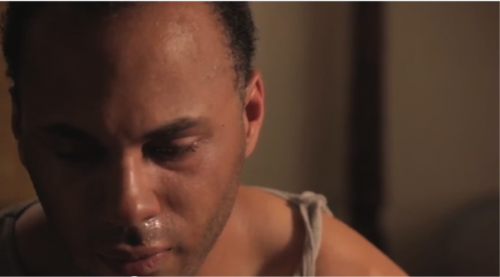
James Ward III in Fixed
I don’t want every film I make to focus on a hot topic social issue, but every step forward in my very young career has been made by embracing being black and being a woman, and attempting to be in the film industry, which could be viewed as a negative, a disadvantage, a challenge, or anything otherwise BAD. I have examples:
Having a High-Pitched Voice and “Soft” Presence
Sometimes, speech determines how seriously people take you. I’ve become more aware of my voice, but I remember interviewing Georges Michel, Haiti’s Jack of All Expertise, for a documentary I was making after the quake. We sat down, and completely unaware of my voice, I asked him to introduce himself. He did, and then said that he’d be willing to answer any questions that I had. He had no doubt that I was coming from genuine place. The same applied when I interviewed two HIV positive women in Botswana who had lost young children to complications from the AIDS virus. They recounted the last moments of their baby’s lives. As we cried together, I knew that I was in a unique position to capture their stories. I’d made them comfortable enough to open up.
Literally Standing Out
Being one of the few people who looks like me on set or in the screening or at the event isn’t any different from being one of the only in my childhood community, classes, or teams. I’ve had plenty of time to get comfortable with it. We need more representations of women of color in Hollywood – of course – but I could dwell in a pool of sorrow or capitalize on a point of connection and conversation with people who may otherwise not have noticed me. I often have the least forgettable face.
Being What Could Be Called a Chronic 2nd Guesser
I stopped myself on set once, because I kept asking the Director of Photography what he thought whenever I could. It felt like a bad thing. The director should know what (s)he wants! But then I thought, “Actually, I do!” And as long as my opinion and thoughts are expressed there’s no good reason why I shouldn’t ask the rest of my team for their knowledgeable input. Filmmaking is collaborative, and being a leader is about being diplomatic. So, I’m OK with the too-often-attributed-as-feminine-and-bad trait.
Some people may not have understood this avant garde piece, If I Had a Son, but I knew exactly what I wanted. This shot in particular.
Being a Part of a Teeny Tiny Community
There’s certainly strength in numbers, but there’s also strength in small groups that truly come together. Part of the magic that happens on film sets is that people develop inextricable bonds, but couple that environment with the well -known truth that black filmmakers and actors are still struggling for space in Hollywood, and it’s easy to make friends ready to go on the warpath with you. This was apparent when we made Fixed, which was written, directed, and produced by ladies and had a long list of talented black actors, many of whom didn’t need to sign on to a low budget short film but saw the vision and importance of it.
I could go on… Like the time when my friend James told me that I was the silliest director he’d ever worked with while on the set of MoRemi’s music video for “Femi.” It was her first time making a video. There was no reason that we shouldn’t have been having fun. It wasn’t until James added that I was a welcome reprieve from the stern faced male directors he knew that I understood it was a compliment. Yet best of all, I’ve been blessed with amazing mentors like Adrienne Miller, Priscilla Cohen, Anne-Marie Mackay, Stewart Stern… Coleman Hough, all of whom have taken the time to help me develop my mind and voice, because they all believe that diversity in cinema means better cinema. So, who I am as a filmmaker is one who looks on the bright side. I’ve never truly felt limited. Two of my first cinematic influences, my mother and my grandmother, celebrated Disney films and romcoms, yes, but I went to the theater at least four times as a little girl with my mom so that she wouldn’t have to see Casino alone. My grandma would deal with my childhood nightmares post The Exorcist faster than she would sit through Cinderella. I suppose if I grew up watching everything imaginable that represents good cinema, it’s easy for me to believe that I can make anything imaginable and be a good filmmaker, while being black and being a woman.
These 18 Lionhearted Heroines in literature, television, and film echo Bullet’s spirit in their own unique ways–possessing faith, valuing friendship, and experiencing unrequited love or loving and expecting nothing in return–as portrayed by the “perfectly imperfect” actresses who embody them.
In the spirit of Bullet, the quintessential Lionhearted Girl, these 18 Lionhearted Heroines each embody the same steadfast strength and selflessness that Bullet possessed.
Part 2 in a series about “Lionhearted Heroines” inspired by The Killing’s Bullet; see Part 1 here
These 18 Lionhearted Heroines in literature, television, and film echo Bullet’s spirit in their own unique ways–possessing faith, valuing friendship, and experiencing unrequited love or loving and expecting nothing in return–as portrayed by the “perfectly imperfect” actresses who embody them.
In the spirit of Bullet, the quintessential Lionhearted Girl, these 18 Lionhearted Heroines each embody the same steadfast strength and selflessness that Bullet possessed.
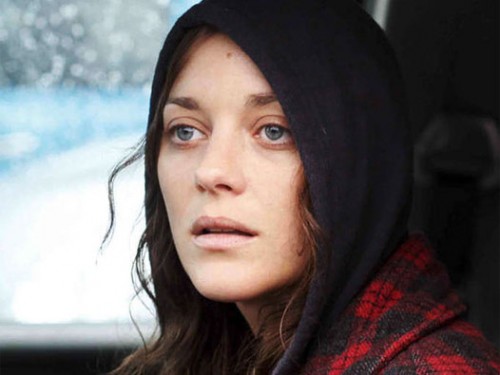
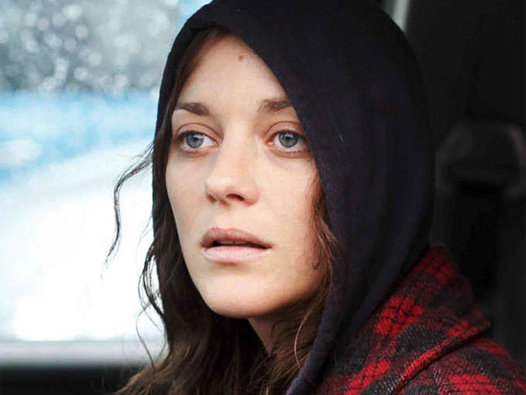
Stephanie from Rust and Bone
Stephanie (Marion Cotillard) from Rust and Bone, directed by Jacques Audiard (2012)
“What am I for you? A friend? A pal? If we continue, we have to do it right.”
As the trailer (included below) suggests, this remarkable French film centers around a vagrant boxer, his young son, and a gorgeous woman who enters their lives under the most unlikely circumstances. The magnificent Marion Cotillard was nominated for an Academy Award for her portrayal of Stephanie, a tough, assertive orca trainer who courageously struggles to rebuild her life after a horrific accident.
Like Bullet, Stephanie’s tough shell cocoons a sensitive soul, one that is gravely tested after her accident. What is so touching about Stephanie–like Bullet–is her spirited strength and resilience in the face of a reality that most people could not survive. Even as she deals with her own daunting demons and defies overwhelming odds, she is selfless in her availability to others–in her willingness to share her heart and spirit with those around her. She forges a beautiful bond with Alain and his son and, like her devotion to the orcas, loves them unconditionally even though Alain rejects, marginalizes, and uses her. When the bond she feels toward Alain matures into romantic love, she fearlessly reveals her feelings honestly, telling him: “If we continue, we have to do this right.” Just as she asserts herself to Alain, she regains her desire to resume orca training–and in a silent scene (below), recites her training routine for the first time on the balcony of her apartment. Here, Marion Cotillard invests Stephanie with the outward demeanor of a woman completely at peace with her fate and effortlessly exudes an inner spiritual strength that is heightened all the more by Katy Perry’s inspired song, “Firework”:
Rust and Bone and Marion Cotillard’s performance as Stephanie take on an added resonance with the release of this year’s incomparable documentary, Blackfish, which chronicles the appalling treatment of orcas and their trainers at SeaWorld:
“I can’t just stand by while others give their lives.”
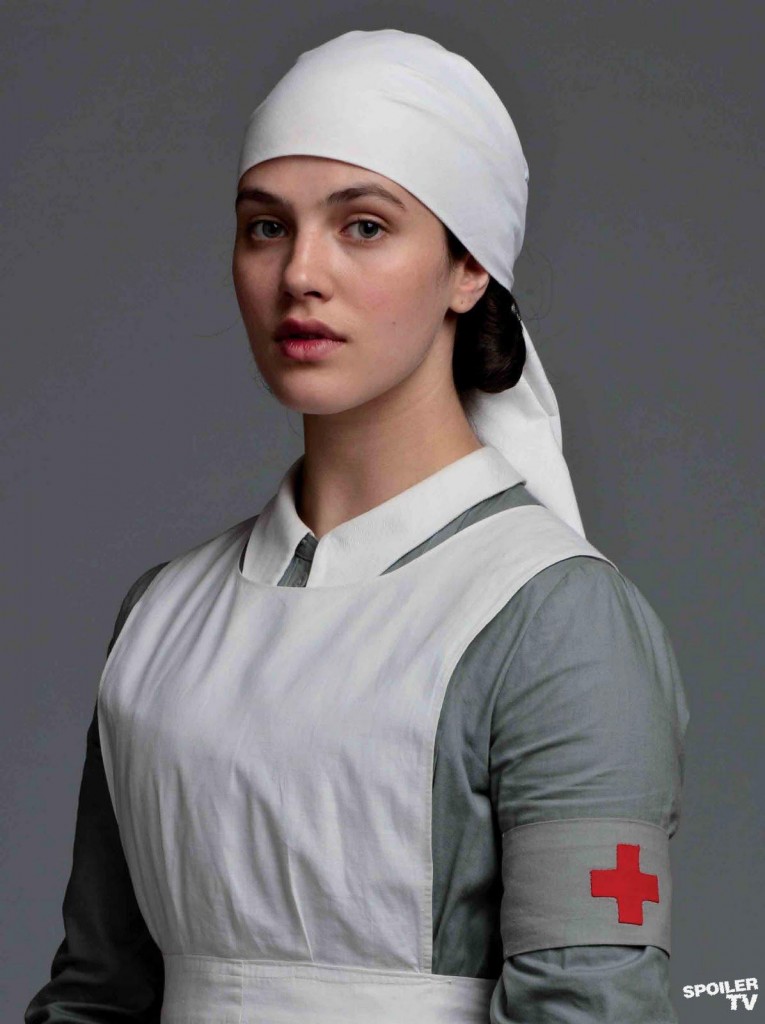
In this sprawling and superb beloved BBC series, young actress Jessica Brown-Findlay (a former trained ballet dancer who began acting after a career-ending knee injury) shines as the vivaciously independent, strong-minded, and free-spirited Sybil, who fights with fervor for women’s suffrage and offers her services as a nurse when World War I breaks out in England. Her passion for political causes is equaled only by her slow-burning love for Tom Branson, a young Irish chauffeur who introduces her to a more complicated world beyond the gilded gates of her family’s estate. Once she enters this world, she cannot go back to the way things were before, and her strength of character holds firm despite difficult social and familial circumstances.
[youtube_sc url=”https://www.youtube.com/watch?v=ltRIQcTMAy8″] Jessica B. Findlay speaks about Sybil
Sybil is a great “soul-sister” to Bullet in her innate desire to help and protect others, despite what it costs her. Sybil’s fate is also akin to the unjust tragedy that befalls Bullet when her powers of protection reach their limit. Like Bullet, Sybil can no longer protect herself–but the legacy of her life is preserved in all she leaves behind.
“When it all goes quiet behind my eyes, I see everything that made me lying around in invisible pieces. When I look too hard, it goes away. And when it all goes quiet, I see they are right here. I see that I’m a little piece in a big, big universe. And that makes things right. When I die, the scientists of the future, they’re gonna find it all…they’re gonna know: Once there was a Hushpuppy, and she lived with her Daddy in the Bathtub.”
During a pivotal scene in Beasts of the Southern Wild, a spiritual journey of survival, Quvenzhane Wallis as Hushpuppy summons her entire miniature being to shout: “I’M THE MAN!” when her father challenges her in a dual-like shouting match. Only six years old at the time of filming, tiny Quvenzhane is much more than her claim to “man-hood”–she is a force of nature who packs a punch that won’t soon be forgotten. She embodies a little firecracker of a girl with a big desire to see and understand the world around her.
Hushpuppy lives a destitute, virtually parentless existence in the Louisiana bayou, a place called “the Bathtub,” with an alcoholic and, at times, abusive father and an assortment of local wild pets. Like Bullet, she is a “street-kid”–inhabiting the “streets” of the bayou and taking shelter in dilapidated shacks–who, despite seemingly hopeless circumstances, embraces the world as a beautiful place and makes a home amongst the animals and plants that afford her shelter and comfort. Even with the threat of a massive storm closing in on them, she never loses sight of the shoreline toward a bright future where people will “find it all” and “know” that she lived there.
Tiffany from Silver Linings Playbook
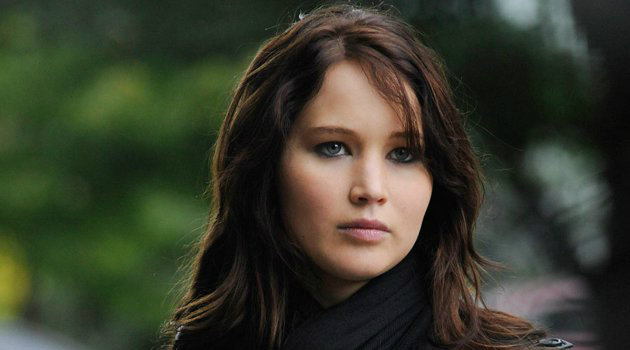
Tiffany (Jennifer Lawrence) from Silver Linings Playbook, directed by David O. Russell (2012)
“…There will always be a part of me that is dirty and sloppy, but I like that, just like all the other parts of myself. I can forgive. Can you say the same for yourself, Fucker? Can you forgive? Are you capable of that?”
The naturally aloof, mysterious, yet generous Jennifer Lawrence hit it out of the ball-park with her Academy Award-winning turn as Tiffany, a recently widowed young woman on a quest for human connection and belonging. When Tiffany literally “runs into” Pat (Bradley Cooper), a mentally-unstable man obsessed with reclaiming his former marriage, she falls head-over-heals for him instantly and offers to coach him in a new endeavor. Despite her somewhat hard and brash exterior, she thinks about and feels things acutely–and her determination to “read the signs” and bring Pat out of his shell is at once funny, frustrating, and, for her, heartbreaking as her feelings for him deepen.
While neither a street-kid nor a lesbian (well, apart from several trysts with female office co-workers as she recounts in this clip), Tiffany shares Bullet’s scrappy resolve to survive in a world that doesn’t appreciate or accept difference. Also like Bullet, despite her insecurities, she embraces her flaws and stalwartly refuses to apologize for them. She’s not afraid to put herself out there, make a fool of herself, or fail. In this sense, like Bullet, she’s the epitome of courage and heroism.
Jane from Jane Eyre
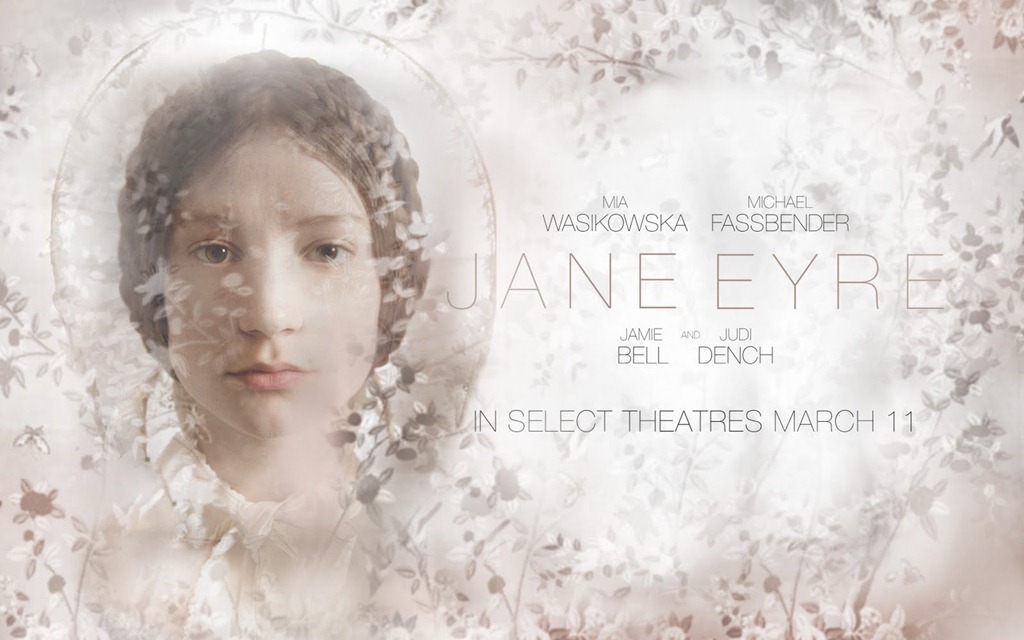
Jane (Mia Wasikowska) from Jane Eyre, directed by Cary Fukunaga (2011)
“Am I a machine without feelings? Do you think that because I am poor, plain, obscure, and little – that I am soulless and heartless? I have as much soul as you, and full as much heart.”
In this bold new vision of Charlotte Brontë’s timeless classic about an orphan girl starved for love and in search of a family, Mia Wasikowska, who–like Bex–was 18 years old at the time of filming, brings a youthful, intelligent, and heroic sensibility to the role of the plain, saintly Jane Eyre. Opposite Michael Fassbender as Mr. Rochester, Mia naturally holds her own during intensely kinetic moments when this brooding older man made bitter by the misfortunes of life and love, challenges her steadfast moral convictions and sense of self-worth. Having only read the novel for the first time several months prior to the start of shooting, Mia’s love for the character manifests itself in how much she respects the role which shines through her indelible performance.
Jane Eyre is arguably one of the most beautifully conceived characters ever written. What makes her so special and rare is her innate sense of self-worth and self-respect despite a succession of physically and verbally abusive situations in which she is told repeatedly by the people who are supposed to love her the most that she is not worthy or deserving of being loved. It is this inherent bravery and heart that tie her with Bullet in a profound and almost identical manner. She is also a strong soul-sister to Bullet in her long-suffering, seemingly unrequited love for a man who is forbidden to her because of a described “mere conventional impediment.” And, as soon as that love is finally realized in a brief period of pure bliss for Jane, it is just as abruptly and brutally taken away–as it is so cruelly for Bullet when Lyric rejects her. Still, sharing Bullet’s faith, Jane never gives up the hope that she will one day be free to love and be loved as she always dreamed.
Hermione from Harry Potter
Hermione (Emma Watson) from Harry Potter Parts 1-8 (2001-2011)
“Actually, I’m highly logical which allows me to look past extraneous detail and perceive clearly that which others overlook.”
Emma Watson, who won the coveted role of Hermione Granger in J.K. Rowling’s beloved series at the tender age of 9 and continued in the role until the series concluded when she was 19–Bex’s age–is perfect to play Hermione because she is Hermione. She embodies Hermione’s keen intelligence, studious nature, wit, logic, and foresight. She is so naturally Hermione that many Harry Potter fans see her as the wonderful character in real life. Emma’s success in the role also stems from her ease at befriending the boys who are Hermione’s best friends while, in the same breath, holding her own opposite them. Using her signature intelligence and foresight, she is quick to call out her male mates whenever she witnesses them doing, or about to do, something idiotic. This no-nonsense strength in her performance is akin to how Bex portrays the tough, no-nonsense Bullet. Both are unforgettable and able to keep those close to them “under their thumb,” to evocate Bullet’s expression.
However, while Hermione can wittily outsmart her male comrades during critical situations and events, she is unable to outsmart her own heart, which is nearly broken from her painful, seeming unrequited love for Ron. Being the clueless fool he sometimes is, Ron has no notion of Hermione’s affections and insensitively flaunts his relationship with another Hogwarts classmate in front of her until he tires of that relationship and that girl. During a poignant scene in The Half-Blood Prince, Hermione confides her broken heart to Harry who, as her best friend, is a prime witness to her silent suffering over Ron’s obvious lack of interest in her. Hermione’s suffering recalls Bullet’s nearly identical silent suffering over her unrequited love for Lyric, which she, too, confides to her best friend, Kallie.
Amy from Little Dorrit
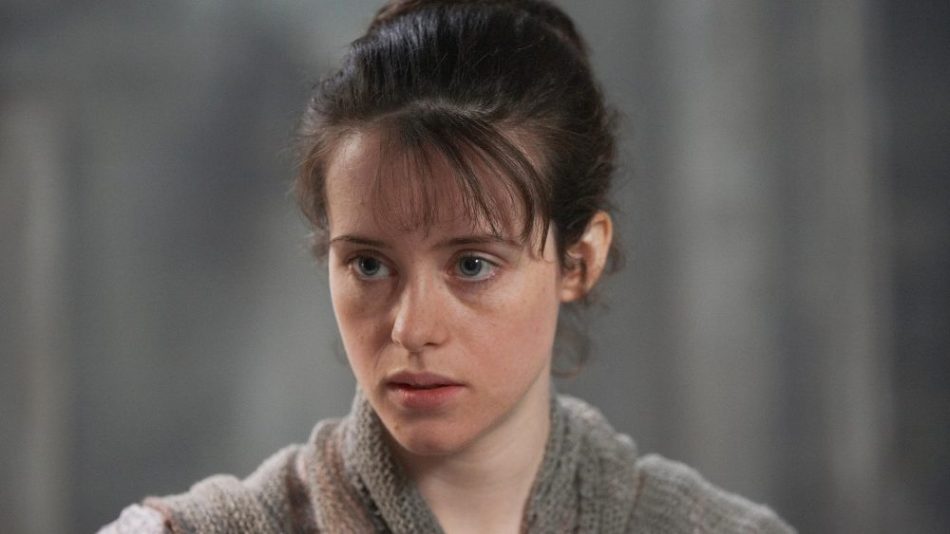
Amy (Claire Foy) from PBS Masterpiece’s Little Dorrit (2008)
“Near the palace was a cottage in which lived a poor, little, tiny woman–all alone. She realized that for all of her gold and silver and diamonds and rubies, she had nothing so precious to her as that shadow was to that tiny woman.”
Charles Dickens gave us a precious gift with his lesser known, yet eerily foreseeing novel Little Dorrit, which was adapted into an award-winning 15-part BBC miniseries by Andrew Davies in 2008. The novel, and its sprawling adaptation, tells the story of the incandescent “little” Amy Dorrit, a tiny 18-year-old girl who has come of age devotedly caring for her widowed father, a 20-year inmate at the Marshalsea Prison for Debt. Although nearly 10 years older than Amy when she won the role, Claire Foy’s performance cannot at all be described as “little” by any stretch of the imagination. Instead, she seems to understand and empathize so profoundly with Amy that it is as if she and her character are one in the same. In a press interview during the miniseries release, Claire describes in vivid terms just how highly she regards Amy: “Nobody is or can be as selfless as Amy is at all–people give to charity and people do all these noble things, but they don’t possess the pureness of heart in the doing of these actions that Amy demonstrates in the numerous sacrifices of her everyday life.” Would that Amy could have known Bullet…
Just as Bullet devotes herself to protecting her vulnerable and abused street family, Amy Dorrit sacrifices her entire life for her unjustly imprisoned father and his family. While being hounded by an escaped murderer who threatens to reveal potentially devastating family secrets, she contracts herself as a seamstress to an elderly, wheelchair-confined woman named Mrs. Clenham, through whom she is introduced to Arthur Clenham–the employer’s generous and benevolent son. It is this meeting that opens Amy’s eyes to a world beyond the barred prison gates where she dreams of winning Arthur’s affections. And even though she forms a close friendship with him, all hopes she has for a shared future with him are dashed when she discovers–as Bullet does–that he has feelings for someone else. Indeed, the entire story itself can be seen as a web of unrequited affections: Amy’s unreturned and unappreciated devotion to her abusive father and her unrequited infatuation with Arthur Clenham; Arthur’s spurned love for his mother and for a wealthy village girl who is engaged to a reckless and vain chap; the heartbreaking love and loyalty of Amy’s childhood friend who dreams of marrying her himself. It isn’t until she is forced to leave the confines of the prison where she grew up that she gathers the courage to stand up for her heart and refute the perception that she is simply a “little woman” with no voice of her own.
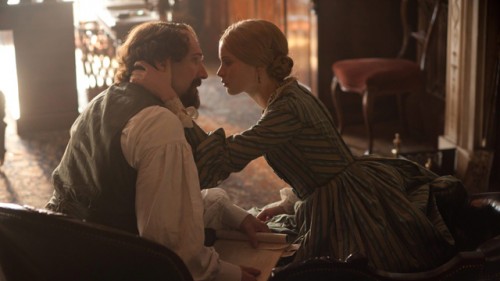
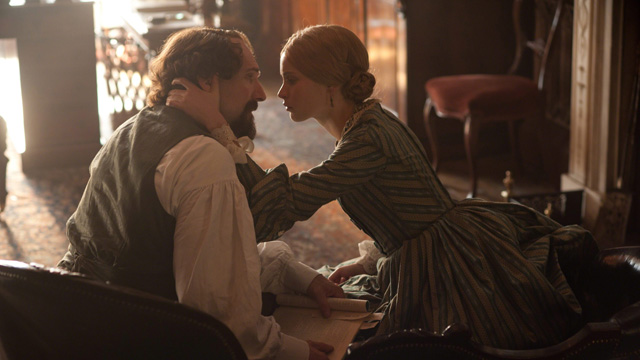
The character of Amy Dorrit was based upon and inspired by Charles Dickens’s real-life muse Ellen “Nelly” Ternan, an 18-year-old stage actress with whom Dickens fell in love during his later years. Their little-known affair is chronicled in a new Sony Classics feature film entitled The Invisible Woman starring another rising young actress (yet 11 years older than the girl she is portraying), Felicity Jones opposite Ralph Fiennes as Charles Dickens. The film is due to be released in December 2013.
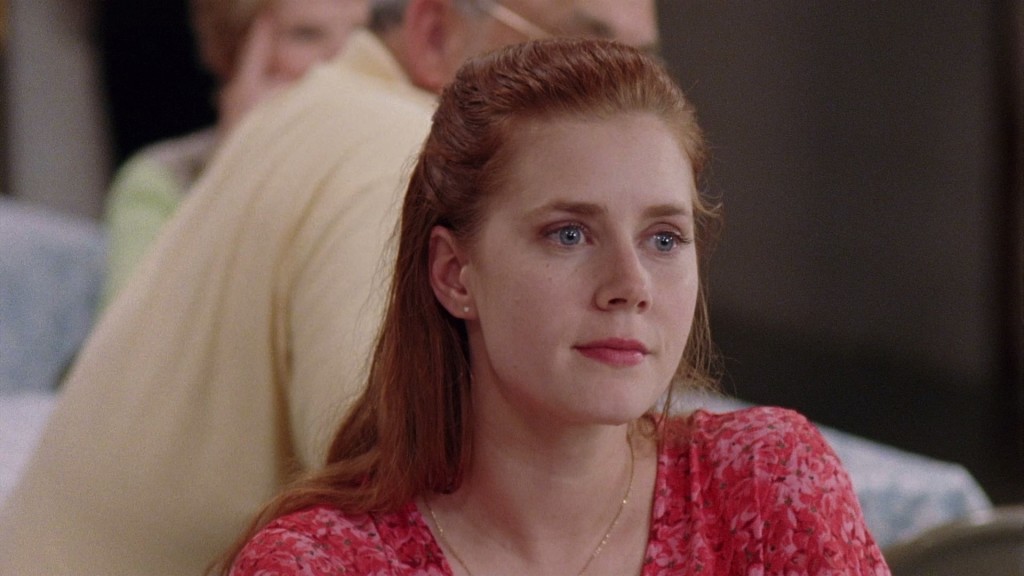
Ashley from Junebug
Ashley (Amy Adams) from Junebug, directed by Phil Morrison (2005)
“God loves you just the way you are, but he loves you too much to let you stay that way.”
In this independent feature depicting a dysfunctional Southern church-going family living in an provincial and isolated Southern church-going community in North Carolina, Amy Adams is a ray of sunshine as Ashley, a seemingly naïve, bright-eyed, bubbly yet sensitive young woman on the verge of motherhood. Like Bex as Bullet, Amy delivers a bravura performance that infiltrates hearts and minds, stealing the limelight from more known and seasoned actors. She was deservedly nominated for an Academy Award, although her incandescent portrayal transcends the simple “Supporting” Actress category. Indeed, from the first scene to the last, she casts a spell that makes us believe Ashley is the central character just as Bex’s onscreen presence as Bullet becomes the heart of The Killing.
The pivotal scene of the film comes when Ashley breaks down in the hospital — and Amy’s powerful gift as an actress is laid bare. In this heart-wrenching moment, she makes a young mother’s grief so naturally palpable and devastating. The inexplicable bond she shares with Alessandro Nivola, who plays her brother-in-law, recalls the cosmic connection Bullet shares with Holder, particularly echoing the moment he comforts her as she accepts that Kallie is most likely dead. Here, too, Ashley–with the help of her friend–must accept news of a devastating death. And, while she is overcome by intense grief and anger, she does not let it take root in her heart–and, like Bullet, ultimately demonstrates unwavering faith, positivity, and unconditional love and selflessness toward others. In a largely cynical world where most would succumb to despair rather than embrace hope, Ashley–like Bullet–demonstrates a rare, precious, and admirable resilience of spirit.
June from Walk the Line
June (Reese Witherspoon) from Walk the Line, directed by James Mangold (2005)
“No, I’m not an angel. I had a friend who needed help. You’re my friend. You’re not nothin’. You’re a good man, and God has given you a second chance to make things right, John. This is your chance, honey.”
Marking a career that has flourished since early childhood, Reese Witherspoon finally garnered a well-deserved Academy Award for her embodiment of June Carter-Cash opposite Joaquin Phoenix in the title role of Johnny Cash. Together, the two create a “ring of fire” as an on-screen couple–so blazing that it often seems as though they were made for each in real life, too. Reese channels June’s well-crafted sense of humor and vivaciousness that masks the disappointment and heartache she feels from being “left like a dutch boy with his finger in the damn” by a chain of unworthy men. She naturally exudes June’s “angelic” generosity of spirit–even during dark moments in her own life–and her no-nonsense strength and resilience, most notably demonstrated in her repeated rejections of Johnny’s disrespectful and self-destructive “stunts.” All this Reese accomplishes while also learning how to sing and play musical instruments to convincingly re-enact the musical performances and shows that June shares with Johnny.
Akin to Bullet, June Carter is a woman “on fire”–admirable for every aspect of herself. She is the very epitome of “a friend”–selfless, loyal, loving, honest, and completely devoted to Johnny’s addiction recovery–freely forgiving the many times he hurts or neglects her in return. Her patience and fortitude is unmatched as she bears the cross of the tumultuous, unsanctioned, yet unbreakable bond she possesses with her tour-mate in a saintly manner.
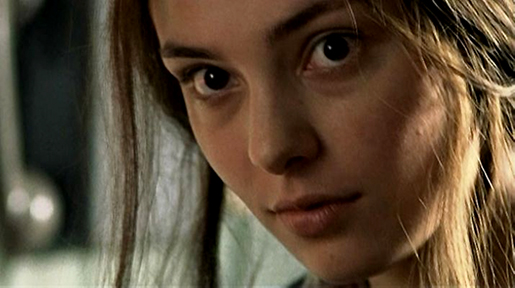
Giorgia from The Best of Youth
Giorgia (Jasmine Trinca) from The Best of Youth (Italian: La Meglio Gioventu), directed by Marco Tullio Giordana (2005)
In this multi-generational, epic Italian miniseries, Jasmine Trinca–a Natalie Wood-esque Roman actress–delivers a sensitive, stand-out performance as Giorgia, a young girl struggling with mental illness and the neglect that comes from the stigma of her condition, especially in 1960s Italy. Since Giorgia is a girl who cannot speak, or who speaks very little because she lives inside of herself, Jasmine–like Bex==reveals much of the girl’s vulnerable and heartbroken inner life simply through the haunting expressiveness and penetrating beauty of her intelligent, sad eyes – as in this pivotal scene:
Giorgia’s largely tragic journey in this miniseries mirrors the trials Bullet endures in The Killing. Like Bullet, Georgia is an outcast from society, alienated from her family and left to the merciless, unloving environment of a home for wayward and discarded youths. When Matteo, a handsome, young medical student volunteers at the home and is assigned to care for her, she is awakened for a time to the possibility of being loved and accepted by another human being who seeks to understand her. She falls for him, but when circumstances separate them, she sinks into the darkest time in her young life.
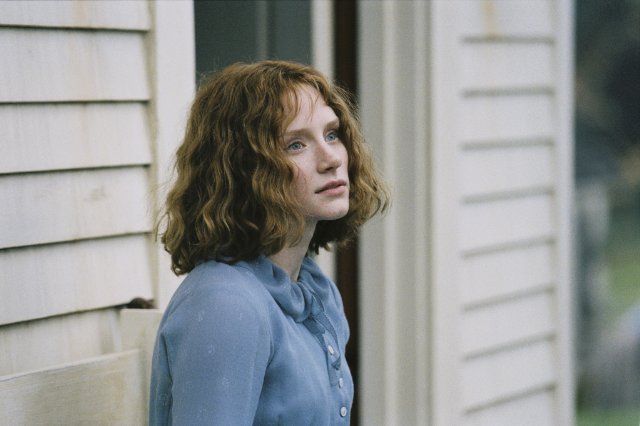
Ivy from The Village
Ivy (Bryce Dallas-Howard) from The Village, directed by M. Night Shyamalan (2004)
“Sometimes we don’t do things we want to do so that others will not know we want to do them.”
Bryce Dallas Howard carries a serene beauty and tomboyish self-confidence as Ivy Walker, the blind yet insightful daughter of the town “elder” played by William Hurt in M. Night Shyamalan’s spiritual thriller. Akin to Bex, Bryce makes an indelible mark in her debut role through the power of her onscreen presence and the expressiveness of her unforgettable face. She invests Ivy with a rare appreciation for life, for those who are outcasts within the isolated town that is all she’s ever seen of the world, and for the people she cares for the most. Juxtaposed with her uninhibited serenity, Bryce also manages to emanate Ivy’s overwhelming curiosity to explore the world beyond the confines of the town where she has grown up. She constantly seeks the truth and doesn’t allow her blindness to prevent her from seeking complete illumination. When a senseless crime grips the utopian community and endangers the life of Ivy’s beloved, she embarks on a harrowing journey to conquer “those we don’t speak of” once and for all. In portraying her heroine’s journey, Bryce balances the opposing traits of fear and bravery, revenge and forgiveness, despair and hope–all the while never losing sight of Ivy’s abiding faith, echoing the way Bullet describes her faith to Sarah Linden in The Killing.
Like Bullet, Ivy–a girl who “longs to do boy things” is left to pick up the pieces after her best friend, a village boy named Lucius Hunt who loves her, is brutally harmed. Before the attack, Lucius is painfully reticent to articulate his true feelings to Ivy–and he won’t even touch her for fear it might reveal his infatuation. She immediately picks up on this, and in her wonderfully bold and straightforward manner, confronts him about his suppressed love. What spurs the confrontation, however, is an event that tests the courage of the heroine and her fellow townspeople, most especially Lucius who, at last, confesses to her that “The only time I feel fear as others do is when I think of you in harm.” At the peak of the danger, when everyone else is hiding safe in basements, Ivy bravely stands at the entrance of the cabin with her hand outstretched, holding onto the faith that Lucius will finally take her hand in his at the perfect moment.
“You asked me to explain myself. I just wonder what needs to be explained? Look into your own heart. I swear to you, mine’s no different. You want a place in the trades and professions where you can earn your own bread? So do I. You want some means of self-expression? Some way of satisfying your own personal ambitions? So do I. You want a voice in the government in which you live? So do I. What is there to explain?”
Hilary Swank is outstanding as Alice Paul, the Pennsylvania-raised, Swarthmore-educated Quaker who leads the movement to secure suffrage for women in the early 1900s. The actress bares all, both physically and emotionally, with a striking authenticity as the bold, brave, selfless, and almost-martyred woman who becomes the willing scapegoat for all of the hatred and abuse thrown at the women during their cause for suffrage. Hilary’s intelligent eyes and eager yet patient smile, as shown in the above photo, are captivating even in the midst of the heroine’s great suffering, mistreatment, and adversity.
Alice, like Bullet, lives up to her name–she is every bit the “Iron-Jawed Angel” the public dubs her to be: a Christ-like figure who possesses an unflinching determination to see her cause through without resorting to violent or illegal, unethical means. She knowingly sacrifices an opportunity for a happy romantic relationship in the service of her cause, and when she is thrown in prison for picketing the office of the president during wartime, she remains undeterred in her conviction that women deserve to be treated equally before the law. She solicits the solidarity of her sisters-in-arms, including a prominent senator’s wife, to embark on a hunger strike, modeled after an old Irish tradition, until restitution is made and her goal is achieved. It is during this hunger strike that the women endure unconstitutional and unthinkable abuse which almost results in her death–along with countless others dedicated to the cause.
Paikea from Whale Rider
Paikea (Keisha Castle-Hughes) from Whale Rider, directed by Niki Caro (2002)
“My name is Paikea Apirana, and I come from a long line of chiefs stretching all the way back to the whale rider. I’m not a prophet, but I know that our people will keep going forward, all together, with all of our strength.”
Keisha Castle-Hughes, 13 years old at the time of filming, is one of the youngest actresses to ever have earned an Academy Award nomination for her breathtaking performance as Paikea, the sensitive yet determined Maori girl who shares a special connection with and understanding of the whales that figure so prominently in the ancient legends of her tribe’s ancestors in New Zealand. Keisha’s soulful eyes and calm, spiritual presence juxtaposed with her portrayal of Paikea’s fiery resolve against seemingly insurmountable family and cultural obstacles make viewers long to adopt this precious child–just as many fans of The Killing dreamed of adopting Bex as a daughter, sister, or best friend. Keisha’s onscreen relationship with the actor who plays her grandfather recalls Bex’s onscreen relationship with Joel Kinnaman in the sense that it is at once loving, intense, tumultuous, and heartbreaking as the two wrestle with each other over their character’s conflicting desires.
Nowhere is the power of this onscreen relationship more palpable than in the film’s most emotional scene where Paikea delivers a heart-wrenching tribute to her absent grandfather who doesn’t approve of girls displaying themselves in public arenas. Stuck in the old ways of his tribe and married to ancient traditions and customs, Paikea’s grandfather deeply resents the fact that the Gods saw fit to give him a female grandchild, while his grandson–Paikea’s twin brother–died shortly after his birth. In her speech dedicated to him, Paikea acknowledges and explains her grandfather’s traditional views and offers her full and free forgiveness to him, even though he she is devastated by the fact that he deliberately and humiliatingly does not show up for her performance. It isn’t until the tribe’s entire future is threatened that the grandfather begins to recognize and accept Paikea’s special gifts. As in Bullet’s case, Paikea is alienated by the one person whom she puts her trust and faith in, and just as soon as that faith has a hope of being recovered, Paikea’s life is endangered in an act of bravery and sacrifice.
Jamie from A Walk to Remember
Jamie (Mandy Moore) from A Walk to Remember, directed by Adam Shankman (2002)
“It’s like the wind…I can’t see it, but I feel it.”
Although not reaching the award-worthy caliber of performance that Bex brings to Bullet, nor the caliber of many of the actresses portraying the other 18 Lionhearted Heroines, singer-actress Mandy Moore is impressively understated, natural, and sensitive as Jamie Sullivan, a high school senior who is, according to Landon Carter (the film’s protagonist), “self-exiled” from the popular crowd and bullied by them. That is, until Landon, played intelligently and memorably by Shane West, recognizes her inner beauty and publicly declares his faith in her. Mandy’s performance is made more impactful through her pairing with West–the two are perfect together and play off one another with ease and genuine affection. Mandy is herself in the role–a caring, giving girl with a big heart and a gentle countenance. She embodies what we all strive to be: selfless, unpretentious, honest, strong, loyal, invested with integrity and that ever-elusive faith that Bex’s Bullet defines for Sarah Linden in The Killing.
Since the film effectively places us – the audience – in the perspective of Landon as he comes to know Jamie, we witness first-hand and intimately how he comes to fall in love with her. By extension, we fall in love with her, too. And we fall in love with Landon who transforms from a bully/tormentor into a troubled young man searching for his own identity and recognizing in her everything he would like to be. Despite his cruelty towards her, Jamie forgives him and willingly offers her friendship which, at first, he takes for granted. When he succumbs to peer pressure and dismisses her in public, she swiftly and courageously puts him in his place saying, “Landon, look, I thought I saw something in you — something good, but I was very wrong.” This instance of tough love which she steadfastly carries through until he admits his failing motivates him to want to “be better” and shows him that, despite her cold words, she “has faith in him [me] too.”
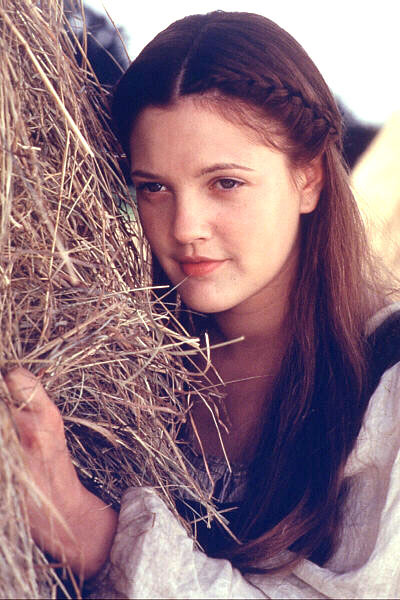
Danielle from Ever After
Danielle (Drew Barrymore) from Ever After, directed by Andy Tennant (1998)
“You have everything, and still the world holds no joy — and yet you insist on making fun of those who would see it for its possibilities.”
Drew Barrymore is a splendid ray of sunshine as Danielle De Barbarac, an intelligent and strong-willed girl in 16th century France whose world is turned upside down after her father dies suddenly of a heart attack when she is eight years old. Forced to relinquish all traces of her aristocratic heritage to an evil stepmother (Angelic Houston) and her two materialistic and envious daughters (although one of the sisters is actually a kind, giving soul) when she is orphaned, Danielle suffers years of hardship and mistreatment with no light at the end of the dark tunnel until she unintentionally meets the Prince of France, Henry, played by Scottish actor Dougray Scott. Despite being American, Drew Barrymore manages to make herself convincing in the role opposite a mostly British cast through her nearly flawless diction and delivery of Danielle’s often stinging, clever lines. As an actress who endured deep family strife in her youth, it is evident in how she captures Danielle’s indomitable spirit that Barrymore innately understands the emotional depths of her character. Her most impressive moments in the portrayal occur when she is depicting Danielle’s tumultuous and heart wrenching interactions with her tormenting stepmother. And then when she transitions to sharing her passionate vision of the world, and her place in it, with the Prince.
Although we know that, unlike Bullet’s story, Danielle’s story will have a “happily ever after” ending since it is the “Cinderella” fairytale, when this ending does finally manifest, it is as sweet and fulfilling as if we didn’t know how it would end at all. This is because, as we did with Bullet through her unjust trials, we come to regard Danielle as if she were our own sister, best friend, or close family member. We witness first-hand how much it costs Danielle to bear the unloving, abusive environment that she is thrust into, and how through it all–just as with Bullet–Danielle retains her innocence, purity of spirit, and her love for and faith in human kind.
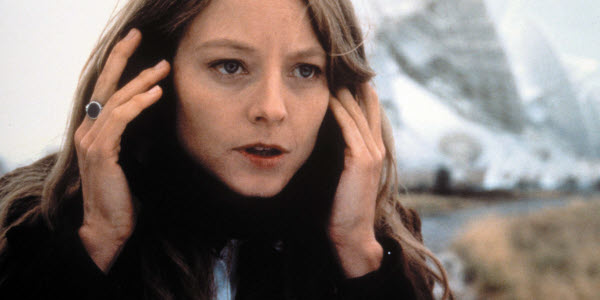
Ellie from Contact
Ellie (Jodie Foster) from Contact, directed by Robert Zemekis (1997)
“For as long as I can remember, I’ve been searching for something…some reason why we’re here. What are we doing here? Who are we? If this is a chance to find out even just a little part of that answer, then I think it’s worth a human life. Don’t you?”
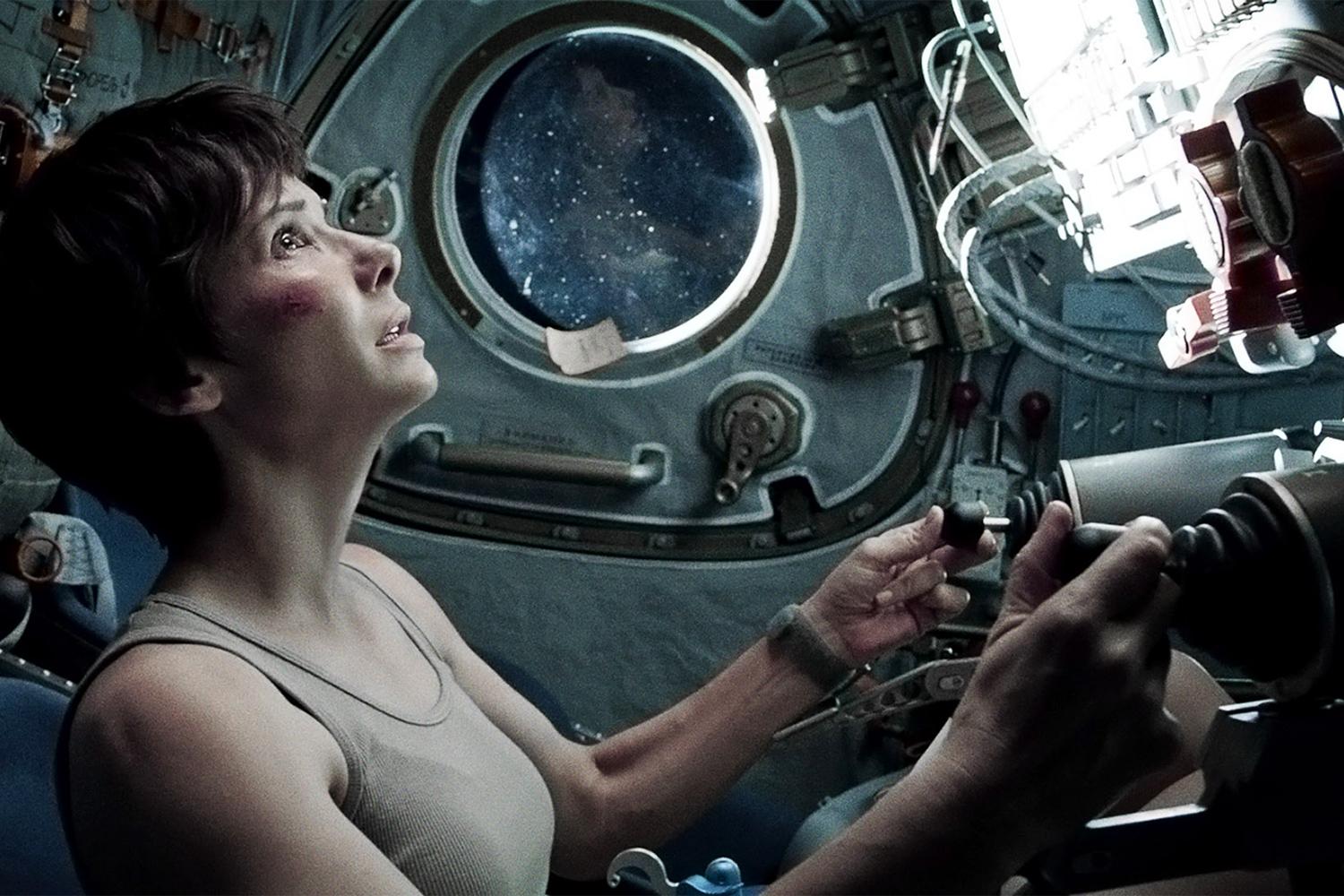
In one of the most emotionally brave and nuanced performances of her career, Jodie Foster is transcendent as Ellie Arroway, a driven scientist who, haunted by her father’s sudden death when she was eight, faces an existential crisis that sends her on a spiritual journey beyond the realm of normal human experience. Foster’s complete command of her character’s physicality, voice, countenance, and vast knowledge about the make-up of the universe makes Ellie a formidable force to be reckoned with as she vies with scientific pundits and religious scholars about the potential for other life forms in the solar system. Foster is adept at balancing Ellie’s skepticism about religious notions of the existence of God with her unwavering conviction that life inhabits other planets besides our own. As she tells some school children in a science class: “If it is just us in the universe that would be an awful waste of space.”
What ultimately endears us to Ellie, much like Bullet, is her stubborn insistence to always question and seek answers, despite the staunch discouragement of others and her own self-doubts. Her insatiable quest for enlightenment overcomes her skepticism and, during a near-death experience, she is forced to reckon with her own spirituality and faith. When called before a scientific committee to give her testimony about the enigmatic experience and challenged to admit that “all things being equal, the simplest explanation tends to be the right one,” she is humble and self-effacing in her assertion that “none of us are alone.”
“What do you know of my heart? For weeks, Marianne, I’ve had this pressing on me without being at liberty to speak of it to a single creature. It was forced on me by the very person whose prior claims ruined all my hope. I have endured her exaltations again and again whilst knowing myself to be divided from Edward forever. Believe me, Marianne, had I not been bound to silence, I could have provided proof enough of a broken heart even for you.”
Emma Thompson deservedly received double critical praise for writing this intelligent adaptation of Jane Austen’s classic novel in which she simultaneously portrays the eldest Dashwood sister, Elinor, who endures months of heartache at the loss of her father and her suitor, Edward, with an almost saint-like poise and dignity. Apart from her formidable acting history and training, Thompson’s brilliance in this role stems from her striking ability to balance comedy and tragedy, humor and melancholy, joy and suffering, contentment and grief–just as Bex does so movingly in her role as Bullet in The Killing.
Unlike her overly-zealous sister, Marianne (incandescently portrayed by an 18-year-old Kate Winslet), Elinor does not make a show of her feelings. Instead, she sensibly and selflessly chooses not to burden others with her heartache–just as Bullet endeavors to keep her unrequited love for Lyric and her suffering at the hands of Goldie to herself. Elinor’s contained emotions at times appears cold to those close to her, especially to her sister who criticizes her repeatedly for her seeming emotional indifference. However, as Marianne painfully learns, Elinor’s saintly discretion proves the wiser and more loving countenance, and in good and perfect time, Elinor is finally free to reveal the sentiments she holds so dear to her heart.
Beth from Little Women
Beth (Claire Danes) from Little Women, directed by Gillian Armstrong (1994)
“If God wants me with Him, there is none who will stop Him. I don’t mind. I was never like the rest of you – making plans about the great things I’d do. I never saw myself as anything much. Not a great writer like you. Oh, Jo, I’ve missed you so. Why does everyone want to go away? I love being home. But, I don’t like being left behind. Now I am the one going ahead. I am not afraid. I can be brave like you. But, I know I shall be homesick for you, even in Heaven.”
Then just 14 years old, Claire Danes brought an incomparable spiritual wisdom and tranquil maturity to the sweet, shy, and beloved Beth March, akin to what Bex brings to the beloved Bullet. Like Bex, Danes is natural and unpretentious in her portrayal–rare virtues for two teenage actresses whose remarkable artistic gifts (Danes was also a pianist, Bex is also a poet) transcend their tender years.
Claire Danes’ remarkable acting gifts are on full display in perhaps one of the most moving scenes in all of film history when Beth, weakened by the remnants of scarlet fever which she contracts from visiting a poor family, tragically dies. Knowing that death is upon her, Beth proclaims, “I am not afraid. I can be brave like you. But, I know I shall be homesick for you, even in Heaven.” She is, of course, telling this to her sister, Jo, with whom she was close throughout her brief life. In this intimate moment between them, Beth reveals her abiding faith, much like Bullet does in her intimate moment with Sara Linden in the car. She asserts her faith in God saying, “If God wants me with him, there is none who will stop him,” and her faith in her sister’s bright future, predicting that she will become “a great writer.” Although Beth’s death is difficult and heart-wrenching to watch, there is a certain serenity that accompanies the last moments of her life. Bullet’s violent death–not shown on screen–was certainly without serenity and peace; however, we can imagine that her faith was steadfast until the end.
Natalia Lauren Fiore received a B.A. in Honors English and Creative Writing from Bryn Mawr College and an M.F.A in Creative and Professional Writing from Western Connecticut State University, where she wrote a feature-length screenplay entitled Sonata under the direction of novelist and screenwriter, Don J. Snyder, and playwright, Jack Dennis. Currently, she holds a full-time tenure track teaching post at Hillsborough Community College in Tampa, Florida, where she teaches English and Writing. Her writing interests include film criticism, screenwriting, literary journalism, fiction, the novel, and memoir. Her literature interests include the English novel, American Literature, and Drama – particularly Shakespeare. She blogs at Outside Windows and tweets @NataliaLaurenFi.
What is so remarkable about Bullet in the aftermath of this attack is that she bravely continues her quest to recover Kallie, never once giving into fear or despair, nor losing the “faith” she wears on her wrist and professes to Sarah Linden. Instead, her scars make her all the more willing and determined to connect with others–chiefly Detective Linden and her streetwise partner, Detective Stephen Holder–in a deep and profound way. Her great humanity in the face of overwhelming evil and her sacrificial actions towards those she cares about, including a prostitute named Lyric who coldly spurns her, transcends perceptions about her sexuality and render her a universal character that people from all walks of life, backgrounds, faiths, religions, ethnicities, etc. can strongly relate to and identify with.
Bullet (Bex Taylor-Klaus) from AMC’s The Killing, Season 3 (2013)
Part 1 in a two-part series about “Lionhearted Heroines”
Bullet is the tough yet faithful boarding school dropout turned scrappy Seattle street-kid who unexpectedly resurrected the third season of AMC’s The Killing. She shows her “faith” wrist tattoo to lead homicide detective Sarah Linden, whom she calls “the north star” for fighting the crime brutally visited upon the wayward youths that inhabit her “block.” As a lesbian tomboy on her own in a big city, Bullet learns to rely on her inner strength to survive even when her overriding empathy and selflessness make her vulnerable to the horrific dangers that her desire to protect others prevents her from foreseeing. When her best friend, Kallie, a teenage prostitute neglected and discarded by her mother, disappears, Bullet tirelessly searches the streets and, without flinching, confronts a rough pimp named Goldie, who threatens her with a firearm. Later that evening, Goldie apprehends Bullet in his apartment and, at knife point, rapes her in retaliation for the confrontation.
“You know why I got ‘Faith’ on here? Because no one’s got it in me but me.” – Bullet, The Killing
What is so remarkable about Bullet in the aftermath of this attack is that she bravely continues her quest to recover Kallie, never once giving into fear or despair, nor losing the “faith” she wears on her wrist and professes to Sarah Linden. Instead, her scars make her all the more willing and determined to connect with others–chiefly Detective Linden and her streetwise partner, Detective Stephen Holder–in a deep and profound way. Her great humanity in the face of overwhelming evil and her sacrificial actions towards those she cares about, including a prostitute named Lyric who coldly spurns her, transcends perceptions about her sexuality and render her a universal character that people from all walks of life, backgrounds, faiths, religions, ethnicities, etc. can strongly relate to and identify with.
Bex Taylor-Klaus, the 19-year-old actress who won the role, was herself so moved by her character that she was inspired to reflect in writing about Bullet’s strength and beauty which carries a universal truth for us all:
Yes, I am a straight girl who plays a gay character on TV. No, I am not ashamed. The point of Bullet is not that she is gay. There is so much to her and I look up to the strength and determination this girl has. I get the beautiful opportunity to play a character I can admire and learn from on a daily basis. Bullet knows who she is and can accept herself for it all, even if others can’t or won’t….Not everybody is that strong. My biggest worry is that people will look at her and just see a gay kid, when that’s truly only a tiny piece of Bullet’s puzzle. Look at the big picture. People are a medley of different things and that is what makes us so interesting. Don’t lose sight of the beauty just because you see one thing you may find ugly.
To adapt Bex’s opening line: yes, I am a straight girl who has been besotted with Bullet (and the brilliant girl who plays her) from the moment she pulls her best friend, Kallie, from the ledge of a Seattle Bridge following the opening credits of the first episode.
Like Bex herself, I am not ashamed to adore Bullet. As Detective Stephen Holder (played by the endearing Joel Kinnaman) remarks when he first meets her, she’s “pretty unforgettable”–a description that captures her lasting impact on him and on all those she seeks to protect. Indeed, Holder and Bullet get past their initial mistrust of each other–aided by Bullet’s mistrust of men in general–to form one of the most beautiful friendships, fraught with angst and tenderness, ever portrayed onscreen. The two are, in many ways, twin souls who struggle to appear tough even when they are broken. Together, they embody Aristotle’s quote about true friendship: “A friend is a single soul dwelling in two bodies.” Their unlikely affection and mutual admiration, although tested many times, is steadfast and powerful, so much so that when Holder loses Bullet, he is more devastated than we have ever seen him–as if he has lost part of himself. In his moment of intense grief over her death, Holder becomes the conduit for the audience’s overwhelming sadness as we share in his mourning of her.
In the end, with identical stubbornness, the two betray each other–Bullet, desperate, telling a lie that inadvertently compromises the investigation and Holder, enraged, turning an icy cold shoulder to the girl he once sought to help–obstinately refusing to answer the phone when she urgently calls him later that night. This, of course, turns out to be a fatal mistake, which ensures Holder’s imminent down spiral once he discovers Bullet’s body butchered in the trunk of the killer’s car.
But Bullet would not have been as “unforgettable” had it not been for the incomparable Bex Taylor-Klaus, who blazes in each scene–truthfully portraying Bullet’s fierce yet compassionate courage and faith. We’ll be hard-pressed to find another TV performance by a young breakout actress that quite matches what Bex accomplishes as Bullet. Bex so completely embodies Bullet that when she is found dead, it is as though a real-life person–a best friend, a sister, a daughter–has been lost. Through her performance, Bex makes the audience, even those who initially find her bravado somewhat off-putting, come to care deeply and passionately about a lesbian street girl (she suffers a heartbreaking unrequited love for a young prostitute named Lyric) whose apparent impenetrable toughness hides a selfless, vulnerable spirit.
In a recently published ARTS-ATL article entitled “30 Under 30: Bex Taylor-Klaus bites the bullet and lands dream role on AMC’s ‘The Killing,’” Bex articulates her profound understanding of Bullet: “As an actor, you’re given a character as a kind of shell and it’s your job to breathe life into it. Bullet’s the one who breathed life into me…I knew everything she wanted to do when she grew up. I knew who she was, who she wanted to be, and then I watched it all get taken away.”
[youtube_sc url=”http://www.youtube.com/watch?v=6UQkOn7nEu4″]
One of the greatest demonstrations of Bex’s astounding ability to translate her understanding of Bullet for the audience occurs in Episode 3 during a beautifully shot two-scene sequence that captures the aftermath of Bullet’s rape. In a heart-wrenching moment, Bullet’s full inner beauty emerges even as she is at her lowest point, when she stares at her reflection in a bathroom mirror, examining the fresh, bloody wounds the rape has inflicted. Bex brilliantly captures Bullet’s fractured self in that moment, revealing fear, devastation, disgust, humiliation, and rage through her eyes and facial expressions. These emotions that she has never before felt so acutely ignite her burning resolve to save her best friend, so when Holder chases after her on the bridge later that day, she buries her fear and mistrust and tells him about that “nobody, nothing pimp” named Goldie. Later on in the episode, when Holder fails to apprehend Goldie, Bullet bravely and forcefully tells him off, and when he confronts her about whether Goldie has “done something to” her, she answers only with an instruction to “do your job” and “find her (Kallie).” Once again, Bex is superb–naturally conveying Bullet’s selfless devotion to her friend, even in the midst of the biggest crisis she has ever experienced.
Bullet never does get the chance to tell Holder, or anyone else, about what Goldie did to her–nor does she get the chance to tell Holder what she found out from the girl at the train station about the identity of the killer. Her life is ended so suddenly and cruelly that she leaves behind her a bitter trail of unanswered questions that could never be resolved satisfactorily in the wake of her death. It is these answered questions, combined with the magnitude of Bullet’s–and by extension Bex’s–potential epitomized by her intelligence, her kindness and compassion, her acceptance, her longing, and her grace–that we mourn mightily as the case stalls toward a resolution. For a fleeting period, it seems these virtues which she demonstrates so freely even towards those who don’t deserve them, are blissfully rewarded when Lyric, the previously unattainable object of her affection, appears to “see” Bullet’s heart for the first time and reciprocates its longing with a tender kiss:
For a day, Bullet experiences what it is like to be loved in return and we are afforded a rare and precious glimpse into the blissful life she should have been granted:
But the next day, Lyric is reunited with Twitch, the hustler she thought had abandoned her, and in a heartbeat, she turns her back on Bullet, cruelly claiming, “I don’t belong to you…I’m not gay, you know” (Season 2, Episode 8 “Try”). Already reeling from the mercilessly unjust suffering she endures during her brief life of which Lyric’s cutting rejection is the tipping point, the viewers’ reaction to Bullet’s death, and the absence of Bex in the role, was swift, heartfelt, and defined by a large volume of online fan art that was created to pay tribute to the murdered “Lionhearted Heroine,” as they began calling her:
The lionhearted heroine with a thousand faces. (Bullet image created by Maren Usken.)
Even though I do not possess the artistic talent or ability to paint a portrait, as manyothertalented fans did to remember and honor Bullet, I shed more tears for Bullet than I have since my father’s death when I was 8 years old. She became like a sister to me, as Bex did in the role. I loved her. I miss her. Like Holder, I will never forget her. And, by her own eloquent admission, neither will Bex, who encapsulates our collective sorrow, but pays tribute to Bullet’s faith:
“I saw a woman with a similar haircut—an older woman with the haircut and similar style and it made me smile at first like ‘Oh look – Bullet when she grows up.’ And then all of a sudden I was standing in the street and it hit me…the realization that that’s not ever going to be what Bullet gets to do. Some people are saying how much she’s meant to them, they’re sad she’s gone and I’m saying she’s not. If she really meant that much to you, keep her alive inside of you. She’ll always be there. Keep her in your heart, whatever poeticness you’d like to put on it, whatever poetic words you want to put to it—keep her alive inside of you. She’s always be there. She always has. She’s a really strong character and strong, strong person. Even though she’s dead on the show or in the ‘real world,’ she doesn’t have to be dead inside. If she did really have an effect on you, she will always be with you.”
Bullet takes a drag.
Still…In Season 4, Episode 5 of PBS’s beloved series Downton Abbey, a male valet says to his wife, a maid who is attacked in the same way that Bullet is attacked by Goldie in Episode 3 of The Killing: ”You are not spoiled. You are made higher to me and holier because of the suffering you have been put through.” If she had to die, brave Bullet deserved a death worthy of the “higher, holier” human being she was–a girl who did not dwell in her suffering nor let it define her, but rose above it and used her pain to compassionately protect her street-family from suffering what she did. Ideally, though, with all she silently suffered through, she deserved to live and to fulfill, as Bex articulated, “all she wanted to be.” By extension, Bex, who, to use a phrase from Miley Cyrus’s song, “came in like a wrecking ball” and all but stole the entire season with her nuanced and engaging portrayal, deserved the opportunity to develop her performance of Bullet’s character beyond Season 3, as affirmed by AMC’s recent decision to cancel the series for a second time which many attribute to the irrevocable loss of Bex’s Lionhearted Heroine.
Check back for Part 2: “18 Lionhearted Heroines From Film and Television“
Natalia Lauren Fiore received a B.A. in Honors English and Creative Writing from Bryn Mawr College and an M.F.A in Creative and Professional Writing from Western Connecticut State University, where she wrote a feature-length screenplay entitled Sonata under the direction of novelist and screenwriter, Don J. Snyder, and playwright, Jack Dennis. Currently, she holds a full-time tenure track teaching post at Hillsborough Community College in Tampa, Florida, where she teaches English and Writing. Her writing interests include film criticism, screenwriting, literary journalism, fiction, the novel, and memoir. Her literature interests include the English novel, American Literature, and Drama – particularly Shakespeare. She blogs at Outside Windows and tweets @NataliaLaurenFi.
When I started in the business, the saddest thing, looking back on it now, was that there were things being said (and written) that didn’t feel right but that I just accepted. I didn’t even really perceive how male driven things were; I just accepted it. It was just understood. I spent the greater part of my late teens and my twenties and even into my thirties feeling shame for not fitting into some mold or box that women, in television especially, are somehow supposed to fit into. Or at least that is the perception, and it’s hard not to be affected by that perception. The truth is that the images, stories and characters that touch us are full and flawed and human and grand and all of the rest of it. I am not sure where the disconnect is, but we have been talking about this for a long time. Progress has been made. I’m looking forward to a time where this imbalance is something that we don’t need to talk about anymore.
Gabrielle Miller on the left with the all-female Jury of the 2012 Oldenburg FF. Photo Credit Jorg Hemmen
This is guest post by Gabrielle Miller.
The first movie I remember seeing was a Shirley Temple film, the name of which I forget. I was really little, and they were playing old movies at the local theater, and my dad took me to see it. It was the first time I had seen a MOVIE-movie and her character goes through some great crisis and I had, what felt like to me at the time in my little body, a soul shaking experience. I just couldn’t stop crying and I remember my father at the time saying to me, ‘Gabie, we can’t take you to see films if they are going to upset you this much.’ I think he felt badly that I responded that way, but the truth was that it was the beginning of films, and film in general, really shaping my life. Although I was always very loved, my early childhood was by and large uncomfortable, and I was particularly uncomfortable in my own skin, and movies really brought me to a place of comfort. It was something that I could do with my dad, too. As a result, Flashdance was my reason for wanting to be an actor, and Ben Kingsley (as Ghandi) was my first crush, and Hal Hartley was the reason that I always wanted to direct.
Jennifer Beals in the 1983 film Flashdance
In the case of Flashdance, for example, I was probably around nine years old when it came out. After the lights came up, I couldn’t contain myself. I ran to the theater bathroom, closed the door, locked it and just danced. In the public bathroom. Just thinking, ‘Oh my god, if one day, if I can be as kickass as that girl, I will be free. That’s what I want.’ I know that’s ridiculous, but that’s what that character did for me, what that film did for me; it transported me. Those films brought me to another life. Literally, now, they brought me to the life I have. It all started with those films.
Hal Hartley was the beginning of my understanding of what it was to be a filmmaker. My dad would always get excited when a new Hal Hartley film came out. This, of course, meant that we weren’t going to see Hal Hartley as an individual. We were going to see Hal Hartley as a character that was embodied by his entire film, whether it was Simple Men or The Unbelievable Truth. All of a sudden I had this understanding of the whole. Story, actor, director and cinematographer, all from the position of a spectator. I suppose it was just a matter of time, then, before I stopped spectating and started acting.
When I started in the business, the saddest thing, looking back on it now, was that there were things being said (and written) that didn’t feel right but that I just accepted. I didn’t even really perceive how male driven things were; I just accepted it. It was just understood. I spent the greater part of my late teens and my twenties and even into my thirties feeling shame for not fitting into some mold or box that women, in television especially, are somehow supposed to fit into. Or at least that is the perception, and it’s hard not to be affected by that perception. The truth is that the images, stories and characters that touch us are full and flawed and human and grand and all of the rest of it. I am not sure where the disconnect is, but we have been talking about this for a long time. Progress has been made. I’m looking forward to a time where this imbalance is something that we don’t need to talk about anymore. I am tired of just accepting these problems as something we just have to deal with. I am tired of seeing female characters broken down by their physical attributes first and the male characters broken down, firstly, by what they do in the story. I would, like I am sure so many of the rest of us would, like to see a meaningful, lasting change.
Claudette Movie Poster
I am about to direct my first project, Claudette. It’s a narrative short. We have been raising our budget through crowd source funding on Seed&Spark.com. It’s an awesome site run by these really intrepid young women, Emily Best and Erica Anderson. I am excited about the path that platforms like this are creating for us because it’s a way to take back the independent process from the studios. I am excited to have the chance to make my own first little movie. And now, if you will excuse me, I am excited to go and dance in my bathroom, and I think this time, I will leave the door open.
Verena Brandt, 2012 Oldenburg FF
Gabrielle Miller has appeared in over 75 productions in the past two decades. She is best known for her lead roles on two television series: the runaway hit CTV series Corner Gas, and the critically acclaimed dramedy Robson Arms. In 2013, Gabrielle was nominated for a Canadian Screen Award for her role in Mike Clattenburg’s feature film Moving Day, the opening film for the Canadian Images Program at VIFF in 2012. Combined, Gabrielle has garnered 12 Gemini and Leo Award nominations and five wins. In 2012, Gabrielle had the honor of being a member of Oldenburg International Film Festival’s first ever all-female jury. Gabrielle can be heard this fall in the City TV/Hulu adult animated series, Mother Up!, and her most recent foray in the world of independent film, Down River, can be seen in theaters in the Spring of 2014. Gabrielle splits her time between her residences in New York and Toronto.
I’ve long been a little troubled by the women characters in Martin Scorsese’s films. I say this as compliment overall, because though the female protagonists are few, they’re far from shallow and weak. From Lorraine Bracco’s Karen in Goodfellas to Vera Farmiga’s Madolyn in The Departed, Scorsese has shown that he can depict women who are multi-faceted and complex. It’s just that their stories are always told in relation to the men their lives. Theirs is always a kind of power struggle with their husbands or boyfriends, and in the end, that power is rarely on par with men’s. I had heard that Scorsese’s 1974 Alice Doesn’t Live Here Anymore was different, but since it’s one that so rarely talked about, it took awhile for me to finally check it out. And I’m so glad I did.
I’ve long been a little troubled by the women characters in Martin Scorsese’s films. I say this as compliment overall, because though the female protagonists are few, they’re far from shallow and weak. From Lorraine Bracco’s Karen in Goodfellas to Vera Farmiga’s Madolyn in The Departed, Scorsese has shown that he can depict women who are multi-faceted and complex. It’s just that their stories are always told in relation to the men their lives. Theirs is always a kind of power struggle with their husbands or boyfriends, and in the end, that power is rarely on par with men’s. I had heard that Scorsese’s 1974 Alice Doesn’t Live Here Anymore was different, but since it’s one that so rarely talked about, it took awhile for me to finally check it out. And I’m so glad I did.
Ellen Burstyn’s Alice is a 30-something mother in Socorro, New Mexico, where she lives with her husband Donald (Billy Green Bush) and son Tommy (Alfred Lutter). Donald is an overbearing bastard of a man who does little more than bark at Alice and Tommy, who each take care to stay out of his way. Nothing Alice does is ever good enough for Donald. Thelma and Louise fans won’t be able to help but compare him to Darryl, the lout of a spouse who bullies Thelma. Unfortunately, there’s no Louise in this film to whisk Alice away in a 1966 Ford Thunderbird Convertible. Alice’s release from Donald is spurred by a freak car accident that kills him and leaves her and Tommy to fend for themselves. Just like the viewer up to this point, Alice has wished for Donald to disappear, but her guilt is raw, and Tommy senses her ambivalence. Rather than remain in a town she hates in a house she can no longer afford, Alice packs up the station wagon and heads to Monterey, California to reclaim her first love: singing. What ensues is an unlikely road movie with a mother and son at the center, and men on the periphery.
Alice and Tommy
Alice’s first stop is Phoenix, which is about as far as her money will take her. When she and Tommy settle in to a motel, Alice must go shopping for clothes that will make her look younger, as she tells her Tommy. It was at that moment in watching the film that I saw the story come into focus: what happens when a parent doesn’t hide the difficulty of making ends meet from her kid, but instead matter-of-factly involves him in the day-to-day slog of getting by, promising that good things are to come despite the current circumstances? Rather than keep Tommy in the dark about how broke she is and how no one will hire her for a living wage, Alice unsentimentally–yet lovingly–informs Tommy of her plans as she makes them.
Well, almost. Given that Tommy is still young (10 or 11), Alice does prefer to keep intimate details to herself, particularly when it comes to the first man she meets since her husband’s death, Ben (played by Harvey Keitel), who’s a regular customer at the bar where she lands a singing gig in Phoenix. Tommy is no fool, though, and when he asks one too many personal questions Alice tells him she’s not going to talk to him about her sex life. Sure, she doesn’t take this moment to have the birds and bees discussion, but when was the last time you heard a parent acknowledge the existence of a sex life to their kid? Its instances like that that make this film a fascinating study of a parent-child relationship in the context of shifting gender dynamics in a changing society.
The film is a fascinating study of a parent-child relationship.
A glance at the movie poster for Alice tells you that she’s going to eventually make her way into the arms of a rugged and mostly affable Kris Kristofferson, but she must deal with Ben first. While Alice initially rebuffs his advances, he eventually wears her down and wins her over. Yay, we think! Someone who will treat Alice with the tenderness she deserves. It doesn’t take long for Ben to reveal himself as a philanderer and psychopath, and this realization prompts Alice and Tommy to once again pack up the wagon for the next town, Tucson. Alice decides to make a pragmatic move and start working a job that’s close to their motel and will ensure free food: waiting tables. At this point in the plot the story expands to include the women at the restaurant—the brassy Flo (Dianne Ladd) and timid Vera (Valerie Curtain)—and Tommy’s new friend Audrey, played by a very young and very boyish Jodie Foster (creepy alert: two years later she and Harvey Keitel would be joined as the prostitute/pimp dyad in Scorsese’s Taxi Driver, which makes you feel gross when you watch them in Alice). Alice also meets David (Kris Kristofferson), and like her, we’re not altogether sure that his fixation with Tommy is genuine or just a sneaky way to pick up his mom. We see Alice try to work through the challenges of managing her expectations of love and work, and there’s real narrative power in how she fully inhabits all her choices, be they selfish, selfless, stupid, or sane. Though billed as a romance, the real love story has two couples at its core: Alice and Tommy, and Alice and herself.
Alice
Heather Brown lives in Chicago, Ill., and works as a freelance instructional designer and online writing instructor. She lives for feminism, movies, live music, road trips, and cheese.
Usually movies with such mainstream blockbuster potential are not portrayed at Telluride Film Festival. Telluride opts for more artistic limited release movies. But I suspect Cuaron’s credibility, including casting a woman in the lead over Clooney, made it a Telluride film.
The Woman Behind Charles Dickens: A Review of the Film TheInvisible Woman
“You men live your lives, while we are left behind. I see no freedom where I stand!” yells protagonist Ellen Ternan at a Dickens’ colleague.
Ternan is the mistress of renowned English novelist Charles Dickens. And that sums up the movie TheInvisible Woman. Ternan became the 18-year-old mistress to then 45-year-old Charles Dickens, who was at the height of his fame. Based on the novel of the same name, it accounts their life together, the scandal it caused, as Dickens was still married to his wife. While the film is meant to be focused on this torrid affair between Dickens and Ternan it, by extension, is a telling of the unfortunate status of women in the Victorian era.
English actor Ralph Fiennes, a celebrated actor of his generation (Schindler’s List, Quiz Show, The English Patient, The End of the Affair, to name a few) plays the larger than life Charles Dickens and Felicity Jones plays Ellen Ternan. Invisible Woman is the second film Fiennes directed after Coriolanus.
The Invisible Woman is sumptuous in its costumes and details of the Victorian era, but occasionally lacks in the chain that builds up to the affair. Ternan, whose family of moderately successful actors are good friends of Dickens, finds herself in his company due to a play he is building. You instantly see why Dickens falls for Ternan–she is young, spirited, and passionate about his novels and short stories. Jones’ Ternan does a good job in not overdoing the “fan girl” role, as that can cross over to creepy rather quickly. Her love and understanding of his books touches Fiennes’ Dickens perhaps because his wife doesn’t seem that invested in his work and Ellen is rather young and pretty. One also suspects her adoration soothes his ego. Chats of his works turn to meaningful conversations of life ,which pale in comparison to the awkward stilted and physically passionless relationship that exists between Dickens and his wife, Catherine.
Felicity Jones in The Invisible Woman
Ternan finds herself at a crossroads in her relationship with Dickens, as her family realizes his adoration of her and her growing affection for him. While she hopes to become an actress, it is made clear to her by the women in her family that she is not good enough to survive in the profession. Since she has not too much formal educational training, any money to inherit, or other marital prospects, the best she can hope for is a relationship with Dickens, who cannot divorce his wife in Victoria era England. But can provide for Ternan. It is not a “choice” that thrills her, especially as she views Dickens’ callousness toward his wife–which includes but is NOT limited to a public letter in the London Times announcing he and his wife (unbeknownst to his wife) have agreed to separate (worse than texting your ex you’re through with them) and forcing his wife to deliver a gift meant for Ternan but accidentally delivered to her so (in Dickens’ mind) the wife can see for herself nothing exists between them.
I personally love Charles Dickens’ writings and thought he was quite the advocate for justice for the poor, but I was stunned at the sheer humiliation he put his wife through. You can imagine Ternan’s thoughts: if he’s that callous to the women who bore TEN of his children, how the hell is he going to treat me?
My biggest complaint was, while I saw a chemistry between Fiennes and Jones, the buildup was not always potent enough for me to think this was supposed to be the renowned passionate affair it apparently was. The timeline was fuzzy at times. Fiennes is outstanding per usual as the larger than life author, and Jones is an ingénue with promise who perhaps reached her limits in playing an older and wiser Ternan after Dickens’ passing, trapped in reflection and struggling to free herself from his ghost. Either way, go see it, if for nothing else to no more about this author and see another outstanding Ralph Fiennes performance.
Movie poster for Gravity
A Brilliant Woman Hero: A Review of the Film Gravity
If you ever doubted a woman could literally reach for the stars, Sandra Bullock changes your mind in her performance as Dr. Ryan Stone, a brilliant astronaut who becomes a hero in Gravity. The film is directed by Alfonso Cuaron, who also directed A Little Princess (1995), Y Tu Mamá También (2001), and Harry Potter and the Prisoner of Azkaban (2004). Gravity is a 3D movie with George Clooney as Bullock’s co star. Clooney plays fellow astronaut, Matt Kowalsky.
Dr. Stone and Kowalsky, along with others, are in space on a mission when debris from a satellite crashes into their space shuttle Explorer, killing most of their crew. Dr. Stone and Kowalsky (on limited oxygen) must find a way to survive.
Usually movies with such mainstream blockbuster potential are not portrayed at Telluride Film Festival. Telluride opts for more artistic limited release movies. But I suspect Cuaron’s credibility, including casting a woman in the lead over Clooney, made it a Telluride film.
Sandra Bullock in Gravity
Bullock is wonderfully nuanced in her role as Dr. Ryan Stone and I can see why reviews coming back from Venice International Film Festival have her touted for another Oscar nomination. Cuaron portrays a complex, brilliant astronaut with a sad past who is driven by her work. With her male colleagues (particularly Clooney’s Kowalsky, whom she interacts the most with), she confidently holds her own in what she does. When the space shuttle is hit, and Dr. Stone–a less experienced astronaut–is sent flying into space in a breathtaking 3D moment, she is rightfully panicked. I worried she might become the damsel in distress that Kowalsky rescues, but Bullock does not take you into unnecessary hysterics. If anything, the 3D movie makes the audience more empathetic to how scary the reality of flying untethered into space is. The rest of the movie is an exercise in her using her mental and physical reserves to brainstorm her way out of hairy situations, while the debris still in orbit rotates back around every so often to threaten her survival. I found myself mentally cheering her on as I think all viewers–especially women–will to the end.
Atima Omara-Alwala is a political strategist and activist of 10 years who has served as staff on eight federal and local political campaigns and other progressive causes. Atima’s work has had a particular focus on women’s political empowerment and leadership, reproductive justice, health care, communities of color and how gender and race is reflected in pop culture. Her writings on the topics have also been featured at Ms. Magazine, Women’s Enews, and RH Reality Check.
A three-hour art film about two queer women with subtitles is like a dream come true for me: I’ve sat through arty, subtitled films twice that long–which didn’t have a trace of queer content. So I’ve obsessively read everything I can about Blue Is The Warmest Color. And I’m puzzled. In an age when writers of color like Wesley Morris and Roxane Gay bring added perspective and insight to their reviews of films like, Django Unchained and 12 Years A Slave, why are straight men the overwhelming majority of people telling the world whether or not the sex scenes in Blue are convincing?
A three-hour art film about two queer women with subtitles is like a dream come true for me: I’ve sat through arty, subtitled films twice that long–which didn’t have a trace of queer content. So I’ve obsessively read everything I can about Blue Is The Warmest Color. And I’m puzzled. In an age when writers of color like Wesley Morris and Roxane Gay bring added perspective and insight to their reviews of films like, Django Unchained and 12 Years A Slave, why are straight men the overwhelming majority of people telling the world whether or not the sex scenes in Blue are convincing?
I saw the film about five months after it had won the top prize at Cannes (in an unusual move the jury awarded the prize to the two stars, Léa Seydoux and Adèle Exarchopoulos, as well as the director, Abdellatif Kechiche) just prior to its US release. Julie Maroh (the queer author of the original graphic novel on which the film is based) prepared me to not love the sex scenes, which she described as “porn,” ” brutal and surgical,” and “cold.”
What I didn’t expect, in a film that is told almost entirely in close-ups on faces, was the director (who also co-wrote the script) framing the sex scenes so they have as much tits and ass–especially ass–in them as possible. The actresses (Seydoux as Emma and Exarchopoulos as Adèle: the director named the main character and the film itself–the French title is La vie d’Adèle—after the woman playing the lead) do a beautiful job of making us believe in this romance–during the rest of the film. But here they are stuck playing a joyless game of naked Twister. We can practically hear the director shout, “Put your hand there! Put your face there! No, there! Now slap her ass! Again!” The ass slapping reminded me of the moment in male-directed, girl-on-girl porn clips, in which, to keep the audience from getting bored and give the actresses something to do, one woman is directed to slap (or tap: it makes a noise like slapping) the vulva of the other woman–even though: I don’t want my vulva slapped, and I’ve never met another queer woman who wants her vulva slapped nor one who gets pleasure from slapping the vulva of another woman.
The director frames a scene in a museum much like the sex scenes, so we get an eyeful of the breasts and buttocks from the nude artworks, as if the scene takes place at a peepshow. If the director had been able to stop ogling women’s body parts, he could have redeemed himself. A woman (who has never had sex with another woman) seeing nudes in the company of the woman to whom she has a strong sexual attraction is a situation rife with possibility. And part of what makes Adèle and Emma’s bond believable is the instant and electrifying attraction they have to each other: Adèle literally stops traffic when she first sees Emma and fantasizes about her that night, though the two haven’t even spoken. Every other moment of their relationship feels genuine (except when one woman hits the other during a fight, which also feels like a man’s version of what two women do when they’re alone), so we feel cheated during the naked sex scenes.
We see what the nude scenes could have been later in the film when the characters have a sexual moment but stay fully clothed–which is maybe why the director doesn’t ruin the mood. The camera focuses on their faces and the emotion that plays across them. Perhaps Kechiche finally learned that no one is able to act with her ass.
Although the filmmakers (I am including the actresses since, according to all parties, improvisation played a big part in the finished film) and straight reviewers are quick to describe the film as being a universal one of first love, and as Maroh has pointed out no queer women had a prominent role in the creation of the film, it captures queer life and love well, especially the intensity and desperation of a teenager’s first relationship with another woman. When the two have their big fight I cringed in recognition–as I did during many other moments.
The isolation Adèle experiences in her relationship with Emma is nothing like the peer-pressure romance she has at the beginning of the film with the sensitive, good-looking, older boy at school. Her high school friends (most of whom have the same neat, fashionable haircut; Adèle’s hair is messily piled on her head but at the same time always gets in her face) seem more eager about the relationship (“He likes you!”) than Adèle does.
After she breaks up with the boy, we see Adèle walking away from the high school friends who are calling her name to be with Emma. Adèle is opening her life to the elements, to a tornado, knowing nothing will be the same afterward and not caring about the consequences. So we’re not surprised that Adèle clings to Emma like a life preserver. And we’re also not surprised to see that later in the film, without Emma, she starts to sink.
After she’s finished with school, Adèle doesn’t talk with straight coworkers about her personal life, even though she gets along with them and likes her job. She wants to avoid coming out to them. She even hides her true address, so none of them find out she lives with a woman. When heartbreak comes she can’t tell the people she works with why she doesn’t feel like dancing with the preschoolers they look after, so she goes through the motions, letting her real feelings surface only after everyone has left, and the day is done.
Lea Seydoux (Emma)
Seydoux (whose previous roles are nothing like the one she plays here) makes Emma a beautiful butch, especially in her later scenes in which she seems lit from within, as if she stepped out of a Renoir painting. Emma is an artist herself and so stunning even those of us who are art-snobs can almost forgive her shitty paintings: the director seems to know as much about the art world as he does about sex between women.
Even in the mainstream films queer women love, we usually have to ignore the discrepancy between how non-character actresses in mainstream films are supposed to look and how butches look. Popular films will sometimes feature a butch who wears makeup heavy enough to be visible on camera, or we will see a woman who is supposed to be butch who has obvious breast implants. Though individual butches may have these attributes, they don’t signal “butch” to other queer women, including those in a film audience.
With her pale lashes and unpainted mouth Seydoux is one of the most recognizable butches I’ve seen in any movie, including those made by queer women. And her Emma pleasantly surprises us in the way that people in real life sometimes surprise us. We expect flirtatious, teasing, older Emma, who has her arm around another woman when she first sees Adèle, and a posse of admirers at the women’s bar, to break Adèle’s heart, but Emma turns out to be a serial monogamist who genuinely cares about Adèle. When Adèle first sees the inevitable cracks forming in her relationship with Emma she does the one thing guaranteed to destroy it (without consciously admitting what she is doing). Adèle ends up breaking her own heart.
Seeing the two actresses play the scene in the cafétoward the end is like watching two great musicians play together. Some viewers have complained the film is too long, but Blue takes time to unwind the way relationships take time, the way heartbreak takes time, the way life takes time. Even at three hours we just want more.
The film also excels in capturing the experiences of queer women who are femmes. At one point, we see Adèle (who wears skirts and heels) cook for, serve and then clean up for a large group of people she barely knows while her butch girlfriend (whose friends are the party guests) literally lies back with her hands under her head. I’ve played a similar “wife” role to a butch partner–and seen too many other femmes I know do so too.
In a long scene at the party, a man corners Adèle into a conversation about her sexuality, his eyes glittering (he could be a stand-in for the director!), and she’s too polite to tell him to fuck off. I’ve been to that party, met that man, and been that woman.
Adele Exarchopoulos (Adèle)
Adèle is beautiful in the conventional sense (with her hair down, she resembles a younger, more well-fed version of Angelina Jolie), but we see that she doesn’t fit in either at the women’s bar, where she first speaks to Emma or later at the party among her girlfriend’s arty, more conventionally queer-looking friends. She is always, always getting attention from men, even the ones who know she is with Emma–but garners hardly any notice from other queer women.
Though Blue Is The Warmest Color is directed by a straight guy (and one who is, let’s not forget, a creepy asshole) it is, I would argue, a feminist film. It’s centered on one woman and takes her seriously. And Exarchopoulos gives the role (as Adèle jokingly tells Emma she will give her “study” of sex with women) her “all.” Exarchopoulos’s face here is like a landscape in a Terrence Malick film and Blue, like the works of Malick, should absolutely, positively be seen in a theater, so the experience can wash over us, the way we see seawater wash over Adèle’s face when she is on a working holiday at the beach.
In Blue we see every aspect of Adèle’s life: as a schlumpy teenager, a student of French literature, a daughter, a girlfriend, a protestor, a “friend,” a teacher and finally a stylish twenty-something, alone. Films that cover this range in a man’s life are commonplace, but this week I was supposed to see three acclaimed American movies before their release (some of which competed with Blue at Cannes and may very well compete with it again at the Oscars), and the women in them are, according to even the glowing reviews, types and stereotypes: cute old ladies who talk dirty (and get cheap laughs for doing so) and bitchy ex-girlfriends who show that though the male protagonists may be losers, they aren’t gay losers. So sitting through three hours in a movie theater and focusing on one woman’s life (especially a queer woman’s) was a relief and something I could use a lot more of. SEE THIS FILM.
Ren Jender is a queer writer-performer/producer putting a film together. Her writing has appeared in The Toast, xoJane and the Feminist Wire. She almost dressed as “Emma” for Halloween, but then decided to be “zombie Lou Reed” instead.